Inventiva SA · EURONEXT:IVA
Inventiva SA — Investor Presentation (February 2022)
77 slides from Inventiva SA's investor presentation, February 2022
Slide 1: Developing innovative therapies in NASH and MPS
Developing innovative therapies in NASH and MPS Corporate Presentation February 2022
Slide 2: Disclaimer
DISCLAIMER This presentation contains forward-looking statements that involve substantial risks and uncertainties. All statements other than statements of historical facts contained in this presentation, including statements regarding our future financial condition, results of operations, business s
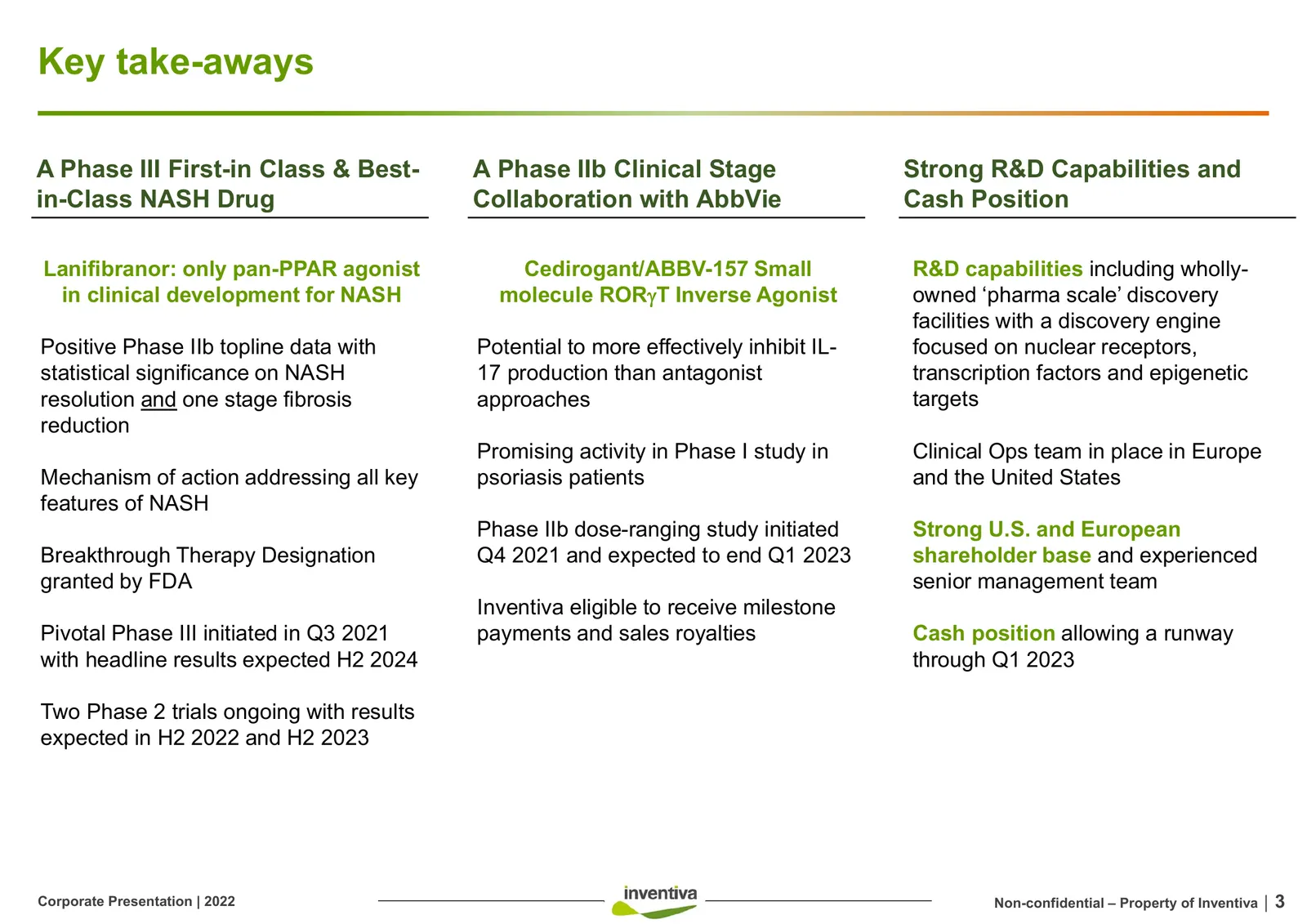
Slide 3: Key take-aways
Key take-aways A Phase III First-in Class & Best- A Phase IIb Clinical Stage Strong R&D Capabilities and in-Class NASH Drug Collaboration with AbbVie Cash Position Lanifibranor: only pan-PPAR agonist Cedirogant/ABBV-157 Small R&D capabilities including wholly- in clinical development for NASH molecu
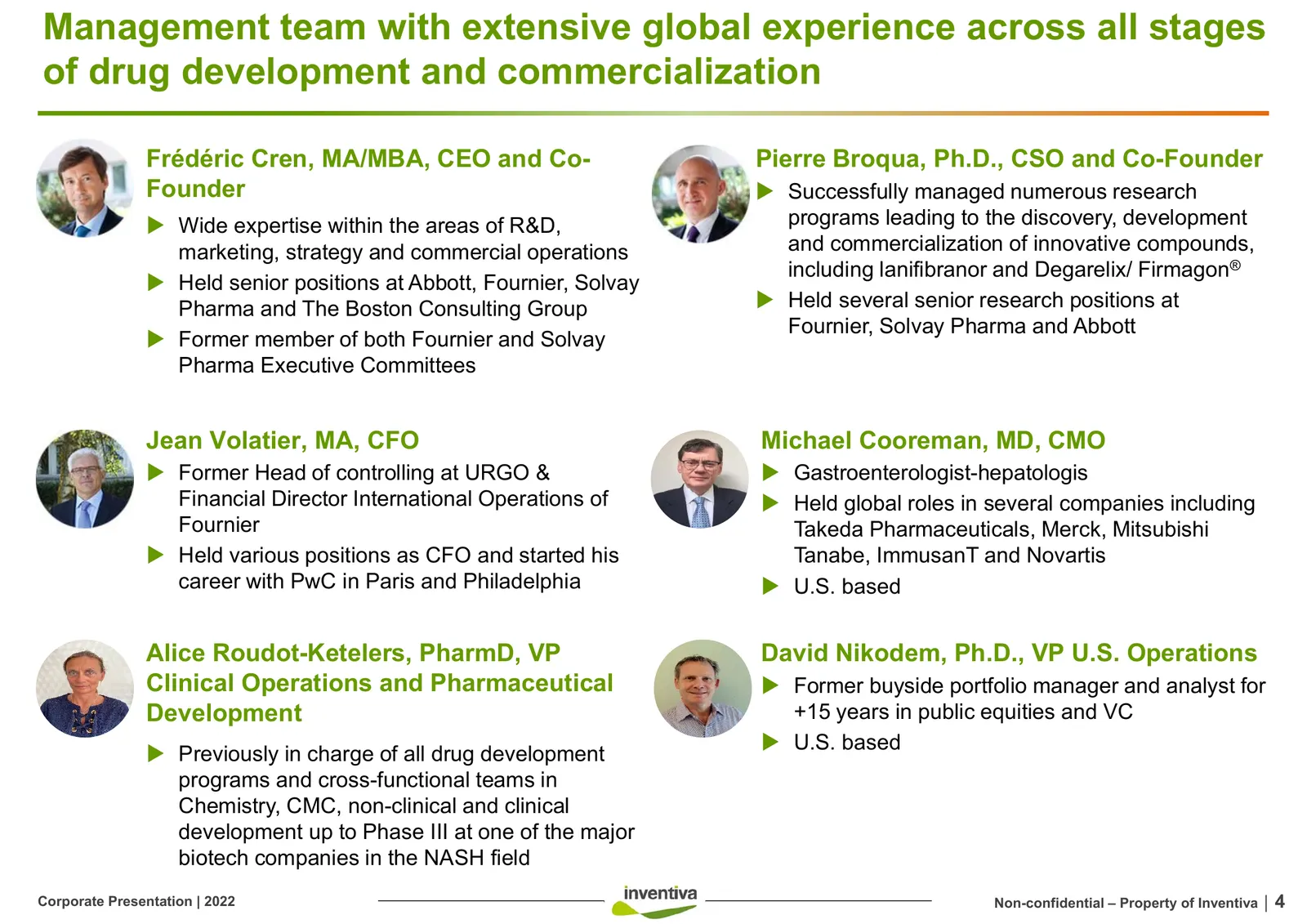
Slide 4: Management team with extensive global experience across all stages of drug development
Management team with extensive global experience across all stages of drug development and commercialization Frédéric Cren, MA/MBA, CEO and Co- Pierre Broqua, Ph.D., CSO and Co-Founder Founder Successfully managed numerous research Wide expertise within the areas of R&D, programs leading to the
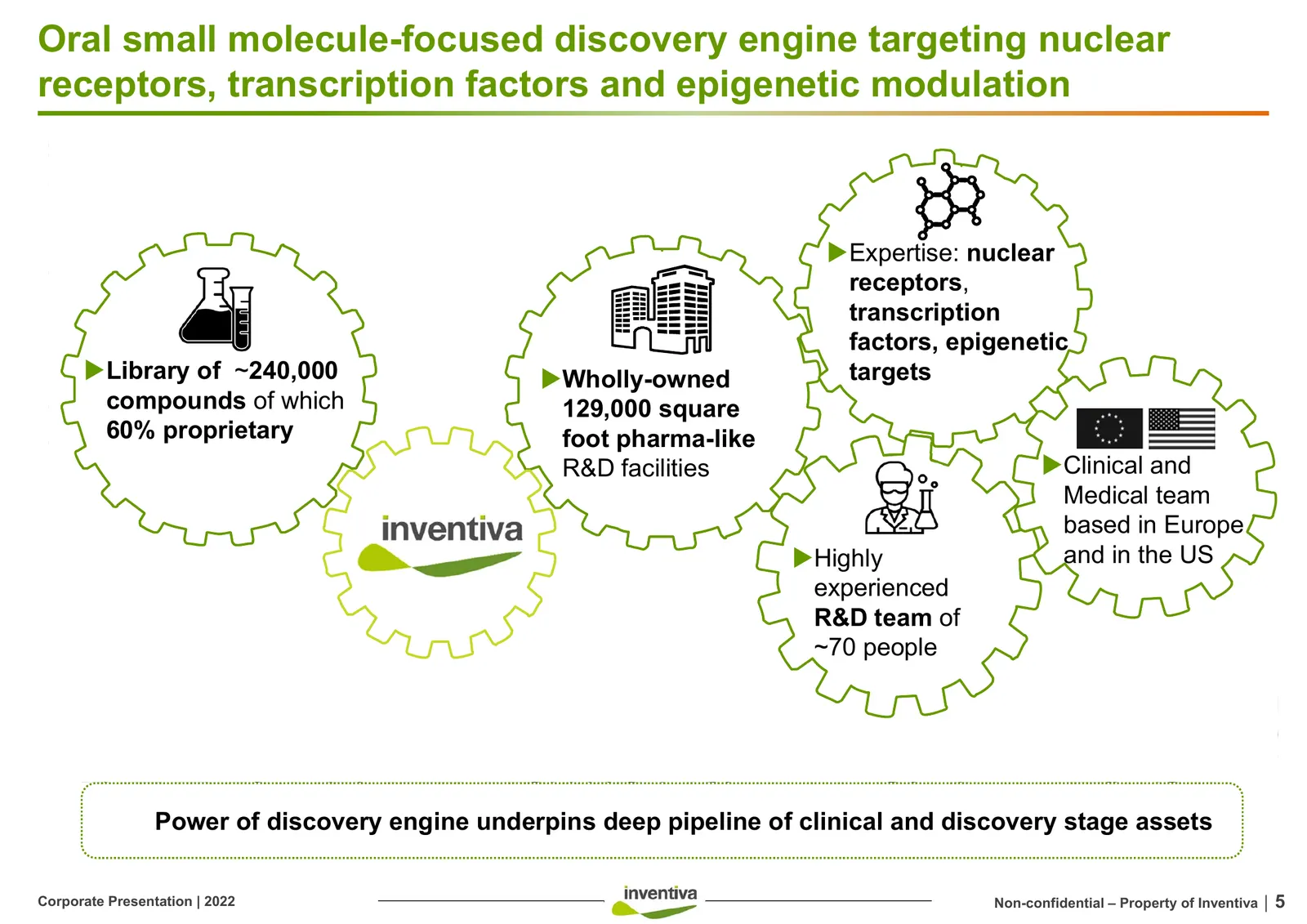
Slide 5: Oral small molecule-focused discovery engine targeting nuclear receptors, transcription factors and epigenetic modulation
Oral small molecule-focused discovery engine targeting nuclear receptors, transcription factors and epigenetic modulation Expertise: nuclear receptors, transcription factors, epigenetic Library of ~240,000 Wholly-owned targets compounds of which 129,000 square 60% proprietary foot pharma-like R&D
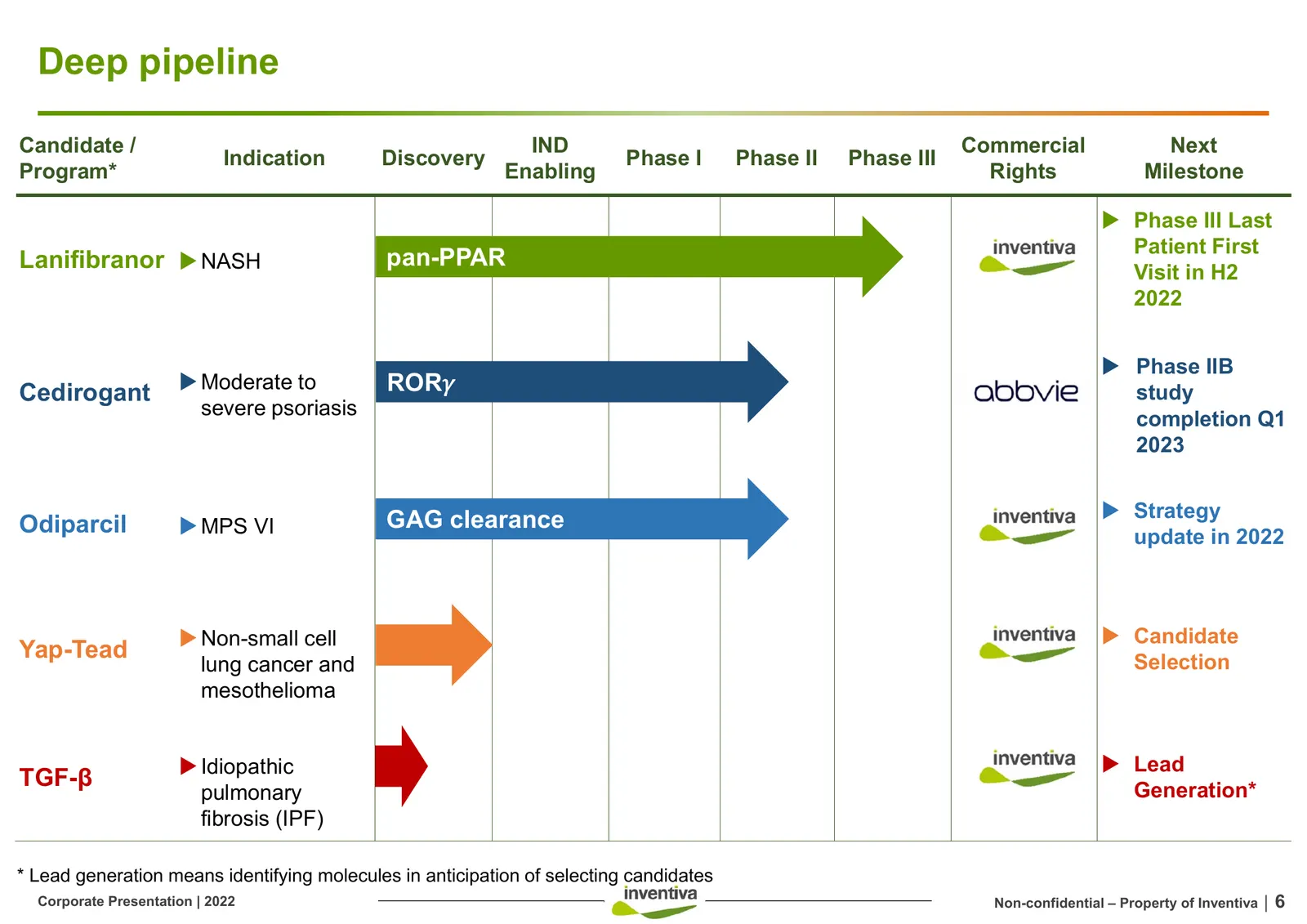
Slide 6: Deep pipeline
Deep pipeline Candidate / IND Commercial Next Indication Discovery Phase I Phase II Phase III Program* Enabling Rights Milestone Phase III Last Patient First Lanifibranor NASH pan-PPAR Visit in H2 2022 Phase IIB Cedirogant Moderate to ROR study severe psoriasis completion Q1 2023 GAG clearan
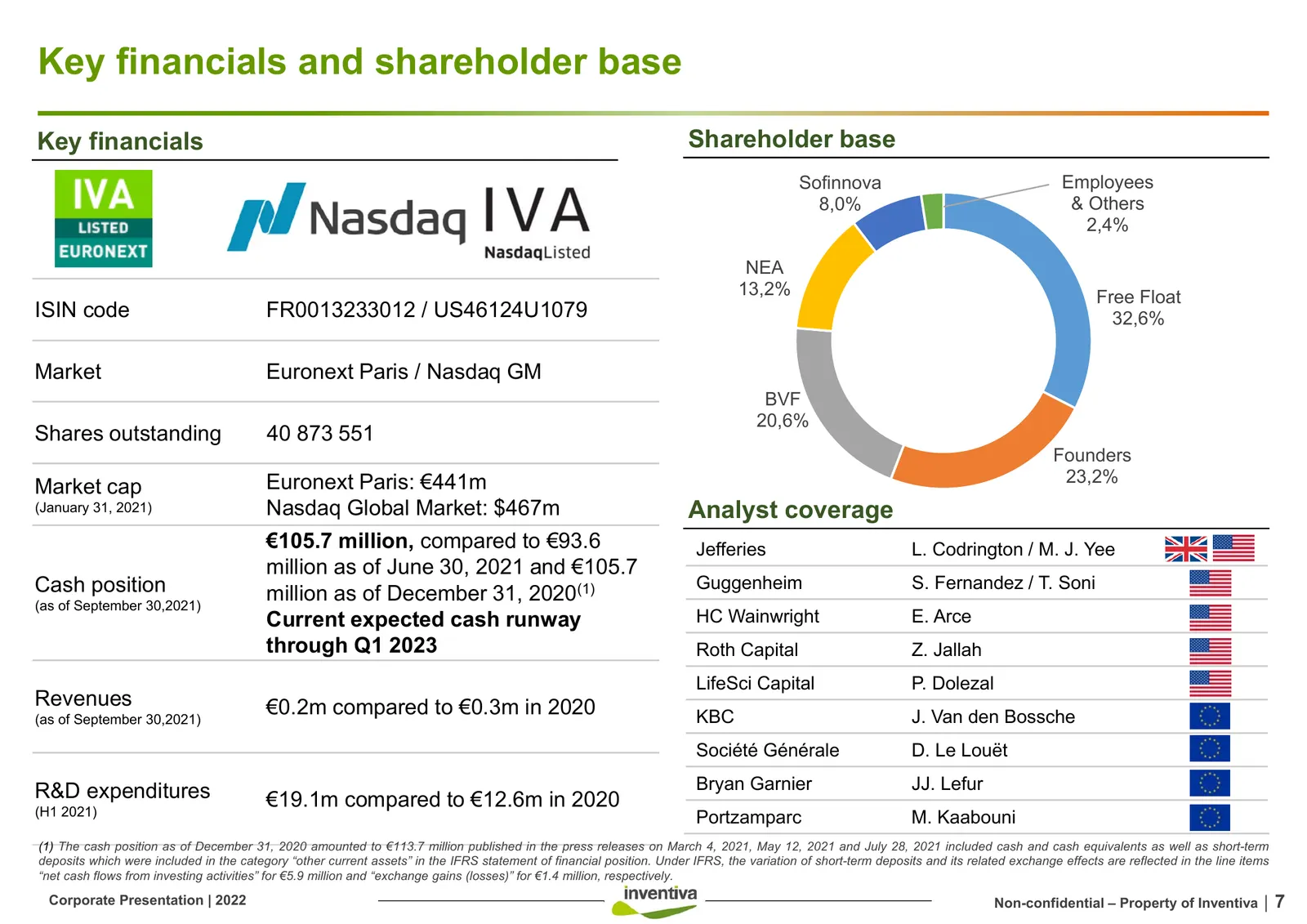
Slide 7: Key financials and shareholder base
Key financials and shareholder base Key financials Shareholder base Sofinnova Employees 8,0% & Others 2,4% NEA 13,2% Free Float ISIN code FR0013233012 / US46124U1079 32,6% Market Euronext Paris / Nasdaq GM BVF 20,6% Shares outstanding 40 873 551 Founders Euronext Paris: €441m 23,2% Market cap (Janua
Slide 8: Lanifibranor in Nonalcoholic Steatohepatitis (NASH)
Lanifibranor in Nonalcoholic Steatohepatitis (NASH)
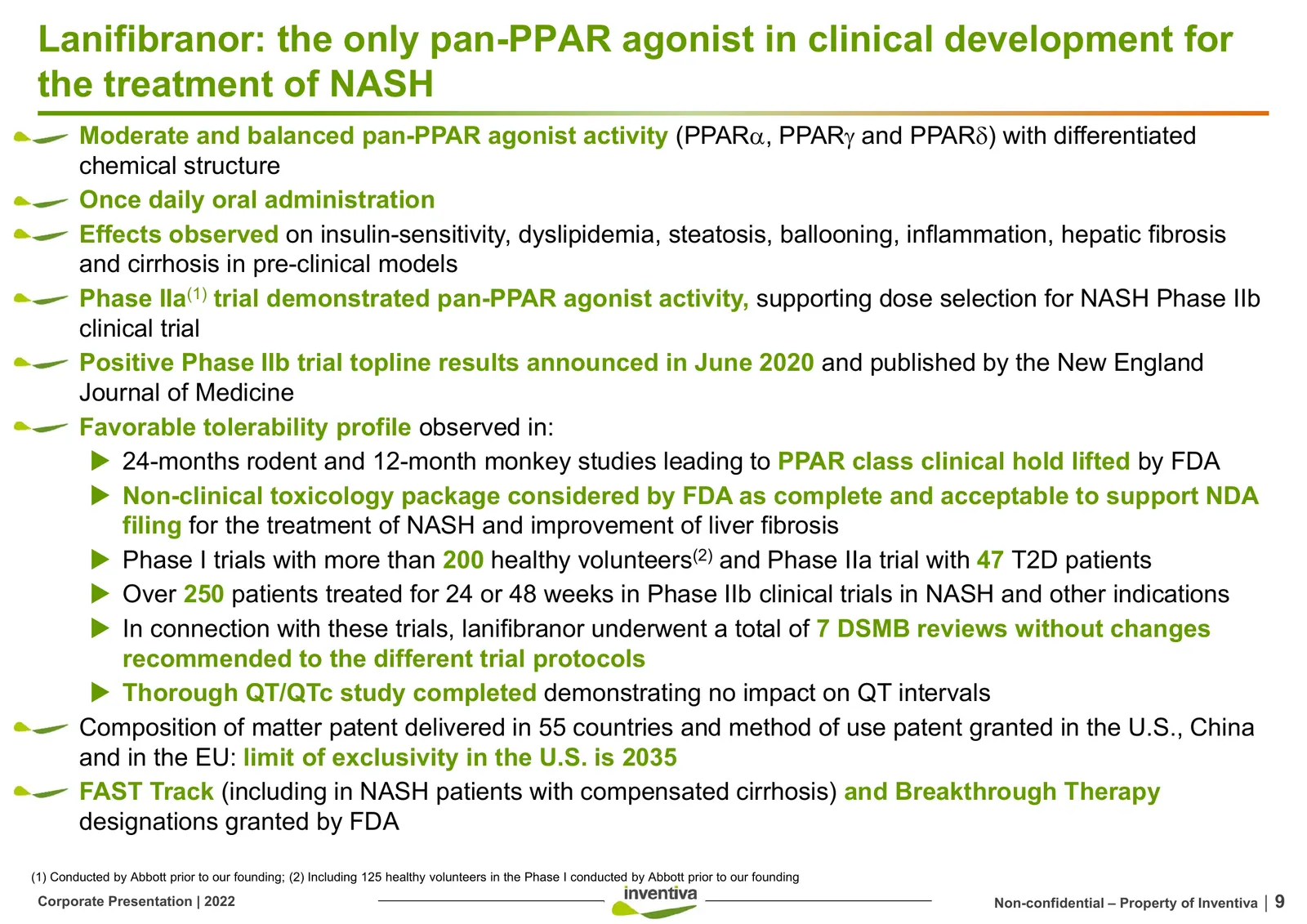
Slide 9: Lanifibranor: the only pan-PPAR agonist in clinical development for NASH
Lanifibranor: the only pan-PPAR agonist in clinical development for the treatment of NASH Moderate and balanced pan-PPAR agonist activity (PPAR, PPAR and PPAR) with differentiated chemical structure Once daily oral administration Effects observed on insulin-sensitivity, dyslipidemia, steatosis, b
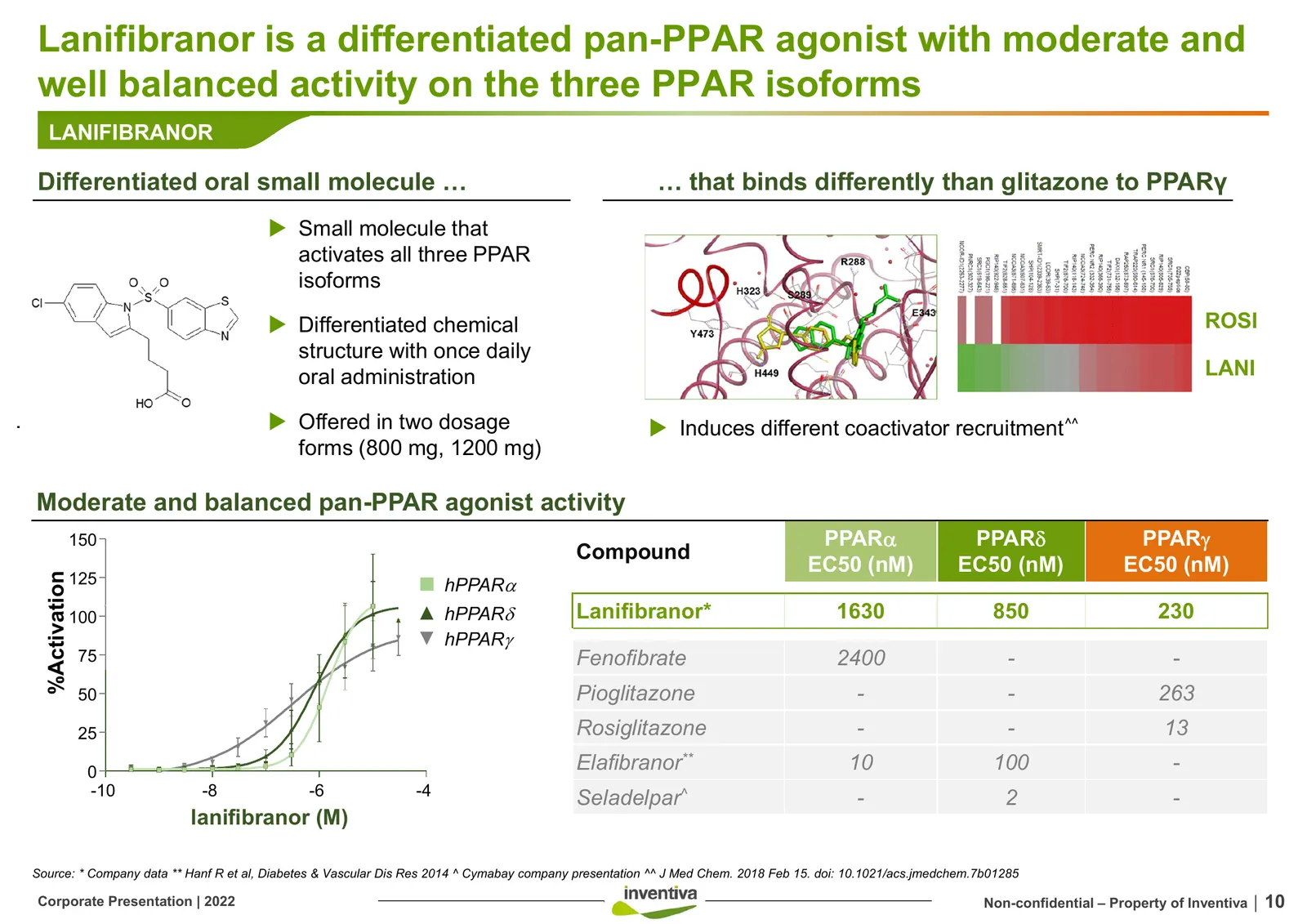
Slide 10: Lanifibranor is a differentiated pan-PPAR agonist with moderate and balanced activity
Lanifibranor is a differentiated pan-PPAR agonist with moderate and well balanced activity on the three PPAR isoforms LANIFIBRANOR Differentiated oral small molecule … … that binds differently than glitazone to PPARγ Small molecule that activates all three PPAR isoforms Differentiated chemical R
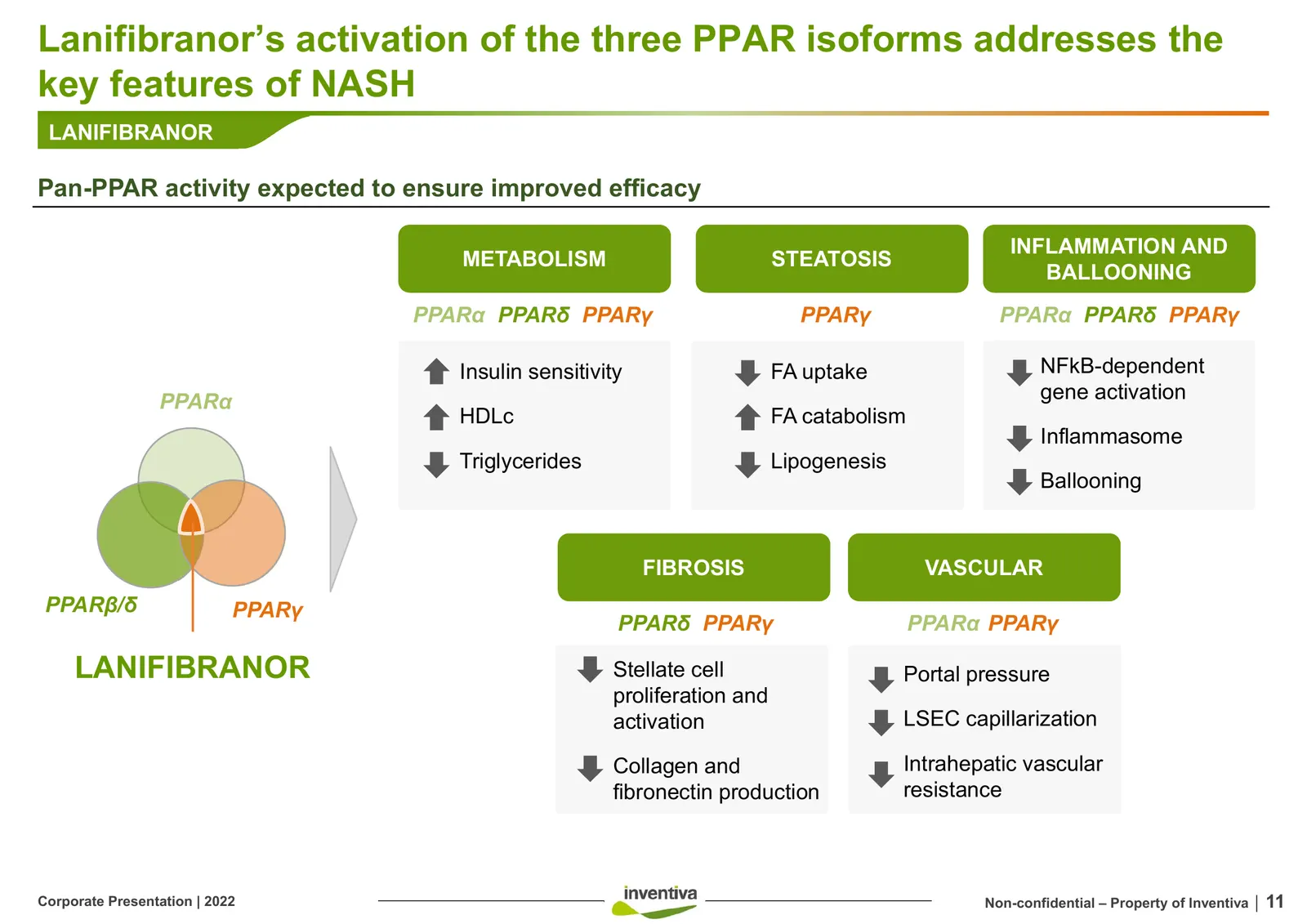
Slide 11: Lanifibranor's activation of the three PPAR isoforms addresses the key features of NASH
Lanifibranor’s activation of the three PPAR isoforms addresses the key features of NASH LANIFIBRANOR Pan-PPAR activity expected to ensure improved efficacy INFLAMMATION AND METABOLISM STEATOSIS BALLOONING PPARα PPARδ PPARγ PPARγ PPARα PPARδ PPARγ Insulin sensitivity FA uptake NFkB-dependent PPARα ge
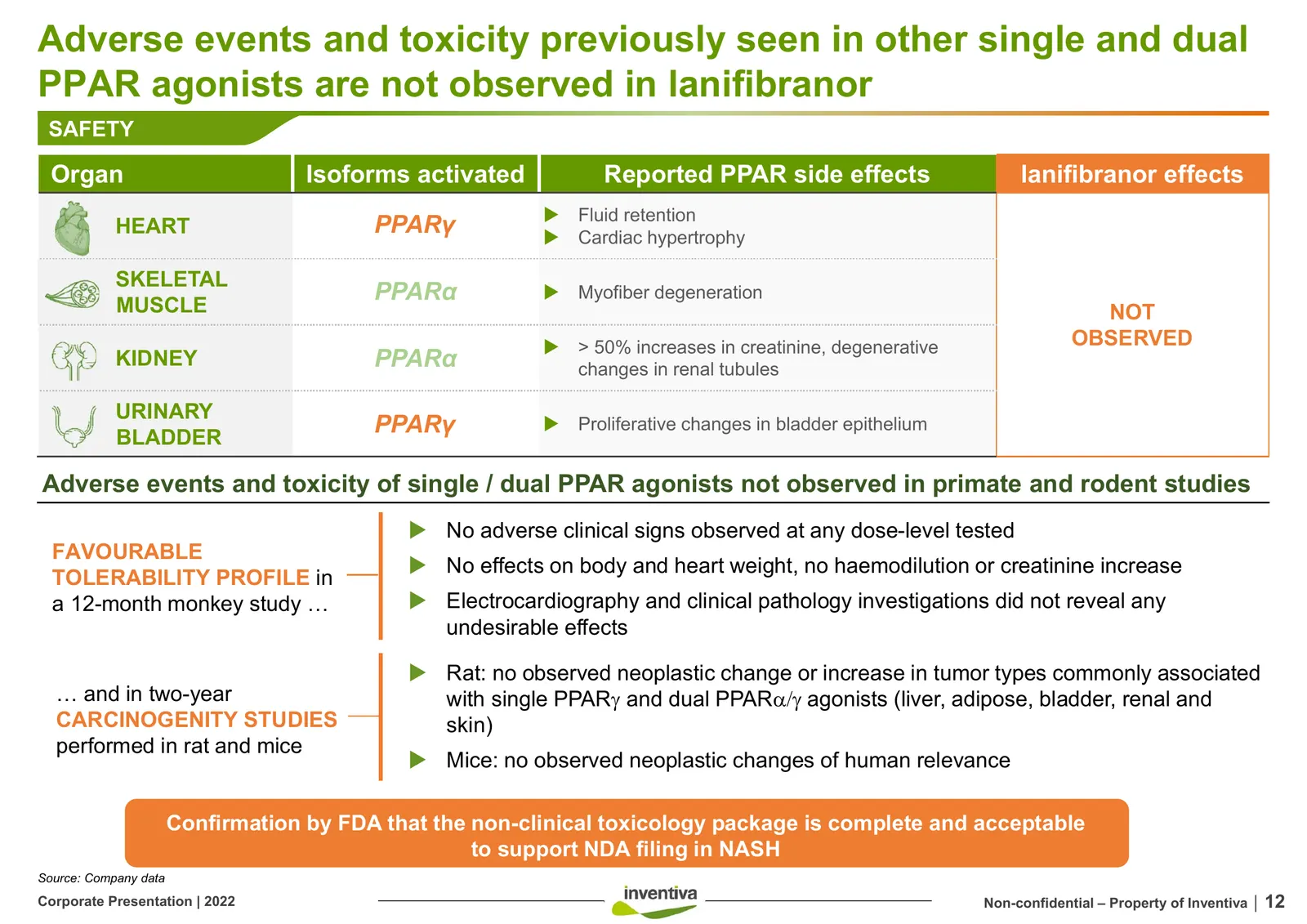
Slide 12: Adverse events and toxicity seen in other PPAR agonists are not observed in lanifibranor
Adverse events and toxicity previously seen in other single and dual PPAR agonists are not observed in lanifibranor SAFETY Organ Isoforms activated Reported PPAR side effects lanifibranor effects Fluid retention HEART PPARγ Cardiac hypertrophy SKELETAL PPARα Myofiber degeneration MUSCLE NOT
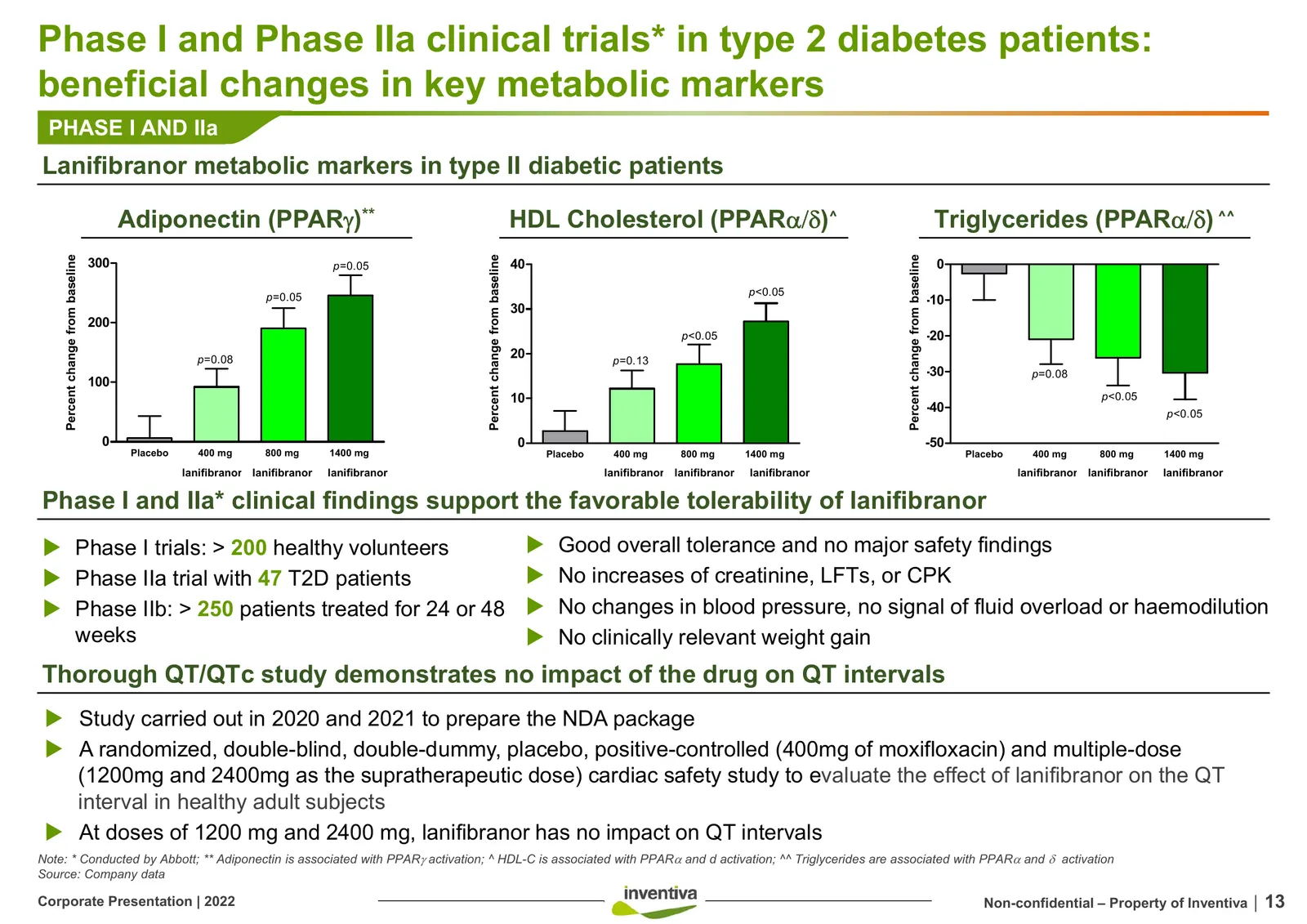
Slide 13: Phase I and Phase IIa trials in type 2 diabetes patients: beneficial changes in metabolic markers
Phase I and Phase IIa clinical trials* in type 2 diabetes patients: beneficial changes in key metabolic markers PHASE I AND IIa Lanifibranor metabolic markers in type II diabetic patients Adiponectin (PPAR)** HDL Cholesterol (PPAR)^ Triglycerides (PPAR) ^^ baseline baseline baseline 300 p=0.0
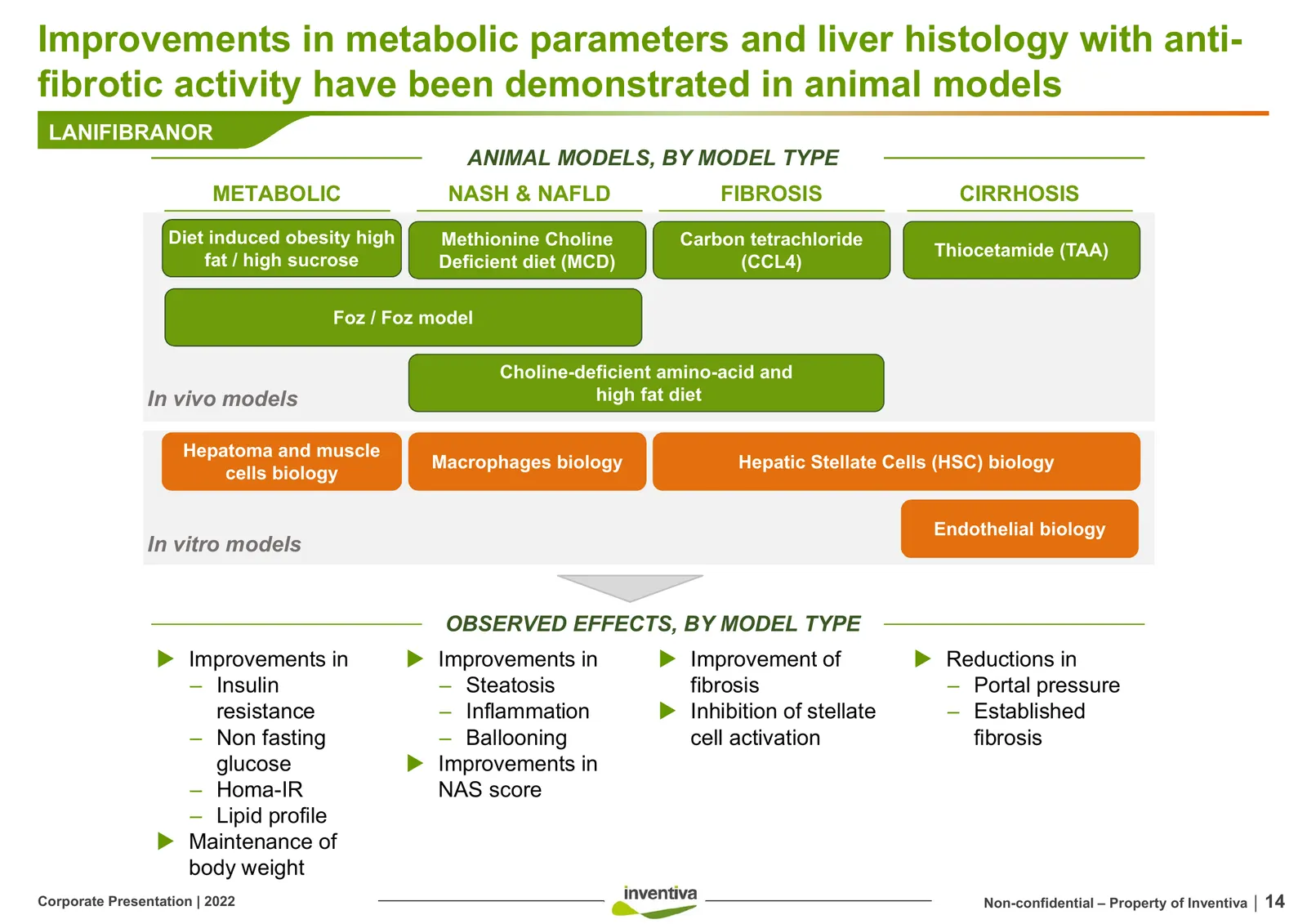
Slide 14: Improvements in metabolic parameters and liver histology demonstrated in animal models
Improvements in metabolic parameters and liver histology with anti- fibrotic activity have been demonstrated in animal models LANIFIBRANOR ANIMAL MODELS, BY MODEL TYPE METABOLIC NASH & NAFLD FIBROSIS CIRRHOSIS Diet induced obesity high Methionine Choline Carbon tetrachloride Thiocetamide (TAA) fat /
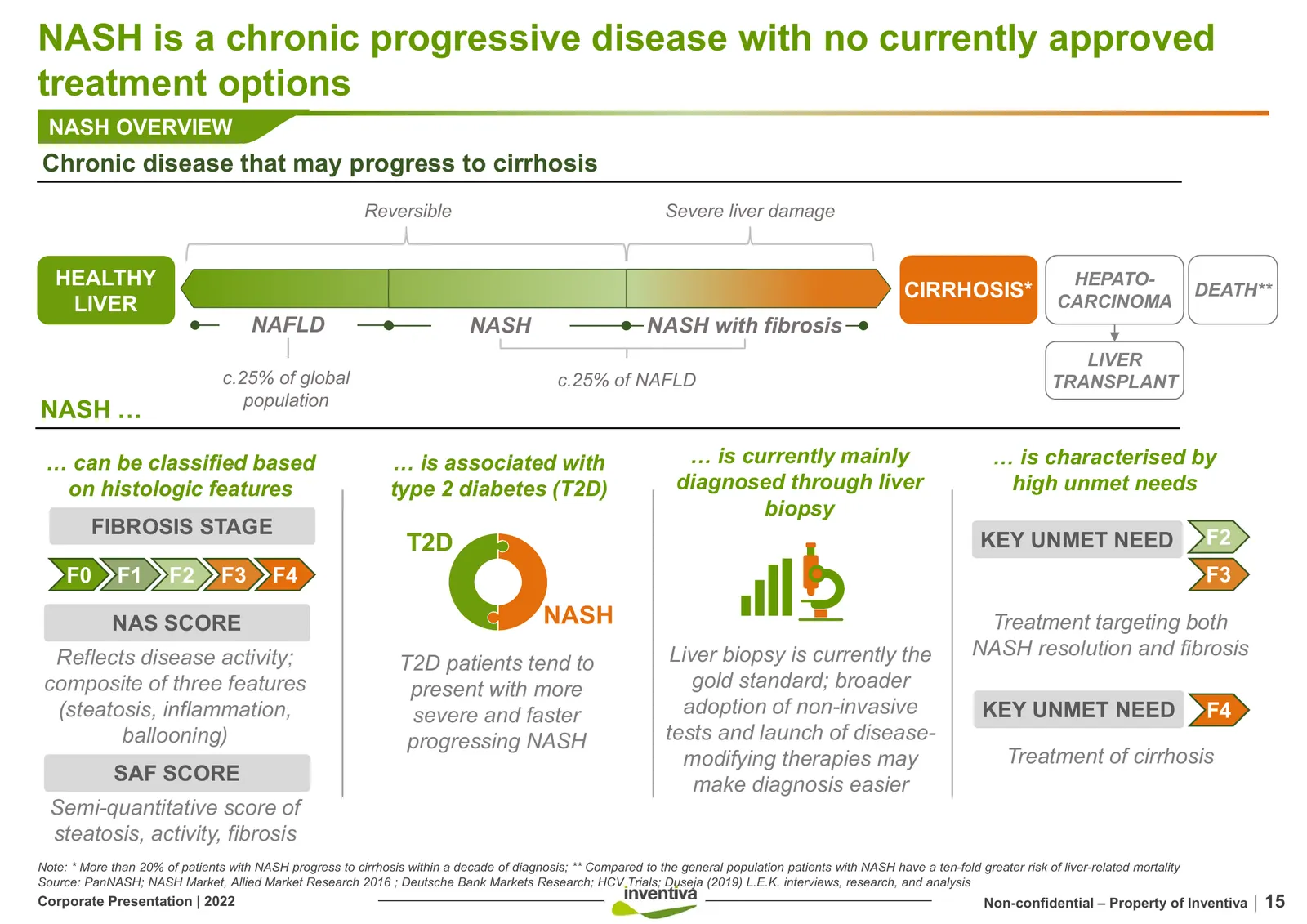
Slide 15: NASH is a chronic progressive disease with no currently approved treatment options
NASH is a chronic progressive disease with no currently approved treatment options NASH OVERVIEW Chronic disease that may progress to cirrhosis Reversible Severe liver damage HEALTHY HEPATO- CIRRHOSIS* CARCINOMA DEATH** LIVER NAFLD NASH NASH with fibrosis LIVER c.25% of global c.25% of NAFLD TRANSPL
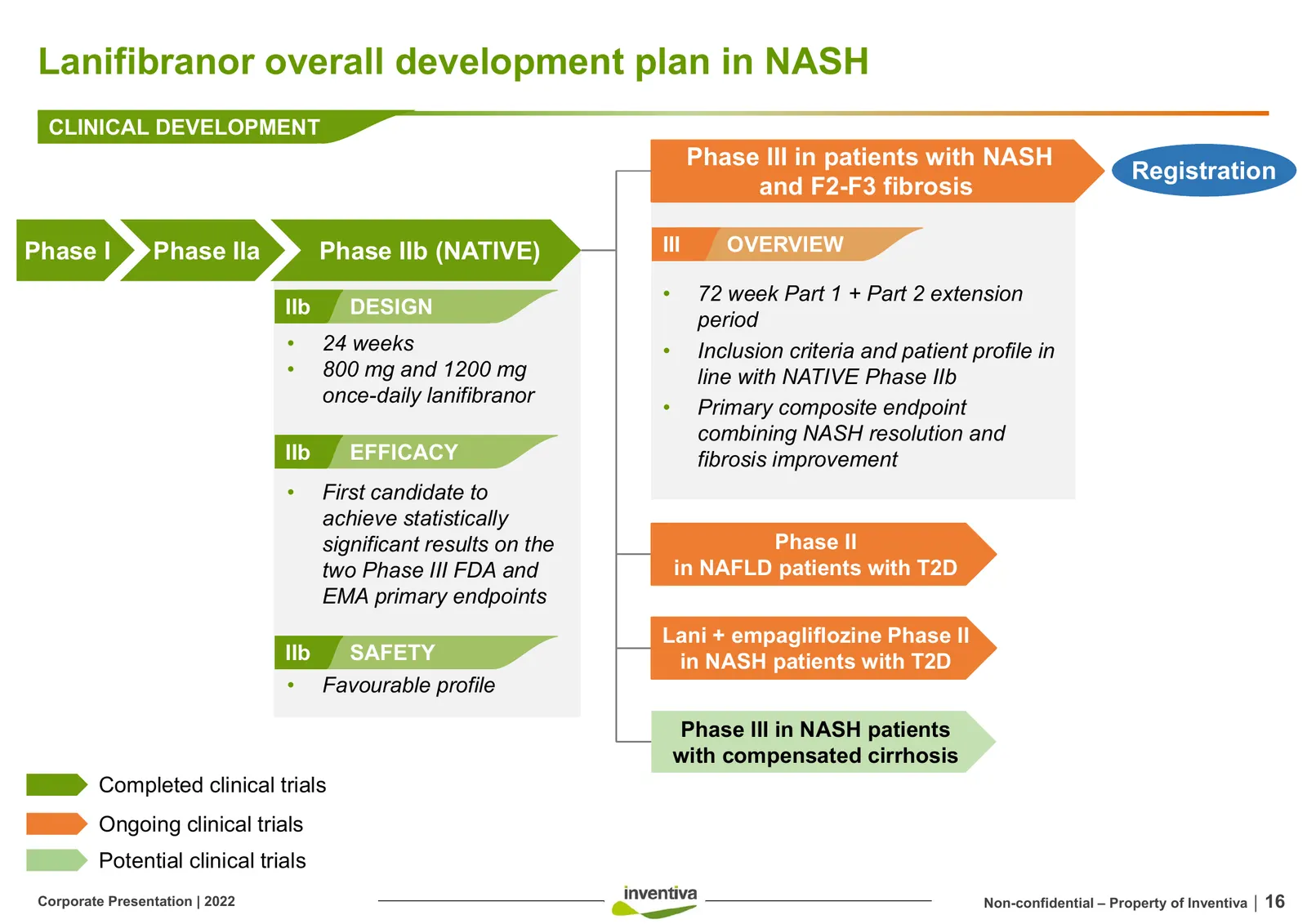
Slide 16: Lanifibranor overall development plan in NASH
Lanifibranor overall development plan in NASH CLINICAL DEVELOPMENT Phase III in patients with NASH Registration and F2-F3 fibrosis Phase I Phase IIa Phase IIb (NATIVE) III OVERVIEW • 72 week Part 1 + Part 2 extension IIb DESIGN period • 24 weeks • Inclusion criteria and patient profile in • 800 mg a
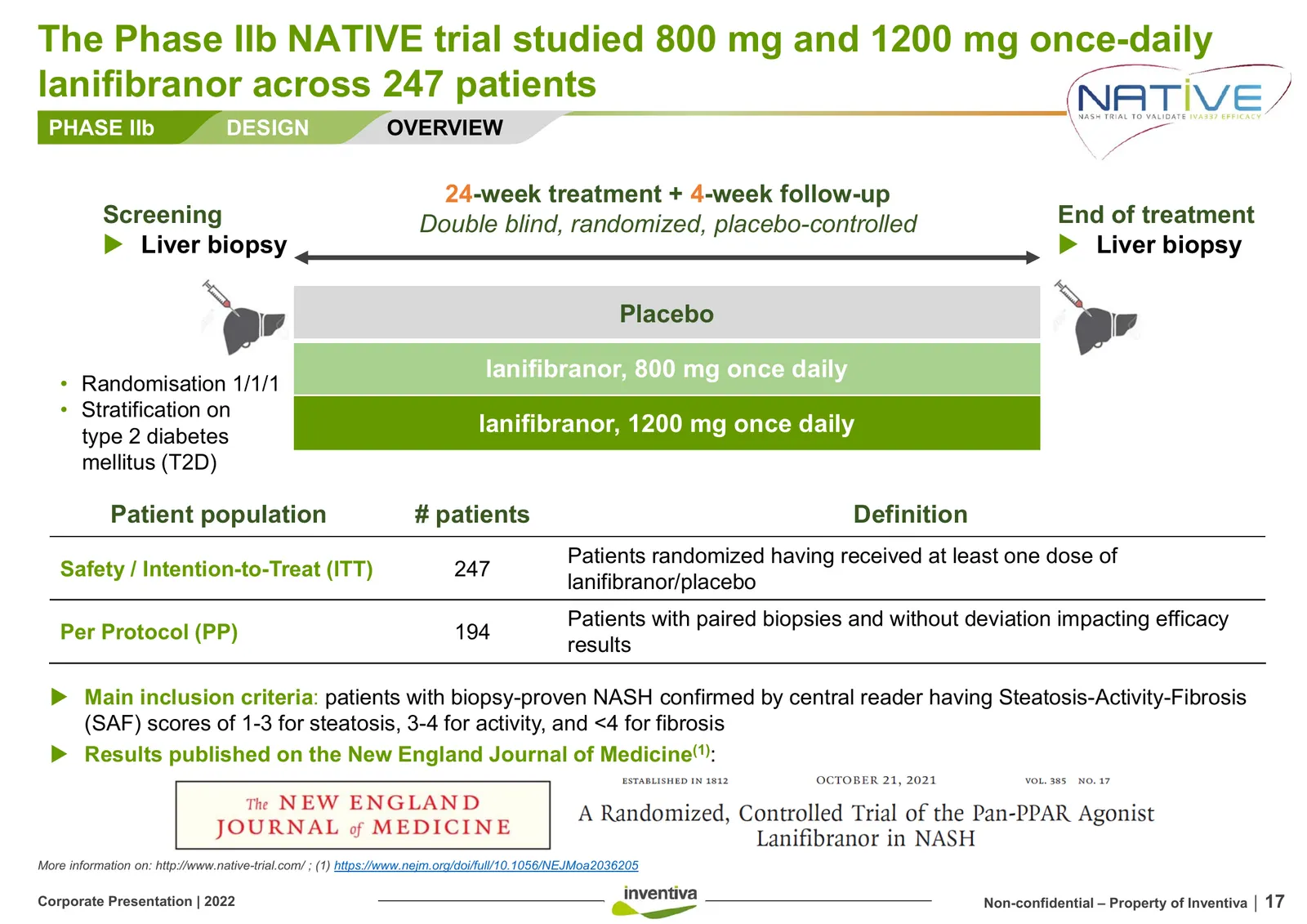
Slide 17: The Phase IIb NATIVE trial studied 800 mg and 1200 mg lanifibranor across 247 patients
The Phase IIb NATIVE trial studied 800 mg and 1200 mg once-daily lanifibranor across 247 patients PHASE IIb DESIGN OVERVIEW 24-week treatment + 4-week follow-up Screening Double blind, randomized, placebo-controlled End of treatment Liver biopsy Liver biopsy Placebo lanifibranor, 800 mg once dai
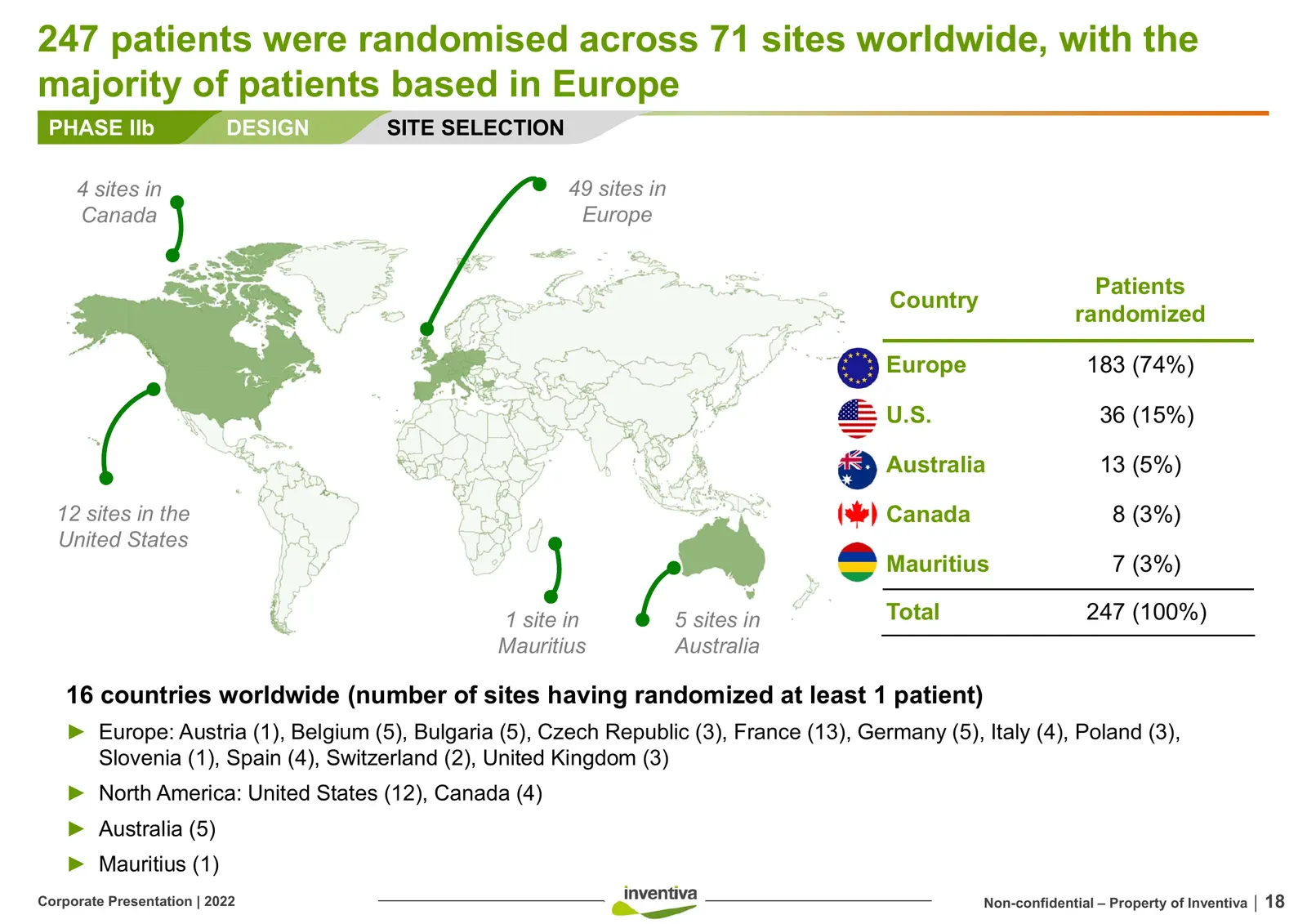
Slide 18: 247 patients randomised across 71 sites worldwide
247 patients were randomised across 71 sites worldwide, with the majority of patients based in Europe PHASE IIb DESIGN SITE SELECTION 4 sites in 49 sites in Canada Europe Patients Country randomized Europe 183 (74%) U.S. 36 (15%) Australia 13 (5%) 12 sites in the Canada 8 (3%) United States Mauritiu
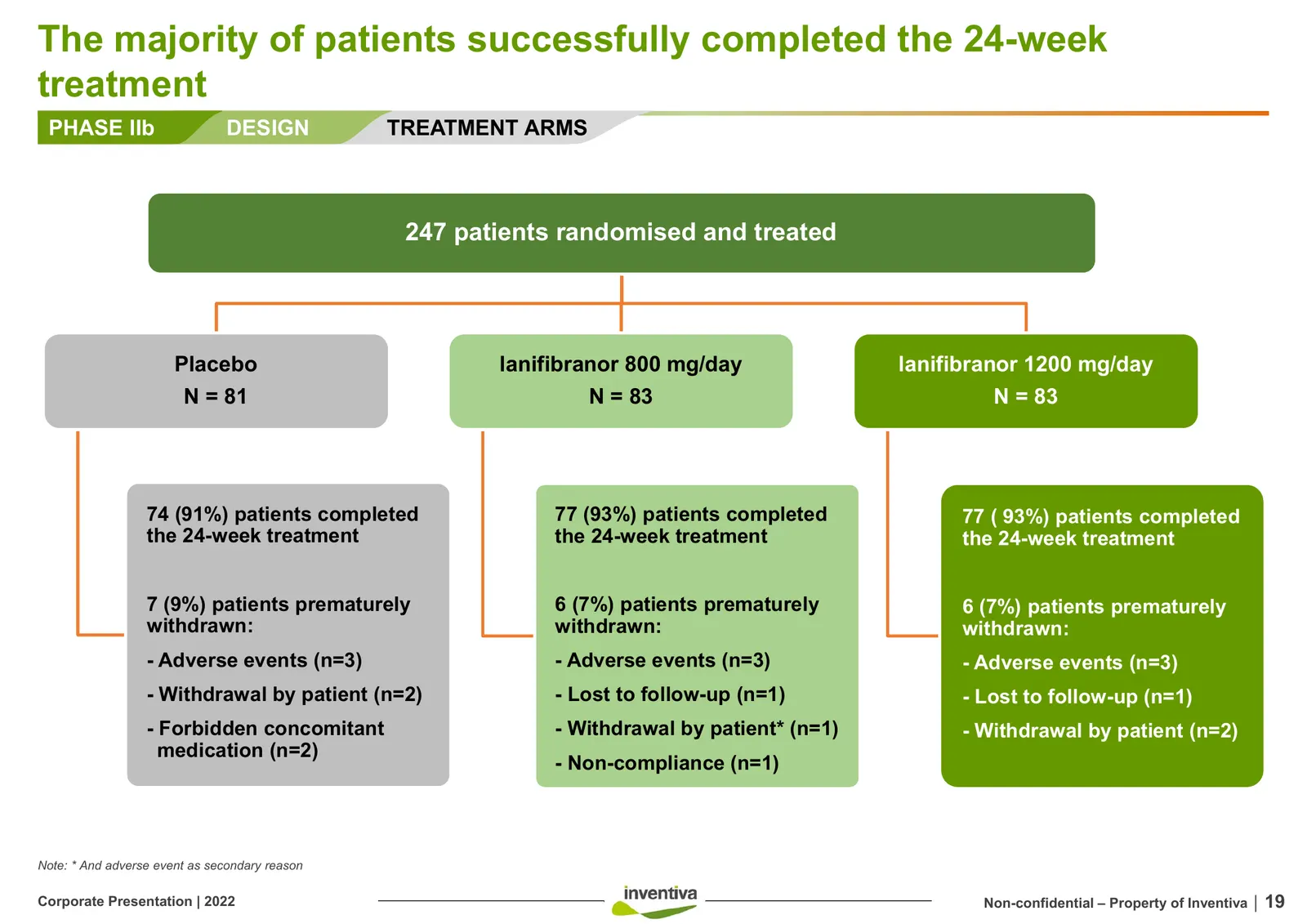
Slide 19: The majority of patients successfully completed the 24-week treatment
The majority of patients successfully completed the 24-week treatment PHASE IIb DESIGN TREATMENT ARMS 247 patients randomised and treated Placebo lanifibranor 800 mg/day lanifibranor 1200 mg/day N = 81 N = 83 N = 83 74 (91%) patients completed 77 (93%) patients completed 77 ( 93%) patients completed
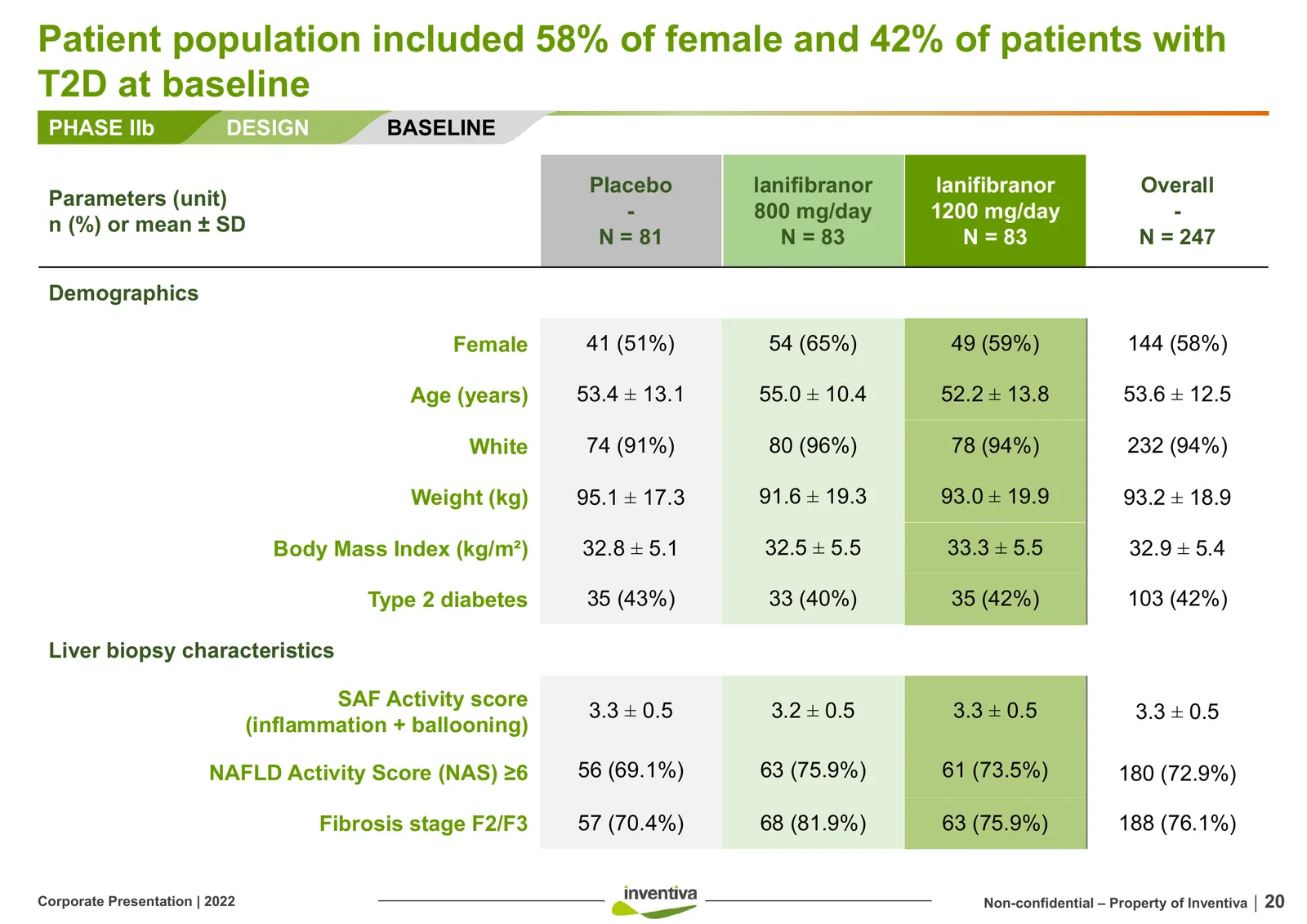
Slide 20: Patient population included 58% female and 42% with T2D at baseline
Patient population included 58% of female and 42% of patients with T2D at baseline PHASE IIb DESIGN BASELINE Placebo lanifibranor lanifibranor Overall Parameters (unit) - 800 mg/day 1200 mg/day - n (%) or mean ± SD N = 81 N = 83 N = 83 N = 247 Demographics Female 41 (51%) 54 (65%) 49 (59%) 144 (58%)
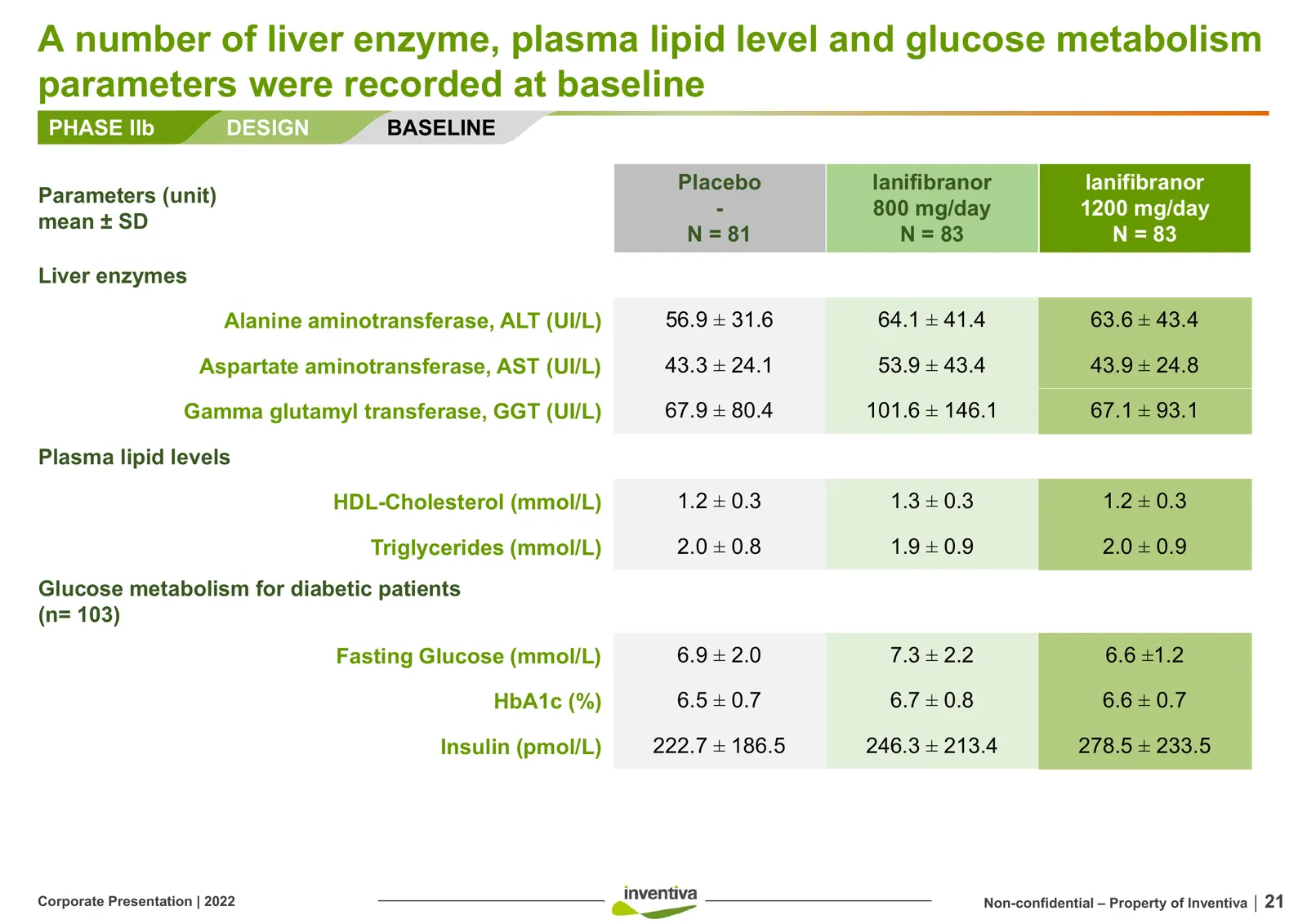
Slide 21: Liver enzyme, lipid and glucose parameters recorded at baseline
A number of liver enzyme, plasma lipid level and glucose metabolism parameters were recorded at baseline PHASE IIb DESIGN BASELINE Placebo lanifibranor lanifibranor Parameters (unit) - 800 mg/day 1200 mg/day mean ± SD N = 81 N = 83 N = 83 Liver enzymes Alanine aminotransferase, ALT (UI/L) 56.9 ± 31.
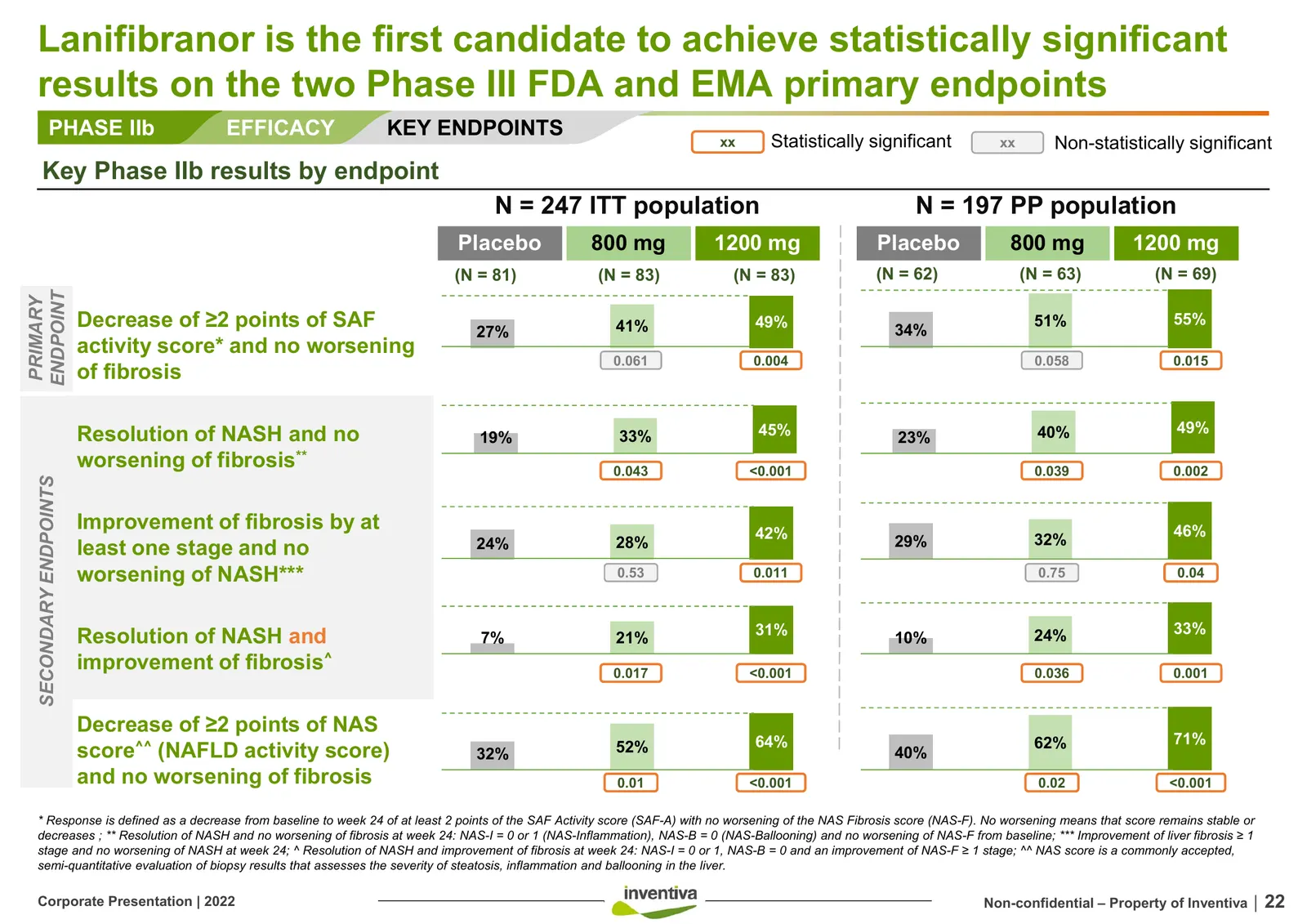
Slide 22: First candidate to achieve statistically significant results on the two Phase III primary endpoints
Lanifibranor is the first candidate to achieve statistically significant results on the two Phase III FDA and EMA primary endpoints PHASE IIb EFFICACY KEY ENDPOINTS xx Statistically significant xx Non-statistically significant Key Phase IIb results by endpoint N = 247 ITT population N = 197 PP popul
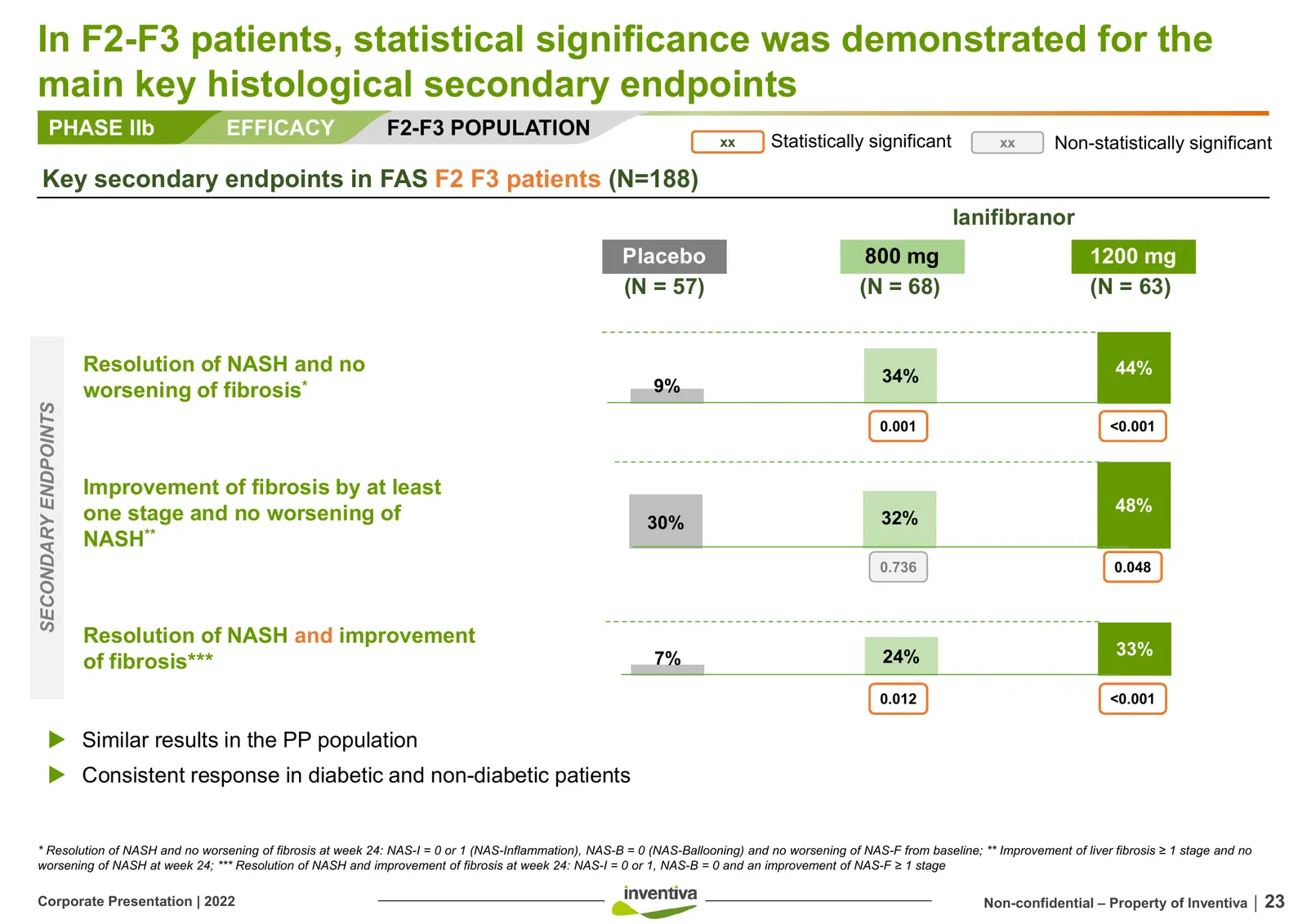
Slide 23: In F2-F3 patients, significance shown for key histological secondary endpoints
In F2-F3 patients, statistical significance was demonstrated for the main key histological secondary endpoints PHASE IIb EFFICACY F2-F3 POPULATION xx Statistically significant xx Non-statistically significant Key secondary endpoints in FAS F2 F3 patients (N=188) lanifibranor Placebo Placebo 800 mg 8
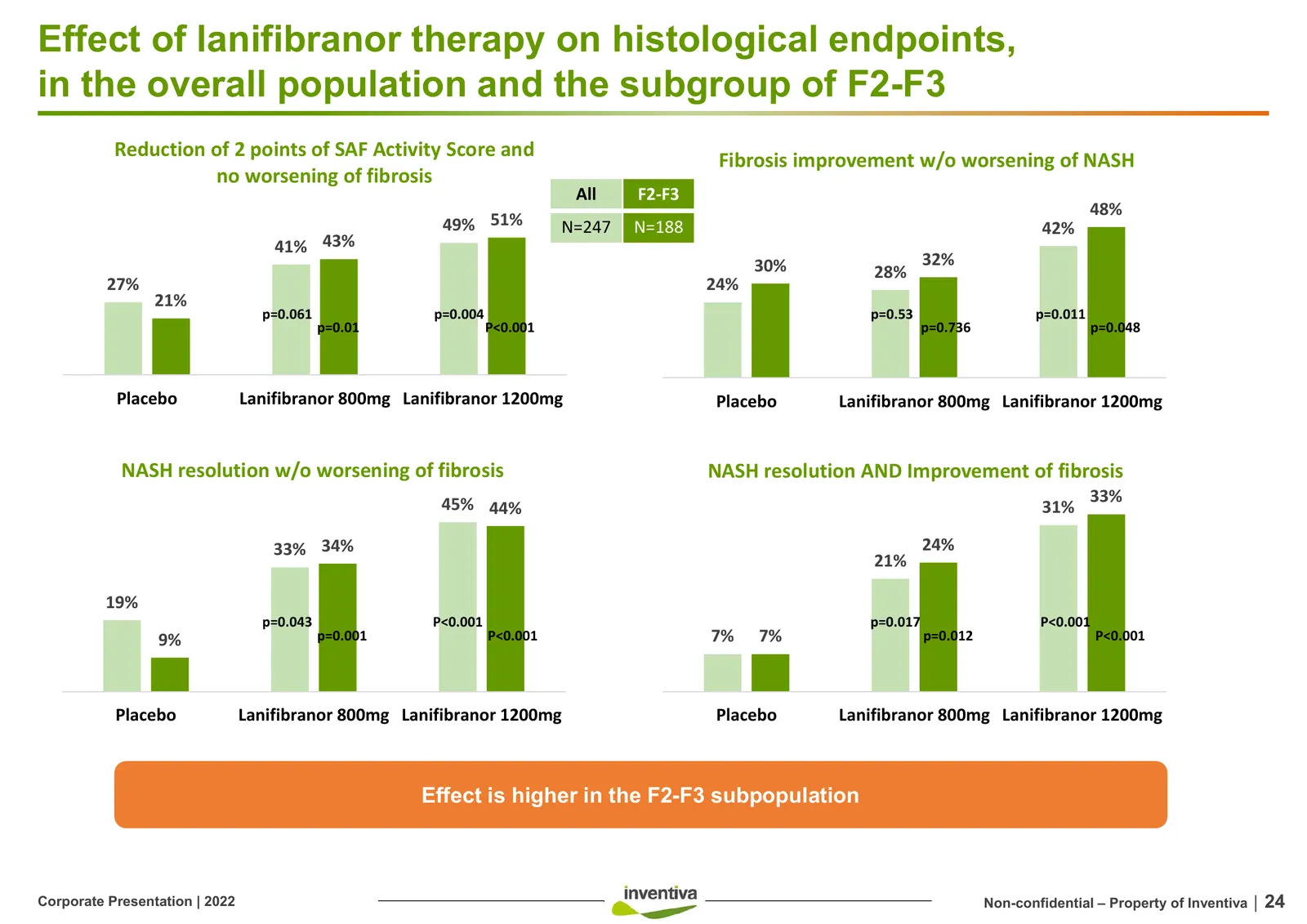
Slide 24: Effect on histological endpoints in overall population and F2-F3 subgroup
Effect of lanifibranor therapy on histological endpoints, in the overall population and the subgroup of F2-F3 Reduction of 2 points of SAF Activity Score and Fibrosis improvement w/o worsening of NASH no worsening of fibrosis All F2‐F3 48% 49% 51% N=247 N=188 42% 41% 43% 30% 32% 28% 27% 24% 21% p=0.
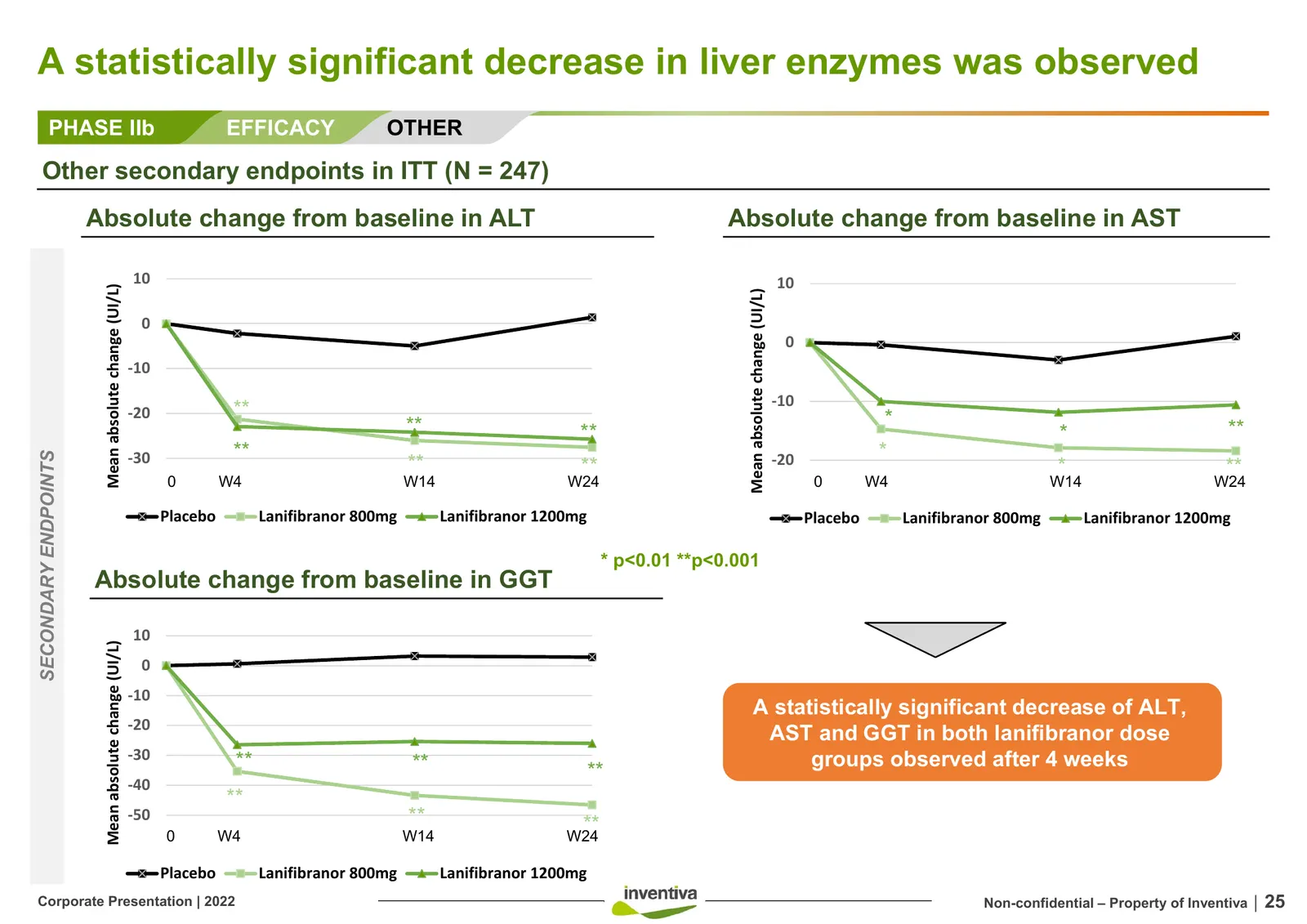
Slide 25: A statistically significant decrease in liver enzymes was observed
A statistically significant decrease in liver enzymes was observed PHASE IIb EFFICACY OTHER Other secondary endpoints in ITT (N = 247) Absolute change from baseline in ALT Absolute change from baseline in AST 10 10 Mean absolute change (UI/L) Mean absolute change (UI/L) 0 0 ‐10 ‐10 ‐20 ** * ** ** *
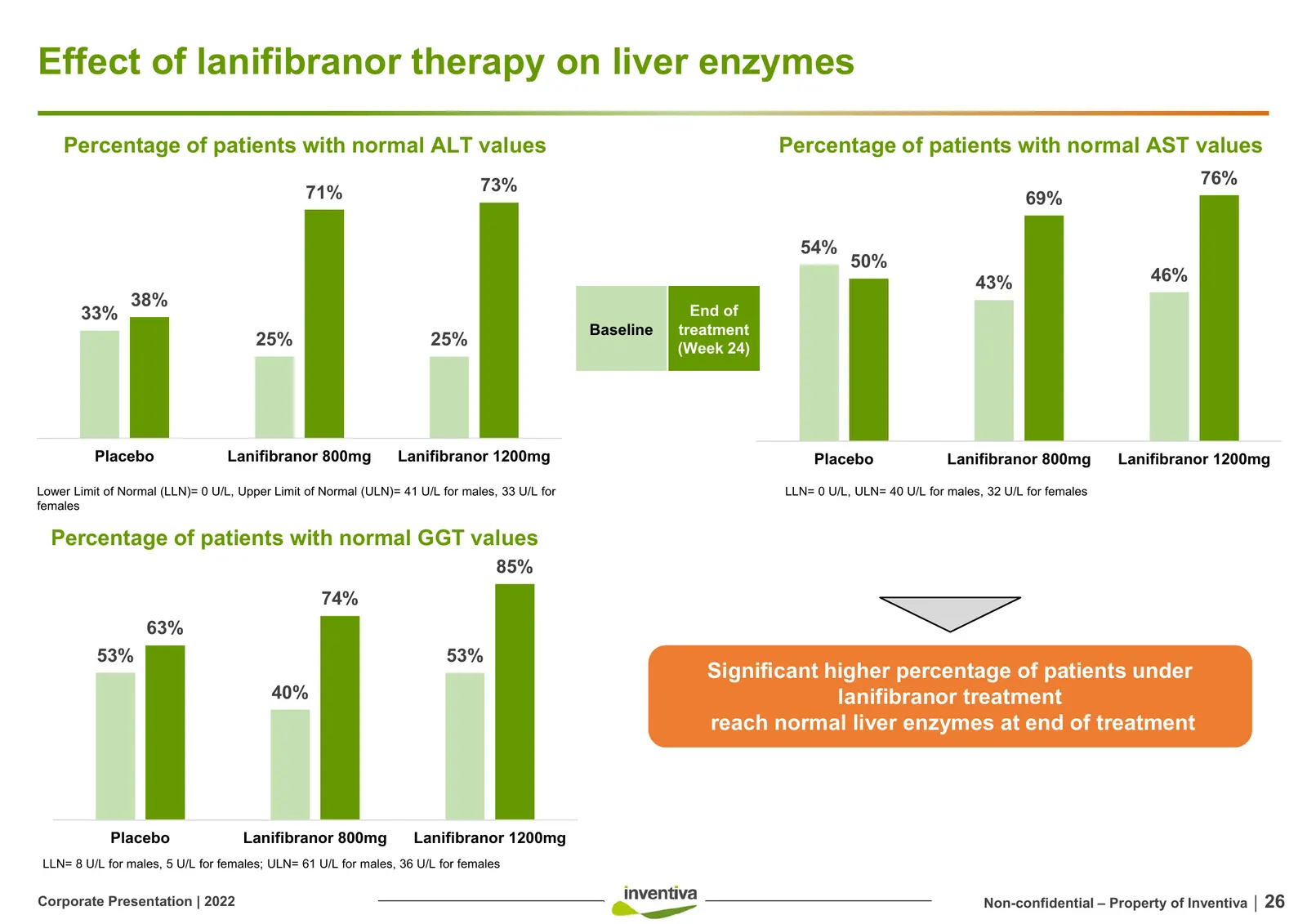
Slide 26: Effect of lanifibranor therapy on liver enzymes
Effect of lanifibranor therapy on liver enzymes Percentage of patients with normal ALT values Percentage of patients with normal AST values 73% 76% 71% 69% 54% 50% 43% 46% 38% 33% End of Baseline treatment 25% 25% (Week 24) Placebo Lanifibranor 800mg Lanifibranor 1200mg Placebo Lanifibranor 800mg La
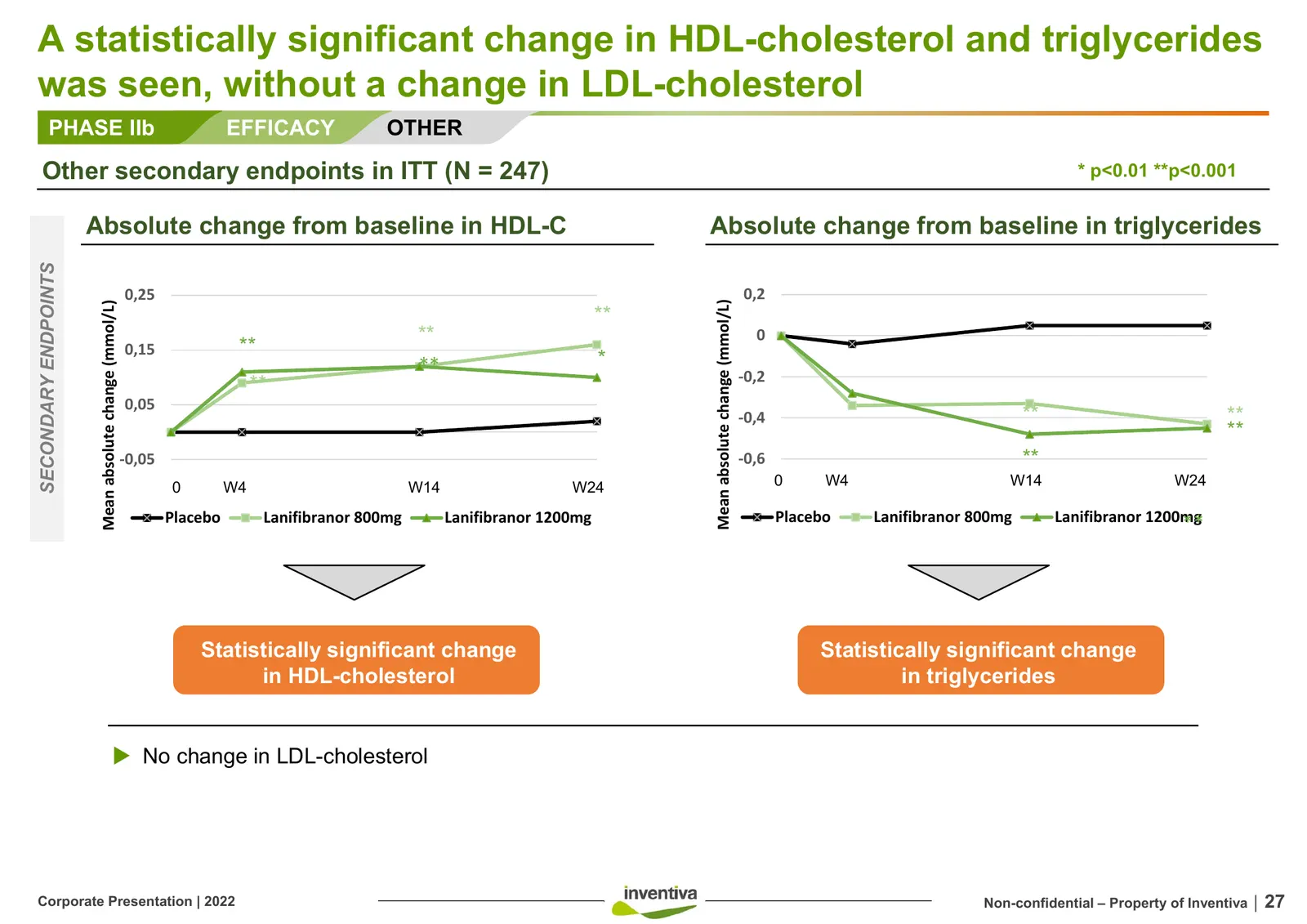
Slide 27: Significant change in HDL-cholesterol and triglycerides, no change in LDL
A statistically significant change in HDL-cholesterol and triglycerides was seen, without a change in LDL-cholesterol PHASE IIb EFFICACY OTHER Other secondary endpoints in ITT (N = 247) * p<0.01 **p<0.001 Absolute change from baseline in HDL-C Absolute change from baseline in triglycerides SECONDARY
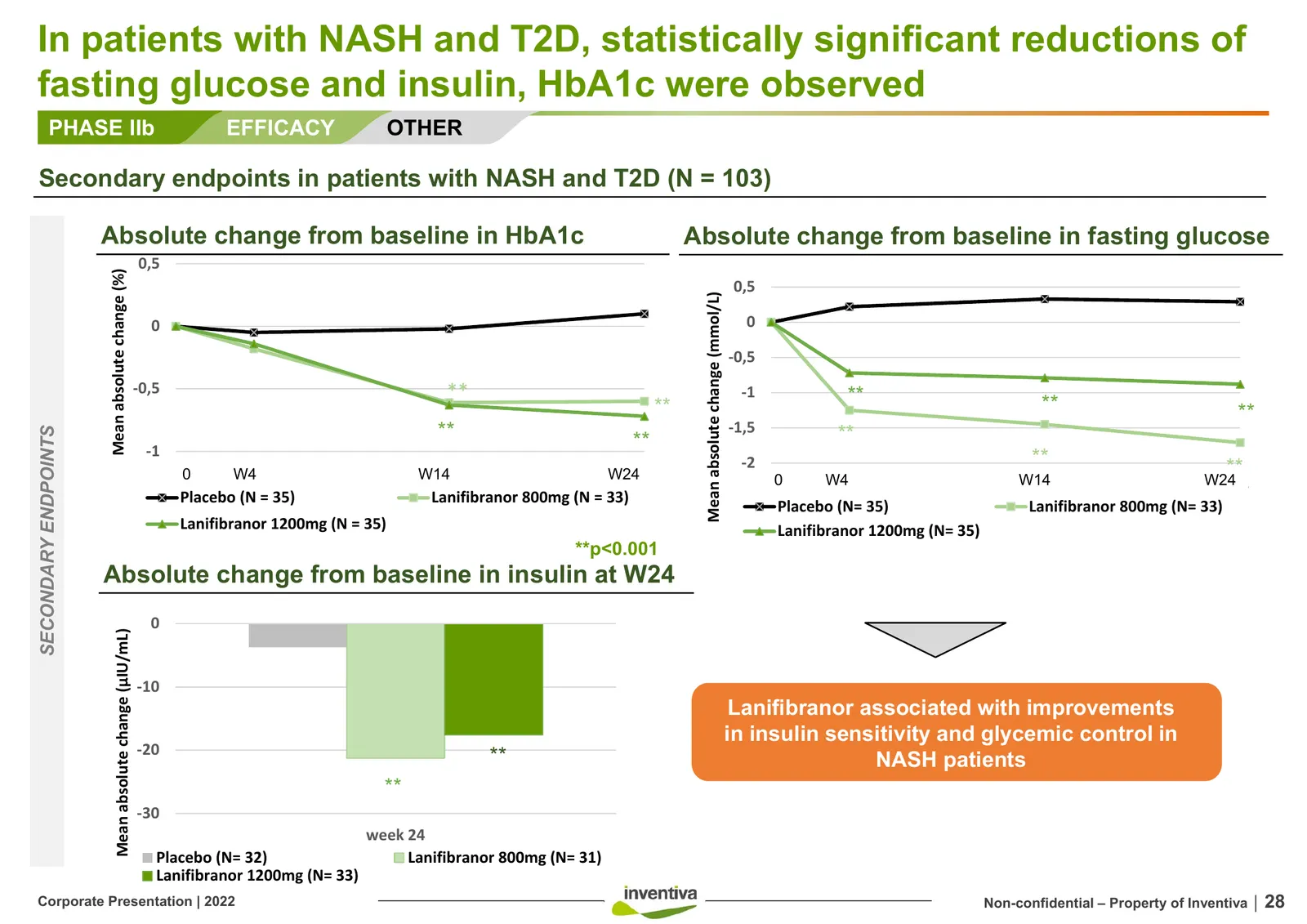
Slide 28: In NASH and T2D, significant reductions of fasting glucose, insulin, HbA1c
In patients with NASH and T2D, statistically significant reductions of fasting glucose and insulin, HbA1c were observed PHASE IIb EFFICACY OTHER Secondary endpoints in patients with NASH and T2D (N = 103) Absolute change from baseline in HbA1c Absolute change from baseline in fasting glucose 0,5 Mea
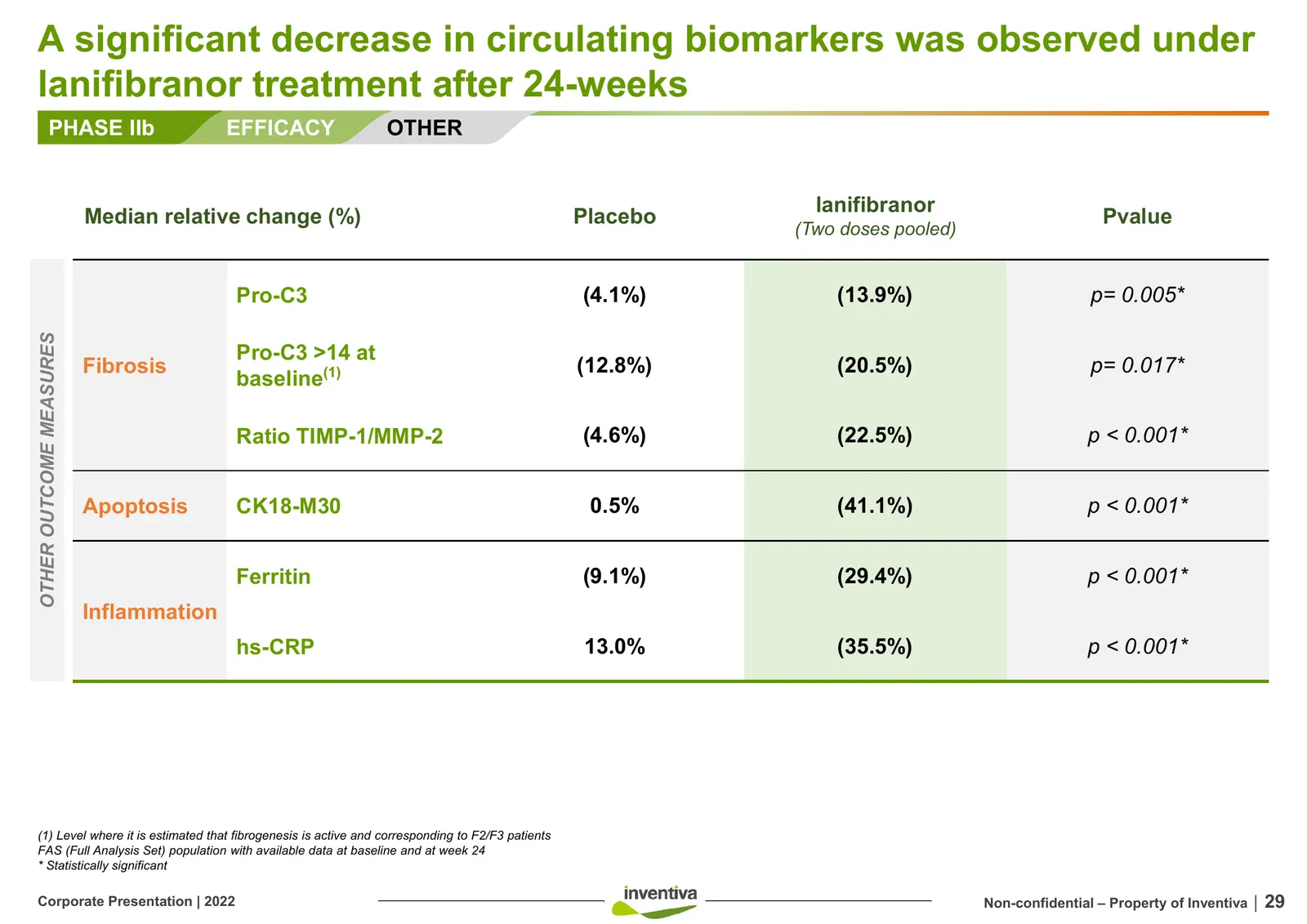
Slide 29: Significant decrease in circulating biomarkers after 24 weeks
A significant decrease in circulating biomarkers was observed under lanifibranor treatment after 24-weeks PHASE IIb EFFICACY OTHER lanifibranor Median relative change (%) Placebo Pvalue (Two doses pooled) Pro-C3 (4.1%) (13.9%) p= 0.005* OTHER OUTCOME MEASURES Pro-C3 >14 at Fibrosis (12.8%) (20.5%) p
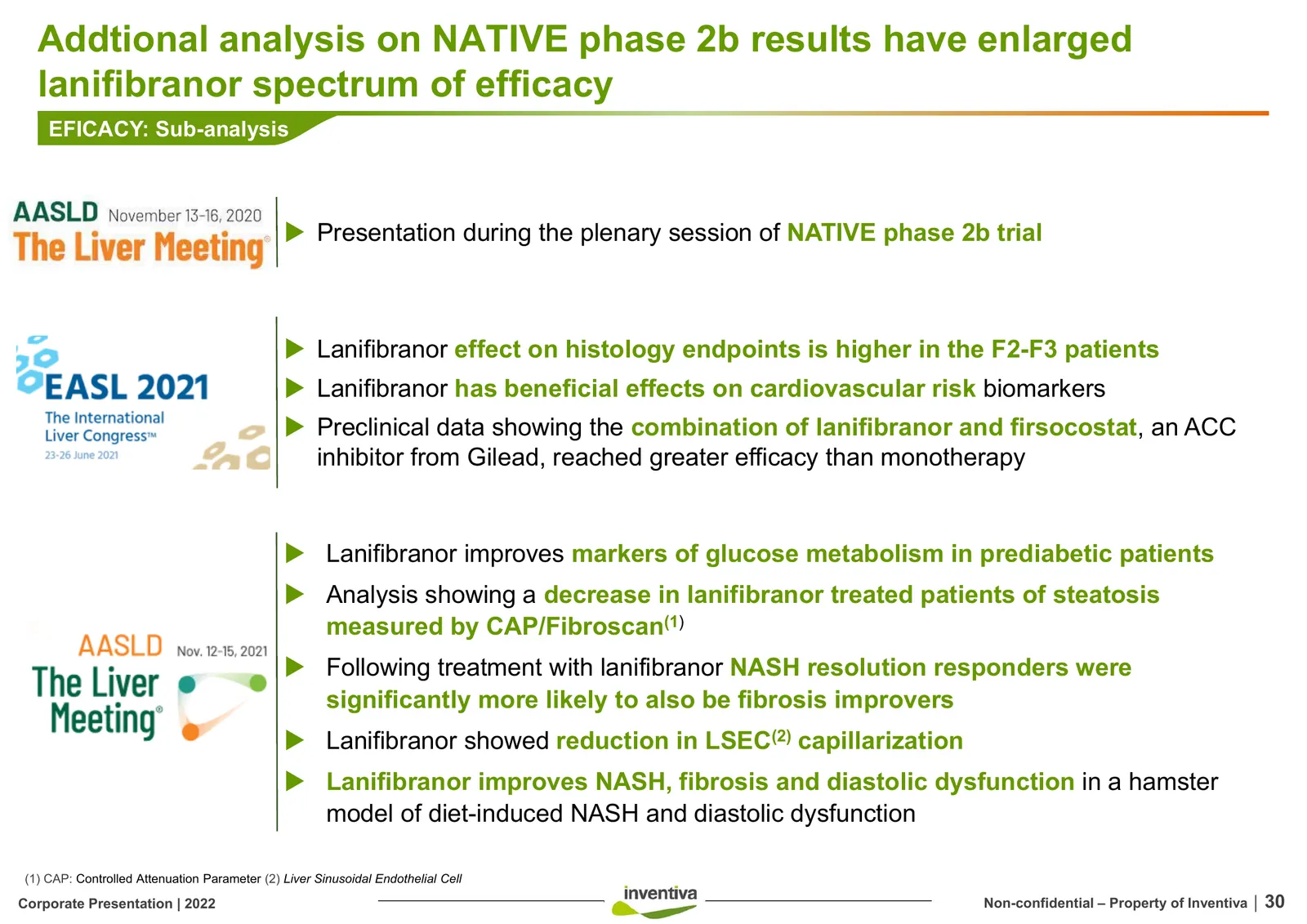
Slide 30: Additional analysis on NATIVE results enlarged lanifibranor spectrum of efficacy
Addtional analysis on NATIVE phase 2b results have enlarged lanifibranor spectrum of efficacy EFICACY: Sub-analysis Presentation during the plenary session of NATIVE phase 2b trial Lanifibranor effect on histology endpoints is higher in the F2-F3 patients Lanifibranor has beneficial effects on
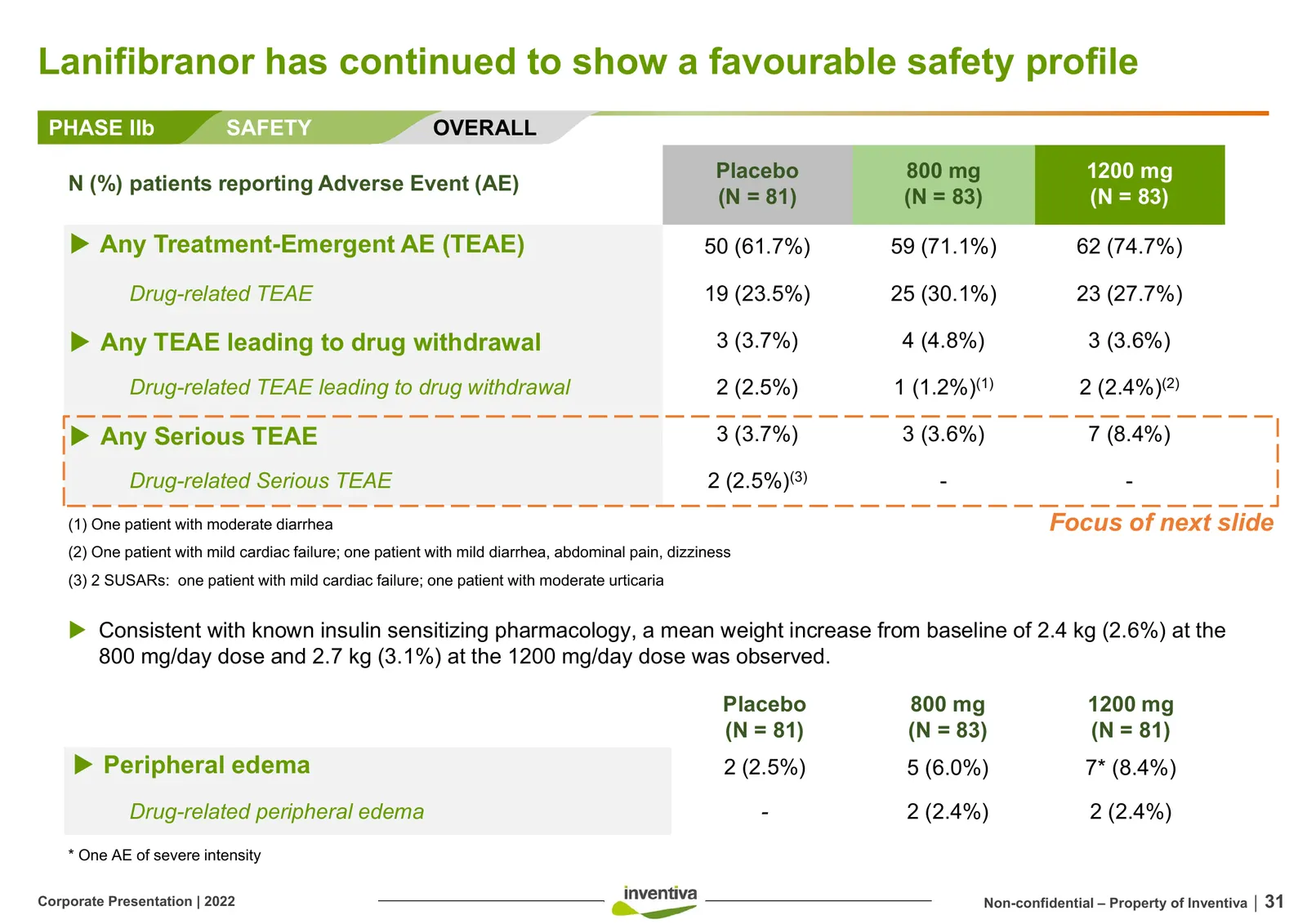
Slide 31: Lanifibranor has continued to show a favourable safety profile
Lanifibranor has continued to show a favourable safety profile PHASE IIb SAFETY OVERALL Placebo 800 mg 1200 mg N (%) patients reporting Adverse Event (AE) (N = 81) (N = 83) (N = 83) Any Treatment-Emergent AE (TEAE) 50 (61.7%) 59 (71.1%) 62 (74.7%) Drug-related TEAE 19 (23.5%) 25 (30.1%) 23 (27.7%)
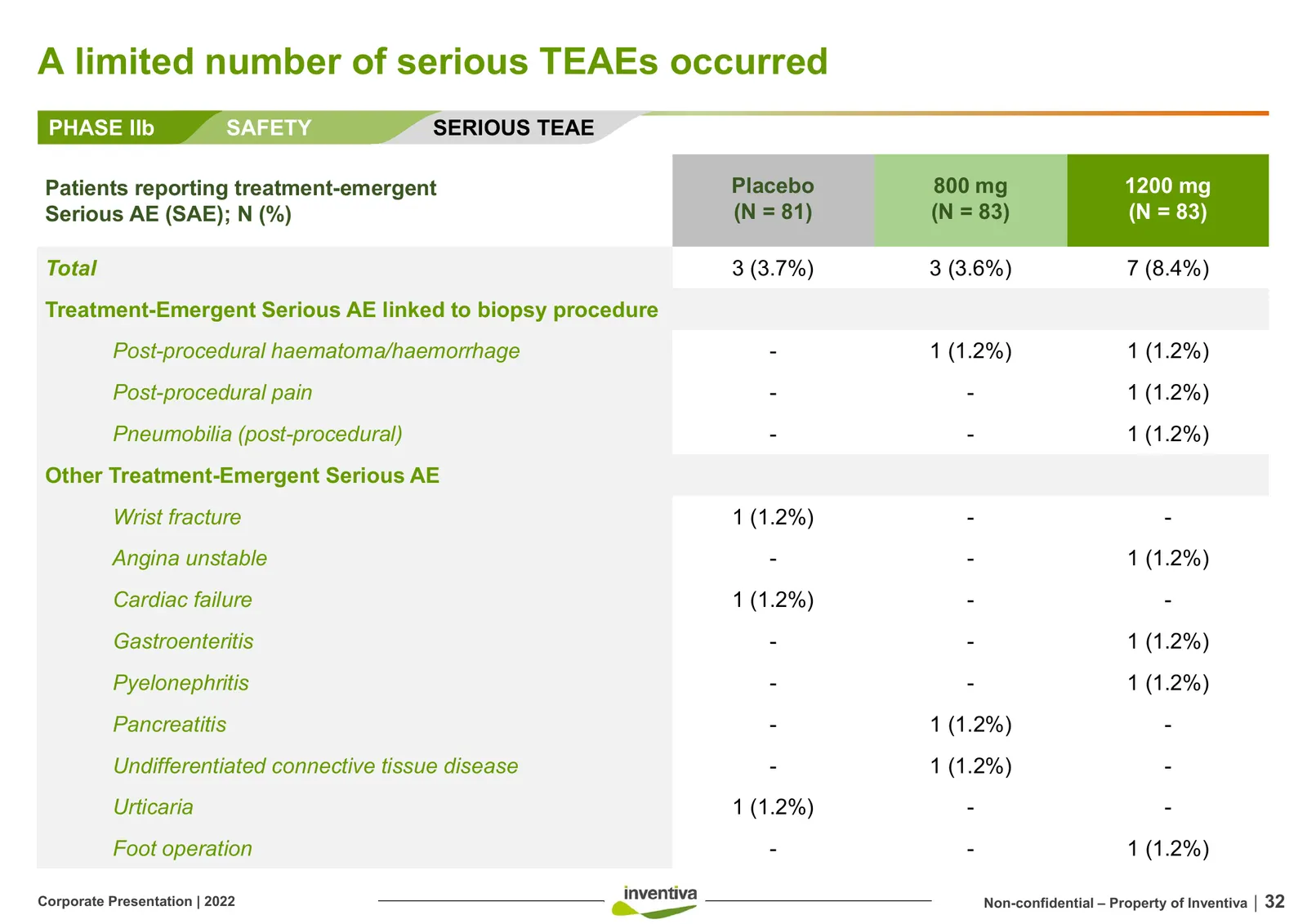
Slide 32: A limited number of serious TEAEs occurred
A limited number of serious TEAEs occurred PHASE IIb SAFETY SERIOUS TEAE Patients reporting treatment-emergent Placebo 800 mg 1200 mg Serious AE (SAE); N (%) (N = 81) (N = 83) (N = 83) Total 3 (3.7%) 3 (3.6%) 7 (8.4%) Treatment-Emergent Serious AE linked to biopsy procedure Post-procedural haematoma
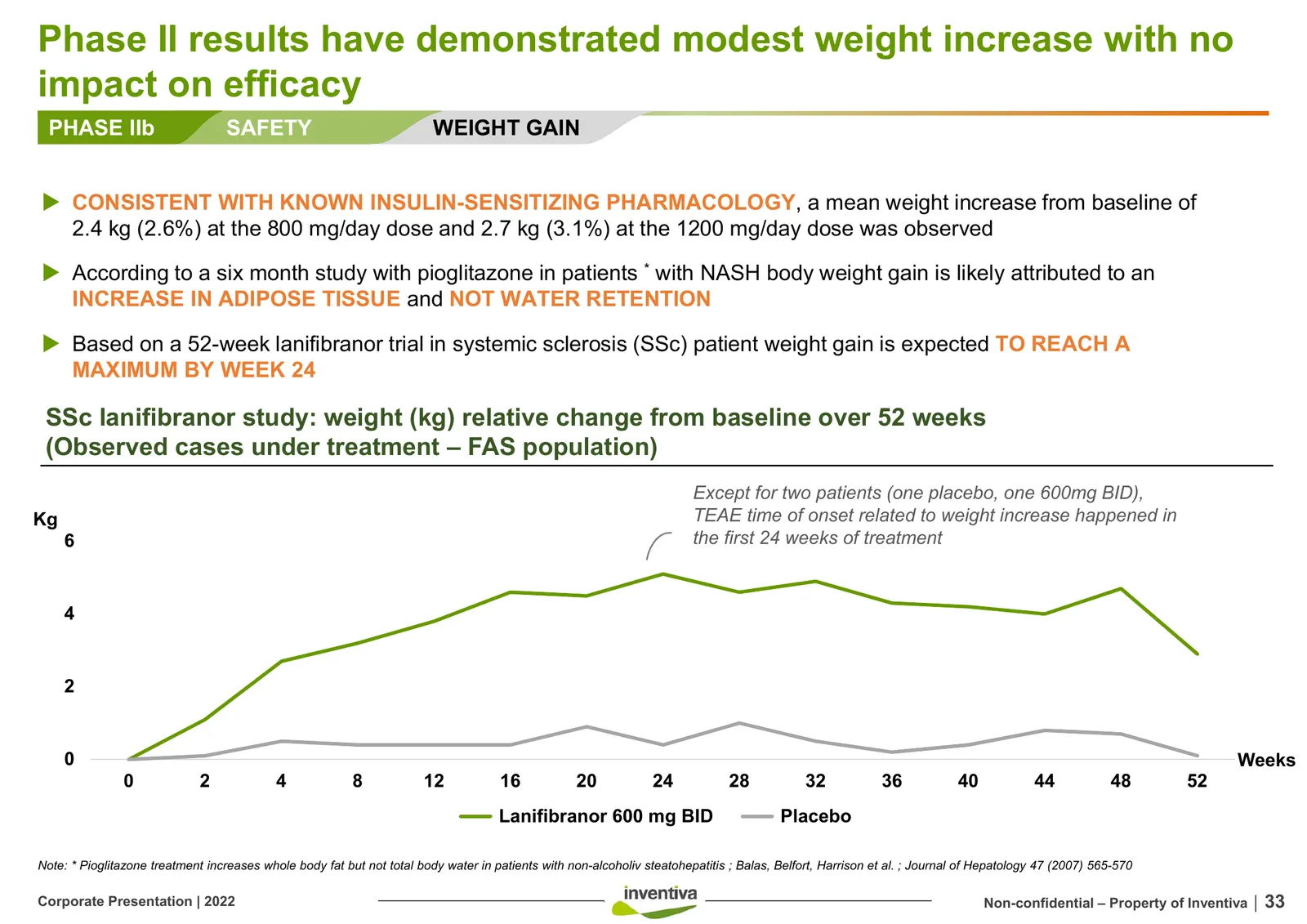
Slide 33: Modest weight increase with no impact on efficacy
Phase II results have demonstrated modest weight increase with no impact on efficacy PHASE IIb SAFETY WEIGHT GAIN CONSISTENT WITH KNOWN INSULIN-SENSITIZING PHARMACOLOGY, a mean weight increase from baseline of 2.4 kg (2.6%) at the 800 mg/day dose and 2.7 kg (3.1%) at the 1200 mg/day dose was obser
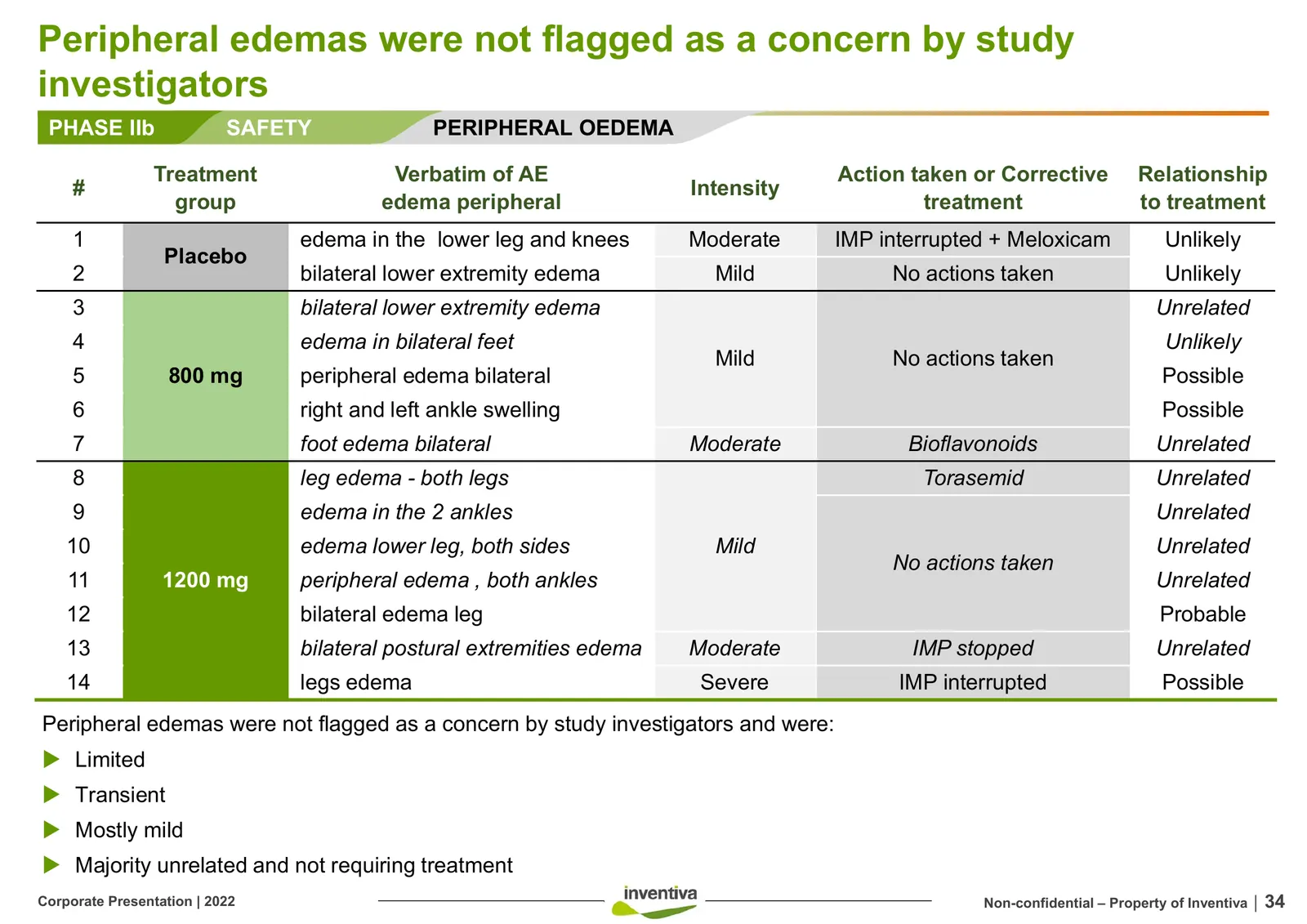
Slide 34: Peripheral edemas were not flagged as a concern by investigators
Peripheral edemas were not flagged as a concern by study investigators PHASE IIb SAFETY PERIPHERAL OEDEMA Treatment Verbatim of AE Action taken or Corrective Relationship # Intensity group edema peripheral treatment to treatment 1 edema in the lower leg and knees Moderate IMP interrupted + Meloxicam
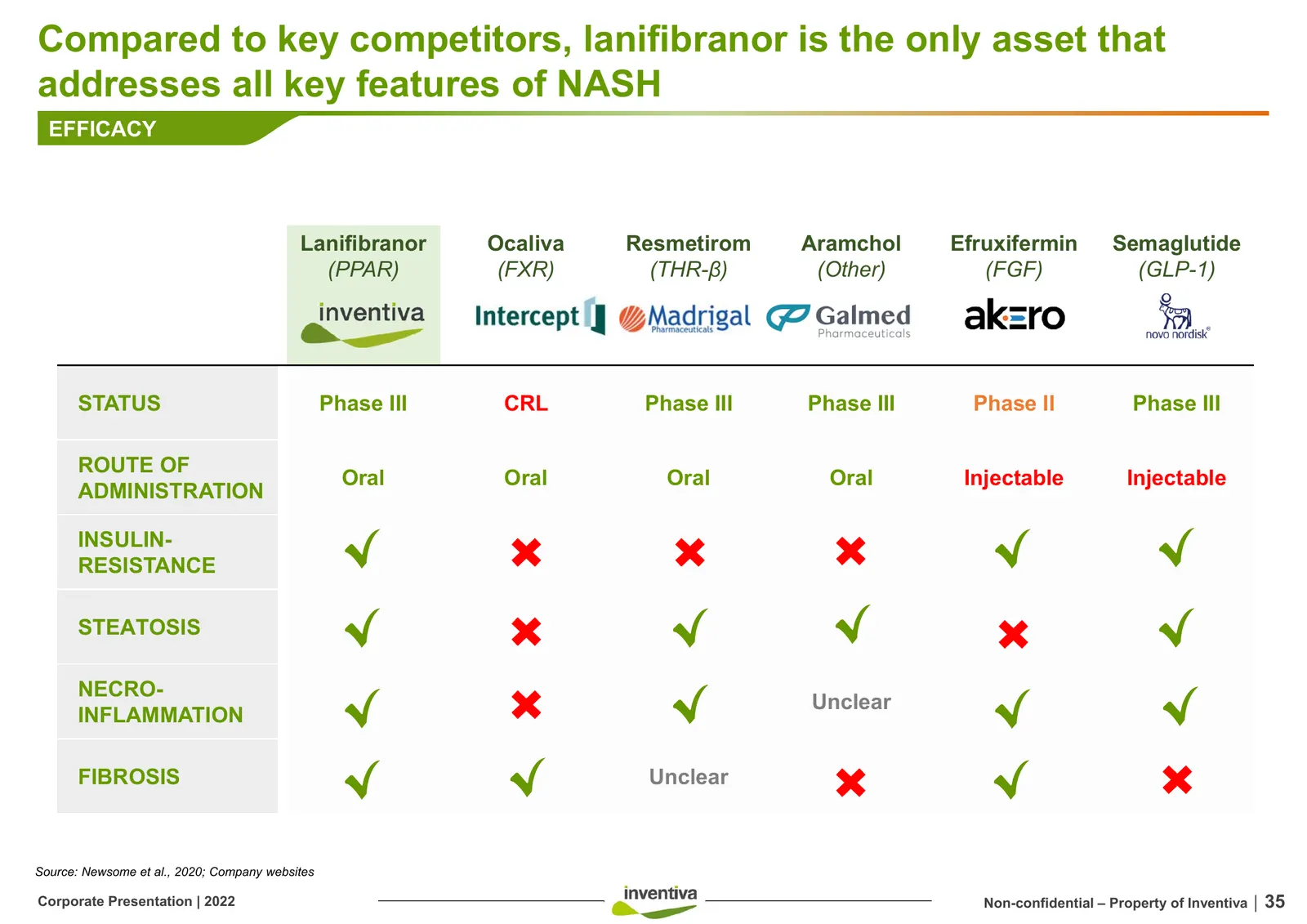
Slide 35: Lanifibranor is the only asset addressing all key features of NASH
Compared to key competitors, lanifibranor is the only asset that addresses all key features of NASH EFFICACY Lanifibranor Ocaliva Resmetirom Aramchol Efruxifermin Semaglutide (PPAR) (FXR) (THR-β) (Other) (FGF) (GLP-1) STATUS Phase III CRL Phase III Phase III Phase II Phase III ROUTE OF Oral Oral Ora
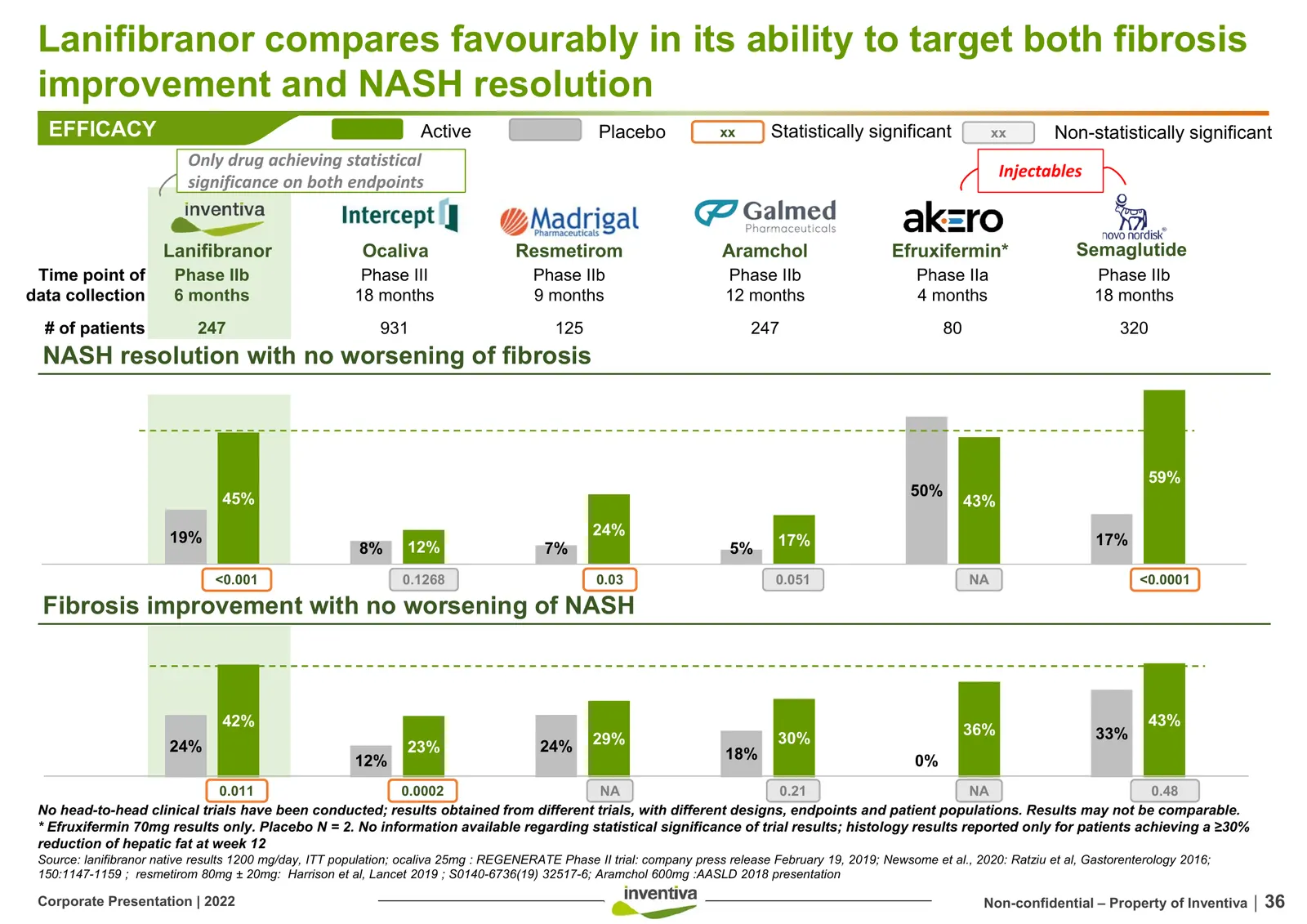
Slide 36: Lanifibranor compares favourably on fibrosis improvement and NASH resolution
Lanifibranor compares favourably in its ability to target both fibrosis improvement and NASH resolution EFFICACY Active Placebo xx Statistically significant xx Non-statistically significant Only drug achieving statistical Injectables significance on both endpoints Lanifibranor Ocaliva Resmetirom Ara
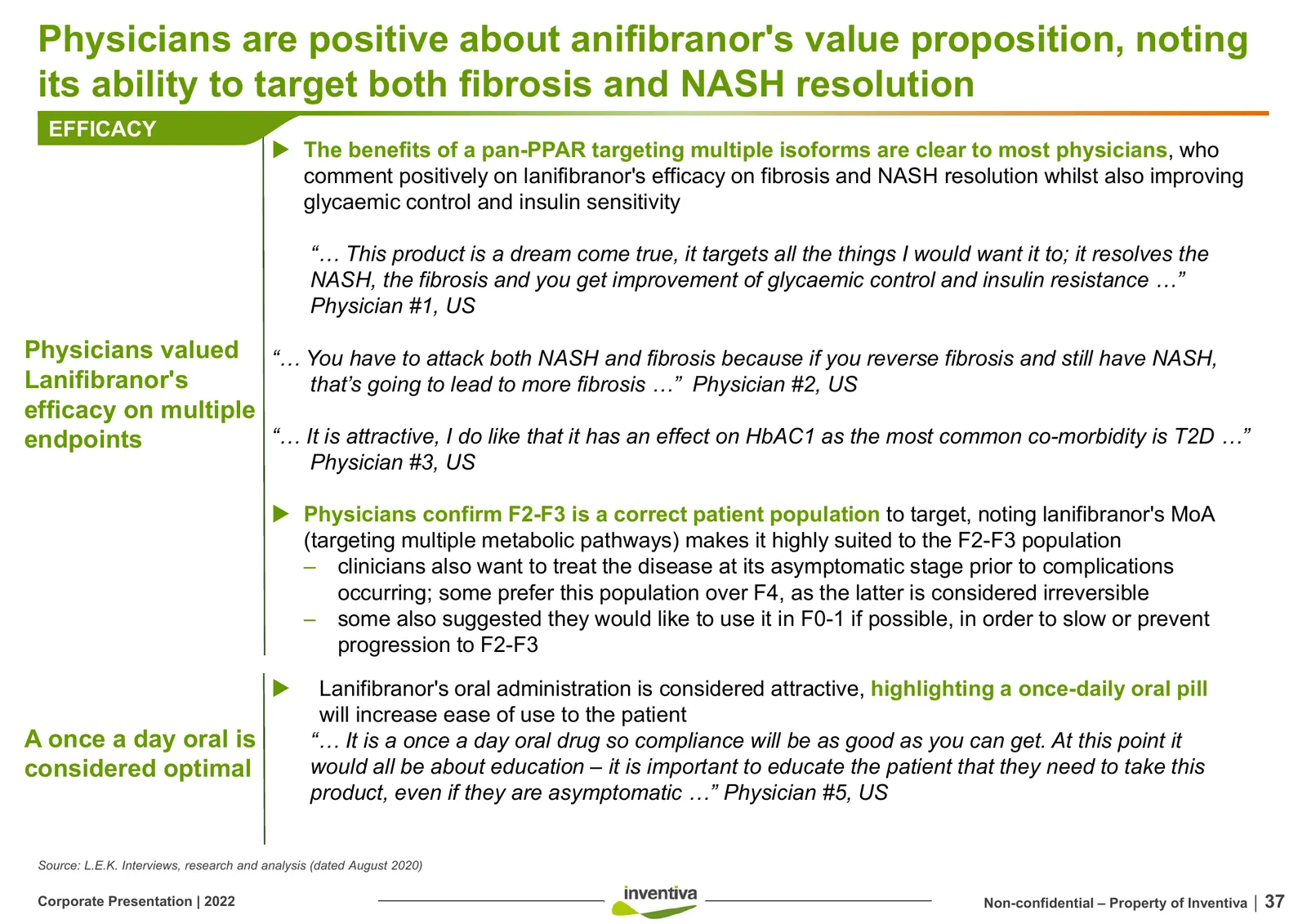
Slide 37: Physicians are positive about lanifibranor's value proposition
Physicians are positive about anifibranor's value proposition, noting its ability to target both fibrosis and NASH resolution EFFICACY The benefits of a pan-PPAR targeting multiple isoforms are clear to most physicians, who comment positively on lanifibranor's efficacy on fibrosis and NASH resolut
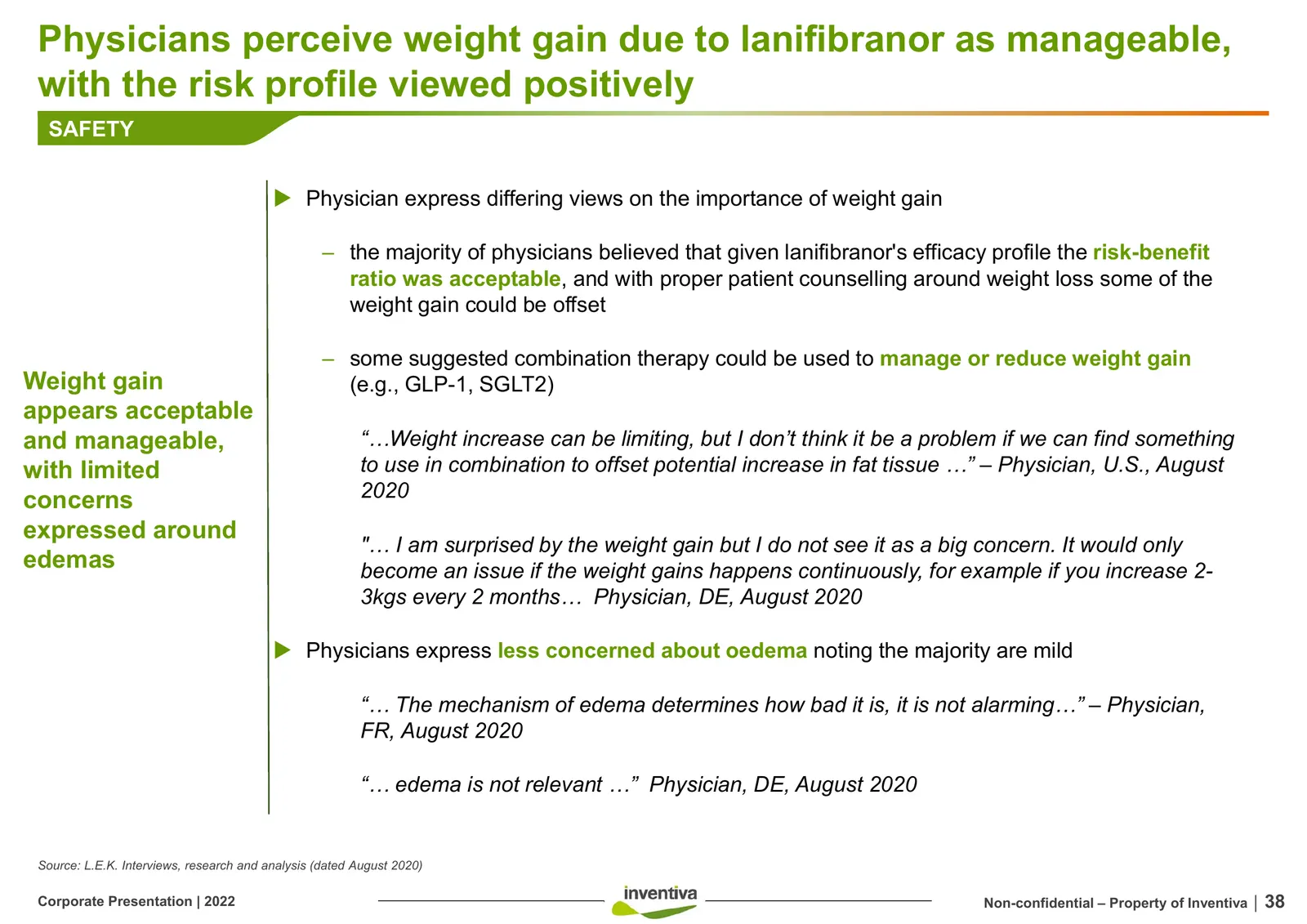
Slide 38: Physicians perceive weight gain as manageable
Physicians perceive weight gain due to lanifibranor as manageable, with the risk profile viewed positively SAFETY Physician express differing views on the importance of weight gain – the majority of physicians believed that given lanifibranor's efficacy profile the risk-benefit ratio was acceptabl
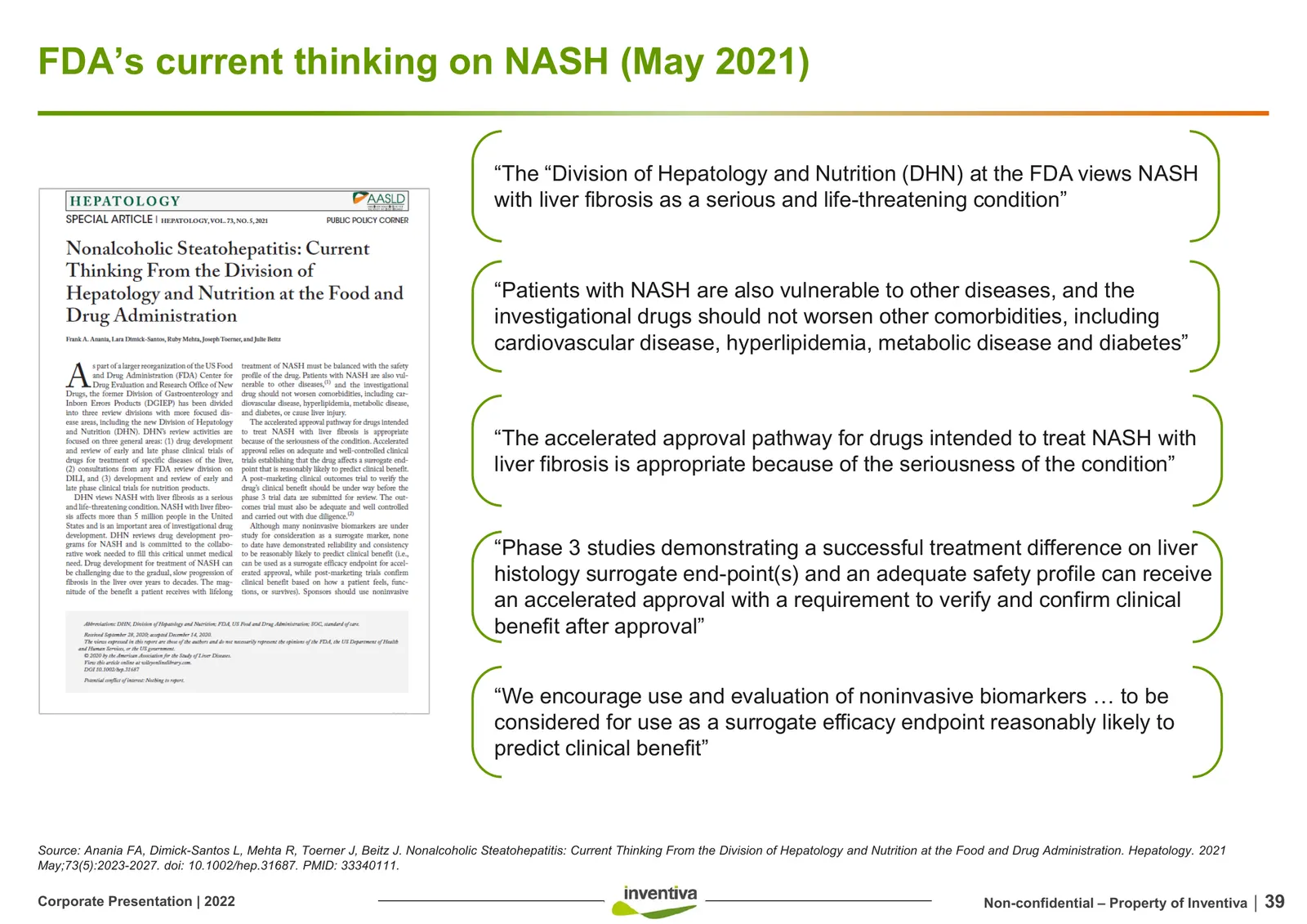
Slide 39: FDA's current thinking on NASH (May 2021)
FDA’s current thinking on NASH (May 2021) “The “Division of Hepatology and Nutrition (DHN) at the FDA views NASH with liver fibrosis as a serious and life-threatening condition” “Patients with NASH are also vulnerable to other diseases, and the investigational drugs should not worsen other comorbidi
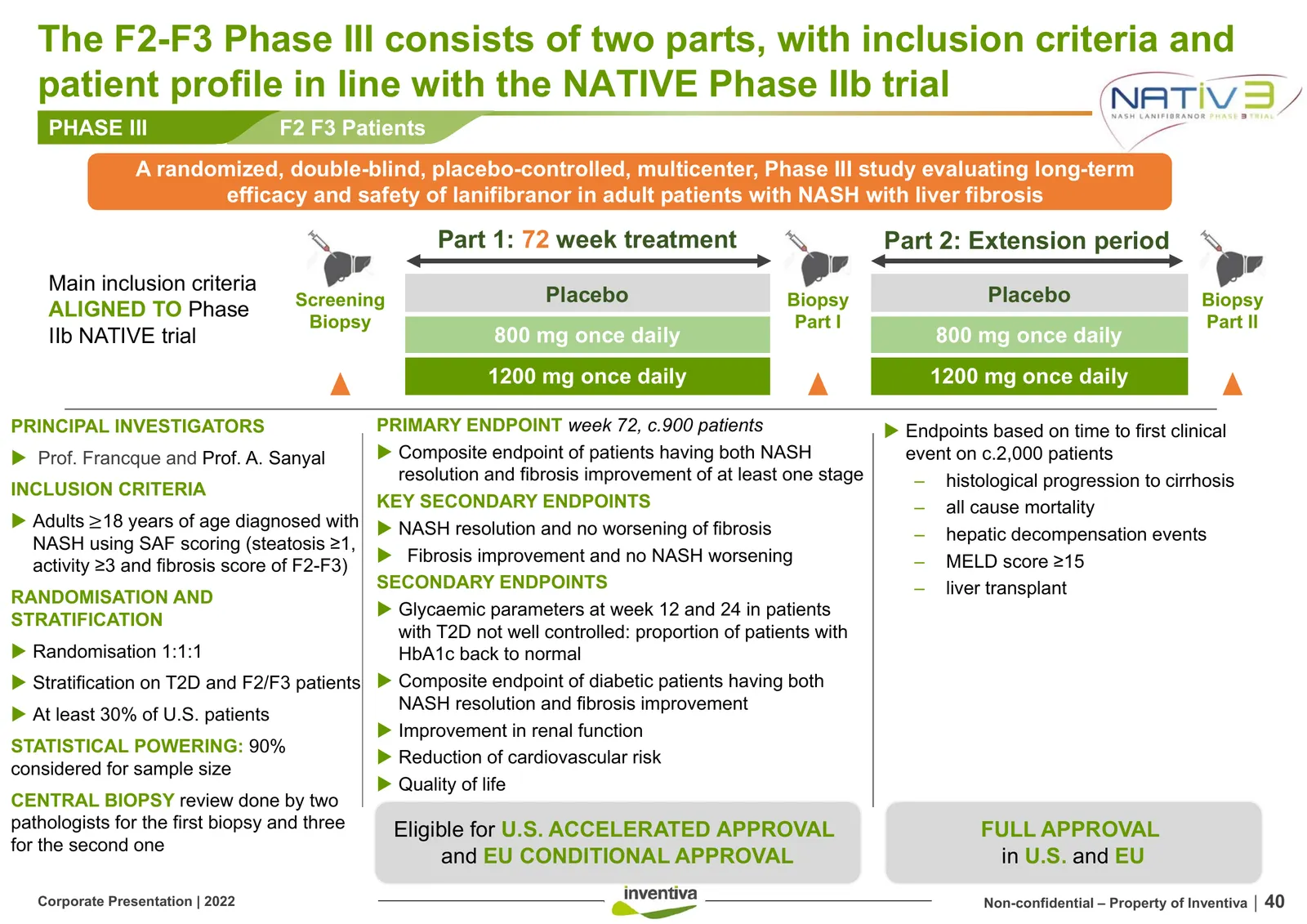
Slide 40: The F2-F3 Phase III consists of two parts
The F2-F3 Phase III consists of two parts, with inclusion criteria and patient profile in line with the NATIVE Phase IIb trial PHASE III F2 F3 Patients A randomized, double-blind, placebo-controlled, multicenter, Phase III study evaluating long-term efficacy and safety of lanifibranor in adult patie
Slide 41: Primary composite endpoint will help differentiate from key competitors
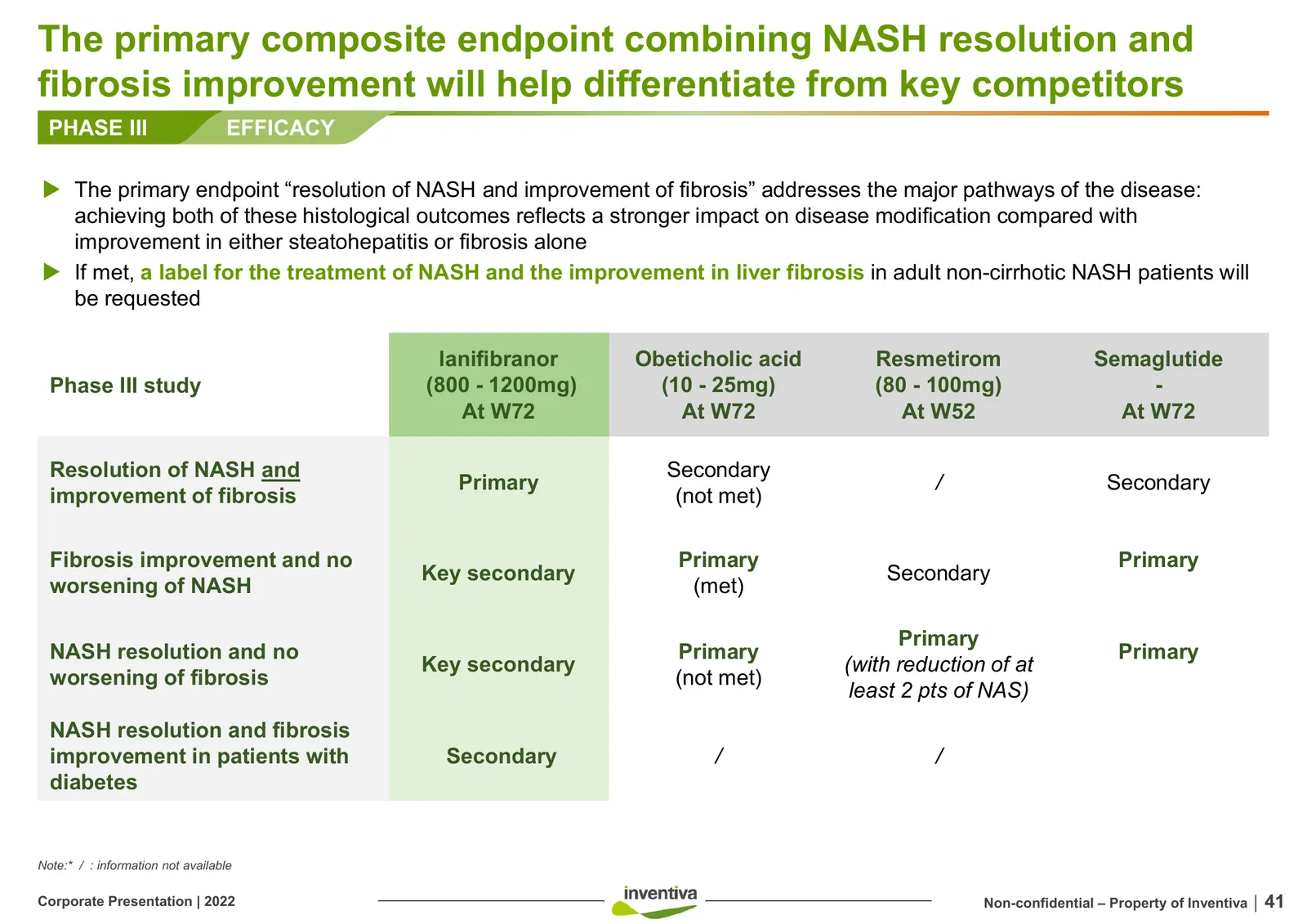
The primary composite endpoint combining NASH resolution and fibrosis improvement will help differentiate from key competitors PHASE III EFFICACY The primary endpoint “resolution of NASH and improvement of fibrosis” addresses the major pathways of the disease: achieving both of these histological
Slide 42: Phase III patients randomised across approximately 350 sites worldwide
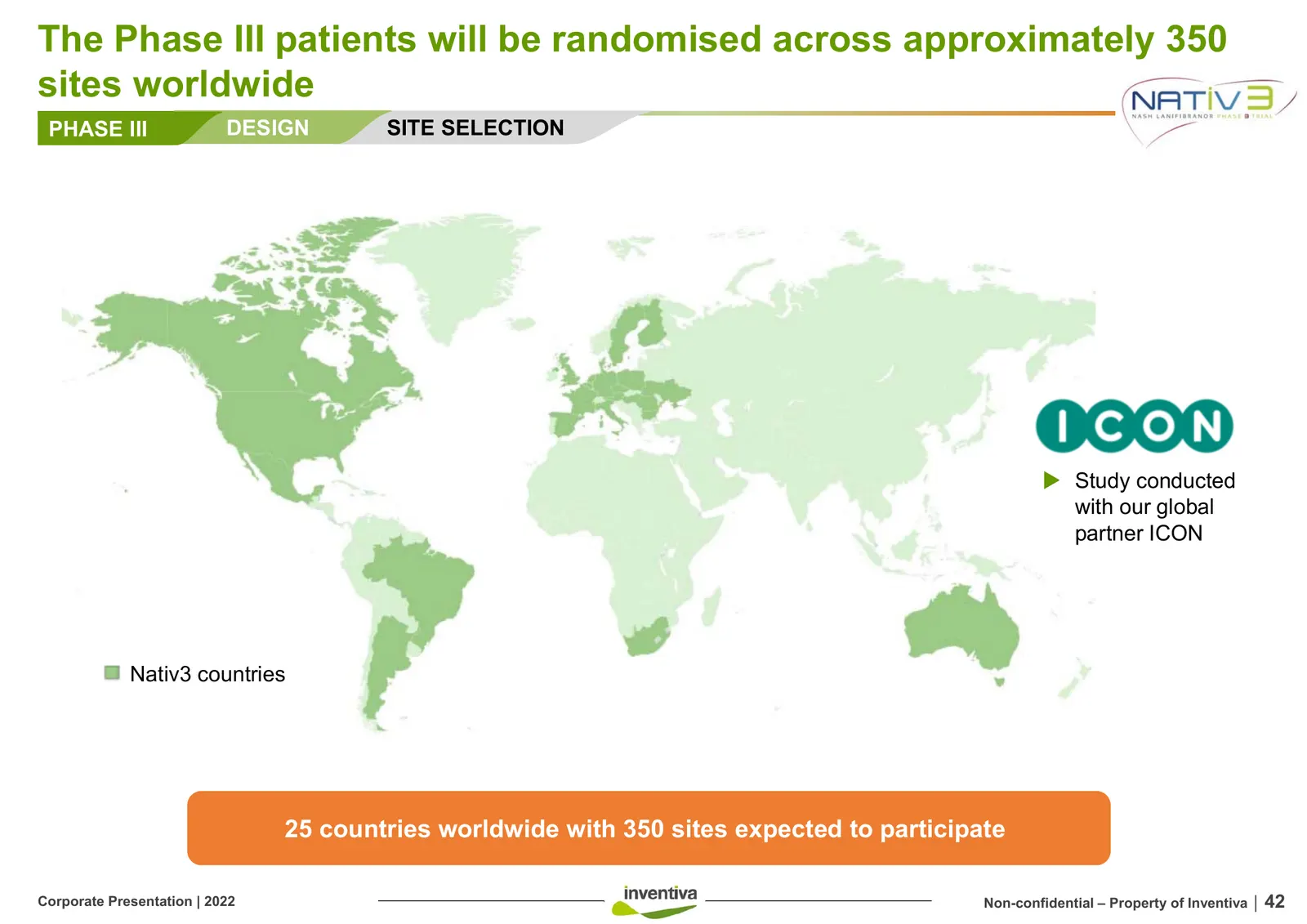
The Phase III patients will be randomised across approximately 350 sites worldwide PHASE III DESIGN SITE SELECTION Study conducted with our global partner ICON Nativ3 countries 25 countries worldwide with 350 sites expected to participate Corporate Presentation | 2022 Non-confidential – Property o
Slide 43: Key milestones of the Phase III study in NASH (Part 1)
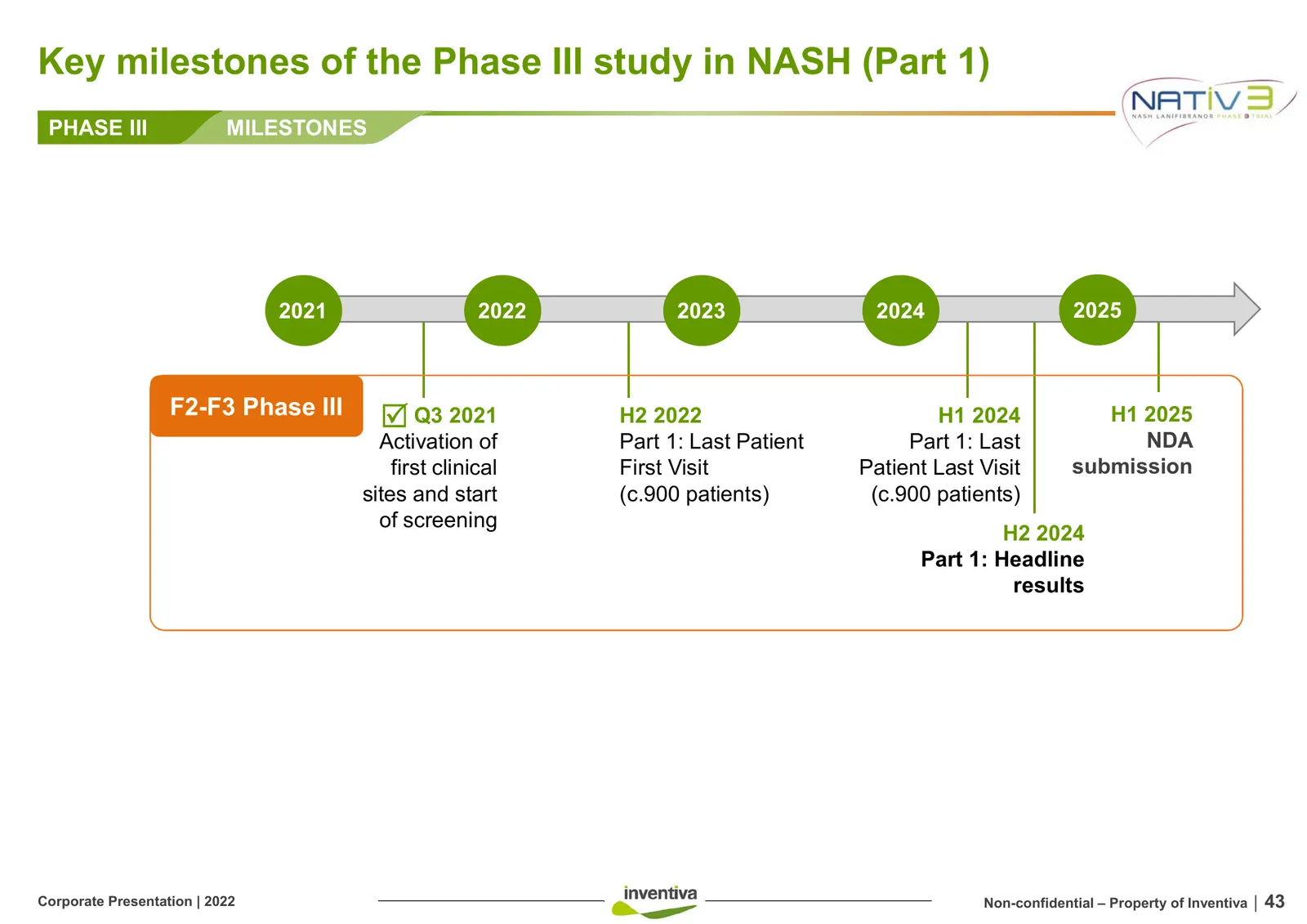
Key milestones of the Phase III study in NASH (Part 1) PHASE III MILESTONES 2021 2022 2023 2024 2025 F2-F3 Phase III Q3 2021 H2 2022 H1 2024 H1 2025 Activation of Part 1: Last Patient Part 1: Last NDA first clinical First Visit Patient Last Visit submission sites and start (c.900 patients) (c.900
Slide 44: Lanifibranor clinical trial in patients with NAFLD and T2D
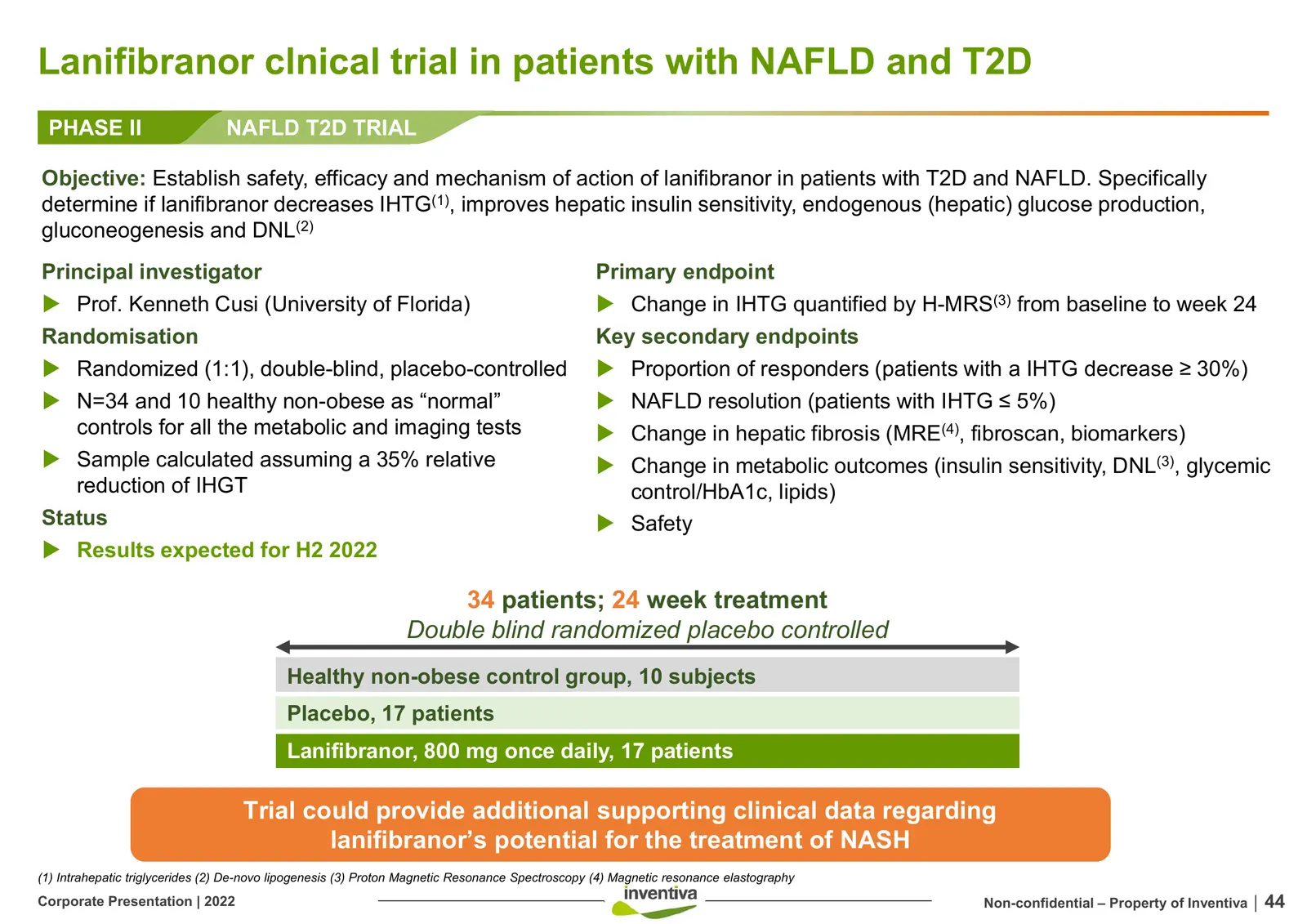
Lanifibranor clnical trial in patients with NAFLD and T2D PHASE II NAFLD T2D TRIAL Objective: Establish safety, efficacy and mechanism of action of lanifibranor in patients with T2D and NAFLD. Specifically determine if lanifibranor decreases IHTG(1), improves hepatic insulin sensitivity, endogenous
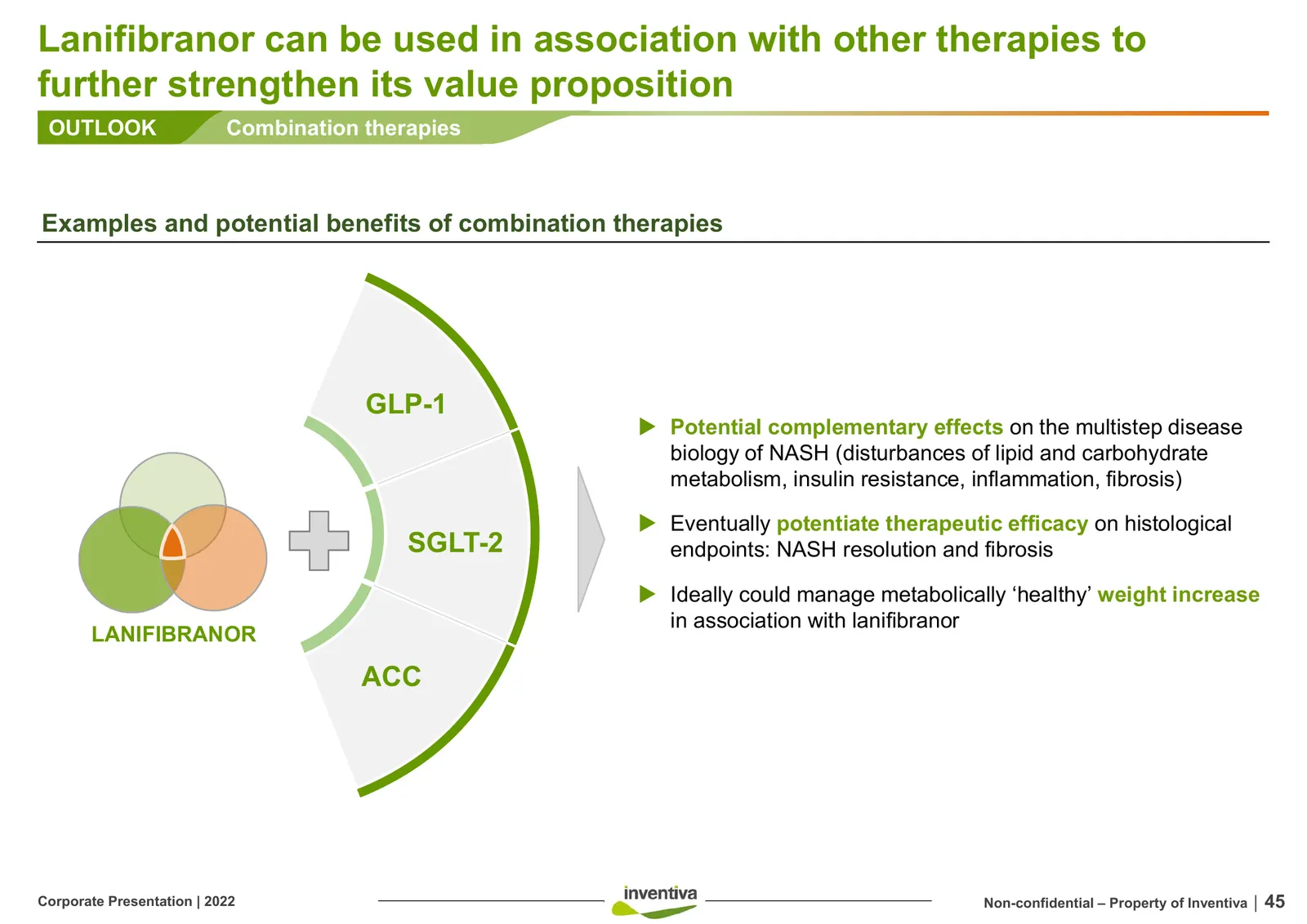
Slide 45: Lanifibranor can be used in association with other therapies
Lanifibranor can be used in association with other therapies to further strengthen its value proposition OUTLOOK Combination therapies Examples and potential benefits of combination therapies GLP-1 Potential complementary effects on the multistep disease biology of NASH (disturbances of lipid and
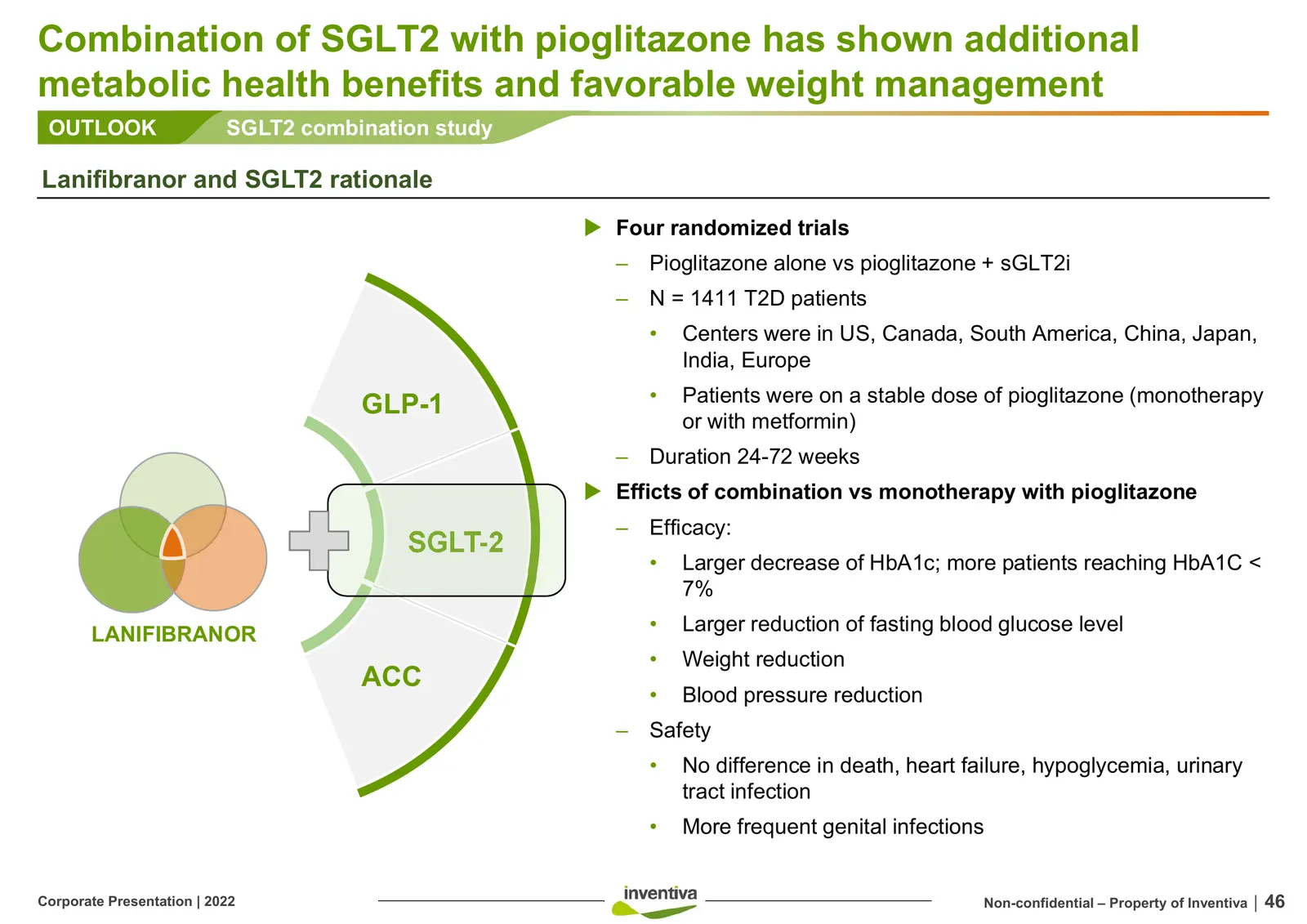
Slide 46: SGLT2 with pioglitazone has shown additional metabolic benefits
Combination of SGLT2 with pioglitazone has shown additional metabolic health benefits and favorable weight management OUTLOOK SGLT2 combination study Lanifibranor and SGLT2 rationale Four randomized trials – Pioglitazone alone vs pioglitazone + sGLT2i – N = 1411 T2D patients • Centers were in US,
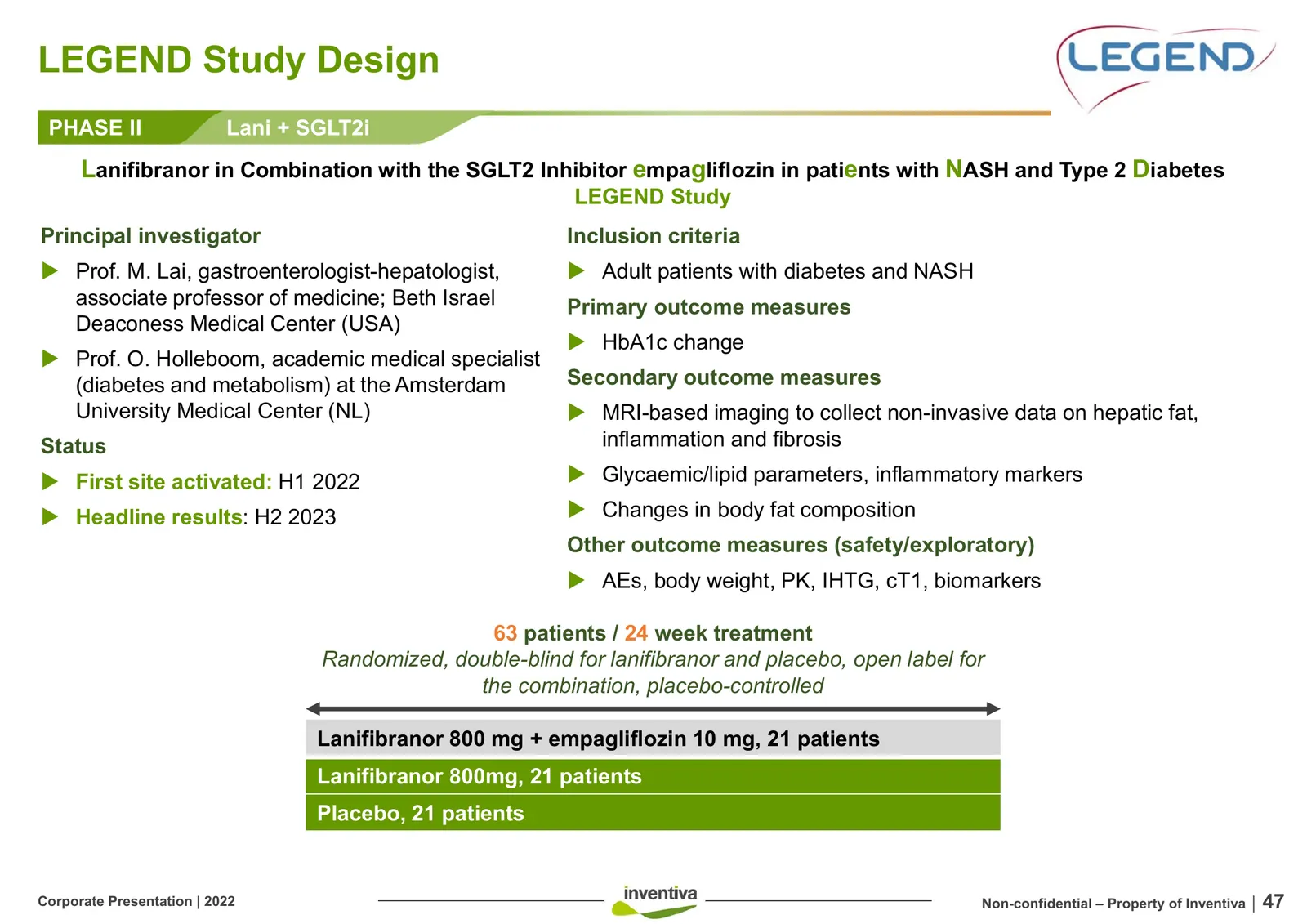
Slide 47: LEGEND Study Design
LEGEND Study Design PHASE II Lani + SGLT2i Lanifibranor in Combination with the SGLT2 Inhibitor empagliflozin in patients with NASH and Type 2 Diabetes LEGEND Study Principal investigator Inclusion criteria Prof. M. Lai, gastroenterologist-hepatologist, Adult patients with diabetes and NASH asso
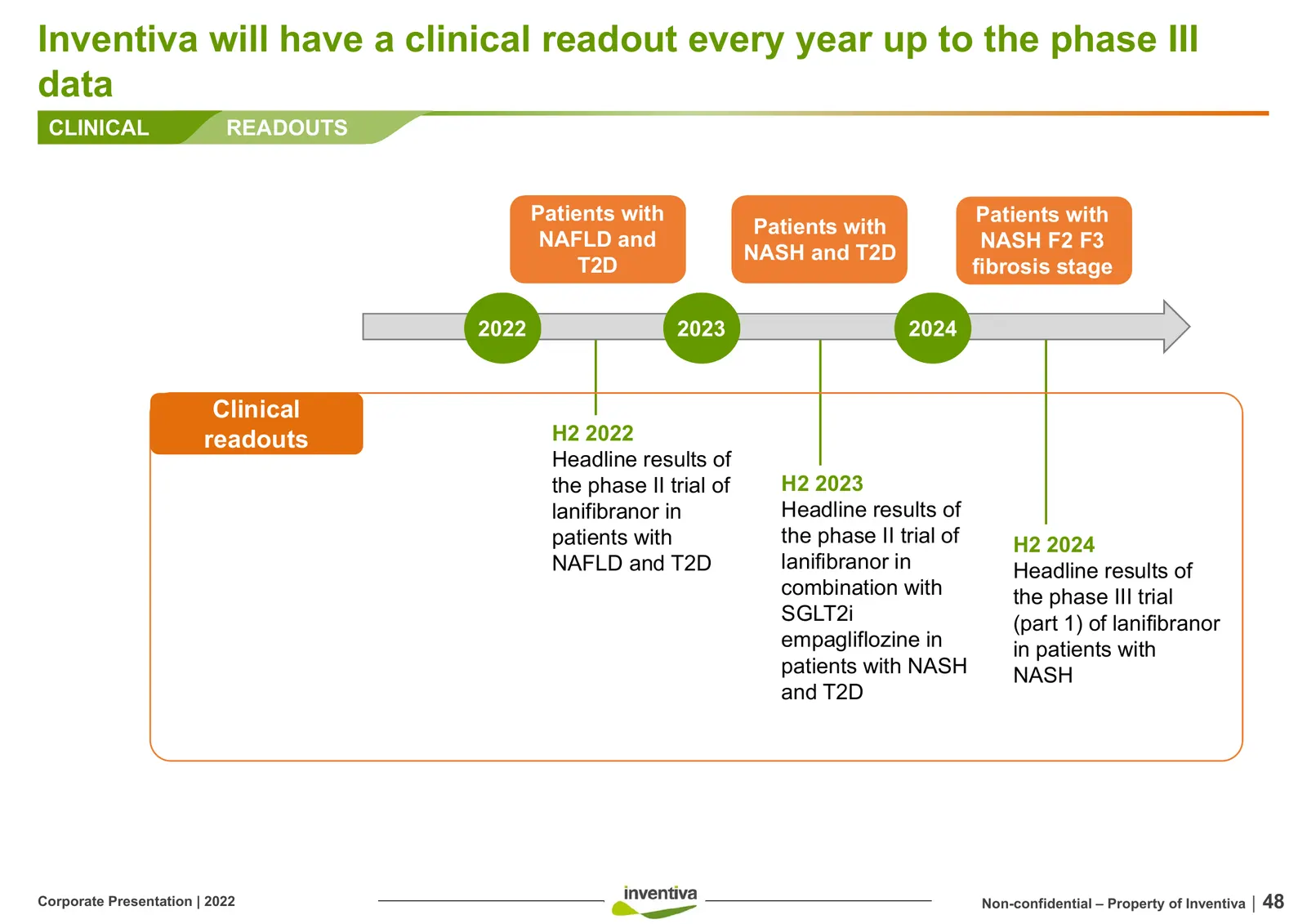
Slide 48: Inventiva will have a clinical readout every year up to the phase III data
Inventiva will have a clinical readout every year up to the phase III data CLINICAL READOUTS Patients with Patients with Patients with NAFLD and NASH F2 F3 NASH and T2D T2D fibrosis stage 2022 2023 2024 Clinical readouts H2 2022 Headline results of the phase II trial of H2 2023 lanifibranor in Headl
Slide 49: Cedirogant
Cedirogant
Slide 50: Cedirogant: a clinical stage ROR inverse agonist with potential in several auto-immune diseases
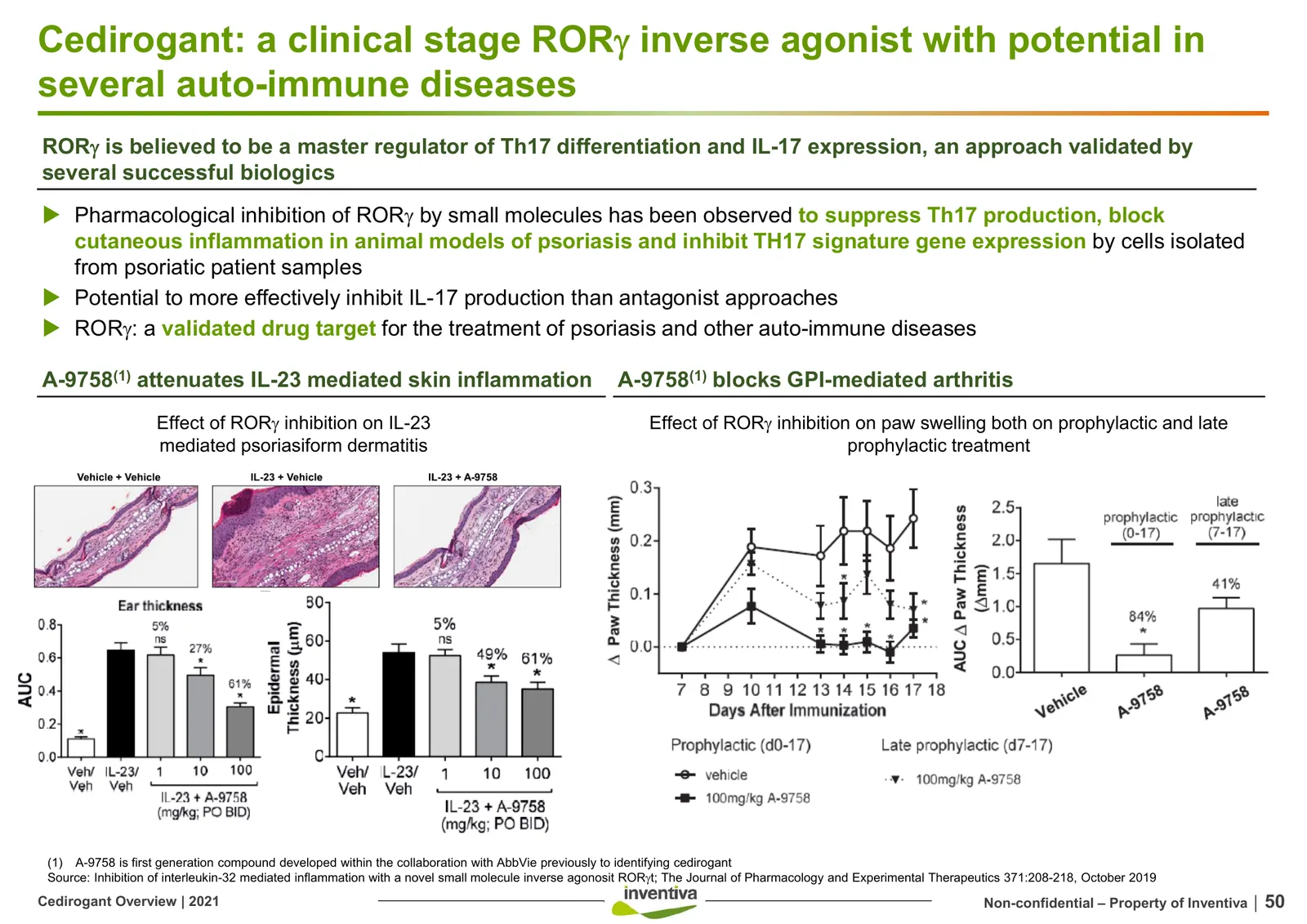
Cedirogant: a clinical stage ROR inverse agonist with potential in several auto-immune diseases ROR is believed to be a master regulator of Th17 differentiation and IL-17 expression, an approach validated by several successful biologics Pharmacological inhibition of ROR by small molecules has b
Slide 51: Psoriasis: a $20b global market dominated by injectables
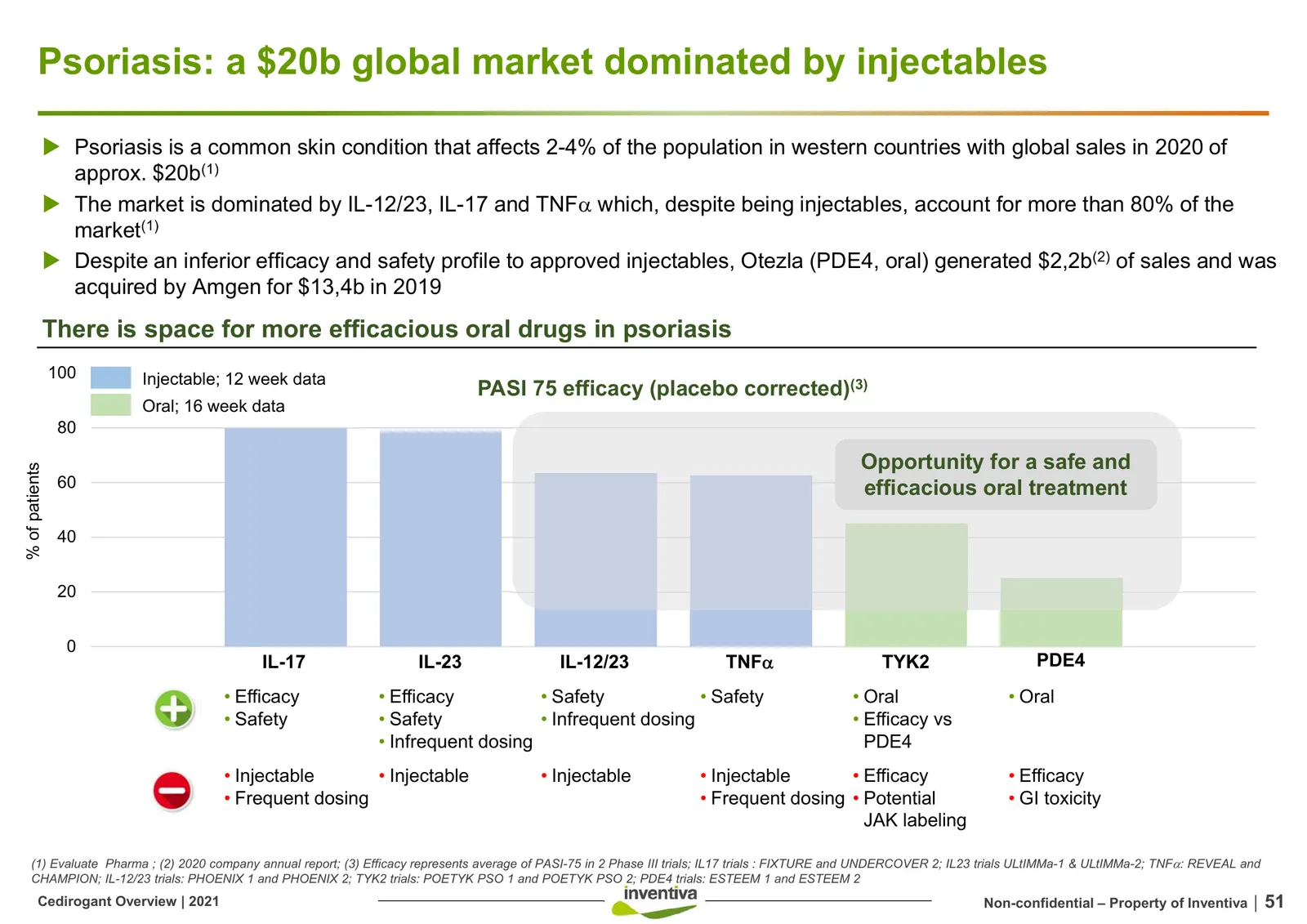
Psoriasis: a $20b global market dominated by injectables Psoriasis is a common skin condition that affects 2-4% of the population in western countries with global sales in 2020 of approx. $20b(1) The market is dominated by IL-12/23, IL-17 and TNF which, despite being injectables, account for mo
Slide 52: Cedirogant (ABBV-157) is currently evaluated in a Phase IIb trial in psoriasis
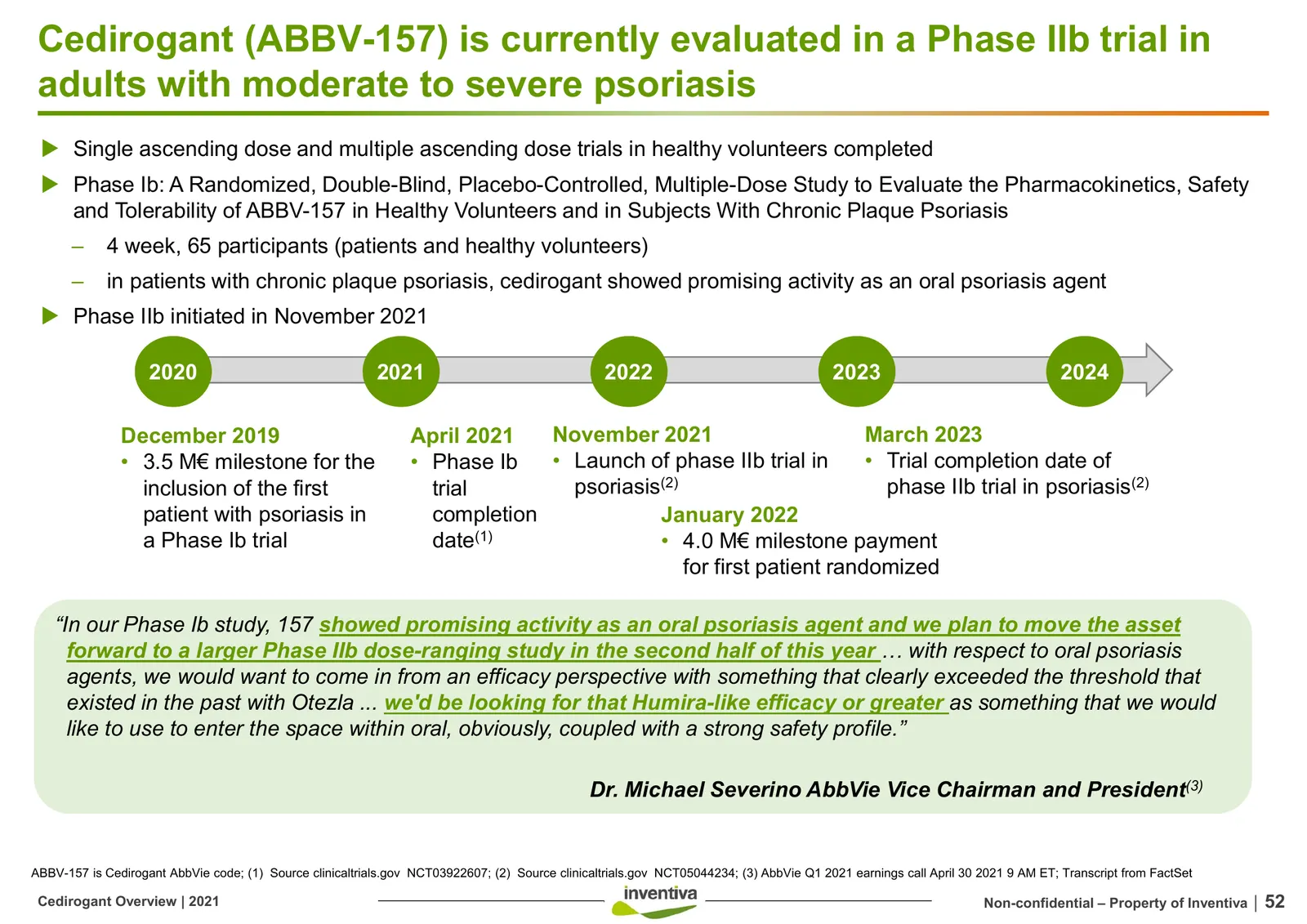
Cedirogant (ABBV-157) is currently evaluated in a Phase IIb trial in adults with moderate to severe psoriasis Single ascending dose and multiple ascending dose trials in healthy volunteers completed Phase Ib: A Randomized, Double-Blind, Placebo-Controlled, Multiple-Dose Study to Evaluate the Pha
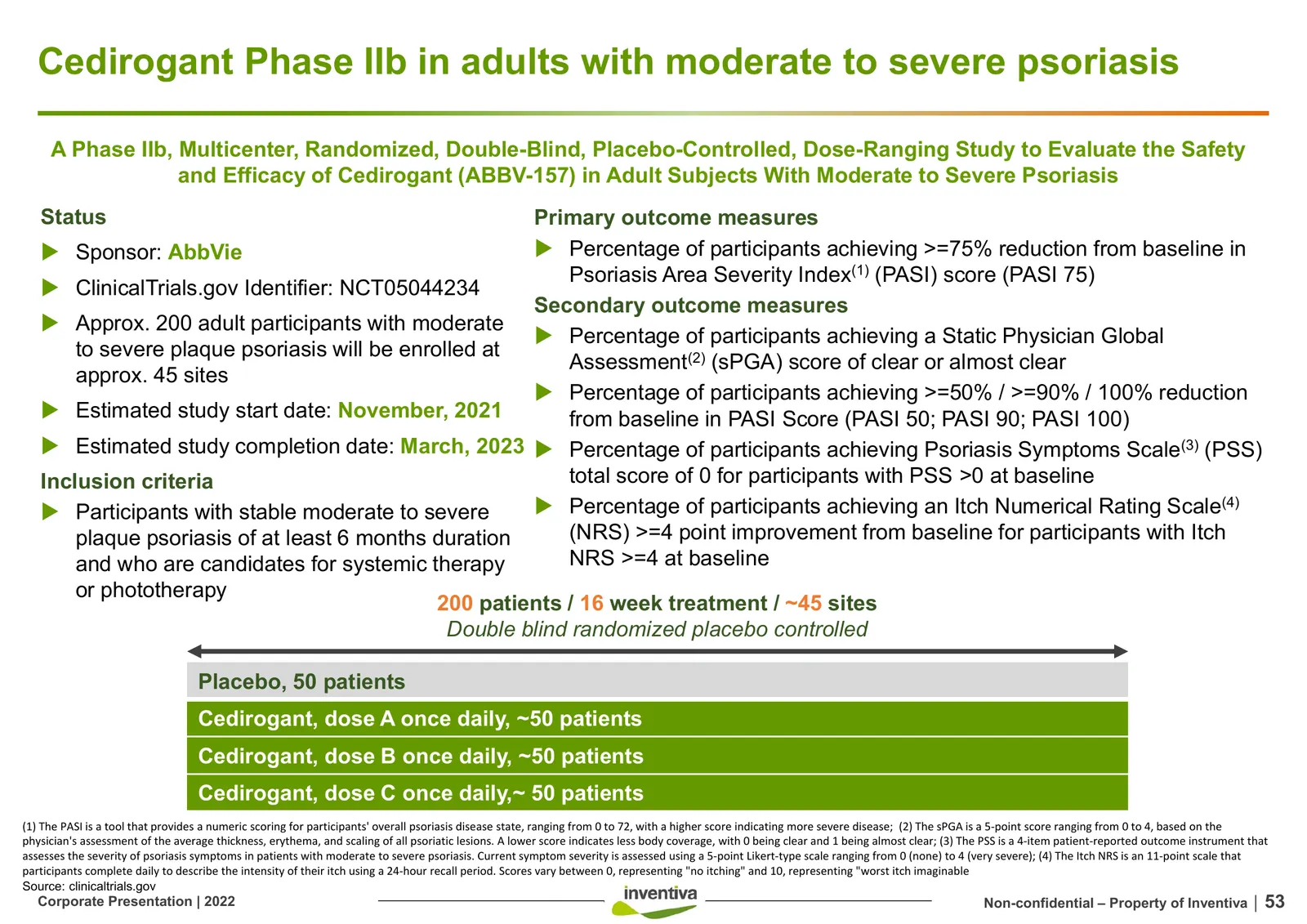
Slide 53: Cedirogant Phase IIb in adults with moderate to severe psoriasis
Cedirogant Phase IIb in adults with moderate to severe psoriasis A Phase IIb, Multicenter, Randomized, Double-Blind, Placebo-Controlled, Dose-Ranging Study to Evaluate the Safety and Efficacy of Cedirogant (ABBV-157) in Adult Subjects With Moderate to Severe Psoriasis Status Primary outcome measures
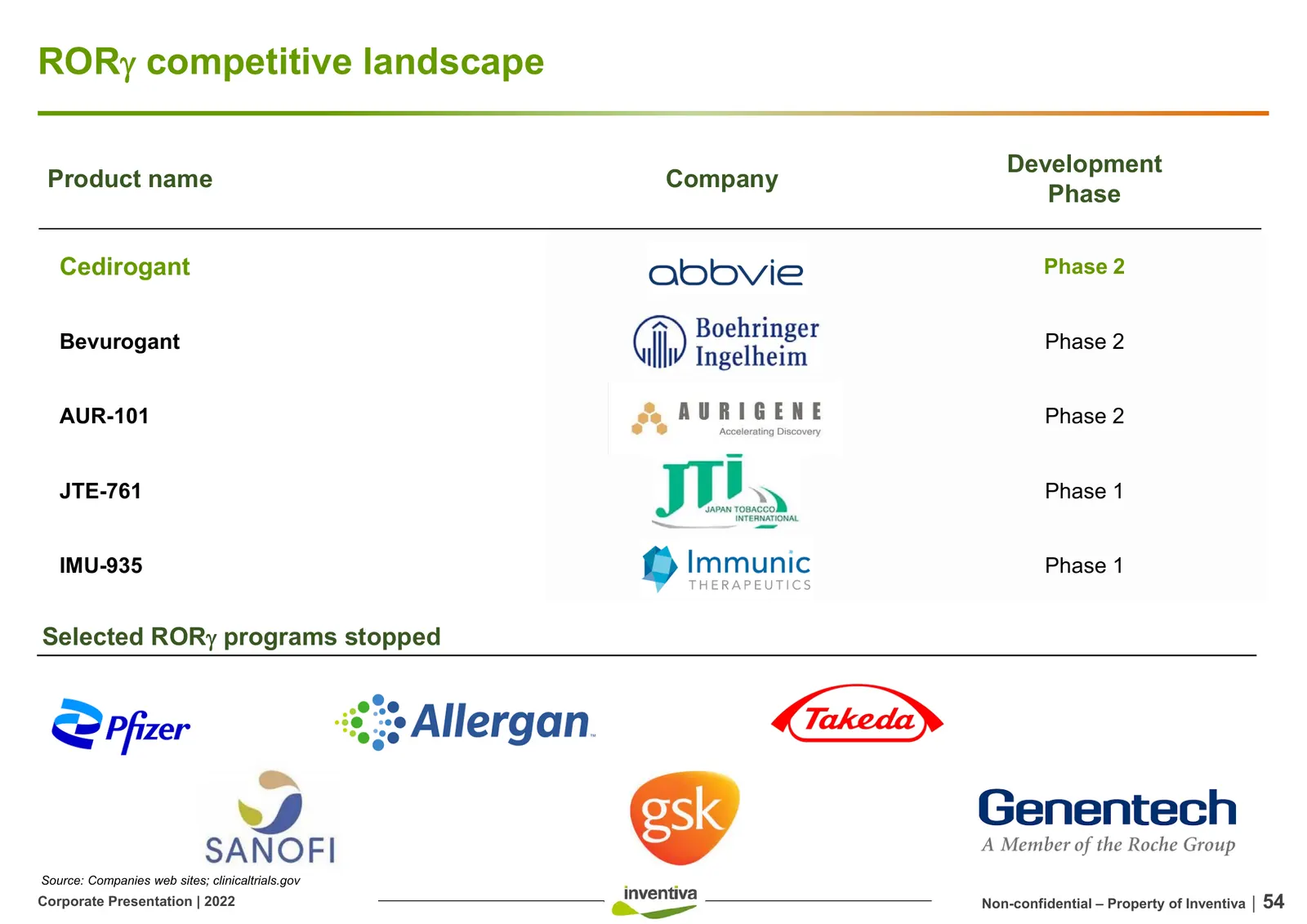
Slide 54: ROR competitive landscape
ROR competitive landscape Development Product name Company Phase Cedirogant Phase 2 Bevurogant Phase 2 AUR-101 Phase 2 JTE-761 Phase 1 IMU-935 Phase 1 Selected ROR programs stopped Source: Companies web sites; clinicaltrials.gov Corporate Presentation | 2022 Non-confidential – Property of Inventiv
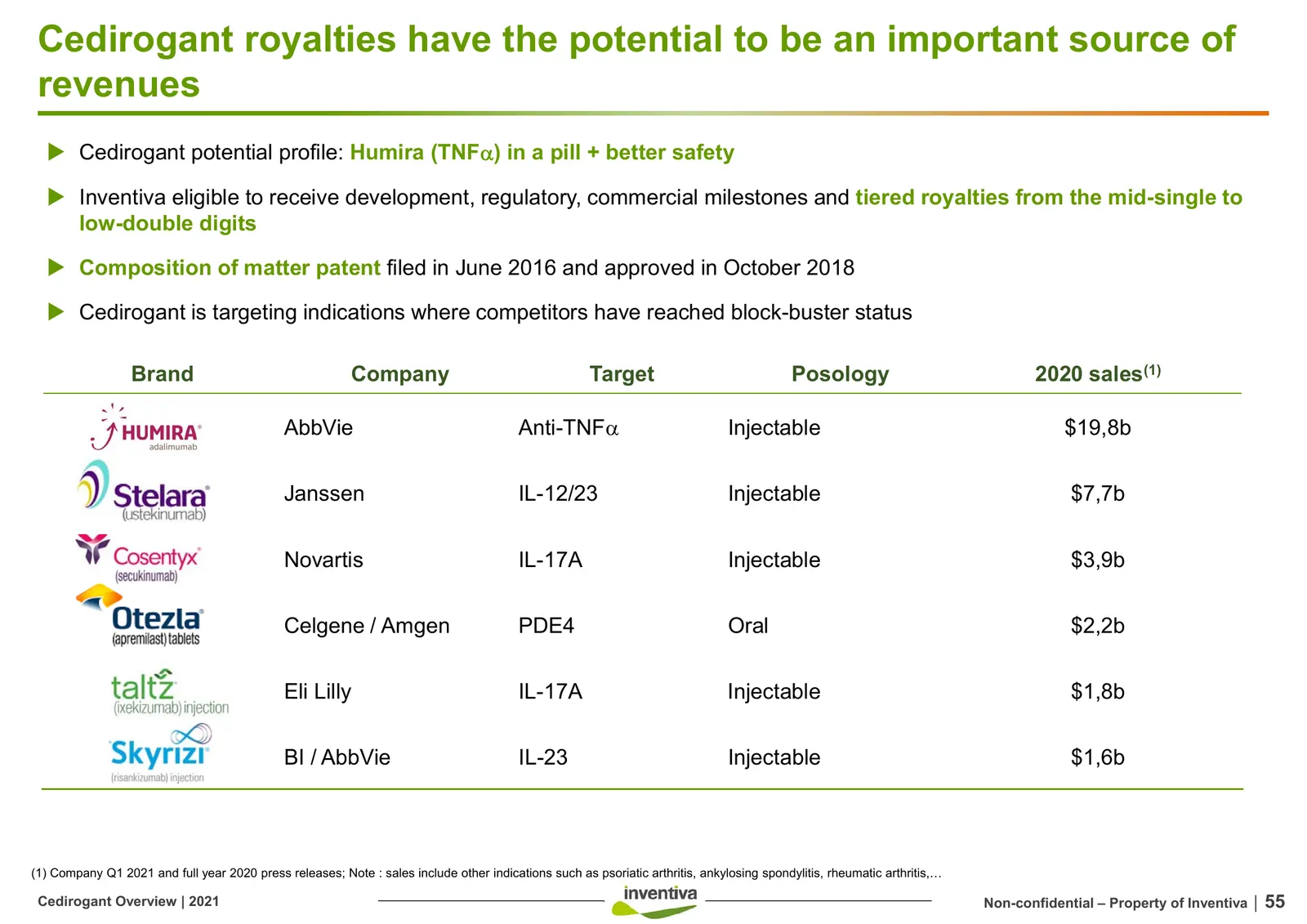
Slide 55: Cedirogant royalties have the potential to be an important source of revenues
Cedirogant royalties have the potential to be an important source of revenues Cedirogant potential profile: Humira (TNF) in a pill + better safety Inventiva eligible to receive development, regulatory, commercial milestones and tiered royalties from the mid-single to low-double digits Composi

Slide 56: Odiparcil – MPS
Odiparcil – MPS
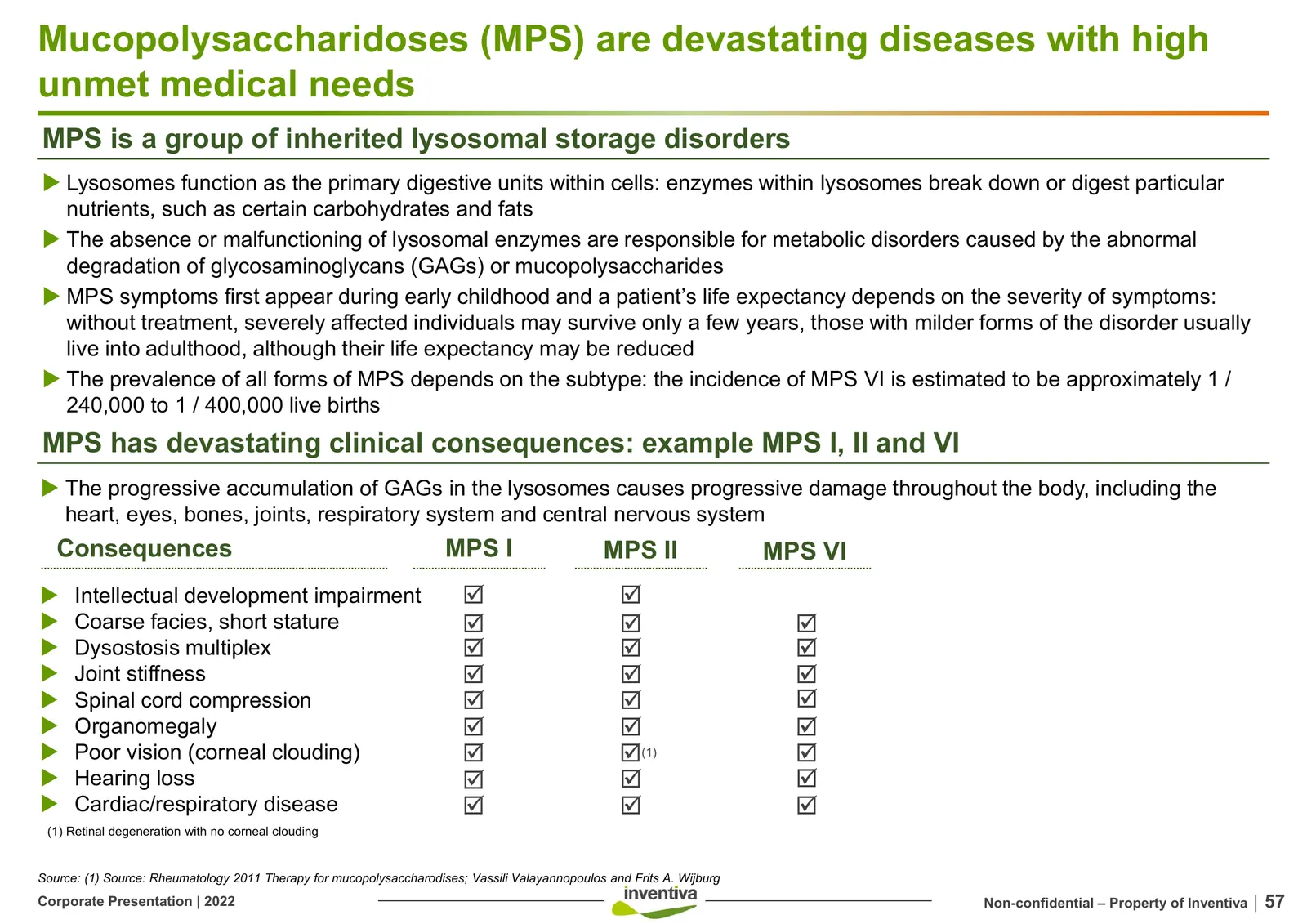
Slide 57: MPS are devastating diseases with high unmet medical needs
Mucopolysaccharidoses (MPS) are devastating diseases with high unmet medical needs MPS is a group of inherited lysosomal storage disorders Lysosomes function as the primary digestive units within cells: enzymes within lysosomes break down or digest particular nutrients, such as certain carbohydrat
Slide 58: Despite ERT being commercially successful, many unmet medical needs remain
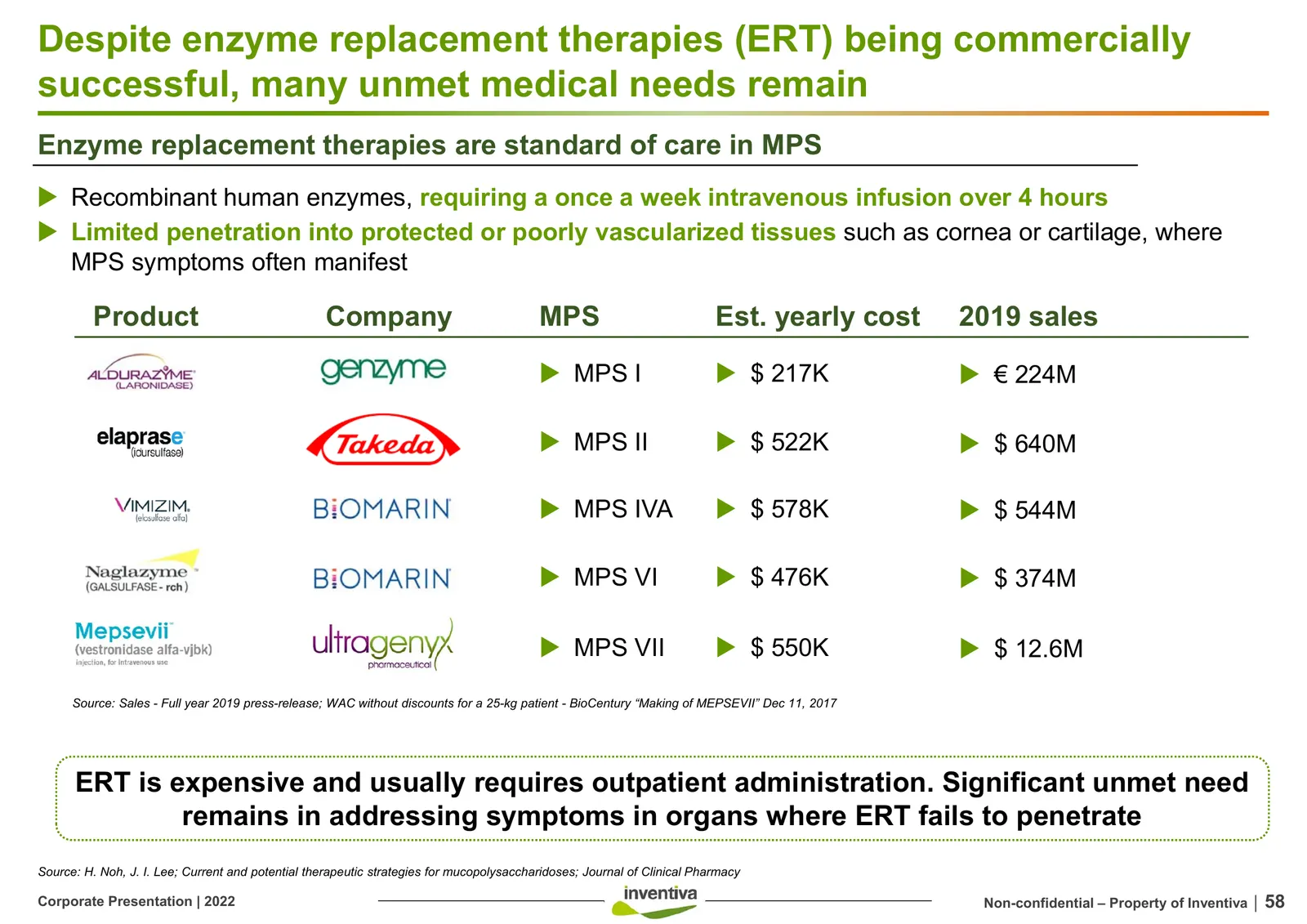
Despite enzyme replacement therapies (ERT) being commercially successful, many unmet medical needs remain Enzyme replacement therapies are standard of care in MPS Recombinant human enzymes, requiring a once a week intravenous infusion over 4 hours Limited penetration into protected or poorly vas
Slide 59: Odiparcil: an orally available small molecule GAG reduction therapy
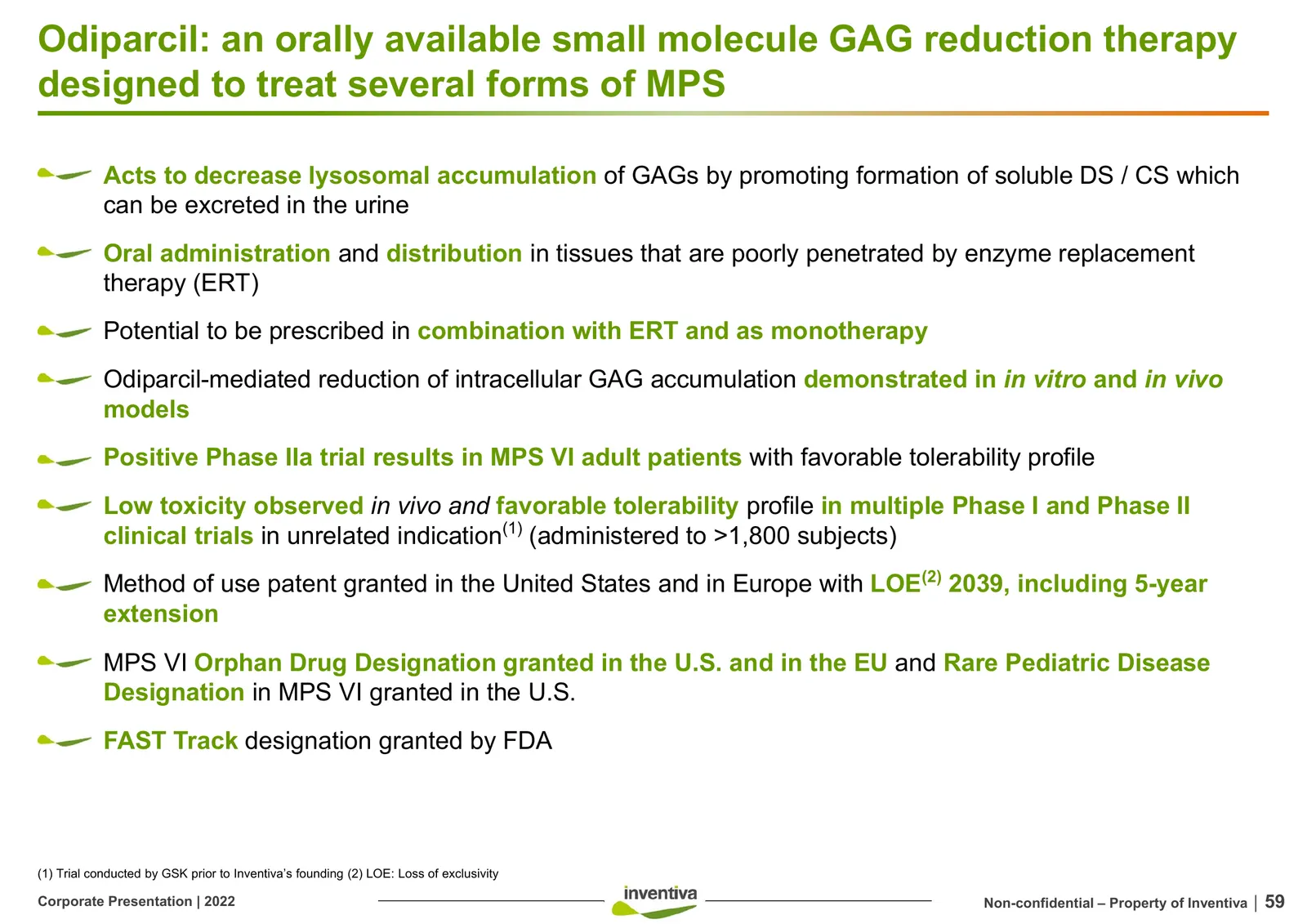
Odiparcil: an orally available small molecule GAG reduction therapy designed to treat several forms of MPS Acts to decrease lysosomal accumulation of GAGs by promoting formation of soluble DS / CS which can be excreted in the urine Oral administration and distribution in tissues that are poorly pene
Slide 60: Differentiated mechanism of action potentially synergistic with ERT
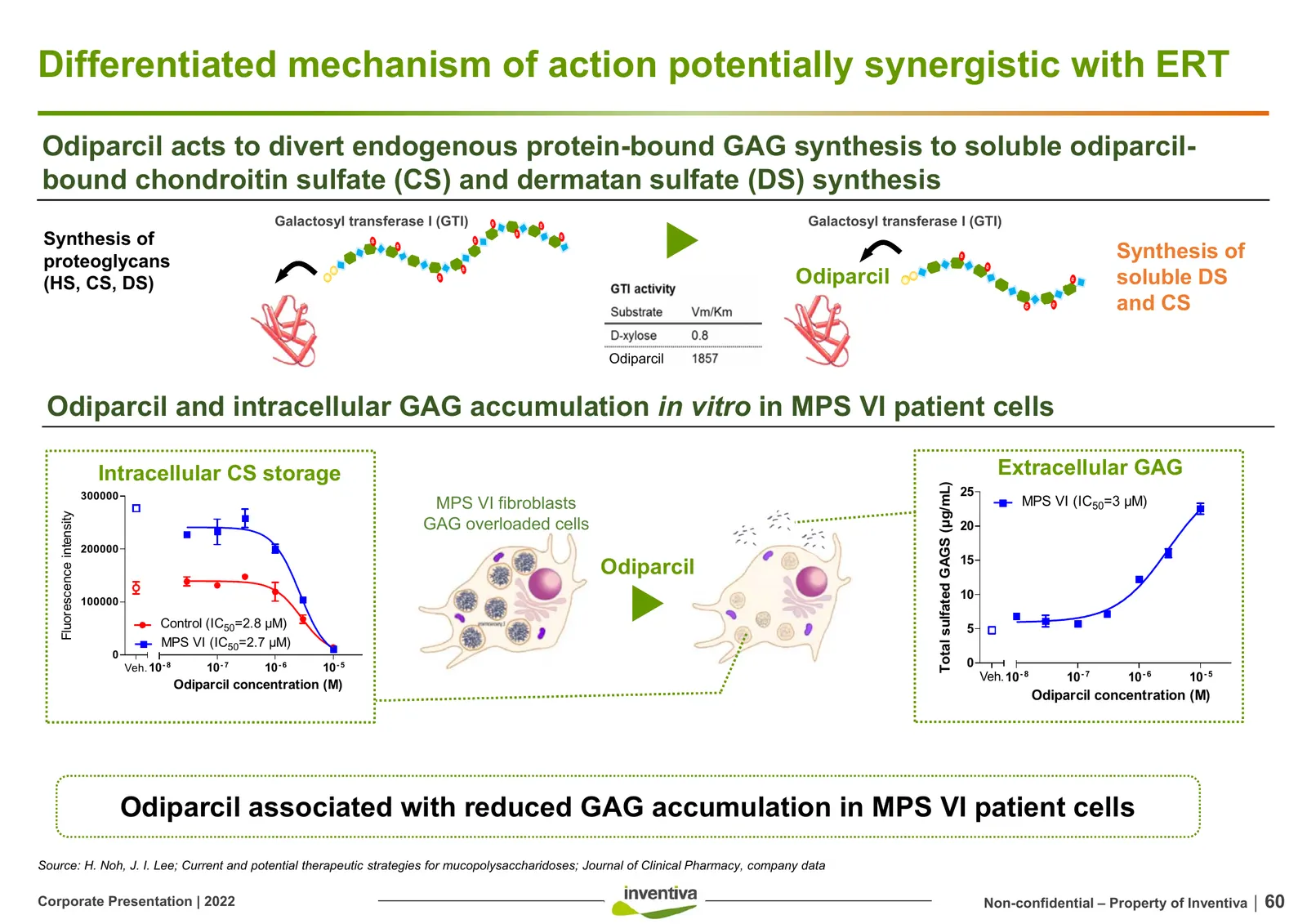
Differentiated mechanism of action potentially synergistic with ERT Odiparcil acts to divert endogenous protein-bound GAG synthesis to soluble odiparcil- bound chondroitin sulfate (CS) and dermatan sulfate (DS) synthesis Galactosyl transferase I (GTI) Galactosyl transferase I (GTI) Synthesis of prot
Slide 61: Odiparcil mechanism relevant to MPS subtypes with excess DS and CS
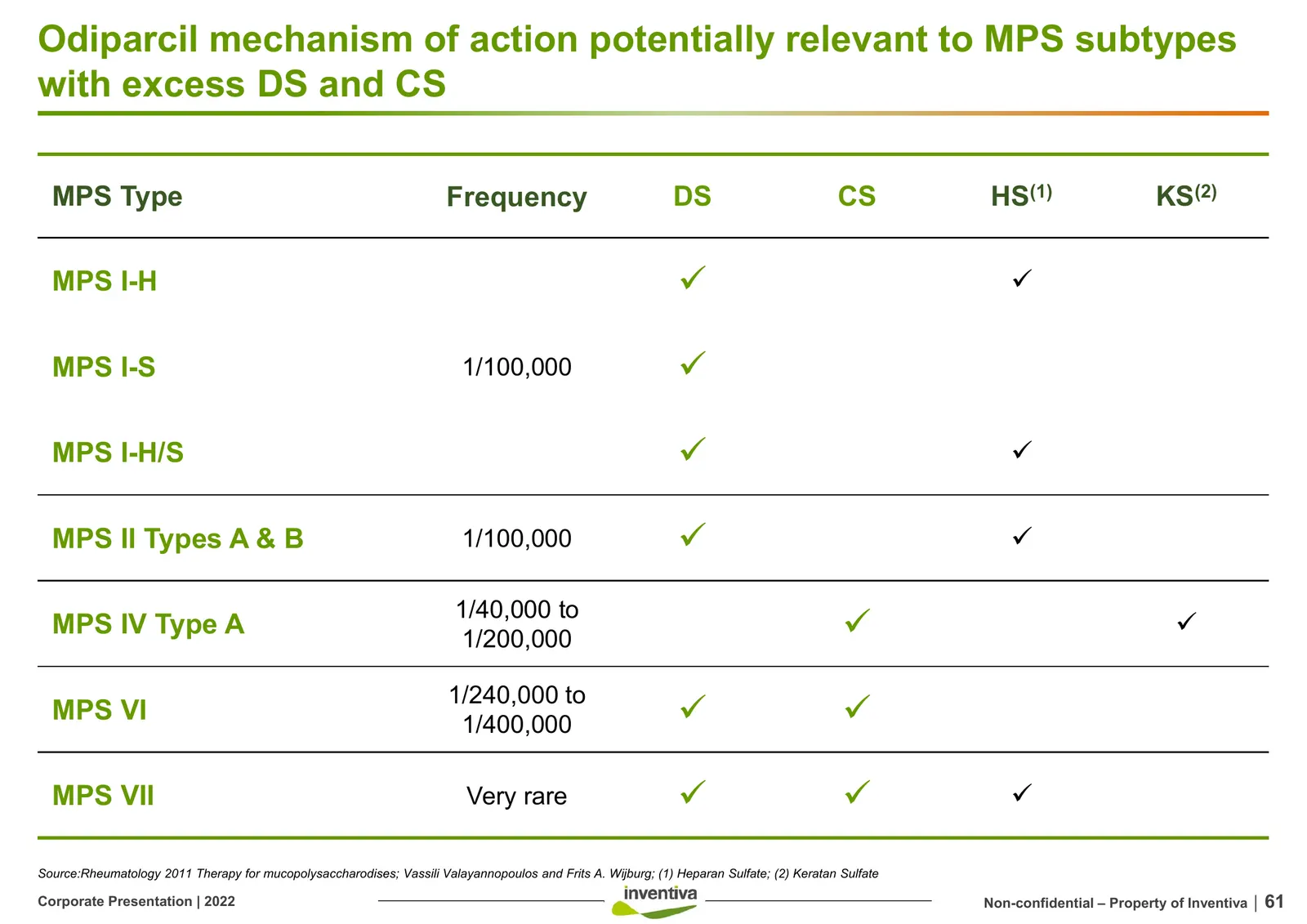
Odiparcil mechanism of action potentially relevant to MPS subtypes with excess DS and CS MPS Type Frequency DS CS HS(1) KS(2) MPS I-H MPS I-S 1/100,000 MPS I-H/S MPS II Types A & B 1/100,000 1/40,000 to MPS IV Type A 1/200,000 1/240,000 to MPS VI 1/400,000 MPS VII Very rare
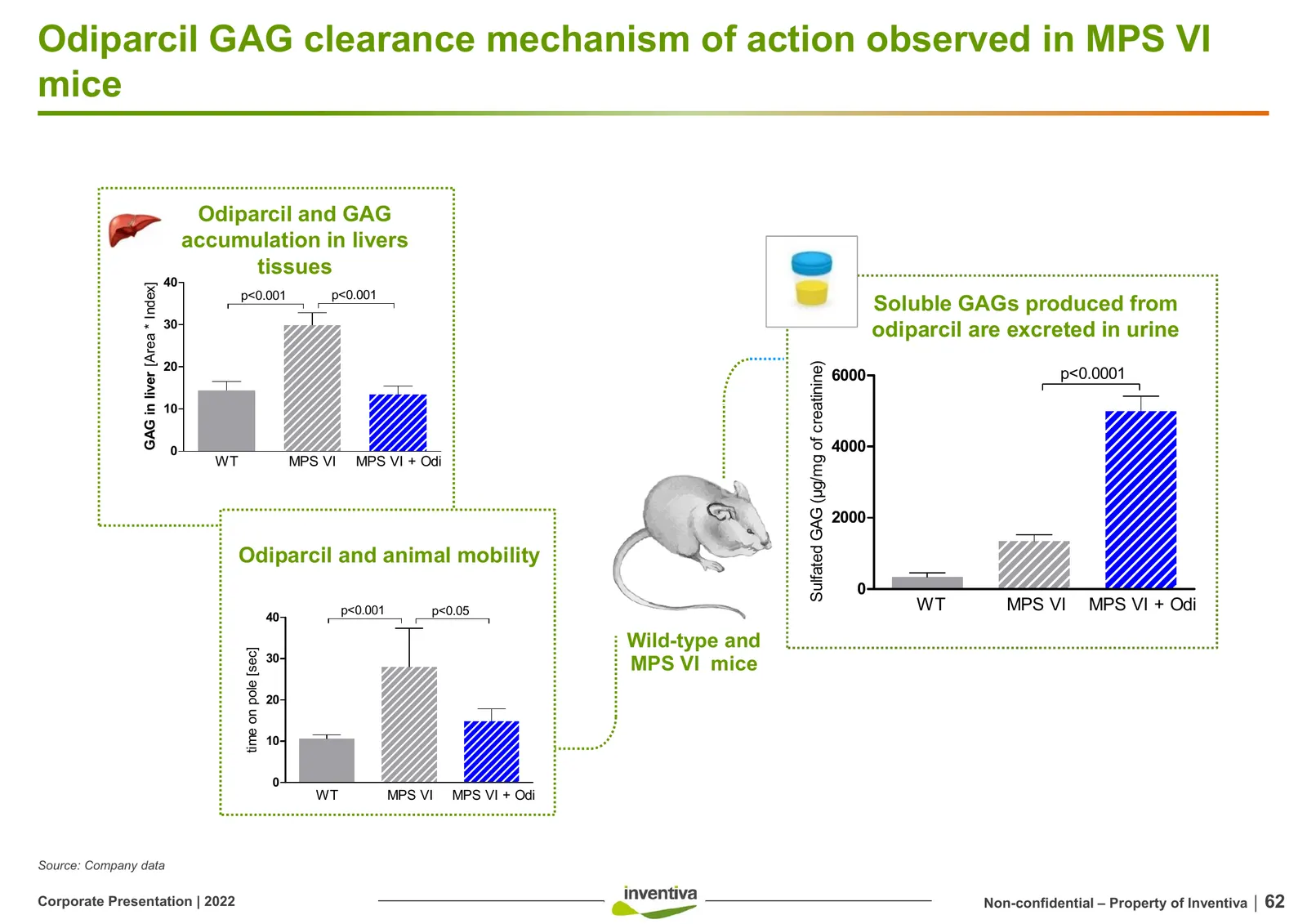
Slide 62: Odiparcil GAG clearance mechanism of action observed in MPS VI mice
Odiparcil GAG clearance mechanism of action observed in MPS VI mice Odiparcil and GAG accumulation in livers tissues 40 GAG in liver [Area * Index] p<0.001 p<0.001 Soluble GAGs produced from 30 odiparcil are excreted in urine 20 Sulfated GAG (µg/mg of creatinine) 6000 p<0.0001 10 0 4000 WT MPS VI MP
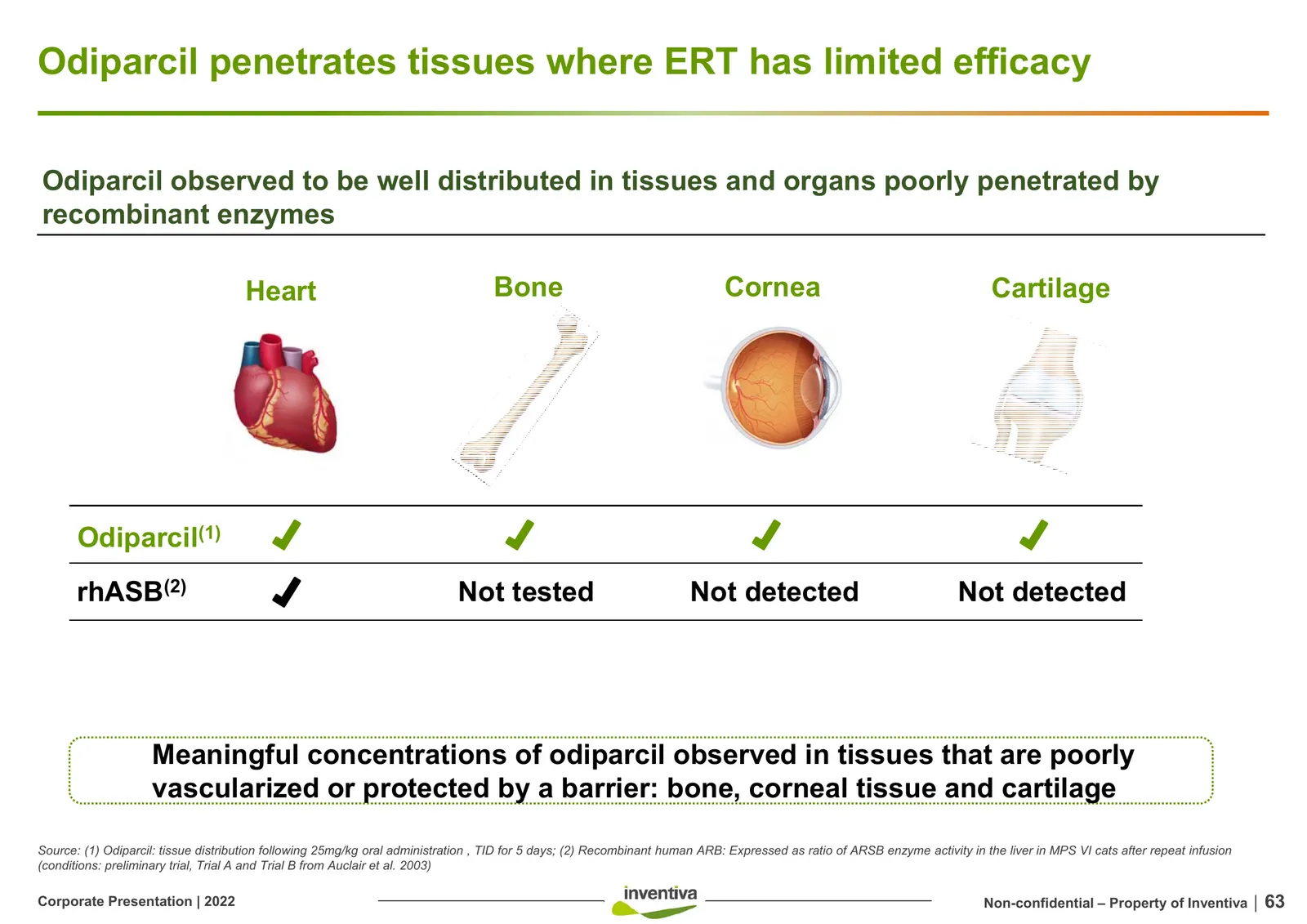
Slide 63: Odiparcil penetrates tissues where ERT has limited efficacy
Odiparcil penetrates tissues where ERT has limited efficacy Odiparcil observed to be well distributed in tissues and organs poorly penetrated by recombinant enzymes Heart Bone Cornea Cartilage Odiparcil(1) rhASB(2) Not tested Not detected Not detected Meaningful concentrations of odiparcil observed
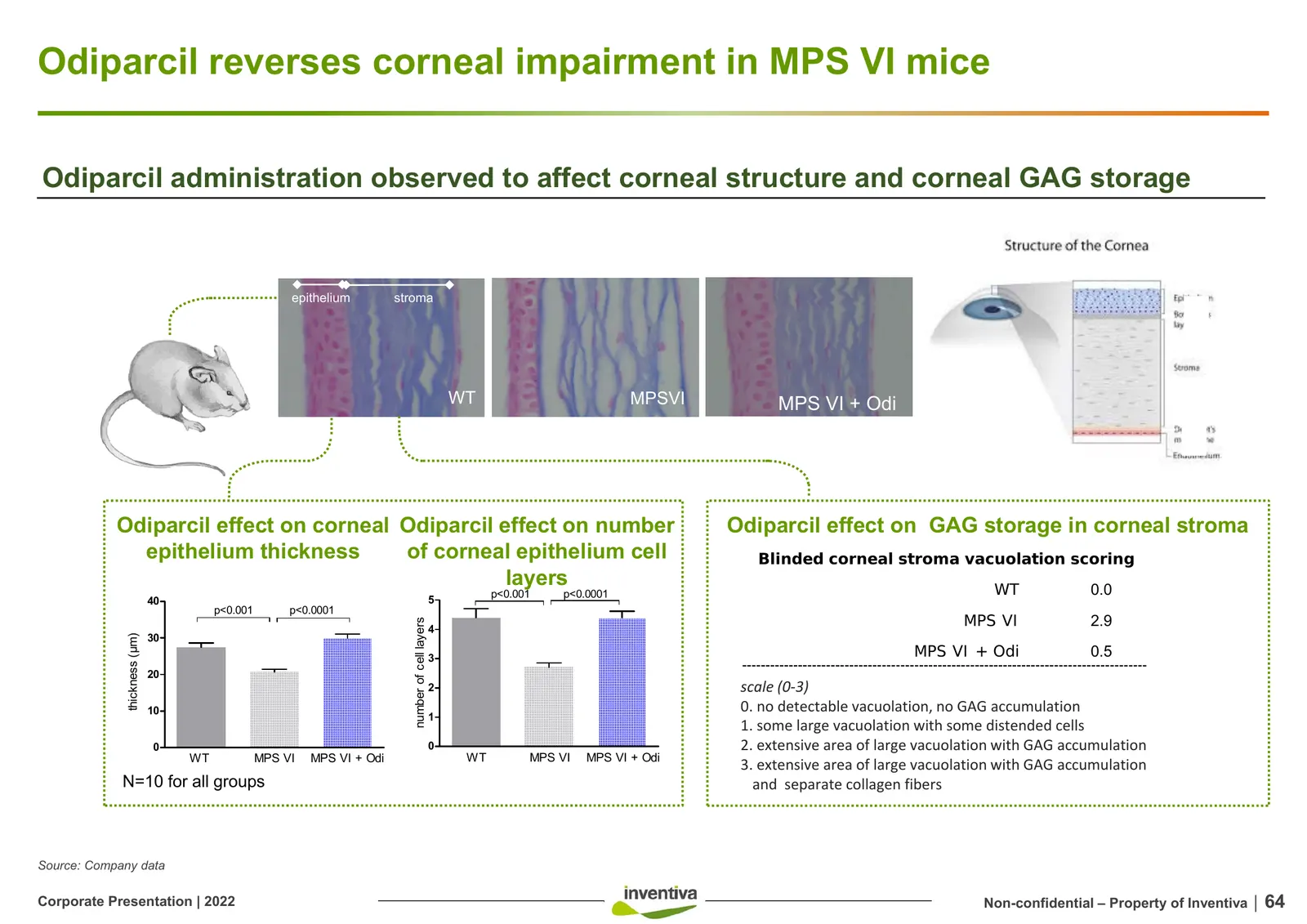
Slide 64: Odiparcil reverses corneal impairment in MPS VI mice
Odiparcil reverses corneal impairment in MPS VI mice Odiparcil administration observed to affect corneal structure and corneal GAG storage epithelium stroma WT MPSVI MPS VI + Odi Odiparcil effect on corneal Odiparcil effect on number Odiparcil effect on GAG storage in corneal stroma epithelium thick
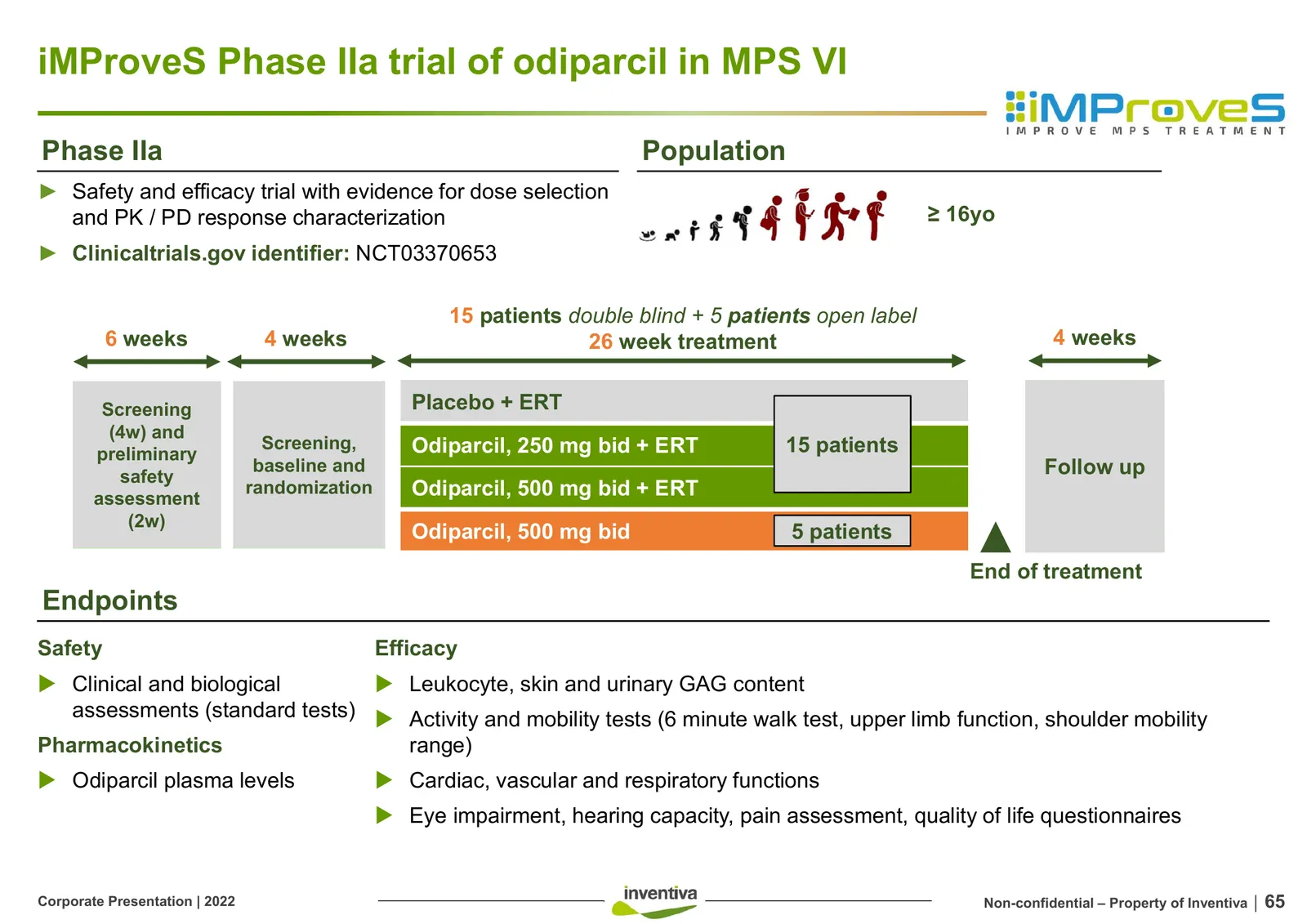
Slide 65: iMProveS Phase IIa trial of odiparcil in MPS VI
iMProveS Phase IIa trial of odiparcil in MPS VI Phase IIa Population ► Safety and efficacy trial with evidence for dose selection and PK / PD response characterization ≥ 16yo ► Clinicaltrials.gov identifier: NCT03370653 15 patients double blind + 5 patients open label 6 weeks 4 weeks 26 week treatme
Slide 66: Safety data
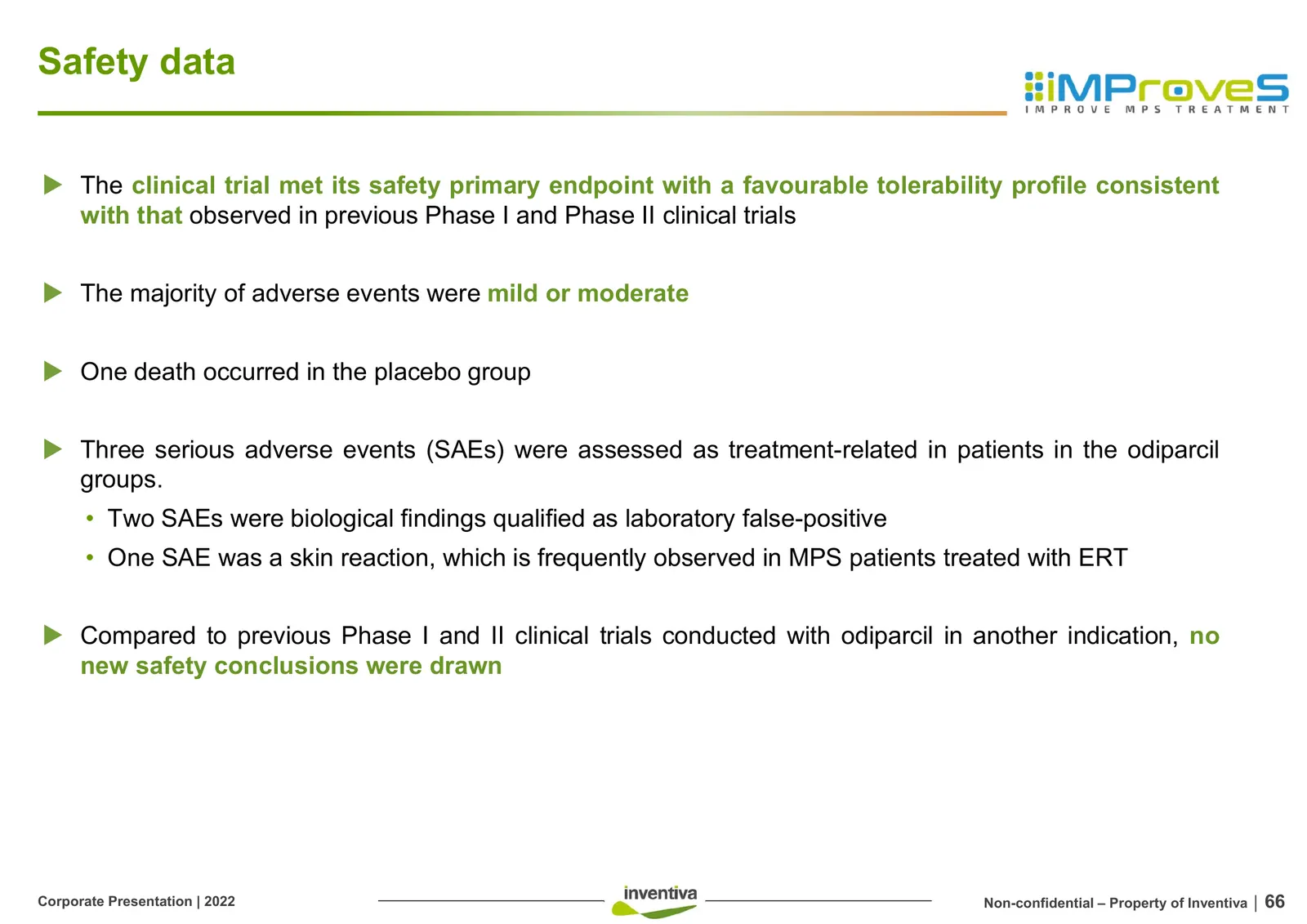
Safety data The clinical trial met its safety primary endpoint with a favourable tolerability profile consistent with that observed in previous Phase I and Phase II clinical trials The majority of adverse events were mild or moderate One death occurred in the placebo group Three serious adve
Slide 67: Odiparcil pharmacodynamics: total GAG levels in urine and PK/PD correlation
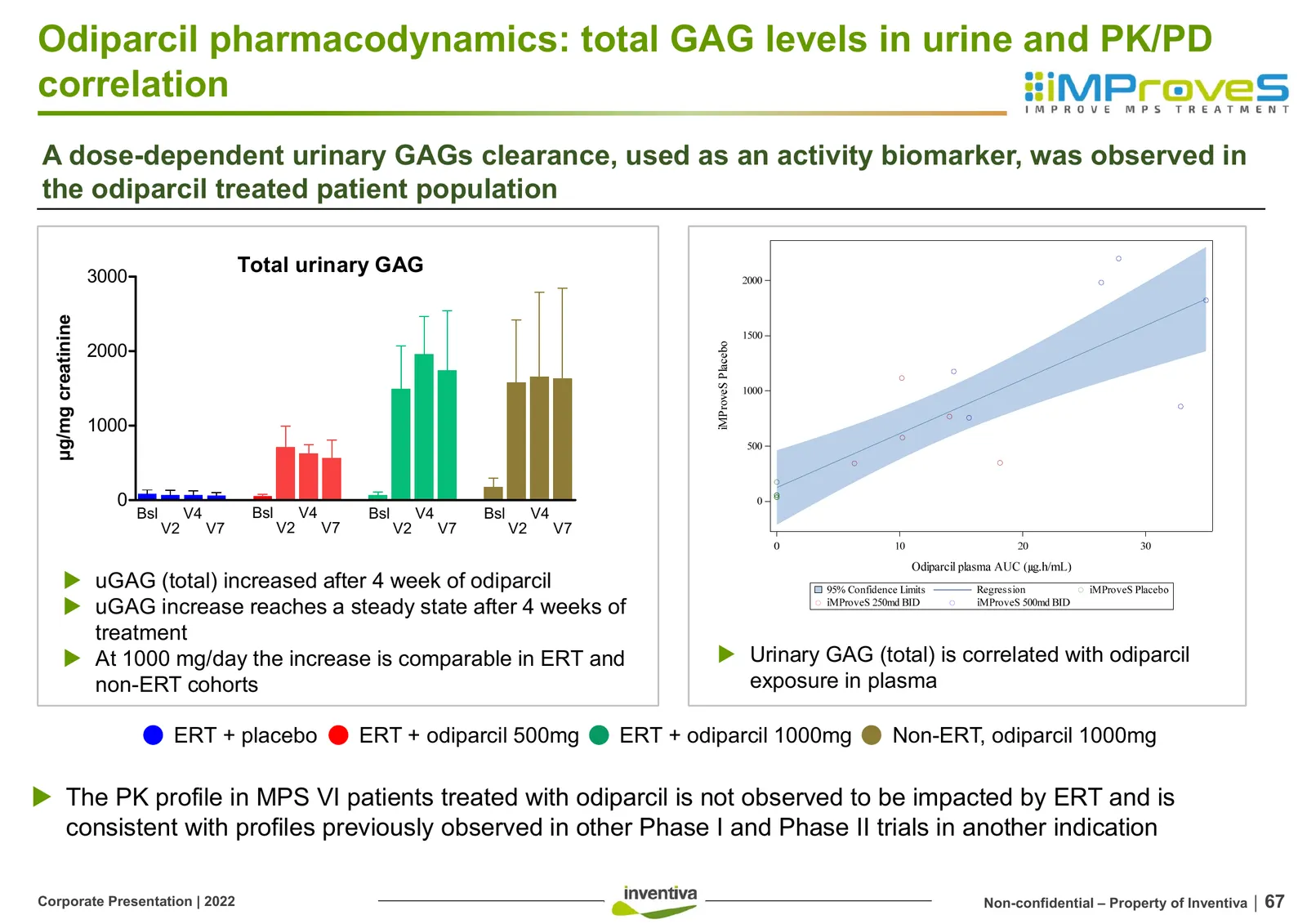
Odiparcil pharmacodynamics: total GAG levels in urine and PK/PD correlation A dose-dependent urinary GAGs clearance, used as an activity biomarker, was observed in the odiparcil treated patient population 3000 Total urinary GAG µg/mg creatinine 2000 1000 0 Bsl V4 Bsl V4 Bsl V4 Bsl V4 V2 V7 V2 V7 V2
Slide 68: Efficacy endpoints
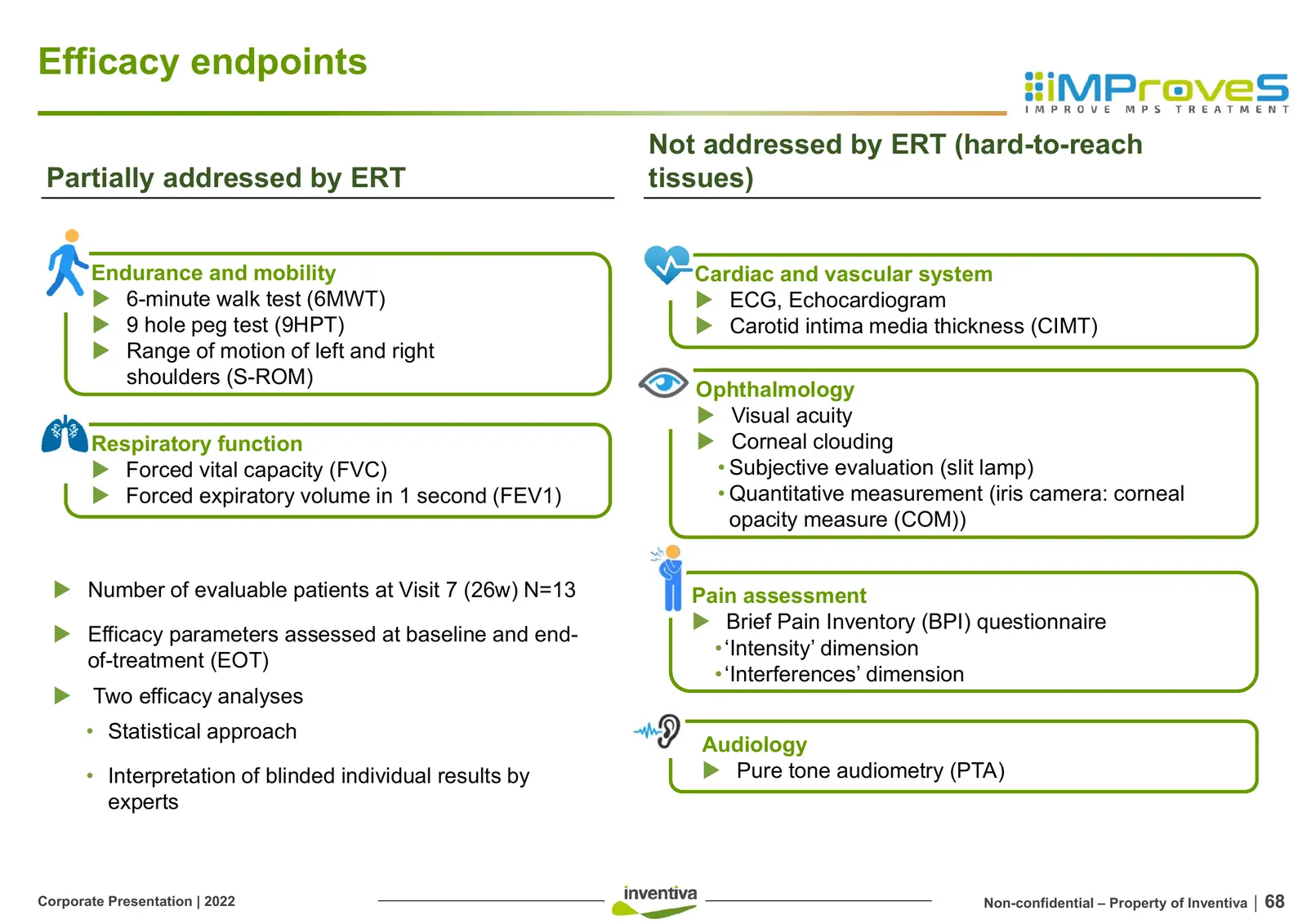
Efficacy endpoints Not addressed by ERT (hard-to-reach Partially addressed by ERT tissues) Endurance and mobility Cardiac and vascular system 6-minute walk test (6MWT) ECG, Echocardiogram 9 hole peg test (9HPT) Carotid intima media thickness (CIMT) Range of motion of left and right shoulde
Slide 69: Efficacy data: trends of improvement on 6MWT and FVC
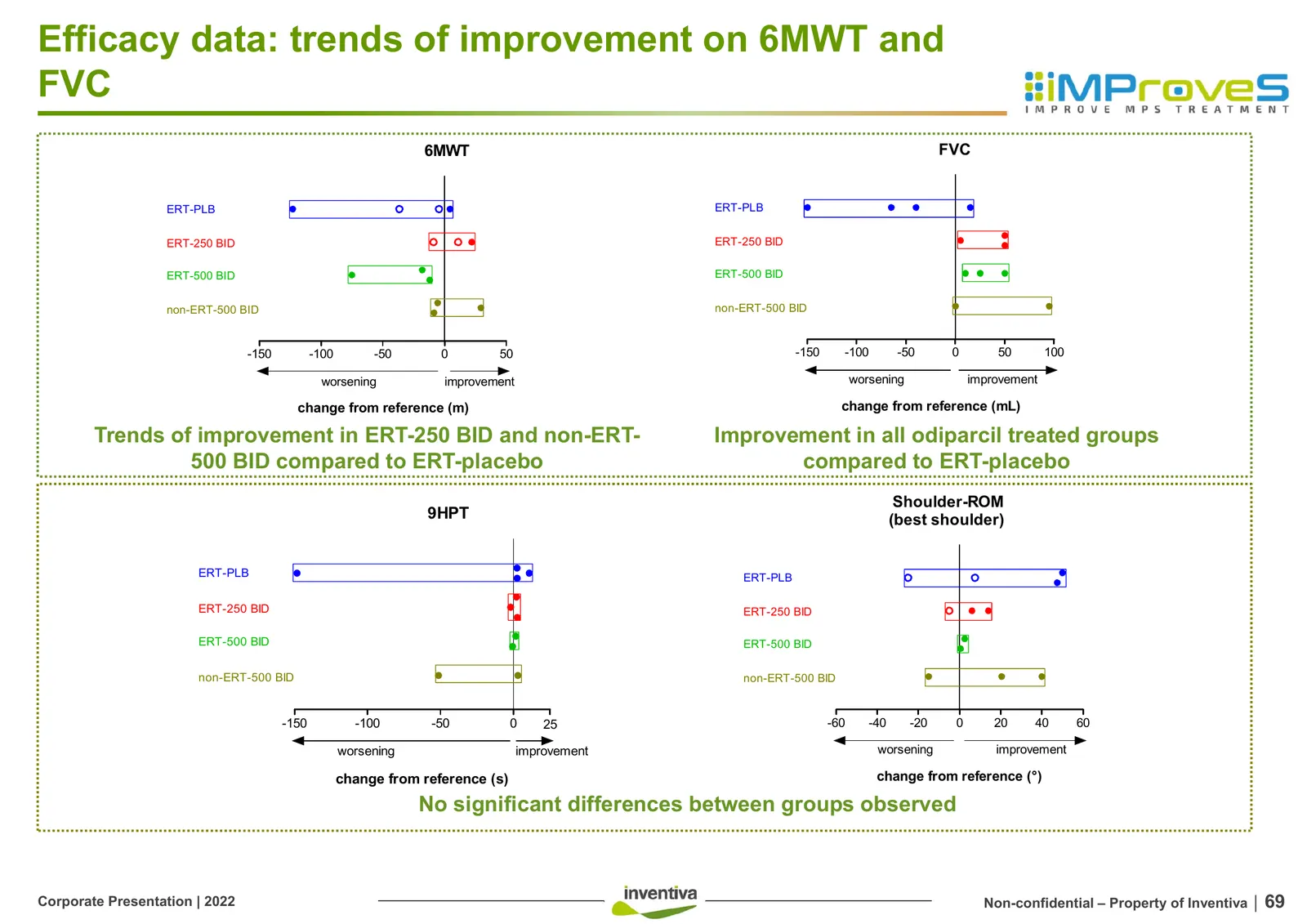
Efficacy data: trends of improvement on 6MWT and FVC 6MWT FVC ERT-PLB ERT-PLB ERT-250 BID ERT-250 BID ERT-500 BID ERT-500 BID non-ERT-500 BID non-ERT-500 BID -150 -100 -50 0 50 -150 -100 -50 0 50 100 worsening improvement worsening improvement change from reference (m) change from reference (mL) Tre
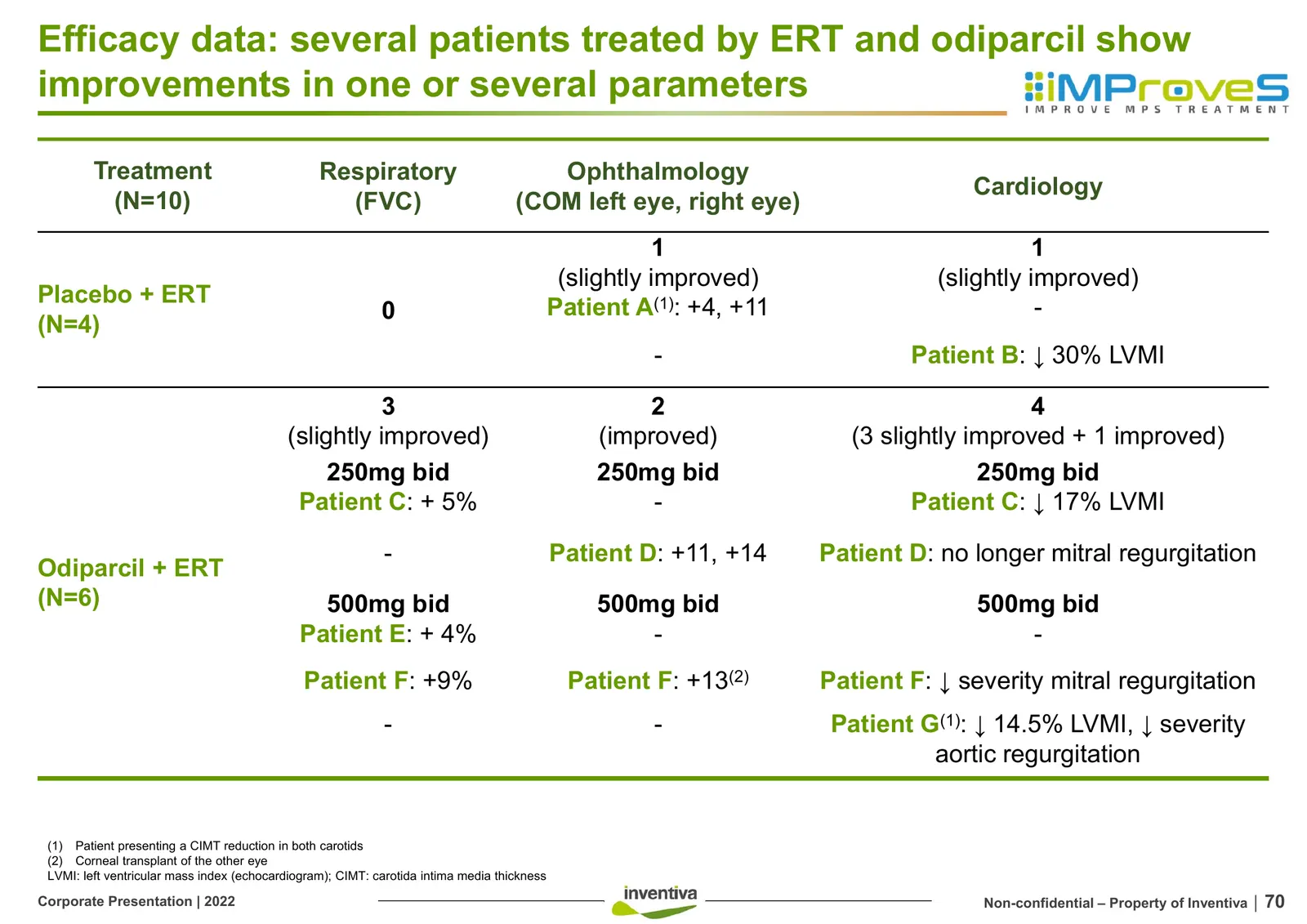
Slide 70: Several patients treated by ERT and odiparcil show improvements
Efficacy data: several patients treated by ERT and odiparcil show improvements in one or several parameters Treatment Respiratory Ophthalmology Cardiology (N=10) (FVC) (COM left eye, right eye) 1 1 (slightly improved) (slightly improved) Placebo + ERT 0 Patient A(1): +4, +11 - (N=4) - Patient B: ↓ 3
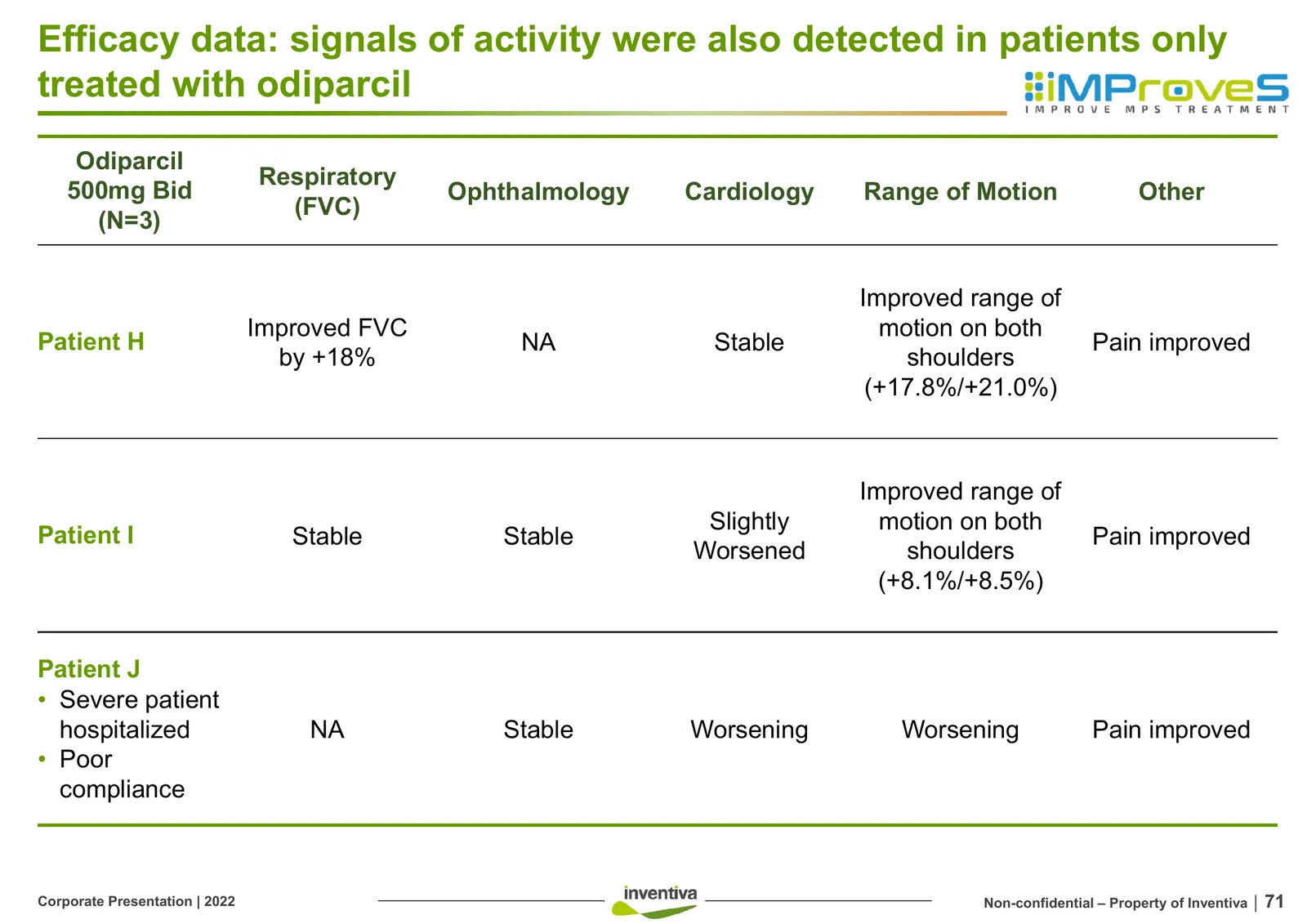
Slide 71: Signals of activity in patients only treated with odiparcil
Efficacy data: signals of activity were also detected in patients only treated with odiparcil Odiparcil Respiratory 500mg Bid Ophthalmology Cardiology Range of Motion Other (FVC) (N=3) Improved range of Improved FVC motion on both Patient H NA Stable Pain improved by +18% shoulders (+17.8%/+21.0%) I
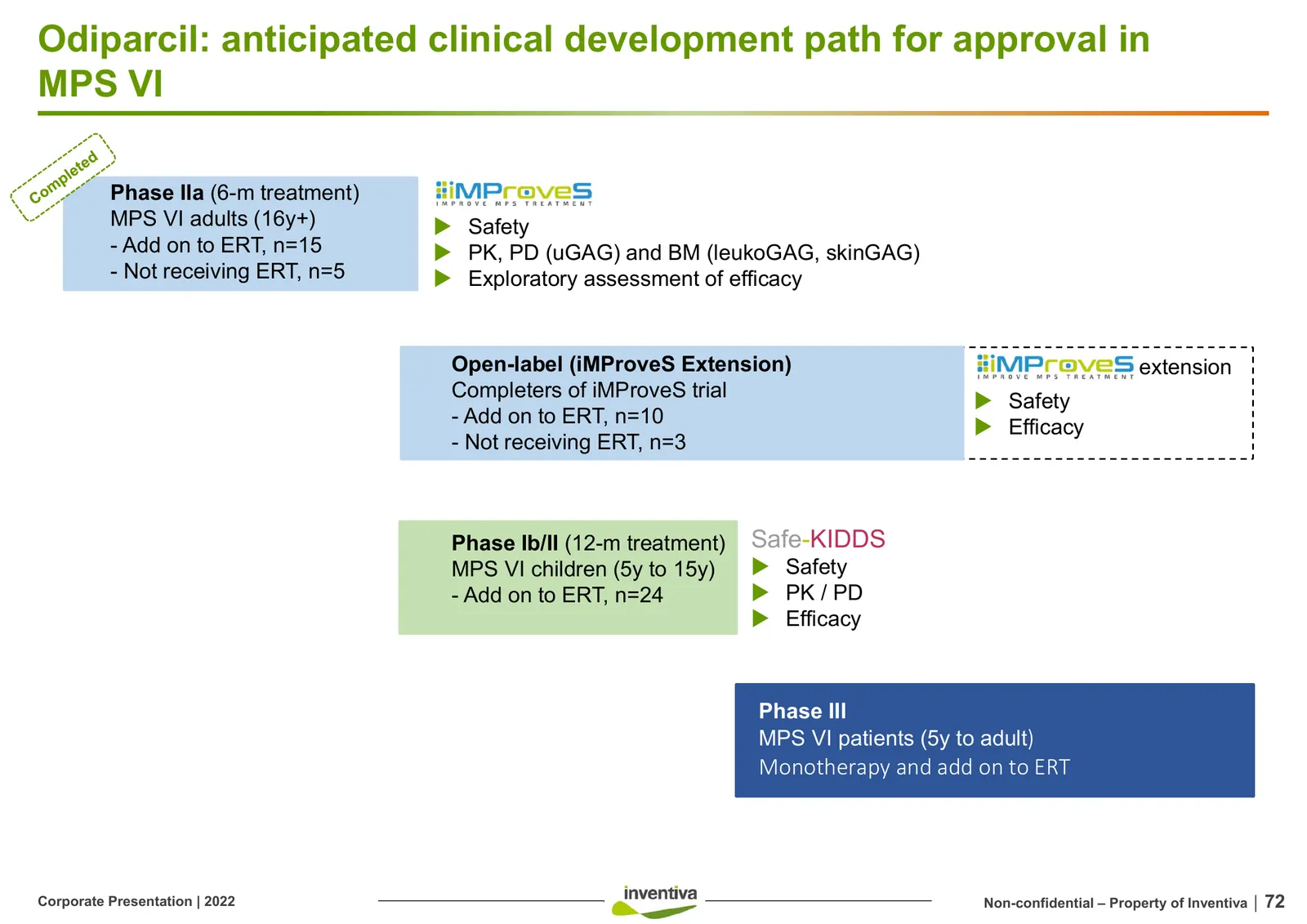
Slide 72: Odiparcil: anticipated clinical development path for approval in MPS VI
Odiparcil: anticipated clinical development path for approval in MPS VI Phase IIa (6-m treatment) MPS VI adults (16y+) Safety - Add on to ERT, n=15 PK, PD (uGAG) and BM (leukoGAG, skinGAG) - Not receiving ERT, n=5 Exploratory assessment of efficacy Open-label (iMProveS Extension) extension Com
Slide 73: YAP-TEAD and TGF-β programs
YAP-TEAD and TGF- programs
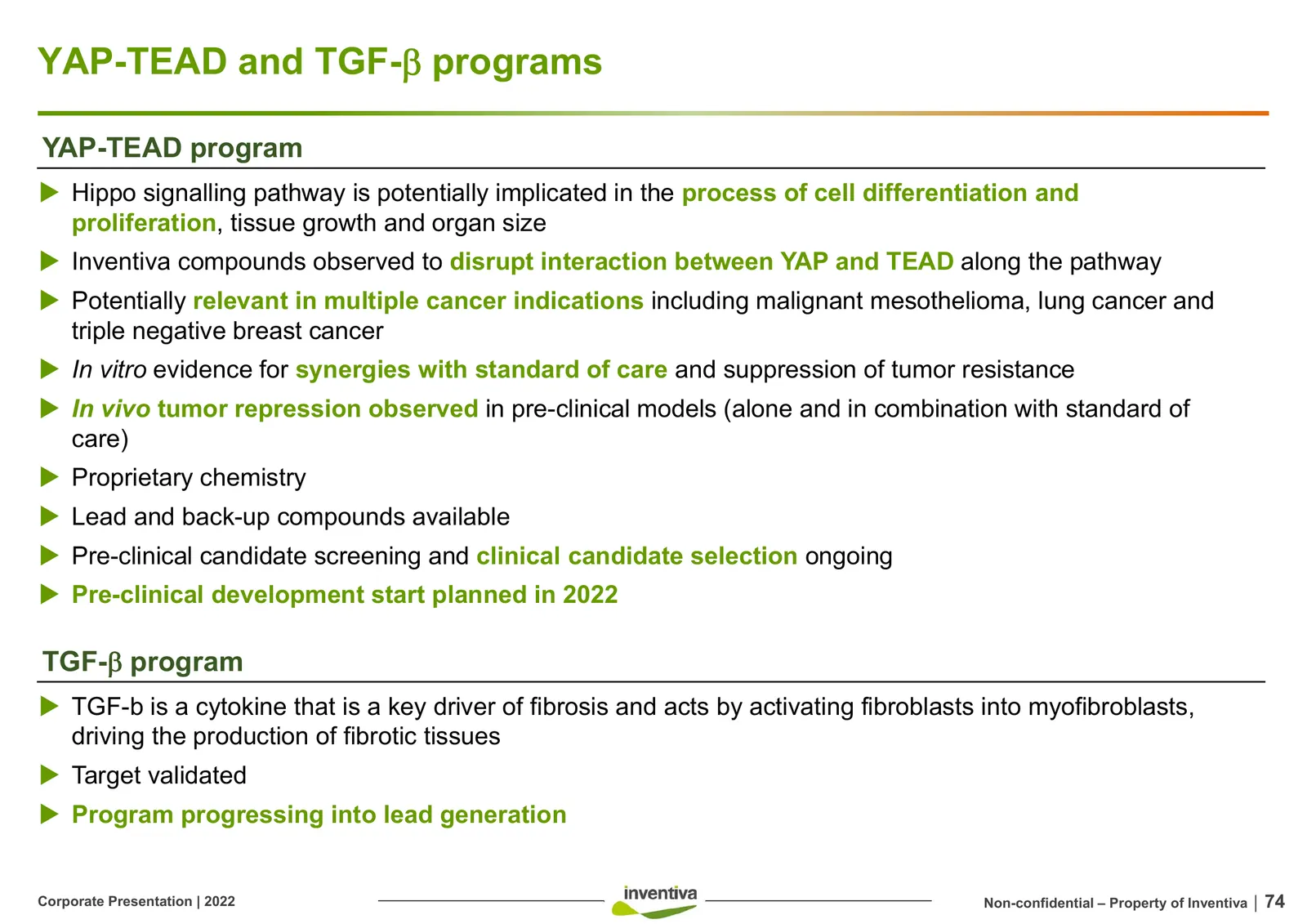
Slide 74: YAP-TEAD and TGF-β programs
YAP-TEAD and TGF- programs YAP-TEAD program Hippo signalling pathway is potentially implicated in the process of cell differentiation and proliferation, tissue growth and organ size Inventiva compounds observed to disrupt interaction between YAP and TEAD along the pathway Potentially relevant

Slide 75: Recent and upcoming catalysts
Recent and upcoming catalysts
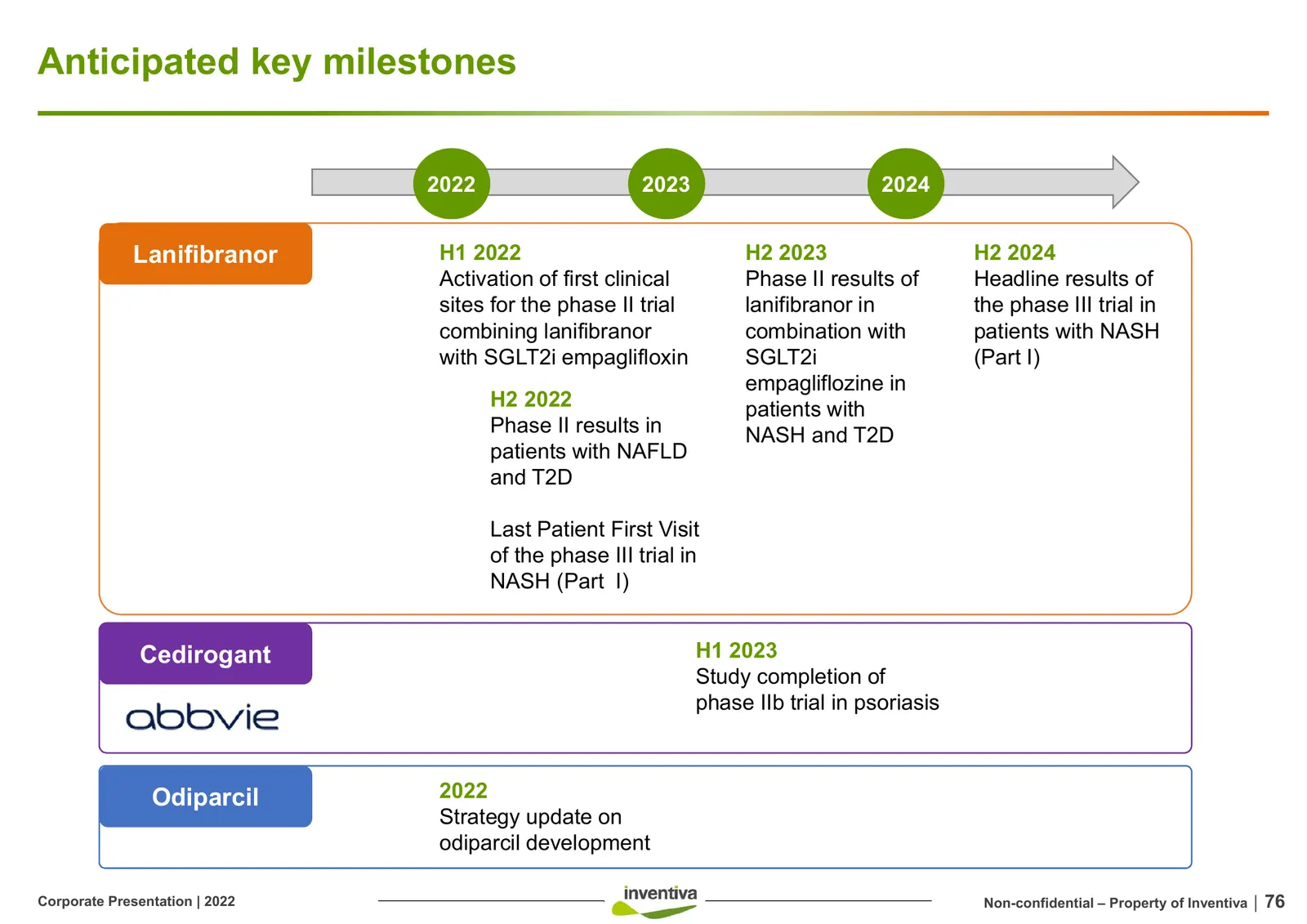
Slide 76: Anticipated key milestones
Anticipated key milestones 2022 2023 2024 Lanifibranor H1 2022 H2 2023 H2 2024 Activation of first clinical Phase II results of Headline results of sites for the phase II trial lanifibranor in the phase III trial in combining lanifibranor combination with patients with NASH with SGLT2i empaglifloxin

Slide 77: Contacts
Contacts Inventiva Brunswick Westwicke, an ICR Company Pascaline Clerc Laurence Frost/ Tristan Roquet Montégon / Patricia L. Bank Aude Lepreux VP of Global External Affairs Investor relations Media relations media@inventivapharma.com inventiva@brunswickgroup.com patti.bank@westwicke.com +1 240 620 9
Source: Internet Archive copy of inventivapharma.com
More decks from Inventiva SA
 Investor Presentation (October 2026)25 slides · October 2026
 H1 2026 Earnings Presentation26 slides · Sep 28, 2026
 FY2025 Earnings Presentation14 slides · Mar 31, 2026
 Investor Day (October 2025)54 slides · Oct 8, 2025
 Investor Day (October 2025)43 slides · Oct 8, 2025
 Investor Presentation (October 2025)48 slides · October 2025