Omnicell, Inc. · NASDAQ:OMCL
Omnicell — Technical Presentation (April 2009)
28 slides from Omnicell's technical presentation, Apr 17, 2009
Slide 1: Regulatory Compliance and Tissue Tracking
Regulatory Compliance and Tissue Tracking Presented by: Victoria Steelman, PhD, RN, CNOR, FAAN April 17, 2009
Slide 2: Background
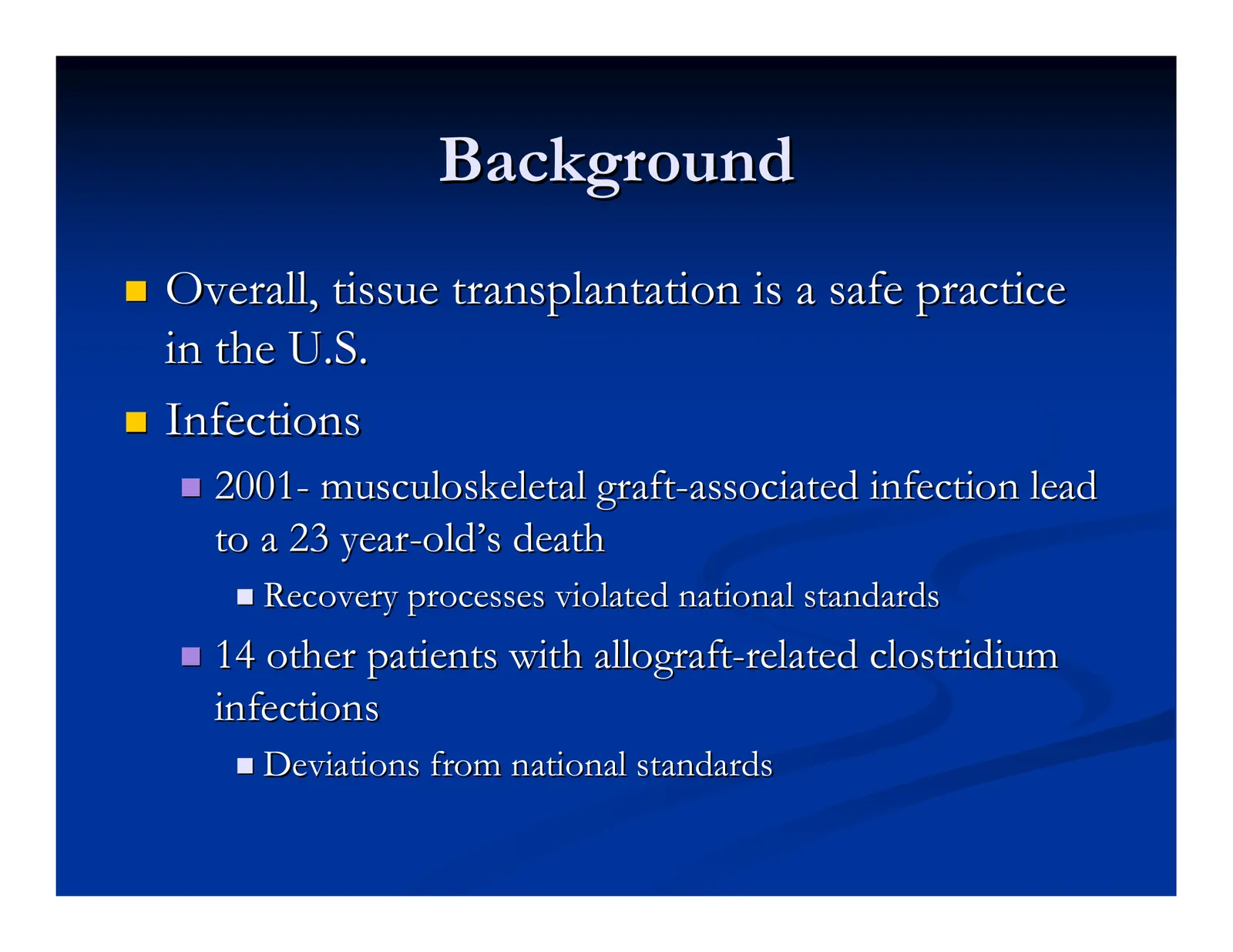
Background Overall, tissue transplantation is a safe practice in the U.S. Infections 2001- musculoskeletal graft-associated infection lead to a 23 year-old’s death Recovery processes violated national standards 14 other patients with allograft-related clostridium infections Deviations fr
Slide 3: Recall of Human Tissue
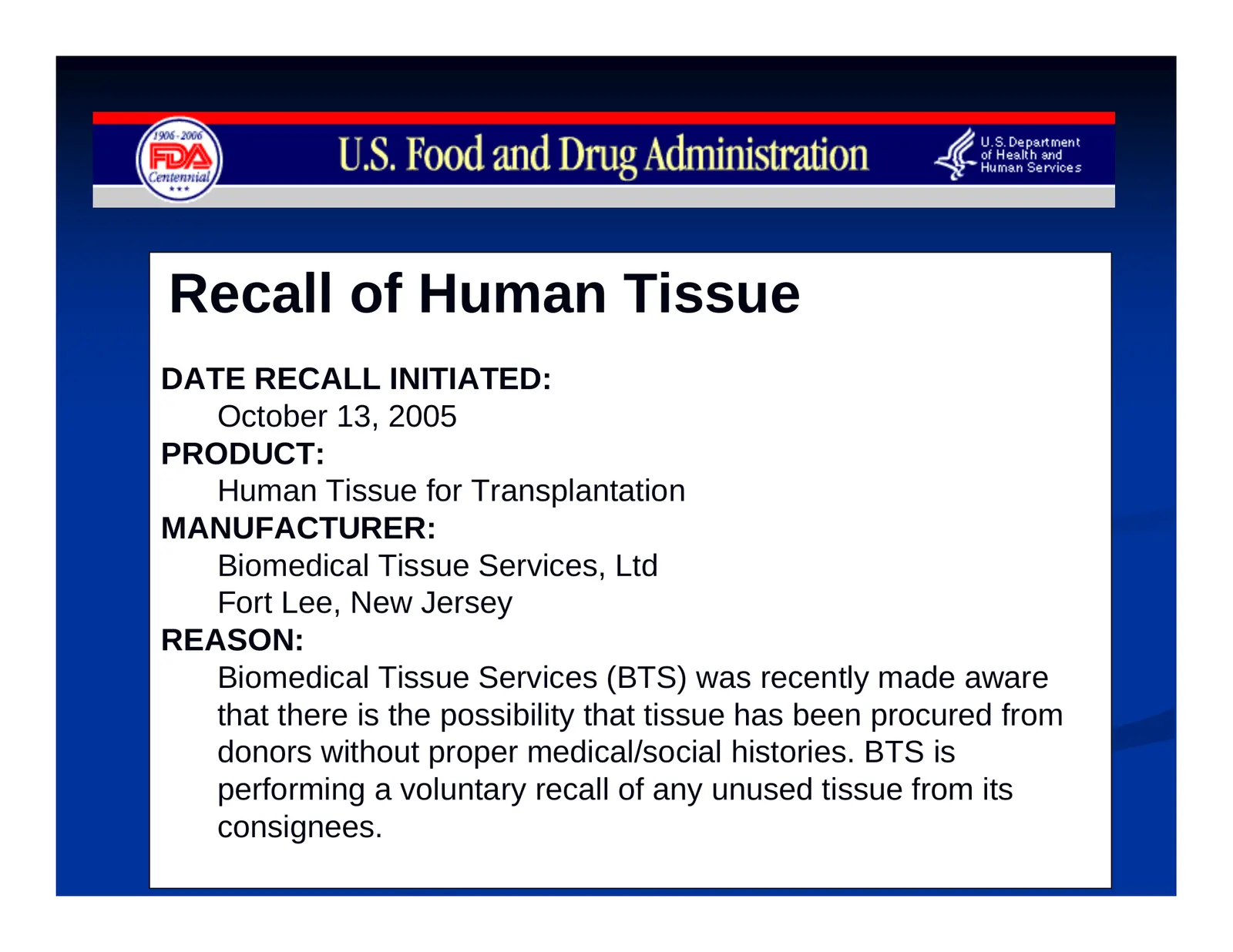
Recall of Human Tissue DATE RECALL INITIATED: October 13, 2005 PRODUCT: Human Tissue for Transplantation MANUFACTURER: Biomedical Tissue Services, Ltd Fort Lee, New Jersey REASON: Biomedical Tissue Services (BTS) was recently made aware that there is the possibility that tissue has been procured fro
Slide 4: Body parts harvested in N.C. are recalled
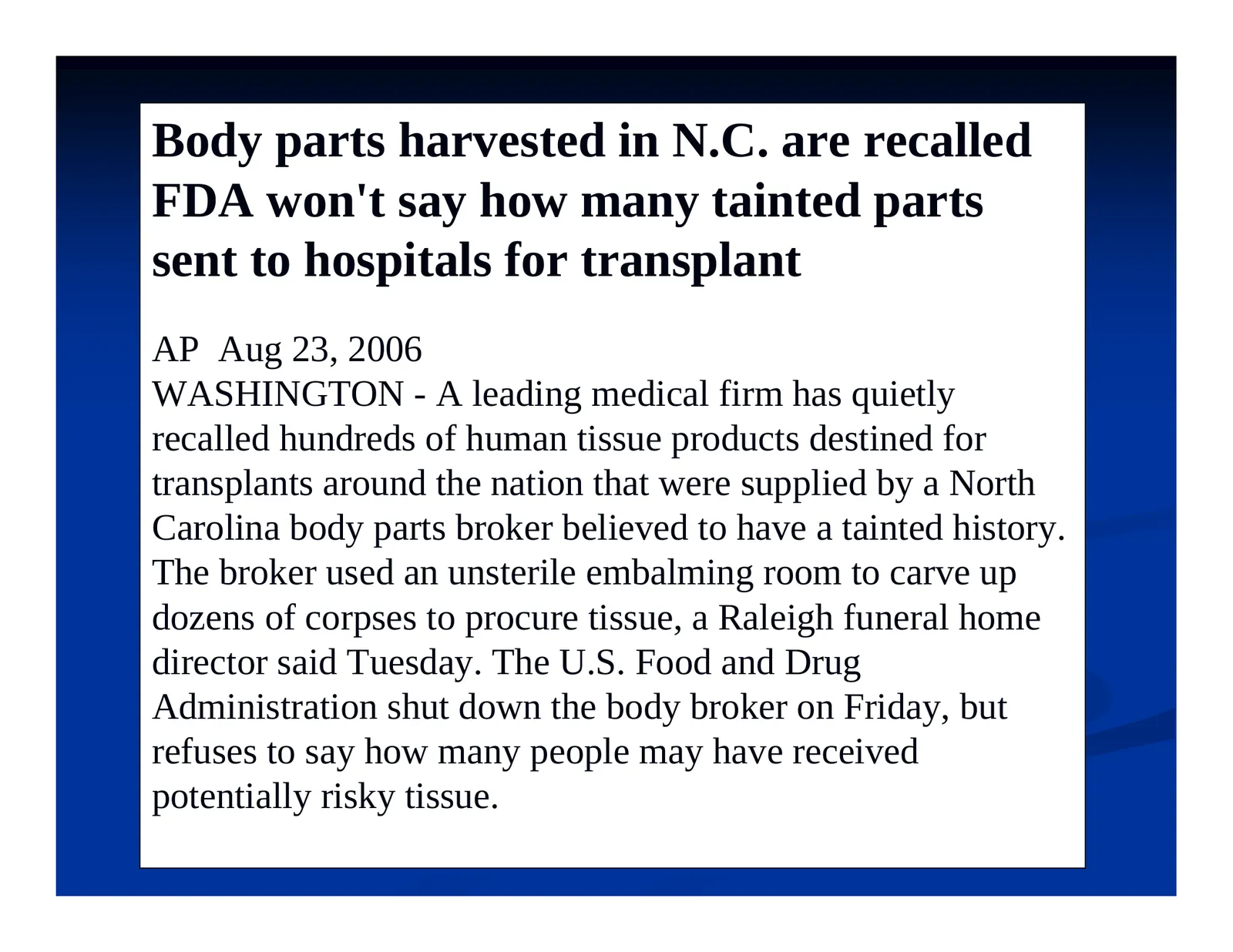
Body parts harvested in N.C. are recalled FDA won't say how many tainted parts sent to hospitals for transplant AP Aug 23, 2006 WASHINGTON - A leading medical firm has quietly recalled hundreds of human tissue products destined for transplants around the nation that were supplied by a North Carolina
Slide 5: Regulations and Standards
Regulations and Standards
Slide 6: Current FDA Regulations
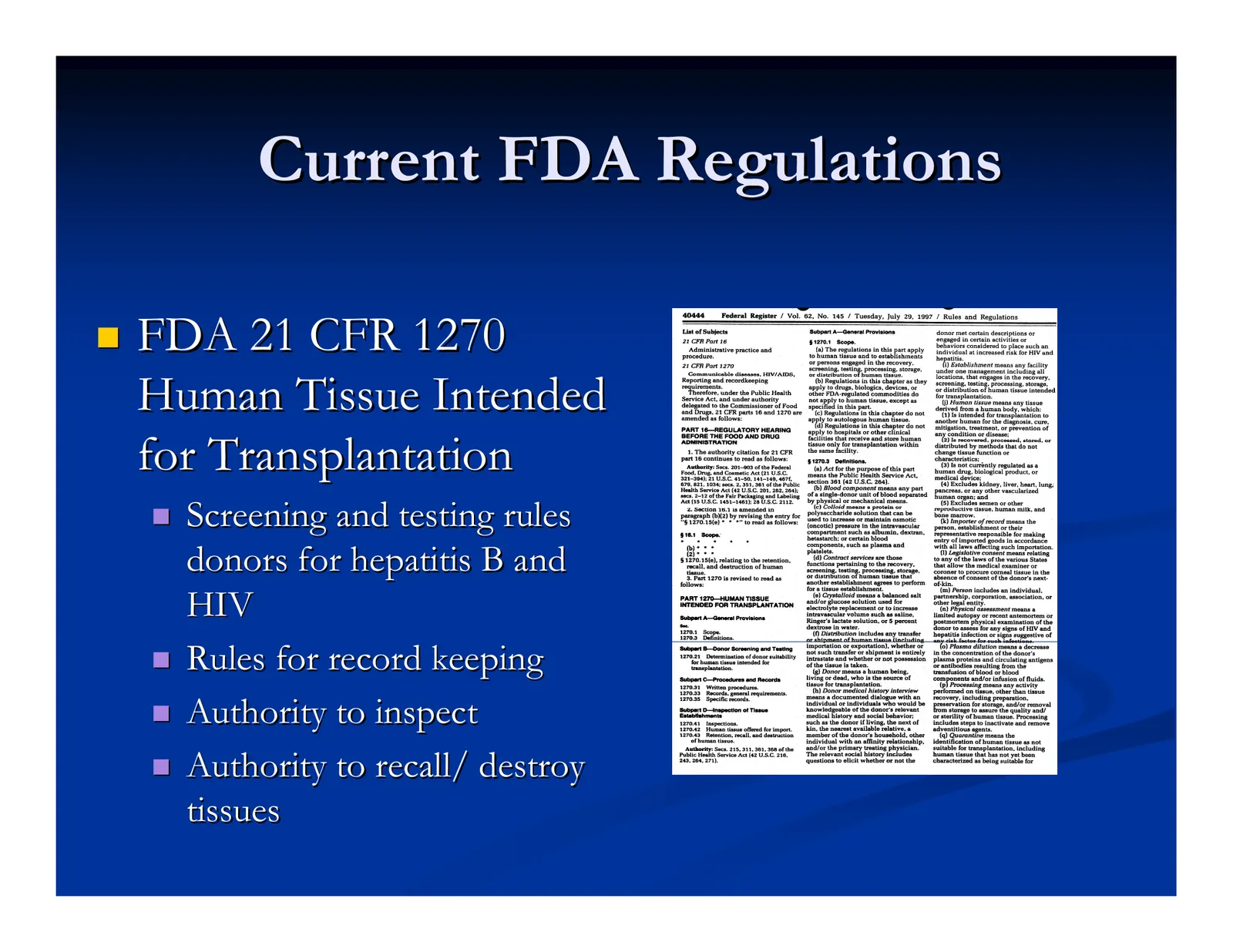
Current FDA Regulations FDA 21 CFR 1270 Human Tissue Intended for Transplantation Screening and testing rules donors for hepatitis B and HIV Rules for record keeping Authority to inspect Authority to recall/ destroy tissues
Slide 7: State Regulations
State Regulations New York California Florida Maryland

Slide 8: Tissue is Not a Surgical Supply
Tissue is Not a Surgical Supply

Slide 9: First Step: Determine Oversight
First Step: Determine Oversight Medical director Administrator Personnel Descriptions Responsibilities Training/competencies
Slide 10: Personnel
Personnel Surgical tissue bank personnel must be knowledgeable about the aspects of tissue banking in which they participate. Ongoing and continuing education provided Focus on responsibilities Ordering tissue Receiving tissue Storage of tissue Release of tissue from tissue bank Disp
Slide 11: Registration with FDA
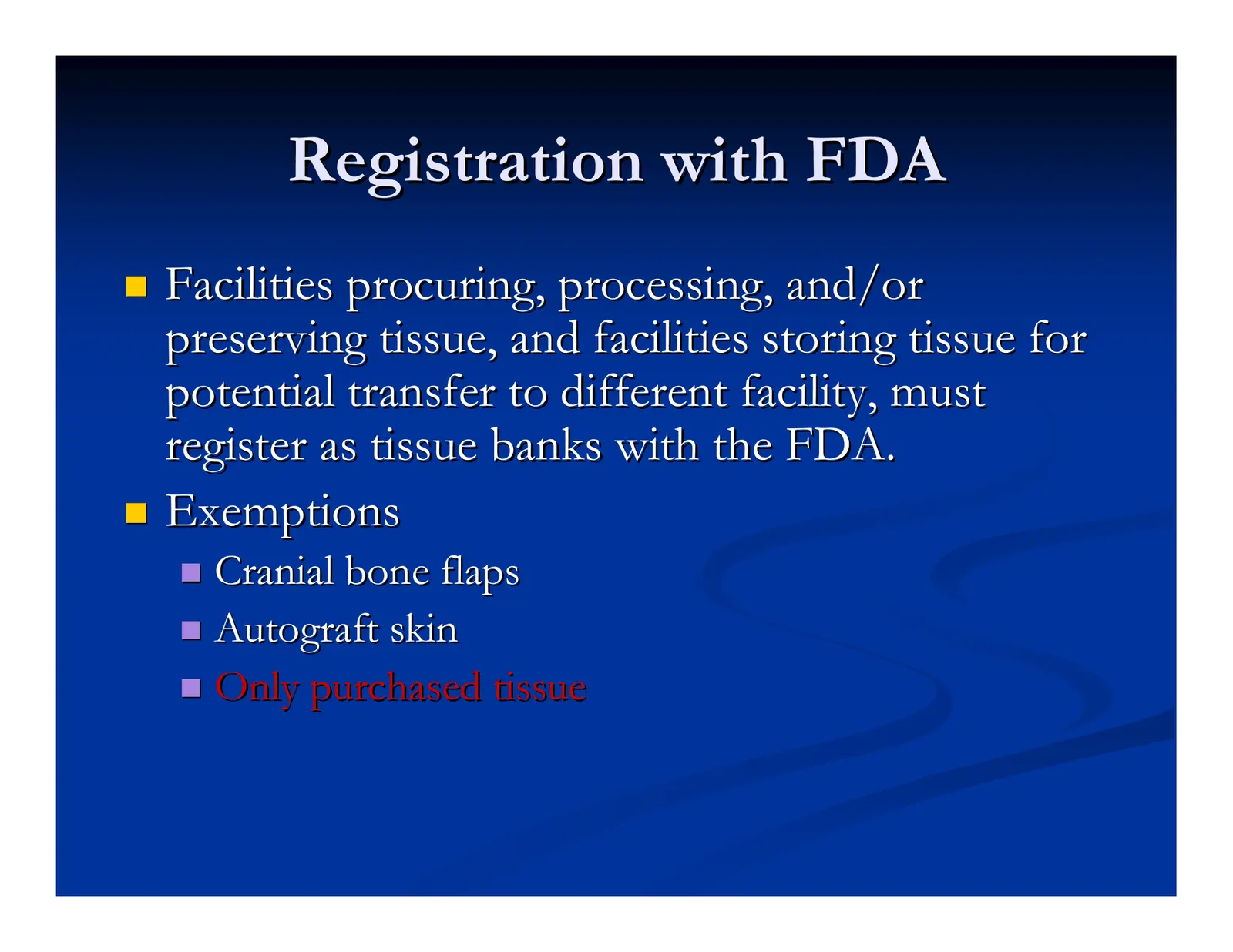
Registration with FDA Facilities procuring, processing, and/or preserving tissue, and facilities storing tissue for potential transfer to different facility, must register as tissue banks with the FDA. Exemptions Cranial bone flaps Autograft skin Only purchased tissue

Slide 12: Tissue Bank Selection Criteria
Tissue Bank Selection Criteria Develop criteria for selecting a vendor of tissue
Slide 13: Selecting a Tissue Bank
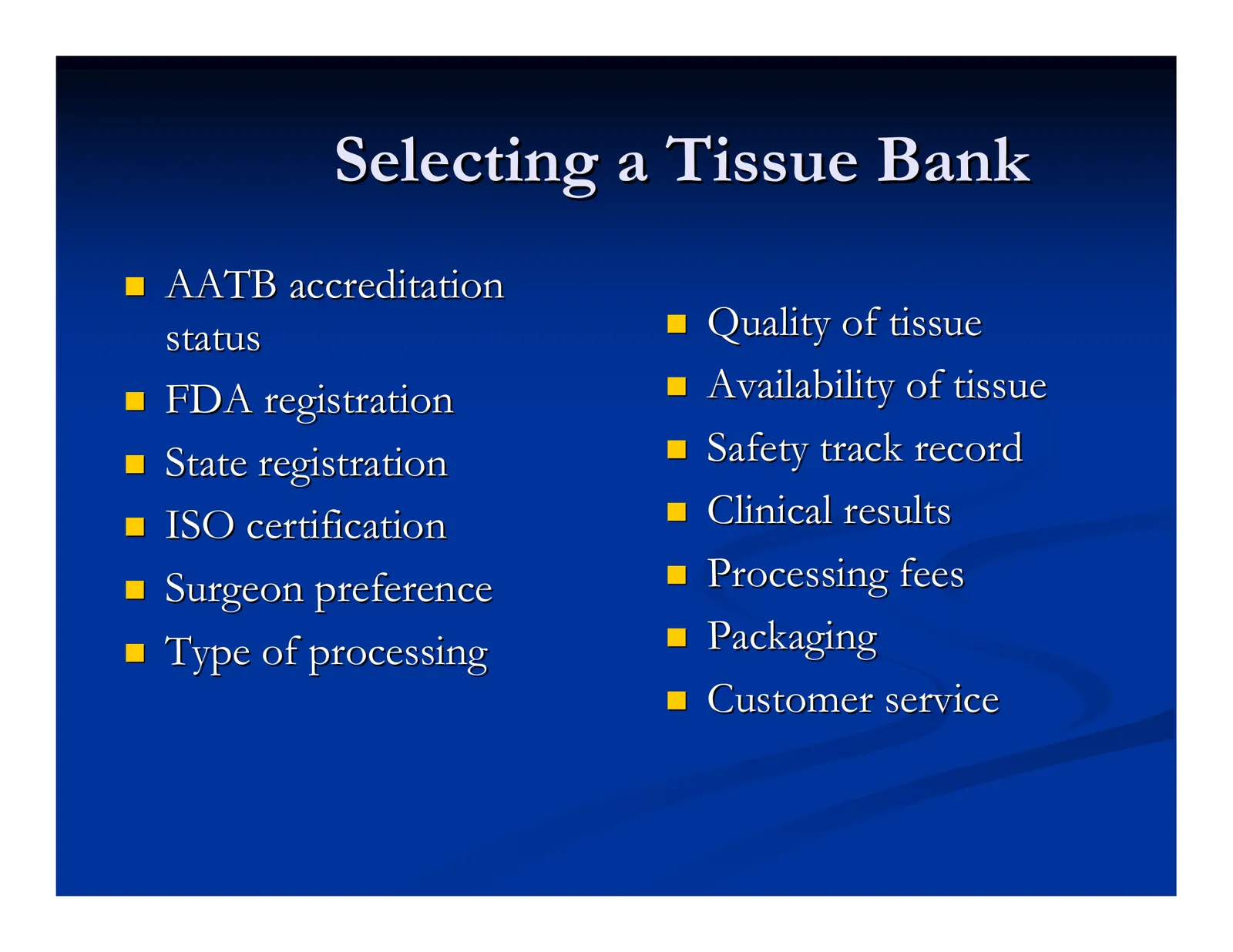
Selecting a Tissue Bank AATB accreditation status Quality of tissue FDA registration Availability of tissue State registration Safety track record ISO certification Clinical results Surgeon preference Processing fees Type of processing Packaging Customer service

Slide 14: Tissue Tracking
Tissue Tracking From donor to recipient From donor to disposition
Slide 15: Receipt of Tissue
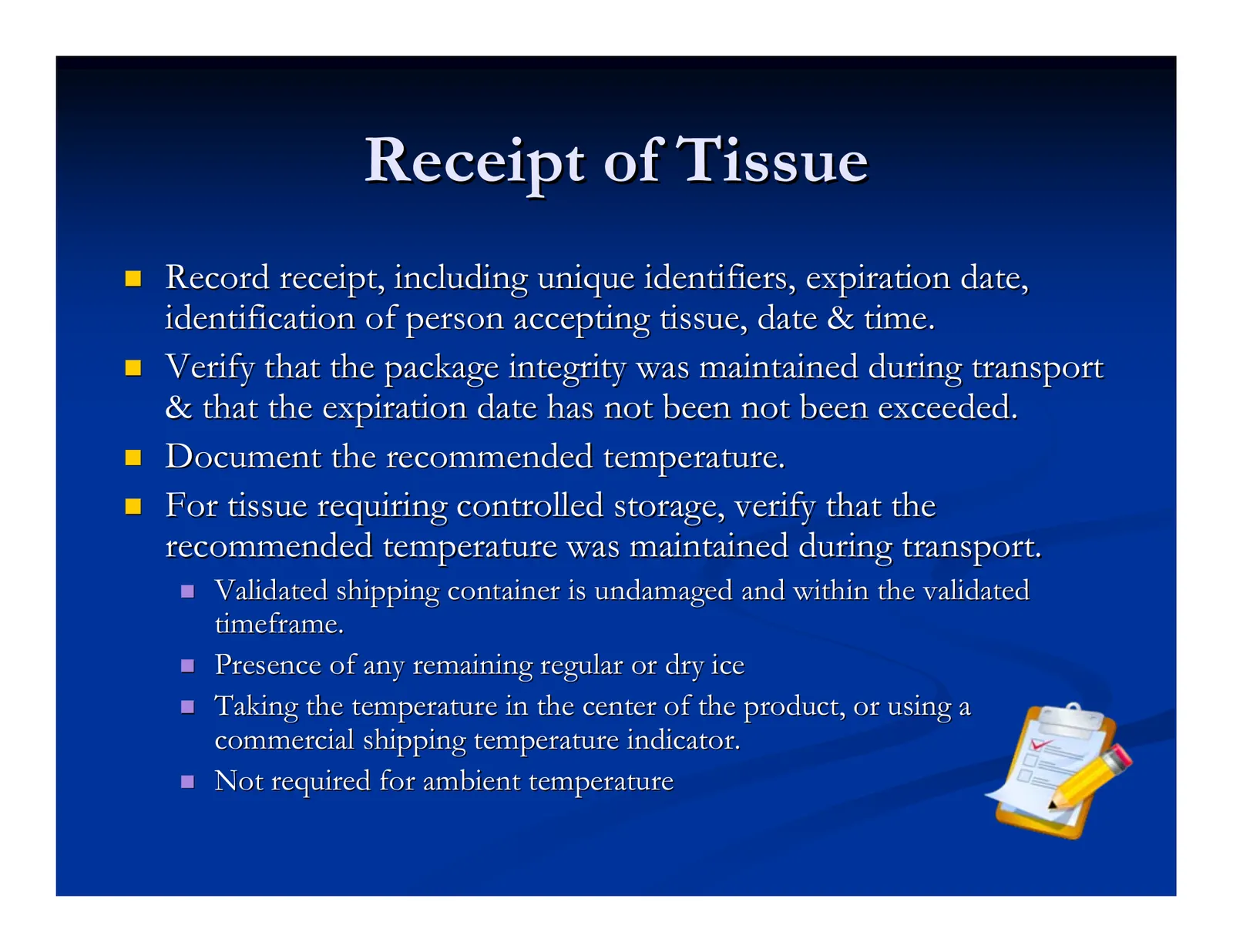
Receipt of Tissue Record receipt, including unique identifiers, expiration date, identification of person accepting tissue, date & time. Verify that the package integrity was maintained during transport & that the expiration date has not been not been exceeded. Document the recommended tempera
Slide 16: Storage
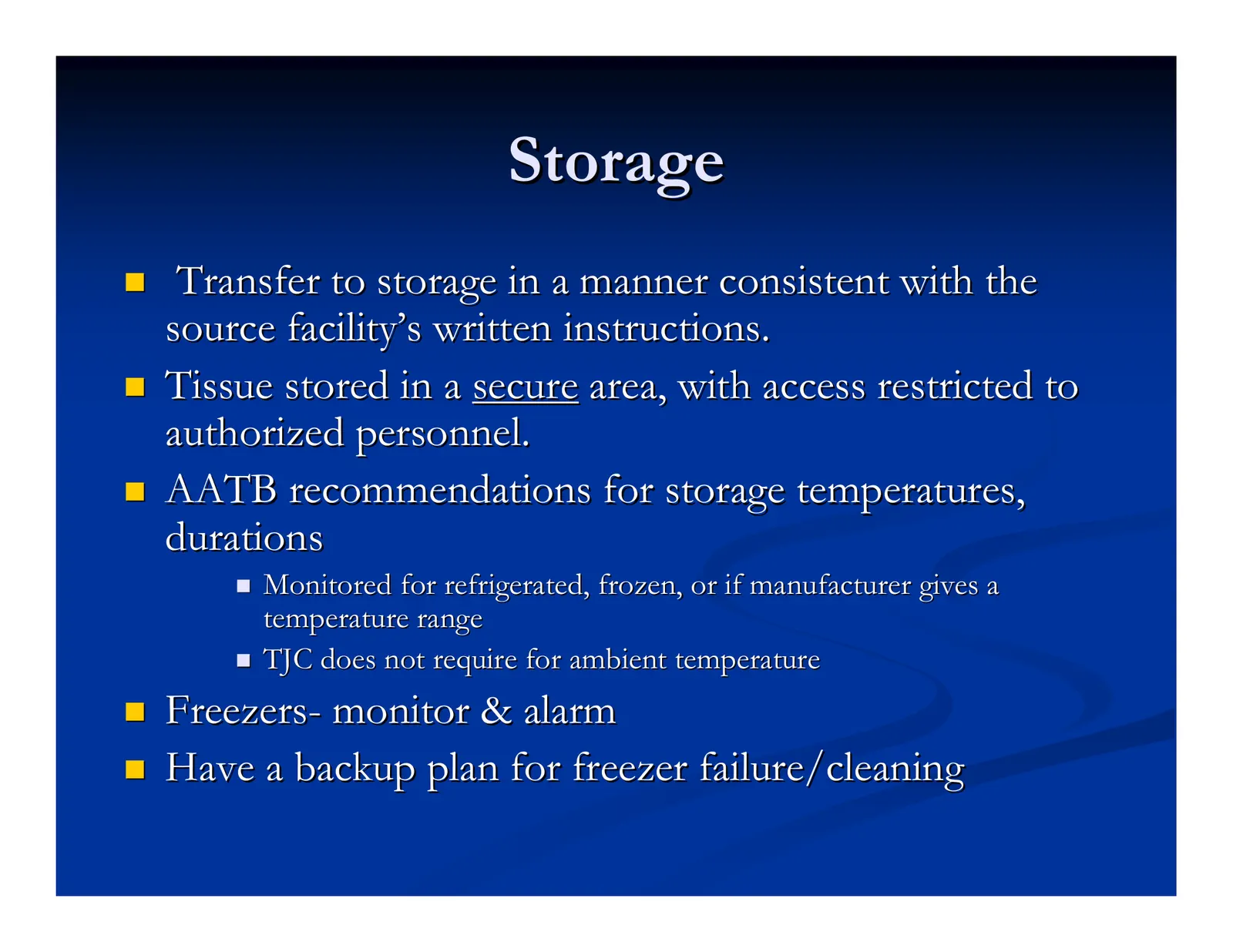
Storage Transfer to storage in a manner consistent with the source facility’s written instructions. Tissue stored in a secure area, with access restricted to authorized personnel. AATB recommendations for storage temperatures, durations Monitored for refrigerated, frozen, or if manufacturer
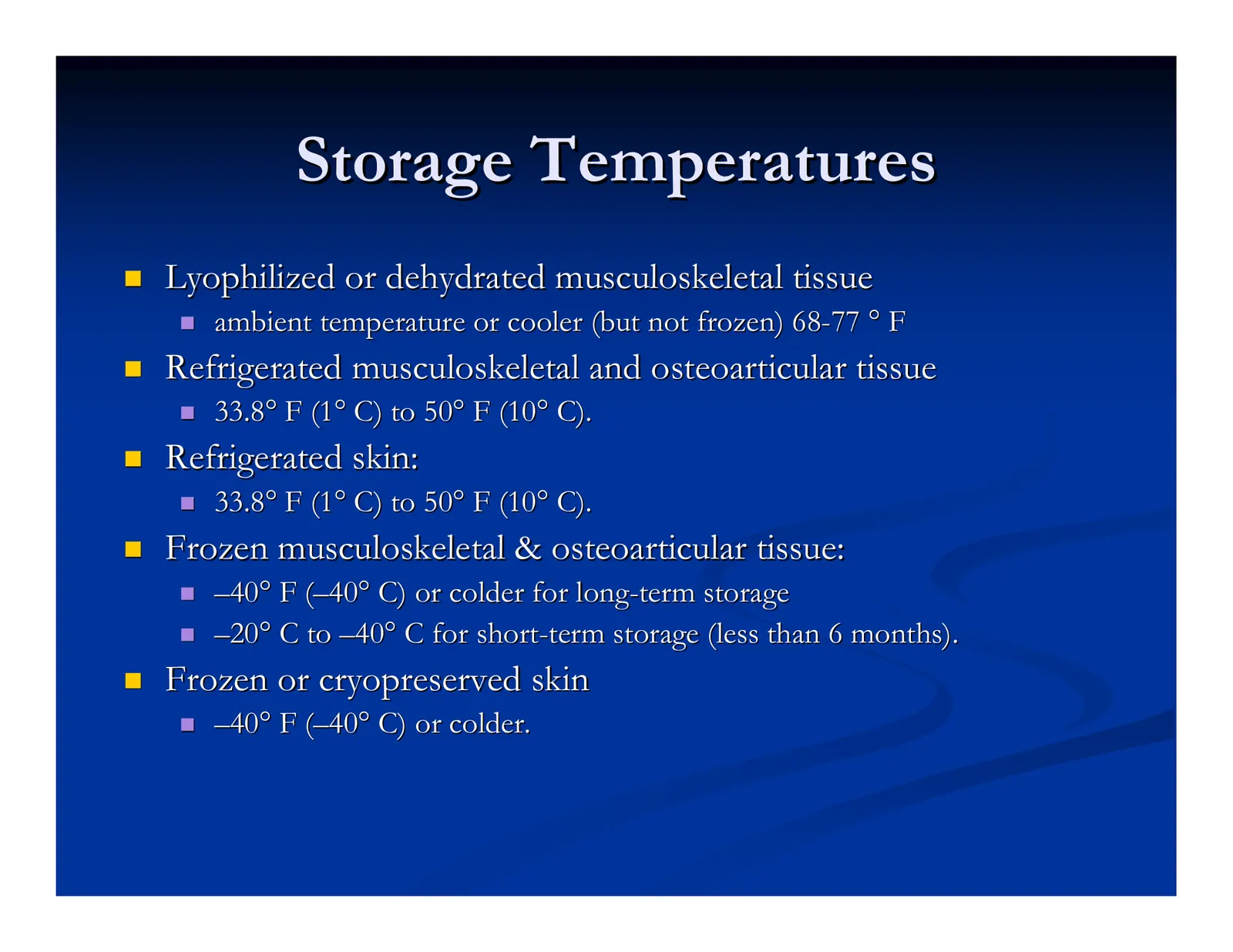
Slide 17: Storage Temperatures
Storage Temperatures Lyophilized or dehydrated musculoskeletal tissue ambient temperature or cooler (but not frozen) 68-77 ° F Refrigerated musculoskeletal and osteoarticular tissue 33.8° F (1° C) to 50° F (10° C). Refrigerated skin: 33.8° F (1° C) to 50° F (10° C). Frozen musculoskele
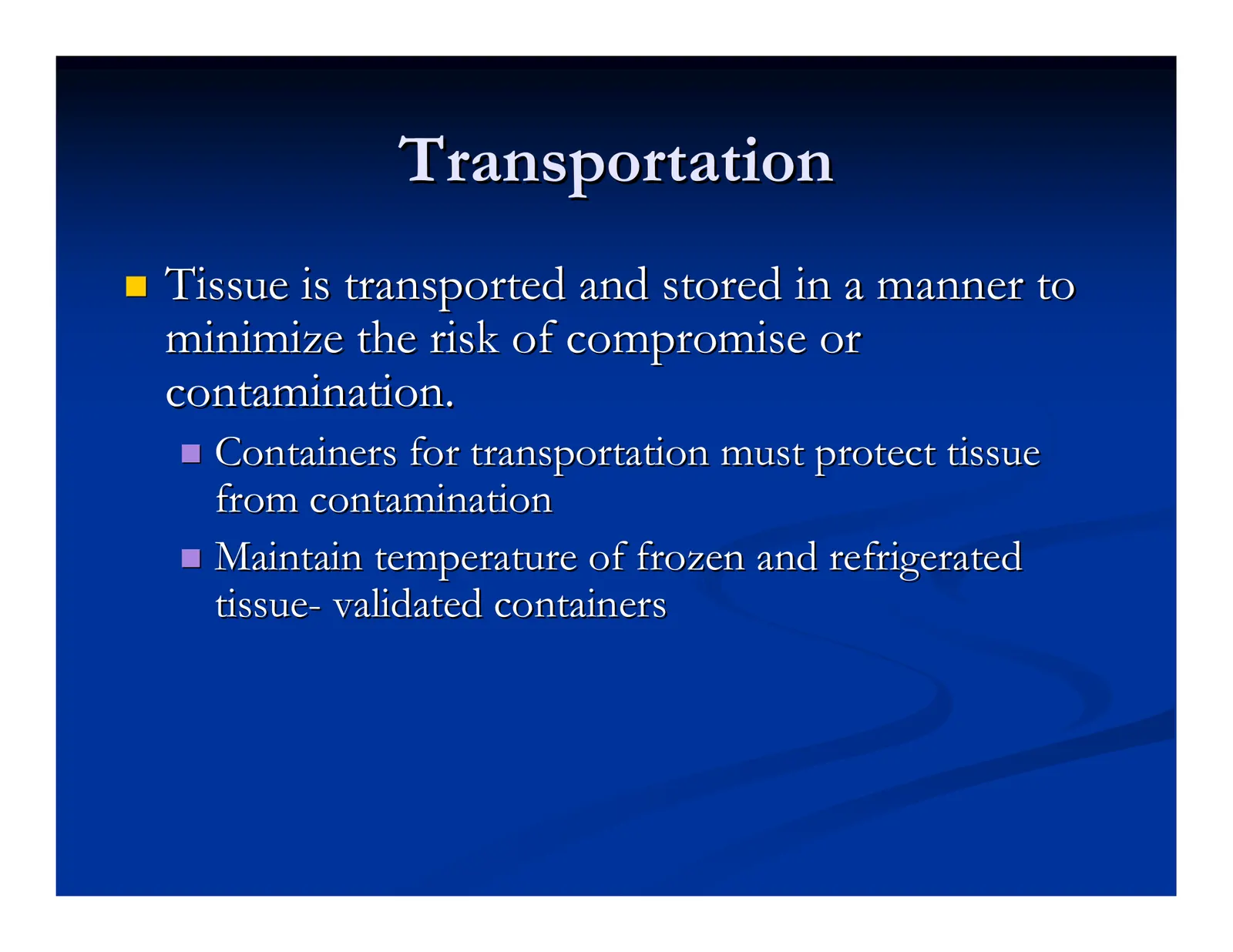
Slide 18: Transportation
Transportation Tissue is transported and stored in a manner to minimize the risk of compromise or contamination. Containers for transportation must protect tissue from contamination Maintain temperature of frozen and refrigerated tissue- validated containers
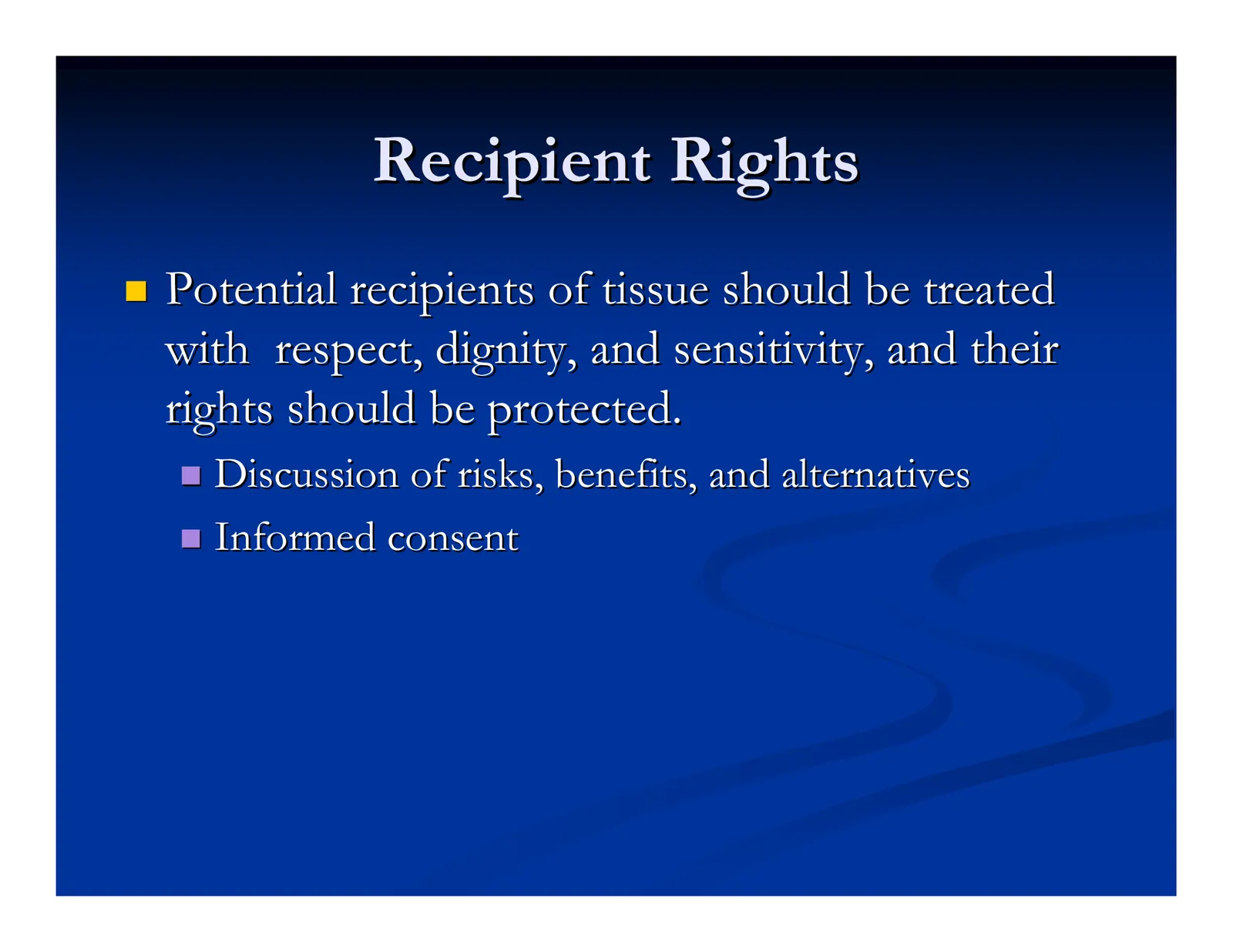
Slide 19: Recipient Rights
Recipient Rights Potential recipients of tissue should be treated with respect, dignity, and sensitivity, and their rights should be protected. Discussion of risks, benefits, and alternatives Informed consent
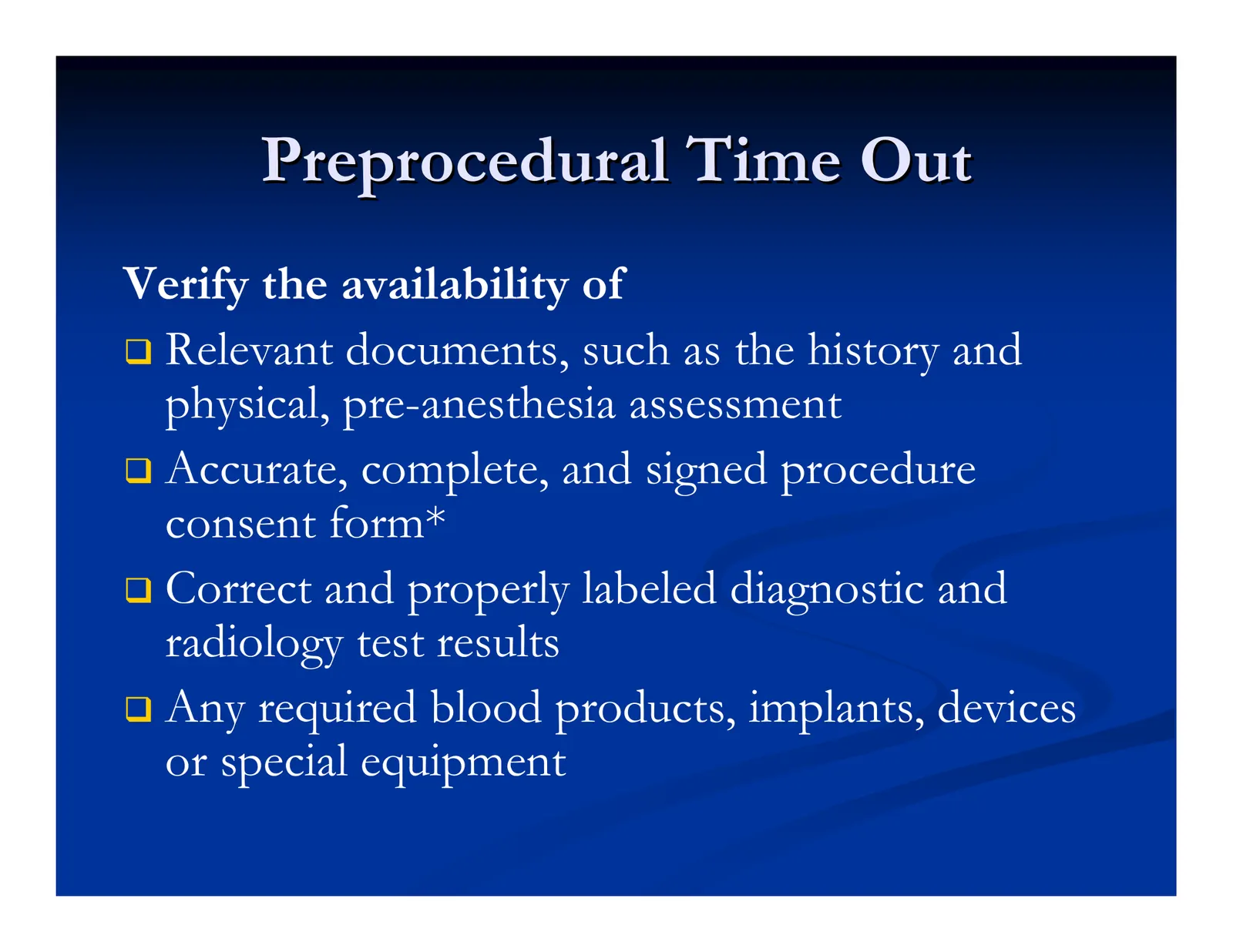
Slide 20: Preprocedural Time Out
Preprocedural Time Out Verify the availability of Relevant documents, such as the history and physical, pre-anesthesia assessment Accurate, complete, and signed procedure consent form* Correct and properly labeled diagnostic and radiology test results Any required blood products, implants, d
Slide 21: Reconstitution
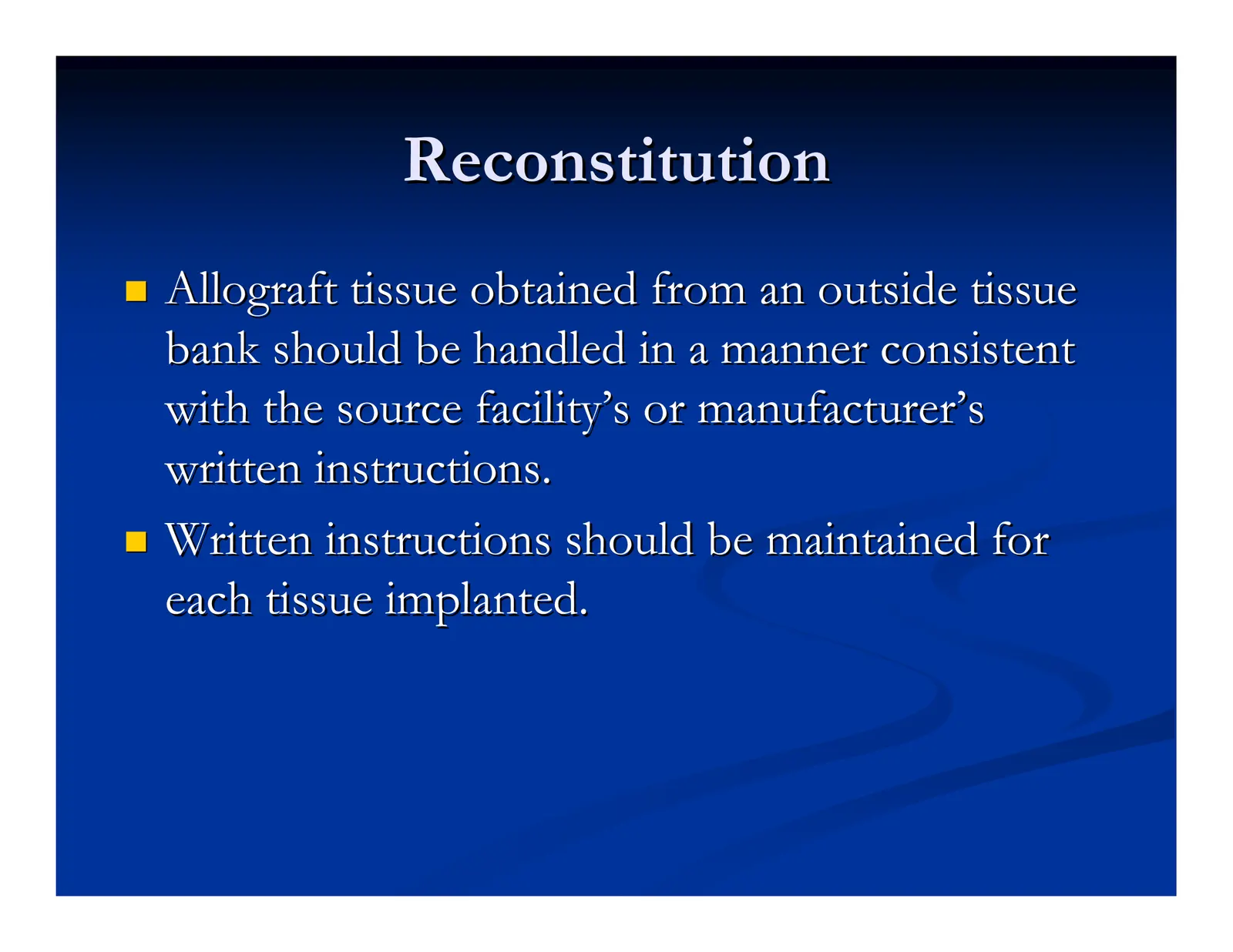
Reconstitution Allograft tissue obtained from an outside tissue bank should be handled in a manner consistent with the source facility’s or manufacturer’s written instructions. Written instructions should be maintained for each tissue implanted.
Slide 22: Policies and Procedures
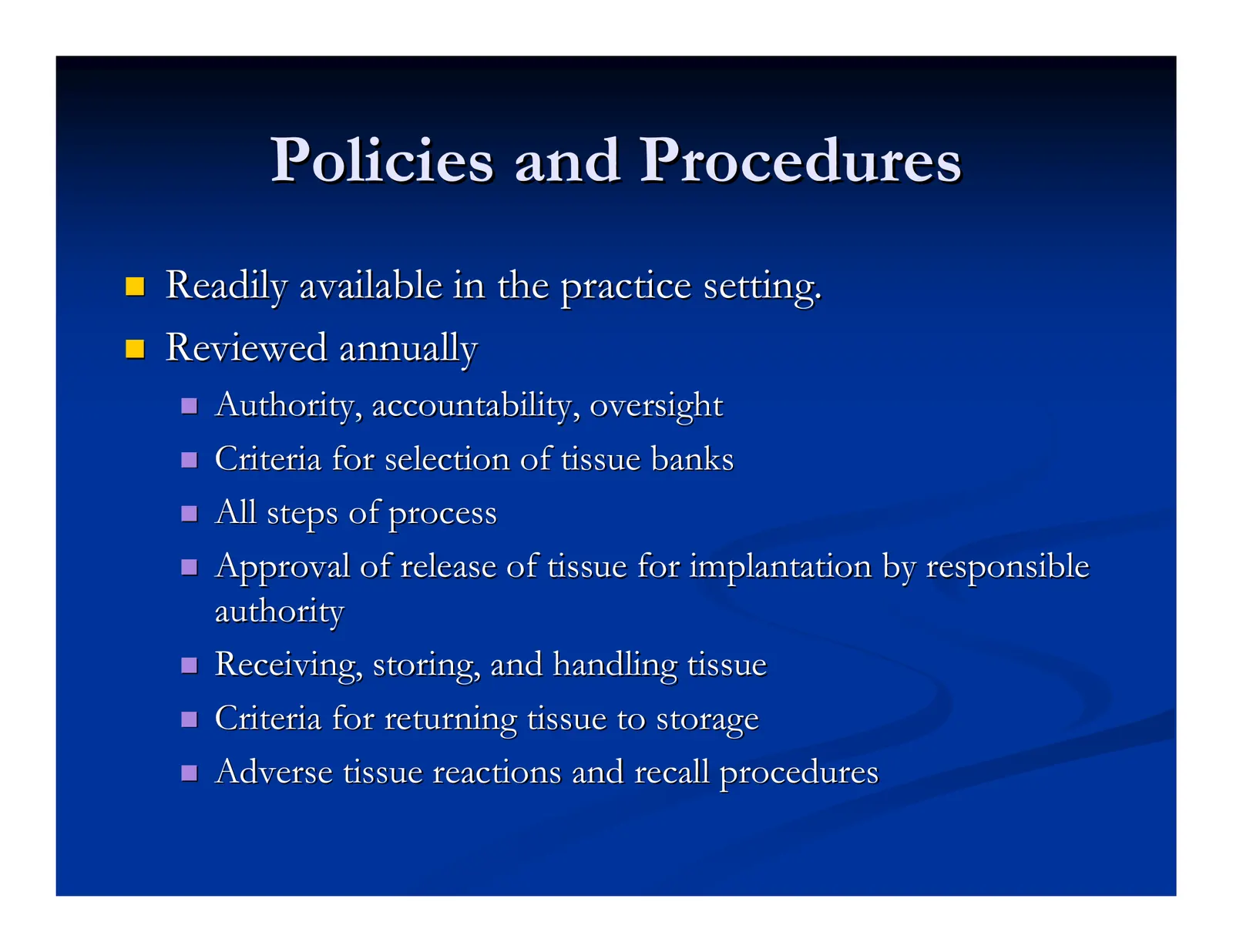
Policies and Procedures Readily available in the practice setting. Reviewed annually Authority, accountability, oversight Criteria for selection of tissue banks All steps of process Approval of release of tissue for implantation by responsible authority Receiving, storing, and handling
Slide 23: Adverse Tissue Reaction Policies
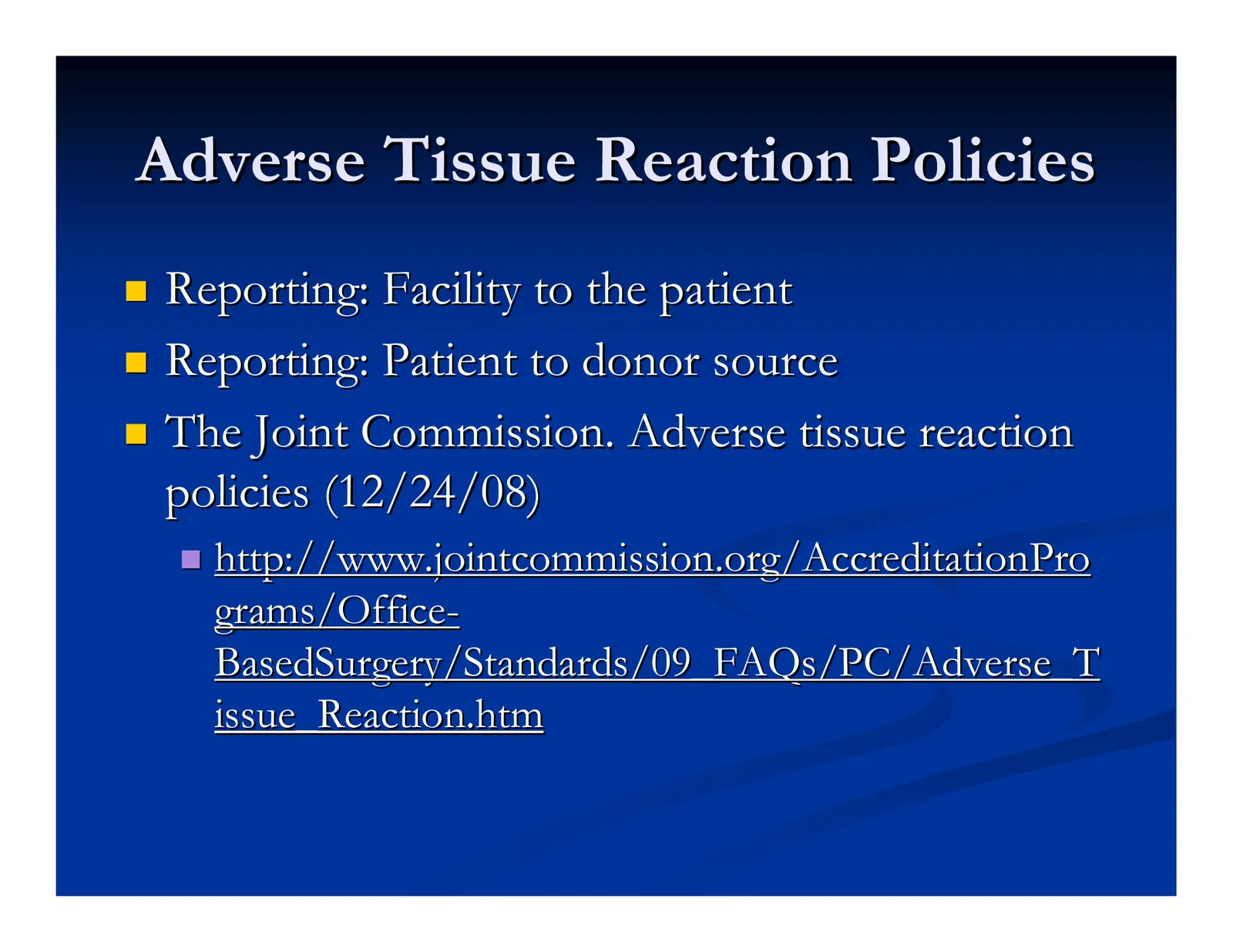
Adverse Tissue Reaction Policies Reporting: Facility to the patient Reporting: Patient to donor source The Joint Commission. Adverse tissue reaction policies (12/24/08) http://www.jointcommission.org/AccreditationPro grams/Office- BasedSurgery/Standards/09_FAQs/PC/Adverse_T issue_Reaction.ht
Slide 24: Recordkeeping
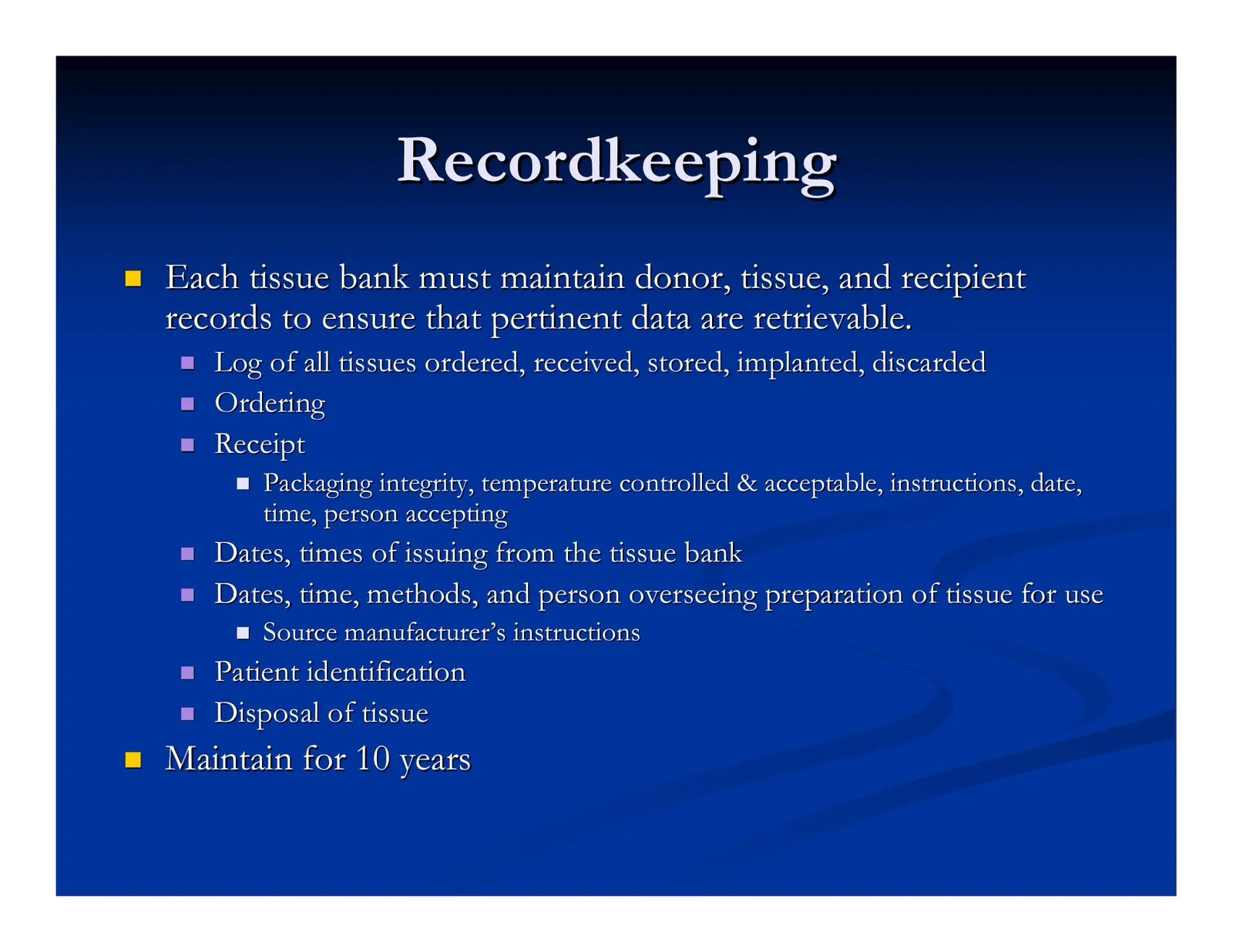
Recordkeeping Each tissue bank must maintain donor, tissue, and recipient records to ensure that pertinent data are retrievable. Log of all tissues ordered, received, stored, implanted, discarded Ordering Receipt Packaging integrity, temperature controlled & acceptable, instructions, date,
Slide 25: Quality Management
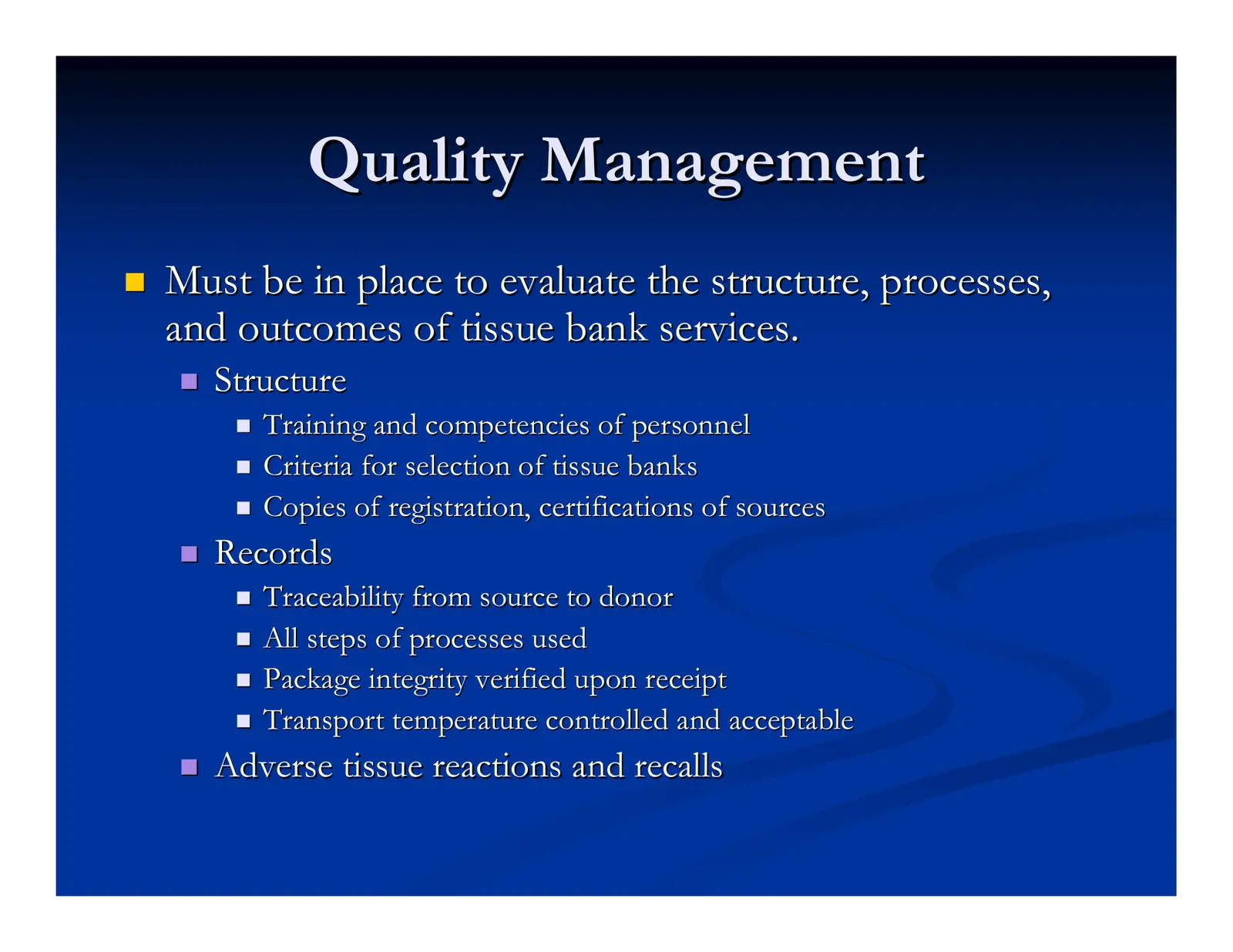
Quality Management Must be in place to evaluate the structure, processes, and outcomes of tissue bank services. Structure Training and competencies of personnel Criteria for selection of tissue banks Copies of registration, certifications of sources Records Traceability from source to
Slide 26: Managing a tissue recall in a large academic hospital
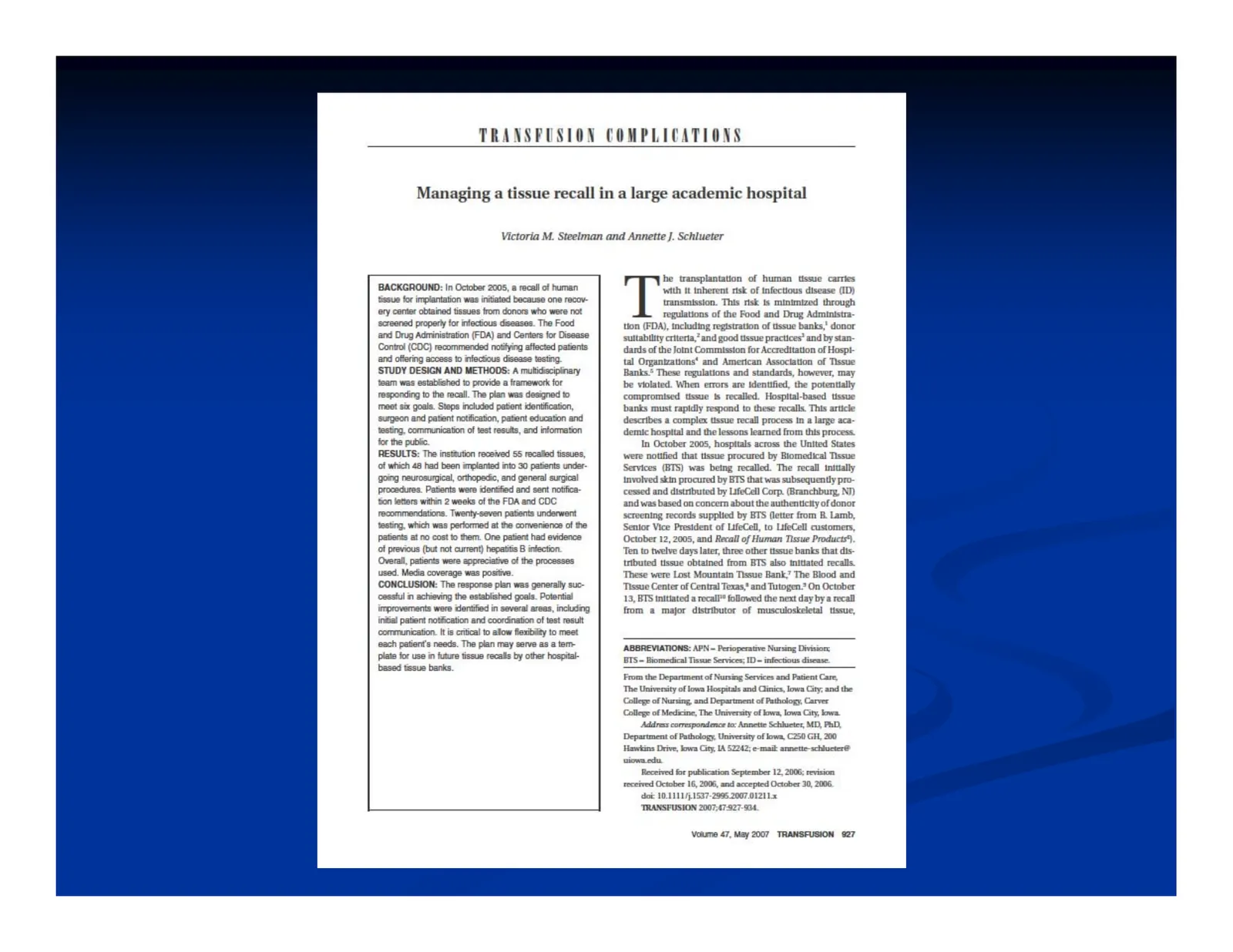
TRANSFUSION COMPLICATIONS Managing a tissue recall in a large academic hospital ctoria M. Steelman and Annette J. Schlueter he transplantation nan tissue carries BACKGROUND: tober 2005, a recall of human with it inherent risk of infectious disease (ID) transmission. This risk 1s minimized through re
Slide 27: Summary
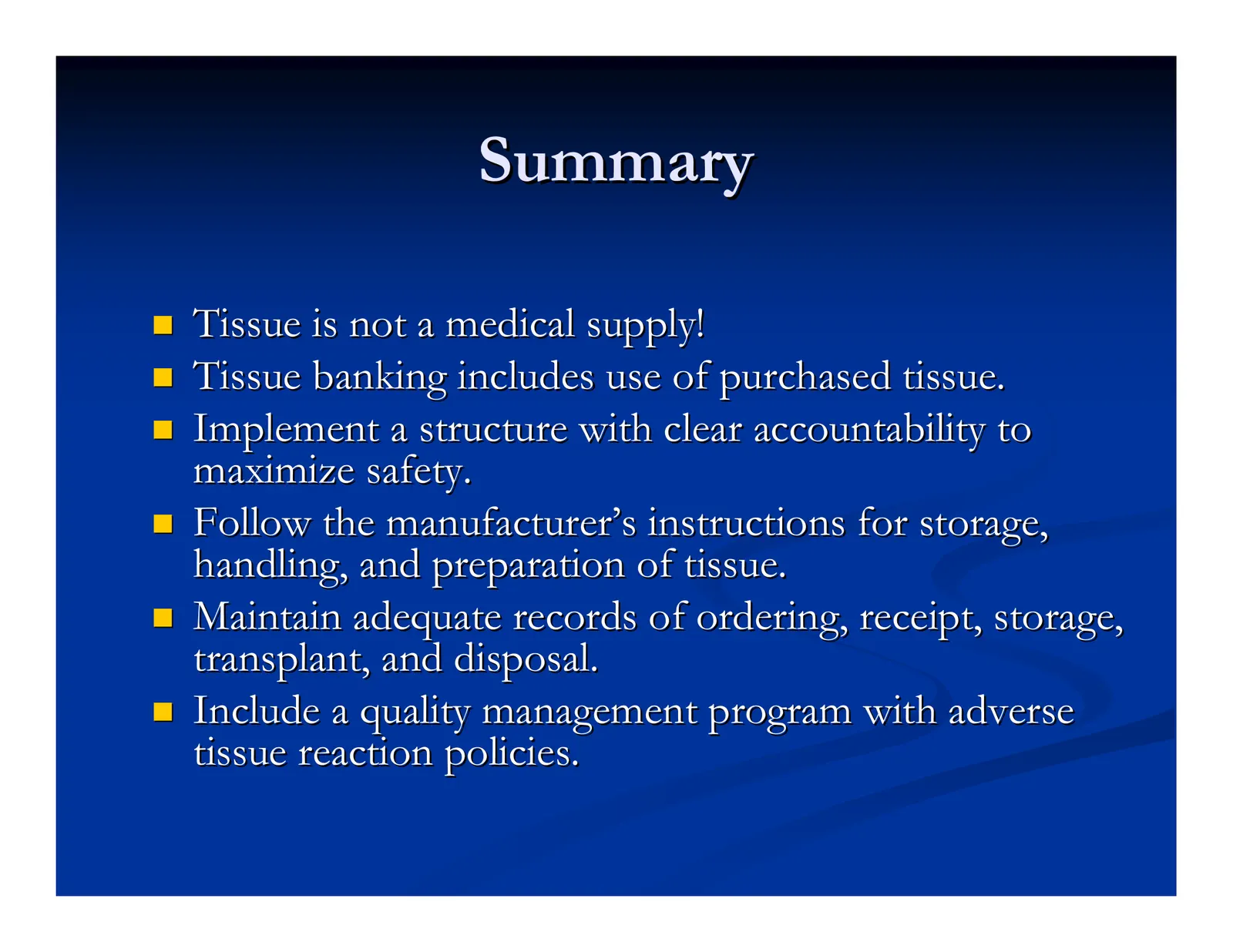
Summary Tissue is not a medical supply! Tissue banking includes use of purchased tissue. Implement a structure with clear accountability to maximize safety. Follow the manufacturer’s instructions for storage, handling, and preparation of tissue. Maintain adequate records of ordering, recei
Slide 28: References
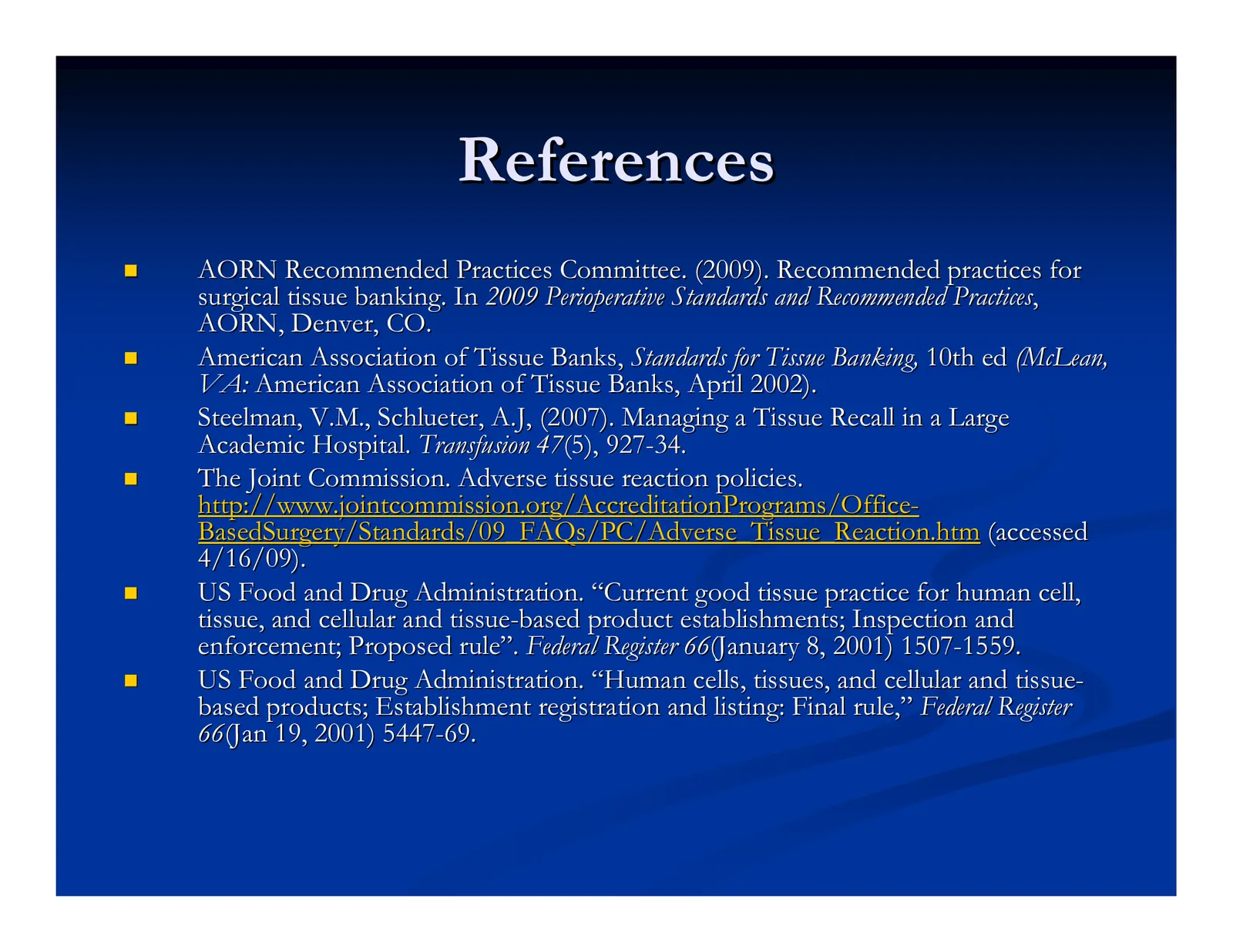
References AORN Recommended Practices Committee. (2009). Recommended practices for surgical tissue banking. In 2009 Perioperative Standards and Recommended Practices, AORN, Denver, CO. American Association of Tissue Banks, Standards for Tissue Banking, 10th ed (McLean, VA: American Association o
Source: Internet Archive copy of omnicell.com
More decks from Omnicell, Inc.
 Q1 2026 Earnings Presentation33 slides · Apr 28, 2026
 Q4 2025 Earnings Presentation36 slides · Feb 5, 2026
 Q3 2025 Earnings Presentation35 slides · Oct 30, 2025
 Q2 2025 Earnings Presentation37 slides · Jul 31, 2025
 Q1 2025 Earnings Presentation36 slides · May 6, 2025
 FY2024 Earnings Presentation37 slides · Feb 6, 2025