Poseida Therapeutics — Investor Day (February 2023)
145 slides from Poseida Therapeutics's investor day presentation, Feb 22, 2023
Slide 1: A New Class of Cell & Gene Therapies With the Capacity to Cure
A New Class of Cell & Gene Therapies With the Capacity to Cure February 22, 2023 Exhibit 99.2
Slide 2: Disclaimer
Disclaimer | POSEIDA R&D DAY 2023 This presentation and any accompanying oral commentary contain "forward-looking statements" within the meaning of the Private Securities Litigation Reform Act of 1995, as amended. Forward-looking statements are statements that are not historical facts and include, w
Slide 3: Welcome & Introduction
Welcome & Introduction Eric M. Ostertag, MD, PhD Founder
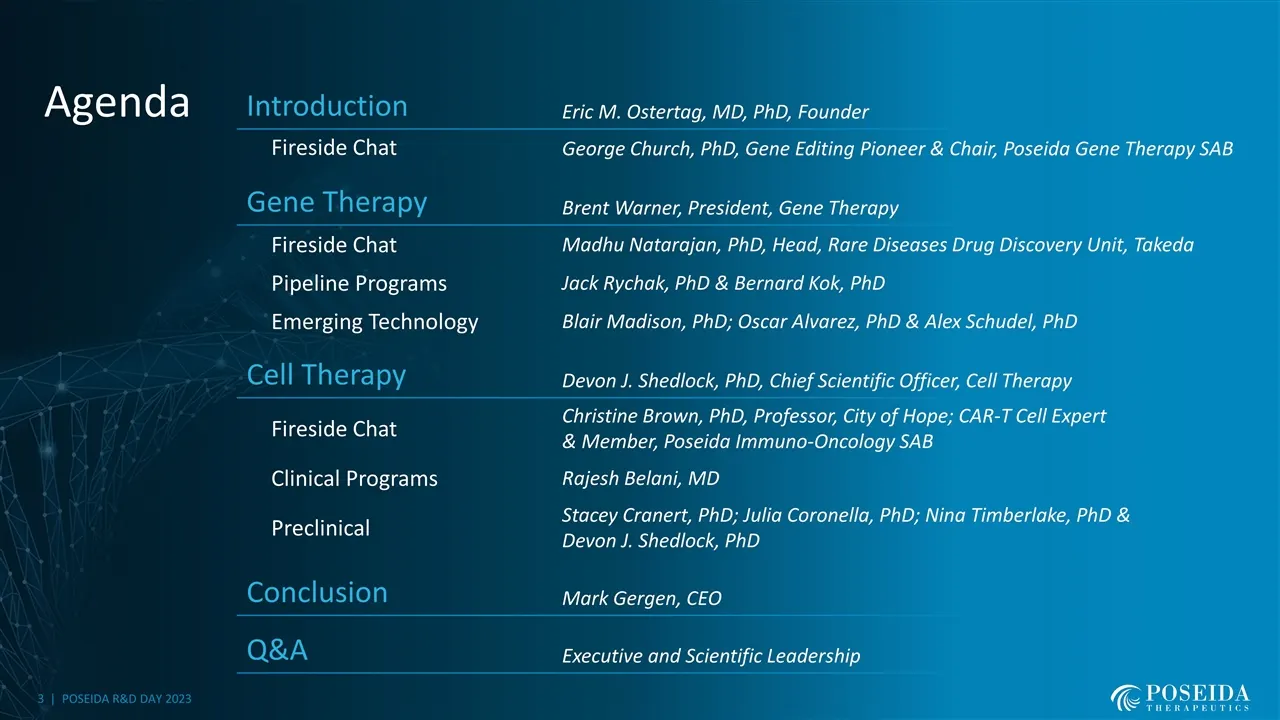
Slide 4: Agenda
Agenda Introduction Eric M. Ostertag, MD, PhD, Founder Fireside Chat George Church, PhD, Gene Editing Pioneer & Chair, Poseida Gene Therapy SAB Gene Therapy Brent Warner, President, Gene Therapy Fireside Chat Madhu Natarajan, PhD, Head, Rare Diseases Drug Discovery Unit, Takeda Pipeline Programs Jac
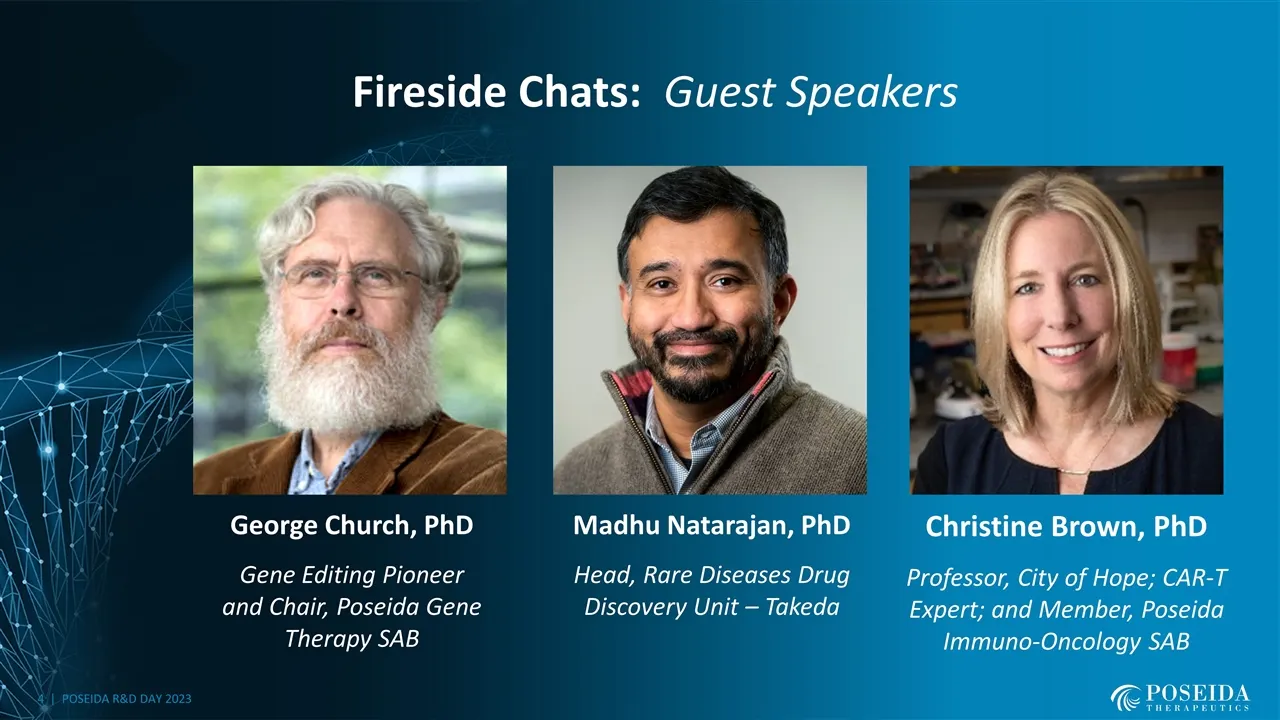
Slide 5: Fireside Chats: Guest Speakers
Fireside Chats: Guest Speakers Christine Brown, PhD Professor, City of Hope; CAR-T Expert; and Member, Poseida Immuno-Oncology SAB George Church, PhD Gene Editing Pioneer and Chair, Poseida Gene Therapy SAB Madhu Natarajan, PhD Head, Rare Diseases Drug Discovery Unit – Takeda | POSEIDA R&D DAY 2023
Slide 6: Gene Therapy (GTx)
Gene Therapy (GTx) Brent Warner February 22, 2023 President, Gene Therapy
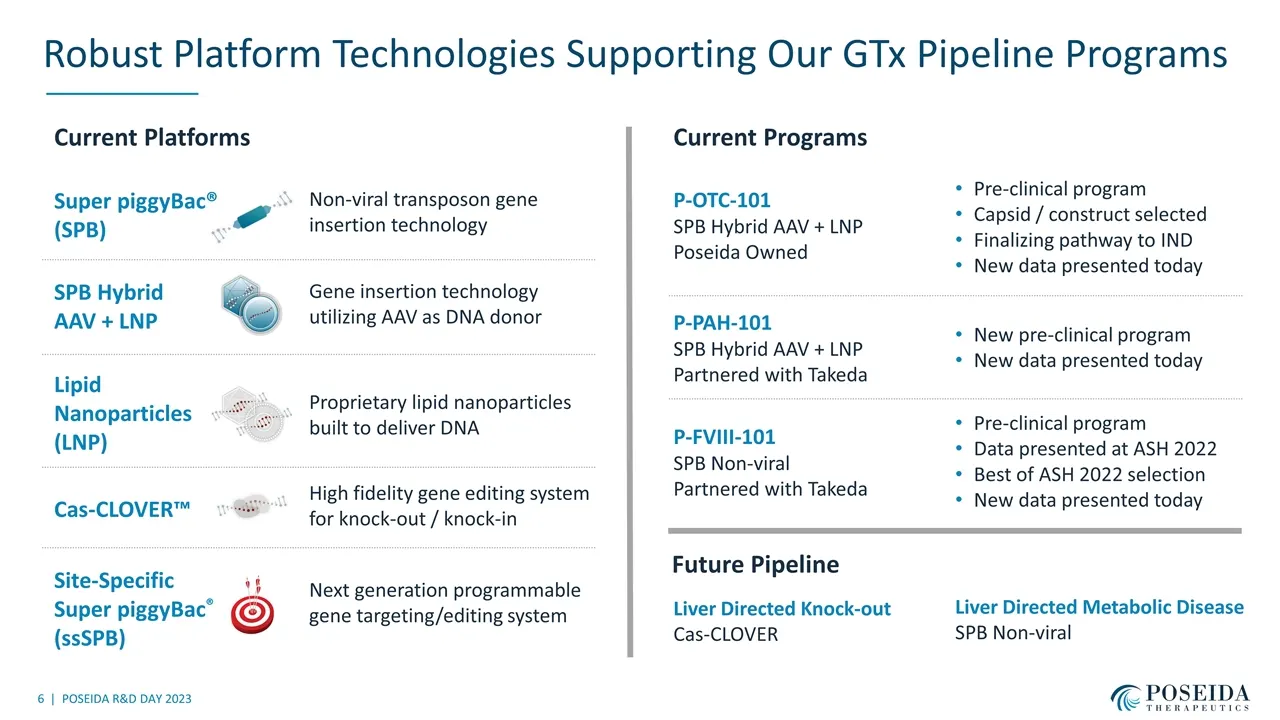
Slide 7: Robust Platform Technologies Supporting Our GTx Pipeline Programs
Robust Platform Technologies Supporting Our GTx Pipeline Programs Current Platforms Super piggyBac® (SPB) Non-viral transposon gene insertion technology SPB Hybrid AAV + LNP Gene insertion technology utilizing AAV as DNA donor Site-Specific Super piggyBac® (ssSPB) Next generation programmable gene t
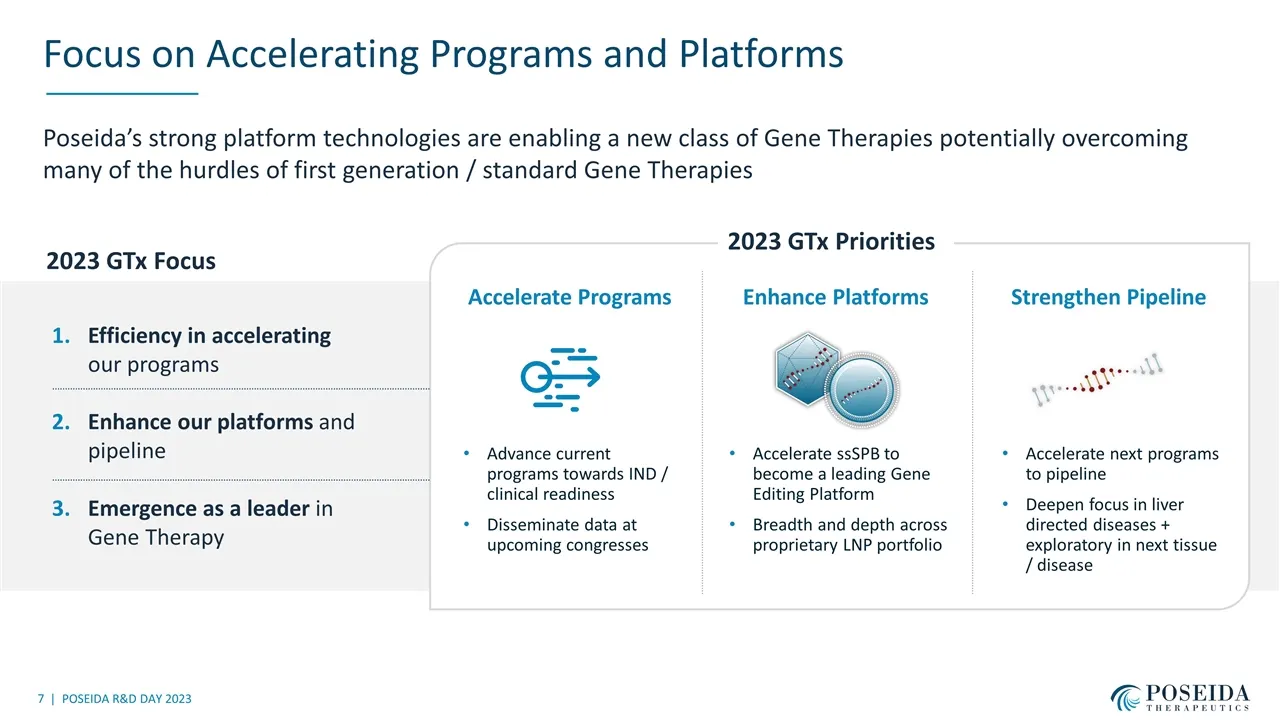
Slide 8: Focus on Accelerating Programs and Platforms
Focus on Accelerating Programs and Platforms Accelerate Programs Advance current programs towards IND / clinical readiness Disseminate data at upcoming congresses Enhance Platforms Accelerate ssSPB to become a leading Gene Editing Platform Breadth and depth across proprietary LNP portfolio Strengthe
Slide 9: GTx Pipeline Programs
GTx Pipeline Programs Jack Rychak Vice President, Research and Development – GTx
Slide 10: Powerful Platforms Enabling Innovative Gene Therapy Products
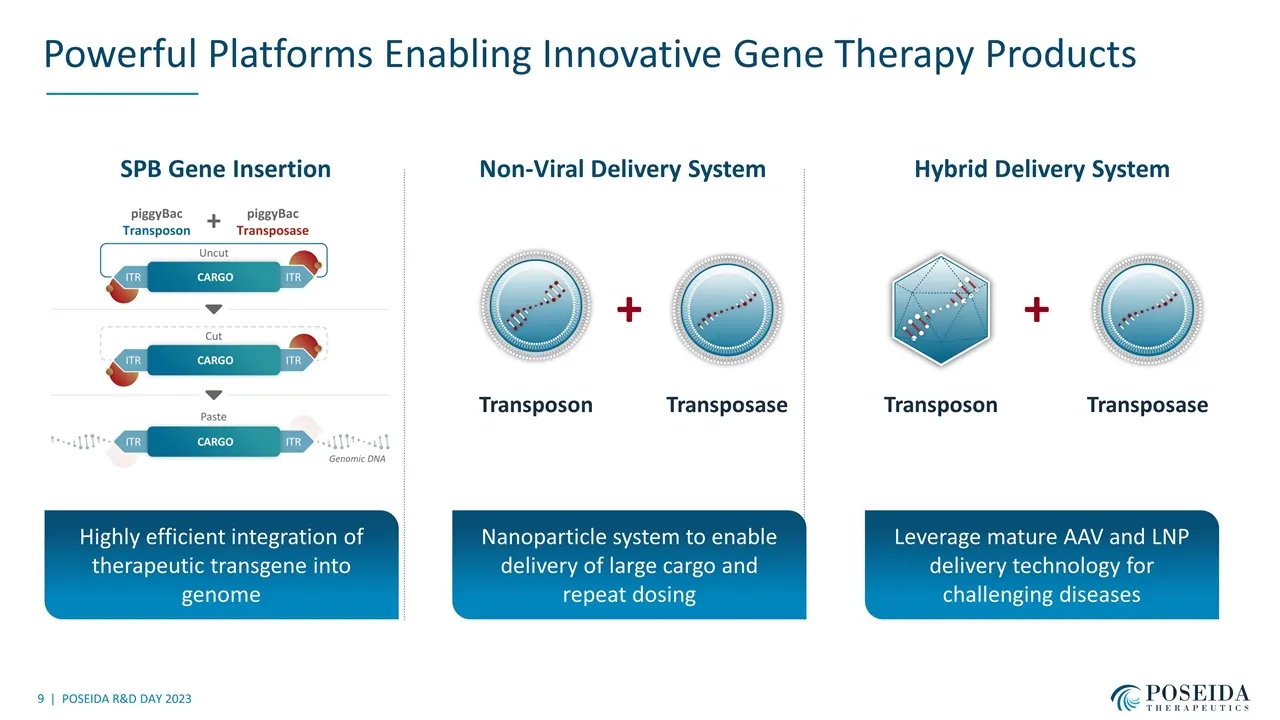
Powerful Platforms Enabling Innovative Gene Therapy Products SPB Gene Insertion Hybrid Delivery System + Transposon Transposase | POSEIDA R&D DAY 2023 Highly efficient integration of therapeutic transgene into genome Leverage mature AAV and LNP delivery technology for challenging diseases + Non-Vira
Slide 11: SPB Non-Viral and Hybrid Advantages Over Standard AAV
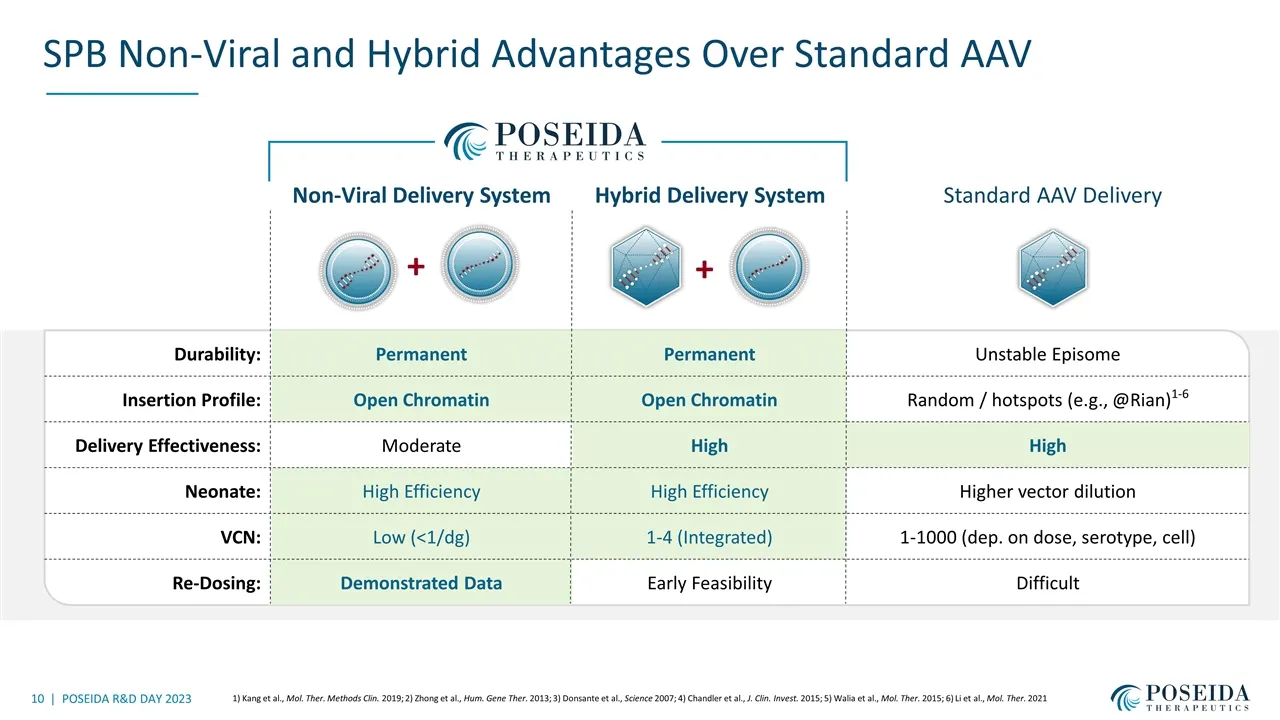
SPB Non-Viral and Hybrid Advantages Over Standard AAV 1) Kang et al., Mol. Ther. Methods Clin. 2019; 2) Zhong et al., Hum. Gene Ther. 2013; 3) Donsante et al., Science 2007; 4) Chandler et al., J. Clin. Invest. 2015; 5) Walia et al., Mol. Ther. 2015; 6) Li et al., Mol. Ther. 2021 Non-Viral Delivery
Slide 12: Robust Platform Technologies Supporting Our GTx Pipeline Programs
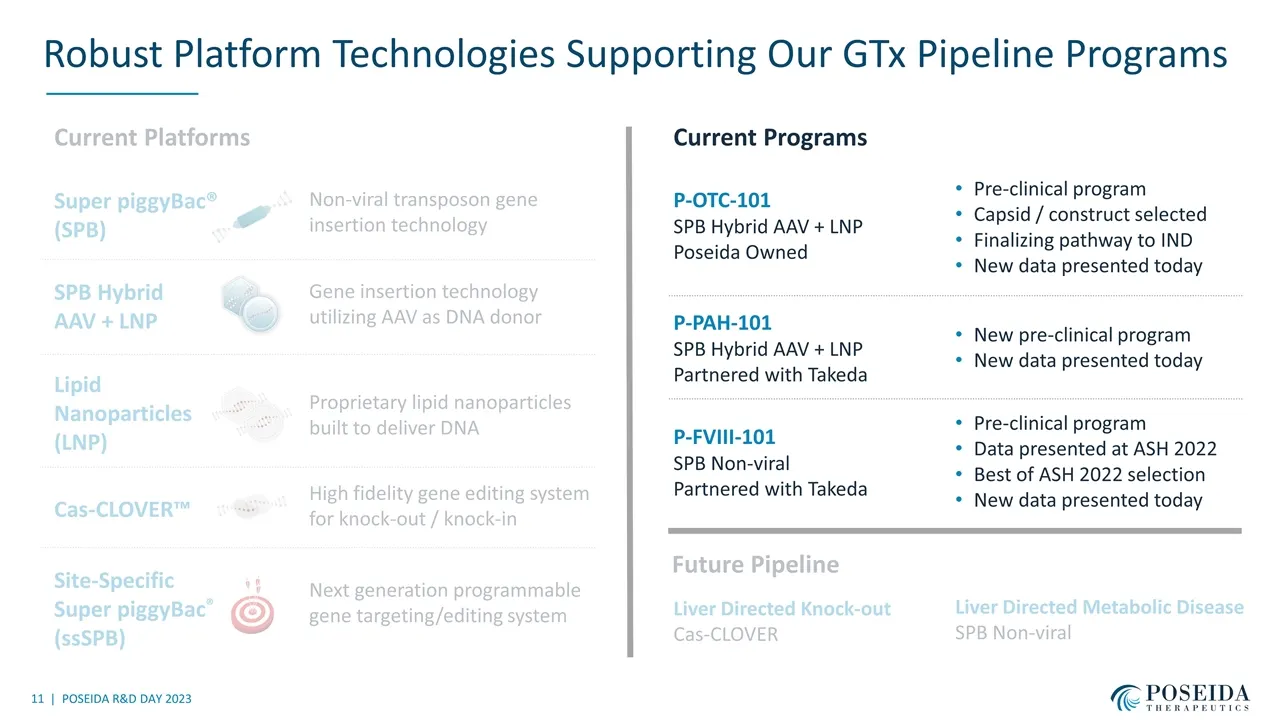
Current Platforms Super piggyBac® (SPB) Non-viral transposon gene insertion technology SPB Hybrid AAV + LNP Gene insertion technology utilizing AAV as DNA donor Site-Specific Super piggyBac® (ssSPB) Next generation programmable gene targeting/editing system Cas-CLOVER™ High fidelity gene editing sys
Slide 13: P-OTC-101 Poseida Internal Program
P-OTC-101 Poseida Internal Program Bernard Kok Associate Director, Pharmacology – GTx
Slide 14: Ornithine Transcarbamylase Deficiency (OTCD) – High Unmet Need
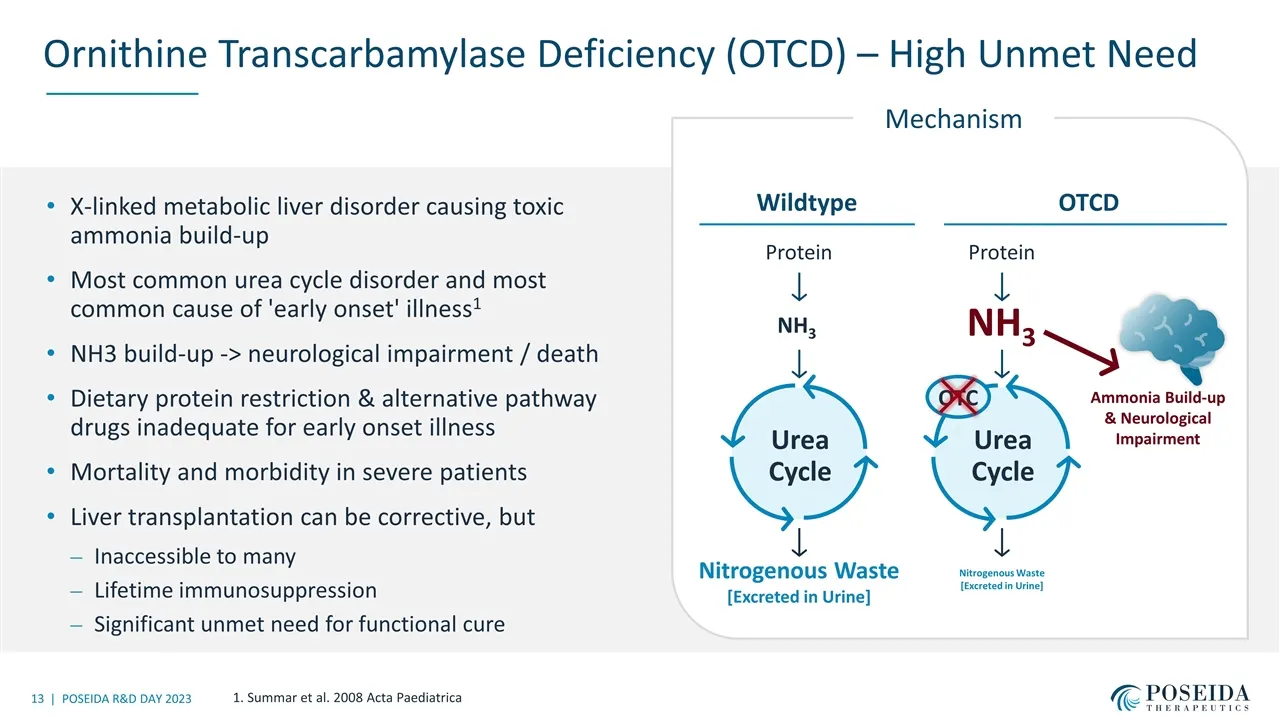
Ornithine Transcarbamylase Deficiency (OTCD) – High Unmet Need X-linked metabolic liver disorder causing toxic ammonia build-up Most common urea cycle disorder and most common cause of 'early onset' illness1 NH3 build-up -> neurological impairment / death Dietary protein restriction & alternative pa
Slide 15: AAV Alone is Not Effective or Durable to Rescue Severe OTCD
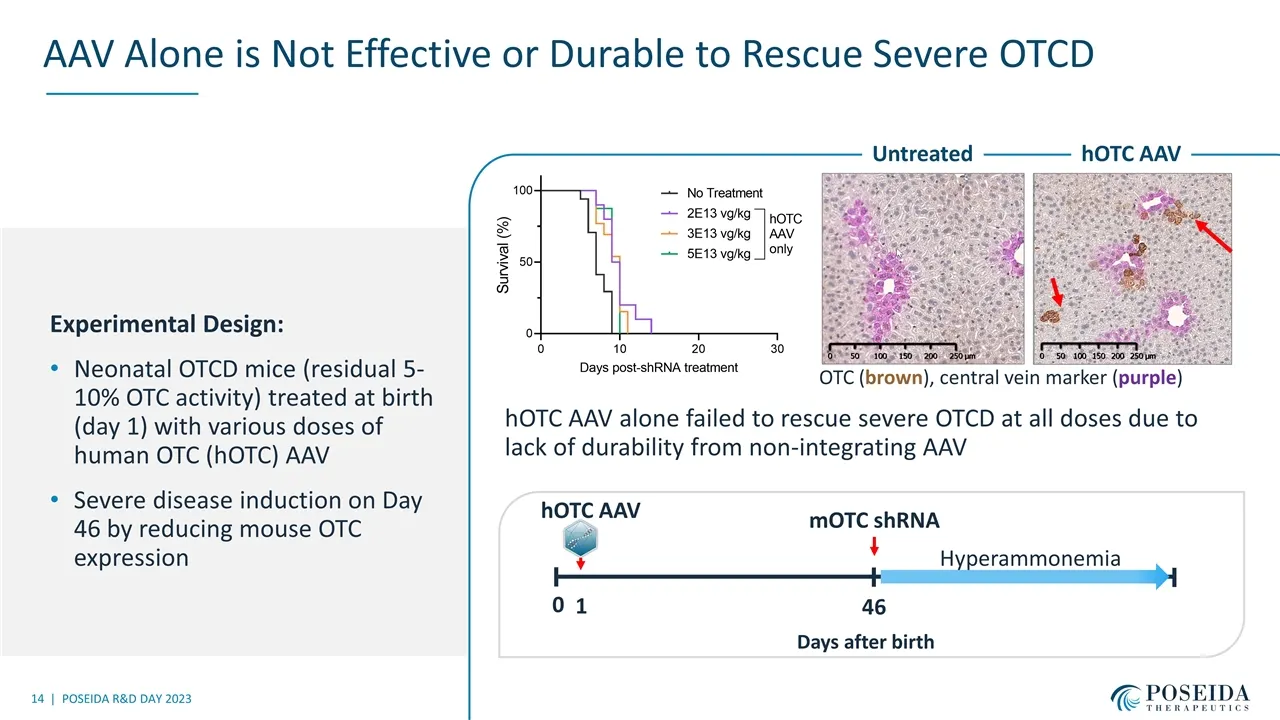
AAV Alone is Not Effective or Durable to Rescue Severe OTCD | POSEIDA R&D DAY 2023 0 Days after birth 46 mOTC shRNA Hyperammonemia hOTC AAV 1 hOTC AAV alone failed to rescue severe OTCD at all doses due to lack of durability from non-integrating AAV Untreated hOTC AAV Experimental Design: Neonatal O
Slide 16: Goal is to Deliver Functional Cures with Hybrid P-OTC-101
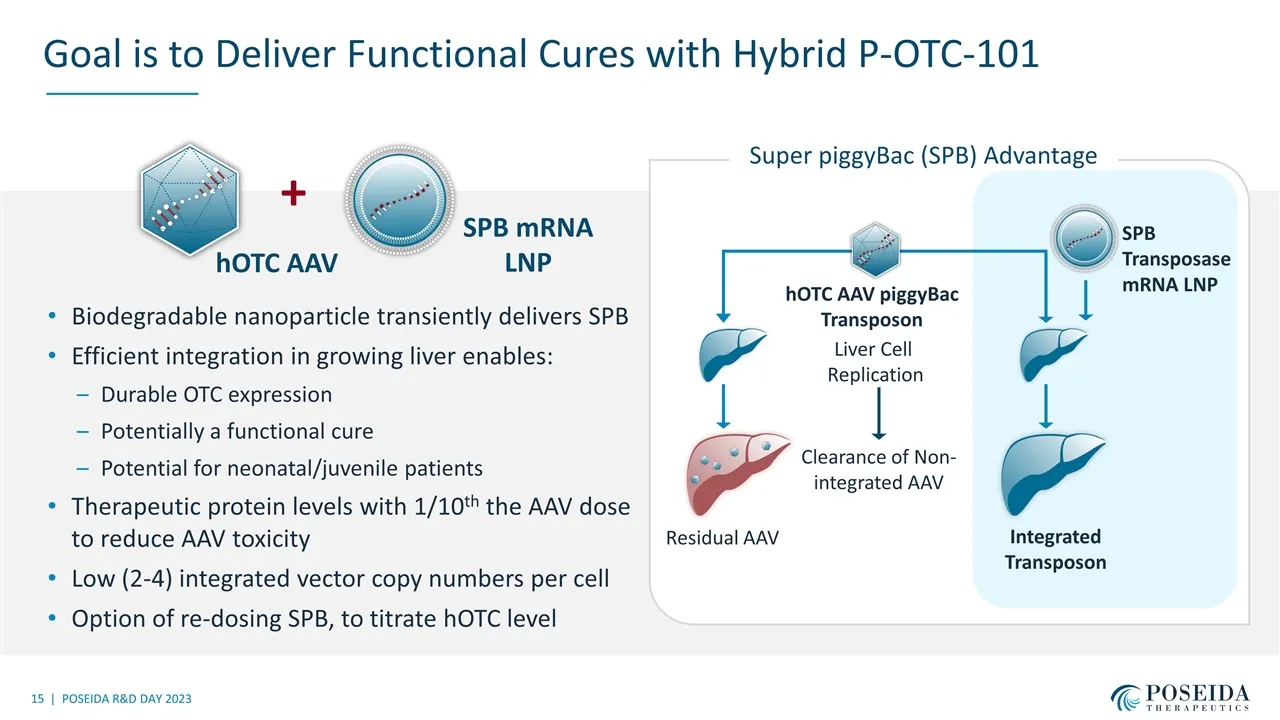
Goal is to Deliver Functional Cures with Hybrid P-OTC-101 Biodegradable nanoparticle transiently delivers SPB Efficient integration in growing liver enables: Durable OTC expression Potentially a functional cure Potential for neonatal/juvenile patients Therapeutic protein levels with 1/10th the AAV d
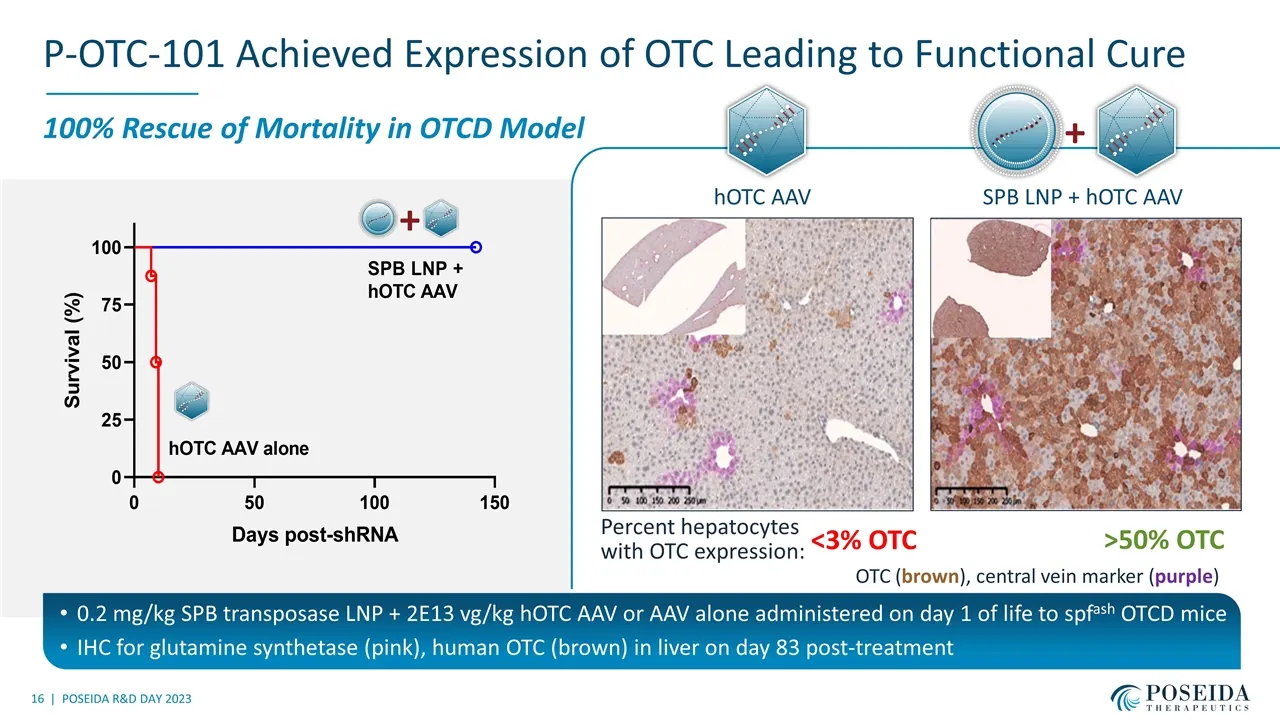
Slide 17: P-OTC-101 Achieved Expression of OTC Leading to Functional Cure
P-OTC-101 Achieved Expression of OTC Leading to Functional Cure >50% OTC SPB LNP + hOTC AAV <3% OTC hOTC AAV + Percent hepatocytes with OTC expression: | POSEIDA R&D DAY 2023 100% Rescue of Mortality in OTCD Model 0.2 mg/kg SPB transposase LNP + 2E13 vg/kg hOTC AAV or AAV alone administered on day 1
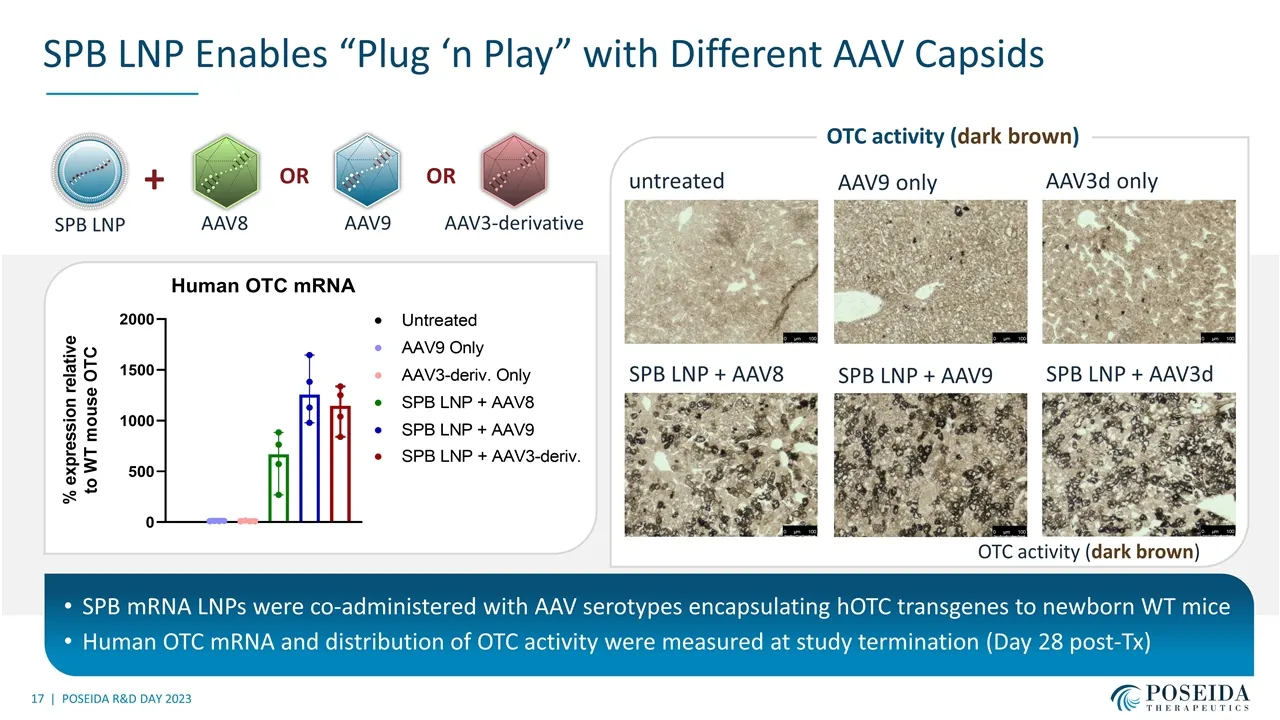
Slide 18: SPB LNP Enables Plug 'n Play with Different AAV Capsids
SPB LNP Enables “Plug ‘n Play” with Different AAV Capsids | POSEIDA R&D DAY 2023 untreated AAV9 only AAV3d only SPB LNP + AAV8 SPB LNP + AAV9 SPB LNP + AAV3d OTC activity (dark brown) + SPB LNP AAV8 AAV9 AAV3-derivative OR OR SPB mRNA LNPs were co-administered with AAV serotypes encapsulating hOTC t
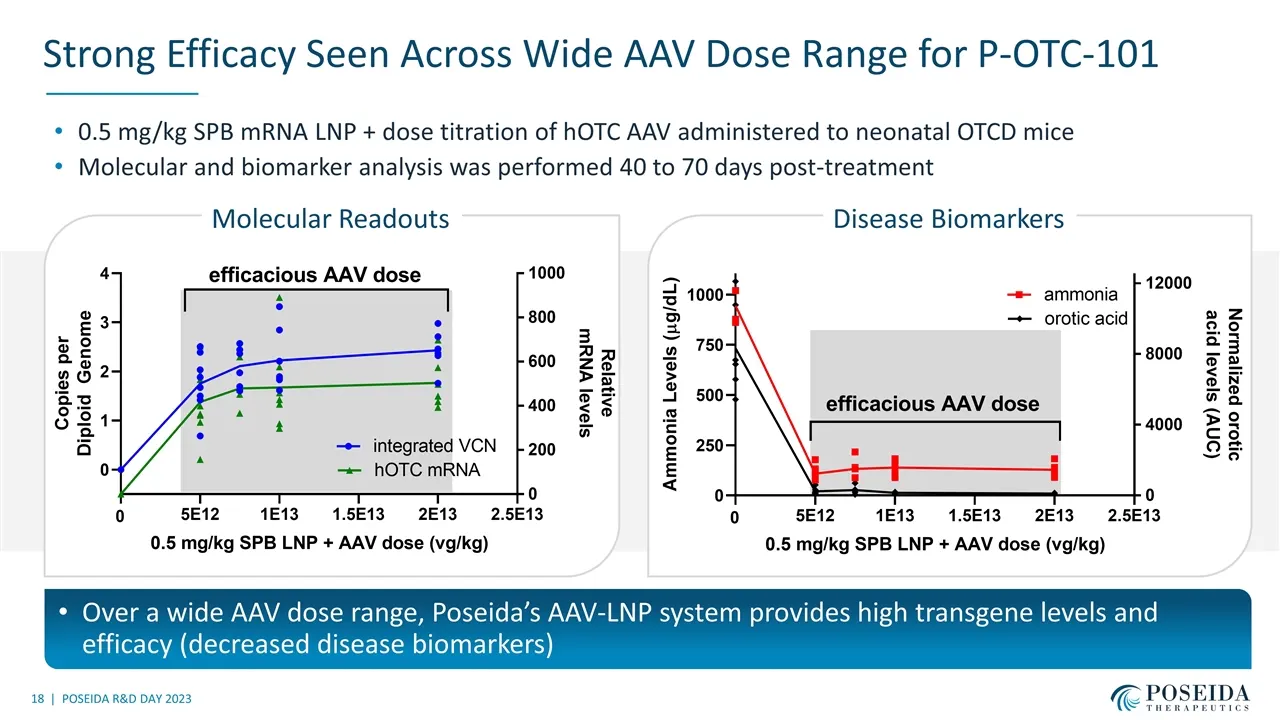
Slide 19: Strong Efficacy Seen Across Wide AAV Dose Range for P-OTC-101
Strong Efficacy Seen Across Wide AAV Dose Range for P-OTC-101 | POSEIDA R&D DAY 2023 Molecular Readouts Disease Biomarkers Over a wide AAV dose range, Poseida’s AAV-LNP system provides high transgene levels and efficacy (decreased disease biomarkers) 0.5 mg/kg SPB mRNA LNP + dose titration of hOTC A
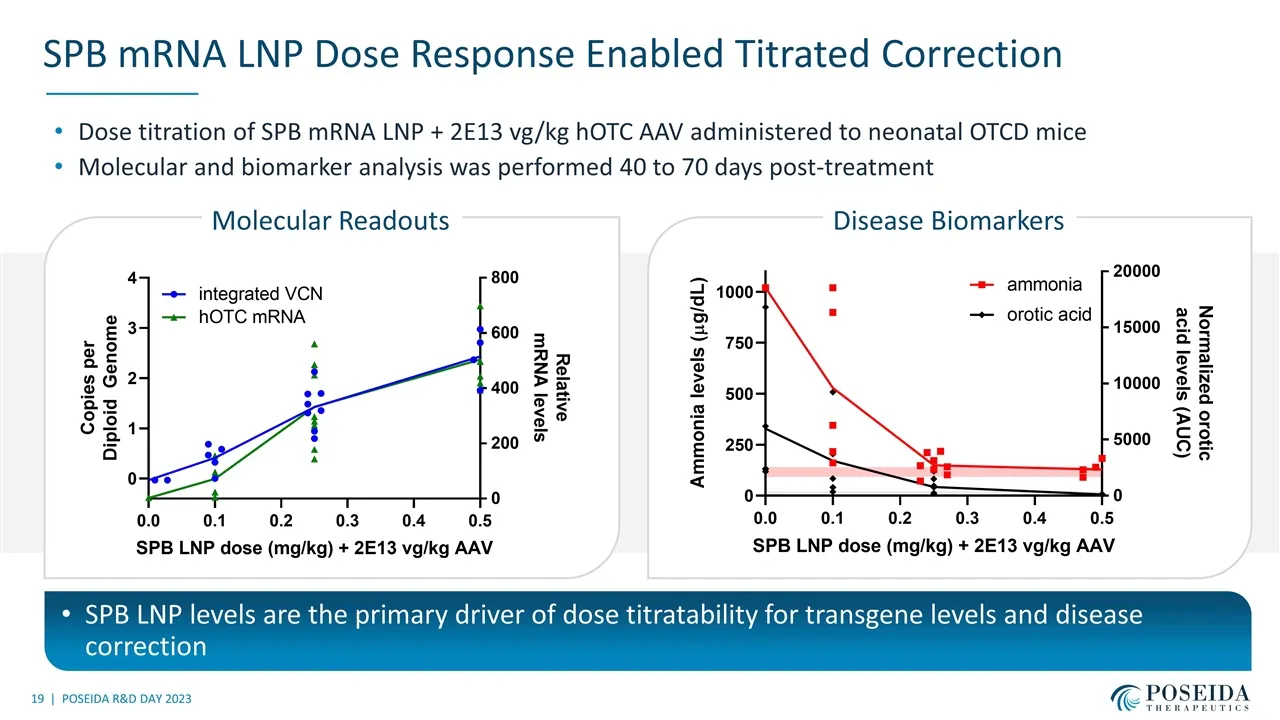
Slide 20: SPB mRNA LNP Dose Response Enabled Titrated Correction
SPB mRNA LNP Dose Response Enabled Titrated Correction | POSEIDA R&D DAY 2023 SPB LNP levels are the primary driver of dose titratability for transgene levels and disease correction Molecular Readouts Disease Biomarkers Dose titration of SPB mRNA LNP + 2E13 vg/kg hOTC AAV administered to neonatal OT
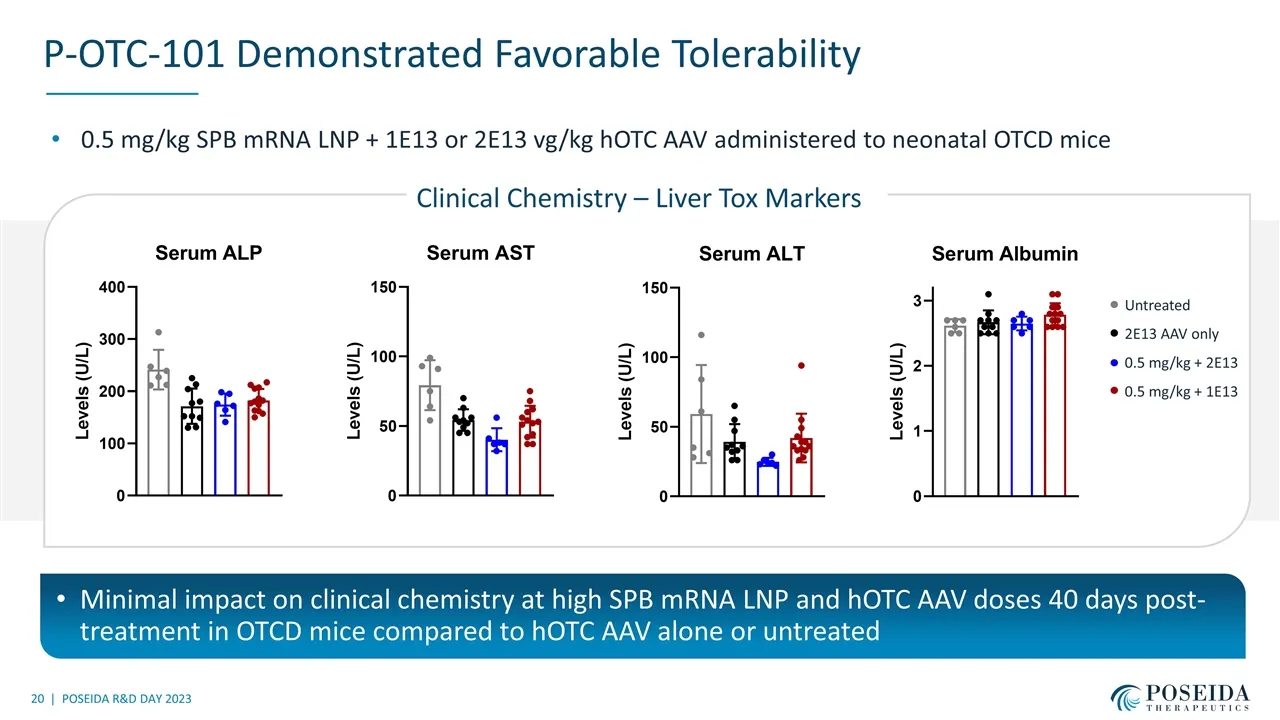
Slide 21: P-OTC-101 Demonstrated Favorable Tolerability
P-OTC-101 Demonstrated Favorable Tolerability | POSEIDA R&D DAY 2023 Clinical Chemistry – Liver Tox Markers Minimal impact on clinical chemistry at high SPB mRNA LNP and hOTC AAV doses 40 days post-treatment in OTCD mice compared to hOTC AAV alone or untreated Untreated 2E13 AAV only 0.5 mg/kg + 2E1
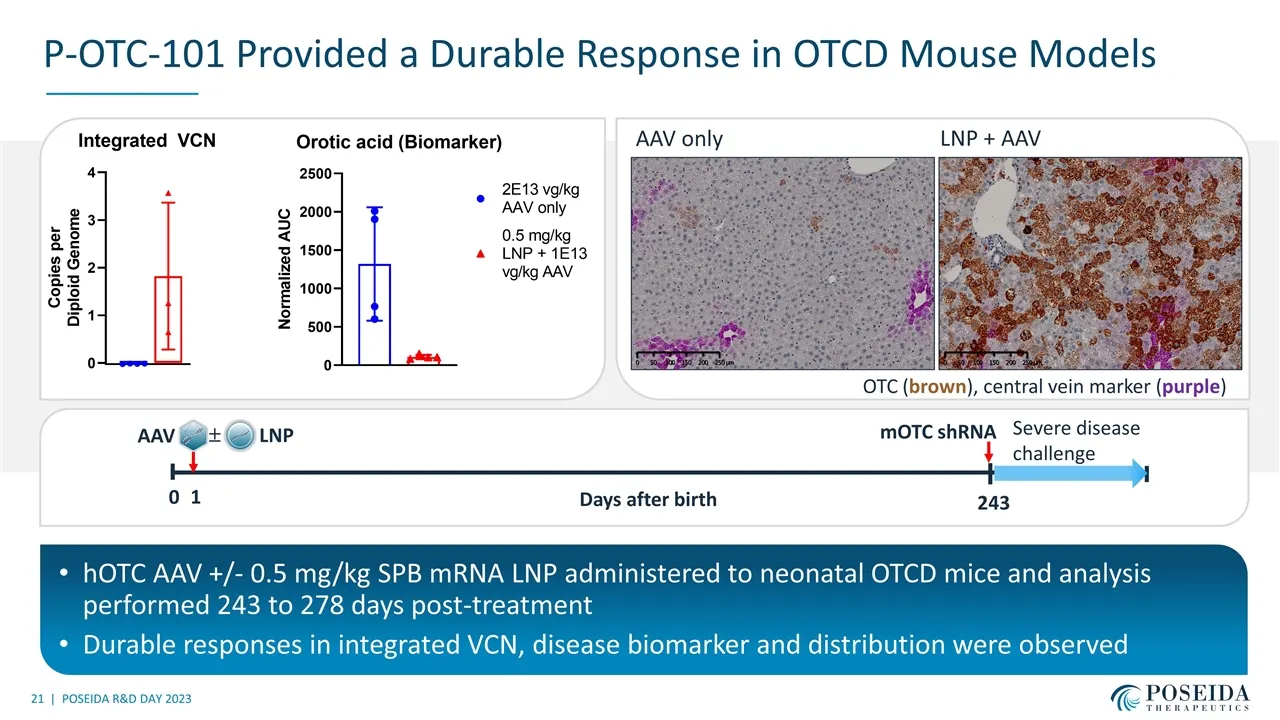
Slide 22: P-OTC-101 Provided a Durable Response in OTCD Mouse Models
P-OTC-101 Provided a Durable Response in OTCD Mouse Models Severe disease challenge 0 Days after birth AAV 1 ± LNP 243 mOTC shRNA AAV only LNP + AAV | POSEIDA R&D DAY 2023 hOTC AAV +/- 0.5 mg/kg SPB mRNA LNP administered to neonatal OTCD mice and analysis performed 243 to 278 days post-treatment Dur
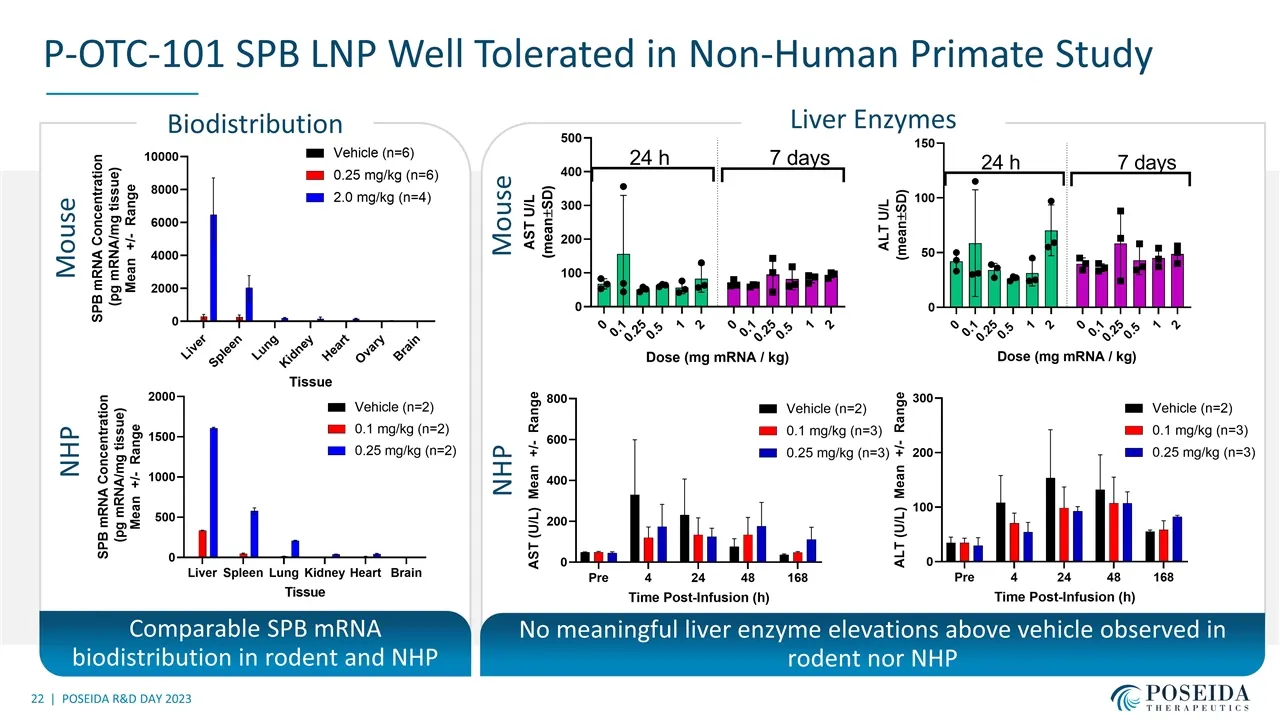
Slide 23: P-OTC-101 SPB LNP Well Tolerated in Non-Human Primate Study
P-OTC-101 SPB LNP Well Tolerated in Non-Human Primate Study v v Liver Enzymes Biodistribution Mouse NHP Mouse NHP | POSEIDA R&D DAY 2023 Comparable SPB mRNA biodistribution in rodent and NHP No meaningful liver enzyme elevations above vehicle observed in rodent nor NHP
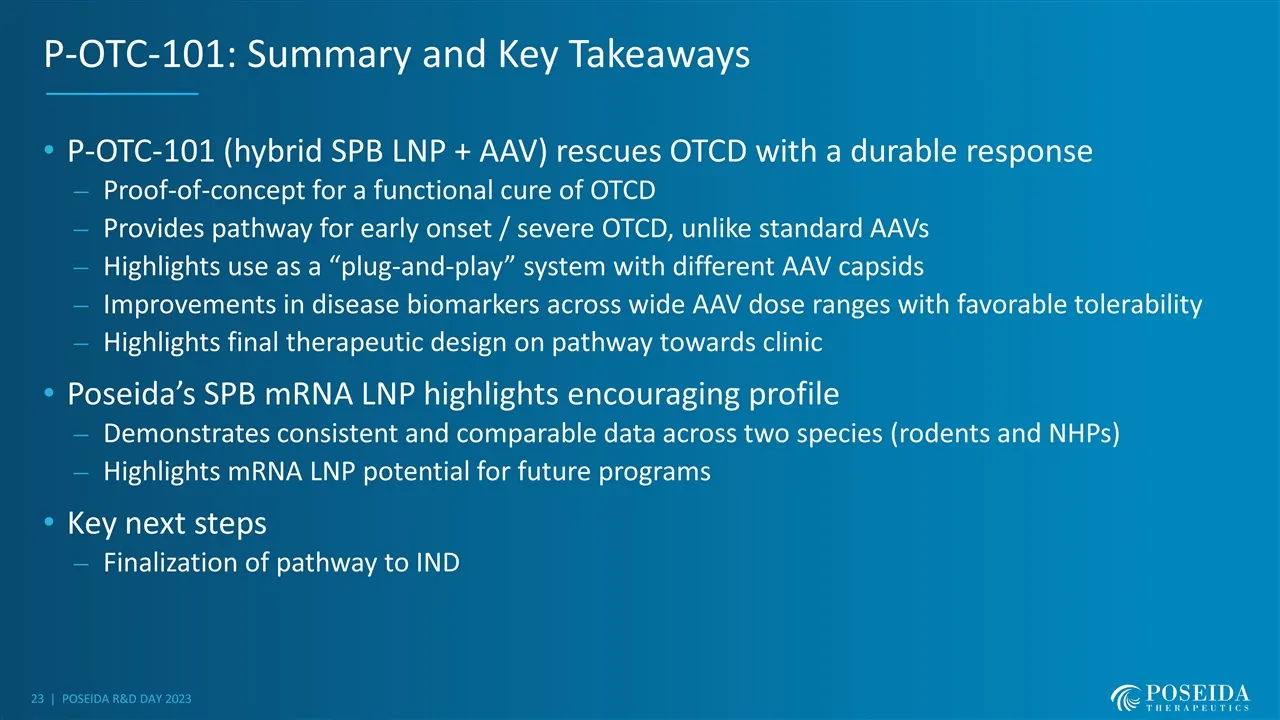
Slide 24: P-OTC-101: Summary and Key Takeaways
P-OTC-101 (hybrid SPB LNP + AAV) rescues OTCD with a durable response Proof-of-concept for a functional cure of OTCD Provides pathway for early onset / severe OTCD, unlike standard AAVs Highlights use as a “plug-and-play” system with different AAV capsids Improvements in disease biomarkers across wi
Slide 25: P-PAH-101 Partnered with Takeda
P-PAH-101 Partnered with Takeda Jack Rychak Vice President, Research and Development – GTx
Slide 26: Phenylketonuria – Rare Disorder Without an Approved Gene Therapy
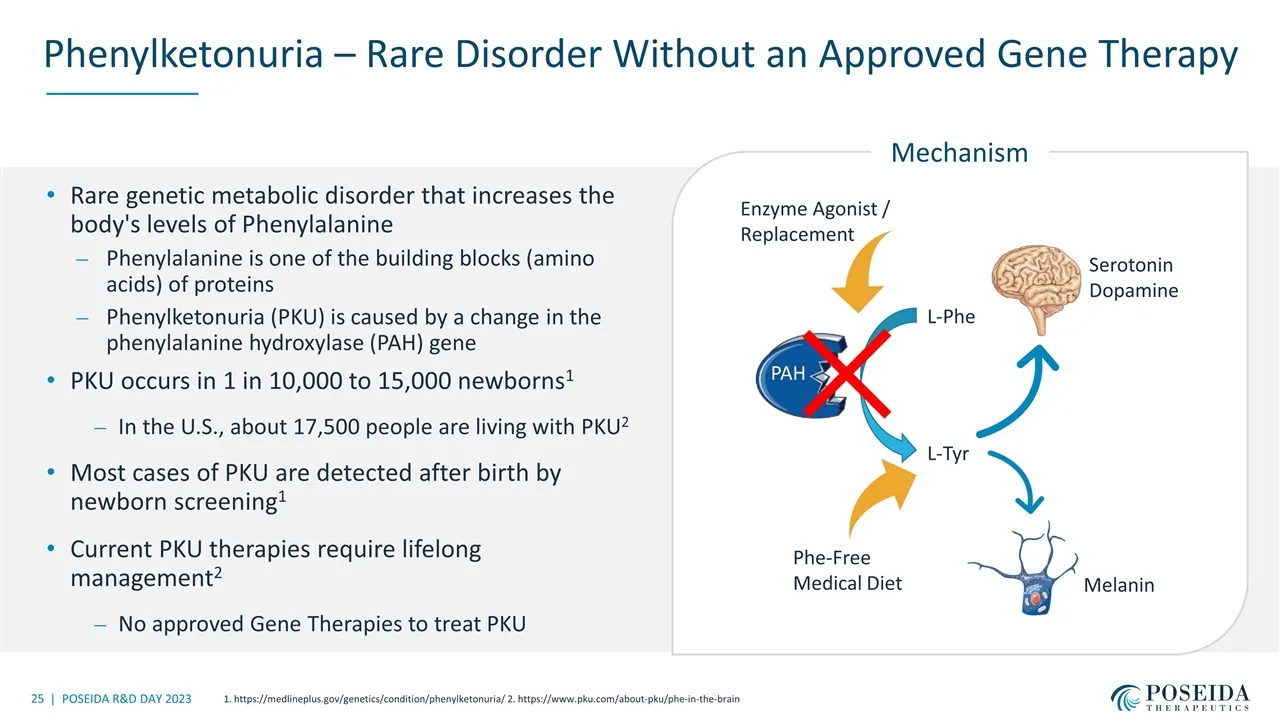
Phenylketonuria – Rare Disorder Without an Approved Gene Therapy Mechanism | POSEIDA R&D DAY 2023 L-Phe L-Tyr Serotonin Dopamine PAH Melanin Phe-Free Medical Diet Enzyme Agonist / Replacement 1. https://medlineplus.gov/genetics/condition/phenylketonuria/ 2. https://www.pku.com/about-pku/phe-in-the-b
Slide 27: P-PAH-101 Aims to Transform Standard of Care for PKU
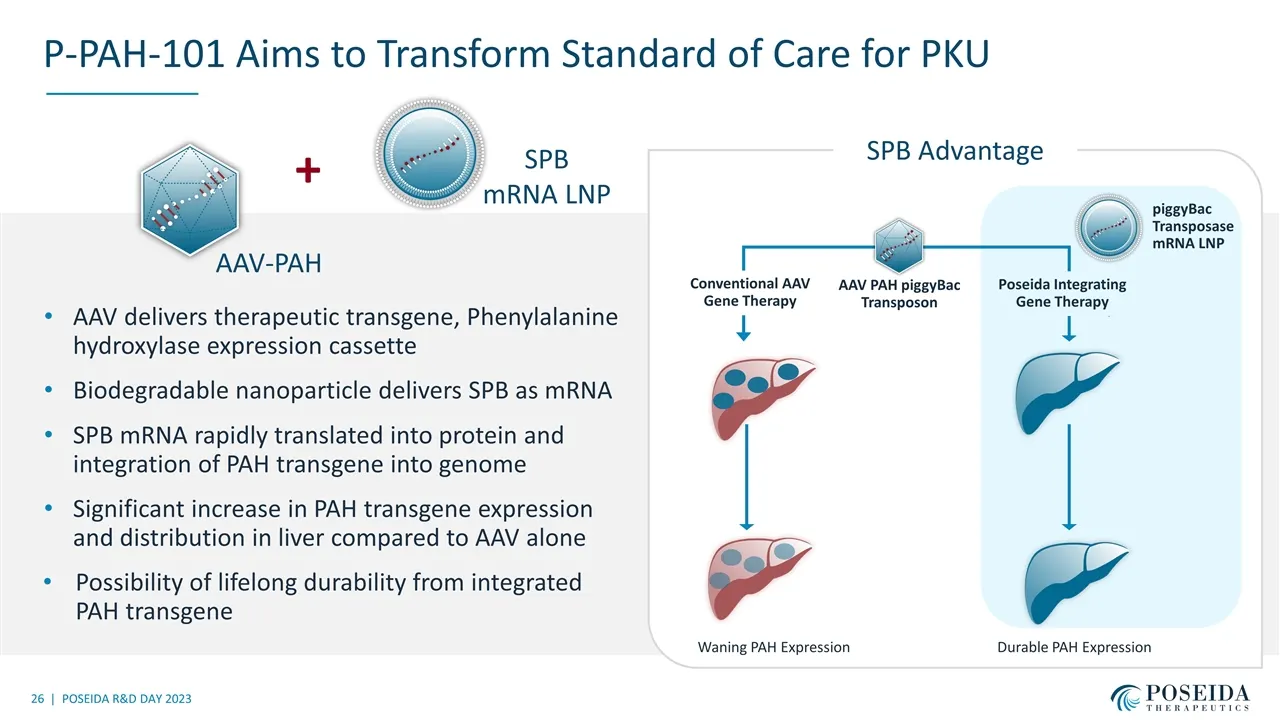
P-PAH-101 Aims to Transform Standard of Care for PKU AAV delivers therapeutic transgene, Phenylalanine hydroxylase expression cassette Biodegradable nanoparticle delivers SPB as mRNA SPB mRNA rapidly translated into protein and integration of PAH transgene into genome Significant increase in PAH tra
Slide 28: P-PAH-101 Delivers Superior Hepatocyte Transduction Over AAV
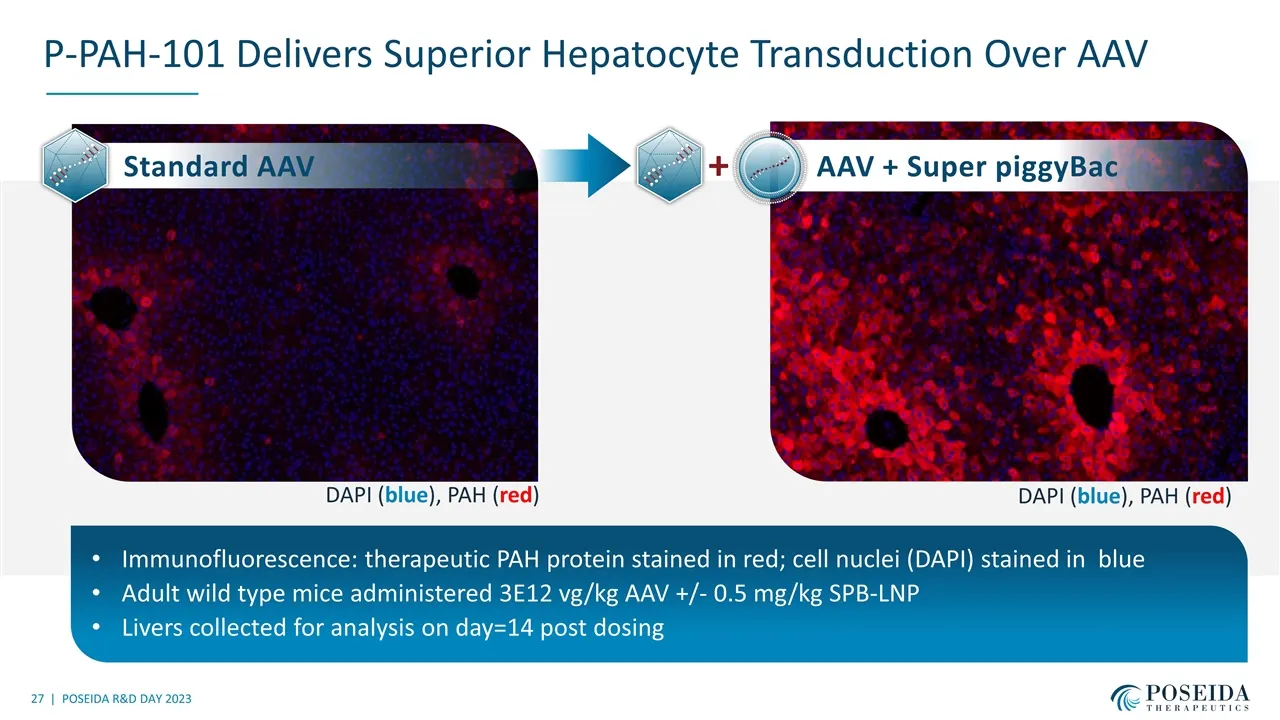
AAV + Super piggyBac P-PAH-101 Delivers Superior Hepatocyte Transduction Over AAV Standard AAV | POSEIDA R&D DAY 2023 Immunofluorescence: therapeutic PAH protein stained in red; cell nuclei (DAPI) stained in blue Adult wild type mice administered 3E12 vg/kg AAV +/- 0.5 mg/kg SPB-LNP Livers collected
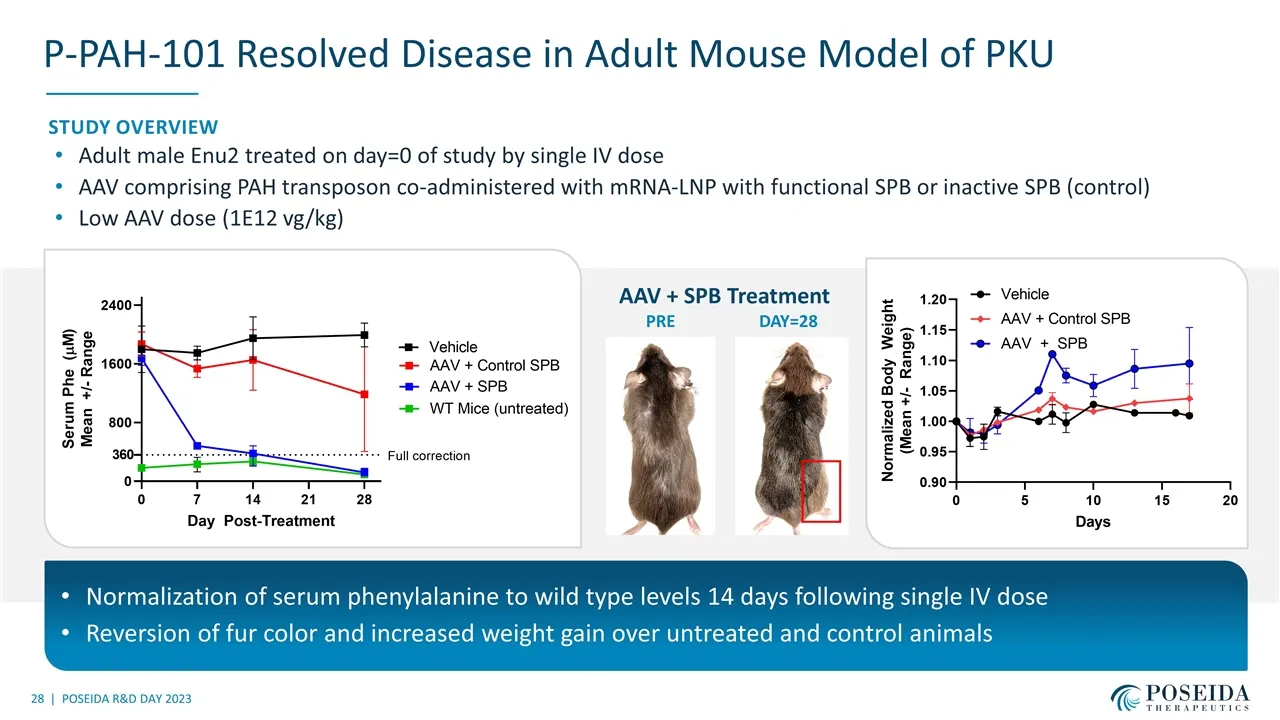
Slide 29: P-PAH-101 Resolved Disease in Adult Mouse Model of PKU
P-PAH-101 Resolved Disease in Adult Mouse Model of PKU | POSEIDA R&D DAY 2023 STUDY OVERVIEW Adult male Enu2 treated on day=0 of study by single IV dose AAV comprising PAH transposon co-administered with mRNA-LNP with functional SPB or inactive SPB (control) Low AAV dose (1E12 vg/kg) Normalization o
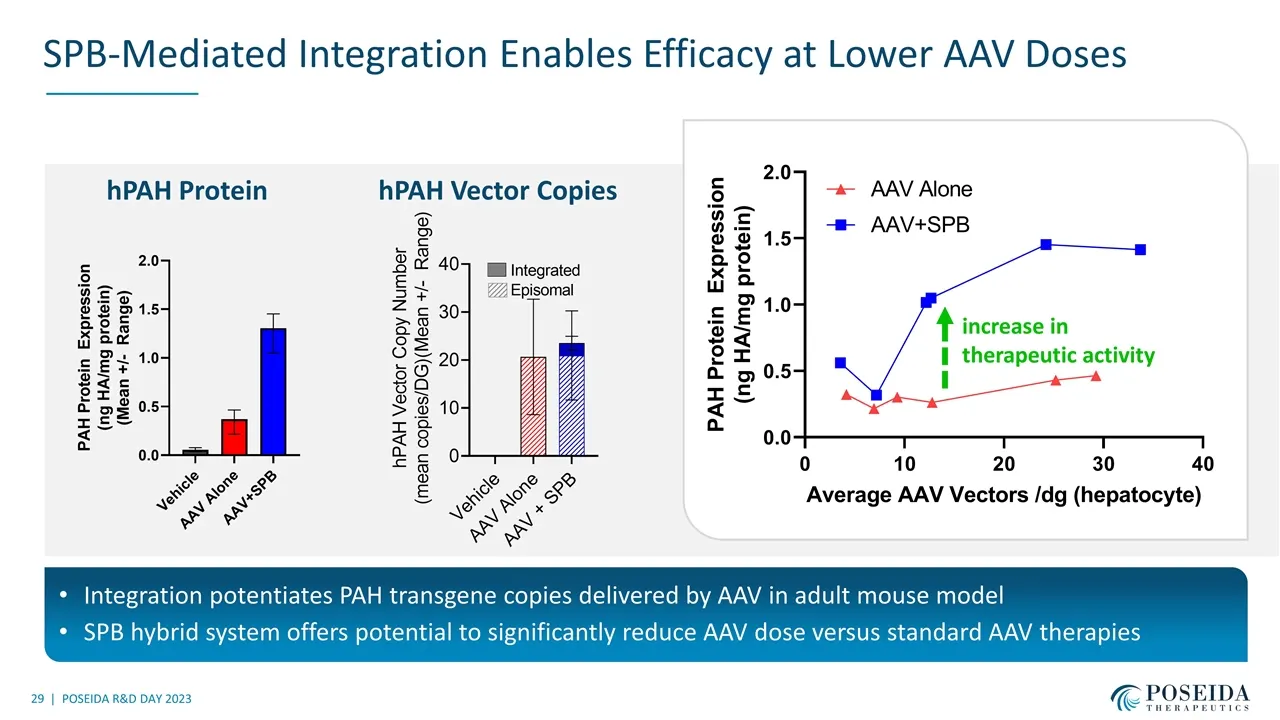
Slide 30: SPB-Mediated Integration Enables Efficacy at Lower AAV Doses
SPB-Mediated Integration Enables Efficacy at Lower AAV Doses | POSEIDA R&D DAY 2023 Integration potentiates PAH transgene copies delivered by AAV in adult mouse model SPB hybrid system offers potential to significantly reduce AAV dose versus standard AAV therapies hPAH Protein hPAH Vector Copies inc
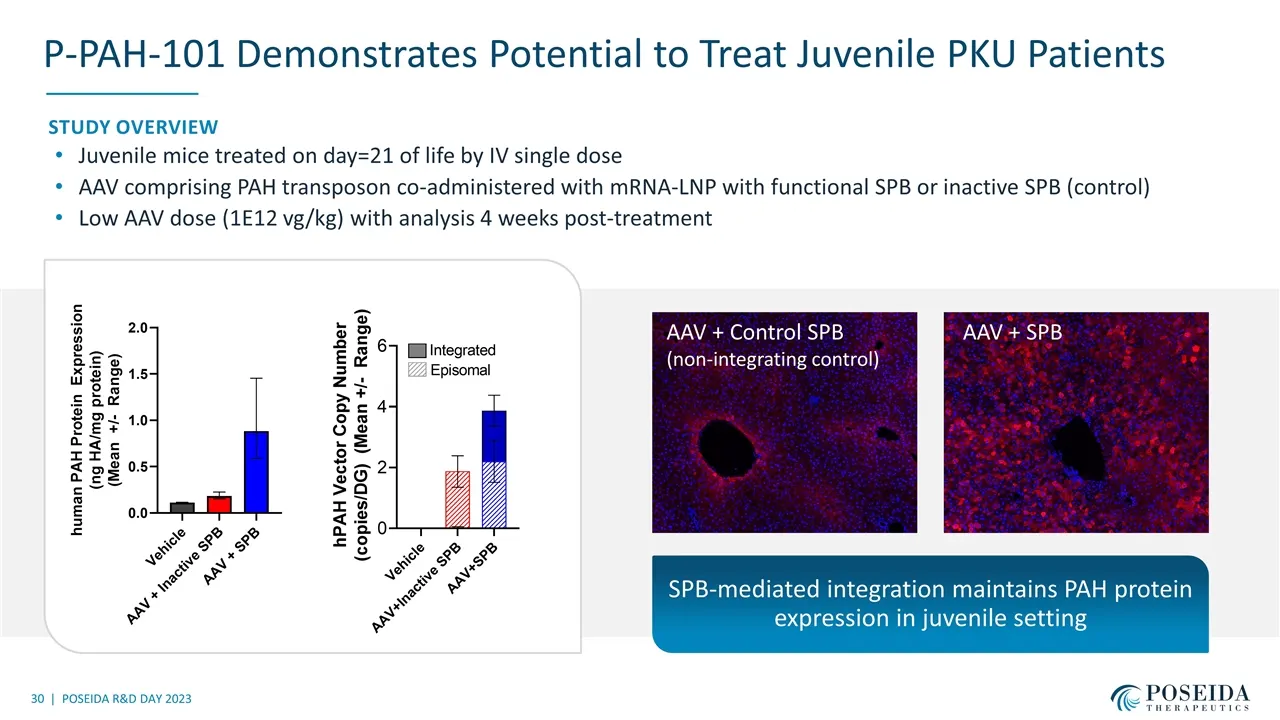
Slide 31: P-PAH-101 Demonstrates Potential to Treat Juvenile PKU Patients
| POSEIDA R&D DAY 2023 STUDY OVERVIEW Juvenile mice treated on day=21 of life by IV single dose AAV comprising PAH transposon co-administered with mRNA-LNP with functional SPB or inactive SPB (control) Low AAV dose (1E12 vg/kg) with analysis 4 weeks post-treatment P-PAH-101 Demonstrates Potential to
Slide 32: P-PAH-101: Summary and Key Takeaways
P-PAH-101: Summary and Key Takeaways | POSEIDA R&D DAY 2023 P-PAH-101 (SPB LNP + AAV) demonstrates ability to rescue disease Provides early proof of concept to deliver a functional cure for PKU Demonstrates ability to reduce serum PHE to normal levels following a single IV dose Highlights early abil
Slide 33: P-FVIII-101 Partnered with Takeda
P-FVIII-101 Partnered with Takeda Jack Rychak, PhD Vice President, Research and Development – GTx
Slide 34: Hemophilia A is a Rare Disease Amenable to Gene Therapy
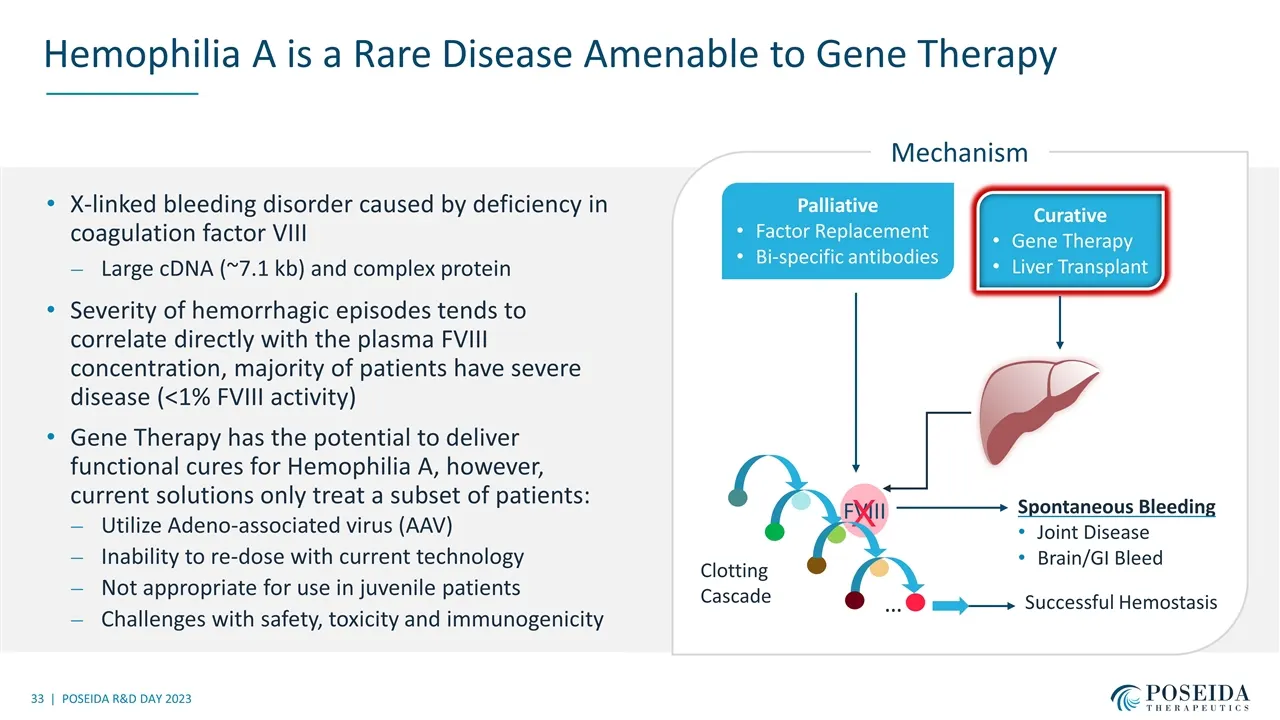
X-linked bleeding disorder caused by deficiency in coagulation factor VIII Large cDNA (~7.1 kb) and complex protein Severity of hemorrhagic episodes tends to correlate directly with the plasma FVIII concentration, majority of patients have severe disease (<1% FVIII activity) Gene Therapy has the pot
Slide 35: Non-viral SPB May Be a Highly Efficient System for Transposing Transgenes
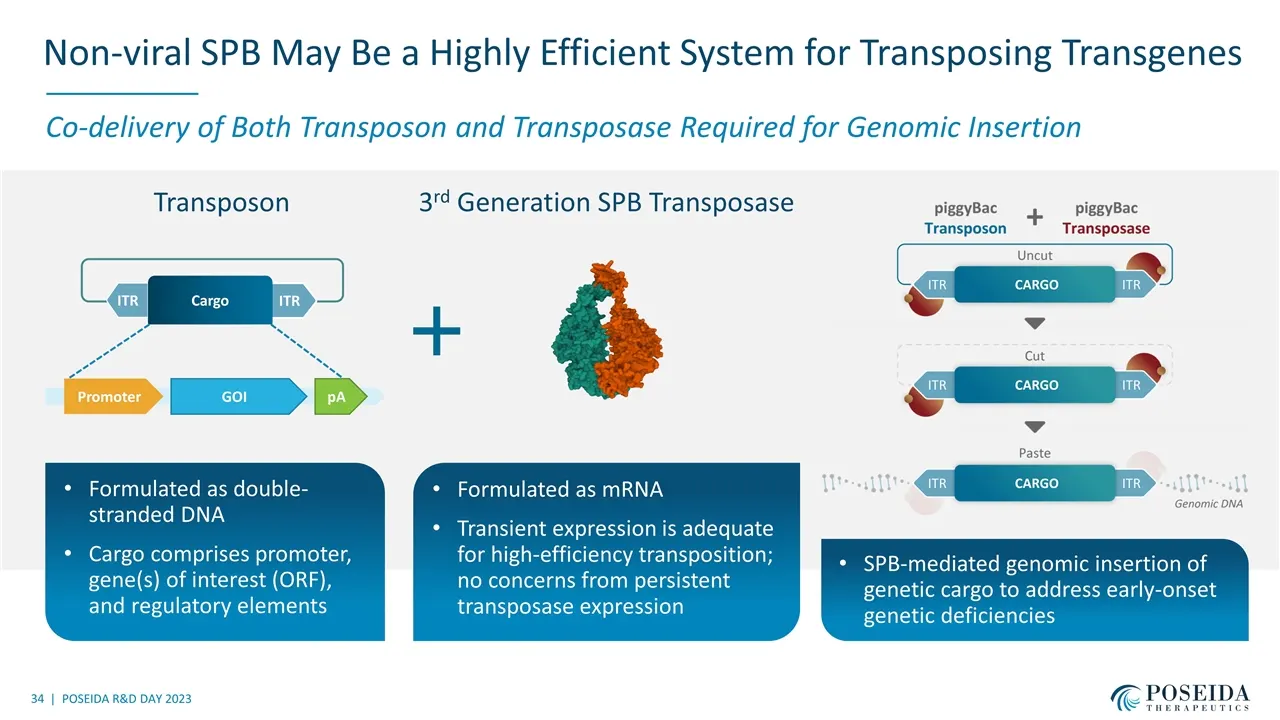
Non-viral SPB May Be a Highly Efficient System for Transposing Transgenes Co-delivery of Both Transposon and Transposase Required for Genomic Insertion 3rd Generation SPB Transposase Transposon ITR ITR Cargo GOI Promoter pA | POSEIDA R&D DAY 2023 Formulated as double-stranded DNA Cargo comprises pro
Slide 36: Lipid Nanoparticles Enable In Vivo Use of SPB for Gene Therapy
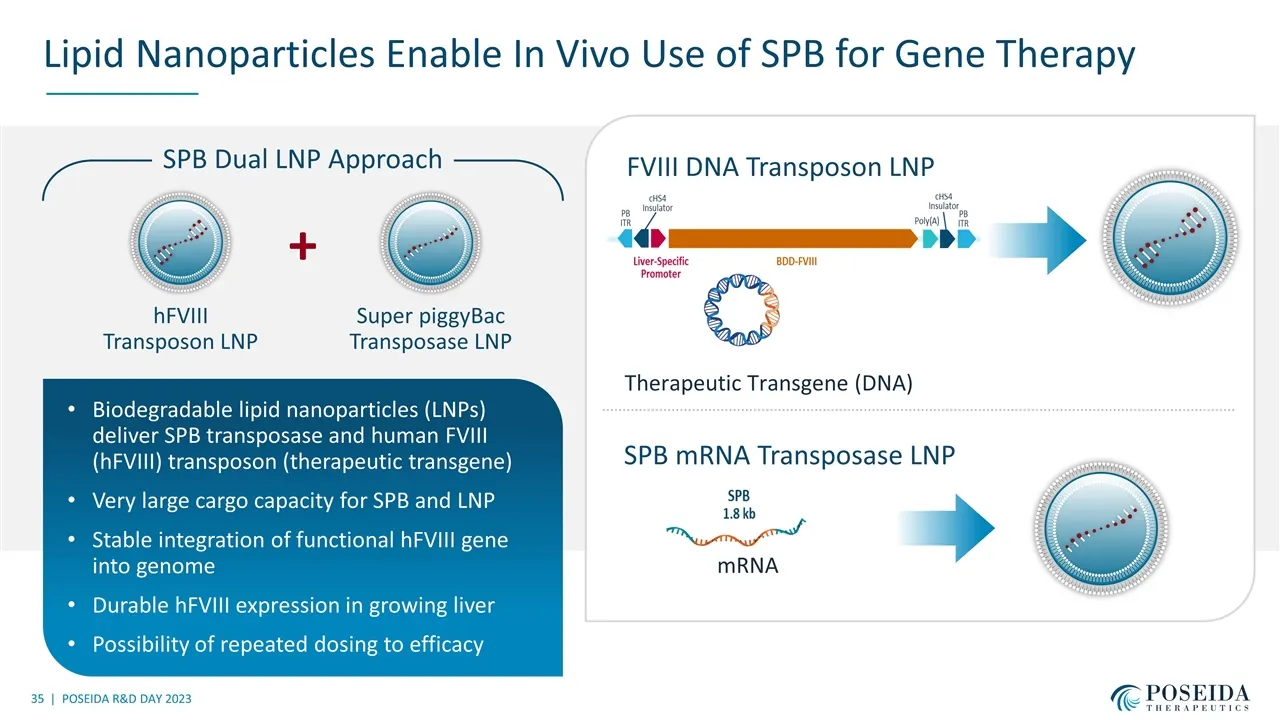
Lipid Nanoparticles Enable In Vivo Use of SPB for Gene Therapy hFVIII Transposon LNP Super piggyBac Transposase LNP + Therapeutic Transgene (DNA) mRNA SPB mRNA Transposase LNP FVIII DNA Transposon LNP | POSEIDA R&D DAY 2023 Biodegradable lipid nanoparticles (LNPs) deliver SPB transposase and human F
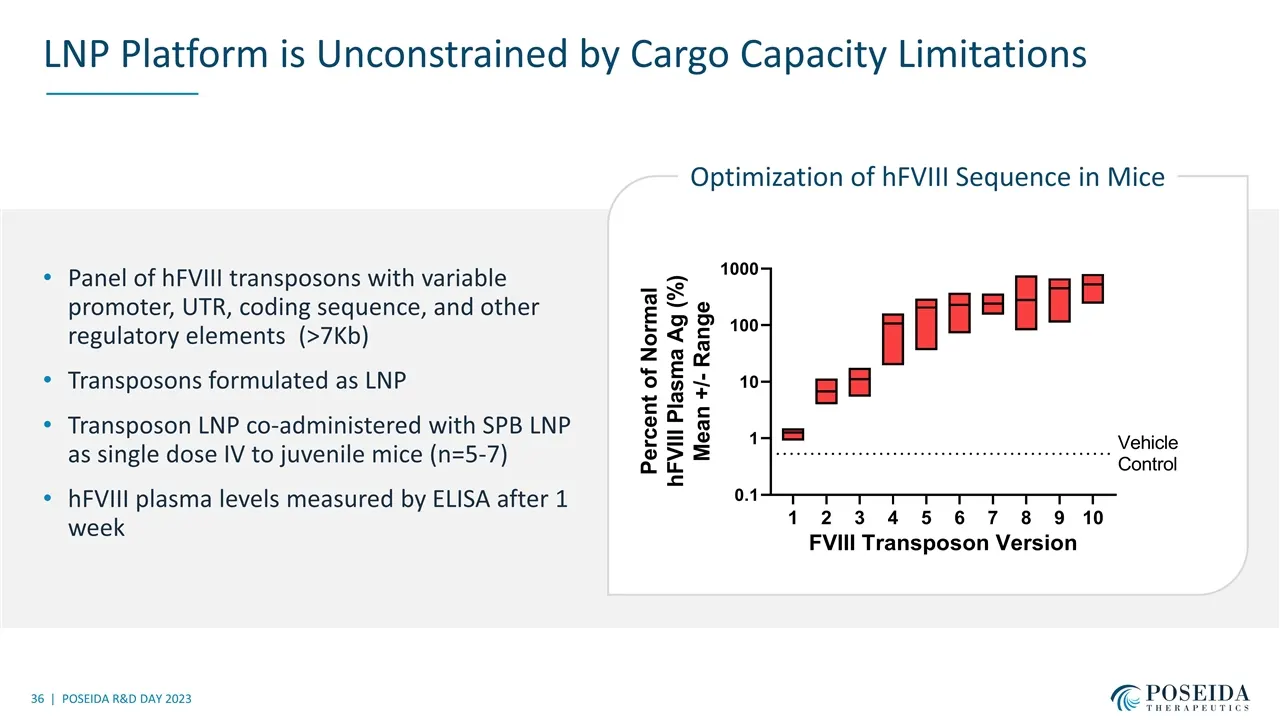
Slide 37: LNP Platform is Unconstrained by Cargo Capacity Limitations
Panel of hFVIII transposons with variable promoter, UTR, coding sequence, and other regulatory elements (>7Kb) Transposons formulated as LNP Transposon LNP co-administered with SPB LNP as single dose IV to juvenile mice (n=5-7) hFVIII plasma levels measured by ELISA after 1 week LNP Platform is Unco
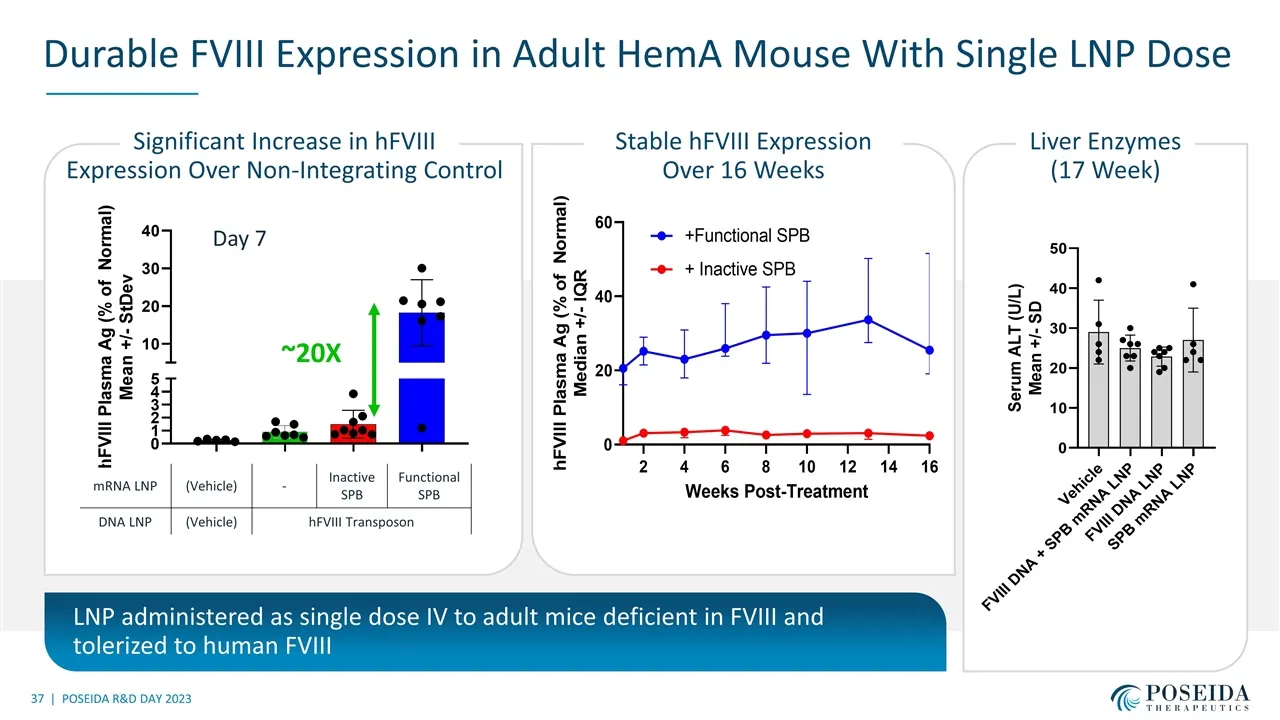
Slide 38: Durable FVIII Expression in Adult HemA Mouse With Single LNP Dose
Liver Enzymes (17 Week) Durable FVIII Expression in Adult HemA Mouse With Single LNP Dose | POSEIDA R&D DAY 2023 Stable hFVIII Expression Over 16 Weeks ~20X Day 7 LNP administered as single dose IV to adult mice deficient in FVIII and tolerized to human FVIII Significant Increase in hFVIII Expressio
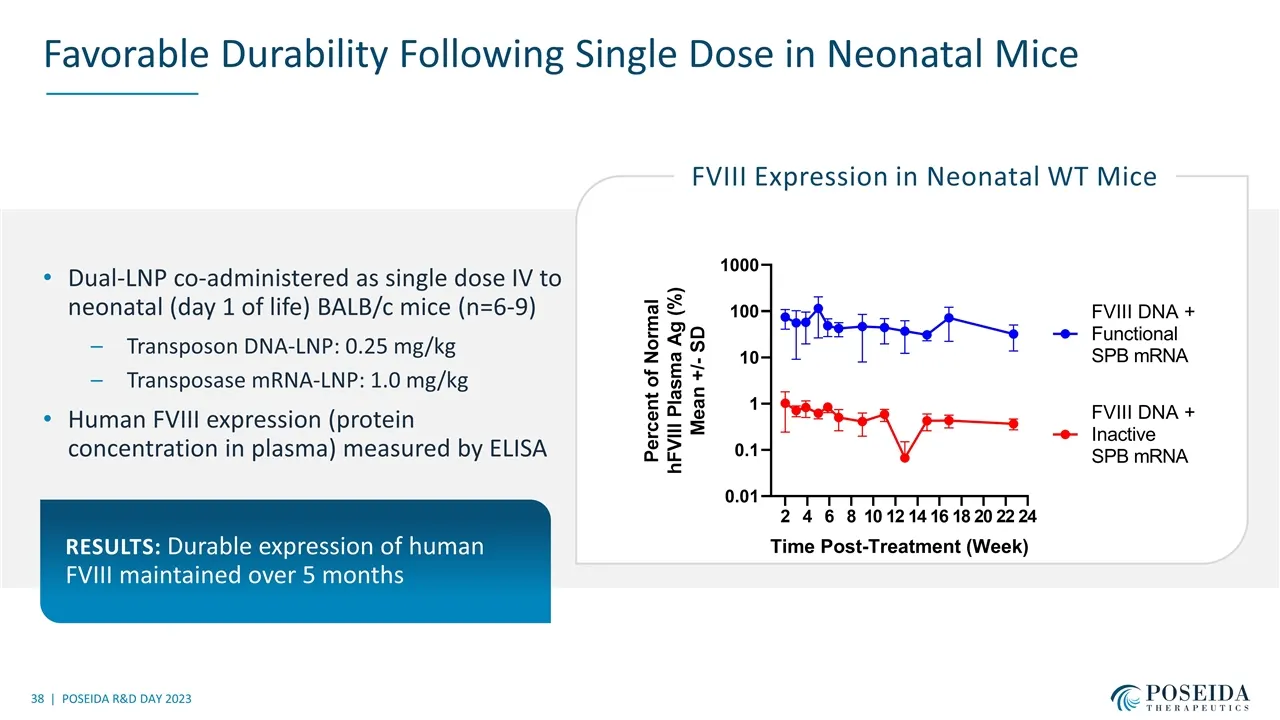
Slide 39: Favorable Durability Following Single Dose in Neonatal Mice
Favorable Durability Following Single Dose in Neonatal Mice | POSEIDA R&D DAY 2023 FVIII Expression in Neonatal WT Mice Dual-LNP co-administered as single dose IV to neonatal (day 1 of life) BALB/c mice (n=6-9) Transposon DNA-LNP: 0.25 mg/kg Transposase mRNA-LNP: 1.0 mg/kg Human FVIII expression (pr
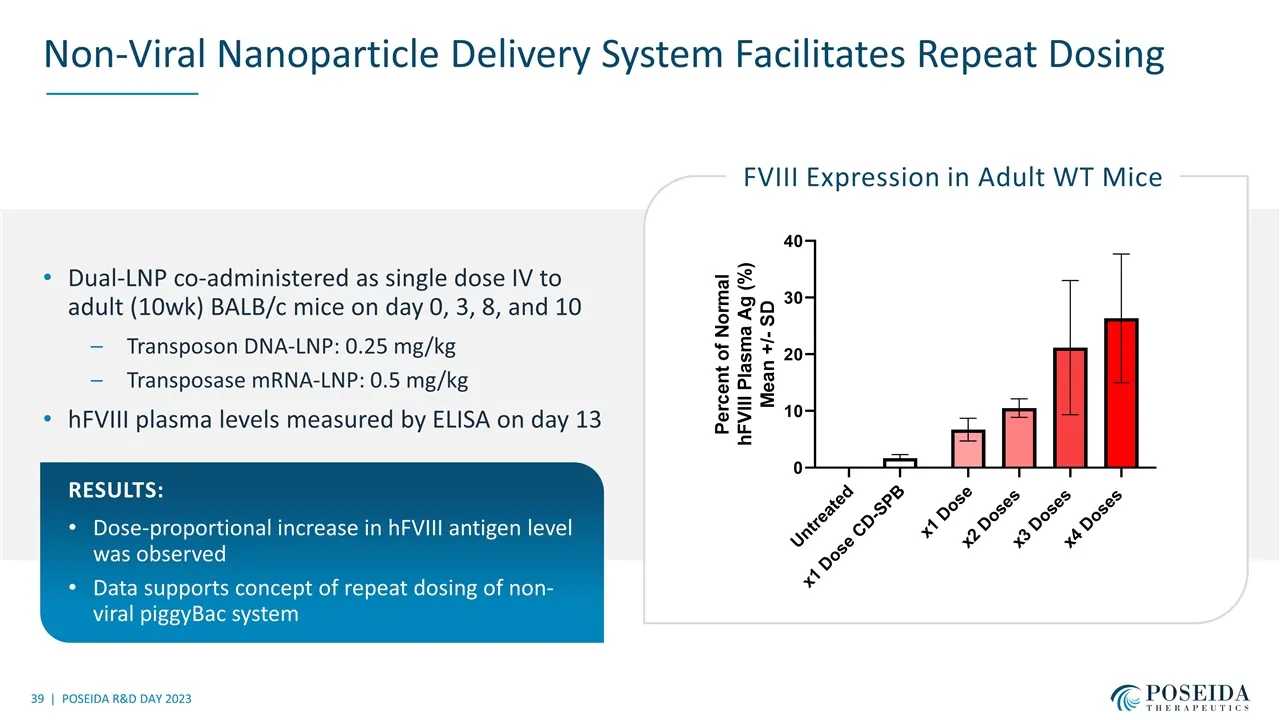
Slide 40: Non-Viral Nanoparticle Delivery System Facilitates Repeat Dosing
FVIII Expression in Adult WT Mice Non-Viral Nanoparticle Delivery System Facilitates Repeat Dosing | POSEIDA R&D DAY 2023 Dual-LNP co-administered as single dose IV to adult (10wk) BALB/c mice on day 0, 3, 8, and 10 Transposon DNA-LNP: 0.25 mg/kg Transposase mRNA-LNP: 0.5 mg/kg hFVIII plasma levels
Slide 41: P-FVIII-101: Summary and Key Takeaways
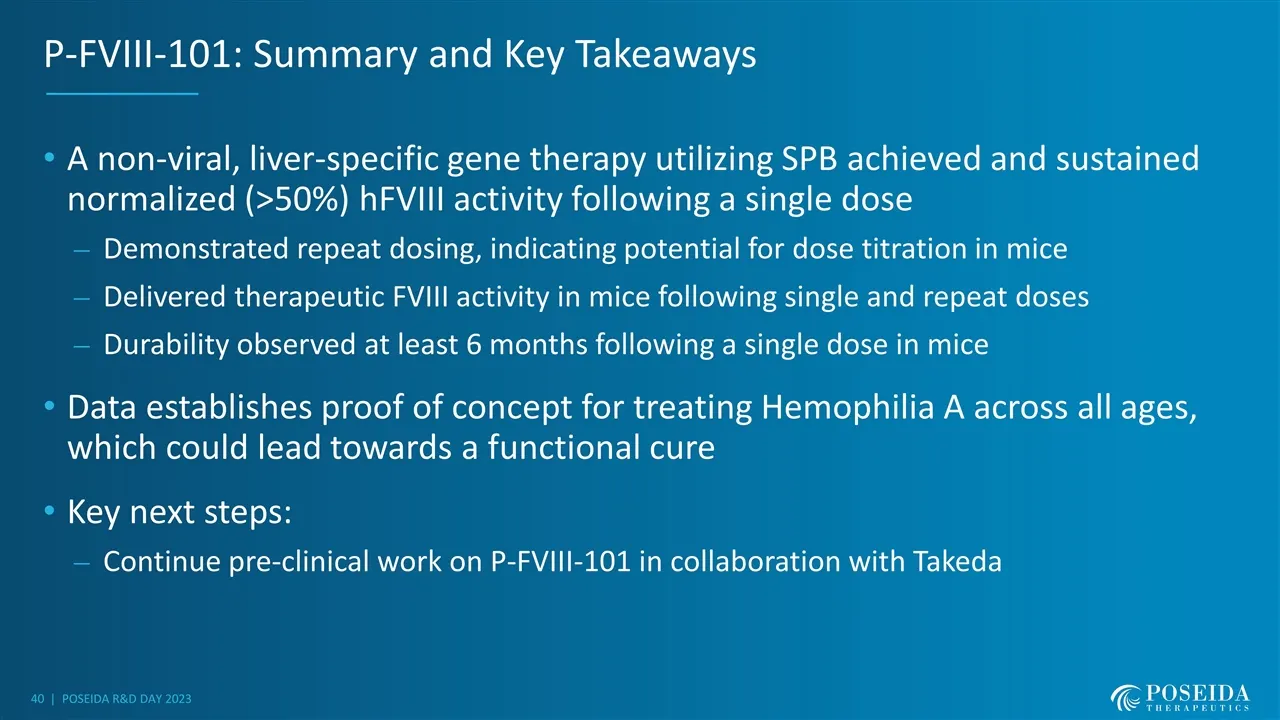
A non-viral, liver-specific gene therapy utilizing SPB achieved and sustained normalized (>50%) hFVIII activity following a single dose Demonstrated repeat dosing, indicating potential for dose titration in mice Delivered therapeutic FVIII activity in mice following single and repeat doses Durabilit

Slide 42: GTx Emerging Technology
GTx Emerging Technology Blair Madison Chief Scientific Officer – GTx
Slide 43: Current Platforms and Programs
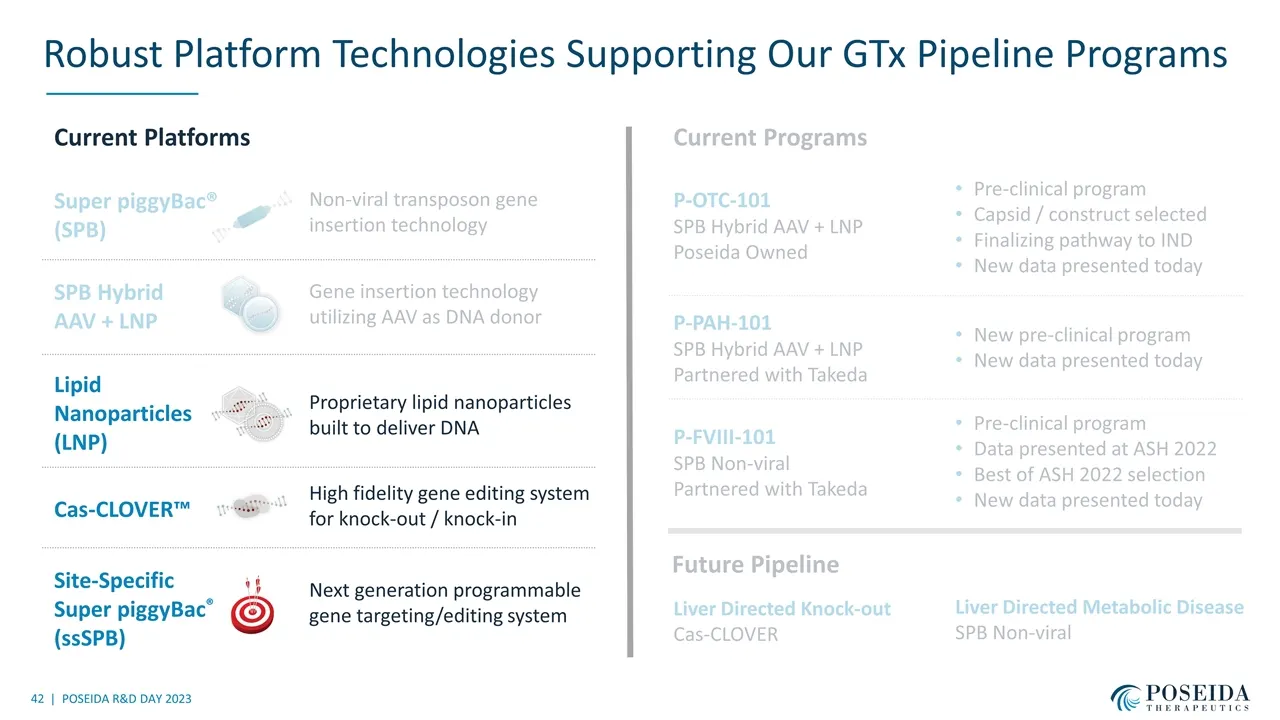
Current Platforms Super piggyBac® (SPB) Non-viral transposon gene insertion technology SPB Hybrid AAV + LNP Gene insertion technology utilizing AAV as DNA donor Site-Specific Super piggyBac® (ssSPB) Next generation programmable gene targeting/editing system Cas-CLOVER™ High fidelity gene editing sys
Slide 44: Emerging Platform Technologies
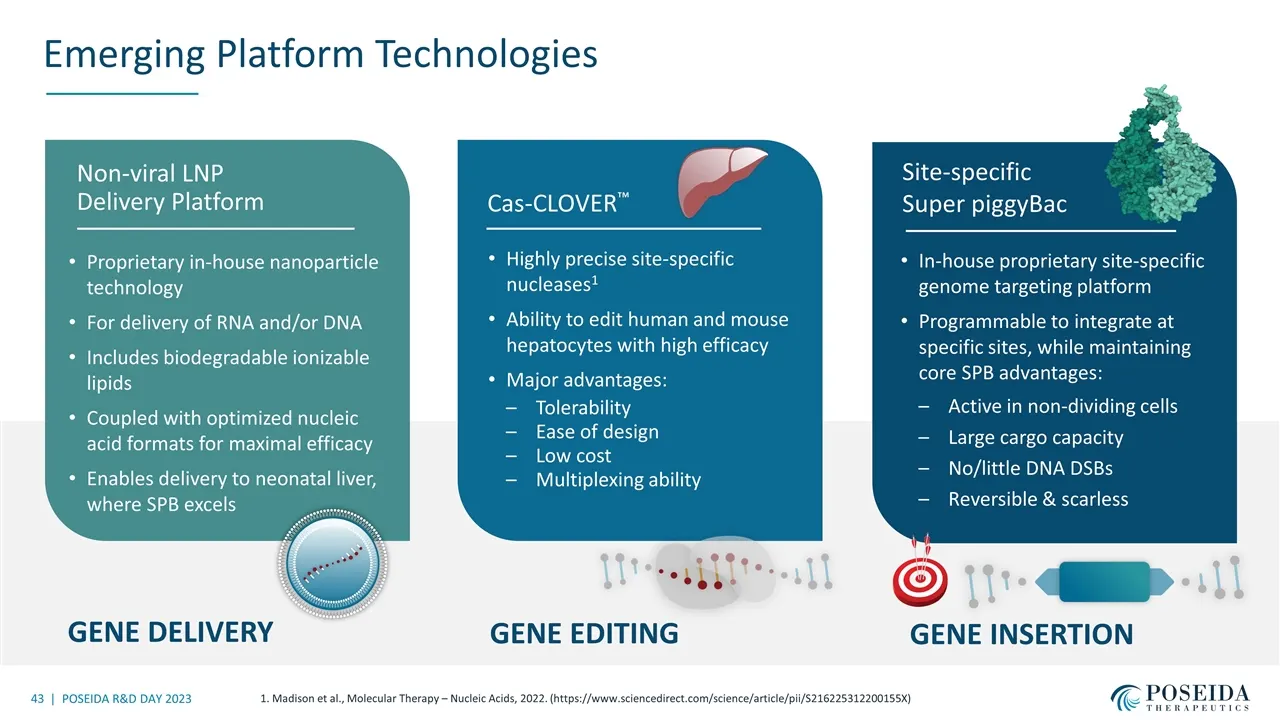
Emerging Platform Technologies | POSEIDA R&D DAY 2023 GENE EDITING Highly precise site-specific nucleases1 Ability to edit human and mouse hepatocytes with high efficacy Major advantages: Tolerability Ease of design Low cost Multiplexing ability Cas-CLOVER™ GENE INSERTION In-house proprietary site-s
Slide 45: Site-Specific Super piggyBac
Site-Specific Super piggyBac Blair Madison Chief Scientific Officer – GTx
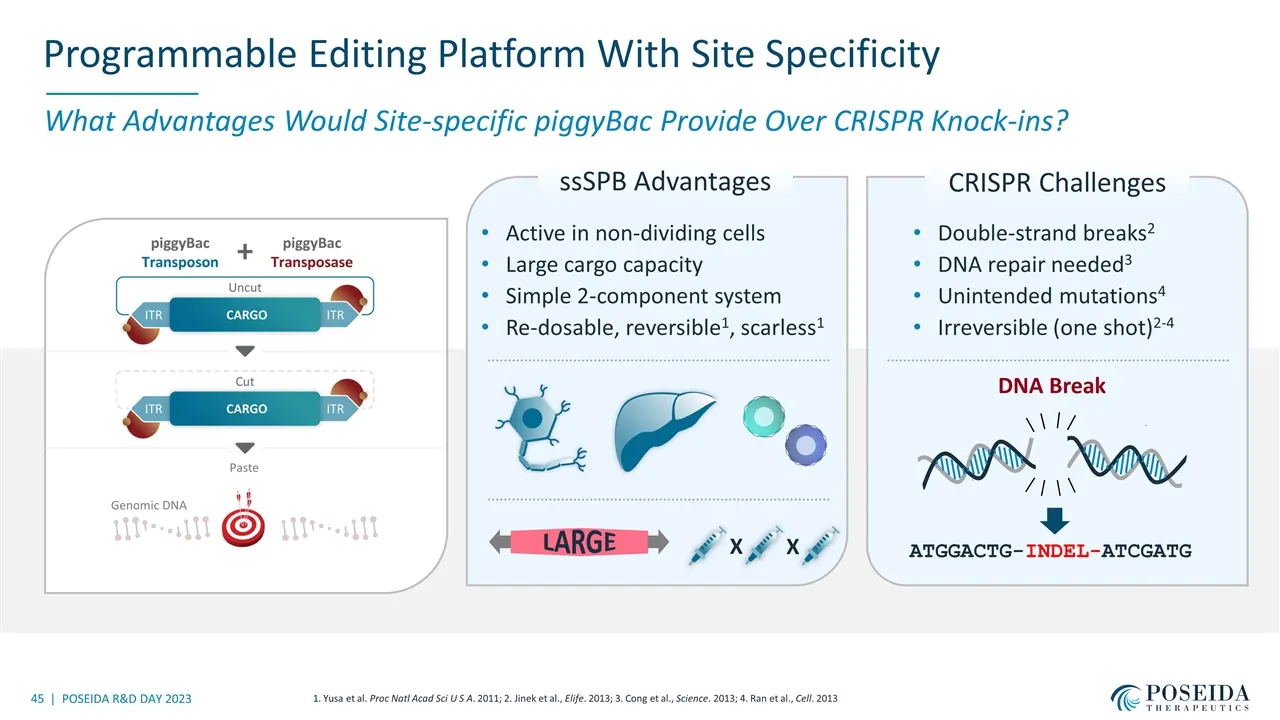
Slide 46: What Advantages Would Site-specific piggyBac Provide Over CRISPR Knock-ins?
What Advantages Would Site-specific piggyBac Provide Over CRISPR Knock-ins? Programmable Editing Platform With Site Specificity | POSEIDA R&D DAY 2023 Genomic DNA Paste Active in non-dividing cells Large cargo capacity Simple 2-component system Re-dosable, reversible1, scarless1 LARGE Double-strand
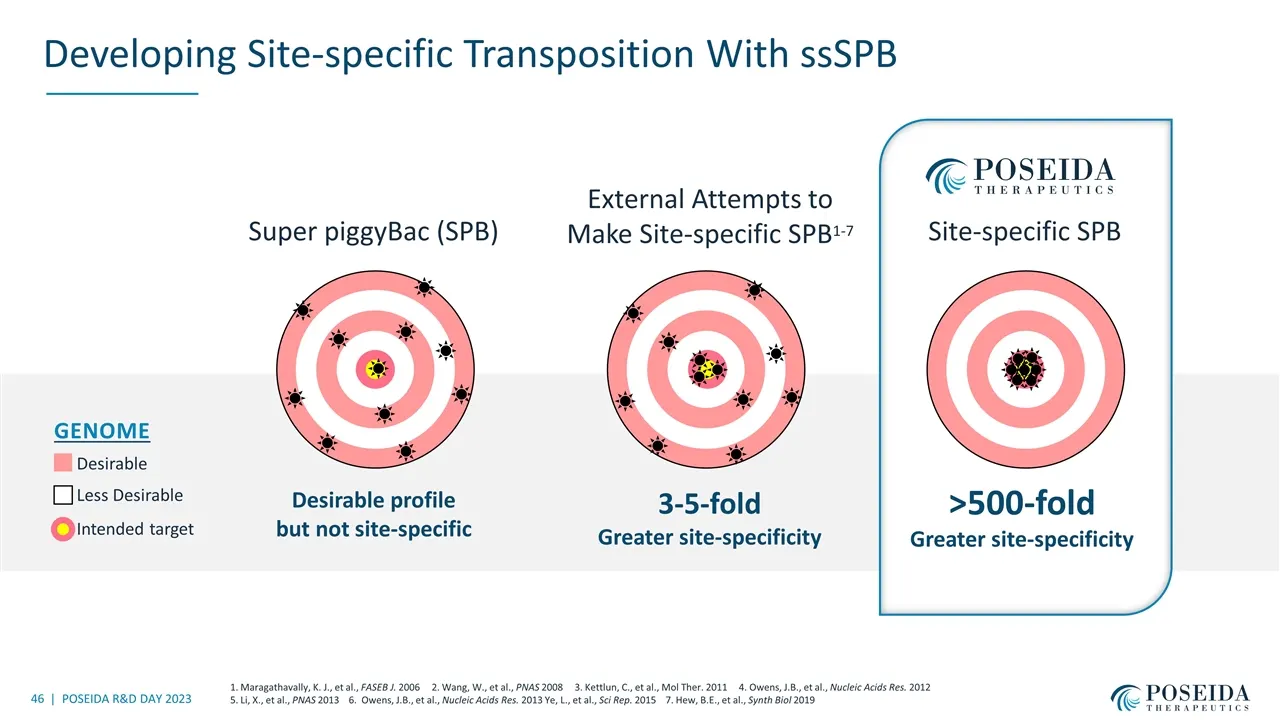
Slide 47: Developing Site-specific Transposition With ssSPB
Developing Site-specific Transposition With ssSPB | POSEIDA R&D DAY 2023 Super piggyBac (SPB) Desirable profile but not site-specific External Attempts to Make Site-specific SPB1-7 3-5-fold Greater site-specificity >500-fold Greater site-specificity Site-specific SPB Desirable Less Desirable GENOME
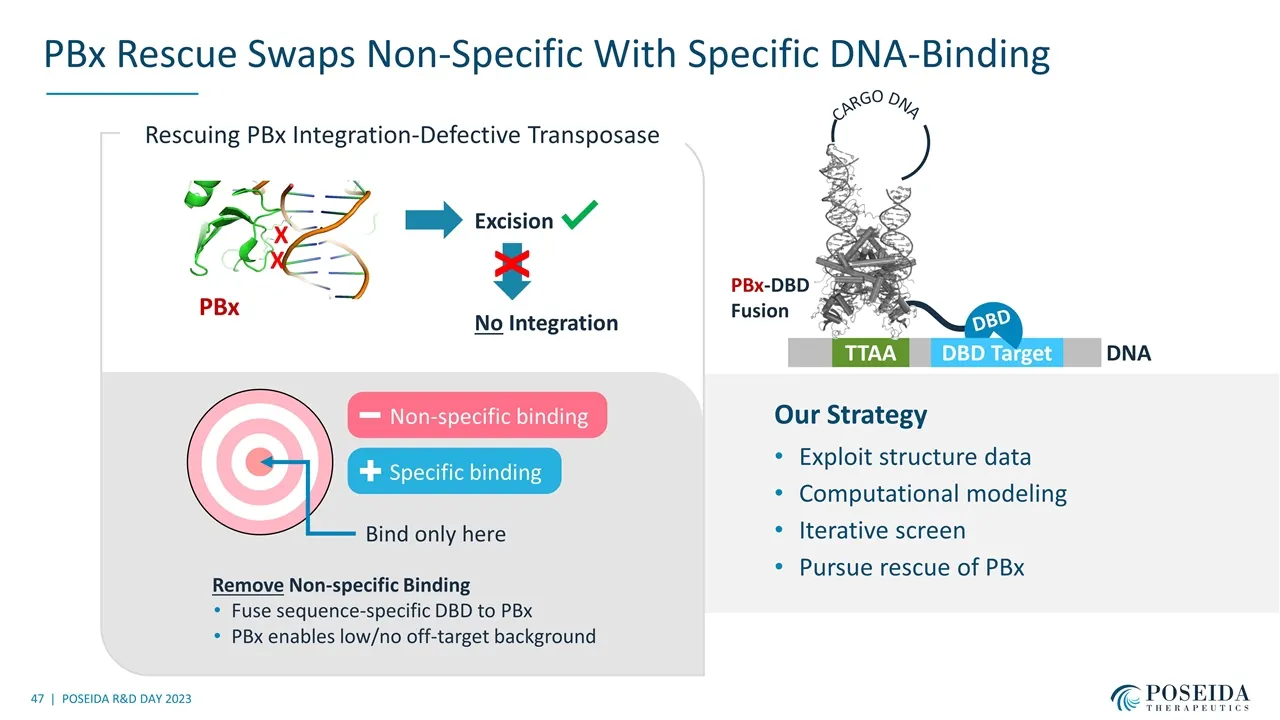
Slide 48: PBx Rescue Swaps Non-Specific With Specific DNA-Binding
PBx Rescue Swaps Non-Specific With Specific DNA-Binding | POSEIDA R&D DAY 2023 Remove Non-specific Binding Fuse sequence-specific DBD to PBx PBx enables low/no off-target background DBD TTAA DBD Target DNA CARGO DNA PBx-DBD Fusion Rescuing PBx Integration-Defective Transposase Our Strategy Exploit s
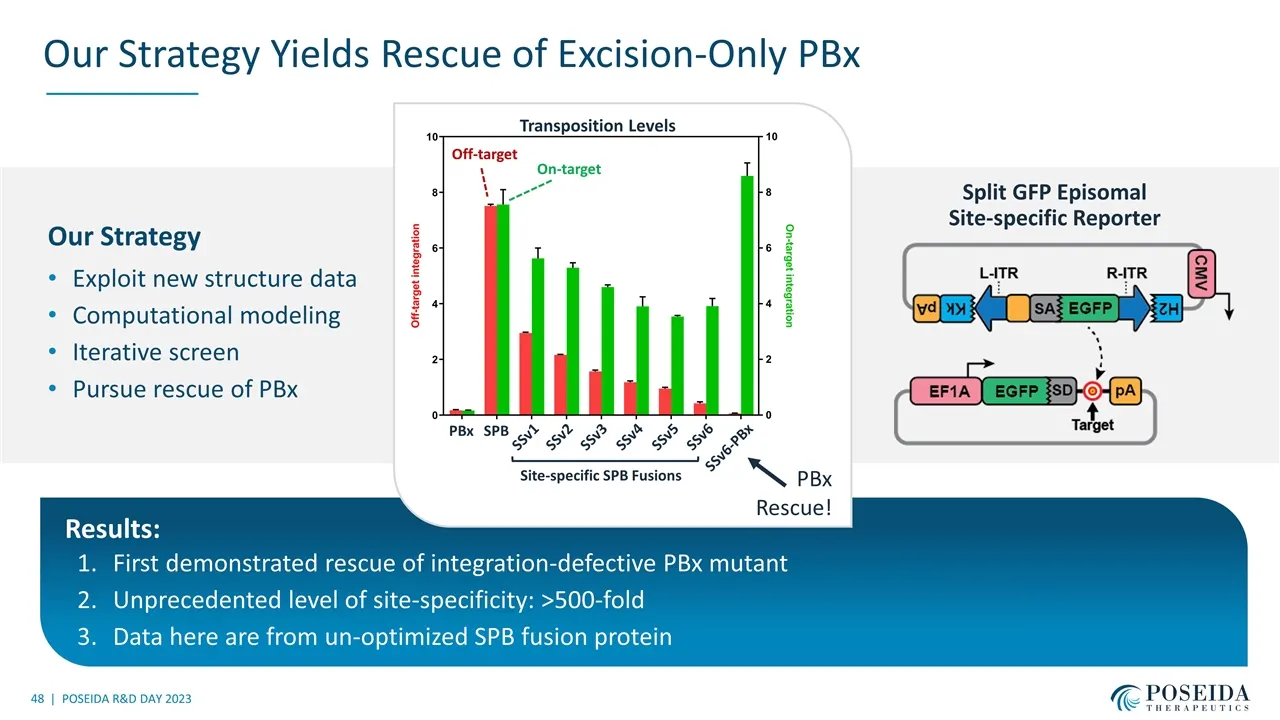
Slide 49: Our Strategy Yields Rescue of Excision-Only PBx
Our Strategy Yields Rescue of Excision-Only PBx | POSEIDA R&D DAY 2023 Results: First demonstrated rescue of integration-defective PBx mutant Unprecedented level of site-specificity: >500-fold Data here are from un-optimized SPB fusion protein Our Strategy Exploit new structure data Computational mo
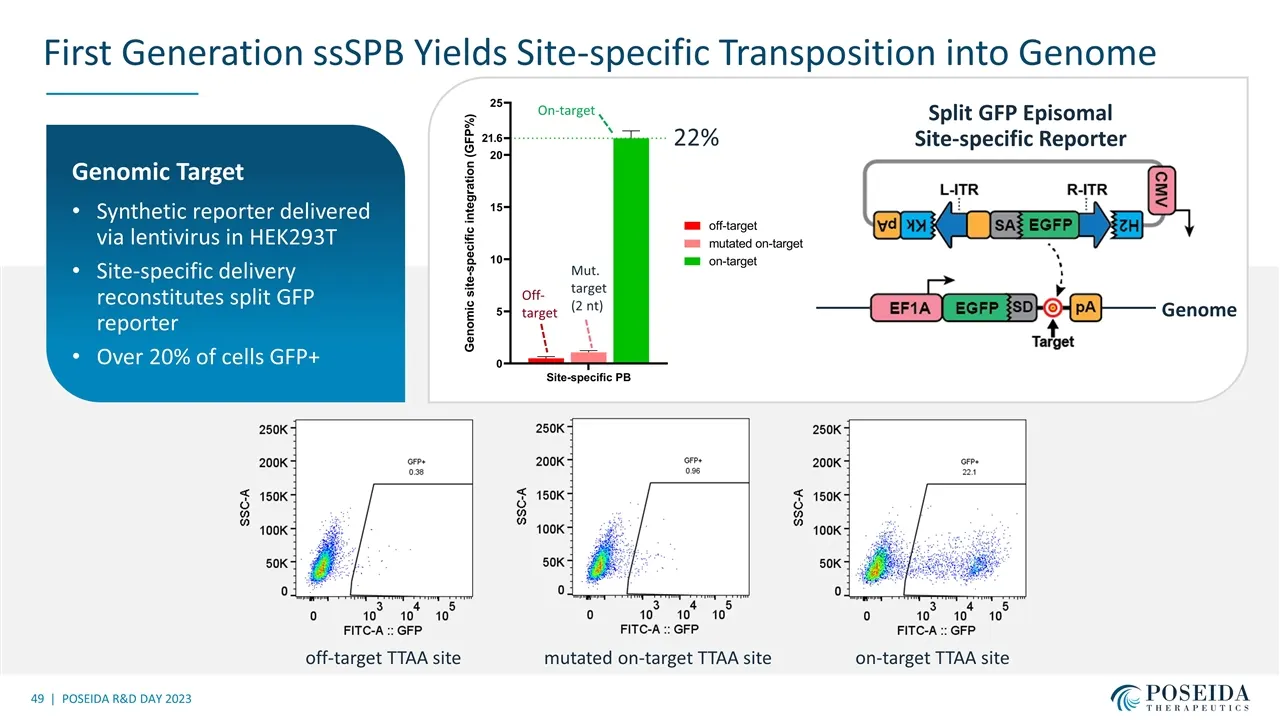
Slide 50: First Generation ssSPB Yields Site-specific Transposition into Genome
First Generation ssSPB Yields Site-specific Transposition into Genome | POSEIDA R&D DAY 2023 off-target TTAA site mutated on-target TTAA site on-target TTAA site Genomic Target Synthetic reporter delivered via lentivirus in HEK293T Site-specific delivery reconstitutes split GFP reporter Over 20% of
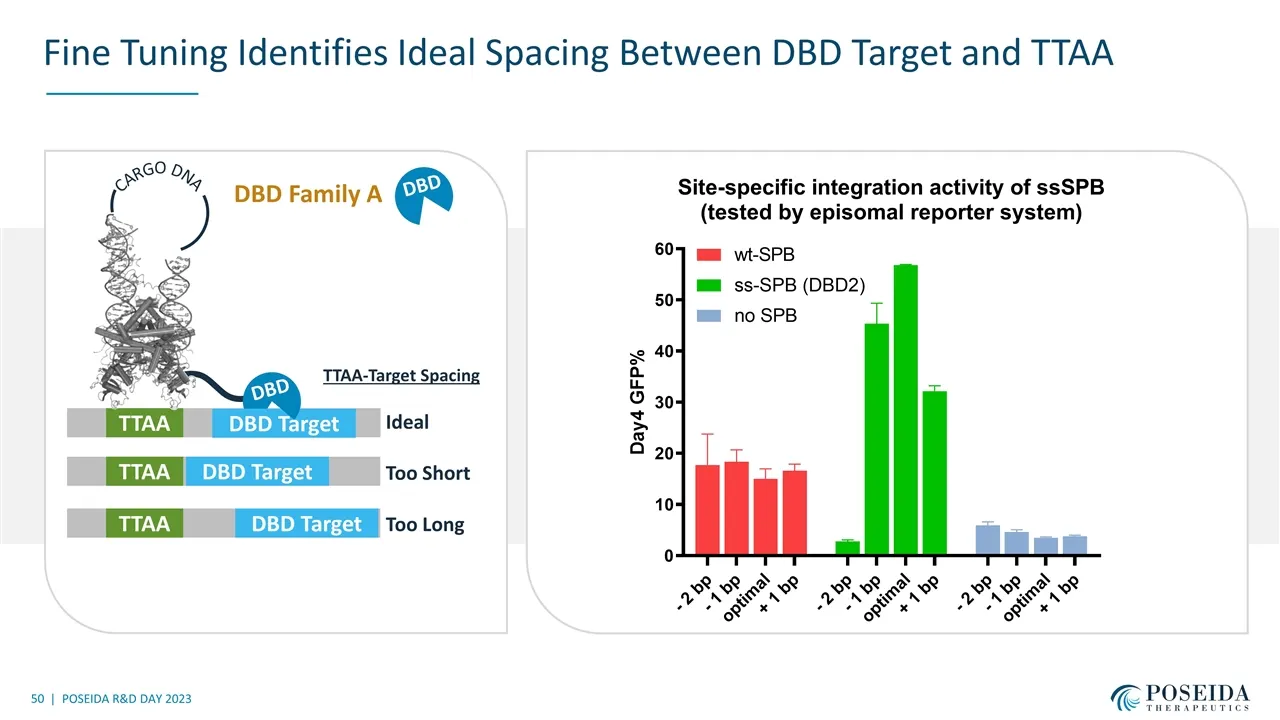
Slide 51: Fine Tuning Identifies Ideal Spacing Between DBD Target and TTAA
Fine Tuning Identifies Ideal Spacing Between DBD Target and TTAA | POSEIDA R&D DAY 2023 TTAA-Target Spacing Ideal Too Short Too Long TTAA DBD Target TTAA DBD Target DBD Family A DBD DBD CARGO DNA TTAA DBD Target
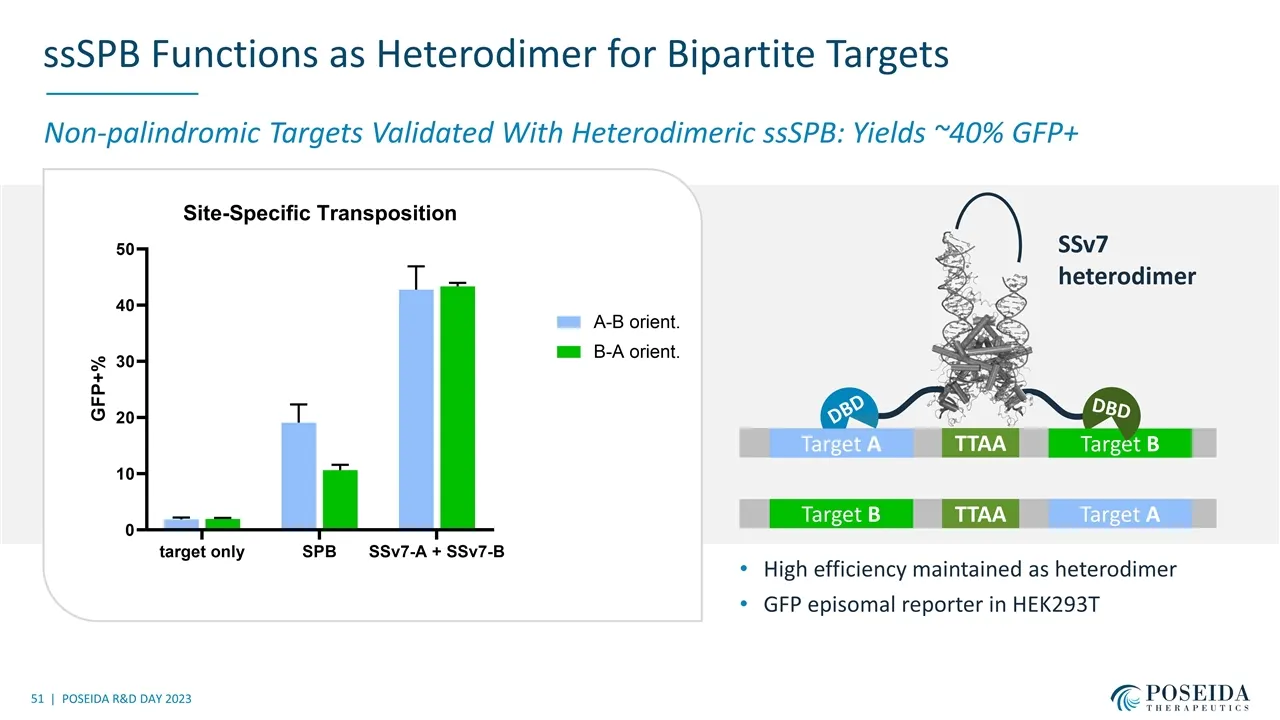
Slide 52: Non-palindromic Targets Validated With Heterodimeric ssSPB
Non-palindromic Targets Validated With Heterodimeric ssSPB: Yields ~40% GFP+ ssSPB Functions as Heterodimer for Bipartite Targets | POSEIDA R&D DAY 2023 TTAA TTAA Target A Target B DBD DBD SSv7 heterodimer Target A Target B High efficiency maintained as heterodimer GFP episomal reporter in HEK293T
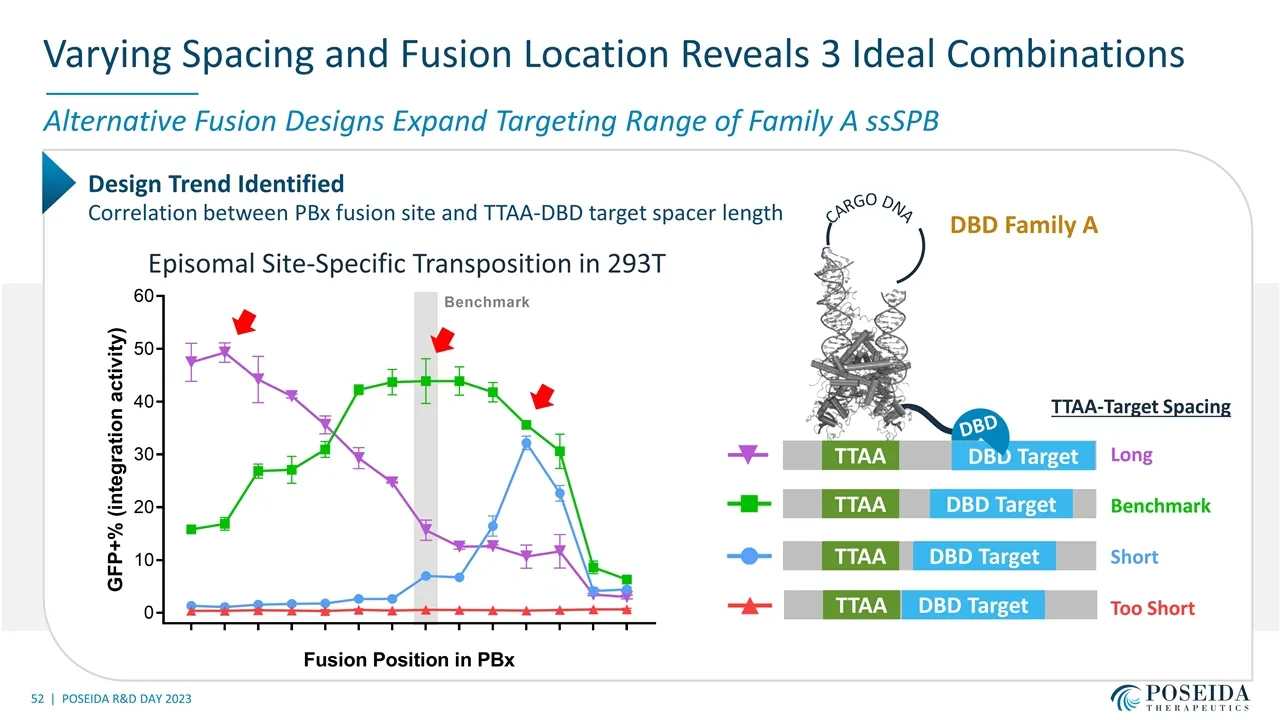
Slide 53: Alternative Fusion Designs Expand Targeting Range of Family A ssSPB
DBD Family A Alternative Fusion Designs Expand Targeting Range of Family A ssSPB Varying Spacing and Fusion Location Reveals 3 Ideal Combinations | POSEIDA R&D DAY 2023 Design Trend Identified Correlation between PBx fusion site and TTAA-DBD target spacer length Episomal Site-Specific Transposition
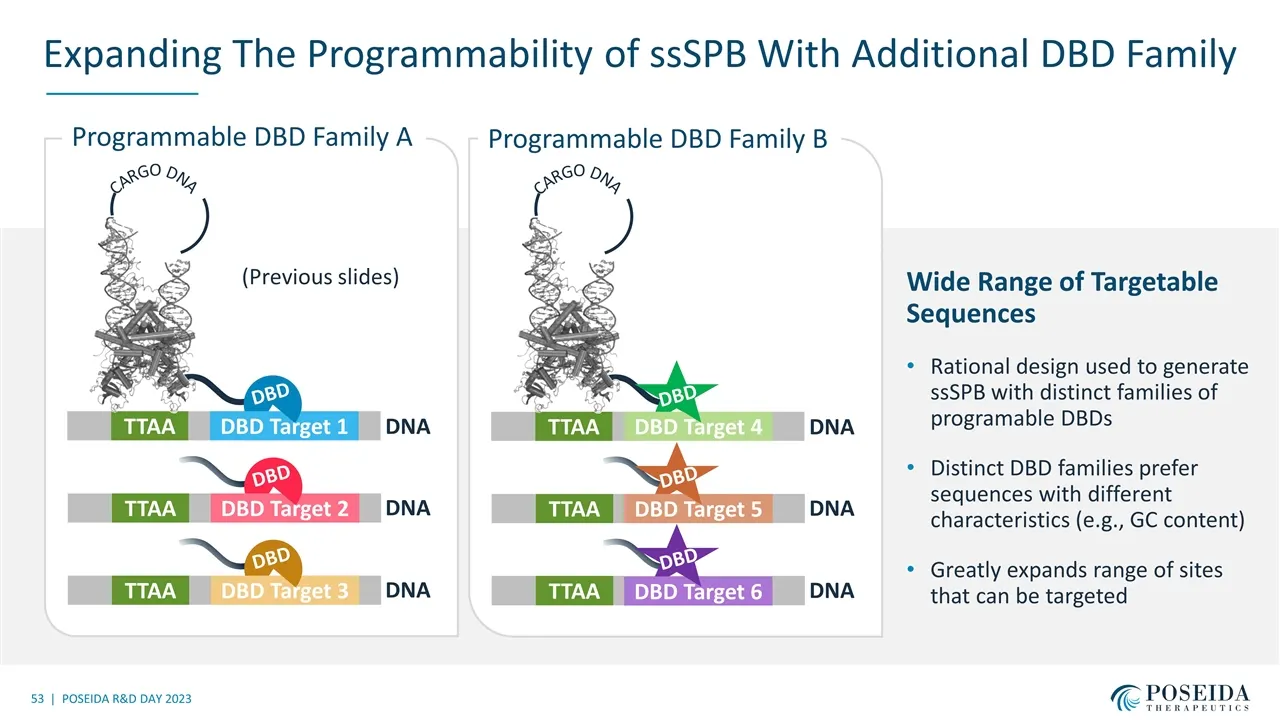
Slide 54: Expanding The Programmability of ssSPB With Additional DBD Family
Expanding The Programmability of ssSPB With Additional DBD Family | POSEIDA R&D DAY 2023 Wide Range of Targetable Sequences Rational design used to generate ssSPB with distinct families of programable DBDs Distinct DBD families prefer sequences with different characteristics (e.g., GC content) Great
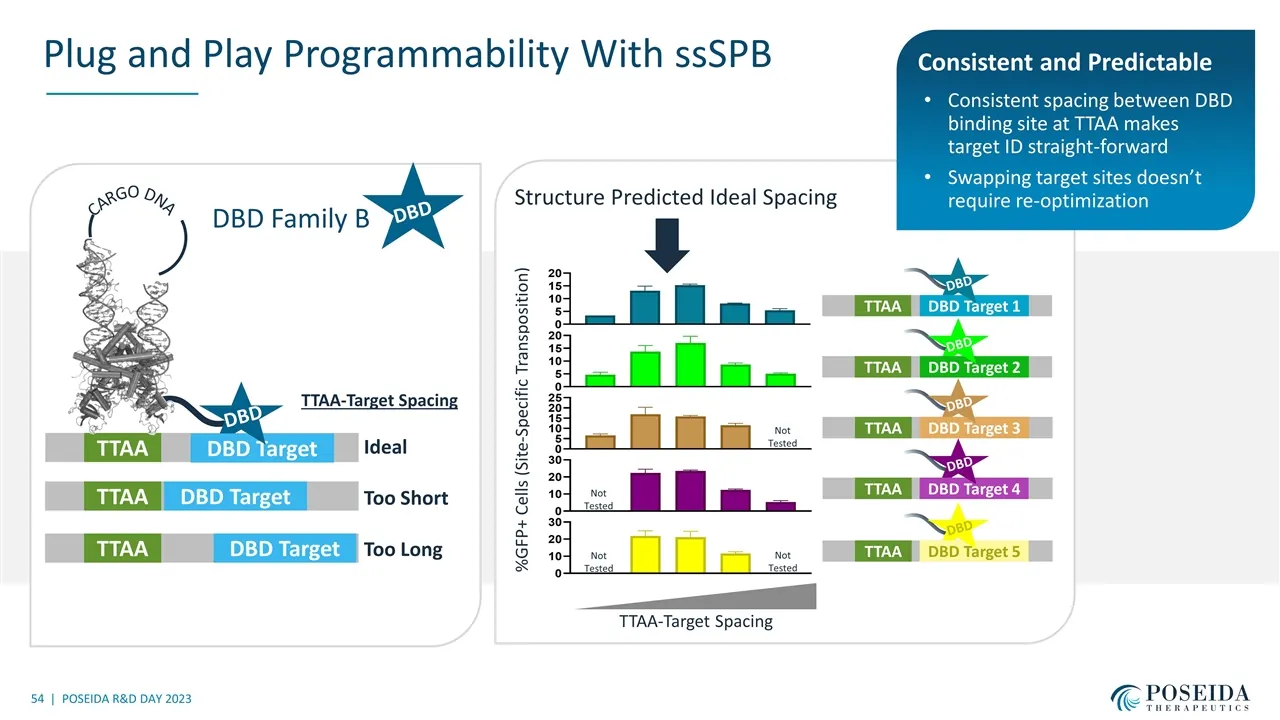
Slide 55: Plug and Play Programmability With ssSPB
Plug and Play Programmability With ssSPB | POSEIDA R&D DAY 2023 TTAA-Target Spacing Structure Predicted Ideal Spacing %GFP+ Cells (Site-Specific Transposition) Not Tested Not Tested Not Tested Not Tested TTAA-Target Spacing Ideal Too Short Too Long CARGO DNA TTAA TTAA DBD Target TTAA DBD Target DBD
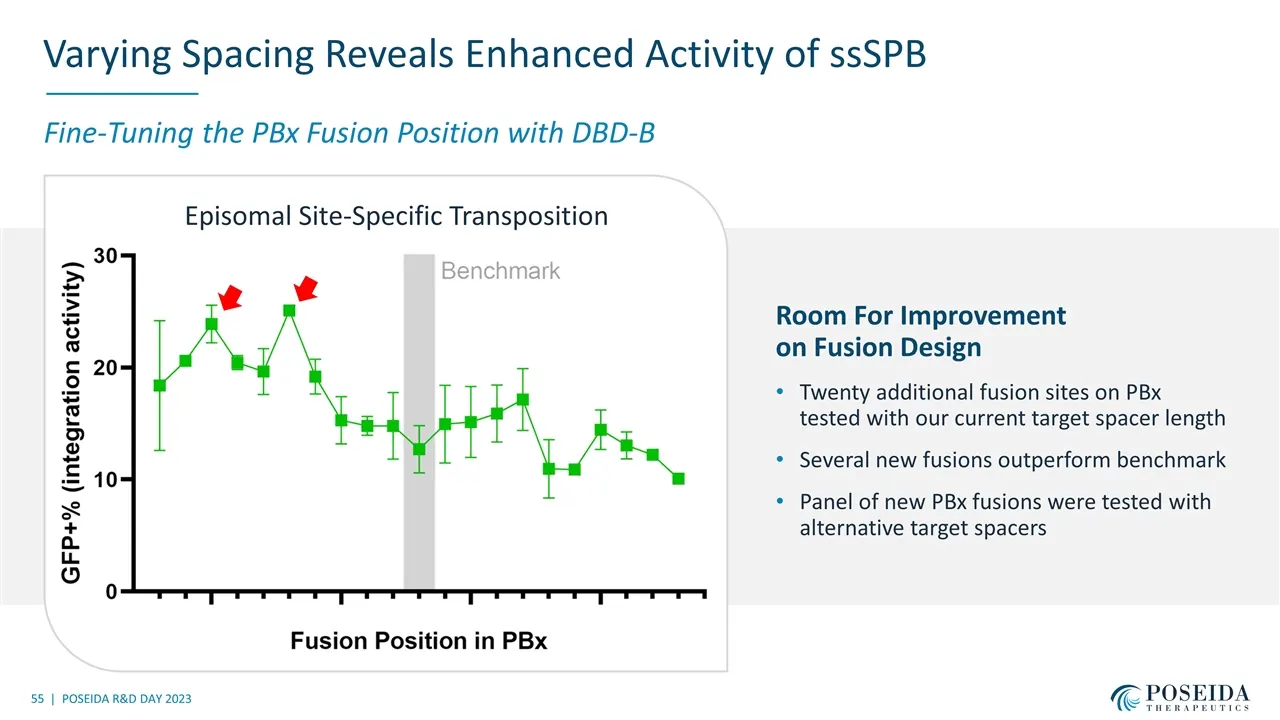
Slide 56: Fine-Tuning the PBx Fusion Position with DBD-B
Fine-Tuning the PBx Fusion Position with DBD-B Varying Spacing Reveals Enhanced Activity of ssSPB | POSEIDA R&D DAY 2023 Episomal Site-Specific Transposition Room For Improvement on Fusion Design Twenty additional fusion sites on PBx tested with our current target spacer length Several new fusions o
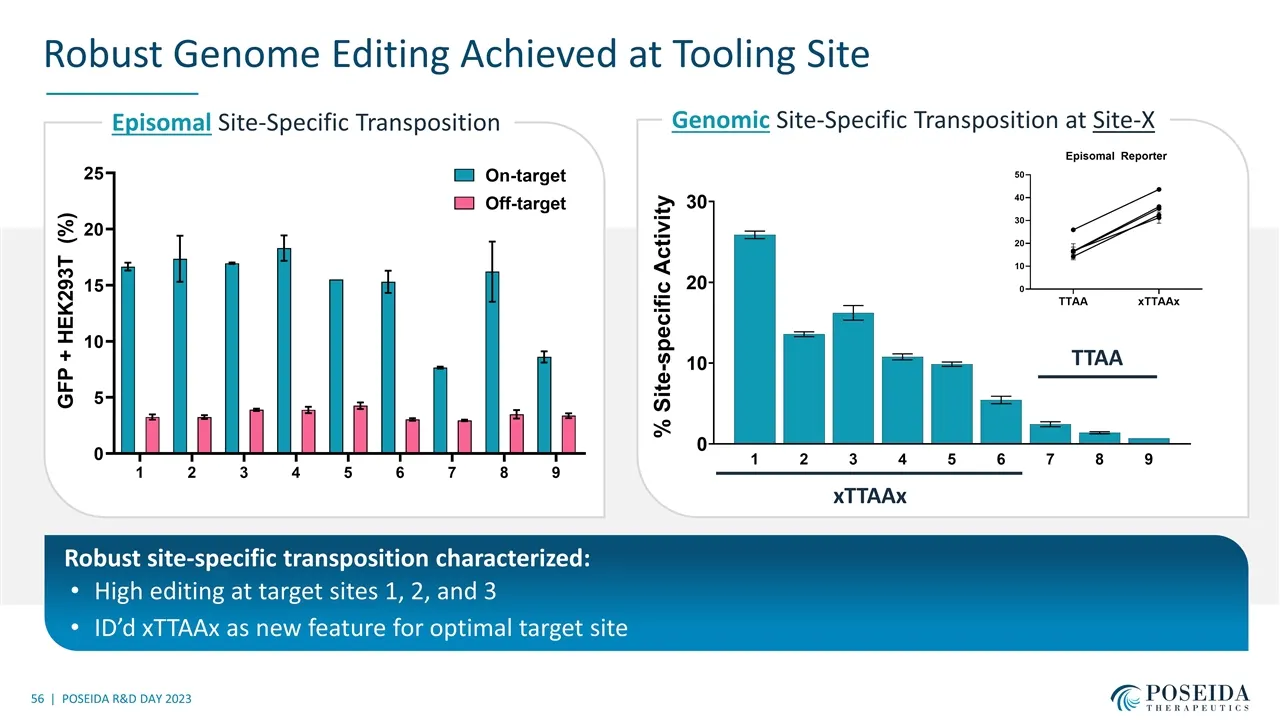
Slide 57: Robust Genome Editing Achieved at Tooling Site
Robust Genome Editing Achieved at Tooling Site | POSEIDA R&D DAY 2023 Genomic Site-Specific Transposition at Site-X Episomal Site-Specific Transposition TTAA xTTAAx Robust site-specific transposition characterized: High editing at target sites 1, 2, and 3 ID’d xTTAAx as new feature for optimal targe
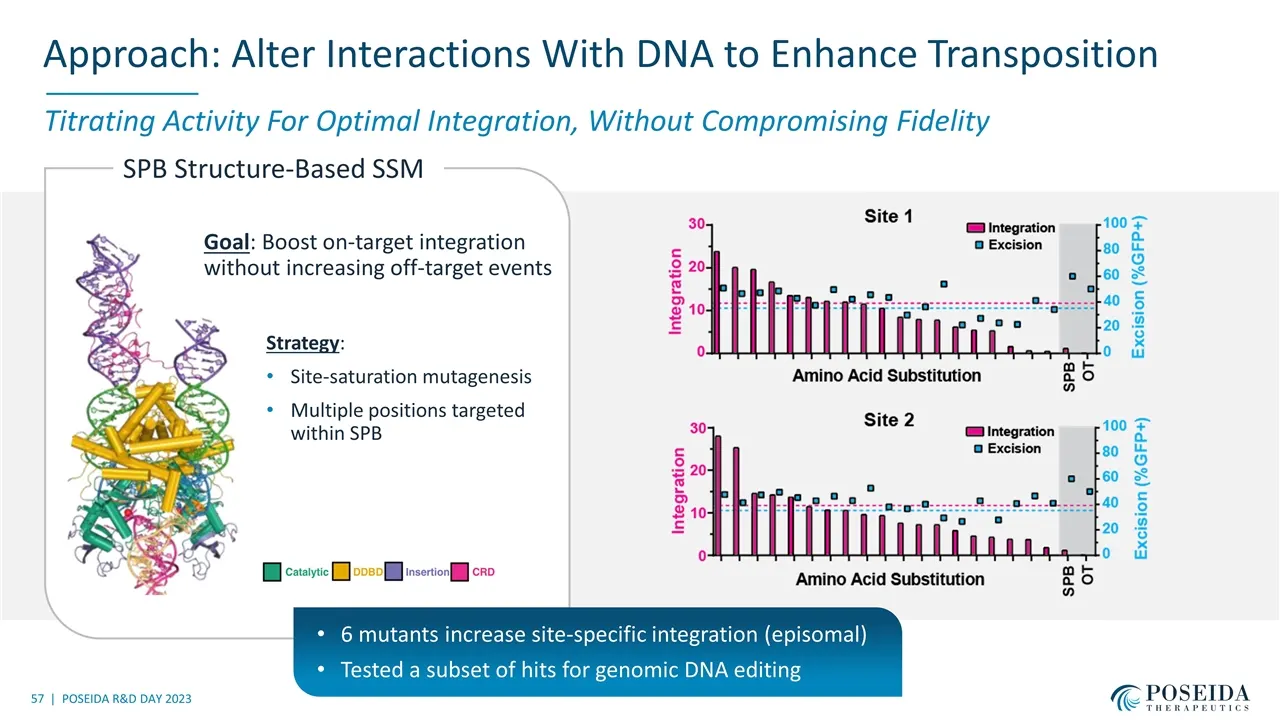
Slide 58: Titrating Activity For Optimal Integration, Without Compromising Fidelity
Titrating Activity For Optimal Integration, Without Compromising Fidelity Approach: Alter Interactions With DNA to Enhance Transposition | POSEIDA R&D DAY 2023 Strategy: Site-saturation mutagenesis Multiple positions targeted within SPB 6 mutants increase site-specific integration (episomal) Tested
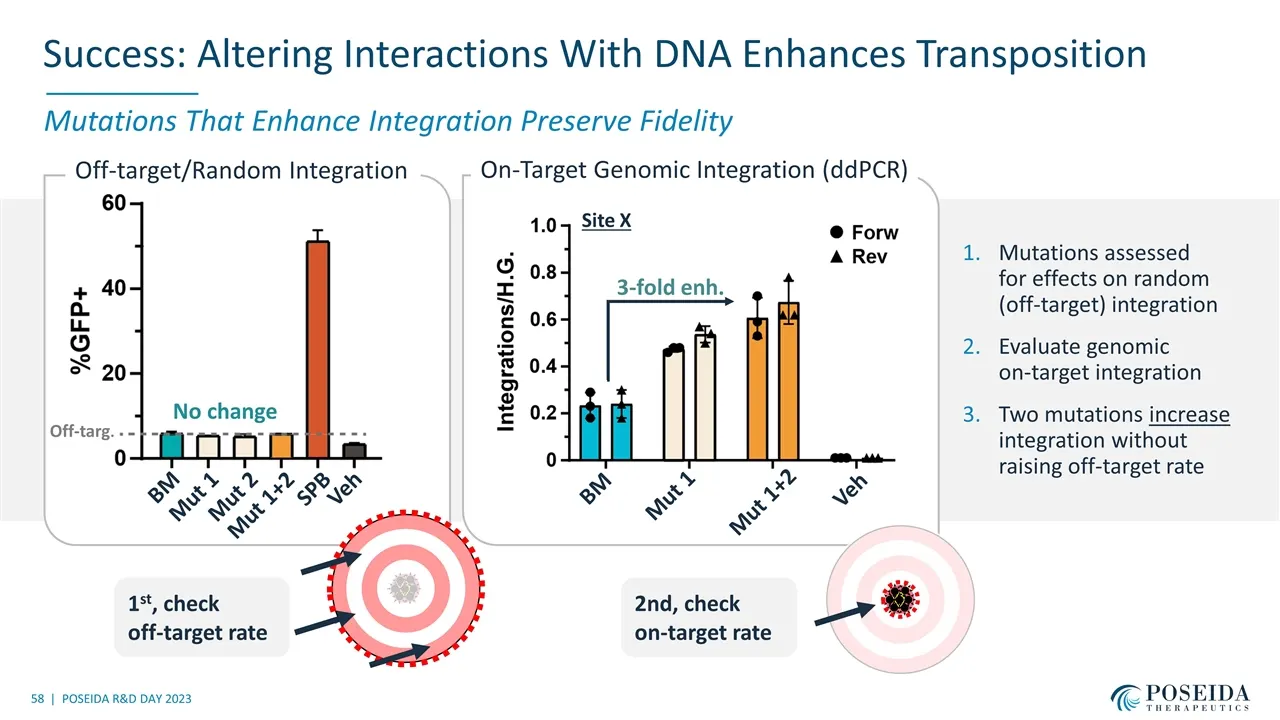
Slide 59: Mutations That Enhance Integration Preserve Fidelity
Mutations That Enhance Integration Preserve Fidelity Success: Altering Interactions With DNA Enhances Transposition | POSEIDA R&D DAY 2023 Mutations assessed for effects on random (off-target) integration Evaluate genomic on-target integration Two mutations increase integration without raising off-t
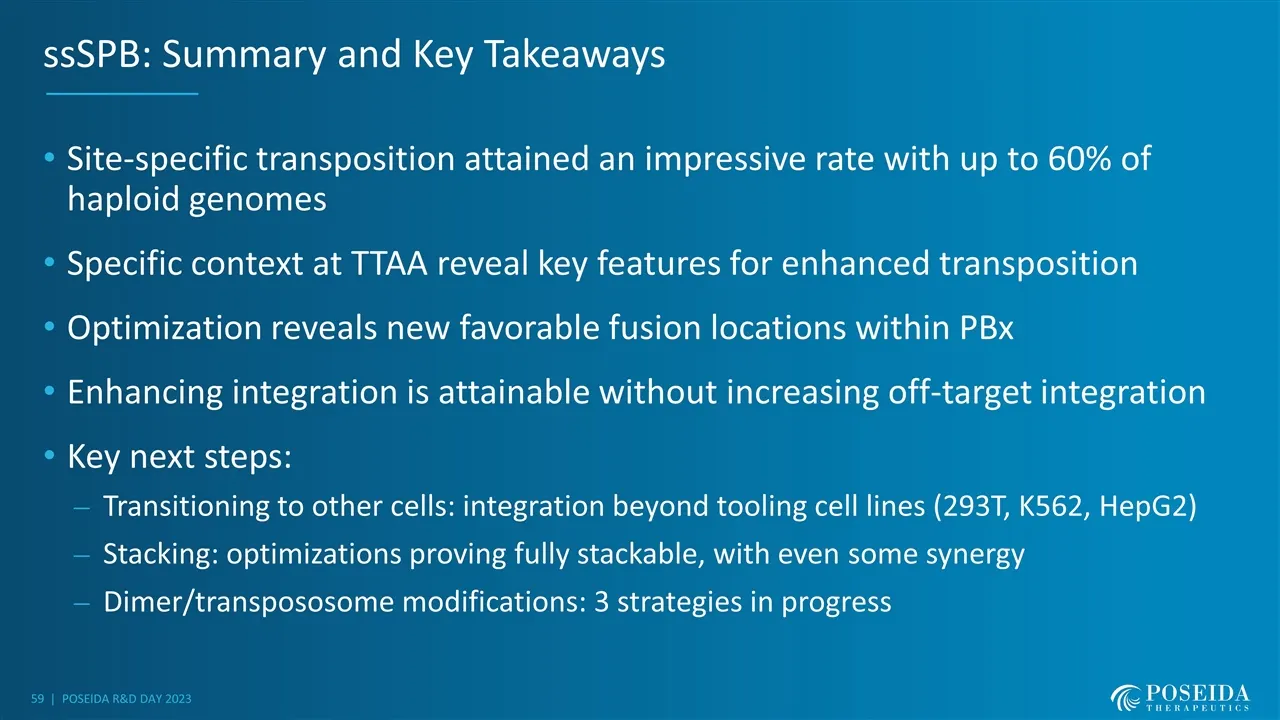
Slide 60: ssSPB: Summary and Key Takeaways
Site-specific transposition attained an impressive rate with up to 60% of haploid genomes Specific context at TTAA reveal key features for enhanced transposition Optimization reveals new favorable fusion locations within PBx Enhancing integration is attainable without increasing off-target integrati
Slide 61: Liver-Directed Gene Editing and Insertion with Cas-CLOVER
Liver-Directed Gene Editing and Insertion with Cas-CLOVER™ Oscar Alvarez Associate Director, Genetic Engineering
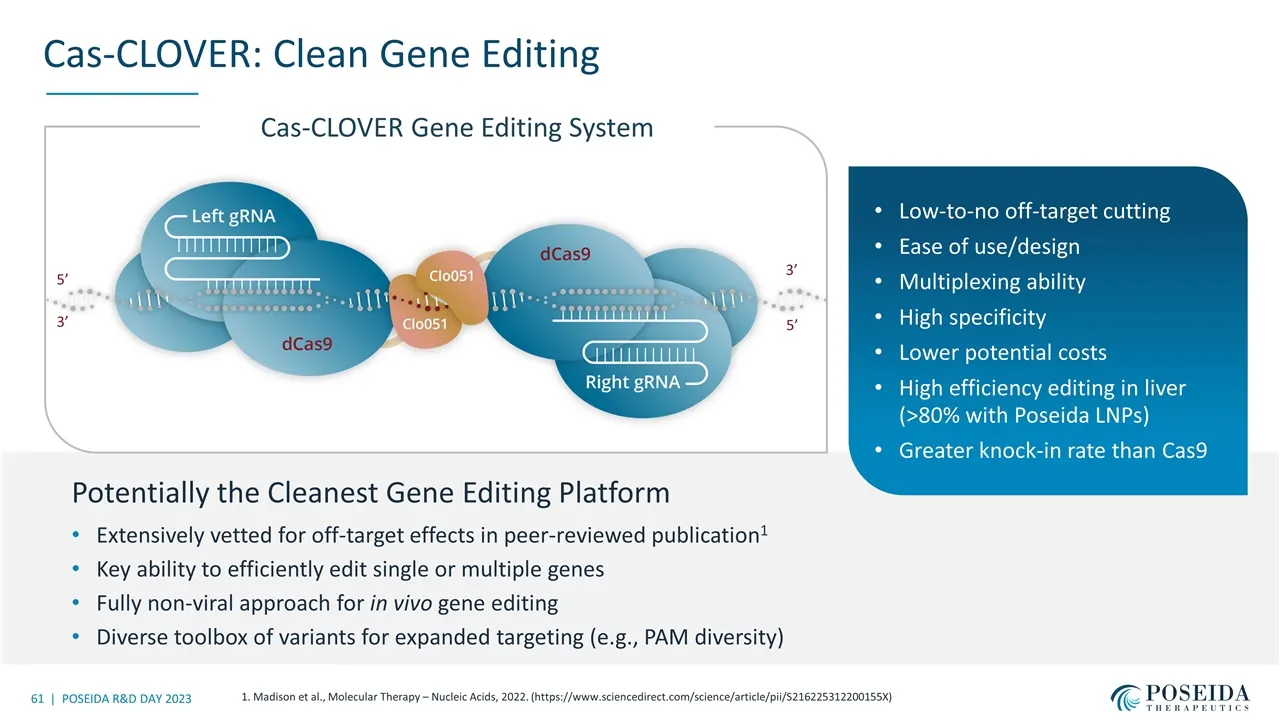
Slide 62: Cas-CLOVER: Clean Gene Editing
Cas-CLOVER: Clean Gene Editing 3’ 5’ 5’ 3’ Cas-CLOVER Gene Editing System Potentially the Cleanest Gene Editing Platform Extensively vetted for off-target effects in peer-reviewed publication1 Key ability to efficiently edit single or multiple genes Fully non-viral approach for in vivo gene editing
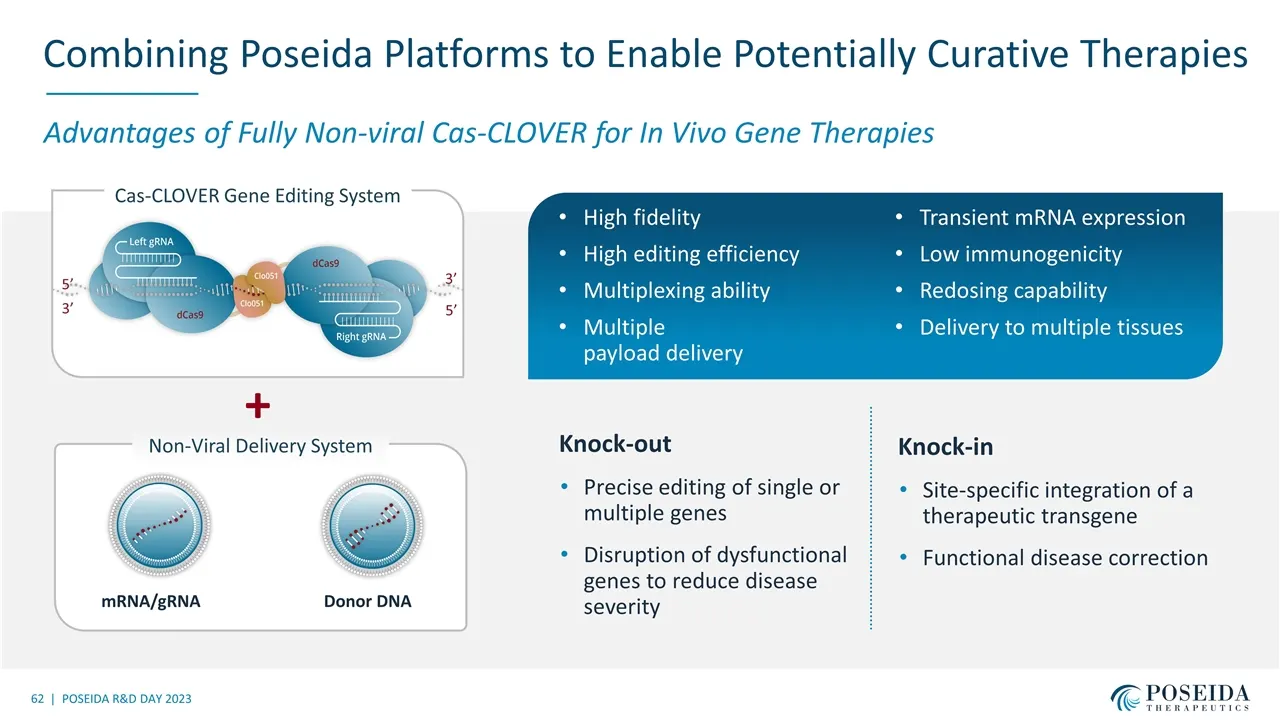
Slide 63: Advantages of Fully Non-viral Cas-CLOVER for In Vivo Gene Therapies
Advantages of Fully Non-viral Cas-CLOVER for In Vivo Gene Therapies Combining Poseida Platforms to Enable Potentially Curative Therapies | POSEIDA R&D DAY 2023 3’ 5’ 5’ 3’ Cas-CLOVER Gene Editing System Non-Viral Delivery System Donor DNA mRNA/gRNA High fidelity High editing efficiency Multiplexing
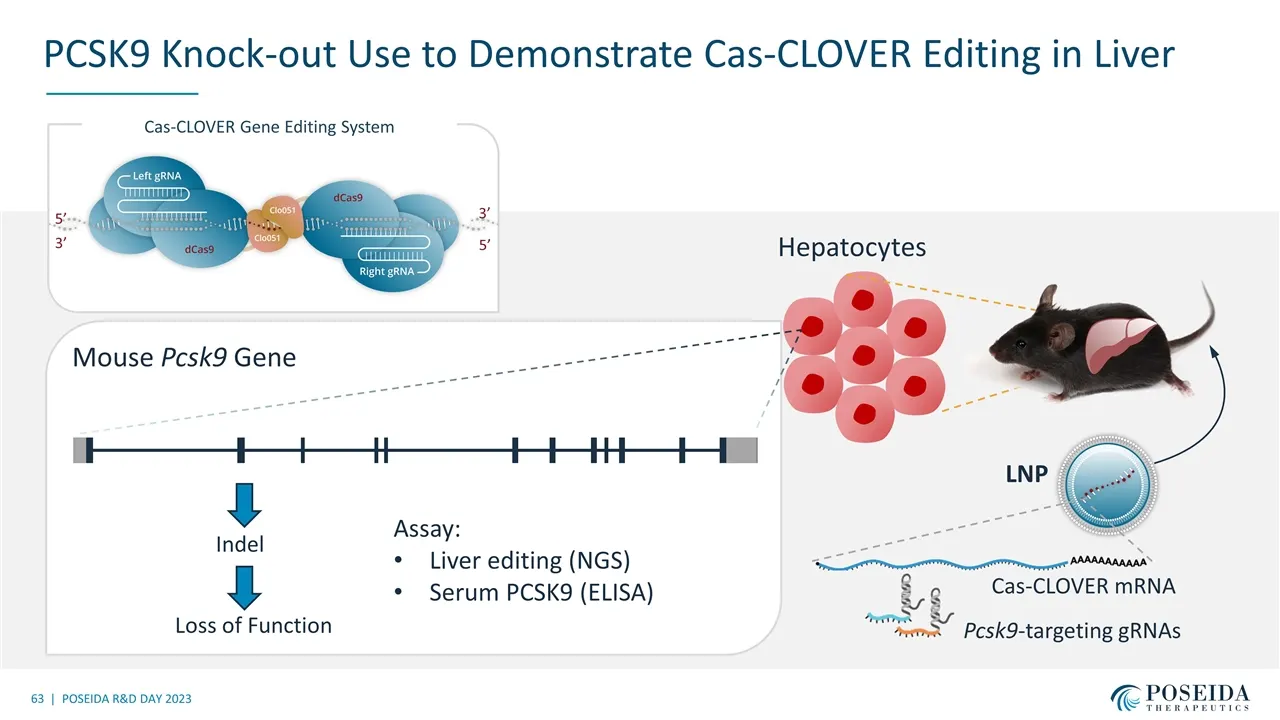
Slide 64: PCSK9 Knock-out Used to Demonstrate Cas-CLOVER Editing in Liver
Mouse Pcsk9 Gene PCSK9 Knock-out Use to Demonstrate Cas-CLOVER Editing in Liver Hepatocytes 3’ 5’ 5’ 3’ Cas-CLOVER Gene Editing System Cas-CLOVER mRNA Pcsk9-targeting gRNAs Indel Loss of Function LNP Assay: Liver editing (NGS) Serum PCSK9 (ELISA) | POSEIDA R&D DAY 2023
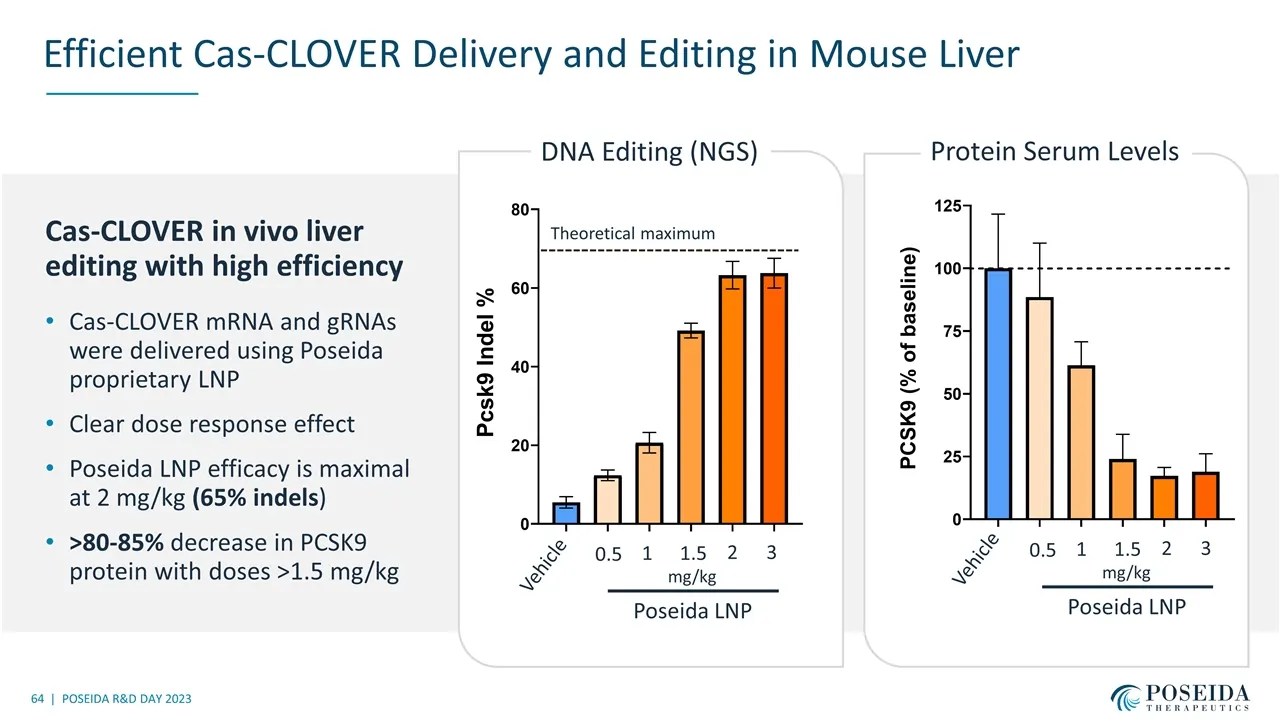
Slide 65: Efficient Cas-CLOVER Delivery and Editing in Mouse Liver
DNA Editing (NGS) Efficient Cas-CLOVER Delivery and Editing in Mouse Liver | POSEIDA R&D DAY 2023 Cas-CLOVER in vivo liver editing with high efficiency Cas-CLOVER mRNA and gRNAs were delivered using Poseida proprietary LNP Clear dose response effect Poseida LNP efficacy is maximal at 2 mg/kg (65% in
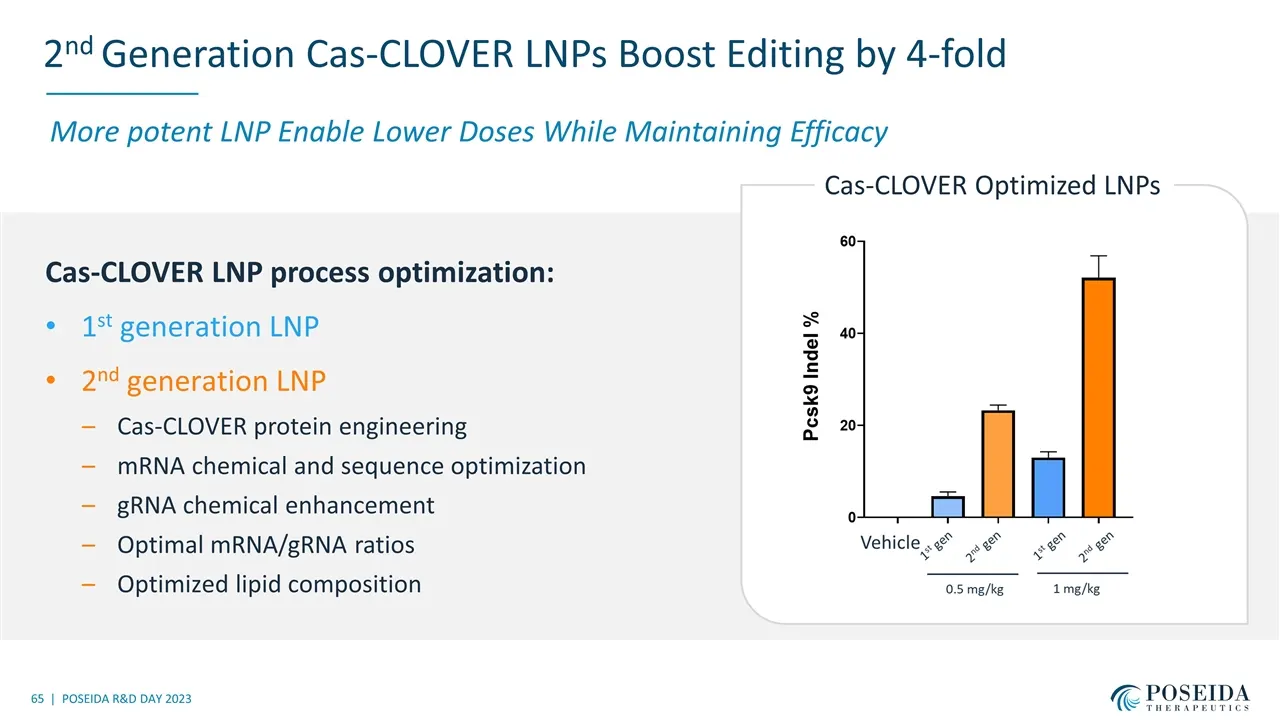
Slide 66: More Potent LNP Enable Lower Doses While Maintaining Efficacy
More potent LNP Enable Lower Doses While Maintaining Efficacy 2nd Generation Cas-CLOVER LNPs Boost Editing by 4-fold | POSEIDA R&D DAY 2023 Cas-CLOVER LNP process optimization: 1st generation LNP 2nd generation LNP Cas-CLOVER protein engineering mRNA chemical and sequence optimization gRNA chemical
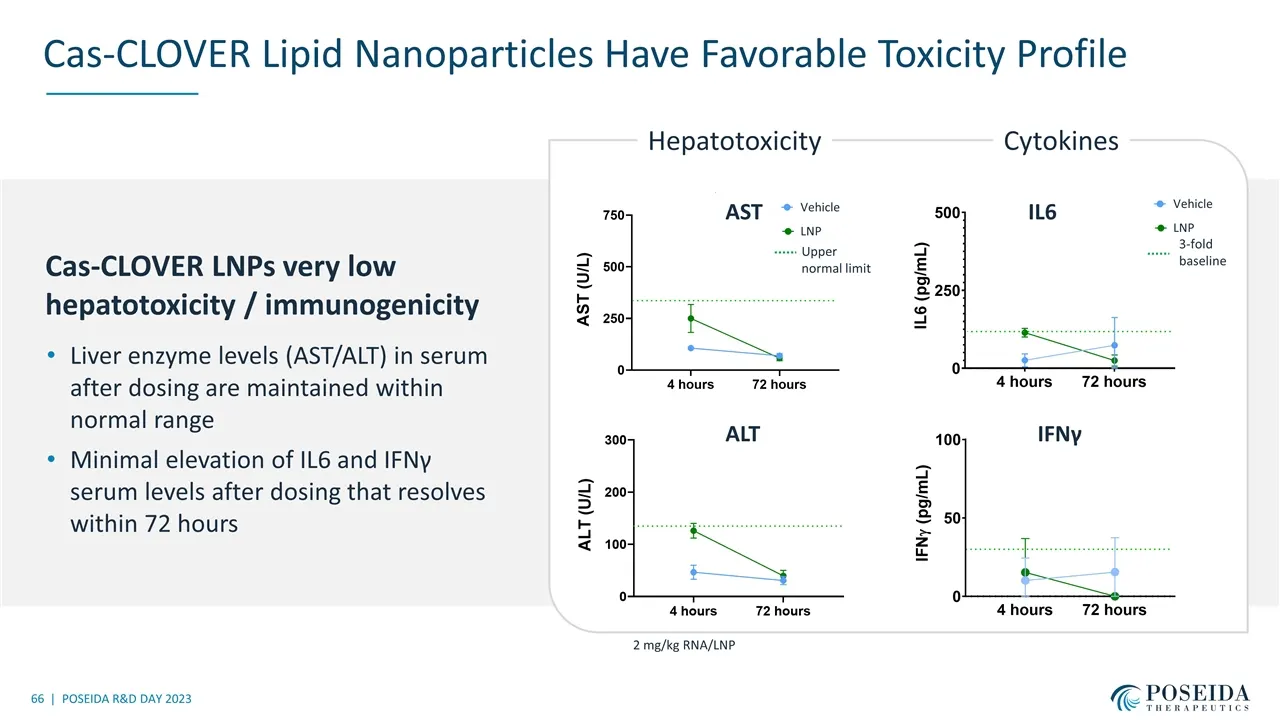
Slide 67: Cas-CLOVER Lipid Nanoparticles Have Favorable Toxicity Profile
Cas-CLOVER Lipid Nanoparticles Have Favorable Toxicity Profile | POSEIDA R&D DAY 2023 Cas-CLOVER LNPs very low hepatotoxicity / immunogenicity Liver enzyme levels (AST/ALT) in serum after dosing are maintained within normal range Minimal elevation of IL6 and IFNγ serum levels after dosing that resol
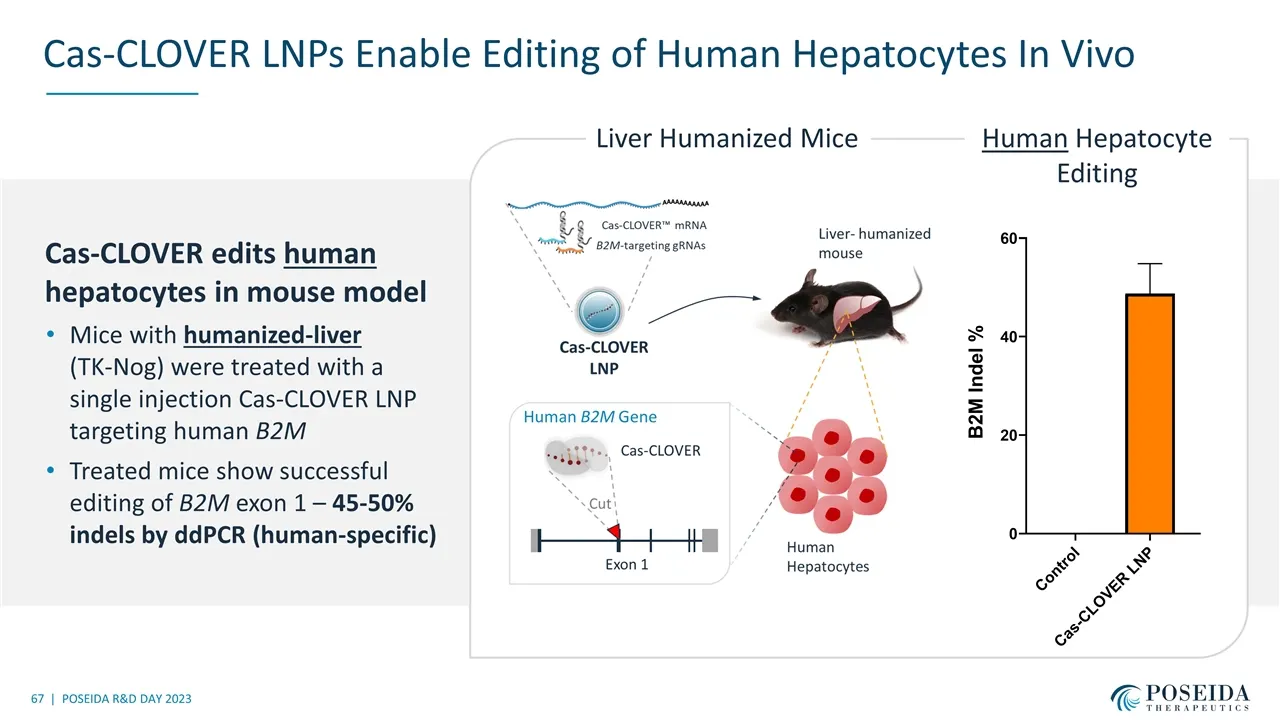
Slide 68: Cas-CLOVER LNPs Enable Editing of Human Hepatocytes In Vivo
Cas-CLOVER LNPs Enable Editing of Human Hepatocytes In Vivo | POSEIDA R&D DAY 2023 Cas-CLOVER edits human hepatocytes in mouse model Mice with humanized-liver (TK-Nog) were treated with a single injection Cas-CLOVER LNP targeting human B2M Treated mice show successful editing of B2M exon 1 – 45-50%
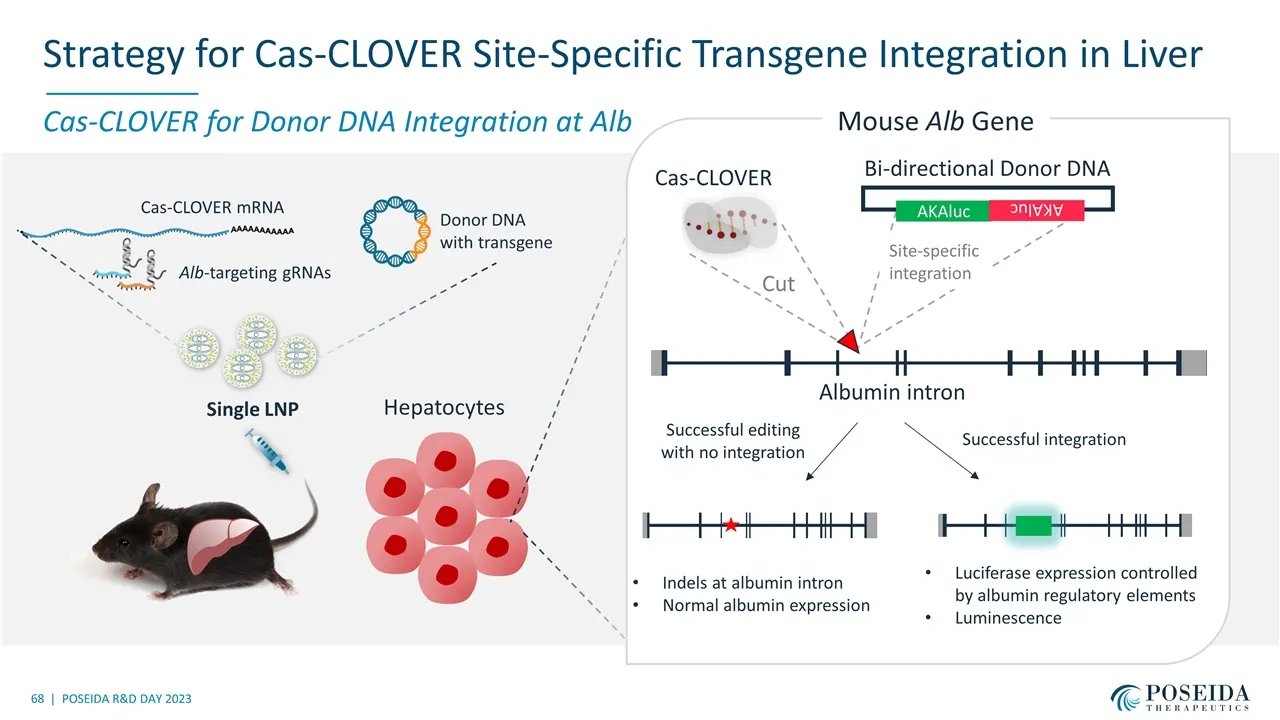
Slide 69: Strategy for Cas-CLOVER Site-Specific Transgene Integration in Liver
Strategy for Cas-CLOVER Site-Specific Transgene Integration in Liver | POSEIDA R&D DAY 2023 Hepatocytes Single LNP Cas-CLOVER mRNA Alb-targeting gRNAs Donor DNA with transgene Cas-CLOVER for Donor DNA Integration at Alb Mouse Alb Gene Albumin intron AKAluc Bi-directional Donor DNA Cas-CLOVER Cut Sit
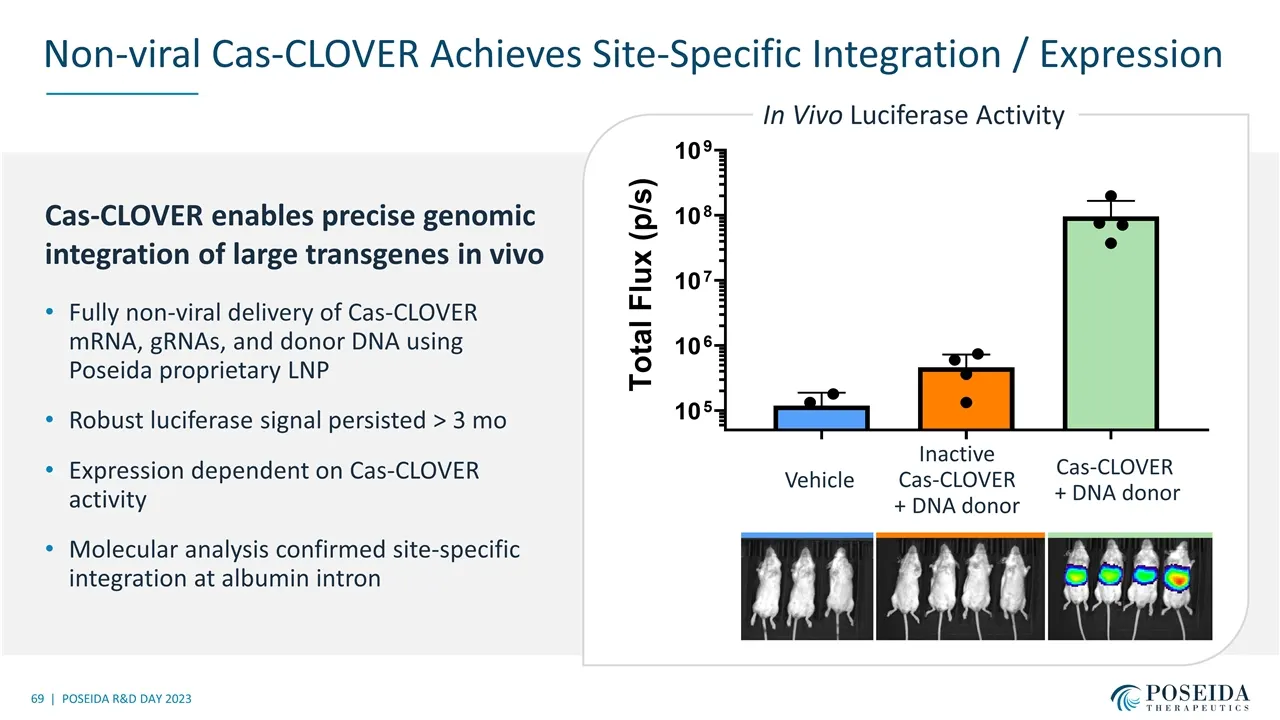
Slide 70: Non-viral Cas-CLOVER Achieves Site-Specific Integration / Expression
Non-viral Cas-CLOVER Achieves Site-Specific Integration / Expression | POSEIDA R&D DAY 2023 Cas-CLOVER enables precise genomic integration of large transgenes in vivo Fully non-viral delivery of Cas-CLOVER mRNA, gRNAs, and donor DNA using Poseida proprietary LNP Robust luciferase signal persisted >
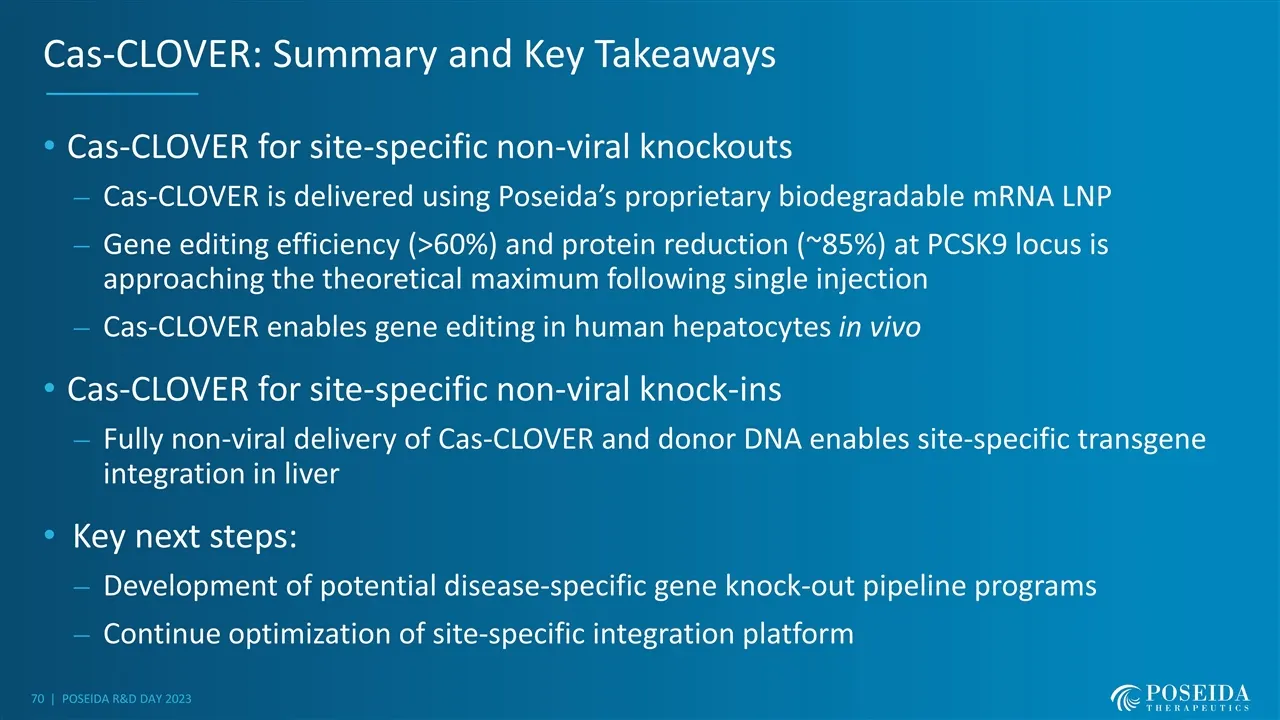
Slide 71: Cas-CLOVER: Summary and Key Takeaways
Cas-CLOVER for site-specific non-viral knockouts Cas-CLOVER is delivered using Poseida’s proprietary biodegradable mRNA LNP Gene editing efficiency (>60%) and protein reduction (~85%) at PCSK9 locus is approaching the theoretical maximum following single injection Cas-CLOVER enables gene editing in
Slide 72: Non-viral Delivery Platform
Non-viral Delivery Platform Alex Schudel Research Scientist II – GTx
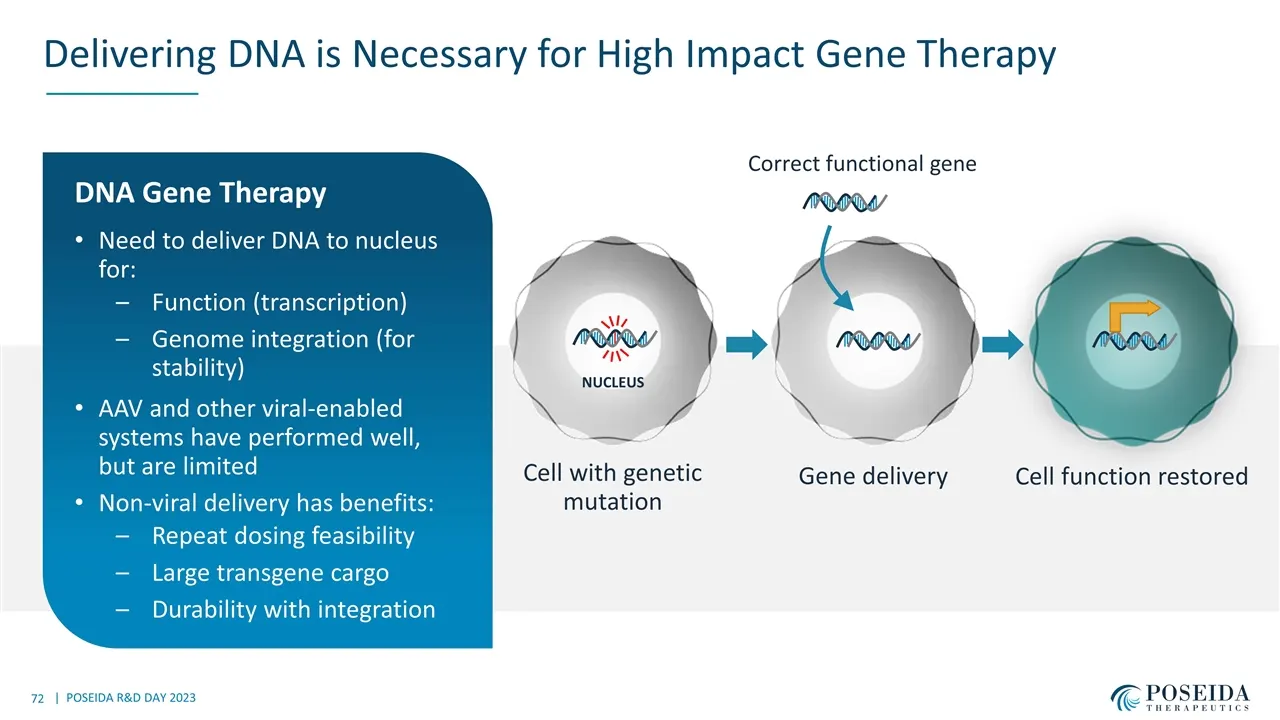
Slide 73: Delivering DNA is Necessary for High Impact Gene Therapy
Delivering DNA is Necessary for High Impact Gene Therapy DNA Gene Therapy Need to deliver DNA to nucleus for: Function (transcription) Genome integration (for stability) AAV and other viral-enabled systems have performed well, but are limited Non-viral delivery has benefits: Repeat dosing feasibilit
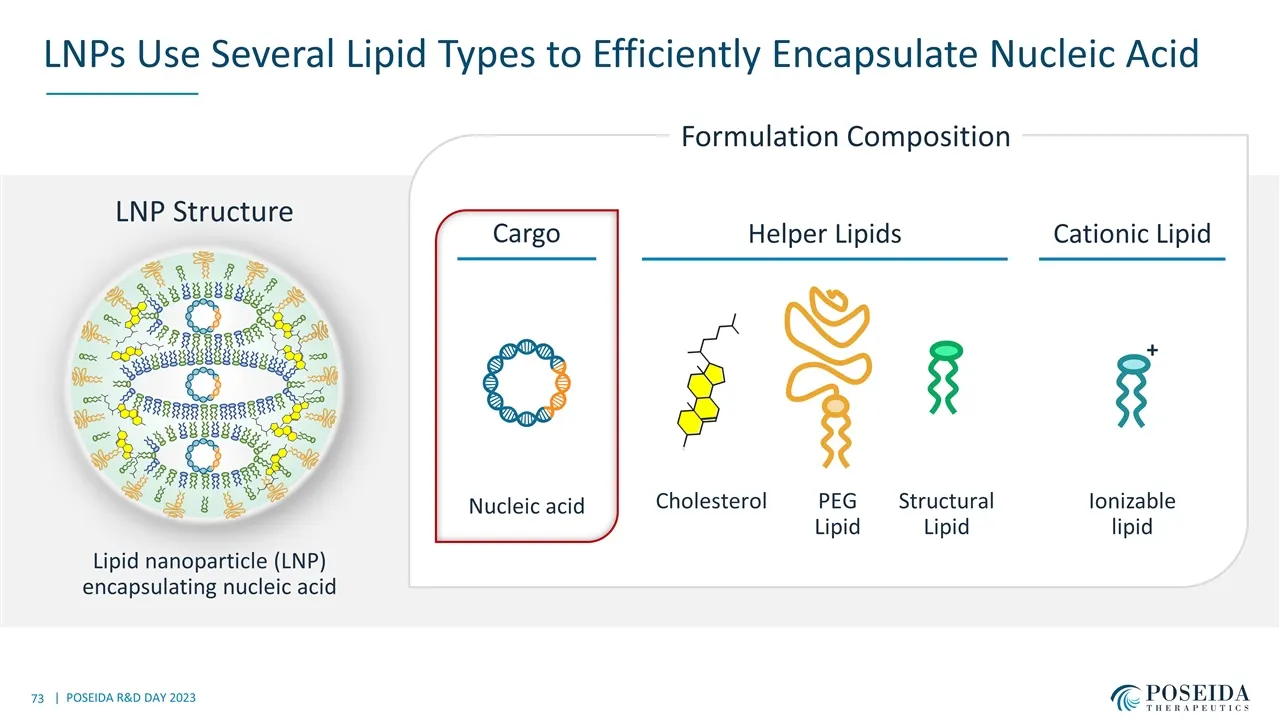
Slide 74: LNPs Use Several Lipid Types to Efficiently Encapsulate Nucleic Acid
LNPs Use Several Lipid Types to Efficiently Encapsulate Nucleic Acid | POSEIDA R&D DAY 2023 Lipid nanoparticle (LNP) encapsulating nucleic acid LNP Structure Formulation Composition Structural Lipid PEG Lipid Cholesterol Helper Lipids Cationic Lipid Ionizable lipid + Nucleic acid Cargo
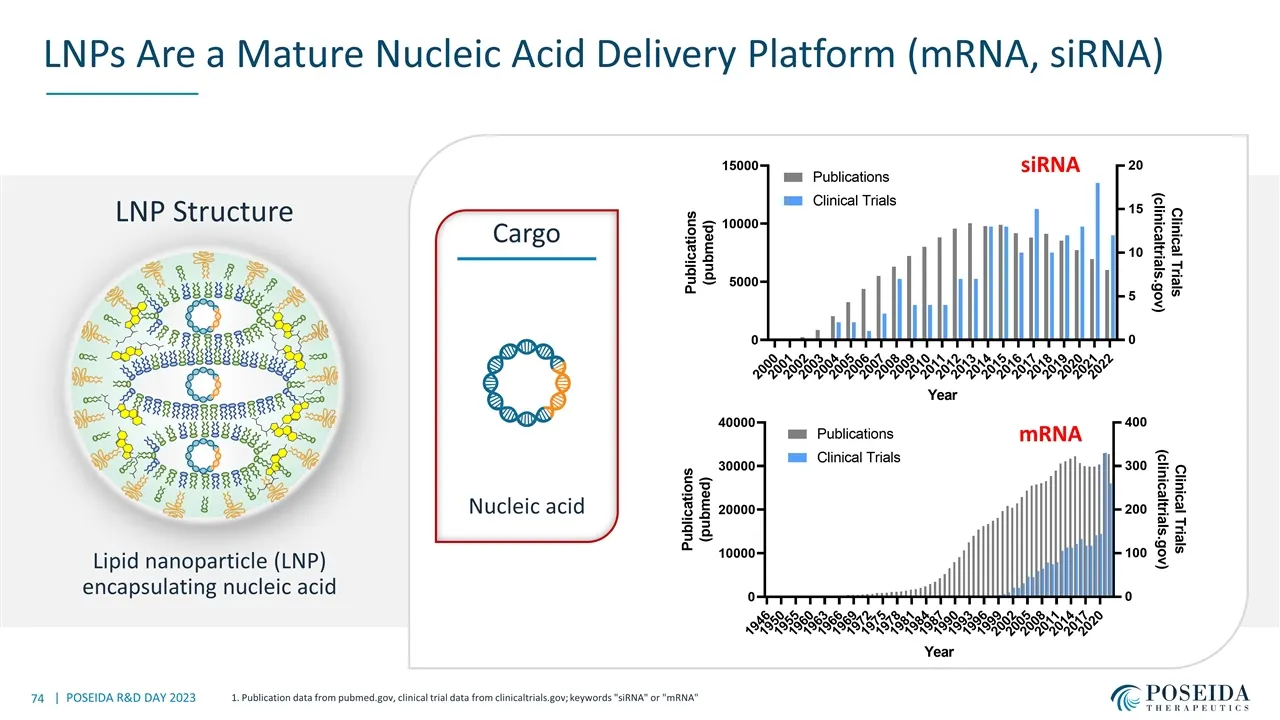
Slide 75: LNPs Are a Mature Nucleic Acid Delivery Platform
Lipid nanoparticle (LNP) encapsulating nucleic acid LNP Structure Nucleic acid Cargo LNPs Are a Mature Nucleic Acid Delivery Platform (mRNA, siRNA) | POSEIDA R&D DAY 2023 mRNA siRNA 1. Publication data from pubmed.gov, clinical trial data from clinicaltrials.gov; keywords "siRNA" or "mRNA"
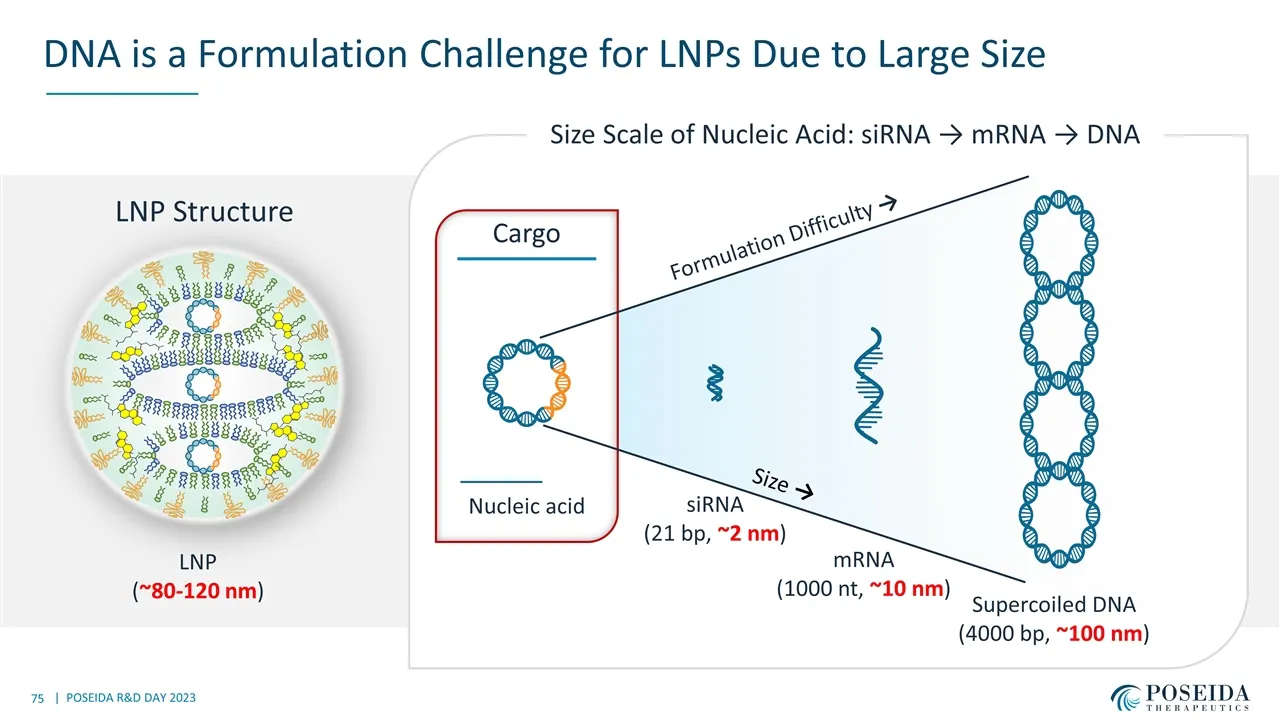
Slide 76: DNA is a Formulation Challenge for LNPs Due to Large Size
Nucleic acid Cargo LNP Structure DNA is a Formulation Challenge for LNPs Due to Large Size | POSEIDA R&D DAY 2023 LNP (~80-120 nm) Size Scale of Nucleic Acid: siRNA → mRNA → DNA siRNA (21 bp, ~2 nm) mRNA (1000 nt, ~10 nm) Supercoiled DNA (4000 bp, ~100 nm) Formulation Difficulty → Size →
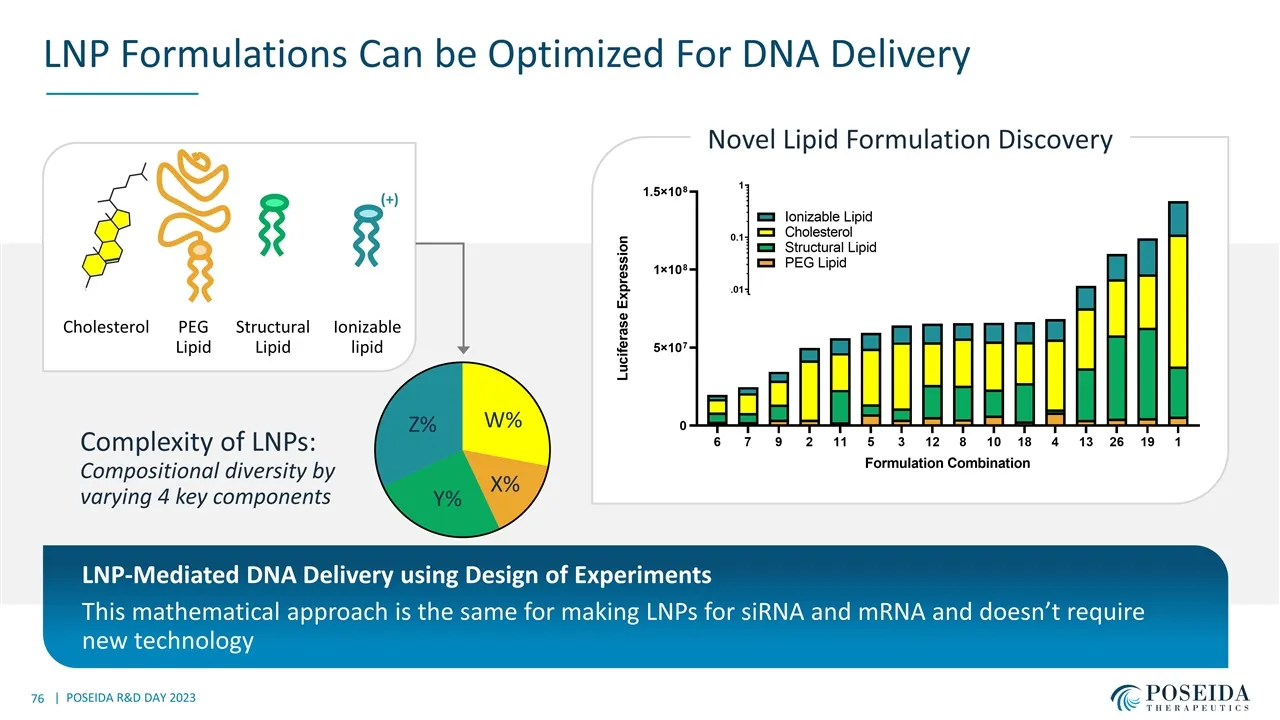
Slide 77: LNP-Mediated DNA Delivery using Design of Experiments
LNP-Mediated DNA Delivery using Design of Experiments This mathematical approach is the same for making LNPs for siRNA and mRNA and doesn’t require new technology LNP Formulations Can be Optimized For DNA Delivery | POSEIDA R&D DAY 2023 Structural Lipid Cholesterol Ionizable lipid (+) PEG Lipid Comp
Slide 78: We Have the Capability of Designing a Wide Array of Lipids
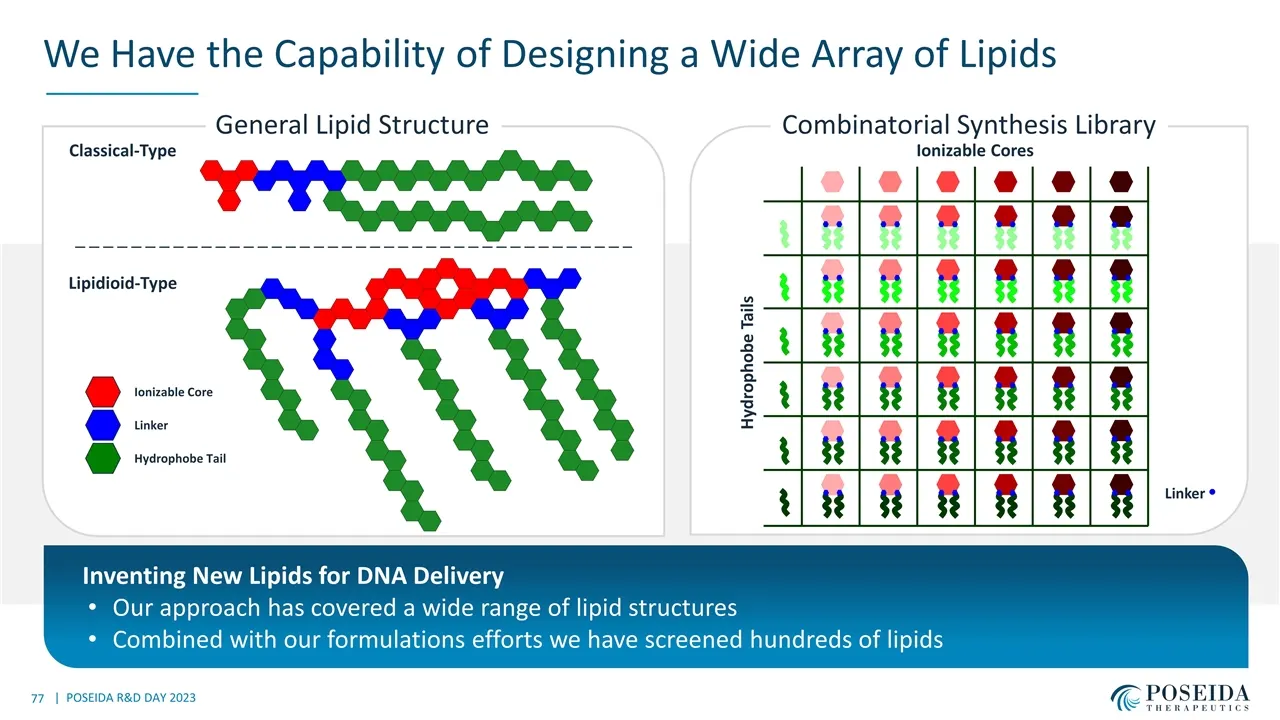
We Have the Capability of Designing a Wide Array of Lipids | POSEIDA R&D DAY 2023 General Lipid Structure Classical-Type Lipidioid-Type Combinatorial Synthesis Library Ionizable Cores Hydrophobe Tails Linker Hydrophobe Tail Linker Ionizable Core Inventing New Lipids for DNA Delivery Our approach has
Slide 79: Inventing New Lipids for DNA Delivery
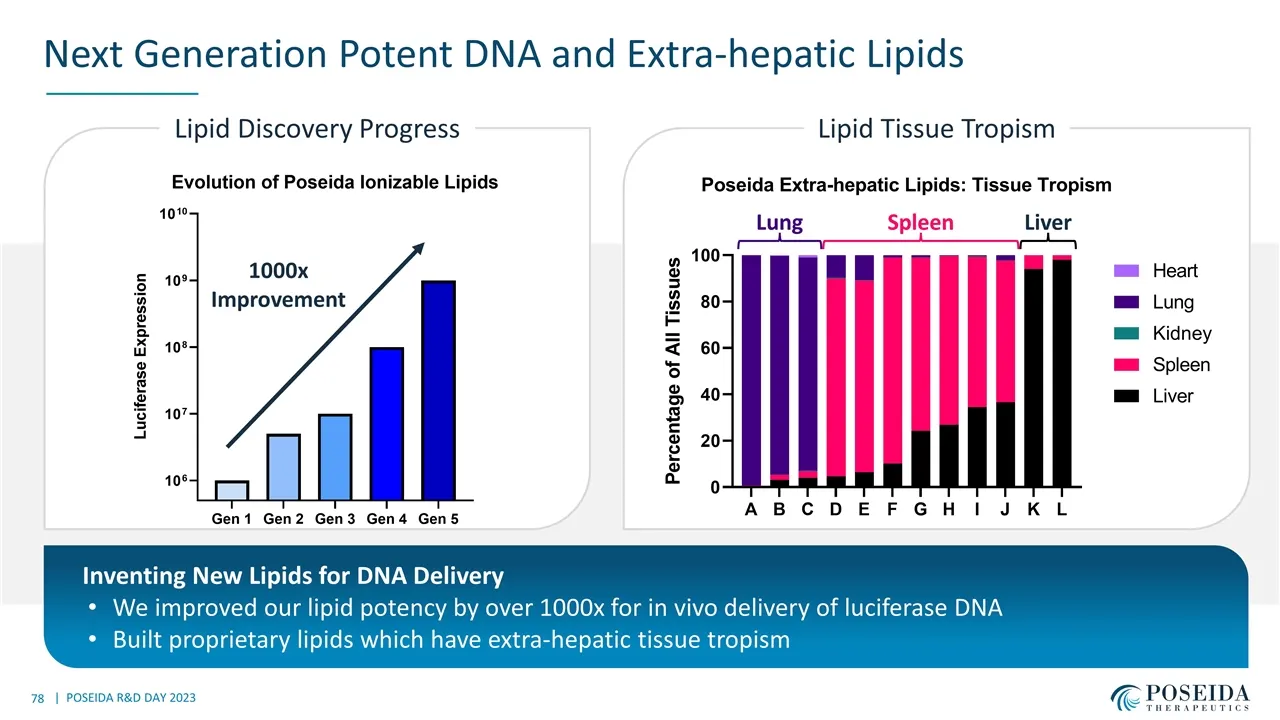
Inventing New Lipids for DNA Delivery We improved our lipid potency by over 1000x for in vivo delivery of luciferase DNA Built proprietary lipids which have extra-hepatic tissue tropism Next Generation Potent DNA and Extra-hepatic Lipids | POSEIDA R&D DAY 2023 1000x Improvement Lung Spleen Liver Lip
Slide 80: Key Advantages of Non-viral Approach: Repeat Dosing
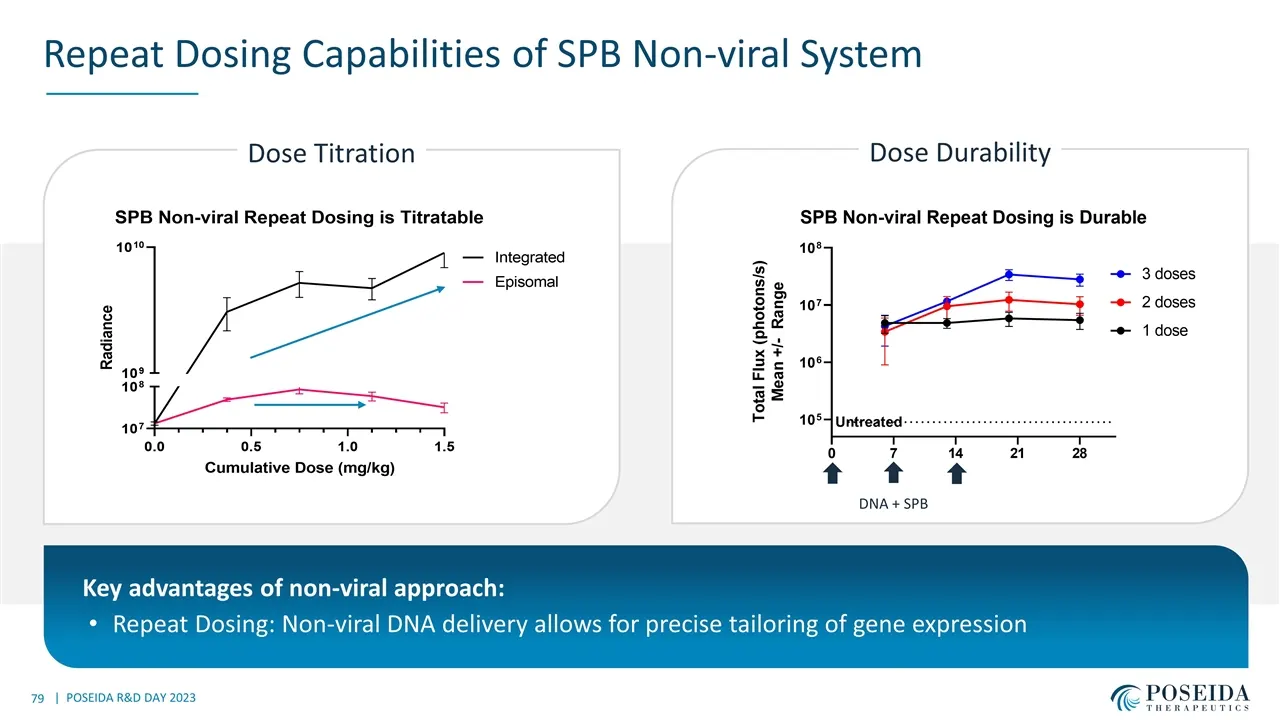
Key advantages of non-viral approach: Repeat Dosing: Non-viral DNA delivery allows for precise tailoring of gene expression Repeat Dosing Capabilities of SPB Non-viral System | POSEIDA R&D DAY 2023 Dose Titration DNA + SPB Dose Durability
Slide 81: SPB Enhances Expression of Gene Through Integration
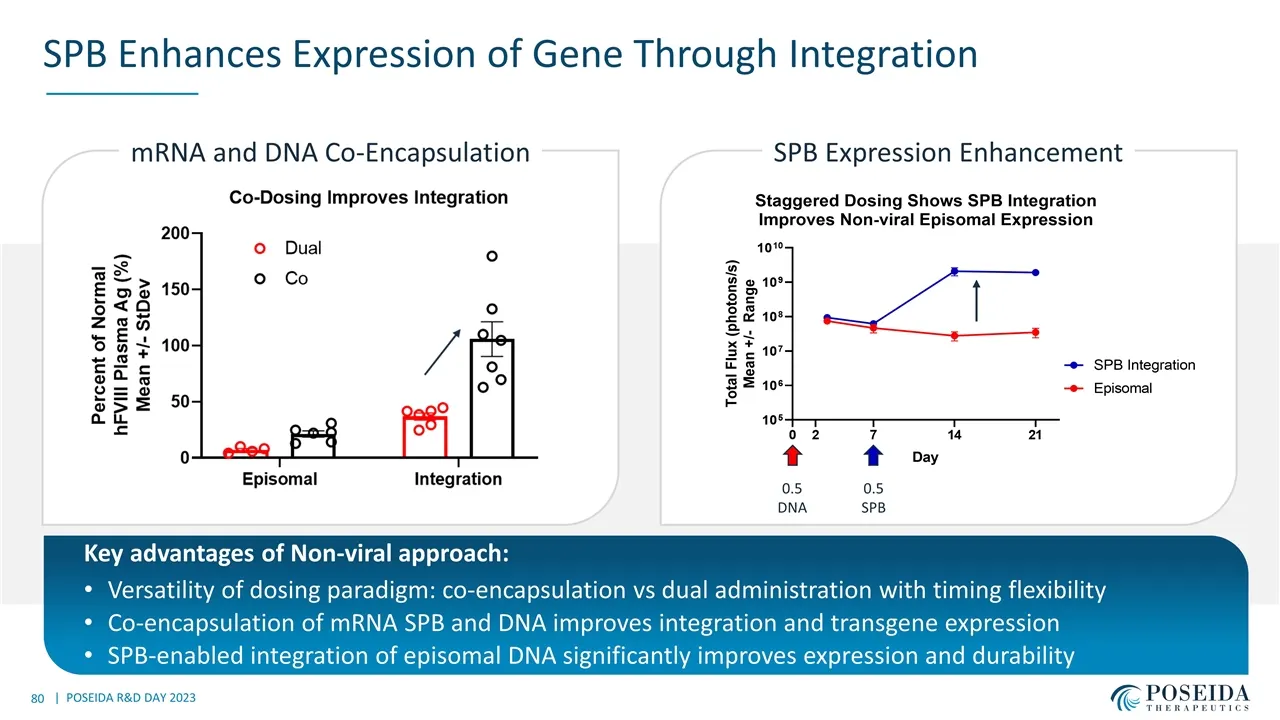
SPB Enhances Expression of Gene Through Integration | POSEIDA R&D DAY 2023 Key advantages of Non-viral approach: Versatility of dosing paradigm: co-encapsulation vs dual administration with timing flexibility Co-encapsulation of mRNA SPB and DNA improves integration and transgene expression SPB-enab
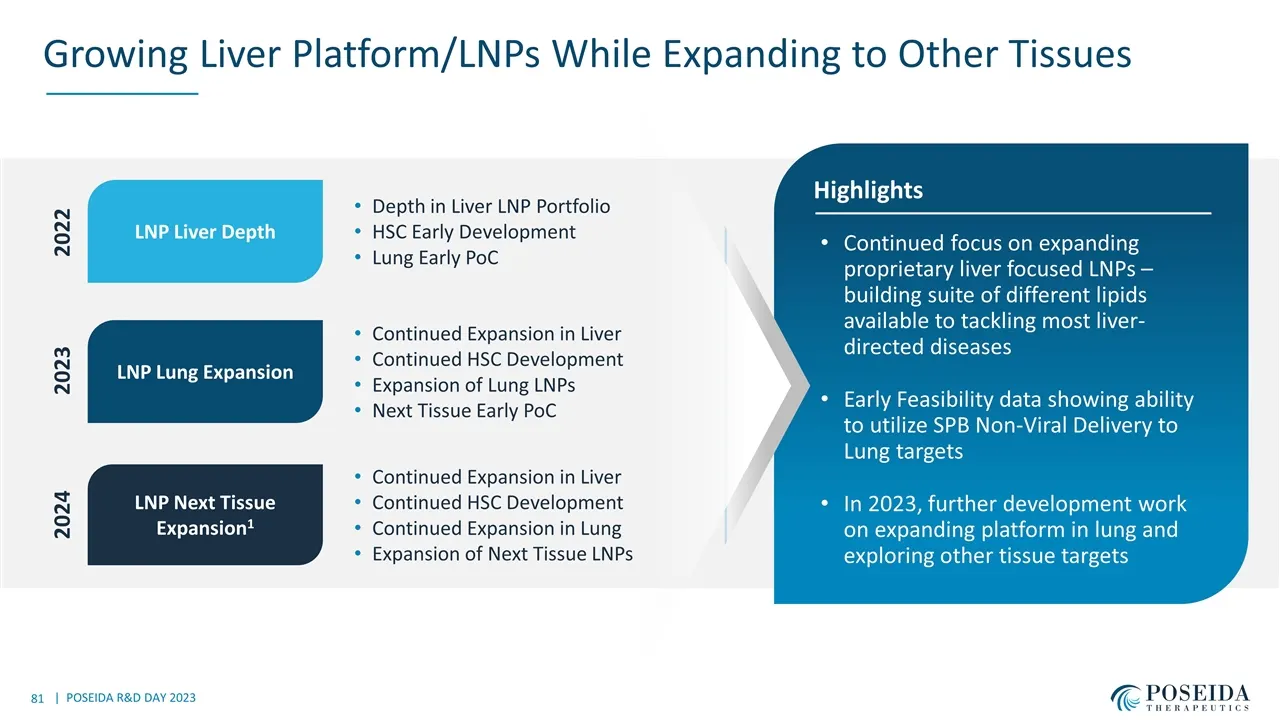
Slide 82: Growing Liver Platform/LNPs While Expanding to Other Tissues
Growing Liver Platform/LNPs While Expanding to Other Tissues | POSEIDA R&D DAY 2023 Highlights Continued focus on expanding proprietary liver focused LNPs – building suite of different lipids available to tackling most liver-directed diseases Early Feasibility data showing ability to utilize SPB Non
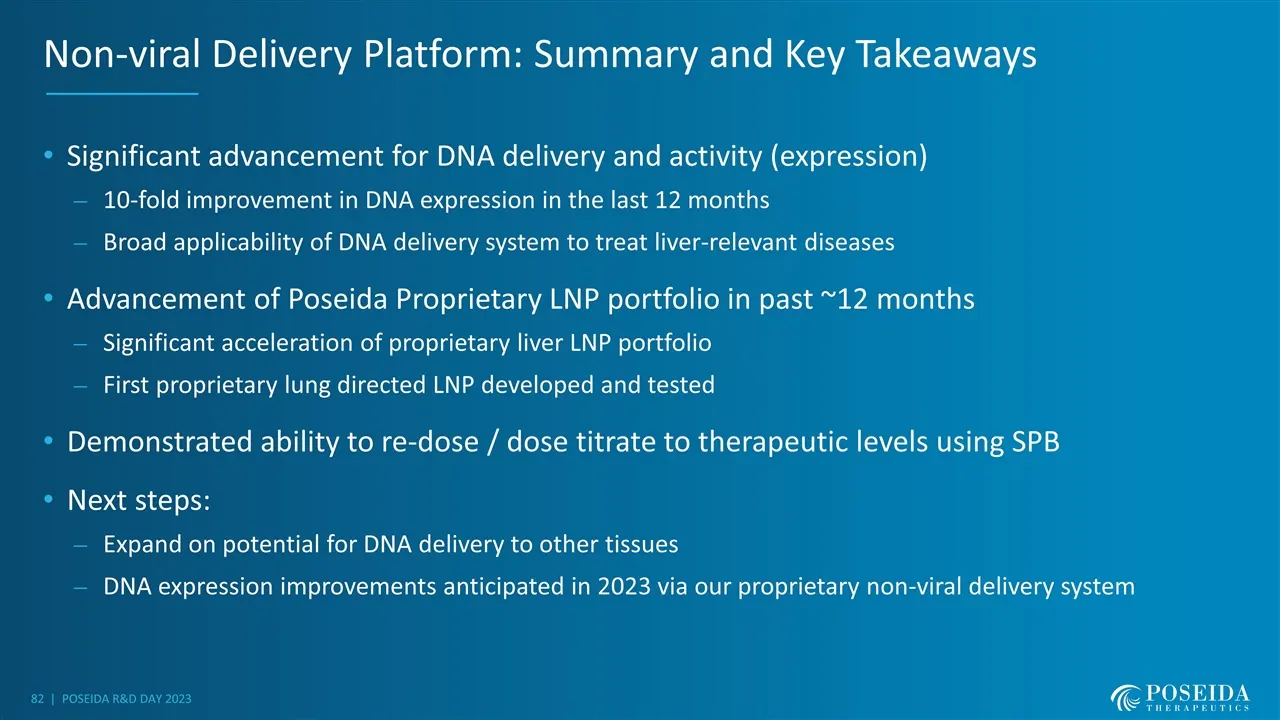
Slide 83: Non-viral Delivery Platform: Summary and Key Takeaways
Significant advancement for DNA delivery and activity (expression) 10-fold improvement in DNA expression in the last 12 months Broad applicability of DNA delivery system to treat liver-relevant diseases Advancement of Poseida Proprietary LNP portfolio in past ~12 months Significant acceleration of p
Slide 84: GTx Wrap Up
GTx Wrap Up Brent Warner President, Gene Therapy
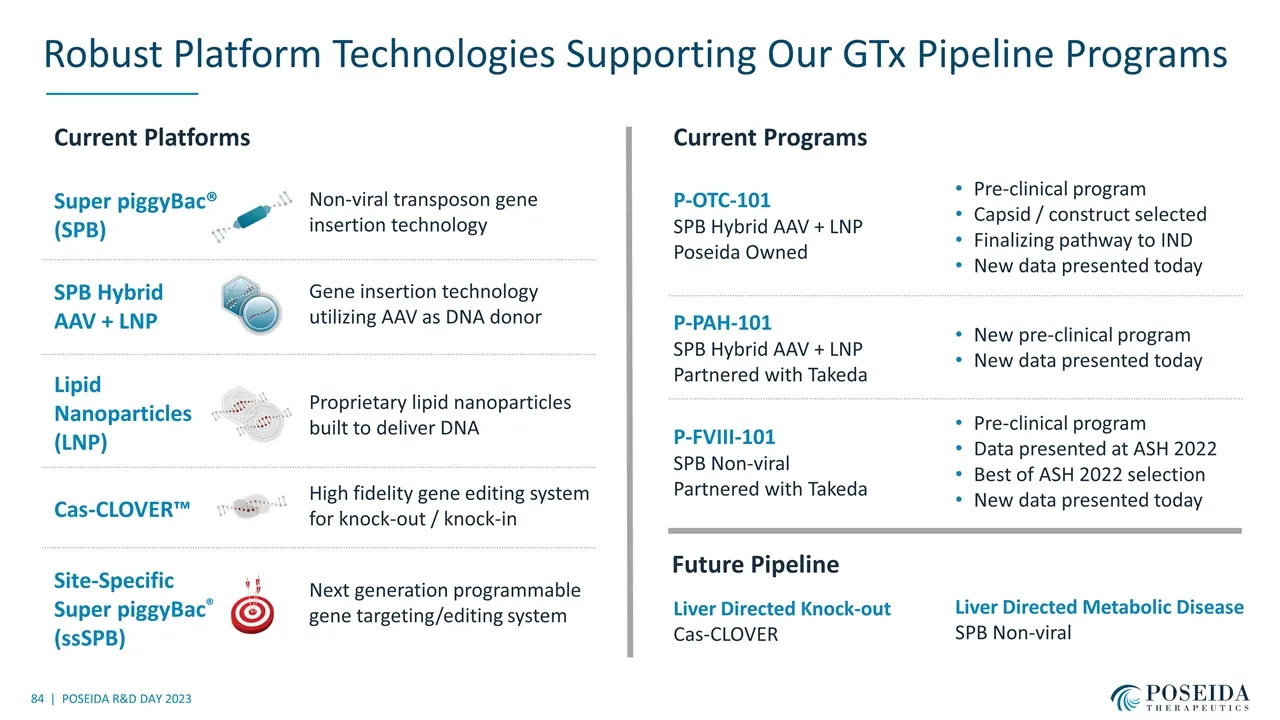
Slide 85: Robust Platform Technologies Supporting Our GTx Pipeline Programs
Robust Platform Technologies Supporting Our GTx Pipeline Programs Current Platforms Super piggyBac® (SPB) Non-viral transposon gene insertion technology SPB Hybrid AAV + LNP Gene insertion technology utilizing AAV as DNA donor Site-Specific Super piggyBac® (ssSPB) Next generation programmable gene t
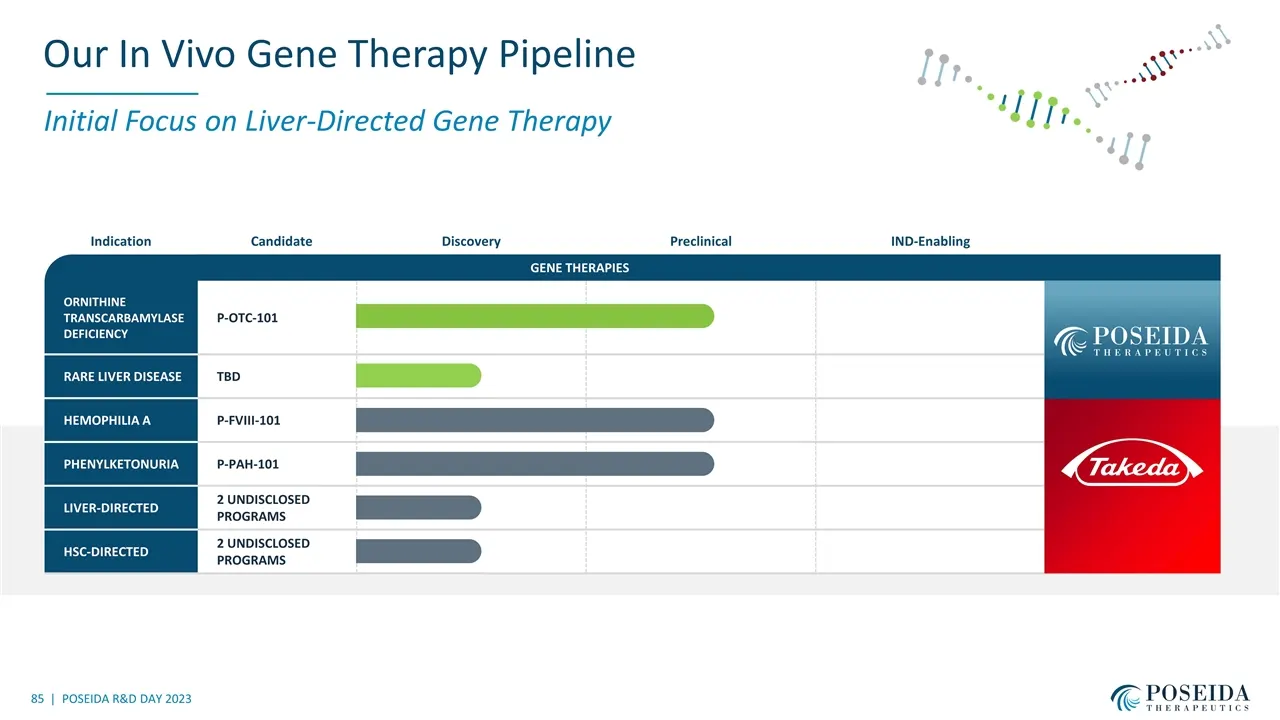
Slide 86: Initial Focus on Liver-Directed Gene Therapy
Initial Focus on Liver-Directed Gene Therapy Our In Vivo Gene Therapy Pipeline Indication Candidate Discovery Preclinical IND-Enabling GENE THERAPIES GENE THERAPIES GENE THERAPIES Ornithine Transcarbamylase Deficiency P-OTC-101 RARE LIVER DISEASE TBD HEMOPHILIA A P-FVIII-101 Phenylketonuria P-PAH-10
Slide 87: Cell Therapy
Cell Therapy Devon J Shedlock, PhD February 22, 2023 CSO, Cell Therapy
Slide 88: A New Class of Allogeneic CAR-T Therapy for Oncology
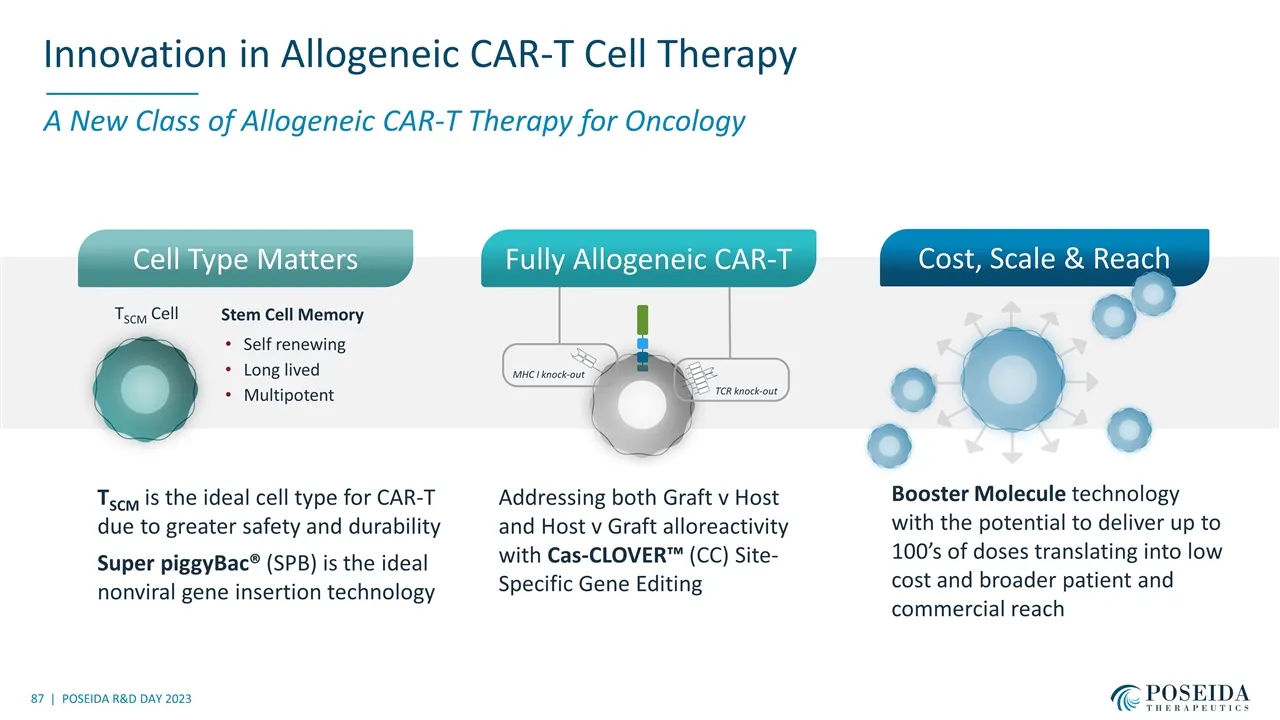
TCR knock-out MHC I knock-out TSCM Cell Self renewing Long lived Multipotent Stem Cell Memory A New Class of Allogeneic CAR-T Therapy for Oncology Innovation in Allogeneic CAR-T Cell Therapy Cell Type Matters TSCM is the ideal cell type for CAR-T due to greater safety and durability Super piggyBac®
Slide 89: Powerful Platform Technologies Enable Our Allo CAR-T Pipeline
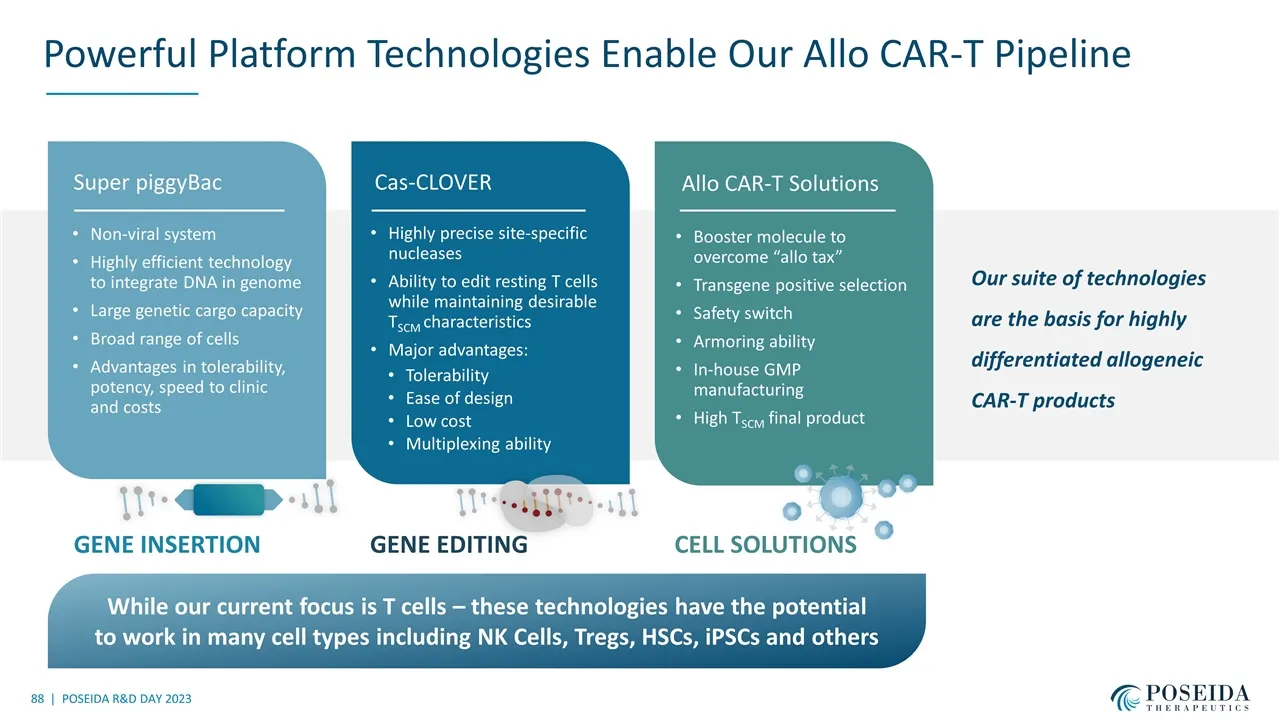
Powerful Platform Technologies Enable Our Allo CAR-T Pipeline | POSEIDA R&D DAY 2023 Our suite of technologies are the basis for highly differentiated allogeneic CAR-T products GENE INSERTION Non-viral system Highly efficient technology to integrate DNA in genome Large genetic cargo capacity Broad r
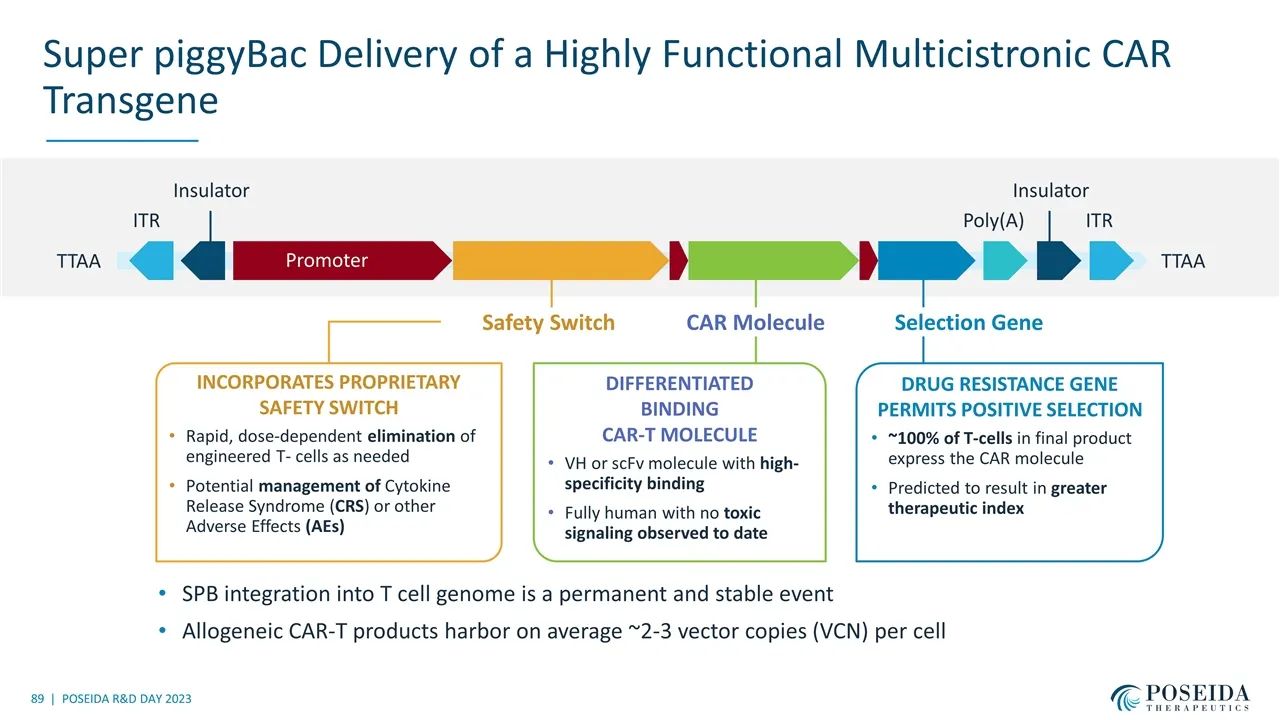
Slide 90: Super piggyBac Delivery of a Highly Functional Multicistronic CAR Transgene
Super piggyBac Delivery of a Highly Functional Multicistronic CAR Transgene TTAA ITR Insulator Poly(A) TTAA Insulator ITR INCORPORATES PROPRIETARY SAFETY SWITCH Rapid, dose-dependent elimination of engineered T- cells as needed Potential management of Cytokine Release Syndrome (CRS) or other Adverse
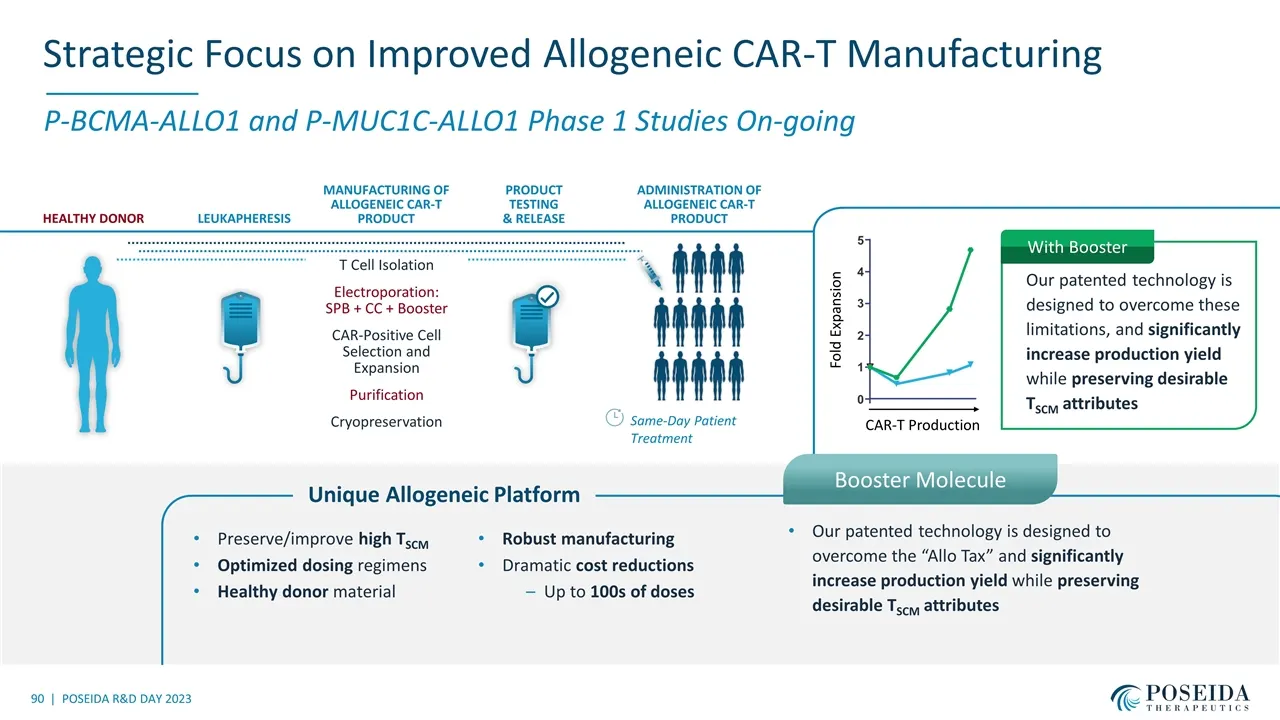
Slide 91: Strategic Focus on Improved Allogeneic CAR-T Manufacturing
P-BCMA-ALLO1 and P-MUC1C-ALLO1 Phase 1 Studies On-going Strategic Focus on Improved Allogeneic CAR-T Manufacturing HEALTHY DONOR LEUKAPHERESIS MANUFACTURING OF ALLOGENEIC CAR-T PRODUCT PRODUCT TESTING & RELEASE ADMINISTRATION OF ALLOGENEIC CAR-T PRODUCT Same-Day Patient Treatment T Cell Isolation El
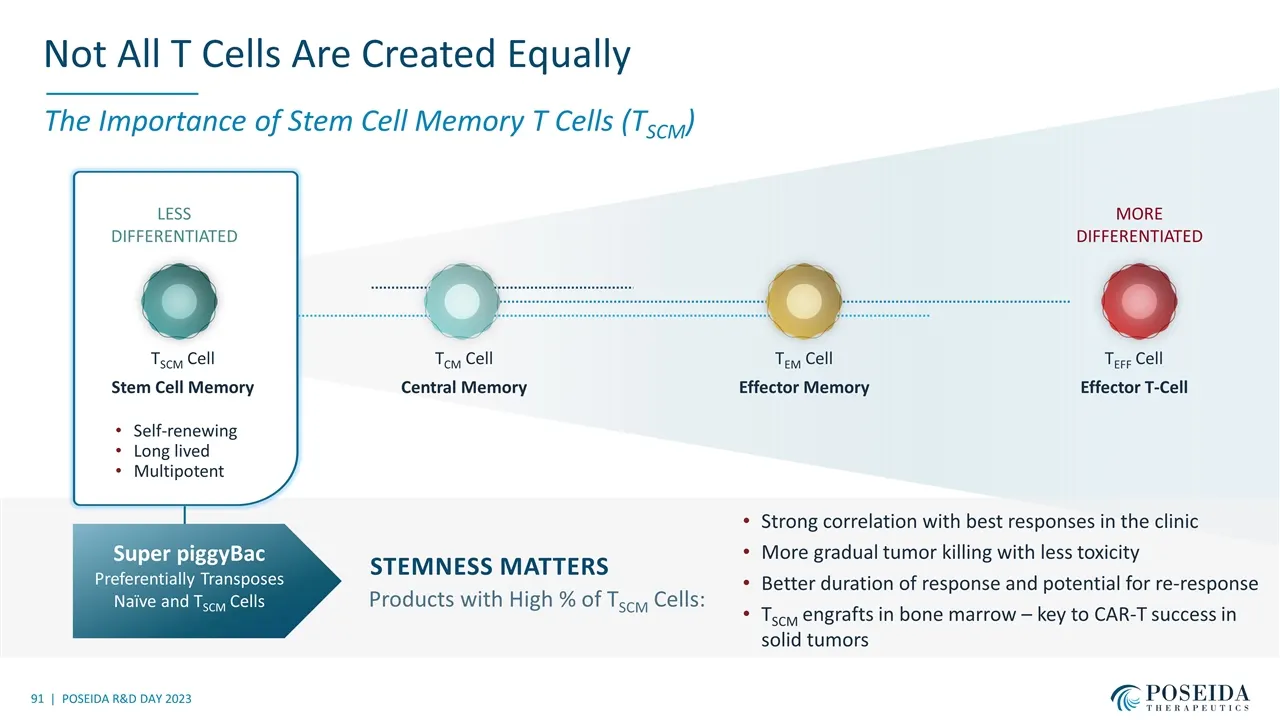
Slide 92: The Importance of Stem Cell Memory T Cells (TSCM)
The Importance of Stem Cell Memory T Cells (TSCM) Not All T Cells Are Created Equally Stem Cell Memory TSCM Cell MORE DIFFERENTIATED LESS DIFFERENTIATED Products with High % of TSCM Cells: STEMNESS MATTERS Strong correlation with best responses in the clinic More gradual tumor killing with less toxi
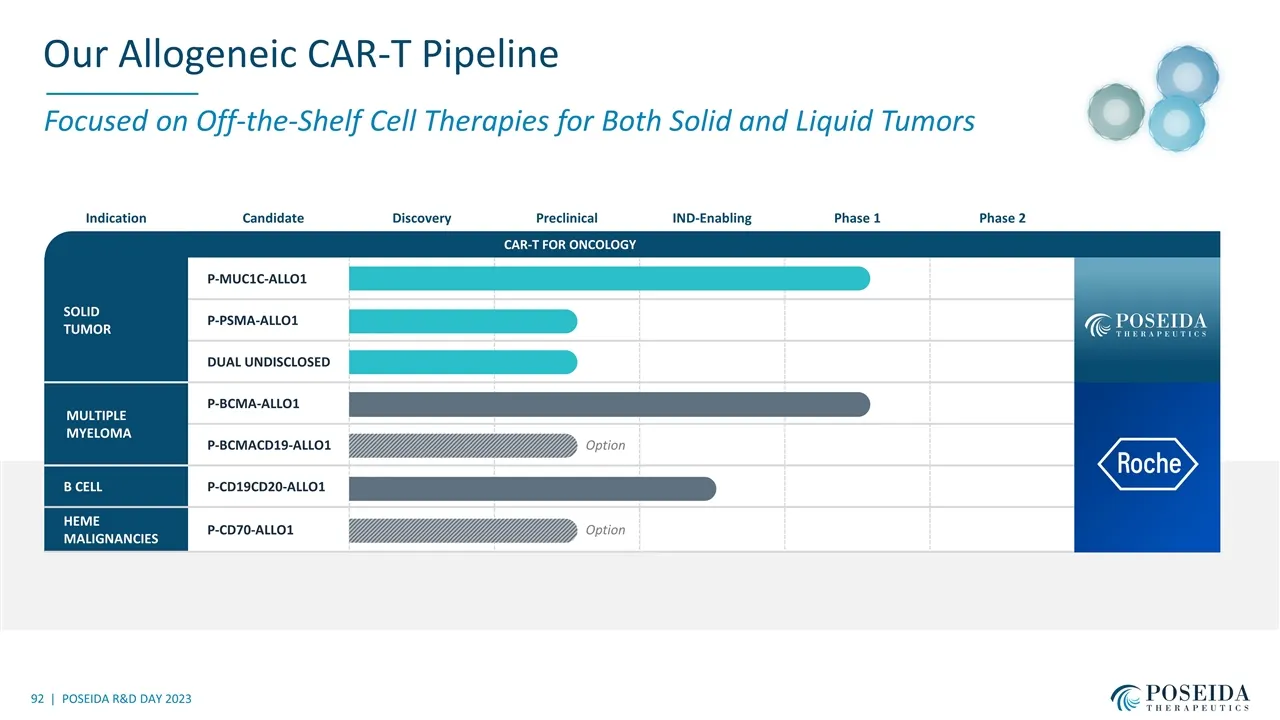
Slide 93: Our Allogeneic CAR-T Pipeline
Focused on Off-the-Shelf Cell Therapies for Both Solid and Liquid Tumors Our Allogeneic CAR-T Pipeline Indication Candidate Discovery Preclinical IND-Enabling Phase 1 Phase 2 CAR-T FOR ONCOLOGY SOLID TUMOR P-MUC1C-ALLO1 P-PSMA-ALLO1 DUAL UNDISCLOSED MULTIPLE MYELOMA P-BCMA-ALLO1 P-BCMACD19-ALLO1 B C
Slide 94: P-MUC1C-ALLO1 Clinical Update
P-MUC1C-ALLO1 Clinical Update Rajesh Belani, MD Vice President, Clinical Development
Slide 95: P-MUC1C-ALLO1-001 Phase 1 Trial in Solid Tumors
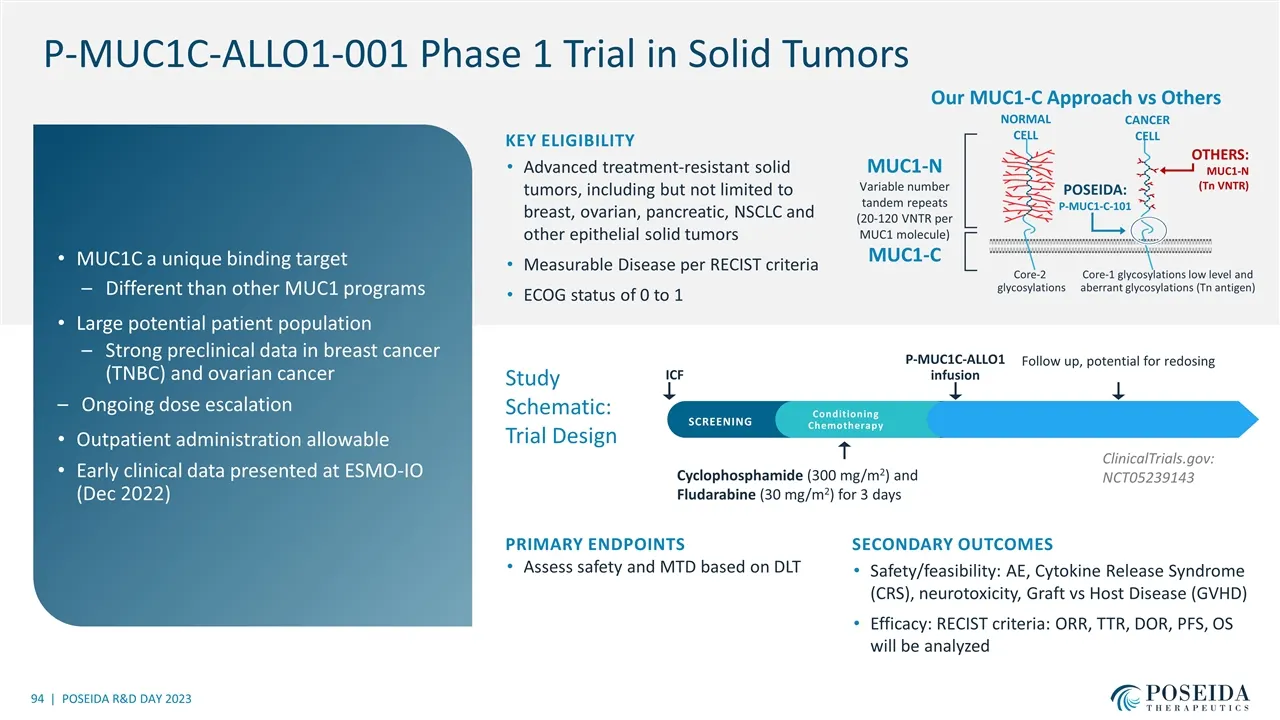
P-MUC1C-ALLO1-001 Phase 1 Trial in Solid Tumors MUC1C a unique binding target Different than other MUC1 programs Large potential patient population Strong preclinical data in breast cancer (TNBC) and ovarian cancer Ongoing dose escalation Outpatient administration allowable Early clinical data prese
Slide 96: Phase 1 3+3 Dose Escalation Study Schematic
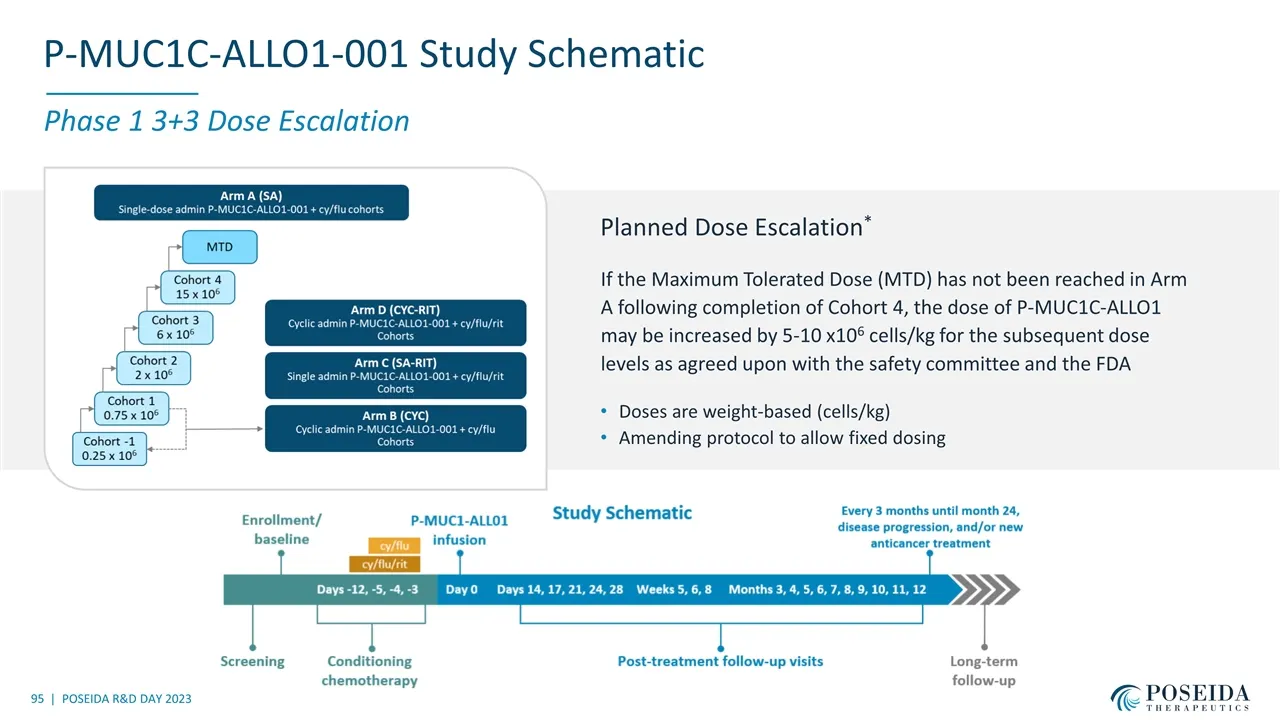
Phase 1 3+3 Dose Escalation P-MUC1C-ALLO1-001 Study Schematic If the Maximum Tolerated Dose (MTD) has not been reached in Arm A following completion of Cohort 4, the dose of P-MUC1C-ALLO1 may be increased by 5-10 x106 cells/kg for the subsequent dose levels as agreed upon with the safety committee a
Slide 97: P-MUC1C-ALLO1 Cellular Product is Comprised Primarily of Stem Cell Memory T-cells
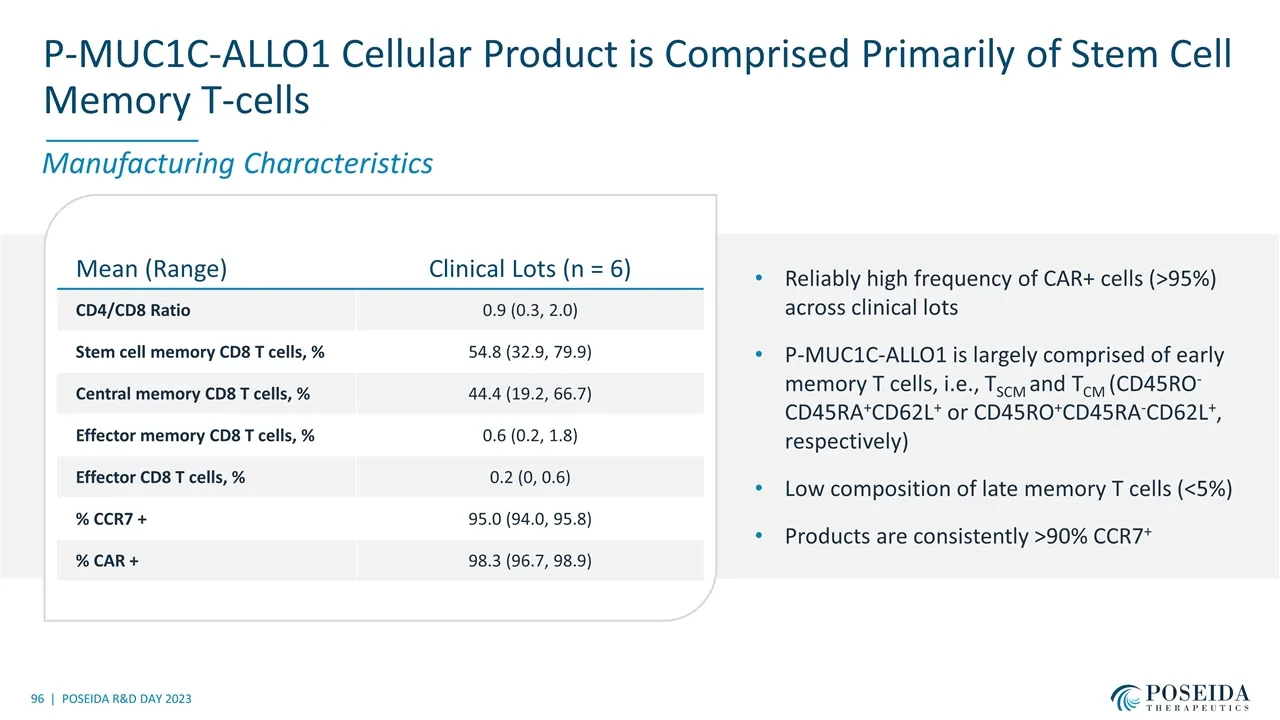
Reliably high frequency of CAR+ cells (>95%) across clinical lots P-MUC1C-ALLO1 is largely comprised of early memory T cells, i.e., TSCM and TCM (CD45RO-CD45RA+CD62L+ or CD45RO+CD45RA-CD62L+, respectively) Low composition of late memory T cells (<5%) Products are consistently >90% CCR7+ P-MUC1C-ALLO
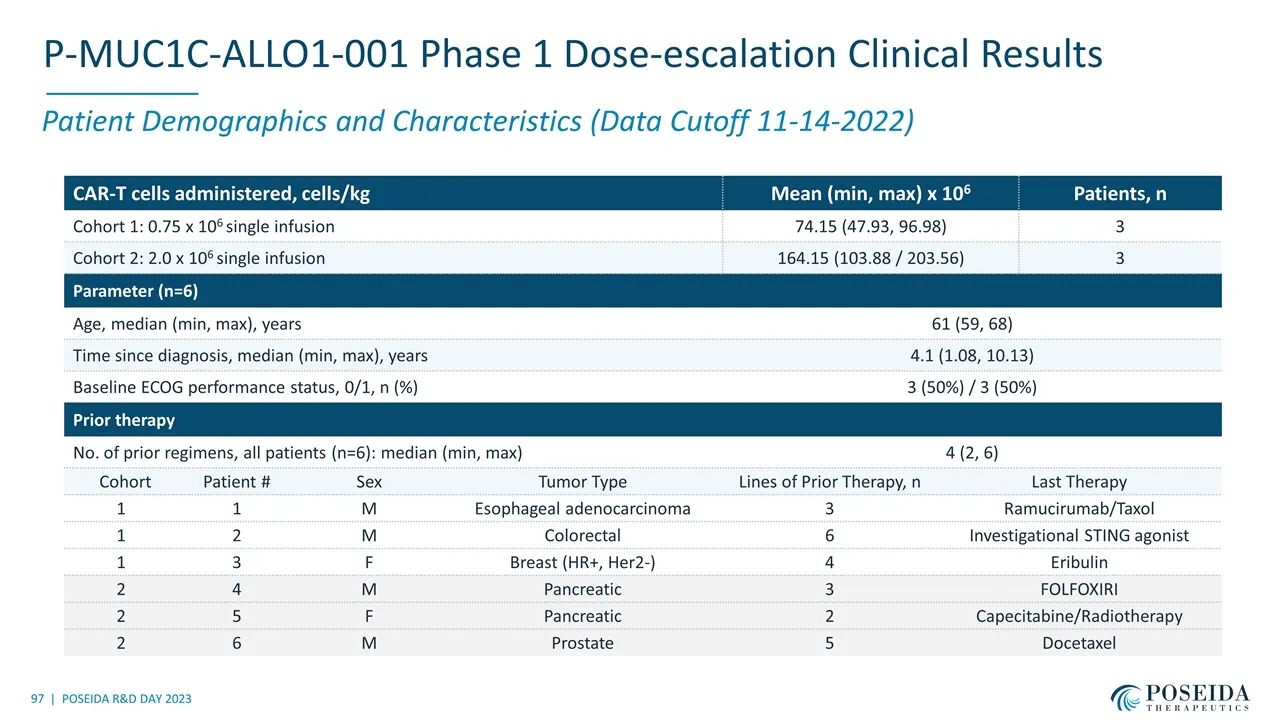
Slide 98: Patient Demographics and Characteristics
Patient Demographics and Characteristics (Data Cutoff 11-14-2022) P-MUC1C-ALLO1-001 Phase 1 Dose-escalation Clinical Results CAR-T cells administered, cells/kg Mean (min, max) x 106 Patients, n Cohort 1: 0.75 x 10⁶ single infusion 74.15 (47.93, 96.98) 3 Cohort 2: 2.0 x 10⁶ single infusion 164.15 (10
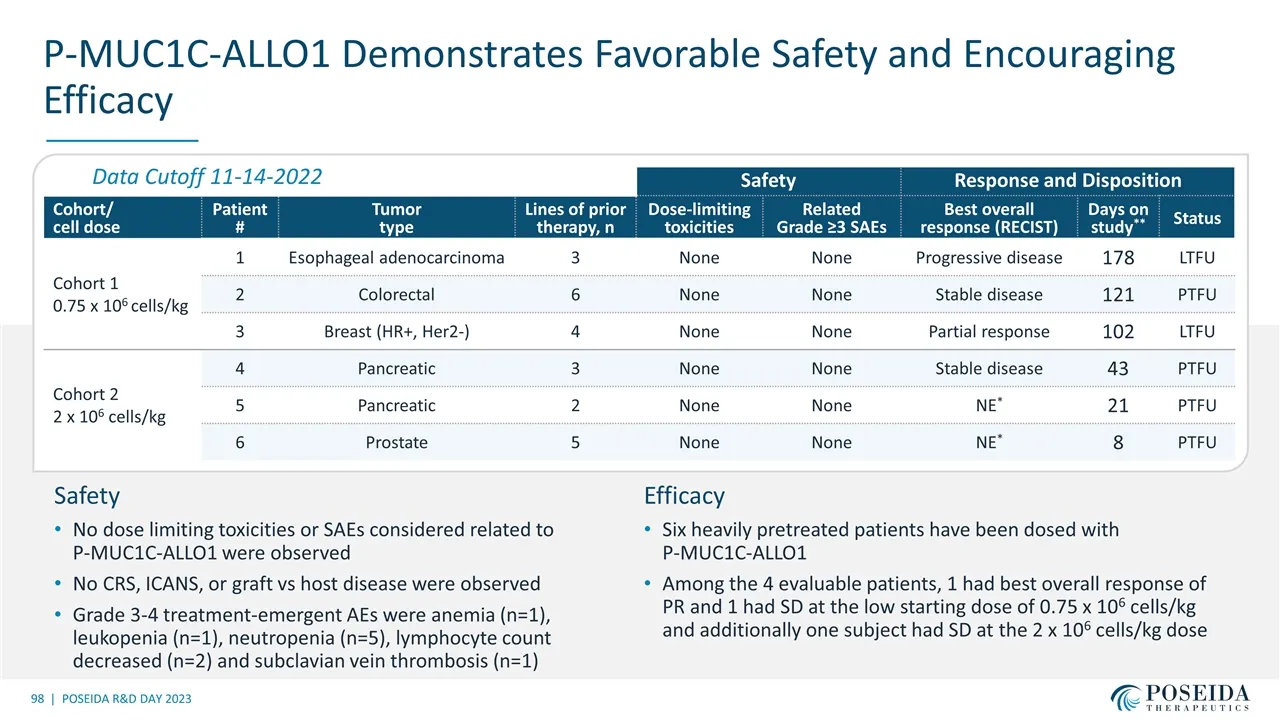
Slide 99: P-MUC1C-ALLO1 Demonstrates Favorable Safety and Encouraging Efficacy
P-MUC1C-ALLO1 Demonstrates Favorable Safety and Encouraging Efficacy Safety Response and Disposition Cohort/ cell dose Patient # Tumor type Lines of prior therapy, n Dose-limiting toxicities Related Grade ≥3 SAEs Best overall response (RECIST) Days on study** Status Cohort 1 0.75 x 10⁶ cells/kg 1 Es
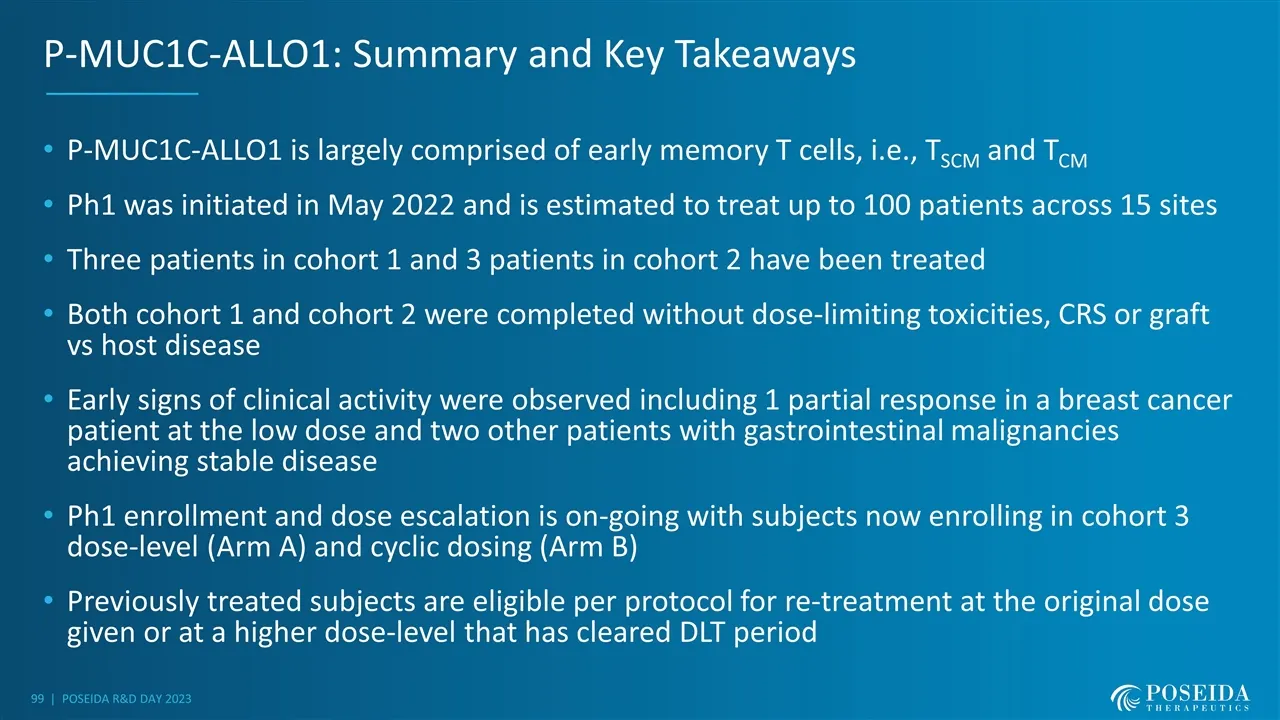
Slide 100: P-MUC1C-ALLO1 Summary
P-MUC1C-ALLO1 is largely comprised of early memory T cells, i.e., TSCM and TCM Ph1 was initiated in May 2022 and is estimated to treat up to 100 patients across 15 sites Three patients in cohort 1 and 3 patients in cohort 2 have been treated Both cohort 1 and cohort 2 were completed without dose-lim
Slide 101: P-BCMA-ALLO1 Clinical Update
P-BCMA-ALLO1 Clinical Update Rajesh Belani, MD Vice President, Clinical Development
Slide 102: Background
Background Multiple myeloma (MM) is an incurable plasma cell malignancy with high expression of B-cell Maturation Antigen (BCMA) Two autologous CAR-Ts targeting BCMA are approved for relapsed refractory MM (RRMM) Autologous CAR-T are limited by: The need for apheresis Long manufacturing times and hi
Slide 103: P-BCMA-ALLO1 Allogeneic CAR-T Therapy for Multiple Myeloma
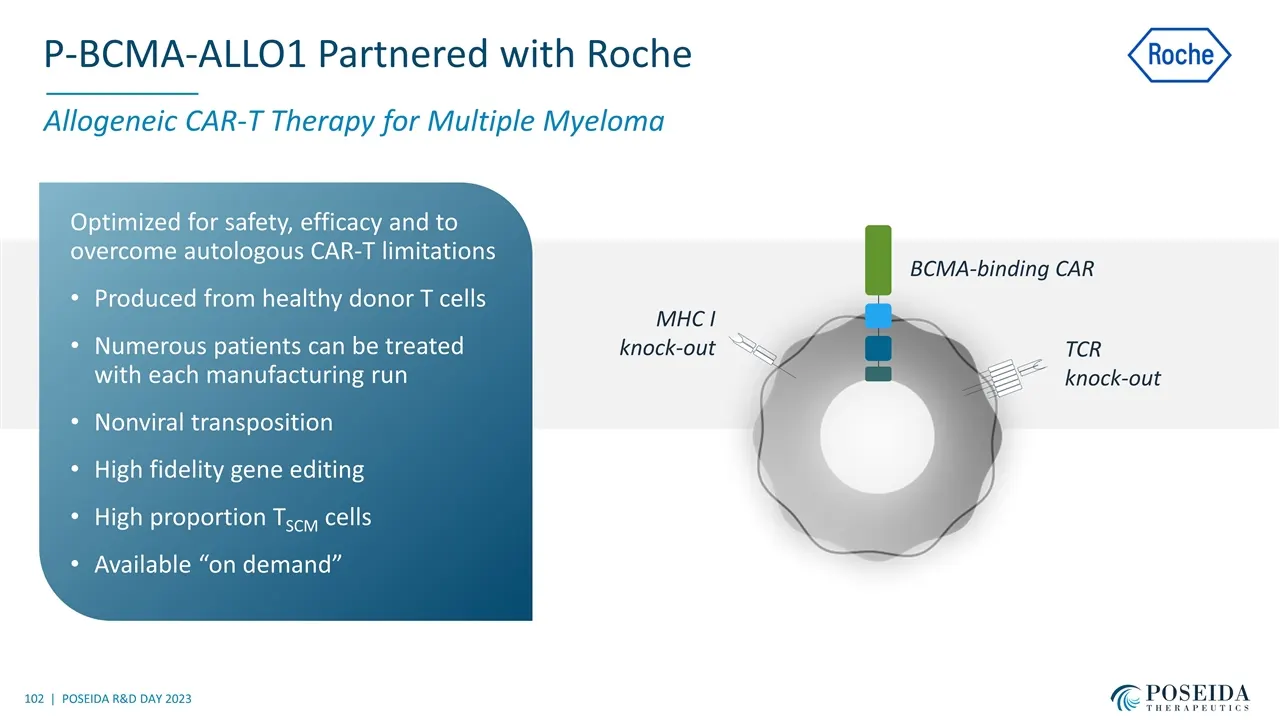
Optimized for safety, efficacy and to overcome autologous CAR-T limitations Produced from healthy donor T cells Numerous patients can be treated with each manufacturing run Nonviral transposition High fidelity gene editing High proportion TSCM cells Available “on demand” P-BCMA-ALLO1 Partnered with
Slide 104: Phase 1 P-BCMA-ALLO1-001 Clinical Trial in Multiple Myeloma
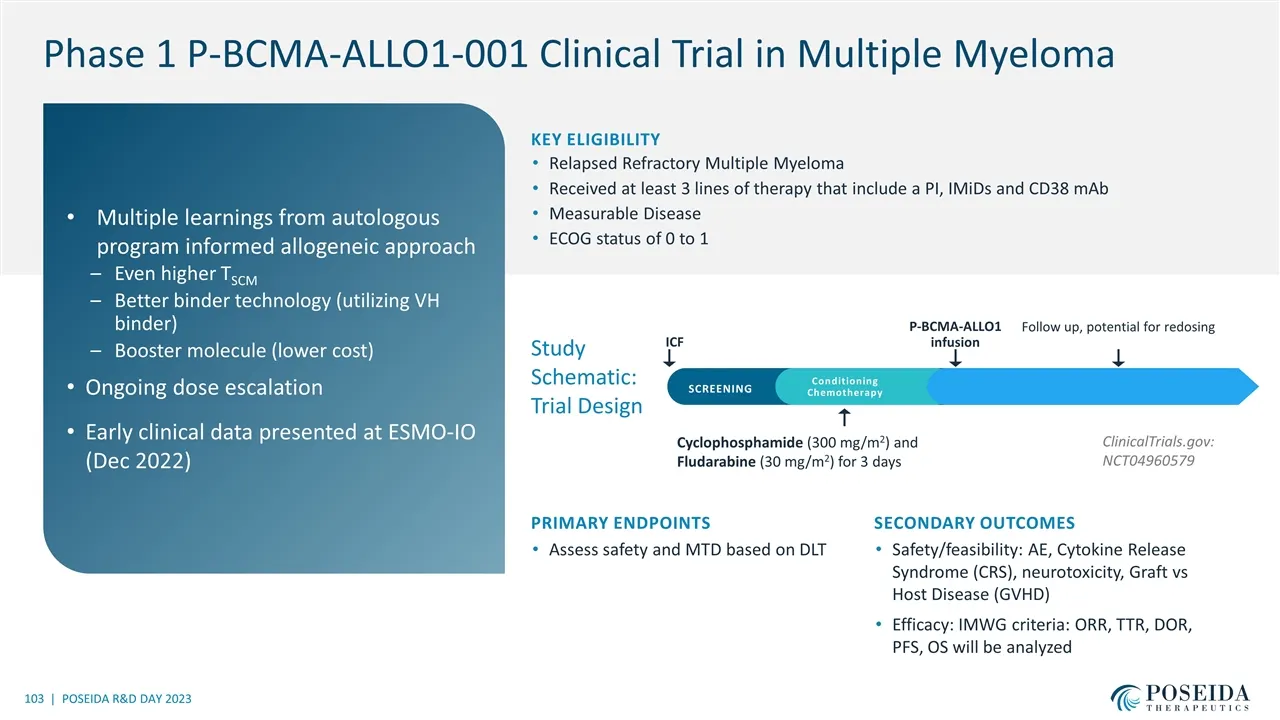
Phase 1 P-BCMA-ALLO1-001 Clinical Trial in Multiple Myeloma Multiple learnings from autologous program informed allogeneic approach Even higher TSCM Better binder technology (utilizing VH binder) Booster molecule (lower cost) Ongoing dose escalation Early clinical data presented at ESMO-IO (Dec 2022
Slide 105: P-BCMA-ALLO1-001 Dose Escalation Plan and Study Schematic
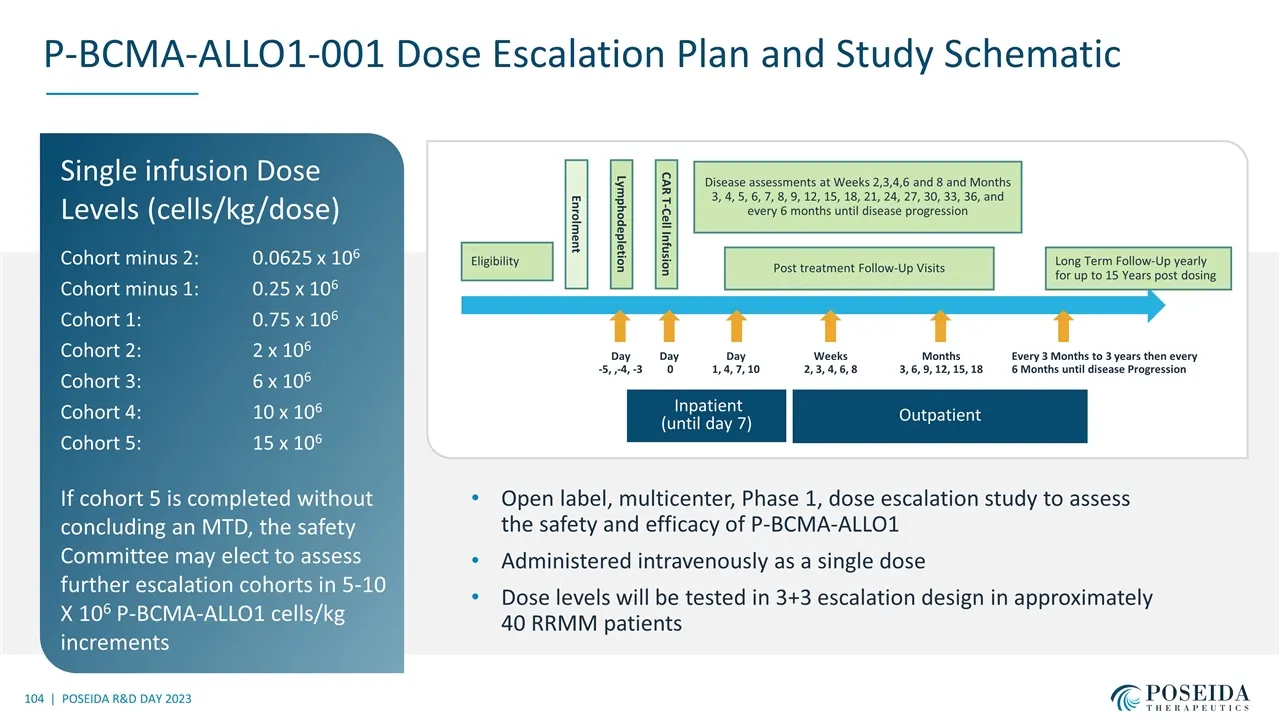
Single infusion Dose Levels (cells/kg/dose) Cohort minus 2: 0.0625 x 10⁶ Cohort minus 1: 0.25 x 10⁶ Cohort 1:0.75 x 10⁶ Cohort 2: 2 x 10⁶ Cohort 3:6 x 10⁶ Cohort 4: 10 x 106 Cohort 5: 15 x 106 If cohort 5 is completed without concluding an MTD, the safety Committee may elect to assess further escala
Slide 106: P-BCMA-ALLO1-001 Patient Demographics and Characteristics
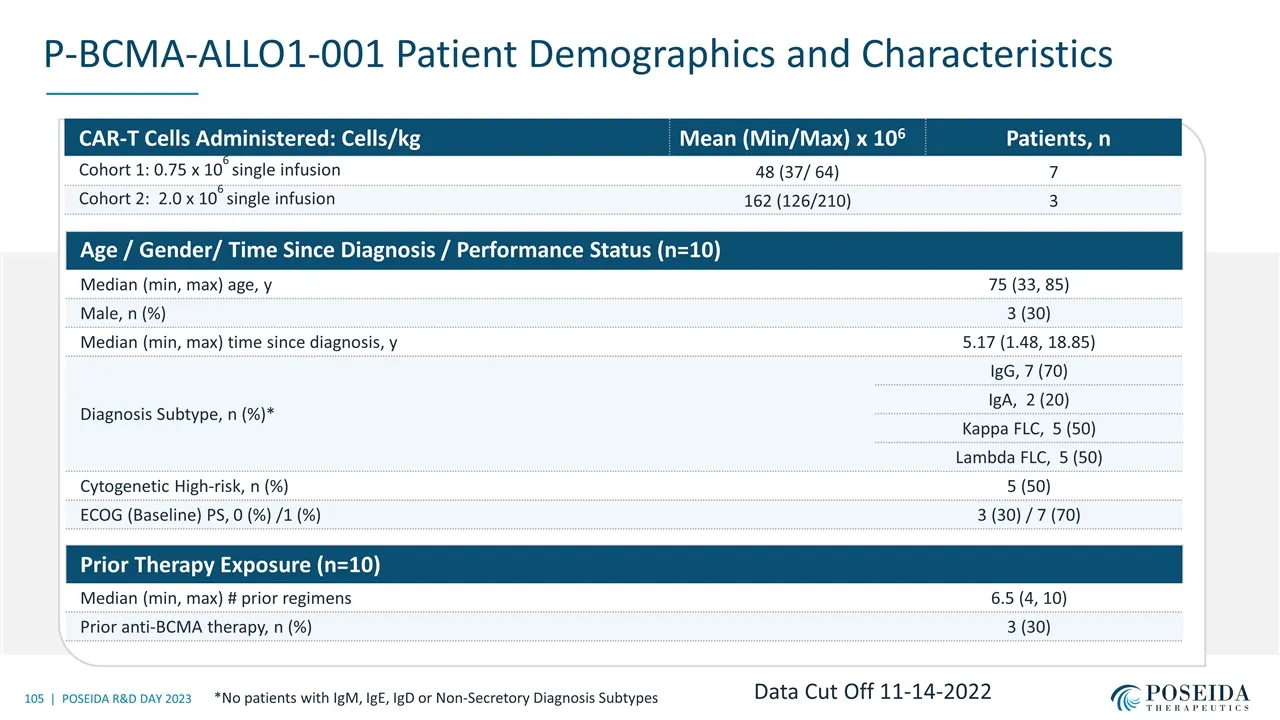
P-BCMA-ALLO1-001 Patient Demographics and Characteristics CAR-T Cells Administered: Cells/kg Mean (Min/Max) x 106 Patients, n Cohort 1: 0.75 x 10⁶ single infusion 48 (37/ 64) 7 Cohort 2: 2.0 x 10⁶ single infusion 162 (126/210) 3 Age / Gender/ Time Since Diagnosis / Performance Status (n=10) Median (
Slide 107: P-BCMA-ALLO1 Demonstrates Favorable Safety Profile
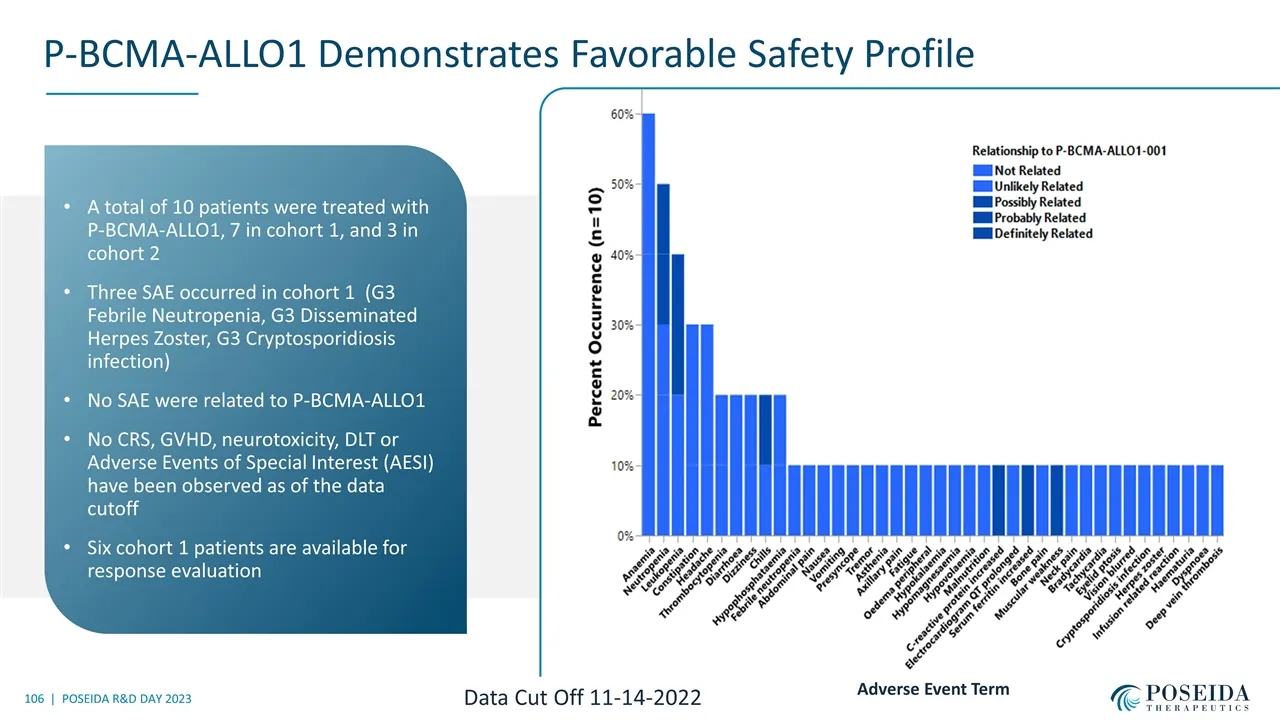
A total of 10 patients were treated with P-BCMA-ALLO1, 7 in cohort 1, and 3 in cohort 2 Three SAE occurred in cohort 1 (G3 Febrile Neutropenia, G3 Disseminated Herpes Zoster, G3 Cryptosporidiosis infection) No SAE were related to P-BCMA-ALLO1 No CRS, GVHD, neurotoxicity, DLT or Adverse Events of Spe
Slide 108: P-BCMA-ALLO1 Demonstrates Encouraging Efficacy
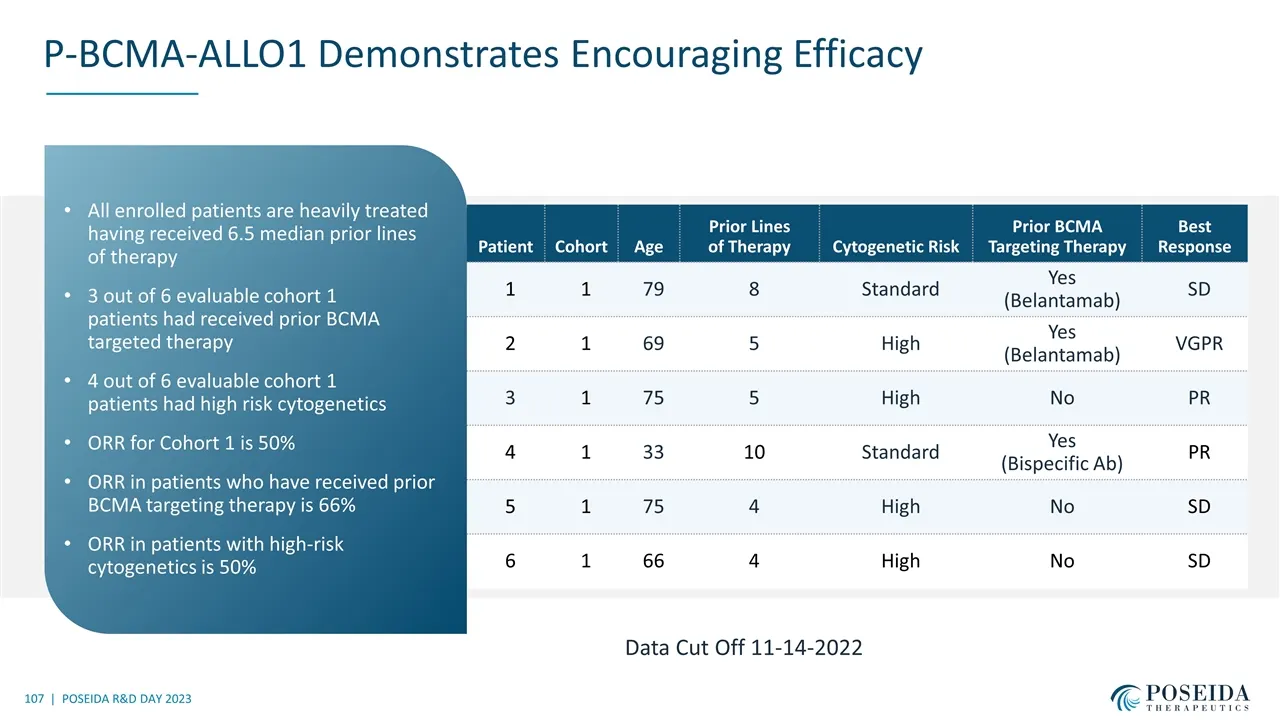
All enrolled patients are heavily treated having received 6.5 median prior lines of therapy 3 out of 6 evaluable cohort 1 patients had received prior BCMA targeted therapy 4 out of 6 evaluable cohort 1 patients had high risk cytogenetics ORR for Cohort 1 is 50% ORR in patients who have received prio
Slide 109: P-BCMA-ALLO1 Summary
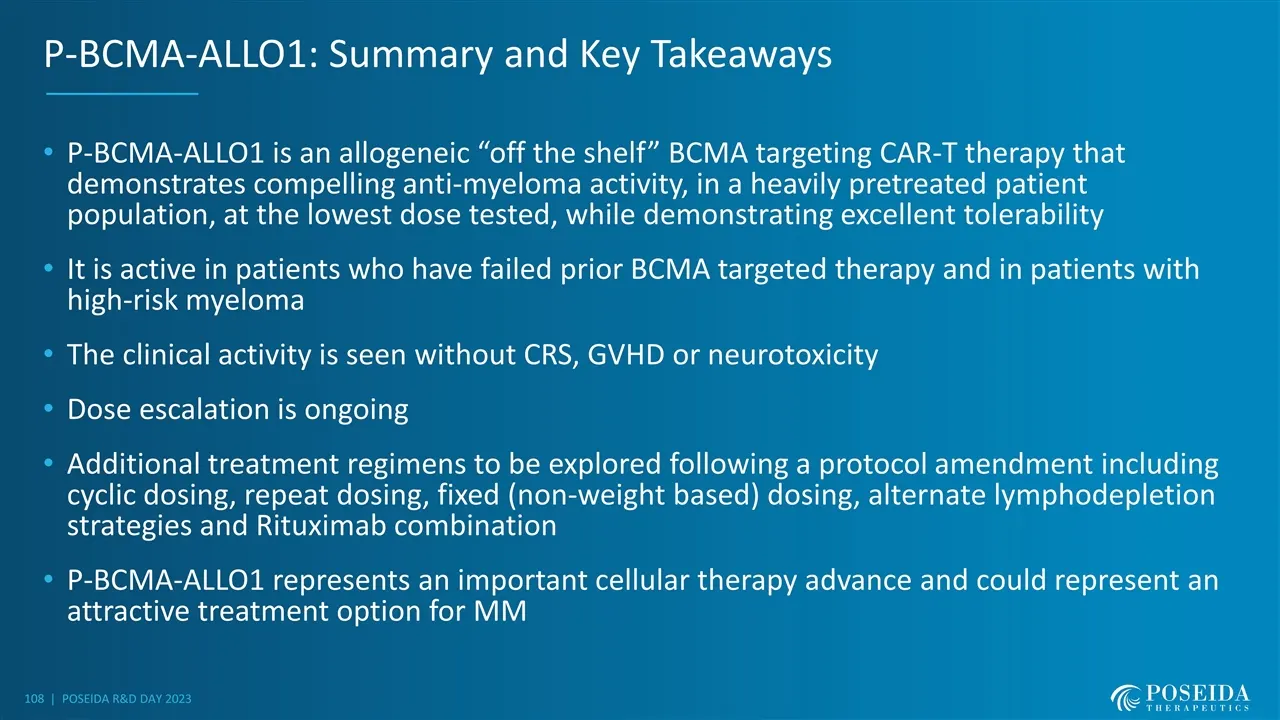
P-BCMA-ALLO1 is an allogeneic “off the shelf” BCMA targeting CAR-T therapy that demonstrates compelling anti-myeloma activity, in a heavily pretreated patient population, at the lowest dose tested, while demonstrating excellent tolerability It is active in patients who have failed prior BCMA targete
Slide 110: P-CD19CD20-ALLO1
P-CD19CD20-ALLO1 Stacey Cranert, PhD Director, Immuno-Oncology
Slide 111: CD19/CD20 Dual CAR for Peripheral B Cell Malignancies
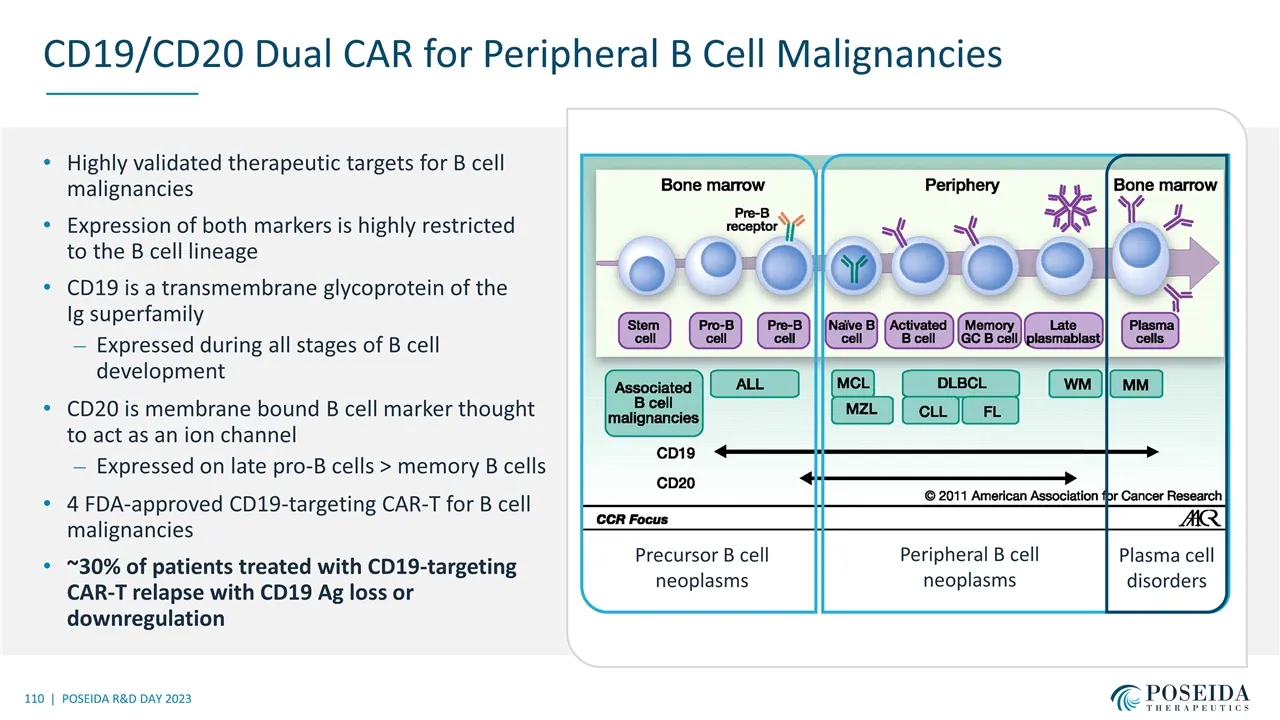
CD19/CD20 Dual CAR for Peripheral B Cell Malignancies Highly validated therapeutic targets for B cell malignancies Expression of both markers is highly restricted to the B cell lineage CD19 is a transmembrane glycoprotein of the Ig superfamily Expressed during all stages of B cell development CD20 i
Slide 112: P-CD19CD20-ALLO1 Dual CAR-T: Licensed to Roche
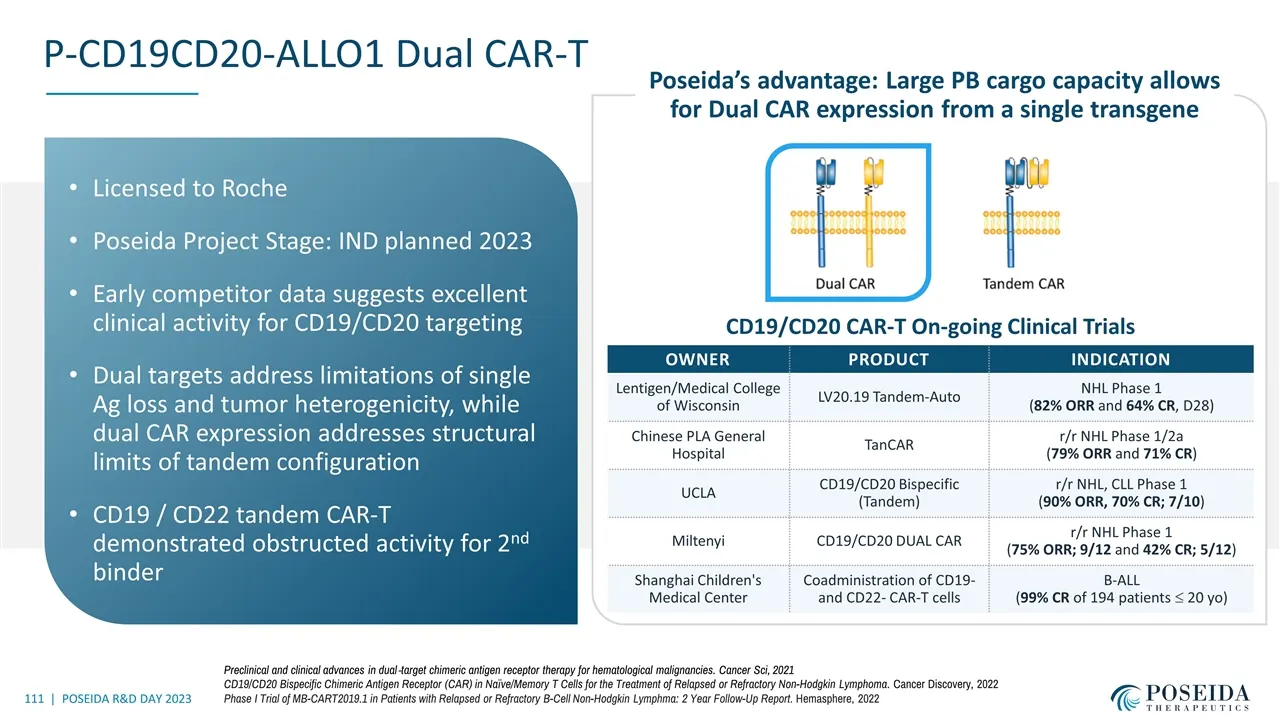
Licensed to Roche Poseida Project Stage: IND planned 2023 Early competitor data suggests excellent clinical activity for CD19/CD20 targeting Dual targets address limitations of single Ag loss and tumor heterogenicity, while dual CAR expression addresses structural limits of tandem configuration CD19
Slide 113: P-CD19CD20-ALLO1 Allogeneic CAR-T Therapy for B cell Malignancies
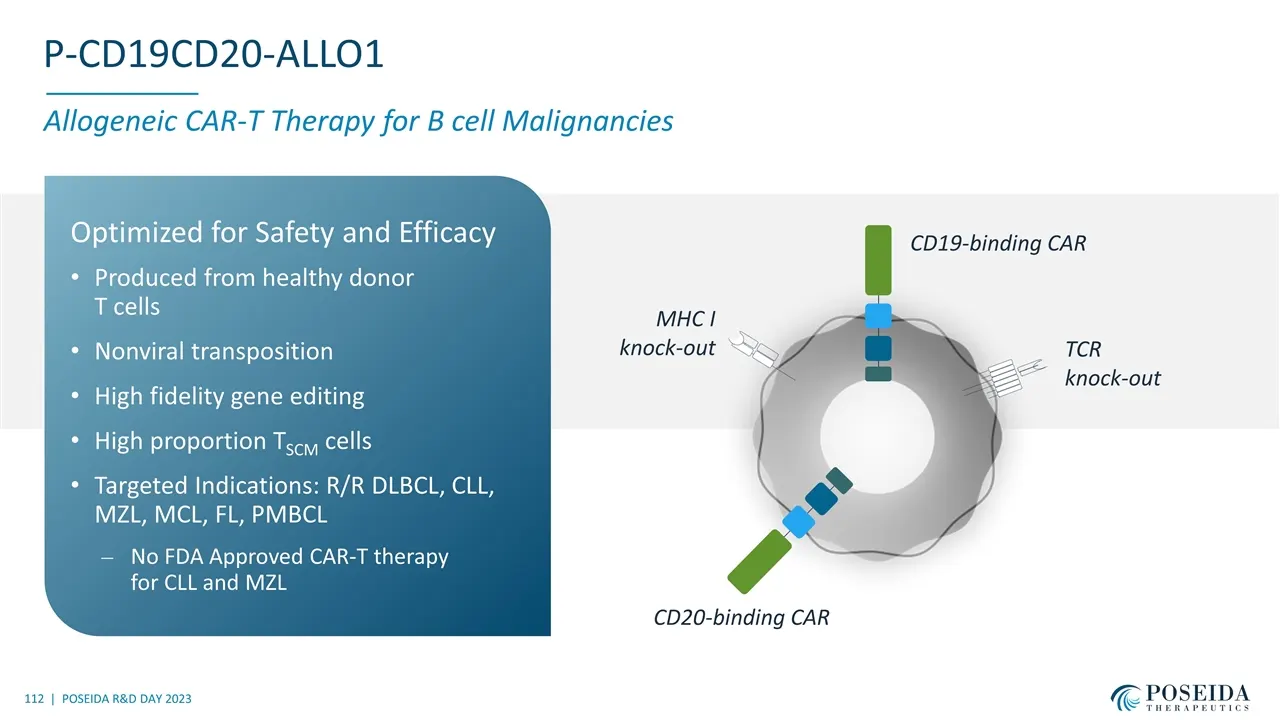
Optimized for Safety and Efficacy Produced from healthy donor T cells Nonviral transposition High fidelity gene editing High proportion TSCM cells Targeted Indications: R/R DLBCL, CLL, MZL, MCL, FL, PMBCL No FDA Approved CAR-T therapy for CLL and MZL P-CD19CD20-ALLO1 Allogeneic CAR-T Therapy for B c
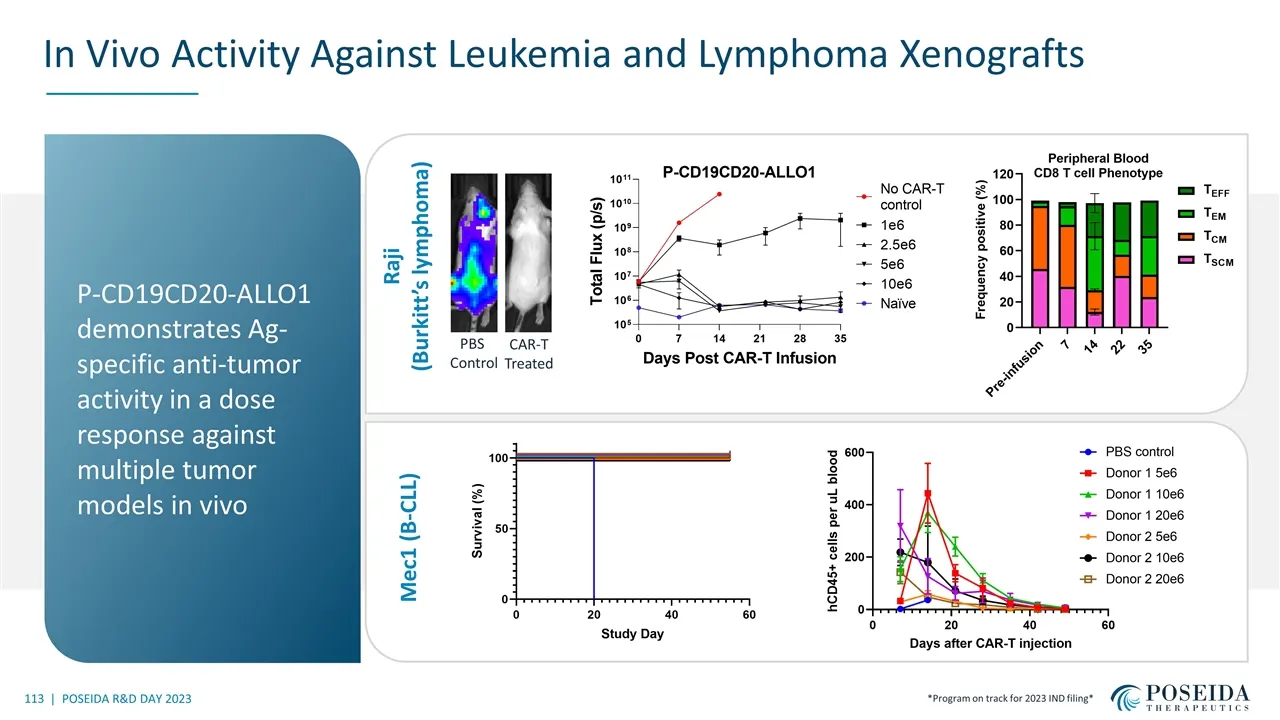
Slide 114: P-CD19CD20-ALLO1 Demonstrates Anti-Tumor Activity In Vivo
P-CD19CD20-ALLO1 demonstrates Ag-specific anti-tumor activity in a dose response against multiple tumor models in vivo In Vivo Activity Against Leukemia and Lymphoma Xenografts Mec1 (B-CLL) Raji (Burkitt’s lymphoma) *Program on track for 2023 IND filing* PBS Control CAR-T Treated | POSEIDA R&D DAY 2
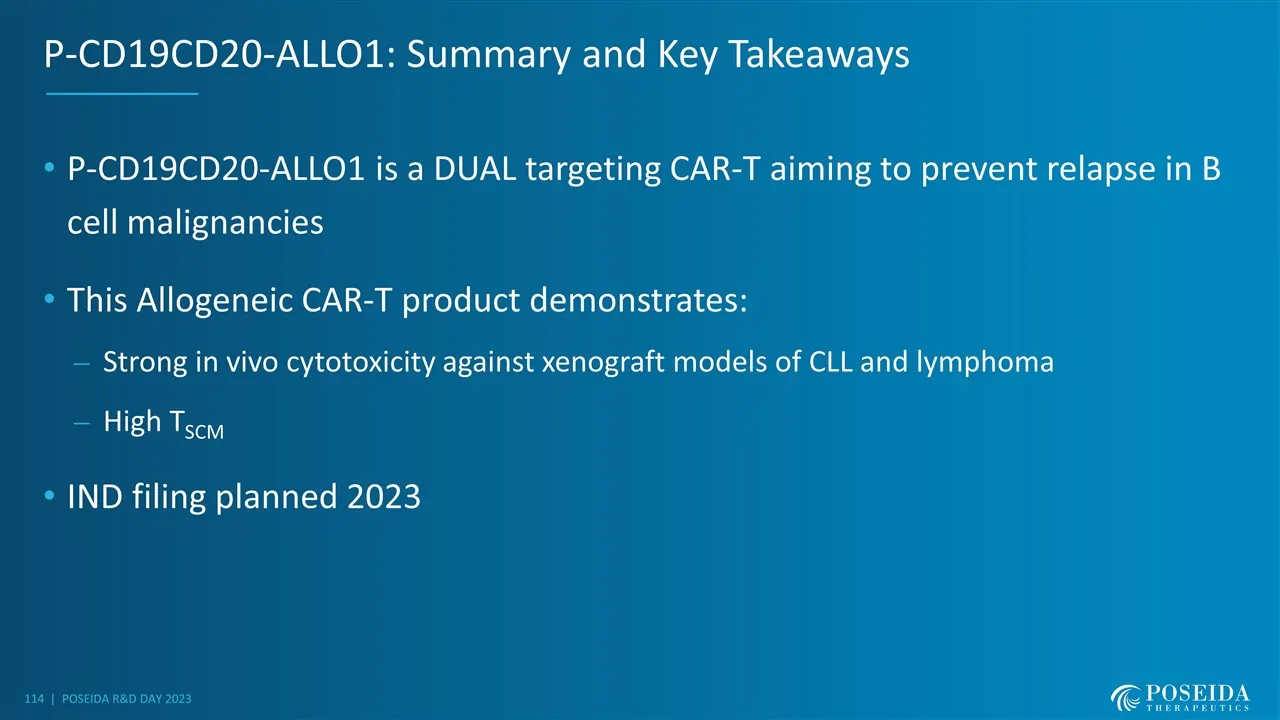
Slide 115: P-CD19CD20-ALLO1: Summary and Key Takeaways
P-CD19CD20-ALLO1 is a DUAL targeting CAR-T aiming to prevent relapse in B cell malignancies This Allogeneic CAR-T product demonstrates: Strong in vivo cytotoxicity against xenograft models of CLL and lymphoma High TSCM IND filing planned 2023 P-CD19CD20-ALLO1: Summary and Key Takeaways | POSEIDA R&D
Slide 116: P-CD70-ALLO1
P-CD70-ALLO1 Julia Coronella, PhD Vice President, Immuno-Oncology
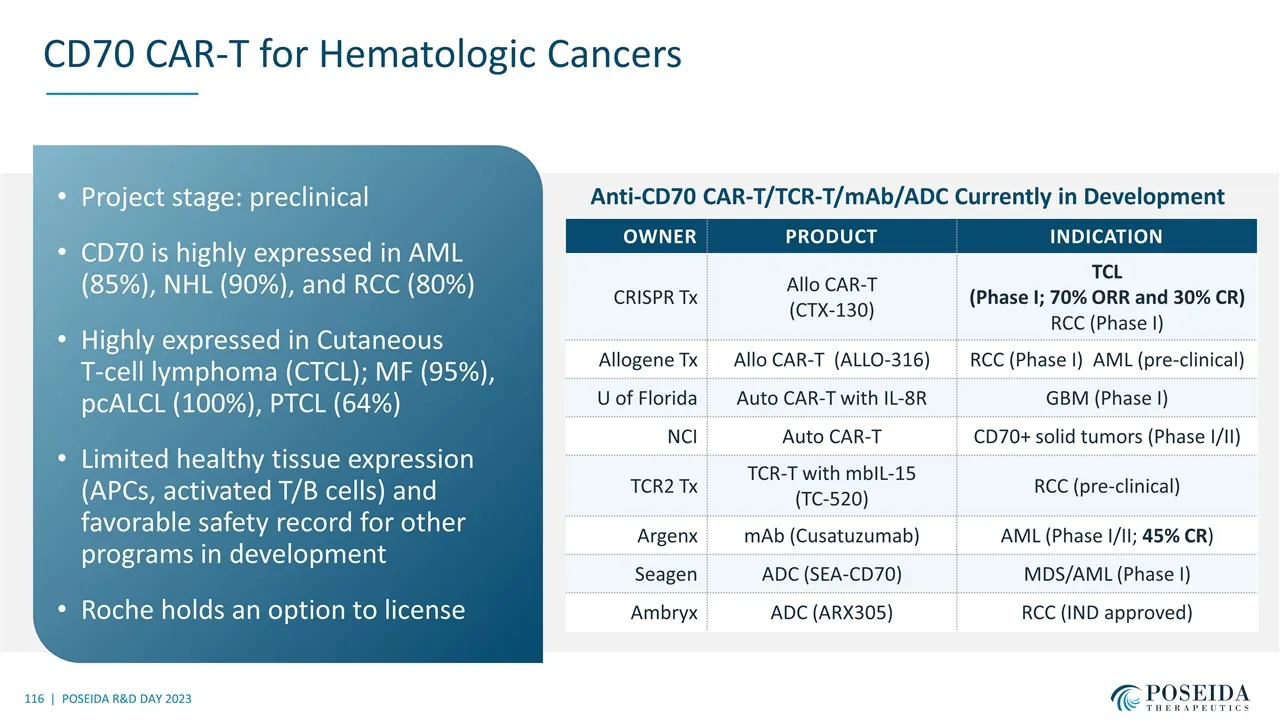
Slide 117: P-CD70-ALLO1 Project Stage: Preclinical
Project stage: preclinical CD70 is highly expressed in AML (85%), NHL (90%), and RCC (80%) Highly expressed in Cutaneous T-cell lymphoma (CTCL); MF (95%), pcALCL (100%), PTCL (64%) Limited healthy tissue expression (APCs, activated T/B cells) and favorable safety record for other programs in develop
Slide 118: Anti-CD70 CAR-T Cells Effectively Control Tumors in AML Xenograft
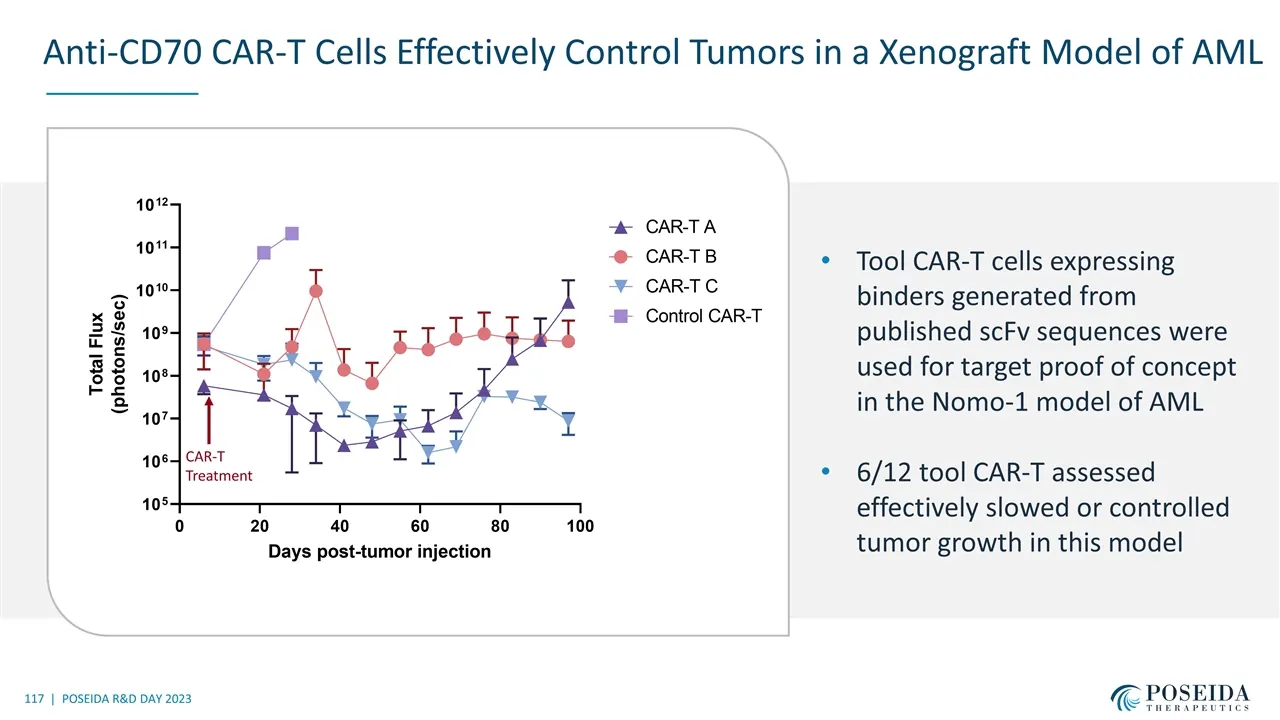
Anti-CD70 CAR-T Cells Effectively Control Tumors in a Xenograft Model of AML CAR-T Treatment Tool CAR-T cells expressing binders generated from published scFv sequences were used for target proof of concept in the Nomo-1 model of AML 6/12 tool CAR-T assessed effectively slowed or controlled tumor gr
Slide 119: Cas-CLOVER Editing of CD70 Locus Yields 95% KO Efficiency
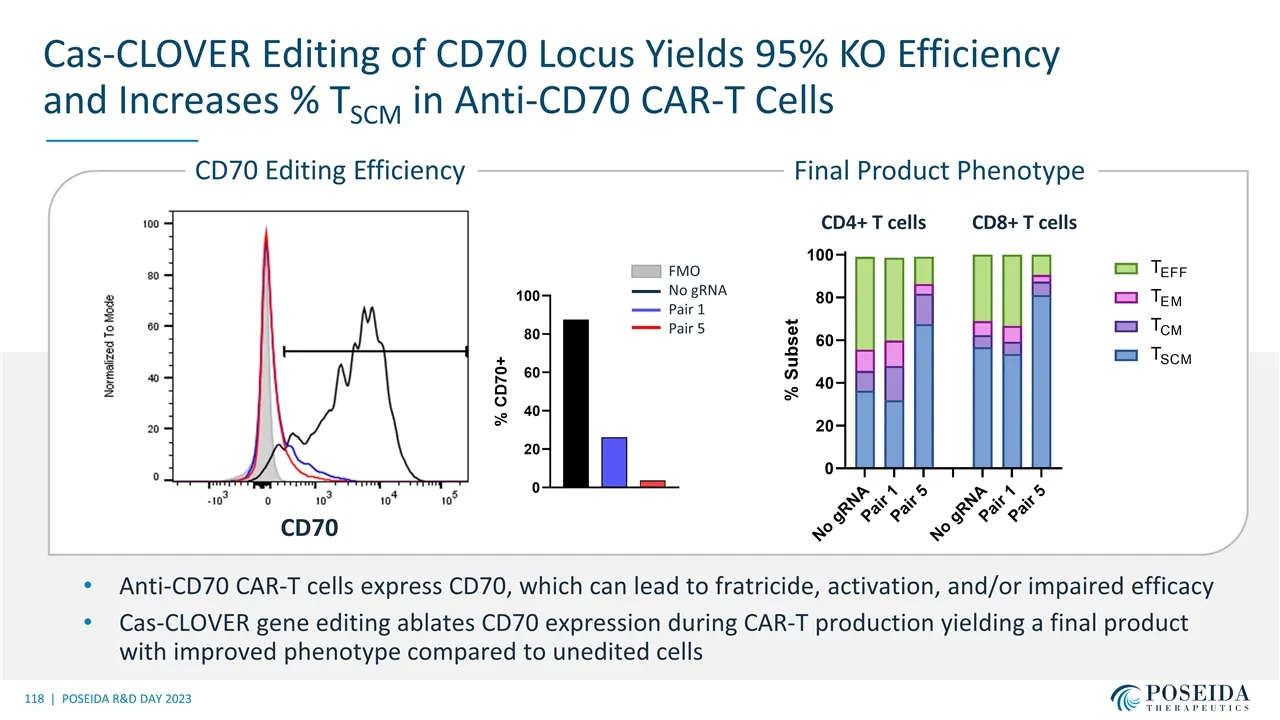
Cas-CLOVER Editing of CD70 Locus Yields 95% KO Efficiency and Increases % TSCM in Anti-CD70 CAR-T Cells CD70 FMO No gRNA Pair 1 Pair 5 CD4+ T cells CD8+ T cells CD70 Editing Efficiency Final Product Phenotype Anti-CD70 CAR-T cells express CD70, which can lead to fratricide, activation, and/or impair
Slide 120: Anti-CD70 CAR-T With CD70 KO Exhibit Improved Durability
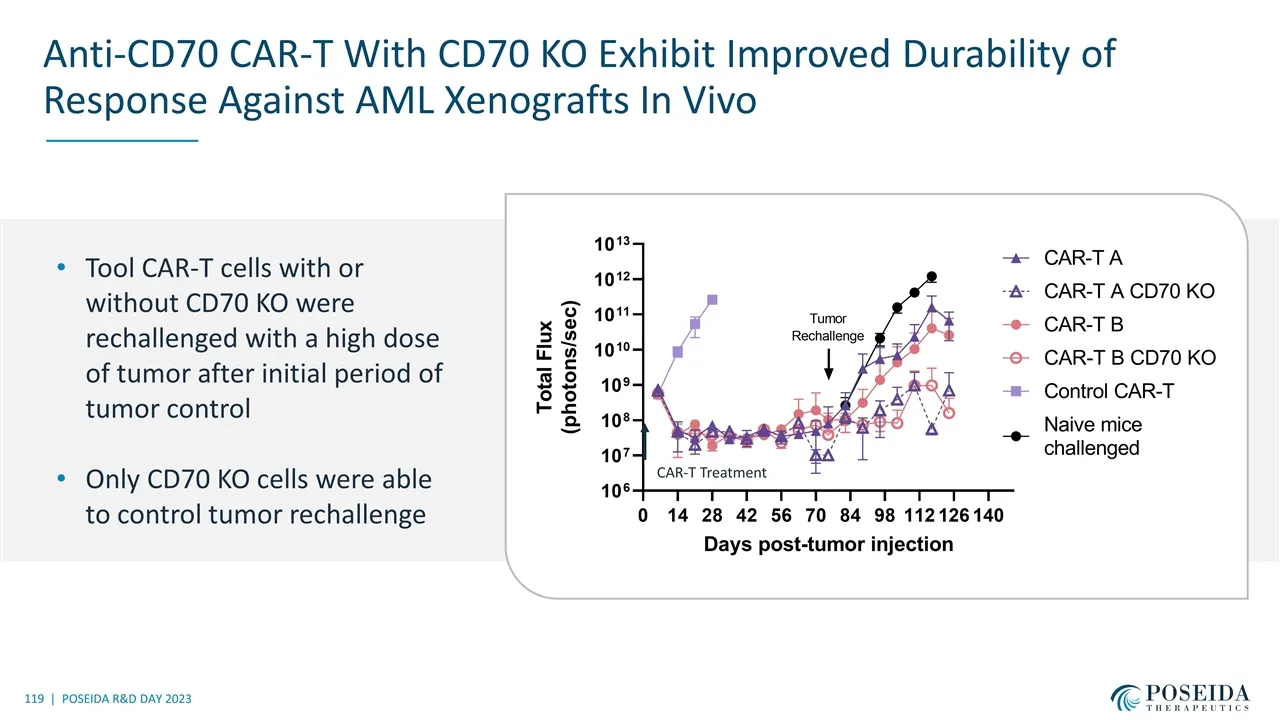
Tool CAR-T cells with or without CD70 KO were rechallenged with a high dose of tumor after initial period of tumor control Only CD70 KO cells were able to control tumor rechallenge Anti-CD70 CAR-T With CD70 KO Exhibit Improved Durability of Response Against AML Xenografts In Vivo CAR-T Treatment | P
Slide 121: P-CD70-ALLO1: Summary and Key Takeaways
Super piggyBac is used to generate anti-CD70 CAR-T cells with high TSCM and strong in vivo cytotoxicity against a xenograft model of AML Cas-CLOVER efficiently disrupts CD70 expression during CAR-T production, yielding a product with increased TSCM cell content and improved in vivo durability Anti-C
Slide 122: P-ckit-ALLO1
P-ckit-ALLO1 Nina Timberlake, PhD Director, Immuno-Oncology
Slide 123: P-ckit-ALLO1 Project Stage: Preclinical
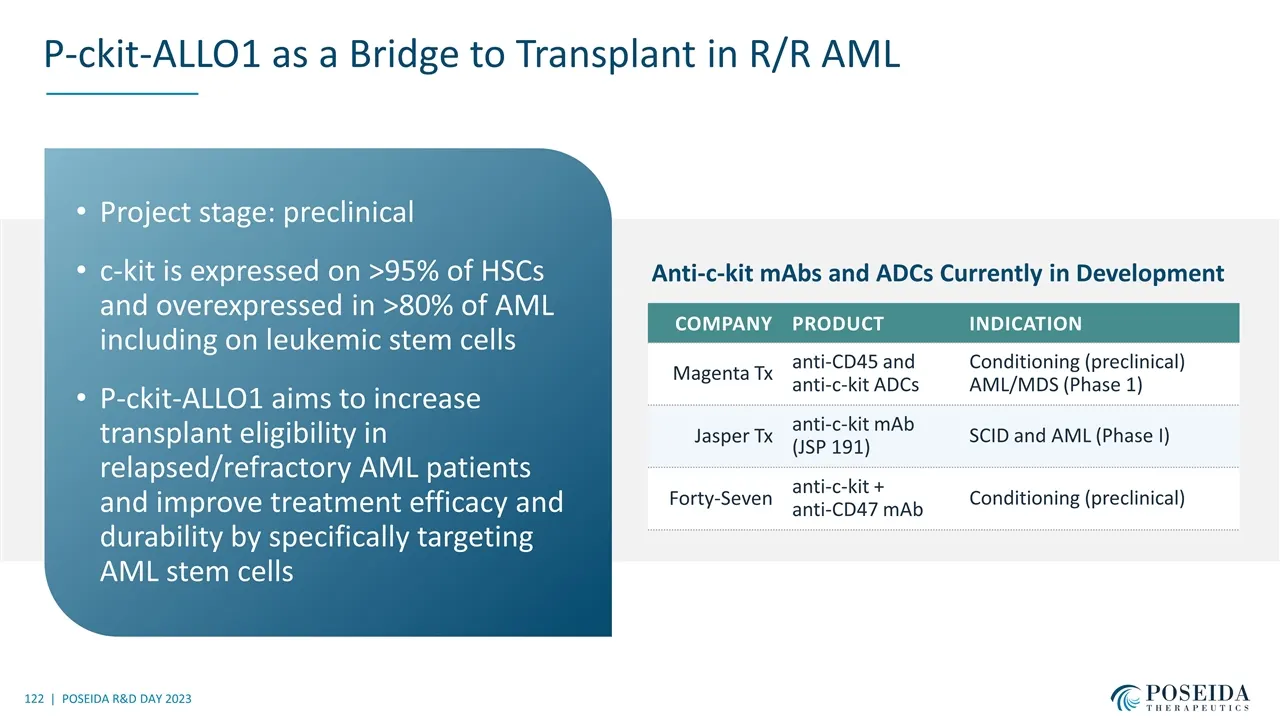
Project stage: preclinical c-kit is expressed on >95% of HSCs and overexpressed in >80% of AML including on leukemic stem cells P-ckit-ALLO1 aims to increase transplant eligibility in relapsed/refractory AML patients and improve treatment efficacy and durability by specifically targeting AML stem ce
Slide 124: P-ckit-ALLO1 as a Bridge to Transplant in R/R AML
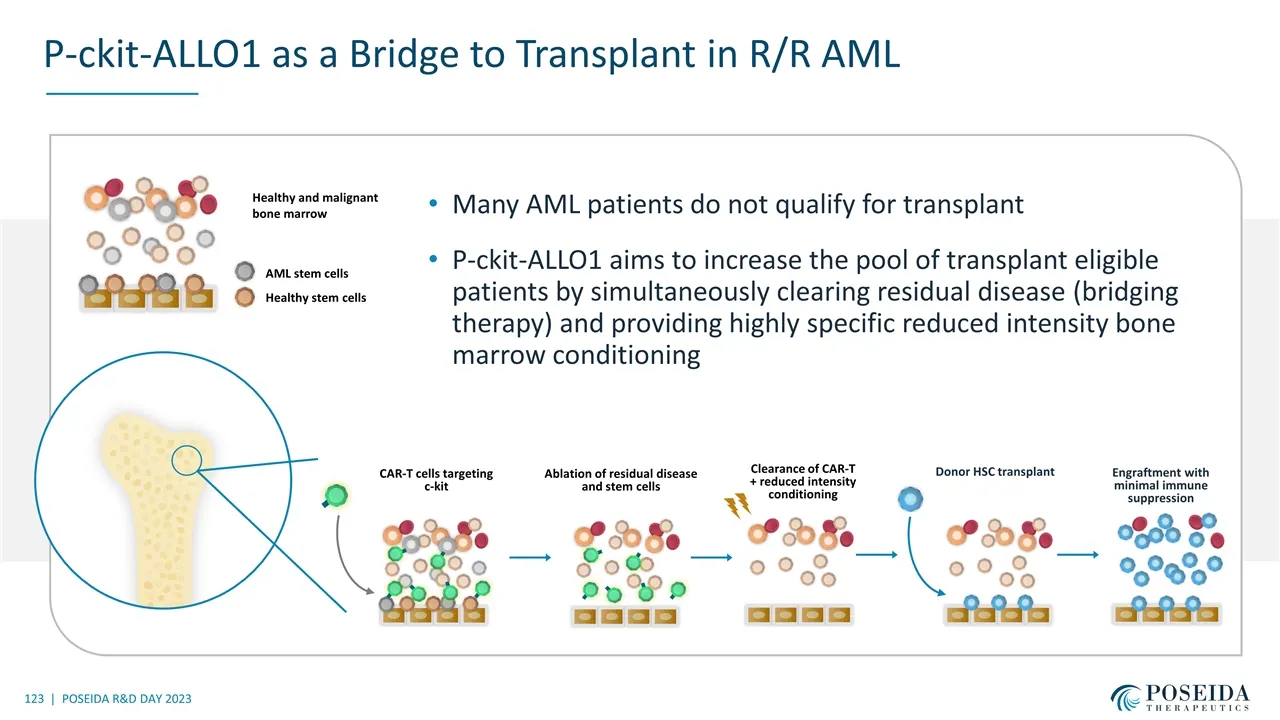
P-ckit-ALLO1 as a Bridge to Transplant in R/R AML Engraftment with minimal immune suppression Healthy and malignant bone marrow AML stem cells Healthy stem cells CAR-T cells targeting c-kit Ablation of residual disease and stem cells Clearance of CAR-T + reduced intensity conditioning Donor HSC tran
Slide 125: Potential Advantages of P-ckit-ALLO1
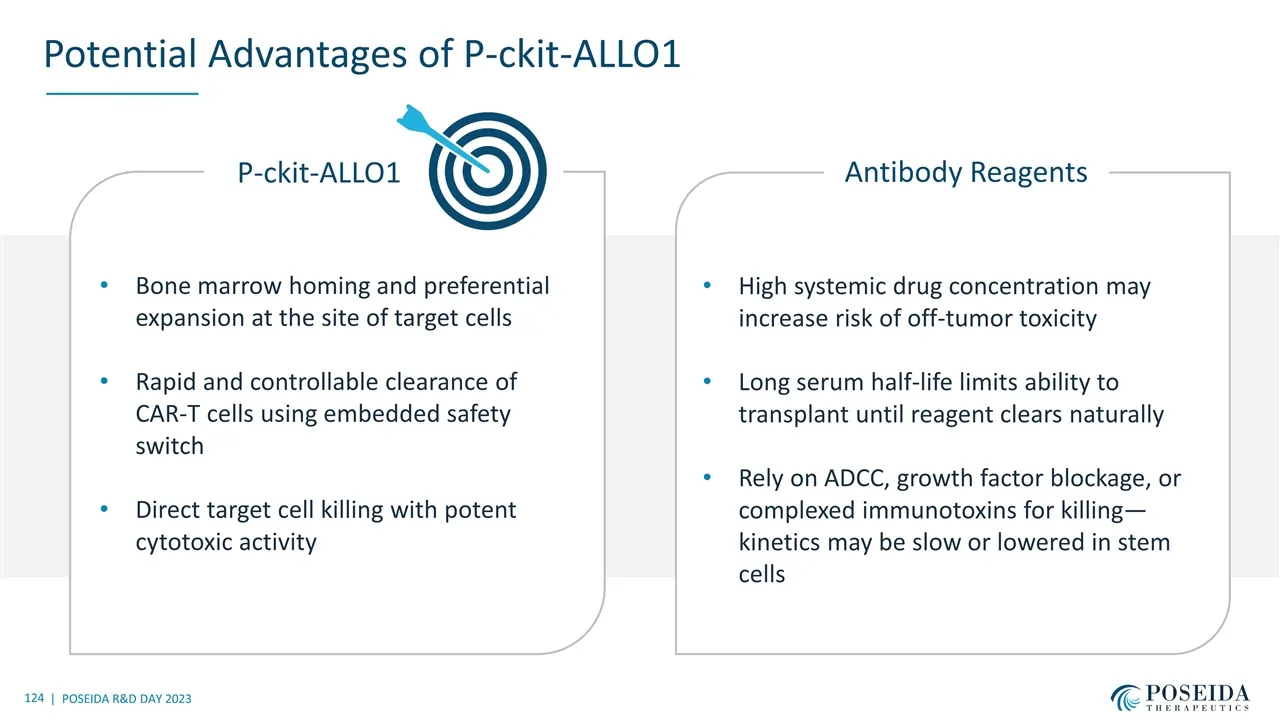
Potential Advantages of P-ckit-ALLO1 Bone marrow homing and preferential expansion at the site of target cells Rapid and controllable clearance of CAR-T cells using embedded safety switch Direct target cell killing with potent cytotoxic activity P-ckit-ALLO1 High systemic drug concentration may incr
Slide 126: Dual Anti-c-kit CAR-T Cells Significantly Outperform Single CARs
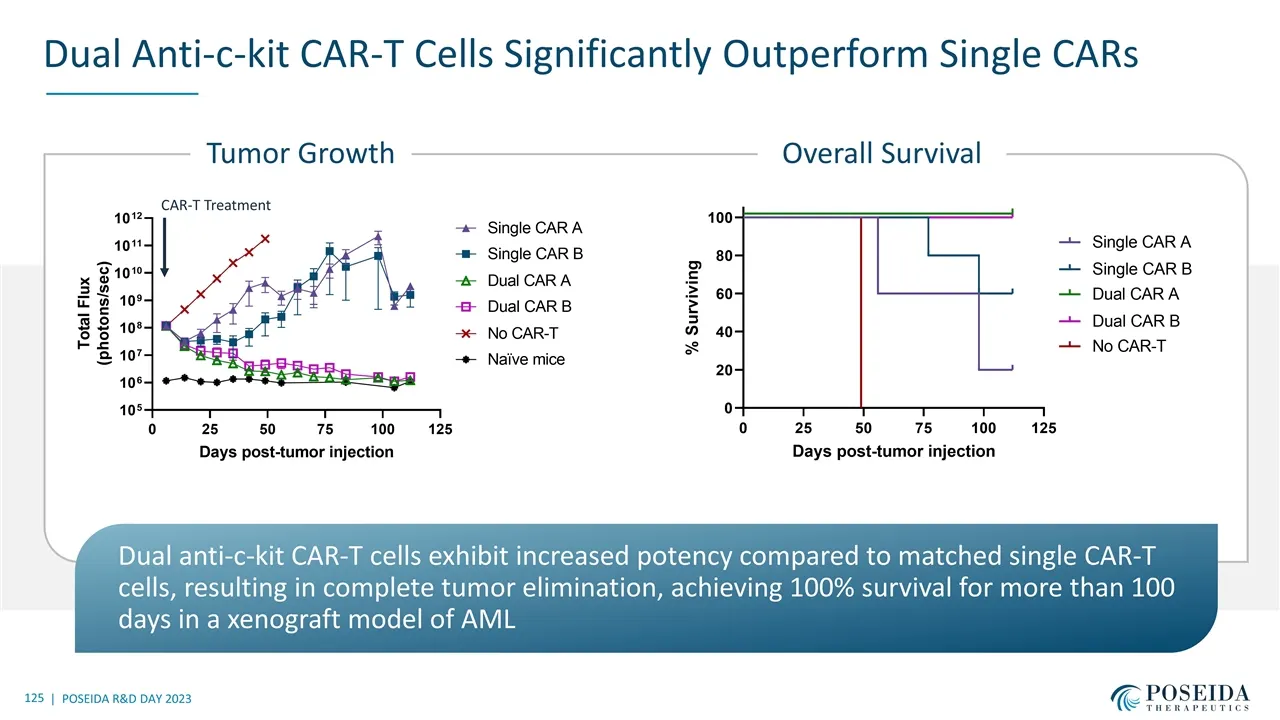
Dual Anti-c-kit CAR-T Cells Significantly Outperform Single CARs Dual anti-c-kit CAR-T cells exhibit increased potency compared to matched single CAR-T cells, resulting in complete tumor elimination, achieving 100% survival for more than 100 days in a xenograft model of AML CAR-T Treatment Tumor Gro
Slide 127: P-cKit-ALLO1: Summary and Key Takeaways
Targeting c-kit+ cancer stem cells may improve the durability of responses in AML, which is known to originate from early bone marrow progenitors Super piggyBac enables delivery and expression of two full length c-kit targeting CARs from a single transgene Dual c-kit CAR-T cells have potent in vivo
Slide 128: CAR-TCR-T for Solid Tumors
CAR-TCR-T for Solid Tumors Devon J Shedlock, PhD Chief Scientific Officer, Cell Therapy
Slide 129: Engineered TCRs for Targeting Intracellular and Lipid Ags, and HSPs
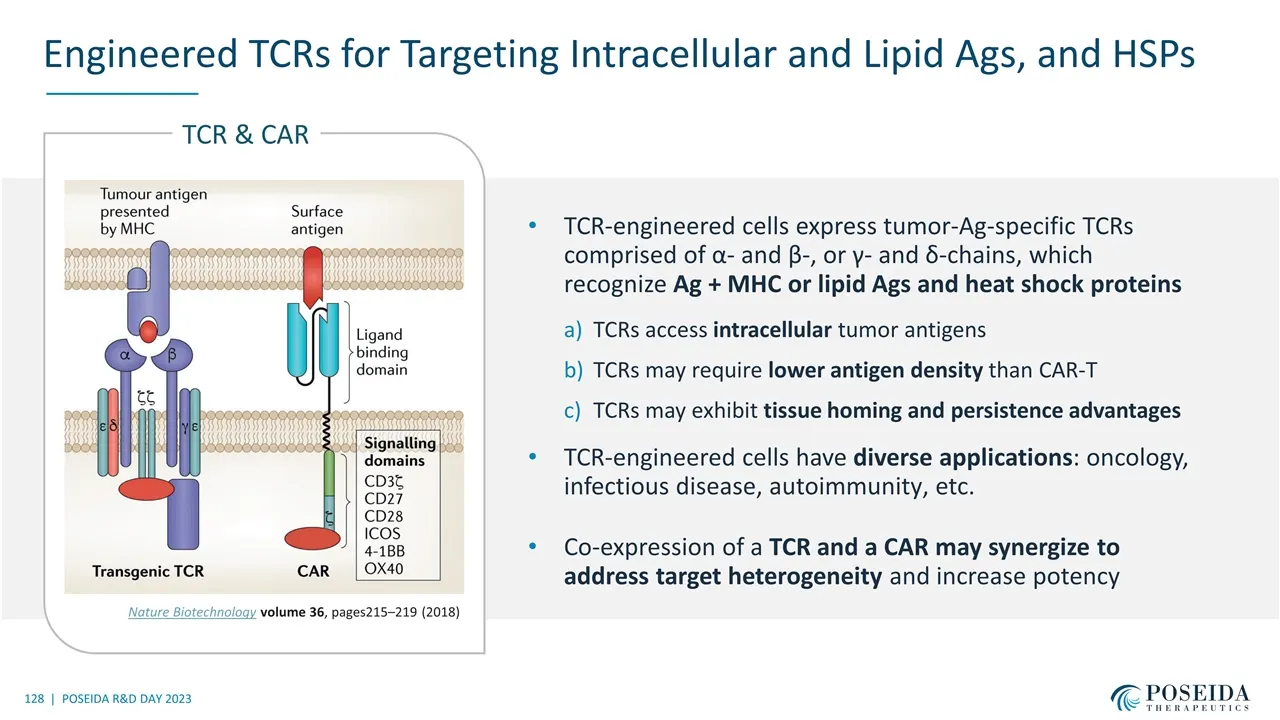
Engineered TCRs for Targeting Intracellular and Lipid Ags, and HSPs TCR-engineered cells express tumor-Ag-specific TCRs comprised of α- and β-, or γ- and δ-chains, which recognize Ag + MHC or lipid Ags and heat shock proteins TCRs access intracellular tumor antigens TCRs may require lower antigen
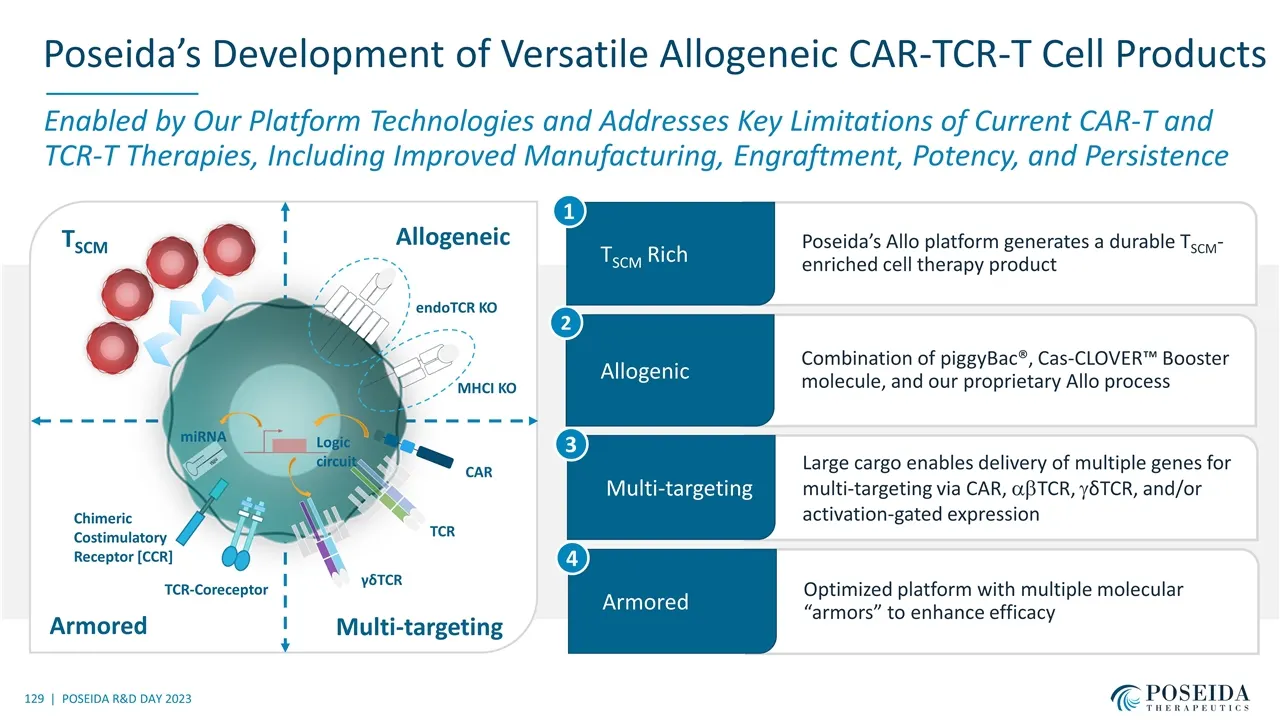
Slide 130: Versatile Allogeneic CAR-TCR-T Cell Products
Large cargo enables delivery of multiple genes for multi-targeting via CAR, abTCR, gδTCR, and/or activation-gated expression Multi-targeting 3 Combination of piggyBac®, Cas-CLOVER™ Booster molecule, and our proprietary Allo process Allogenic 2 Enabled by Our Platform Technologies and Addresses Key L
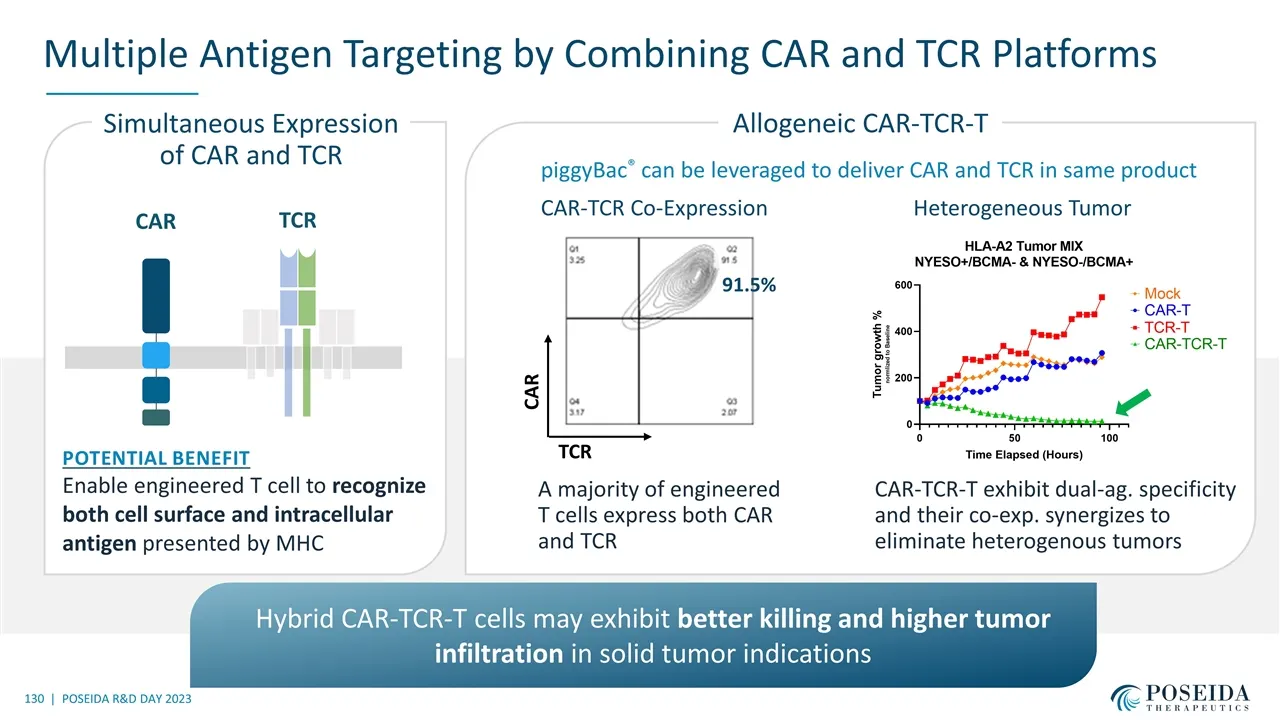
Slide 131: Multiple Antigen Targeting by Combining CAR and TCR Platforms
Multiple Antigen Targeting by Combining CAR and TCR Platforms A majority of engineered T cells express both CAR and TCR POTENTIAL BENEFIT Enable engineered T cell to recognize both cell surface and intracellular antigen presented by MHC TCR CAR Simultaneous Expression of CAR and TCR Allogeneic CAR-T
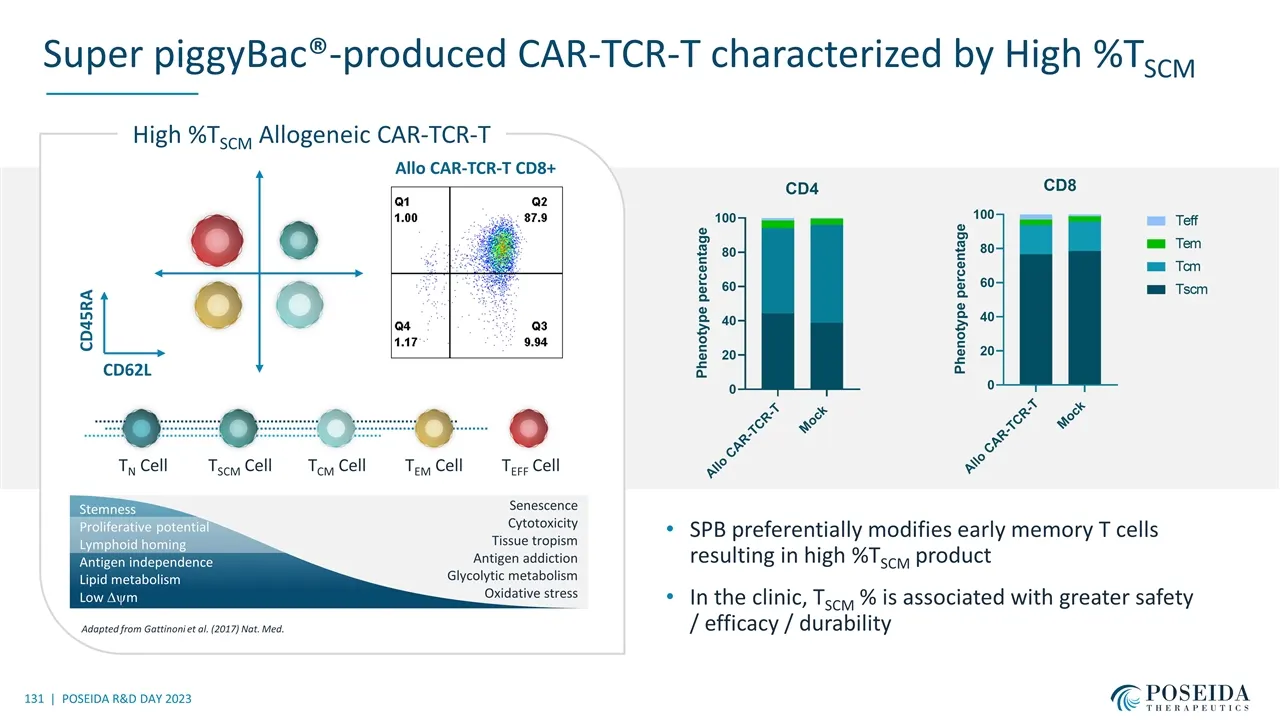
Slide 132: Super piggyBac-produced CAR-TCR-T Characterized by High %TSCM
Super piggyBac®-produced CAR-TCR-T characterized by High %TSCM TSCM Cell TCM Cell TEM Cell TEFF Cell TN Cell Adapted from Gattinoni et al. (2017) Nat. Med. Stemness Proliferative potential Lymphoid homing Antigen independence Lipid metabolism Low Dym Senescence Cytotoxicity Tissue tropism Antigen ad
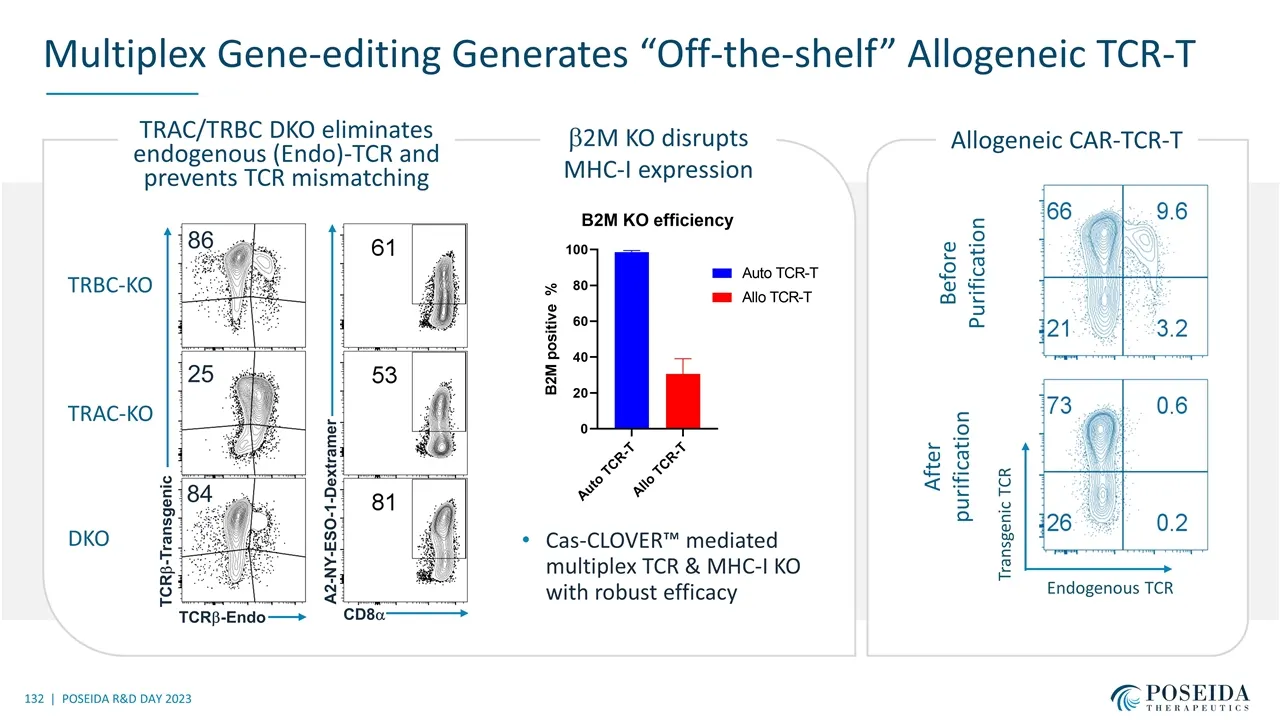
Slide 133: Multiplex Gene-editing Generates Off-the-shelf Allogeneic TCR-T
Multiplex Gene-editing Generates “Off-the-shelf” Allogeneic TCR-T TRAC/TRBC DKO eliminates endogenous (Endo)-TCR and prevents TCR mismatching b2M KO disrupts MHC-I expression Cas-CLOVER™ mediated multiplex TCR & MHC-I KO with robust efficacy TRBC-KO TRAC-KO DKO 86 25 84 CD8a A2-NY-ESO-1-Dextramer TC
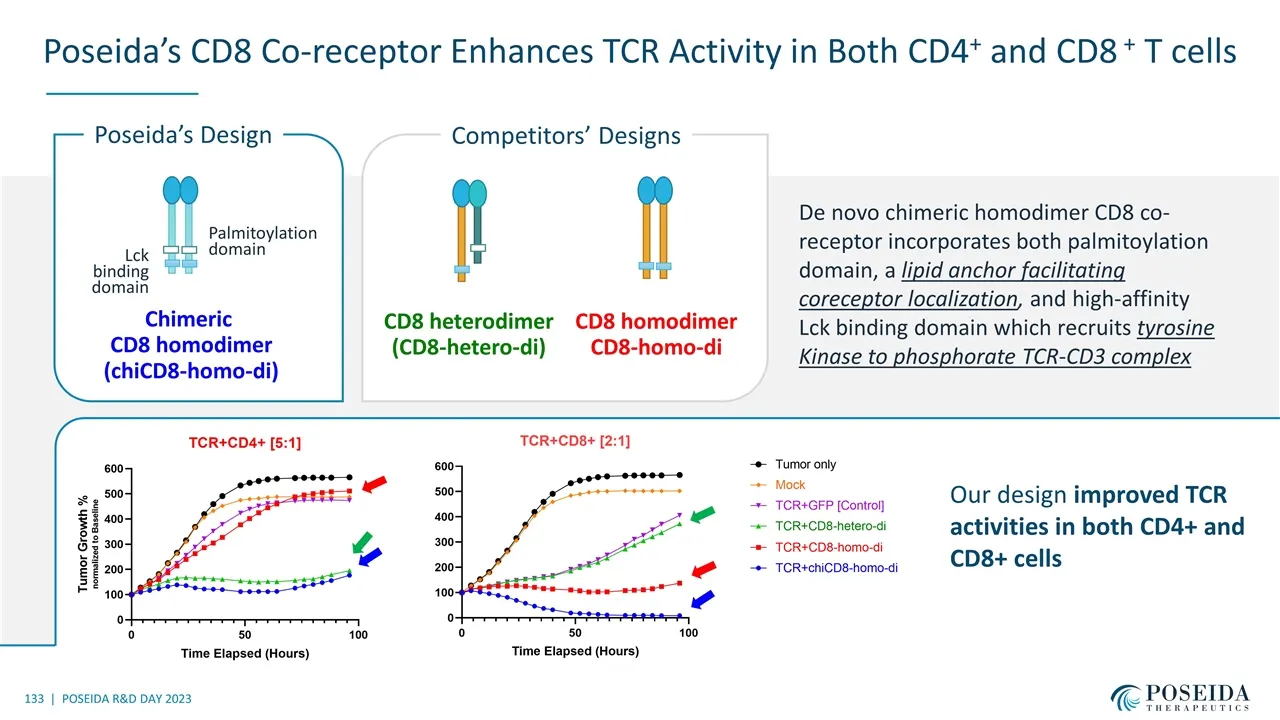
Slide 134: Poseida's CD8 Co-receptor Enhances TCR Activity
Poseida’s CD8 Co-receptor Enhances TCR Activity in Both CD4+ and CD8 + T cells De novo chimeric homodimer CD8 co-receptor incorporates both palmitoylation domain, a lipid anchor facilitating coreceptor localization, and high-affinity Lck binding domain which recruits tyrosine Kinase to phosphorate T
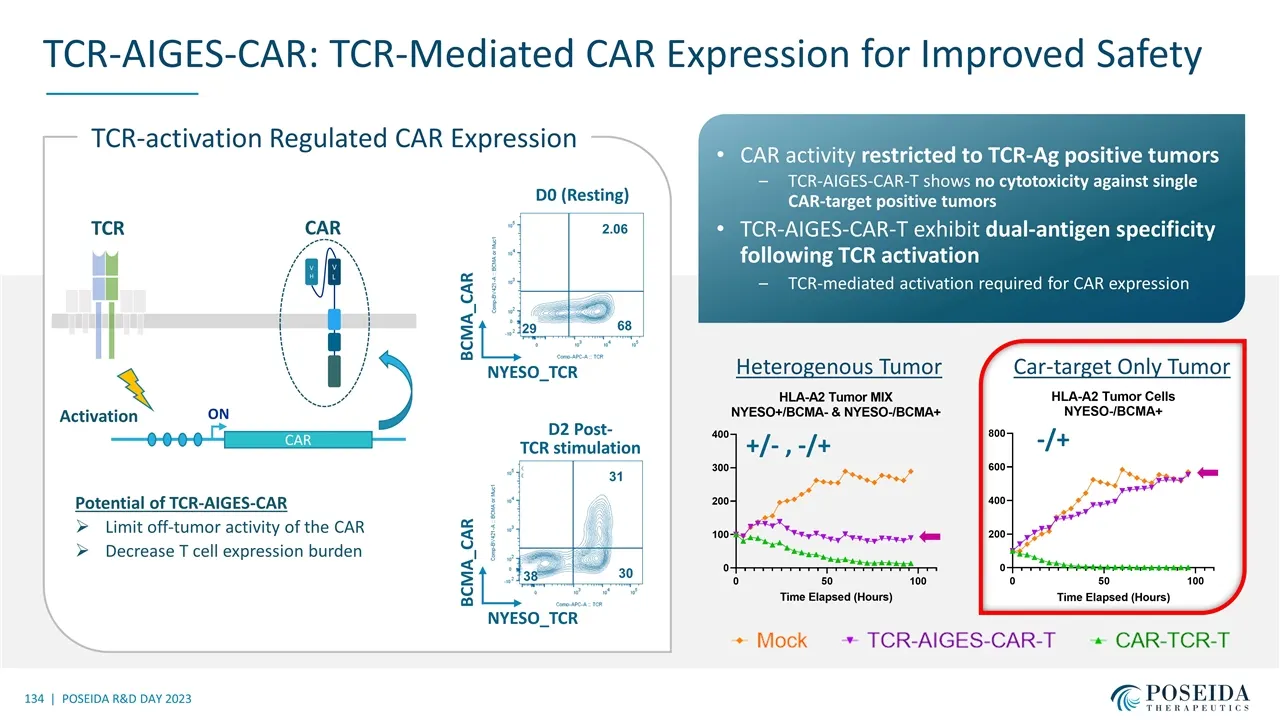
Slide 135: TCR-AIGES-CAR: TCR-Mediated CAR Expression for Improved Safety
TCR-AIGES-CAR: TCR-Mediated CAR Expression for Improved Safety TCR CAR CAR Activation VL VH ON Potential of TCR-AIGES-CAR Limit off-tumor activity of the CAR Decrease T cell expression burden D0 (Resting) D2 Post- TCR stimulation BCMA_CAR NYESO_TCR 2.06 68 29 31 30 38 Heterogenous Tumor Car-target O
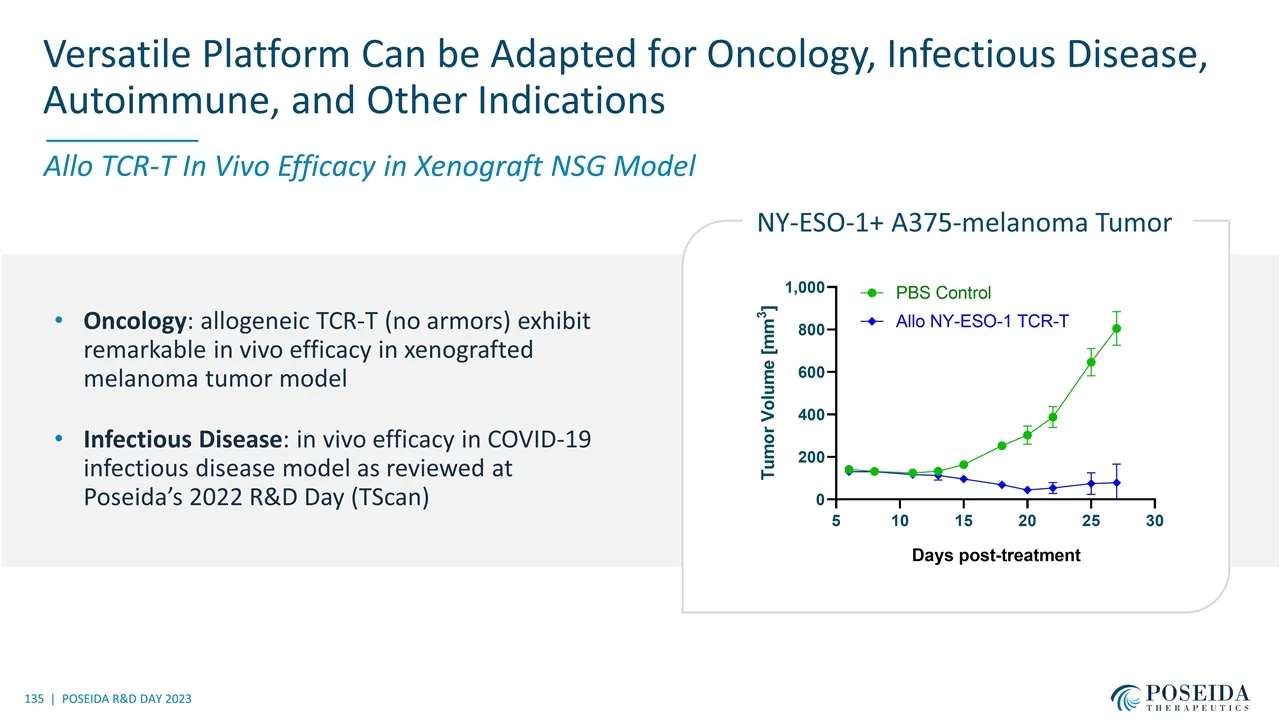
Slide 136: Versatile Platform Adapted for Oncology, Infectious Disease, Autoimmune
Versatile Platform Can be Adapted for Oncology, Infectious Disease, Autoimmune, and Other Indications NY-ESO-1+ A375-melanoma Tumor Oncology: allogeneic TCR-T (no armors) exhibit remarkable in vivo efficacy in xenografted melanoma tumor model Infectious Disease: in vivo efficacy in COVID-19 infectio
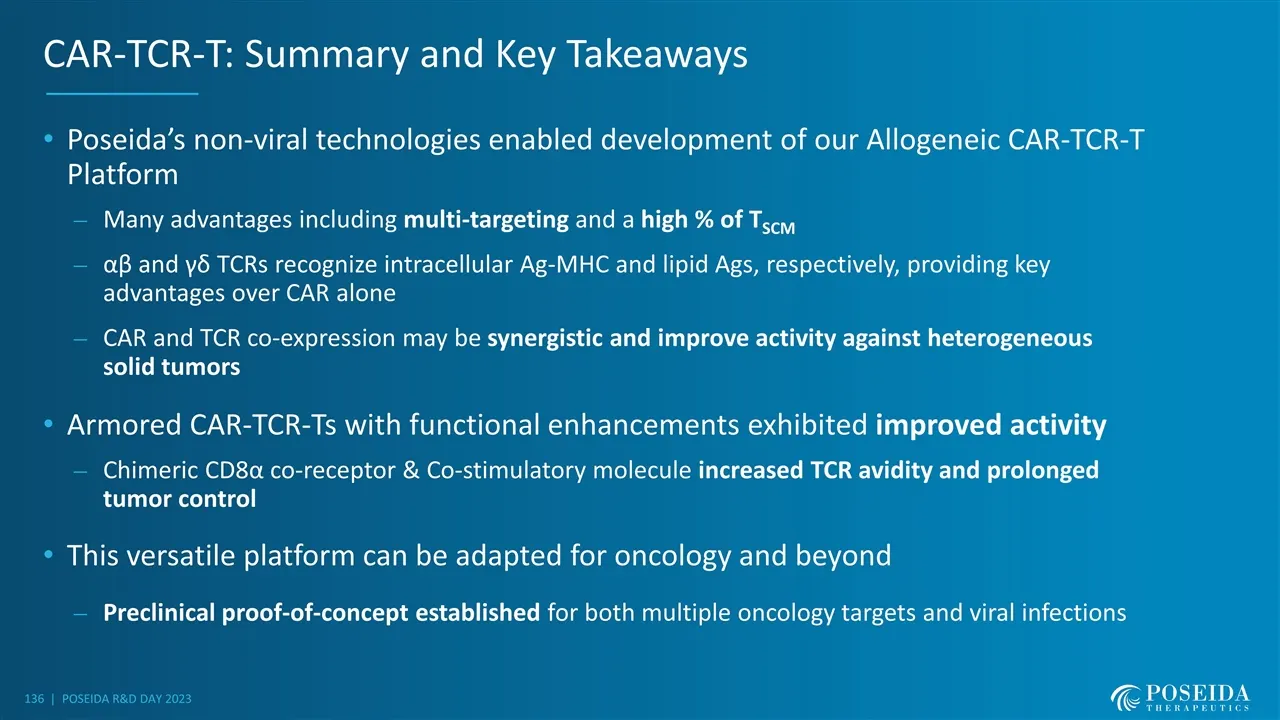
Slide 137: CAR-TCR-T: Summary and Key Takeaways
Poseida’s non-viral technologies enabled development of our Allogeneic CAR-TCR-T Platform Many advantages including multi-targeting and a high % of TSCM αβ and γδ TCRs recognize intracellular Ag-MHC and lipid Ags, respectively, providing key advantages over CAR alone CAR and TCR co-expression may be
Slide 138: Conclusion and Summary
Conclusion and Summary Mark J. Gergen CEO
Slide 139: Acknowledgements & Thank You
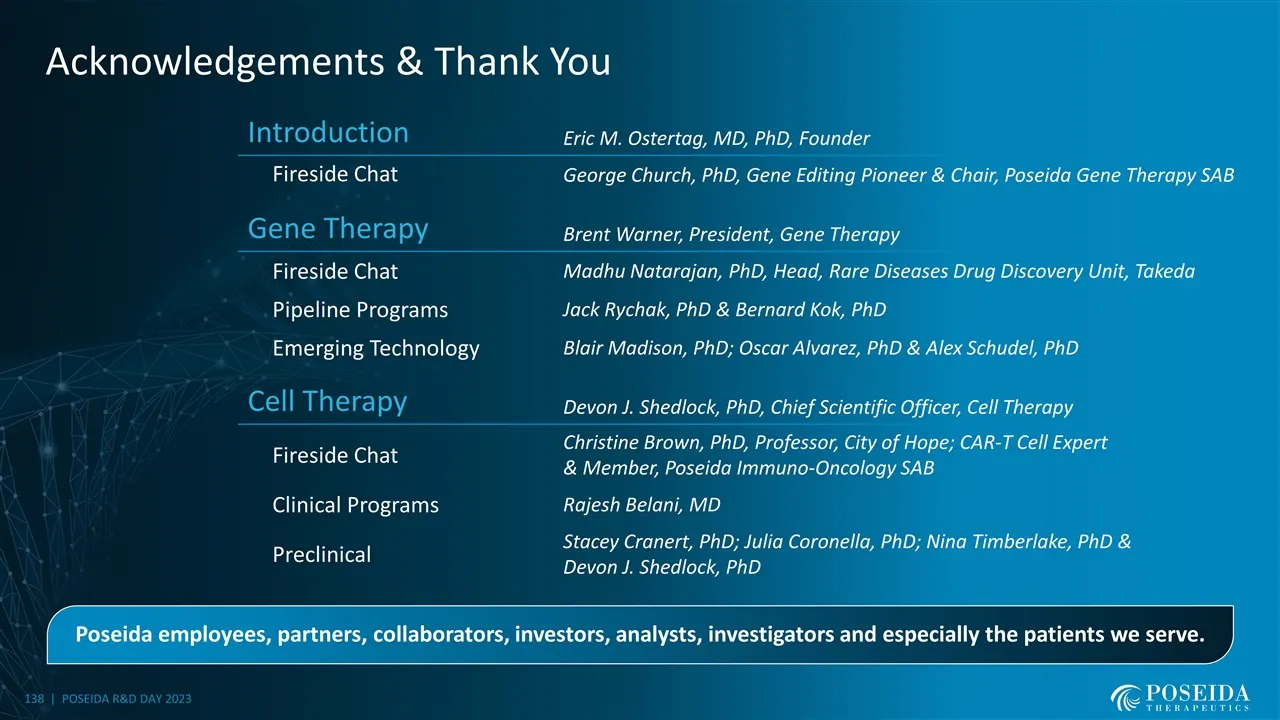
Acknowledgements & Thank You Introduction Eric M. Ostertag, MD, PhD, Founder Fireside Chat George Church, PhD, Gene Editing Pioneer & Chair, Poseida Gene Therapy SAB Gene Therapy Brent Warner, President, Gene Therapy Fireside Chat Madhu Natarajan, PhD, Head, Rare Diseases Drug Discovery Unit, Takeda
Slide 140: On a Mission to Redefine Cell & Gene Therapy
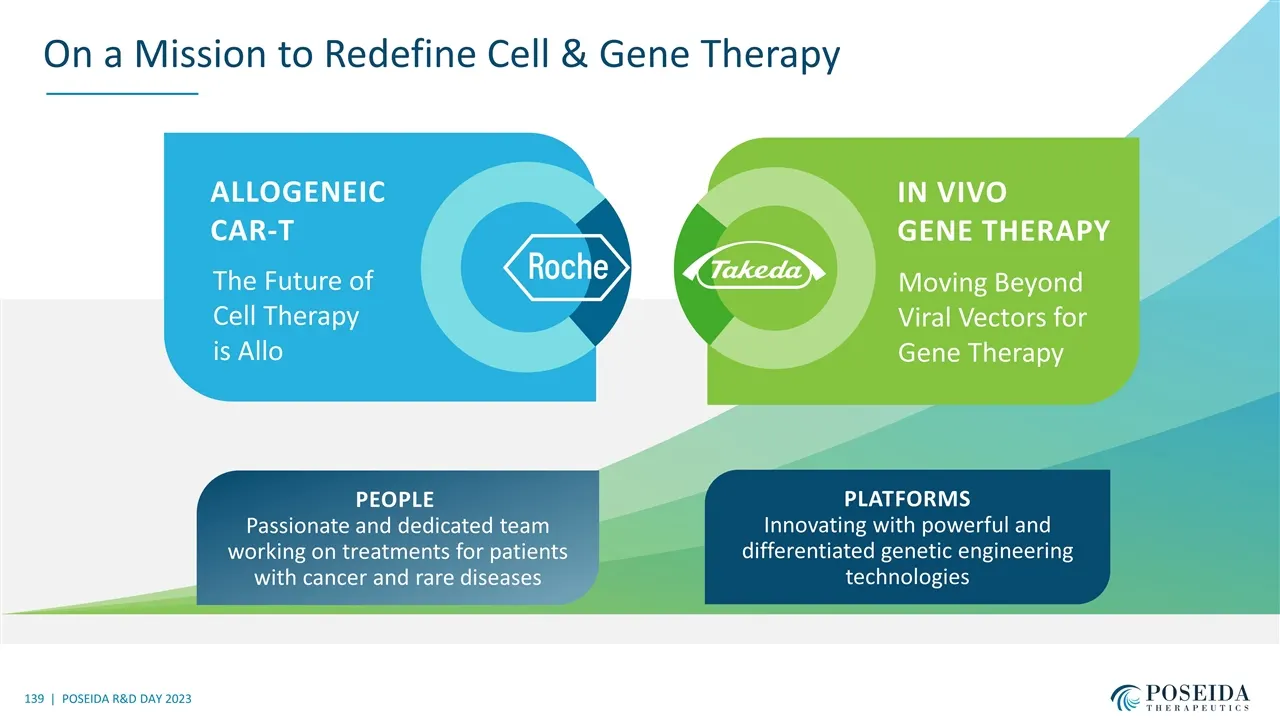
On a Mission to Redefine Cell & Gene Therapy PEOPLE Passionate and dedicated team working on treatments for patients with cancer and rare diseases PLATFORMS Innovating with powerful and differentiated genetic engineering technologies Moving Beyond Viral Vectors for Gene Therapy IN VIVO GENE THERAPY
Slide 141: Novel Technologies that Deliver Differentiated Products
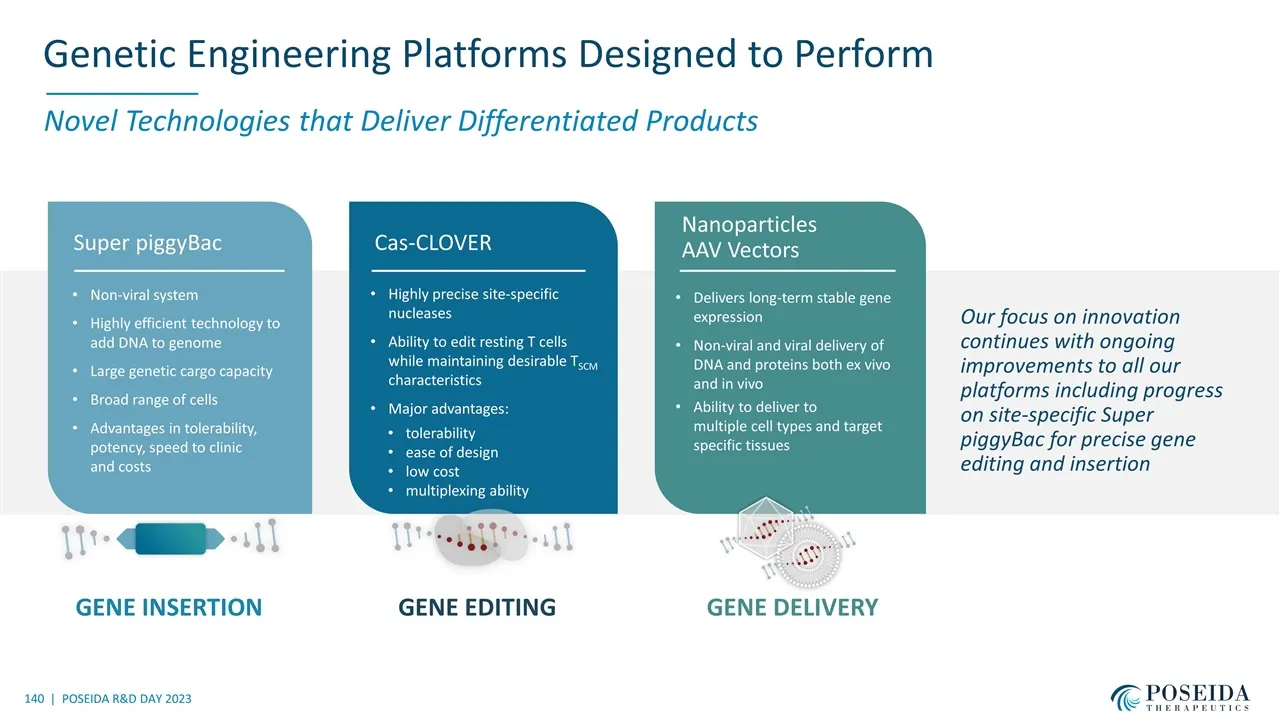
Novel Technologies that Deliver Differentiated Products Genetic Engineering Platforms Designed to Perform Our focus on innovation continues with ongoing improvements to all our platforms including progress on site-specific Super piggyBac for precise gene editing and insertion GENE INSERTION Non-vira
Slide 142: A New Class of Allogeneic CAR-T for Oncology
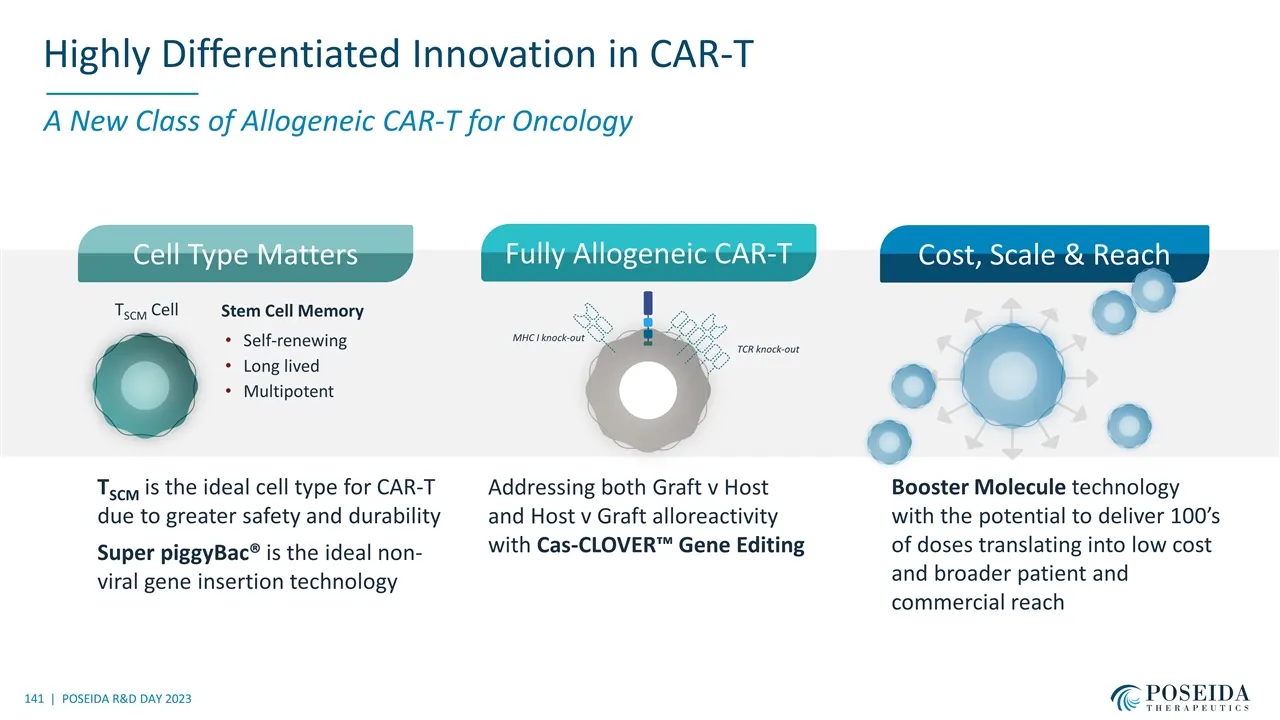
TSCM Cell Self-renewing Long lived Multipotent Stem Cell Memory A New Class of Allogeneic CAR-T for Oncology Highly Differentiated Innovation in CAR-T Cell Type Matters TSCM is the ideal cell type for CAR-T due to greater safety and durability Super piggyBac® is the ideal non-viral gene insertion te
Slide 143: A New Class of Products for Rare Diseases and Hard-to-Treat Populations
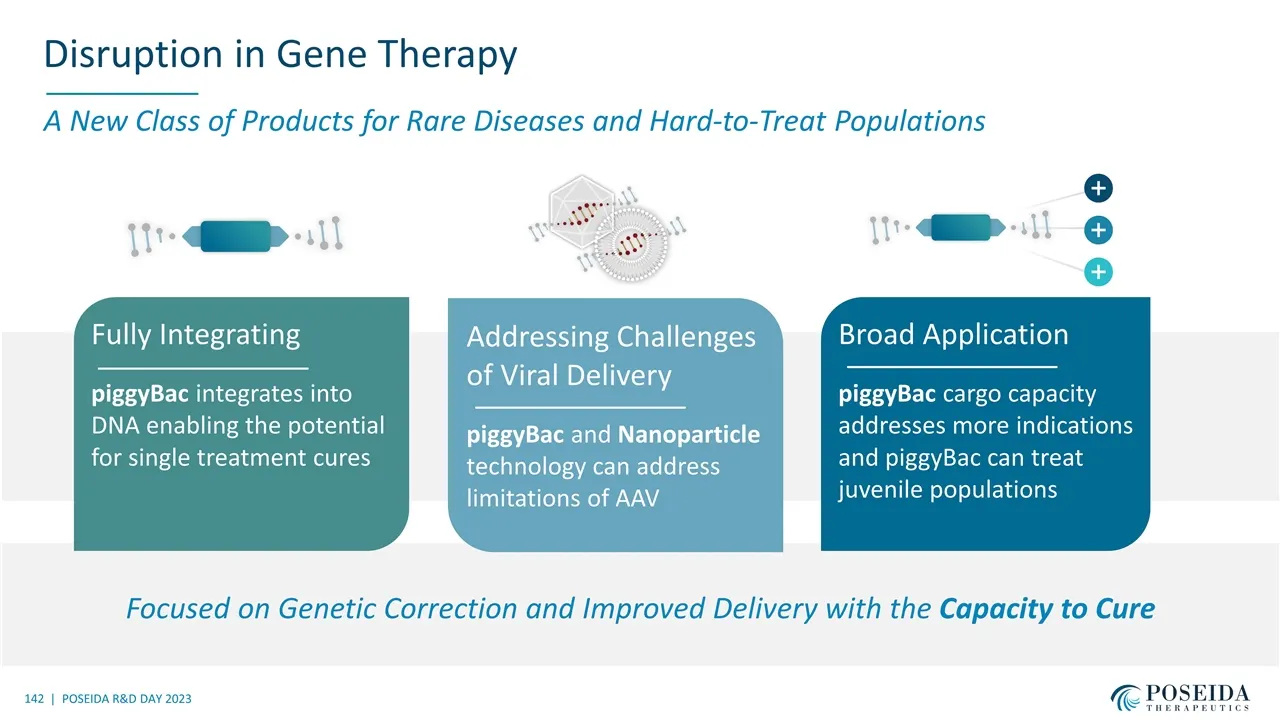
A New Class of Products for Rare Diseases and Hard-to-Treat Populations Disruption in Gene Therapy Fully Integrating piggyBac integrates into DNA enabling the potential for single treatment cures Addressing Challenges of Viral Delivery piggyBac and Nanoparticle technology can address limitations of
Slide 144: Leveraging the Power of Products, Partnerships, People and Platforms
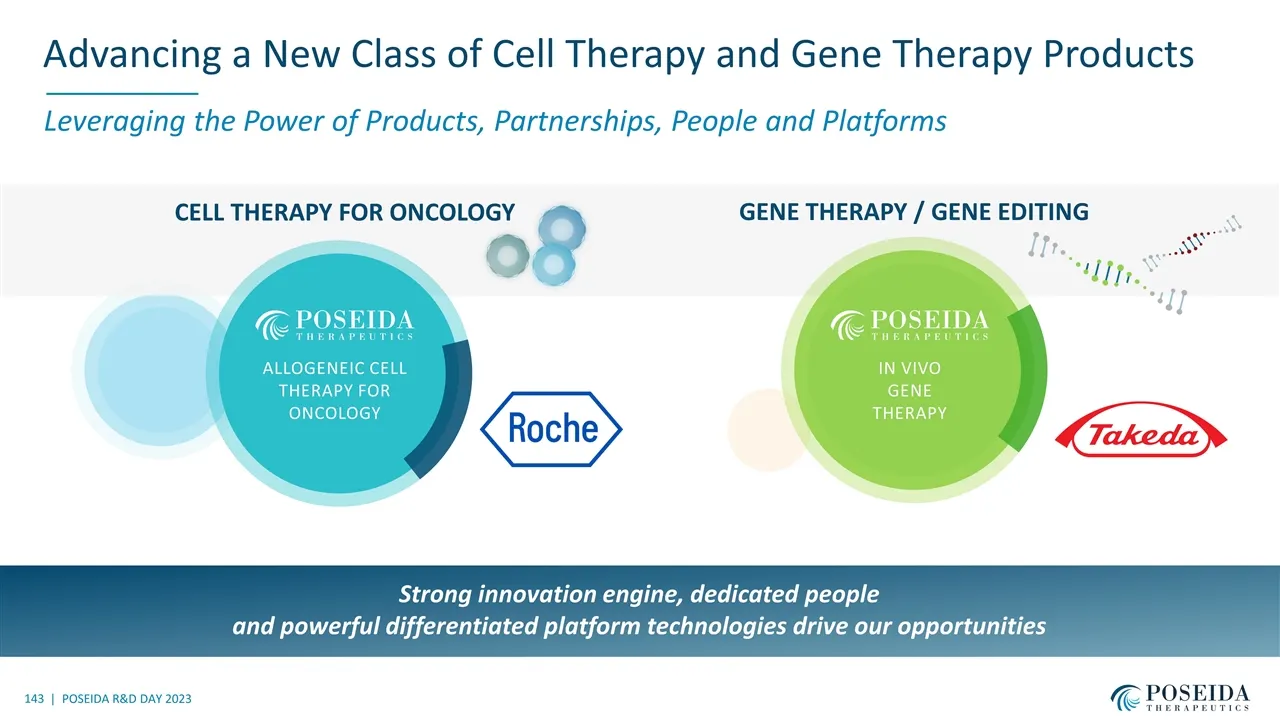
Leveraging the Power of Products, Partnerships, People and Platforms Advancing a New Class of Cell Therapy and Gene Therapy Products CELL THERAPY FOR ONCOLOGY GENE THERAPY / GENE EDITING Strong innovation engine, dedicated people and powerful differentiated platform technologies drive our opportunit

Slide 145: Q&A
Q&A
Source: SEC EDGAR · 8-K filed Feb 22, 2023
More decks from Poseida Therapeutics Inc
 Investor Day (November 2024)73 slides · Nov 14, 2024
 Investor Day (April 2024)87 slides · Apr 17, 2024
 Investor Presentation (August 2022)16 slides · Aug 3, 2022
 Investor Day (February 2022)180 slides · Feb 23, 2022
 Technical Presentation (February 2022)6 slides · Feb 17, 2022
 Technical Presentation (August 2021)16 slides · Aug 31, 2021