Belite Bio, Inc. · NASDAQ:BLTE
Belite Bio — Investor Presentation (2022)
16 slides from Belite Bio's investor presentation, Apr 5, 2022
Slide 1: RBP4 Technology for Macular Degeneration
RBP4 Technology for Macular Degeneration Mission for Vision 2022 Tom Lin, CEO e / tomlin@belitebio.com BELITE BIO / 1
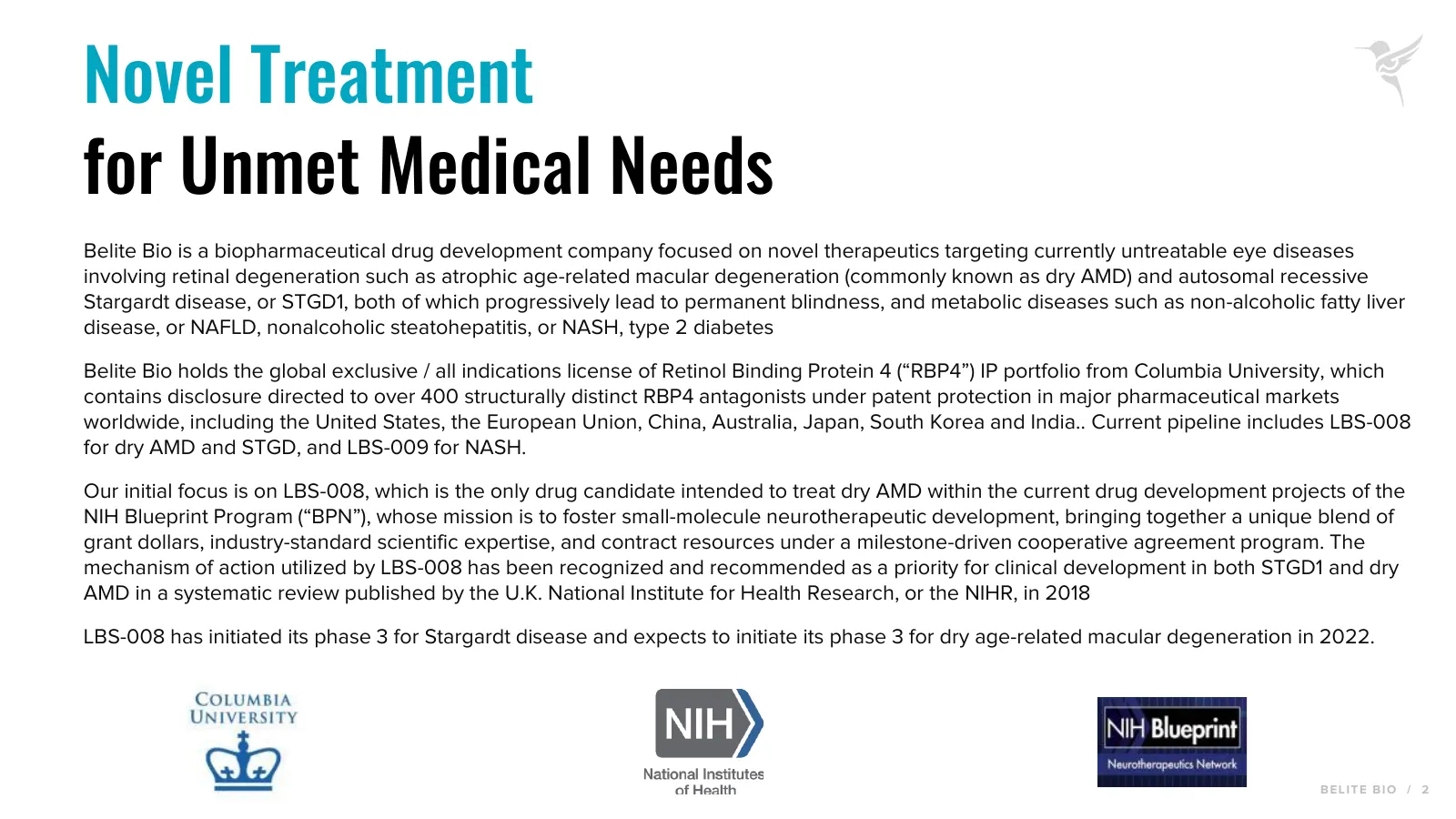
Slide 2: Novel Treatment for Unmet Medical Needs
Novel Treatment for Unmet Medical Needs Belite Bio is a biopharmaceutical drug development company focused on novel therapeutics targeting currently untreatable eye diseases involving retinal degeneration such as atrophic age-related macular degeneration (commonly known as dry AMD) and autosomal rec
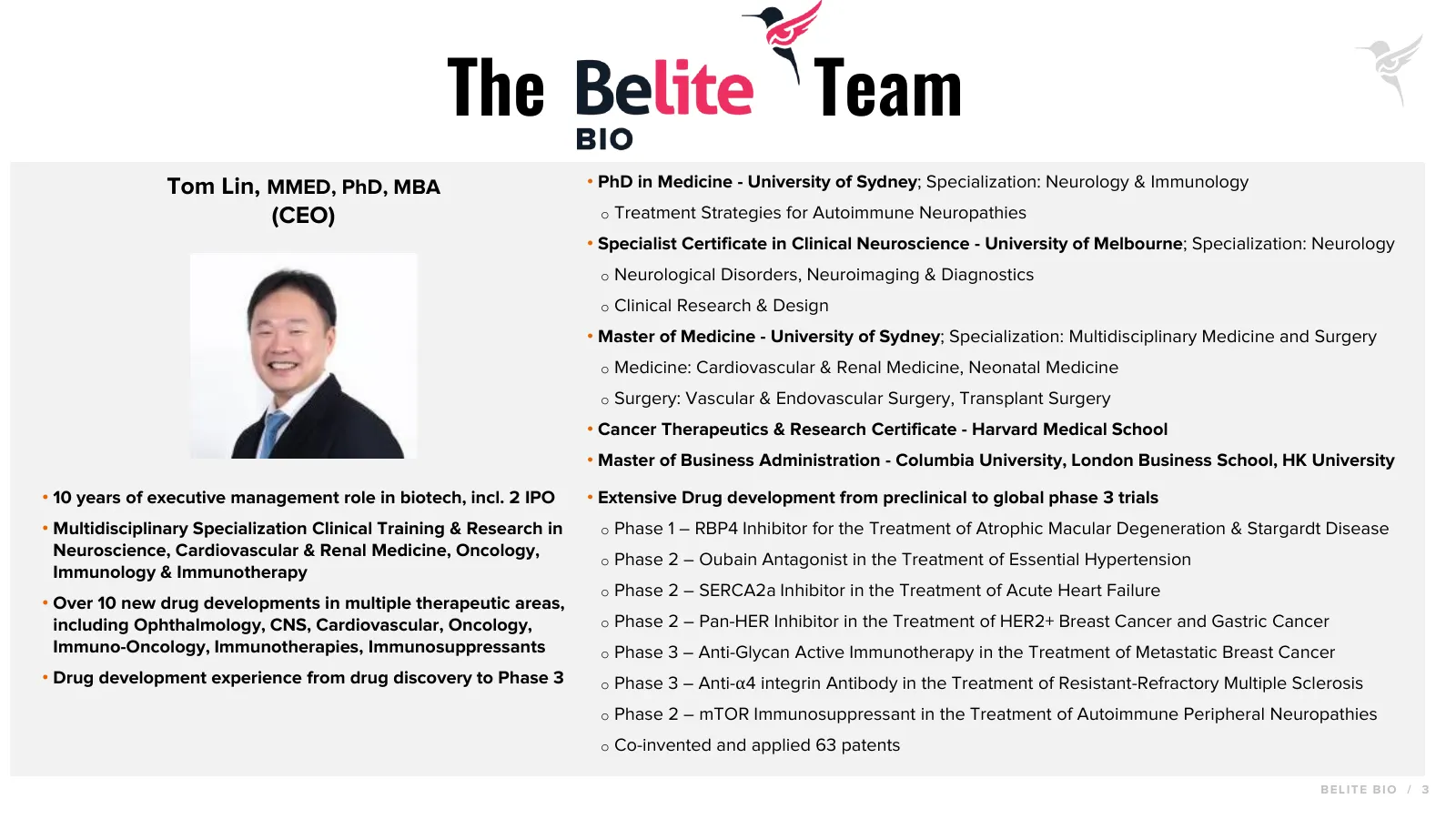
Slide 3: The Team
The Team Tom Lin, MMED, PhD, MBA • PhD in Medicine - University of Sydney; Specialization: Neurology & Immunology (CEO) o Treatment Strategies for Autoimmune Neuropathies • Specialist Certificate in Clinical Neuroscience - University of Melbourne; Specialization: Neurology o Neurological Disorders,
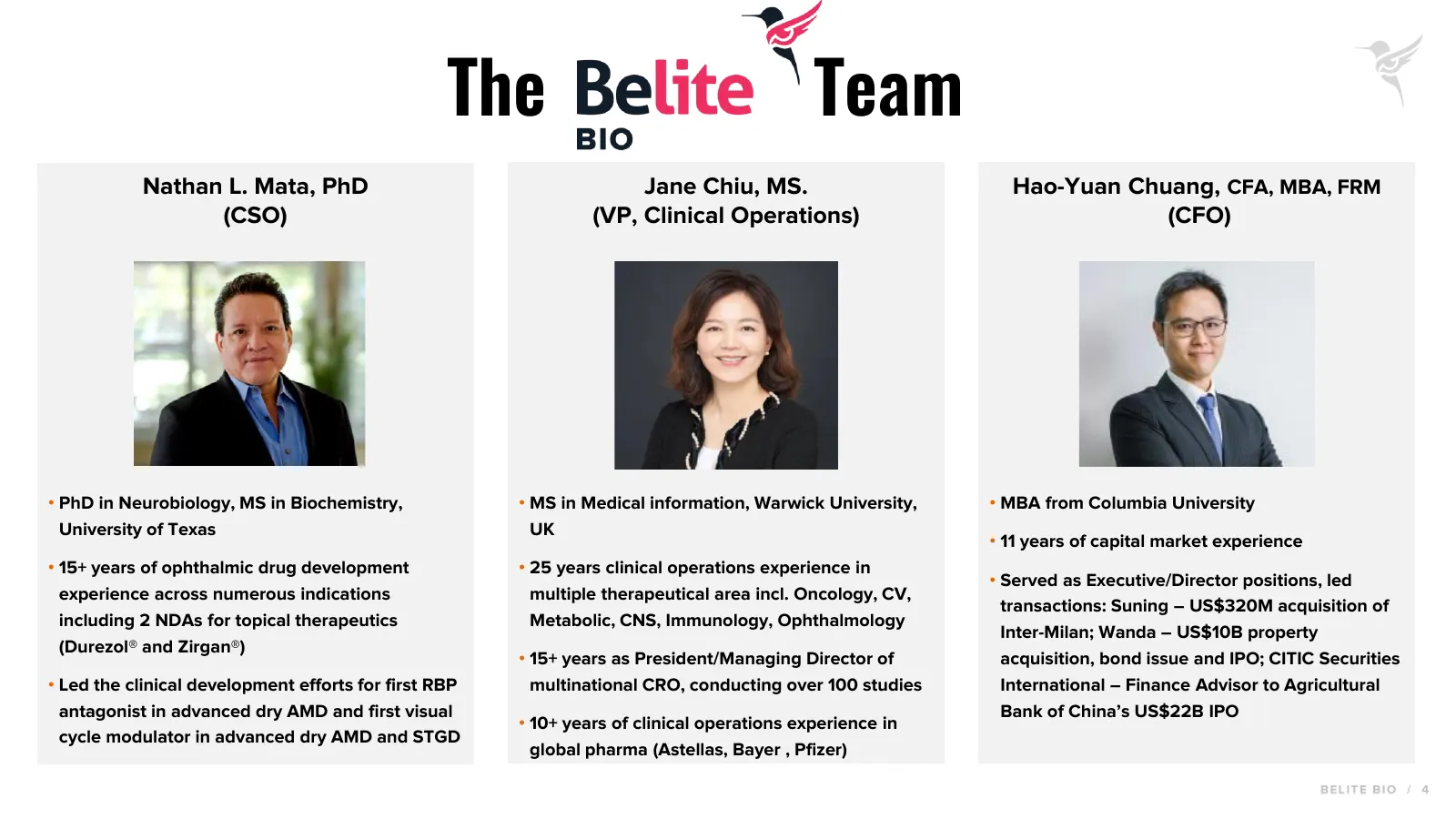
Slide 4: The Team
The Team Nathan L. Mata, PhD Jane Chiu, MS. Hao-Yuan Chuang, CFA, MBA, FRM (CSO) (VP, Clinical Operations) (CFO) • PhD in Neurobiology, MS in Biochemistry, • MS in Medical information, Warwick University, • MBA from Columbia University University of Texas UK • 11 years of capital market experience •
Slide 5: Ophthalmology Clinical Advisory Board
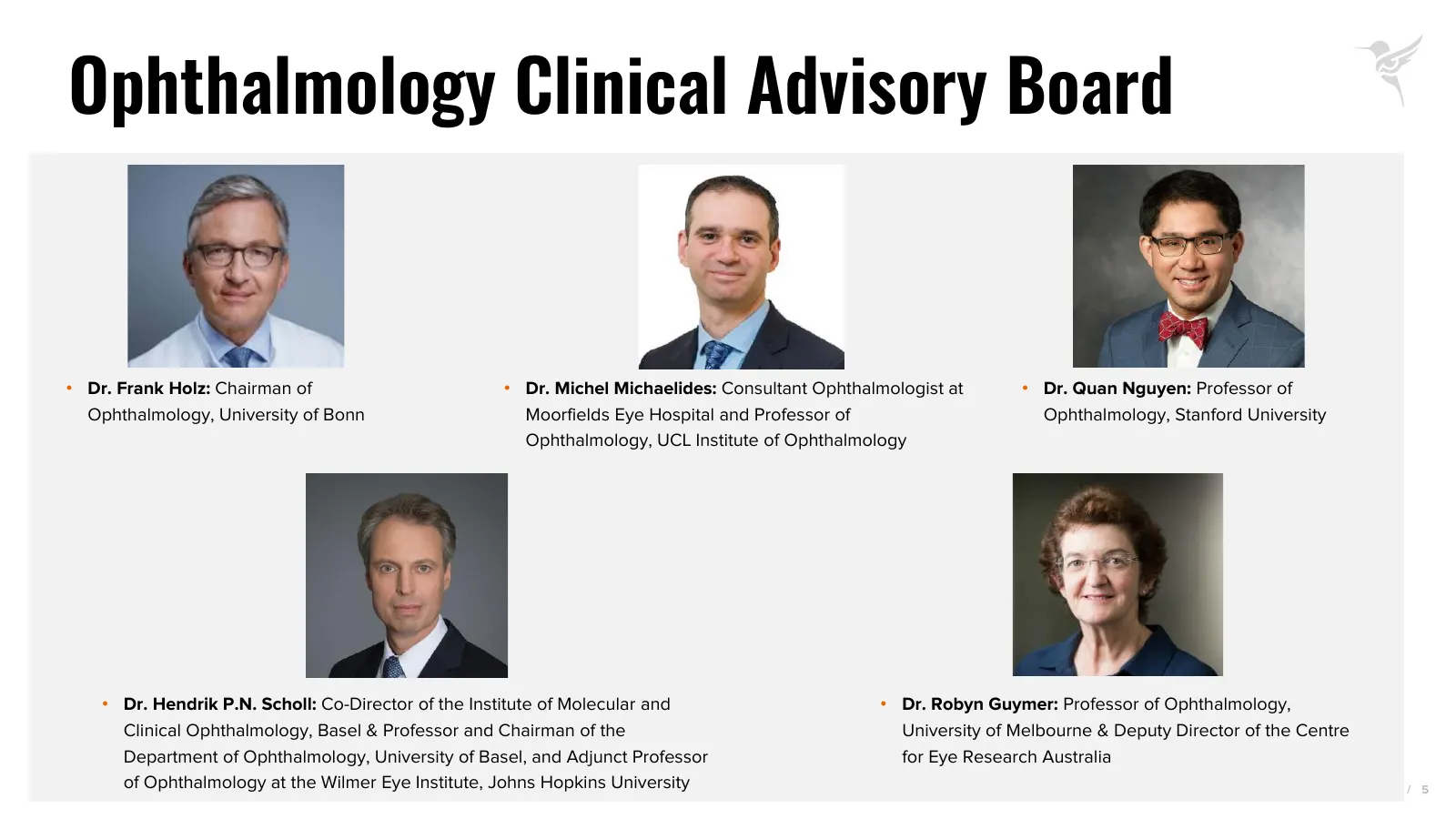
Ophthalmology Clinical Advisory Board • Dr. Frank Holz: Chairman of • Dr. Michel Michaelides: Consultant Ophthalmologist at • Dr. Quan Nguyen: Professor of Ophthalmology, University of Bonn Moorfields Eye Hospital and Professor of Ophthalmology, Stanford University Ophthalmology, UCL Institute of Op
Slide 6: Executive Summary
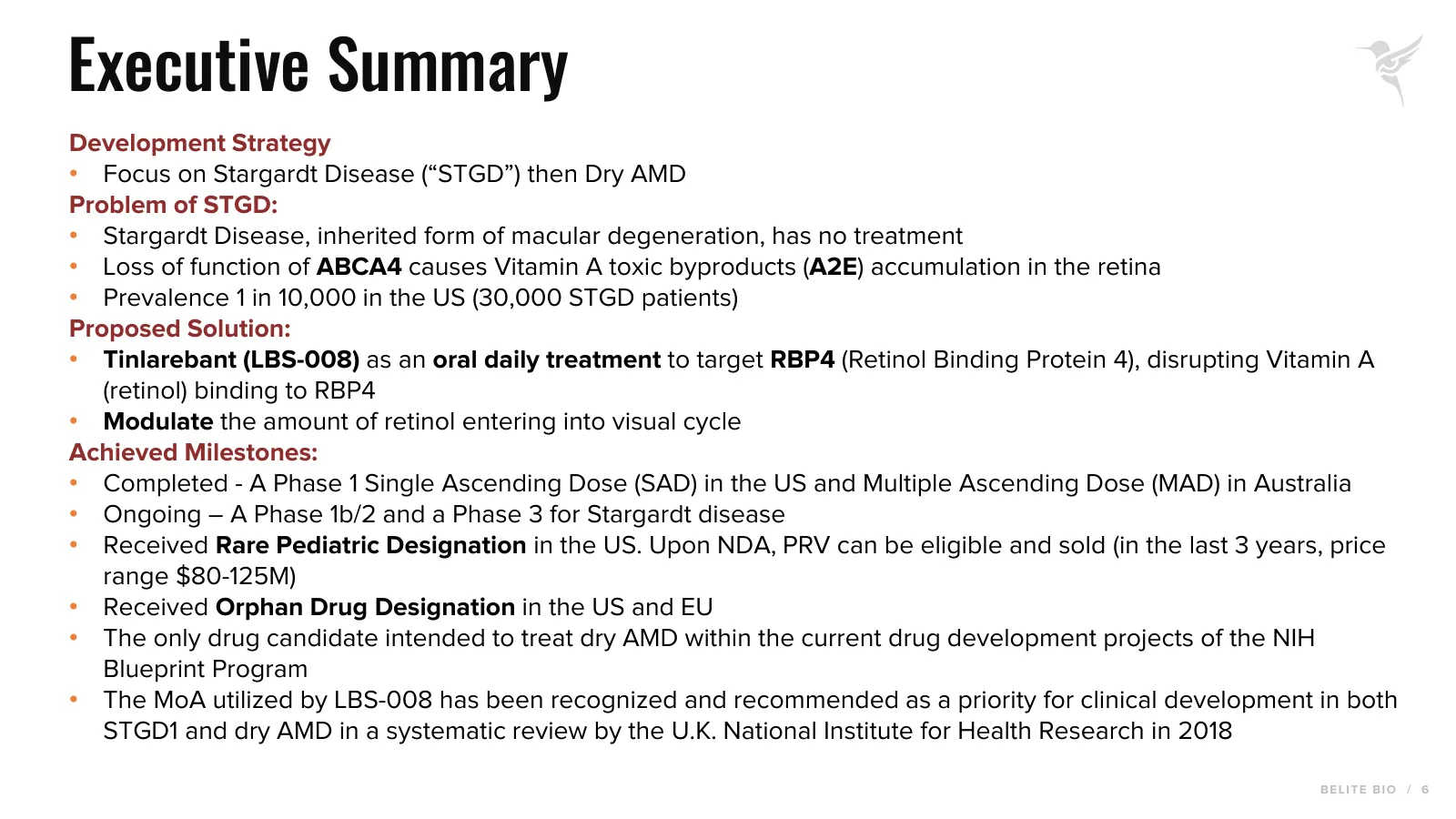
Executive Summary Development Strategy • Focus on Stargardt Disease (“STGD”) then Dry AMD Problem of STGD: • Stargardt Disease, inherited form of macular degeneration, has no treatment • Loss of function of ABCA4 causes Vitamin A toxic byproducts (A2E) accumulation in the retina • Prevalence 1 in 10
Slide 7: Meet the Unmet Need
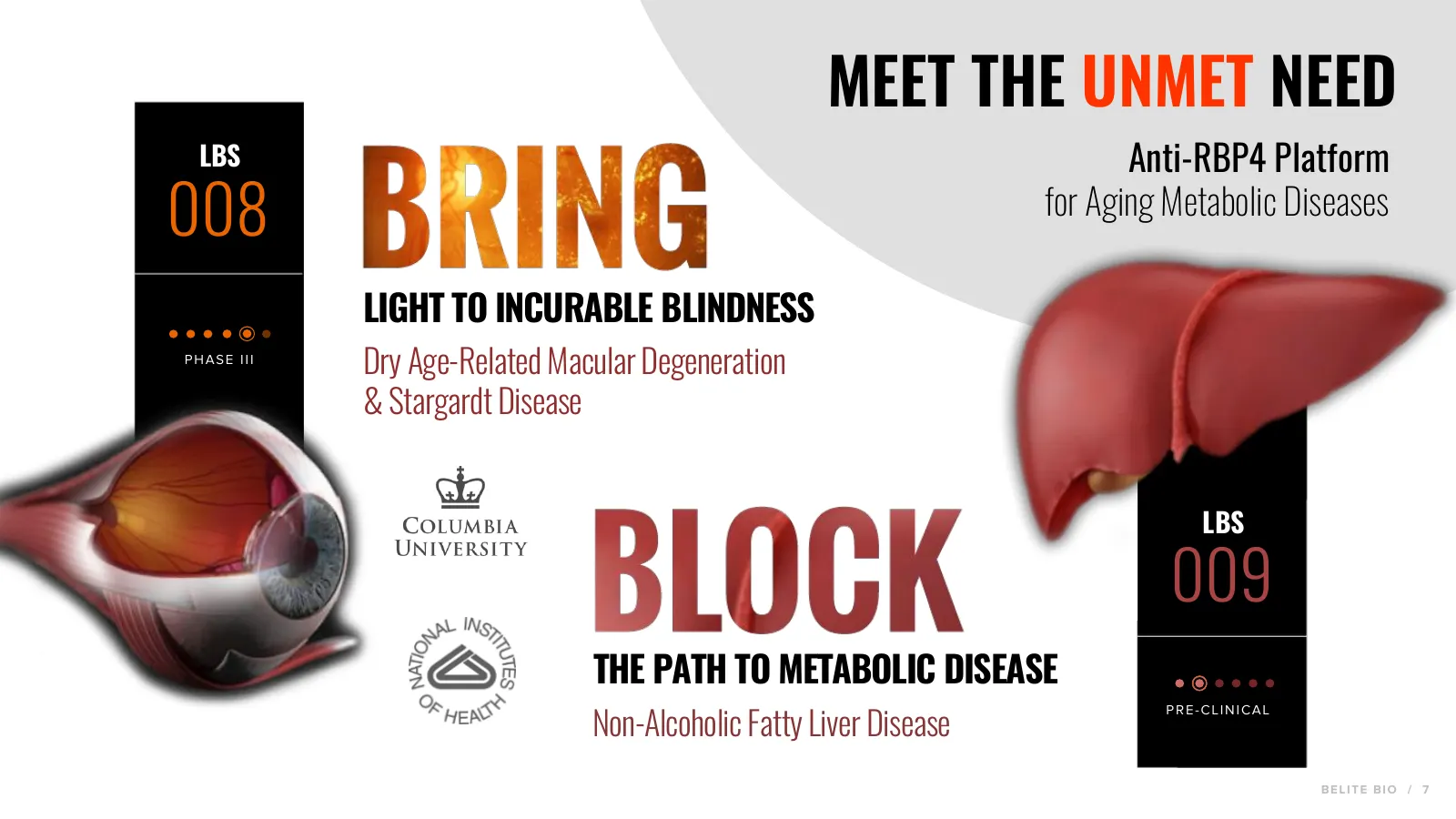
MEET THE UNMET NEED LBS Anti-RBP4 Platform 008 for Aging Metabolic Diseases LIGHT TO INCURABLE BLINDNESS PHASE III Dry Age-Related Macular Degeneration & Stargardt Disease LBS 009 THE PATH TO METABOLIC DISEASE Non-Alcoholic Fatty Liver Disease PRE-CLINICAL BELITE BIO / 7
Slide 8: Light to Incurable Blindness: Zero Approved Treatments
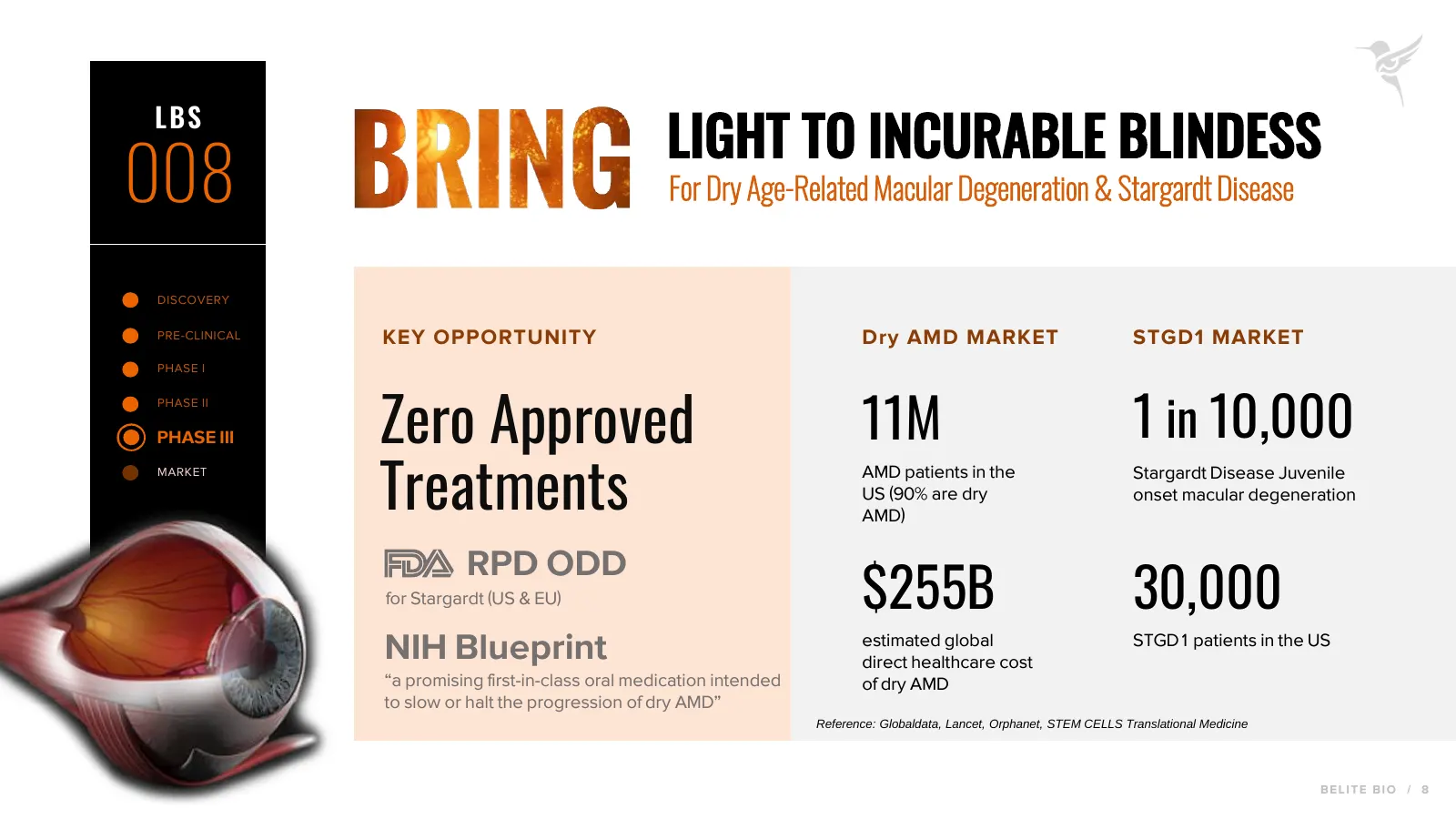
LIGHT TO INCURABLE BLINDESS LBS 008 For Dry Age-Related Macular Degeneration & Stargardt Disease DISCOVERY PRE-CLINICAL KEY OPPORTUNITY Dry AMD MARKET STGD1 MARKET PHASE I Zero Approved 11M 1 in 10,000 PHASE II PHASE III Treatments MARKET AMD patients in the Stargardt Disease Juvenile US (90% are dr
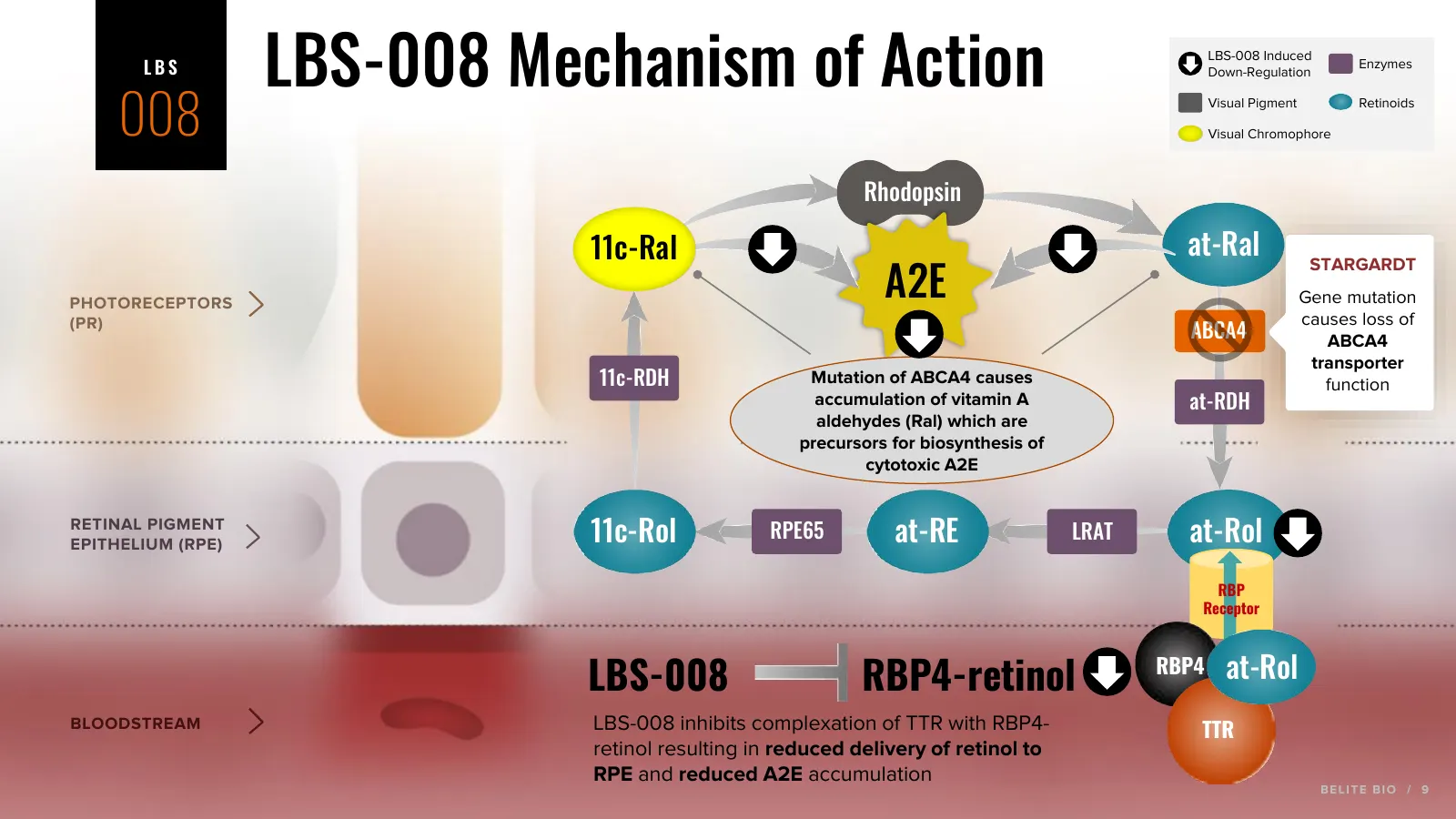
Slide 9: LBS-008 Mechanism of Action
LBS LBS-008 Mechanism of Action LBS-008 Induced Down-Regulation Enzymes 008 Visual Pigment Retinoids Visual Chromophore Rhodopsin 11c-Ral at-Ral A2E STARGARDT PHOTORECEPTORS Gene mutation causes loss of (PR) ABCA4 ABCA4 transporter 11c-RDH Mutation of ABCA4 causes function accumulation of vitamin A
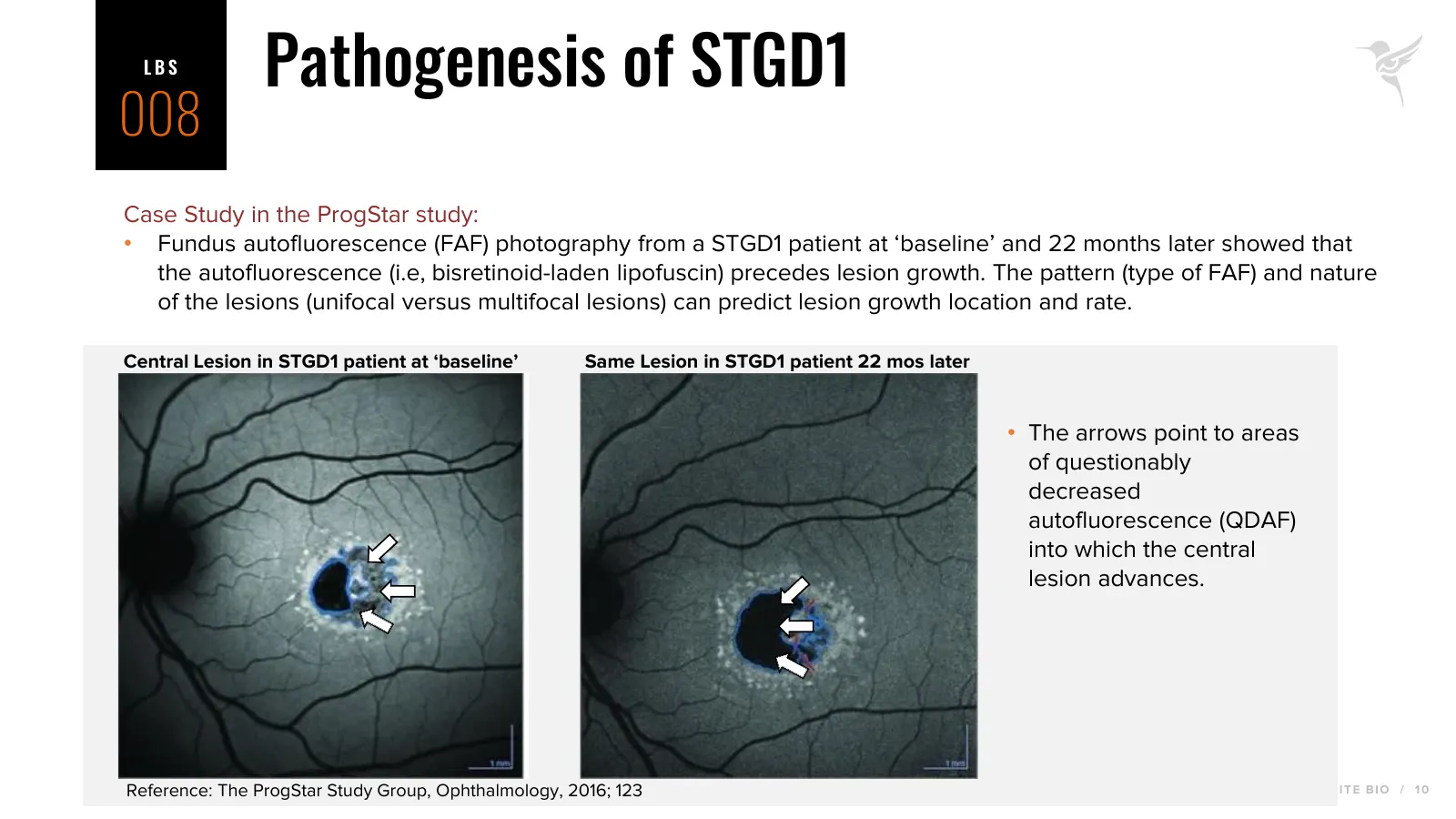
Slide 10: Pathogenesis of STGD1
LBS Pathogenesis of STGD1 008 Case Study in the ProgStar study: • Fundus autofluorescence (FAF) photography from a STGD1 patient at ‘baseline’ and 22 months later showed that the autofluorescence (i.e, bisretinoid-laden lipofuscin) precedes lesion growth. The pattern (type of FAF) and nature of the
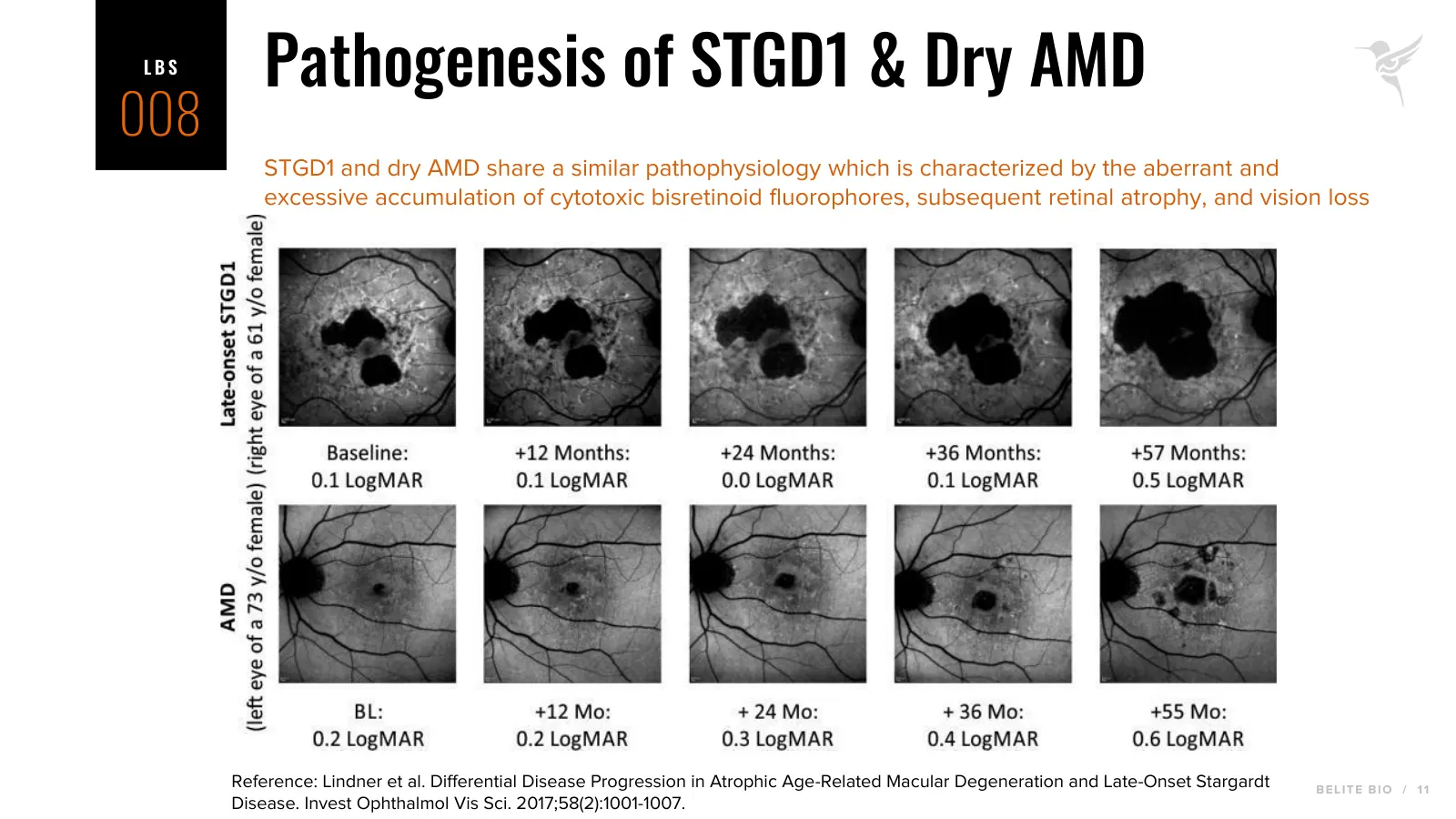
Slide 11: Pathogenesis of STGD1 & Dry AMD
LBS Pathogenesis of STGD1 & Dry AMD 008 STGD1 and dry AMD share a similar pathophysiology which is characterized by the aberrant and excessive accumulation of cytotoxic bisretinoid fluorophores, subsequent retinal atrophy, and vision loss Reference: Lindner et al. Differential Disease Progression in
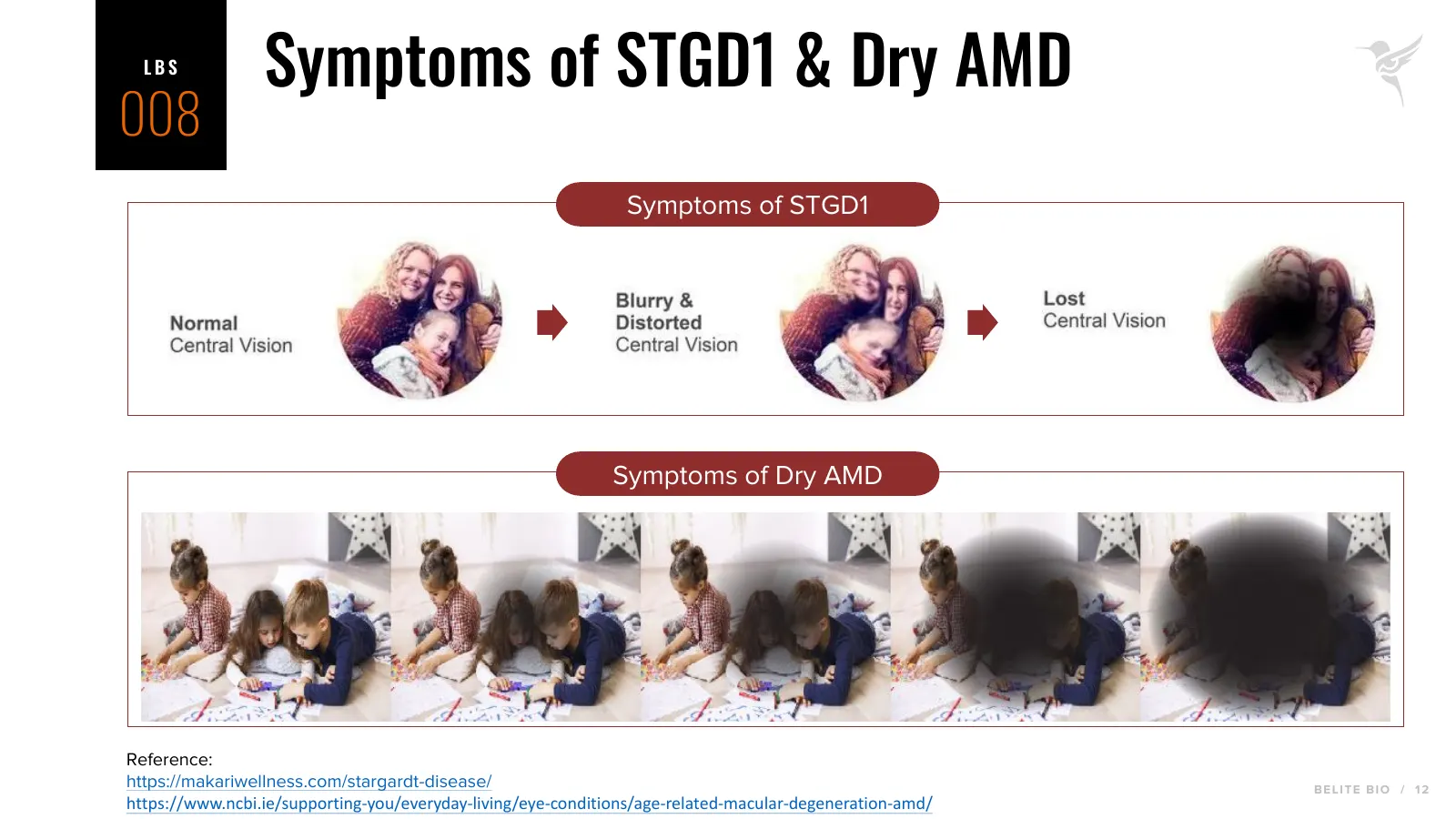
Slide 12: Symptoms of STGD1 & Dry AMD
LBS Symptoms of STGD1 & Dry AMD 008 Symptoms of STGD1 Symptoms of Dry AMD Reference: https://makariwellness.com/stargardt-disease/ BELITE BIO / 12 https://www.ncbi.ie/supporting-you/everyday-living/eye-conditions/age-related-macular-degeneration-amd/
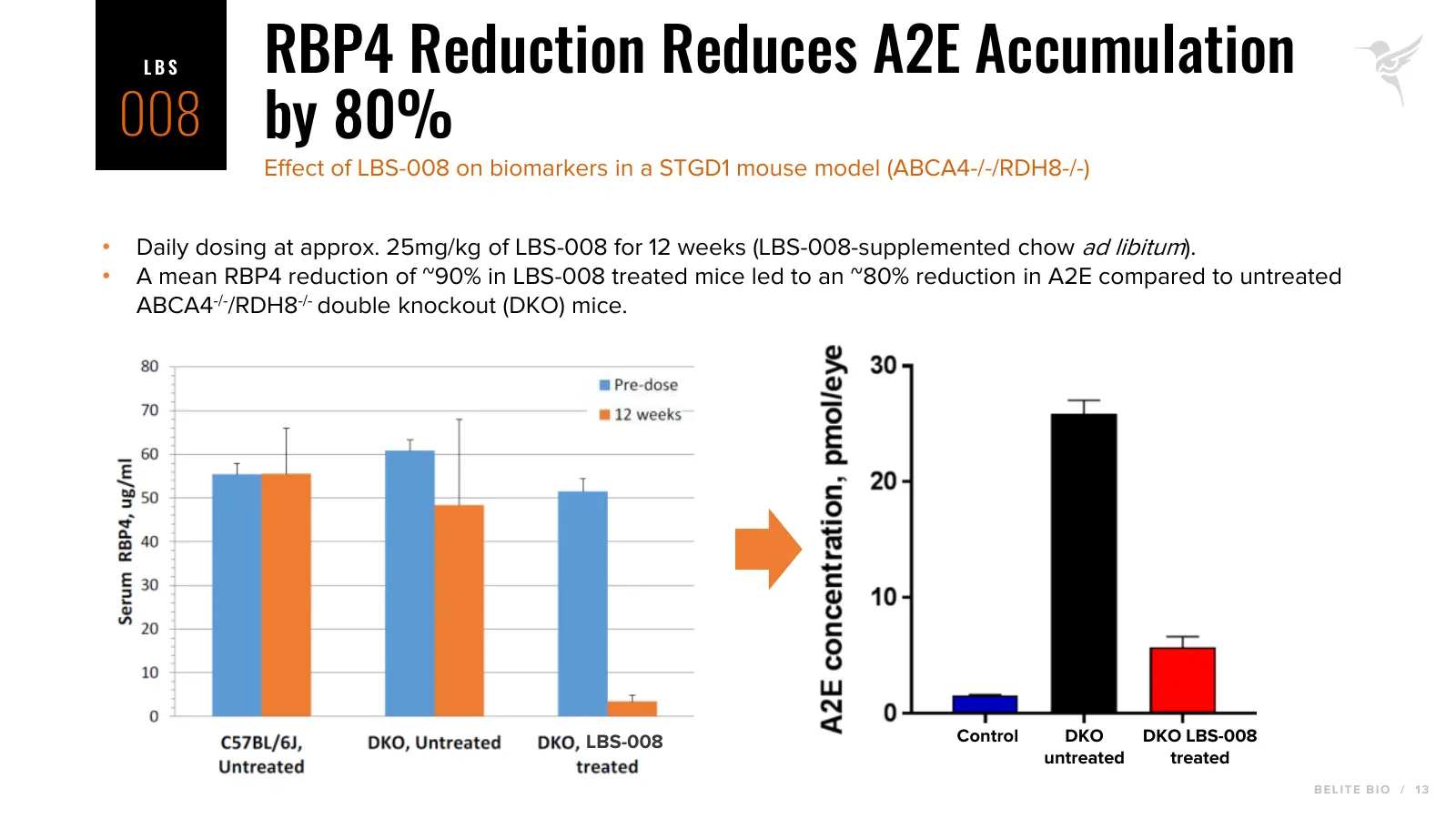
Slide 13: RBP4 Reduction Reduces A2E Accumulation by 80%
LBS RBP4 Reduction Reduces A2E Accumulation 008 by 80% Effect of LBS-008 on biomarkers in a STGD1 mouse model (ABCA4-/-/RDH8-/-) • Daily dosing at approx. 25mg/kg of LBS-008 for 12 weeks (LBS-008-supplemented chow ad libitum). • A mean RBP4 reduction of ~90% in LBS-008 treated mice led to an ~80% re
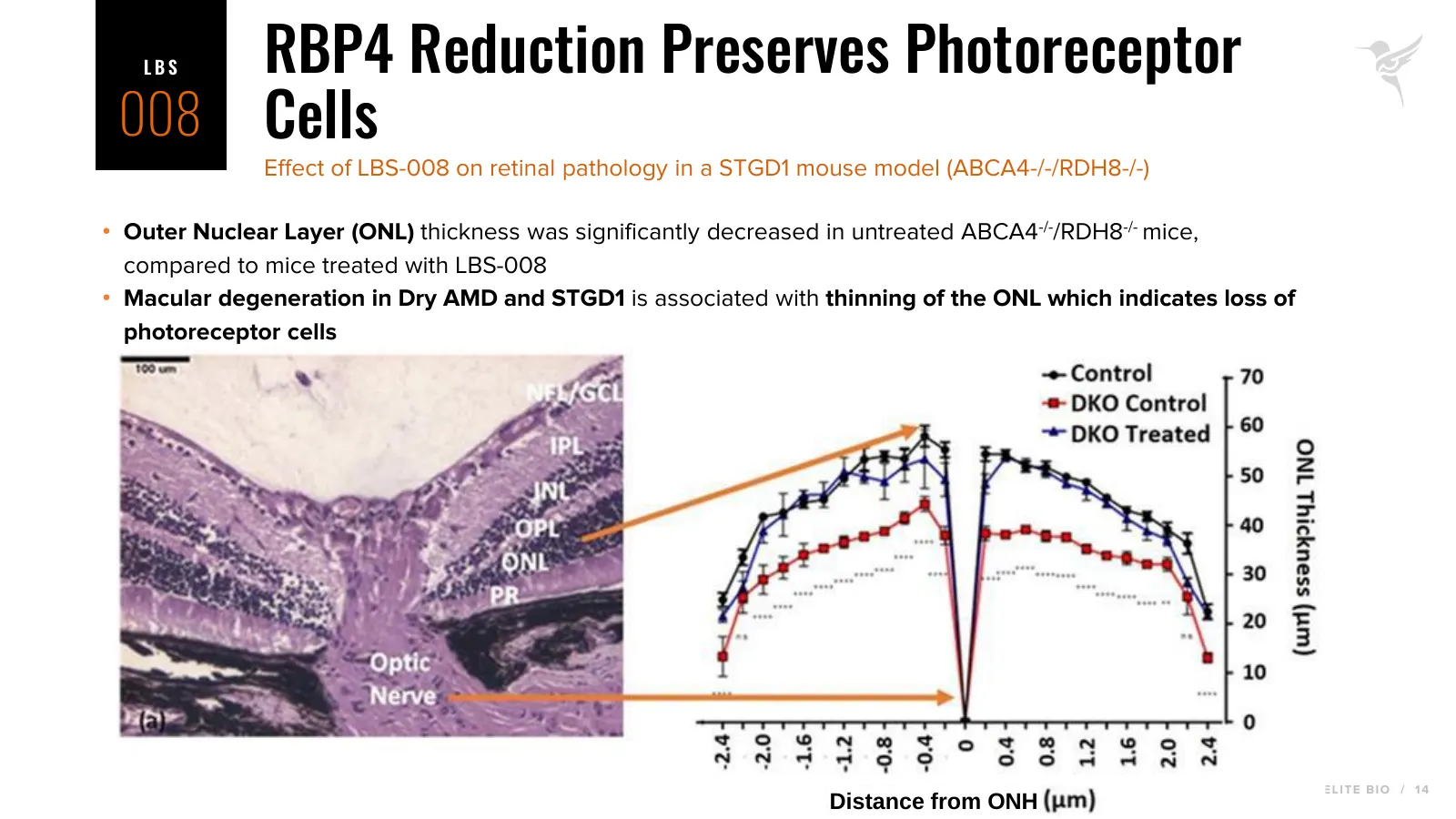
Slide 14: RBP4 Reduction Preserves Photoreceptor Cells
LBS RBP4 Reduction Preserves Photoreceptor 008 Cells Effect of LBS-008 on retinal pathology in a STGD1 mouse model (ABCA4-/-/RDH8-/-) • Outer Nuclear Layer (ONL) thickness was significantly decreased in untreated ABCA4-/-/RDH8-/- mice, compared to mice treated with LBS-008 • Macular degeneration in
Slide 15: Disclaimer
Disclaimer This presentation has been prepared by Belite Bio, Inc (the “Company”) solely for information purposes. This presentation does not constitute an offer to sell or issue or the solicitation of an offer to buy or acquire securities of the Company in any jurisdiction or an inducement to enter
Slide 16: RBP4 Technology for Macular Degeneration
RBP4 Technology for Macular Degeneration Mission for Vision Tom Lin, CEO e / tomlin@belitebio.com
Source: Internet Archive copy of belitebio.com
More decks from Belite Bio, Inc.
 Q1 2026 Earnings Presentation7 slides · May 20, 2026
 Q4 2025 Earnings Presentation8 slides · Mar 2, 2026
 Technical Presentation (December 2025)30 slides · Dec 1, 2025
 Q3 2025 Earnings Presentation7 slides · Nov 10, 2025
 Q2 2025 Earnings Presentation7 slides · Aug 11, 2025
 Q1 2025 Earnings Presentation26 slides · May 14, 2025