Belite Bio, Inc. · NASDAQ:BLTE
Belite Bio — Technical Presentation
14 slides from Belite Bio's technical presentation
Slide 1: Topline Results from the Phase 3 DRAGON Study of Tinlarebant for Adolescent Stargardt's Disease
Topline Results from the Phase 3 DRAGON Study of Tinlarebant for Adolescent Stargardt’s Disease Ruifang Sui, MD Beijing Union Medical College Hospital, Beijing, China BELITE BIO / 1
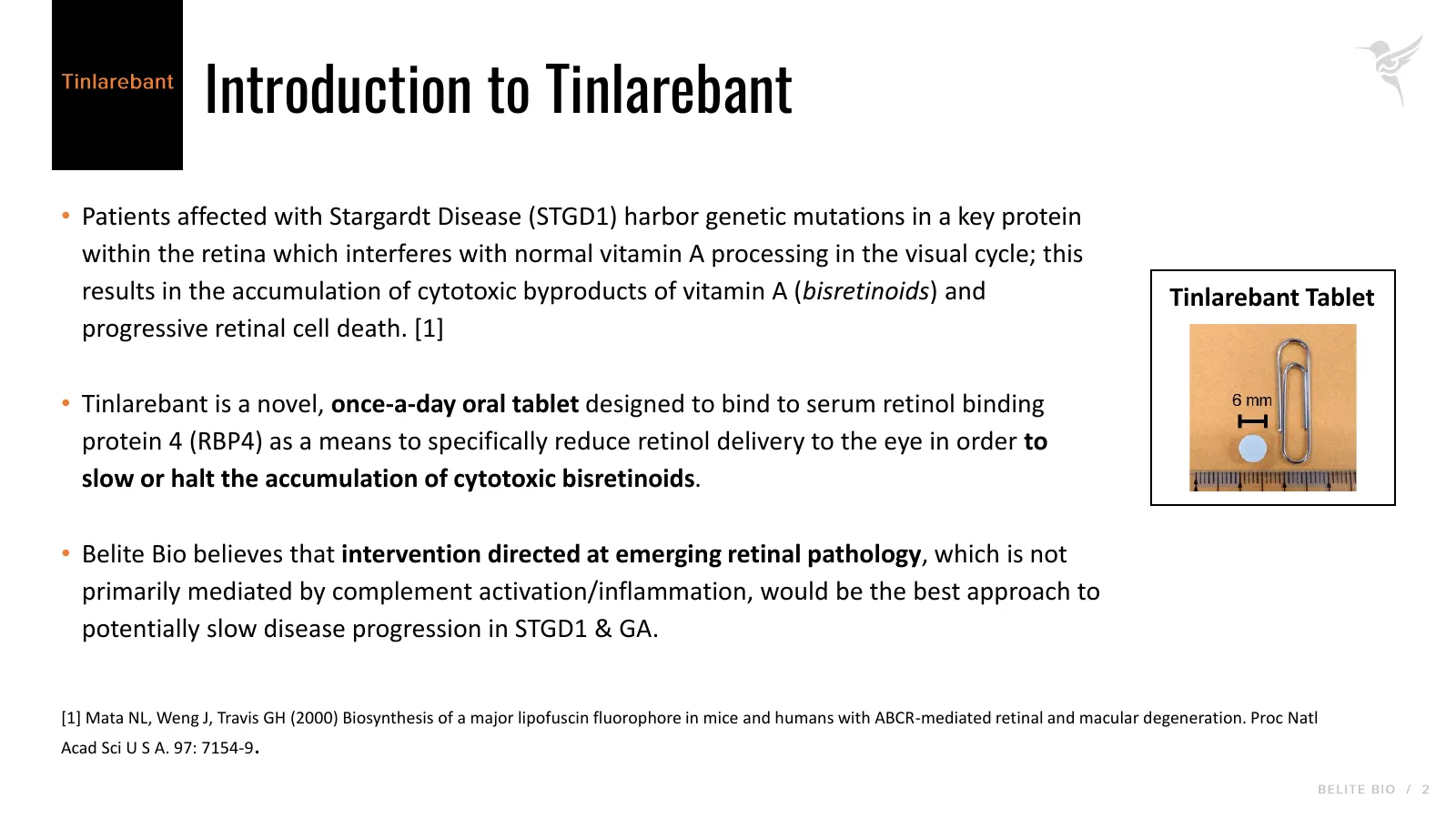
Slide 2: Introduction to Tinlarebant
Tinlarebant (LBS -008) Introduction to Tinlarebant • Patients affected with Stargardt Disease (STGD1) harbor genetic mutations in a key protein within the retina which interferes with normal vitamin A processing in the visual cycle; this results in the accumulation of cytotoxic byproducts of vitamin
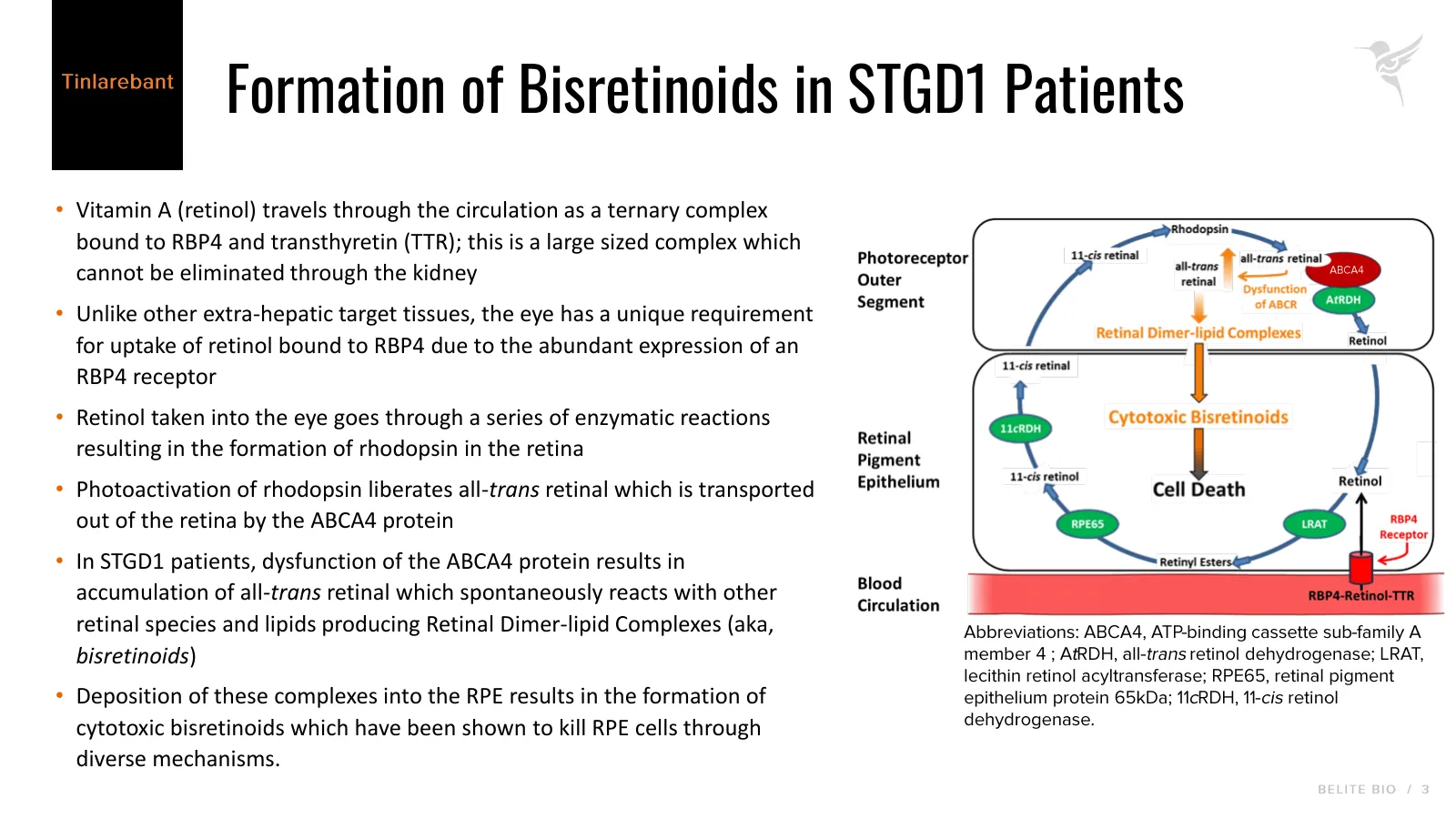
Slide 3: Formation of Bisretinoids in STGD1 Patients
Tinlarebant (LBS -008) Formation of Bisretinoids in STGD1 Patients • Vitamin A (retinol) travels through the circulation as a ternary complex bound to RBP4 and transthyretin (TTR); this is a large sized complex which cannot be eliminated through the kidney ABCA4 • Unlike other extra-hepatic target t
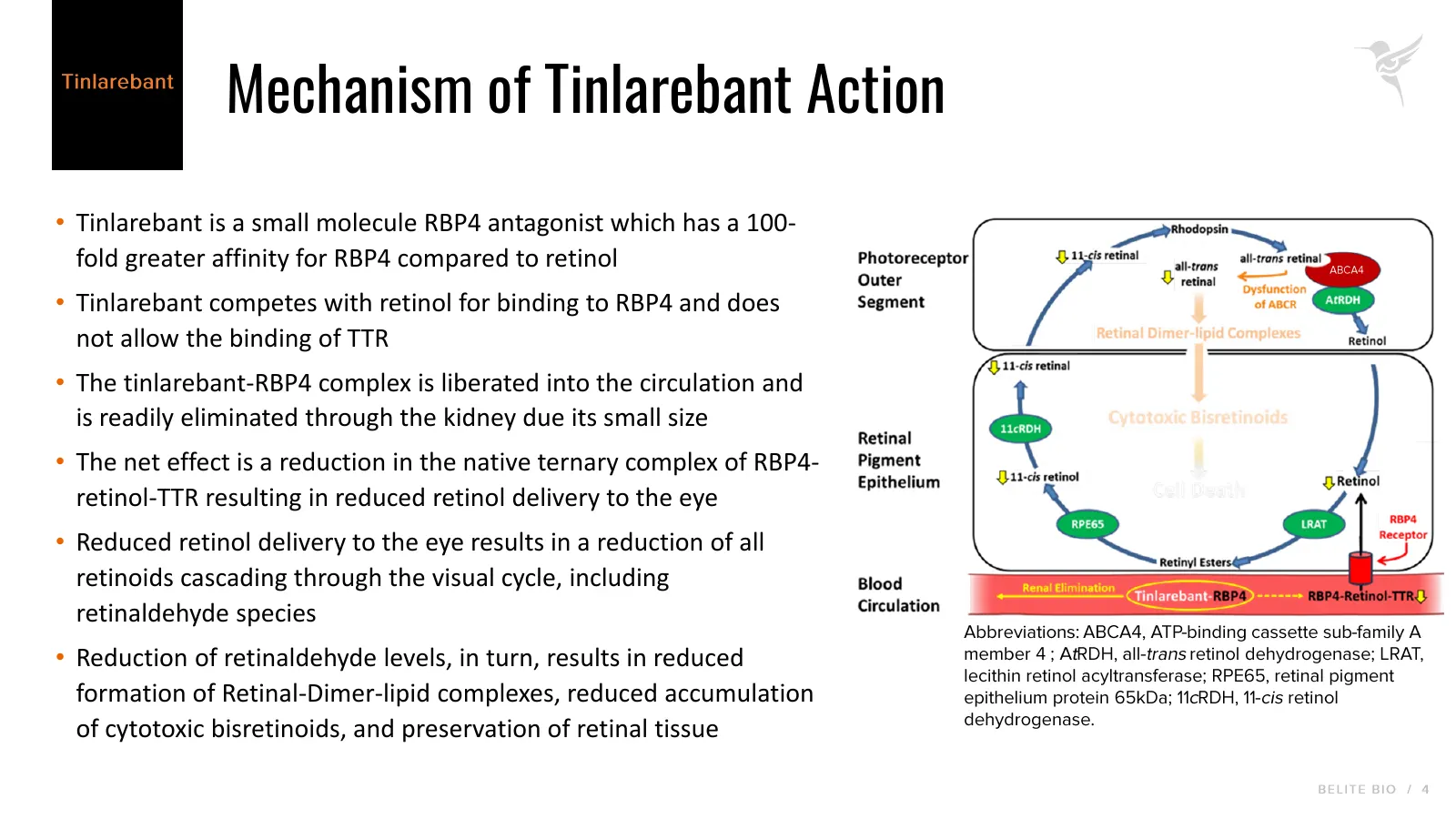
Slide 4: Mechanism of Tinlarebant Action
Tinlarebant (LBS -008) Mechanism of Tinlarebant Action • Tinlarebant is a small molecule RBP4 antagonist which has a 100- fold greater affinity for RBP4 compared to retinol ABCA4 • Tinlarebant competes with retinol for binding to RBP4 and does not allow the binding of TTR • The tinlarebant-RBP4 comp
Slide 5: Phase 3 DRAGON Trial in Stargardt Disease
Phase 3 DRAGON Trial in Stargardt Disease
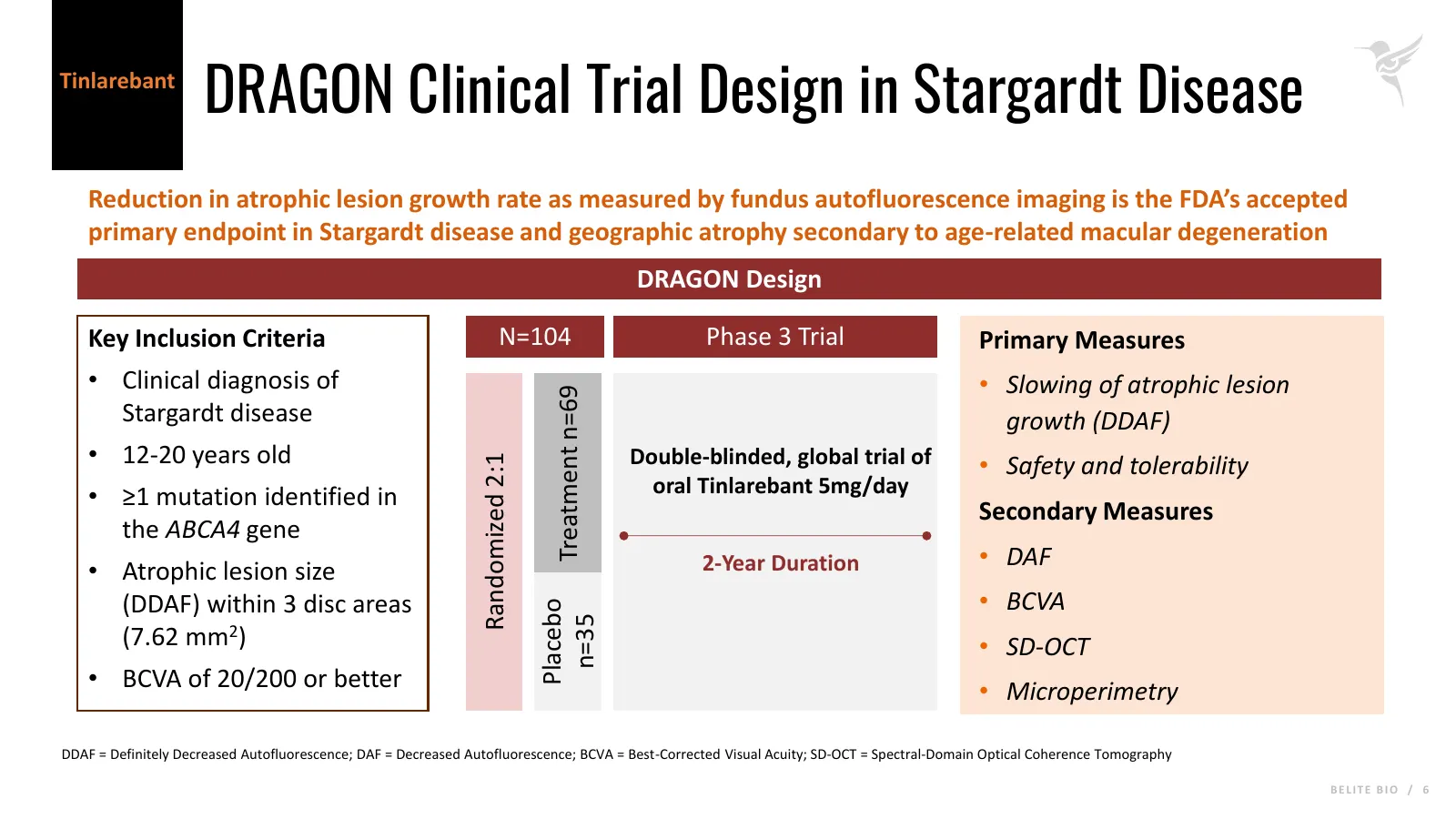
Slide 6: DRAGON Clinical Trial Design in Stargardt Disease
Tinlarebant DRAGON Clinical Trial Design in Stargardt Disease Reduction in atrophic lesion growth rate as measured by fundus autofluorescence imaging is the FDA’s accepted primary endpoint in Stargardt disease and geographic atrophy secondary to age-related macular degeneration DRAGON Design Key Inc
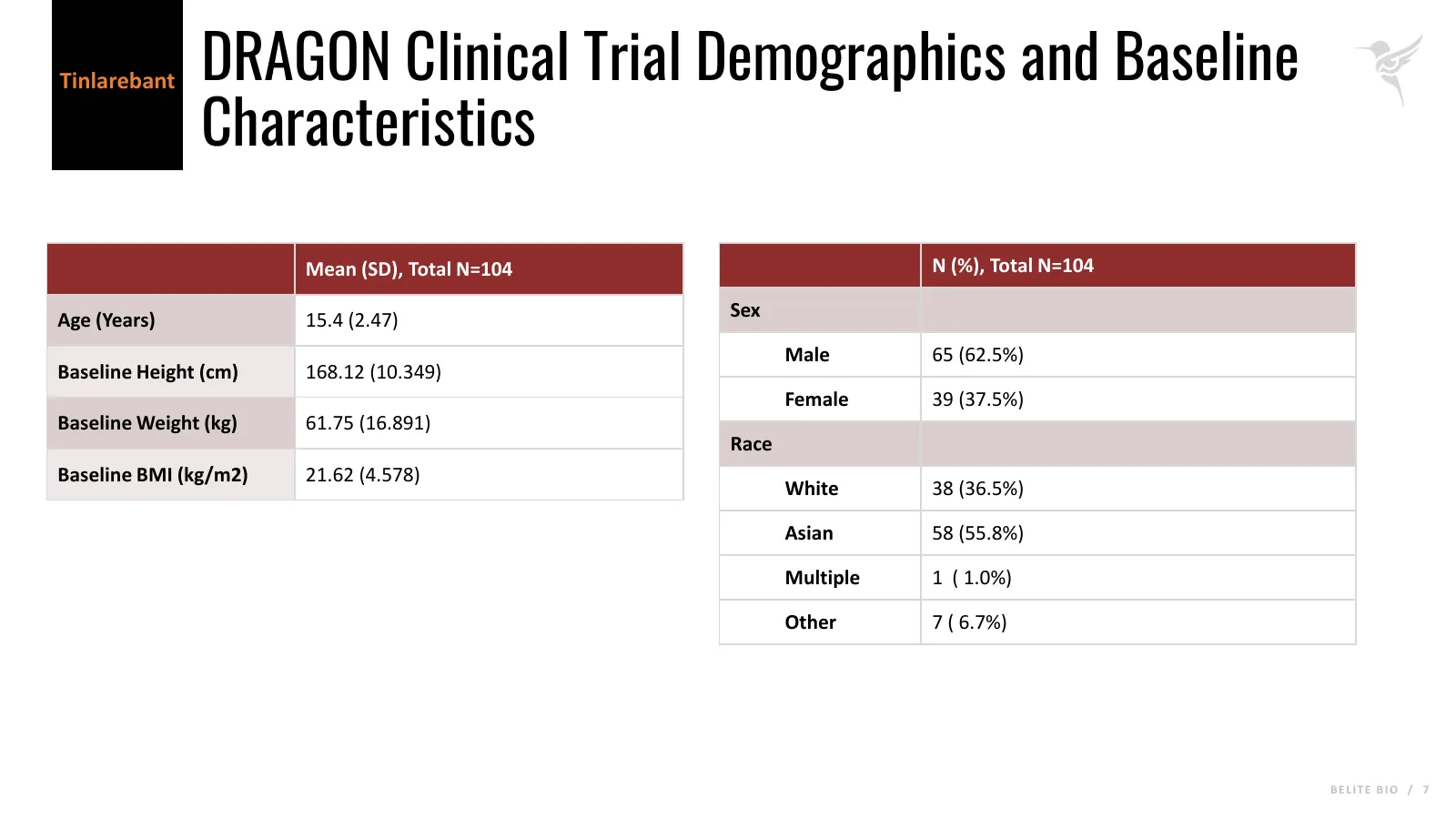
Slide 7: DRAGON Clinical Trial Demographics and Baseline Characteristics
Tinlarebant DRAGON Clinical Trial Demographics and Baseline Characteristics Mean (SD), Total N=104 N (%), Total N=104 Age (Years) 15.4 (2.47) Sex Male 65 (62.5%) Baseline Height (cm) 168.12 (10.349) Female 39 (37.5%) Baseline Weight (kg) 61.75 (16.891) Race Baseline BMI (kg/m2) 21.62 (4.578) White 3
Slide 8: Phase 3 DRAGON Trial in Stargardt Disease - Data from DRAGON Topline Report
Phase 3 DRAGON Trial in Stargardt Disease -Data from DRAGON Topline Report
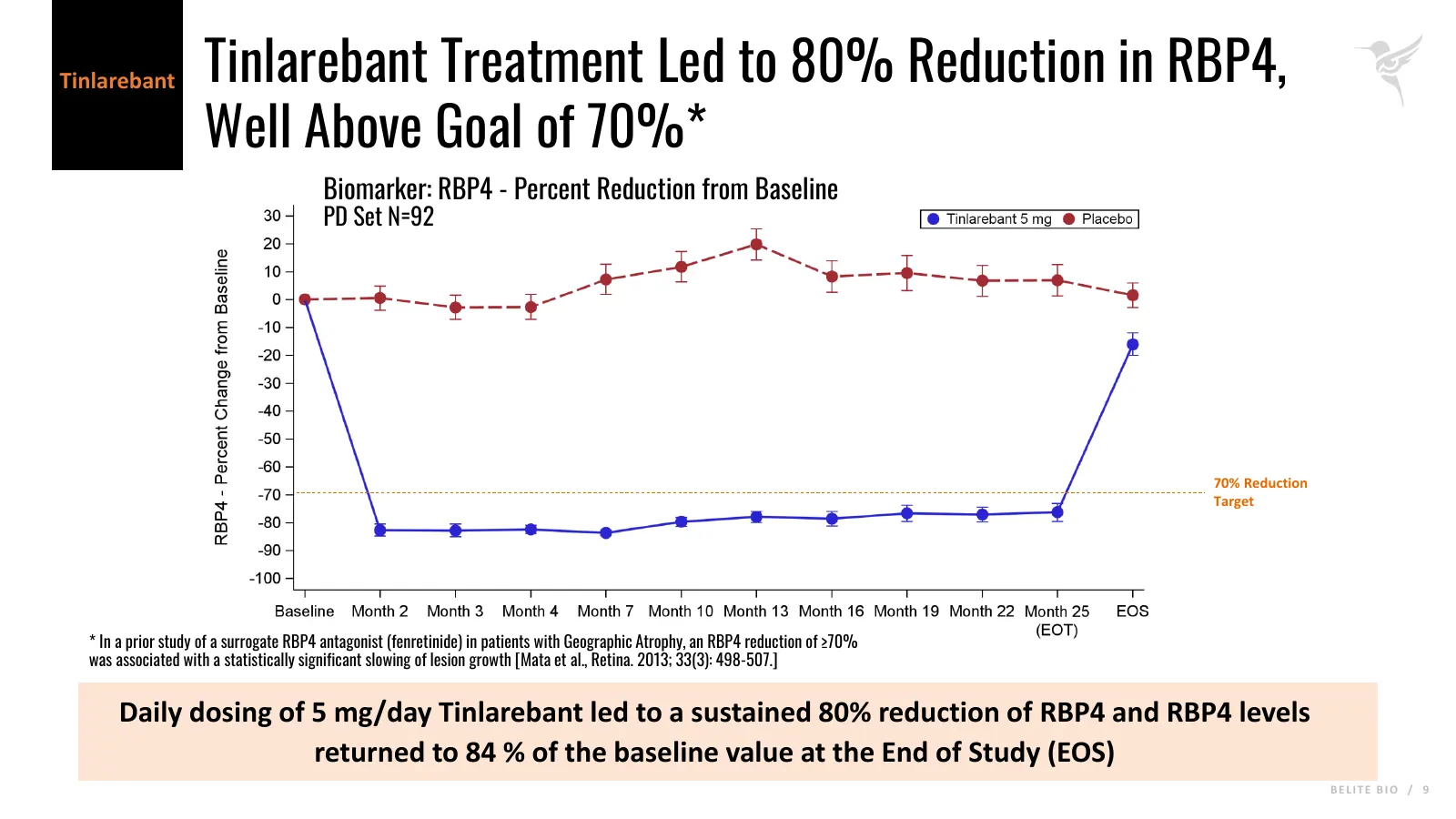
Slide 9: Tinlarebant Treatment Led to 80% Reduction in RBP4, Well Above Goal of 70%
Tinlarebant Tinlarebant Treatment Led to 80% Reduction in RBP4, Well Above Goal of 70%* Biomarker: RBP4 - Percent Reduction from Baseline PD Set N=92 70% Reduction Target * In a prior study of a surrogate RBP4 antagonist (fenretinide) in patients with Geographic Atrophy, an RBP4 reduction of ≥70% wa
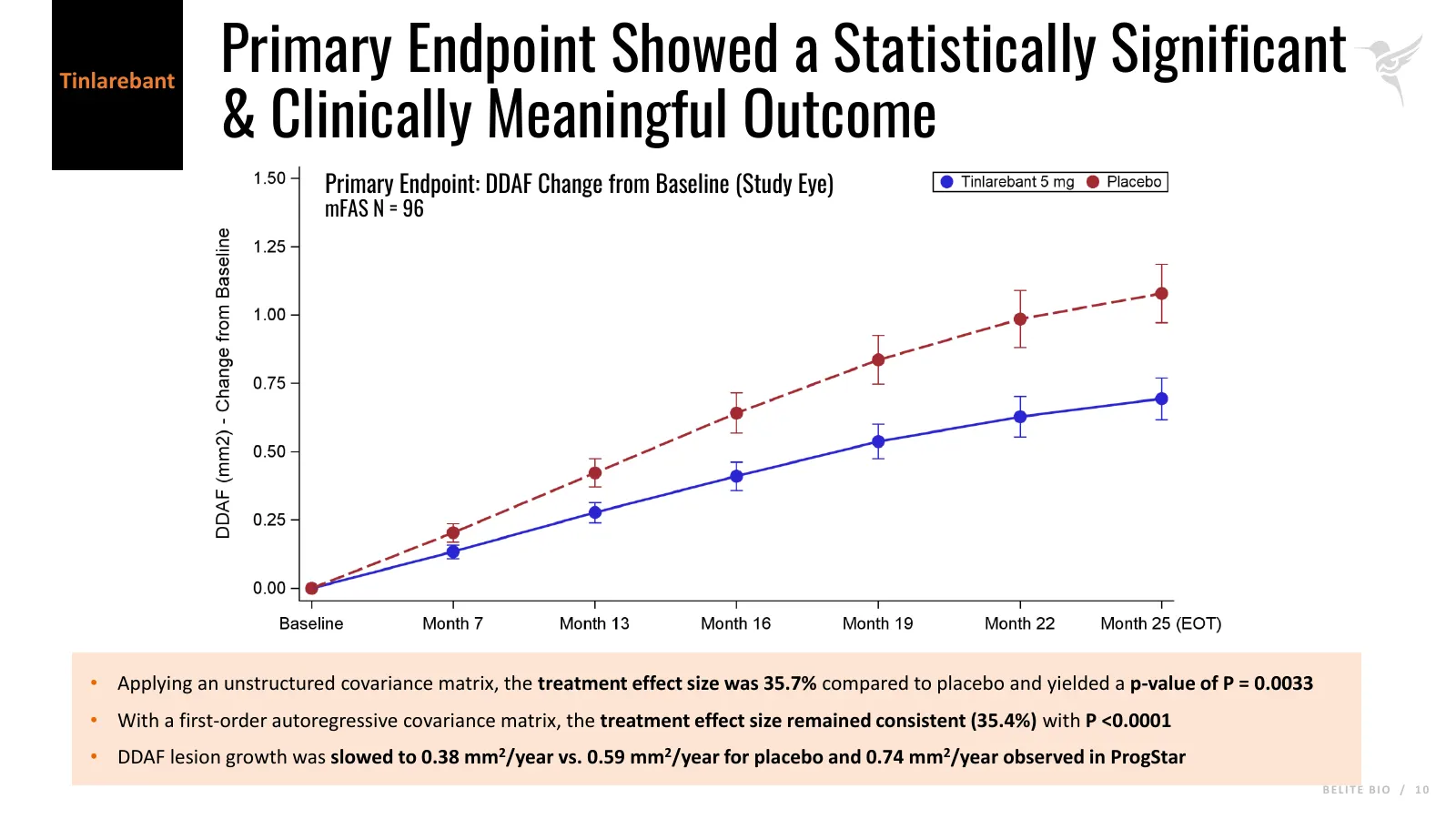
Slide 10: Primary Endpoint Showed a Statistically Significant & Clinically Meaningful Outcome
Primary Endpoint Showed a Statistically Significant & Clinically Meaningful Outcome Tinlarebant Primary Endpoint: DDAF Change from Baseline (Study Eye) mFAS N = 96 • Applying an unstructured covariance matrix, the treatment effect size was 35.7% compared to placebo and yielded a p-value of P = 0.003
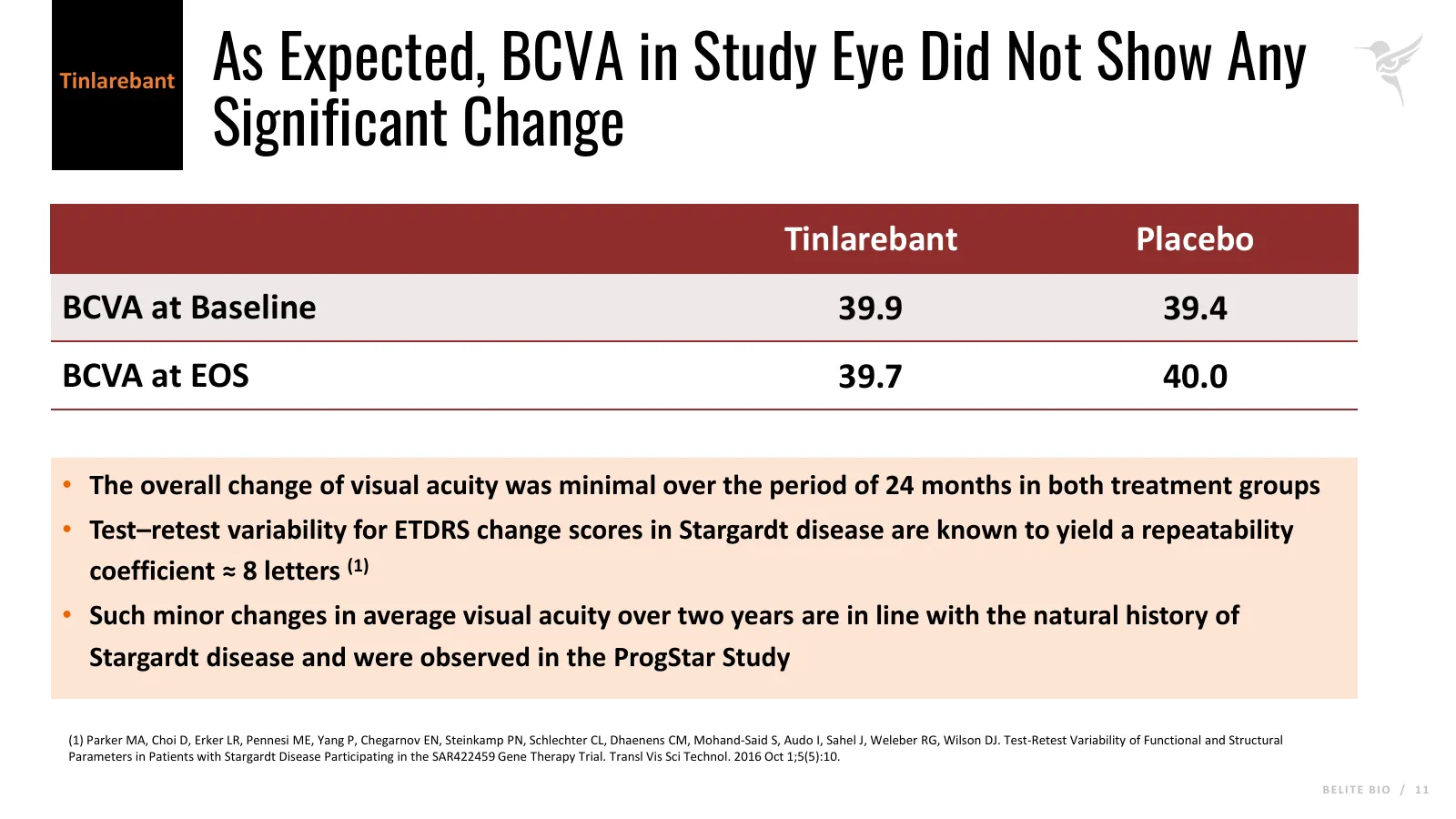
Slide 11: As Expected, BCVA in Study Eye Did Not Show Any Significant Change
Tinlarebant As Expected, BCVA in Study Eye Did Not Show Any Significant Change Tinlarebant Placebo BCVA at Baseline 39.9 39.4 BCVA at EOS 39.7 40.0 • The overall change of visual acuity was minimal over the period of 24 months in both treatment groups • Test–retest variability for ETDRS change score
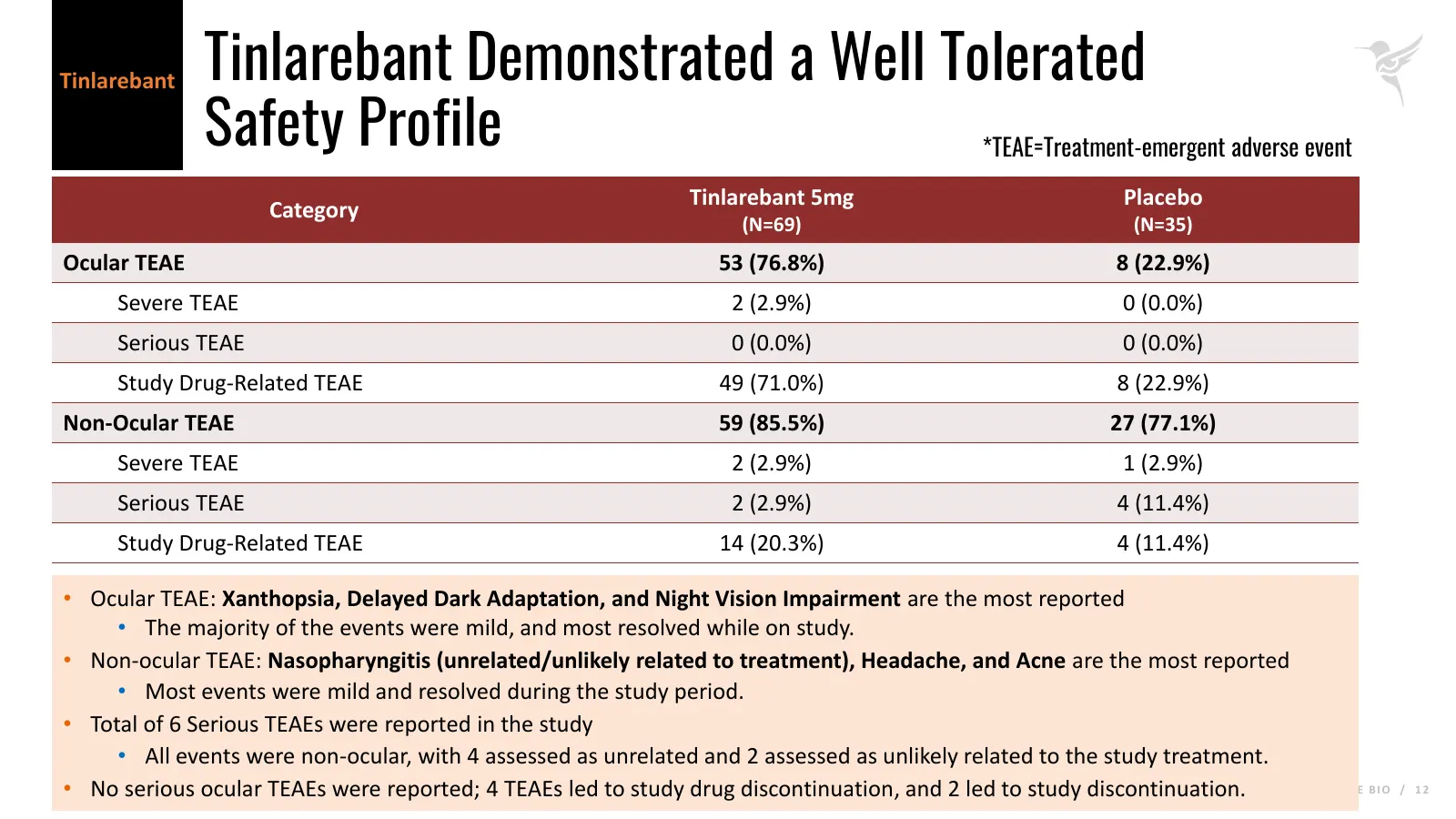
Slide 12: Tinlarebant Demonstrated a Well Tolerated Safety Profile
Tinlarebant Tinlarebant Demonstrated a Well Tolerated Safety Profile *TEAE=Treatment-emergent adverse event Tinlarebant 5mg Placebo Category (N=69) (N=35) Ocular TEAE 53 (76.8%) 8 (22.9%) Severe TEAE 2 (2.9%) 0 (0.0%) Serious TEAE 0 (0.0%) 0 (0.0%) Study Drug-Related TEAE 49 (71.0%) 8 (22.9%) Non-Oc
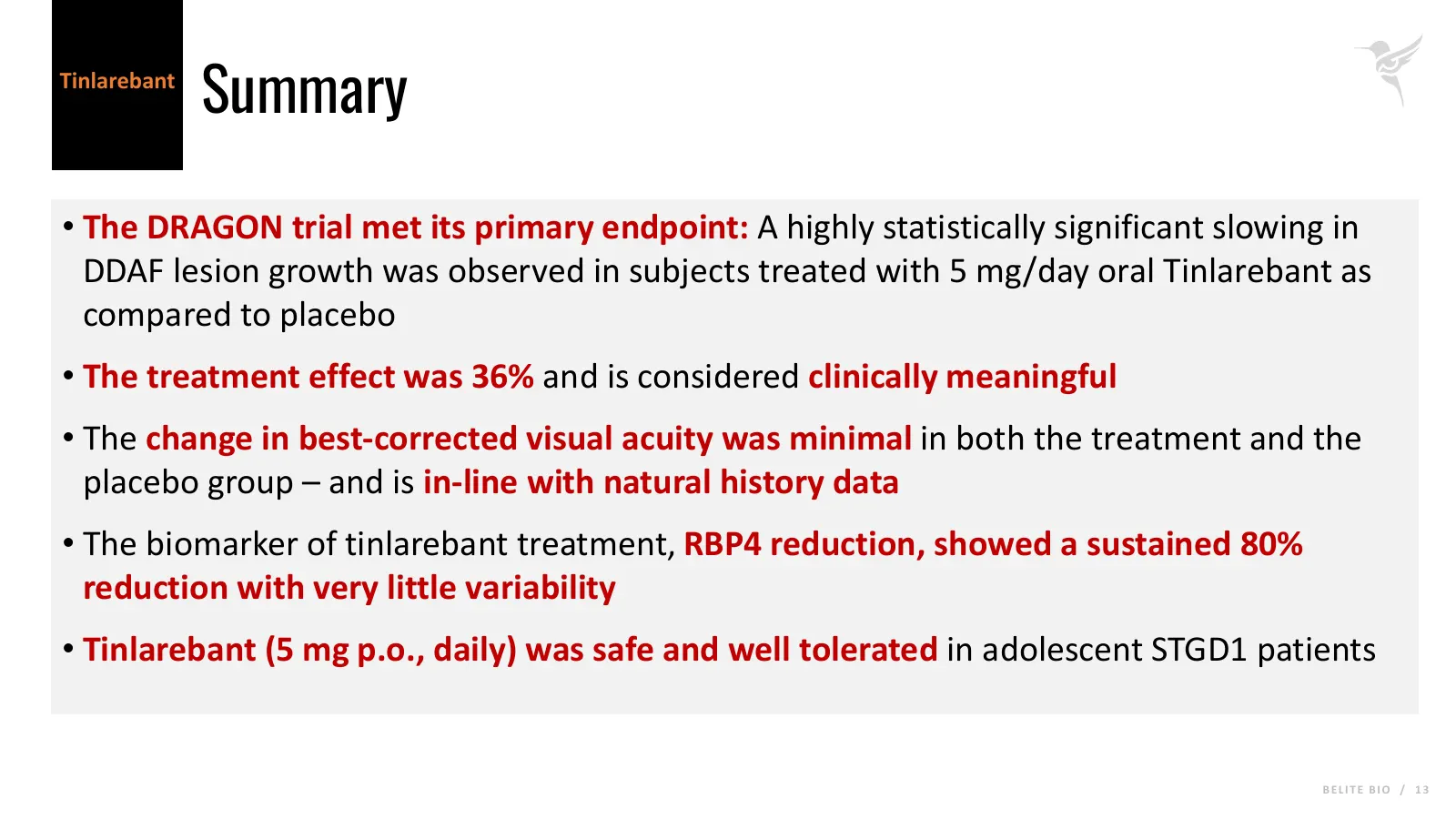
Slide 13: Summary
Tinlarebant Summary • The DRAGON trial met its primary endpoint: A highly statistically significant slowing in DDAF lesion growth was observed in subjects treated with 5 mg/day oral Tinlarebant as compared to placebo • The treatment effect was 36% and is considered clinically meaningful • The change

Slide 14: Thank You
THANK YOU
Source: company website
More decks from Belite Bio, Inc.
 Q1 2026 Earnings Presentation7 slides · May 20, 2026
 Q4 2025 Earnings Presentation8 slides · Mar 2, 2026
 Technical Presentation (December 2025)30 slides · Dec 1, 2025
 Q3 2025 Earnings Presentation7 slides · Nov 10, 2025
 Q2 2025 Earnings Presentation7 slides · Aug 11, 2025
 Q1 2025 Earnings Presentation26 slides · May 14, 2025