Tennessee Valley Authority · NYSE:TVC
Tennessee Valley Authority — Investor Presentation (November 2017)
175 slides from Tennessee Valley Authority's investor presentation, Nov 14, 2017
Slide 1: Regional Resource Stewardship Council
Regional Resource Stewardship Council November 14 - 15, 2017 Guntersville, Alabama

Slide 2: Welcome
Slide 3: Safety First
Safety First Building Emergency Plan Regional Resource Stewardship Council | 3
Slide 4: Introductions
Introductions • Name • Organization • Favorite Recreational Activity Regional Resource Stewardship Council | 4
Slide 5: Today's Meeting
MA Today's Meeting
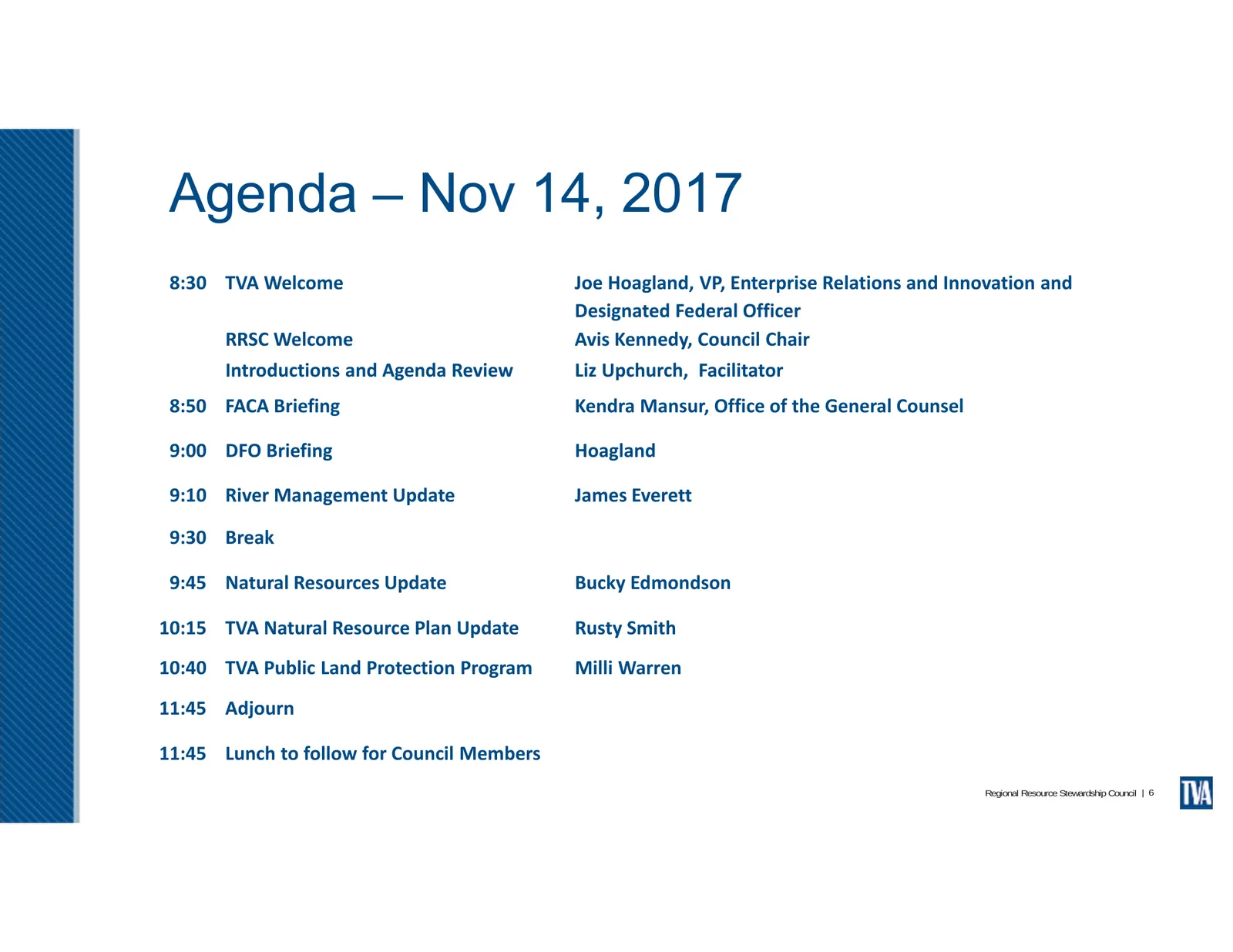
Slide 6: Agenda – Nov 14, 2017
Agenda – Nov 14, 2017 8:30 TVA Welcome Joe Hoagland, VP, Enterprise Relations and Innovation and Designated Federal Officer RRSC Welcome Avis Kennedy, Council Chair Introductions and Agenda Review Liz Upchurch, Facilitator 8:50 FACA Briefing Kendra Mansur, Office of the General Counsel 9:00 DFO Brie
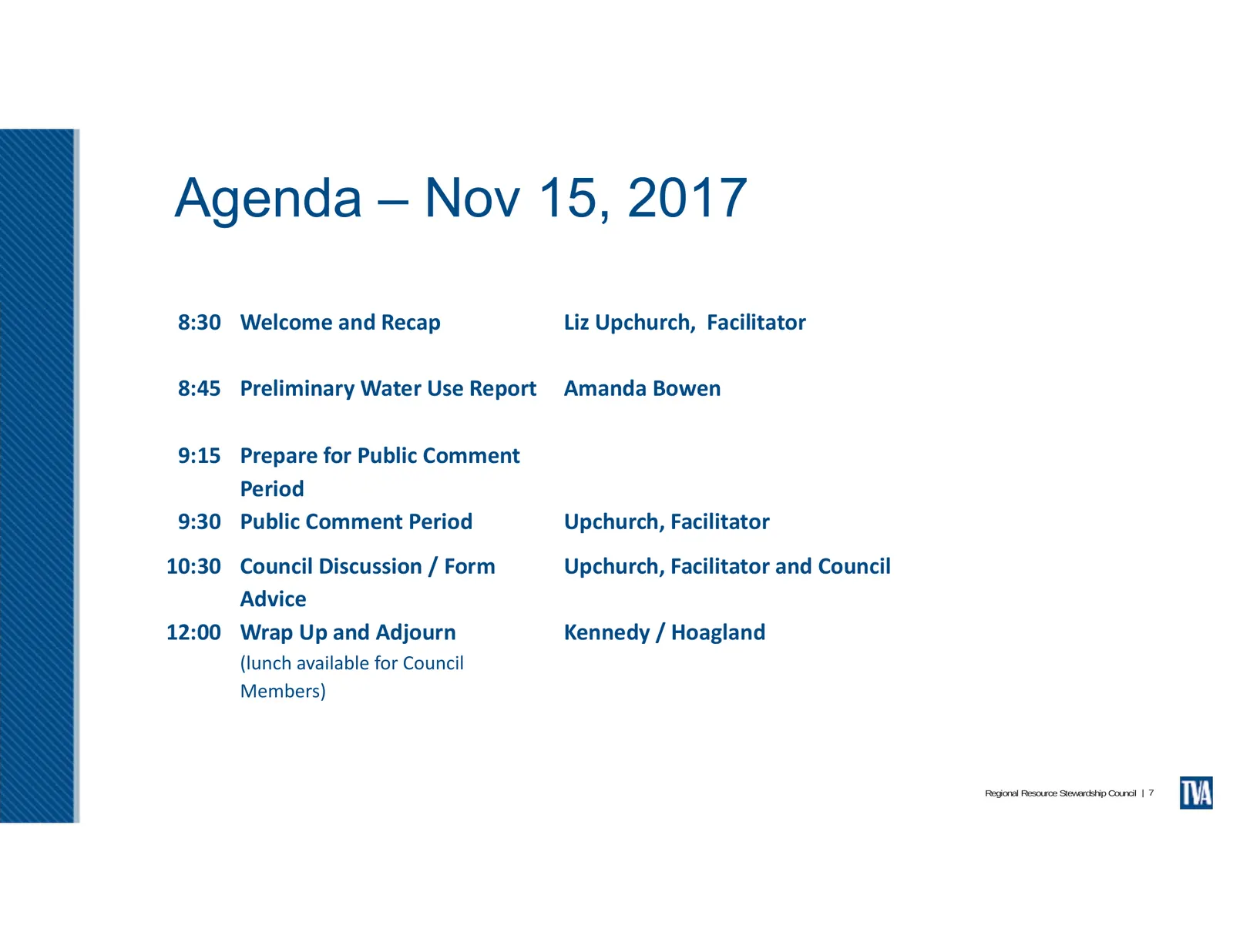
Slide 7: Agenda – Nov 15, 2017
Agenda – Nov 15, 2017 8:30 Welcome and Recap Liz Upchurch, Facilitator 8:45 Preliminary Water Use Report Amanda Bowen 9:15 Prepare for Public Comment Period 9:30 Public Comment Period Upchurch, Facilitator 10:30 Council Discussion / Form Upchurch, Facilitator and Council Advice 12:00 Wrap Up and Adj
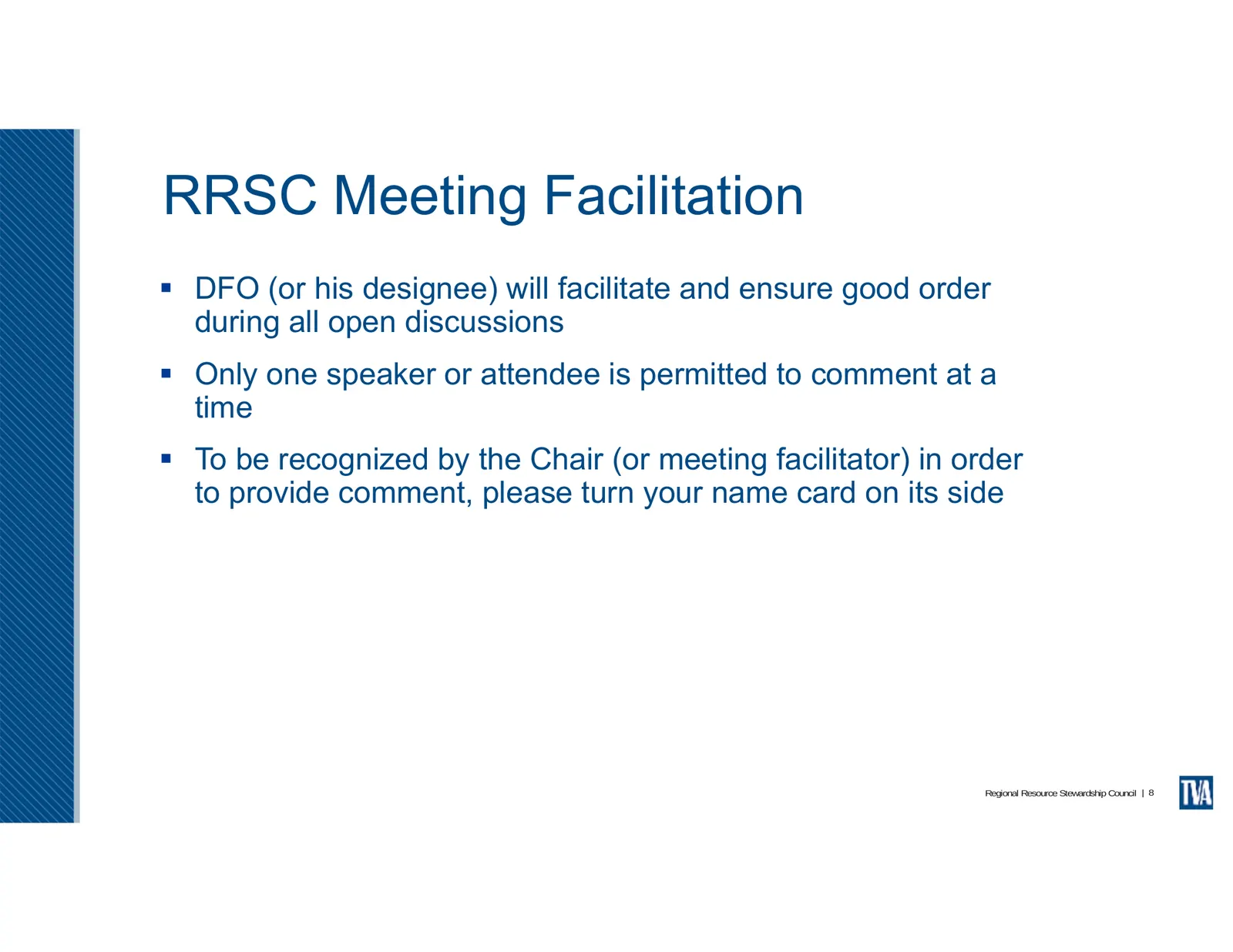
Slide 8: RRSC Meeting Facilitation
RRSC Meeting Facilitation DFO (or his designee) will facilitate and ensure good order during all open discussions Only one speaker or attendee is permitted to comment at a time To be recognized by the Chair (or meeting facilitator) in order to provide comment, please turn your name card on its
Slide 9: The Federal Advisory Committee Act and the RRSC
The Federal Advisory Committee Act and The Regional Resource Stewardship Council Kendra Mansur, Office of the General Counsel FACA Briefing—Ninth Term Third Meeting
Slide 10: RRSC Meeting Protocols
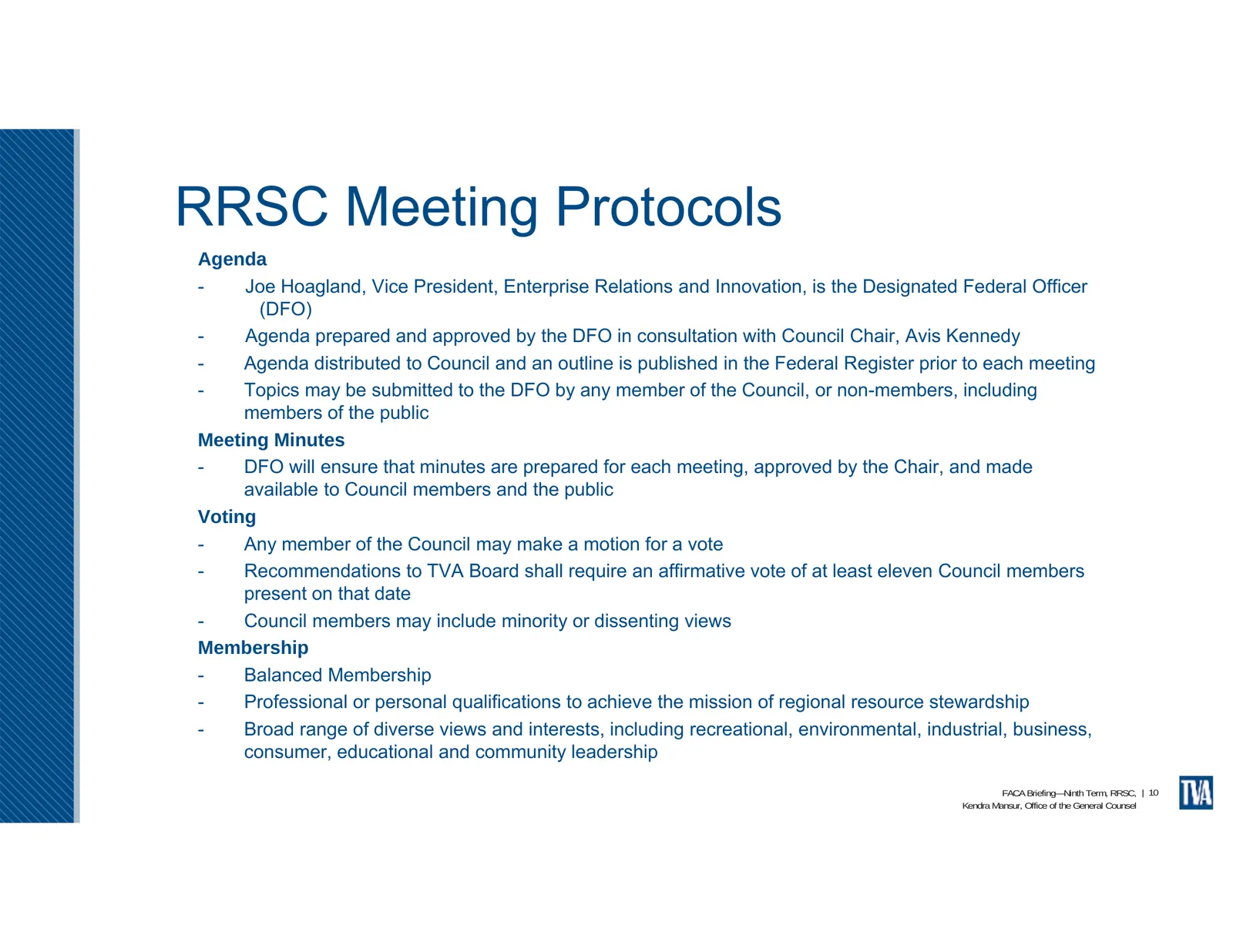
RRSC Meeting Protocols Agenda - Joe Hoagland, Vice President, Enterprise Relations and Innovation, is the Designated Federal Officer (DFO) - Agenda prepared and approved by the DFO in consultation with Council Chair, Avis Kennedy - Agenda distributed to Council and an outline is published in the Fed

Slide 11: Thank you for your participation and advice
Thank you for your participation and advice.
Slide 12: DFO Briefing
DFO Briefing Joe Hoagland, Vice President, Enterprise Relations and Innovation Designated Federal Officer
Slide 13: June 2017 Meeting Recap
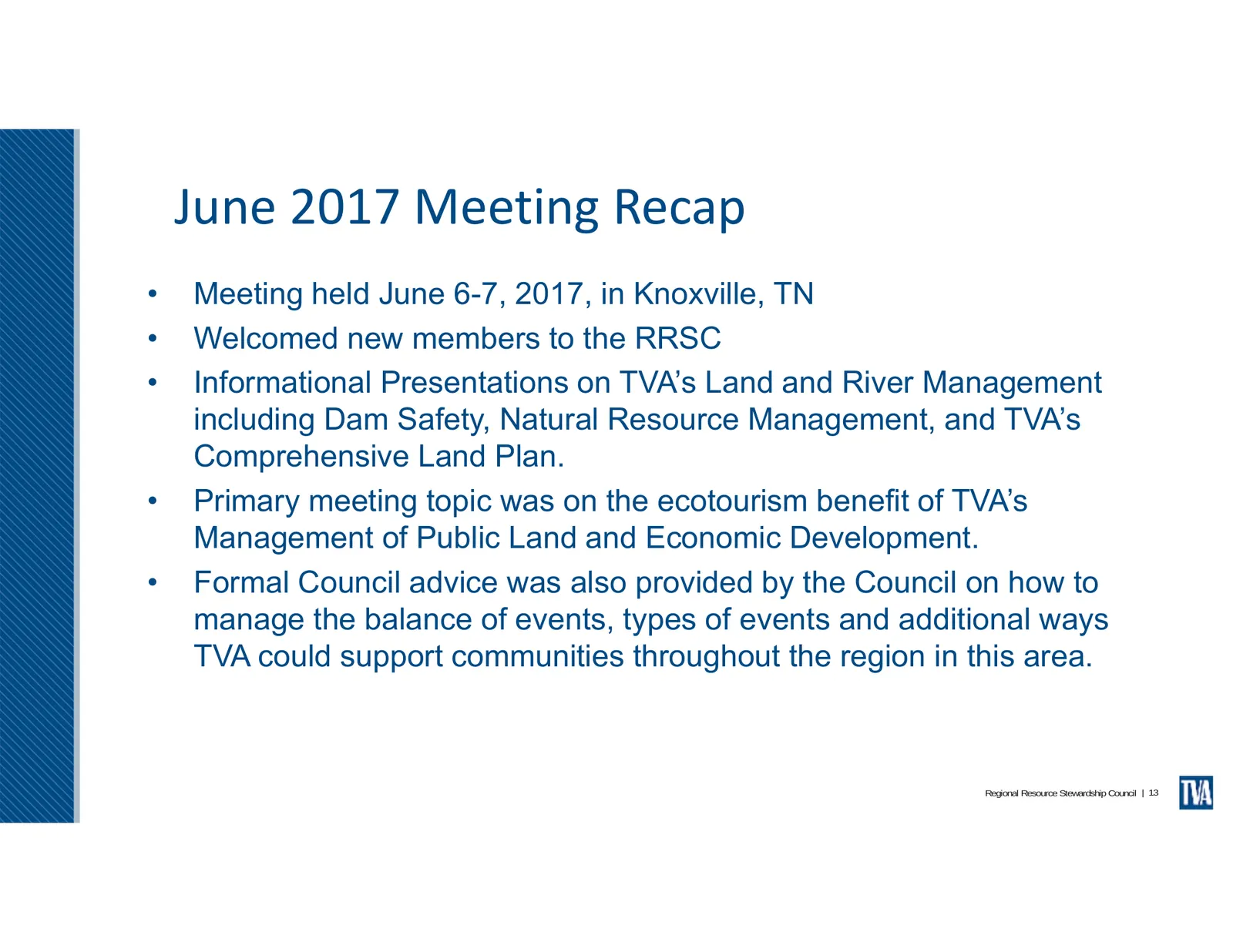
June 2017 Meeting Recap • Meeting held June 6-7, 2017, in Knoxville, TN • Welcomed new members to the RRSC • Informational Presentations on TVA’s Land and River Management including Dam Safety, Natural Resource Management, and TVA’s Comprehensive Land Plan. • Primary meeting topic was on the ecotour
Slide 14: Today's Meeting Goals
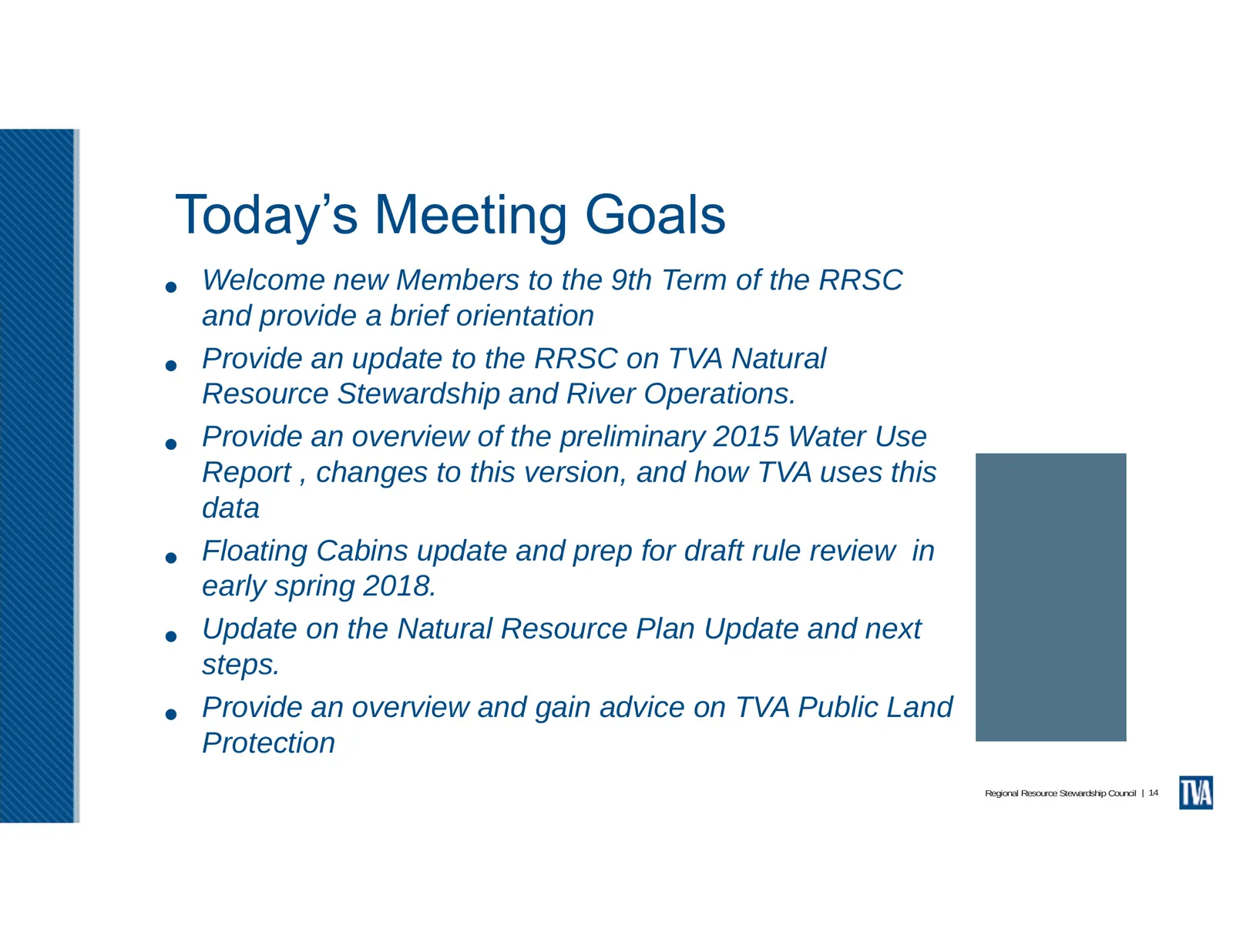
Today’s Meeting Goals • Welcome new Members to the 9th Term of the RRSC and provide a brief orientation • Provide an update to the RRSC on TVA Natural Resource Stewardship and River Operations. • Provide an overview of the preliminary 2015 Water Use Report , changes to this version, and how TVA uses
Slide 15: River Management Update
River Management Update James H. Everett, PE
Slide 16: River Management Focus Areas
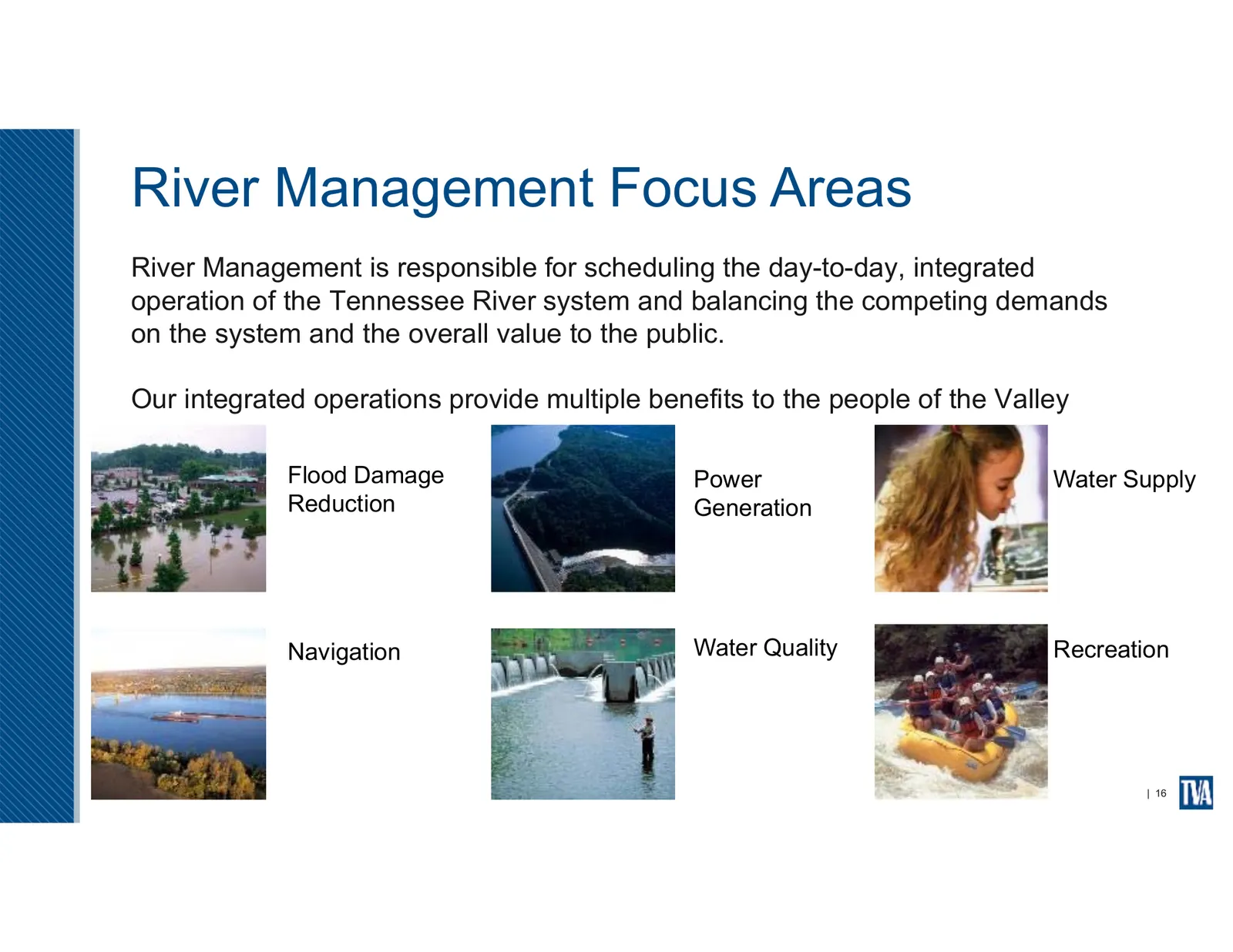
River Management Focus Areas River Management is responsible for scheduling the day-to-day, integrated operation of the Tennessee River system and balancing the competing demands on the system and the overall value to the public. Our integrated operations provide multiple benefits to the people of t
Slide 17: Tennessee River System and Watershed
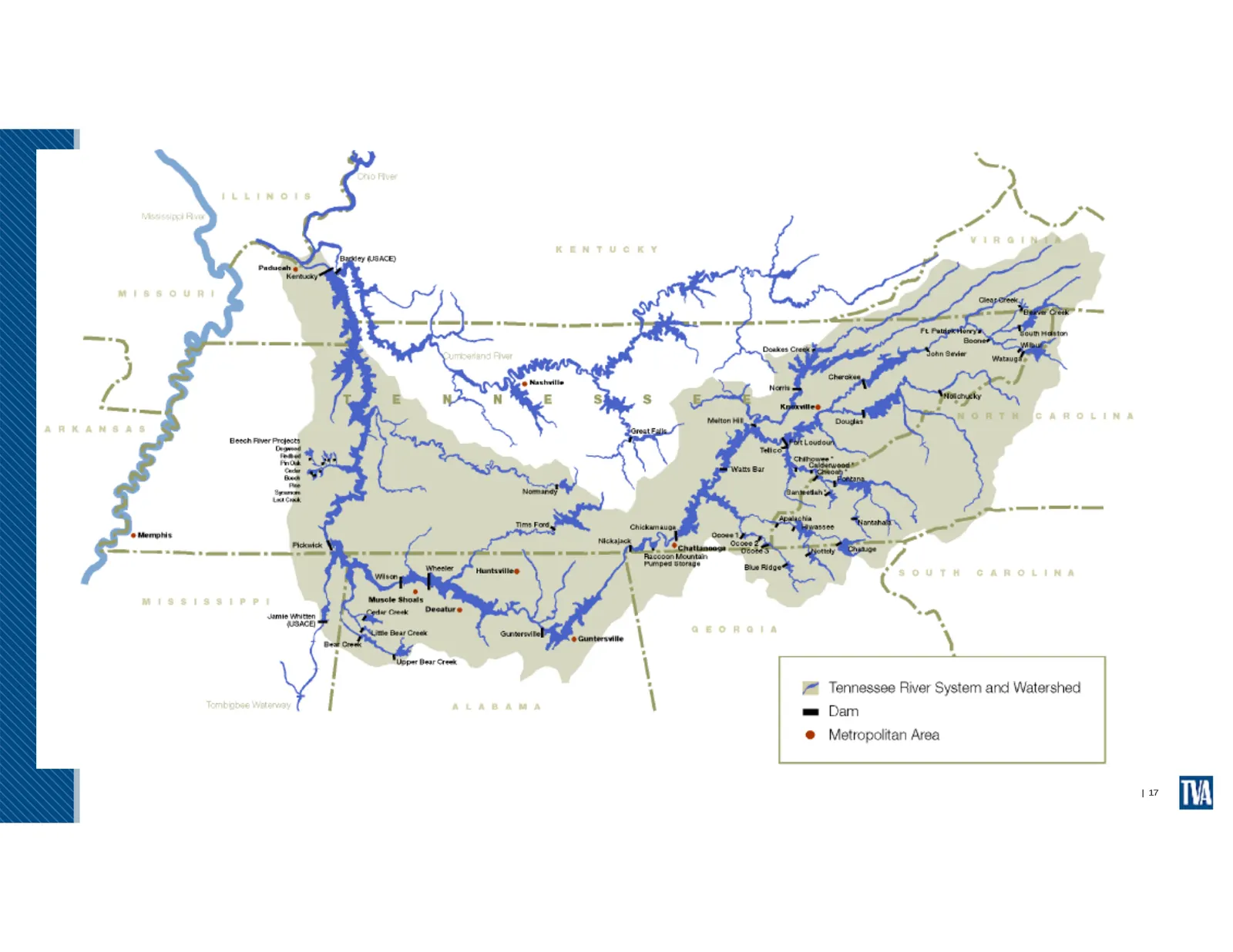
HLeEINOTS Mississipel Fiver ARKANSAS lame Wratten W3ACE) Tombigbee Weterway | ALABAMA KENTUCKY CAROLINA 7 Y SOUTH CAROLINA Tennessee River System and Watershed ms Dam @ Metropolitan Area
Slide 18: Flood Control & Navigation
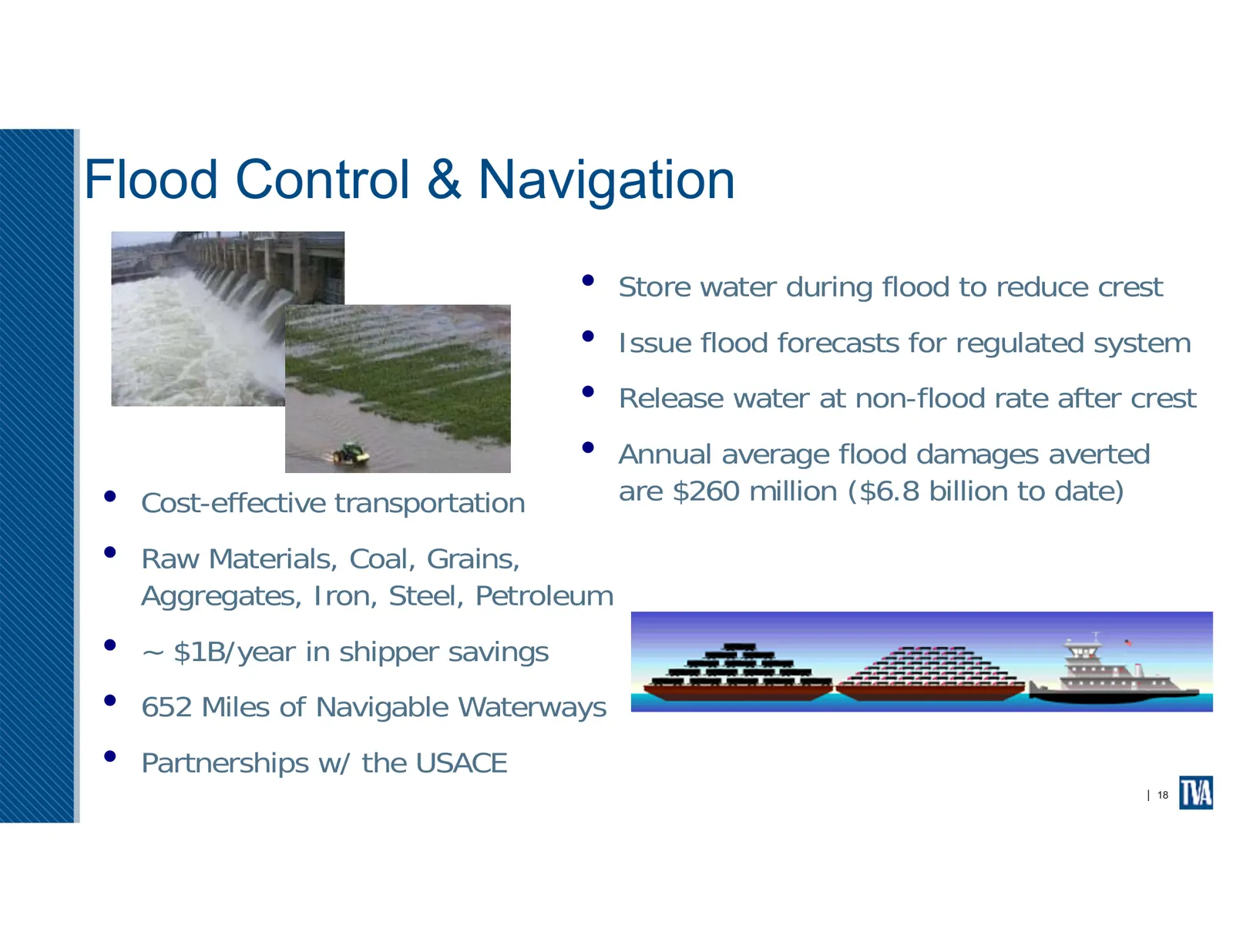
Flood Control & Navigation • Store water during flood to reduce crest • Issue flood forecasts for regulated system • Release water at non-flood rate after crest • Annual average flood damages averted • Cost-effective transportation are $260 million ($6.8 billion to date) • Raw Materials, Coal, Grain
Slide 19: Hydropower
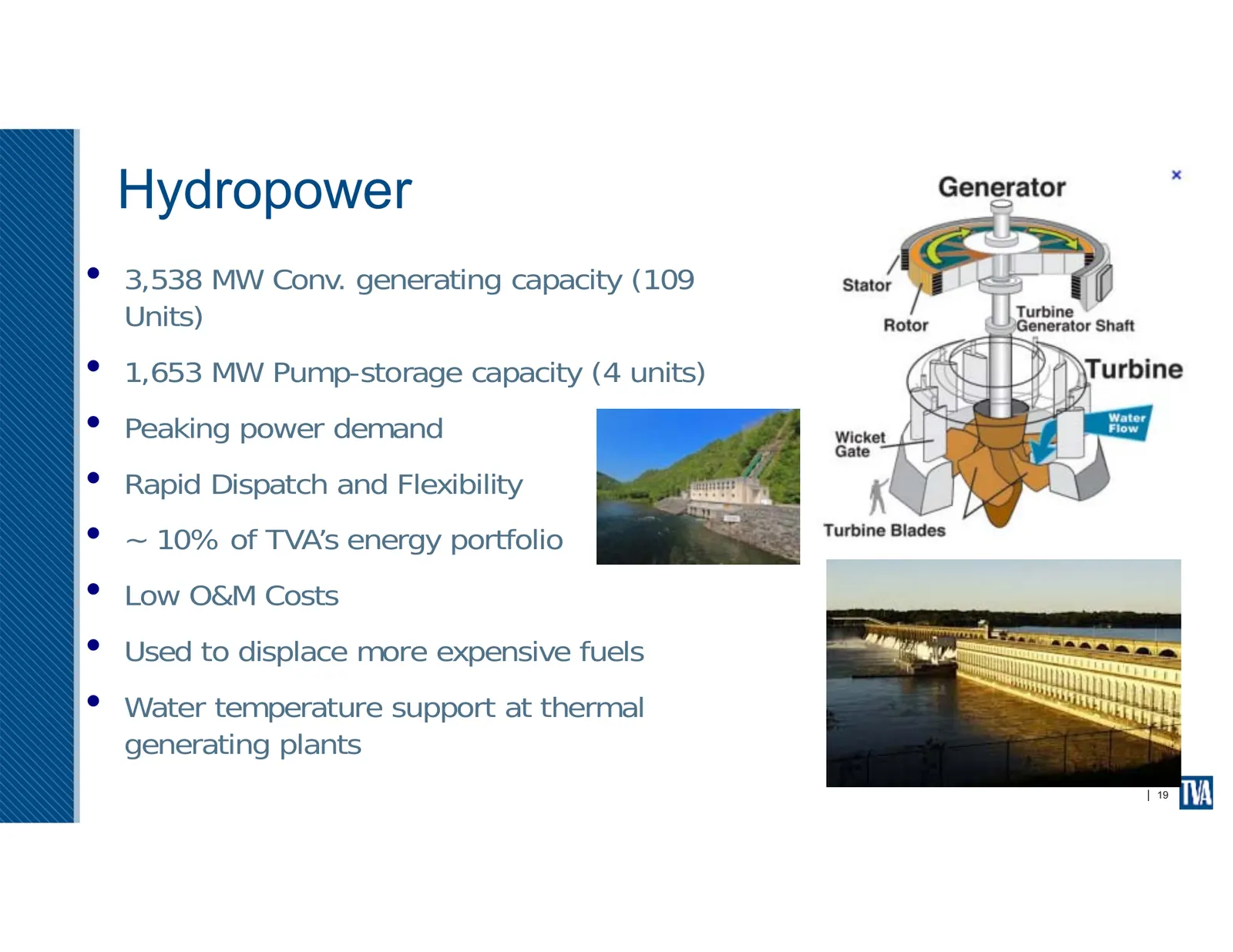
Hydropower • 3,538 MW Conv. generating capacity (109 Units) • 1,653 MW Pump-storage capacity (4 units) • Peaking power demand • Rapid Dispatch and Flexibility • ~ 10% of TVA’s energy portfolio • Low O&M Costs • Used to displace more expensive fuels • Water temperature support at thermal generating p
Slide 20: Water Supply and Quality
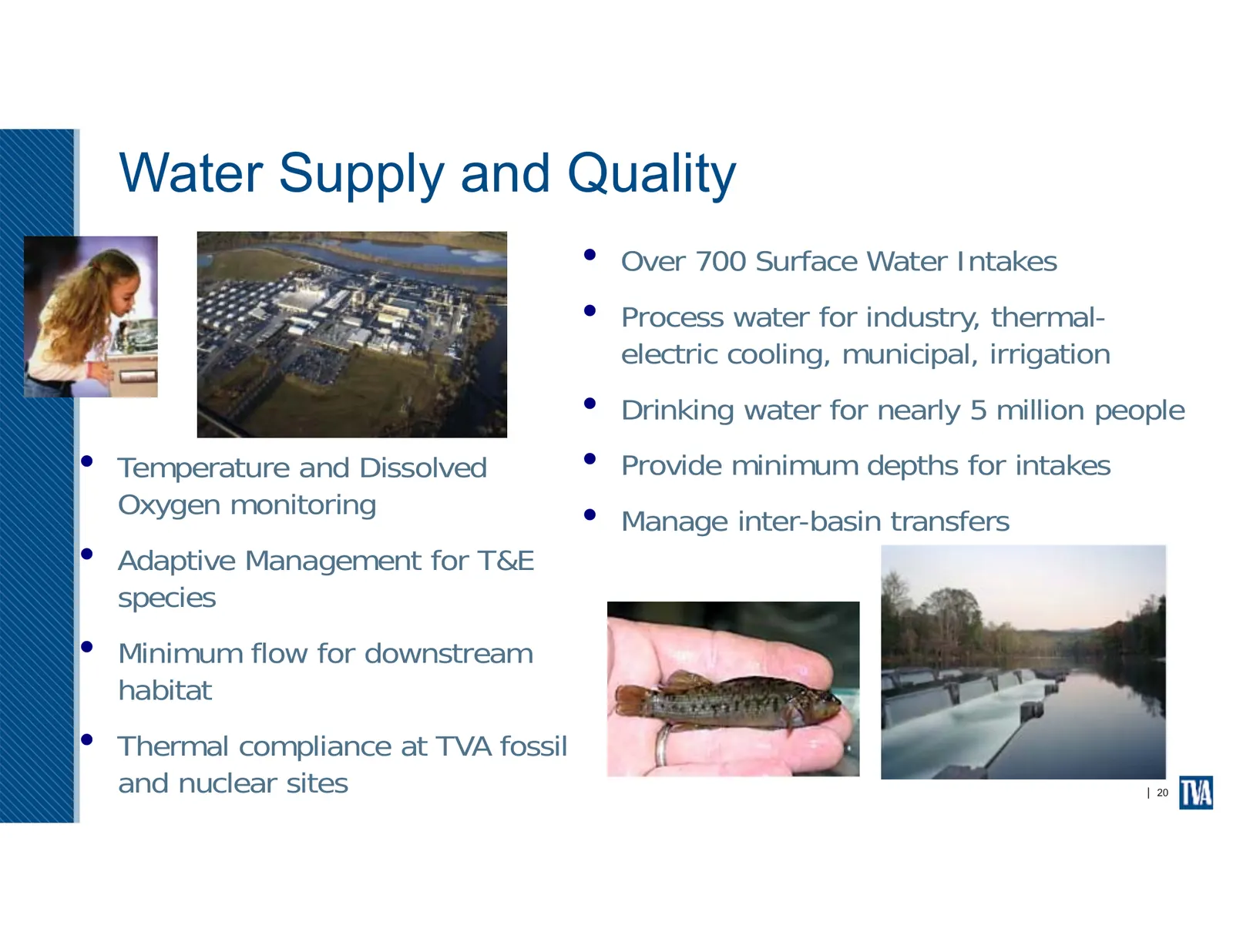
Water Supply and Quality • Over 700 Surface Water Intakes • Process water for industry, thermal- electric cooling, municipal, irrigation • Drinking water for nearly 5 million people • Temperature and Dissolved • Provide minimum depths for intakes Oxygen monitoring • Manage inter-basin transfers • Ad
Slide 21: Recreation
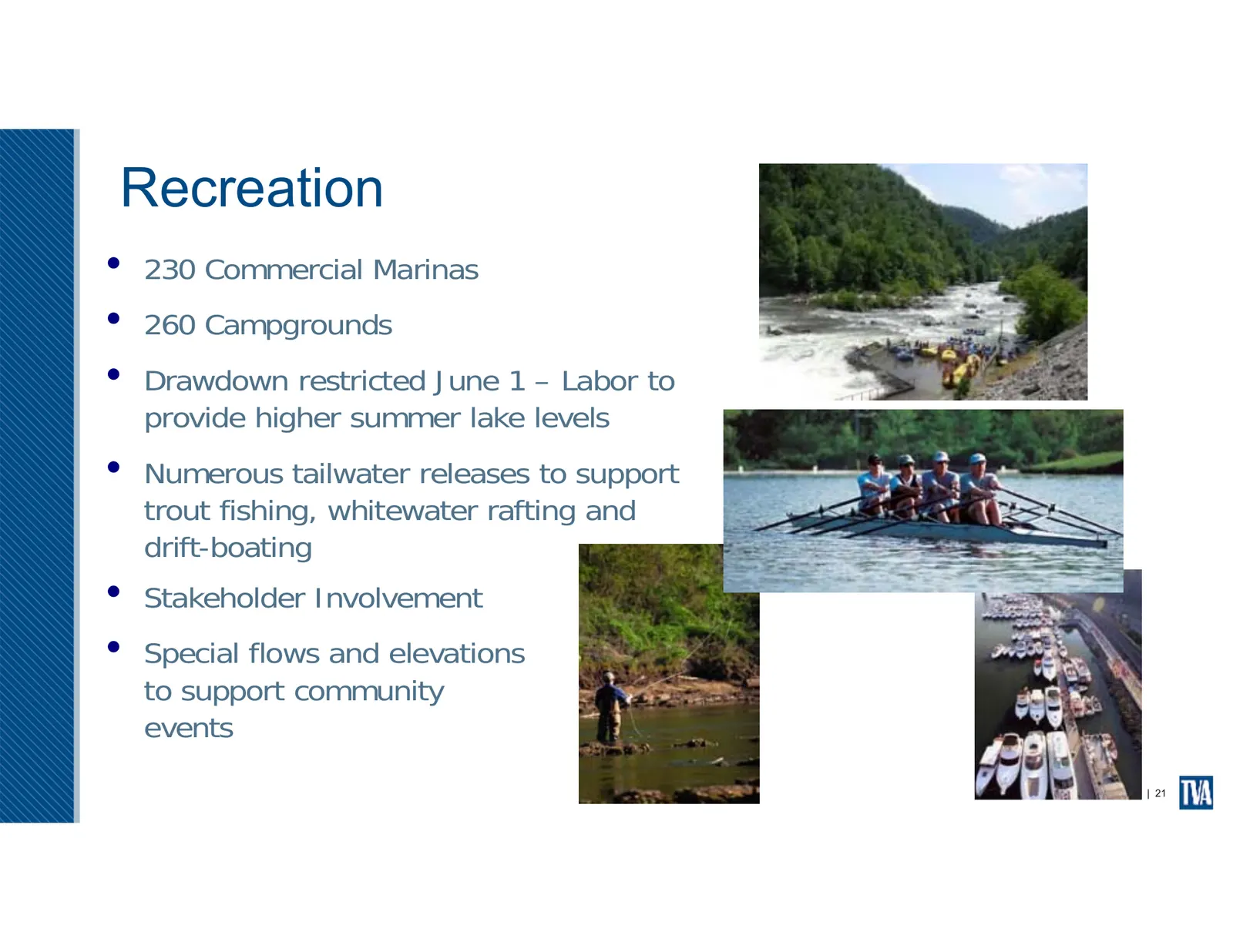
Recreation • 230 Commercial Marinas • 260 Campgrounds • Drawdown restricted June 1 – Labor to provide higher summer lake levels • Numerous tailwater releases to support trout fishing, whitewater rafting and drift-boating • Stakeholder Involvement • Special flows and elevations to support community e
Slide 22: 2017 Rainfall/Runoff
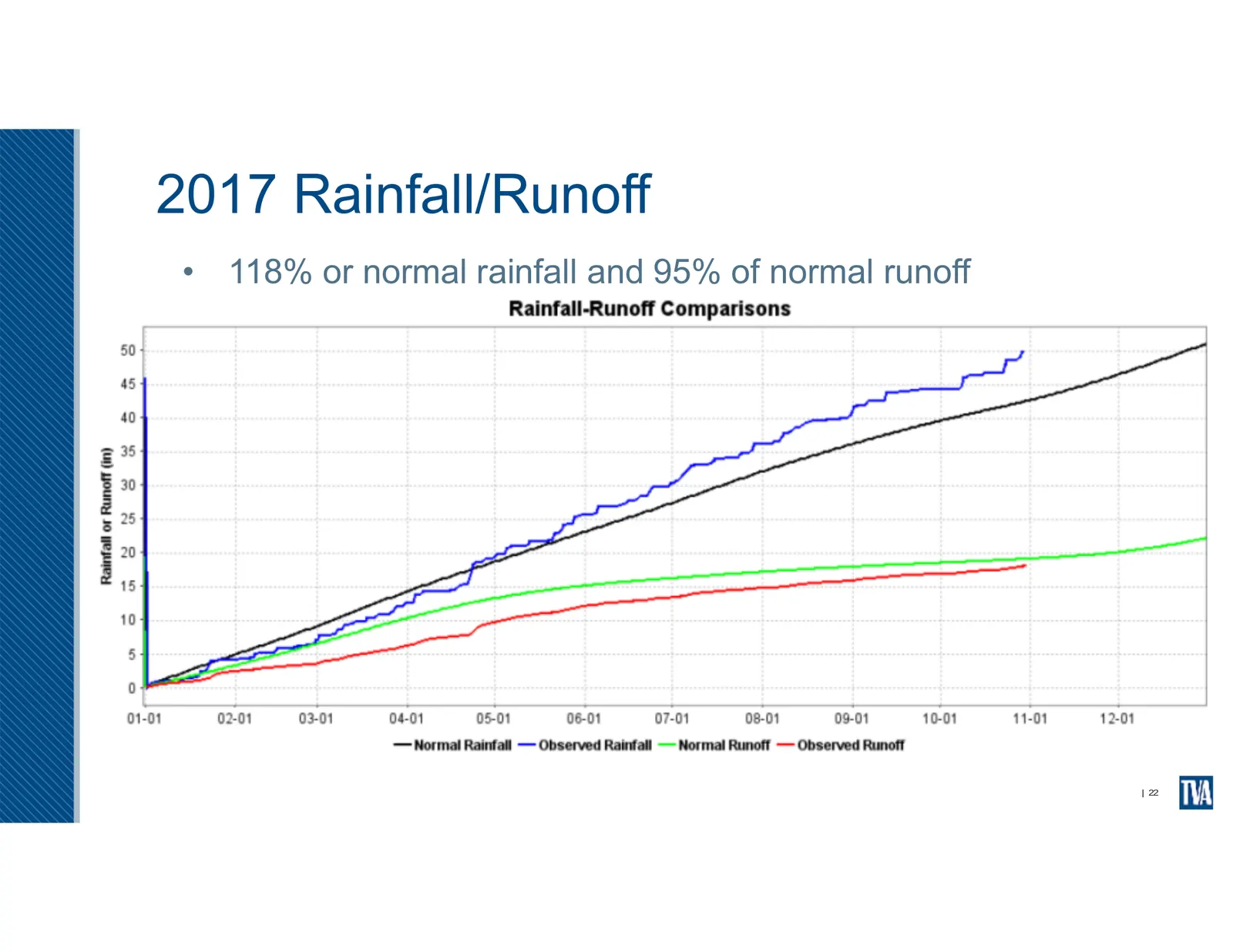
2017 Rainfall/Runoff • 118% or normal rainfall and 95% of normal runoff | 22
Slide 23: 2017 Hurricane Season
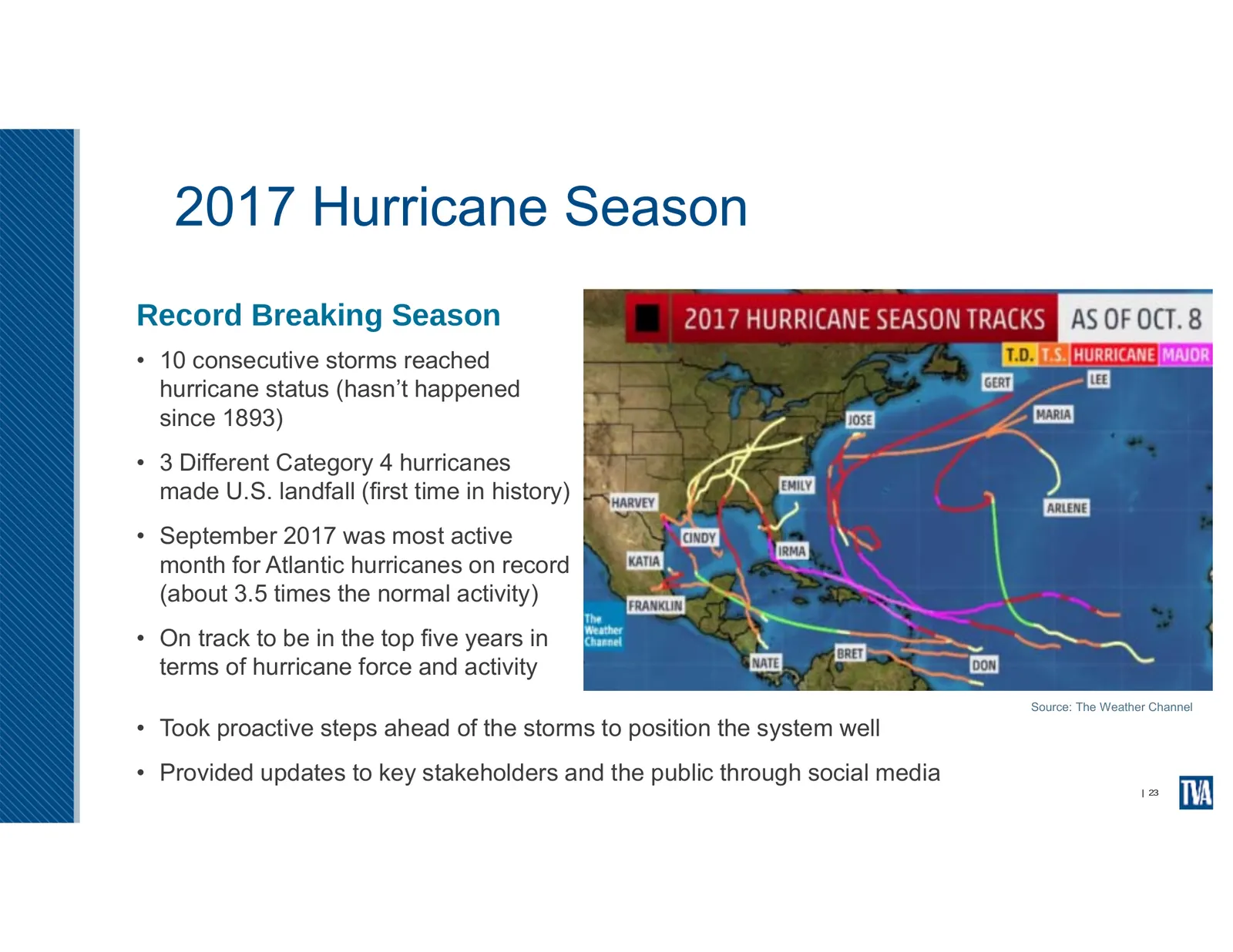
2017 Hurricane Season Record Breaking Season • 10 consecutive storms reached hurricane status (hasn’t happened since 1893) • 3 Different Category 4 hurricanes made U.S. landfall (first time in history) • September 2017 was most active month for Atlantic hurricanes on record (about 3.5 times the norm
Slide 24: 2017 River Management Highlights
2017 River Management Highlights • Averted over $2.5 million in flood damages in April 2017 through reservoir system operations • Managed operations resulting from challenging weather conditions, including extreme drought, heavy spring rains, and remnants from 2 major hurricanes • Maintained over 3,
Slide 25: Other Outreach
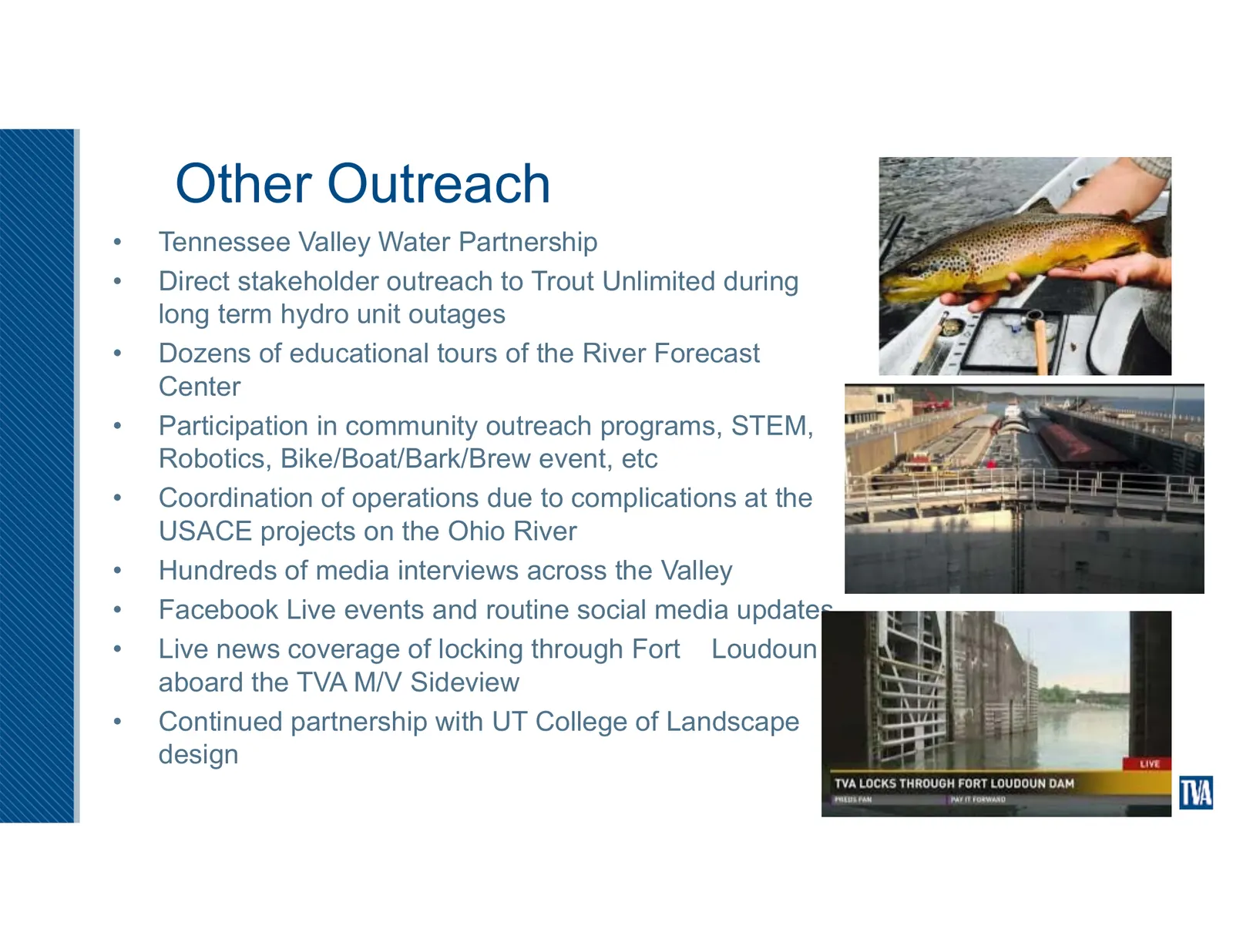
Other Outreach • Tennessee Valley Water Partnership • Direct stakeholder outreach to Trout Unlimited during long term hydro unit outages • Dozens of educational tours of the River Forecast Center • Participation in community outreach programs, STEM, Robotics, Bike/Boat/Bark/Brew event, etc • Coordin
Slide 26: TVA Dam Safety Program
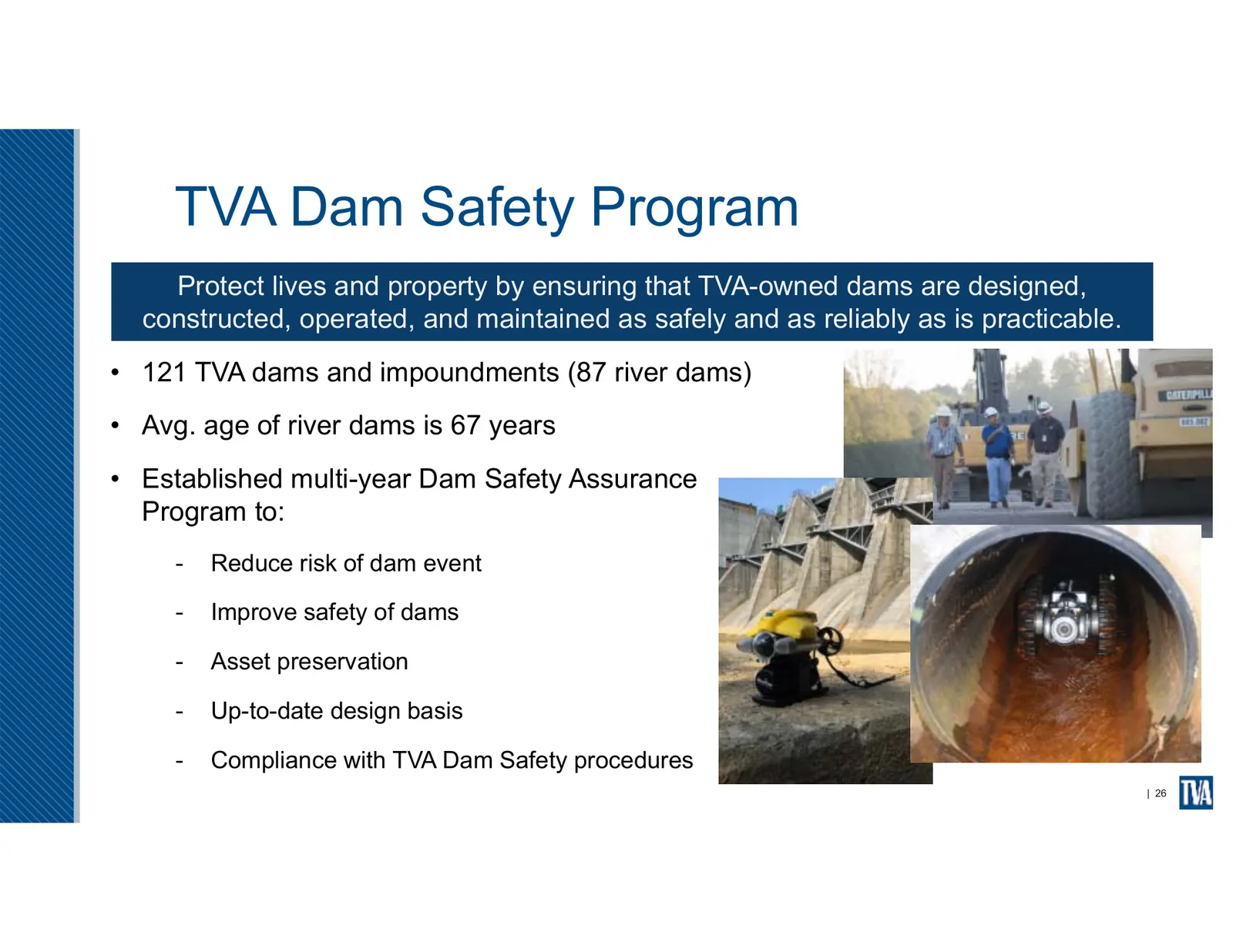
TVA Dam Safety Program Protect lives and property by ensuring that TVA-owned dams are designed, constructed, operated, and maintained as safely and as reliably as is practicable. • 121 TVA dams and impoundments (87 river dams) • Avg. age of river dams is 67 years • Established multi-year Dam Safety
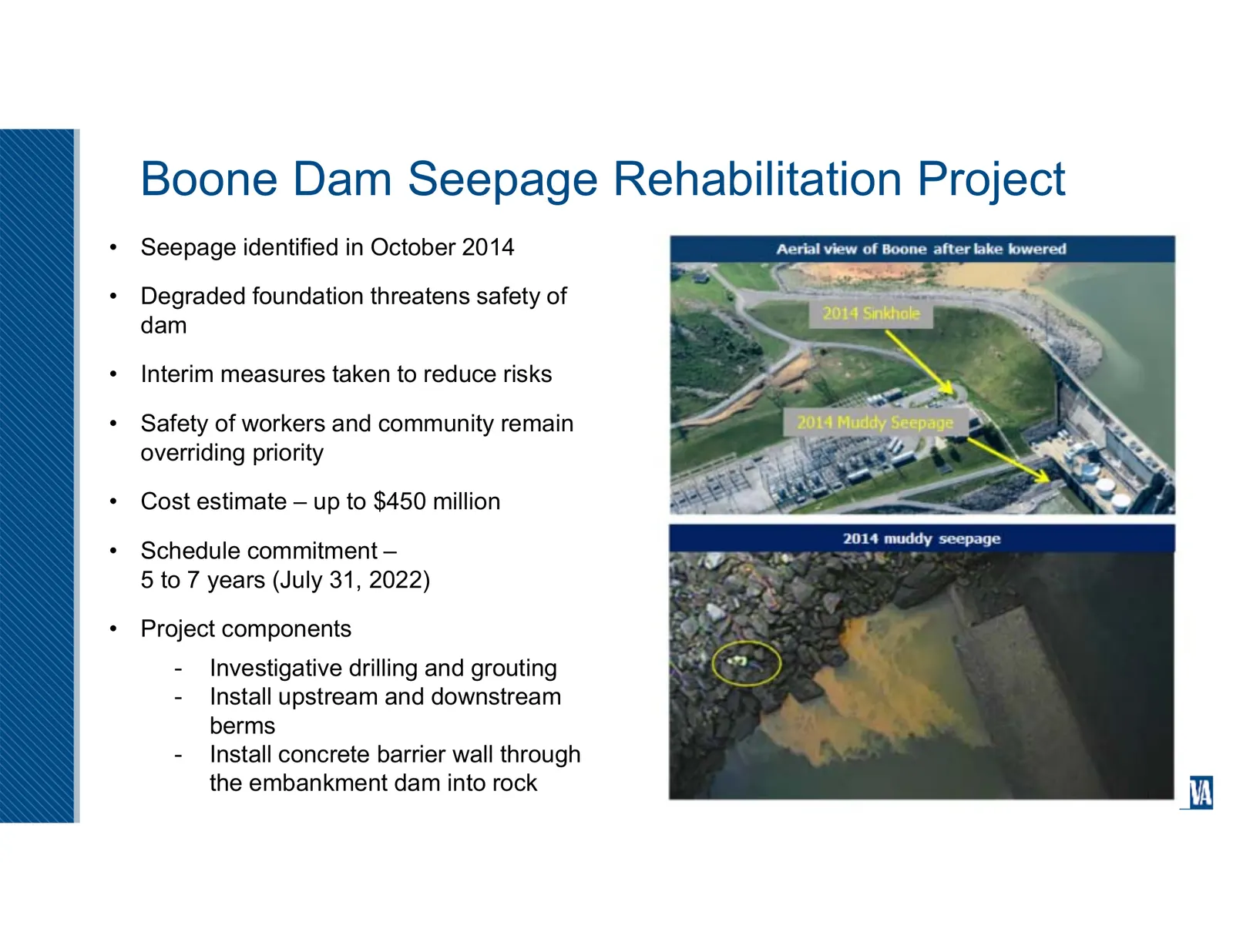
Slide 27: Boone Dam Seepage Rehabilitation Project
Boone Dam Seepage Rehabilitation Project • Seepage identified in October 2014 • Degraded foundation threatens safety of dam • Interim measures taken to reduce risks • Safety of workers and community remain overriding priority • Cost estimate – up to $450 million • Schedule commitment – 5 to 7 years
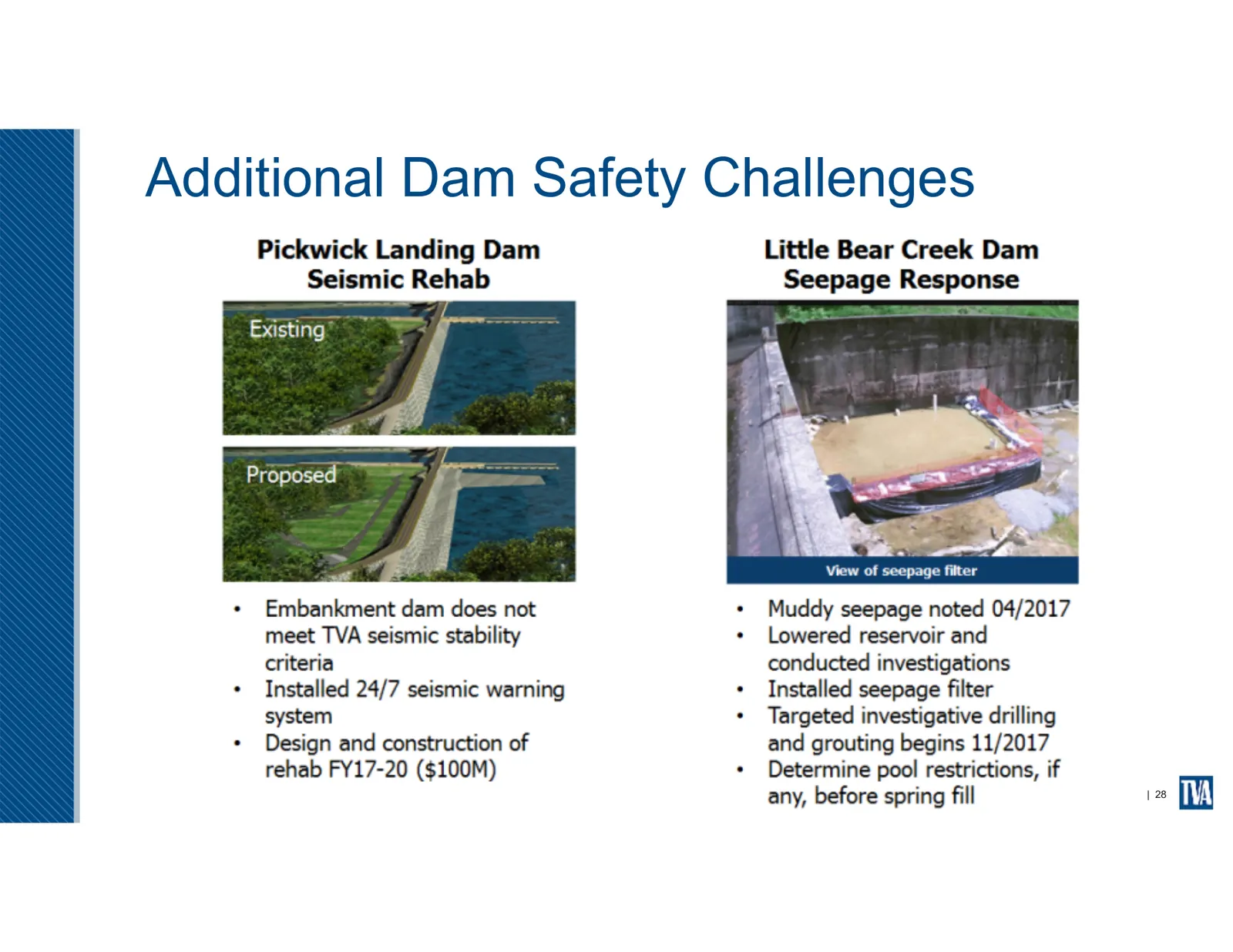
Slide 28: Additional Dam Safety Challenges
Additional Dam Safety Challenges | 28

Slide 29: Questions?
Questions? | 29

Slide 30: Break
Slide 31: TVA Natural Resources Update
TVA Natural Resources Update Bucky Edmondson, Director Natural Resources
Slide 32: Agenda
Agenda • FY17 Natural Resources highlights • Floating cabins update • FY18 efforts TVA Natural Resources Update | 32
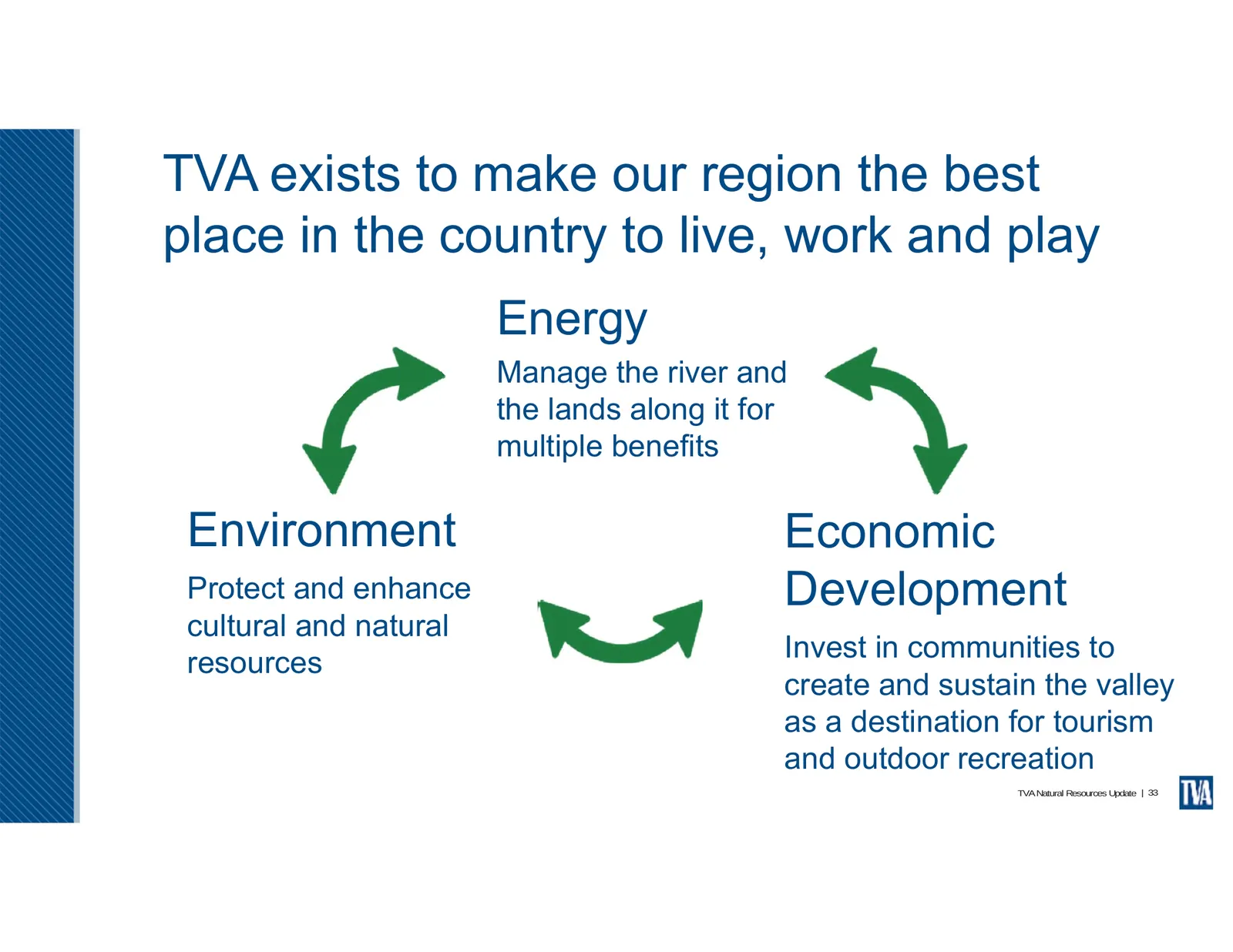
Slide 33: TVA exists to make our region the best place to live, work and play
TVA exists to make our region the best place in the country to live, work and play Energy Manage the river and the lands along it for multiple benefits Environment Economic Protect and enhance Development cultural and natural resources Invest in communities to create and sustain the valley as a dest
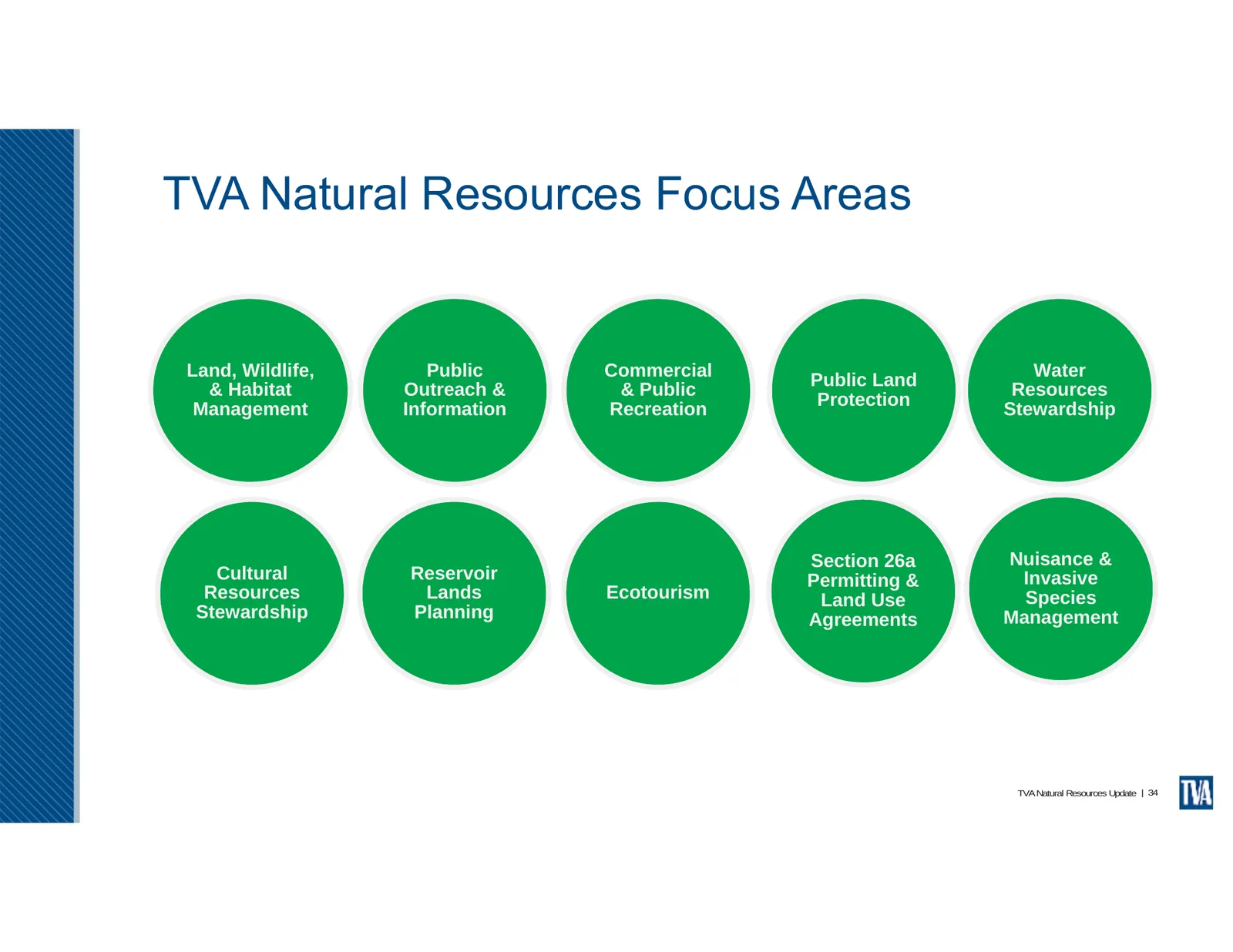
Slide 34: TVA Natural Resources Focus Areas
TVA Natural Resources Focus Areas Land, Wildlife, Public Commercial Water Public Land & Habitat Outreach & & Public Resources Protection Management Information Recreation Stewardship Section 26a Nuisance & Cultural Reservoir Permitting & Invasive Resources Lands Ecotourism Land Use Species Stewardsh
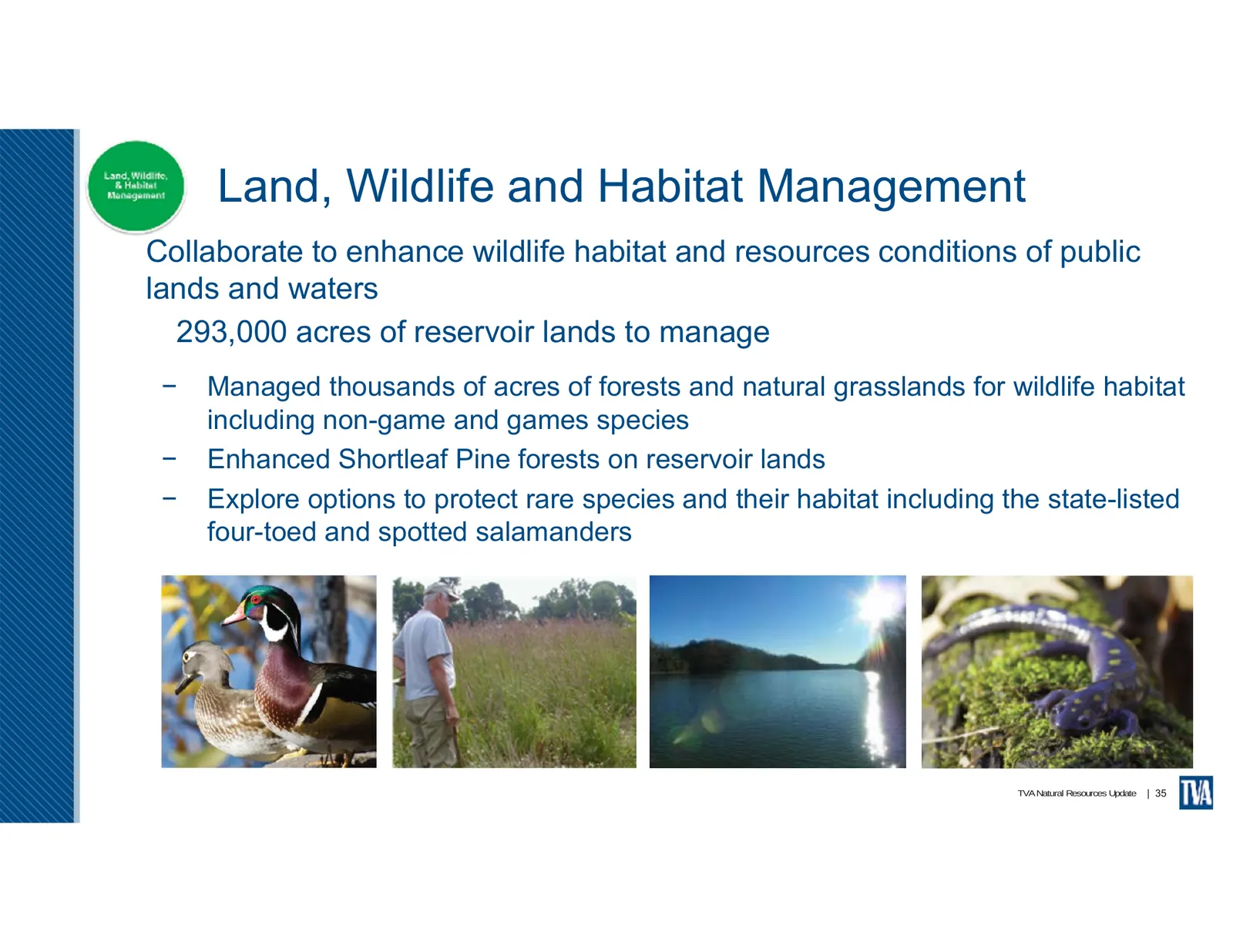
Slide 35: Land, Wildlife and Habitat Management
Land, Wildlife and Habitat Management Collaborate to enhance wildlife habitat and resources conditions of public lands and waters 293,000 acres of reservoir lands to manage − Managed thousands of acres of forests and natural grasslands for wildlife habitat including non-game and games species − Enha
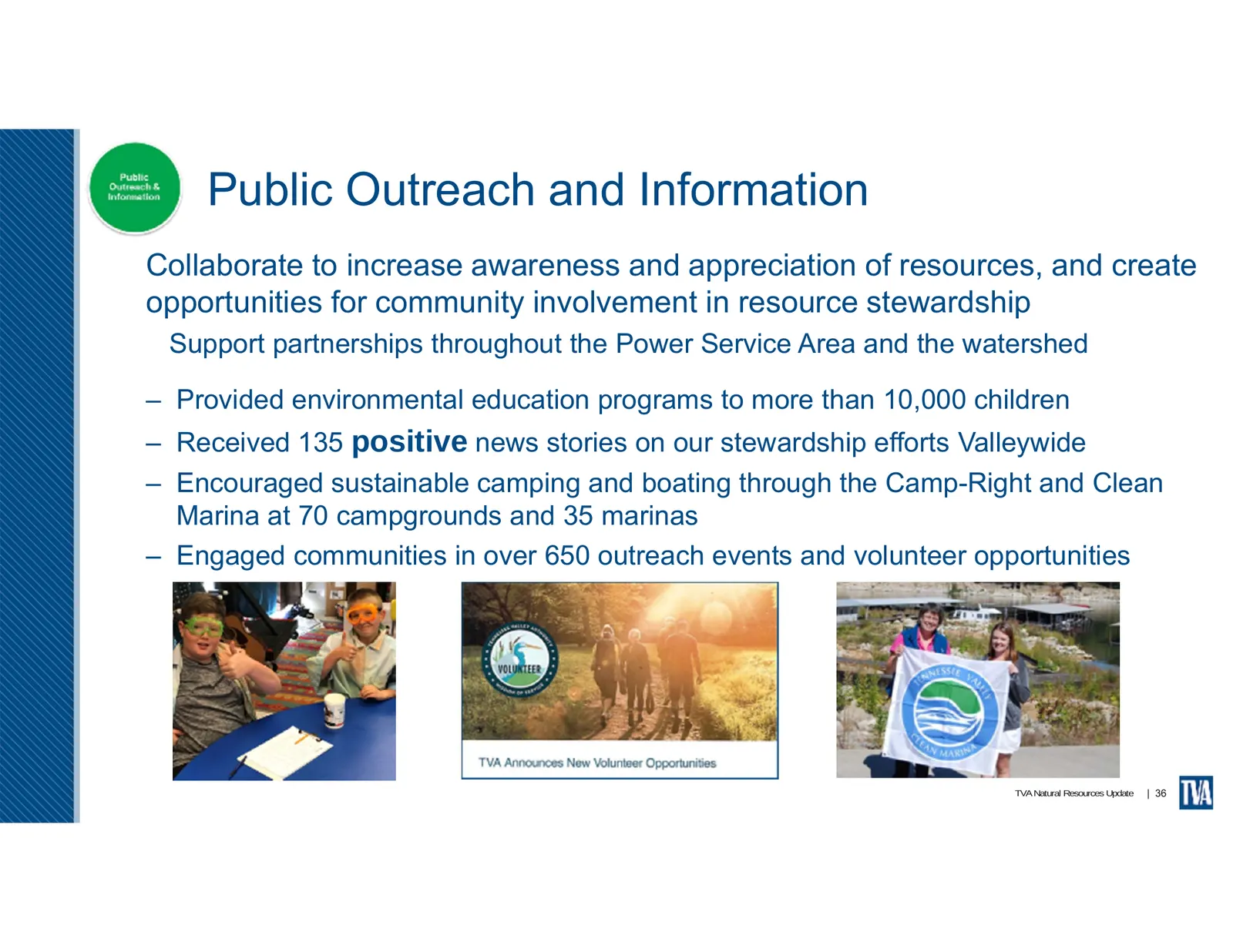
Slide 36: Public Outreach and Information
Public Outreach and Information Collaborate to increase awareness and appreciation of resources, and create opportunities for community involvement in resource stewardship Support partnerships throughout the Power Service Area and the watershed – Provided environmental education programs to more tha
Slide 37: Commercial and Public Recreation
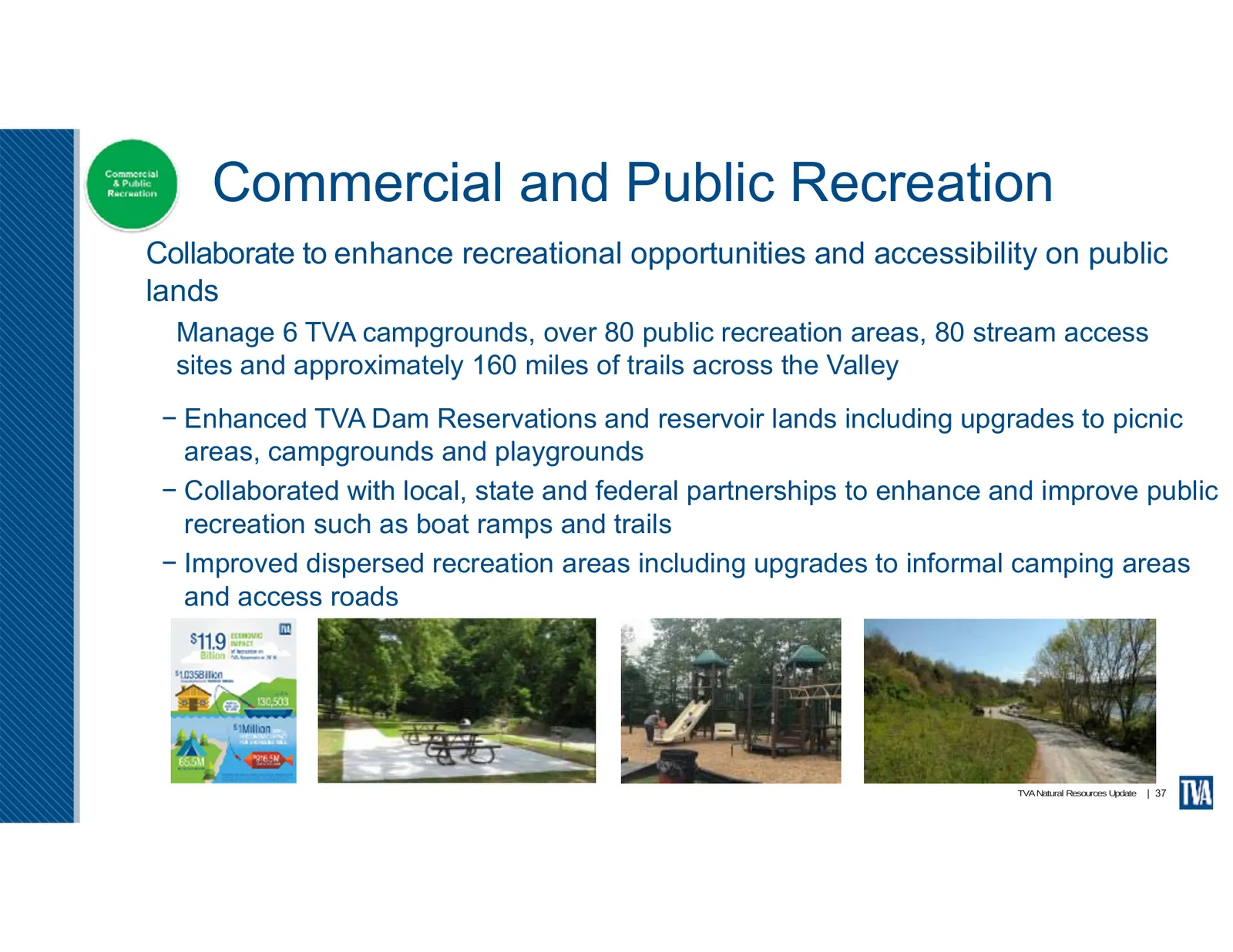
Commercial and Public Recreation Collaborate to enhance recreational opportunities and accessibility on public lands Manage 6 TVA campgrounds, over 80 public recreation areas, 80 stream access sites and approximately 160 miles of trails across the Valley − Enhanced TVA Dam Reservations and reservoir
Slide 38: Water Resources Stewardship
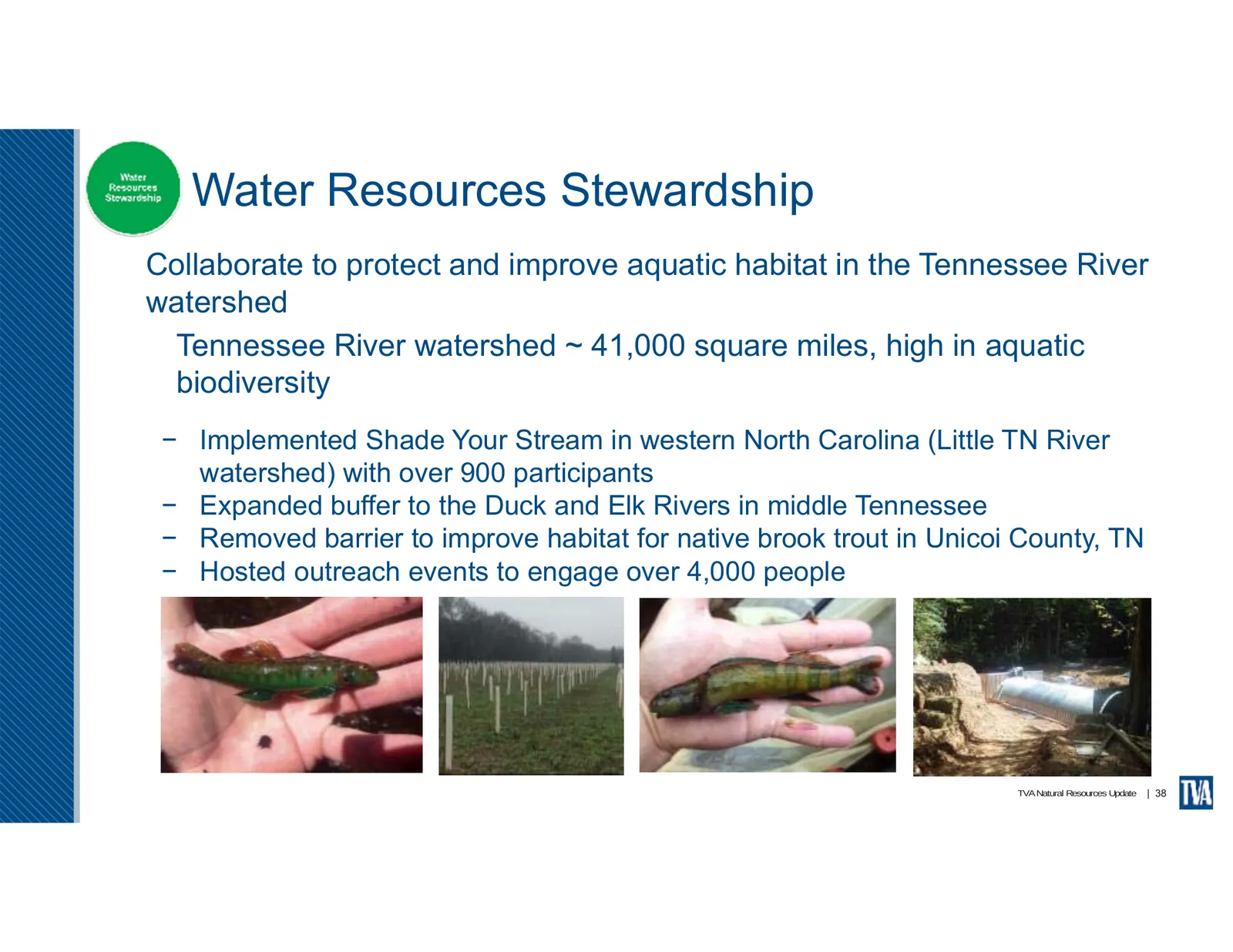
Water Resources Stewardship Collaborate to protect and improve aquatic habitat in the Tennessee River watershed Tennessee River watershed ~ 41,000 square miles, high in aquatic biodiversity − Implemented Shade Your Stream in western North Carolina (Little TN River watershed) with over 900 participan
Slide 39: Cultural Resources Stewardship
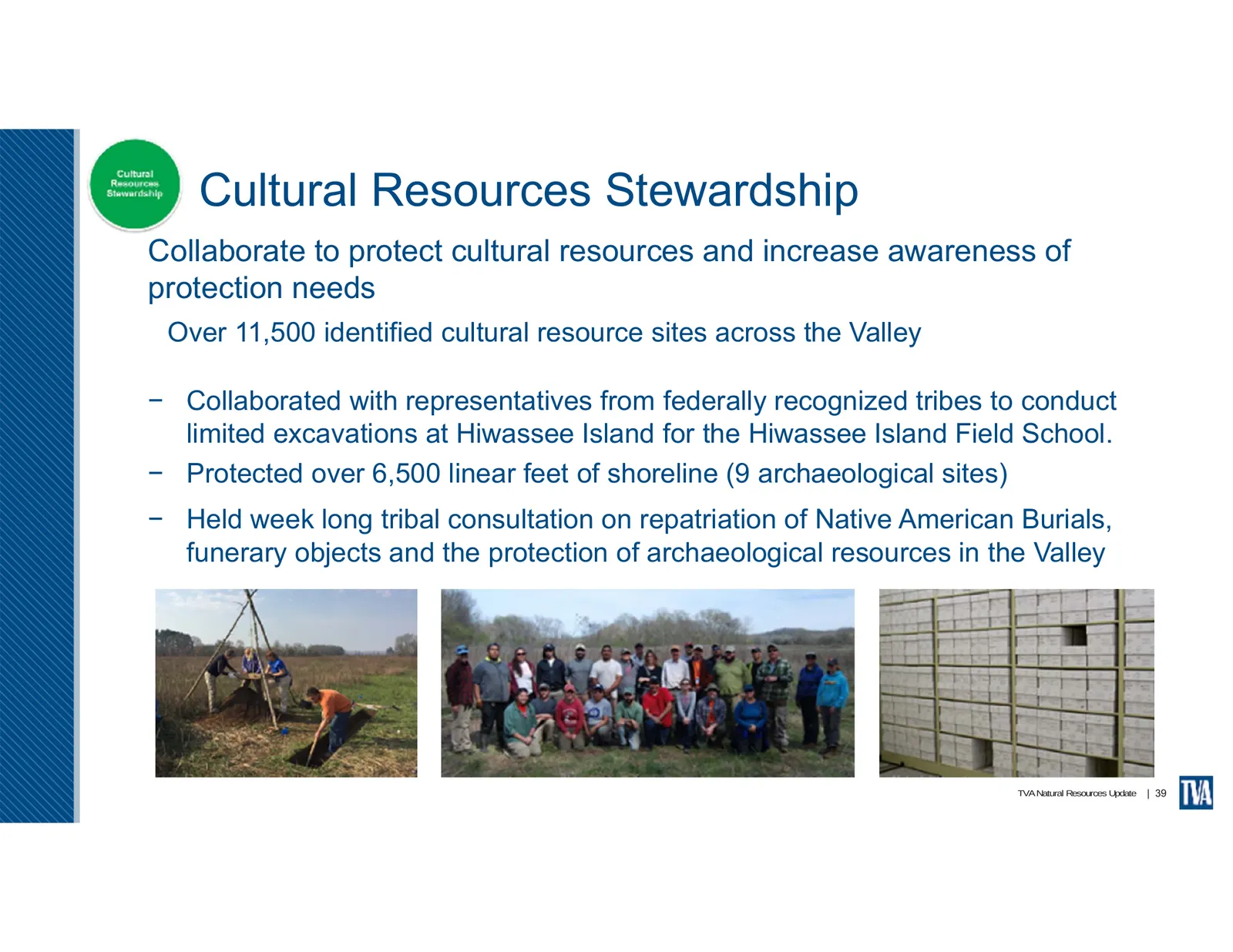
Cultural Resources Stewardship Collaborate to protect cultural resources and increase awareness of protection needs Over 11,500 identified cultural resource sites across the Valley − Collaborated with representatives from federally recognized tribes to conduct limited excavations at Hiwassee Island
Slide 40: Eco-Tourism
Eco-Tourism Collaborate to promote and enhance recreational opportunities to support tourism and local economies – Supported regional planning efforts and tourism studies – Partnered with communities to enhance recreation and tourism opportunities including the Ocoee whitewater agreement – Expanded
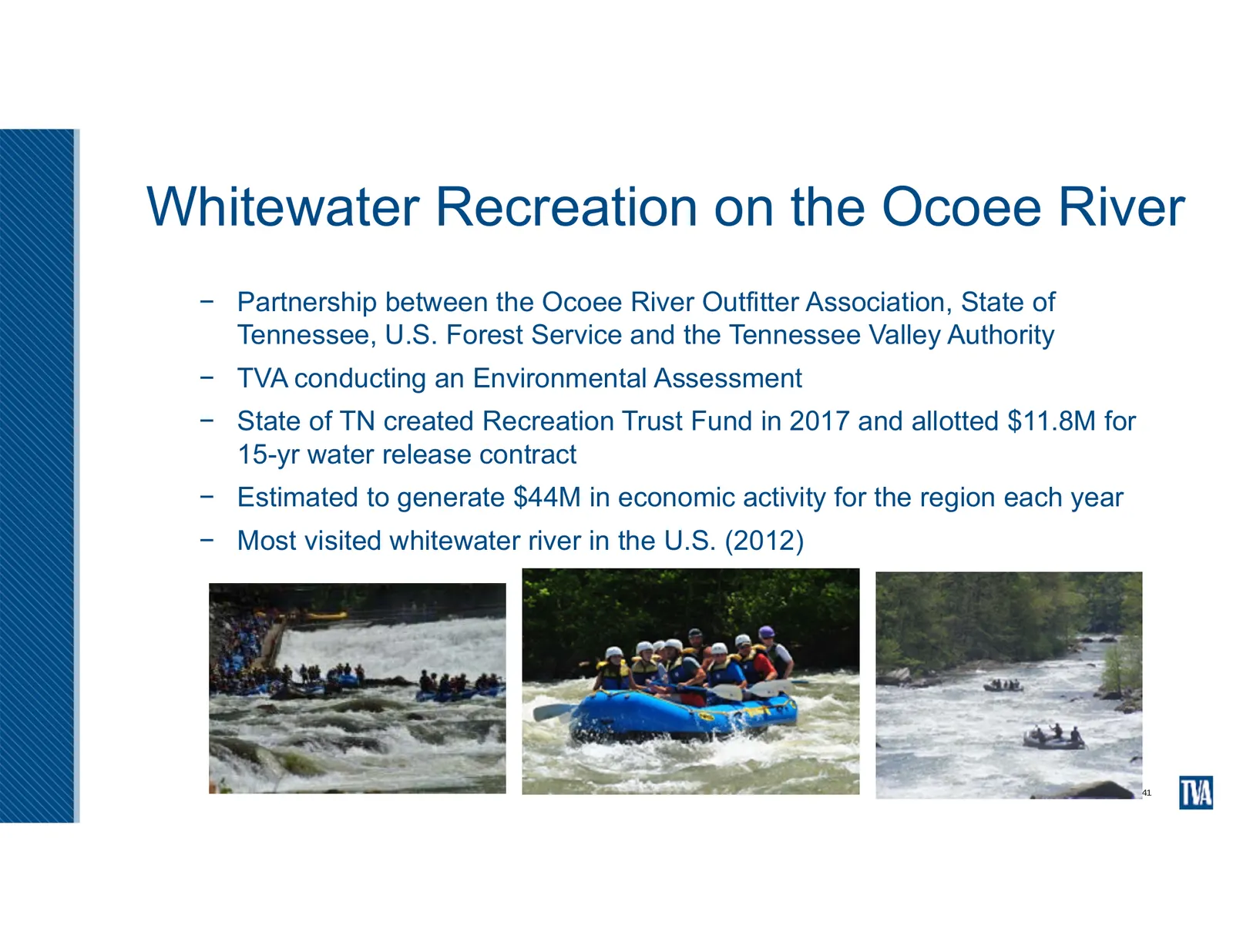
Slide 41: Whitewater Recreation on the Ocoee River
Whitewater Recreation on the Ocoee River − Partnership between the Ocoee River Outfitter Association, State of Tennessee, U.S. Forest Service and the Tennessee Valley Authority − TVA conducting an Environmental Assessment − State of TN created Recreation Trust Fund in 2017 and allotted $11.8M for 15
Slide 42: Section 26a Permitting & Land Use Agreements
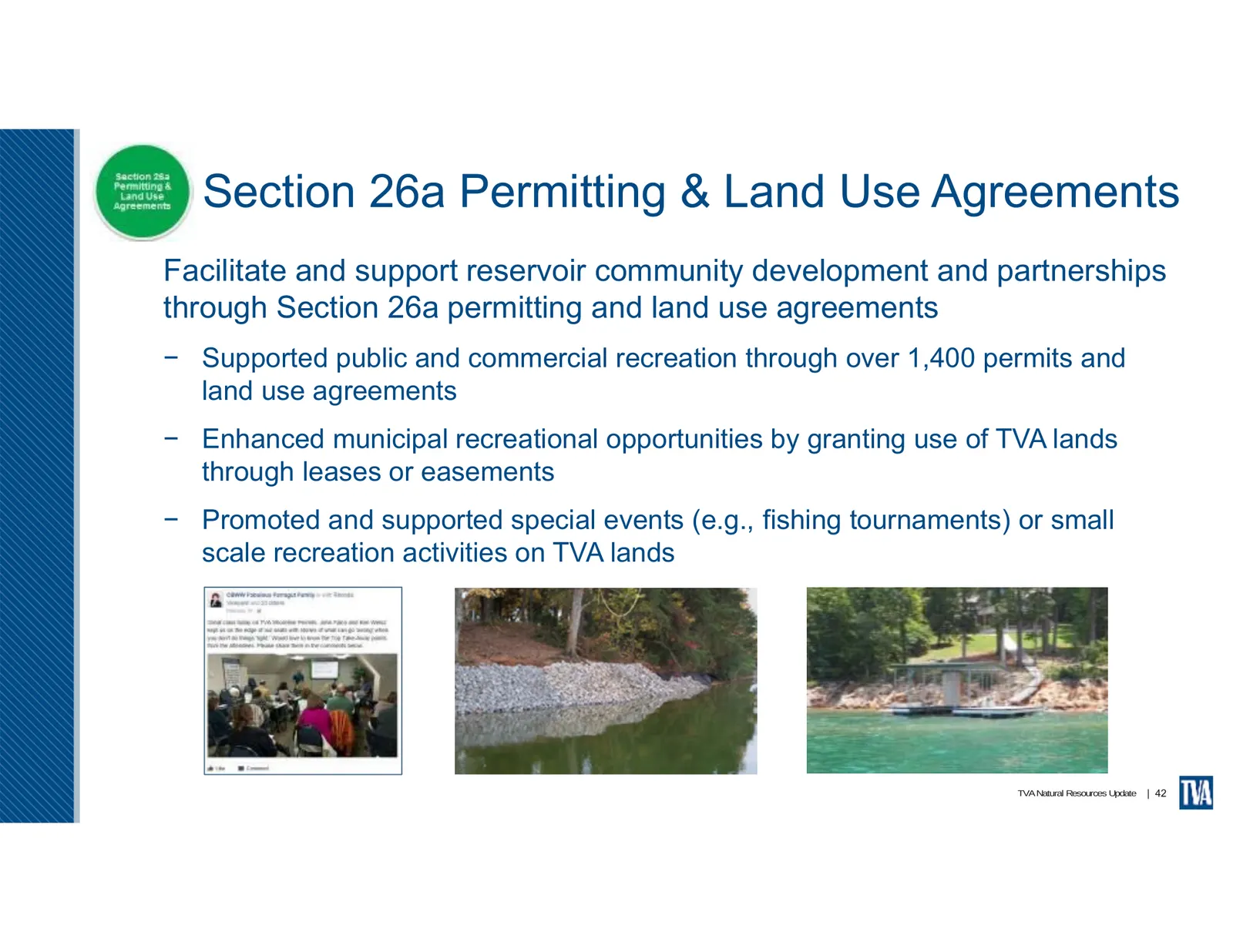
Section 26a Permitting & Land Use Agreements Facilitate and support reservoir community development and partnerships through Section 26a permitting and land use agreements − Supported public and commercial recreation through over 1,400 permits and land use agreements − Enhanced municipal recreationa
Slide 43: Floating Cabins – Next Steps
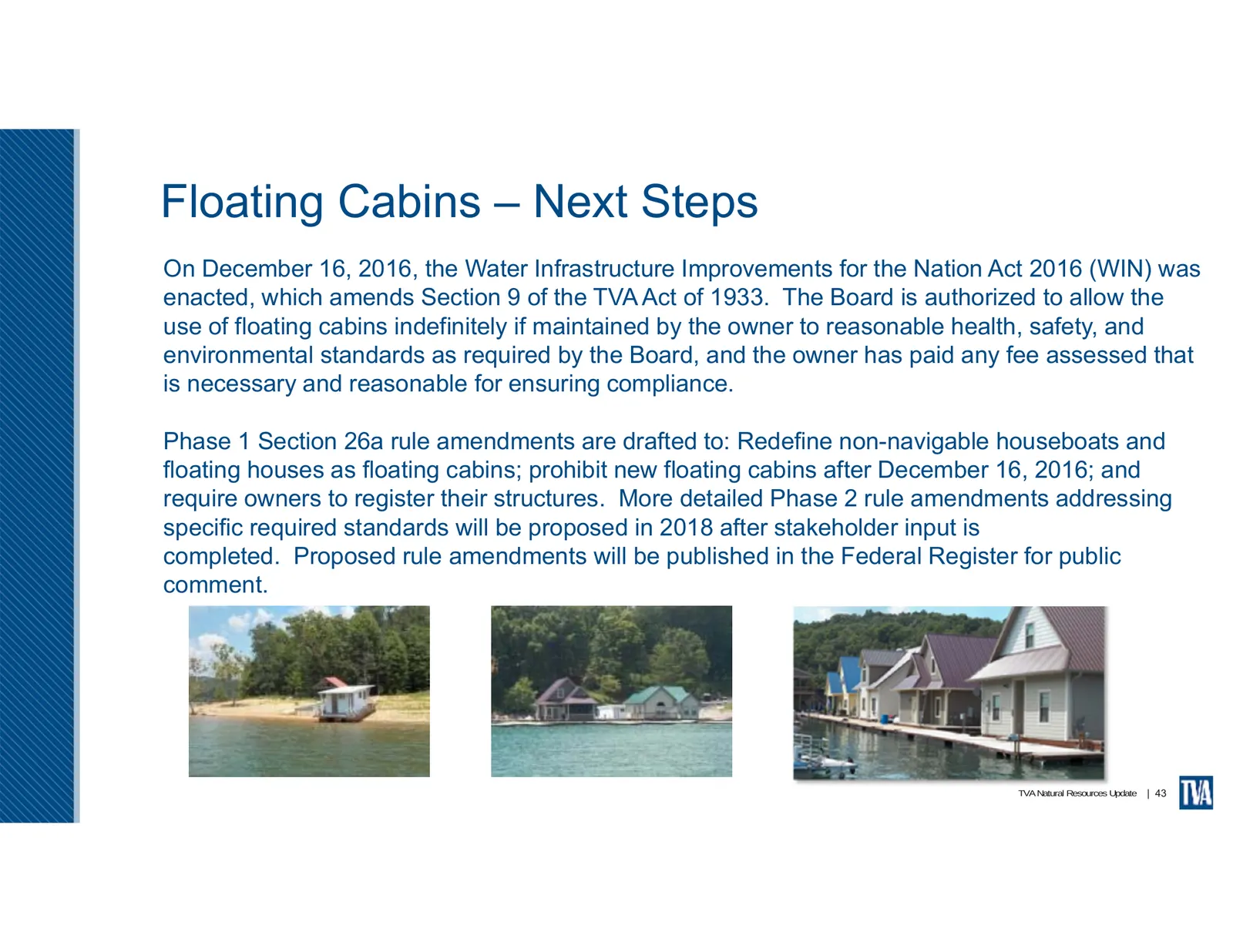
Floating Cabins – Next Steps On December 16, 2016, the Water Infrastructure Improvements for the Nation Act 2016 (WIN) was enacted, which amends Section 9 of the TVA Act of 1933. The Board is authorized to allow the use of floating cabins indefinitely if maintained by the owner to reasonable health,
Slide 44: Nuisance & Invasive Species Management
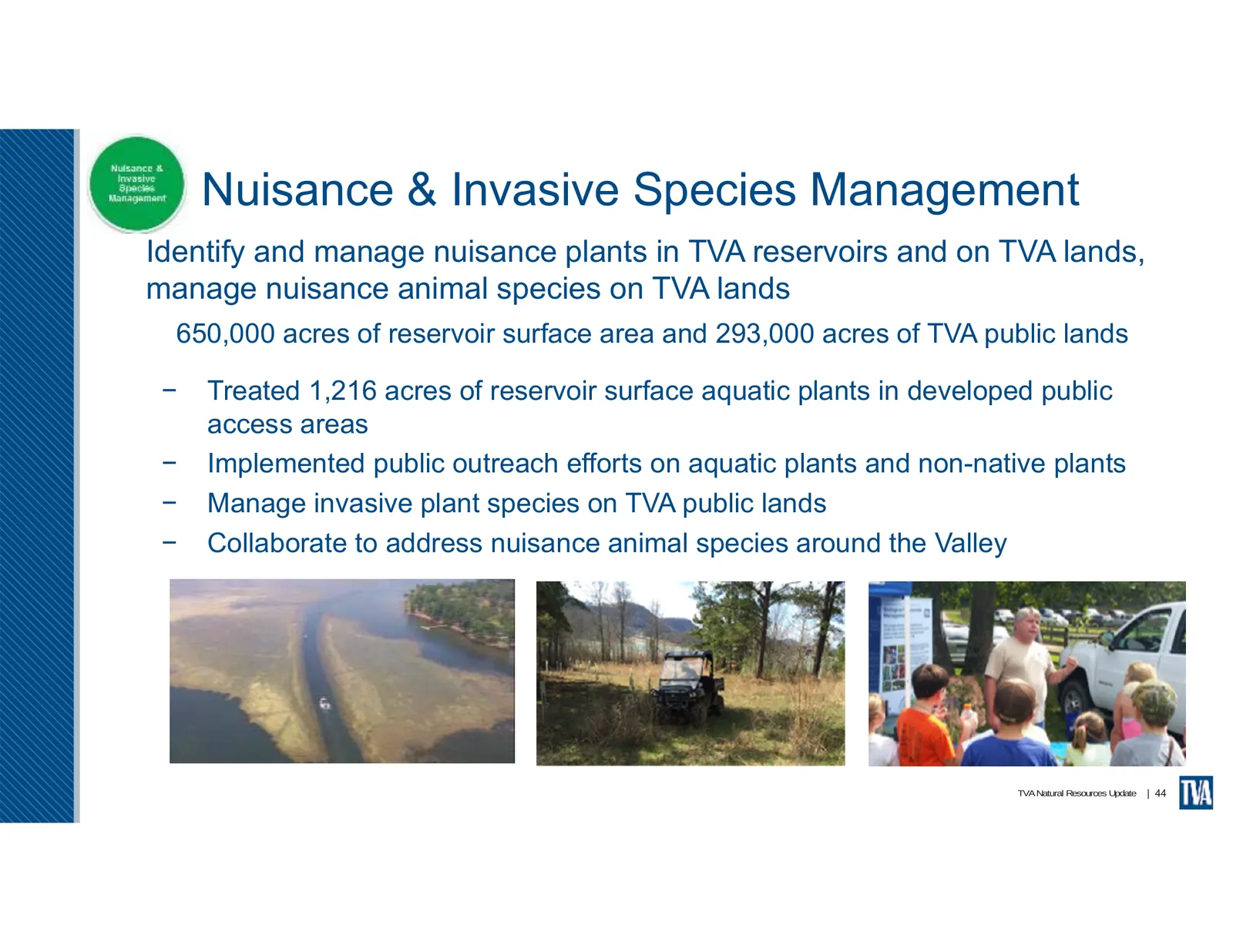
Nuisance & Invasive Species Management Identify and manage nuisance plants in TVA reservoirs and on TVA lands, manage nuisance animal species on TVA lands 650,000 acres of reservoir surface area and 293,000 acres of TVA public lands − Treated 1,216 acres of reservoir surface aquatic plants in develo
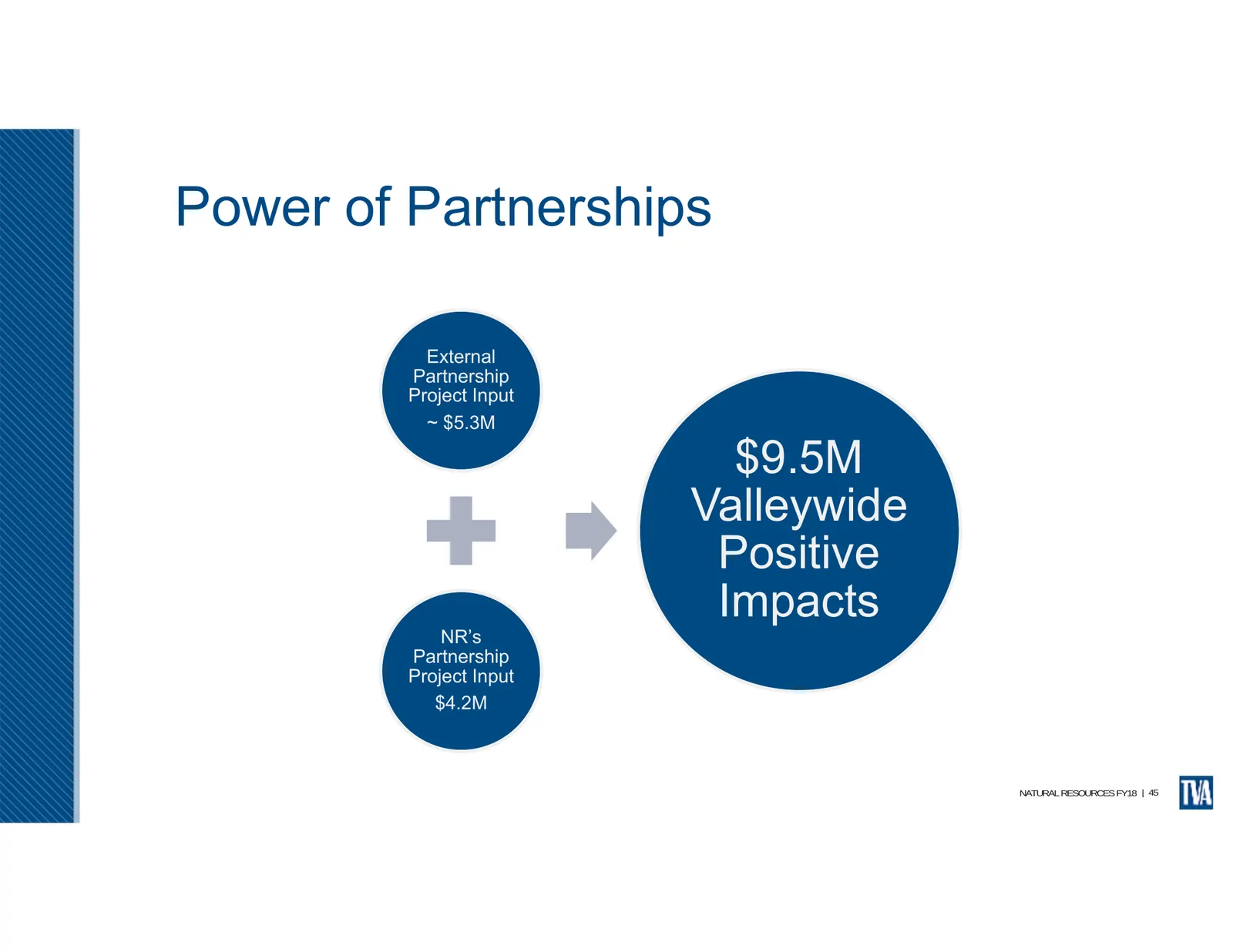
Slide 45: Power of Partnerships
Power of Partnerships External Partnership Project Input ~ $5.3M $9.5M Valleywide Positive Impacts NR’s Partnership Project Input $4.2M NATURAL RESOURCES FY18 | 45
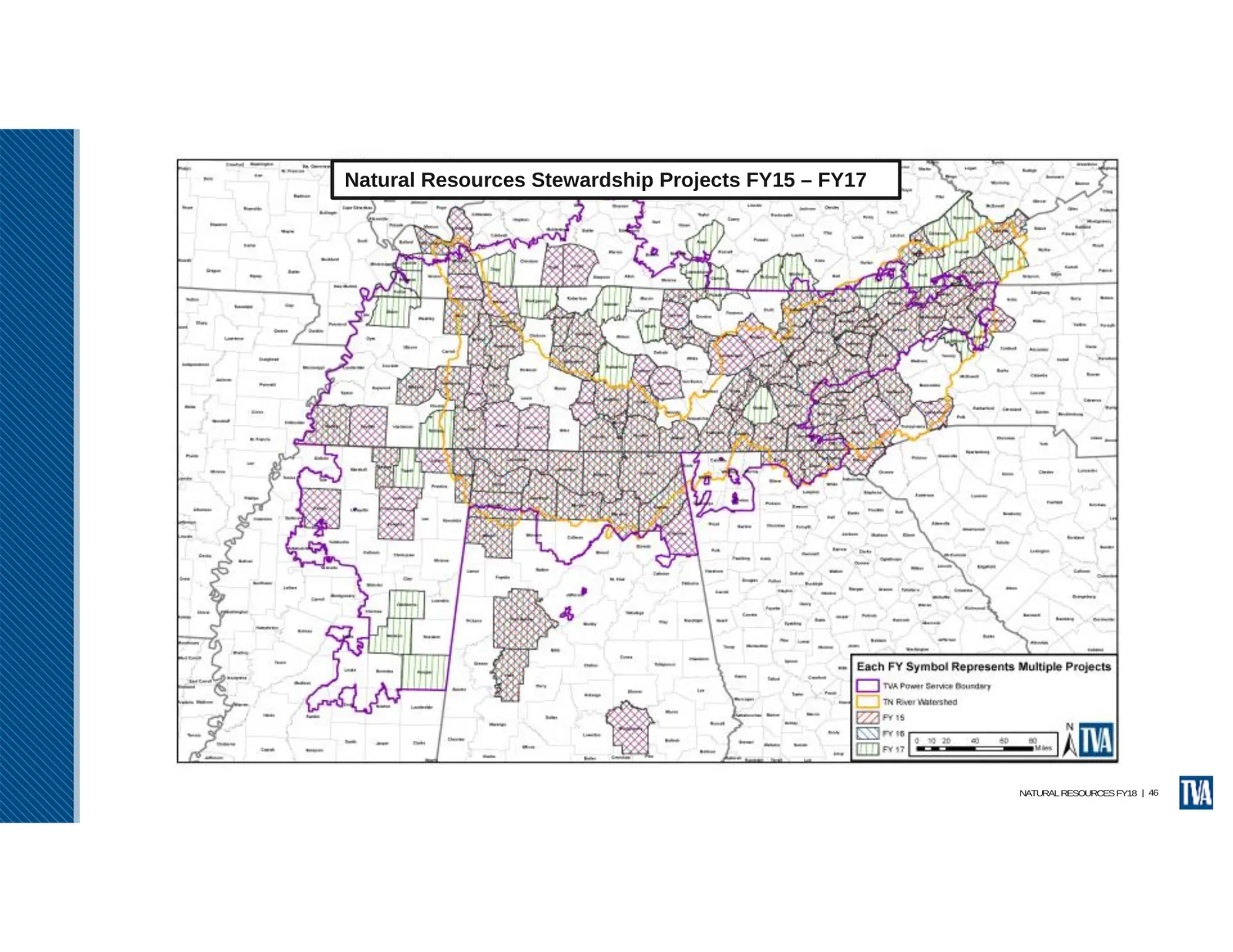
Slide 46: Natural Resources Stewardship Projects FY15 – FY17
Natural Resources Stewardship Projects FY15 – FY17 NATURAL RESOURCES FY18 | 46
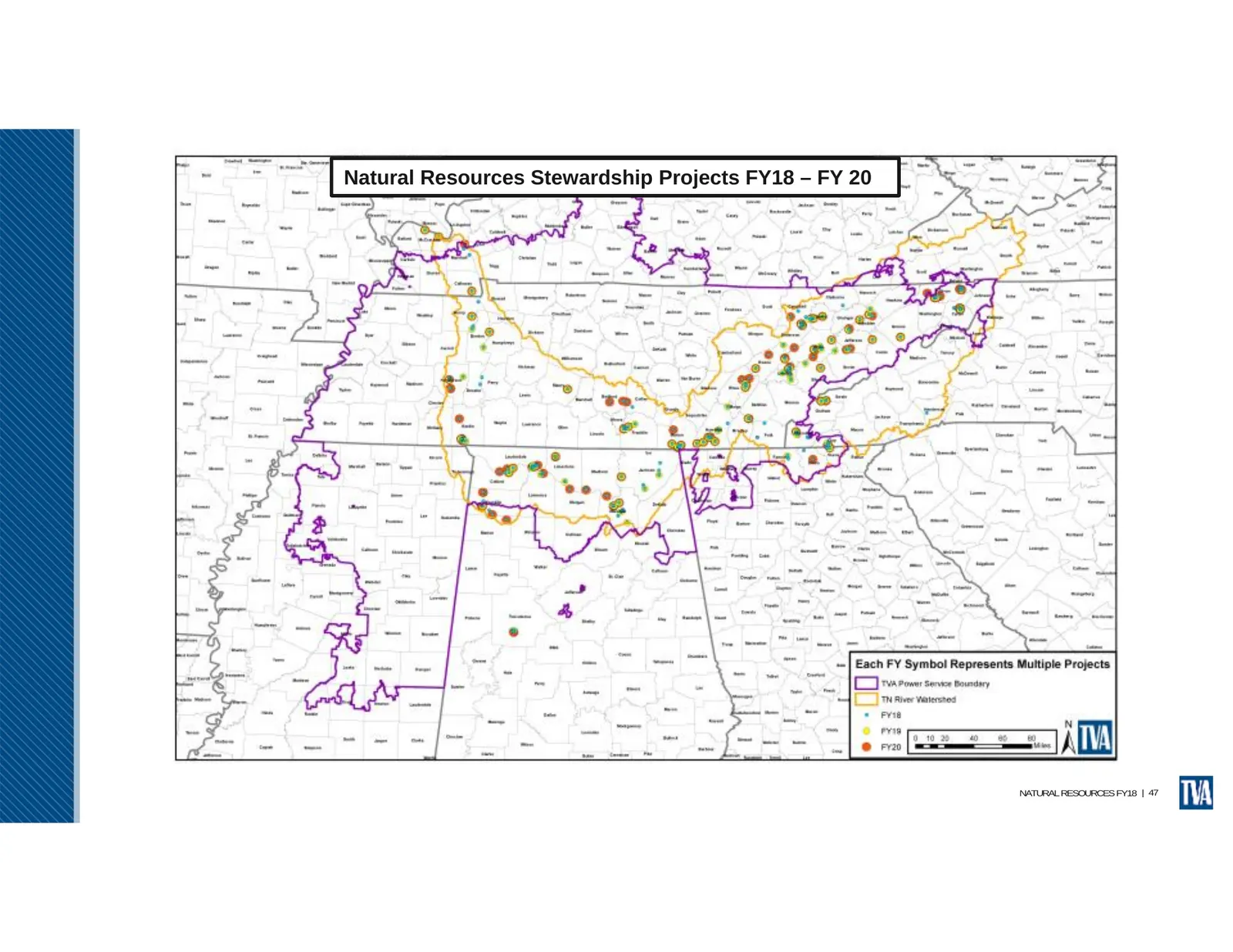
Slide 47: Natural Resources Stewardship Projects FY18 – FY20
Natural Resources Stewardship Projects FY18 – FY 20 NATURAL RESOURCES FY18 | 47
Slide 48: FY18 Stewardship Efforts
FY18 Stewardship Efforts − NRP update − Public Land Policy − Lands Planning for Tellico and parts of Watts Bar − Partnership projects in recreation and wildlife habitat − Enhancements to Dam Reservation facilities − Increase efforts to build partnerships and expand stewardship work across Valley TVA

Slide 49: Break
Slide 50: TVA Natural Resource Plan
TVA Natural Resource Plan Russell Smith, Natural Resources
Slide 51: TVA Natural Resource Plan
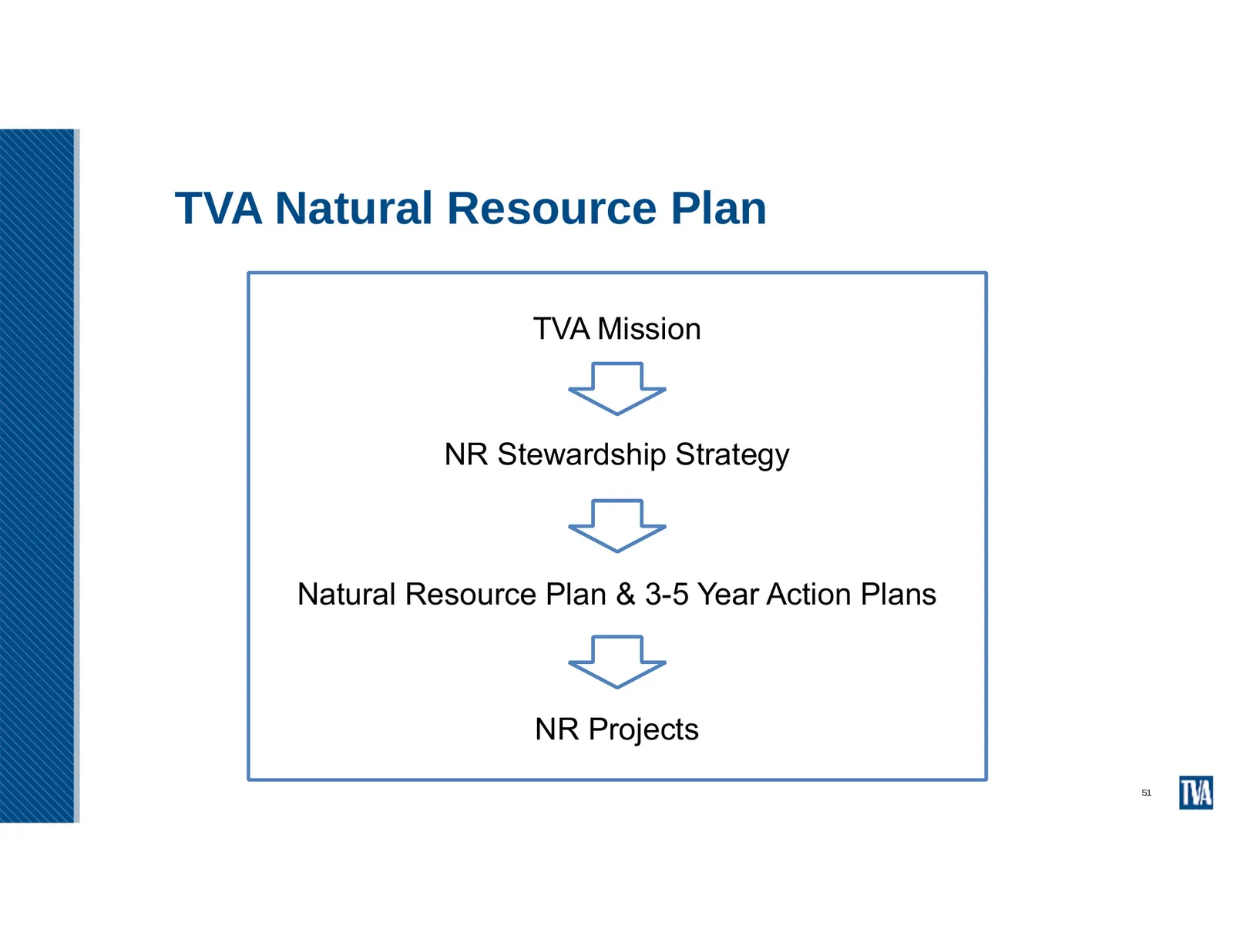
TVA Natural Resource Plan TVA Mission NR Stewardship Strategy Natural Resource Plan & 3-5 Year Action Plans NR Projects 51
Slide 52: TVA's Mission of Service
TVA’s Mission of Service TVA exists to make our region the best place in the country to live, work and play. 52
Slide 53: Natural Resources – Stewardship Strategy
Natural Resources – Stewardship Strategy To fulfill TVA’s mission, NR serves the people of the TVA region by remaining agile, balancing competing demands, and being a catalyst for collaboration in order to: • Create and sustain destinations for recreation and opportunities for learning and research
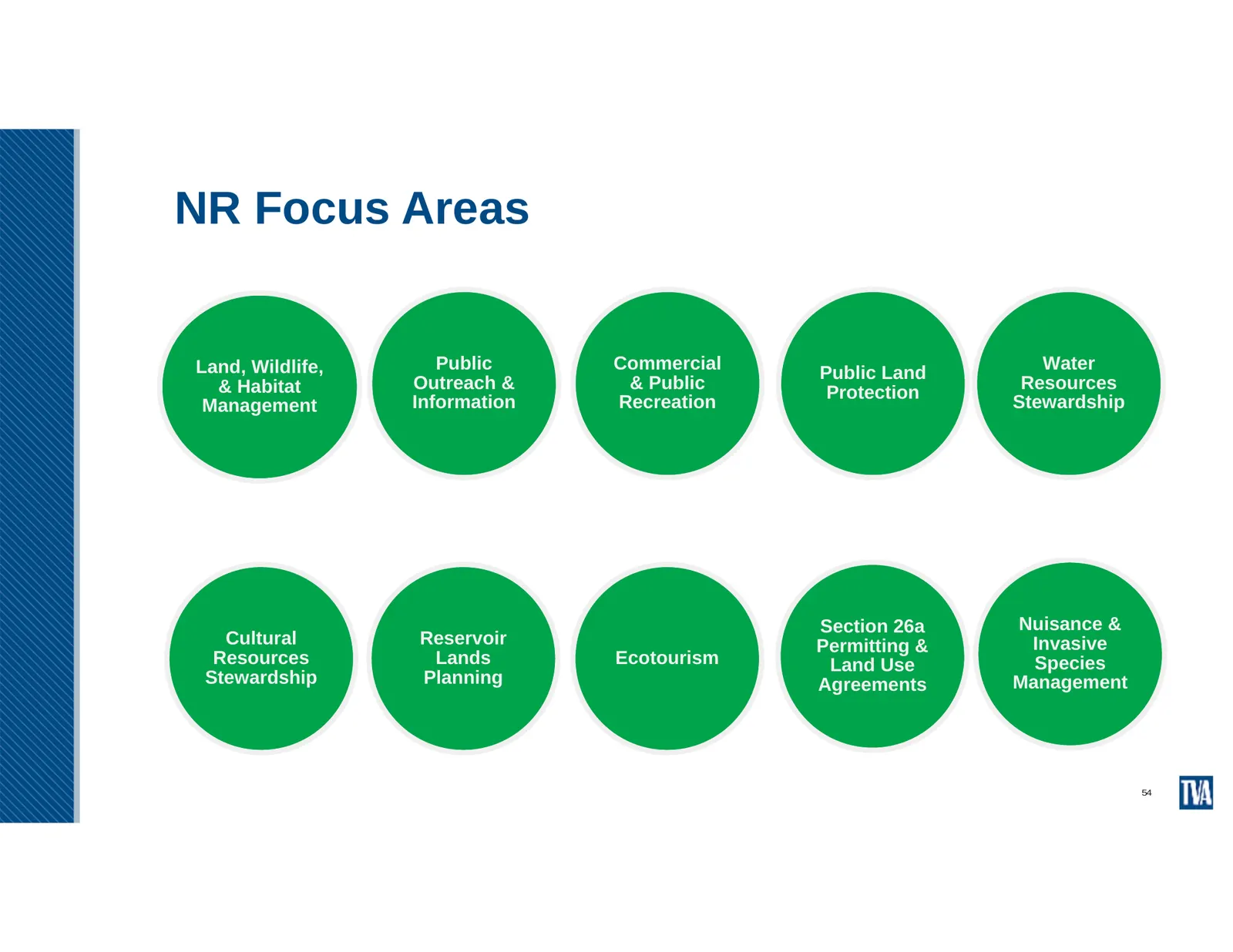
Slide 54: NR Focus Areas
NR Focus Areas Land, Wildlife, Public Commercial Water Public Land & Habitat Outreach & & Public Resources Protection Management Information Recreation Stewardship Section 26a Nuisance & Cultural Reservoir Permitting & Invasive Resources Lands Ecotourism Land Use Species Stewardship Planning Agreeme
Slide 55: Natural Resource Plan 2018 Update
Natural Resource Plan 2018 Update 55
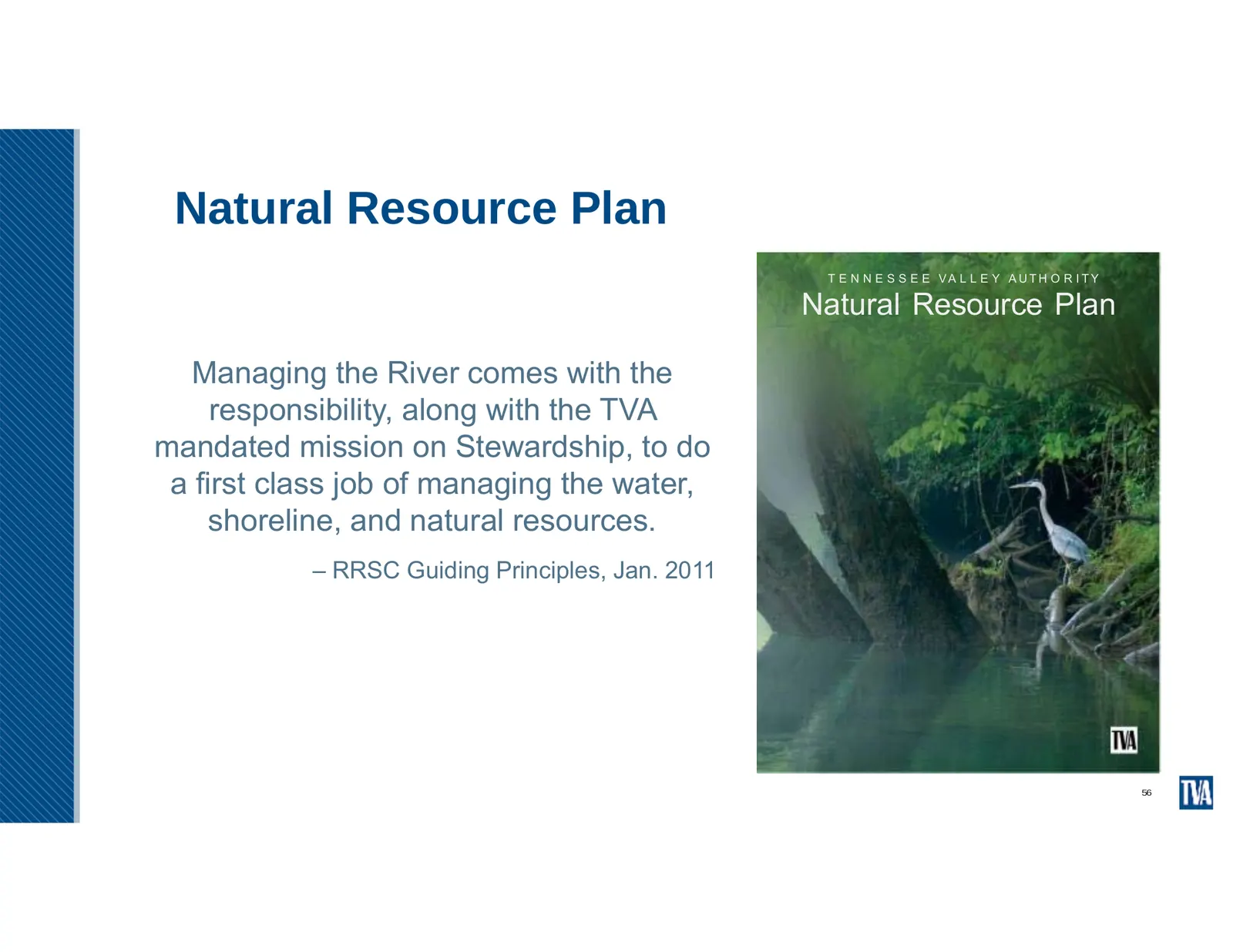
Slide 56: Natural Resource Plan
Natural Resource Plan T E N N E S S E E VA L L E Y A U T H O R I T Y Natural Resource Plan Managing the River comes with the responsibility, along with the TVA mandated mission on Stewardship, to do a first class job of managing the water, shoreline, and natural resources. – RRSC Guiding Principles,
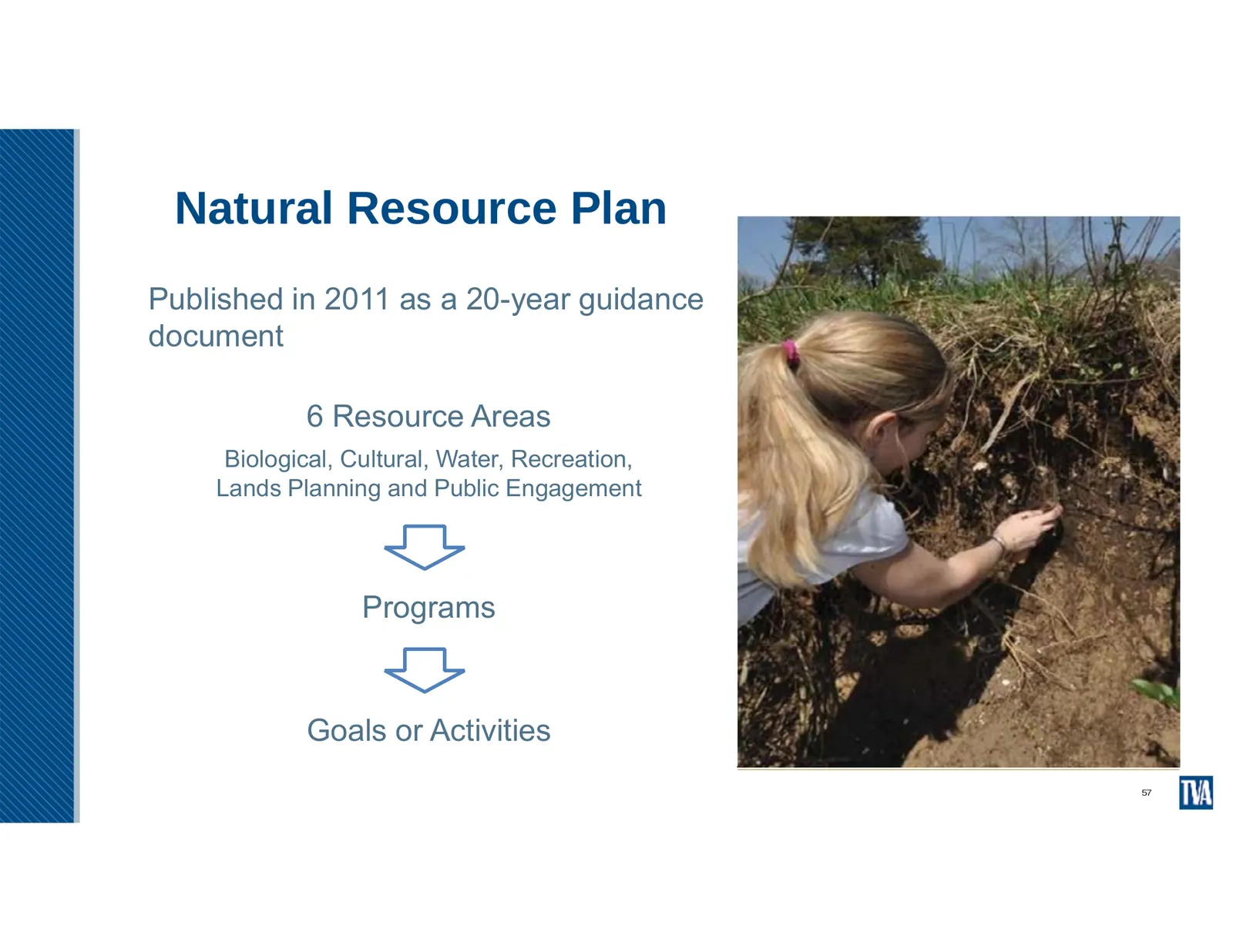
Slide 57: Natural Resource Plan
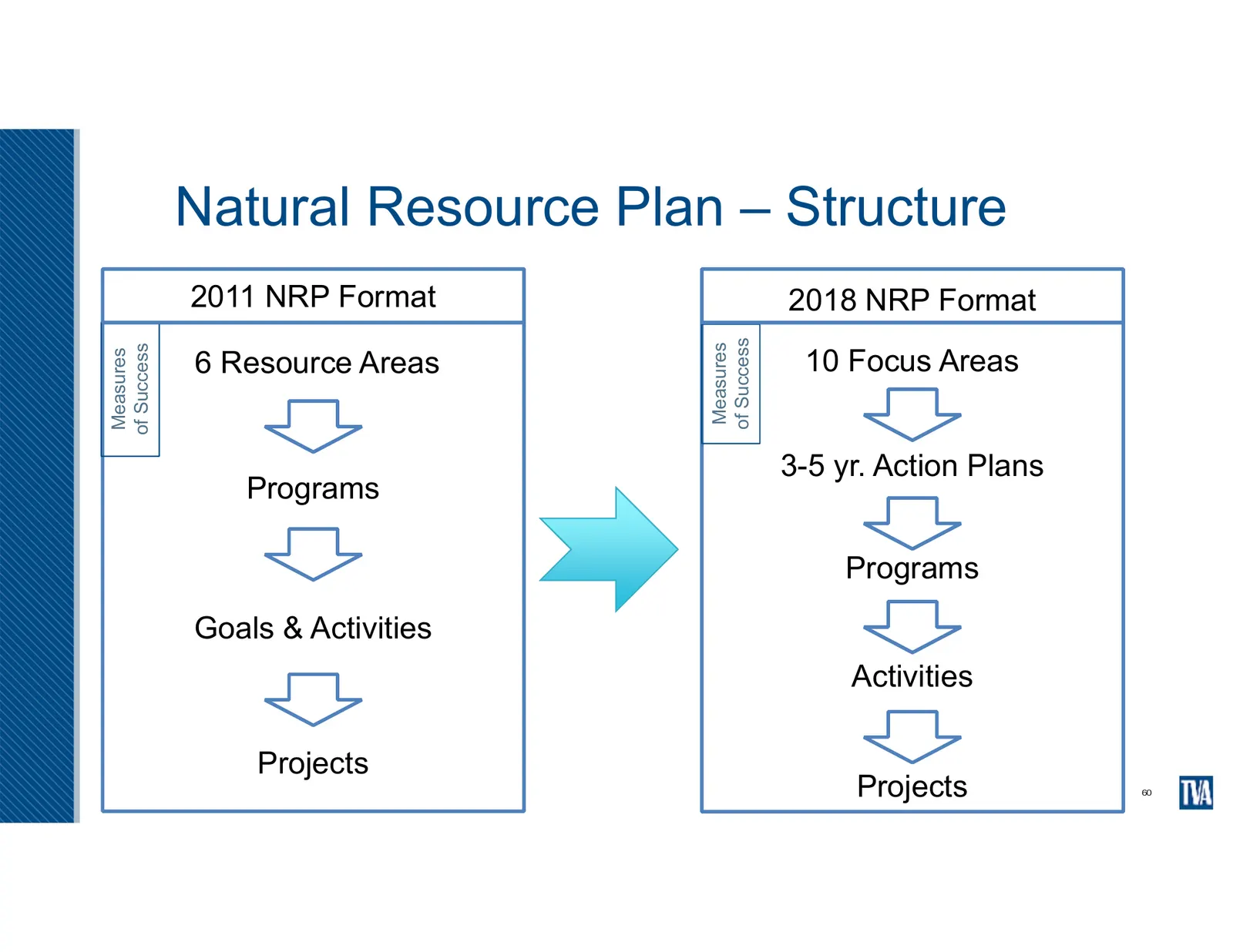
Natural Resource Plan Published in 2011 as a 20-year guidance document 6 Resource Areas Biological, Cultural, Water, Recreation, Lands Planning and Public Engagement Programs Goals or Activities 57
Slide 58: Natural Resource Plan
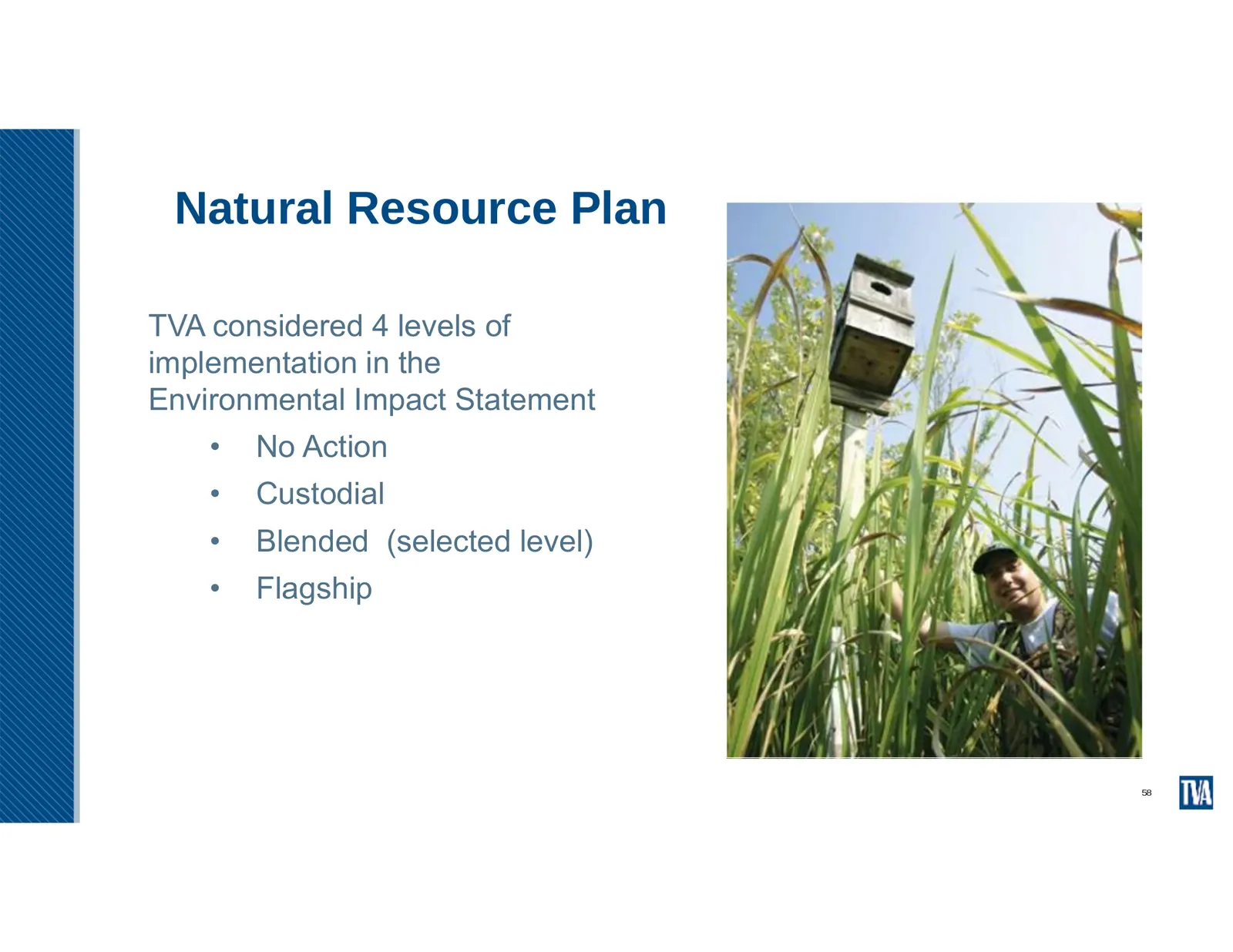
Natural Resource Plan TVA considered 4 levels of implementation in the Environmental Impact Statement • No Action • Custodial • Blended (selected level) • Flagship 58
Slide 59: Natural Resource Plan – Update
Natural Resource Plan – Update Goals: • Use lessons-learned to create updates programs and activities • Update text to align with TVA Mission and NR Strategy • Enhance strategic guidance and alignment of NR work • Be better equipped to answer your question of 'where do I spend the last dollar’ 59
Slide 60: Natural Resource Plan – Structure
Natural Resource Plan – Structure 2011 NRP Format 2018 NRP Format of Success Measures of Success 6 Resource Areas 10 Focus Areas Measures 3-5 yr. Action Plans Programs Programs Goals & Activities Activities Projects Projects 60
Slide 61: NR Focus Areas in the NRP
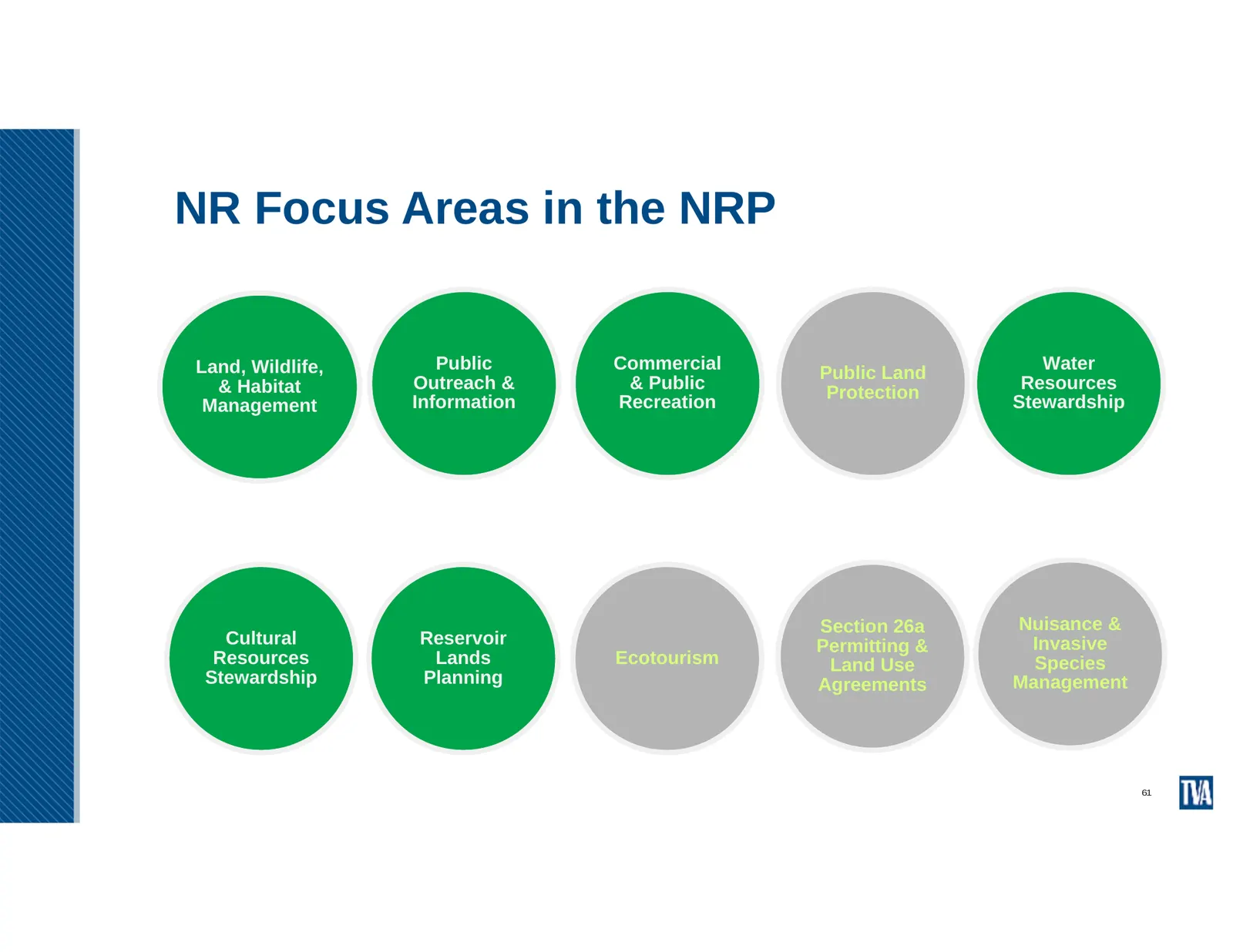
NR Focus Areas in the NRP Land, Wildlife, Public Commercial Water Public Land & Habitat Outreach & & Public Resources Protection Management Information Recreation Stewardship Section 26a Nuisance & Cultural Reservoir Permitting & Invasive Resources Lands Ecotourism Land Use Species Stewardship Plann
Slide 62: Schedule
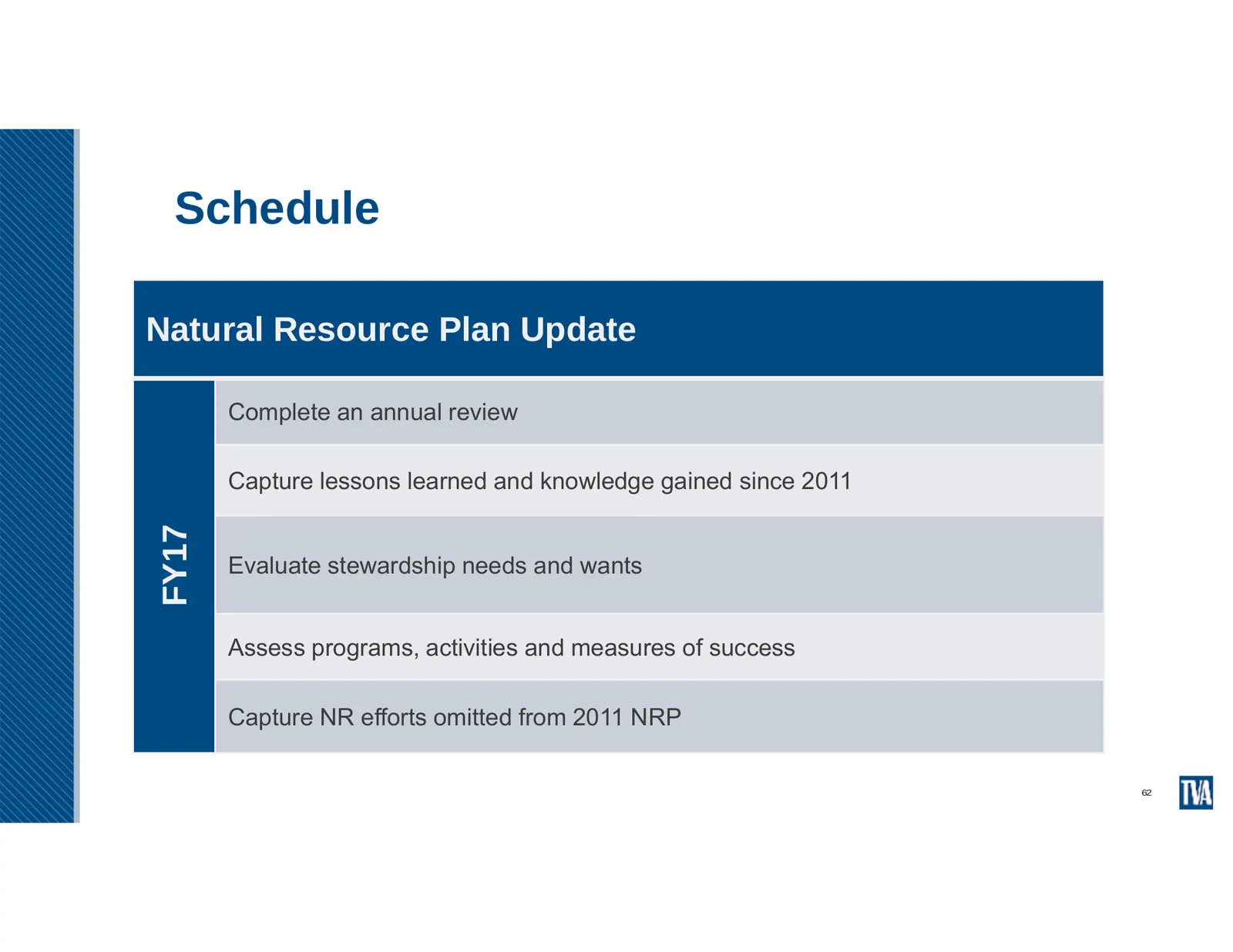
Schedule Natural Resource Plan Update Complete an annual review Capture lessons learned and knowledge gained since 2011 FY17 Evaluate stewardship needs and wants Assess programs, activities and measures of success Capture NR efforts omitted from 2011 NRP 62
Slide 63: Schedule
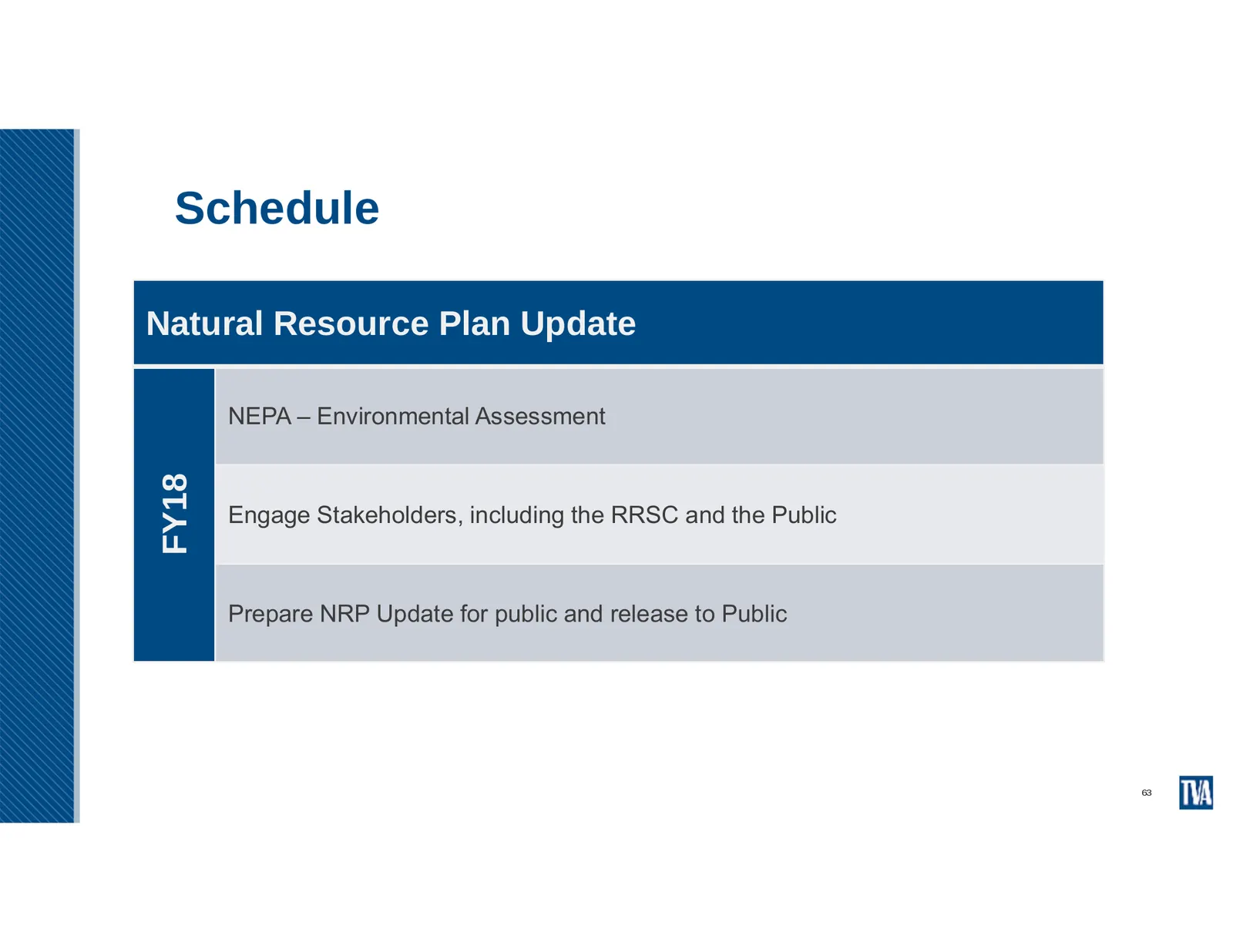
Schedule Natural Resource Plan Update NEPA – Environmental Assessment FY18 Engage Stakeholders, including the RRSC and the Public Prepare NRP Update for public and release to Public 63

Slide 64: Break
Slide 65: Introduce Advice Topic and Questions
Introduce Advice Topic and Questions
Slide 66: Advice Questions
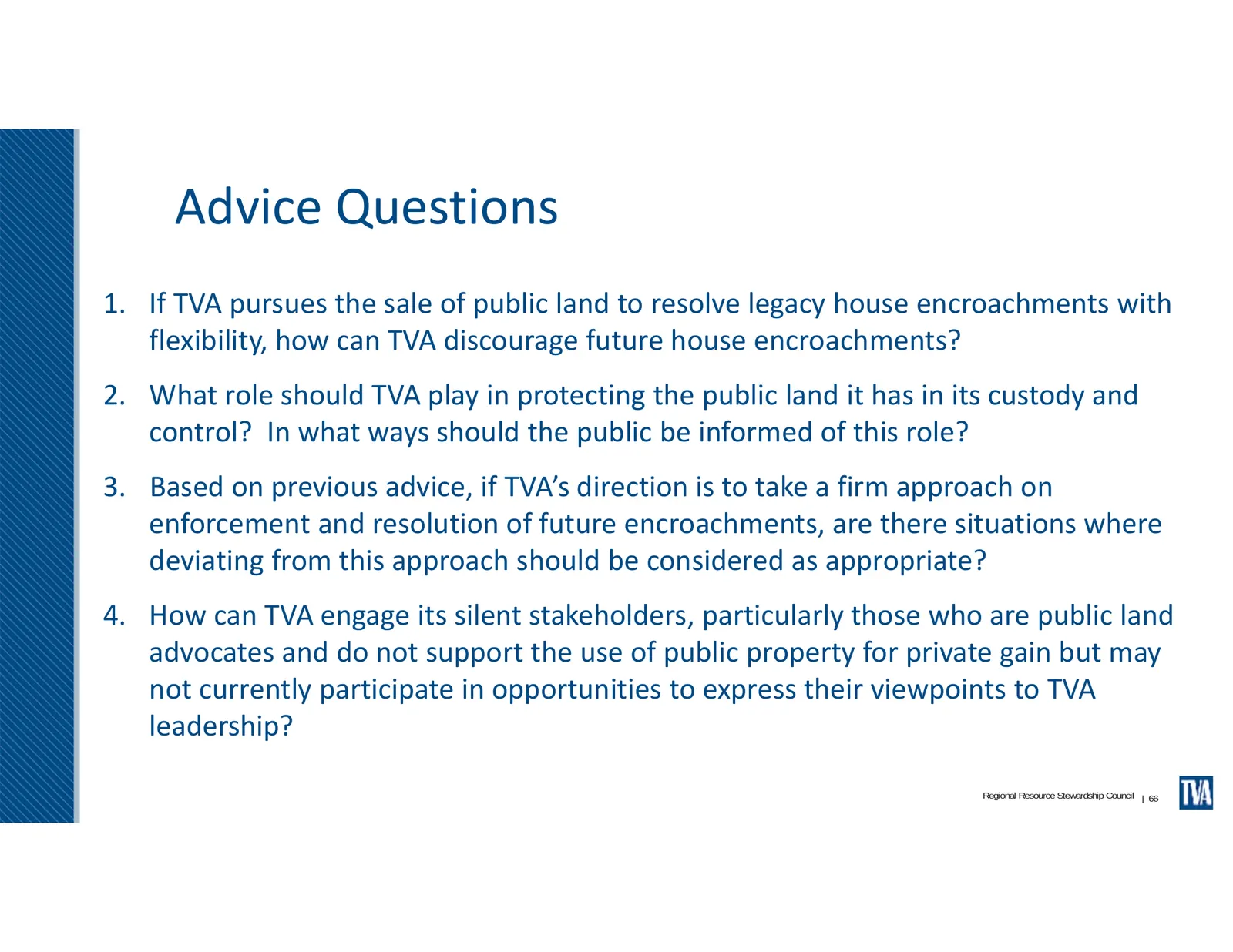
Advice Questions 1. If TVA pursues the sale of public land to resolve legacy house encroachments with flexibility, how can TVA discourage future house encroachments? 2. What role should TVA play in protecting the public land it has in its custody and control? In what ways should the public be inform
Slide 67: Public Land Protection
Public Land Protection Milli Warren
Slide 68: Purpose
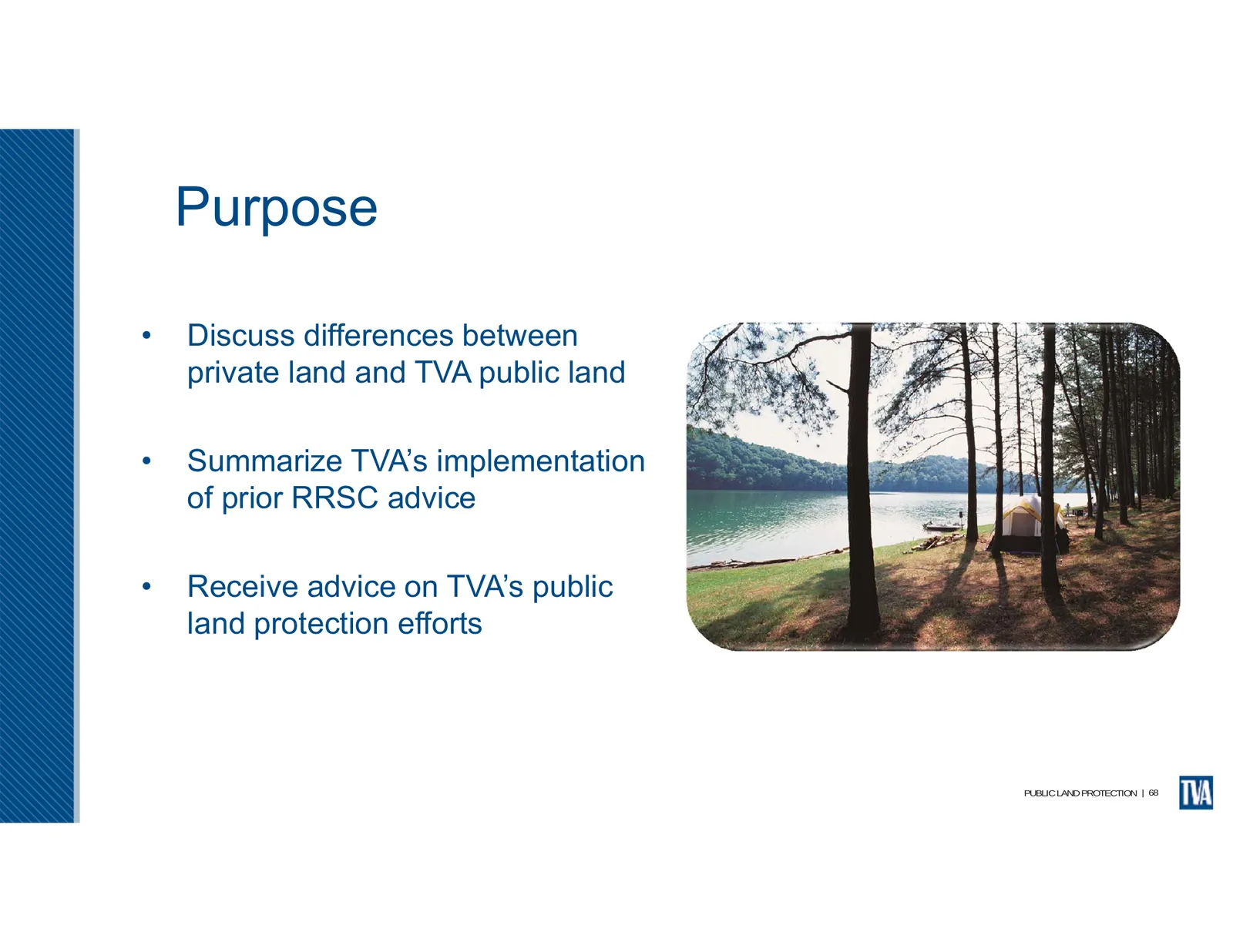
Purpose • Discuss differences between private land and TVA public land • Summarize TVA’s implementation of prior RRSC advice • Receive advice on TVA’s public land protection efforts PUBLIC LAND PROTECTION | 68
Slide 69: TVA Land Acquisition and Utilization
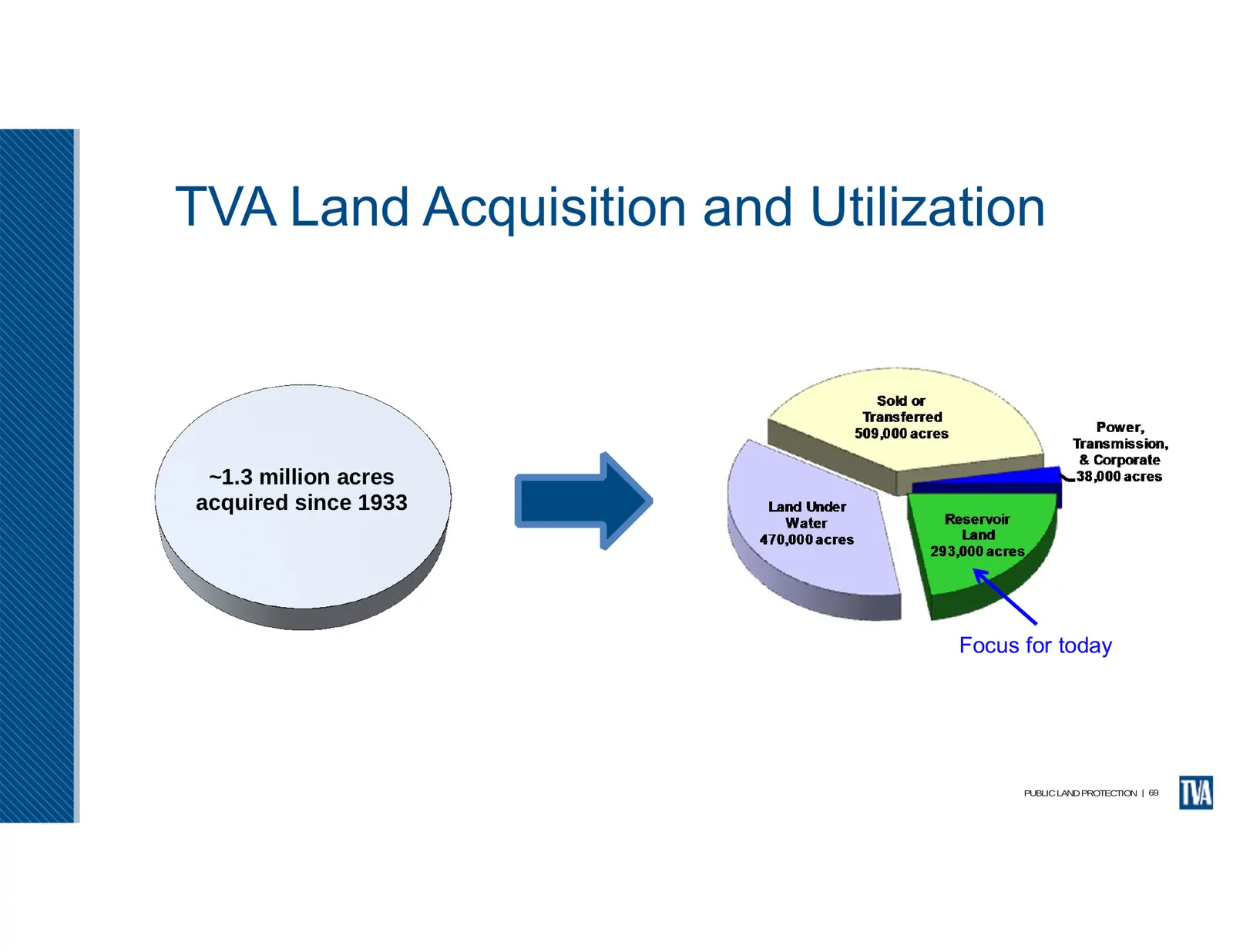
TVA Land Acquisition and Utilization ~1.3 million acres acquired since 1933 Focus for today PUBLIC LAND PROTECTION | 69
Slide 70: Reservoir Land Planning Zones
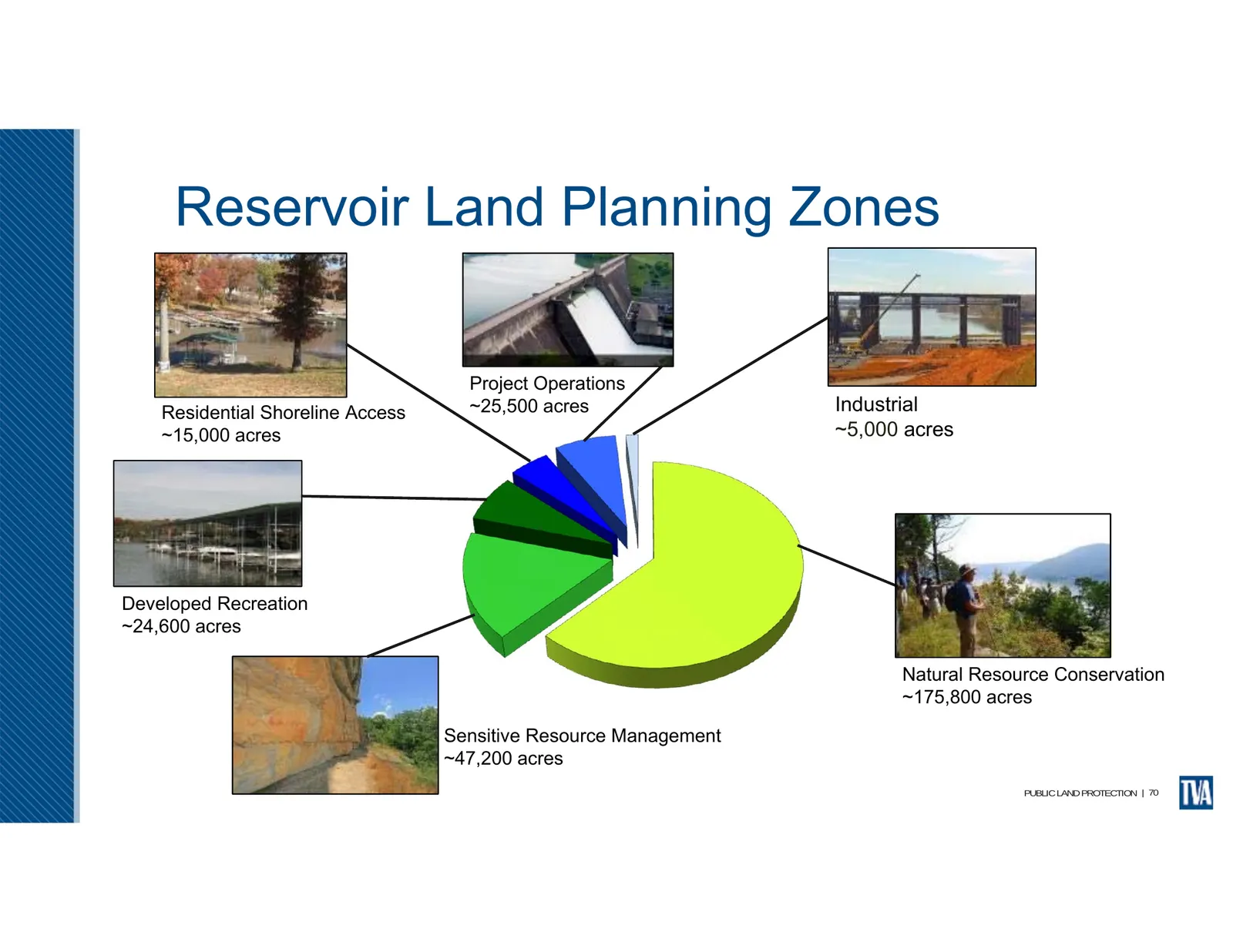
Reservoir Land Planning Zones Project Operations Residential Shoreline Access ~25,500 acres Industrial ~15,000 acres ~5,000 acres To help protect y our priv acy , PowerPoint has block ed automatic download of this picture. Developed Recreation ~24,600 acres Natural Resource Conservation ~175,800 acr
Slide 71: Private Land versus TVA Public Land
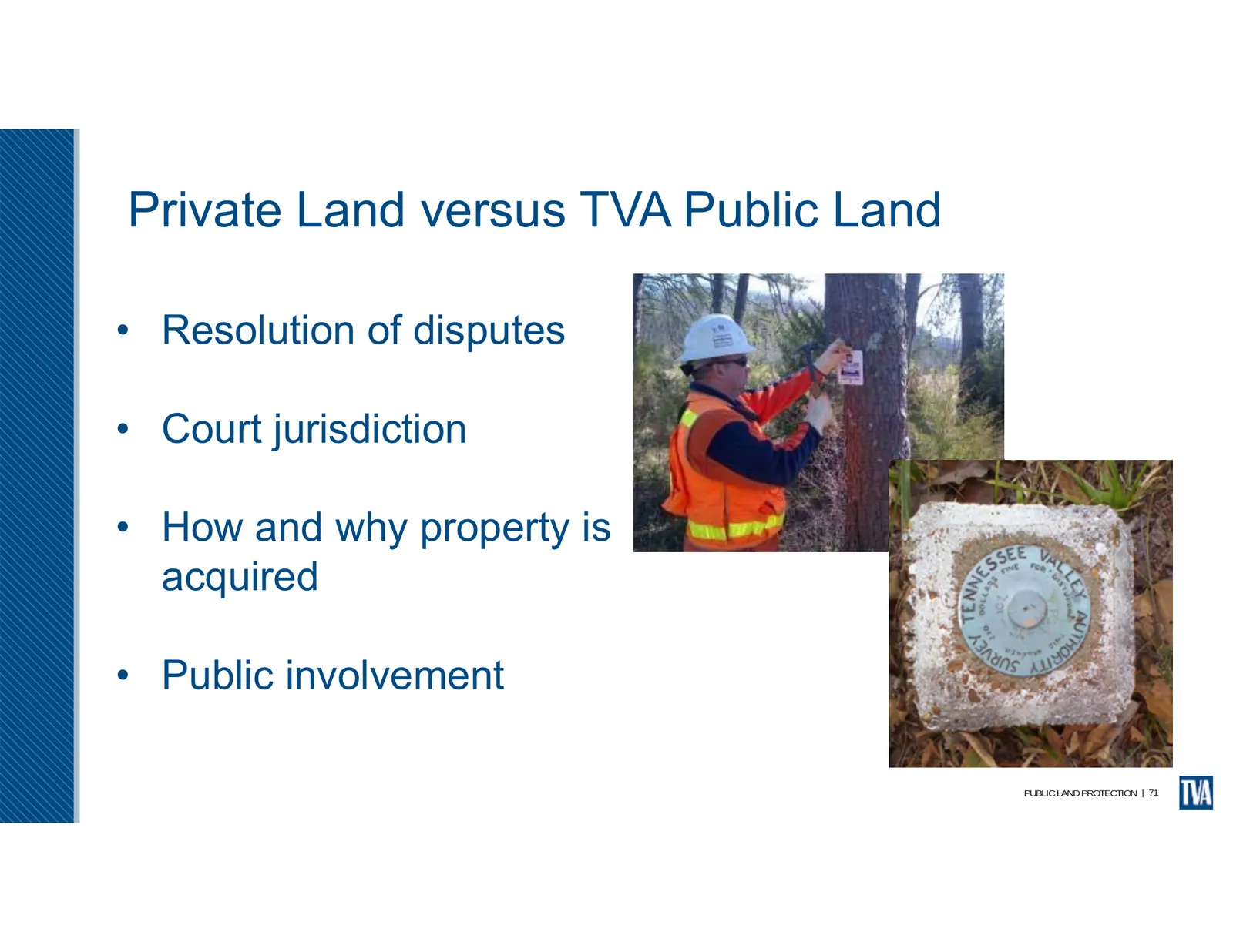
Private Land versus TVA Public Land • Resolution of disputes • Court jurisdiction • How and why property is acquired • Public involvement PUBLIC LAND PROTECTION | 71
Slide 72: Private vs. Public: Resolution of Disputes
Private vs. Public: Resolution of Disputes Encroachment Resolution Options • Private Land - Easement, Disposal, Removal/Litigation, Adverse Possession • TVA Public Land - TVA Policy and Congressional Disposal Authorities, Sufferance Agreement, Removal/Litigation PUBLIC LAND PROTECTION | 72
Slide 73: Private vs. Public: Court Jurisdiction
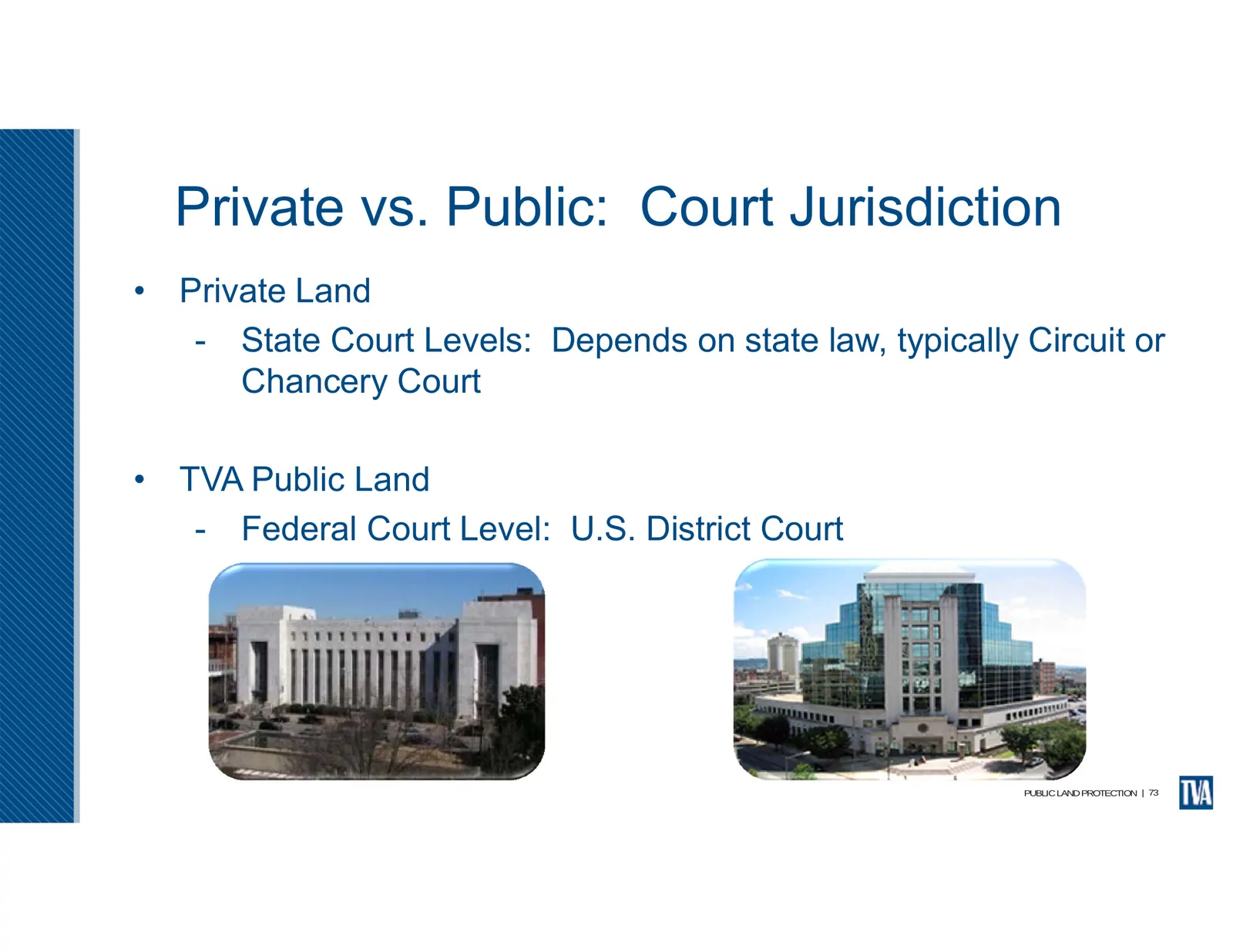
Private vs. Public: Court Jurisdiction • Private Land - State Court Levels: Depends on state law, typically Circuit or Chancery Court • TVA Public Land - Federal Court Level: U.S. District Court PUBLIC LAND PROTECTION | 73
Slide 74: Private vs. Public: How and Why Land was Acquired
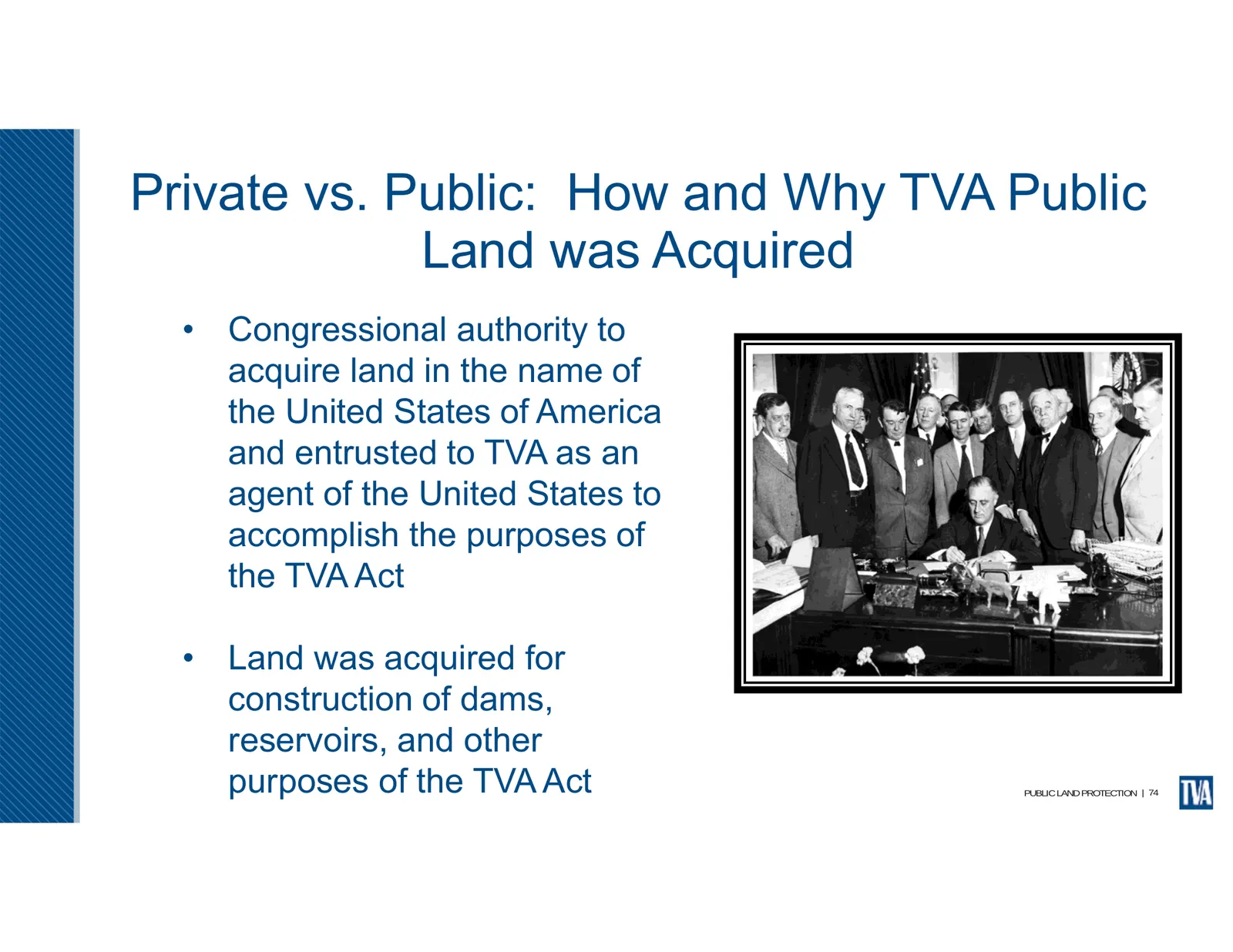
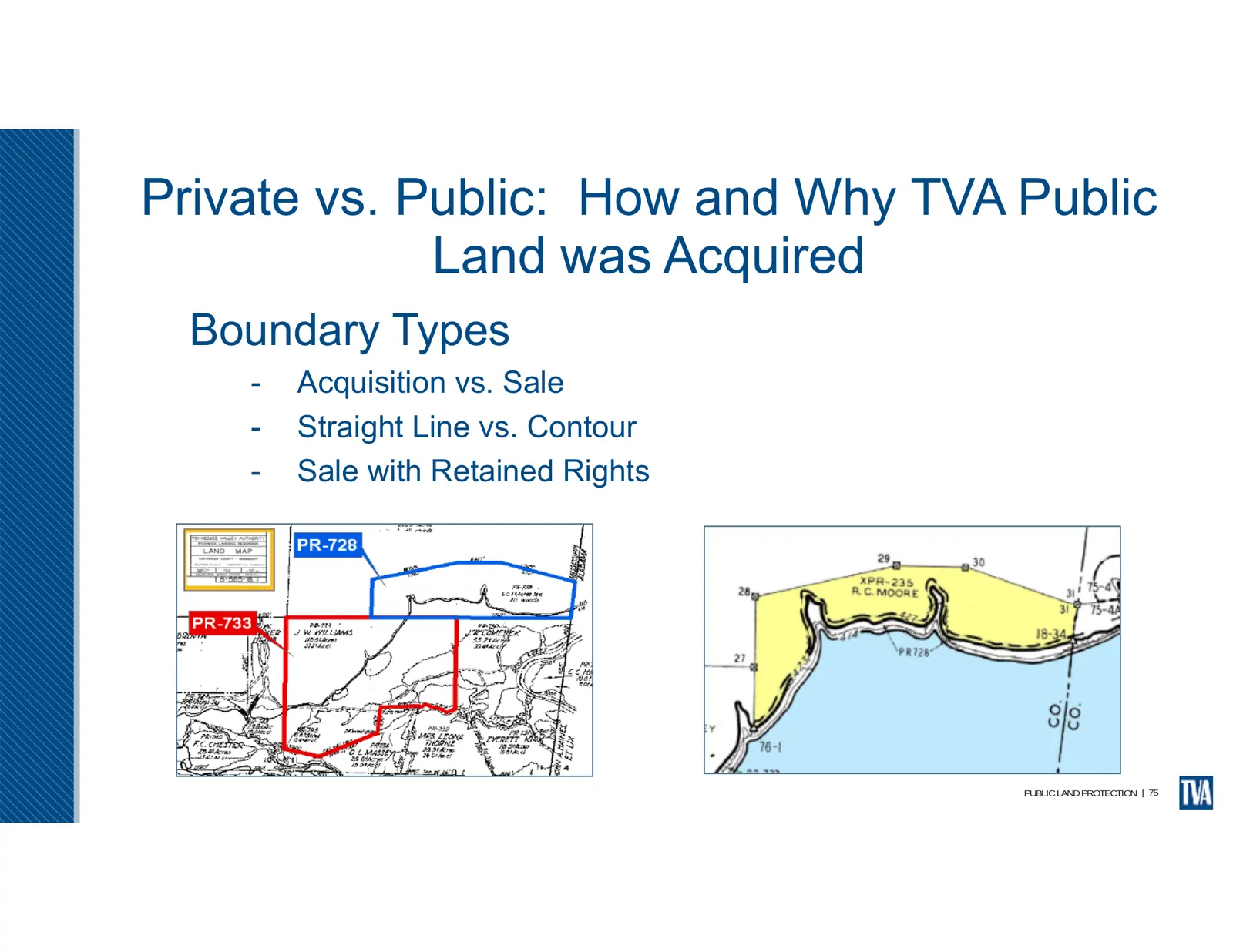
Private vs. Public: How and Why TVA Public Land was Acquired • Congressional authority to acquire land in the name of the United States of America and entrusted to TVA as an agent of the United States to accomplish the purposes of the TVA Act • Land was acquired for construction of dams, reservoirs,
Slide 75: Private vs. Public: How and Why Land was Acquired
Private vs. Public: How and Why TVA Public Land was Acquired Boundary Types - Acquisition vs. Sale - Straight Line vs. Contour - Sale with Retained Rights PUBLIC LAND PROTECTION | 75
Slide 76: Private vs. Public: Public Involvement
Private vs. Public: Public Involvement • The public has historically been very involved in TVA’s land and shoreline management policy development - In the 1990s for TVA’s Shoreline Management Initiative (which later became the Shoreline Management Policy), a total of 29 public meetings were held and
Slide 77: TVA's Public Land Stewardship
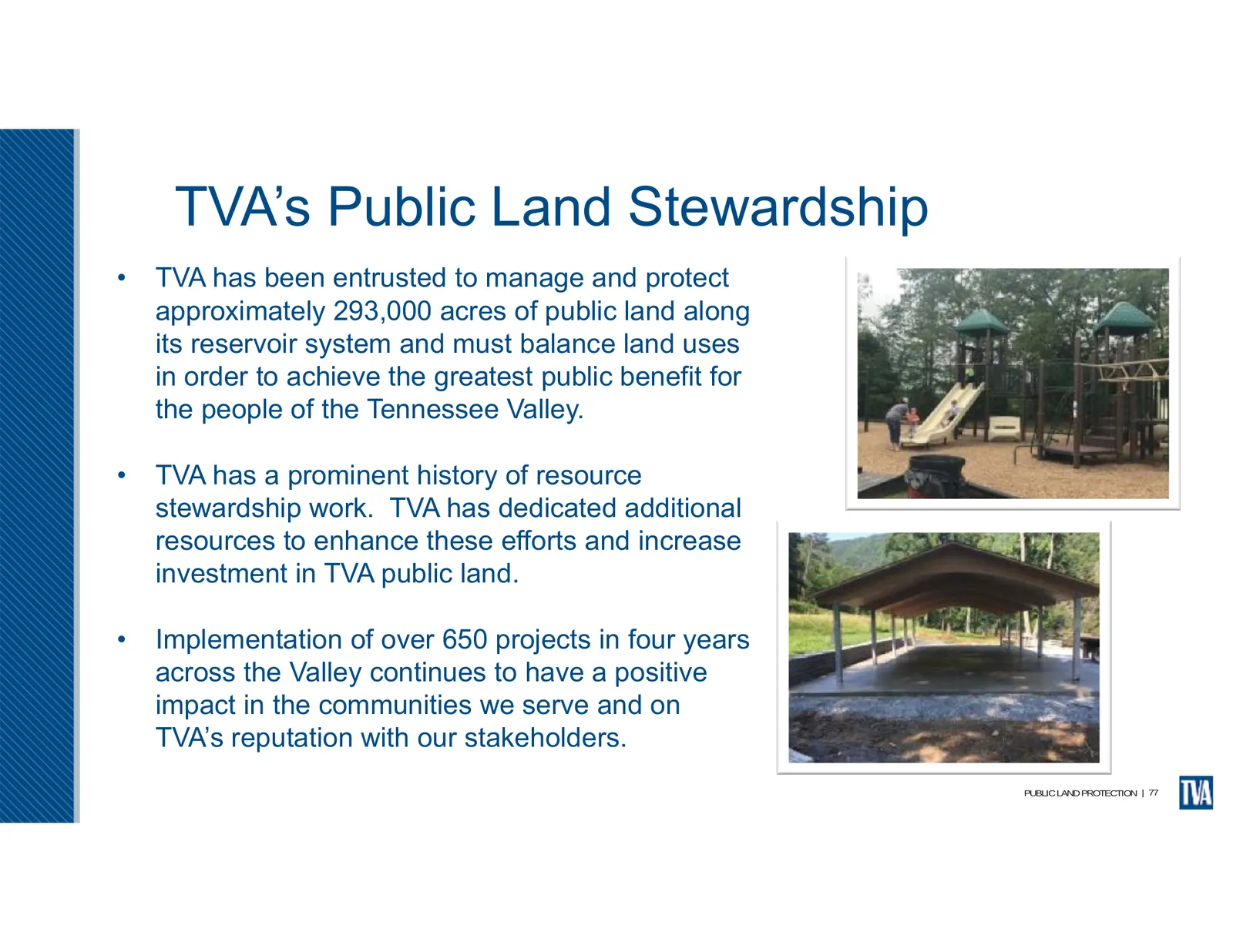
TVA’s Public Land Stewardship • TVA has been entrusted to manage and protect approximately 293,000 acres of public land along its reservoir system and must balance land uses in order to achieve the greatest public benefit for the people of the Tennessee Valley. • TVA has a prominent history of resou
Slide 78: Violations and Encroachments
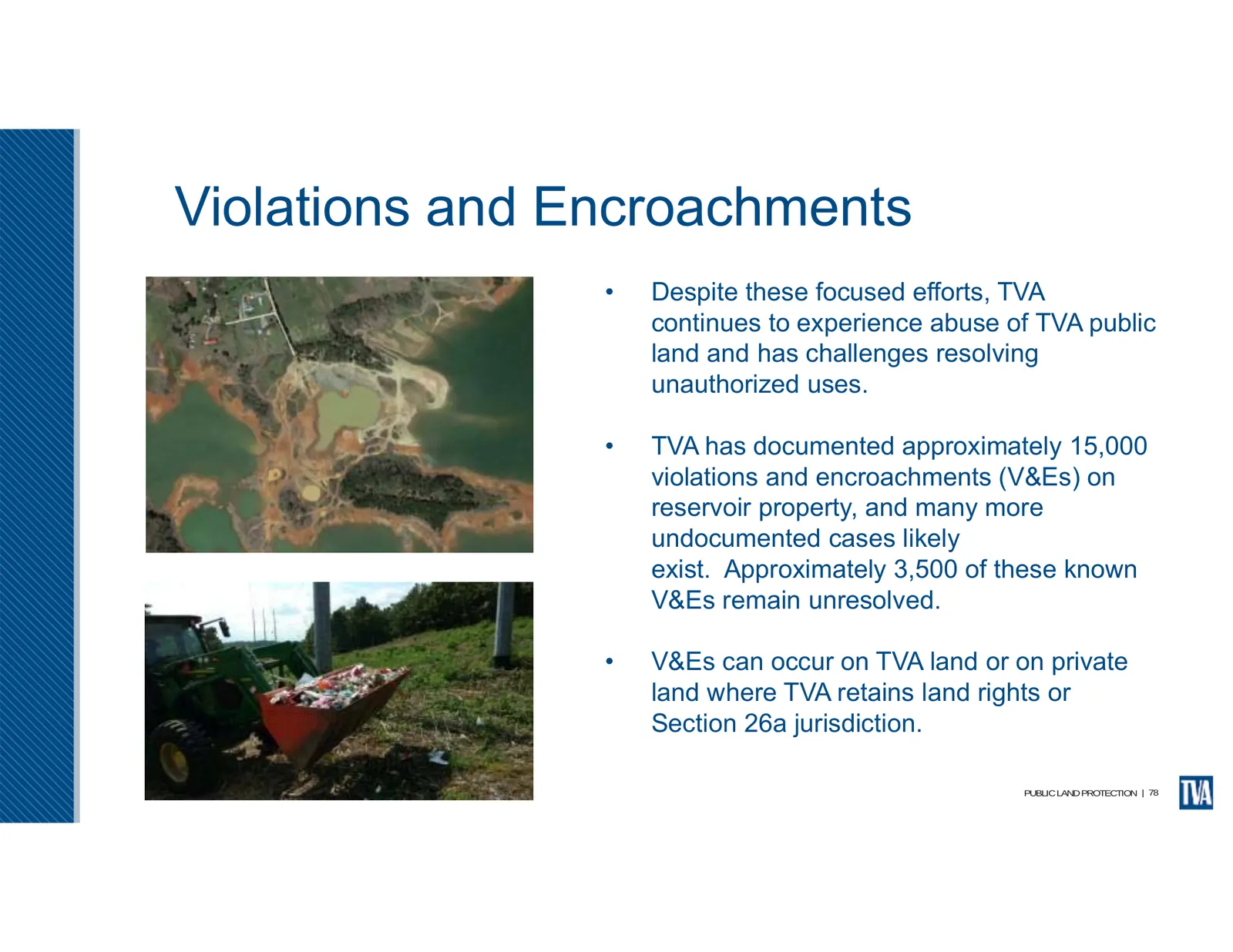
Violations and Encroachments • Despite these focused efforts, TVA continues to experience abuse of TVA public land and has challenges resolving unauthorized uses. • TVA has documented approximately 15,000 violations and encroachments (V&Es) on reservoir property, and many more undocumented cases lik
Slide 79: Violations and Encroachments
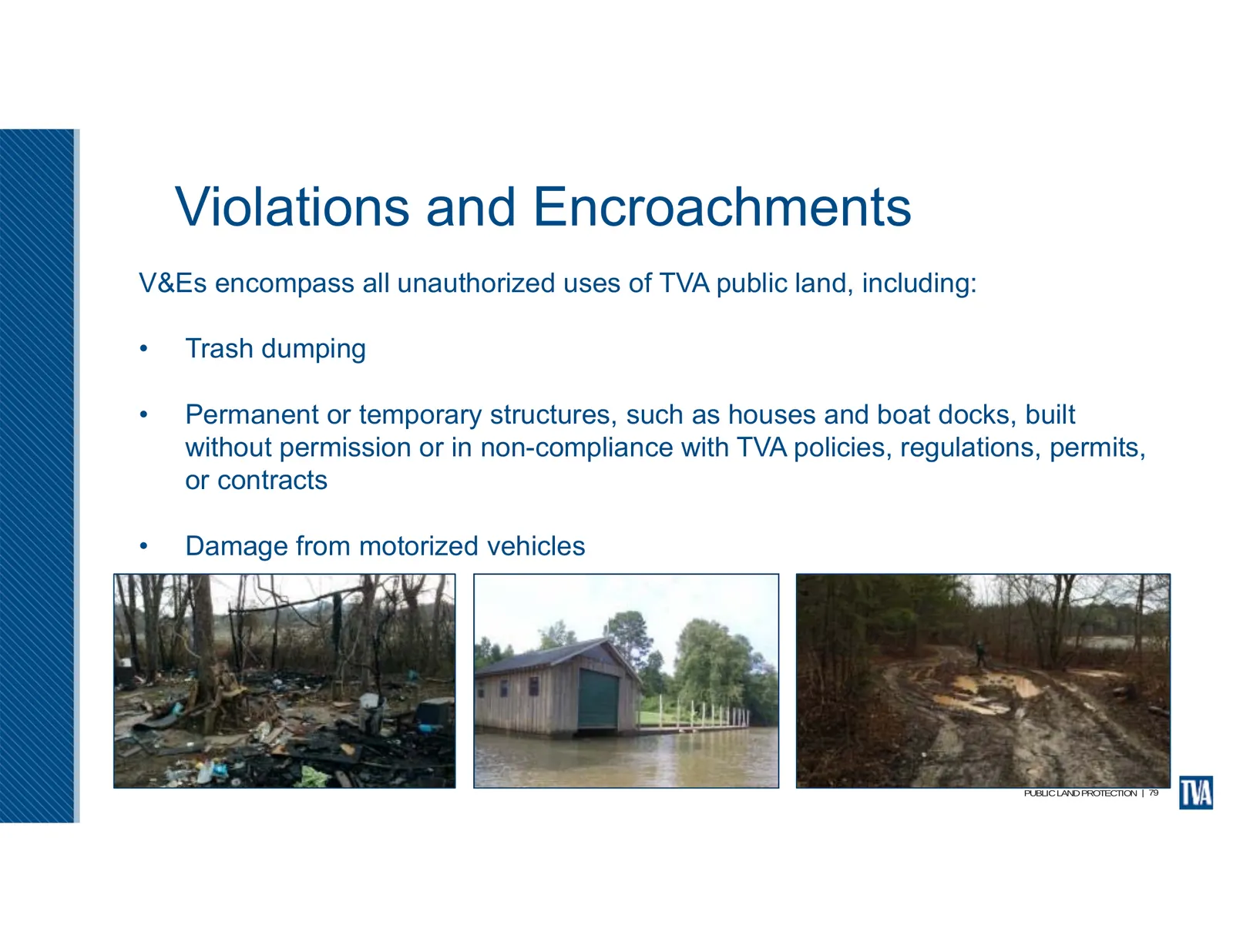
Violations and Encroachments V&Es encompass all unauthorized uses of TVA public land, including: • Trash dumping • Permanent or temporary structures, such as houses and boat docks, built without permission or in non-compliance with TVA policies, regulations, permits, or contracts • Damage from motor
Slide 80: Prior RRSC Advice
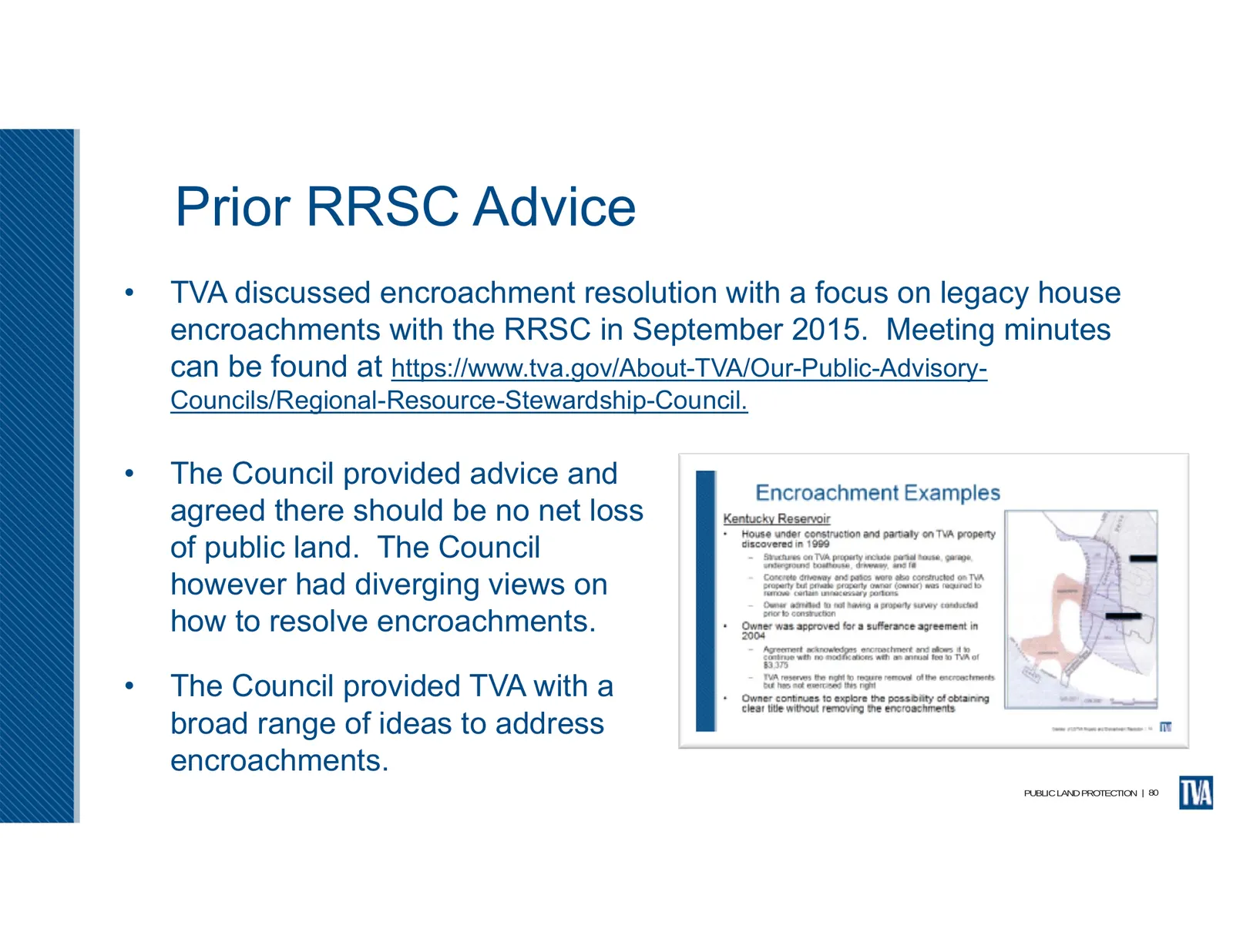
Prior RRSC Advice • TVA discussed encroachment resolution with a focus on legacy house encroachments with the RRSC in September 2015. Meeting minutes can be found at https://www.tva.gov/About-TVA/Our-Public-Advisory- Councils/Regional-Resource-Stewardship-Council. • The Council provided advice and a
Slide 81: Prior RRSC Advice
Prior RRSC Advice Consensus Advice Statement Public lands continue to be valuable to the citizens that TVA serves. The Council believes there should be no net loss of public lands under TVA’s policies. Address existing dwelling encroachments with a blend of existing regulations and flexibility. Pend
Slide 82: TVA's Implementation of Prior RRSC Advice
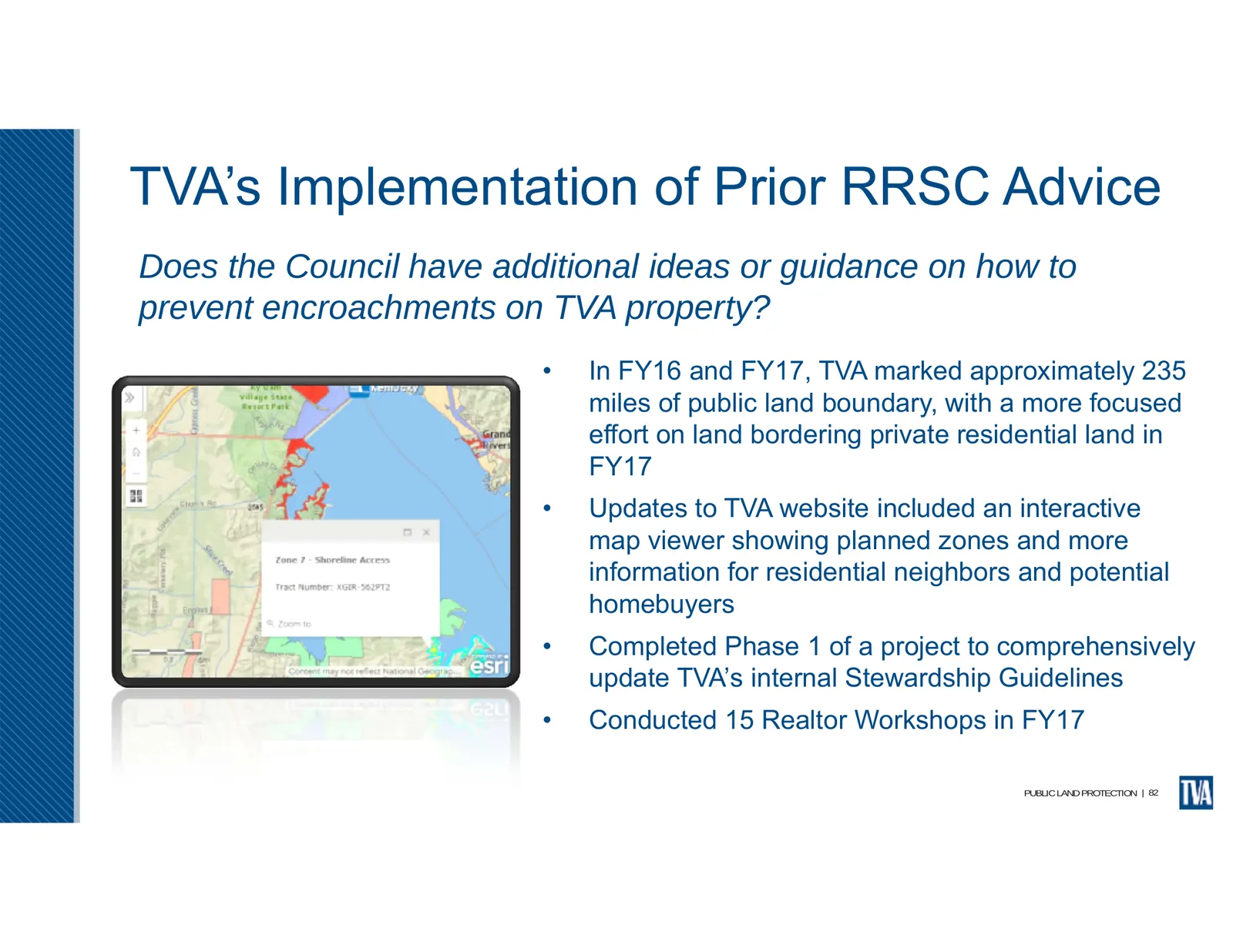
TVA’s Implementation of Prior RRSC Advice Does the Council have additional ideas or guidance on how to prevent encroachments on TVA property? • In FY16 and FY17, TVA marked approximately 235 miles of public land boundary, with a more focused effort on land bordering private residential land in FY17
Slide 83: TVA's Implementation of Prior RRSC Advice
TVA’s Implementation of Prior RRSC Advice For permanent structures, should TVA develop more flexible resolution options? As part of an overall Public Land Protection Program, TVA is considering a Public Land Protection Policy for review by the Board of Directors. The Policy could potentially address
Slide 84: Public Land Protection Program
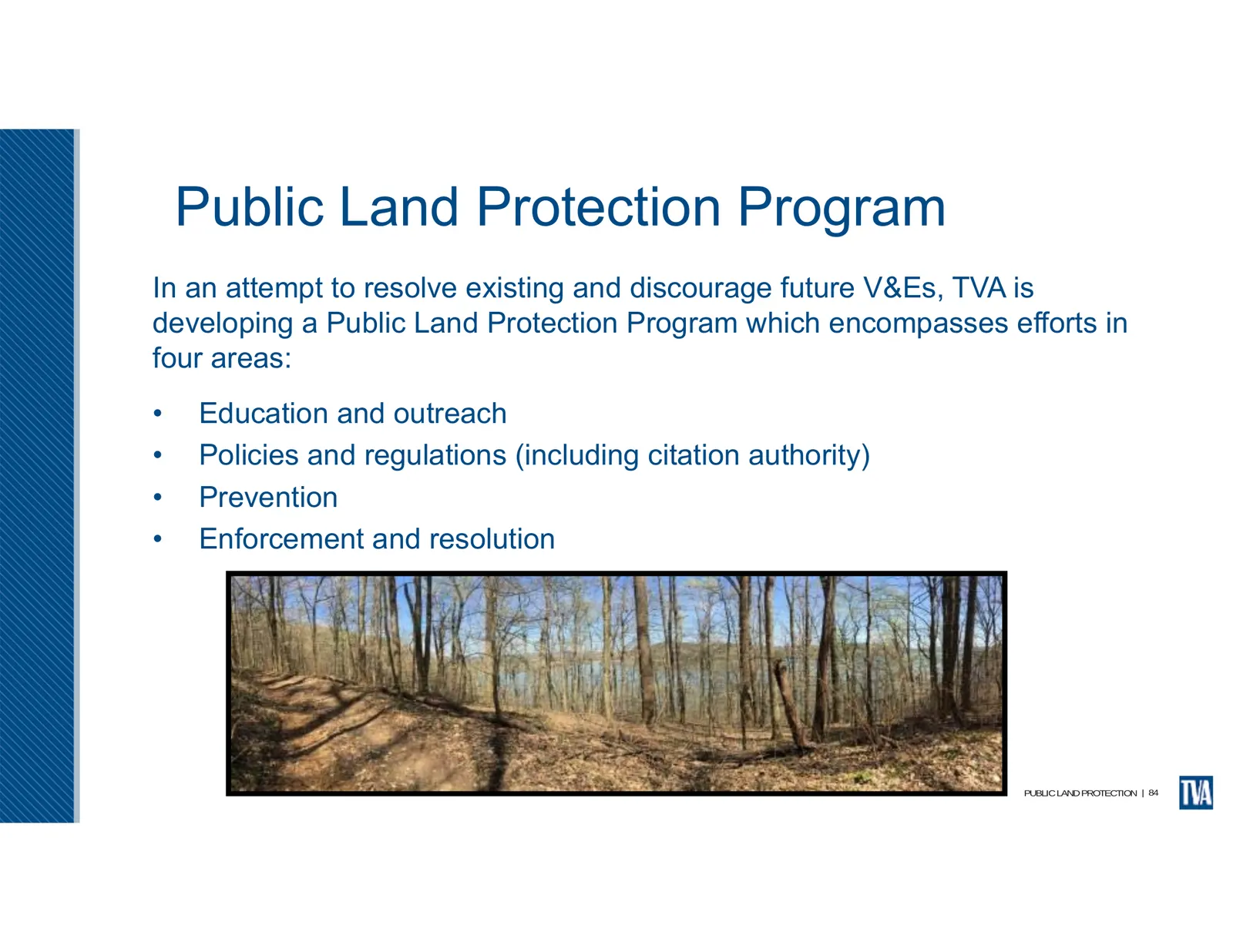
Public Land Protection Program In an attempt to resolve existing and discourage future V&Es, TVA is developing a Public Land Protection Program which encompasses efforts in four areas: • Education and outreach • Policies and regulations (including citation authority) • Prevention • Enforcement and r
Slide 85: Legacy House Encroachments
Legacy House Encroachments • One of the challenges in public land protection work is addressing encroachments that have been in existence for many years. TVA refers to these as “legacy” issues. • Approximately 110 suspected legacy house encroachments are documented on TVA public land. There are pote
Slide 86: Legacy House Encroachment Resolution
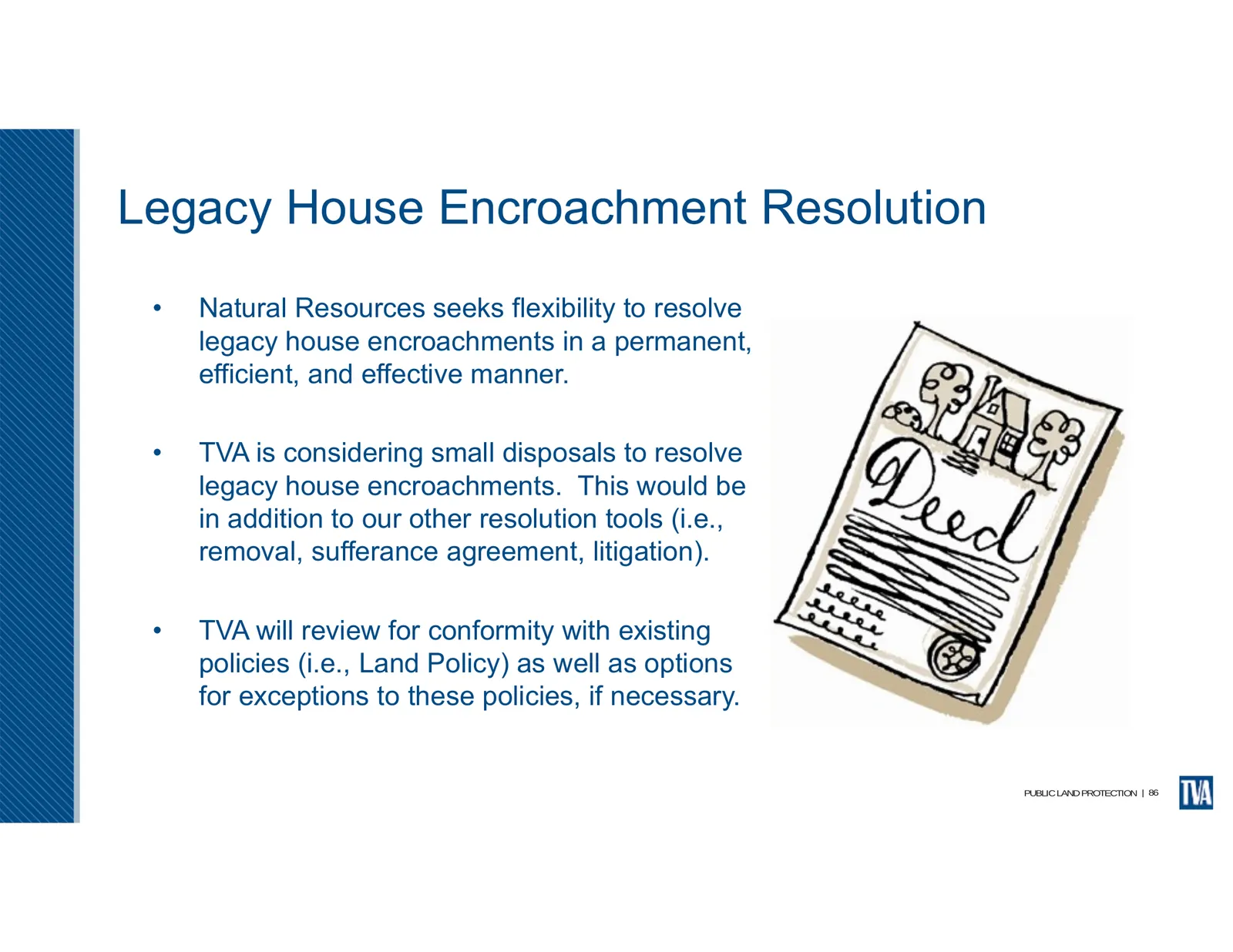
Legacy House Encroachment Resolution • Natural Resources seeks flexibility to resolve legacy house encroachments in a permanent, efficient, and effective manner. • TVA is considering small disposals to resolve legacy house encroachments. This would be in addition to our other resolution tools (i.e.,
Slide 87: Questions for the RRSC
Questions for the RRSC 1. If TVA pursues the sale of public land to resolve legacy house encroachments with flexibility, how can TVA discourage future house encroachments? 2. What role should TVA play in protecting the public land it has in its custody and control? In what ways should the public be

Slide 88: Break
Slide 89: Lunch Break
Lunch Break Meeting Adjourned for Today Meeting will reconvene tomorrow, 11/15, at 8:30 AM
Slide 90: Aquatic Plant Management Program
Aquatic Plant Management Program Dr. Brett Hartis Program Manager TVA Aquatic Plant Management Program
Slide 91

Slide 92
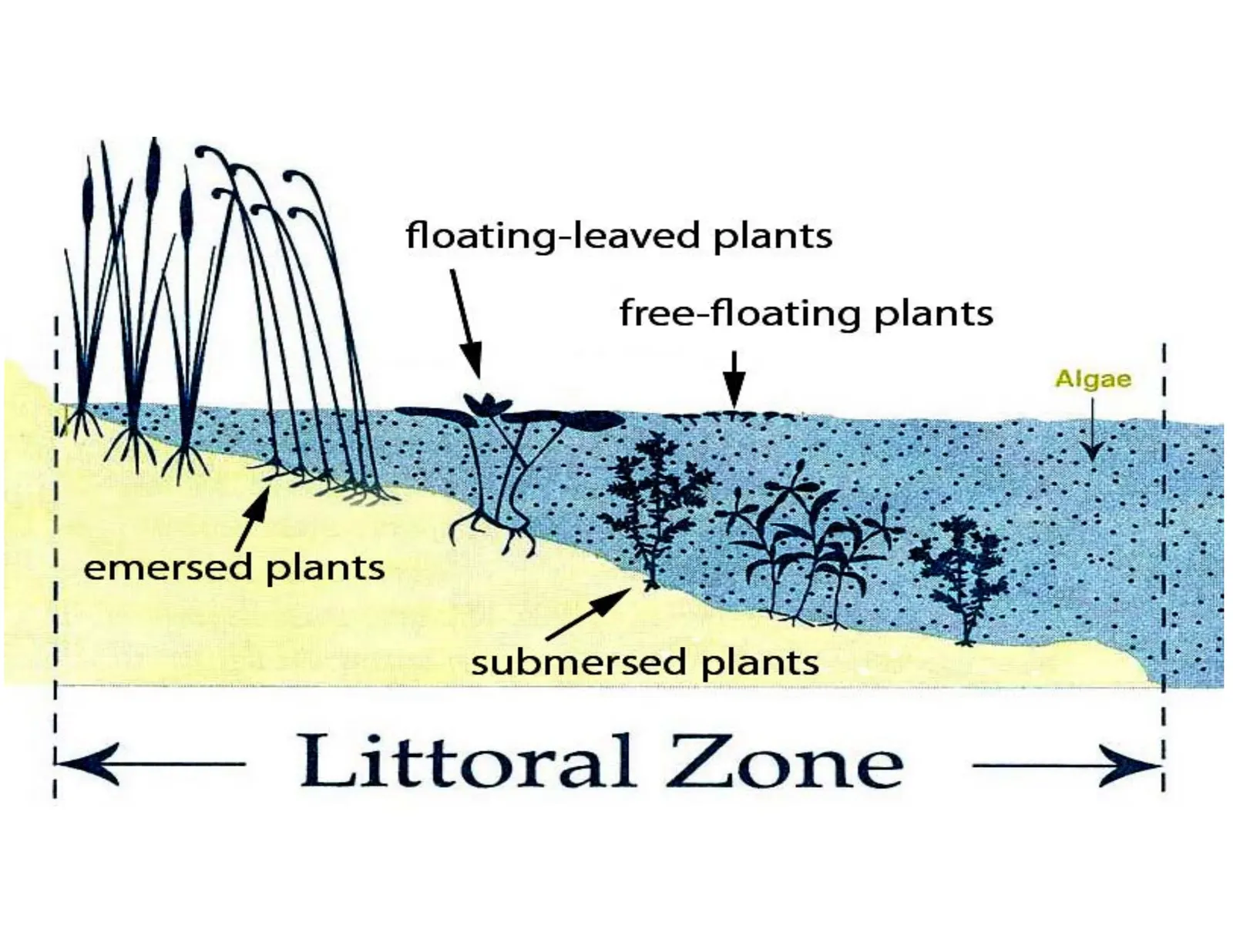
Slide 93: Types of aquatic plants
\ -leaved plants free-floating plants oo emersed plants submersed plants ——— Littoral Zone >
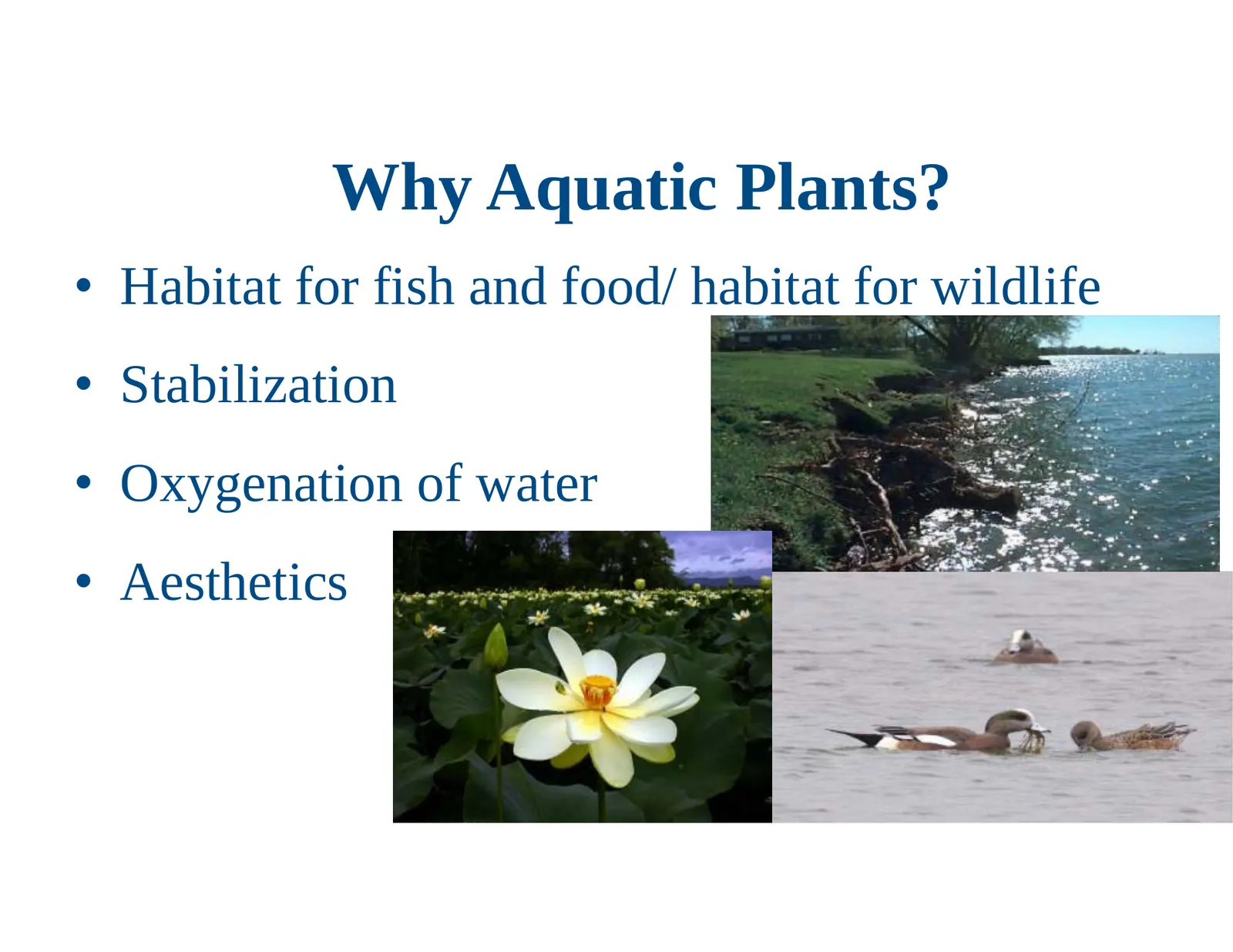
Slide 94: Why Aquatic Plants?
Why Aquatic Plants? • Habitat for fish and food/ habitat for wildlife • Stabilization • Oxygenation of water • Aesthetics
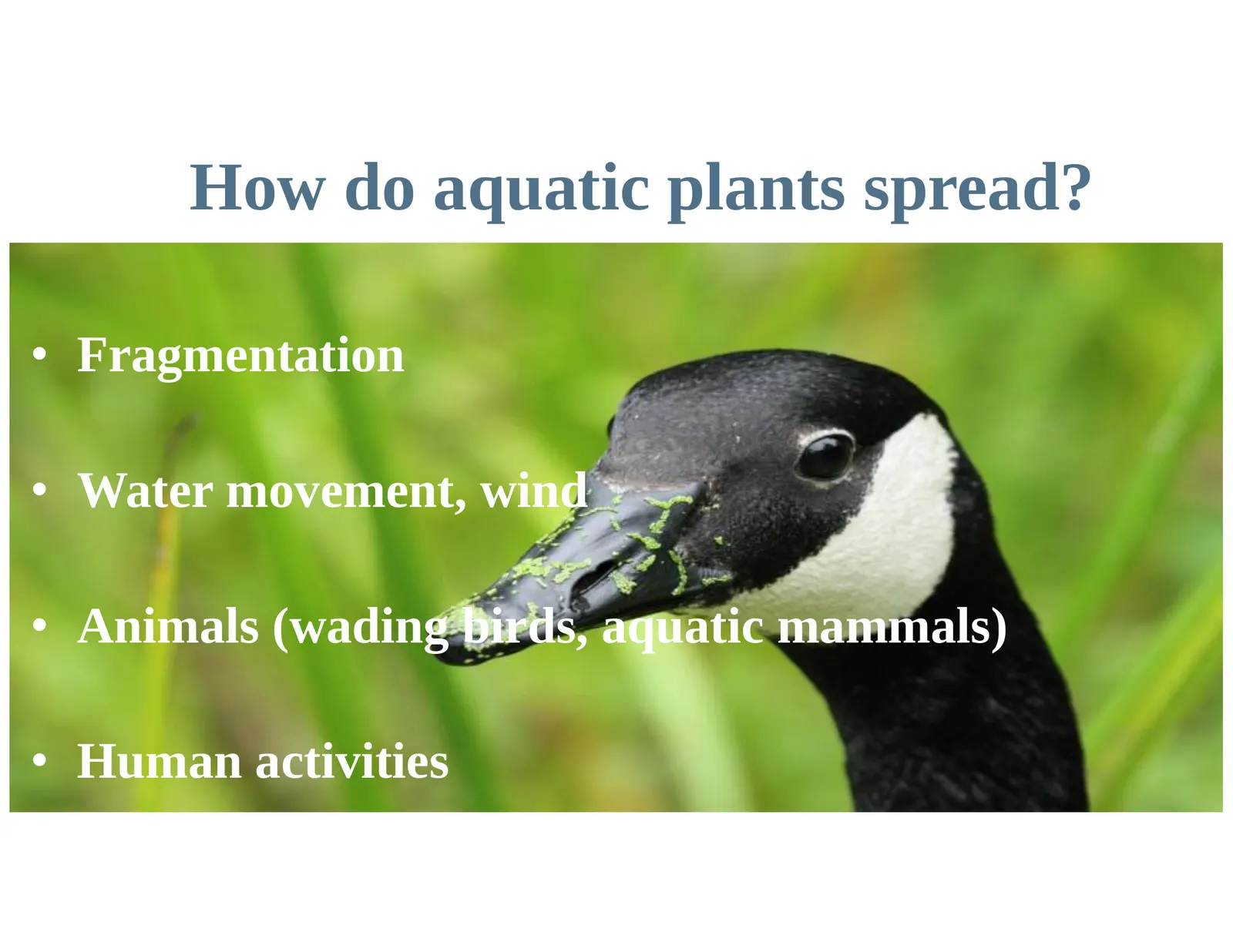
Slide 95: How do aquatic plants spread?
How do aquatic plants spread? • Fragmentation • Water movement, wind • Animals (wading birds, aquatic mammals) • Human activities
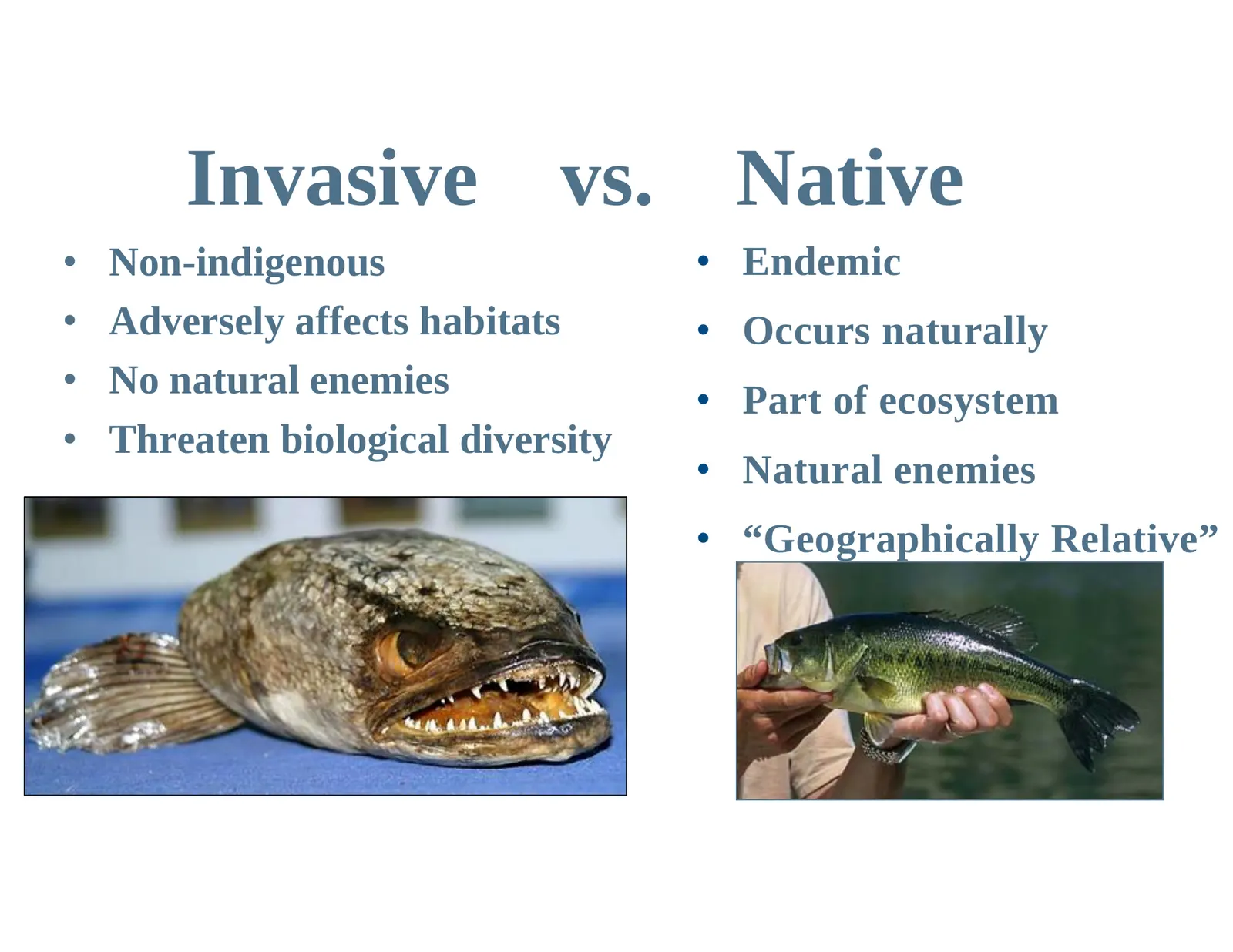
Slide 96: Invasive vs. Native
Invasive vs. Native • Non-indigenous • Endemic • Adversely affects habitats • Occurs naturally • No natural enemies • Part of ecosystem • Threaten biological diversity • Natural enemies • “Geographically Relative”

Slide 97
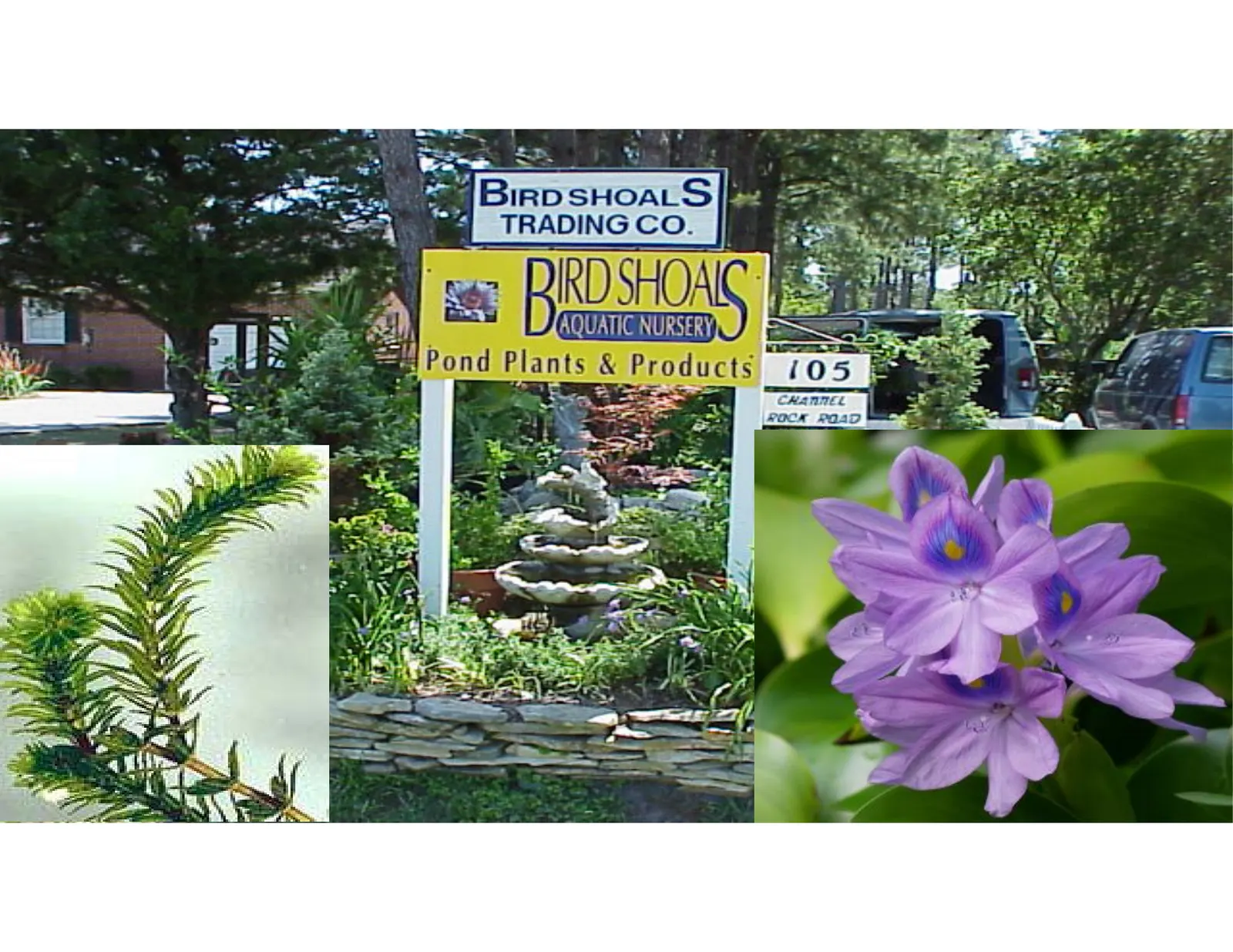
Slide 98: Pond Plants & Products
Pond Plants & Products Teeten * "S Se CHAMIMEL , ROCK POQAD ev
Slide 99
Slide 100: What's the Big Deal?
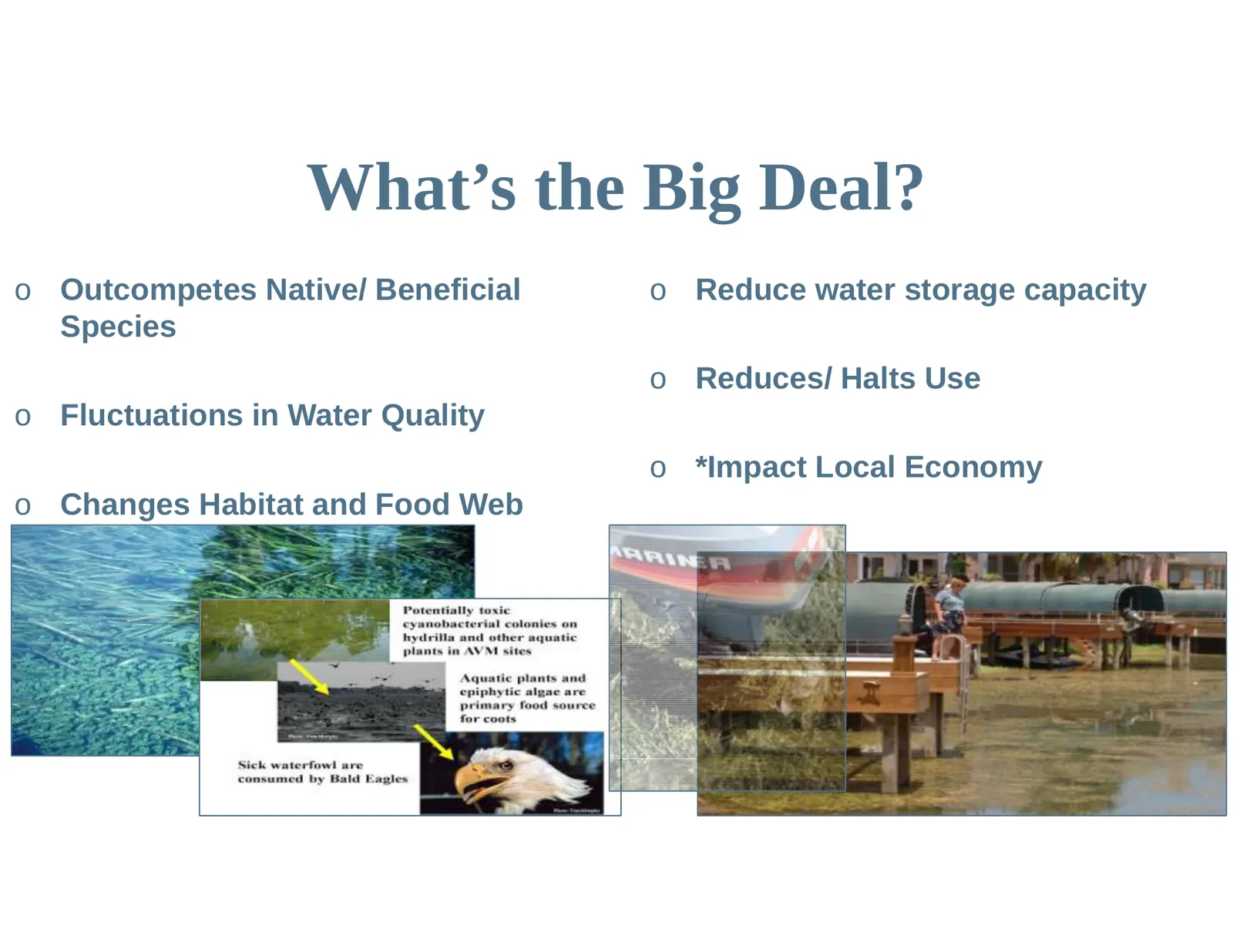
What’s the Big Deal? o Outcompetes Native/ Beneficial o Reduce water storage capacity Species o Reduces/ Halts Use o Fluctuations in Water Quality o *Impact Local Economy o Changes Habitat and Food Web
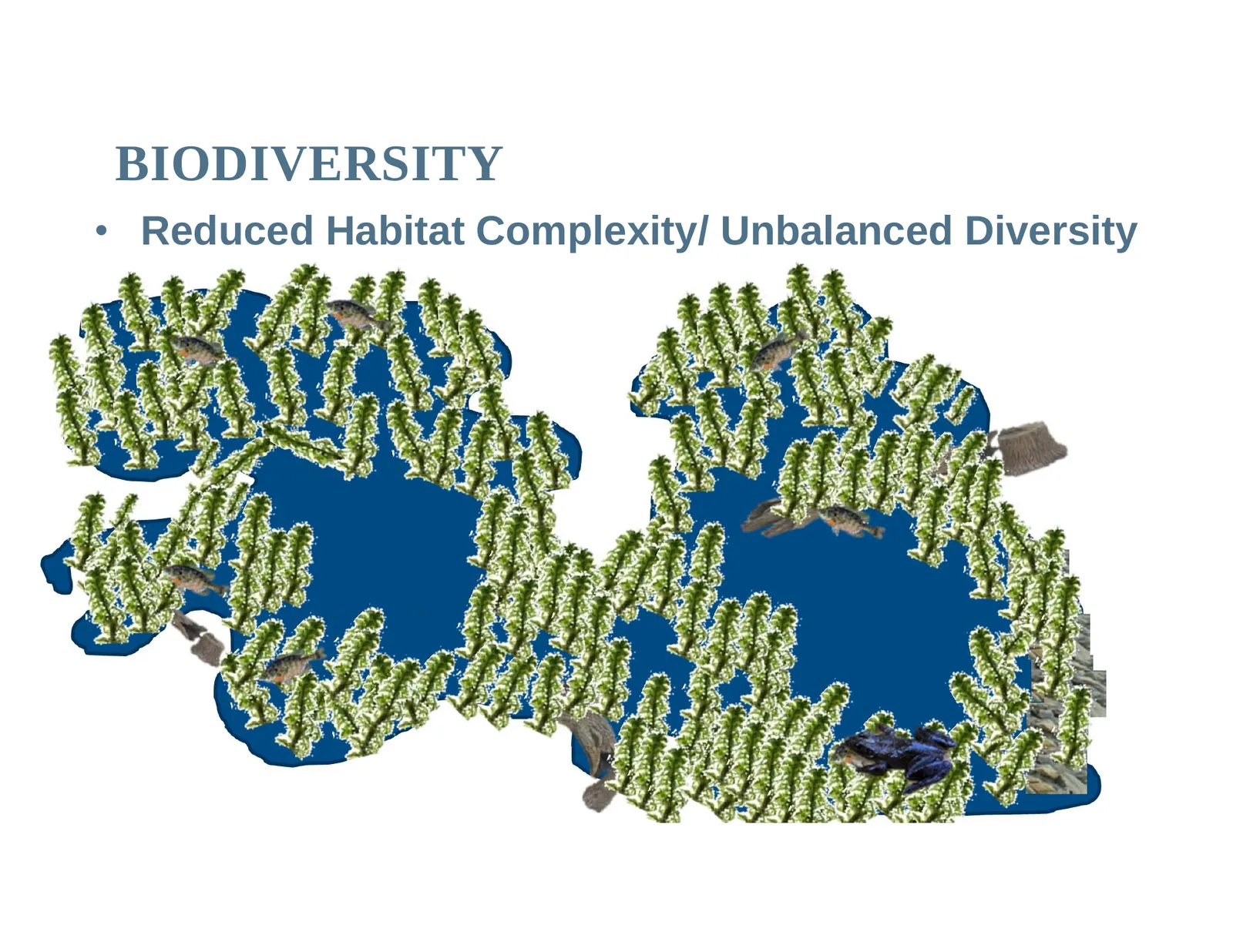
Slide 101: Biodiversity: Balanced, Diverse Habitat
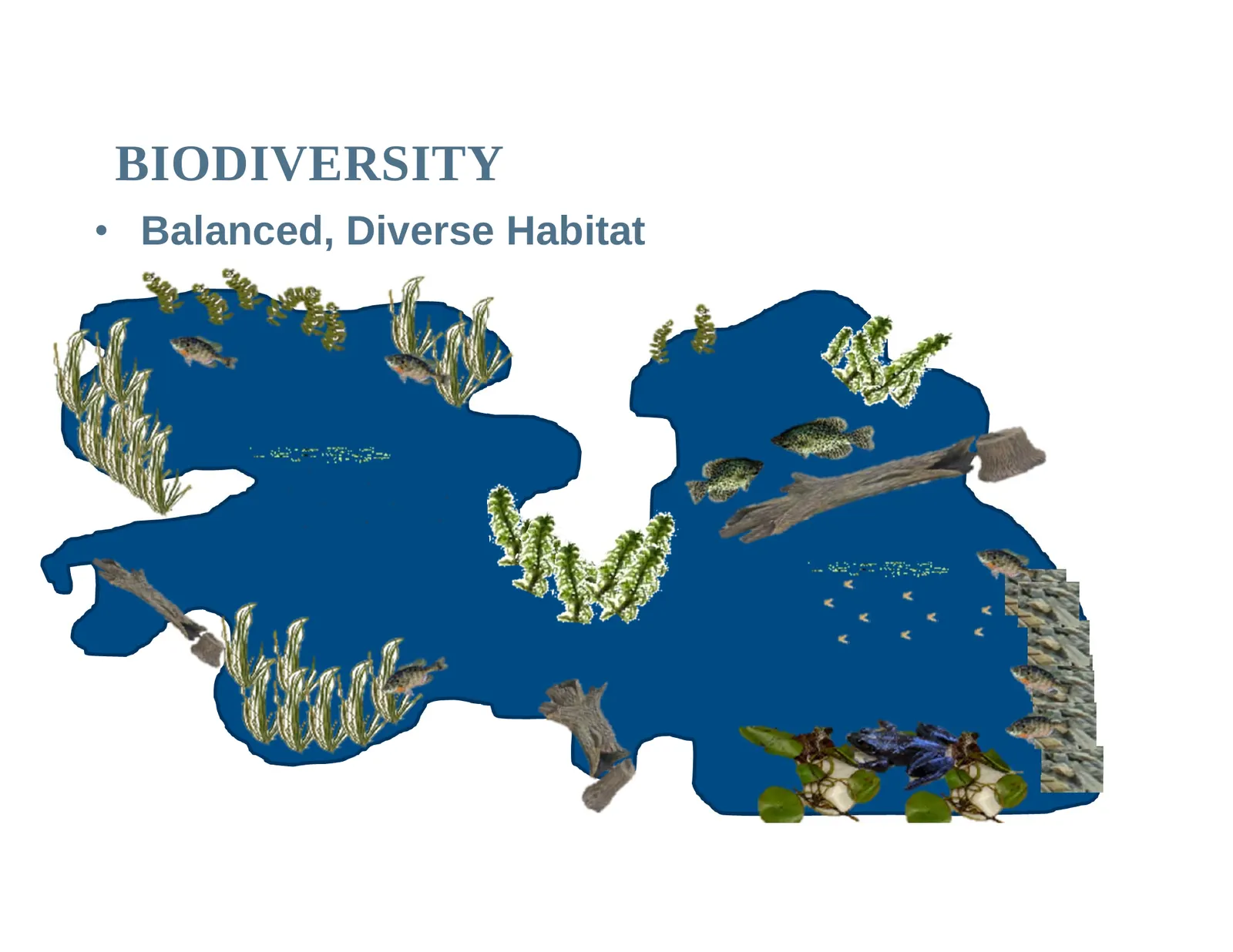
BIODIVERSITY • Balanced, Diverse Habitat
Slide 102: Biodiversity: Reduced Habitat Complexity
BIODIVERSITY • Reduced Habitat Complexity/ Unbalanced Diversity
Slide 103: Why are some invasive and noxious in reservoirs?
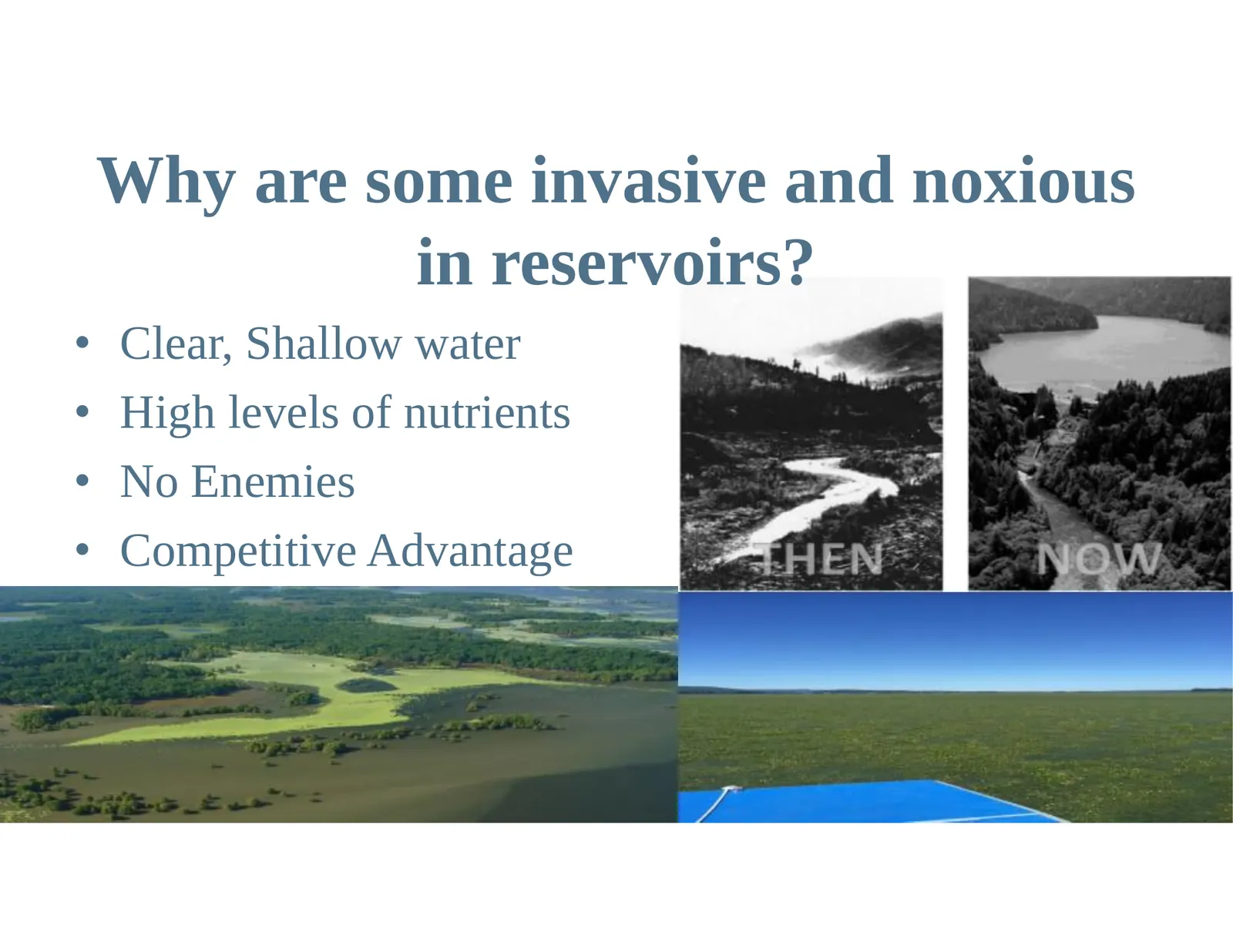
Why are some invasive and noxious in reservoirs? • Clear, Shallow water • High levels of nutrients • No Enemies • Competitive Advantage
Slide 104: Biodiversity: Typical Reservoir Habitat
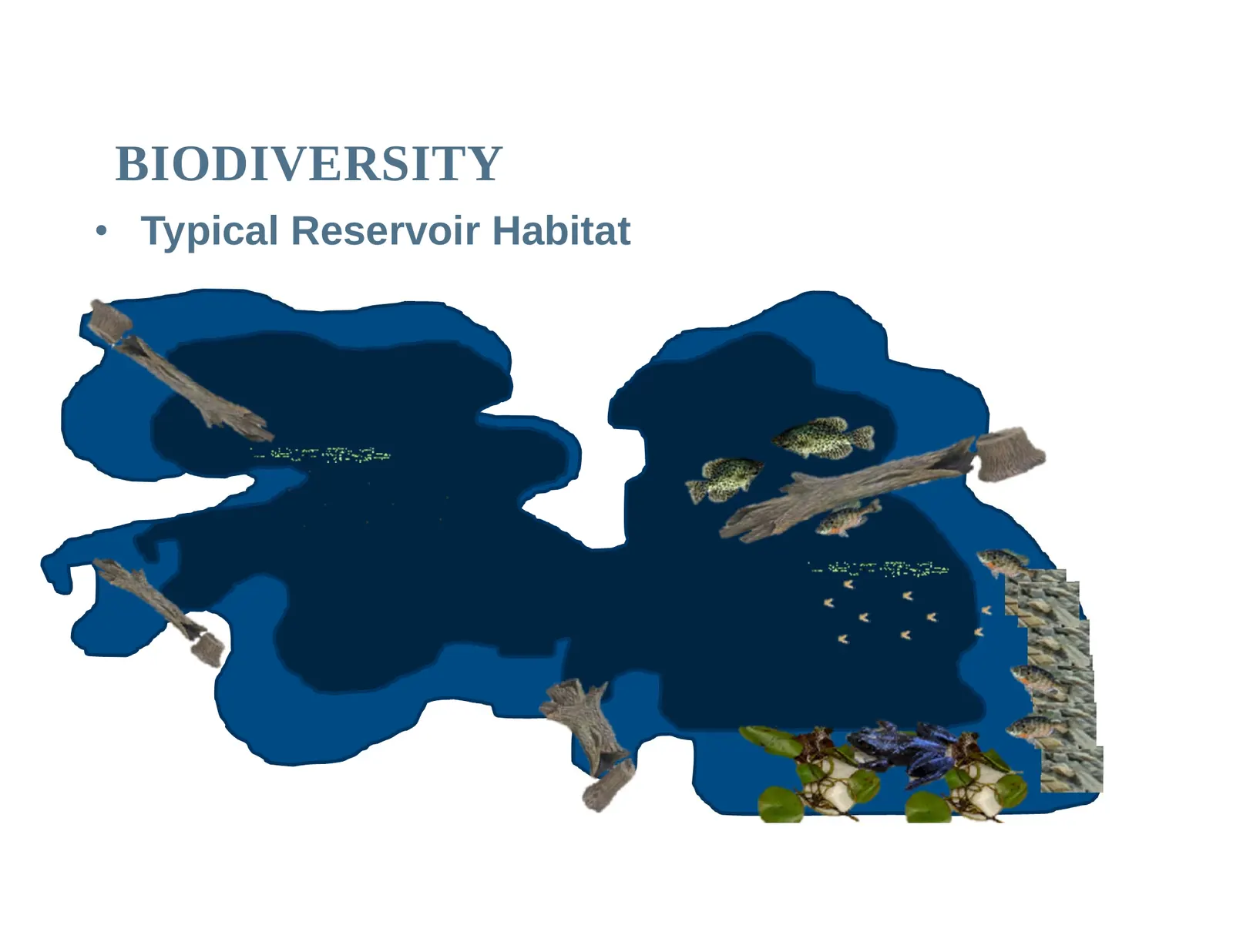
BIODIVERSITY • Typical Reservoir Habitat
Slide 105: Biodiversity: Increased Reservoir Habitat
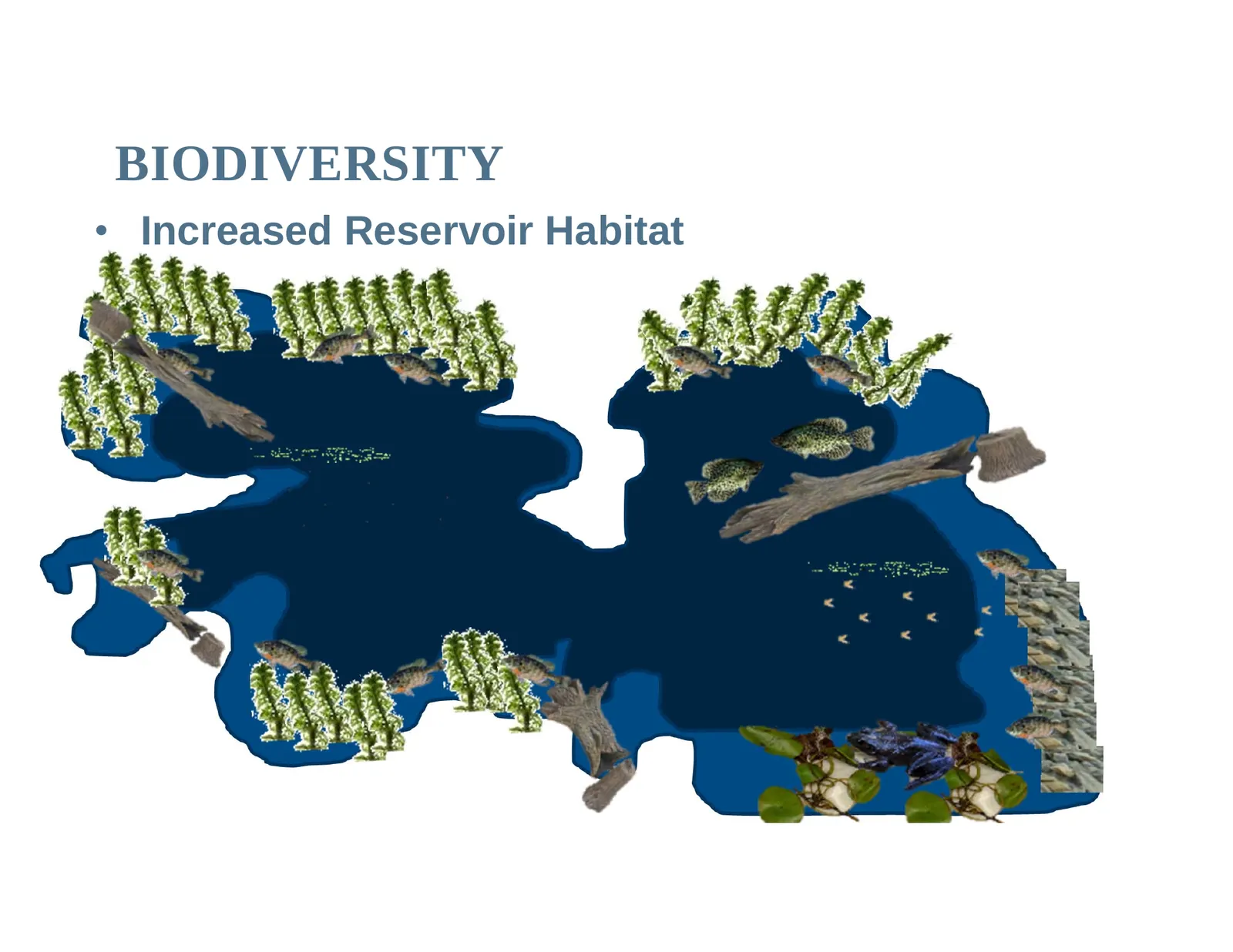
BIODIVERSITY • Increased Reservoir Habitat
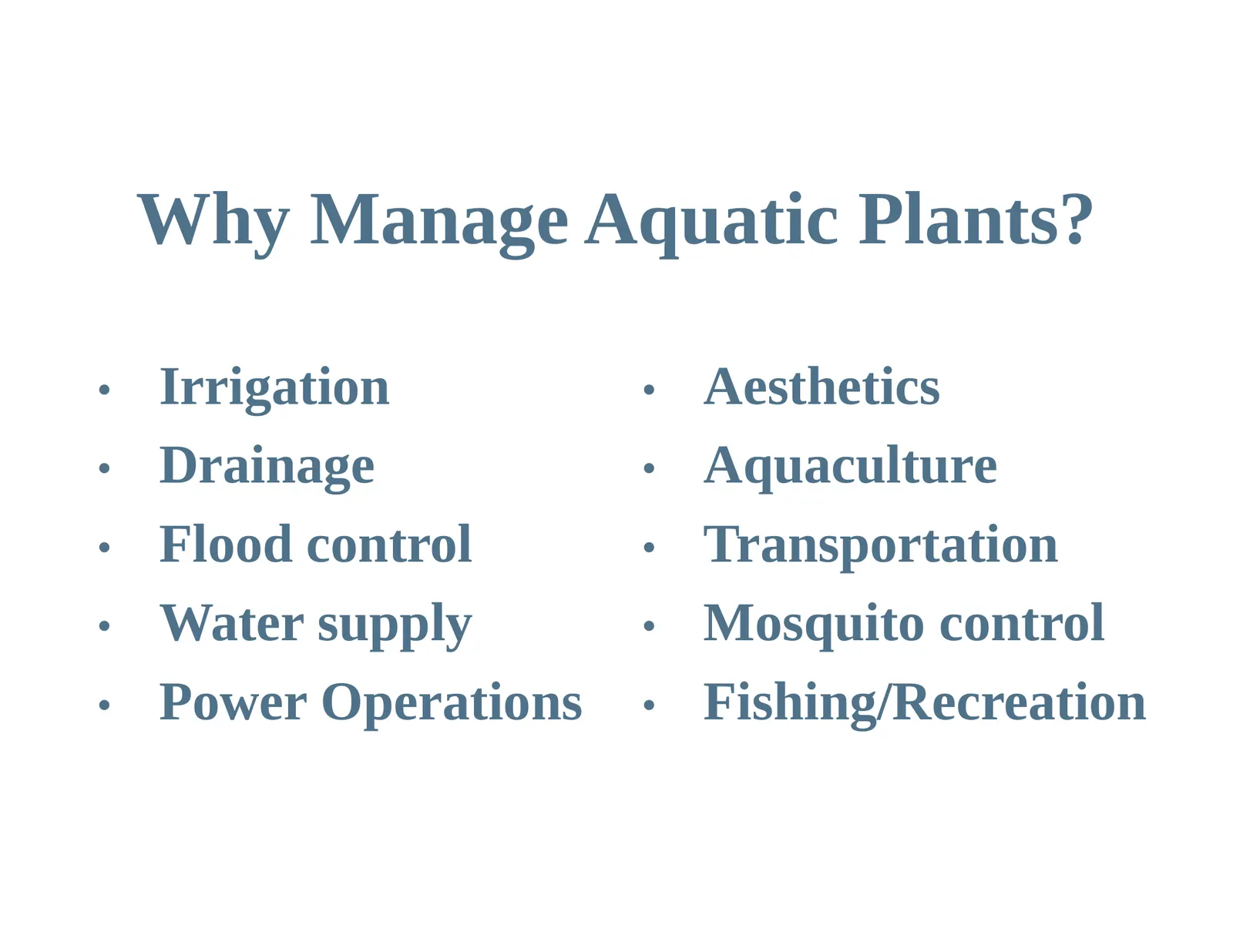
Slide 106: Why Manage Aquatic Plants?
Why Manage Aquatic Plants? • Irrigation • Aesthetics • Drainage • Aquaculture • Flood control • Transportation • Water supply • Mosquito control • Power Operations • Fishing/Recreation
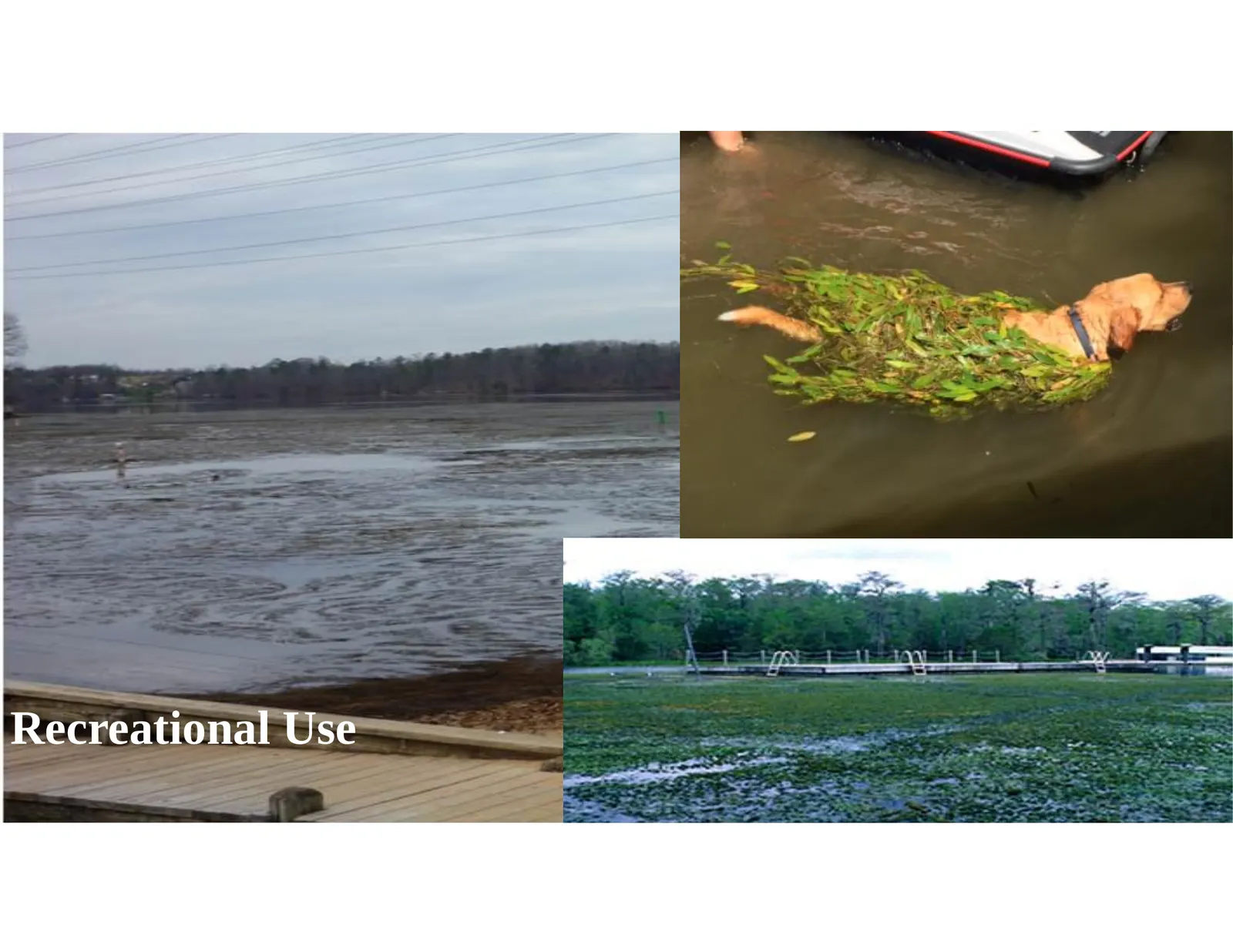
Slide 107: Recreational Use
Recreational Use
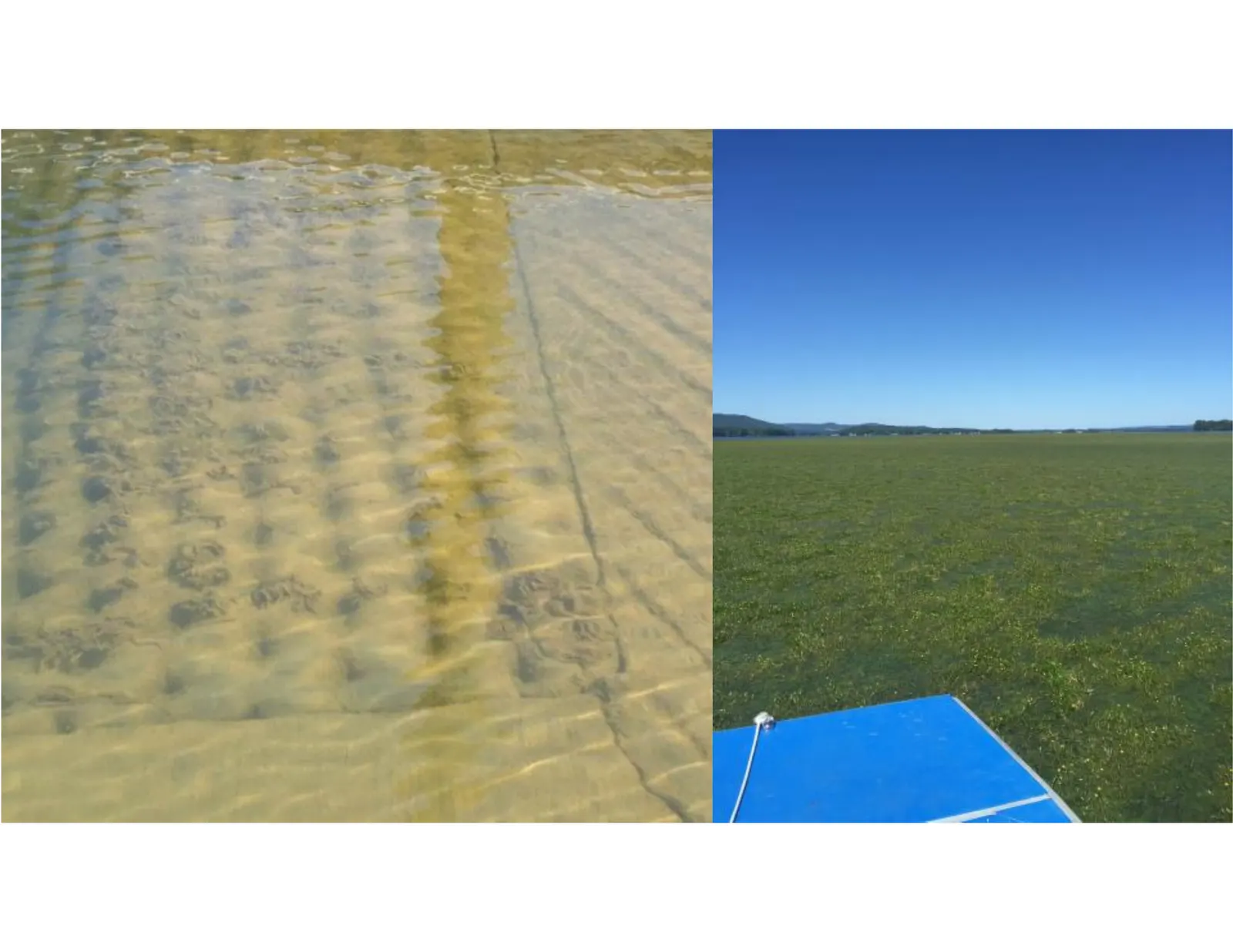
Slide 108: Recreational Use
Recreational Use
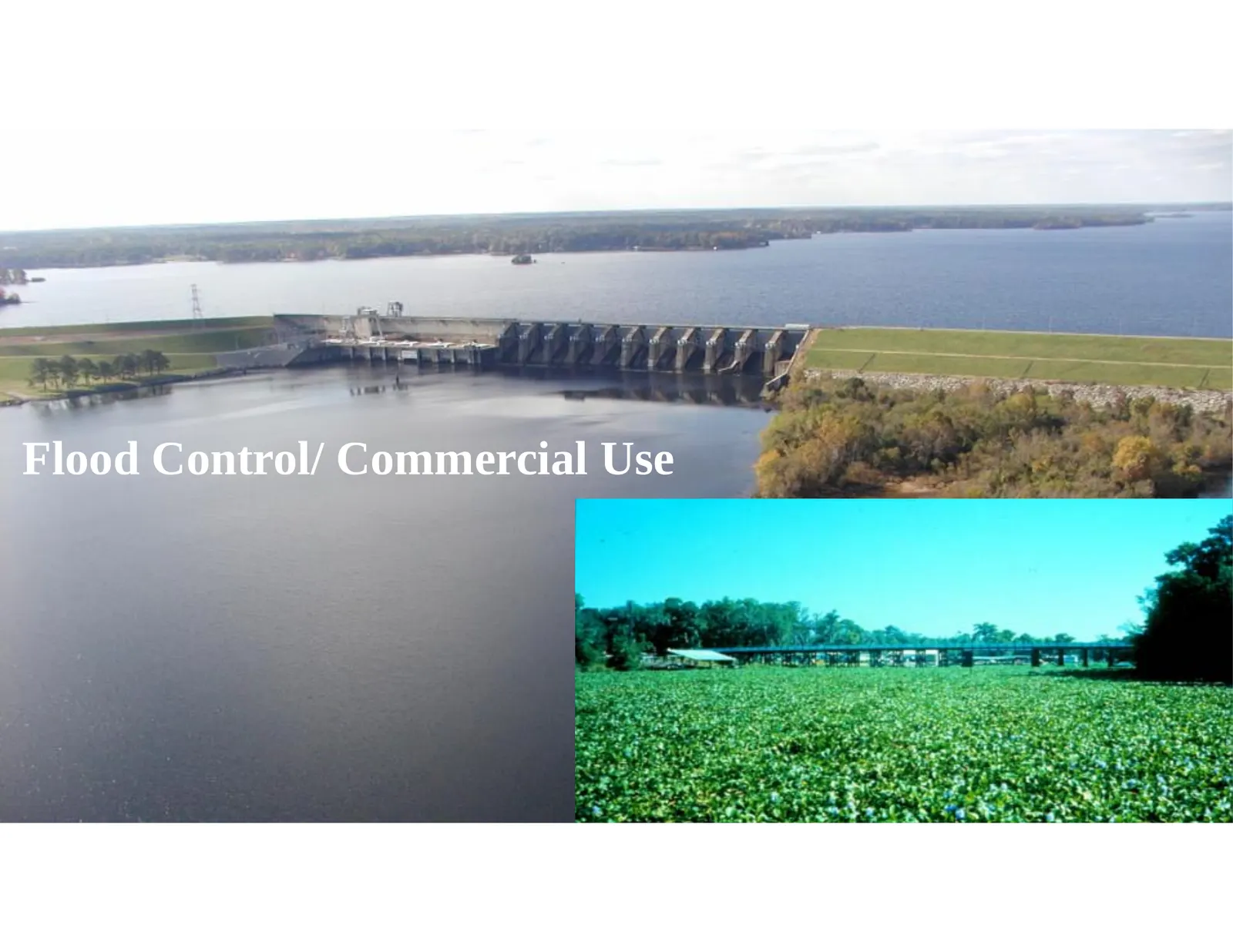
Slide 109: Flood Control/ Commercial Use
Flood Control/ Commercial Use S. T. Hoyle, NCSU, 1999
Slide 110: Mosquito
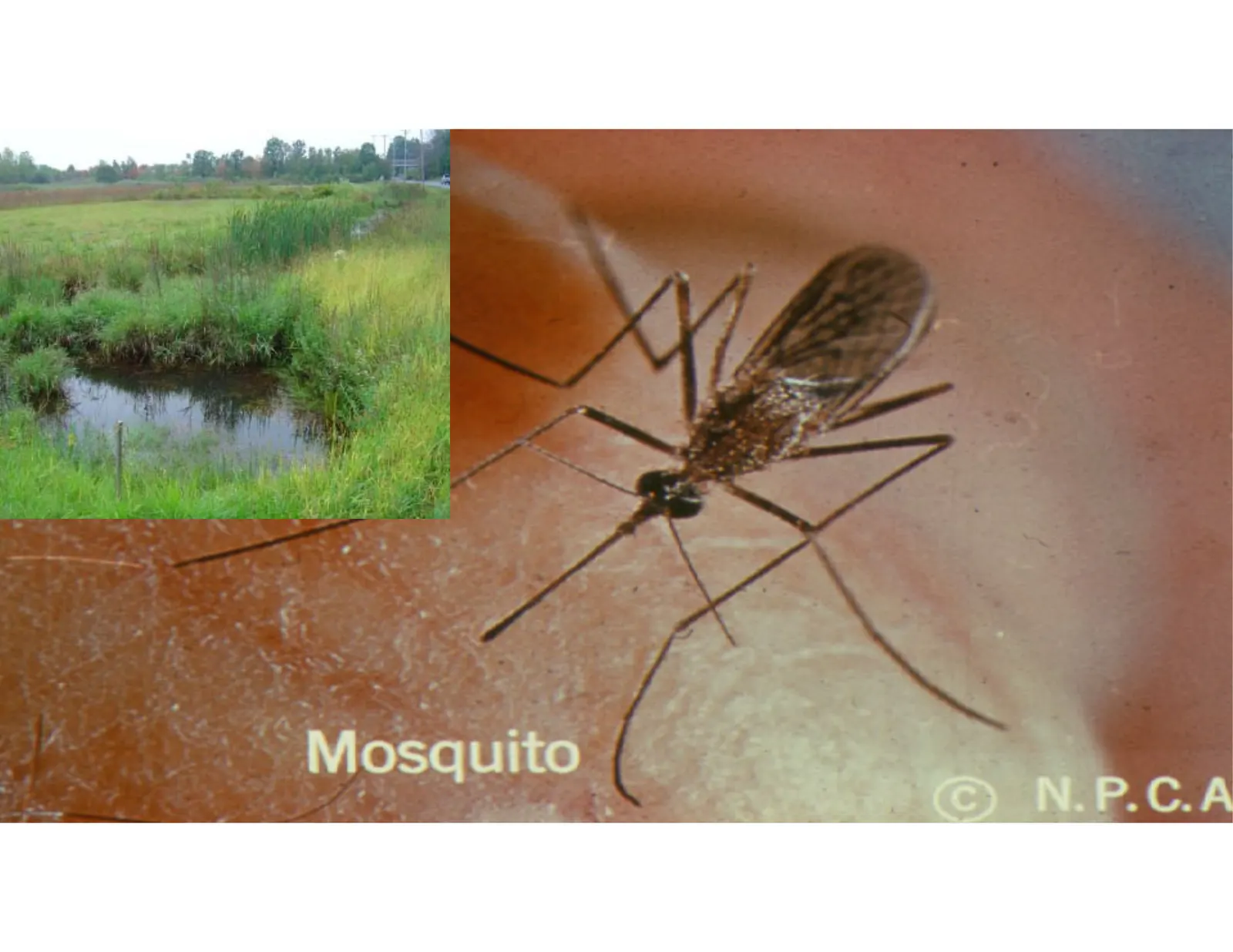
Mosquito F.. MEP.C.A
Slide 111: More on mosquitoes
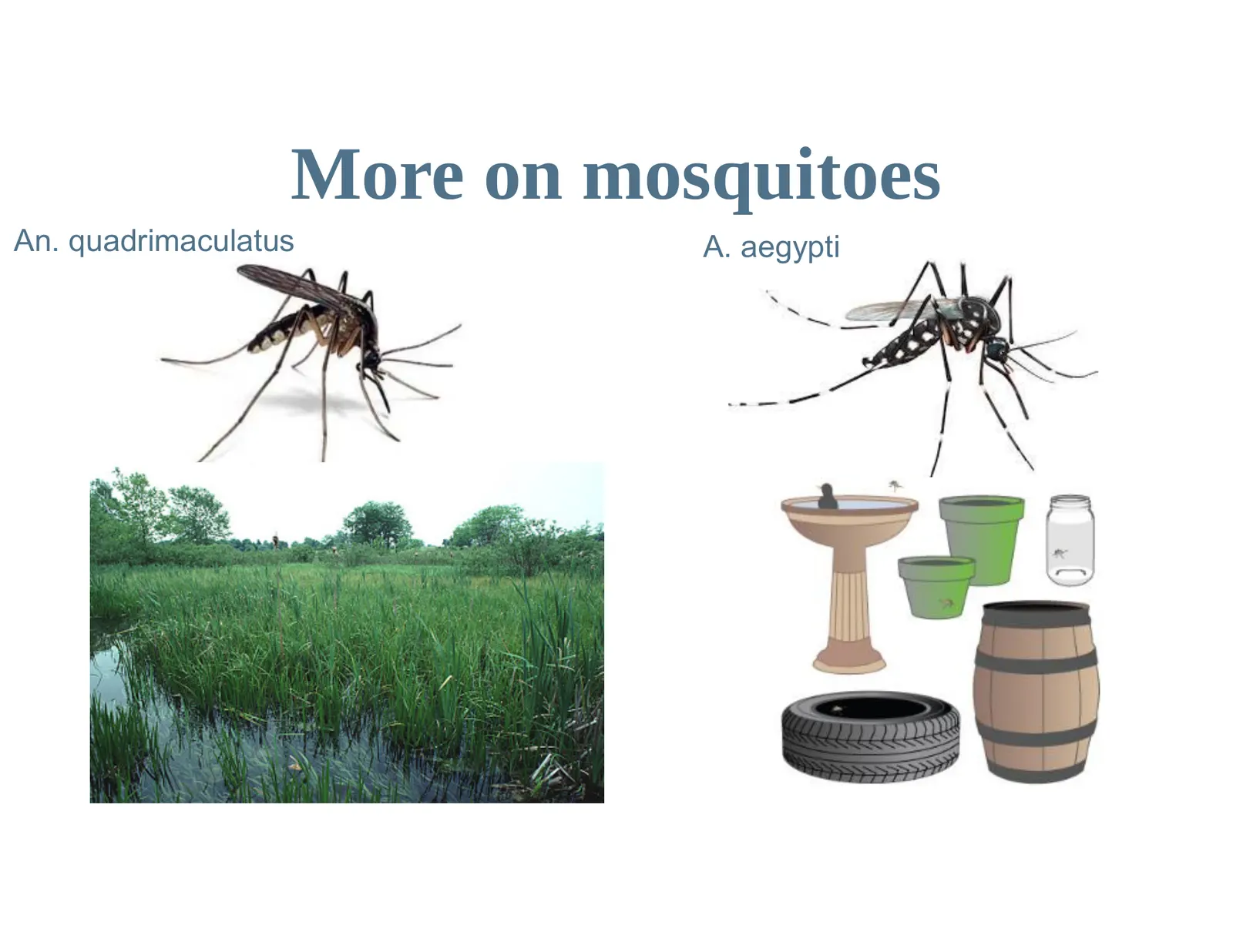
More on mosquitoes An. quadrimaculatus A. aegypti
Slide 112: TVA and Aquatic Plant Management
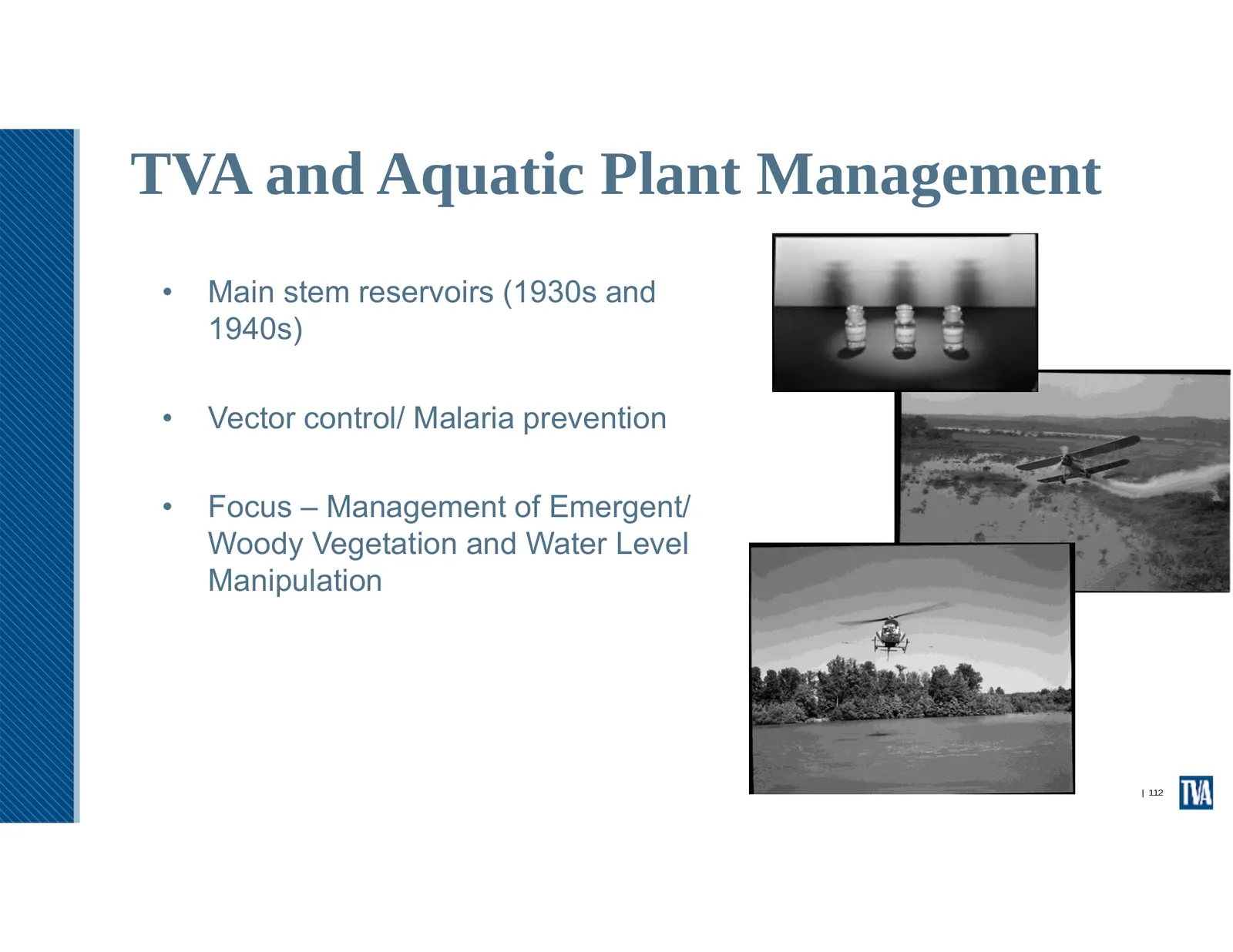
TVA and Aquatic Plant Management • Main stem reservoirs (1930s and 1940s) • Vector control/ Malaria prevention • Focus – Management of Emergent/ Woody Vegetation and Water Level Manipulation | 112
Slide 113: Introduction of Milfoil
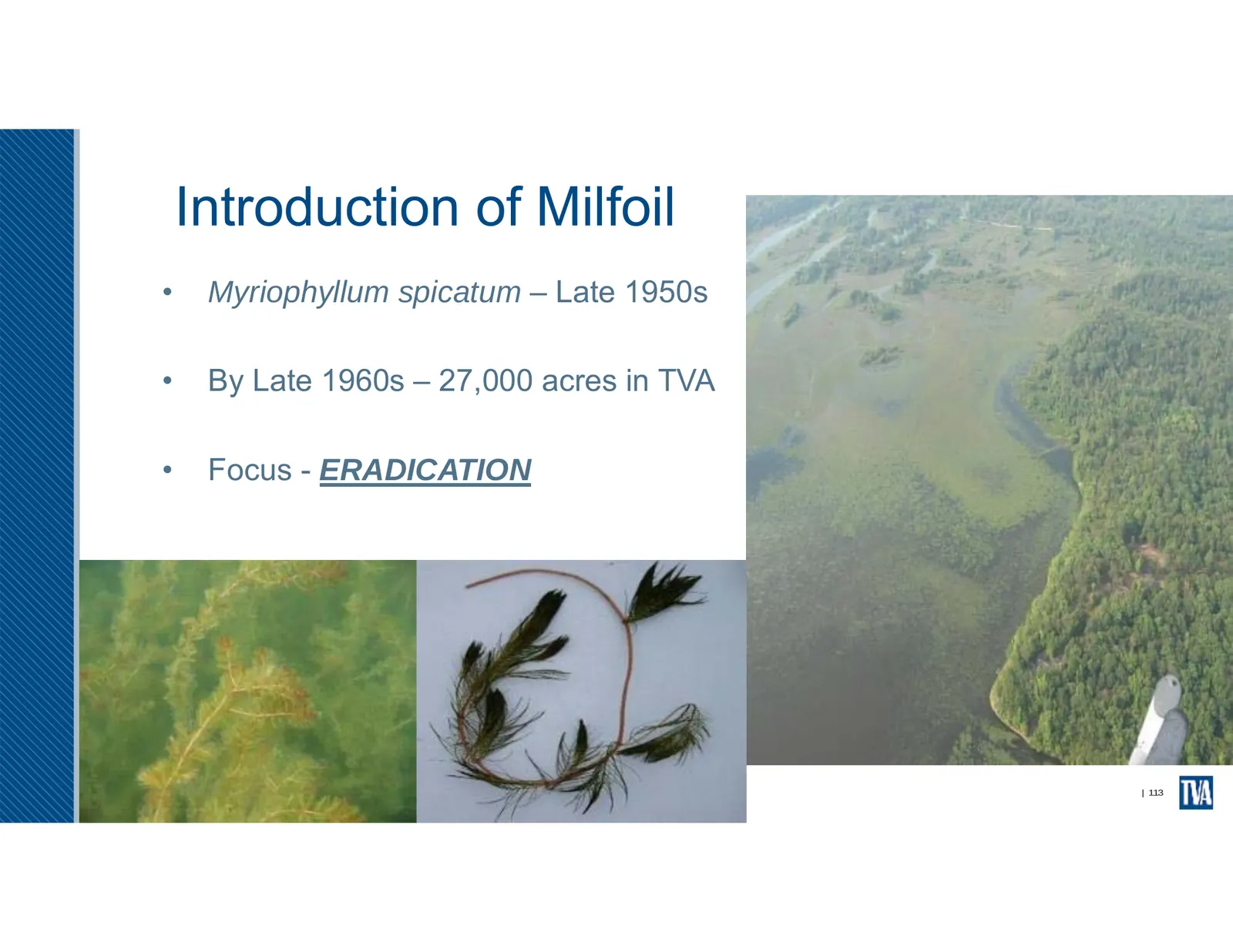
Introduction of Milfoil • Myriophyllum spicatum – Late 1950s • By Late 1960s – 27,000 acres in TVA • Focus - ERADICATION | 113
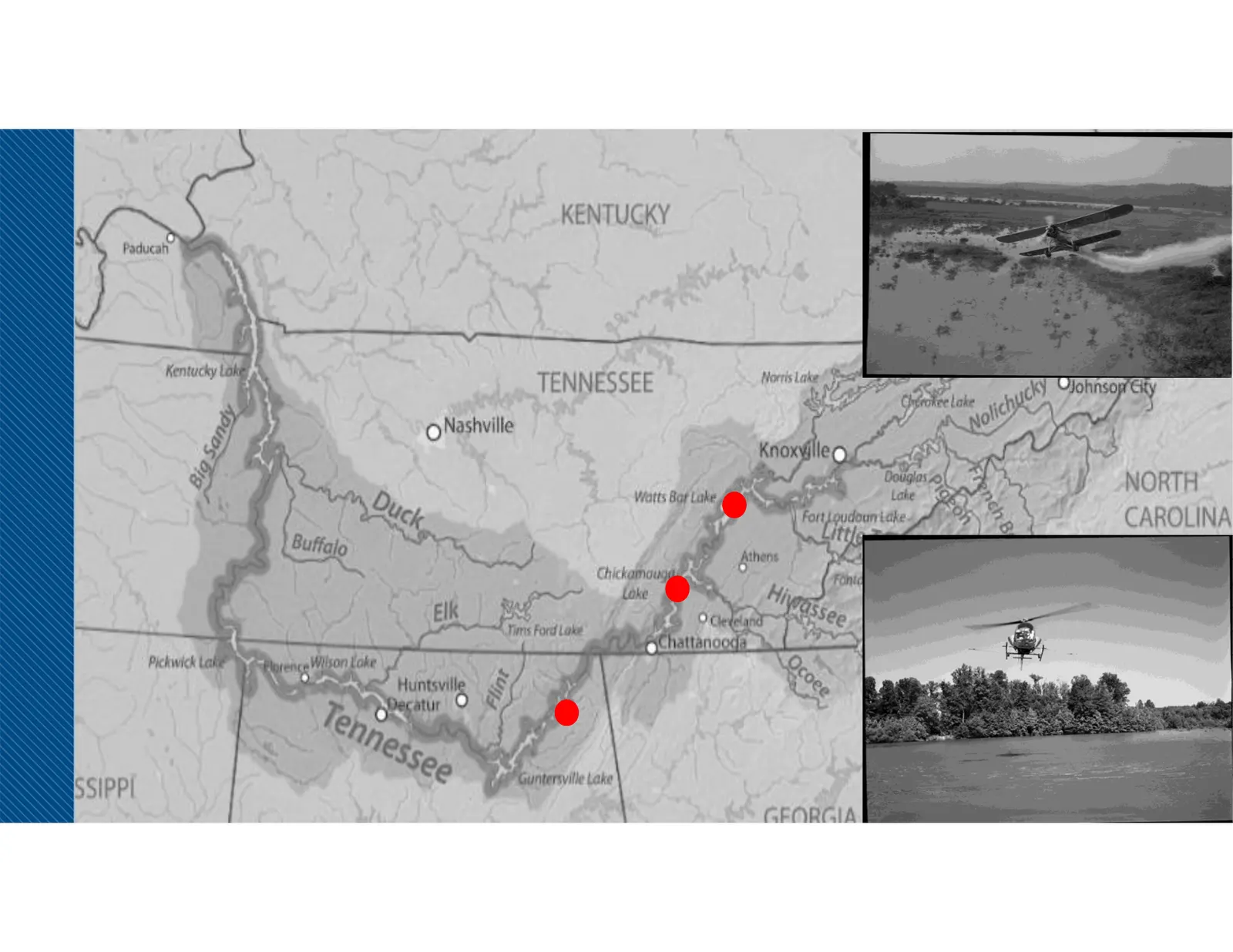
Slide 114: PLACE THE TITLE OF THE PRESENTATION HERE | 114
PLACE THE TITLE OF THE PRESENTATION HERE | 114
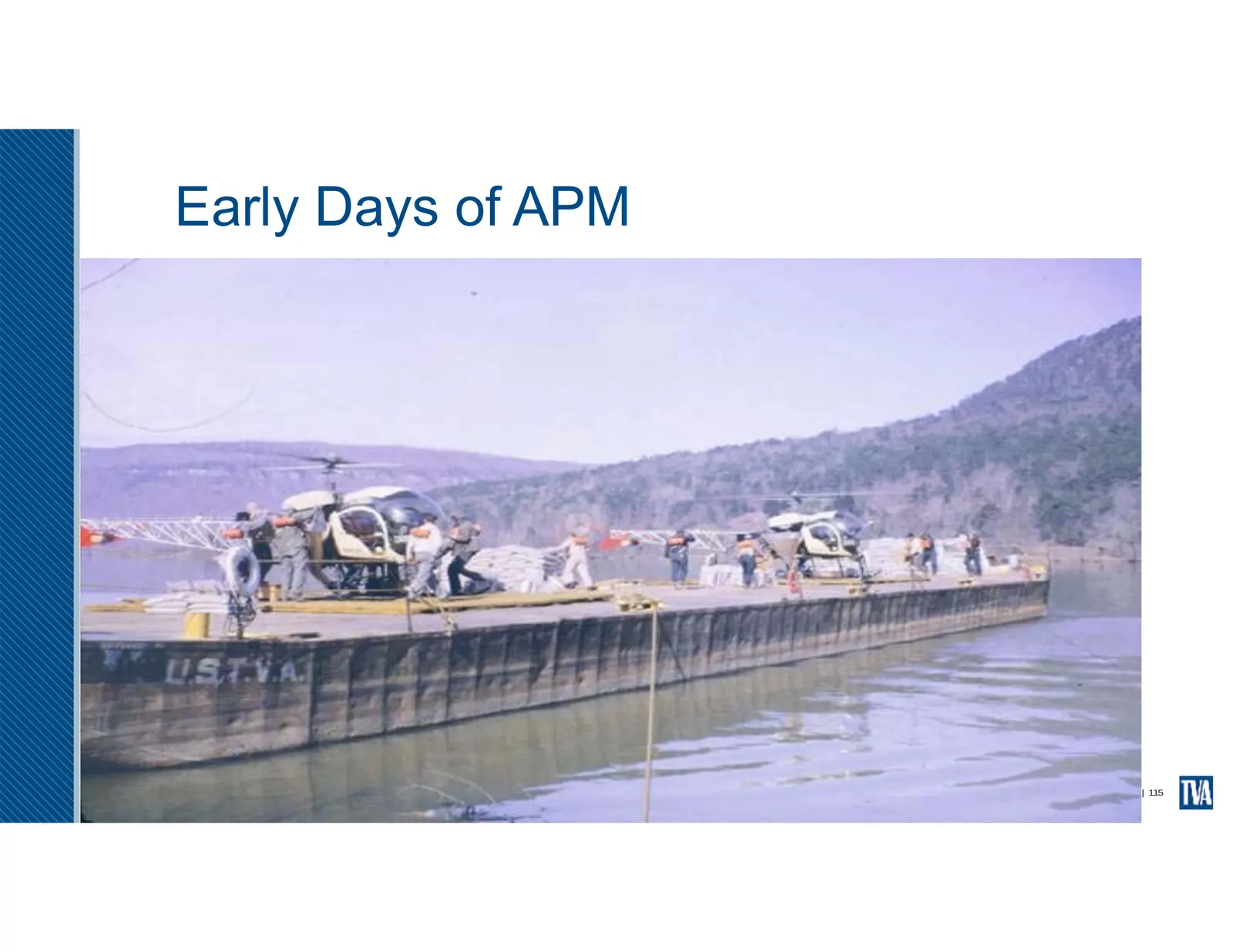
Slide 115: Early Days of APM
Early Days of APM PLACE THE TITLE OF THE PRESENTATION HERE | 115
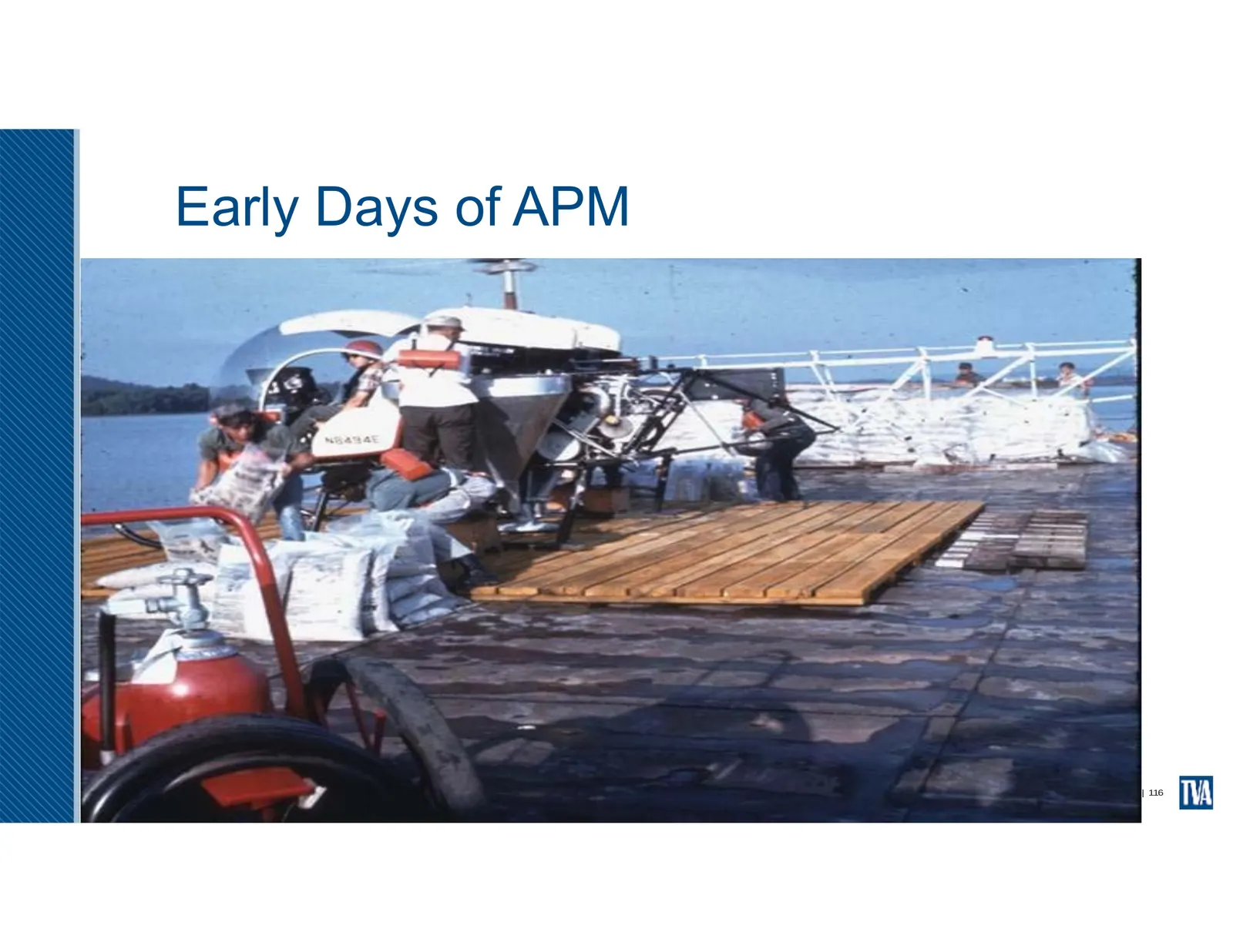
Slide 116: Early Days of APM
Early Days of APM PLACE THE TITLE OF THE PRESENTATION HERE | 116
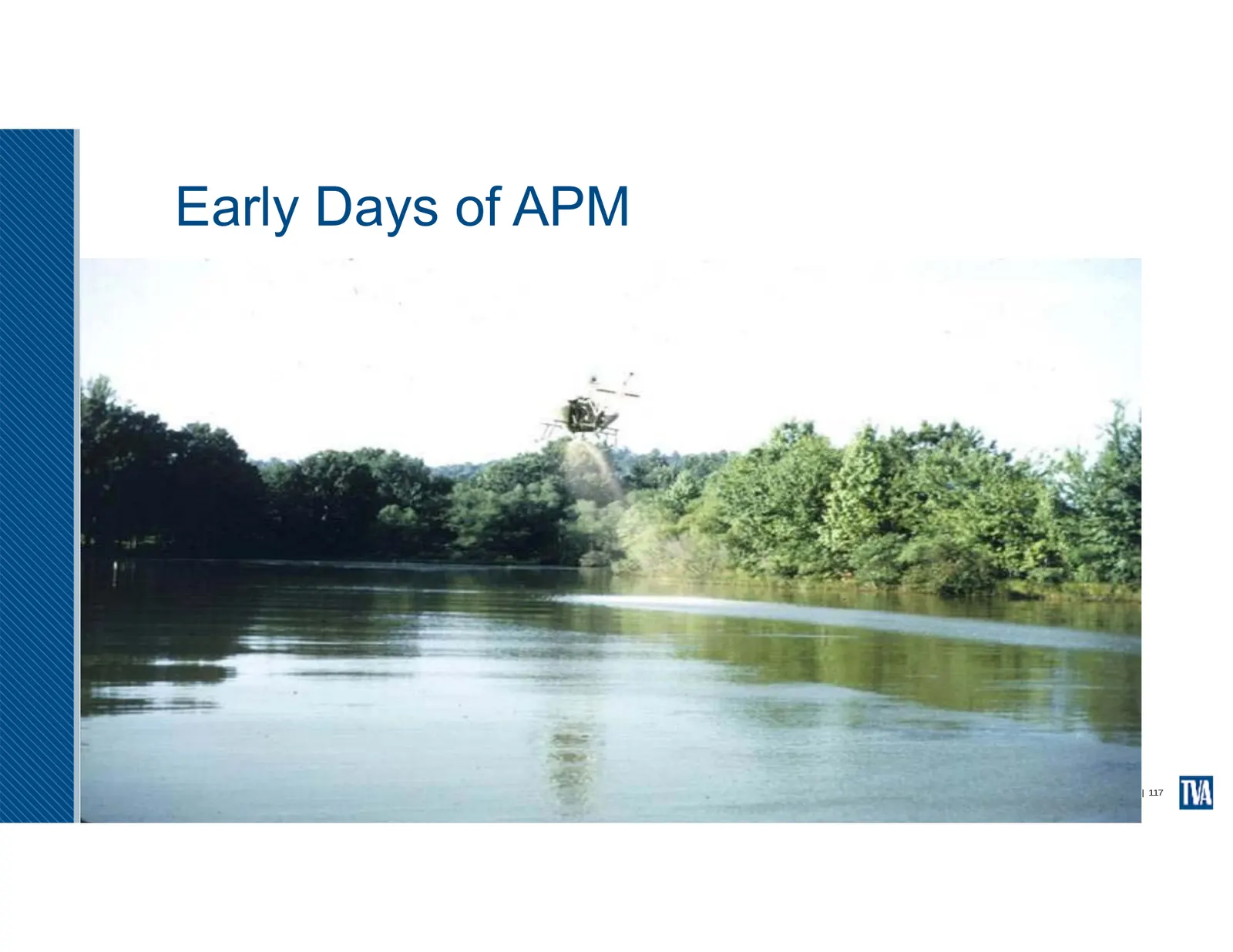
Slide 117: Early Days of APM
Early Days of APM PLACE THE TITLE OF THE PRESENTATION HERE | 117
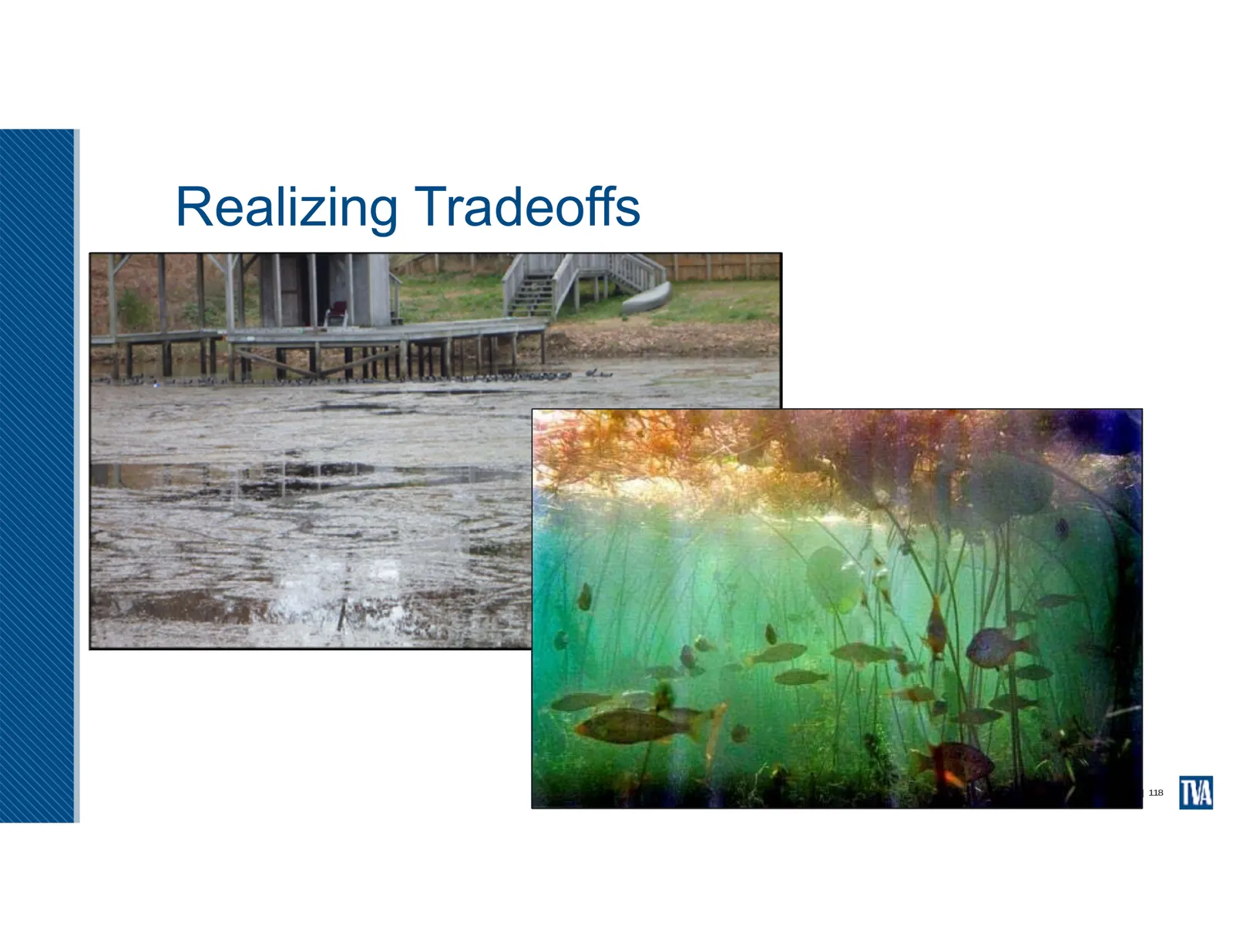
Slide 118: Realizing Tradeoffs
Realizing Tra deoffs y om IVA
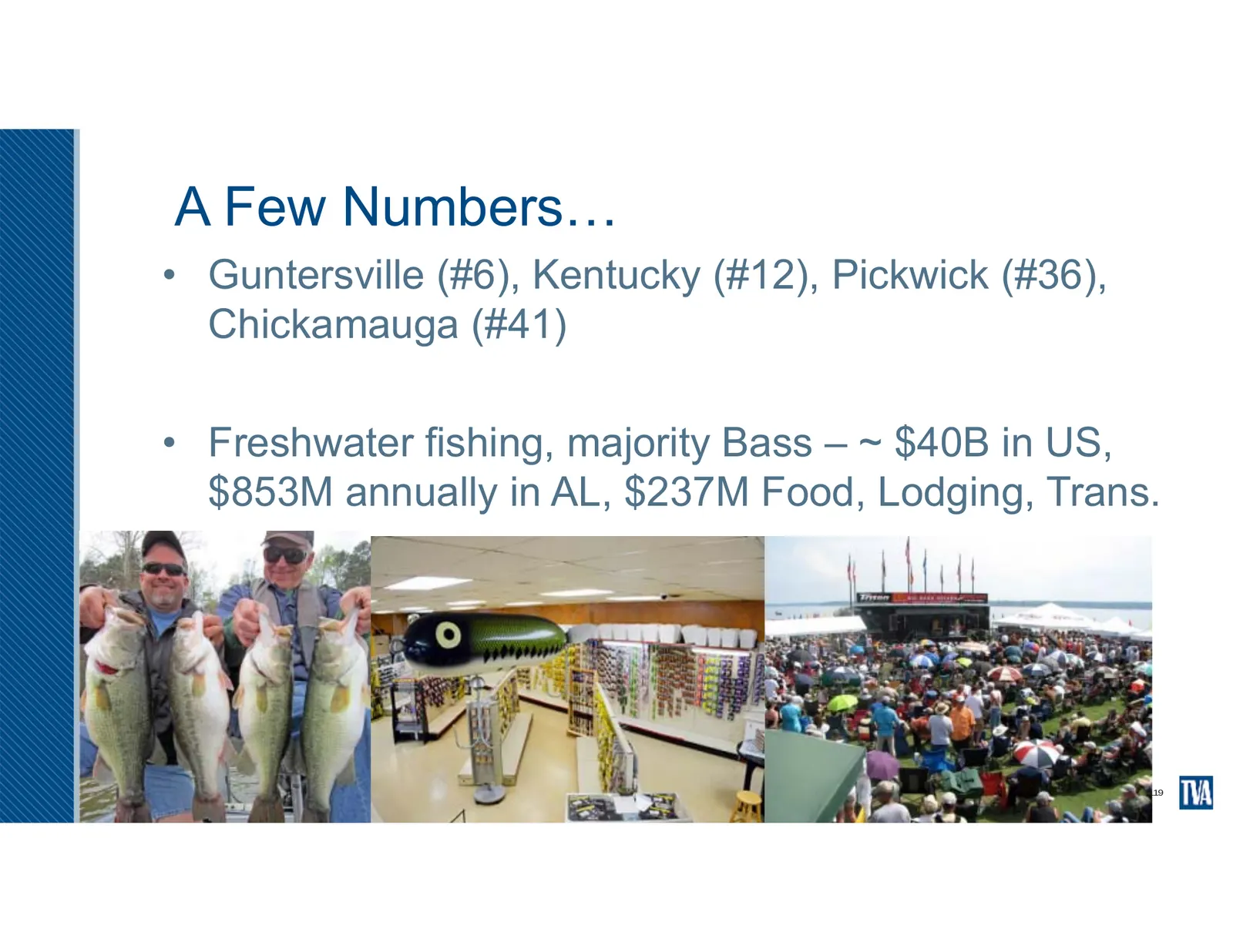
Slide 119: A Few Numbers…
A Few Numbers… • Guntersville (#6), Kentucky (#12), Pickwick (#36), Chickamauga (#41) • Freshwater fishing, majority Bass – ~ $40B in US, $853M annually in AL, $237M Food, Lodging, Trans. | 119
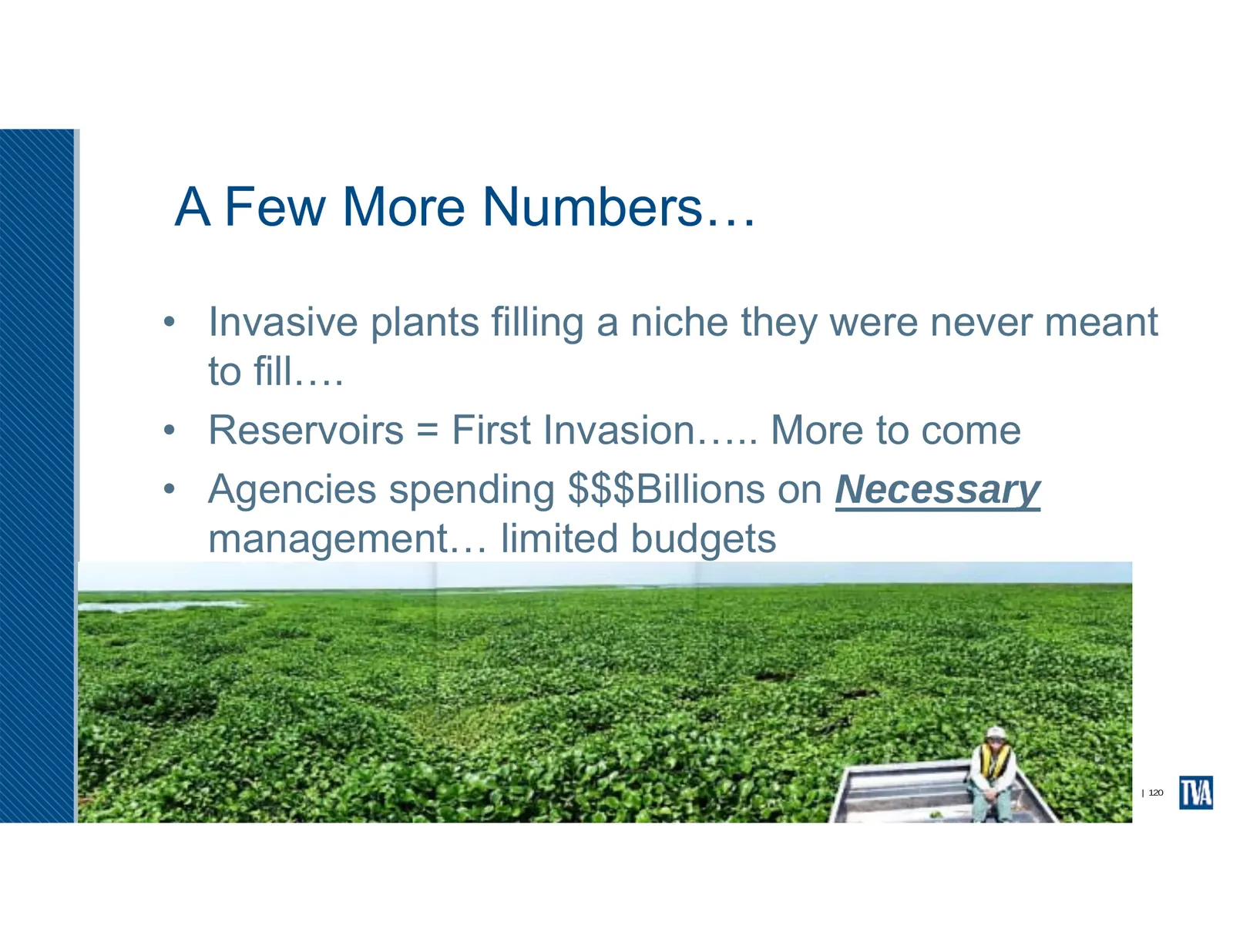
Slide 120: A Few More Numbers…
A Few More Numbers… • Invasive plants filling a niche they were never meant to fill…. • Reservoirs = First Invasion….. More to come • Agencies spending $$$Billions on Necessary management… limited budgets | 120
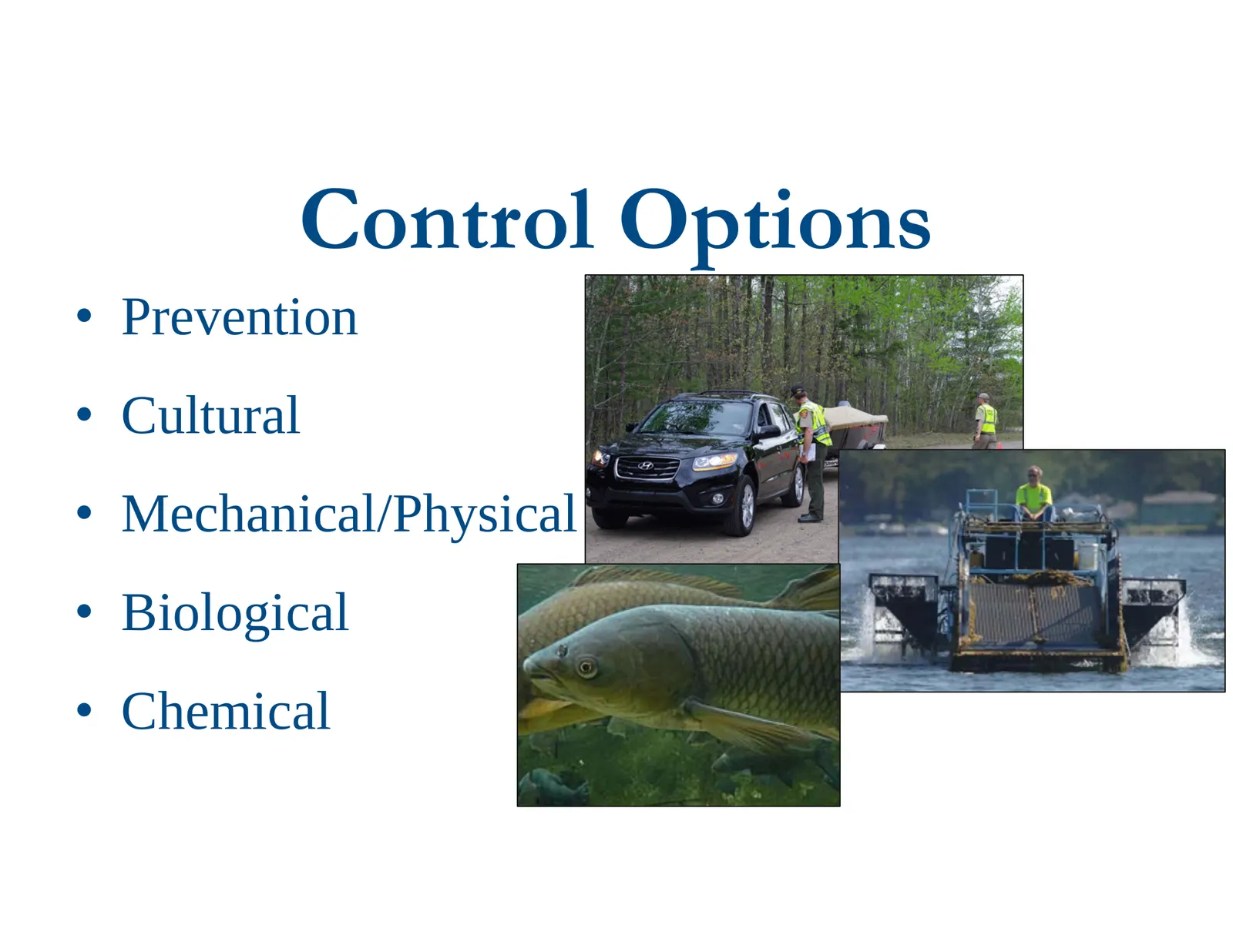
Slide 121: Control Options
Control Options • Prevention • Cultural • Mechanical/Physical • Biological • Chemical
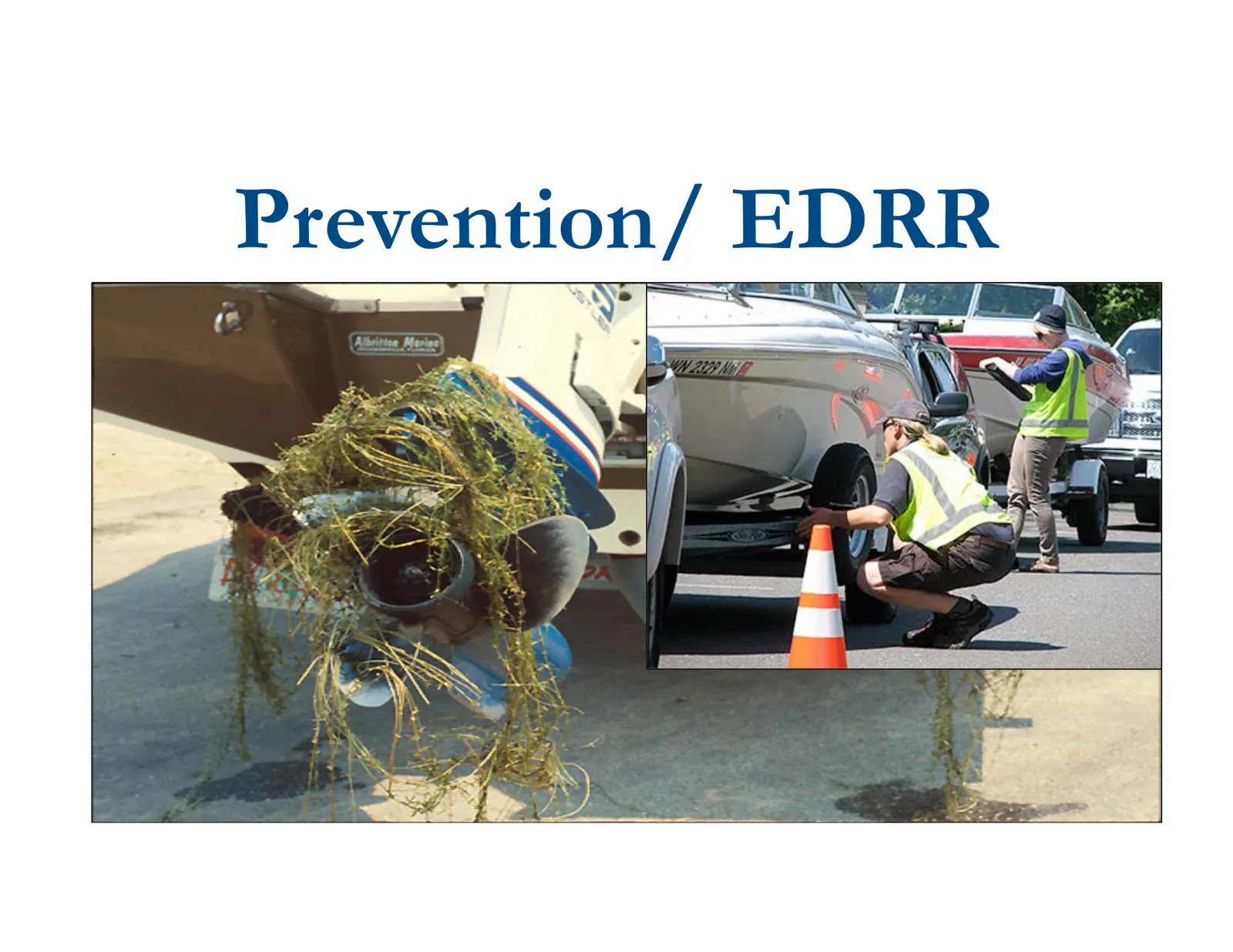
Slide 122: Prevention/ EDRR
Prevention/ EDRR
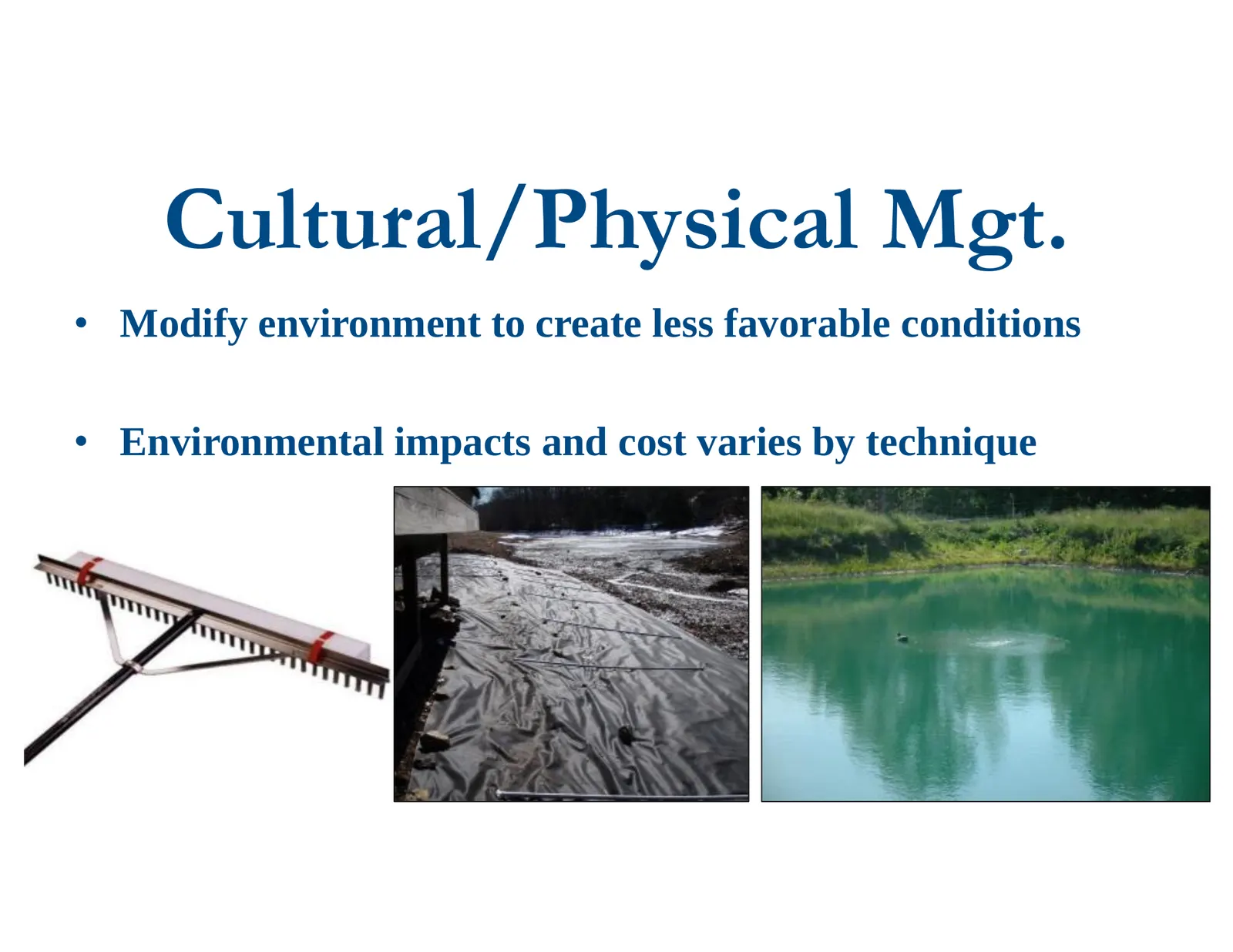
Slide 123: Cultural/Physical Mgt.
Cultural/Physical Mgt. • Modify environment to create less favorable conditions • Environmental impacts and cost varies by technique
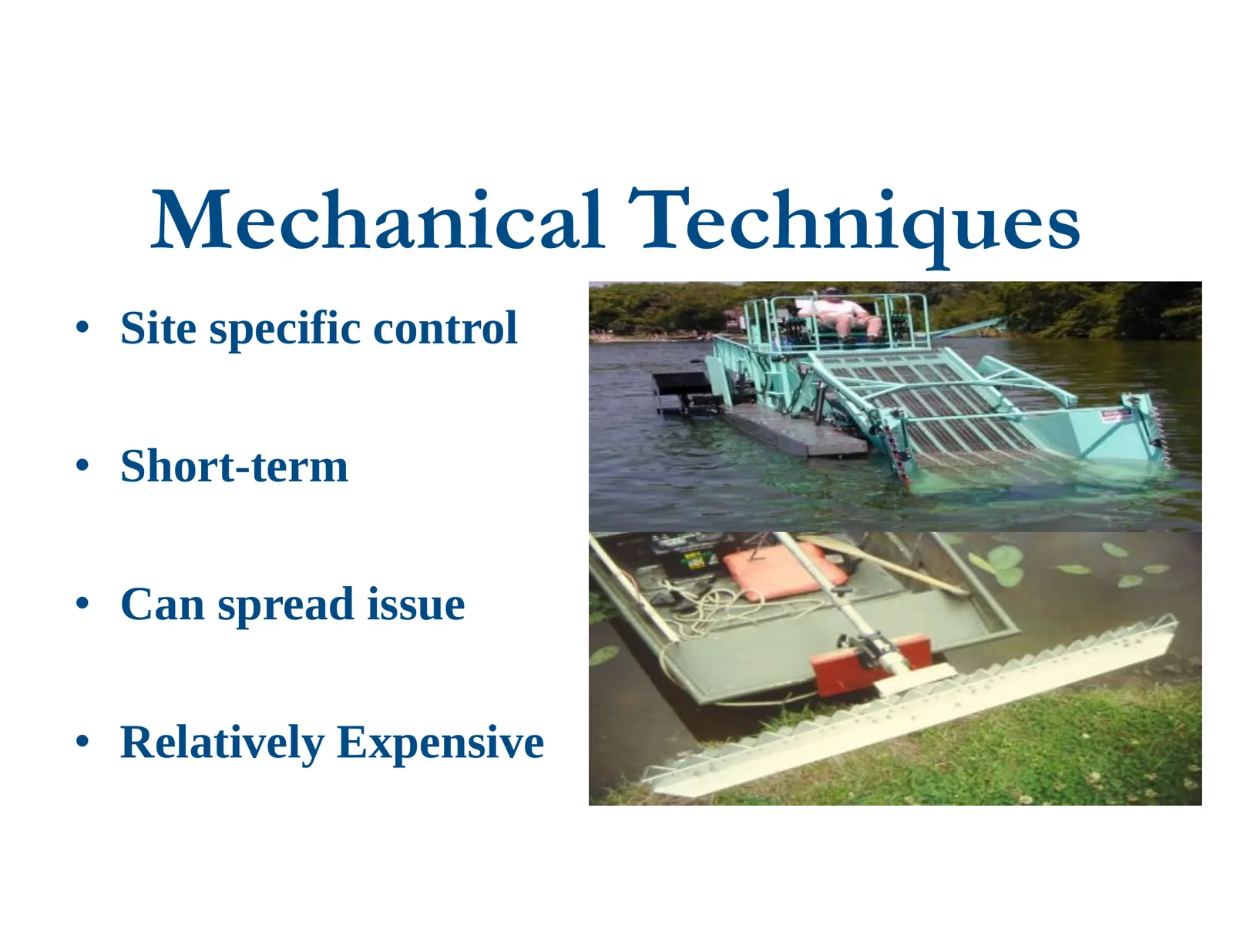
Slide 124: Mechanical Techniques
Mechanical Techniques • Site specific control • Short-term • Can spread issue • Relatively Expensive
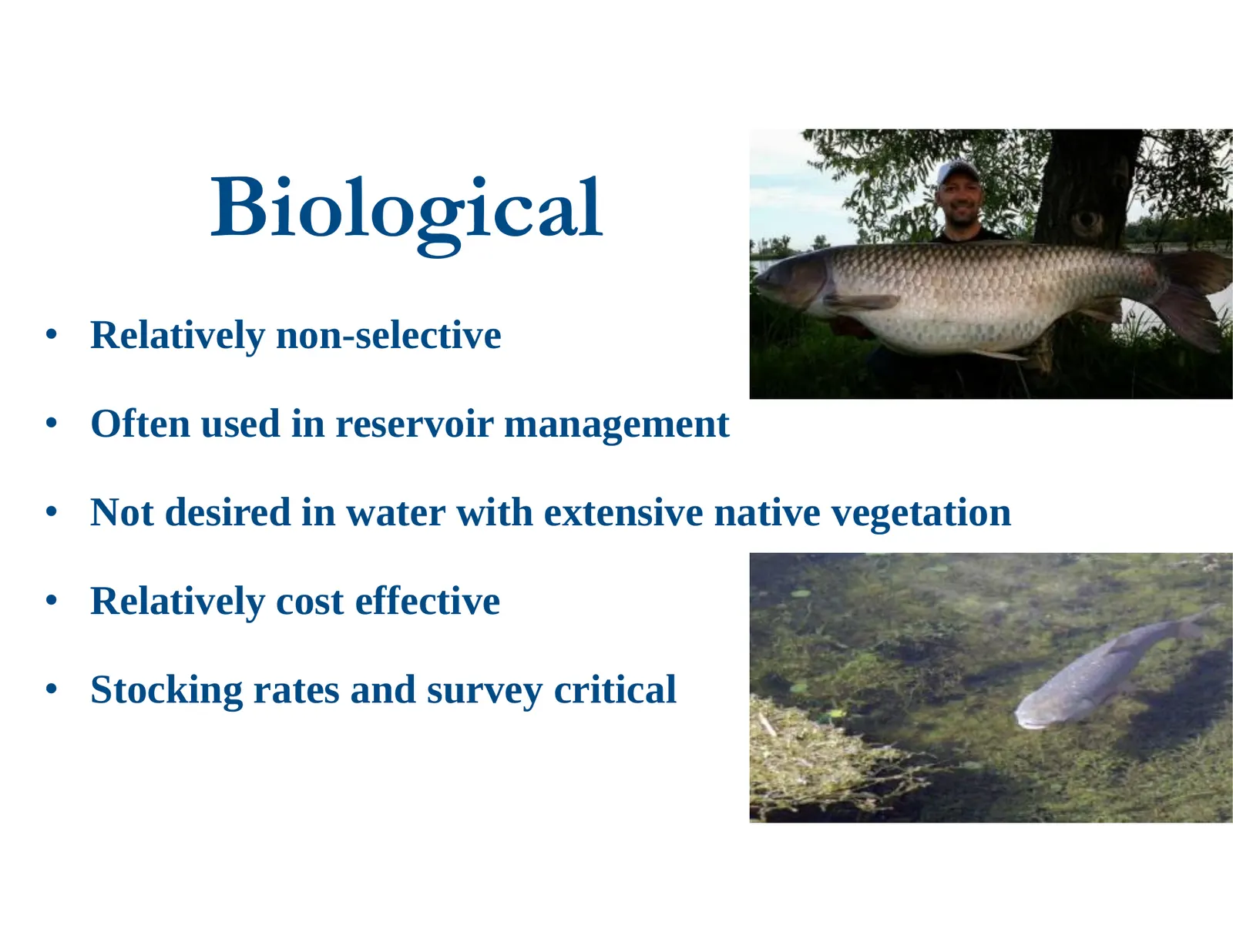
Slide 125: Biological
Biological • Relatively non-selective • Often used in reservoir management • Not desired in water with extensive native vegetation • Relatively cost effective • Stocking rates and survey critical
Slide 126: Chemical
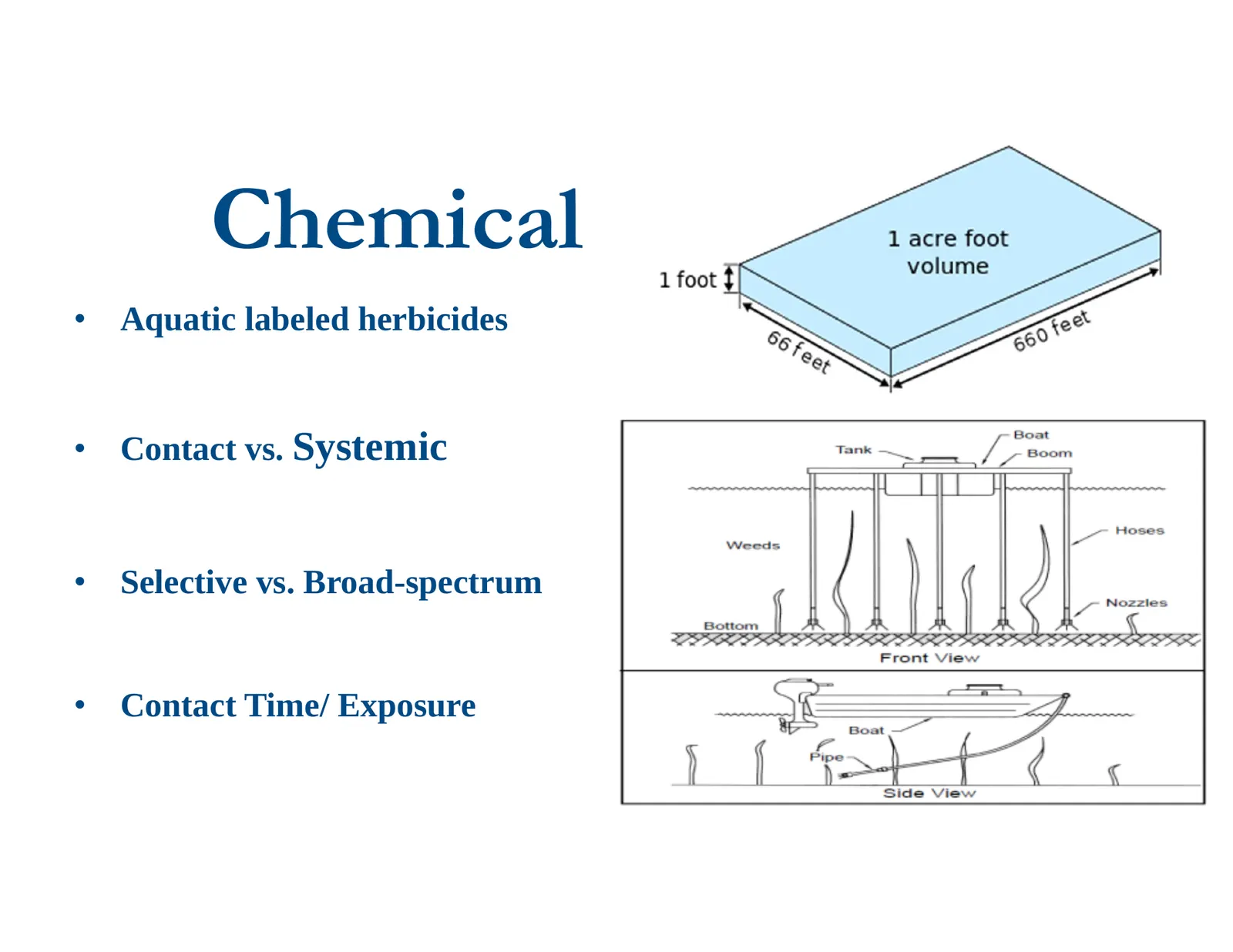
Chemical • Aquatic labeled herbicides • Contact vs. Systemic • Selective vs. Broad-spectrum • Contact Time/ Exposure
Slide 127: Nearshore Herbicide Applications
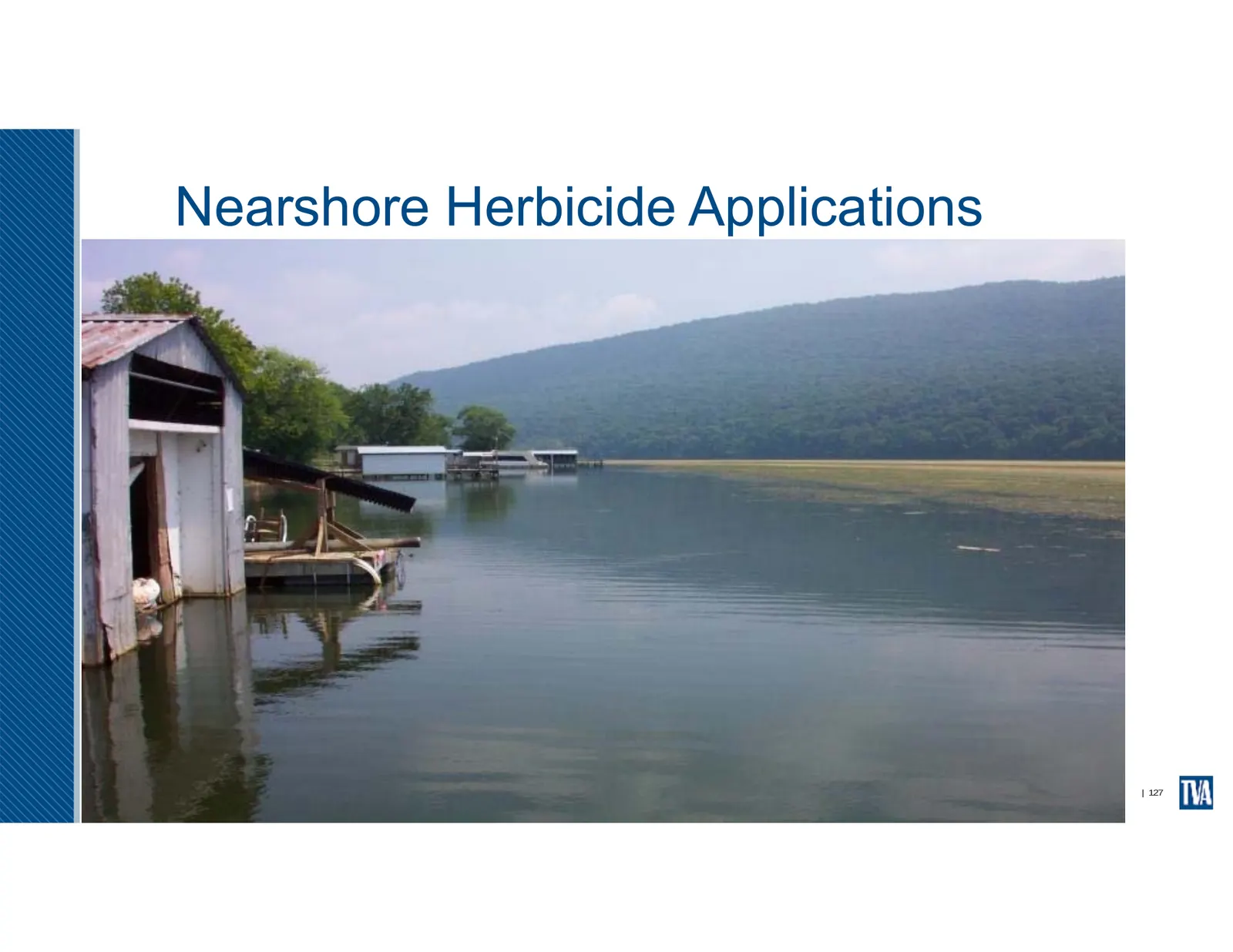
Nearshore Herbicide Applications | 127
Slide 128: Mechanical Harvester
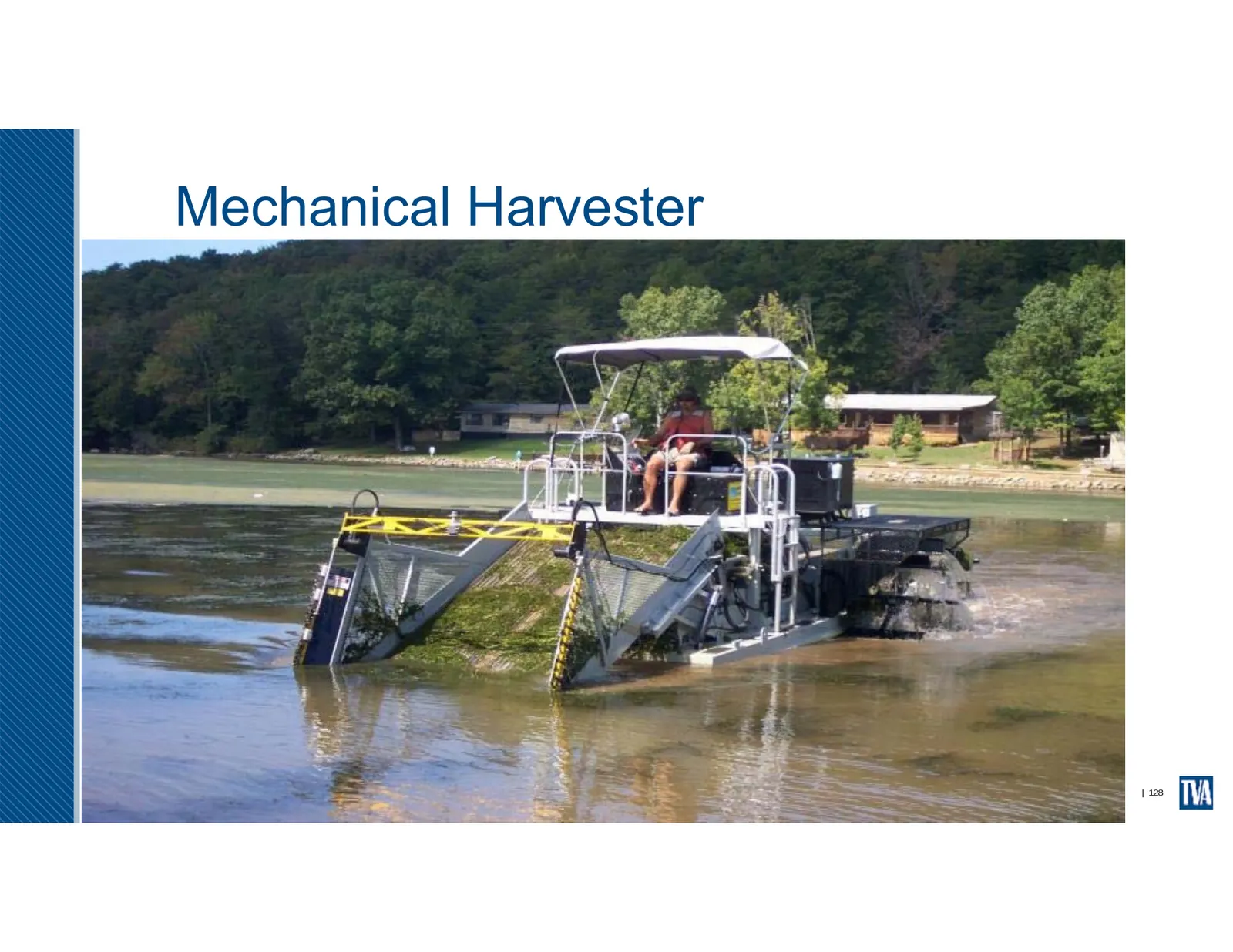
Mechanical Harvester | 128
Slide 129: Integrated Management Strategy
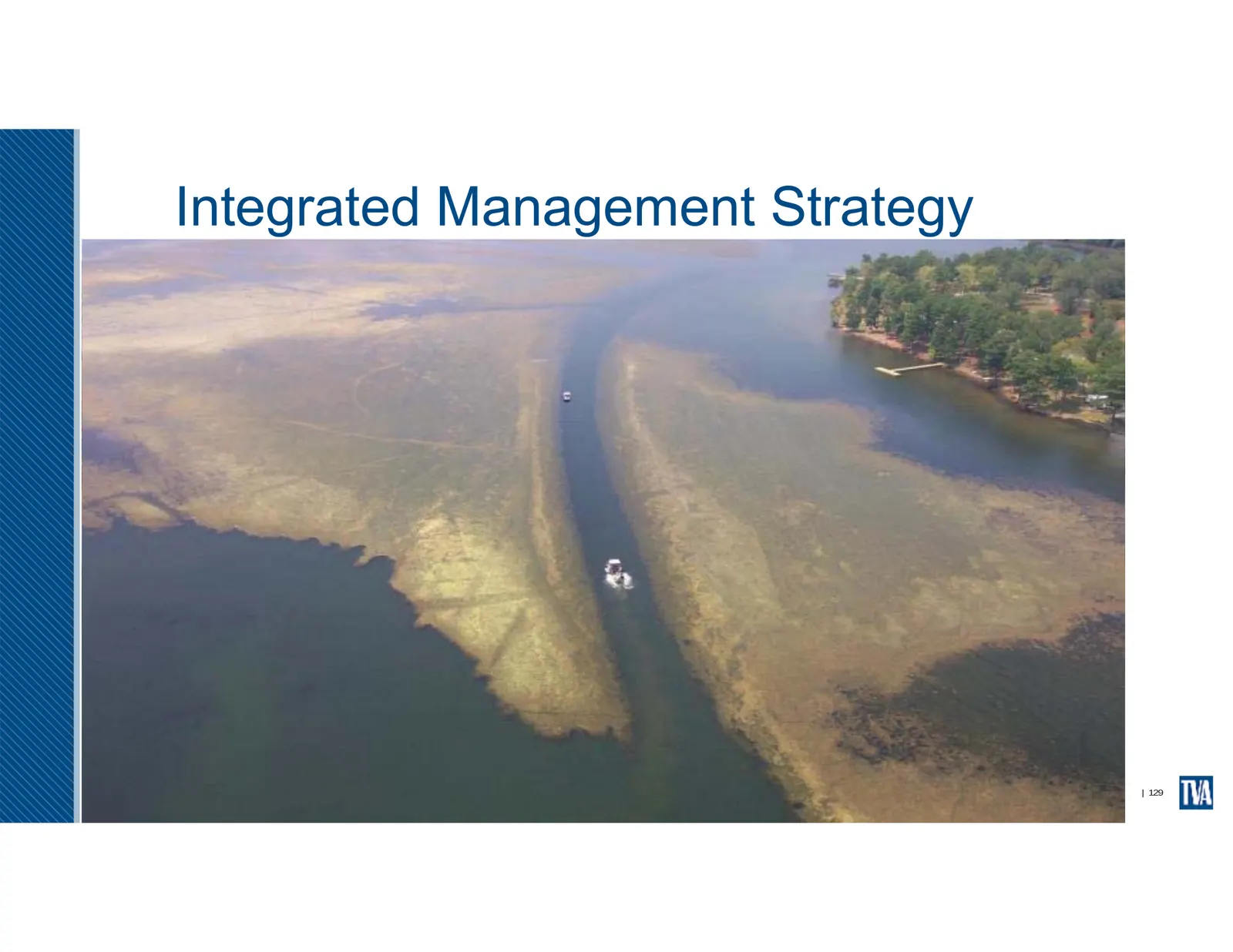
Integrated Management Strategy | 129
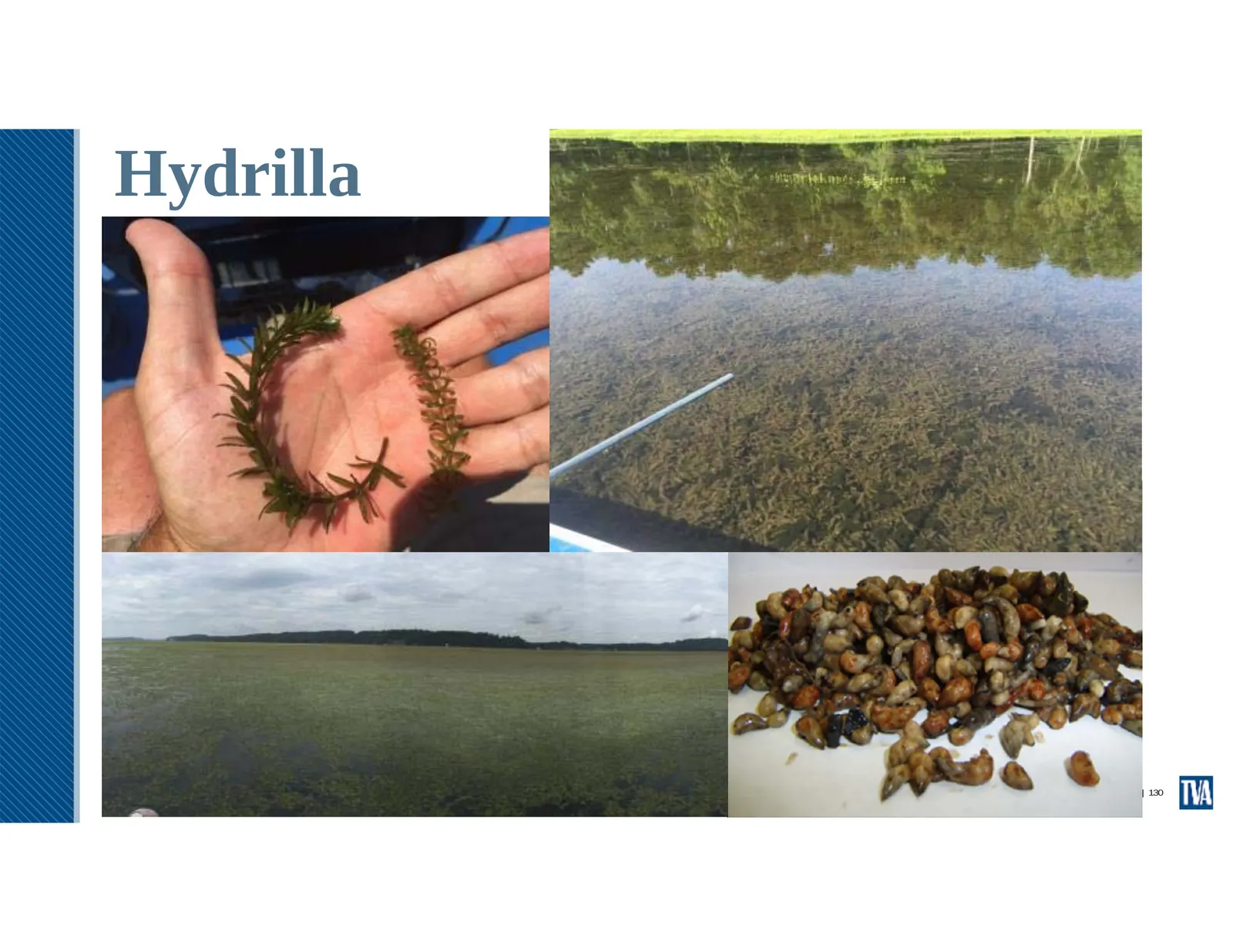
Slide 130: Hydrilla
Hydrilla | 130
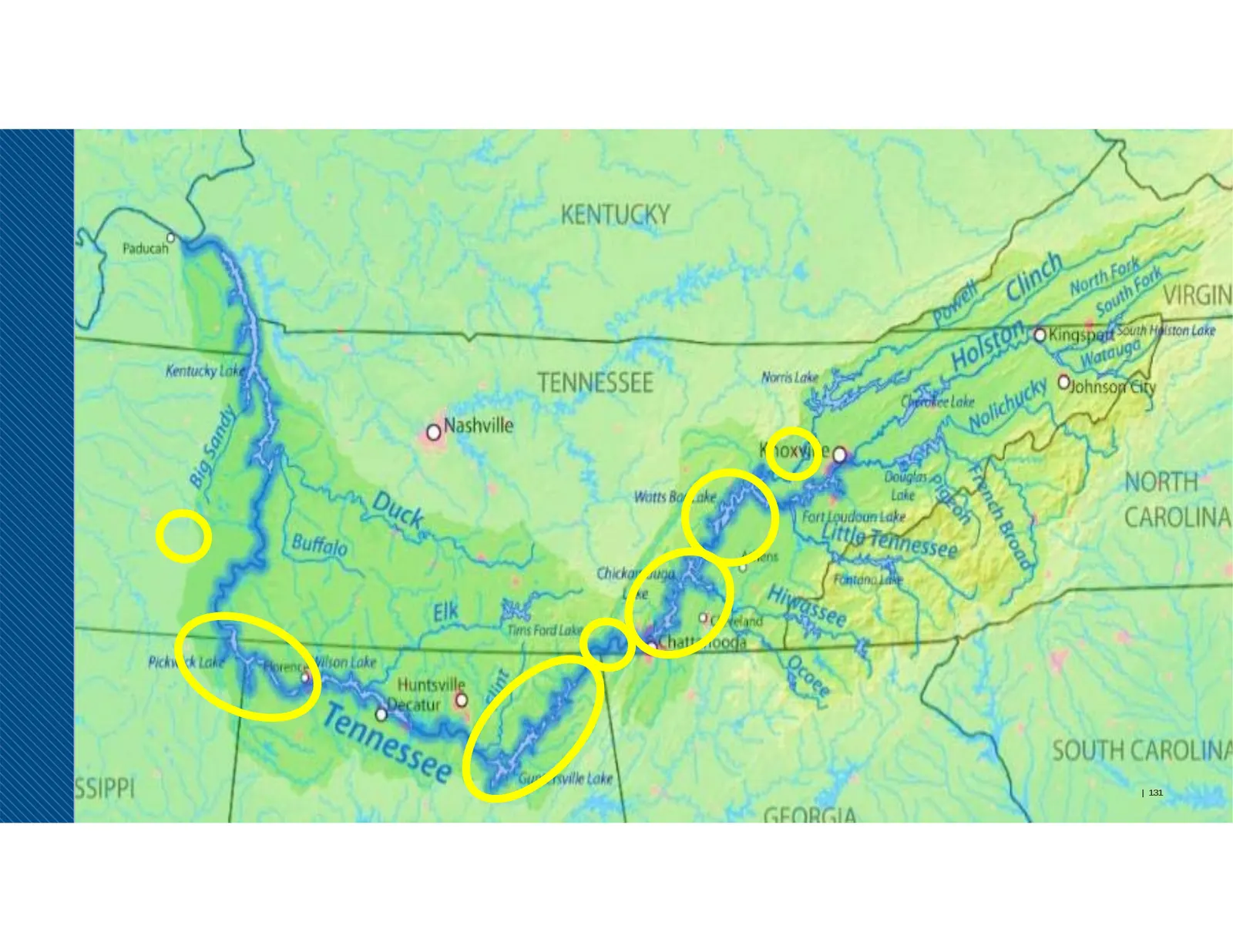
Slide 131: Hydrilla map of reservoirs
KENTUGKY pid Daeer ION 9 a8 VIRGIN a = = te ah ion take TENNESSEE Norio : yo hip ; eye oie y ONashville A a ; & $ K jox¥) eC Py F ne ~~ 0 lh, Watts Boy ake *) Quy. CAROLINA Buffalo " —_ J Chicka’ a u s % en t se Ki Oe ff eS aa aos Ek o> Be \ Oe dant} us Pick ck Lai es _. Wbon Lake a 7 od] > ae 2. ra
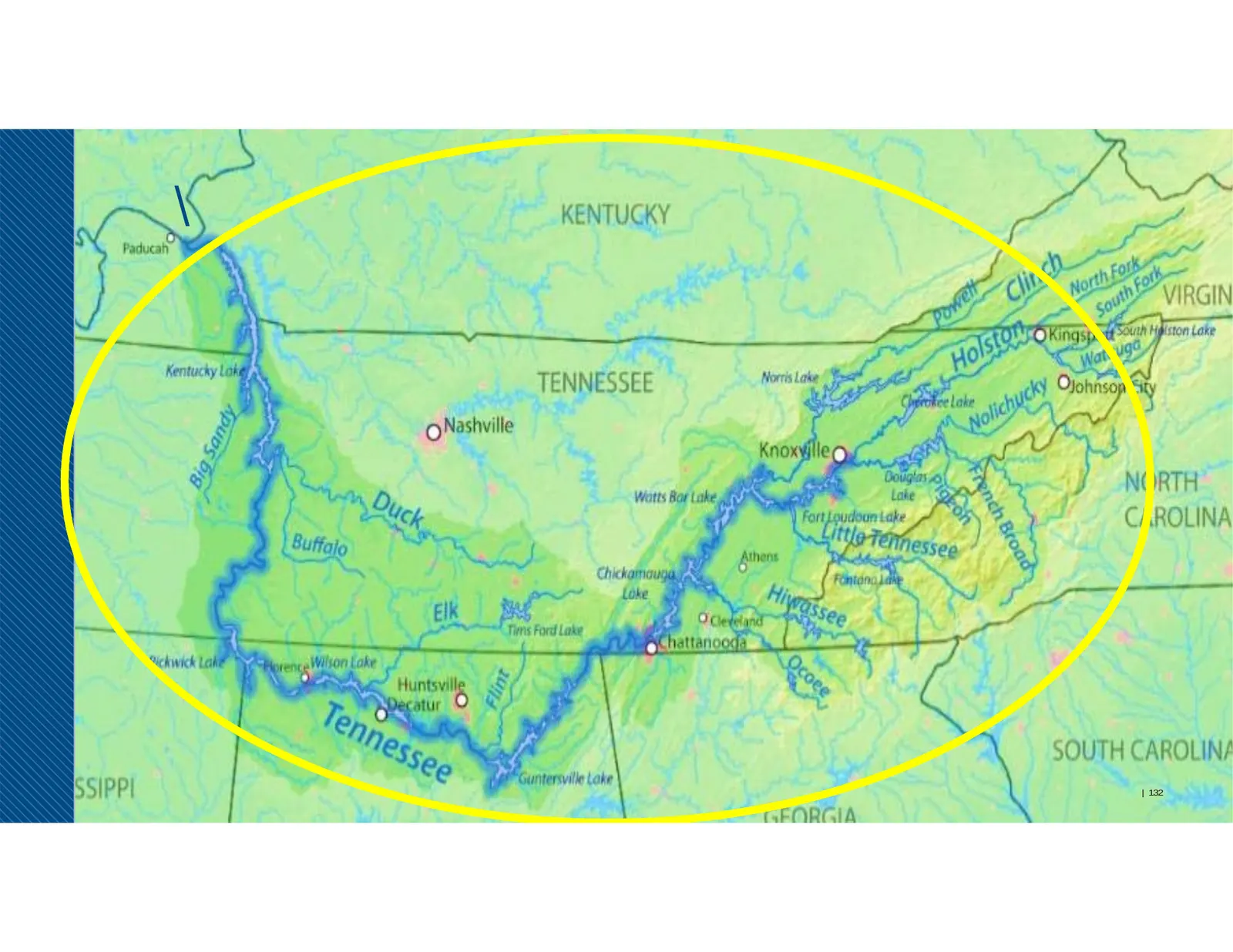
Slide 132: Milfoil map of reservoirs
\ KENTUCKY Paducah \\ vi } < Kentucky Loki é \ TENNESSEE Horta Late vg? { ¥ » y Nashville Th of At e : Knoxyflleq x hw > a he Hf Douigias | | 4 % + wn 0, Watts Bor Lake Pease” late O29 om: J NORTH I | Meg PF rene /%)%, \ C/,ROLINA } ws OTe ae | (Cuffalo ais ty Wer ag PP hrms ecco”; % ; he Chickamaug
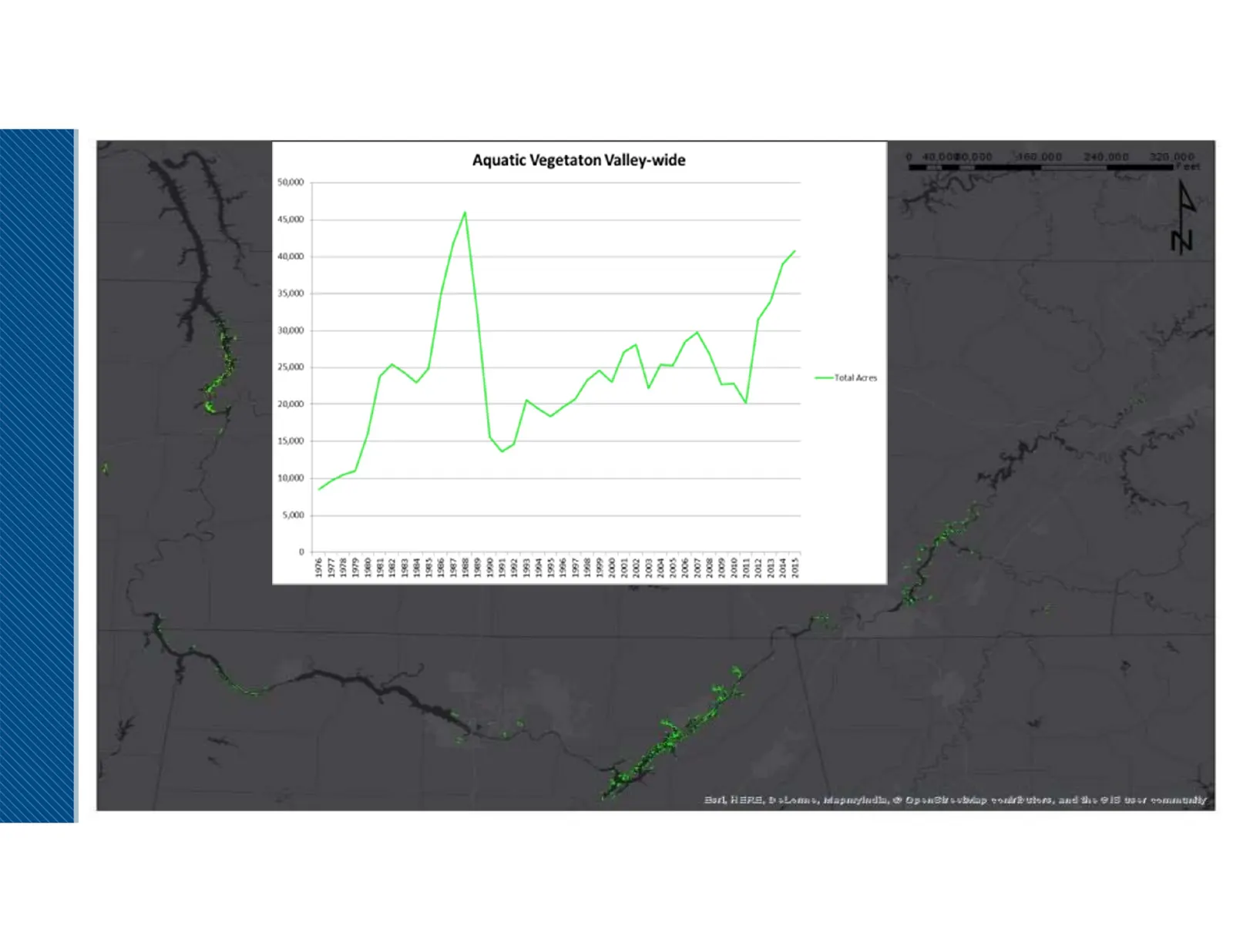
Slide 133: Aquatic Vegetation Valley-wide
Aquatic Vegetaton Valley-wide 40,000 25,000 Total Acres 20,000
Slide 134: Hydrilla, Milfoil, Spiny Naiad
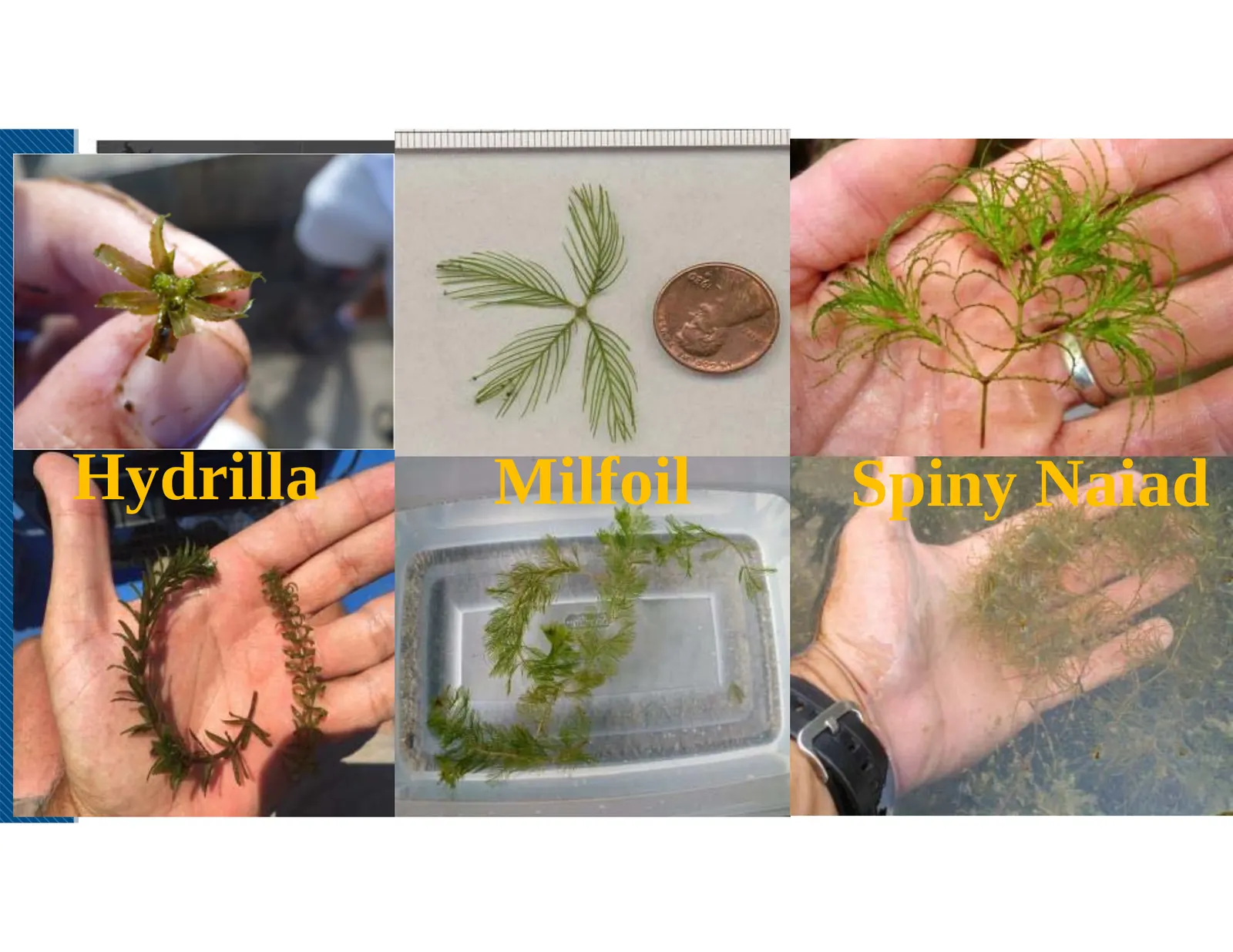
Hydrilla Milfoil Spiny Naiad | 134
Slide 135: Developed Public Access Area
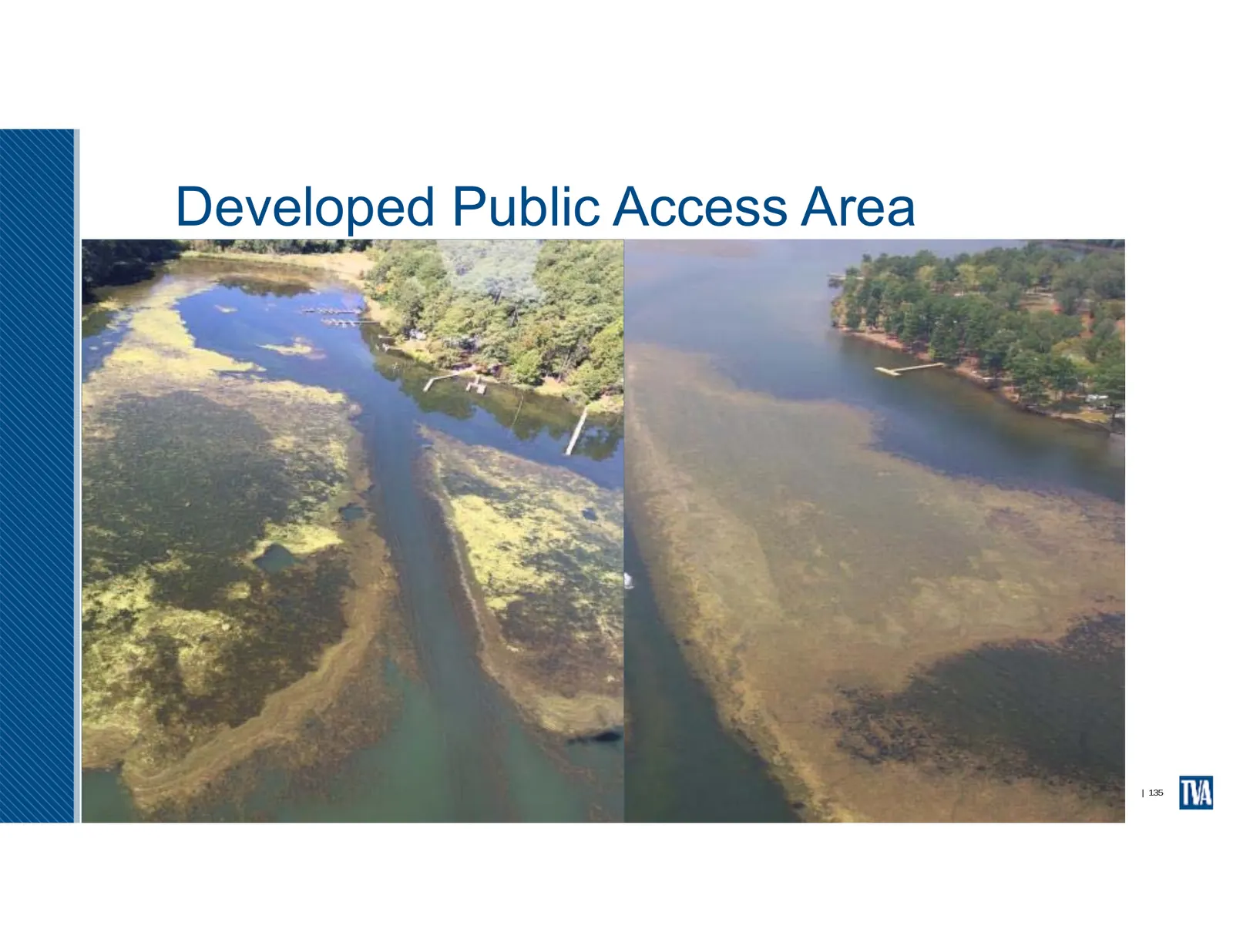
Developed Public Access Area | 135
Slide 136: Stakeholder Driven Management
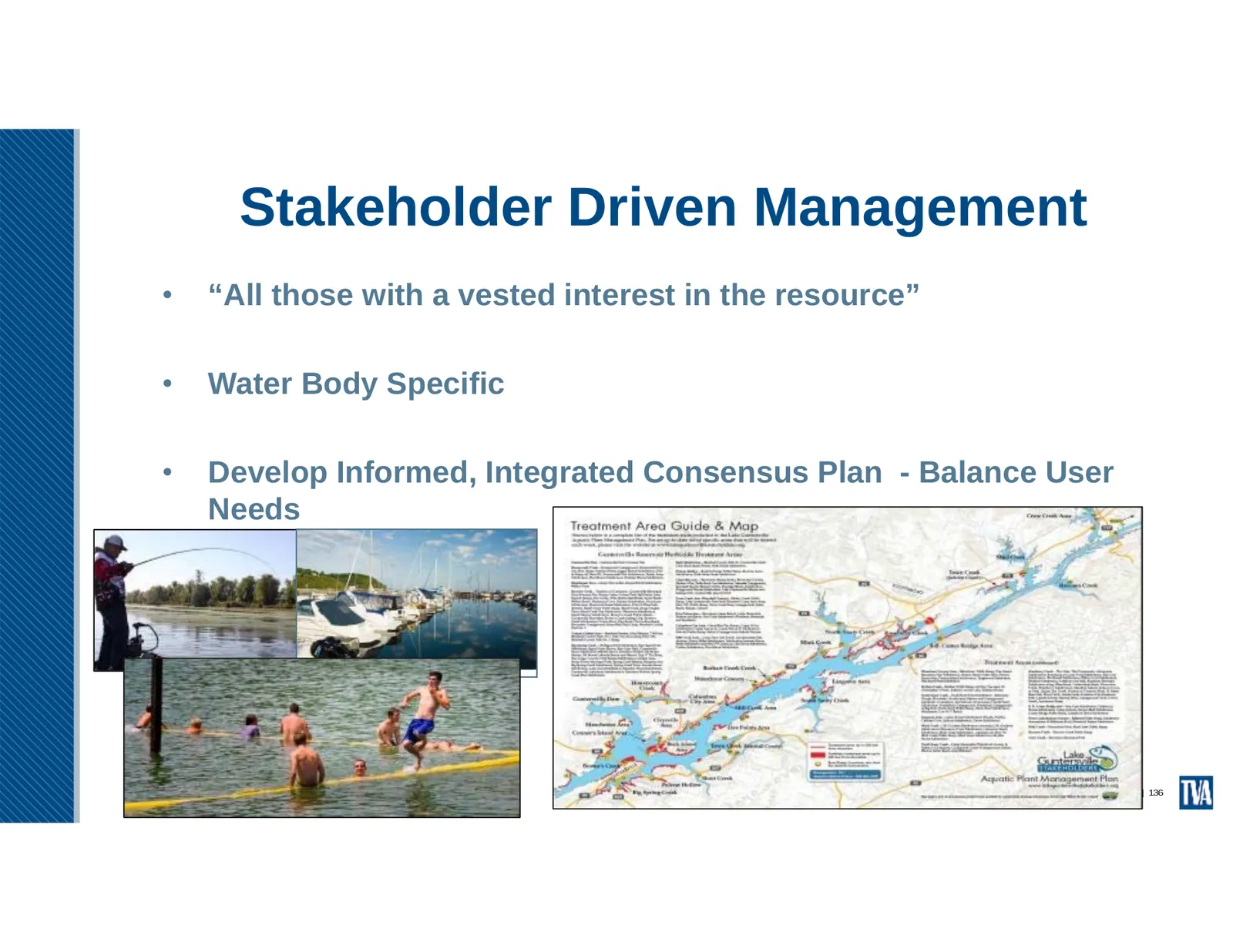
Stakeholder Driven Management • “All those with a vested interest in the resource” • Water Body Specific • Develop Informed, Integrated Consensus Plan - Balance User Needs | 136
Slide 137: The Key to Sound Management
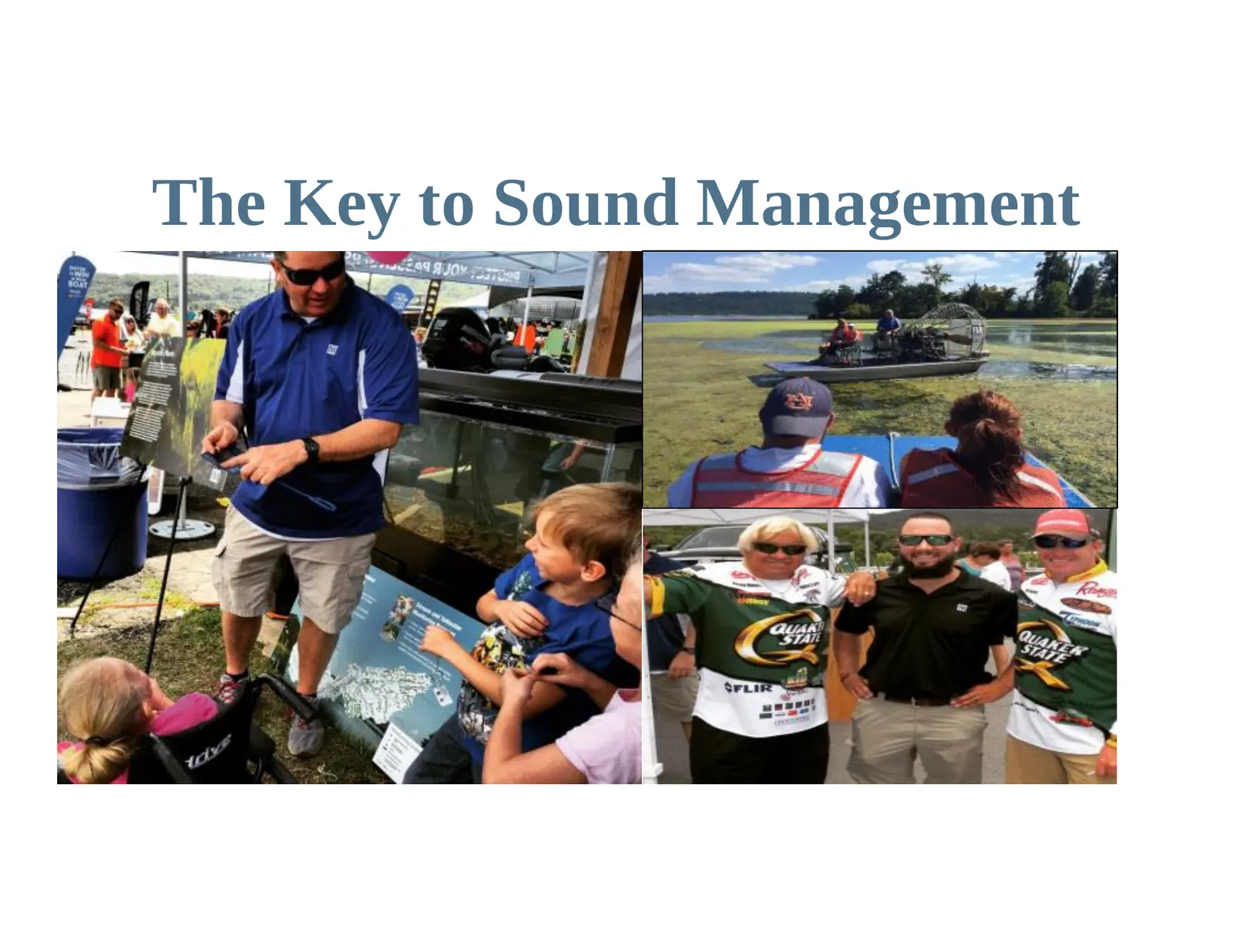
_The Key to Sound Management
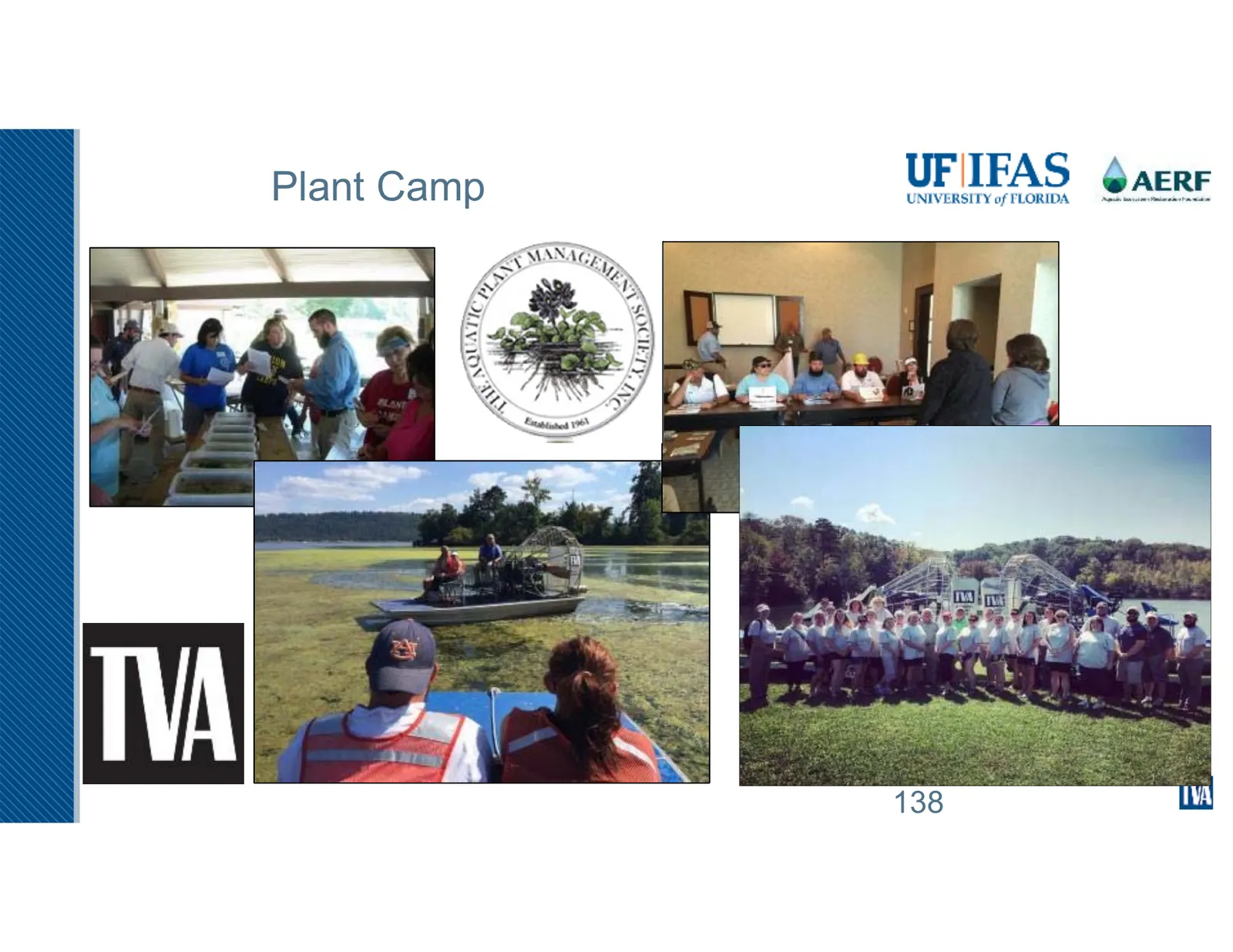
Slide 138: Plant Camp
Plant Camp UFITFAS Qaerr UNIVERSITY of FLORIDA Ai Piano
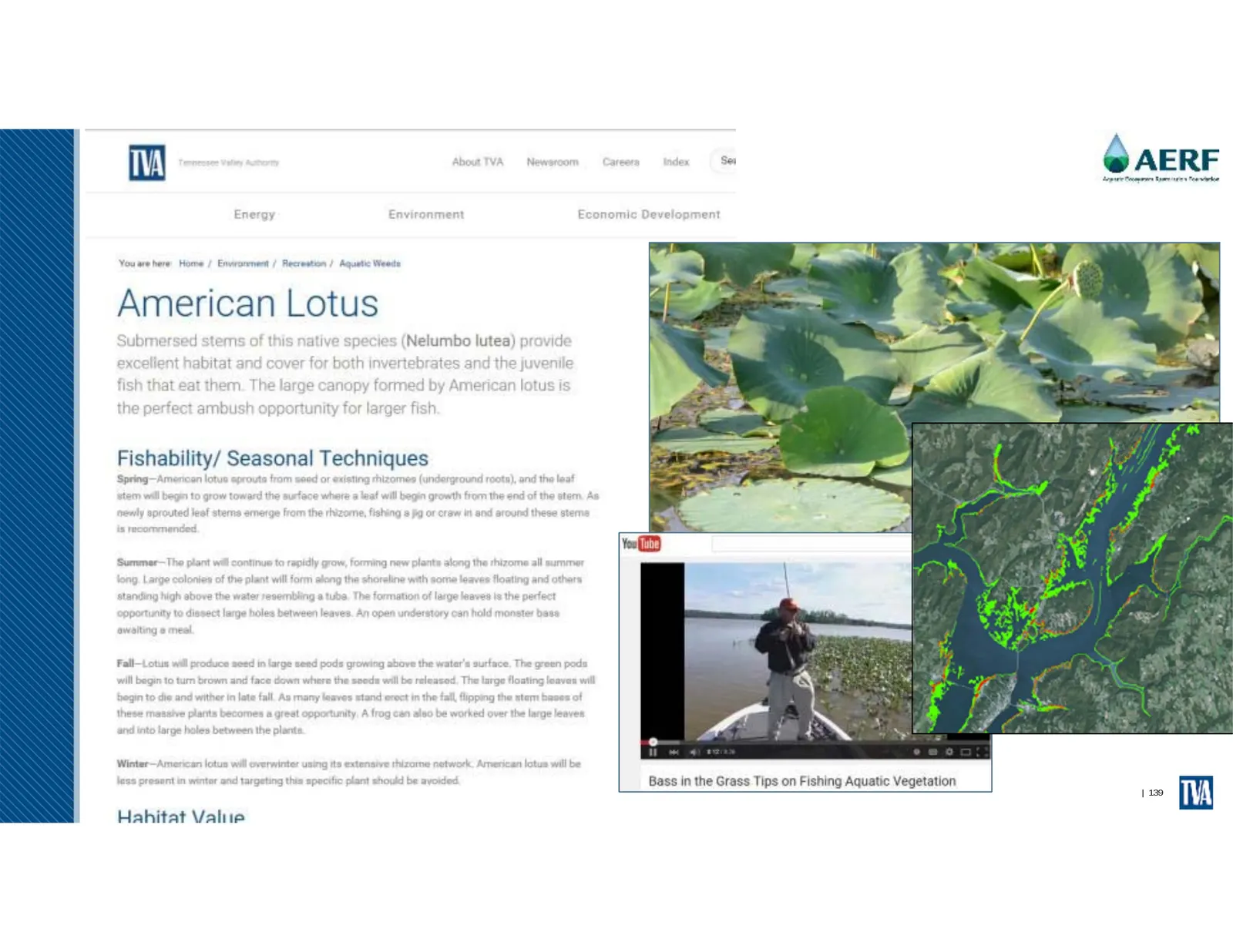
Slide 139: American Lotus
American Lotus f ‘ Nelumbo lutea) Fishability/ Seasonal Techniques pring Bass in the Grass Tips on Fishing Aquatic Vegetation fame |VA Hahitat Value
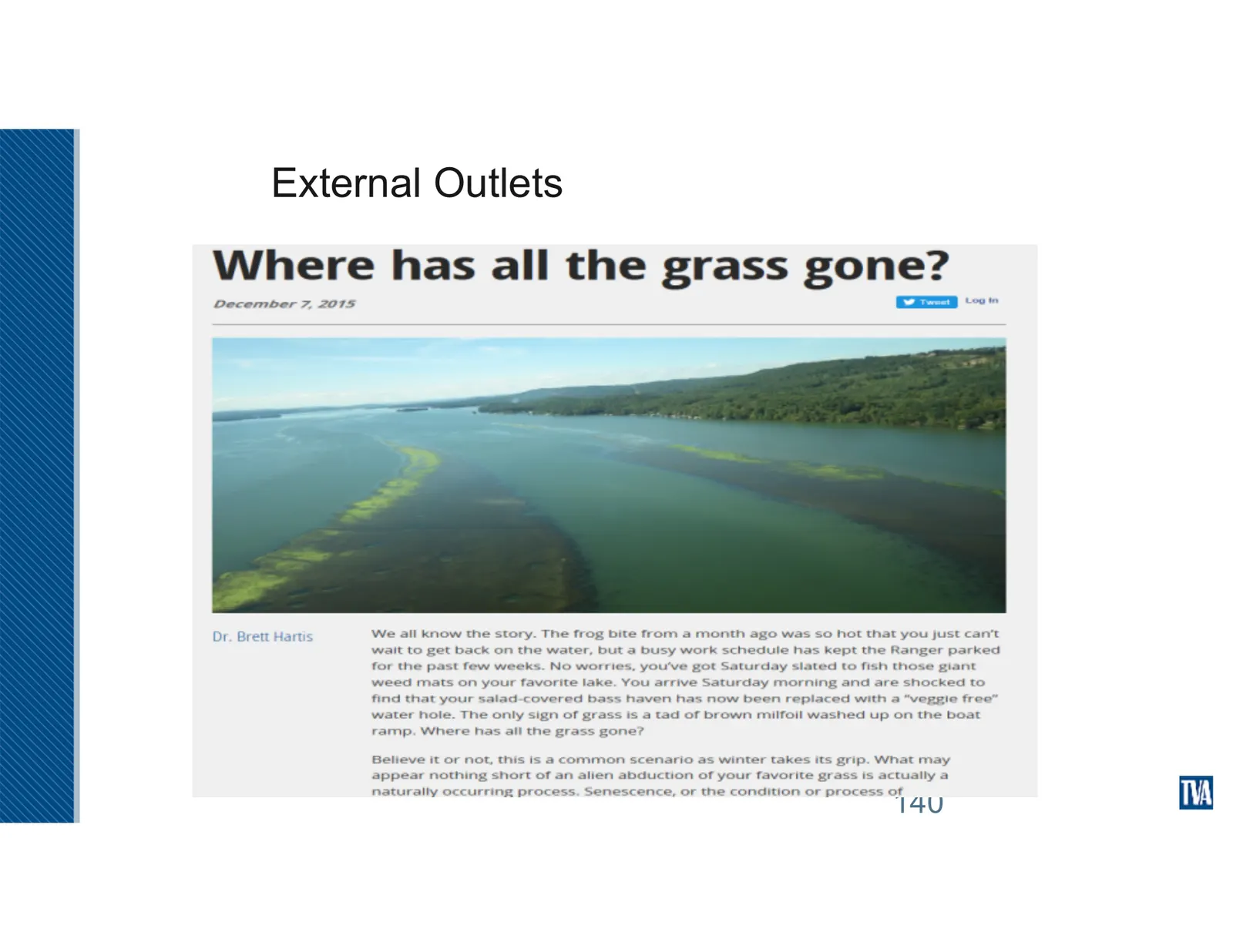
Slide 140: External Outlets
External Outlets Where has all the grass gone? December 7, 2075 | WF Tweet | Leg tn Dr. Brett Hartis We all know the story. The frog bite from a month ago was so hot that you just can’t wait to get back on the water, but a busy work schedule has kept the Ranger parked for the past few weeks. No worr
Slide 141: Do you have a question about TVA Public Land?
" Deyou have a’quéstion . aboutTVA Public Land? =“ > Call 1-800-882-5263 PUBLIC LAND | "arear-rmow f INFORMATION CENTER | 7:00 AM. - 5:00 PM. csT__? ; email: plic@tva.com - website: www.tva.com/plic :

Slide 142: TVA
IVA
Slide 143: Regional Resource Stewardship Council
Regional Resource Stewardship Council November 14 - 15, 2017 Guntersville, Alabama

Slide 144: Welcome
Slide 145: Agenda – Nov 15, 2017
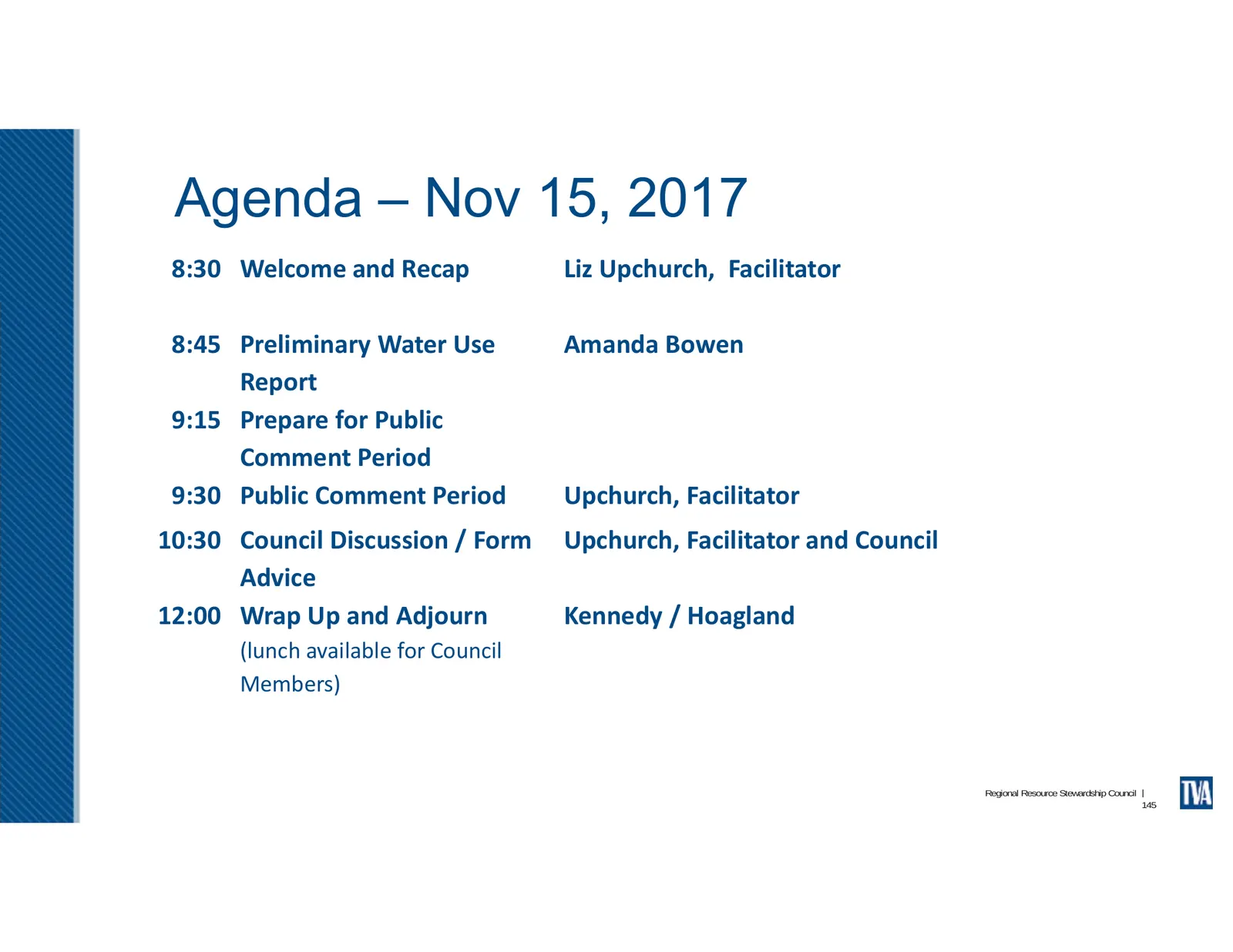
Agenda – Nov 15, 2017 8:30 Welcome and Recap Liz Upchurch, Facilitator 8:45 Preliminary Water Use Amanda Bowen Report 9:15 Prepare for Public Comment Period 9:30 Public Comment Period Upchurch, Facilitator 10:30 Council Discussion / Form Upchurch, Facilitator and Council Advice 12:00 Wrap Up and Adj
Slide 146: Day 1 Recap
Day 1 Recap • Updates on River and Natural Resource Management • Update of Natural Resource Plan • TVA Public Land Protection Program Regional Resource Stewardship Council | 146
Slide 147: Water Use in the Tennessee Valley for 2015: Preliminary Results
Water Use in the Tennessee Valley for 2015: Preliminary Results Amanda Bowen, PE November 15, 2017
Slide 148: The Importance of Water in the TN Valley
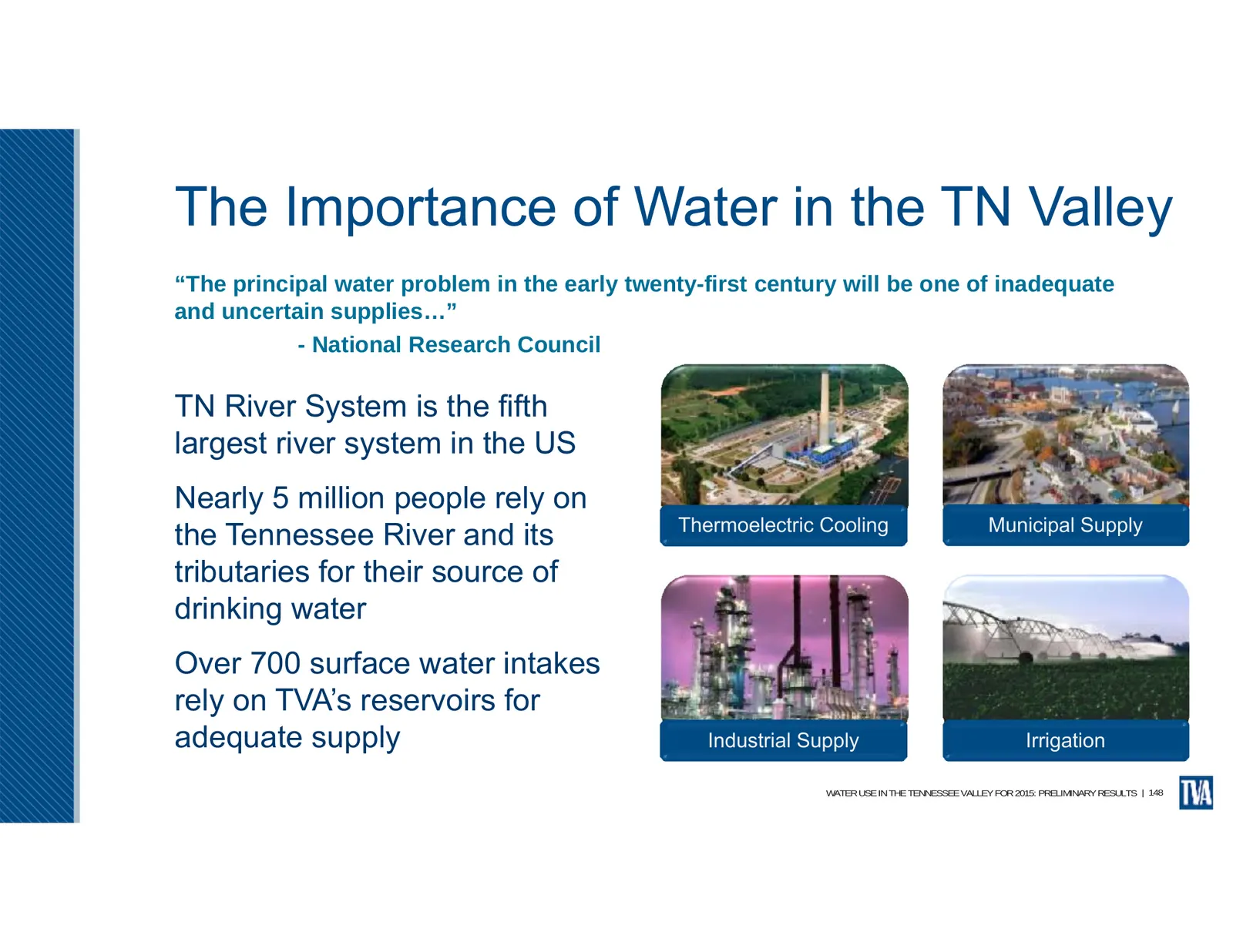
The Importance of Water in the TN Valley “The principal water problem in the early twenty-first century will be one of inadequate and uncertain supplies…” - National Research Council TN River System is the fifth largest river system in the US Nearly 5 million people rely on Thermoelectric Cooling Mu
Slide 149: Why the Concern?
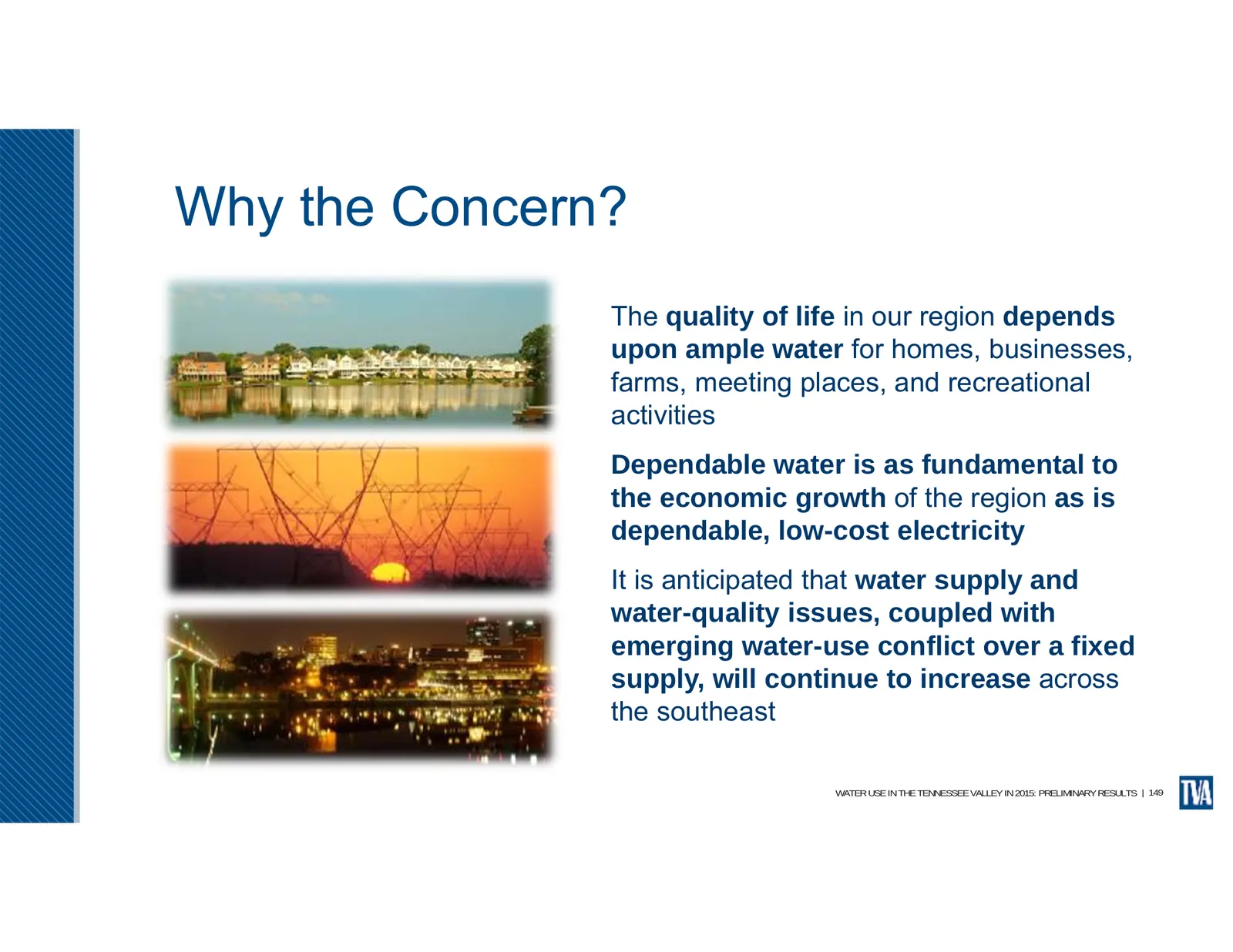
Why the Concern? The quality of life in our region depends upon ample water for homes, businesses, farms, meeting places, and recreational activities Dependable water is as fundamental to the economic growth of the region as is dependable, low-cost electricity It is anticipated that water supply and
Slide 150: Southeastern US Population Growth
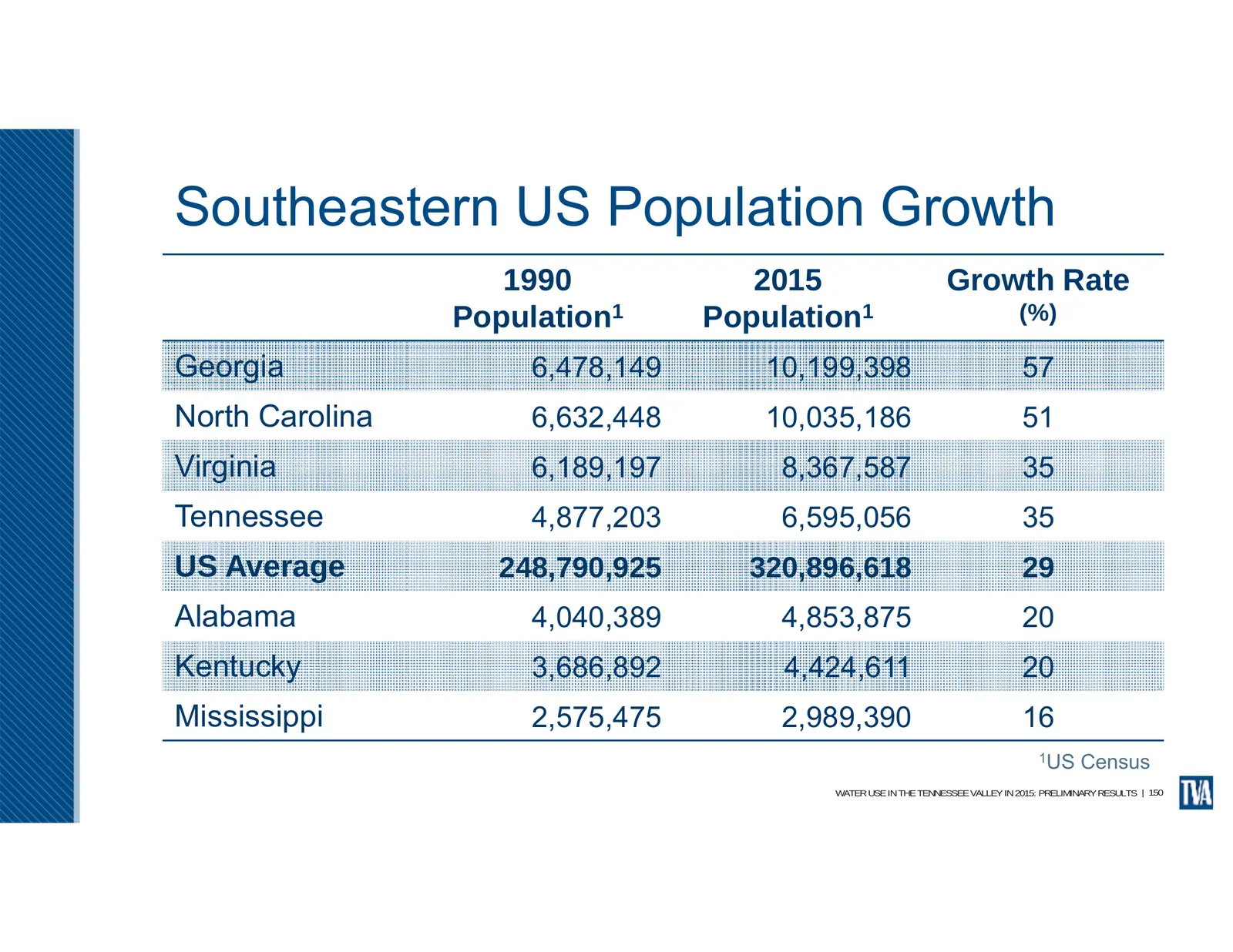
Southeastern US Population Growth 1990 2015 Growth Rate Population1 Population1 (%) Georgia 6,478,149 10,199,398 57 North Carolina 6,632,448 10,035,186 51 Virginia 6,189,197 8,367,587 35 Tennessee 4,877,203 6,595,056 35 US Average 248,790,925 320,896,618 29 Alabama 4,040,389 4,853,875 20 Kentucky 3,
Slide 151: Water Use Report History
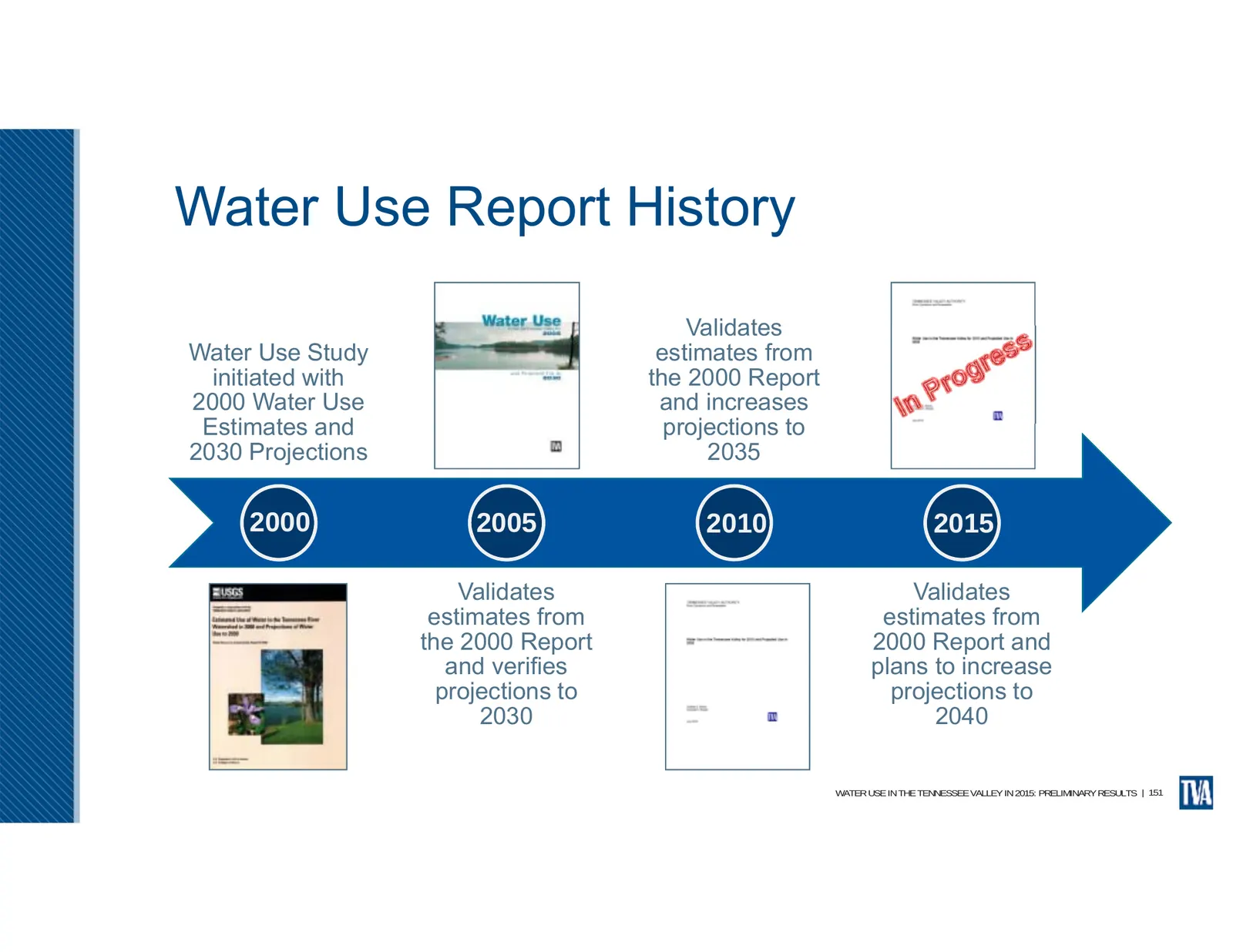
Water Use Report History Validates Water Use Study estimates from initiated with the 2000 Report 2000 Water Use and increases Estimates and projections to 2030 Projections 2035 2000 2005 2010 2015 Validates Validates estimates from estimates from the 2000 Report 2000 Report and and verifies plans to
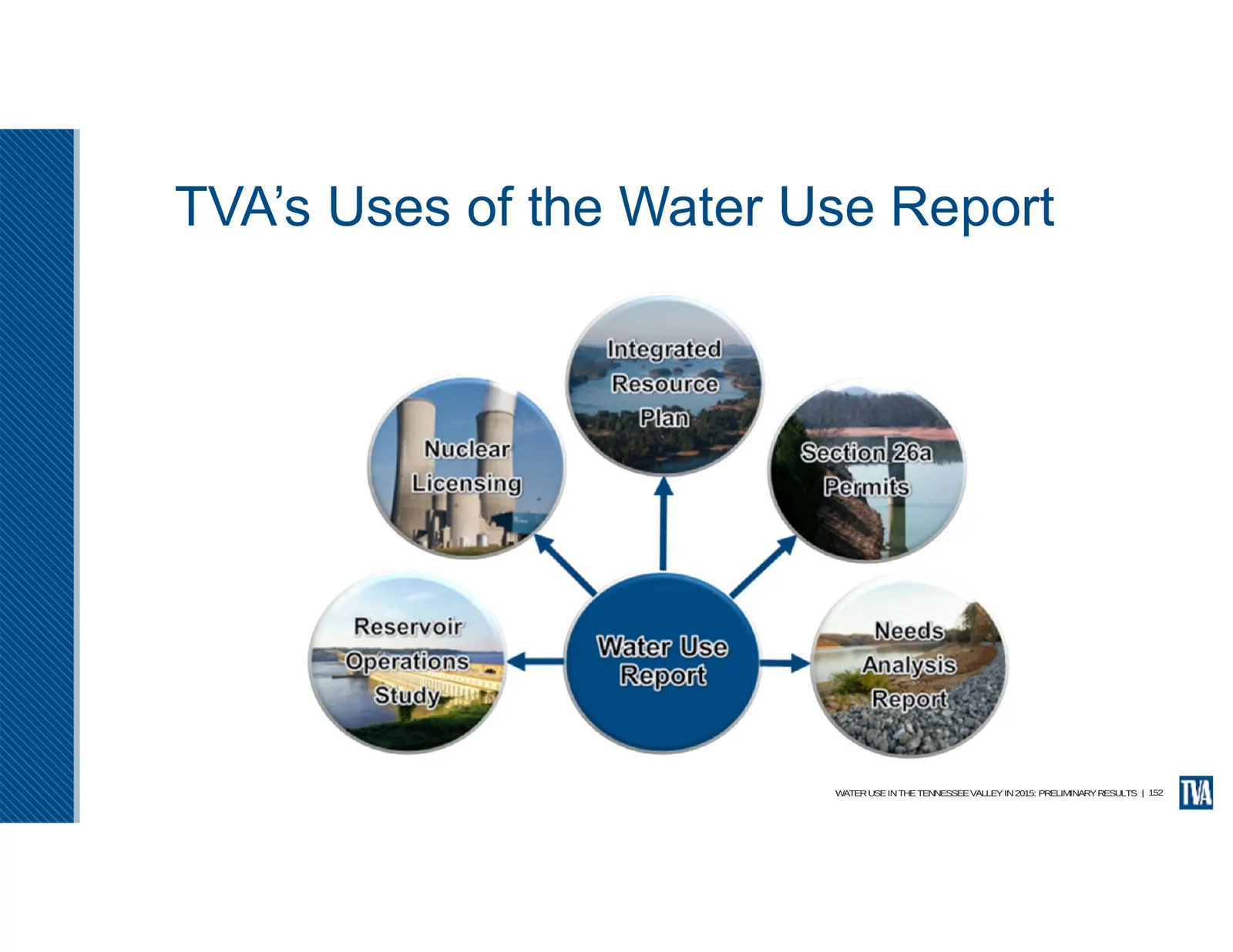
Slide 152: TVA's Uses of the Water Use Report
TVA’s Uses of the Water Use Report WATER USE IN THE TENNESSEE VALLEY IN 2015: PRELIMINARY RESULTS | 152
Slide 153: Improvements from Previous Reports
Improvements from Previous Reports • Only Report Data by Reservoir Catchment Areas - Previous reports reported data by State/County, 6 digit HUC, and Reservoir Catchment Area - Improved to align with TVA’s uses of the report • Extend projections to 2040 - Previous Reports reported to 2030 and 2035 -
Slide 154: Water Use in 2015
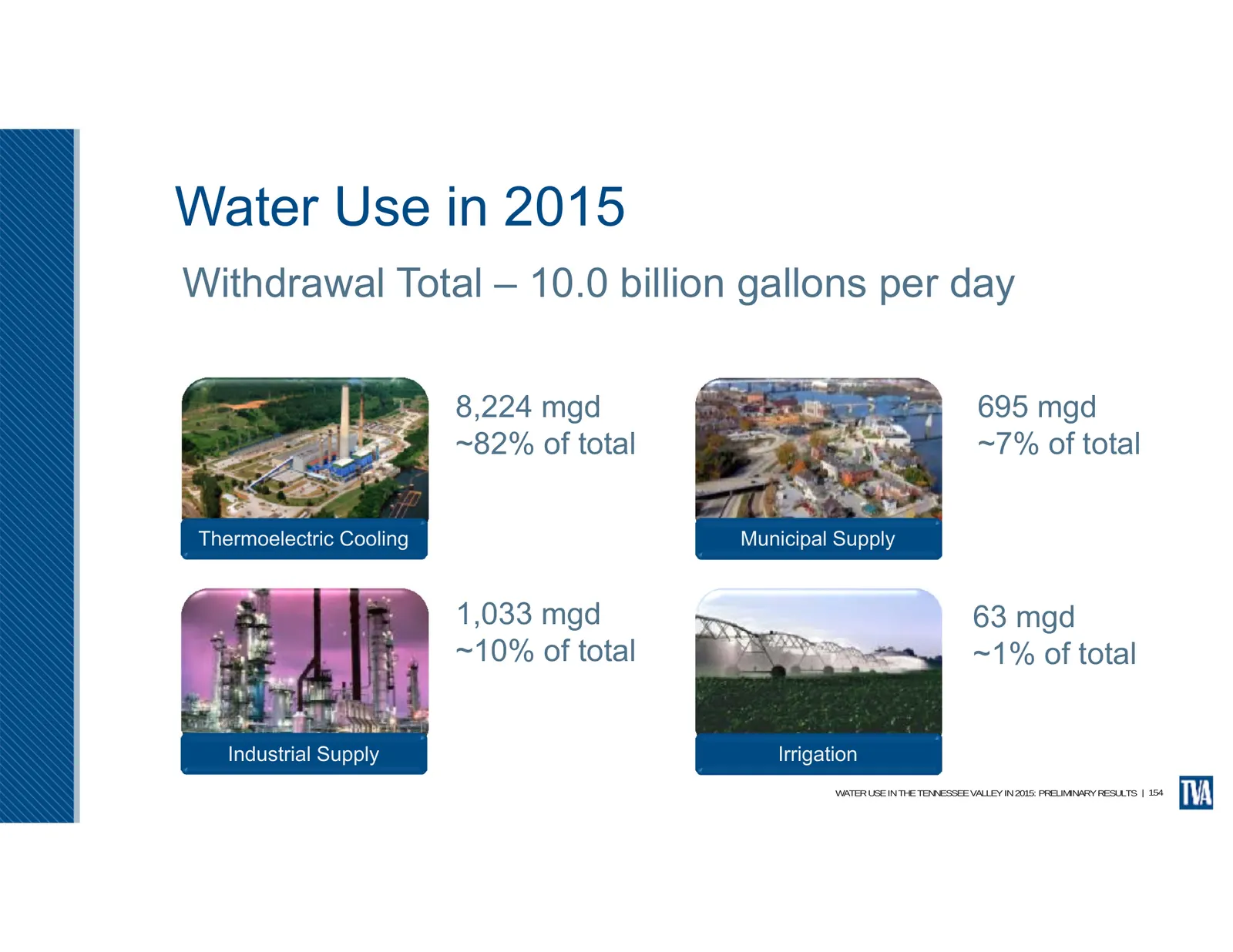
Water Use in 2015 Withdrawal Total – 10.0 billion gallons per day 8,224 mgd 695 mgd ~82% of total ~7% of total Thermoelectric Cooling Municipal Supply 1,033 mgd 63 mgd ~10% of total ~1% of total Industrial Supply Irrigation WATER USE IN THE TENNESSEE VALLEY IN 2015: PRELIMINARY RESULTS | 154
Slide 155: Water Use in 2015
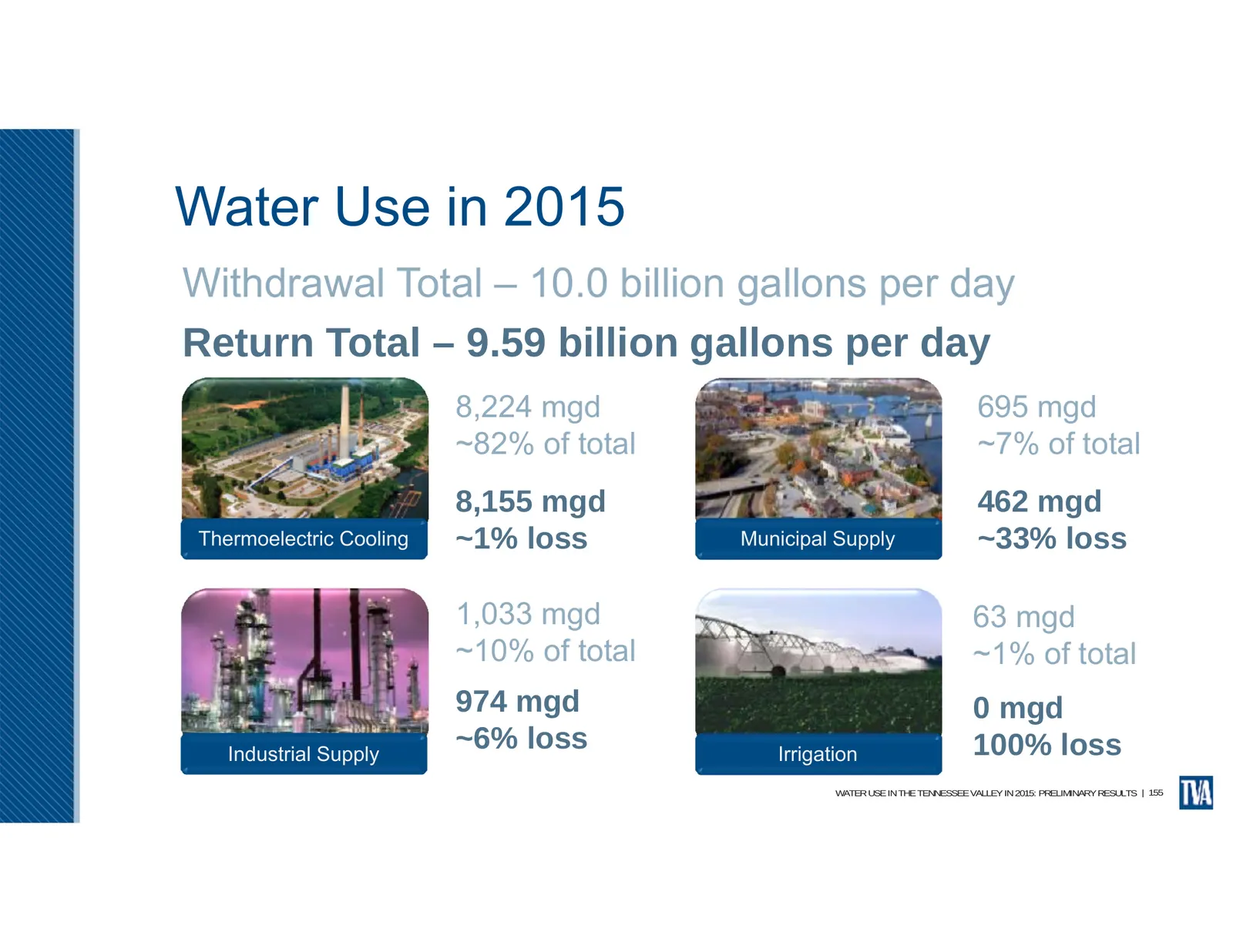
Water Use in 2015 Withdrawal Total – 10.0 billion gallons per day Return Total – 9.59 billion gallons per day 8,224 mgd 695 mgd ~82% of total ~7% of total 8,155 mgd 462 mgd Thermoelectric Cooling ~1% loss Municipal Supply ~33% loss 1,033 mgd 63 mgd ~10% of total ~1% of total 974 mgd 0 mgd Industrial
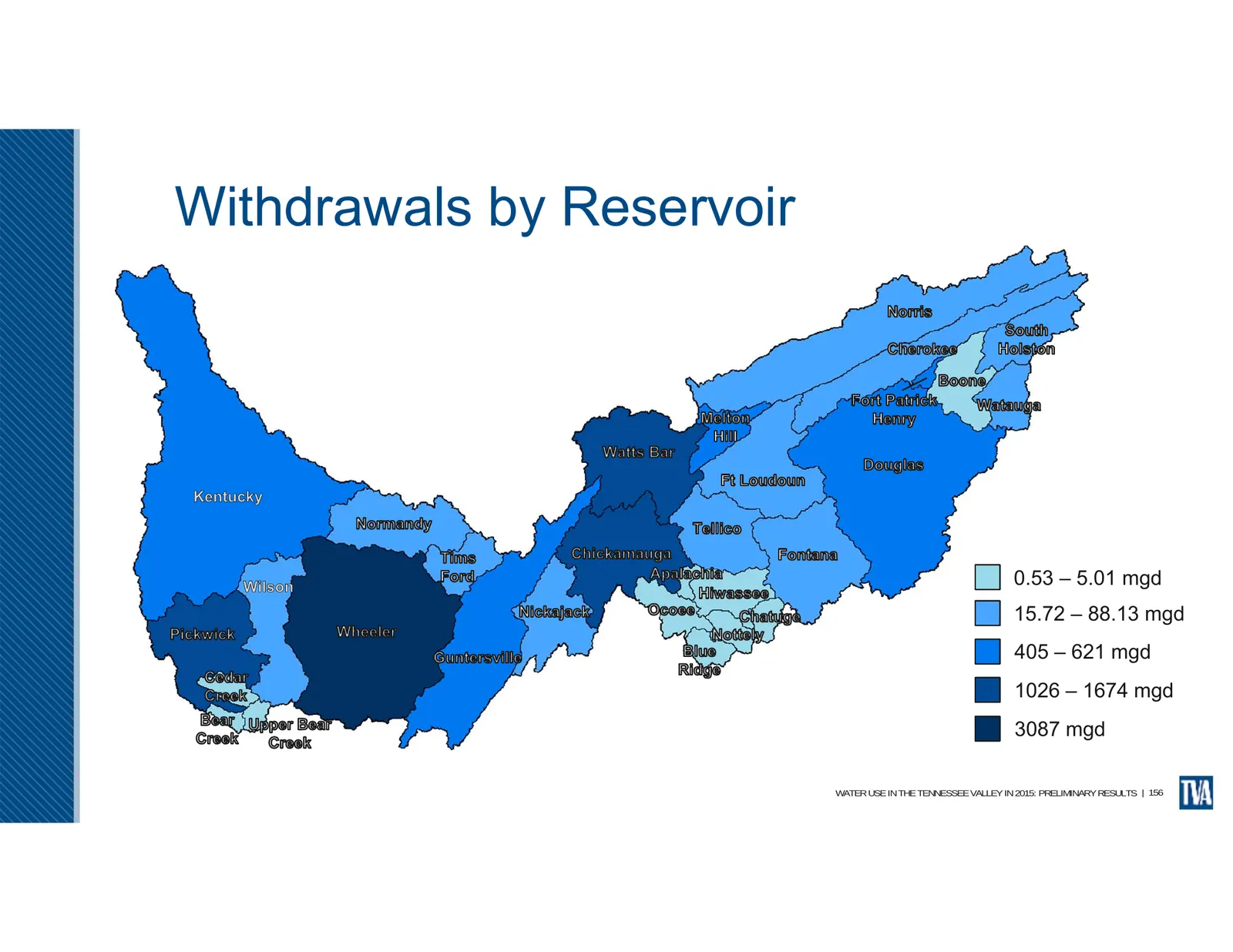
Slide 156: Withdrawals by Reservoir
Withdrawals by Reservoir 0.53 – 5.01 mgd 15.72 – 88.13 mgd 405 – 621 mgd 1026 – 1674 mgd 3087 mgd WATER USE IN THE TENNESSEE VALLEY IN 2015: PRELIMINARY RESULTS | 156
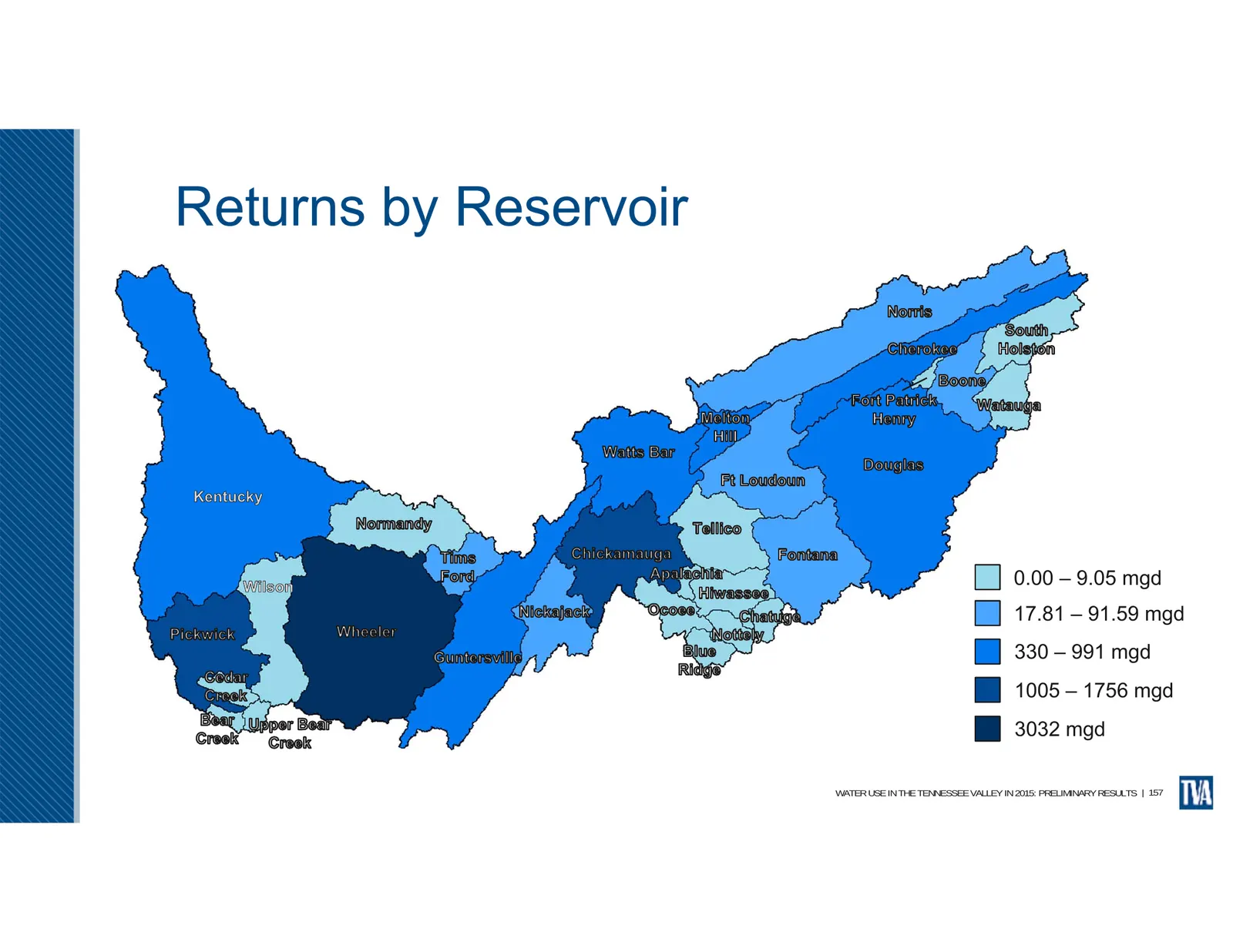
Slide 157: Returns by Reservoir
Returns by Reservoir 0.00 – 9.05 mgd 17.81 – 91.59 mgd 330 – 991 mgd 1005 – 1756 mgd 3032 mgd WATER USE IN THE TENNESSEE VALLEY IN 2015: PRELIMINARY RESULTS | 157
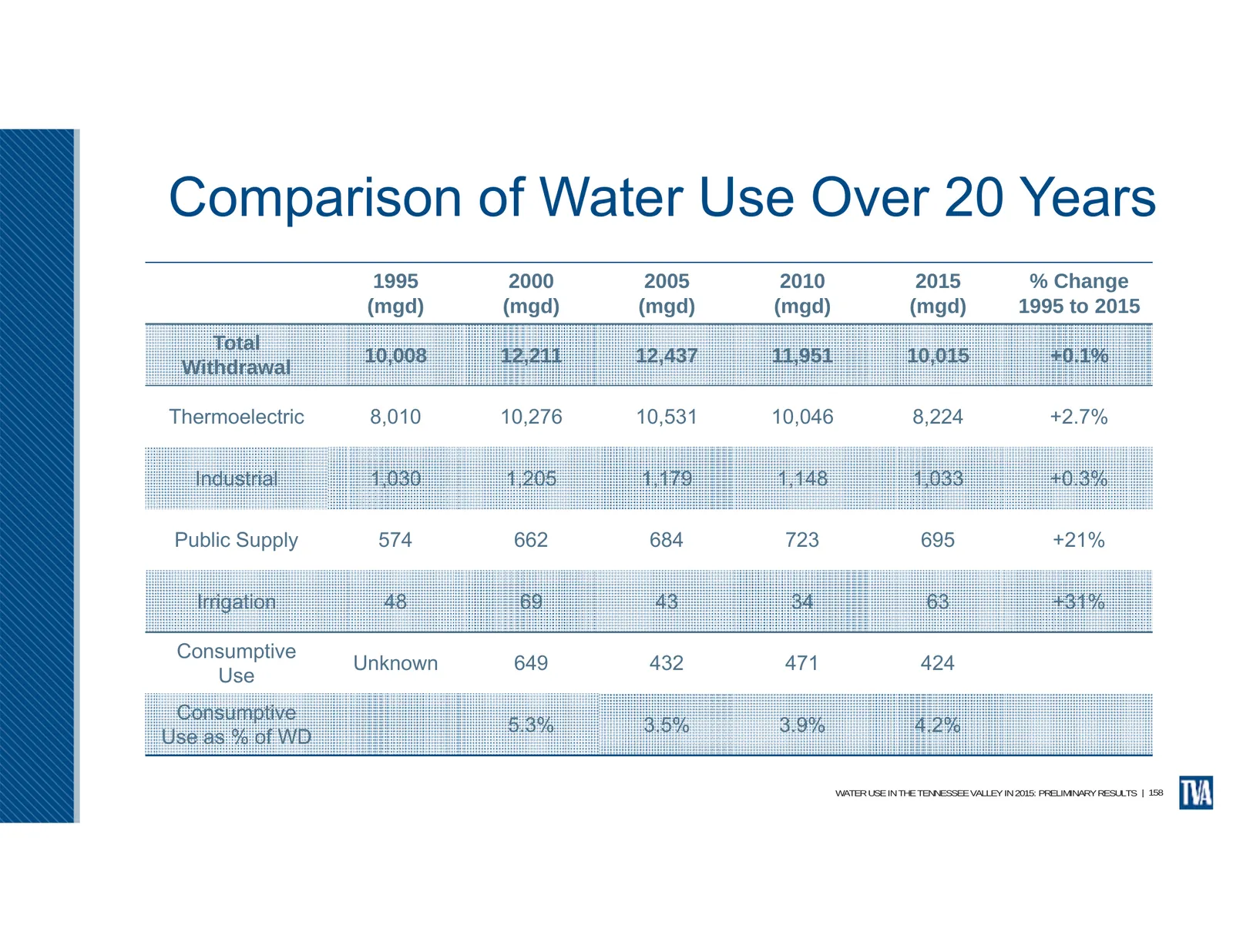
Slide 158: Comparison of Water Use Over 20 Years
Comparison of Water Use Over 20 Years 1995 2000 2005 2010 2015 % Change (mgd) (mgd) (mgd) (mgd) (mgd) 1995 to 2015 Total 10,008 12,211 12,437 11,951 10,015 +0.1% Withdrawal Thermoelectric 8,010 10,276 10,531 10,046 8,224 +2.7% Industrial 1,030 1,205 1,179 1,148 1,033 +0.3% Public Supply 574 662 684
Slide 159: Steps Before Final Publication
Steps Before Final Publication • Complete projections to 2040 • Complete peer review Goal is for the publication to be released to the public on tva.gov early 2018 WATER USE IN THE TENNESSEE VALLEY IN 2015: PRELIMINARY RESULTS | 159

Slide 160: Break

Slide 161: Break – Prepare for Public Comment Period
Break Prepare for Public Comment Period
Slide 162: Public Comment Period
Public Comment Period • Public participation is appreciated • This is a listening session; responses are typically not provided
Slide 163: RRSC Discussion and Advice
MA RRSC Discussion and Advice
Slide 164: Advice Questions
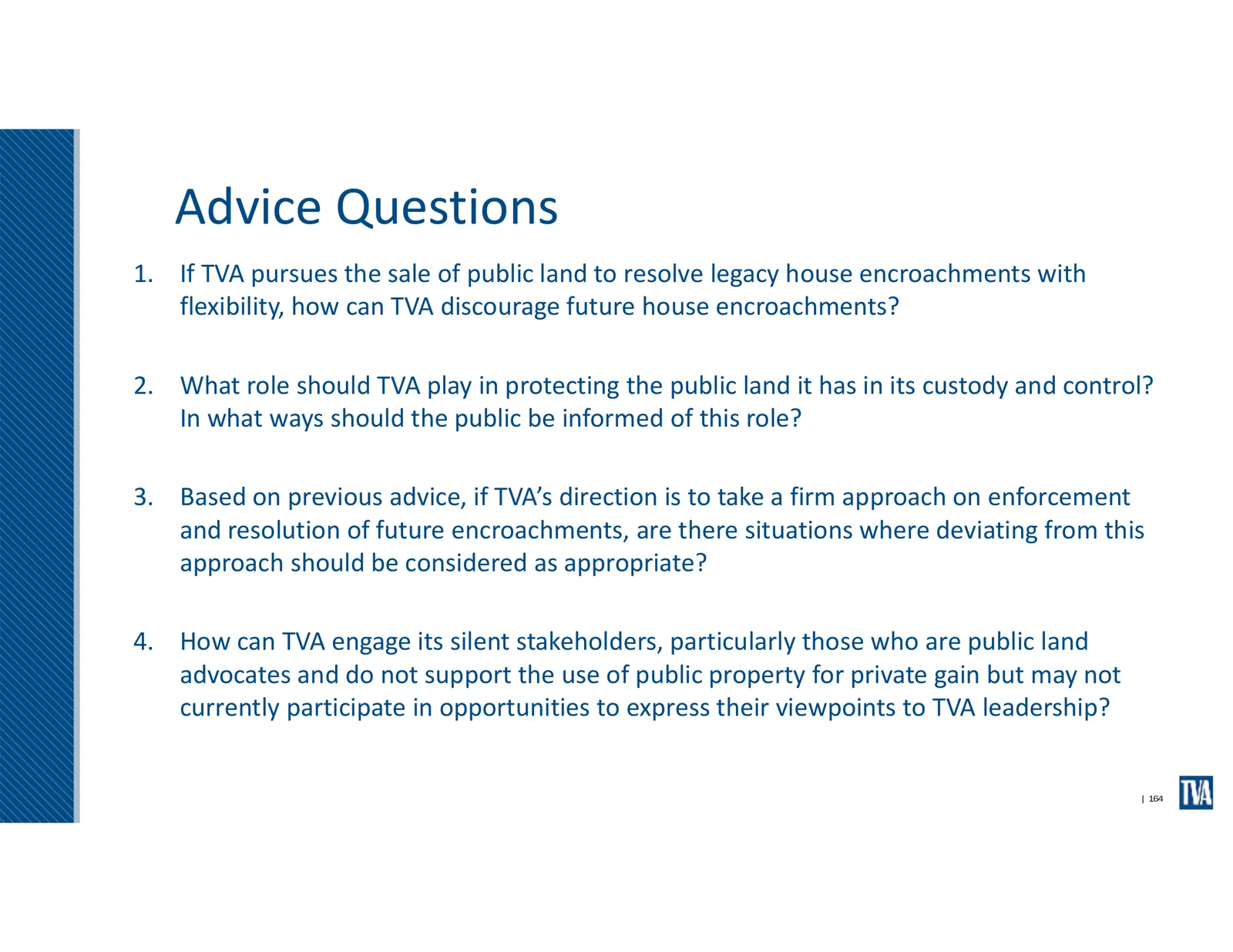
Advice Questions 1. If TVA pursues the sale of public land to resolve legacy house encroachments with flexibility, how can TVA discourage future house encroachments? 2. What role should TVA play in protecting the public land it has in its custody and control? In what ways should the public be inform

Slide 165: Wrap Up and Adjourn
MA Wrap Up and Adjourn

Slide 166: Lunch
Lunch

Slide 167: Thank you and please travel safely!
Thank you and please travel safely!

Slide 168
Slide 169: Summary: RRSC Guiding Principles
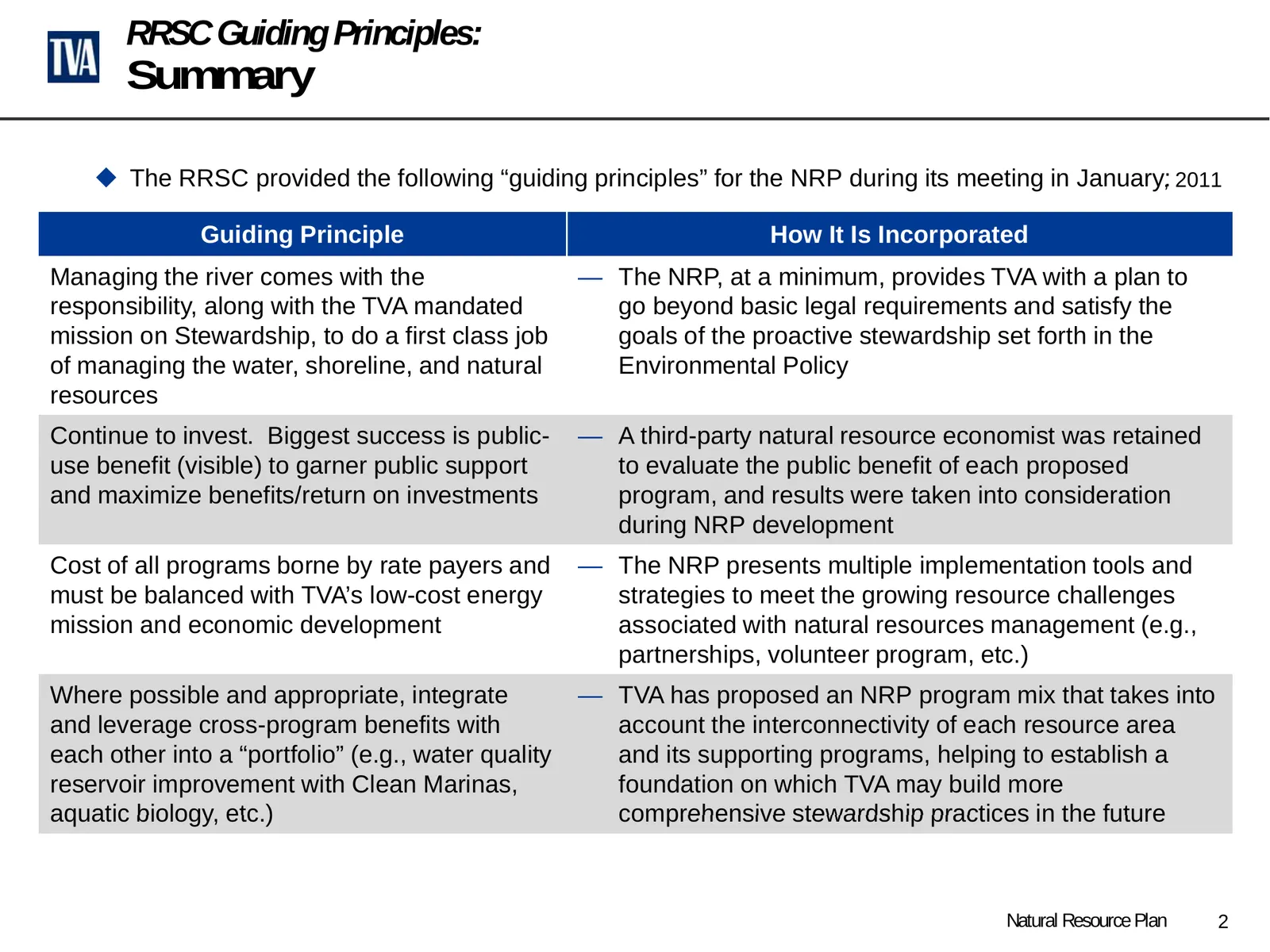
RRSC Guiding Principles: Summary The RRSC provided the following “guiding principles” for the NRP during its meeting in January:, 2011 Guiding Principle How It Is Incorporated Managing M i ththe river i comes with ith th the — The Th NRP, NRP att a minimum, i i provides id TVA withith a plan l tto
Slide 170: Summary (Cont'd)
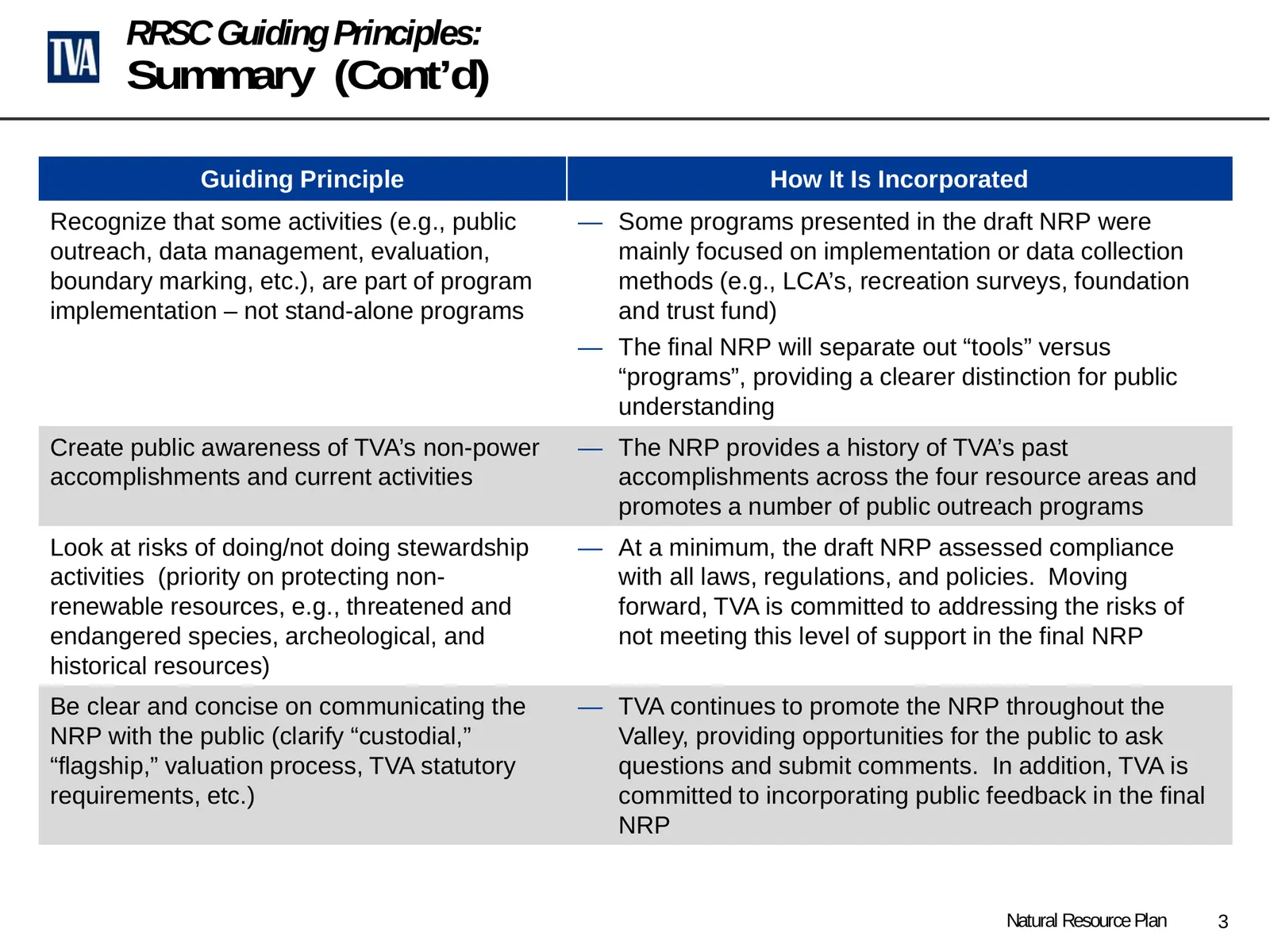
RRSC Guiding Principles: Summary (Cont’d) Guiding Principle How It Is Incorporated Recognize that some activities (e.g., public — Some programs presented in the draft NRP were outreach, data management, evaluation, mainly focused on implementation or data collection b boundary d marking, ki etc.), )
Slide 171: Summary (Cont'd)
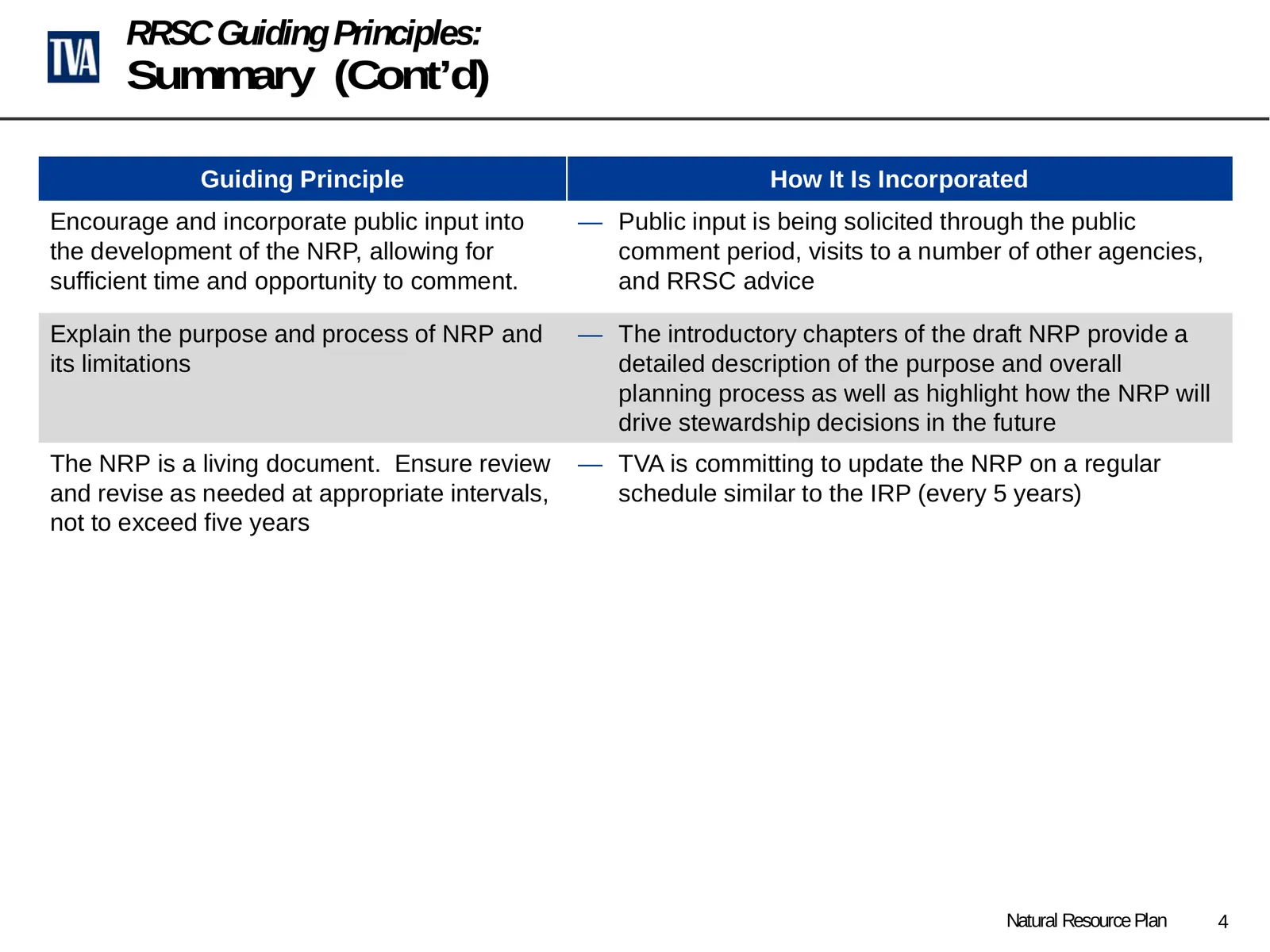
RRSC Guiding Principles: Summary (Cont’d) Guiding Principle How It Is Incorporated Encourage and incorporate public input into — Public input is being solicited through the public the development of the NRP, allowing for comment period, visits to a number of other agencies, sufficient ffi i time i a

Slide 172
Slide 173: Charter of the Regional Resource Stewardship Council
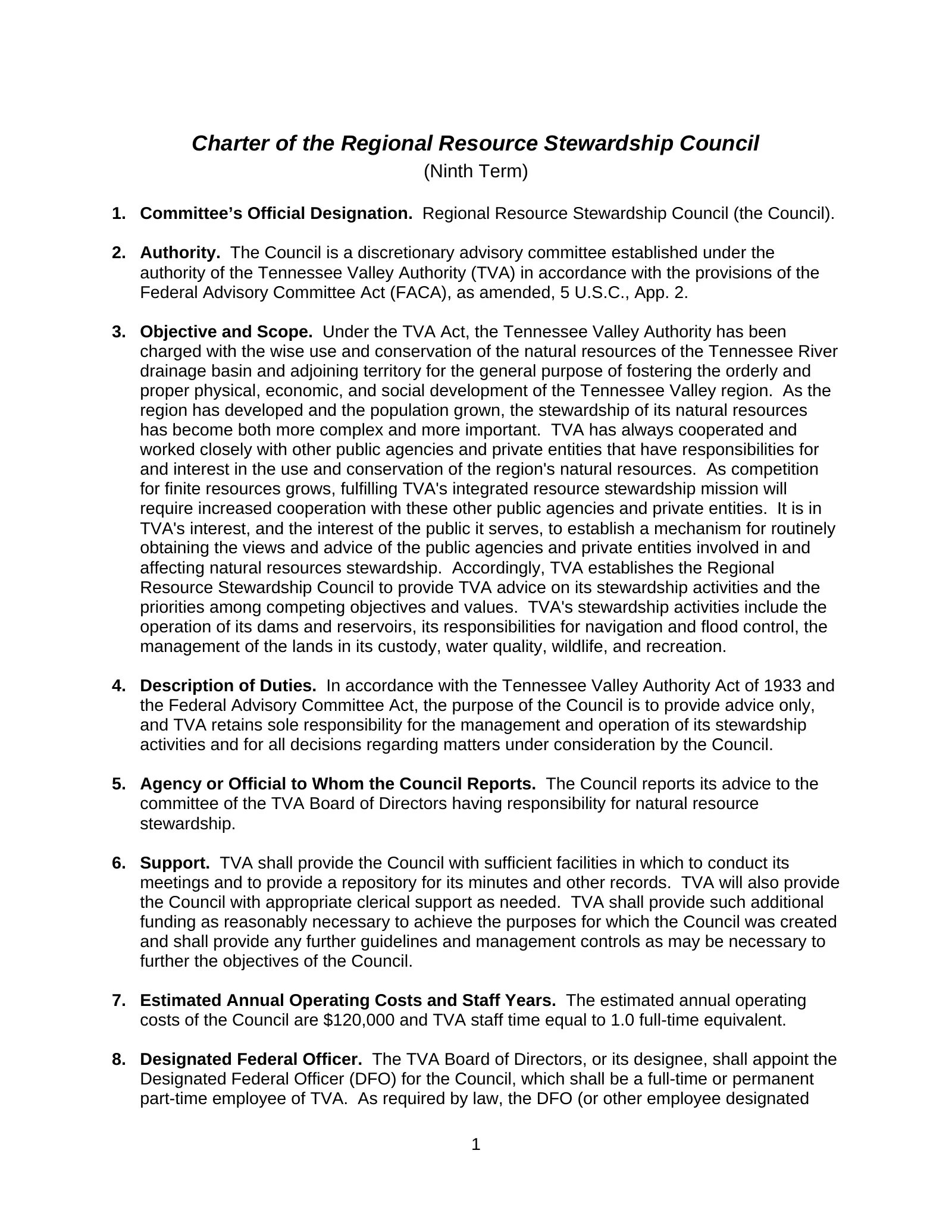
Charter of the Regional Resource Stewardship Council (Ninth Term) 1. Committee’s Official Designation. Regional Resource Stewardship Council (the Council). 2. Authority. The Council is a discretionary advisory committee established under the authority of the Tennessee Valley Authority (TVA) in accor
Slide 174: Charter (continued)
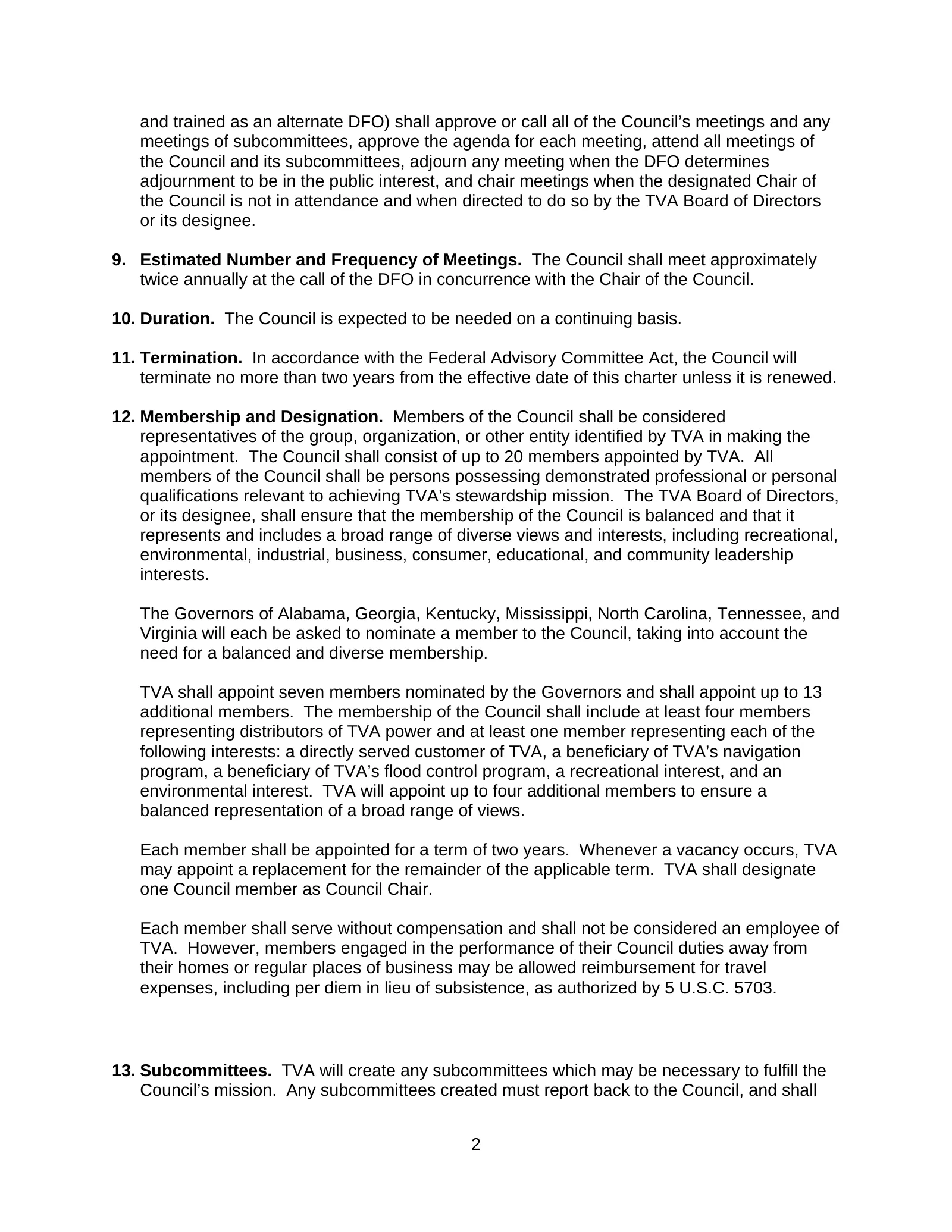
and trained as an alternate DFO) shall approve or call all of the Council’s meetings and any meetings of subcommittees, approve the agenda for each meeting, attend all meetings of the Council and its subcommittees, adjourn any meeting when the DFO determines adjournment to be in the public interest,
Slide 175: Charter (continued)
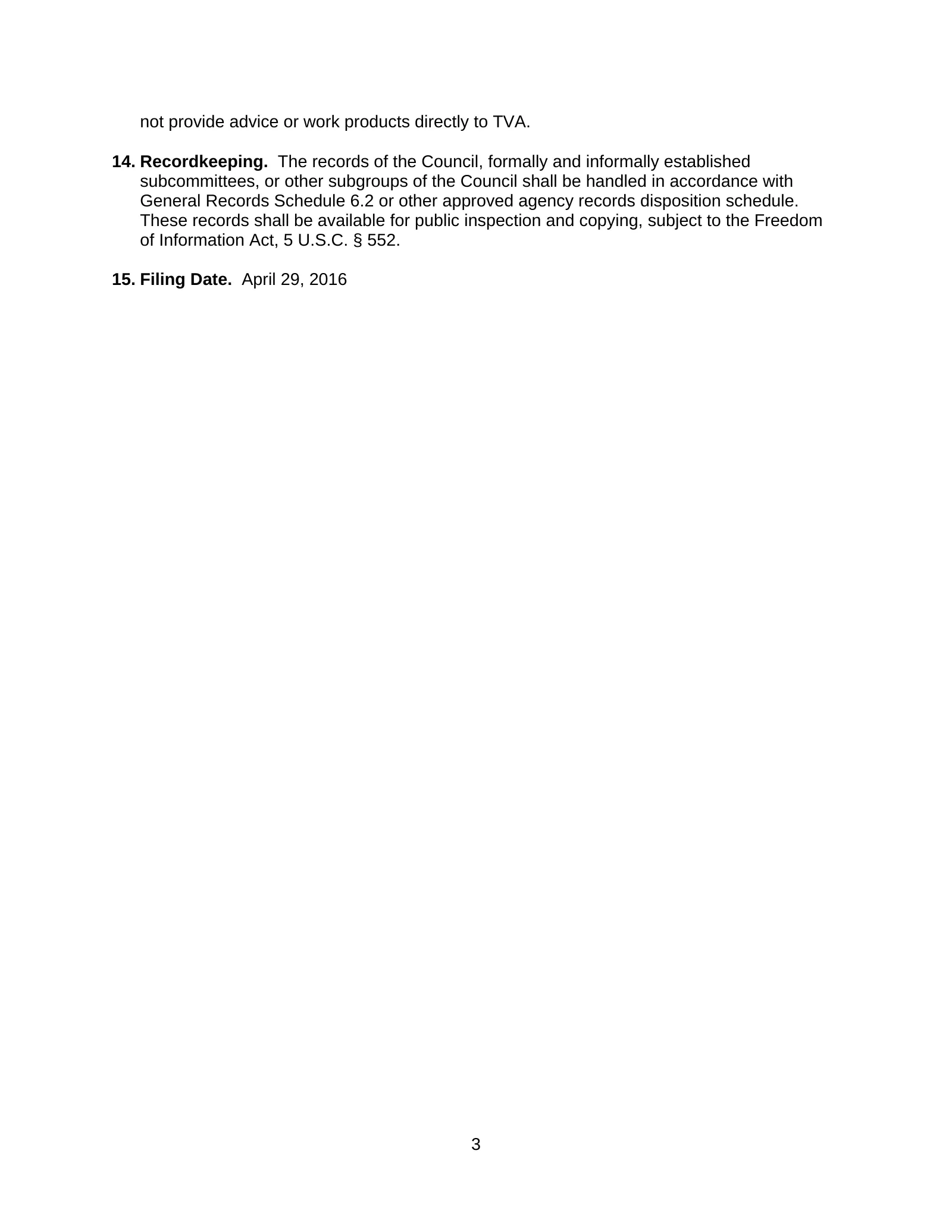
not provide advice or work products directly to TVA. 14. Recordkeeping. The records of the Council, formally and informally established subcommittees, or other subgroups of the Council shall be handled in accordance with General Records Schedule 6.2 or other approved agency records disposition sched
Source: Internet Archive copy of tva.com
More decks from Tennessee Valley Authority
 Investor Presentation (September 2021)60 slides · Sep 22, 2021
 Fact Sheet (September 2021)2 slides · September 2021
 Corporate Update (August 2021)12 slides · Aug 2, 2021
 Corporate Update (December 2019)25 slides · Dec 10, 2019
 Corporate Update (October 2019)58 slides · October 2019
 Corporate Update (June 2019)22 slides · Jun 17, 2019