Acrivon Therapeutics, Inc. · NASDAQ:ACRV
Acrivon Therapeutics — ENA 2026 (EORTC-NCI-AACR Symposium) Late-Breaking Abstract
14 slides from Acrivon Therapeutics's conference presentation, November 2026
Slide 1: Safety, dose optimization, and early Phase 1/2 clinical results for ACR-2316
Safety, dose optimization, and early Phase 1/2 clinical results in AP3-predicted tumors for ACR- 2316, a first-in-class WEE1/PKMYT1 inhibitor Timothy A. Yap1, Mohamad A. Salkeni2, Neel Gandhi3, Gerald Falchook4, David Sommerhalder5, Benedito A. Carneiro6, Judy Wang7, Monica Mita8, Kamlesh K. Sankhal
Slide 2: Disclosures
Disclosures Timothy A. Yap Employee of: University of Texas MD Anderson Cancer Center, where I am Vice President, Head of Clinical Development in the Therapeutics Discovery Division, which has a commercial interest in IACS-6274 and other inhibitors (IACS30380/ART0380 was licensed to Artios) Cons
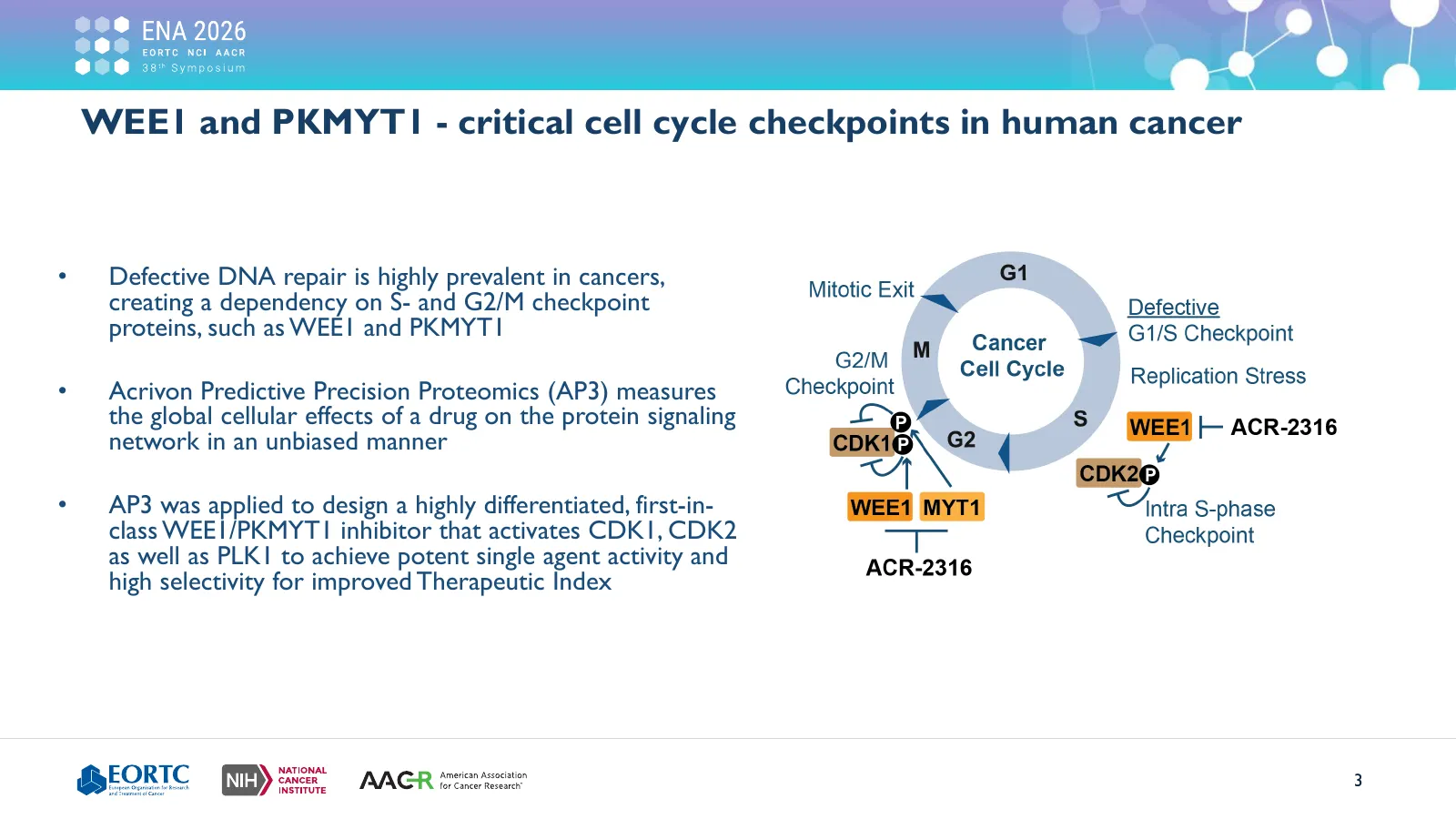
Slide 3: WEE1 and PKMYT1 - critical cell cycle checkpoints in human cancer
WEE1 and PKMYT1 - critical cell cycle checkpoints in human cancer • Defective DNA repair is highly prevalent in cancers, creating a dependency on S- and G2/M checkpoint proteins, such as WEE1 and PKMYT1 • Acrivon Predictive Precision Proteomics (AP3) measures the global cellular effects of a drug on
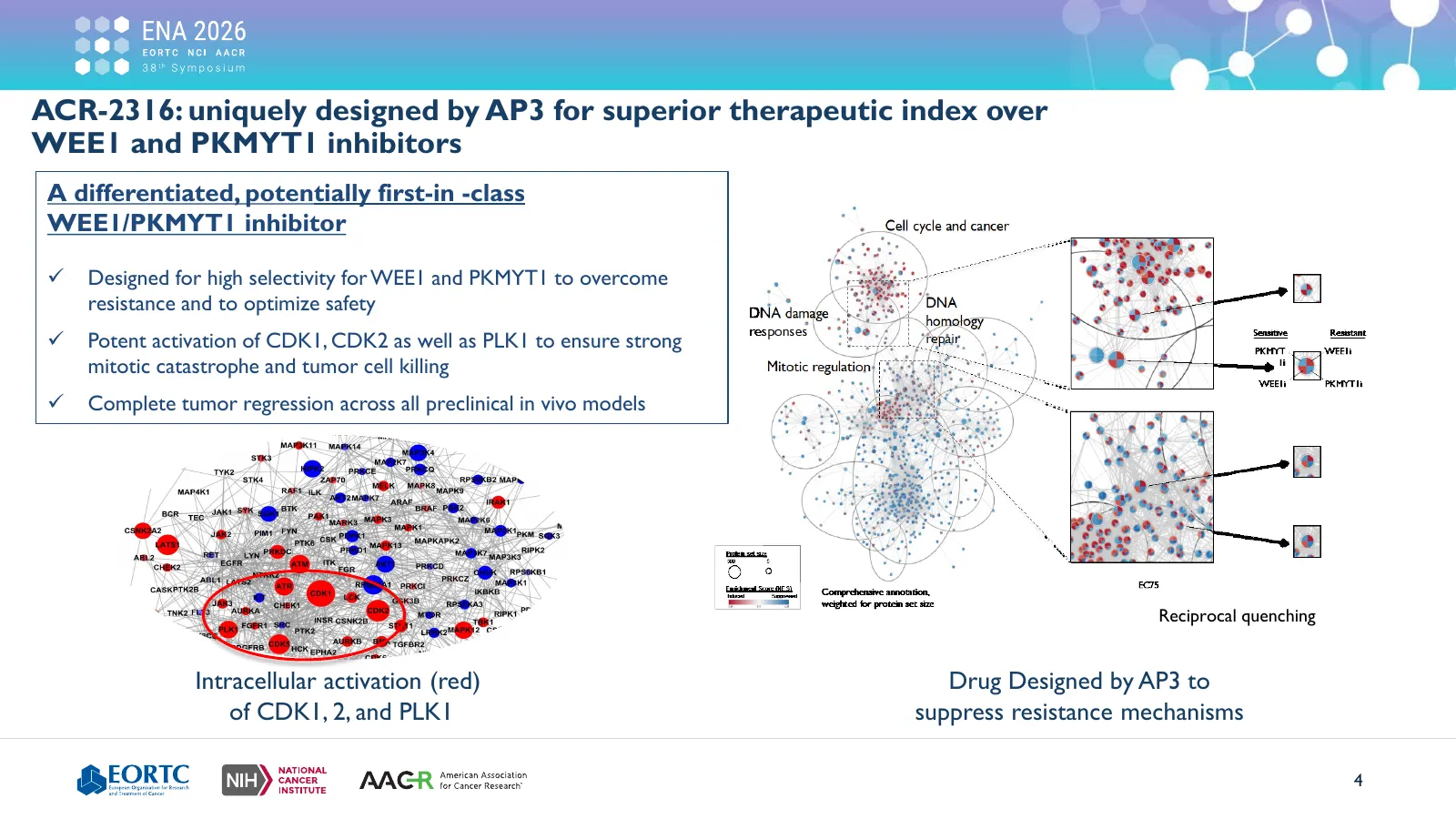
Slide 4: ACR-2316: uniquely designed by AP3 for superior therapeutic index
ACR-2316: uniquely designed by AP3 for superior therapeutic index over WEE1 and PKMYT1 inhibitors A differentiated, potentially first-in -class WEE1/PKMYT1 inhibitor Designed for high selectivity for WEE1 and PKMYT1 to overcome resistance and to optimize safety Potent activation of CDK1, CDK2 as
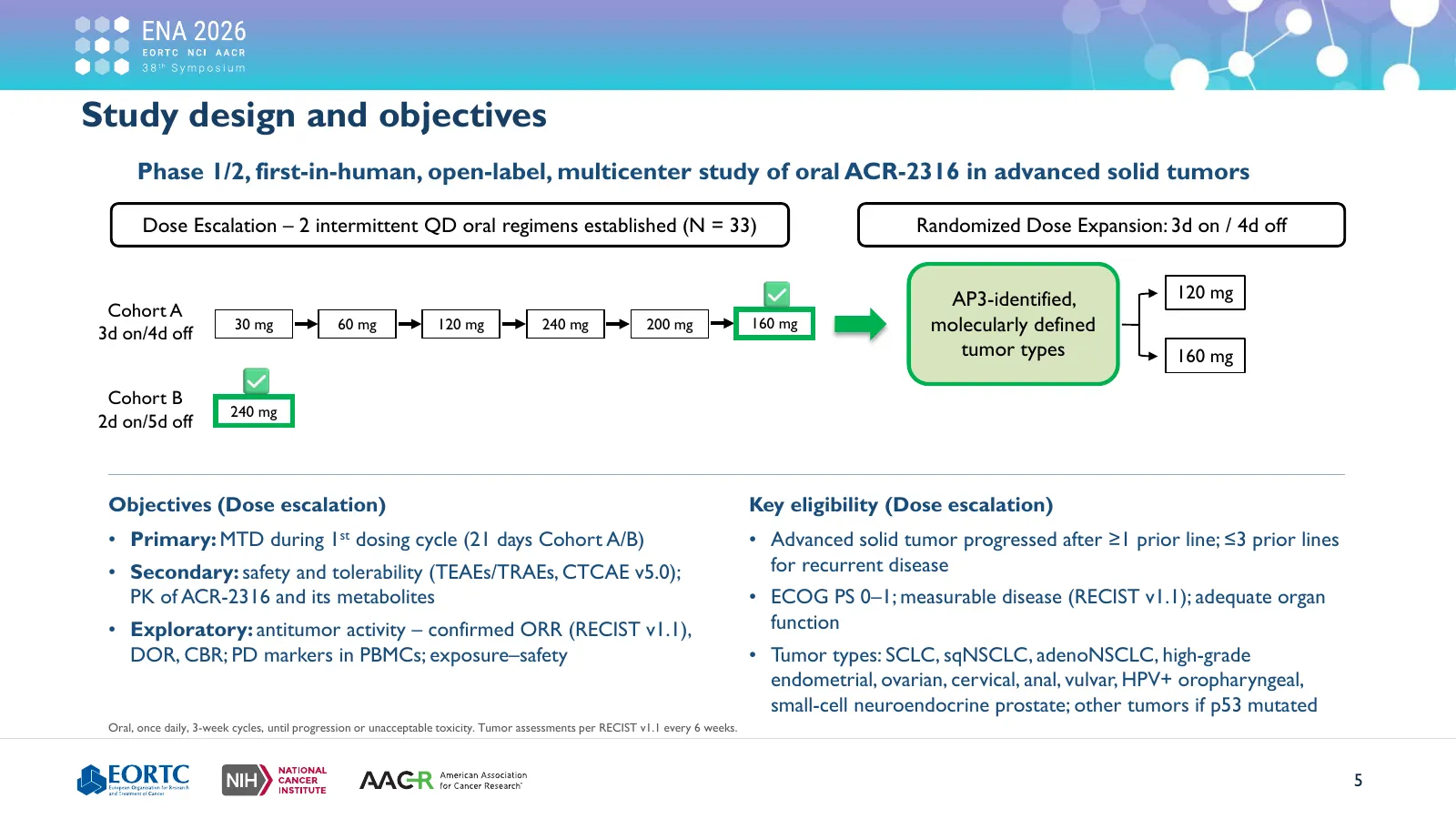
Slide 5: Study design and objectives
Study design and objectives Phase 1/2, first-in-human, open-label, multicenter study of oral ACR-2316 in advanced solid tumors Dose Escalation – 2 intermittent QD oral regimens established (N = 33) Randomized Dose Expansion: 3d on / 4d off AP3-identified, 120 mg Cohort A 3d on/4d off 30 mg 60 mg 120
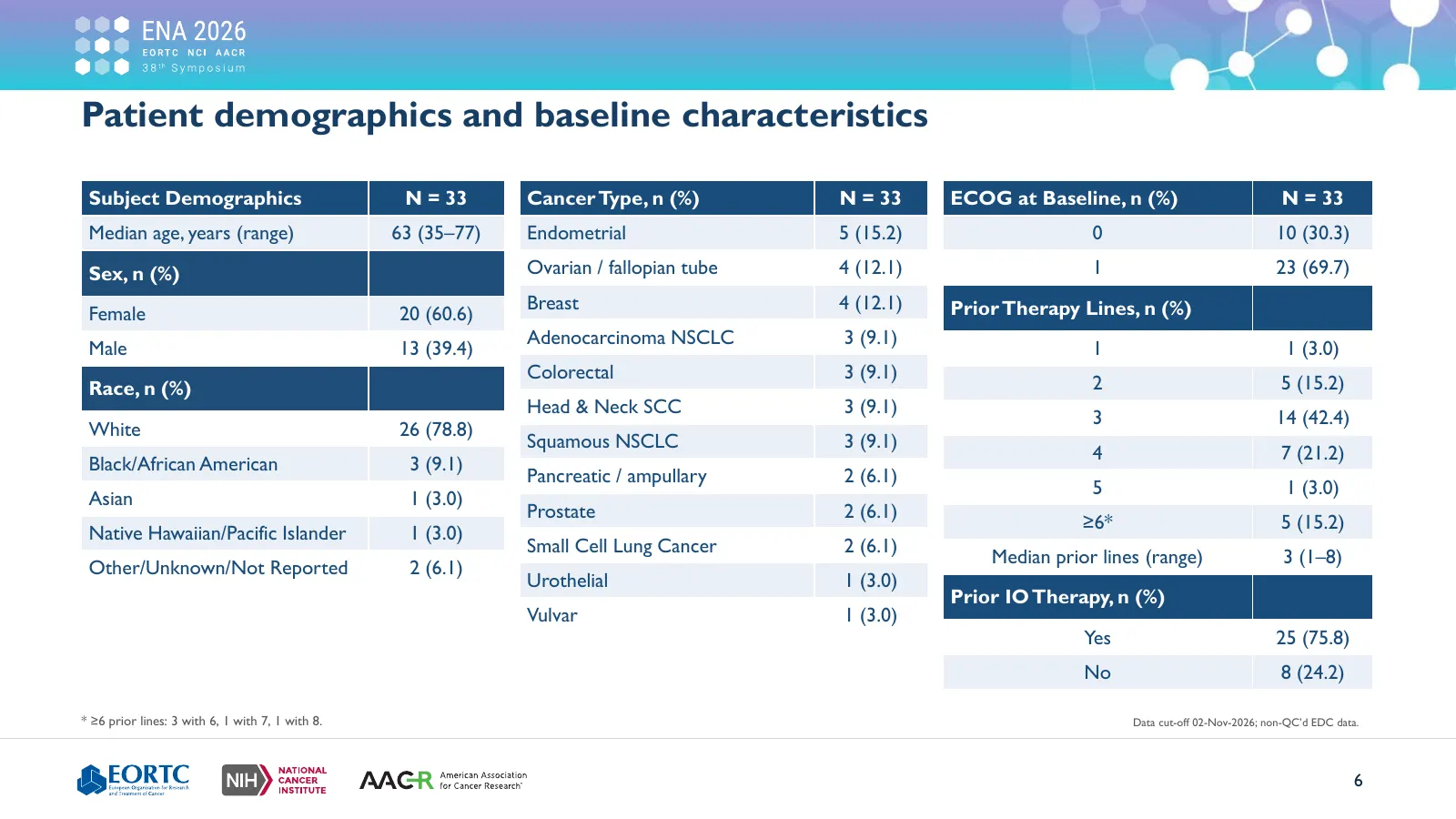
Slide 6: Patient demographics and baseline characteristics
Patient demographics and baseline characteristics Subject Demographics N = 33 Cancer Type, n (%) N = 33 ECOG at Baseline, n (%) N = 33 Median age, years (range) 63 (35–77) Endometrial 5 (15.2) 0 10 (30.3) Sex, n (%) Ovarian / fallopian tube 4 (12.1) 1 23 (69.7) Breast 4 (12.1) Prior Therapy Lines, n
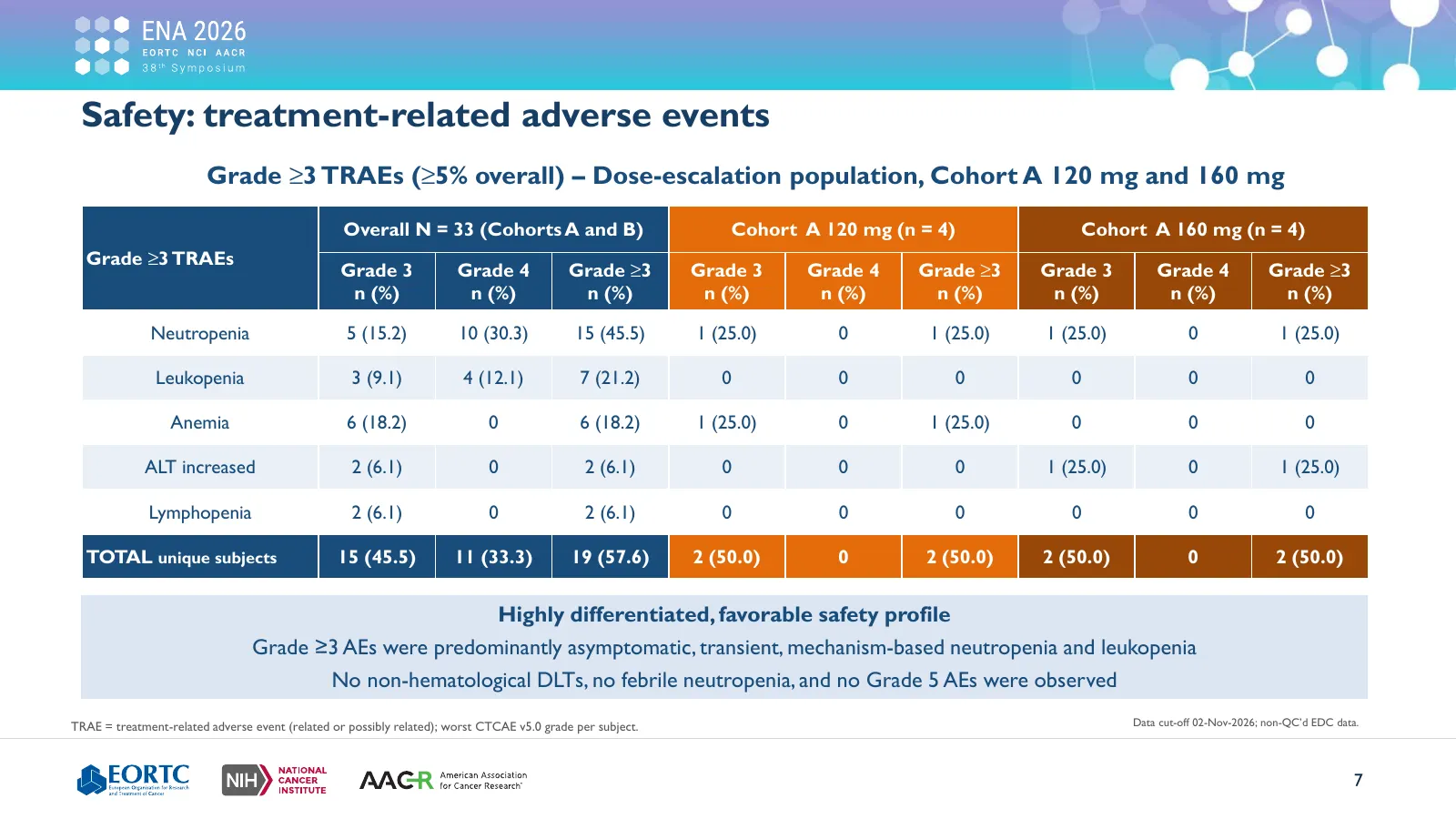
Slide 7: Safety: treatment-related adverse events
Safety: treatment-related adverse events Grade ≥3 TRAEs (≥5% overall) – Dose-escalation population, Cohort A 120 mg and 160 mg Overall N = 33 (Cohorts A and B) Cohort A 120 mg (n = 4) Cohort A 160 mg (n = 4) Grade ≥3 TRAEs Grade 3 Grade 4 Grade ≥3 Grade 3 Grade 4 Grade ≥3 Grade 3 Grade 4 Grade ≥3 n
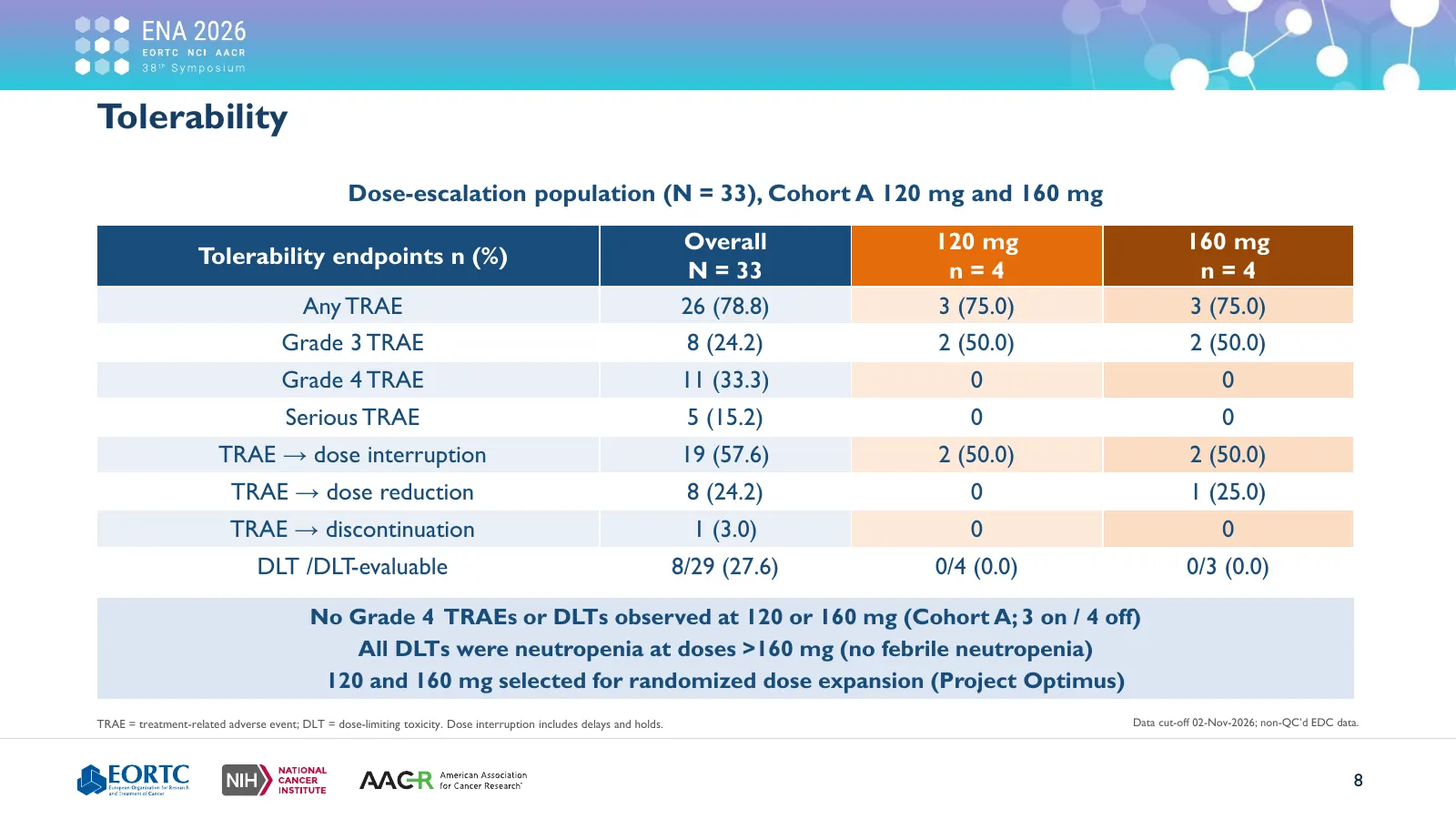
Slide 8: Tolerability
Tolerability Dose-escalation population (N = 33), Cohort A 120 mg and 160 mg Overall 120 mg 160 mg Tolerability endpoints n (%) N = 33 n=4 n=4 Any TRAE 26 (78.8) 3 (75.0) 3 (75.0) Grade 3 TRAE 8 (24.2) 2 (50.0) 2 (50.0) Grade 4 TRAE 11 (33.3) 0 0 Serious TRAE 5 (15.2) 0 0 TRAE → dose interruption 19
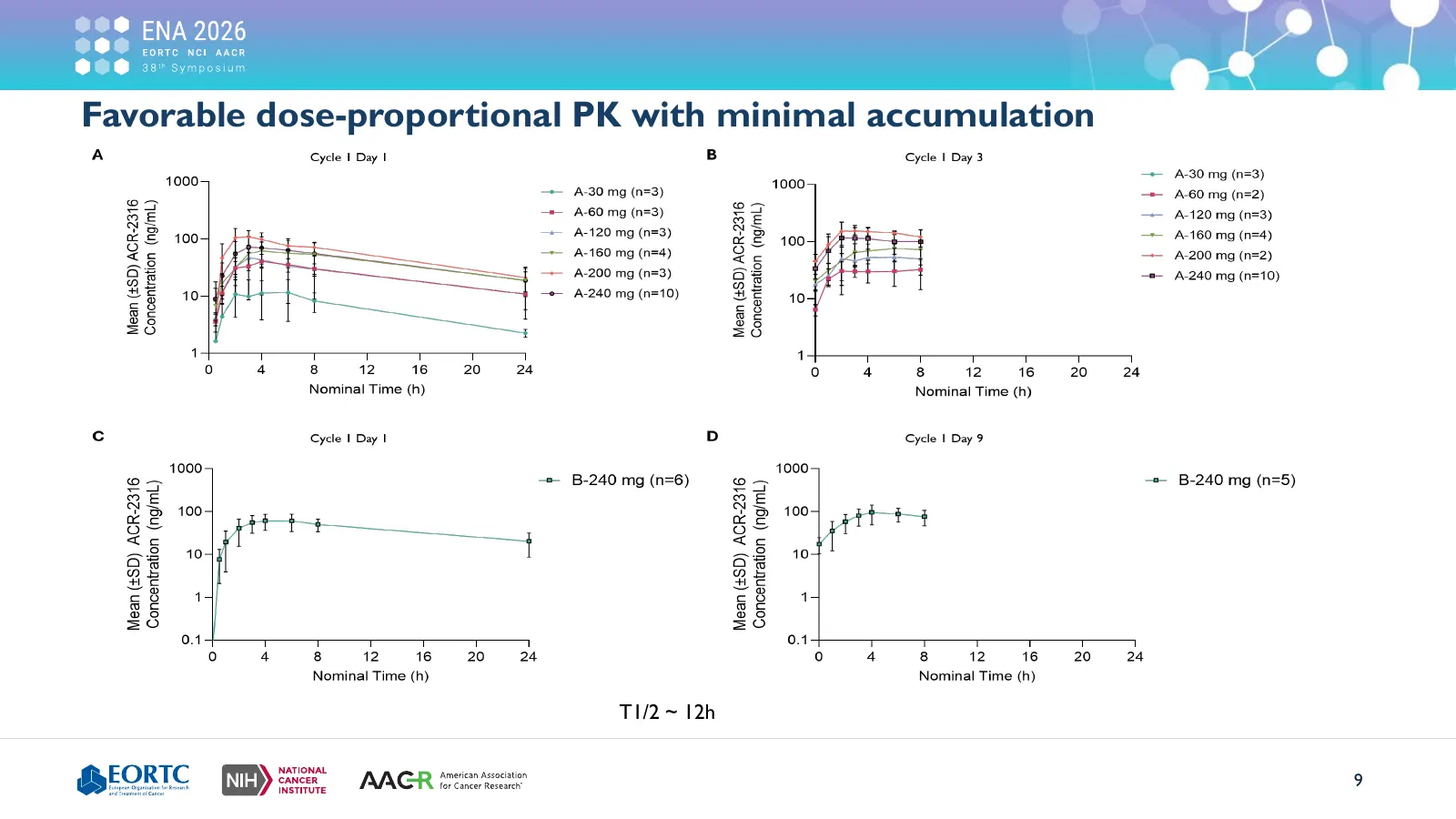
Slide 9: Favorable dose-proportional PK with minimal accumulation
Favorable dose-proportional PK with minimal accumulation T1/2 ~ 12h 9
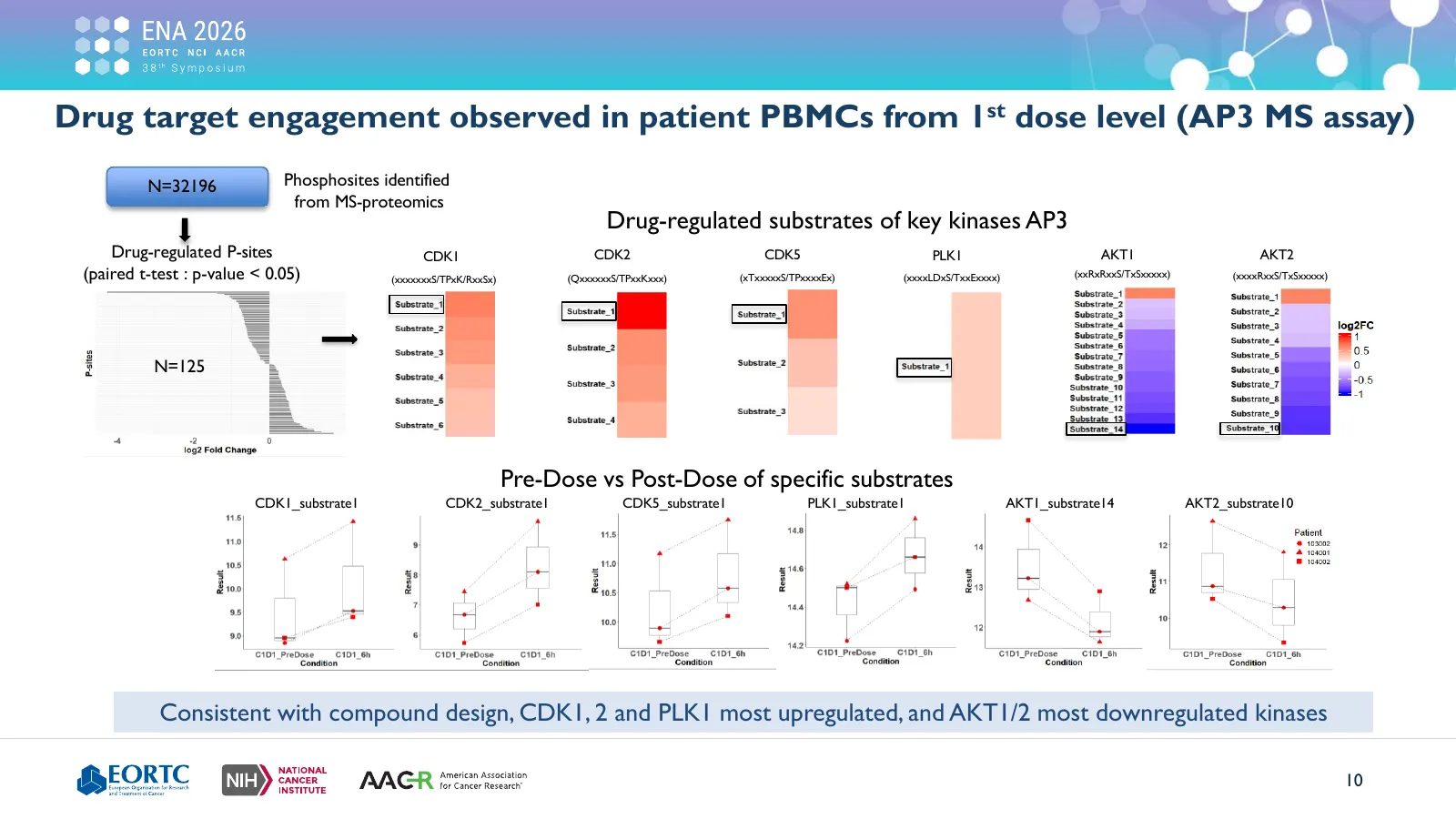
Slide 10: Drug target engagement observed in patient PBMCs from 1st dose level
Drug target engagement observed in patient PBMCs from 1st dose level (AP3 MS assay) N=32196 Phosphosites identified from MS-proteomics Drug-regulated substrates of key kinases AP3 Drug-regulated P-sites CDK1 CDK2 CDK5 PLK1 AKT1 AKT2 (paired t-test : p-value < 0.05) (xxxxxxxS/TPxK/RxxSx) (QxxxxxxS/TP
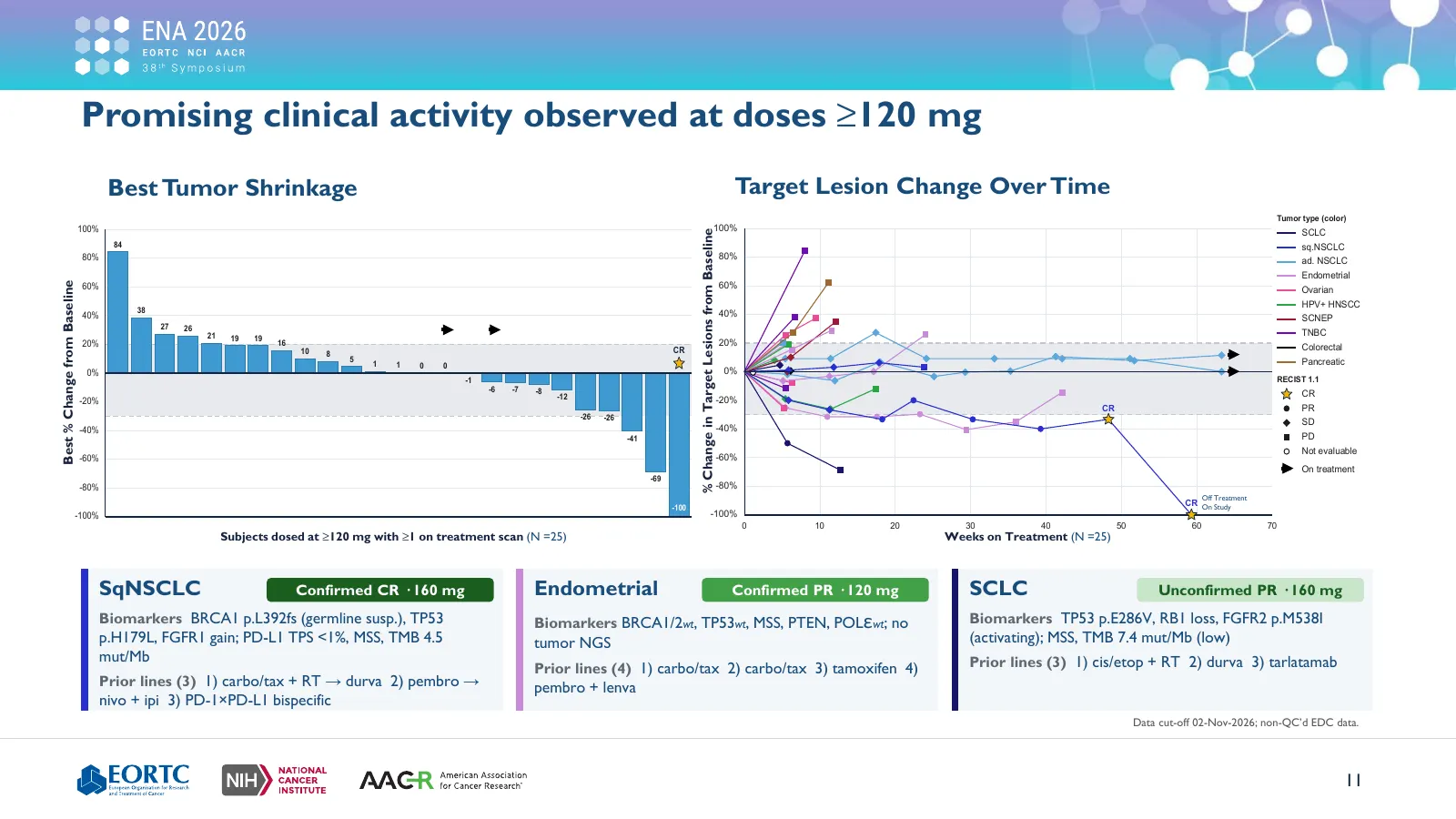
Slide 11: Promising clinical activity observed at doses ≥120 mg
Promising clinical activity observed at doses ≥120 mg Best Tumor Shrinkage Target Lesion Change Over Time Tumor type (color) 100% 100% SCLC % Change in Target Lesions from Baseline 84 sq.NSCLC 80% 80% ad. NSCLC Endometrial 60% 60% Best % Change from Baseline Ovarian HPV+ HNSCC 38 40% 40% SCNEP 27 26
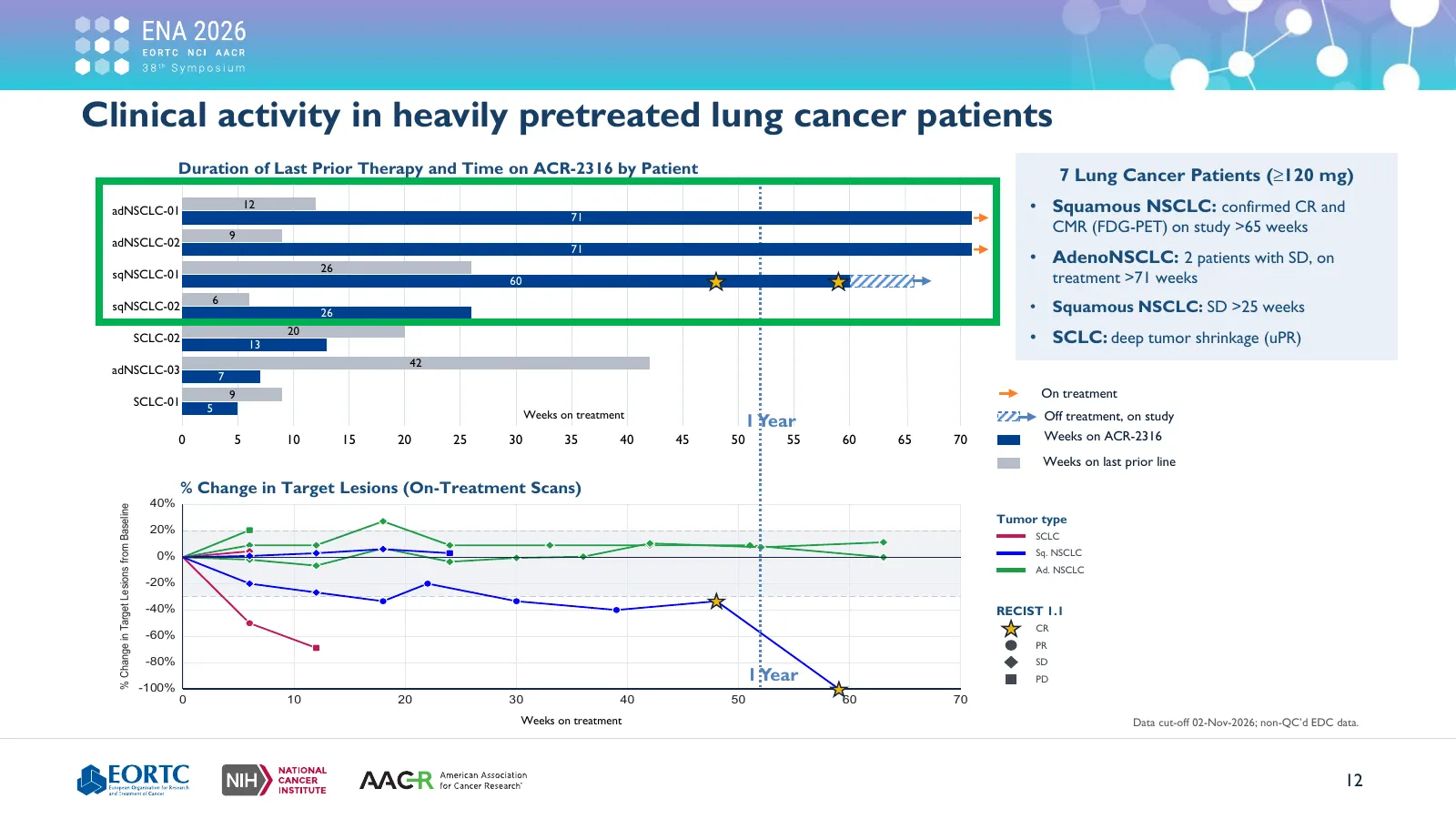
Slide 12: Clinical activity in heavily pretreated lung cancer patients
Clinical activity in heavily pretreated lung cancer patients Duration of Last Prior Therapy and Time on ACR-2316 by Patient 7 Lung Cancer Patients (≥120 mg) adNSCLC-01 12 • Squamous NSCLC: confirmed CR and 71 9 CMR (FDG-PET) on study >65 weeks adNSCLC-02 71 26 • AdenoNSCLC: 2 patients with SD, on sq
Slide 13: Conclusions
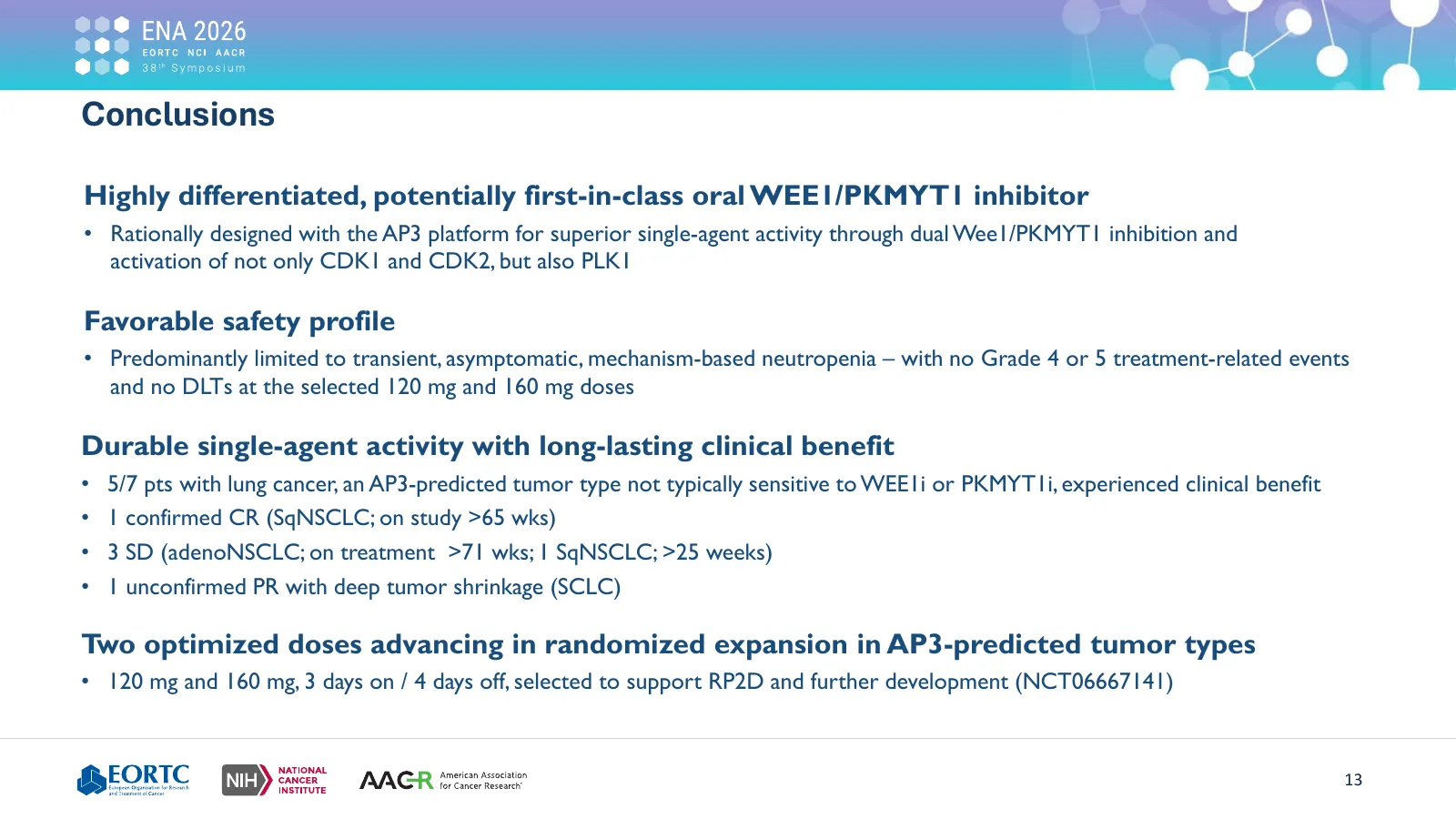
Conclusions Highly differentiated, potentially first-in-class oral WEE1/PKMYT1 inhibitor • Rationally designed with the AP3 platform for superior single-agent activity through dual Wee1/PKMYT1 inhibition and activation of not only CDK1 and CDK2, but also PLK1 Favorable safety profile • Predominantly
Slide 14: Acknowledgments
Acknowledgments To our patients and their families Our deepest gratitude goes to every patient who has taken part, and continues to take part, in this study, and to the families and caregivers who stand beside them.Your trust, courage and generosity are the foundation of everything we are learning.
Source: company website
More decks from Acrivon Therapeutics, Inc.
 Technical Presentation (November 2026)14 slides · Nov 20, 2026
 Technical Presentation (November 2026)30 slides · Nov 10, 2026
 Investor Presentation (September 2026)50 slides · September 2026
 Technical Presentation (July 2026)15 slides · July 2026
 Investor Presentation (March 2026)48 slides · Mar 19, 2026
 TD Cowen Healthcare Conference 20269 slides · Mar 2, 2026