uniQure N.V. · NASDAQ:QURE
uniQure — Investor Day (November 2018)
182 slides from uniQure's investor day presentation, Nov 19, 2018

Slide 1: To Transform Lives: Research and Development Day
To Transform Lives Research and Development Day November 19, 2018 DELIVERING GENE THERAPY TO PATIENTS NOVEMBER 19, 2018 | 1
Slide 2: Forward-looking statements
This presentation contains forward-looking statements. All statements other than statements of historical fact are forward-looking statements, which are often indicated by terms such as “anticipate,” “believe,” “could,” “estimate,” “expect,” “goal,” “intend,” “look forward to,” “may,” “plan,” “poten

Slide 3: Opening Remarks
Opening Remarks Matthew Kapusta Chief Executive Officer
Slide 4: Our mission
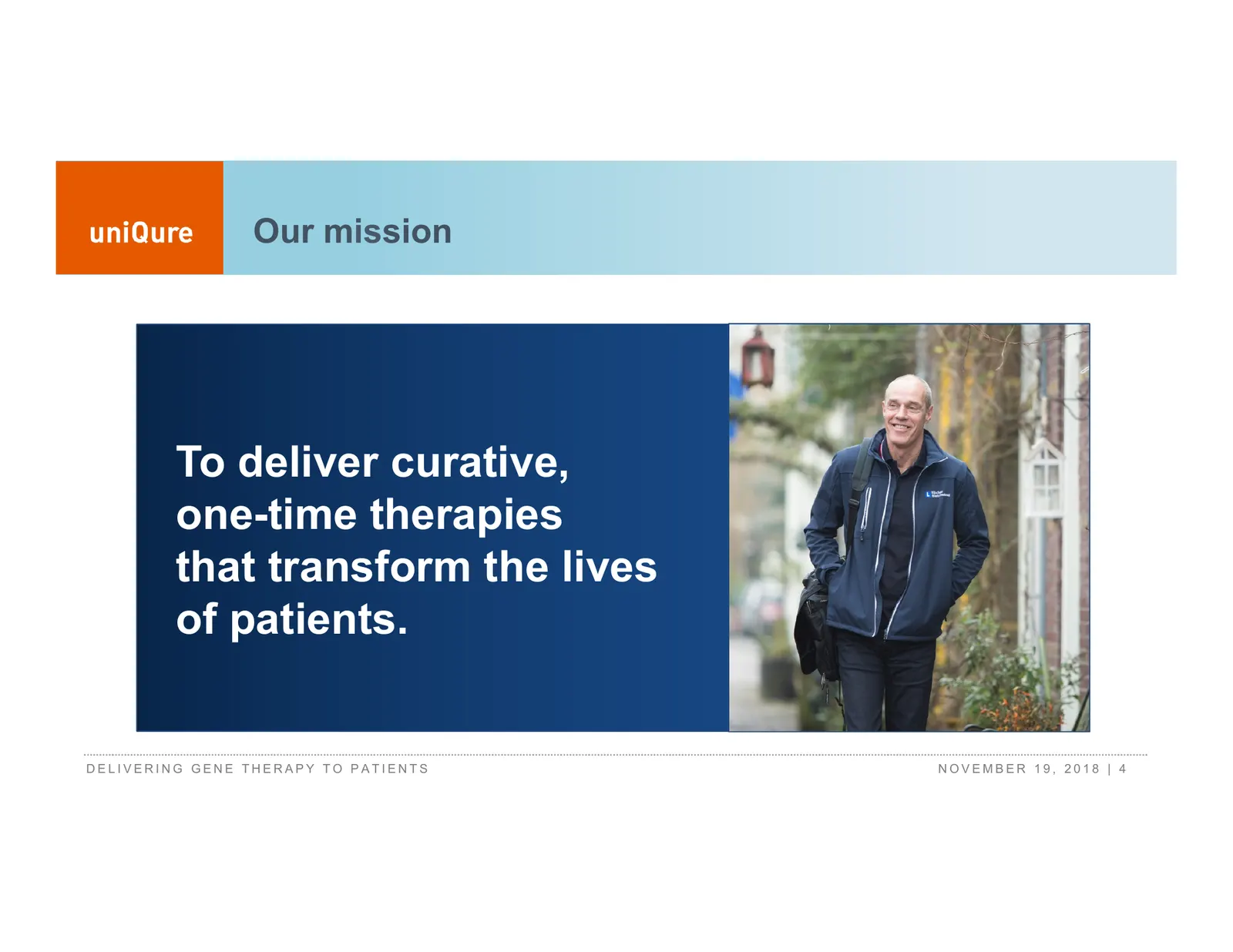
Our mission To deliver curative, one-time therapies that transform the lives of patients. DELIVERING GENE THERAPY TO PATIENTS NOVEMBER 19, 2018 | 4
Slide 5: Our strategic imperatives
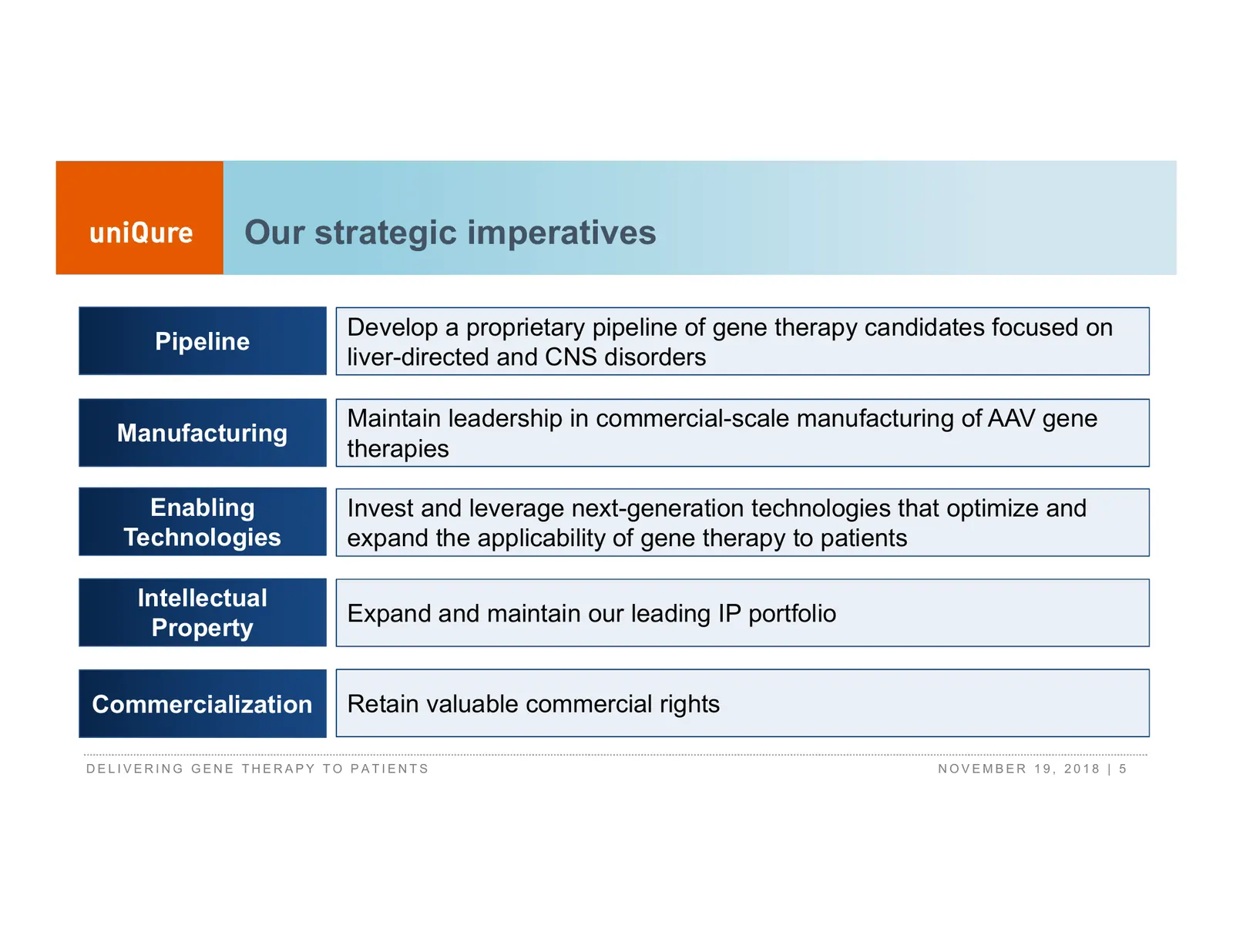
Our strategic imperatives Develop a proprietary pipeline of gene therapy candidates focused on Pipeline liver-directed and CNS disorders Maintain leadership in commercial-scale manufacturing of AAV gene Manufacturing therapies Enabling Invest and leverage next-generation technologies that optimize a
Slide 6: A pioneer in AAV gene therapy
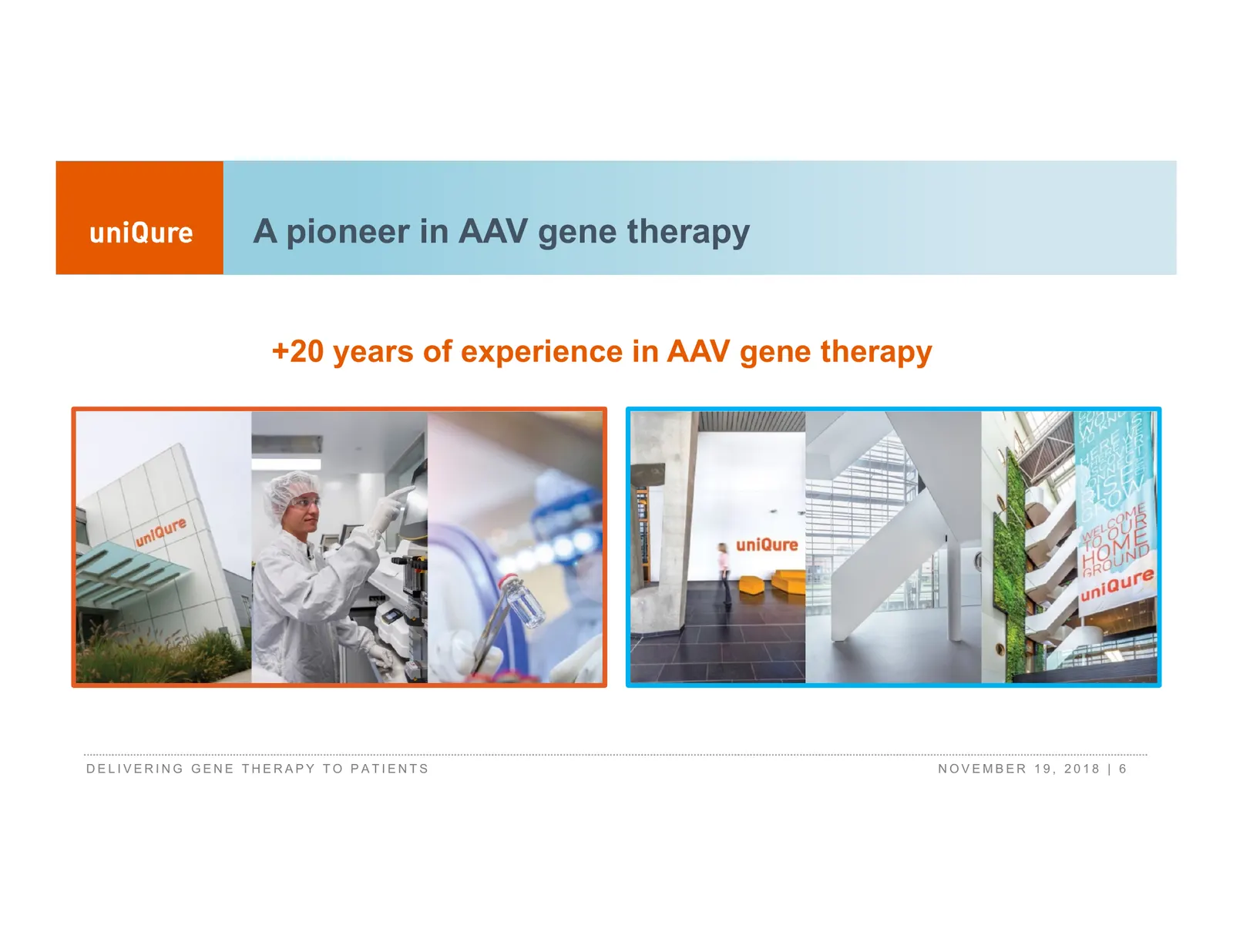
A pioneer in AAV gene therapy +20 years of experience in AAV gene therapy DELIVERING GENE THERAPY TO PATIENTS NOVEMBER 19, 2018 | 6
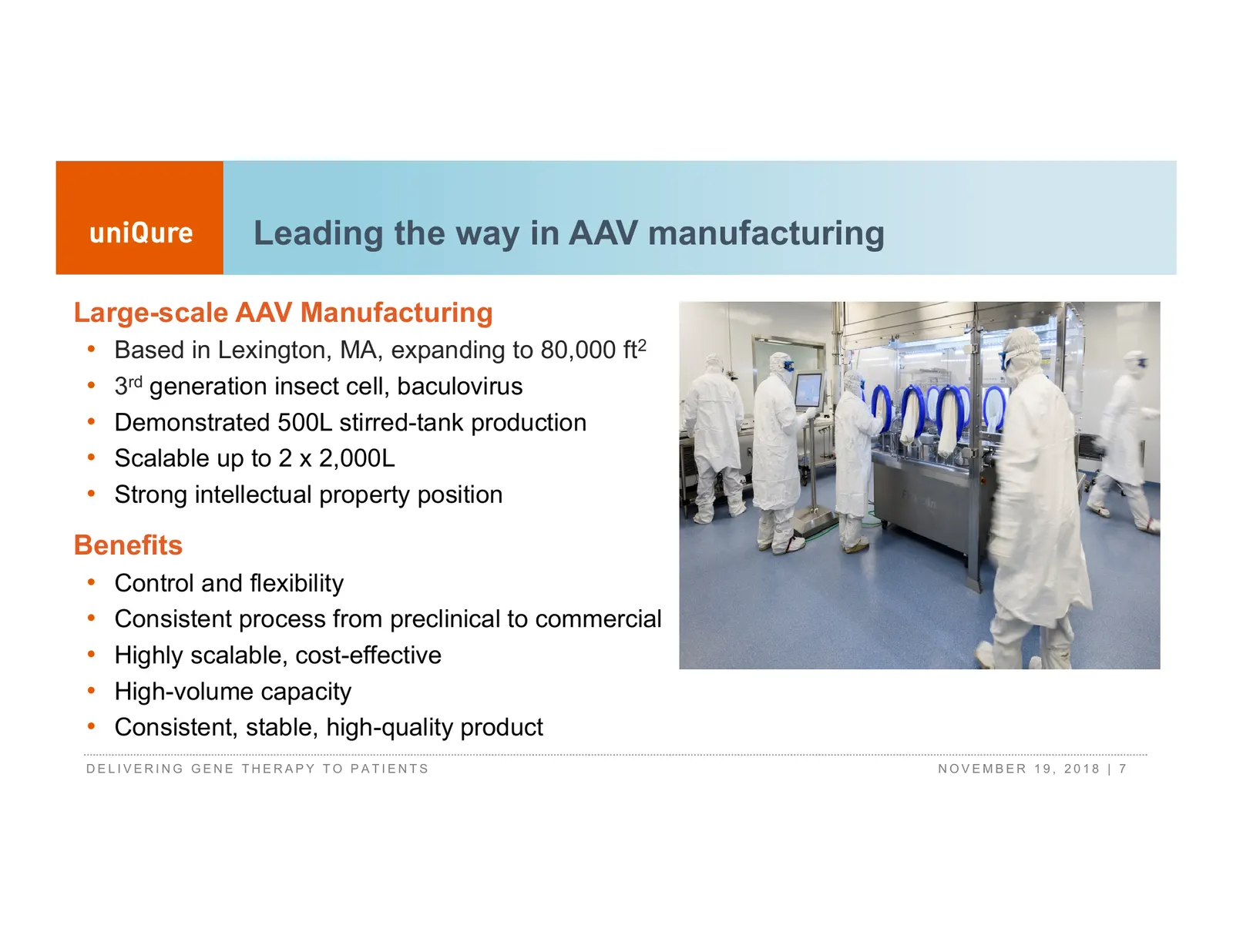
Slide 7: Leading the way in AAV manufacturing
Leading the way in AAV manufacturing Large-scale AAV Manufacturing • Based in Lexington, MA, expanding to 80,000 ft2 • 3rd generation insect cell, baculovirus • Demonstrated 500L stirred-tank production • Scalable up to 2 x 2,000L • Strong intellectual property position Benefits • Control and flexib
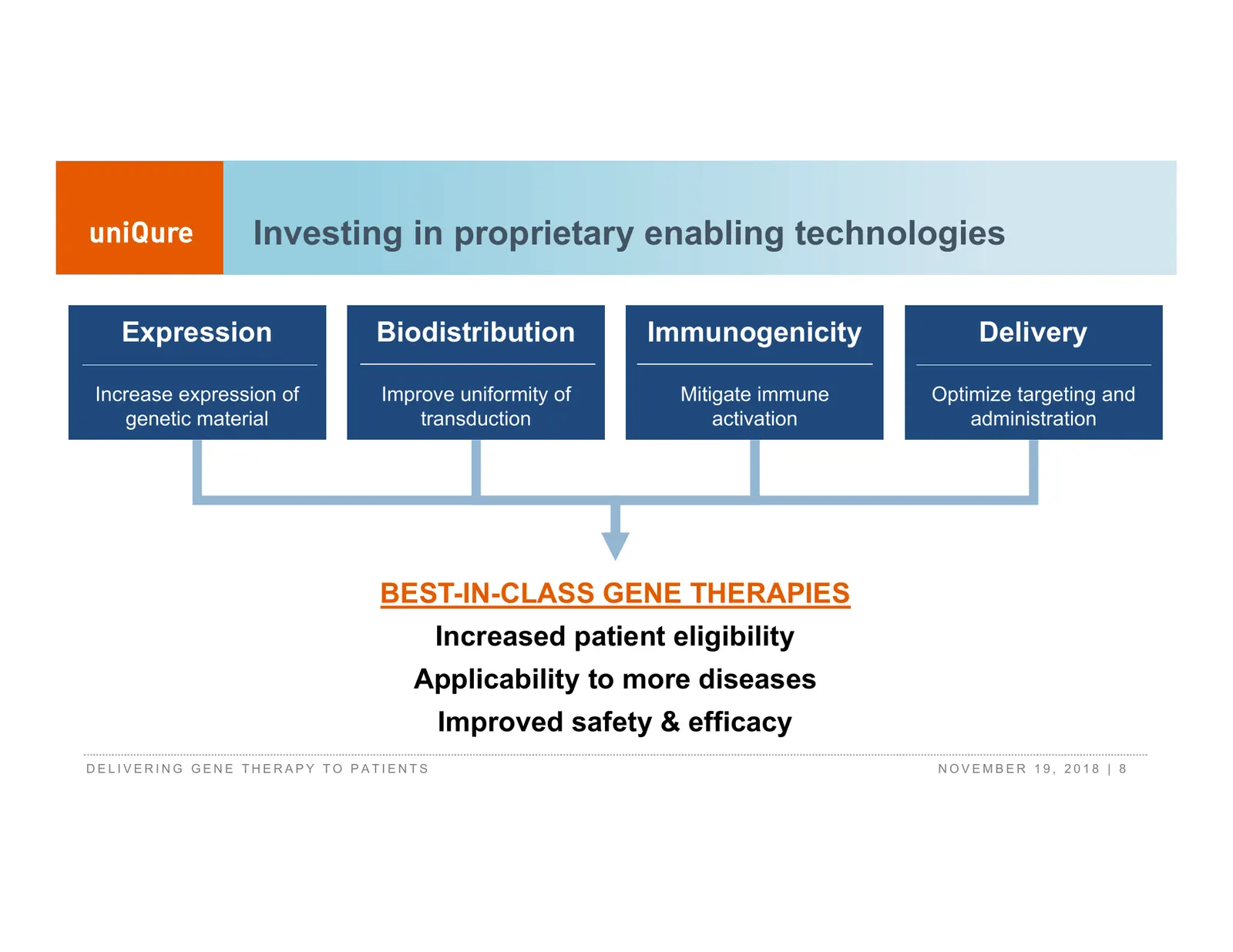
Slide 8: Investing in proprietary enabling technologies
Investing in proprietary enabling technologies Expression Biodistribution Immunogenicity Delivery Increase expression of Improve uniformity of Mitigate immune Optimize targeting and genetic material transduction activation administration BEST-IN-CLASS GENE THERAPIES Increased patient eligibility App
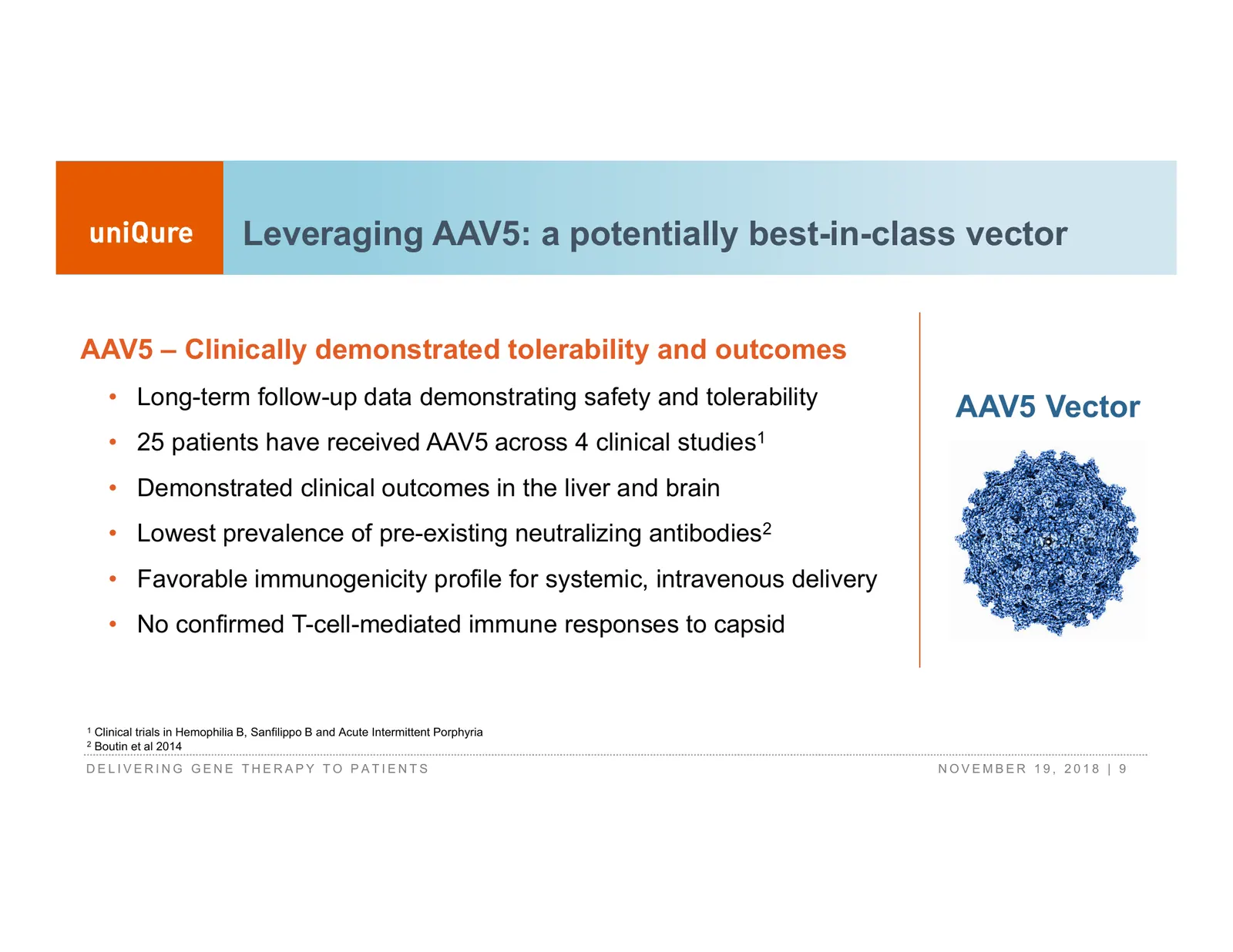
Slide 9: Leveraging AAV5: a potentially best-in-class vector
Leveraging AAV5: a potentially best-in-class vector AAV5 – Clinically demonstrated tolerability and outcomes • Long-term follow-up data demonstrating safety and tolerability AAV5 Vector • 25 patients have received AAV5 across 4 clinical studies1 • Demonstrated clinical outcomes in the liver and brai
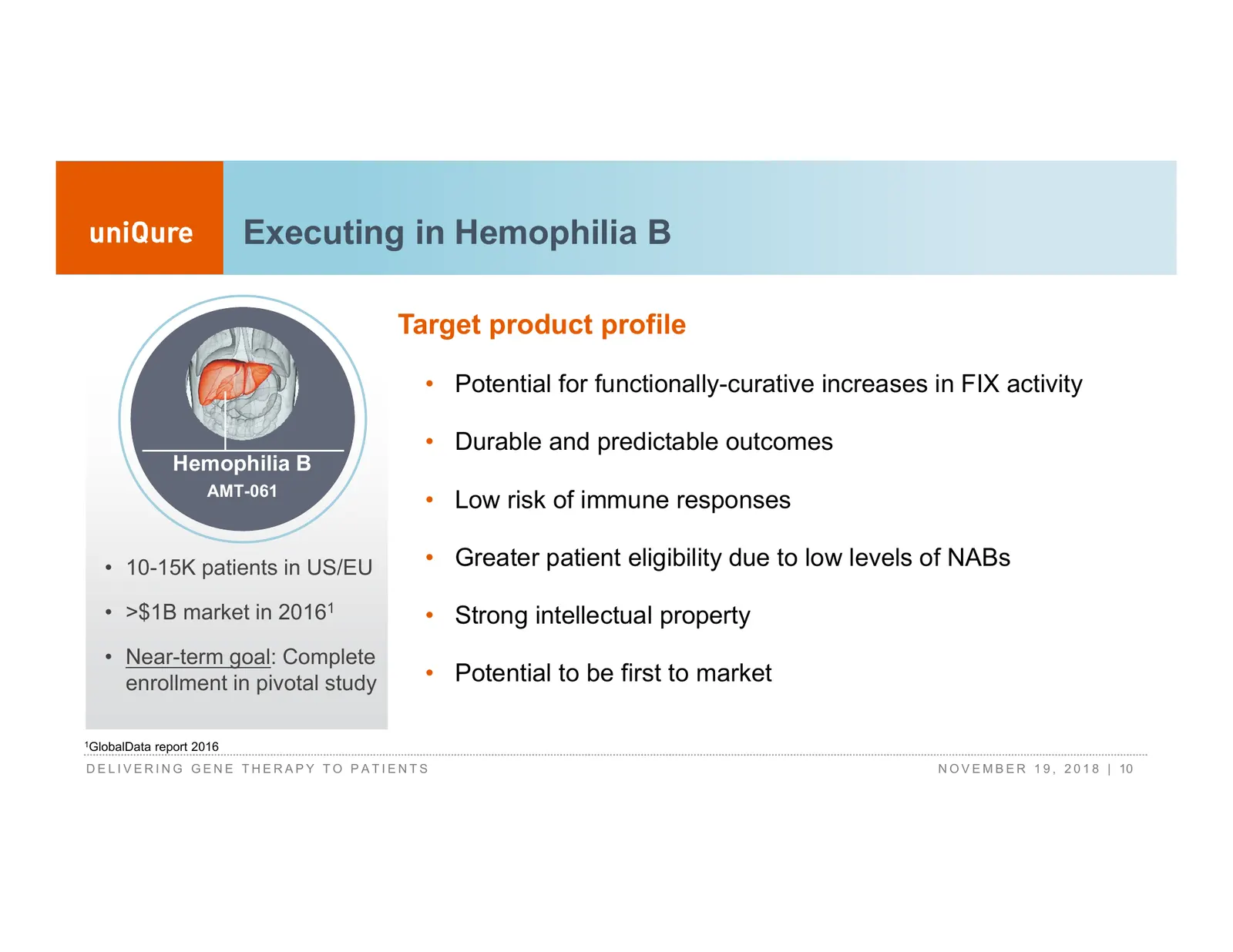
Slide 10: Executing in Hemophilia B
Executing in Hemophilia B Target product profile • Potential for functionally-curative increases in FIX activity • Durable and predictable outcomes Hemophilia B AMT-061 • Low risk of immune responses • 10-15K patients in US/EU • Greater patient eligibility due to low levels of NABs • >$1B market in
Slide 11: Executing in Hemophilia B
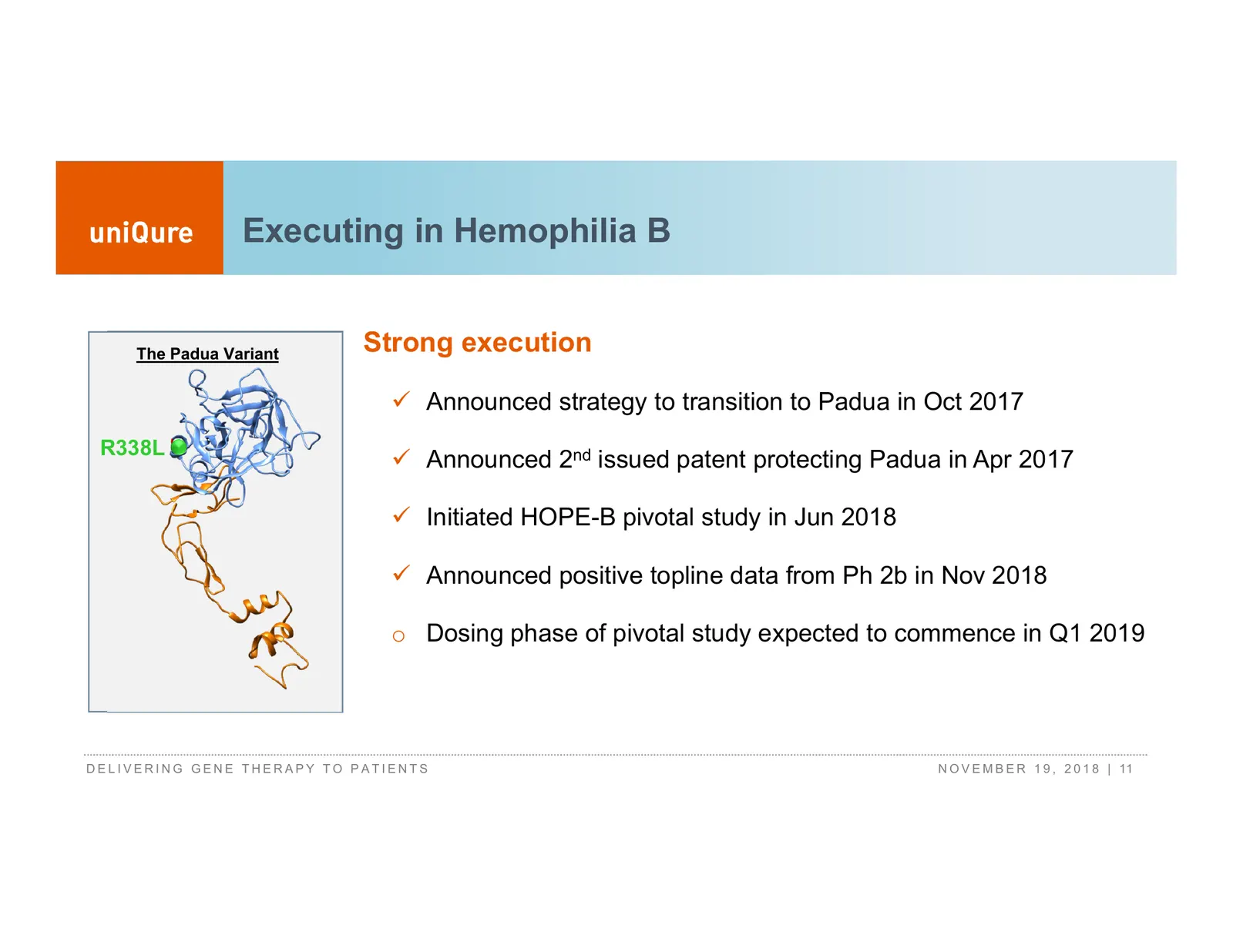
Executing in Hemophilia B The Padua Variant Strong execution Announced strategy to transition to Padua in Oct 2017 R338L Announced 2nd issued patent protecting Padua in Apr 2017 Initiated HOPE-B pivotal study in Jun 2018 Announced positive topline data from Ph 2b in Nov 2018 o Dosing phase o
Slide 12: Executing in Huntington's Disease
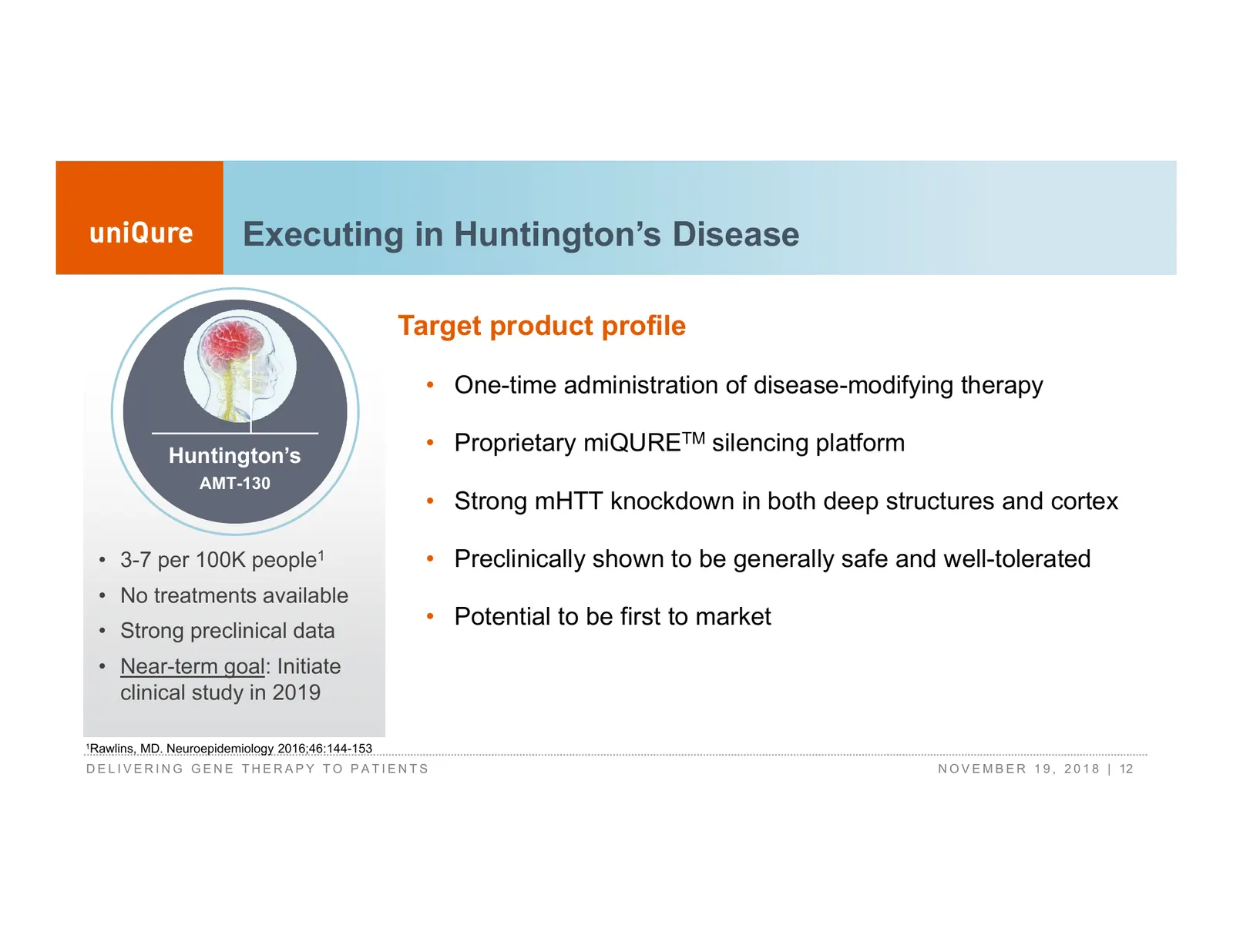
Executing in Huntington’s Disease Target product profile • One-time administration of disease-modifying therapy Huntington’s • Proprietary miQURETM silencing platform AMT-130 • Strong mHTT knockdown in both deep structures and cortex • 3-7 per 100K people1 • Preclinically shown to be generally safe
Slide 13: Executing in Huntington's Disease
Executing in Huntington’s Disease Strong execution Presented/published PoC data in multiple animal species Successfully completed GLP toxicology study o IND expected to be filed in December o Clinical study expected to be initiated in 2019 DELIVERING GENE THERAPY TO PATIENTS N O V E M B E R 1 9
Slide 14: Expanding our proprietary pipeline
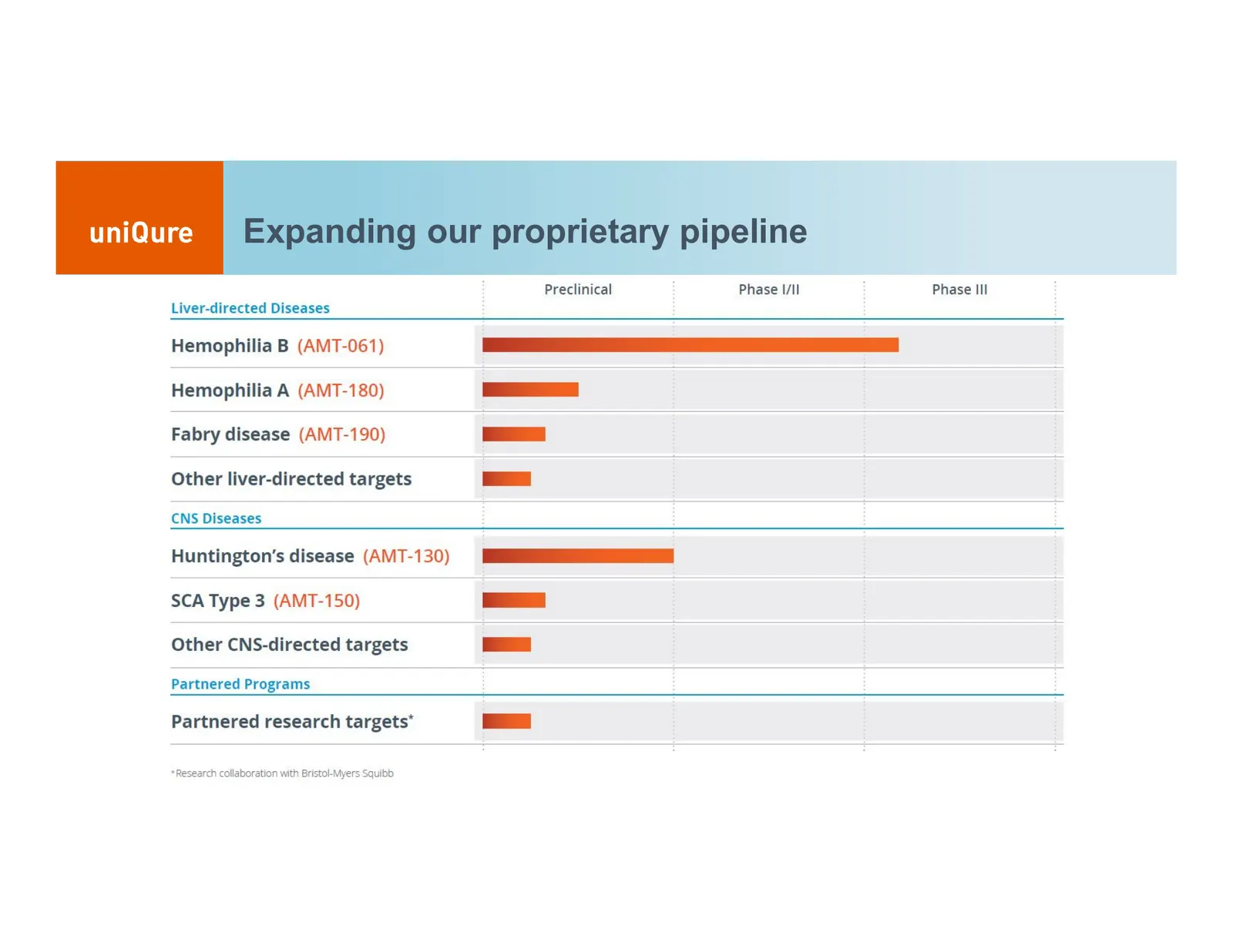
Expanding our proprietary pipeline DELIVERING GENE THERAPY TO PATIENTS N O V E M B E R 1 9 , 2 0 1 8 | 14
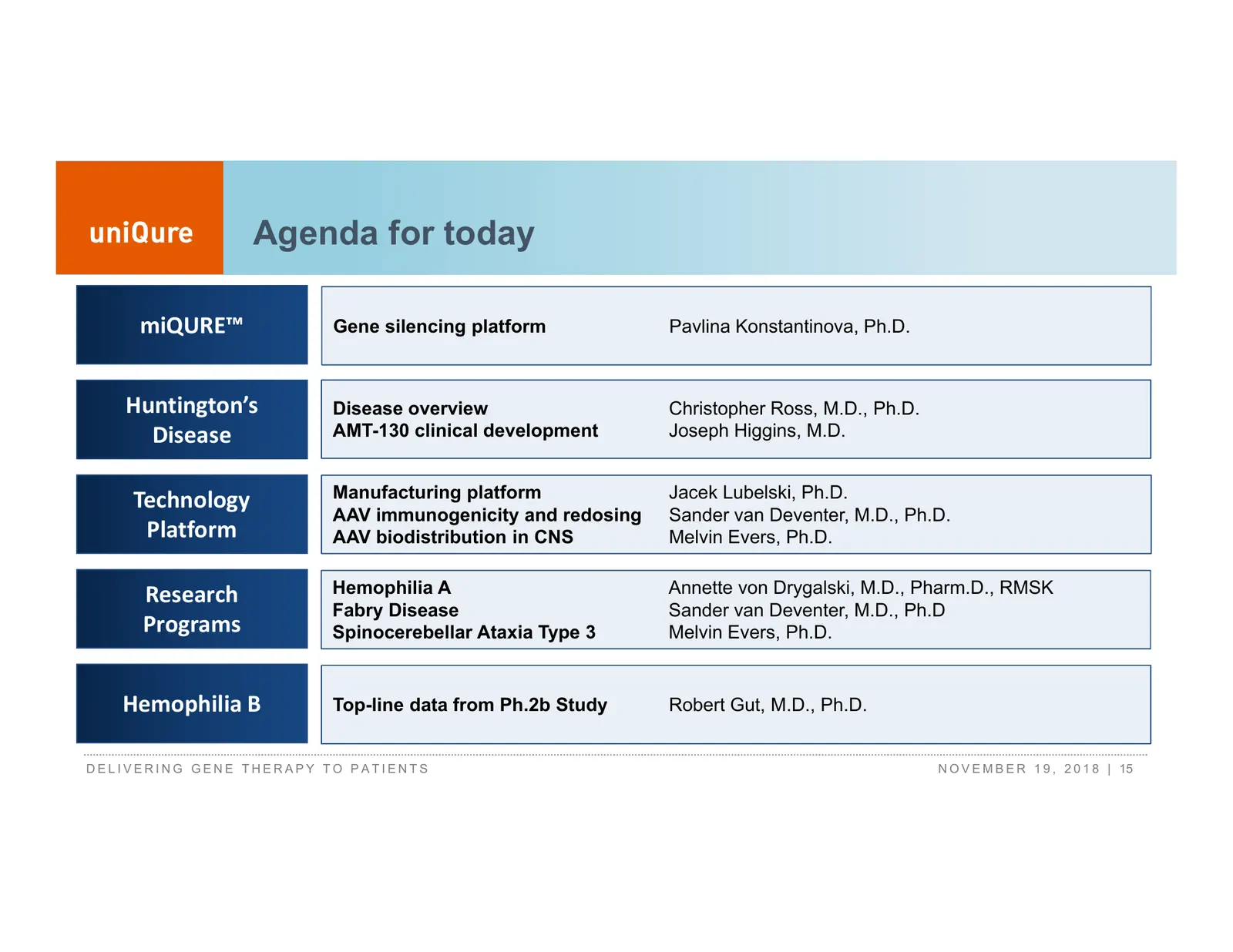
Slide 15: Agenda for today
Agenda for today miQURE™ Gene silencing platform Pavlina Konstantinova, Ph.D. Huntington’s Disease overview Christopher Ross, M.D., Ph.D. Disease AMT-130 clinical development Joseph Higgins, M.D. Technology Manufacturing platform Jacek Lubelski, Ph.D. AAV immunogenicity and redosing Sander van Deven

Slide 16: miQURE Gene Silencing Technology
miQURE™ Gene Silencing Technology Pavlina Konstantinova, Ph.D. Senior Director, New Therapeutic Target Discovery DELIVERING GENE THERAPY TO PATIENTS N O V E M B E R 1 9 , 2 0 1 8 | 16
Slide 17: miQURE our unique new technology
miQURETM our unique new technology • Degrades toxic genes without toxic effects • Delivered with AAV and is active long term • Spreads in the body with extracellular vesicles in the cerebrospinal fluid (CSF) protecting the whole affected organ. DELIVERING GENE THERAPY TO PATIENTS N O V E M B E R 1 9
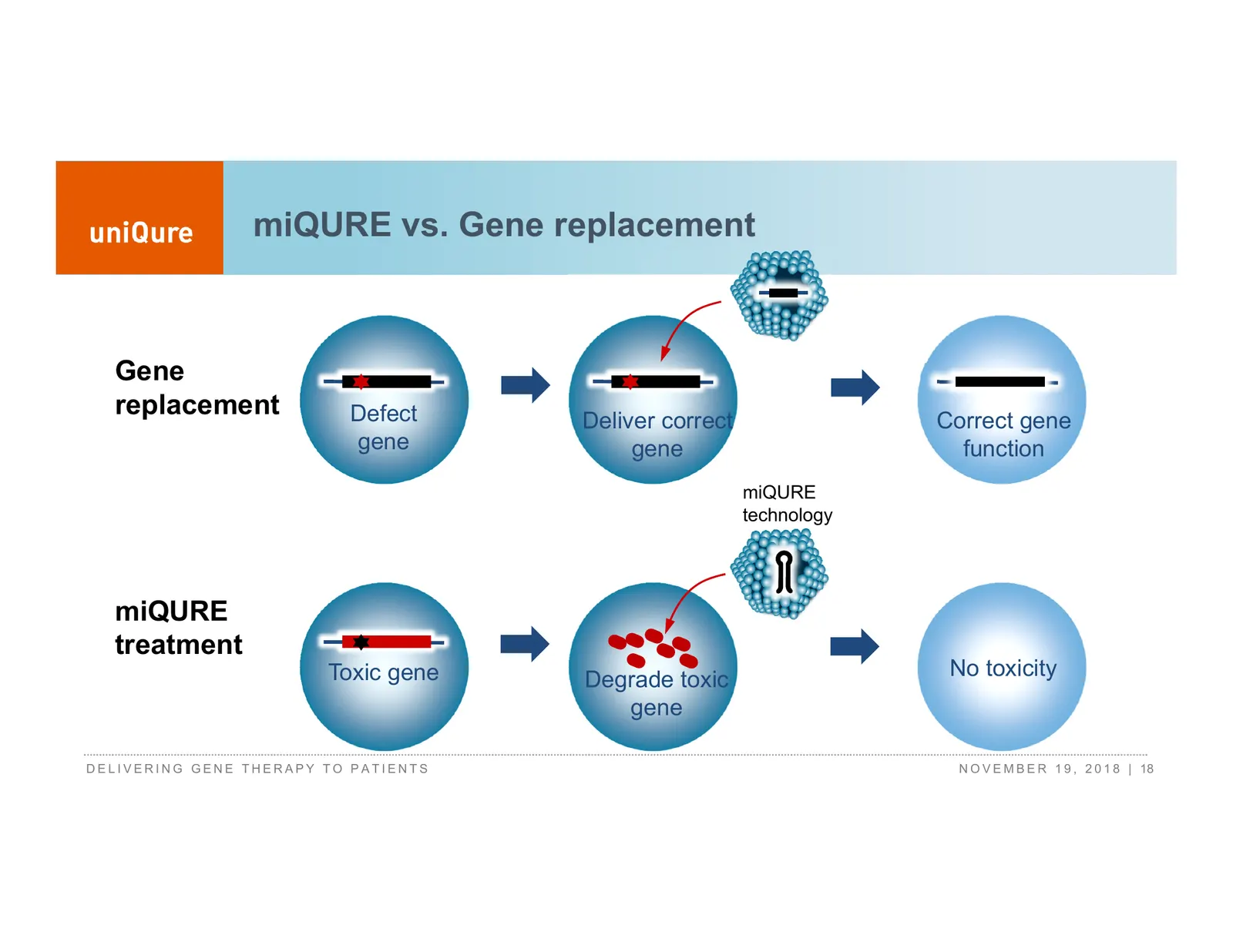
Slide 18: miQURE vs. Gene replacement
miQURE vs. Gene replacement Gene replacement Defect Deliver correct Correct gene gene gene function miQURE technology miQURE treatment Toxic gene Degrade toxic No toxicity gene DELIVERING GENE THERAPY TO PATIENTS N O V E M B E R 1 9 , 2 0 1 8 | 18
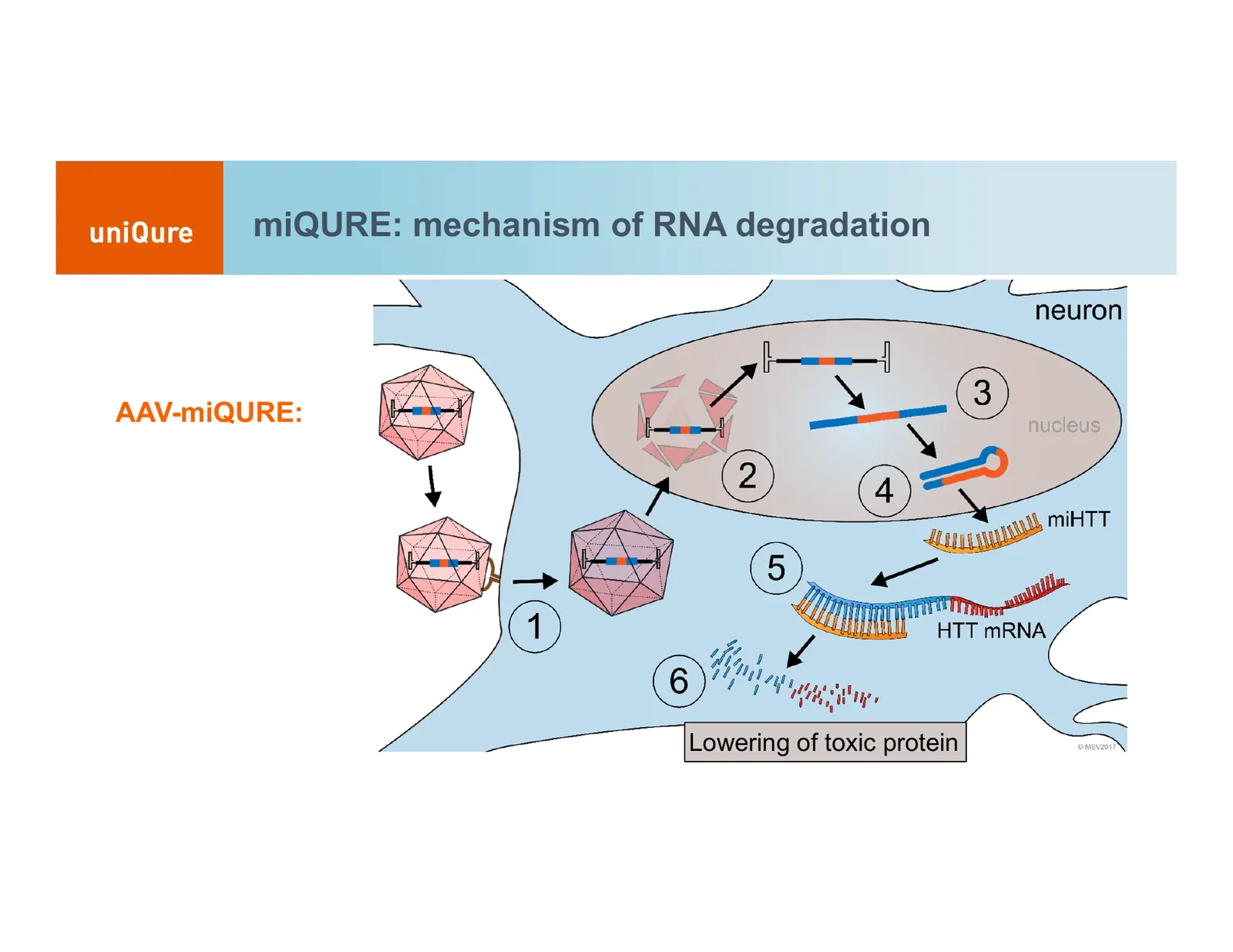
Slide 19: miQURE: mechanism of RNA degradation
miQURE: mechanism of RNA degradation AAV-miQURE: Lowering of toxic protein DELIVERING GENE THERAPY TO PATIENTS N O V E M B E R 1 9 , 2 0 1 8 | 19
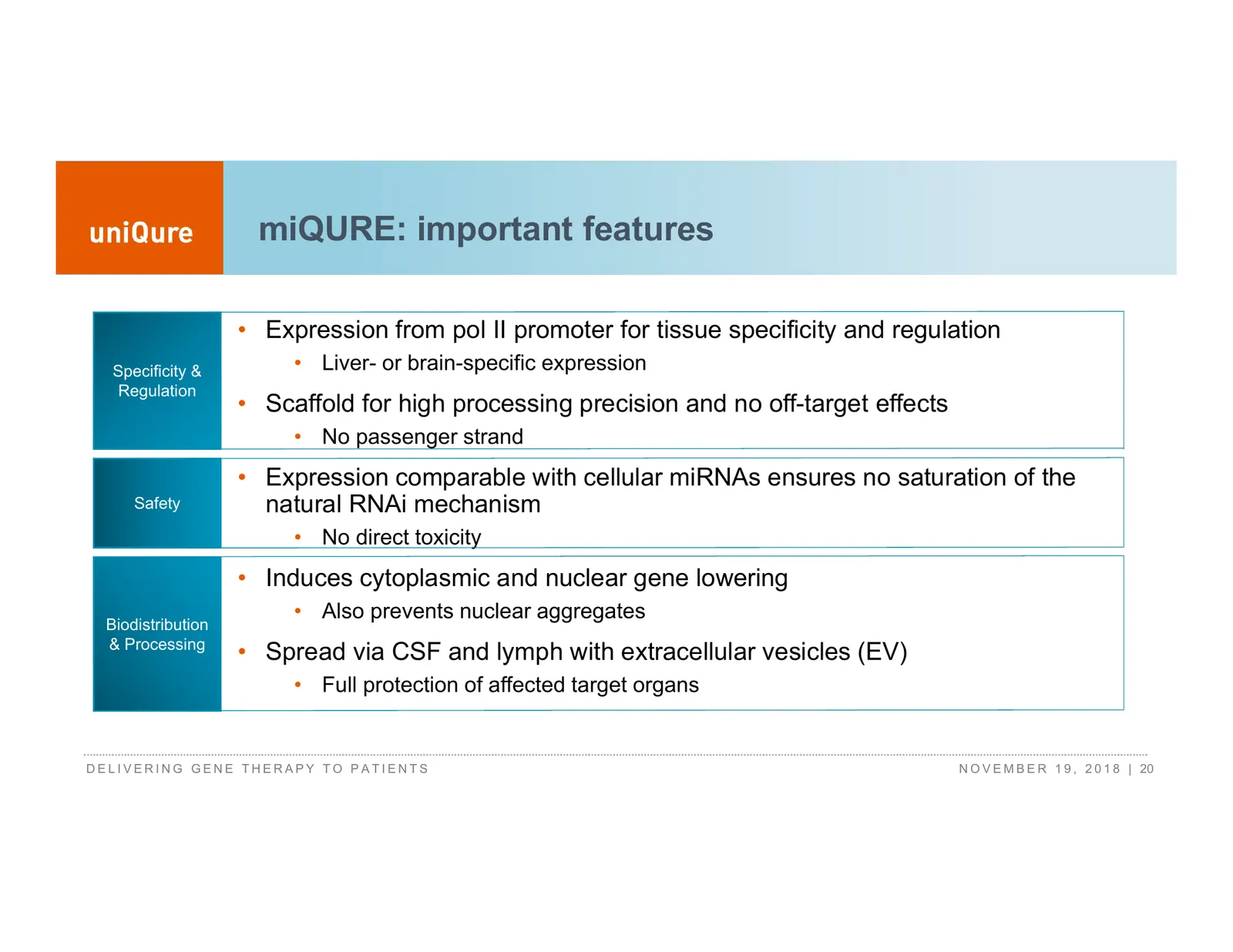
Slide 20: miQURE: important features
miQURE: important features • Expression from pol II promoter for tissue specificity and regulation Specificity & • Liver- or brain-specific expression Regulation • Scaffold for high processing precision and no off-target effects • No passenger strand • Expression comparable with cellular miRNAs ensu
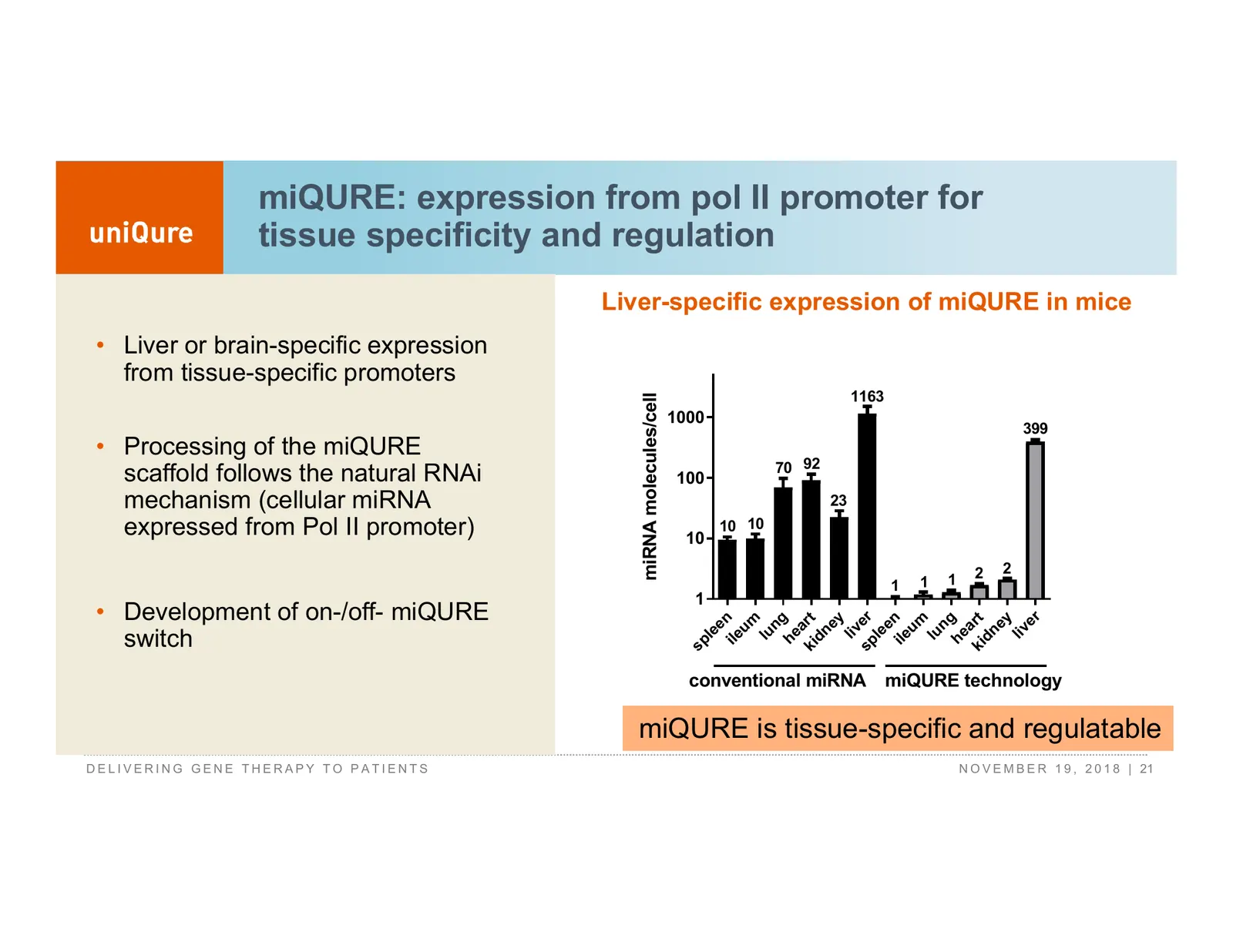
Slide 21: miQURE: expression from pol II promoter
miQURE: expression from pol II promoter for tissue specificity and regulation Liver-specific expression of miQURE in mice • Liver or brain-specific expression from tissue-specific promoters 1163 miRNA molecules/cell 1000 399 • Processing of the miQURE 70 92 scaffold follows the natural RNAi 100 mech
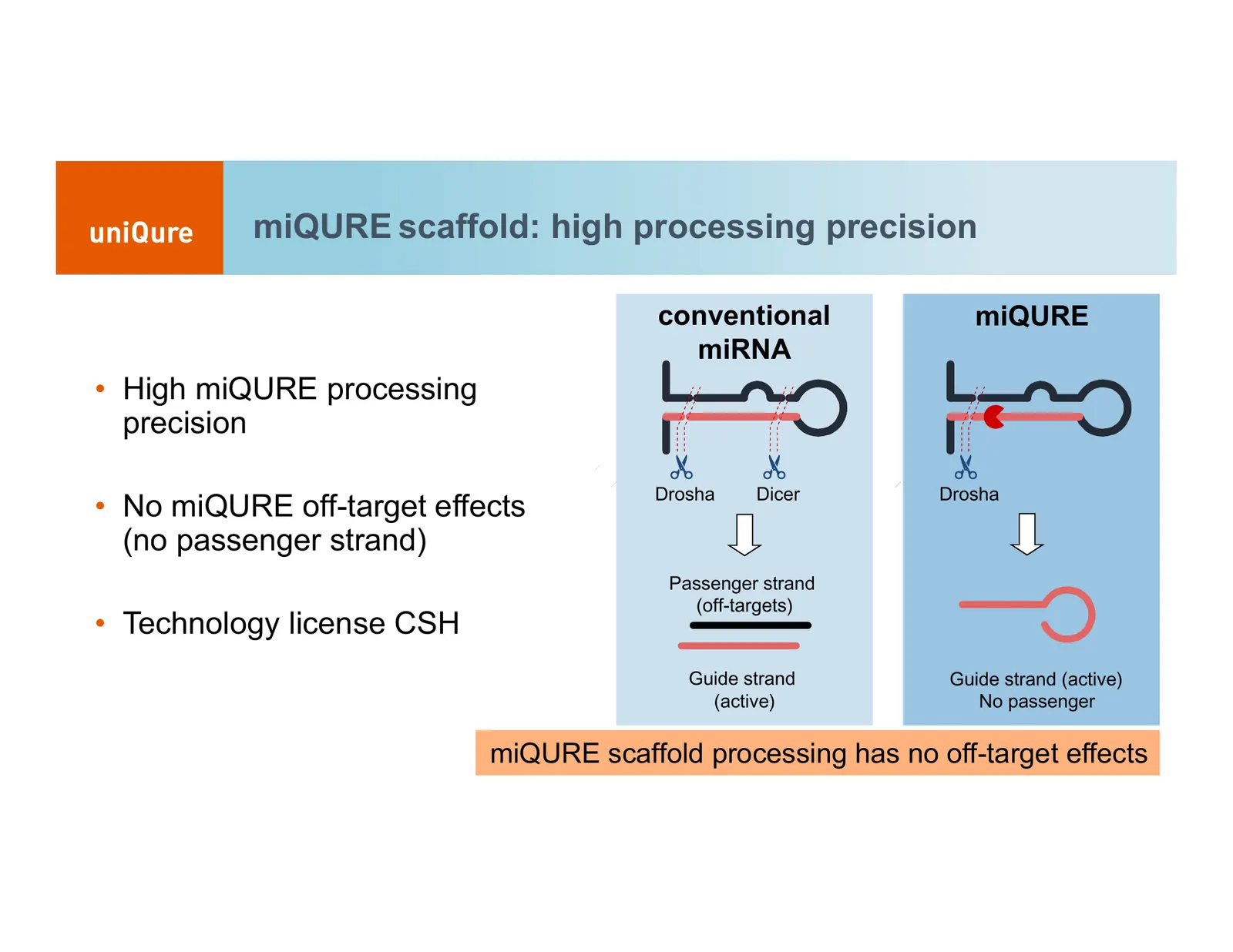
Slide 22: miQURE scaffold: high processing precision
miQURE scaffold: high processing precision conventional miQURE miRNA • High miQURE processing precision Drosha Dicer Drosha • No miQURE off-target effects (no passenger strand) Passenger strand (off-targets) • Technology license CSH Guide strand Guide strand (active) (active) No passenger DELIVERING
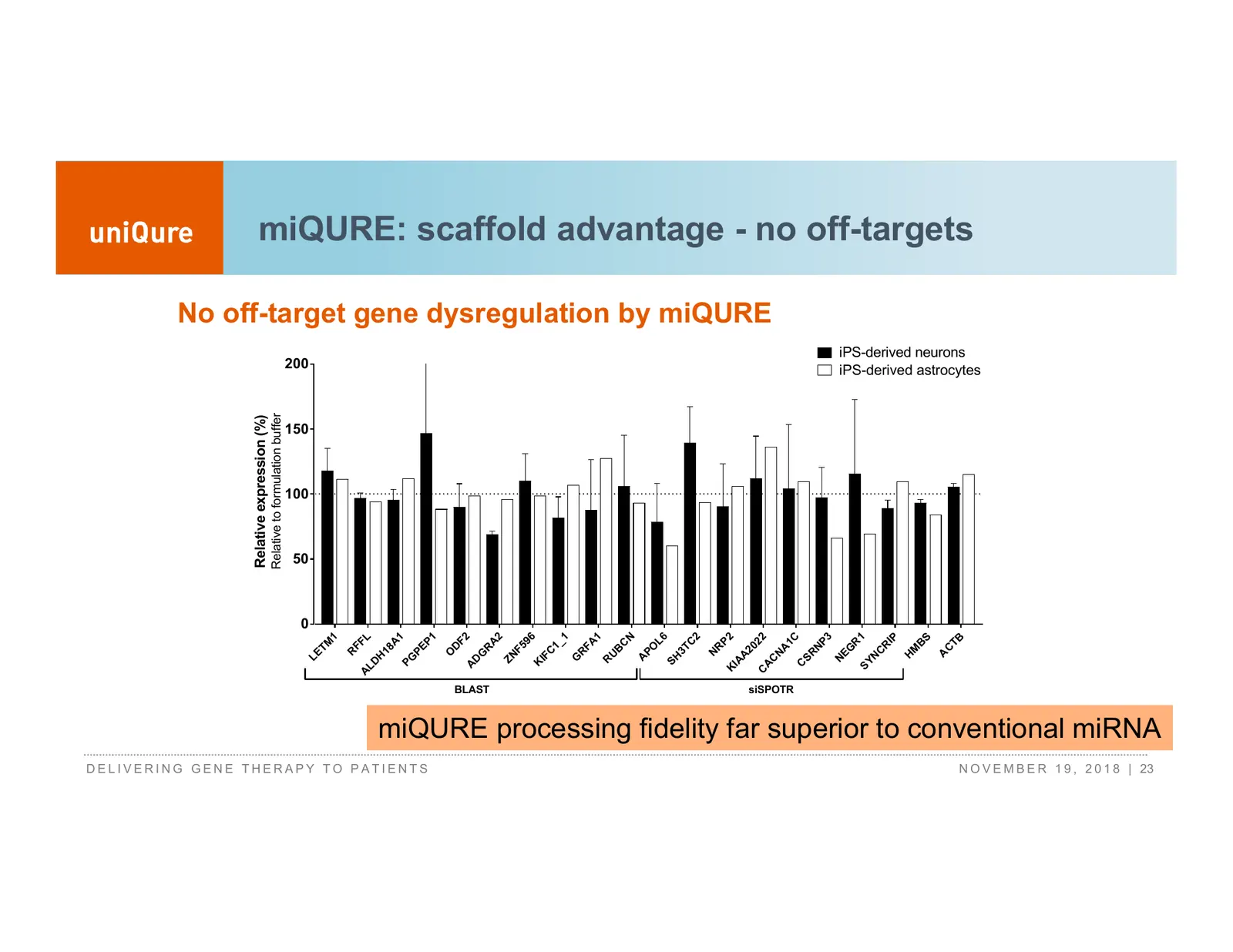
Slide 23: miQURE: scaffold advantage - no off-targets
miQURE: scaffold advantage - no off-targets No off-target gene dysregulation by miQURE iPS-derived neurons 200 iPS-derived astrocytes Relative to formulation buffer Relative expression (%) 150 100 50 0 N 96 L6 L 1 F2 2 1 2 P2 IP S 1C TB 1 P1 1 22 P3 1 A A FA C 1_ TM R FF B C R F5 20 PO D R PE N R 3T
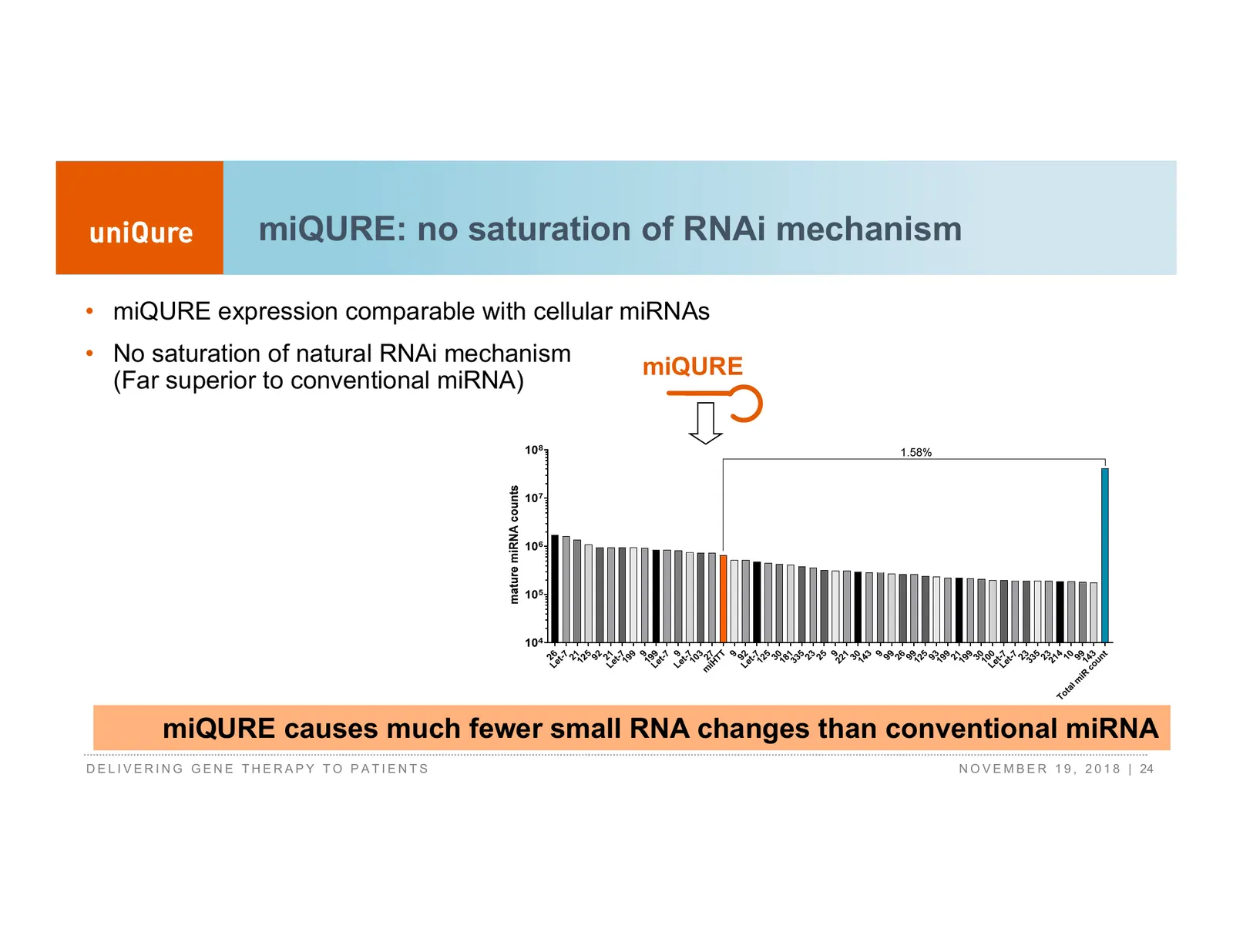
Slide 24: miQURE: no saturation of RNAi mechanism
miQURE: no saturation of RNAi mechanism • miQURE expression comparable with cellular miRNAs • No saturation of natural RNAi mechanism miQURE (Far superior to conventional miRNA) miQURE causes much fewer small RNA changes than conventional miRNA DELIVERING GENE THERAPY TO PATIENTS N O V E M B E R 1 9
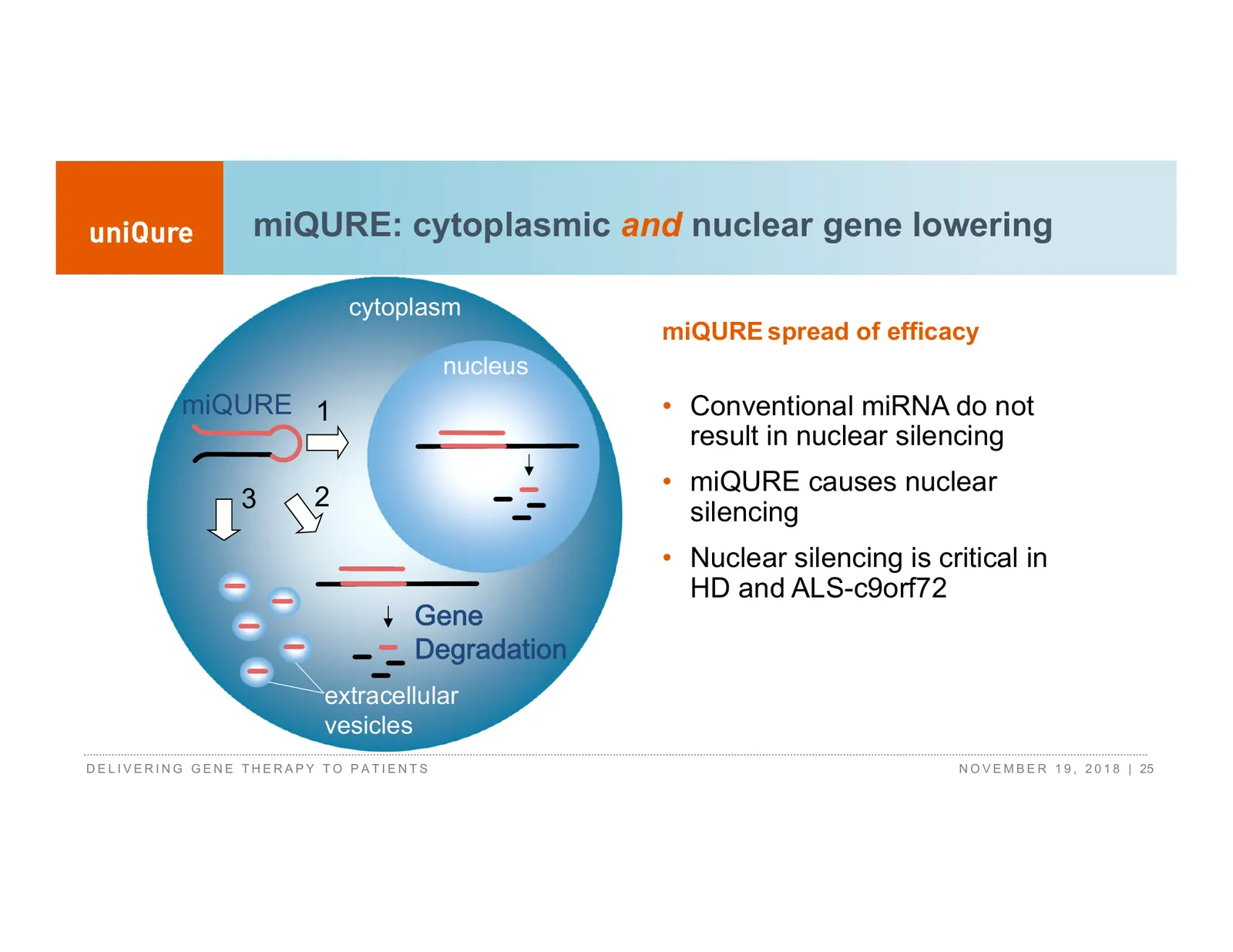
Slide 25: miQURE: cytoplasmic and nuclear gene lowering
miQURE: cytoplasmic and nuclear gene lowering cytoplasm miQURE spread of efficacy nucleus miQURE 1 • Conventional miRNA do not result in nuclear silencing • miQURE causes nuclear 3 2 silencing • Nuclear silencing is critical in HD and ALS-c9orf72 Gene Degradation extracellular vesicles DELIVERING GE
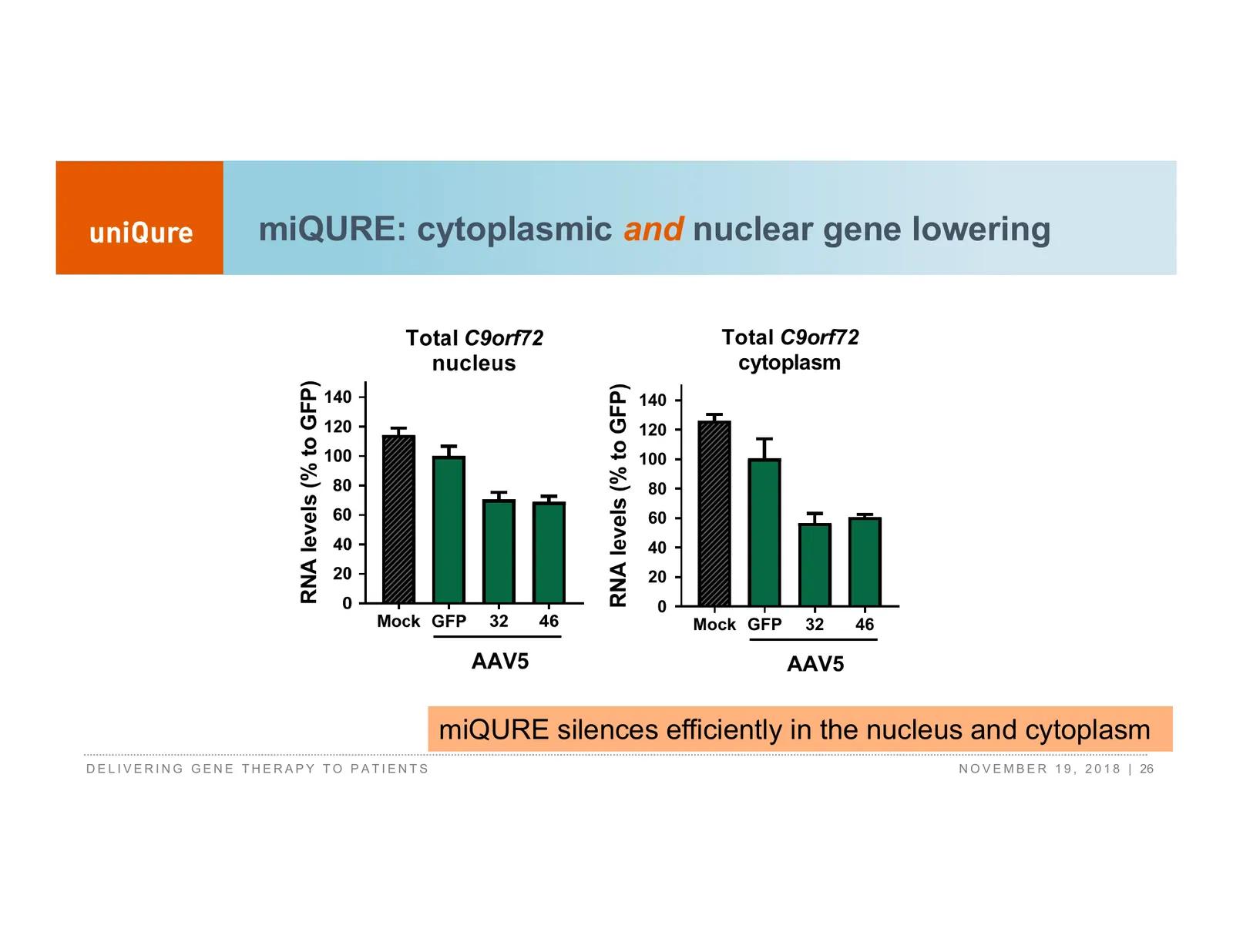
Slide 26: miQURE: cytoplasmic and nuclear gene lowering
miQURE: cytoplasmic and nuclear gene lowering Total C9orf72 cytoplasm RNA levels (% to GFP) 140 120 100 80 60 40 20 0 Mock GFP 32 46 AAV5 miQURE silences efficiently in the nucleus and cytoplasm DELIVERING GENE THERAPY TO PATIENTS N O V E M B E R 1 9 , 2 0 1 8 | 26
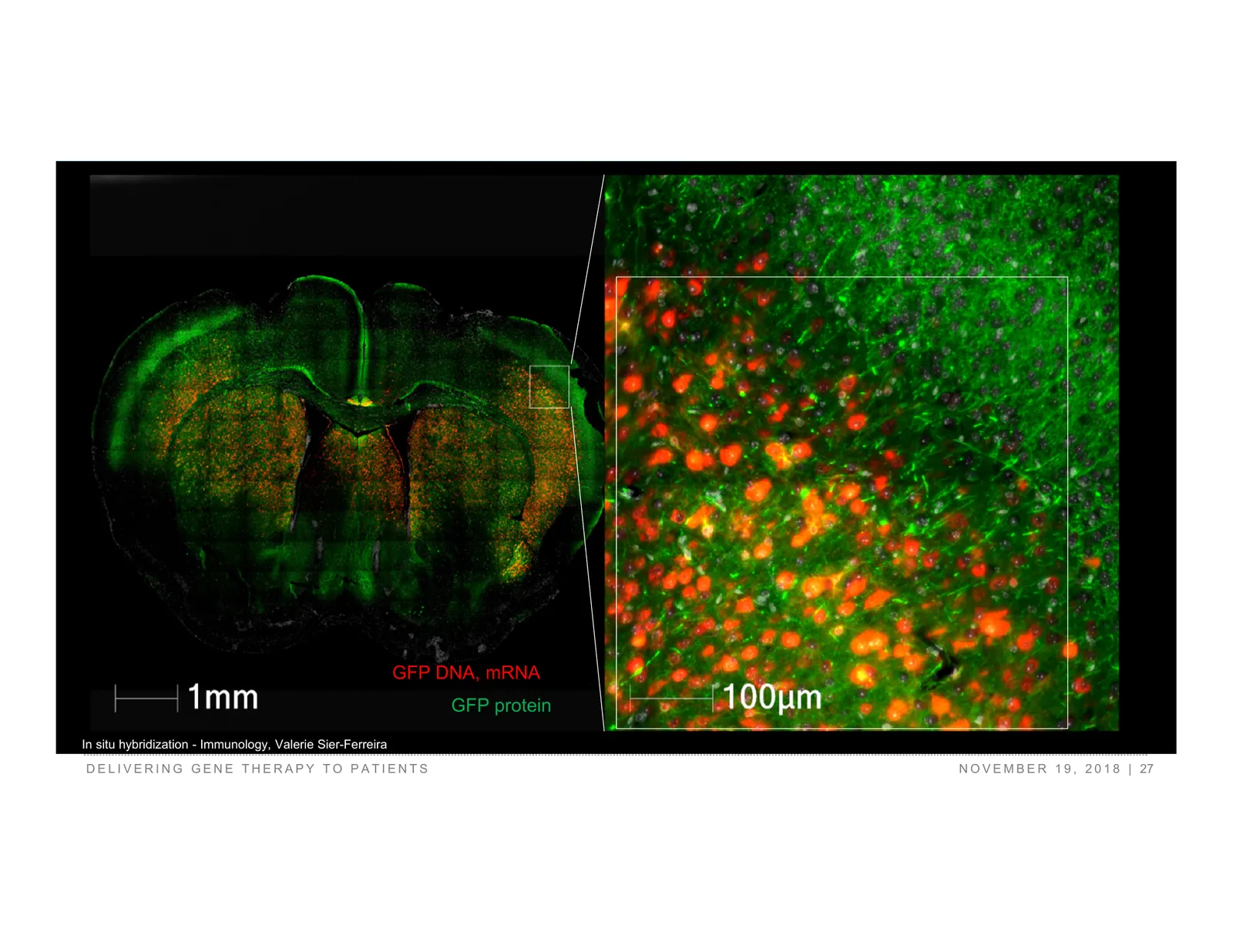
Slide 27: GFP DNA, mRNA and protein
GFP DNA, mRNA GFP protein In situ hybridization - Immunology, Valerie Sier-Ferreira DELIVERING GENE THERAPY TO PATIENTS N O V E M B E R 1 9 , 2 0 1 8 | 27
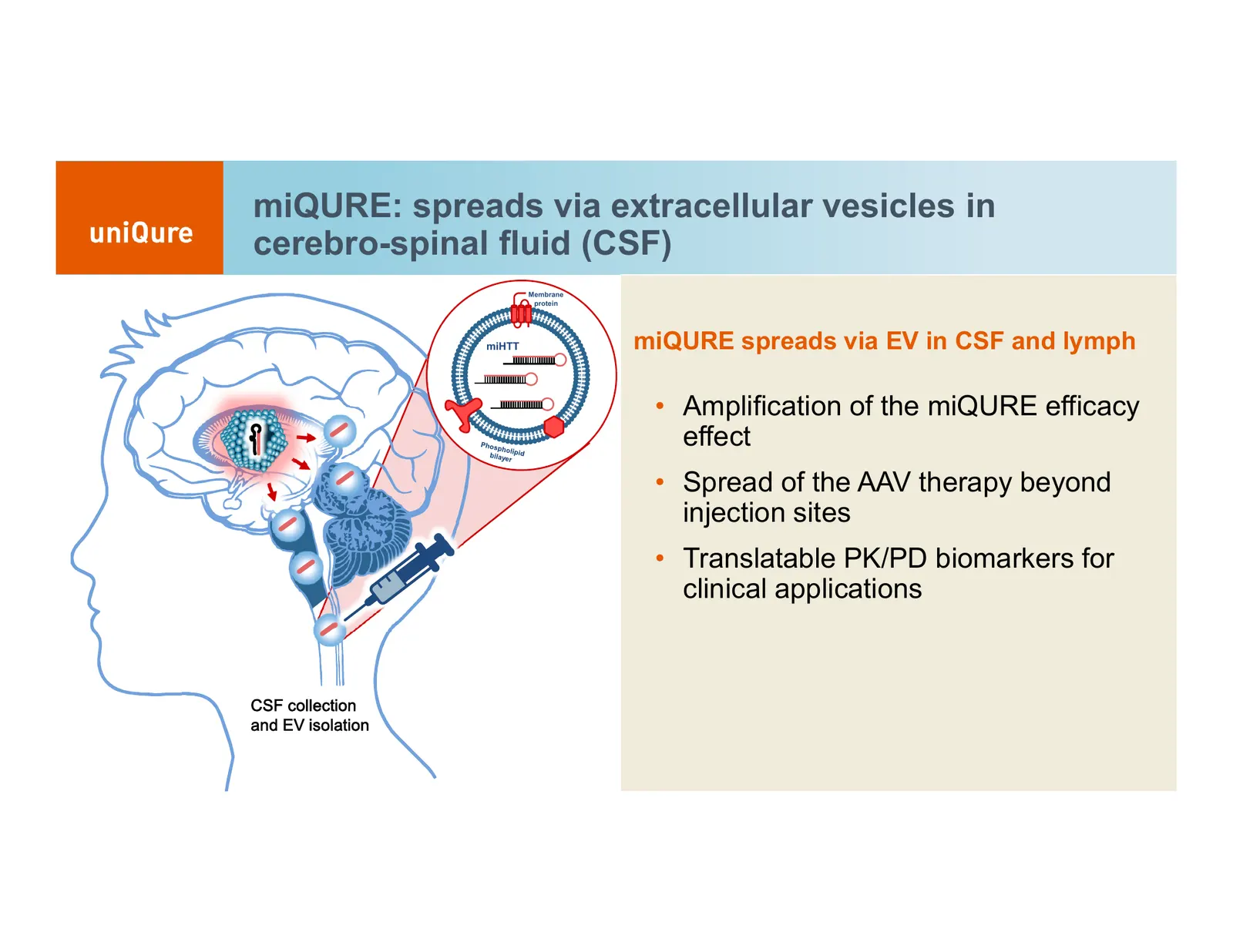
Slide 28: miQURE spreads via extracellular vesicles in CSF
miQURE: spreads via extracellular vesicles in cerebro-spinal fluid (CSF) Membrane protein miHTT miQURE spreads via EV in CSF and lymph • Amplification of the miQURE efficacy effect • Spread of the AAV therapy beyond injection sites • Translatable PK/PD biomarkers for clinical applications CSF collec
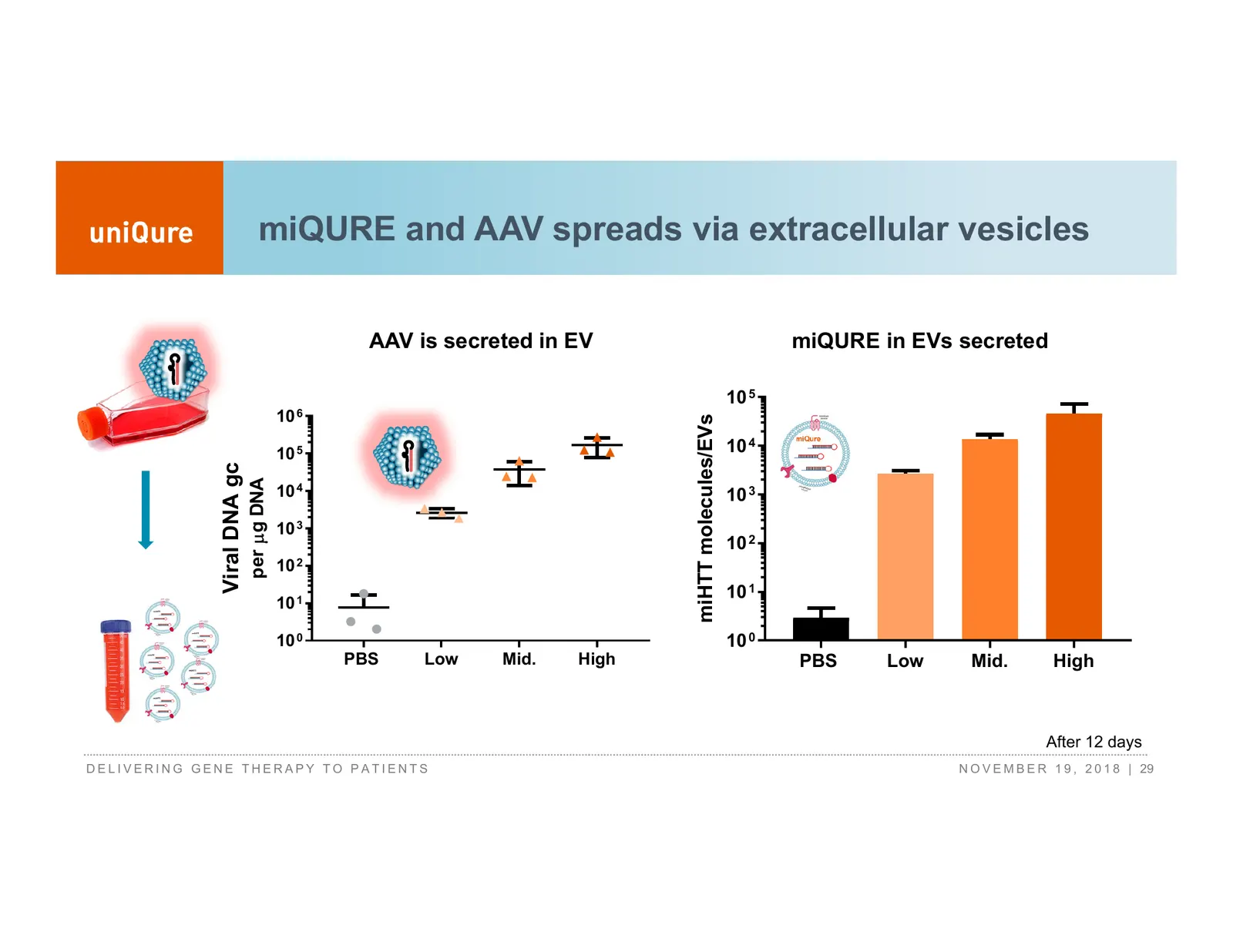
Slide 29: miQURE and AAV spreads via extracellular vesicles
miQURE and AAV spreads via extracellular vesicles AAV is secreted in EV miQURE in EVs secreted miQure in EVs secreted AAV is secreted in EV 10 5 10 6 miHTT molecules/EVs 10 5 10 4 Viral DNA gc per g DNA 10 4 10 3 10 3 10 2 10 2 10 1 10 1 10 0 10 0 PBS Low Mid. High PBS Low Mid. High After 12 days DE
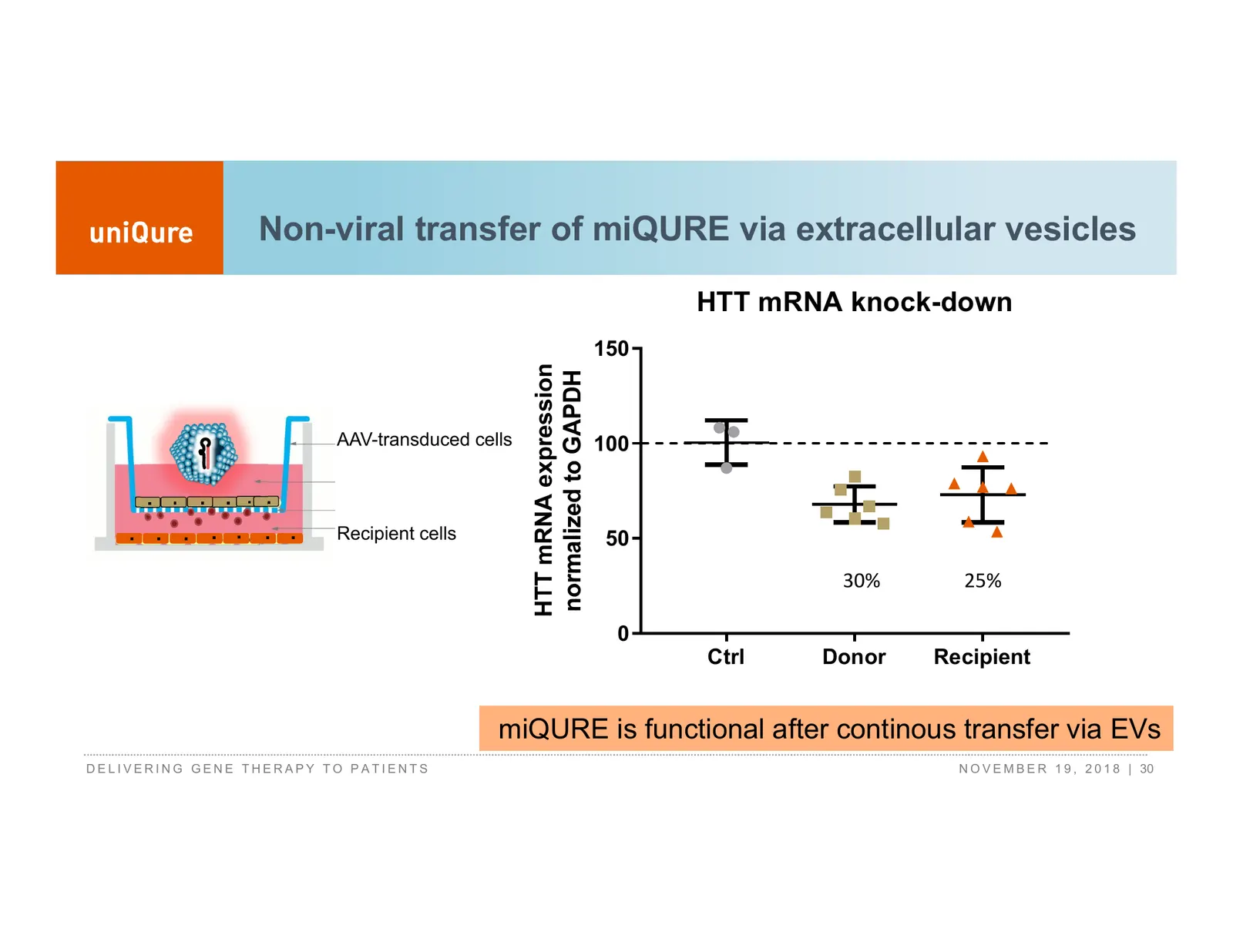
Slide 30: Non-viral transfer of miQURE via extracellular vesicles
Non-viral transfer of miQURE via extracellular vesicles HTT mRNA knock-down 150 AAV-transduced cells 100 . . . . . . . . . . . . . Recipient cells 50 30% 25% % % 0 Ctrl Donor Recipient miQURE is functional after continous transfer via EVs DELIVERING GENE THERAPY TO PATIENTS N O V E M B E R 1 9 , 2 0
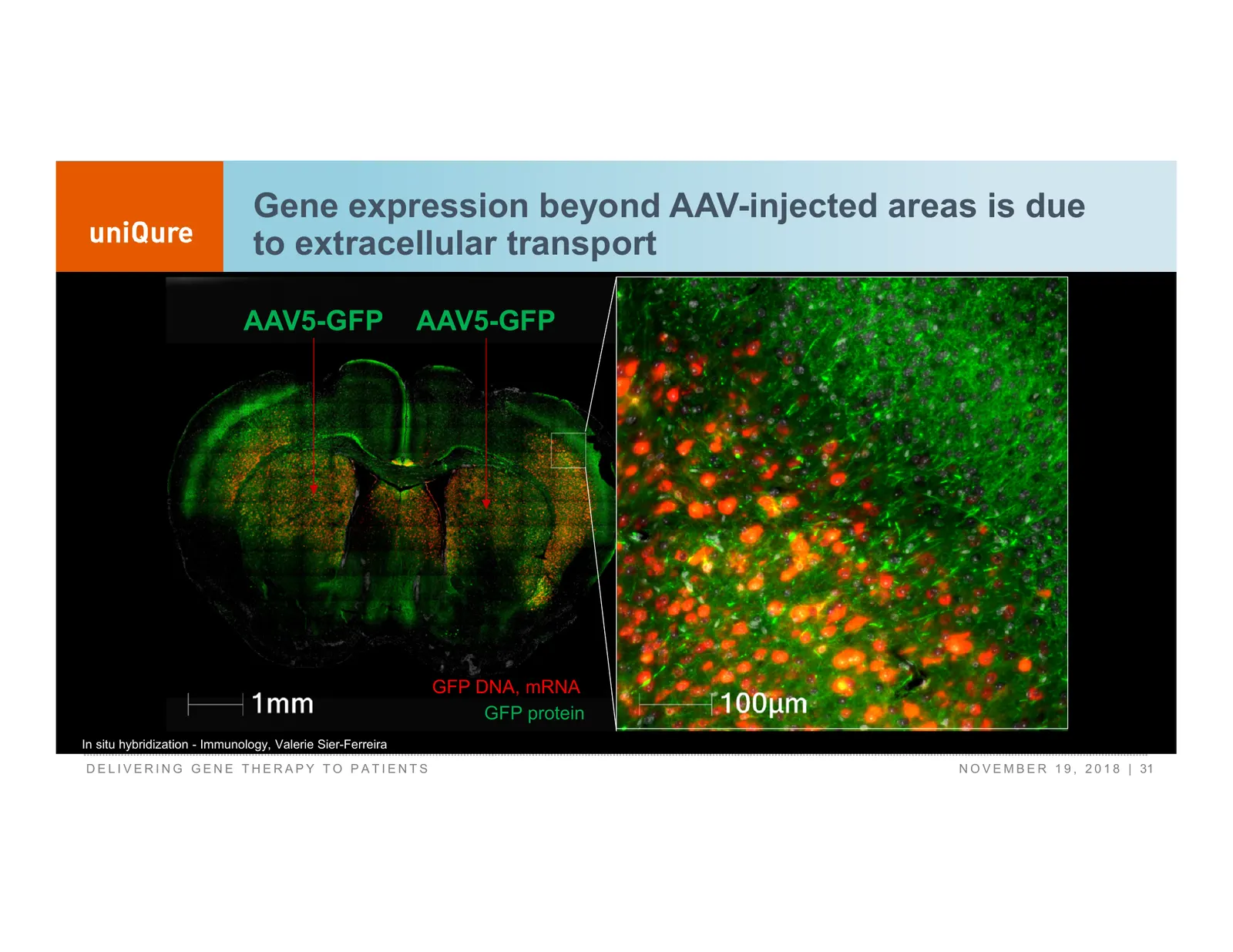
Slide 31: Gene expression beyond AAV-injected areas
Gene expression beyond AAV-injected areas is due to extracellular transport AAV5-GFP AAV5-GFP GFP DNA, mRNA GFP protein In situ hybridization - Immunology, Valerie Sier-Ferreira DELIVERING GENE THERAPY TO PATIENTS N O V E M B E R 1 9 , 2 0 1 8 | 31
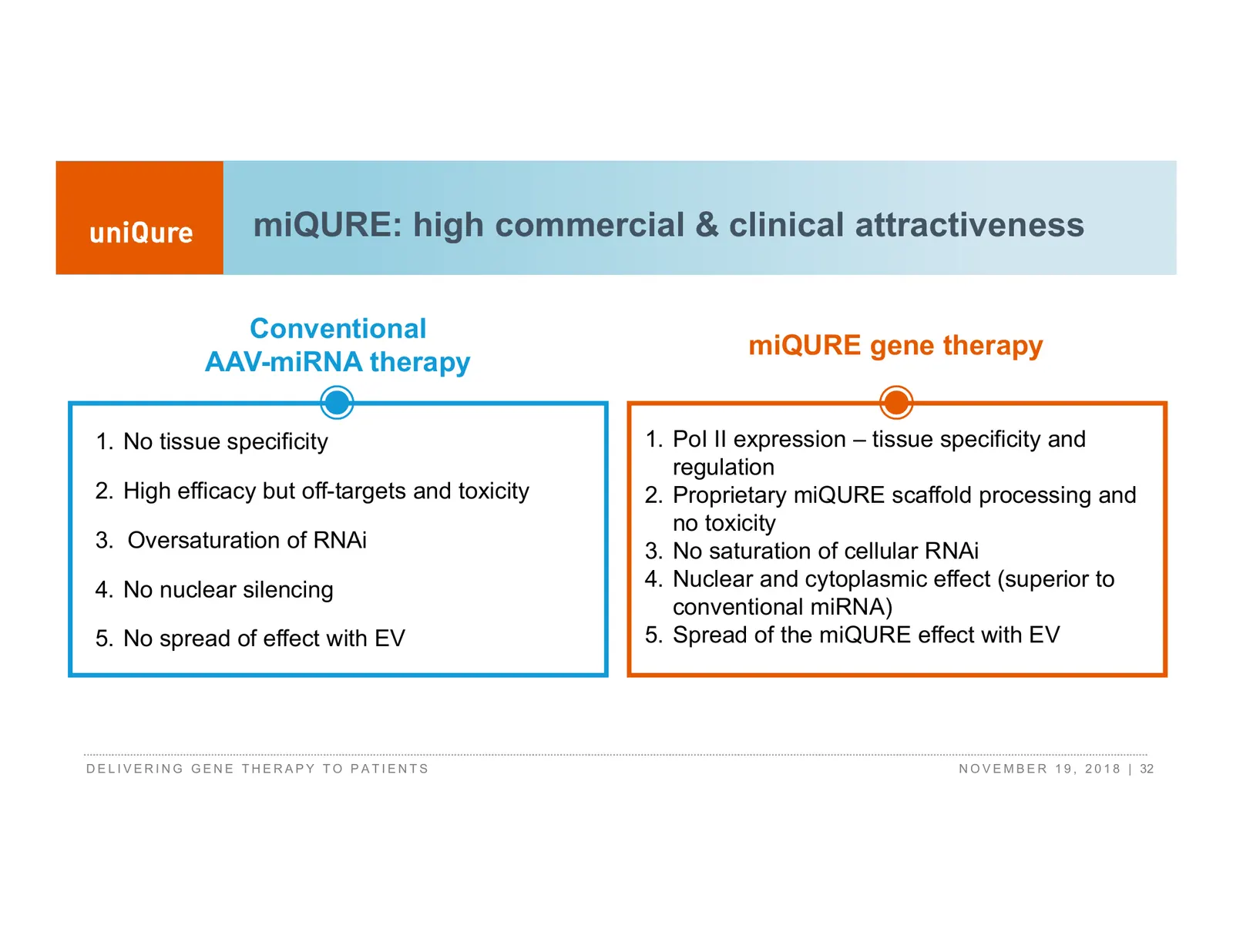
Slide 32: miQURE: high commercial & clinical attractiveness
miQURE: high commercial & clinical attractiveness Conventional miQURE gene therapy AAV-miRNA therapy 1. No tissue specificity 1. PoI II expression – tissue specificity and regulation 2. High efficacy but off-targets and toxicity 2. Proprietary miQURE scaffold processing and no toxicity 3. Oversatura

Slide 33: Applications of miQURE gene therapy in Huntington's Disease
Applications of miQURE™ gene therapy in Huntington’s Disease DELIVERING GENE THERAPY TO PATIENTS N O V E M B E R 1 9 , 2 0 1 8 | 33
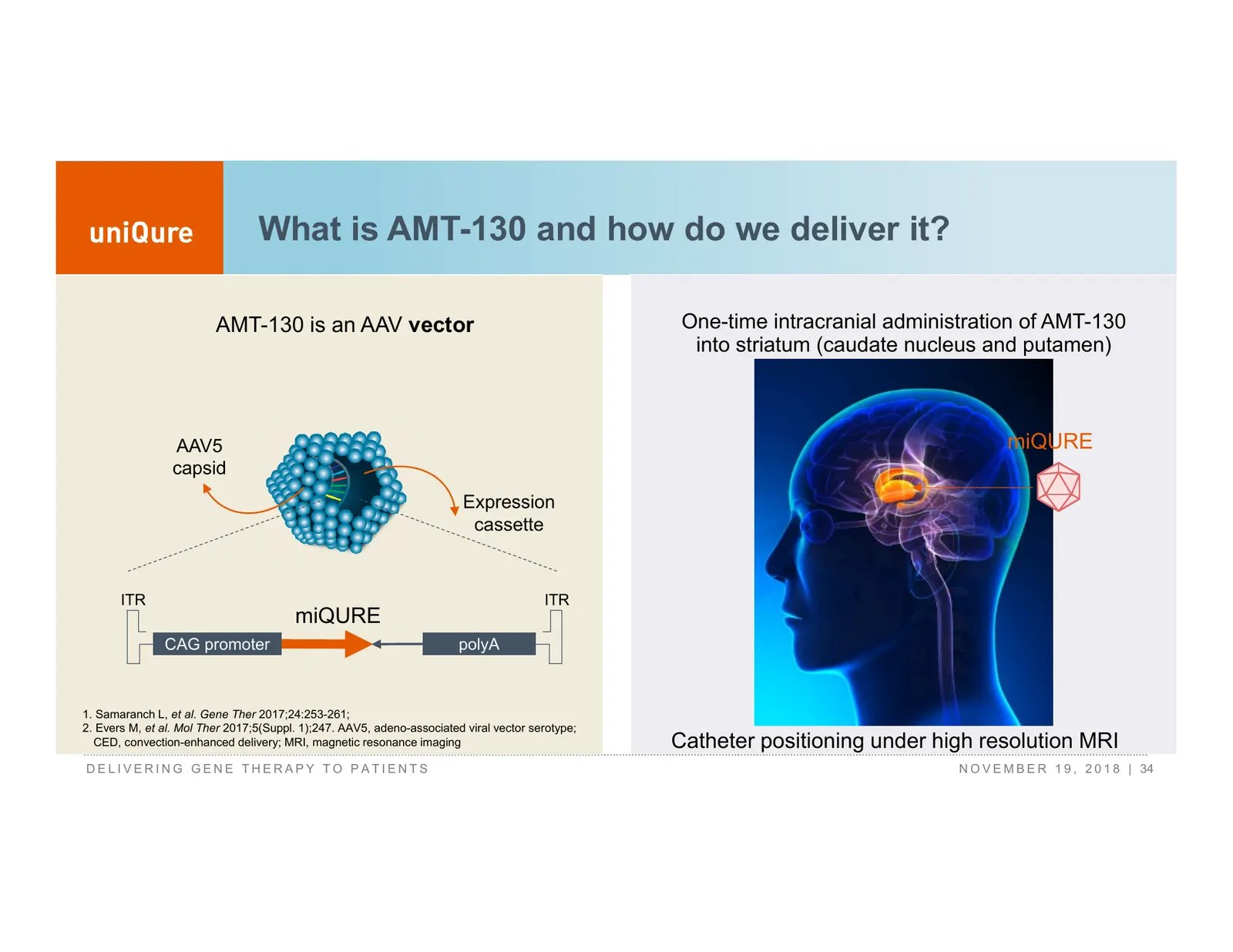
Slide 34: What is AMT-130 and how do we deliver it?
What is AMT-130 and how do we deliver it? AMT-130 is an AAV vector One-time intracranial administration of AMT-130 into striatum (caudate nucleus and putamen) AAV5 miQURE capsid Expression cassette ITR ITR miQURE CAG promoter polyA 1. Samaranch L, et al. Gene Ther 2017;24:253-261; 2. Evers M, et al.
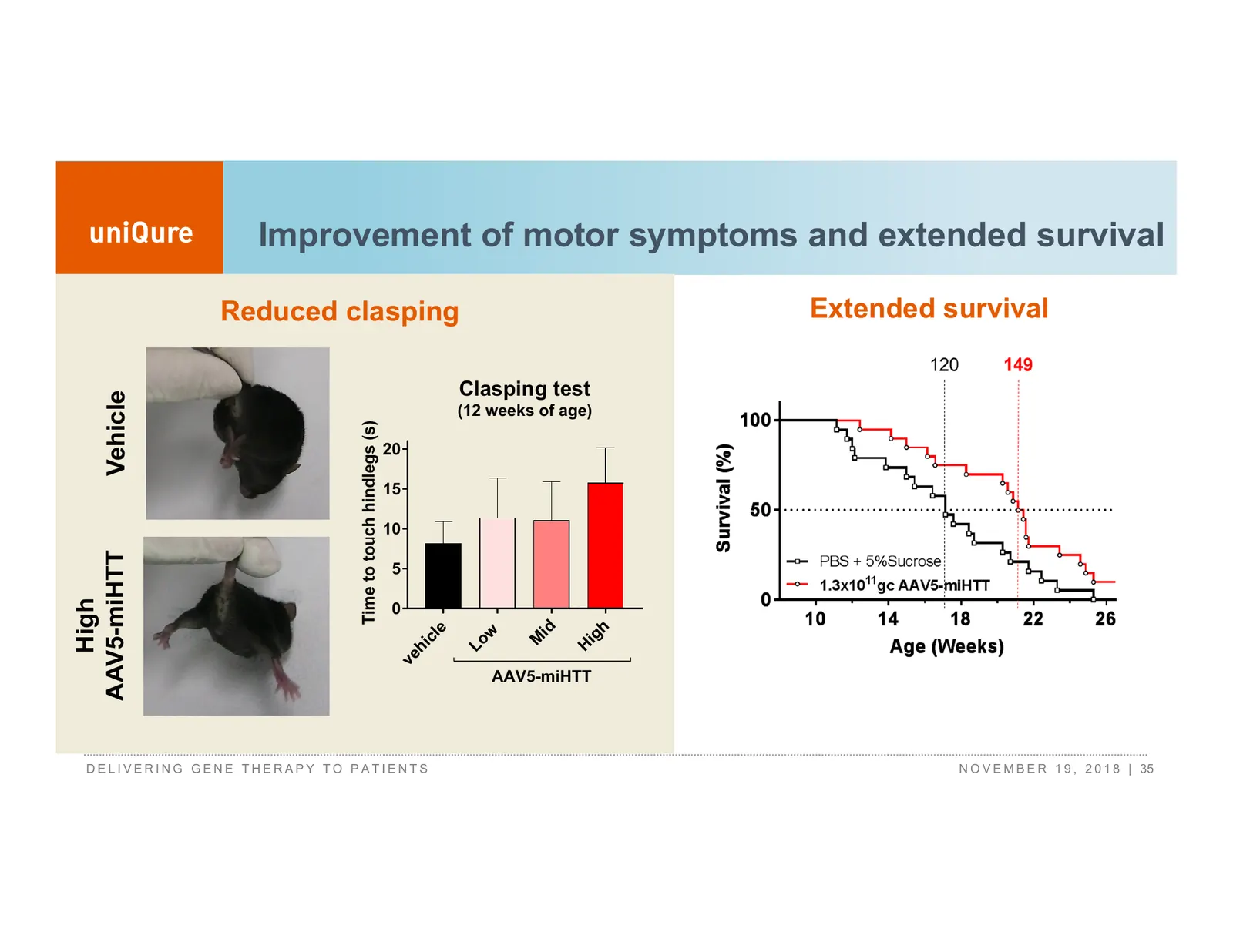
Slide 35: Improvement of motor symptoms and extended survival
Improvement of motor symptoms and extended survival Reduced clasping Extended survival Clasping test Vehicle (12 weeks of age) 20 15 10 AAV5-miHTT 5 High 0 id h le w ig M ic Lo H h ve AAV5-miHTT DELIVERING GENE THERAPY TO PATIENTS N O V E M B E R 1 9 , 2 0 1 8 | 35
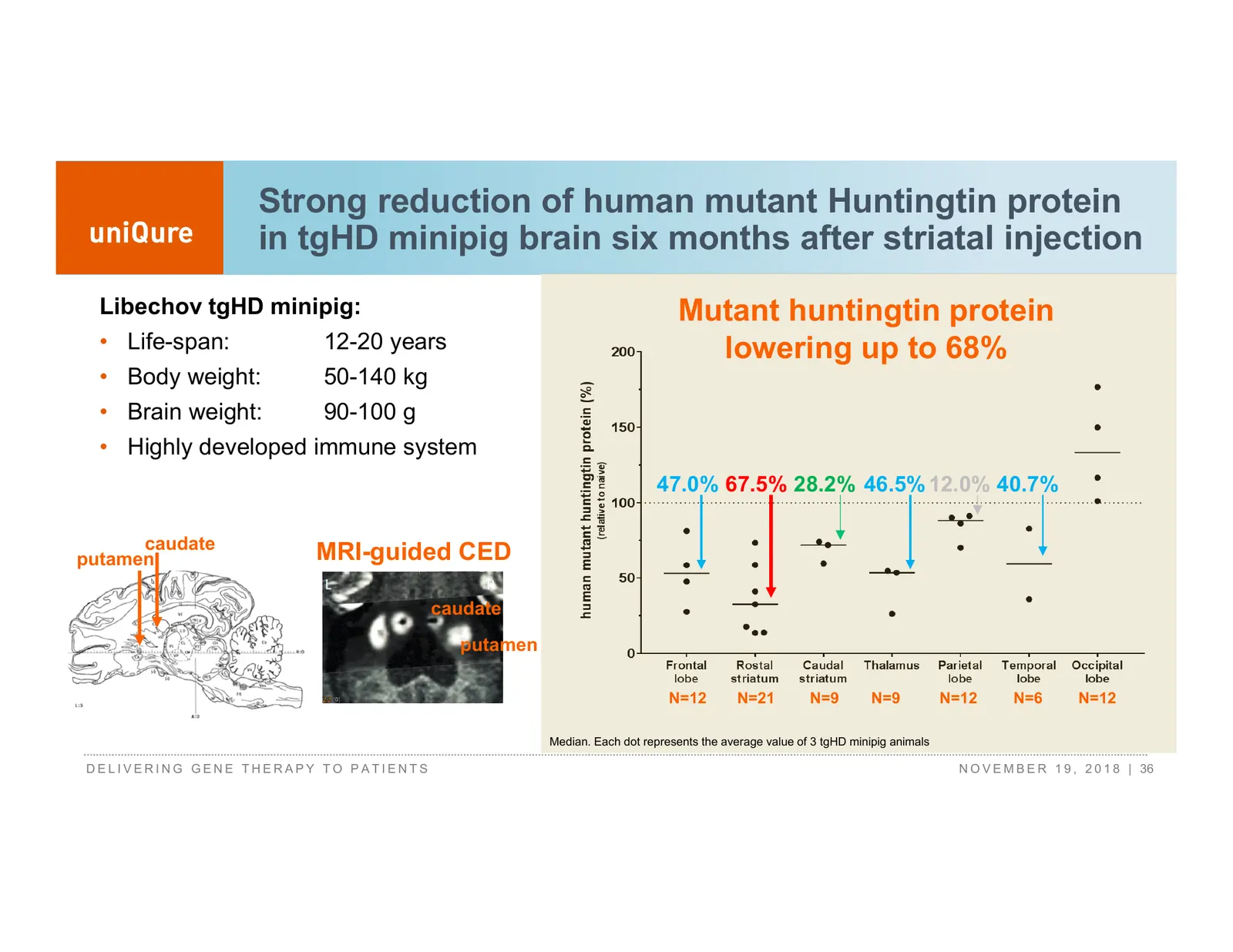
Slide 36: Reduction of mutant Huntingtin in tgHD minipig brain
Strong reduction of human mutant Huntingtin protein in tgHD minipig brain six months after striatal injection Libechov tgHD minipig: Mutant huntingtin protein • Life-span: 12-20 years lowering up to 68% • Body weight: 50-140 kg • Brain weight: 90-100 g • Highly developed immune system 47.0% 67.5% 28
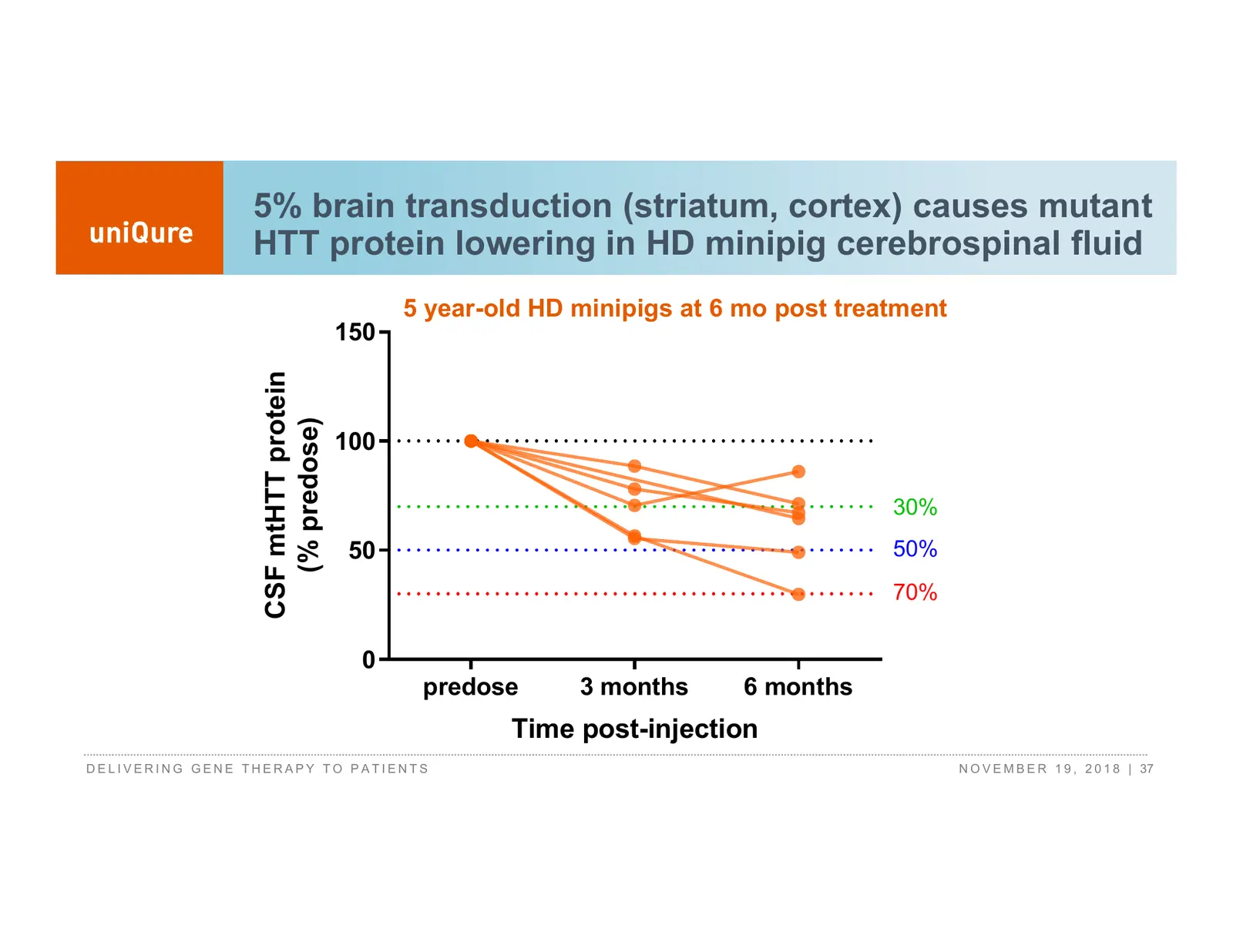
Slide 37: Mutant HTT lowering in HD minipig CSF
5% brain transduction (striatum, cortex) causes mutant HTT protein lowering in HD minipig cerebrospinal fluid 5 year-old HD minipigs at 6 mo post treatment 150 CSF mtHTT protein (% predose) 100 30% 50 50% 70% 0 predose 3 months 6 months Time post-injection DELIVERING GENE THERAPY TO PATIENTS N O V E
Slide 38: Huntington's Disease
Huntington’s Disease Christopher Ross, M.D., Ph.D. Professor of Psychiatry, Neurology, Neuroscience and Pharmacology at Johns Hopkins University School of Medicine
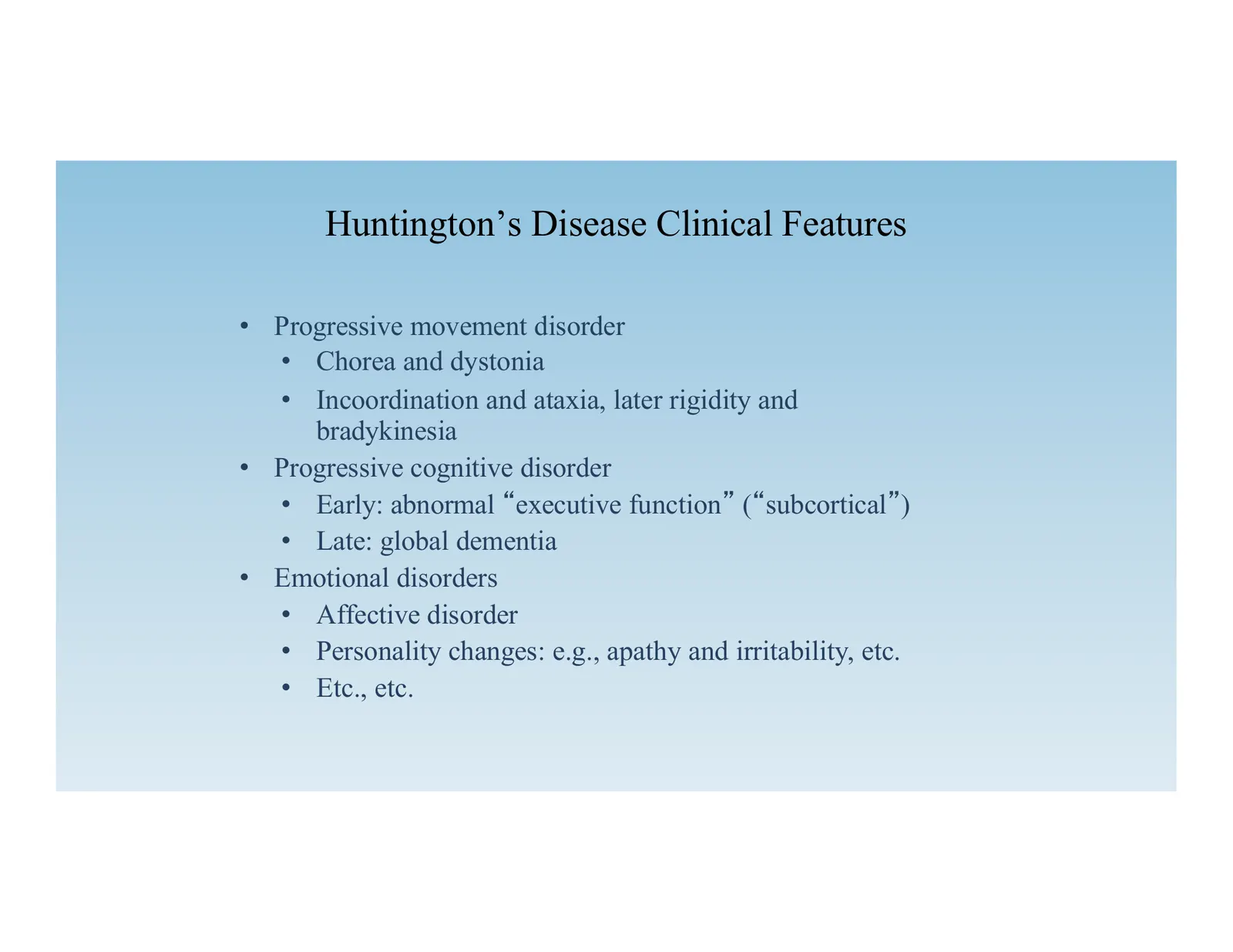
Slide 39: Huntington's Disease Clinical Features
Huntington’s Disease Clinical Features • Progressive movement disorder • Chorea and dystonia • Incoordination and ataxia, later rigidity and bradykinesia • Progressive cognitive disorder • Early: abnormal “executive function” (“subcortical”) • Late: global dementia • Emotional disorders • Affective
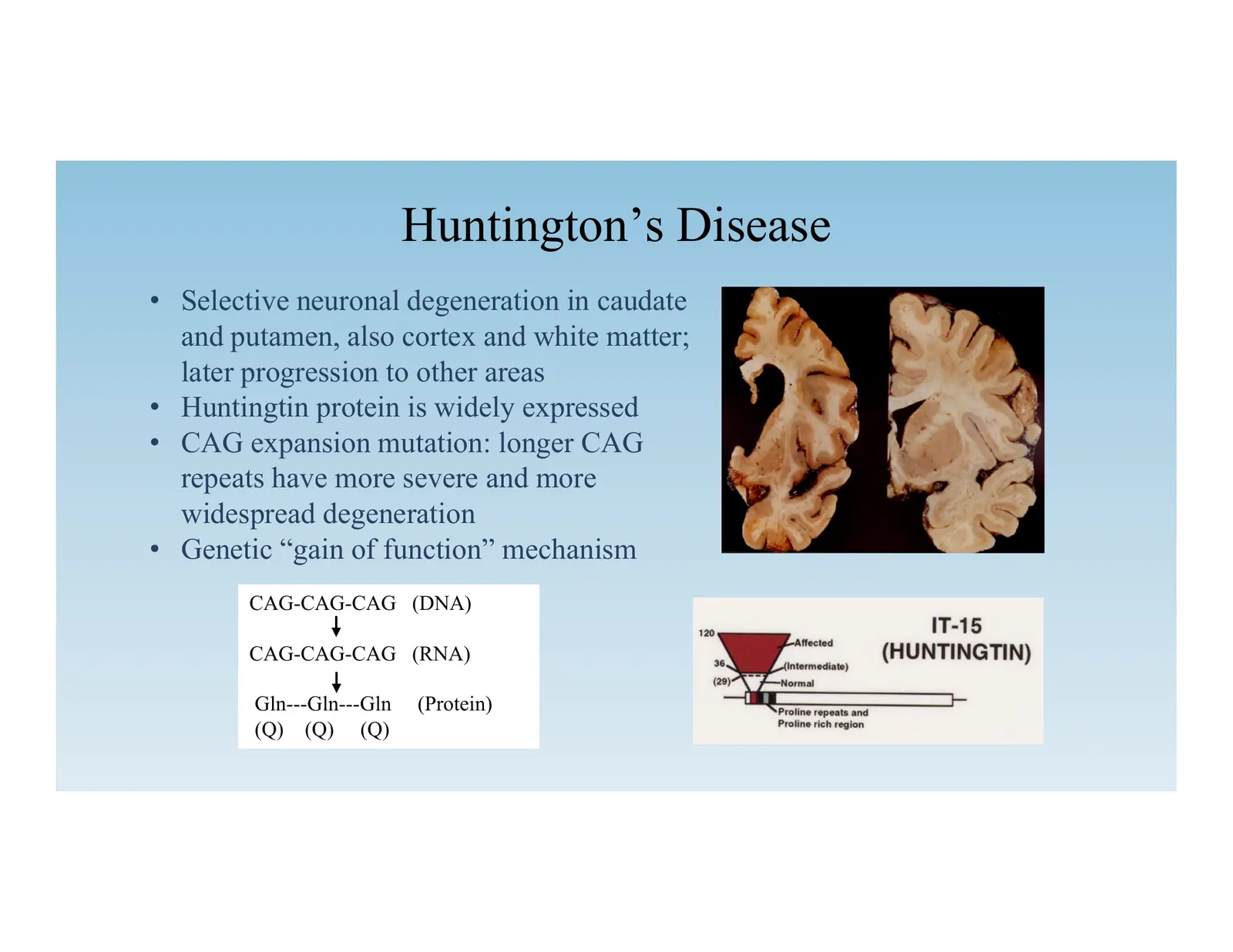
Slide 40: Huntington's Disease
Huntington’s Disease • Selective neuronal degeneration in caudate and putamen, also cortex and white matter; later progression to other areas • Huntingtin protein is widely expressed • CAG expansion mutation: longer CAG repeats have more severe and more widespread degeneration • Genetic “gain of fun
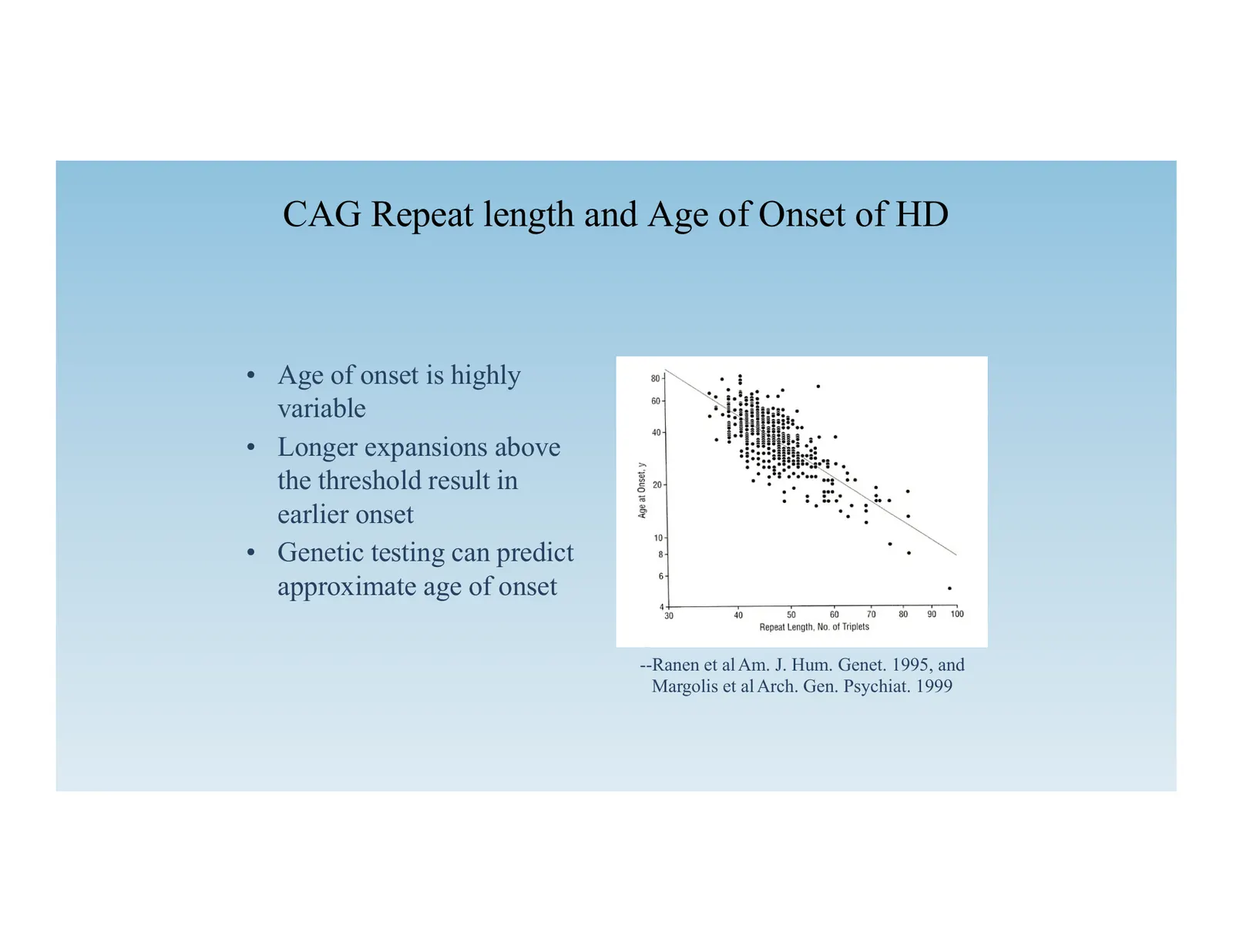
Slide 41: CAG Repeat length and Age of Onset of HD
CAG Repeat length and Age of Onset of HD • Age of onset is highly variable • Longer expansions above the threshold result in earlier onset • Genetic testing can predict approximate age of onset --Ranen et al Am. J. Hum. Genet. 1995, and Margolis et al Arch. Gen. Psychiat. 1999
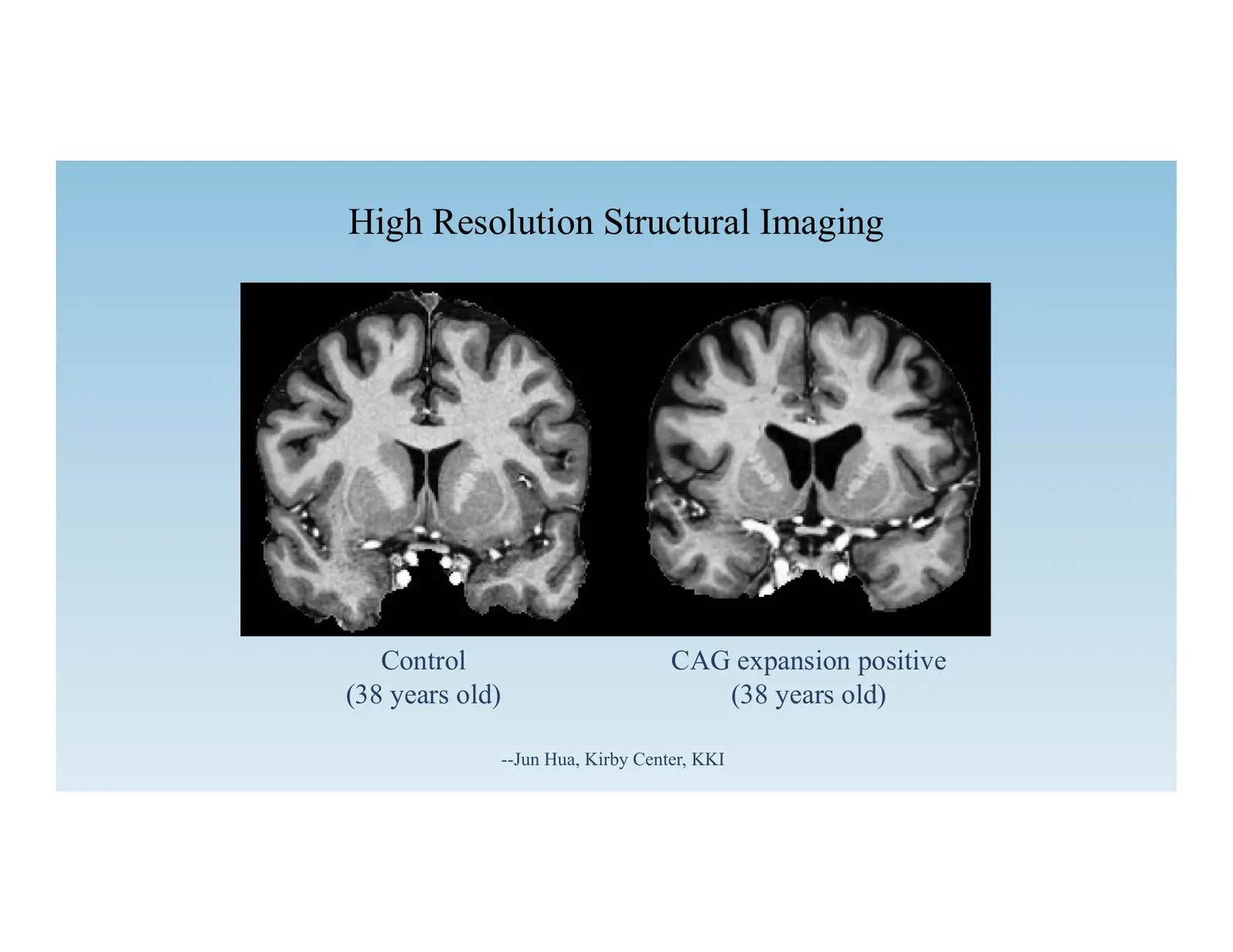
Slide 42: High Resolution Structural Imaging
High Resolution Structural Imaging Control CAG expansion positive (38 years old) (38 years old) --Jun Hua, Kirby Center, KKI
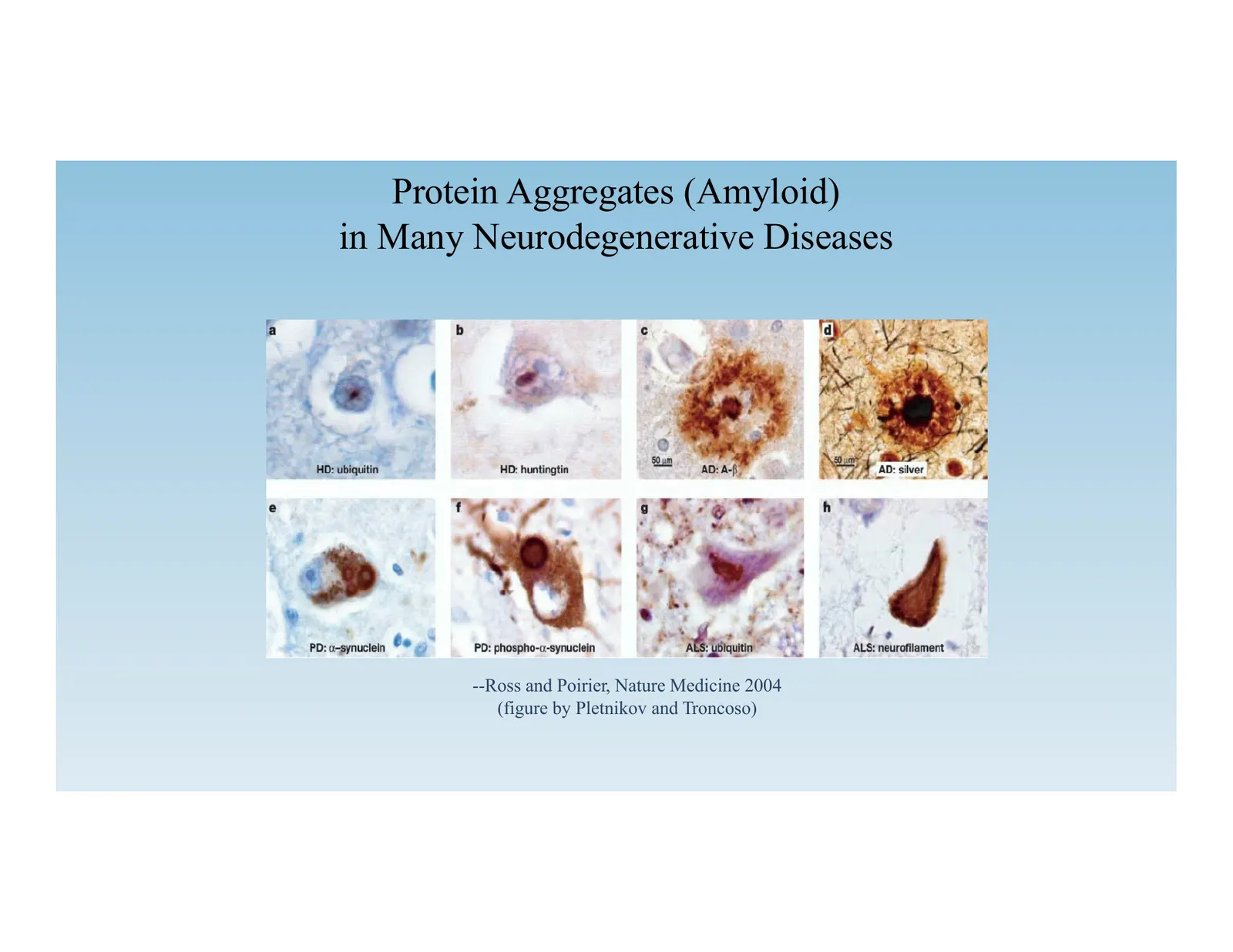
Slide 43: Protein Aggregates in Neurodegenerative Diseases
Protein Aggregates (Amyloid) in Many Neurodegenerative Diseases --Ross and Poirier, Nature Medicine 2004 (figure by Pletnikov and Troncoso)
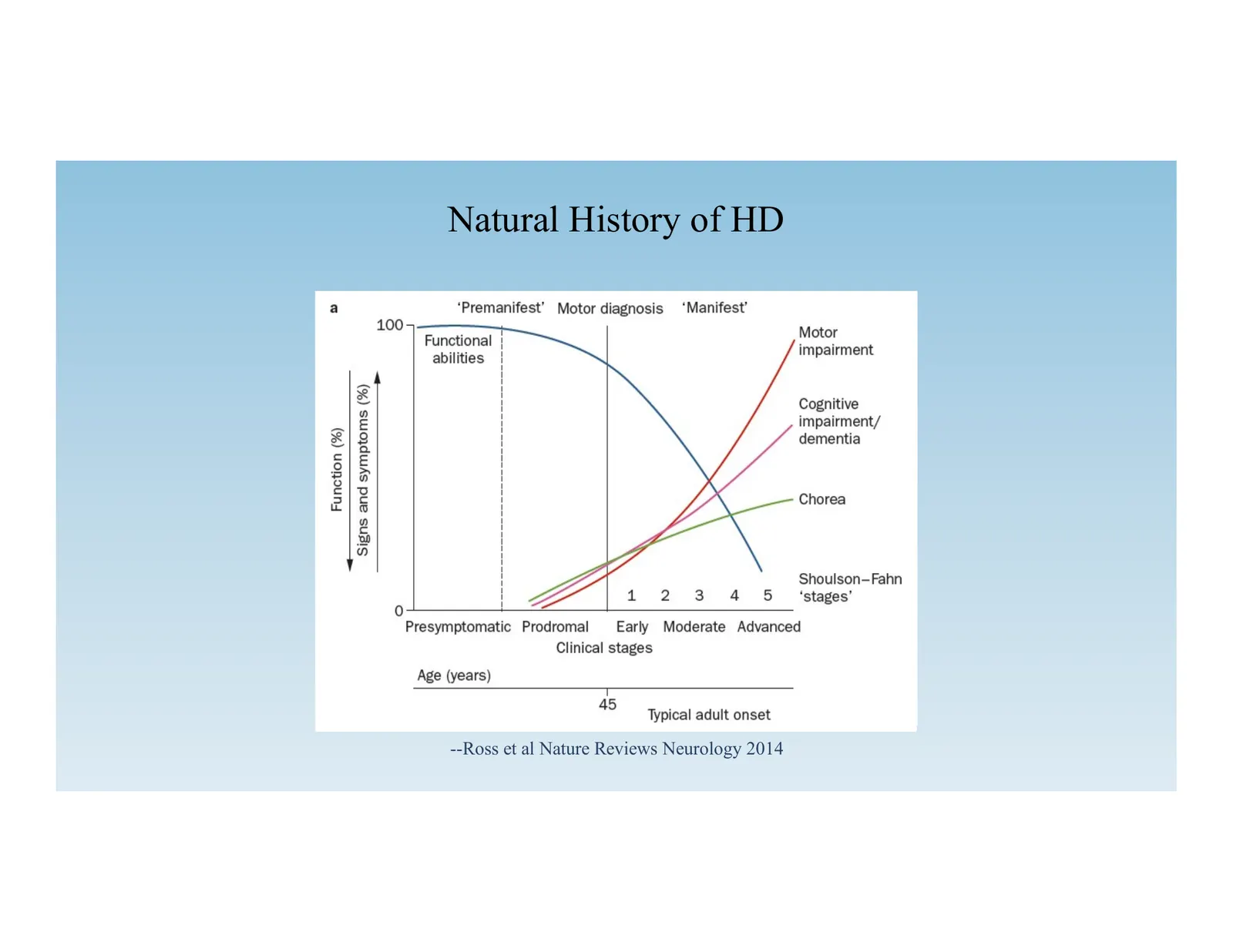
Slide 44: Natural History of HD
Natural History of HD --Ross et al Nature Reviews Neurology 2014
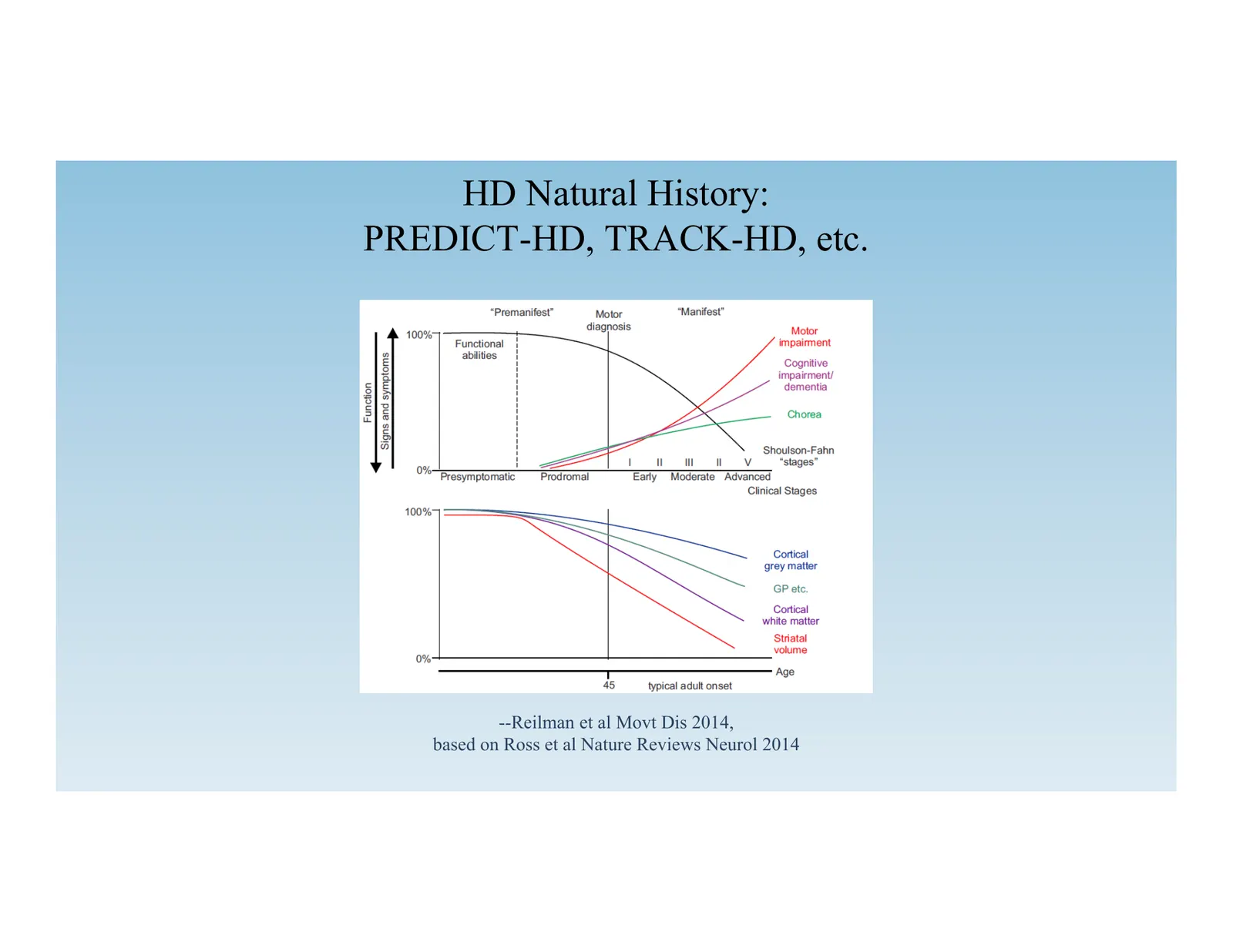
Slide 45: HD Natural History: PREDICT-HD, TRACK-HD
HD Natural History: PREDICT-HD, TRACK-HD, etc. --Reilman et al Movt Dis 2014, based on Ross et al Nature Reviews Neurol 2014
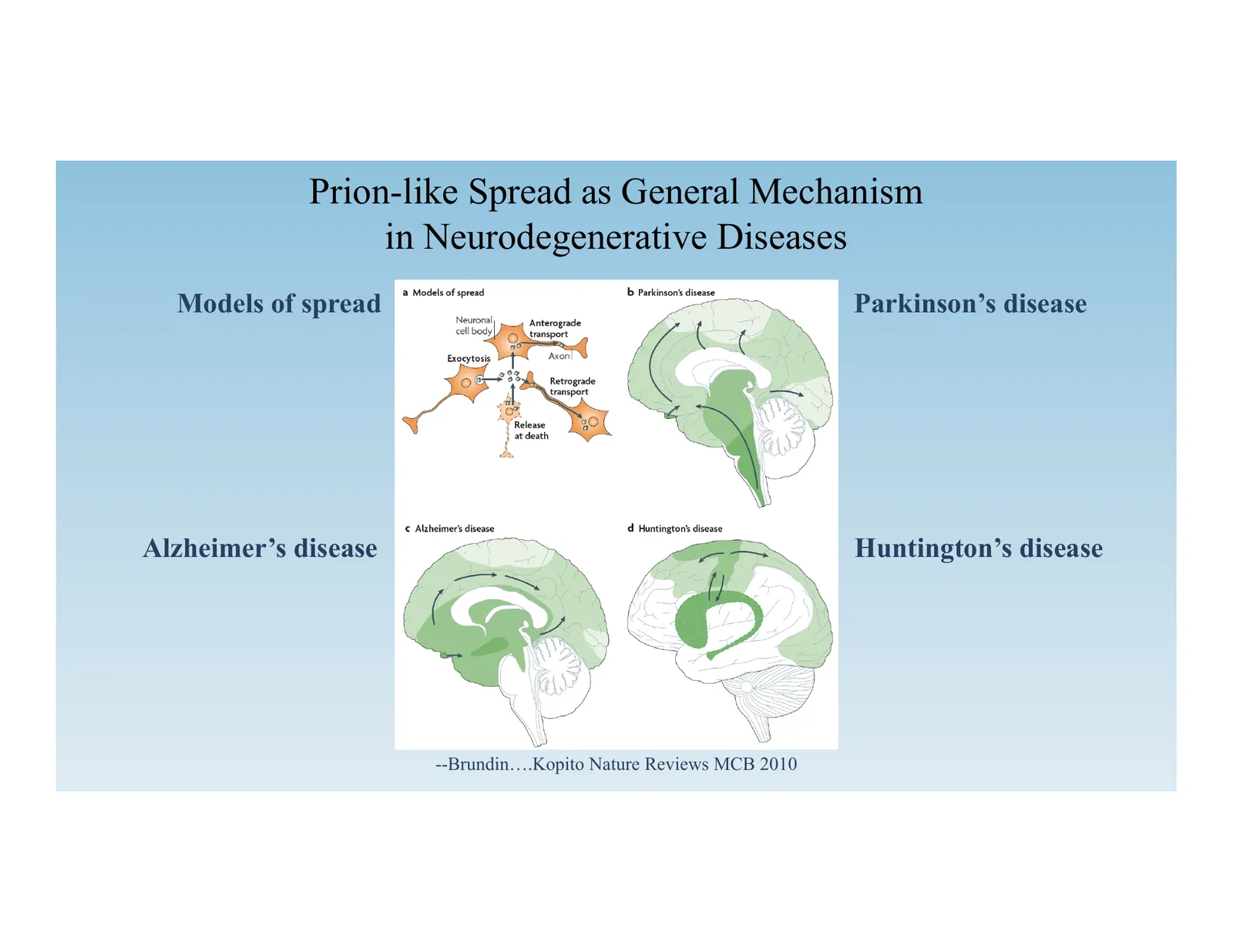
Slide 46: Prion-like Spread in Neurodegenerative Diseases
Prion-like Spread as General Mechanism in Neurodegenerative Diseases Models of spread Parkinson’s disease Alzheimer’s disease Huntington’s disease --Brundin….Kopito Nature Reviews MCB 2010
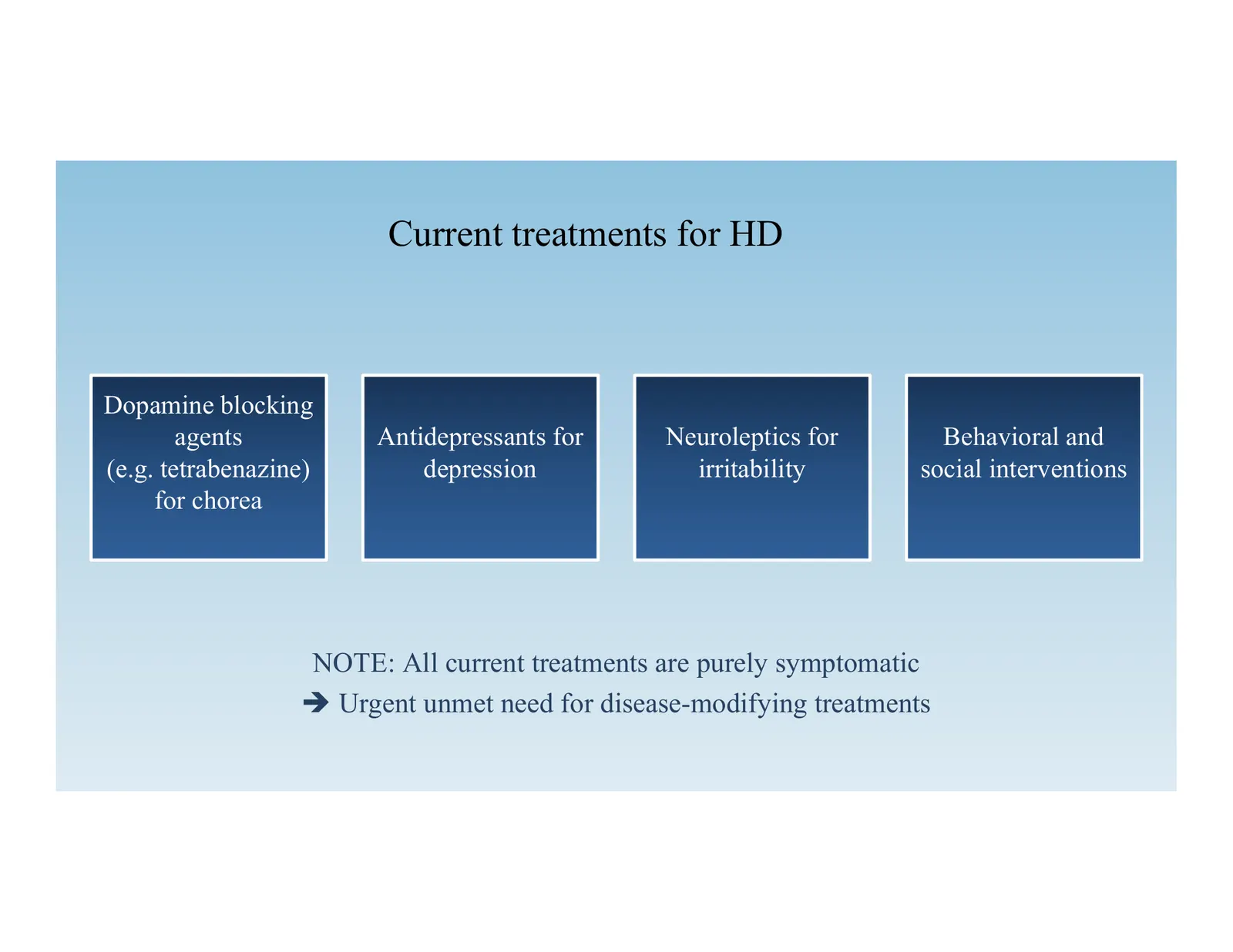
Slide 47: Current treatments for HD
Current treatments for HD Dopamine blocking agents Antidepressants for Neuroleptics for Behavioral and (e.g. tetrabenazine) depression irritability social interventions for chorea NOTE: All current treatments are purely symptomatic Urgent unmet need for disease-modifying treatments
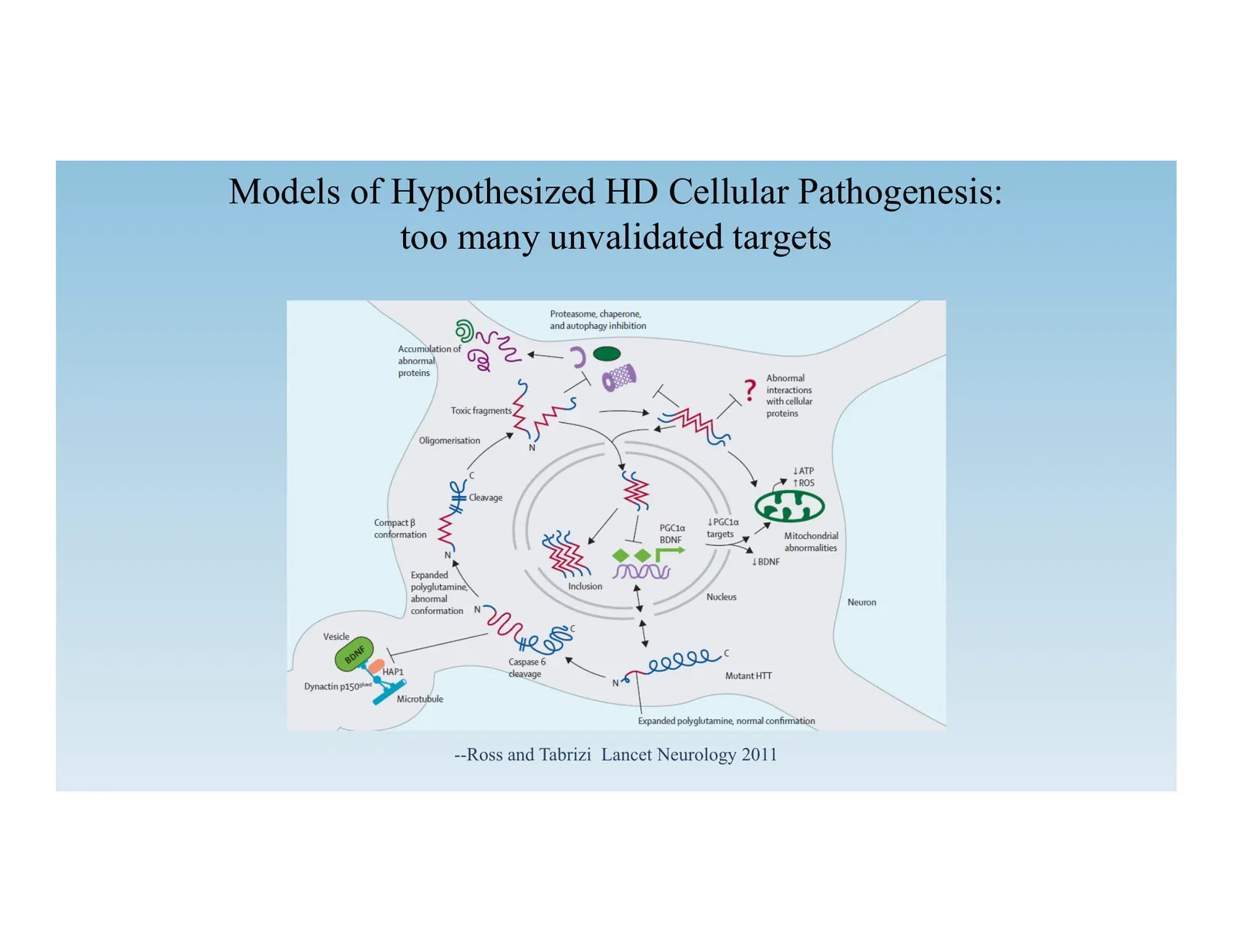
Slide 48: Models of Hypothesized HD Cellular Pathogenesis
Models of Hypothesized HD Cellular Pathogenesis: too many unvalidated targets --Ross and Tabrizi Lancet Neurology 2011
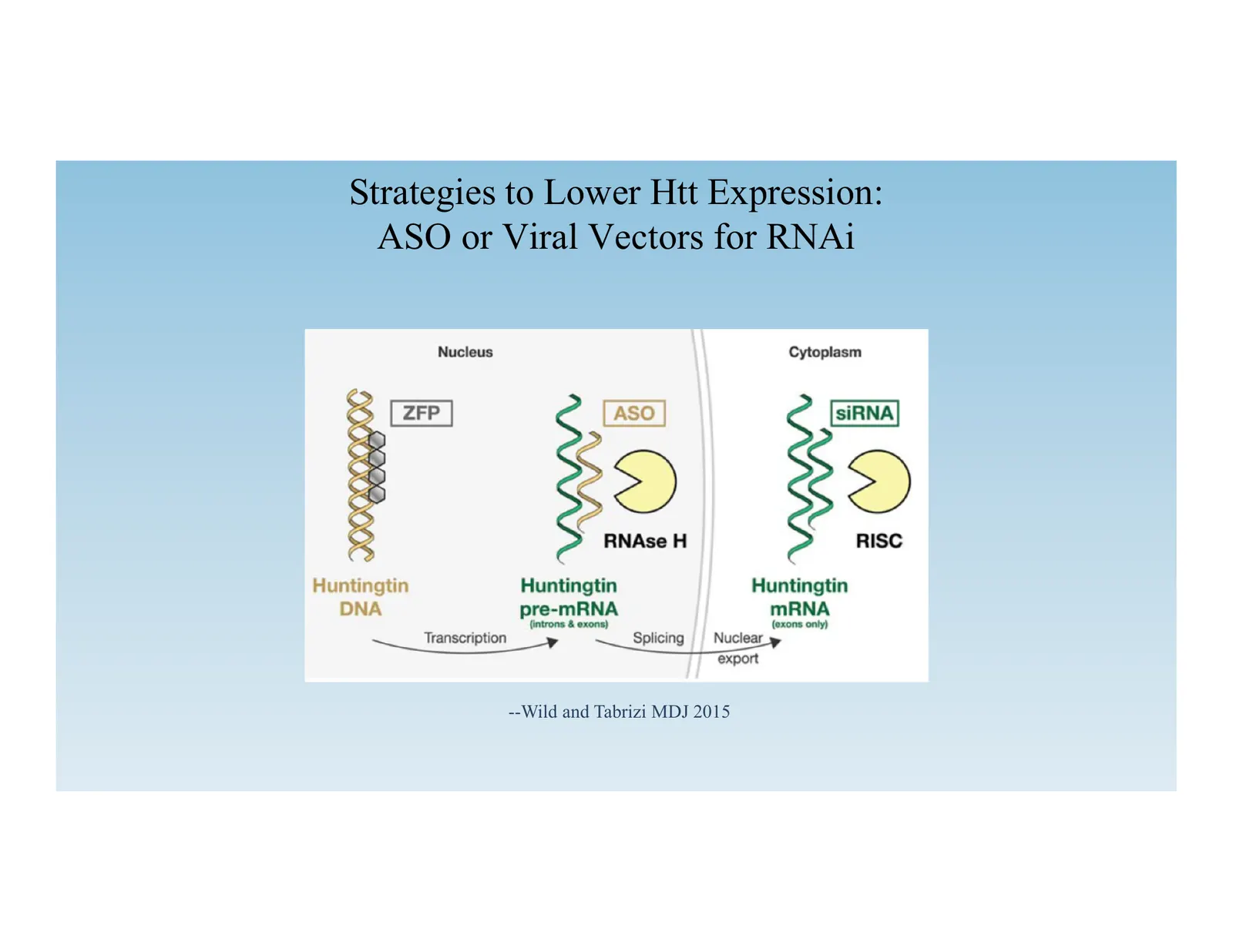
Slide 49: Strategies to Lower Htt Expression
Strategies to Lower Htt Expression: ASO or Viral Vectors for RNAi --Wild and Tabrizi MDJ 2015
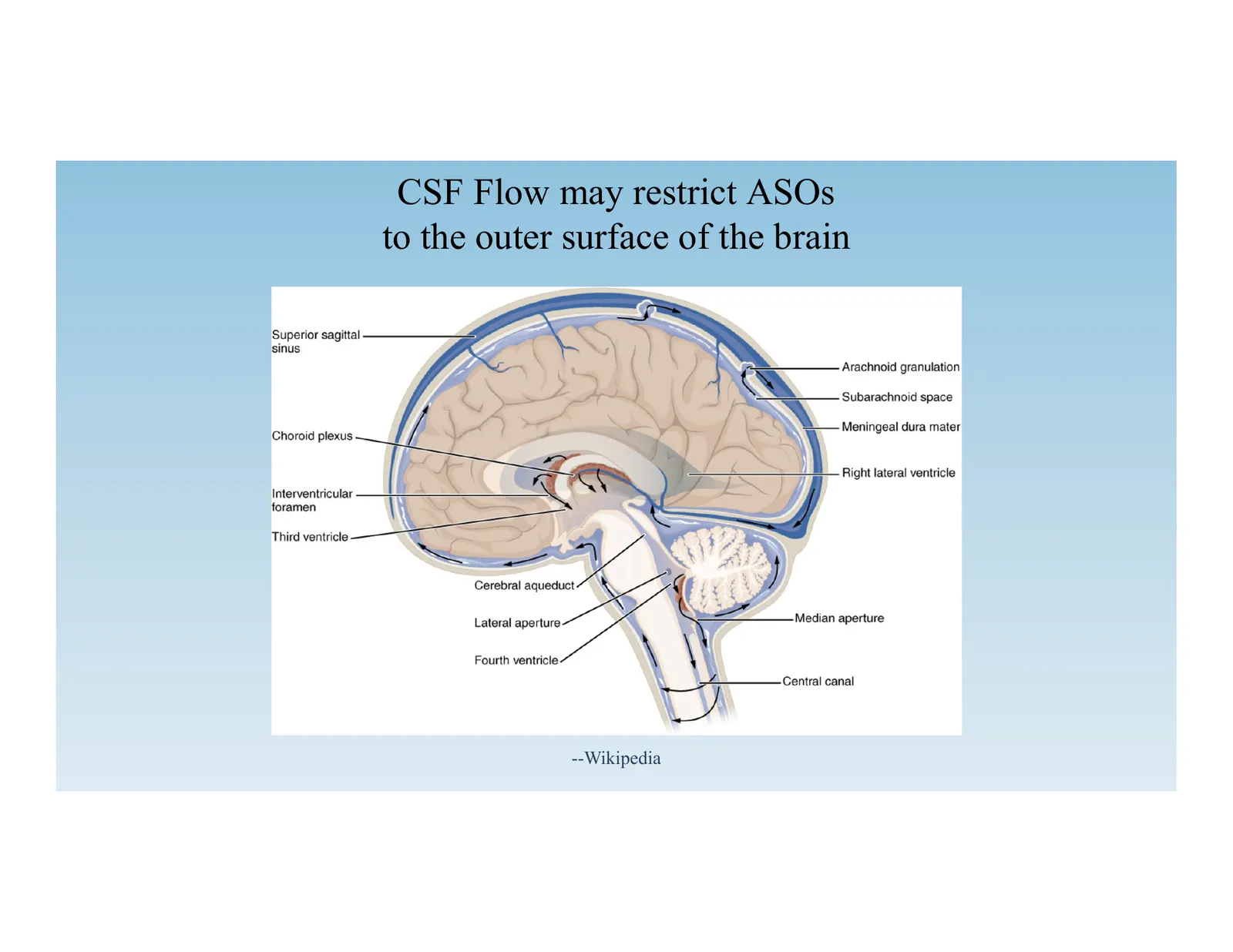
Slide 50: CSF Flow may restrict ASOs to outer brain surface
CSF Flow may restrict ASOs to the outer surface of the brain --Wikipedia
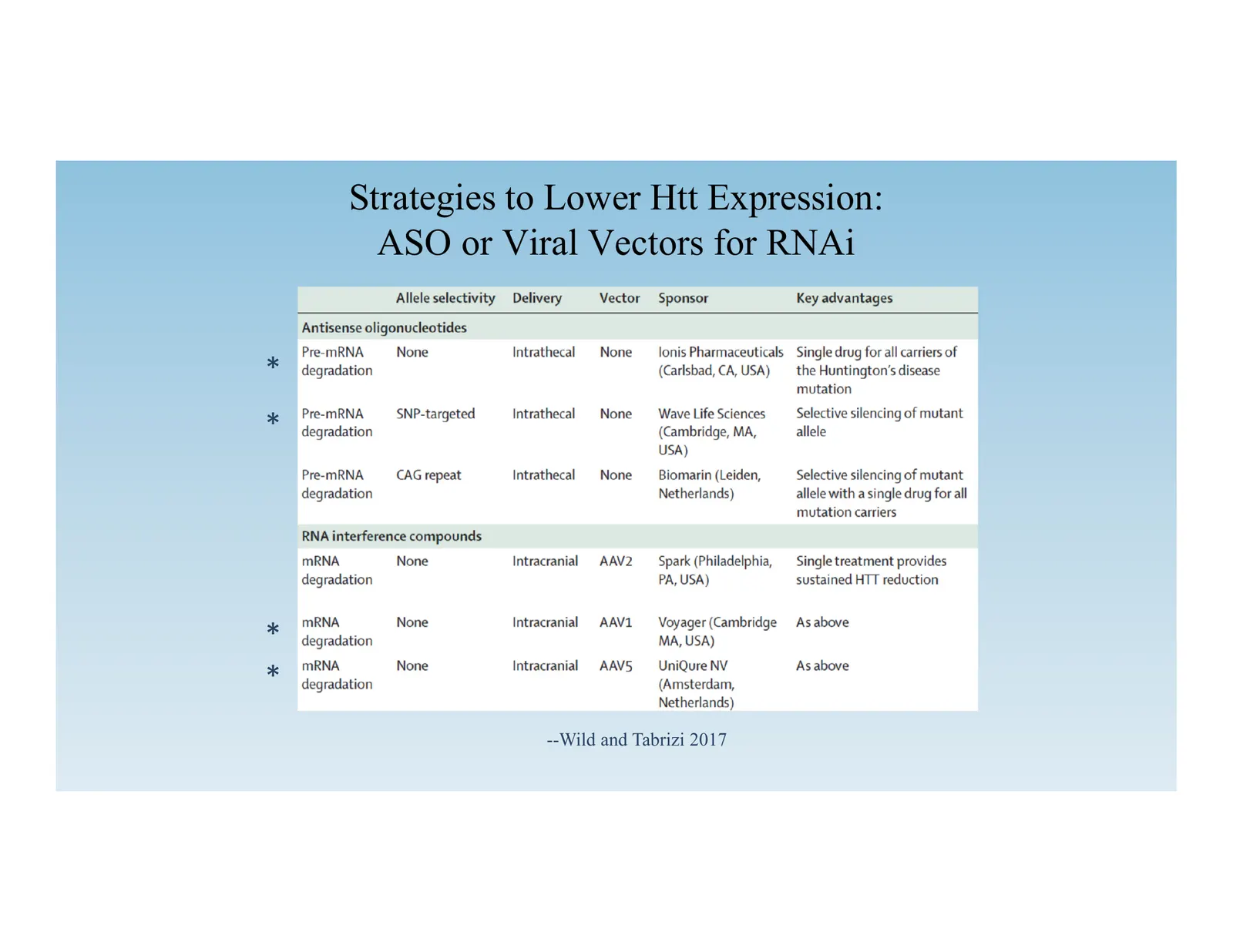
Slide 51: Strategies to Lower Htt Expression
Strategies to Lower Htt Expression: ASO or Viral Vectors for RNAi * * * * --Wild and Tabrizi 2017
Slide 52: AMT-130 Anticipated Clinical Development
AMT-130 Anticipated Clinical Development Joseph Higgins, M.D. Vice President, Clinical Development Huntington's Disease Program Lead DELIVERING GENE THERAPY TO PATIENTS N O V E M B E R 1 9 , 2 0 1 8 | 52
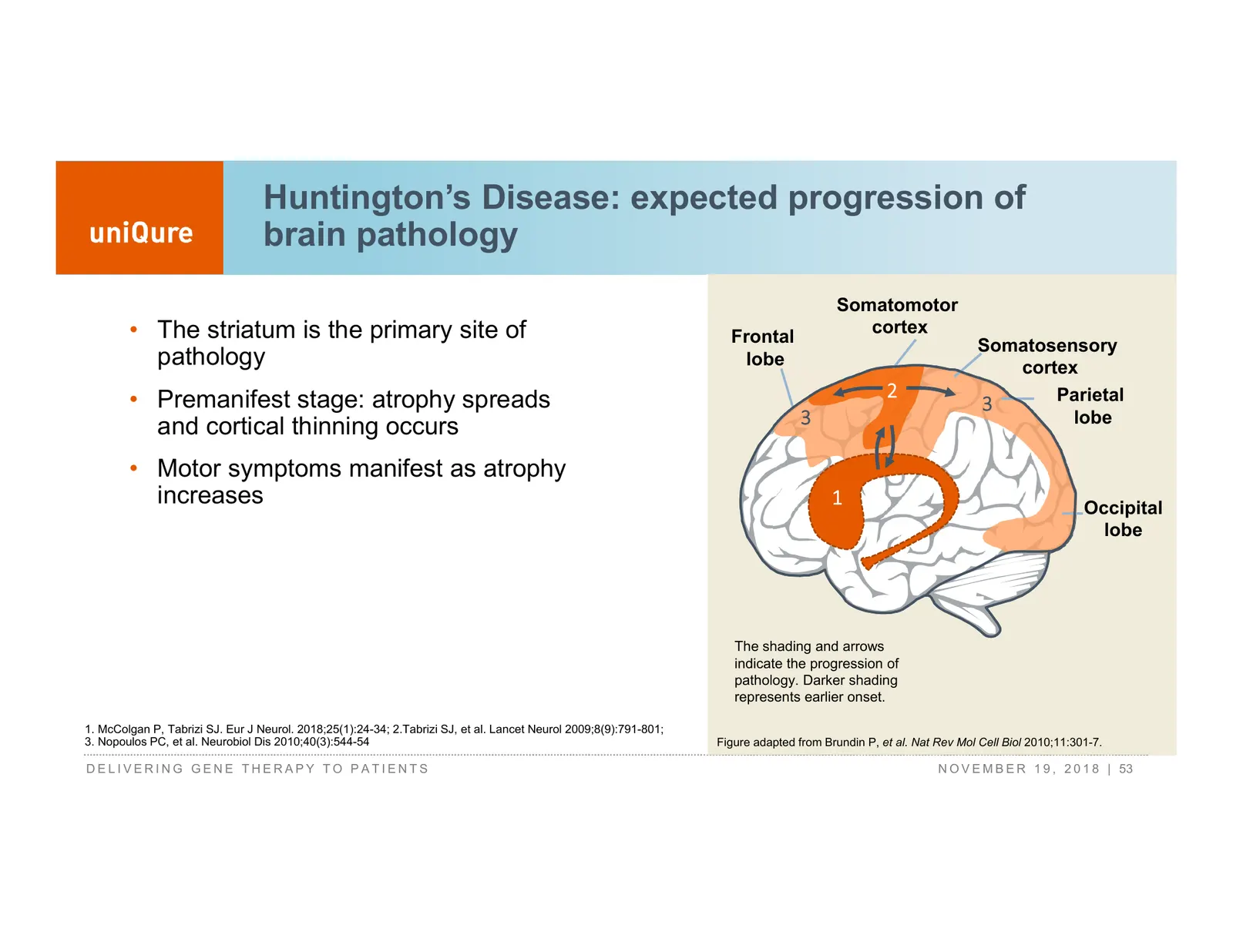
Slide 53: Expected progression of brain pathology
Huntington’s Disease: expected progression of brain pathology Somatomotor • The striatum is the primary site of Frontal cortex Somatosensory pathology lobe cortex • Premanifest stage: atrophy spreads 2 Parietal 3 3 lobe and cortical thinning occurs • Motor symptoms manifest as atrophy increases 1 Oc
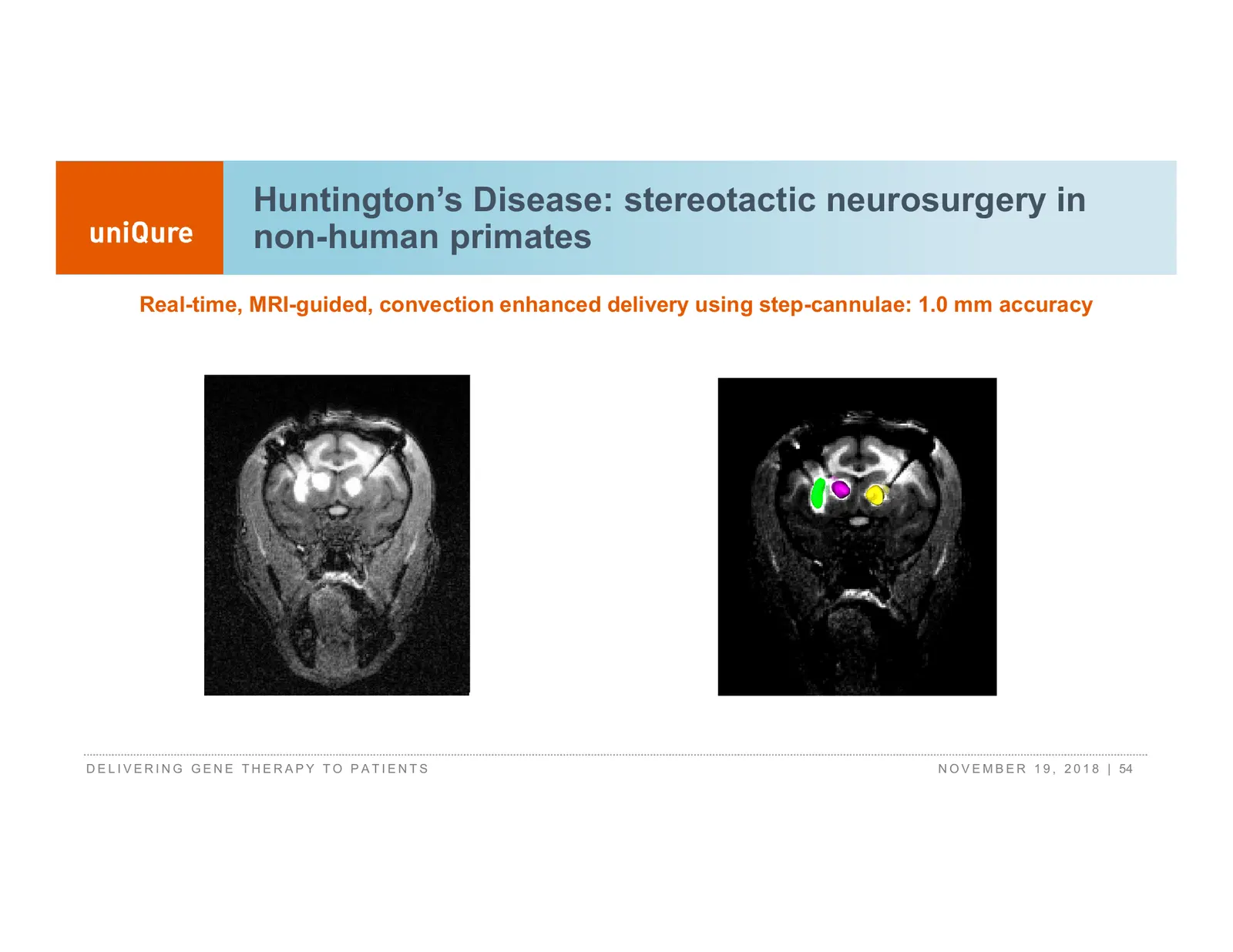
Slide 54: Stereotactic neurosurgery in non-human primates
Huntington’s Disease: stereotactic neurosurgery in non-human primates Real-time, MRI-guided, convection enhanced delivery using step-cannulae: 1.0 mm accuracy DELIVERING GENE THERAPY TO PATIENTS N O V E M B E R 1 9 , 2 0 1 8 | 54
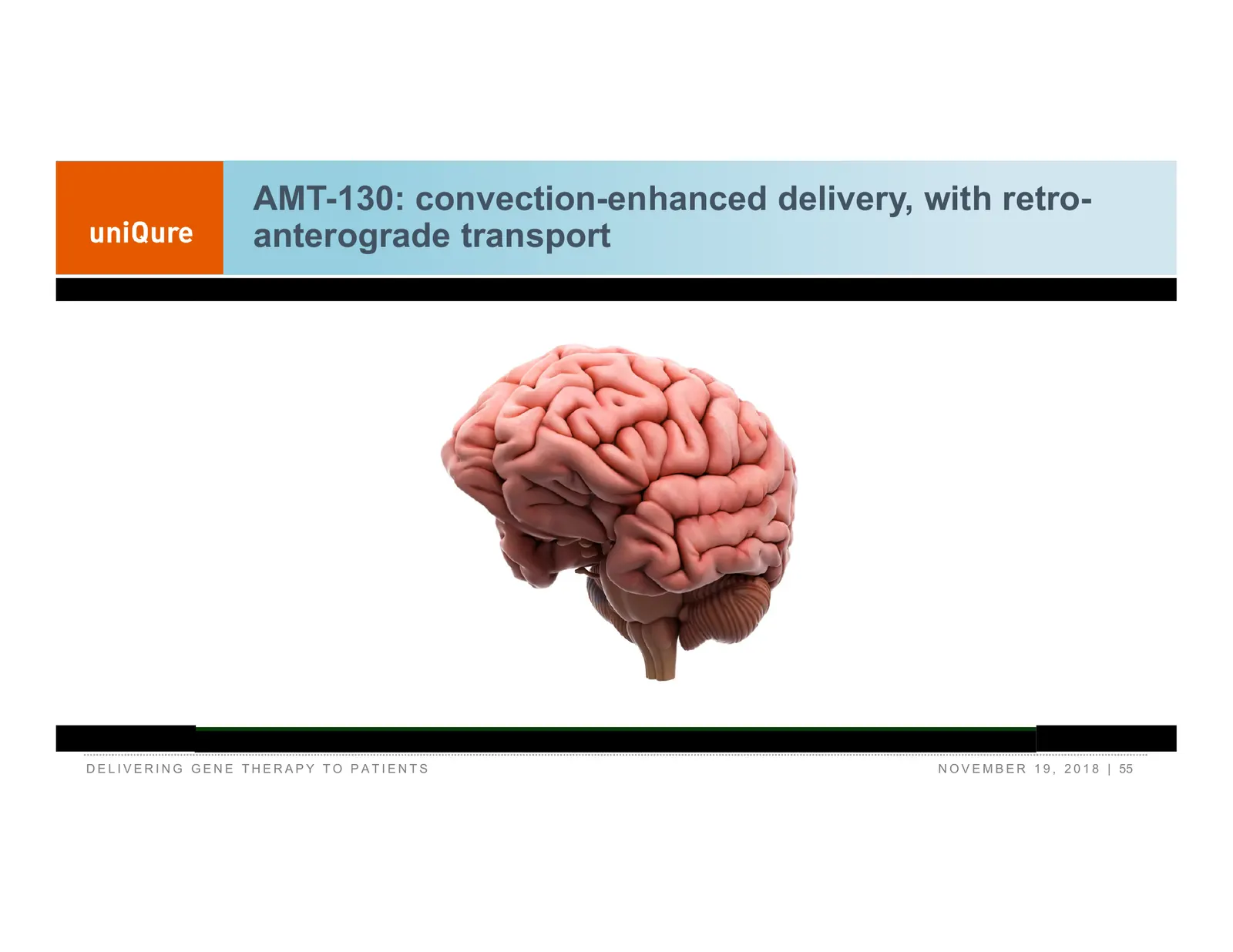
Slide 55: AMT-130: convection-enhanced delivery
AMT-130: convection-enhanced delivery, with retro- anterograde transport DELIVERING GENE THERAPY TO PATIENTS N O V E M B E R 1 9 , 2 0 1 8 | 55
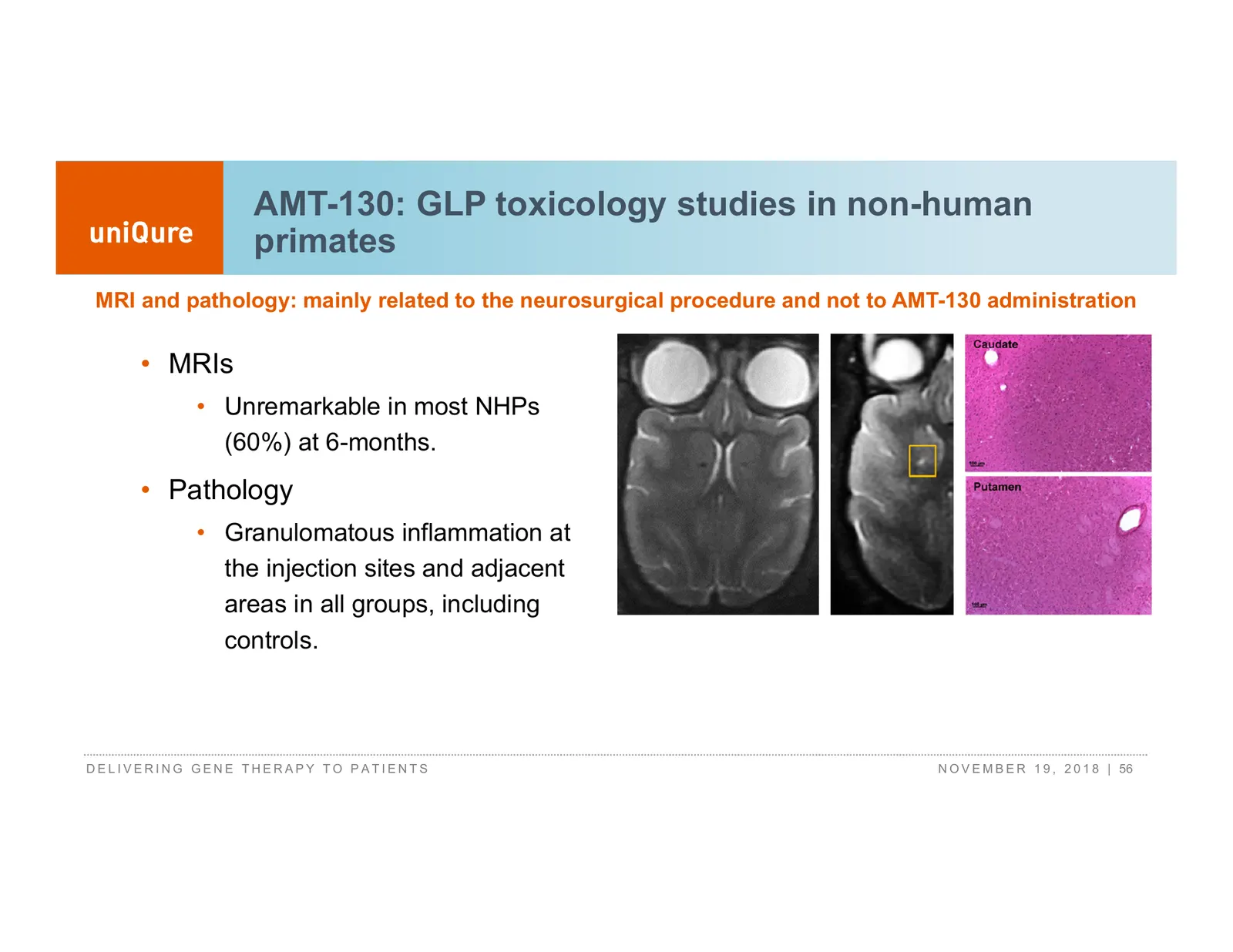
Slide 56: AMT-130: GLP toxicology studies in NHPs
AMT-130: GLP toxicology studies in non-human primates MRI and pathology: mainly related to the neurosurgical procedure and not to AMT-130 administration • MRIs • Unremarkable in most NHPs (60%) at 6-months. • Pathology • Granulomatous inflammation at the injection sites and adjacent areas in all gro
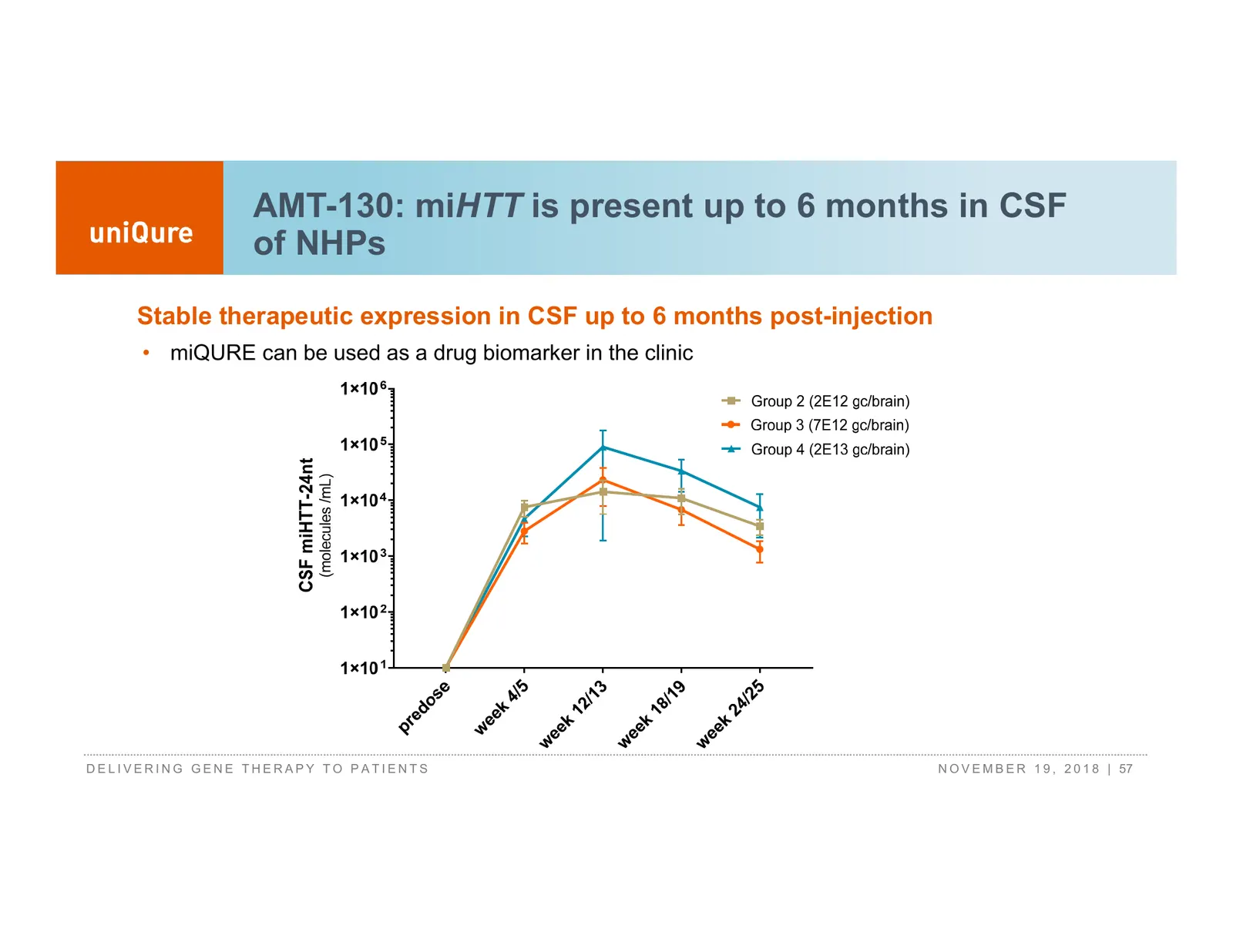
Slide 57: AMT-130: miHTT present up to 6 months in CSF
AMT-130: miHTT is present up to 6 months in CSF of NHPs Stable therapeutic expression in CSF up to 6 months post-injection • miQURE can be used as a drug biomarker in the clinic DELIVERING GENE THERAPY TO PATIENTS N O V E M B E R 1 9 , 2 0 1 8 | 57
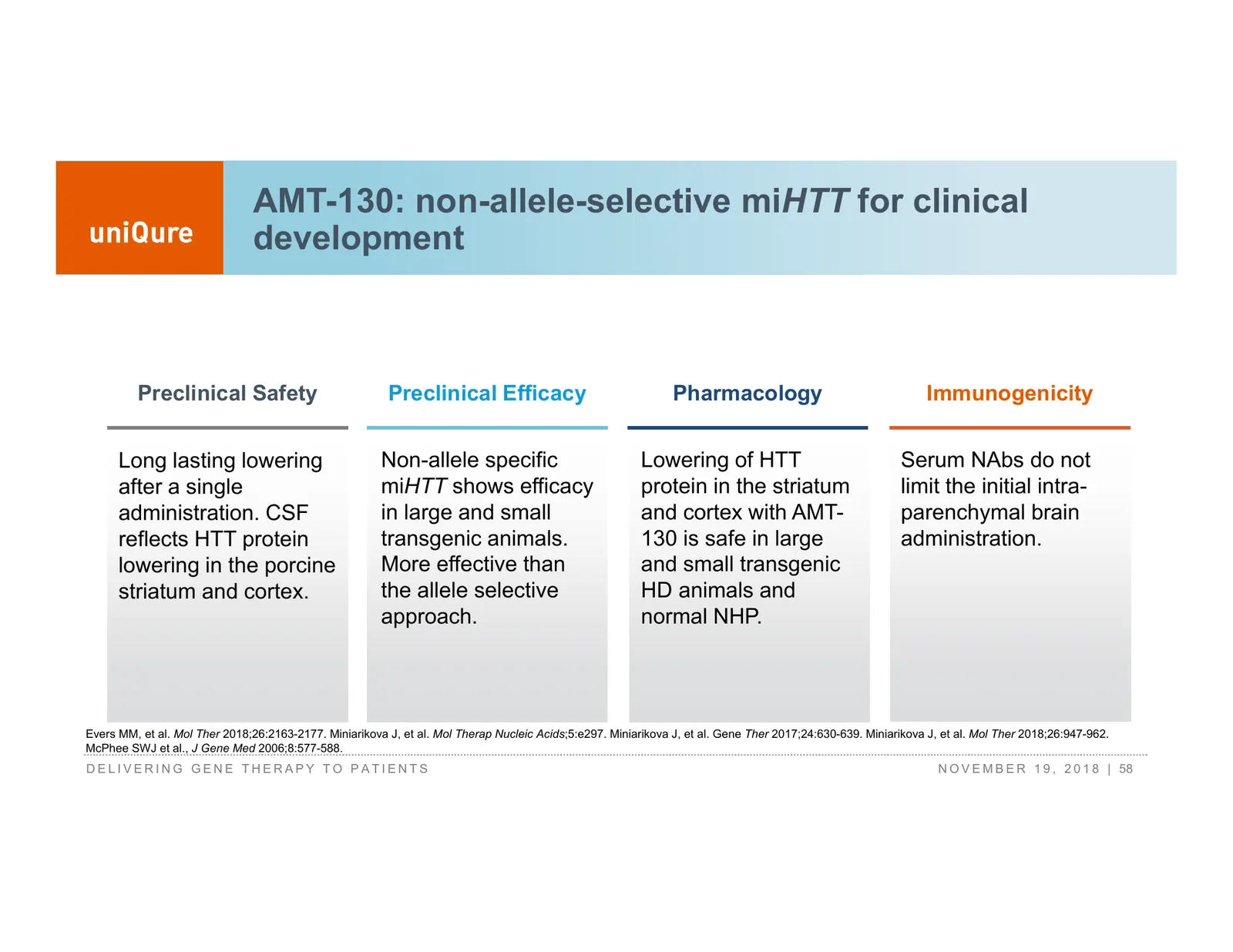
Slide 58: AMT-130: non-allele-selective miHTT
AMT-130: non-allele-selective miHTT for clinical development Preclinical Safety Preclinical Efficacy Pharmacology Immunogenicity Long lasting lowering Non-allele specific Lowering of HTT Serum NAbs do not after a single miHTT shows efficacy protein in the striatum limit the initial intra- administra
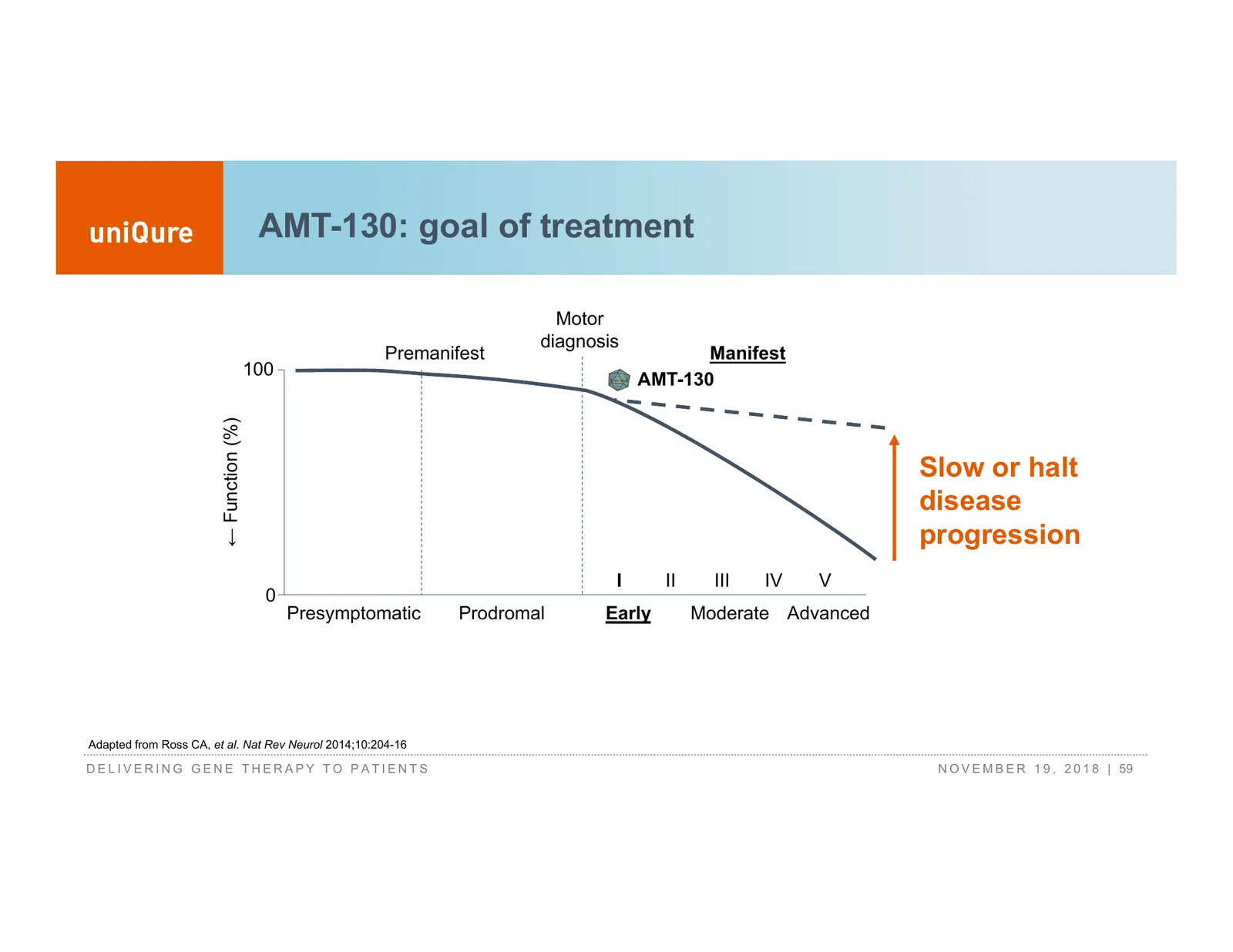
Slide 59: AMT-130: goal of treatment
AMT-130: goal of treatment Motor diagnosis Premanifest Manifest 100 AMT-130 ← Function (%) Slow or halt disease progression I II III IV V 0 Presymptomatic Prodromal Early Moderate Advanced Adapted from Ross CA, et al. Nat Rev Neurol 2014;10:204-16 DELIVERING GENE THERAPY TO PATIENTS N O V E M B E R
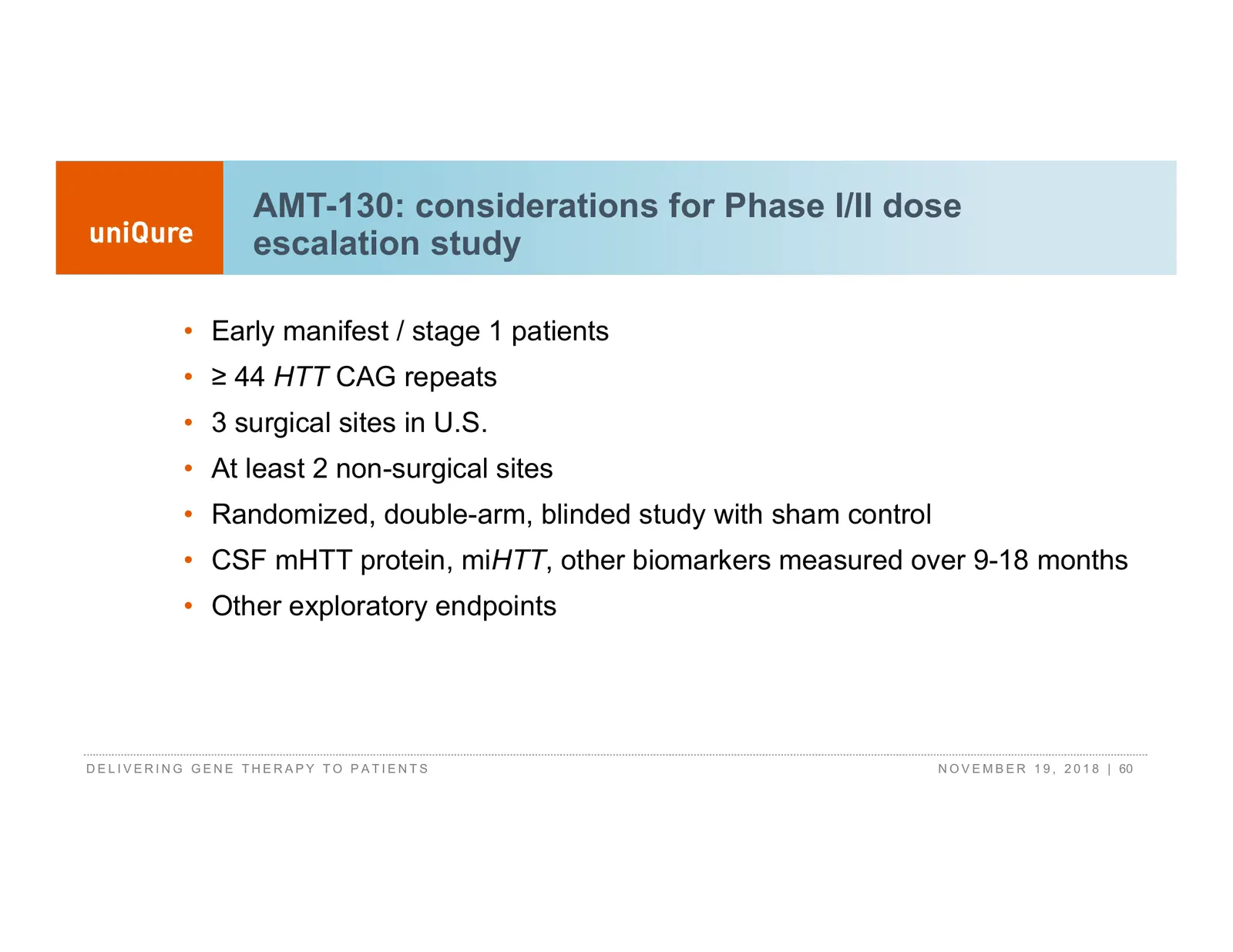
Slide 60: Phase I/II dose escalation study considerations
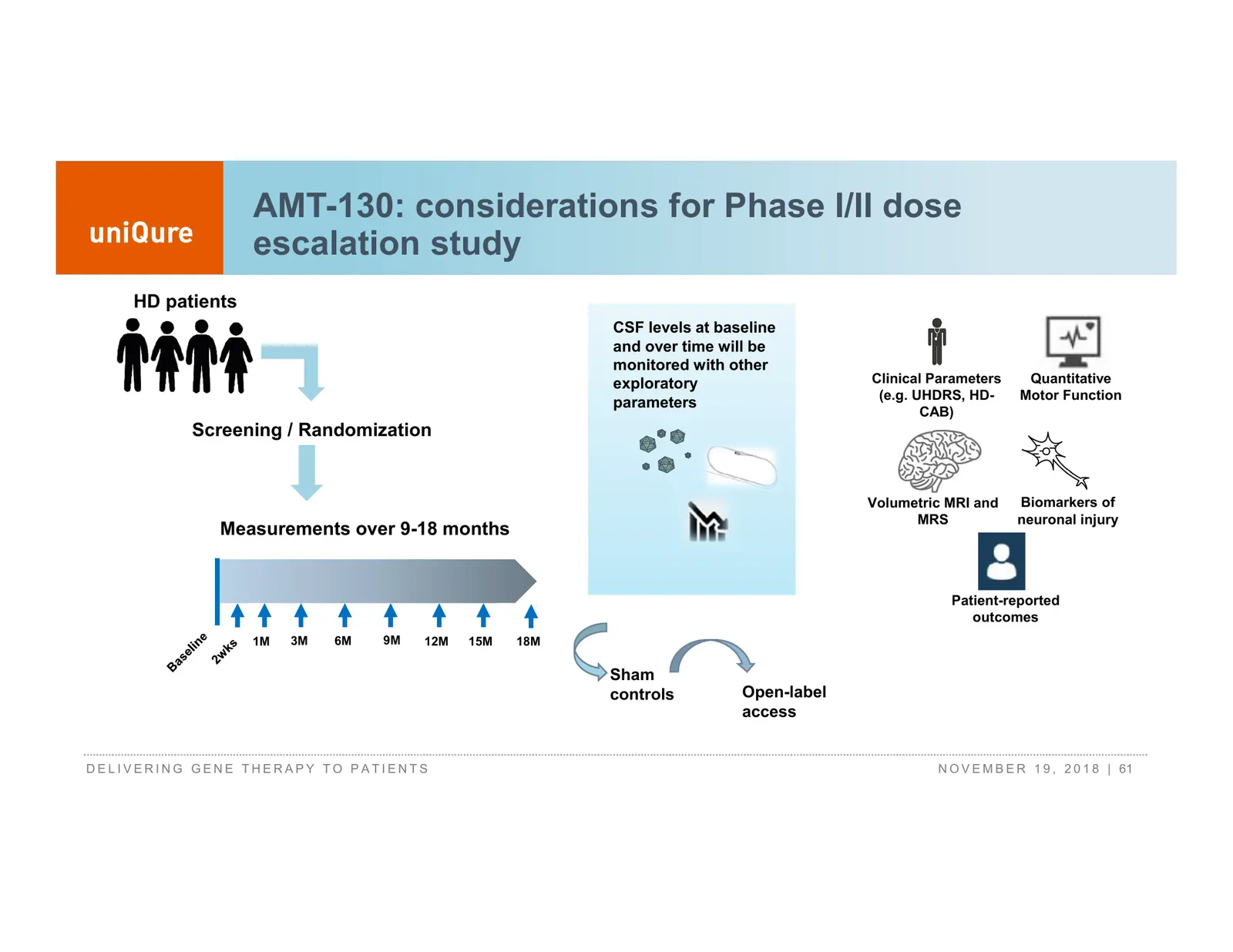
AMT-130: considerations for Phase I/II dose escalation study • Early manifest / stage 1 patients • ≥ 44 HTT CAG repeats • 3 surgical sites in U.S. • At least 2 non-surgical sites • Randomized, double-arm, blinded study with sham control • CSF mHTT protein, miHTT, other biomarkers measured over 9-18
Slide 61: Phase I/II dose escalation study design
AMT-130: considerations for Phase I/II dose escalation study HD patients CSF levels at baseline and over time will be monitored with other exploratory Clinical Parameters Quantitative (e.g. UHDRS, HD- Motor Function parameters CAB) Screening / Randomization Volumetric MRI and Biomarkers of MRS neuro

Slide 62: Panel Q&A
Panel Q&A DELIVERING GENE THERAPY TO PATIENTS N O V E M B E R 1 9 , 2 0 1 8 | 62

Slide 63: Advances in Manufacturing and Research Technology
Advances in Manufacturing and Research Technology DELIVERING GENE THERAPY TO PATIENTS N O V E M B E R 1 9 , 2 0 1 8 | 63
Slide 64: Jacek Lubelski, Ph.D.
Jacek Lubelski, Ph.D. Vice President, Global Pharmaceutical Development DELIVERING GENE THERAPY TO PATIENTS N O V E M B E R 1 9 , 2 0 1 8 | 64
Slide 65: uniQure's leading manufacturing platform
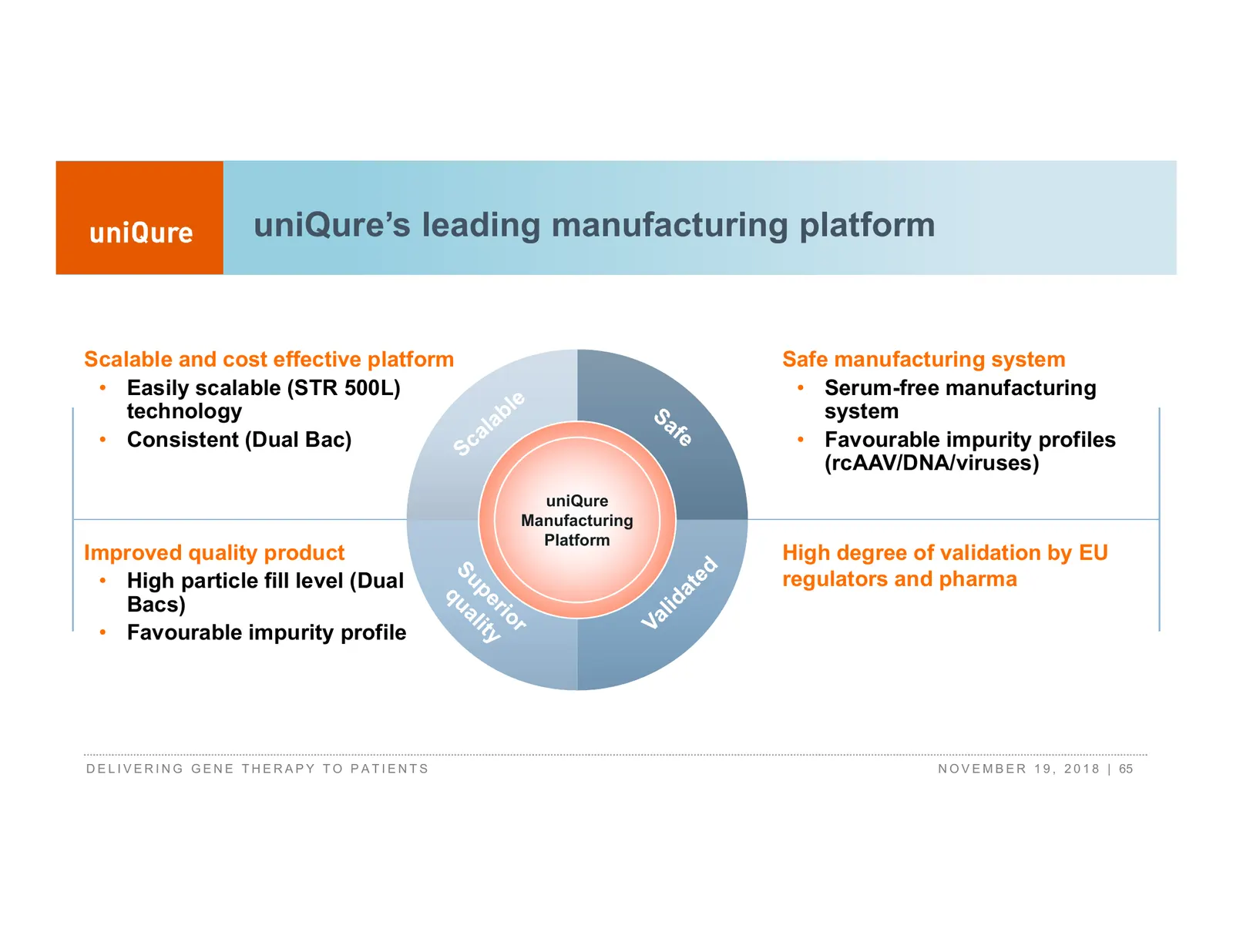
uniQure’s leading manufacturing platform Scalable and cost effective platform Safe manufacturing system • Easily scalable (STR 500L) • Serum-free manufacturing technology system • Consistent (Dual Bac) • Favourable impurity profiles (rcAAV/DNA/viruses) uniQure Manufacturing Platform Improved quality
Slide 66: Successful scale up requires robust production system
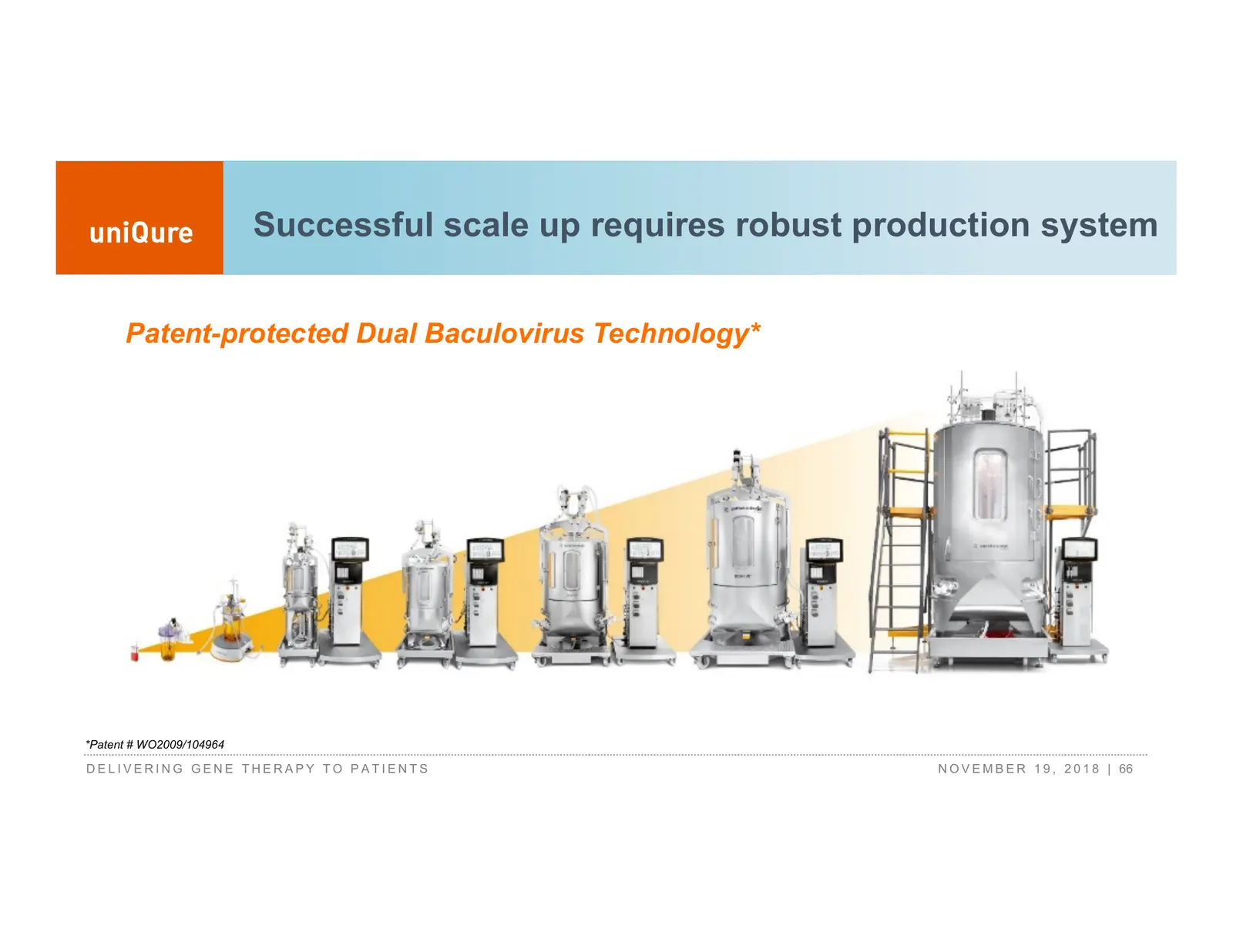
Successful scale up requires robust production system Patent-protected Dual Baculovirus Technology* *Patent # WO2009/104964 DELIVERING GENE THERAPY TO PATIENTS N O V E M B E R 1 9 , 2 0 1 8 | 66
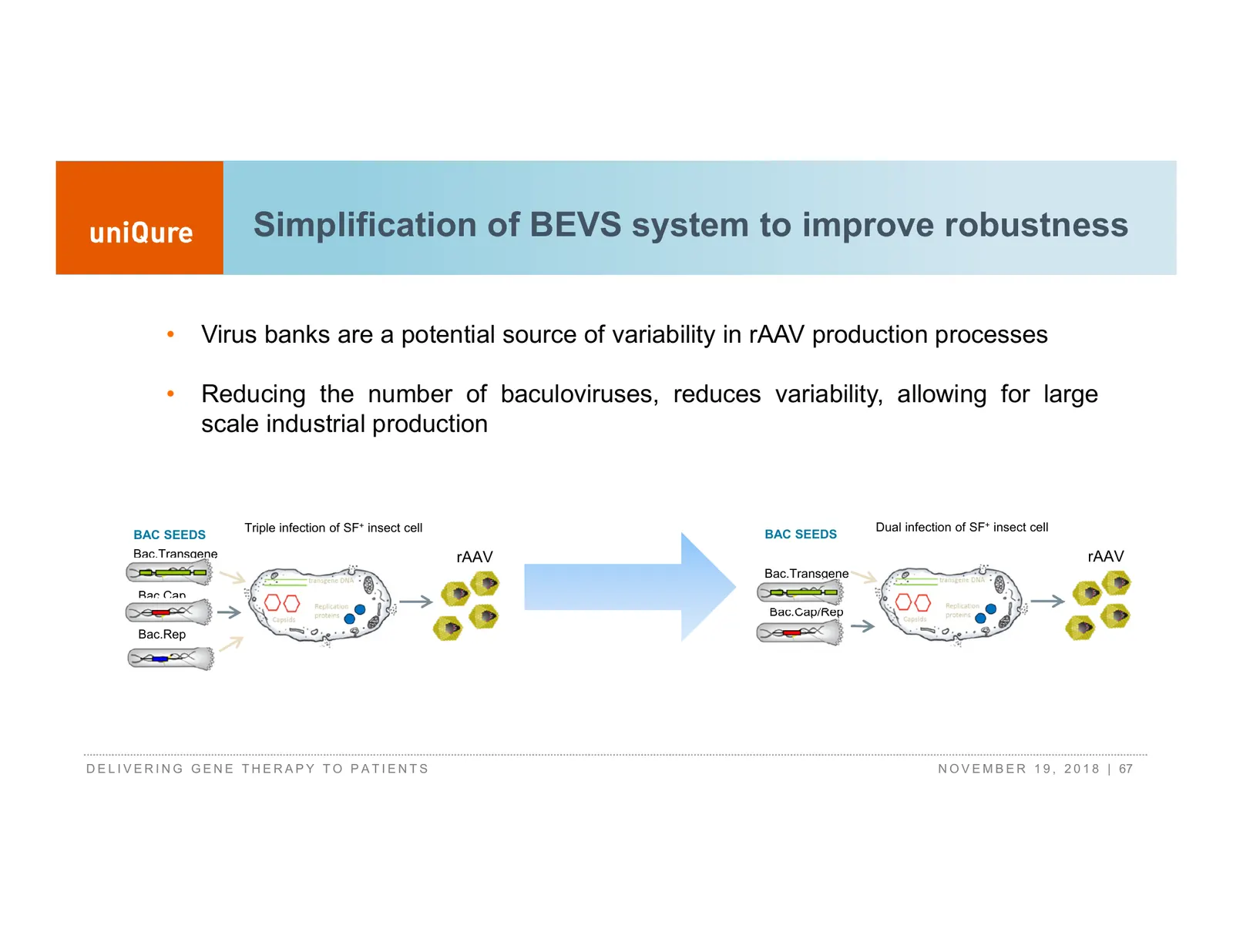
Slide 67: Simplification of BEVS system
Simplification of BEVS system to improve robustness • Virus banks are a potential source of variability in rAAV production processes • Reducing the number of baculoviruses, reduces variability, allowing for large scale industrial production Triple infection of SF+ insect cell Dual infection of SF+ i
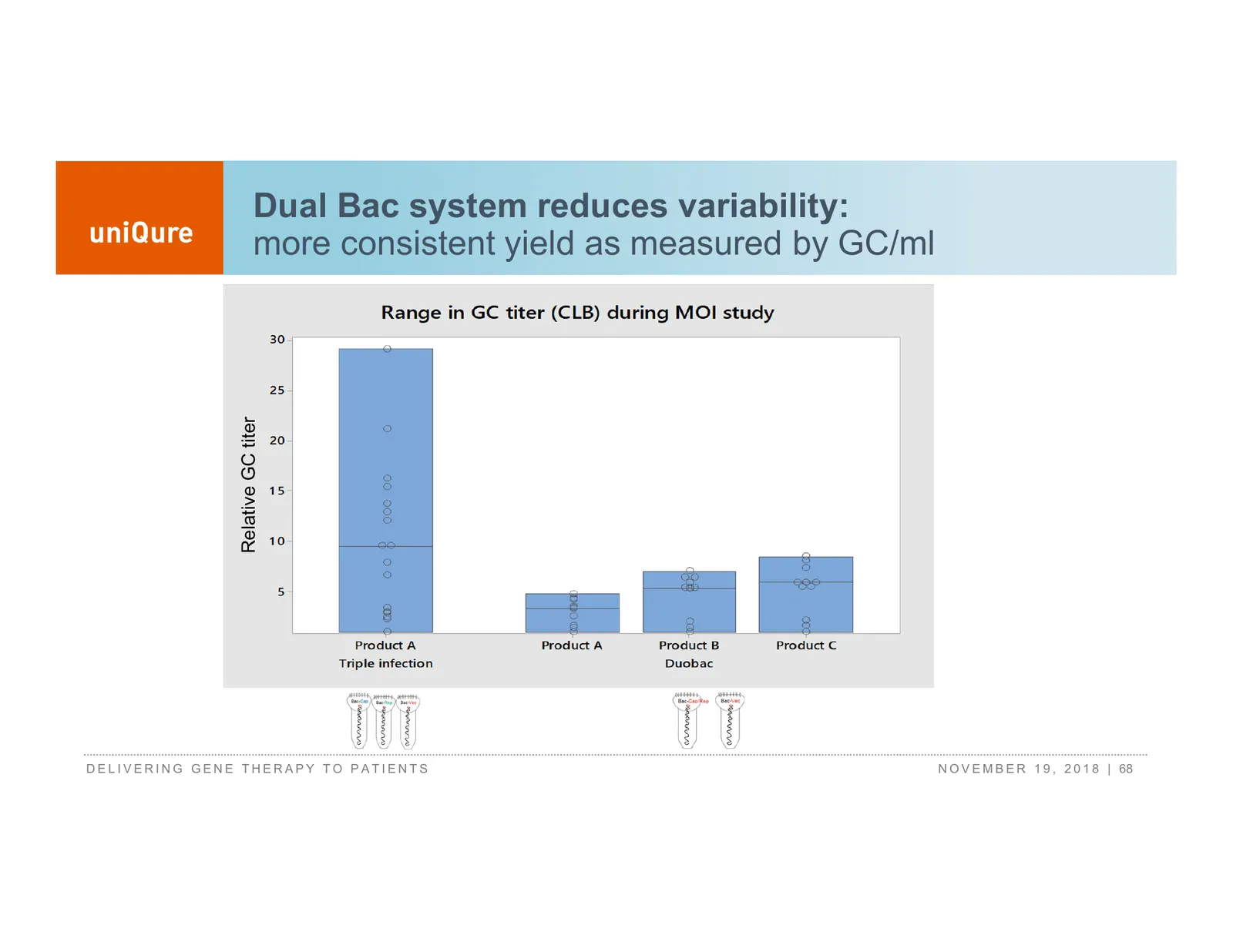
Slide 68: Dual Bac system reduces variability: yield
Dual Bac system reduces variability: more consistent yield as measured by GC/ml Relative GC titer DELIVERING GENE THERAPY TO PATIENTS N O V E M B E R 1 9 , 2 0 1 8 | 68
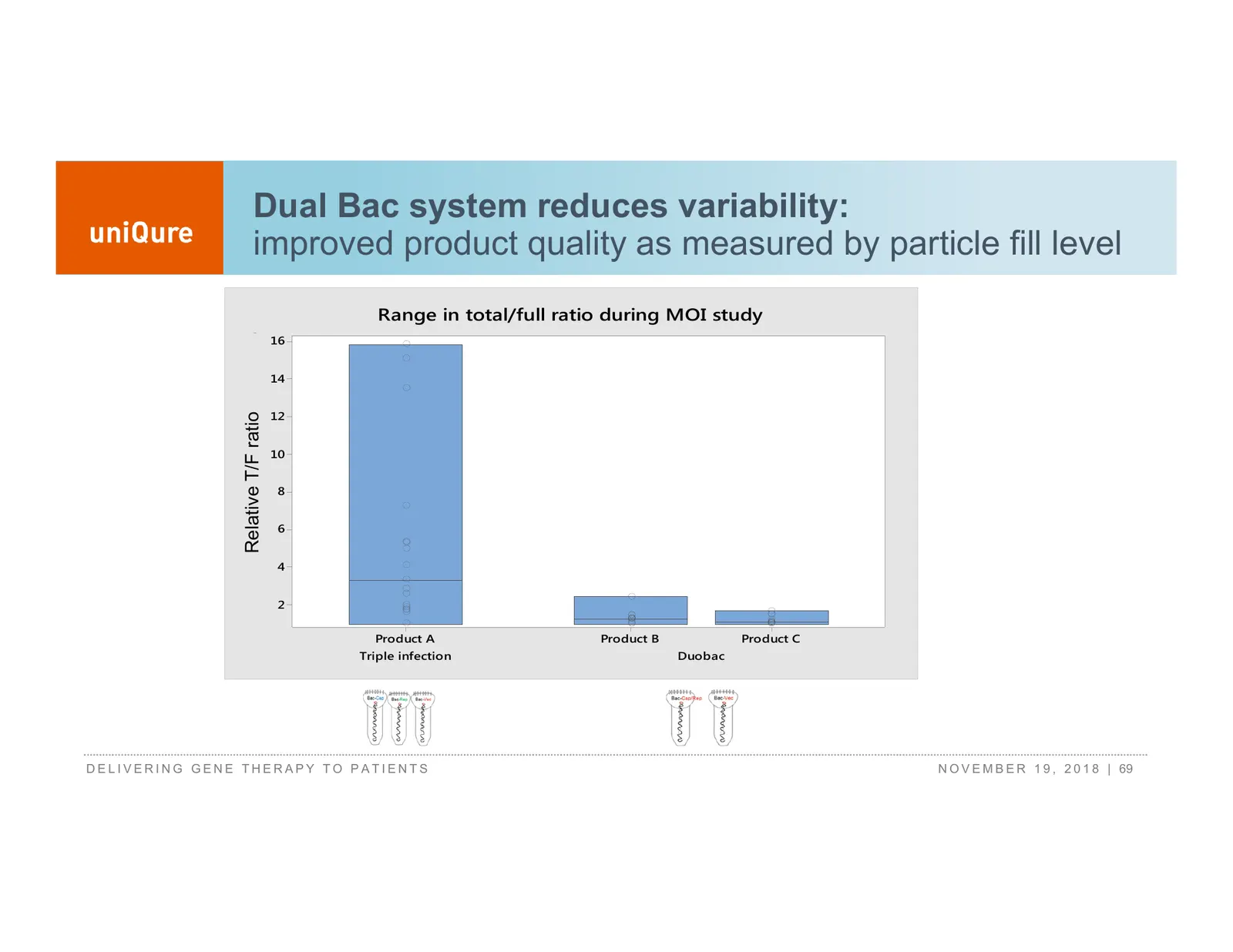
Slide 69: Dual Bac system: particle fill level
Dual Bac system reduces variability: improved product quality as measured by particle fill level Range in total/full ratio during MOI study for lowest ratio) 16 14 12 T/F ratio ratio (normalized 10 8 Relative T/FRelative 6 4 2 Product A Product B Product C Triple infection Duobac DELIVERING GENE THE
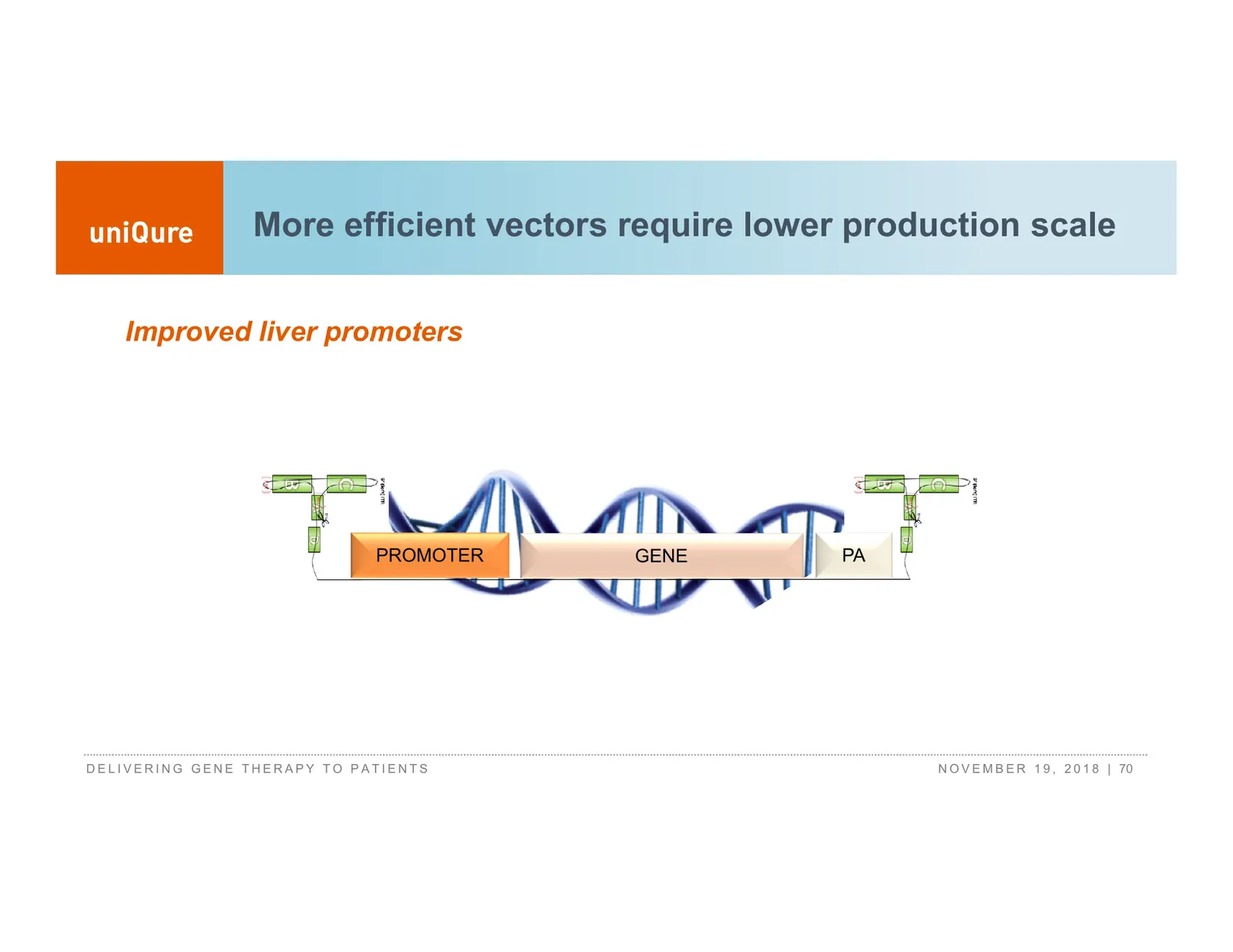
Slide 70: More efficient vectors require lower production scale
More efficient vectors require lower production scale Improved liver promoters PROMOTER GENE PA DELIVERING GENE THERAPY TO PATIENTS N O V E M B E R 1 9 , 2 0 1 8 | 70
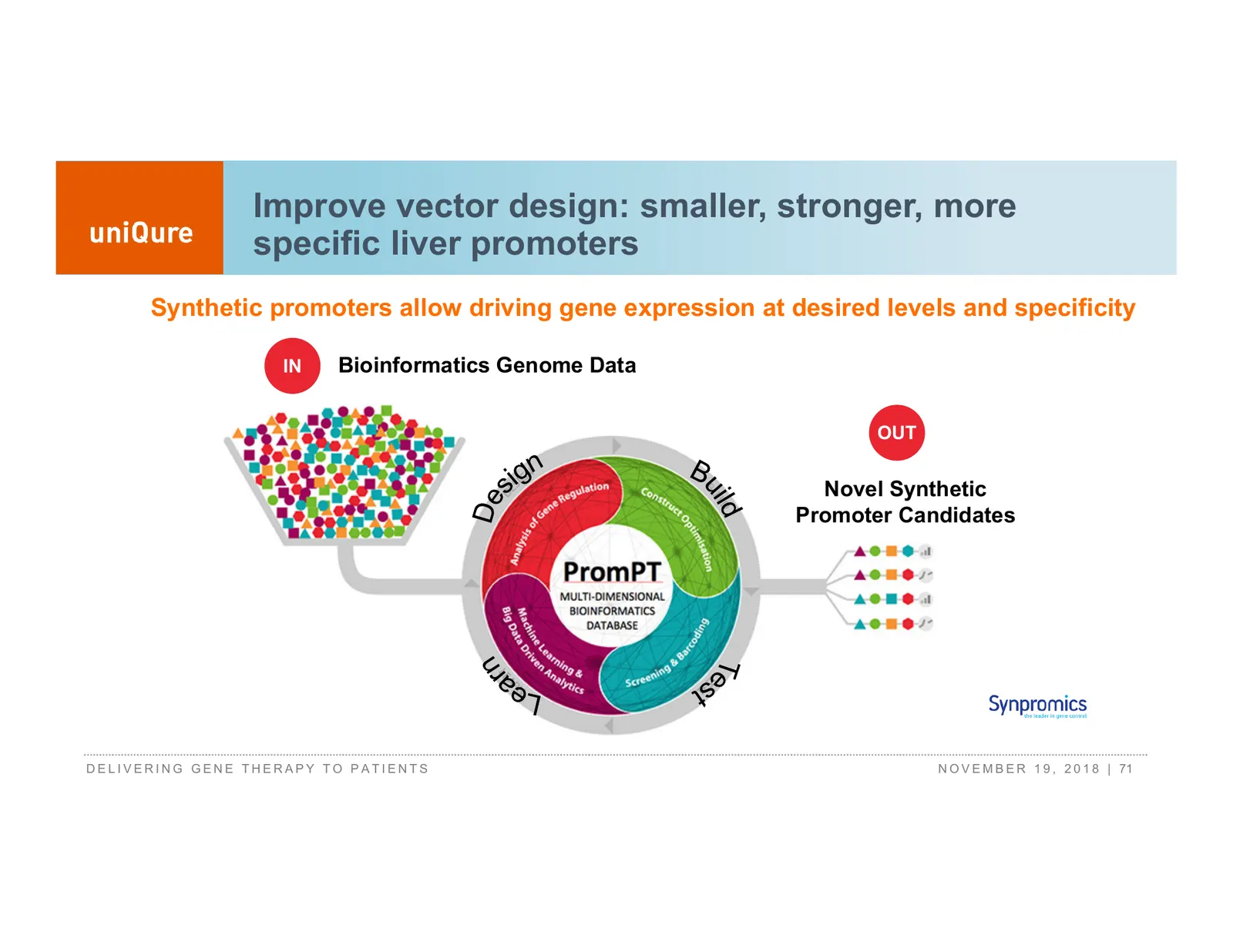
Slide 71: Improve vector design: liver promoters
Improve vector design: smaller, stronger, more specific liver promoters Synthetic promoters allow driving gene expression at desired levels and specificity IN Bioinformatics Genome Data OUT Novel Synthetic Promoter Candidates DELIVERING GENE THERAPY TO PATIENTS N O V E M B E R 1 9 , 2 0 1 8 | 71
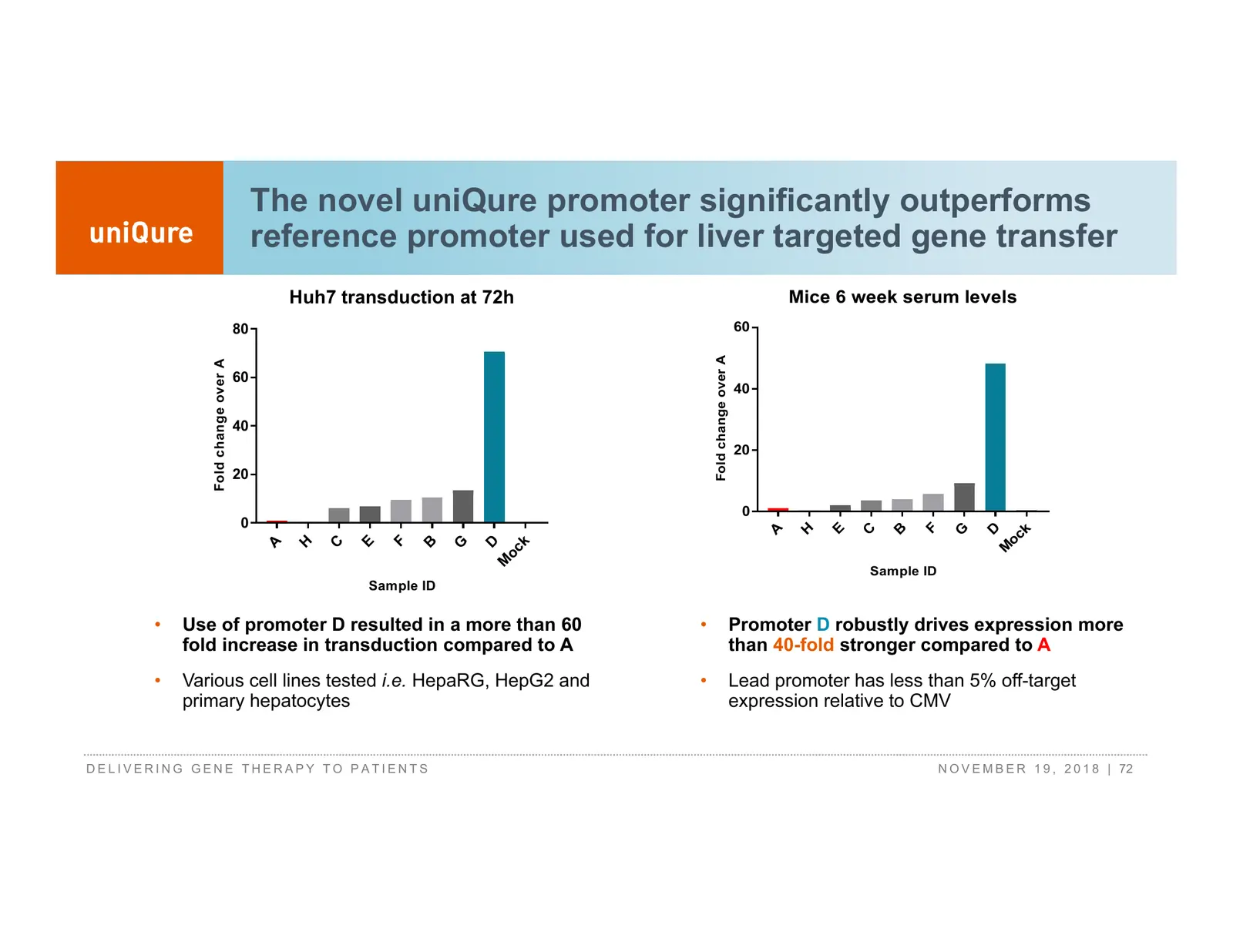
Slide 72: Novel uniQure promoter outperforms reference promoter
The novel uniQure promoter significantly outperforms reference promoter used for liver targeted gene transfer Huh7 transduction at 72h Mice 6 week serum levels 80 60 Fold change over A Fold change over A 60 40 40 20 20 0 0 A H C B D F E G k oc A H C B D F E G k M oc M Sample ID Sample ID • Use of pr
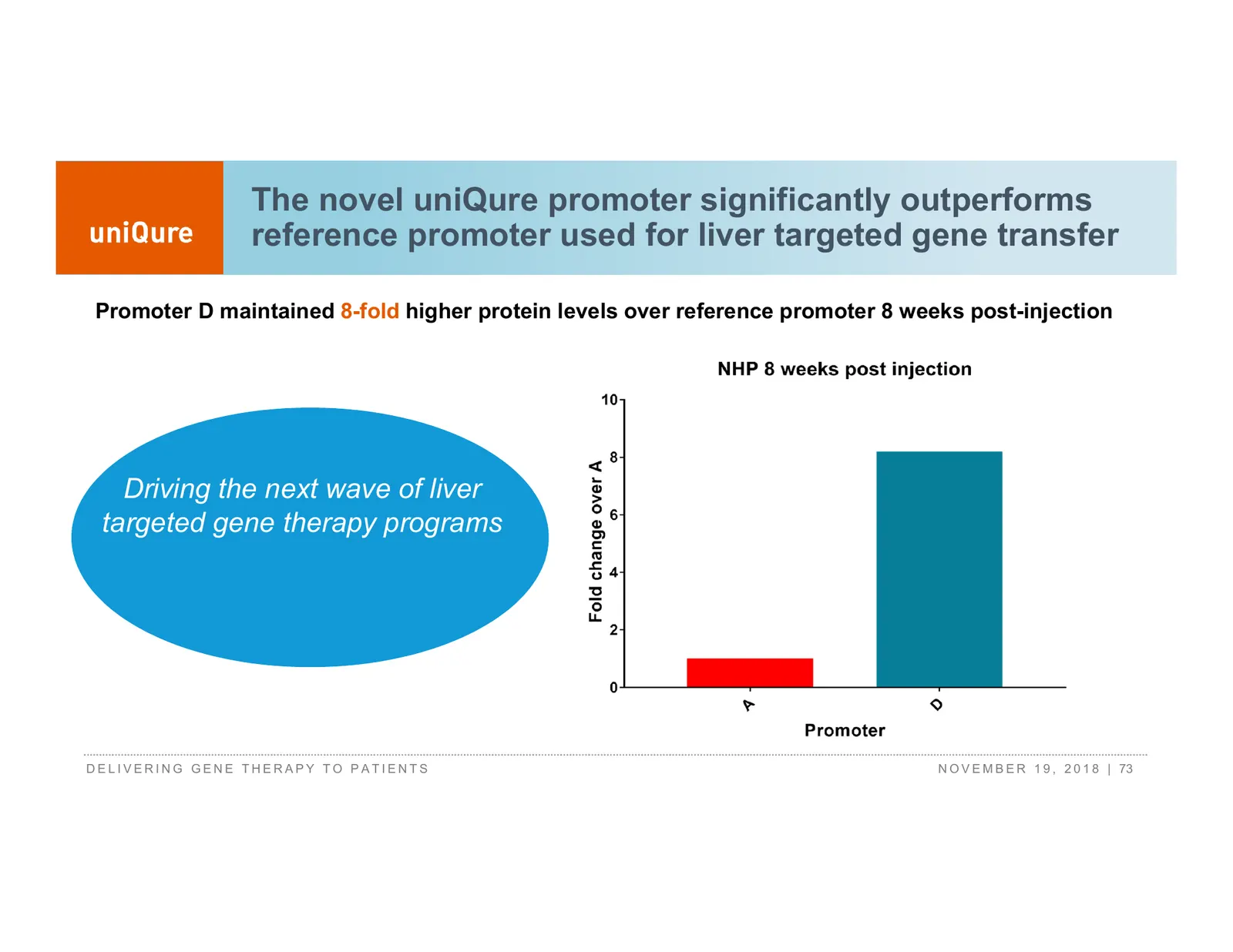
Slide 73: Novel promoter maintains higher protein levels
The novel uniQure promoter significantly outperforms reference promoter used for liver targeted gene transfer Promoter D maintained 8-fold higher protein levels over reference promoter 8 weeks post-injection Driving the next wave of liver targeted gene therapy programs DELIVERING GENE THERAPY TO PAT
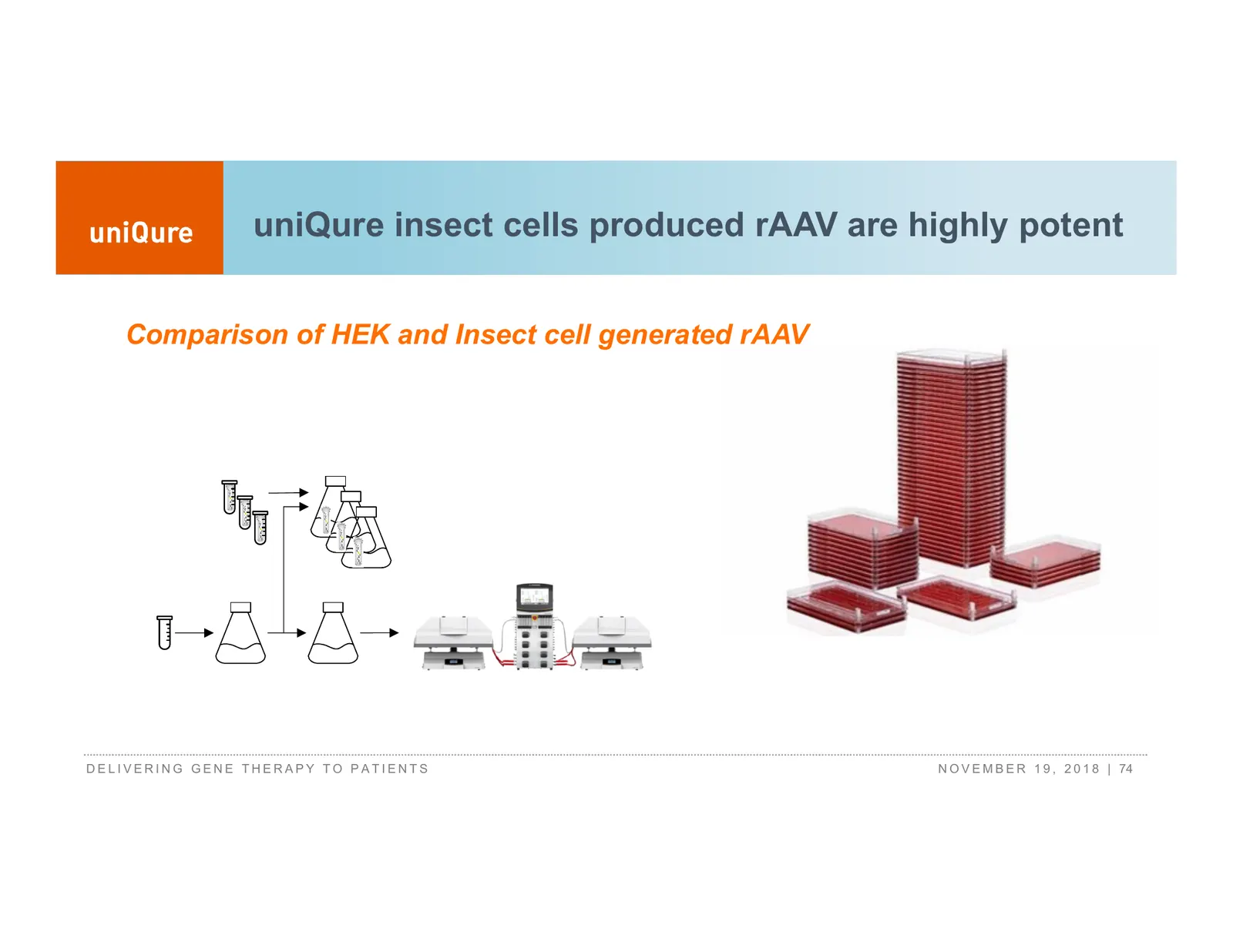
Slide 74: Insect cell produced rAAV are highly potent
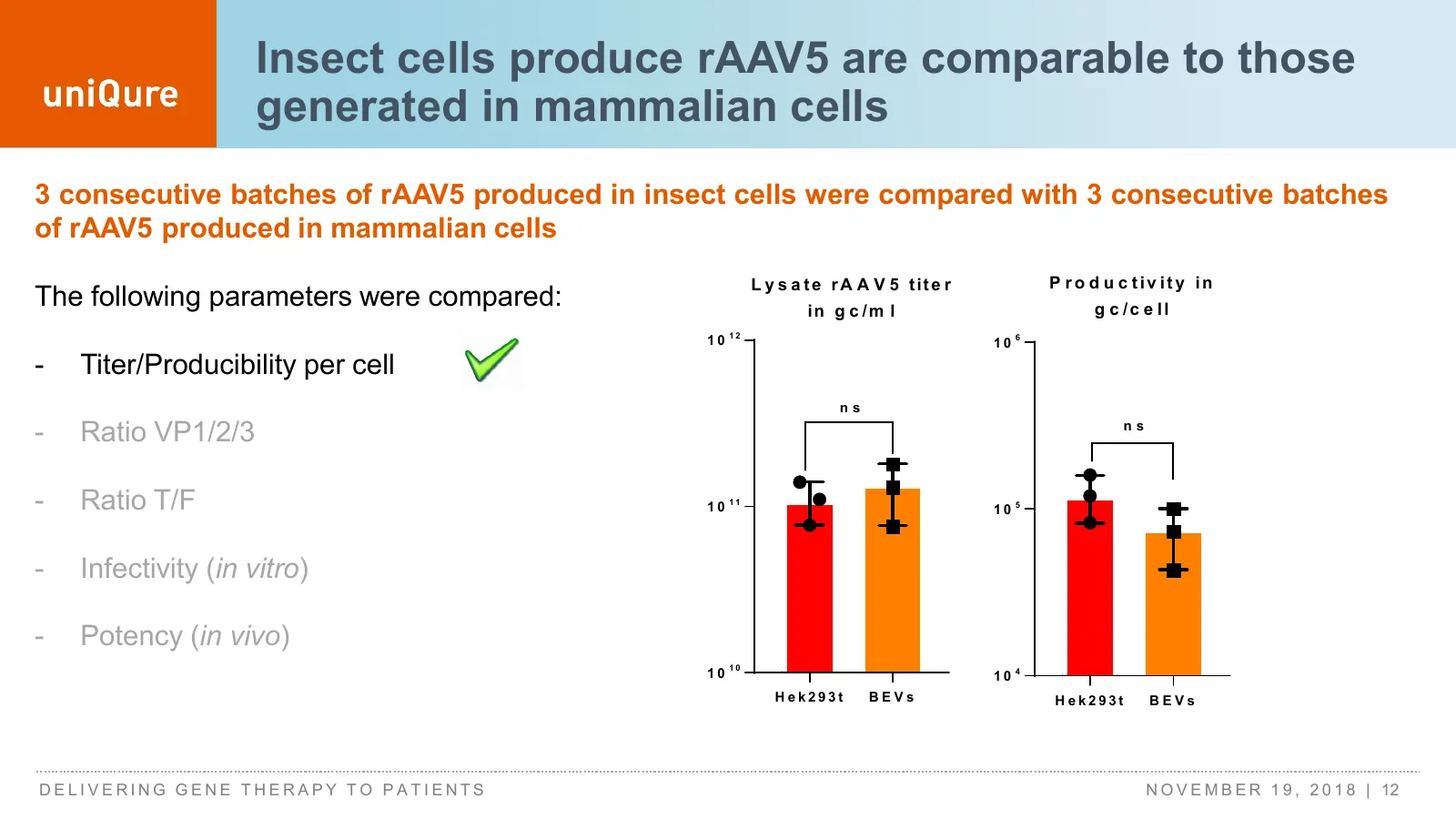
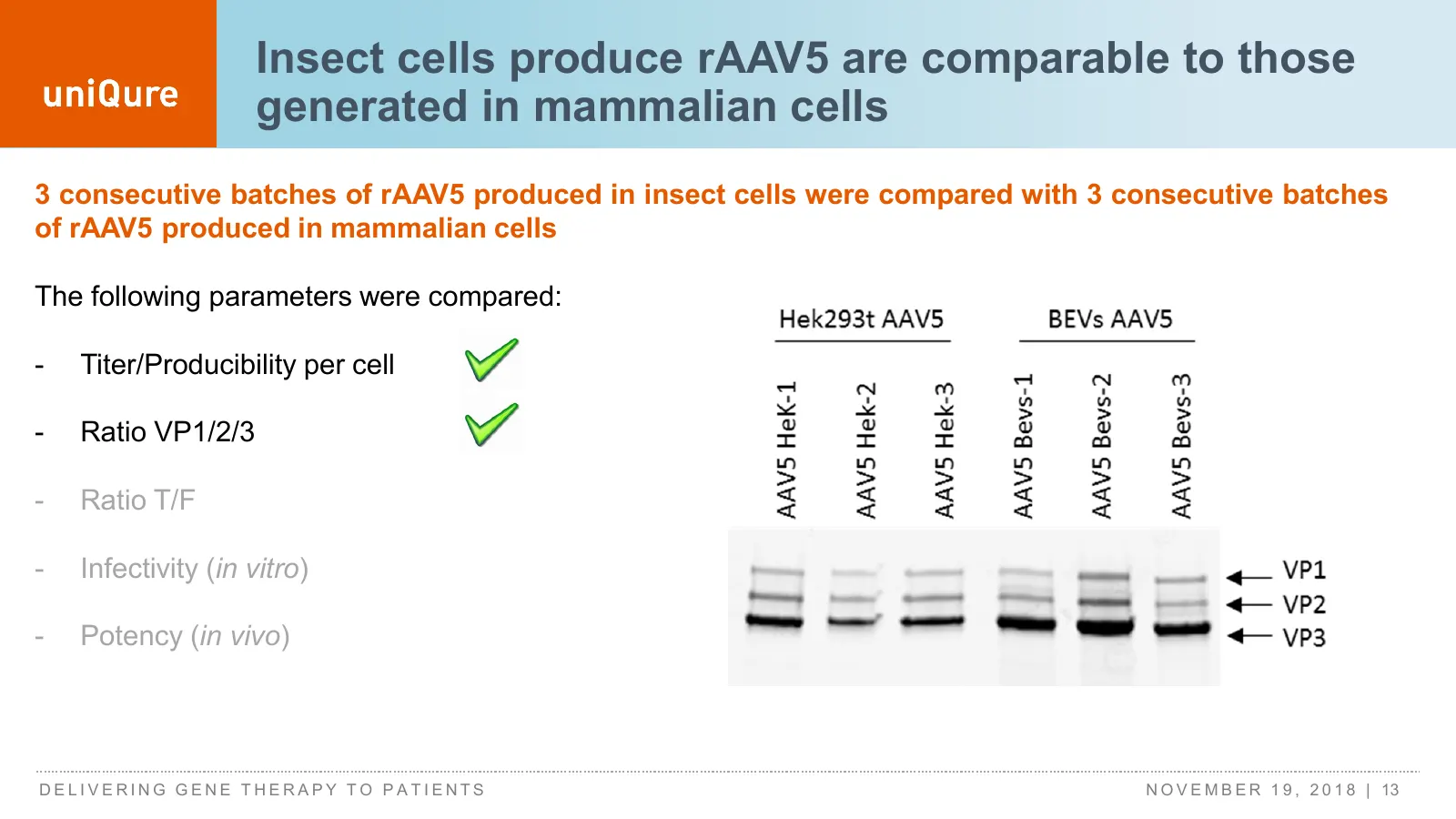
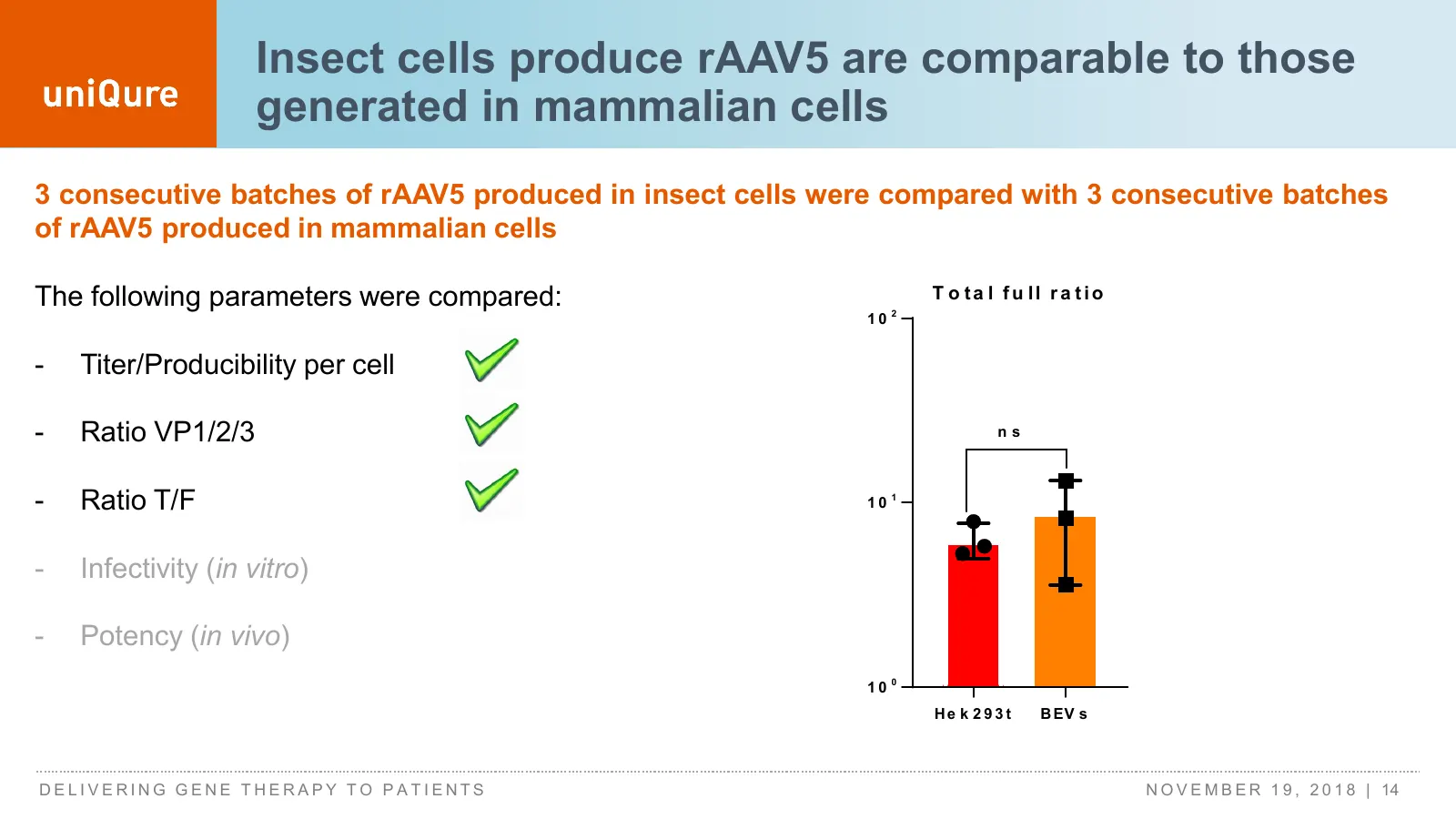
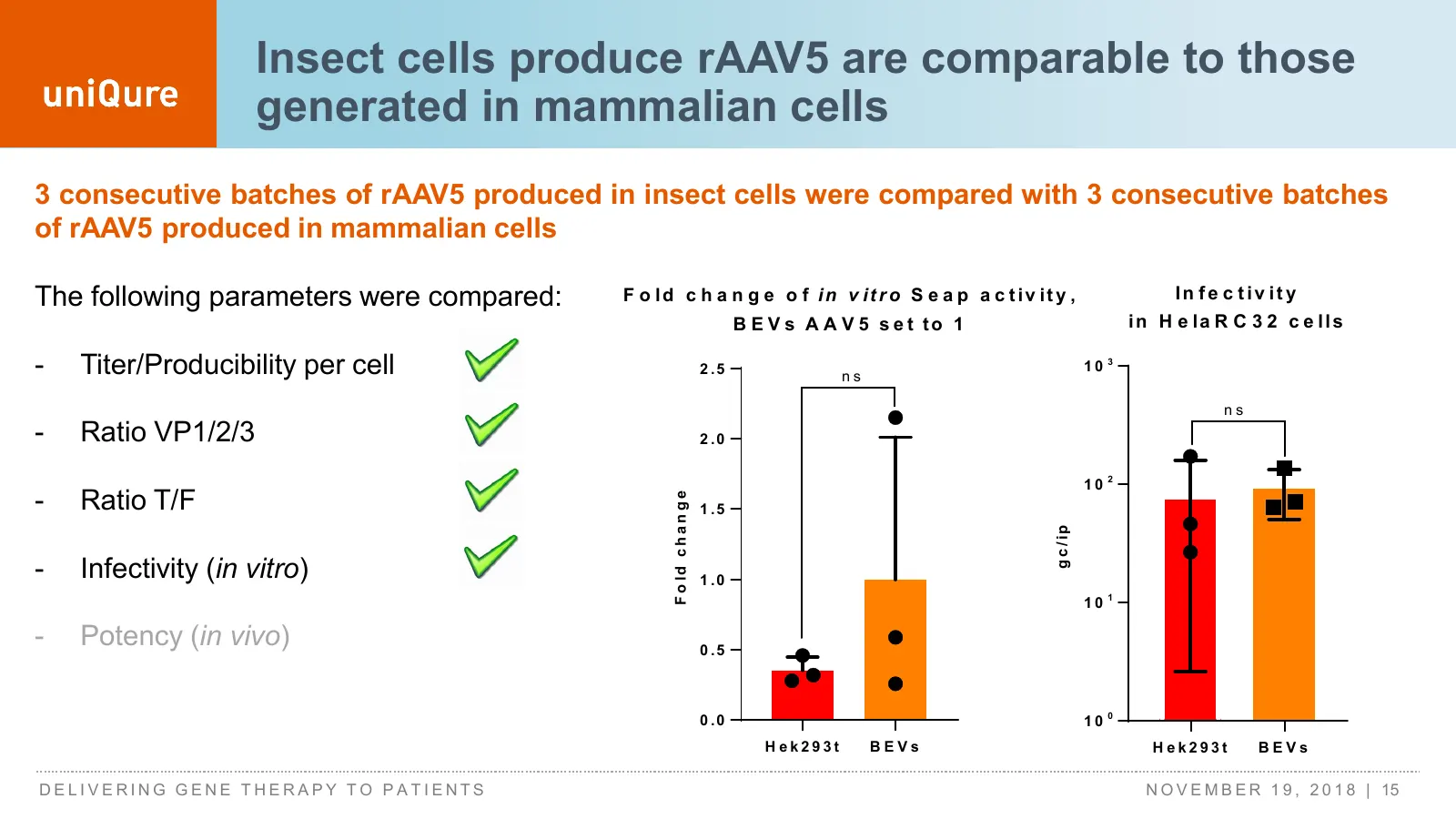
uniQure insect cells produced rAAV are highly potent Comparison of HEK and Insect cell generated rAAV DELIVERING GENE THERAPY TO PATIENTS N O V E M B E R 1 9 , 2 0 1 8 | 74
Slide 75: Insect vs mammalian cell rAAV5: titer
Insect cells produce rAAV5 are comparable to those generated in mammalian cells 3 consecutive batches of rAAV5 produced in insect cells were compared with 3 consecutive batches of rAAV5 produced in mammalian cells L y s a t e r A A V 5 t it e r P ro d u c tiv ity in The following parameters were com
Slide 76: Insect vs mammalian cell rAAV5 comparison
Insect cells produce rAAV5 are comparable to those generated in mammalian cells 3 consecutive batches of rAAV5 produced in insect cells were compared with 3 consecutive batches of rAAV5 produced in mammalian cells The following parameters were compared: - Titer/Producibility per cell - Ratio VP1/2/3
Slide 77: Insect vs mammalian cell rAAV5: full ratio
Insect cells produce rAAV5 are comparable to those generated in mammalian cells 3 consecutive batches of rAAV5 produced in insect cells were compared with 3 consecutive batches of rAAV5 produced in mammalian cells The following parameters were compared: T o ta l f u ll r a t io 10 2 - Titer/Producib
Slide 78: Insect vs mammalian cell rAAV5: infectivity
Insect cells produce rAAV5 are comparable to those generated in mammalian cells 3 consecutive batches of rAAV5 produced in insect cells were compared with 3 consecutive batches of rAAV5 produced in mammalian cells The following parameters were compared: F o ld c h a n g e o f in v it r o S e a p a c
Slide 79: Insect vs mammalian cell rAAV5: in vivo
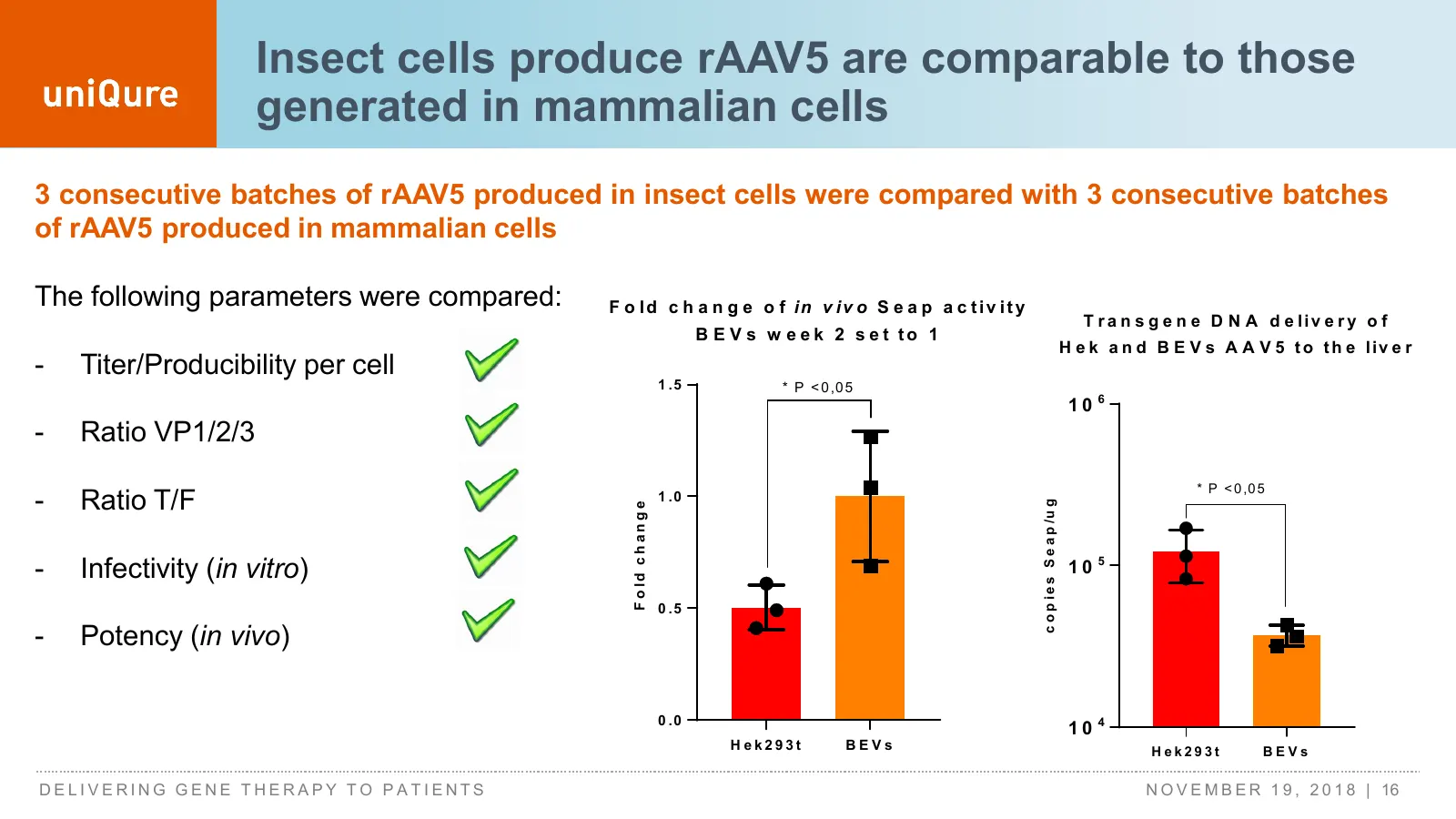
Insect cells produce rAAV5 are comparable to those generated in mammalian cells 3 consecutive batches of rAAV5 produced in insect cells were compared with 3 consecutive batches of rAAV5 produced in mammalian cells The following parameters were compared: F o l d c h a n g e o f in v i v o S e a p a c
Slide 80: rAAV from insect and mammalian cells comparable
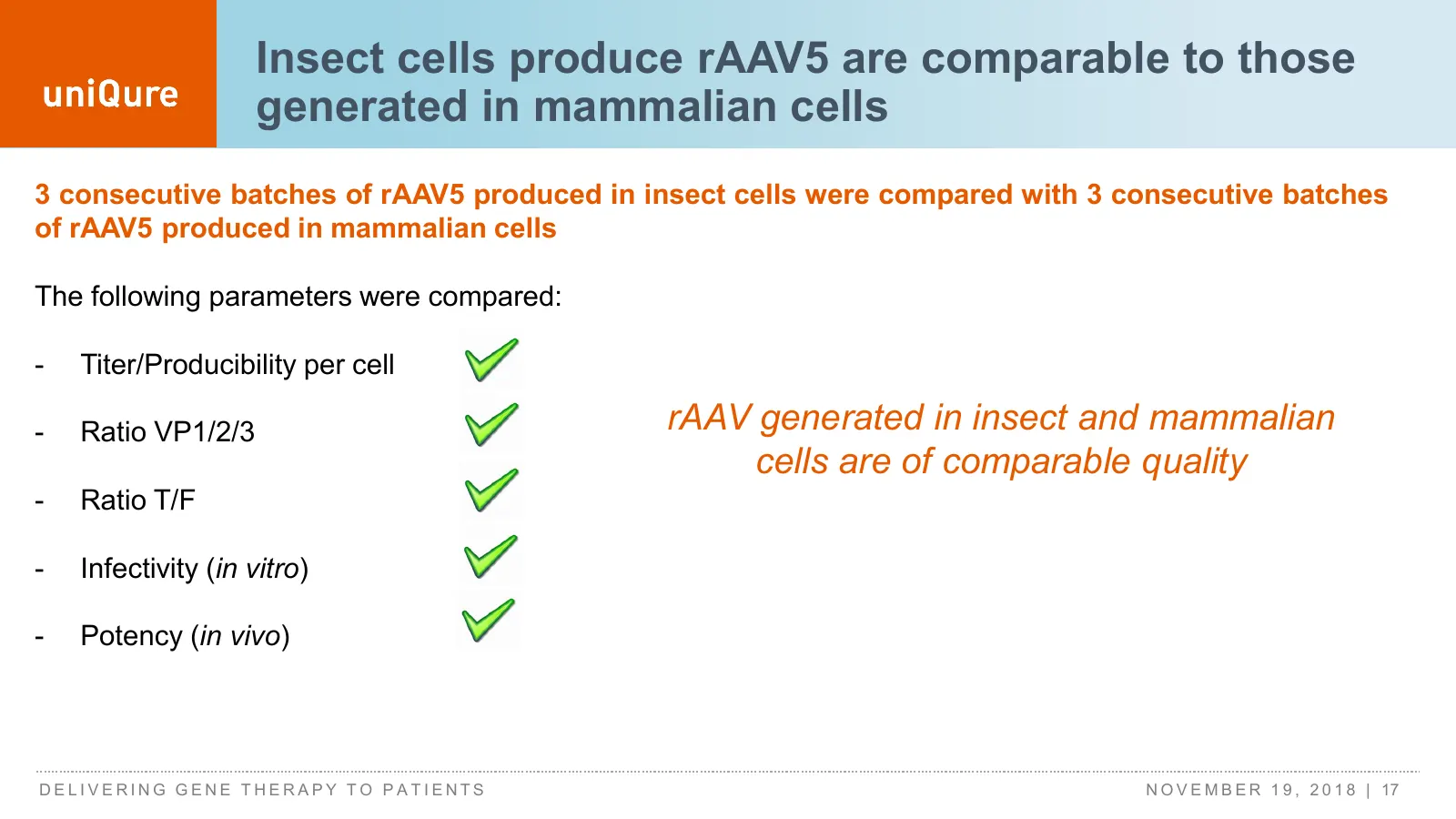
Insect cells produce rAAV5 are comparable to those generated in mammalian cells 3 consecutive batches of rAAV5 produced in insect cells were compared with 3 consecutive batches of rAAV5 produced in mammalian cells The following parameters were compared: - Titer/Producibility per cell - Ratio VP1/2/3
Slide 81: Conclusions
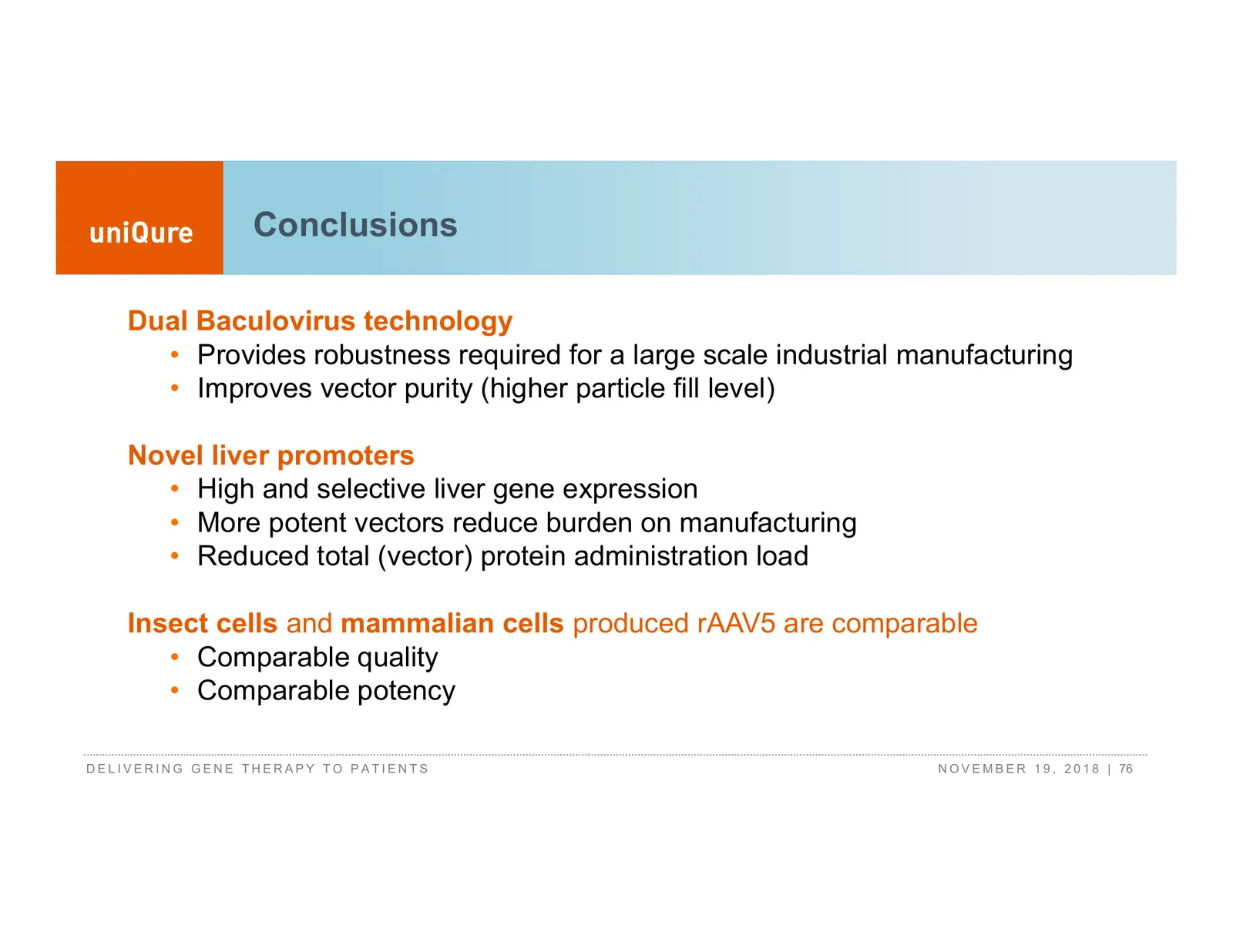
Conclusions Dual Baculovirus technology • Provides robustness required for a large scale industrial manufacturing • Improves vector purity (higher particle fill level) Novel liver promoters • High and selective liver gene expression • More potent vectors reduce burden on manufacturing • Reduced tota

Slide 82: Sander van Deventer, M.D., Ph.D.
Sander van Deventer, M.D., Ph.D. Chief Scientific Officer General Manager, Amsterdam DELIVERING GENE THERAPY TO PATIENTS N O V E M B E R 1 9 , 2 0 1 8 | 77
Slide 83: Immunogenicity is a major hurdle in gene therapy
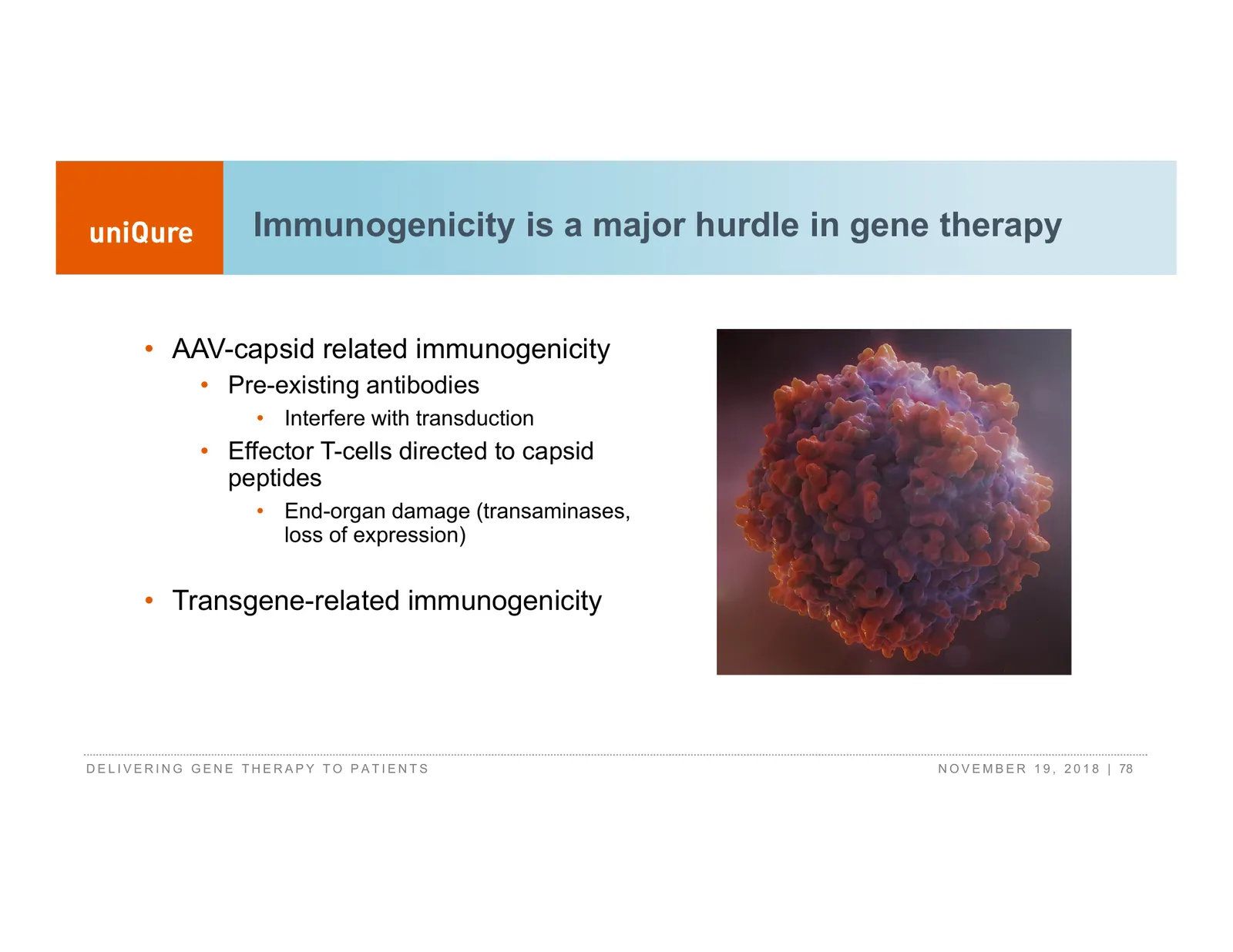
Immunogenicity is a major hurdle in gene therapy • AAV-capsid related immunogenicity • Pre-existing antibodies • Interfere with transduction • Effector T-cells directed to capsid peptides • End-organ damage (transaminases, loss of expression) • Transgene-related immunogenicity DELIVERING GENE THERAP
Slide 84: AAV5 vector overcomes the immunogenicity hurdle
uniQure’s AAV5 vector overcomes the immunogenicity hurdle • No interference of high titer neutralizing antibodies (Nab) with therapeutic AAV5-mediated transgene expression • No induction of effector T-cells • Even in patients who have been pre-exposed to AAV5 • Immune absorption method allows for po
Slide 85: Transgenes are often immunogenic
Transgenes are often immunogenic • In many monogenetic (recessive, X-linked) diseases, a therapeutic transgene is highly immunogenic • For replacement therapy class II epitopes (antibodies) are important • For gene therapy transgene class II (antibodies) and class I epitopes (T- cells) are important
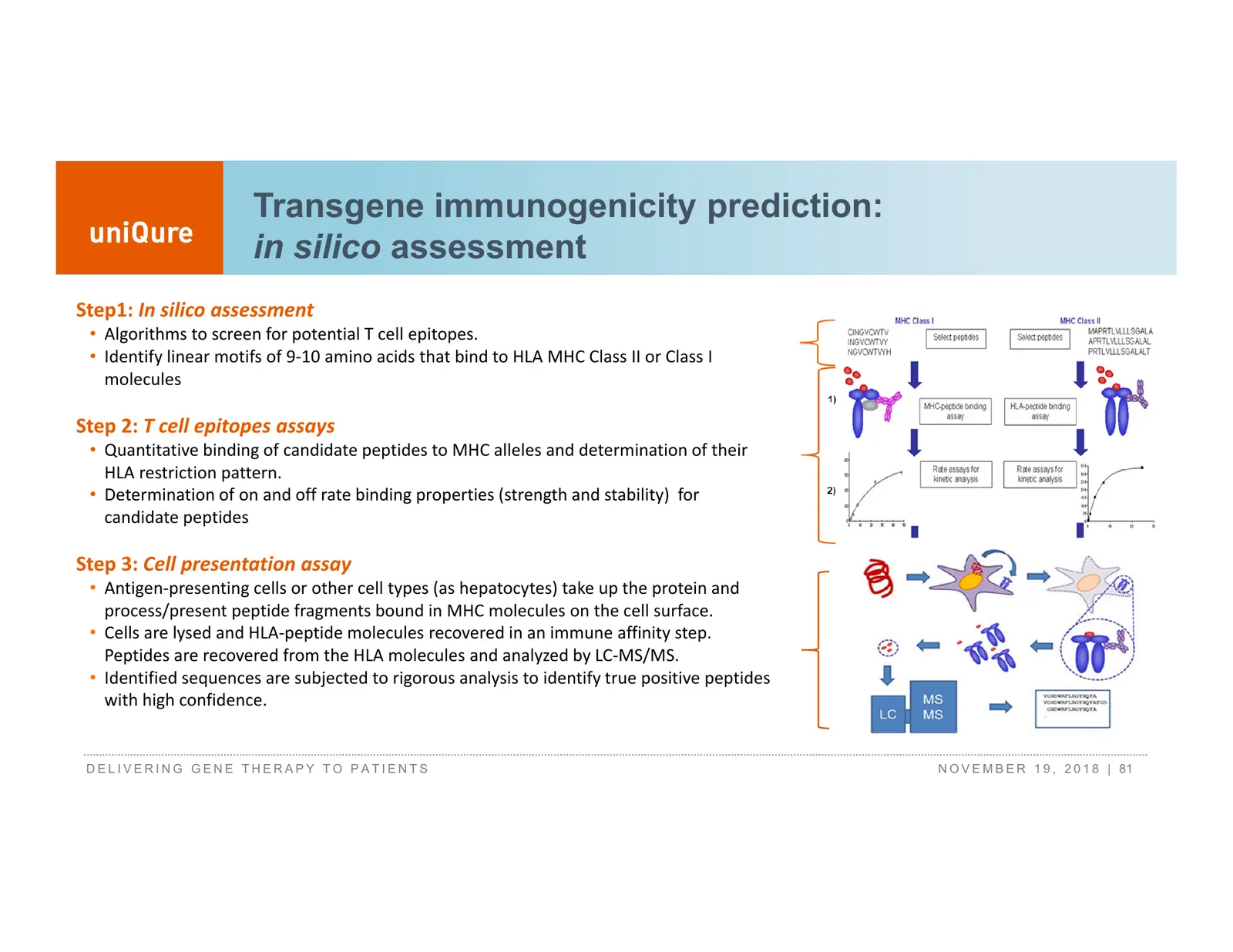
Slide 86: Transgene immunogenicity prediction: in silico assessment
Transgene immunogenicity prediction: in silico assessment Step1: In silico assessment • Algorithms to screen for potential T cell epitopes. • Identify linear motifs of 9‐10 amino acids that bind to HLA MHC Class II or Class I molecules Step 2: T cell epitopes assays • Quantitative binding of candida
Slide 87: How well do we transduce target organs?
How well do we transduce target organs? • Most gene therapy indications require transduction of a significant percentage of the target organ • Many gene therapy failures are a consequence of insufficient targeting and/or too low or too high expression of the therapeutic transgene DELIVERING GENE THE
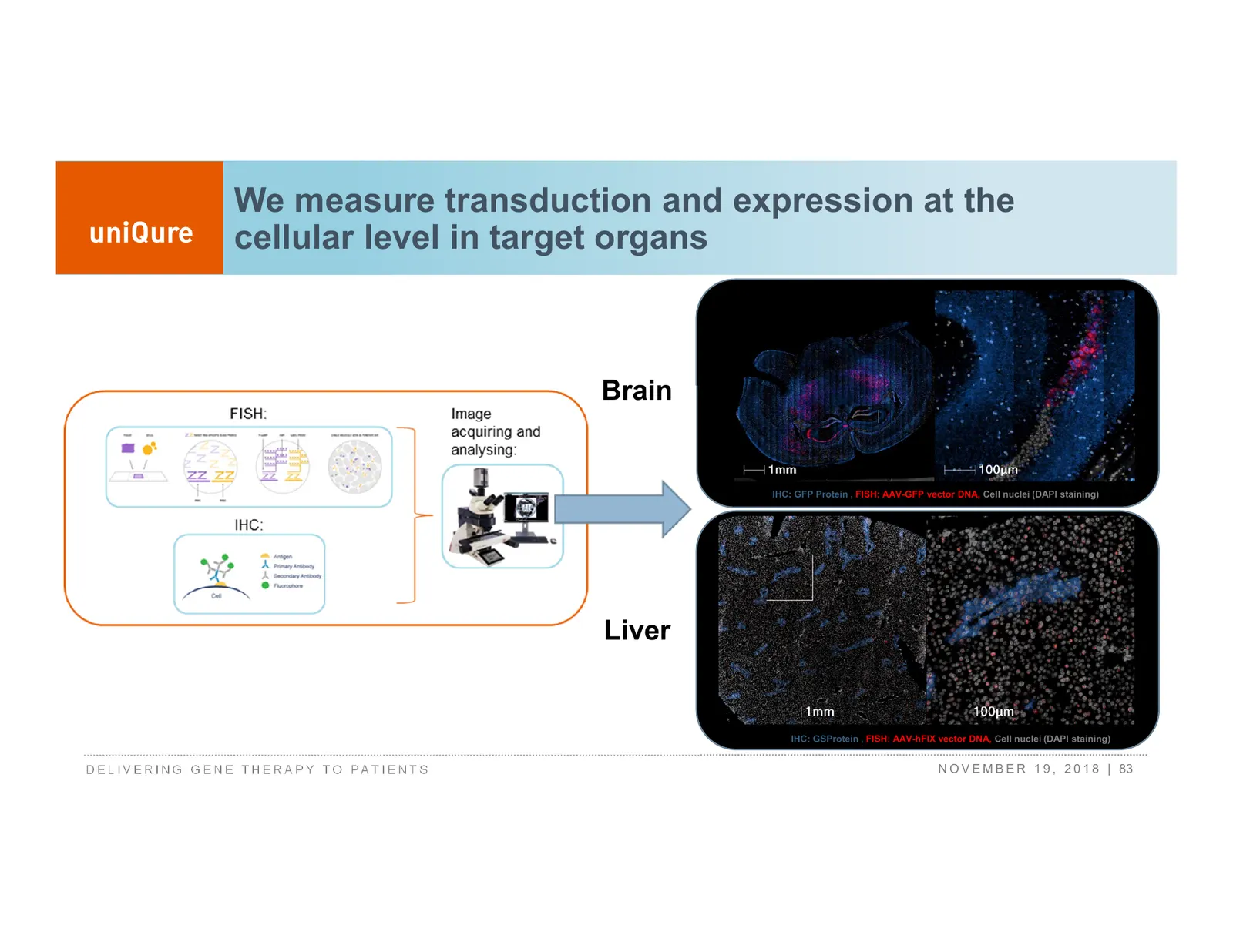
Slide 88: Measuring transduction and expression in target organs
We measure transduction and expression at the cellular level in target organs Brain IHC: GFP Protein , FISH: AAV-GFP vector DNA, Cell nuclei (DAPI staining) Liver IHC: GSProtein , FISH: AAV-hFIX vector DNA, Cell nuclei (DAPI staining) DELIVERING GENE THERAPY TO PATIENTS N O V E M B E R 1 9 , 2 0 1 8
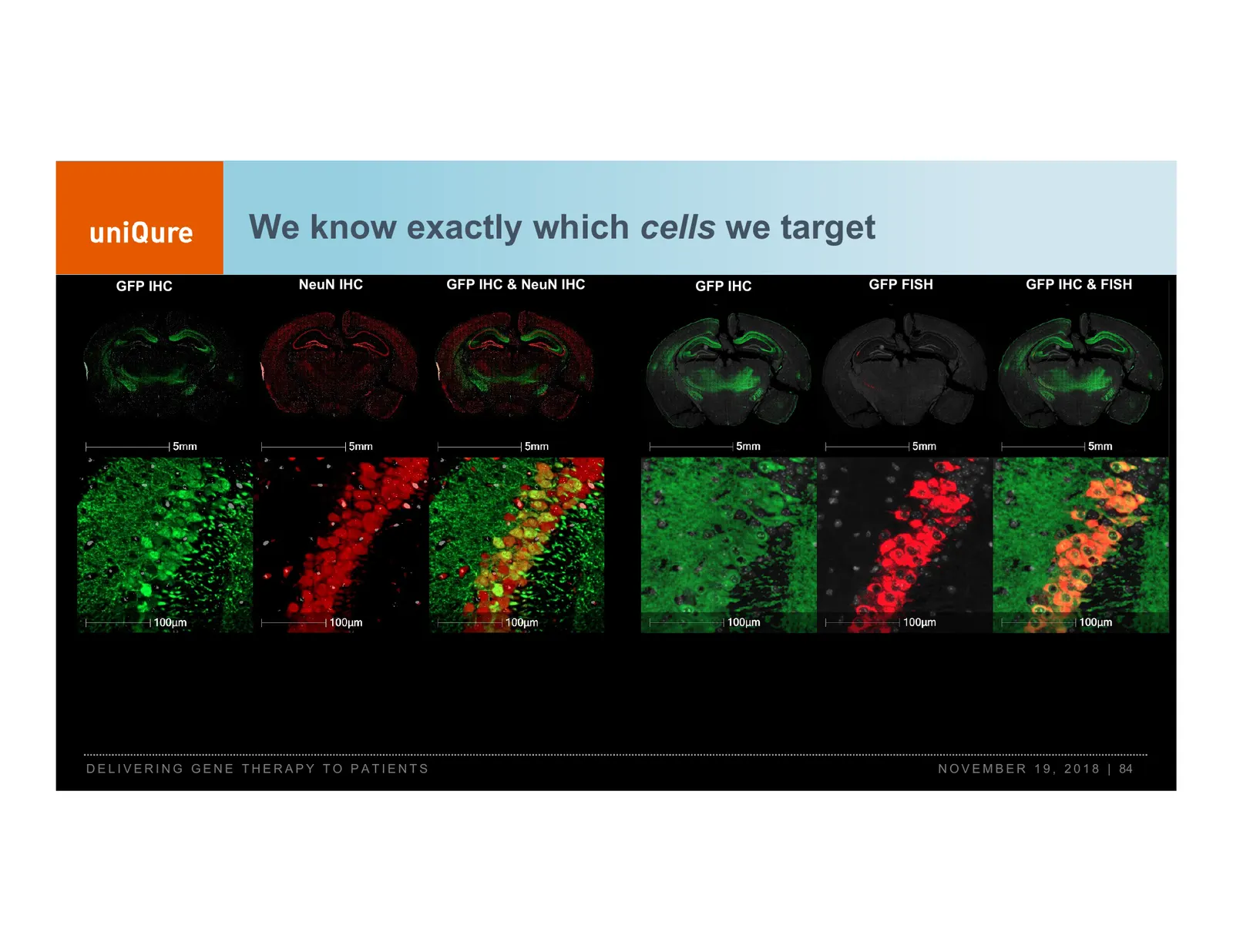
Slide 89: We know exactly which cells we target
We know exactly which cells we target GFP IHC NeuN IHC GFP IHC & NeuN IHC GFP IHC GFP FISH GFP IHC & FISH DELIVERING GENE THERAPY TO PATIENTS N O V E M B E R 1 9 , 2 0 1 8 | 84
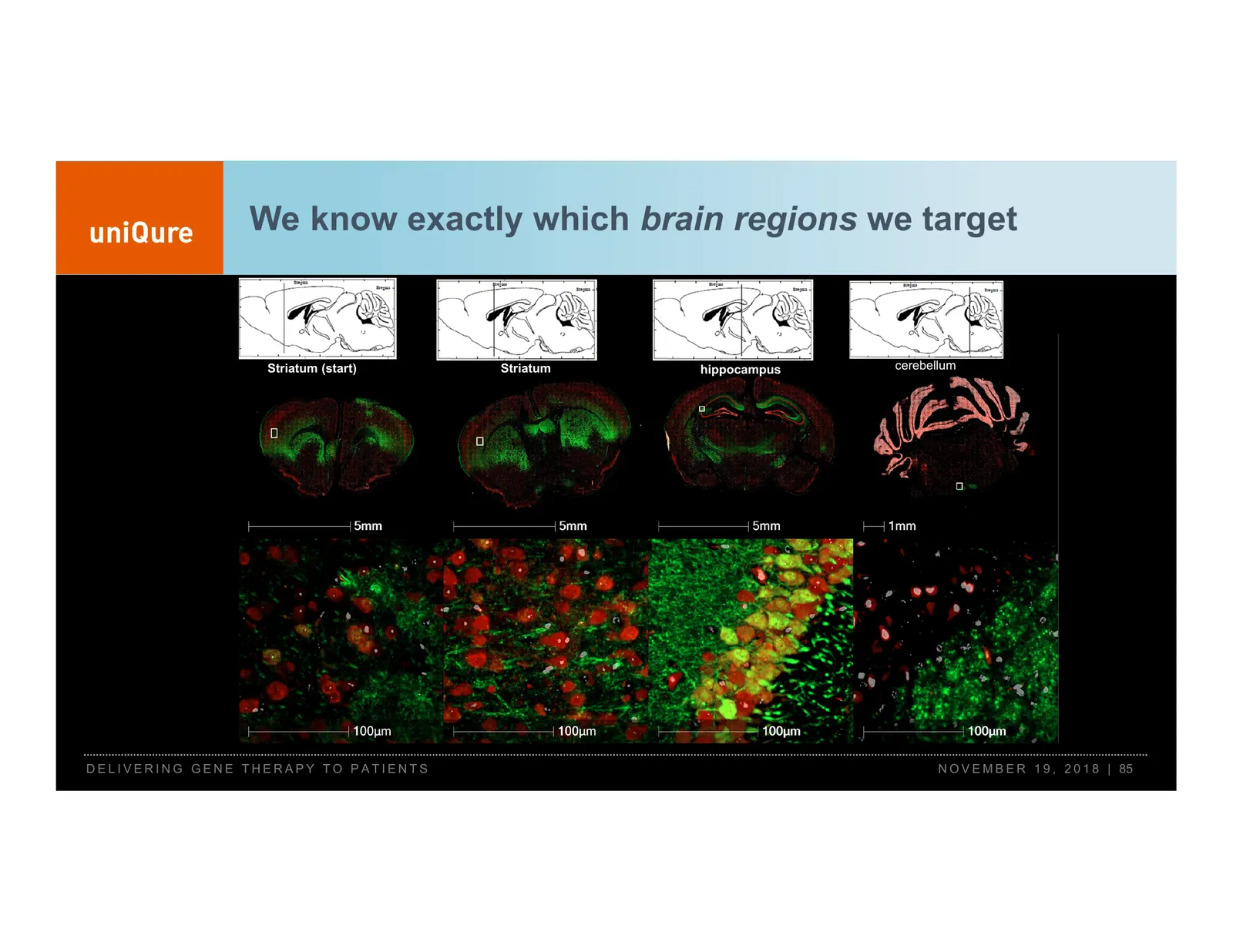
Slide 90: We know which brain regions we target
We know exactly which brain regions we target Striatum (start) Striatum hippocampus cerebellum DELIVERING GENE THERAPY TO PATIENTS N O V E M B E R 1 9 , 2 0 1 8 | 85
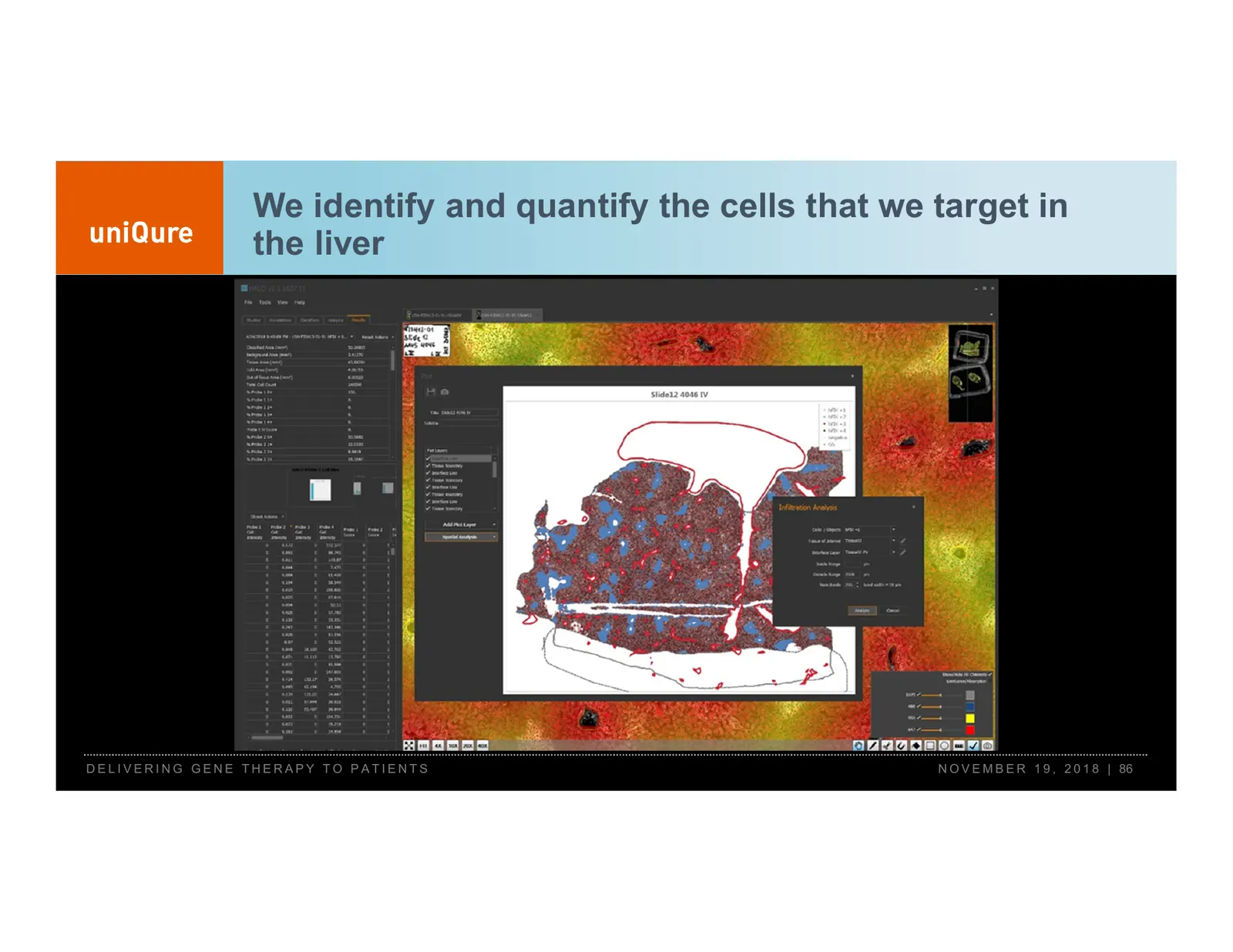
Slide 91: Identifying and quantifying targeted liver cells
We identify and quantify the cells that we target in the liver DELIVERING GENE THERAPY TO PATIENTS N O V E M B E R 1 9 , 2 0 1 8 | 86
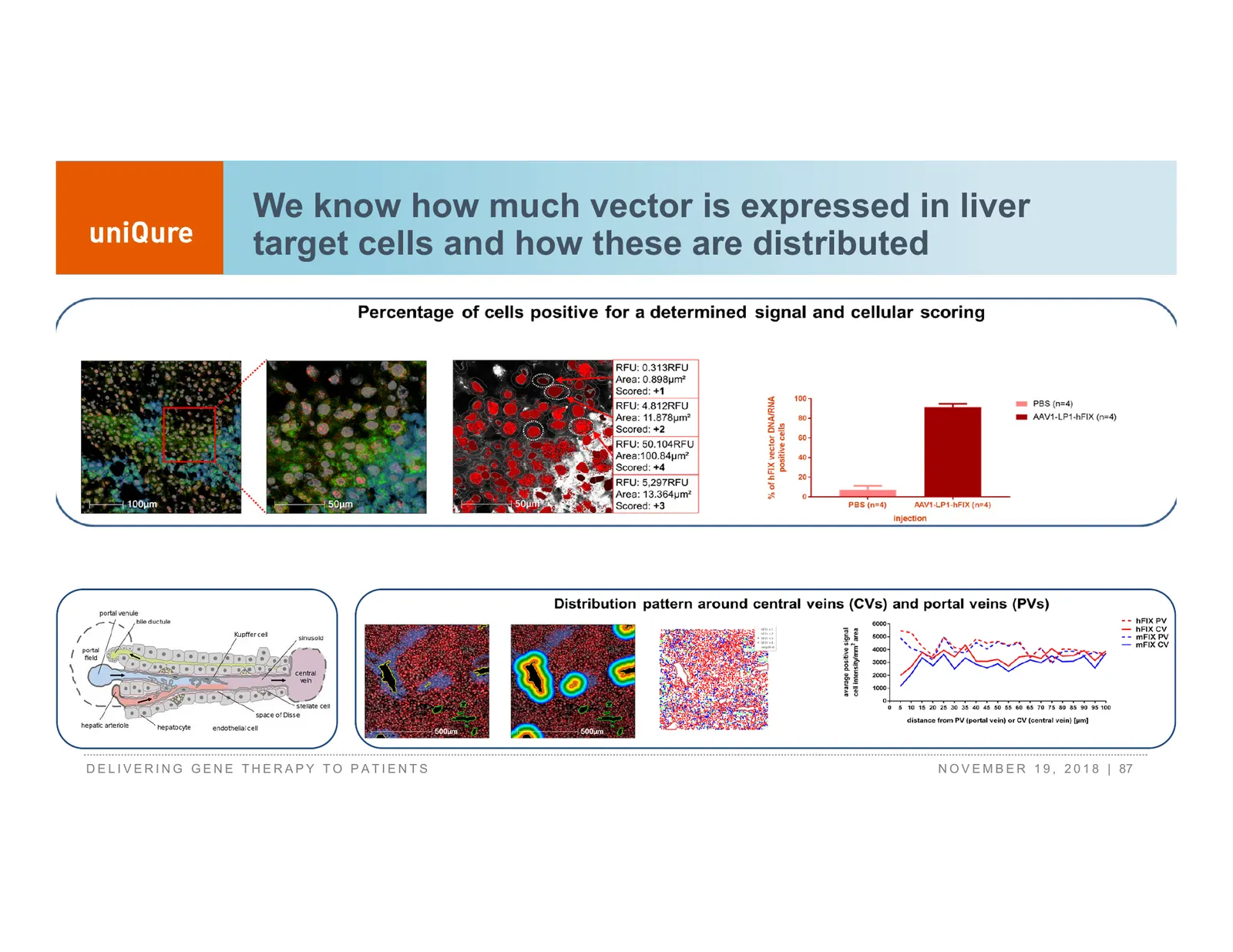
Slide 92: Vector expression in liver target cells
We know how much vector is expressed in liver target cells and how these are distributed DELIVERING GENE THERAPY TO PATIENTS N O V E M B E R 1 9 , 2 0 1 8 | 87
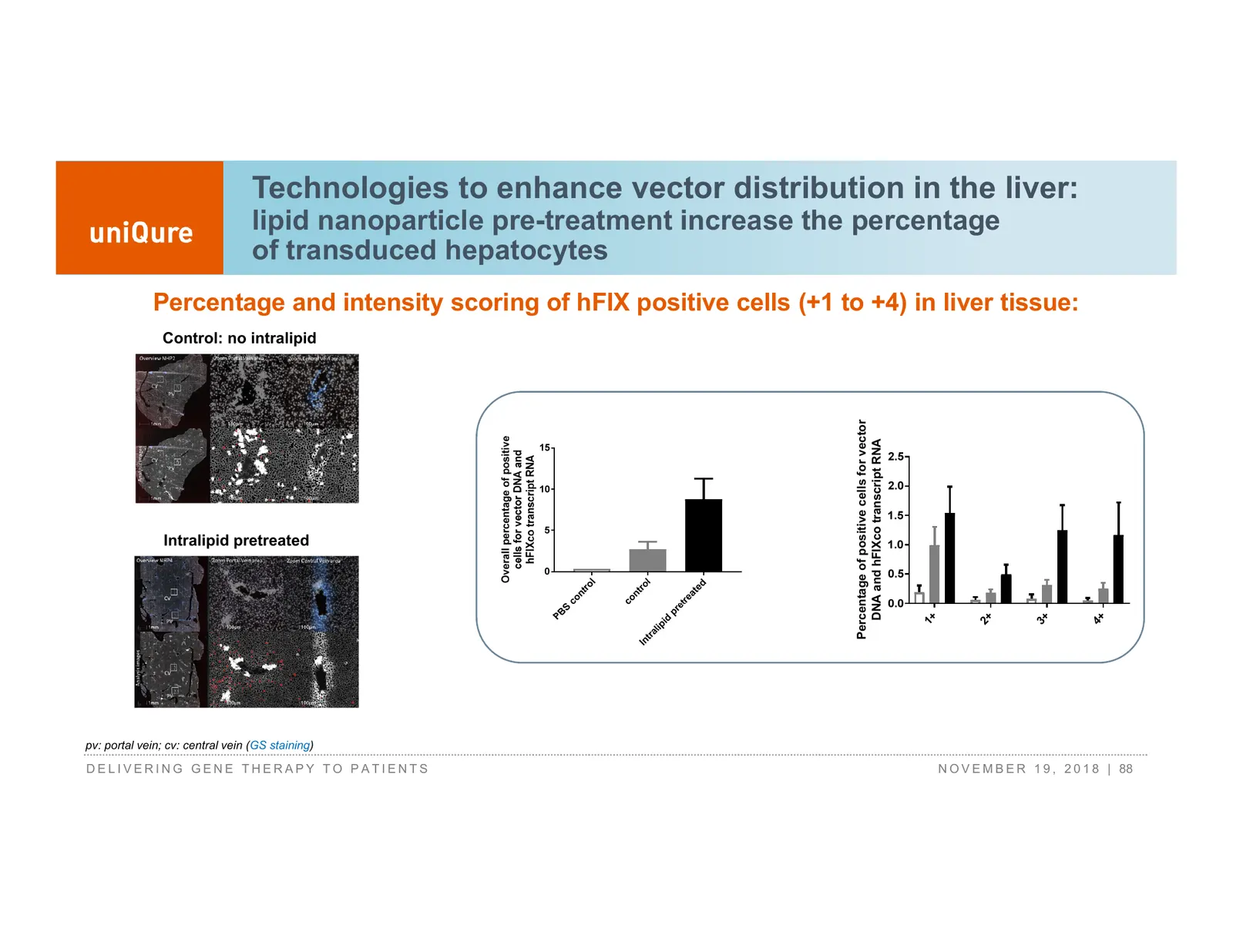
Slide 93: Lipid nanoparticle pre-treatment increases transduced hepatocytes
Technologies to enhance vector distribution in the liver: lipid nanoparticle pre-treatment increase the percentage of transduced hepatocytes Percentage and intensity scoring of hFIX positive cells (+1 to +4) in liver tissue: Control: no intralipid Percentage of positive cells for vector DNA and hFIX
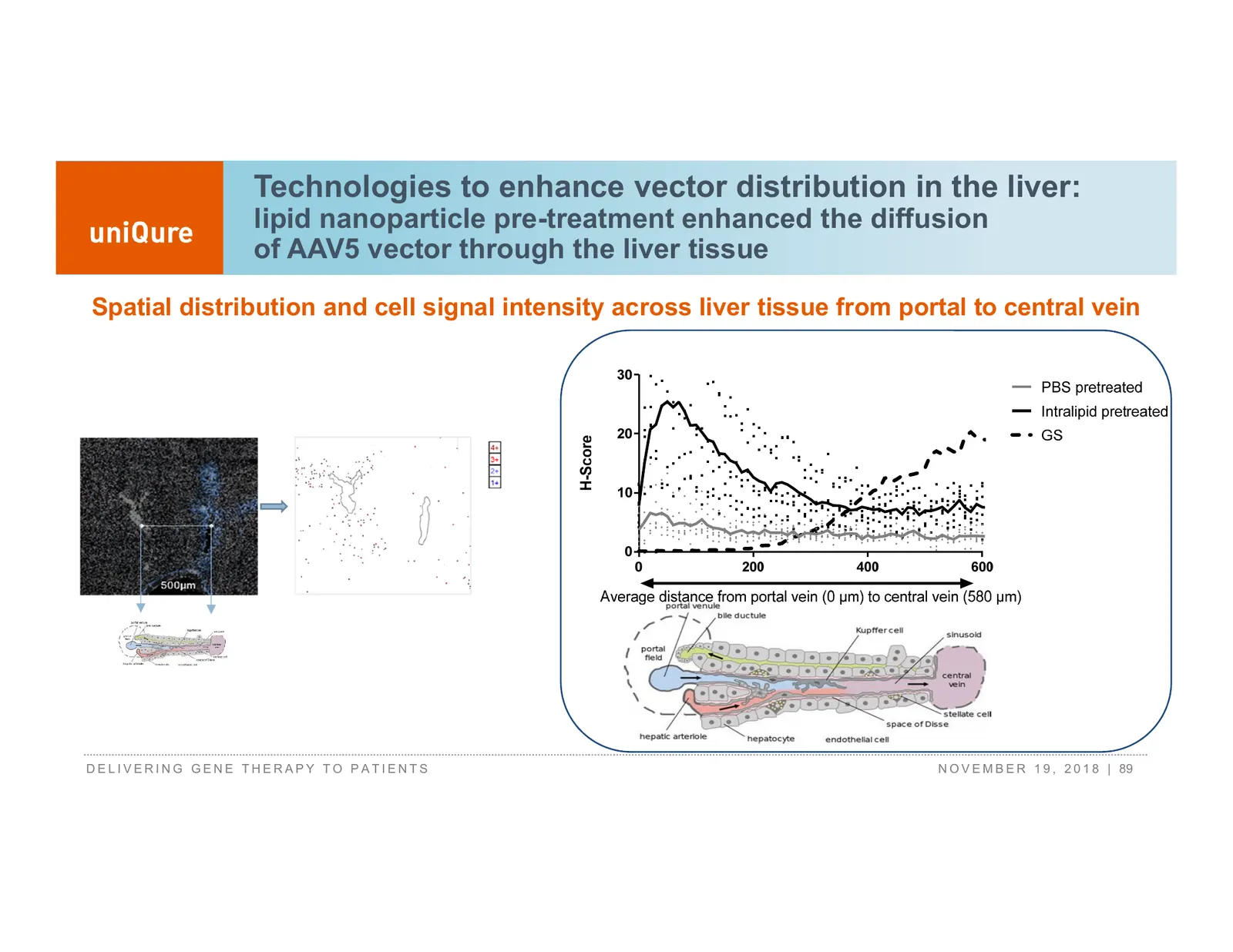
Slide 94: Lipid pre-treatment enhanced AAV5 diffusion
Technologies to enhance vector distribution in the liver: lipid nanoparticle pre-treatment enhanced the diffusion of AAV5 vector through the liver tissue Spatial distribution and cell signal intensity across liver tissue from portal to central vein DELIVERING GENE THERAPY TO PATIENTS N O V E M B E R
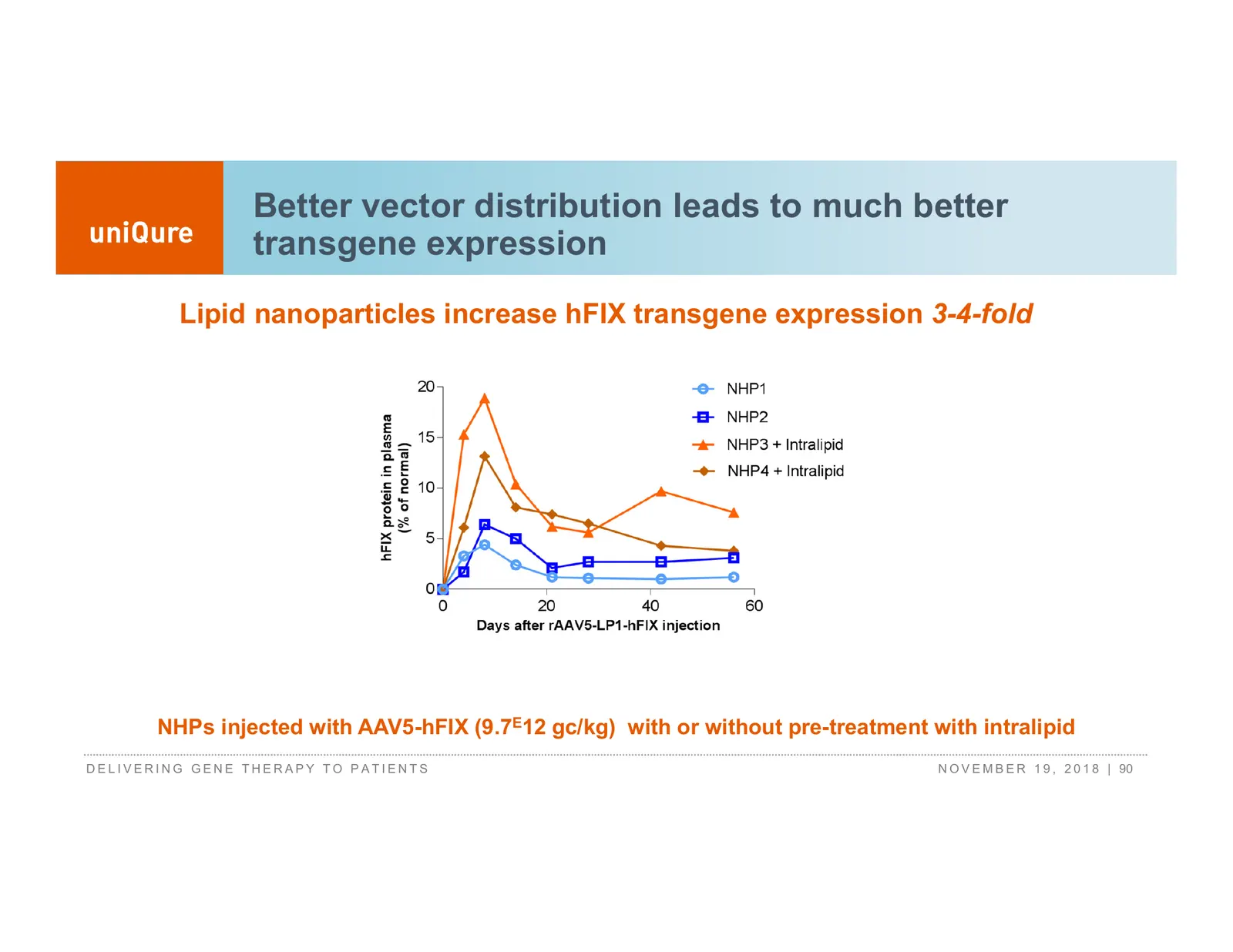
Slide 95: Better vector distribution leads to better expression
Better vector distribution leads to much better transgene expression Lipid nanoparticles increase hFIX transgene expression 3-4-fold NHPs injected with AAV5-hFIX (9.7E12 gc/kg) with or without pre-treatment with intralipid DELIVERING GENE THERAPY TO PATIENTS N O V E M B E R 1 9 , 2 0 1 8 | 90
Slide 96: Melvin Evers, Ph.D.
Melvin Evers, Ph.D. Senior Scientist, Research DELIVERING GENE THERAPY TO PATIENTS N O V E M B E R 1 9 , 2 0 1 8 | 91
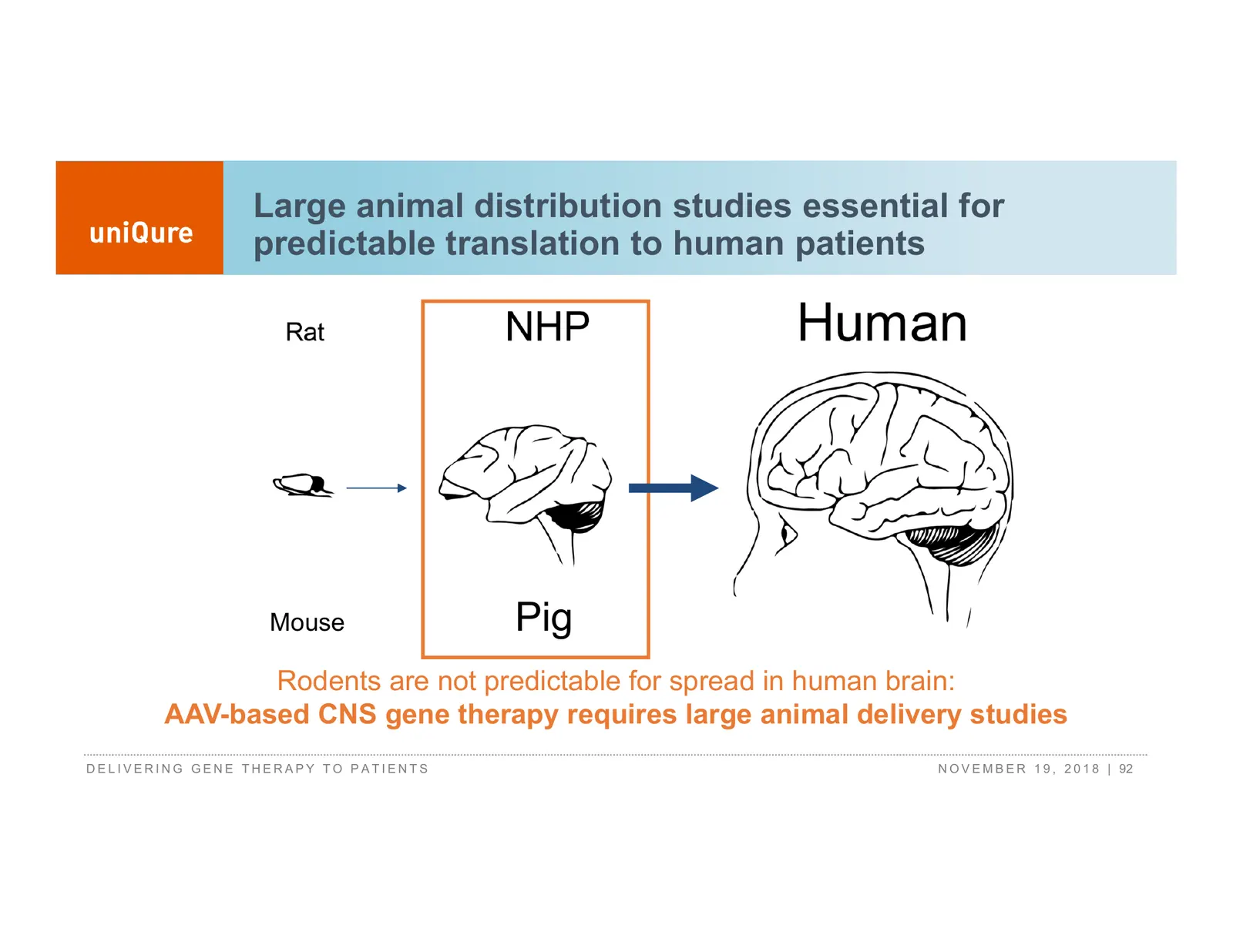
Slide 97: Large animal distribution studies essential
Large animal distribution studies essential for predictable translation to human patients Mouse Pig Rodents are not predictable for spread in human brain: AAV-based CNS gene therapy requires large animal delivery studies DELIVERING GENE THERAPY TO PATIENTS N O V E M B E R 1 9 , 2 0 1 8 | 92
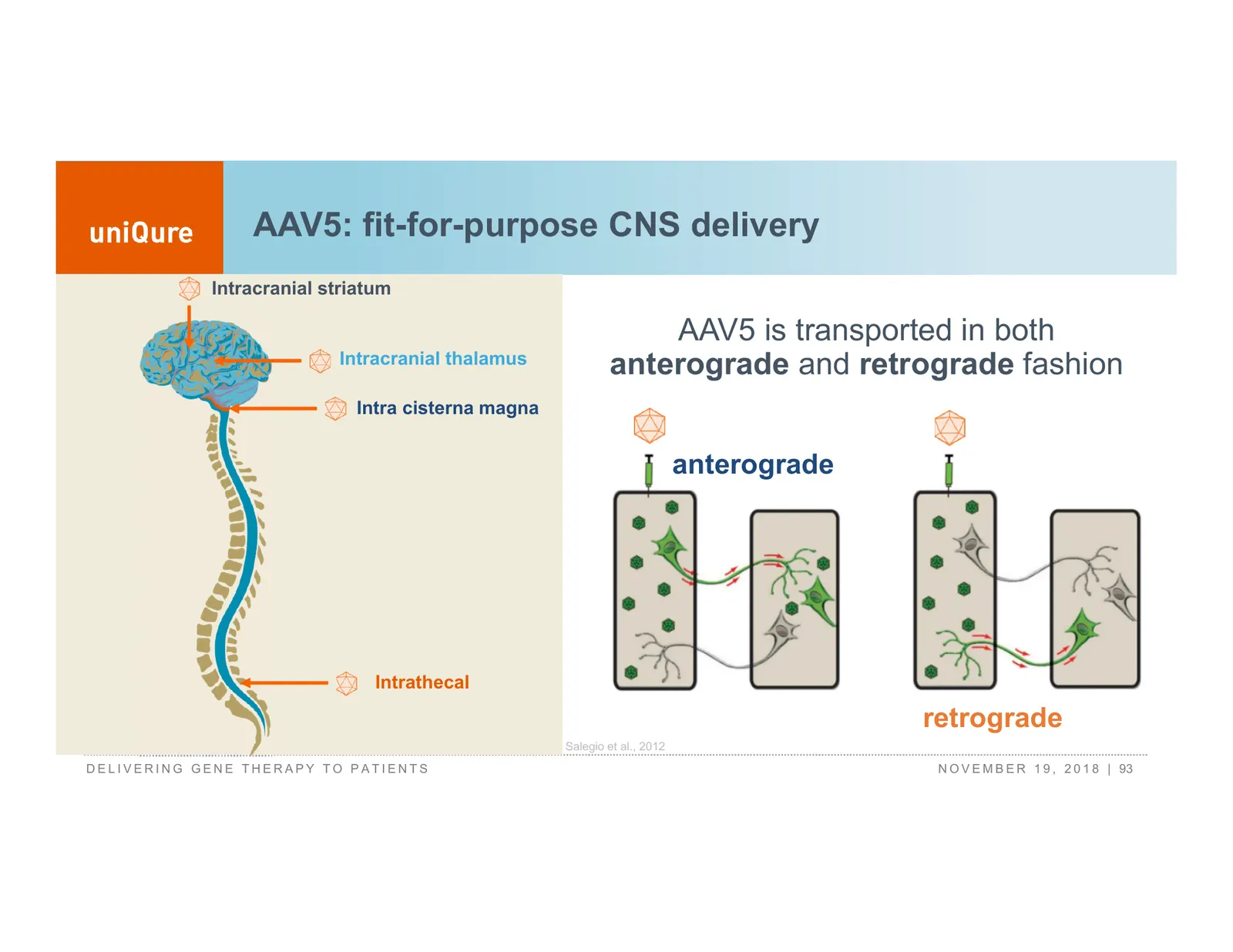
Slide 98: AAV5: fit-for-purpose CNS delivery
AAV5: fit-for-purpose CNS delivery Intracranial striatum AAV5 is transported in both Intracranial thalamus anterograde and retrograde fashion Intra cisterna magna anterograde Intrathecal retrograde Salegio et al., 2012 DELIVERING GENE THERAPY TO PATIENTS N O V E M B E R 1 9 , 2 0 1 8 | 93
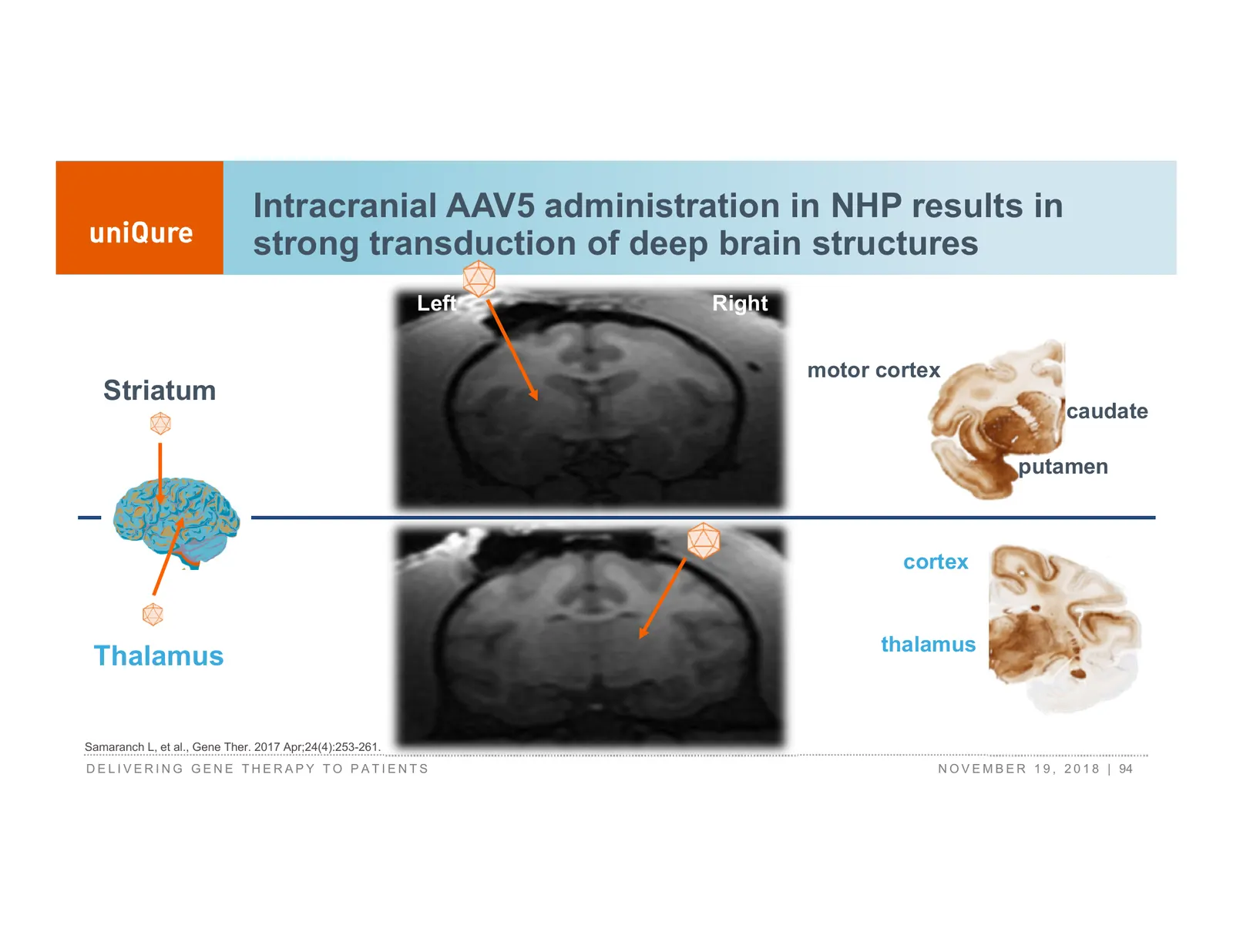
Slide 99: Intracranial AAV5 in NHP transduces deep brain
Intracranial AAV5 administration in NHP results in strong transduction of deep brain structures Left Right motor cortex Striatum caudate putamen cortex thalamus Thalamus Samaranch L, et al., Gene Ther. 2017 Apr;24(4):253-261. DELIVERING GENE THERAPY TO PATIENTS N O V E M B E R 1 9 , 2 0 1 8 | 94
Slide 100: Intra-CSF delivery of AAV5 in NHP
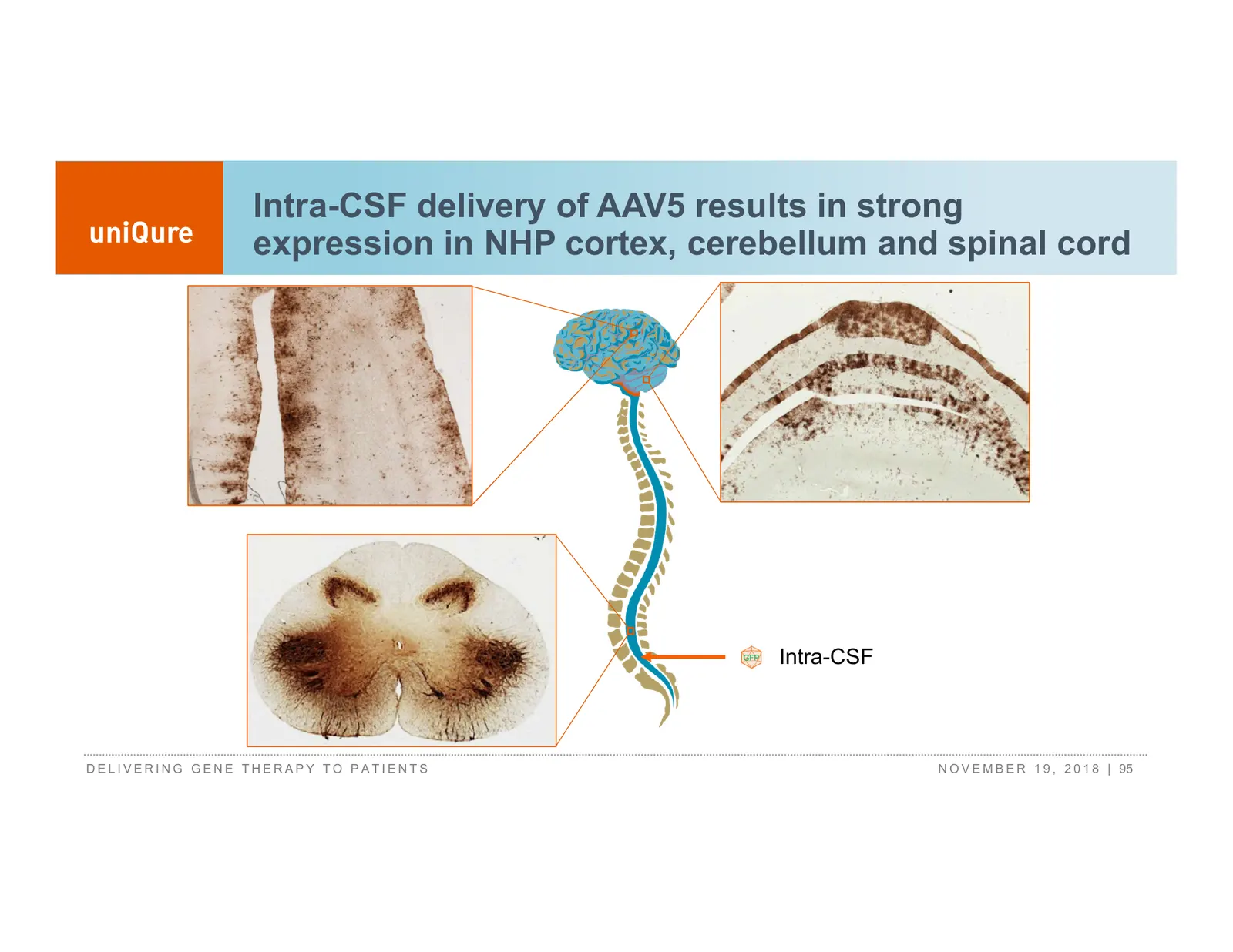
Intra-CSF delivery of AAV5 results in strong expression in NHP cortex, cerebellum and spinal cord GFP Intra-CSF DELIVERING GENE THERAPY TO PATIENTS N O V E M B E R 1 9 , 2 0 1 8 | 95
Slide 101: AAV5: modular CNS indication-specific delivery
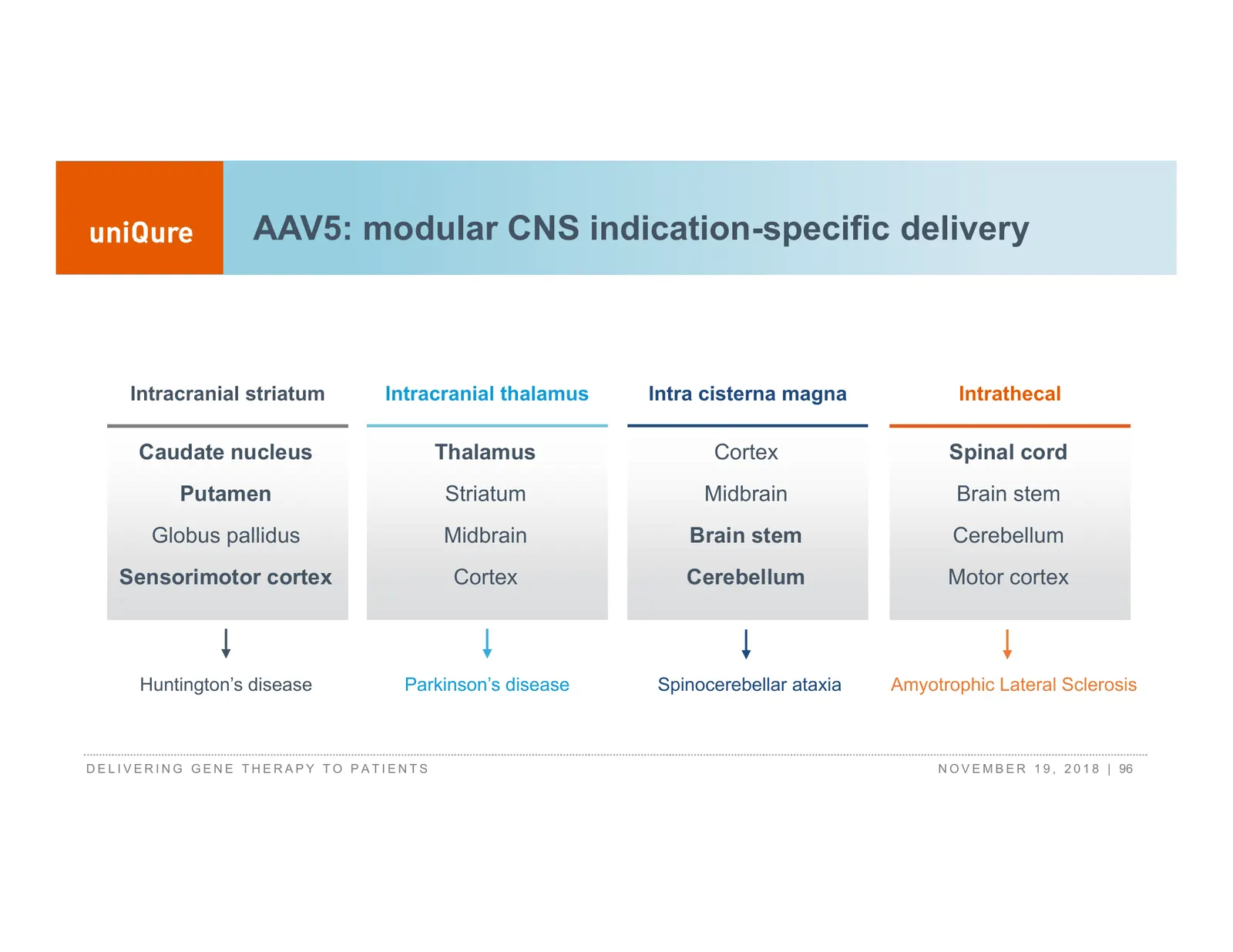
AAV5: modular CNS indication-specific delivery Intracranial striatum Intracranial thalamus Intra cisterna magna Intrathecal Caudate nucleus Thalamus Cortex Spinal cord Putamen Striatum Midbrain Brain stem Globus pallidus Midbrain Brain stem Cerebellum Sensorimotor cortex Cortex Cerebellum Motor cort
Slide 102: Human iPS-derived neurons: brain cells in a dish
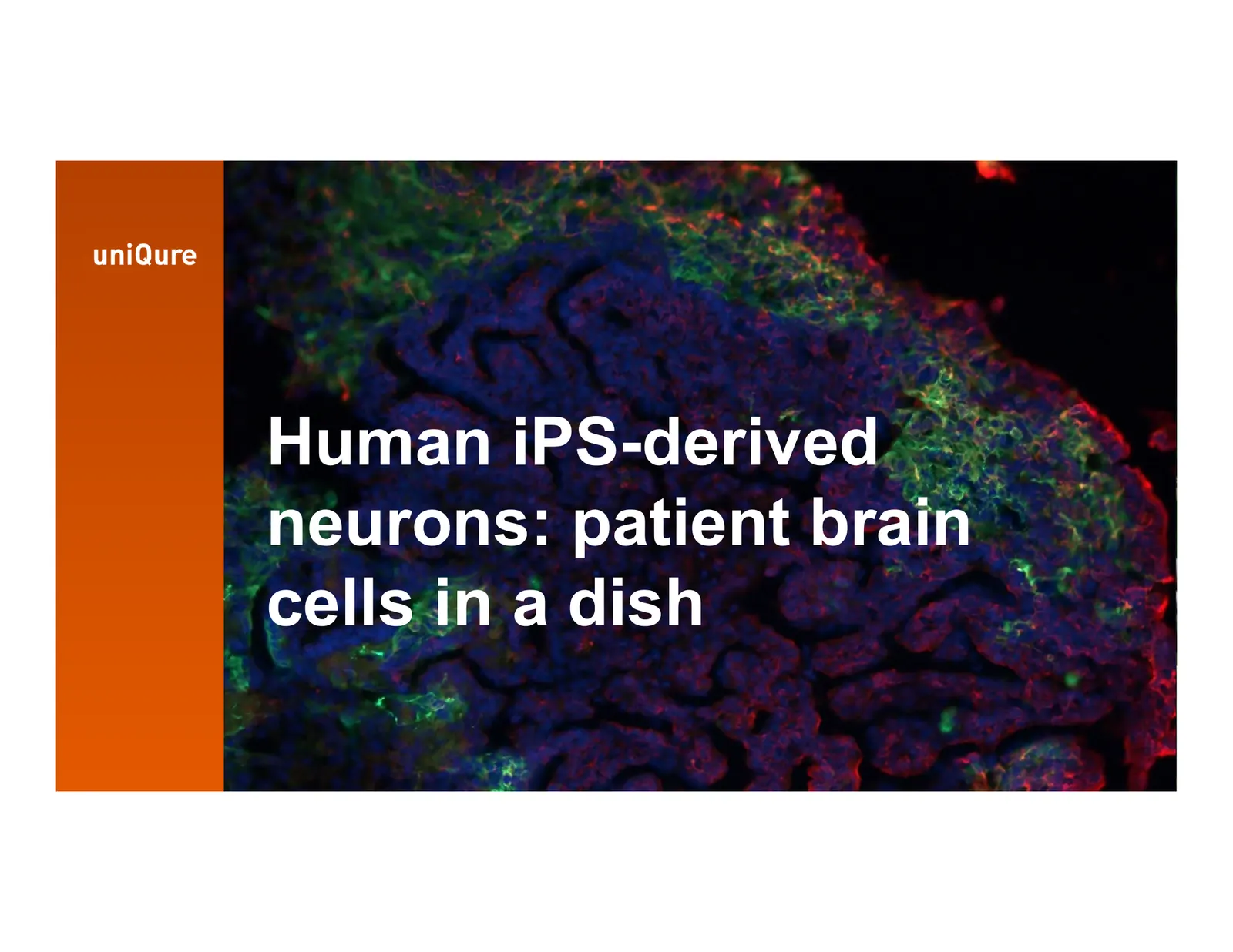
Halt ataxia with our proprietary miQURE therapy Human iPS-derived neurons: patient brain cells in a dish AMT-150
Slide 103: Patient-derived cells as research platform
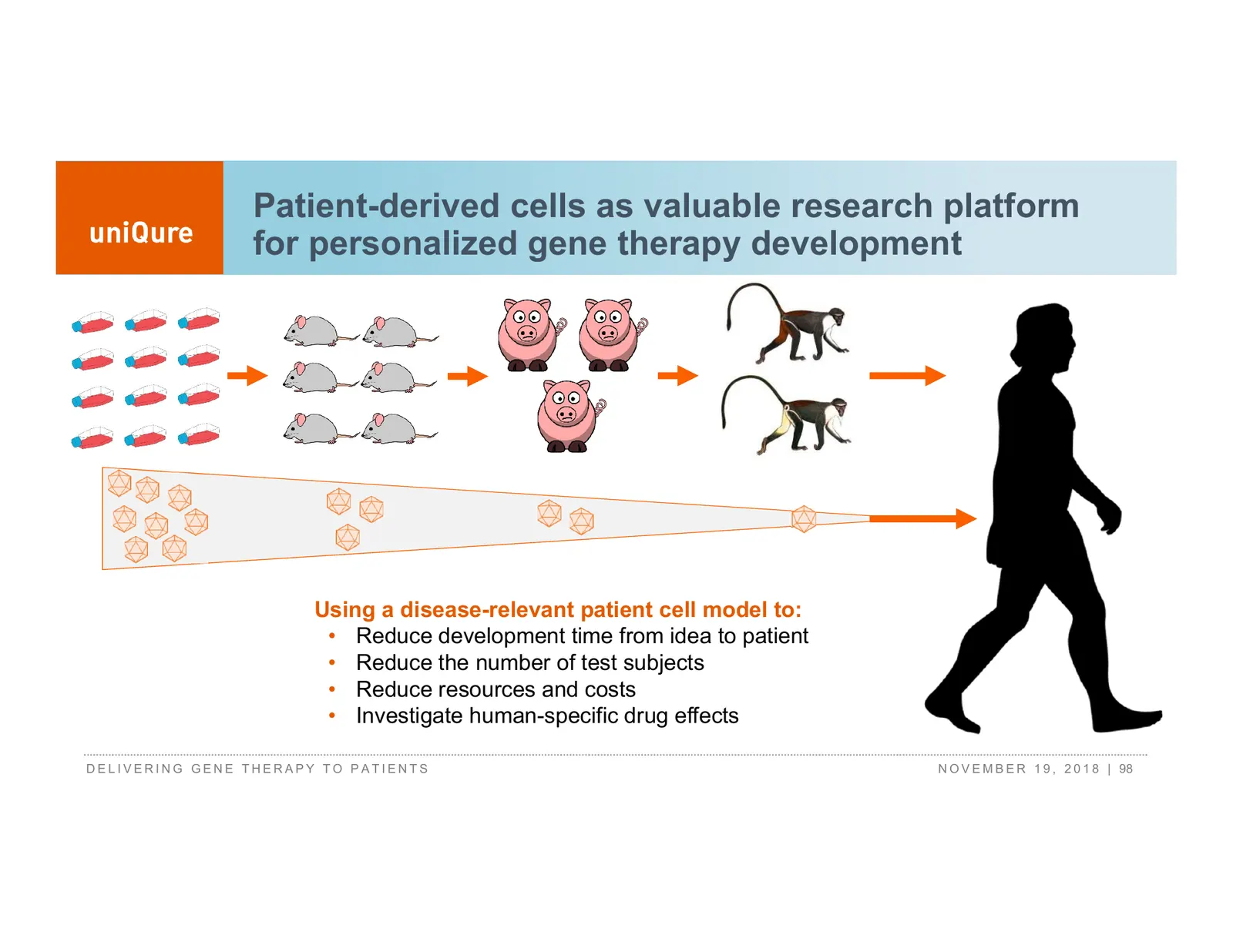
Patient-derived cells as valuable research platform for personalized gene therapy development Using a disease-relevant patient cell model to: • Reduce development time from idea to patient • Reduce the number of test subjects • Reduce resources and costs • Investigate human-specific drug effects DEL
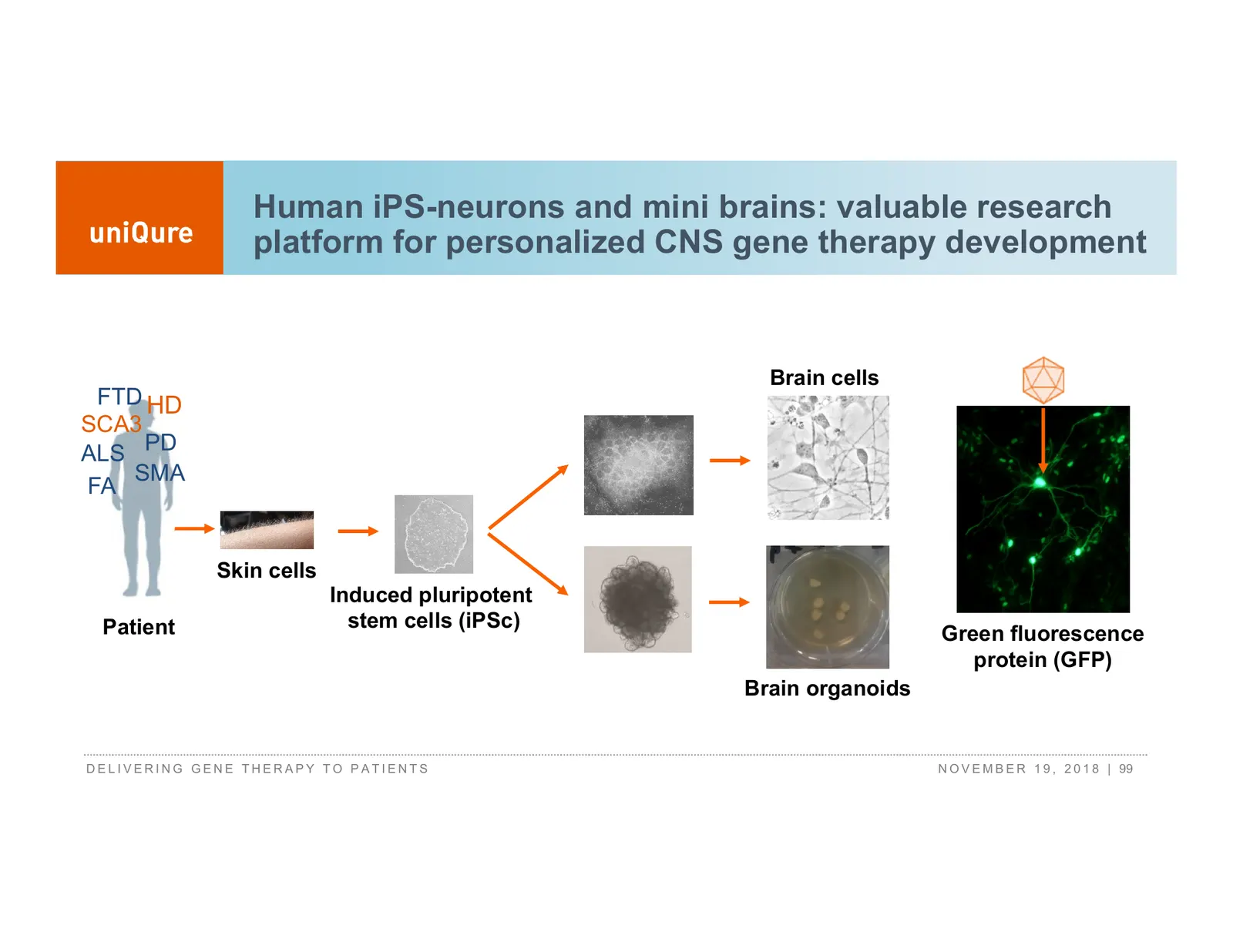
Slide 104: Human iPS-neurons and mini brains
Human iPS-neurons and mini brains: valuable research platform for personalized CNS gene therapy development Brain cells FTD HD SCA3 ALS PD SMA FA Skin cells Induced pluripotent Patient stem cells (iPSc) Green fluorescence protein (GFP) Brain organoids DELIVERING GENE THERAPY TO PATIENTS N O V E M B
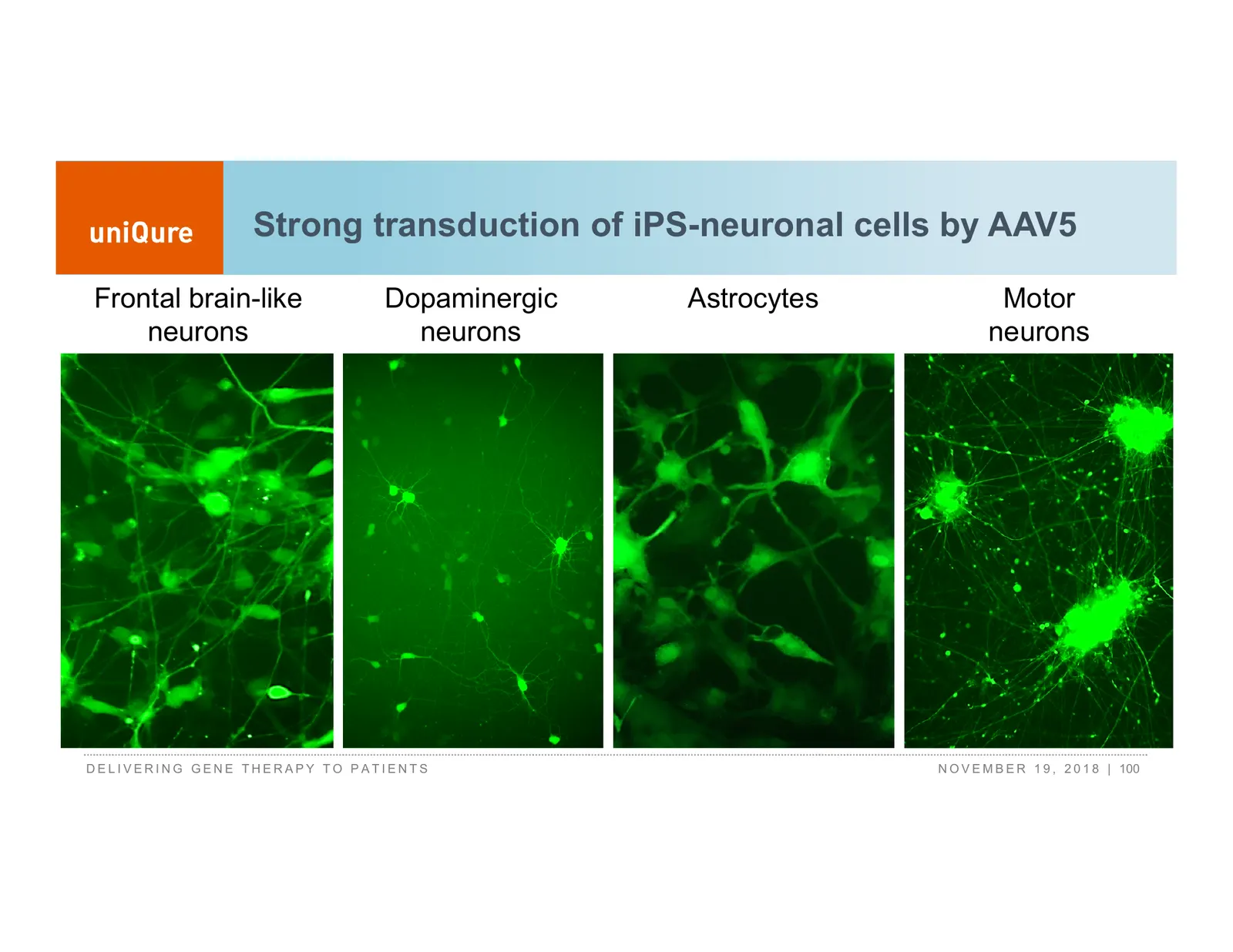
Slide 105: Strong transduction of iPS-neuronal cells by AAV5
Strong transduction of iPS-neuronal cells by AAV5 Frontal brain-like Dopaminergic Astrocytes Motor neurons neurons neurons DELIVERING GENE THERAPY TO PATIENTS N O V E M B E R 1 9 , 2 0 1 8 | 100
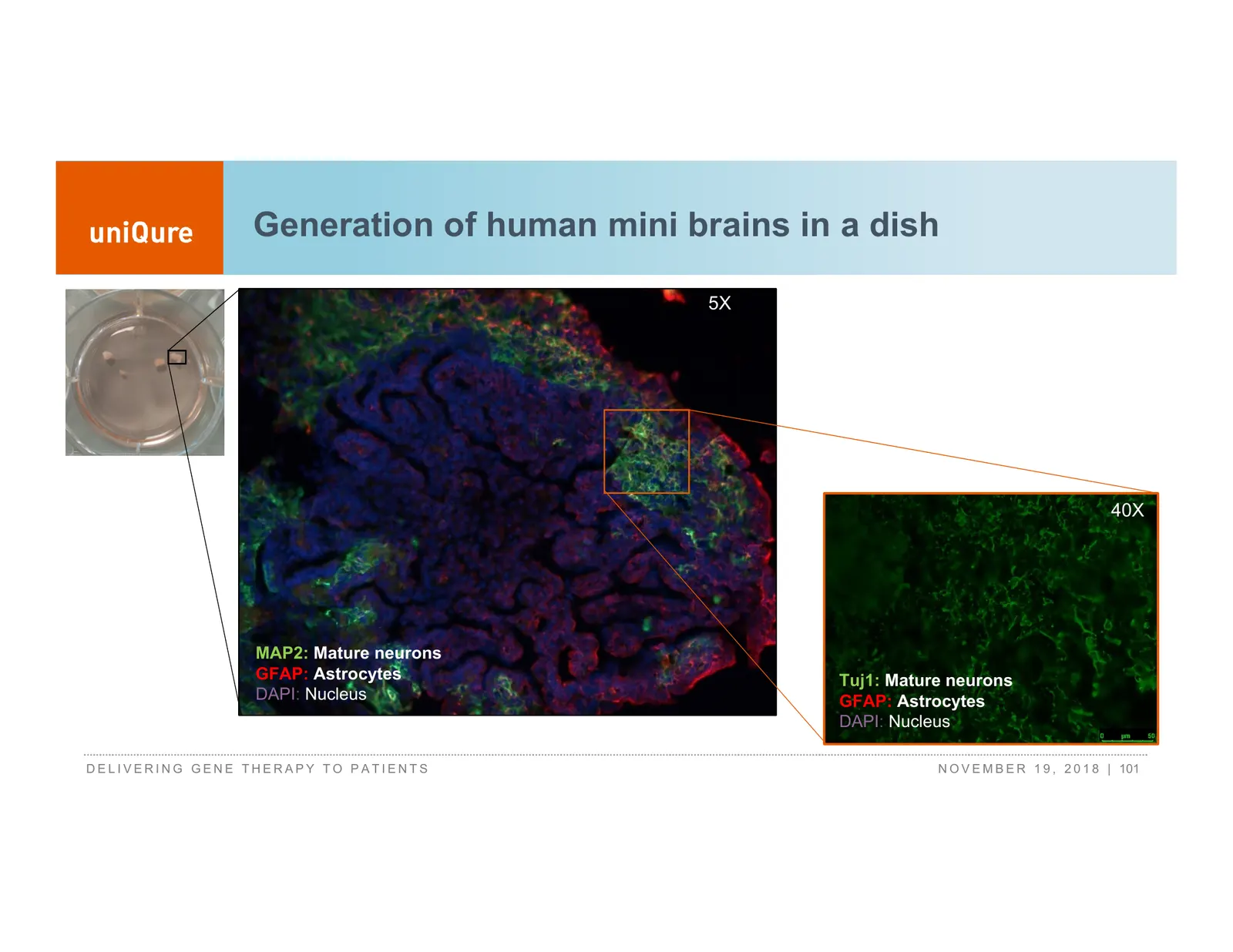
Slide 106: Generation of human mini brains in a dish
Generation of human mini brains in a dish 5X 40X MAP2: Mature neurons GFAP: Astrocytes Tuj1: Mature neurons DAPI: Nucleus GFAP: Astrocytes DAPI: Nucleus 40X DELIVERING GENE THERAPY TO PATIENTS N O V E M B E R 1 9 , 2 0 1 8 | 101
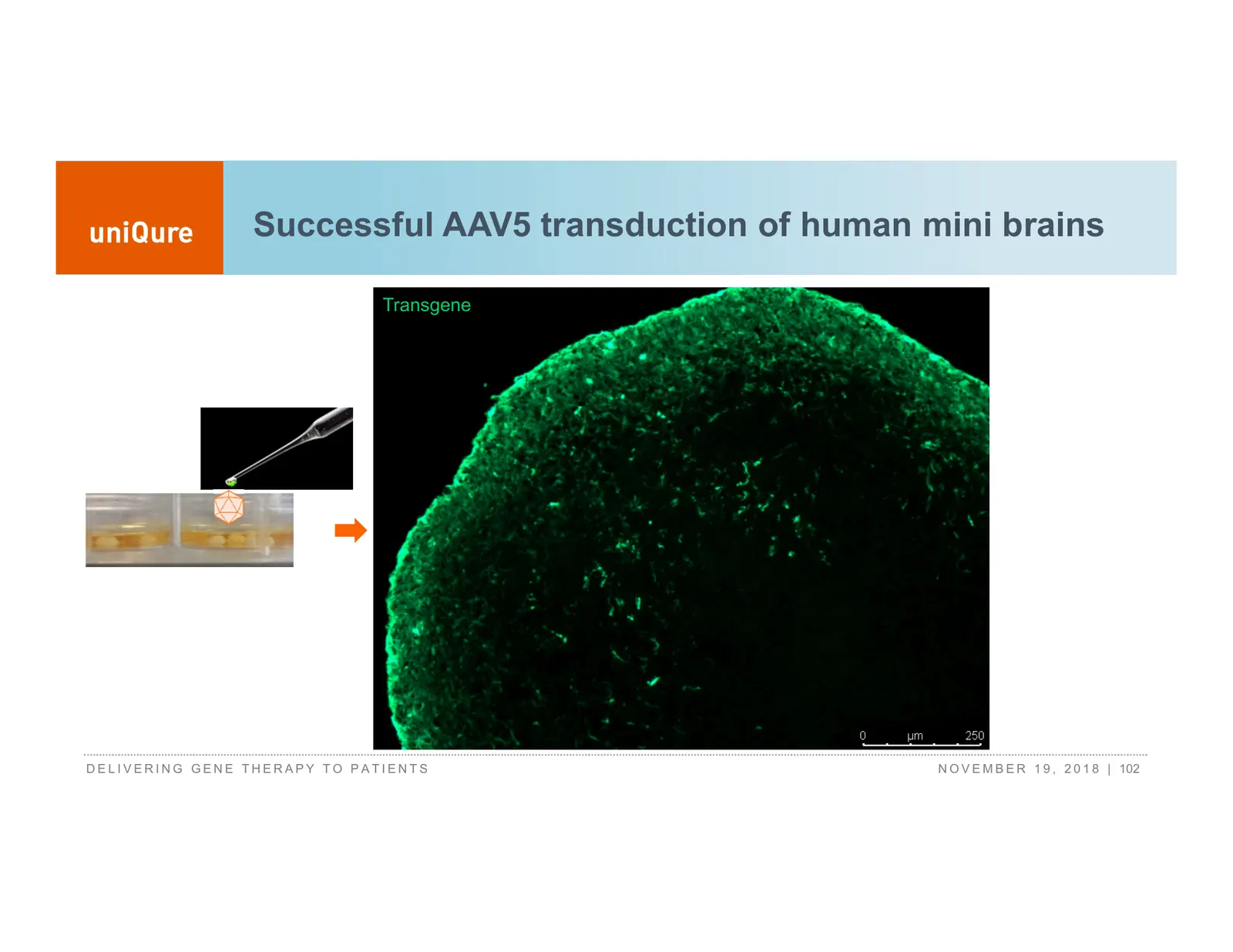
Slide 107: AAV5 transduction of human mini brains
Successful AAV5 transduction of human mini brains 20X 10X Transgene DELIVERING GENE THERAPY TO PATIENTS N O V E M B E R 1 9 , 2 0 1 8 | 102
Slide 108: Patient iPS-neurons as ex vivo research platform
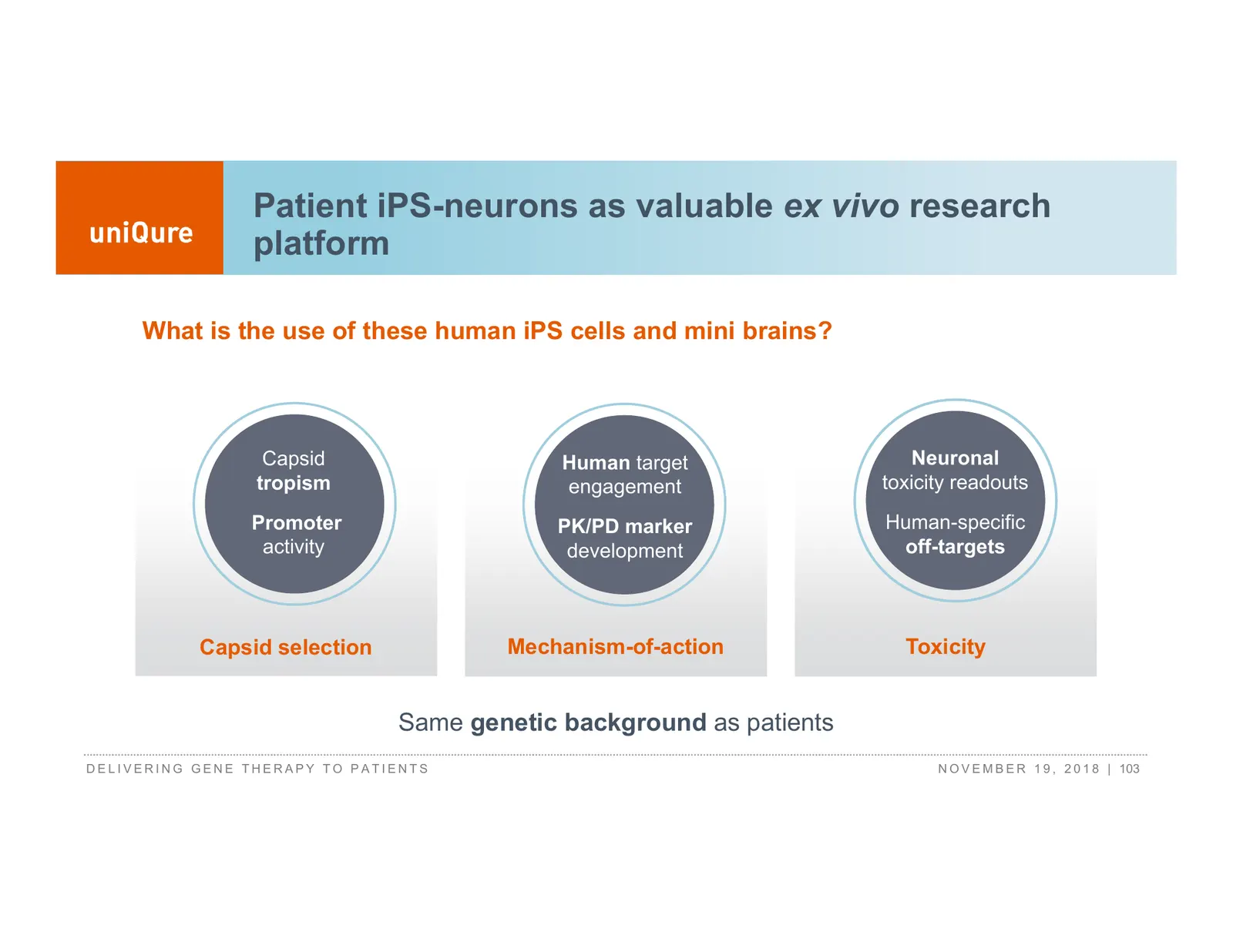
Patient iPS-neurons as valuable ex vivo research platform What is the use of these human iPS cells and mini brains? Capsid Human target Neuronal tropism engagement toxicity readouts Promoter PK/PD marker Human-specific activity development off-targets Capsid selection Mechanism-of-action Toxicity Sa

Slide 109: Panel Q&A
Panel Q&A DELIVERING GENE THERAPY TO PATIENTS N O V E M B E R 1 9 , 2 0 1 8 | 104
Slide 110: Research and Development Day
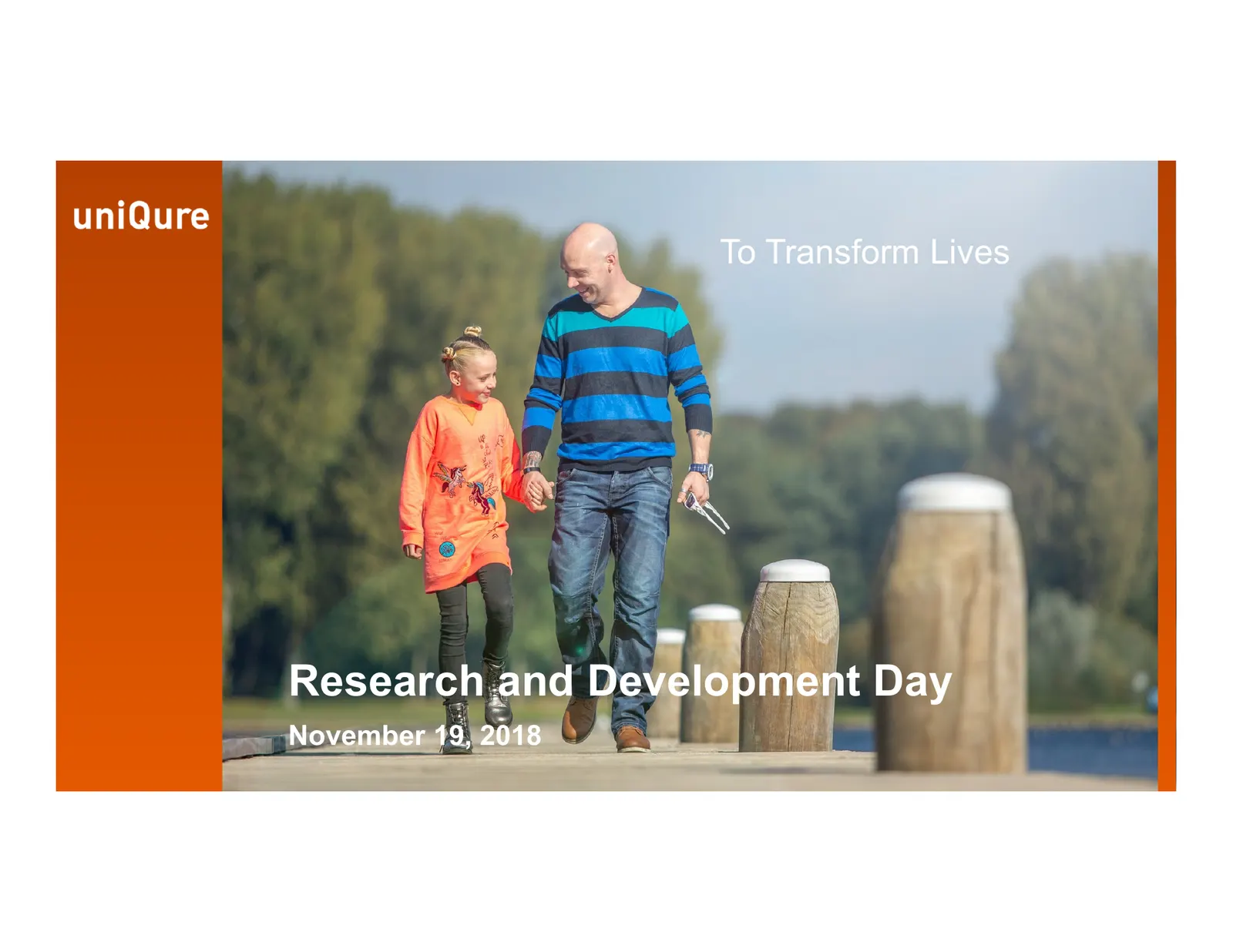
To Transform Lives Research and Development Day November 19, 2018 DELIVERING GENE THERAPY TO PATIENTS N O V E M B E R 1 9 , 2 0 1 8 | 105

Slide 111: Research Pipeline Expansion
Research Pipeline Expansion
Slide 112: Hemophilia A
Hemophilia A Annette von Drygalski, M.D., Pharm.D., RMSK Associate Clinical Professor of Medicine and Director of the Hemophilia and Thrombosis Treatment Center University of California San Diego Hemophilia A: Introduction N o v e m b e r 1 9 , 2 0 1 8 | 107
Slide 113: Hemophilia A: an introduction
Hemophilia A: an introduction • Background information • Current treatment options and considerations • Inhibitor patients – clear unmet medical need • Need for a novel approach Hemophilia A: Introduction N o v e m b e r 1 9 , 2 0 1 8 | 108
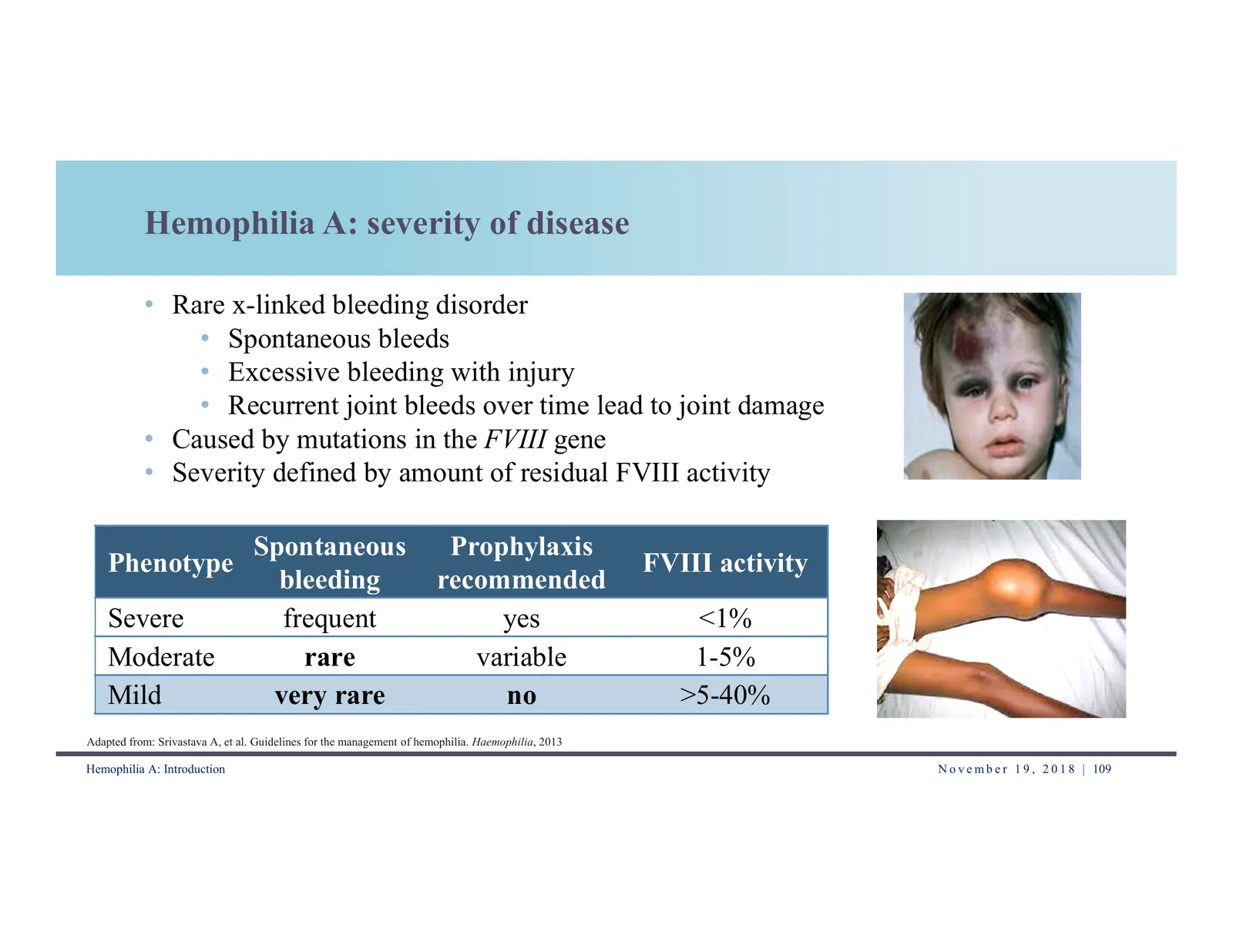
Slide 114: Hemophilia A: severity of disease
Hemophilia A: severity of disease • Rare x-linked bleeding disorder • Spontaneous bleeds • Excessive bleeding with injury • Recurrent joint bleeds over time lead to joint damage • Caused by mutations in the FVIII gene • Severity defined by amount of residual FVIII activity Spontaneous Prophylaxis Ph
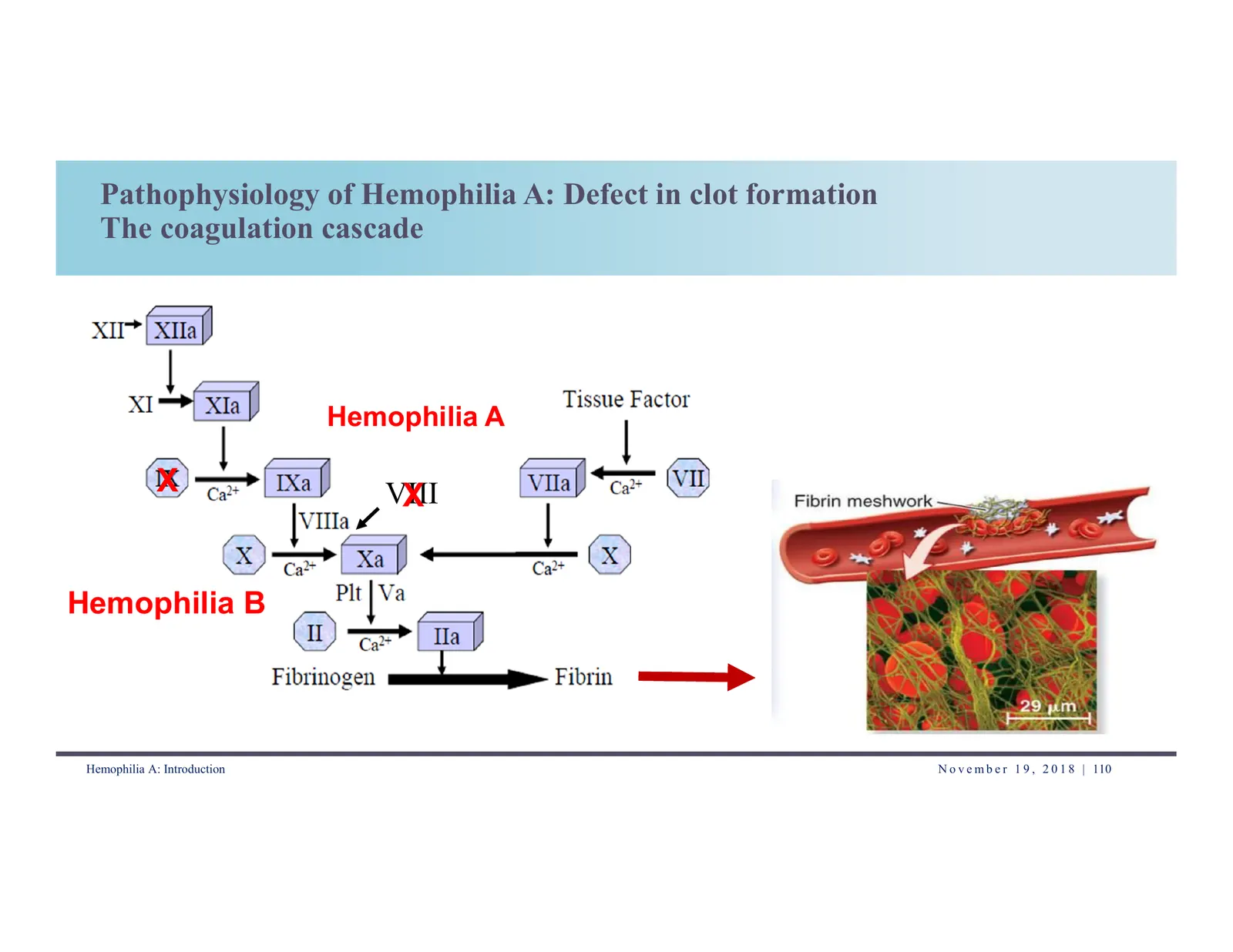
Slide 115: Pathophysiology of Hemophilia A
Pathophysiology of Hemophilia A: Defect in clot formation The coagulation cascade Hemophilia A X VIII X Hemophilia B Hemophilia A: Introduction N o v e m b e r 1 9 , 2 0 1 8 | 110
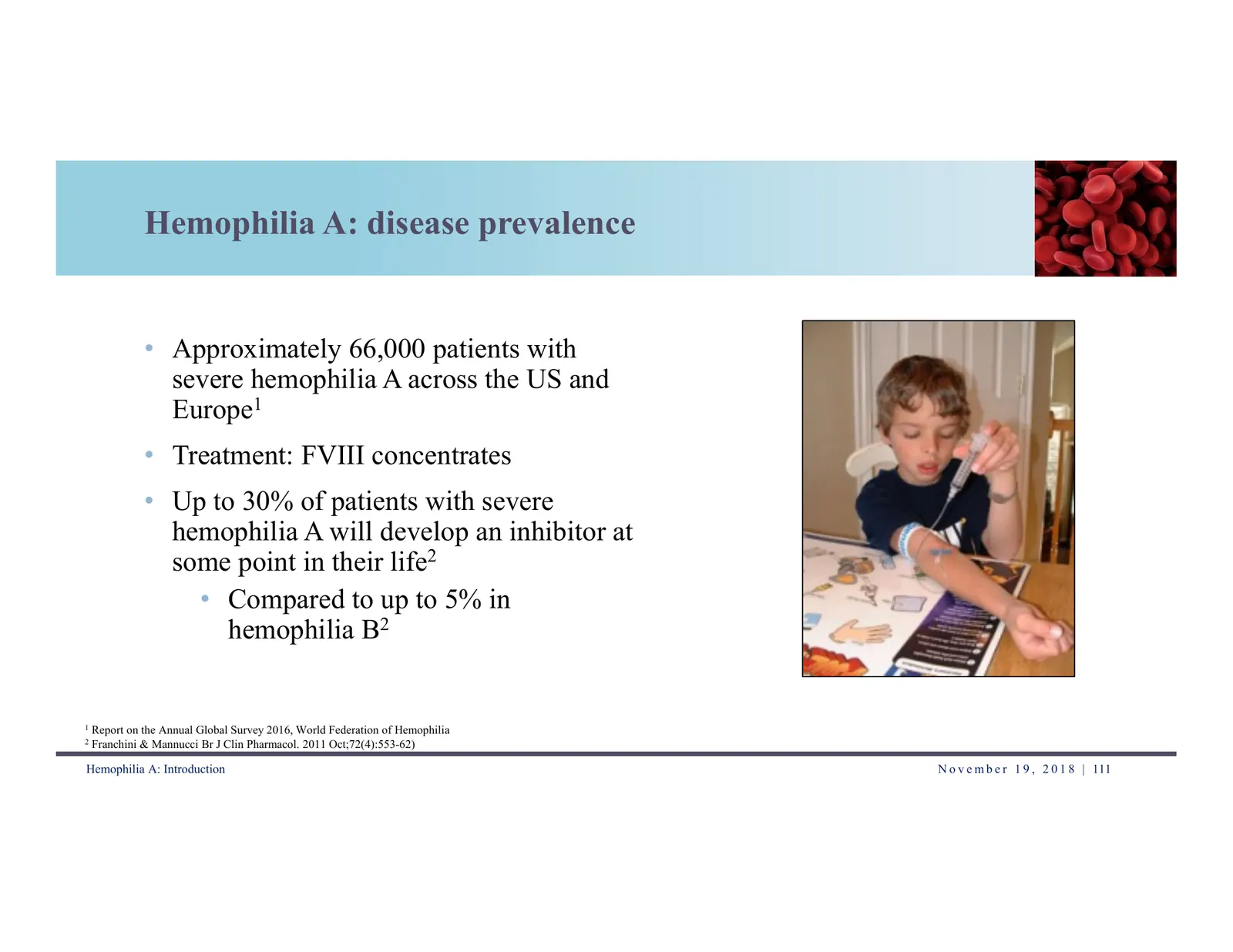
Slide 116: Hemophilia A: disease prevalence
Hemophilia A: disease prevalence • Approximately 66,000 patients with severe hemophilia A across the US and Europe1 • Treatment: FVIII concentrates • Up to 30% of patients with severe hemophilia A will develop an inhibitor at some point in their life2 • Compared to up to 5% in hemophilia B2 1 Report
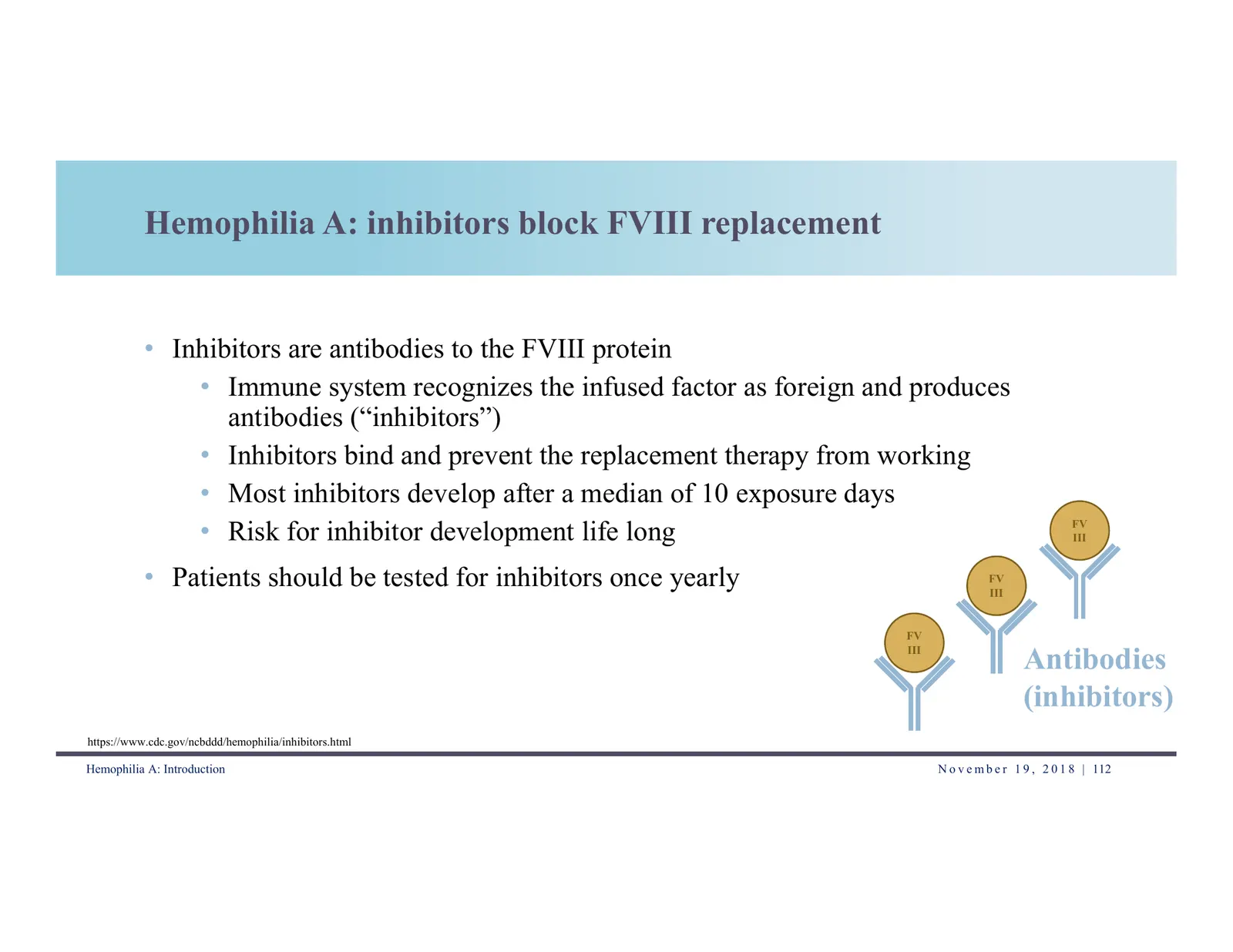
Slide 117: Inhibitors block FVIII replacement
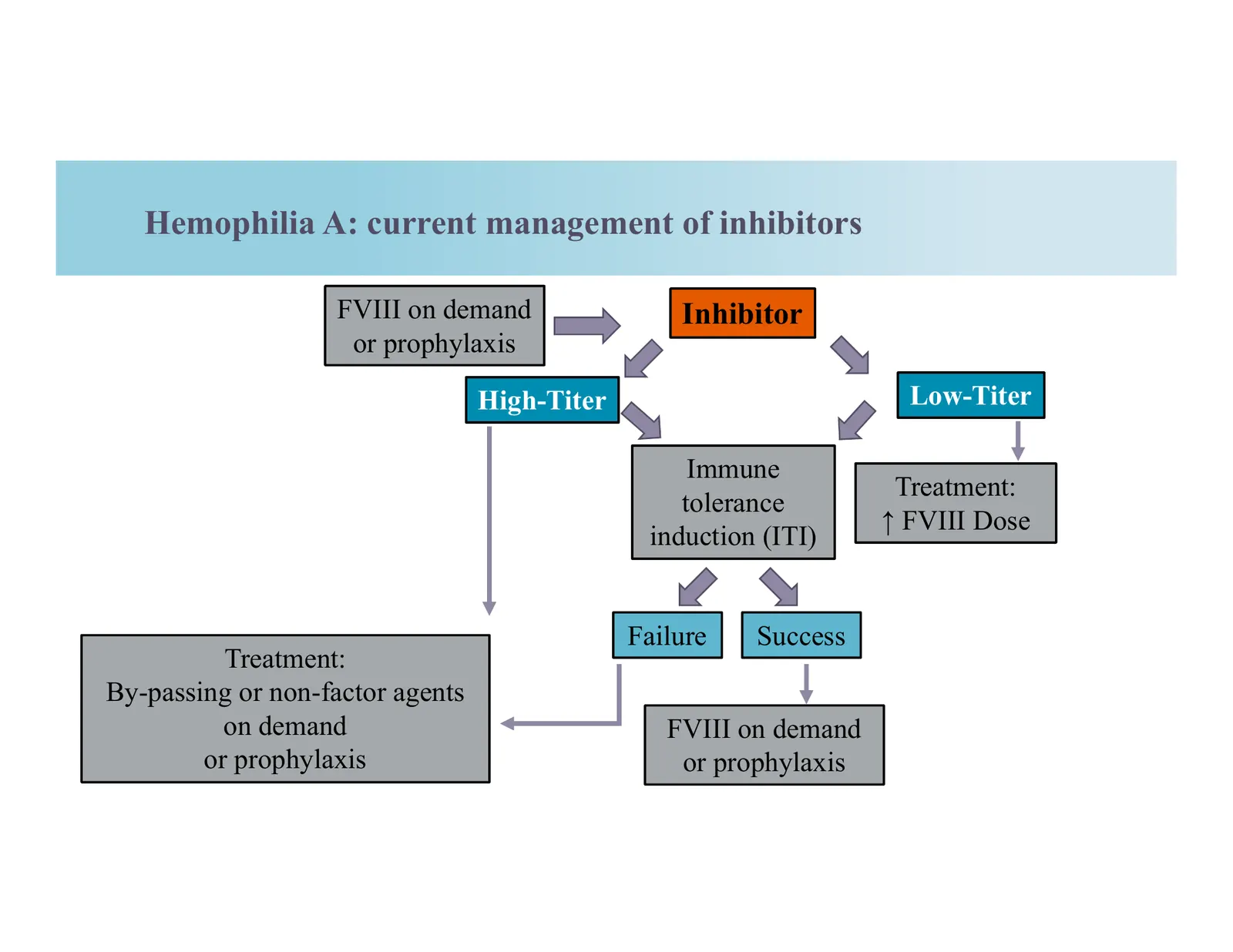
Hemophilia A: inhibitors block FVIII replacement • Inhibitors are antibodies to the FVIII protein • Immune system recognizes the infused factor as foreign and produces antibodies (“inhibitors”) • Inhibitors bind and prevent the replacement therapy from working • Most inhibitors develop after a media
Slide 118: Current management of inhibitors
Hemophilia A: current management of inhibitors FVIII on demand Inhibitor or prophylaxis High-Titer Low-Titer Immune Treatment: tolerance ↑ FVIII Dose induction (ITI) Failure Success Treatment: By-passing or non-factor agents on demand FVIII on demand or prophylaxis Hemophilia A: Introduction or prop
Slide 119: Treatment options for patients with active inhibitors
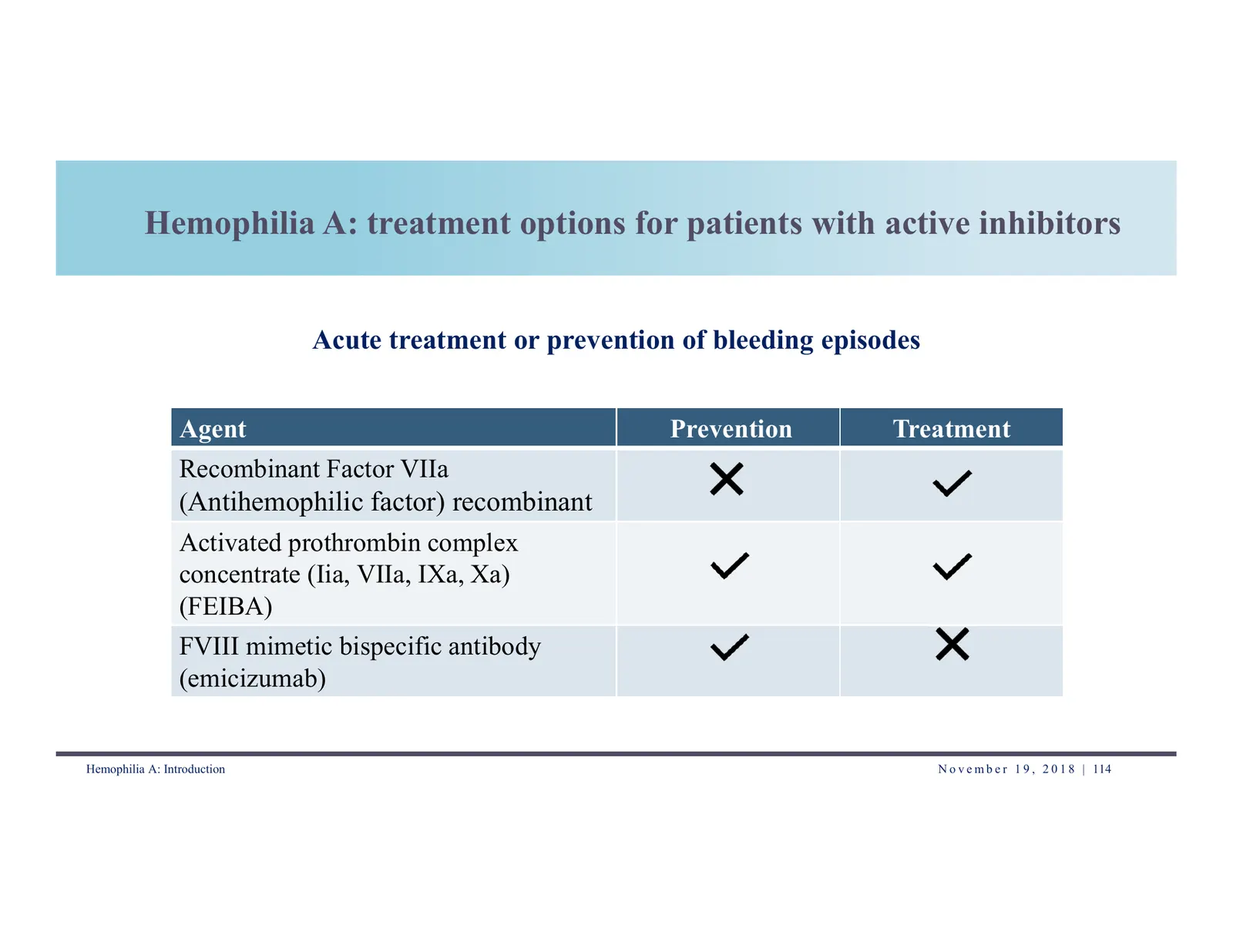
Hemophilia A: treatment options for patients with active inhibitors Acute treatment or prevention of bleeding episodes Agent Prevention Treatment Recombinant Factor VIIa (Antihemophilic factor) recombinant Activated prothrombin complex concentrate (Iia, VIIa, IXa, Xa) (FEIBA) FVIII mimetic bispecifi
Slide 120: Bleed control is difficult with inhibitors
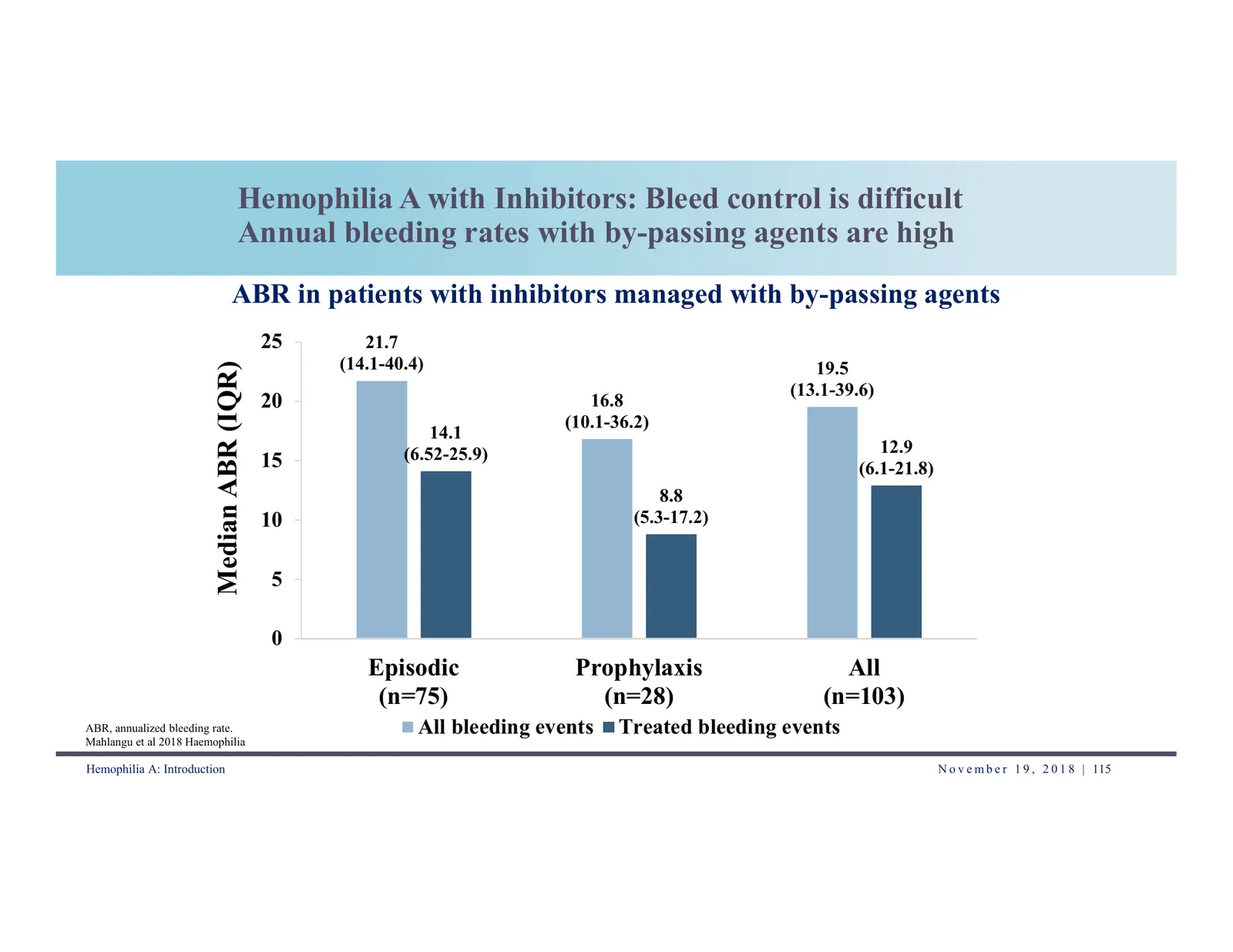
Hemophilia A with Inhibitors: Bleed control is difficult Annual bleeding rates with by-passing agents are high ABR in patients with inhibitors managed with by-passing agents 25 21.7 (14.1-40.4) 19.5 Median ABR (IQR) (13.1-39.6) 20 16.8 (10.1-36.2) 14.1 (6.52-25.9) 12.9 15 (6.1-21.8) 8.8 10 (5.3-17.2
Slide 121: Health economic burden of inhibitors
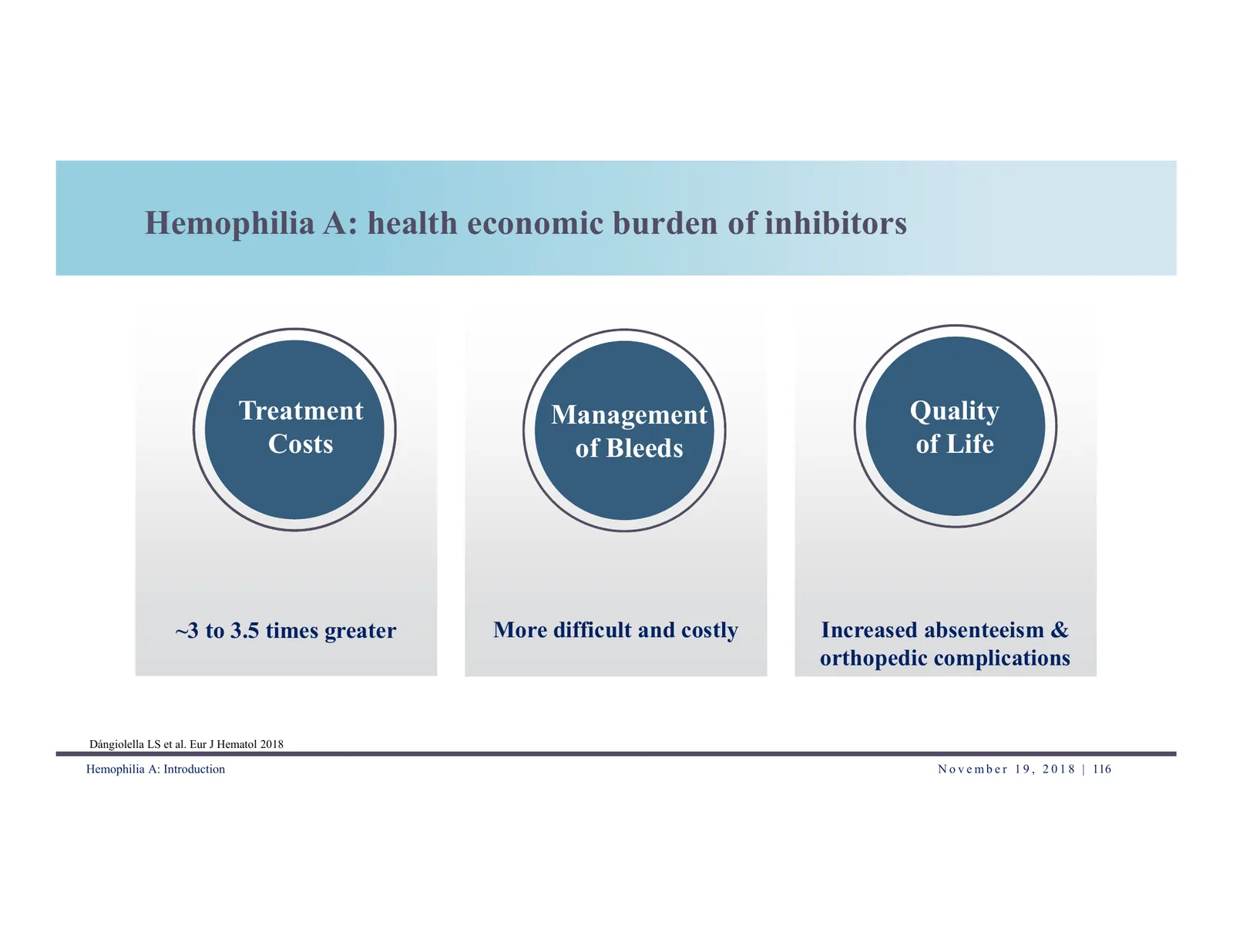
Hemophilia A: health economic burden of inhibitors Treatment Management Quality Costs of Bleeds of Life ~3 to 3.5 times greater More difficult and costly Increased absenteeism & orthopedic complications Dángiolella LS et al. Eur J Hematol 2018 Hemophilia A: Introduction N o v e m b e r 1 9 , 2 0 1 8
Slide 122: Gene therapy: novel approach for hemophilia A
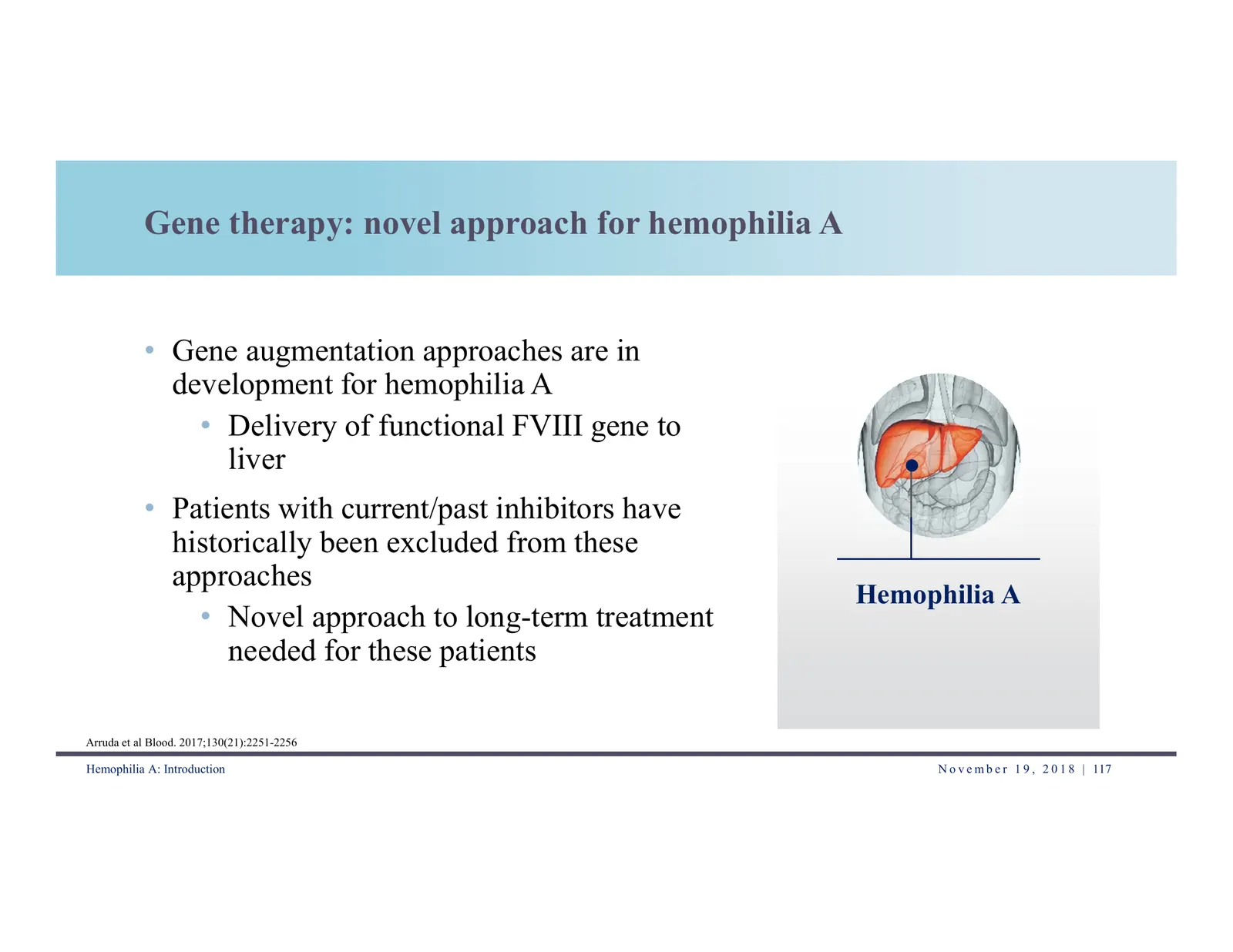
Gene therapy: novel approach for hemophilia A • Gene augmentation approaches are in development for hemophilia A • Delivery of functional FVIII gene to liver • Patients with current/past inhibitors have historically been excluded from these approaches Hemophilia A • Novel approach to long-term treat
Slide 123: Summarizing unmet medical need exists
Hemophilia A: summarizing unmet medical need exists • Inhibitors are the main complication of hemophilia treatment • Patients with inhibitors bear a high burden of illness • Frequent bleeding and consequently worse arthropathy • Quality of life is severely impacted • Many patients are managed on-dem
Slide 124: Super9: A new approach to Hemophilia A
Super9 : ™ A new approach to Hemophilia A Sander van Deventer, M.D., Ph.D. Chief Scientific Officer, General Manager, Amsterdam Hemophilia A: Introduction N o v e m b e r 1 9 , 2 0 1 8 | 119
Slide 125: Why not express FVIII in the liver?
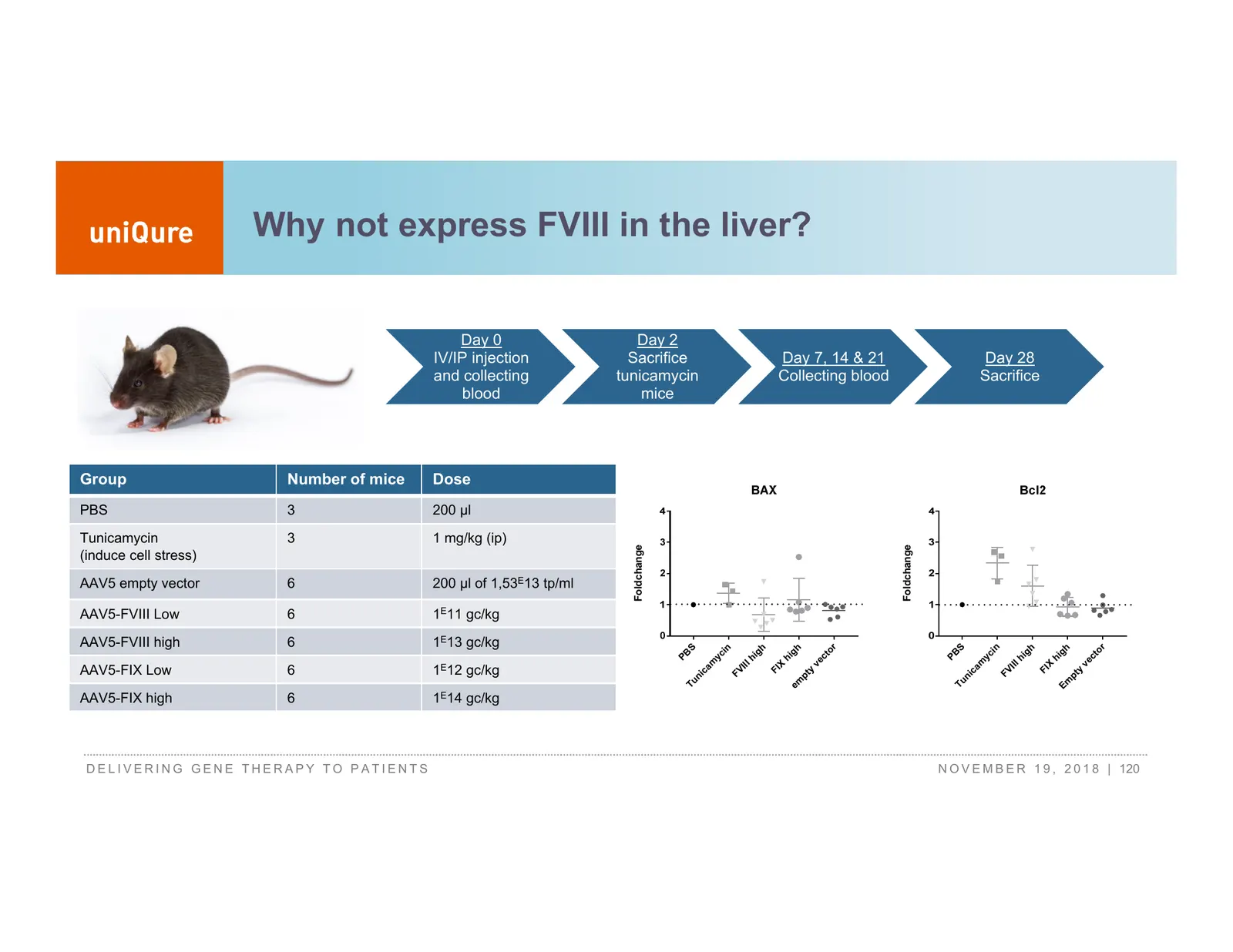
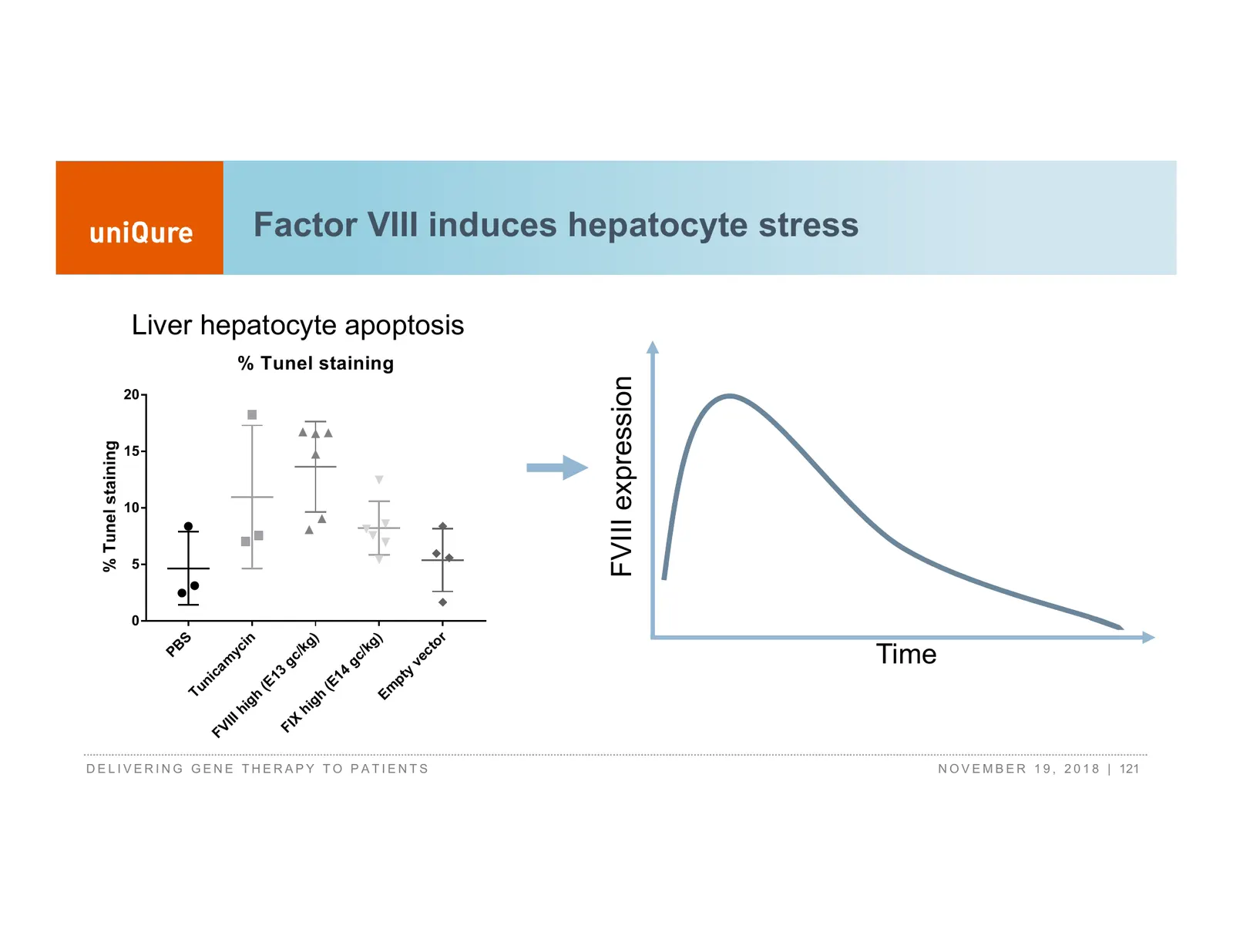
Why not express FVIII in the liver? Day 0 Day 2 IV/IP injection Sacrifice Day 7, 14 & 21 Day 28 and collecting tunicamycin Collecting blood Sacrifice blood mice Group Number of mice Dose PBS 3 200 µl Tunicamycin 3 1 mg/kg (ip) Foldchange Foldchange (induce cell stress) AAV5 empty vector 6 200 µl of
Slide 126: Factor VIII induces hepatocyte stress
Factor VIII induces hepatocyte stress Liver hepatocyte apoptosis % Tunel staining FVIII expression 20 15 10 5 0 or n S g) ) Time kg i PB yc /k ct / gc gc ve m ca 13 14 y pt ni (E (E Em Tu h h ig g hi h II X I FI FV DELIVERING GENE THERAPY TO PATIENTS N O V E M B E R 1 9 , 2 0 1 8 | 121
Slide 127: Hepatic lipid accumulation as marker of cellular stress
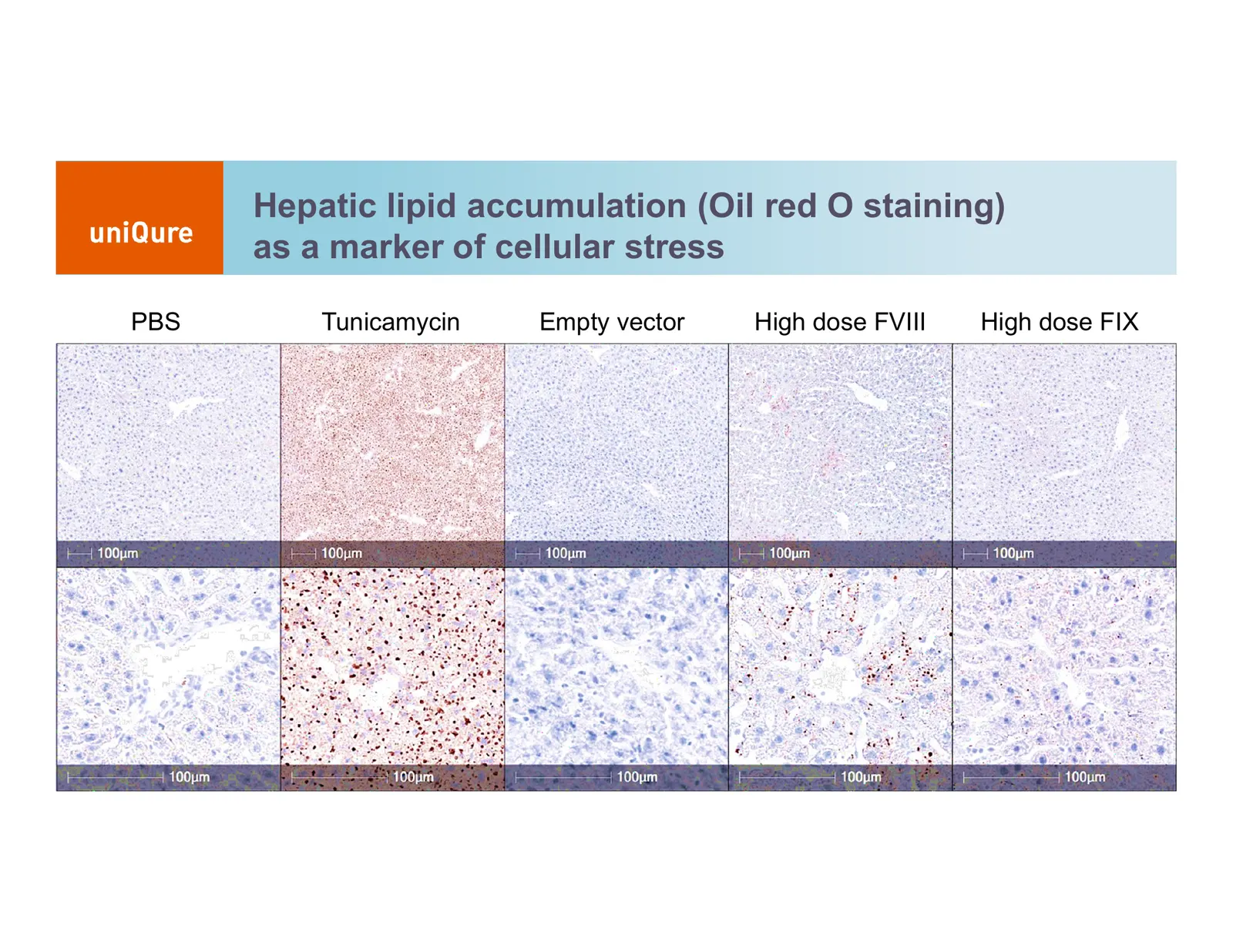
Hepatic lipid accumulation (Oil red O staining) as a marker of cellular stress PBS Tunicamycin Empty vector High dose FVIII High dose FIX DELIVERING GENE THERAPY TO PATIENTS N O V E M B E R 1 9 , 2 0 1 8 | 122
Slide 128: What do we want to achieve in hemophilia A?
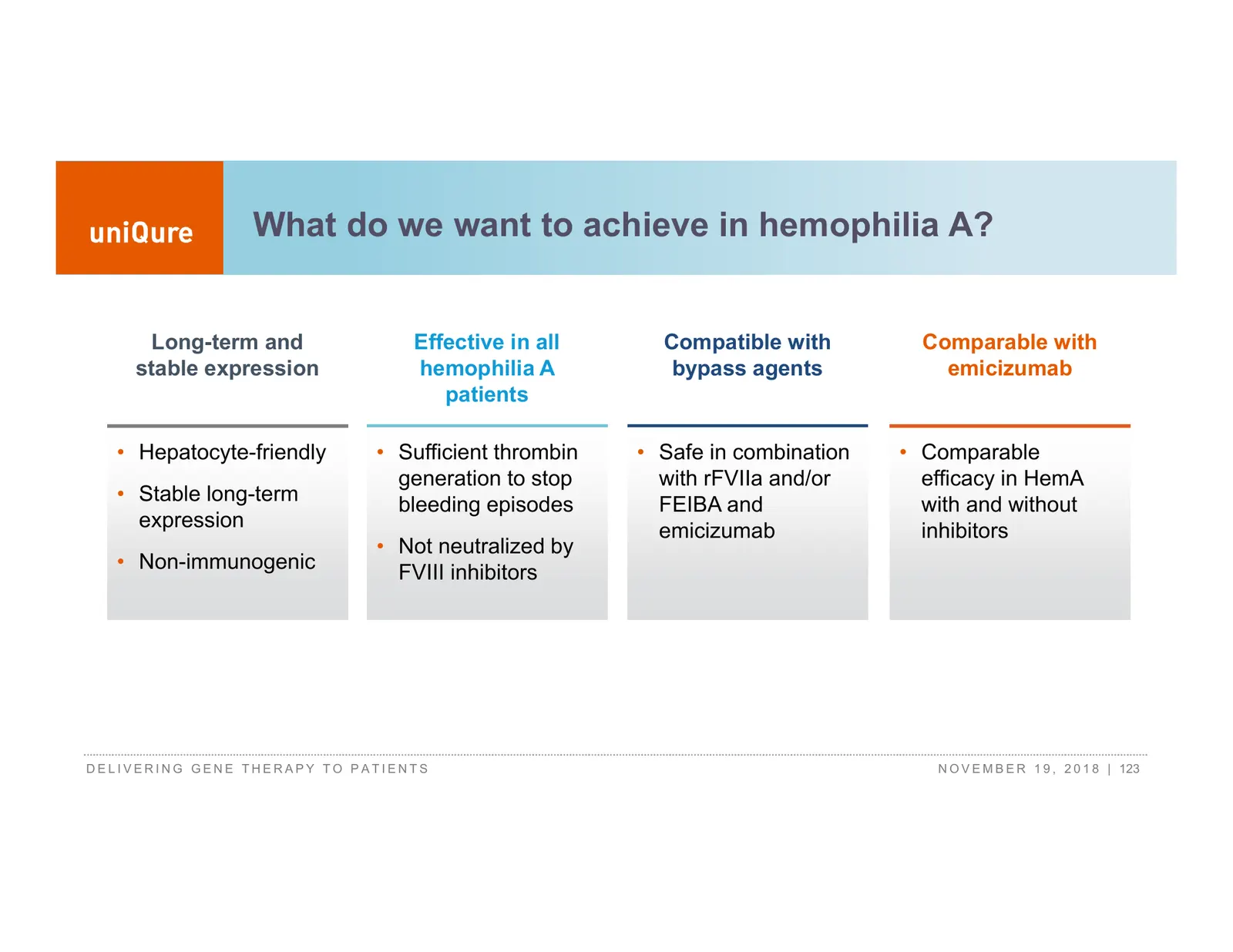
What do we want to achieve in hemophilia A? Long-term and Effective in all Compatible with Comparable with stable expression hemophilia A bypass agents emicizumab patients • Hepatocyte-friendly • Sufficient thrombin • Safe in combination • Comparable generation to stop with rFVIIa and/or efficacy in
Slide 129: Blood coagulation in vivo
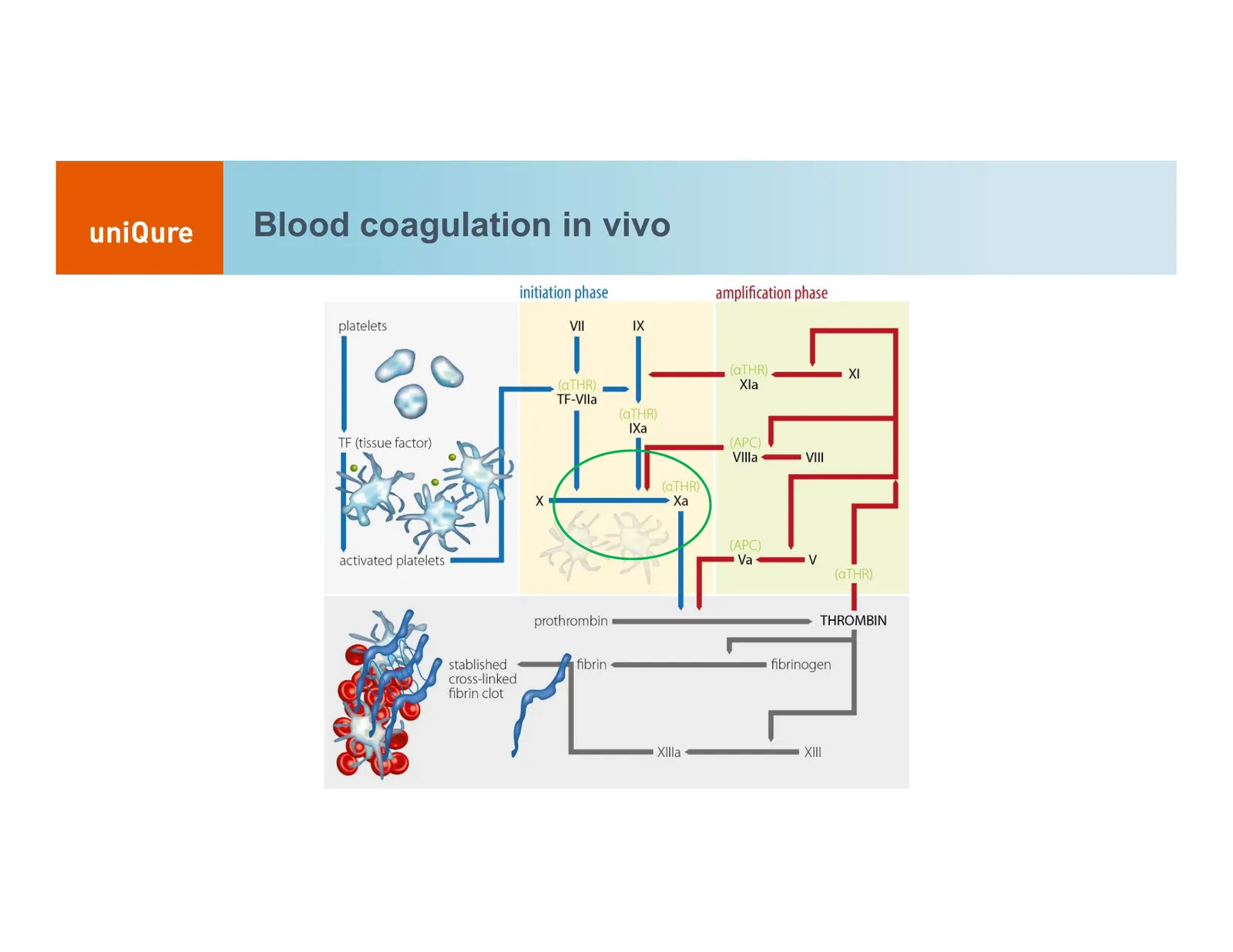
Blood coagulation in vivo DELIVERING GENE THERAPY TO PATIENTS N O V E M B E R 1 9 , 2 0 1 8 | 124
Slide 130: Mode of action of emicizumab and fitusiran
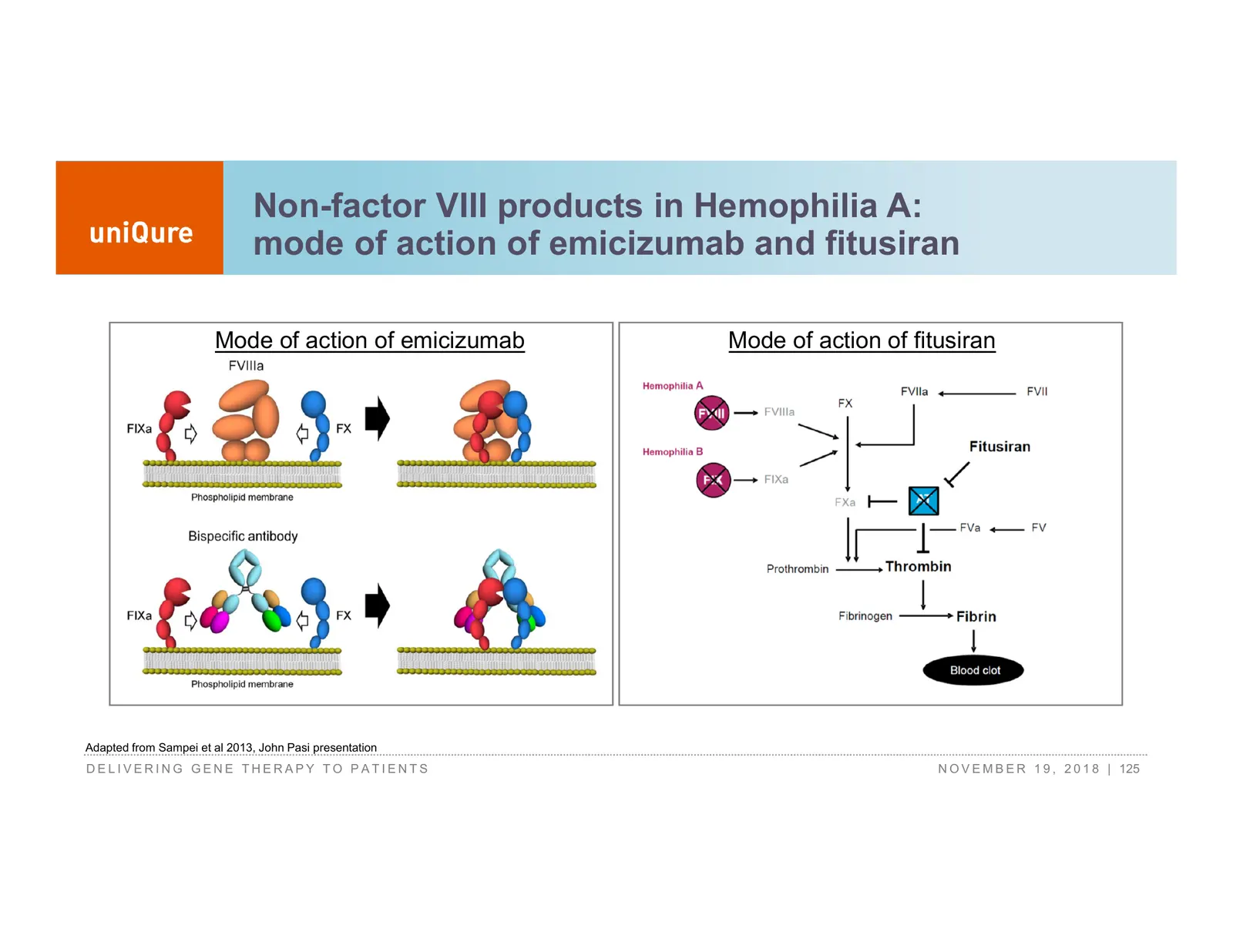
Non-factor VIII products in Hemophilia A: mode of action of emicizumab and fitusiran Mode of action of emicizumab Mode of action of fitusiran Adapted from Sampei et al 2013, John Pasi presentation DELIVERING GENE THERAPY TO PATIENTS N O V E M B E R 1 9 , 2 0 1 8 | 125
Slide 131: FIX variants that activate coagulation without FVIII
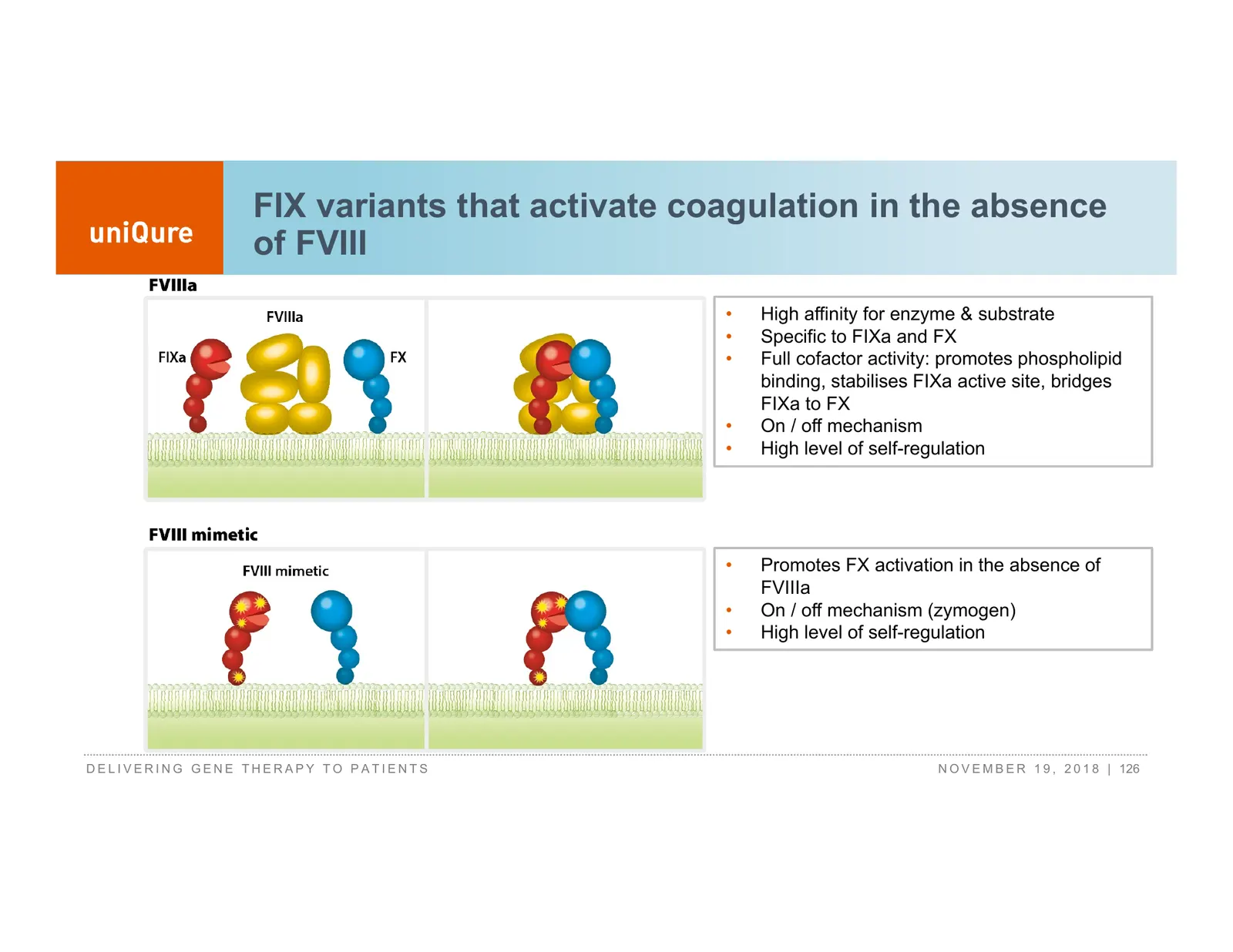
FIX variants that activate coagulation in the absence of FVIII • High affinity for enzyme & substrate • Specific to FIXa and FX • Full cofactor activity: promotes phospholipid binding, stabilises FIXa active site, bridges FIXa to FX • On / off mechanism • High level of self-regulation • Promotes FX
Slide 132: Two FIX variants activate FX in absence of FVIII
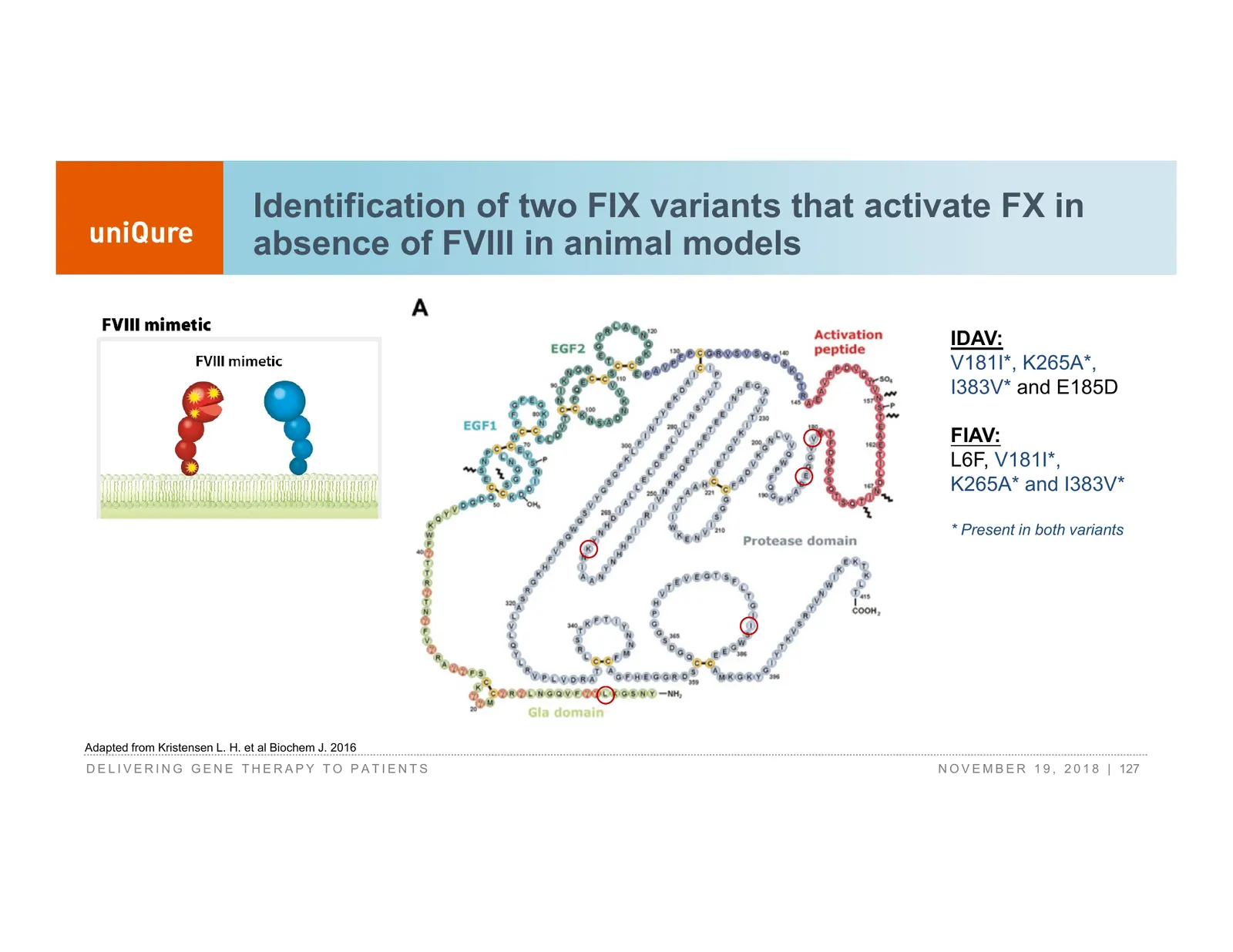
Identification of two FIX variants that activate FX in absence of FVIII in animal models IDAV: V181I*, K265A*, I383V* and E185D FIAV: L6F, V181I*, K265A* and I383V* * Present in both variants Adapted from Kristensen L. H. et al Biochem J. 2016 DELIVERING GENE THERAPY TO PATIENTS N O V E M B E R 1 9
Slide 133: FIX variant structure
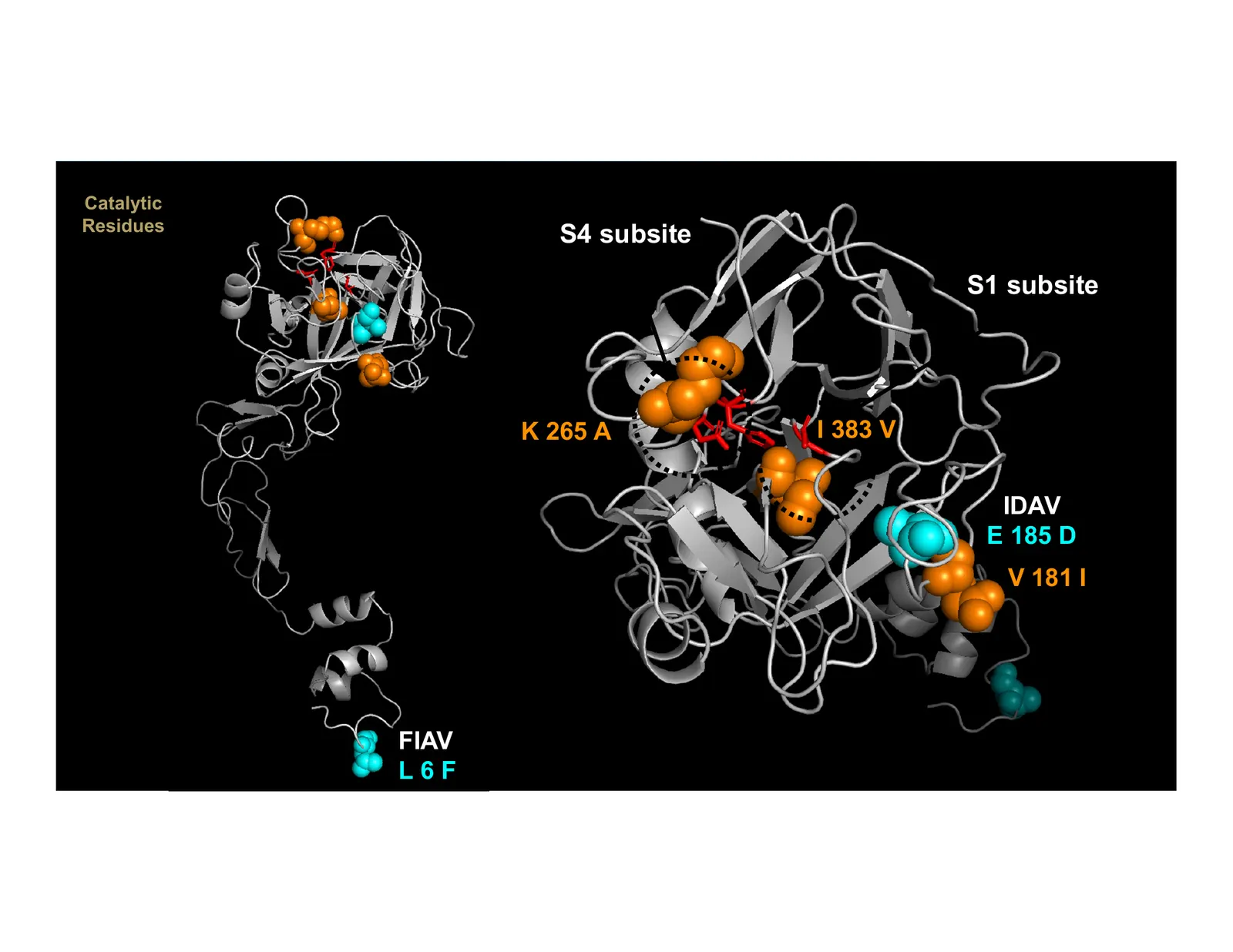
Catalytic Residues S4 subsite S1 subsite K 265 A I 383 V IDAV E 185 D V 181 I FIAV LT S6 F DELIVERING GENE THERAPY TO PATIEN N O V E M B E R 1 9 , 2 0 1 8 | 128
Slide 134: Super9
Super9™ DELIVERING GENE THERAPY TO PATIENTS N O V E M B E R 1 9 , 2 0 1 8 | 129
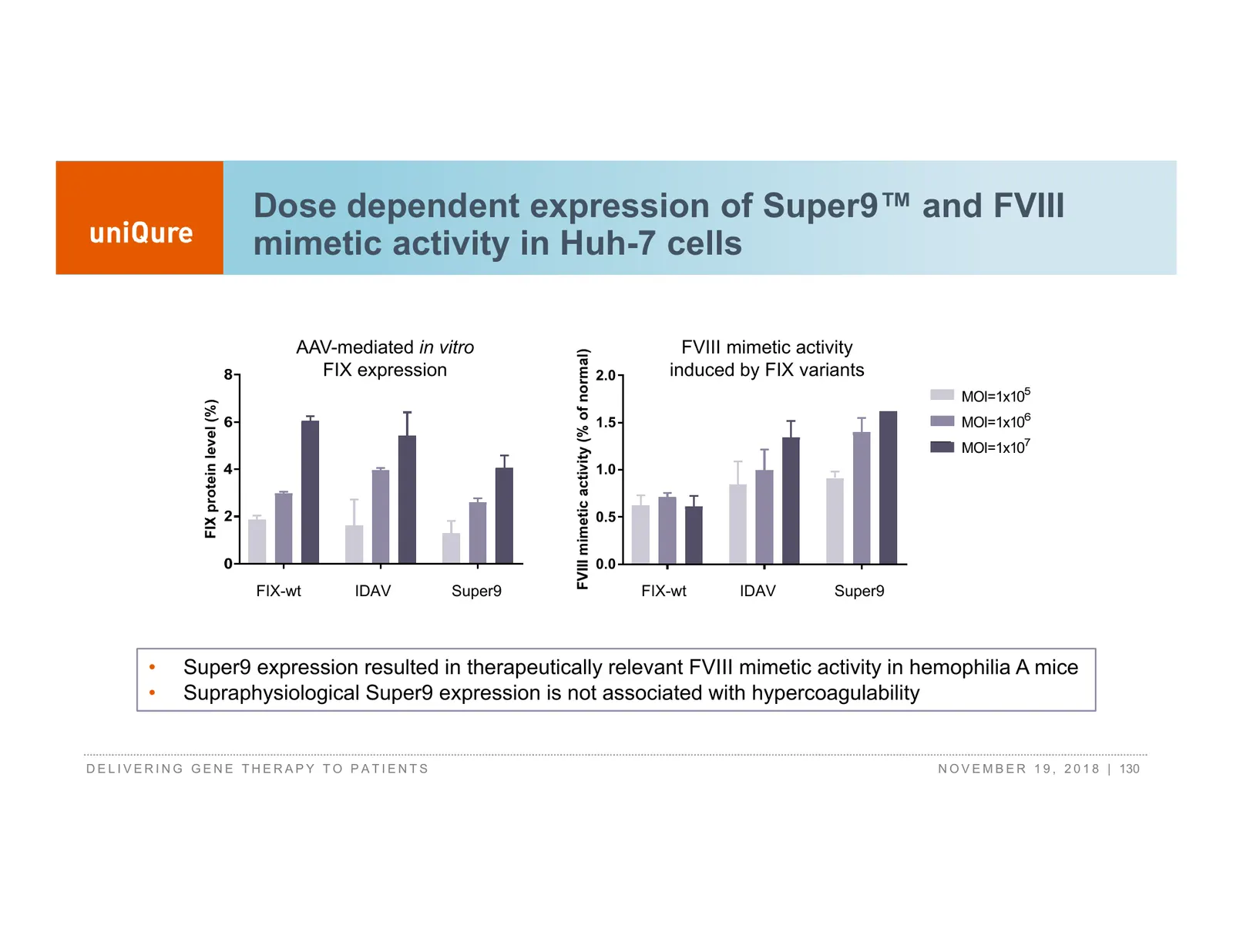
Slide 135: Super9 expression and FVIII mimetic activity in Huh-7 cells
Dose dependent expression of Super9™ and FVIII mimetic activity in Huh-7 cells AAV-mediated in vitro FVIIIFVIII mimetic mimetic activity activity in Huh-7 FIX expression 2.0 induced by FIX variants 1.5 1.0 0.5 0.0 FIX-wt IDAV Super9 FIX-wt FIX-wt IDAV IDAV Super9 Super9 • Super9 expression resulted
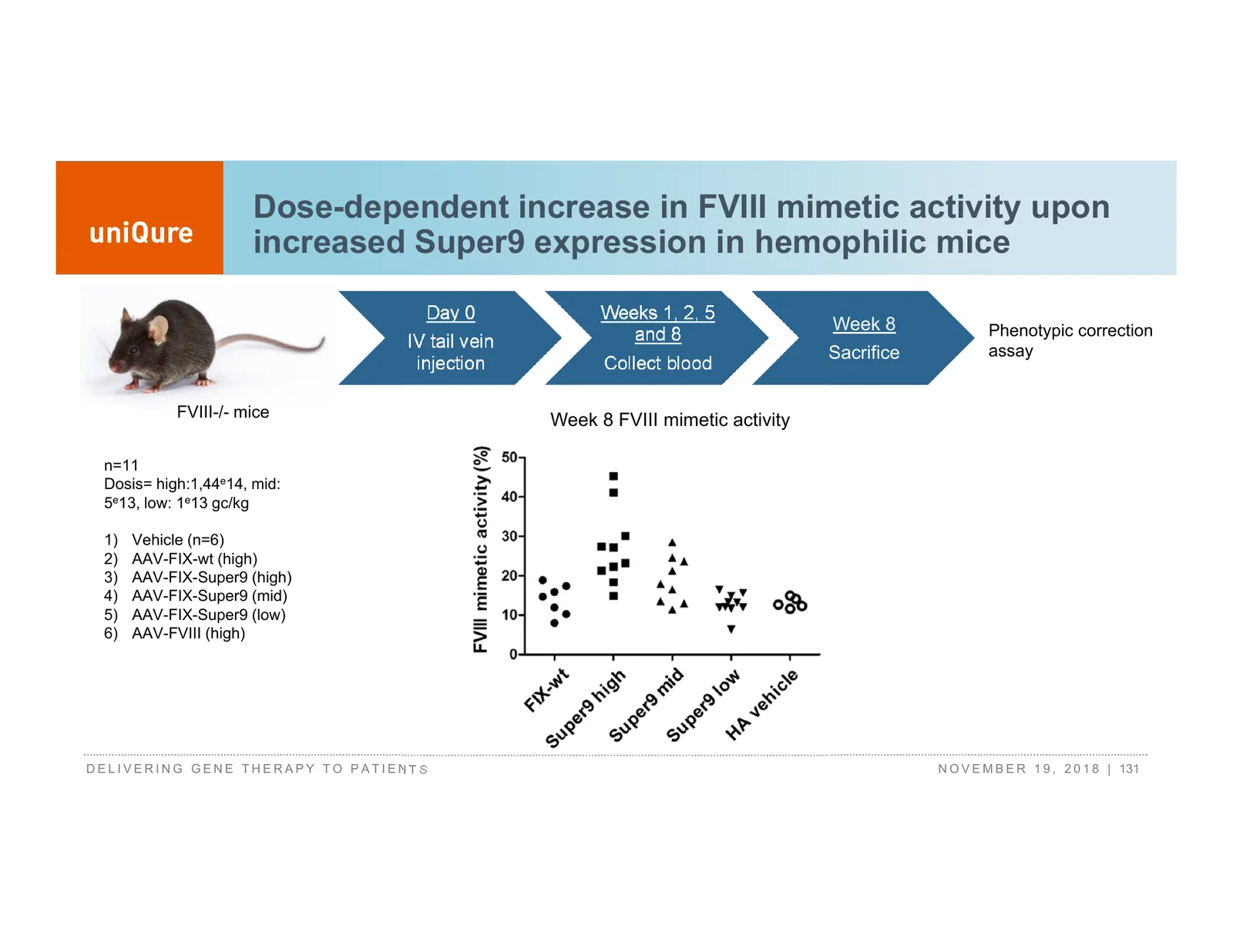
Slide 136: FVIII mimetic activity in hemophilic mice
Dose-dependent increase in FVIII mimetic activity upon increased Super9 expression in hemophilic mice Day 0 Weeks 1, 2, 5 Week 8 Phenotypic correction IV tail vein and 8 Sacrifice assay injection Collect blood FVIII-/- mice Week 8 FVIII mimetic activity n=11 Dosis= high:1,44e14, mid: 5e13, low: 1e13
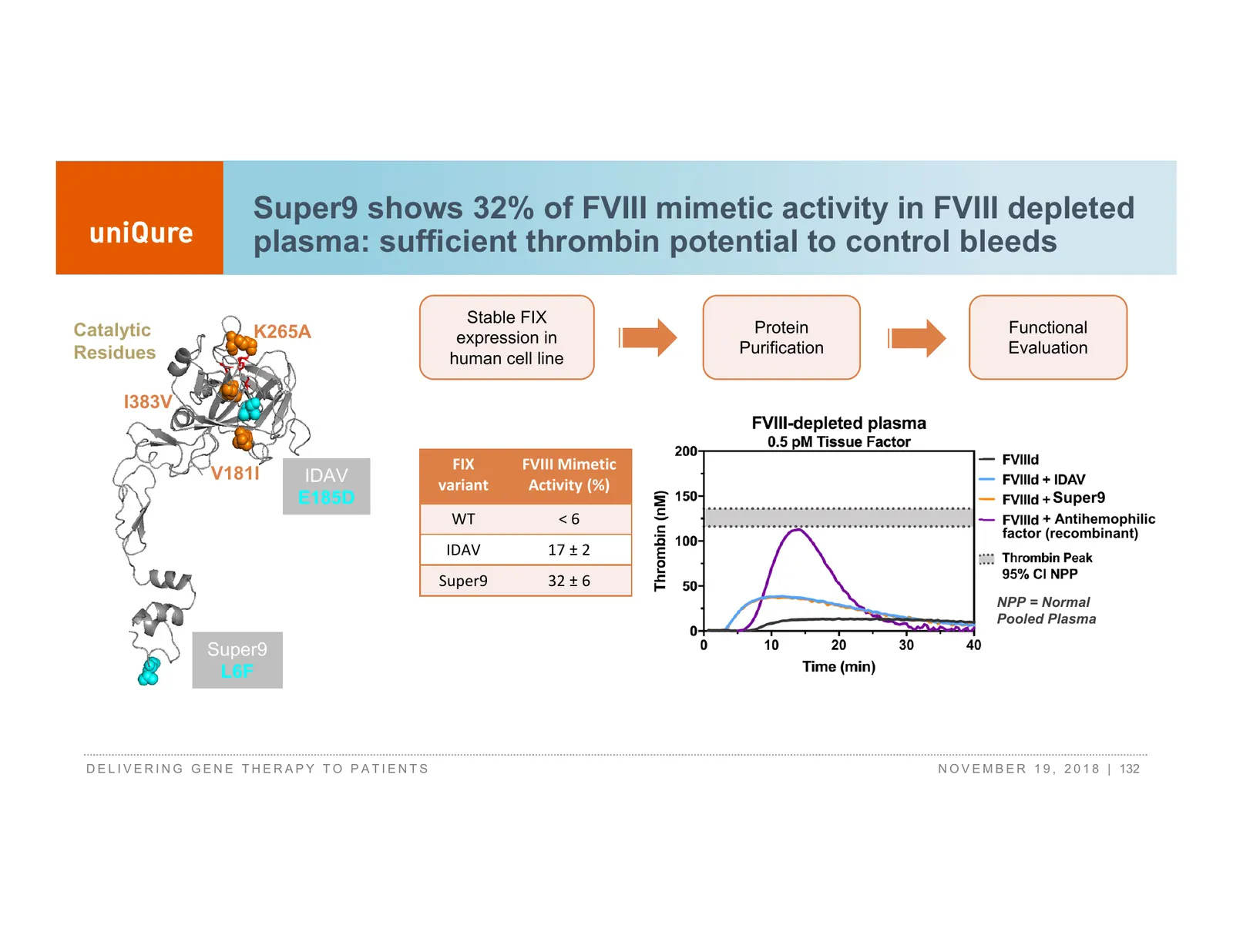
Slide 137: Super9 shows 32% FVIII mimetic activity
Super9 shows 32% of FVIII mimetic activity in FVIII depleted plasma: sufficient thrombin potential to control bleeds Stable FIX Catalytic K265A Protein Functional expression in Residues Purification Evaluation human cell line I383V FIX FVIII Mimetic V181I IDAV variant Activity (%) E185D Super9 WT <6
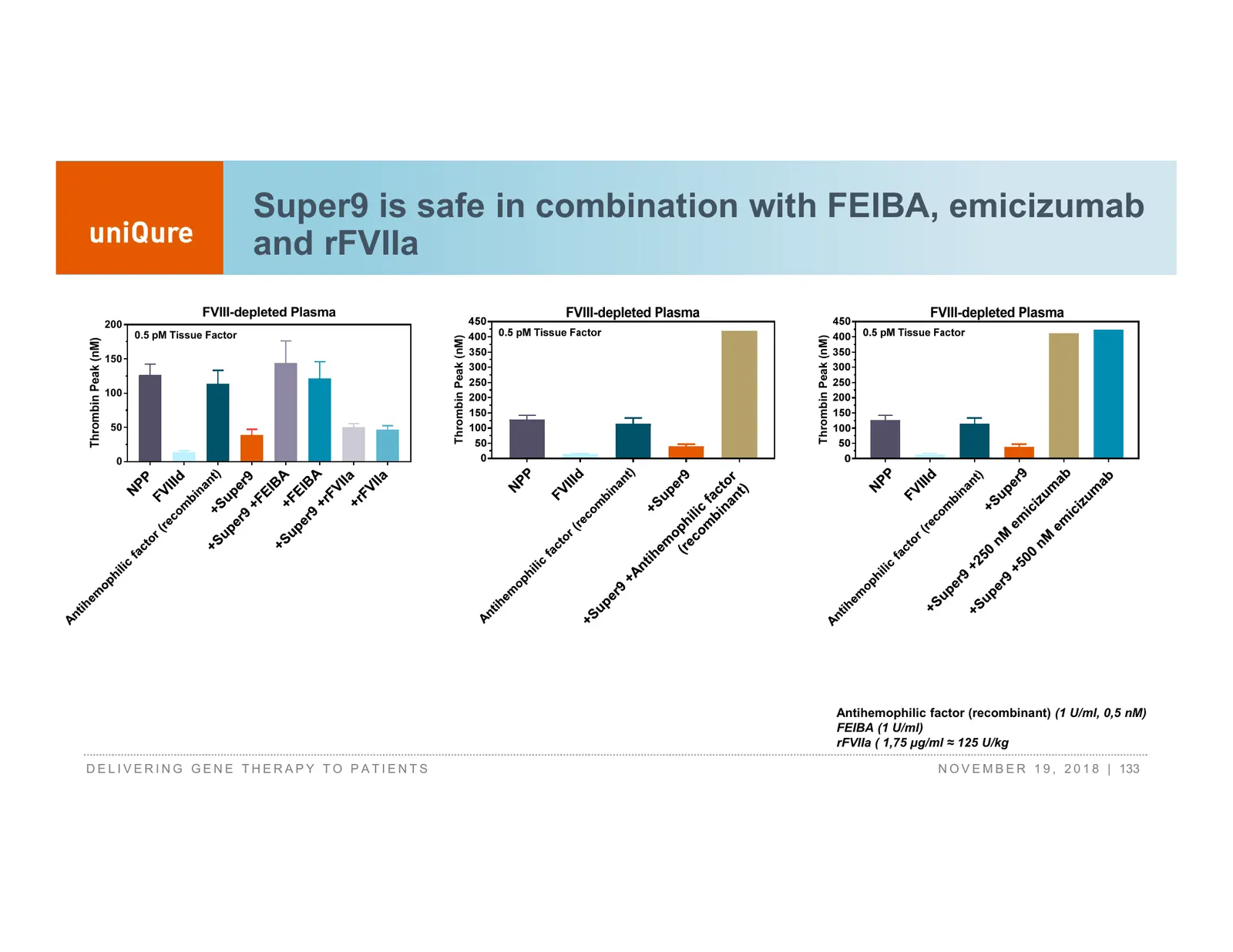
Slide 138: Super9 is safe in combination with FEIBA, emicizumab and rFVIIa
Super9 is safe in combination with FEIBA, emicizumab and rFVIIa FVIII-depleted Plasma 200 0.5 pM Tissue Factor Thrombin Peak (nM) Thrombin Peak (nM) 150 100 50 0 PP PP d d 9 o8 o8 9 o8 ra a PP A d r9 o8 o7 A o7 r III III br r pe III b IB ov ov IB pe N ov N pe FV FV ov ov Li Li N ov FV FE Su FE N N S
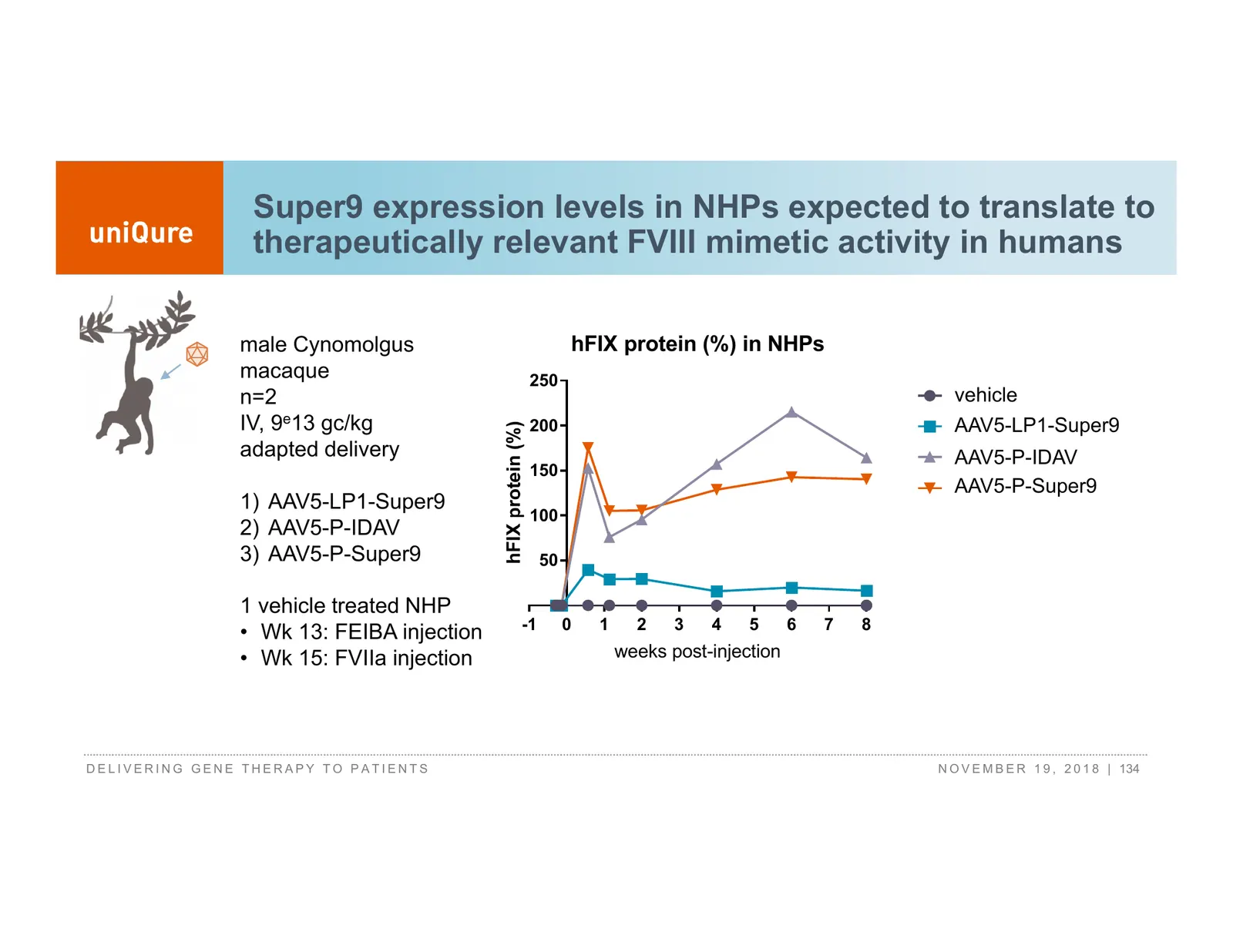
Slide 139: Super9 expression levels in NHPs
Super9 expression levels in NHPs expected to translate to therapeutically relevant FVIII mimetic activity in humans male Cynomolgus hFIX protein (%) in NHPs macaque 250 n=2 vehicle IV, 9e13 gc/kg 200 AAV5-LP1-Super9 adapted delivery AAV5-P-IDAV 150 AAV5-P-Super9 1) AAV5-LP1-Super9 100 2) AAV5-P-IDAV
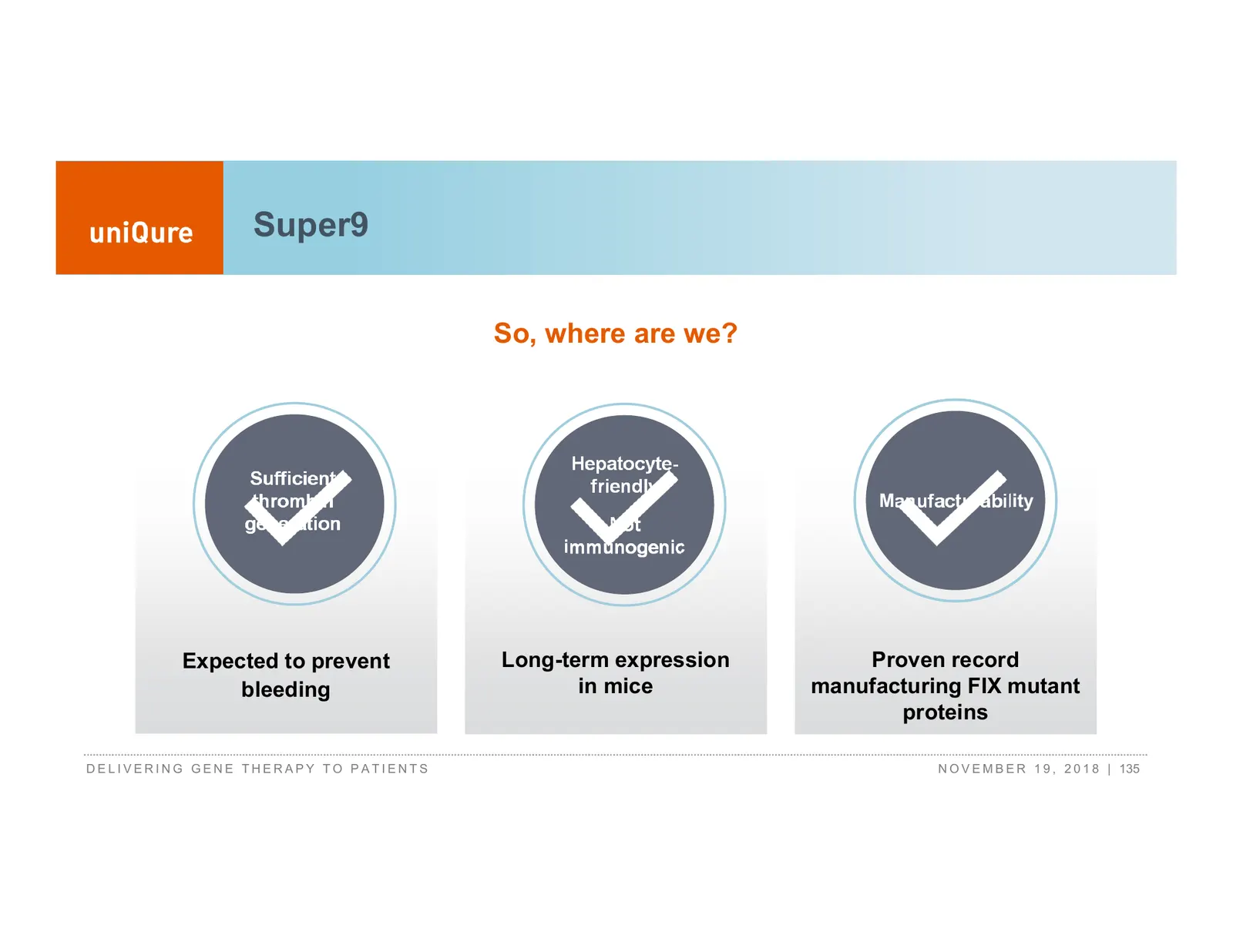
Slide 140: Super9: So, where are we?
Super9 So, where are we? Hepatocyte- Sufficient friendly thrombin Manufacturability generation Not immunogenic Expected to prevent Long-term expression Proven record bleeding in mice manufacturing FIX mutant proteins DELIVERING GENE THERAPY TO PATIENTS N O V E M B E R 1 9 , 2 0 1 8 | 135

Slide 141: Fabry Disease
Fabry Disease Sander van Deventer, M.D., Ph.D. Chief Scientific Officer, General Manager, Amsterdam DELIVERING GENE THERAPY TO PATIENTS N O V E M B E R 1 9 , 2 0 1 8 | 136
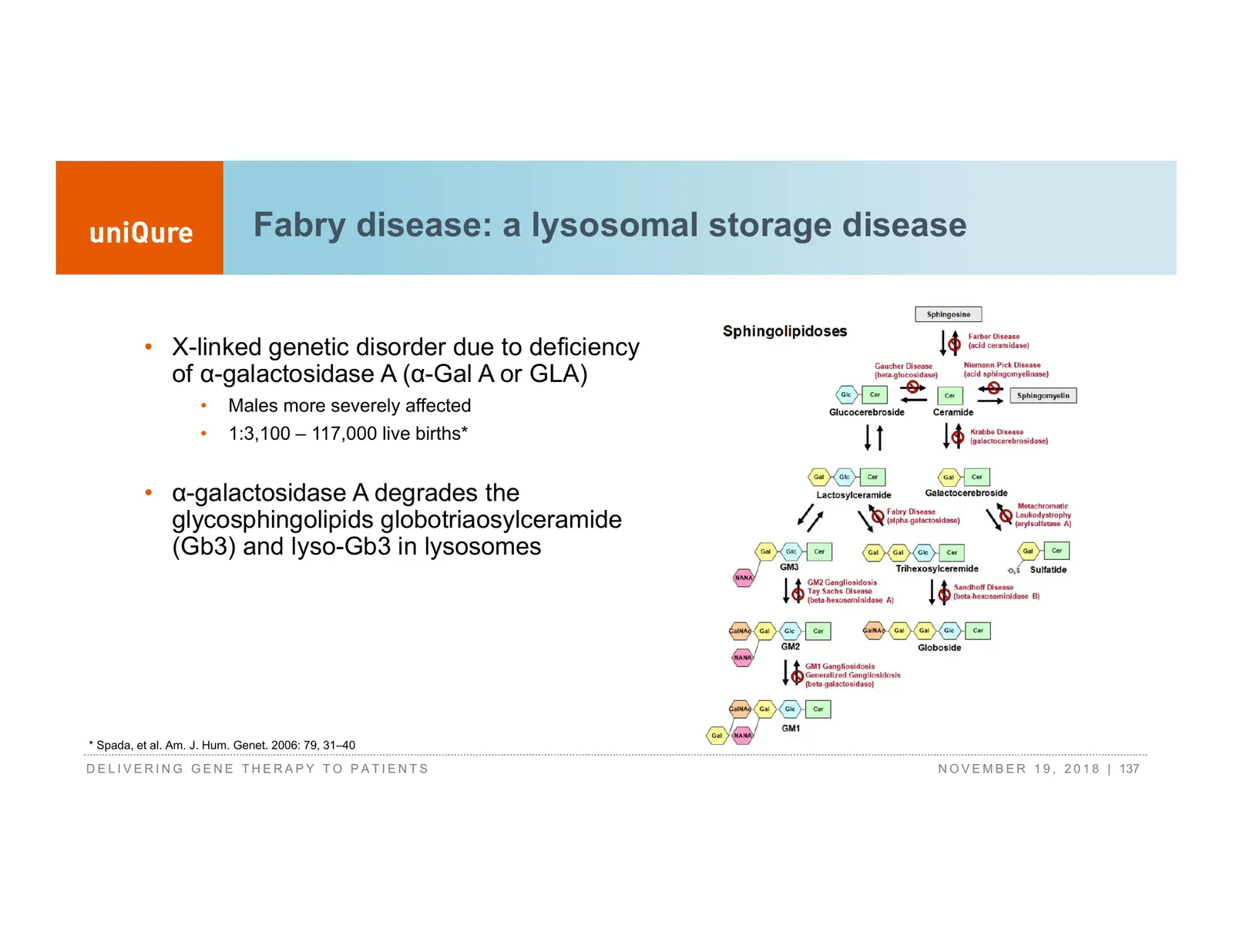
Slide 142: Fabry disease: a lysosomal storage disease
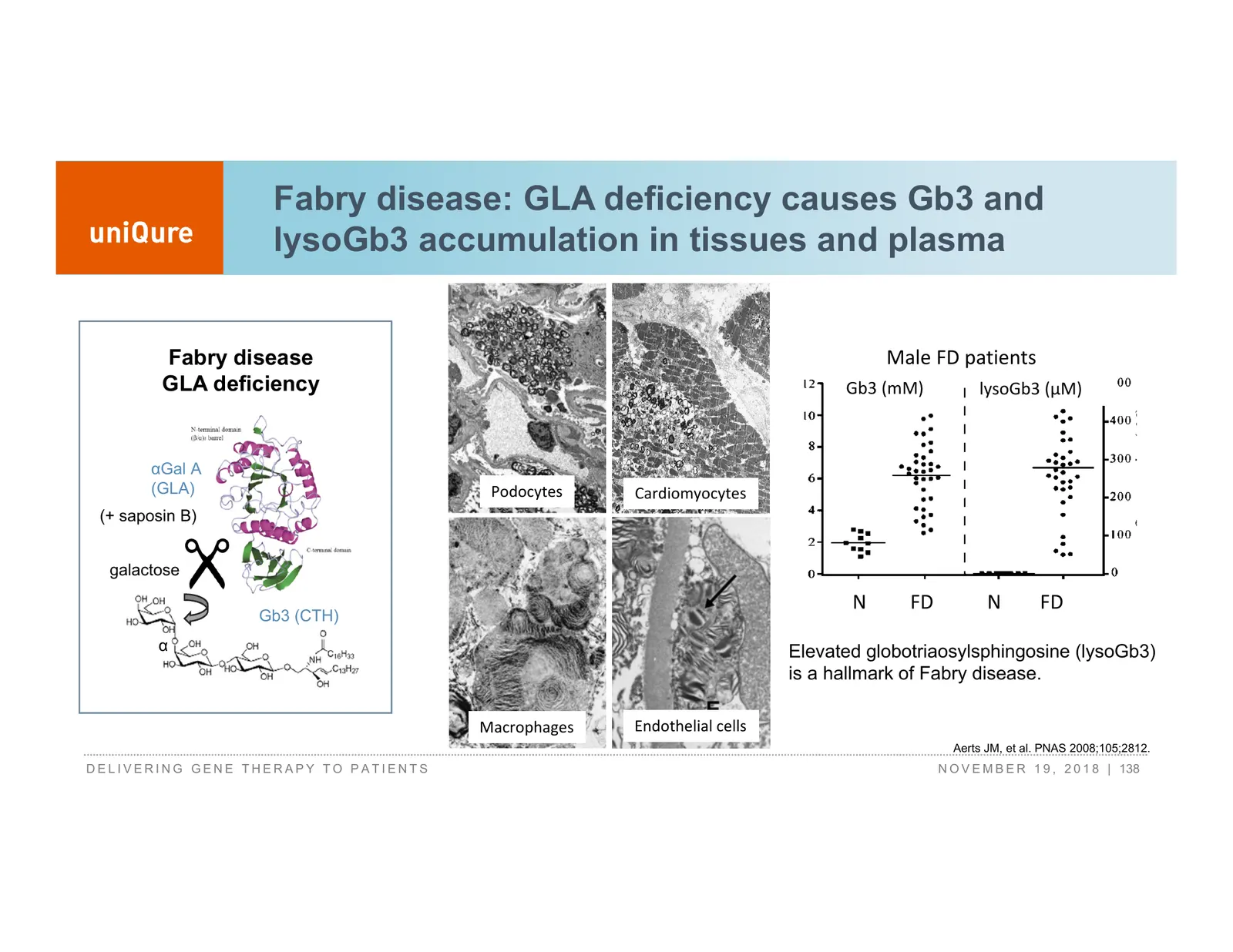
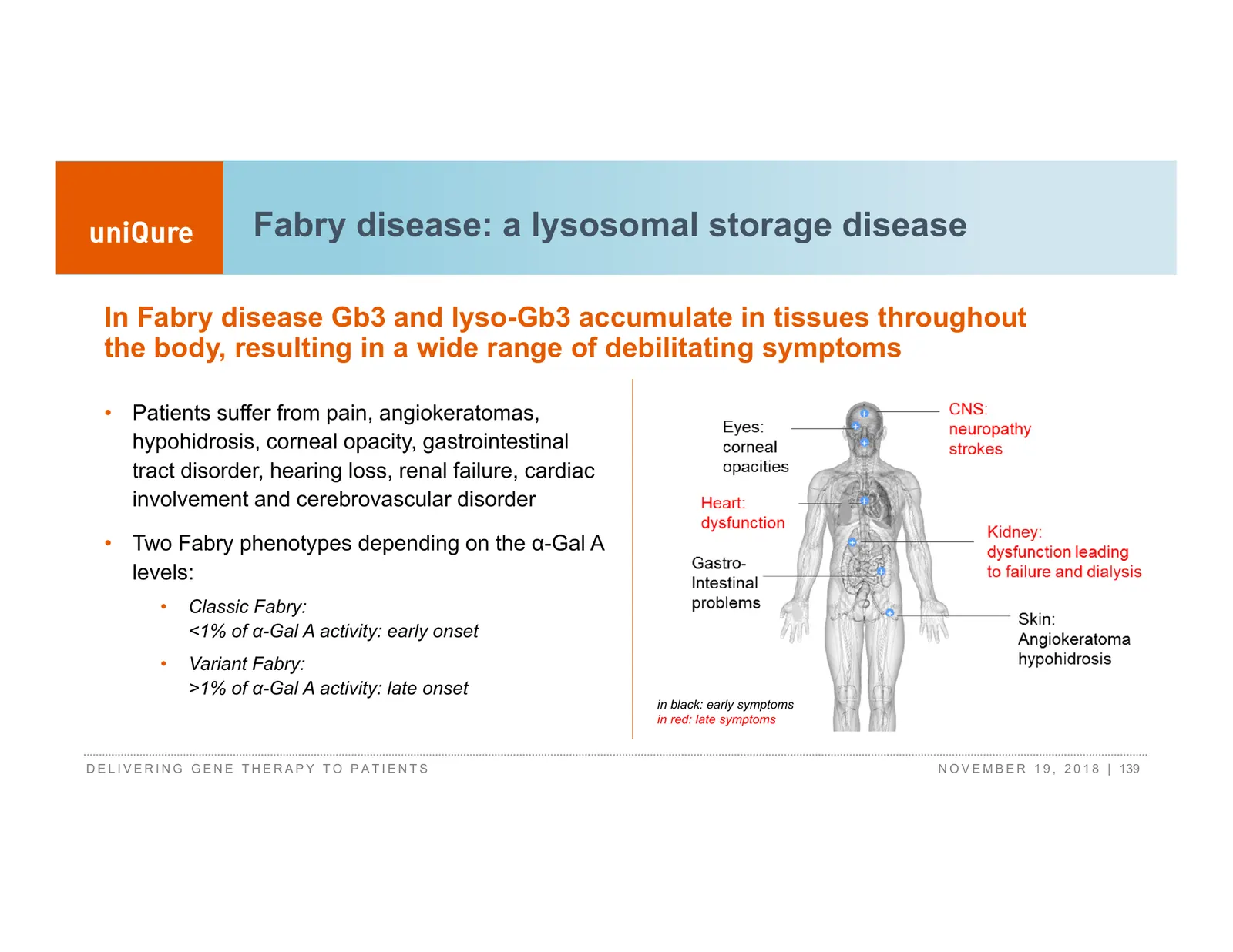
Fabry disease: a lysosomal storage disease • X-linked genetic disorder due to deficiency of α-galactosidase A (α-Gal A or GLA) • Males more severely affected • 1:3,100 – 117,000 live births* • α-galactosidase A degrades the glycosphingolipids globotriaosylceramide (Gb3) and lyso-Gb3 in lysosomes * S
Slide 143: GLA deficiency causes Gb3 and lysoGb3 accumulation
Fabry disease: GLA deficiency causes Gb3 and lysoGb3 accumulation in tissues and plasma Fabry disease Male FD patients GLA deficiency Gb3 (mM) lysoGb3 (µM) αGal A (GLA) Podocytes Cardiomyocytes (+ saposin B) galactose N FD N FD Gb3 (CTH) α Elevated globotriaosylsphingosine (lysoGb3) is a hallmark of
Slide 144: Fabry disease: a lysosomal storage disease
Fabry disease: a lysosomal storage disease In Fabry disease Gb3 and lyso-Gb3 accumulate in tissues throughout the body, resulting in a wide range of debilitating symptoms • Patients suffer from pain, angiokeratomas, hypohidrosis, corneal opacity, gastrointestinal tract disorder, hearing loss, renal
Slide 145: ERT preparations registered as orphan drugs in Europe
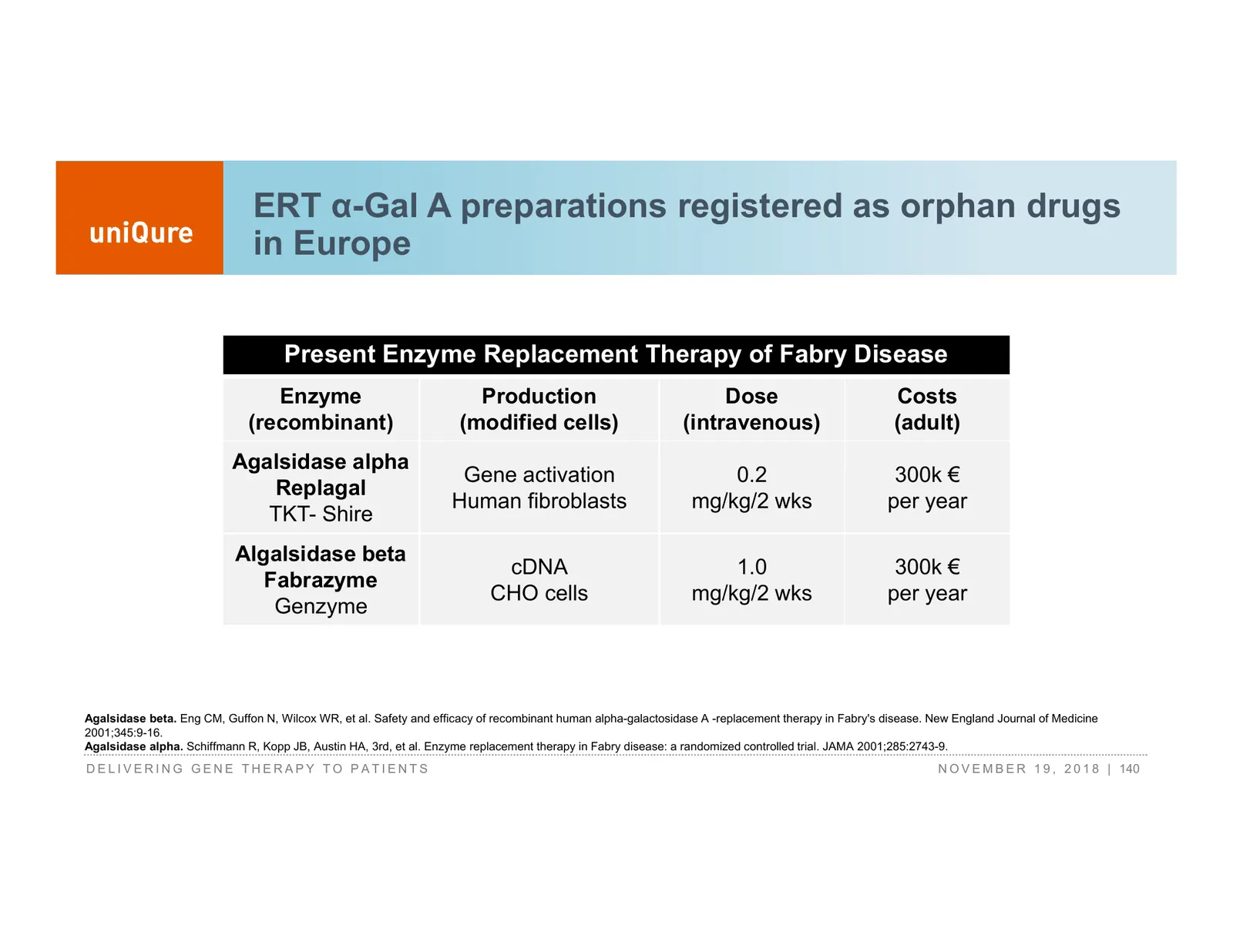
ERT α-Gal A preparations registered as orphan drugs in Europe Present Enzyme Replacement Therapy of Fabry Disease Enzyme Production Dose Costs (recombinant) (modified cells) (intravenous) (adult) Agalsidase alpha Gene activation 0.2 300k € Replagal Human fibroblasts mg/kg/2 wks per year TKT- Shire A
Slide 146: Principles and challenges for ERT in Fabry
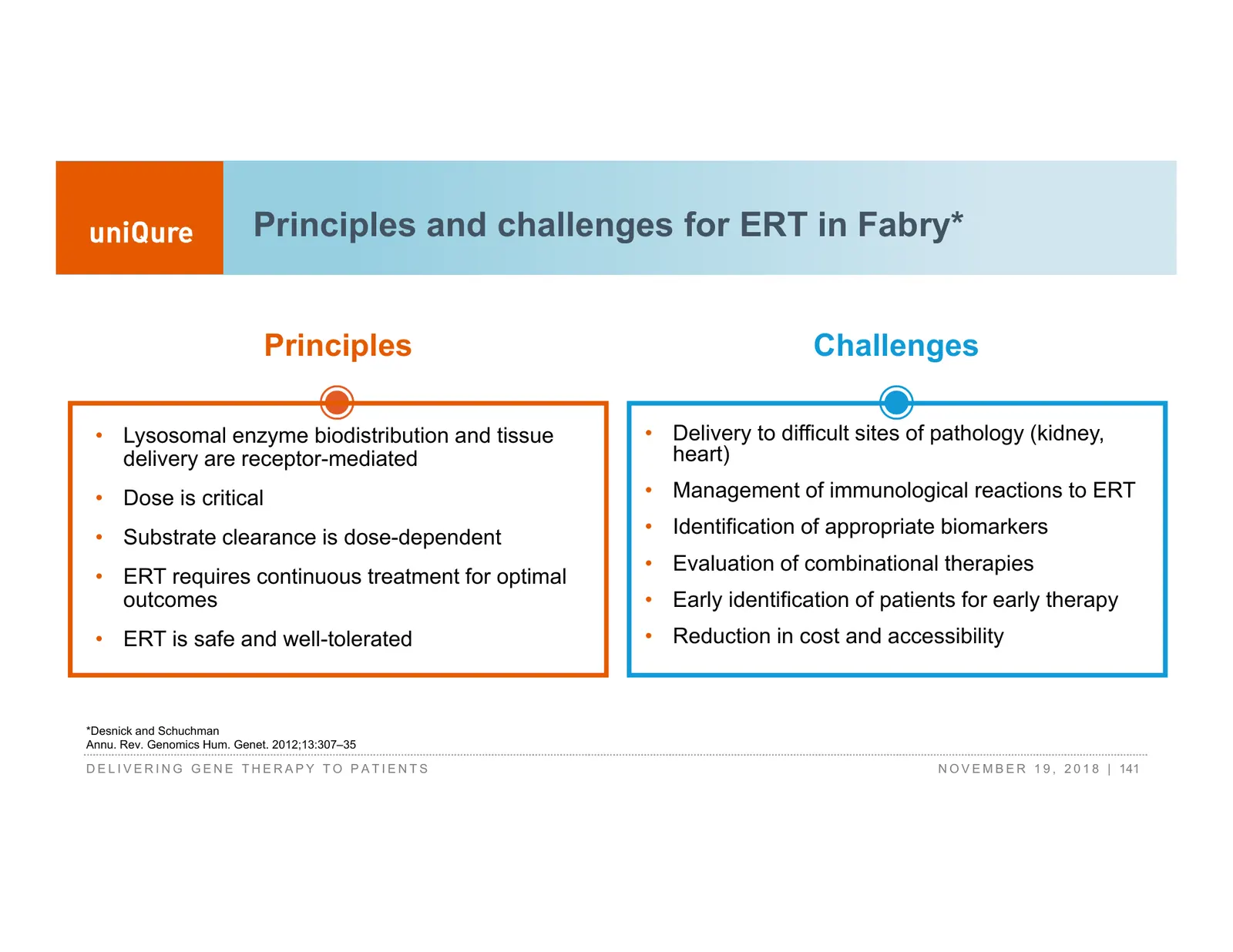
Principles and challenges for ERT in Fabry* Principles Challenges • Lysosomal enzyme biodistribution and tissue • Delivery to difficult sites of pathology (kidney, delivery are receptor-mediated heart) • Dose is critical • Management of immunological reactions to ERT • Substrate clearance is dose-de
Slide 147: Fabry disease: enzyme replacement therapy
Fabry disease: enzyme replacement therapy • Effect on lipid deposits • Clearance of endothelial lipid deposits all over the vasculature • Clearance of mesanglial cell lipid deposits in kidney • Clearance podocyte lipid deposits, but high enzyme dose dependent • Poor clearance of lipid deposits in ca
Slide 148: Majority of male patients develop neutralizing antibodies
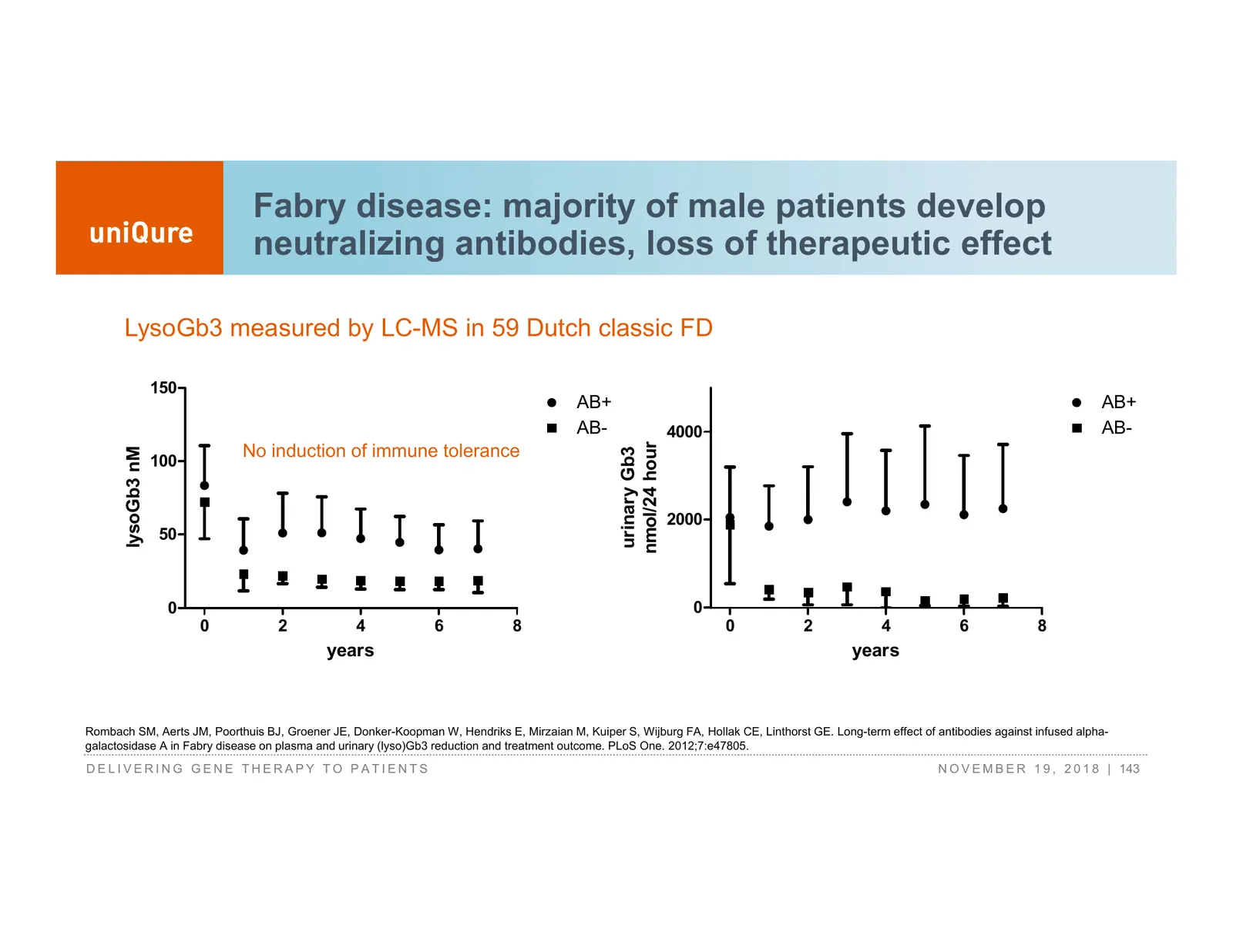
Fabry disease: majority of male patients develop neutralizing antibodies, loss of therapeutic effect LysoGb3 measured by LC-MS in 59 Dutch classic FD 150 AB+ AB+ AB- 4000 AB- No induction of immune tolerance nmol/24 hour lysoGb3 nM urinary Gb3 100 2000 50 0 0 0 2 4 6 8 0 2 4 6 8 years years Rombach
Slide 149: Fabry disease: gene therapy opportunity
Fabry disease: gene therapy opportunity • aGAL is highly immunogenic in male Fabry patients • No induction of immune tolerance with long-term high-dose ERT • Need for a non-immunogenic gene therapy approach DELIVERING GENE THERAPY TO PATIENTS N O V E M B E R 1 9 , 2 0 1 8 | 144
Slide 150: Modification of NAGA to have GLA activity
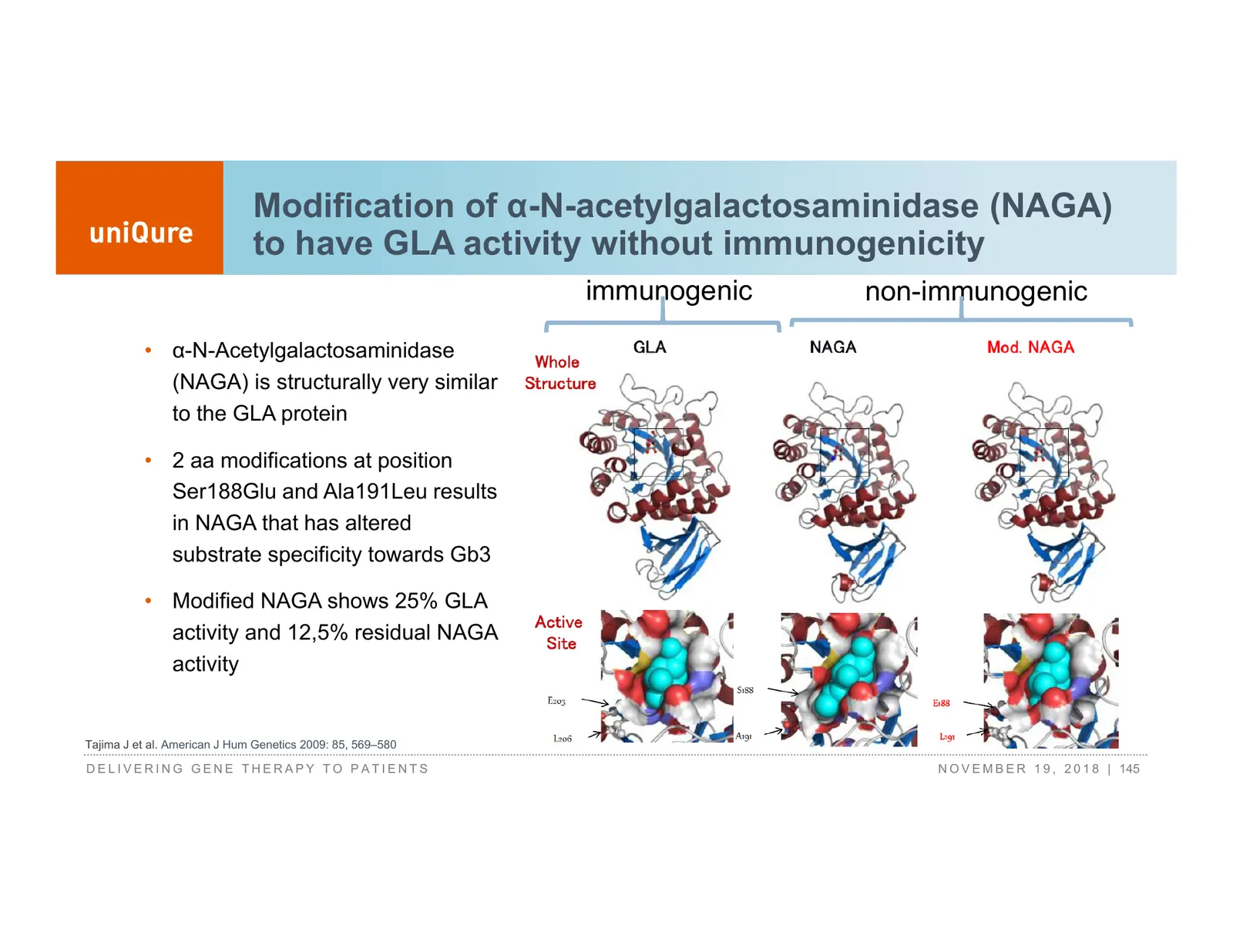
Modification of α-N-acetylgalactosaminidase (NAGA) to have GLA activity without immunogenicity immunogenic non-immunogenic • α-N-Acetylgalactosaminidase (NAGA) is structurally very similar to the GLA protein • 2 aa modifications at position Ser188Glu and Ala191Leu results in NAGA that has altered su
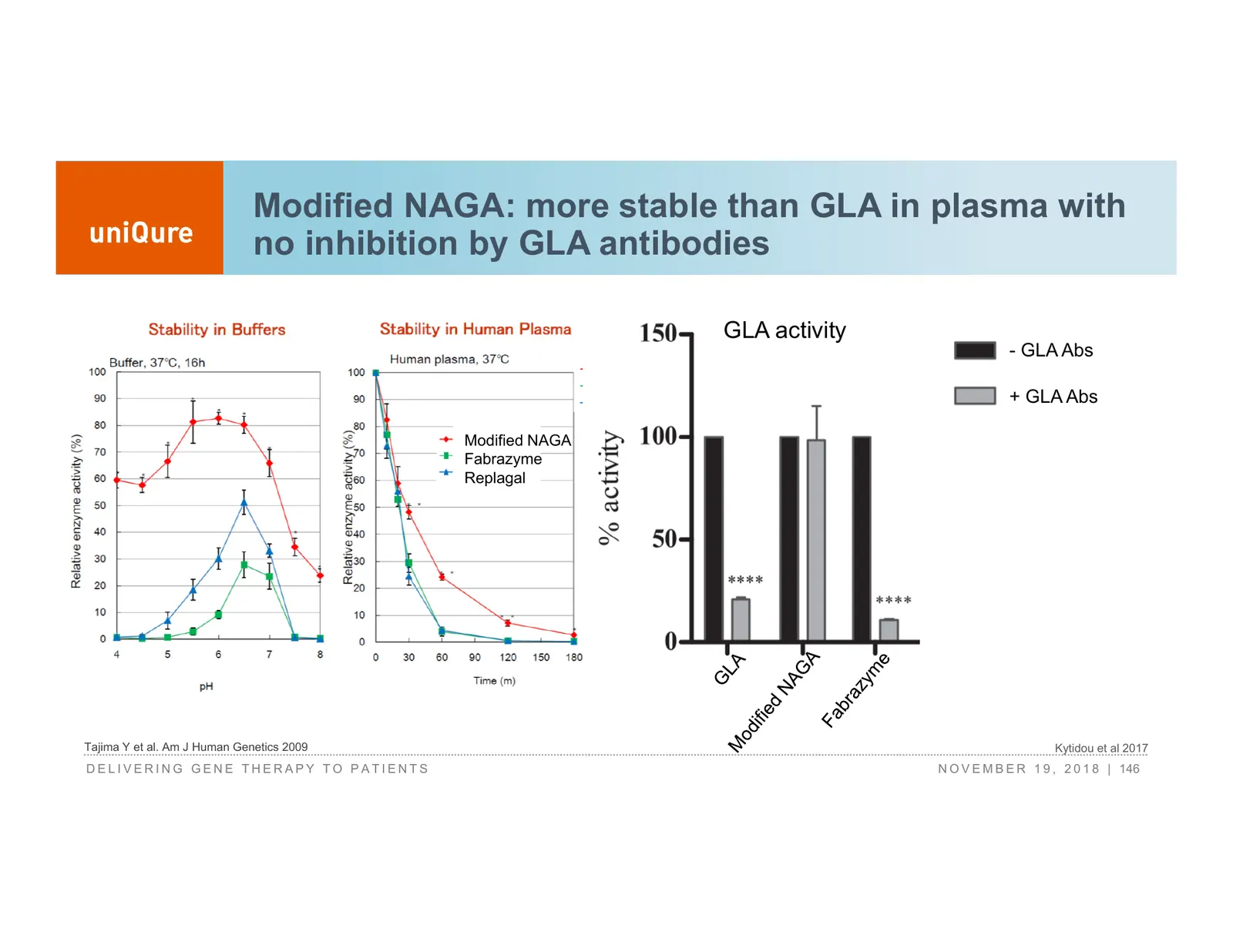
Slide 151: Modified NAGA more stable than GLA in plasma
Modified NAGA: more stable than GLA in plasma with no inhibition by GLA antibodies GLA activity - GLA Abs + GLA Abs Modified NAGA Fabrazyme Replagal Tajima Y et al. Am J Human Genetics 2009 Kytidou et al 2017 DELIVERING GENE THERAPY TO PATIENTS N O V E M B E R 1 9 , 2 0 1 8 | 146
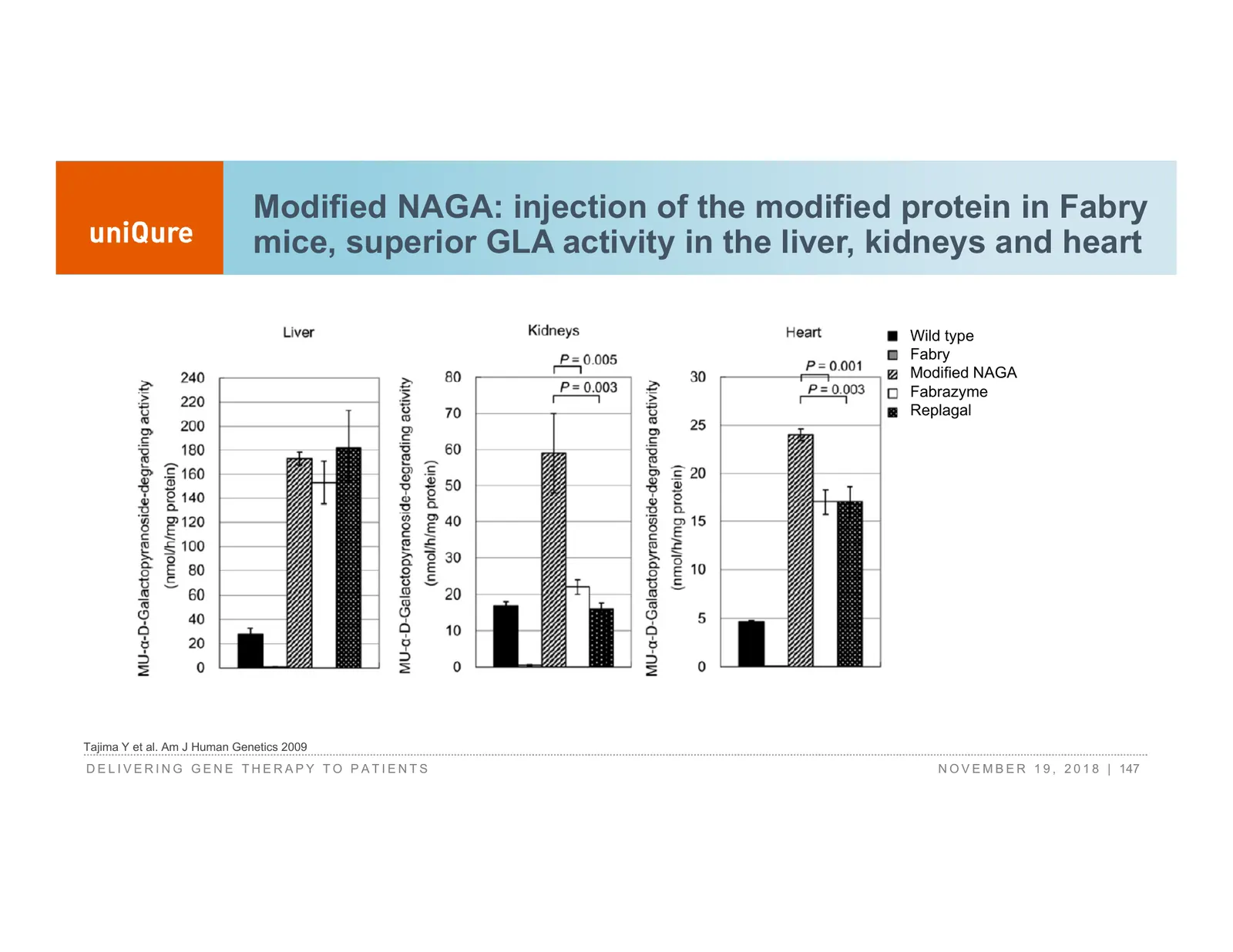
Slide 152: Modified NAGA injection in Fabry mice
Modified NAGA: injection of the modified protein in Fabry mice, superior GLA activity in the liver, kidneys and heart Wild type Fabry Modified NAGA Fabrazyme Replagal Tajima Y et al. Am J Human Genetics 2009 DELIVERING GENE THERAPY TO PATIENTS N O V E M B E R 1 9 , 2 0 1 8 | 147
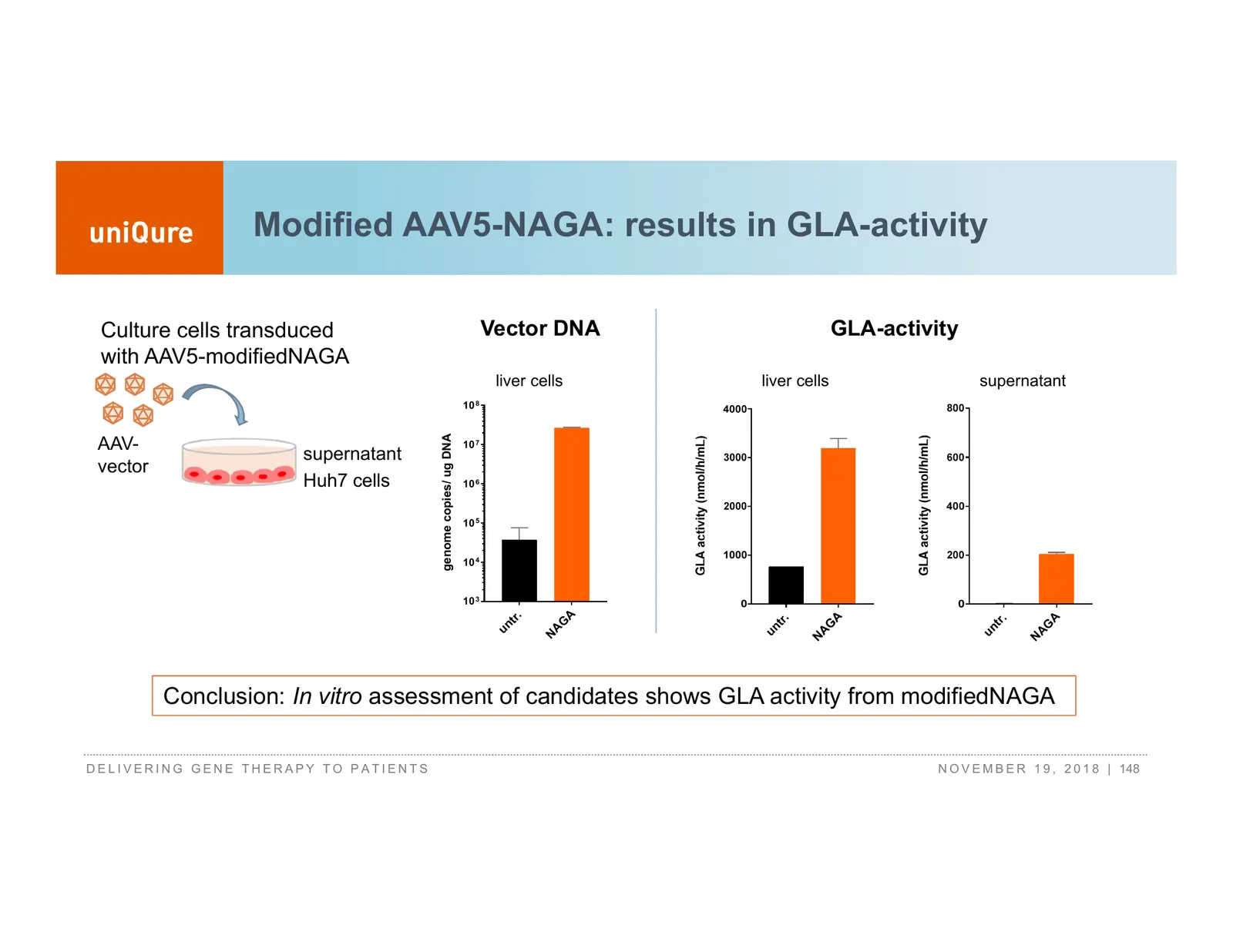
Slide 153: Modified AAV5-NAGA: results in GLA-activity
Modified AAV5-NAGA: results in GLA-activity Culture cells transduced Vector DNA GLA-activity with AAV5-modifiedNAGA liver cells liver cells supernatant 10 8 AAV- genome copies/ ug DNA 10 7 supernatant vector Huh7 cells 10 6 10 5 10 4 10 3 A . A tr . tr G G un un A A N N Conclusion: In vitro assessme
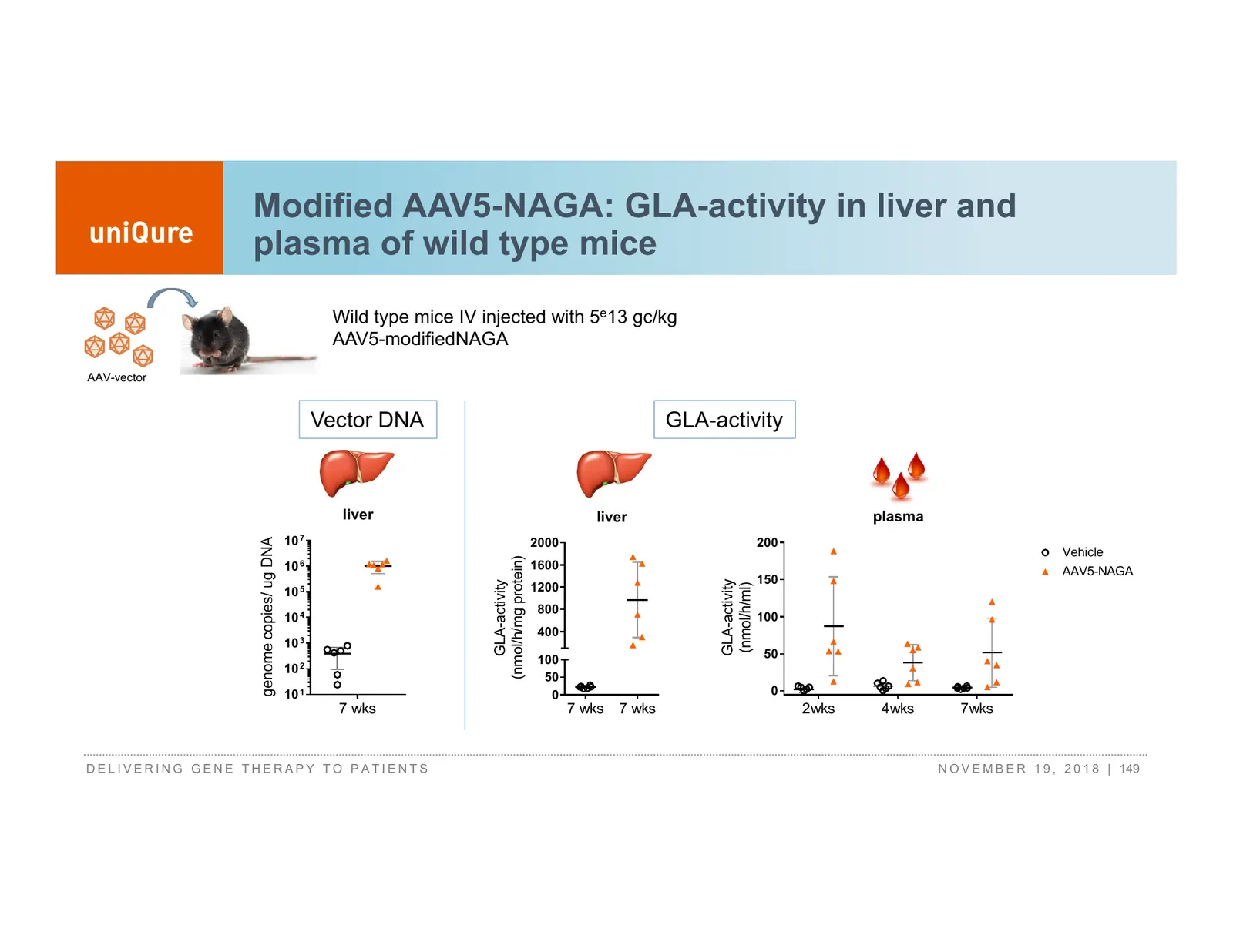
Slide 154: AAV5-NAGA: GLA-activity in wild type mice
Modified AAV5-NAGA: GLA-activity in liver and plasma of wild type mice Wild type mice IV injected with 5e13 gc/kg AAV5-modifiedNAGA AAV-vector Vector DNA GLA-activity liver liver plasma 10 7 2000 200 Vehicle (nmol/h/mg protein) 10 6 1600 AAV5-NAGA 150 GLA-activity 10 5 1200 800 10 4 100 400 10 3 100
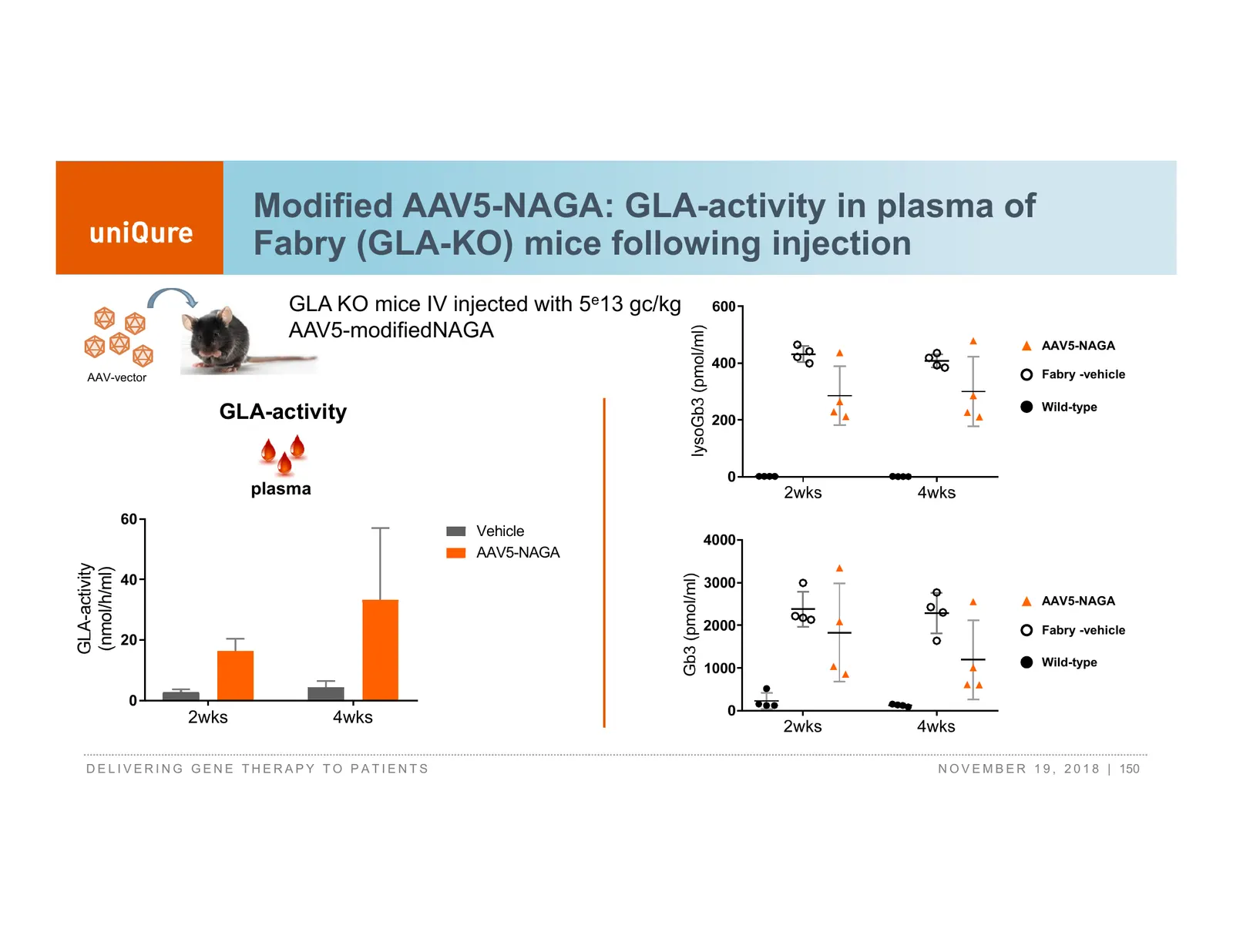
Slide 155: AAV5-NAGA: GLA-activity in Fabry mice
Modified AAV5-NAGA: GLA-activity in plasma of Fabry (GLA-KO) mice following injection GLA KO mice IV injected with 5e13 gc/kg AAV5-modifiedNAGA AAV5-NAGA AAV-vector Fabry -vehicle GLA-activity Wild-type plasma 60 Vehicle AAV5-NAGA 40 AAV5-NAGA Fabry -vehicle 20 Wild-type 0 2wks 4wks DELIVERING GENE
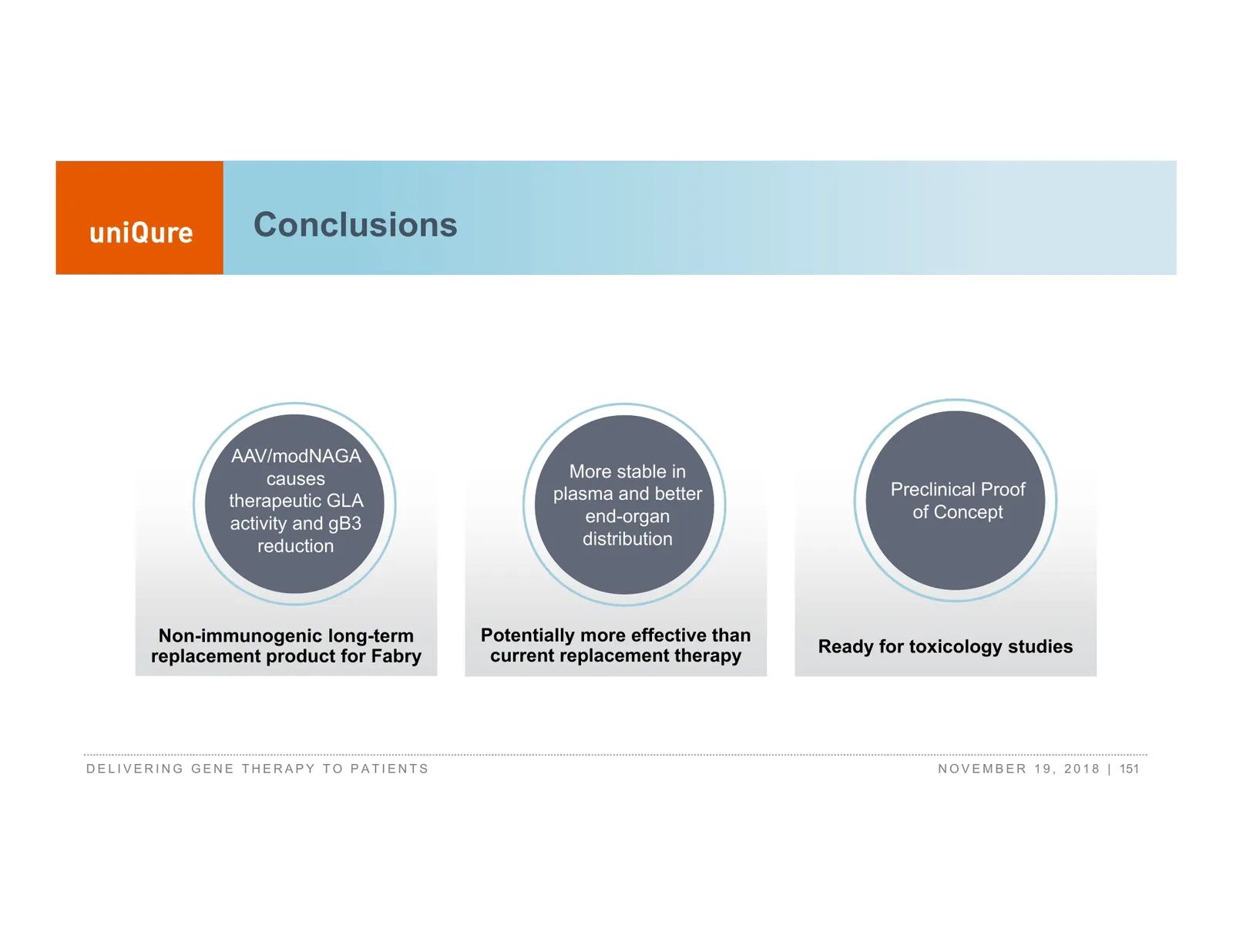
Slide 156: Conclusions
Conclusions AAV/modNAGA causes More stable in plasma and better Preclinical Proof therapeutic GLA end-organ of Concept activity and gB3 reduction distribution Non-immunogenic long-term Potentially more effective than current replacement therapy Ready for toxicology studies replacement product for Fa
Slide 157: Spinocerebellar Ataxia Type 3 (SCA3)
Spinocerebellar Ataxia Type 3 (SCA3) Melvin Evers, Ph.D. Senior Scientist, Research DELIVERING GENE THERAPY TO PATIENTS N O V E M B E R 1 9 , 2 0 1 8 | 152
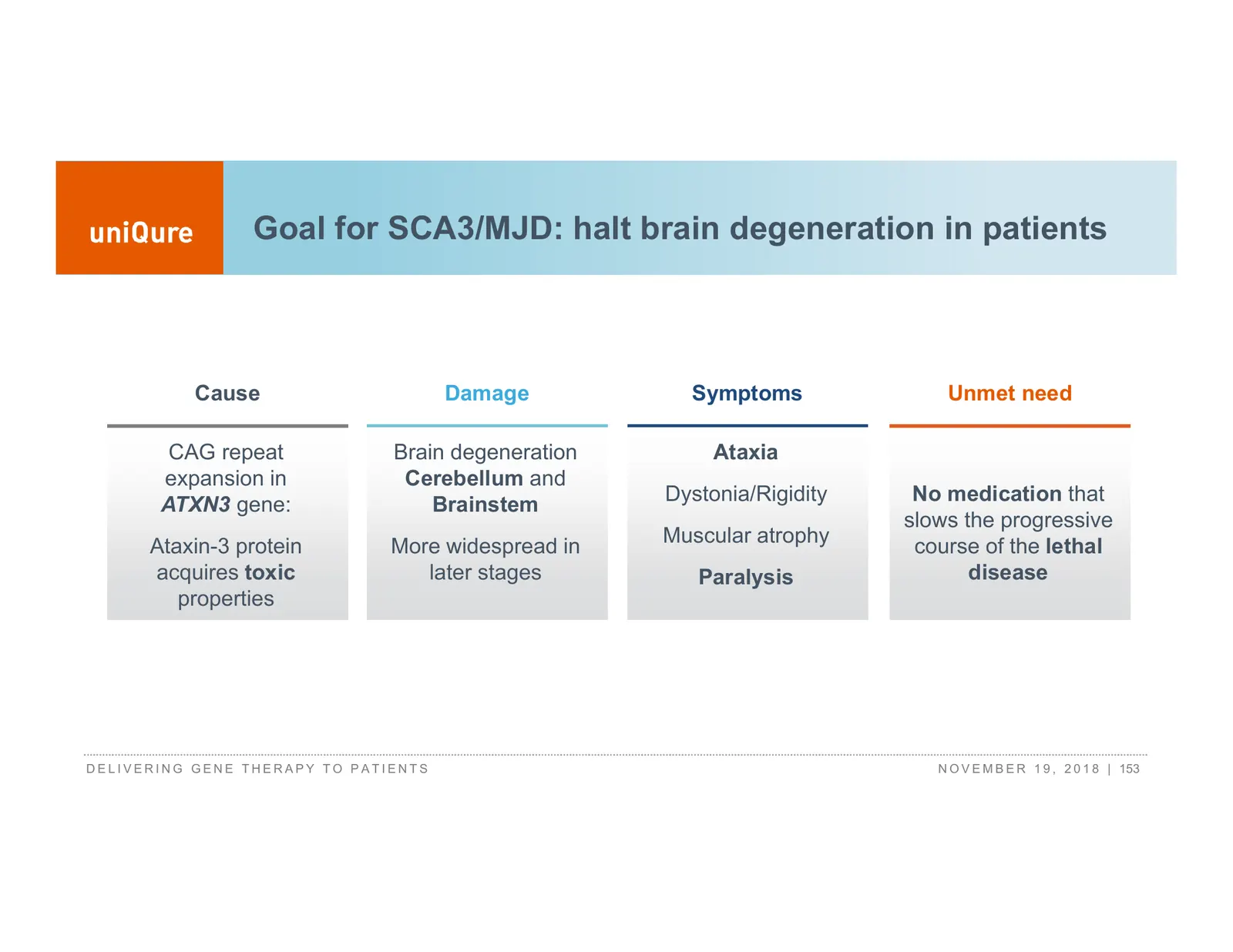
Slide 158: Goal for SCA3/MJD: halt brain degeneration
Goal for SCA3/MJD: halt brain degeneration in patients Cause Damage Symptoms Unmet need CAG repeat Brain degeneration Ataxia expansion in Cerebellum and ATXN3 gene: Brainstem Dystonia/Rigidity No medication that slows the progressive Ataxin-3 protein More widespread in Muscular atrophy course of the
Slide 159: SCA3/MJD: a patient perspective
SCA3/MJD: a patient perspective https://www.youtube.com/watch?v=EFY2Am48jiU DELIVERING GENE THERAPY TO PATIENTS N O V E M B E R 1 9 , 2 0 1 8 | 154
Slide 160: AMT-150: anticipated treatment outcome to halt ataxia
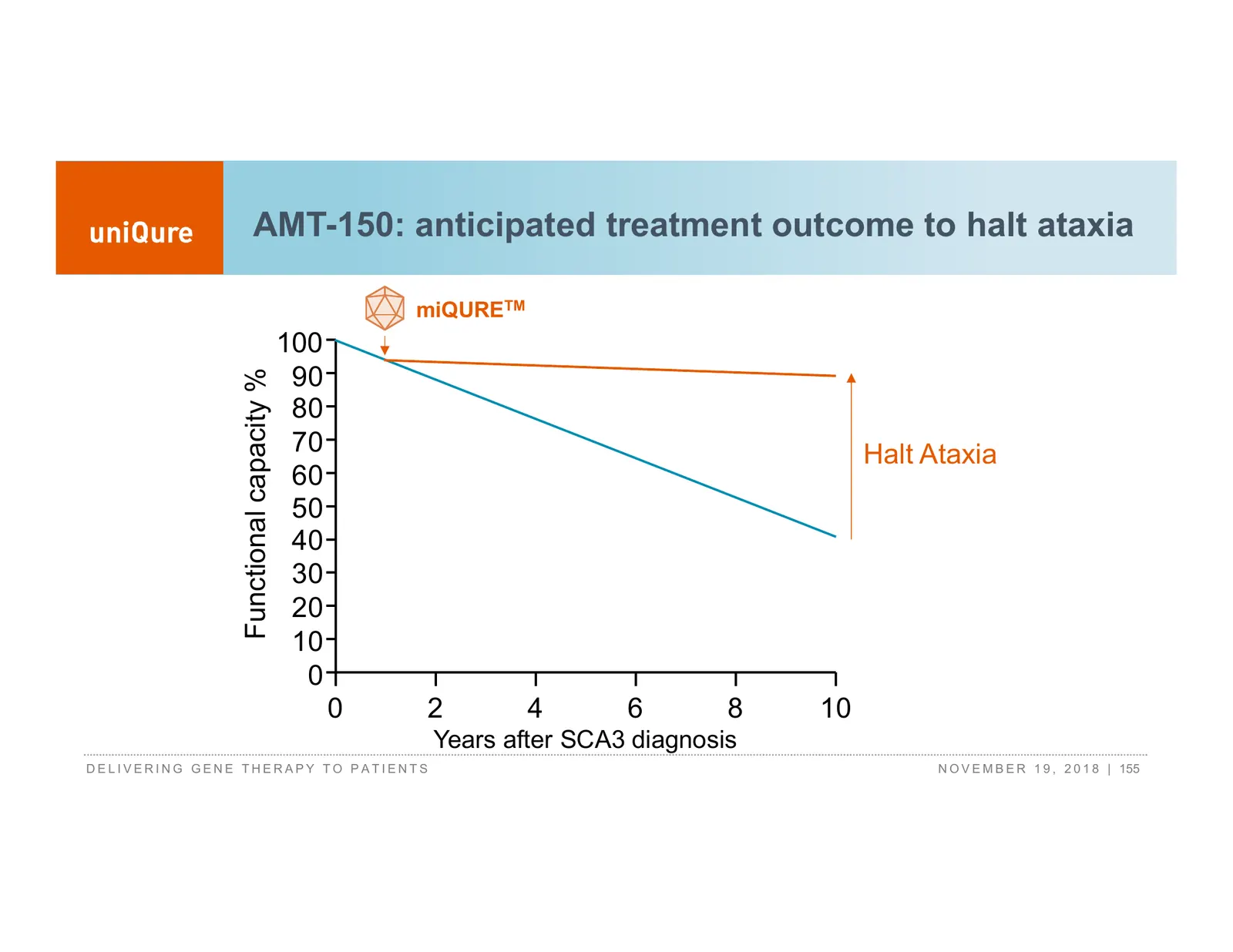
AMT-150: anticipated treatment outcome to halt ataxia miQURETM 100 90 Functional capacity % 80 70 Halt Ataxia 60 50 40 30 20 10 0 0 2 4 6 8 10 Years after SCA3 diagnosis DELIVERING GENE THERAPY TO PATIENTS N O V E M B E R 1 9 , 2 0 1 8 | 155
Slide 161: AMT-150: description and delivery
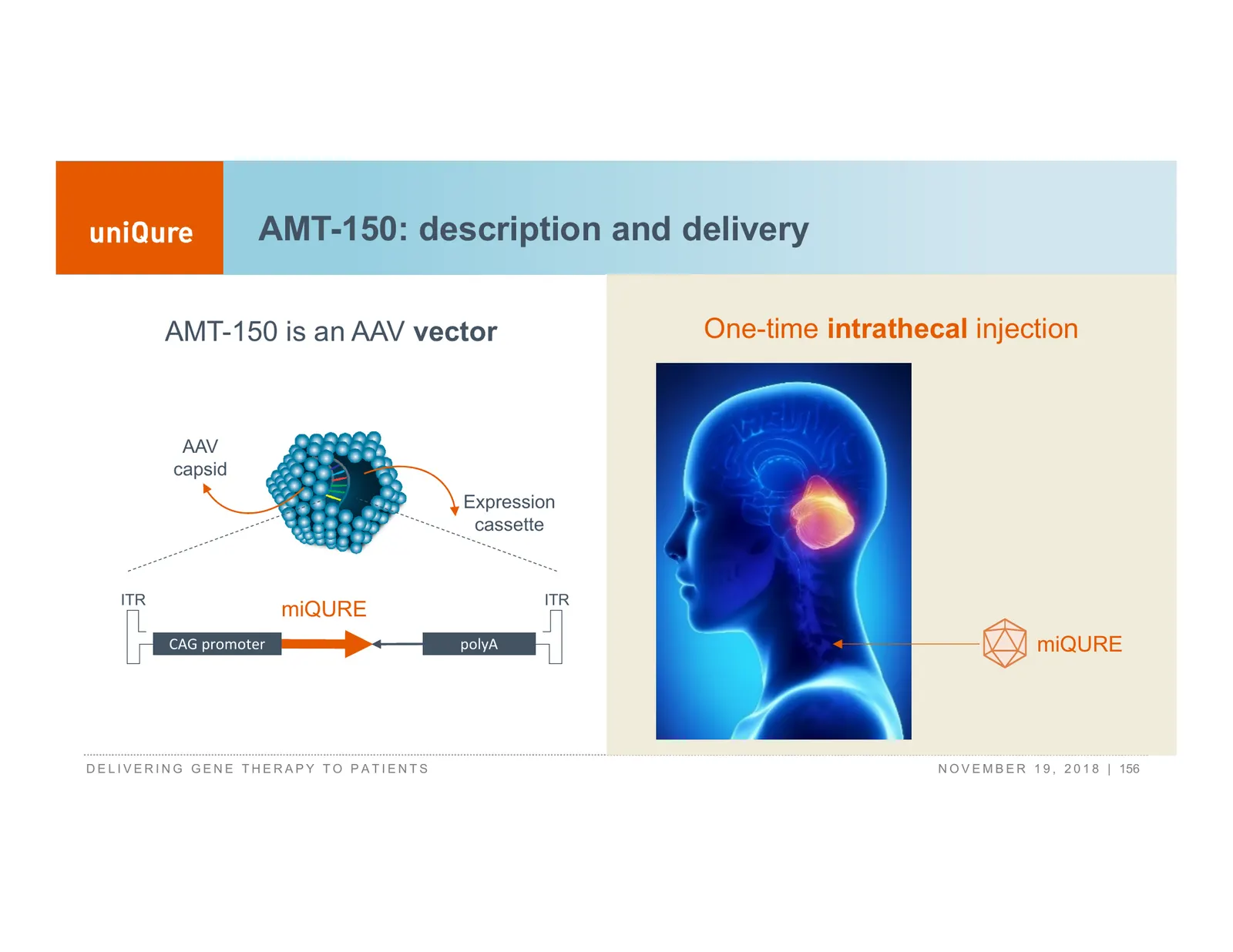
AMT-150: description and delivery AMT-150 is an AAV vector One-time intrathecal injection AAV capsid Expression cassette ITR ITR miQURE CAG promoter polyA miQURE DELIVERING GENE THERAPY TO PATIENTS N O V E M B E R 1 9 , 2 0 1 8 | 156
Slide 162: SCA3 and Huntington's suitable CNS indications
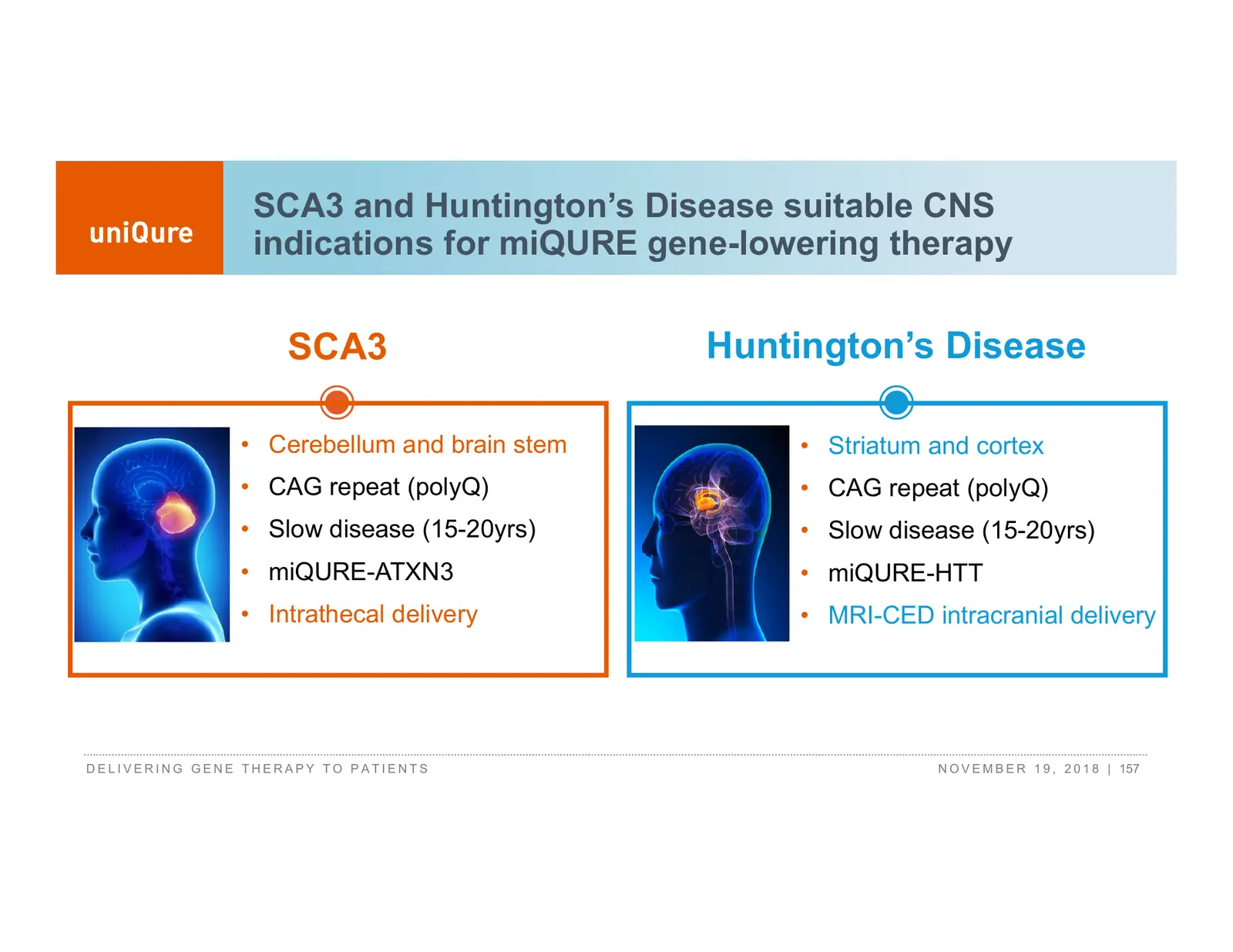
SCA3 and Huntington’s Disease suitable CNS indications for miQURE gene-lowering therapy SCA3 Huntington’s Disease • Cerebellum and brain stem • Striatum and cortex • CAG repeat (polyQ) • CAG repeat (polyQ) • Slow disease (15-20yrs) • Slow disease (15-20yrs) • miQURE-ATXN3 • miQURE-HTT • Intrathecal
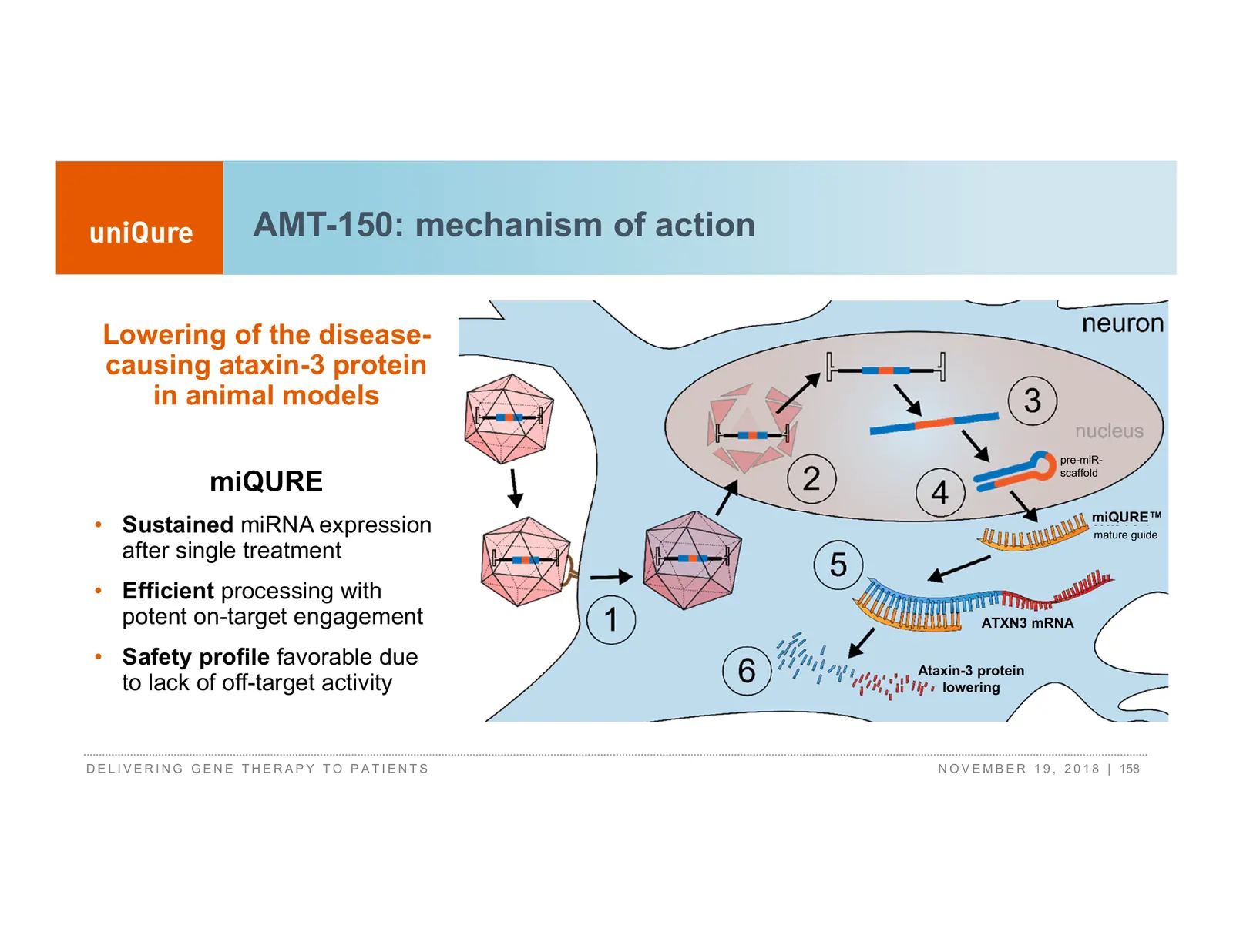
Slide 163: AMT-150: mechanism of action
AMT-150: mechanism of action Lowering of the disease- causing ataxin-3 protein in animal models pre-miR- miQURE scaffold miQURE™ • Sustained miRNA expression mature guide after single treatment • Efficient processing with potent on-target engagement ATXN3 mRNA • Safety profile favorable due Ataxin-3
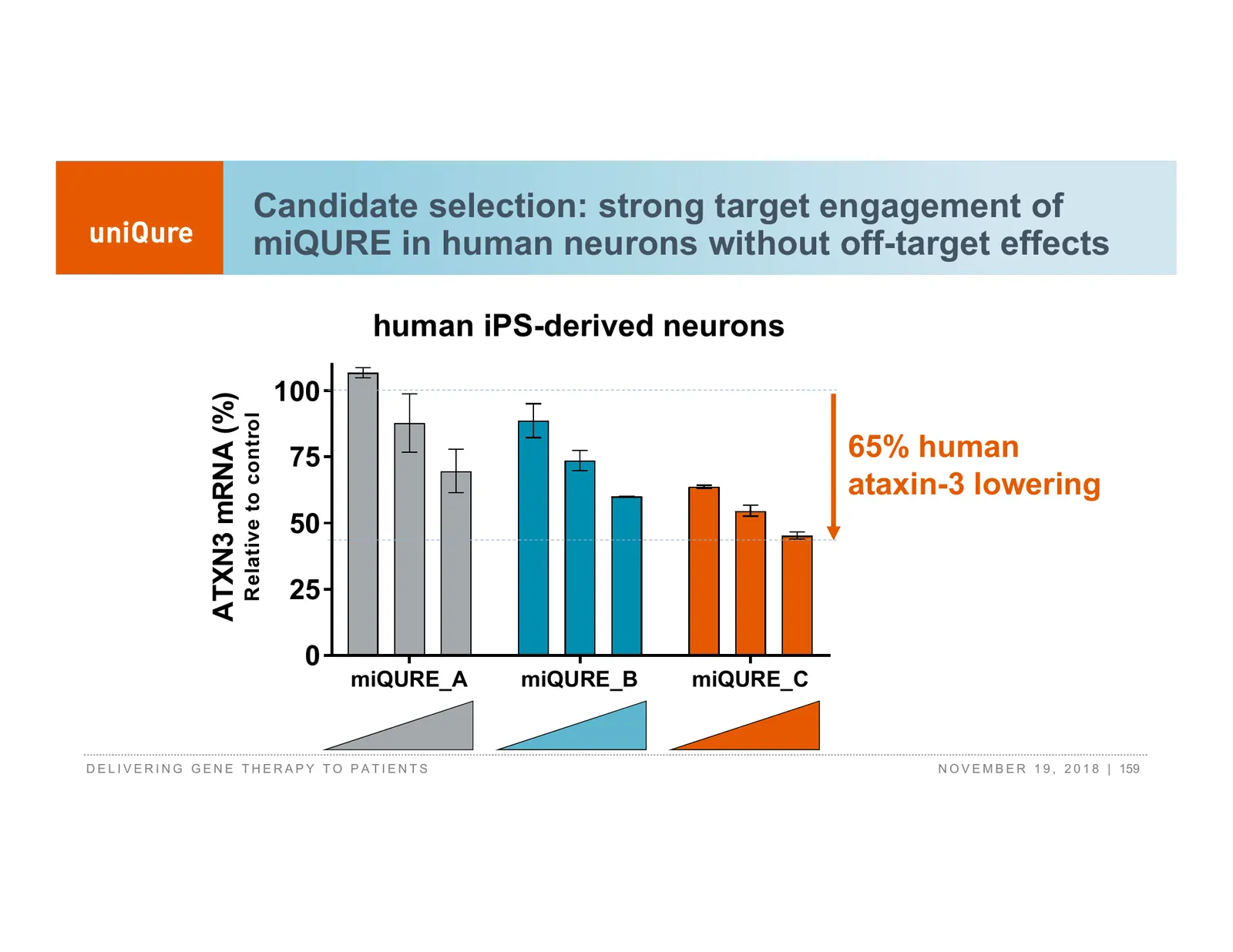
Slide 164: Candidate selection: target engagement in human neurons
Candidate selection: strong target engagement of miQURE in human neurons without off-target effects human iPS-derived neurons 100 ATXN3 mRNA (%) Relative to control 75 65% human ataxin-3 lowering 50 25 0 miQURE_A miQURE_B miQURE_C DELIVERING GENE THERAPY TO PATIENTS N O V E M B E R 1 9 , 2 0 1 8 | 1
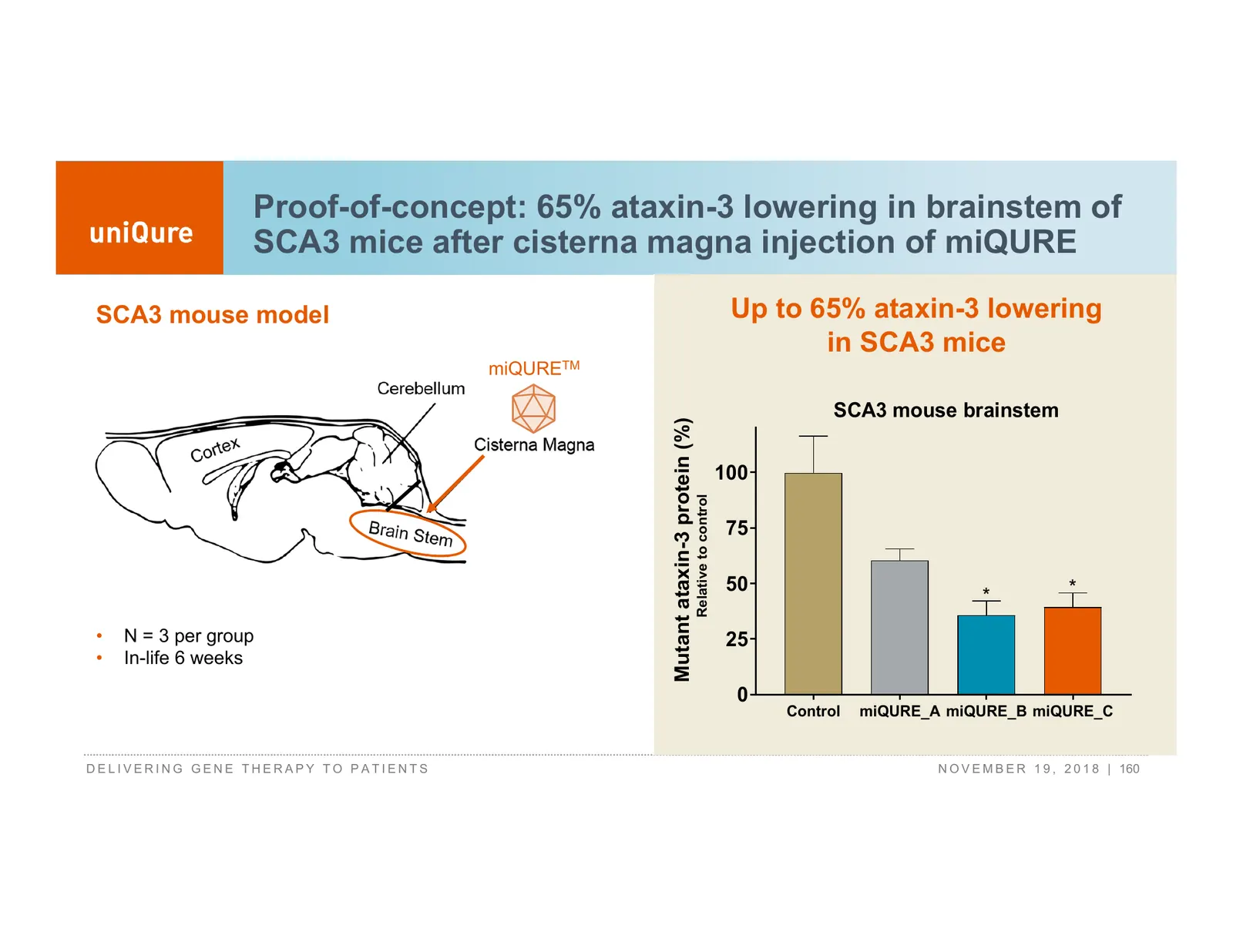
Slide 165: 65% ataxin-3 lowering in SCA3 mice brainstem
Proof-of-concept: 65% ataxin-3 lowering in brainstem of SCA3 mice after cisterna magna injection of miQURE SCA3 mouse model Up to 65% ataxin-3 lowering in SCA3 mice miQURETM SCA3 mouse brainstem Mutant ataxin-3 protein (%) 100 Relative to control 75 50 * * • N = 3 per group 25 • In-life 6 weeks 0 Co
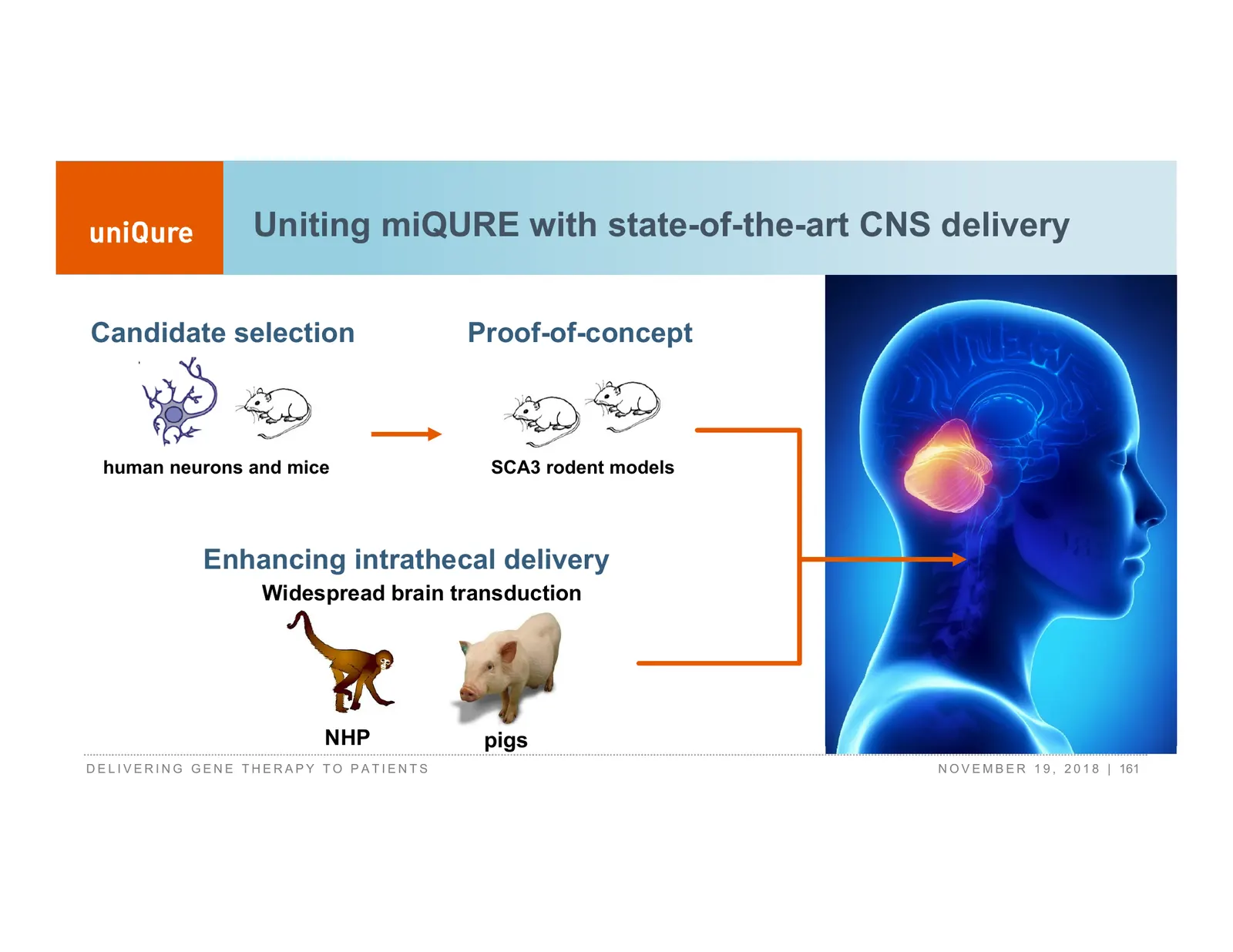
Slide 166: Uniting miQURE with CNS delivery
Uniting miQURE with state-of-the-art CNS delivery Candidate selection Proof-of-concept human neurons and mice SCA3 rodent models Enhancing intrathecal delivery Widespread brain transduction NHP pigs DELIVERING GENE THERAPY TO PATIENTS N O V E M B E R 1 9 , 2 0 1 8 | 161
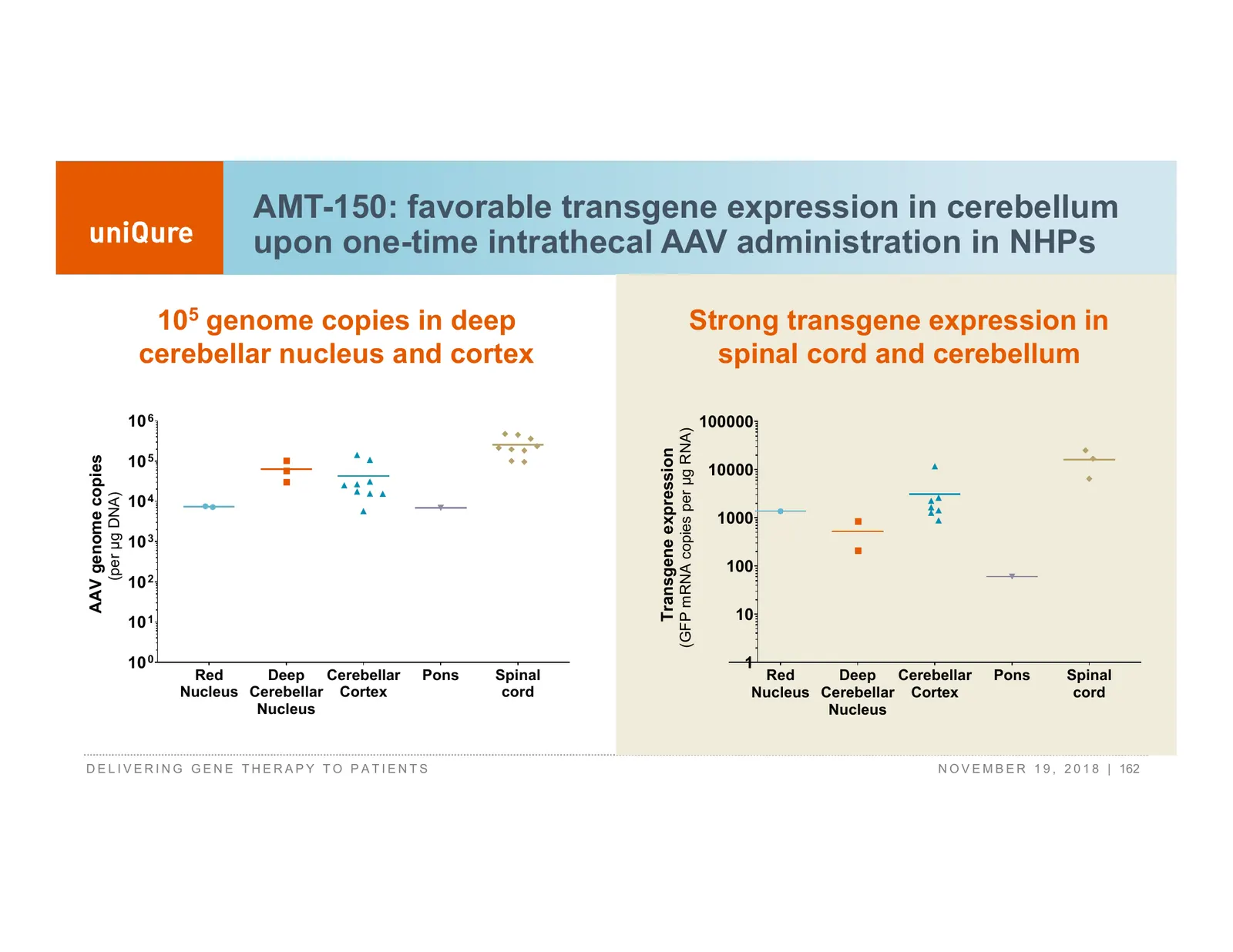
Slide 167: AMT-150: transgene expression in cerebellum in NHPs
AMT-150: favorable transgene expression in cerebellum upon one-time intrathecal AAV administration in NHPs 105 genome copies in deep Strong transgene expression in cerebellar nucleus and cortex spinal cord and cerebellum 10 6 100000 (GFP mRNA copies per µg RNA) Transgene expression 10 5 AAV genome c
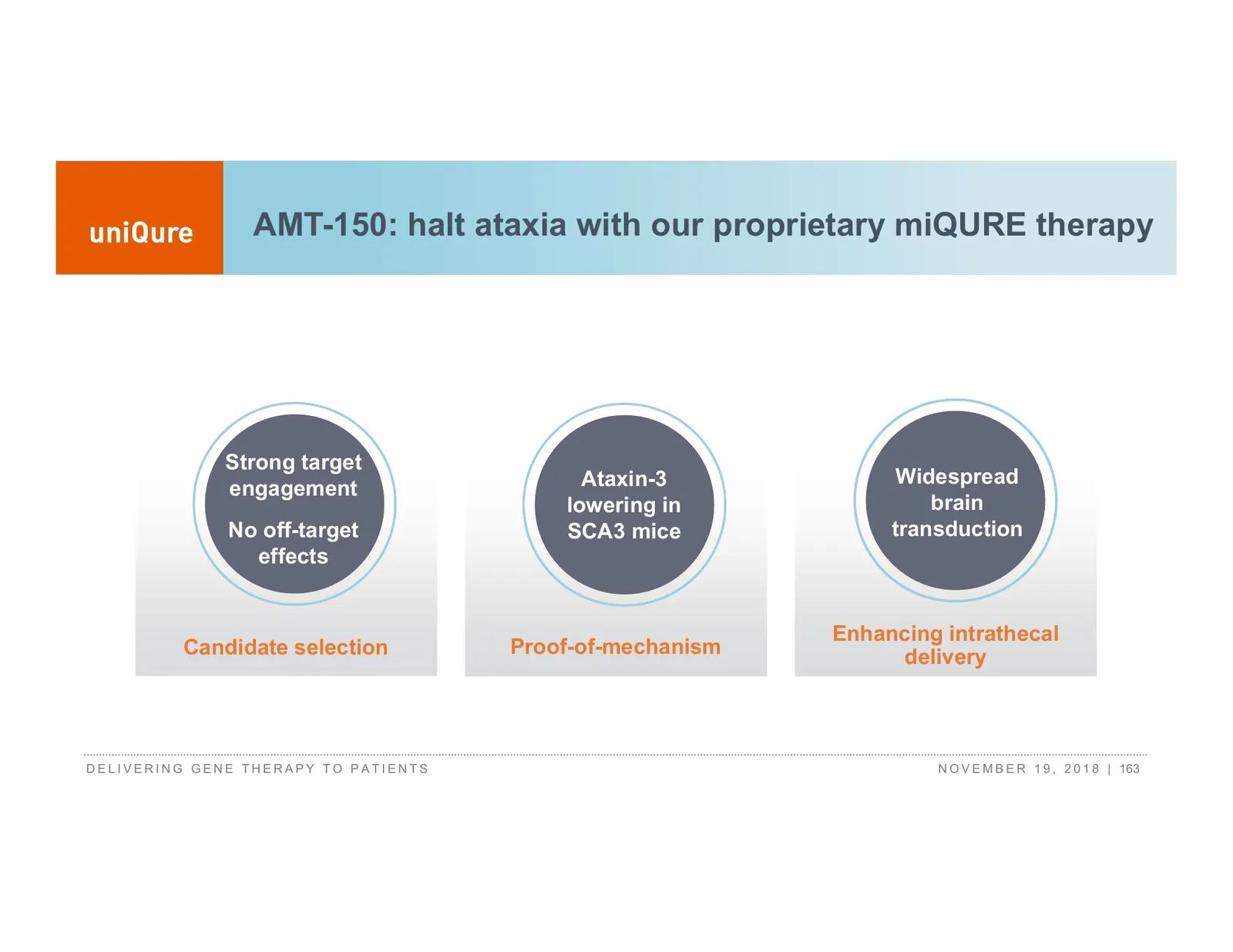
Slide 168: AMT-150: halt ataxia with miQURE therapy
AMT-150: halt ataxia with our proprietary miQURE therapy Strong target Ataxin-3 Widespread engagement lowering in brain No off-target SCA3 mice transduction effects Enhancing intrathecal Candidate selection Proof-of-mechanism delivery DELIVERING GENE THERAPY TO PATIENTS N O V E M B E R 1 9 , 2 0 1 8
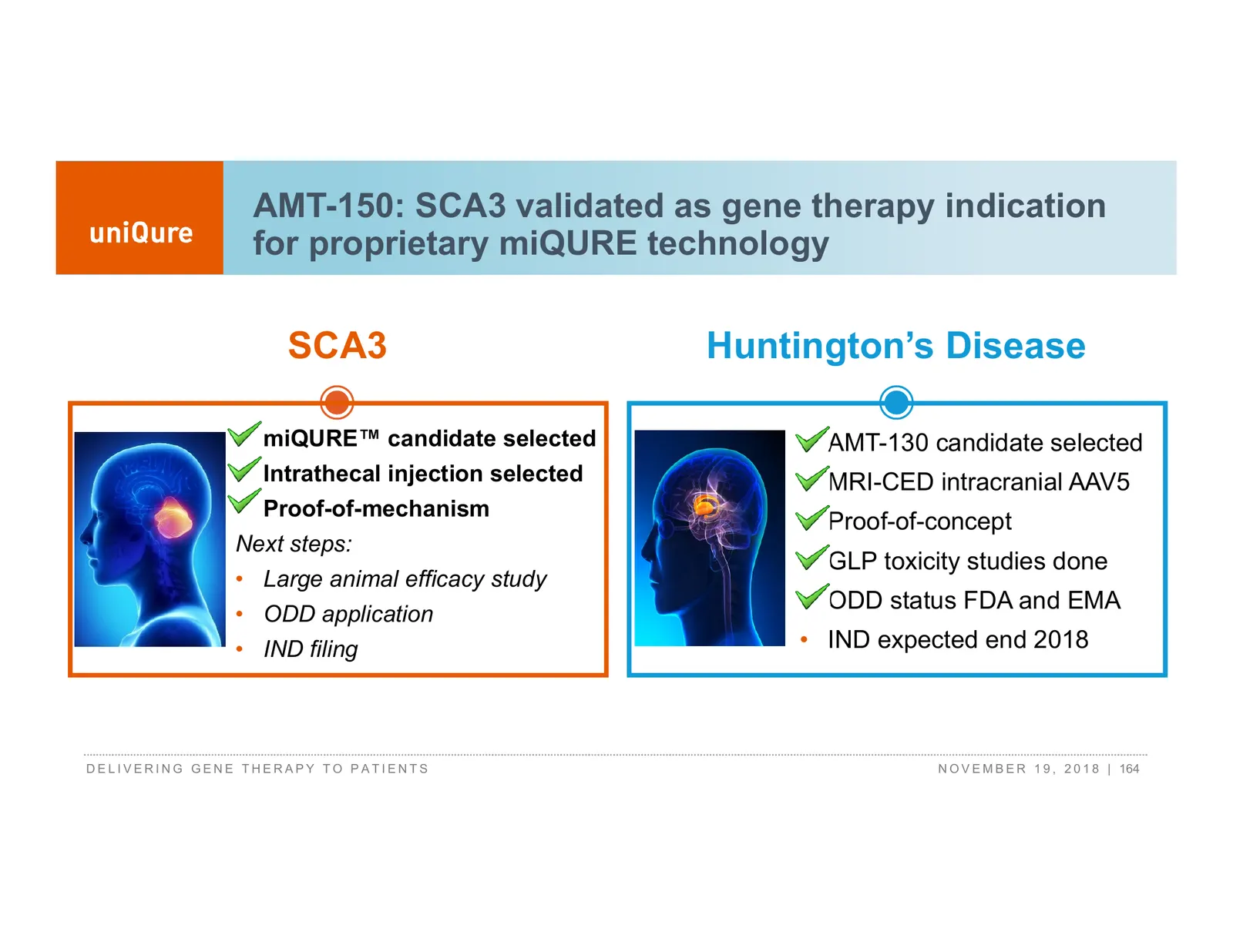
Slide 169: AMT-150: SCA3 validated as gene therapy indication
AMT-150: SCA3 validated as gene therapy indication for proprietary miQURE technology SCA3 Huntington’s Disease • miQURE™ candidate selected • AMT-130 candidate selected • Intrathecal injection selected • MRI-CED intracranial AAV5 • Proof-of-mechanism • Proof-of-concept Next steps: • GLP toxicity stu

Slide 170: Panel Q&A
Panel Q&A DELIVERING GENE THERAPY TO PATIENTS N O V E M B E R 1 9 , 2 0 1 8 | 165
Slide 171: AMT-061 Hemophilia B Update
AMT-061 Hemophilia B Update Robert Gut, M.D., Ph.D. Chief Medical Officer
Slide 172: AMT-061: dose-confirmation study objectives
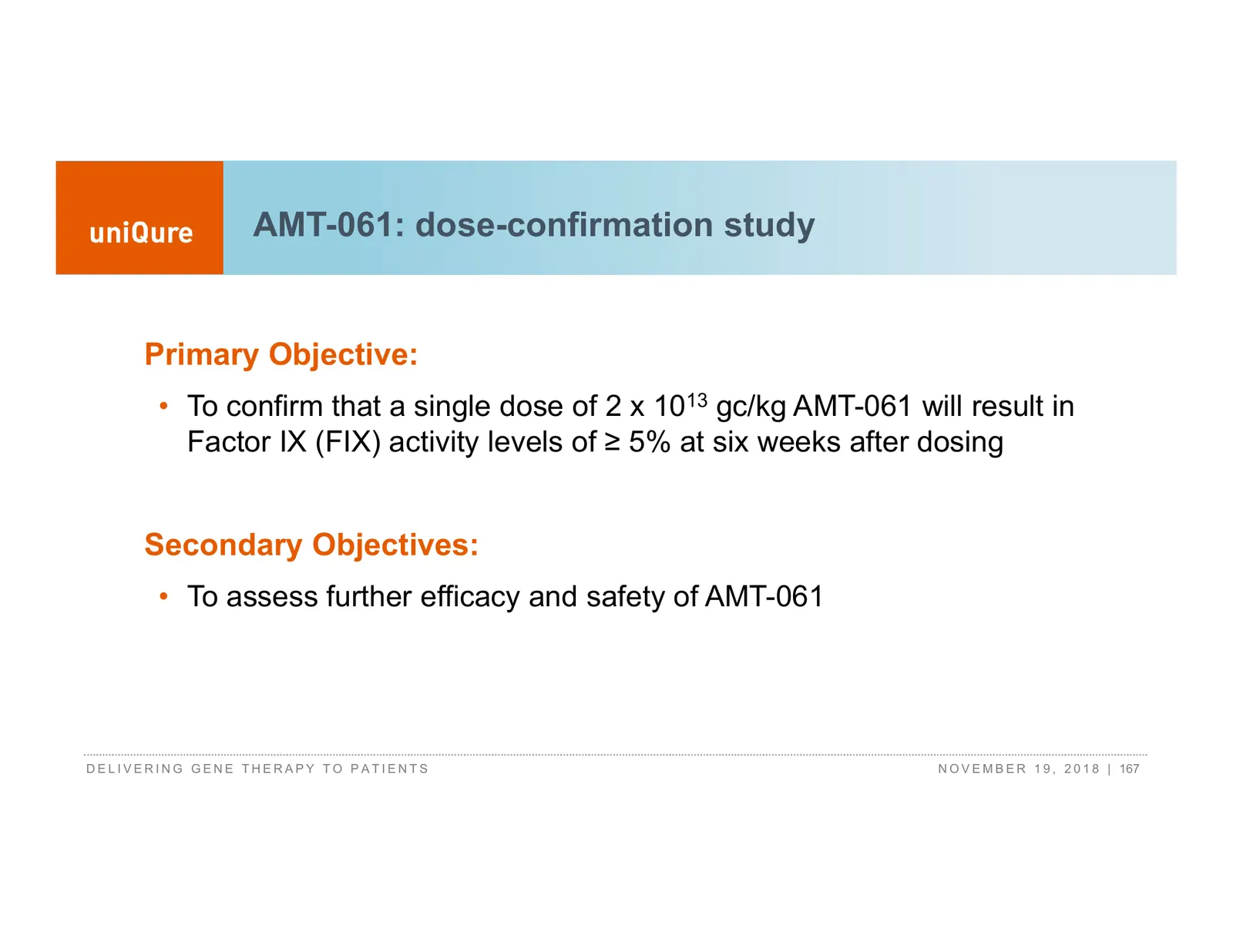
AMT-061: dose-confirmation study Primary Objective: • To confirm that a single dose of 2 x 10¹³ gc/kg AMT-061 will result in Factor IX (FIX) activity levels of ≥ 5% at six weeks after dosing Secondary Objectives: • To assess further efficacy and safety of AMT-061 DELIVERING GENE THERAPY TO PATIENTS
Slide 173: AMT-061: dose-confirmation study
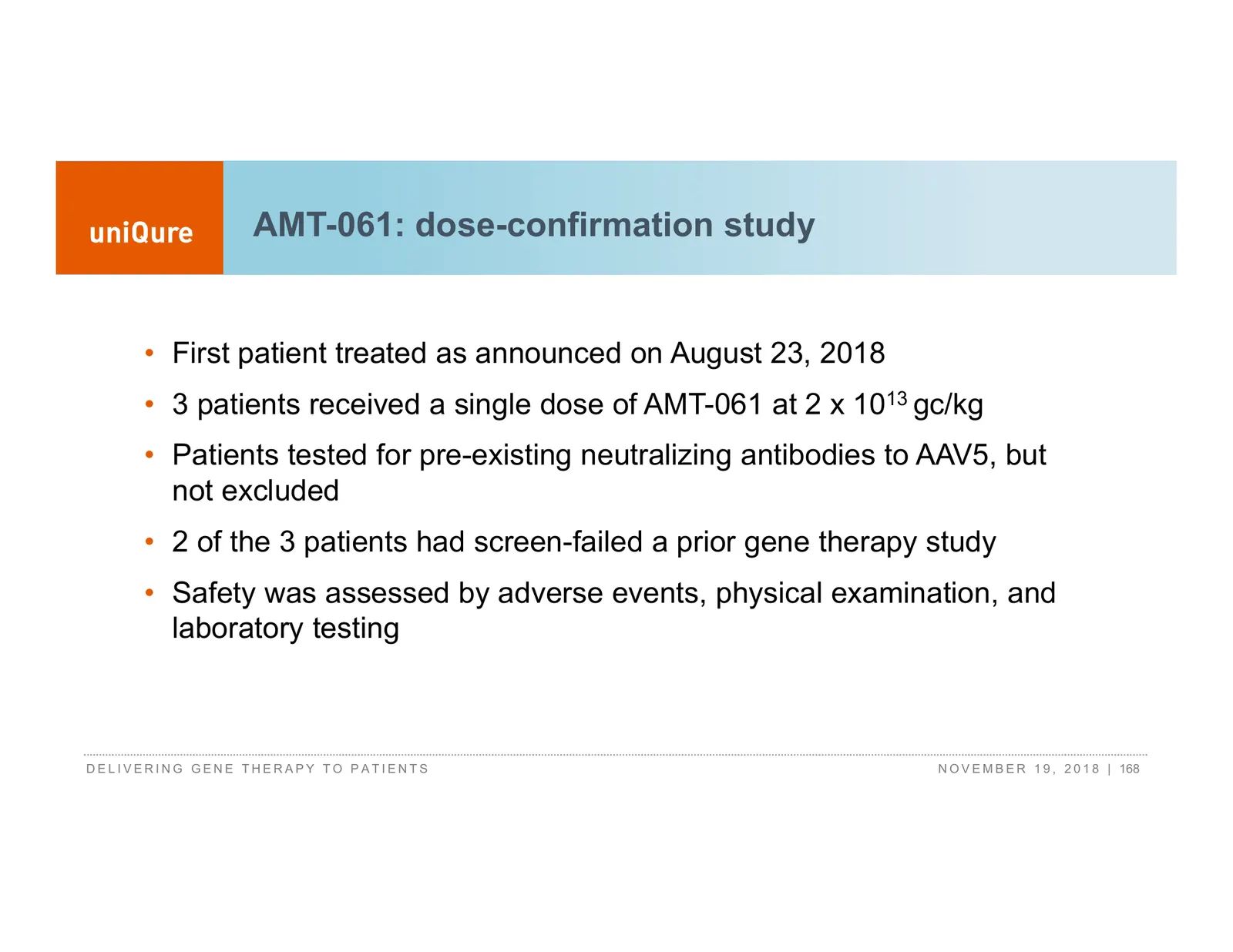
AMT-061: dose-confirmation study • First patient treated as announced on August 23, 2018 • 3 patients received a single dose of AMT-061 at 2 x 10¹³ gc/kg • Patients tested for pre-existing neutralizing antibodies to AAV5, but not excluded • 2 of the 3 patients had screen-failed a prior gene therapy
Slide 174: Characteristics of the Participants at Baseline
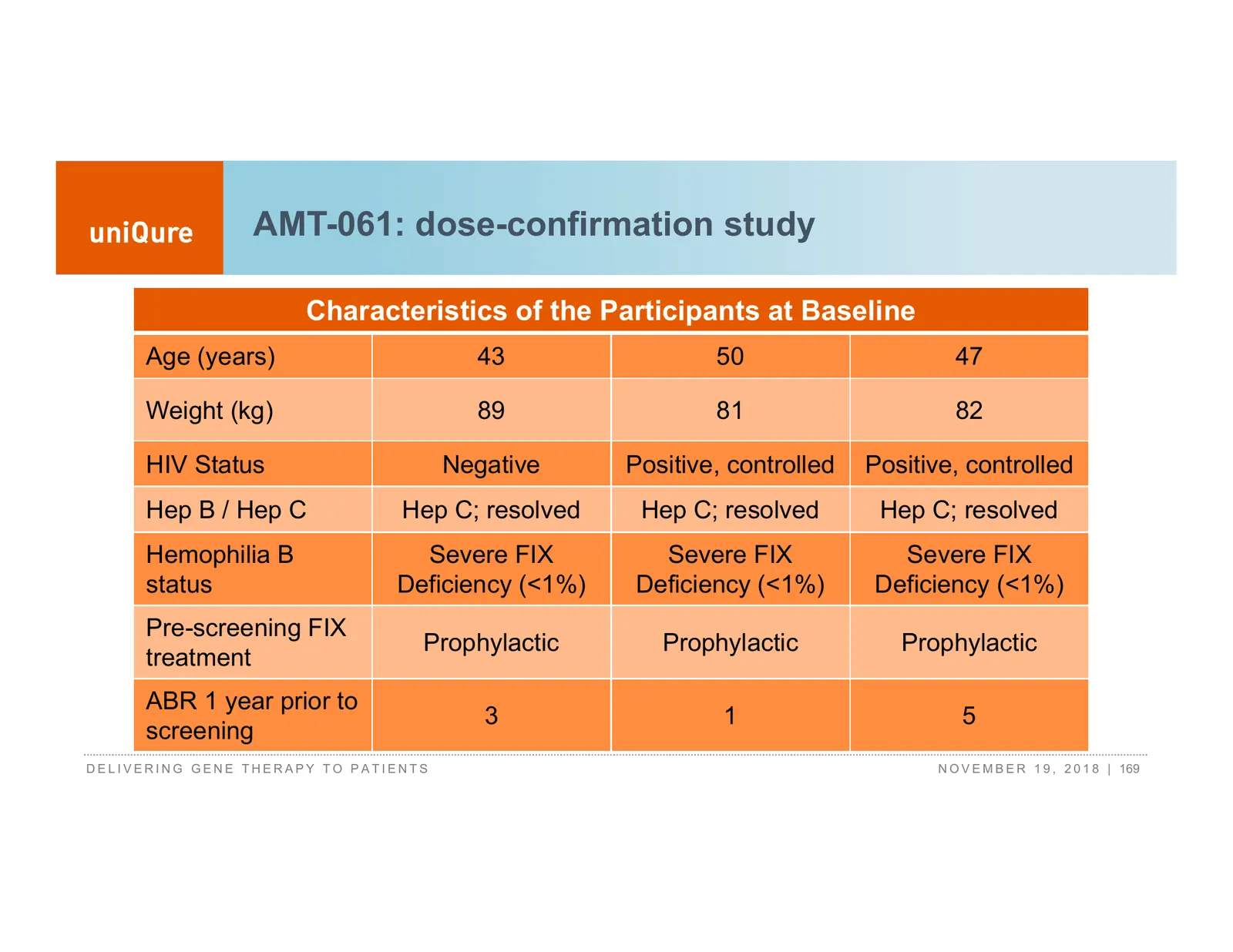
AMT-061: dose-confirmation study Characteristics of the Participants at Baseline Age (years) 43 50 47 Weight (kg) 89 81 82 HIV Status Negative Positive, controlled Positive, controlled Hep B / Hep C Hep C; resolved Hep C; resolved Hep C; resolved Hemophilia B Severe FIX Severe FIX Severe FIX status
Slide 175: AMT-061: estimated FIX activity in humans
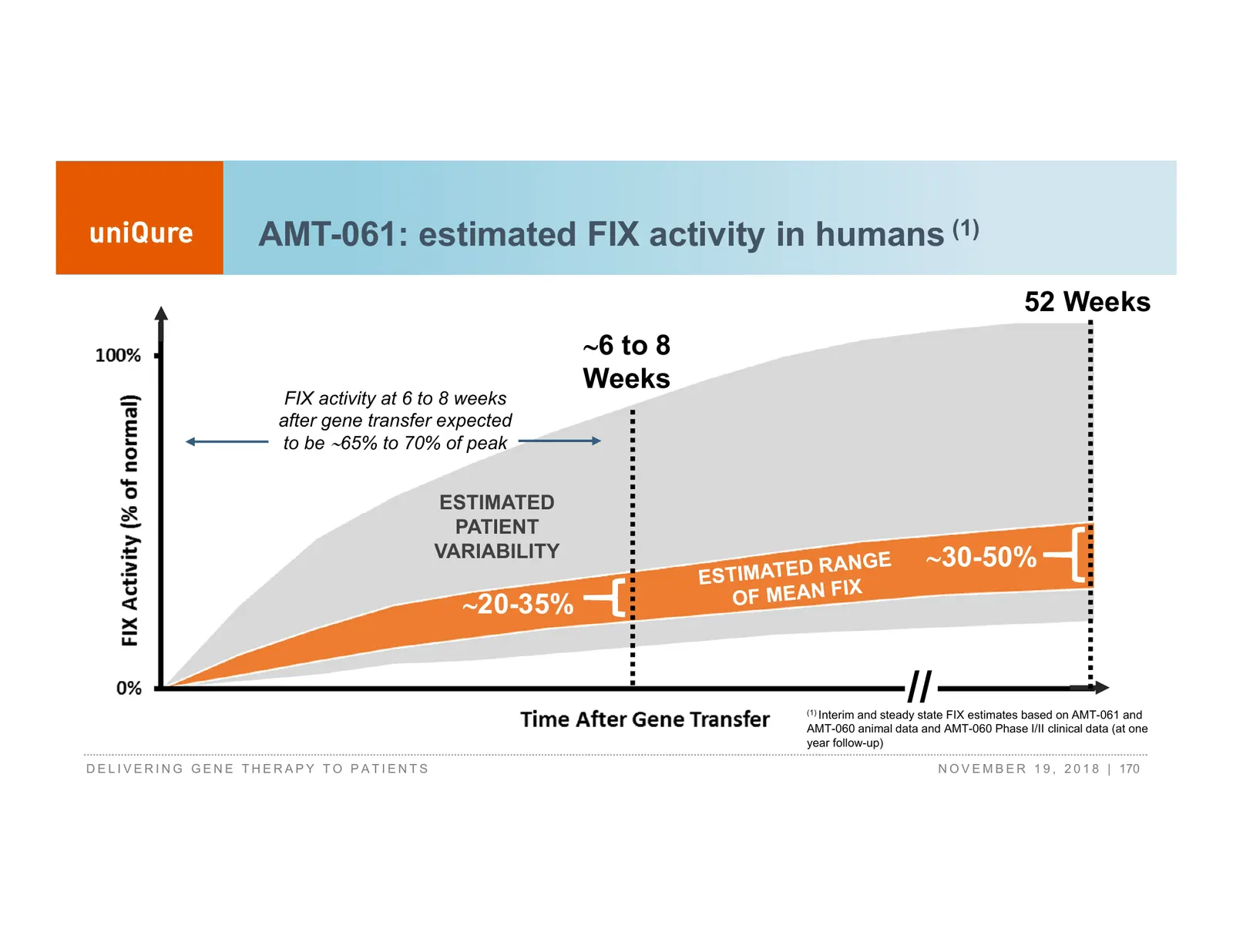
AMT-061: estimated FIX activity in humans (1) 52 Weeks 6 to 8 Weeks FIX activity at 6 to 8 weeks after gene transfer expected to be 65% to 70% of peak ESTIMATED PATIENT VARIABILITY 30-50% 20-35% // (1) Interim and steady state FIX estimates based on AMT-061 and AMT-060 animal data and AMT-060 Ph
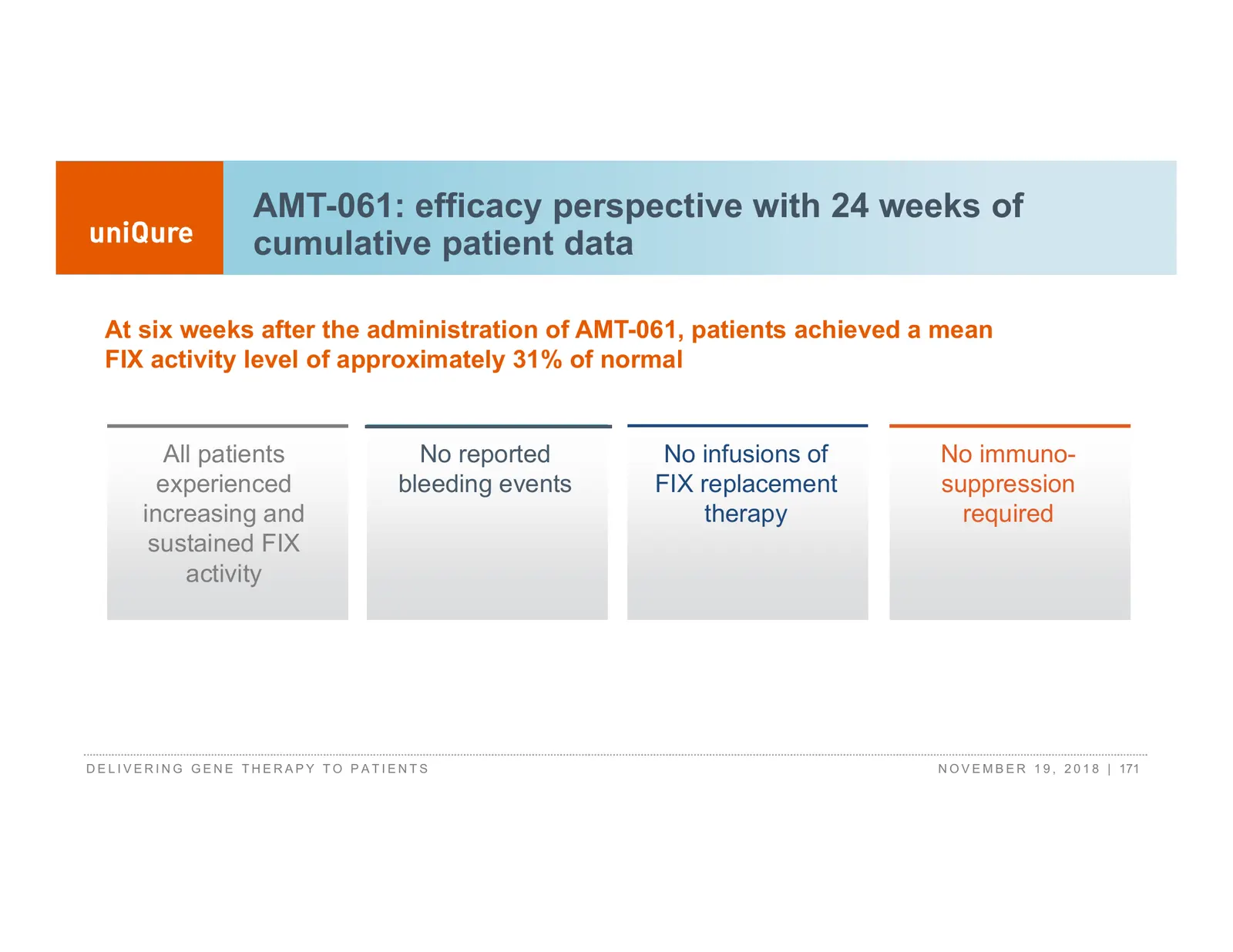
Slide 176: AMT-061: efficacy perspective
AMT-061: efficacy perspective with 24 weeks of cumulative patient data At six weeks after the administration of AMT-061, patients achieved a mean FIX activity level of approximately 31% of normal All patients No reported No infusions of No immuno- experienced bleeding events FIX replacement suppress
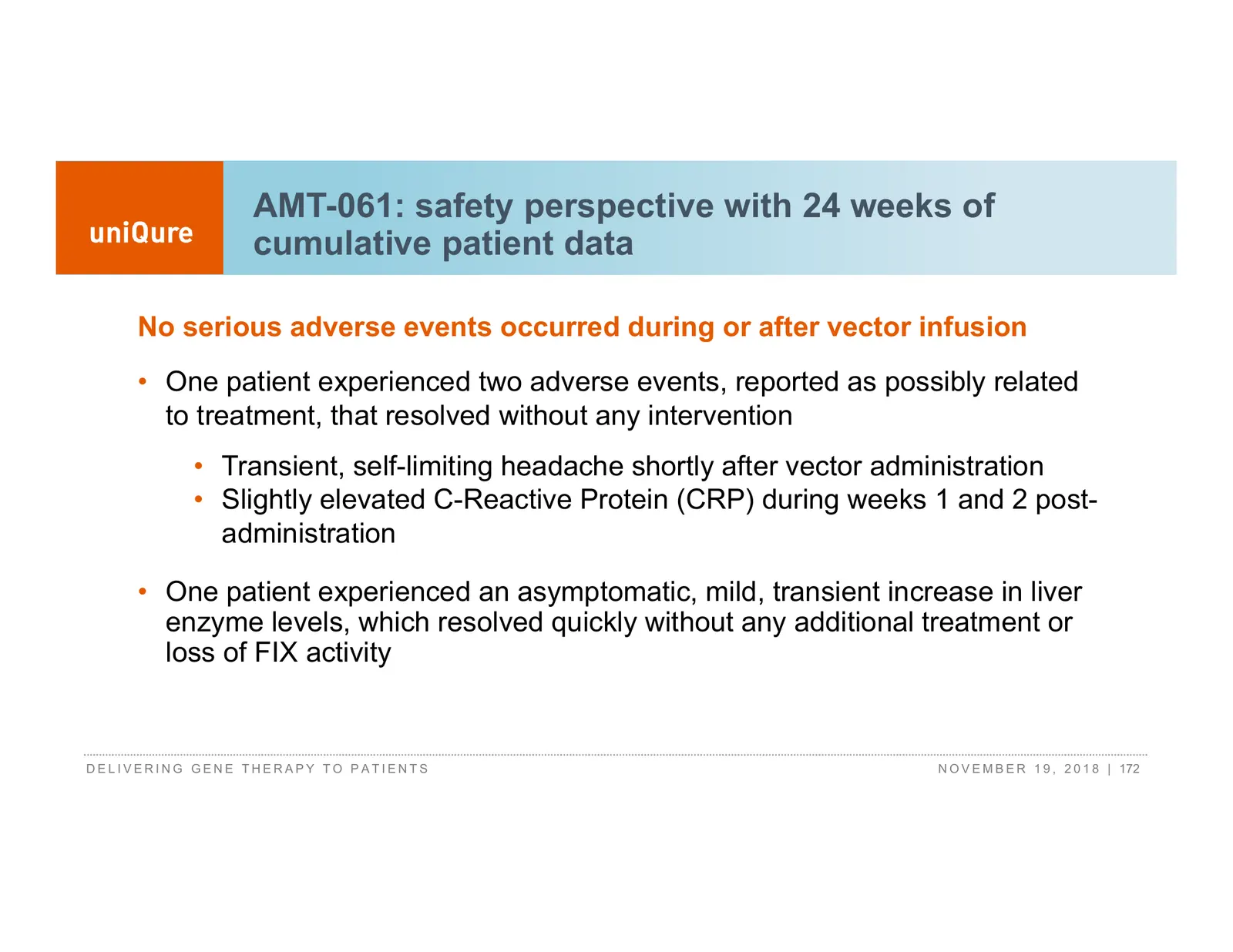
Slide 177: AMT-061: safety perspective
AMT-061: safety perspective with 24 weeks of cumulative patient data No serious adverse events occurred during or after vector infusion • One patient experienced two adverse events, reported as possibly related to treatment, that resolved without any intervention • Transient, self-limiting headache
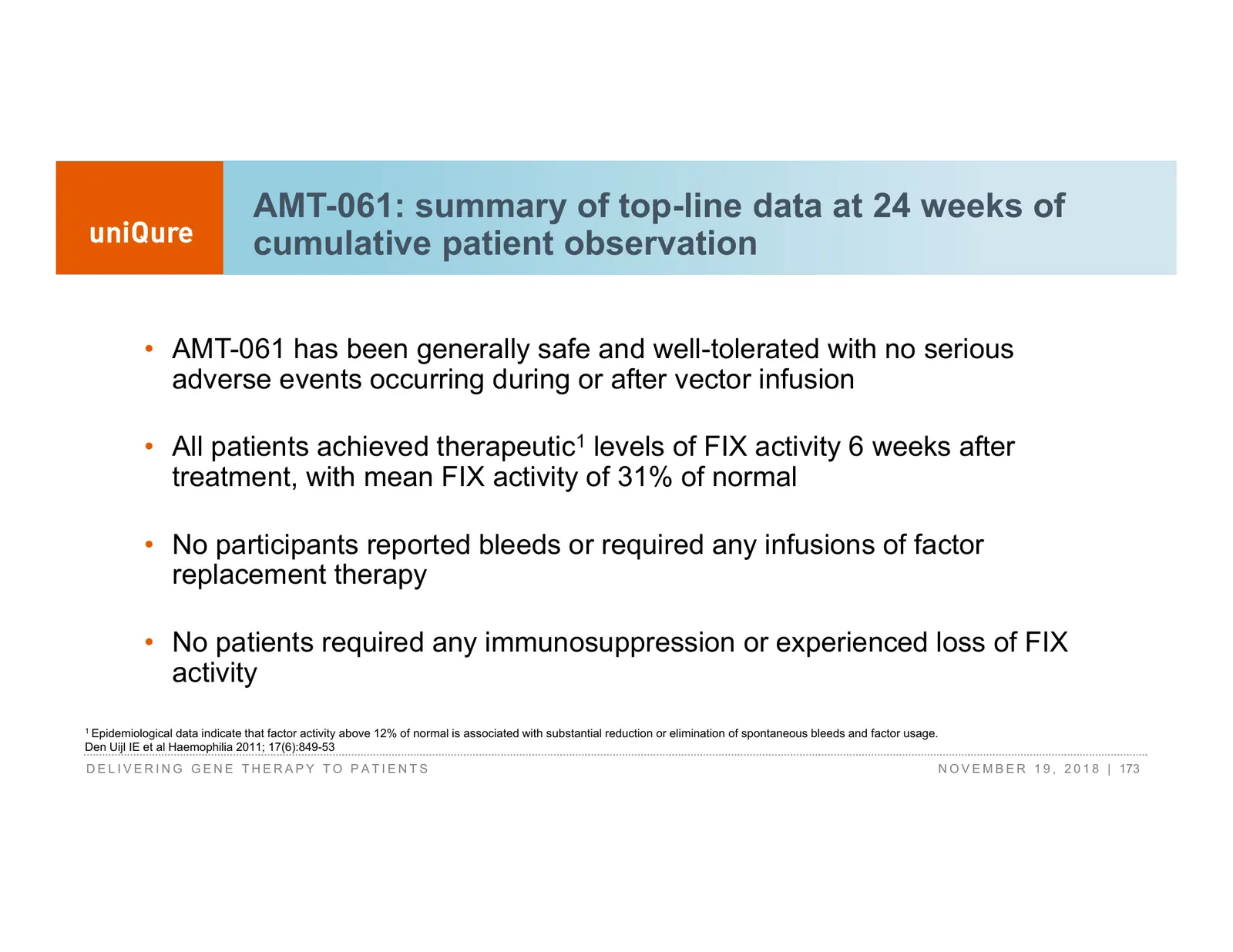
Slide 178: AMT-061: summary of top-line data
AMT-061: summary of top-line data at 24 weeks of cumulative patient observation • AMT-061 has been generally safe and well-tolerated with no serious adverse events occurring during or after vector infusion • All patients achieved therapeutic1 levels of FIX activity 6 weeks after treatment, with mean
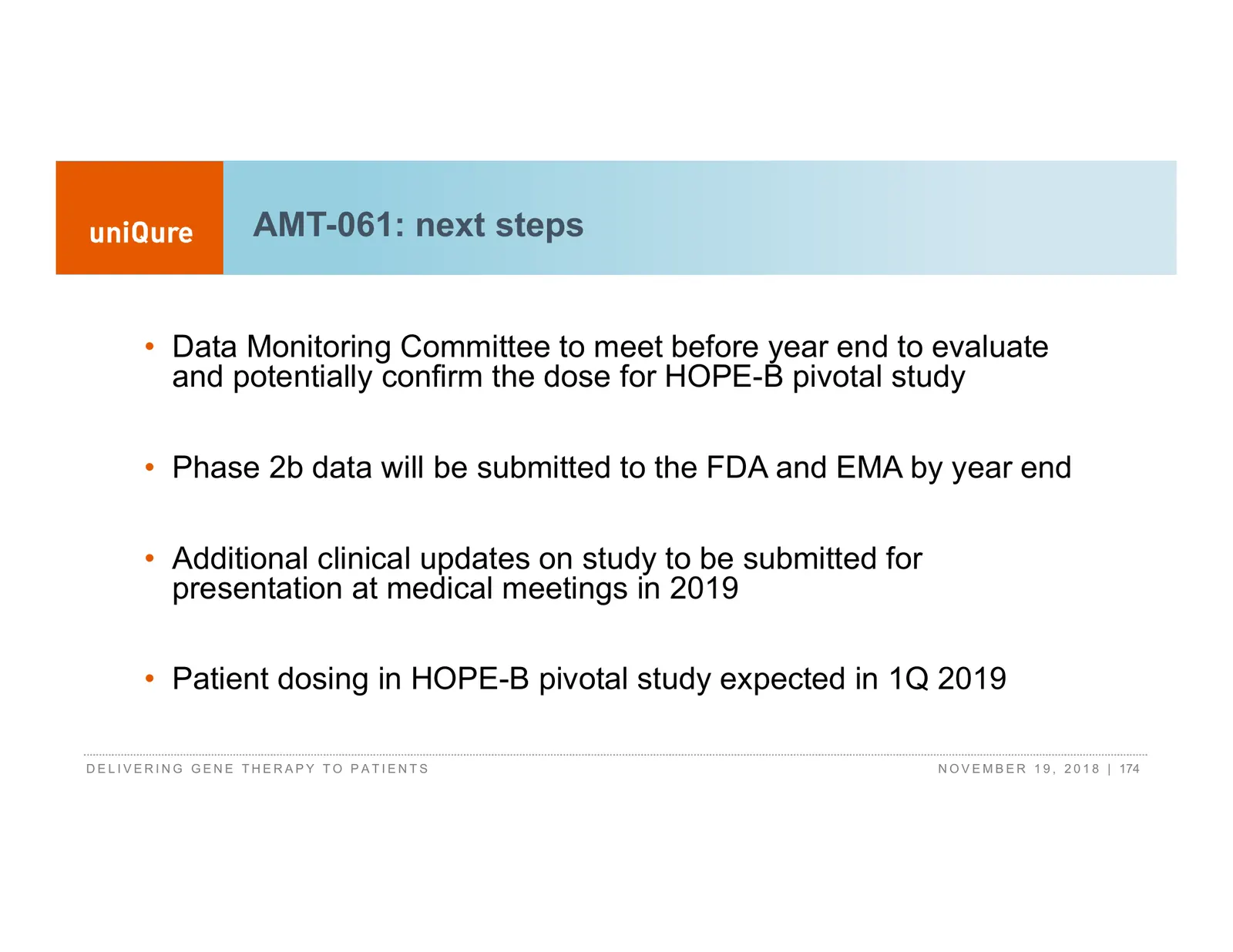
Slide 179: AMT-061: next steps
AMT-061: next steps • Data Monitoring Committee to meet before year end to evaluate and potentially confirm the dose for HOPE-B pivotal study • Phase 2b data will be submitted to the FDA and EMA by year end • Additional clinical updates on study to be submitted for presentation at medical meetings i
Slide 180: AMT-061: HOPE-B Phase III pivotal study
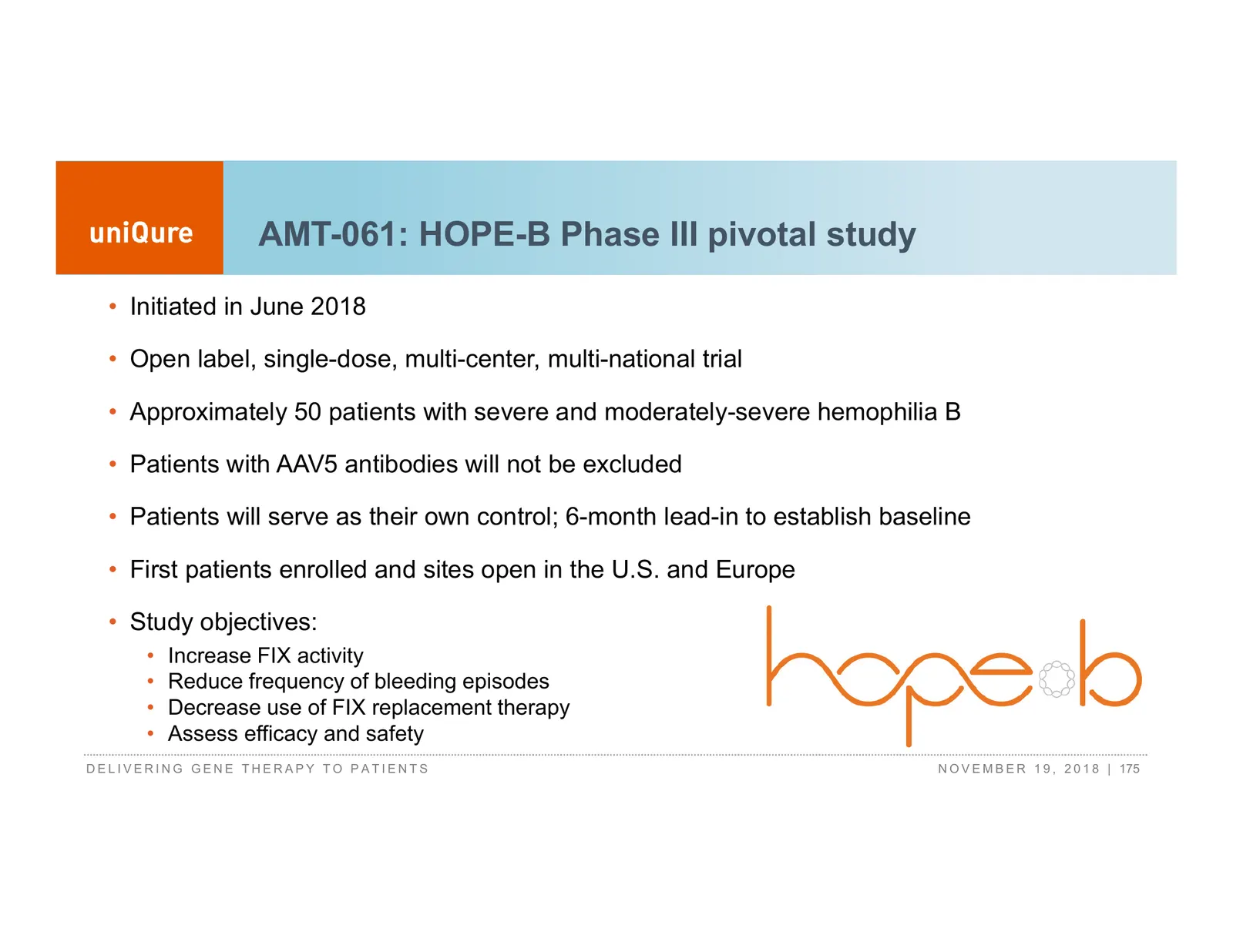
AMT-061: HOPE-B Phase III pivotal study • Initiated in June 2018 • Open label, single-dose, multi-center, multi-national trial • Approximately 50 patients with severe and moderately-severe hemophilia B • Patients with AAV5 antibodies will not be excluded • Patients will serve as their own control; 6

Slide 181: Panel Q&A
Panel Q&A DELIVERING GENE THERAPY TO PATIENTS N O V E M B E R 1 9 , 2 0 1 8 | 176
Slide 182: Research and Development Day
To Transform Lives Research and Development Day November 19, 2018 DELIVERING GENE THERAPY TO PATIENTS N O V E M B E R 1 9 , 2 0 1 8 | 177
Source: Internet Archive copy of uniqure.com
More decks from uniQure N.V.
 Corporate Update (September 2026)34 slides · Sep 29, 2026
 Epilepsy Pipeline Conference June 20266 slides · Jun 1, 2026
 2026 HD Therapeutics Conference33 slides · Feb 24, 2026
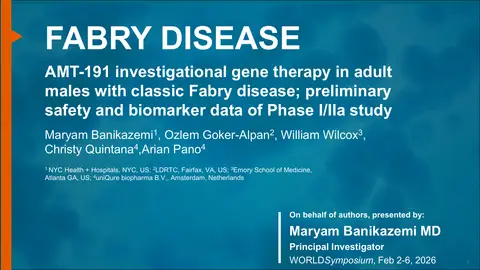 WORLDSymposium 202613 slides · February 2026
 Investor Presentation (January 2026)34 slides · Jan 13, 2026
 Corporate Update (September 2025)29 slides · Sep 24, 2025