Boston Scientific Corporation · NYSE:BSX
Boston Scientific — Technical Presentation (2010)
27 slides from Boston Scientific's technical presentation, 2010
Slide 1: Early CRT Intervention Reduces Death and Heart Failure Events: Updated Insight from MADIT-CRT
Early CRT Intervention Reduces Death and Heart Failure Events : Updated Insight from MADIT-CRT Multicenter Automatic Defibrillator Implantation Trial with Cardiac Resynchronization Therapy © 2010 Boston Scientific. All rights reserved. CRM6-4403-0810
Slide 2: Disclaimer
Disclaimer • Boston Scientific Education and Presentation Resources • Boston Scientific develops, manufactures and markets a broad array of products and services that enable less-invasive care for some of the most threatening cardiac conditions. Its prescription devices for use by healthcare profess
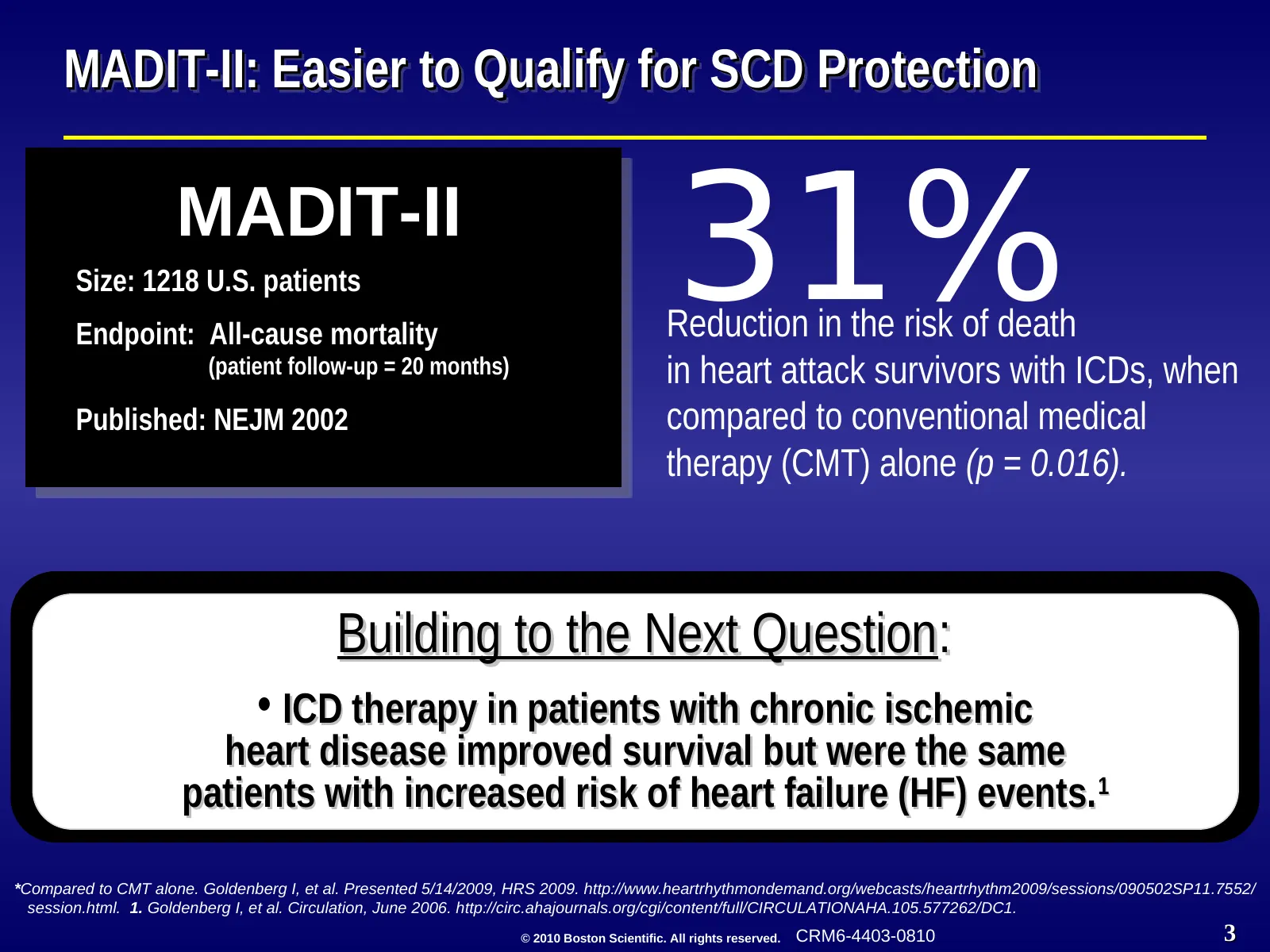
Slide 3: MADIT-II: Easier to Qualify for SCD Protection
MADIT-II: Easier to Qualify for SCD Protection MADIT-II Size: 1218 U.S. patients Endpoint: All-cause mortality (patient follow-up = 20 months) 31% Reduction in the risk of death in heart attack survivors with ICDs, when Published: NEJM 2002 compared to conventional medical therapy (CMT) alone (p = 0
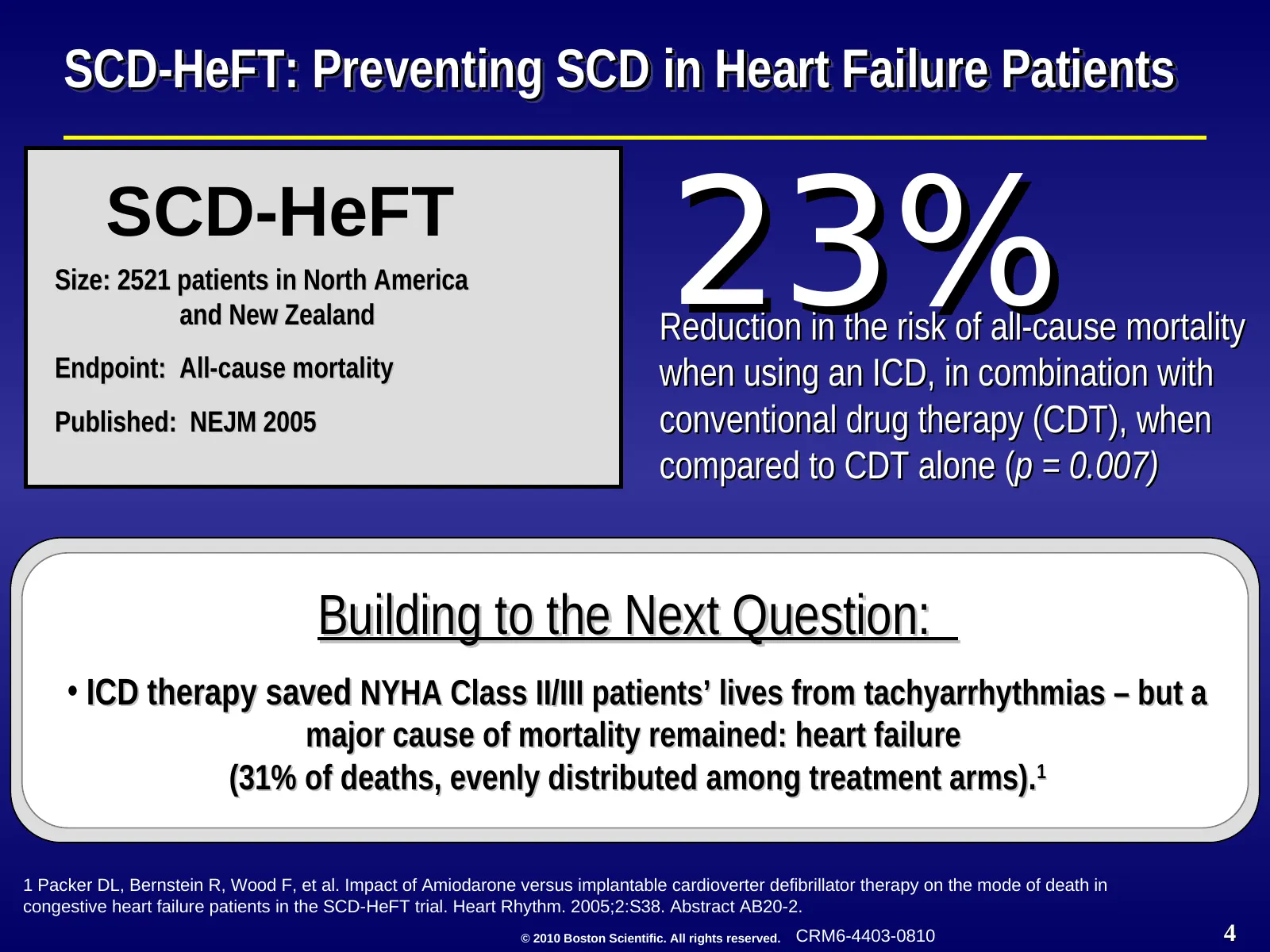
Slide 4: SCD-HeFT: Preventing SCD in Heart Failure Patients
SCD-HeFT: Preventing SCD in Heart Failure Patients SCD-HeFT Size: 2521 patients in North America and New Zealand Endpoint: All-cause mortality 23% Reduction in the risk of all-cause mortality when using an ICD, in combination with Published: NEJM 2005 conventional drug therapy (CDT), when compared t
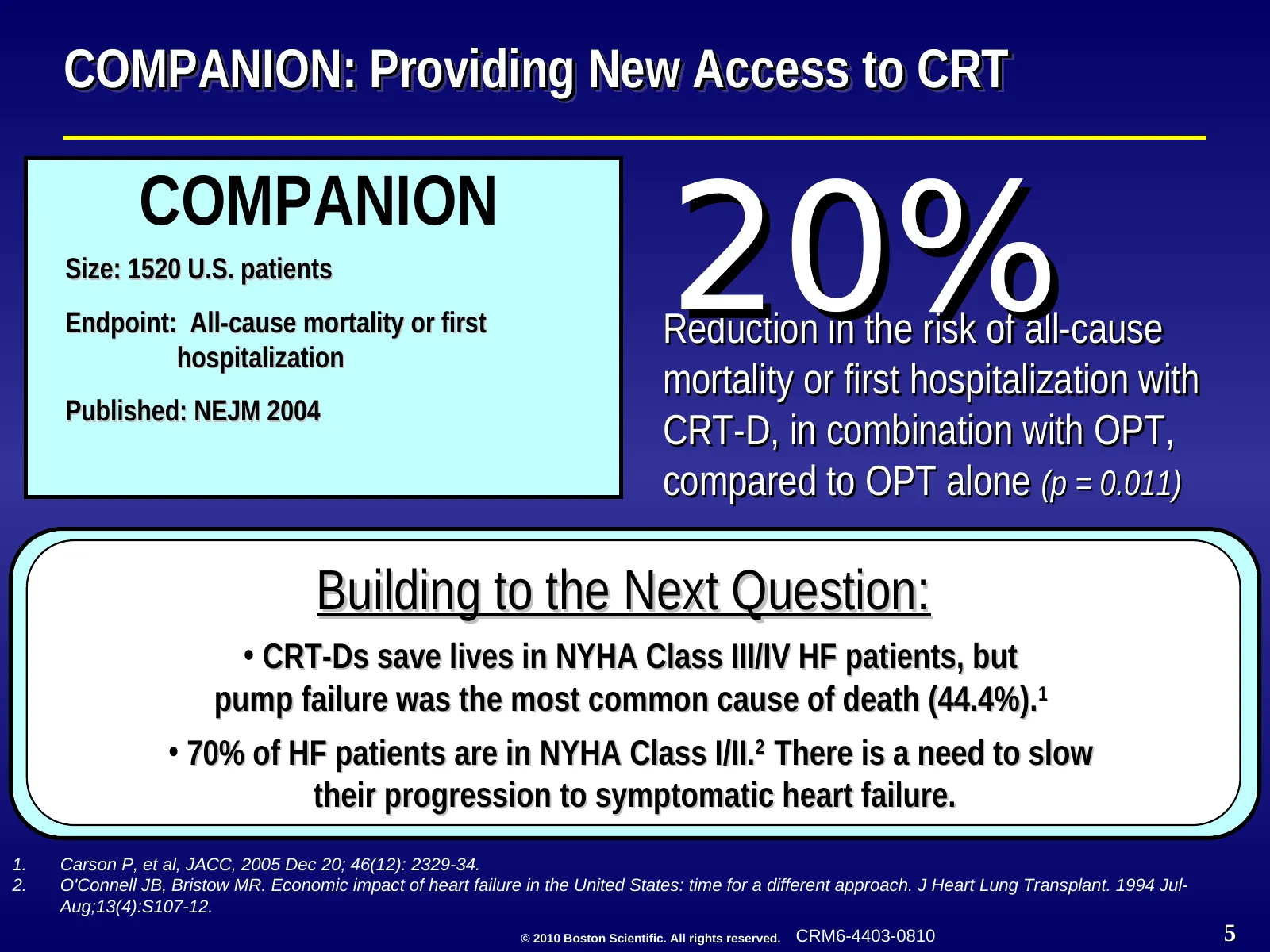
Slide 5: COMPANION: Providing New Access to CRT
COMPANION: Providing New Access to CRT COMPANION Size: 1520 U.S. patients Endpoint: All-cause mortality or first hospitalization 20% Reduction in the risk of all-cause mortality or first hospitalization with Published: NEJM 2004 CRT-D, in combination with OPT, compared to OPT alone (p = 0.011) Build
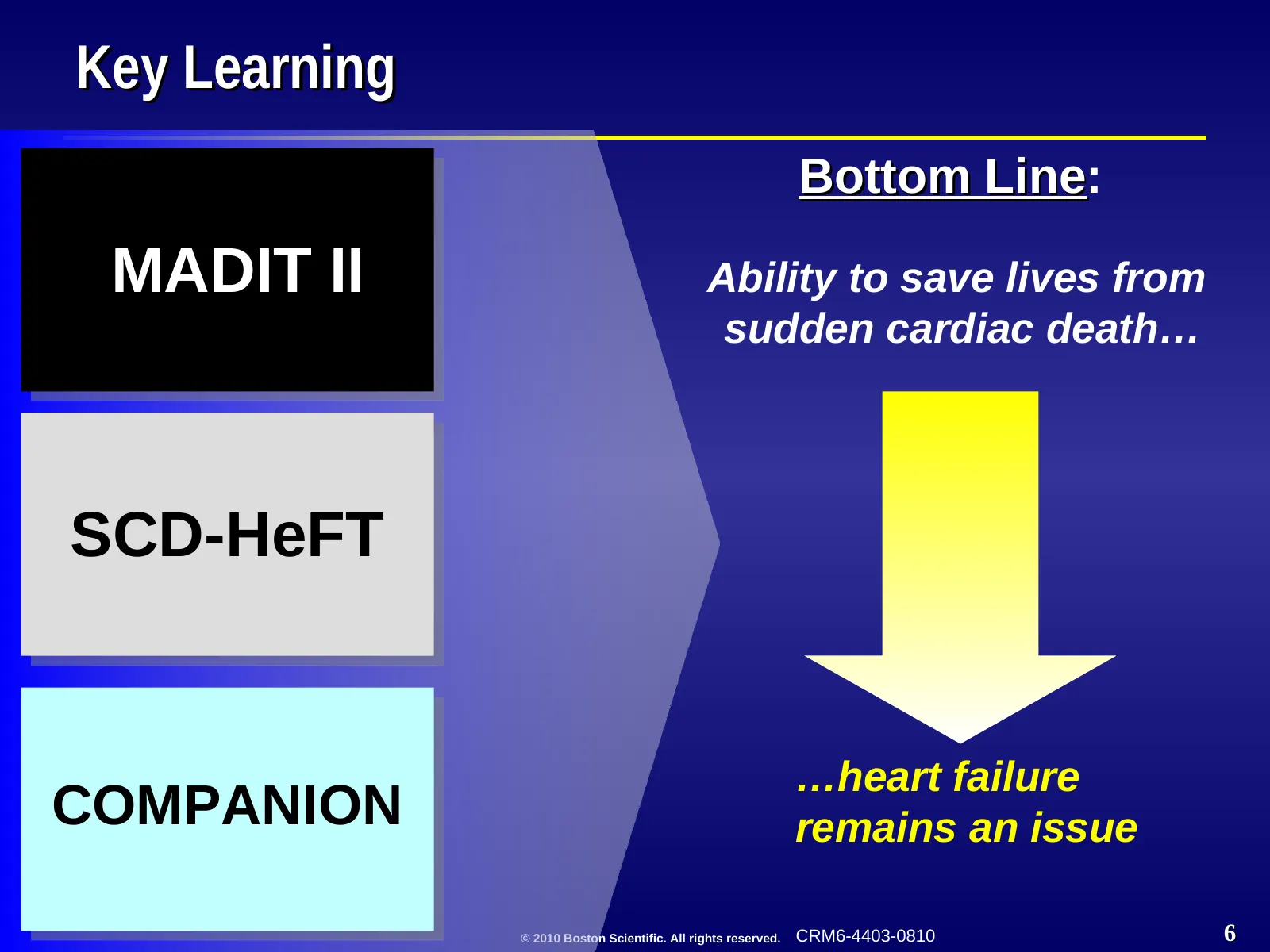
Slide 6: Key Learning
Key Learning Bottom Line: Line MADIT II Ability to save lives from sudden cardiac death… SCD-HeFT …heart failure COMPANION remains an issue © 2010 Boston Scientific. All rights reserved. CRM6-4403-0810 6
Slide 7: Multicenter Automatic Defibrillator Implantation Trial with Cardiac Resynchronization Therapy (MADIT-CRT)
Multicenter Automatic Defibrillator Implantation Trial with Cardiac Resynchronization Therapy (MADIT-CRT) © 2010 Boston Scientific. All rights reserved. CRM6-4403-0810
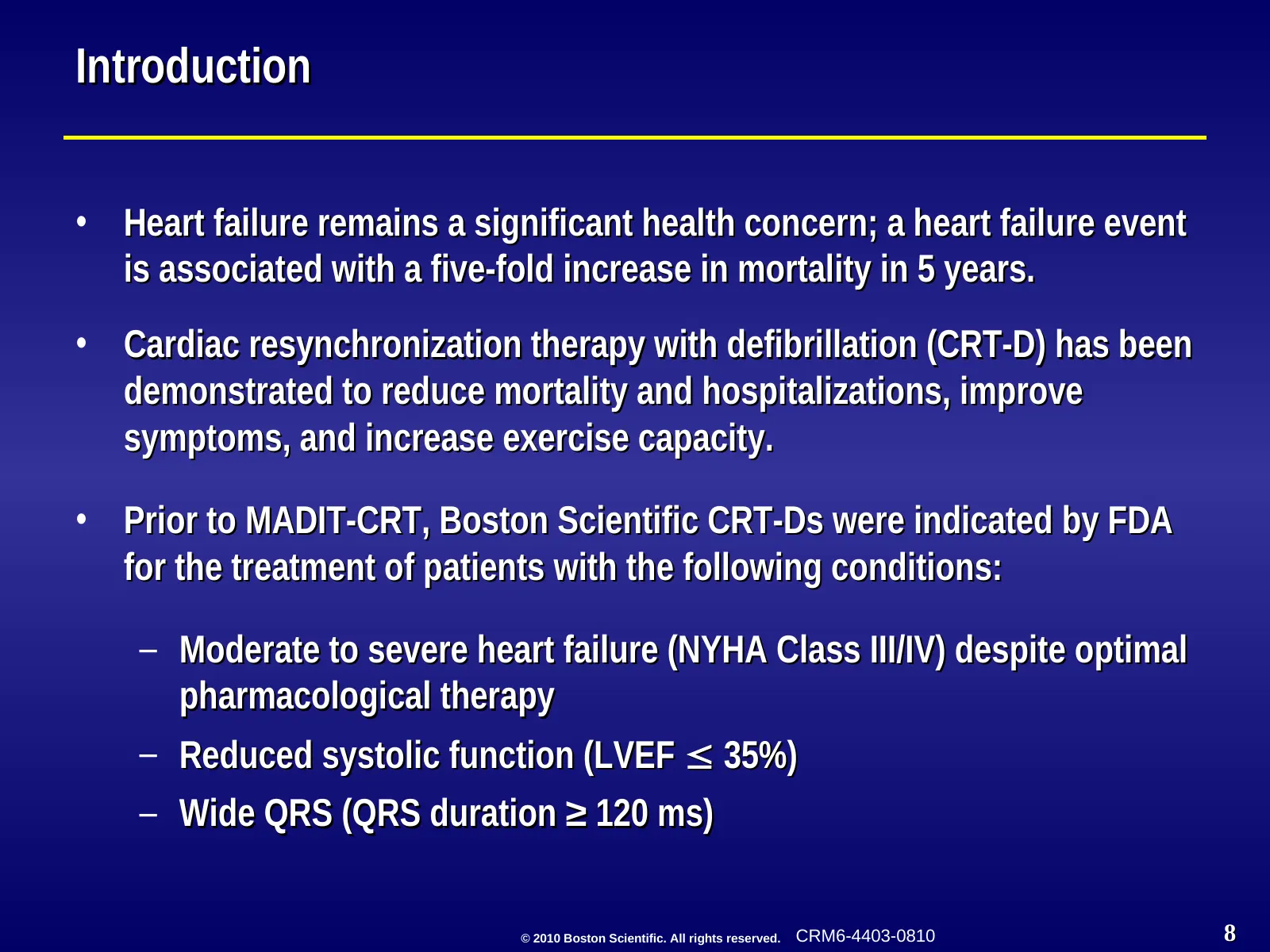
Slide 8: Introduction
Introduction • Heart failure remains a significant health concern; a heart failure event is associated with a five-fold increase in mortality in 5 years. • Cardiac resynchronization therapy with defibrillation (CRT-D) has been demonstrated to reduce mortality and hospitalizations, improve symptoms,
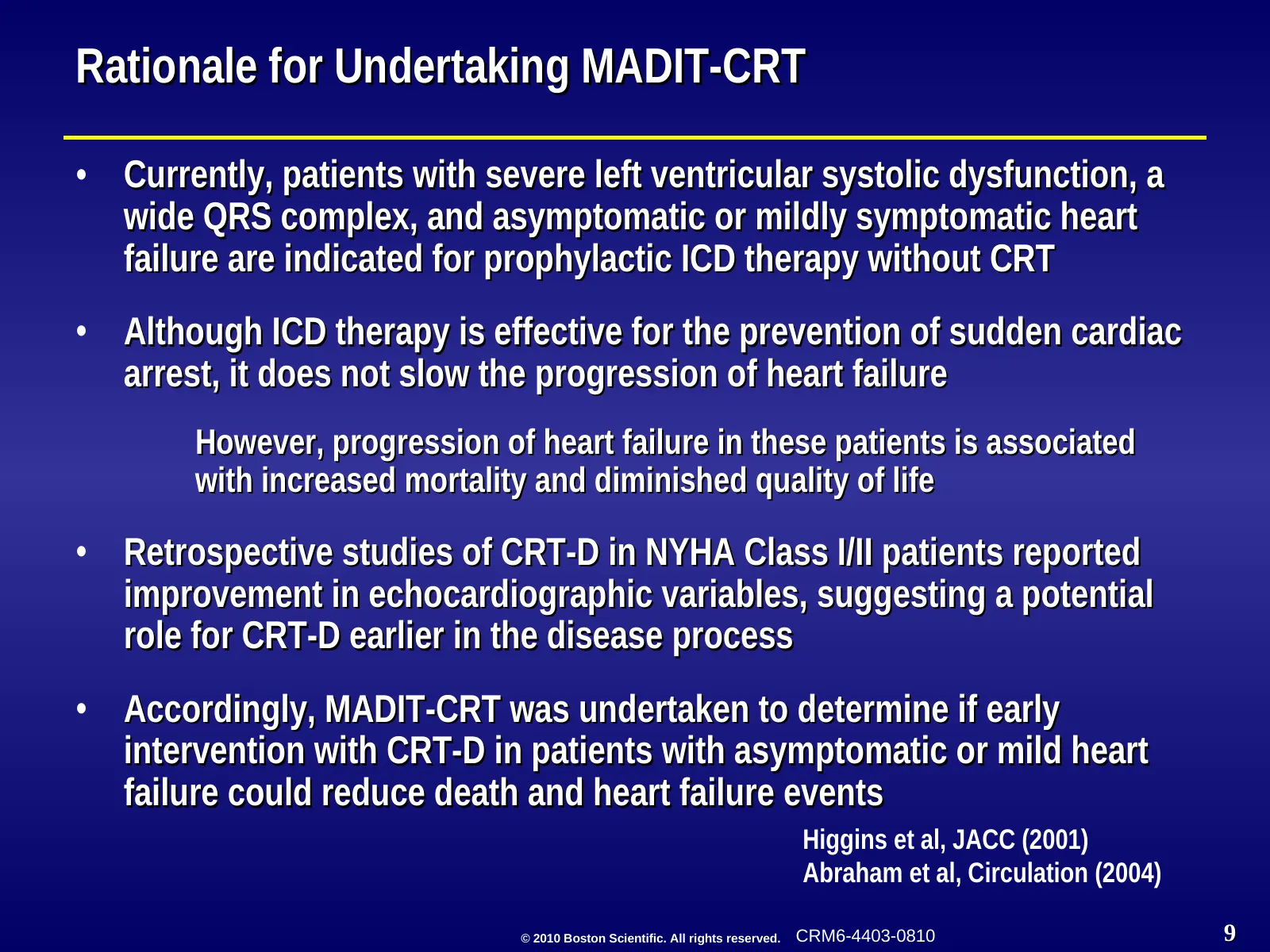
Slide 9: Rationale for Undertaking MADIT-CRT
Rationale for Undertaking MADIT-CRT • Currently, patients with severe left ventricular systolic dysfunction, a wide QRS complex, and asymptomatic or mildly symptomatic heart failure are indicated for prophylactic ICD therapy without CRT • Although ICD therapy is effective for the prevention of sudde
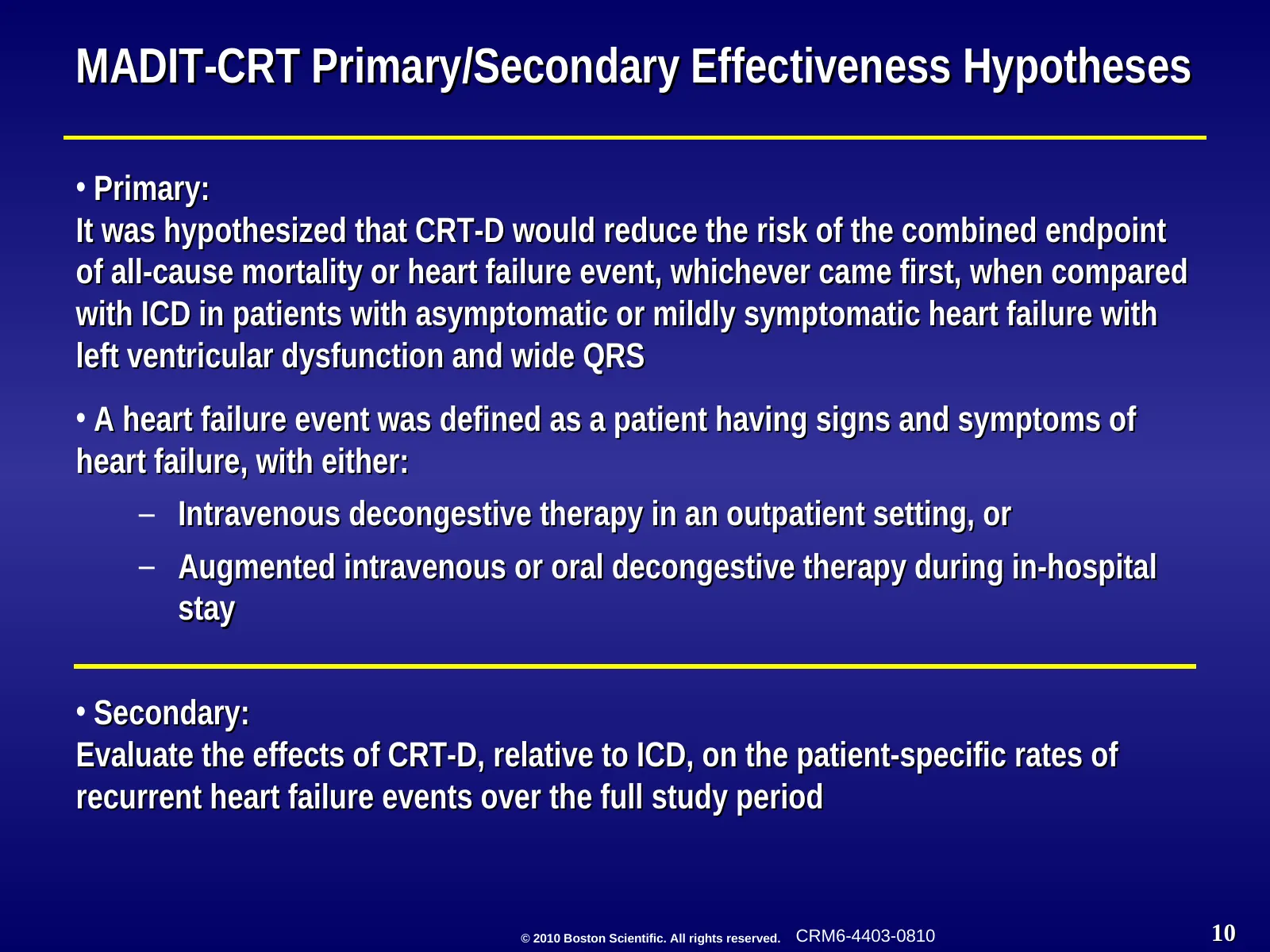
Slide 10: MADIT-CRT Primary/Secondary Effectiveness Hypotheses
MADIT-CRT Primary/Secondary Effectiveness Hypotheses • Primary: It was hypothesized that CRT-D would reduce the risk of the combined endpoint of all-cause mortality or heart failure event, whichever came first, when compared with ICD in patients with asymptomatic or mildly symptomatic heart failure
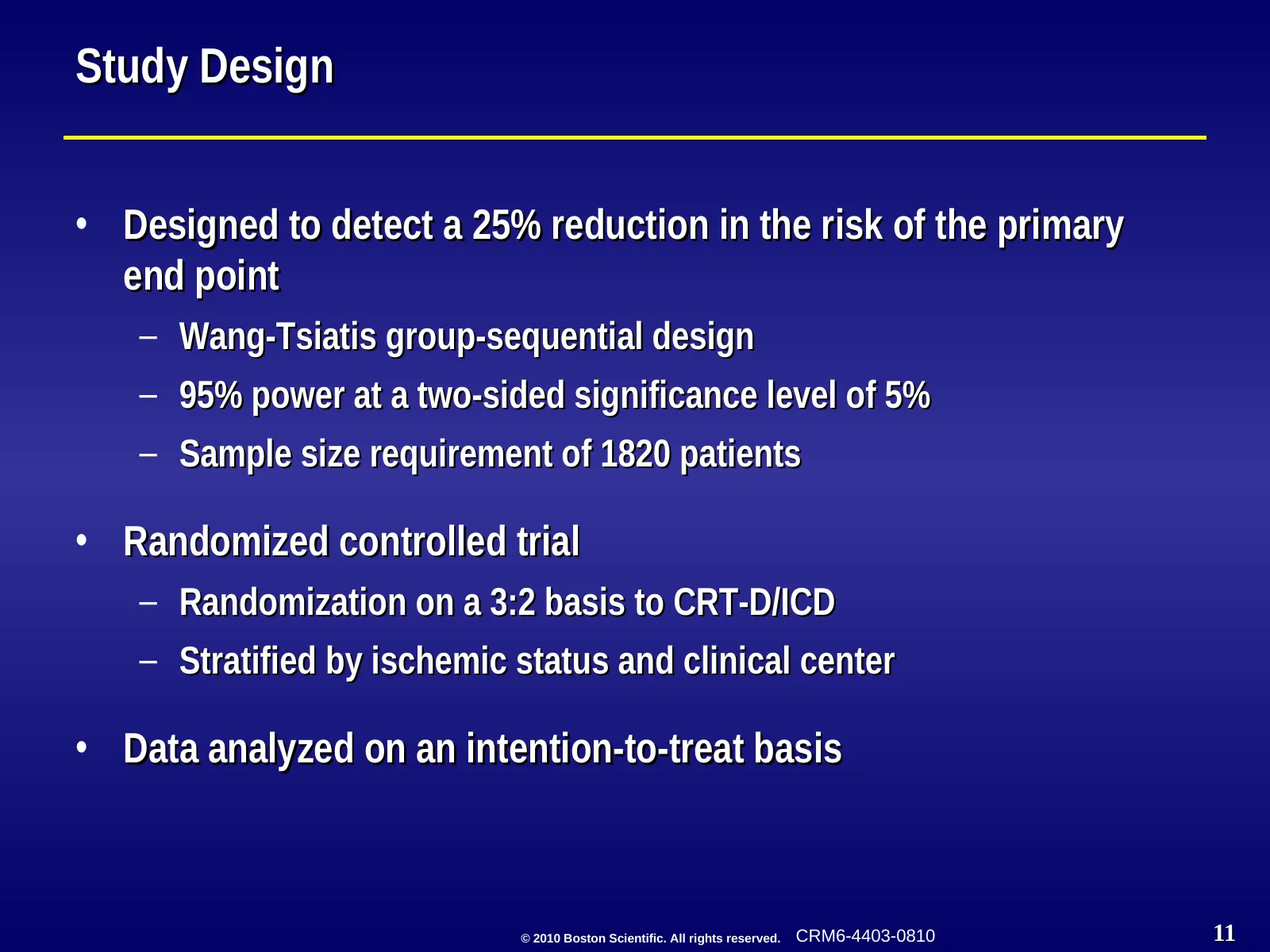
Slide 11: Study Design
Study Design • Designed to detect a 25% reduction in the risk of the primary end point – Wang-Tsiatis group-sequential design – 95% power at a two-sided significance level of 5% – Sample size requirement of 1820 patients • Randomized controlled trial – Randomization on a 3:2 basis to CRT-D/ICD – Str
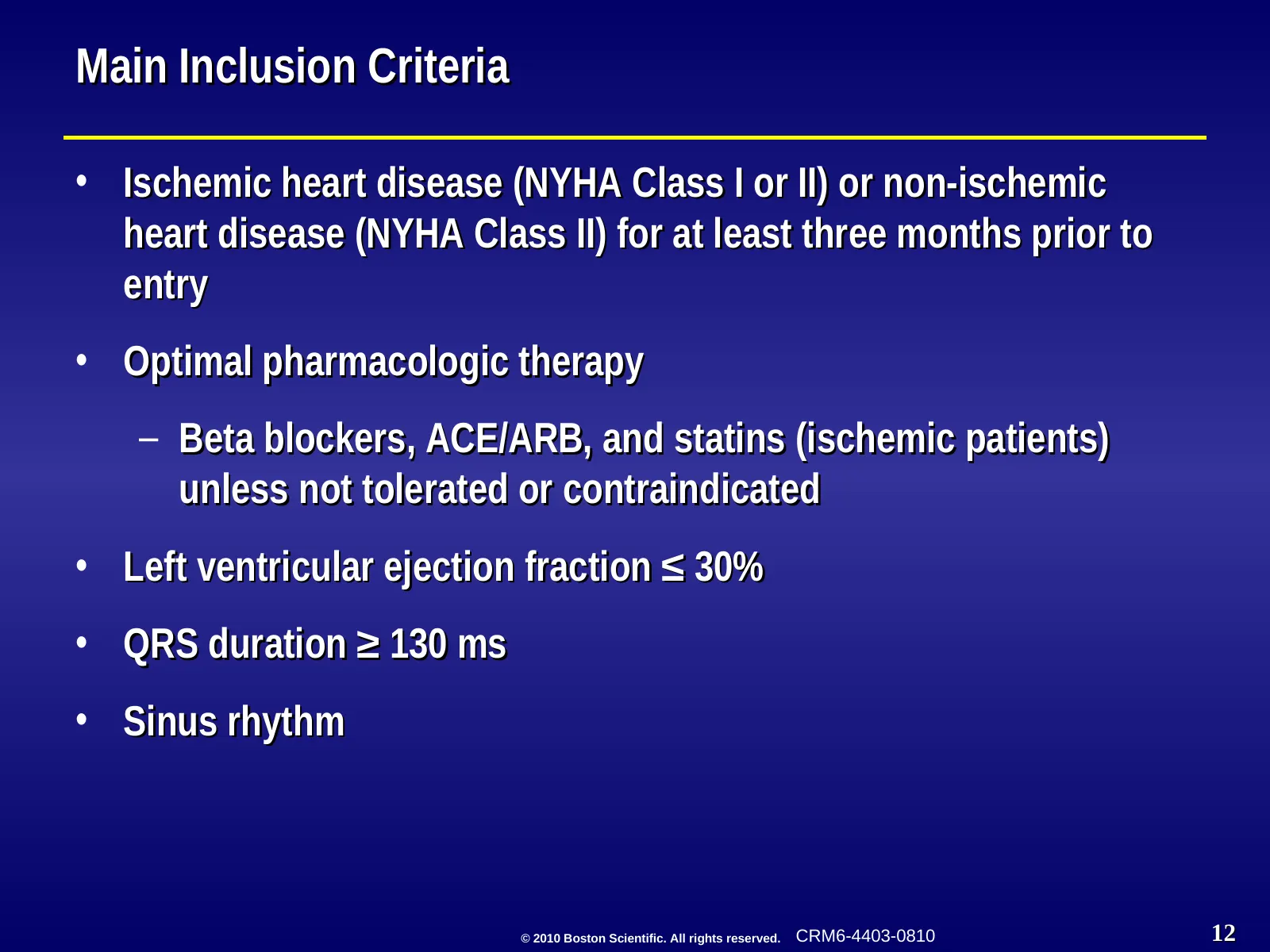
Slide 12: Main Inclusion Criteria
Main Inclusion Criteria • Ischemic heart disease (NYHA Class I or II) or non-ischemic heart disease (NYHA Class II) for at least three months prior to entry • Optimal pharmacologic therapy – Beta blockers, ACE/ARB, and statins (ischemic patients) unless not tolerated or contraindicated • Left ventri
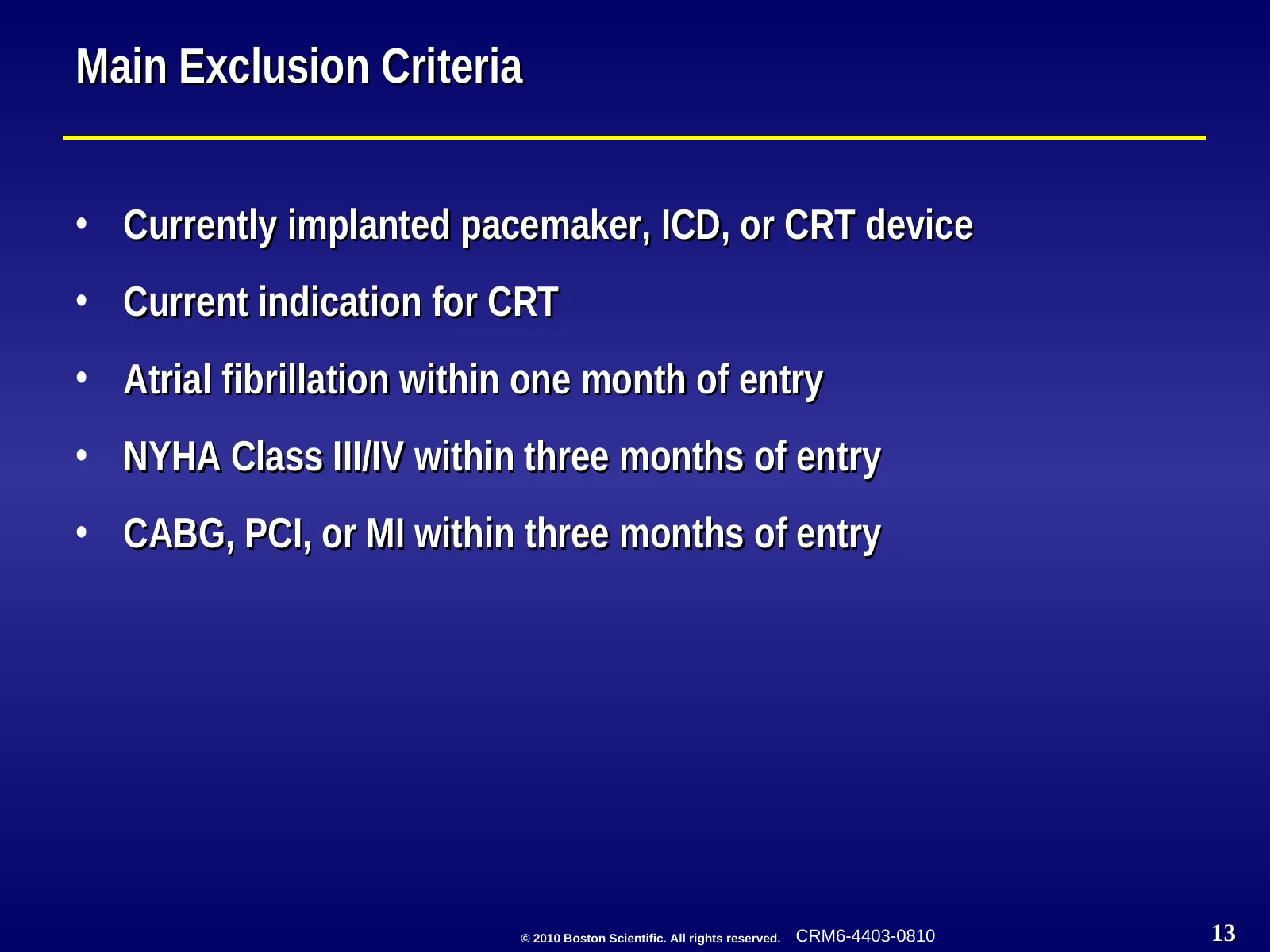
Slide 13: Main Exclusion Criteria
Main Exclusion Criteria • Currently implanted pacemaker, ICD, or CRT device • Current indication for CRT • Atrial fibrillation within one month of entry • NYHA Class III/IV within three months of entry • CABG, PCI, or MI within three months of entry © 2010 Boston Scientific. All rights reserved. CRM
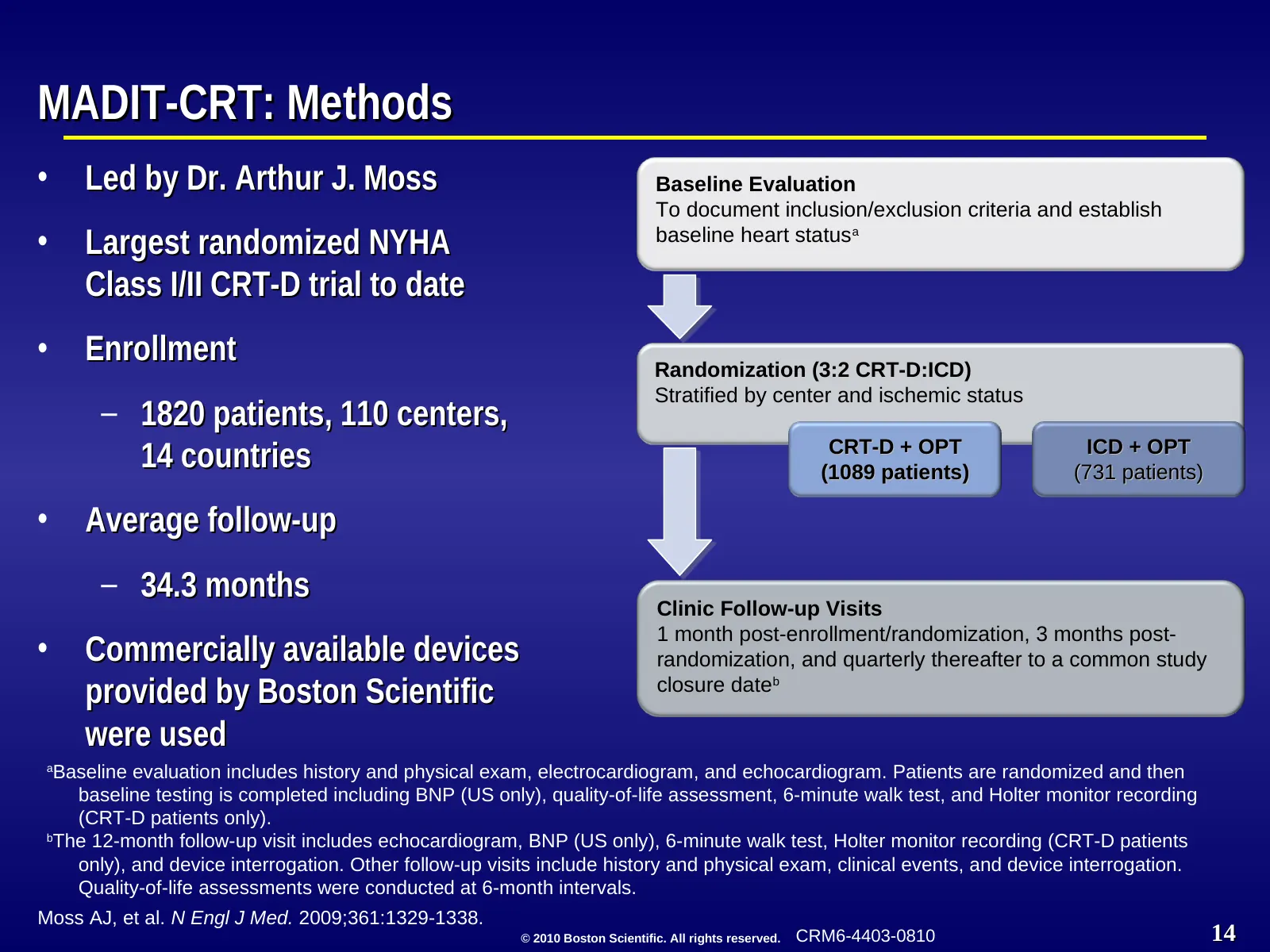
Slide 14: MADIT-CRT: Methods
MADIT-CRT: Methods • Led by Dr. Arthur J. Moss Baseline Evaluation To document inclusion/exclusion criteria and establish • Largest randomized NYHA baseline heart statusa Class I/II CRT-D trial to date • Enrollment Randomization (3:2 CRT-D:ICD) Stratified by center and ischemic status – 1820 patient
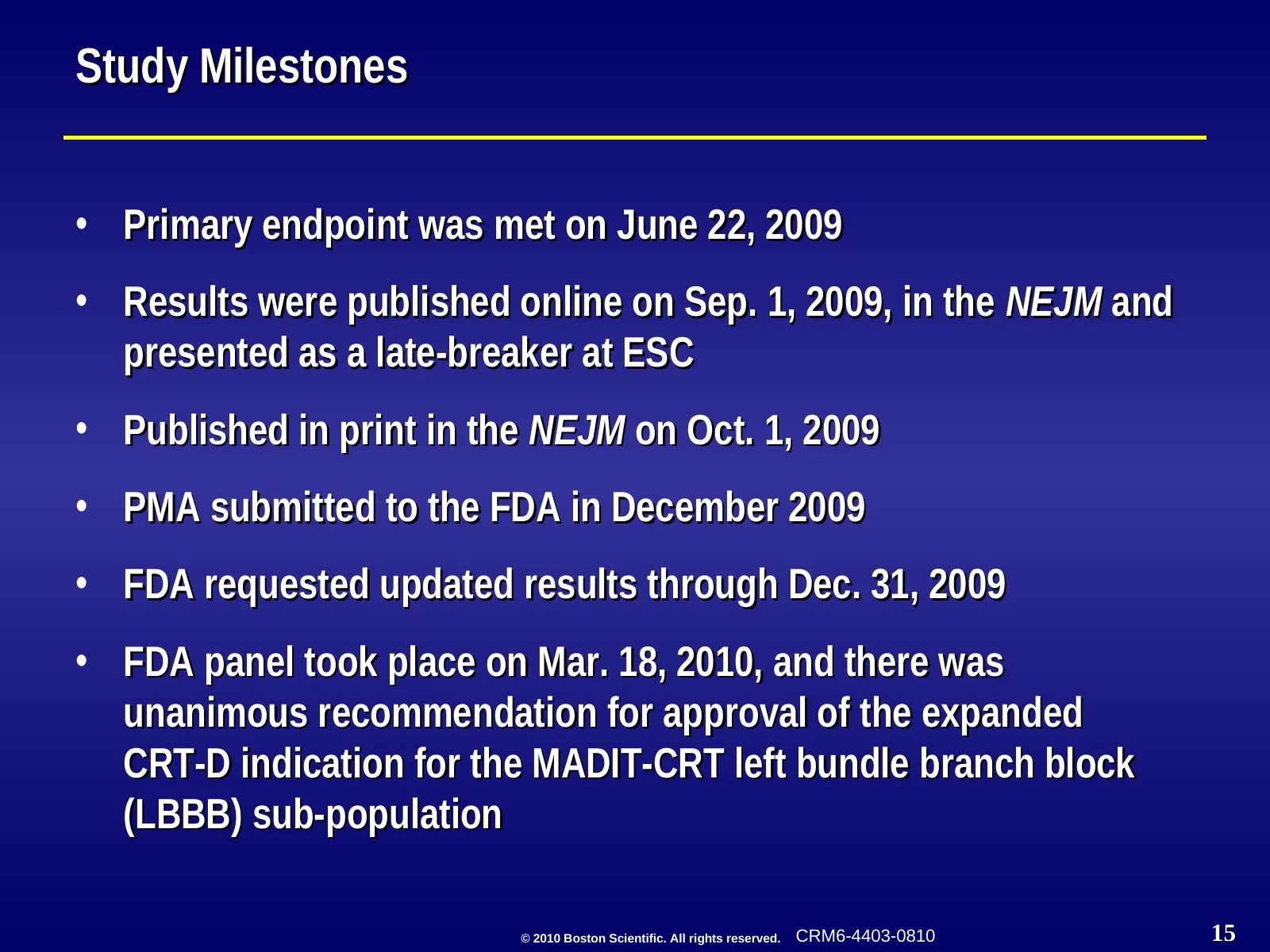
Slide 15: Study Milestones
Study Milestones • Primary endpoint was met on June 22, 2009 • Results were published online on Sep. 1, 2009, in the NEJM and presented as a late-breaker at ESC • Published in print in the NEJM on Oct. 1, 2009 • PMA submitted to the FDA in December 2009 • FDA requested updated results through Dec. 3
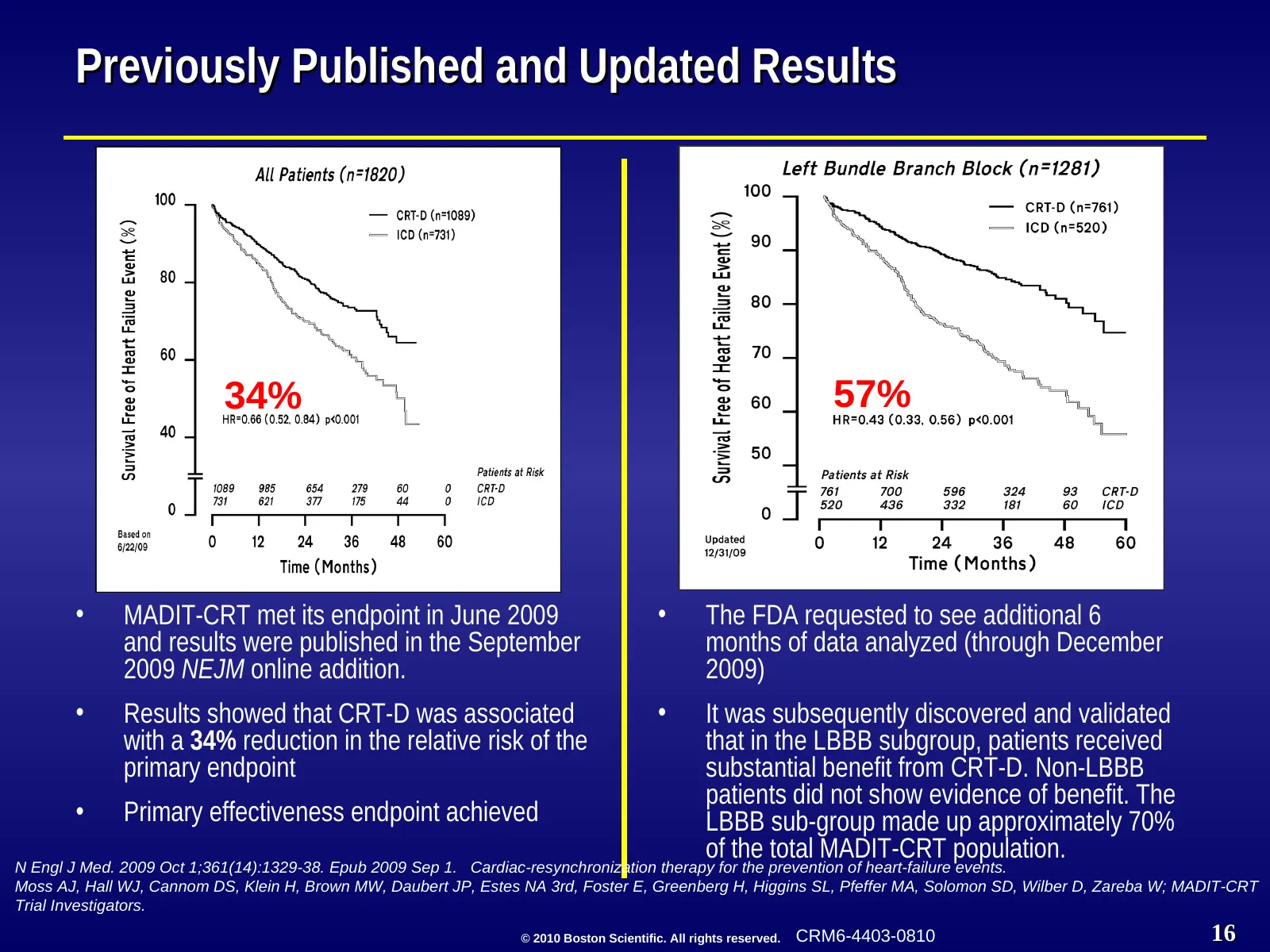
Slide 16: Previously Published and Updated Results
Previously Published and Updated Results 34% 57% • MADIT-CRT met its endpoint in June 2009 • The FDA requested to see additional 6 and results were published in the September months of data analyzed (through December 2009 NEJM online addition. 2009) • Results showed that CRT-D was associated • It wa
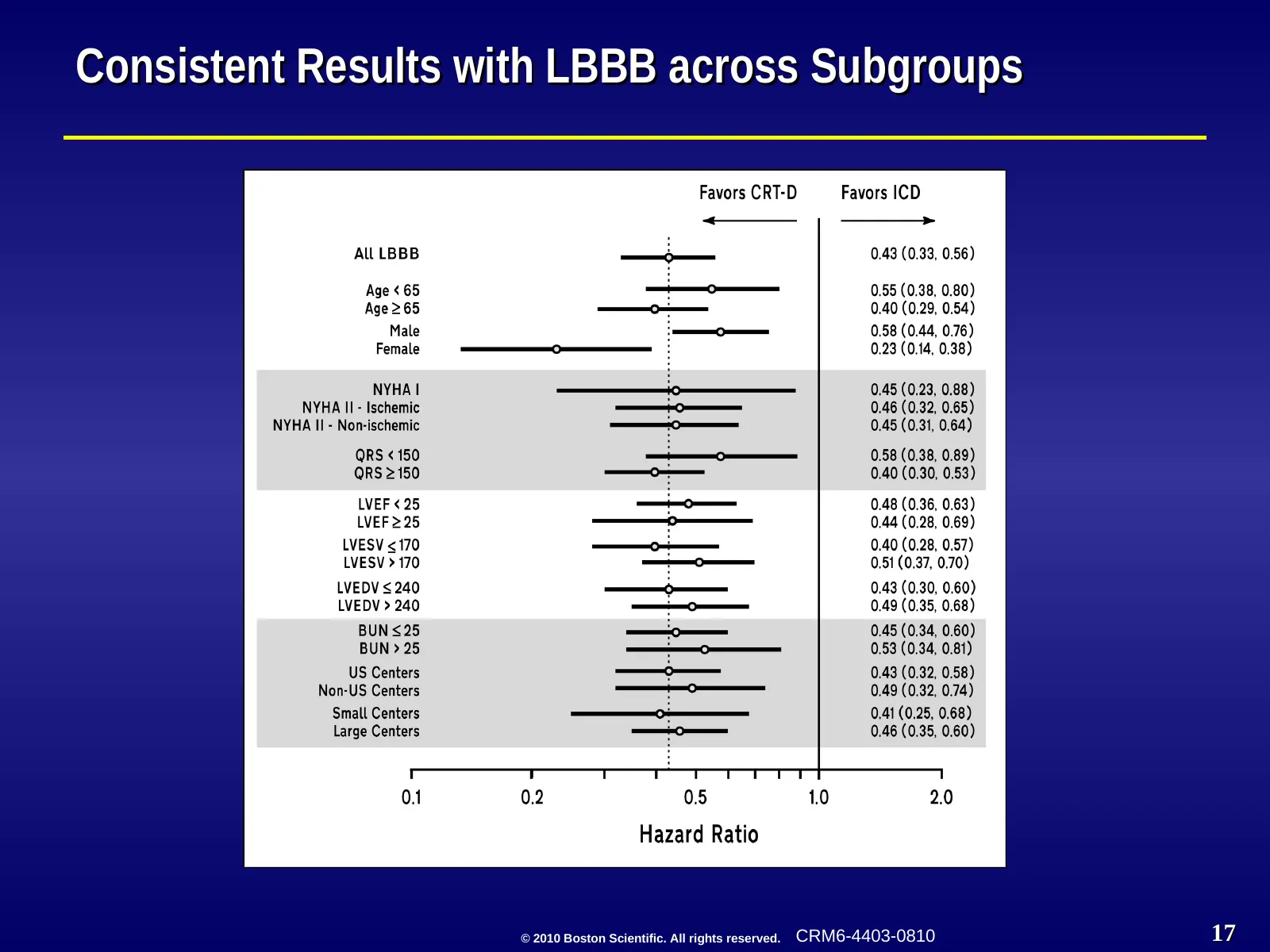
Slide 17: Consistent Results with LBBB across Subgroups
Consistent Results with LBBB across Subgroups © 2010 Boston Scientific. All rights reserved. CRM6-4403-0810 17
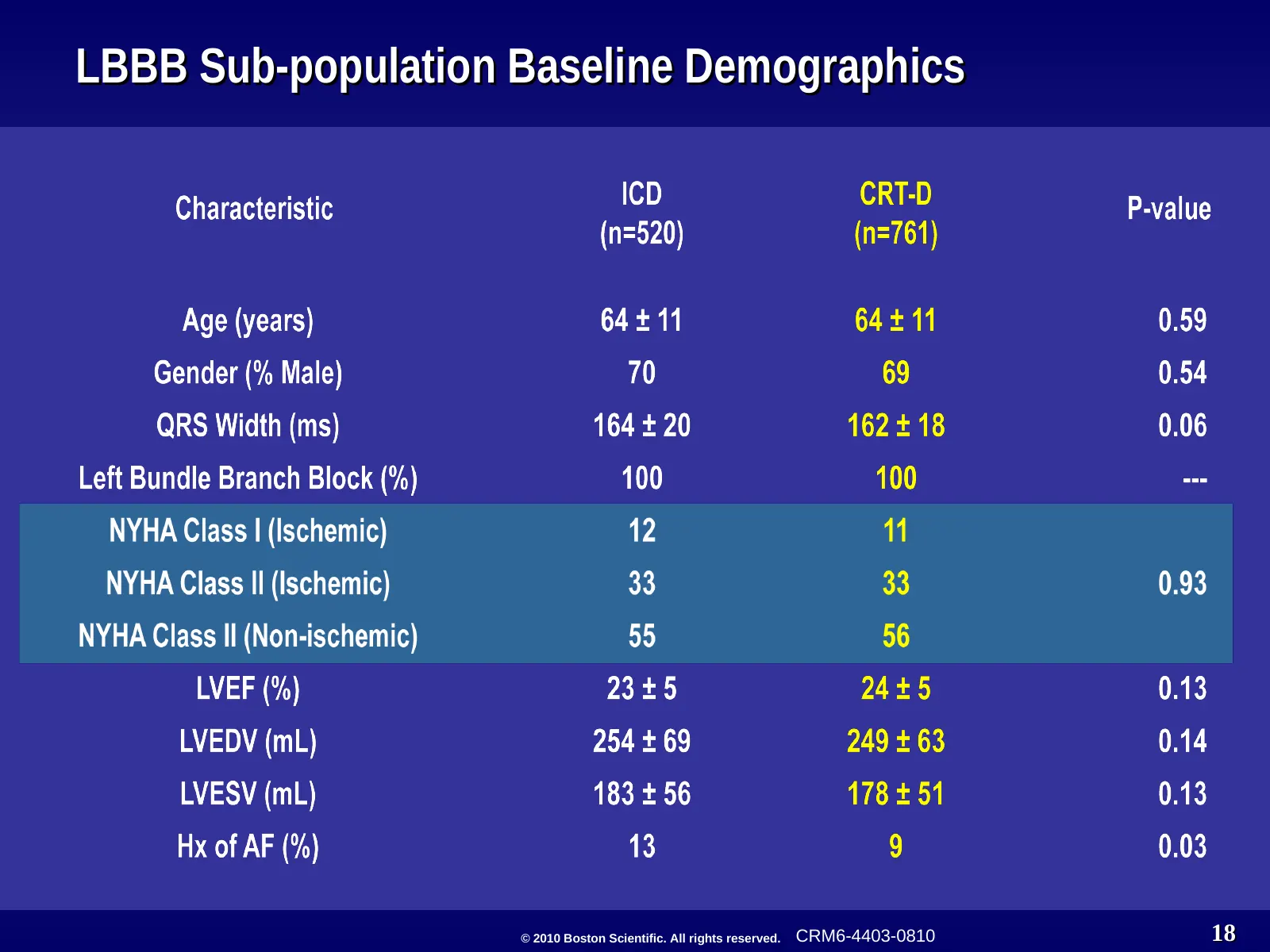
Slide 18: LBBB Sub-population Baseline Demographics
LBBB Sub-population Baseline Demographics © 2010 Boston Scientific. All rights reserved. CRM6-4403-0810 18
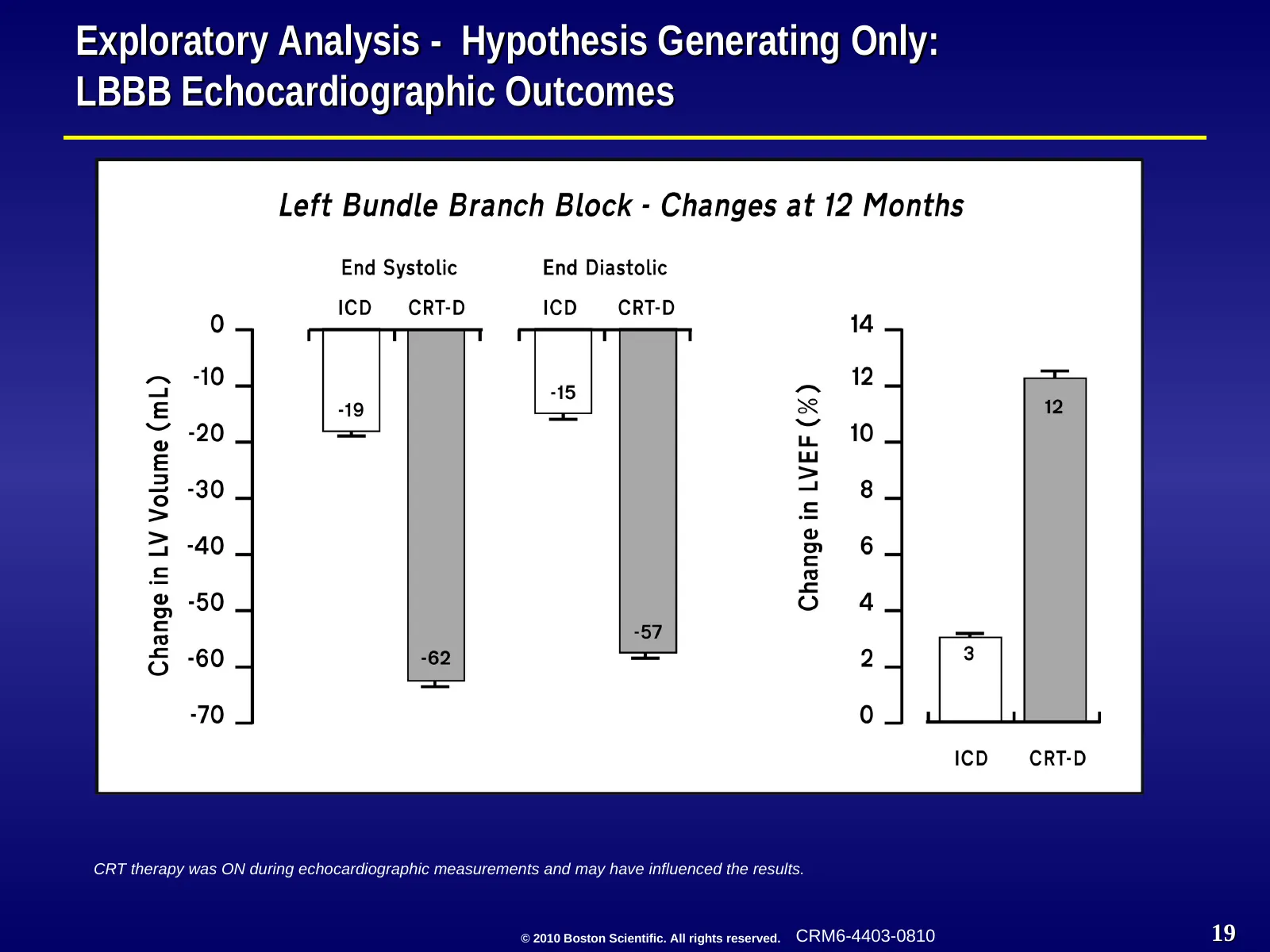
Slide 19: Exploratory Analysis - Hypothesis Generating Only: LBBB Echocardiographic Outcomes
Exploratory Analysis - Hypothesis Generating Only: LBBB Echocardiographic Outcomes CRT therapy was ON during echocardiographic measurements and may have influenced the results. © 2010 Boston Scientific. All rights reserved. CRM6-4403-0810 19
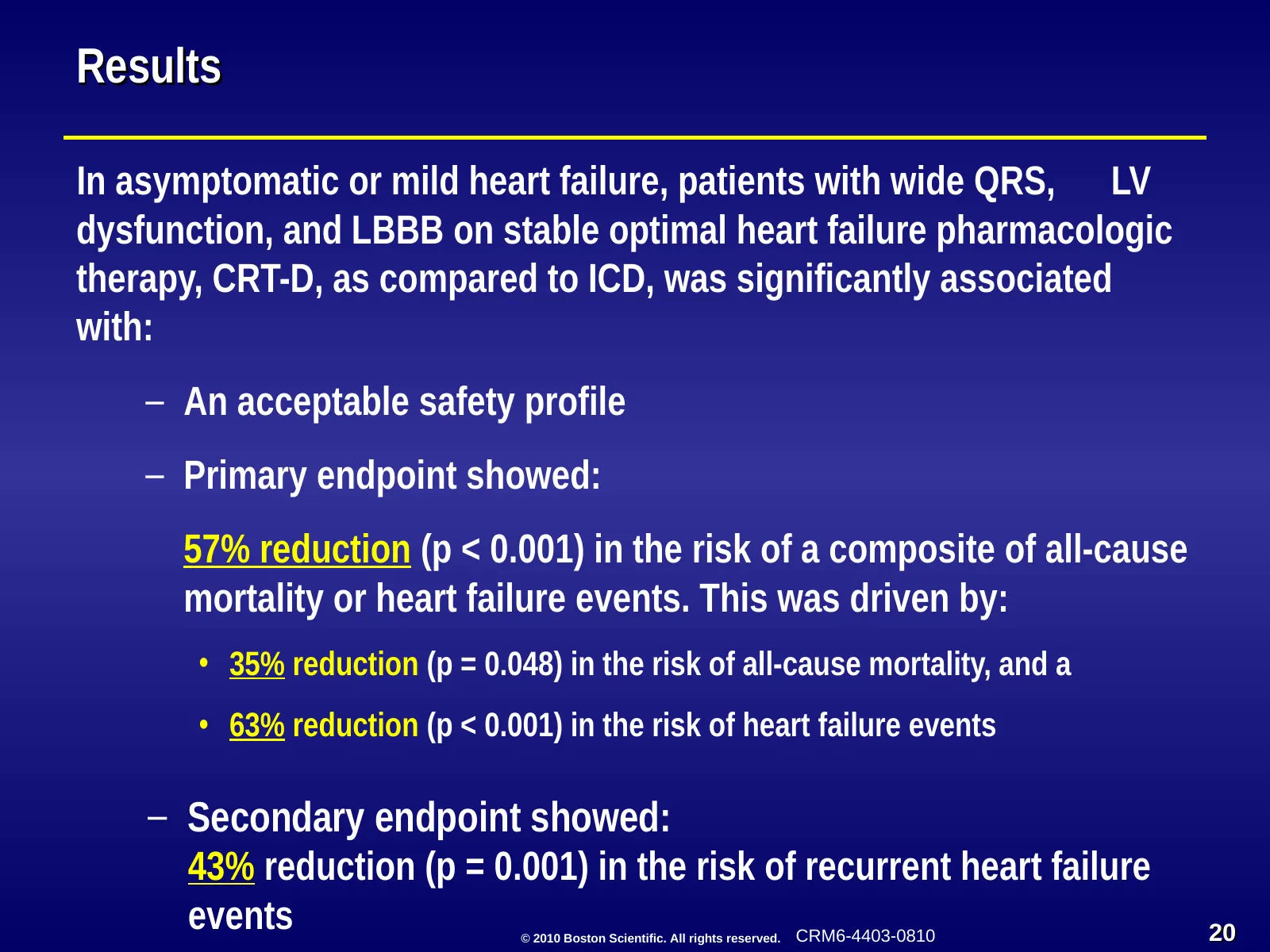
Slide 20: Results
Results In asymptomatic or mild heart failure, patients with wide QRS, LV dysfunction, and LBBB on stable optimal heart failure pharmacologic therapy, CRT-D, as compared to ICD, was significantly associated with: – An acceptable safety profile – Primary endpoint showed: 57% reduction (p < 0.001) in
Slide 21: New Boston Scientific CRT-D Indication
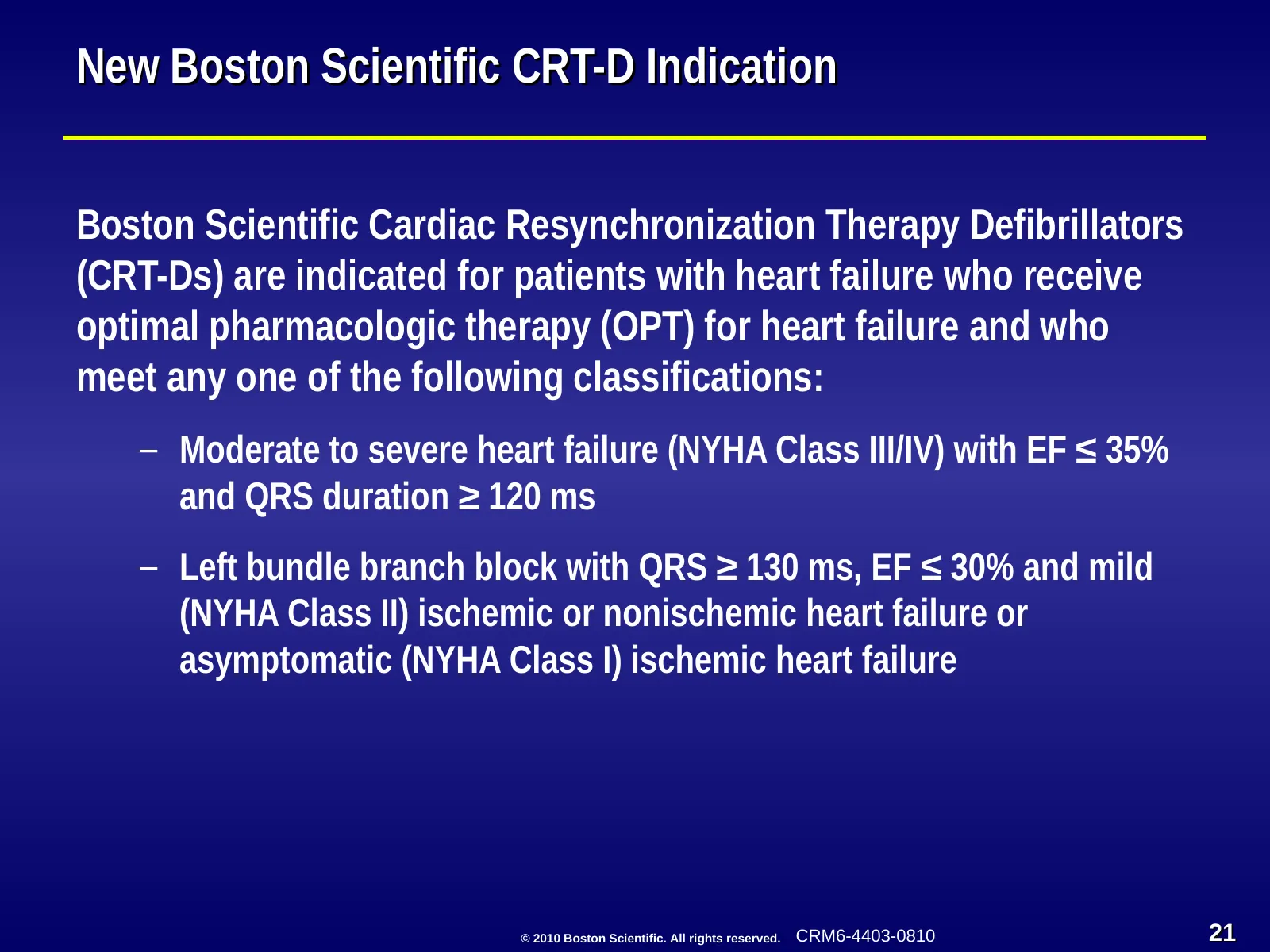
New Boston Scientific CRT-D Indication Boston Scientific Cardiac Resynchronization Therapy Defibrillators (CRT-Ds) are indicated for patients with heart failure who receive optimal pharmacologic therapy (OPT) for heart failure and who meet any one of the following classifications: – Moderate to seve
Slide 22: Identification of patients
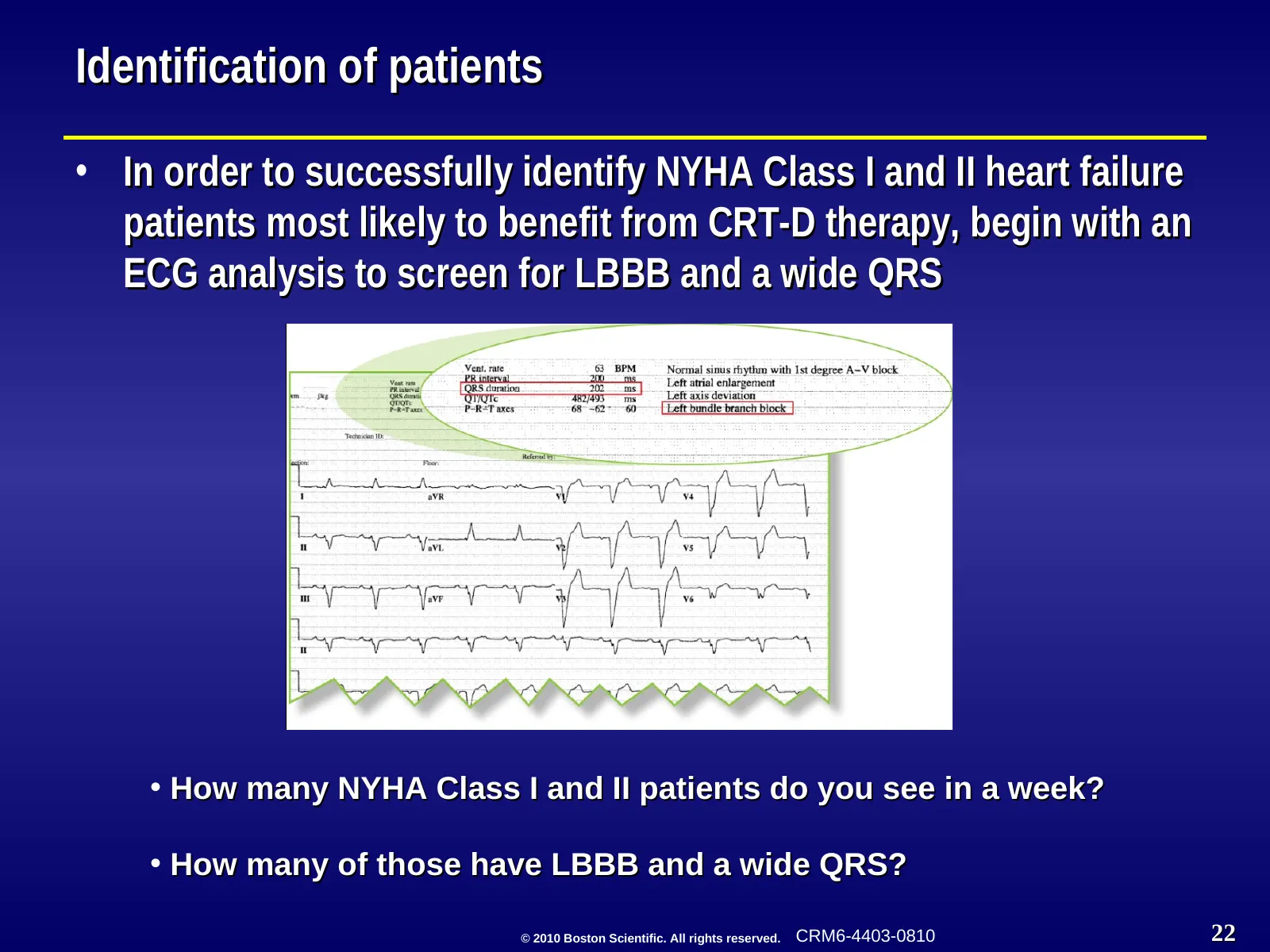
Identification of patients • In order to successfully identify NYHA Class I and II heart failure patients most likely to benefit from CRT-D therapy, begin with an ECG analysis to screen for LBBB and a wide QRS • How many NYHA Class I and II patients do you see in a week? • How many of those have LBB

Slide 23: Thank you Questions?
Thank you Questions? © 2010 Boston Scientific. All rights reserved. CRM6-4403-0810
Slide 24: CRT-D Systems from Boston Scientific CRM
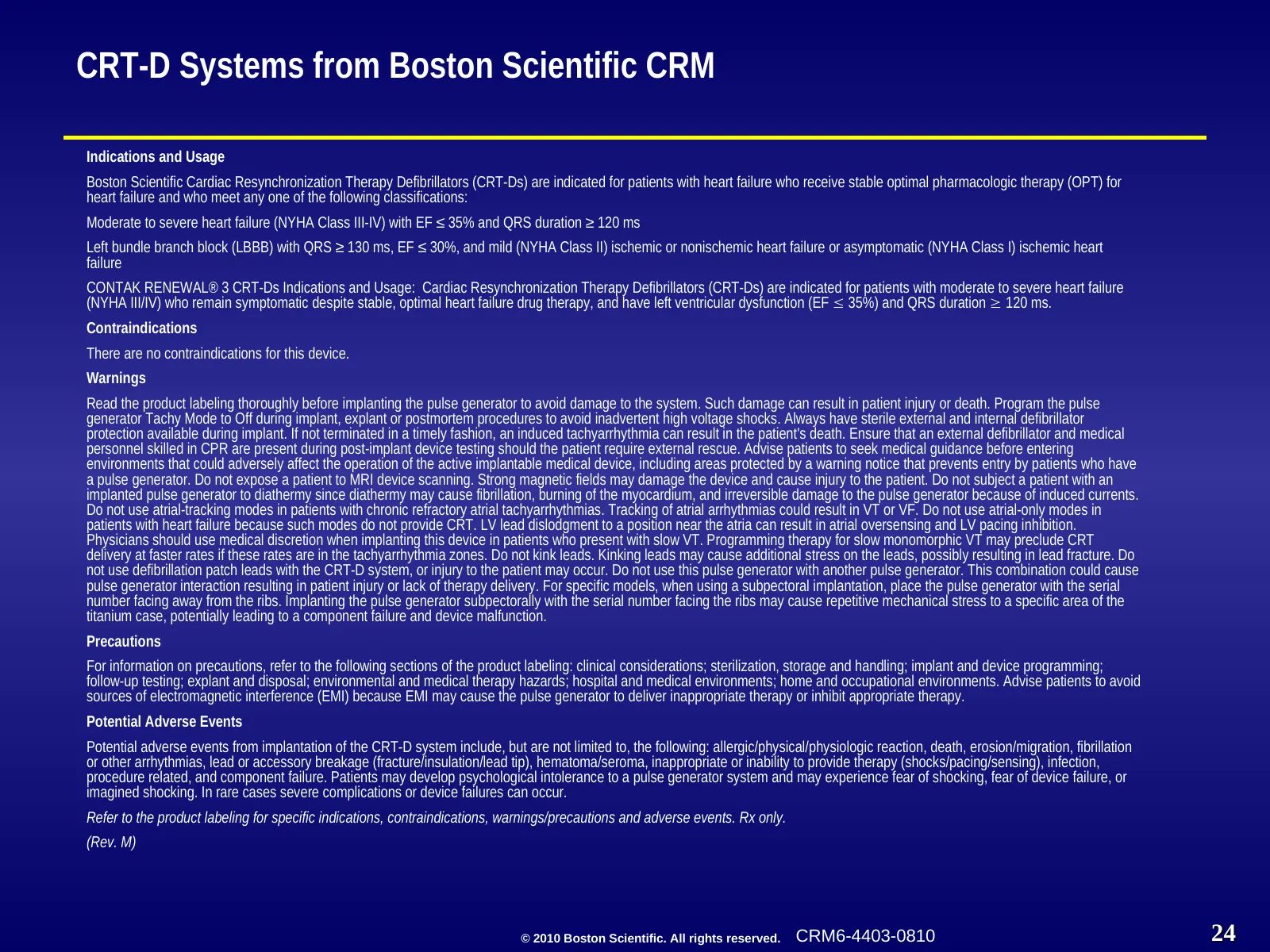
CRT-D Systems from Boston Scientific CRM Indications and Usage Boston Scientific Cardiac Resynchronization Therapy Defibrillators (CRT-Ds) are indicated for patients with heart failure who receive stable optimal pharmacologic therapy (OPT) for heart failure and who meet any one of the following clas
Slide 25: ICD Systems from Boston Scientific CRM
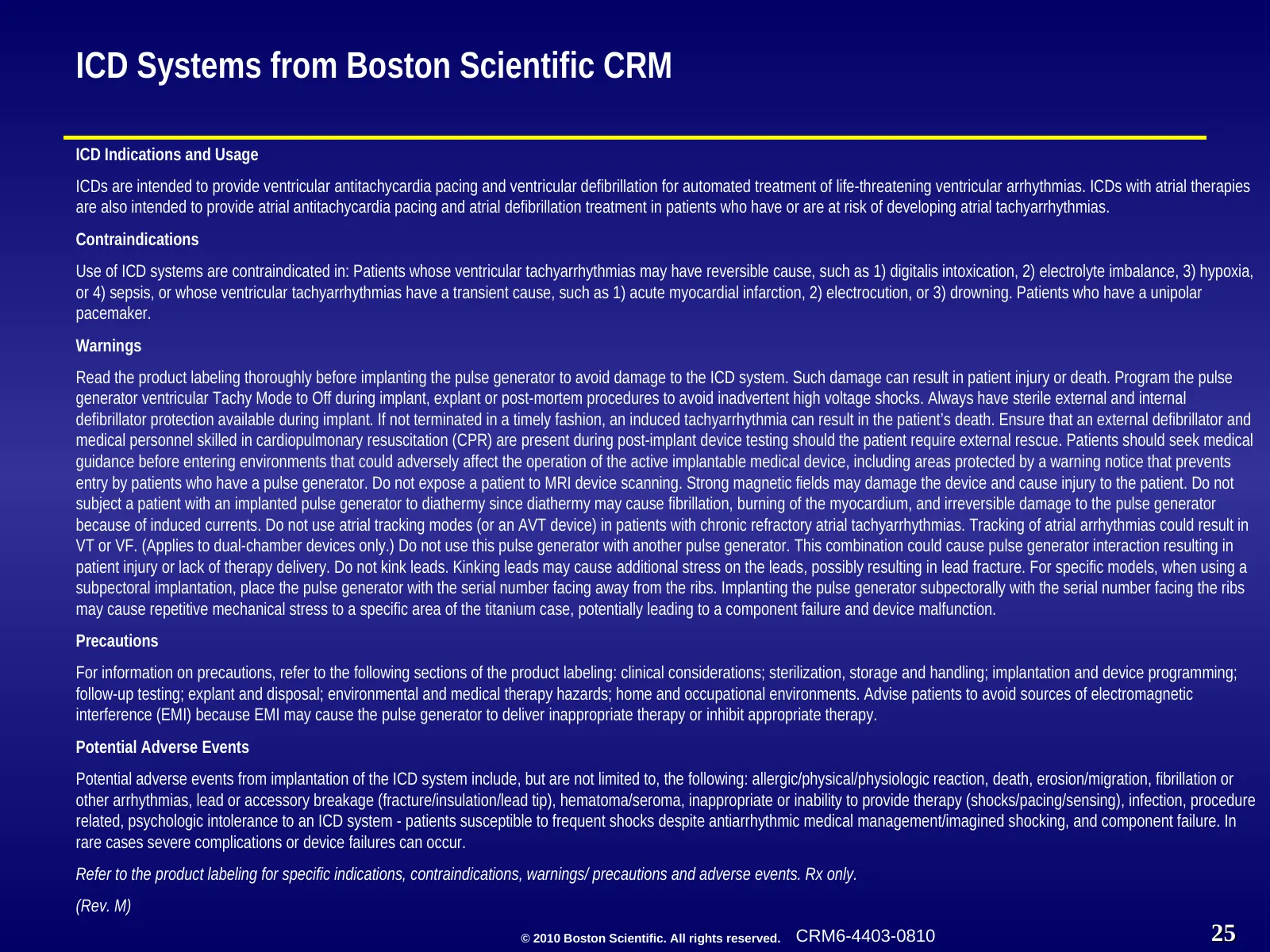
ICD Systems from Boston Scientific CRM ICD Indications and Usage ICDs are intended to provide ventricular antitachycardia pacing and ventricular defibrillation for automated treatment of life-threatening ventricular arrhythmias. ICDs with atrial therapies are also intended to provide atrial antitach
Slide 26: Back up slide
Back up slide © 2010 Boston Scientific. All rights reserved. CRM6-4403-0810 26
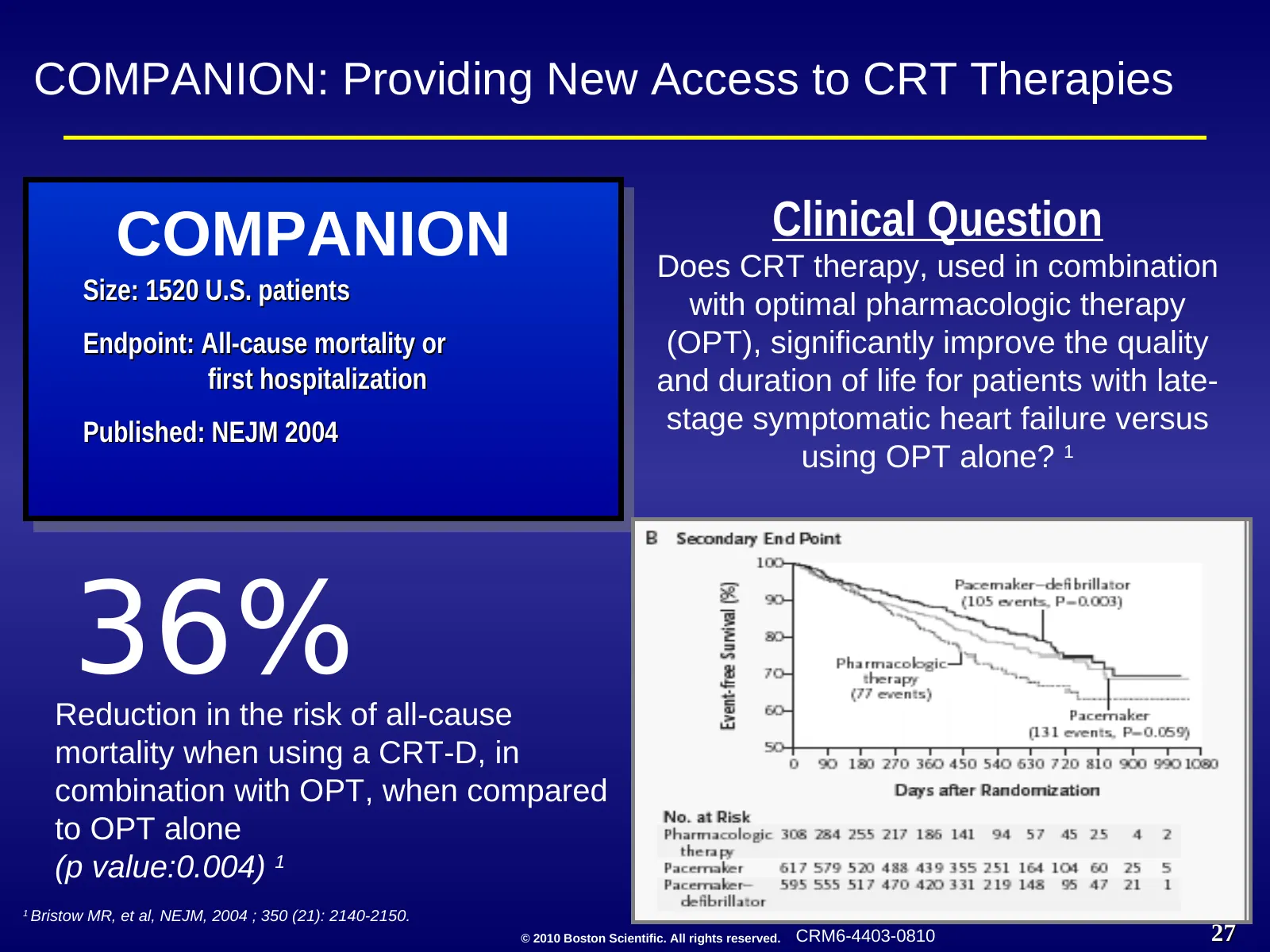
Slide 27: COMPANION: Providing New Access to CRT Therapies
COMPANION: Providing New Access to CRT Therapies COMPANION Clinical Question Does CRT therapy, used in combination Size: 1520 U.S. patients with optimal pharmacologic therapy Endpoint: All-cause mortality or (OPT), significantly improve the quality first hospitalization and duration of life for pati
Source: Internet Archive copy of bostonscientific.com
More decks from Boston Scientific Corporation
 Q3 2026 Earnings Presentation31 slides · Oct 28, 2026
 Q2 2026 Earnings Presentation29 slides · Jul 29, 2026
 Q1 2026 Earnings Presentation27 slides · Apr 22, 2026
 ACC 2026 Investor Update17 slides · Mar 28, 2026
 Q4 2025 Earnings Presentation36 slides · Feb 4, 2026
 Merger or Acquisition (January 2026)11 slides · Jan 15, 2026