Opthea Limited · ASX:OPT
Opthea — Investor Presentation (January 2020)
57 slides from Opthea's investor presentation, January 2020
Slide 1: Developing OPT-302 to improve outcomes for patients with retinal eye diseases
Developing OPT-302 to improve outcomes for patients with retinal eye diseases Corporate Presentation, January 2020 Megan Baldwin PhD, CEO & Managing Director
Slide 2: Disclaimer
Disclaimer Investment in Opthea Limited (‘Opthea’) is subject to investment risk, including possible loss of income and capital invested. Neither Opthea nor any other member company of the Opthea Group guarantees any particular rate of return or performance, nor do they guarantee the repayment of ca
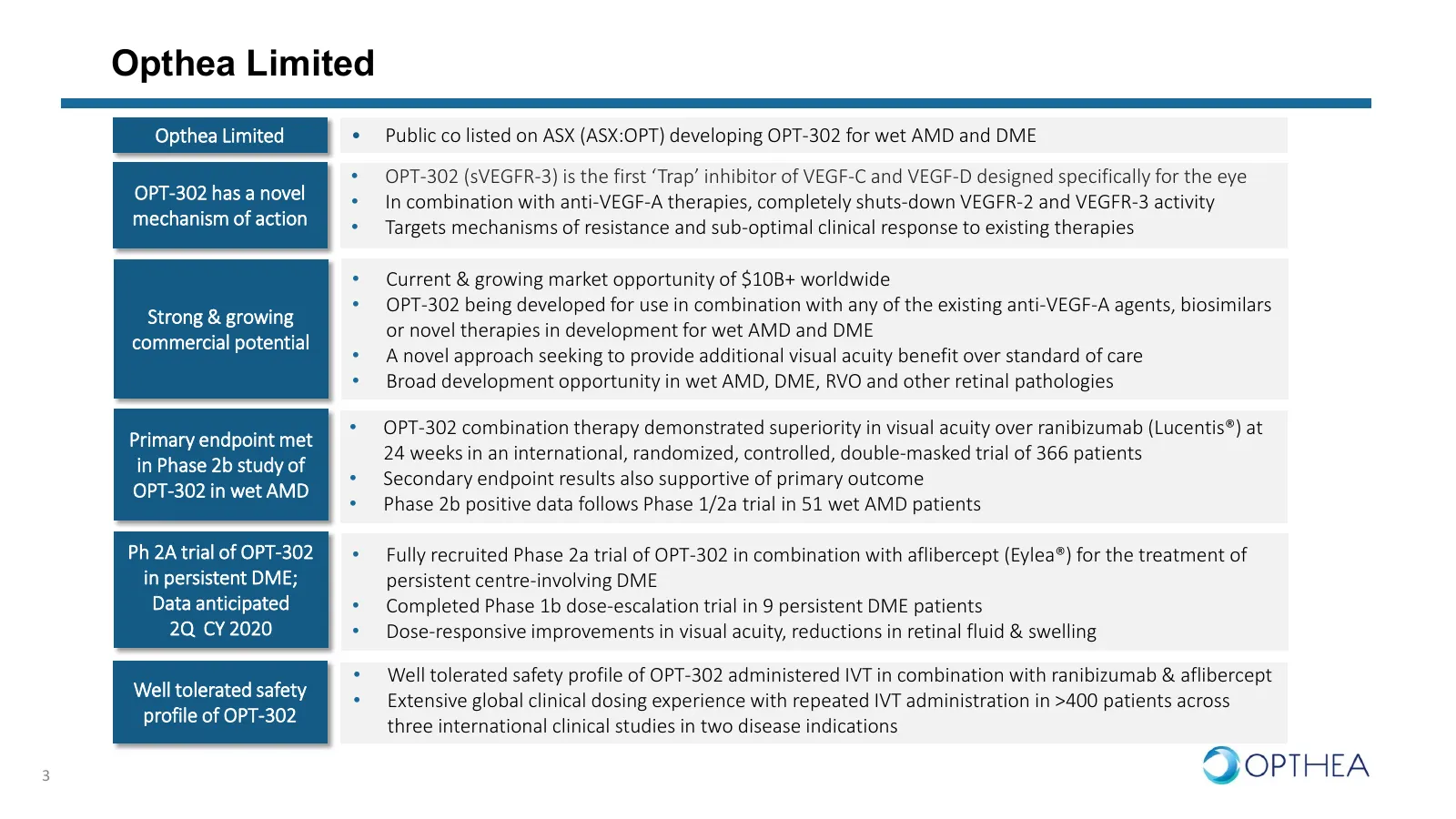
Slide 3: Opthea Limited
Opthea Limited Opthea Limited • Public co listed on ASX (ASX:OPT) developing OPT-302 for wet AMD and DME • OPT-302 (sVEGFR-3) is the first ‘Trap’ inhibitor of VEGF-C and VEGF-D designed specifically for the eye OPT-302 has a novel • In combination with anti-VEGF-A therapies, completely shuts-down VE
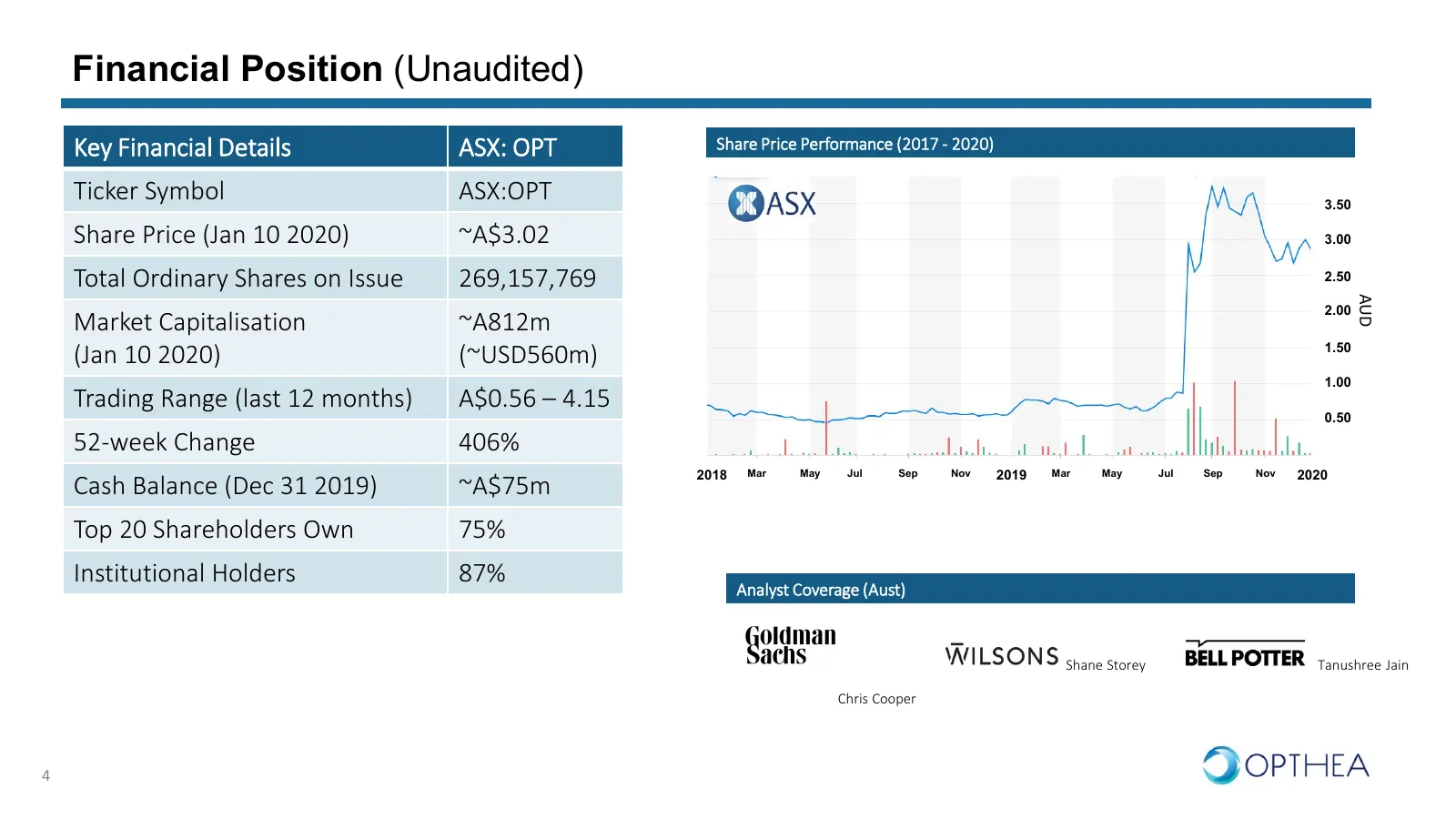
Slide 4: Financial Position (Unaudited)
Financial Position (Unaudited) Key Financial Details ASX: OPT Share Price Performance (2017 - 2020) Ticker Symbol ASX:OPT 3.50 Share Price (Jan 10 2020) ~A$3.02 3.00 Total Ordinary Shares on Issue 269,157,769 2.50 AUD 2.00 Market Capitalisation ~A812m (Jan 10 2020) (~USD560m) 1.50 1.00 Trading Range
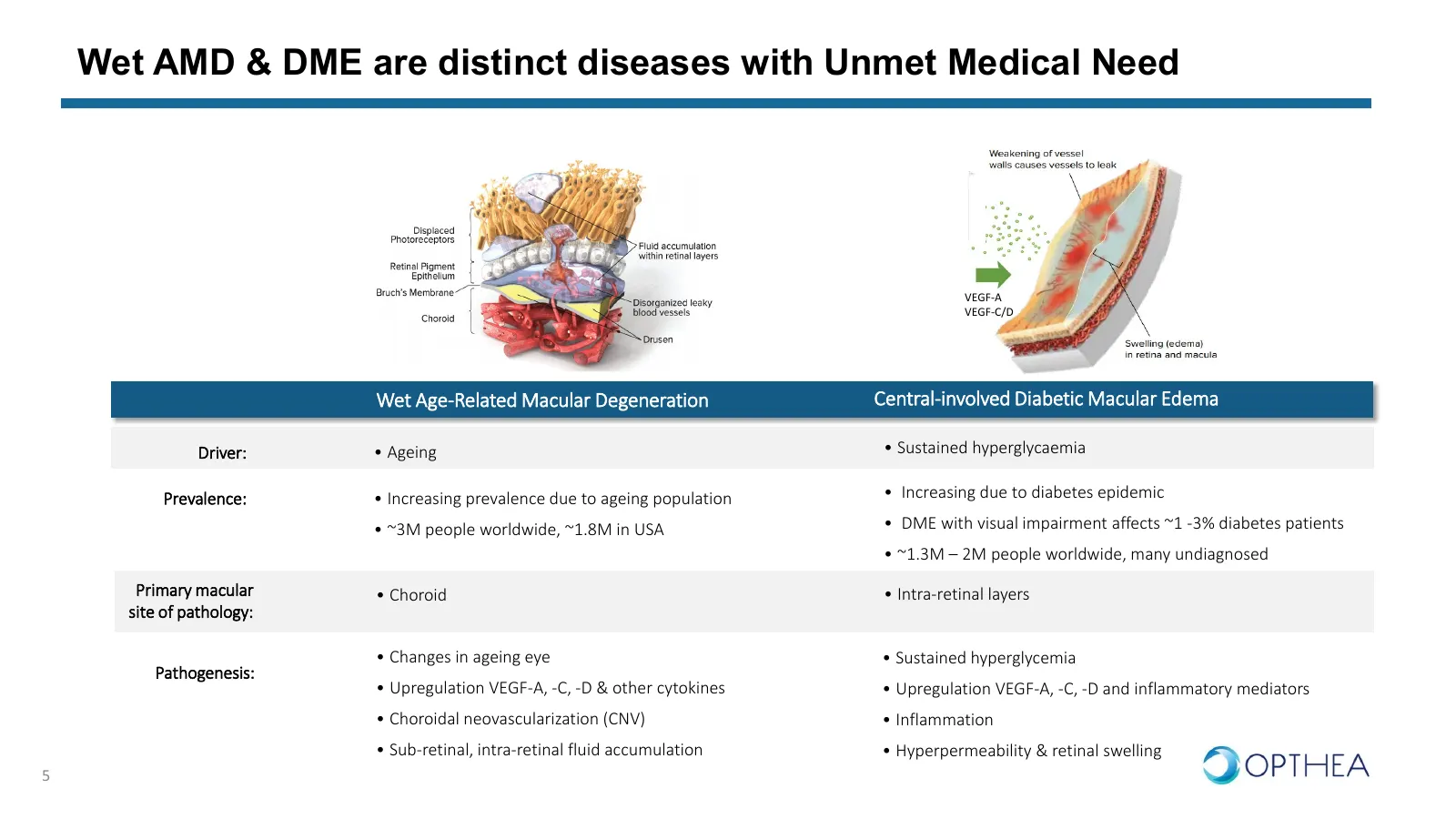
Slide 5: Wet AMD & DME are distinct diseases with Unmet Medical Need
Wet AMD & DME are distinct diseases with Unmet Medical Need VEGF-A VEGF-C/D Wet Age-Related Macular Degeneration Central-involved Diabetic Macular Edema Steroids# Driver: • Ageing • Sustained hyperglycaemia Prevalence: • Increasing prevalence due to ageing population • Increasing due to diabetes epi
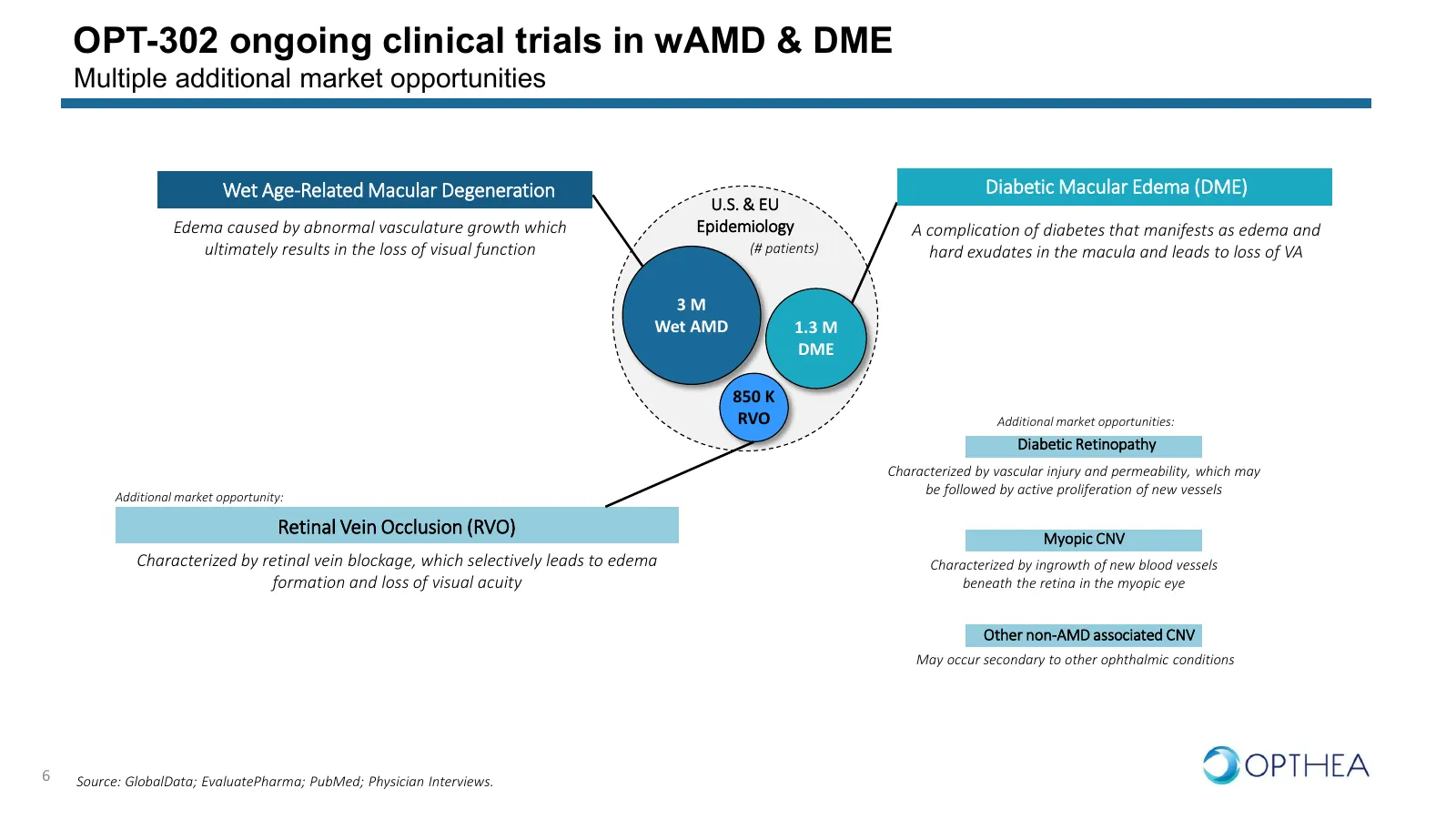
Slide 6: OPT-302 ongoing clinical trials in wAMD & DME
OPT-302 ongoing clinical trials in wAMD & DME Multiple additional market opportunities Wet Age-Related Macular Degeneration Diabetic Macular Edema (DME) U.S. & EU Edema caused by abnormal vasculature growth which Epidemiology A complication of diabetes that manifests as edema and ultimately results
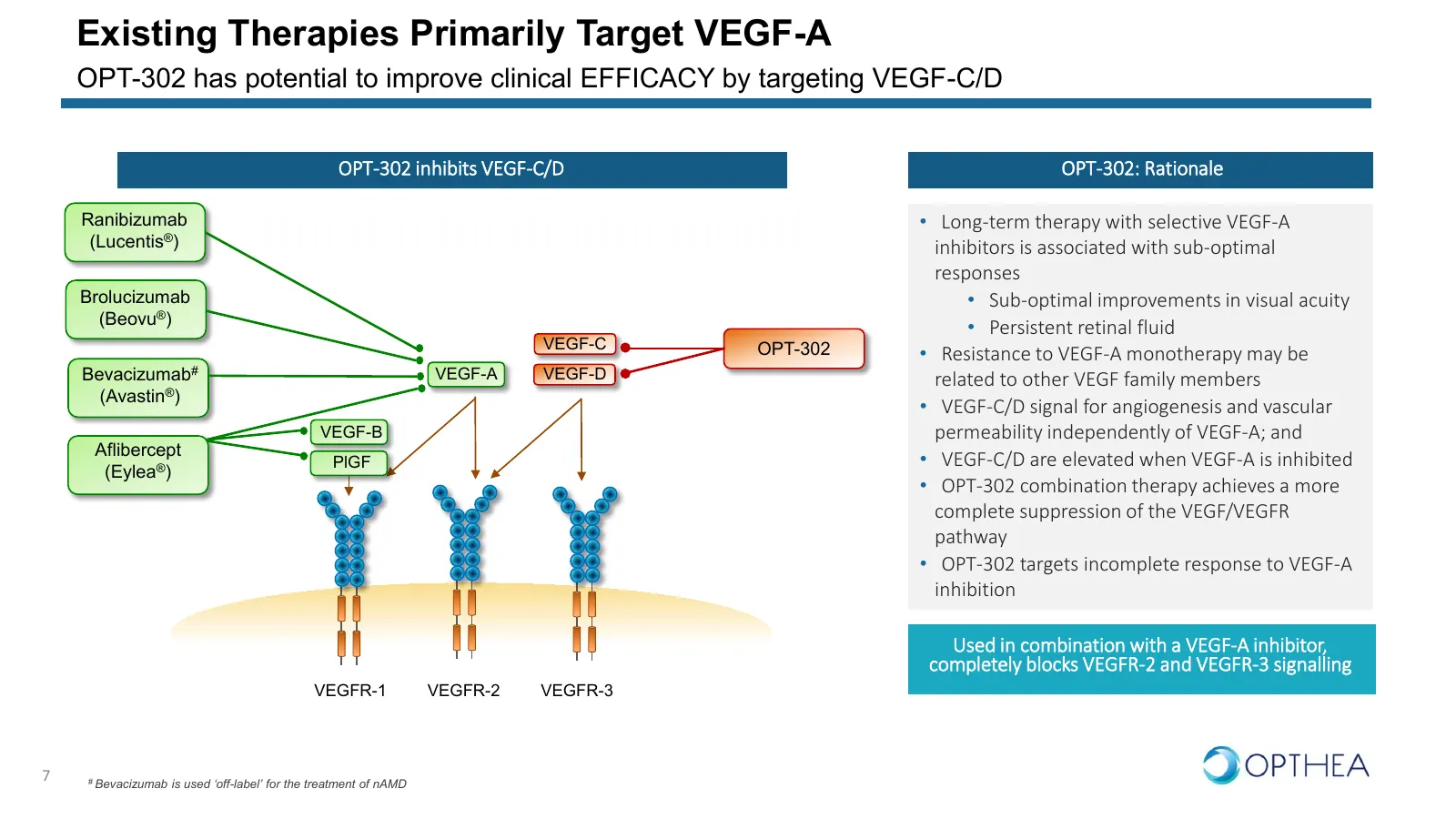
Slide 7: Existing Therapies Primarily Target VEGF-A
Existing Therapies Primarily Target VEGF-A OPT-302 has potential to improve clinical EFFICACY by targeting VEGF-C/D OPT-302 inhibits VEGF-C/D VEGF-C OPT-302: Rationale VEGF-D Ranibizumab • Long-term therapy with selective VEGF-A (Lucentis®) inhibitors is associated with sub-optimal responses Broluci
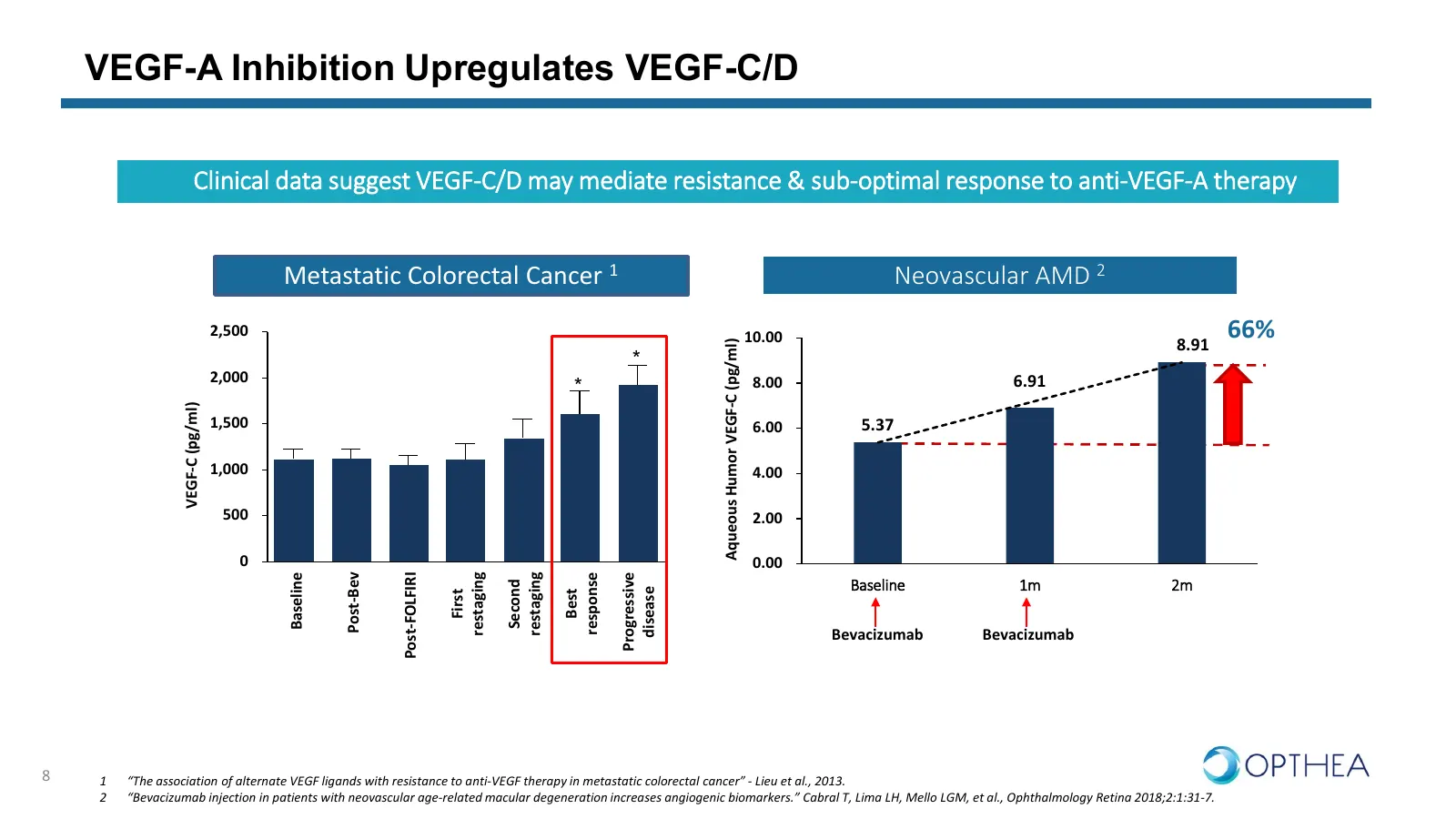
Slide 8: VEGF-A Inhibition Upregulates VEGF-C/D
VEGF-A Inhibition Upregulates VEGF-C/D Clinical data suggest VEGF-C/D may mediate resistance & sub-optimal response to anti-VEGF-A therapy Metastatic Colorectal Cancer 1 Neovascular AMD 2 2,500 10.00 8.91 66% Aqueous Humor VEGF-C (pg/ml) * 2,000 8.00 6.91 * VEGF-C (pg/ml) 1,500 6.00 5.37 1,000 4.00
Slide 9: A Currently Unmet Medical Need for wet AMD and DME
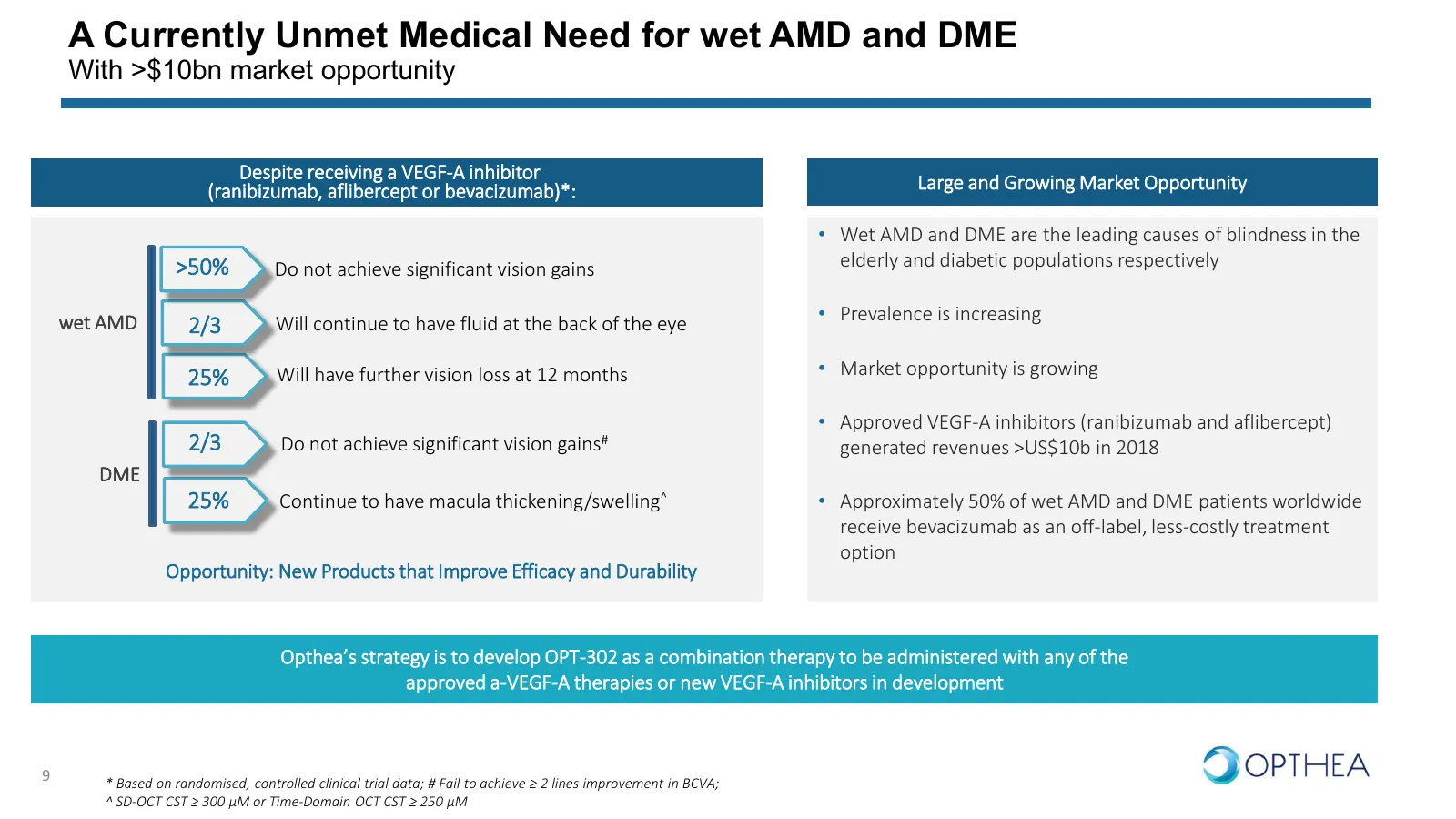
A Currently Unmet Medical Need for wet AMD and DME With >$10bn market opportunity Despite receiving a VEGF-A inhibitor Large and Growing Market Opportunity (ranibizumab, aflibercept or bevacizumab)*: • Wet AMD and DME are the leading causes of blindness in the >50% Do not achieve significant vision
Slide 10: OPT-302: A 'trap' inhibitor of VEGF-C and VEGF-D
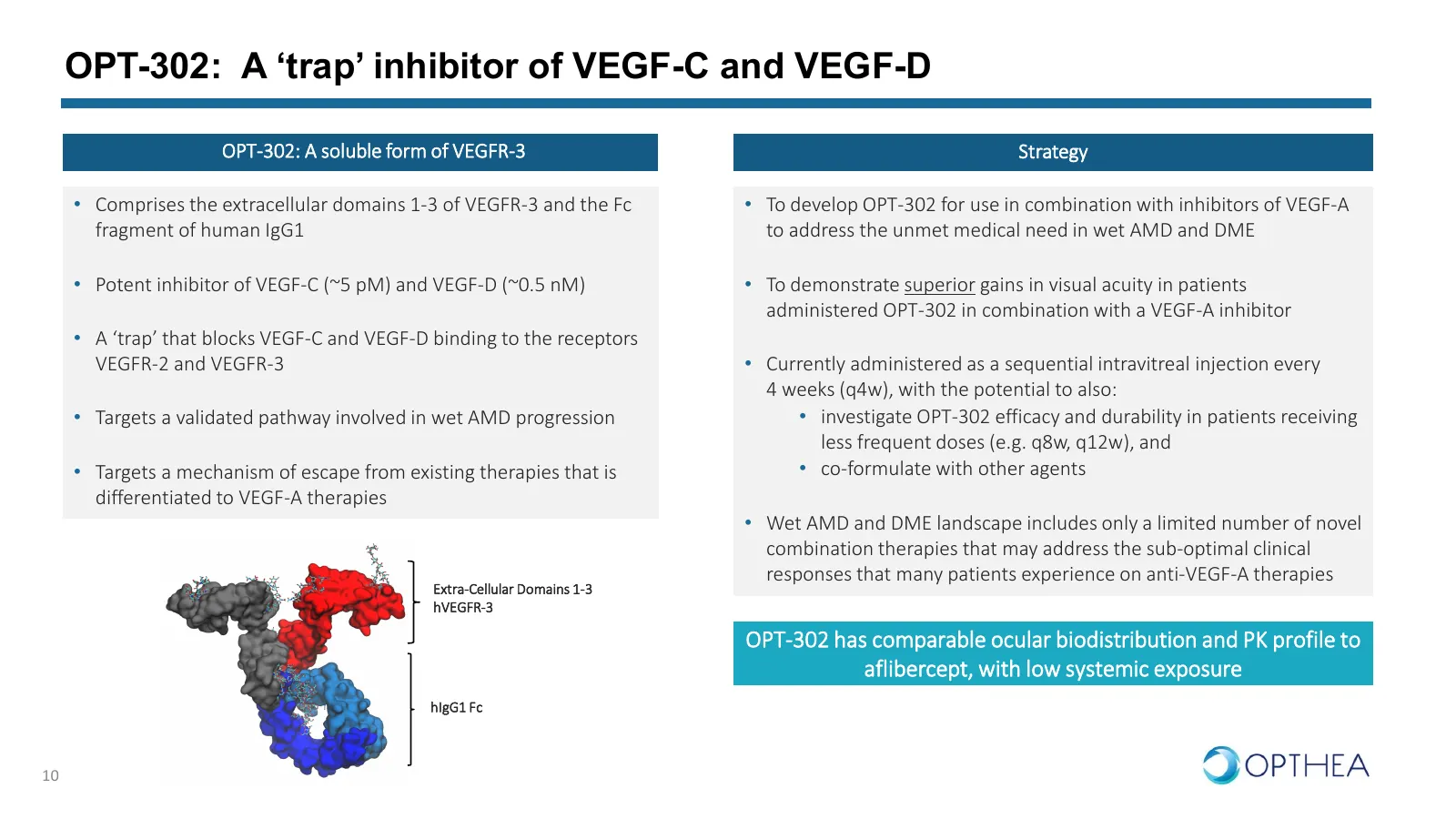
OPT-302: A ‘trap’ inhibitor of VEGF-C and VEGF-D VEGF-C OPT-302: A soluble form of VEGFR-3 Strategy VEGF-D • Comprises the extracellular domains 1-3 of VEGFR-3 and the Fc • To develop OPT-302 for use in combination with inhibitors of VEGF-A fragment of human IgG1 to address the unmet medical need in
Slide 11: Ocular Biodistribution and Systemic PK following IVT
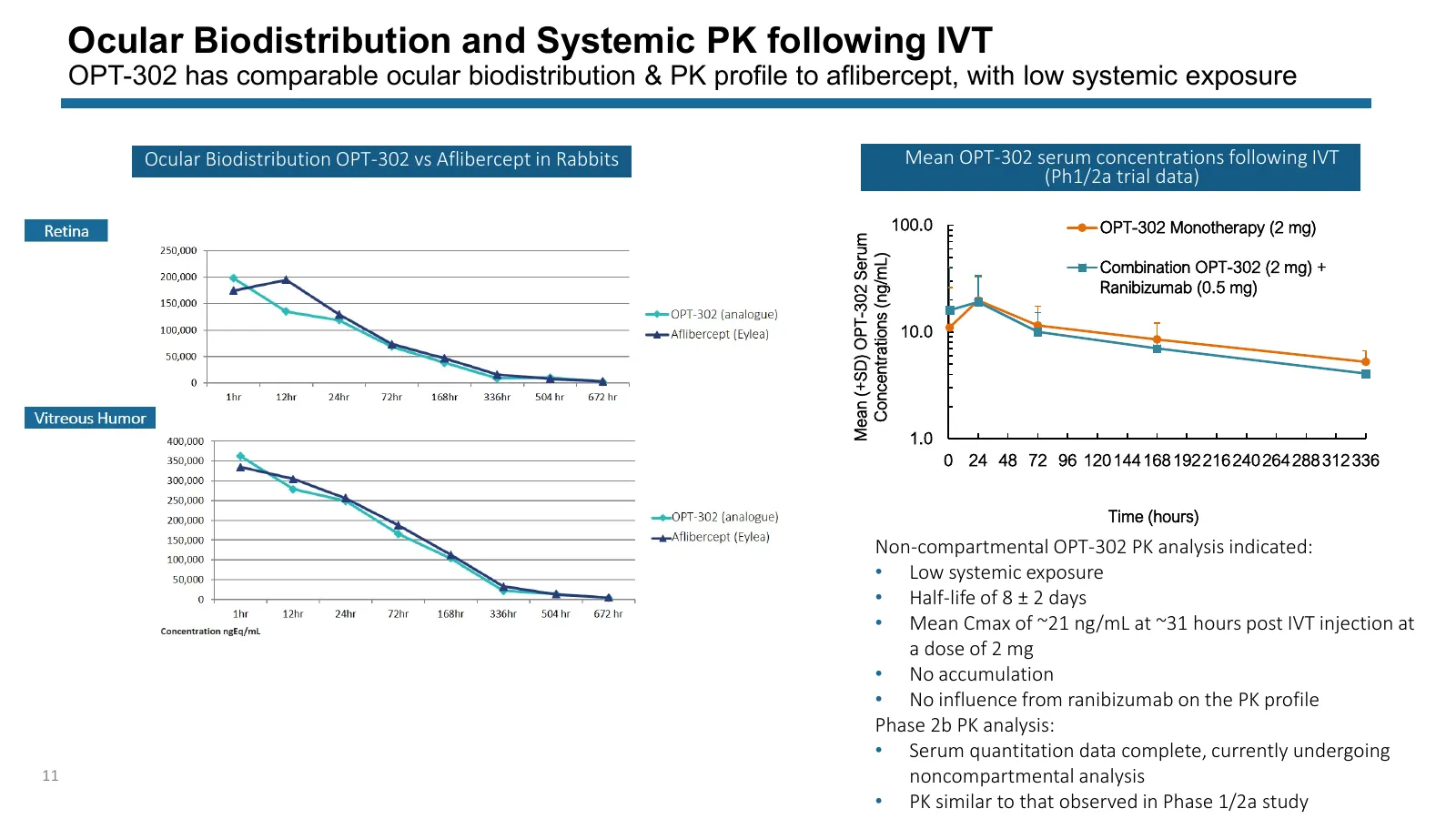
Ocular Biodistribution and Systemic PK following IVT OPT-302 has comparable ocular biodistribution & PK profile to aflibercept, with low systemic exposure Ocular Biodistribution OPT-302 vs Aflibercept in Rabbits Mean OPT-302 serum concentrations following IVT (Ph1/2a trial data) 100.0 OPT-302 Monoth
Slide 12: OPT-302 Clinical Program
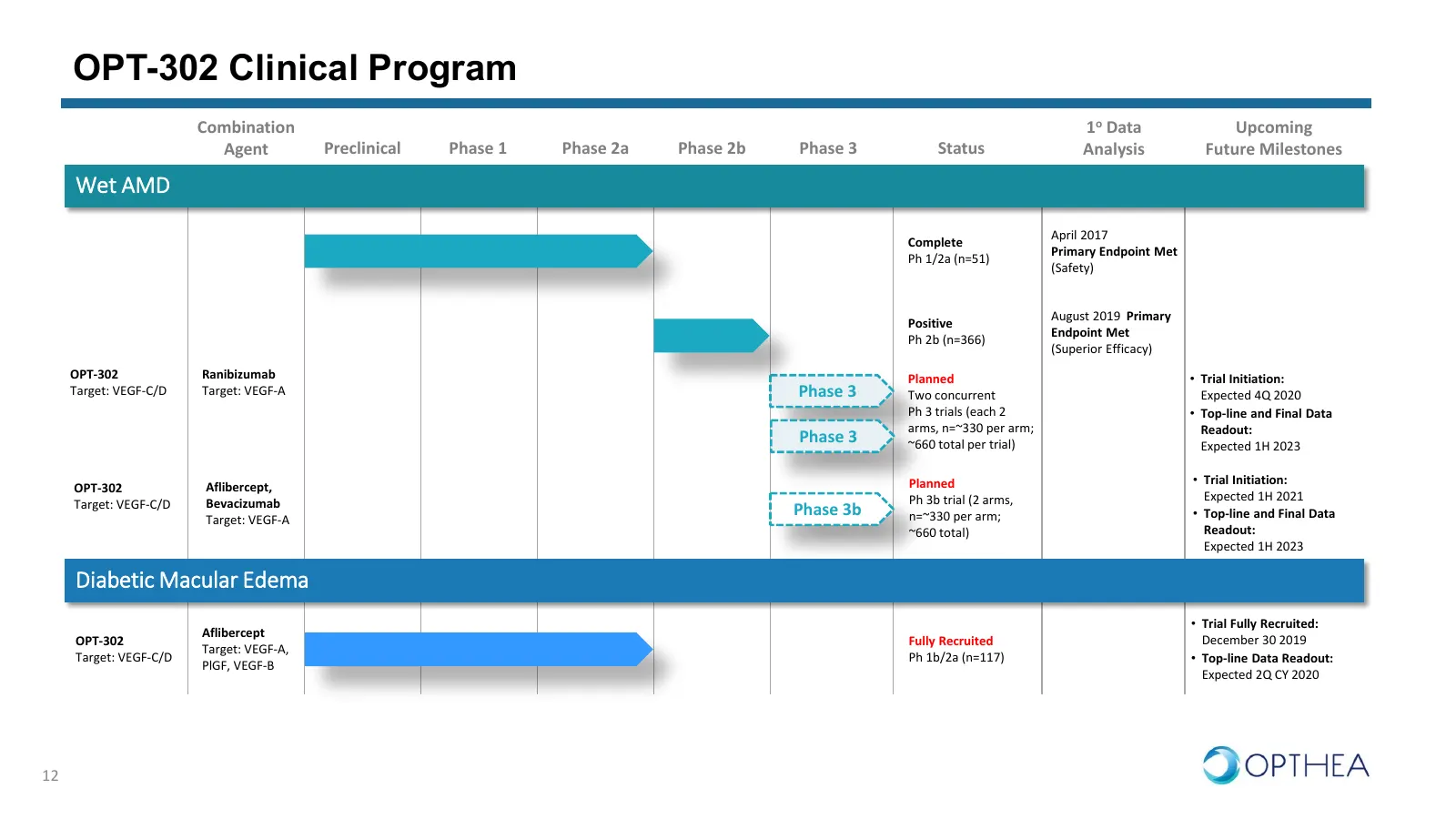
OPT-302 Clinical Program Combination 1o Data Upcoming Agent Preclinical Phase 1 Phase 2a Phase 2b Phase 3 Status Analysis Future Milestones Wet AMD April 2017 Complete Primary Endpoint Met Ph 1/2a (n=51) (Safety) August 2019 Primary Positive Endpoint Met Ph 2b (n=366) (Superior Efficacy) OPT-302 Ran
Slide 13: OPT-302 well-tolerated and active in Phase 1/2a study
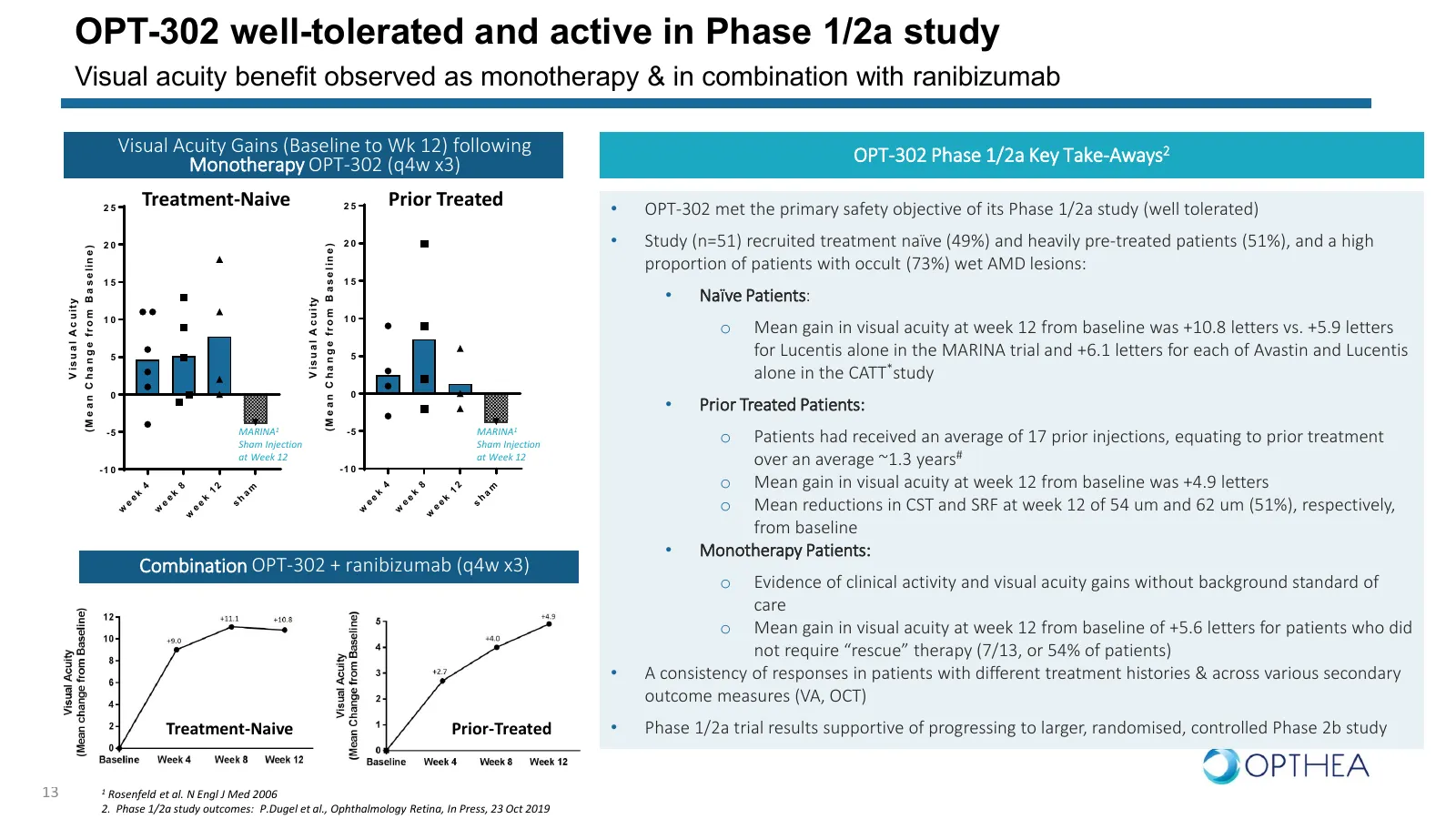
OPT-302 well-tolerated and active in Phase 1/2a study Visual acuity benefit observed as monotherapy & in combination with ranibizumab Visual Acuity Gains (Baseline to Wk 12) following OPT-302 Phase 1/2a Key Take-Aways2 Monotherapy OPT-302 (q4w x3) 25 Treatment-Naive 25 Prior Treated • OPT-302 met th
Slide 14: Phase 2b
Phase 2b A multicenter, randomized, double-masked, sham controlled study of intravitreal OPT-302 in combination with ranibizumab, in participants with neovascular (wet) AMD Conducted at 113 sites across 10 countries: US, EU, Israel OPT-302-1002; NCT ClinicalTrials.gov Identifier: NCT03345082 14
Slide 15: OPT-302 Phase 2b wet AMD trial design
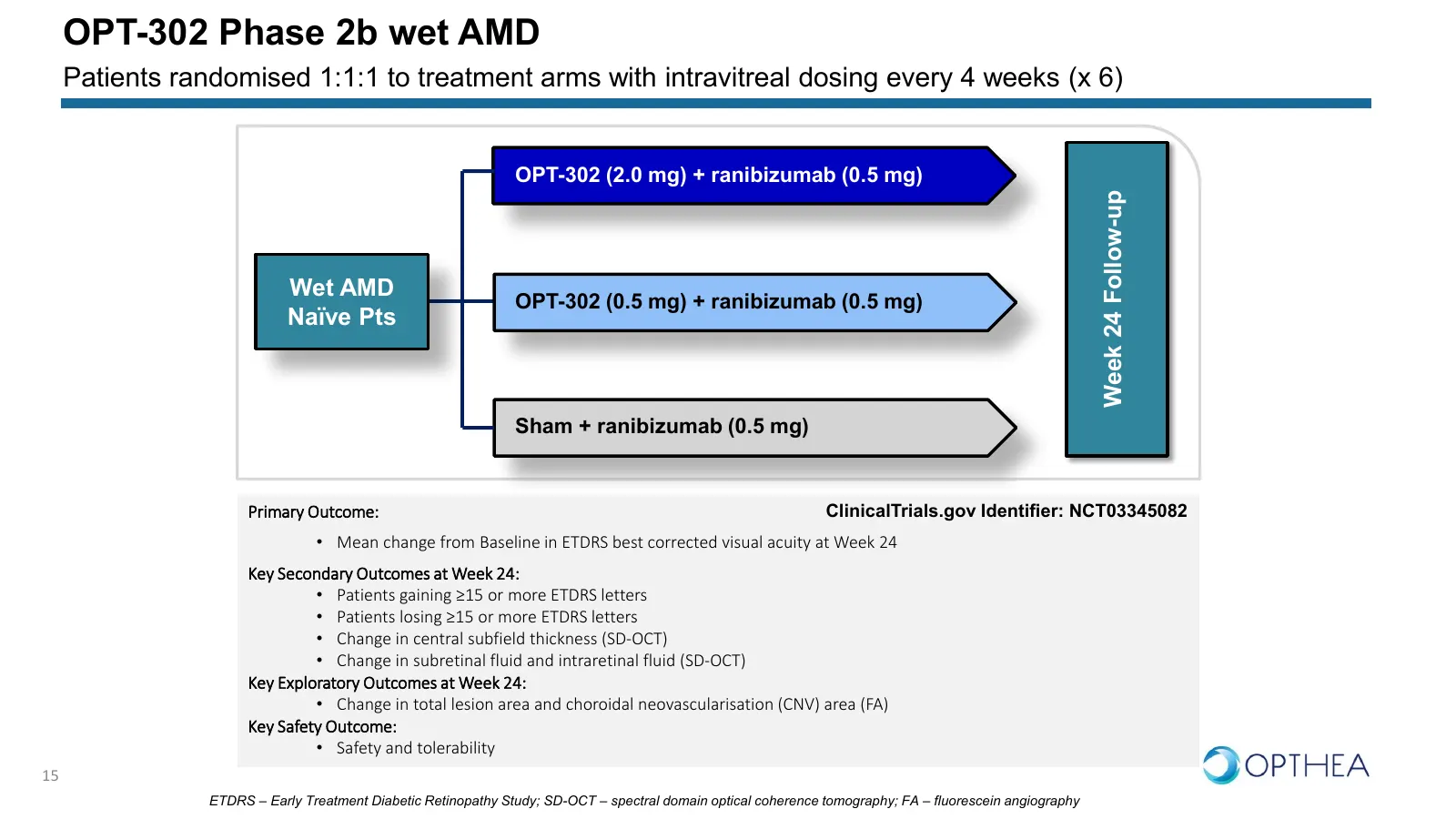
OPT-302 Phase 2b wet AMD Patients randomised 1:1:1 to treatment arms with intravitreal dosing every 4 weeks (x 6) OPT-302 (2.0 mg) + ranibizumab (0.5 mg) Week 24 Follow-up Wet AMD OPT-302 (0.5 mg) + ranibizumab (0.5 mg) Naïve Pts Sham + ranibizumab (0.5 mg) Primary Outcome: ClinicalTrials.gov Identi
Slide 16: Study Overview
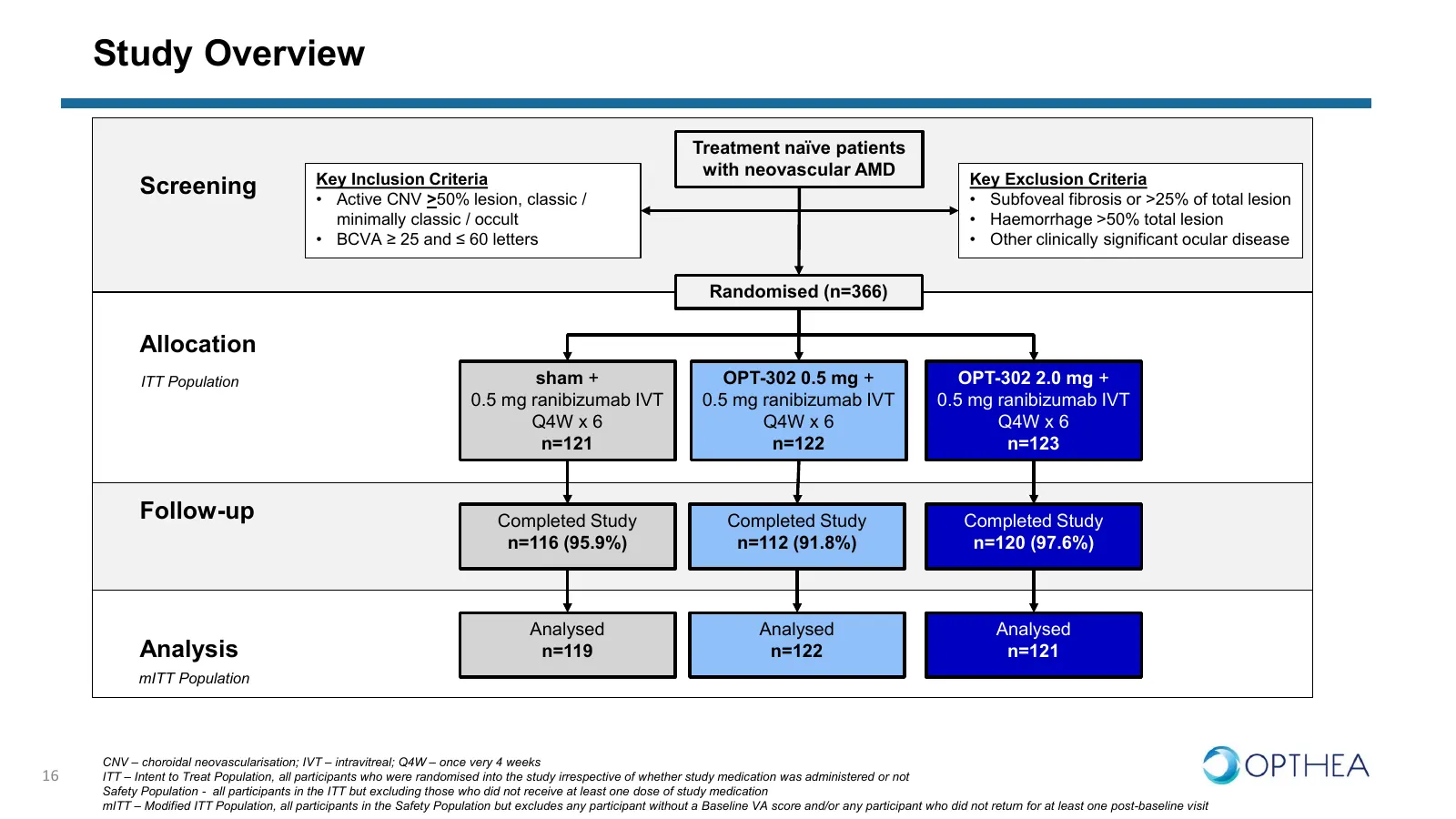
Study Overview Treatment naïve patients Key Inclusion Criteria with neovascular AMD Key Exclusion Criteria Screening • Active CNV >50% lesion, classic / • Subfoveal fibrosis or >25% of total lesion minimally classic / occult • Haemorrhage >50% total lesion • BCVA ≥ 25 and ≤ 60 letters • Other clinic
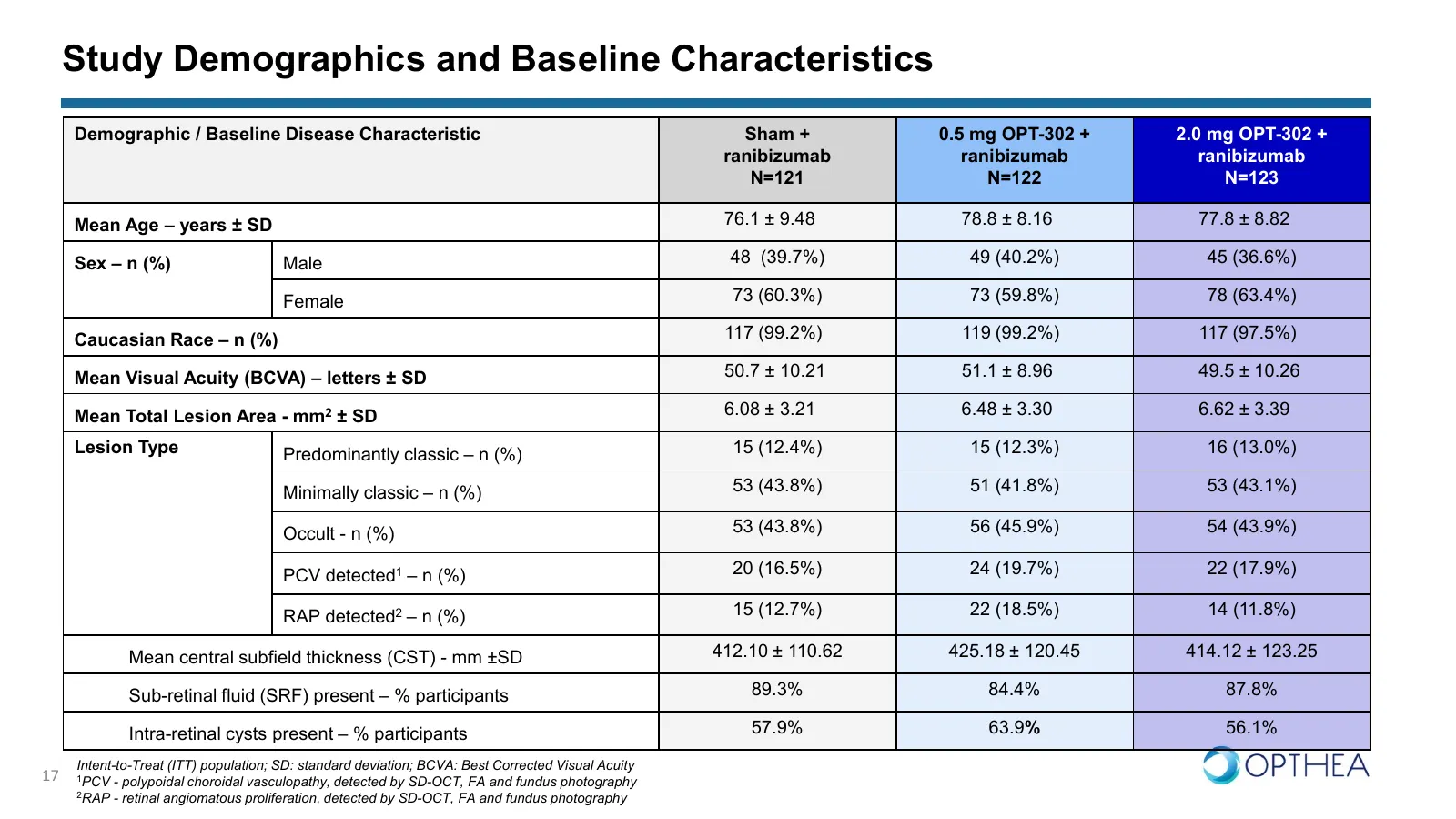
Slide 17: Study Demographics and Baseline Characteristics
Study Demographics and Baseline Characteristics Demographic / Baseline Disease Characteristic Sham + 0.5 mg OPT-302 + 2.0 mg OPT-302 + ranibizumab ranibizumab ranibizumab N=121 N=122 N=123 Mean Age – years ± SD 76.1 ± 9.48 78.8 ± 8.16 77.8 ± 8.82 Sex – n (%) Male 48 (39.7%) 49 (40.2%) 45 (36.6%) Fem
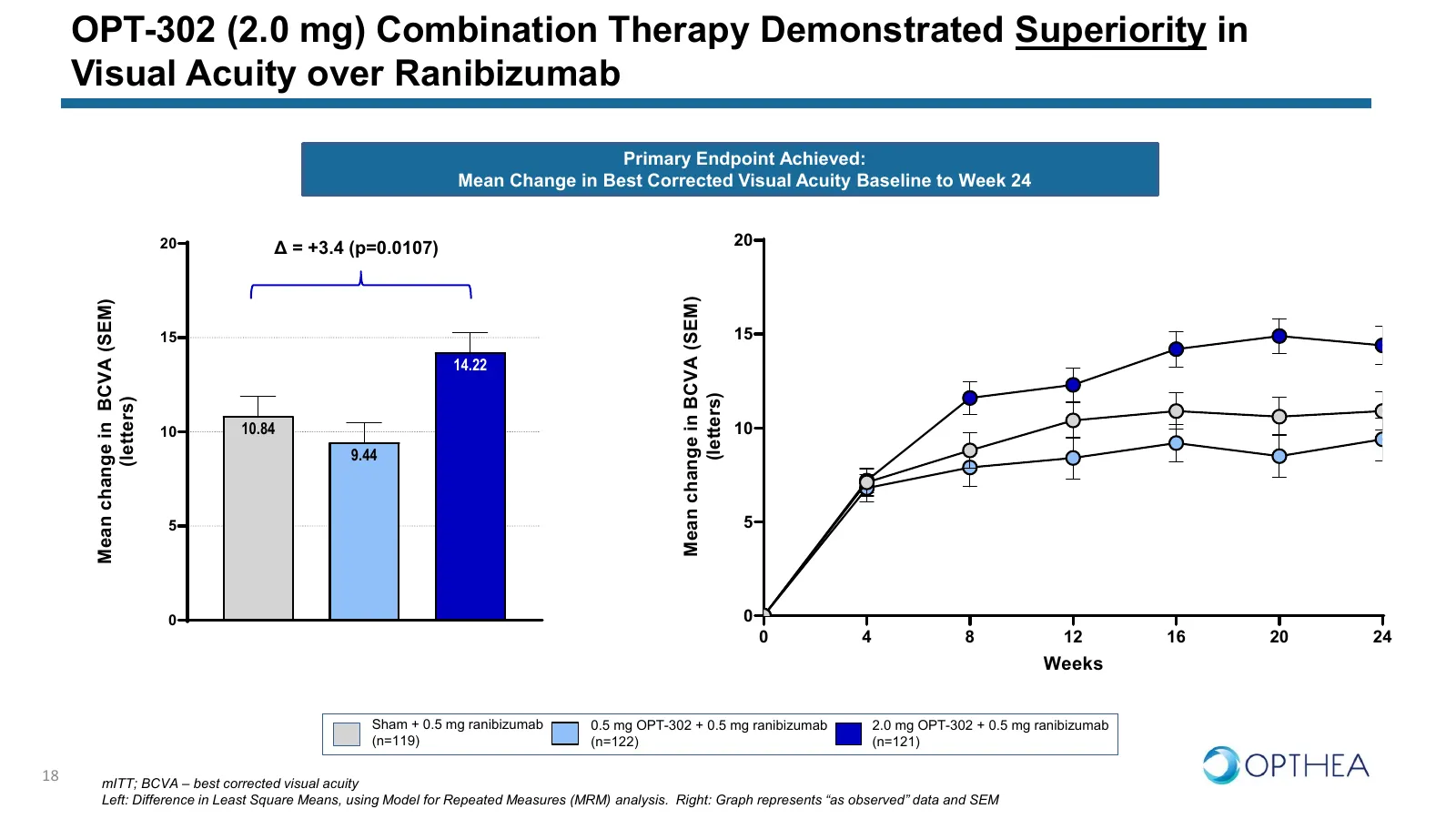
Slide 18: OPT-302 Combination Therapy Demonstrated Superiority in Visual Acuity over Ranibizumab
OPT-302 (2.0 mg) Combination Therapy Demonstrated Superiority in Visual Acuity over Ranibizumab Primary Endpoint Achieved: Mean Change in Best Corrected Visual Acuity Baseline to Week 24 20 Δ = +3.4 (p=0.0107) 20 Mean change in BCVA (SEM) Mean change in BCVA (SEM) 15 15 14.22 (letters) (letters) 10
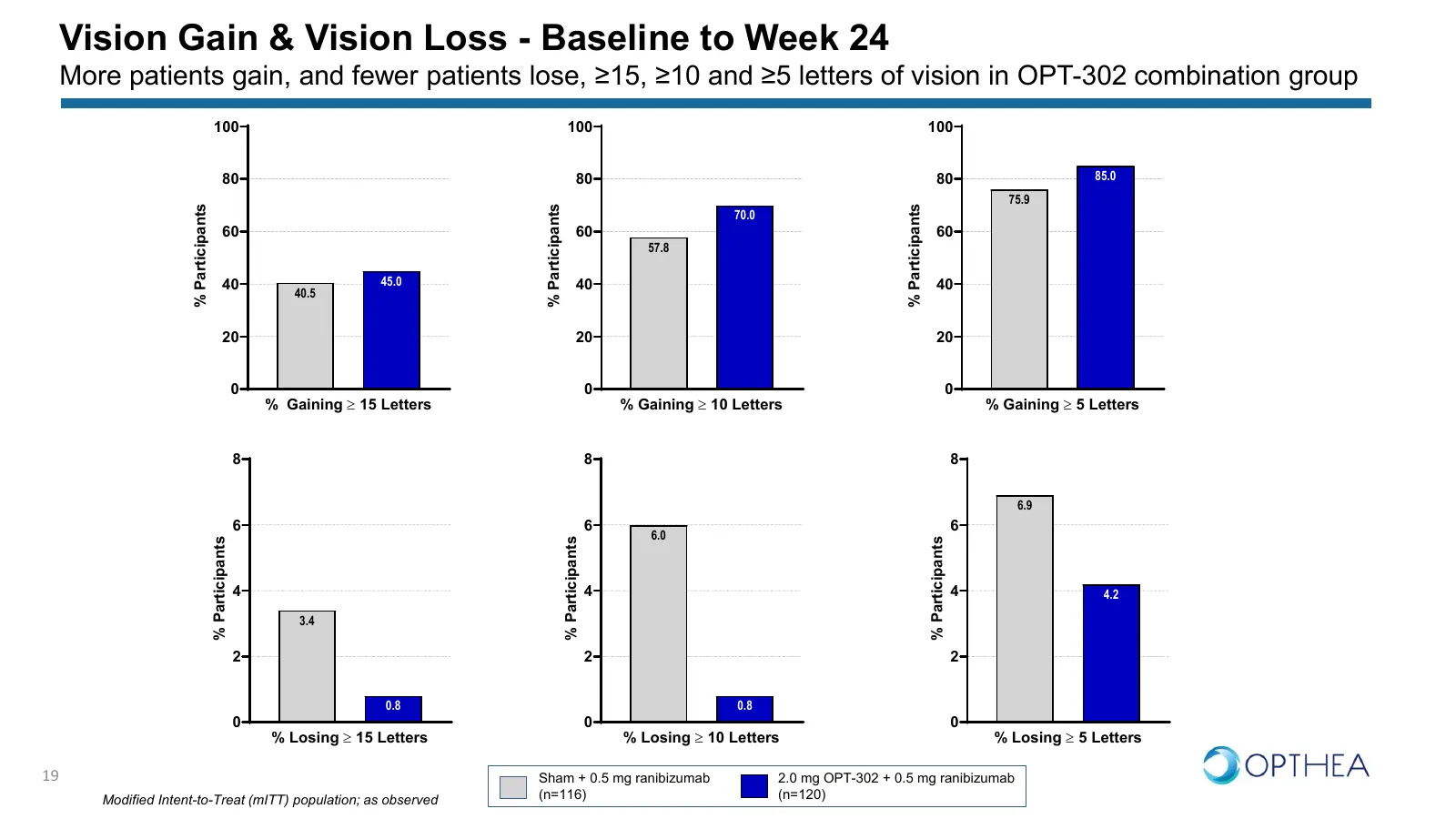
Slide 19: Vision Gain & Vision Loss - Baseline to Week 24
Vision Gain & Vision Loss - Baseline to Week 24 More patients gain, and fewer patients lose, ≥15, ≥10 and ≥5 letters of vision in OPT-302 combination group 100 100 100 80 80 80 85.0 % Participants 75.9 % Participants % Participants 70.0 60 60 60 57.8 40 45.0 40 40 40.5 20 20 20 0 0 0 % Gaining ≥ 15
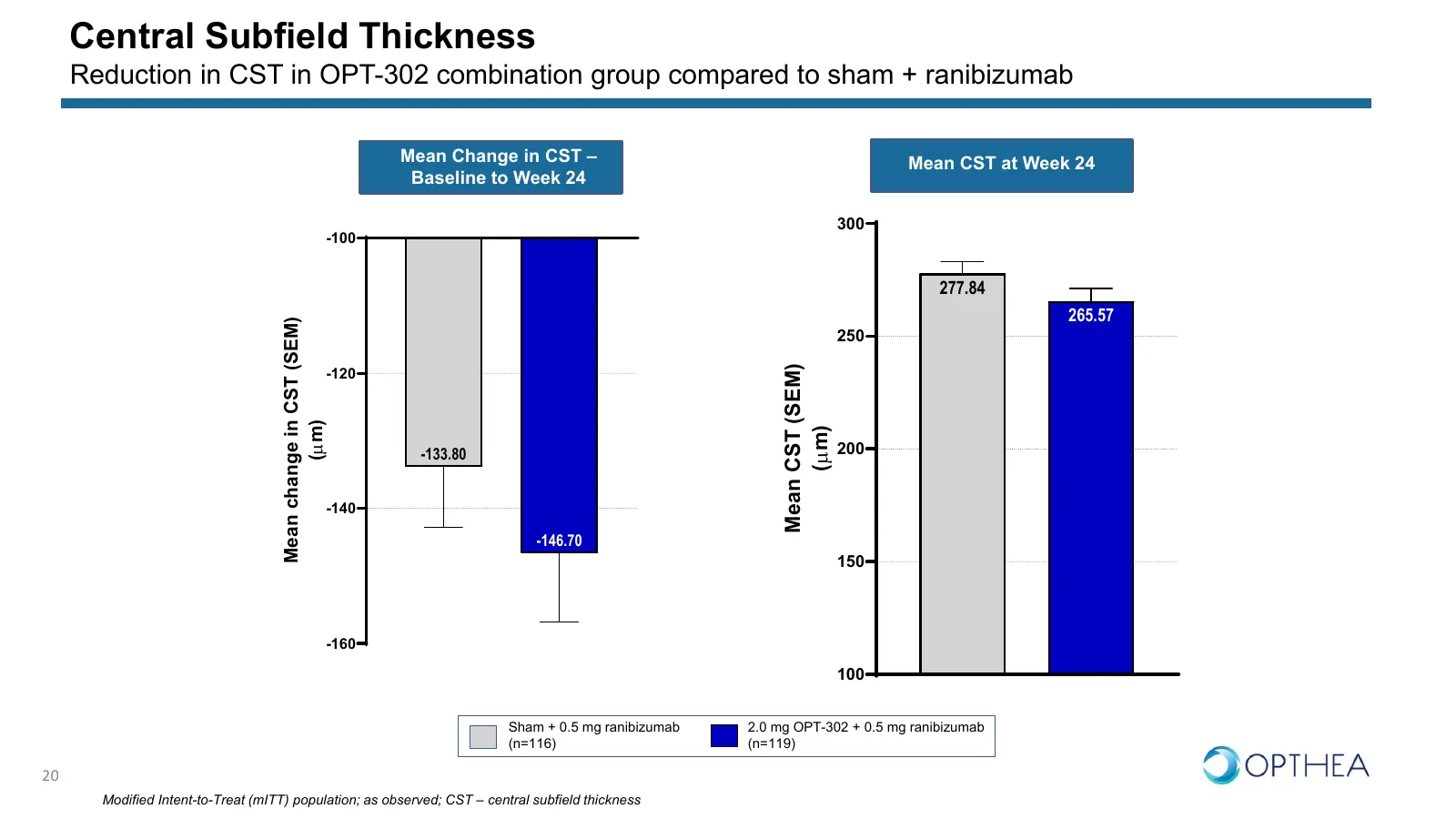
Slide 20: Central Subfield Thickness
Central Subfield Thickness Reduction in CST in OPT-302 combination group compared to sham + ranibizumab Mean Change in CST – Mean CST at Week 24 Baseline to Week 24 300 -100 277.84 265.57 Mean change in CST (SEM) 250 -120 Mean CST (SEM) (µm) (µm) -133.80 200 -140 -146.70 150 -160 100 Sham + 0.5 mg r
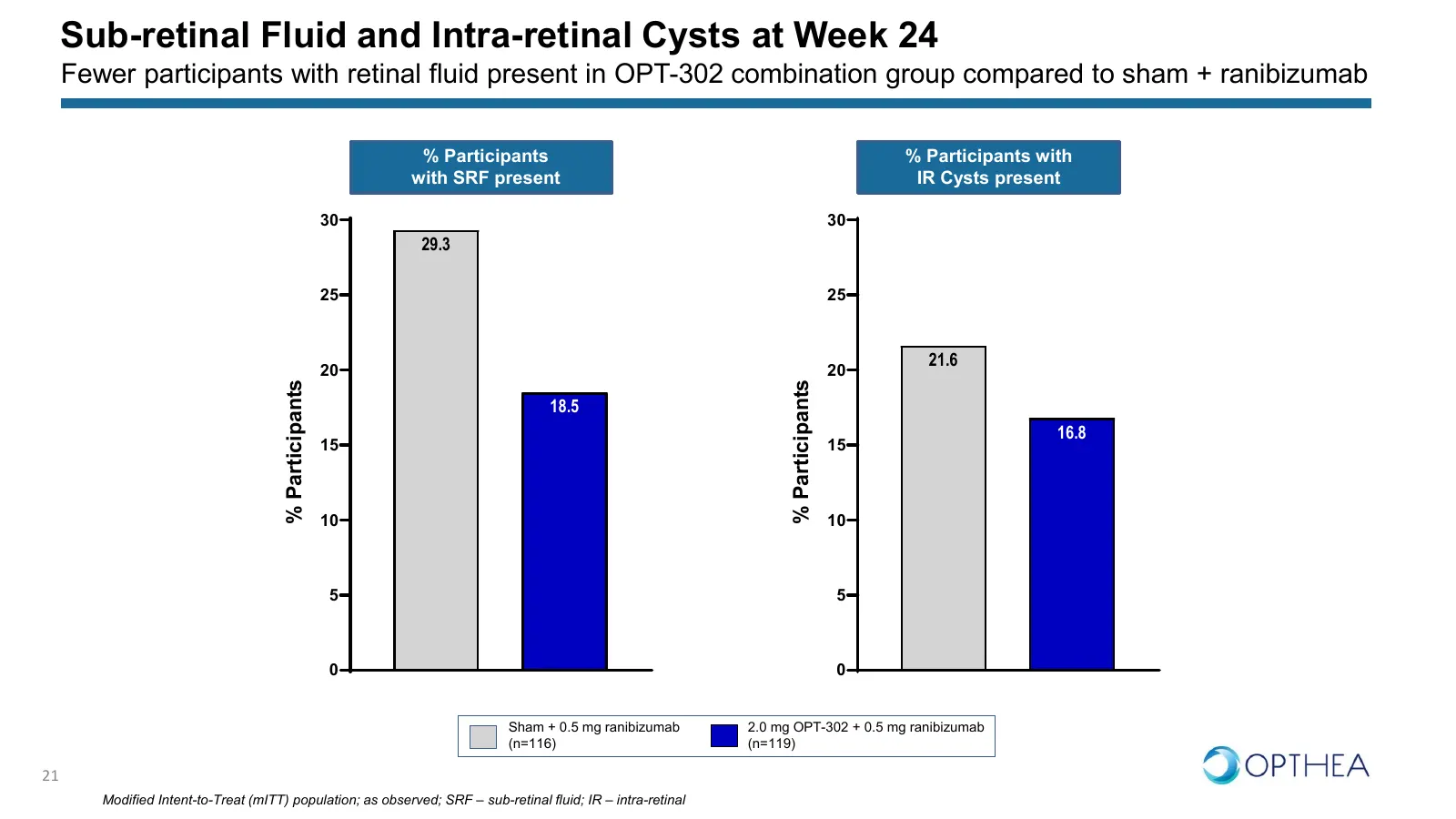
Slide 21: Sub-retinal Fluid and Intra-retinal Cysts at Week 24
Sub-retinal Fluid and Intra-retinal Cysts at Week 24 Fewer participants with retinal fluid present in OPT-302 combination group compared to sham + ranibizumab % Participants % Participants with with SRF present IR Cysts present 30 30 29.3 25 25 21.6 20 20 % Participants % Participants 18.5 16.8 15 1
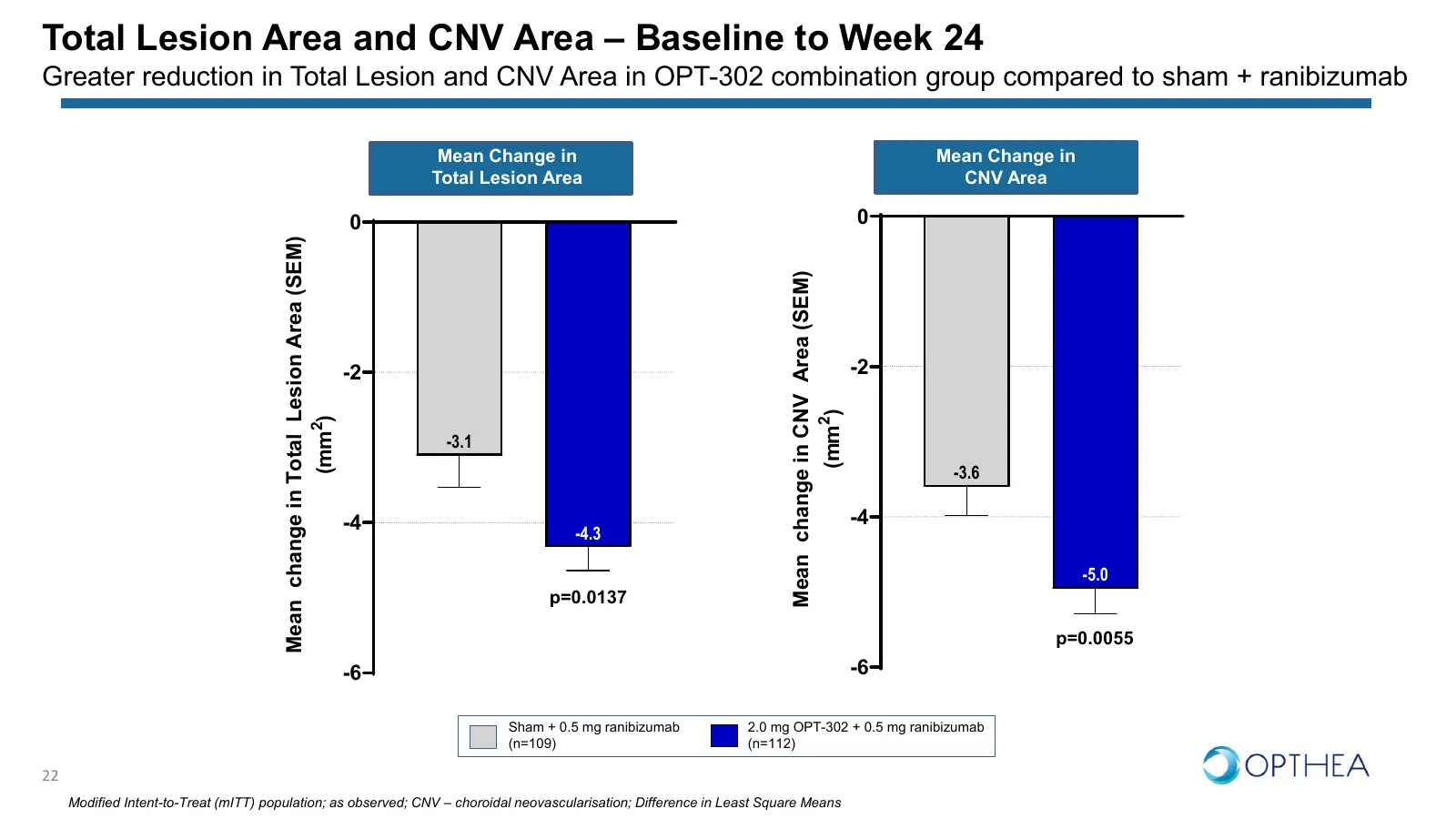
Slide 22: Total Lesion Area and CNV Area - Baseline to Week 24
Total Lesion Area and CNV Area – Baseline to Week 24 Greater reduction in Total Lesion and CNV Area in OPT-302 combination group compared to sham + ranibizumab Mean Change in Mean Change in Total Lesion Area CNV Area 0 0 Mean change in Total Lesion Area (SEM) Mean change in CNV Area (SEM) -2 -2 (mm2
Slide 23: Phase 2b Pre-Specified Subgroup Analyses
Phase 2b A multicenter, randomized, double-masked, sham controlled study of intravitreal OPT-302 in combination with ranibizumab, in participants with neovascular (wet) AMD Pre-Specified Subgroup Analyses OPT-302-1002; NCT ClinicalTrials.gov Identifier: NCT03345082 23
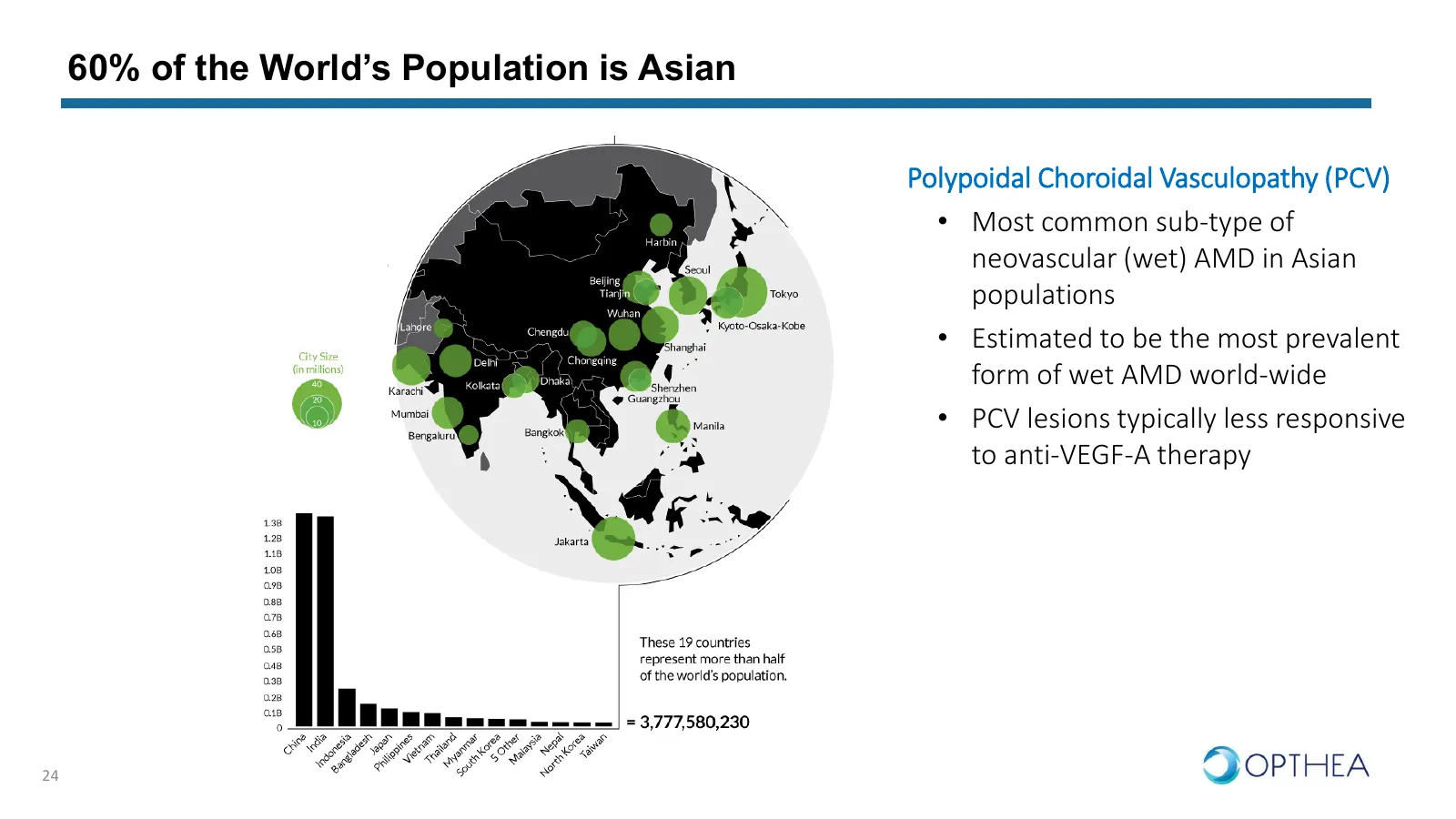
Slide 24: 60% of the World's Population is Asian
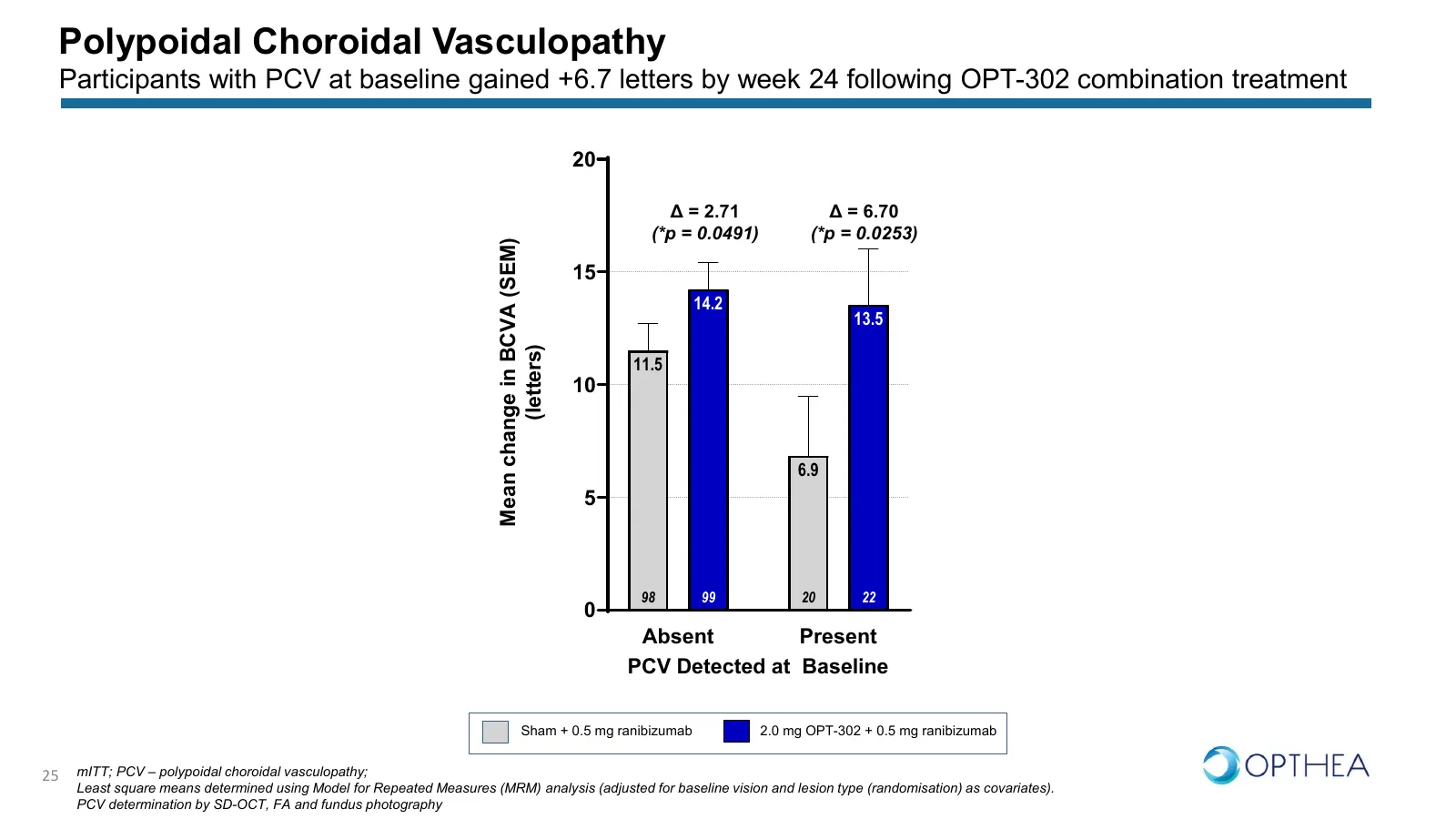
60% of the World’s Population is Asian Polypoidal Choroidal Vasculopathy (PCV) • Most common sub-type of neovascular (wet) AMD in Asian populations • Estimated to be the most prevalent form of wet AMD world-wide • PCV lesions typically less responsive to anti-VEGF-A therapy 24
Slide 25: Polypoidal Choroidal Vasculopathy
Polypoidal Choroidal Vasculopathy Participants with PCV at baseline gained +6.7 letters by week 24 following OPT-302 combination treatment 20 Δ = 2.71 Δ = 6.70 (*p = 0.0491) (*p = 0.0253) Mean change in BCVA (SEM) 15 14.2 13.5 (letters) 11.5 10 6.9 5 98 99 20 22 0 Absent Present PCV Detected at Base
Slide 26: Neovascular (wet) AMD Lesion Types
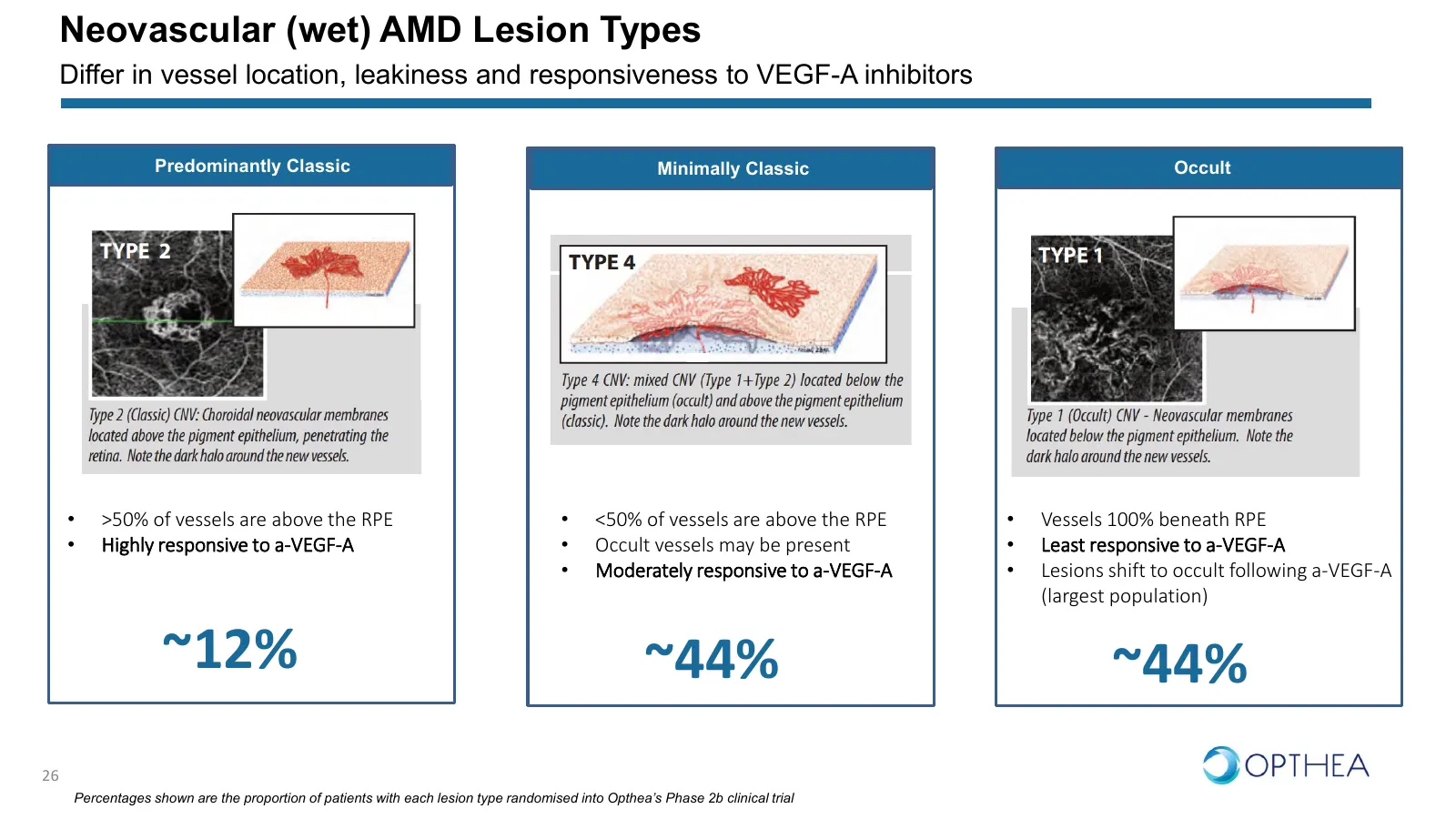
Neovascular (wet) AMD Lesion Types Differ in vessel location, leakiness and responsiveness to VEGF-A inhibitors Predominantly Classic Minimally Classic Occult • >50% of vessels are above the RPE • <50% of vessels are above the RPE • Vessels 100% beneath RPE • Highly responsive to a-VEGF-A • Occult v
Slide 27: Mean Change in BCVA Over Time by Lesion Type
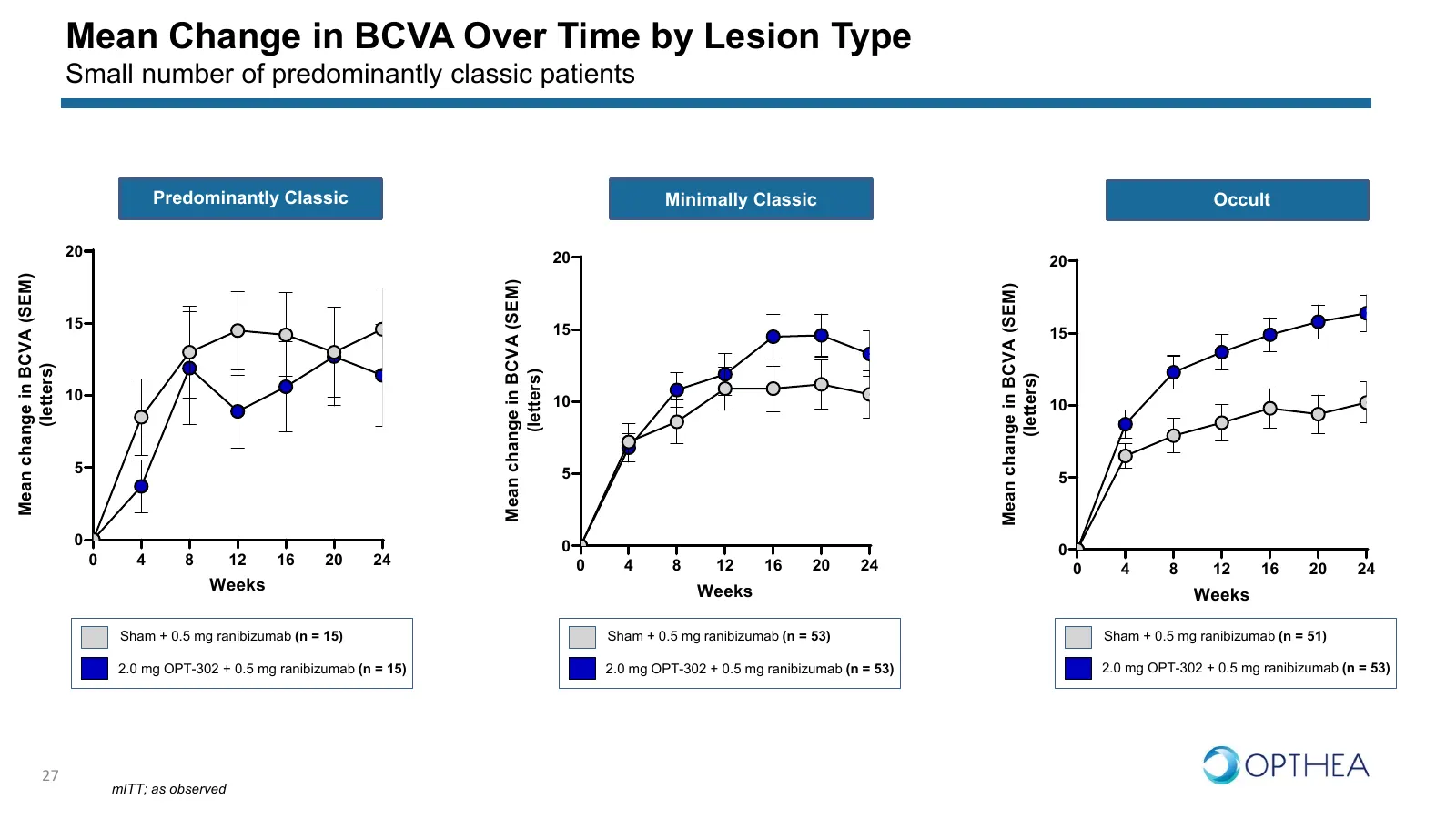
Mean Change in BCVA Over Time by Lesion Type Small number of predominantly classic patients Predominantly Classic Minimally Classic Occult 20 20 20 Mean change in BCVA (SEM) Mean change in BCVA (SEM) Mean change in BCVA (SEM) 15 15 15 (letters) (letters) (letters) 10 10 10 5 5 5 0 0 0 0 4 8 12 16 20
Slide 28: Mean Change in BCVA at Week 24 by Lesion Type
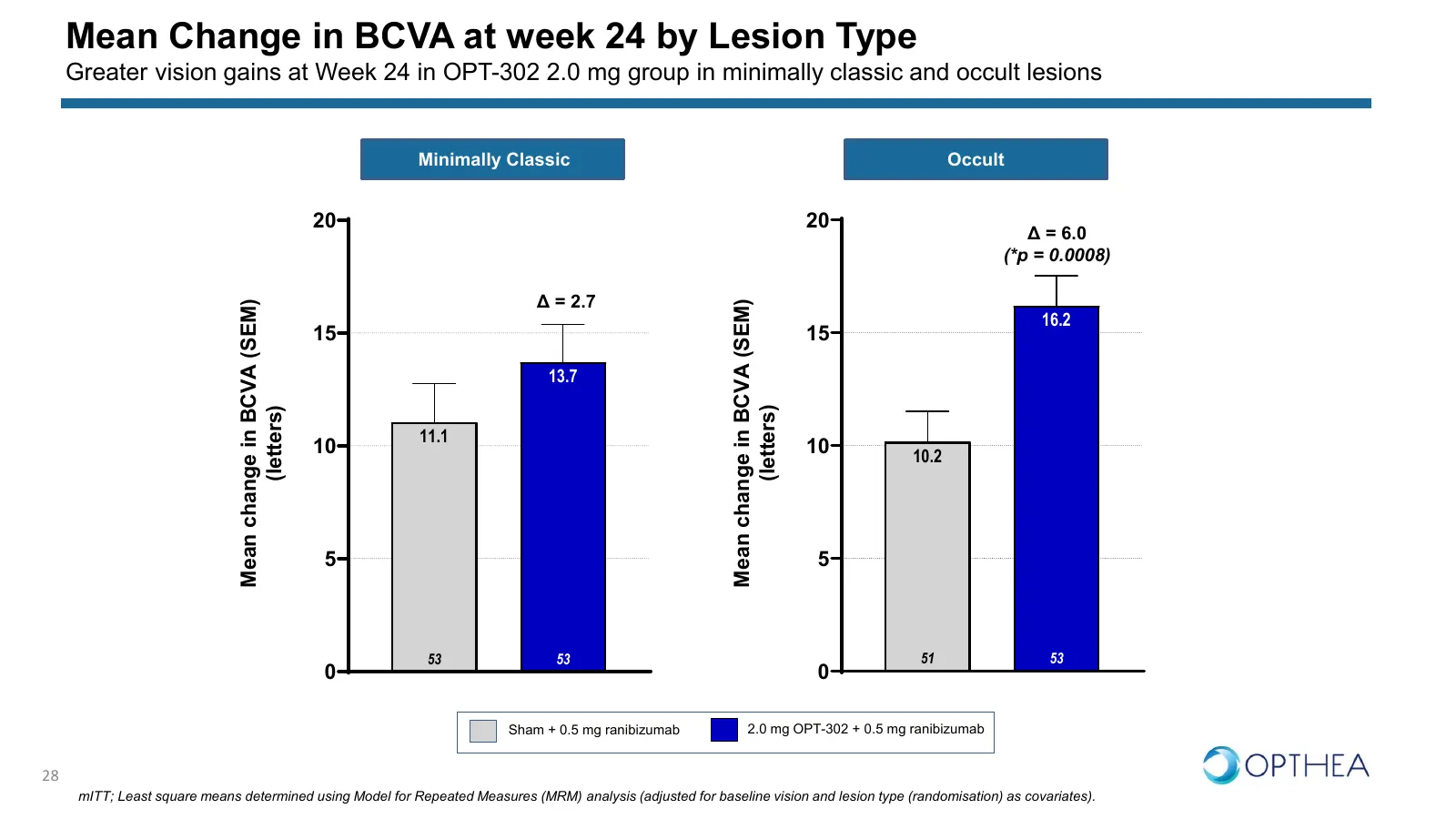
Mean Change in BCVA at week 24 by Lesion Type Greater vision gains at Week 24 in OPT-302 2.0 mg group in minimally classic and occult lesions Minimally Classic Occult 20 20 Δ = 6.0 (*p = 0.0008) Δ = 2.7 Mean change in BCVA (SEM) Mean change in BCVA (SEM) 16.2 15 15 13.7 (letters) (letters) 11.1 10 1
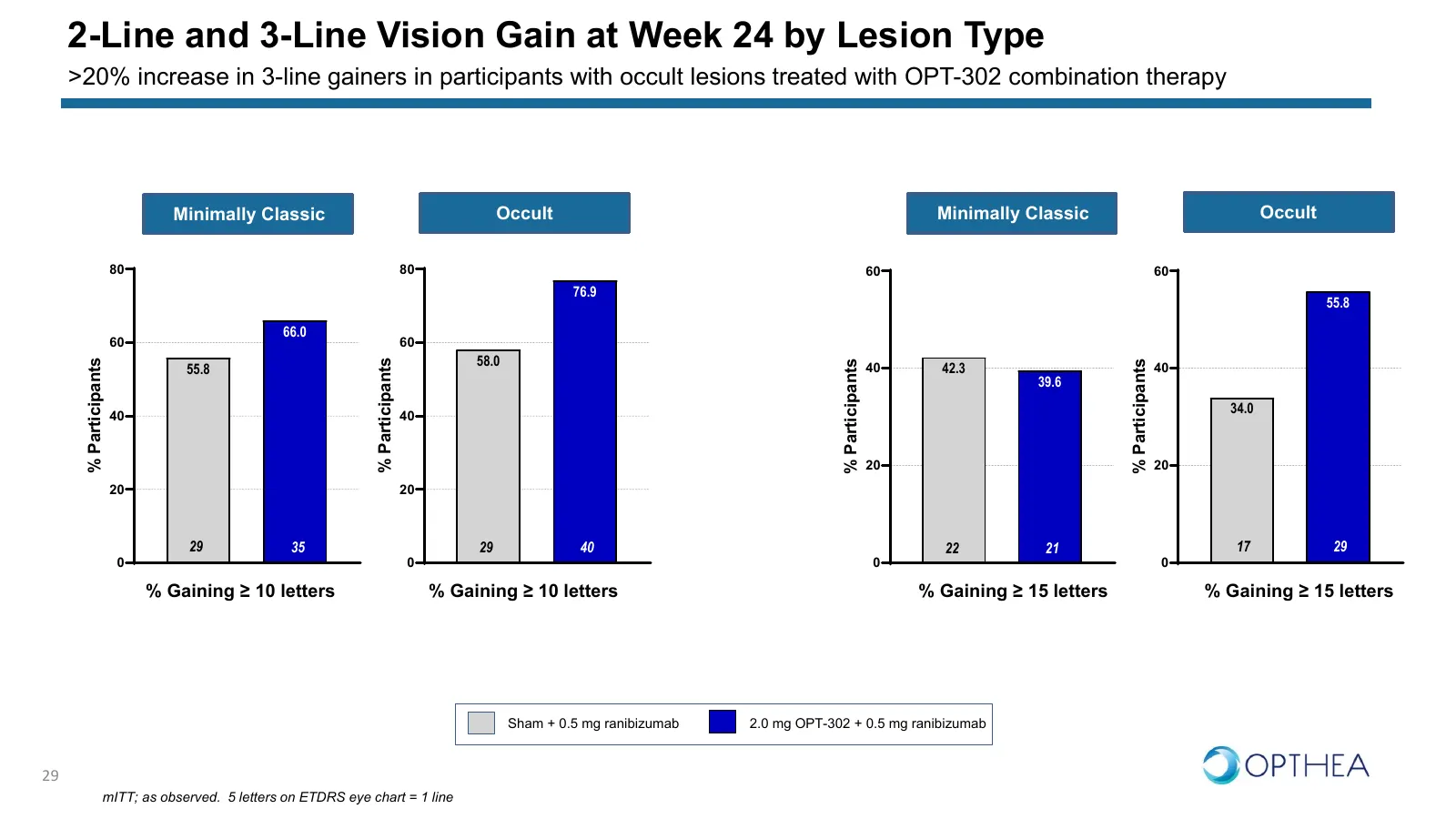
Slide 29: 2-Line and 3-Line Vision Gain at Week 24 by Lesion Type
2-Line and 3-Line Vision Gain at Week 24 by Lesion Type >20% increase in 3-line gainers in participants with occult lesions treated with OPT-302 combination therapy Minimally Classic Occult Minimally Classic Occult 80 80 60 60 76.9 55.8 66.0 60 60 58.0 % Participants % Participants 55.8 42.3 % Parti
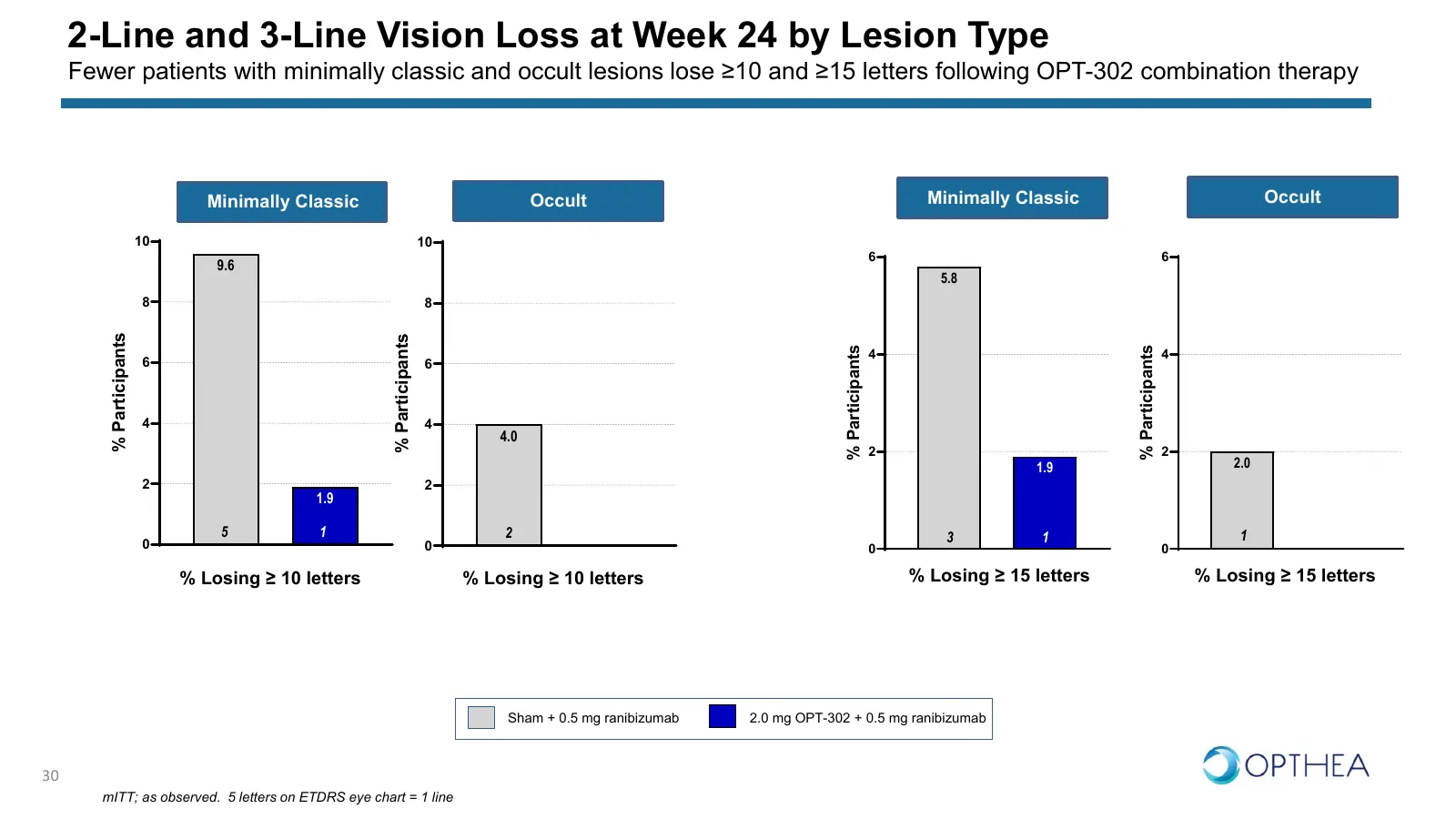
Slide 30: 2-Line and 3-Line Vision Loss at Week 24 by Lesion Type
2-Line and 3-Line Vision Loss at Week 24 by Lesion Type Fewer patients with minimally classic and occult lesions lose ≥10 and ≥15 letters following OPT-302 combination therapy Minimally Classic Occult Minimally Classic Occult 10 10 6 6 9.6 5.8 8 8 % Participants % Participants % Participants % Parti
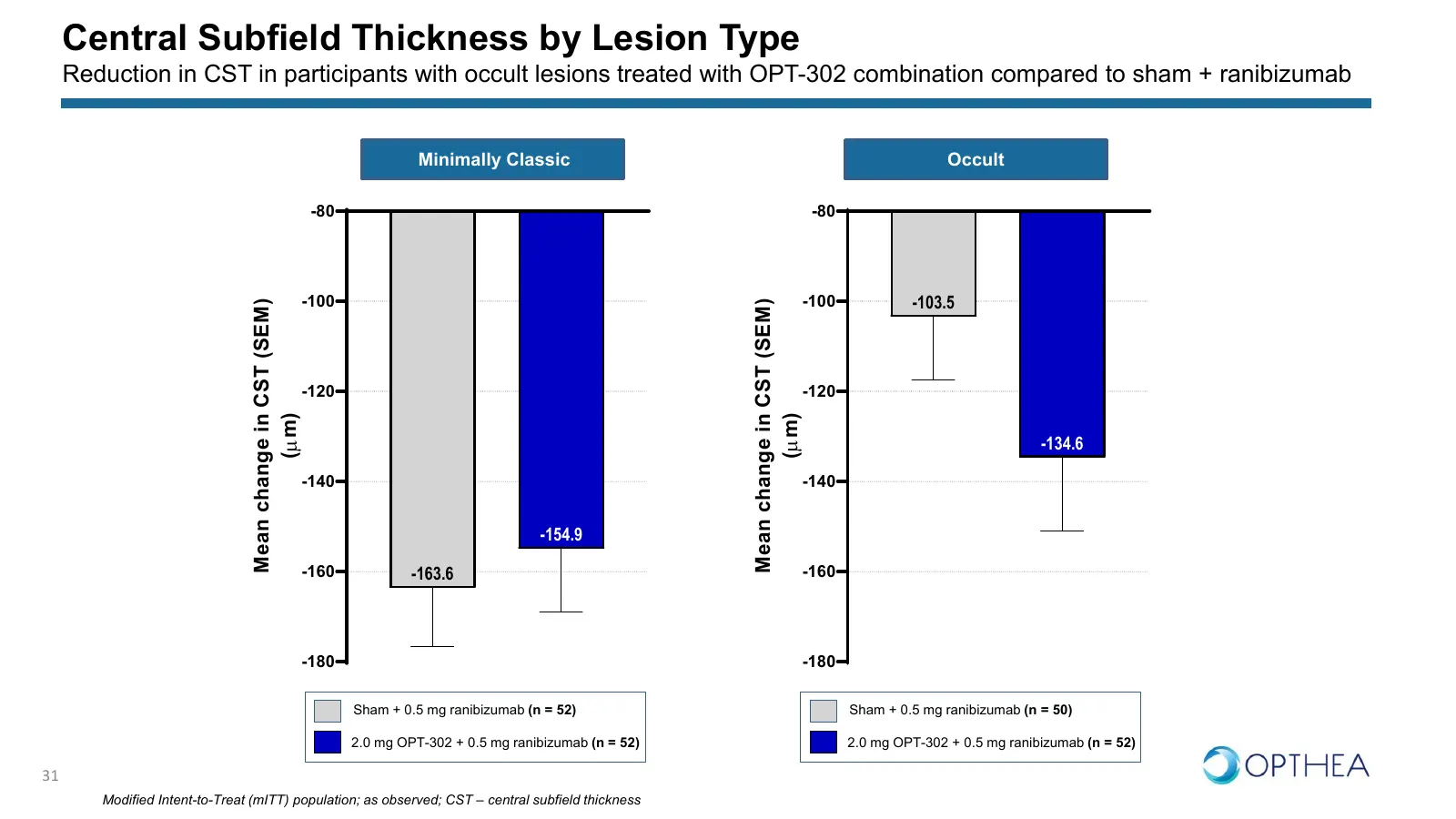
Slide 31: Central Subfield Thickness by Lesion Type
Central Subfield Thickness by Lesion Type Reduction in CST in participants with occult lesions treated with OPT-302 combination compared to sham + ranibizumab Minimally Classic Occult -80 -80 -100 -100 -103.5 Mean change in CST (SEM) Mean change in CST (SEM) -120 -120 (µ m) (µ m) -134.6 -140 -140 -1
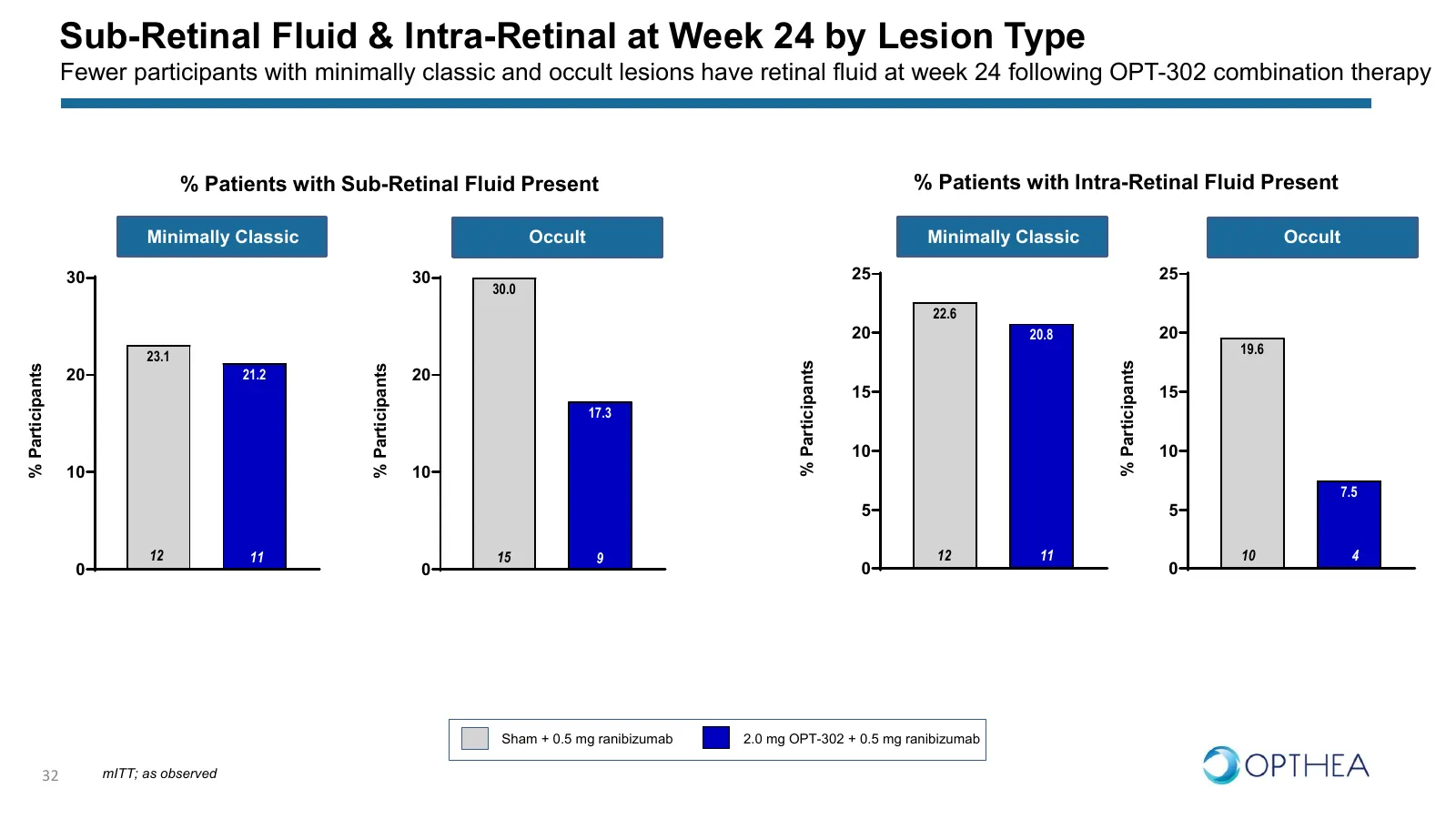
Slide 32: Sub-Retinal Fluid & Intra-Retinal at Week 24 by Lesion Type
Sub-Retinal Fluid & Intra-Retinal at Week 24 by Lesion Type Fewer participants with minimally classic and occult lesions have retinal fluid at week 24 following OPT-302 combination therapy % Patients with Sub-Retinal Fluid Present % Patients with Intra-Retinal Fluid Present Minimally Classic Occult
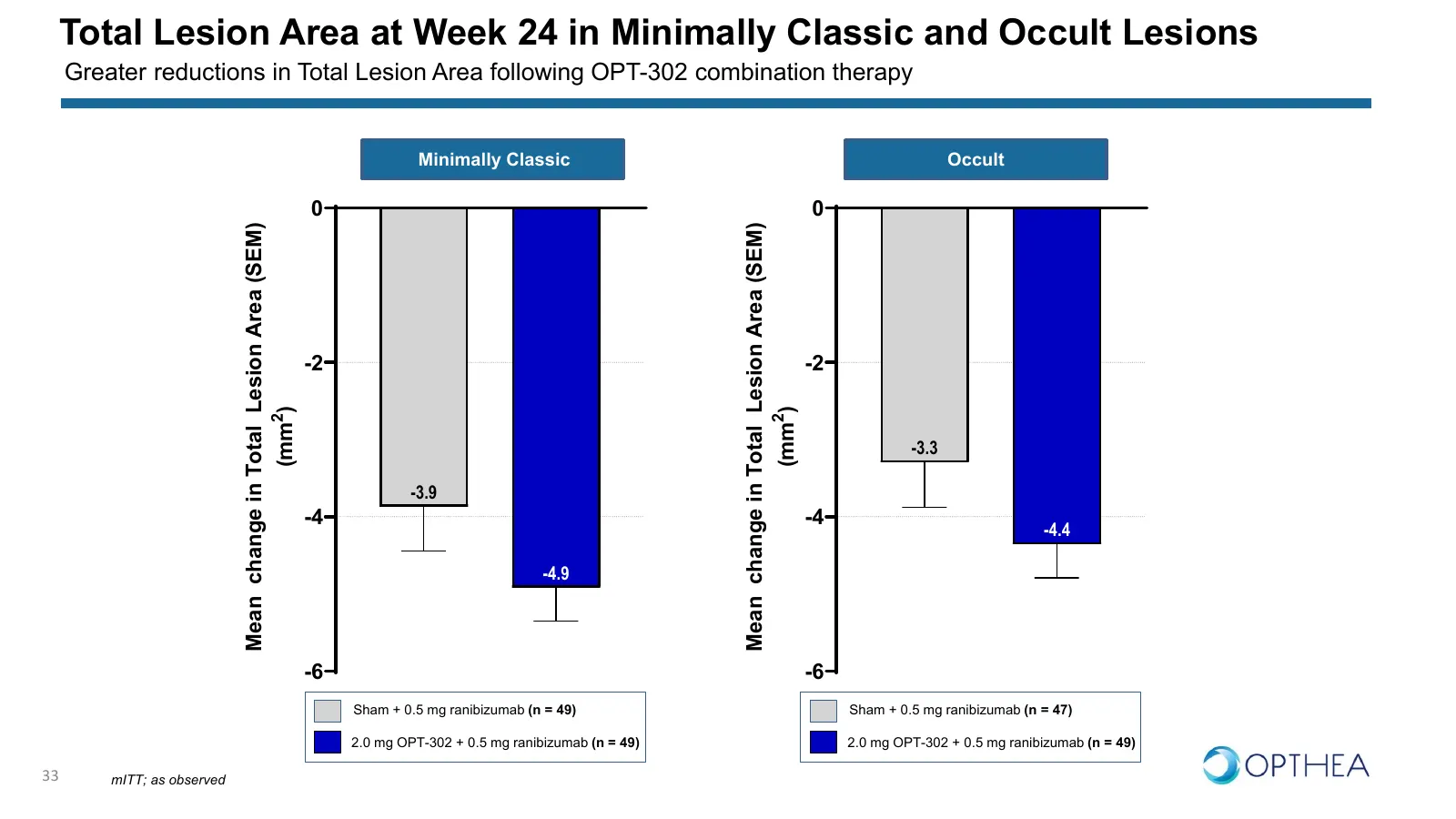
Slide 33: Total Lesion Area at Week 24 in Minimally Classic and Occult Lesions
Total Lesion Area at Week 24 in Minimally Classic and Occult Lesions Greater reductions in Total Lesion Area following OPT-302 combination therapy Minimally Classic Occult 0 0 Mean change in Total Lesion Area (SEM) Mean change in Total Lesion Area (SEM) -2 -2 (mm2) (mm2) -3.3 -3.9 -4 -4 -4.4 -4.9 -6
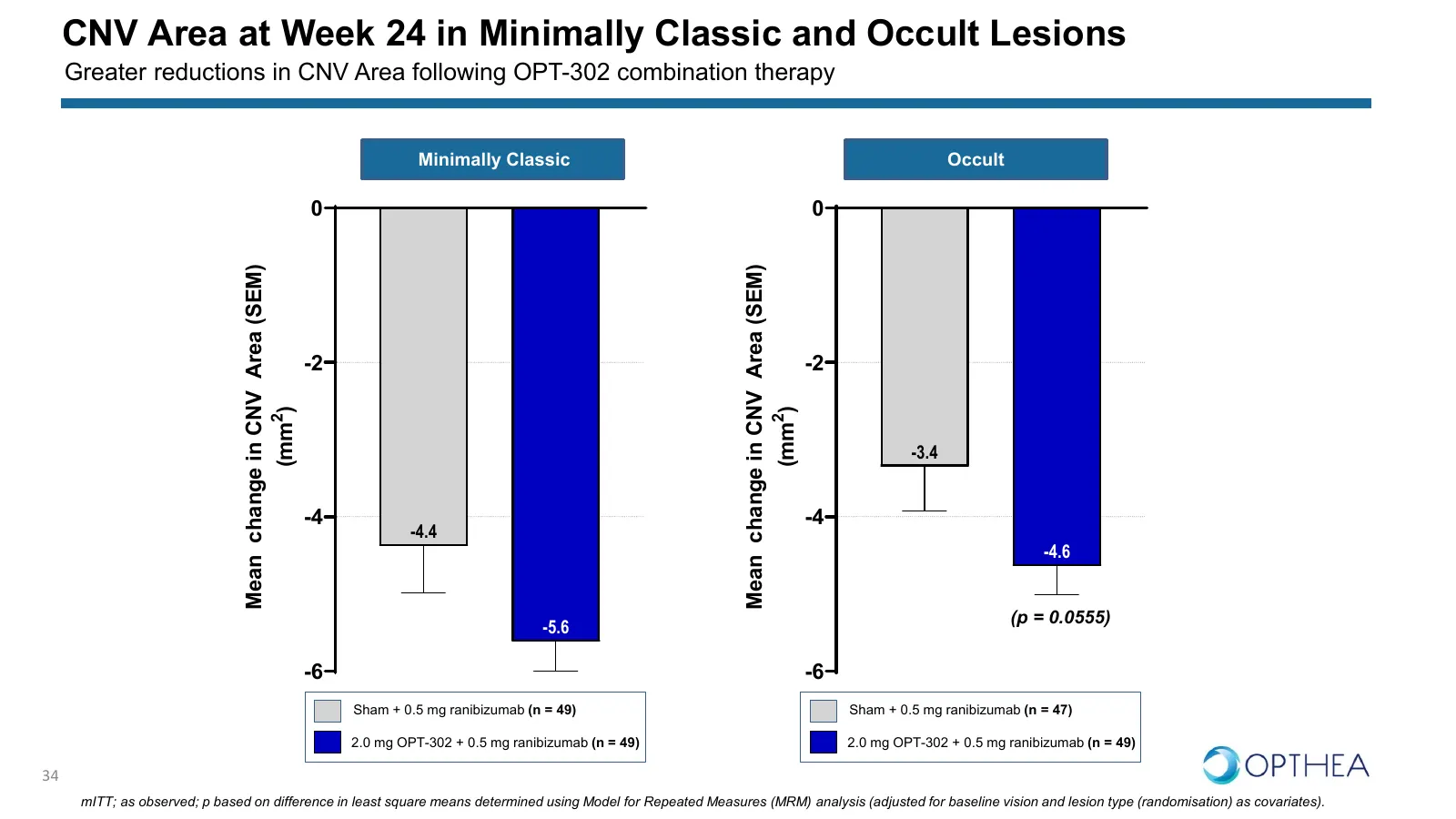
Slide 34: CNV Area at Week 24 in Minimally Classic and Occult Lesions
CNV Area at Week 24 in Minimally Classic and Occult Lesions Greater reductions in CNV Area following OPT-302 combination therapy Minimally Classic Occult 0 0 Mean change in CNV Area (SEM) Mean change in CNV Area (SEM) -2 -2 (mm2) (mm2) -3.4 -4 -4 -4.4 -4.6 (p = 0.0555) -5.6 -6 -6 Sham + 0.5 mg ranib
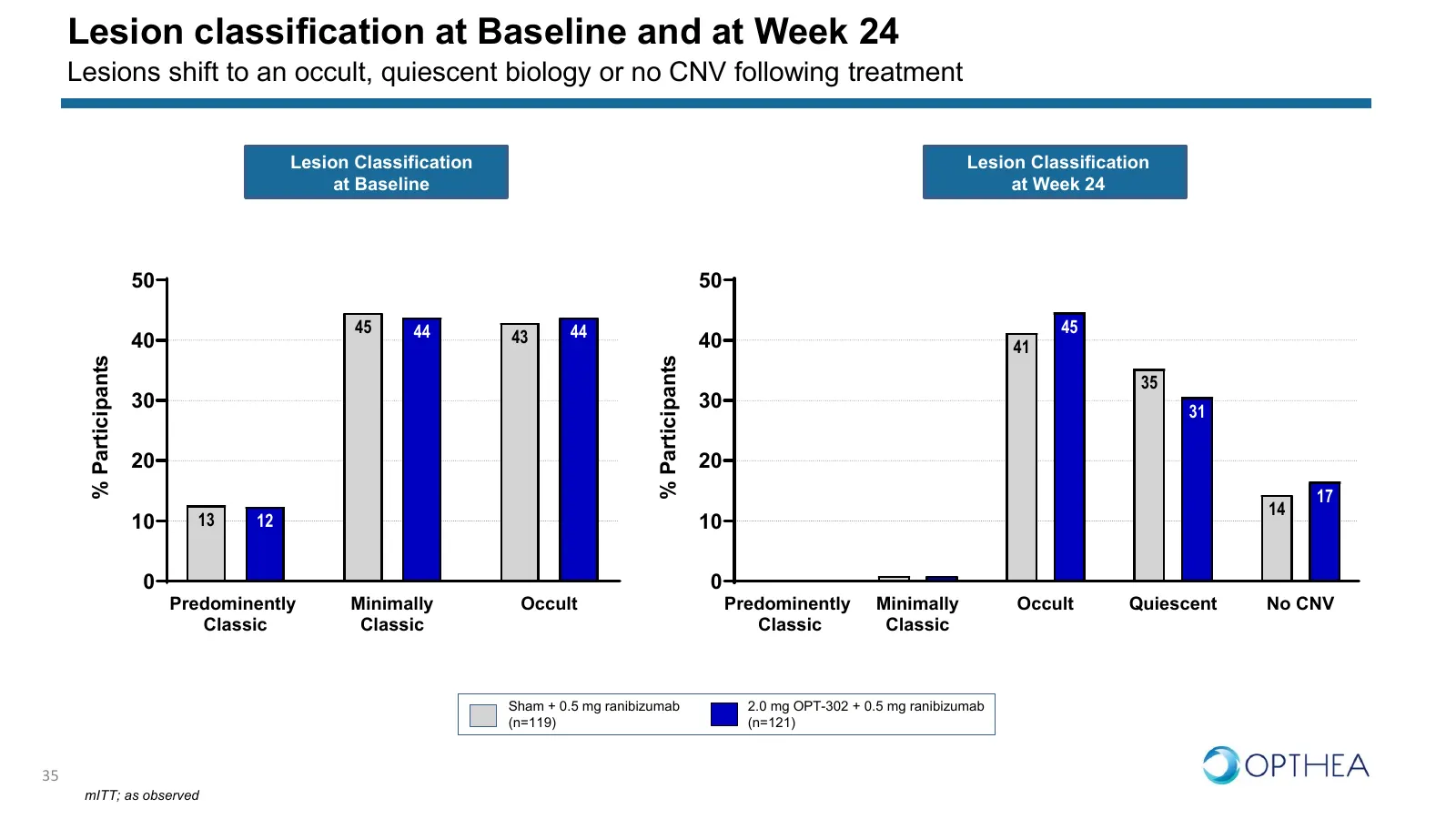
Slide 35: Lesion classification at Baseline and at Week 24
Lesion classification at Baseline and at Week 24 Lesions shift to an occult, quiescent biology or no CNV following treatment Lesion Classification Lesion Classification at Baseline at Week 24 50 50 45 44 44 45 40 43 40 41 % Participants % Participants 35 30 30 31 20 20 17 14 10 13 12 10 0 0 Predomin
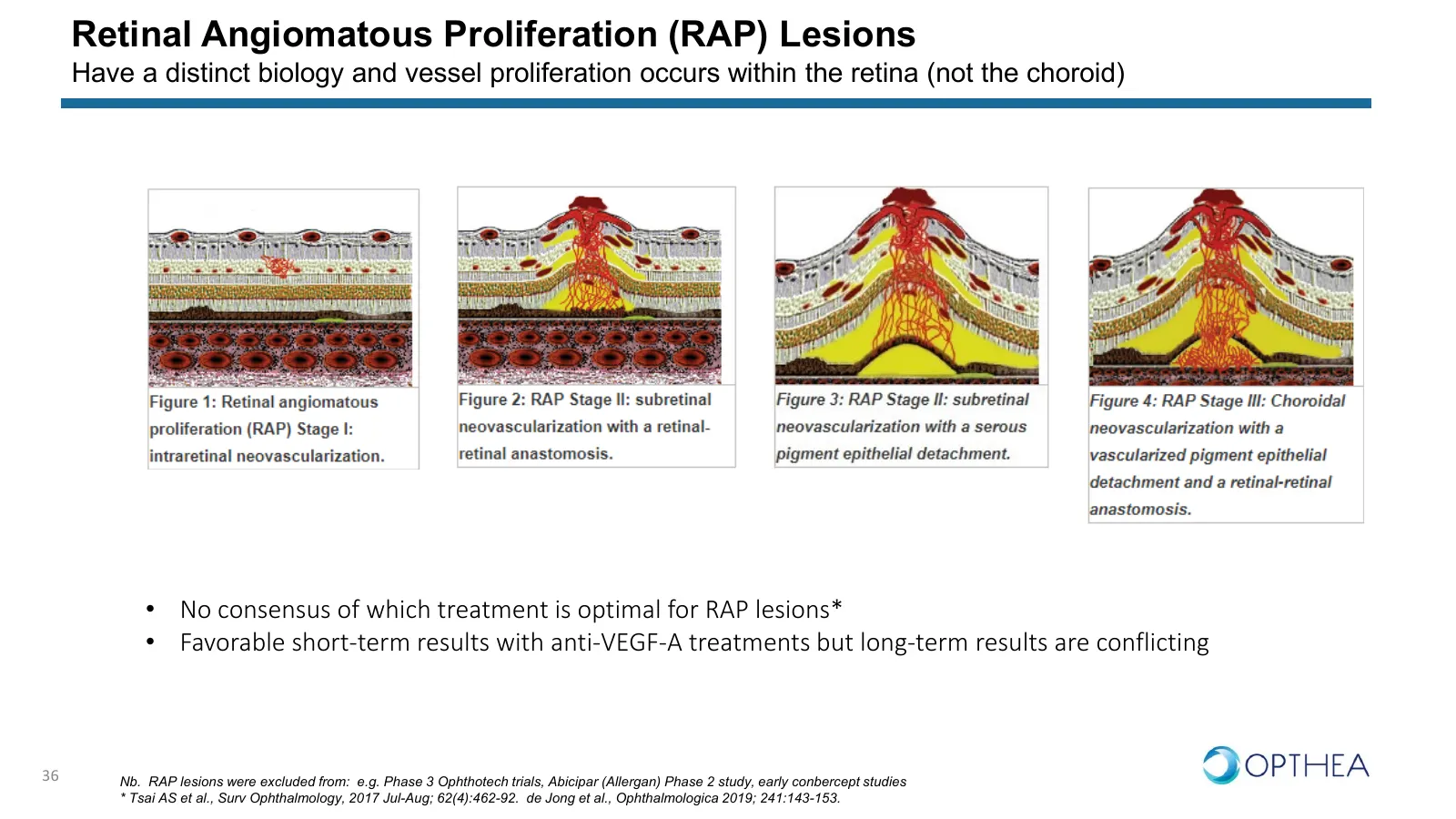
Slide 36: Retinal Angiomatous Proliferation (RAP) Lesions
Retinal Angiomatous Proliferation (RAP) Lesions Have a distinct biology and vessel proliferation occurs within the retina (not the choroid) • No consensus of which treatment is optimal for RAP lesions* • Favorable short-term results with anti-VEGF-A treatments but long-term results are conflicting 3
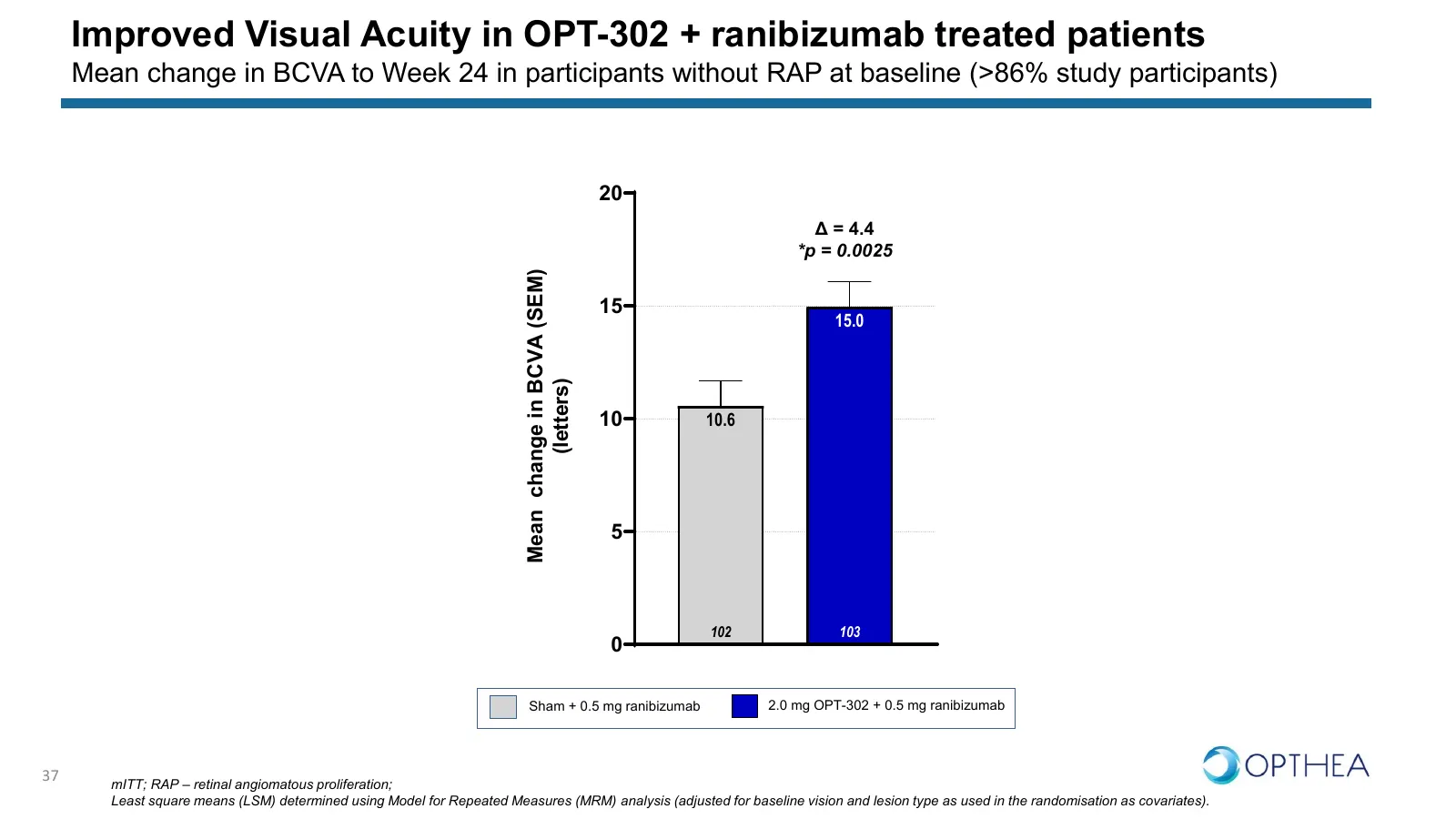
Slide 37: Improved Visual Acuity in OPT-302 + ranibizumab treated patients
Improved Visual Acuity in OPT-302 + ranibizumab treated patients Mean change in BCVA to Week 24 in participants without RAP at baseline (>86% study participants) 20 Δ = 4.4 *p = 0.0025 Mean change in BCVA (SEM) 15 15.0 (letters) 10 10.6 5 102 103 0 Sham + 0.5 mg ranibizumab 2.0 mg OPT-302 + 0.5 mg r
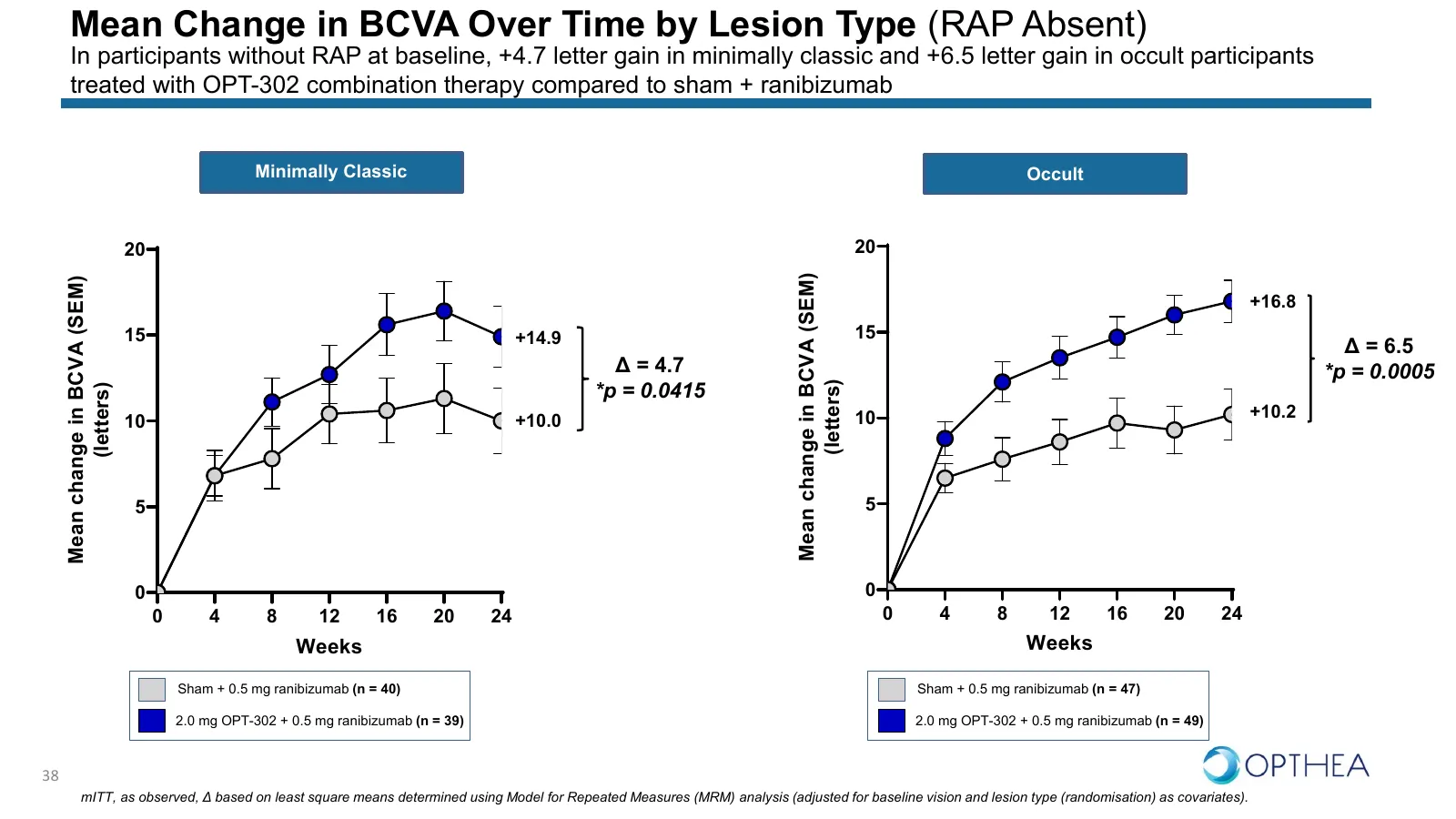
Slide 38: Mean Change in BCVA Over Time by Lesion Type (RAP Absent)
Mean Change in BCVA Over Time by Lesion Type (RAP Absent) In participants without RAP at baseline, +4.7 letter gain in minimally classic and +6.5 letter gain in occult participants treated with OPT-302 combination therapy compared to sham + ranibizumab Minimally Classic Occult 20 20 Mean change in B
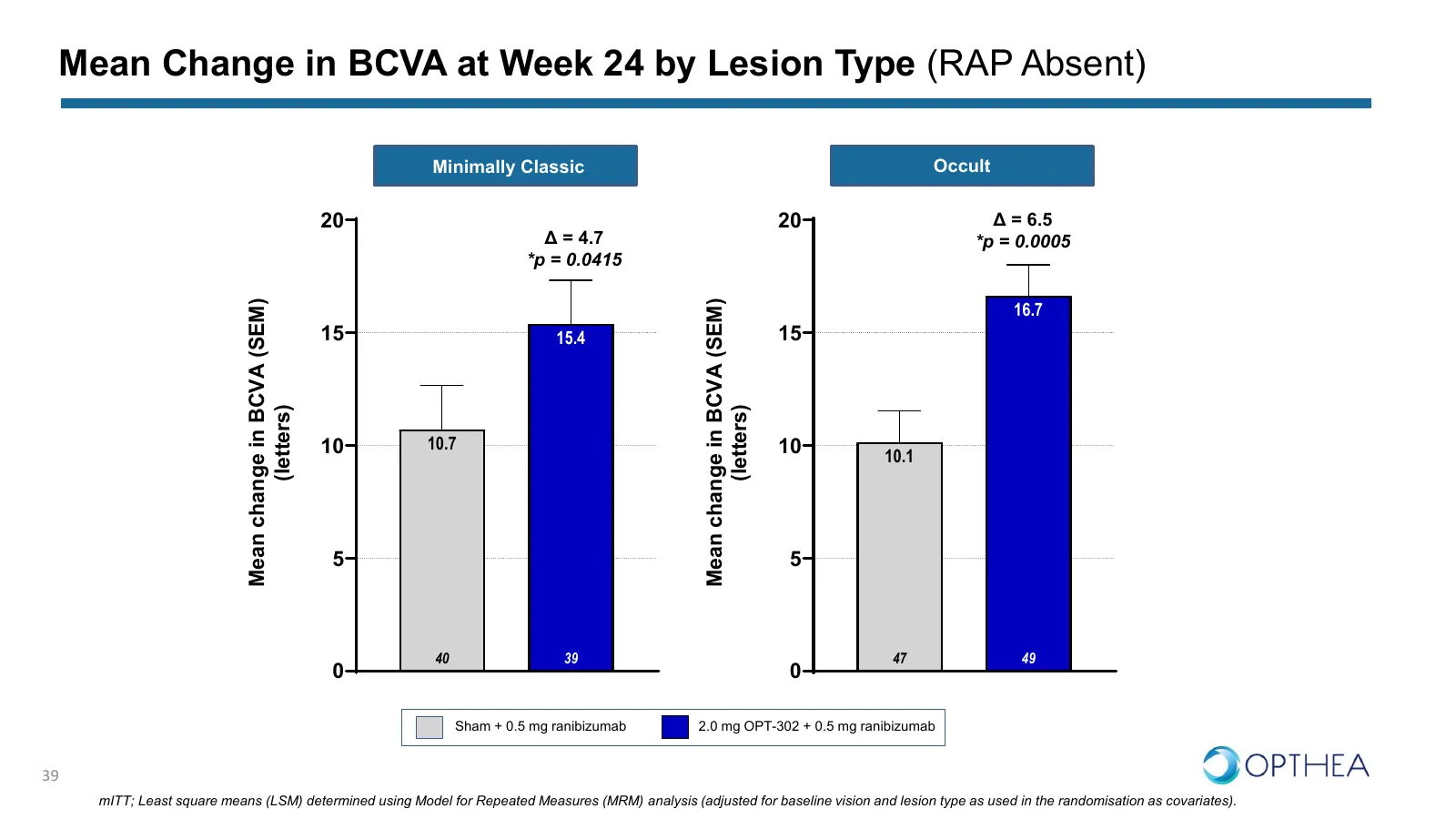
Slide 39: Mean Change in BCVA at Week 24 by Lesion Type (RAP Absent)
Mean Change in BCVA at Week 24 by Lesion Type (RAP Absent) Minimally Classic Occult 20 20 Δ = 6.5 Δ = 4.7 *p = 0.0005 *p = 0.0415 16.7 Mean change in BCVA (SEM) Mean change in BCVA (SEM) 15 15.4 15 (letters) (letters) 10 10.7 10 10.1 5 5 40 39 47 49 0 0 Sham + 0.5 mg ranibizumab 2.0 mg OPT-302 + 0.5
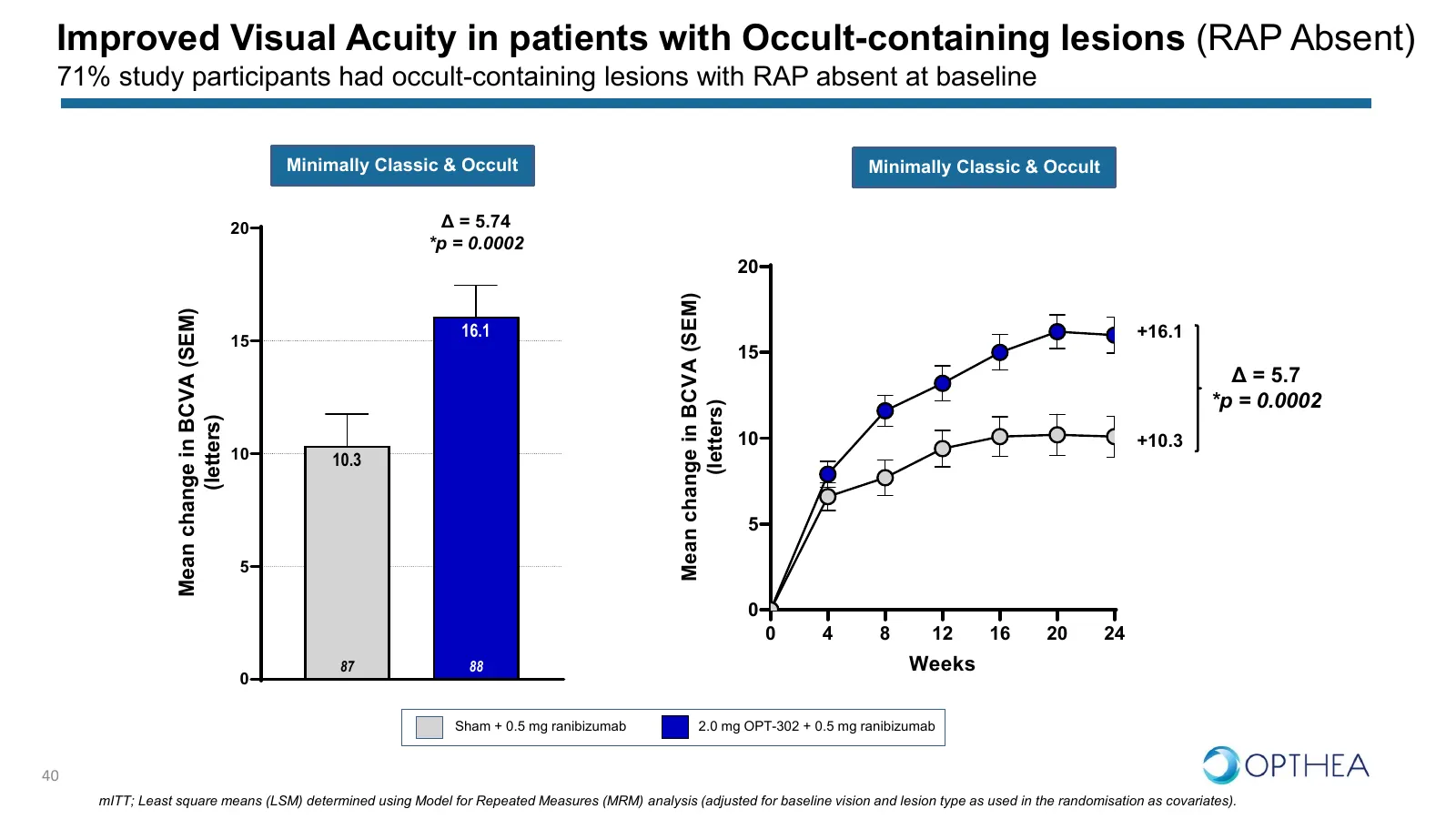
Slide 40: Improved Visual Acuity in patients with Occult-containing lesions (RAP Absent)
Improved Visual Acuity in patients with Occult-containing lesions (RAP Absent) 71% study participants had occult-containing lesions with RAP absent at baseline Minimally Classic & Occult Minimally Classic & Occult 20 Δ = 5.74 *p = 0.0002 20 Mean change in BCVA (SEM) Mean change in BCVA (SEM) 16.1 +1
Slide 41: Safety – Adverse Events (AEs)
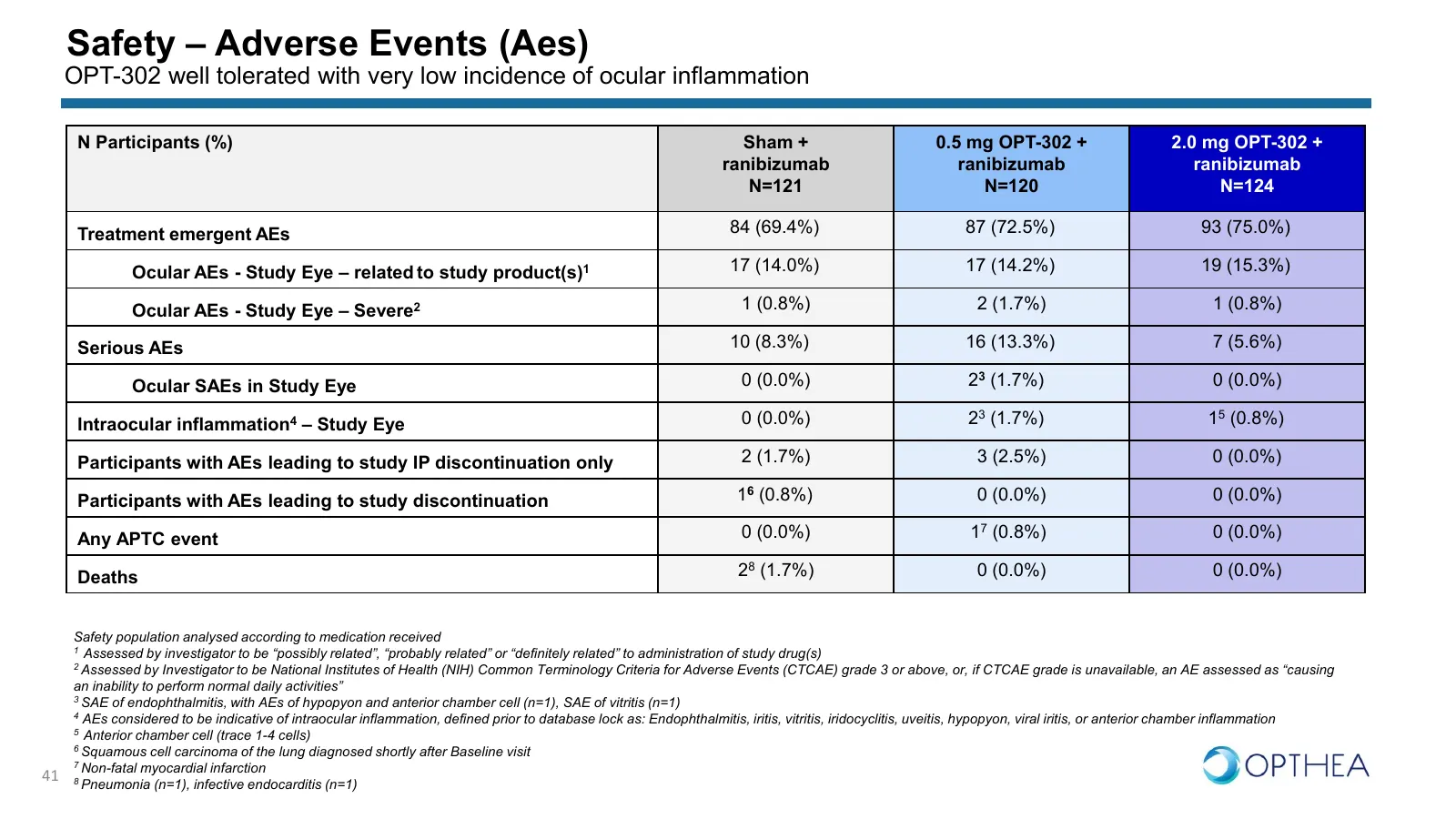
Safety – Adverse Events (Aes) OPT-302 well tolerated with very low incidence of ocular inflammation N Participants (%) Sham + 0.5 mg OPT-302 + 2.0 mg OPT-302 + ranibizumab ranibizumab ranibizumab N=121 N=120 N=124 Treatment emergent AEs 84 (69.4%) 87 (72.5%) 93 (75.0%) Ocular AEs - Study Eye – relat
Slide 42: Conclusions – OPT-302 Phase 2b wet AMD Trial
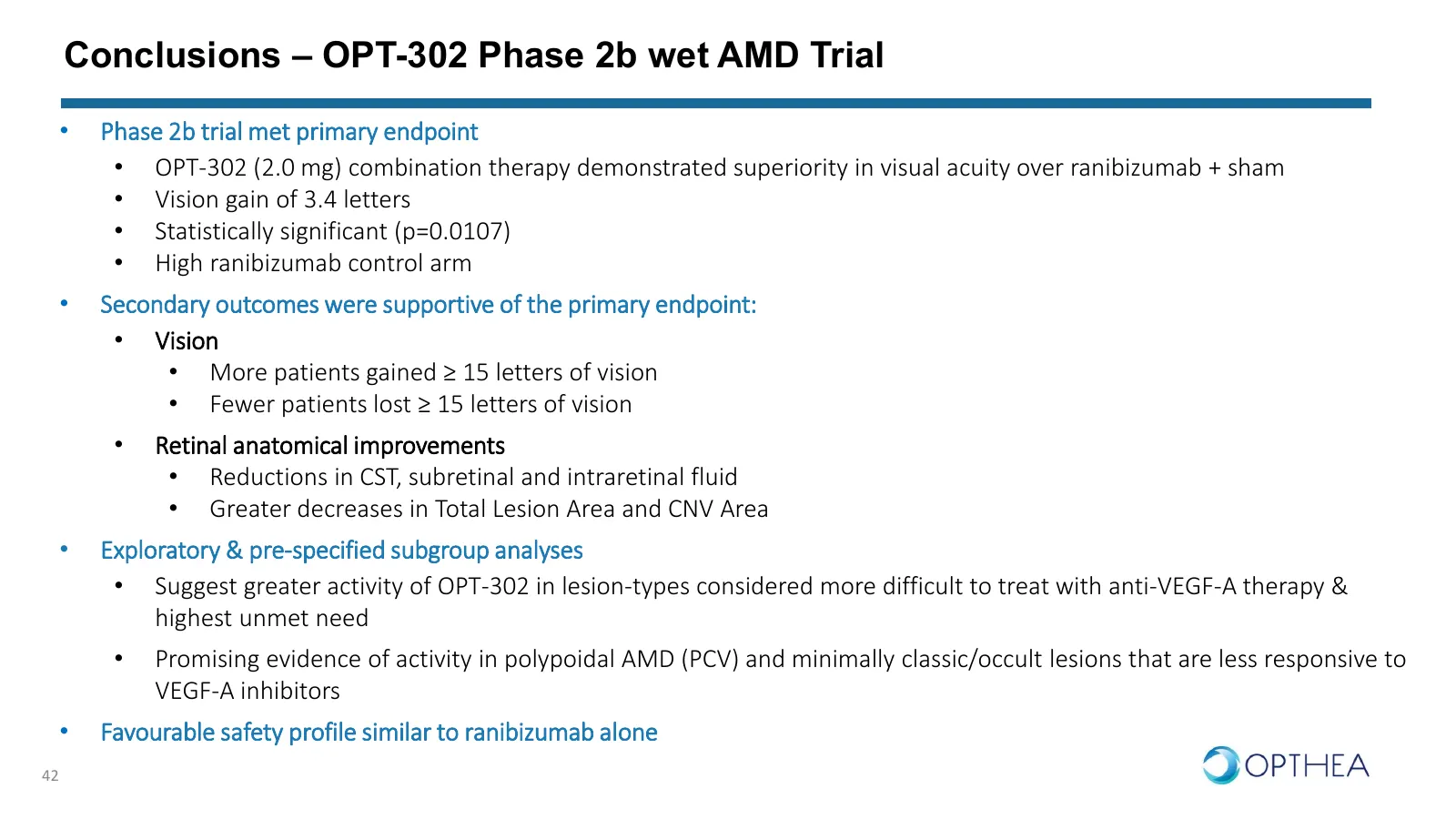
Conclusions – OPT-302 Phase 2b wet AMD Trial • Phase 2b trial met primary endpoint • OPT-302 (2.0 mg) combination therapy demonstrated superiority in visual acuity over ranibizumab + sham • Vision gain of 3.4 letters • Statistically significant (p=0.0107) • High ranibizumab control arm • Secondary o
Slide 43: Ongoing Clinical Trials: Phase 1b/2a DME
Ongoing Clinical Trials Phase 1b/2a DME Phase 1b/2a study of OPT-302 in combination with aflibercept for persistent central-involved diabetic macular edema 43
Slide 44: The Majority of DME Patients Sub-Optimally Respond to Current Therapies
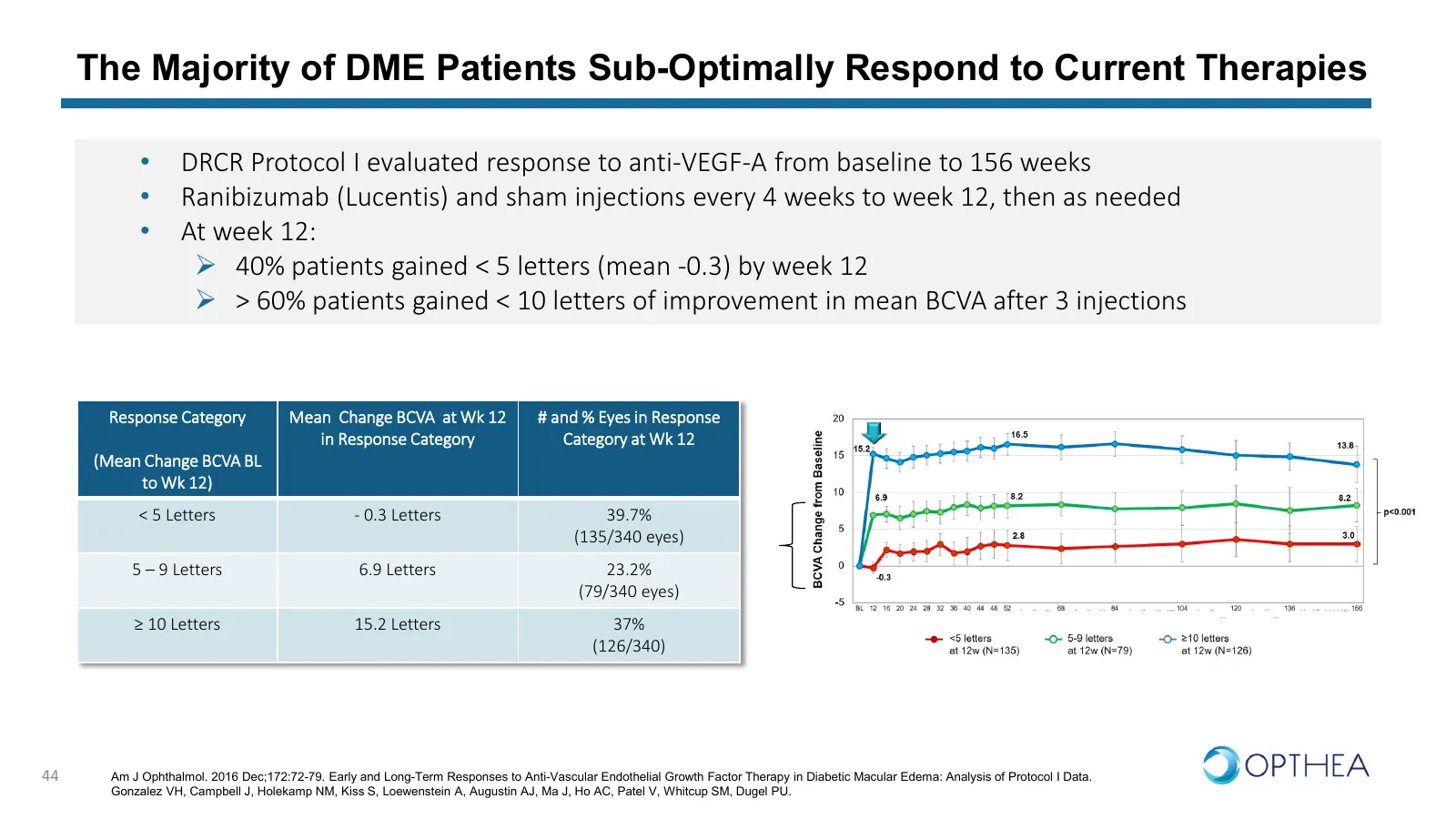
The Majority of DME Patients Sub-Optimally Respond to Current Therapies • DRCR Protocol I evaluated response to anti-VEGF-A from baseline to 156 weeks • Ranibizumab (Lucentis) and sham injections every 4 weeks to week 12, then as needed • At week 12: 40% patients gained < 5 letters (mean -0.3) by
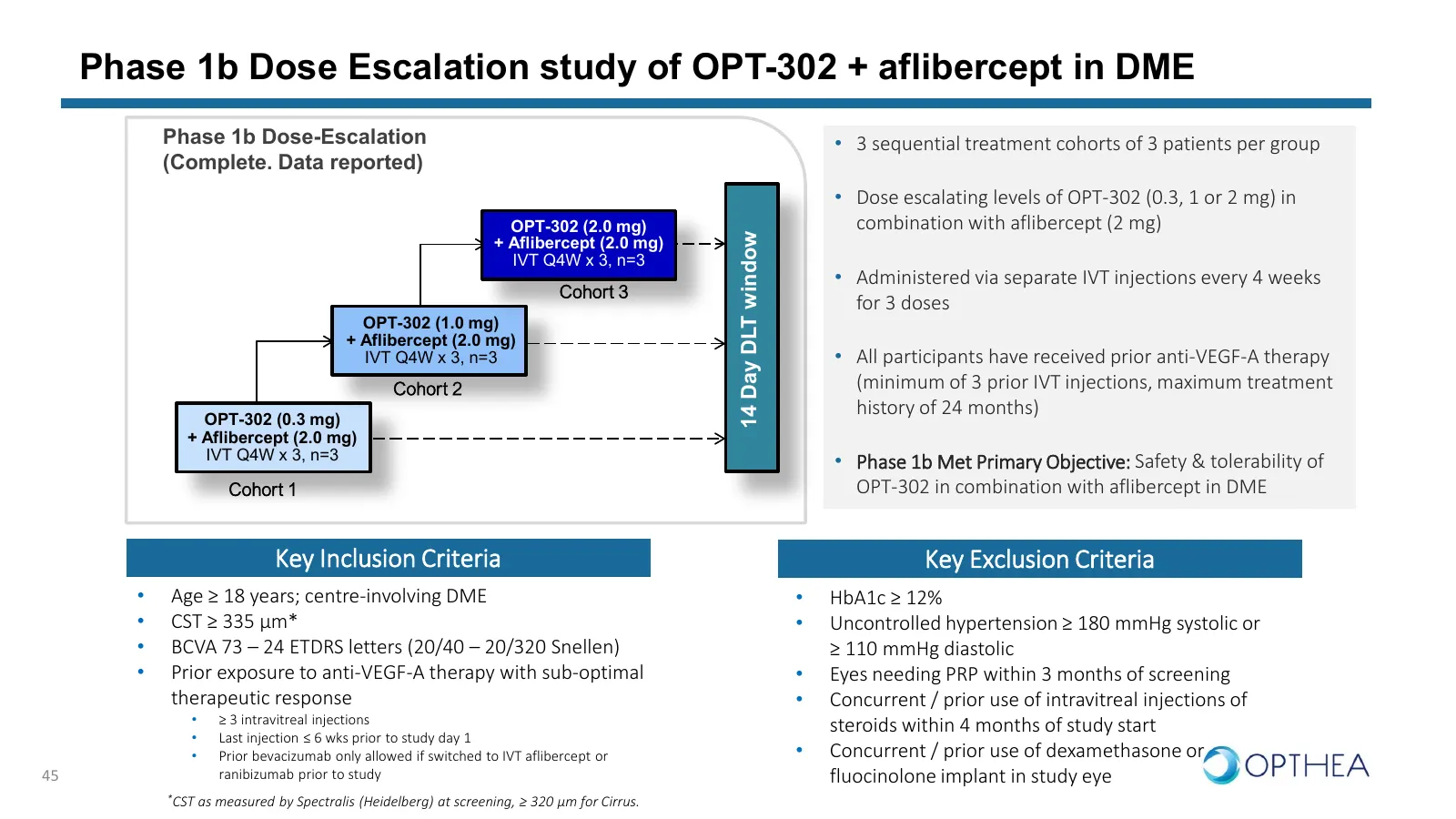
Slide 45: Phase 1b Dose Escalation study of OPT-302 + aflibercept in DME
Phase 1b Dose Escalation study of OPT-302 + aflibercept in DME Phase 1b Dose-Escalation • 3 sequential treatment cohorts of 3 patients per group (Complete. Data reported) • Dose escalating levels of OPT-302 (0.3, 1 or 2 mg) in OPT-302 (2.0 mg) combination with aflibercept (2 mg) + Aflibercept (2.0 m
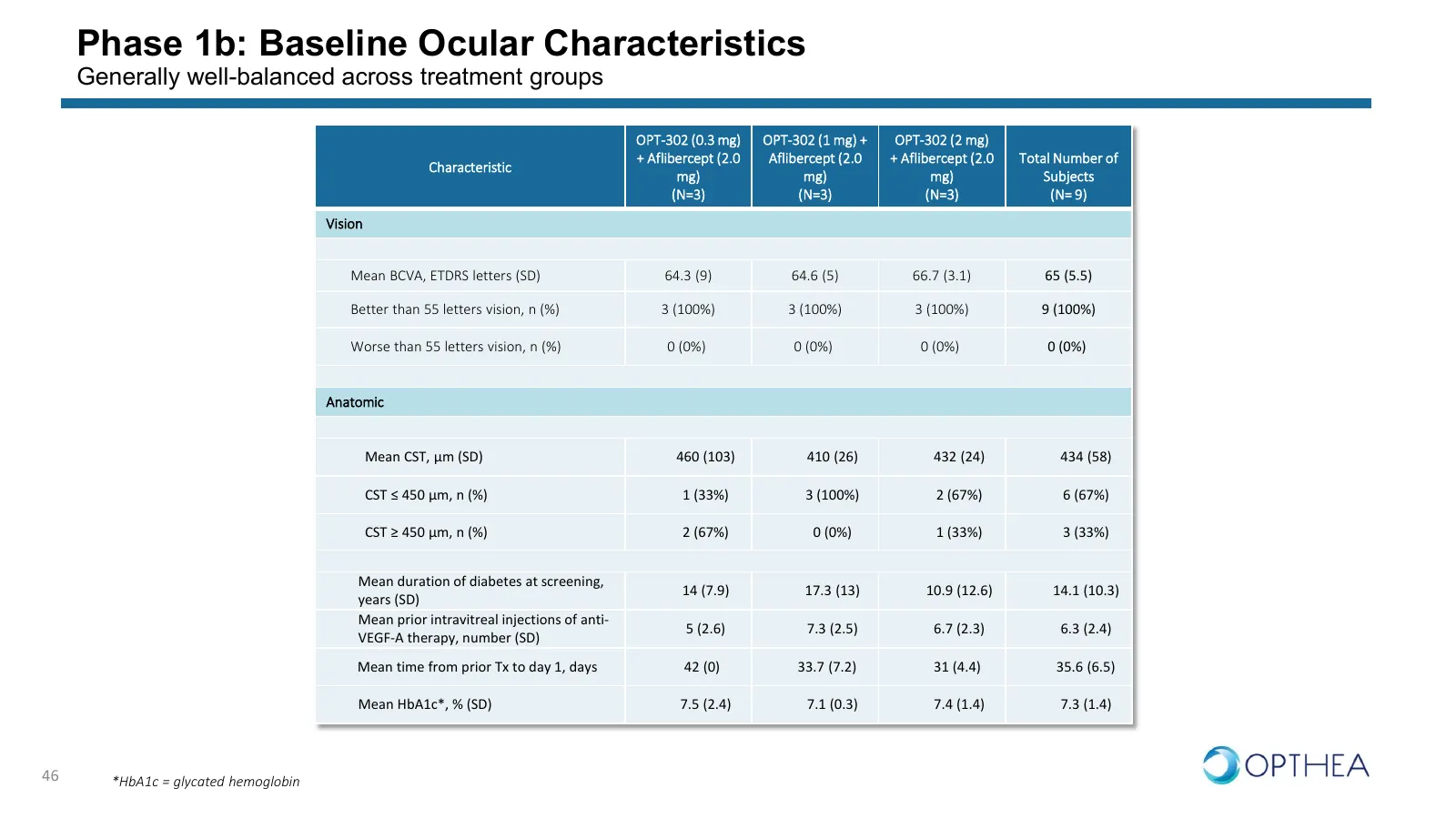
Slide 46: Phase 1b: Baseline Ocular Characteristics
Phase 1b: Baseline Ocular Characteristics Generally well-balanced across treatment groups OPT-302 (0.3 mg) OPT-302 (1 mg) + OPT-302 (2 mg) + Aflibercept (2.0 Aflibercept (2.0 + Aflibercept (2.0 Total Number of Characteristic mg) mg) mg) Subjects (N=3) (N=3) (N=3) (N= 9) Vision Mean BCVA, ETDRS lette
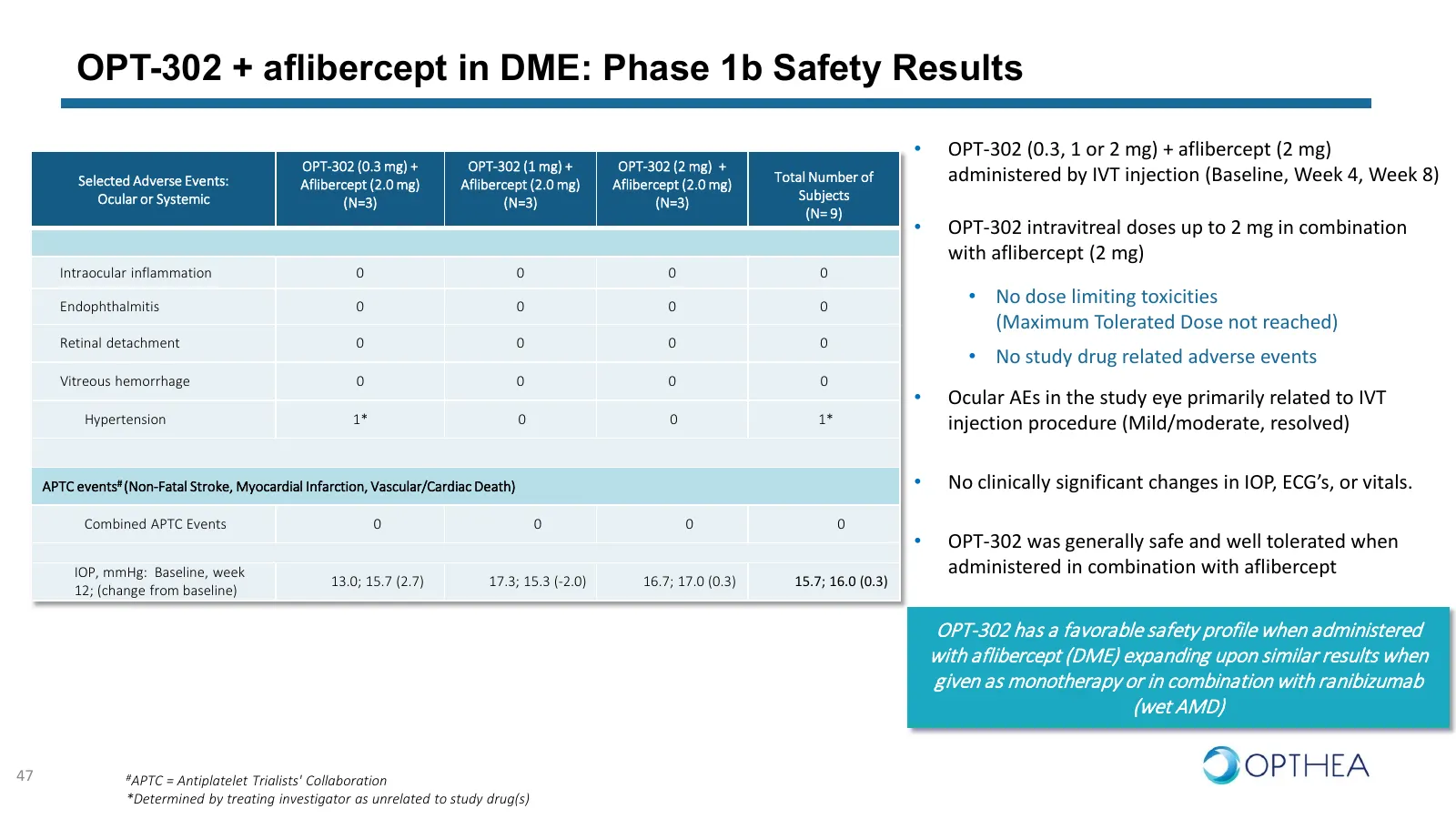
Slide 47: OPT-302 + aflibercept in DME: Phase 1b Safety Results
OPT-302 + aflibercept in DME: Phase 1b Safety Results • OPT-302 (0.3, 1 or 2 mg) + aflibercept (2 mg) OPT-302 (0.3 mg) + OPT-302 (1 mg) + OPT-302 (2 mg) + Selected Adverse Events: Aflibercept (2.0 mg) Aflibercept (2.0 mg) Aflibercept (2.0 mg) Total Number of administered by IVT injection (Baseline,
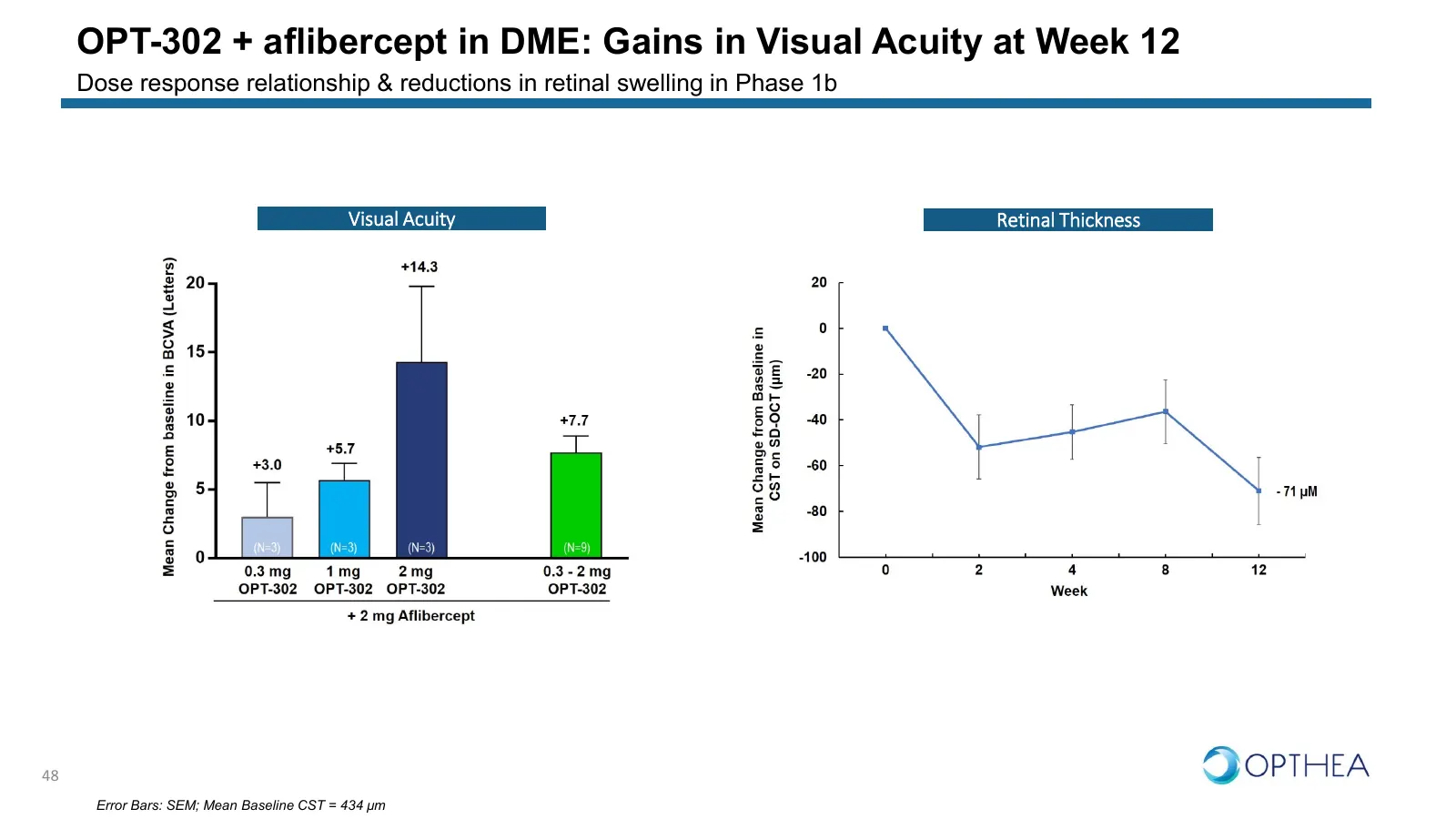
Slide 48: OPT-302 + aflibercept in DME: Gains in Visual Acuity at Week 12
OPT-302 + aflibercept in DME: Gains in Visual Acuity at Week 12 Dose response relationship & reductions in retinal swelling in Phase 1b Visual Acuity Retinal Thickness 48 Error Bars: SEM; Mean Baseline CST = 434 µm
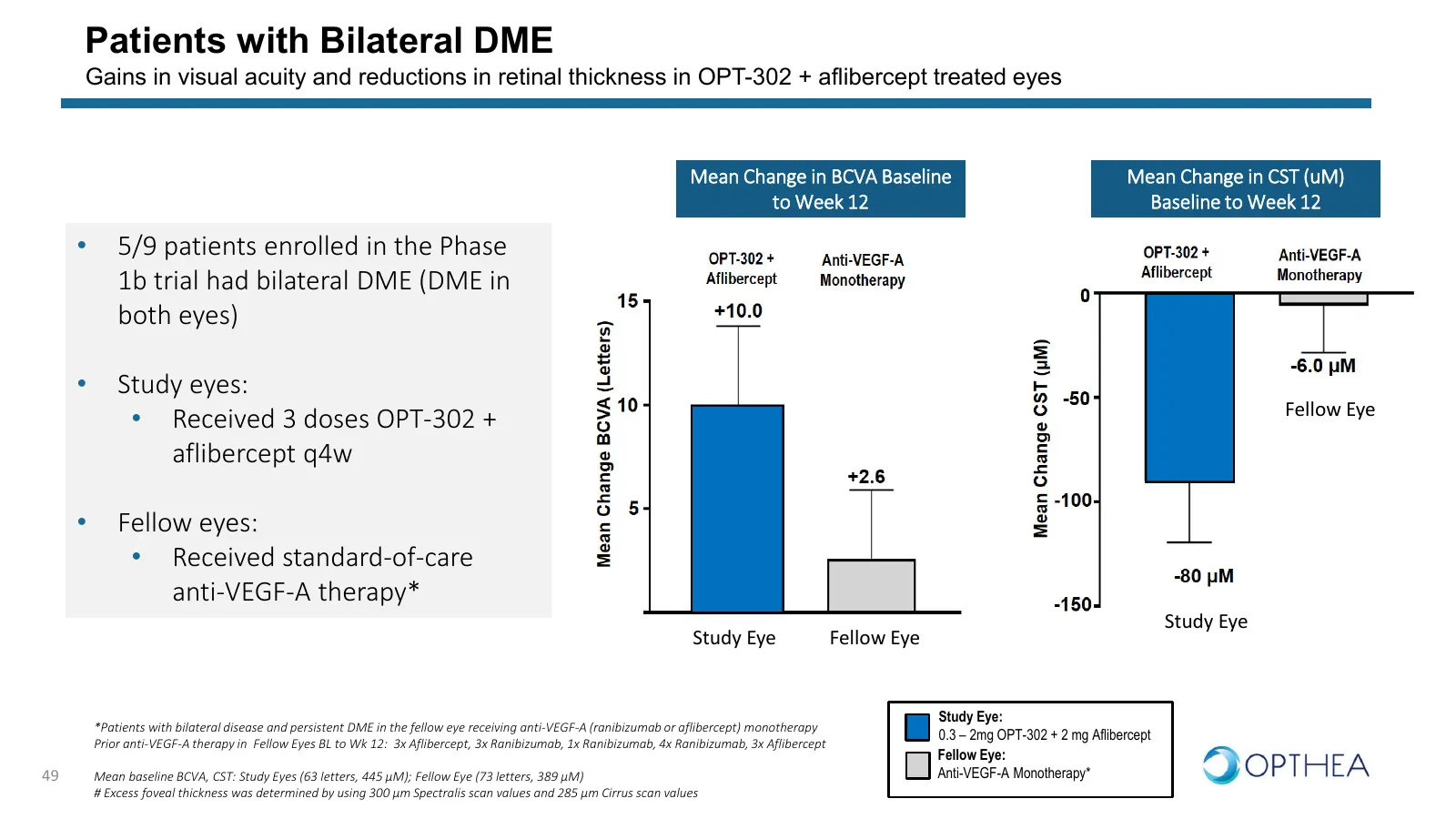
Slide 49: Patients with Bilateral DME
Patients with Bilateral DME Gains in visual acuity and reductions in retinal thickness in OPT-302 + aflibercept treated eyes Mean Change in BCVA Baseline Mean Change in CST (uM) to Week 12 Baseline to Week 12 • 5/9 patients enrolled in the Phase 1b trial had bilateral DME (DME in both eyes) • Study
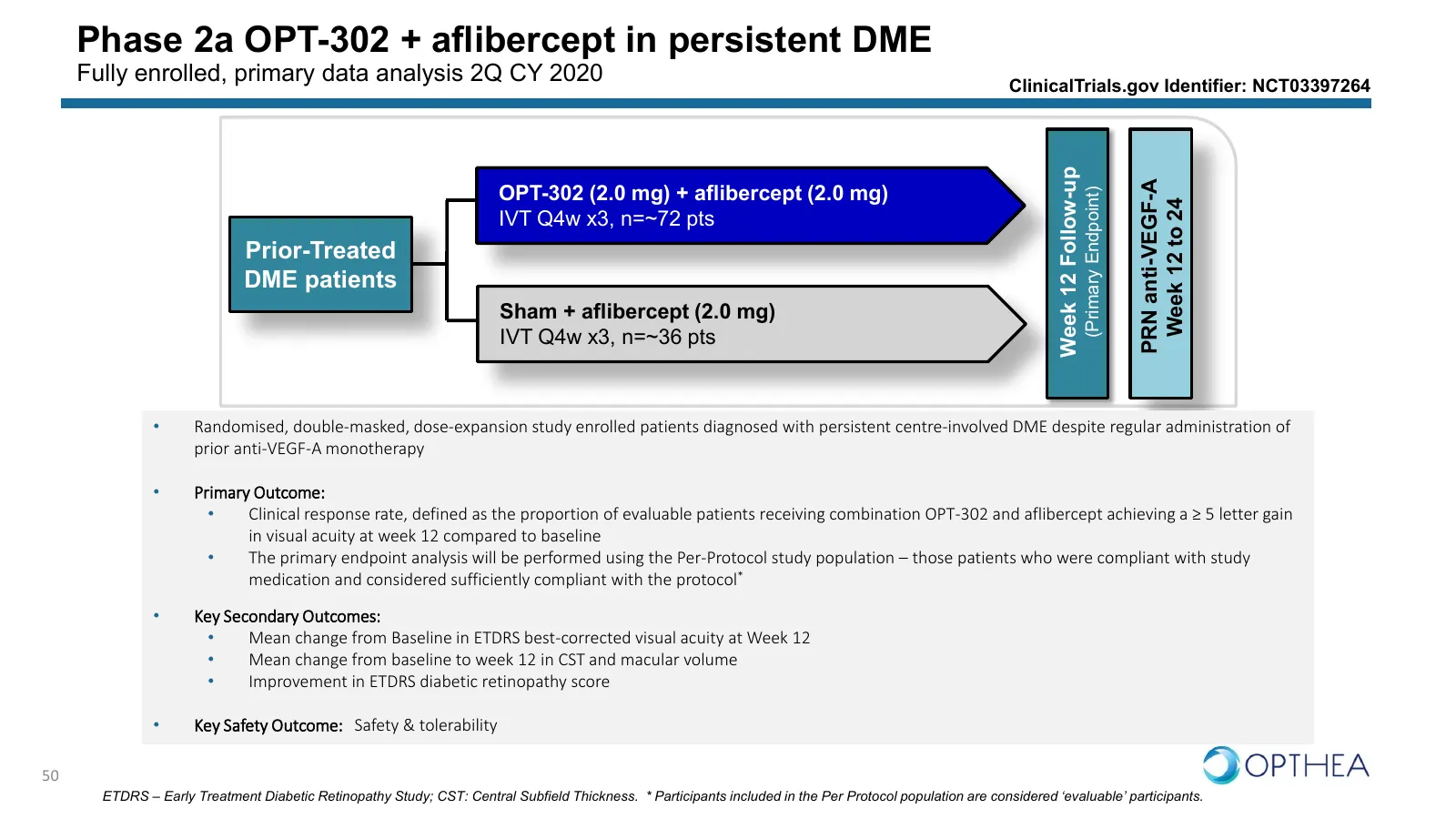
Slide 50: Phase 2a OPT-302 + aflibercept in persistent DME
Phase 2a OPT-302 + aflibercept in persistent DME Fully enrolled, primary data analysis 2Q CY 2020 ClinicalTrials.gov Identifier: NCT03397264 Week 12 Follow-up OPT-302 (2.0 mg) + aflibercept (2.0 mg) PRN anti-VEGF-A (Primary Endpoint) Week 12 to 24 IVT Q4w x3, n=~72 pts subjects complete 12 weeks Pri
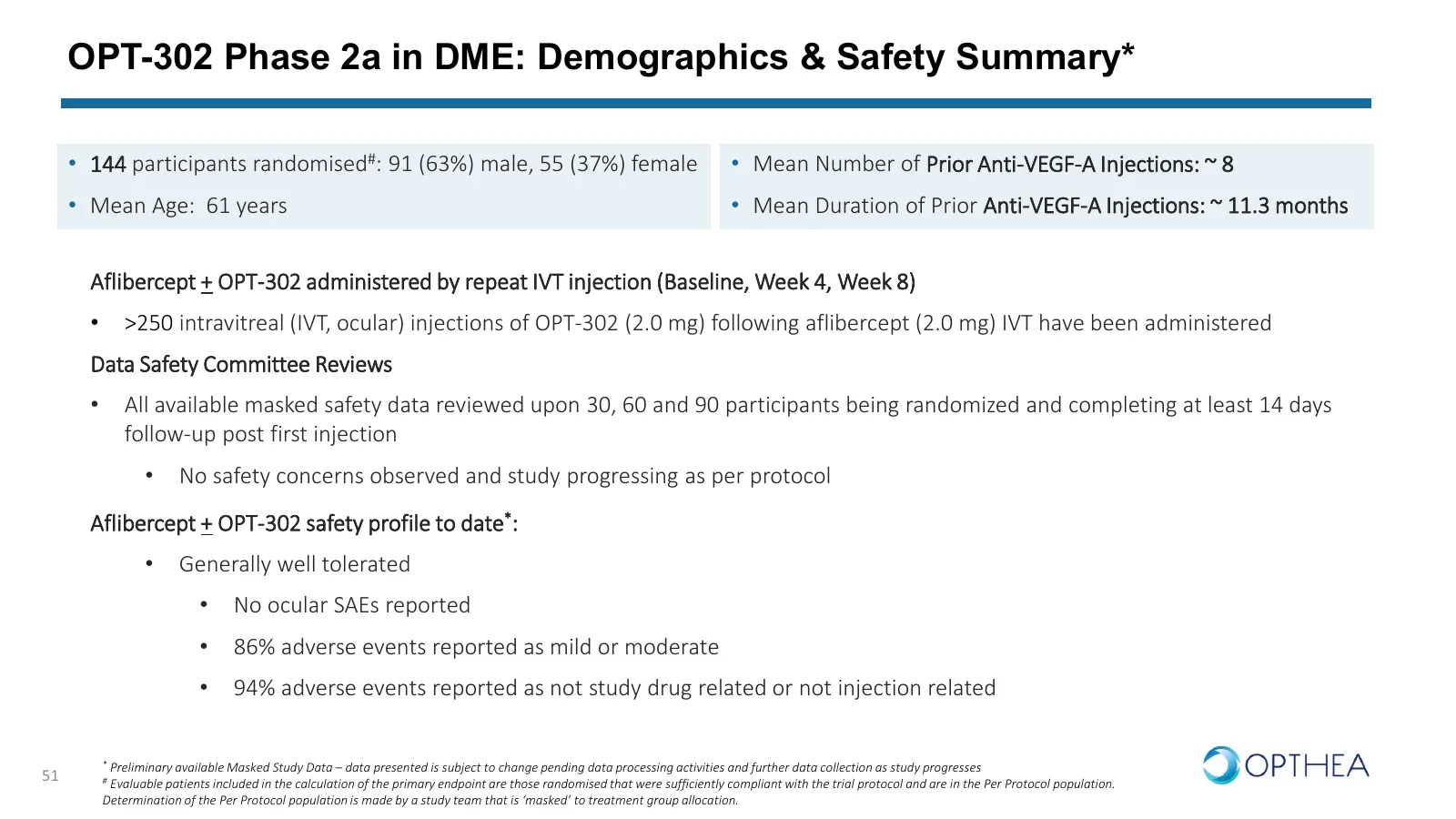
Slide 51: OPT-302 Phase 2a in DME: Demographics & Safety Summary
OPT-302 Phase 2a in DME: Demographics & Safety Summary* • 144 participants randomised#: 91 (63%) male, 55 (37%) female • Mean Number of Prior Anti-VEGF-A Injections: ~ 8 • Mean Age: 61 years • Mean Duration of Prior Anti-VEGF-A Injections: ~ 11.3 months Aflibercept + OPT-302 administered by repeat I
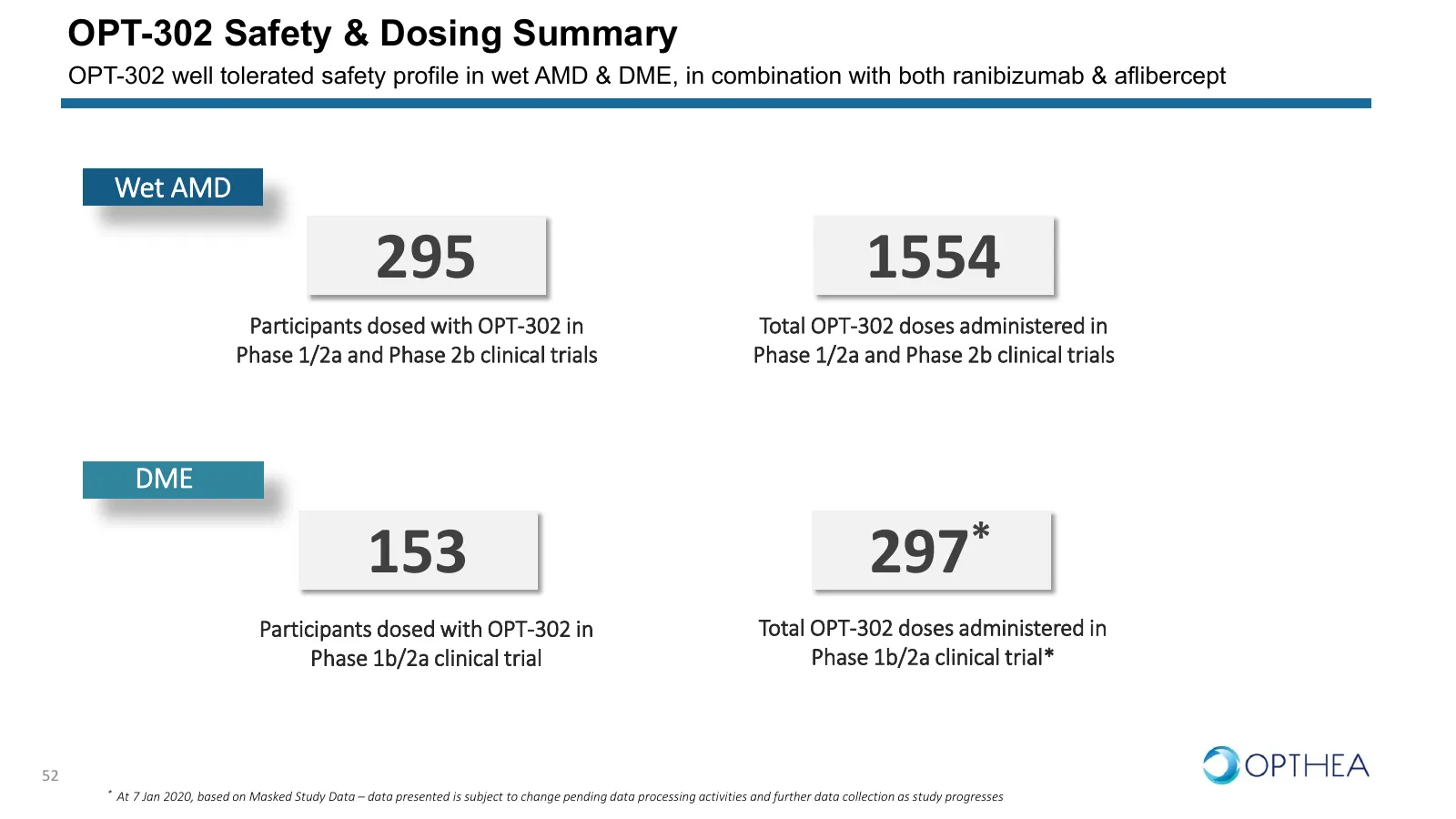
Slide 52: OPT-302 Safety & Dosing Summary
OPT-302 Safety & Dosing Summary OPT-302 well tolerated safety profile in wet AMD & DME, in combination with both ranibizumab & aflibercept Wet AMD 295 1554 Participants dosed with OPT-302 in Total OPT-302 doses administered in Phase 1/2a and Phase 2b clinical trials Phase 1/2a and Phase 2b clinical
Slide 53: Planned: Pivotal Phase Program
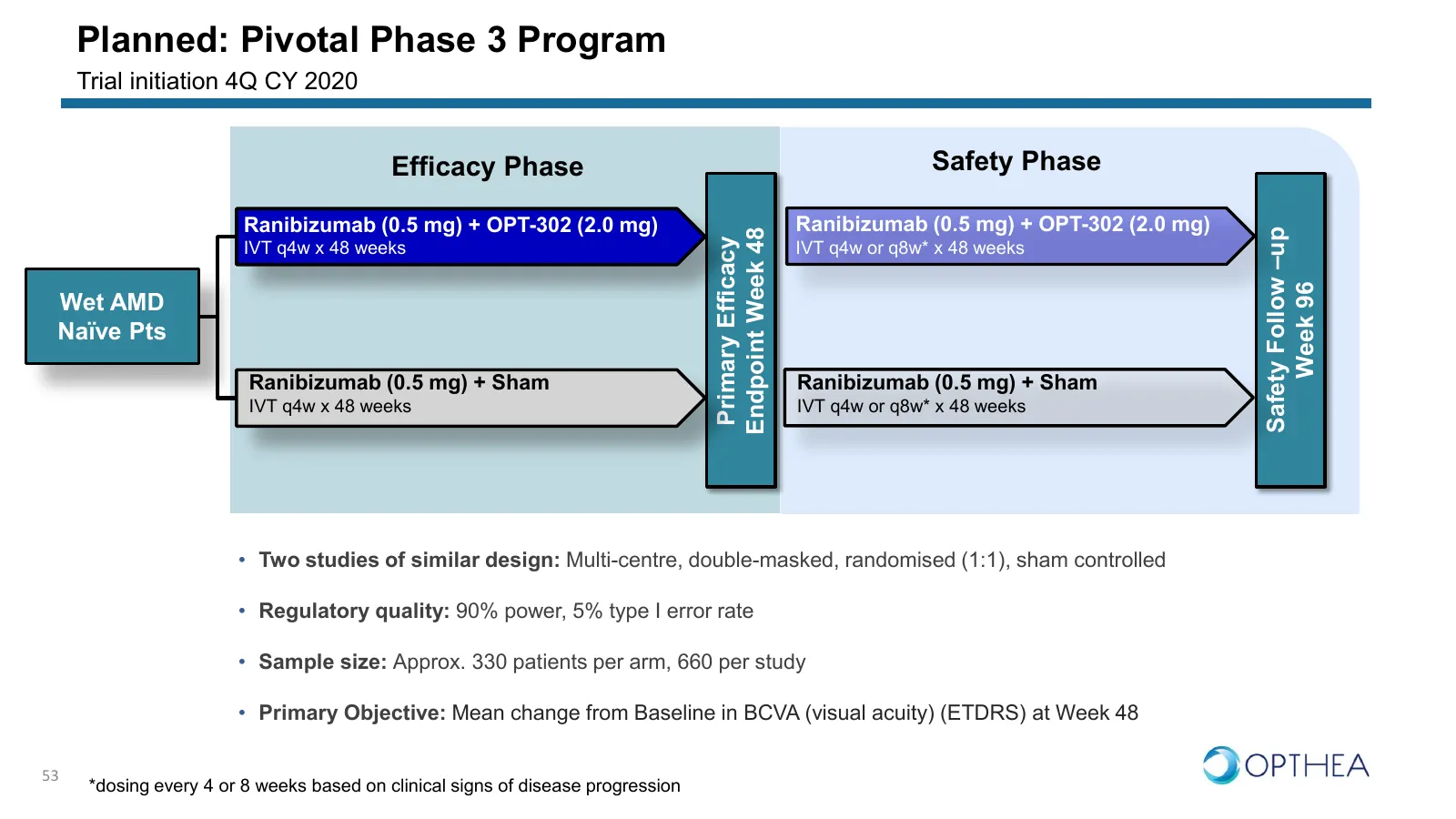
Planned: Pivotal Phase 3 Program Trial initiation 4Q CY 2020 Efficacy Phase Safety Phase Ranibizumab (0.5 mg) + OPT-302 (2.0 mg) Ranibizumab (0.5 mg) + OPT-302 (2.0 mg) Endpoint Week 48 Safety Follow –up IVT q4w x 48 weeks IVT q4w or q8w* x 48 weeks Primary Efficacy Week 96 Wet AMD Naïve Pts Ranibiz
Slide 54: Opthea: Upcoming Milestones
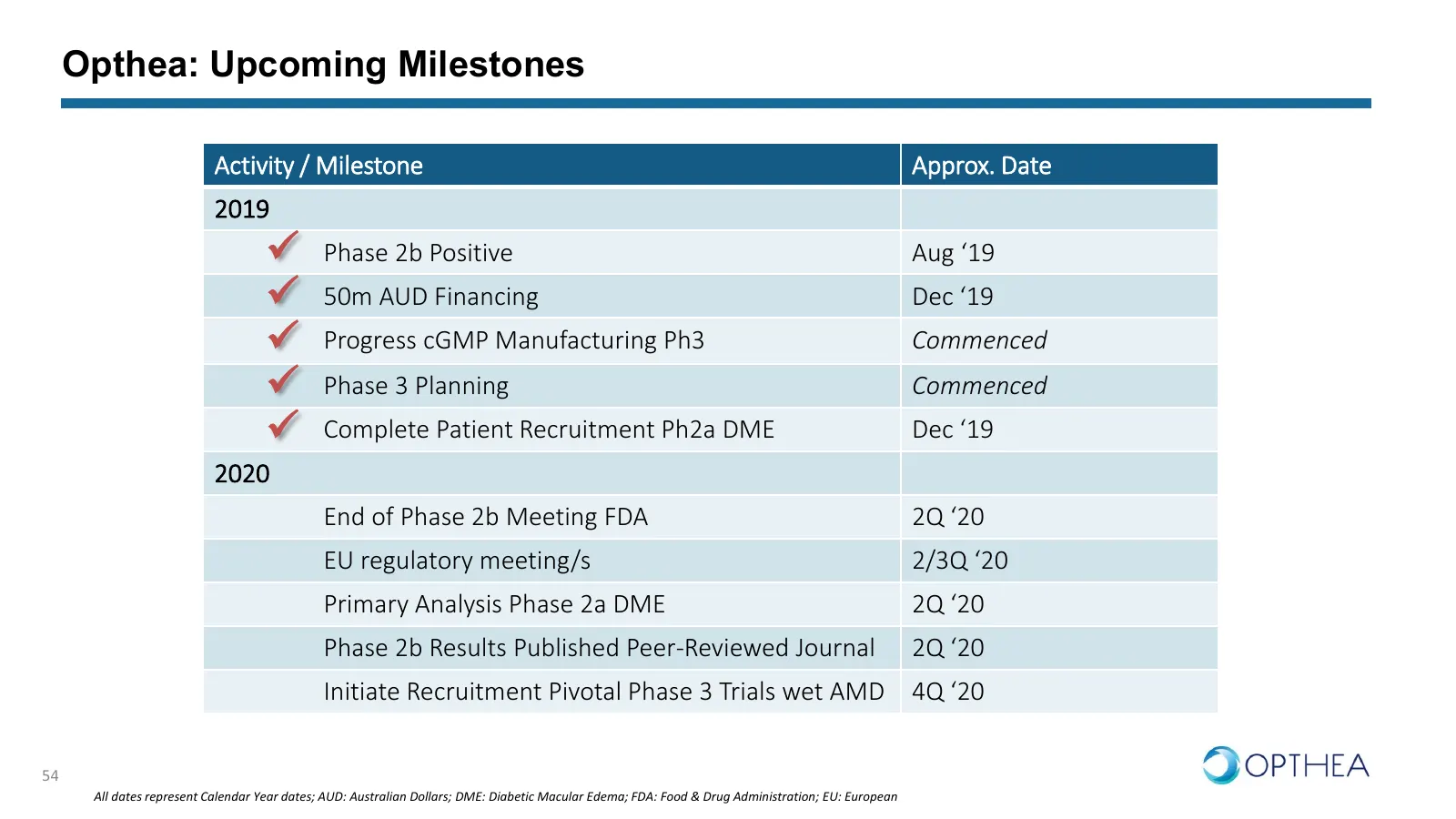
Opthea: Upcoming Milestones Activity / Milestone Approx. Date 2019 Phase 2b Positive Aug ‘19 50m AUD Financing Dec ‘19 Progress cGMP Manufacturing Ph3 Commenced Phase 3 Planning Commenced Complete Patient Recruitment Ph2a DME Dec ‘19 2020 End of Phase 2b Meeting FDA 2Q ‘20 EU regulatory me
Slide 55: Opthea – Developing OPT-302 for Eye Diseases
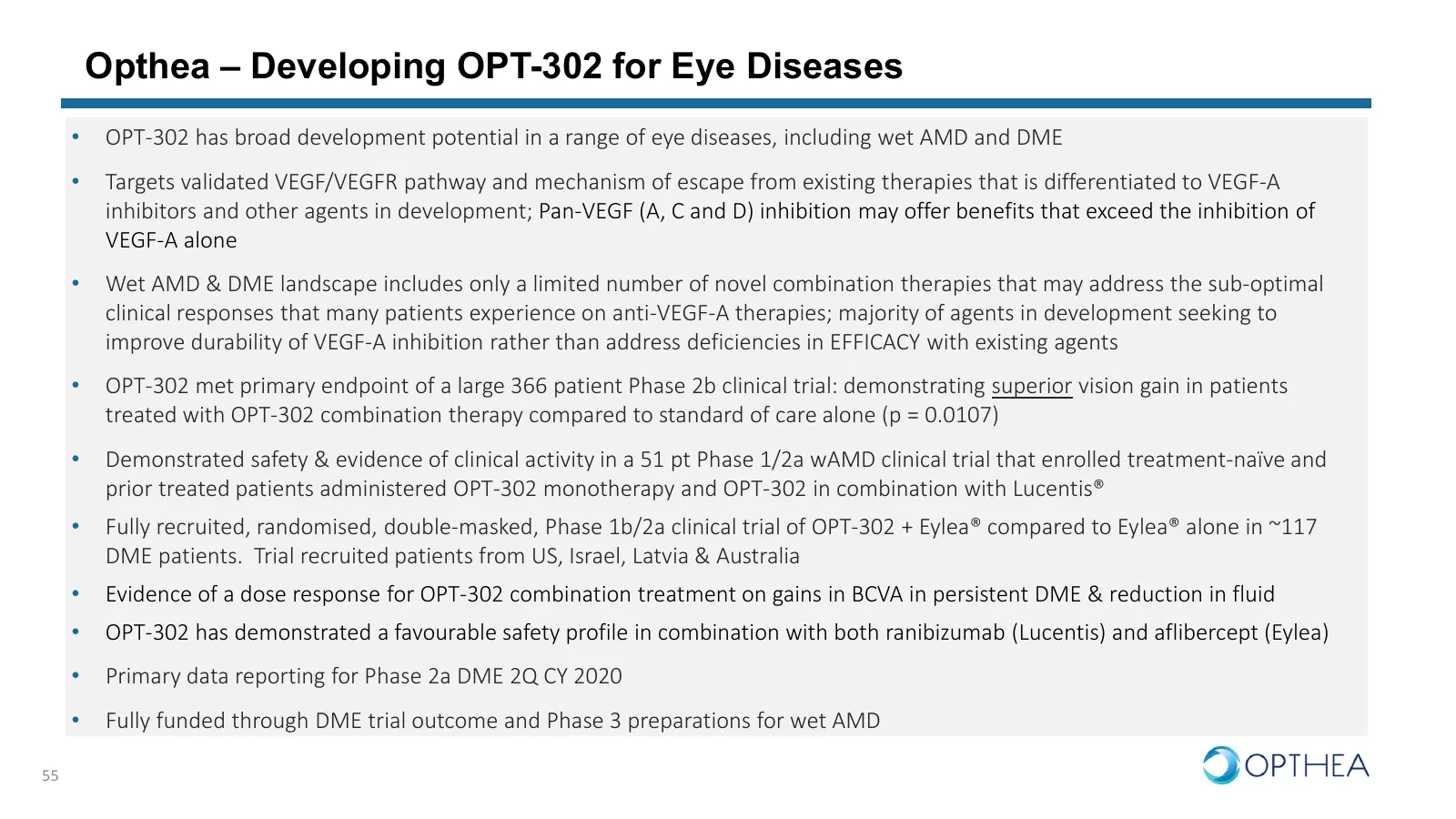
Opthea – Developing OPT-302 for Eye Diseases • OPT-302 has broad development potential in a range of eye diseases, including wet AMD and DME • Targets validated VEGF/VEGFR pathway and mechanism of escape from existing therapies that is differentiated to VEGF-A inhibitors and other agents in developm
Slide 56: OPT-302 Intellectual Property
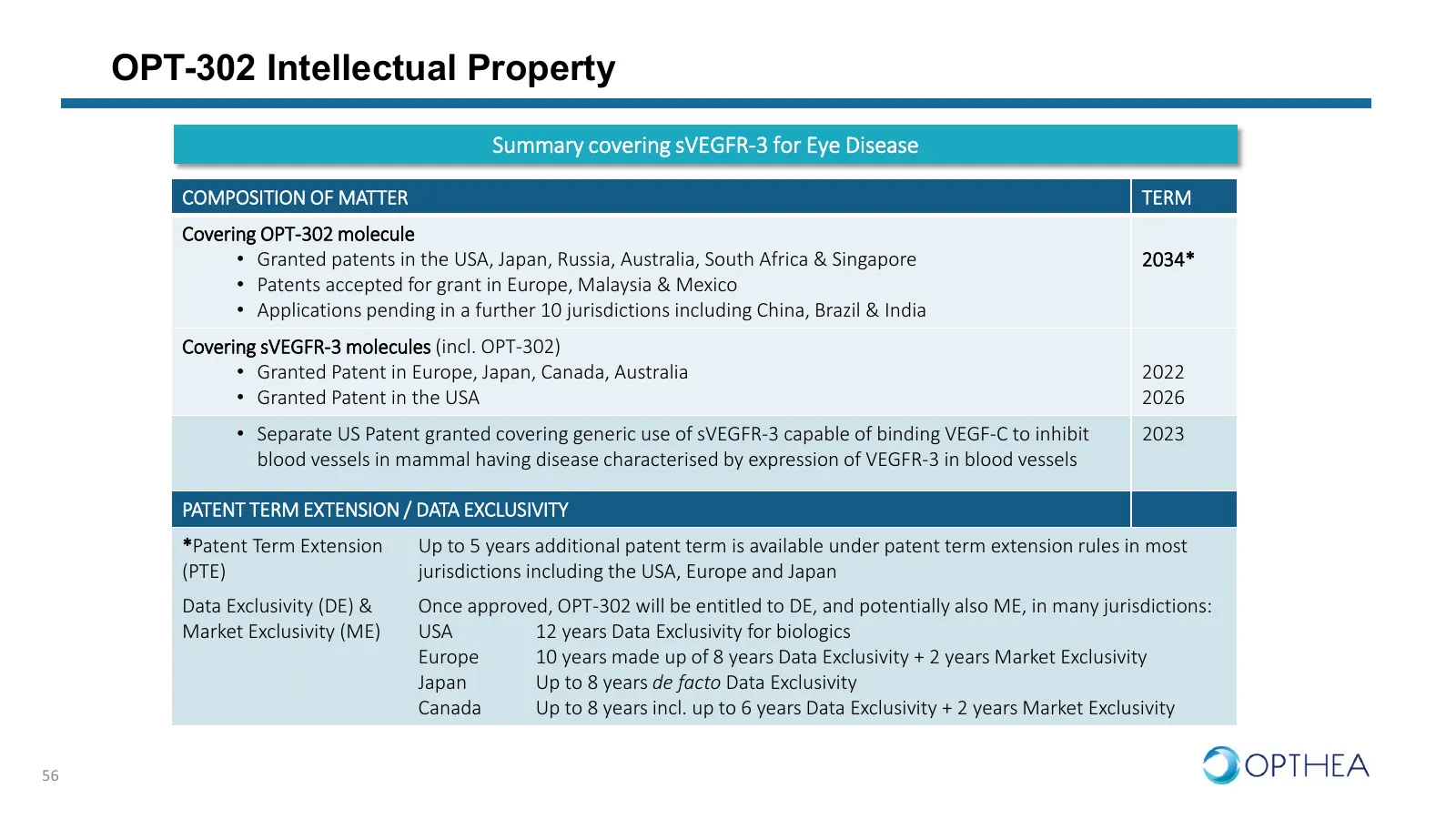
OPT-302 Intellectual Property Summary covering sVEGFR-3 for Eye Disease COMPOSITION OF MATTER TERM Covering OPT-302 molecule • Granted patents in the USA, Japan, Russia, Australia, South Africa & Singapore 2034* • Patents accepted for grant in Europe, Malaysia & Mexico • Applications pending in a fu

Slide 57: Megan Baldwin, CEO & Managing Director
Megan Baldwin CEO & Managing Director T +61 (3) 9826 0399 E megan.baldwin@opthea.com Suite 0403, Level 4, 650 Chapel Street, South Yarra 3141 Victoria Australia www.opthea.com
Source: Internet Archive copy of opthea.com
More decks from Opthea Limited
 Investor Presentation (June 2026)27 slides · Jun 12, 2026
 Corporate Update (December 2025)20 slides · Dec 17, 2025
 Corporate Update (August 2025)31 slides · Aug 20, 2025
 Investor Day (January 2025)53 slides · Jan 29, 2025
 Investor Presentation (January 2025)33 slides · Jan 14, 2025
 Investor Presentation (November 2024)30 slides · Nov 19, 2024