Nektar Therapeutics · NASDAQ:NKTR
Nektar Therapeutics — SITC 2018
47 slides from Nektar Therapeutics's conference presentation, Nov 10, 2018

Slide 1: SITC 2018 Nektar Therapeutics Investor & Analyst Call with Melanoma Specialists
SITC 2018 Nektar Therapeutics Investor & Analyst Call with Melanoma Specialists November 10, 2018
Slide 2: Forward-looking statements
This presentation includes forward-looking statements regarding Nektar’s proprietary drug candidates, the timing of the start and conclusion of ongoing or planned clinical trials, the timing and outcome of regulatory decisions, and future availability of clinical trial data. Actual results could dif

Slide 3: Today's Speakers
Today’s Speakers Dr. Adi Diab Dr. Harriet Kluger Dr. Mary Tagliaferri Dr. Jonathan Zalevsky Assistant Professor Professor of Medical Chief Medical Officer Chief Scientific Officer of Melanoma Oncology Yale Cancer Senior Vice President, Senior Vice Medical Oncology Center Clinical Development Preside
Slide 4: Today's Agenda
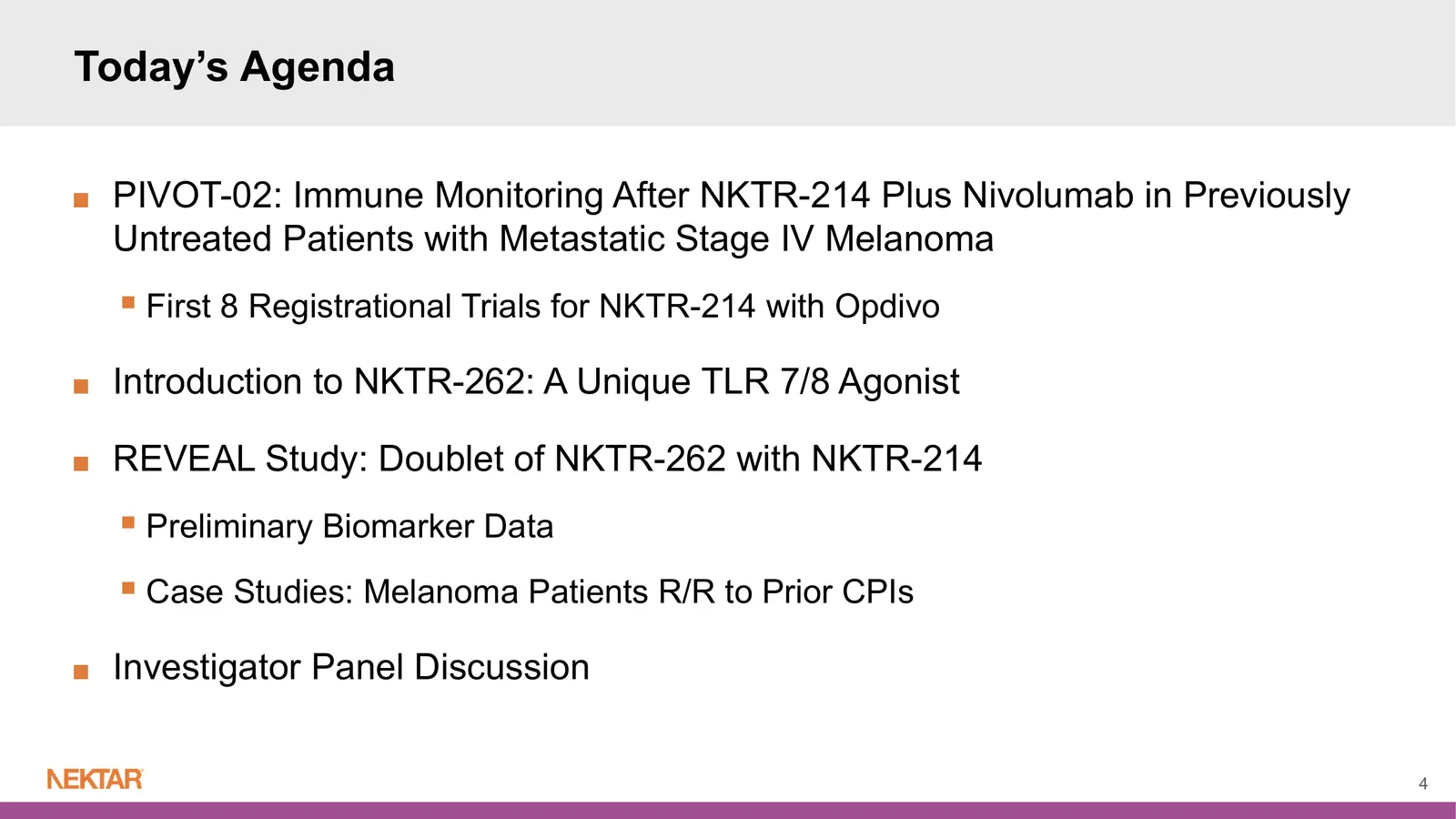
Today’s Agenda ■ PIVOT-02: Immune Monitoring After NKTR-214 Plus Nivolumab in Previously Untreated Patients with Metastatic Stage IV Melanoma First 8 Registrational Trials for NKTR-214 with Opdivo ■ Introduction to NKTR-262: A Unique TLR 7/8 Agonist ■ REVEAL Study: Doublet of NKTR-262 with NKTR-21
Slide 5: NKTR-214 Background: Harnessing the IL-2 Pathway to Increase TILs
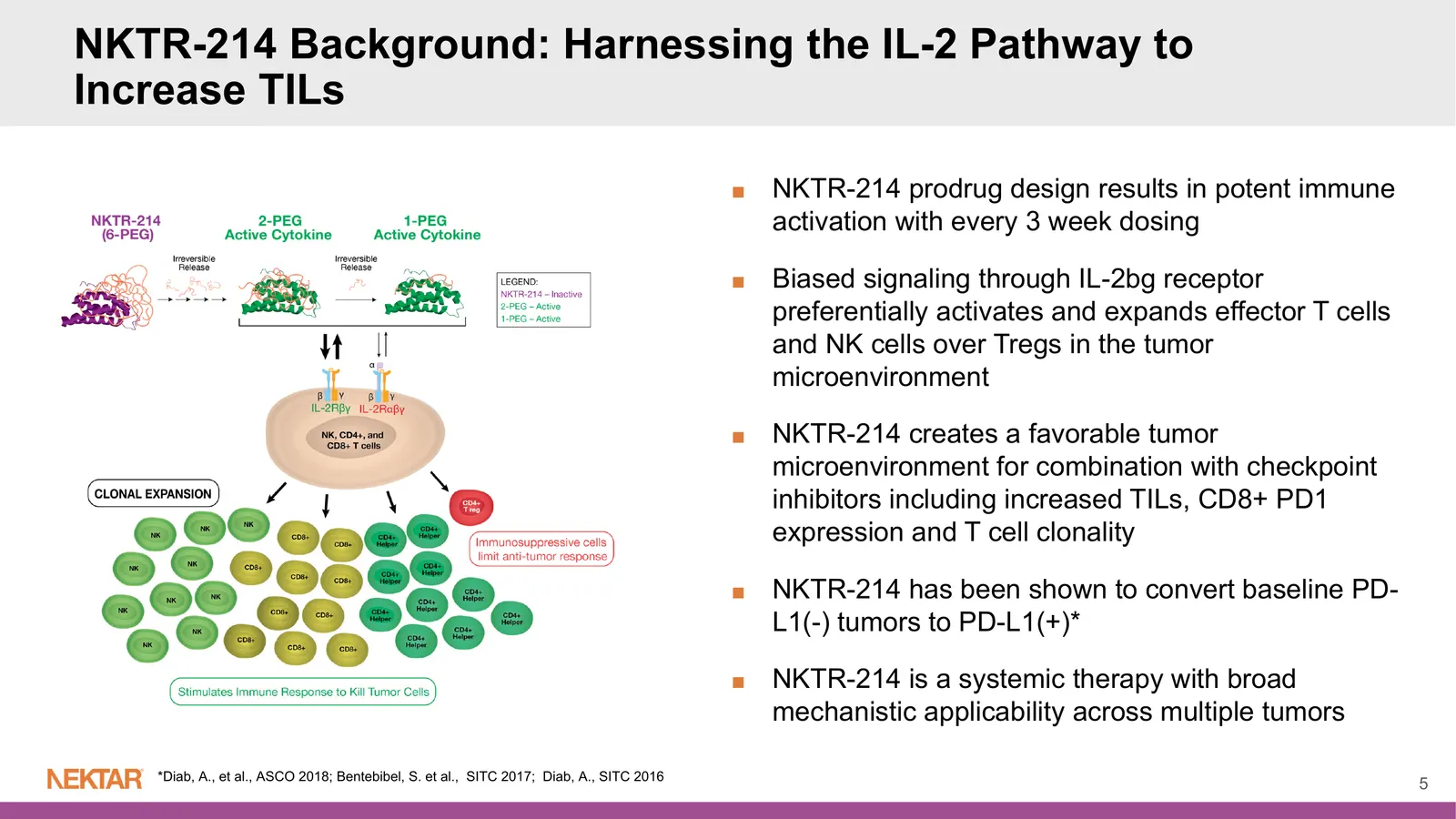
NKTR-214 Background: Harnessing the IL-2 Pathway to Increase TILs ■ NKTR-214 prodrug design results in potent immune activation with every 3 week dosing ■ Biased signaling through IL-2bg receptor preferentially activates and expands effector T cells and NK cells over Tregs in the tumor microenvironm
Slide 6: PIVOT-02: Dose-Escalation and Recommended Phase 2 Dose Expansion Trial of NKTR-214 + Nivolumab
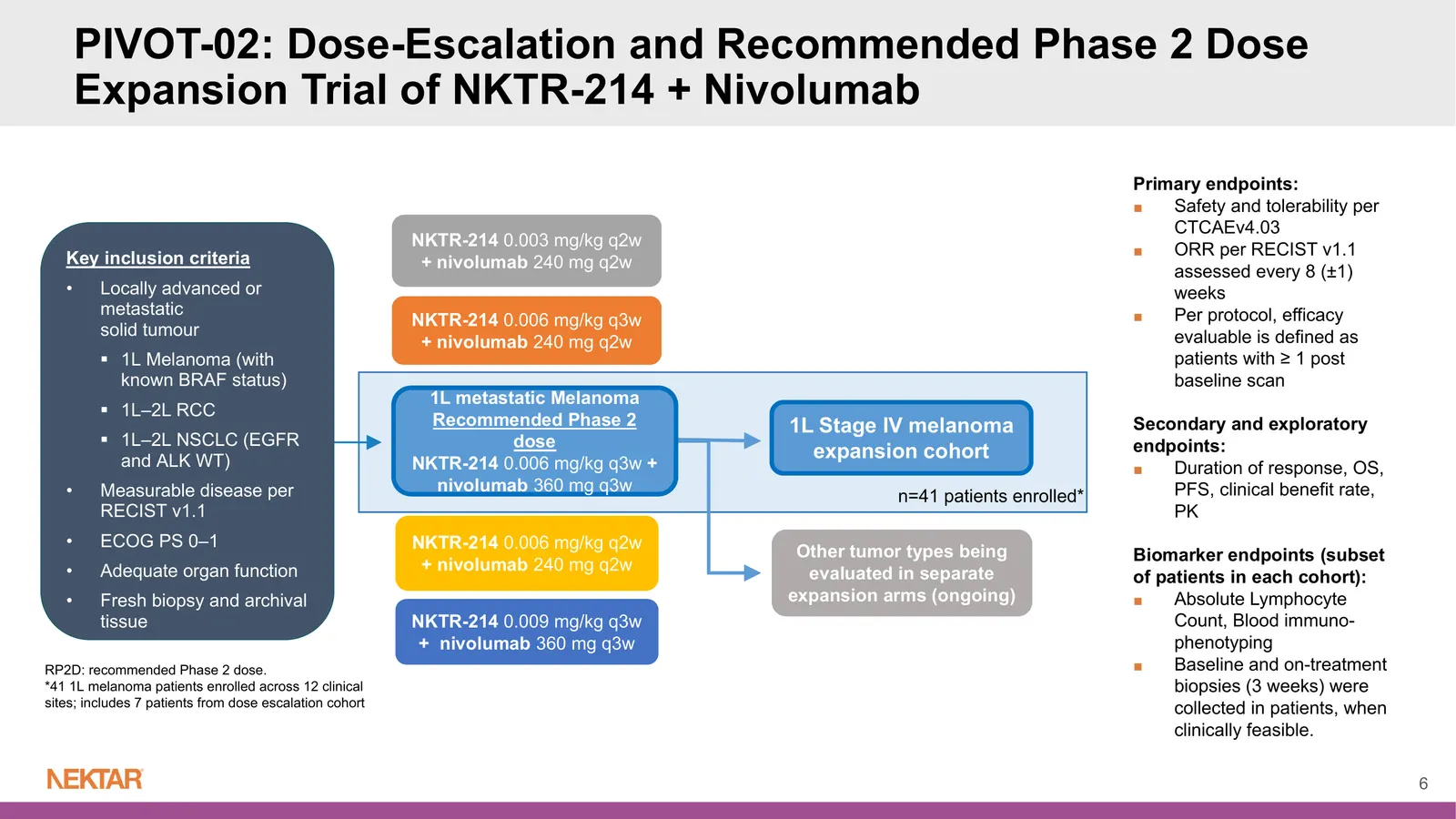
PIVOT-02: Dose-Escalation and Recommended Phase 2 Dose Expansion Trial of NKTR-214 + Nivolumab Primary endpoints: ■ Safety and tolerability per CTCAEv4.03 NKTR-214 0.003 mg/kg q2w ■ ORR per RECIST v1.1 Key inclusion criteria + nivolumab 240 mg q2w assessed every 8 (±1) • Locally advanced or weeks me
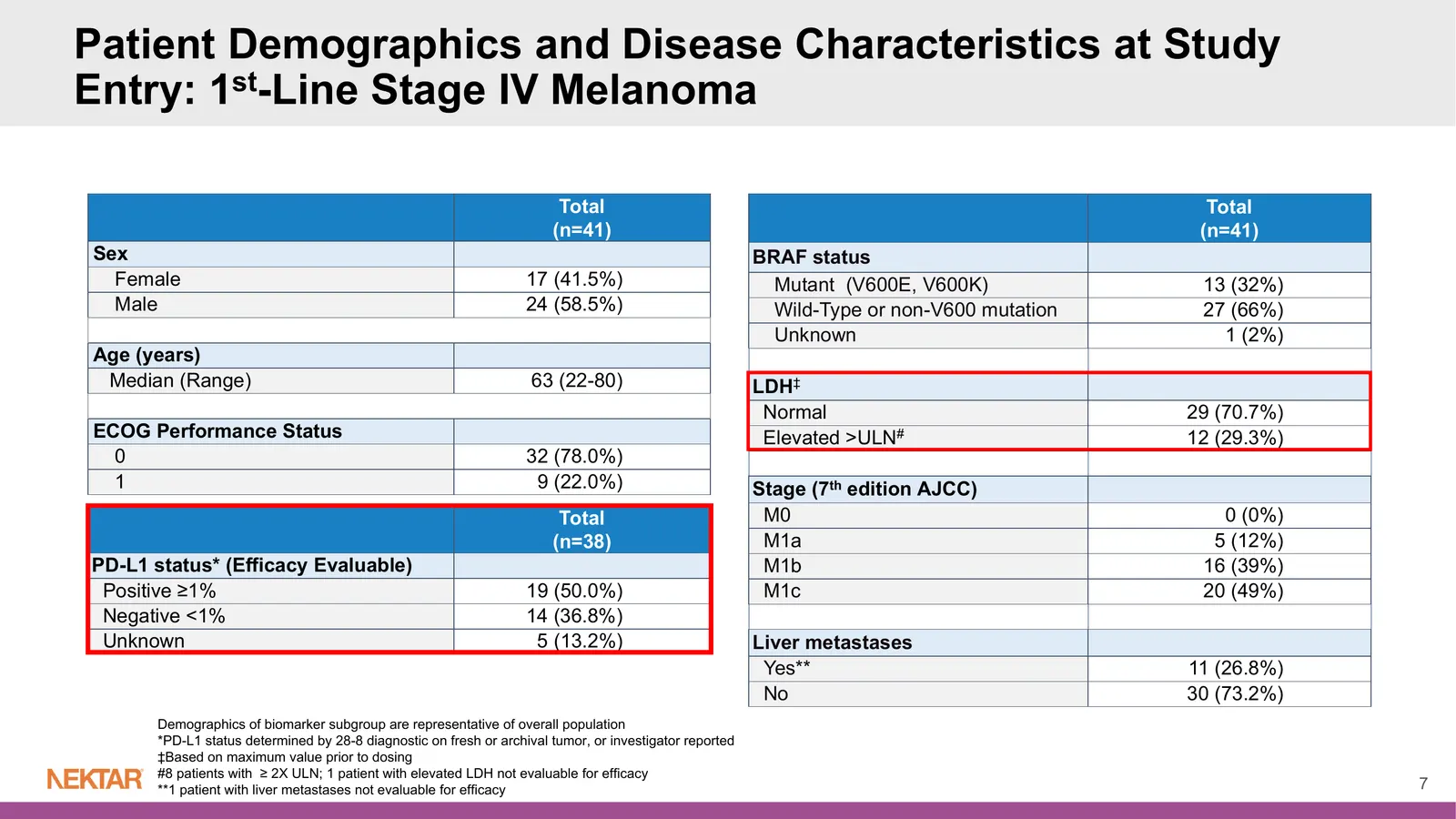
Slide 7: Patient Demographics and Disease Characteristics at Study Entry: 1st-Line Stage IV Melanoma
Patient Demographics and Disease Characteristics at Study Entry: 1st-Line Stage IV Melanoma Total Total (n=41) (n=41) Sex BRAF status Female 17 (41.5%) Mutant (V600E, V600K) 13 (32%) Male 24 (58.5%) Wild-Type or non-V600 mutation 27 (66%) Unknown 1 (2%) Age (years) Median (Range) 63 (22-80) LDH‡ Nor
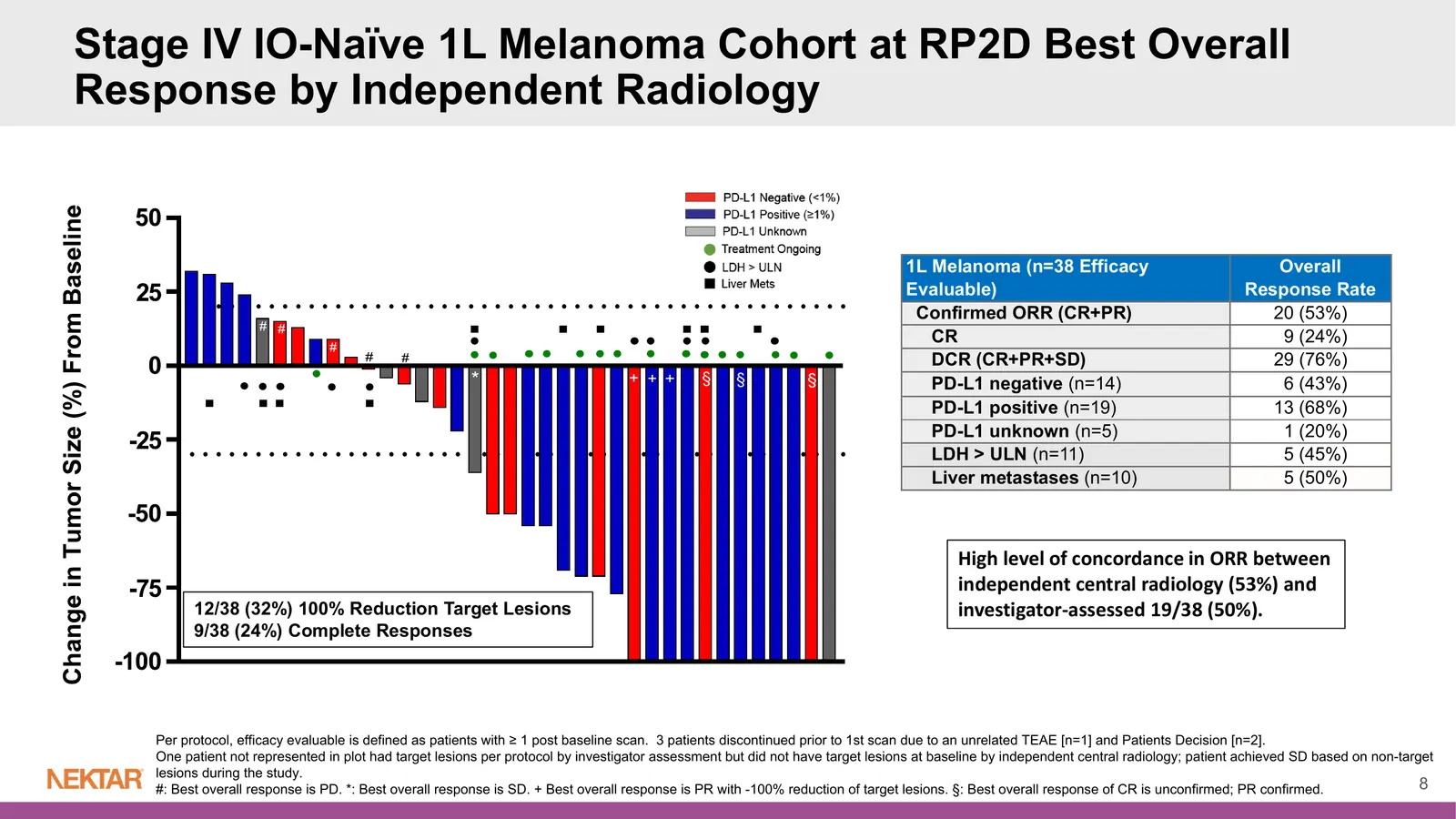
Slide 8: Stage IV IO-Naïve 1L Melanoma Cohort at RP2D Best Overall Response by Independent Radiology
Stage IV IO-Naïve 1L Melanoma Cohort at RP2D Best Overall Response by Independent Radiology 1L Melanoma (n=38 Efficacy Overall Evaluable) Response Rate Confirmed ORR (CR+PR) 20 (53%) CR 9 (24%) DCR (CR+PR+SD) 29 (76%) PD-L1 negative (n=14) 6 (43%) PD-L1 positive (n=19) 13 (68%) PD-L1 unknown (n=5) 1
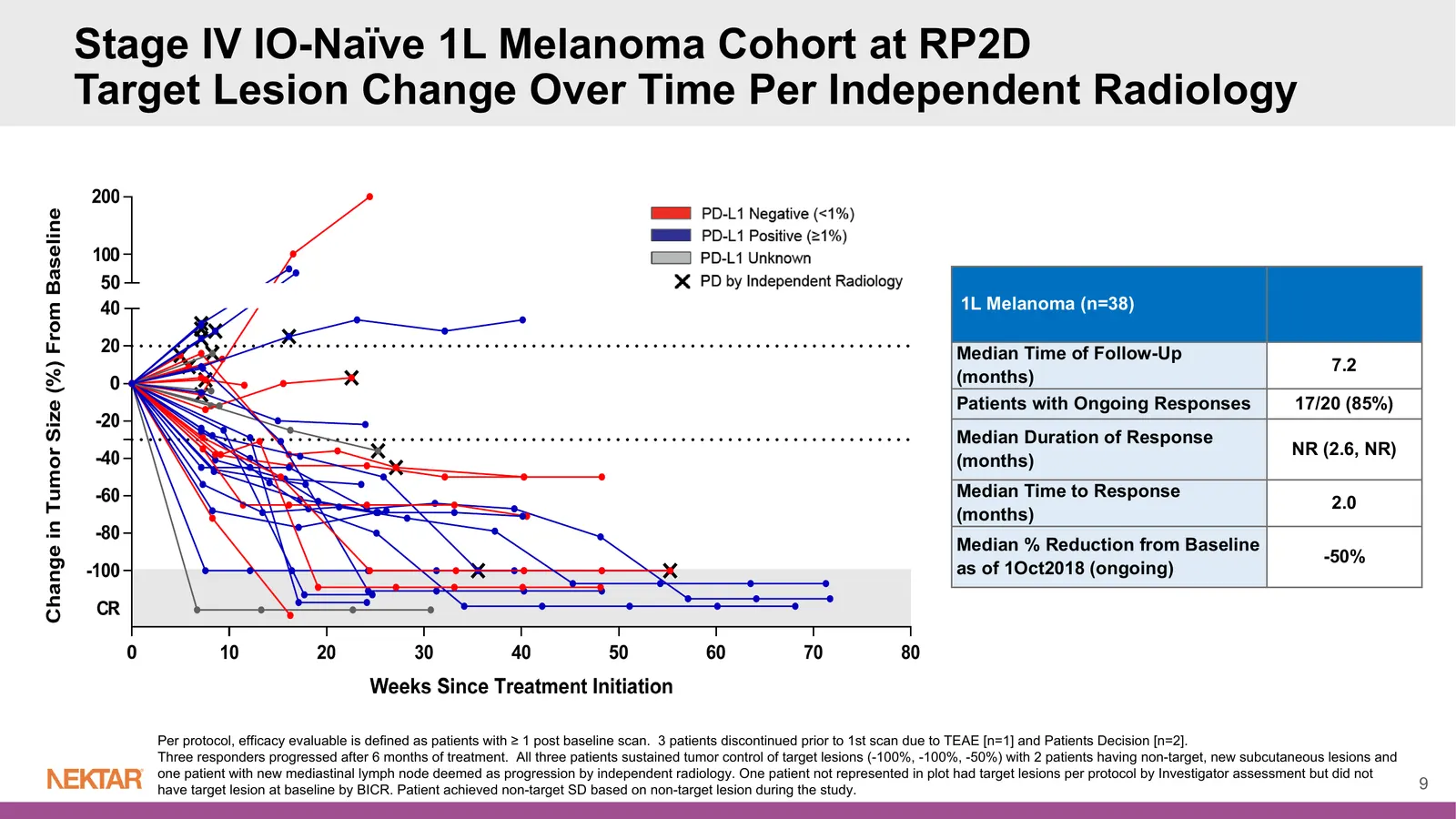
Slide 9: Target Lesion Change Over Time Per Independent Radiology
Stage IV IO-Naïve 1L Melanoma Cohort at RP2D Target Lesion Change Over Time Per Independent Radiology 1L Melanoma (n=38) Median Time of Follow-Up 7.2 (months) Patients with Ongoing Responses 17/20 (85%) Median Duration of Response NR (2.6, NR) (months) Median Time to Response 2.0 (months) Median % R
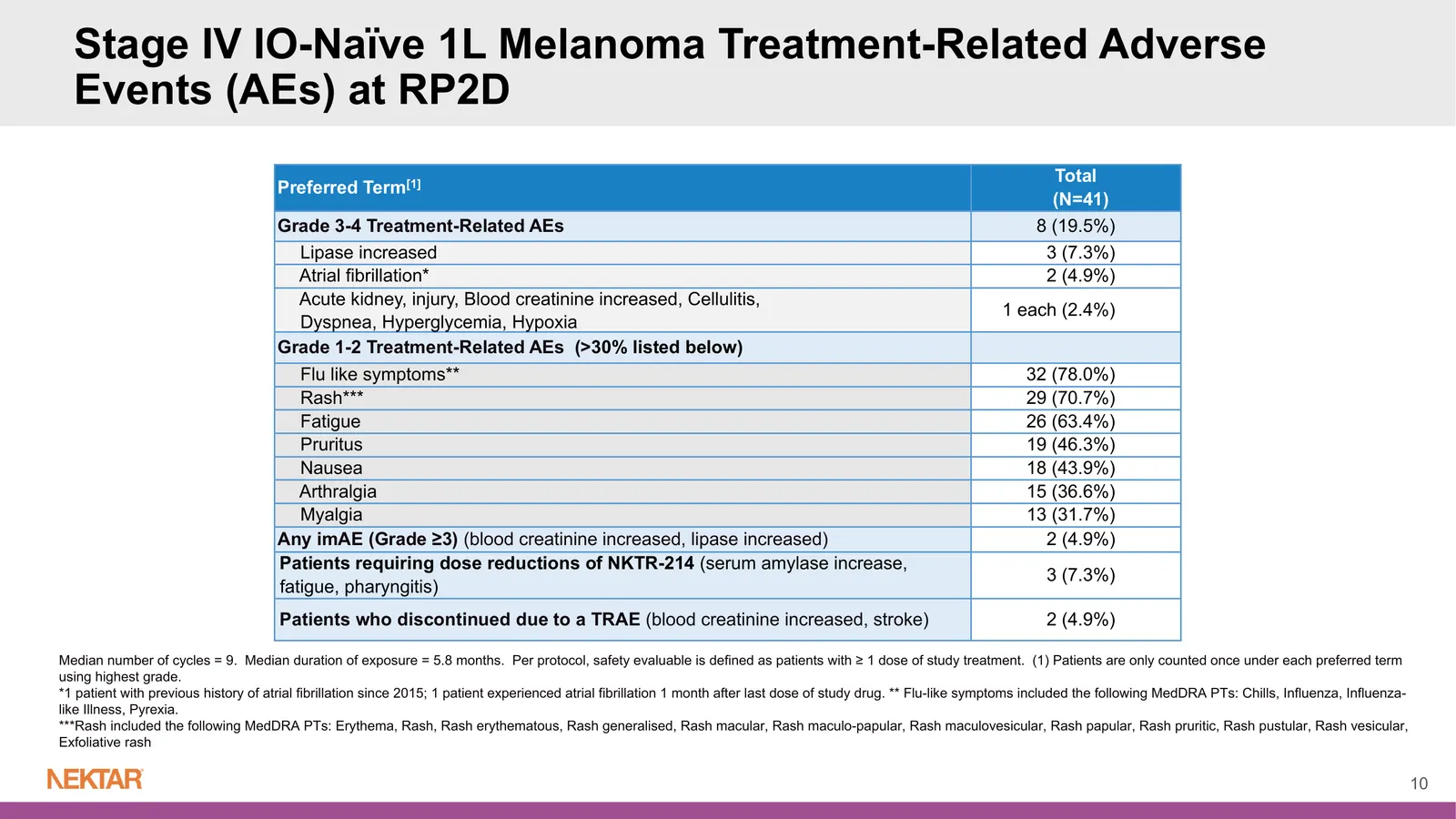
Slide 10: Stage IV IO-Naïve 1L Melanoma Treatment-Related Adverse Events at RP2D
Stage IV IO-Naïve 1L Melanoma Treatment-Related Adverse Events (AEs) at RP2D Total Preferred Term[1] (N=41) Grade 3-4 Treatment-Related AEs 8 (19.5%) Lipase increased 3 (7.3%) Atrial fibrillation* 2 (4.9%) Acute kidney, injury, Blood creatinine increased, Cellulitis, 1 each (2.4%) Dyspnea, Hyperglyc
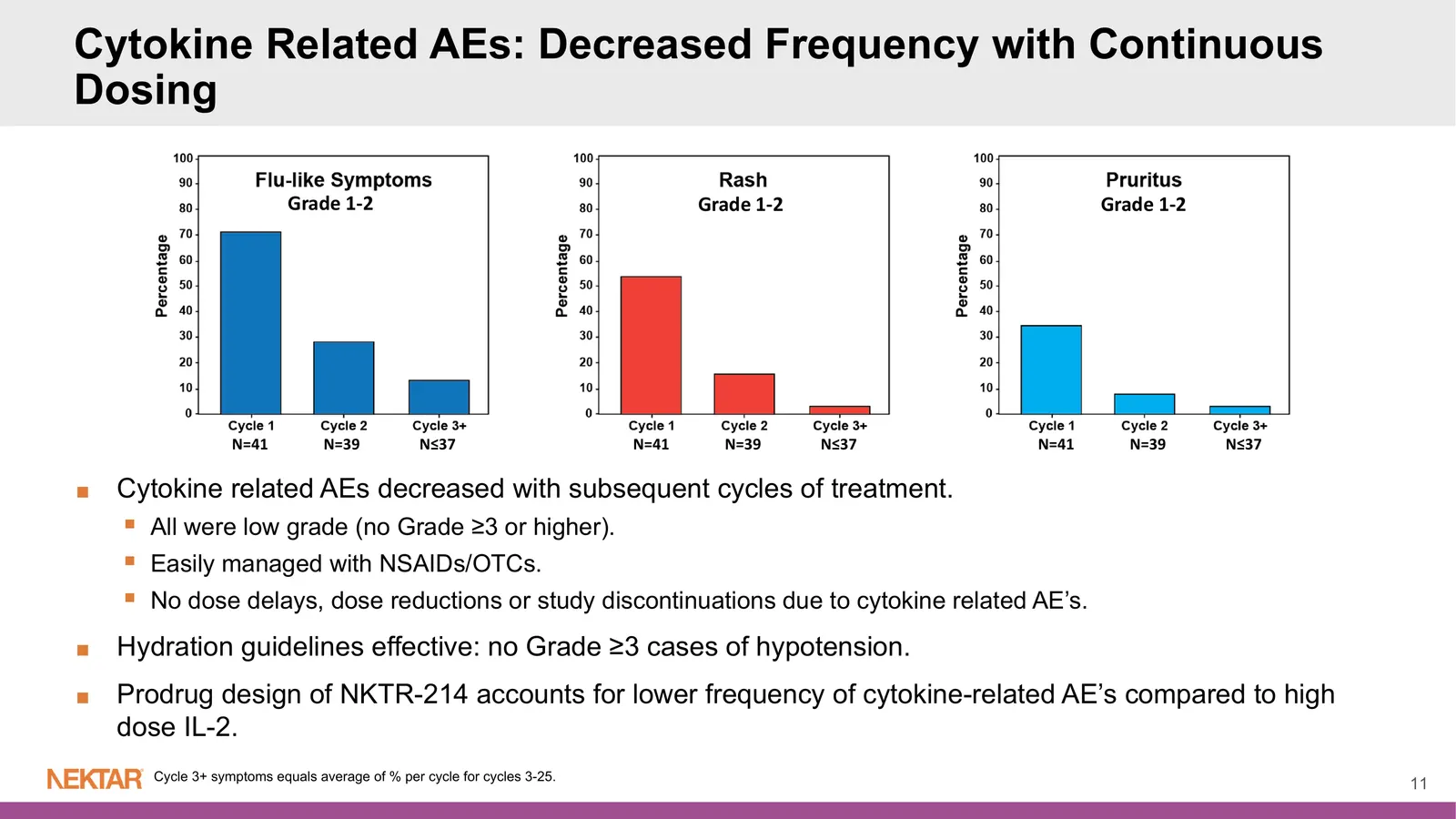
Slide 11: Cytokine Related AEs: Decreased Frequency with Continuous Dosing
Cytokine Related AEs: Decreased Frequency with Continuous Dosing Grade 1‐2 Grade 1‐2 Grade 1‐2 N=41 N=39 N≤37 N=41 N=39 N≤37 N=41 N=39 N≤37 ■ Cytokine related AEs decreased with subsequent cycles of treatment. All were low grade (no Grade ≥3 or higher). Easily managed with NSAIDs/OTCs. No dose
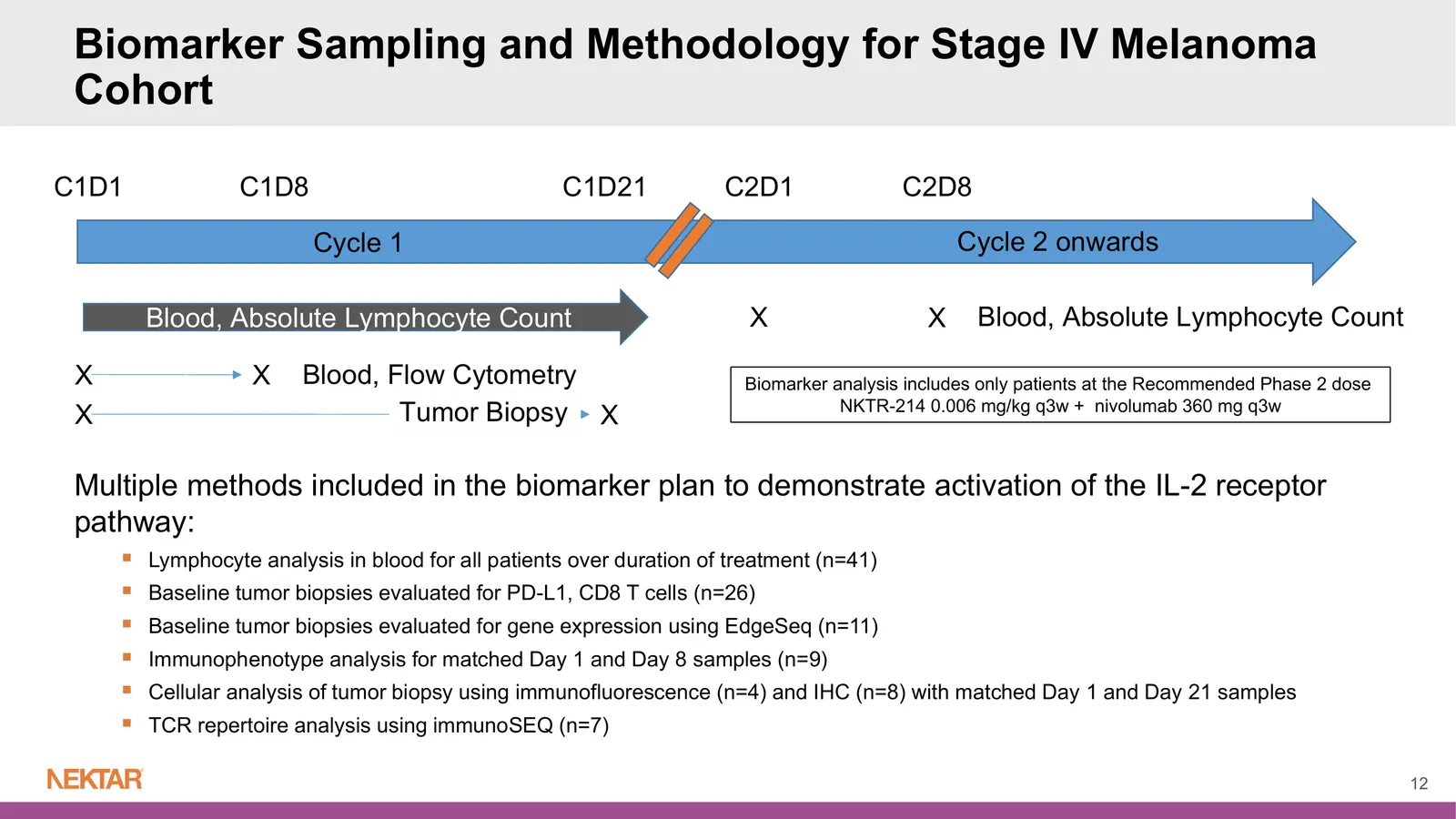
Slide 12: Biomarker Sampling and Methodology for Stage IV Melanoma Cohort
Biomarker Sampling and Methodology for Stage IV Melanoma Cohort C1D1 C1D8 C1D21 C2D1 C2D8 Cycle 1 Cycle 2 onwards Blood, Absolute Lymphocyte Count X X Blood, Absolute Lymphocyte Count X X Blood, Flow Cytometry Biomarker analysis includes only patients at the Recommended Phase 2 dose NKTR-214 0.006 m
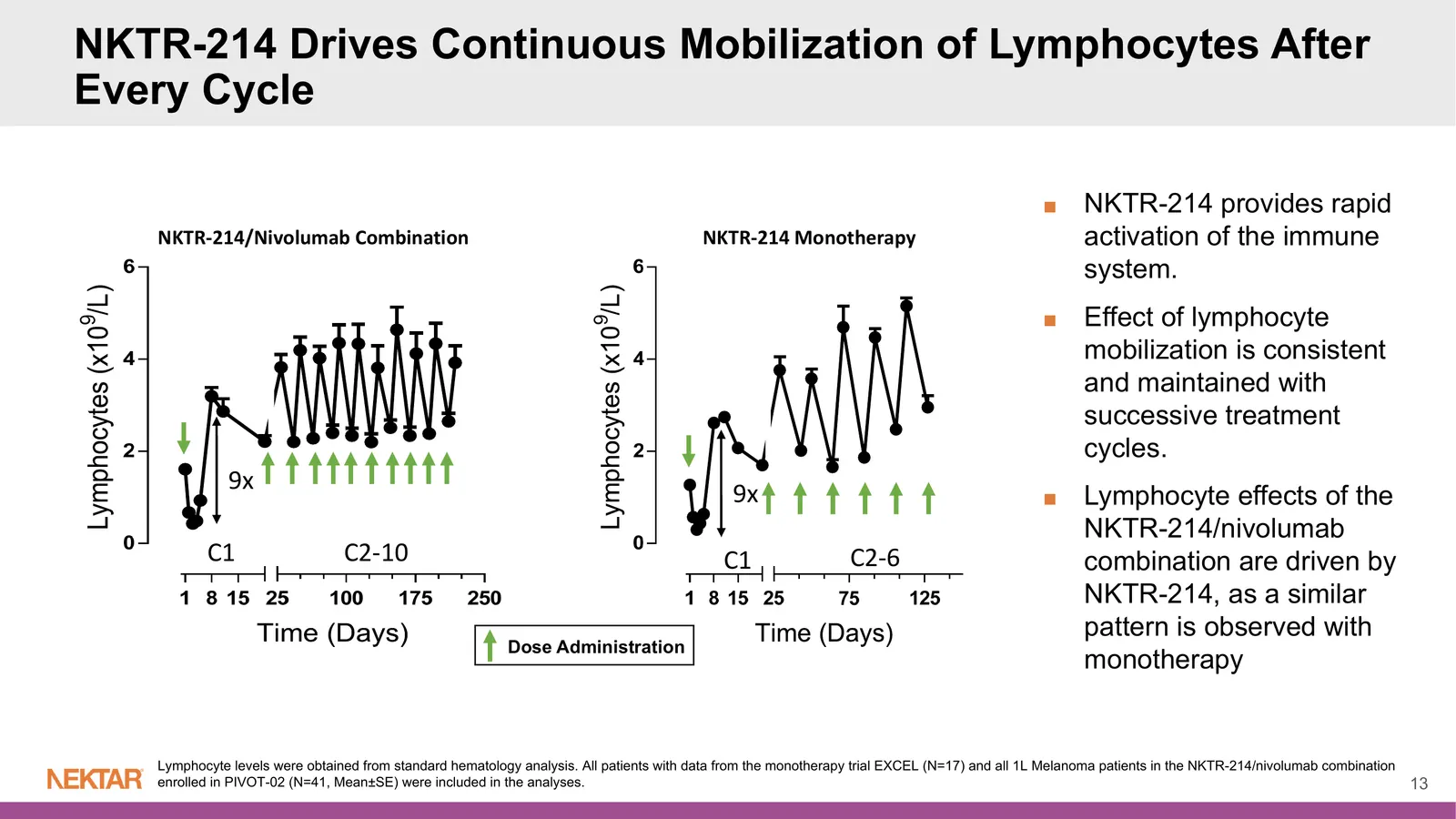
Slide 13: NKTR-214 Drives Continuous Mobilization of Lymphocytes After Every Cycle
NKTR-214 Drives Continuous Mobilization of Lymphocytes After Every Cycle ■ NKTR-214 provides rapid NKTR‐214/Nivolumab Combination NKTR‐214 Monotherapy activation of the immune system. ■ Effect of lymphocyte 9 mobilization is consistent and maintained with successive treatment cycles. 9x 9x ■ Lymphoc
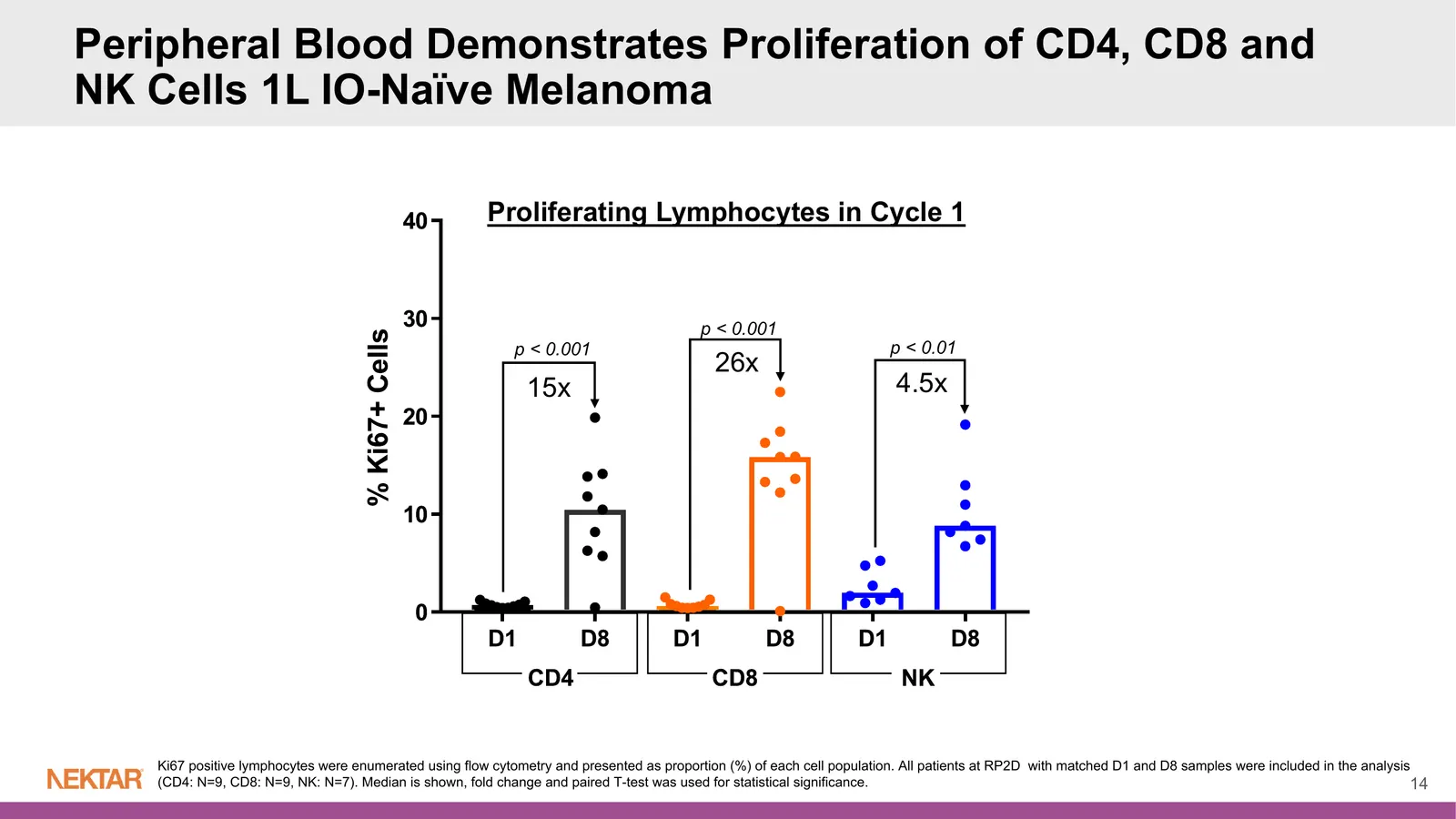
Slide 14: Peripheral Blood Demonstrates Proliferation of CD4, CD8 and NK Cells
Peripheral Blood Demonstrates Proliferation of CD4, CD8 and NK Cells 1L IO-Naïve Melanoma Proliferating Lymphocytes in Cycle 1 p < 0.001 p < 0.001 p < 0.01 26x 15x 4.5x Ki67 positive lymphocytes were enumerated using flow cytometry and presented as proportion (%) of each cell population. All patient
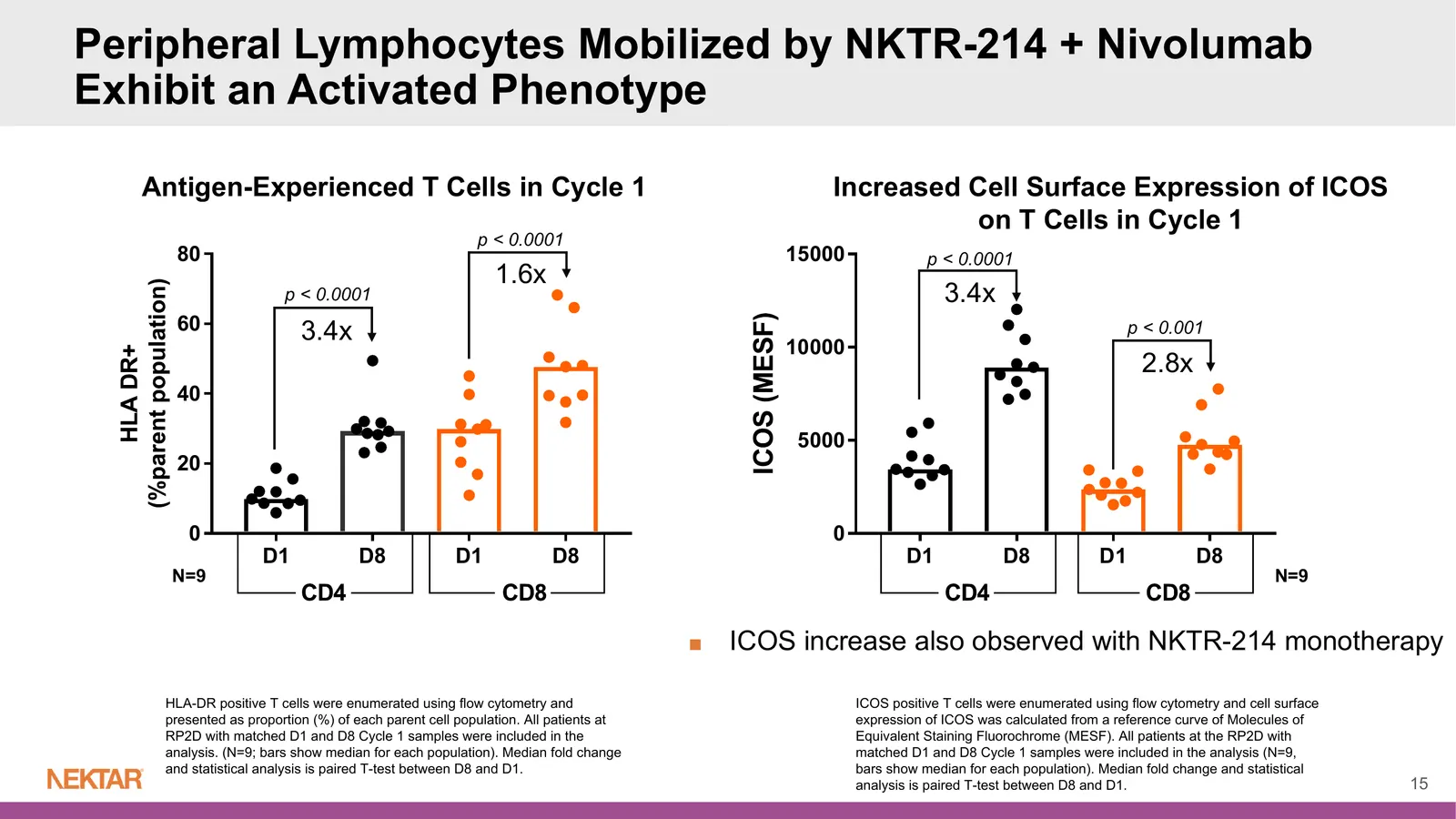
Slide 15: Peripheral Lymphocytes Mobilized by NKTR-214 + Nivolumab Exhibit an Activated Phenotype
Peripheral Lymphocytes Mobilized by NKTR-214 + Nivolumab Exhibit an Activated Phenotype Antigen-Experienced T Cells in Cycle 1 Increased Cell Surface Expression of ICOS on T Cells in Cycle 1 p < 0.0001 80 15000 p < 0.0001 1.6x p < 0.0001 3.4x 60 3.4x p < 0.001 10000 2.8x 40 5000 20 0 0 D1 D8 D1 D8 D
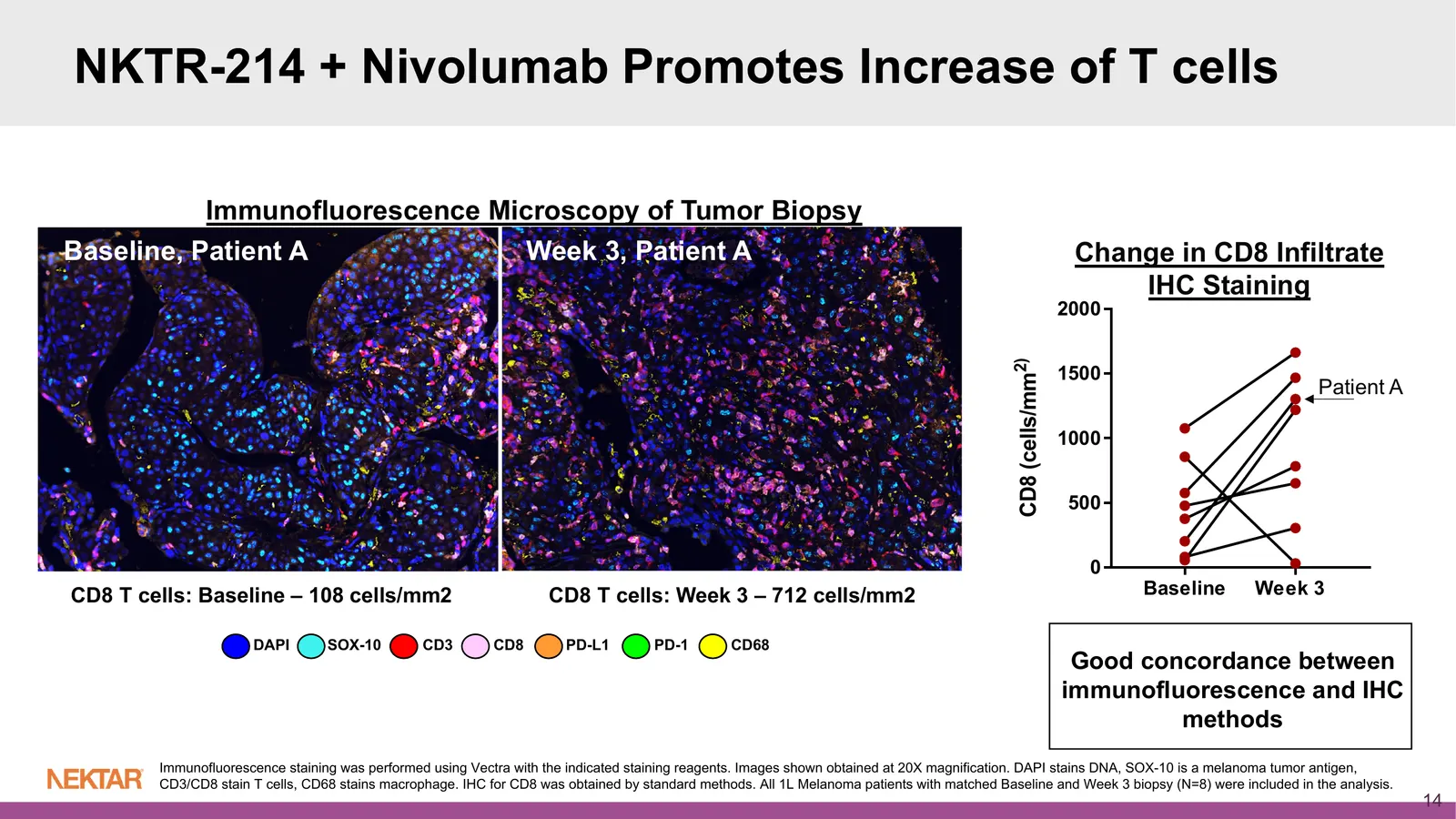
Slide 16: NKTR-214 + Nivolumab Promotes Increase of T cells
NKTR-214 + Nivolumab Promotes Increase of T cells Immunofluorescence Microscopy of Tumor Biopsy Baseline, Patient A Week 3, Patient A Change in CD8 Infiltrate IHC Staining 2000 1500 Patient A 1000 500 0 CD8 T cells: Baseline – 108 cells/mm2 CD8 T cells: Week 3 – 712 cells/mm2 Baseline Week 3 DAPI SO
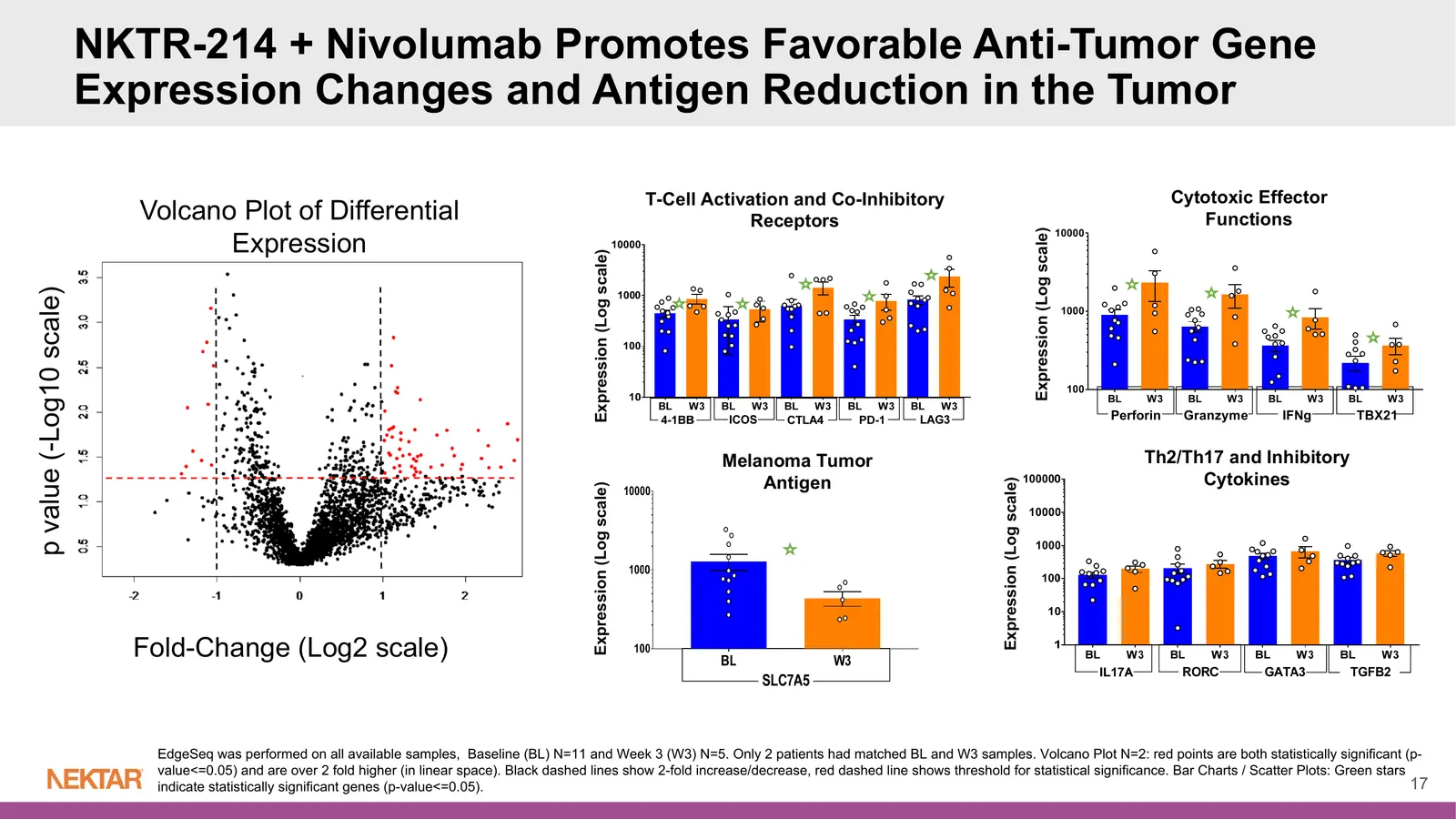
Slide 17: Favorable Anti-Tumor Gene Expression Changes and Antigen Reduction in the Tumor
NKTR-214 + Nivolumab Promotes Favorable Anti-Tumor Gene Expression Changes and Antigen Reduction in the Tumor T-Cell Activation and Co-Inhibitory Cytotoxic Effector Volcano Plot of Differential Receptors Functions 10000 Expression (Log scale) Expression Expression (Log scale) On-Treatment/Pre-Treatm
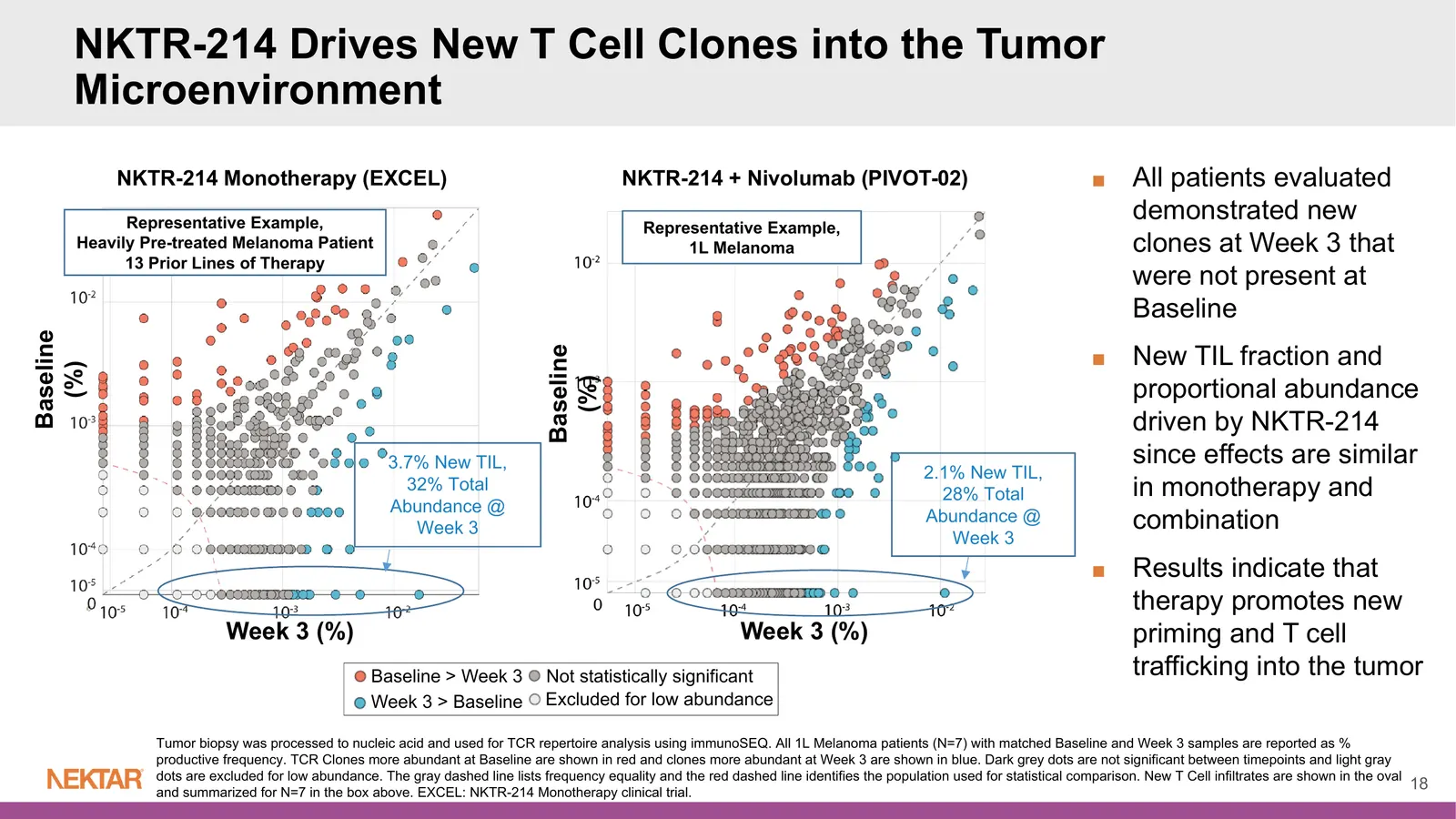
Slide 18: NKTR-214 Drives New T Cell Clones into the Tumor Microenvironment
NKTR-214 Drives New T Cell Clones into the Tumor Microenvironment NKTR-214 Monotherapy (EXCEL) NKTR-214 + Nivolumab (PIVOT-02) ■ All patients evaluated Representative Example, demonstrated new Representative Example, Heavily Pre-treated Melanoma Patient 1L Melanoma clones at Week 3 that 13 Prior Lin
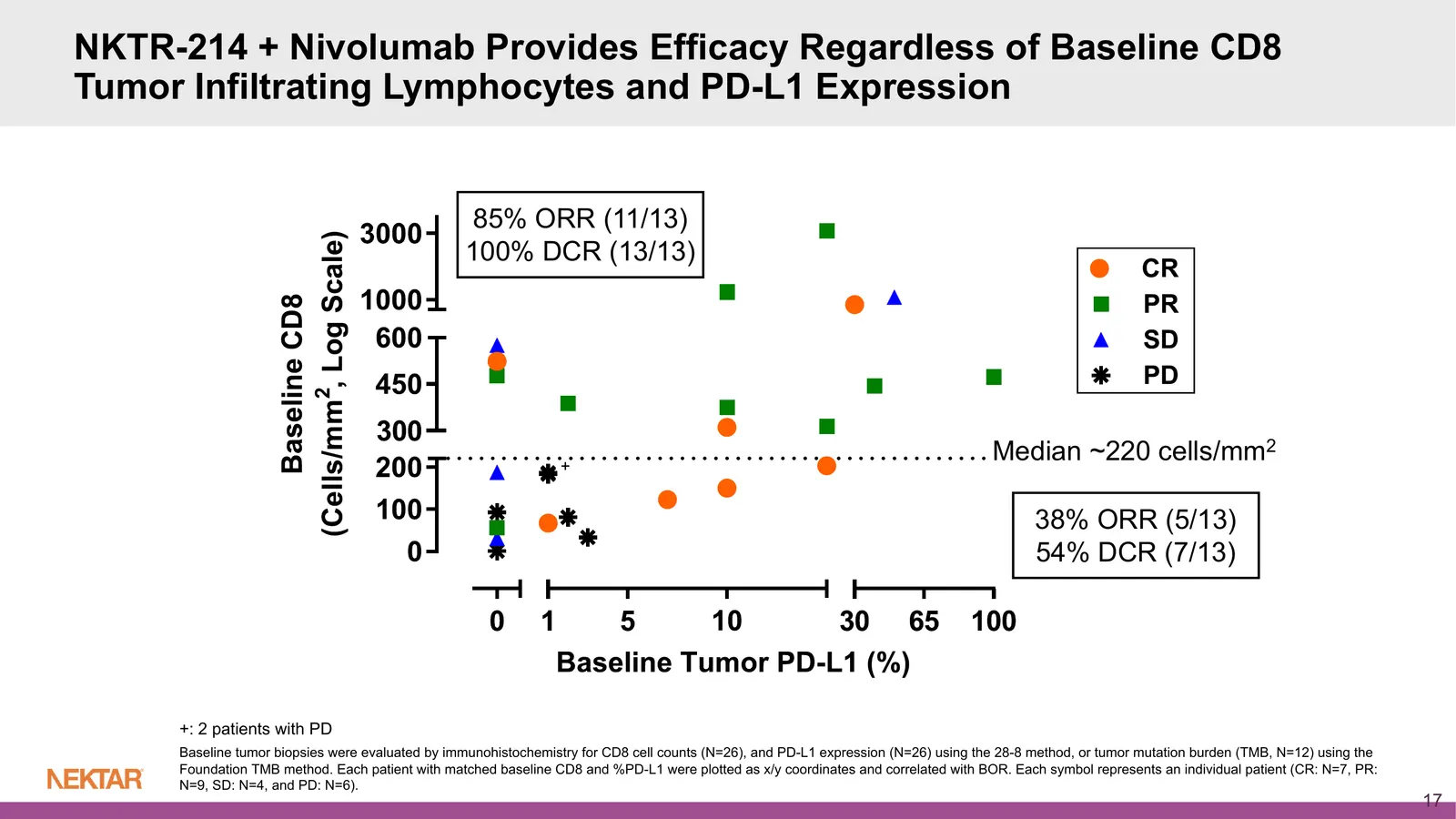
Slide 19: Efficacy Regardless of Baseline CD8 TILs and PD-L1 Expression
NKTR-214 + Nivolumab Provides Efficacy Regardless of Baseline CD8 Tumor Infiltrating Lymphocytes and PD-L1 Expression 85% ORR (11/13) 100% DCR (13/13) 2 + Median ~220 cells/mm2 38% ORR (5/13) 54% DCR (7/13) +: 2 patients with PD Baseline tumor biopsies were evaluated by immunohistochemistry for CD8
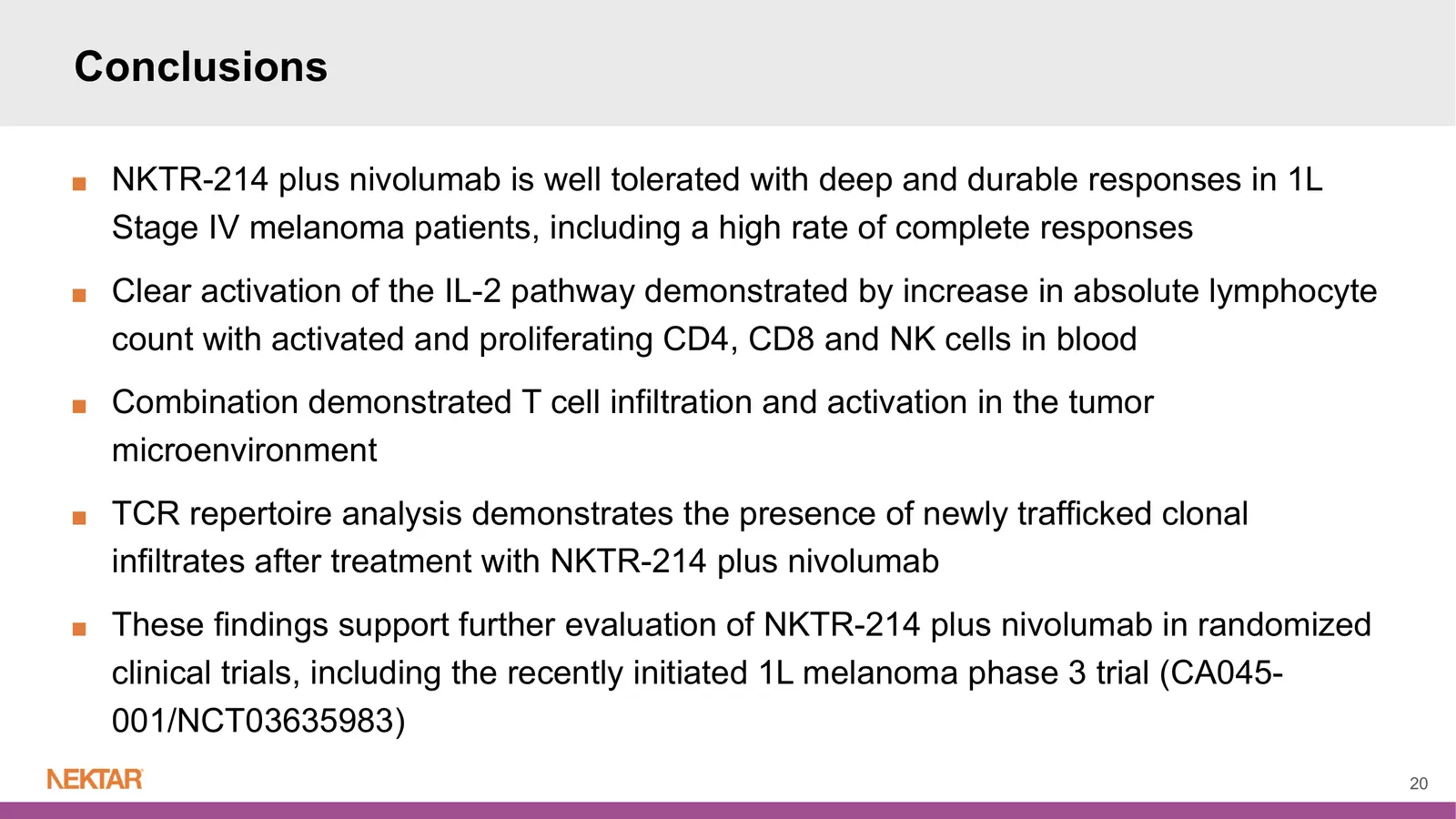
Slide 20: Conclusions
Conclusions ■ NKTR-214 plus nivolumab is well tolerated with deep and durable responses in 1L Stage IV melanoma patients, including a high rate of complete responses ■ Clear activation of the IL-2 pathway demonstrated by increase in absolute lymphocyte count with activated and proliferating CD4, CD8
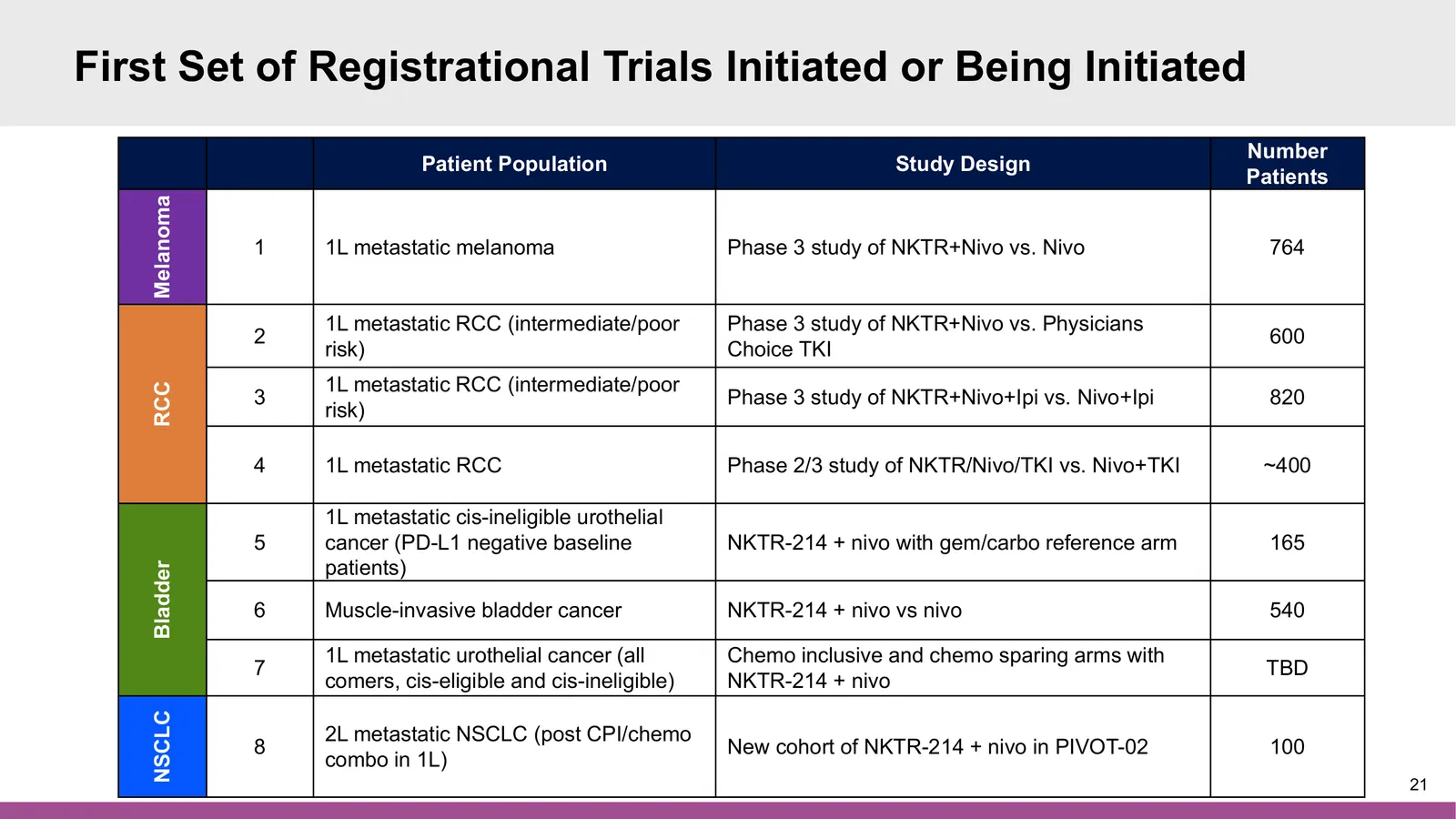
Slide 21: First Set of Registrational Trials Initiated or Being Initiated
First Set of Registrational Trials Initiated or Being Initiated Number Patient Population Study Design Patients Melanoma 1 1L metastatic melanoma Phase 3 study of NKTR+Nivo vs. Nivo 764 1L metastatic RCC (intermediate/poor Phase 3 study of NKTR+Nivo vs. Physicians 2 600 risk) Choice TKI 1L metastati
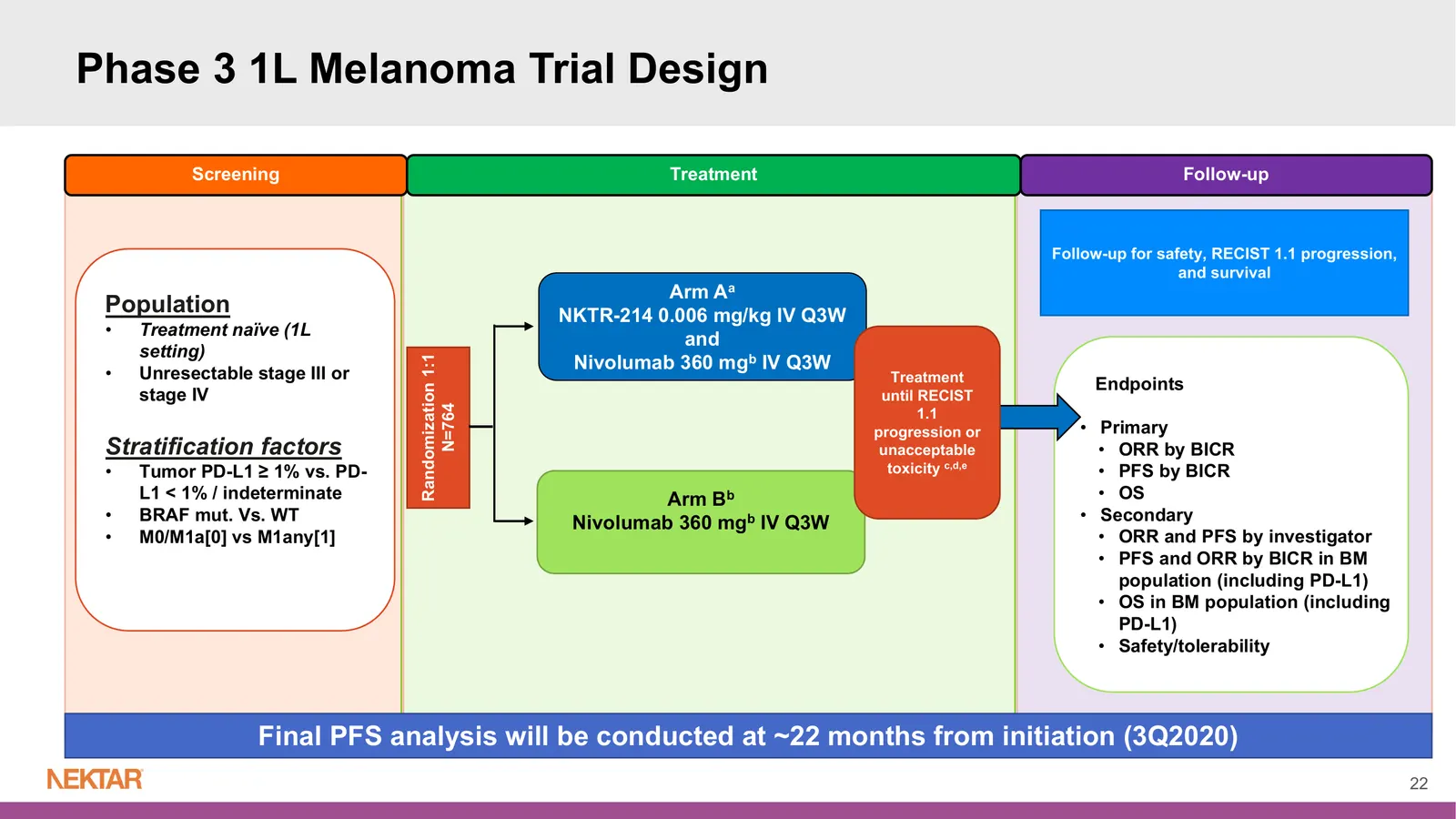
Slide 22: Phase 3 1L Melanoma Trial Design
Phase 3 1L Melanoma Trial Design Screening Treatment Follow-up Follow-up for safety, RECIST 1.1 progression, and survival Arm Aa Population NKTR-214 0.006 mg/kg IV Q3W • Treatment naïve (1L and setting) Nivolumab 360 mgb IV Q3W Randomization 1:1 • Unresectable stage III or Treatment Endpoints stage

Slide 23: NKTR-262: A Unique TLR 7/8 Agonist
NKTR-262: A Unique TLR 7/8 Agonist 23
Slide 24: NKTR-262: A Unique Intratumoral TLR Agonist to Target the Innate Immune Response
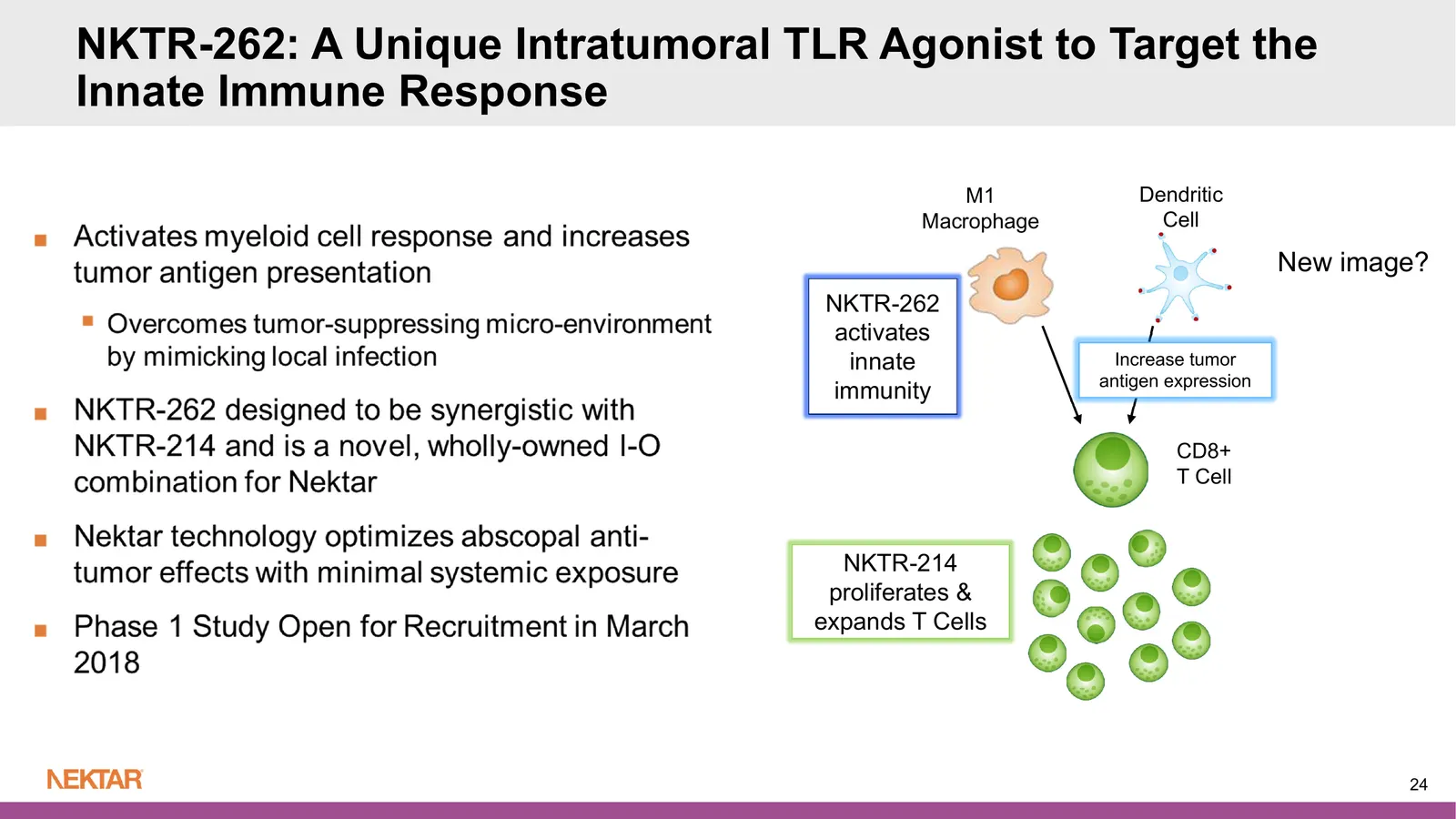
NKTR-262: A Unique Intratumoral TLR Agonist to Target the Innate Immune Response M1 Dendritic Macrophage Cell New image? NKTR-262 activates innate Increase tumor antigen expression immunity CD8+ T Cell NKTR-214 proliferates & expands T Cells 24
Slide 25: Our Strategy: PEGylation Will Keep Scaffold in Tumor And Reduces Systemic Exposure
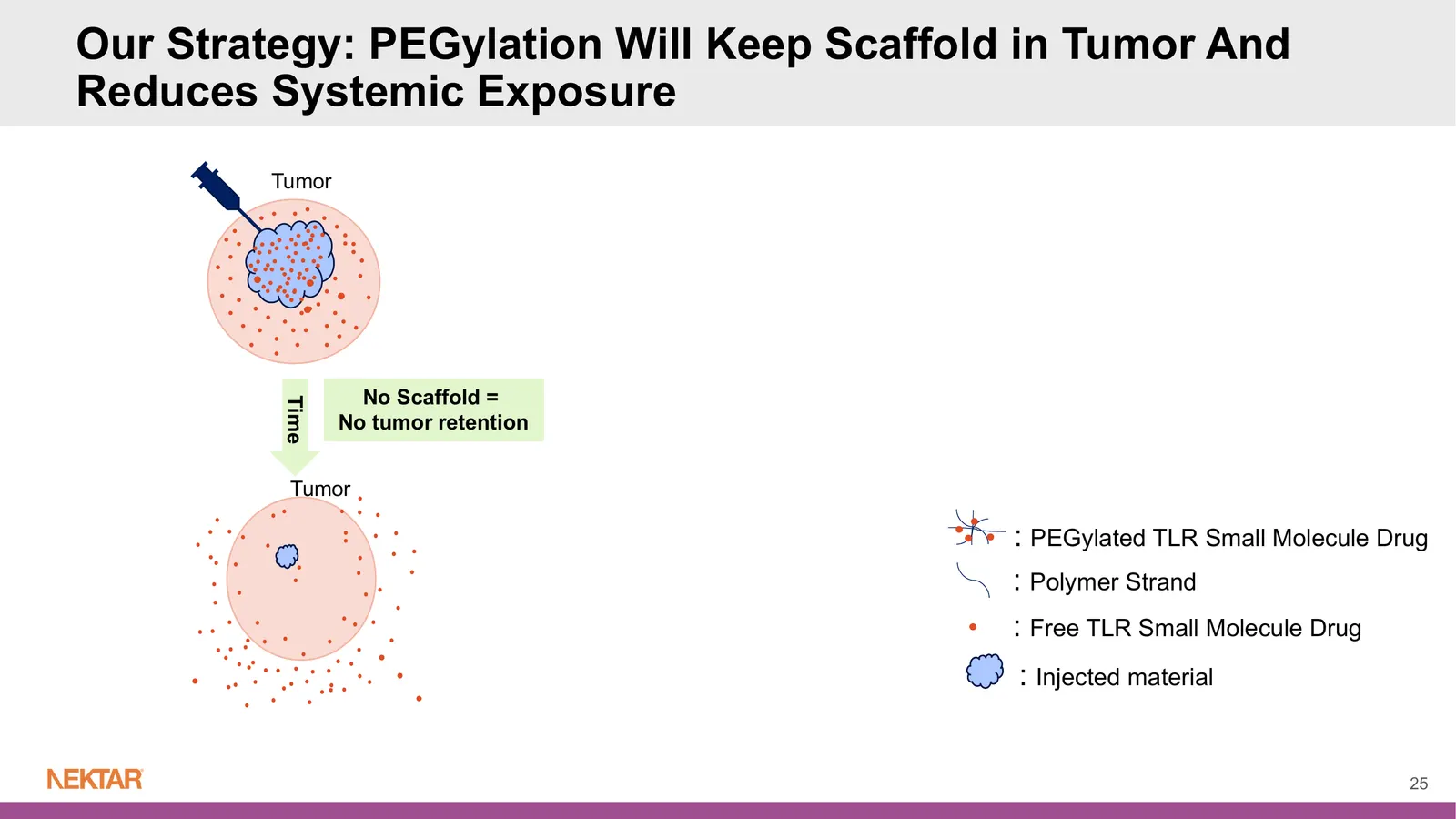
Our Strategy: PEGylation Will Keep Scaffold in Tumor And Reduces Systemic Exposure Tumor No Scaffold = Time No tumor retention Tumor v : PEGylated TLR Small Molecule Drug : Polymer Strand : Free TLR Small Molecule Drug : Injected material 25
Slide 26: Our Strategy: PEGylation Will Keep Scaffold in Tumor And Reduces Systemic Exposure
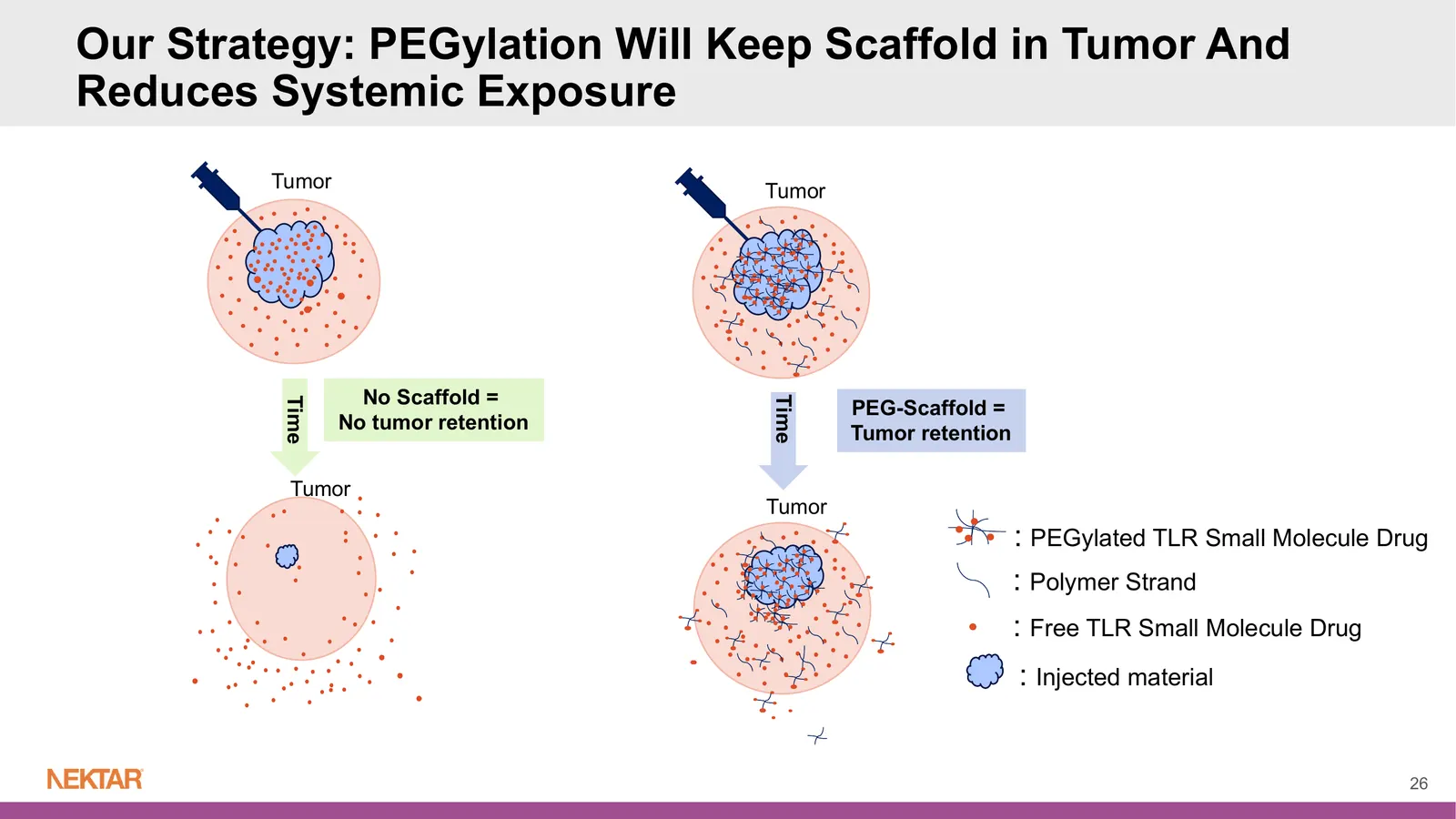
Our Strategy: PEGylation Will Keep Scaffold in Tumor And Reduces Systemic Exposure Tumor Tumor No Scaffold = Time Time PEG-Scaffold = No tumor retention Tumor retention Tumor Tumor v : PEGylated TLR Small Molecule Drug : Polymer Strand : Free TLR Small Molecule Drug : Injected material 26
Slide 27: NKTR-262 is Retained More Effectively in Injected Tumors Compared to Unconjugated TLR7/8 Agonist
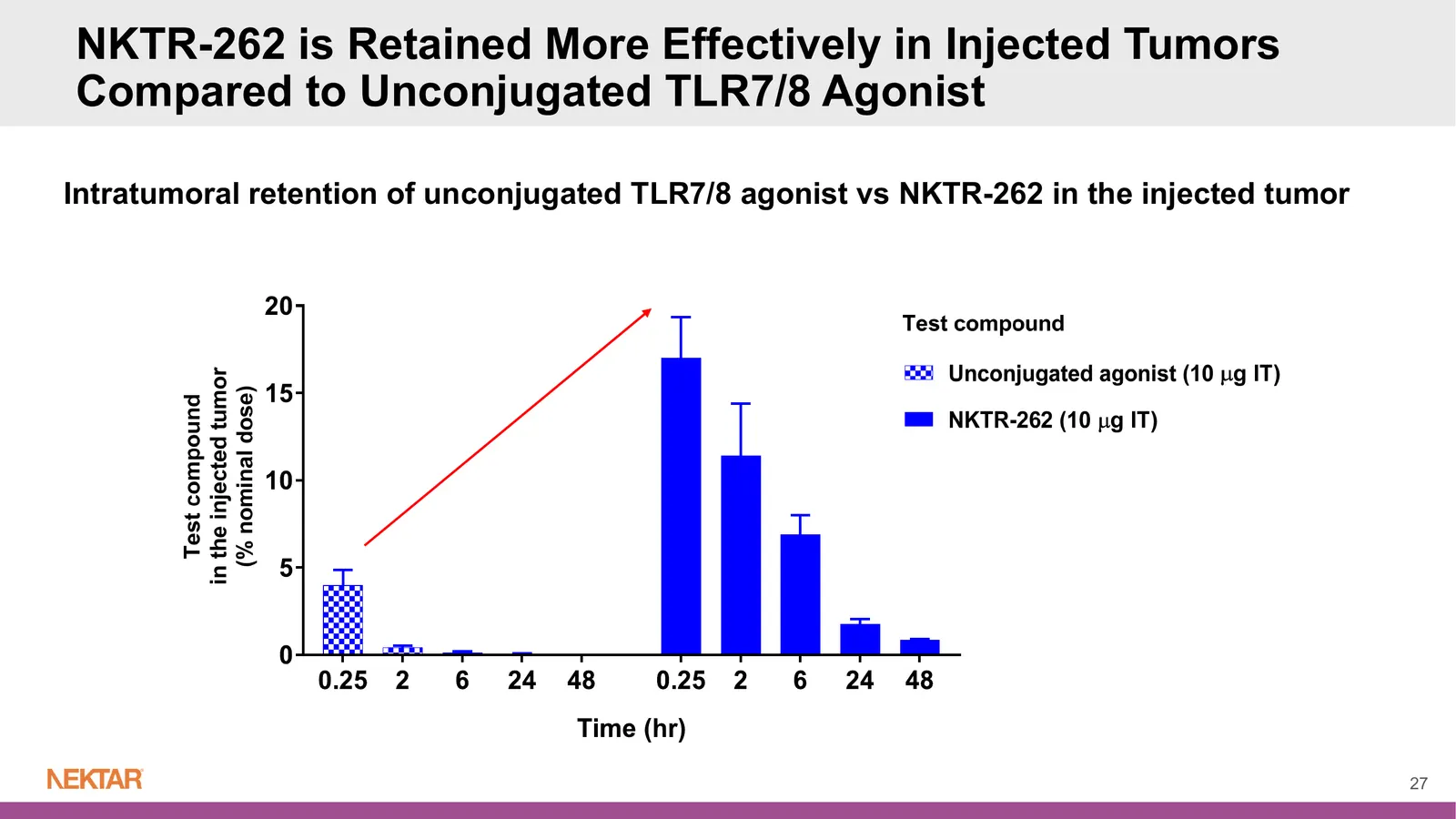
NKTR-262 is Retained More Effectively in Injected Tumors Compared to Unconjugated TLR7/8 Agonist Intratumoral retention of unconjugated TLR7/8 agonist vs NKTR-262 in the injected tumor 27
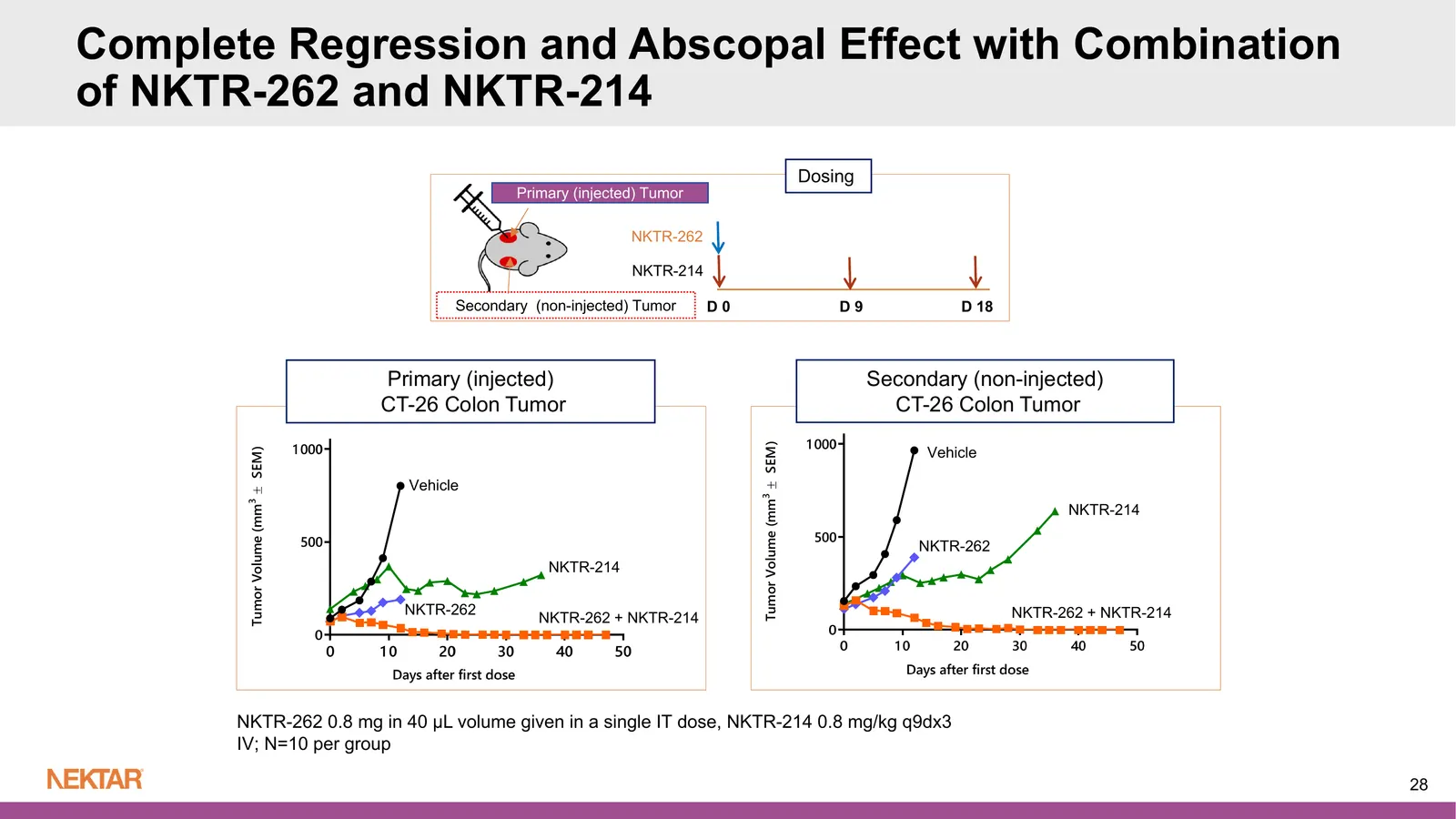
Slide 28: Complete Regression and Abscopal Effect with Combination of NKTR-262 and NKTR-214
Complete Regression and Abscopal Effect with Combination of NKTR-262 and NKTR-214 Dosing Primary (injected) Tumor NKTR-262 NKTR-214 Secondary (non-injected) Tumor D0 D9 D 18 Primary (injected) Secondary (non-injected) CT-26 Colon Tumor CT-26 Colon Tumor SEM) Vehicle SEM) Vehicle Tumor Volume (mm3 Tu

Slide 29: The REVEAL Study: Doublet of NKTR-262 with NKTR-214
The REVEAL Study: Doublet of NKTR-262 with NKTR-214 29
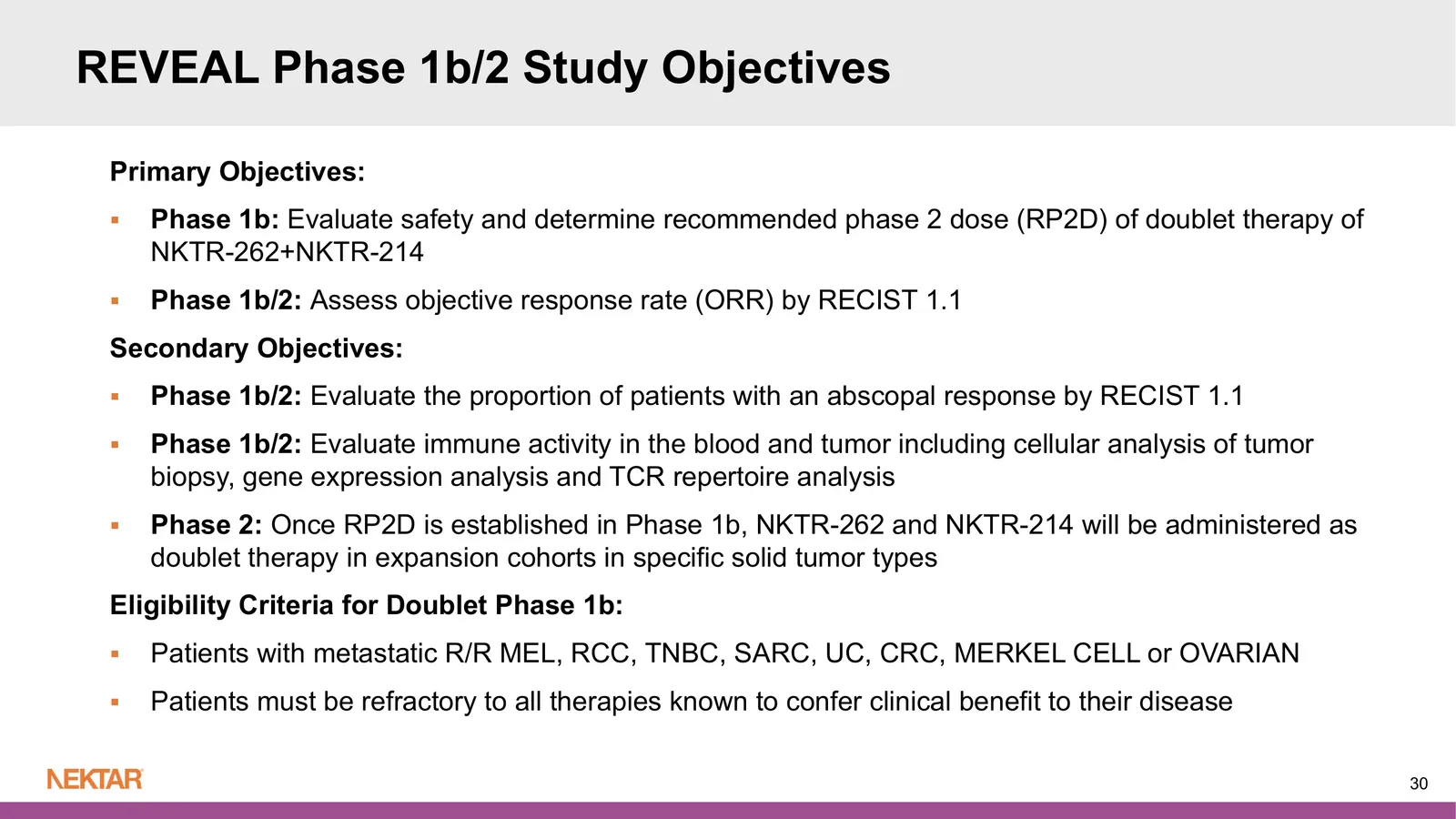
Slide 30: REVEAL Phase 1b/2 Study Objectives
REVEAL Phase 1b/2 Study Objectives Primary Objectives: Phase 1b: Evaluate safety and determine recommended phase 2 dose (RP2D) of doublet therapy of NKTR-262+NKTR-214 Phase 1b/2: Assess objective response rate (ORR) by RECIST 1.1 Secondary Objectives: Phase 1b/2: Evaluate the proportion of pat
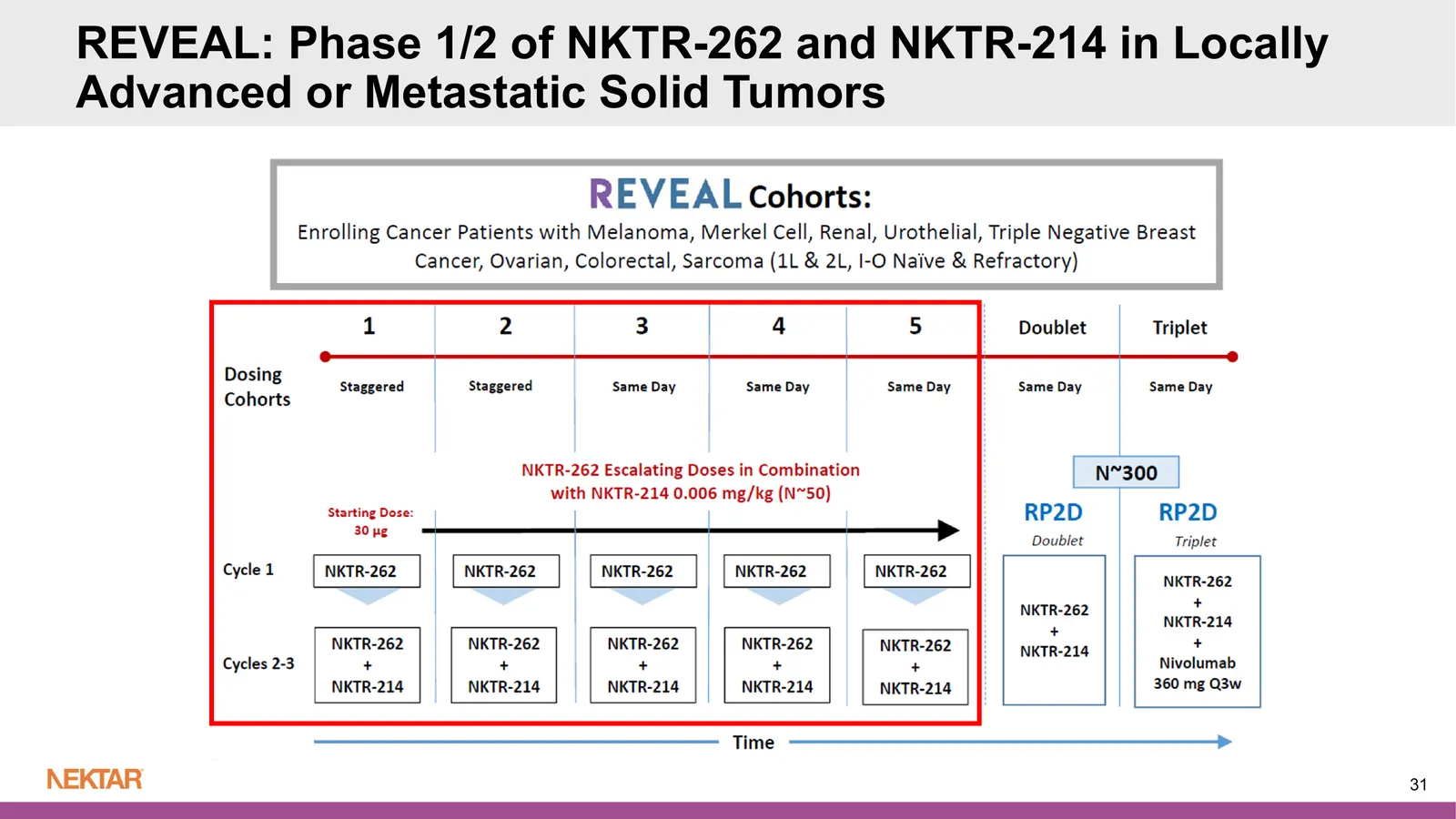
Slide 31: REVEAL: Phase 1/2 of NKTR-262 and NKTR-214 in Locally Advanced or Metastatic Solid Tumors
REVEAL: Phase 1/2 of NKTR-262 and NKTR-214 in Locally Advanced or Metastatic Solid Tumors 31
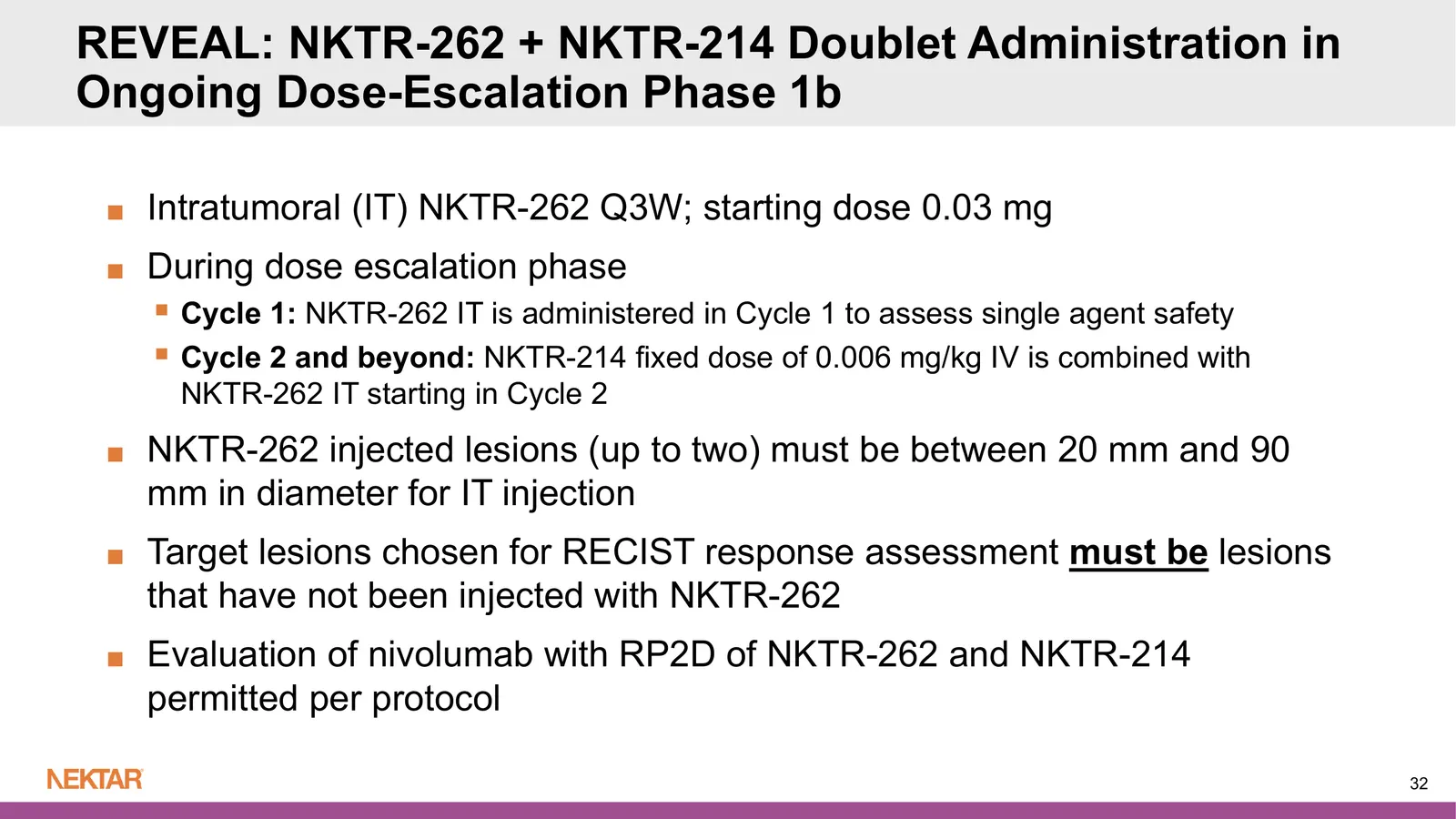
Slide 32: REVEAL: Doublet Administration in Ongoing Dose-Escalation Phase 1b
REVEAL: NKTR-262 + NKTR-214 Doublet Administration in Ongoing Dose-Escalation Phase 1b ■ Intratumoral (IT) NKTR-262 Q3W; starting dose 0.03 mg ■ During dose escalation phase Cycle 1: NKTR-262 IT is administered in Cycle 1 to assess single agent safety Cycle 2 and beyond: NKTR-214 fixed dose of 0
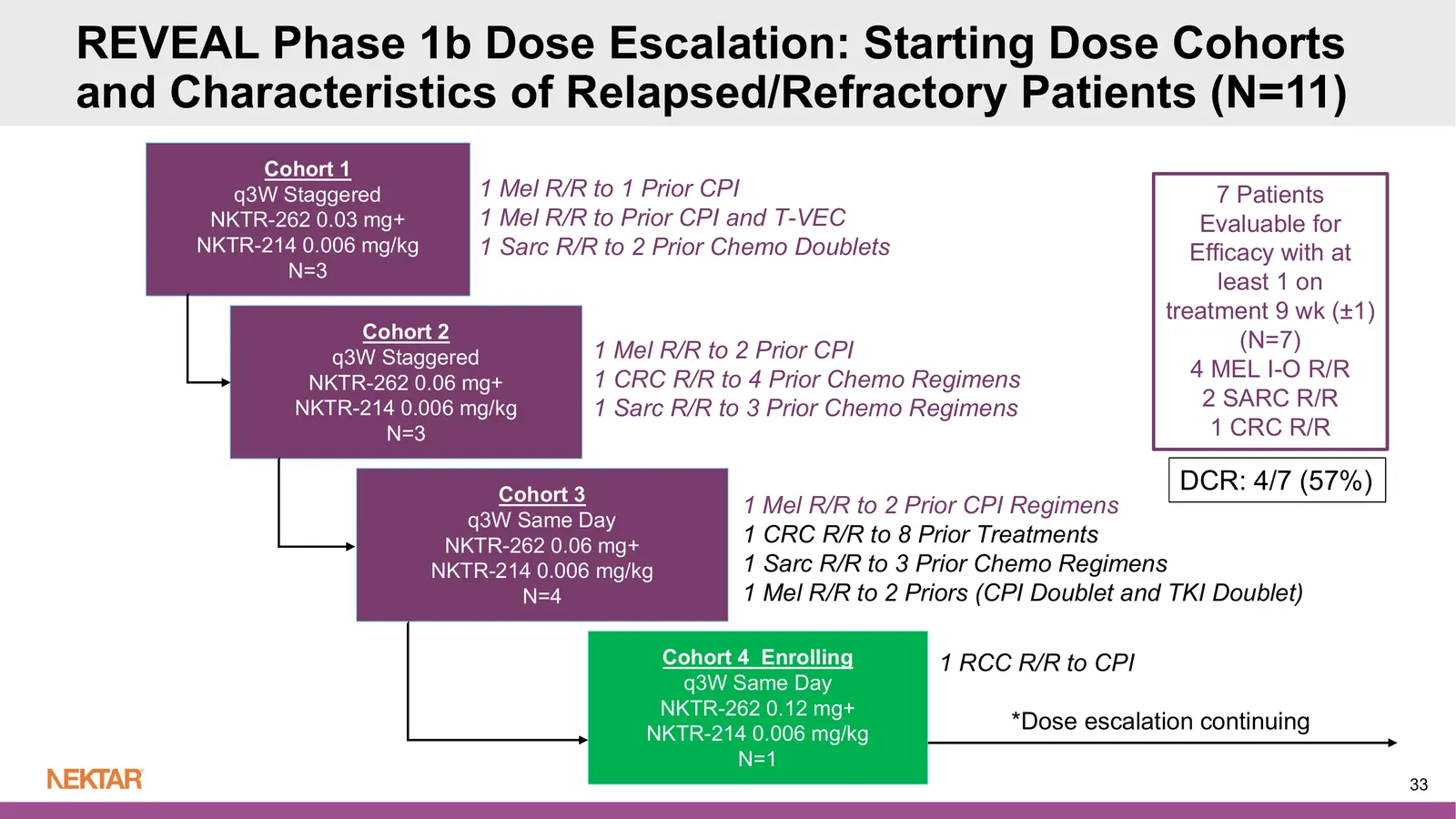
Slide 33: REVEAL Phase 1b Dose Escalation: Starting Dose Cohorts and Patient Characteristics
REVEAL Phase 1b Dose Escalation: Starting Dose Cohorts and Characteristics of Relapsed/Refractory Patients (N=11) Cohort 1 q3W Staggered 1 Mel R/R to 1 Prior CPI 7 Patients NKTR-262 0.03 mg+ 1 Mel R/R to Prior CPI and T-VEC Evaluable for NKTR-214 0.006 mg/kg 1 Sarc R/R to 2 Prior Chemo Doublets Effi
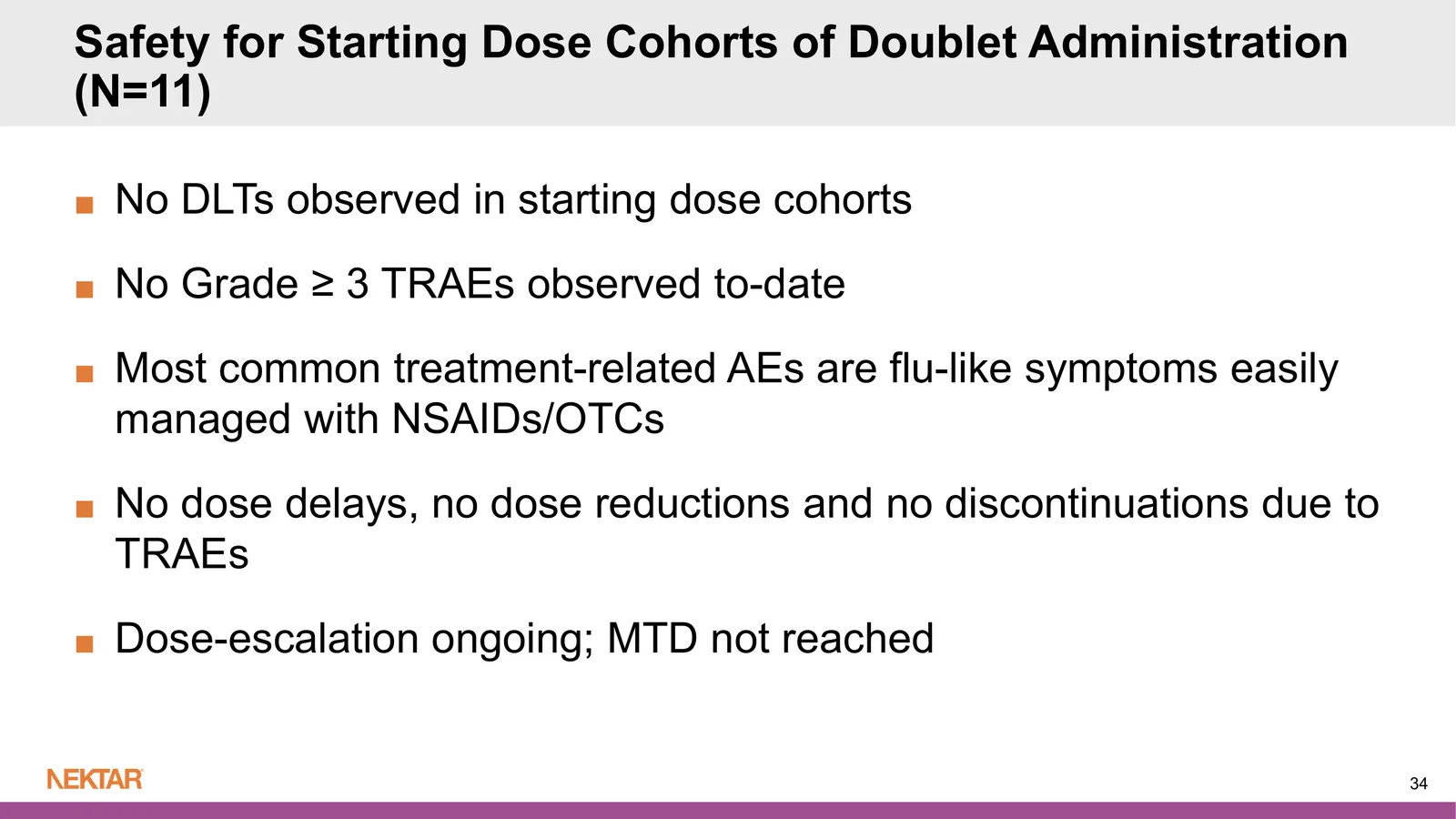
Slide 34: Safety for Starting Dose Cohorts of Doublet Administration
Safety for Starting Dose Cohorts of Doublet Administration (N=11) ■ No DLTs observed in starting dose cohorts ■ No Grade ≥ 3 TRAEs observed to-date ■ Most common treatment-related AEs are flu-like symptoms easily managed with NSAIDs/OTCs ■ No dose delays, no dose reductions and no discontinuations d

Slide 35: Preliminary Biomarker Data
Preliminary Biomarker Data 35
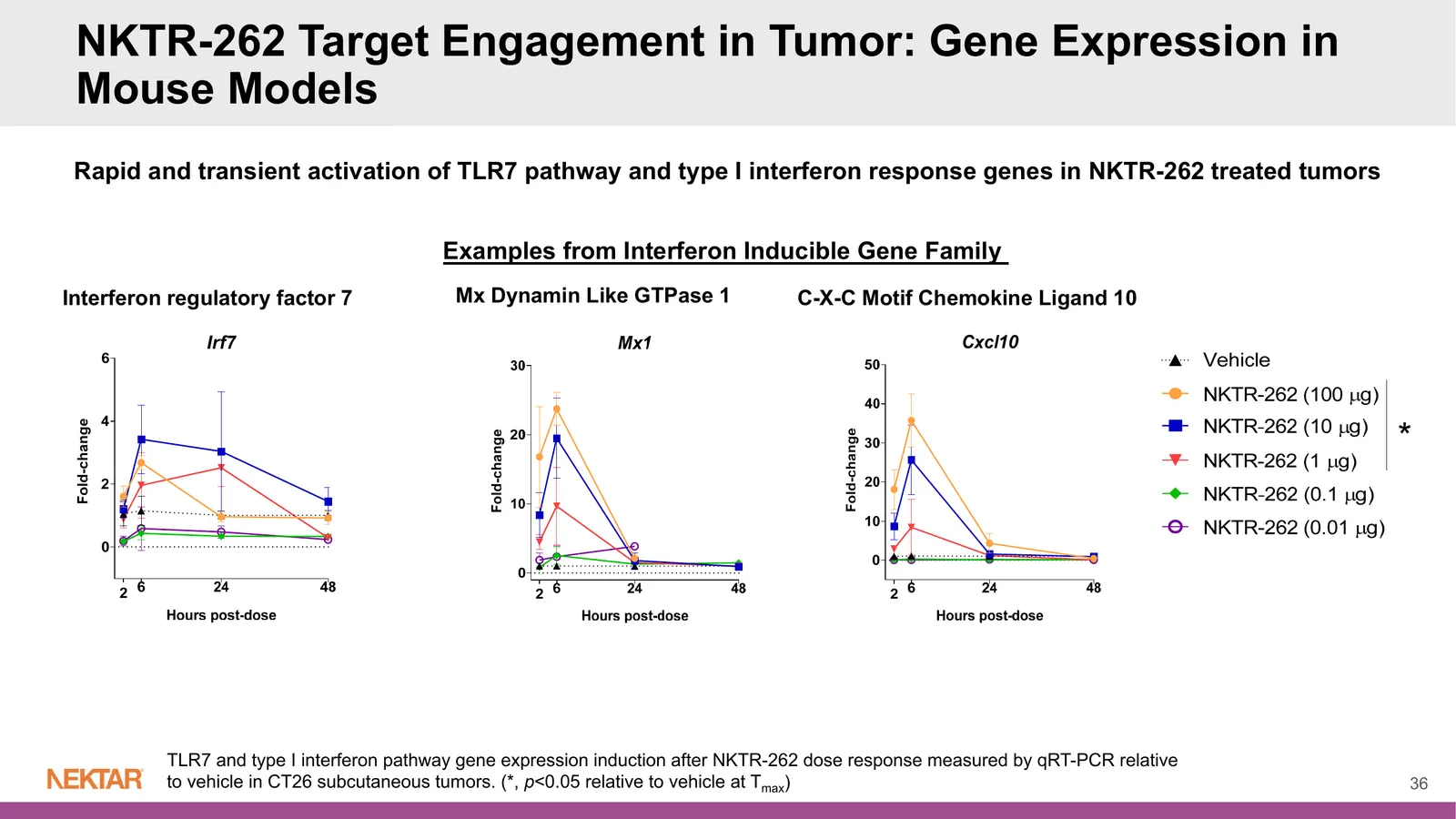
Slide 36: NKTR-262 Target Engagement in Tumor: Gene Expression in Mouse Models
NKTR-262 Target Engagement in Tumor: Gene Expression in Mouse Models Rapid and transient activation of TLR7 pathway and type I interferon response genes in NKTR-262 treated tumors Examples from Interferon Inducible Gene Family Interferon regulatory factor 7 Mx Dynamin Like GTPase 1 C-X-C Motif Chemo
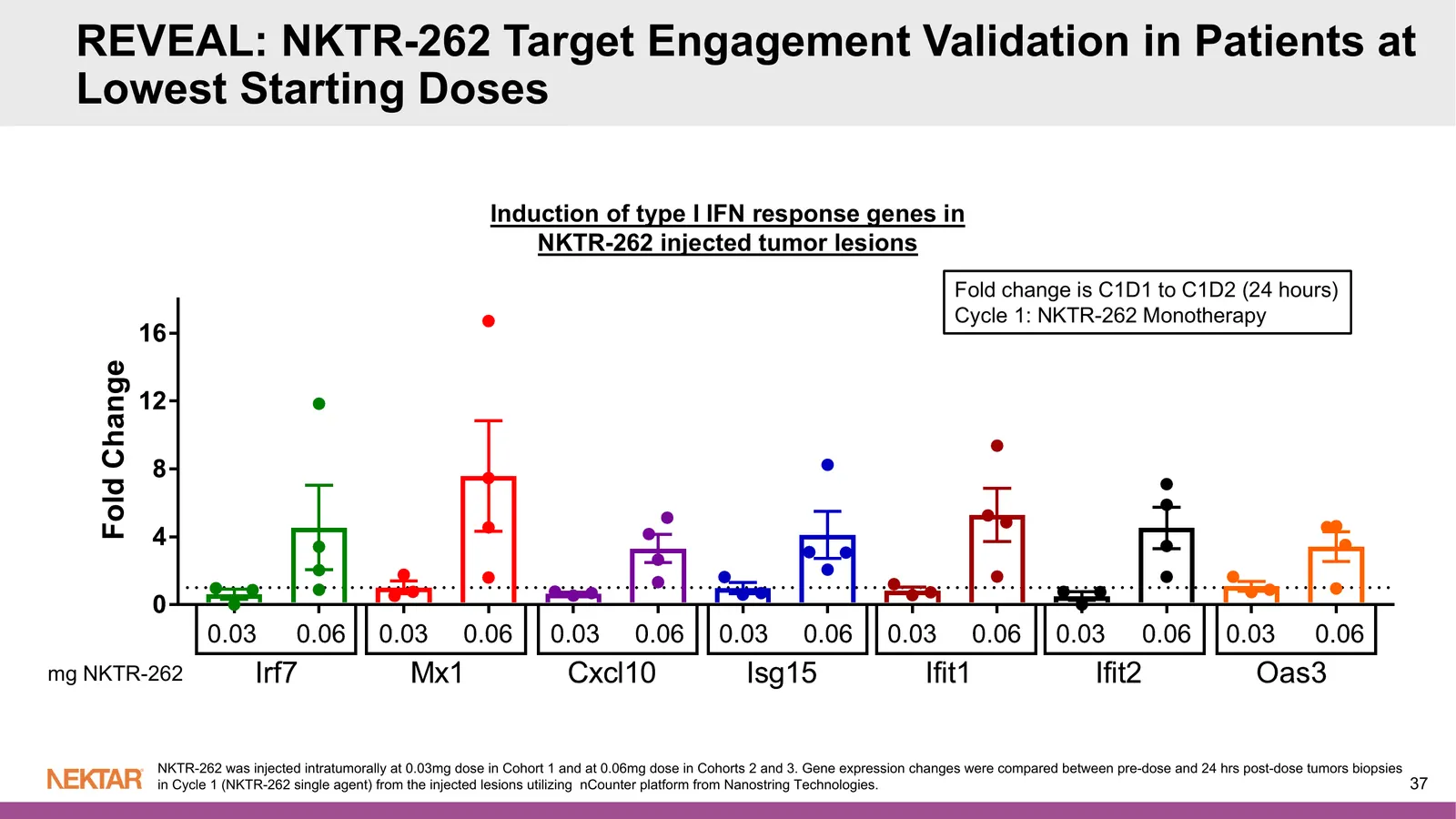
Slide 37: REVEAL: NKTR-262 Target Engagement Validation in Patients at Lowest Starting Doses
REVEAL: NKTR-262 Target Engagement Validation in Patients at Lowest Starting Doses Induction of type I IFN response genes in NKTR-262 injected tumor lesions Fold change is C1D1 to C1D2 (24 hours) Cycle 1: NKTR-262 Monotherapy mg NKTR-262 NKTR-262 was injected intratumorally at 0.03mg dose in Cohort

Slide 38: Case Studies: Melanoma Patients R/R to Prior CPIs
Case Studies Melanoma Patients R/R to Prior CPIs 38
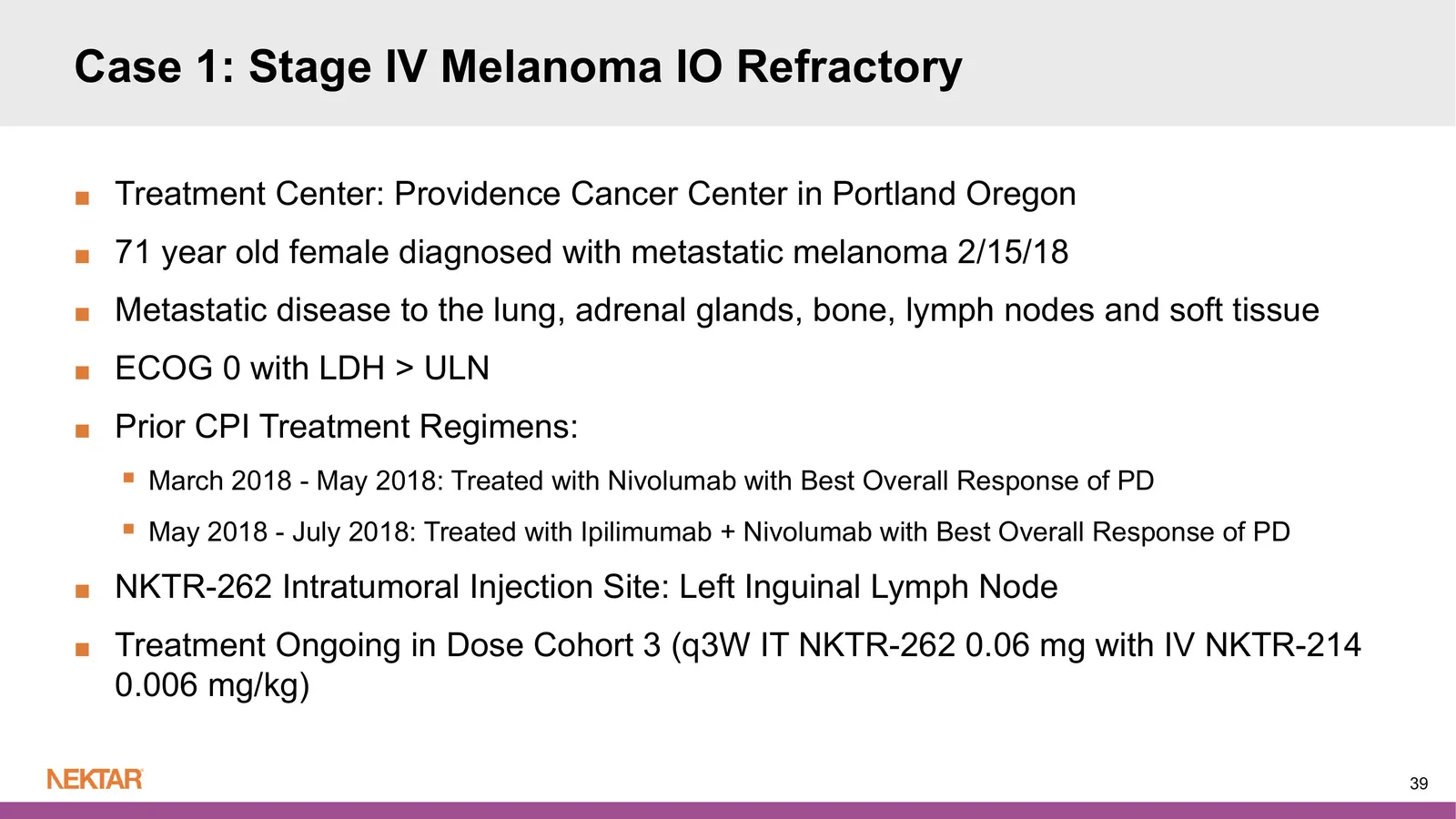
Slide 39: Case 1: Stage IV Melanoma IO Refractory
Case 1: Stage IV Melanoma IO Refractory ■ Treatment Center: Providence Cancer Center in Portland Oregon ■ 71 year old female diagnosed with metastatic melanoma 2/15/18 ■ Metastatic disease to the lung, adrenal glands, bone, lymph nodes and soft tissue ■ ECOG 0 with LDH > ULN ■ Prior CPI Treatment Re
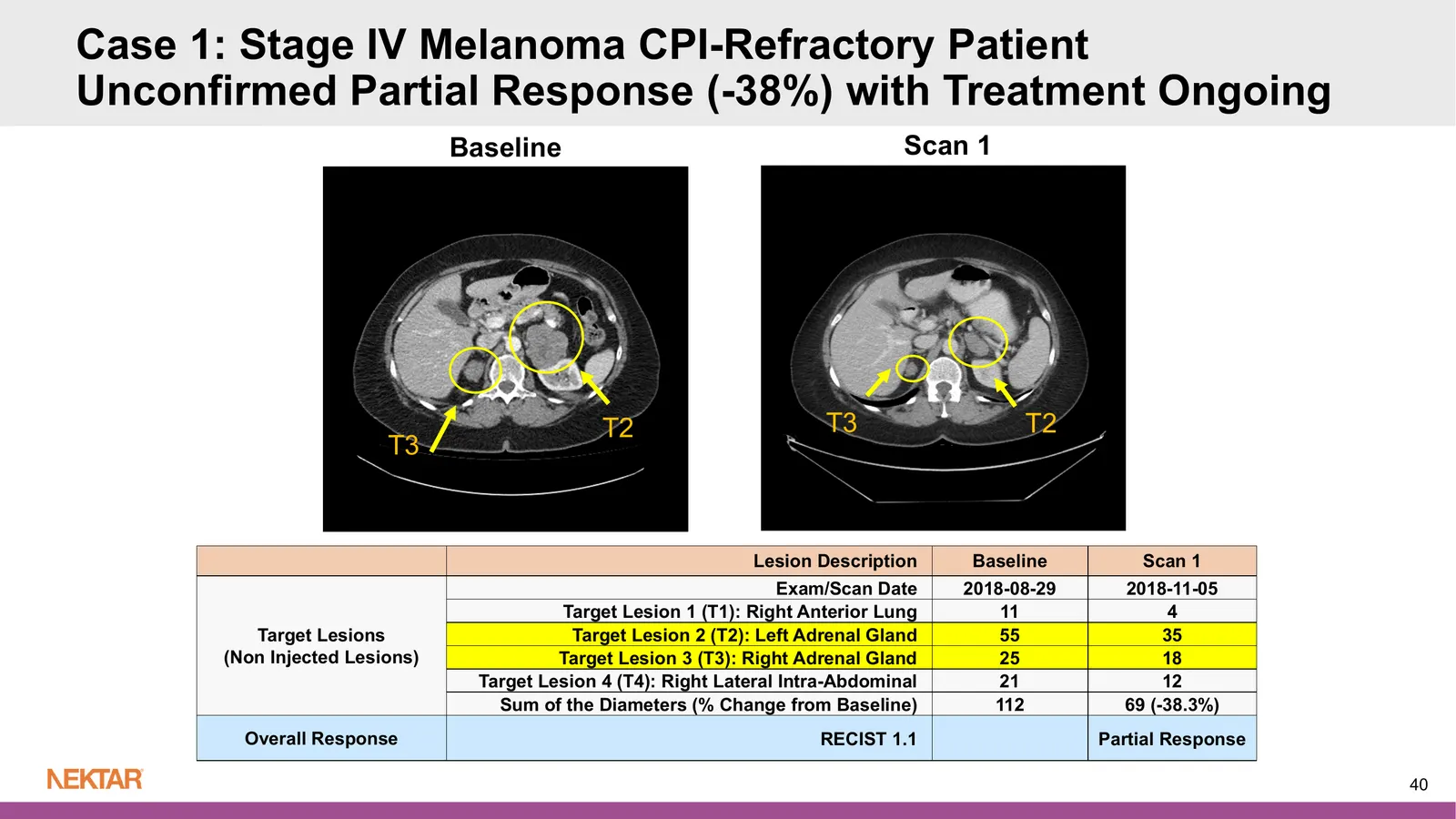
Slide 40: Case 1: Unconfirmed Partial Response (-38%) with Treatment Ongoing
Case 1: Stage IV Melanoma CPI-Refractory Patient Unconfirmed Partial Response (-38%) with Treatment Ongoing Baseline Scan 1 T2 T3 T2 T3 Lesion Description Baseline Scan 1 Exam/Scan Date 2018-08-29 2018-11-05 Target Lesion 1 (T1): Right Anterior Lung 11 4 Target Lesions Target Lesion 2 (T2): Left Adr
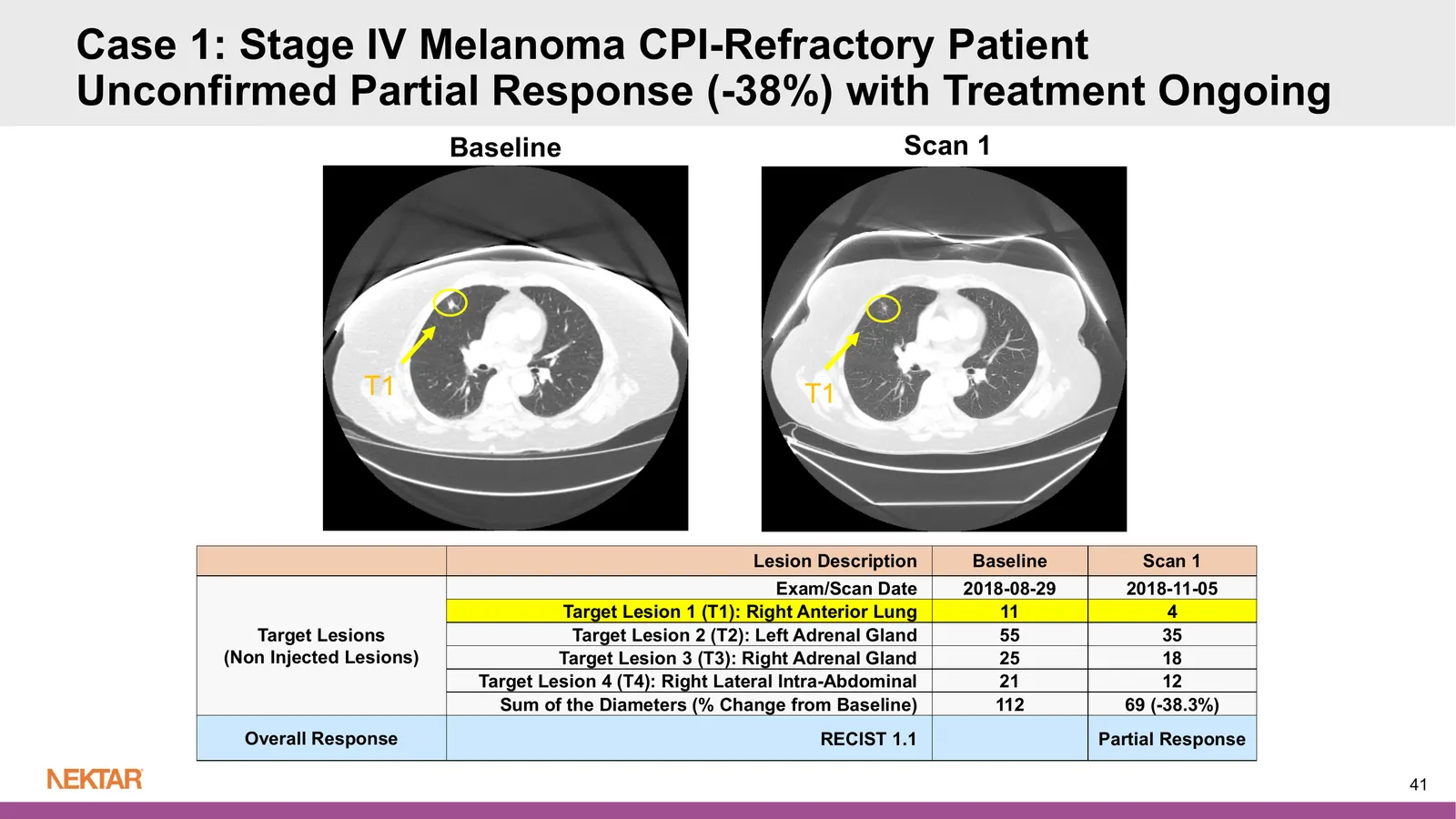
Slide 41: Case 1: Unconfirmed Partial Response (-38%) with Treatment Ongoing
Case 1: Stage IV Melanoma CPI-Refractory Patient Unconfirmed Partial Response (-38%) with Treatment Ongoing Baseline Scan 1 T1 T1 Lesion Description Baseline Scan 1 Exam/Scan Date 2018-08-29 2018-11-05 Target Lesion 1 (T1): Right Anterior Lung 11 4 Target Lesions Target Lesion 2 (T2): Left Adrenal G
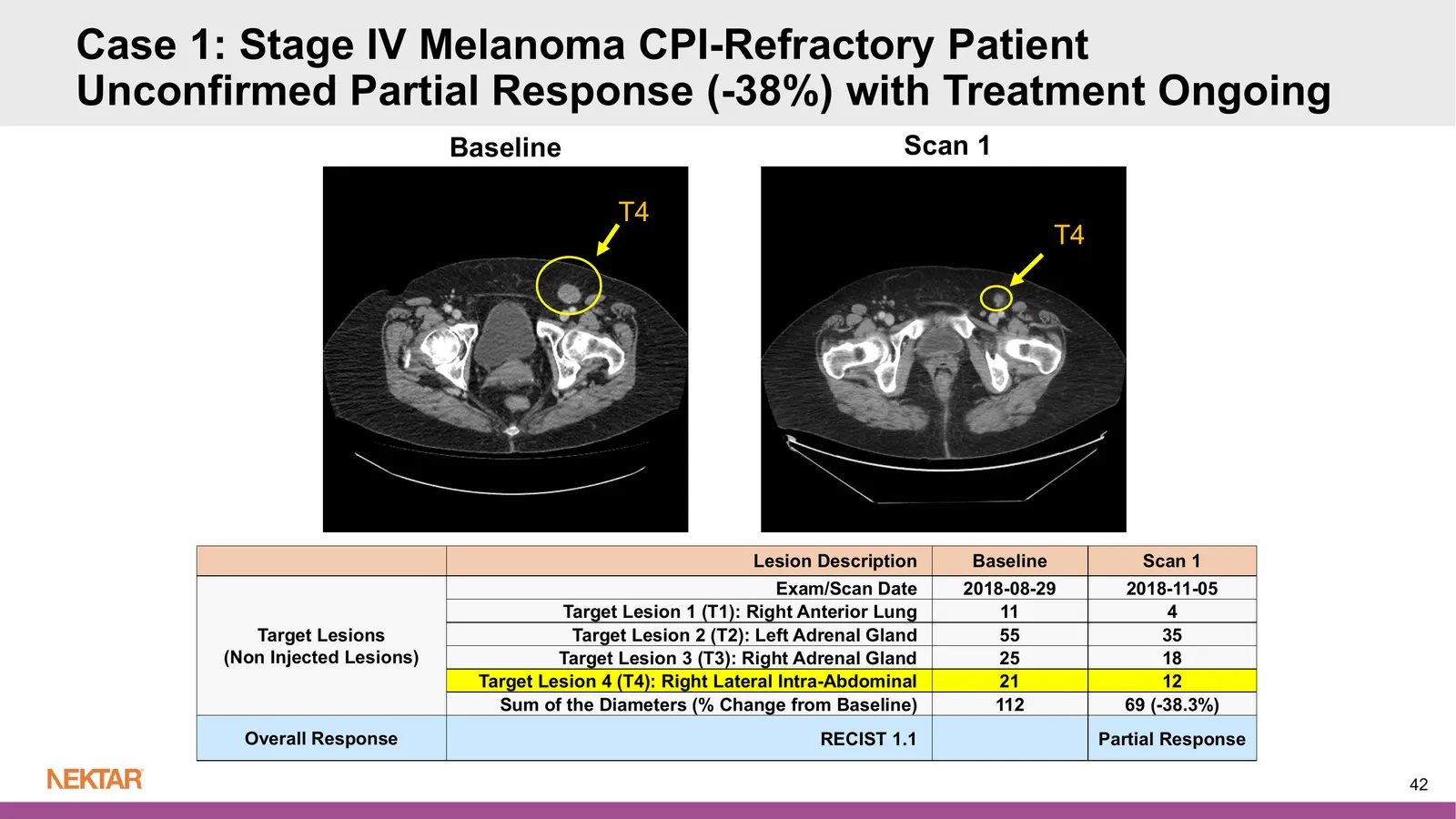
Slide 42: Case 1: Unconfirmed Partial Response (-38%) with Treatment Ongoing
Case 1: Stage IV Melanoma CPI-Refractory Patient Unconfirmed Partial Response (-38%) with Treatment Ongoing Baseline Scan 1 T4 T4 Lesion Description Baseline Scan 1 Exam/Scan Date 2018-08-29 2018-11-05 Target Lesion 1 (T1): Right Anterior Lung 11 4 Target Lesions Target Lesion 2 (T2): Left Adrenal G
Slide 43: Case 2: Stage IV Melanoma IO Refractory Confirmed Partial Response
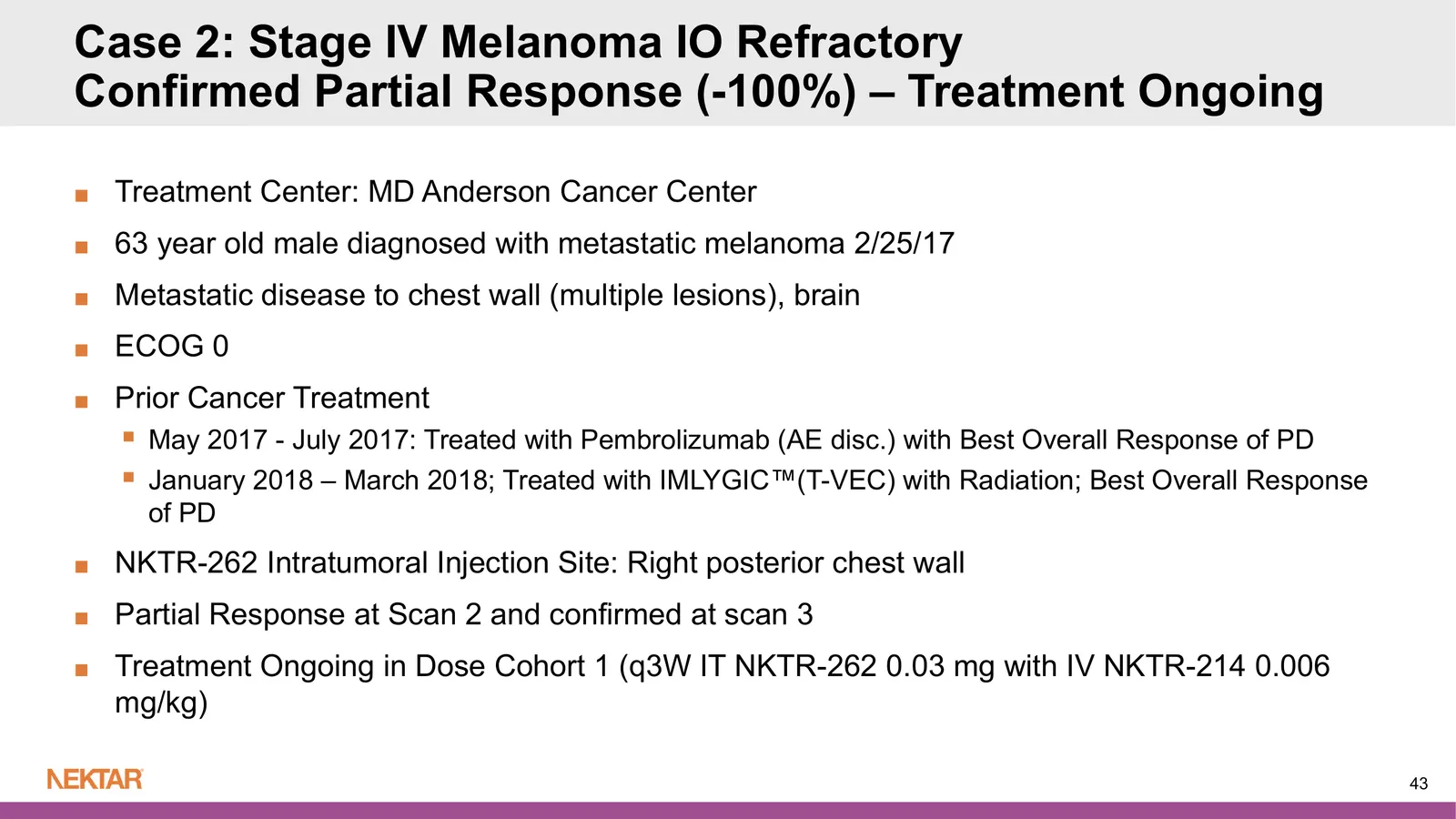
Case 2: Stage IV Melanoma IO Refractory Confirmed Partial Response (-100%) – Treatment Ongoing ■ Treatment Center: MD Anderson Cancer Center ■ 63 year old male diagnosed with metastatic melanoma 2/25/17 ■ Metastatic disease to chest wall (multiple lesions), brain ■ ECOG 0 ■ Prior Cancer Treatment
Slide 44: Case 2: Confirmed Partial Response (-100%) – Treatment Ongoing
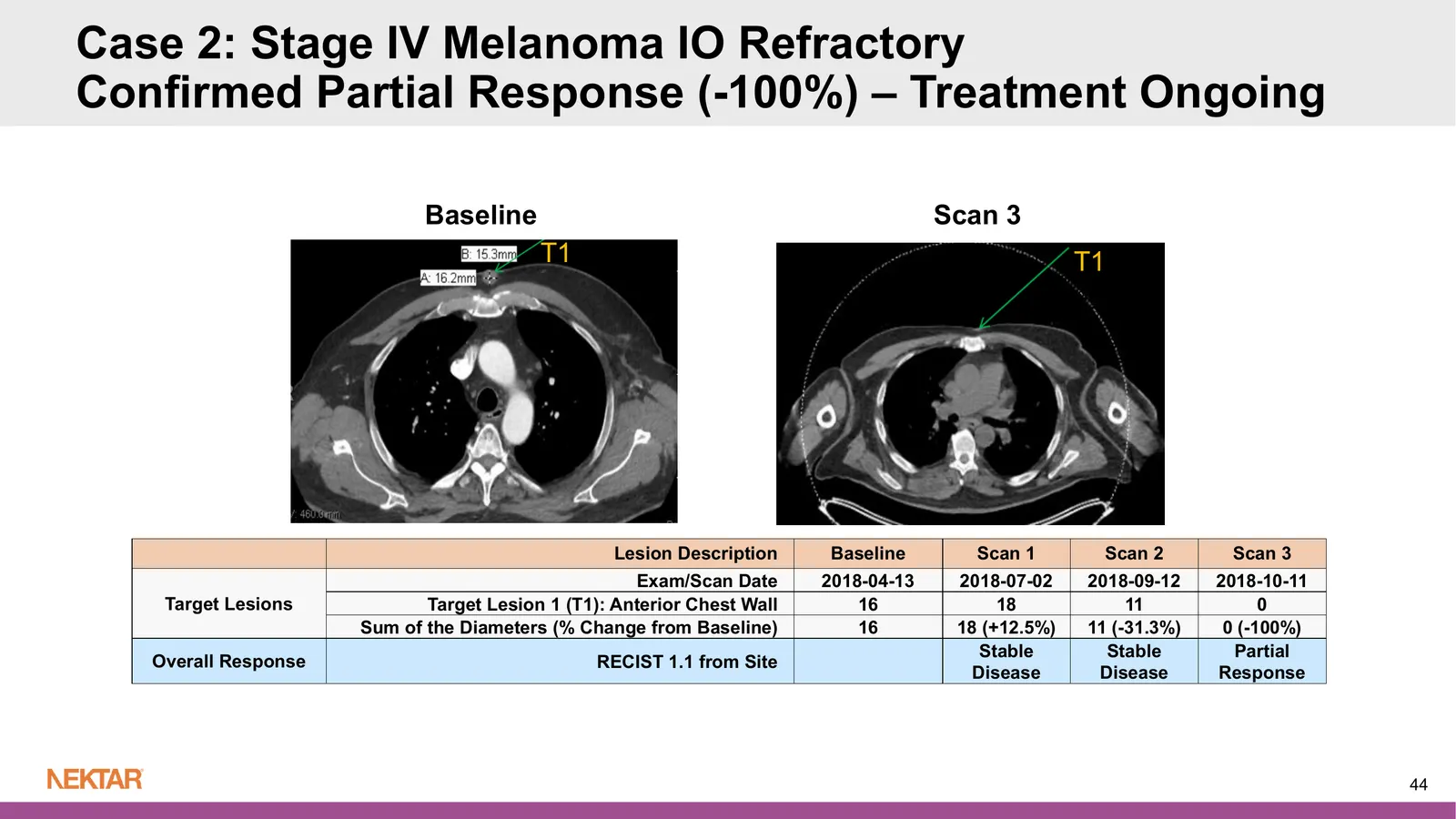
Case 2: Stage IV Melanoma IO Refractory Confirmed Partial Response (-100%) – Treatment Ongoing Baseline Scan 3 T1 T1 Lesion Description Baseline Scan 1 Scan 2 Scan 3 Exam/Scan Date 2018-04-13 2018-07-02 2018-09-12 2018-10-11 Target Lesions Target Lesion 1 (T1): Anterior Chest Wall 16 18 11 0 Sum of
Slide 45: Case 2: Confirmed Partial Response (-100%) – Treatment Ongoing
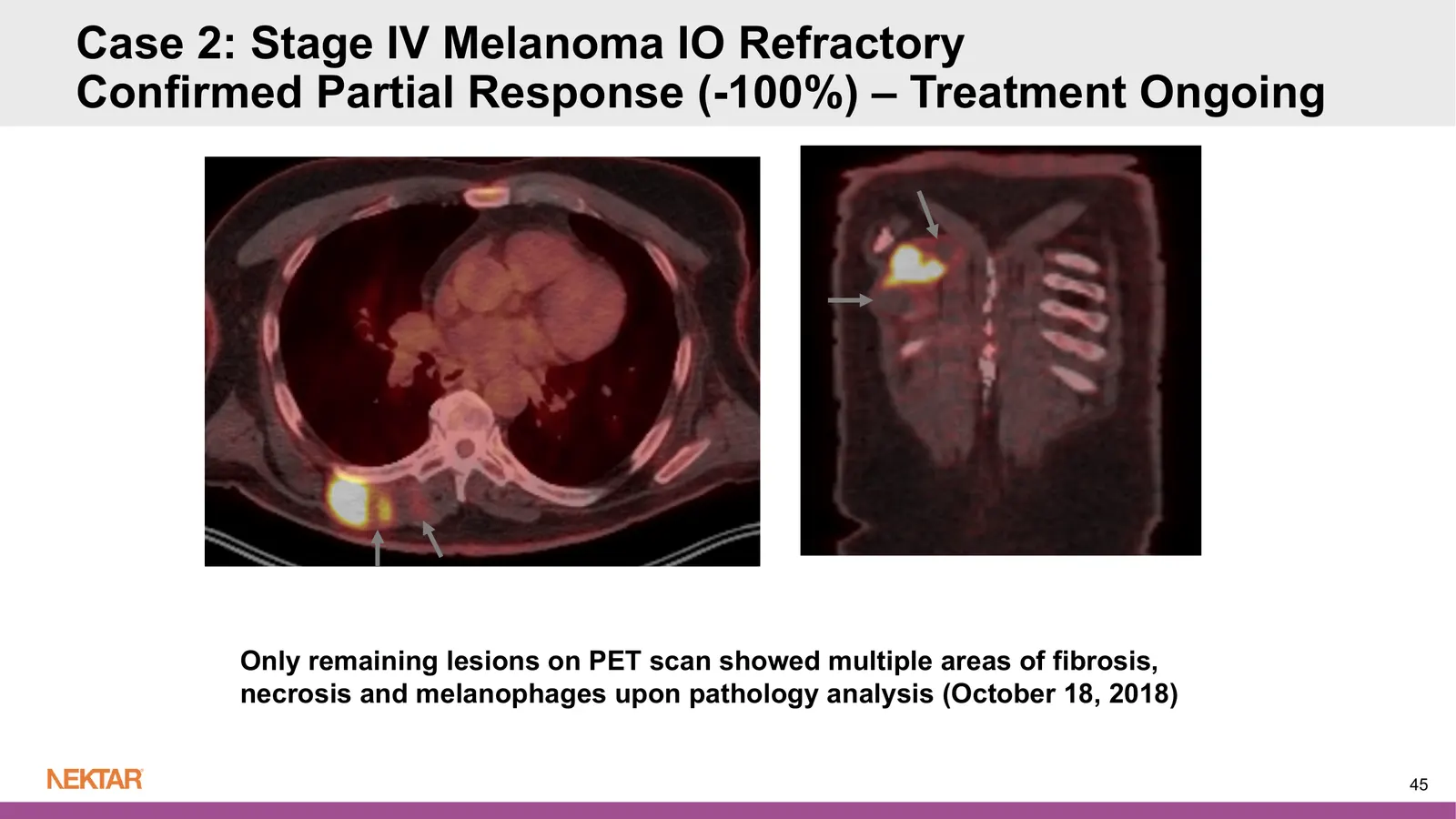
Case 2: Stage IV Melanoma IO Refractory Confirmed Partial Response (-100%) – Treatment Ongoing Only remaining lesions on PET scan showed multiple areas of fibrosis, necrosis and melanophages upon pathology analysis (October 18, 2018) 45
Slide 46: Key Takeaways from Ongoing Dose Escalation of REVEAL Study
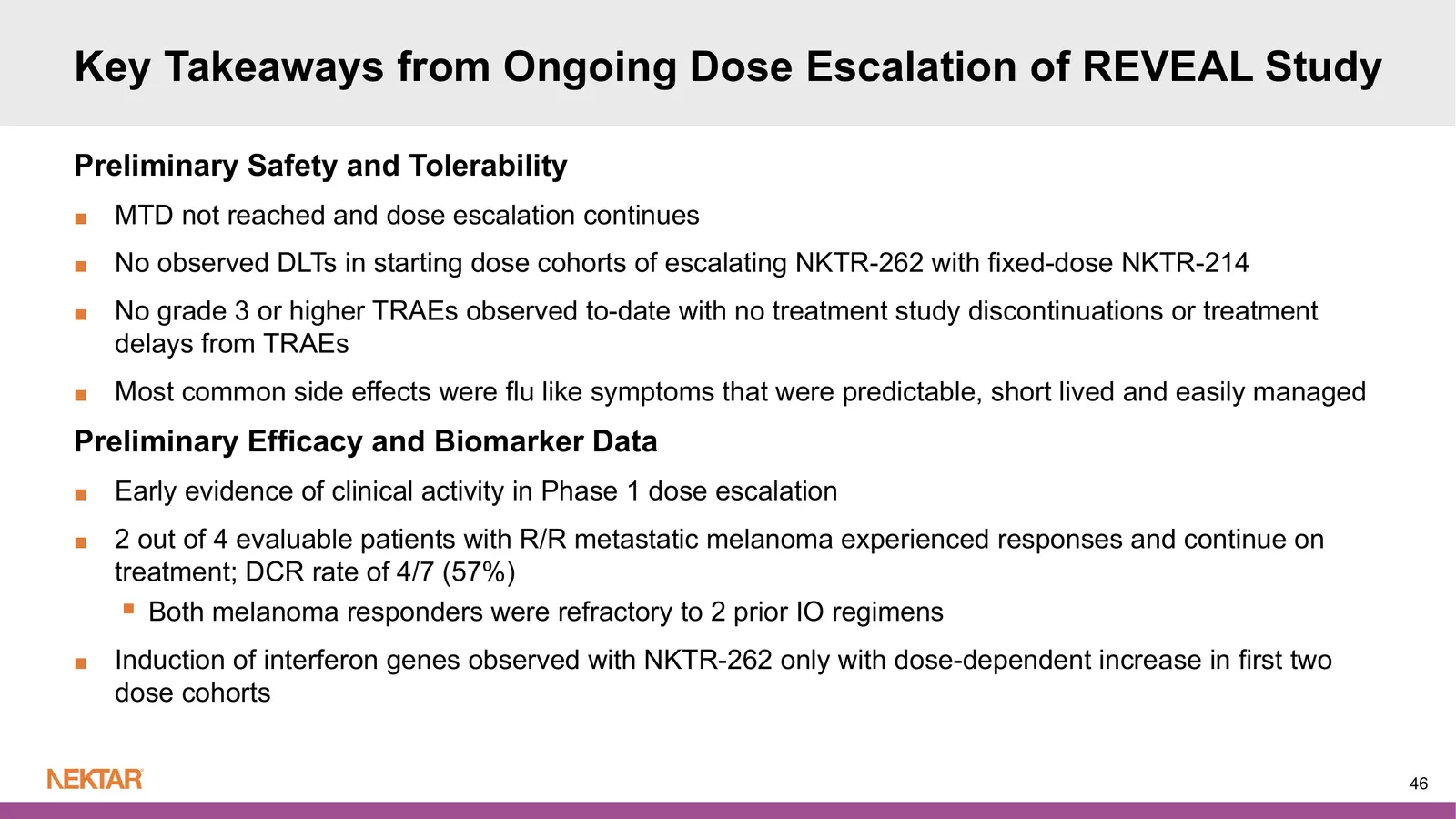
Key Takeaways from Ongoing Dose Escalation of REVEAL Study Preliminary Safety and Tolerability ■ MTD not reached and dose escalation continues ■ No observed DLTs in starting dose cohorts of escalating NKTR-262 with fixed-dose NKTR-214 ■ No grade 3 or higher TRAEs observed to-date with no treatment s

Slide 47: Q&A Session
Q&A Session 47
Source: Internet Archive copy of nektar.com
More decks from Nektar Therapeutics
 EADV Analyst and Investor Event 202638 slides · Oct 1, 2026
 Investor Presentation (September 2026)70 slides · September 2026
 Investor Presentation (April 2026)36 slides · Apr 20, 2026
 Technical Presentation (February 2026)37 slides · Feb 10, 2026
 Technical Presentation (December 2025)38 slides · Dec 16, 2025
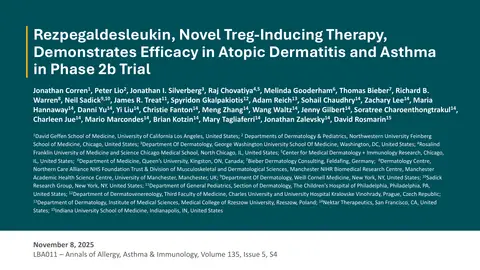 ACAAI Annual Scientific Meeting 202515 slides · Nov 8, 2025