Capricor Therapeutics, Inc. · NASDAQ:CAPR
Capricor Therapeutics — Technical Presentation (April 2017)
22 slides from Capricor Therapeutics's technical presentation, Apr 25, 2017

Slide 1: Conference Call to Discuss Top-Line Six-Month Results of the HOPE-Duchenne Trial
a translational medicine company Conference Call to Discuss Top-Line Six-Month Results of the HOPE-Duchenne Trial NASDAQ: CAPR April 25, 2017
Slide 2: Forward-Looking Statements
Forward-Looking Statements 2 This presentation contains forward-looking statements and information that are based on the beliefs of the management of Capricor Therapeutics, Inc. (Capricor) as well as assumptions made by and information currently available to Capricor. All statements other than state
Slide 3: Positive Top-Line Six-Month Safety and Exploratory Efficacy Data
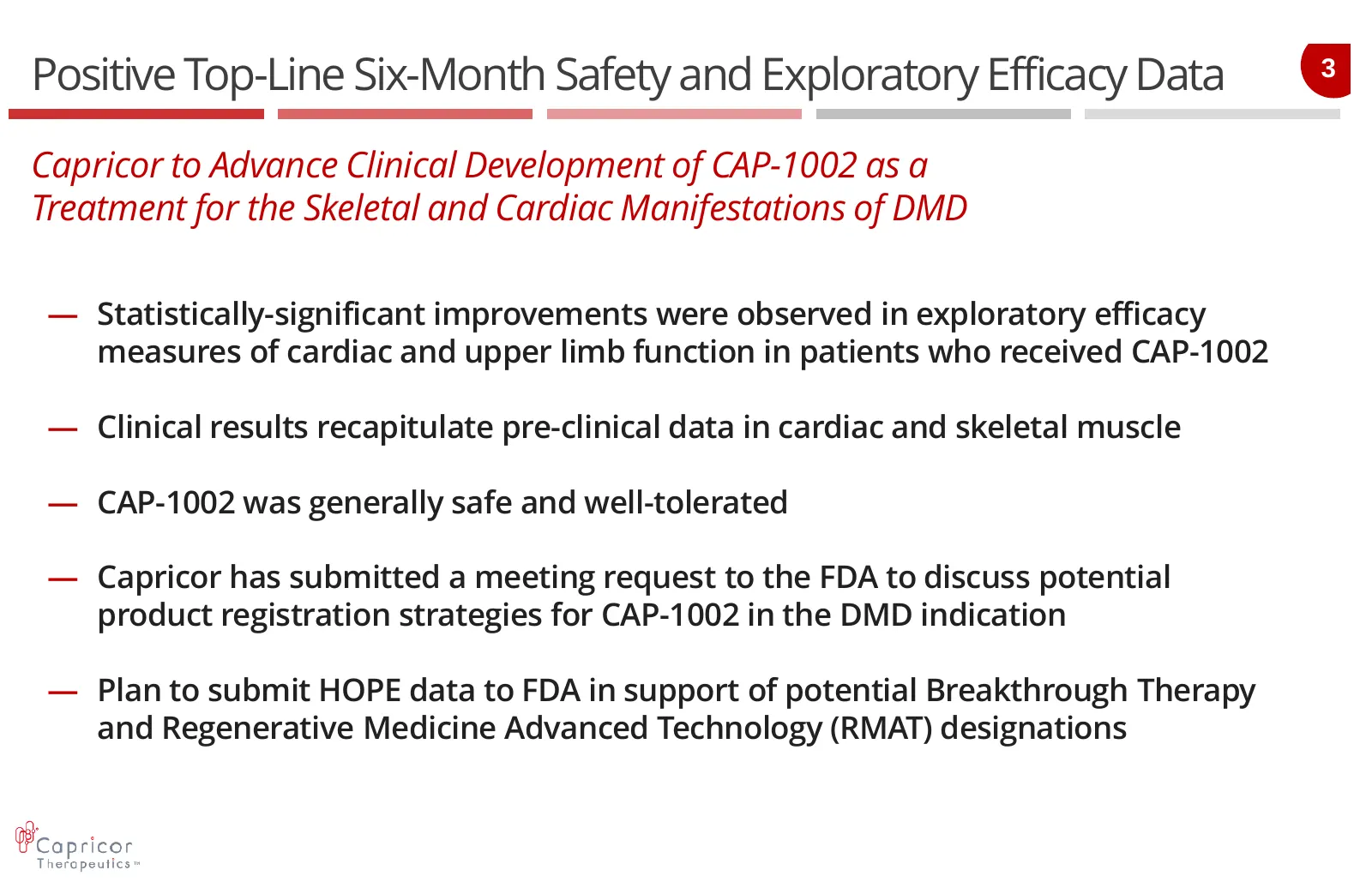
Positive Top-Line Six-Month Safety and Exploratory Efficacy Data 3 Capricor to Advance Clinical Development of CAP-1002 as a Treatment for the Skeletal and Cardiac Manifestations of DMD — Statistically-significant improvements were observed in exploratory efficacy measures of cardiac and upper limb
Slide 4: Duchenne Muscular Dystrophy (DMD) and CAP-1002
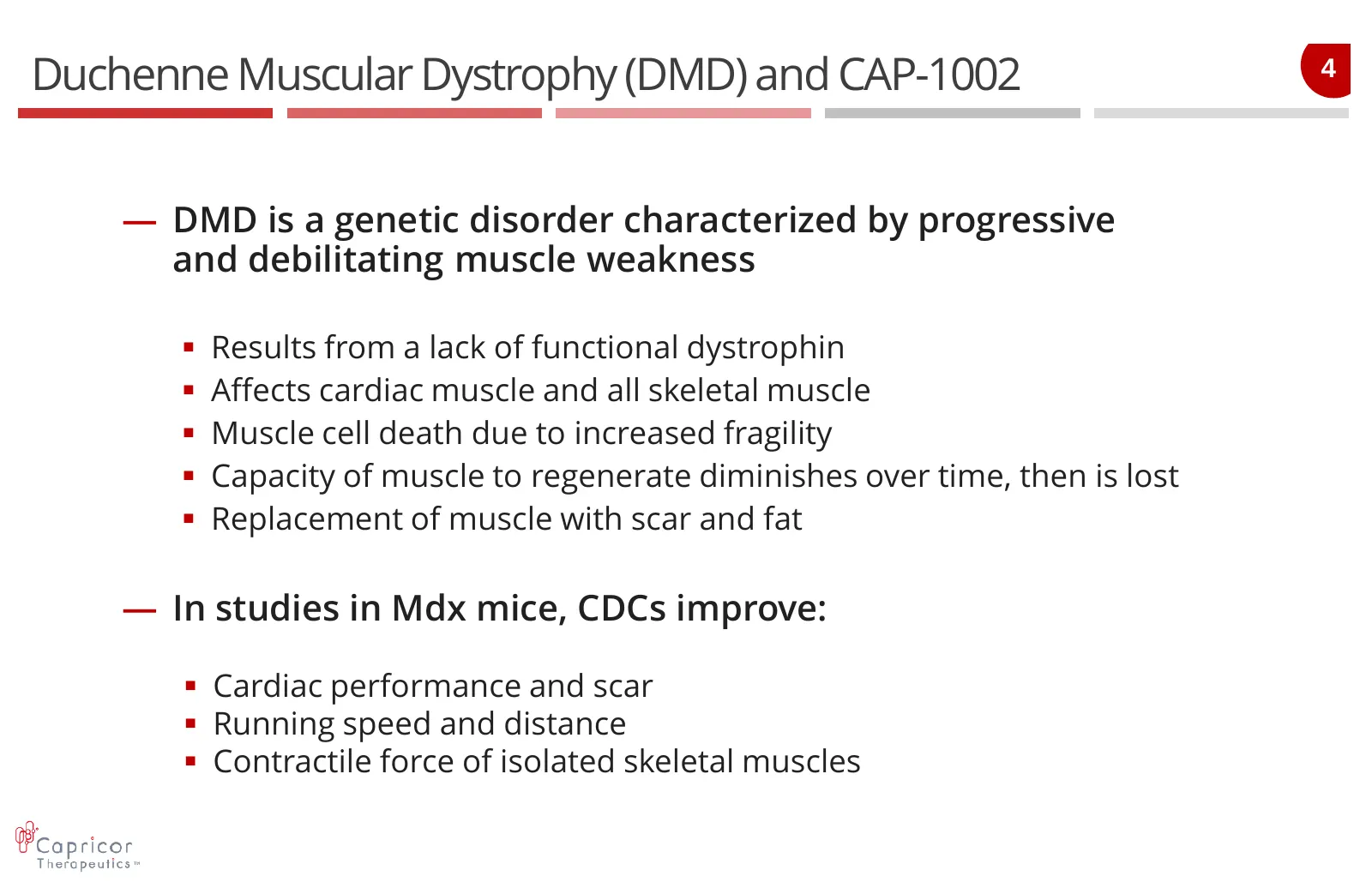
Duchenne Muscular Dystrophy (DMD) and CAP-1002 4 — DMD is a genetic disorder characterized by progressive and debilitating muscle weakness Results from a lack of functional dystrophin Affects cardiac muscle and all skeletal muscle Muscle cell death due to increased fragility Capacity of musc
Slide 5: About CAP-1002 (allogenic cardiosphere-derived cells)
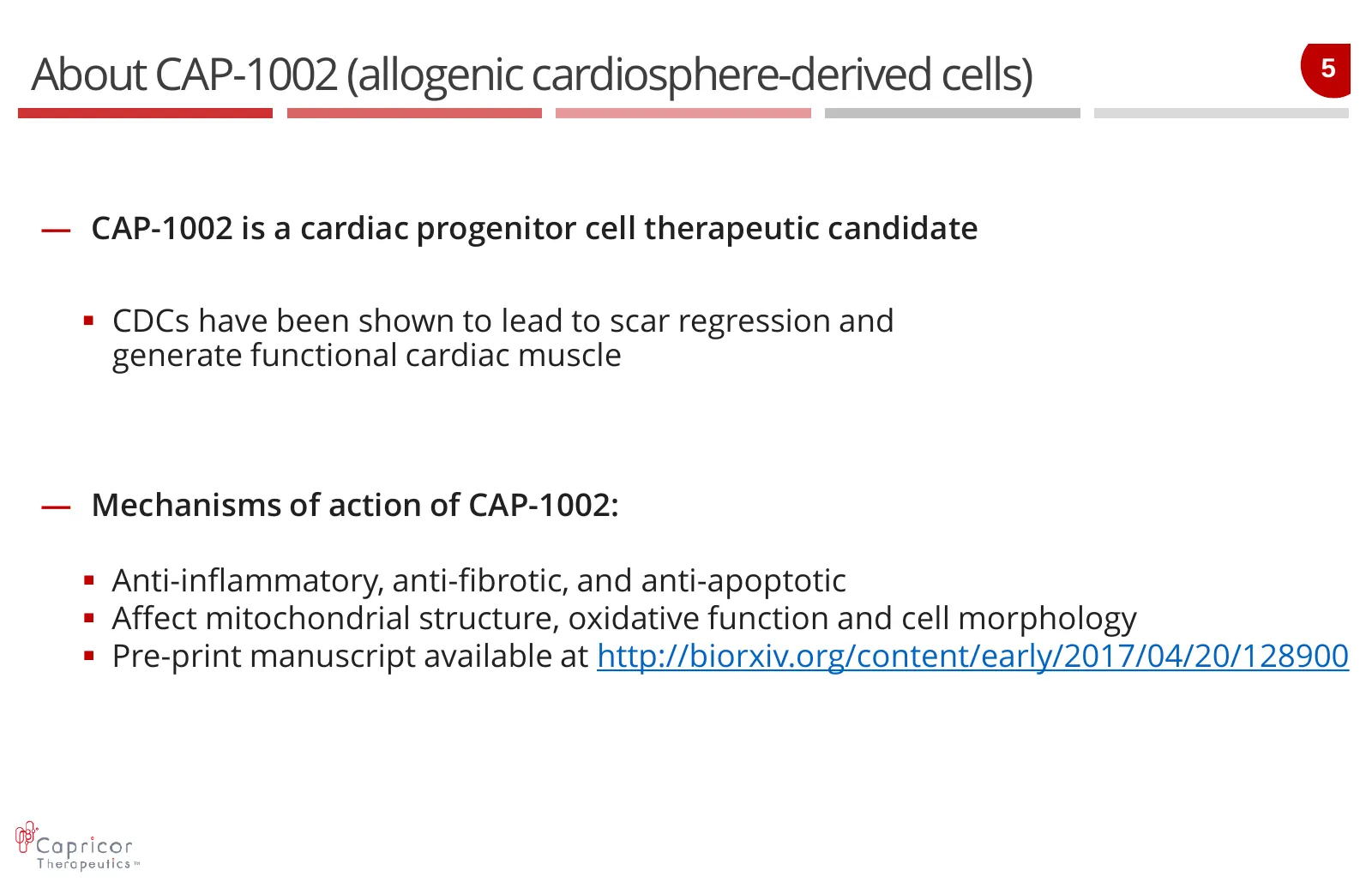
About CAP-1002 (allogenic cardiosphere-derived cells) 5 — CAP-1002 is a cardiac progenitor cell therapeutic candidate CDCs have been shown to lead to scar regression and generate functional cardiac muscle — Mechanisms of action of CAP-1002: Anti-inflammatory, anti-fibrotic, and anti-apoptotic
Slide 6: CAP-1002: Mechanism of Action via Exosomes
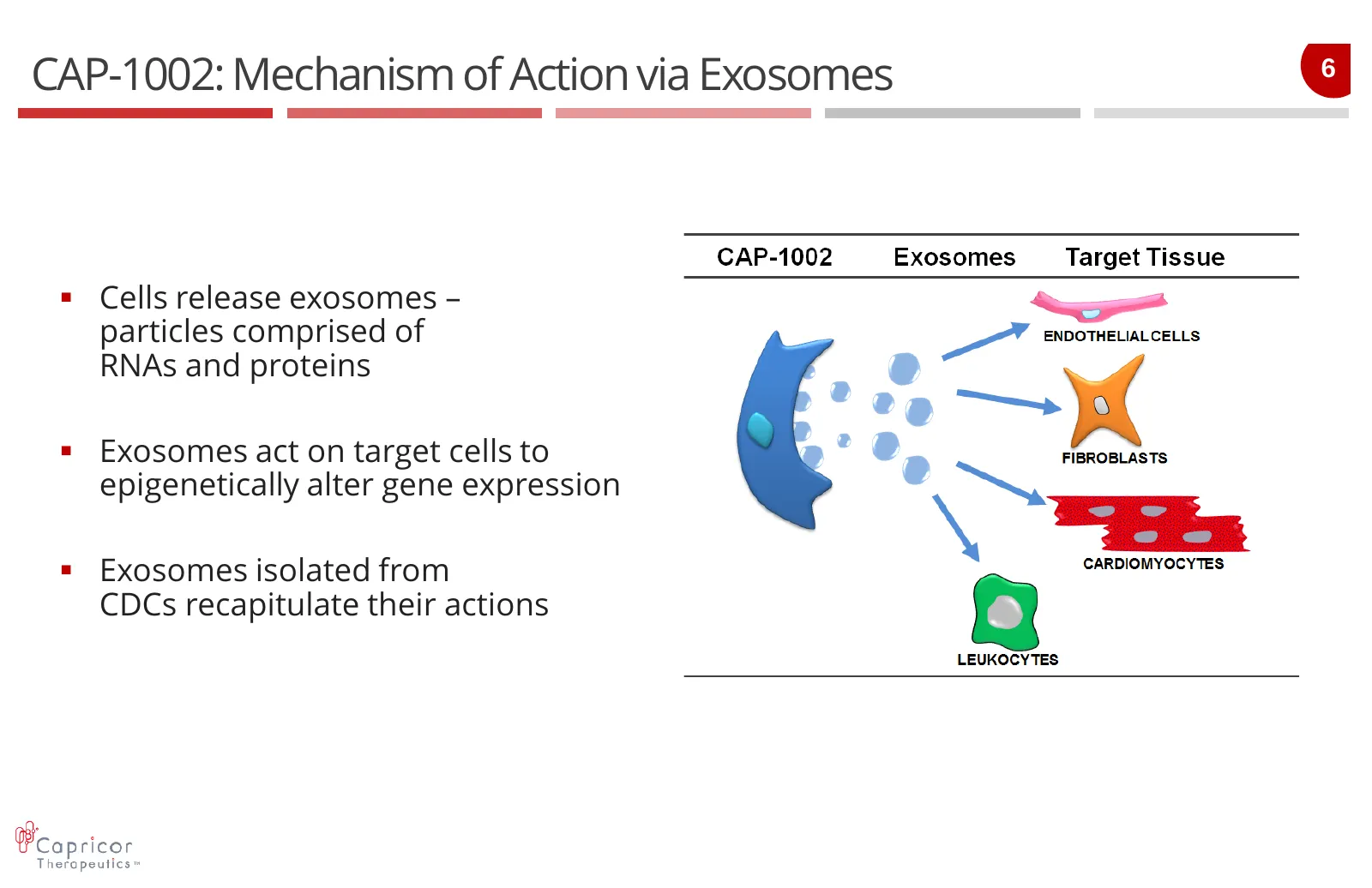
CAP-1002: Mechanism of Action via Exosomes 6 Cells release exosomes – particles comprised of RNAs and proteins Exosomes act on target cells to epigenetically alter gene expression Exosomes isolated from CDCs recapitulate their actions
Slide 7: The Randomized Phase I/II HOPE-Duchenne Clinical Trial
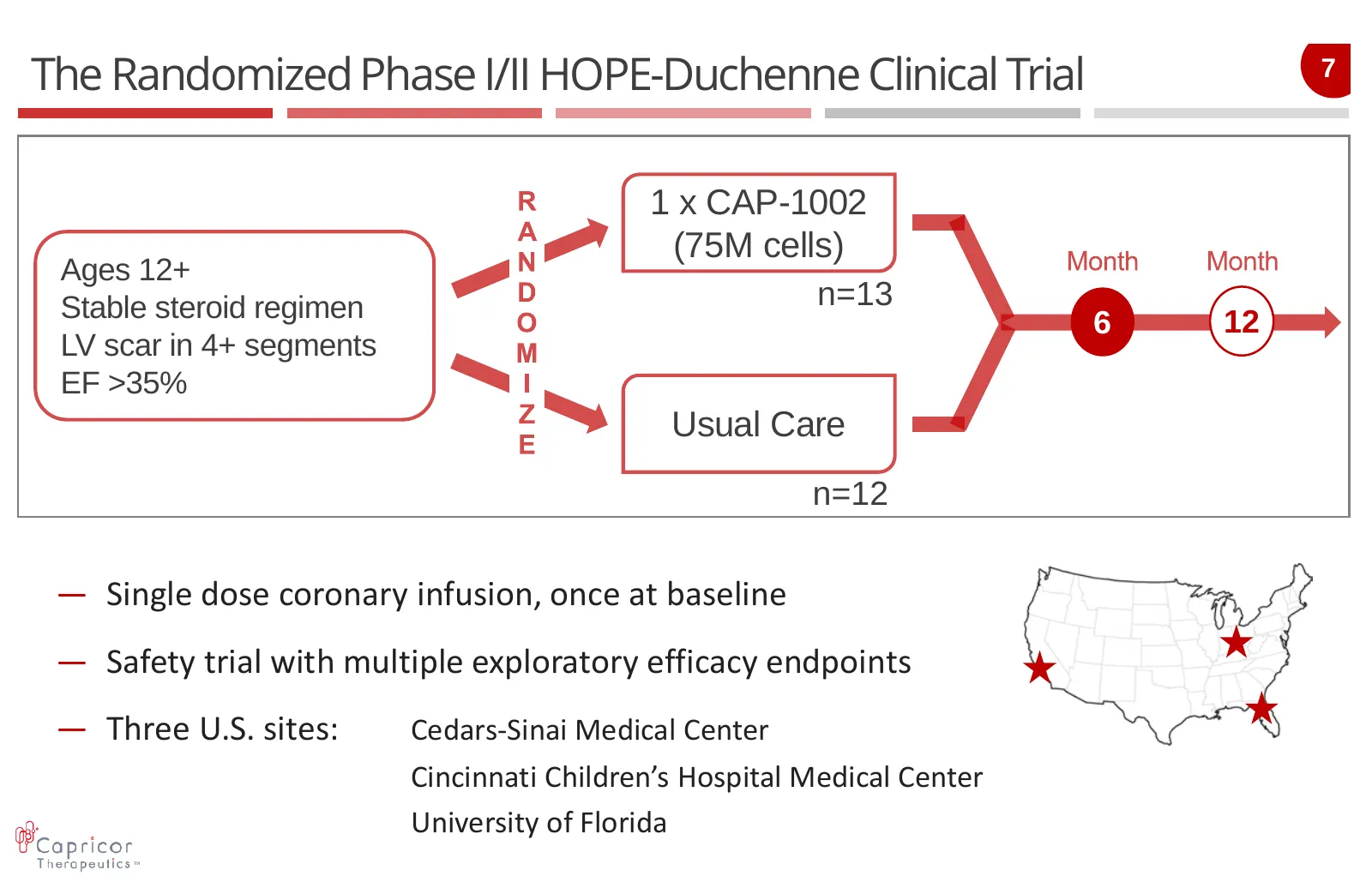
The Randomized Phase I/II HOPE-Duchenne Clinical Trial 7 1 x CAP-1002 (75M cells) Ages 12+ Stable steroid regimen n=13 6 12 LV scar in 4+ segments EF >35% Usual Care n=12 — Single dose coronary infusion, once at baseline — Safety trial with multiple exploratory efficacy endpoints — Three U.S. sites:
Slide 8: Baseline Characteristics
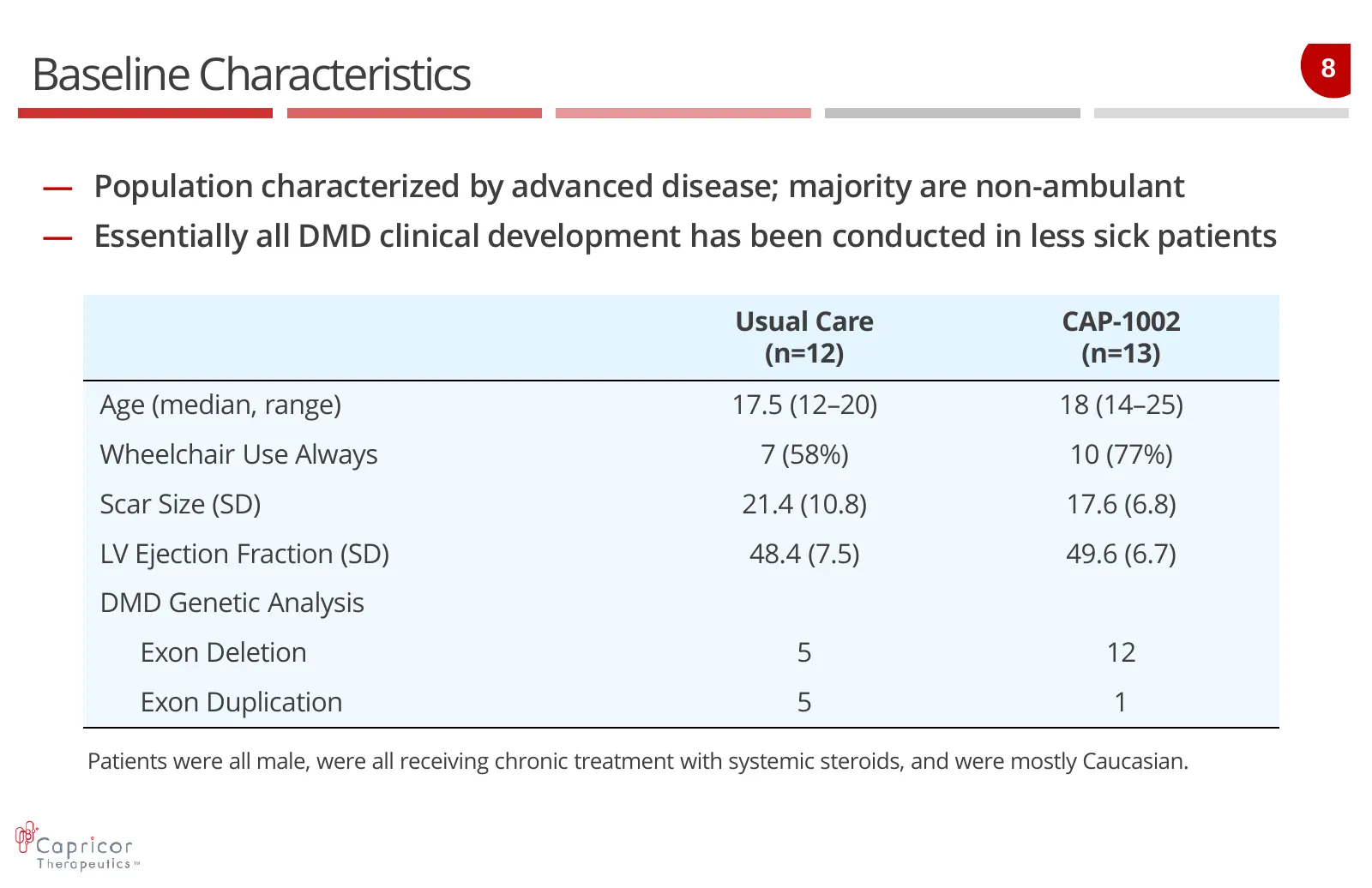
Baseline Characteristics 8 — Population characterized by advanced disease; majority are non-ambulant — Essentially all DMD clinical development has been conducted in less sick patients Usual Care CAP-1002 (n=12) (n=13) Age (median, range) 17.5 (12–20) 18 (14–25) Wheelchair Use Always 7 (58%) 10 (77%
Slide 9: Safety Outcome Measures
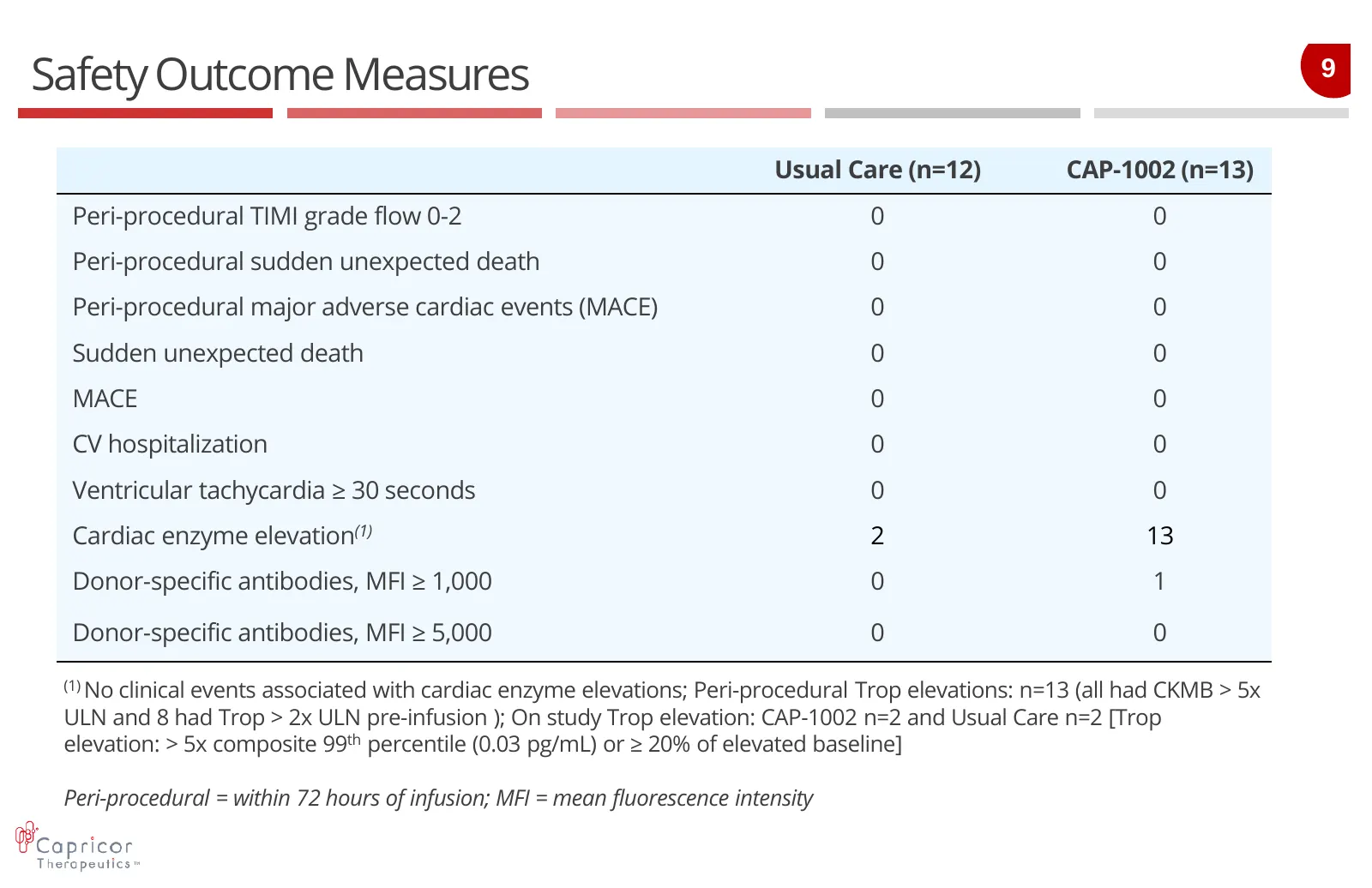
Safety Outcome Measures 9 Usual Care (n=12) CAP-1002 (n=13) Peri-procedural TIMI grade flow 0-2 0 0 Peri-procedural sudden unexpected death 0 0 Peri-procedural major adverse cardiac events (MACE) 0 0 Sudden unexpected death 0 0 MACE 0 0 CV hospitalization 0 0 Ventricular tachycardia ≥ 30 seconds 0 0
Slide 10: Safety and Tolerability
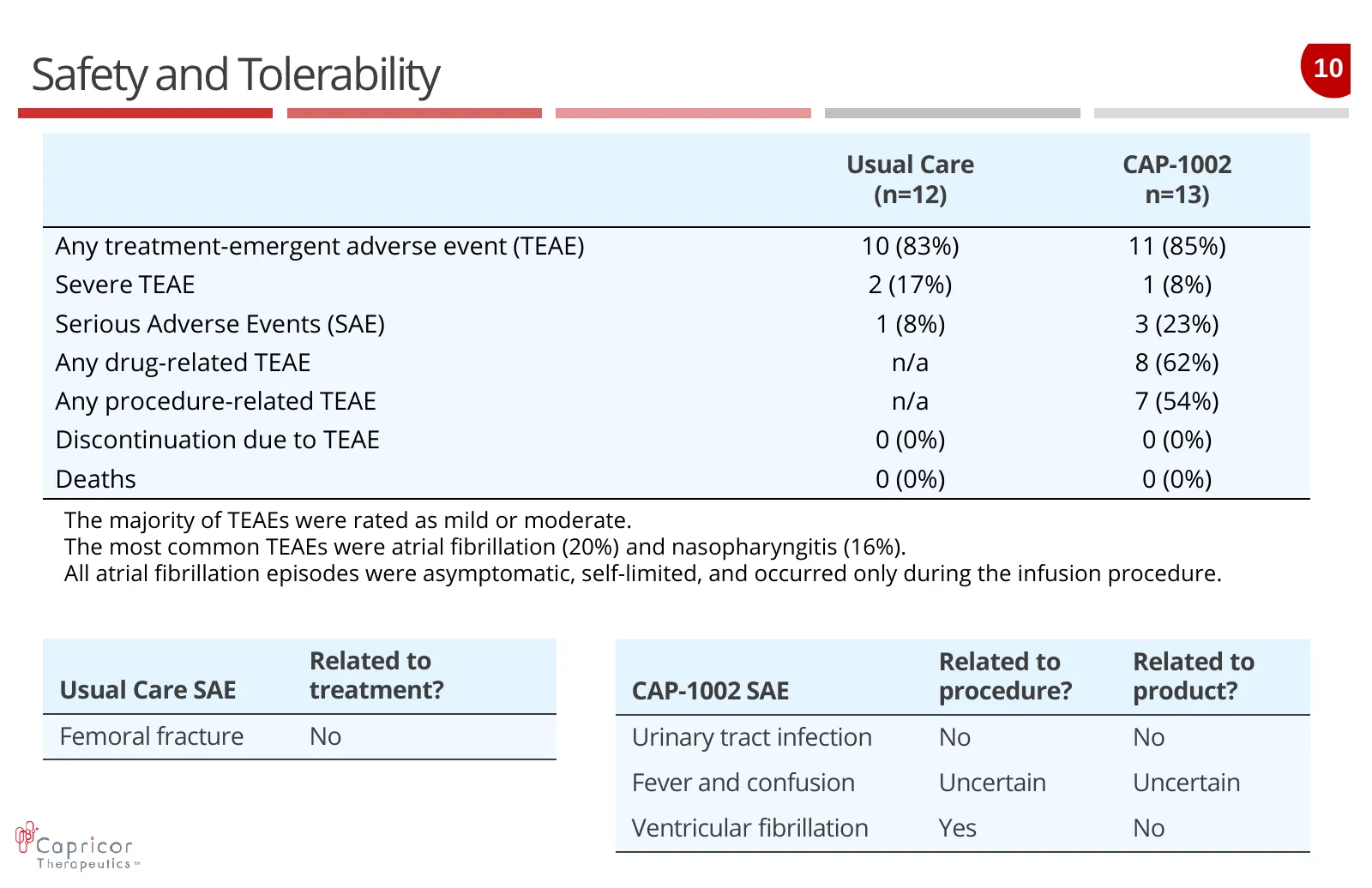
Safety and Tolerability 10 Usual Care CAP-1002 (n=12) n=13) Any treatment-emergent adverse event (TEAE) 10 (83%) 11 (85%) Severe TEAE 2 (17%) 1 (8%) Serious Adverse Events (SAE) 1 (8%) 3 (23%) Any drug-related TEAE n/a 8 (62%) Any procedure-related TEAE n/a 7 (54%) Discontinuation due to TEAE 0 (0%)
Slide 11: Exploratory Efficacy Endpoints
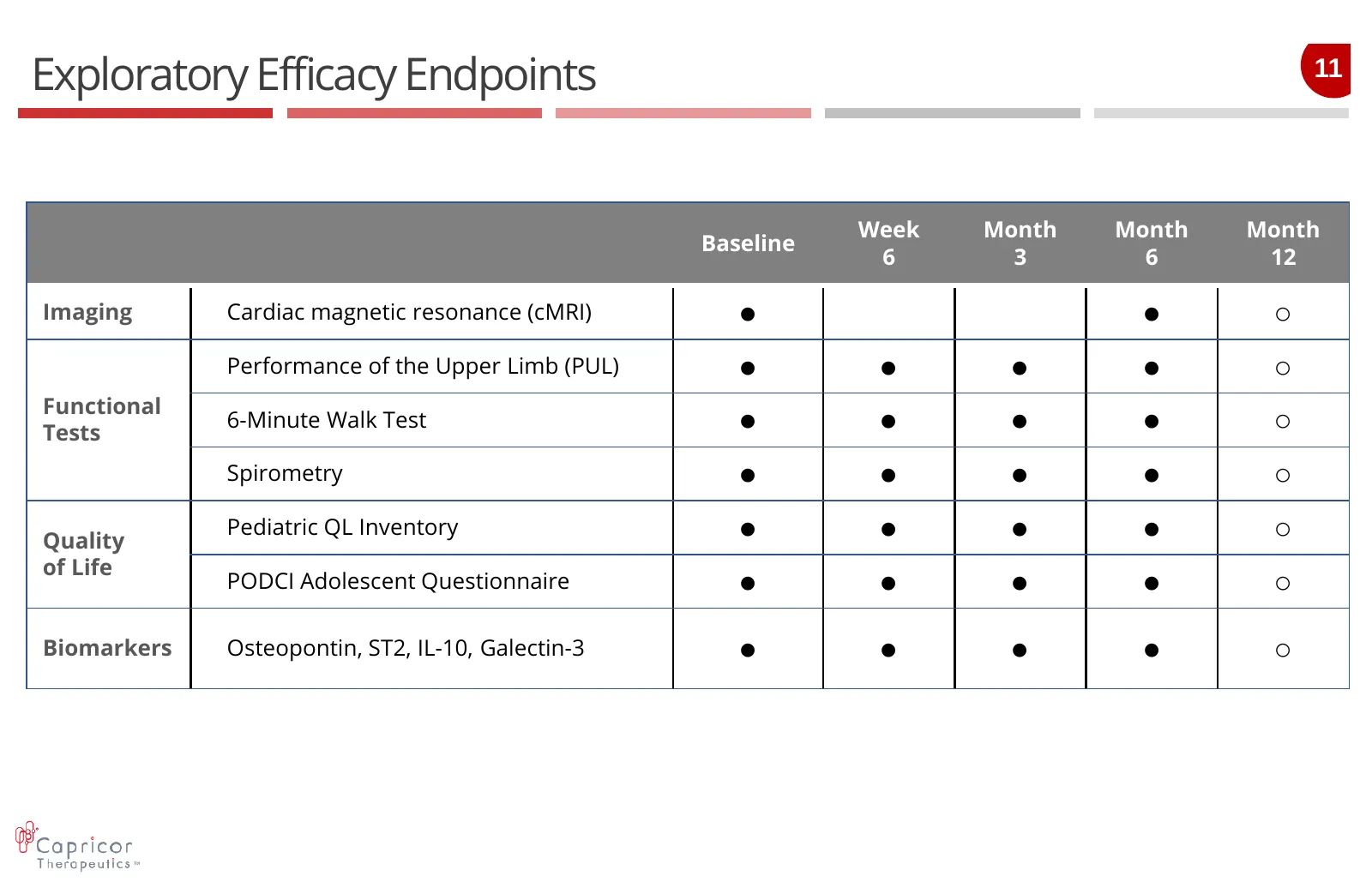
Exploratory Efficacy Endpoints 11 Week Month Month Month Baseline 6 3 6 12 Imaging Cardiac magnetic resonance (cMRI) ● ● ○ Performance of the Upper Limb (PUL) ● ● ● ● ○ Functional Tests 6-Minute Walk Test ● ● ● ● ○ Spirometry ● ● ● ● ○ Quality Pediatric QL Inventory ● ● ● ● ○ of Life PODCI Adolescen
Slide 12: Reduced Cardiac Scar in CAP-1002 Treated Patients
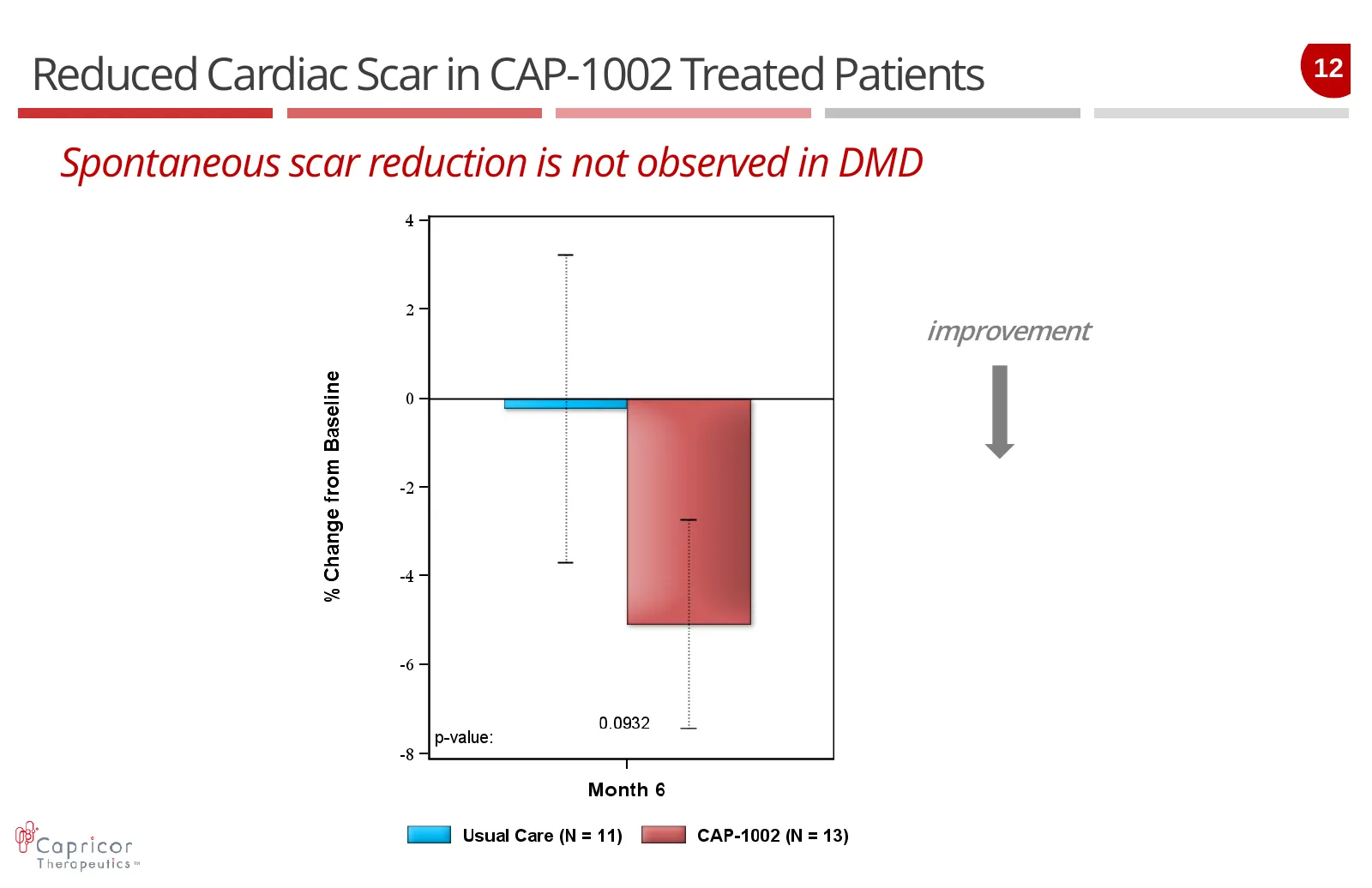
Reduced Cardiac Scar in CAP-1002 Treated Patients 12 Spontaneous scar reduction is not observed in DMD improvement
Slide 13: Improved Systolic Wall Thickening in CAP-1002 Treated Patients
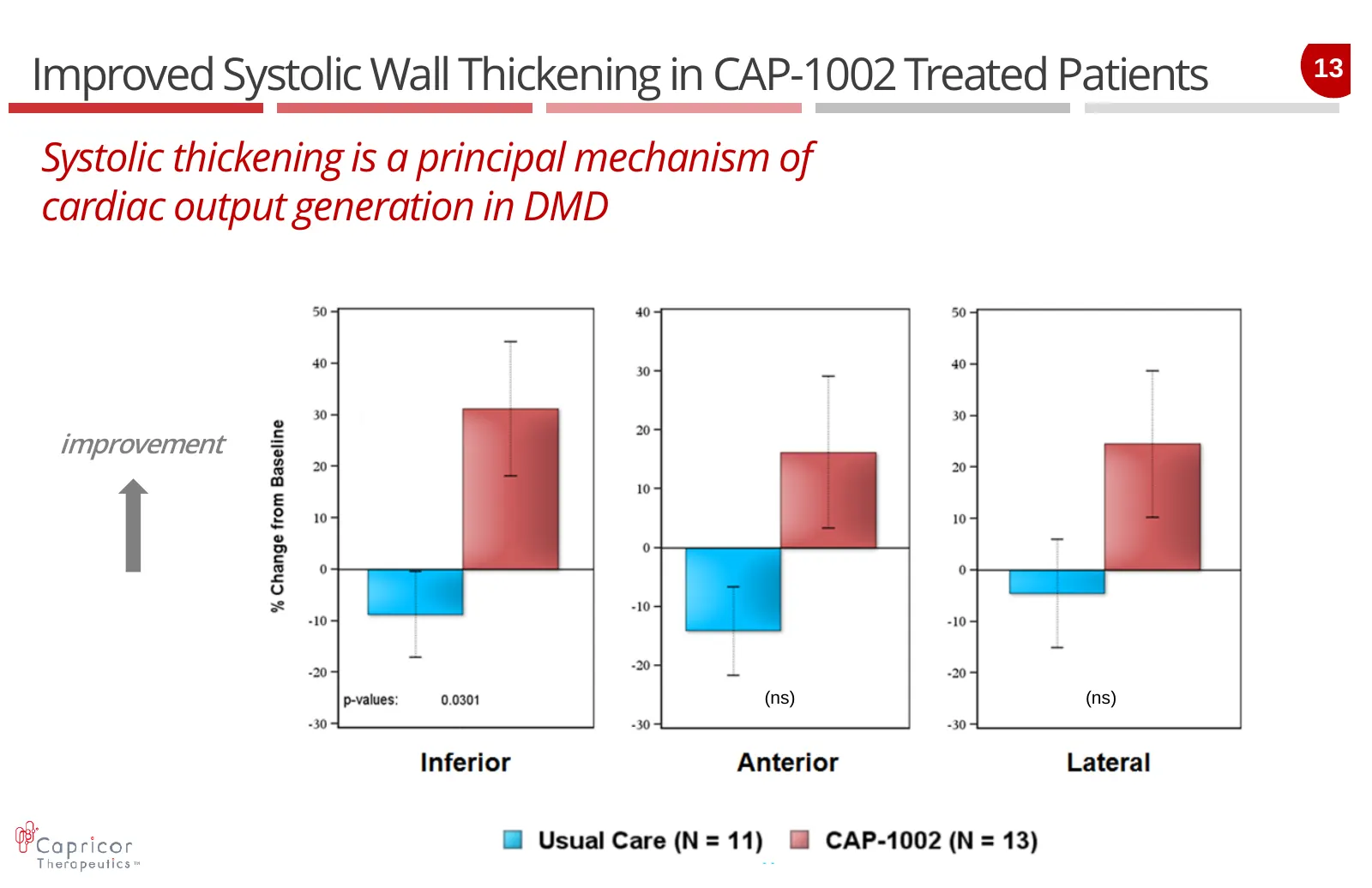
Improved Systolic Wall Thickening in CAP-1002 Treated Patients 13 Systolic thickening is a principal mechanism of cardiac output generation in DMD improvement (ns) (ns)
Slide 14: Results of Ejection Fraction and Cardiac Volumes
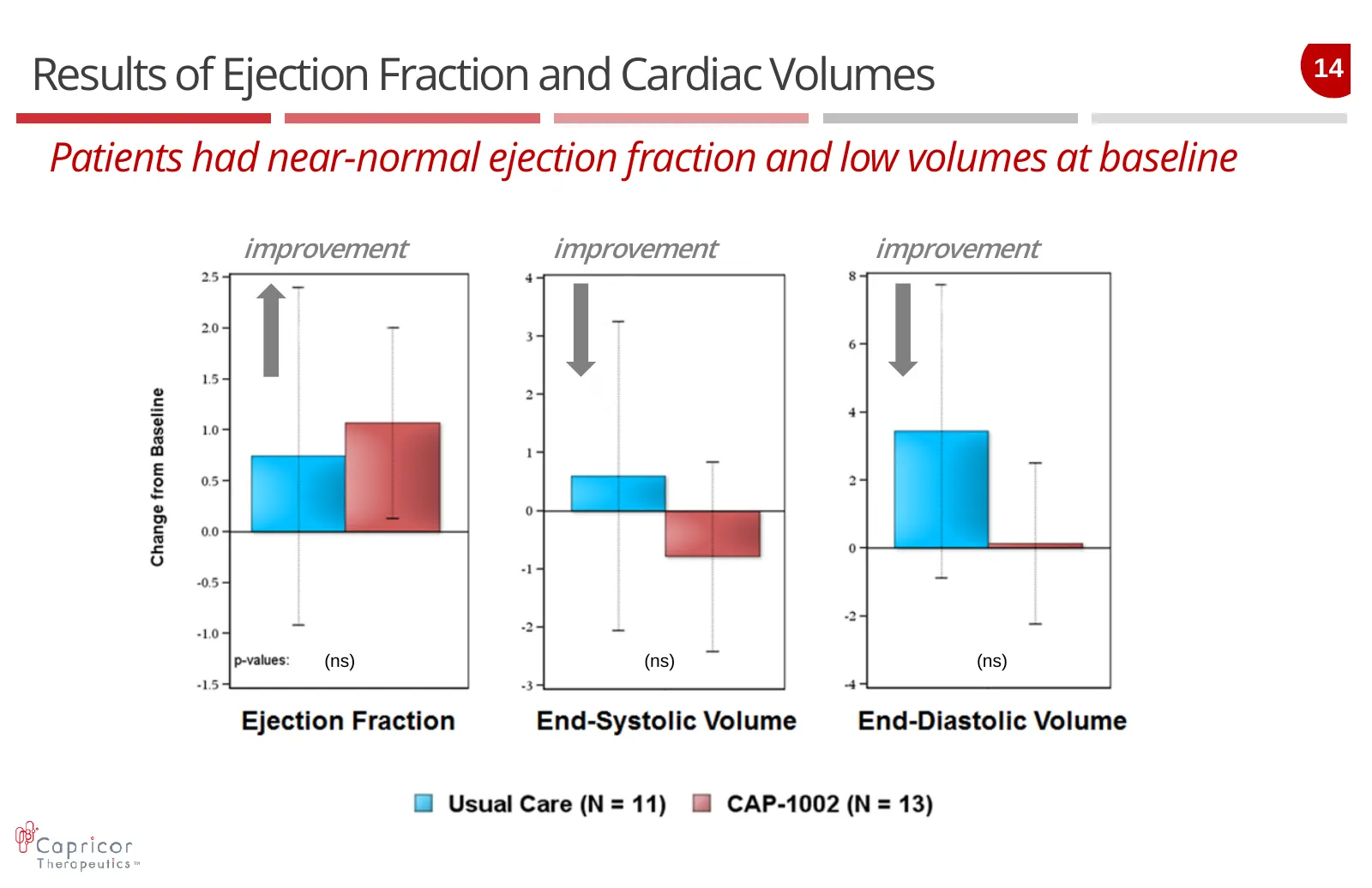
Results of Ejection Fraction and Cardiac Volumes 14 Patients had near-normal ejection fraction and low volumes at baseline improvement improvement improvement (ns) (ns) (ns)
Slide 15: Performance of the Upper Limb (PUL) Test
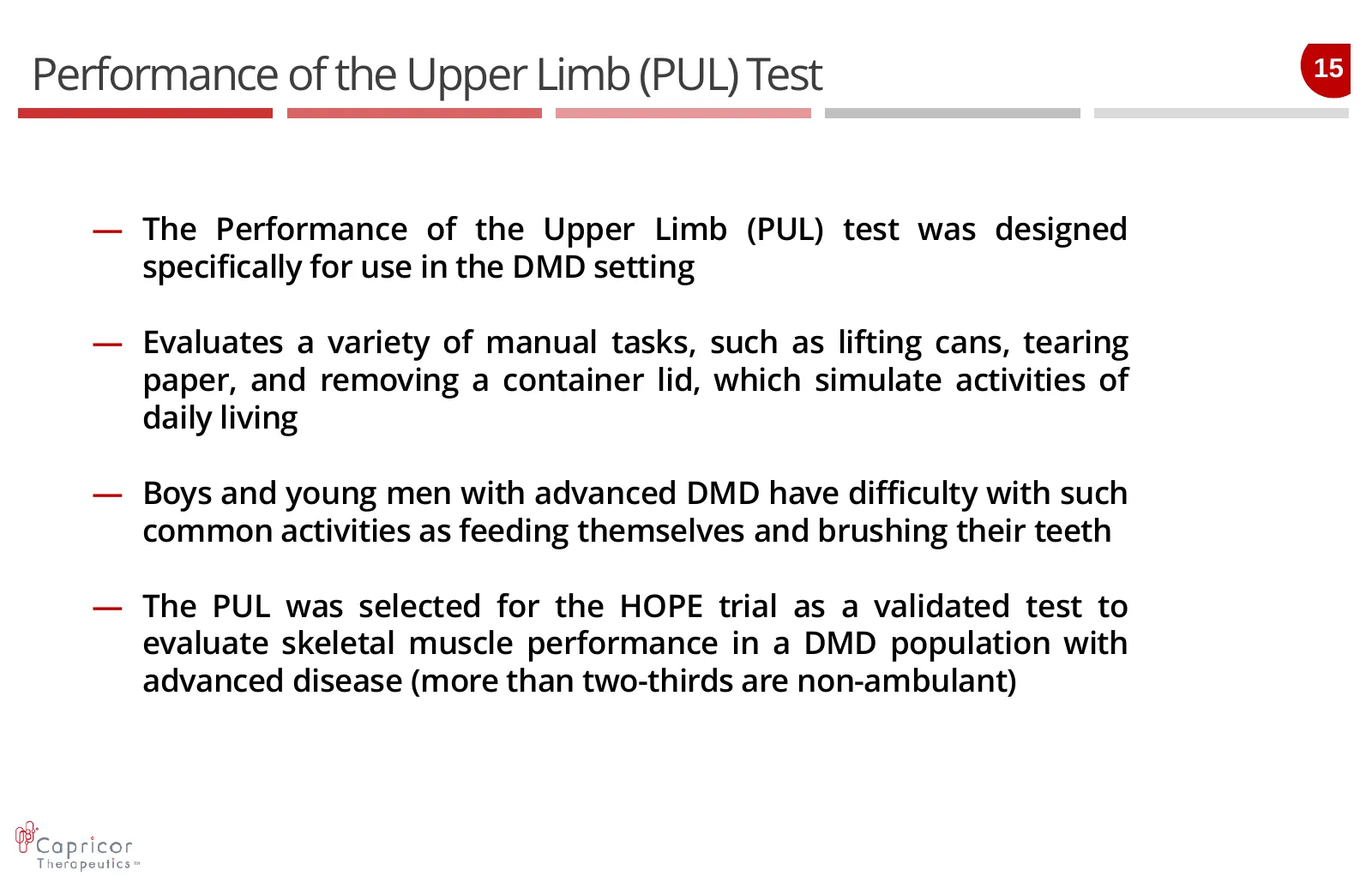
Performance of the Upper Limb (PUL) Test 15 — The Performance of the Upper Limb (PUL) test was designed specifically for use in the DMD setting — Evaluates a variety of manual tasks, such as lifting cans, tearing paper, and removing a container lid, which simulate activities of daily living — Boys a
Slide 16: Performance of the Upper Limb (PUL) Test
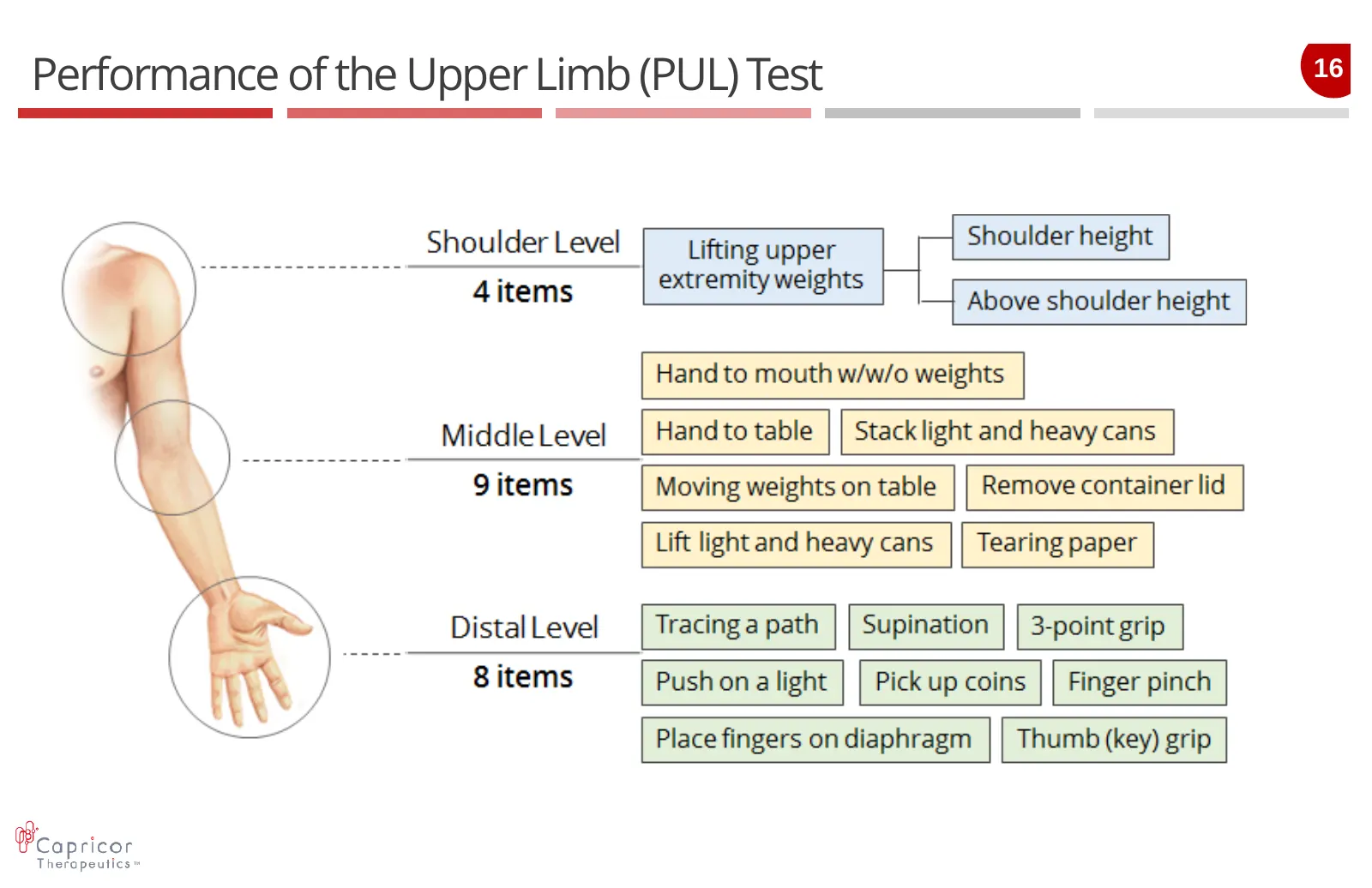
Performance of the Upper Limb (PUL) Test 16
Slide 17: Mid- and Distal-Level PUL Results
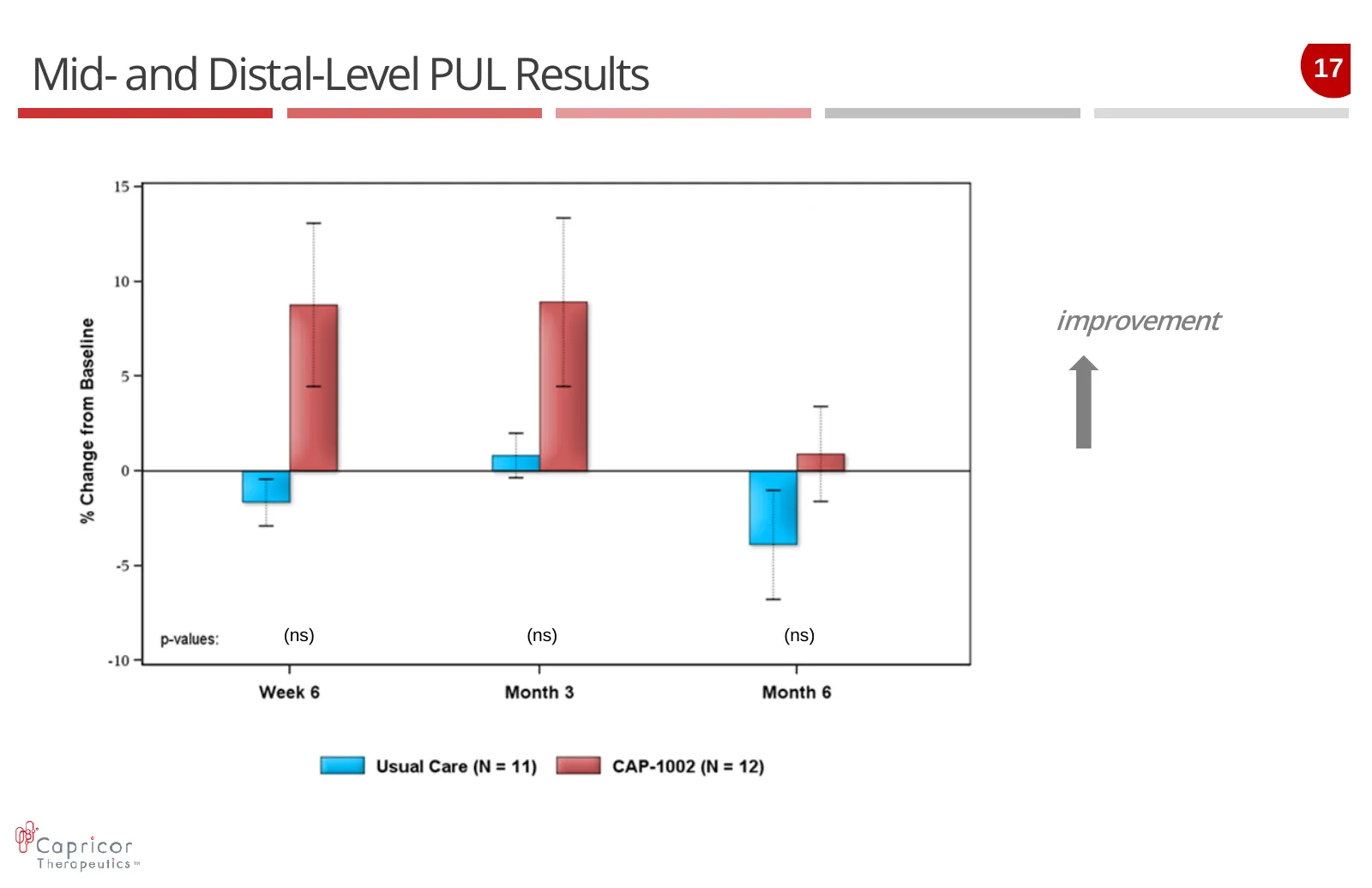
Mid- and Distal-Level PUL Results 17 improvement (ns) (ns) (ns)
Slide 18: Responder Analysis on Mid- and Distal-Level PUL
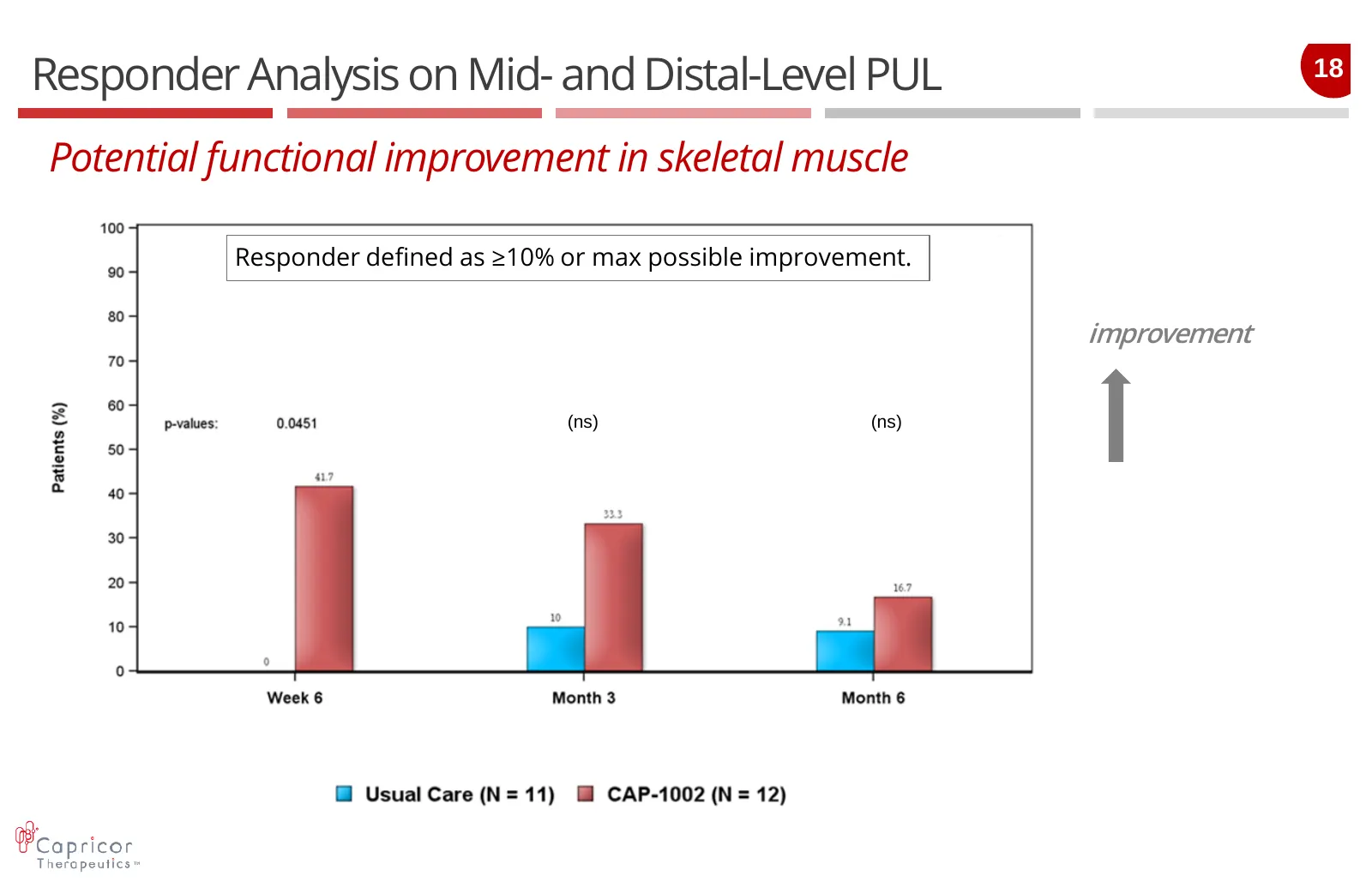
Responder Analysis on Mid- and Distal-Level PUL 18 Potential functional improvement in skeletal muscle Responder defined as ≥10% or max possible improvement. improvement (ns) (ns)
Slide 19: Cardiac and Skeletal Muscle Effects Seen in the Same Patients
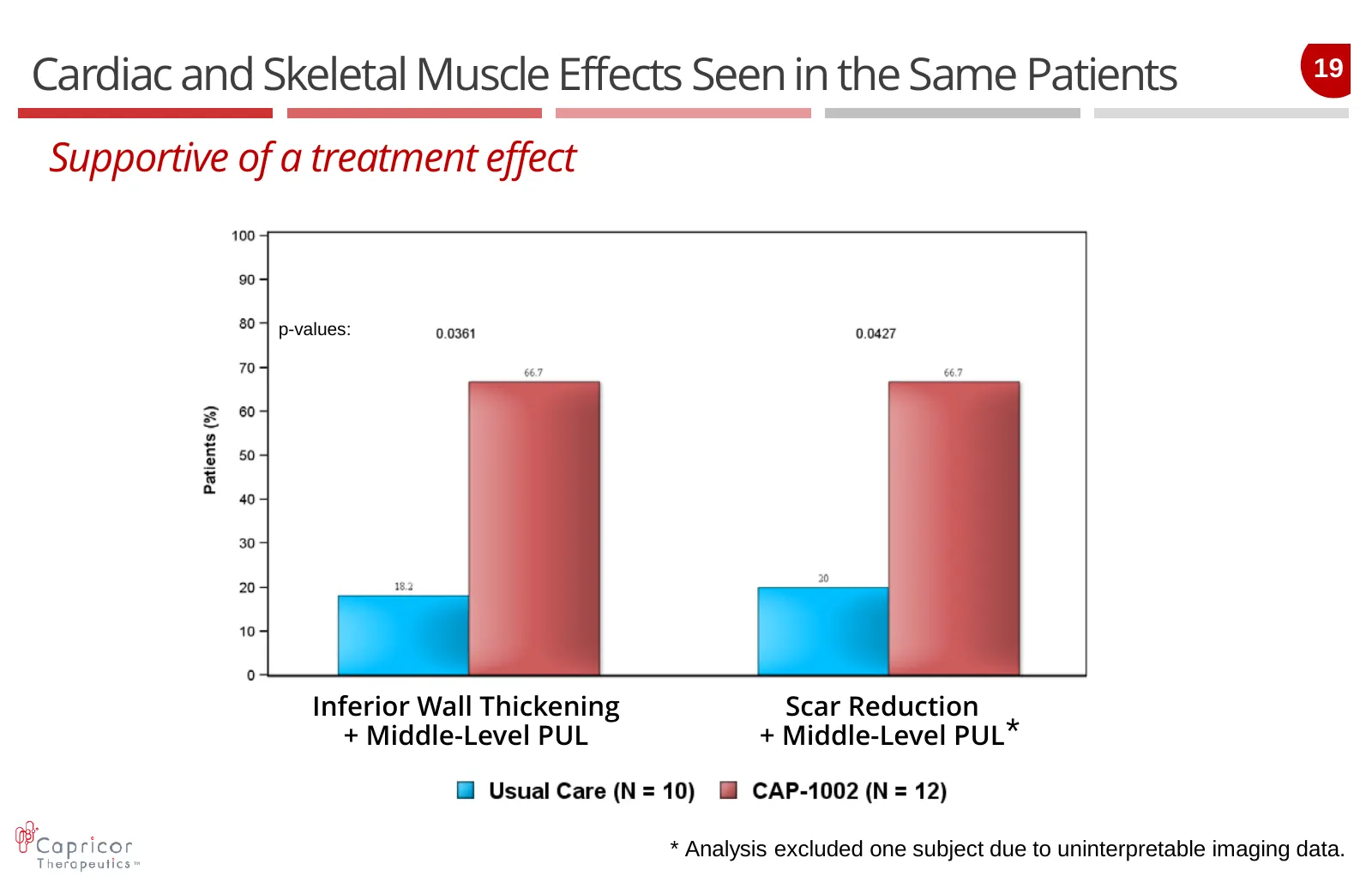
Cardiac and Skeletal Muscle Effects Seen in the Same Patients 19 Supportive of a treatment effect p-values: Inferior Wall Thickening Scar Reduction + Middle-Level PUL + Middle-Level PUL * * Analysis excluded one subject due to uninterpretable imaging data.
Slide 20: Quality of Life (PODCI Adolescent Questionnaire)
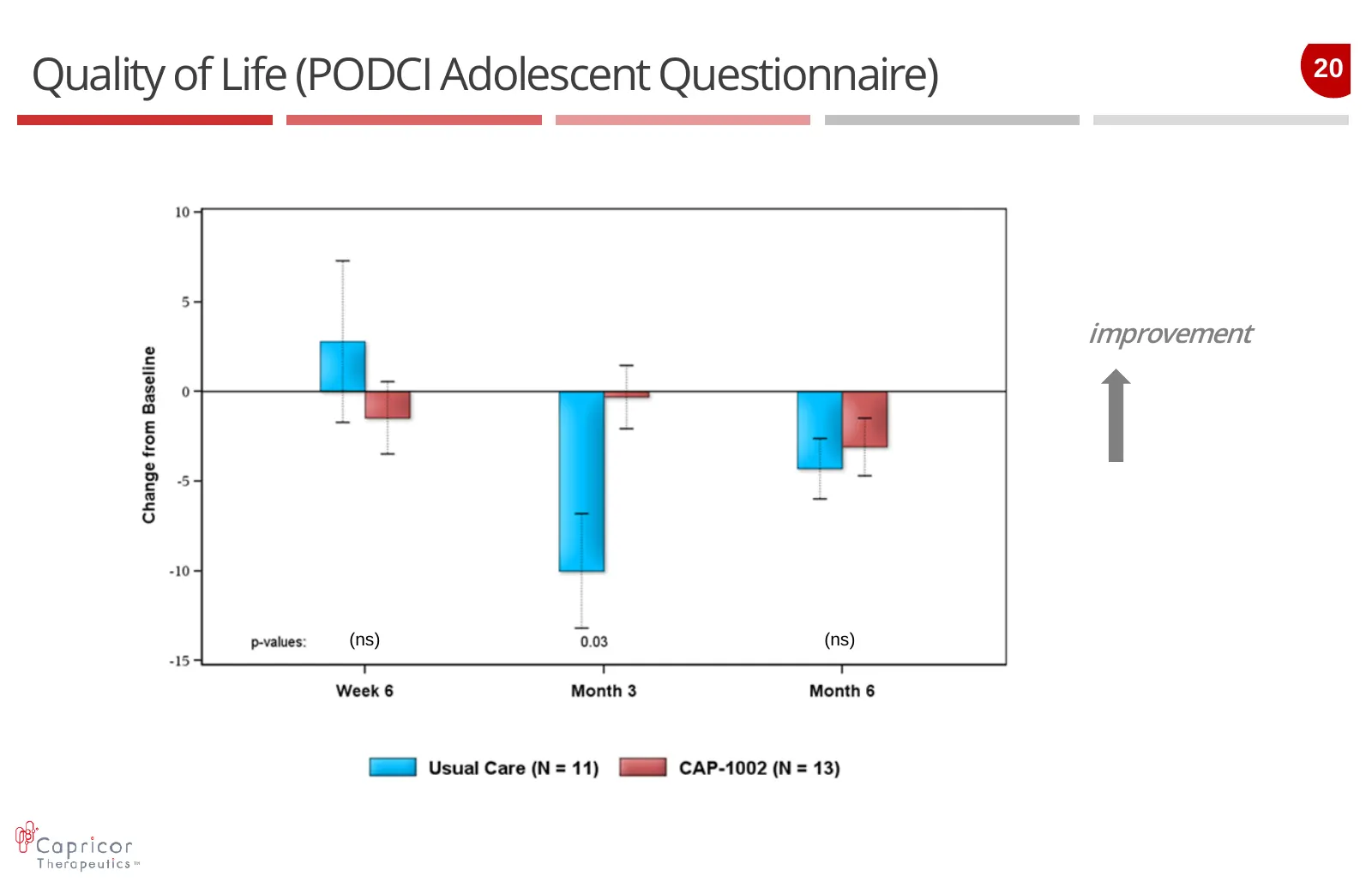
Quality of Life (PODCI Adolescent Questionnaire) 20 improvement (ns) (ns)
Slide 21: Key Conclusions from Six-Month HOPE Data
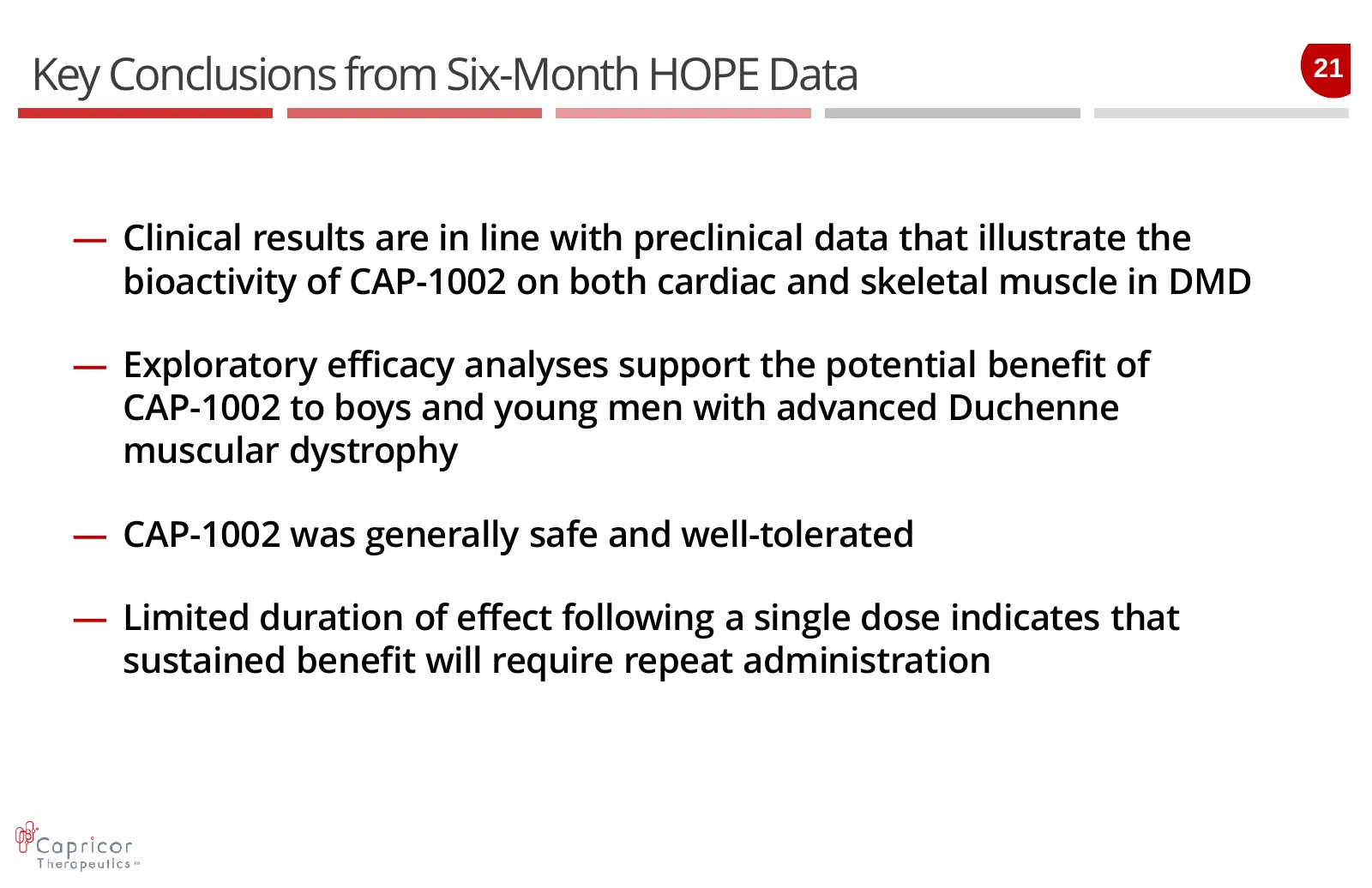
Key Conclusions from Six-Month HOPE Data 21 — Clinical results are in line with preclinical data that illustrate the bioactivity of CAP-1002 on both cardiac and skeletal muscle in DMD — Exploratory efficacy analyses support the potential benefit of CAP-1002 to boys and young men with advanced Duchen
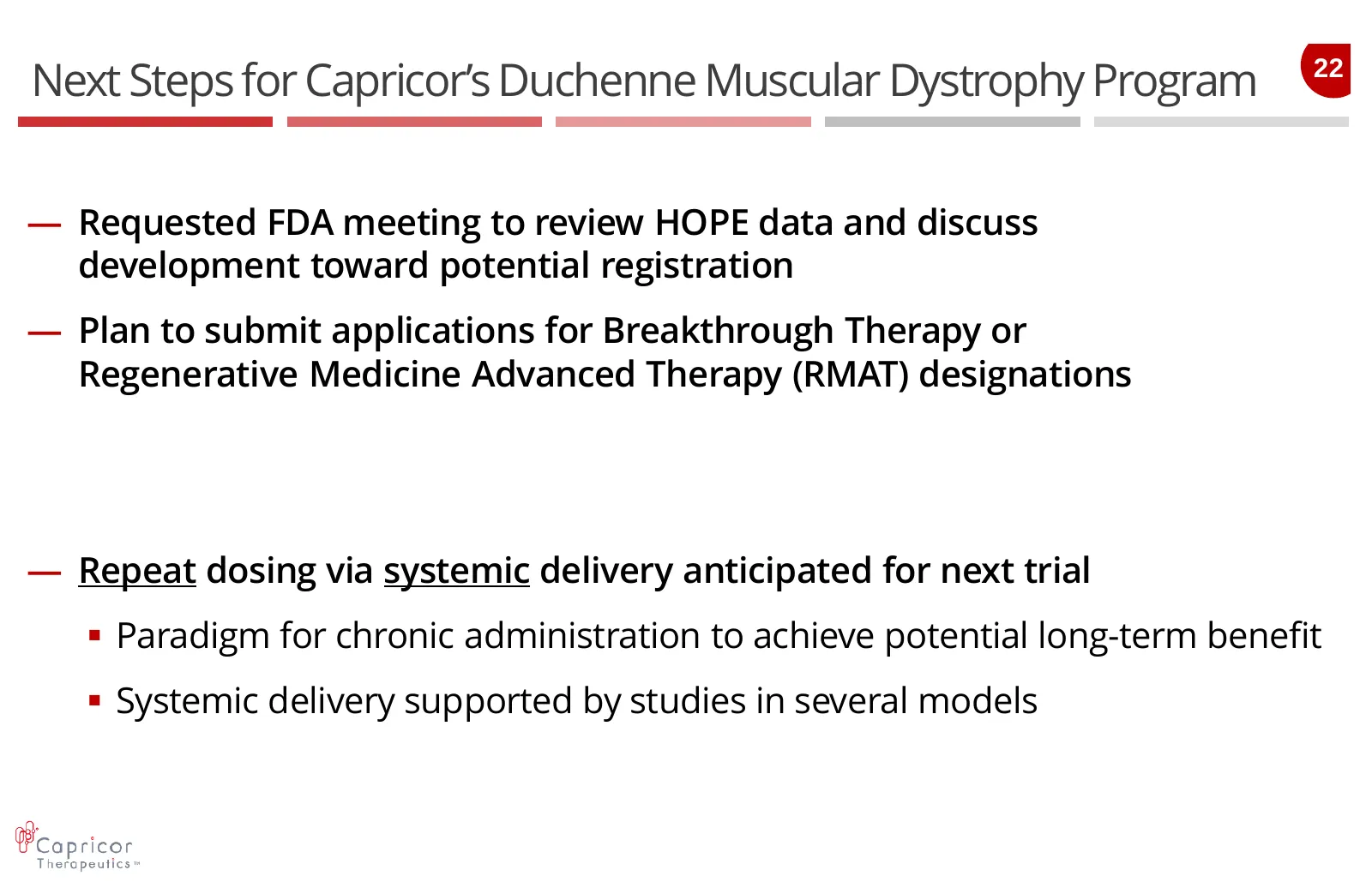
Slide 22: Next Steps for Capricor's Duchenne Muscular Dystrophy Program
Next Steps for Capricor’s Duchenne Muscular Dystrophy Program 22 — Requested FDA meeting to review HOPE data and discuss development toward potential registration — Plan to submit applications for Breakthrough Therapy or Regenerative Medicine Advanced Therapy (RMAT) designations — Repeat dosing via
Source: Internet Archive copy of capricor.com
More decks from Capricor Therapeutics, Inc.
 PPMD Webinar (October 2026)27 slides · Oct 7, 2026
 Investor Presentation (August 2026)38 slides · August 2026
 Q1 2026 Earnings Presentation41 slides · May 12, 2026
 Q4 2025 Earnings Presentation20 slides · Mar 12, 2026
 Corporate Update (December 2025)18 slides · Dec 3, 2025
 Q4 2024 Earnings Presentation57 slides · Mar 19, 2025