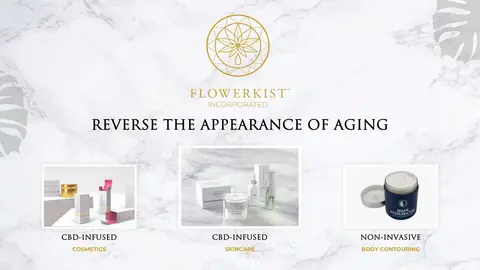
Flowerkist Skin Care & Cosmetics Inc
Flowerkist Skin Care & Cosmetics — Merger or Acquisition (March 2023)
199 slides from Flowerkist Skin Care & Cosmetics's merger presentation, Mar 22, 2023
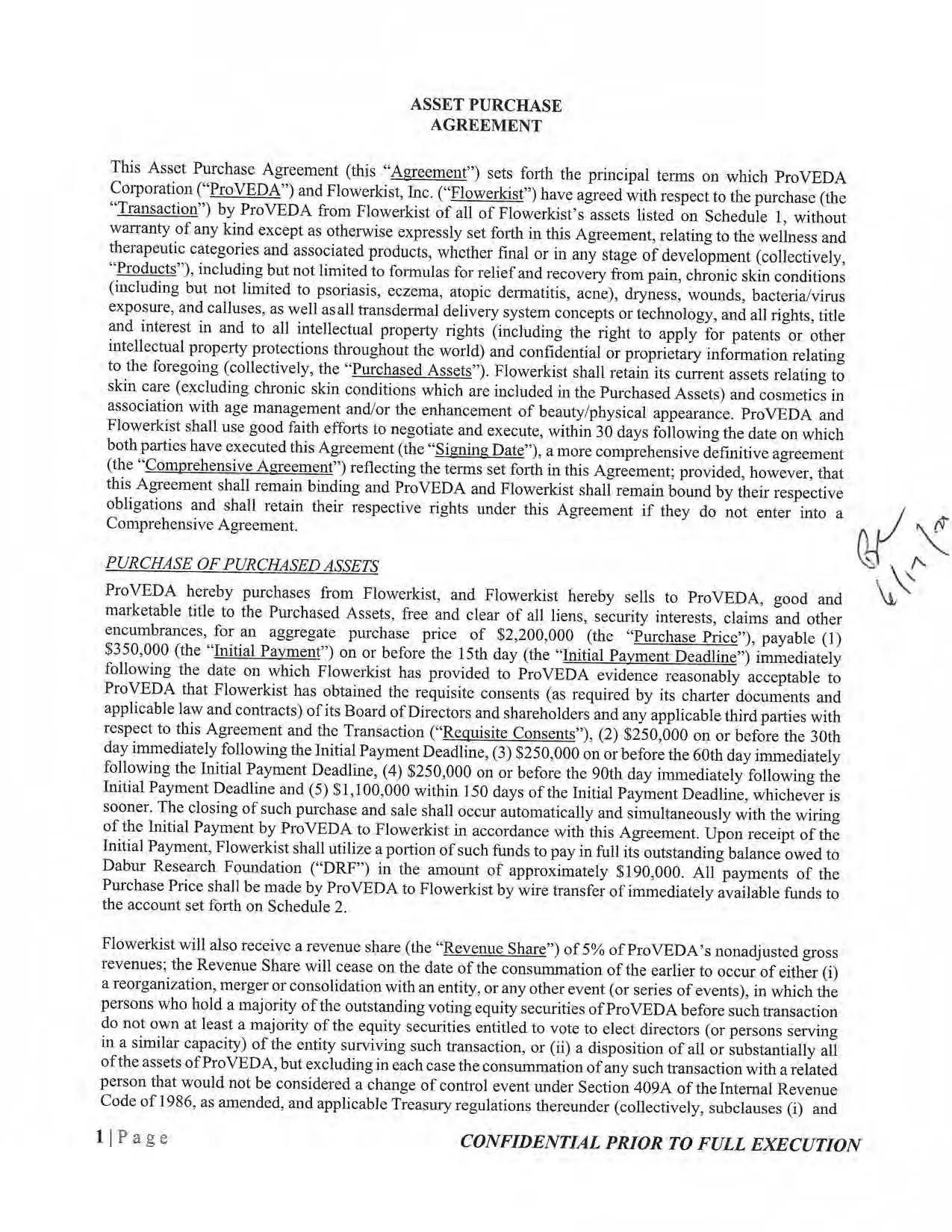
Slide 1: Asset Purchase Agreement
ASSET PURCHASE AGREEMENT This Asset Purchase Agreement (this “Agreement”) sets forth the principal terms on which ProVEDA Corporation (“ProVEDA”) and Flowerkist, Inc. (“Elowerkist”) have agreed with respect to the purchase (the “Transaction”) by ProVEDA from Flowerkist of all of Flowerkist’s assets
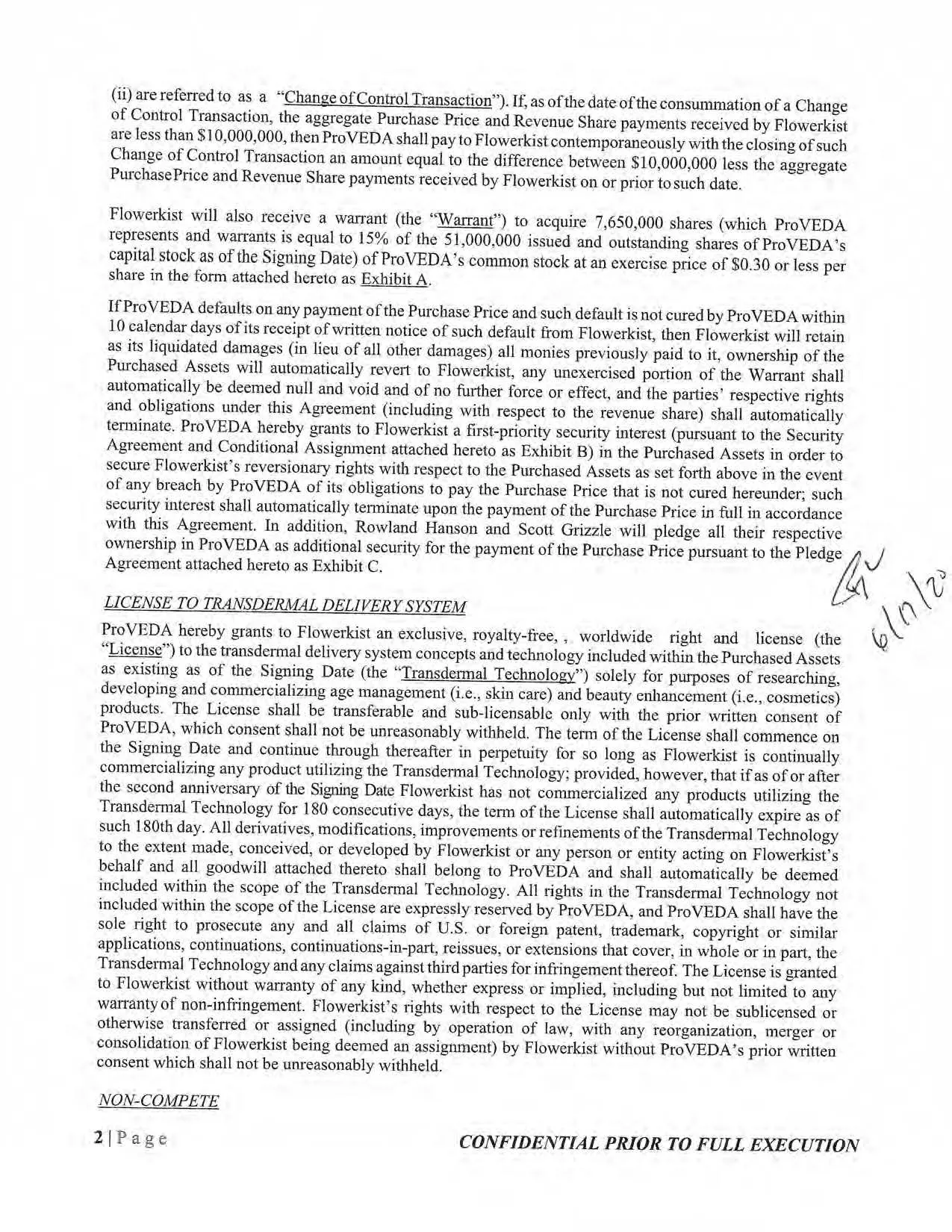
Slide 2: Change of Control, Warrant and License to Transdermal Delivery System
(ii) are referred to as a “Change of Control Transaction”). If, as of the date of the consummation of a Change of Control Transaction, the aggregate Purchase Price and Revenue Share payments received by Flowerkist are less than $10,000,000, then ProVEDA shall pay to Flowerkist contemporaneously with
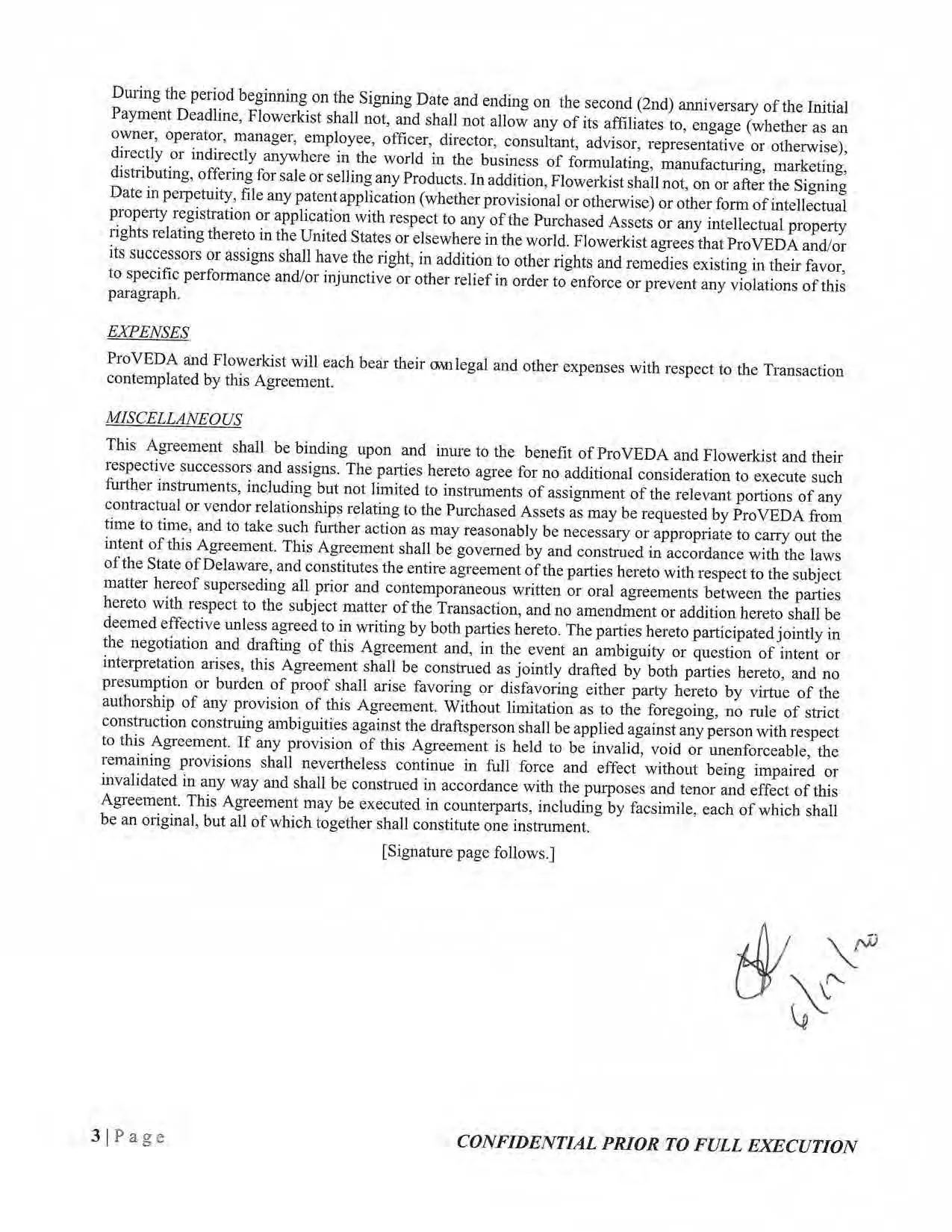
Slide 3: Non-compete, Expenses and Miscellaneous
During the period beginning on the Signing Date and ending on the second (2nd) anniversary of the Initial Payment Deadline, Flowerkist shall not, and shall not allow any of its affiliates to, engage (whether as an owner, operator, manager, employee, officer, director, consultant, advisor, representa
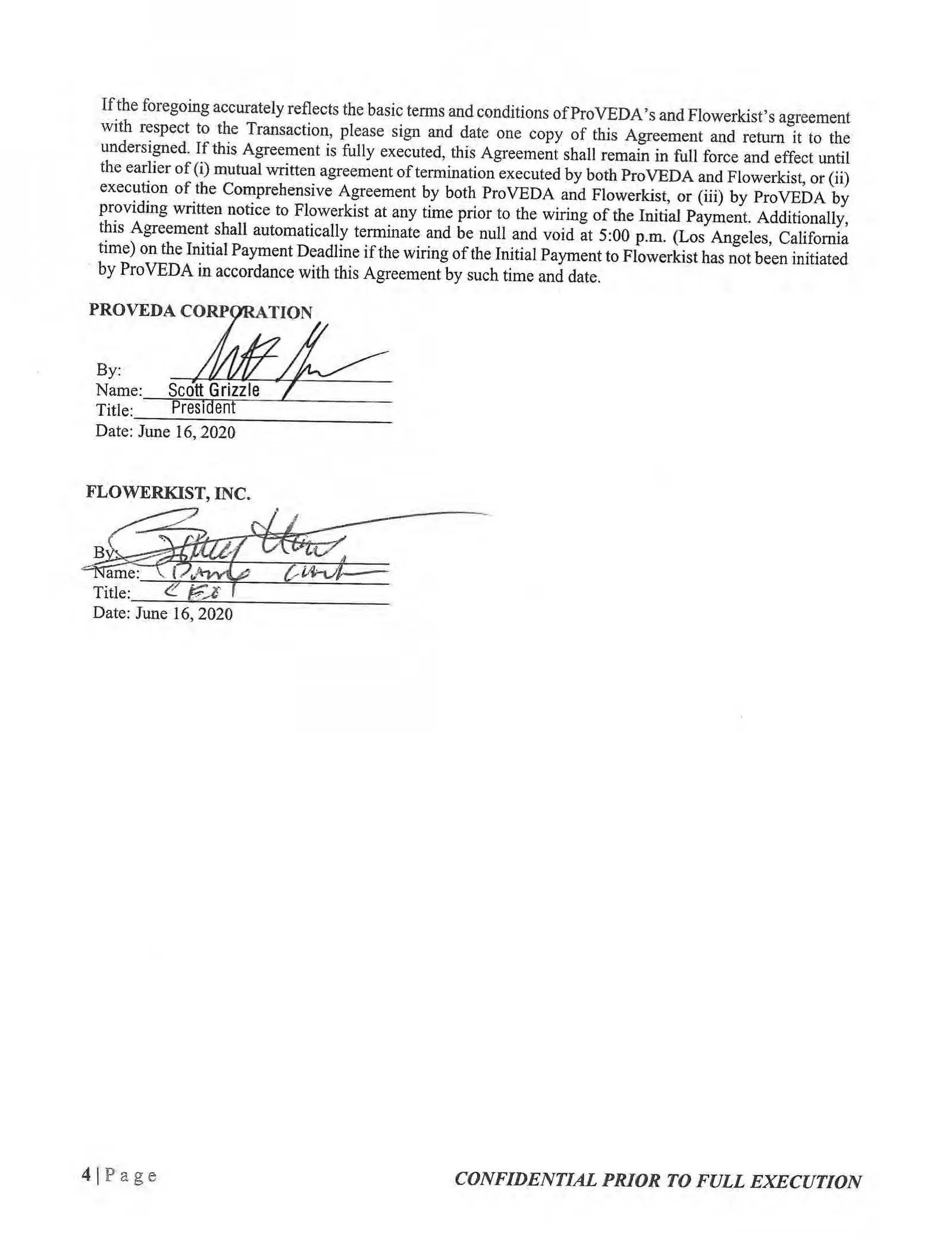
Slide 4: Signature and Termination Terms
If the foregoing accurately reflects the basic terms and conditions of ProVEDA’s and Flowerkist’s agreement with respect to the Transaction, please sign and date one copy of this Agreement and return it to the undersigned. If this Agreement is fully executed, this Agreement shall remain in full forc
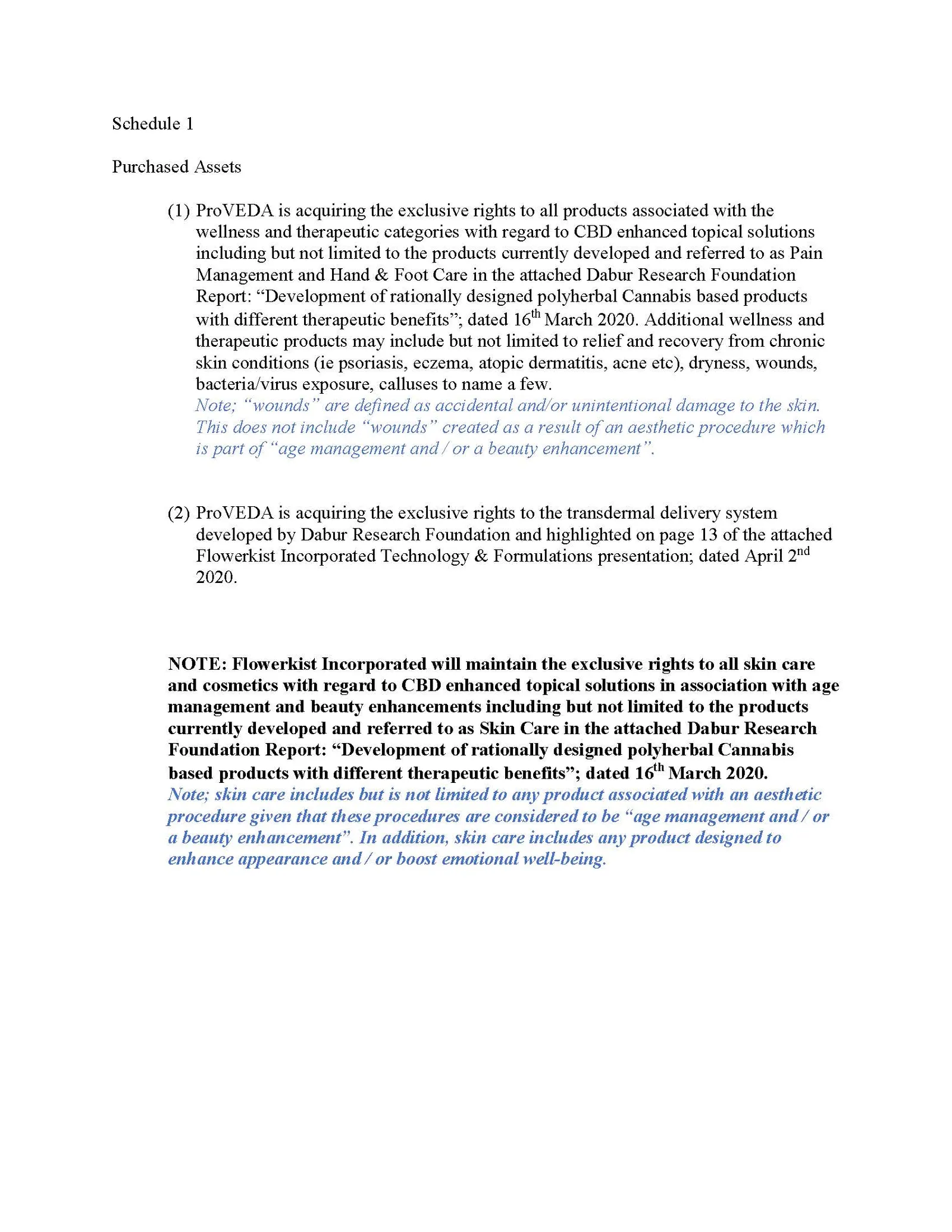
Slide 5: Schedule: Purchased Assets
Schedule 1 Purchased Assets (1) ProVEDA is acquiring the exclusive rights to all products associated with the wellness and therapeutic categories with regard to CBD enhanced topical solutions including but not limited to the products currently developed and referred to as Pain Management and Hand &
Slide 6: Development of Polyherbal Cannabis Based Products
DABUR Bivins —_ FOUNDATION = = Development of rationally designed polyherbal Cannabis based products with different therapeutic benefits Study data Version 1.1 16 March 2020 DABUR RESEARCH FOUNDATION 22, Site IV, Sahibabad Ghaziabad, U.P. 201010 INDIA www.daburresearch.in Confidential
Slide 7: Therapeutic Areas
me, \DABUR | RESEARCH — =~ —— = FOUNDATION =m i a Therapeutic areas Pain management Skin care Hand and foot care
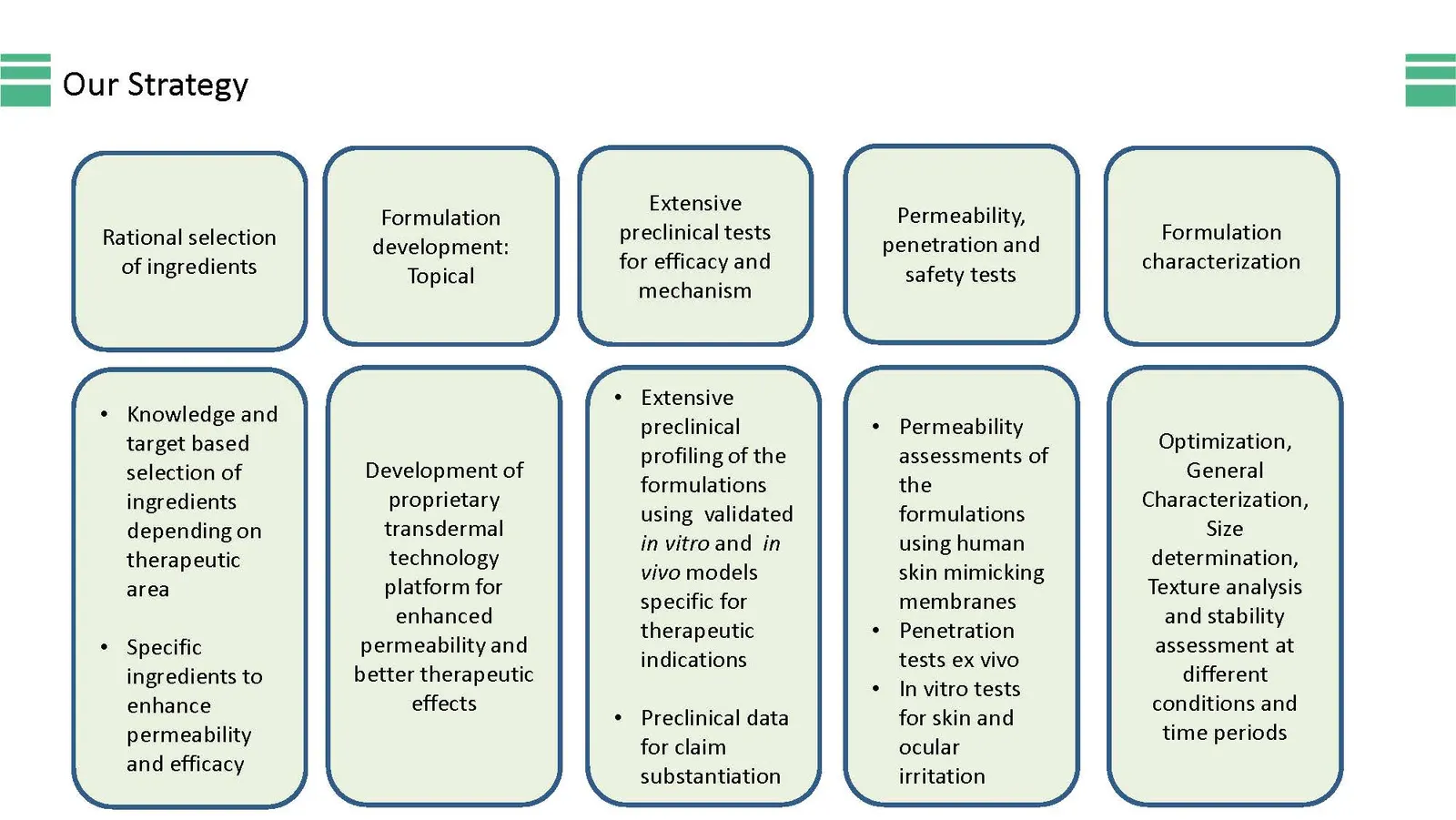
Slide 8: Our Strategy
oes Our Strategy ft Rational selection of ingredients VY la NX Formulation development: Topical > S Extensive preclinical tests for efficacy and mechanism {- XN Permeability, penetration and safety tests y, (~ XN Formulation characterization ~ S * Knowledge and target based selection of ingredients
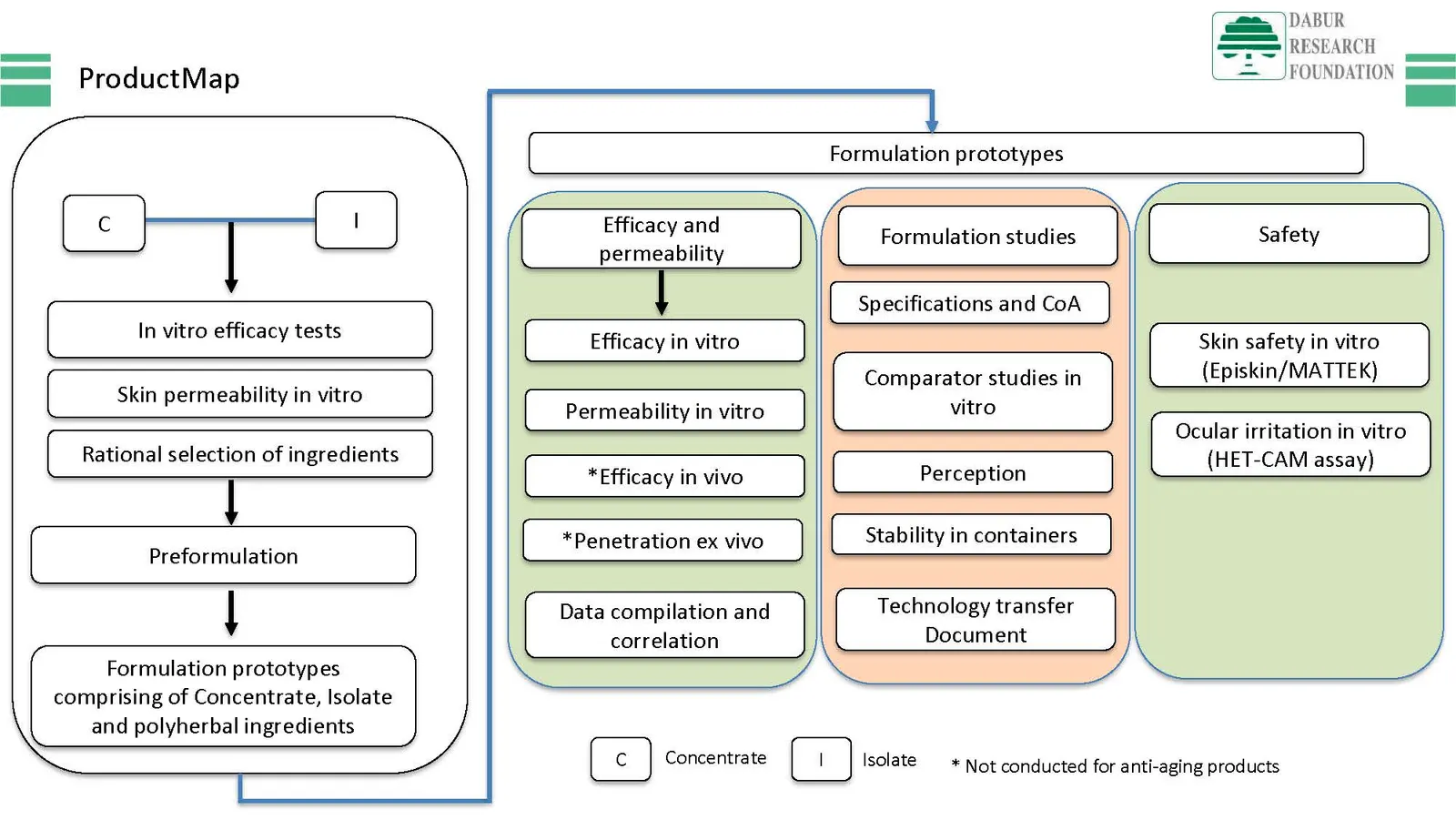
Slide 9: Product Map
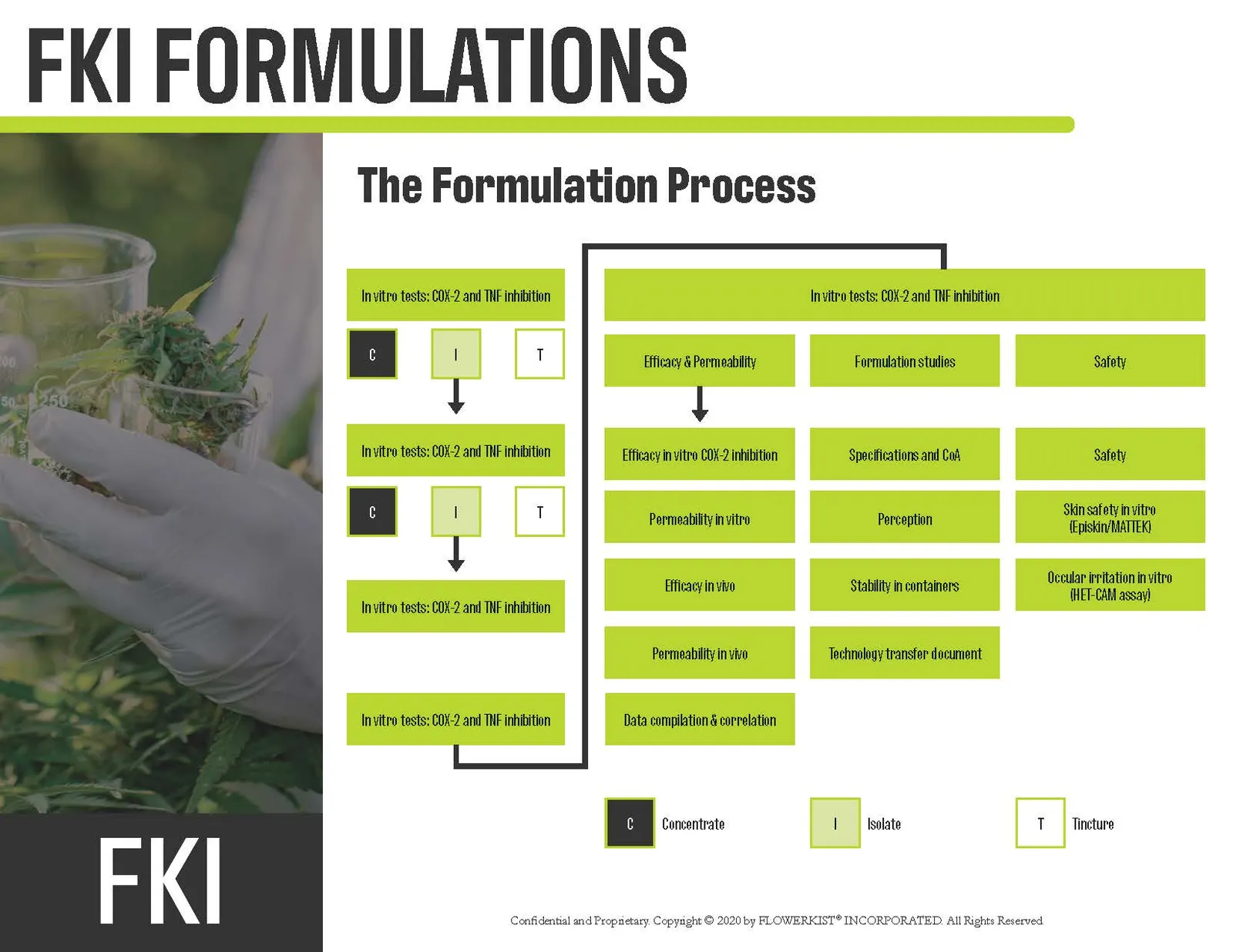
ProductMap \ | J DABUR RESEARCH FOUNDATION = Formulation prototypes { Efficacy and \ permeability ormulation studies L: | In vitro efficacy tests | Lyi Skin permeability in vitro Efficacy in vitro } ( Permeability in vitro } ( Specifications and CoA } Comparator studies in vitro [ Rational selection
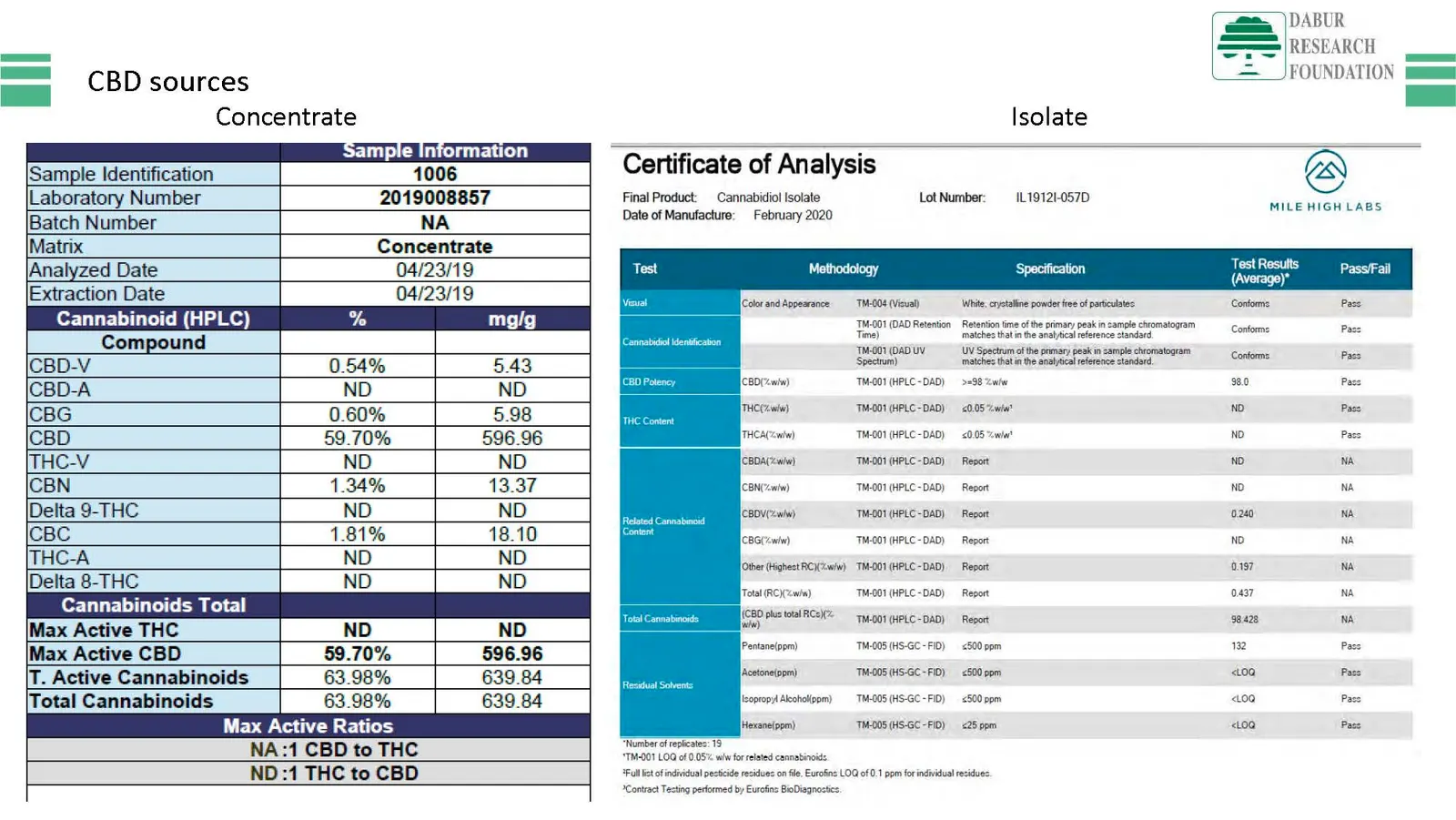
Slide 10: CBD Sources
= CBD sources a DABUR RCH FOUNDATION Concentrate \Sample Identification 1006 Laboratory Number 2019008857 Batch Number NA Matrix Concentrate [Analyzed Date 04/23/19 Extraction Date 04/23/19 %o mg/g 0.54% 5.43 ND ND 0.60% 5.98 59.70% 596.96 ND ND 1.34% 13.37 ND ND 1.81% 18.10 ND ND Delta 8-THC ND ND

Slide 11: CBD Technology
CBD Technology DABUR RESEARCH FOUNDATION =m
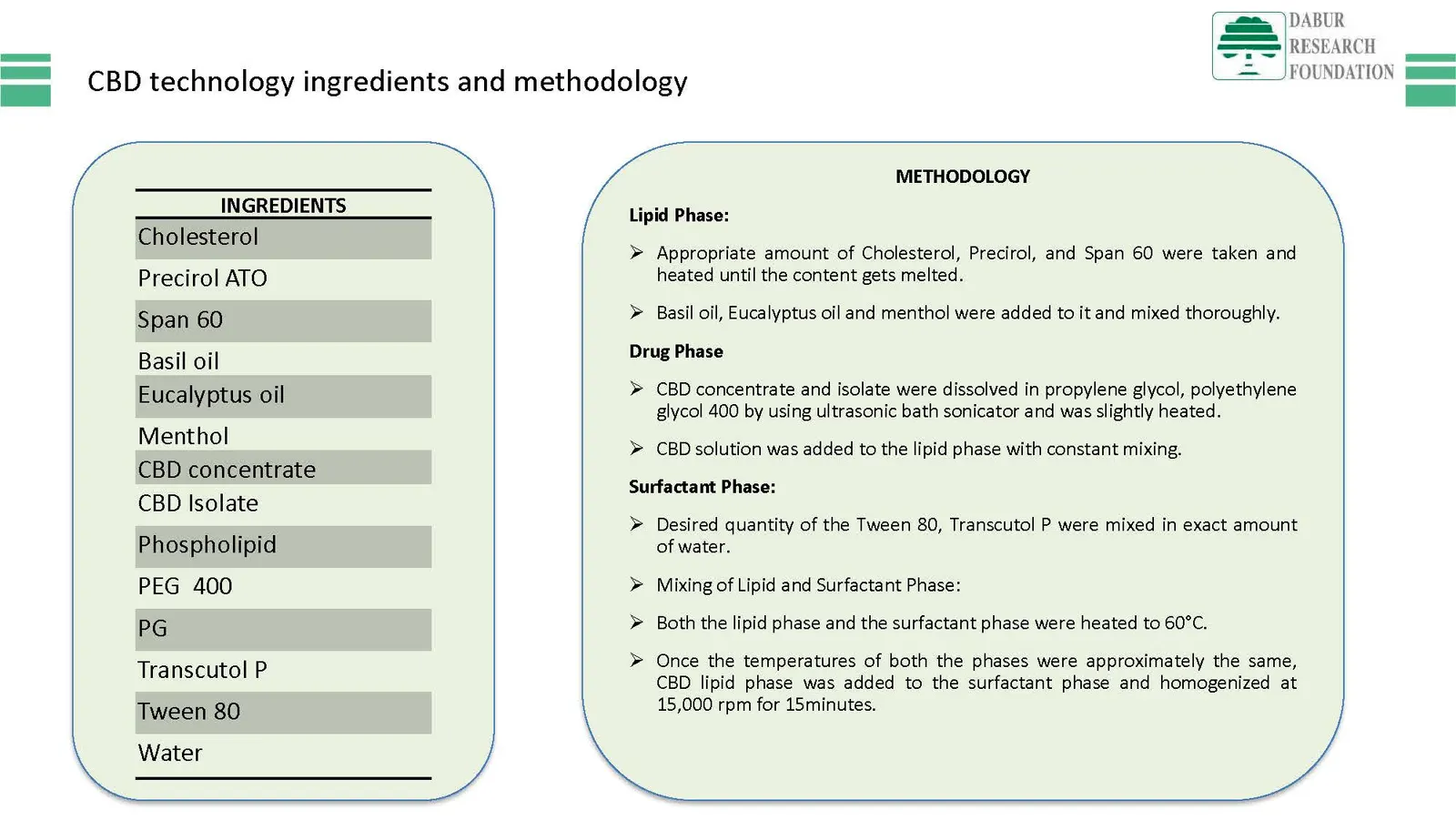
Slide 12: CBD Technology Ingredients and Methodology
a CBD technology ingredients and methodology , INGREDIENTS > Cholesterol Precirol ATO Span 60 Basil oil Eucalyptus oil Menthol CBD concentrate CBD Isolate Phospholipid PEG 400 PG Transcutol P Tween 80 Ks me, |DABUR ——<—in METHODOLOGY Lipid Phase: > Appropriate amount of Cholesterol, Precirol, and Sp
Slide 13: Optimization and Characterization
Optimization and Characterization DABUR RESEARCH FOUNDATION =m
Slide 14: Optimization by Using Design Expert
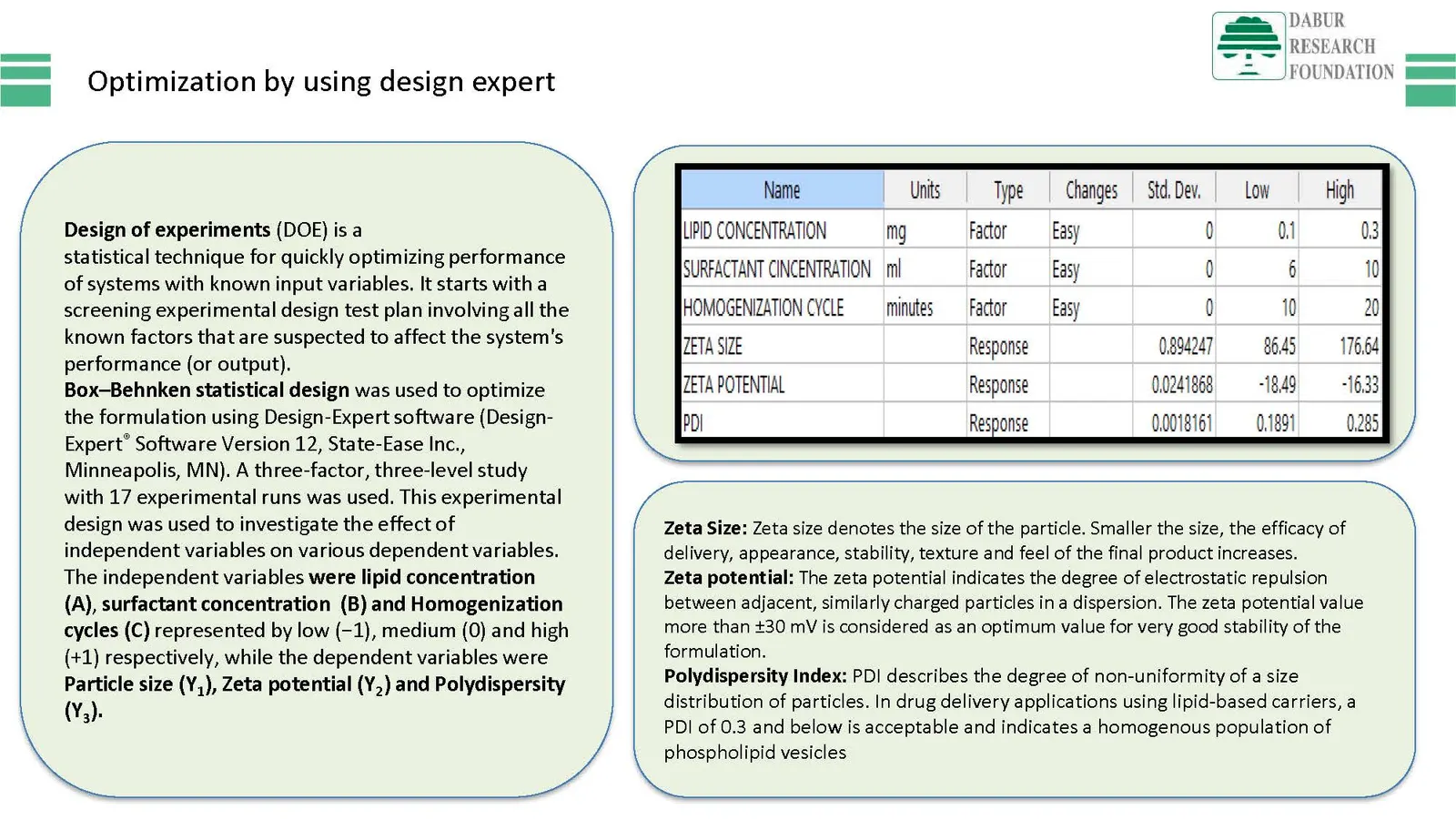
Optimization by using design expert Design of experiments (DOE) is a statistical technique for quickly optimizing performance of systems with known input variables. It starts with a screening experimental design test plan involving all the known factors that are suspected to affect the system's perf
Slide 15: Optimization by Using Design Expert
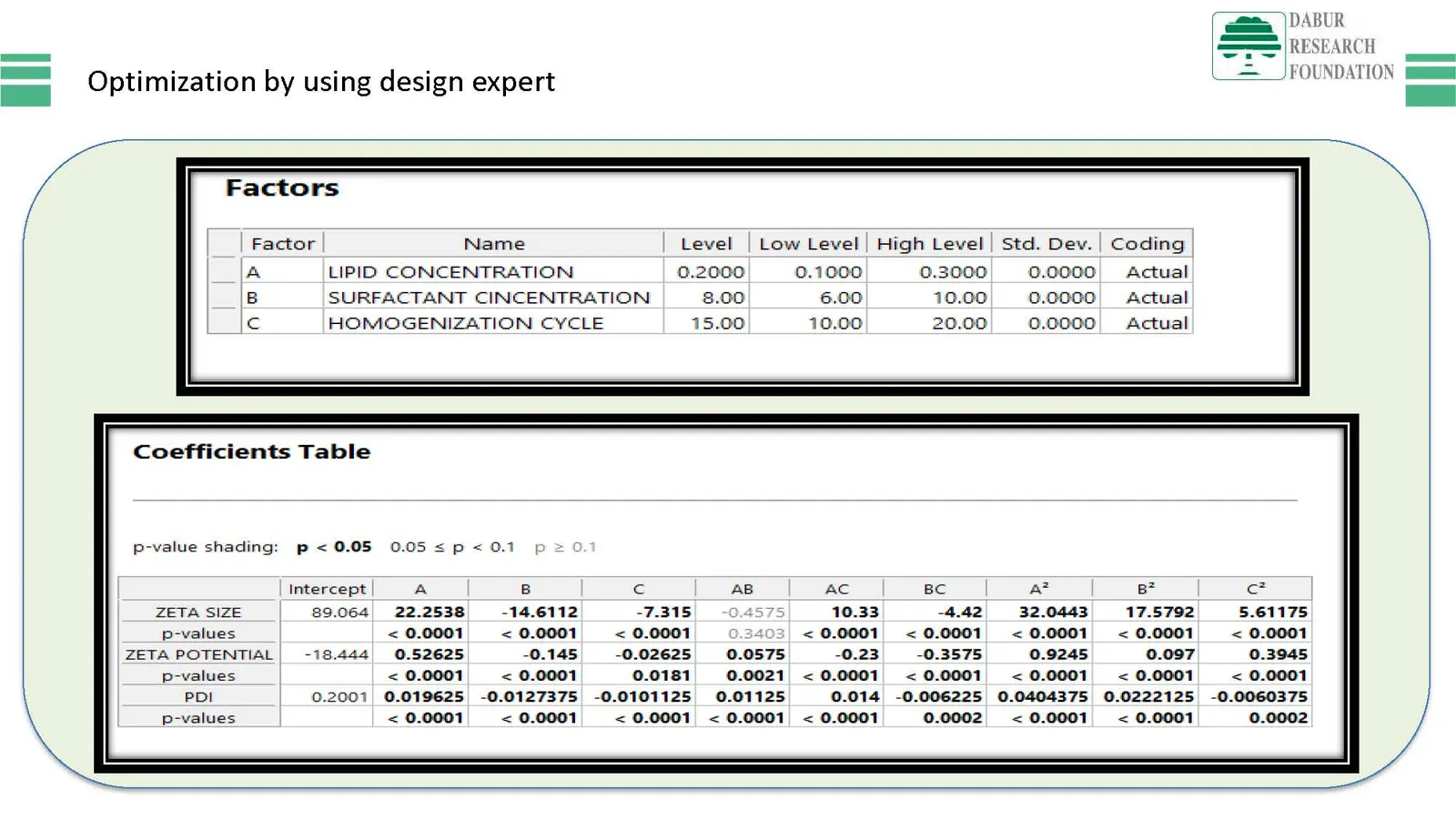
Optimization by using design expert eae, \DABUR — SS [RESEARCH = — JFOUNDATION i Factors Level | Low Level | High Level | Std. Dev. | Coding 0.0000) Actual 0.0000) Actual 20.00 0.0000 Actual Factor Name A LIPID CONCENTRATION 0.2000 0.1000 0.3000 B SURFACTANT CINCENTRATION 38.00 6.00 10.00 c HOMOGENI
Slide 16: Optimization Contour Plots
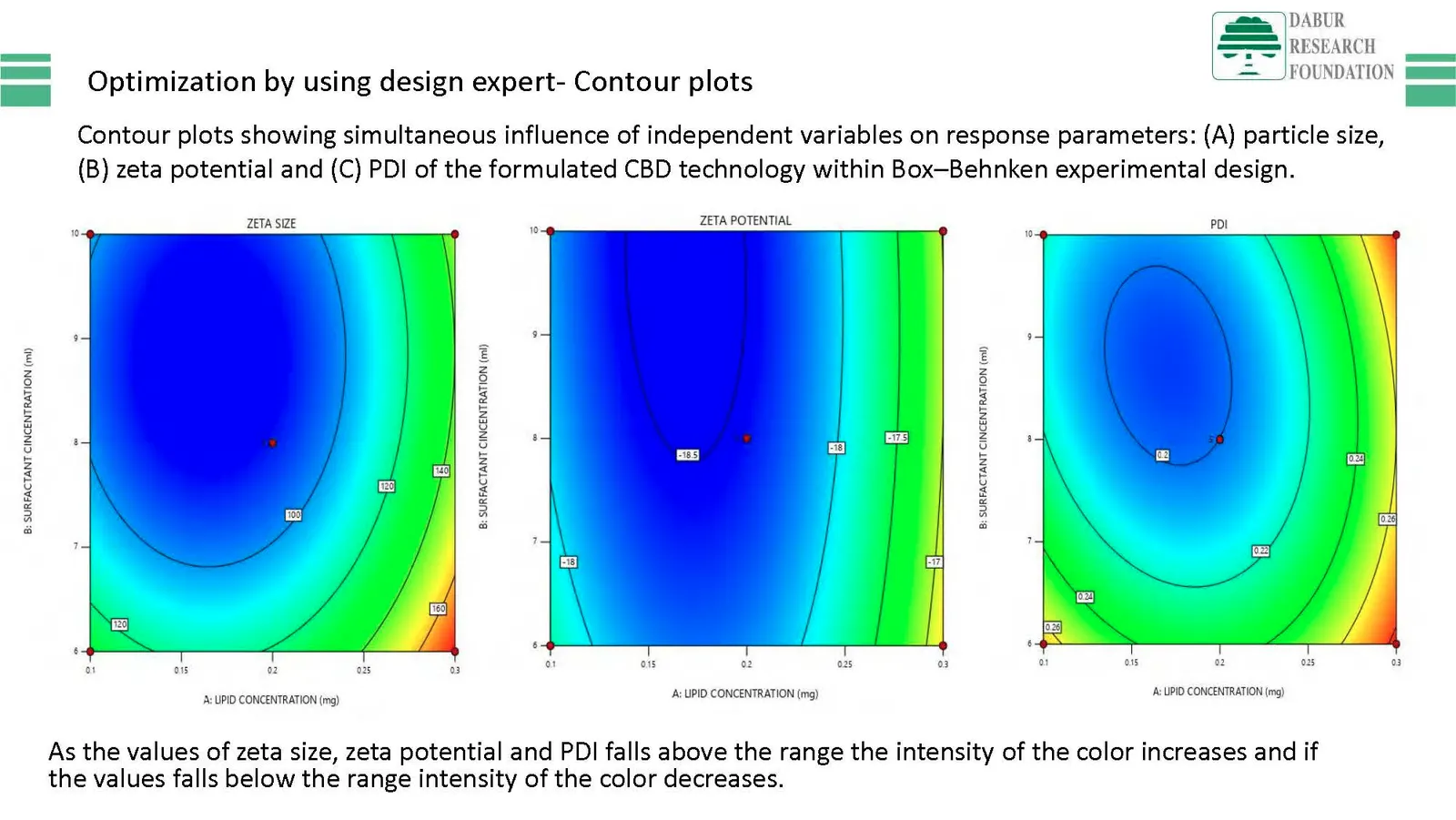
= )DABUR SS |RESEARCH OUNDATION a Optimization by using design expert- Contour plots — Contour plots showing simultaneous influence of independent variables on response parameters: (A) particle size, (B) zeta potential and (C) PDI of the formulated CBD technology within Box—Behnken experimental desi
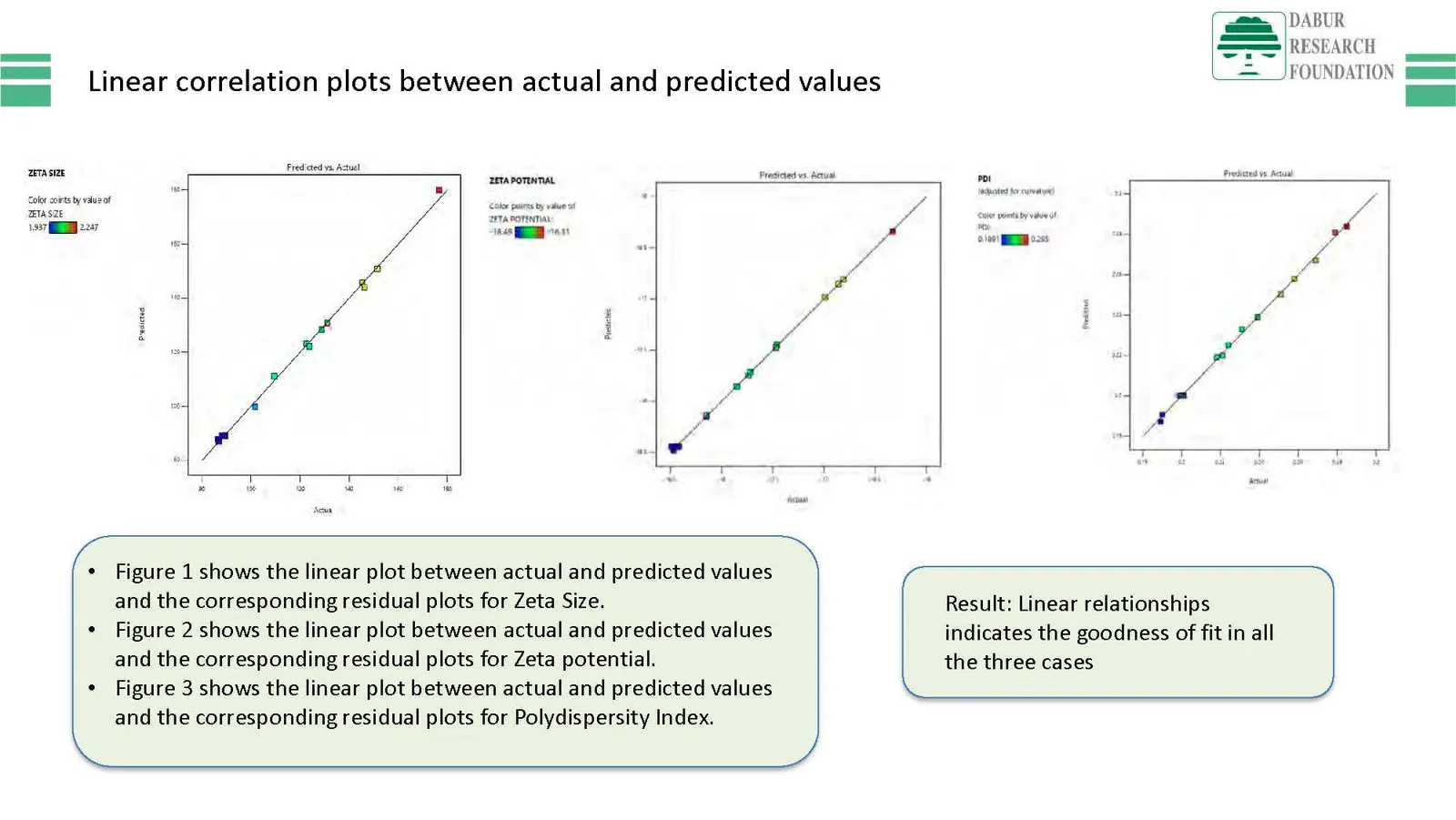
Slide 17: Linear Correlation Plots Actual vs Predicted
me, |DABUR SS RESEARCH FOUNDATION a Linear correlation plots between actual and predicted values — ‘ETASIEE Fredited ys Actual Presiced vs. eral Coot sorts by vu of EAszE 1937 2257 * Figure 1 shows the linear plot between actual and predicted values and the corresponding residual plots for Zeta Size
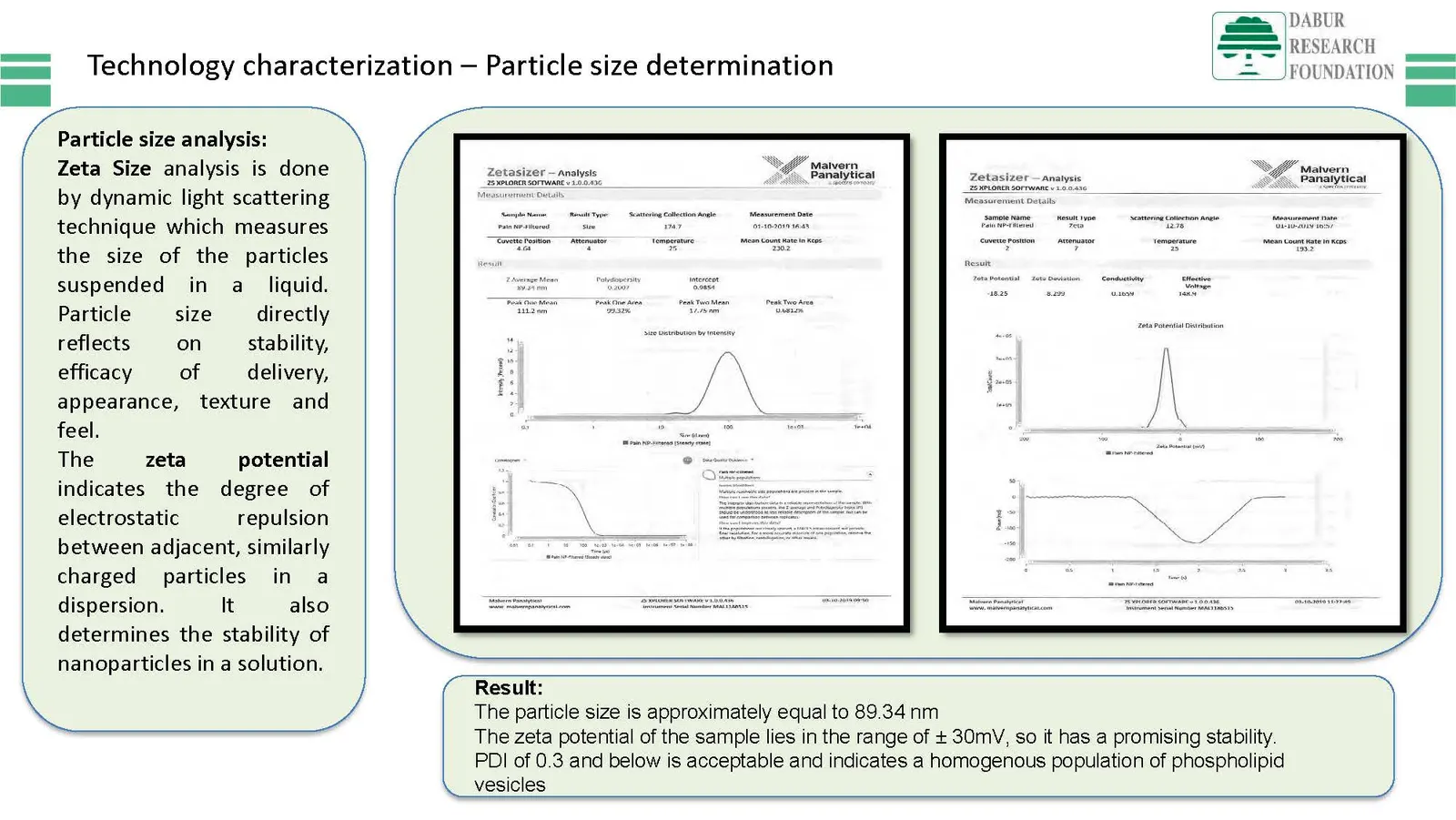
Slide 18: Technology Characterization: Particle Size Determination
me, |DABUR ae . . oa SS RESEARCH Technology characterization — Particle size determination J FOUNDATION Zeta Size analysis is done by dynamic light scattering technique which measures the size of the particles suspended in a_ liquid. Particle size directly Malvern malvern ~W, Panalyticat ©, Banaiyti
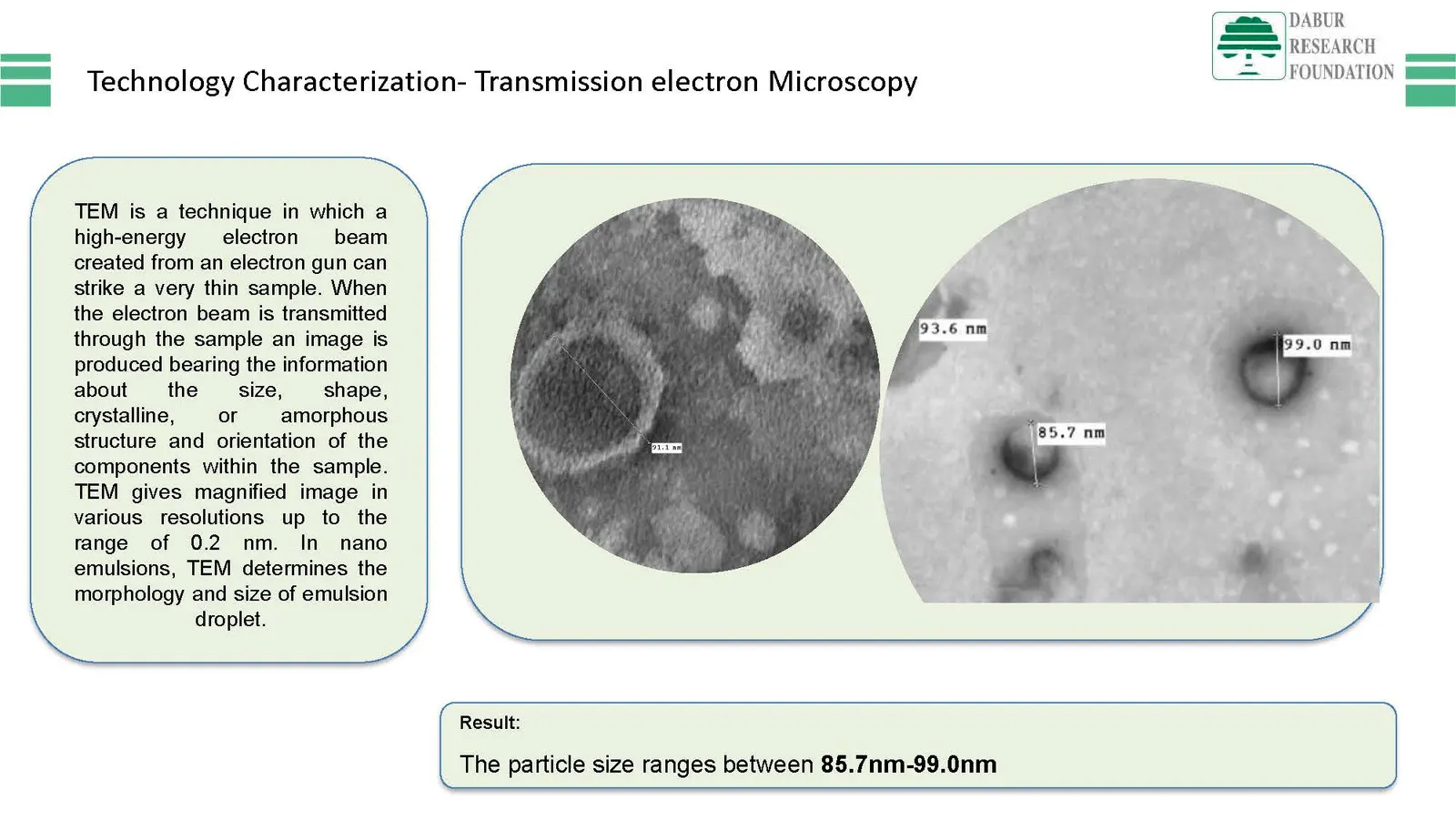
Slide 19: Transmission Electron Microscopy
DABUR R RCH FOUNDATION a Technology Characterization- Transmission electron Microscopy — (cen is a technique in smn a high-energy electron beam created from an electron gun can strike a very thin sample. When the electron beam is transmitted through the sample an image is produced bearing the inform
Slide 20: Pain Management
Pain management DABUR RESEARCH FOUNDATION =m
Slide 21: Pain Management: Formulation Development
me, \DABUR — SS} RESEARCH == Pain management “=~ JrounpatioN = 8 — Formulation development
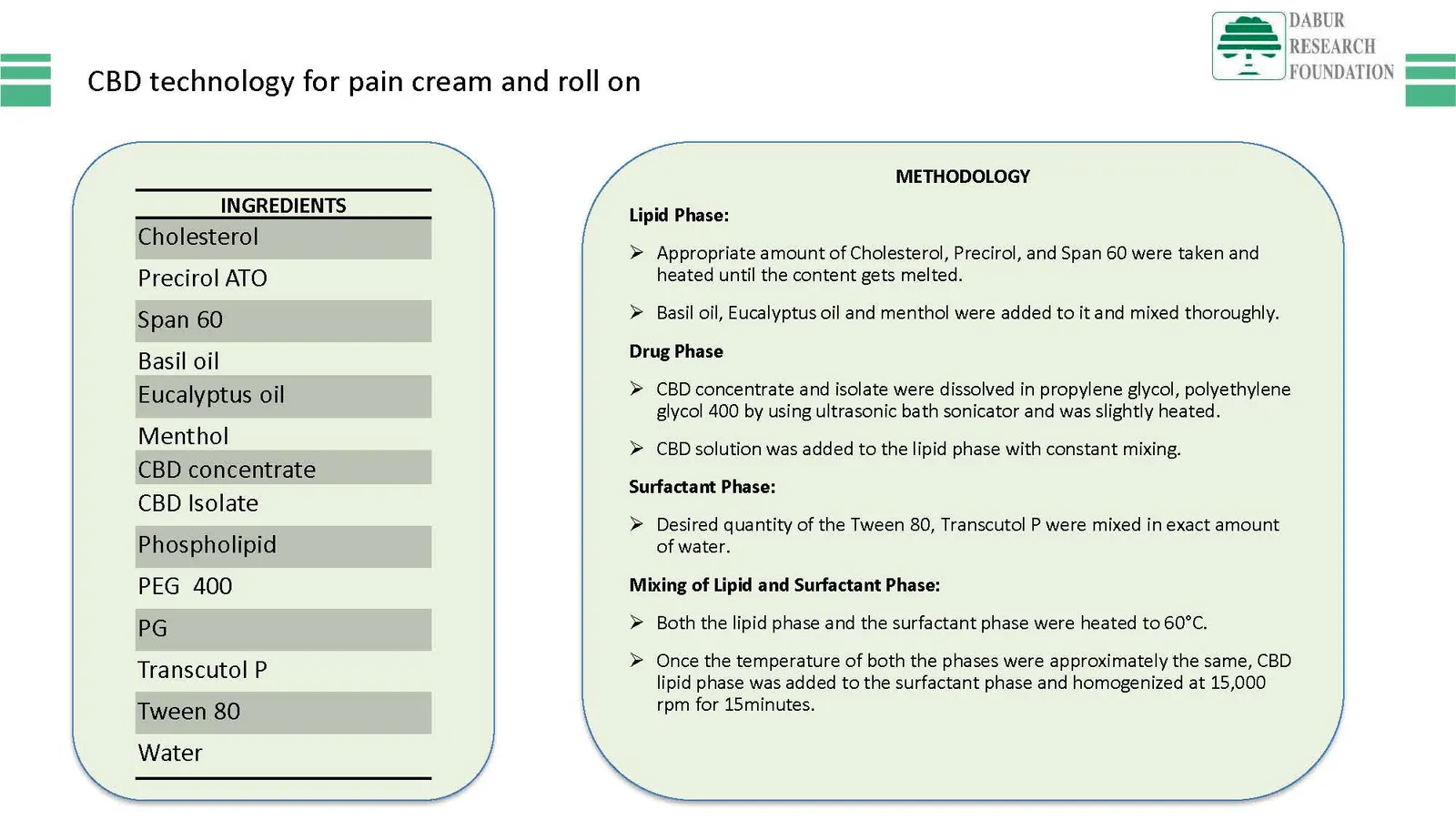
Slide 22: CBD Technology for Pain Cream and Roll On
a CBD technology for pain cream and roll on , INGREDIENTS > Cholesterol Precirol ATO Span 60 Basil oil Eucalyptus oil Menthol CBD concentrate CBD Isolate Phospholipid PEG 400 PG Transcutol P Tween 80 Ks me, |DABUR = | RESEARCH METHODOLOGY Lipid Phase: > Appropriate amount of Cholesterol, Precirol, a
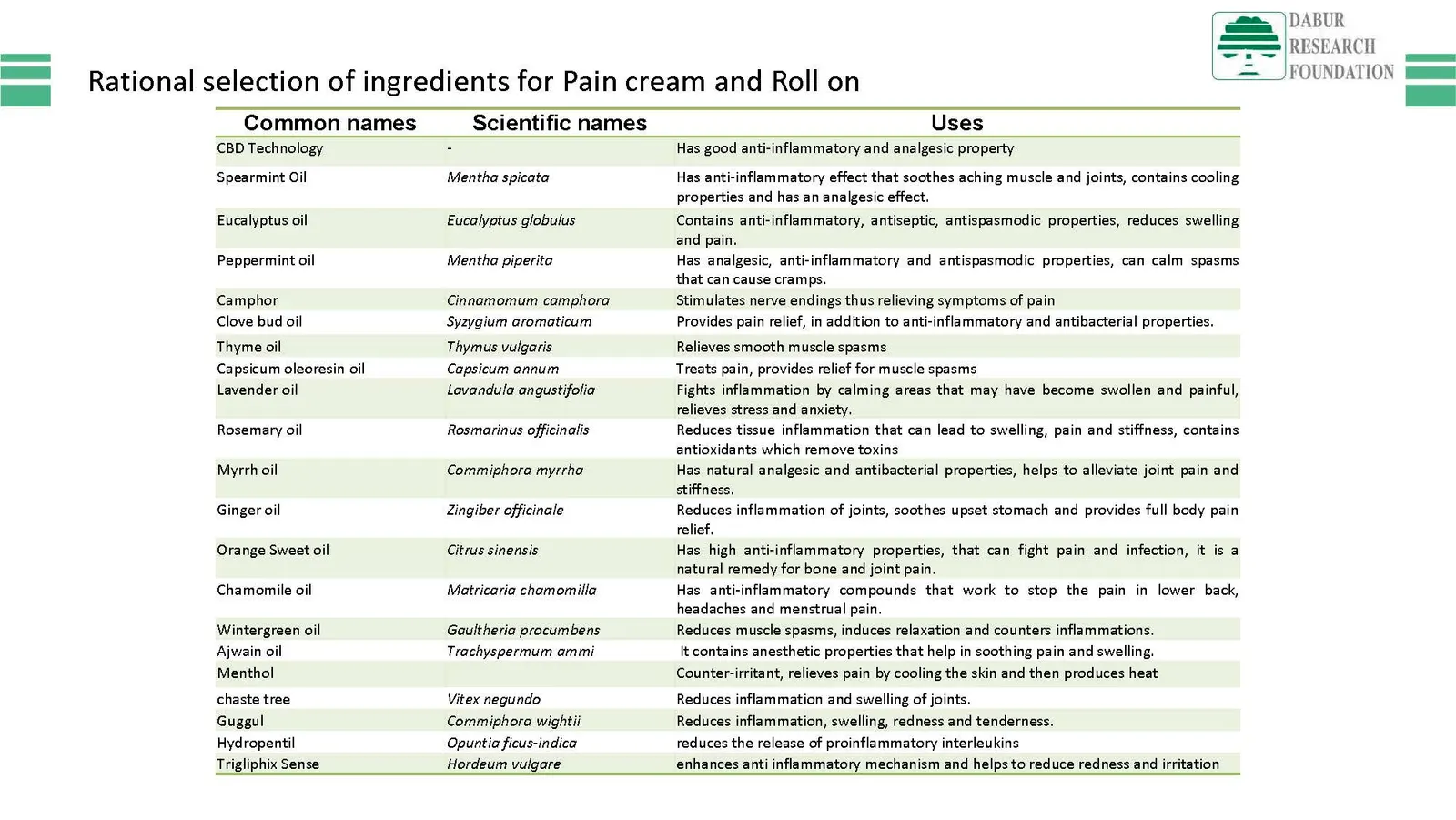
Slide 23: Rational Selection of Ingredients for Pain Cream and Roll On
Rational selection of ingredients for Pain cream and Roll on = —= | RESEARCH Common names Scientific names Uses CBD Technology Spearmint Oil Eucalyptus oil Peppermint oil Camphor Clove bud oil Thyme oil Capsicum oleoresin oil Lavender oil Rosemary oil Myrrh oil Ginger oil Orange Sweet oil Chamomile
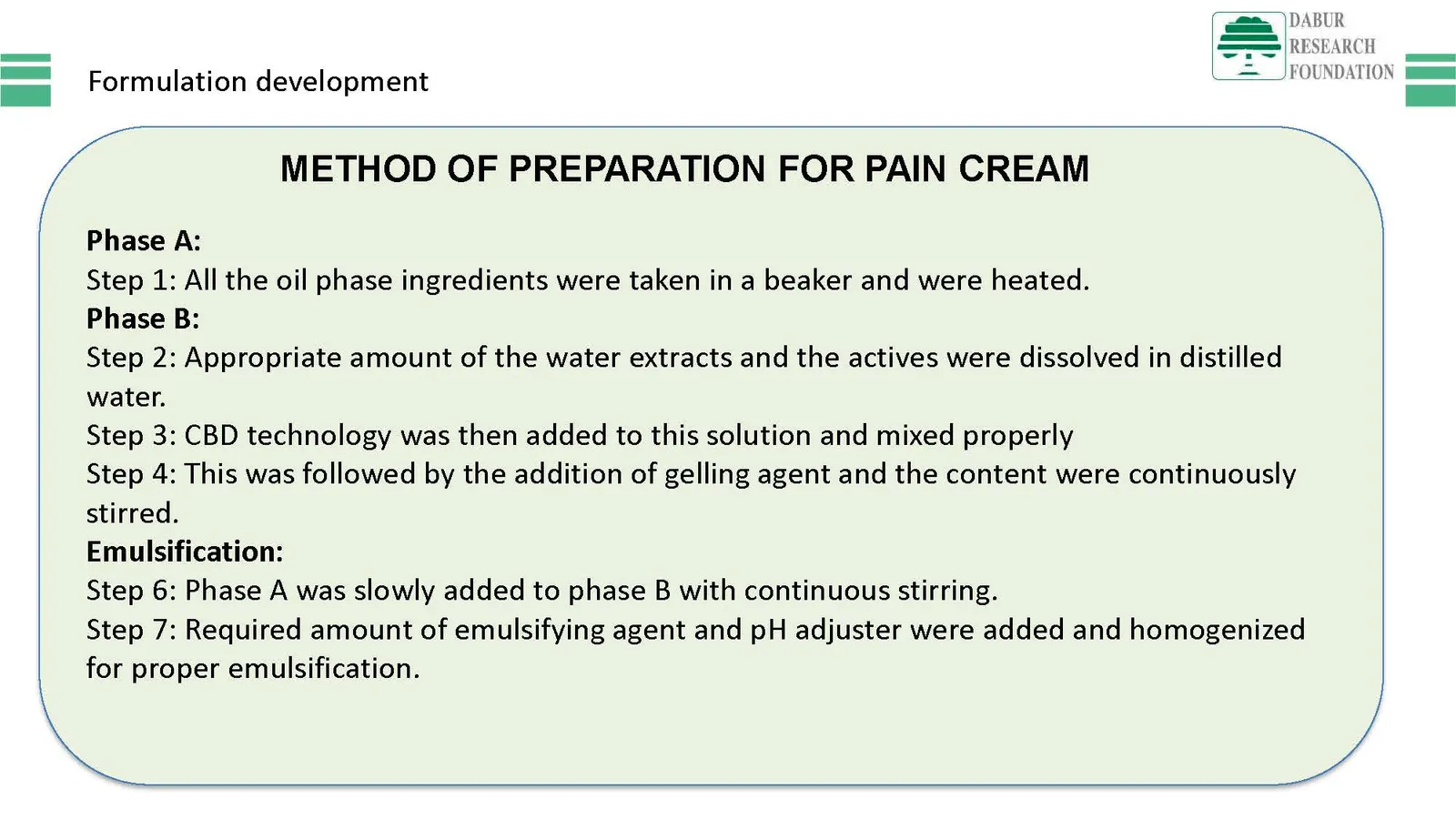
Slide 24: Method of Preparation for Pain Cream
ESEARCH Formulation development METHOD OF PREPARATION FOR PAIN CREAM >> Phase A: Step 1: All the oil phase ingredients were taken in a beaker and were heated. Phase B: Step 2: Appropriate amount of the water extracts and the actives were dissolved in distilled water. Step 3: CBD technology was then
Slide 25: Efficacy and Permeability Assessments
me, \DABUR SS} RESEARCH == Pain management “=~ JrounpatioN = 8 — Efficacy and permeability assessments
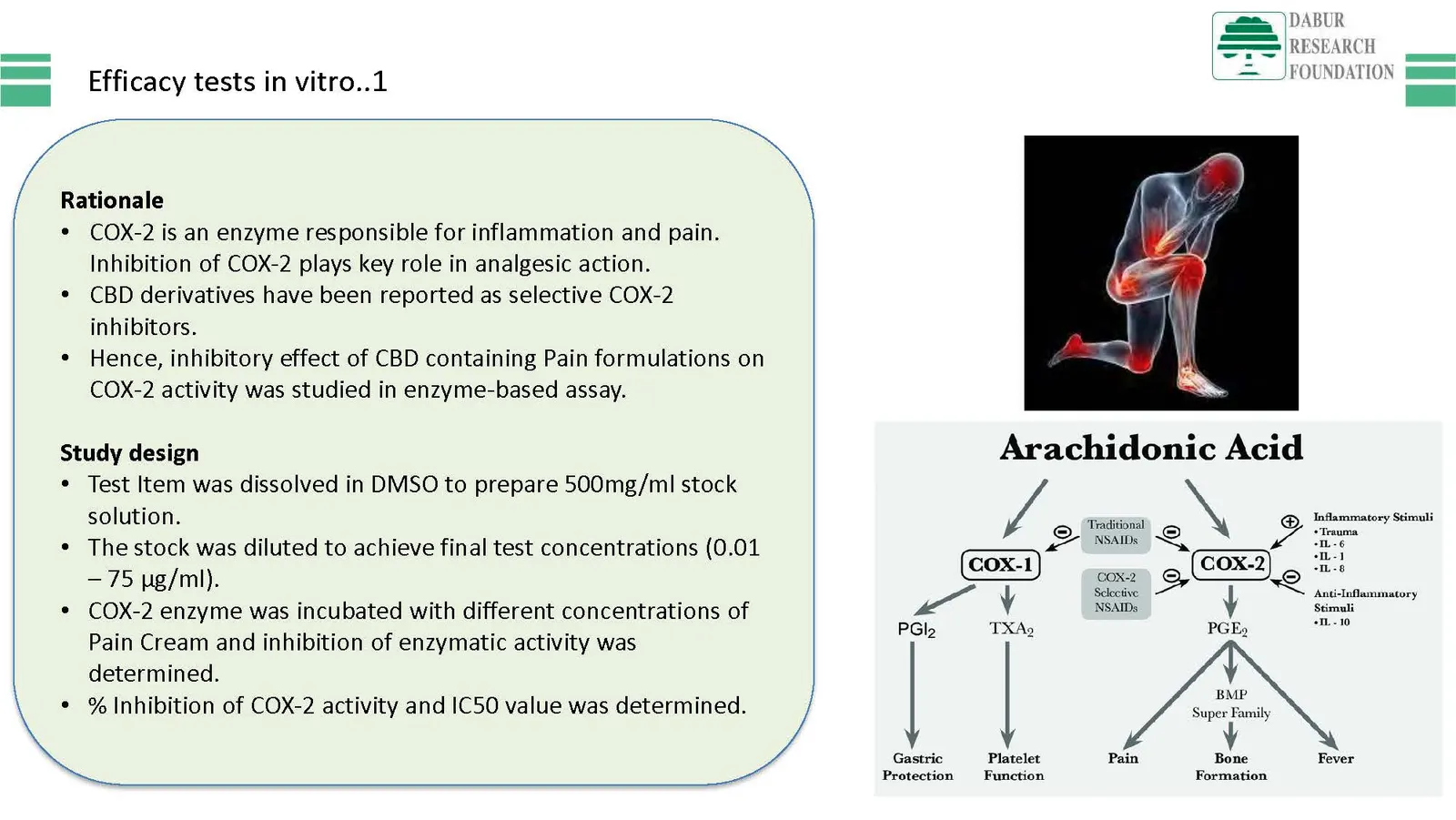
Slide 26: Efficacy Tests In Vitro 1
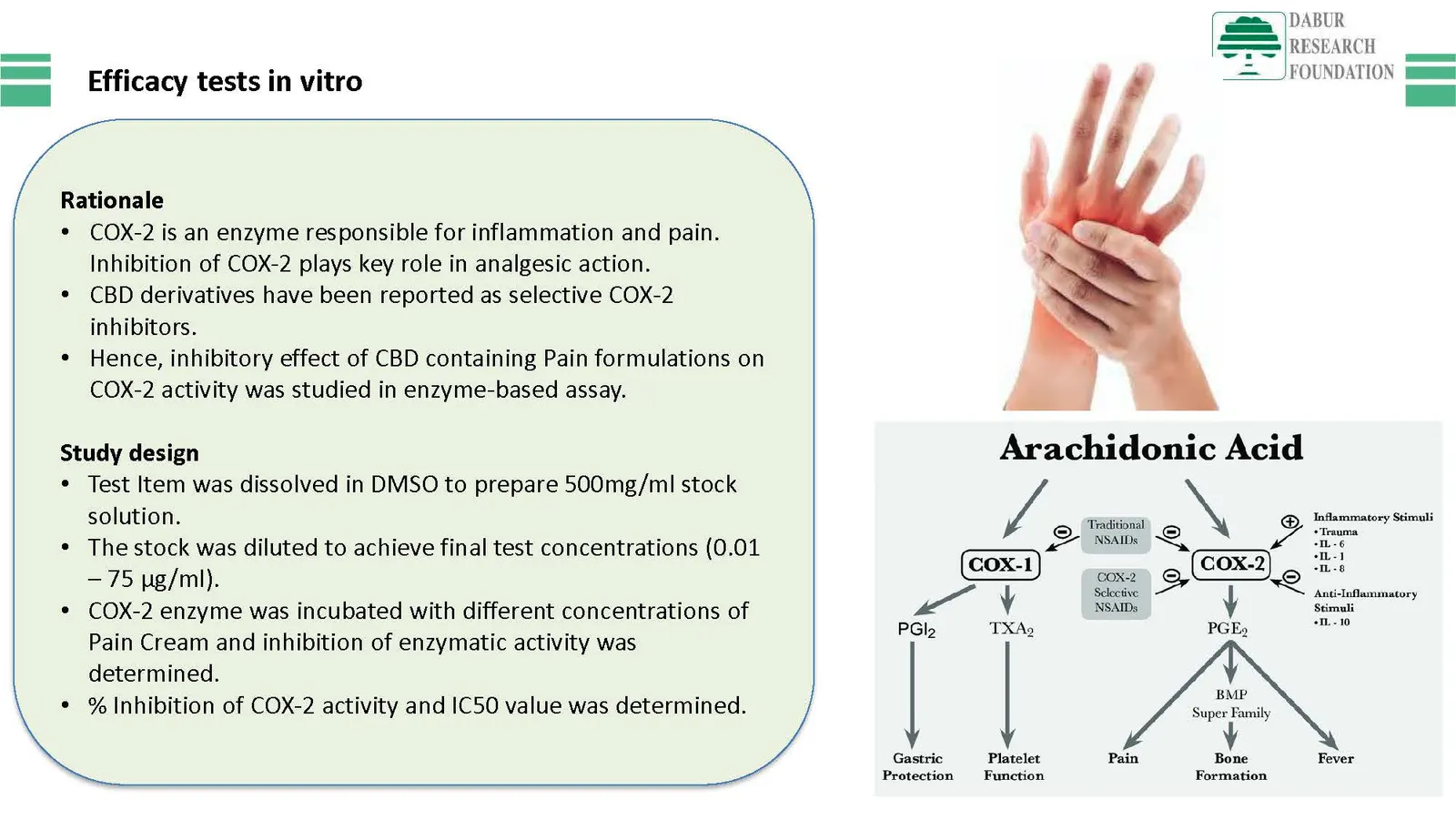
Efficacy tests in vitro..1 Rationale * COX-2 is an enzyme responsible for inflammation and pain. Inhibition of COX-2 plays key role in analgesic action. ¢ CBD derivatives have been reported as selective COX-2 inhibitors. ¢ Hence, inhibitory effect of CBD containing Pain formulations on COX-2 activit
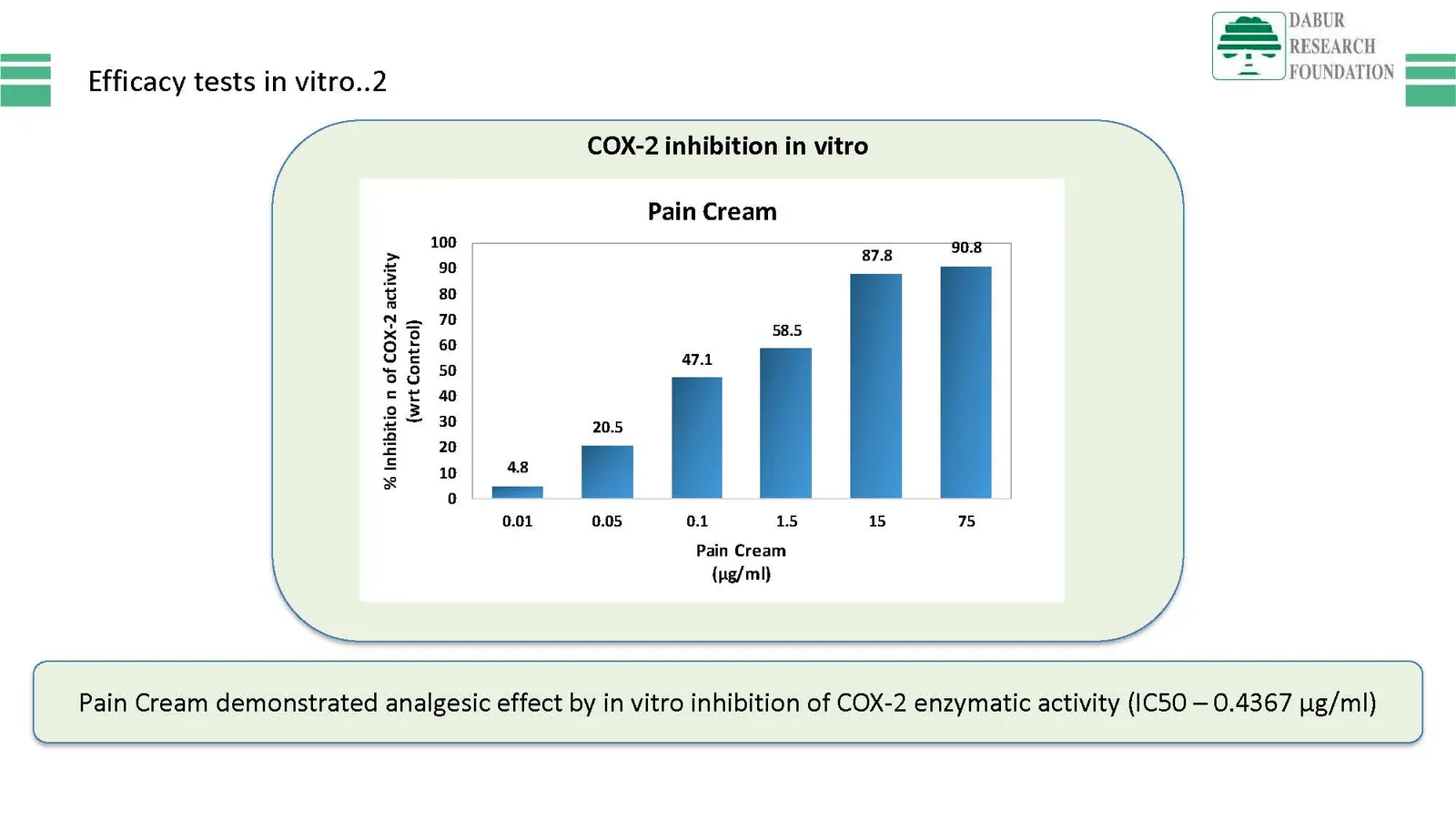
Slide 27: Efficacy Tests In Vitro 2: Pain Cream COX-2
DABUR RESEARCH FOUNDATION [am i me Efficacy tests in vitro..2 ( COX-2 inhibition in vitro > Pain Cream 100 2 30 87.8 90.8 2 oI 80 Hy Vv 70 < o 58.5, 5 £ a 47.1 2 } cr ©£t 40 2s g 30 20.5 = 20 = 48 x - Ee | oO 0.01 0.05 0.1 15 15 75 Pain Cream XX ~ yy Pain Cream demonstrated analgesic effect by in vi
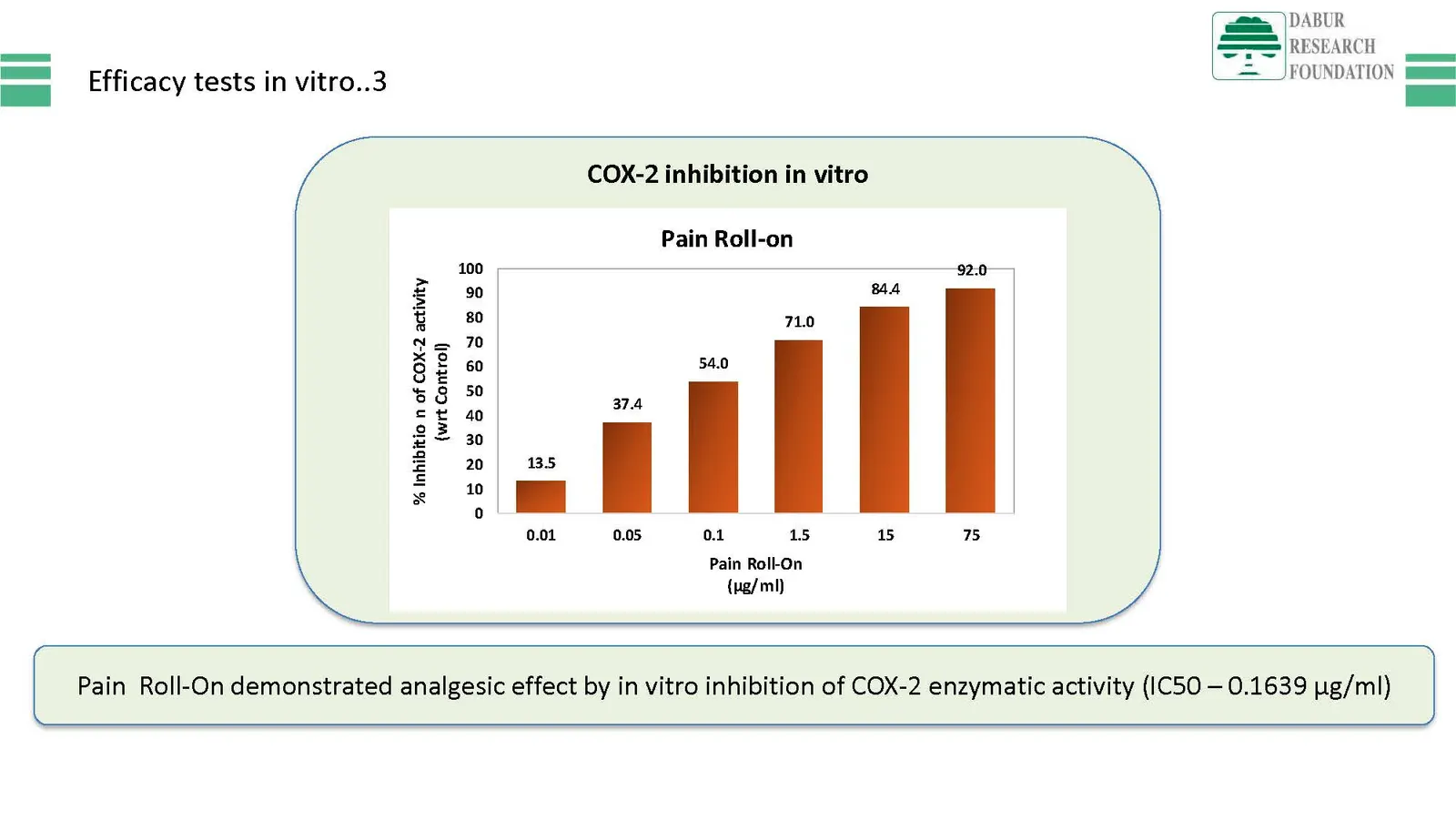
Slide 28: Efficacy Tests In Vitro 3: Pain Roll-On COX-2
DABUR RESEARCH a — ——) FOUNDATION [a i a Efficacy tests in vitro..3 ia COX-2 inhibition in vitro > Pain Roll-on 100 | 92.0 > 84. $ 90 A g 80 71.0 Y= 70 xo 5 60 54.0 ge 50 c=} ee 0 37.4 zw 30 2 20) Bs = 77 oO 0.01, 0.05 0.1 15 15 75 Pain Roll-On {ug/ml) Pain Roll-On demonstrated analgesic effect by i
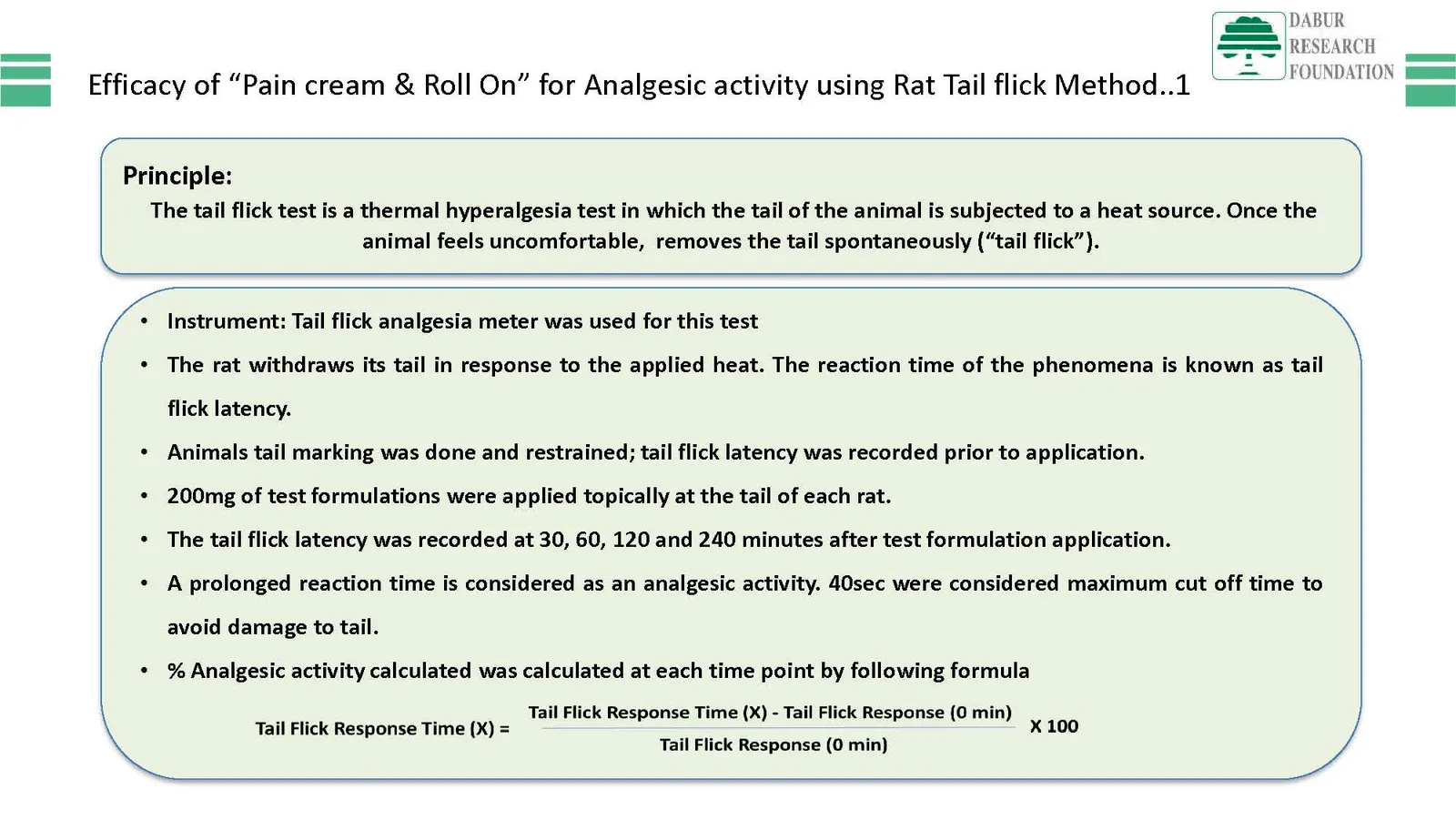
Slide 29: Analgesic Activity Using Rat Tail Flick Method 1
me, |DABUR SS RESEARCH FOUNDATION om Efficacy of “Pain cream & Roll On” for Analgesic activity using Rat Tail flick Method..1 ~~~ Principle: The tail flick test is a thermal hyperalgesia test in which the tail of the animal is subjected to a heat source. Once the animal feels uncomfortable, removes
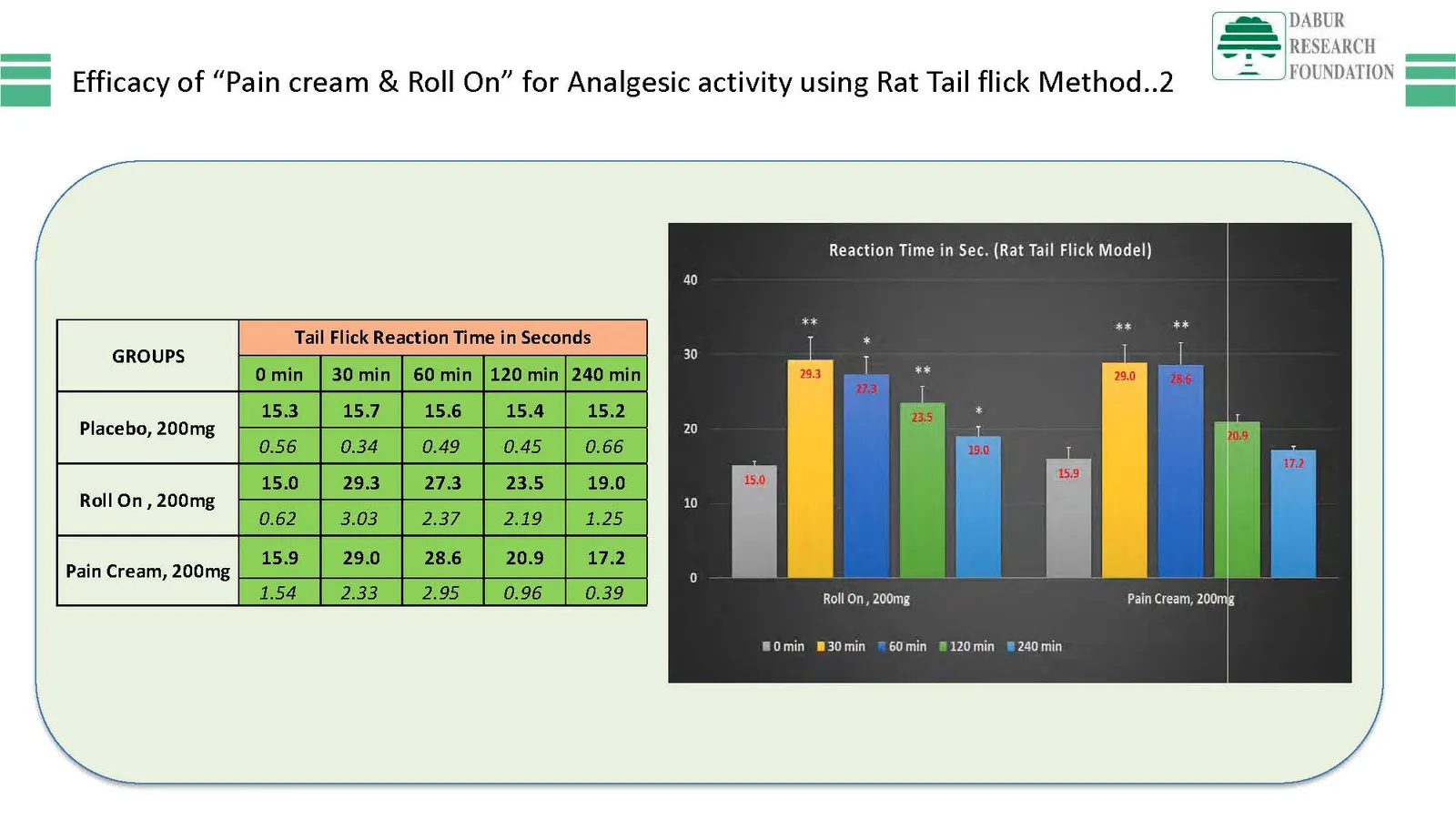
Slide 30: Analgesic Activity Using Rat Tail Flick Method 2
Efficacy of “Pain cream & Roll On” for Analgesic activity using Rat Tail flick Method..2 ( ae, )DABUR Tail Flick Reaction Time in Seconds GROUPS Omin | 30 min | 60 min | 120 min|240 min 15.3 a5e7) 15.6 15.4 15.2 Placebo, 200mg 0.56 0.34 0.49 0.45 0.66 15.0 29.3 27.3 23.5 19.0 Roll On, 200mg 0.62 3.0
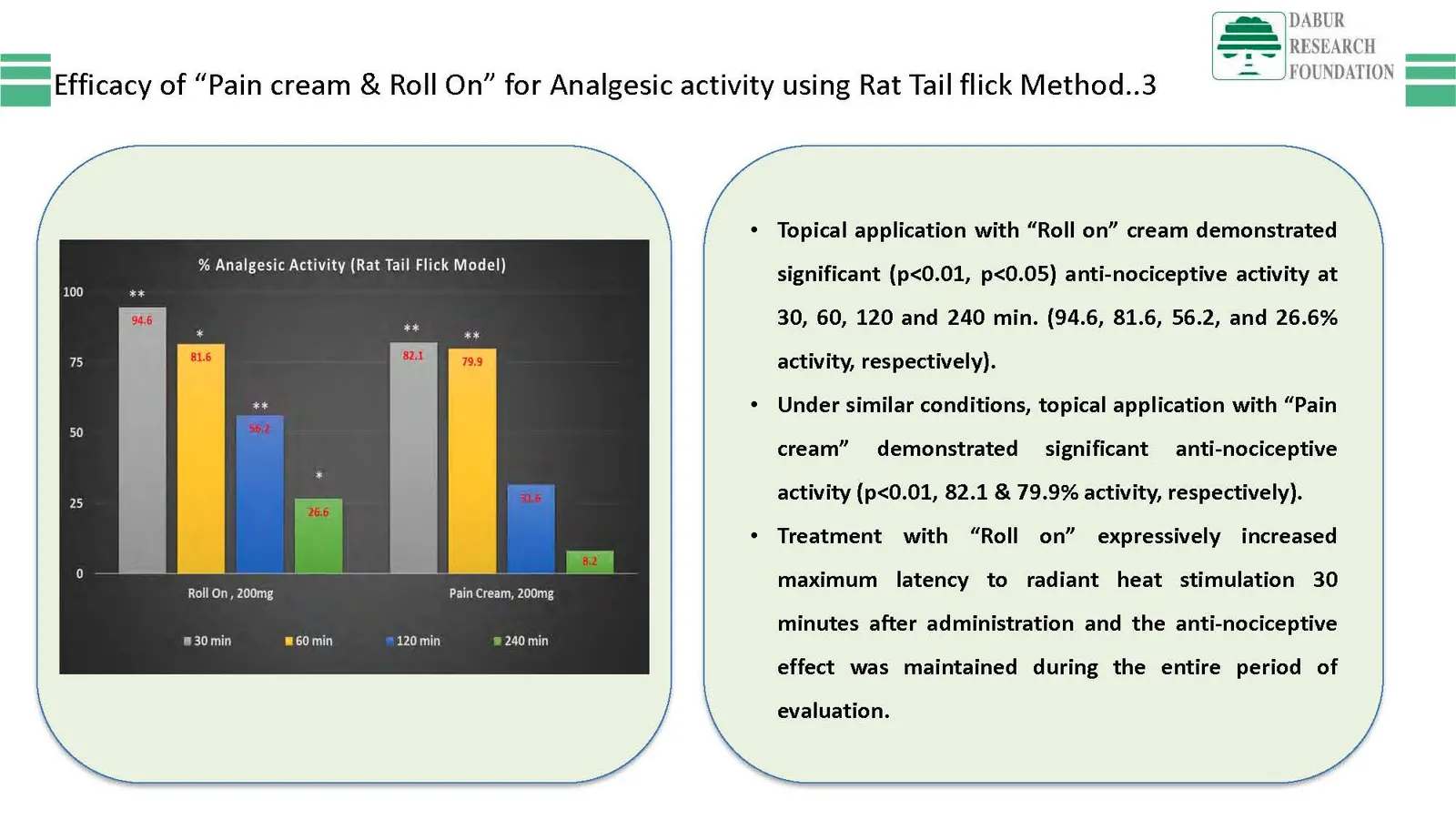
Slide 31: Analgesic Activity Using Rat Tail Flick Method 3
mam Efficacy of “Pain cream & Roll On” for Analgesic activity using Rat Tail flick Method..3 % Analgesic Activity (Rat Tail Flick Model) Roll On, 200mg Pain Cream, 200mg = 30min 120 min 240 min me, |DABUR | RESEARCH FOUNDATION * Topical application with “Roll on” cream demonstrated significant (p<0.
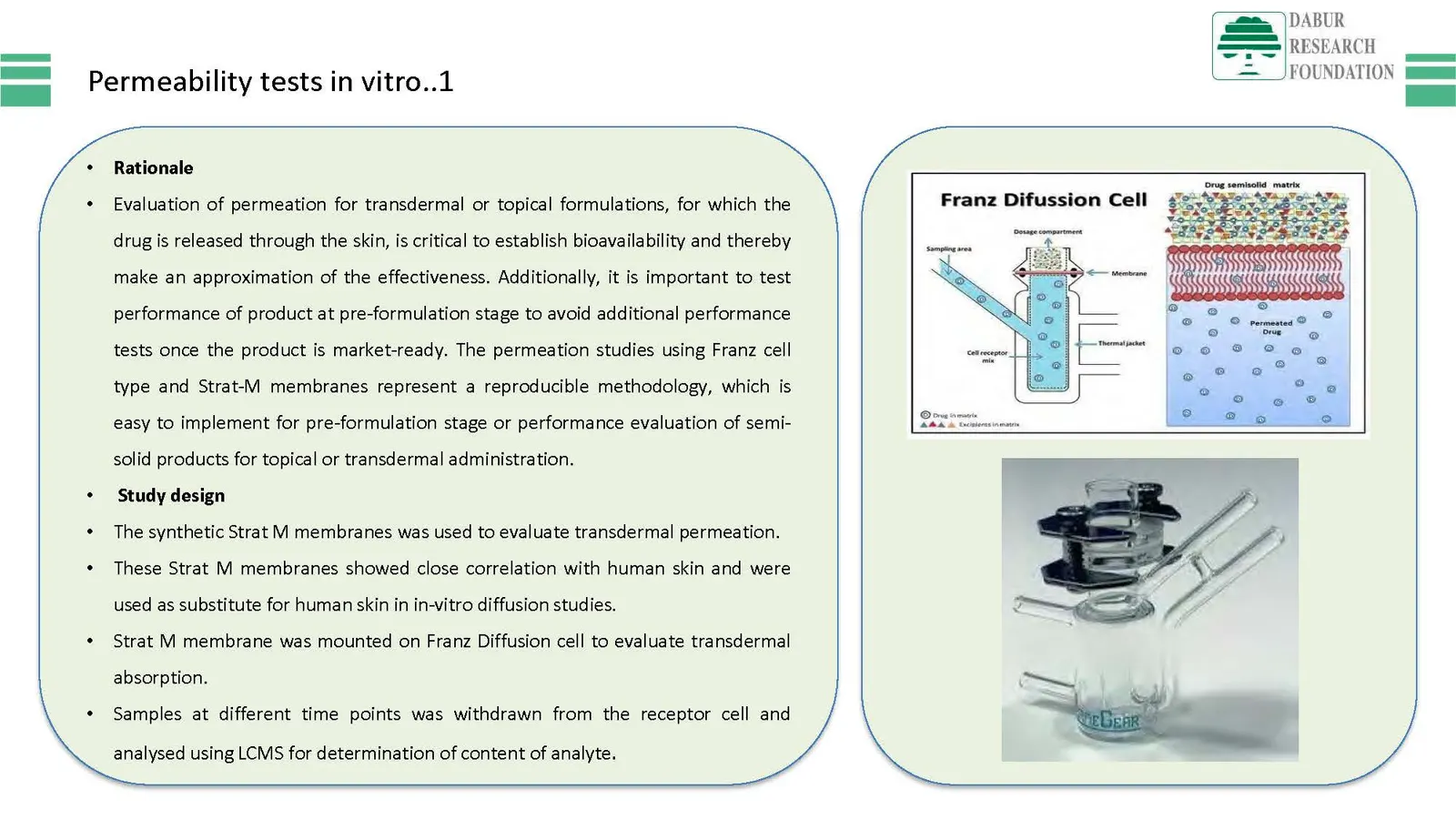
Slide 32: Permeability Tests In Vitro 1
Permeability tests in vitro..1 * Rationale * Evaluation of permeation for transdermal or topical formulations, for which the drug is released through the skin, is critical to establish bioavailability and thereby make an approximation of the effectiveness. Additionally, it is important to test perfo
Slide 33: Permeability Tests In Vitro 2
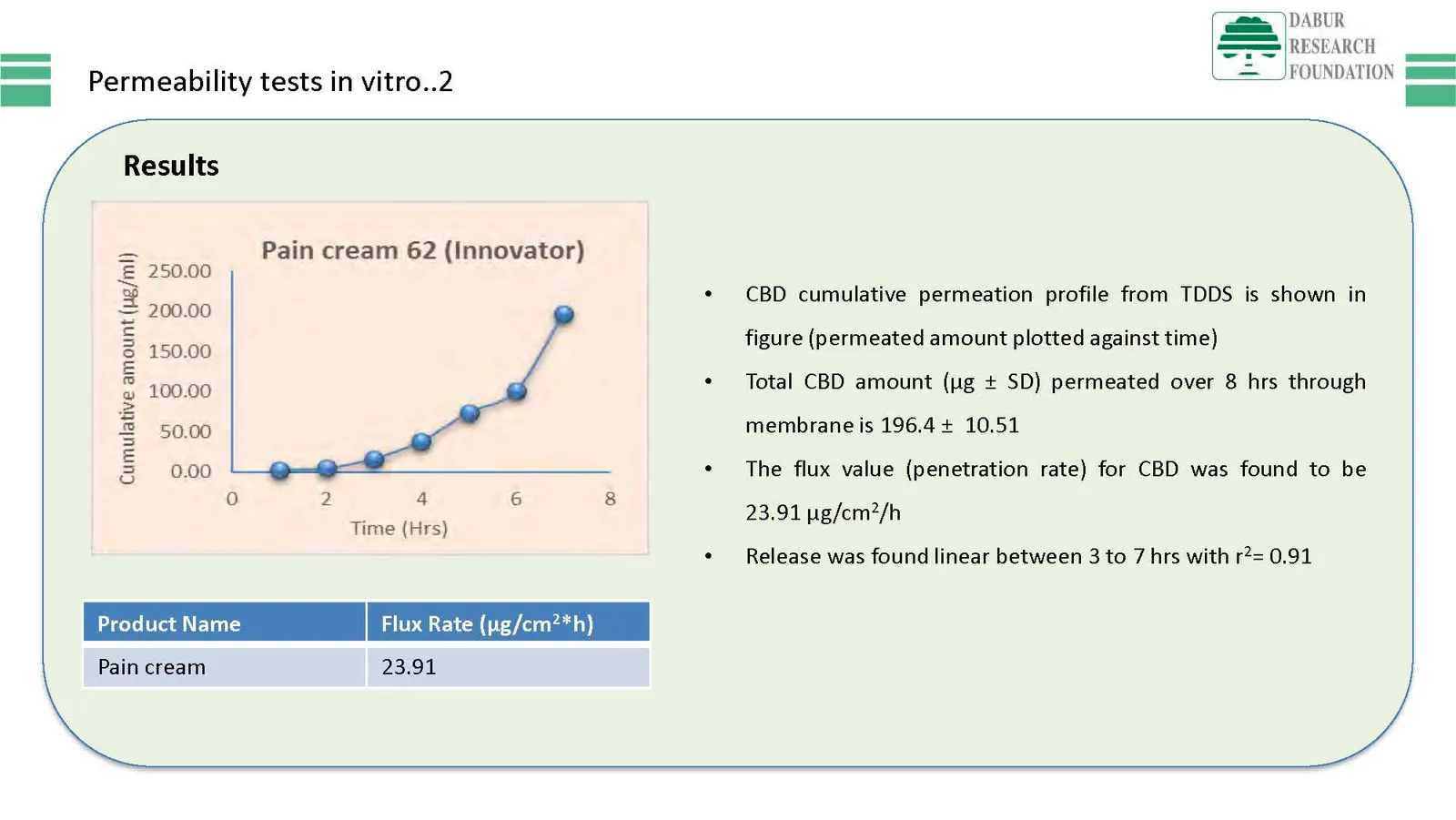
— eos S= — Pp A ‘ 5 — JFOUNDATION = ermeability tests in vitro..2 | y nl Results = Pain cream 62 (Innovator) £ 250.00 EY pga ic *« CBD cumulative permeation profile from TDDS is shown in ree i inst ti 3 450.00 figure (permeated amount plotted against time) ® 100.00 * Total CBD amount (yg + SD) perme
Slide 34: Permeability Tests In Vitro 3
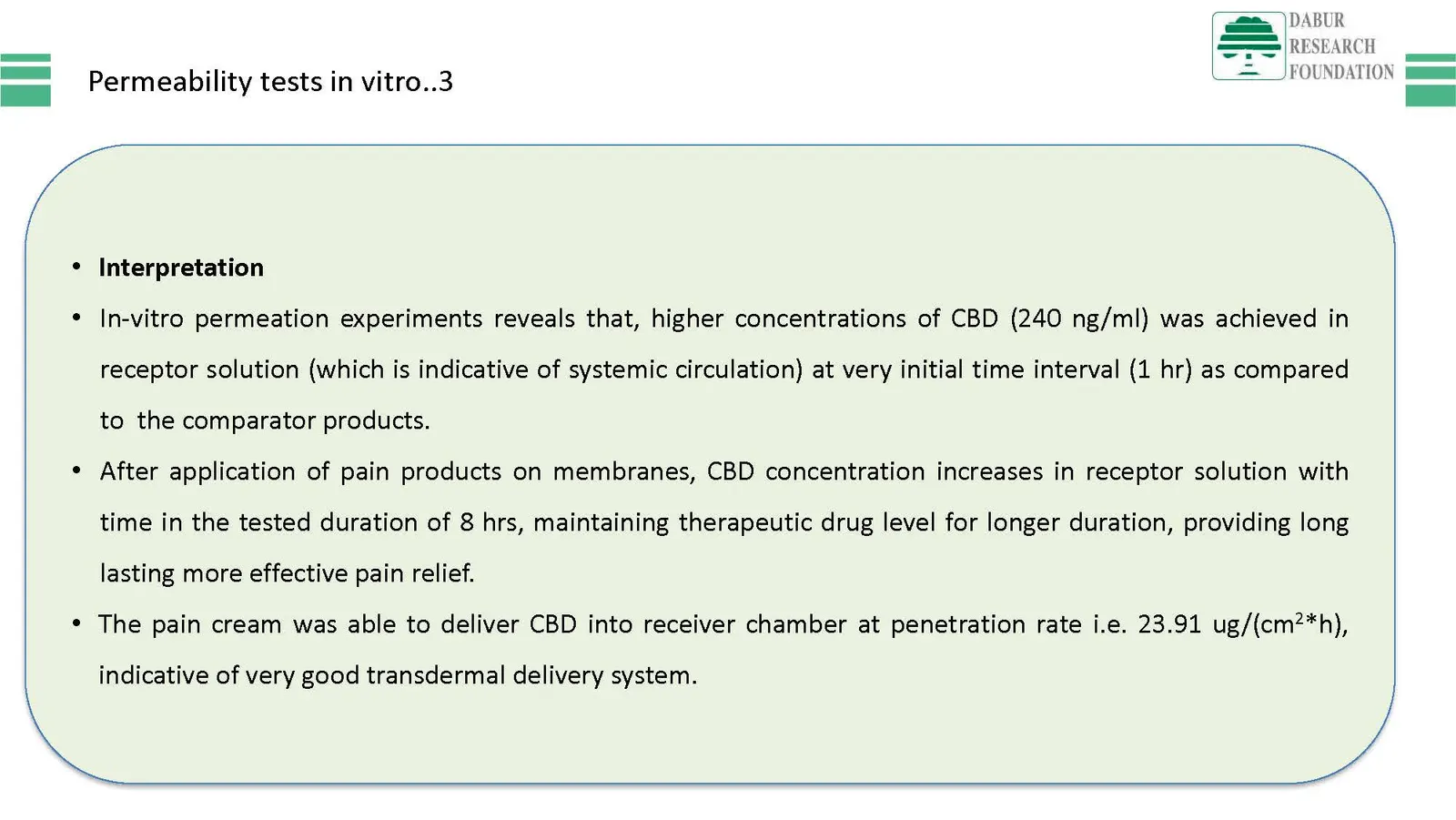
me, |DABUR = | RESEARCH -—=~ = — JFOUNDATION = i a Permeability tests in vitro..3 * In-vitro permeation experiments reveals that, higher concentrations of CBD (240 ng/ml) was achieved in * Interpretation receptor solution (which is indicative of systemic circulation) at very initial time interval (1
Slide 35: Penetration Ex Vivo: Rat Skin
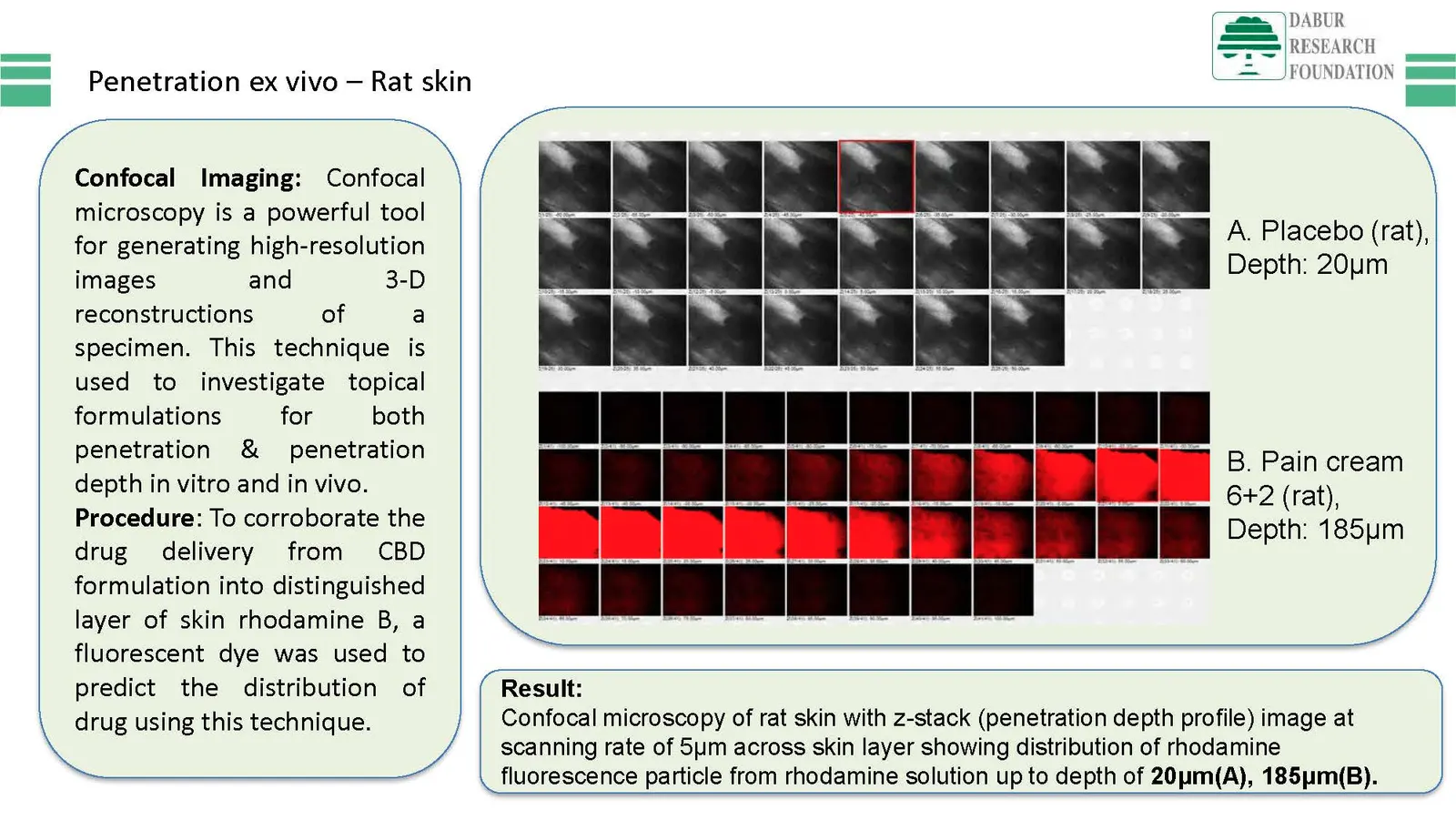
(conto Imaging: contoeat es using this technique. yy Penetration ex vivo — Rat skin microscopy is a powerful tool for generating high-resolution images and 3-D reconstructions of a specimen. This technique is used to investigate topical formulations for both penetration & penetration depth in vitro
Slide 36: Penetration Ex Vivo: Guinea Pig Skin
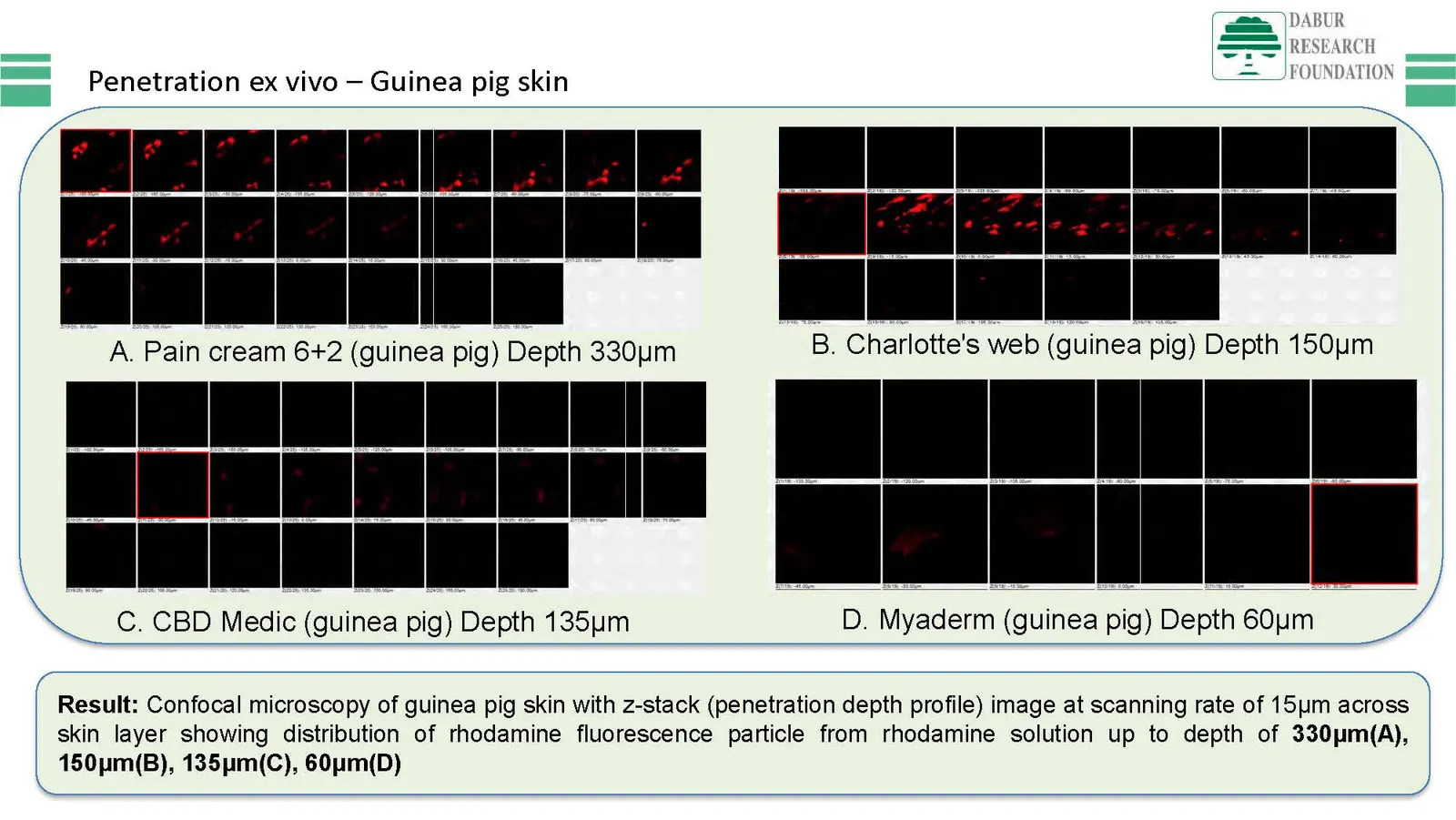
Penetration ex vivo — Guinea pig skin = A. Pain cream 6+2 (guinea pig) Depth 330m B. Charlotte's web (guinea pig) Depth 150um C. CBD Medic (guinea pig) Depth 135um pb. Myaderm ( guinea pig) onoentn 60ym Result: Confocal microscopy of guinea pig skin with z-stack (penetration depth profile) image at
Slide 37: Formulation Characterization
me, \DABUR — SS} RESEARCH == Pain management “=~ JrounpatioN = 8 — Formulation characterization
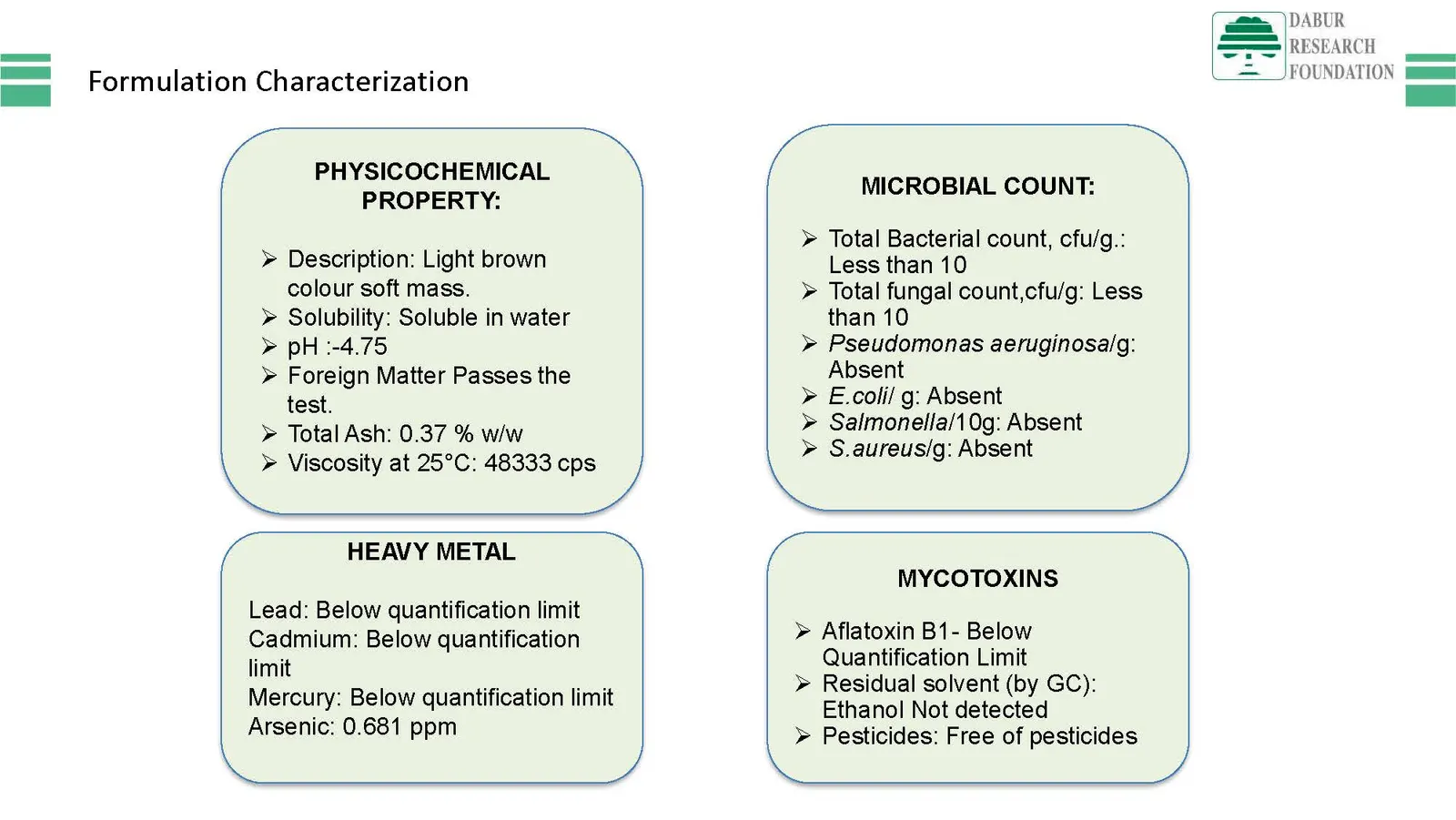
Slide 38: Formulation Characterization
Formulation Characterization ( PHYSICOCHEMICAL > PROPERTY: > Description: Light brown colour soft mass. > Solubility: Soluble in water > pH :-4.75 > Foreign Matter Passes the test. > Total Ash: 0.37 % w/w qe Viscosity at 25°C: 48333 i, ( HEAVY METAL > Lead: Below quantification limit Cadmium: Below
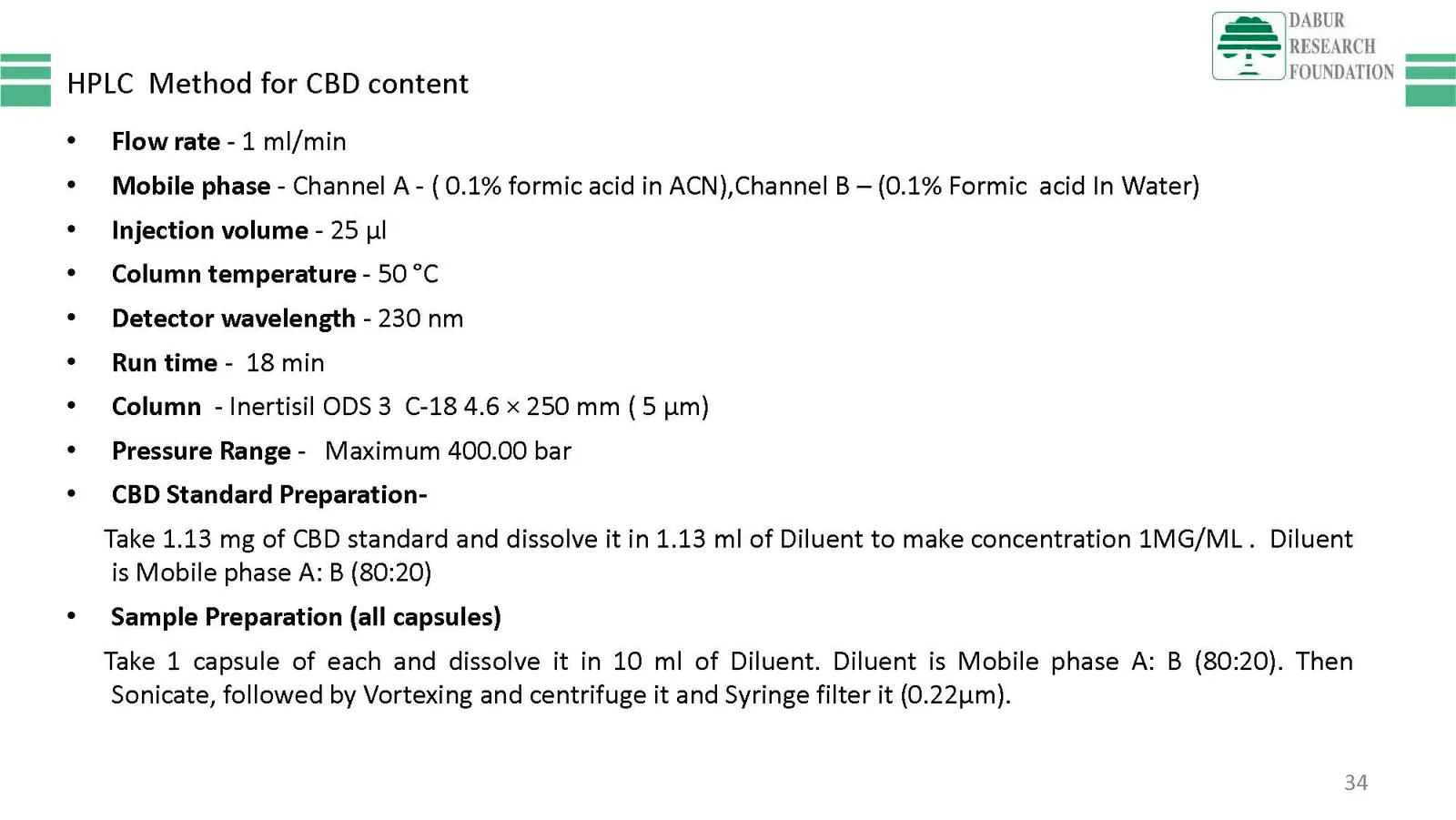
Slide 39: HPLC Method for CBD Content
kes R ——, SSS RESEARCH sam HPLC Method for CBD content IE * Flowrate -1 ml/min * Mobile phase - Channel A - (0.1% formic acid in ACN),Channel B — (0.1% Formic acid In Water) * — Injection volume - 25 ul * Column temperature - 50 °C * Detector wavelength - 230 nm * Runtime - 18 min * Column - Inertis
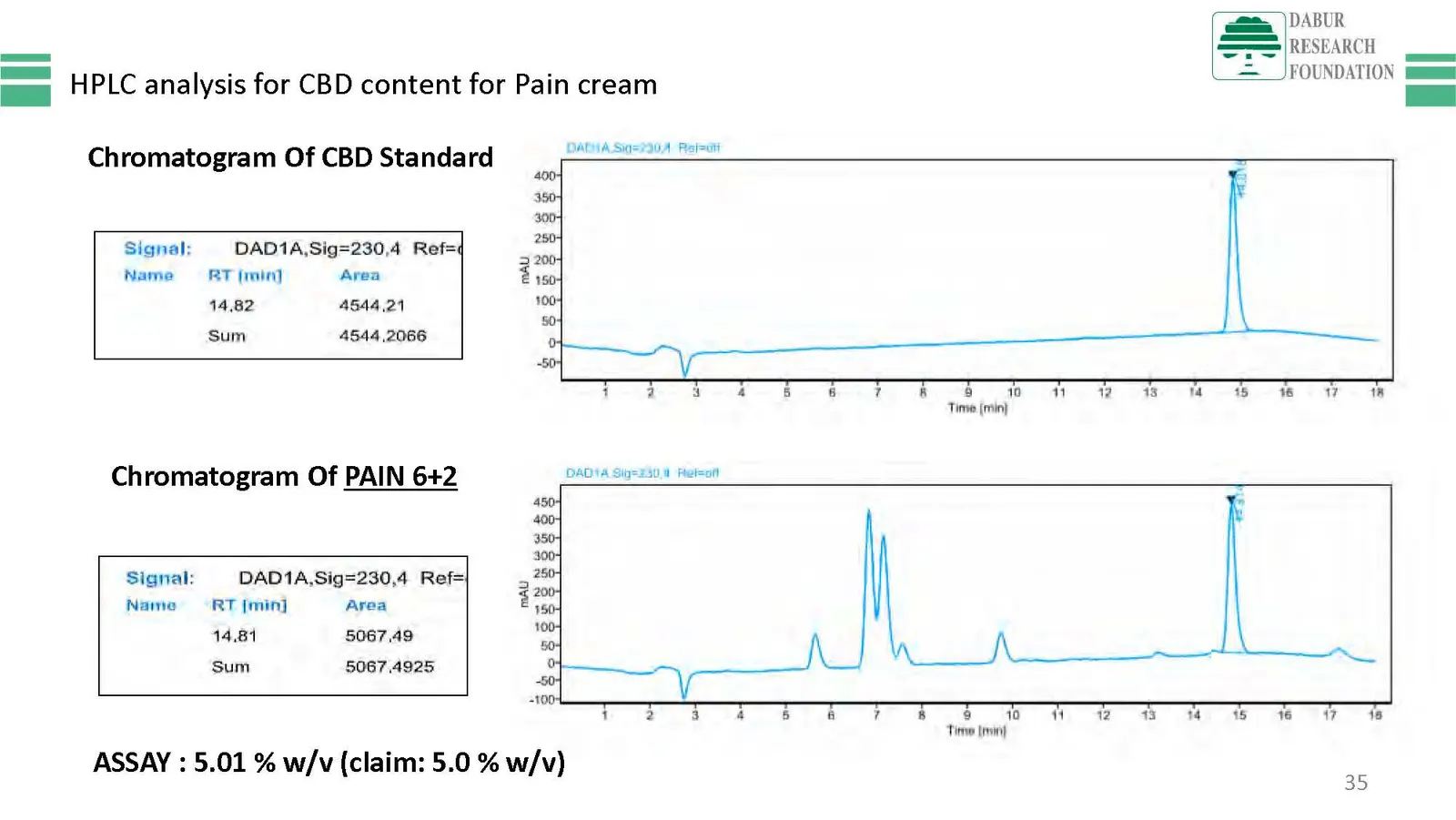
Slide 40: HPLC Analysis for CBD Content for Pain Cream
omy HPLC analysis for CBD content for Pain cream DARN ASIO=2904 Rsiaatt me, |DABUR SS RESEARCH FOUNDATION Chromatogram Of CBD Standard 4004 3507 3004 Signal; DAD1A,Sig=230,4 Ref= P| Name — RT {min Area 150. 14,82 4544.24 100: 50: Sum 4544 2066 o- i rr ee Ce Tinve (min) Chromatogram Of PAIN 6+2 DADA
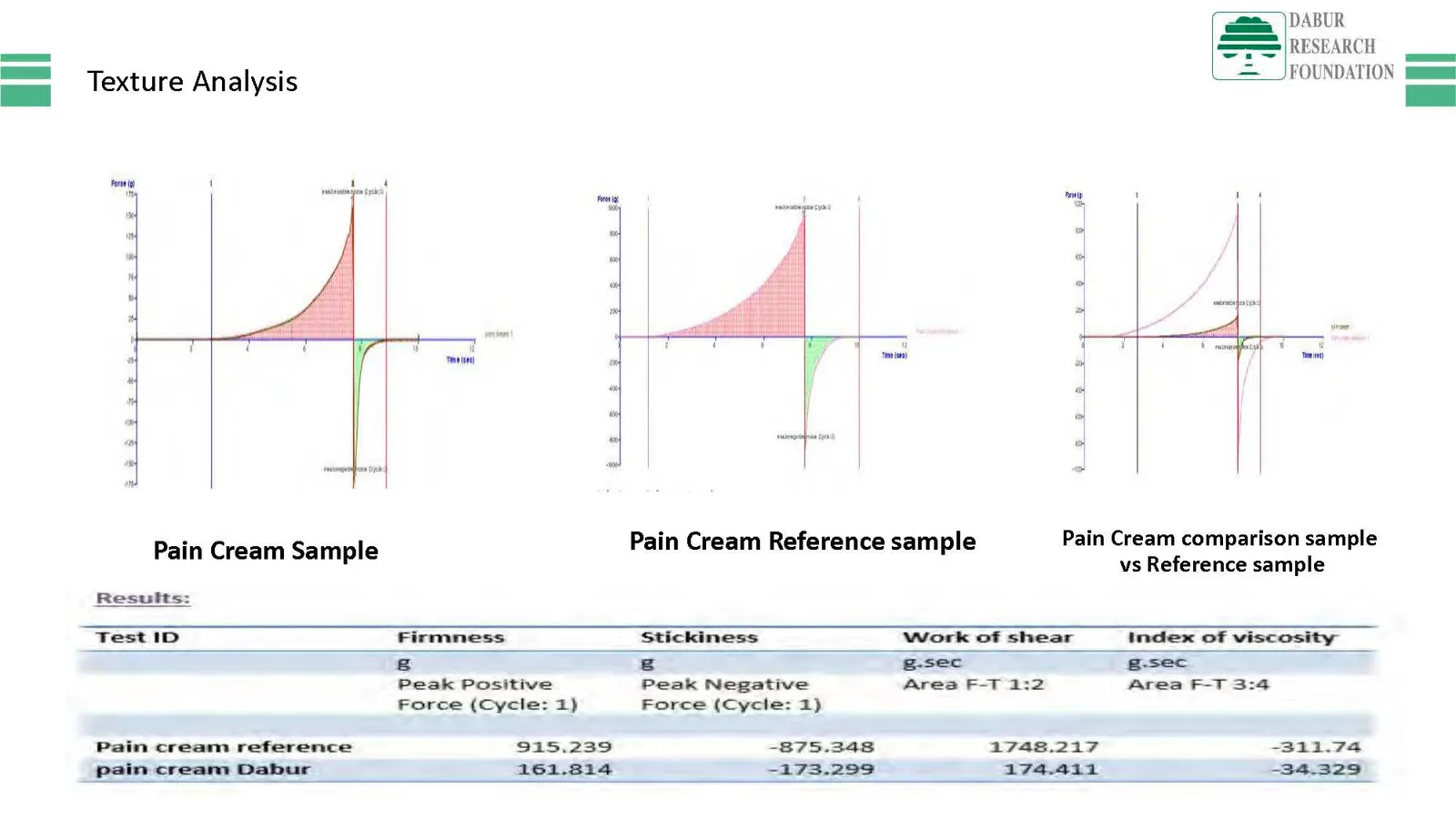
Slide 41: Texture Analysis
Texture Analysis DABUR SEARCH FOUNDATION oa i m eit P| 1 A 4 } i “ a Pain Cream Sample Pain Cream Reference sample Pain Cream comparison sample vs Reference sample Results: Test iD Firmness Stickiness Work of shear Index of viscosity ‘3 3 g-sec g-sec Pain cream reference pain cream Dabur Peak Positi
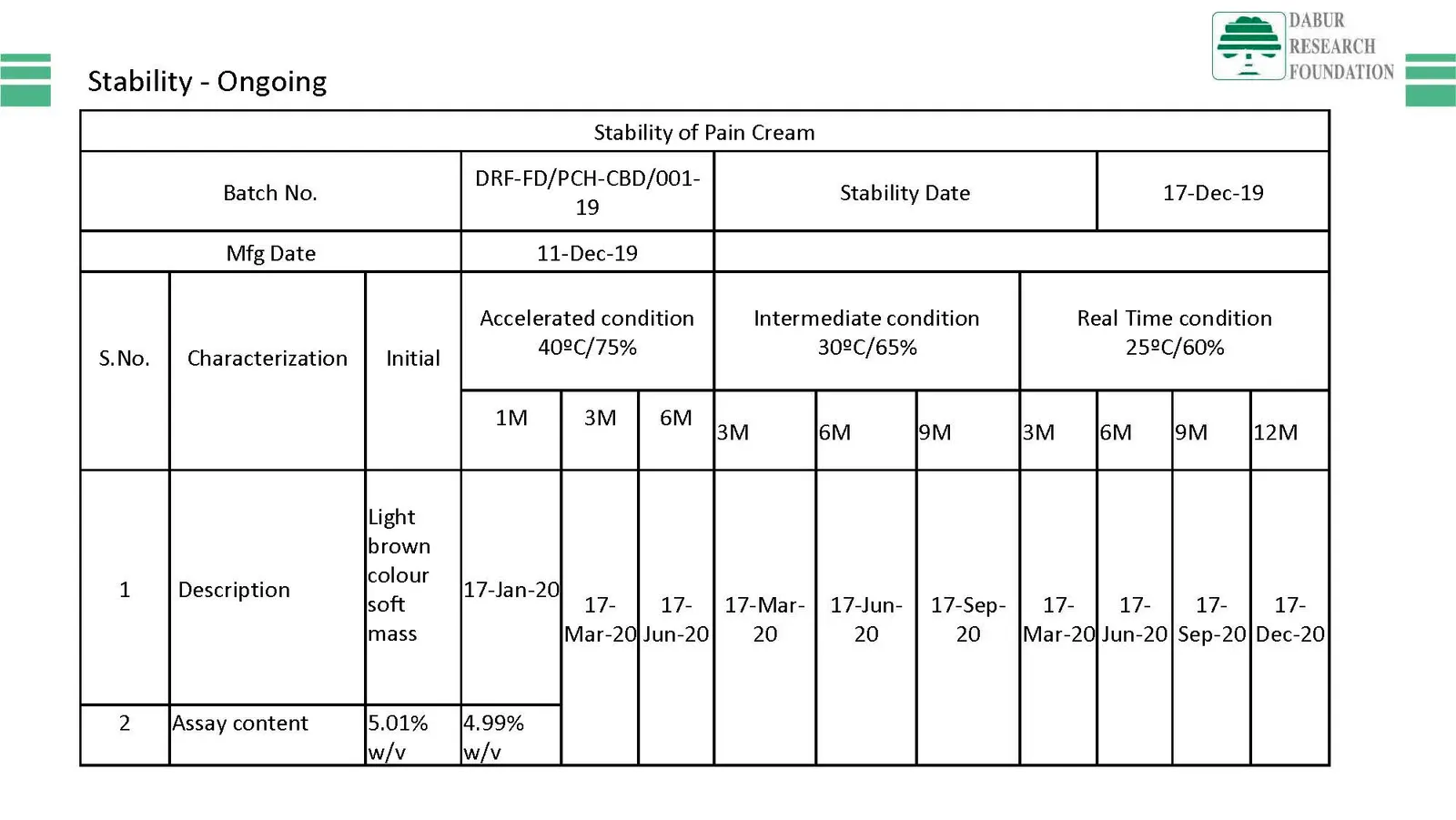
Slide 42: Stability - Ongoing
me, |DABUR RESEARCH = JFOUNDATIN i === Stability - Ongoing = Stability of Pain Cream Batch No. DRF-FD/| ~~ 001- Stability Date 17-Dec-19 Mfg Date 11-Dec-19 Accelerated condition Intermediate condition Real Time condition 40°C/75% 302C/65% 252C/60% S.No. | Characterization | Initial 1M 3M 6M 3M 6M 9M
Slide 43: Safety Assessment
me, \DABUR — SS} RESEARCH == Pain management “=~ JrounpatioN = 8 — Safety assessment
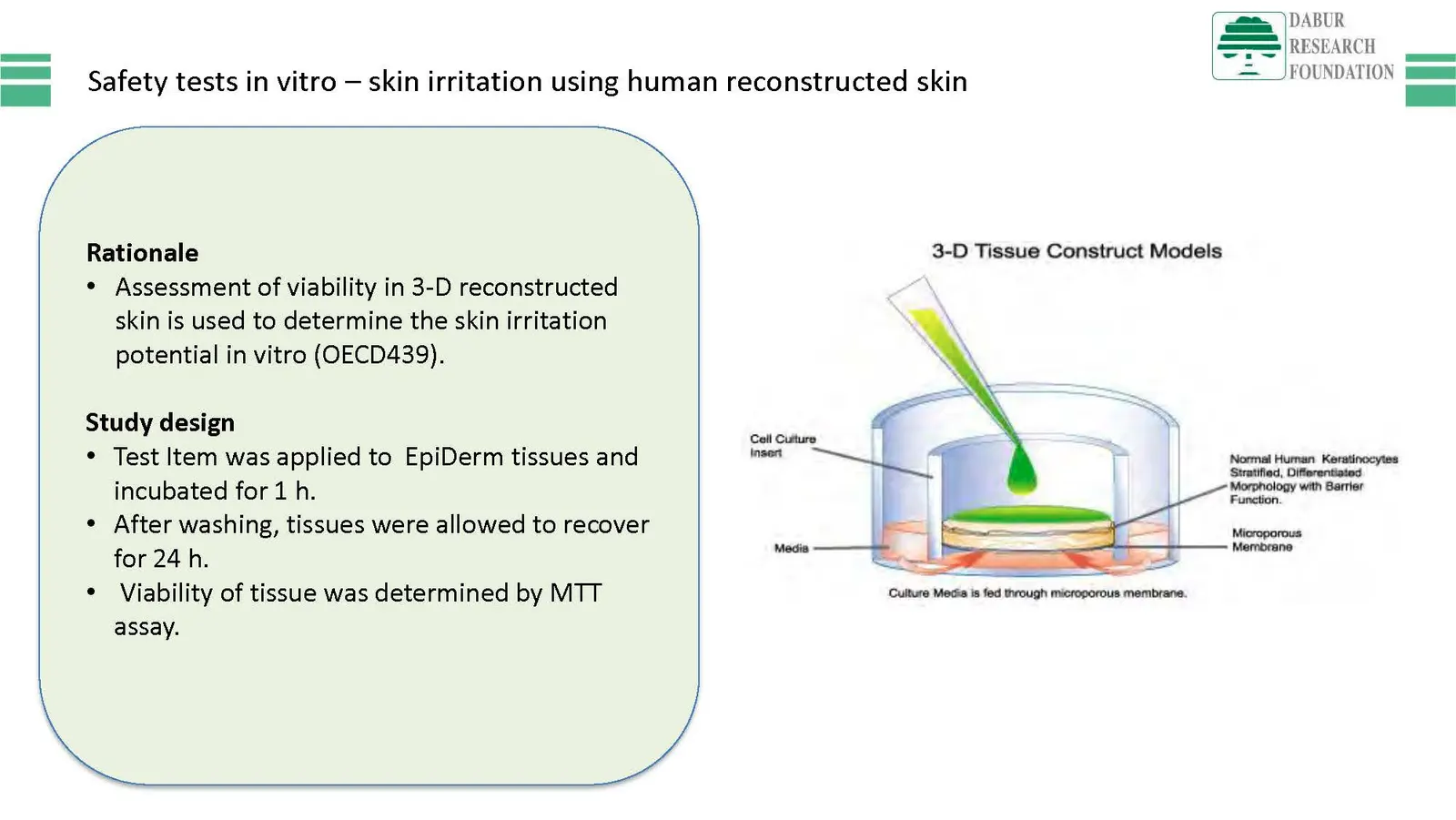
Slide 44: Safety Tests In Vitro: Skin Irritation Using Human Reconstructed Skin
Safety tests in vitro — skin irritation using human reconstructed skin Rationale ¢ Assessment of viability in 3-D reconstructed skin is used to determine the skin irritation potential in vitro (OECD439). Study design * Test Item was applied to EpiDerm tissues and incubated for 1 h. ¢ After washing,
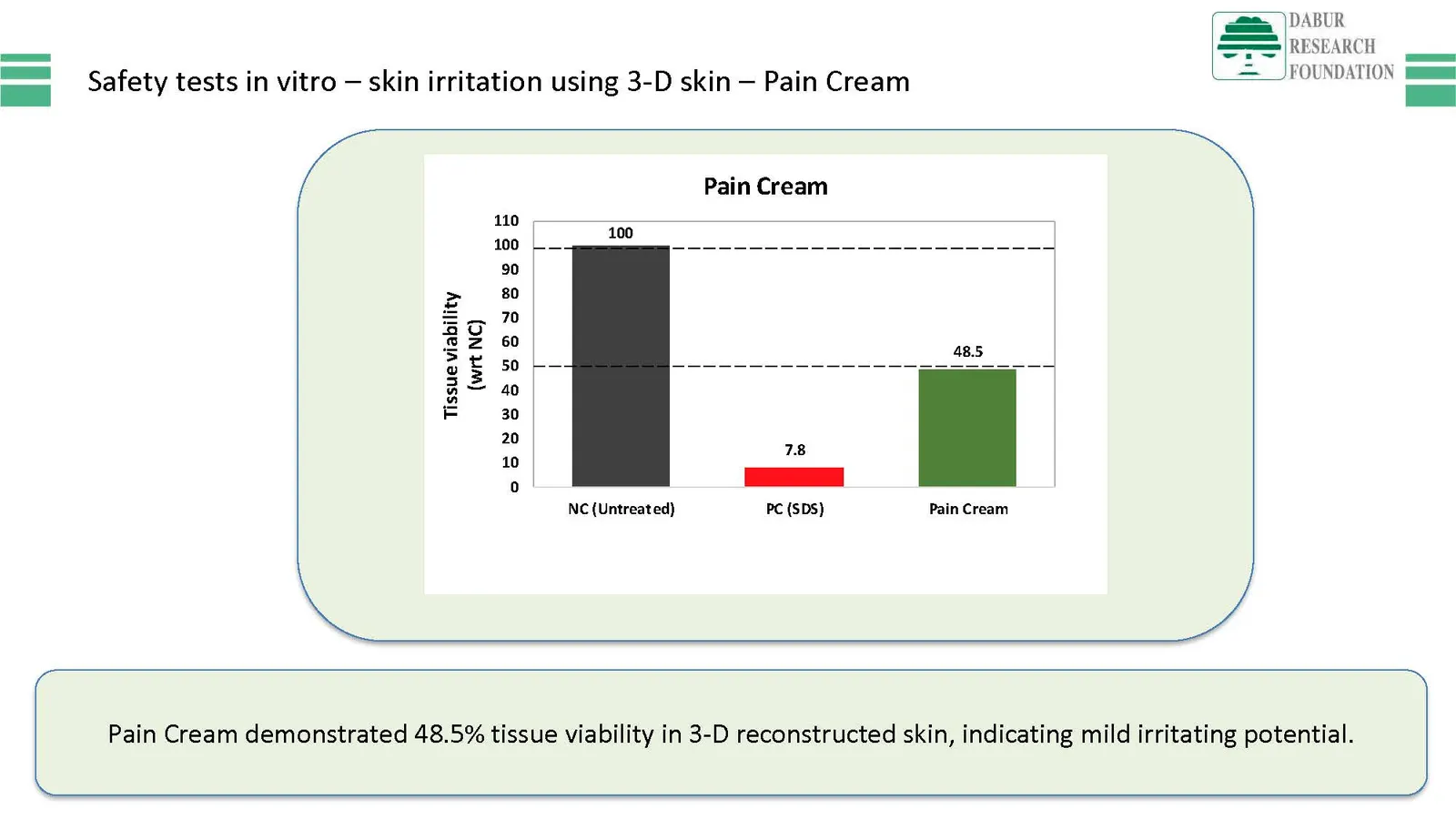
Slide 45: Skin Irritation Using 3-D Skin: Pain Cream
me, |DABUR SS} RESEARCH FOUNDATION Safety tests in vitro — skin irritation using 3-D skin — Pain Cream = y 8 i (— Pain Cream >) 110 100 100 LL in a te ih 90 2 80 go” © 2 60 3 & 50 -- Peer eeee. eee 3 — 40 - 30 20 7.8 10 5 PF NC (Untreated) Pc (SDS) Pain Cream \ y, Pain Cream demonstrated 48.5% tissu
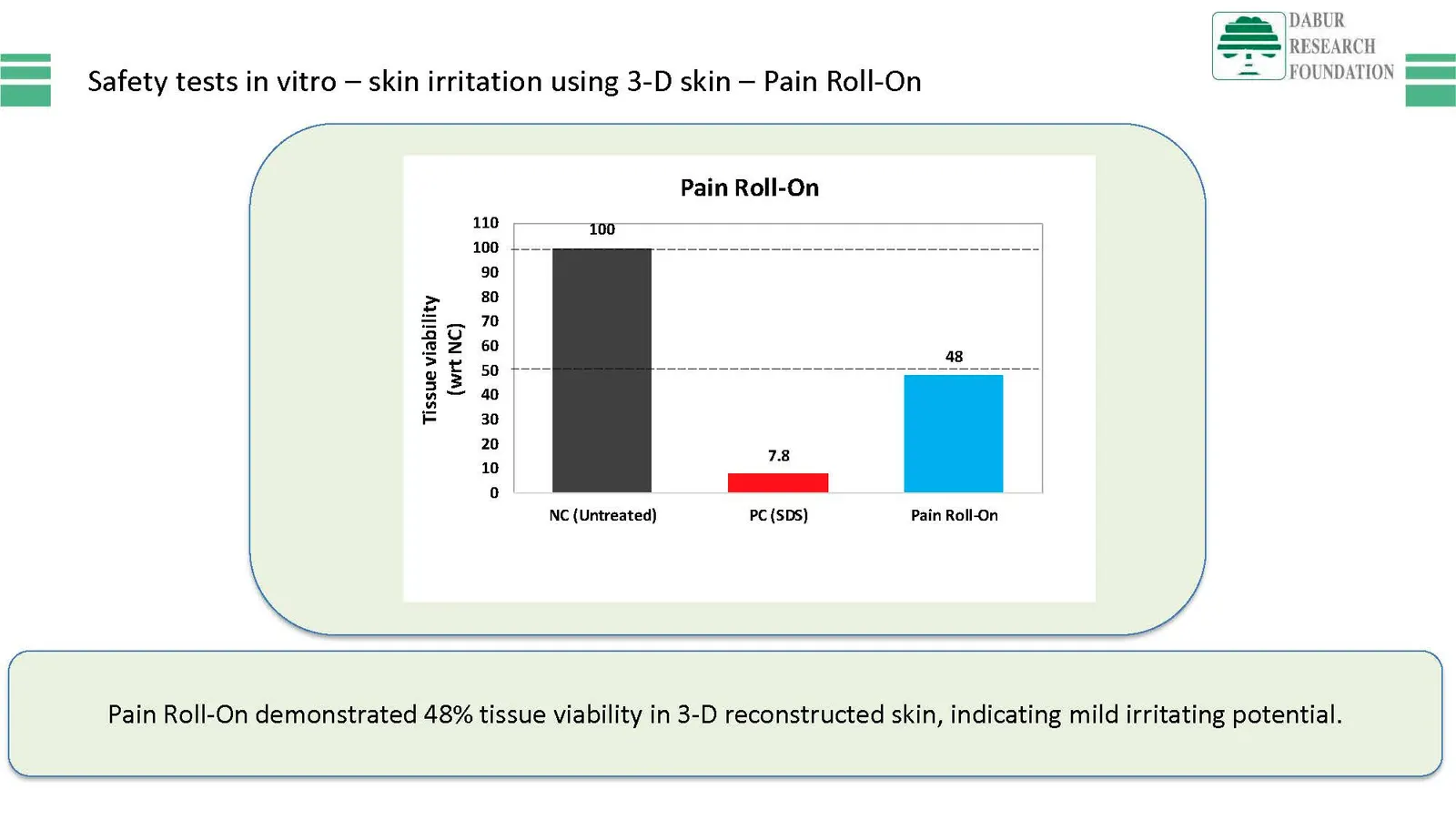
Slide 46: Skin Irritation Using 3-D Skin: Pain Roll-On
Safety tests in vitro — skin irritation using 3-D skin — Pain Roll-On P \ Tissue viability (wrt NC) 110 100 Qu8 © eeo6o6 50 20 10 “roo Pain Roll-On NC (Untreated) —_ - = a 78 P| PC (SDS) Pain Roll-On wy me, |DABUR a | RESEARCH -—=~ — — JFOUNDATION = i Pain Roll-On demonstrated 48% tissue viability i
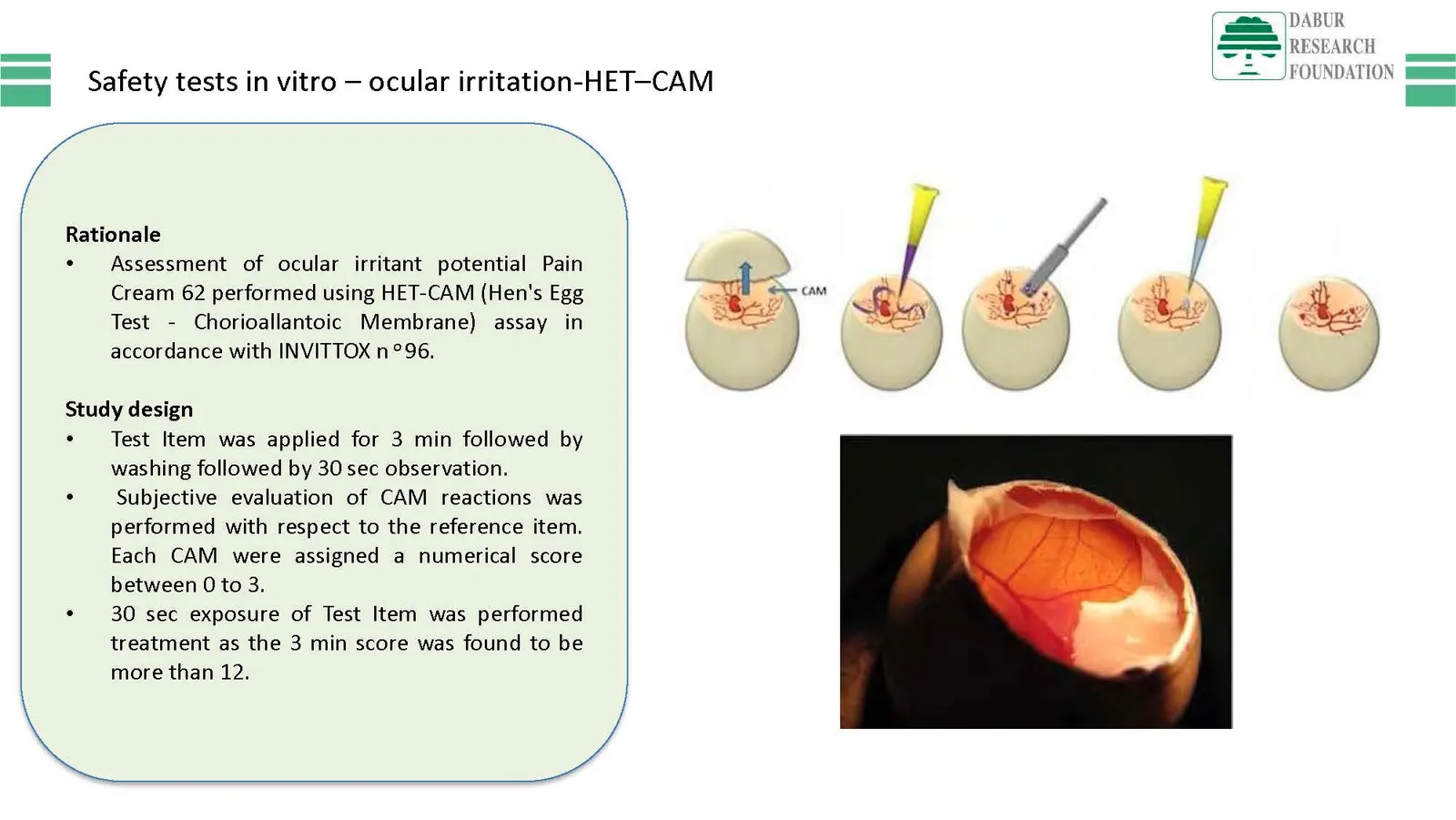
Slide 47: Ocular Irritation HET-CAM
= | RESEARCH = es R ey ~~ Jrounpation = Safety tests in vitro — ocular irritation-HET-CAM —— Rationale + Assessment of ocular irritant potential Pain y } Cream 62 performed using HET-CAM (Hen's Egg es on An) im Test - Chorioallantoic Membrane) assay in { Ay accordance with INVITTOX n°96. \ \ \ = ~wS
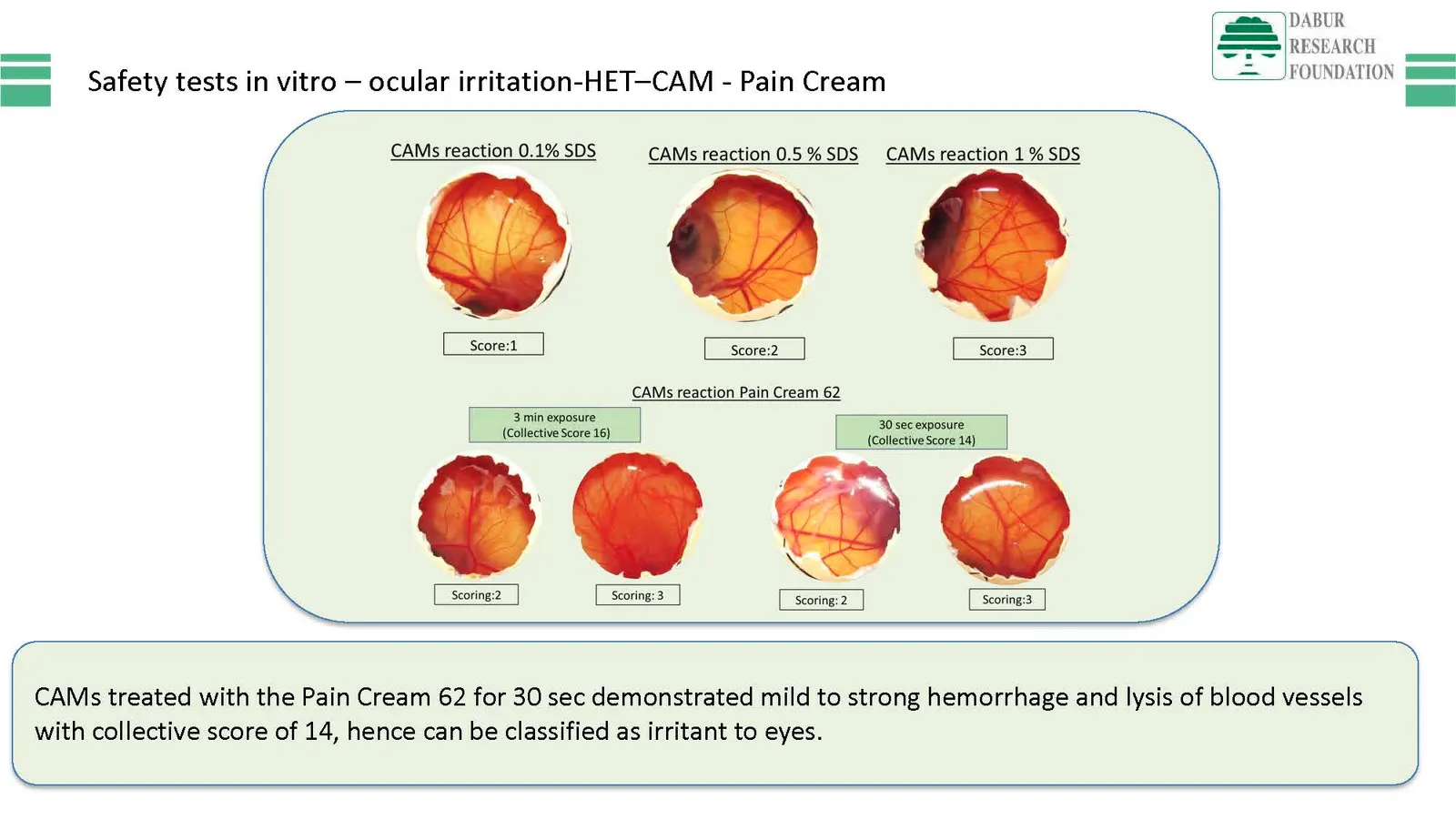
Slide 48: Ocular Irritation HET-CAM: Pain Cream
me, |DABUR ——— RCH FOUNDATION = Safety tests in vitro — ocular irritation-HET—CAM - Pain Cream = CAMs reaction 0.1% SDS CAMs reaction 0.5% SDS CAMs reaction 1% SDS 0ee@ CAMs reaction Pain Cream 62 3 min exposure 30 sec exposure (Collective Score 16) (Collective Score 14) gq: © <= CAMs treated with t
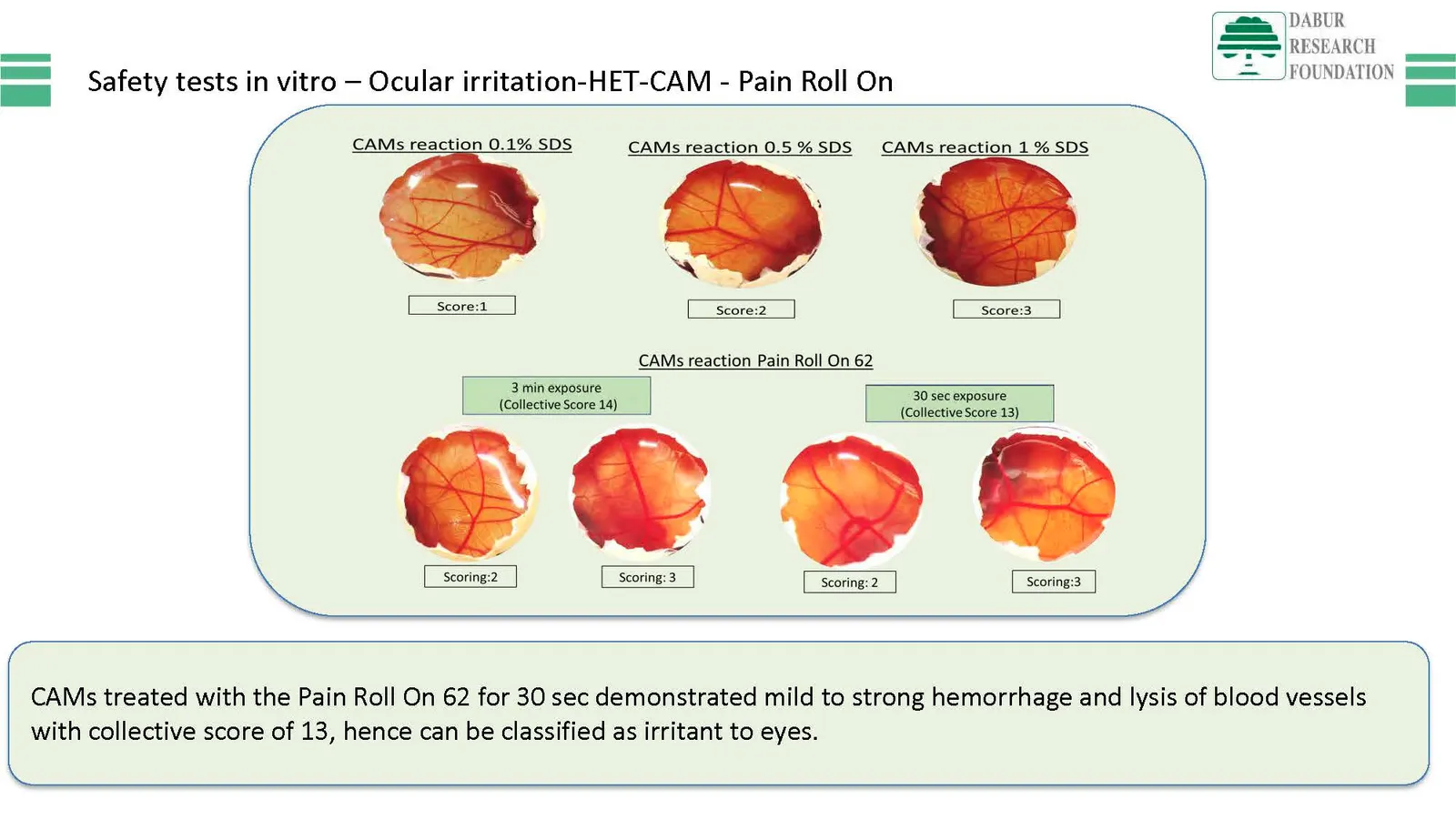
Slide 49: Ocular Irritation HET-CAM: Pain Roll On
e PABUR —— RCH Safety tests in vitro — Ocular irritation-HET-CAM - Pain Roll On FOUNDATION CAMs reaction 0.1% SDS CAMs reaction 0.5% SDS CAMs reaction 1% SDS >») é a A [ CAMs reaction Pain Roll On 62 3 min exposure 30 sec exposure (Collective Score 14) (Collective Score 13) Comer] Came] ae) Cae) / C
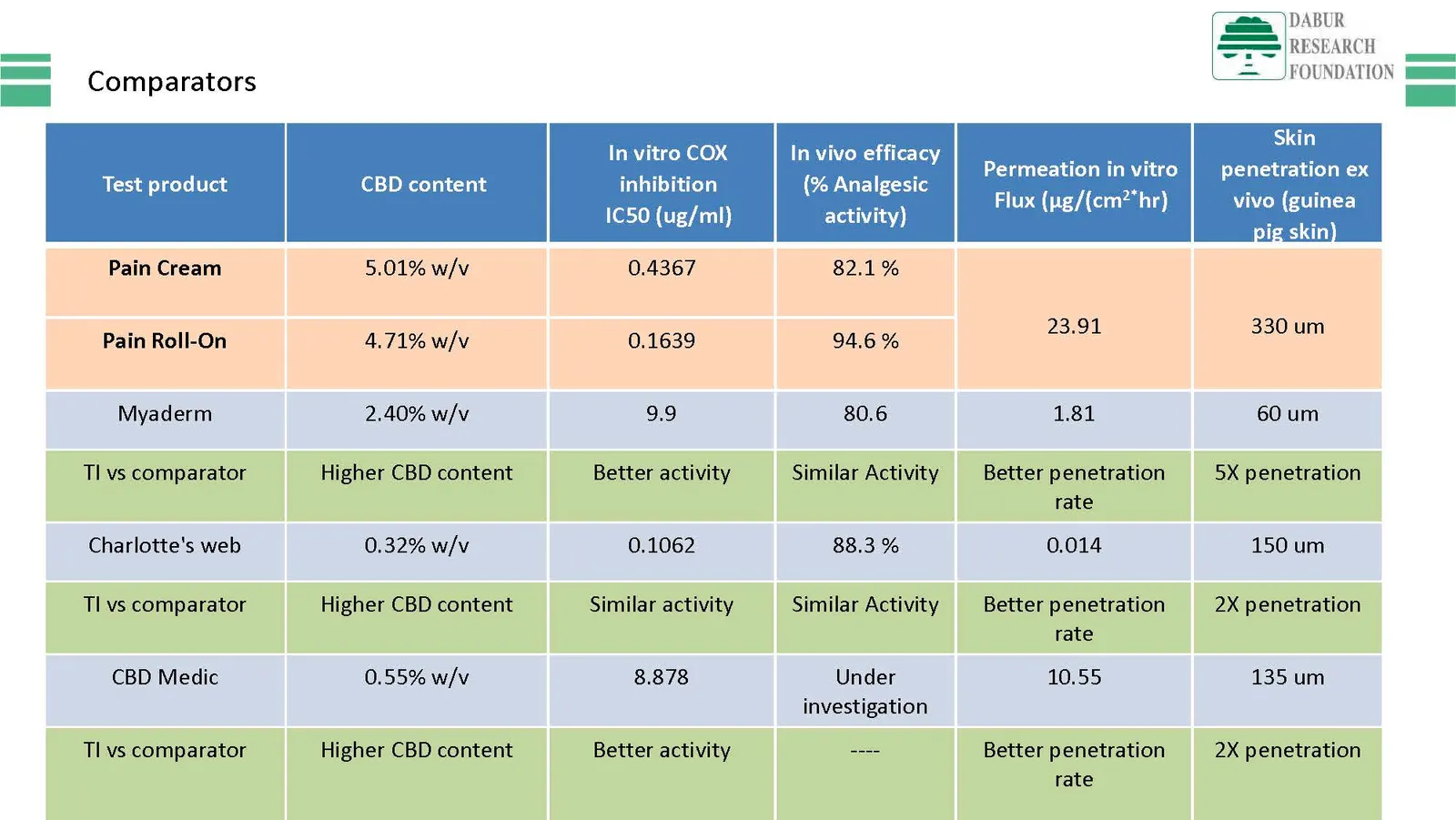
Slide 50: Comparators
Comparators Test product CBD content In vitro COX inhibition 1C50 (ug/ml) In vivo efficacy (% Analgesic activity) Permeation in vitro Flux (ug/(cm?"hr) —= JFOUNDATION = penetration ex vivo (guinea Pain Cream Pain Roll-On Myaderm Tl vs comparator Charlotte's web Tl vs comparator CBD Medic Tl vs compa
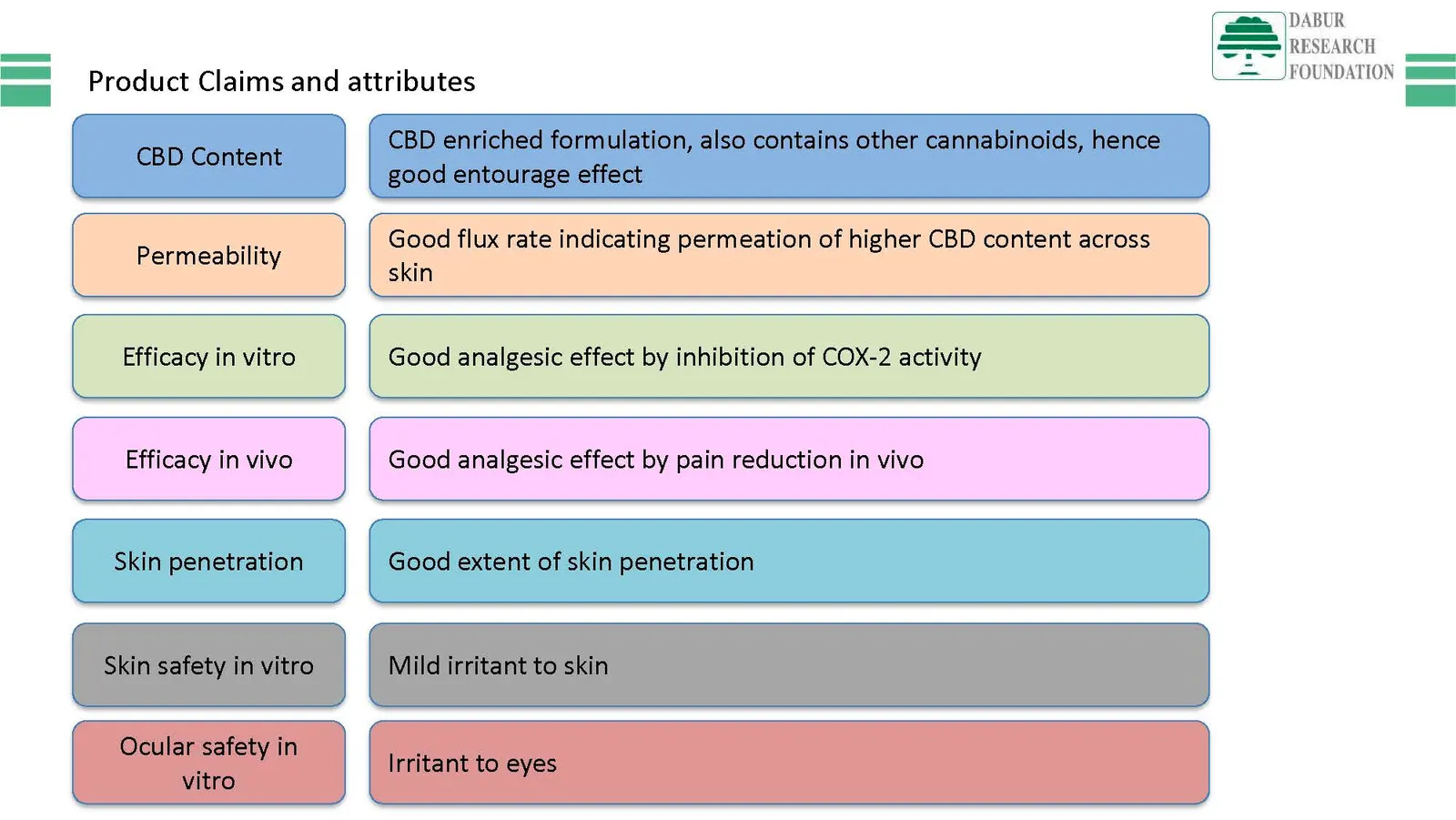
Slide 51: Product Claims and Attributes
DABUR RESEARCH FOUNDATION [am 7 =a : . a Product Claims and attributes a Good flux rate indicating permeation of higher CBD content across Permeability i skin XY a Efficacy in vitro f Good analgesic effect by inhibition of COX-2 activity | XY uy a a Efficacy in vivo | Good analgesic effect by pain r
Slide 52: Skin Health
Skin health DABUR RESEARCH FOUNDATION =m
Slide 53: Day Cream
Day Cream DABUR RESEARCH FOUNDATION =m
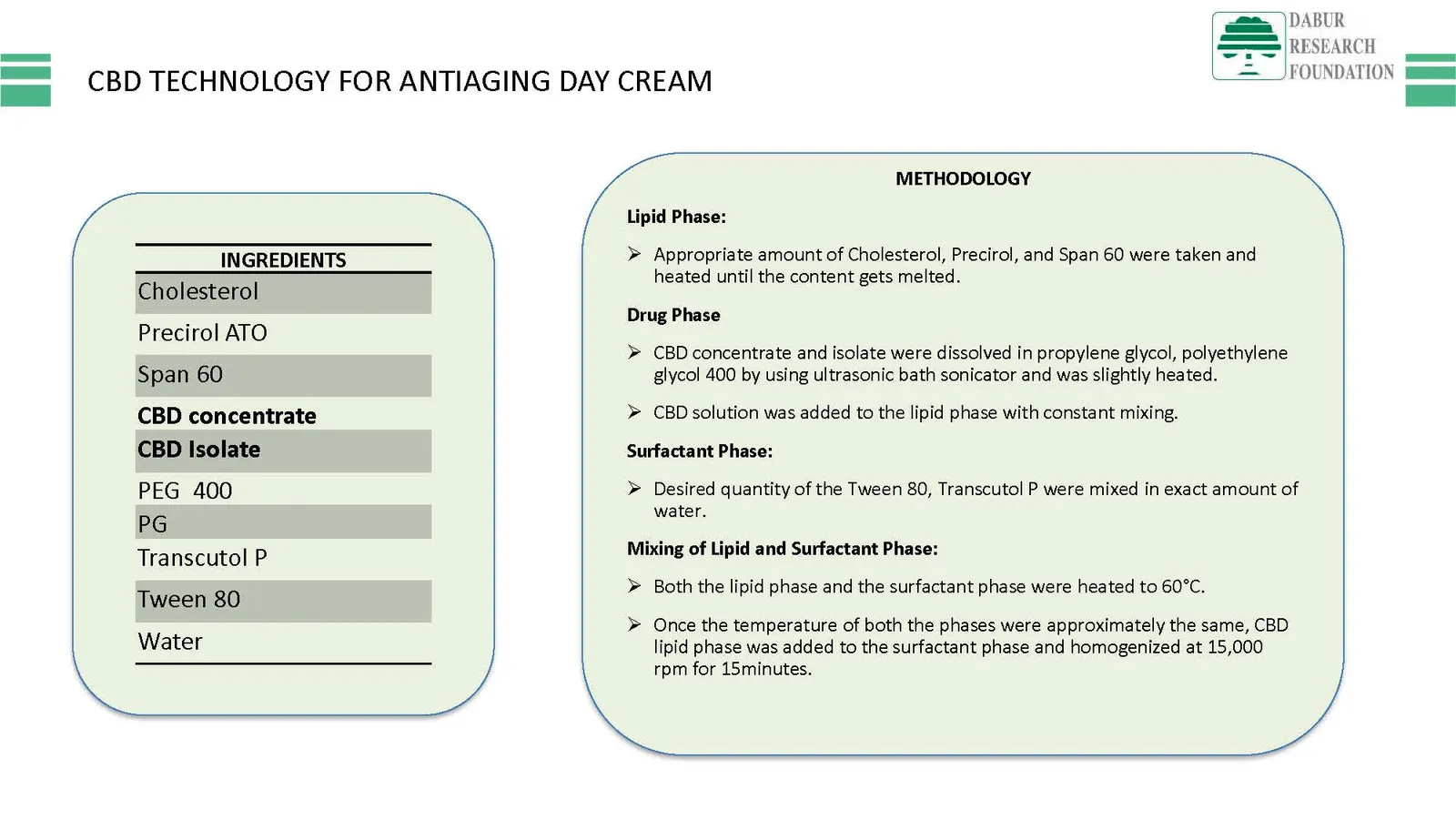
Slide 54: CBD Technology for Antiaging Day Cream
CBD TECHNOLOGY FOR ANTIAGING DAY CREAM Va INGREDIENTS ~ Cholesterol Precirol ATO Span 60 CBD concentrate CBD Isolate PEG 400 PG Transcutol P Tween 80 Water XN me, |DABUR SS RESEARCH METHODOLOGY Lipid Phase: > Appropriate amount of Cholesterol, Precirol, and Span 60 were taken and heated until the co
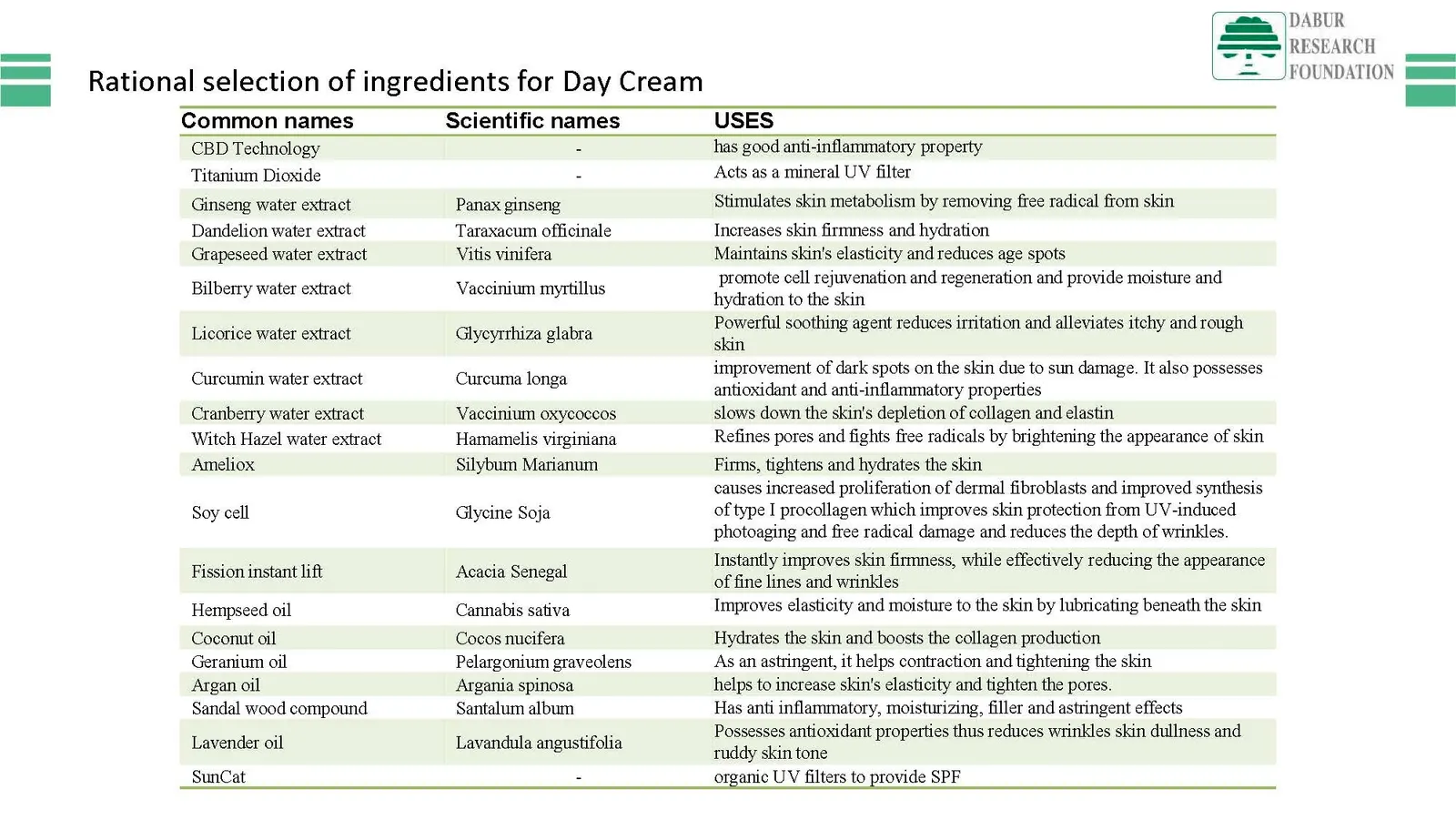
Slide 55: Rational Selection of Ingredients for Day Cream
Rational selection of ingredients for Day Cream = —= —- DABUR | RESEARCH Common names Scientific names USES CBD Technology - has good anti-inflammatory property Titanium Dioxide - Acts as a mineral UV filter Ginseng water extract Panax ginseng Stimulates skin metabolism by removing free radical from
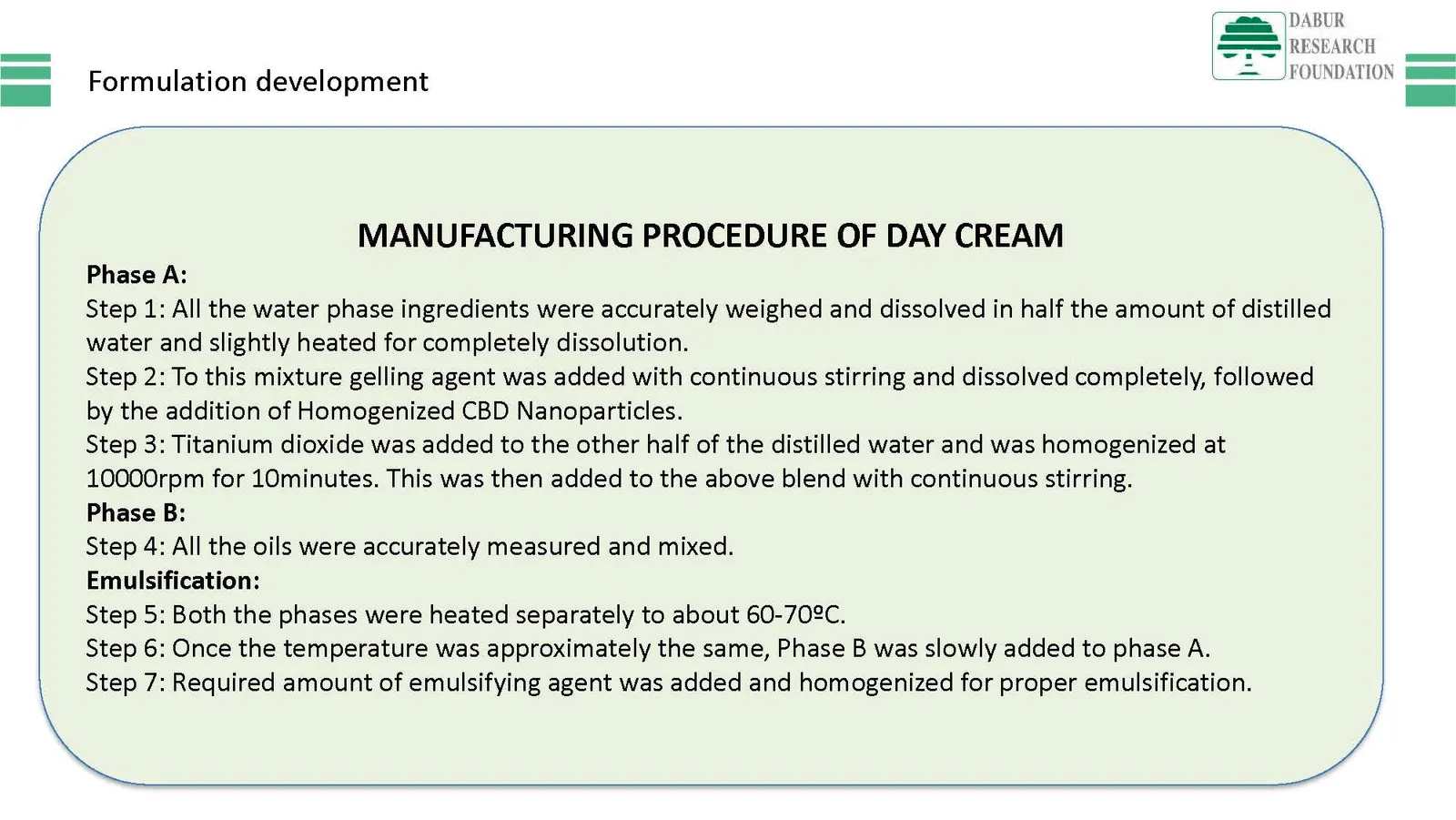
Slide 56: Manufacturing Procedure of Day Cream
me, |DABUR = RESEARCH = JFOUNDATION = i Formulation development MANUFACTURING PROCEDURE OF DAY CREAM Step 1: All the water phase ingredients were accurately weighed and dissolved in half the amount of distilled Phase A: water and slightly heated for completely dissolution. Step 2: To this mixture ge
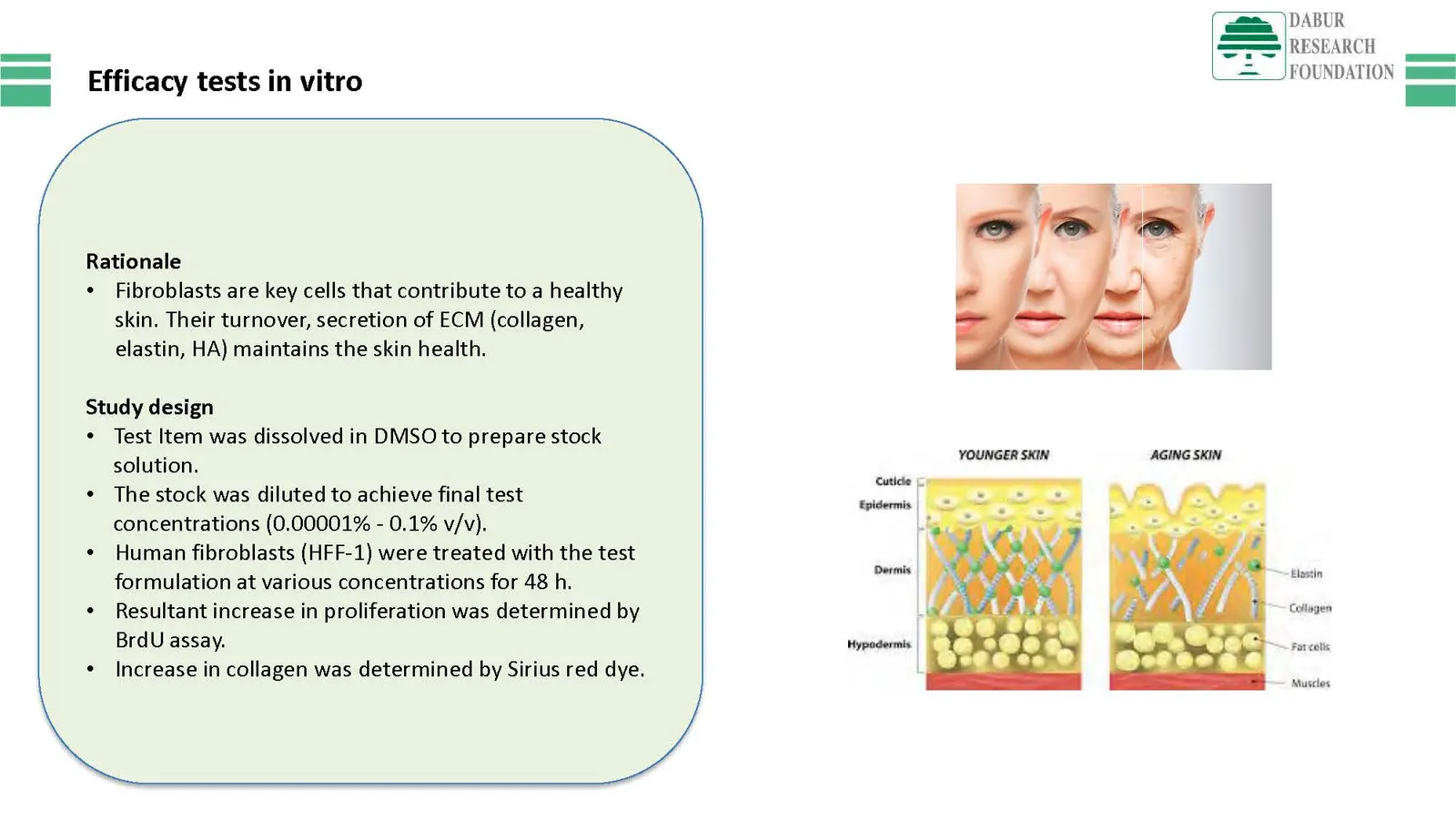
Slide 57: Efficacy Tests In Vitro
Efficacy tests in vitro Rationale ¢ Fibroblasts are key cells that contribute to a healthy skin. Their turnover, secretion of ECM (collagen, elastin, HA) maintains the skin health. Study design * Test Item was dissolved in DMSO to prepare stock solution. * The stock was diluted to achieve final test
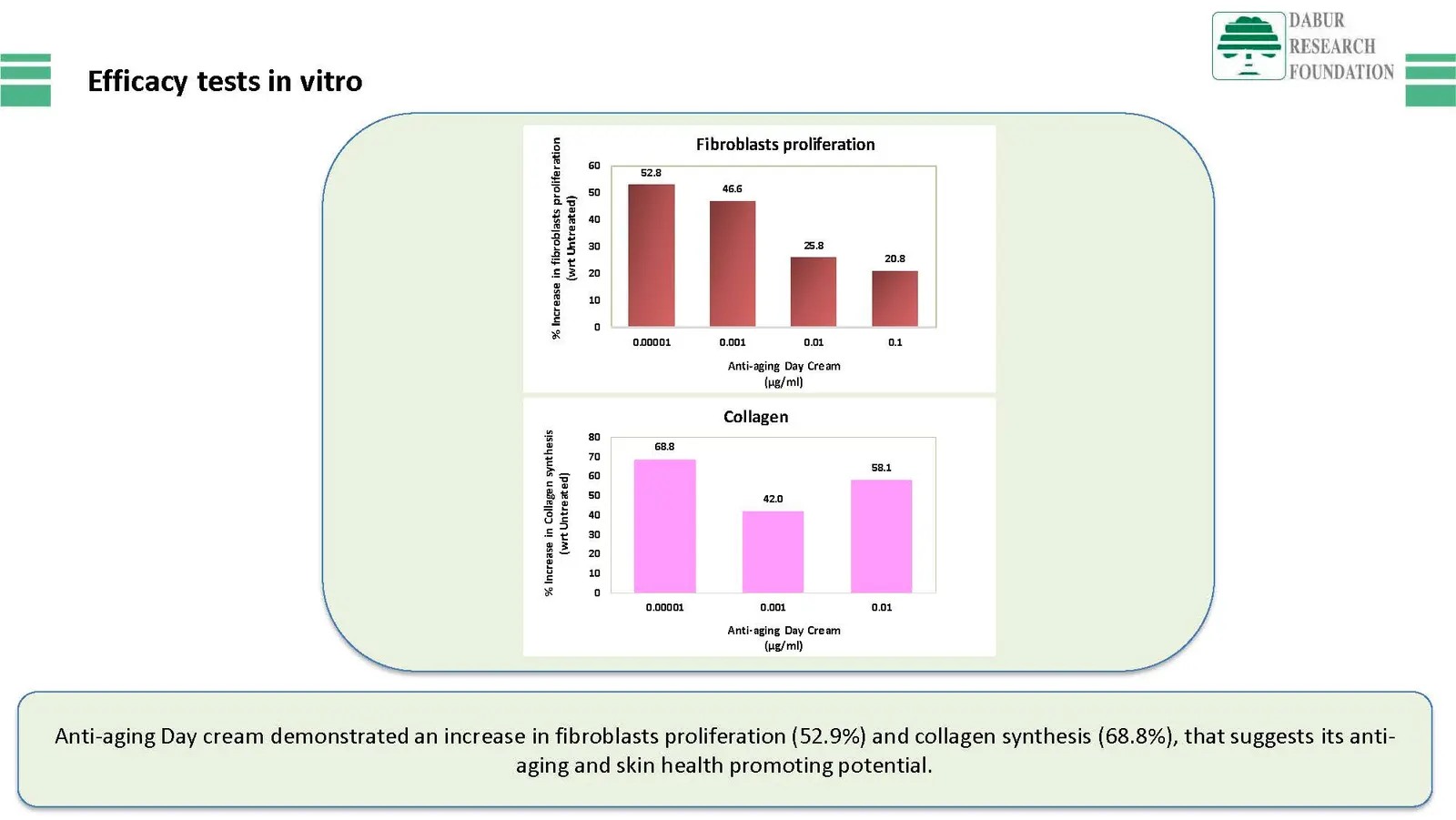
Slide 58: Fibroblasts Proliferation and Collagen Synthesis
me, \DABUR => | RESEARCH FOUNDATION Efficacy tests in vitro — Fibroblasts proliferation 28 466 ae F 4 0 r 001 oot nooo. oa % Increase in fibroblasts proliferation (wrt Untreated) 6 8 886 8 8 ‘Anti-aging Day Cream (ug/ml) Collagen Boas z 5 eo 581 BE os azo éz 0 £2 x0 12 2 £ 10 ® 0 8.00001 o.oo oon An
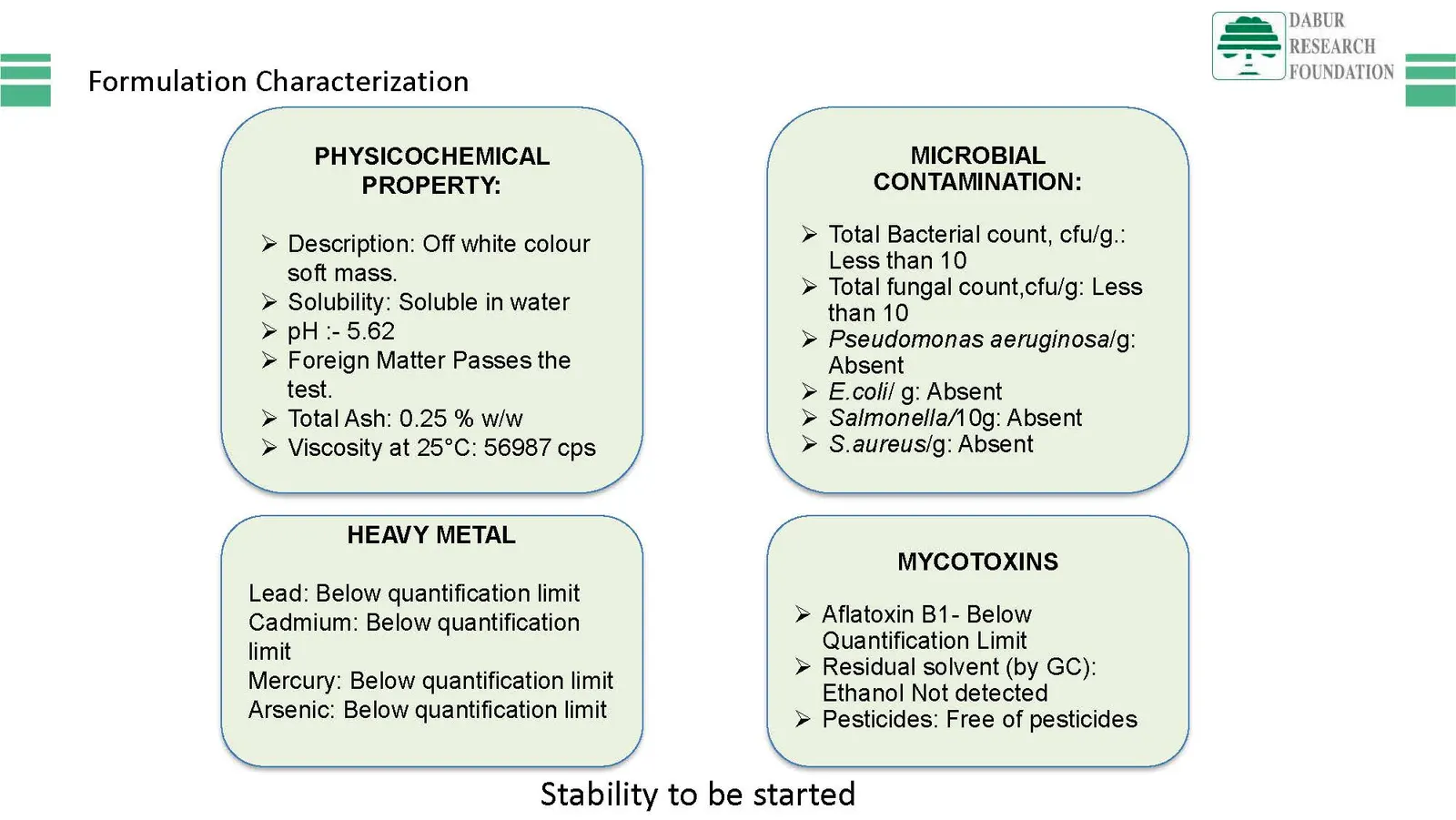
Slide 59: Formulation Characterization
= |DABUR S| RESEARCH — (= JFOUNDATION = = > ( MICROBIAL CONTAMINATION: Formulation Characterization ( PHYSICOCHEMICAL > PROPERTY: > Description: Off white colour » Total Bacterial count, cfu/g.: alt HESS Less than 10 nee > Total fungal count,cfu/g: Less > Solubility: Soluble in water than 10 » pH :-
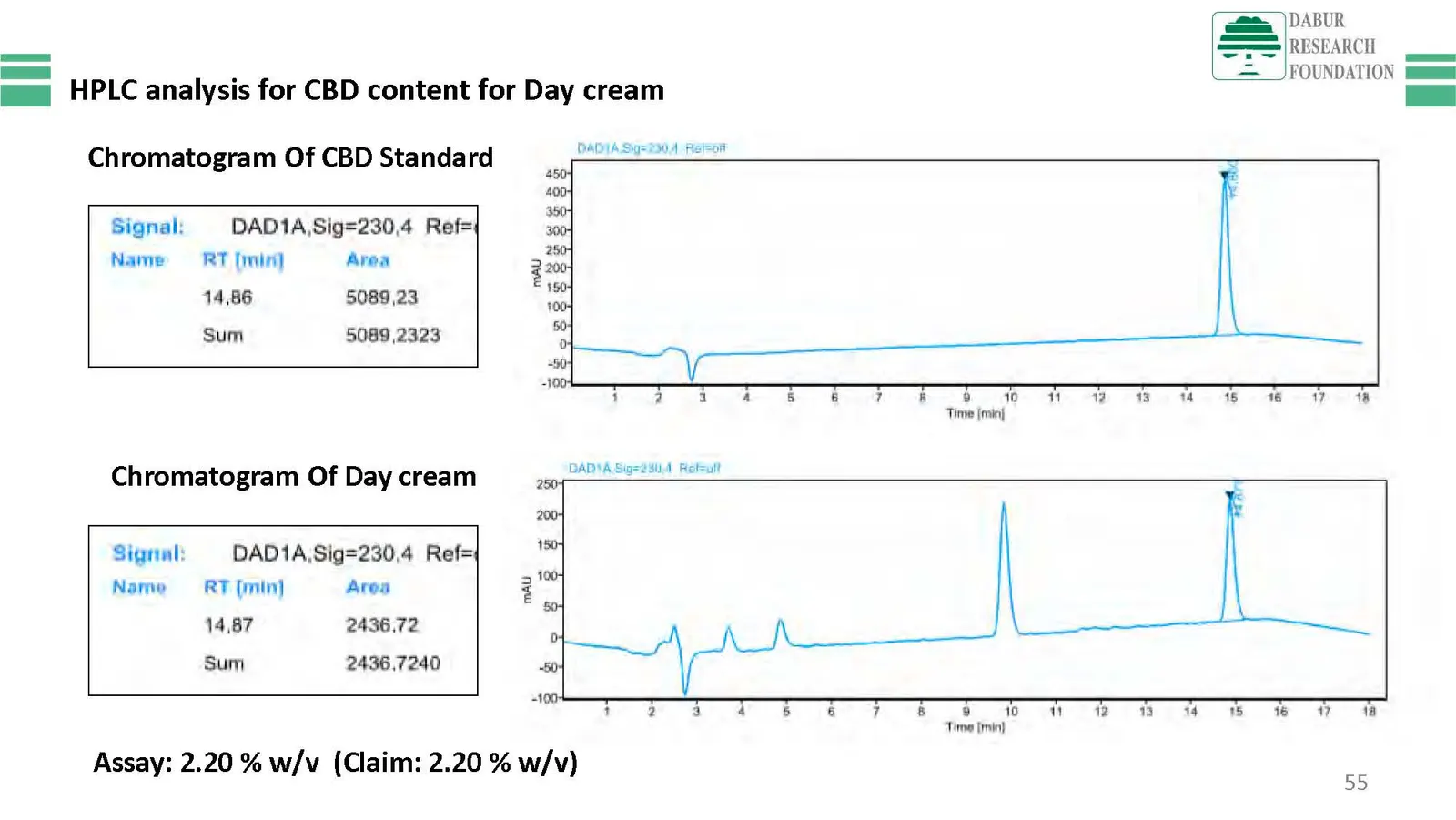
Slide 60: HPLC Analysis for CBD Content for Day Cream
— ee )DABUR Bivins = JFOUNDATION = mm HPLC analysis for CBD content for Day cream — DADIASY=204 REIDR Chromatogram Of CBD Standard mi 400- 3504 Signal: DAD1A,Sig=230,4 Ref= 3004 Name = - RT (rie) Aroa gor 150: 14,86 5089,23 ed sum 5089,2323 ts 50° . ae 1 7 a 4 5 6 7 5 8 10 n w 13 “4 16 16 v7 aL Tine
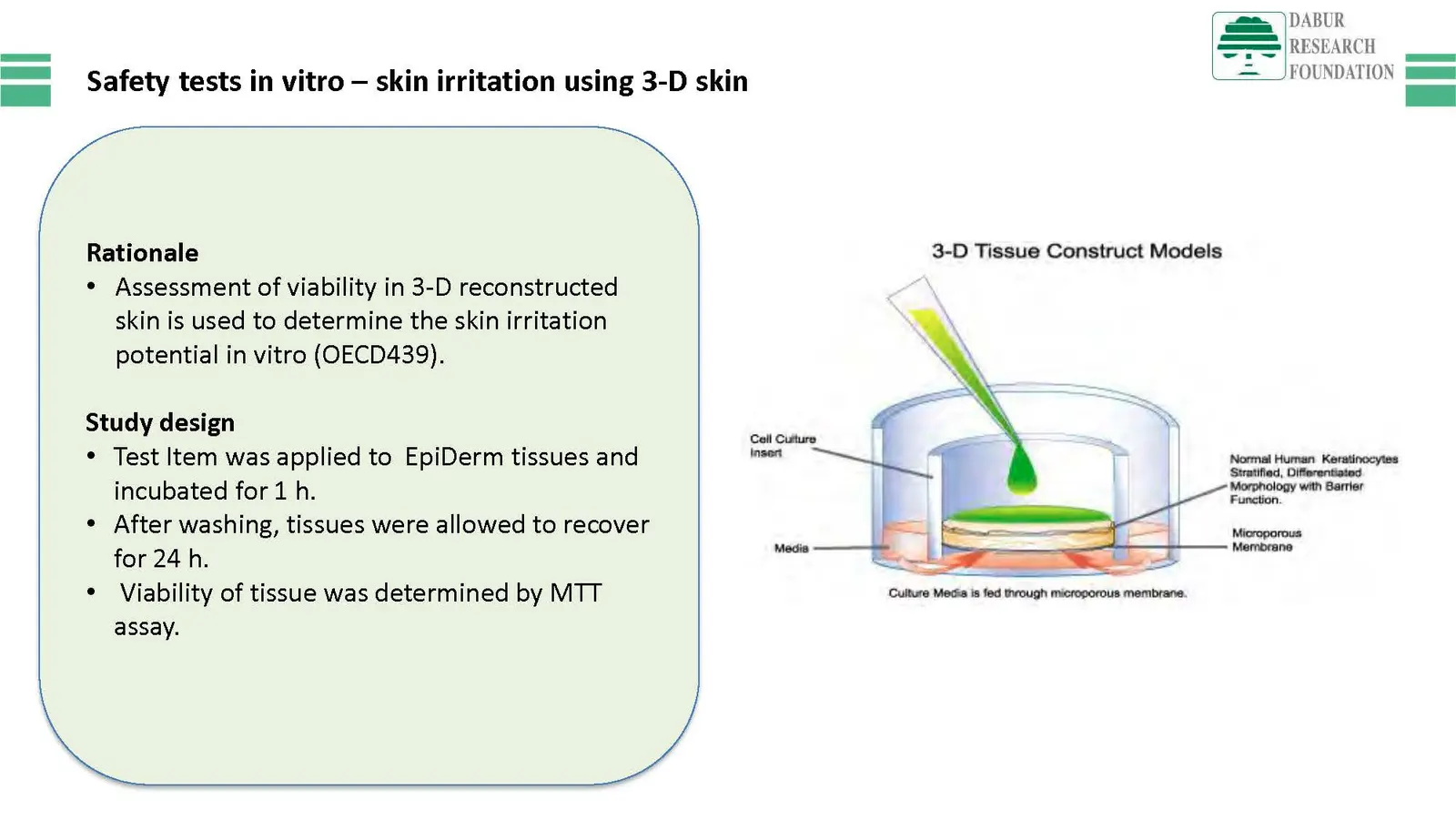
Slide 61: Safety Tests In Vitro: Skin Irritation Using 3-D Skin
Rationale ¢ Assessment of viability in 3-D reconstructed skin is used to determine the skin irritation potential in vitro (OECD439). Study design * Test Item was applied to EpiDerm tissues and incubated for 1 h. ¢ After washing, tissues were allowed to recover for 24h. * Viability of tissue was dete
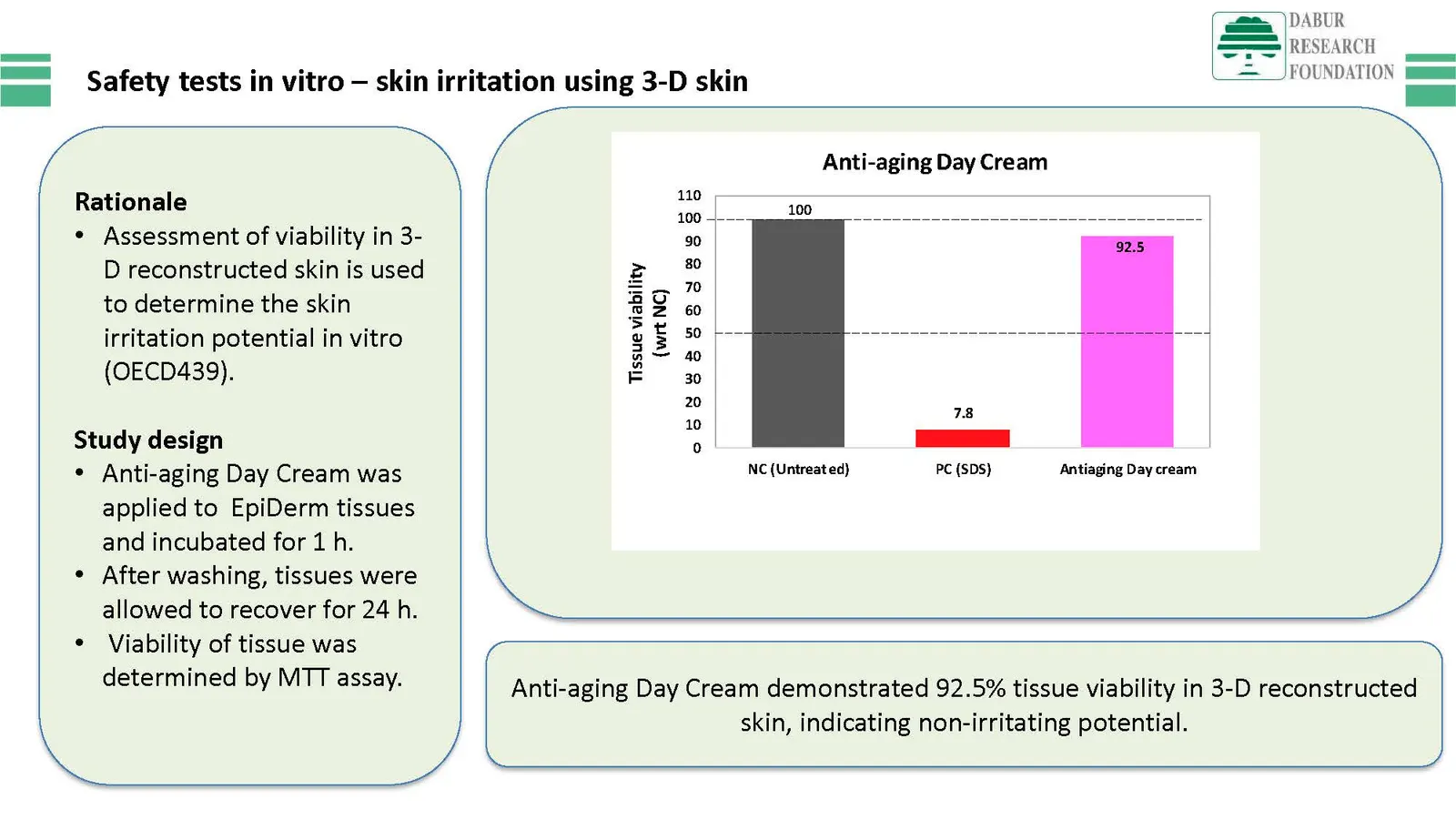
Slide 62: Skin Irritation Using 3-D Skin: Day Cream
me, |DABUR = | RESEARCH = FOUNDATION =m i === Safety tests in vitro — skin irritation using 3-D skin SS >» ( Anti-aging Day Cream » Rationale to a _ _ ¢ Assessment of viability in 3- 90 D reconstructed skin is used zB 0 to determine the skin 3 8 ew irritation potential in vitro gy g o , re ni (OECD4
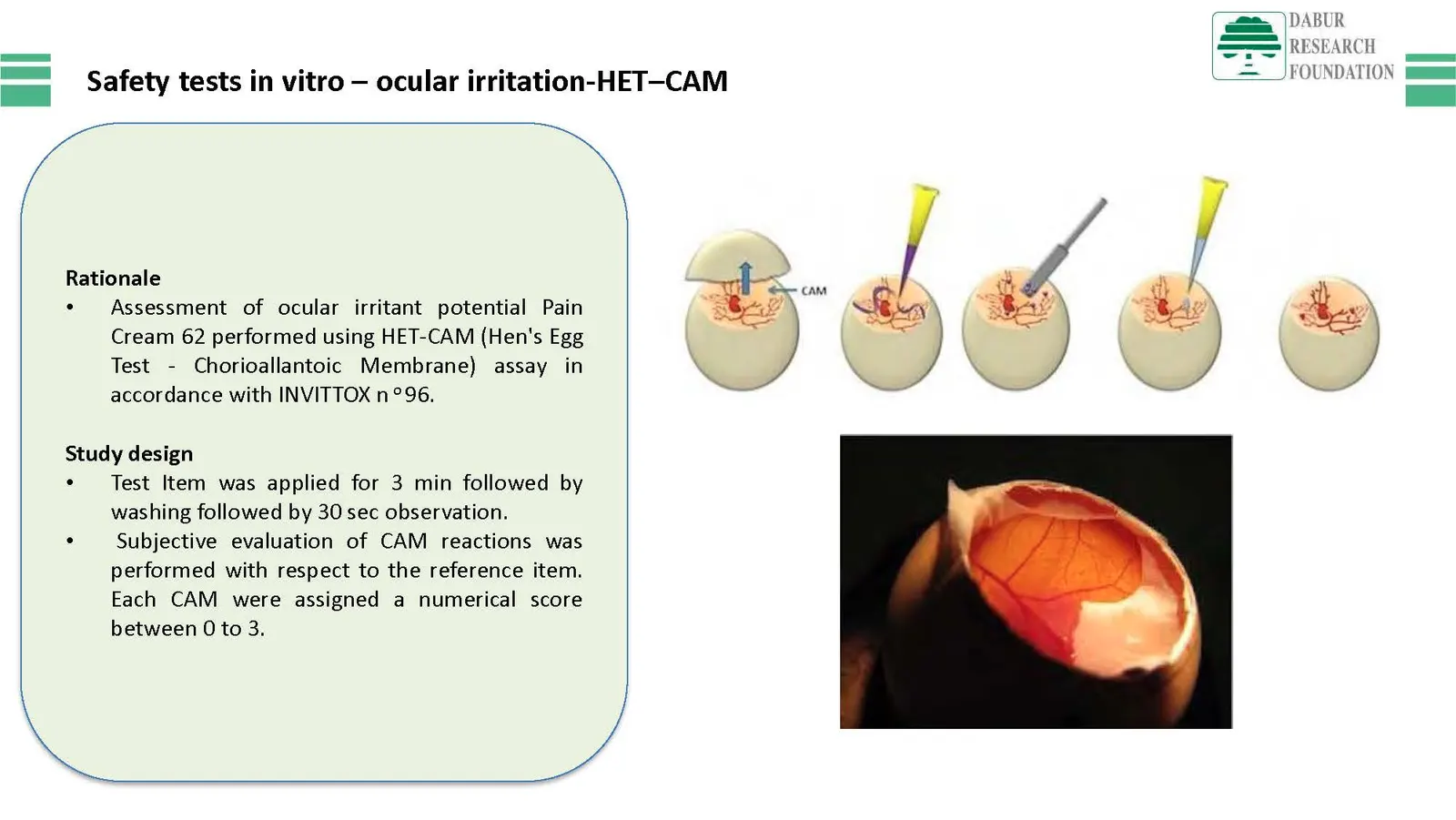
Slide 63: Safety Tests In Vitro: Ocular Irritation HET-CAM
Safety tests in vitro — ocular irritation-HET—CAM Rationale + Assessment of ocular irritant potential Pain Cream 62 performed using HET-CAM (Hen's Egg Test - Chorioallantoic Membrane) assay in accordance with INVITTOX n°96. Study design * Test Item was applied for 3 min followed by washing followed
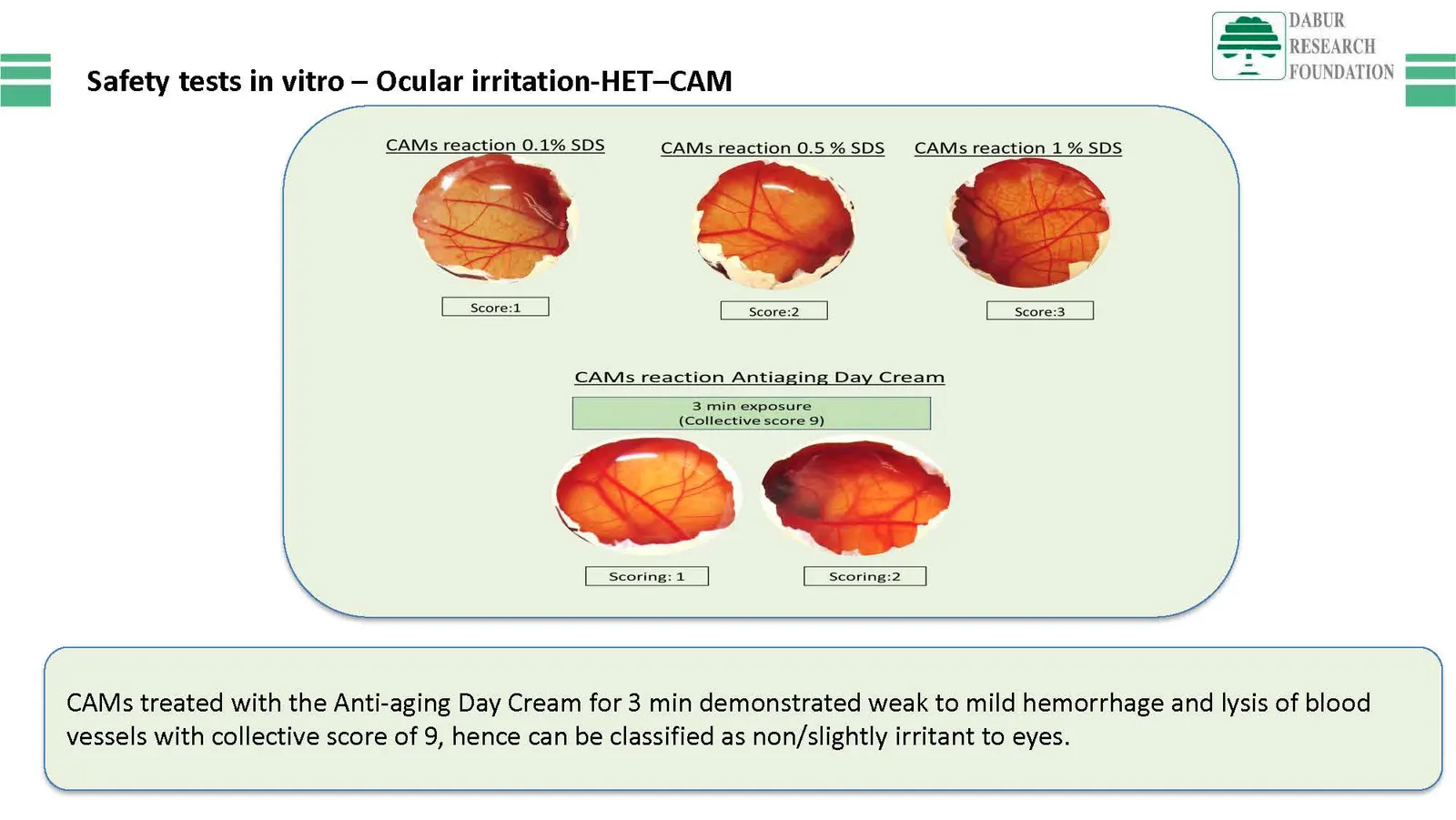
Slide 64: Ocular Irritation HET-CAM: Day Cream
ee |DABUR SS} RESEARCH FOUNDATION i CAMs reaction 0.1% SDS CAMs reaction 0.5% SDS CAMs reaction 1% SDS >» Safety tests in vitro — Ocular irritation-HET-CAM CAMs reaction Antiaging Day Cream 3 min exposure | (Collective score 9) . Scoring:2 Scoring: 1 CAMs treated with the Anti-aging Day Cream for 3
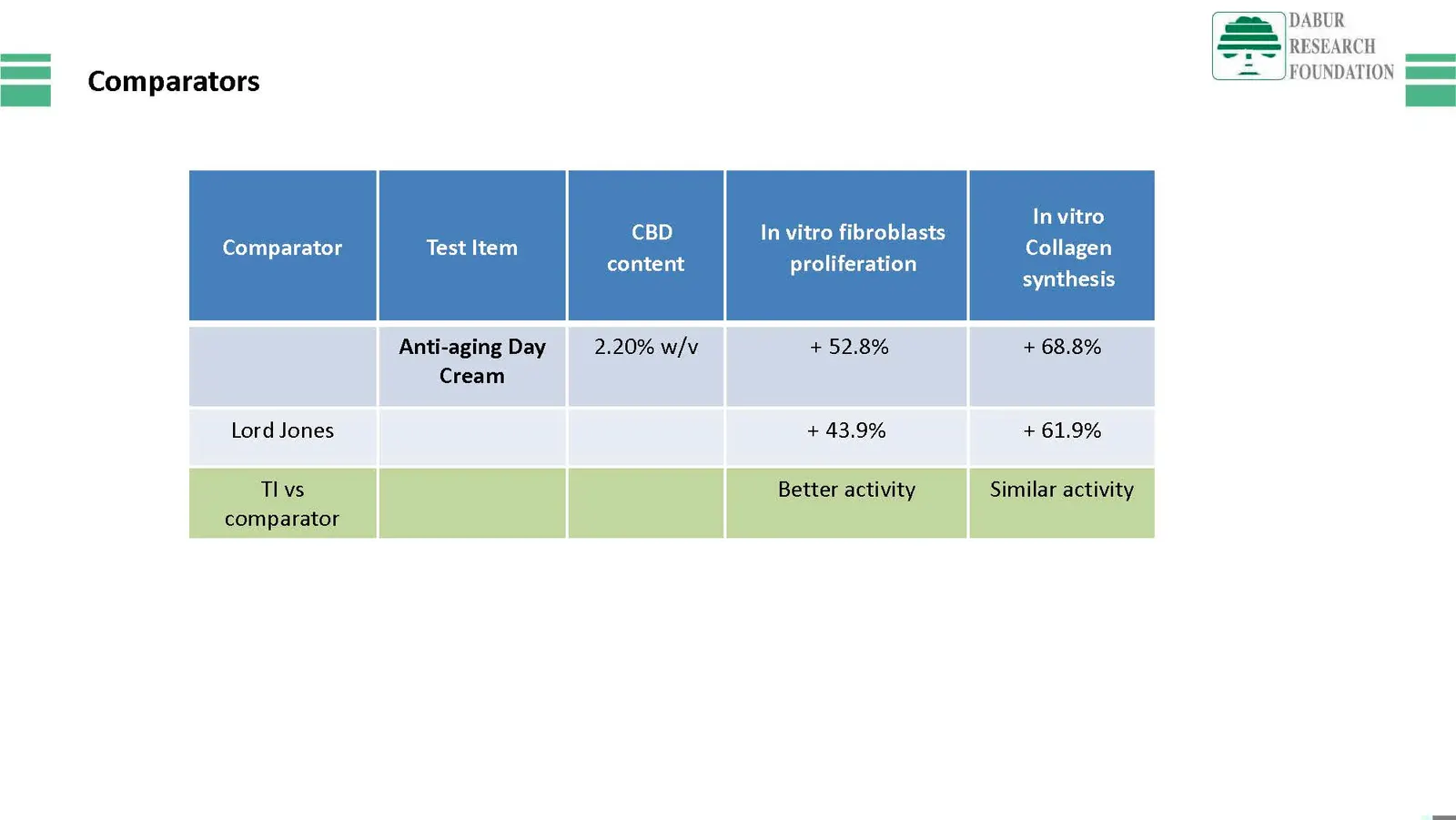
Slide 65: Comparators
DABUR RESEARCH FOUNDATION = Comparators — CBD In vitro fibroblasts utyitro Comparator Test Item = : Collagen content proliferation : synthesis Anti-aging Day 2.20% w/v + 52.8% + 68.8% Cream Lord Jones + 43.9% + 61.9%
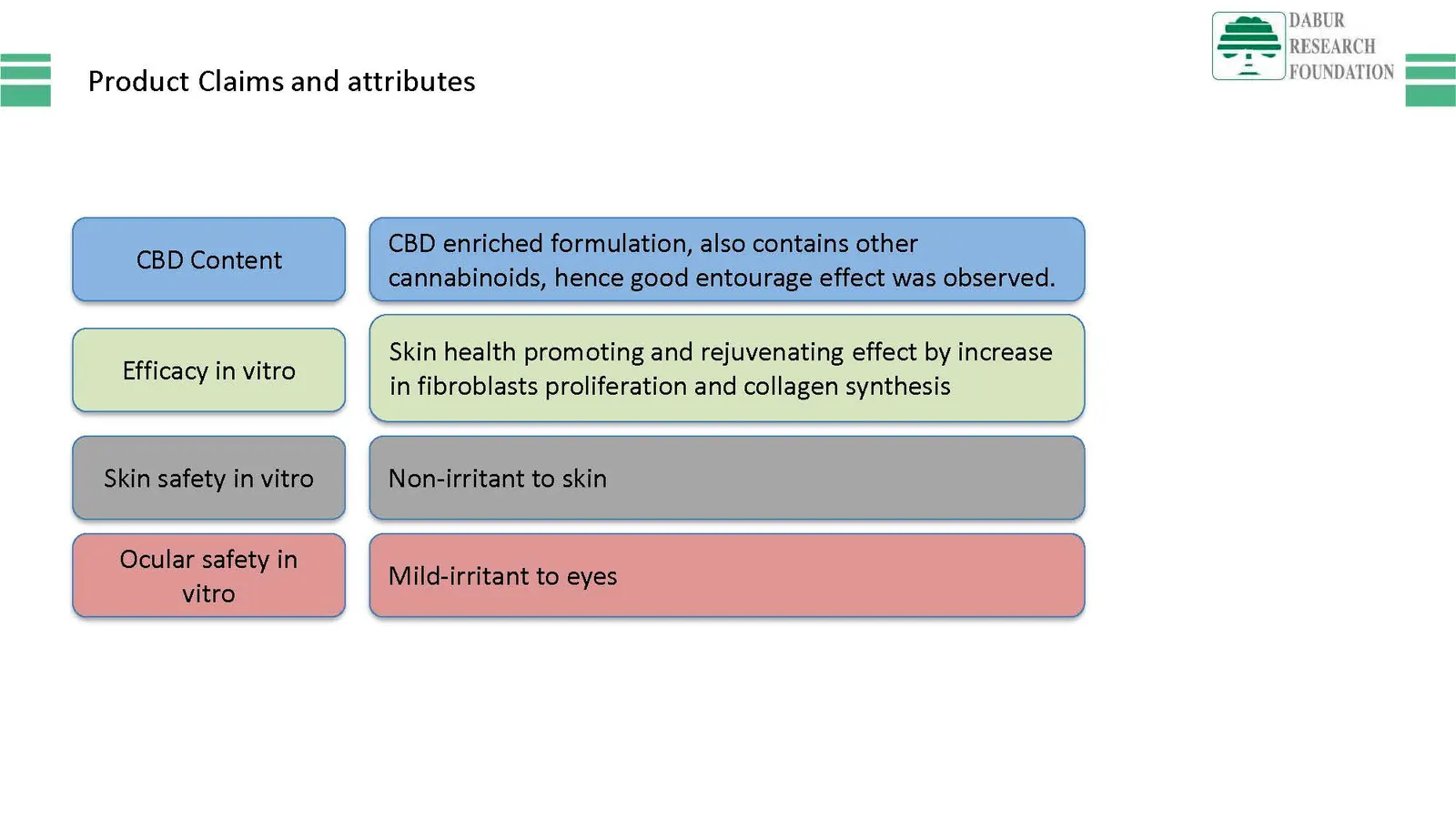
Slide 66: Product Claims and Attributes
DABUR RESEARCH FOUNDATION a Product Claims and attributes —
Slide 67: Night Cream
Night Cream DABUR RESEARCH FOUNDATION =m
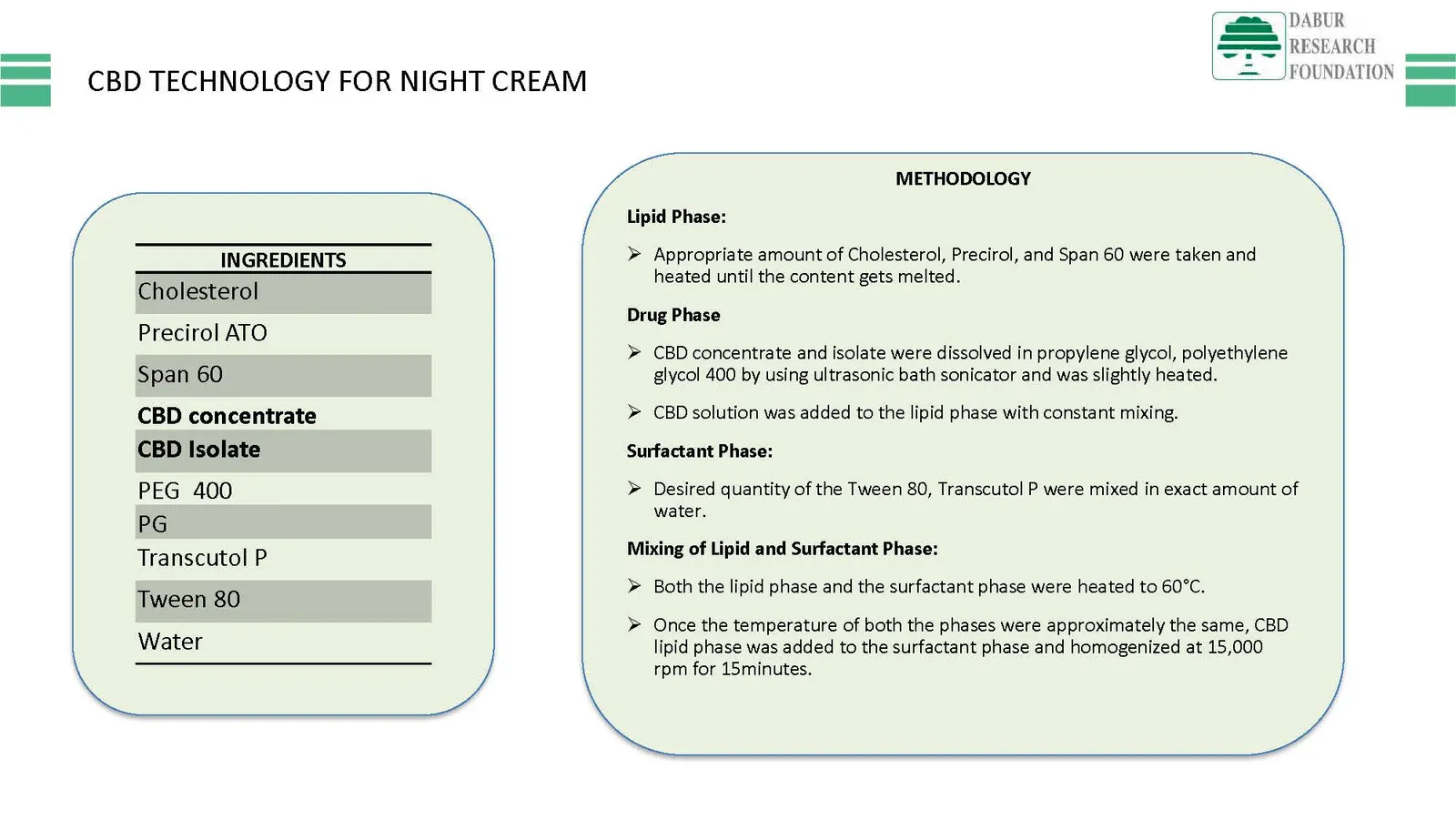
Slide 68: CBD Technology for Night Cream
eae, \DABUR > eseancu CBD TECHNOLOGY FOR NIGHT CREAM “oN i METHODOLOGY ( » Lipid Phase: > Appropriate amount of Cholesterol, Precirol, and Span 60 were taken and INGREDIENTS heated until the content gets melted. Cholesterol . Drug Phase Precirol ATO > CBD concentrate and isolate were dissolved in pr
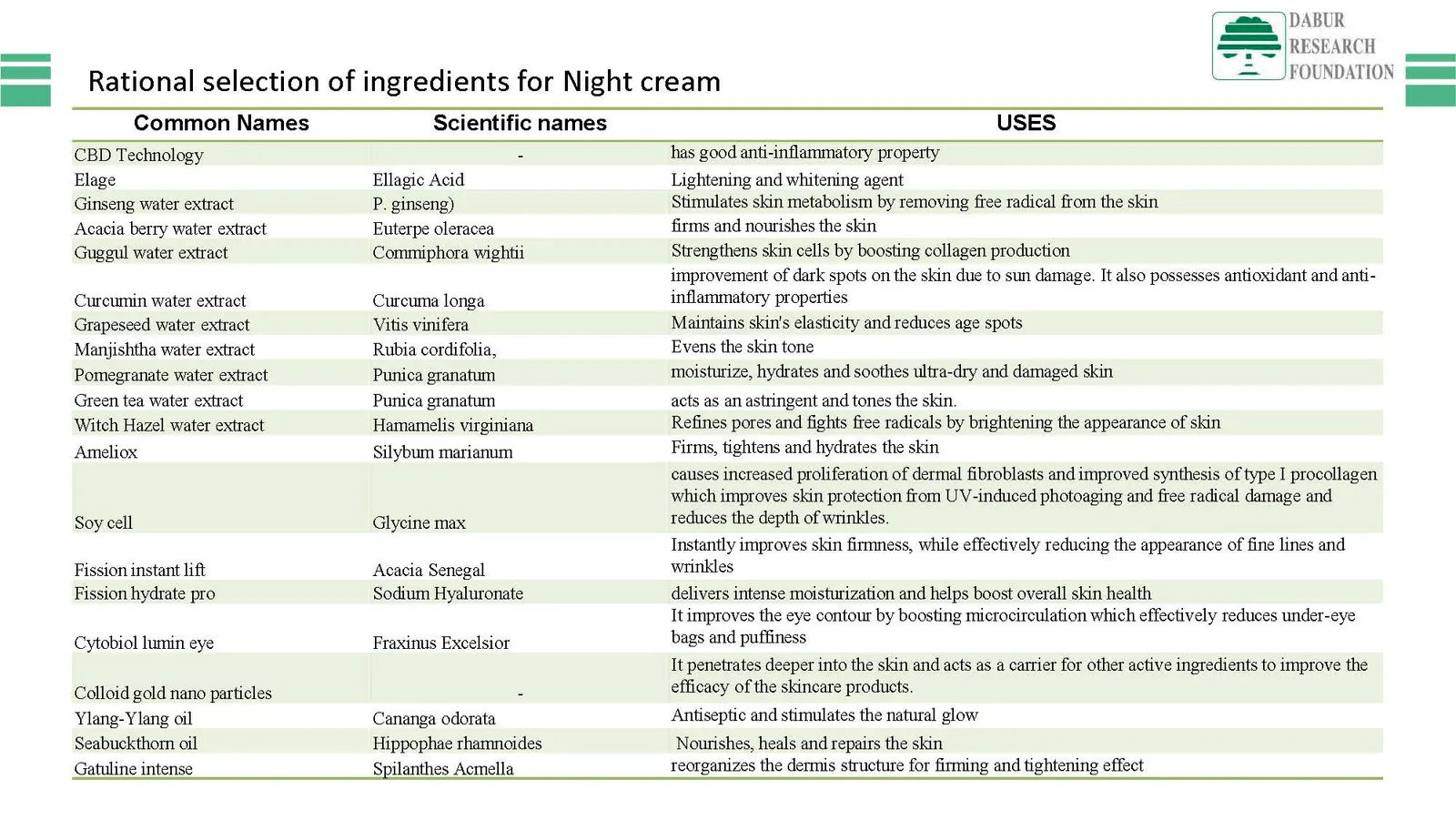
Slide 69: Rational Selection of Ingredients for Night Cream
Rational selection of ingredients for Night cream = —= DABUR | RESEARCH FOUNDATION =m Common Names Scientific names USES CBD Technology Elage Ginseng water extract Acacia berry water extract Guggul water extract Curcumin water extract Grapeseed water extract Manjishtha water extract Pomegranate wate
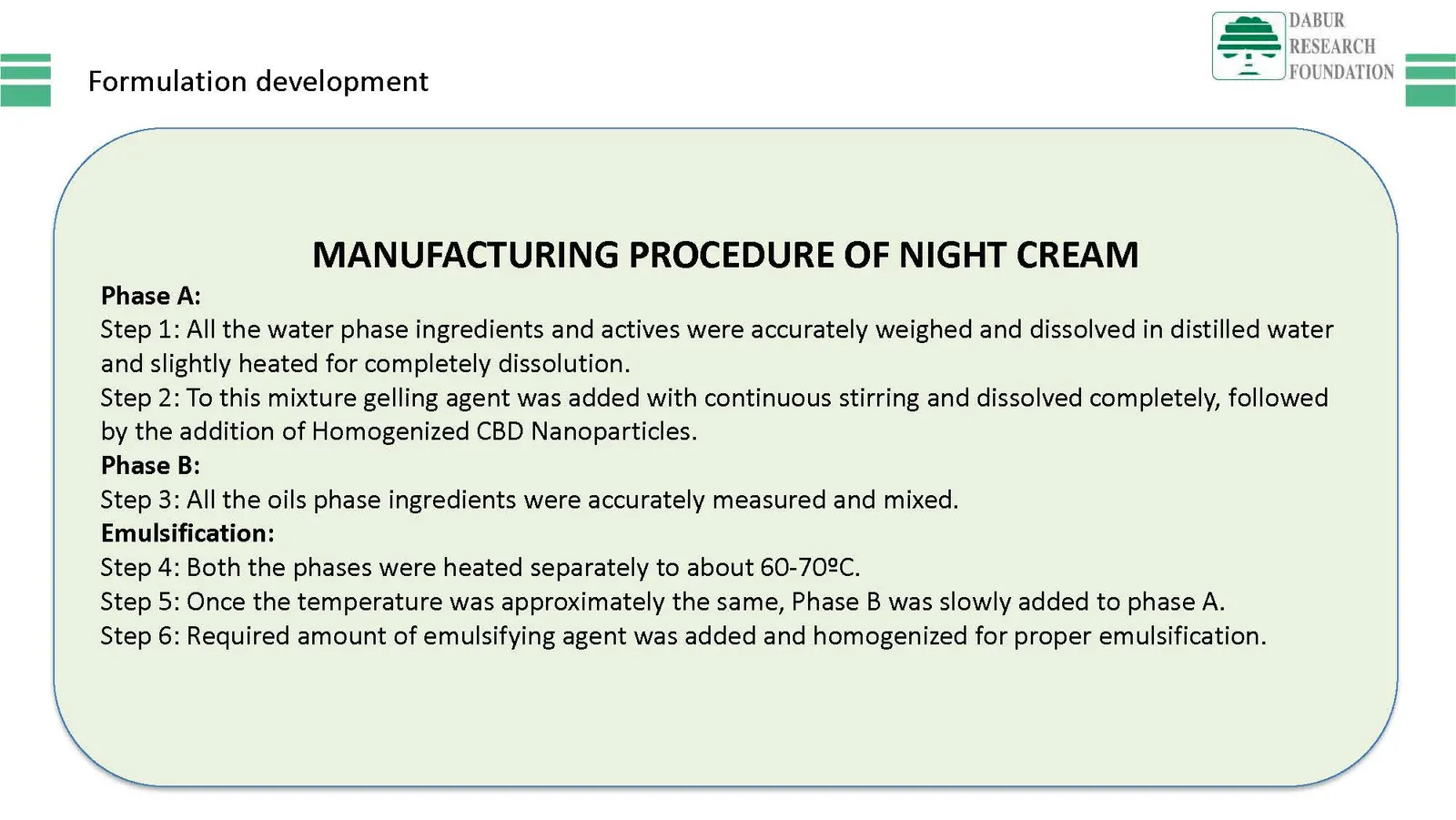
Slide 70: Manufacturing Procedure of Night Cream
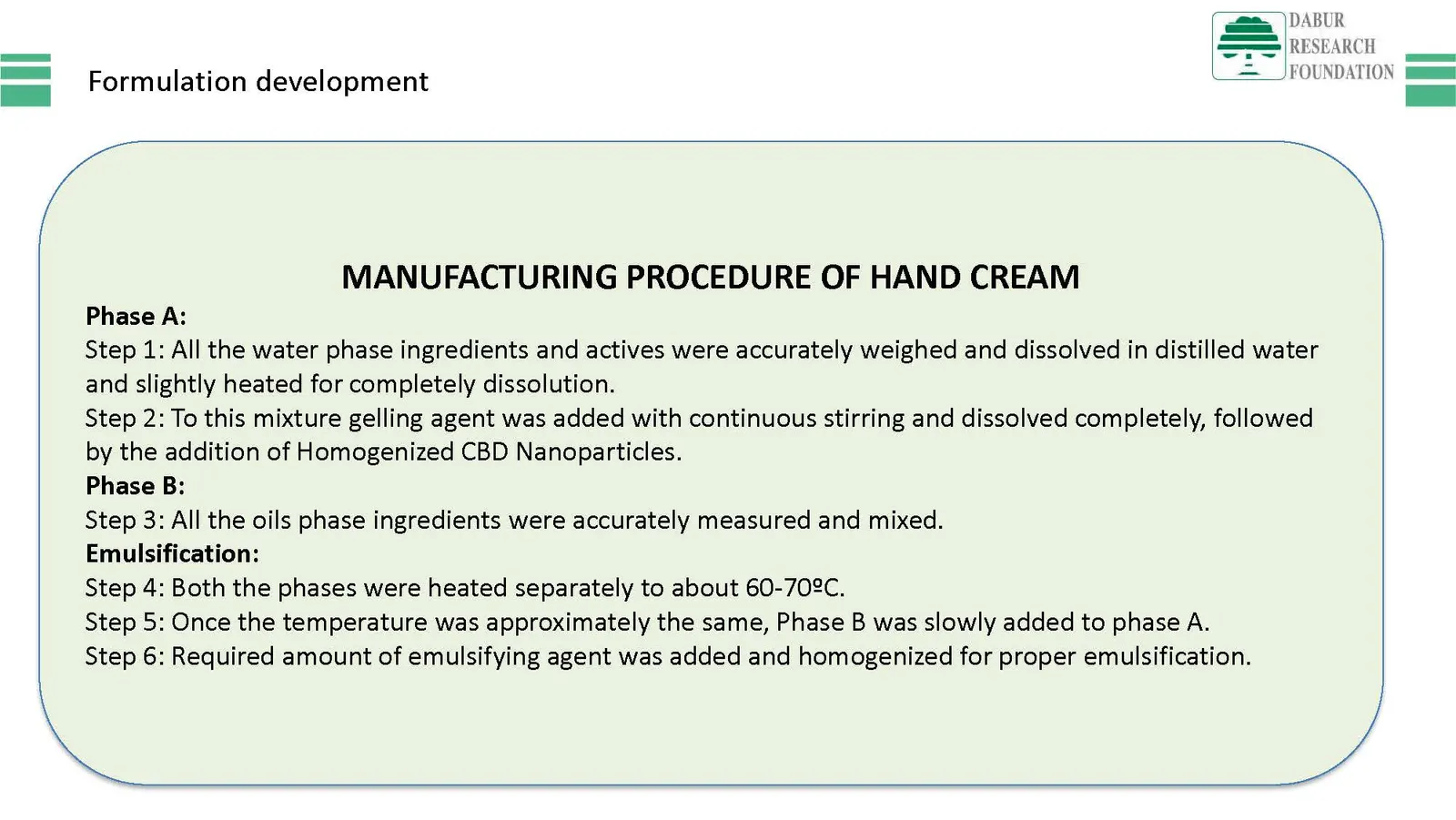
me, |DABUR RESEARCH = — = JFOUNDATION = Formulation development MANUFACTURING PROCEDURE OF NIGHT CREAM Phase A: Step 1: All the water phase ingredients and actives were accurately weighed and dissolved in distilled water and slightly heated for completely dissolution. Step 2: To this mixture gelling
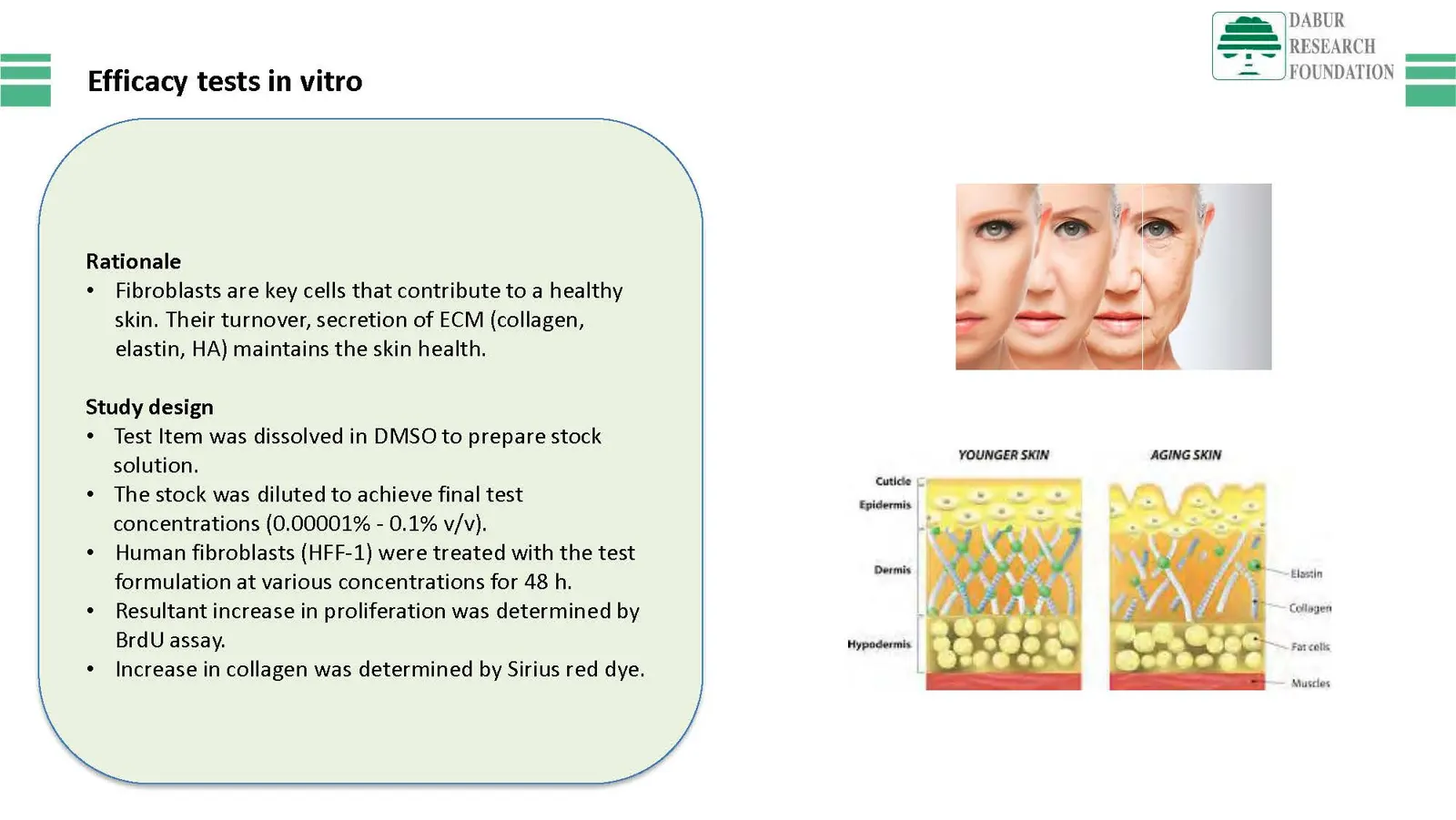
Slide 71: Efficacy Tests In Vitro
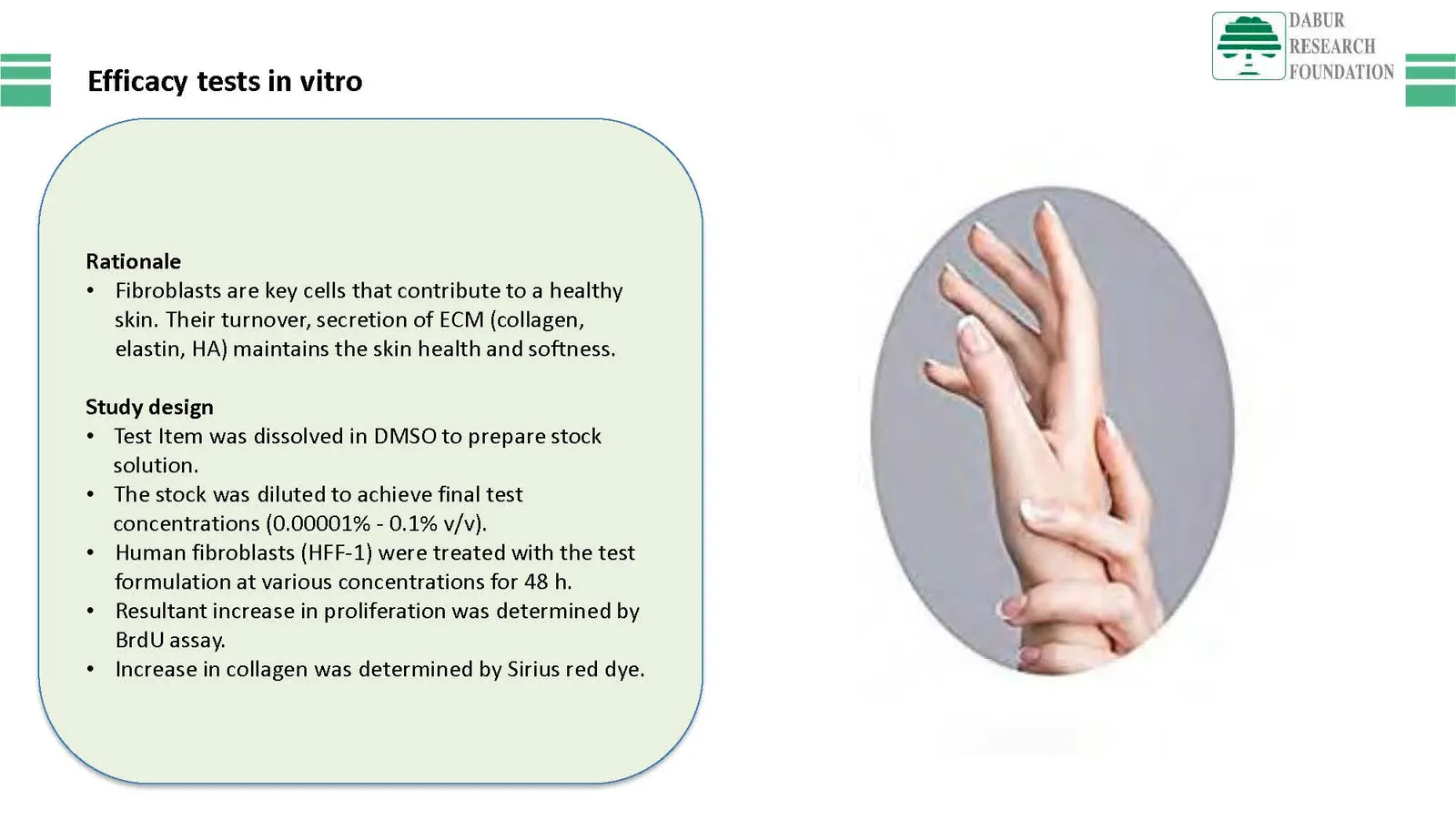
Efficacy tests in vitro Rationale ¢ Fibroblasts are key cells that contribute to a healthy skin. Their turnover, secretion of ECM (collagen, elastin, HA) maintains the skin health. Study design * Test Item was dissolved in DMSO to prepare stock solution. * The stock was diluted to achieve final test
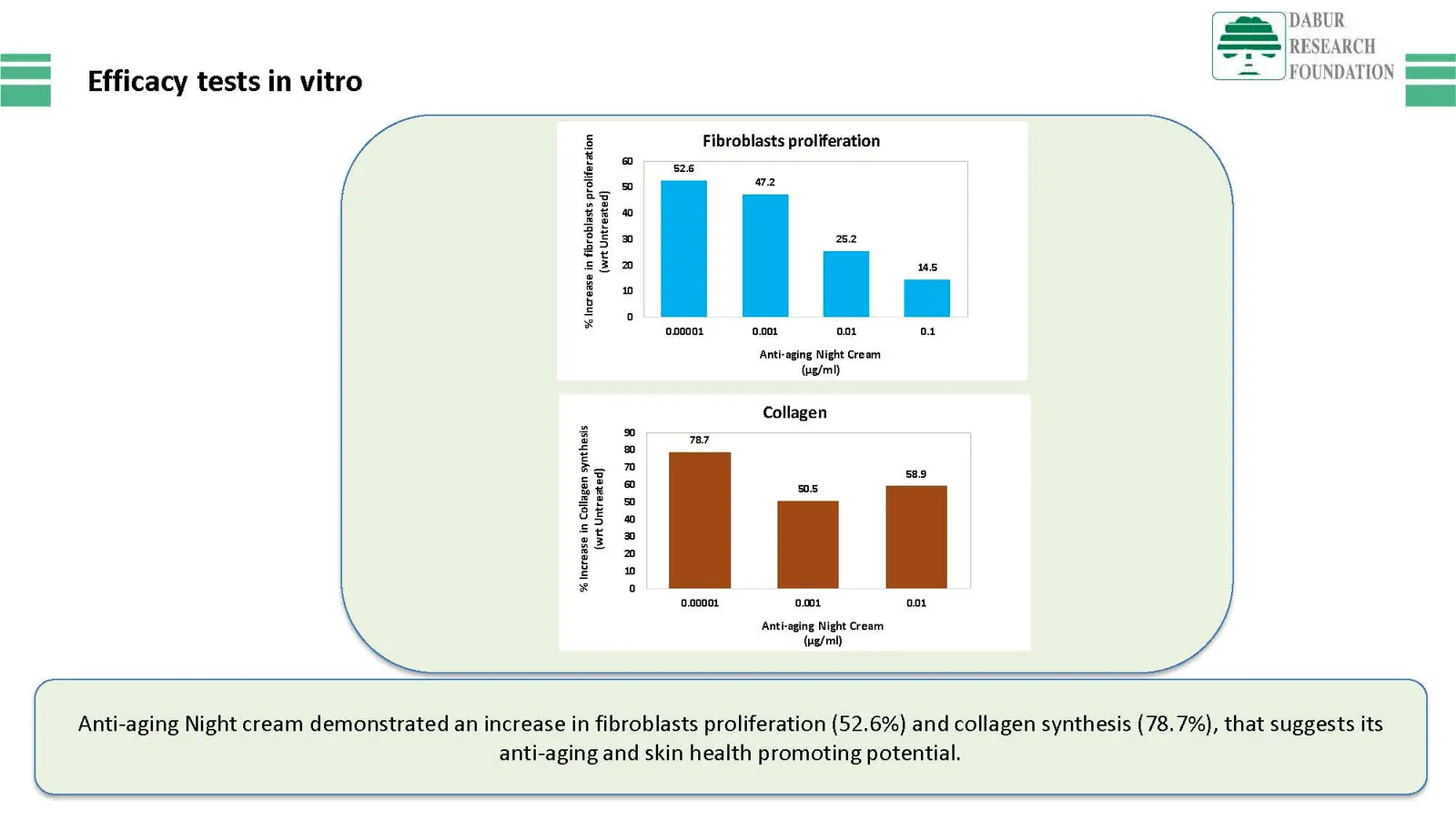
Slide 72: Efficacy Tests In Vitro
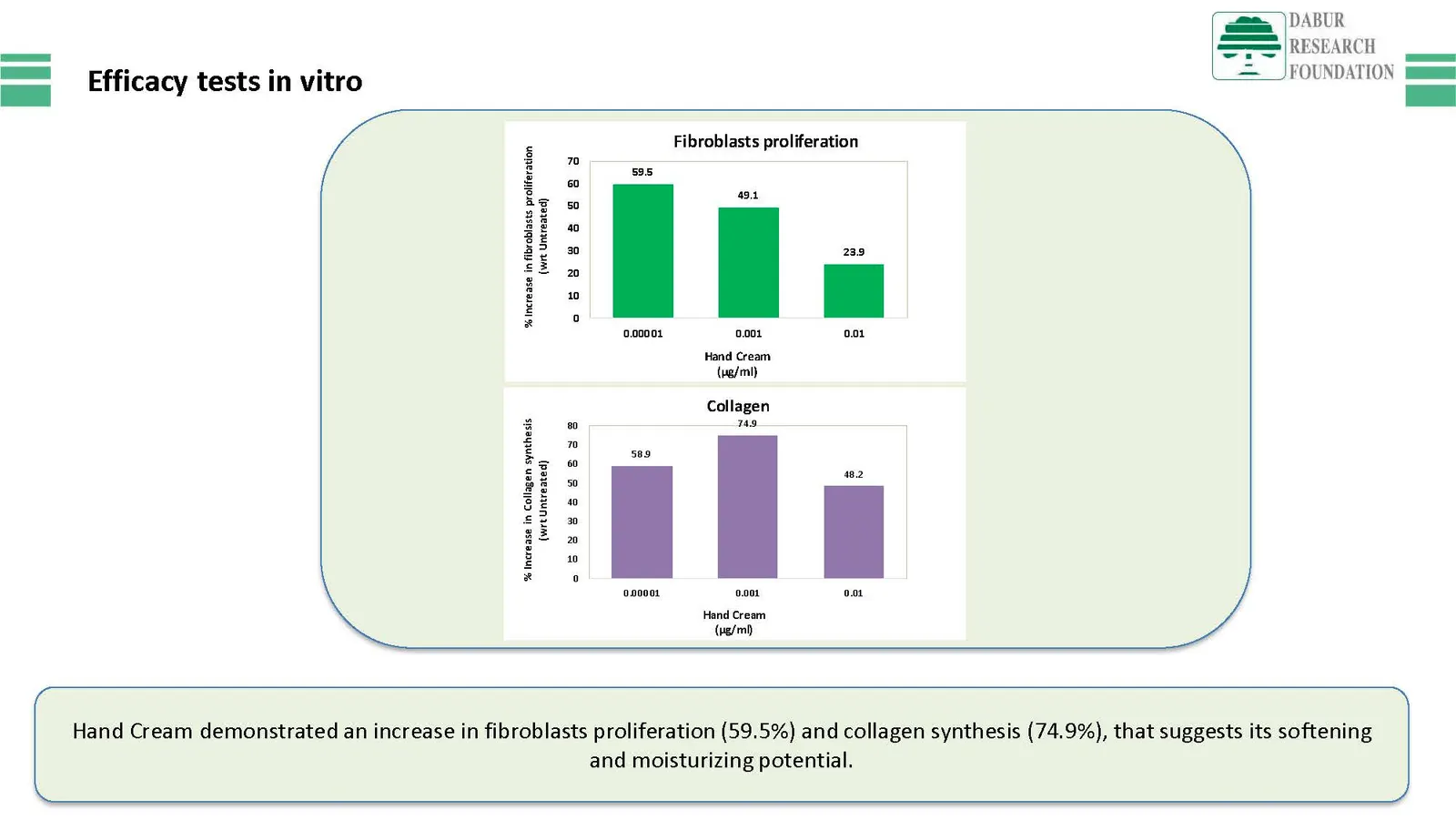
Efficacy tests in vitro Fibroblasts proliferation 26 a2 252 L - 0 |_| 2 onoo01 oor 003 on % Increase in fibroblasts proliferation (wrt Untreated) 5B B88 8B Anti-aging Night Cream Ge/m)) Collagen Hi = 787 - @ fs ™ 9 gg 2 os Zi 9 85 « fz 25 2 2 2 wo & o 000. oo. oot ‘Anti-aging Night Cream (he/ml) = D
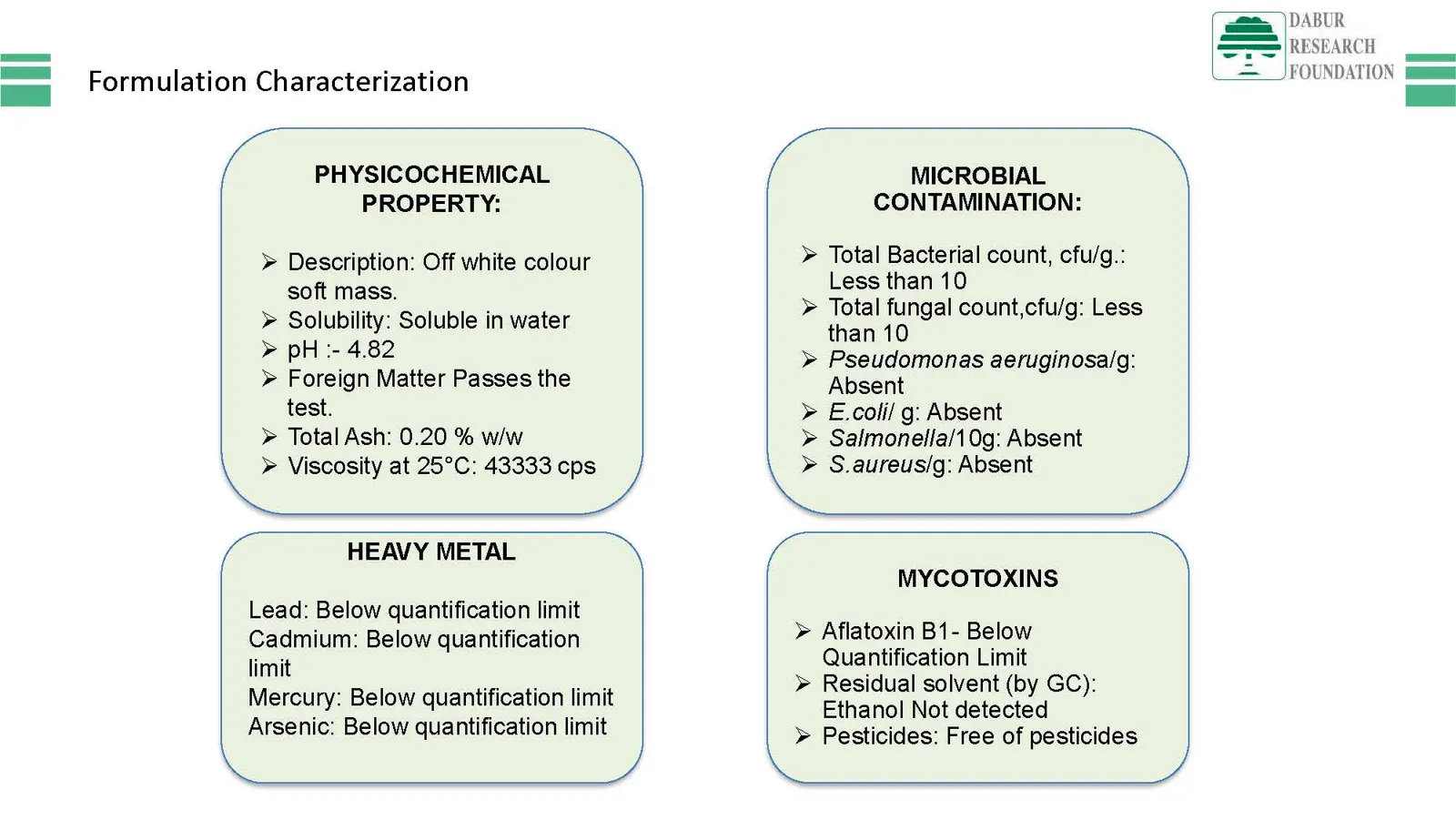
Slide 73: Formulation Characterization
Formulation Characterization (— PHYSICOCHEMICAL > PROPERTY: > Description: Off white colour soft mass. > Solubility: Soluble in water > pH :- 4.82 > Foreign Matter Passes the test. > Total Ash: 0.20 % w/w q ye Viscosity at 25°C: 43333 a, HEAVY METAL , Lead: Below quantification limit Cadmium: Below
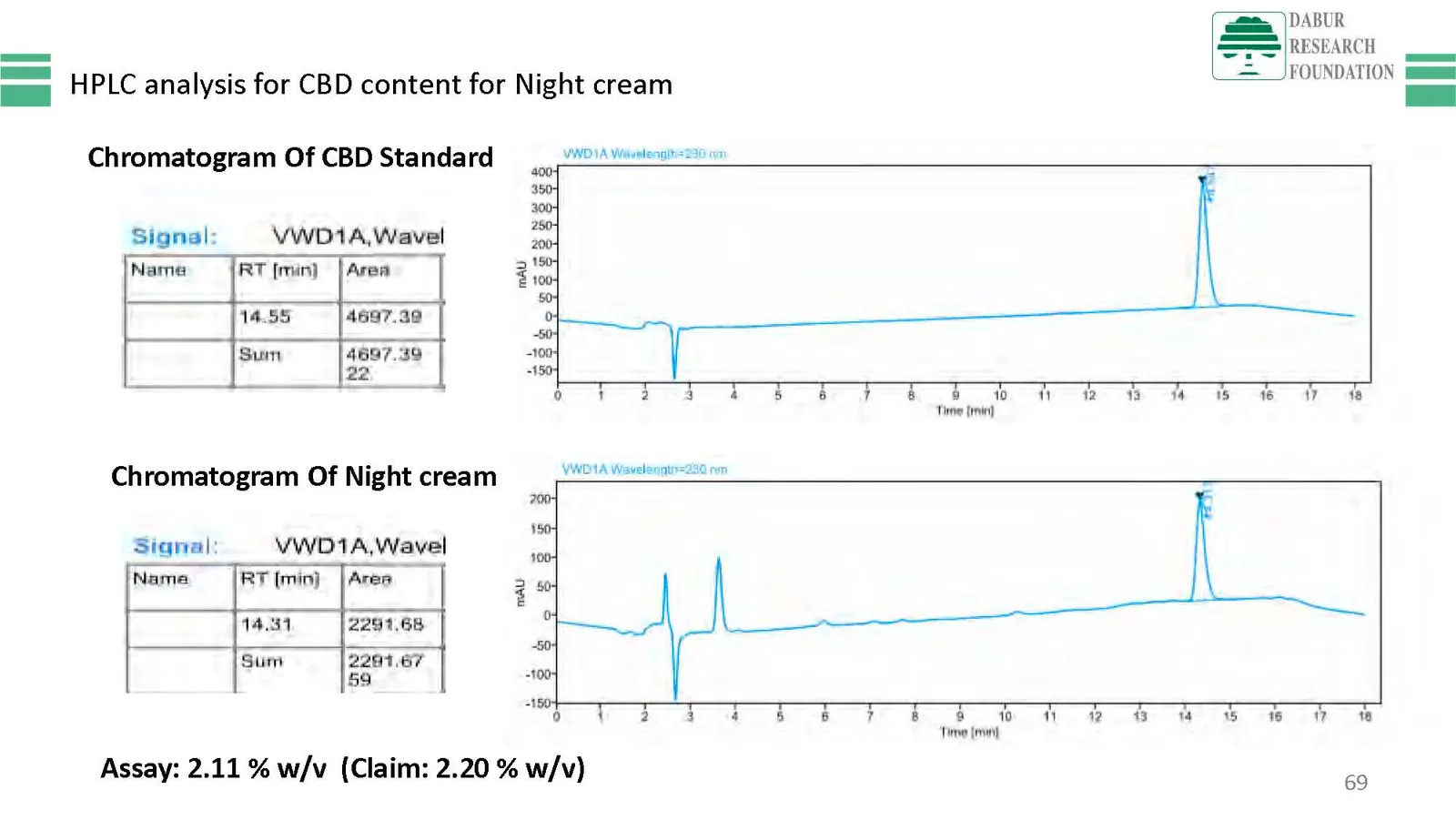
Slide 74: HPLC Analysis for CBD Content for Night Cream
HPLC analysis for CBD content for Night cream Chromatogram Of CBD Standard Signal: VWD14,Wavel Name RT (min) | Area 7 14.55 4697.39 Sum 4697.29 — | 7 Chromatogram Of Night cream Signal: VWDI1A,Wavel Name RT (min) [Ares 14.84 2291,68 Sum 2281.67 59 VWD 1A Wavilengit=236 ni FOUNDATION [am i tf st Ser
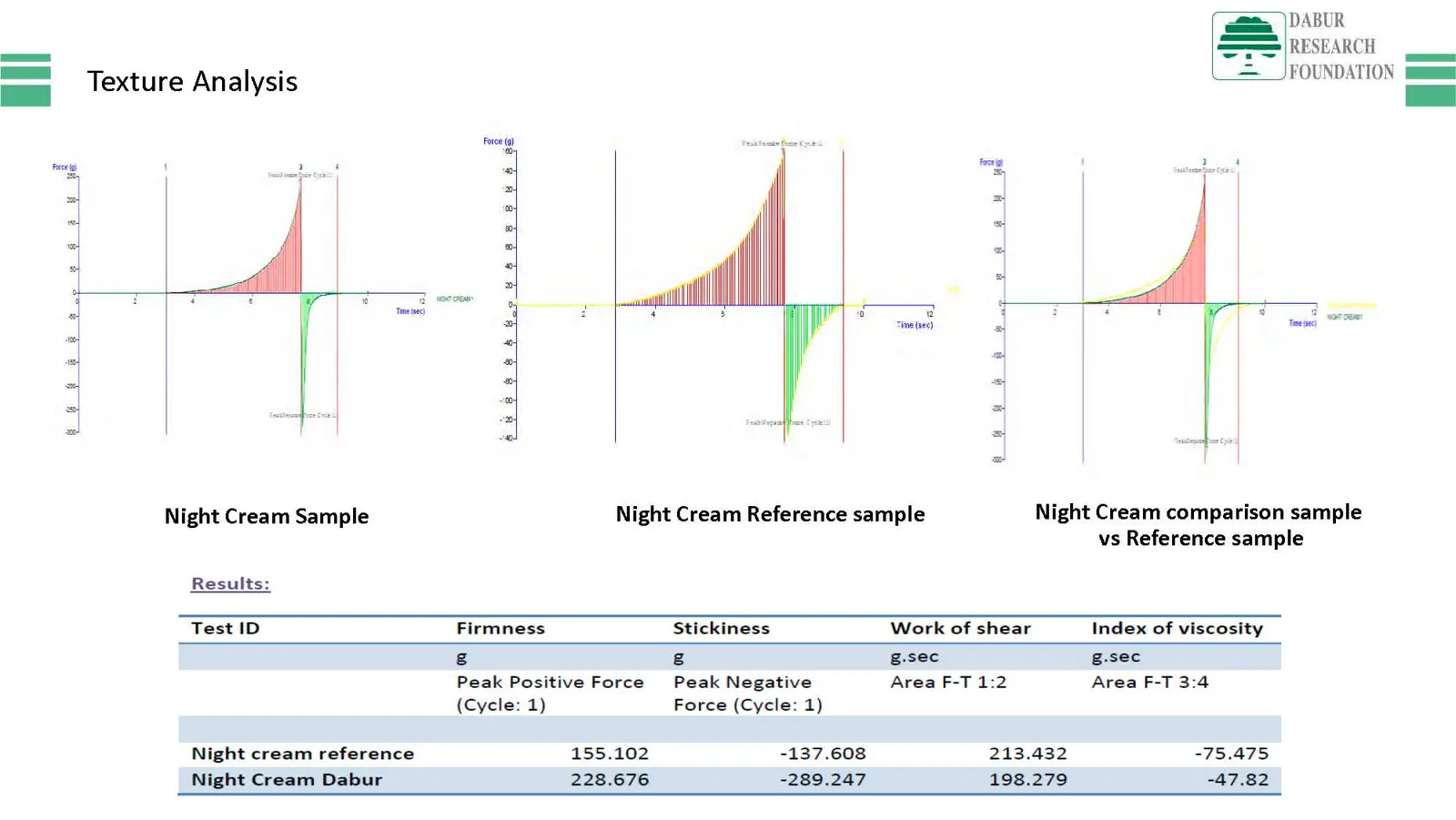
Slide 75: Texture Analysis
Texture Analysis Force ig) ° re eee © © : ©. ° = ” | Sama y : ee j 2 Tine ee) al i, © = “2 oa “o Night Cream Sample Night Cream Reference sample Night Cream comparison sample vs Reference sample Results: Test ID Firmness Stickiness Work of shear Index of viscosity & c- g-sec g.sec Peak Positive Forc
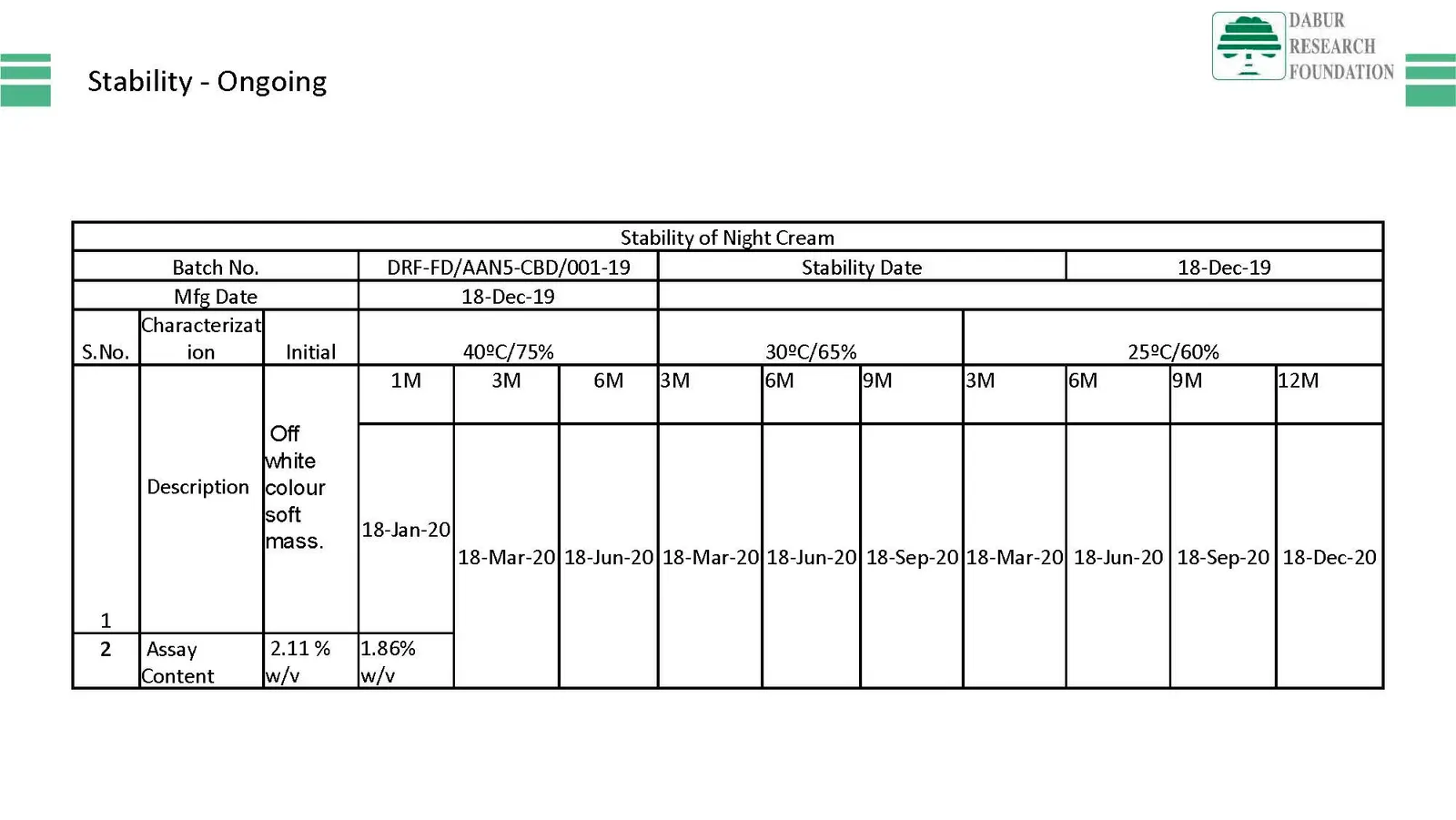
Slide 76: Stability - Ongoing
Stability - Ongoing me, |DABUR SS RESEARCH FOUNDATION Stability of Night Cream Batch No. DRF-FD/AAN5-CBD/001-19 Stability Date | 18-Dec-19 Mfg Date 18-Dec-19 Characterizat S.No. ion Initial 402C/75% 302C/65% 252C/60% 1M 3M 6M 3M 6M OM 3M 6M 9M 12M Off [white Description |colour por 18-Jan-20 . 18-Ma
Slide 77: Safety Tests In Vitro: Skin Irritation Using 3-D Skin
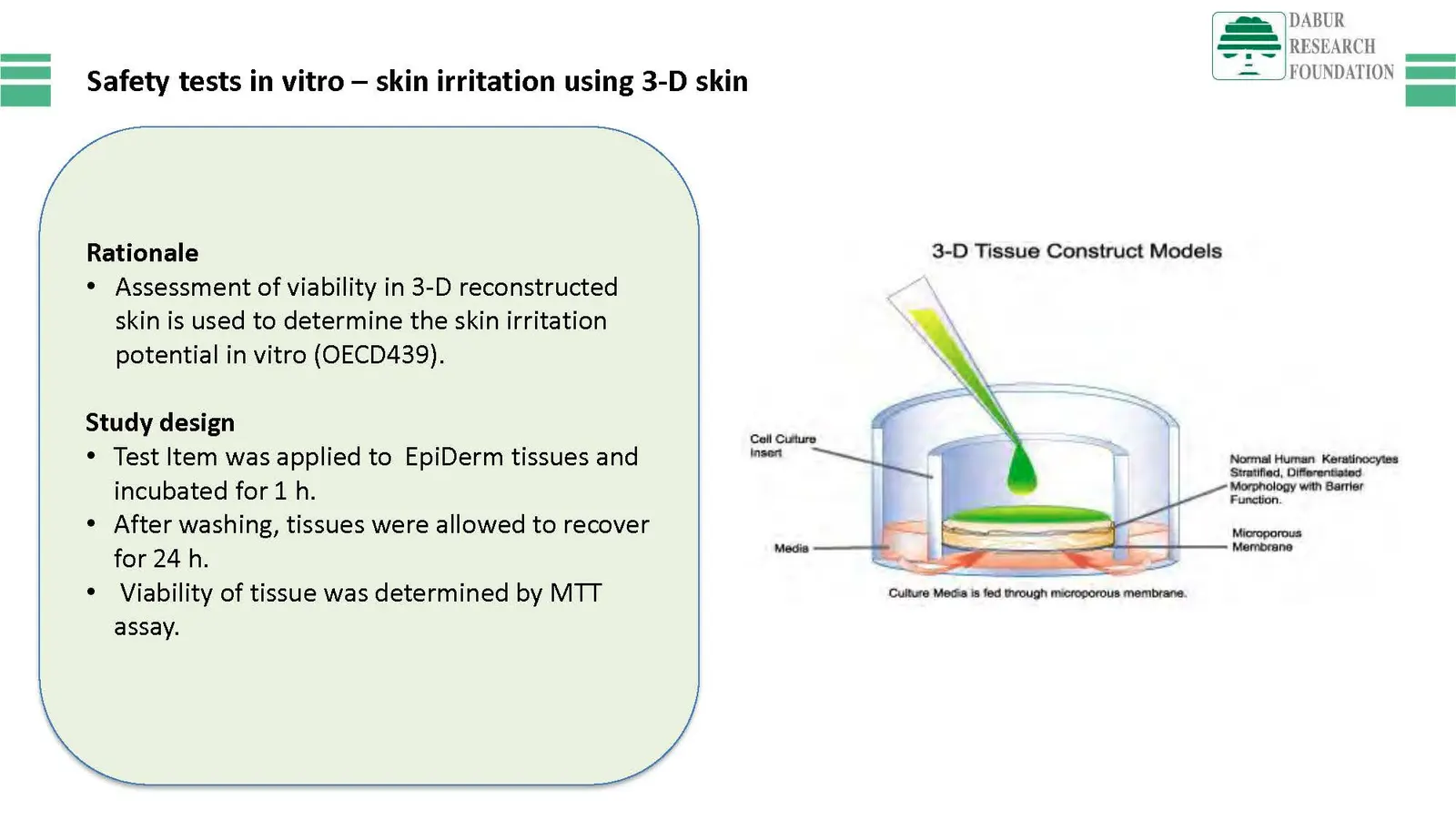
Rationale ¢ Assessment of viability in 3-D reconstructed skin is used to determine the skin irritation potential in vitro (OECD439). Study design * Test Item was applied to EpiDerm tissues and incubated for 1 h. ¢ After washing, tissues were allowed to recover for 24h. * Viability of tissue was dete
Slide 78: Skin Irritation Using 3-D Skin: Night Cream
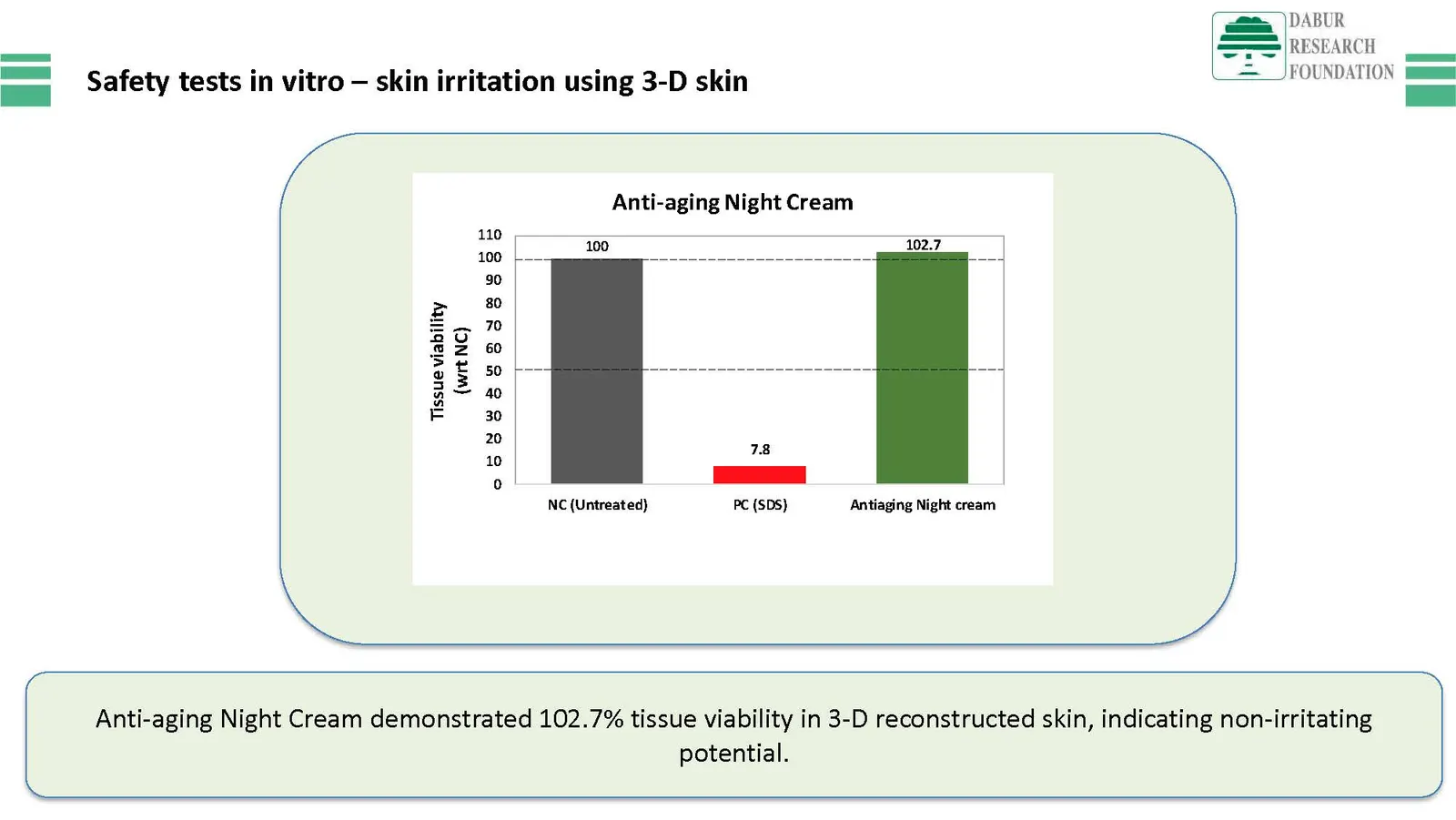
Safety tests in vitro — skin irritation using 3-D skin ee |DABUR Sa | RESEARCH -s~ — = JFOUNDATION = Bi ia XN Tissue viability {wrt NC) Anti-aging Night Cream 100 NC (Untreated) PC (SDS) 102.7 Antiaging Night cream ~ y, Anti-aging Night Cream demonstrated 102.7% tissue viability in 3-D reconstructed
Slide 79: Safety Tests In Vitro: Ocular Irritation HET-CAM
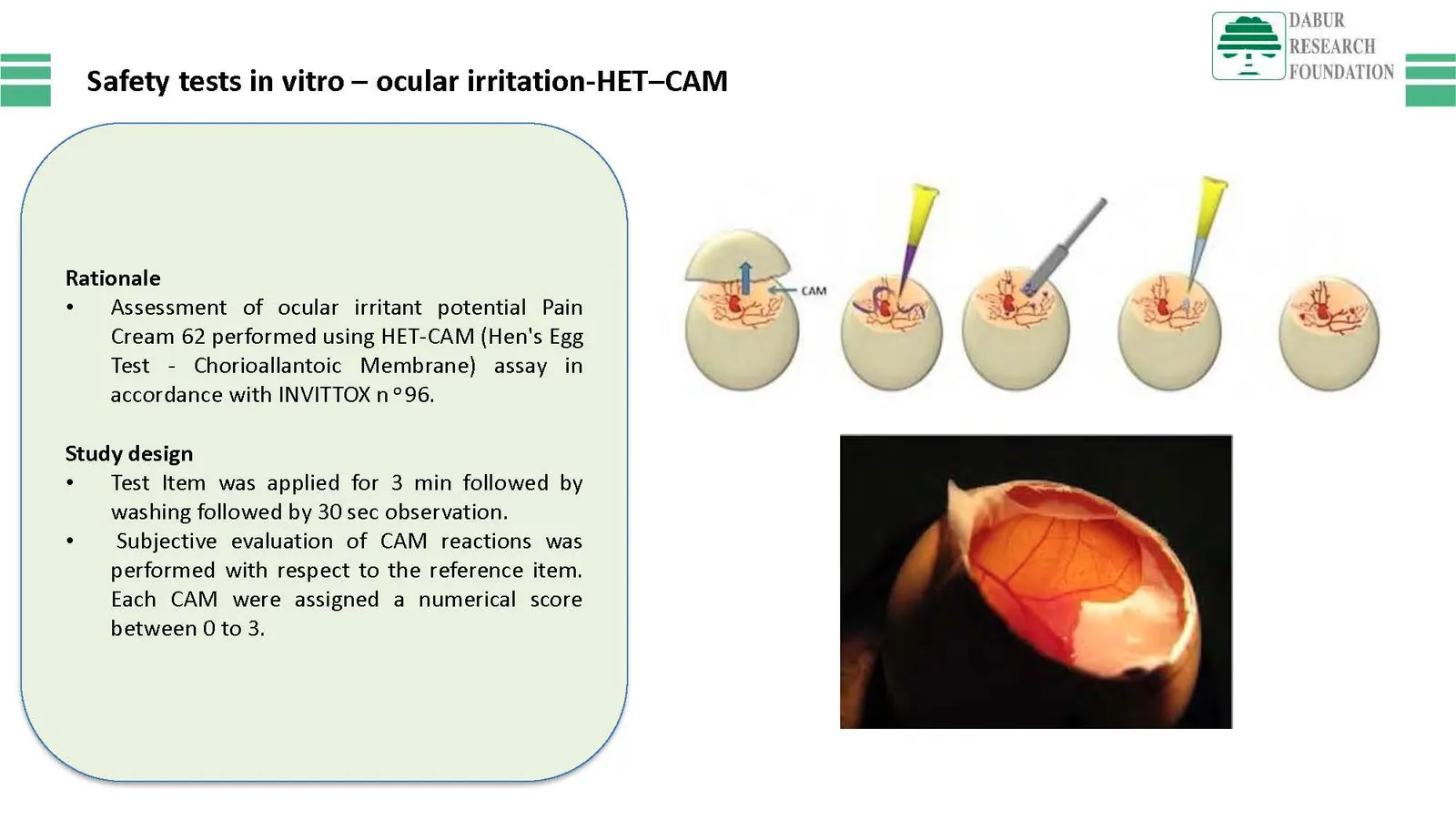
Safety tests in vitro — ocular irritation-HET—CAM Rationale + Assessment of ocular irritant potential Pain Cream 62 performed using HET-CAM (Hen's Egg Test - Chorioallantoic Membrane) assay in accordance with INVITTOX n°96. Study design * Test Item was applied for 3 min followed by washing followed
Slide 80: Ocular Irritation HET-CAM: Night Cream
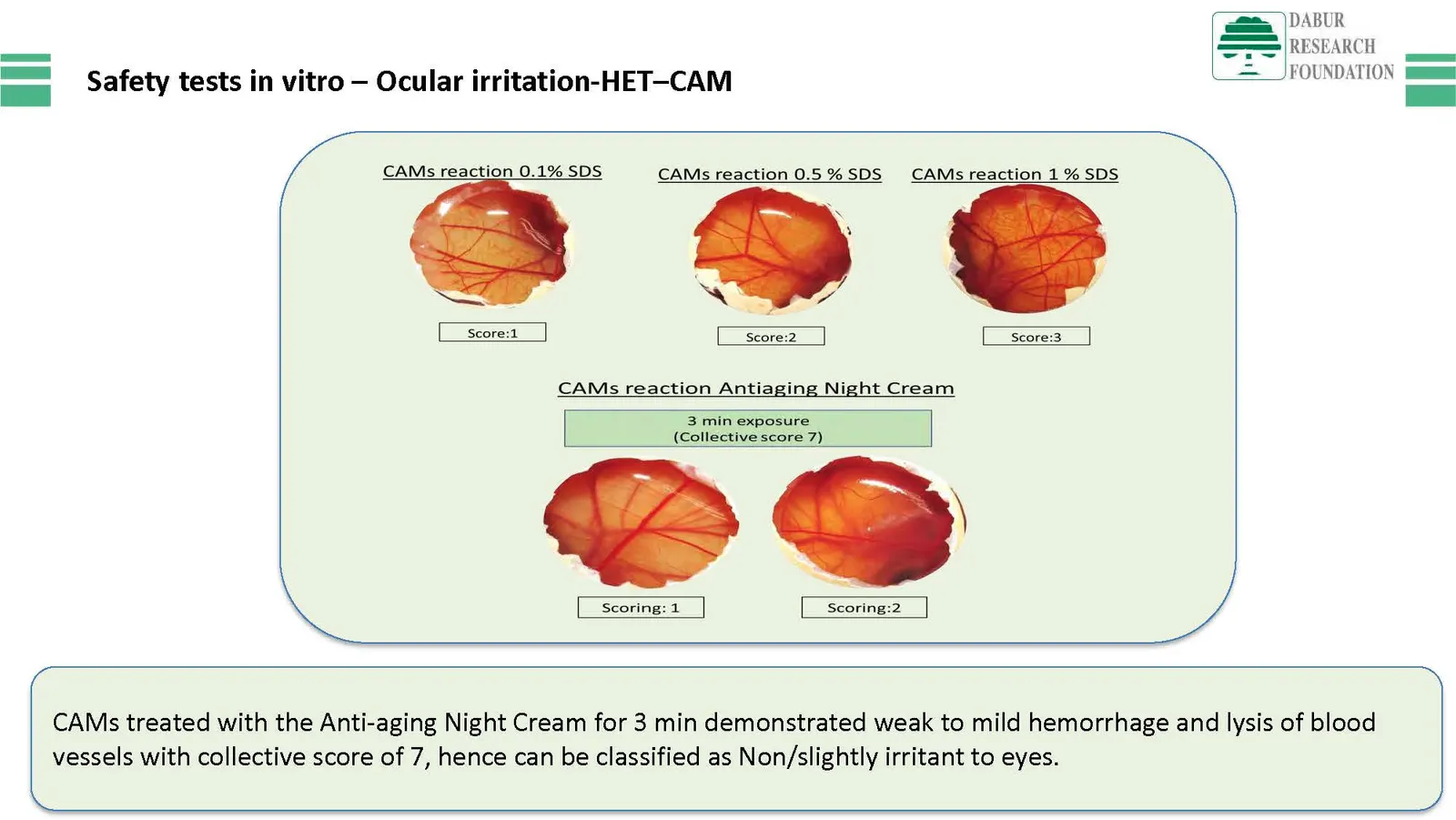
me, |DABUR | RESEARCH FOUNDATION a Safety tests in vitro — Ocular irritation-HET-CAM ( CAMs reaction 0.1% SDS CAMs reaction 0.5% SDS CAMs reaction 1% SDS >» ~ CAMs reaction Antiaging Night Cream 3 min exposure (Collective score 7) a Scoring: 1 Scoring:2 CAMs treated with the Anti-aging Night Cream f
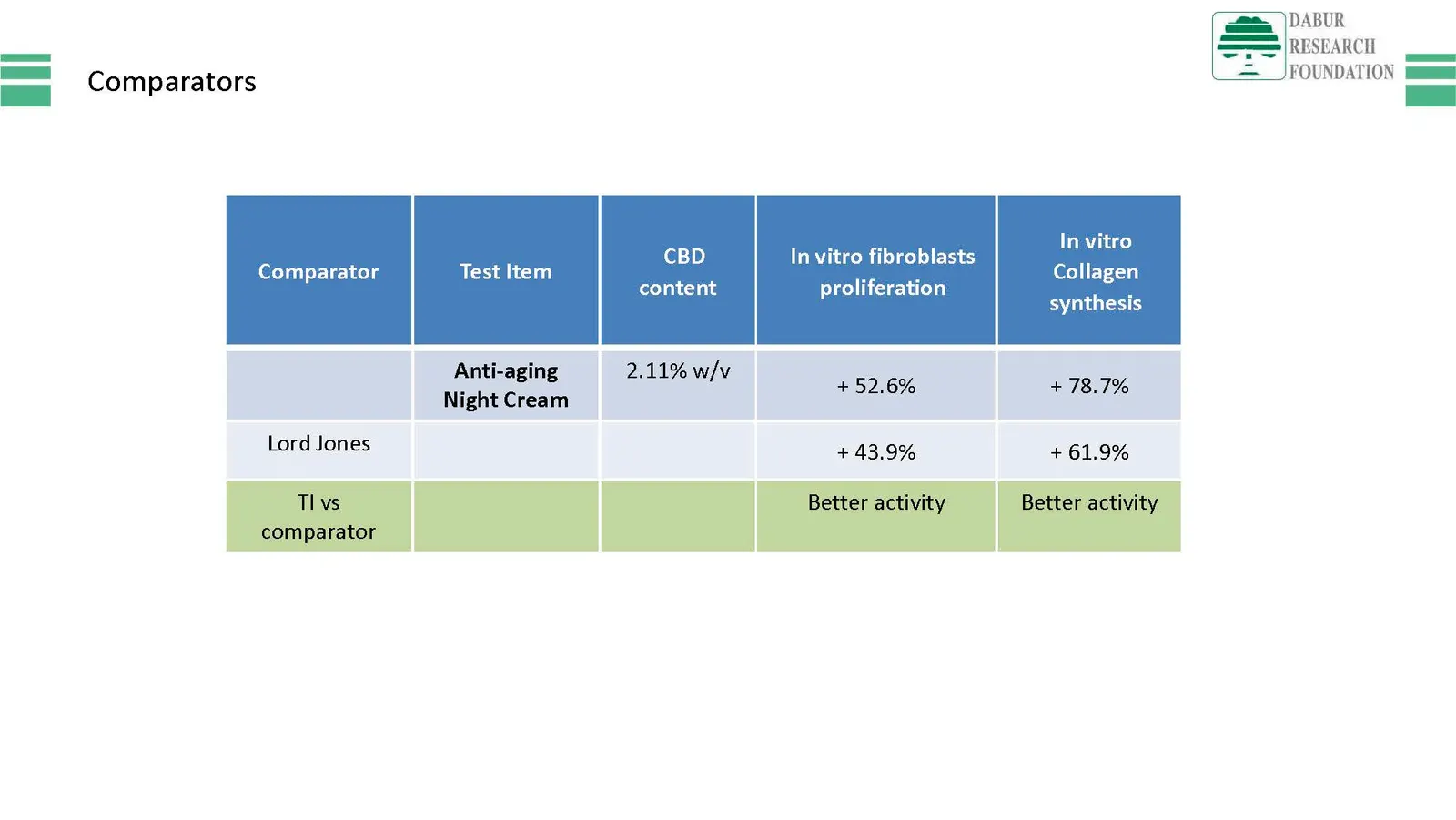
Slide 81
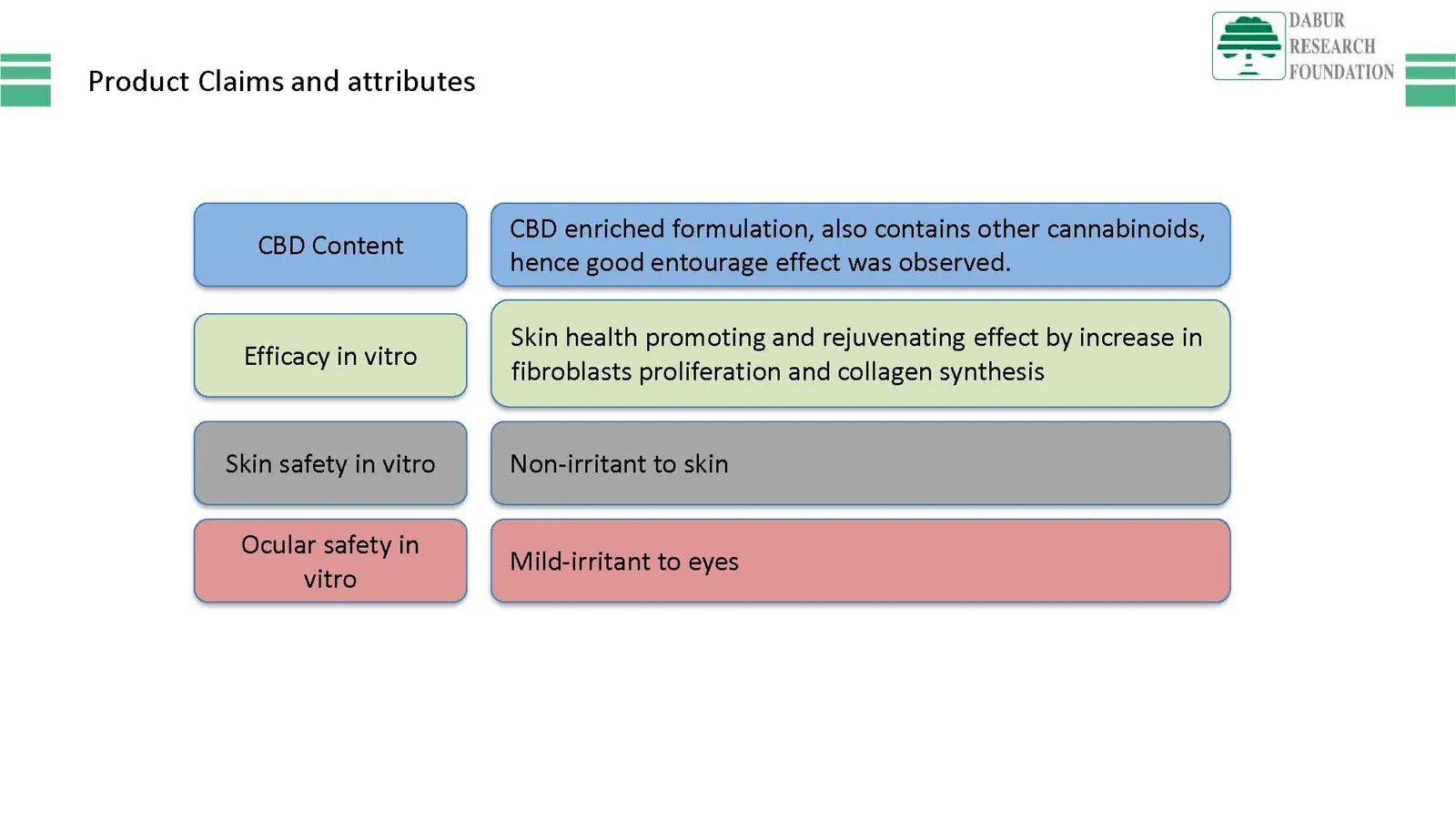
Slide 82
Slide 83
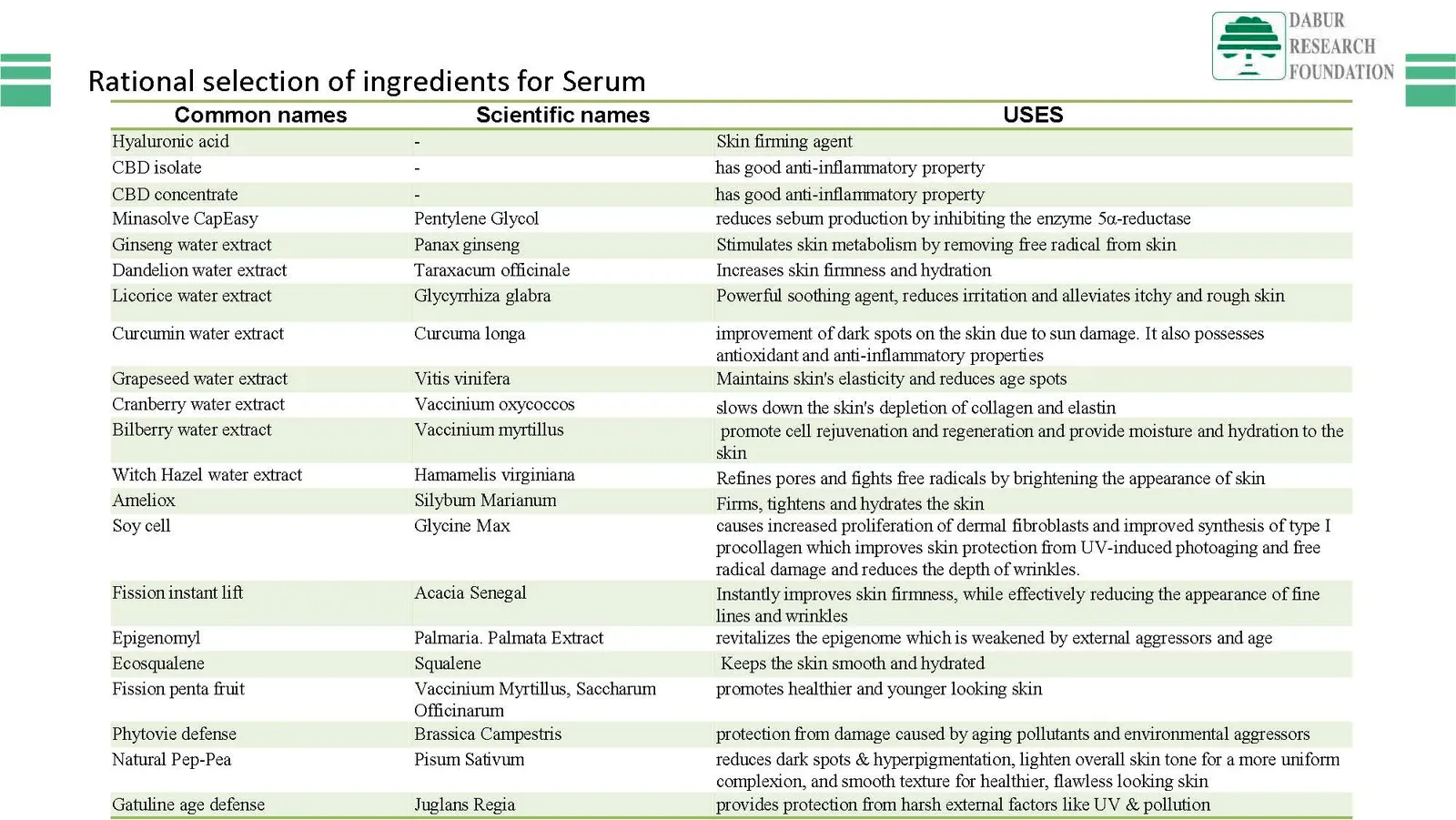
Slide 84
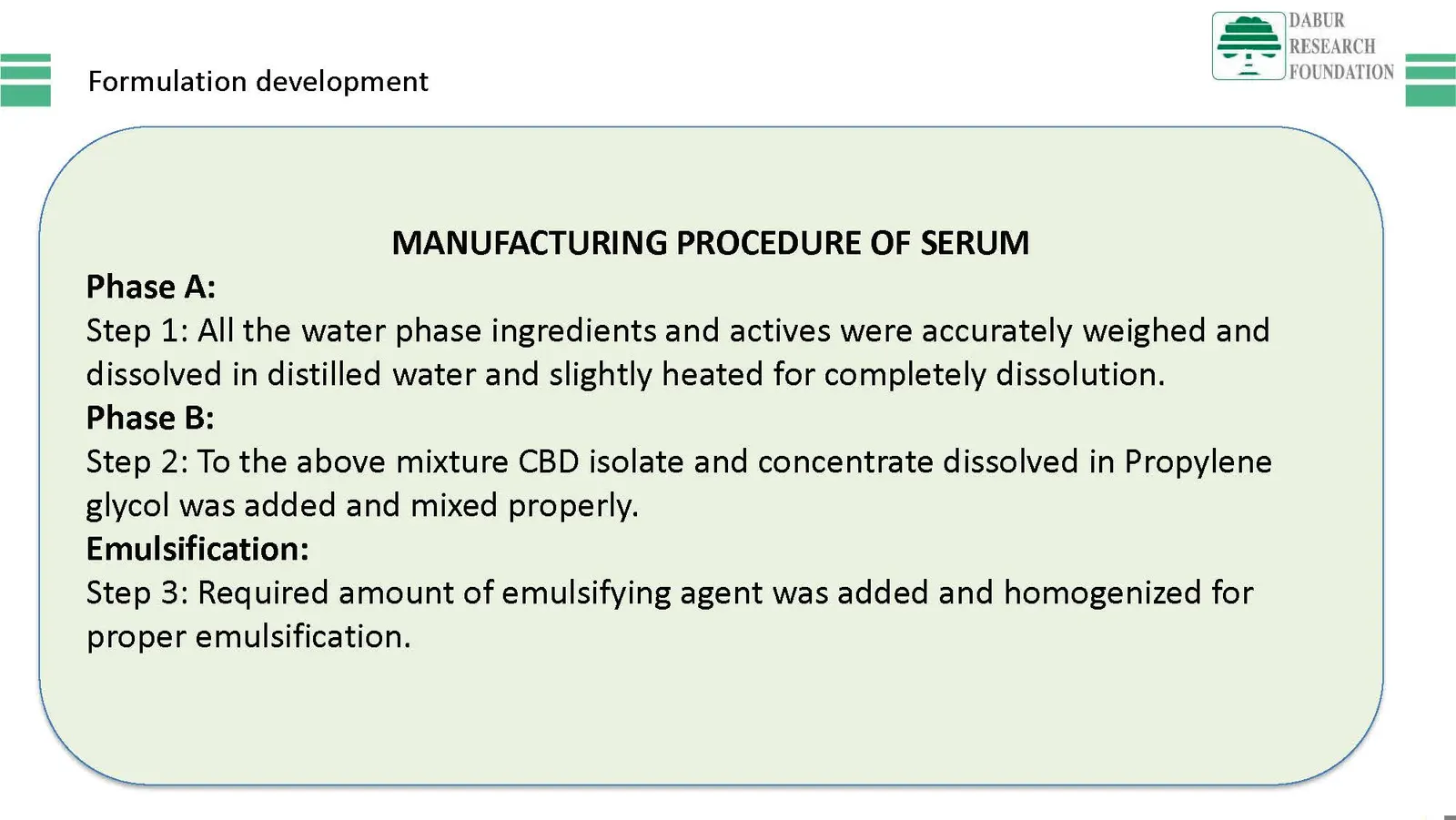
Slide 85
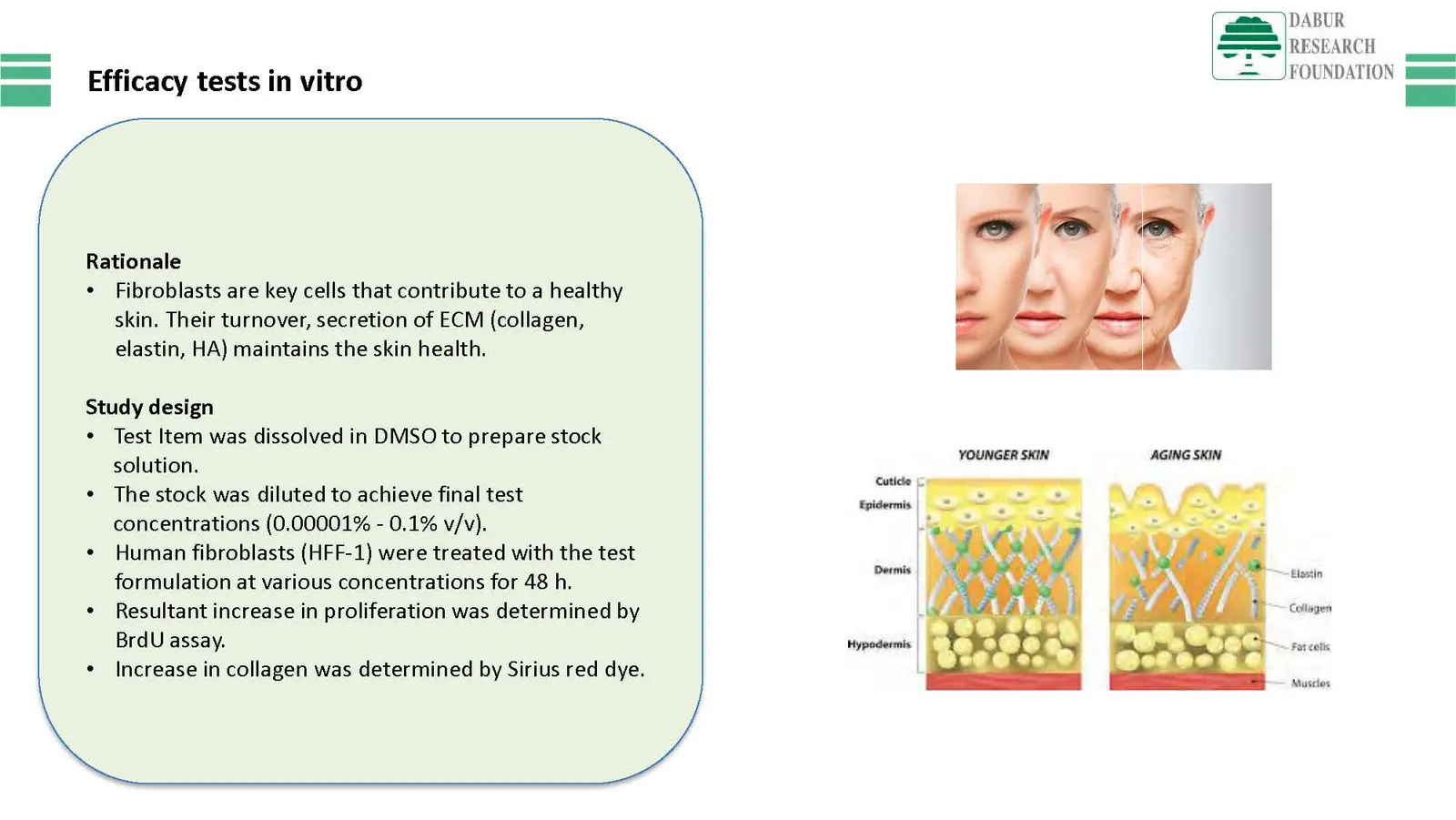
Slide 86
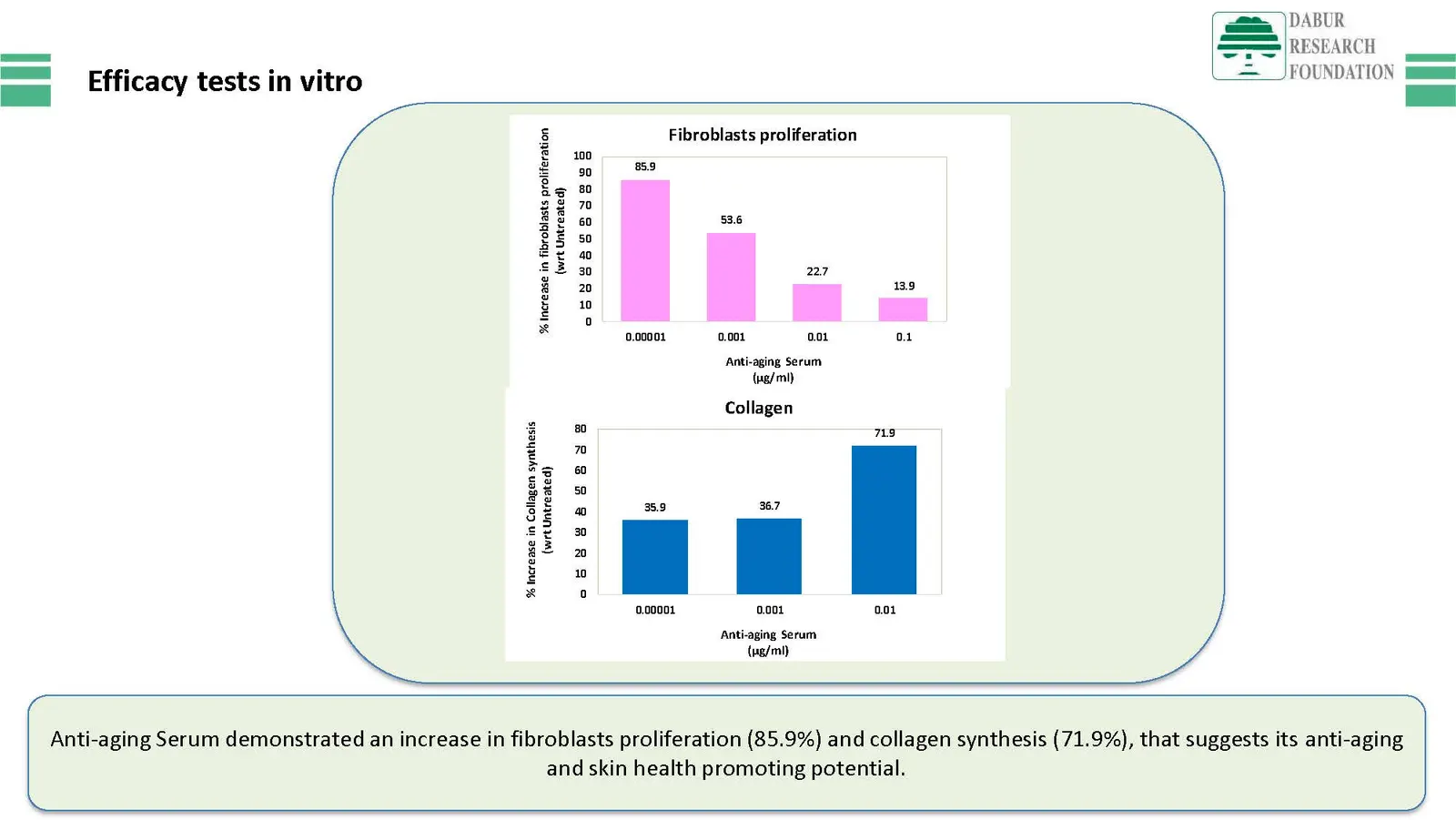
Slide 87
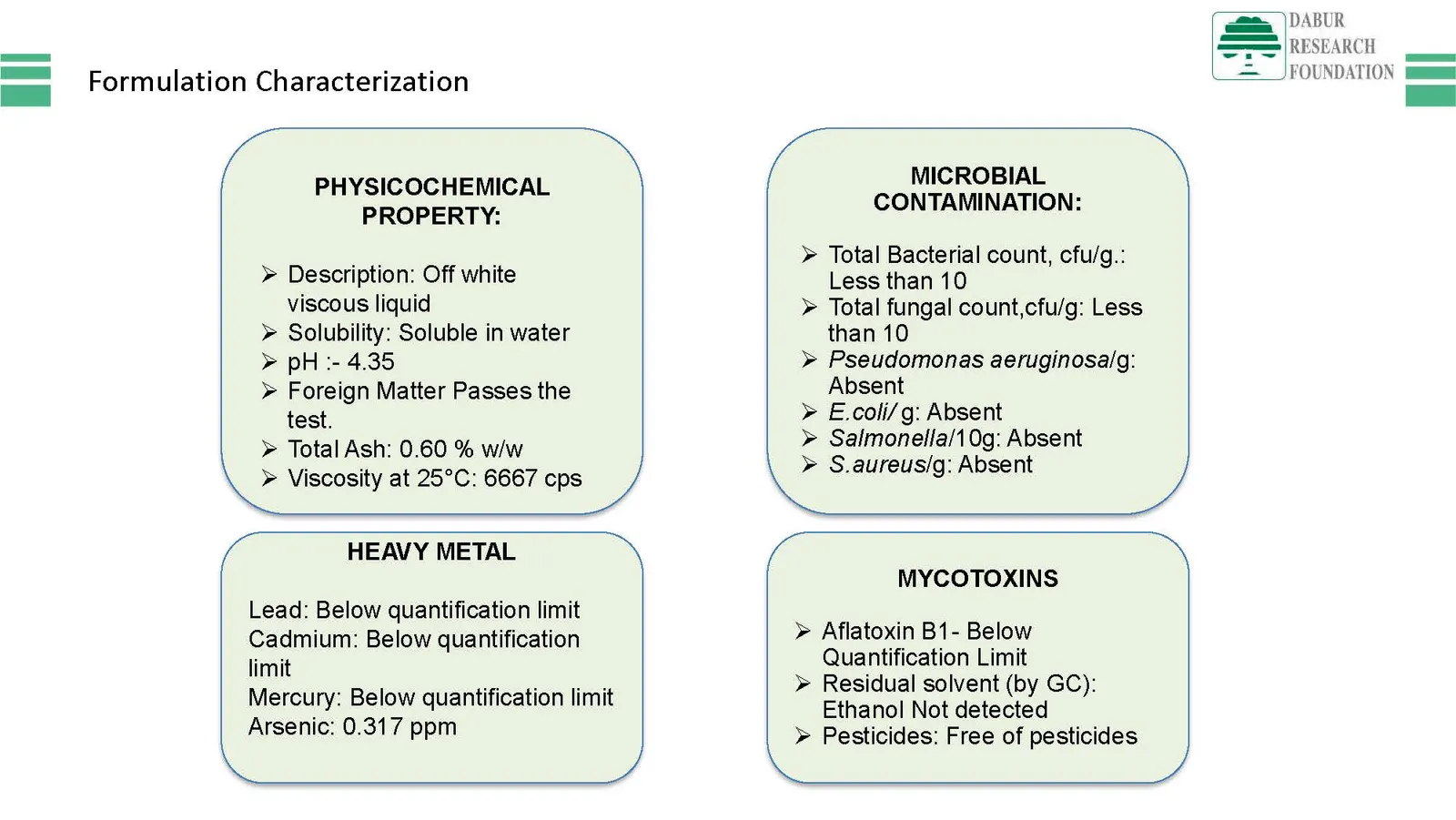
Slide 88
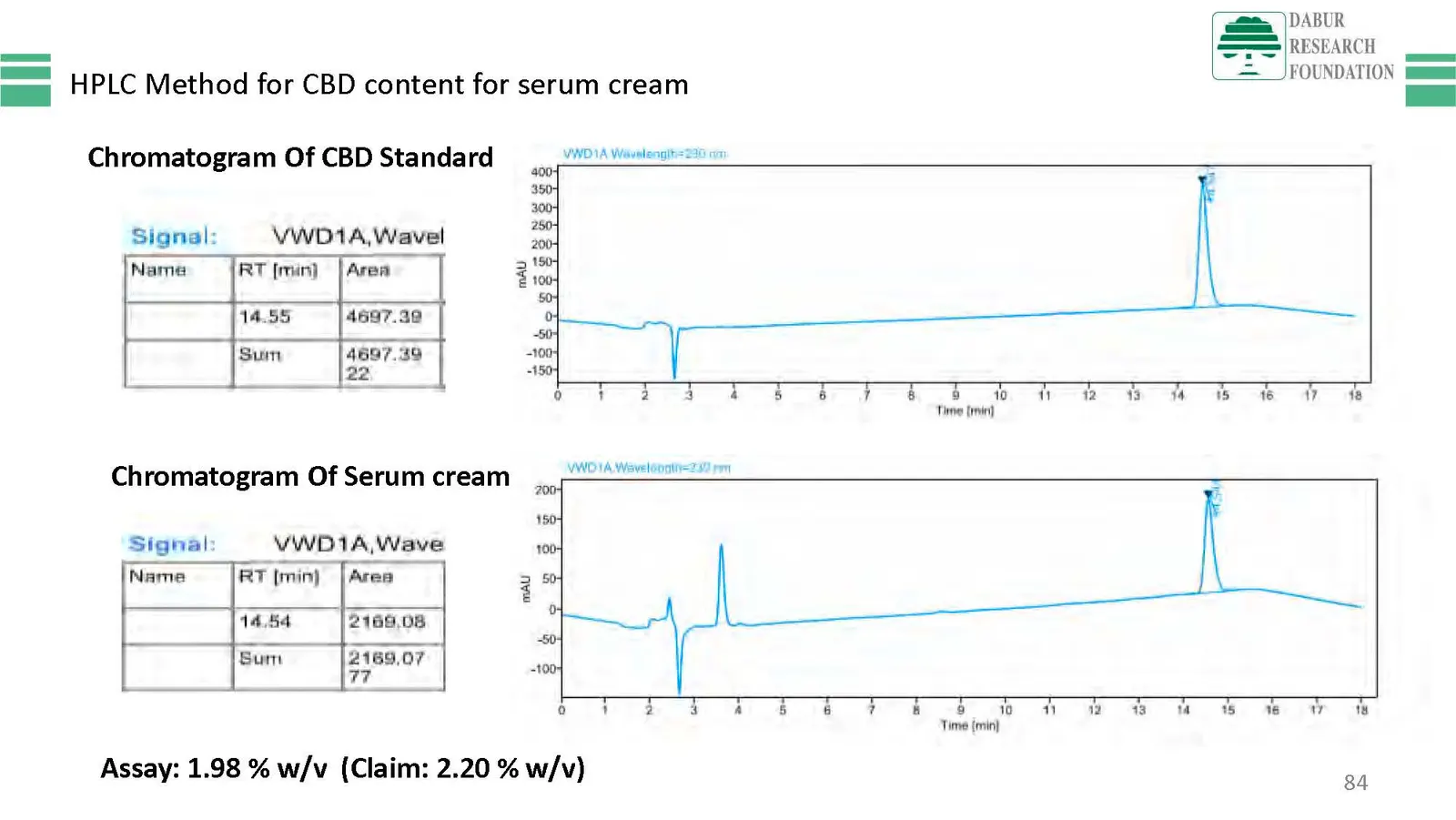
Slide 89
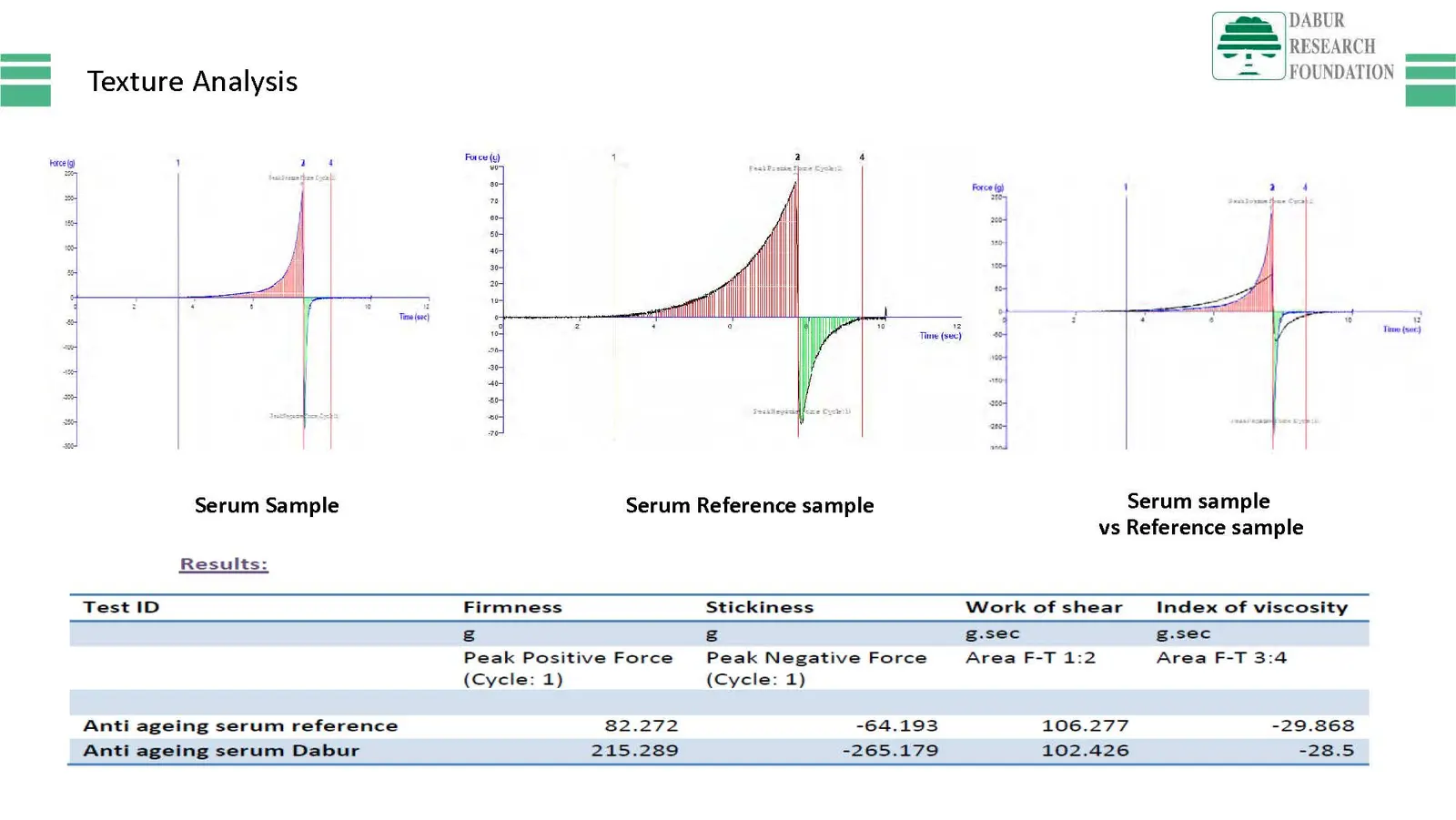
Slide 90
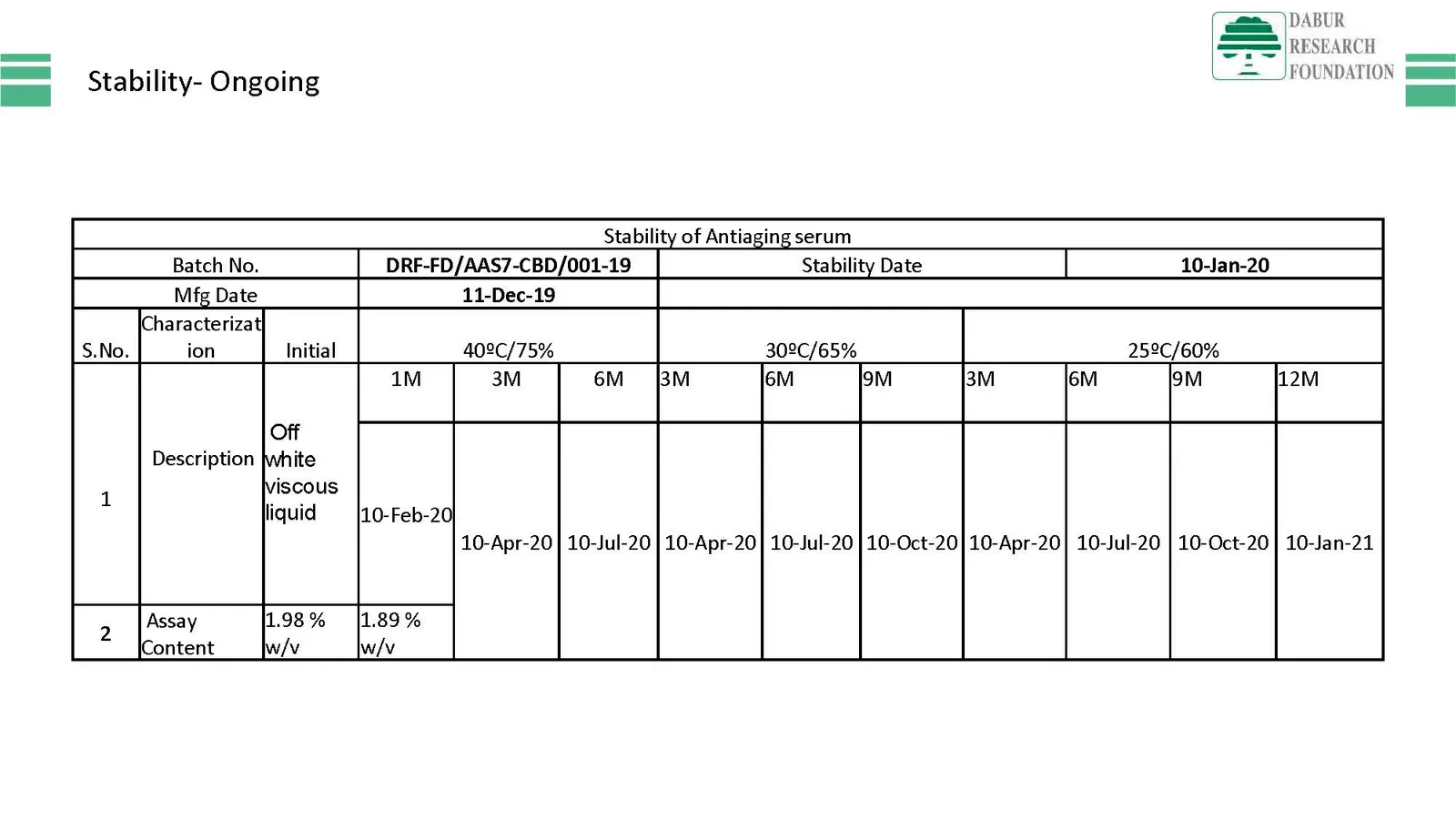
Slide 91
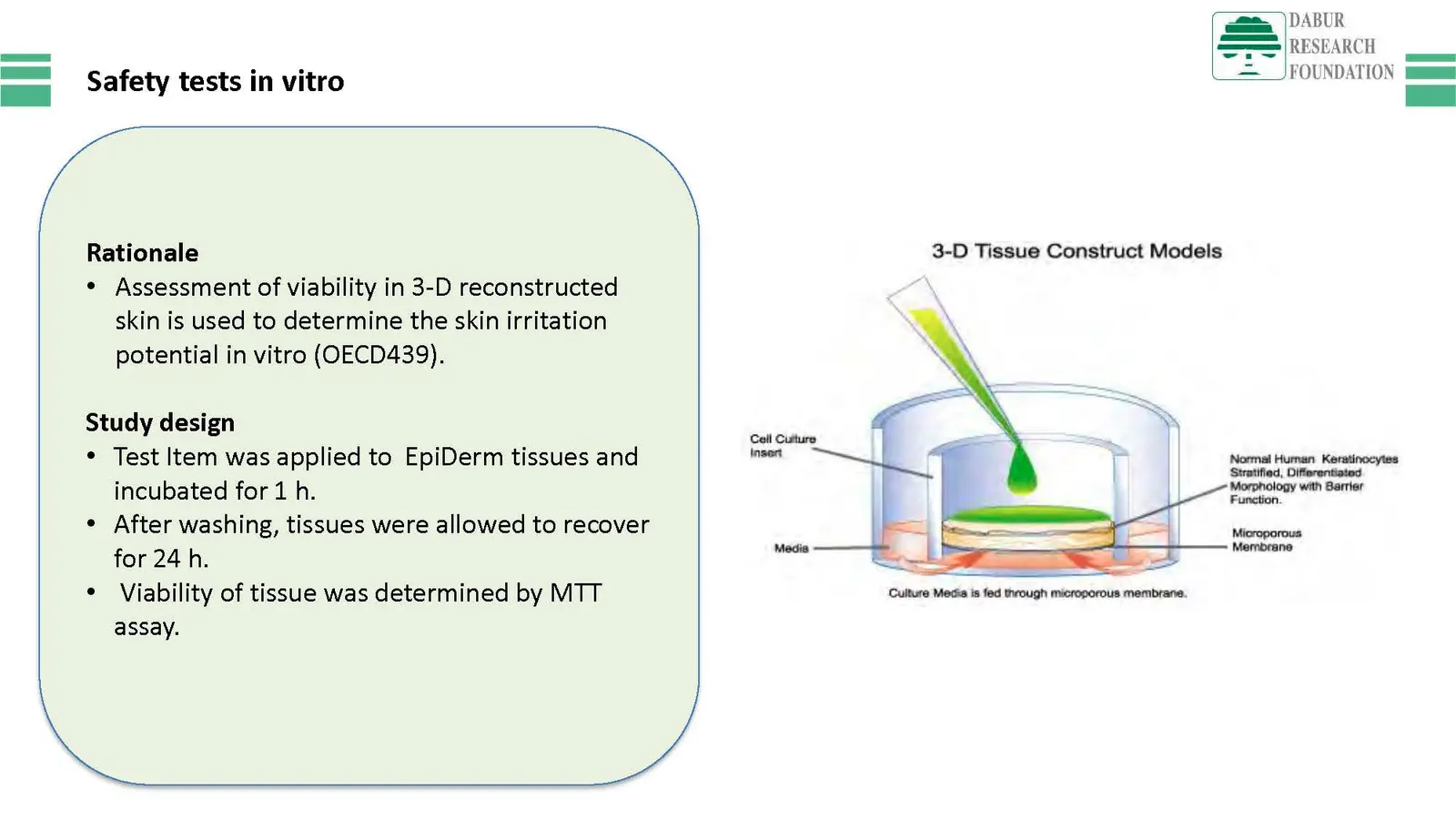
Slide 92
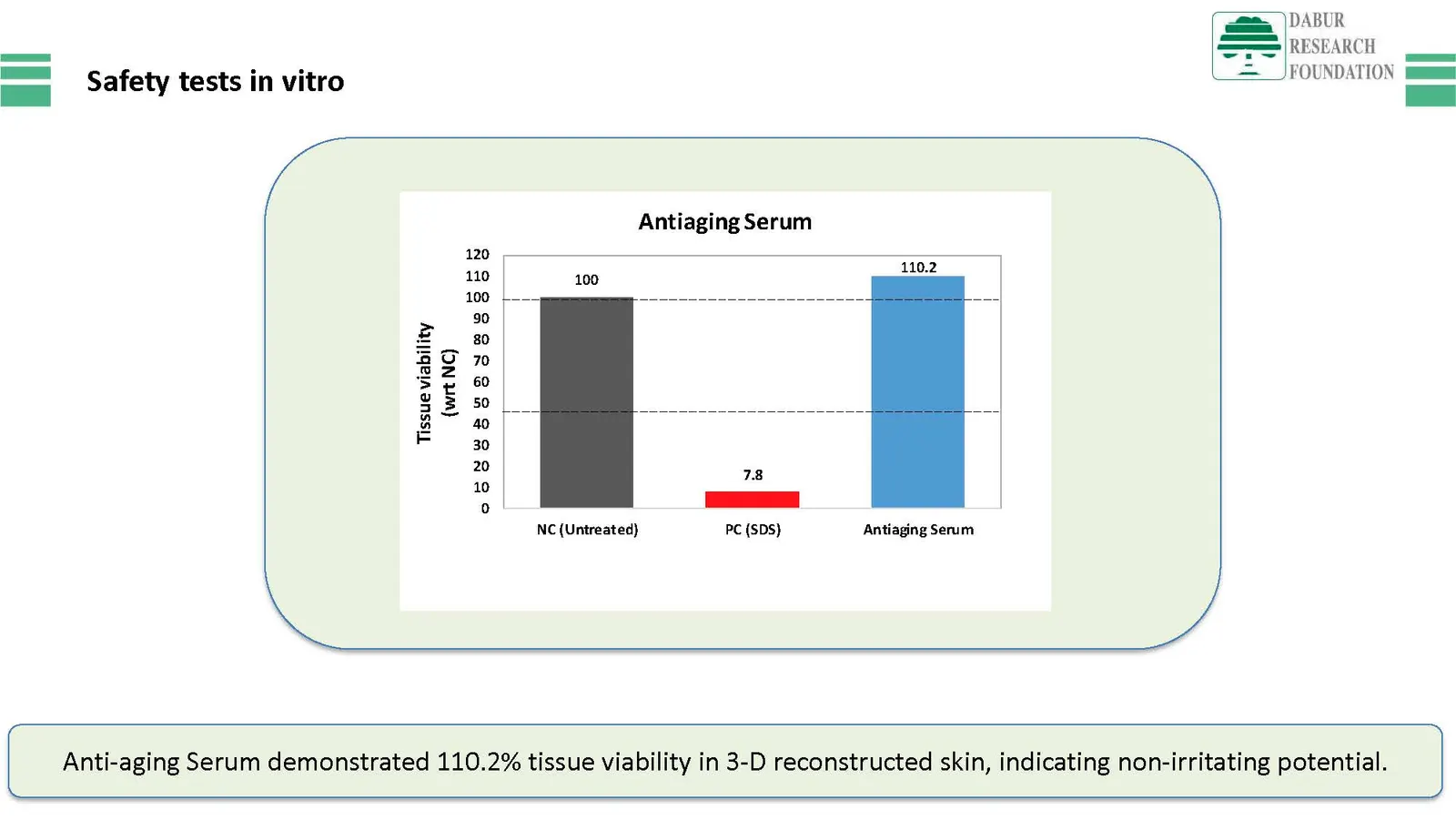
Slide 93
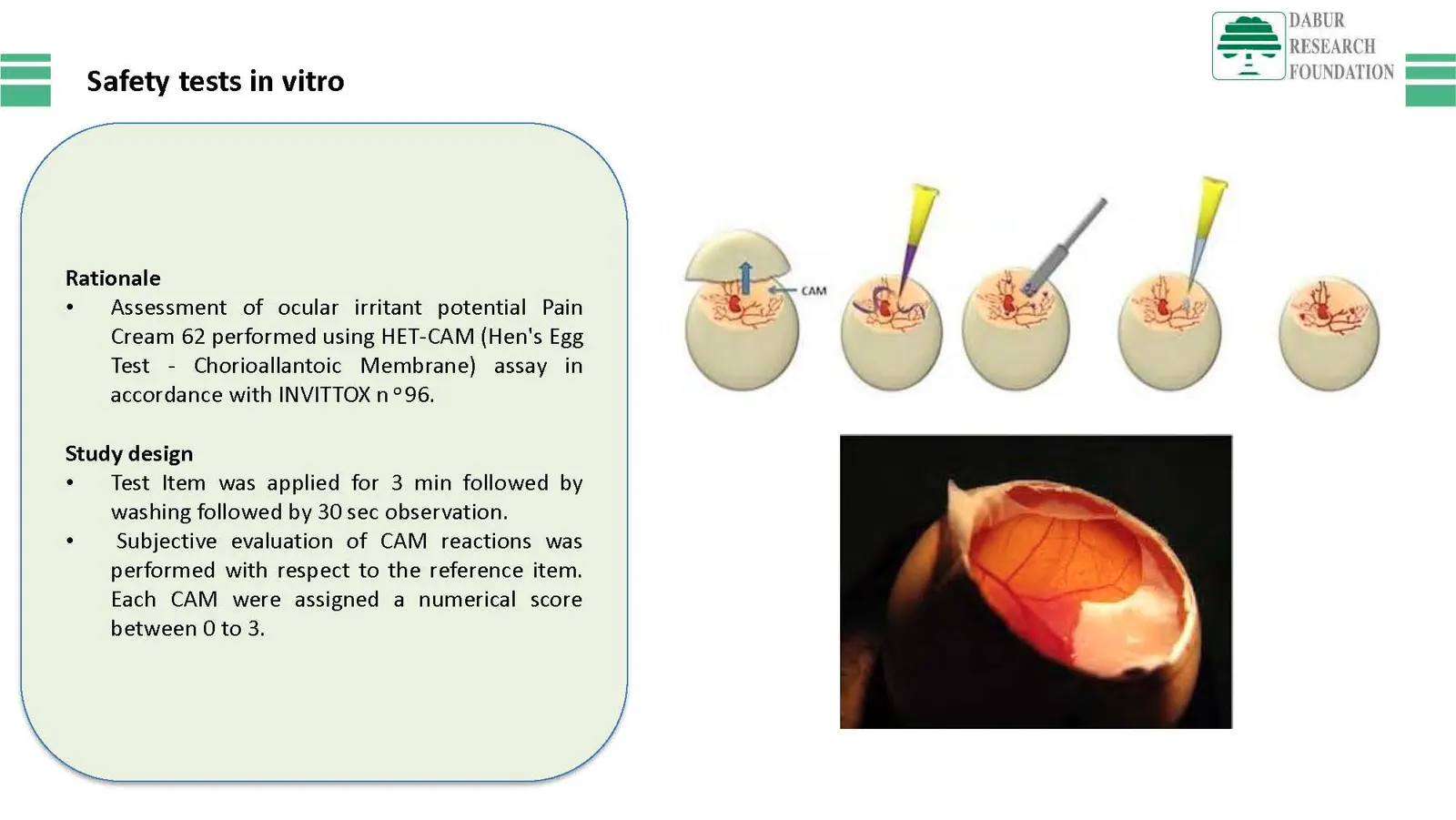
Slide 94
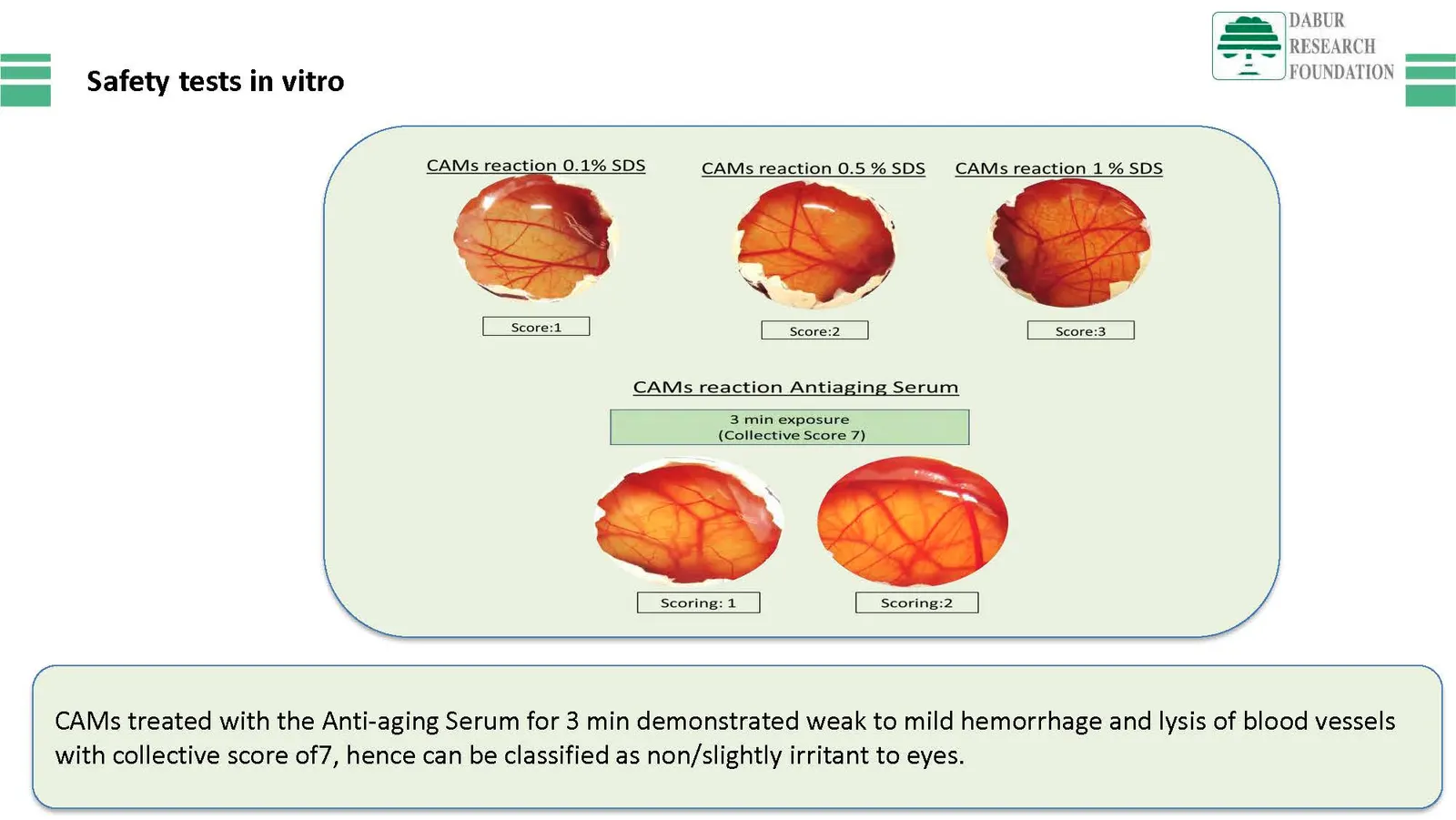
Slide 95
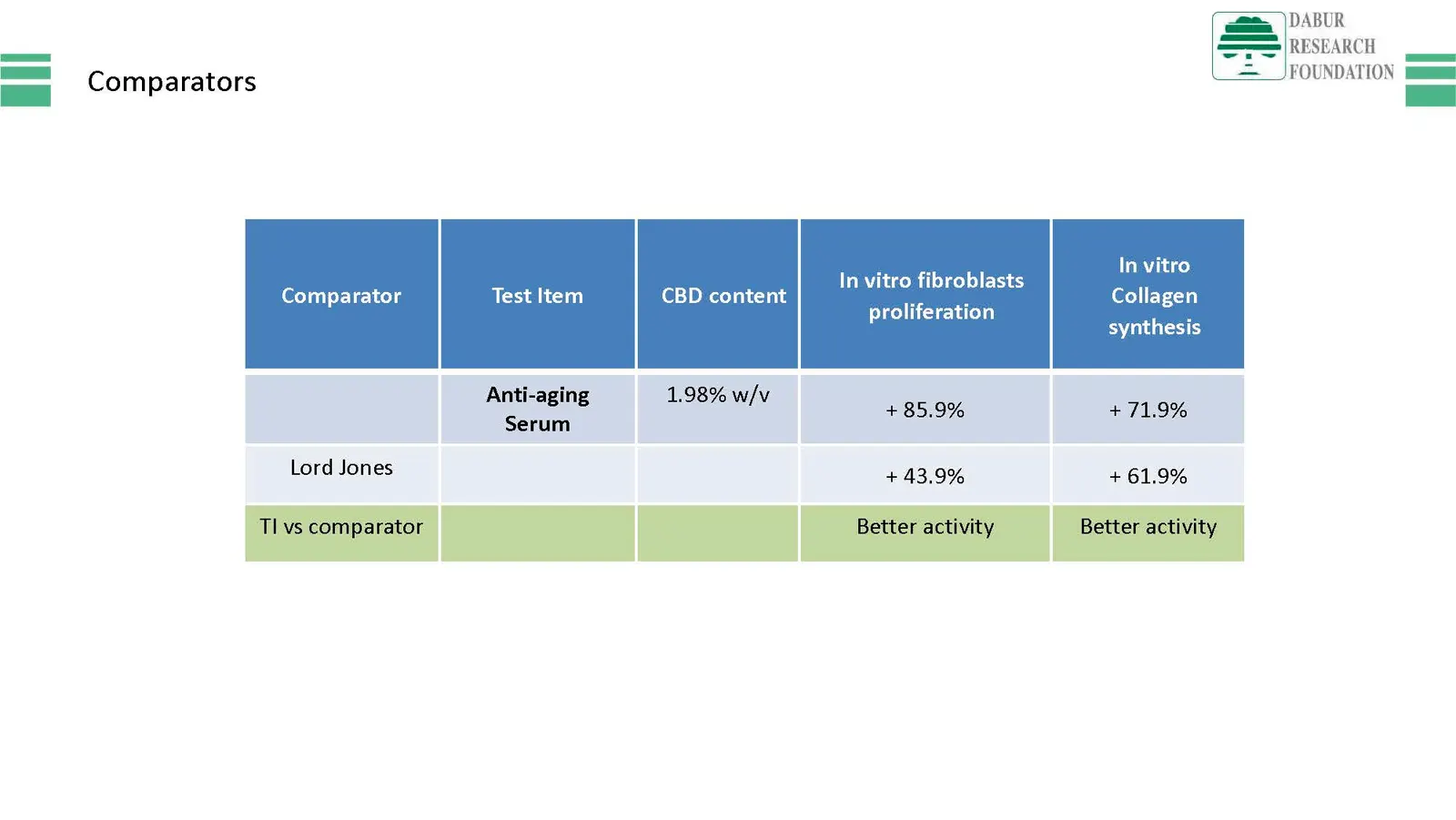
Slide 96
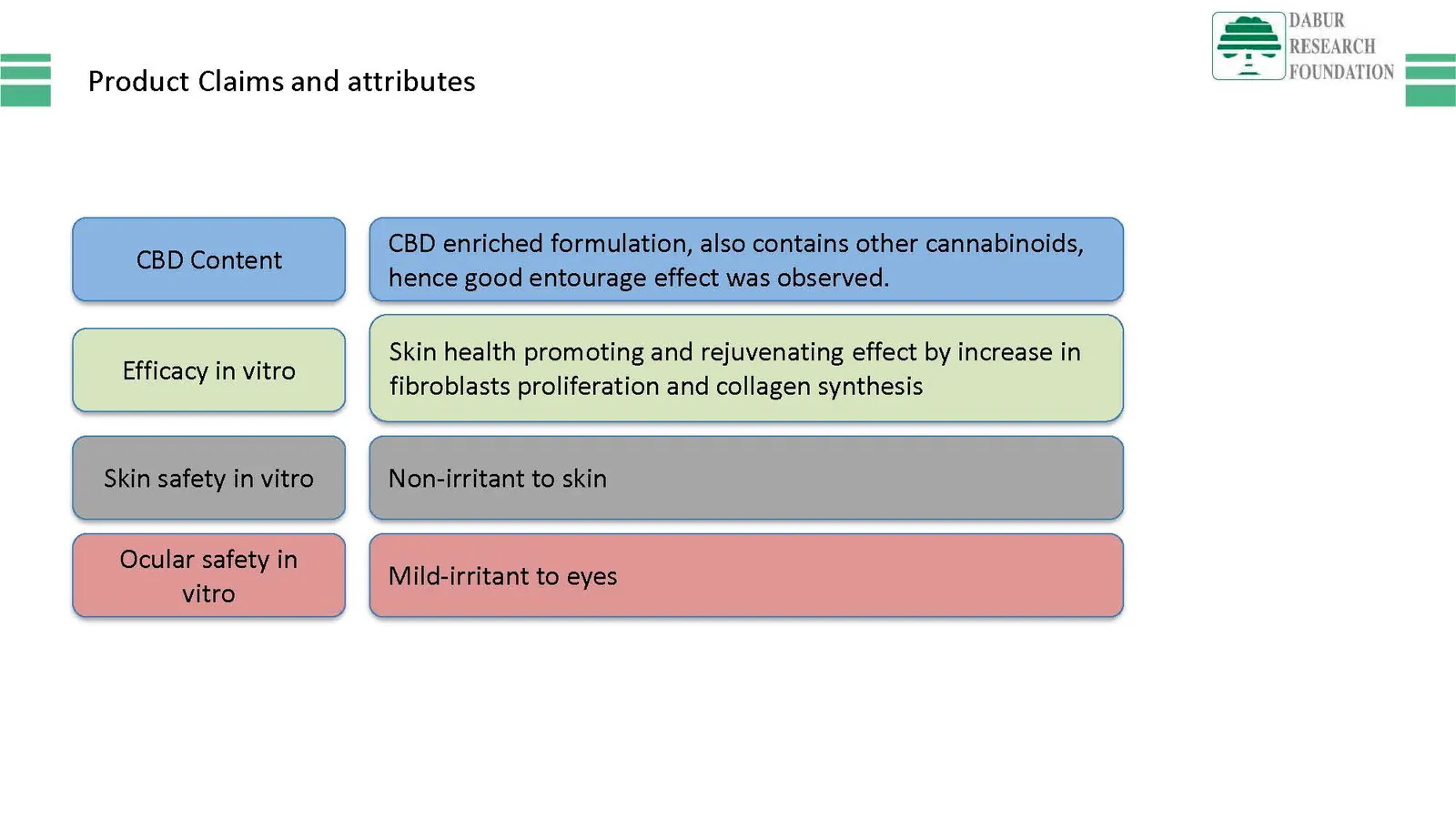
Slide 97
Slide 98
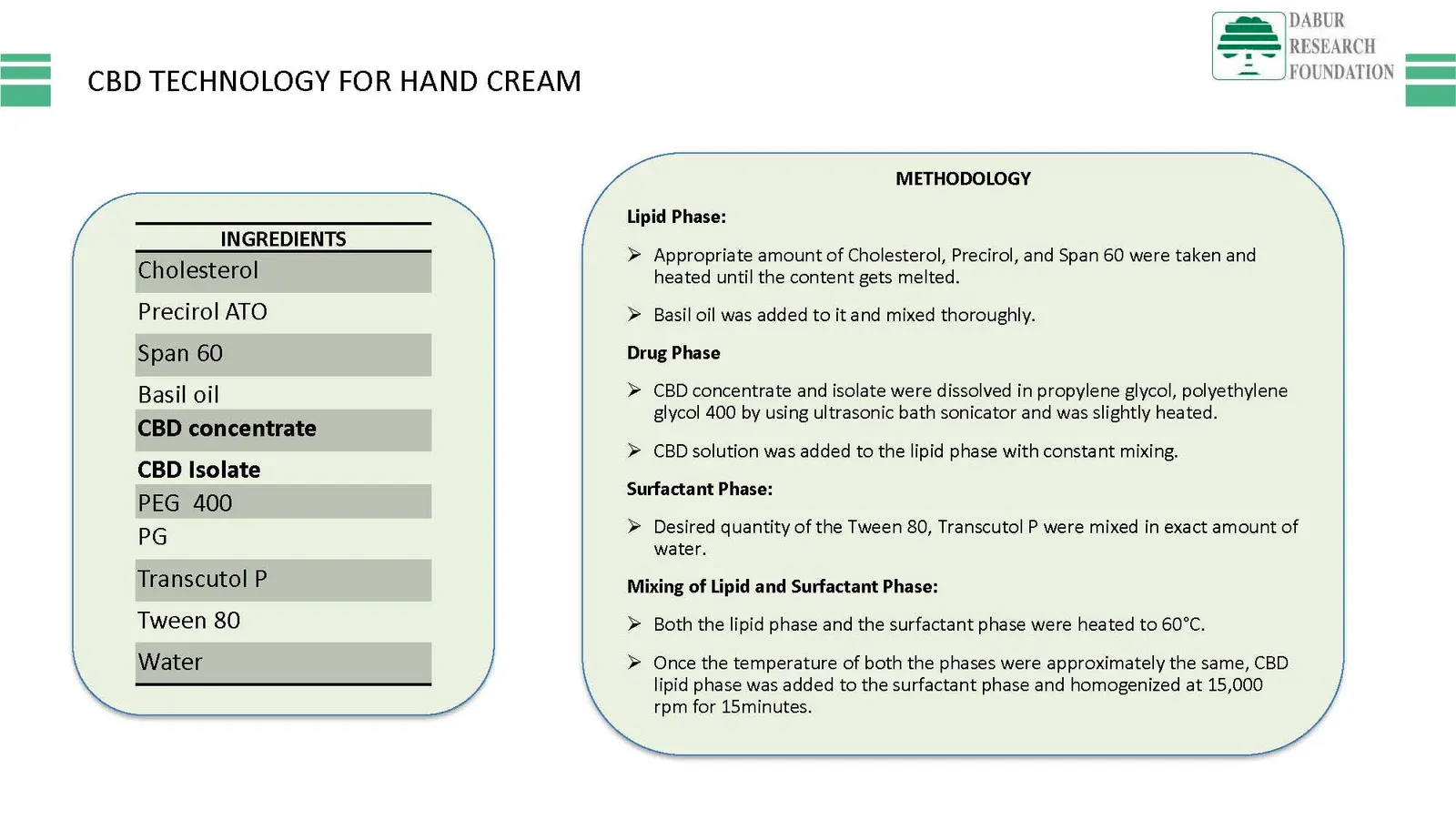
Slide 99
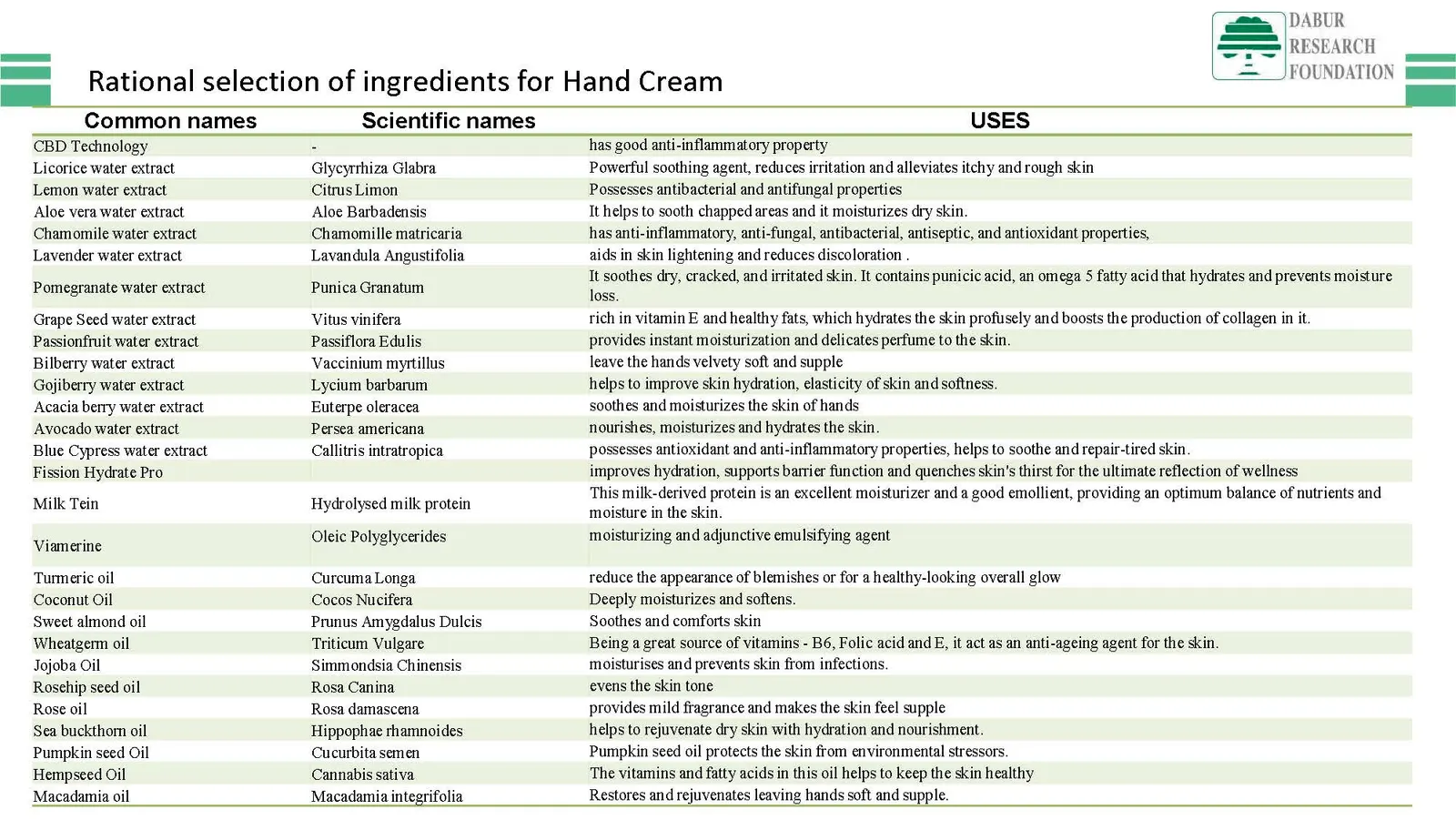
Slide 100
Slide 101
Slide 102
Slide 103
Slide 104
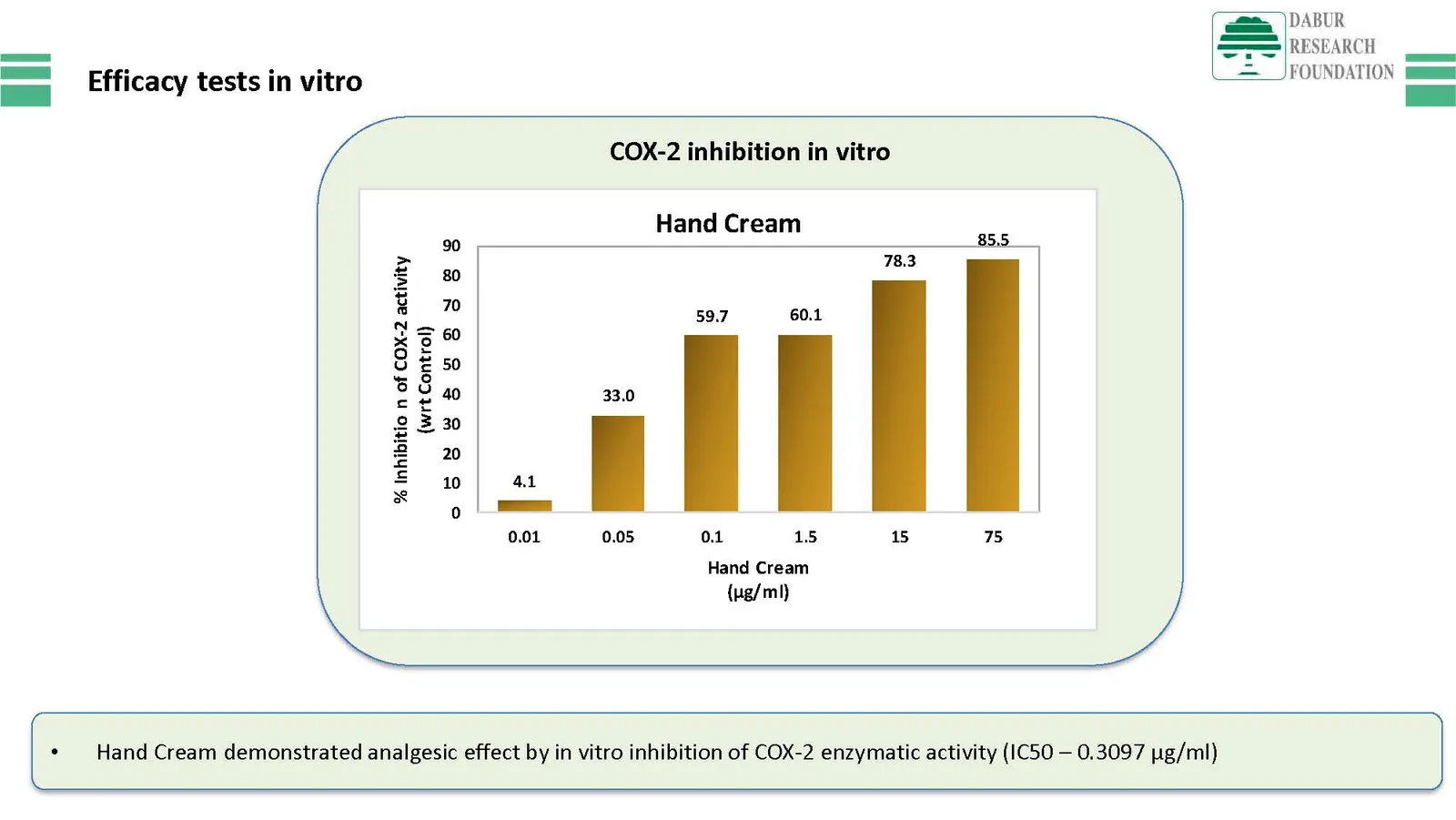
Slide 105
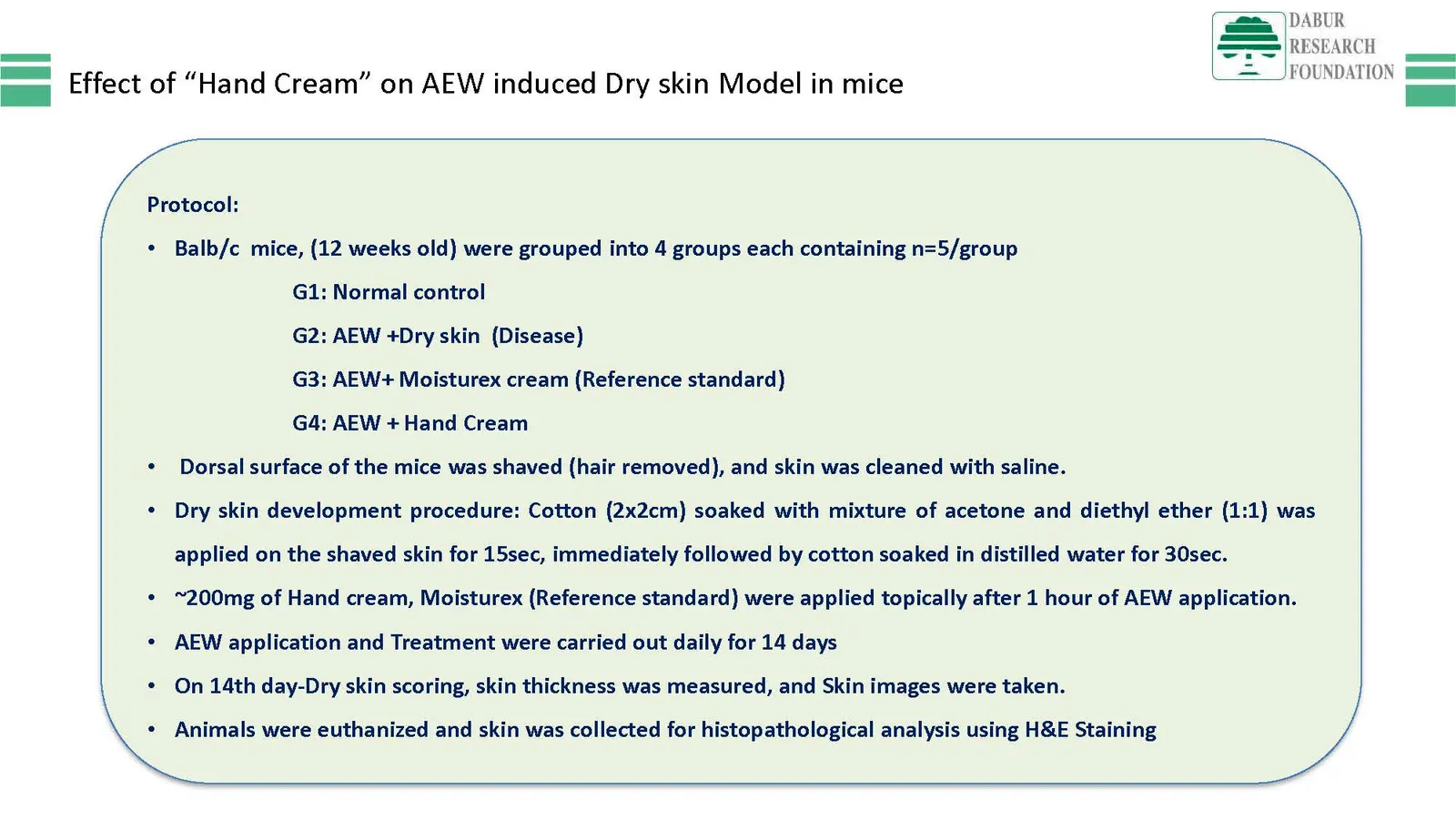
Slide 106
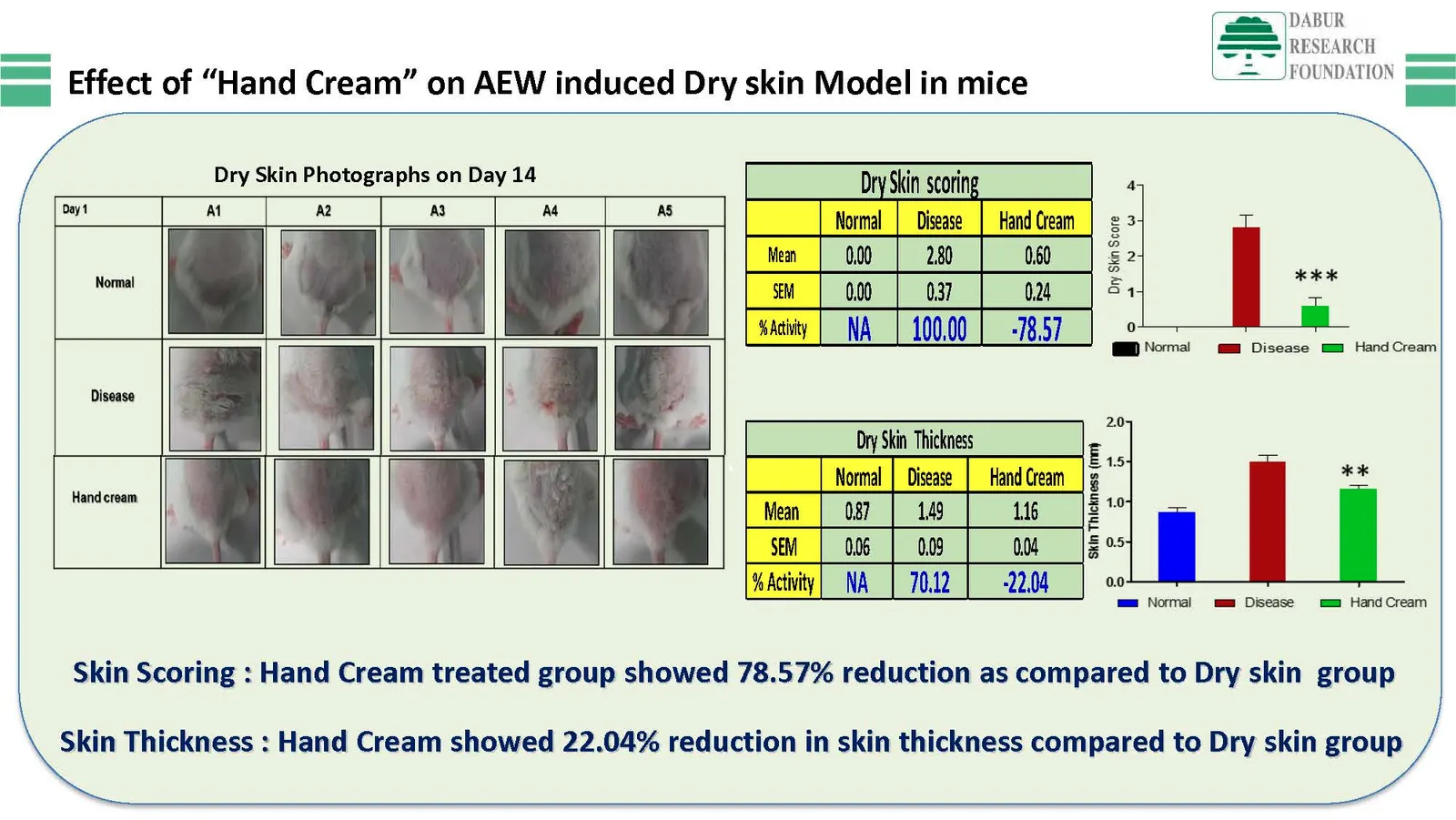
Slide 107
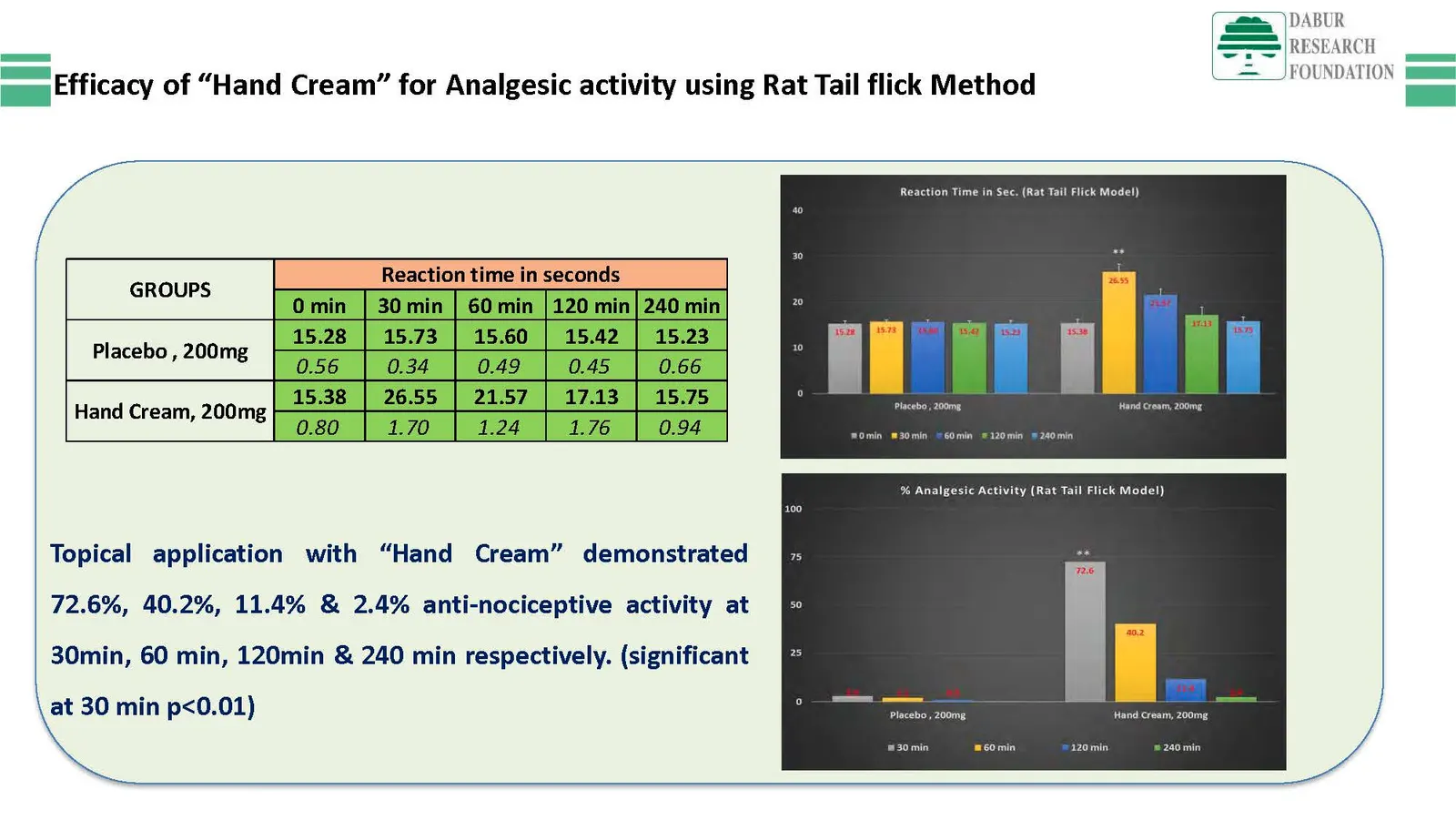
Slide 108
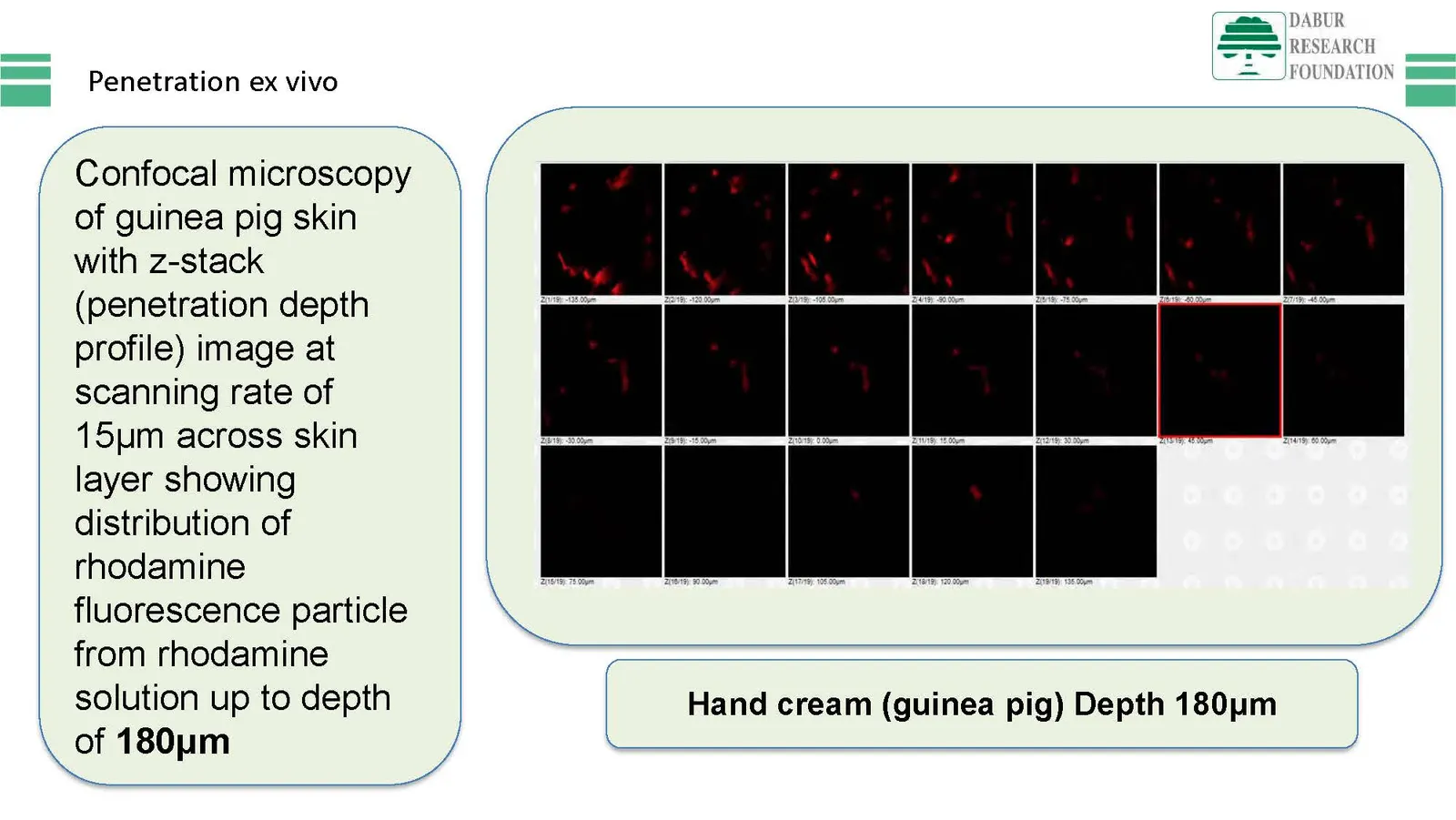
Slide 109
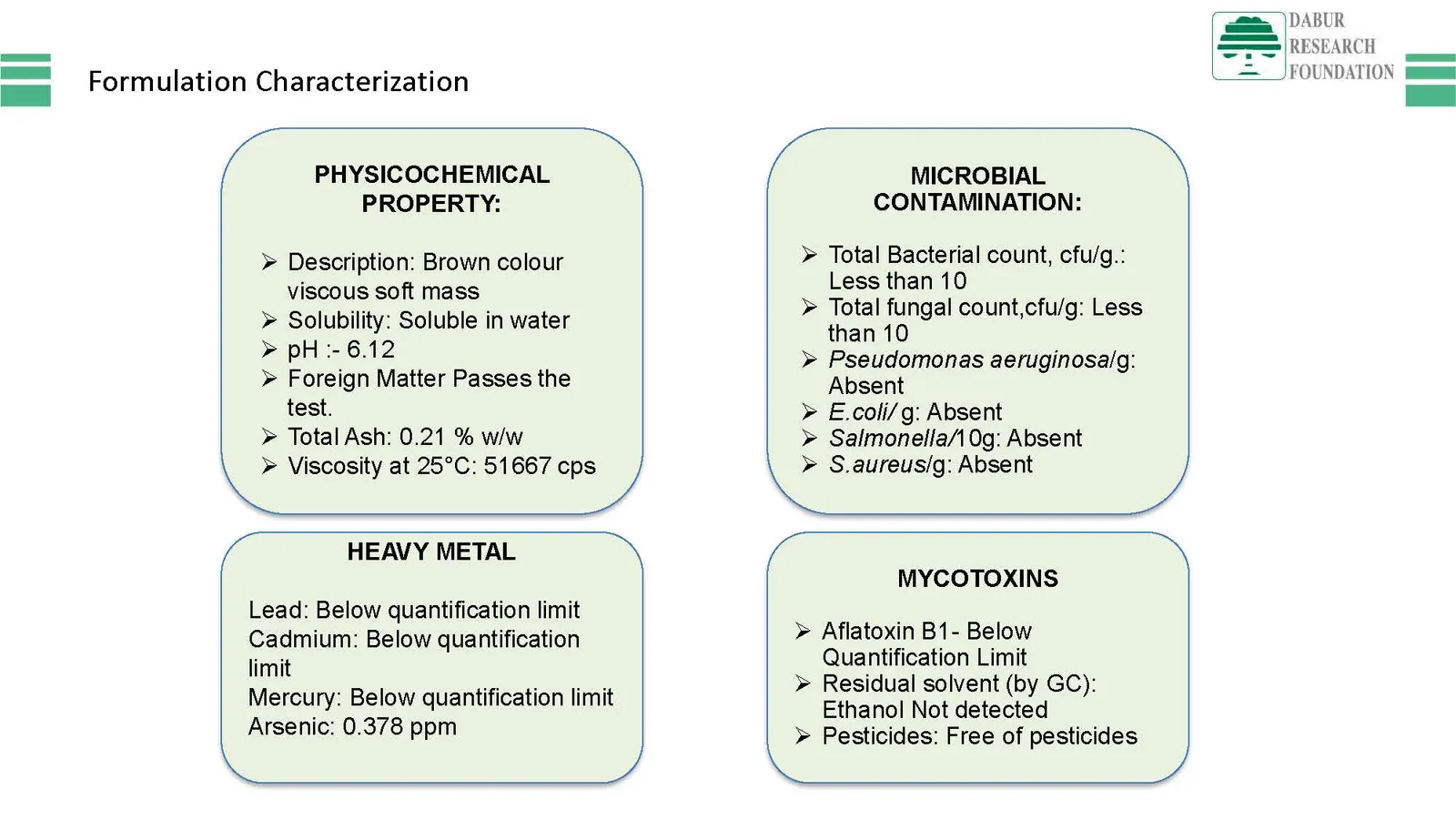
Slide 110
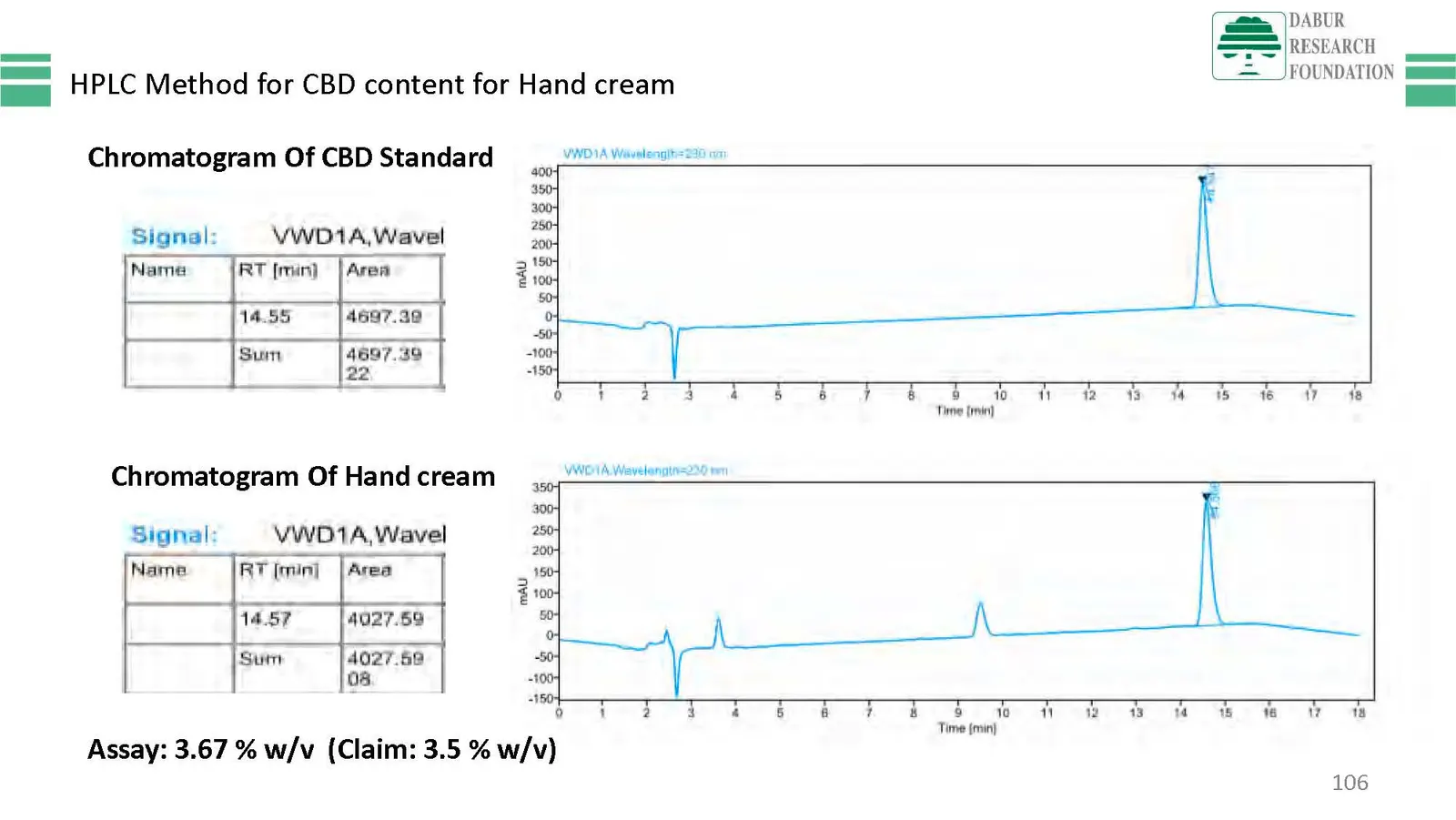
Slide 111
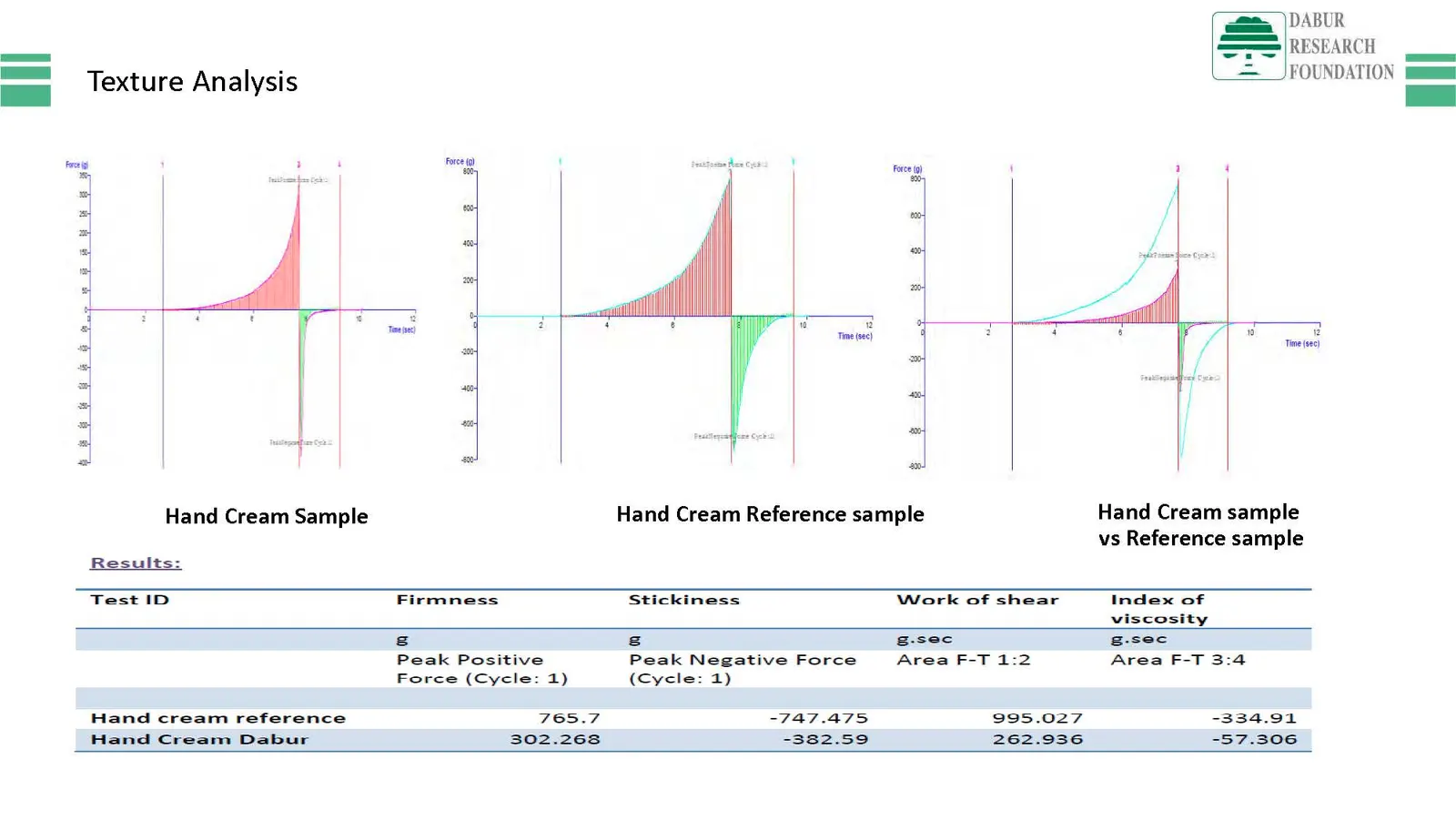
Slide 112
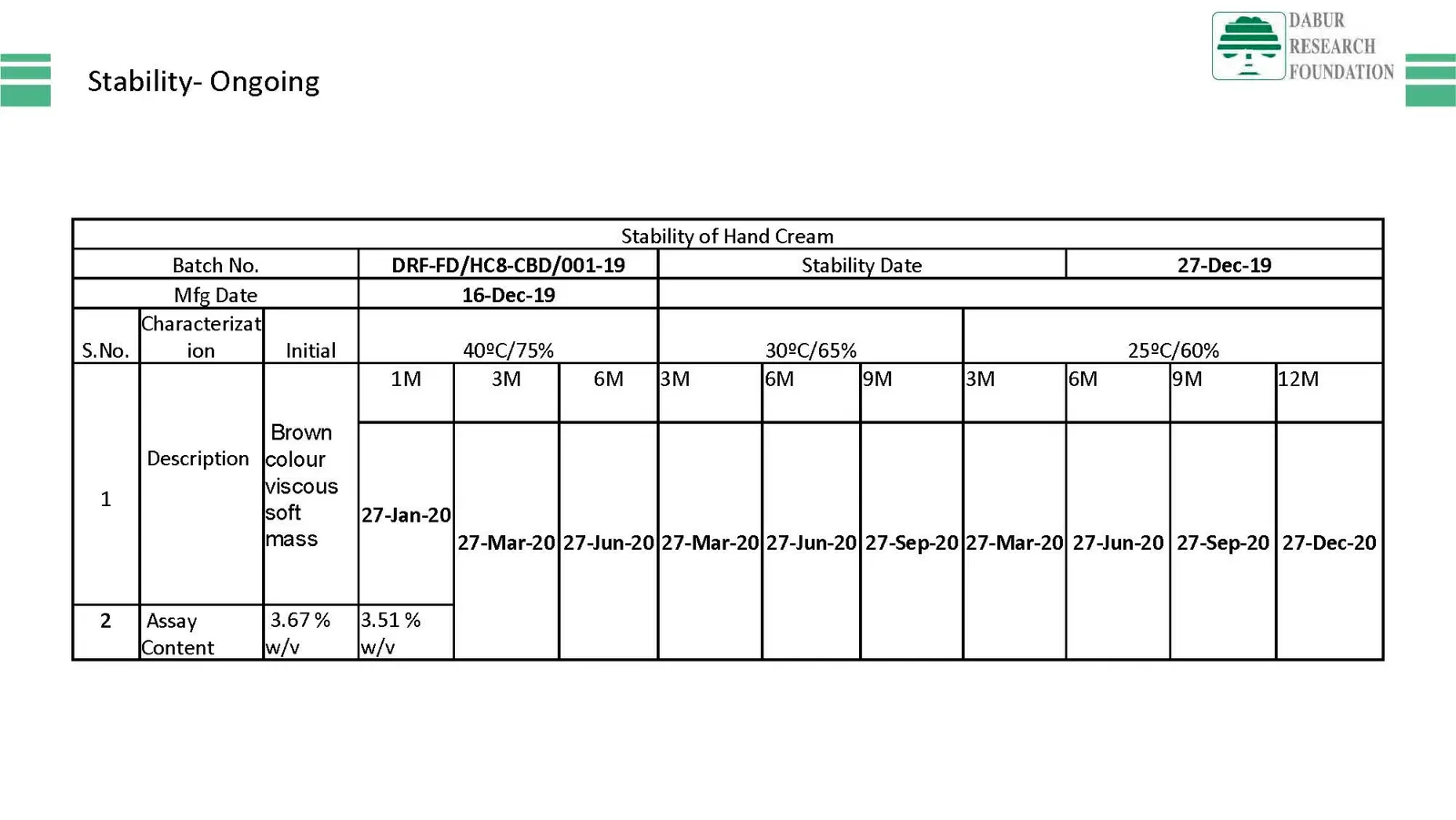
Slide 113
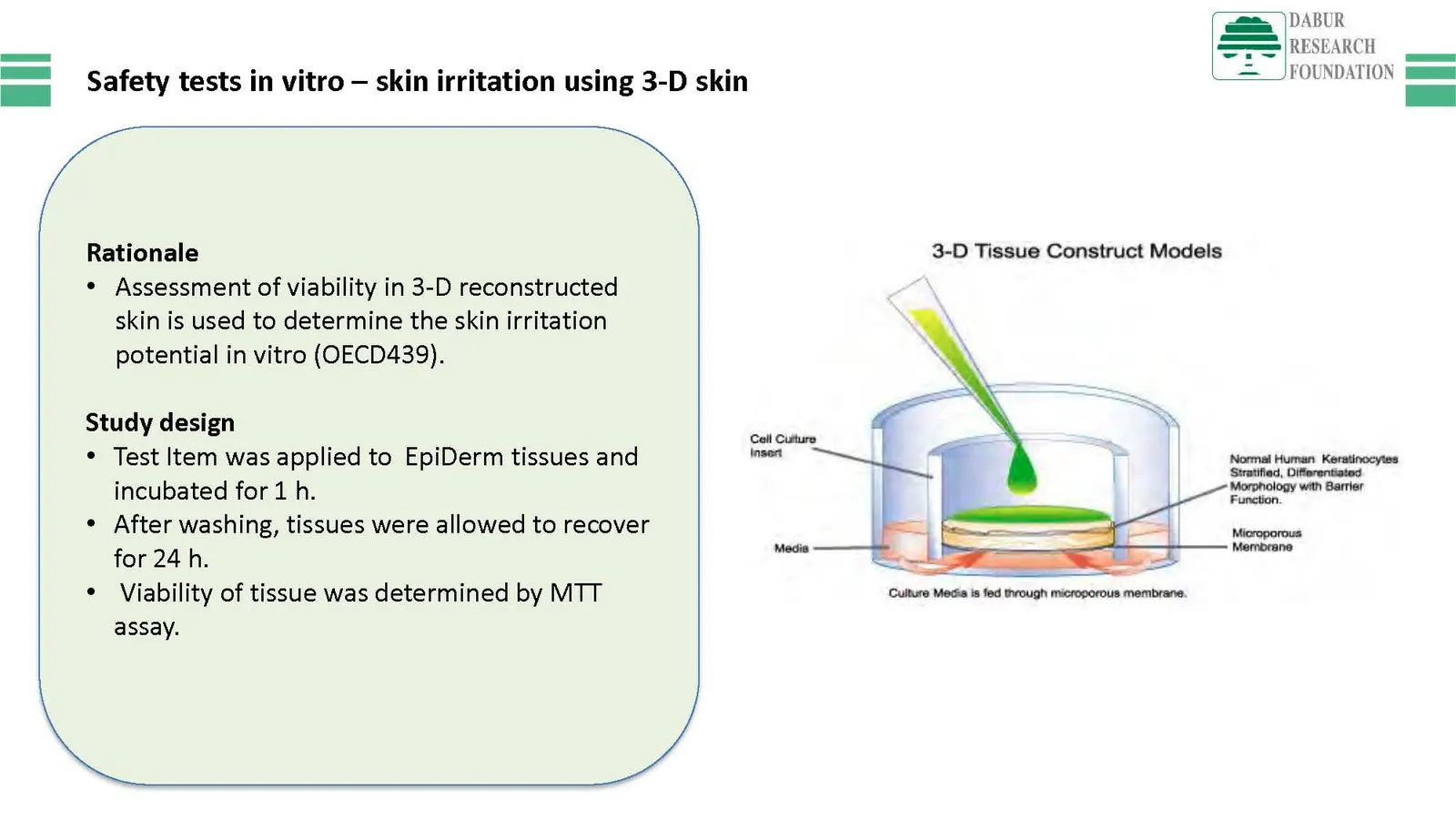
Slide 114
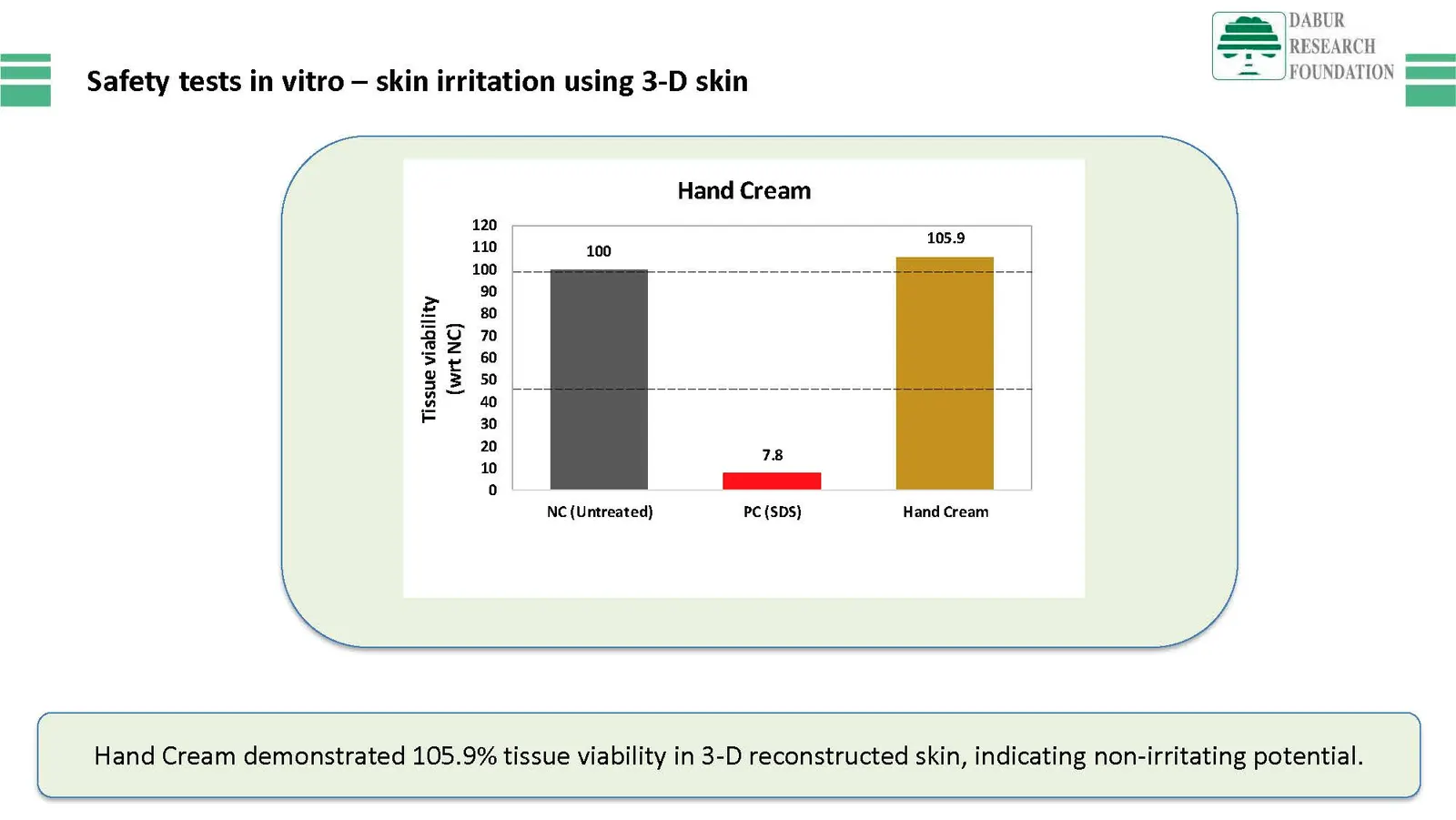
Slide 115
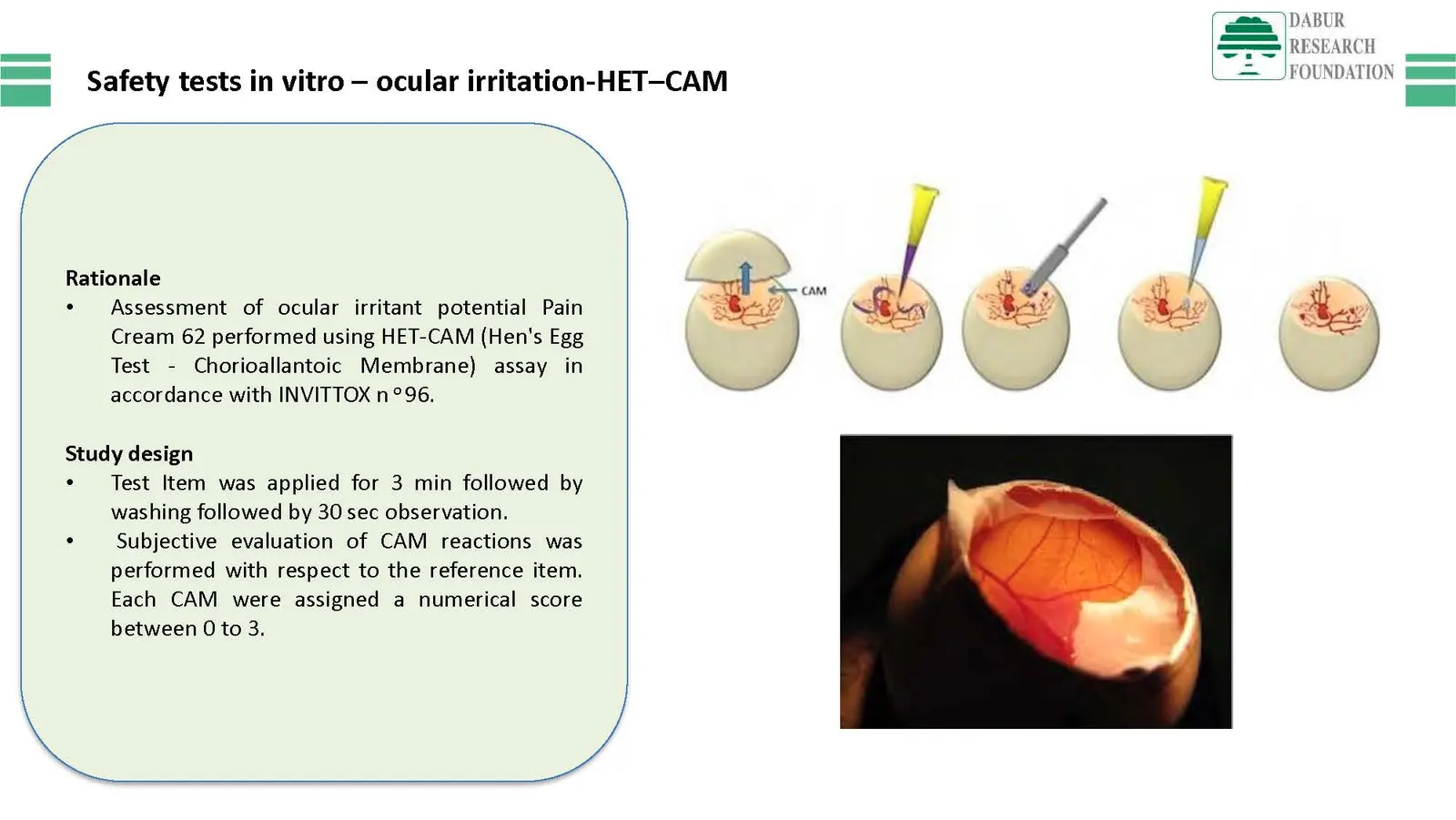
Slide 116
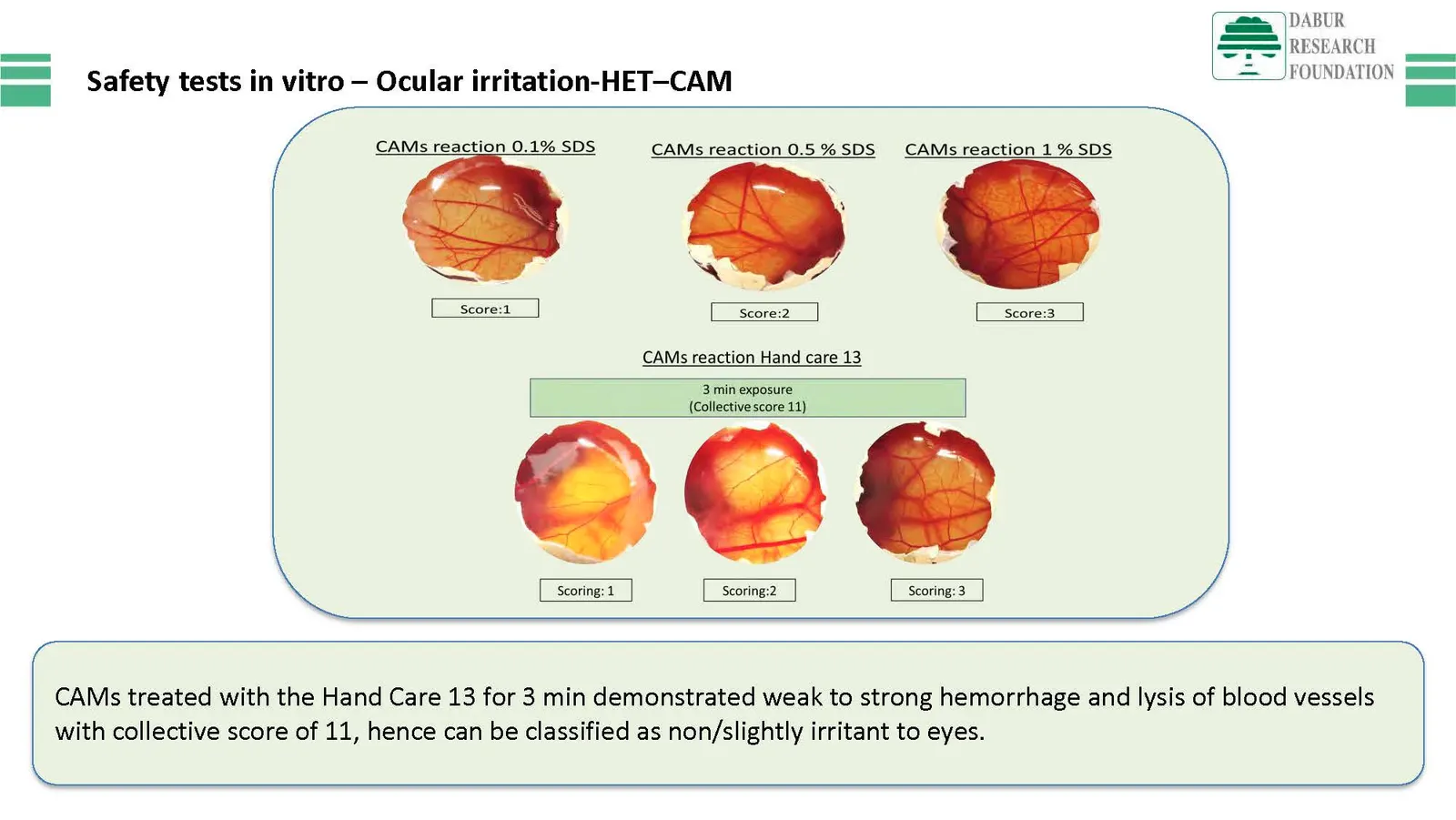
Slide 117
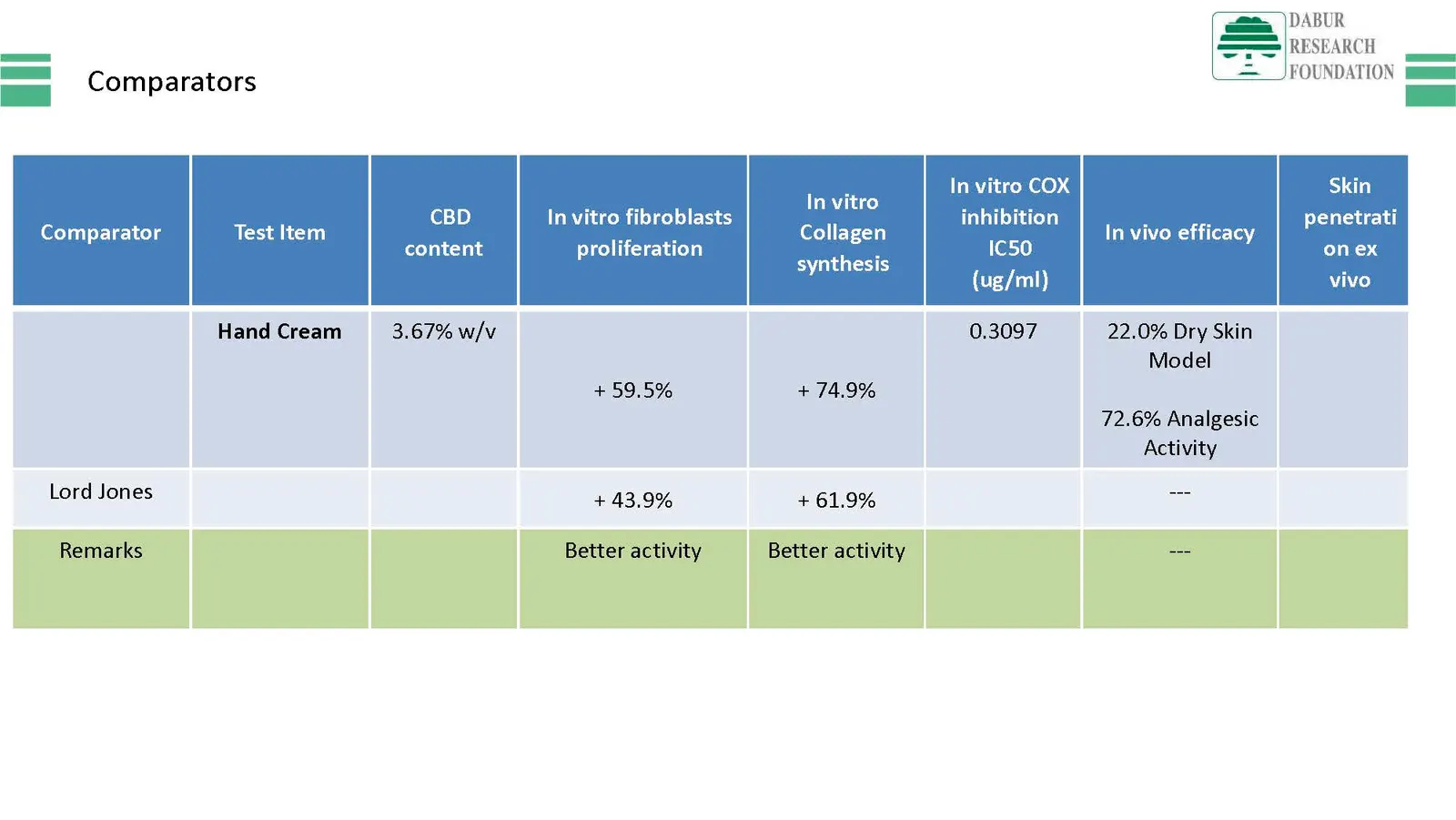
Slide 118
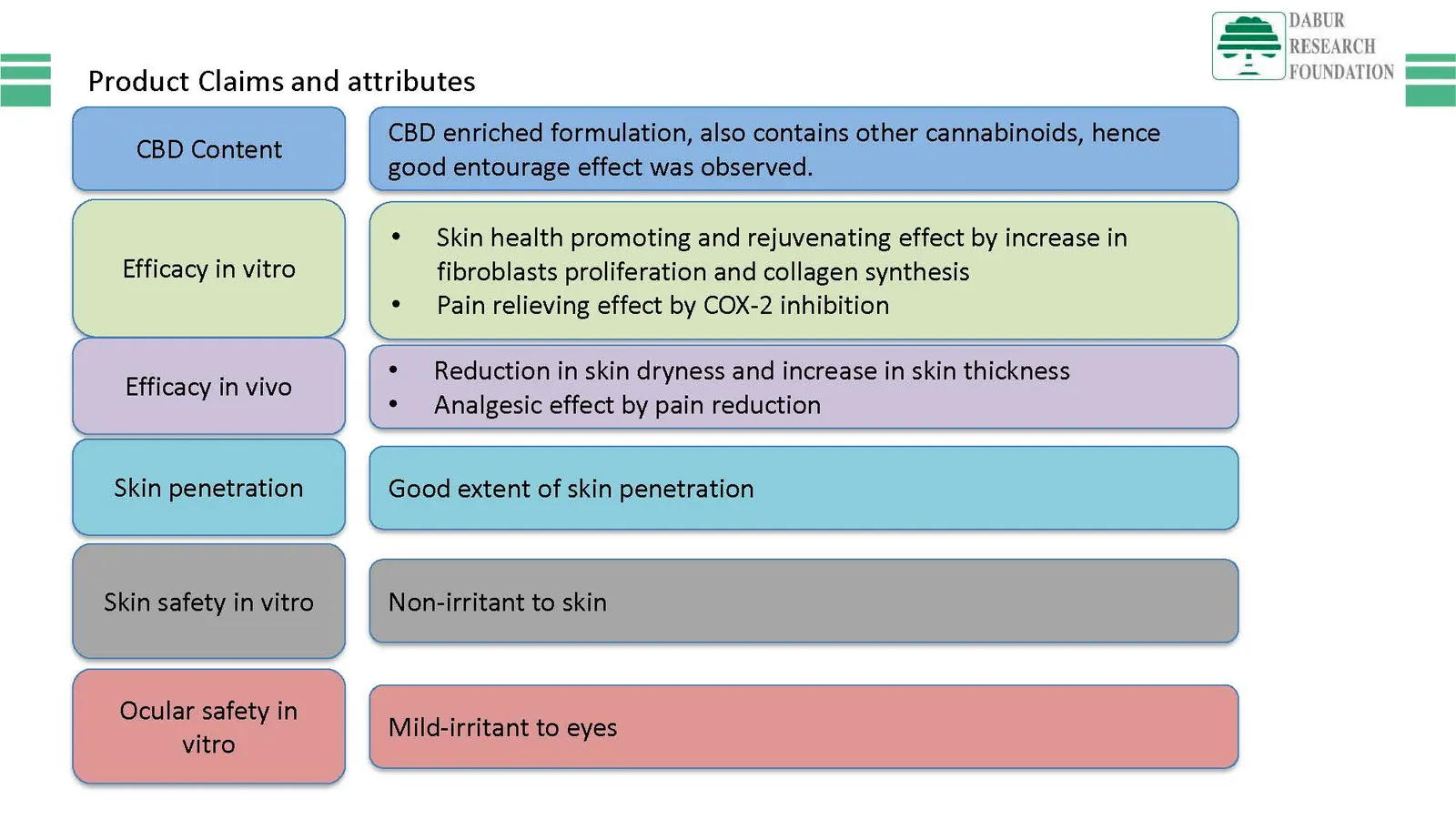
Slide 119
Slide 120
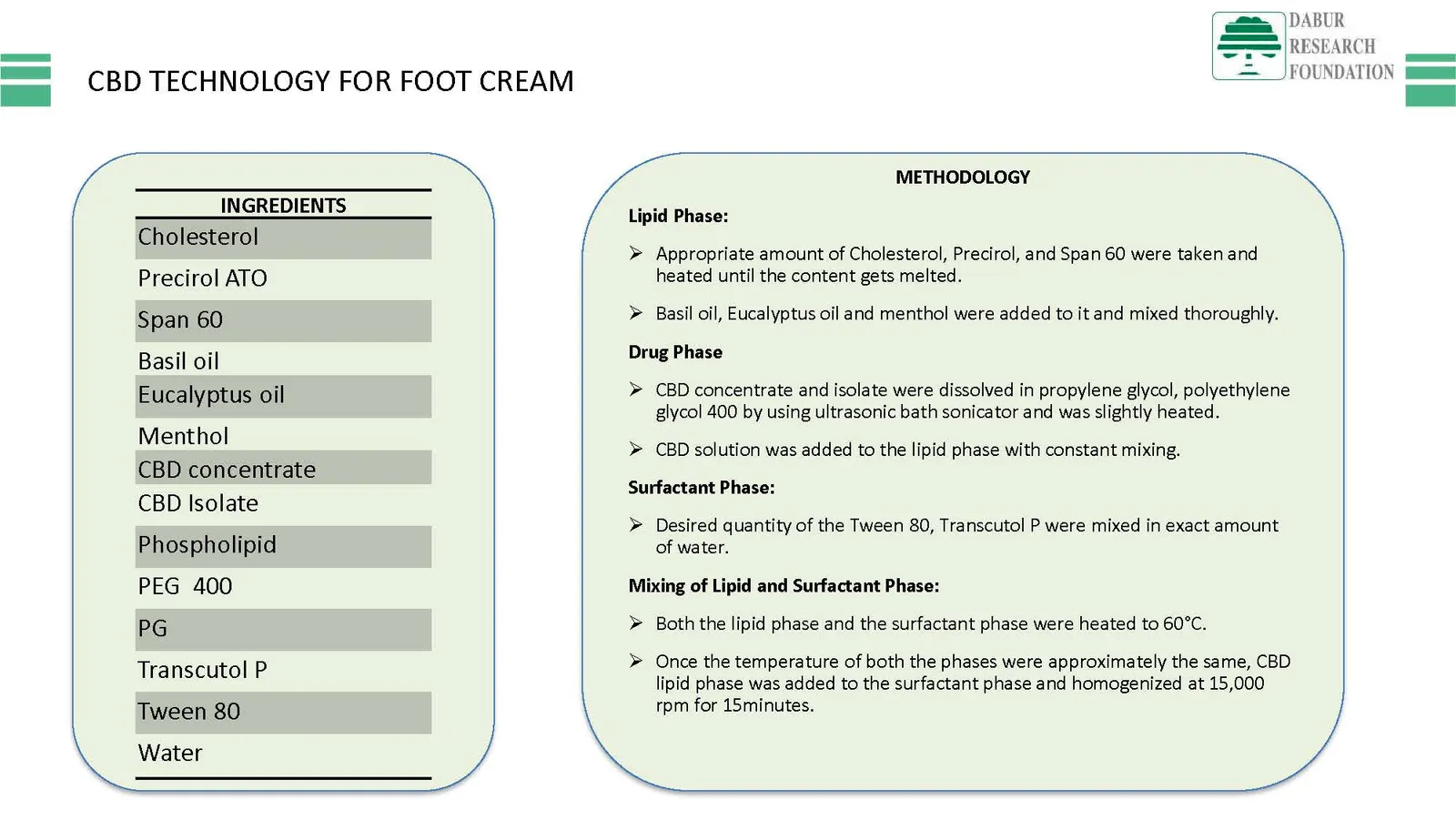
Slide 121
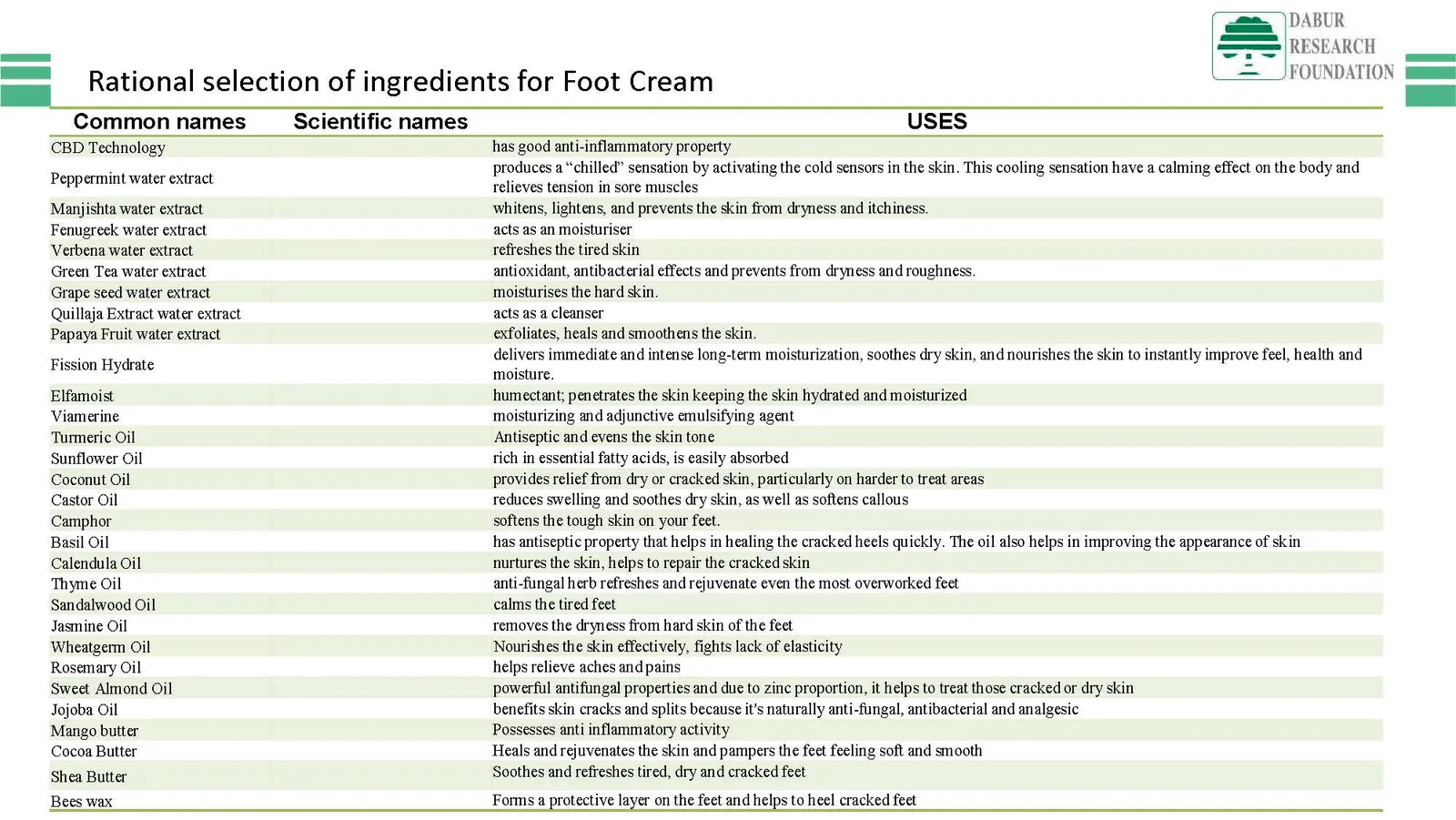
Slide 122
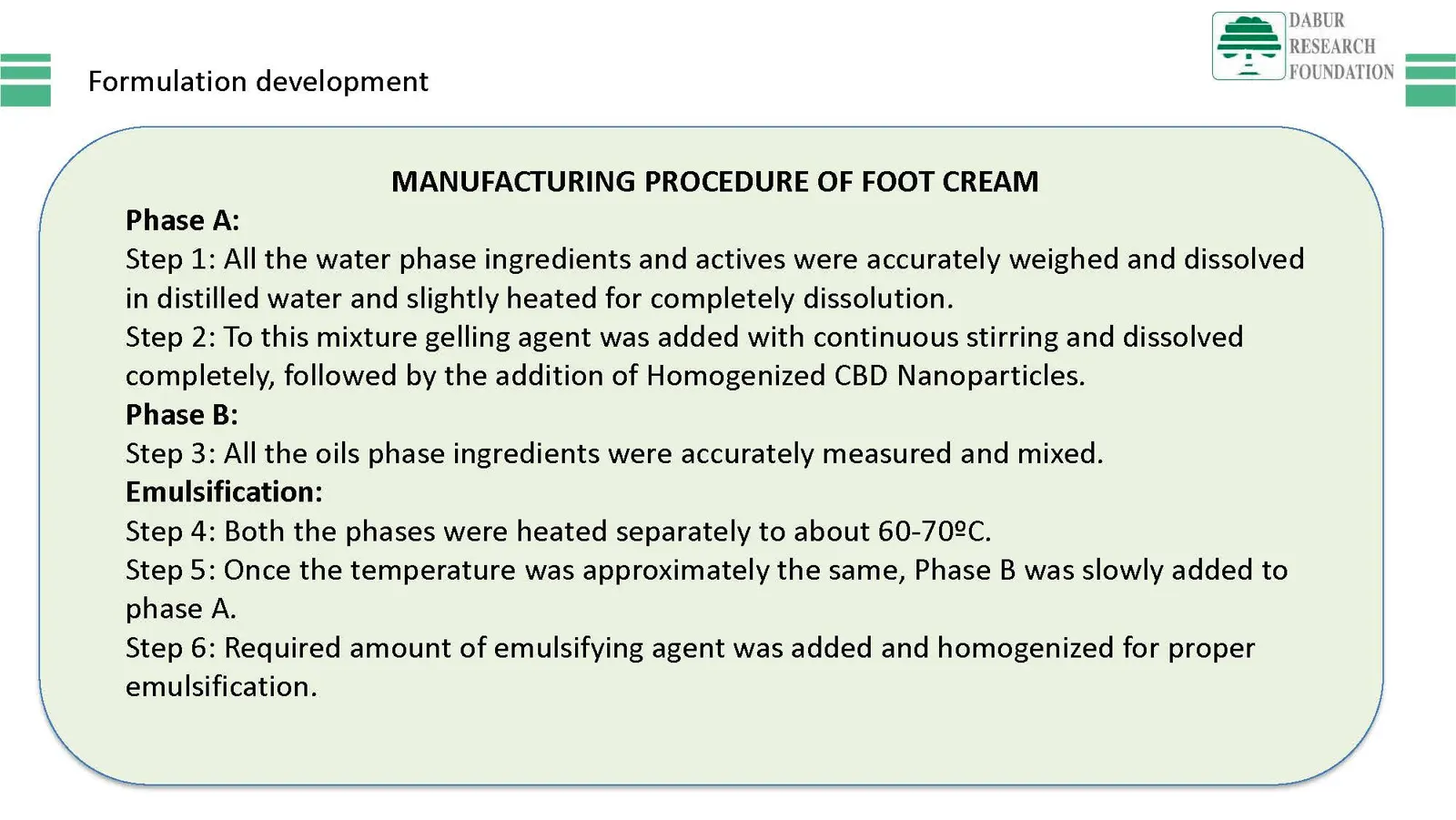
Slide 123
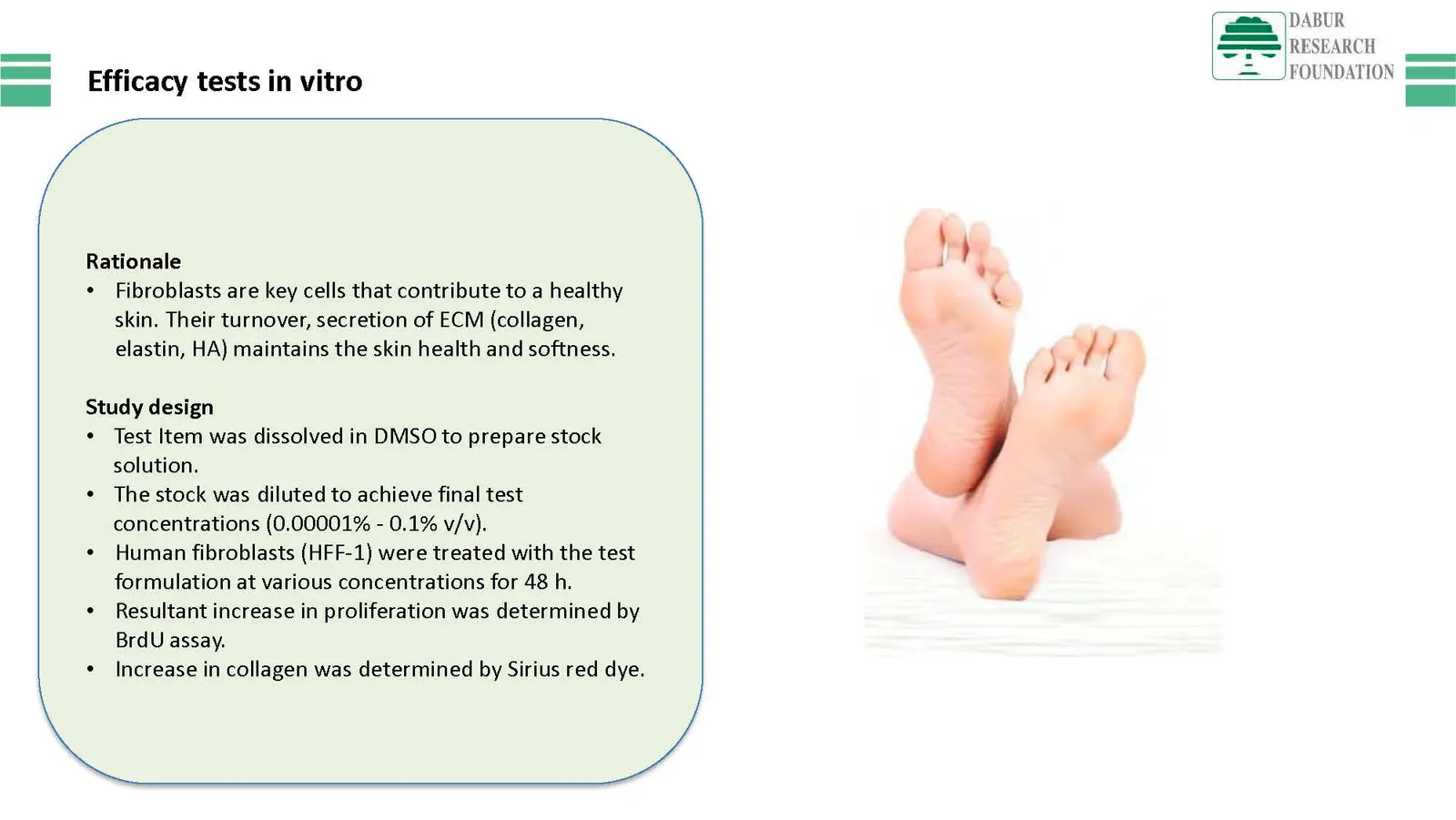
Slide 124
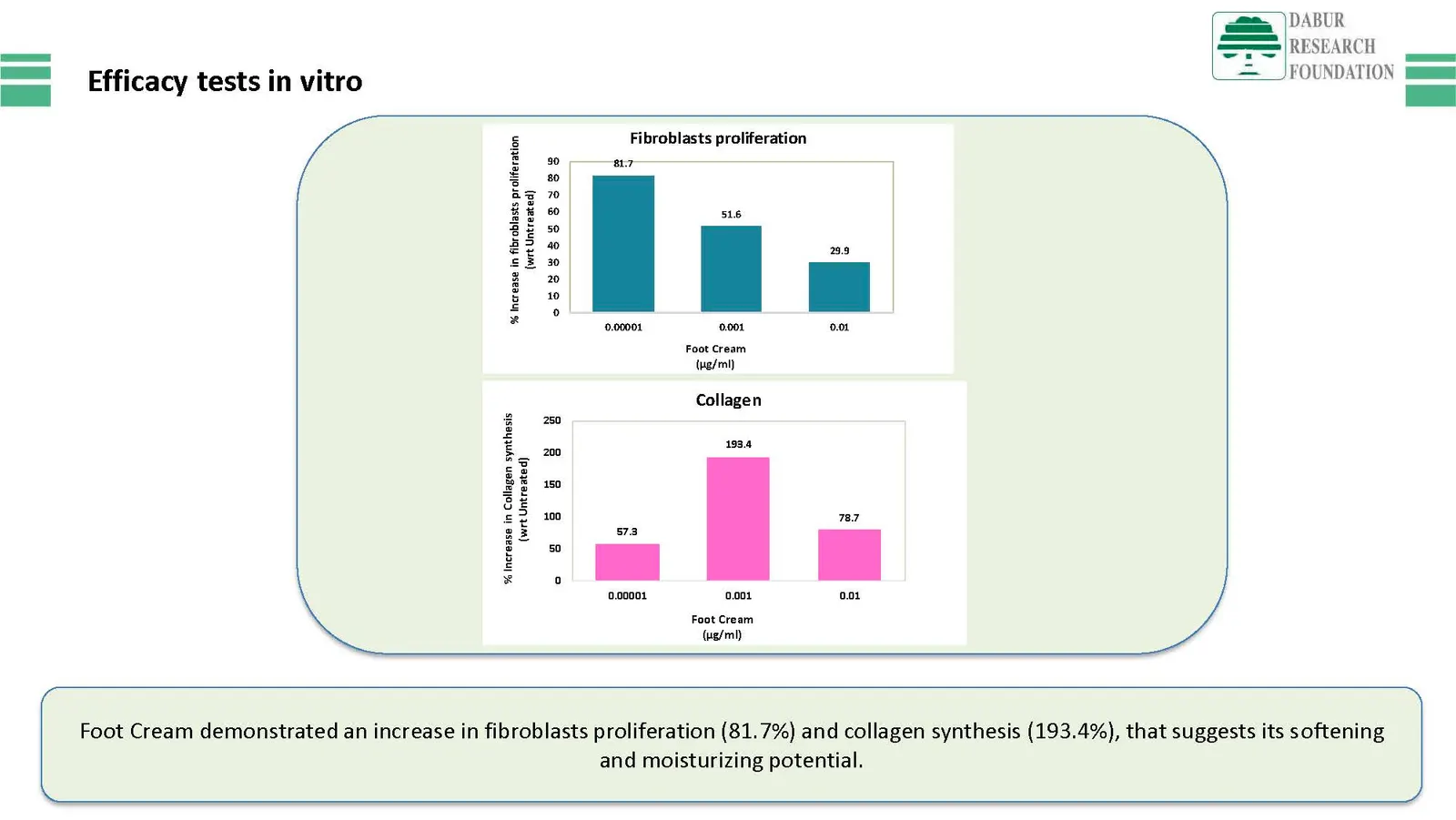
Slide 125
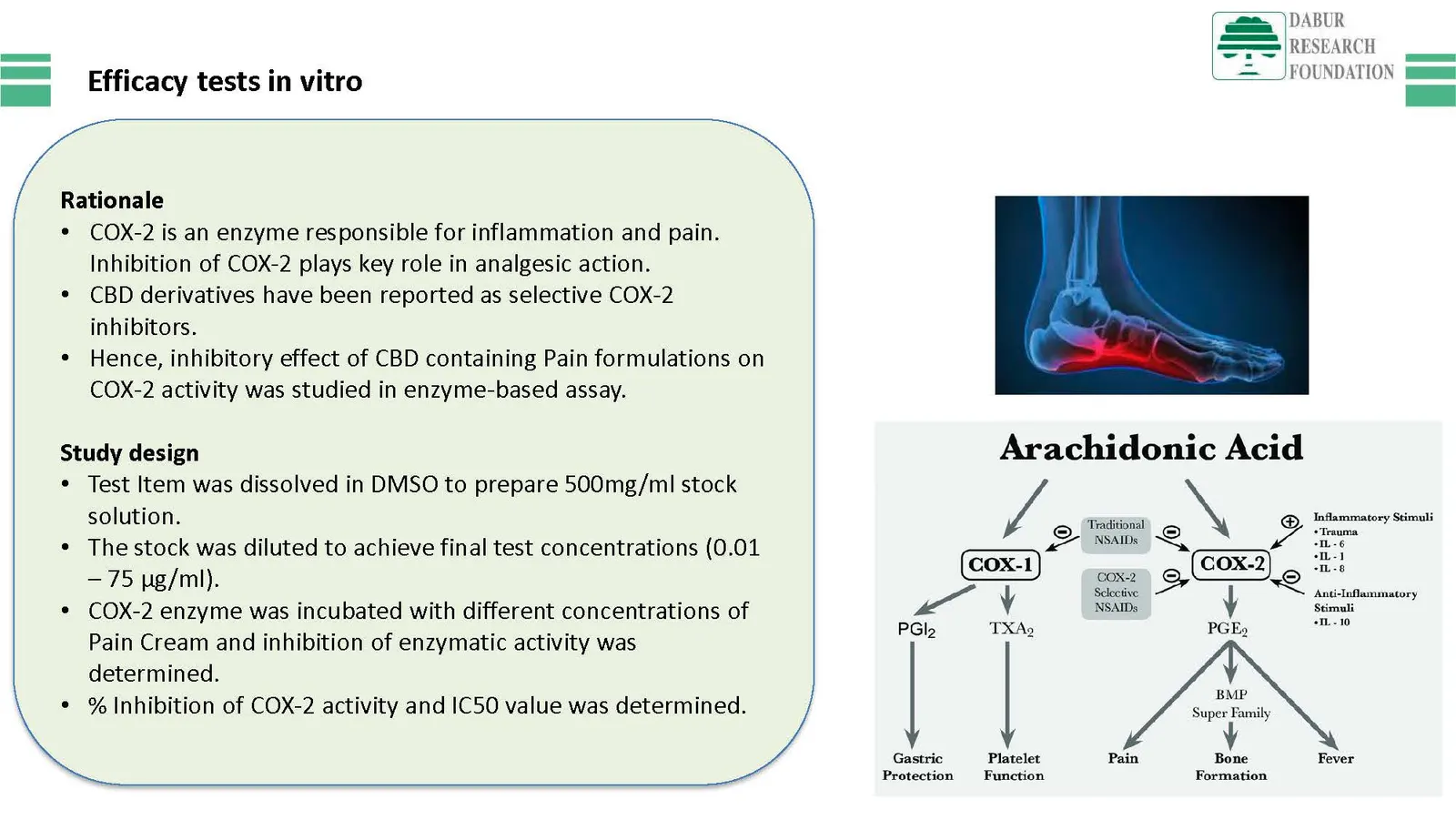
Slide 126
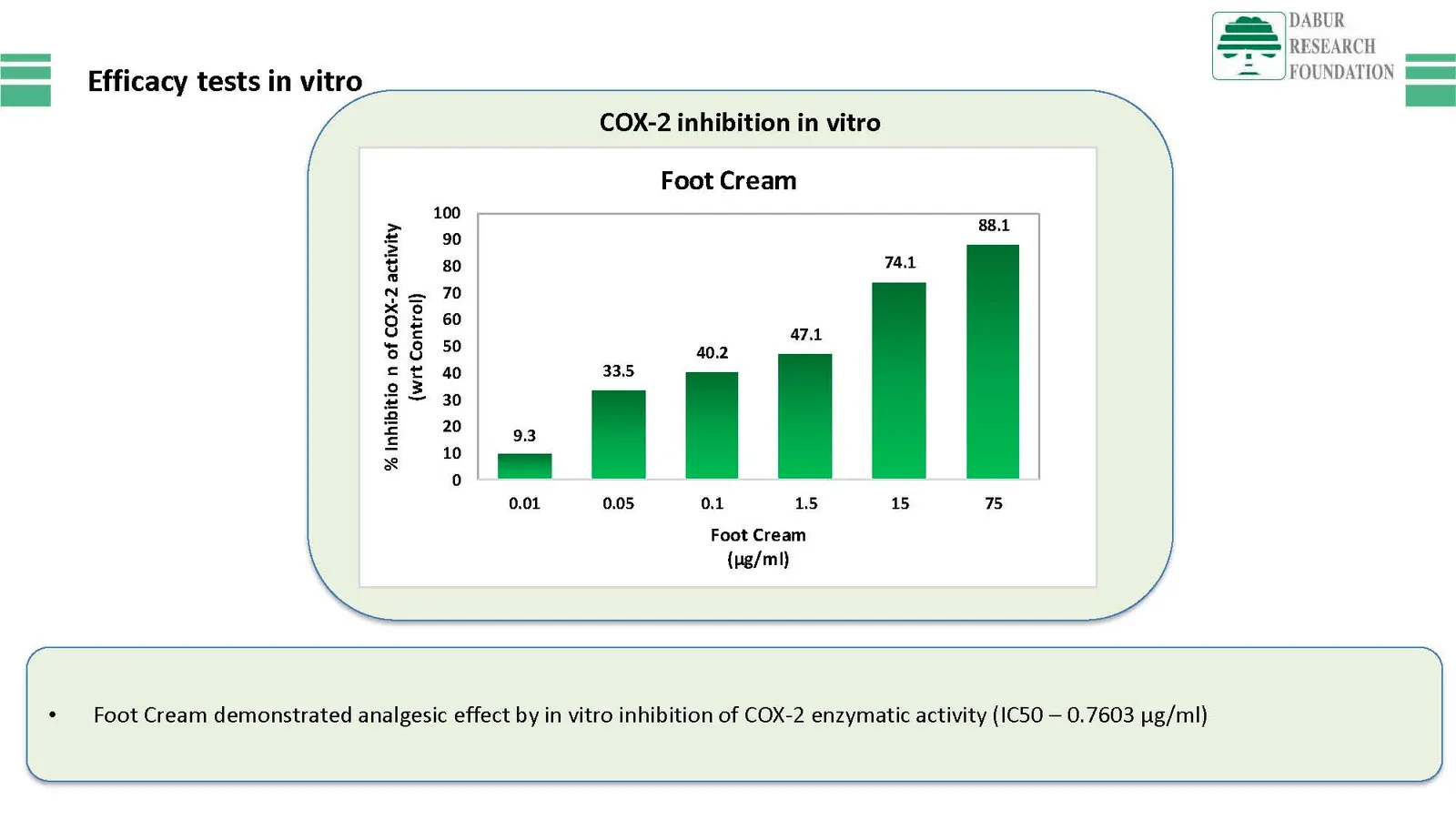
Slide 127
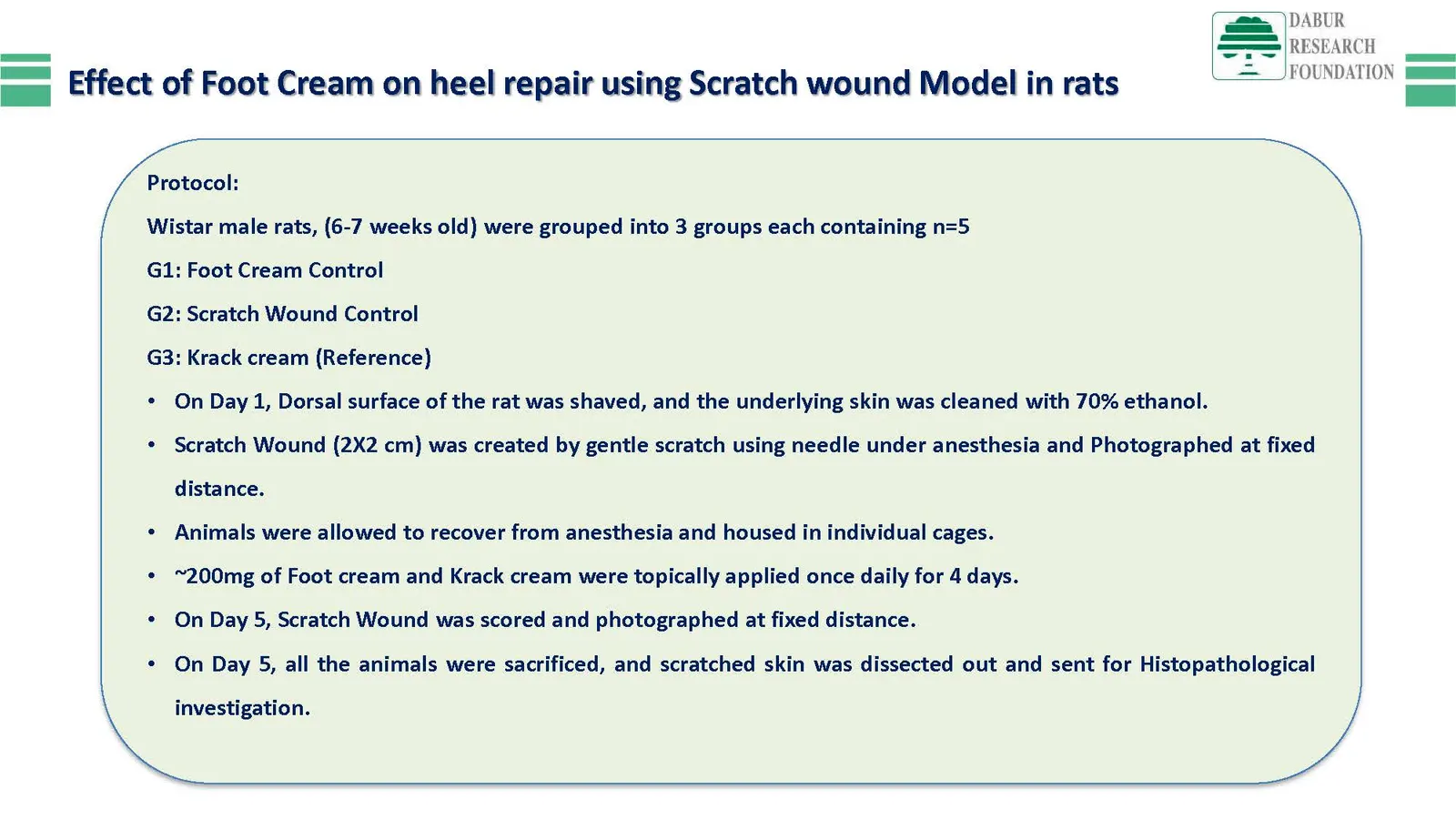
Slide 128
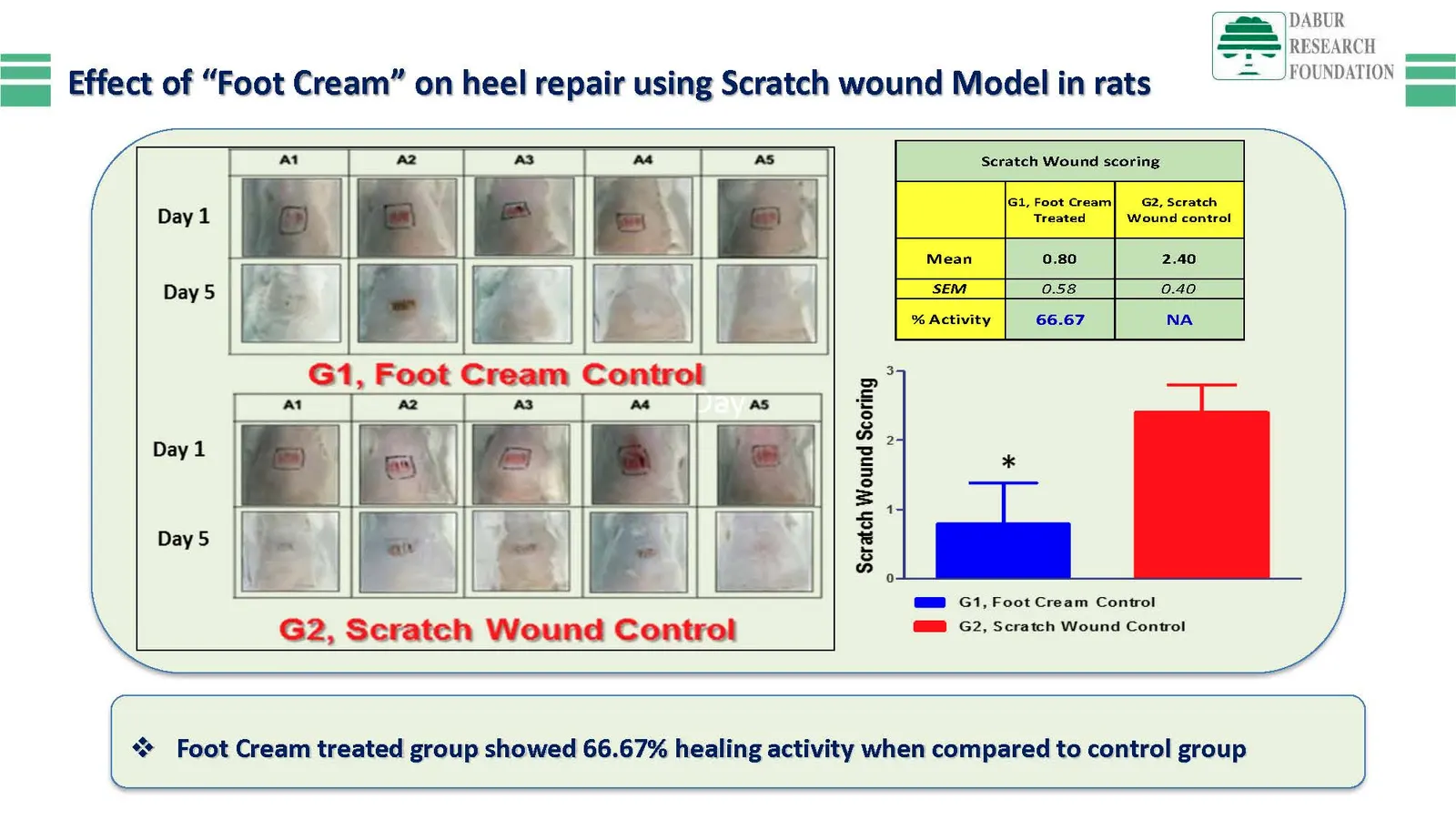
Slide 129
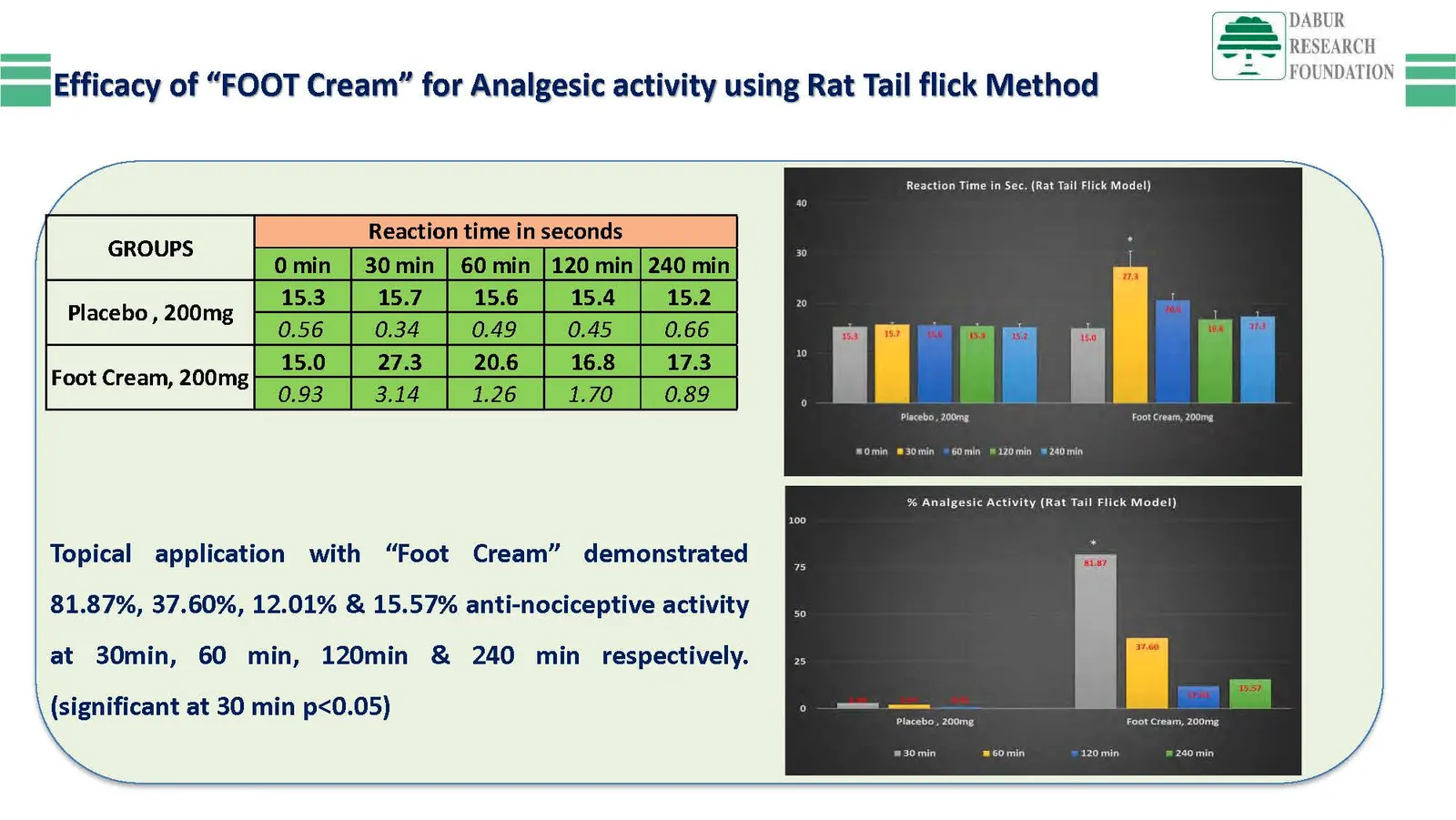
Slide 130
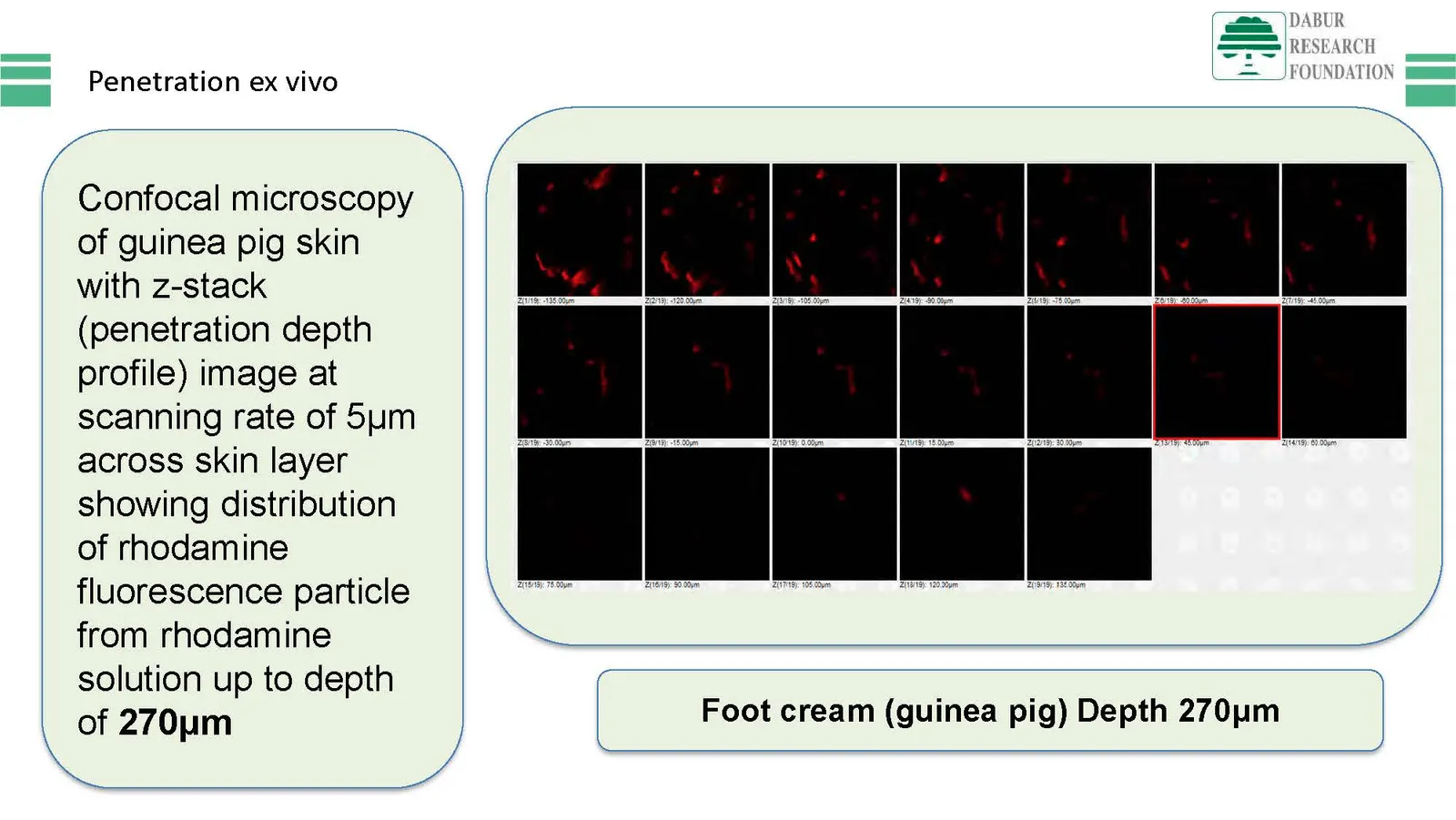
Slide 131
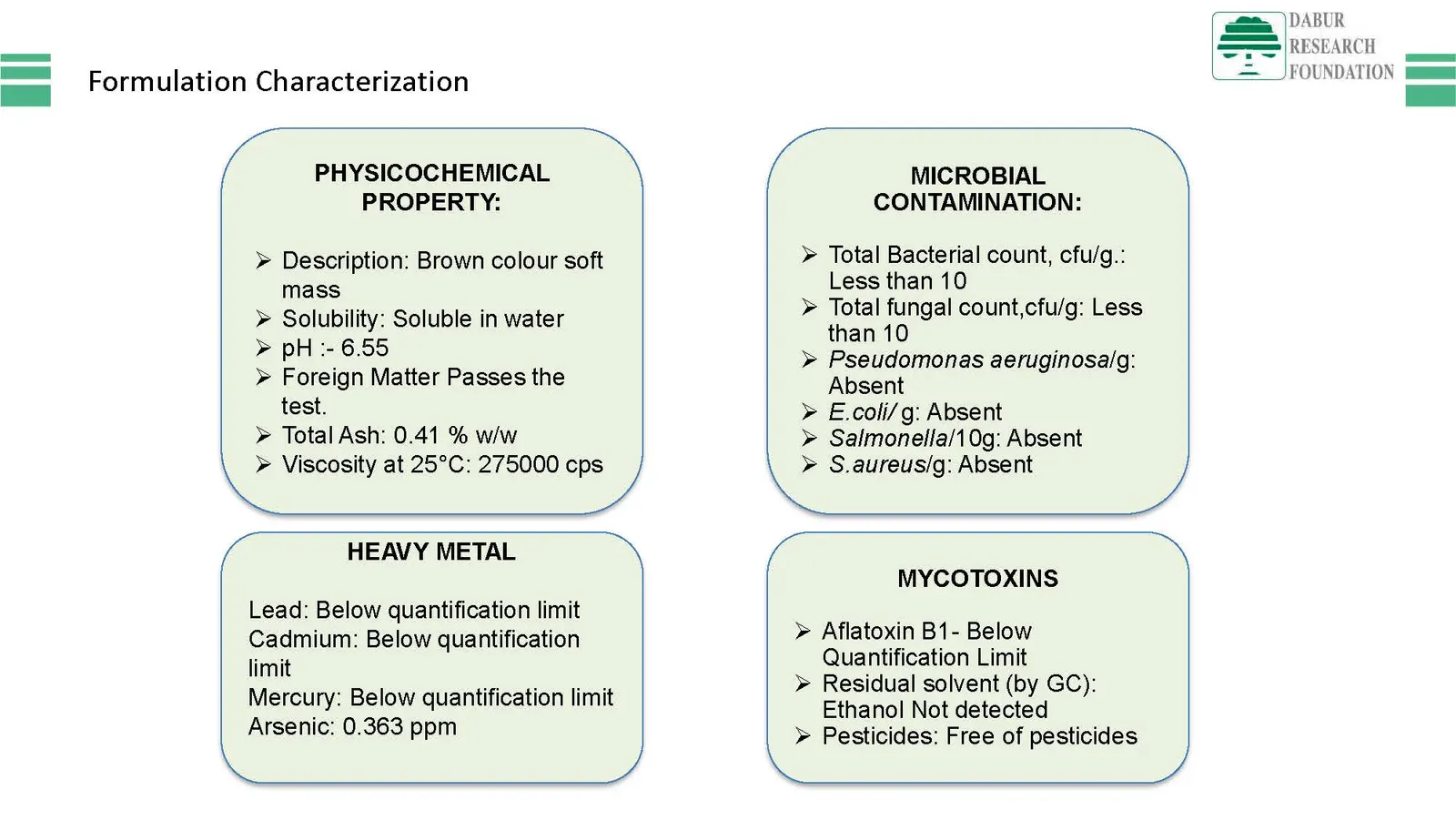
Slide 132
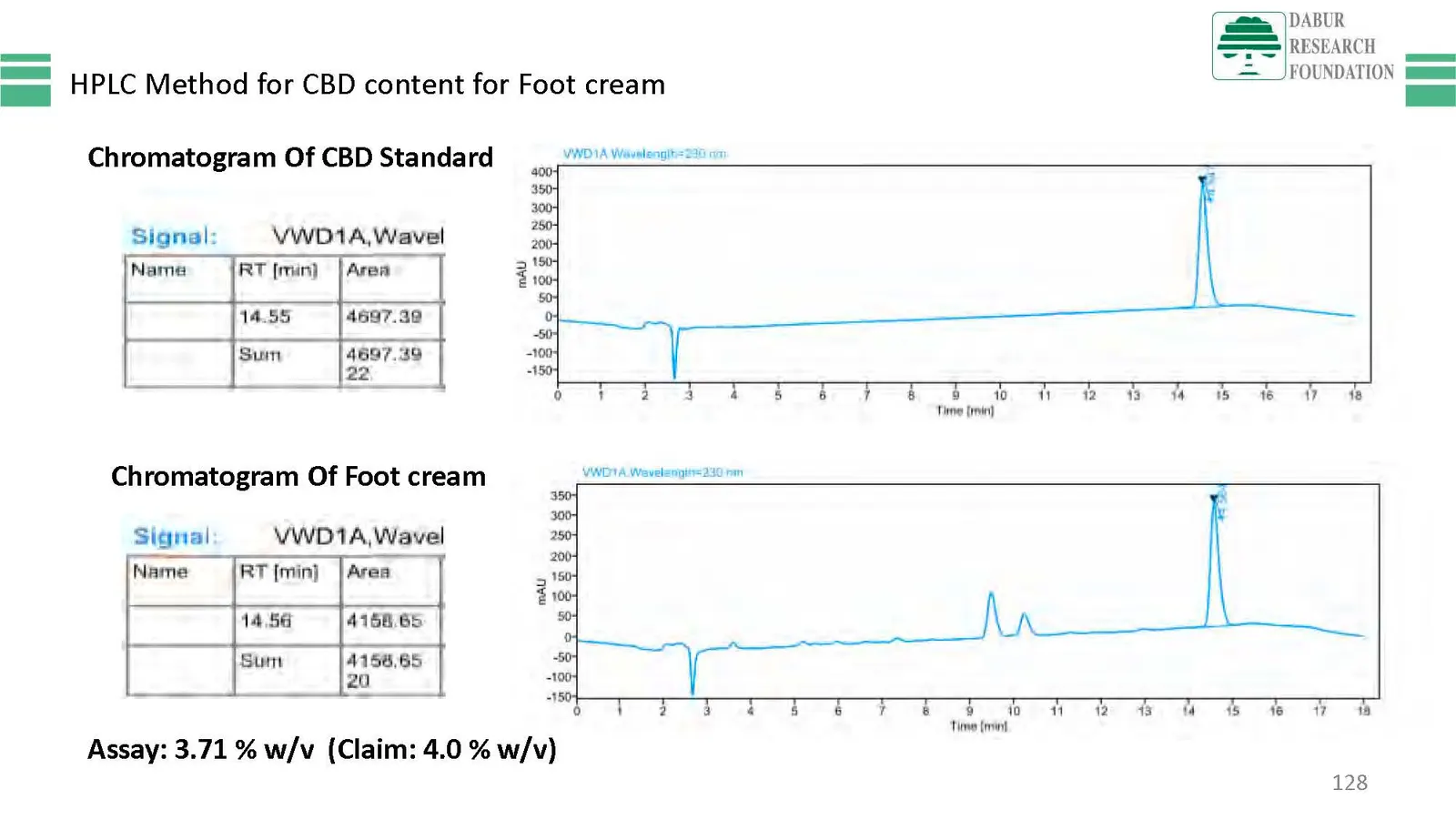
Slide 133
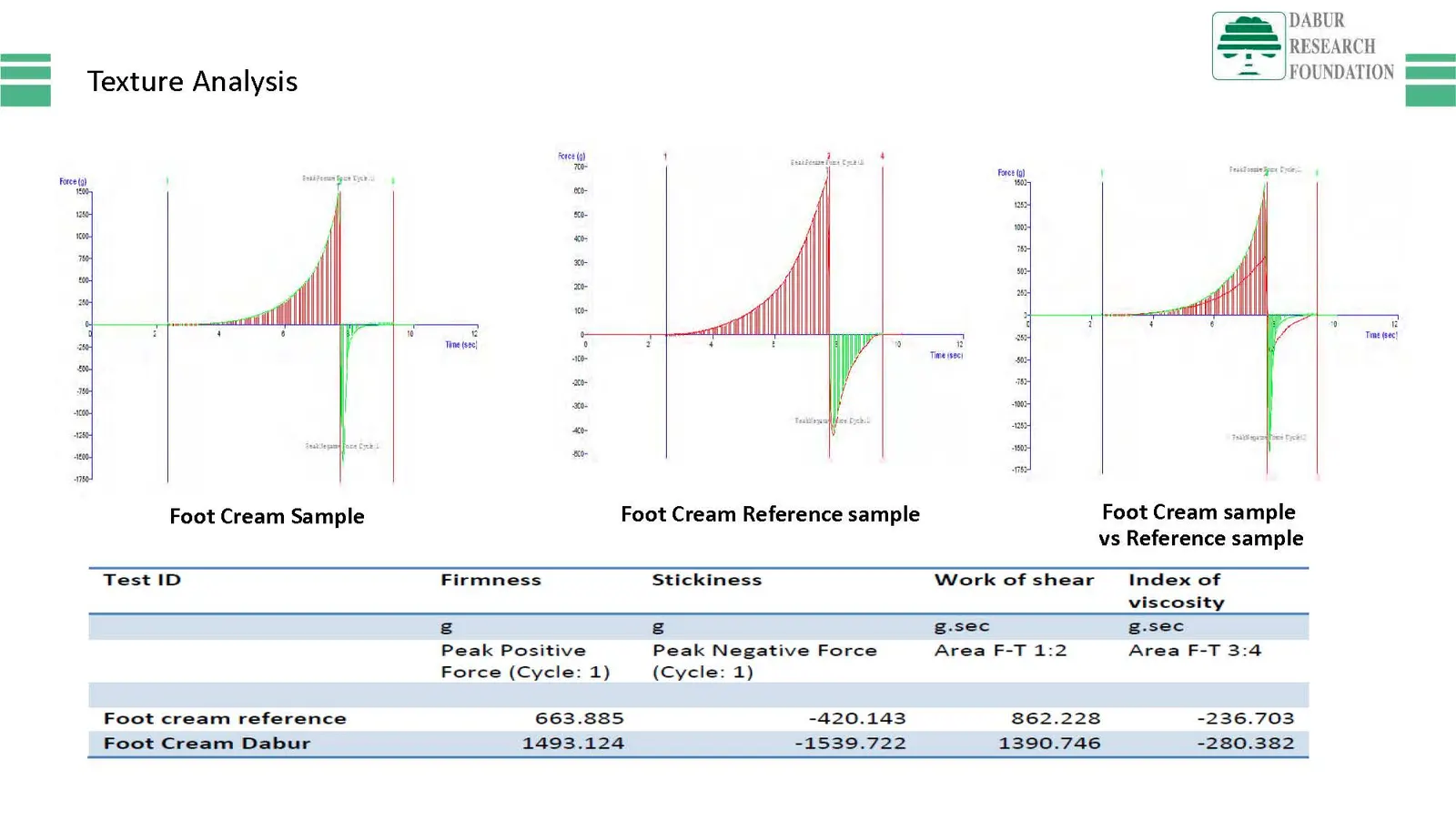
Slide 134
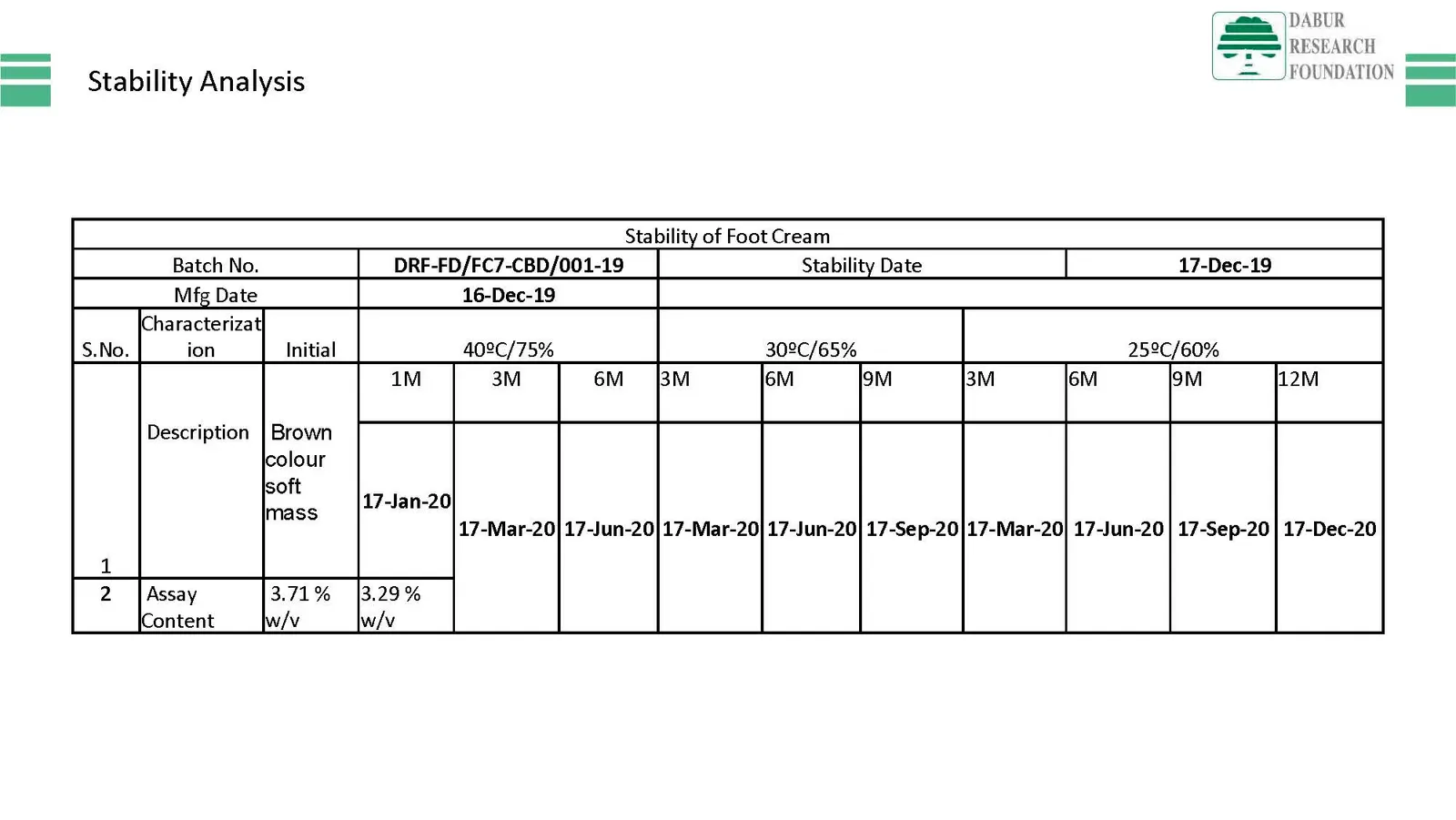
Slide 135
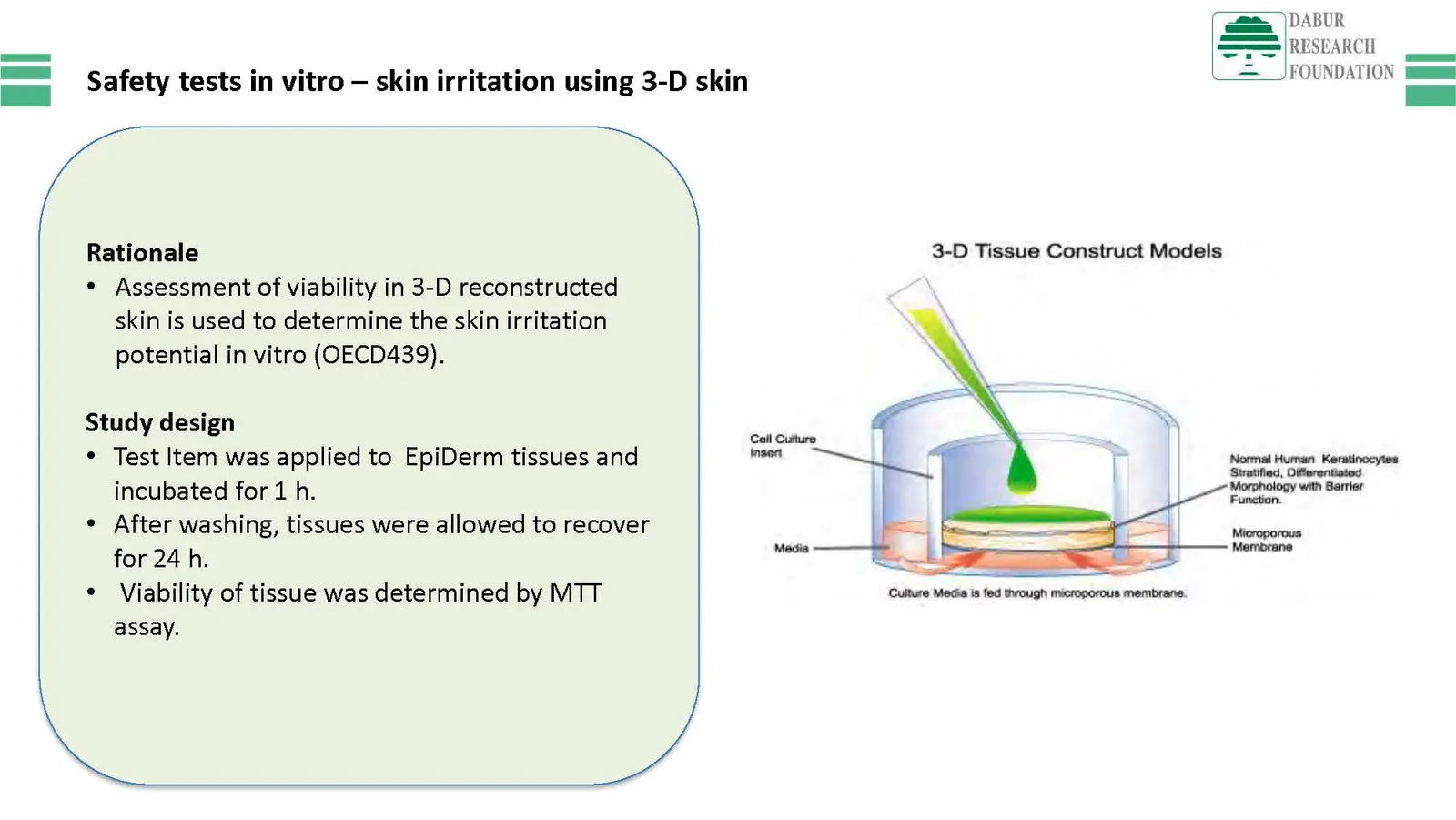
Slide 136
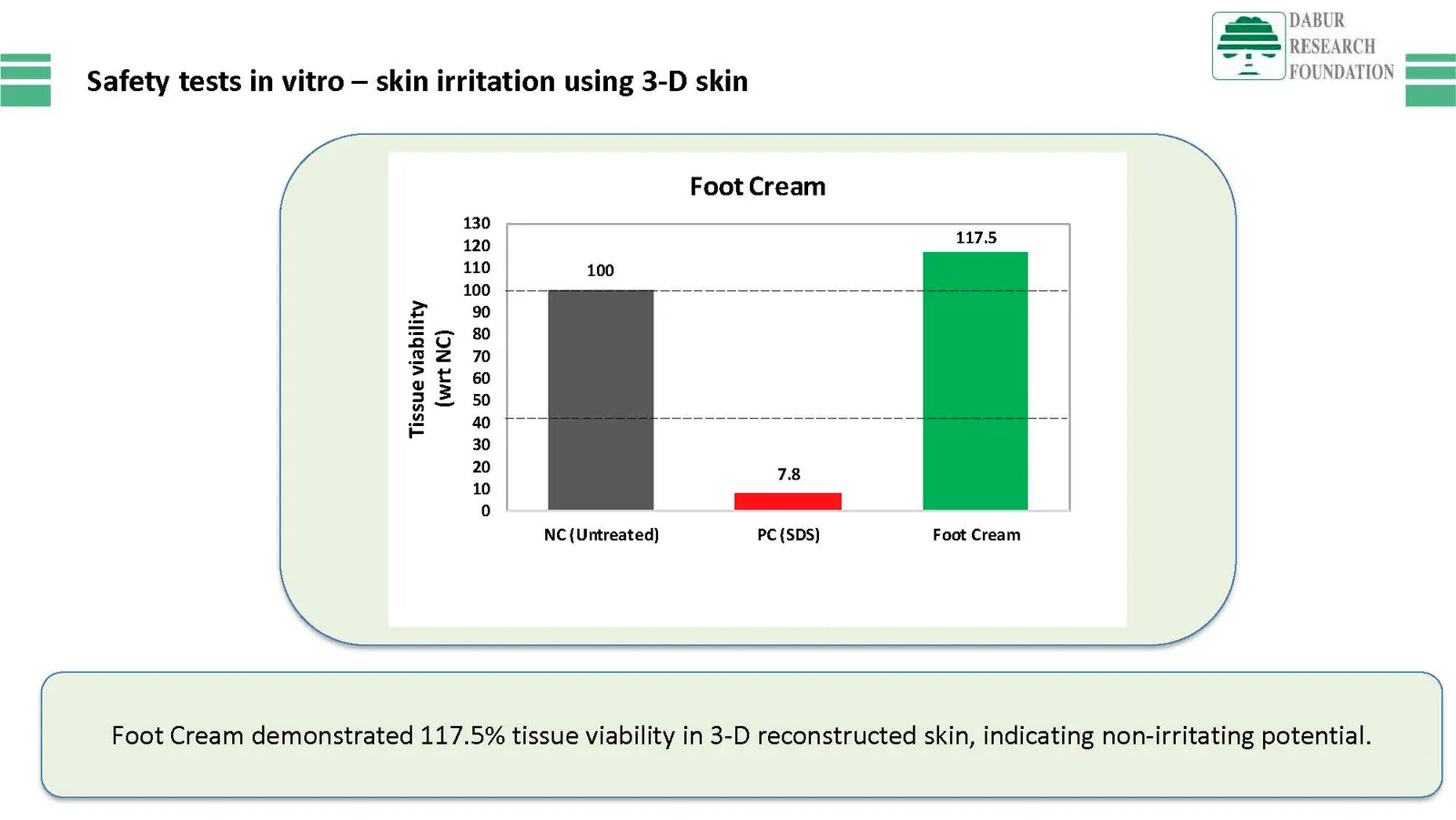
Slide 137
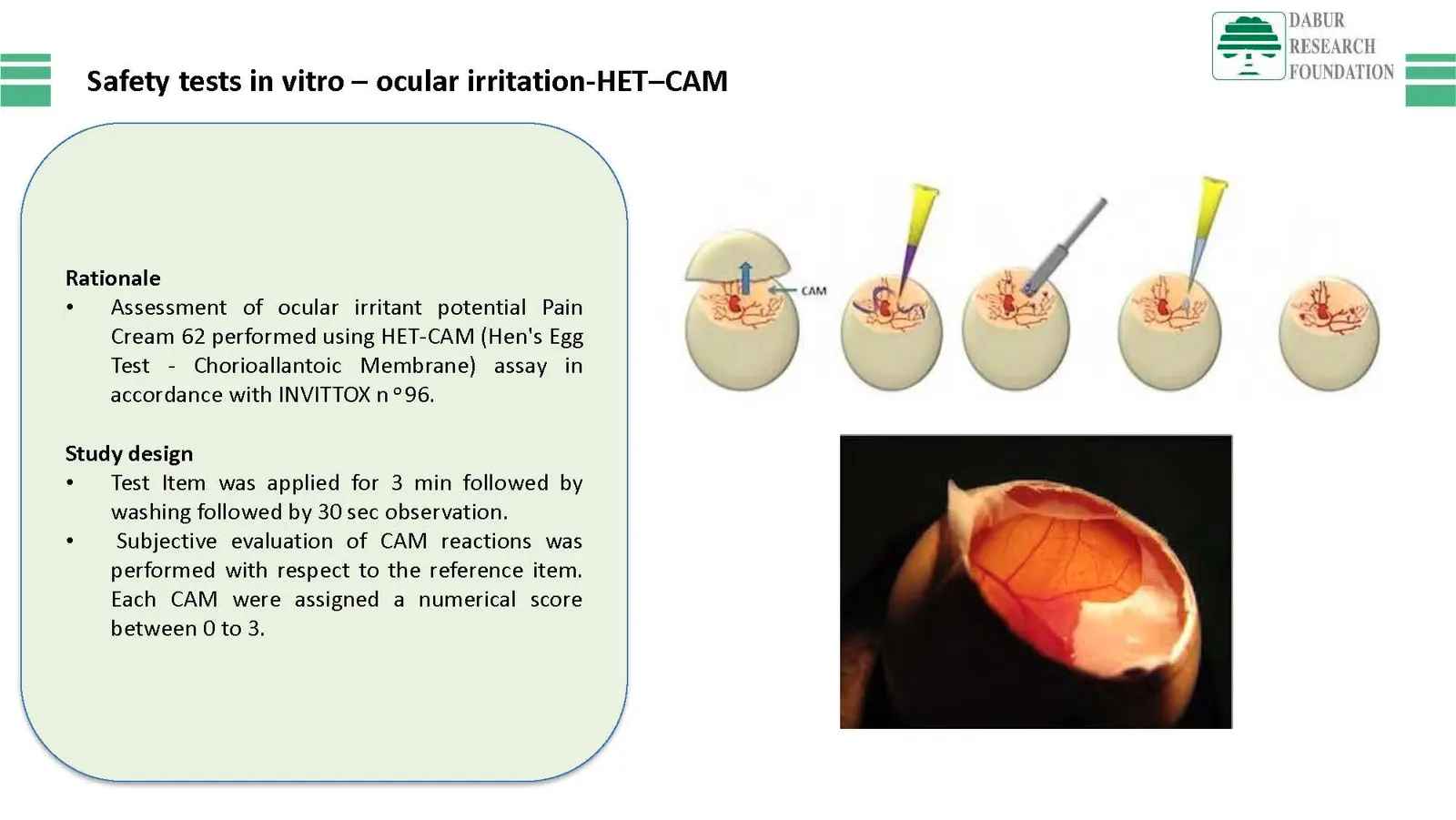
Slide 138
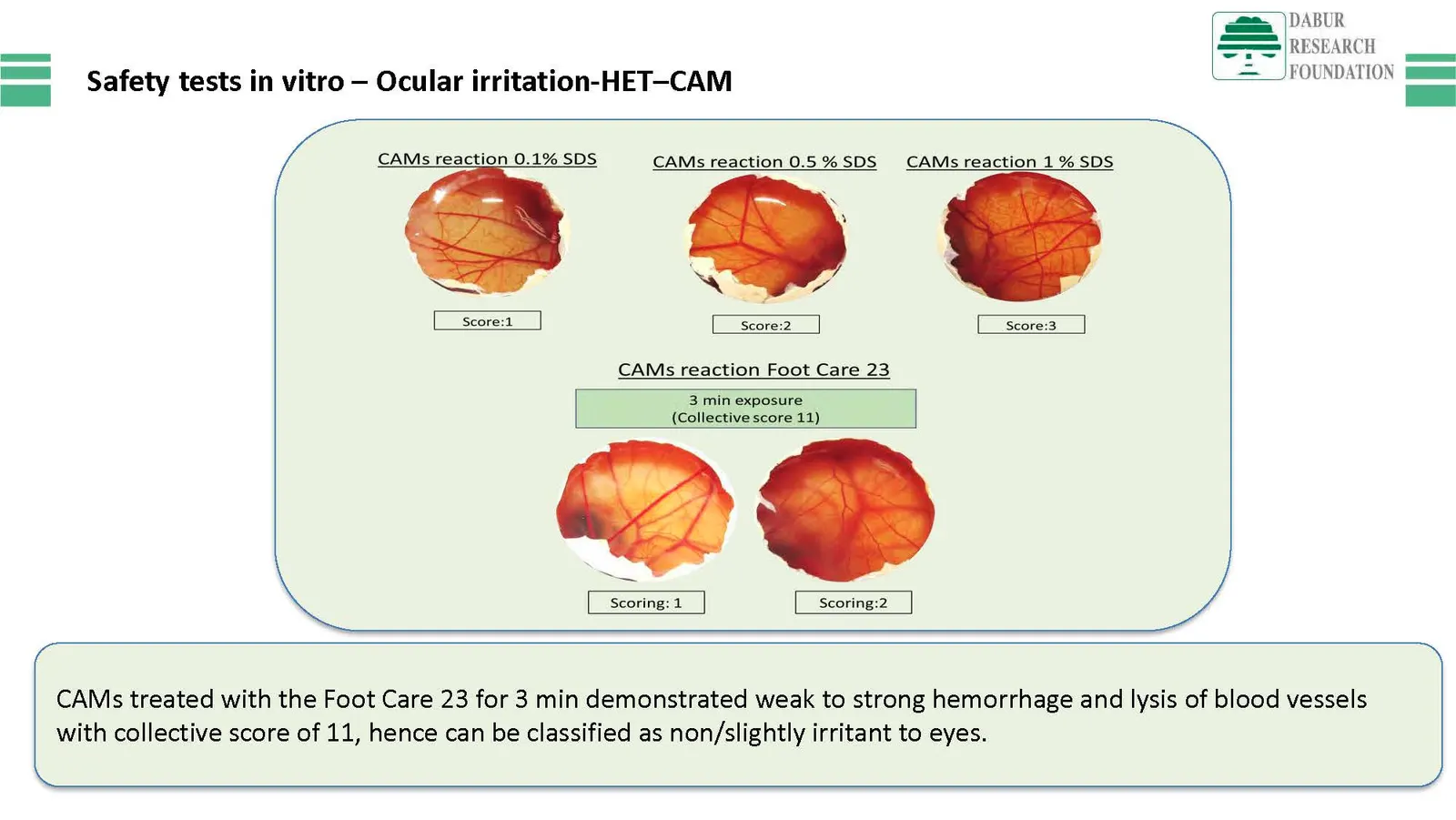
Slide 139
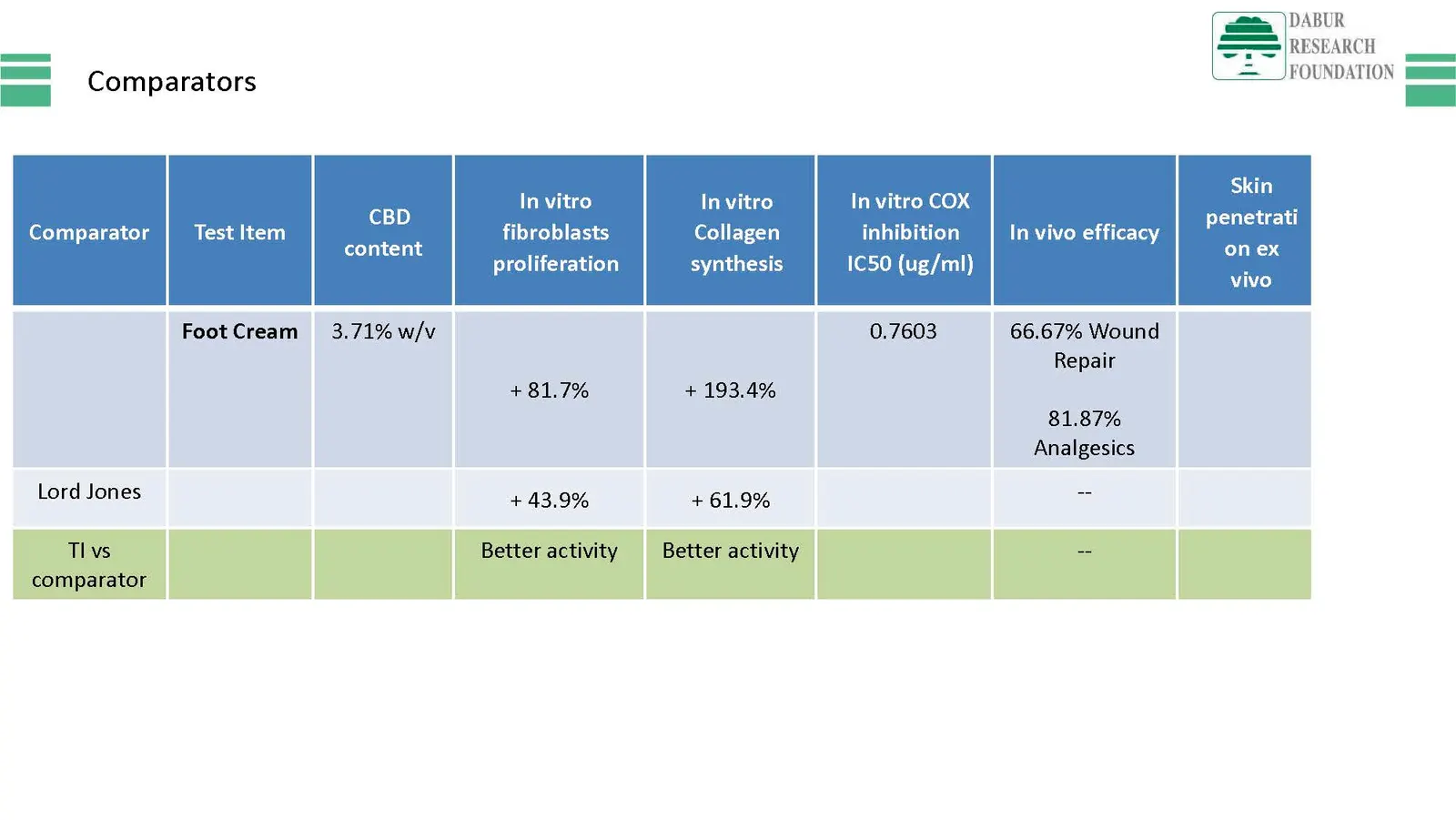
Slide 140
Slide 141
Slide 142

Slide 143
Slide 144
Slide 145
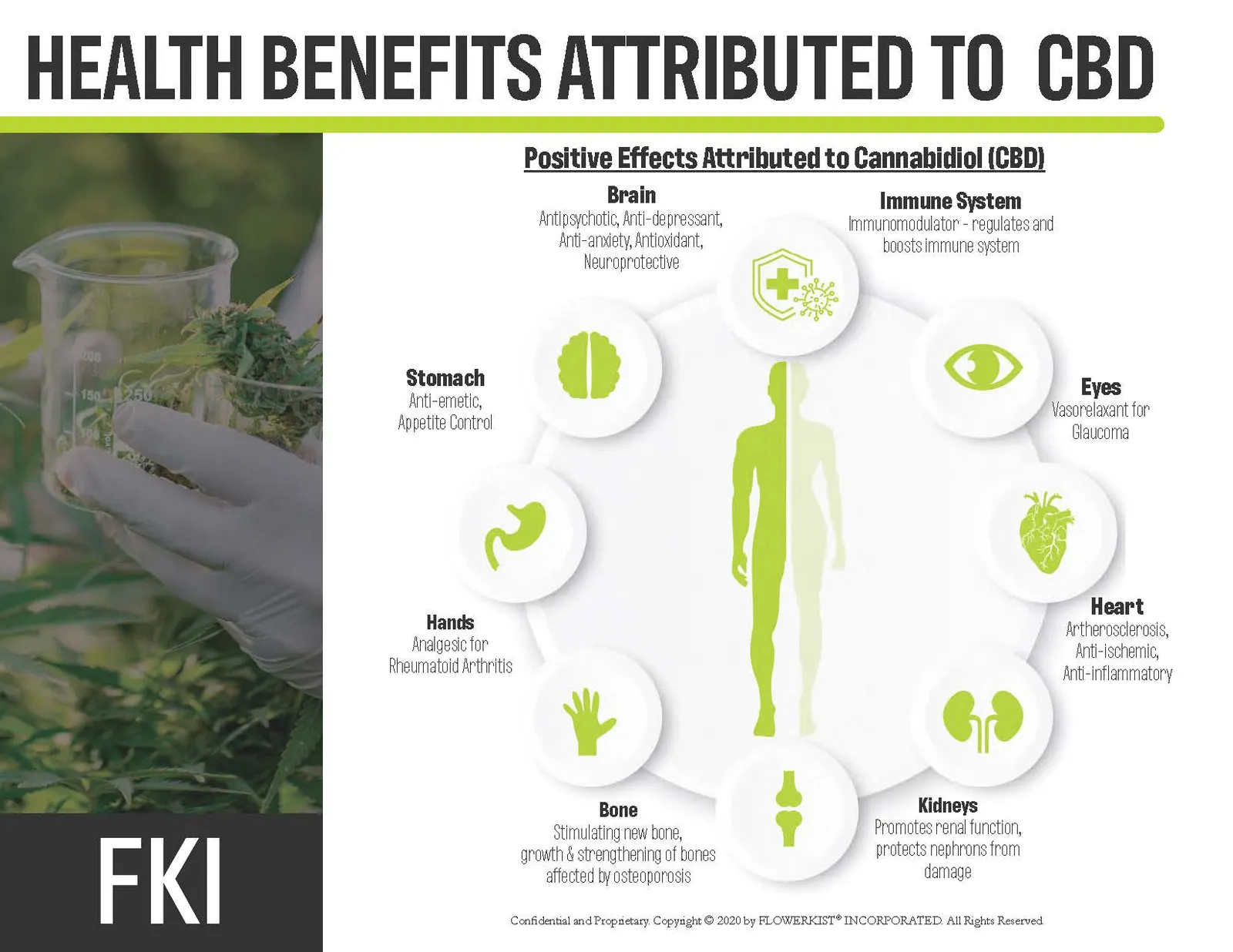
Slide 146
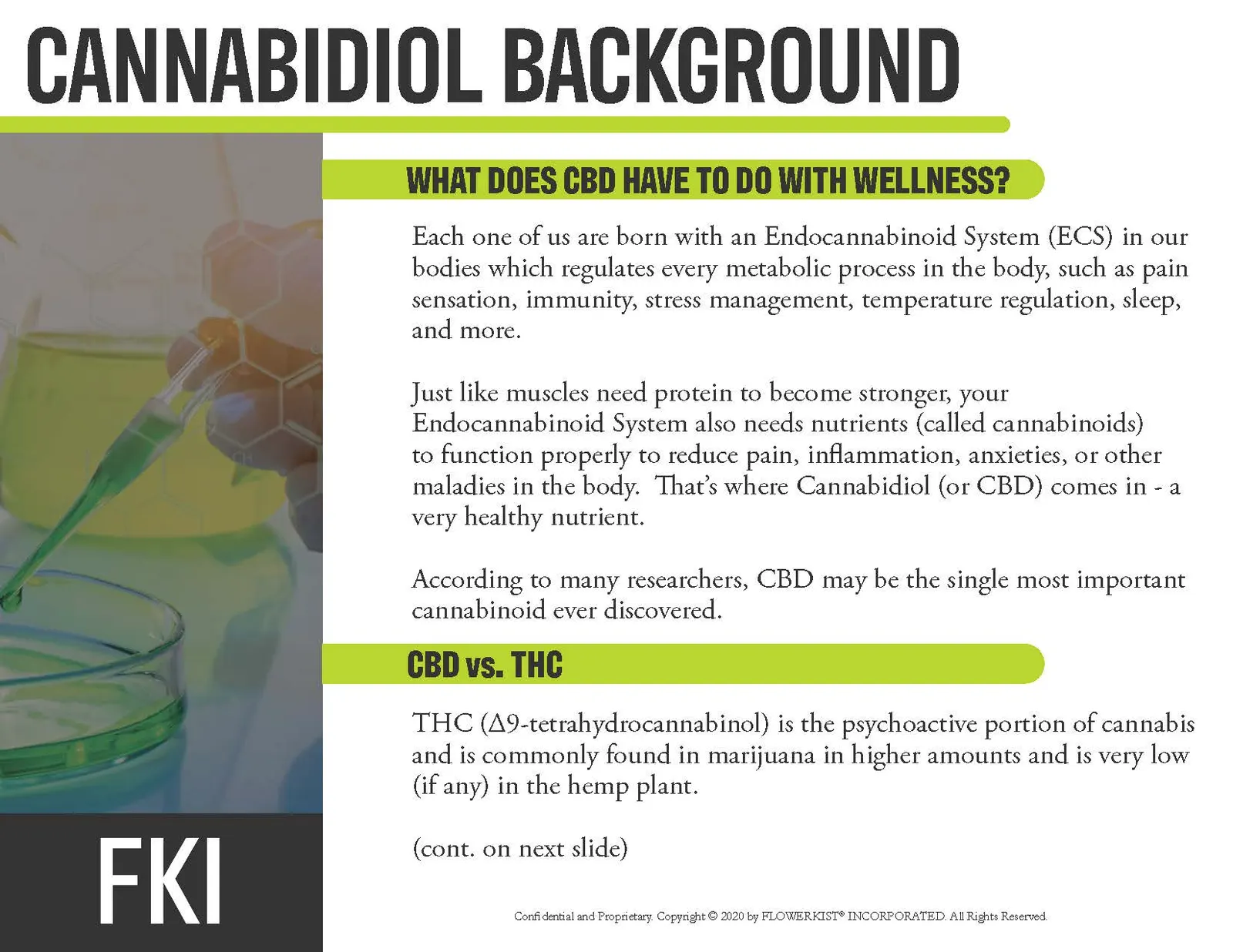
Slide 147
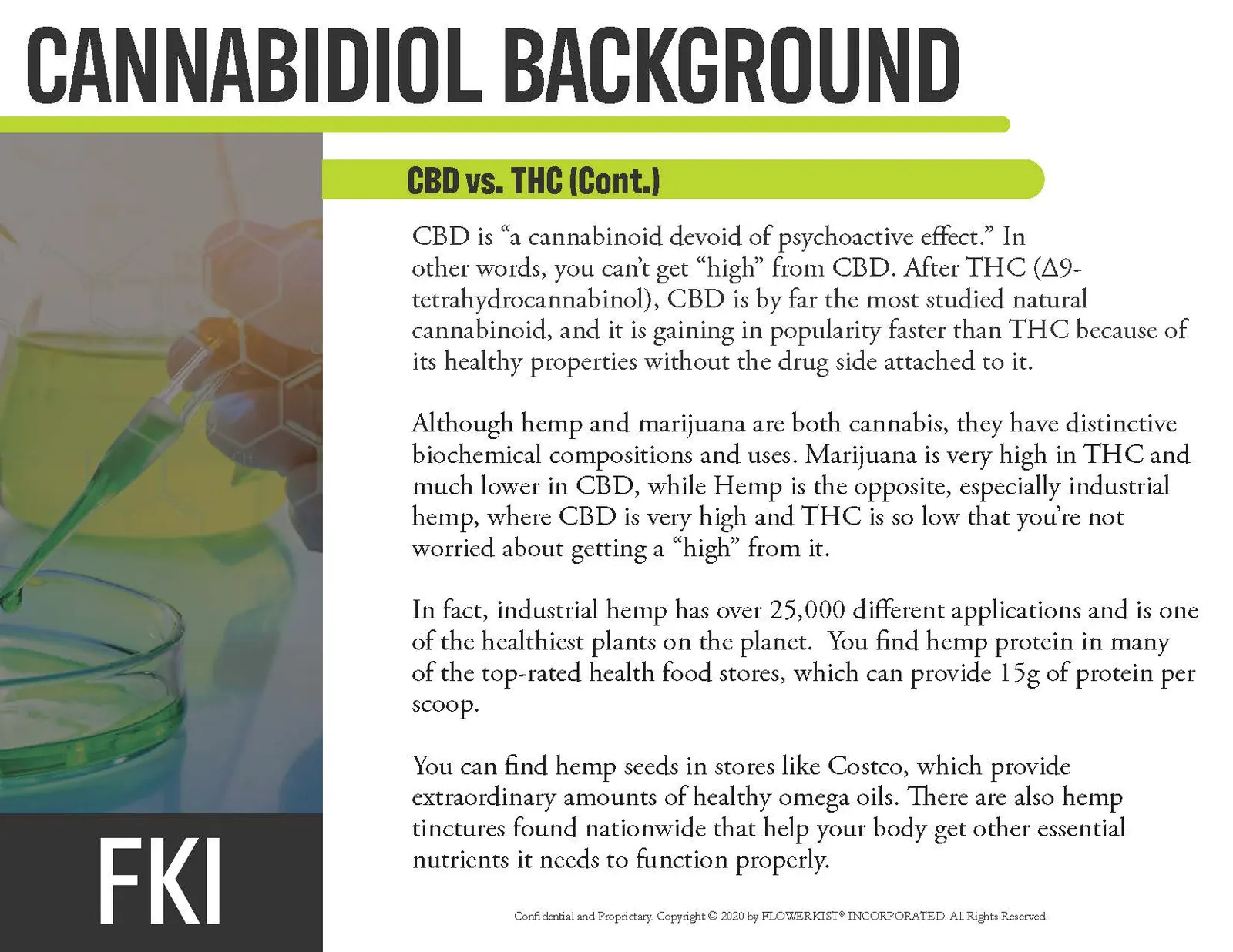
Slide 148
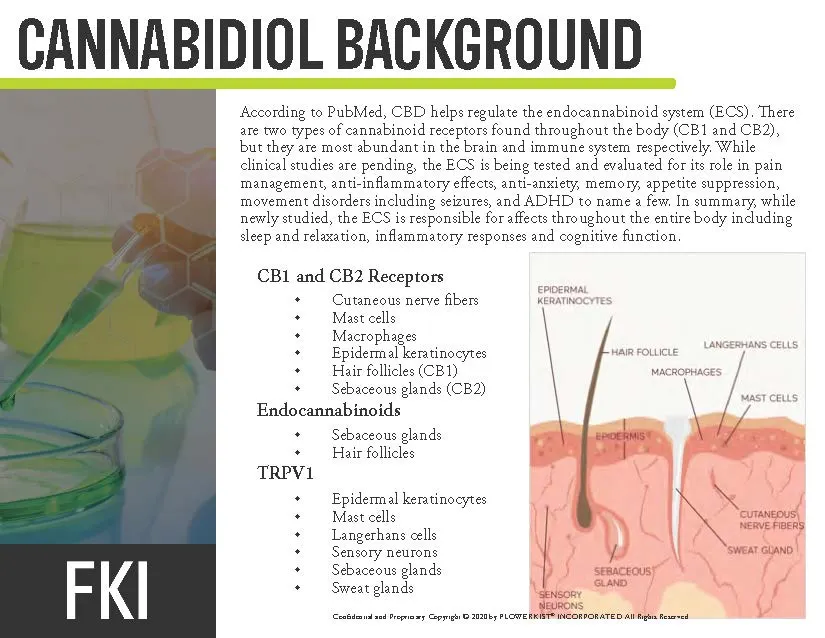
Slide 149
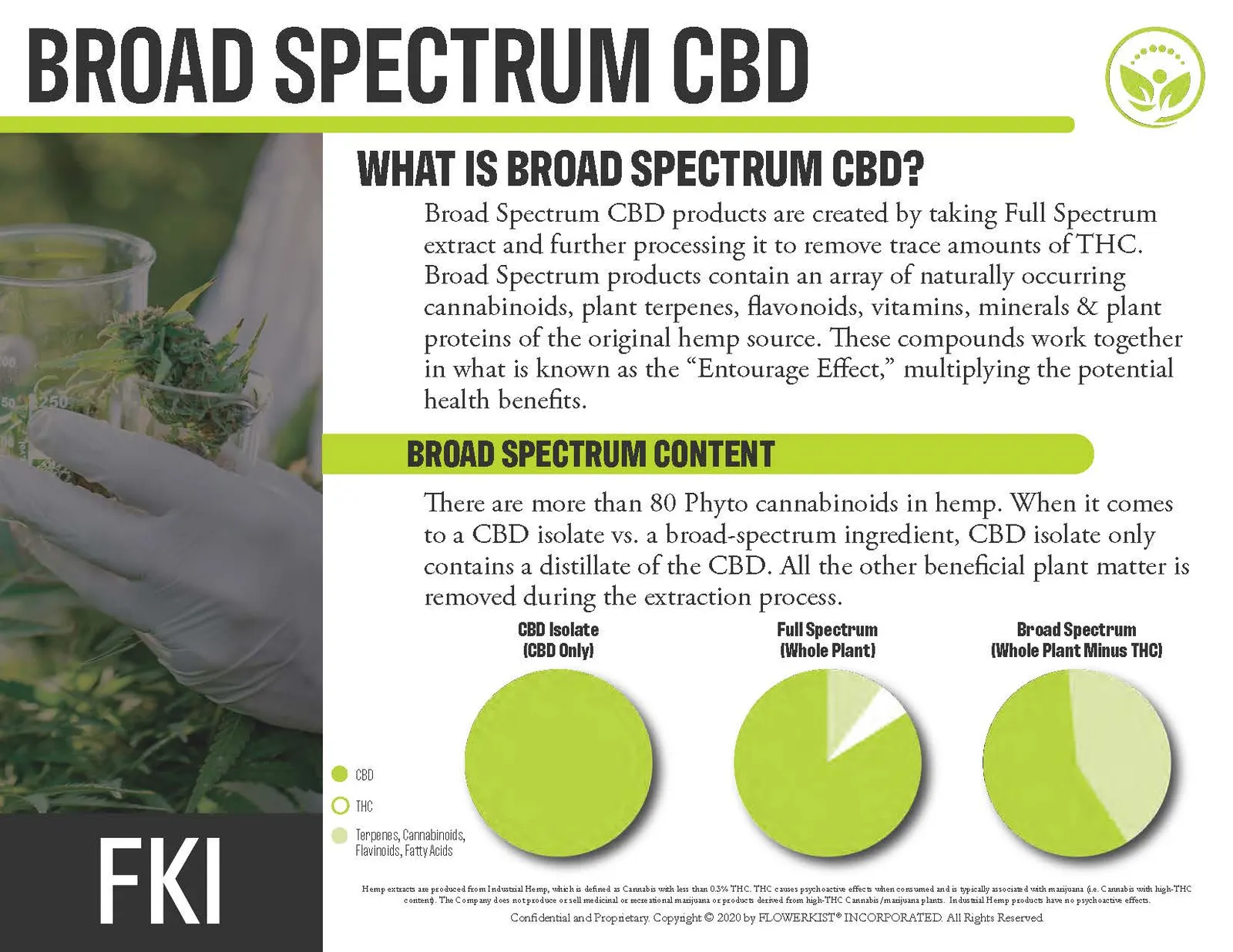
Slide 150
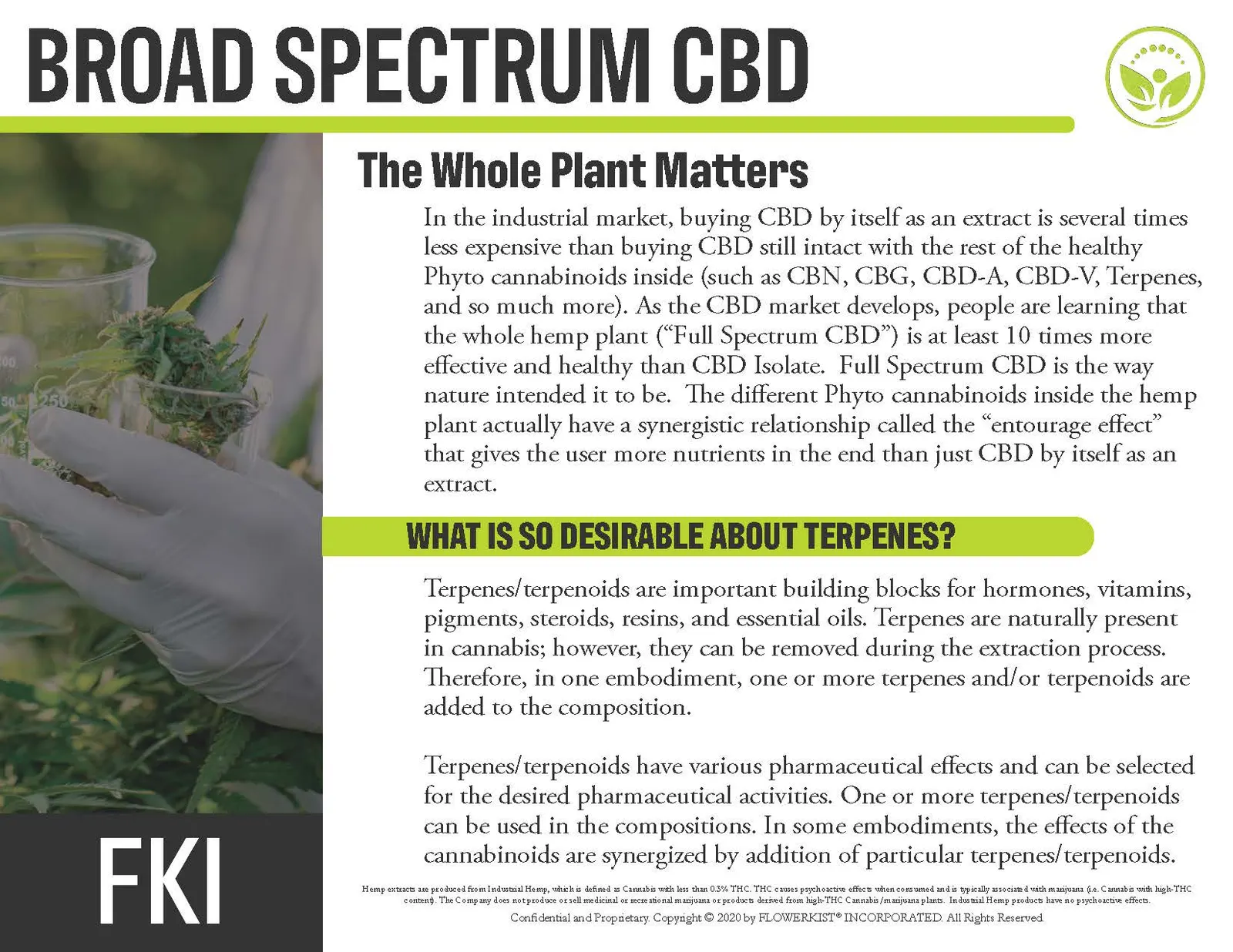
Slide 151
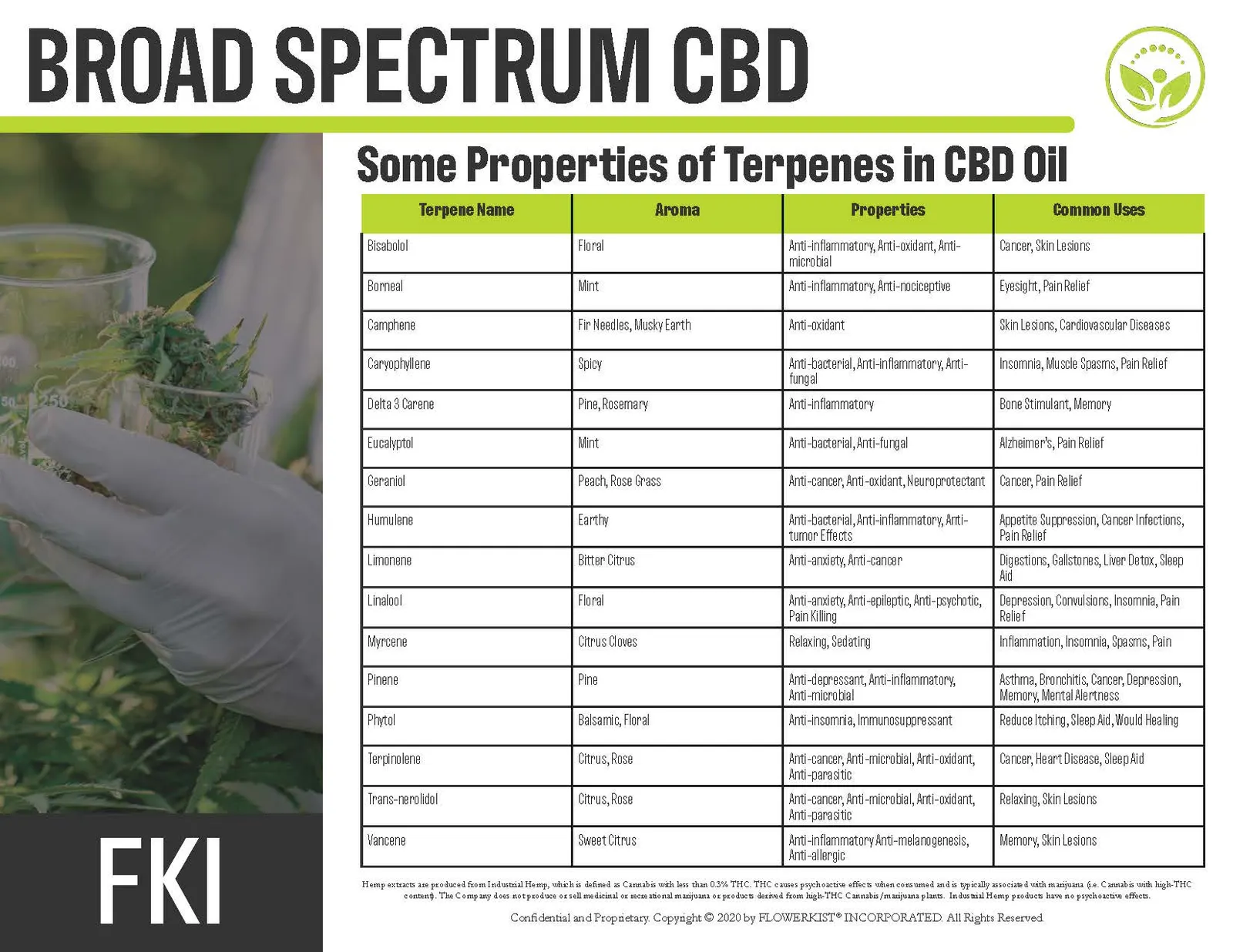
Slide 152
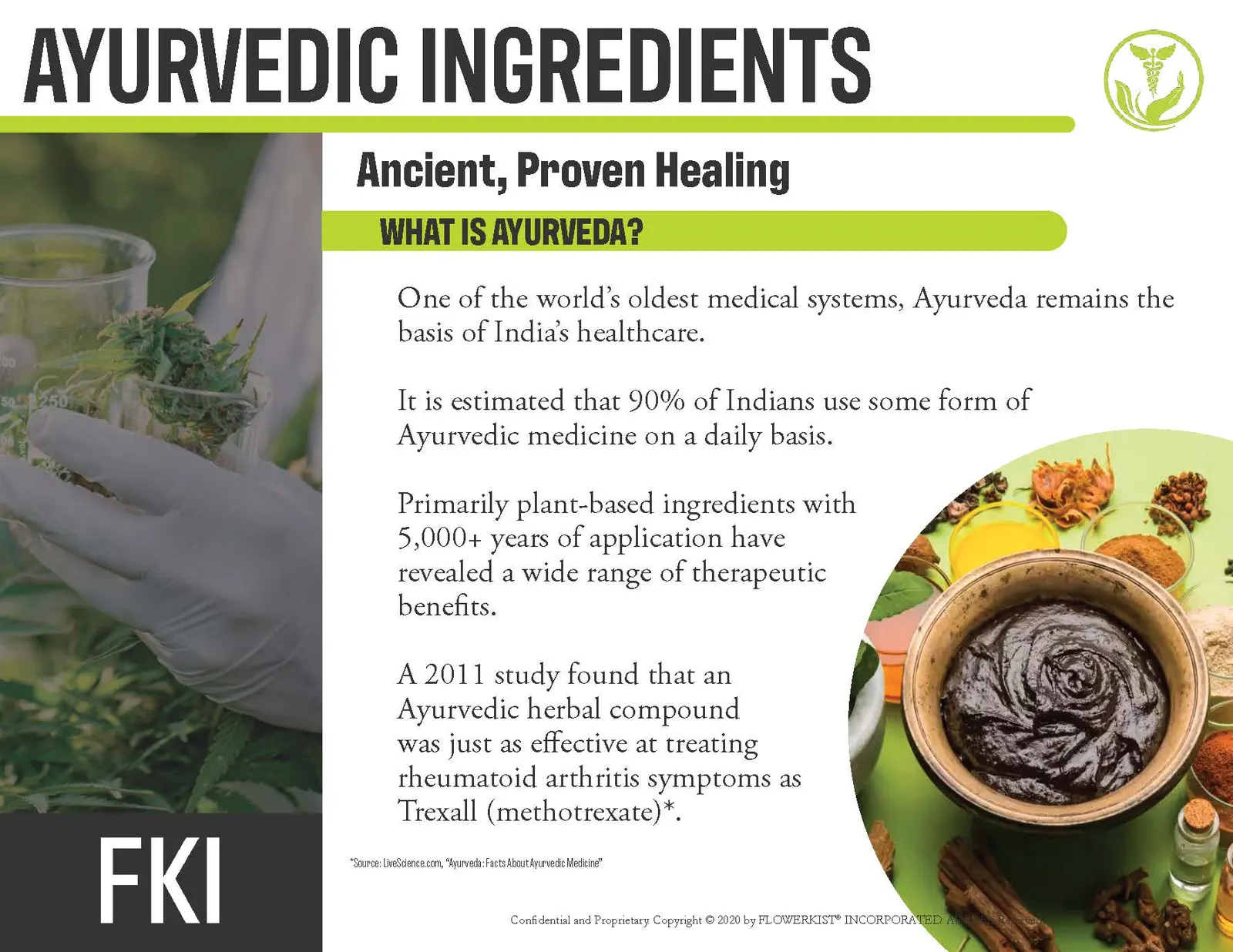
Slide 153
Slide 154
Slide 155
Slide 156
Slide 157
Slide 158
Slide 159
Slide 160
Slide 161
Slide 162
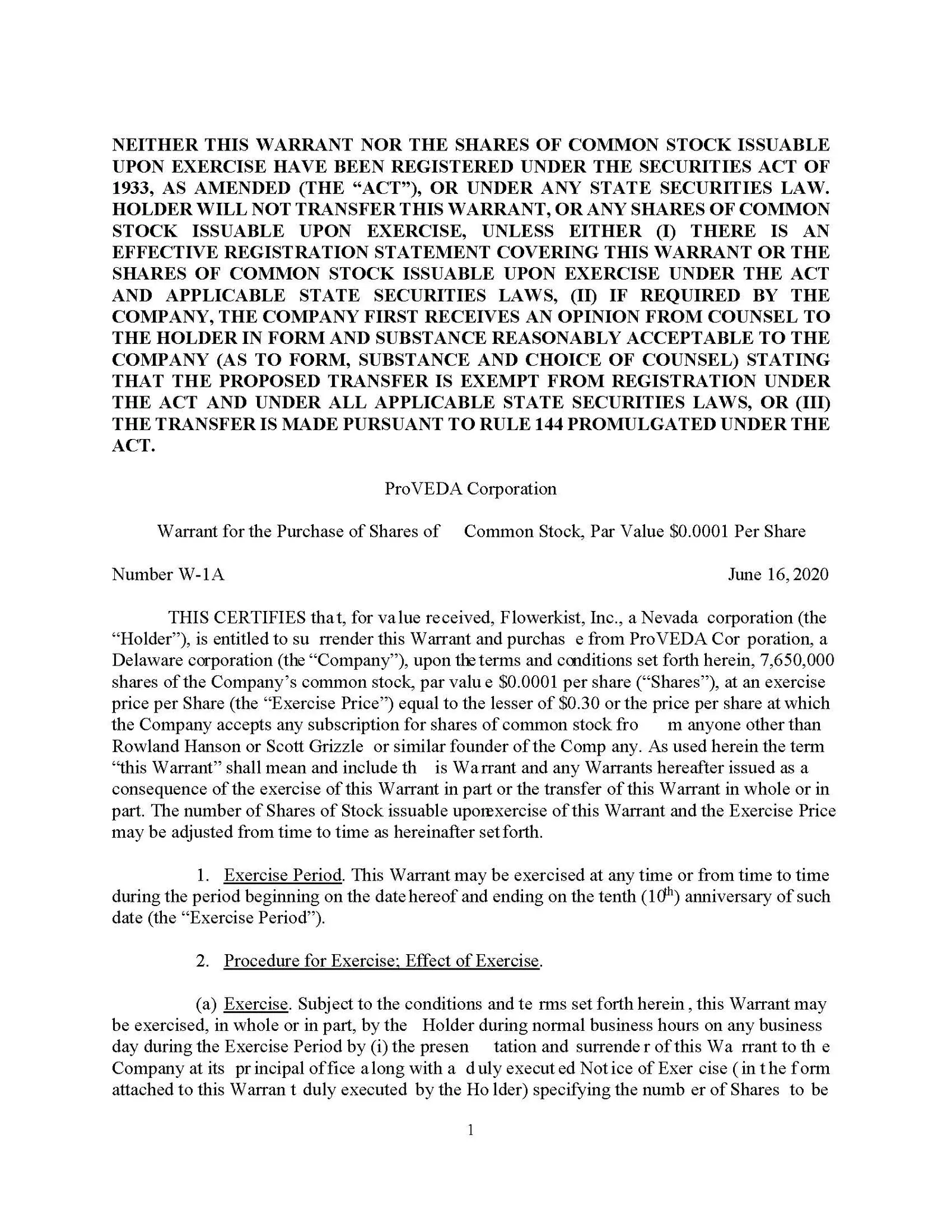
Slide 163
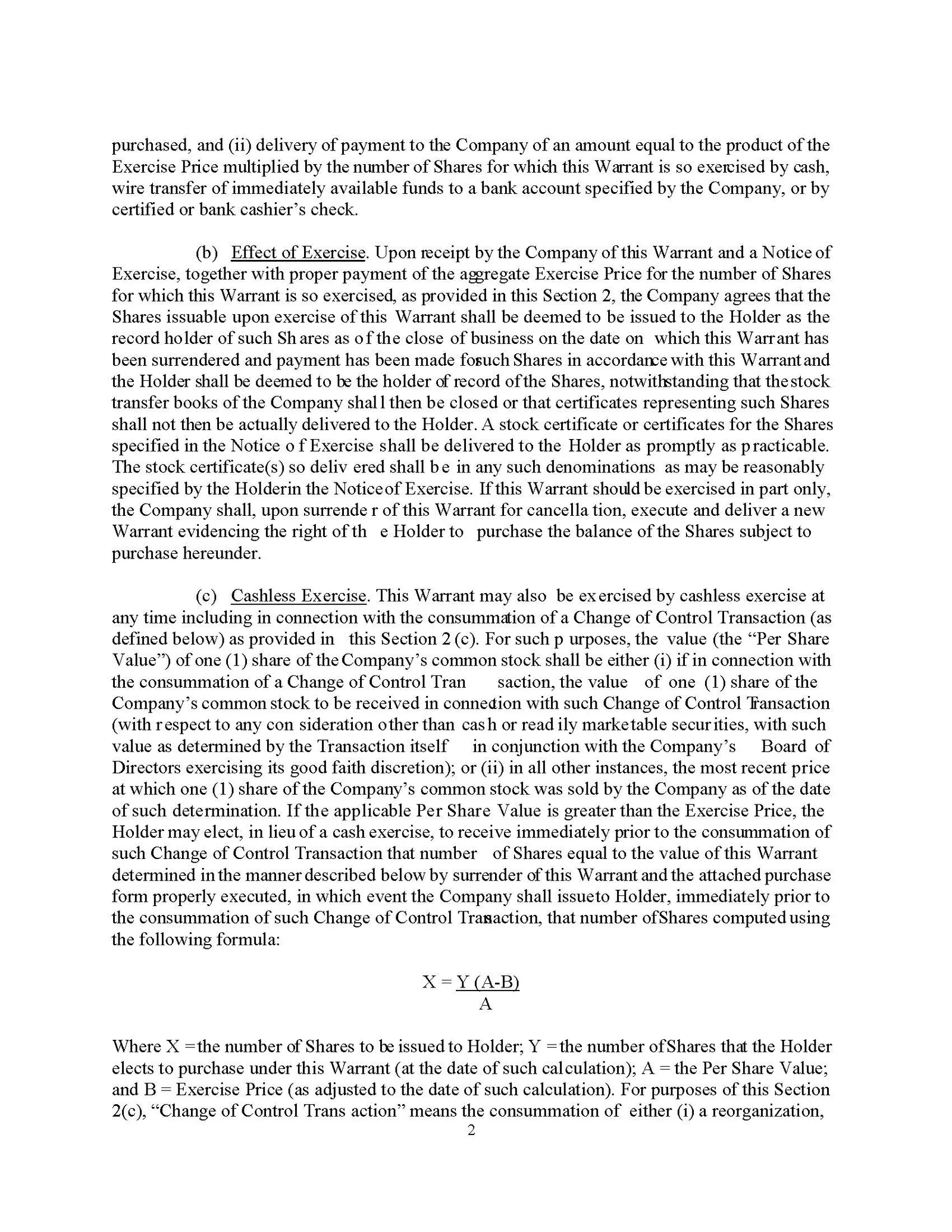
Slide 164
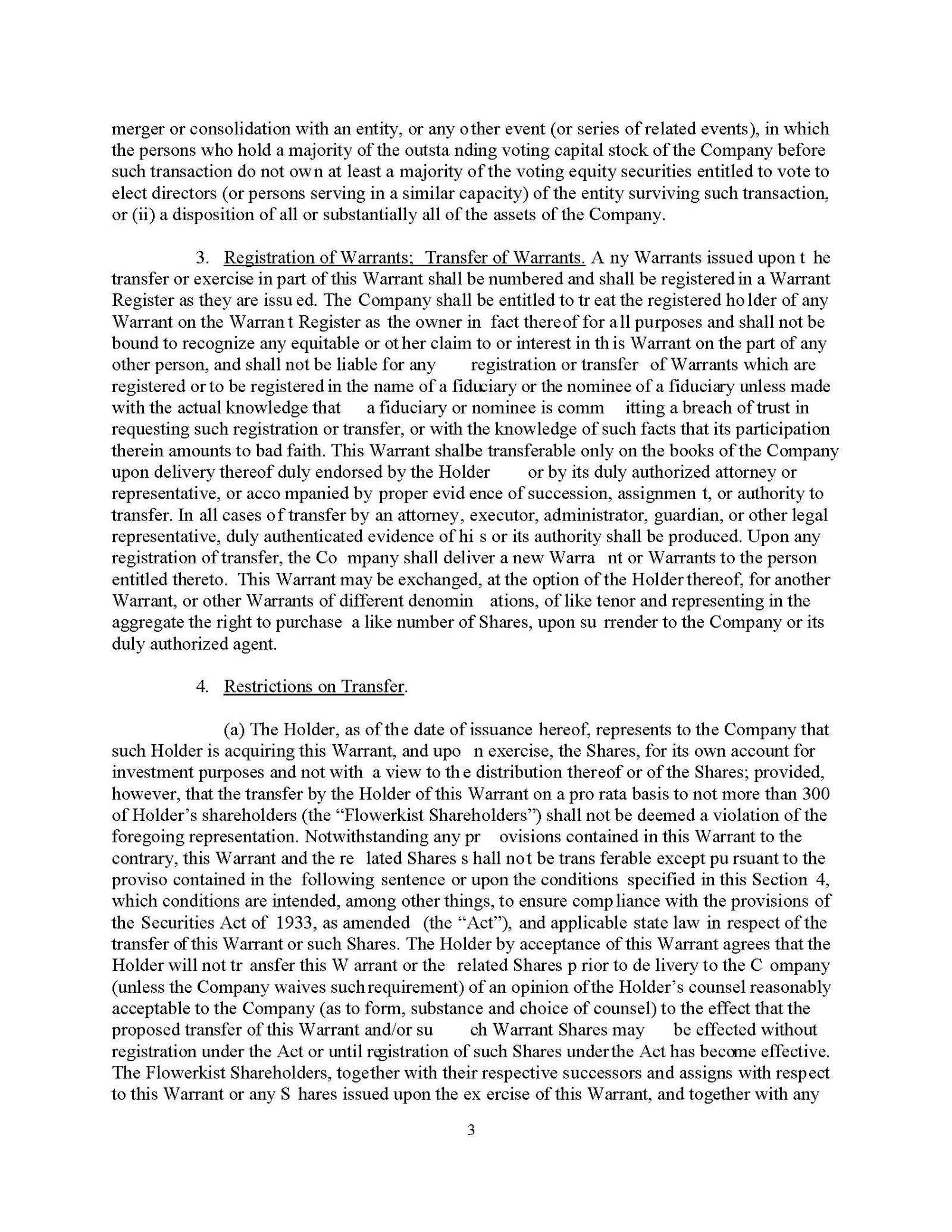
Slide 165
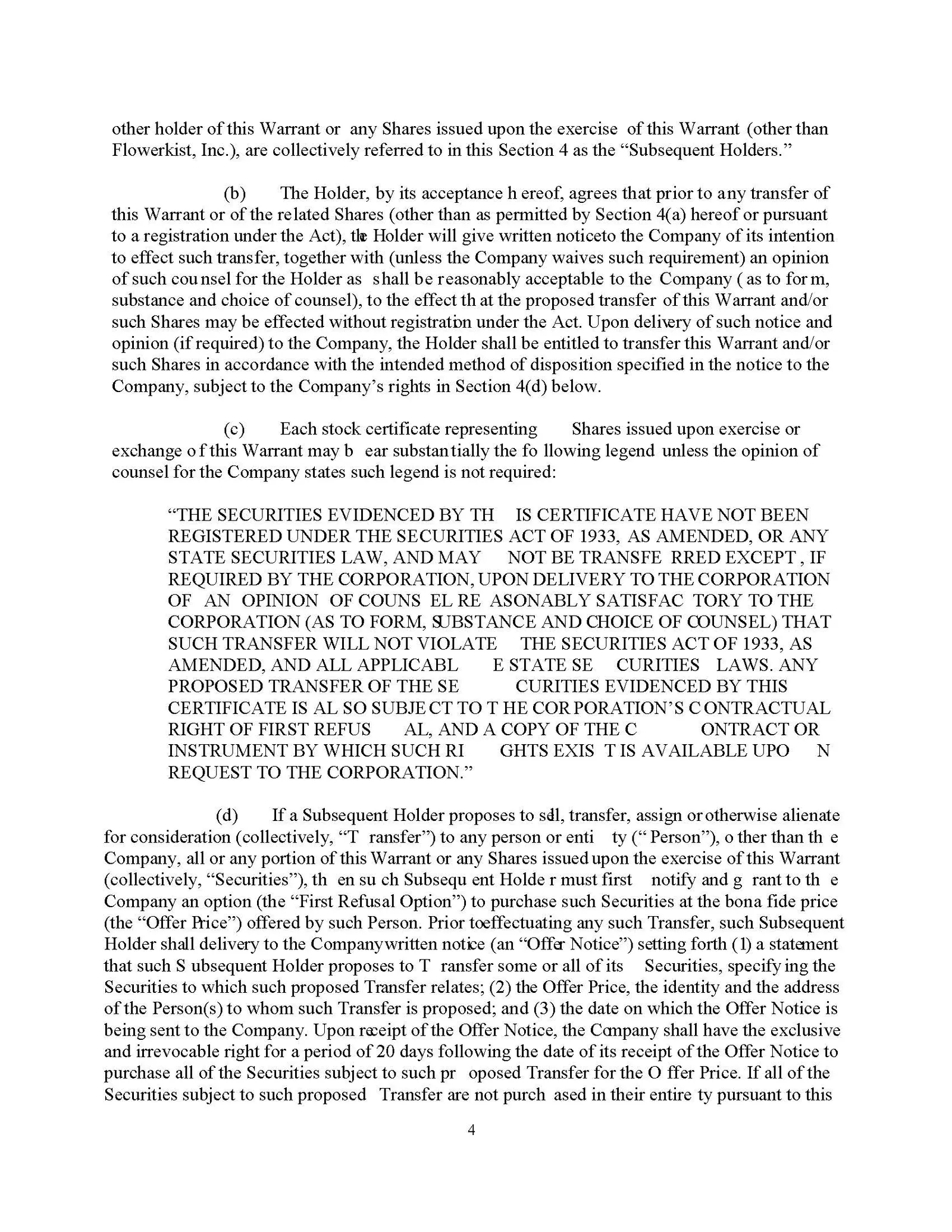
Slide 166
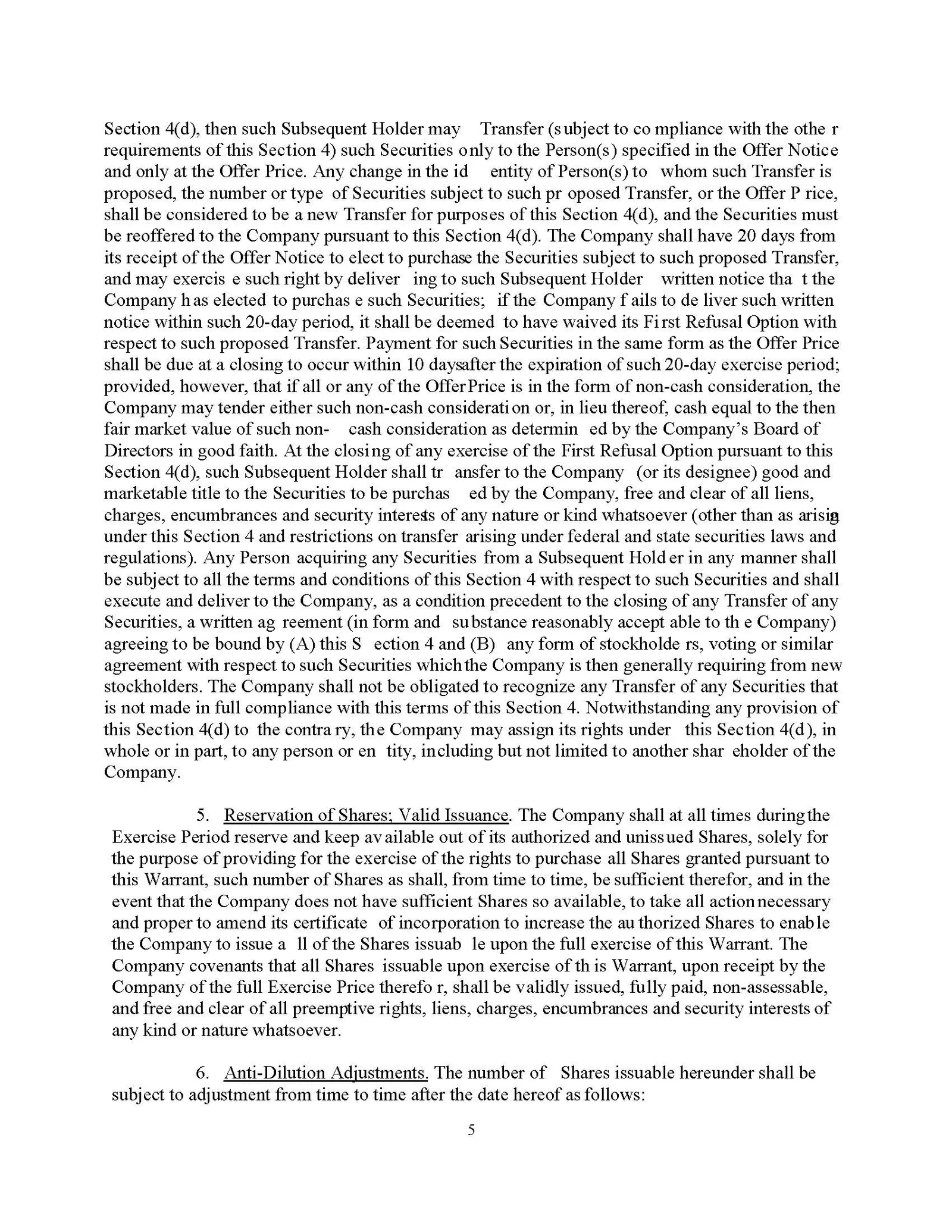
Slide 167
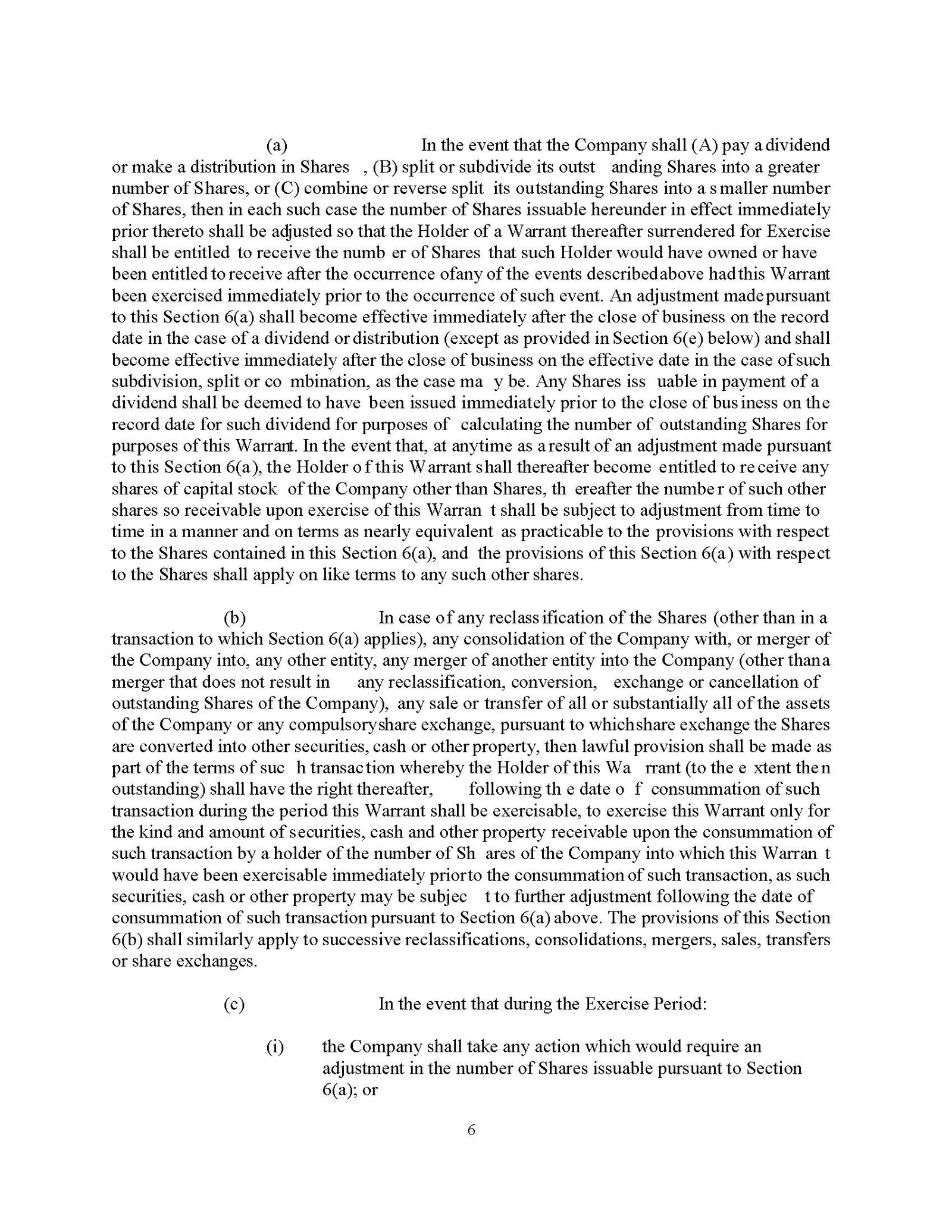
Slide 168
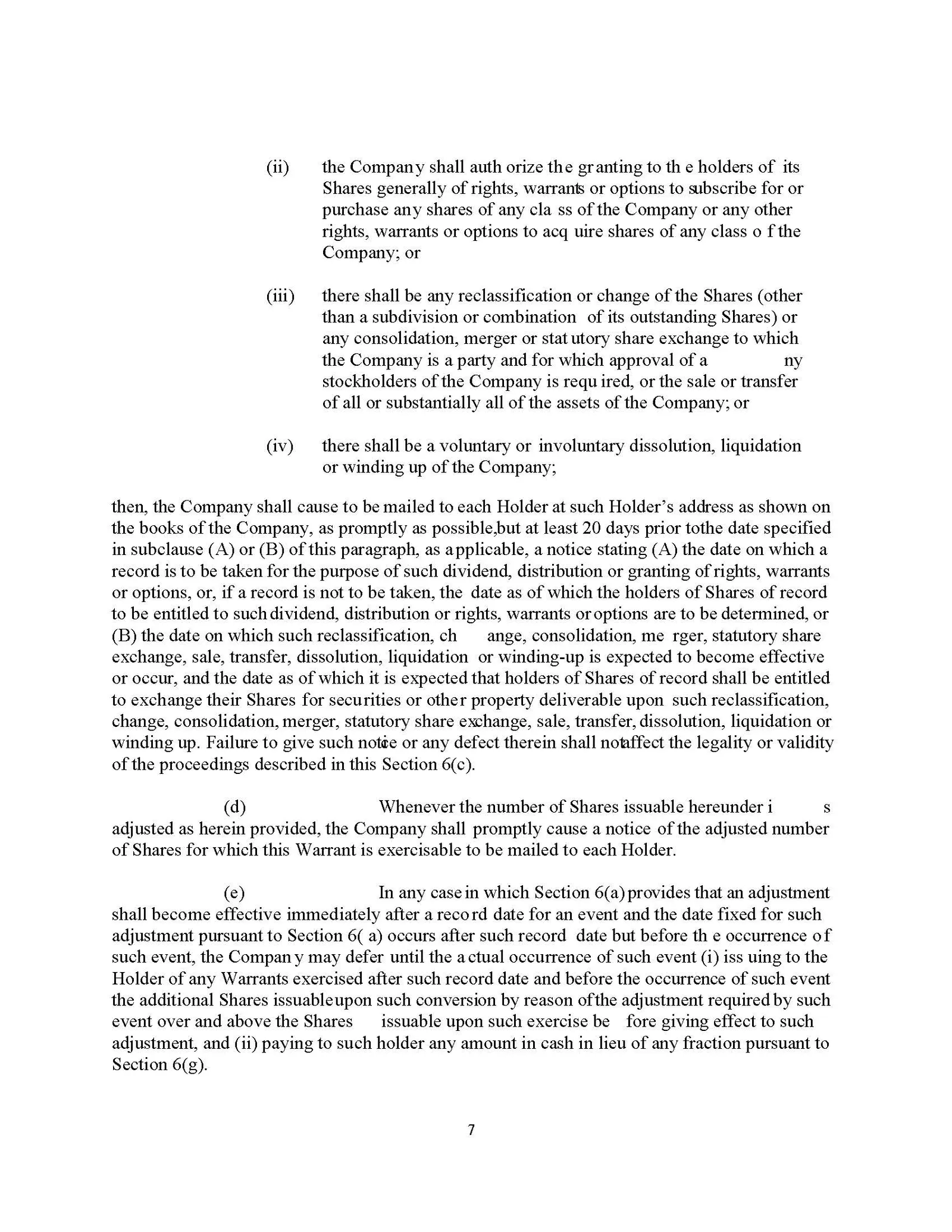
Slide 169
Slide 170
Slide 171

Slide 172
Slide 173
Slide 174
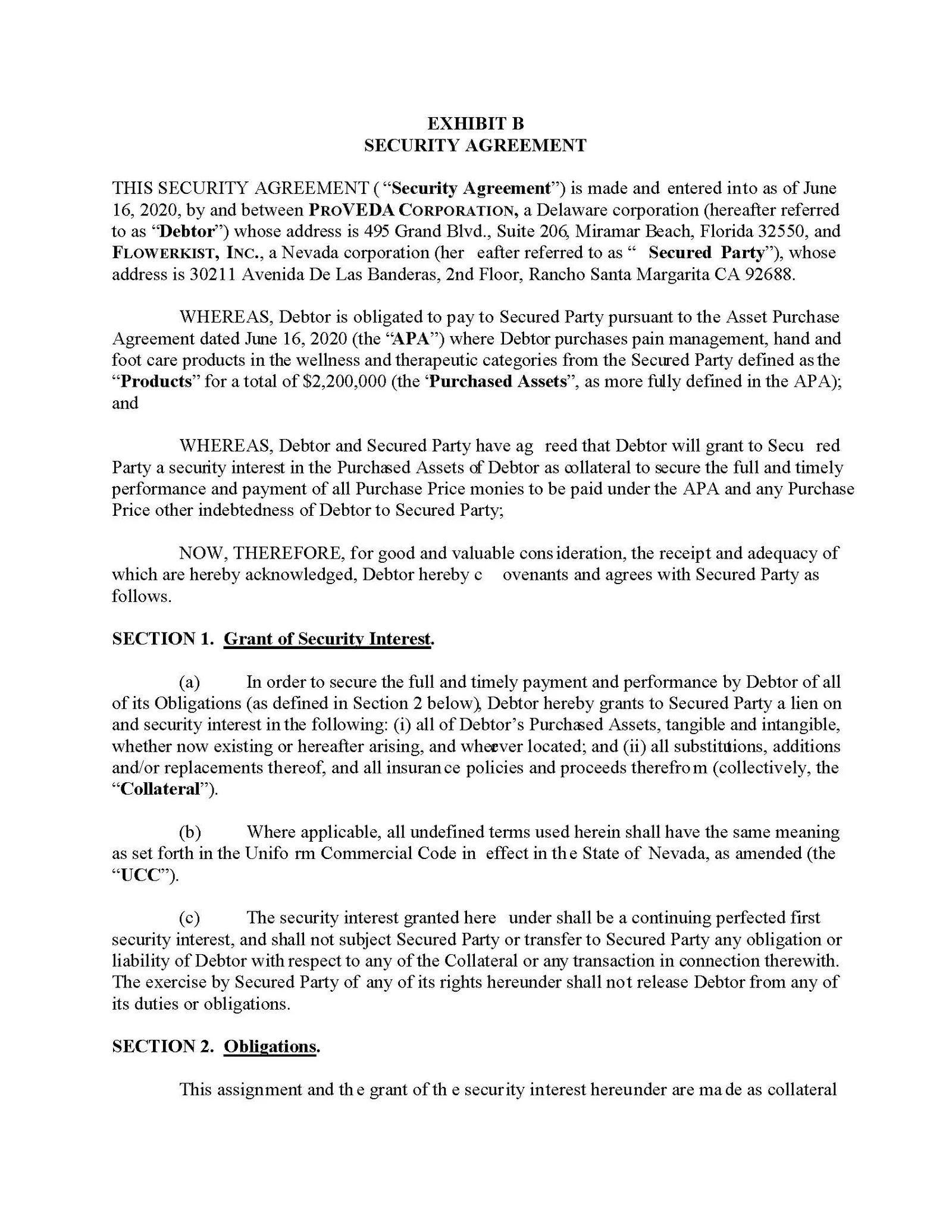
Slide 175
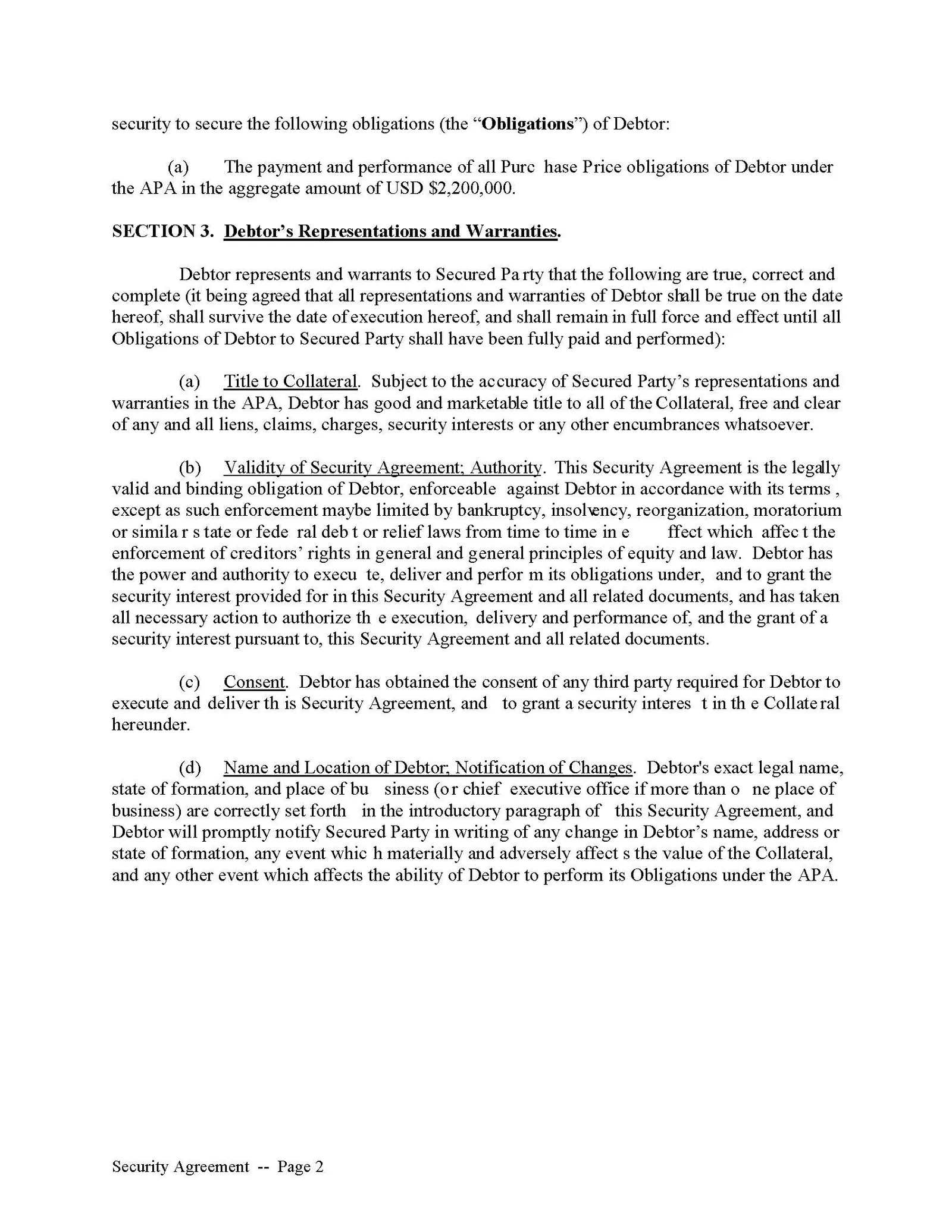
Slide 176
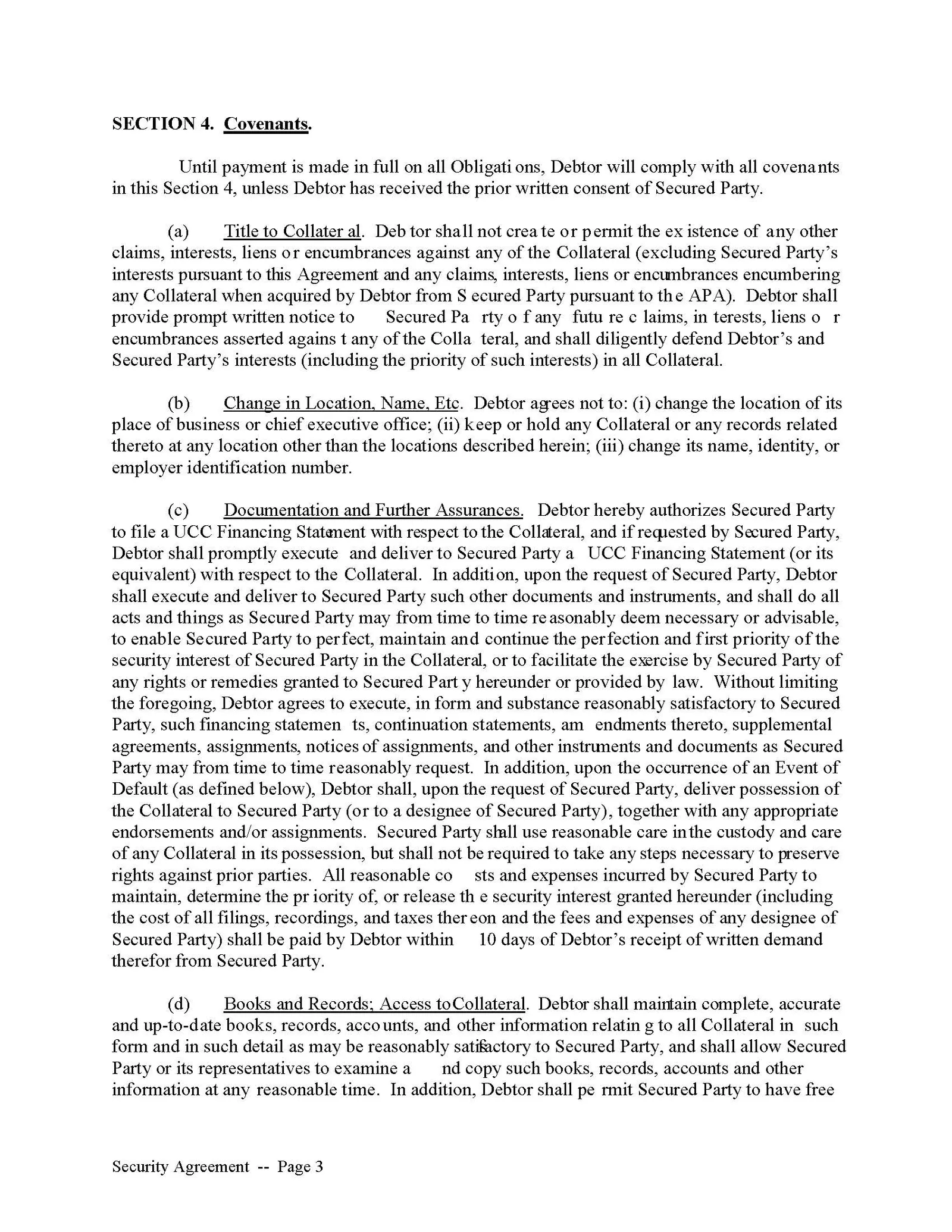
Slide 177
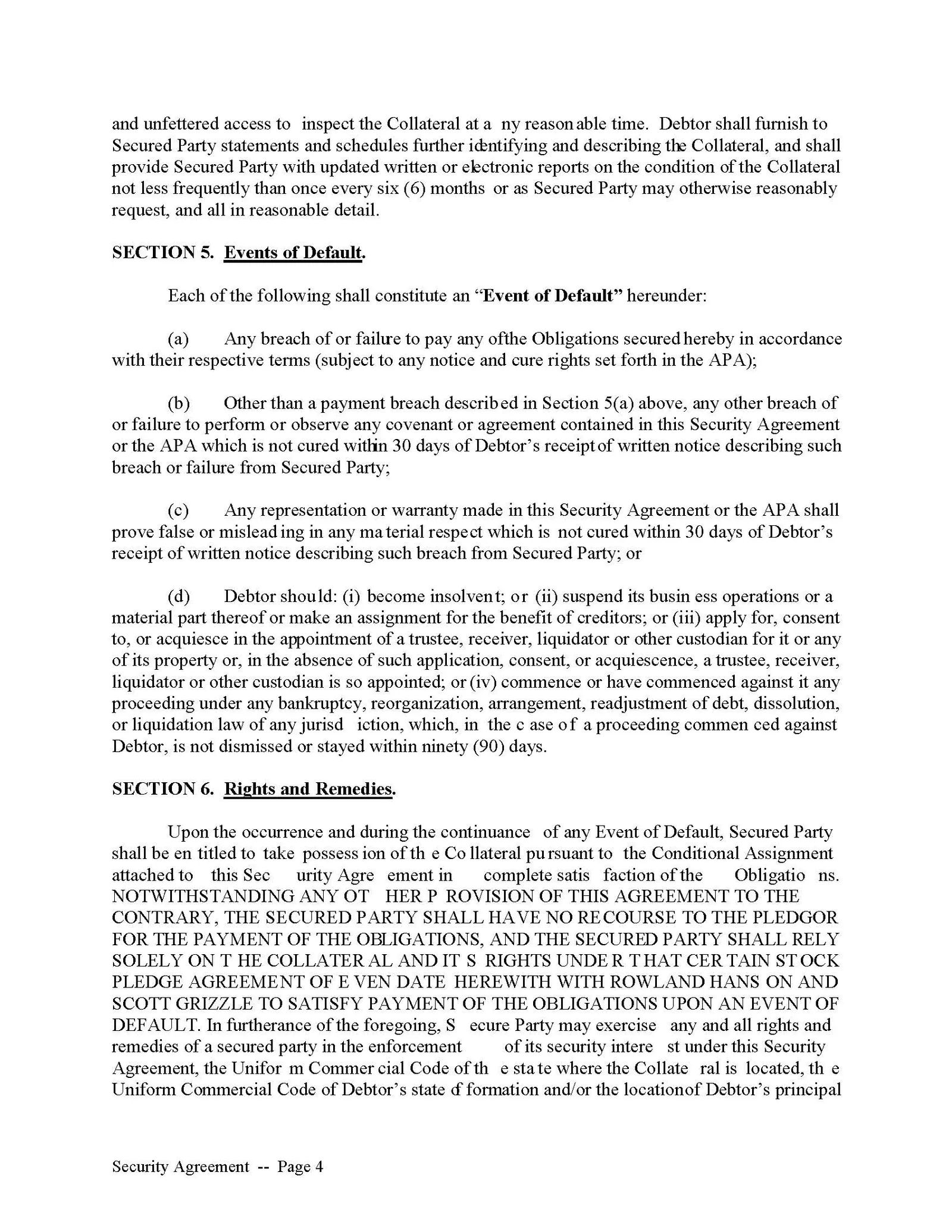
Slide 178
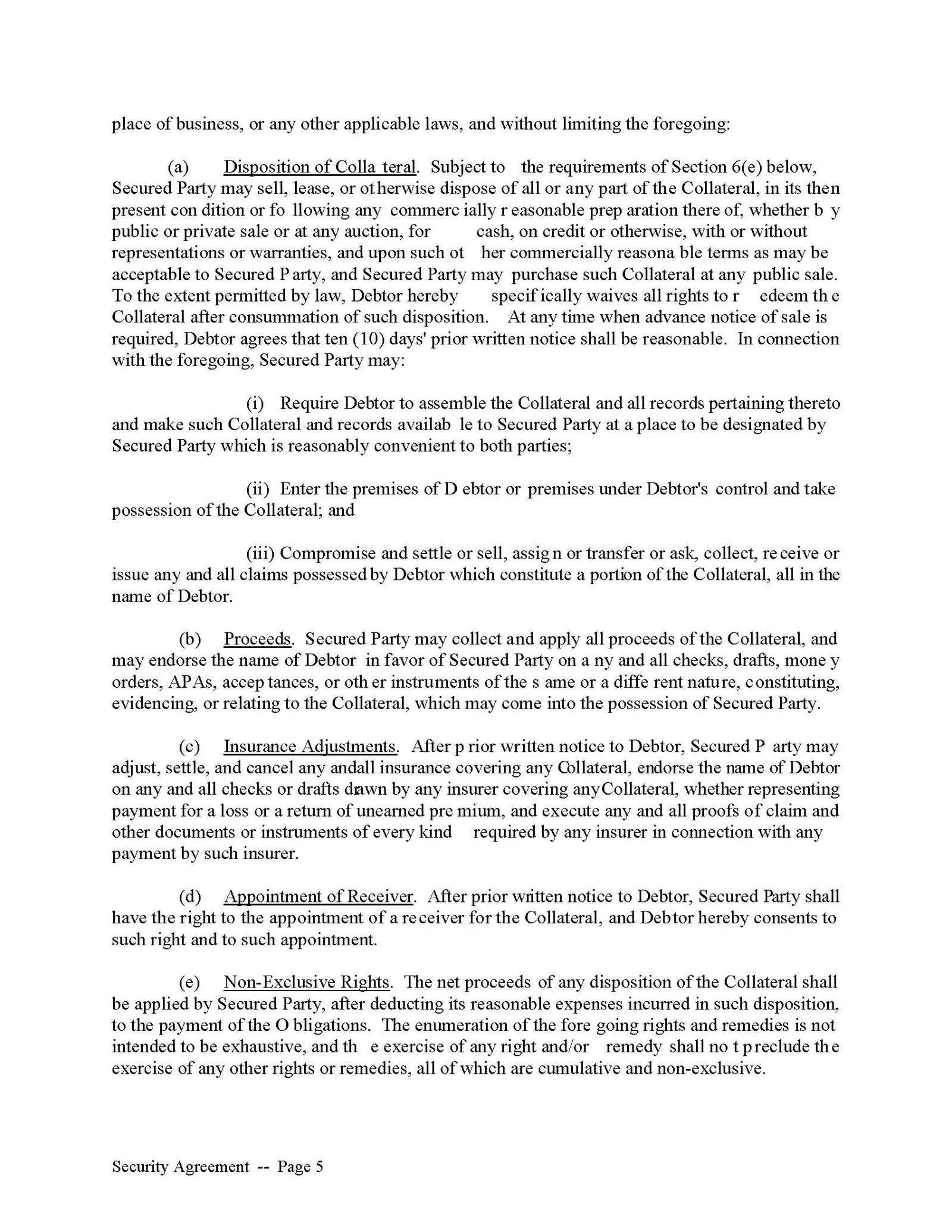
Slide 179
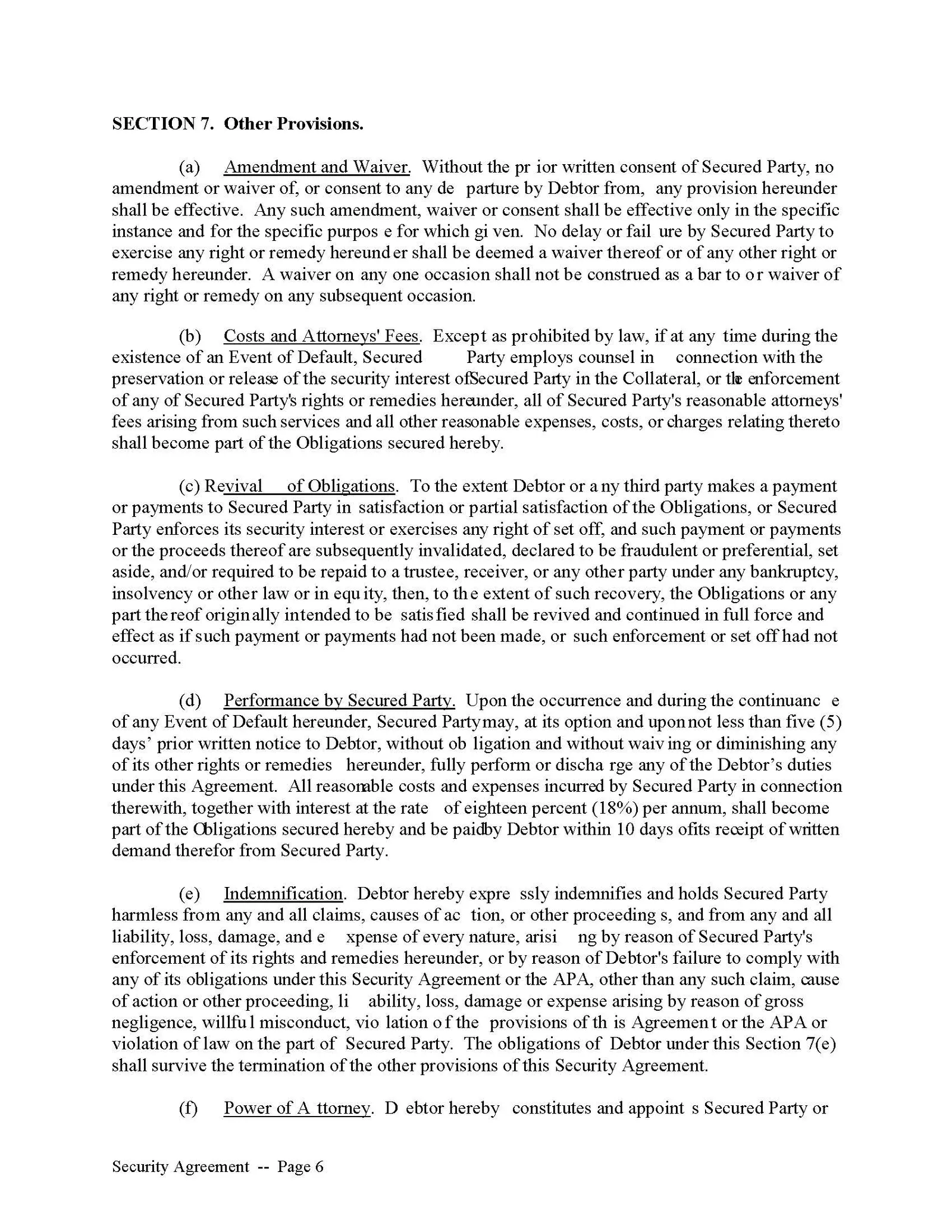
Slide 180
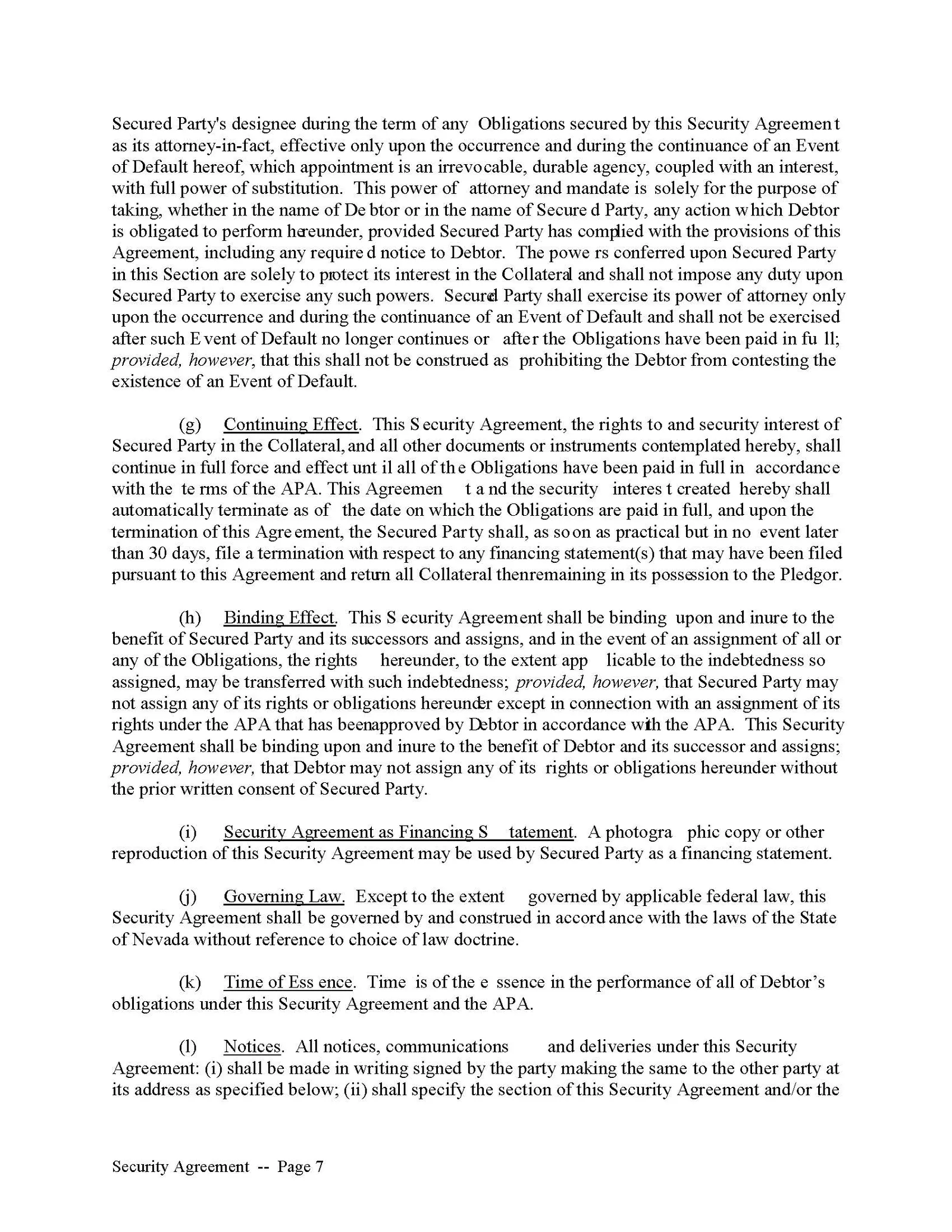
Slide 181
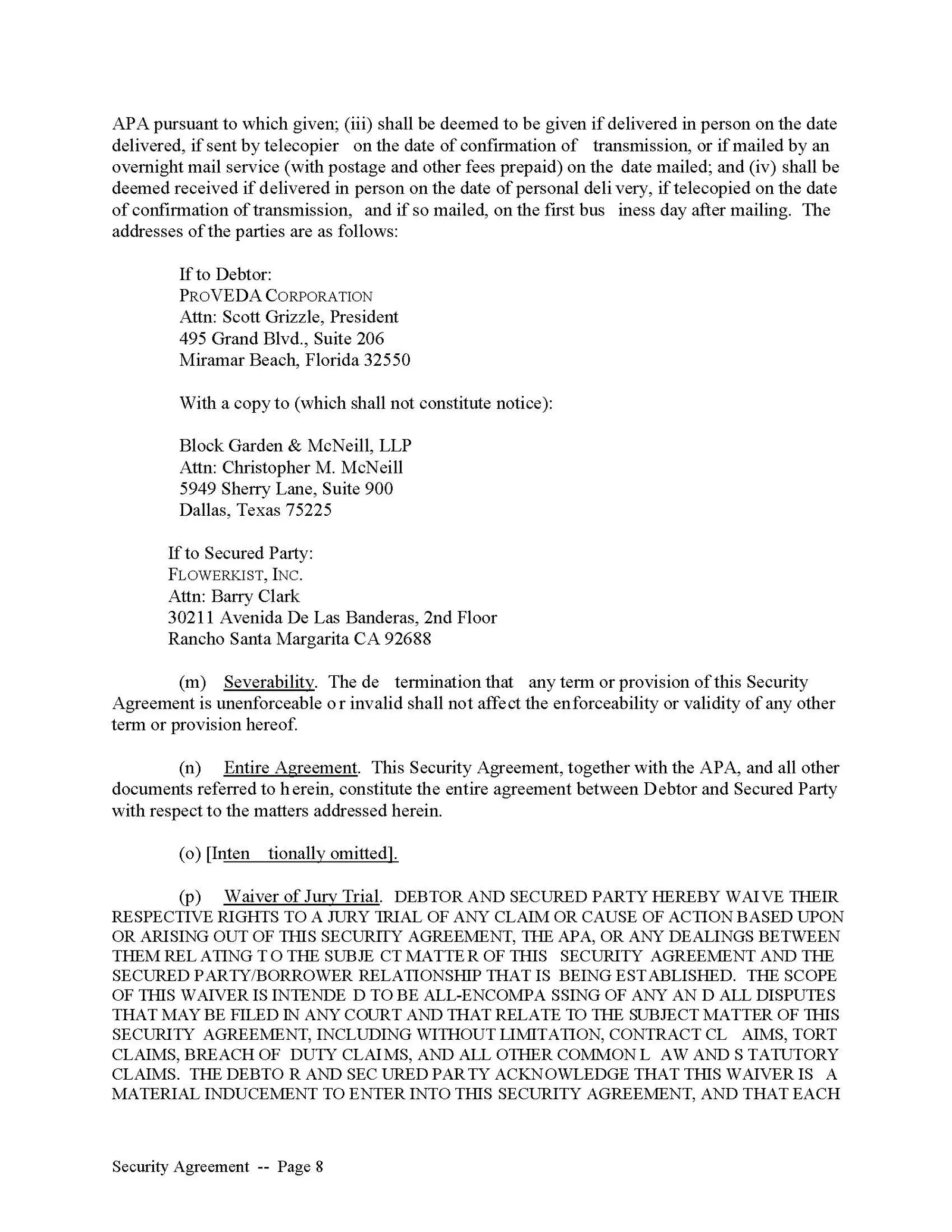
Slide 182
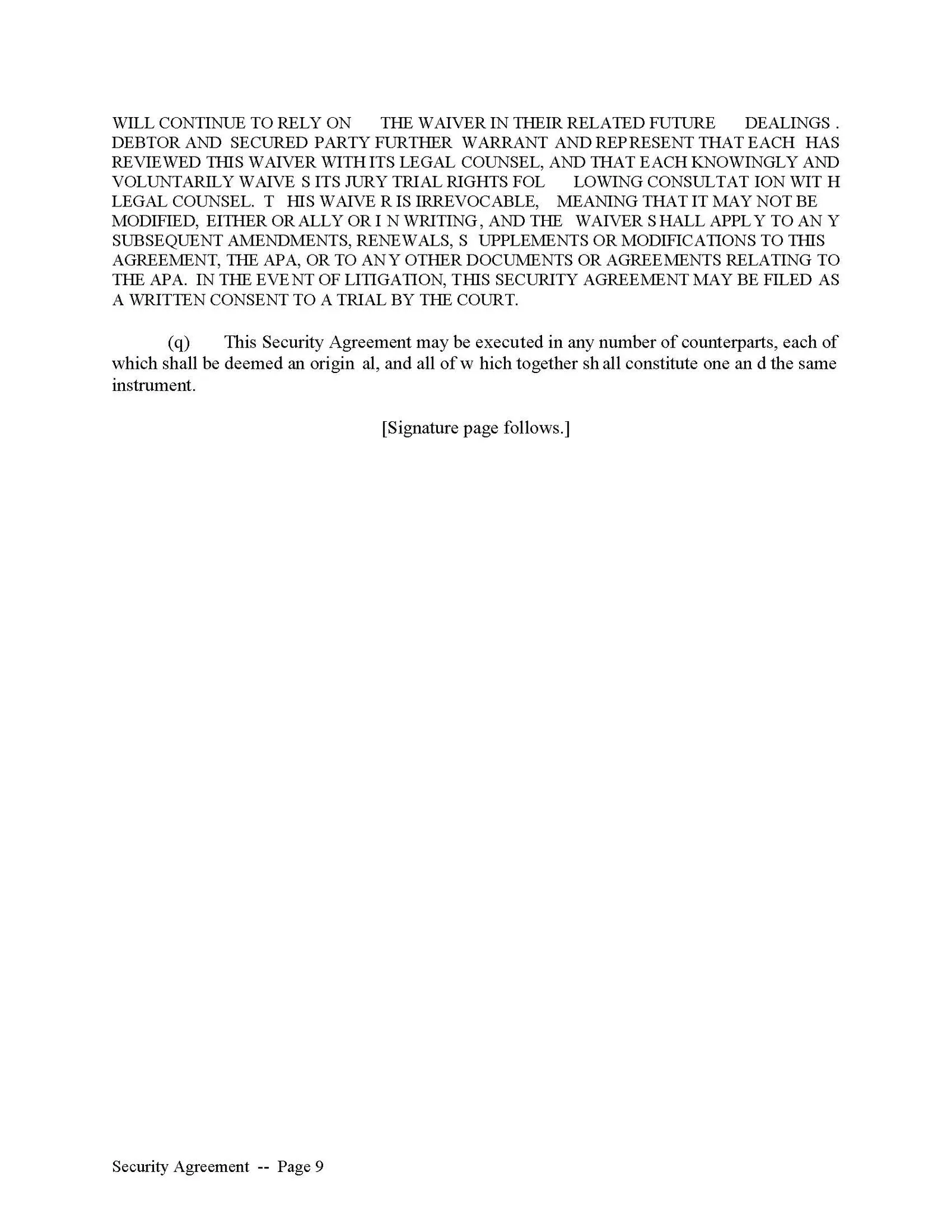
Slide 183
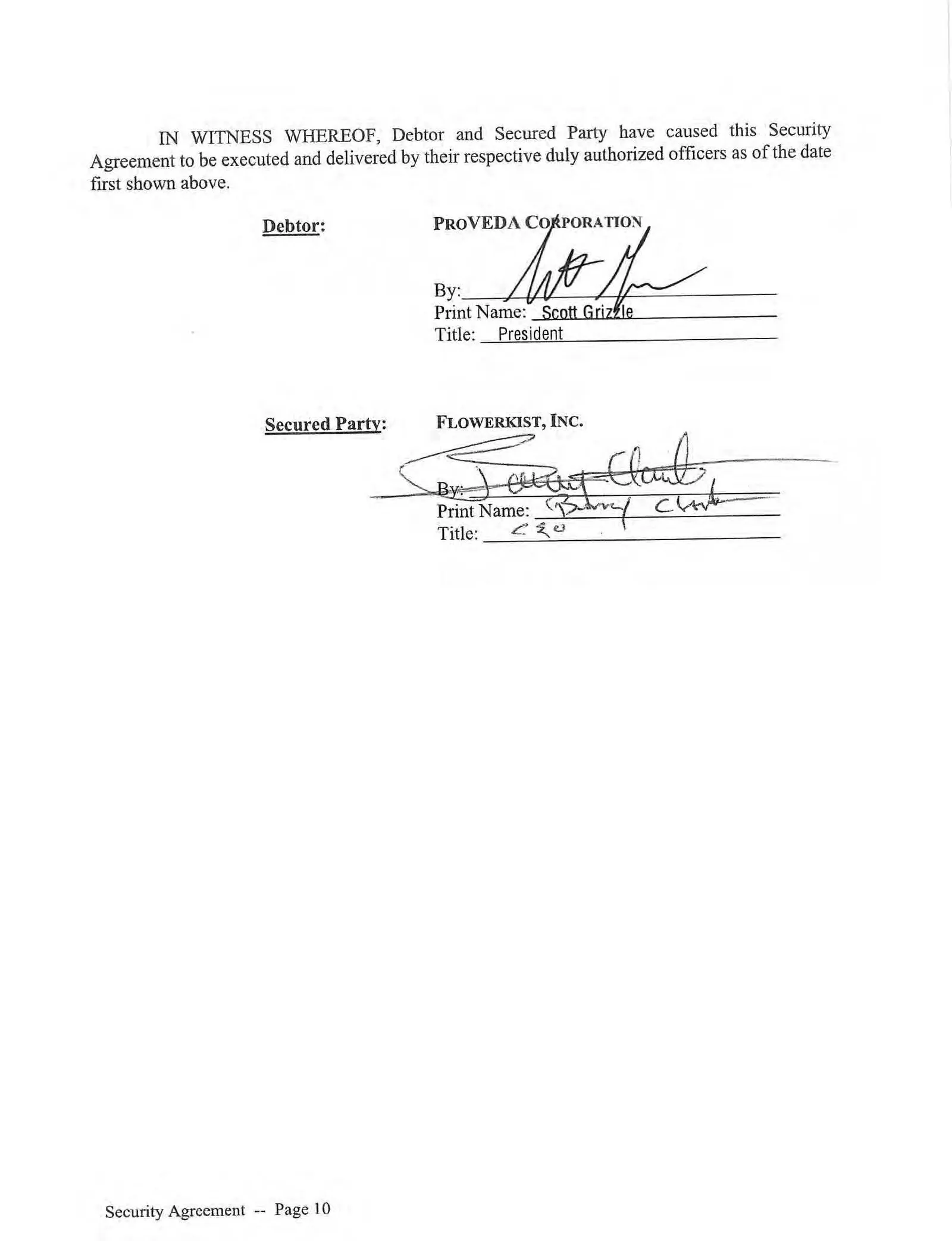
Slide 184
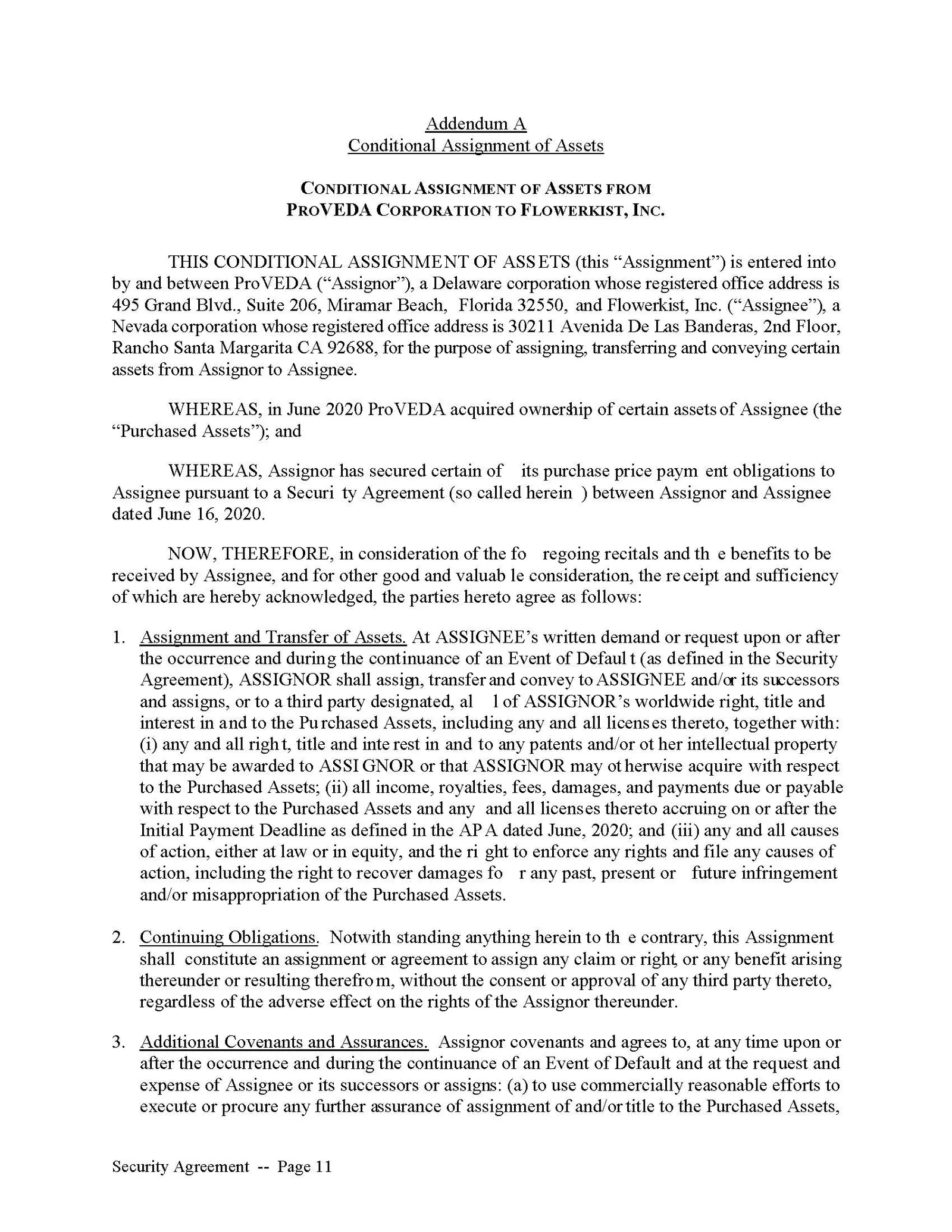
Slide 185

Slide 186
Slide 187
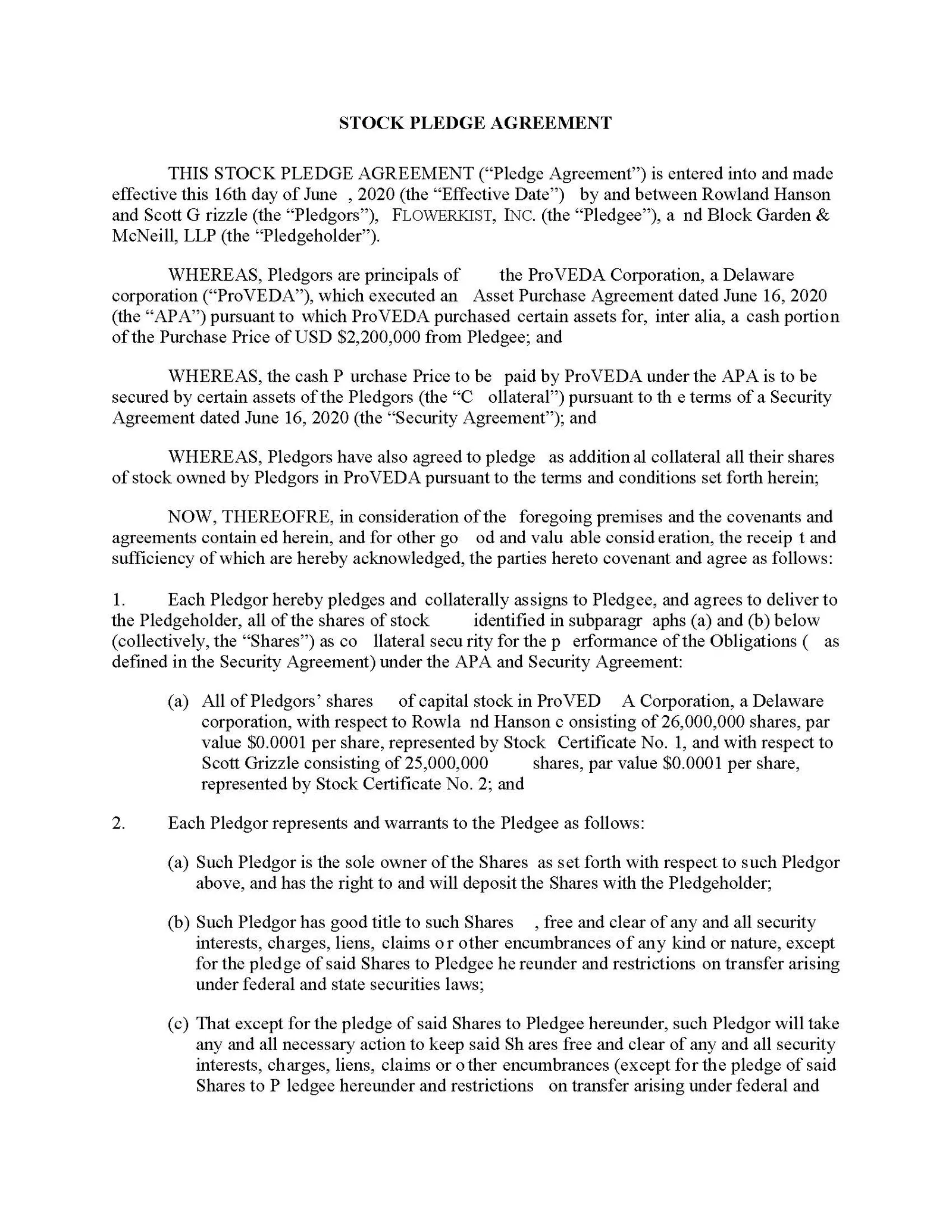
Slide 188
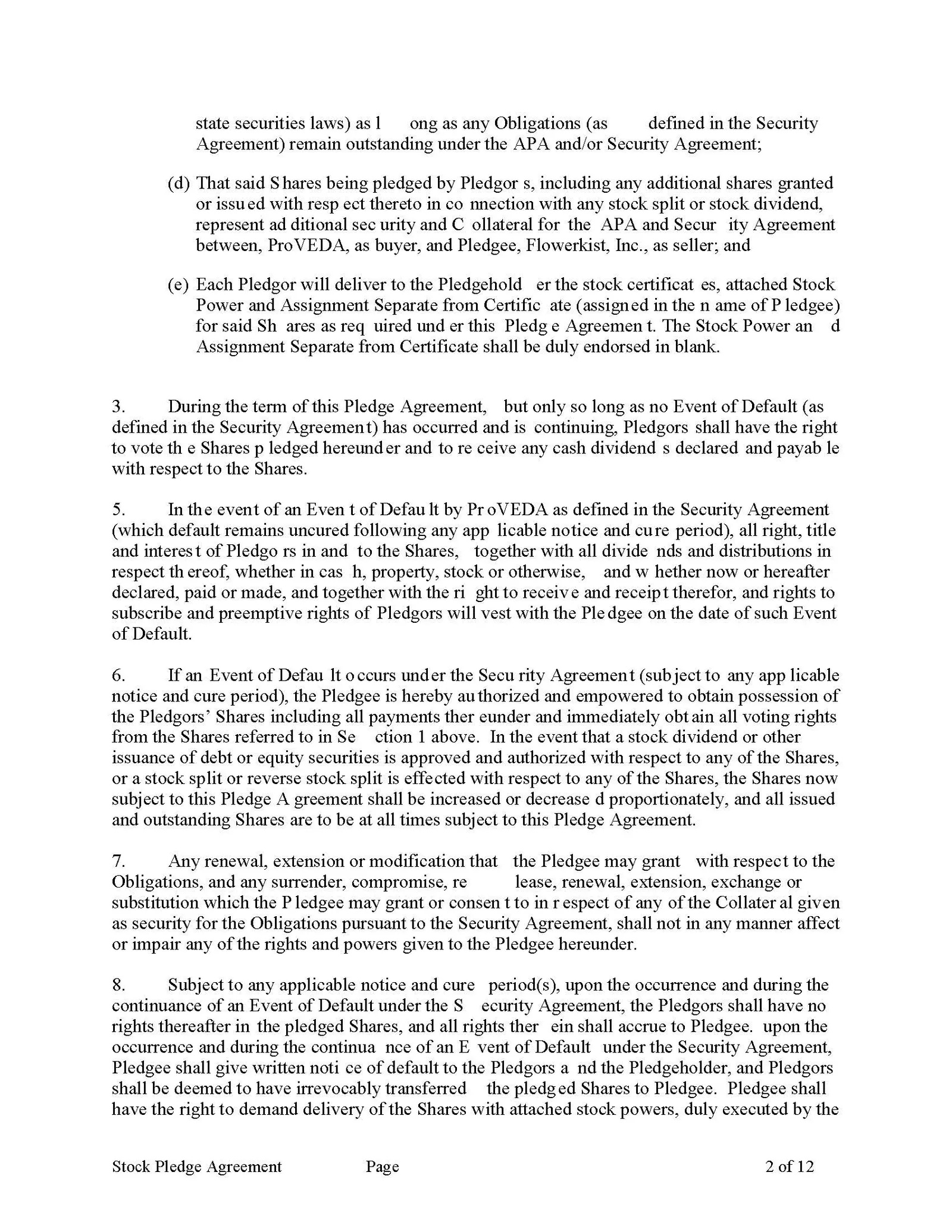
Slide 189
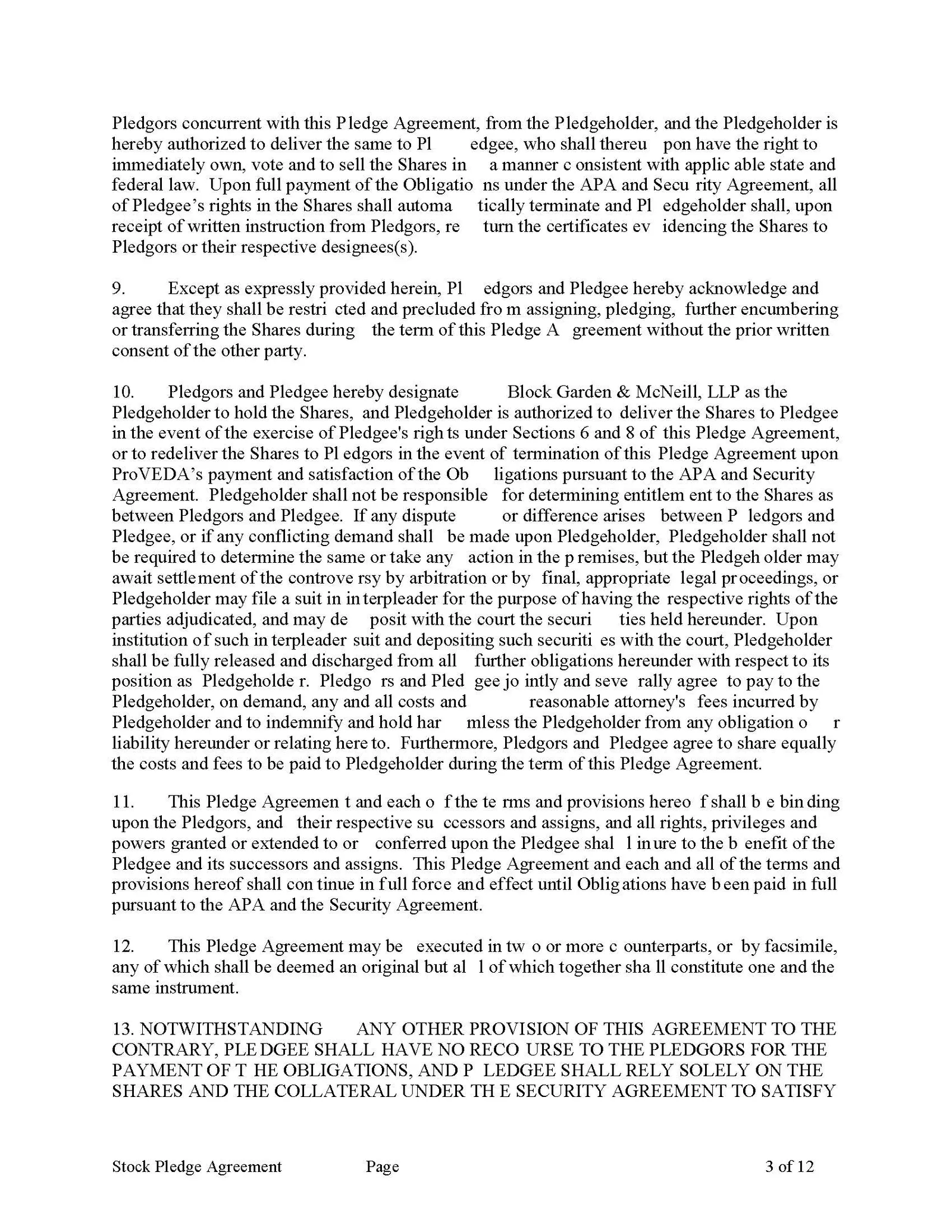
Slide 190
Slide 191
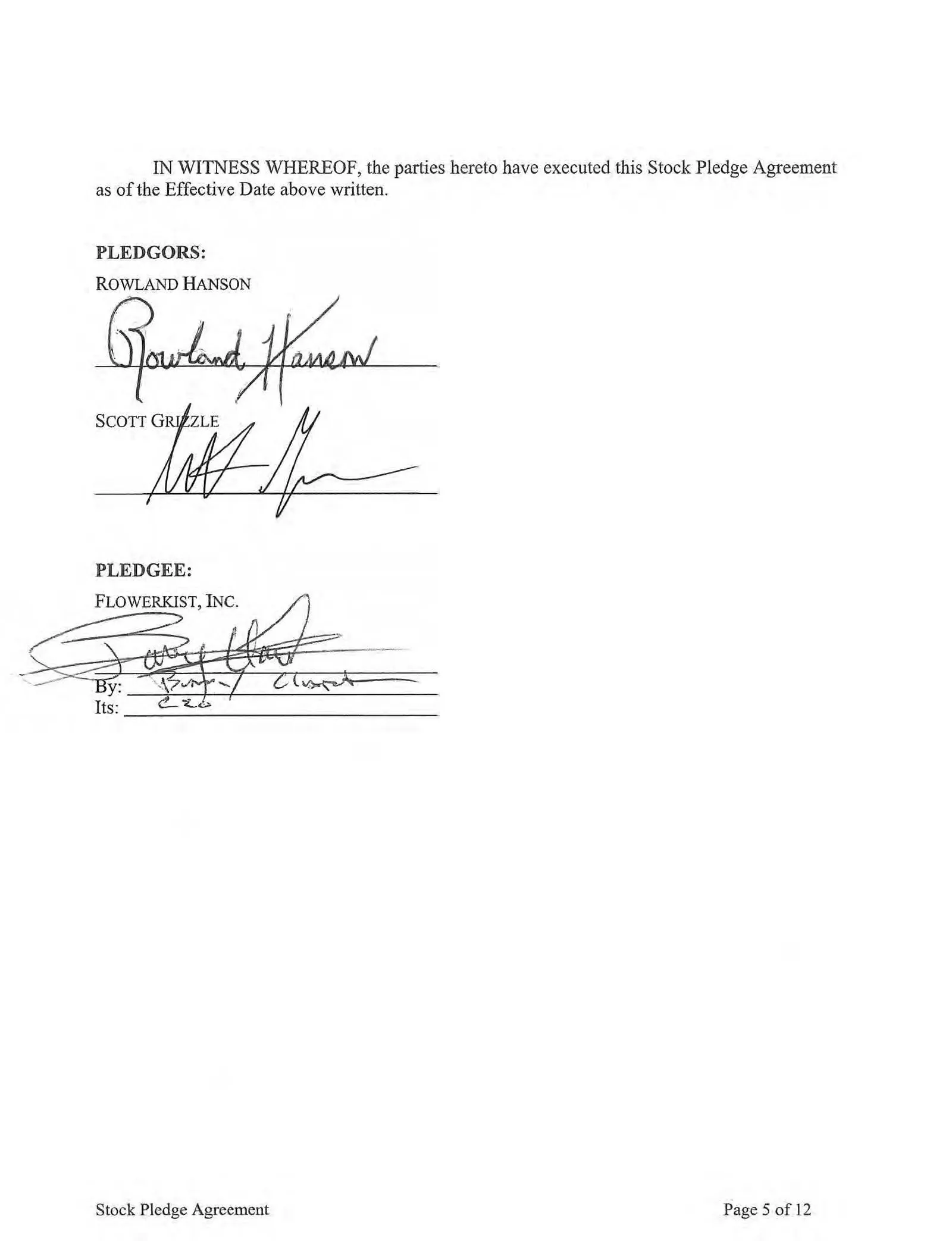
Slide 192
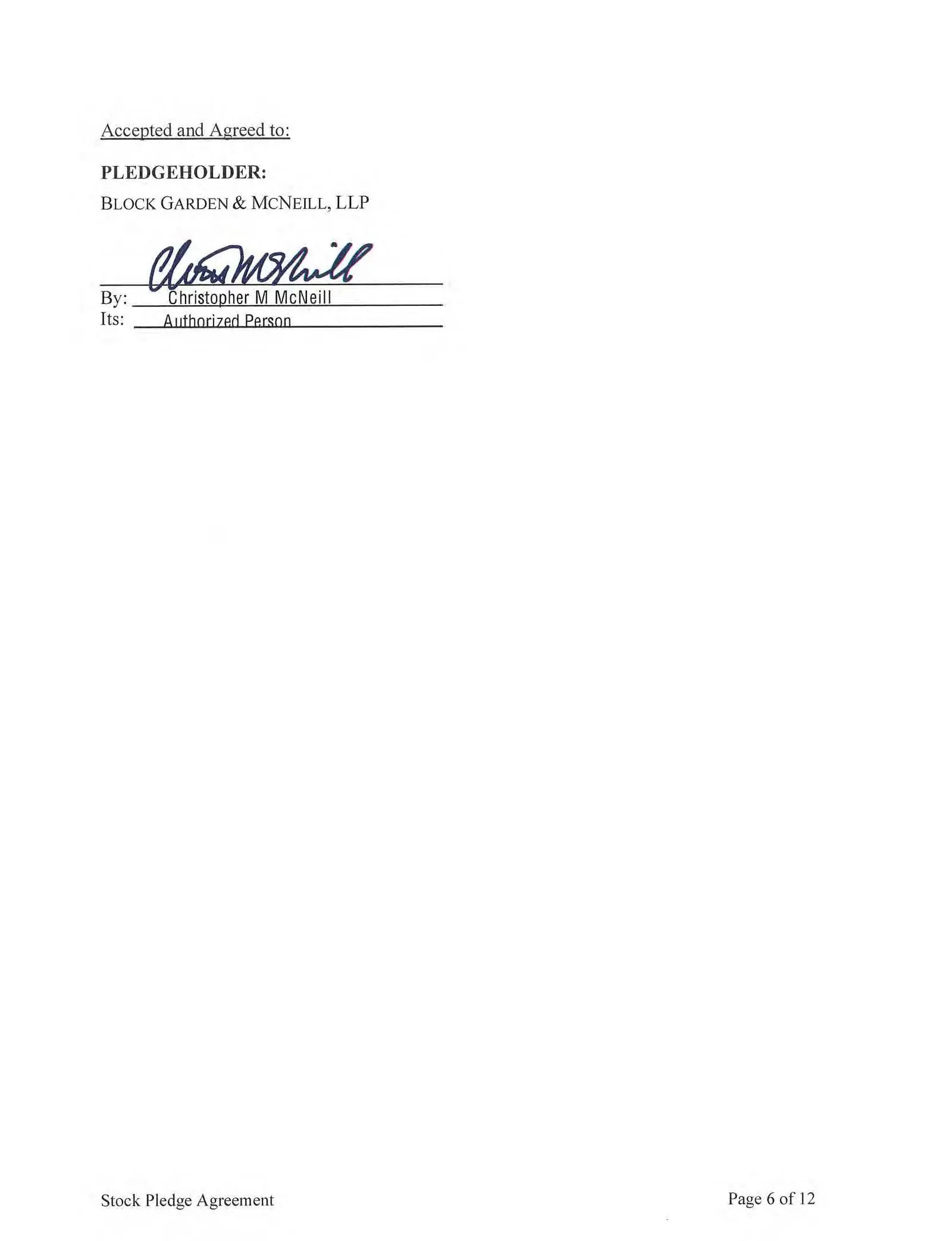
Slide 193

Slide 194
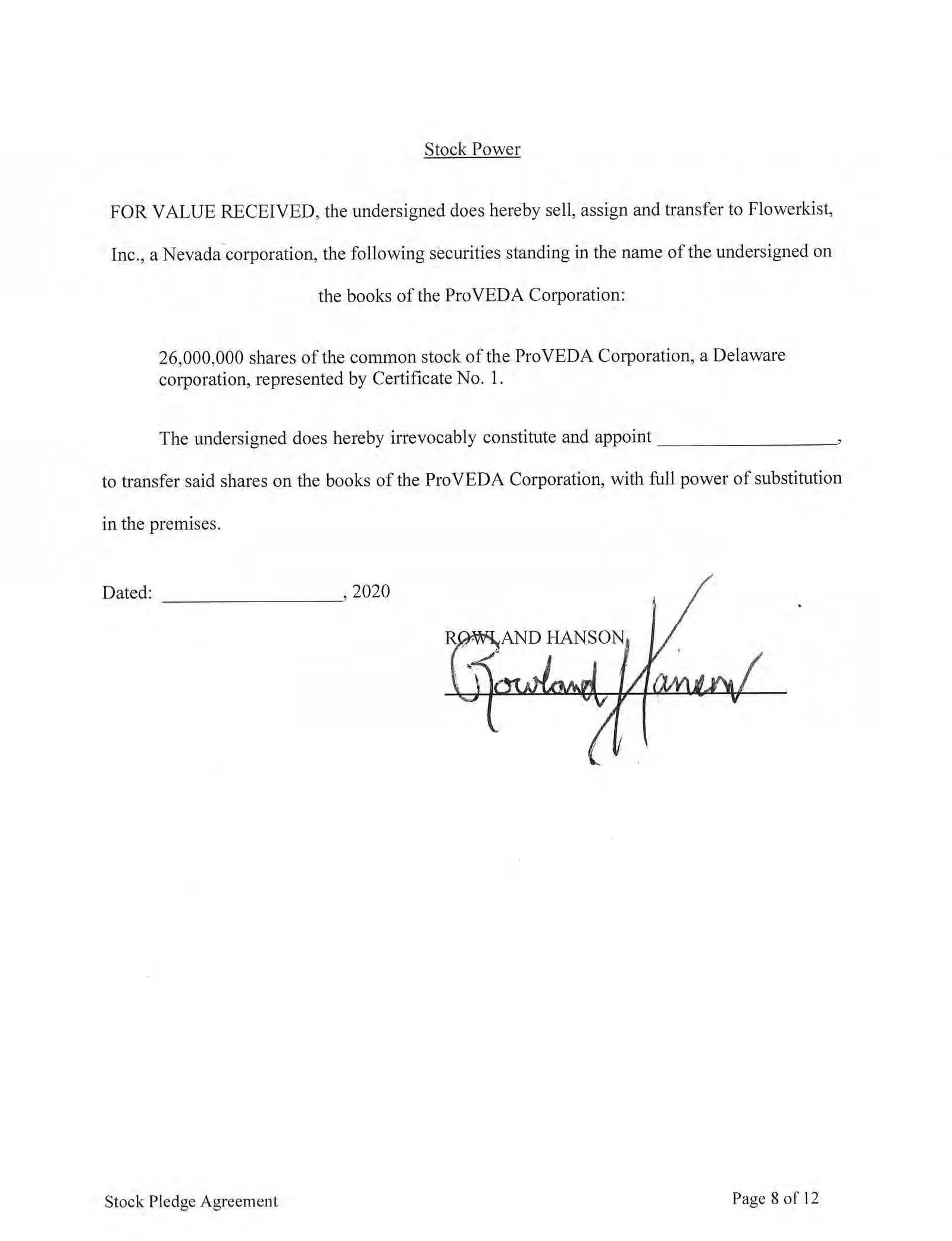
Slide 195
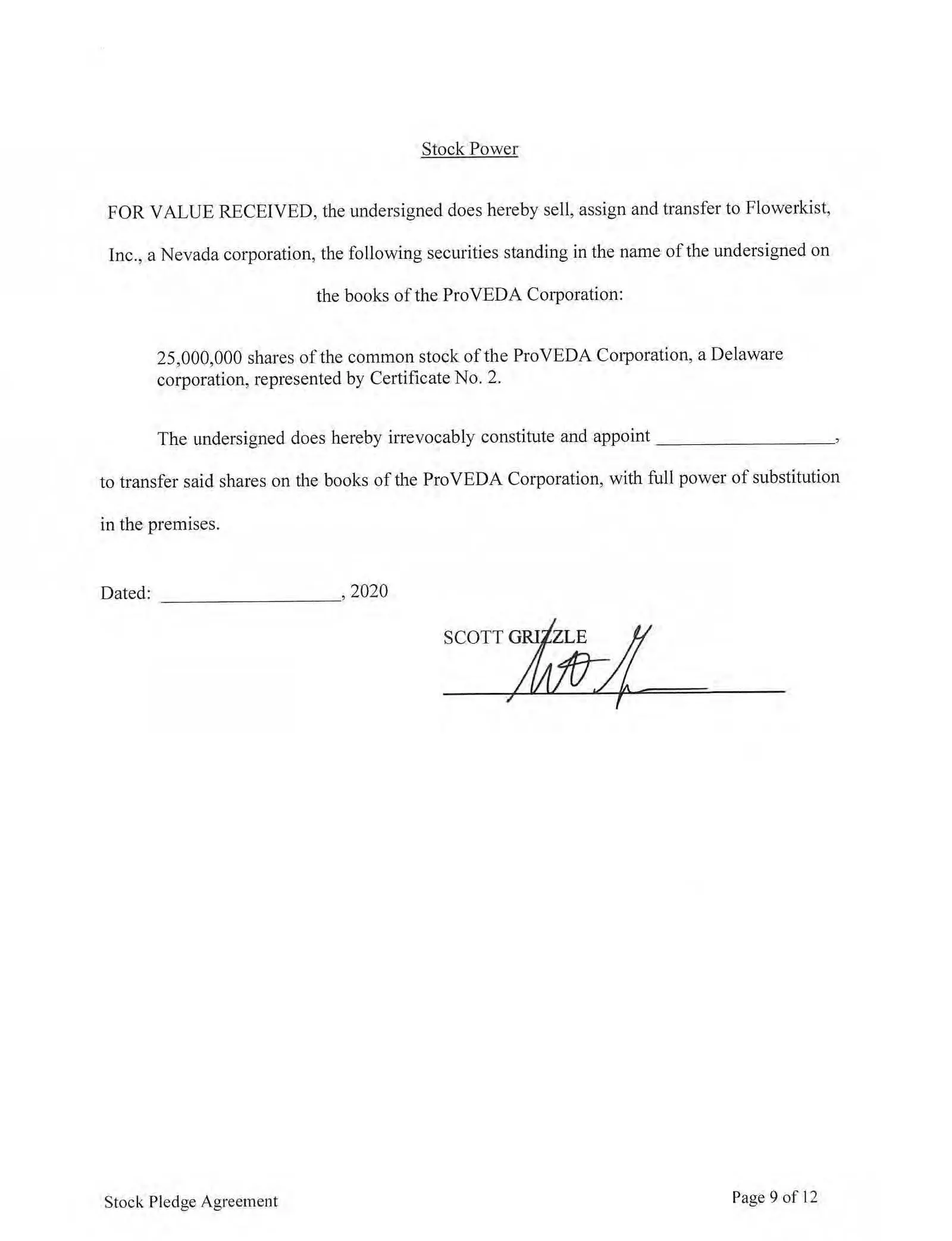
Slide 196

Slide 197
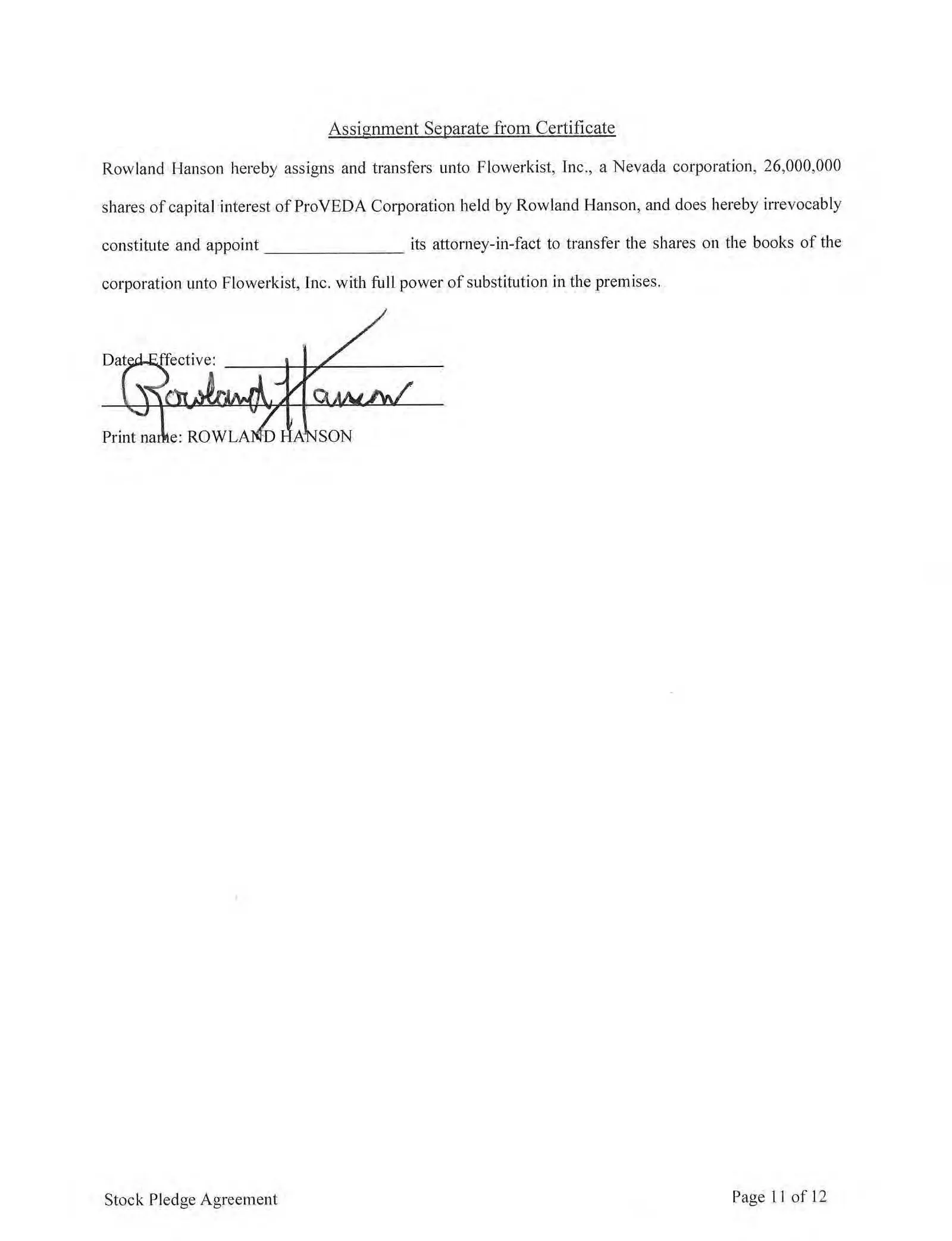
Slide 198
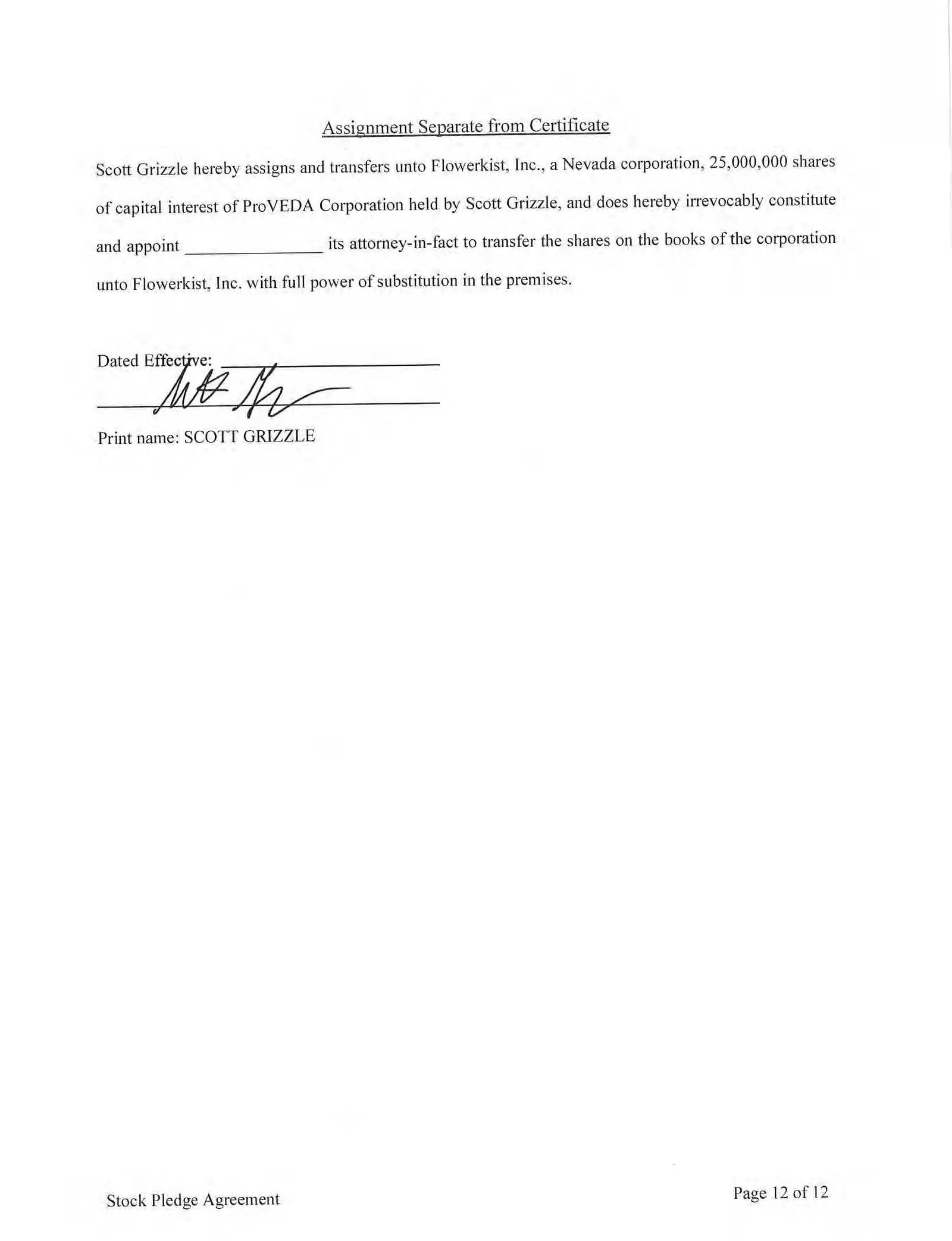
Slide 199
Source: SEC EDGAR · 8-K filed Mar 22, 2023