AB Science SA · EURONEXT:AB
AB Science SA — AB Science Webconference: Masitinib in Pancreatic Cancer (December 2020)
22 slides from AB Science SA's conference presentation, Dec 11, 2020
Slide 1: AB Science Webconference: Masitinib in Pancreatic Cancer
AB SCIENCE WEBCONFERENCE MASITINIB IN PANCREATIC CANCER 11 December 2020
Slide 2: Disclaimer
Disclaimer This presentation, together with the material set forth herein, does not constitute an offer of securities for sale nor the solicitation of an offer to purchase securities in any jurisdiction. Distribution of such presentation in certain jurisdiction may constitute a breach of applicable
Slide 3: Presenting KOL
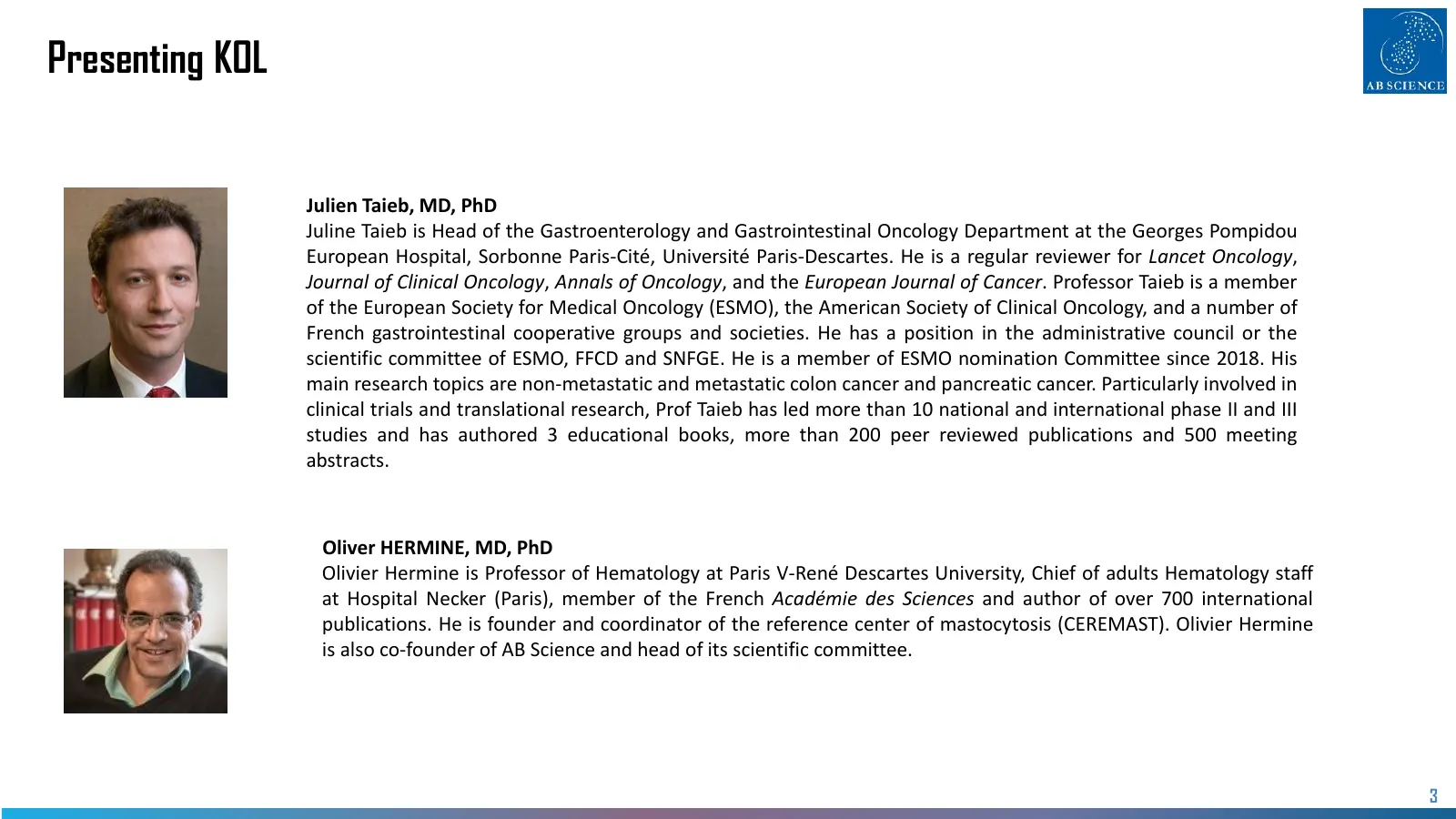
Presenting KOL Julien Taieb, MD, PhD Juline Taieb is Head of the Gastroenterology and Gastrointestinal Oncology Department at the Georges Pompidou European Hospital, Sorbonne Paris-Cité, Université Paris-Descartes. He is a regular reviewer for Lancet Oncology, Journal of Clinical Oncology, Annals of
Slide 4: Scientific Rationale
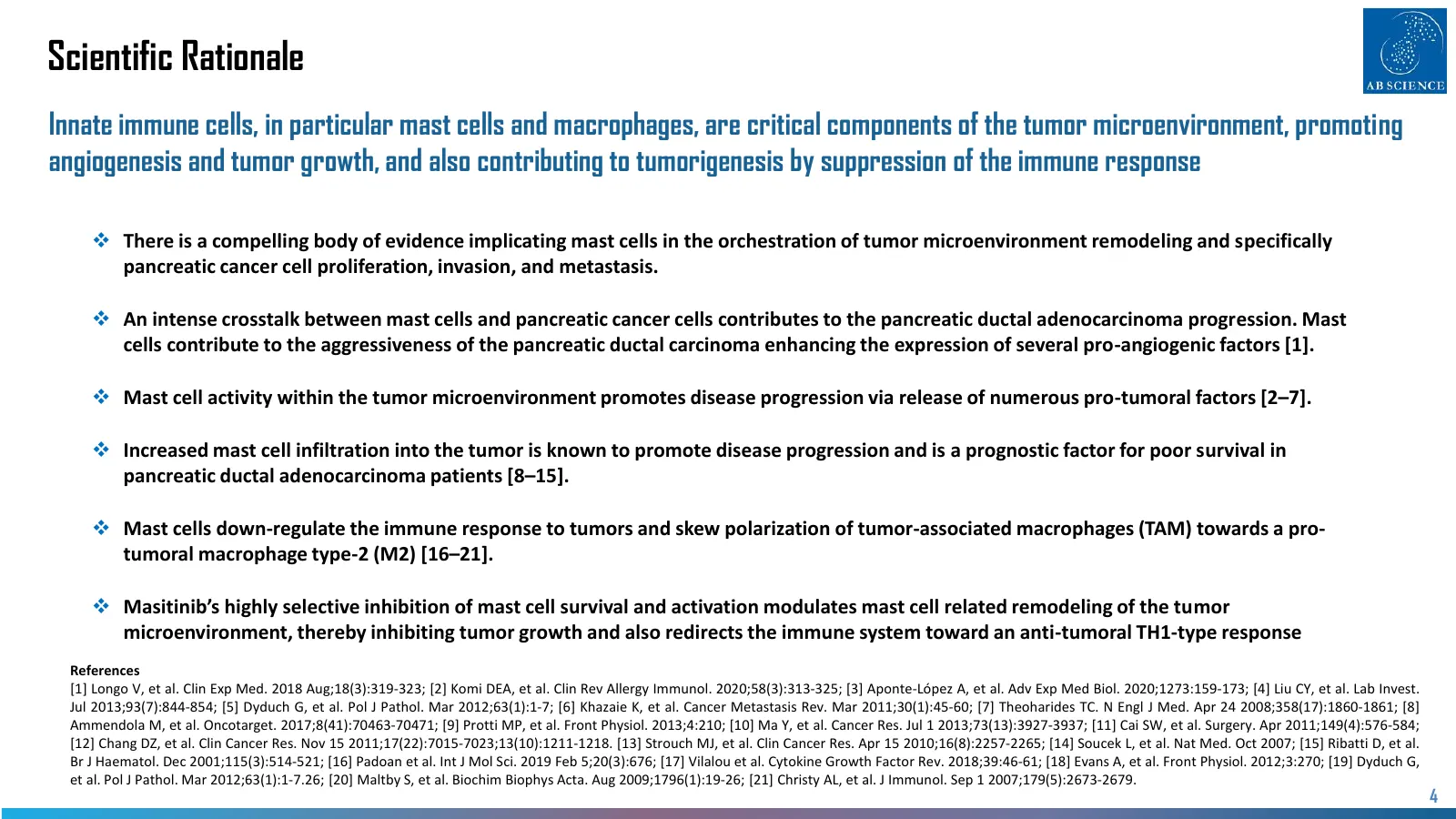
Scientific Rationale Innate immune cells, in particular mast cells and macrophages, are critical components of the tumor microenvironment, promoting angiogenesis and tumor growth, and also contributing to tumorigenesis by suppression of the immune response There is a compelling body of evidence im
Slide 5: Scientific Rationale
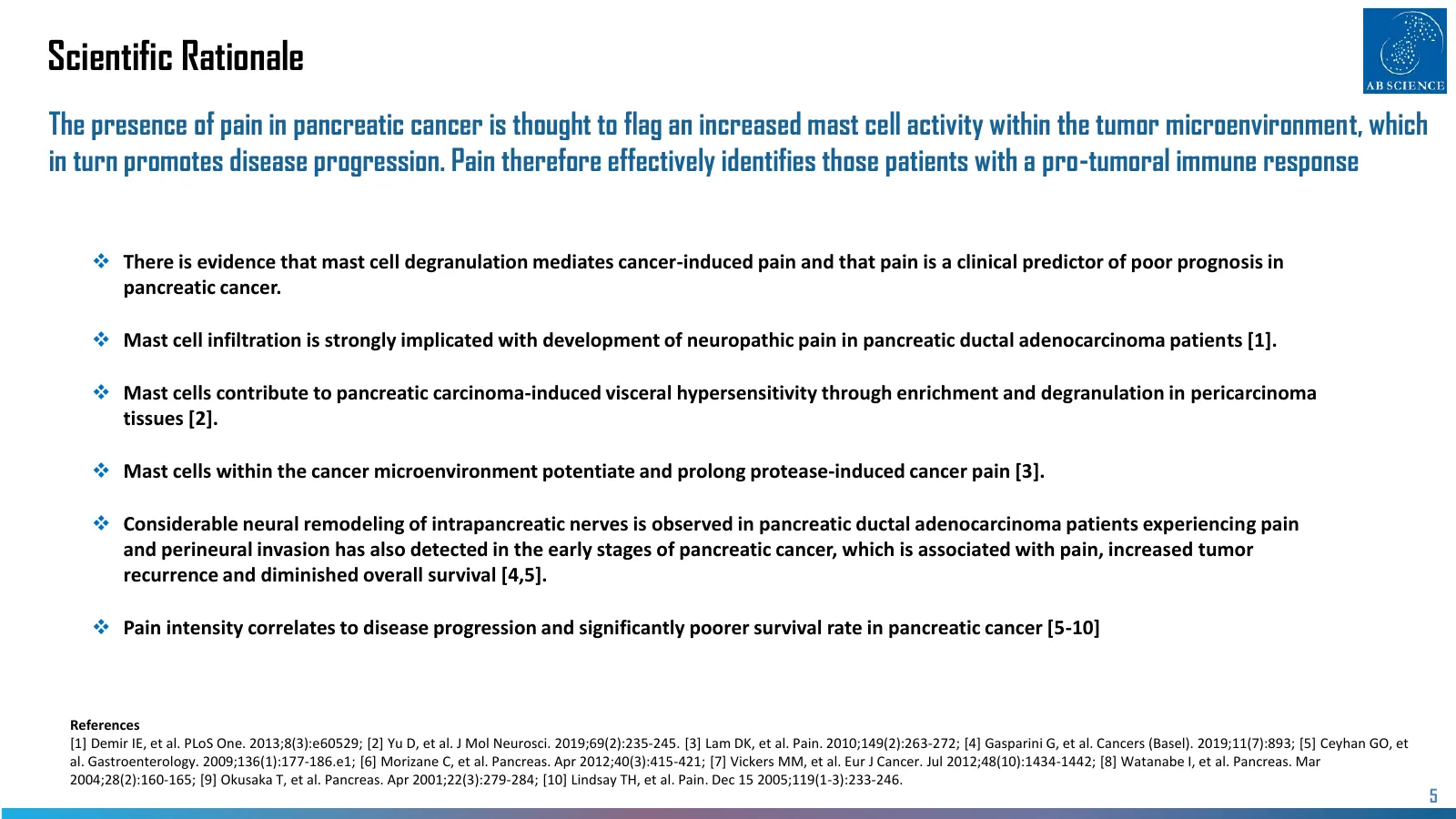
Scientific Rationale The presence of pain in pancreatic cancer is thought to flag an increased mast cell activity within the tumor microenvironment, which in turn promotes disease progression. Pain therefore effectively identifies those patients with a pro-tumoral immune response There is evidence
Slide 6: Masitinib Profile and Mechanism of Action
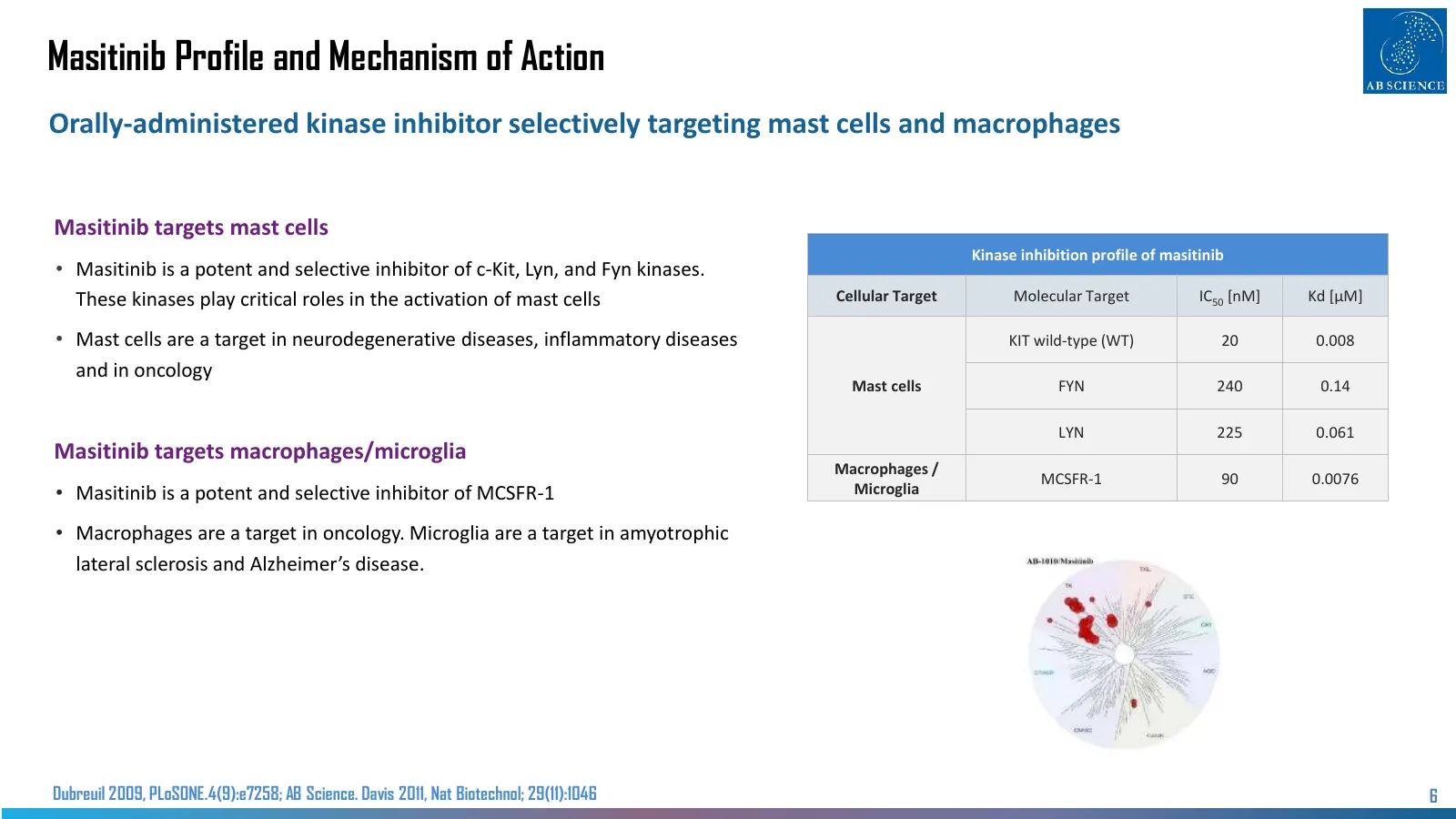
Masitinib Profile and Mechanism of Action Orally-administered kinase inhibitor selectively targeting mast cells and macrophages Masitinib targets mast cells Kinase inhibition profile of masitinib • Masitinib is a potent and selective inhibitor of c-Kit, Lyn, and Fyn kinases. These kinases play criti
Slide 7: Pharmacology Data - Masitinib targets tumor microenvironment
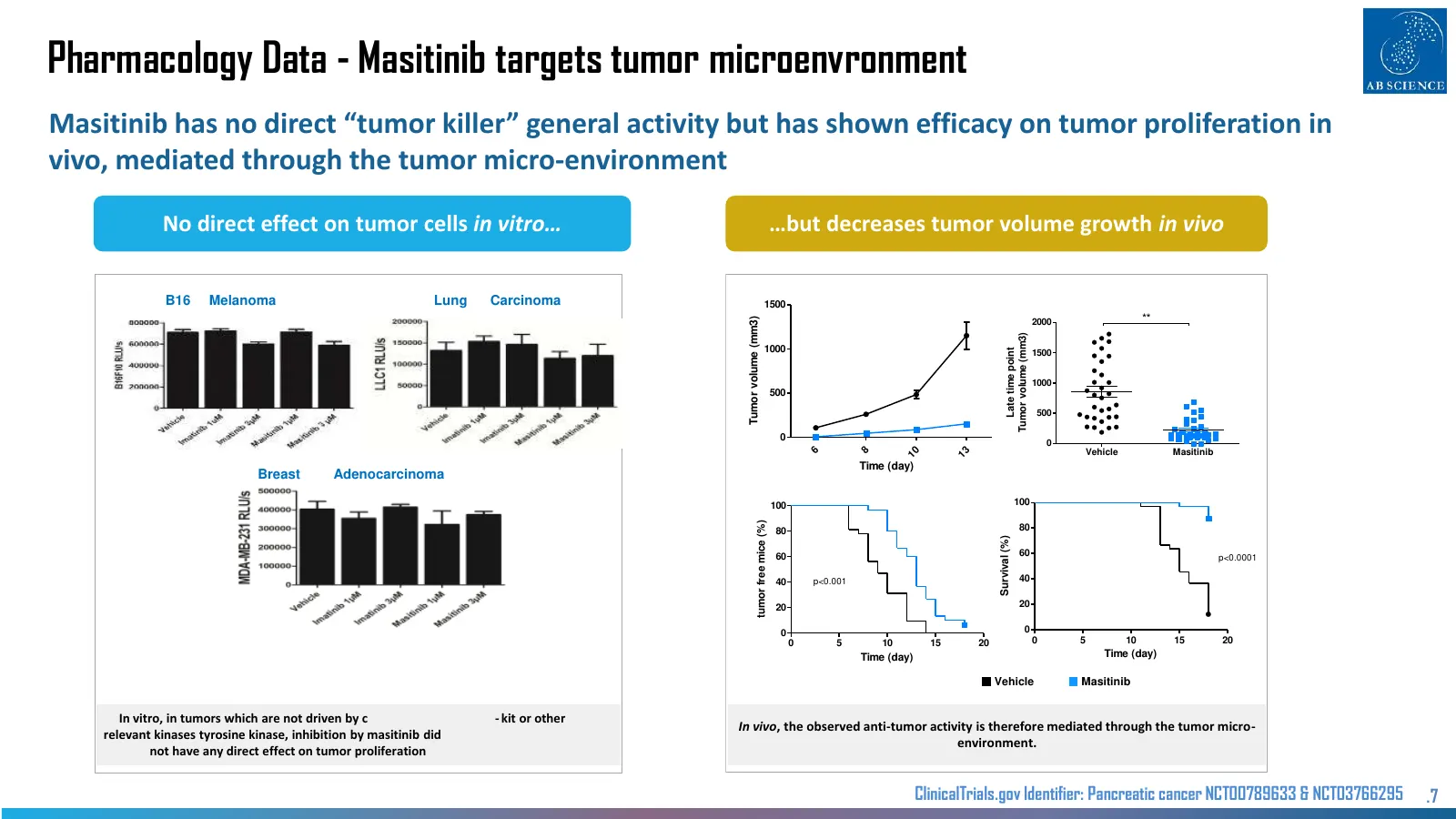
Pharmacology Data - Masitinib targets tumor microenvronment Masitinib has no direct “tumor killer” general activity but has shown efficacy on tumor proliferation in vivo, mediated through the tumor micro-environment No direct effect on tumor cells in vitro… …but decreases tumor volume growth in vivo
Slide 8: Masitinib Clinical Development Plan in Pancreatic Cancer
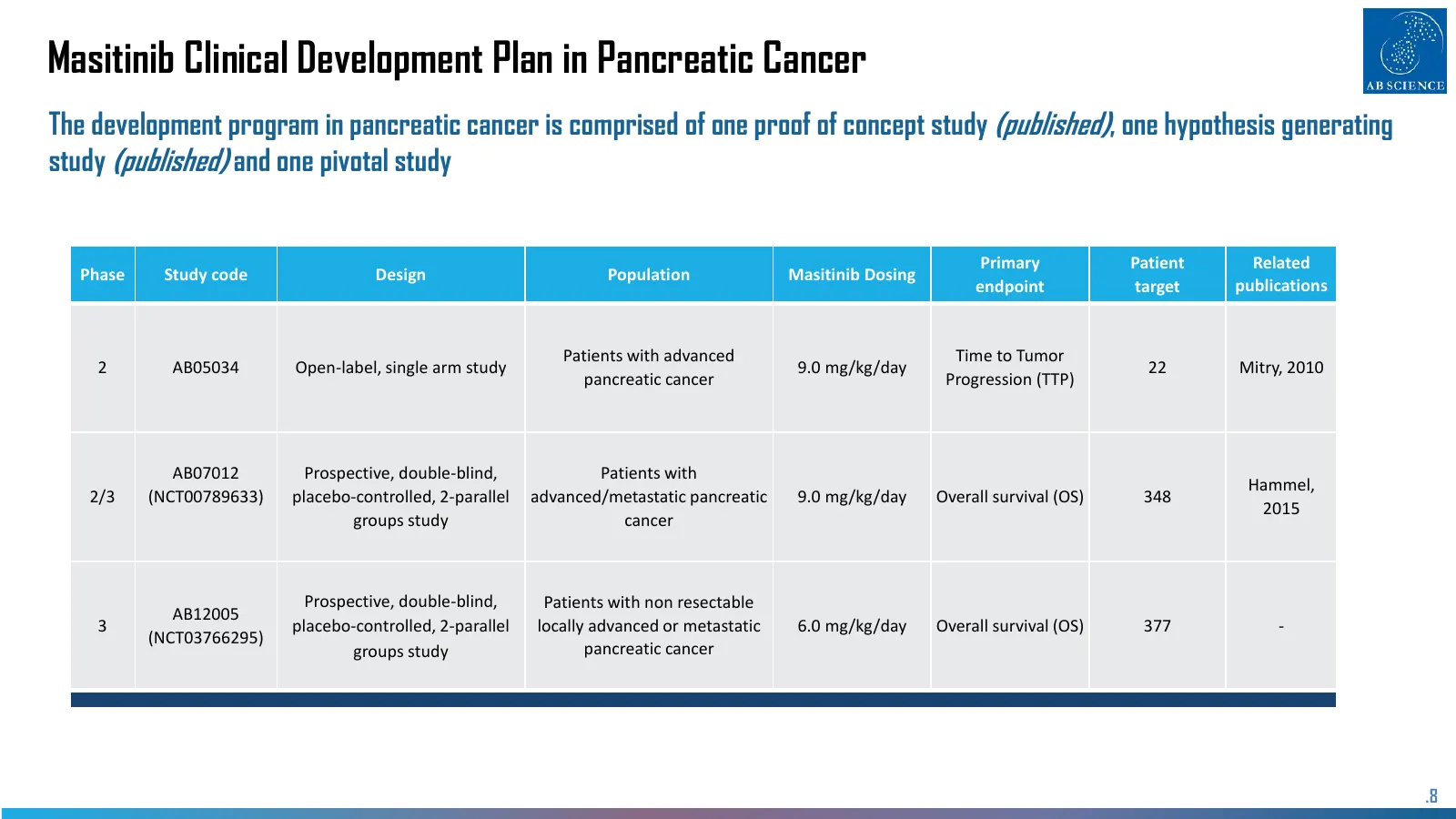
Masitinib Clinical Development Plan in Pancreatic Cancer The development program in pancreatic cancer is comprised of one proof of concept study (published), one hypothesis generating study (published) and one pivotal study Primary Patient Related Phase Study code Design Population Masitinib Dosing
Slide 9: AB07012 Hypothesis generating study
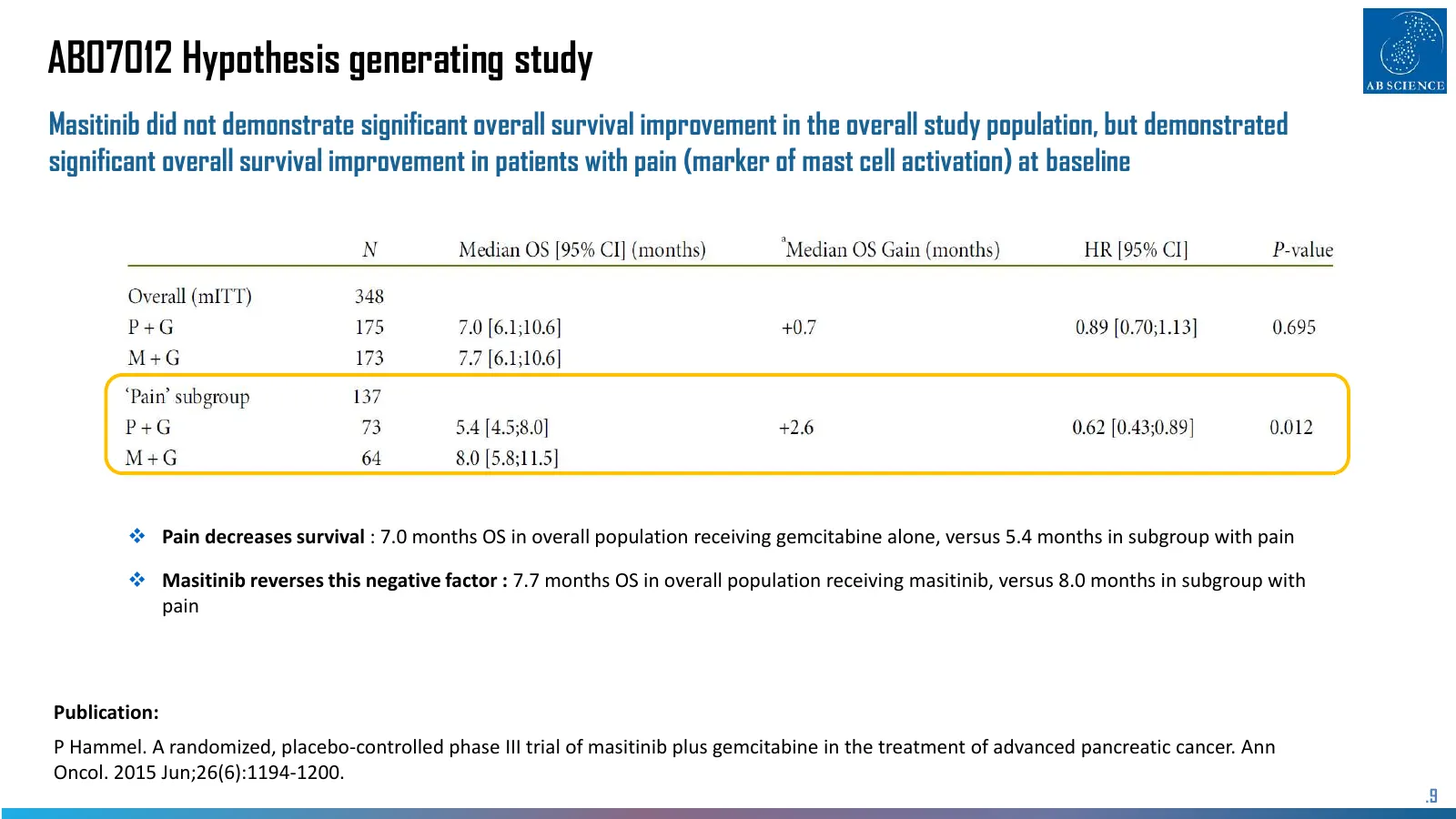
AB07012 Hypothesis generating study Masitinib did not demonstrate significant overall survival improvement in the overall study population, but demonstrated significant overall survival improvement in patients with pain (marker of mast cell activation) at baseline Pain decreases survival : 7.0 mon
Slide 10: AB12005 – Study Design
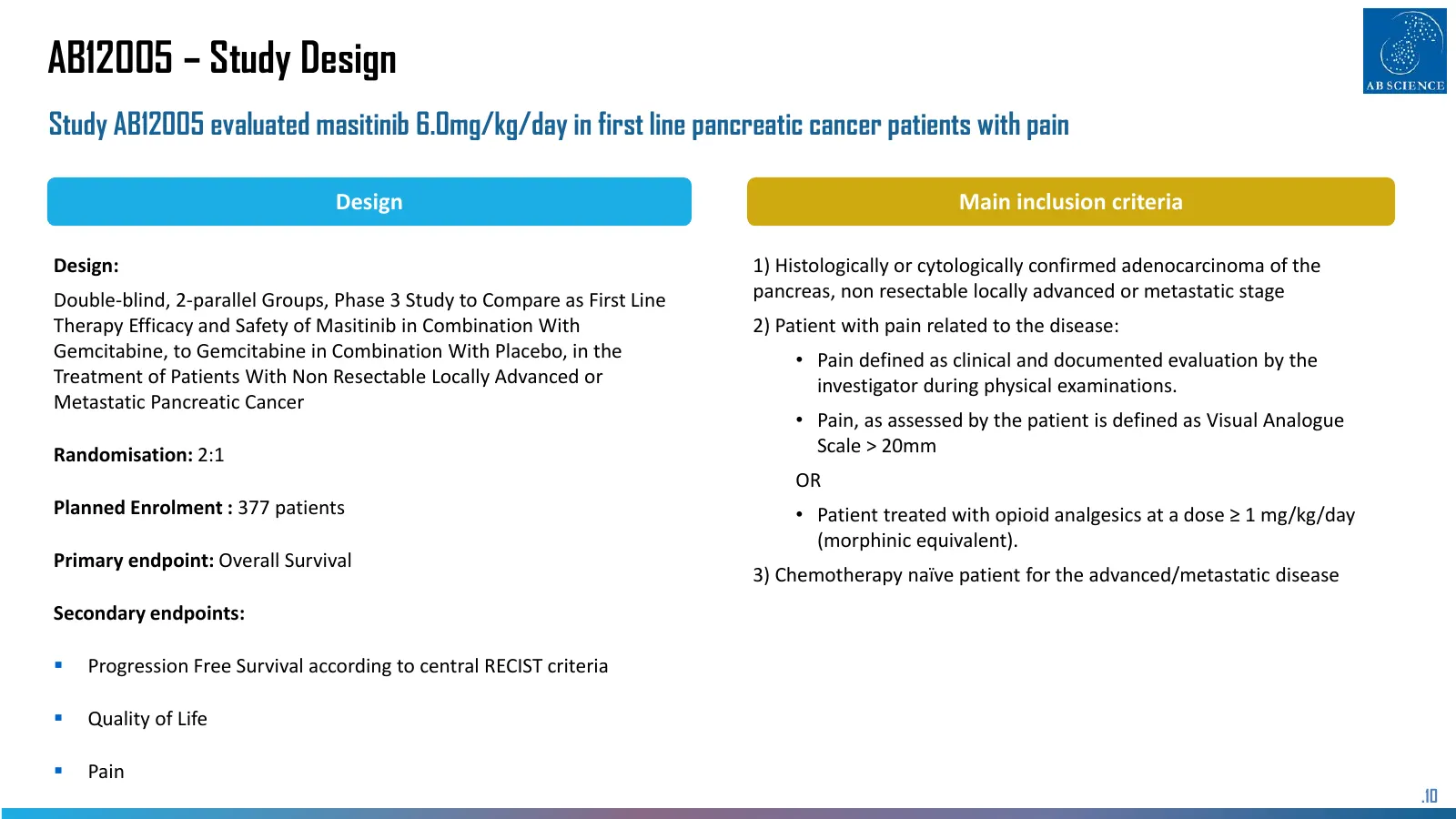
AB12005 – Study Design Study AB12005 evaluated masitinib 6.0mg/kg/day in first line pancreatic cancer patients with pain Design Main inclusion criteria Design: 1) Histologically or cytologically confirmed adenocarcinoma of the Double-blind, 2-parallel Groups, Phase 3 Study to Compare as First Line p
Slide 11: AB12005 – Study Design
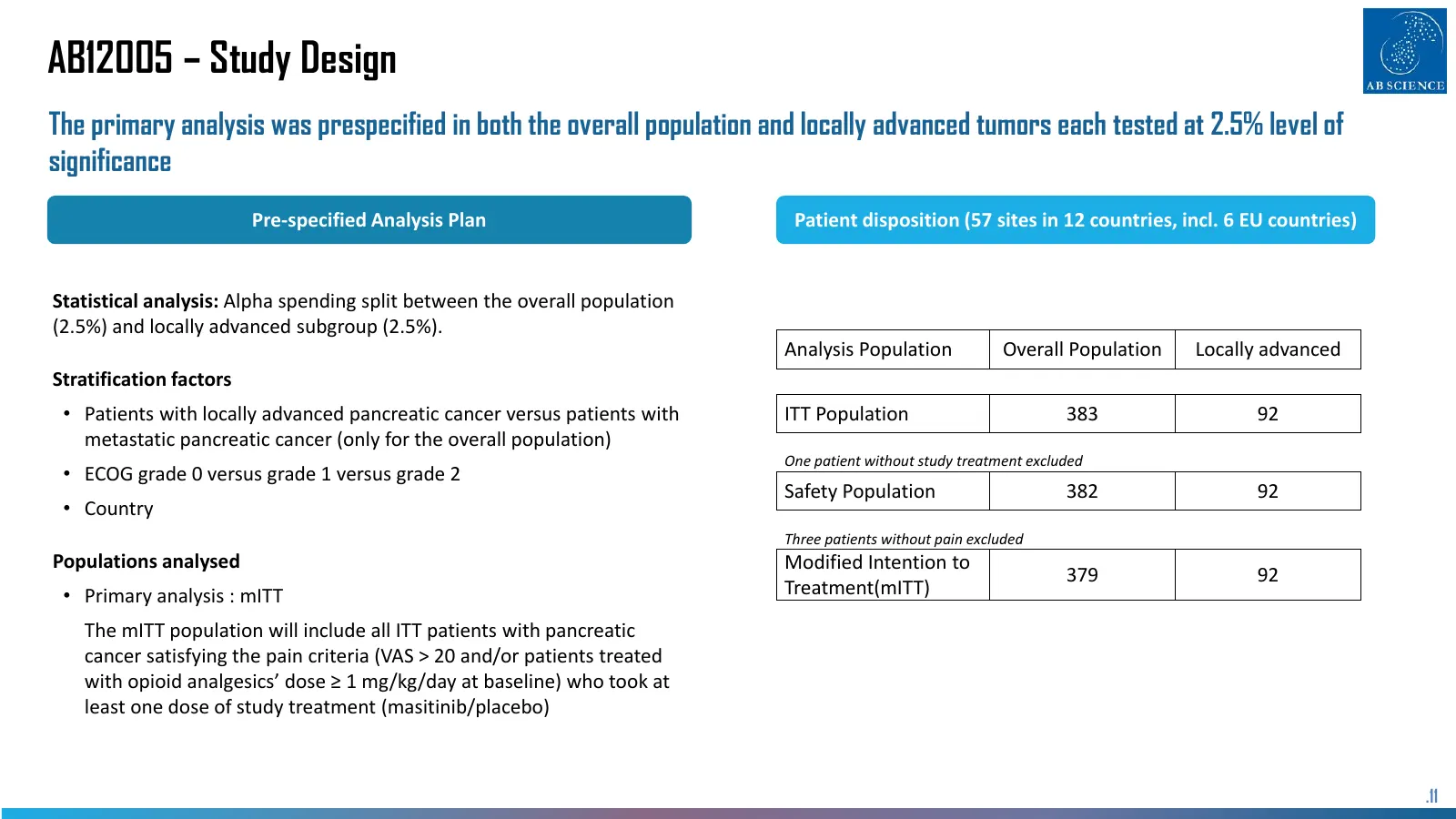
AB12005 – Study Design The primary analysis was prespecified in both the overall population and locally advanced tumors each tested at 2.5% level of significance Pre-specified Analysis Plan Patient disposition (57 sites in 12 countries, incl. 6 EU countries) Statistical analysis: Alpha spending spli
Slide 12: AB12005 – Baseline Characteristics
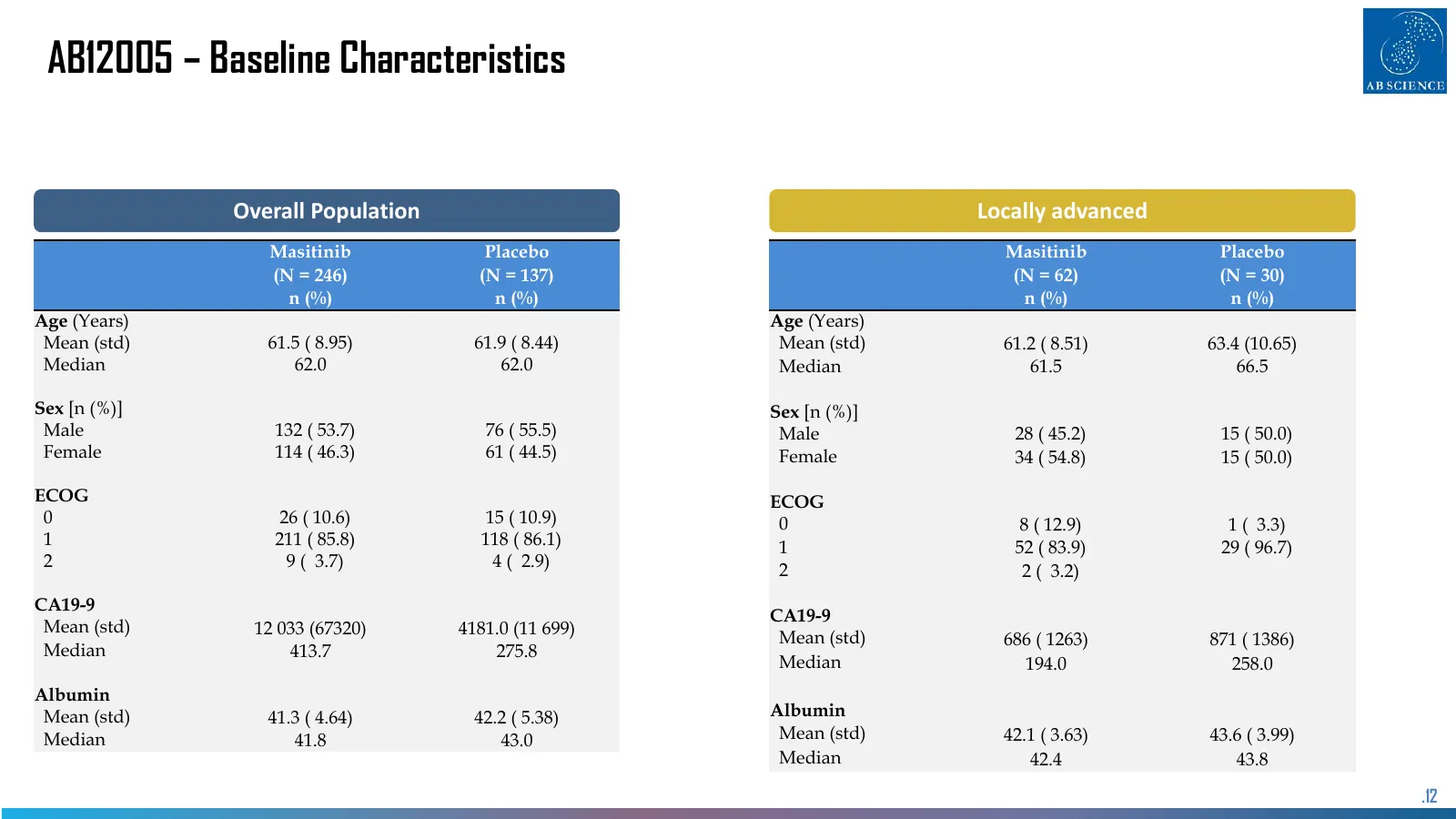
AB12005 – Baseline Characteristics Overall Population Locally advanced Masitinib Placebo Masitinib Placebo (N = 246) (N = 137) (N = 62) (N = 30) n (%) n (%) n (%) n (%) Age (Years) Age (Years) Mean (std) 61.5 ( 8.95) 61.9 ( 8.44) Mean (std) 61.2 ( 8.51) 63.4 (10.65) Median 62.0 62.0 Median 61.5 66.5
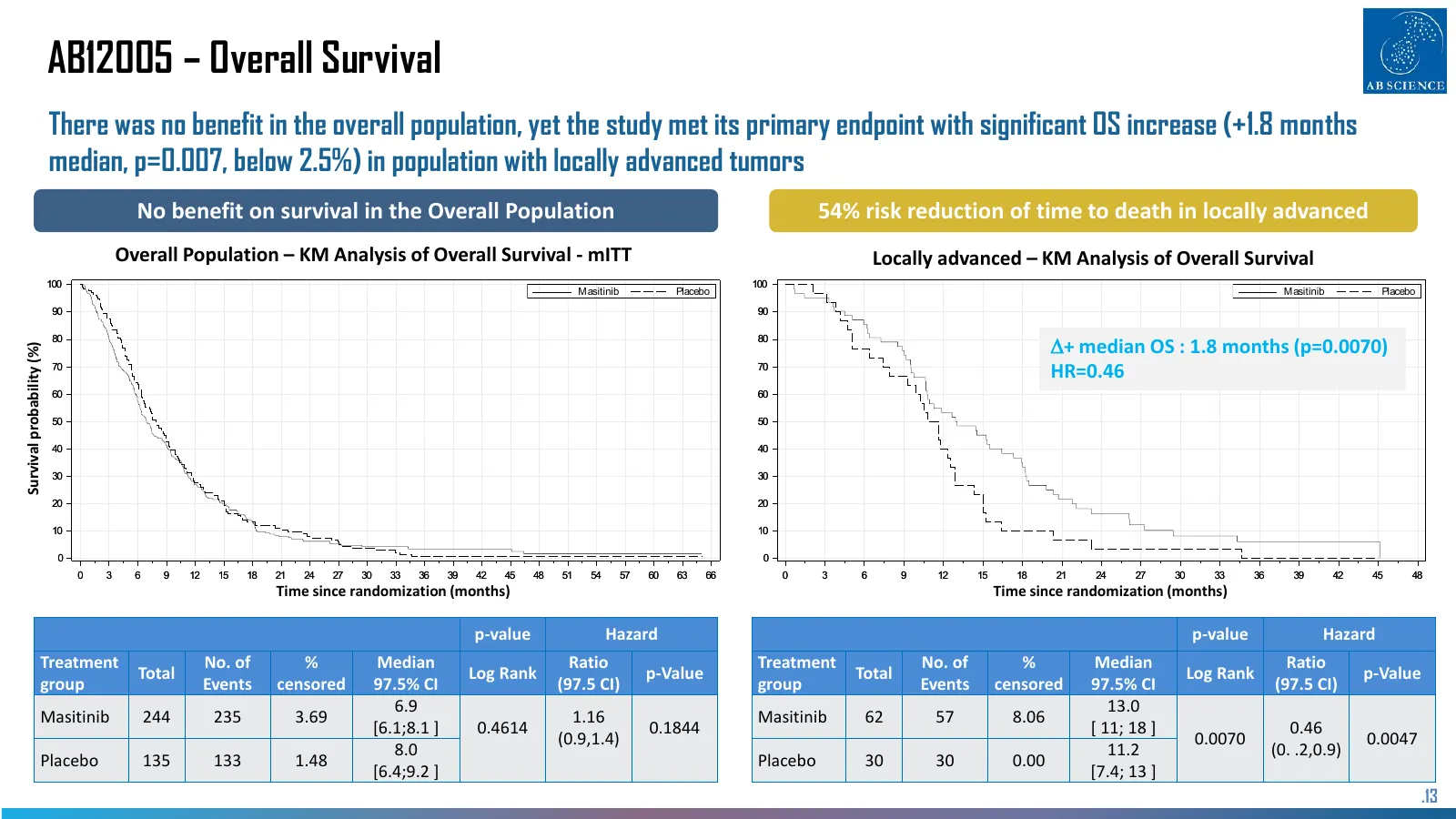
Slide 13: Overall Survival
AB12005 – Overall Survival There was no benefit in the overall population, yet the study met its primary endpoint with significant OS increase (+1.8 months median, p=0.007, below 2.5%) in population with locally advanced tumors No benefit on survival in the Overall Population 54% risk reduction of t
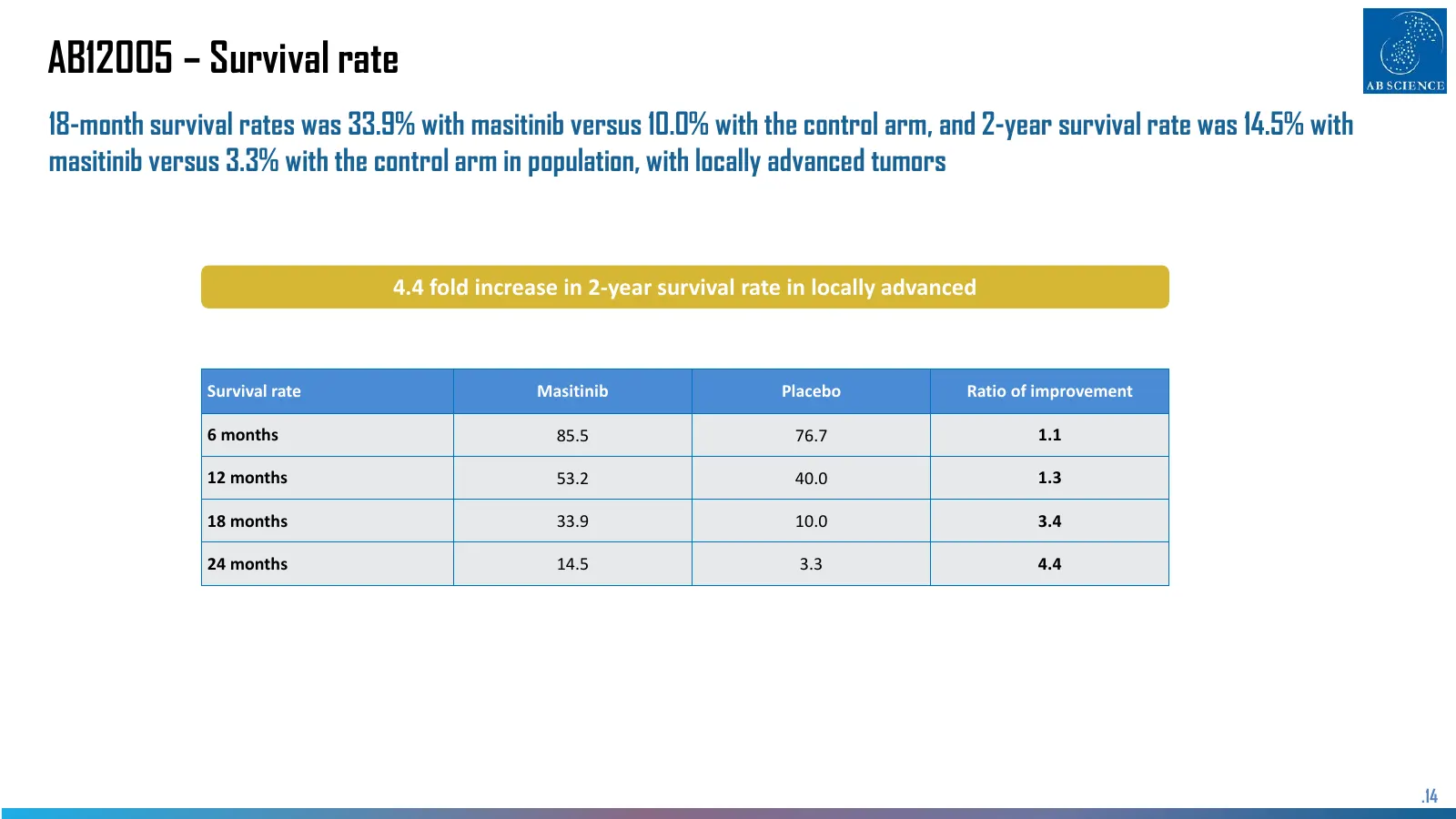
Slide 14: AB12005 – Survival rate
AB12005 – Survival rate 18-month survival rates was 33.9% with masitinib versus 10.0% with the control arm, and 2-year survival rate was 14.5% with masitinib versus 3.3% with the control arm in population, with locally advanced tumors 4.4 fold increase in 2-year survival rate in locally advanced Sur
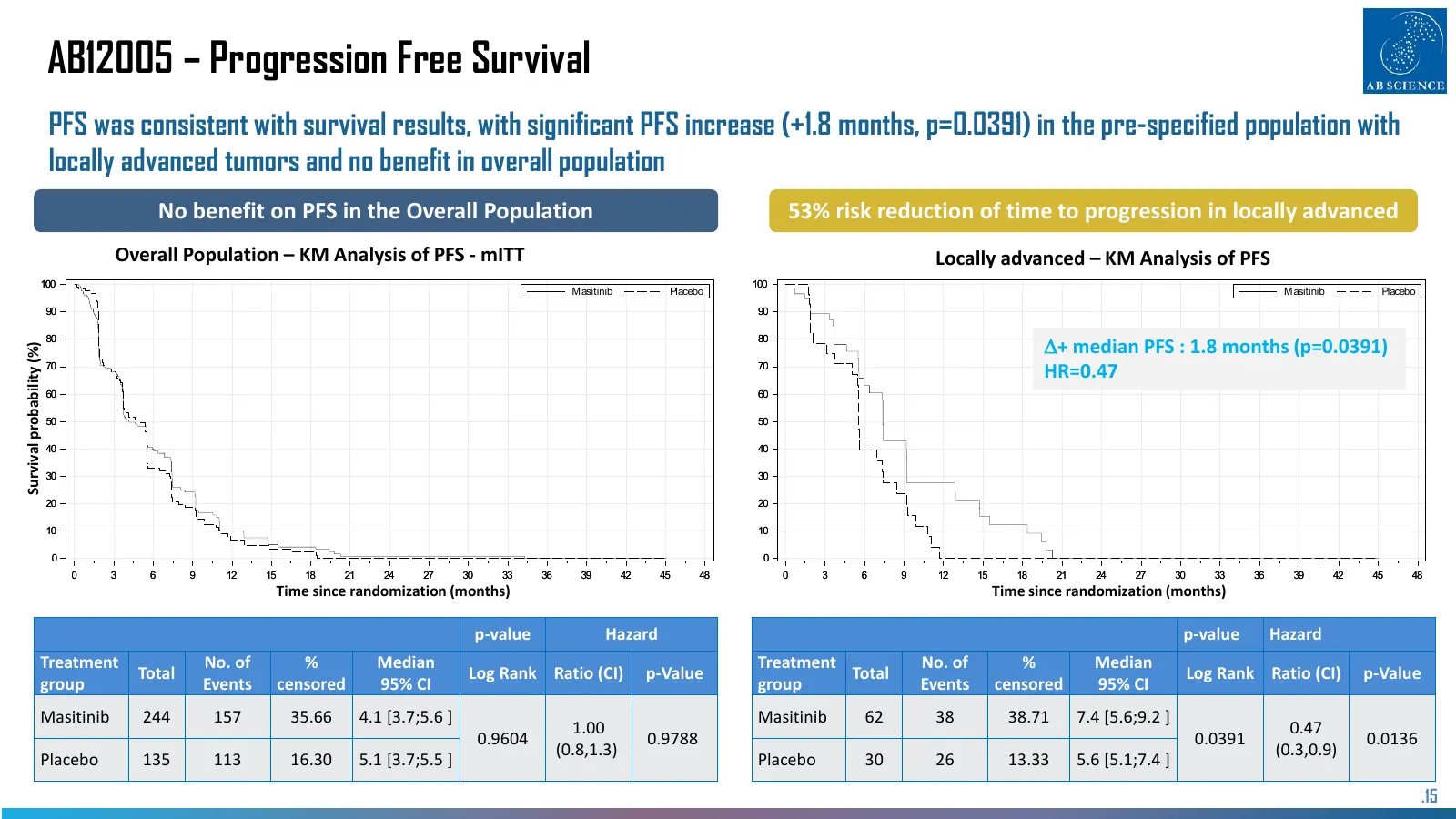
Slide 15: Progression Free Survival
AB12005 – Progression Free Survival PFS was consistent with survival results, with significant PFS increase (+1.8 months, p=0.0391) in the pre-specified population with locally advanced tumors and no benefit in overall population No benefit on PFS in the Overall Population 53% risk reduction of time
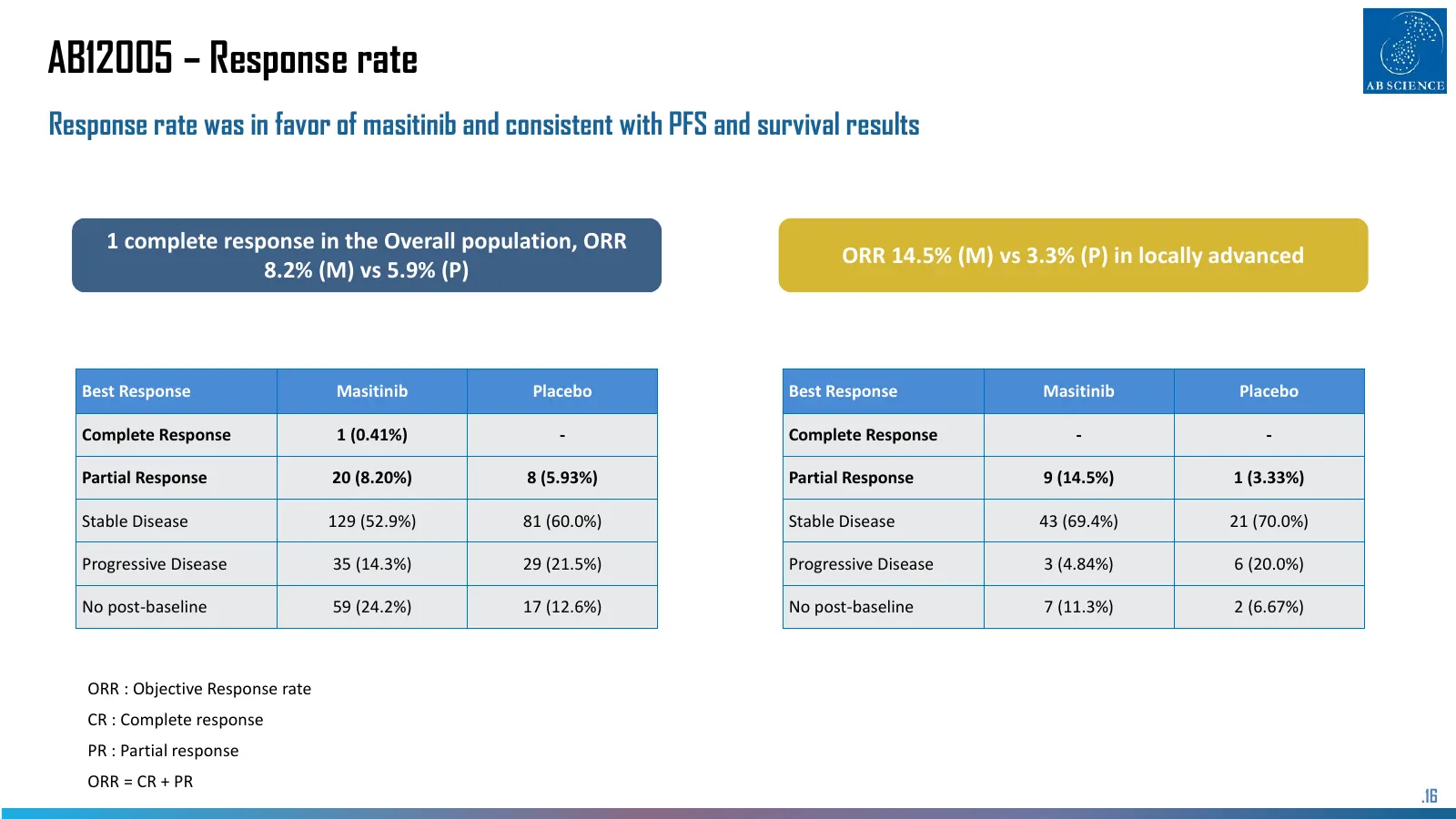
Slide 16: AB12005 – Response rate
AB12005 – Response rate Response rate was in favor of masitinib and consistent with PFS and survival results 1 complete response in the Overall population, ORR ORR 14.5% (M) vs 3.3% (P) in locally advanced 8.2% (M) vs 5.9% (P) Best Response Masitinib Placebo Best Response Masitinib Placebo Complete
Slide 17: AB12005 – Pain
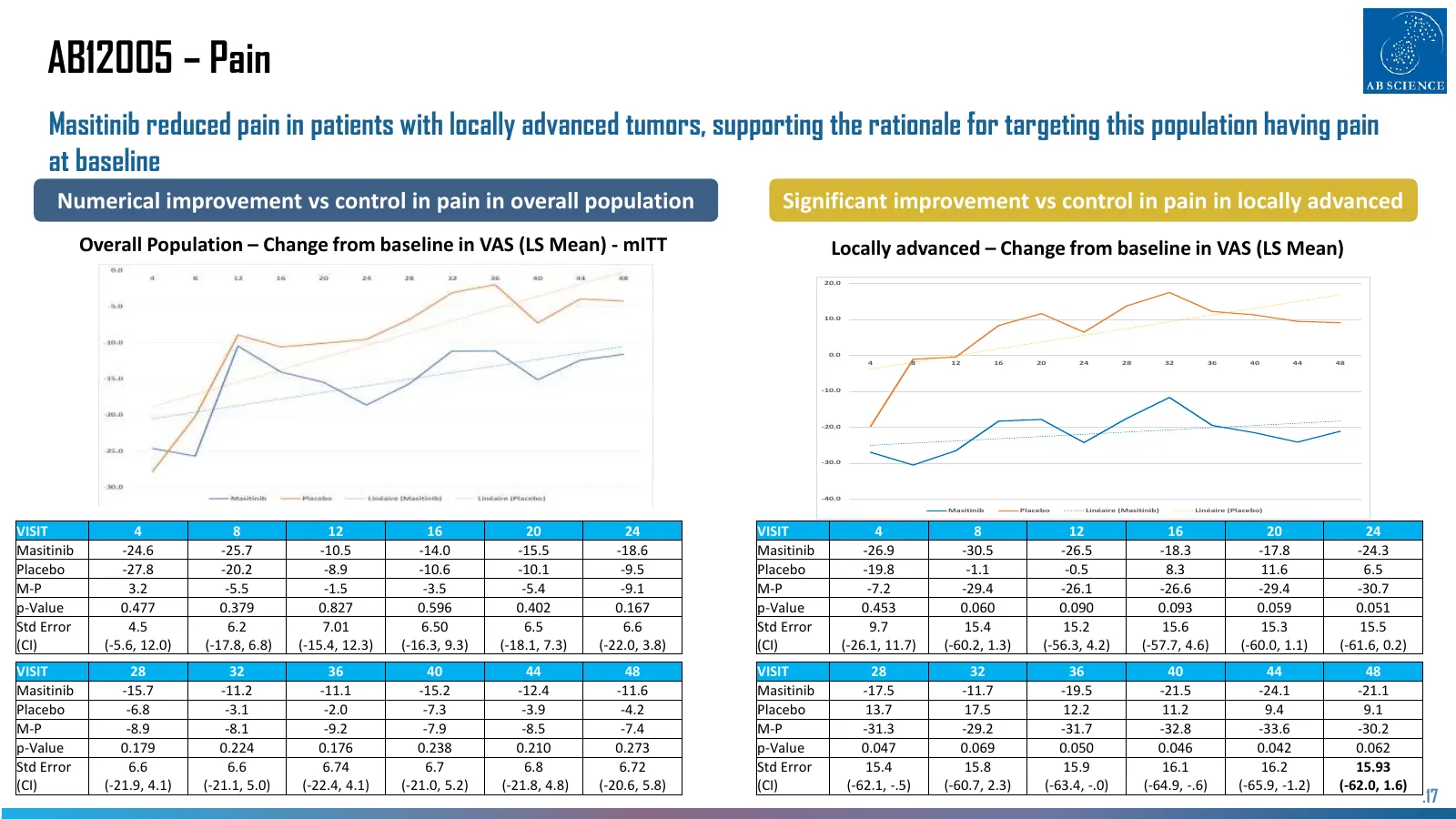
AB12005 – Pain Masitinib reduced pain in patients with locally advanced tumors, supporting the rationale for targeting this population having pain at baseline Numerical improvement vs control in pain in overall population Significant improvement vs control in pain in locally advanced Overall Populat
Slide 18: AB12005 – Safety
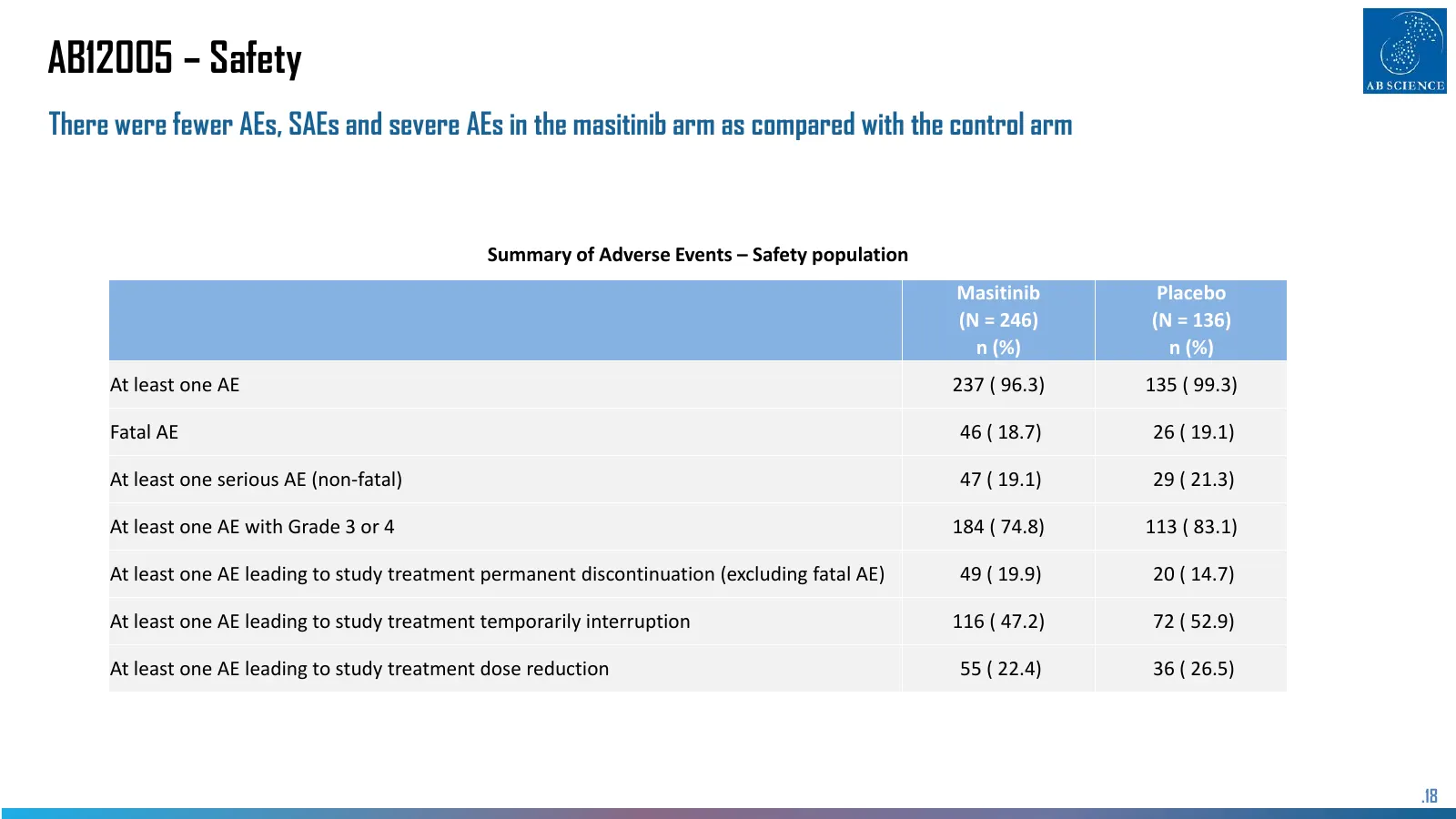
AB12005 – Safety There were fewer AEs, SAEs and severe AEs in the masitinib arm as compared with the control arm Summary of Adverse Events – Safety population Masitinib Placebo (N = 246) (N = 136) n (%) n (%) At least one AE 237 ( 96.3) 135 ( 99.3) Fatal AE 46 ( 18.7) 26 ( 19.1) At least one serious
Slide 19: Discussion - Efficacy
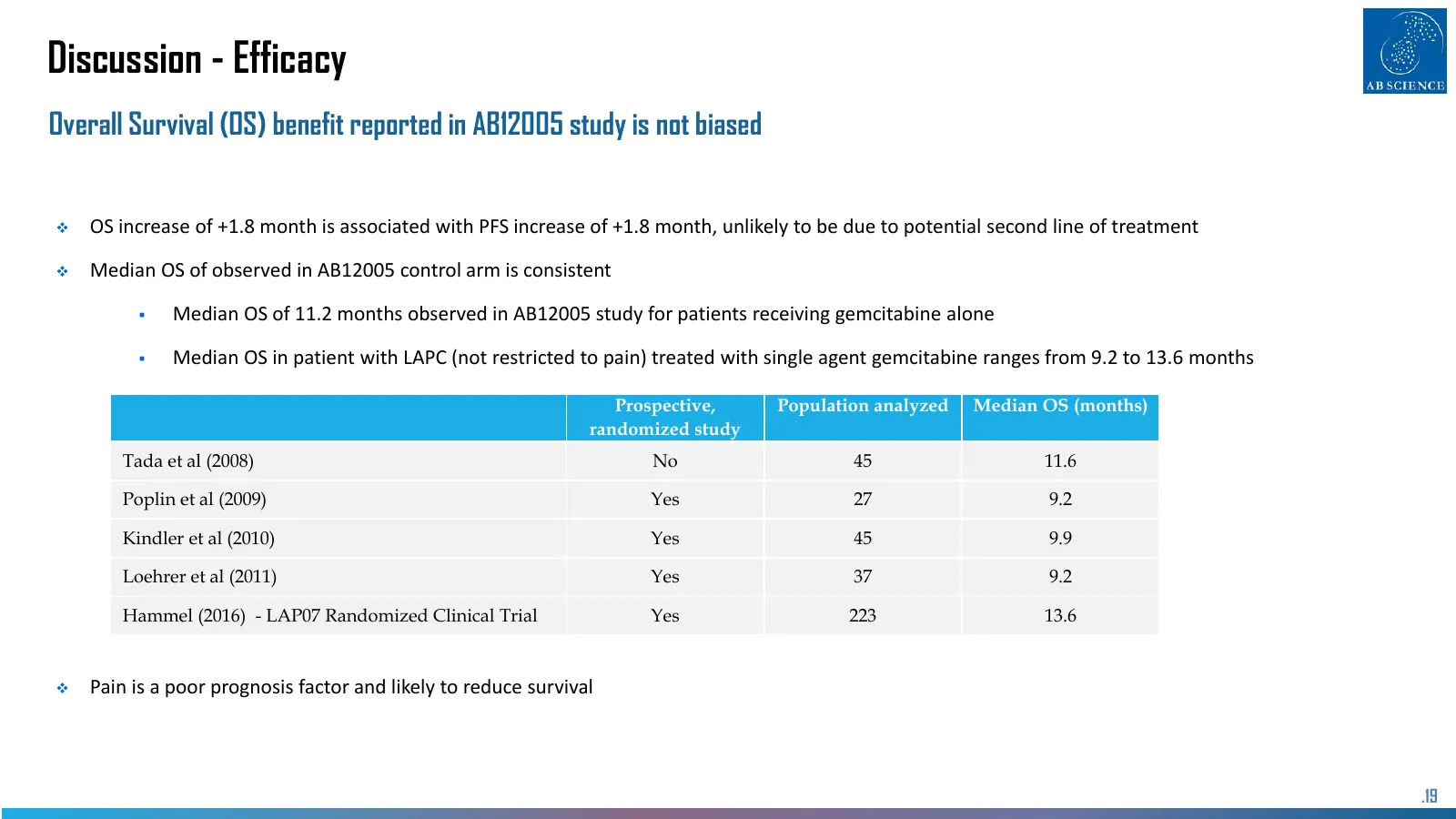
Discussion - Efficacy Overall Survival (OS) benefit reported in AB12005 study is not biased OS increase of +1.8 month is associated with PFS increase of +1.8 month, unlikely to be due to potential second line of treatment Median OS of observed in AB12005 control arm is consistent Median OS of
Slide 20: Discussion - Positioning
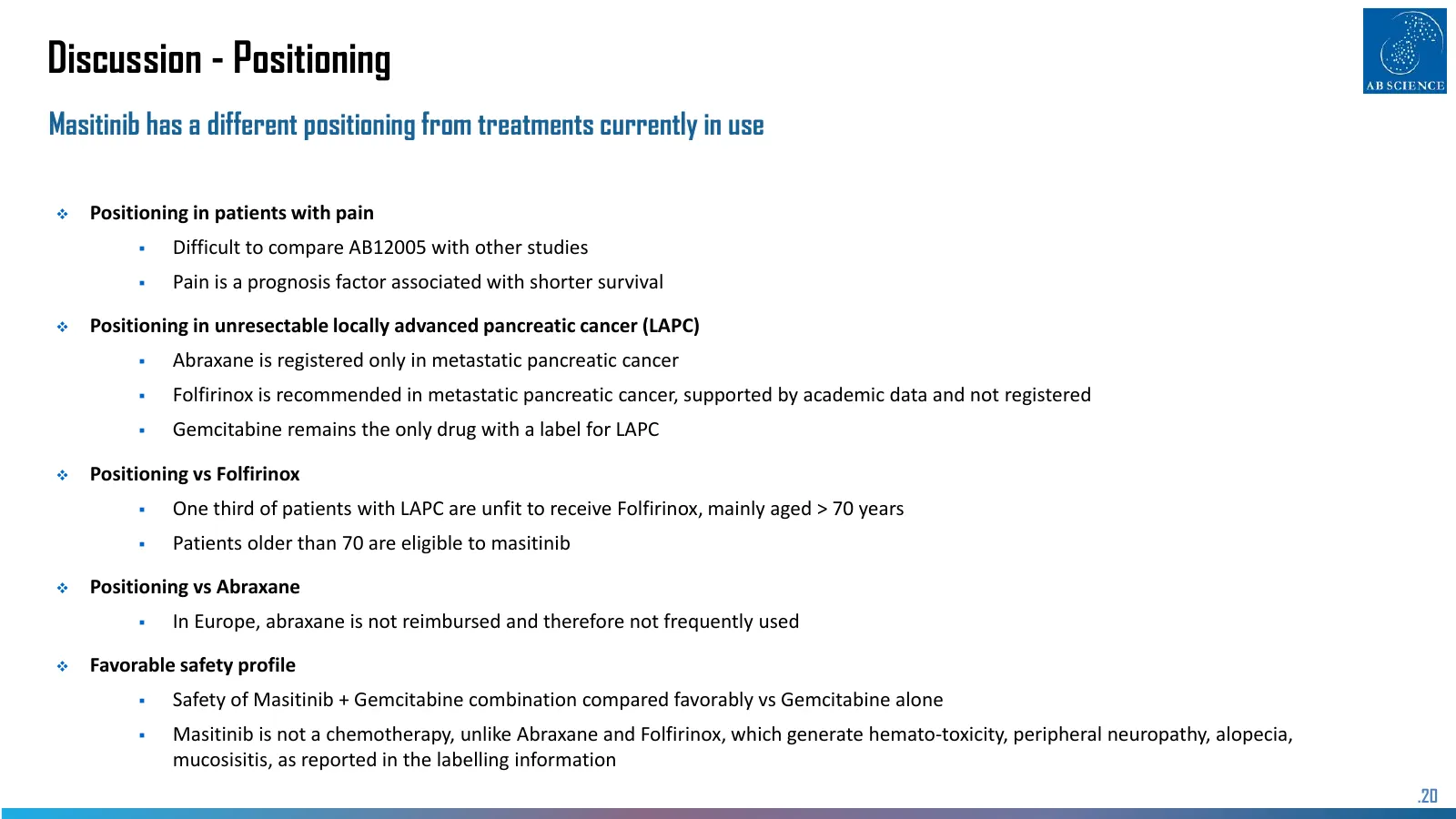
Discussion - Positioning Masitinib has a different positioning from treatments currently in use Positioning in patients with pain Difficult to compare AB12005 with other studies Pain is a prognosis factor associated with shorter survival Positioning in unresectable locally advanced pancreati
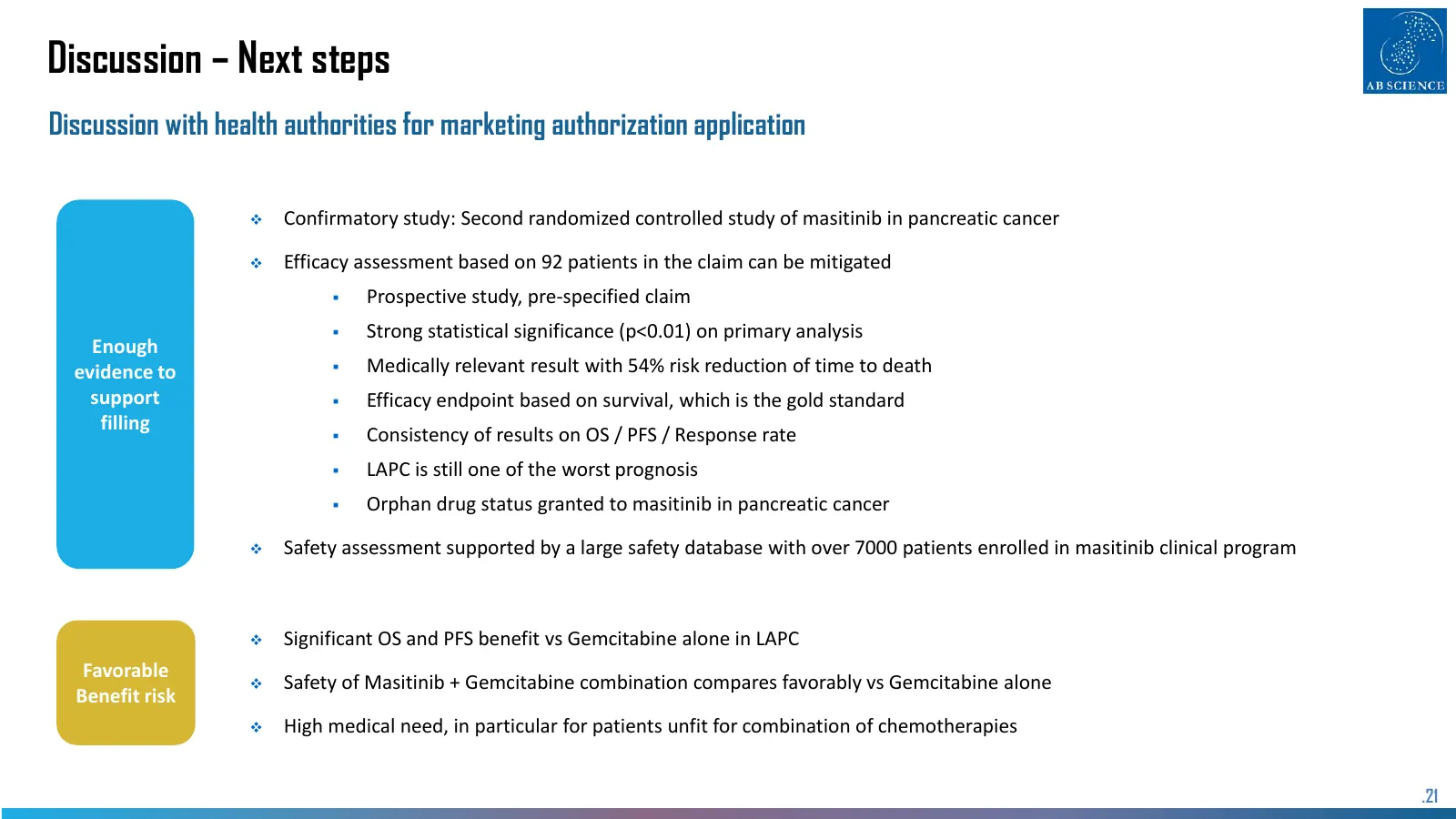
Slide 21: Discussion – Next steps
Discussion – Next steps Discussion with health authorities for marketing authorization application Confirmatory study: Second randomized controlled study of masitinib in pancreatic cancer Efficacy assessment based on 92 patients in the claim can be mitigated Prospective study, pre-specified cl
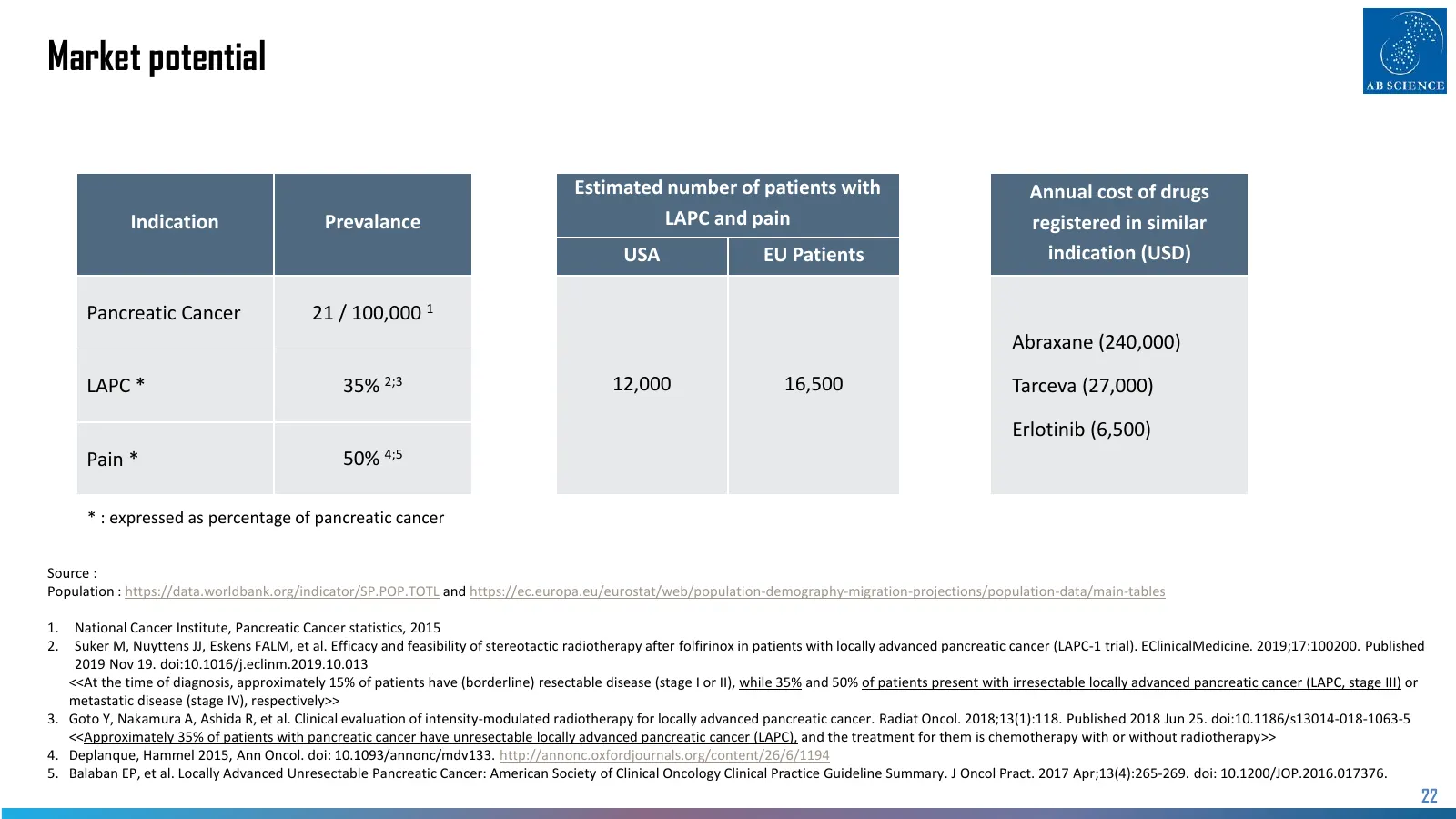
Slide 22: Market potential
Market potential Estimated number of patients with Annual cost of drugs Indication Prevalance LAPC and pain registered in similar USA EU Patients indication (USD) Pancreatic Cancer 21 / 100,000 1 Abraxane (240,000) LAPC * 35% 2;3 12,000 16,500 Tarceva (27,000) Erlotinib (6,500) Pain * 50% 4;5 * : ex
Source: Internet Archive copy of ab-science.com
More decks from AB Science SA
 Investor Presentation (January 2026)33 slides · January 2026
 Investor Presentation (March 2025)59 slides · March 2025
 Corporate Update (December 2024)35 slides · December 2024
 Investor Presentation (July 2024)46 slides · July 2024
 Investor Presentation (April 2024)37 slides · April 2024
 Investor Presentation (February 2023)28 slides · February 2023