Maximus, Inc. · NYSE:MMS
Maximus — Technical Presentation (June 2019)
21 slides from Maximus's technical presentation, Jun 4, 2019
Slide 1: MAXIMUS Higher Education Service Center Accounting Concepts
MAXIMUS Higher Education Service Center Accounting Concepts June 4, 2019 1
Slide 2: Agenda
Agenda • Introduction to MAXIMUS and Higher Education Practice • Summary of Service Center Basics - Compliance Issues • Accounting for External Users • Accounting for Depreciation • Accounting for Subsidies • Handling the year-end surplus/deficit • What can go into a reserve account? • What goes int
Slide 3: MAXIMUS Higher Education Practice
MAXIMUS Higher Education Practice • Serves more than 200 colleges and universities in 49 states plus Puerto Rico and the U.S. Virgin Islands ̶ 90 of top 100 research institutions ̶ Ranging from <$1M to >$1B in research • Headquartered in Northbrook, Illinois ̶ Satellite offices in: Colorado Springs,
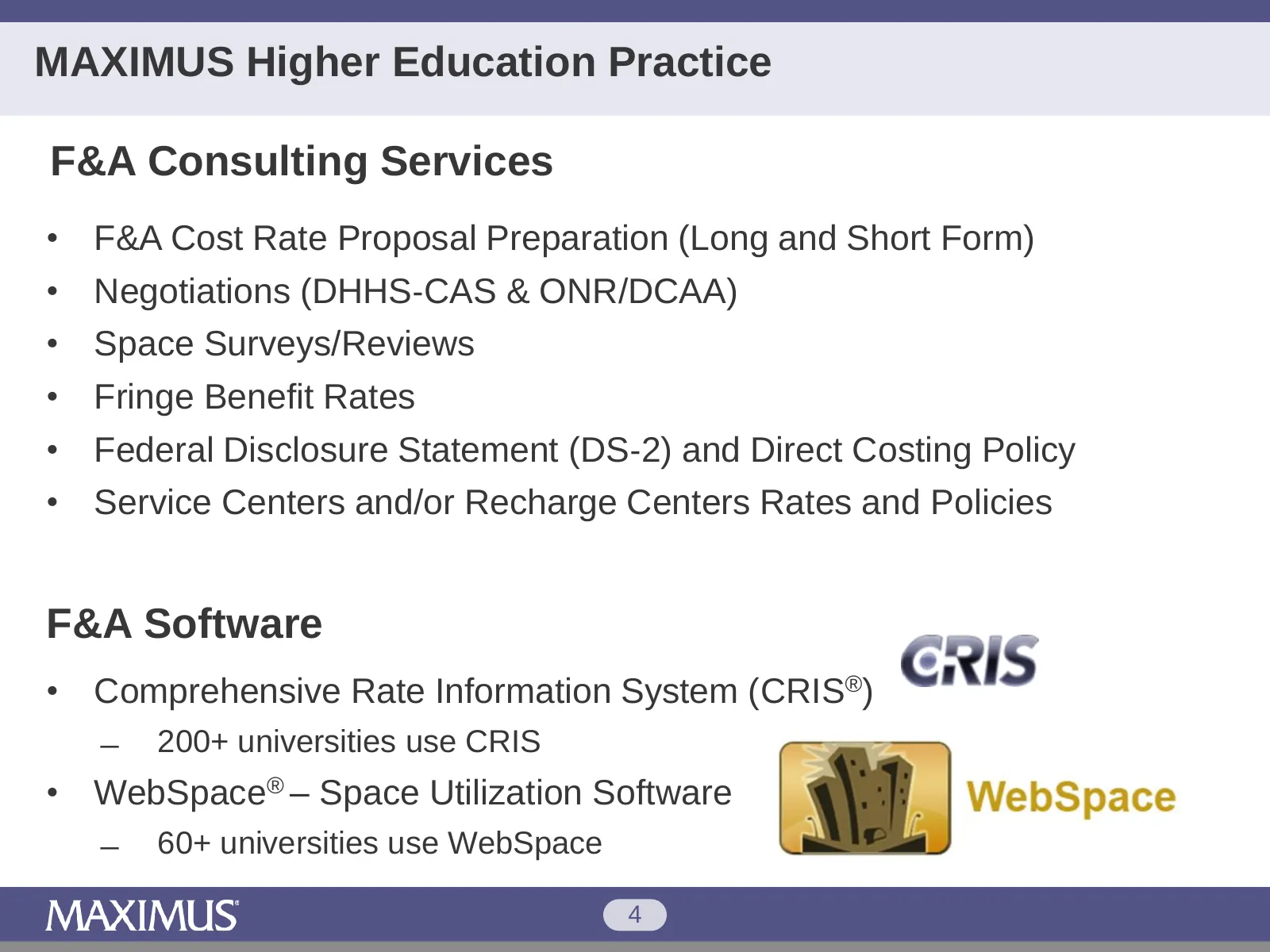
Slide 4: MAXIMUS Higher Education Practice: F&A Consulting Services and Software
MAXIMUS Higher Education Practice F&A Consulting Services • F&A Cost Rate Proposal Preparation (Long and Short Form) • Negotiations (DHHS‐CAS & ONR/DCAA) • Space Surveys/Reviews • Fringe Benefit Rates • Federal Disclosure Statement (DS‐2) and Direct Costing Policy • Service Centers and/or Recharge C
Slide 5: Other Services and Products
MAXIMUS Higher Education Practice Other Services and Products • Internal Controls Consulting and Effort Reporting Software (ERS) • Uniform Guidance Diagnostics and Compliance Consulting • Pre and Post Award Consulting Services and Training – Research Operational Reviews – Business Process Review and
Slide 6: Example of Classifying Service Centers
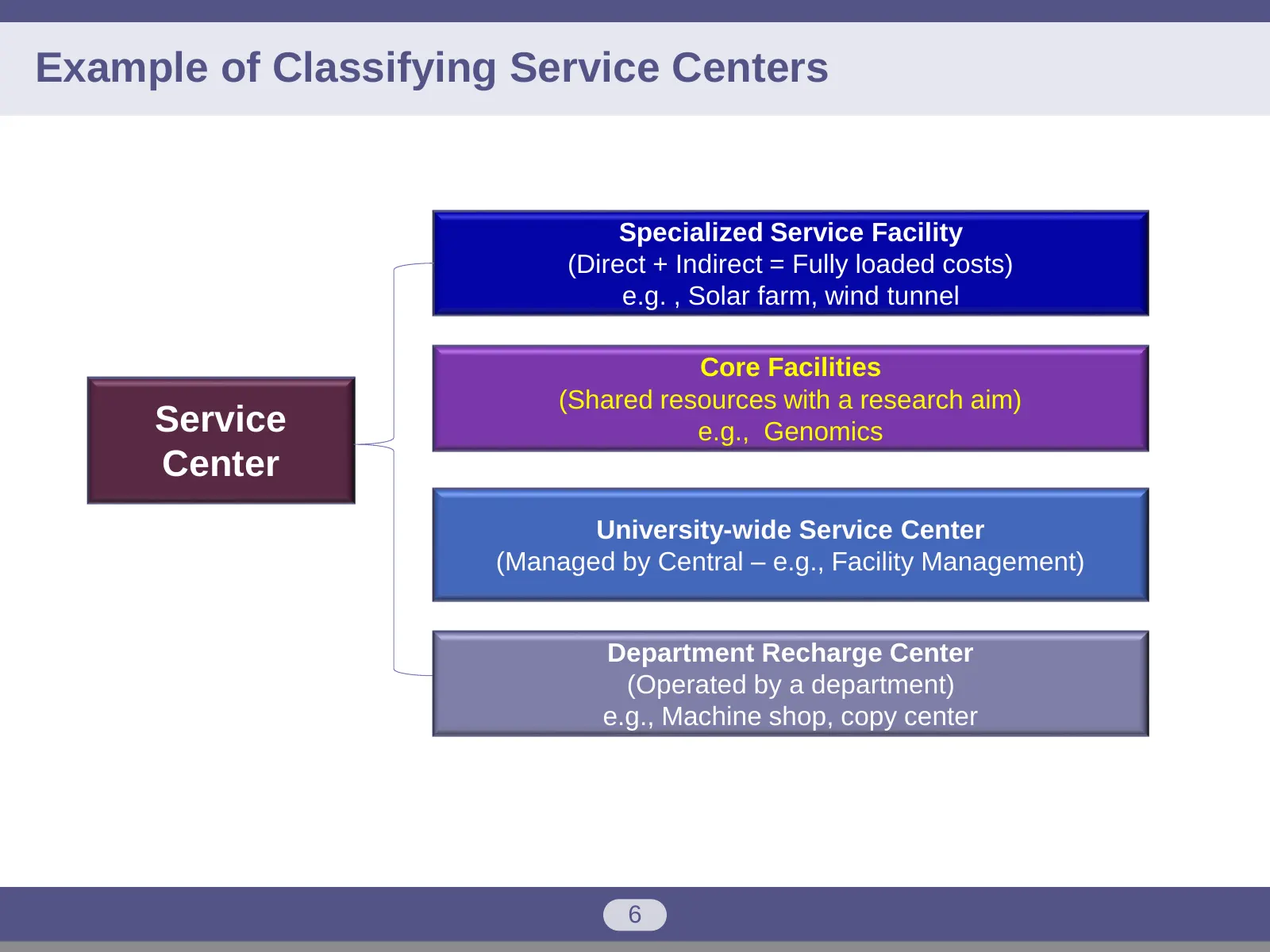
Example of Classifying Service Centers Specialized Service Facility (Direct + Indirect = Fully loaded costs) e.g. , Solar farm, wind tunnel Core Facilities (Shared resources with a research aim) Service e.g., Genomics Center University-wide Service Center (Managed by Central – e.g., Facility Managem
Slide 7: Summary of Key Compliance Issues
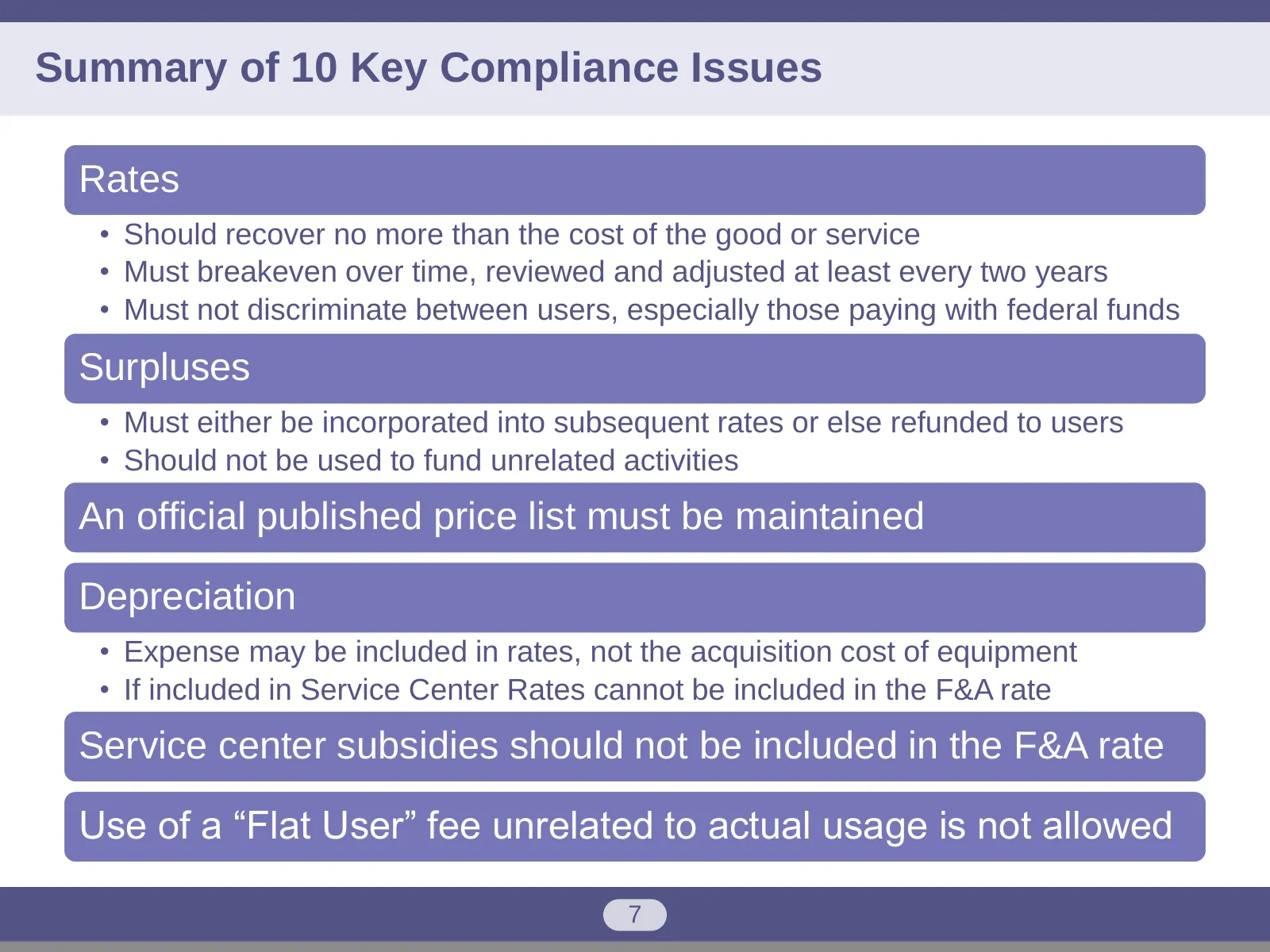
Summary of 10 Key Compliance Issues Rates • Should recover no more than the cost of the good or service • Must breakeven over time, reviewed and adjusted at least every two years • Must not discriminate between users, especially those paying with federal funds Surpluses • Must either be incorporated
Slide 8: Accounting for External Users
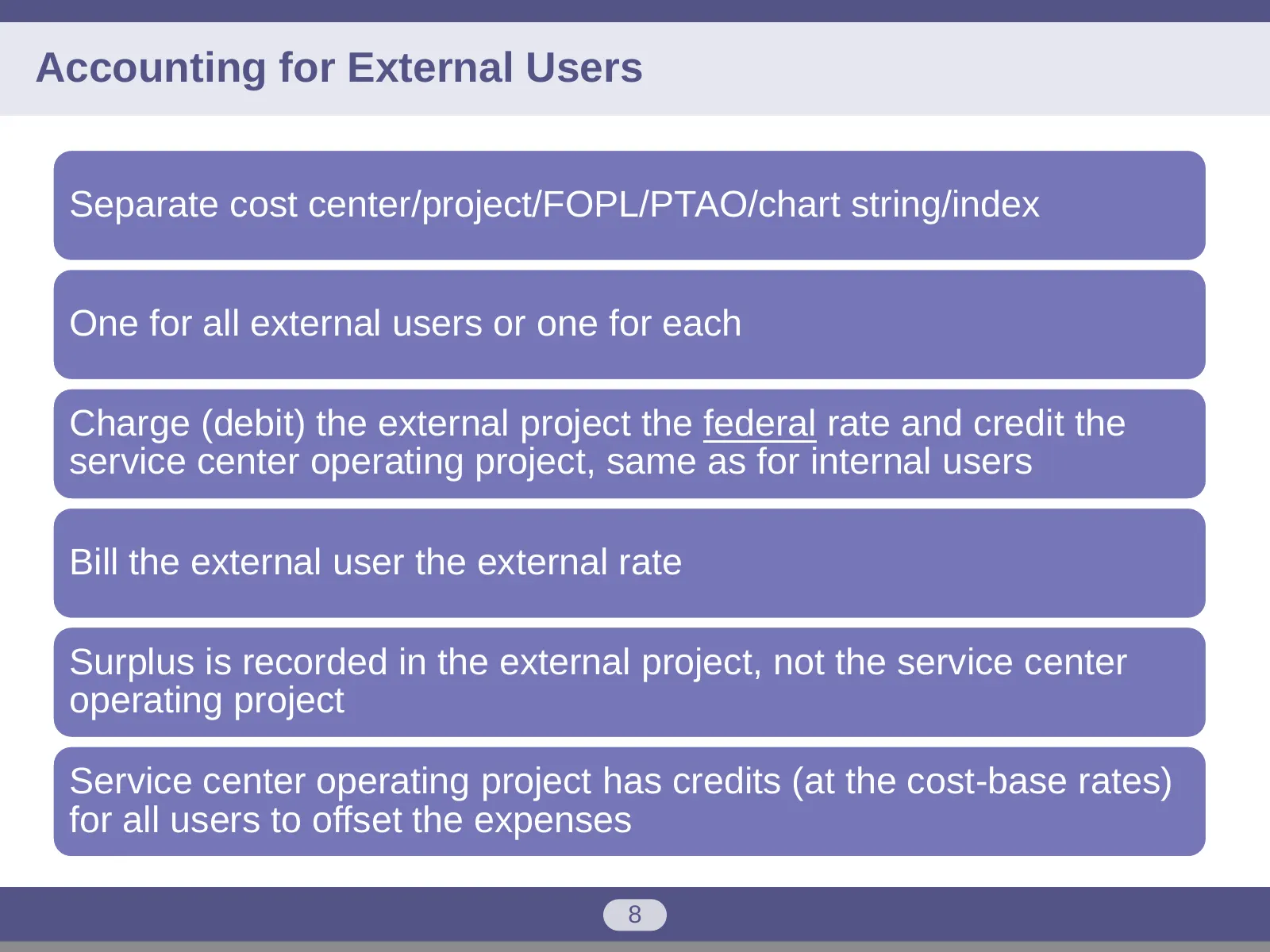
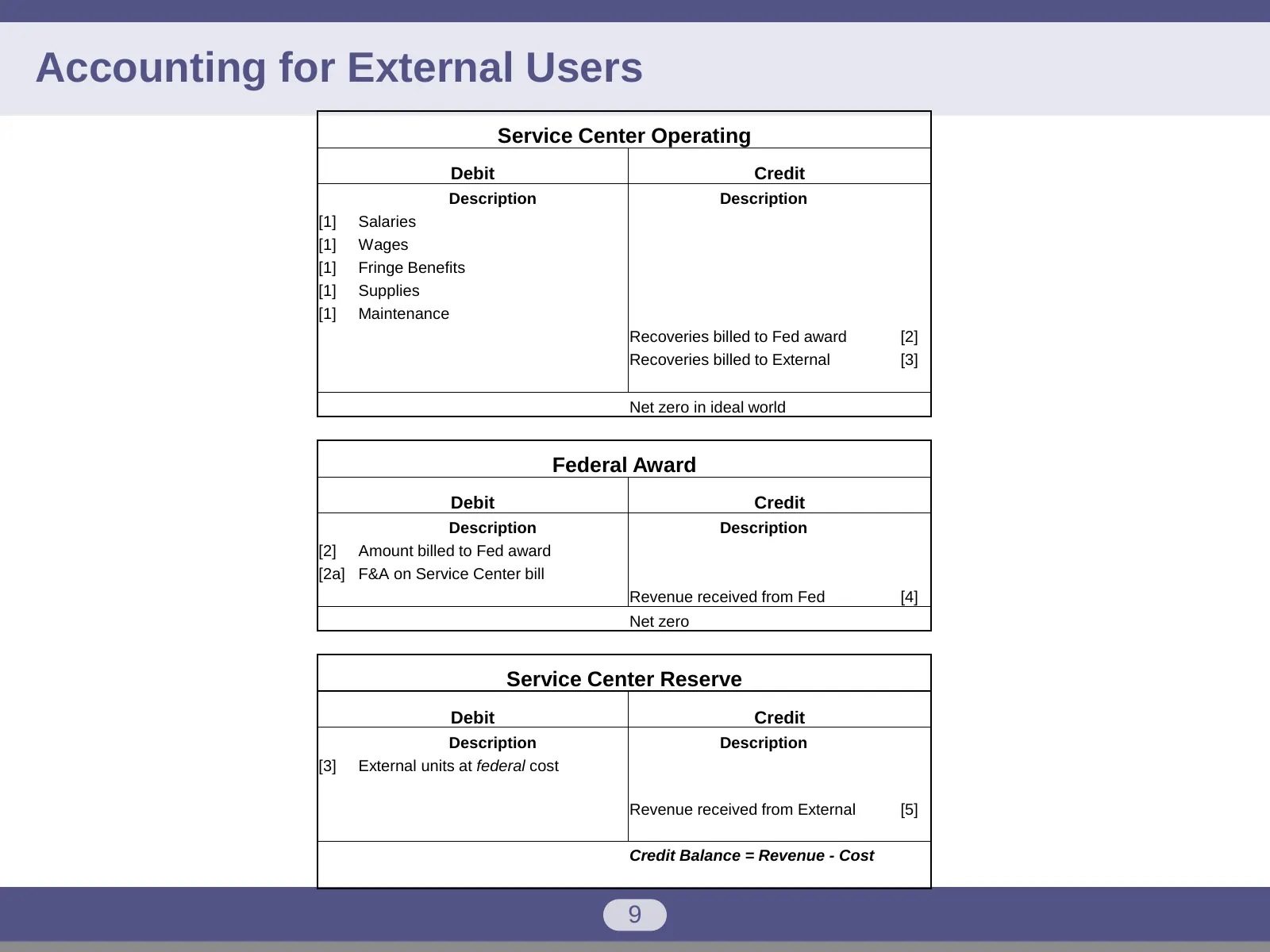
Accounting for External Users Separate cost center/project/FOPL/PTAO/chart string/index One for all external users or one for each Charge (debit) the external project the federal rate and credit the service center operating project, same as for internal users Bill the external user the external rate
Slide 9: Accounting for External Users
Accounting for External Users Service Center Operating Debit Credit Description Description [1] Salaries [1] Wages [1] Fringe Benefits [1] Supplies [1] Maintenance Recoveries billed to Fed award [2] Recoveries billed to External [3] Net zero in ideal world Federal Award Debit Credit Description Desc
Slide 10: Depreciation
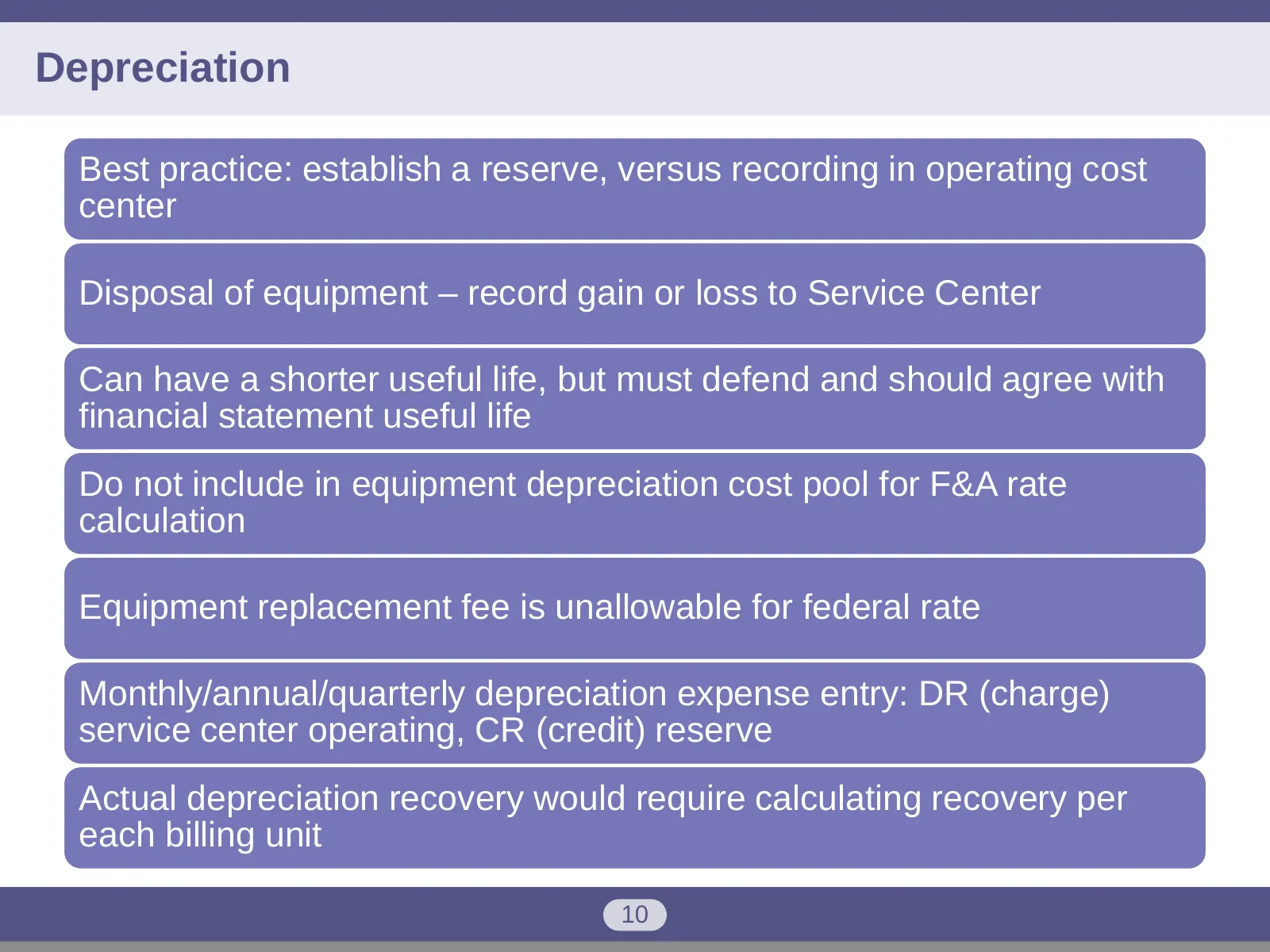
Depreciation Best practice: establish a reserve, versus recording in operating cost center Disposal of equipment – record gain or loss to Service Center Can have a shorter useful life, but must defend and should agree with financial statement useful life Do not include in equipment depreciation cost
Slide 11: Depreciation
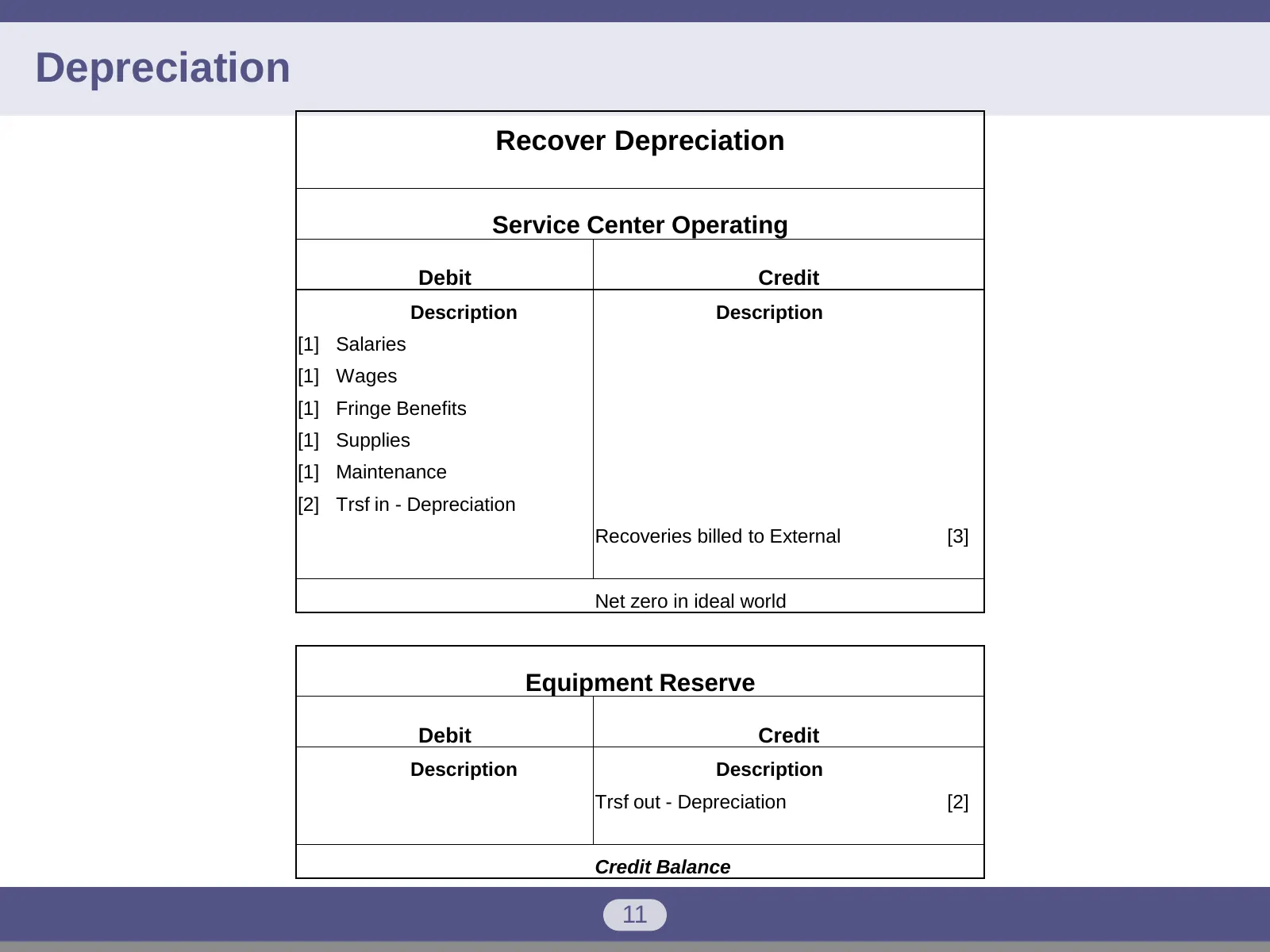
Depreciation Recover Depreciation Service Center Operating Debit Credit Description Description [1] Salaries [1] Wages [1] Fringe Benefits [1] Supplies [1] Maintenance [2] Trsf in - Depreciation Recoveries billed to External [3] Net zero in ideal world Equipment Reserve Debit Credit Description Desc
Slide 12: Subsidies to Service Center
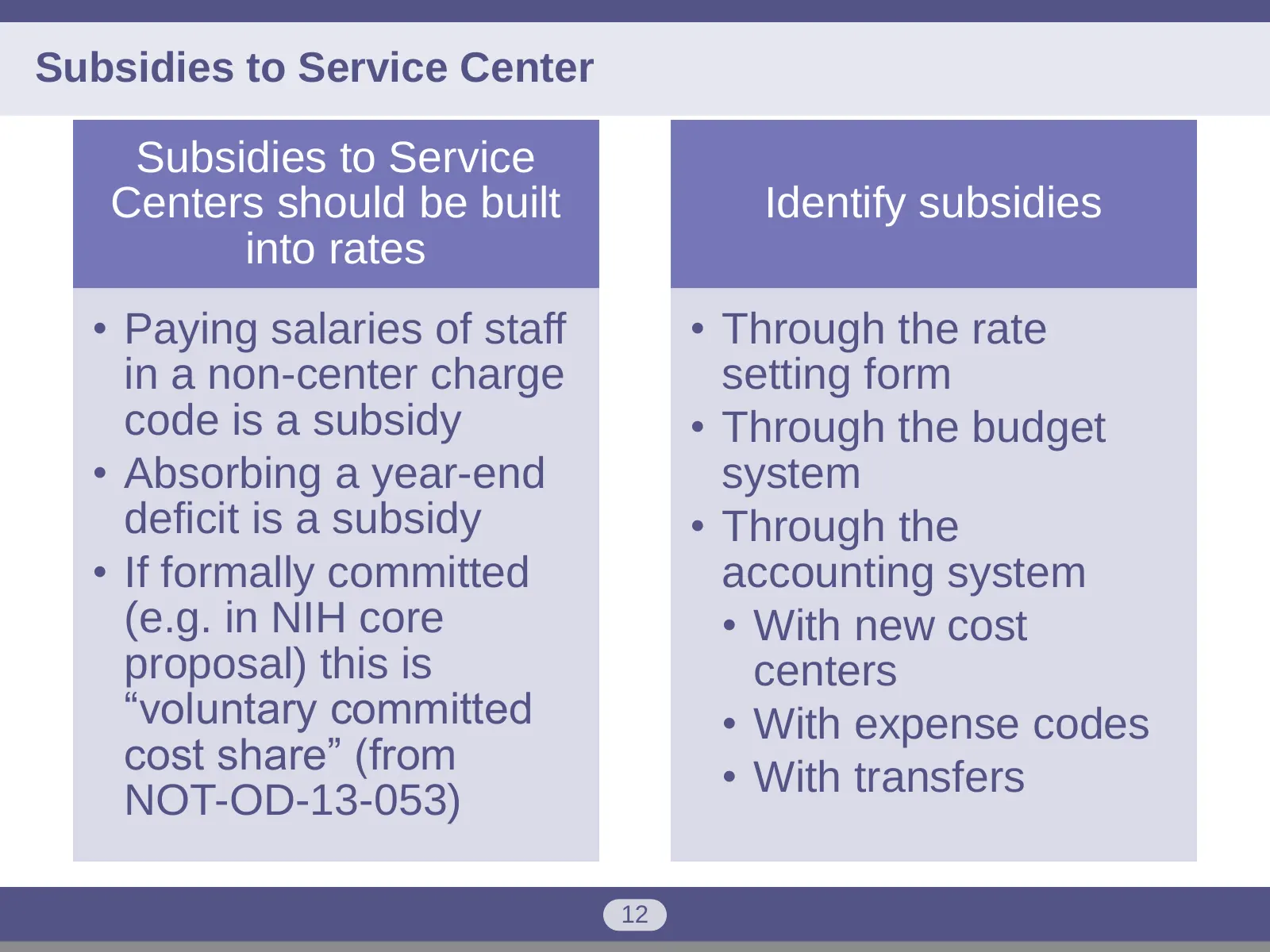
Subsidies to Service Center Subsidies to Service Centers should be built Identify subsidies into rates • Paying salaries of staff • Through the rate in a non-center charge setting form code is a subsidy • Through the budget • Absorbing a year-end system deficit is a subsidy • Through the • If formal
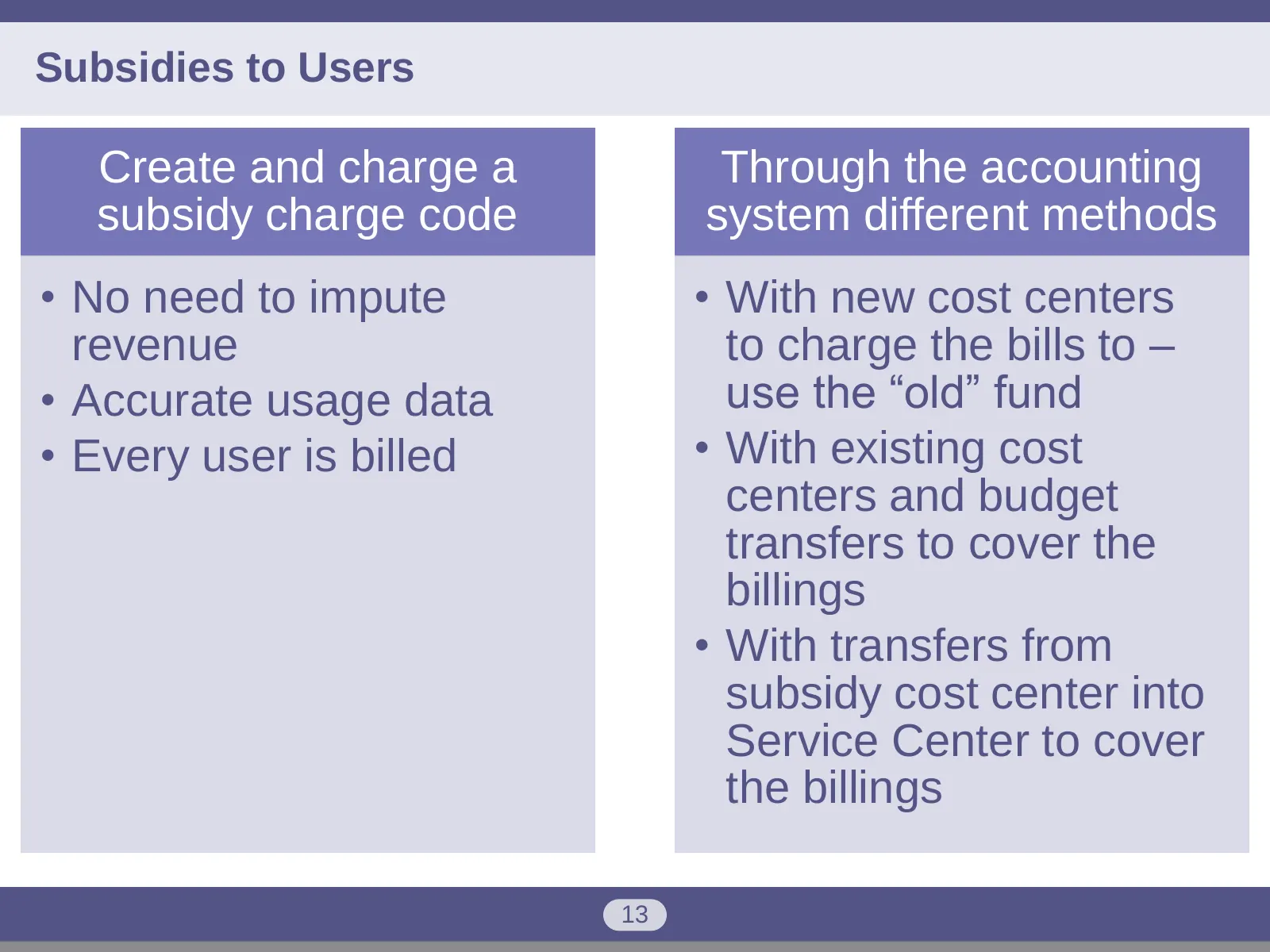
Slide 13: Subsidies to Users
Subsidies to Users Create and charge a Through the accounting subsidy charge code system different methods • No need to impute • With new cost centers revenue to charge the bills to – • Accurate usage data use the “old” fund • Every user is billed • With existing cost centers and budget transfers to
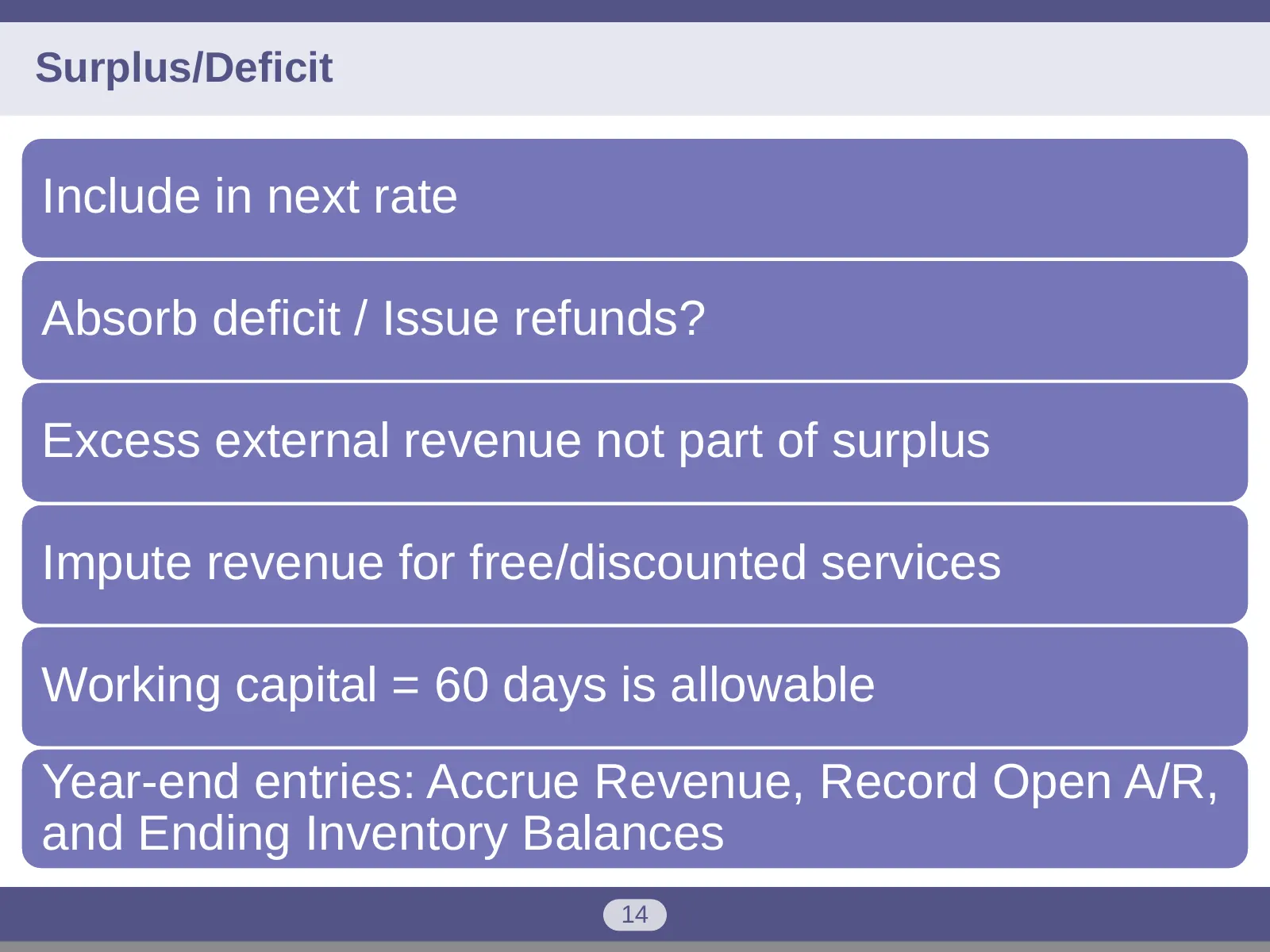
Slide 14: Surplus/Deficit
Surplus/Deficit Include in next rate Absorb deficit / Issue refunds? Excess external revenue not part of surplus Impute revenue for free/discounted services Working capital = 60 days is allowable Year-end entries: Accrue Revenue, Record Open A/R, and Ending Inventory Balances 14
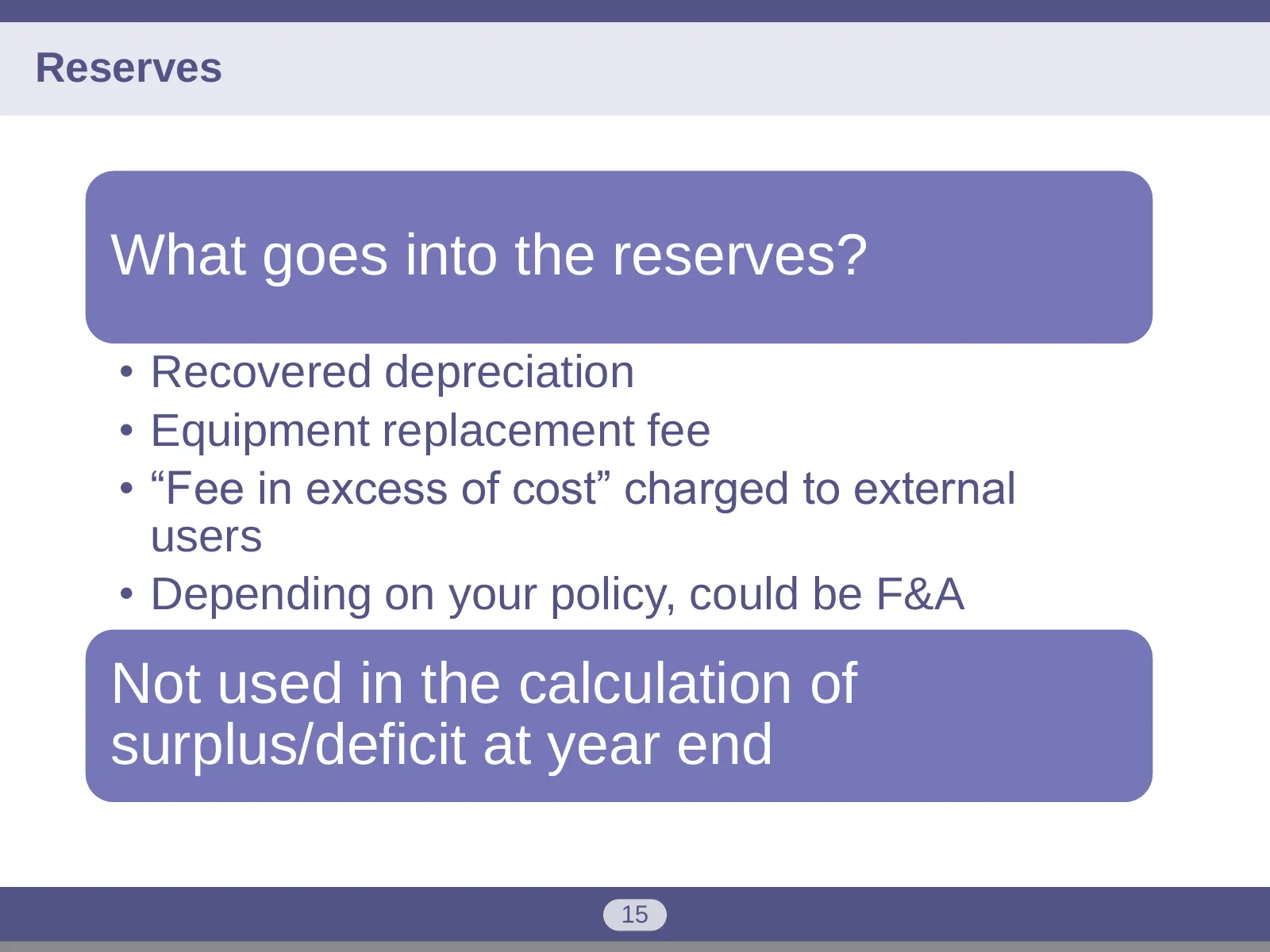
Slide 15: Reserves
Reserves What goes into the reserves? • Recovered depreciation • Equipment replacement fee • “Fee in excess of cost” charged to external users • Depending on your policy, could be F&A Not used in the calculation of surplus/deficit at year end 15
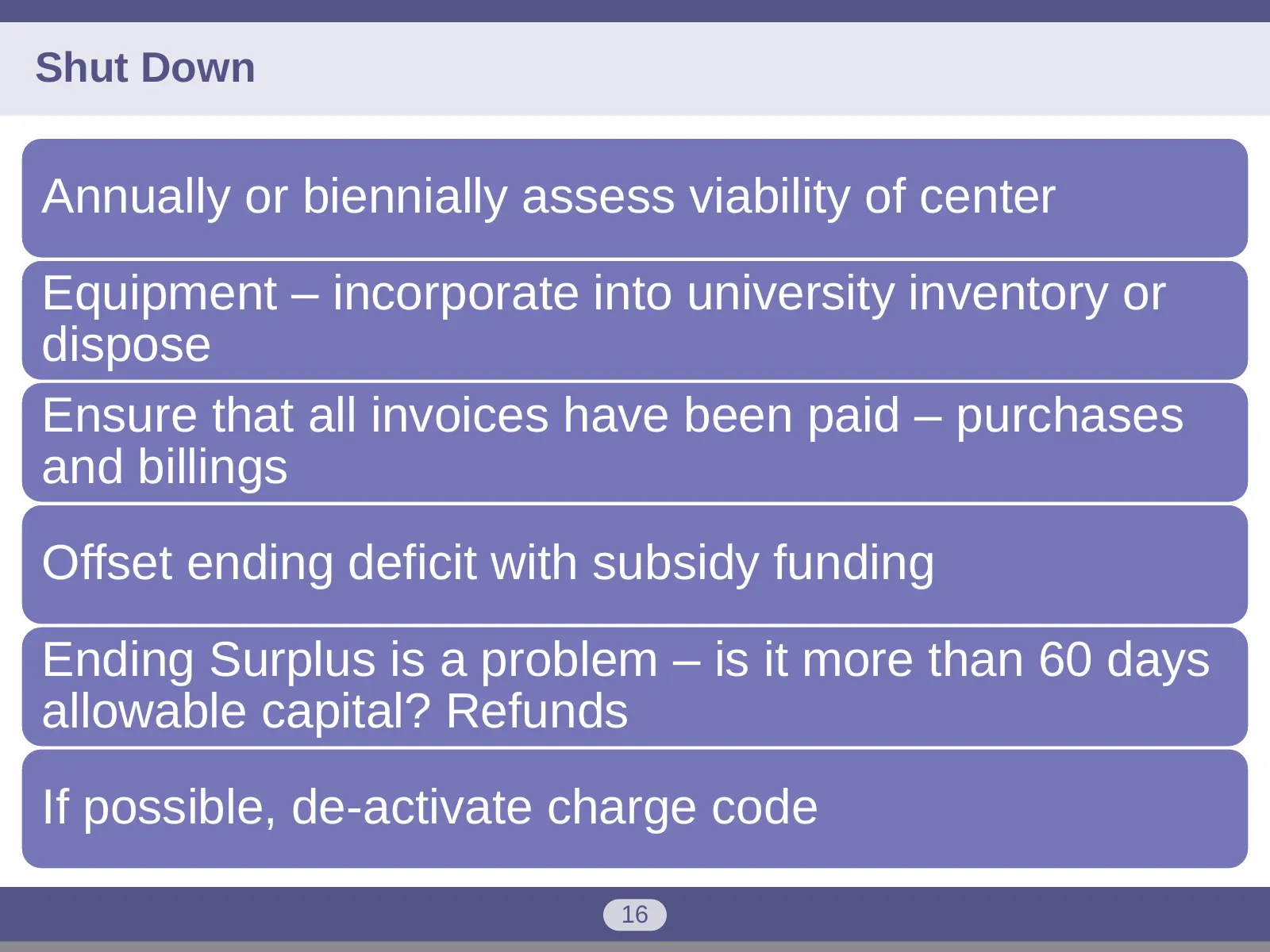
Slide 16: Shut Down
Shut Down Annually or biennially assess viability of center Equipment – incorporate into university inventory or dispose Ensure that all invoices have been paid – purchases and billings Offset ending deficit with subsidy funding Ending Surplus is a problem – is it more than 60 days allowable capital
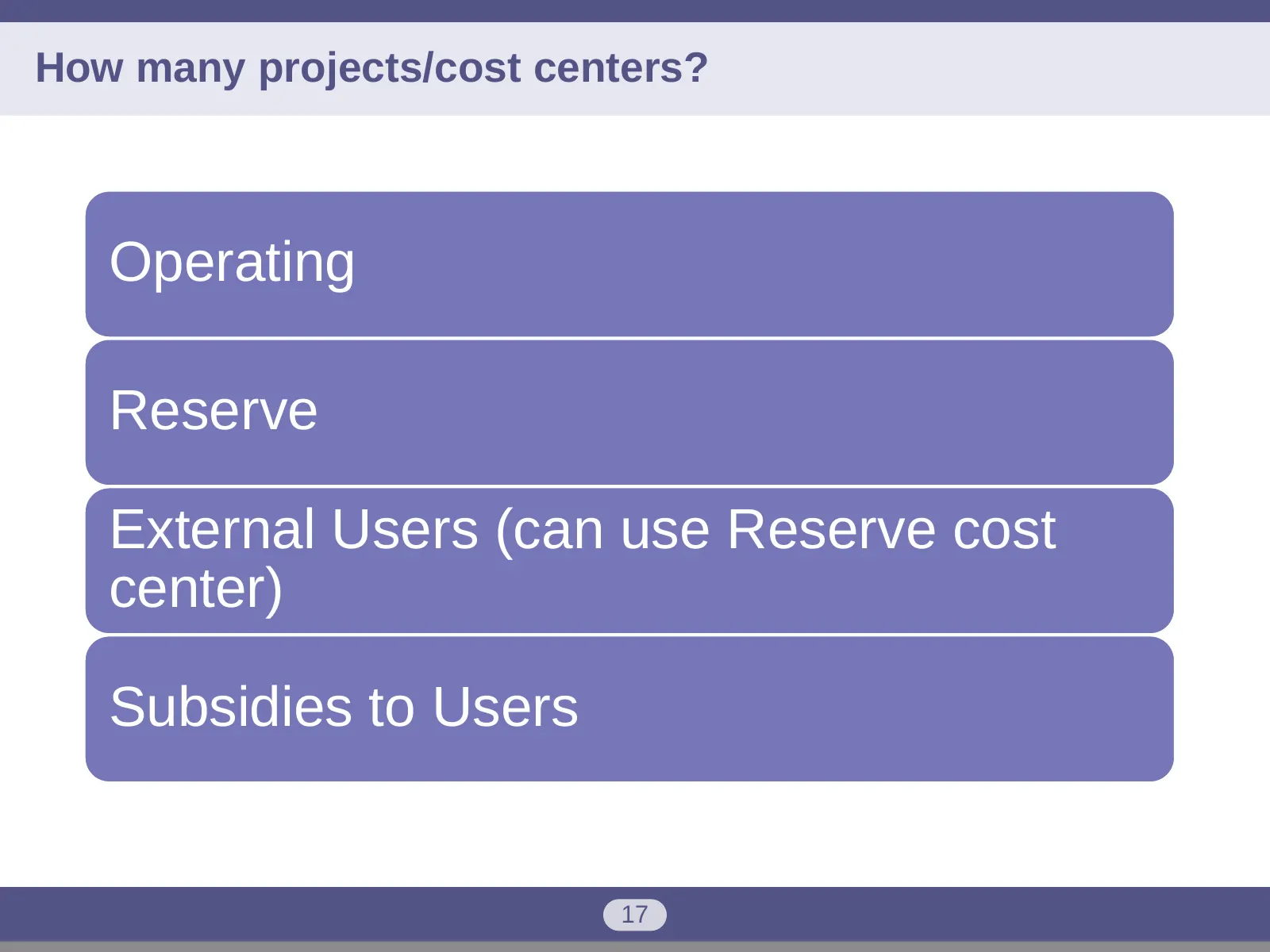
Slide 17: How many projects/cost centers?
How many projects/cost centers? Operating Reserve External Users (can use Reserve cost center) Subsidies to Users 17
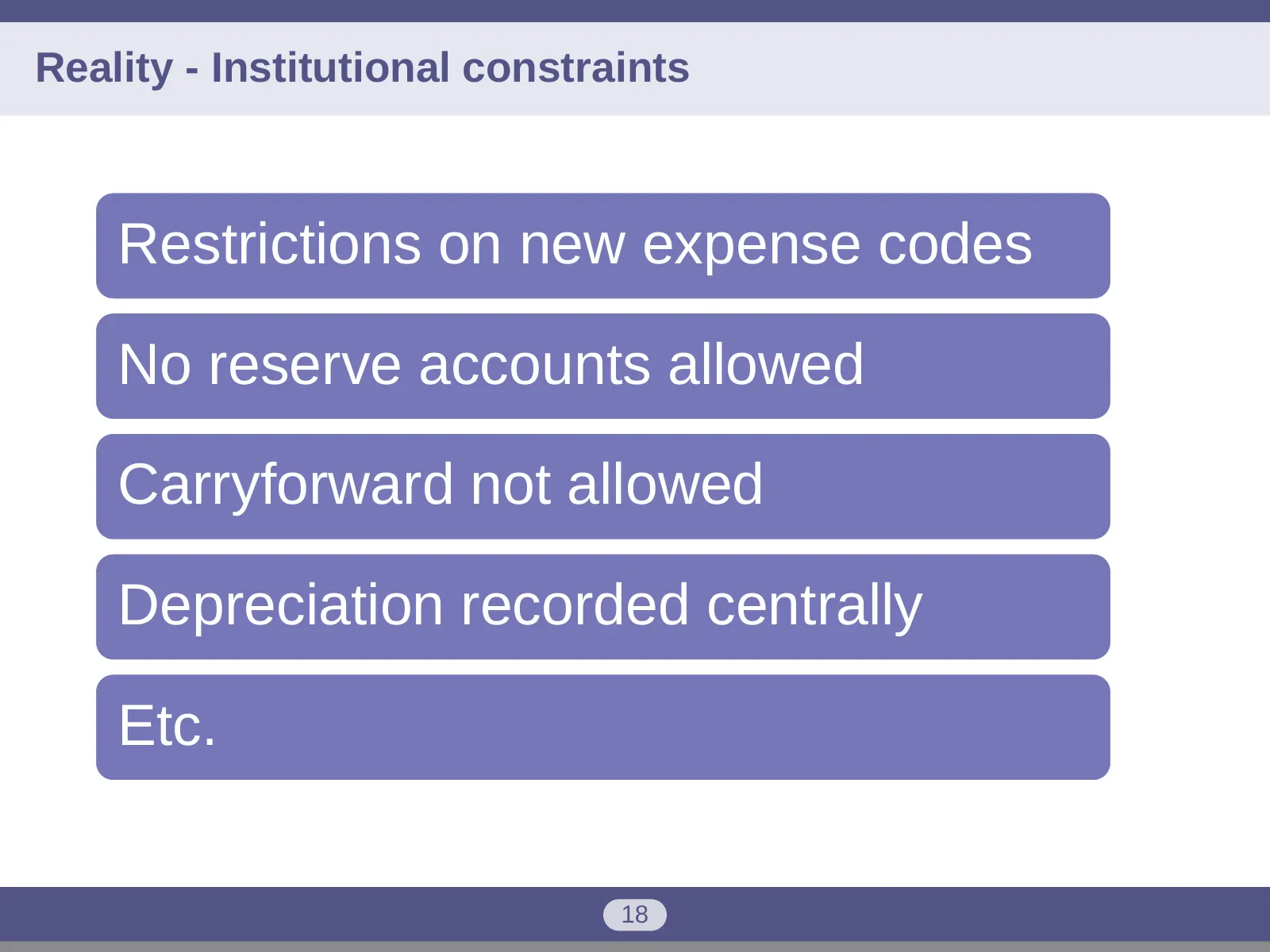
Slide 18: Reality - Institutional constraints
Reality - Institutional constraints Restrictions on new expense codes No reserve accounts allowed Carryforward not allowed Depreciation recorded centrally Etc. 18
Slide 19: Upcoming Webinars and Annual Meeting
Upcoming Webinars and Annual Meeting • Information for F&A Short Form Institutions • July 16 • Webinar • Tips for Becoming a CRIS Power User • August 20 • Webinar • Alternative Methods for Documenting Compensation • October date TBD • Webinar • F&A Workshop • September 10-12 • Gaylord Opryland Resor
Slide 20: Questions
TTT Questions
Slide 21: Caroline Beeman
Caroline Beeman CarolineMBeeman@maximus.com 540.308.3170 21
Source: Internet Archive copy of maximus.com
More decks from Maximus, Inc.
 FY2026 Earnings Presentation13 slides · Nov 19, 2026
 Q3 2026 Earnings Presentation12 slides · Aug 6, 2026
 Investor Presentation (June 2026)11 slides · June 2026
 Q2 2026 Earnings Presentation11 slides · May 7, 2026
 Q1 FY2026 Earnings Presentation11 slides · Feb 5, 2026
 FY2025 Earnings Presentation11 slides · Nov 20, 2025