Ardelyx, Inc. · NASDAQ:ARDX
Ardelyx — Technical Presentation (2015)
14 slides from Ardelyx's technical presentation, 2015
Slide 1: Tenapanor, a gastrointestinal NHE3 inhibitor, reduces serum phosphate in CKD stage 5D
Tenapanor, a gastrointestinal NHE3 inhibitor, reduces serum phosphate in patients with chronic kidney disease stage 5D and hyperphosphatemia Geoffrey A Block,1 David P Rosenbaum,2 Maria Leonsson- Zachrisson,3 Magnus Åstrand,3 Susanne Johansson,3 Mikael Knutsson,3 Anna Maria Langkilde3 1Denver Nephro
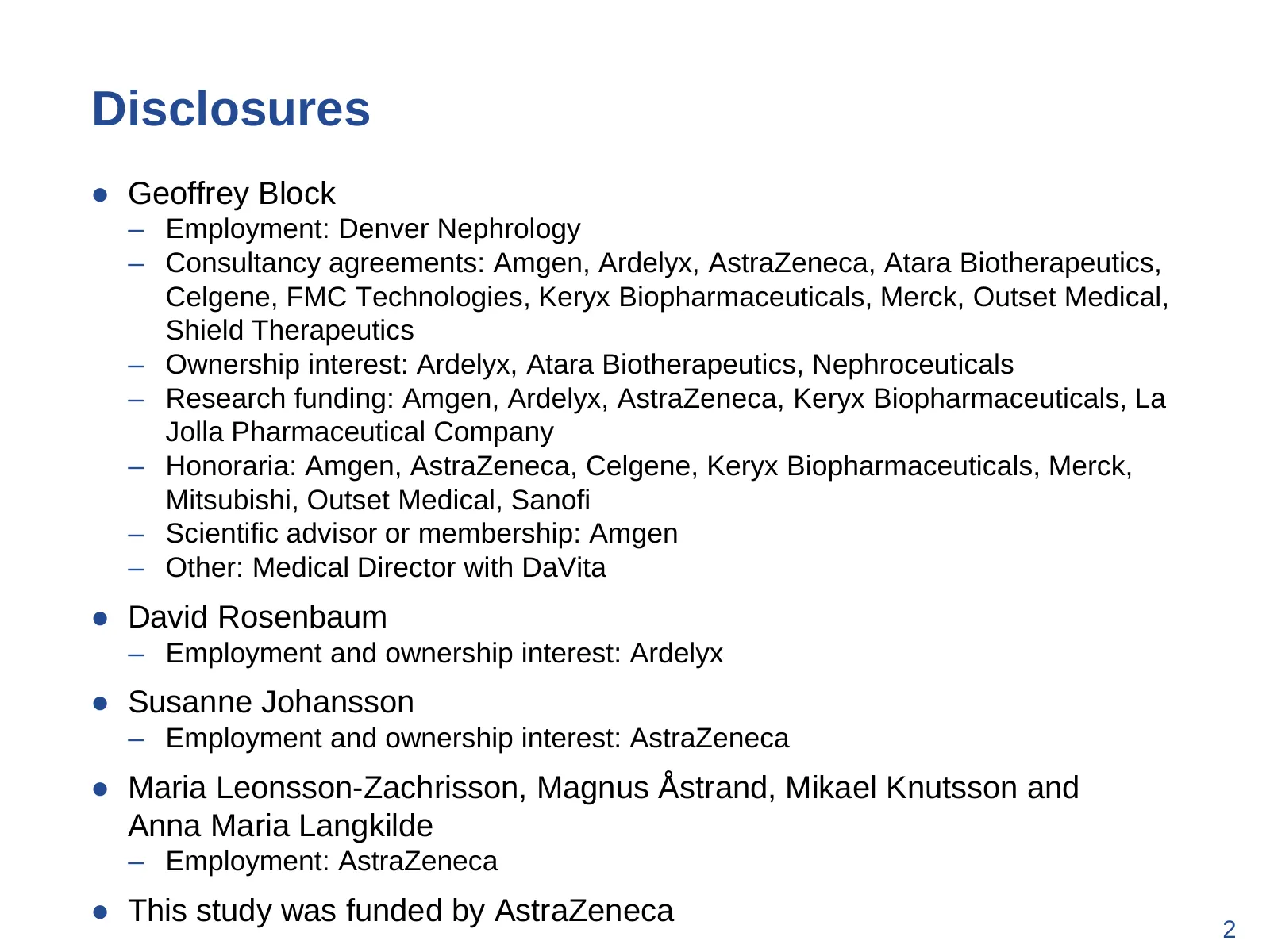
Slide 2: Disclosures
Disclosures ● Geoffrey Block – Employment: Denver Nephrology – Consultancy agreements: Amgen, Ardelyx, AstraZeneca, Atara Biotherapeutics, Celgene, FMC Technologies, Keryx Biopharmaceuticals, Merck, Outset Medical, Shield Therapeutics – Ownership interest: Ardelyx, Atara Biotherapeutics, Nephroceuti
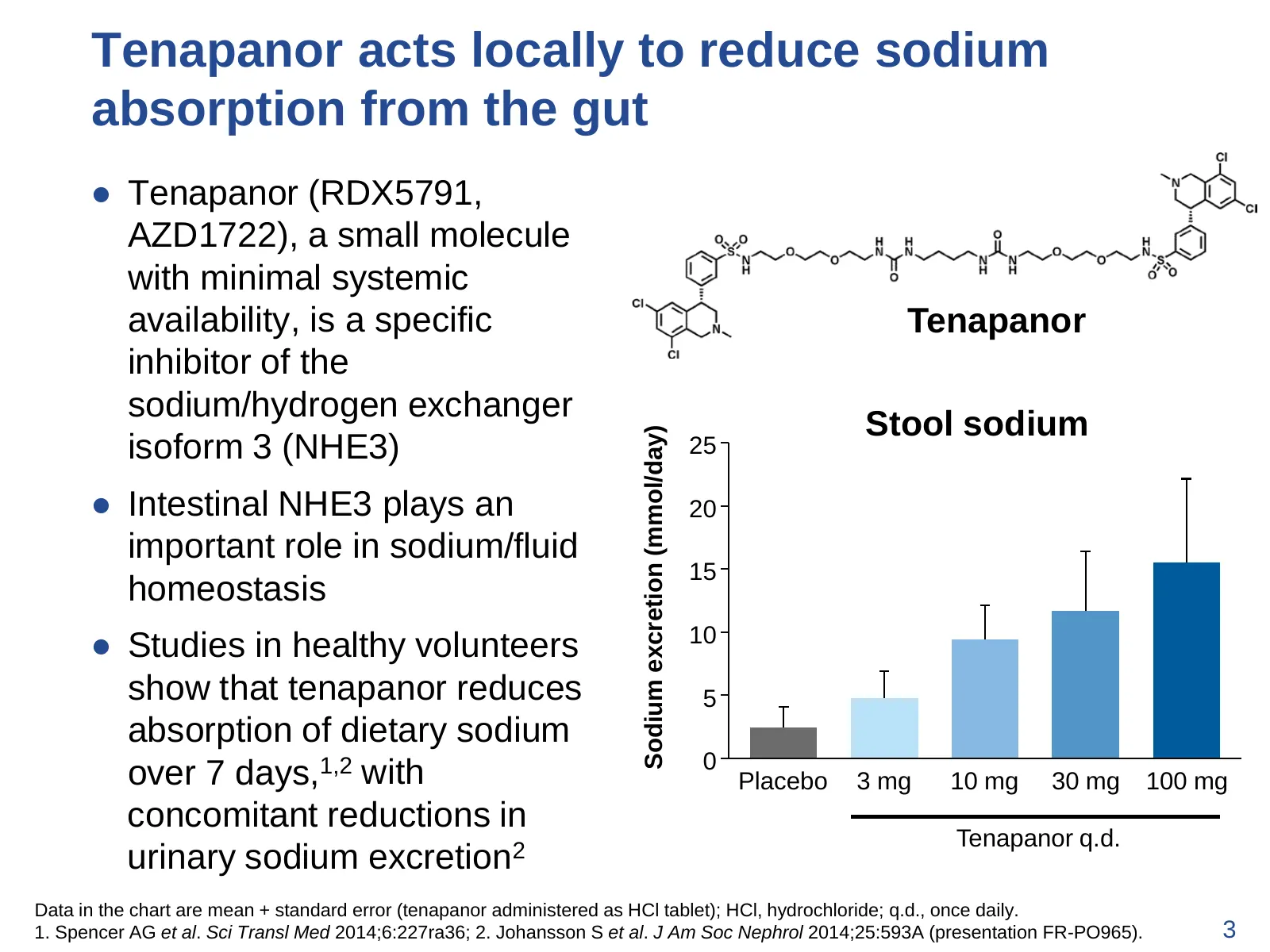
Slide 3: Tenapanor acts locally to reduce sodium absorption from the gut
Tenapanor acts locally to reduce sodium absorption from the gut ● Tenapanor (RDX5791, AZD1722), a small molecule with minimal systemic availability, is a specific Tenapanor inhibitor of the sodium/hydrogen exchanger Stool sodium Sodium excretion (mmol/day) isoform 3 (NHE3) 25 ● Intestinal NHE3 plays
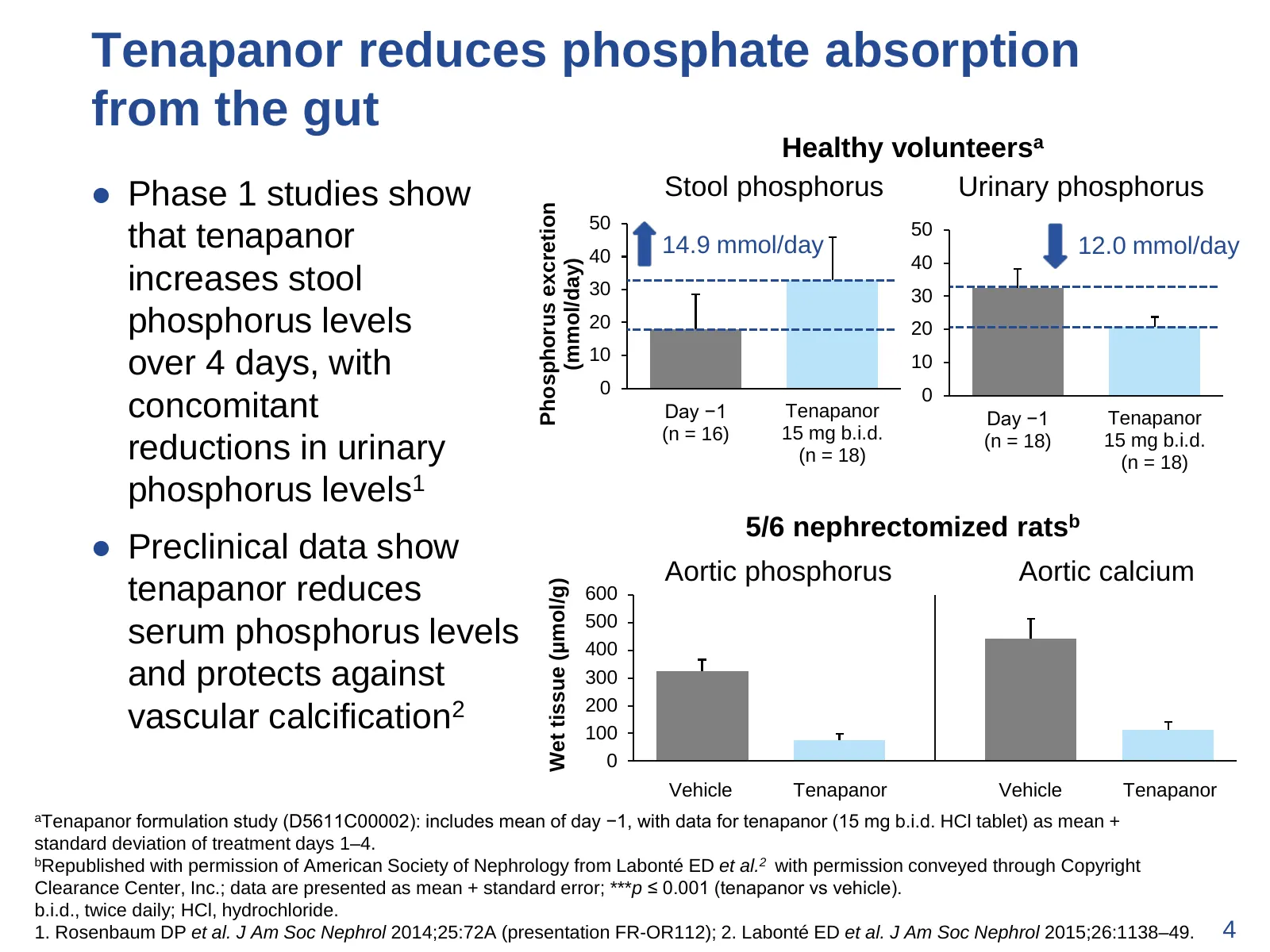
Slide 4: Tenapanor reduces phosphate absorption from the gut
Tenapanor reduces phosphate absorption from the gut Healthy volunteersa ● Phase 1 studies show Stool phosphorus Urinary phosphorus Phosphorus excretion 50 50 that tenapanor 40 14.9 mmol/day 12.0 mmol/day 40 (mmol/day) increases stool 30 30 phosphorus levels 20 20 10 over 4 days, with 10 0 0 concomit
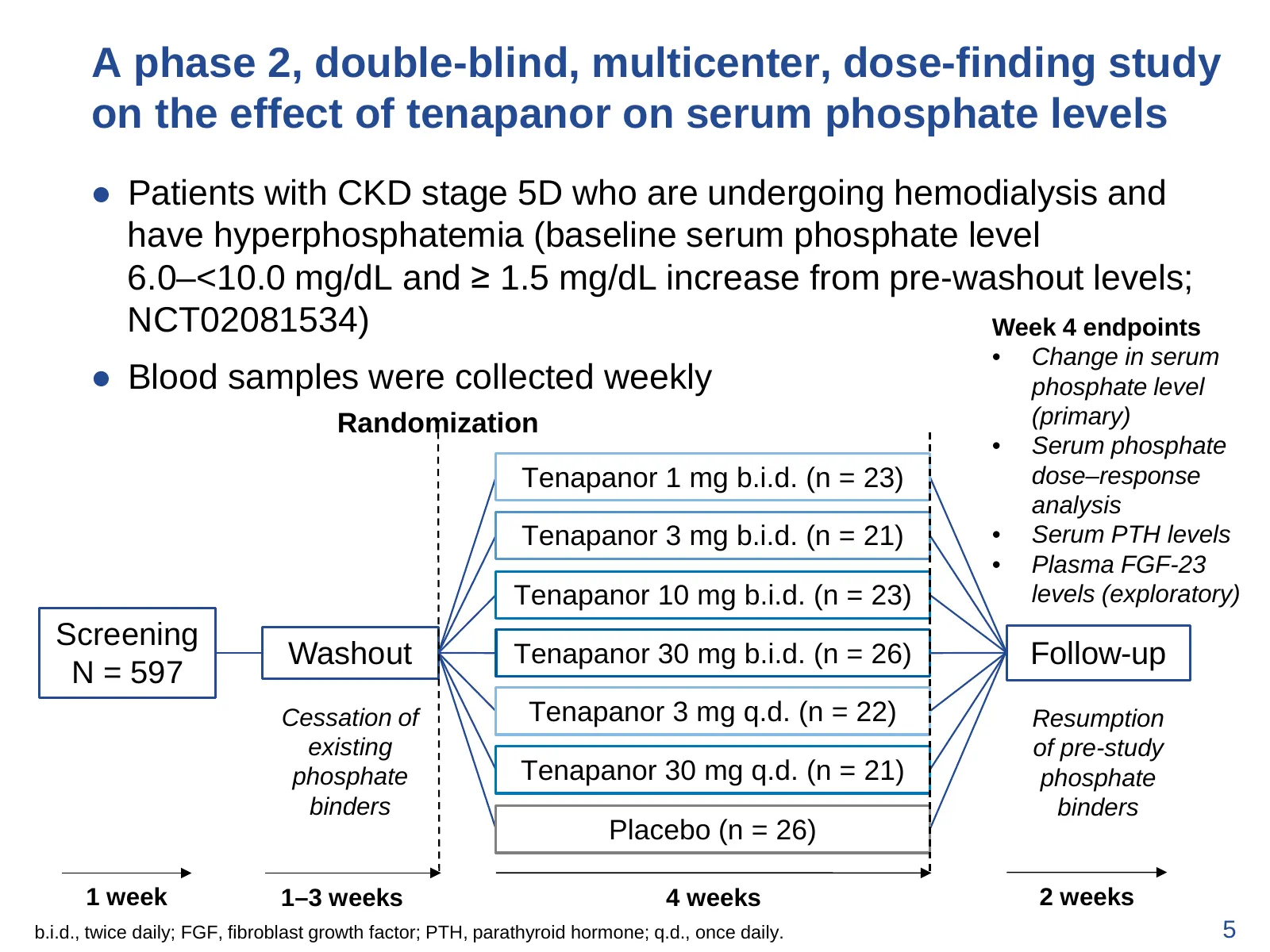
Slide 5: A phase 2, double-blind, multicenter, dose-finding study of tenapanor on serum phosphate
A phase 2, double-blind, multicenter, dose-finding study on the effect of tenapanor on serum phosphate levels ● Patients with CKD stage 5D who are undergoing hemodialysis and have hyperphosphatemia (baseline serum phosphate level 6.0–<10.0 mg/dL and ≥ 1.5 mg/dL increase from pre-washout levels; NCT0
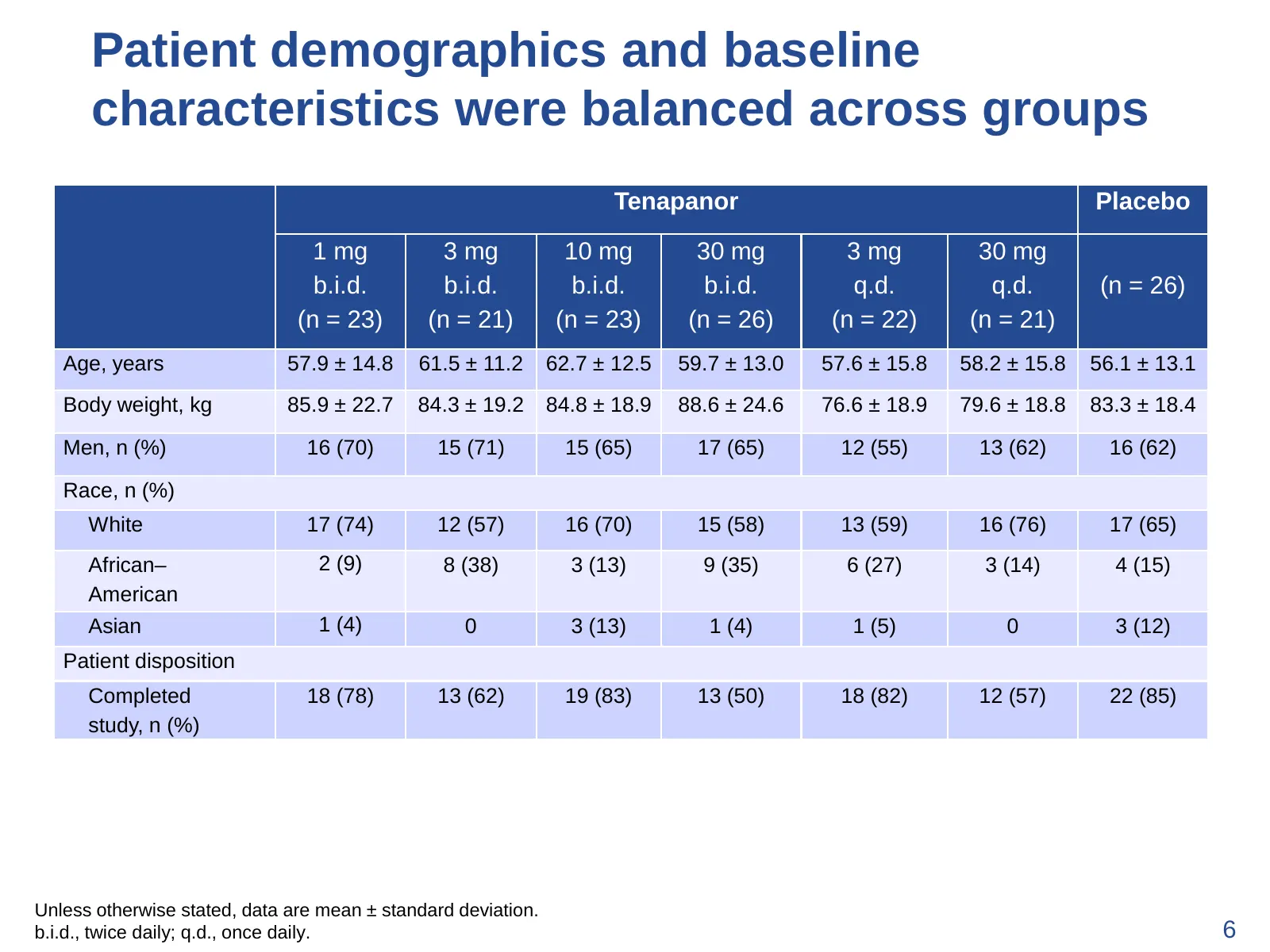
Slide 6: Patient demographics and baseline characteristics were balanced across groups
Patient demographics and baseline characteristics were balanced across groups Tenapanor Placebo 1 mg 3 mg 10 mg 30 mg 3 mg 30 mg b.i.d. b.i.d. b.i.d. b.i.d. q.d. q.d. (n = 26) (n = 23) (n = 21) (n = 23) (n = 26) (n = 22) (n = 21) Age, years 57.9 ± 14.8 61.5 ± 11.2 62.7 ± 12.5 59.7 ± 13.0 57.6 ± 15.8
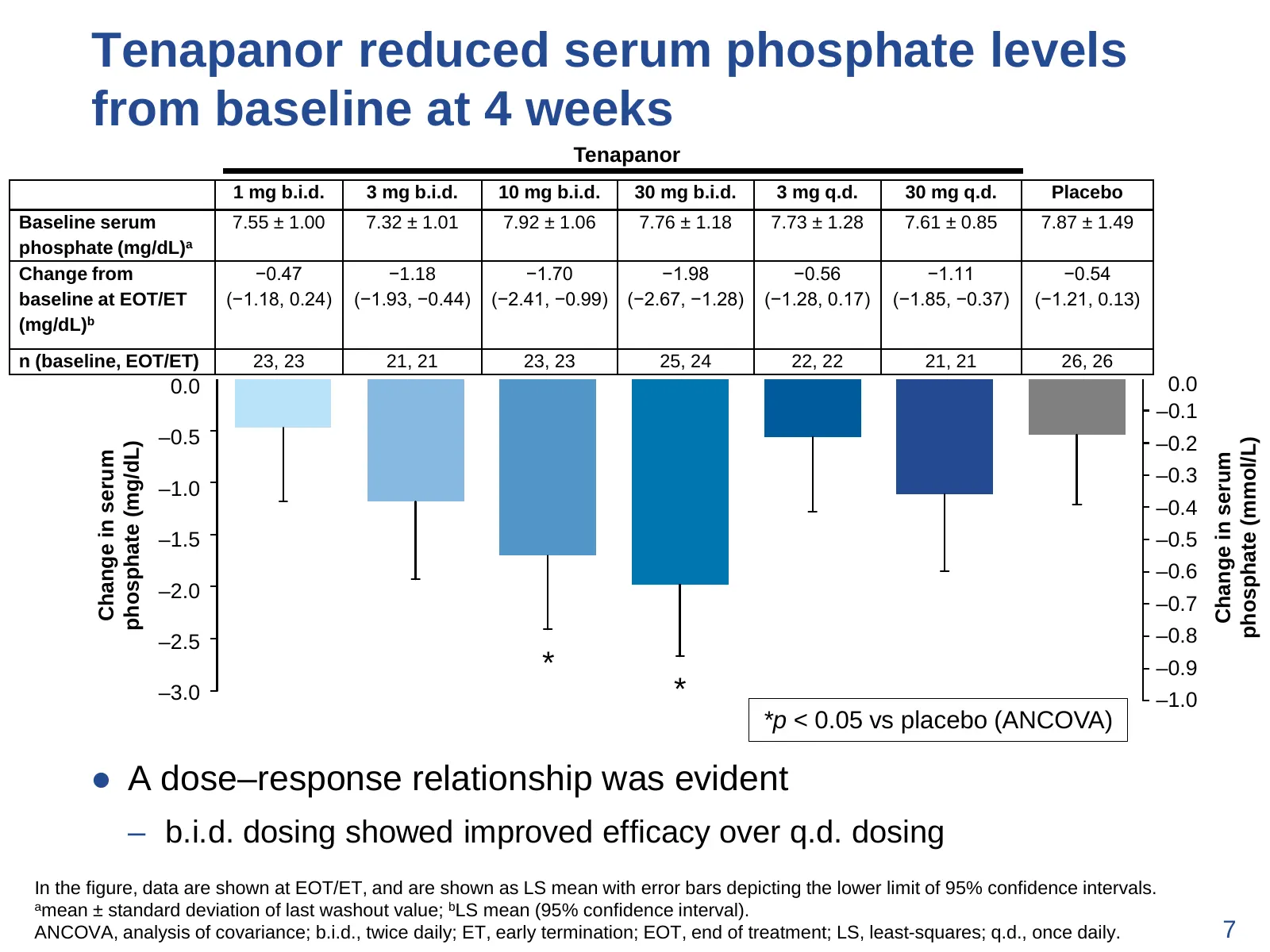
Slide 7: Tenapanor reduced serum phosphate levels from baseline
Tenapanor reduced serum phosphate levels from baseline at 4 weeks Tenapanor 1 mg b.i.d. 3 mg b.i.d. 10 mg b.i.d. 30 mg b.i.d. 3 mg q.d. 30 mg q.d. Placebo Baseline serum 7.55 ± 1.00 7.32 ± 1.01 7.92 ± 1.06 7.76 ± 1.18 7.73 ± 1.28 7.61 ± 0.85 7.87 ± 1.49 phosphate (mg/dL)a Change from −0.47 −1.18 −1.
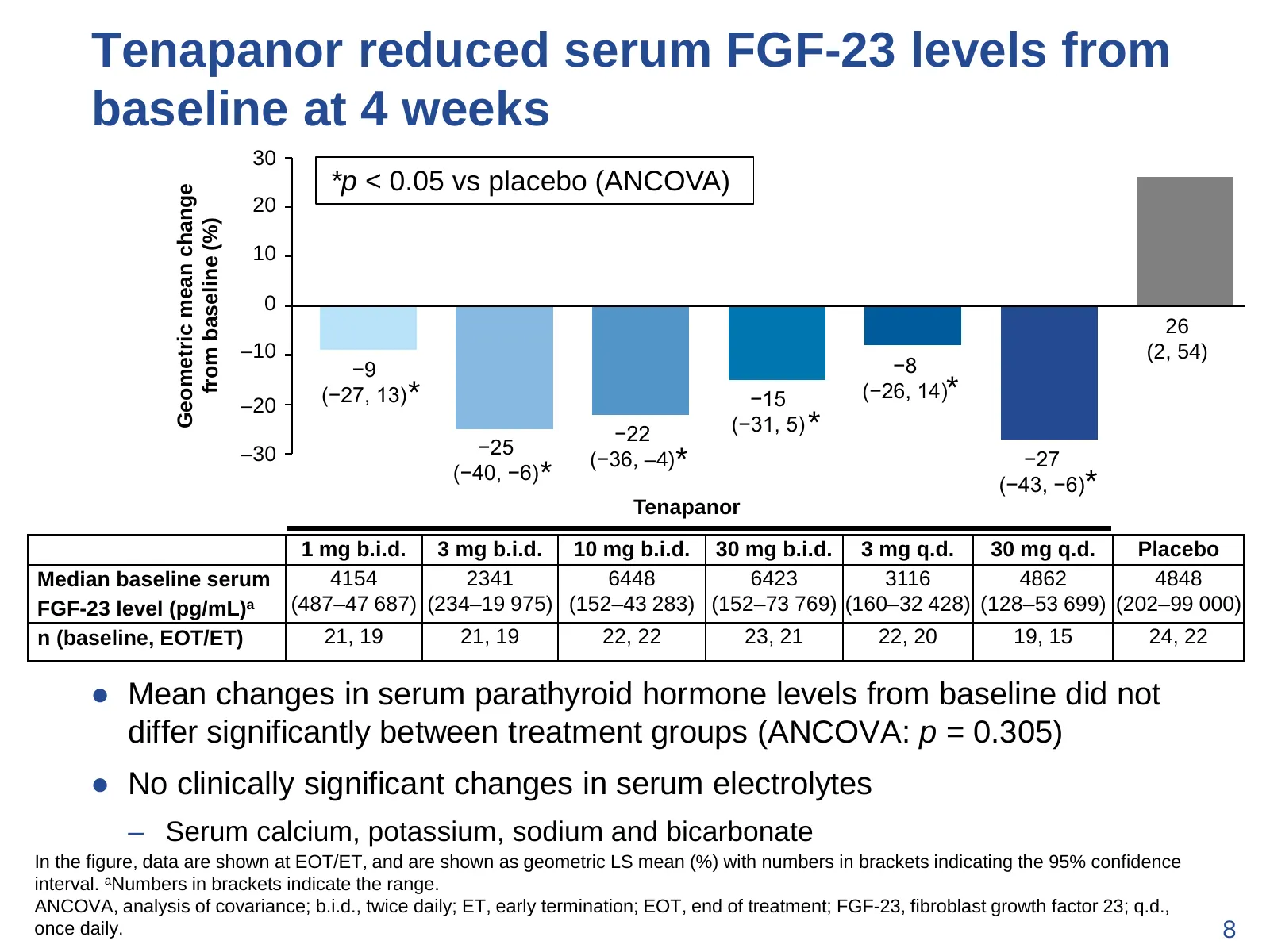
Slide 8: Tenapanor reduced serum FGF-23 levels from baseline
Tenapanor reduced serum FGF-23 levels from baseline at 4 weeks 30 Geometric mean change *p < 0.05 vs placebo (ANCOVA) from baseline (%) 20 10 0 26 –10 (2, 54) −9 −8 (−27, 13) * −15 (−26, 14)* –20 −22 (−31, 5) * −25 –30 (−36, –4)* −27 (−40, −6) * (−43, −6)* Tenapanor 1 mg b.i.d. 3 mg b.i.d. 10 mg b.i
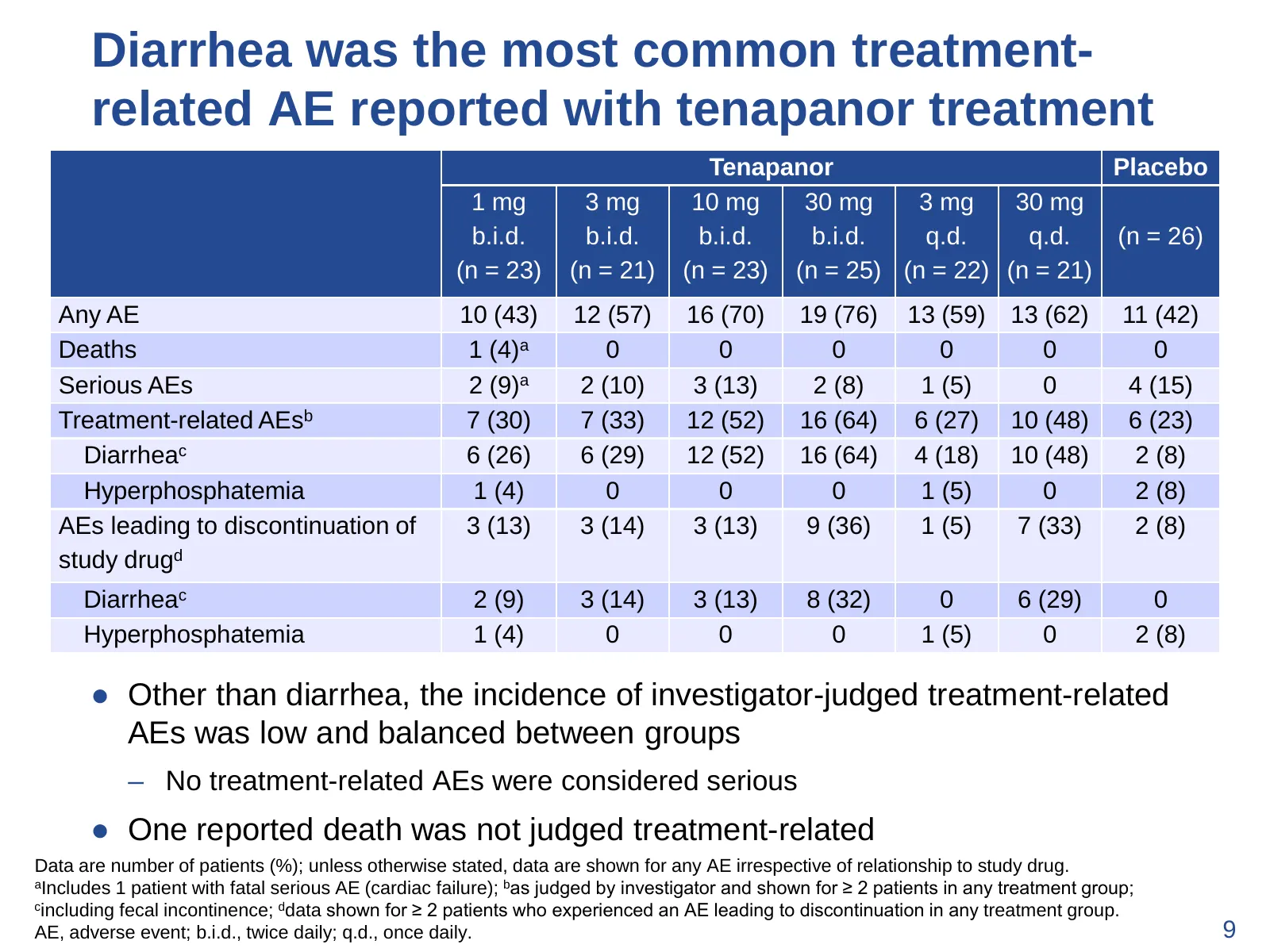
Slide 9: Diarrhea was the most common treatment-related AE with tenapanor
Diarrhea was the most common treatment- related AE reported with tenapanor treatment Tenapanor Placebo 1 mg 3 mg 10 mg 30 mg 3 mg 30 mg b.i.d. b.i.d. b.i.d. b.i.d. q.d. q.d. (n = 26) (n = 23) (n = 21) (n = 23) (n = 25) (n = 22) (n = 21) Any AE 10 (43) 12 (57) 16 (70) 19 (76) 13 (59) 13 (62) 11 (42)
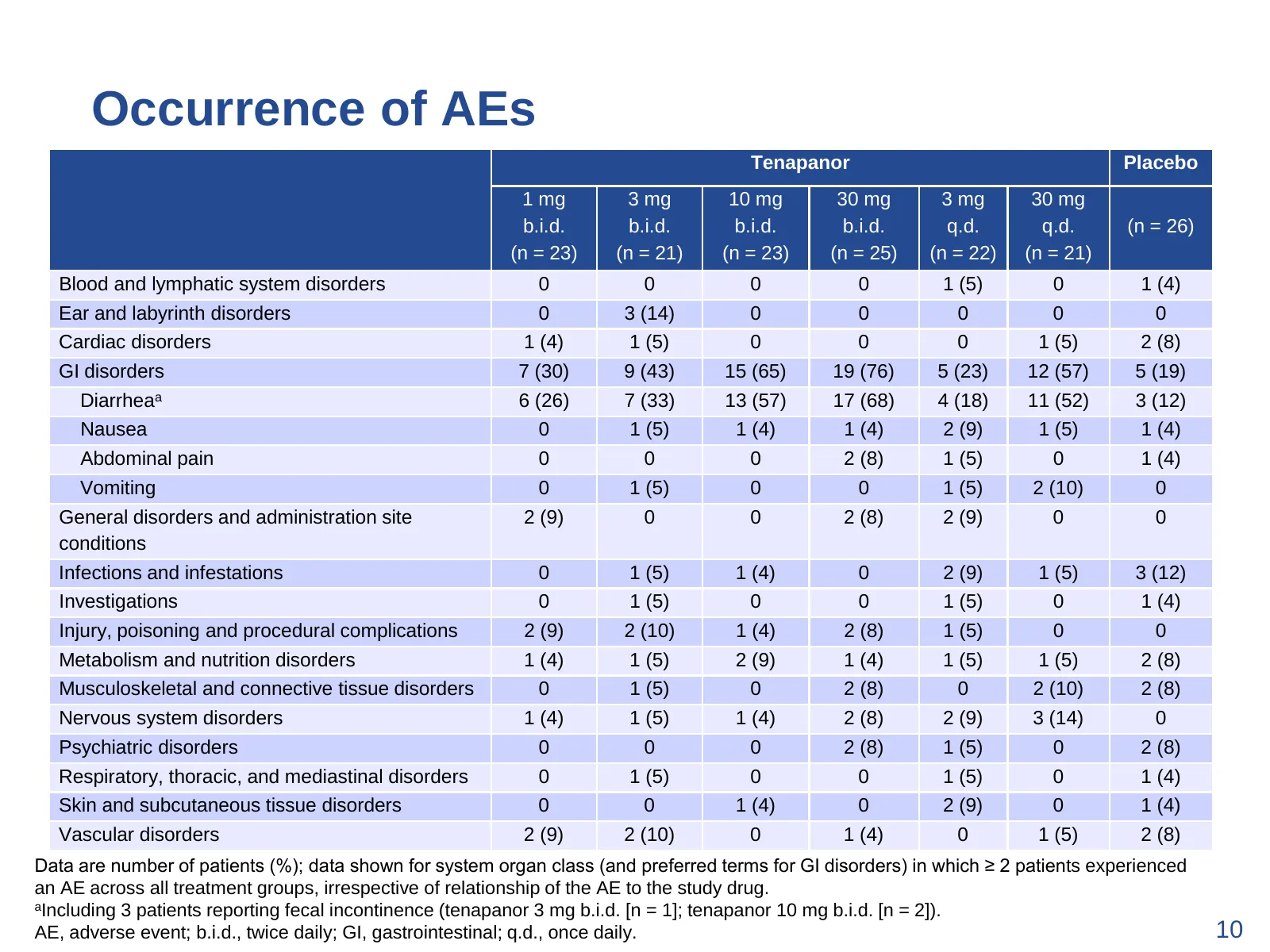
Slide 10: Occurrence of AEs
Occurrence of AEs Tenapanor Placebo 1 mg 3 mg 10 mg 30 mg 3 mg 30 mg b.i.d. b.i.d. b.i.d. b.i.d. q.d. q.d. (n = 26) (n = 23) (n = 21) (n = 23) (n = 25) (n = 22) (n = 21) Blood and lymphatic system disorders 0 0 0 0 1 (5) 0 1 (4) Ear and labyrinth disorders 0 3 (14) 0 0 0 0 0 Cardiac disorders 1 (4)
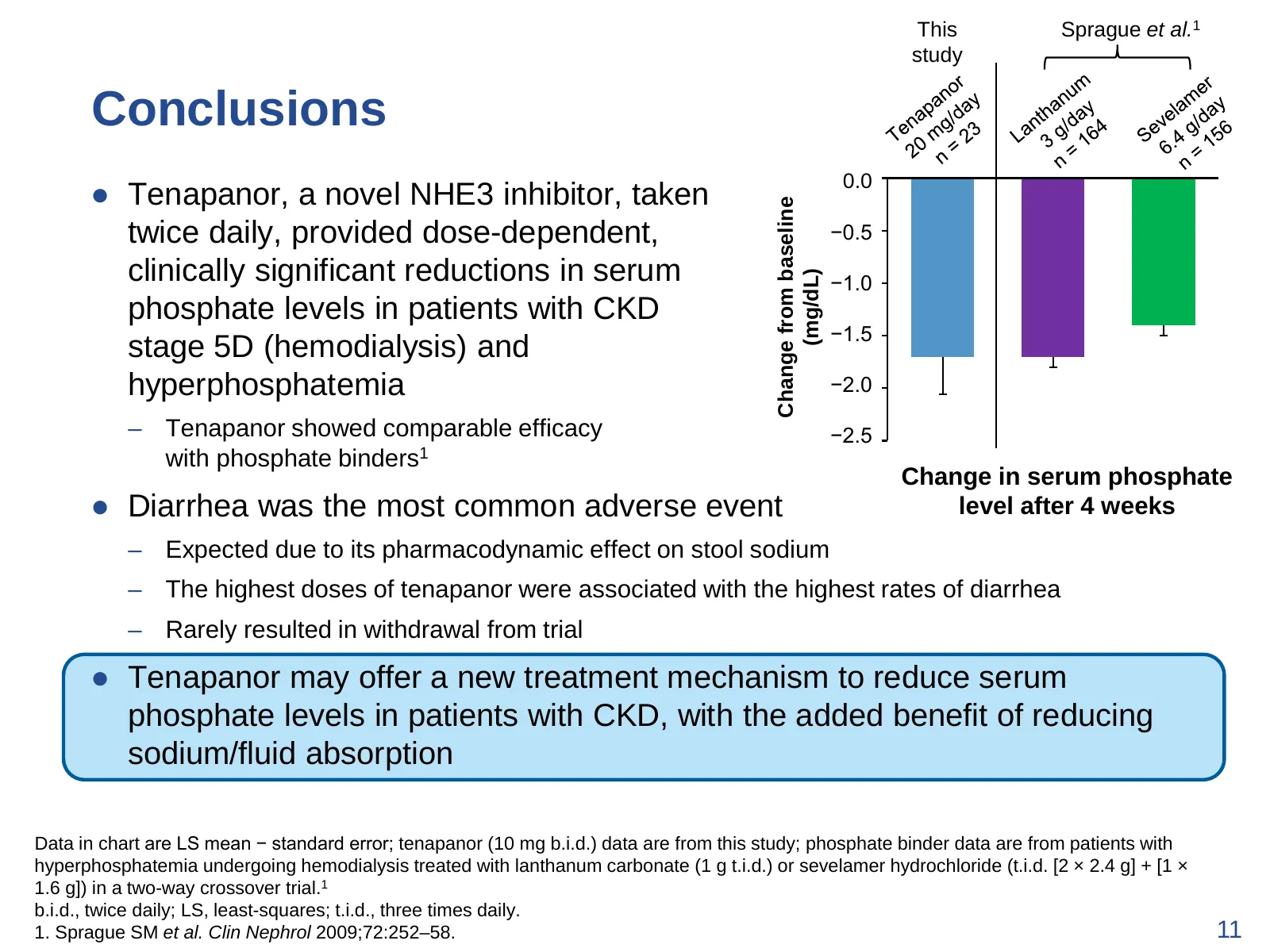
Slide 11: Conclusions
This Sprague et al.1 study Conclusions ● Tenapanor, a novel NHE3 inhibitor, taken 0.0 Change from baseline twice daily, provided dose-dependent, −0.5 clinically significant reductions in serum (mg/dL) −1.0 phosphate levels in patients with CKD −1.5 stage 5D (hemodialysis) and hyperphosphatemia −2.0
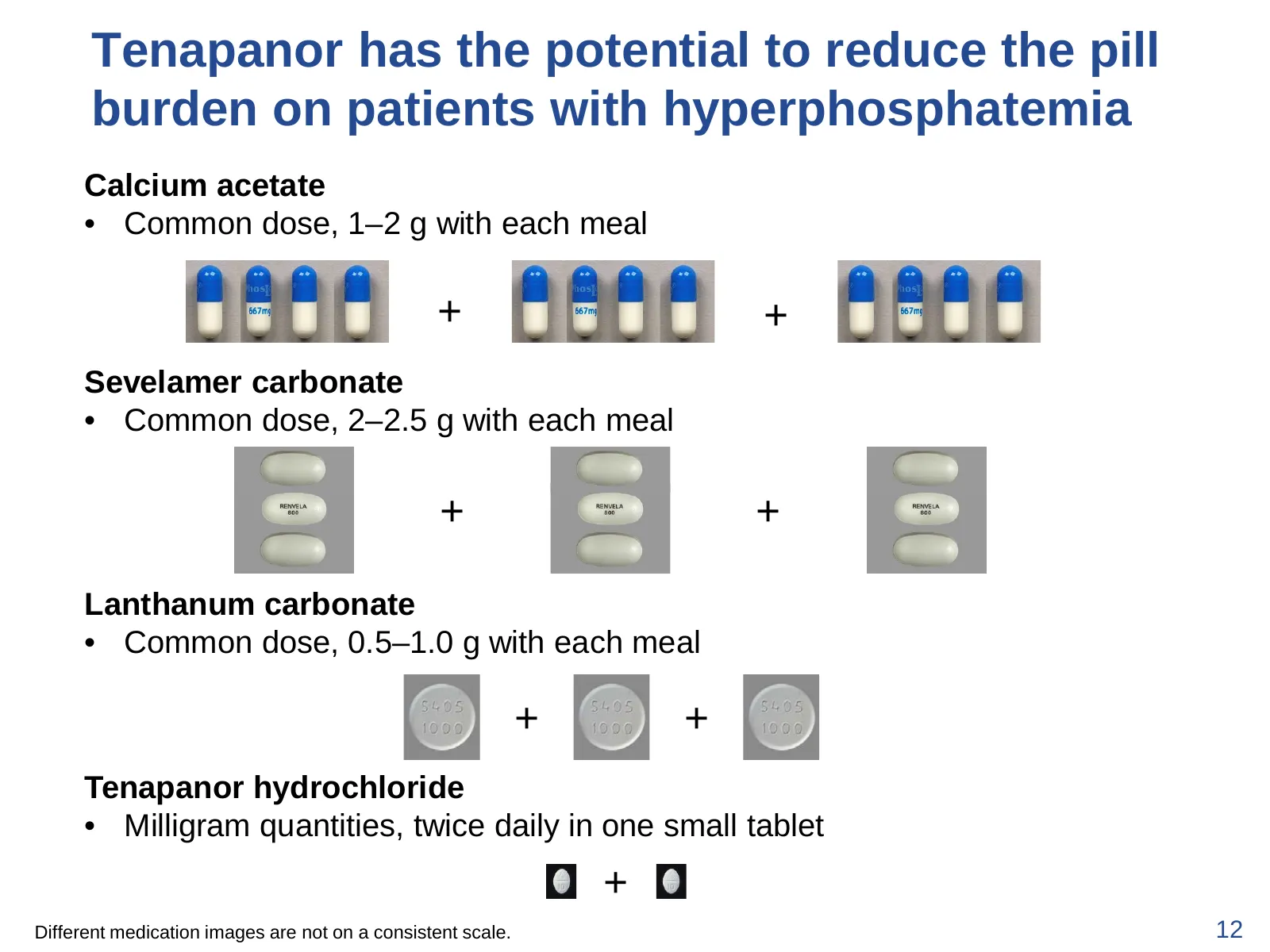
Slide 12: Tenapanor has the potential to reduce the pill burden on patients with hyperphosphatemia
Tenapanor has the potential to reduce the pill burden on patients with hyperphosphatemia Calcium acetate • Common dose, 1–2 g with each meal + + Sevelamer carbonate • Common dose, 2–2.5 g with each meal + + Lanthanum carbonate • Common dose, 0.5–1.0 g with each meal + + Tenapanor hydrochloride • Mil
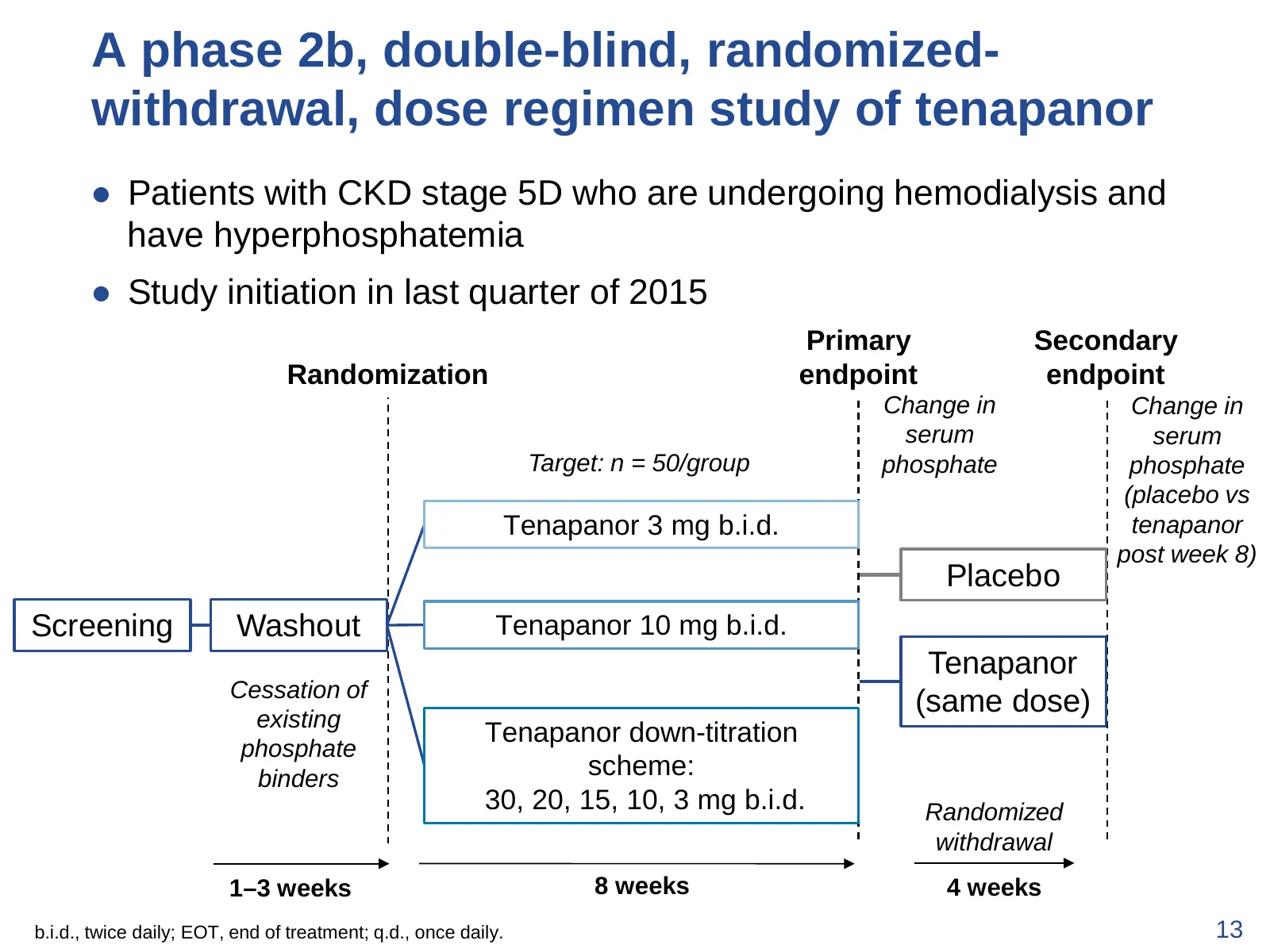
Slide 13: A phase 2b, double-blind, randomized-withdrawal, dose regimen study of tenapanor
A phase 2b, double-blind, randomized- withdrawal, dose regimen study of tenapanor ● Patients with CKD stage 5D who are undergoing hemodialysis and have hyperphosphatemia ● Study initiation in last quarter of 2015 Primary Secondary Randomization endpoint endpoint Change in Change in serum serum Targe
Slide 14: Acknowledgments
Acknowledgments ● The investigators acknowledge and thank the study participants, the study centers and the clinical teams ● Medical writing support was provided by Laura Schmidt (MPhil, MRes) and Steven Inglis (PhD) of Oxford PharmaGenesis, Oxford, UK, and was funded by Ardelyx Inc., Fremont, USA 1
Source: Internet Archive copy of ardelyx.com
More decks from Ardelyx, Inc.
 Q3 2026 Earnings Presentation15 slides · Nov 3, 2026
 Q2 2026 Earnings Presentation18 slides · Aug 6, 2026
 Investor Presentation (August 2026)30 slides · August 2026
 Q1 2026 Earnings Presentation23 slides · Apr 30, 2026
 Q4 2025 Earnings Presentation27 slides · Feb 19, 2026
 Q2 2025 Earnings Presentation22 slides · Aug 4, 2025