EKF Diagnostics Holdings plc · LSE:EKF
EKF Diagnostics — Investor Presentation (April 2021)
20 slides from EKF Diagnostics's investor presentation, April 2021

Slide 1: Lactate Scout+ Product presentation
Title subtitle Lactate Scout+ Product presentation
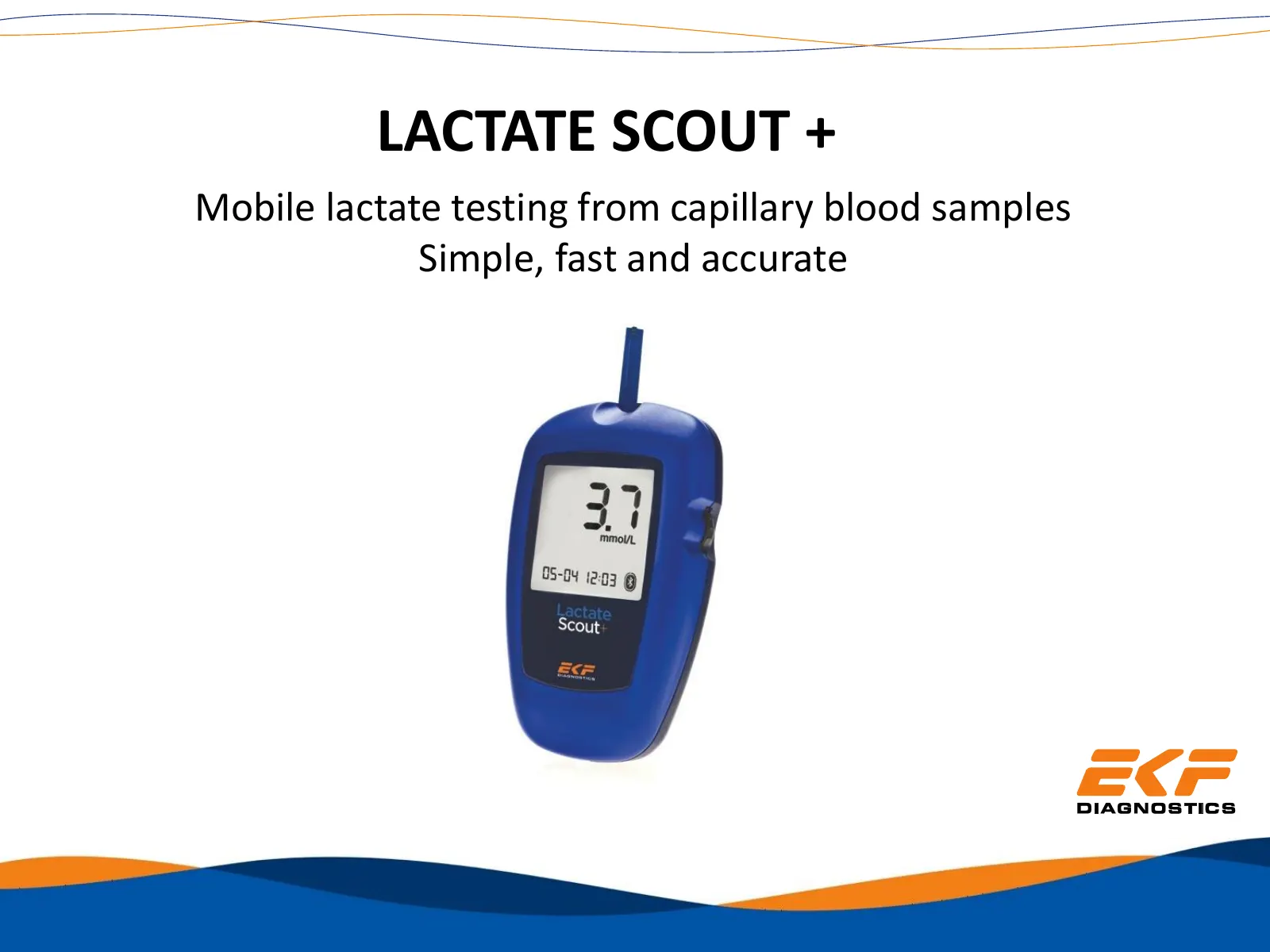
Slide 2: Lactate Scout+
LACTATE SCOUT + Mobile lactate testing from capillary blood samples Simple, fast and accurate
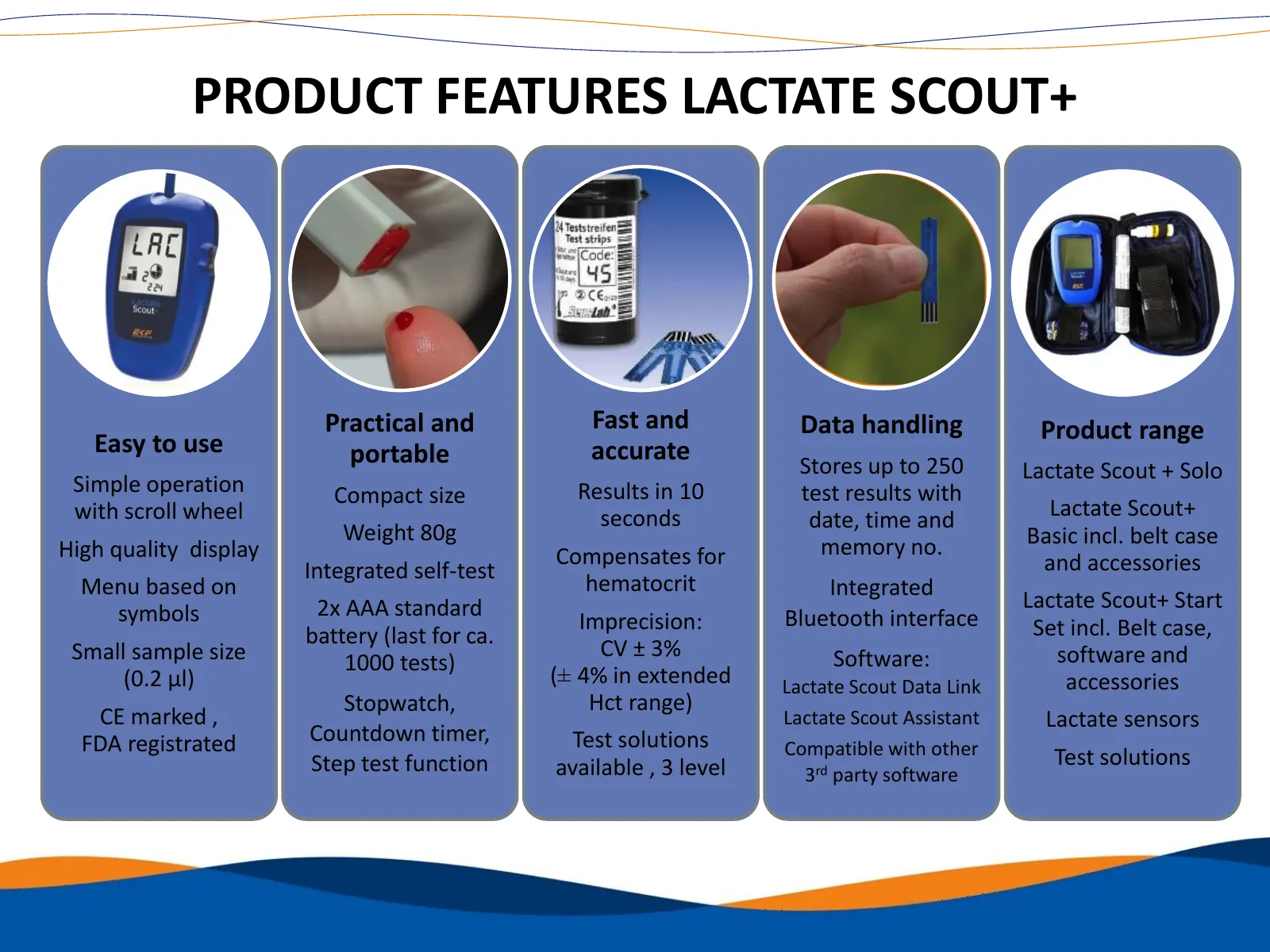
Slide 3: Product Features Lactate Scout+
PRODUCT FEATURES LACTATE SCOUT+ Practical and Fast and Data handling Product range Easy to use portable accurate Stores up to 250 Lactate Scout + Solo Simple operation Compact size Results in 10 test results with with scroll wheel seconds date, time and Lactate Scout+ Weight 80g Basic incl. belt cas
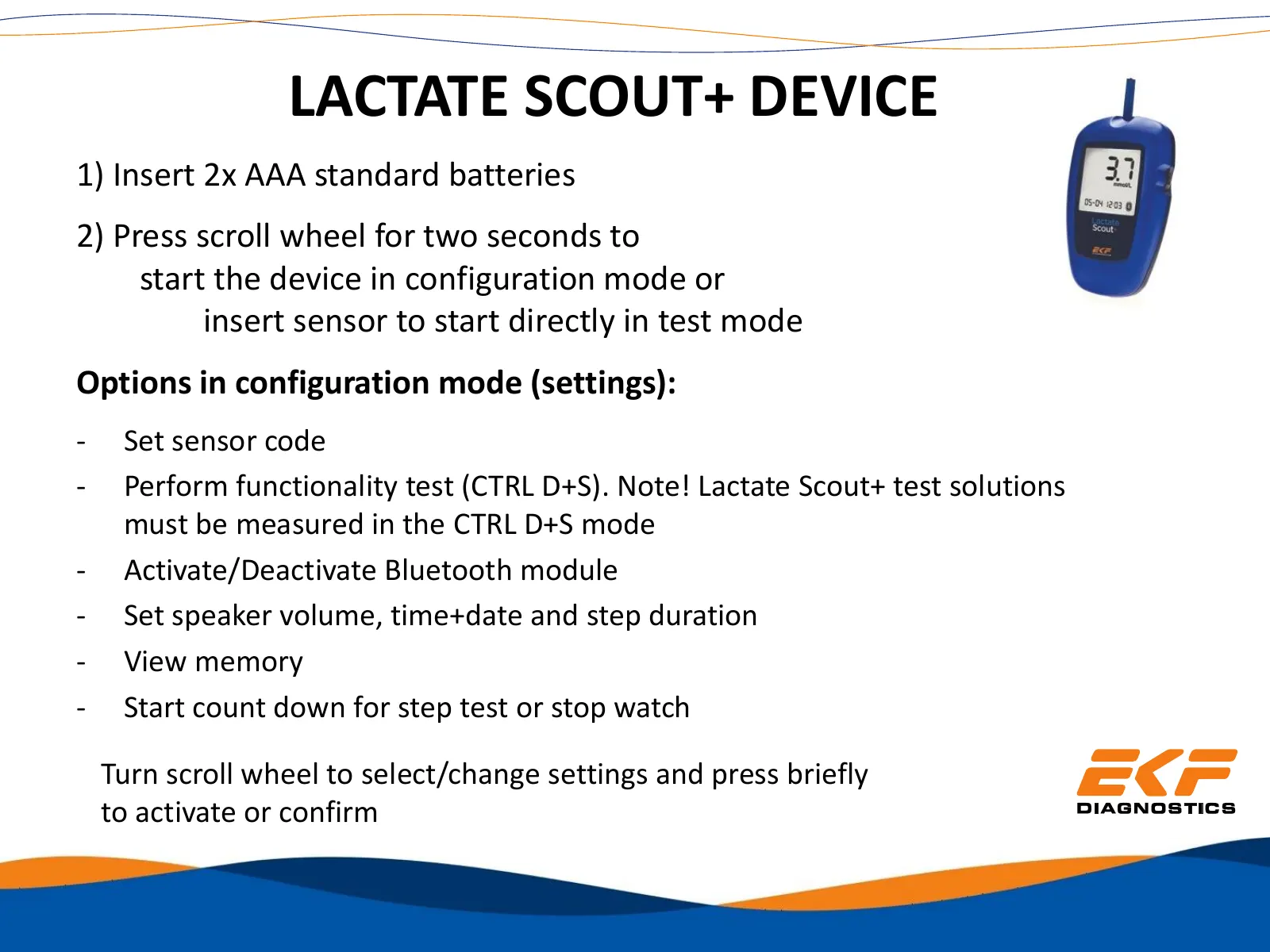
Slide 4: Lactate Scout+ Device
LACTATE SCOUT+ DEVICE 1) Insert 2x AAA standard batteries 2) Press scroll wheel for two seconds to start the device in configuration mode or insert sensor to start directly in test mode Options in configuration mode (settings): - Set sensor code - Perform functionality test (CTRL D+S). Note! Lactate
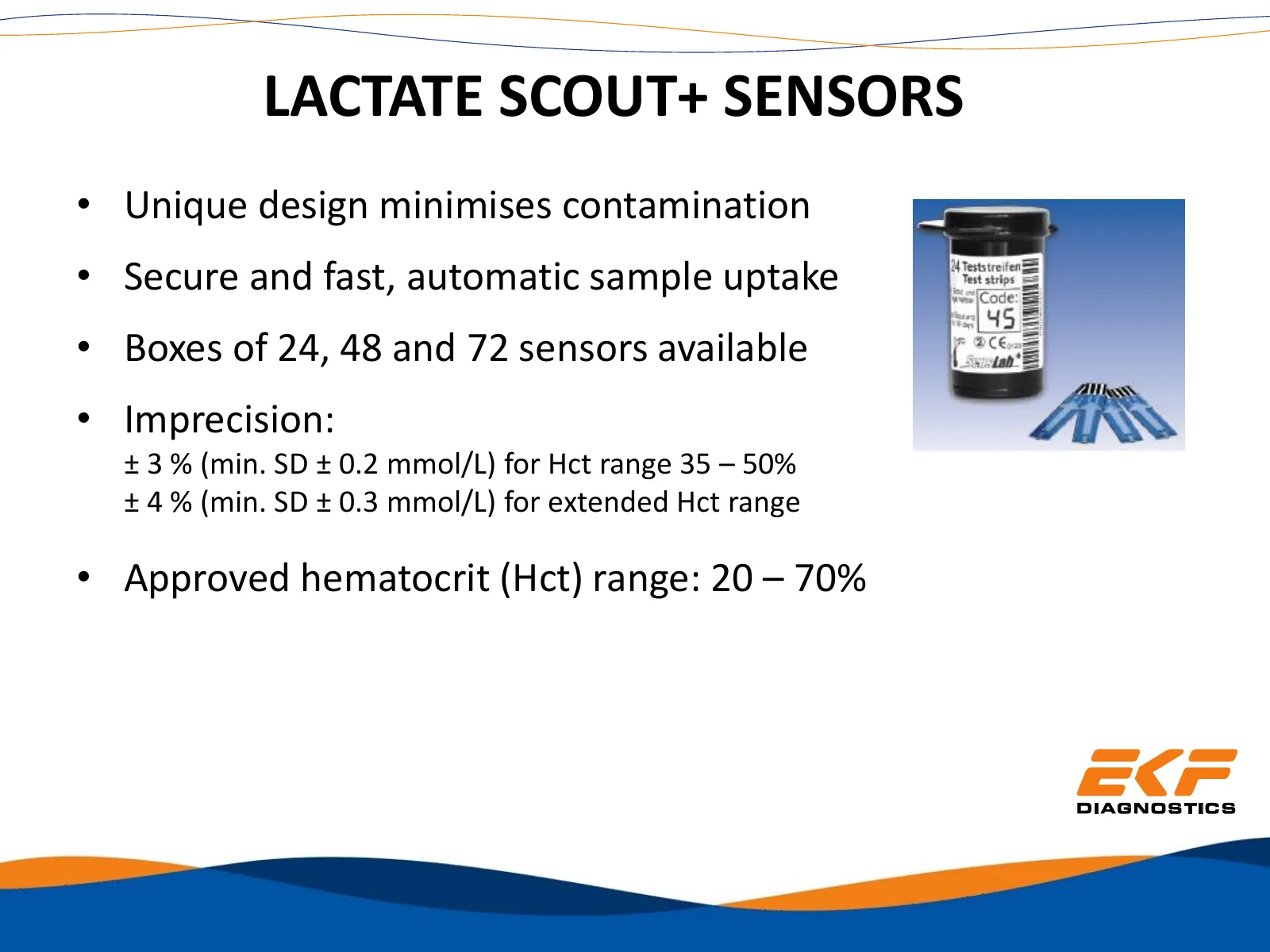
Slide 5: Lactate Scout+ Sensors
LACTATE SCOUT+ SENSORS • Unique design minimises contamination • Secure and fast, automatic sample uptake • Boxes of 24, 48 and 72 sensors available • Imprecision: ± 3 % (min. SD ± 0.2 mmol/L) for Hct range 35 – 50% ± 4 % (min. SD ± 0.3 mmol/L) for extended Hct range • Approved hematocrit (Hct) rang

Slide 6: Why compensate for hematocrit (Hct)?
Why compensate for hematocrit (Hct) ? • Hematocrit (Hct) is the total amount of solid blood particles, 99 % is red blood cells • The volume of the red blood cells reduces the effective sample volume involved in the reaction. Other minor influences are an increased electrical resistance caused by the

Slide 7: Performing a test with the Lactate Scout+
PERFORMING A TEST WITH THE LACTATE SCOUT+
Slide 8: Stimulating Blood Circulation
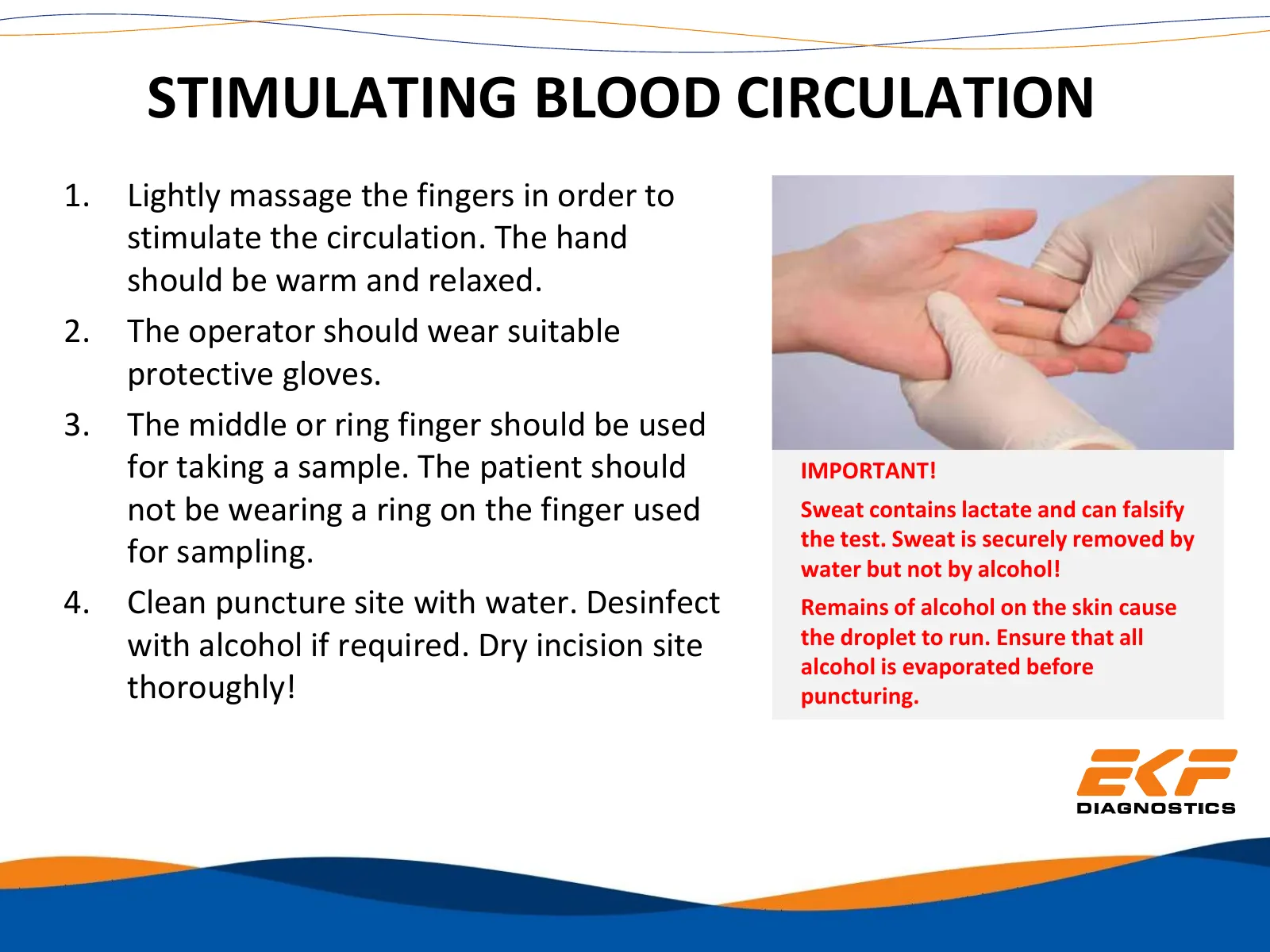
STIMULATING BLOOD CIRCULATION 1. Lightly massage the fingers in order to stimulate the circulation. The hand should be warm and relaxed. 2. The operator should wear suitable protective gloves. 3. The middle or ring finger should be used for taking a sample. The patient should IMPORTANT! not be weari
Slide 9: Lancing the Finger
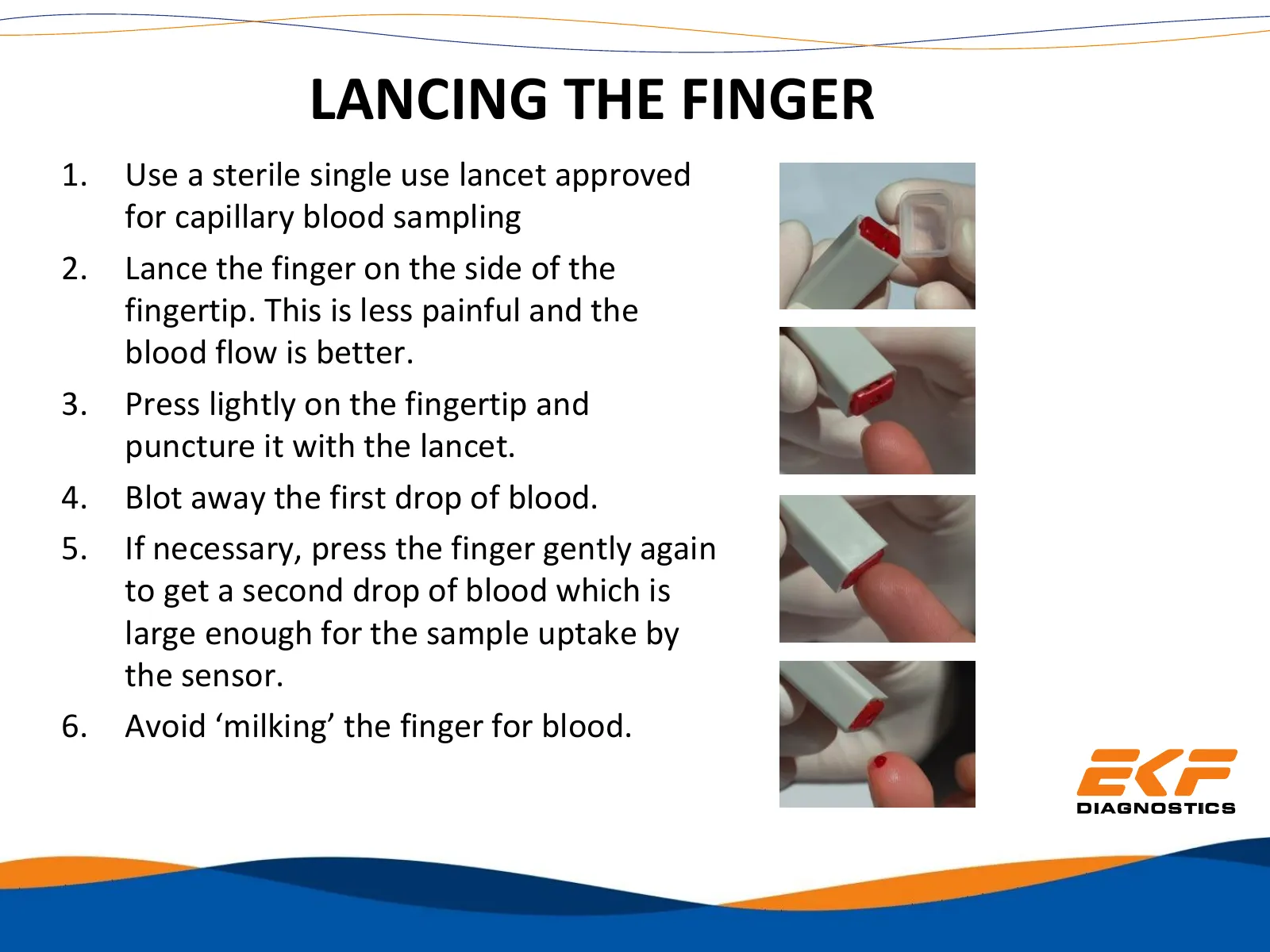
LANCING THE FINGER 1. Use a sterile single use lancet approved for capillary blood sampling 2. Lance the finger on the side of the fingertip. This is less painful and the blood flow is better. 3. Press lightly on the fingertip and puncture it with the lancet. 4. Blot away the first drop of blood. 5.
Slide 10: Performing the Test
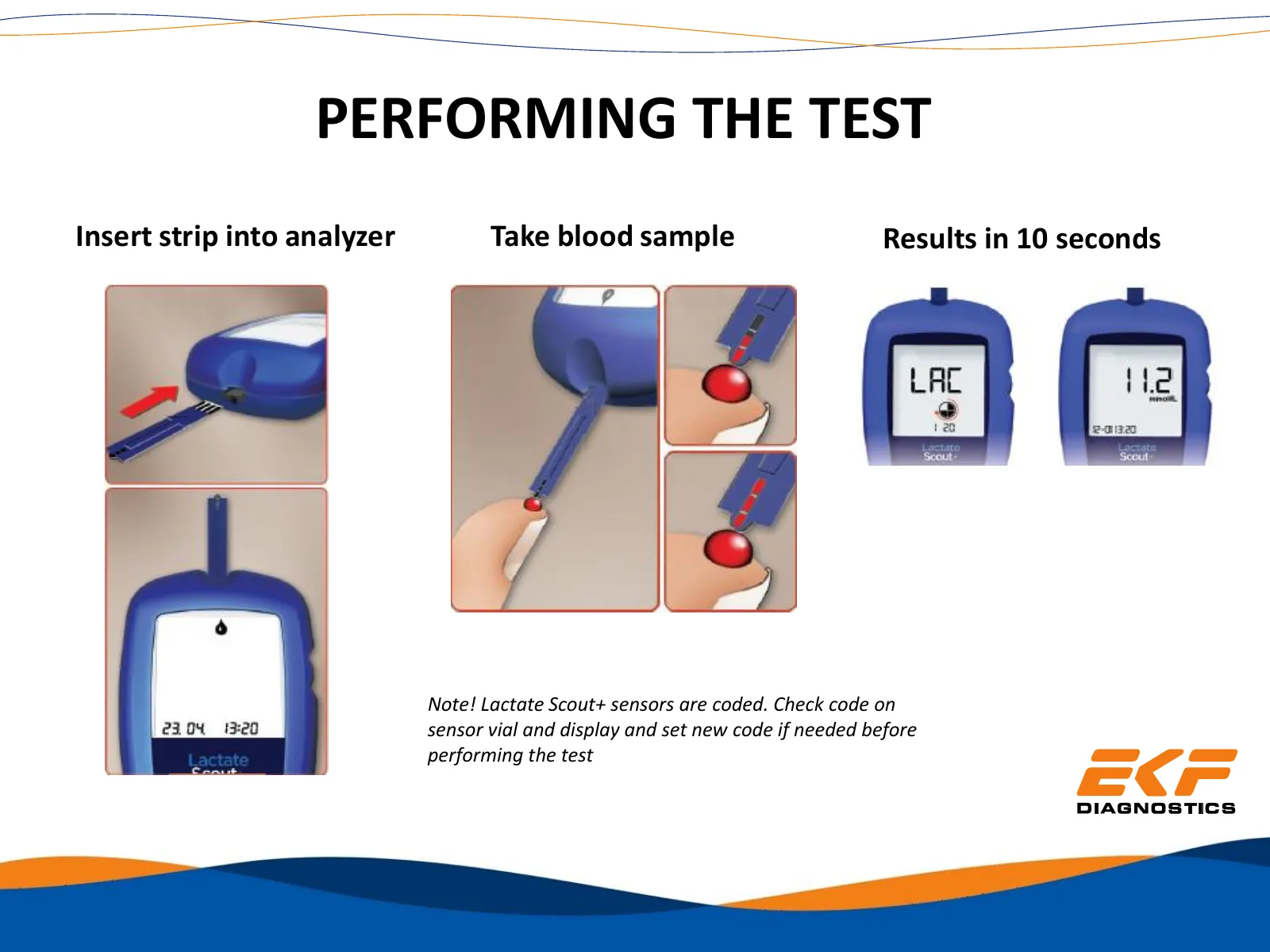
PERFORMING THE TEST Insert strip into analyzer Take blood sample Results in 10 seconds Note! Lactate Scout+ sensors are coded. Check code on sensor vial and display and set new code if needed before performing the test
Slide 11: Important Information
IMPORTANT INFORMATION 1. Keep the sensors protected from moisture and direct sunlight. 2. Store sensors at -18° to + 8°C. Maximum shelf-life is 12 month. Store without refrigeration at temperatures below 25°C for max. 30 days. Transport and store the sensors only in the original vial! After first op
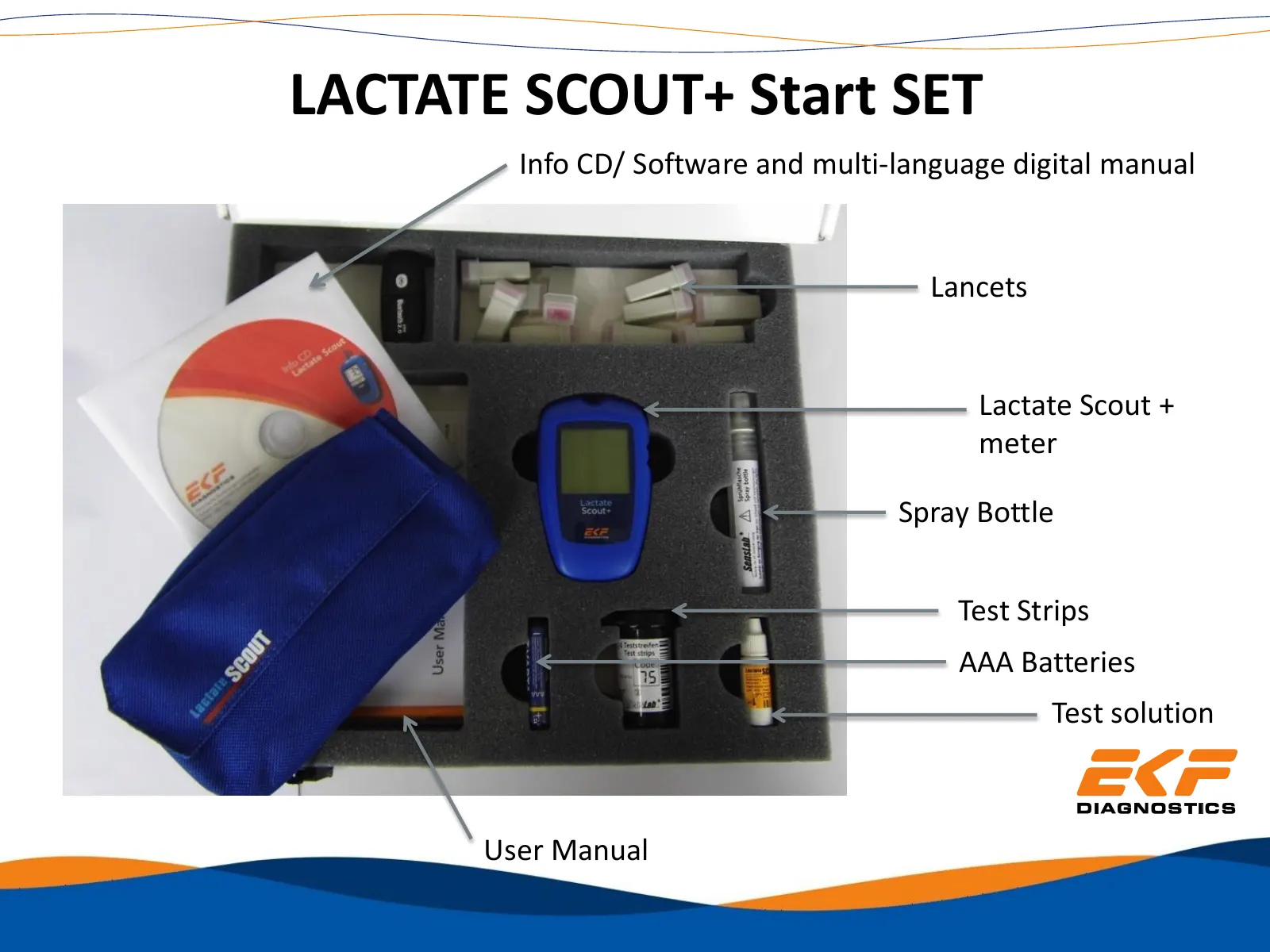
Slide 12: Lactate Scout+ Start Set
LACTATE SCOUT+ Start SET Info CD/ Software and multi-language digital manual Lancets Lactate Scout + meter Spray Bottle Test Strips AAA Batteries Test solution User Manual
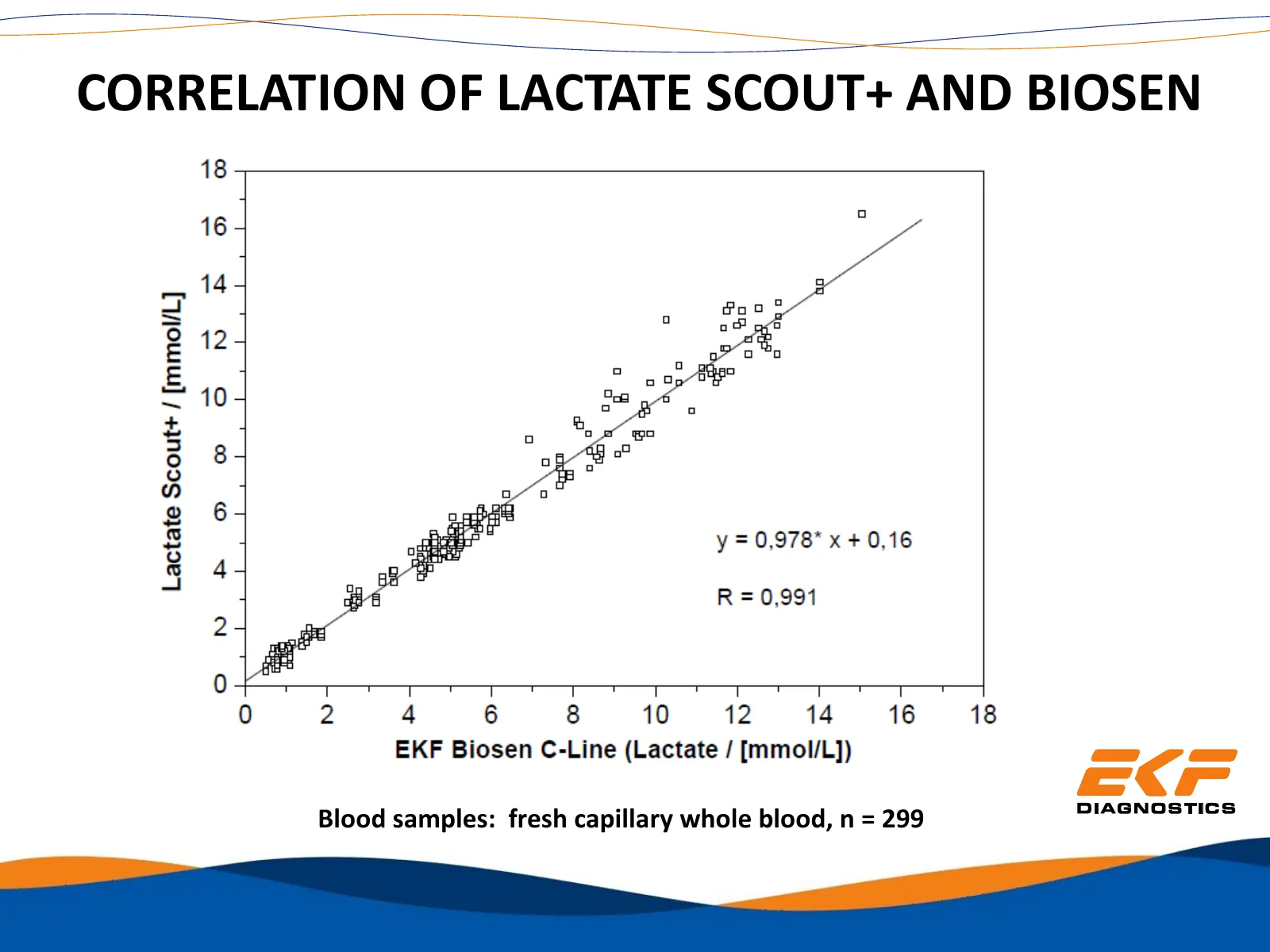
Slide 13: Correlation of Lactate Scout+ and Biosen
CORRELATION OF LACTATE SCOUT+ AND BIOSEN Blood samples: fresh capillary whole blood, n = 299

Slide 14: References
REFERENCES "The Lactate Scout helps to realize quick and accurate lactate measurements during the training. So I can react immediately, controlling and improving the individual training of sportsmen. Compact sized, we can take the device with us to all training camps and competitions" Jirka Letzin,
Slide 15: Sport Applications
SPORT APPLICATIONS Lactate Scout+ is used for testing and monitoring athletes performance in: • Step tests (graded exercise tests) • Single point tests (repeated test under standardized conditions) • Lactate Scout+ can be used for self-testing or by coaches and sport scientists
Slide 16: Medical Applications
MEDICAL APPLICATIONS • Lactate Scout+ can be used as a monitoring or screening tool by qualified staff in various medical settings. • The test results should only be used as a support for clinical decision making. • As with any chemical reaction, the user must be alert to the possible effect on the
Slide 17: Medical Applications
MEDICAL APPLICATIONS Lactate Scout+ is used for screening and monitoring in: • Cardio-rehabilitation (performance health check) • Obstetrics (umbilical cord and fetal scalp testing) • Ambulances • Sepsis
Slide 18: Veterinary
VETERINARY Lactate Scout+ is used in: • Racing animal sports (compare human sports application) • Monitoring special animal diets • Monitoring slaughtery stress • Research • Animal critical care
Slide 19: Arguments for Lactate Scout+
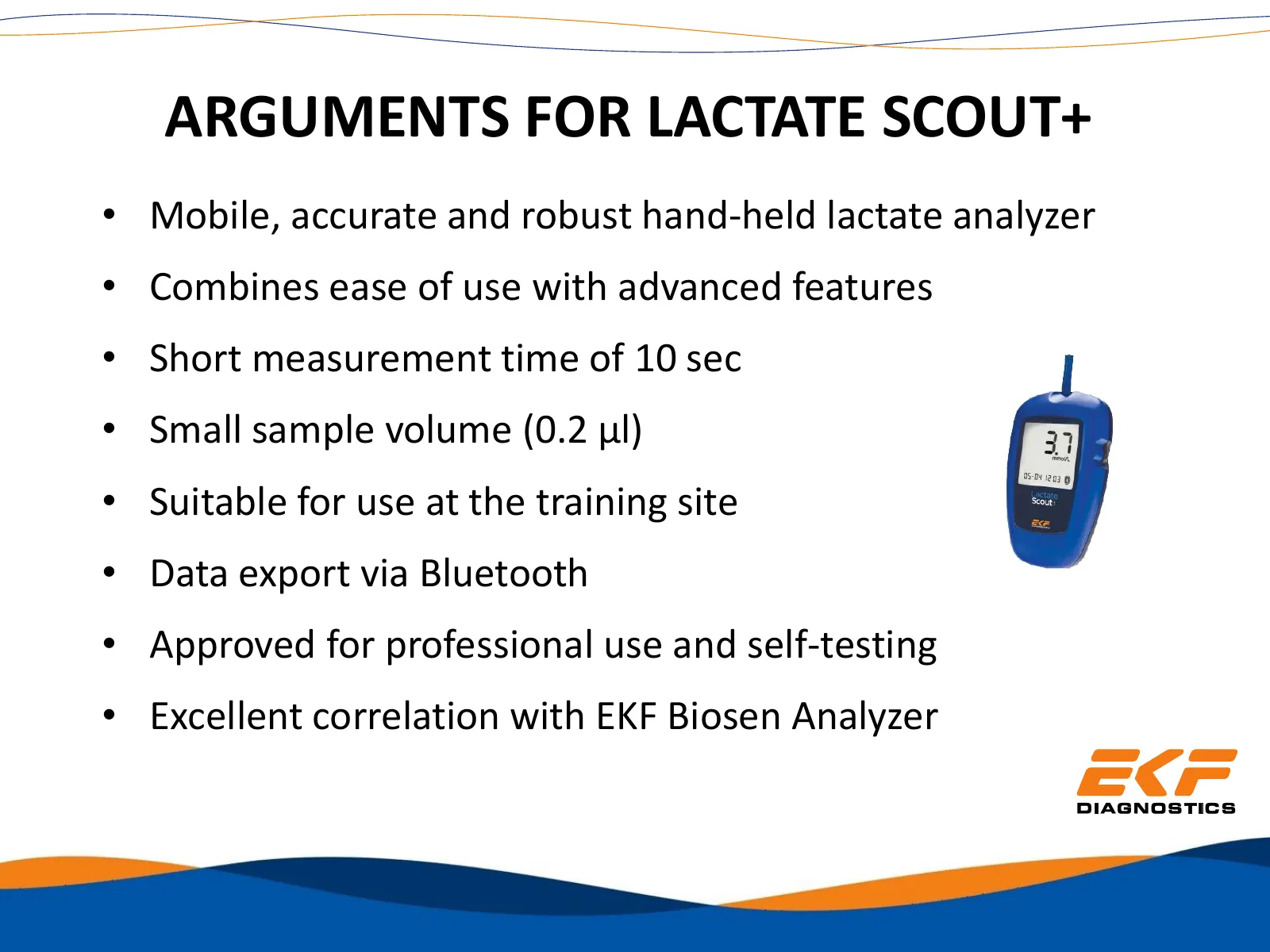
ARGUMENTS FOR LACTATE SCOUT+ • Mobile, accurate and robust hand-held lactate analyzer • Combines ease of use with advanced features • Short measurement time of 10 sec • Small sample volume (0.2 µl) • Suitable for use at the training site • Data export via Bluetooth • Approved for professional use an
Slide 20: Measuring principle of the lactate sensor
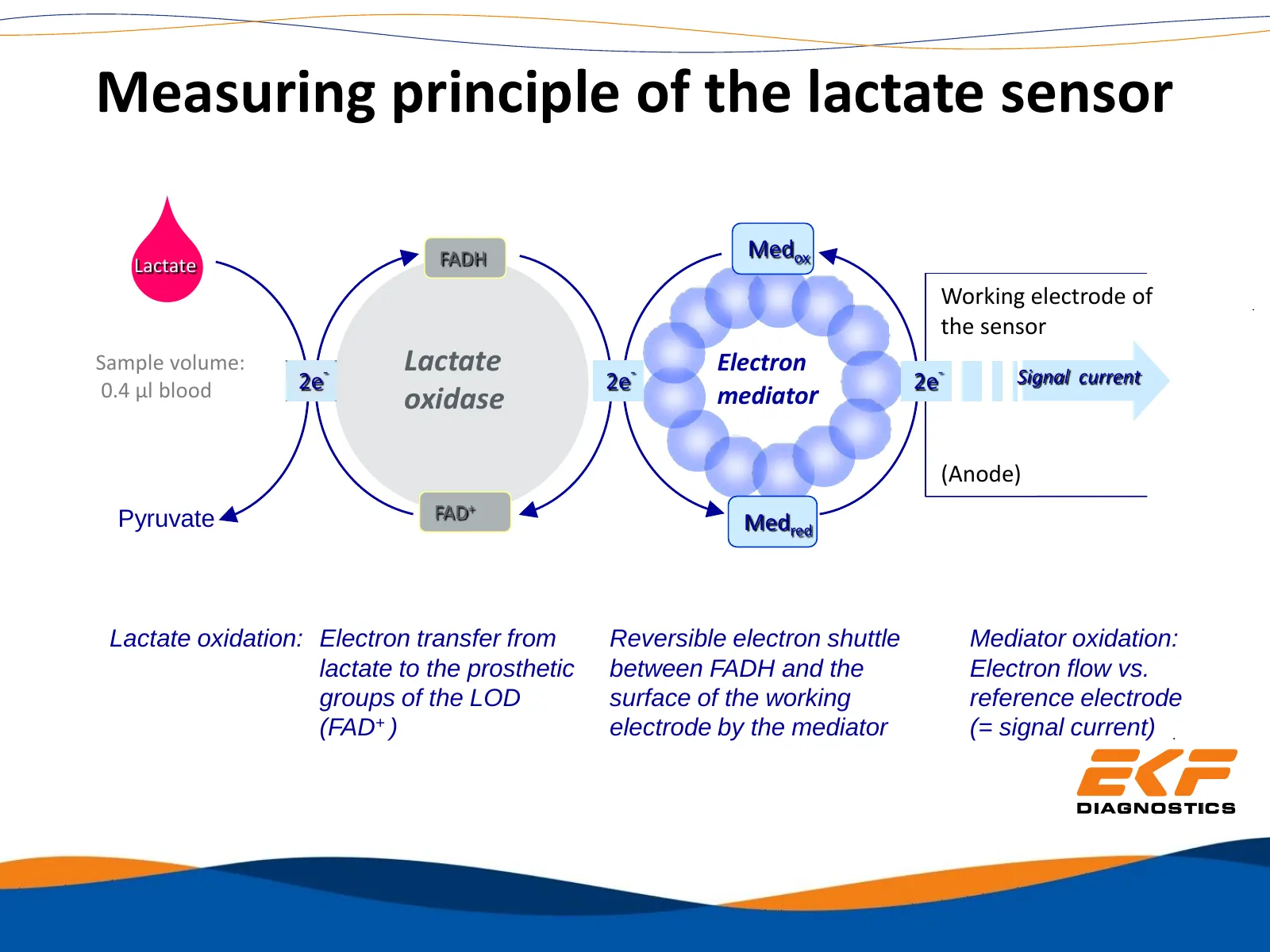
Measuring principle of the lactate sensor SLactate Sample volume: FADH Lactate Medox Electron Working electrode of the sensor 0.4 µl blood 2e- 2e- 2e- Signal current oxidase mediator (Anode) Pyruvate FAD+ Medred Lactate oxidation: Electron transfer from Reversible electron shuttle Mediator oxidation
Source: Internet Archive copy of ekfdiagnostics.com
More decks from EKF Diagnostics Holdings plc
 H1 2026 Earnings Presentation31 slides · Sep 15, 2026
 FY2025 Earnings Presentation37 slides · March 2026
 Q2 2025 Earnings Presentation20 slides · Sep 16, 2025
 FY2024 Earnings Presentation25 slides · Mar 25, 2025
 H1 2024 Earnings Presentation28 slides · September 2024
 FY2023 Earnings Presentation33 slides · 2024