Cadrenal Therapeutics, Inc. · NASDAQ:CVKD
Cadrenal Therapeutics — Investor Presentation (July 2024)
31 slides from Cadrenal Therapeutics's investor presentation, Jul 30, 2024

Slide 1: Cadrenal Therapeutics, Inc.
Cadrenal Therapeutics, Inc. NASDAQ: CVKD July 2024
Slide 2: Caution Concerning Forward-looking Statements
Caution Concerning Forward-looking Statements This document contains forward-looking statements. In addition, from time to time, we or our representatives may make forward-looking statements orally or in writing. We base these forward-looking statements on our expectations and projections about futu
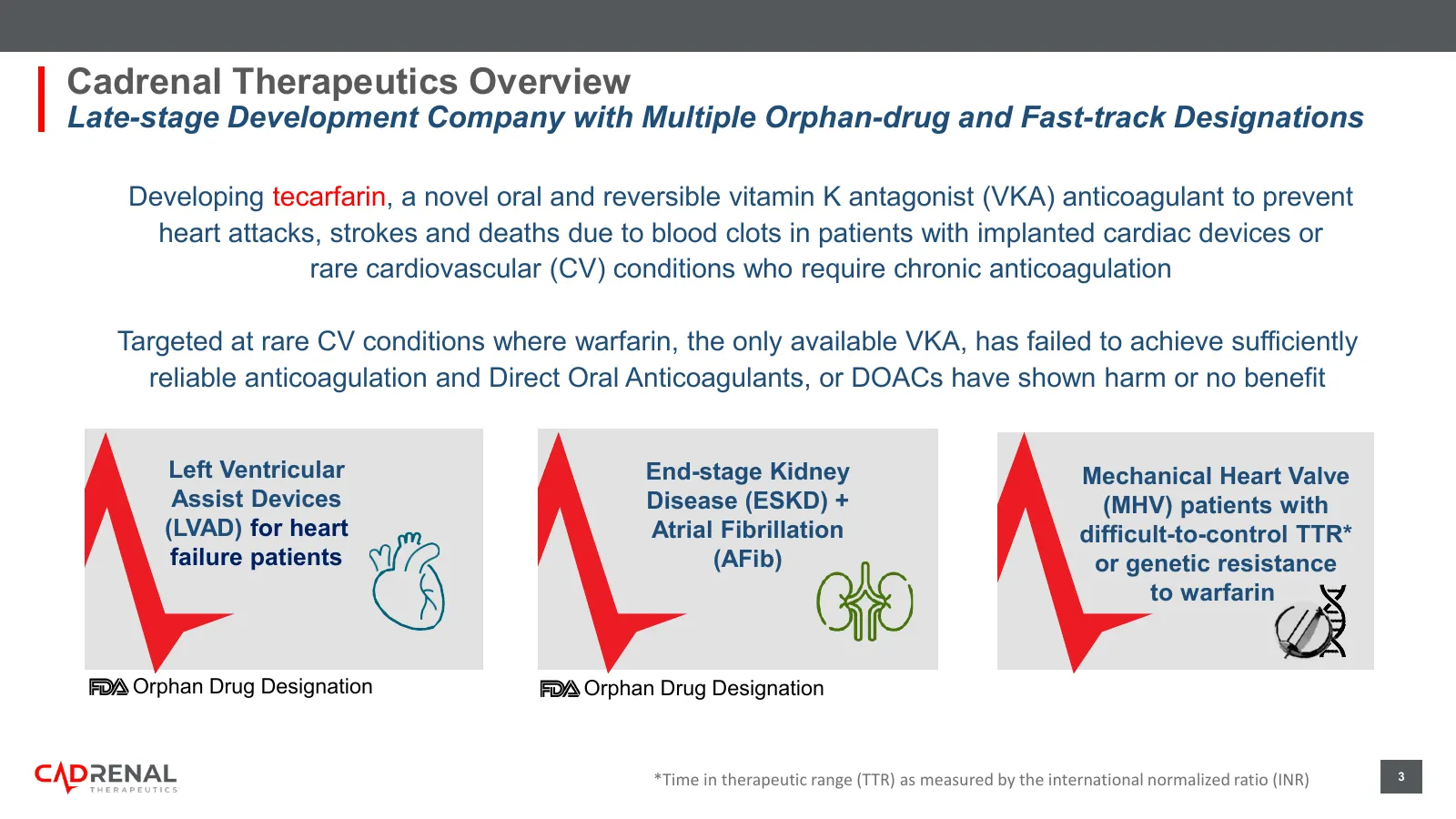
Slide 3: Cadrenal Therapeutics Overview
Cadrenal Therapeutics Overview Late-stage Development Company with Multiple Orphan-drug and Fast-track Designations Developing tecarfarin, a novel oral and reversible vitamin K antagonist (VKA) anticoagulant to prevent heart attacks, strokes and deaths due to blood clots in patients with implanted c
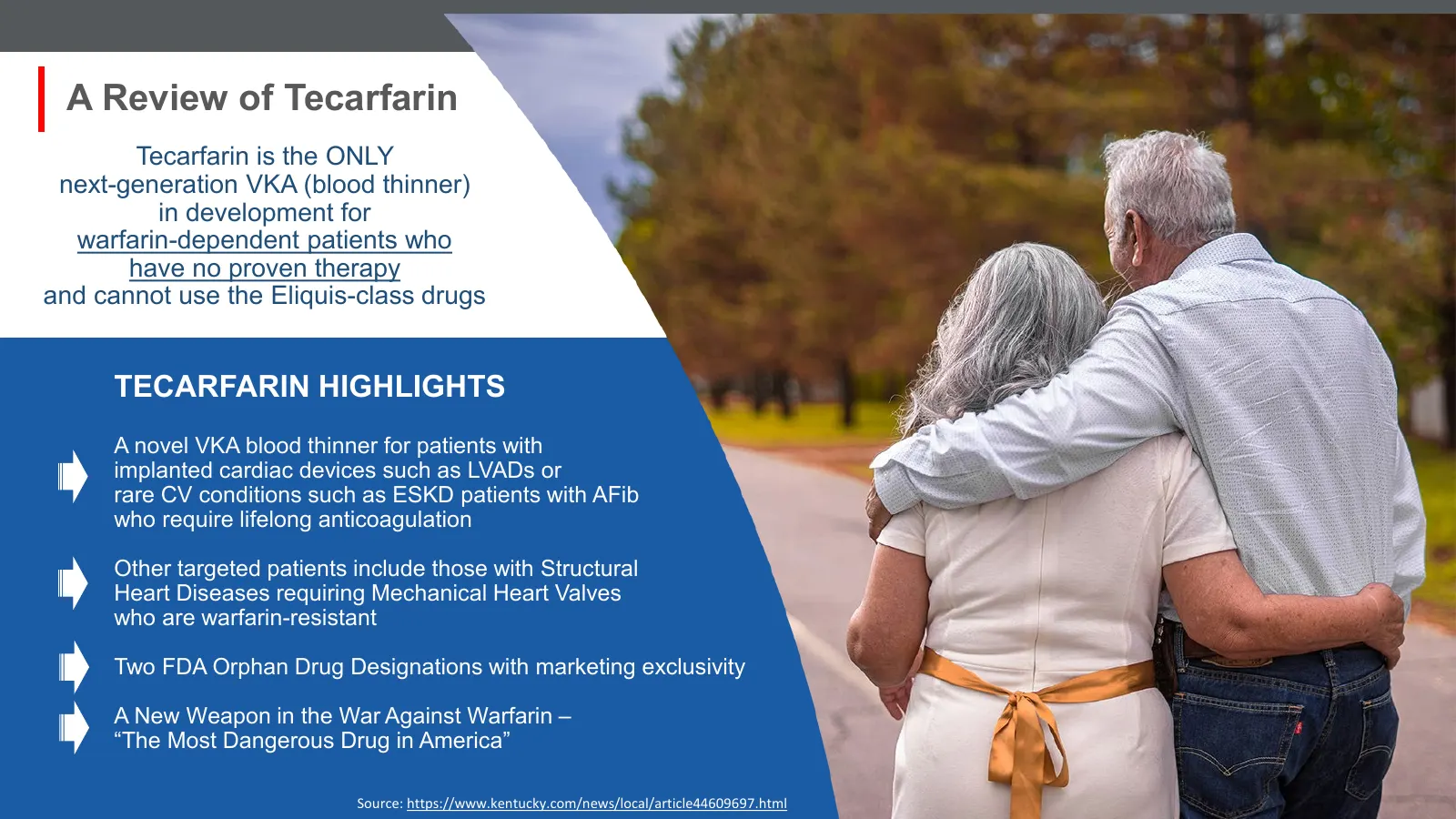
Slide 4: A Review of Tecarfarin
A Review of Tecarfarin Tecarfarin is the ONLY next-generation VKA (blood thinner) in development for warfarin-dependent patients who have no proven therapy and cannot use the Eliquis-class drugs TECARFARIN HIGHLIGHTS A novel VKA blood thinner for patients with implanted cardiac devices such as LVADs
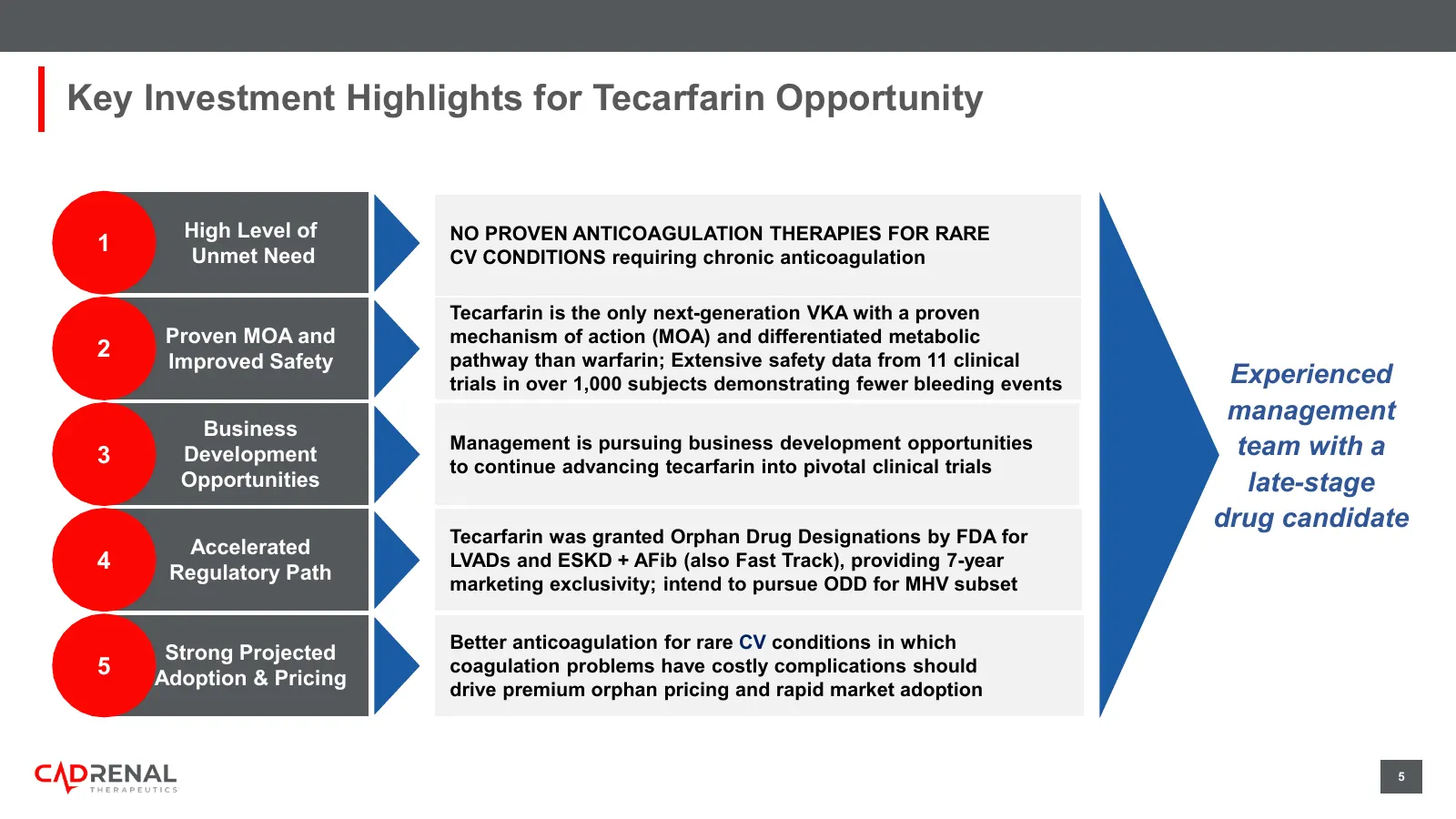
Slide 5: Key Investment Highlights for Tecarfarin Opportunity
Key Investment Highlights for Tecarfarin Opportunity High Level of NO PROVEN ANTICOAGULATION THERAPIES FOR RARE 1 Unmet Need CV CONDITIONS requiring chronic anticoagulation Tecarfarin is the only next-generation VKA with a proven Proven MOA and mechanism of action (MOA) and differentiated metabolic
Slide 6: Leadership Team: Clinical to Commercial Expertise
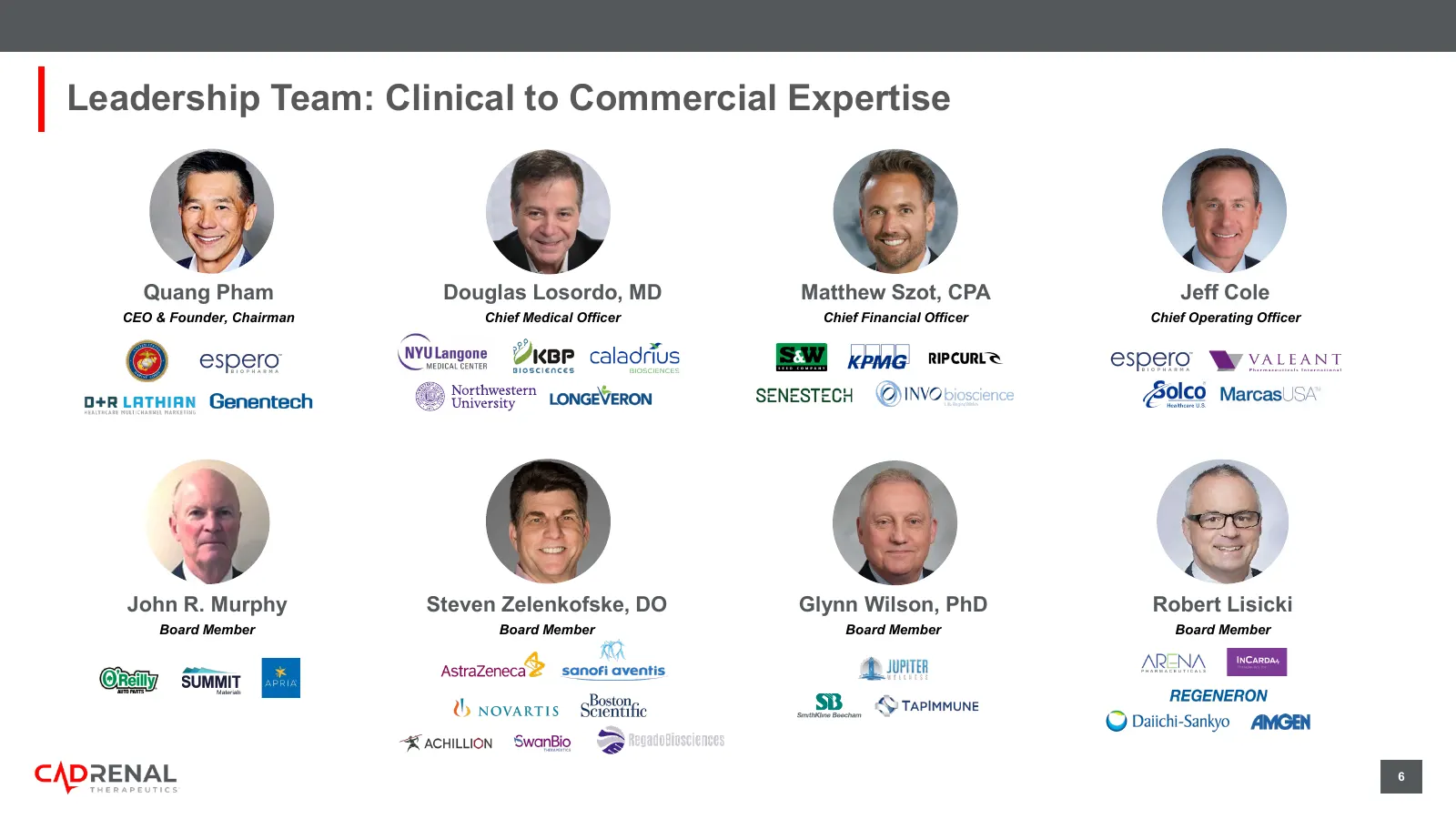
Leadership Team: Clinical to Commercial Expertise Quang Pham Douglas Losordo, MD Matthew Szot, CPA Jeff Cole CEO & Founder, Chairman Chief Medical Officer Chief Financial Officer Chief Operating Officer John R. Murphy Steven Zelenkofske, DO Glynn Wilson, PhD Robert Lisicki Board Member Board Member

Slide 7: Scientific Advisors with Deep Experience in CV and Beyond
Scientific Advisors with Deep Experience in CV and Beyond Mandeep, Mehra MD, MSc, Richard Whitlock, MD Michael Lincoff, MD Elaine M. Hylek, MD, MPH FRCP Cardiac Surgeon and Professor of Surgery, Vice Chairman, Dept. of Cardiovascular Medicine, Professor of Medicine, McMaster Cleveland Clinic Boston
Slide 8: The Problem: Certain Rare CV Conditions Lack Effective Anticoagulation
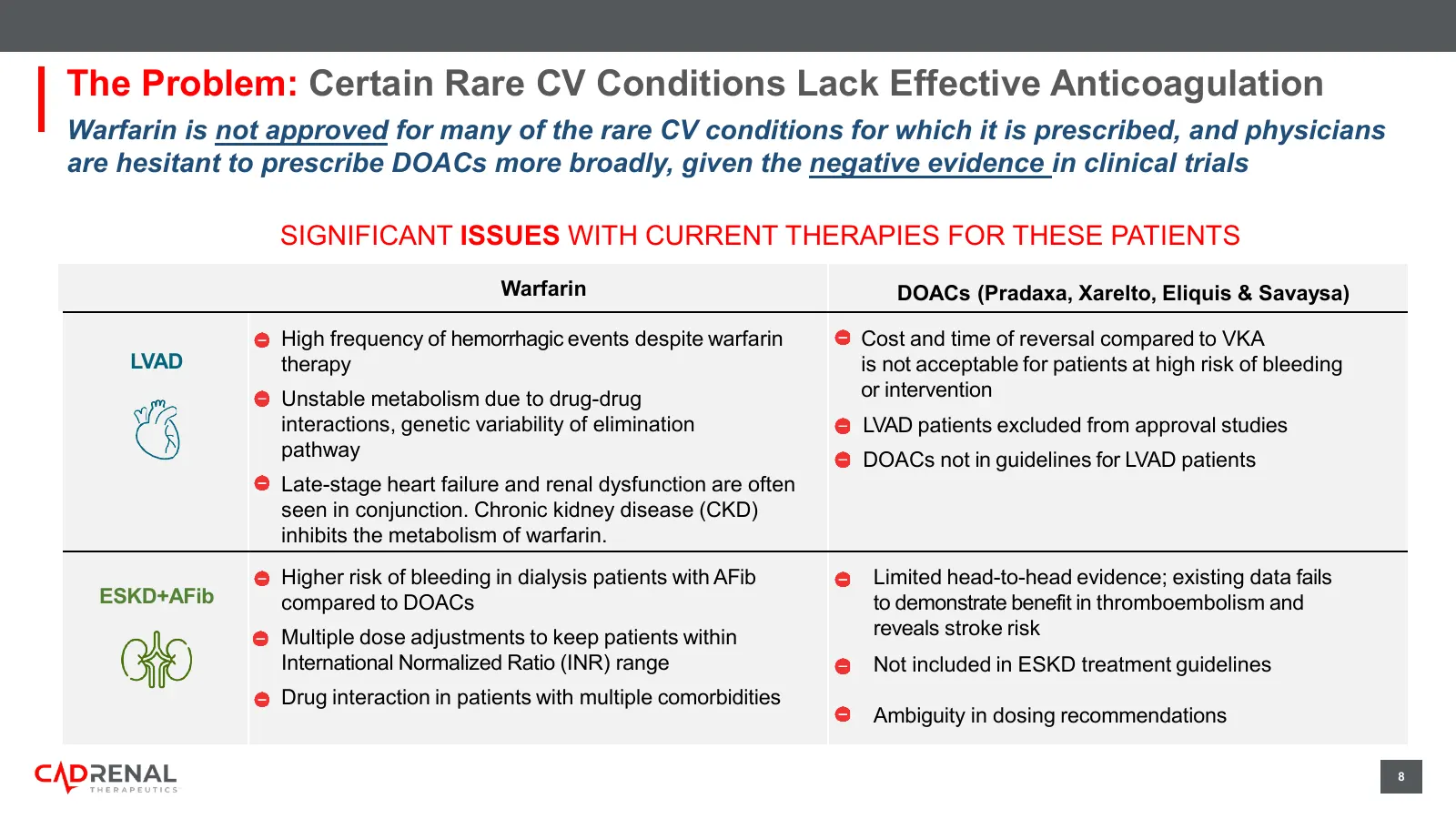
The Problem: Certain Rare CV Conditions Lack Effective Anticoagulation Warfarin is not approved for many of the rare CV conditions for which it is prescribed, and physicians are hesitant to prescribe DOACs more broadly, given the negative evidence in clinical trials SIGNIFICANT ISSUES WITH CURRENT T
Slide 9: LVADs are a Double-digit Growth Market
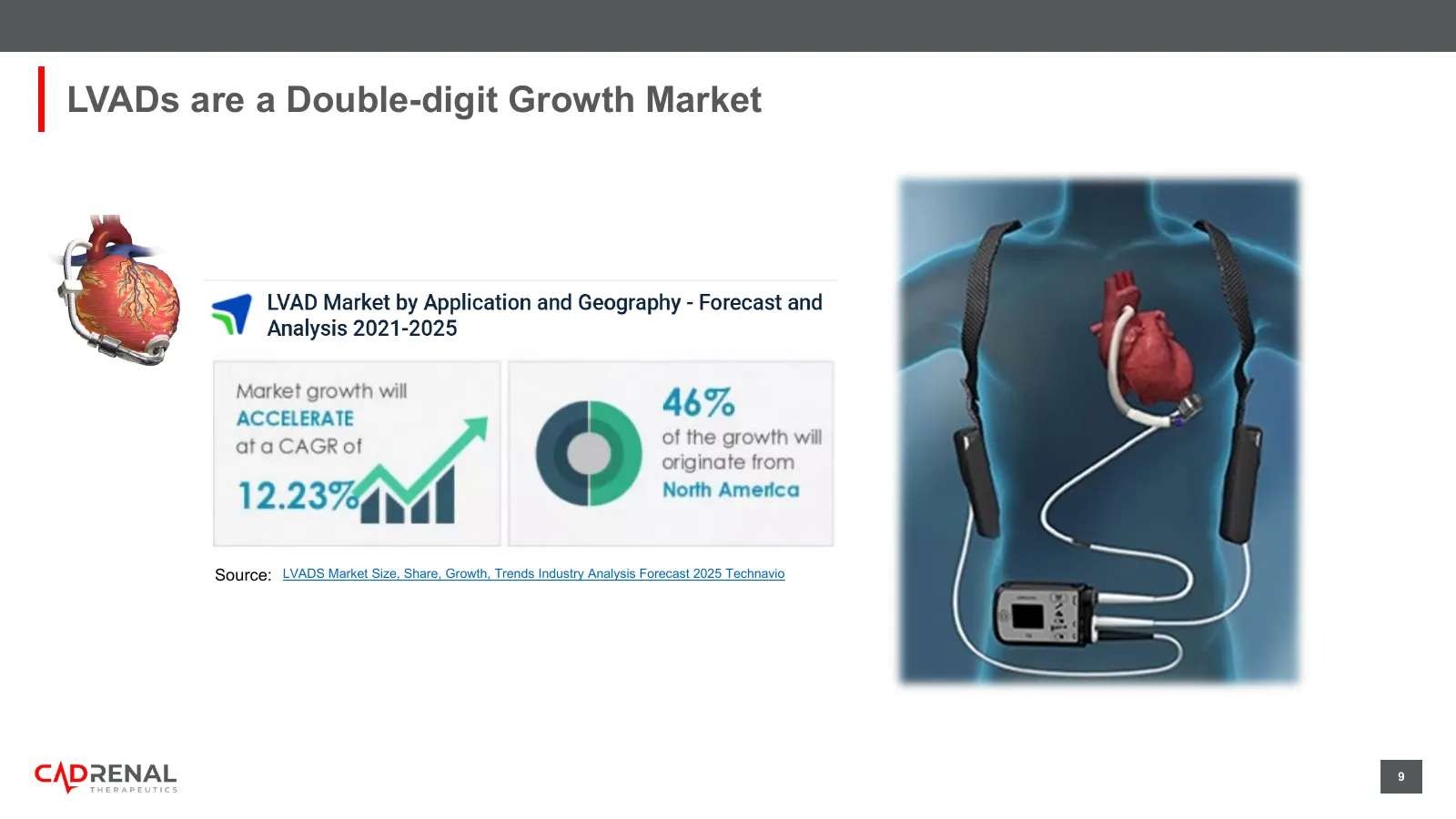
LVADs are a Double-digit Growth Market Source: LVADS Market Size, Share, Growth, Trends Industry Analysis Forecast 2025 Technavio 9
Slide 10: Bleeding Rate in LVAD Patients is a Major Problem
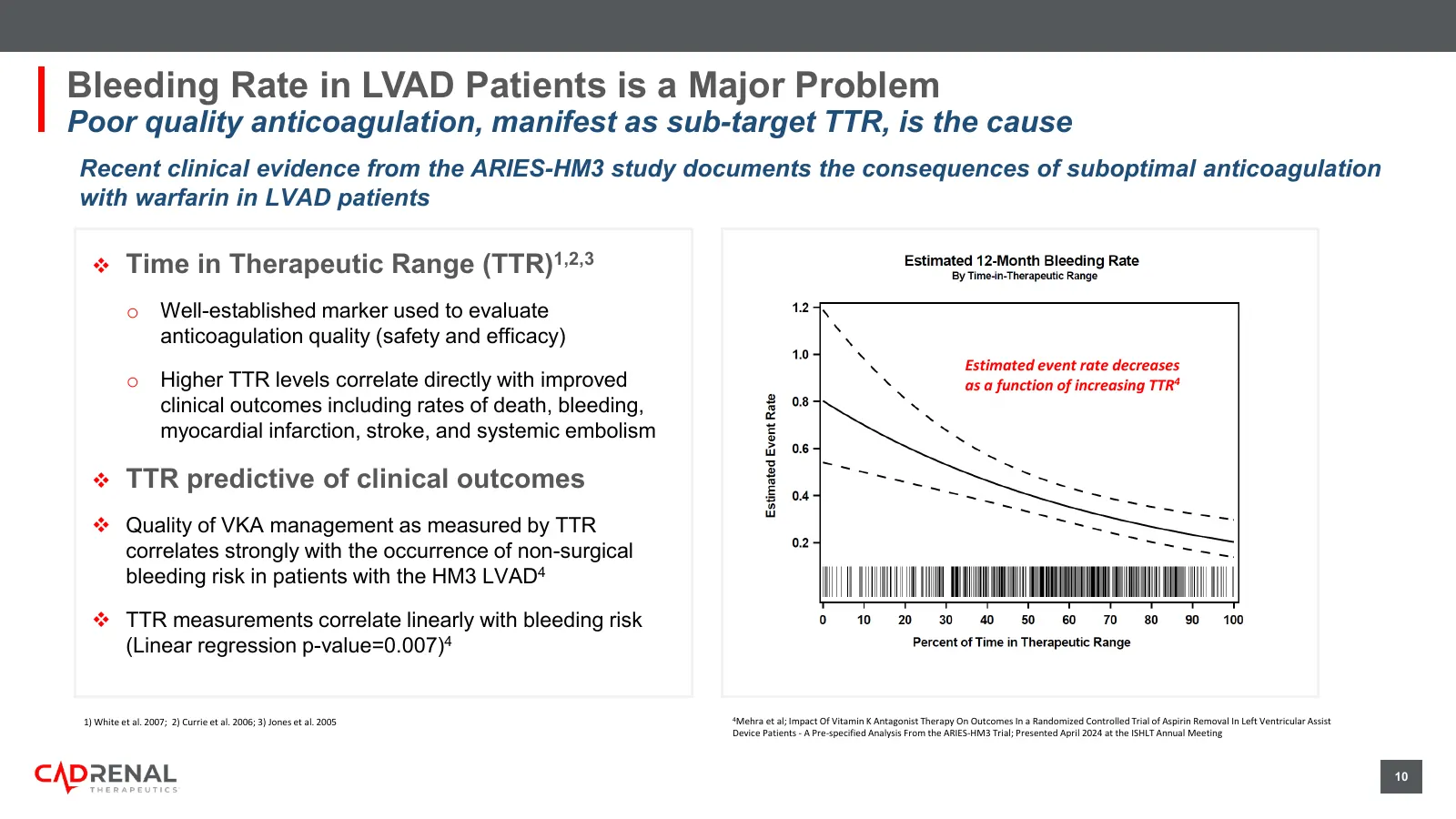
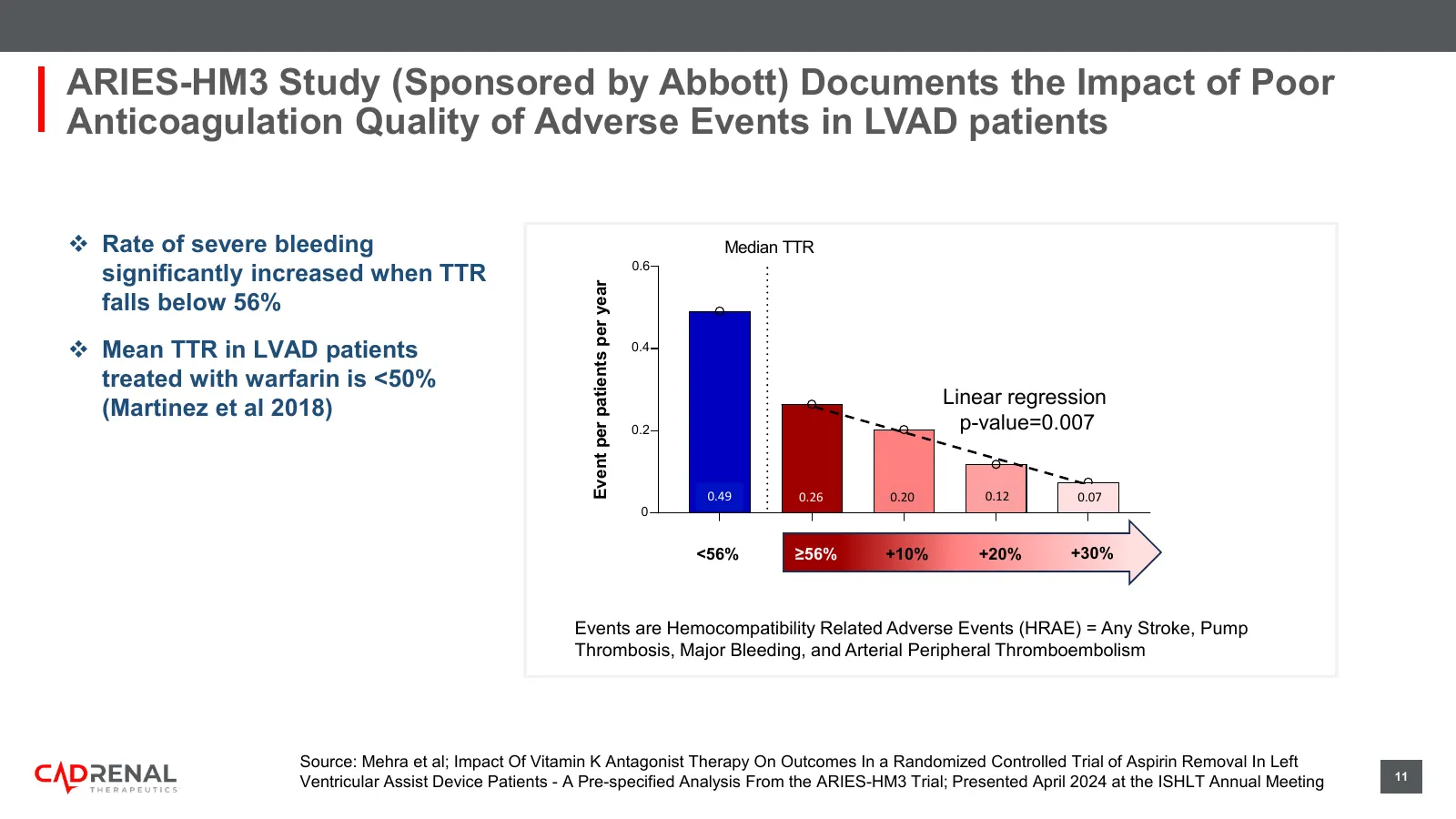
Bleeding Rate in LVAD Patients is a Major Problem Poor quality anticoagulation, manifest as sub-target TTR, is the cause Recent clinical evidence from the ARIES-HM3 study documents the consequences of suboptimal anticoagulation with warfarin in LVAD patients Time in Therapeutic Range (TTR)1,2,3 o
Slide 11: ARIES-HM3 Study Documents Impact of Poor Anticoagulation Quality
ARIES-HM3 Study (Sponsored by Abbott) Documents the Impact of Poor Anticoagulation Quality of Adverse Events in LVAD patients Rate of severe bleeding Median TTR significantly increased when TTR 0.6 60 Event per patients per year falls below 56% Mean TTR in LVAD patients 0.4 40 treated with warfa
Slide 12: The Solution: Tecarfarin Aims to Solve Warfarin's Major Problems
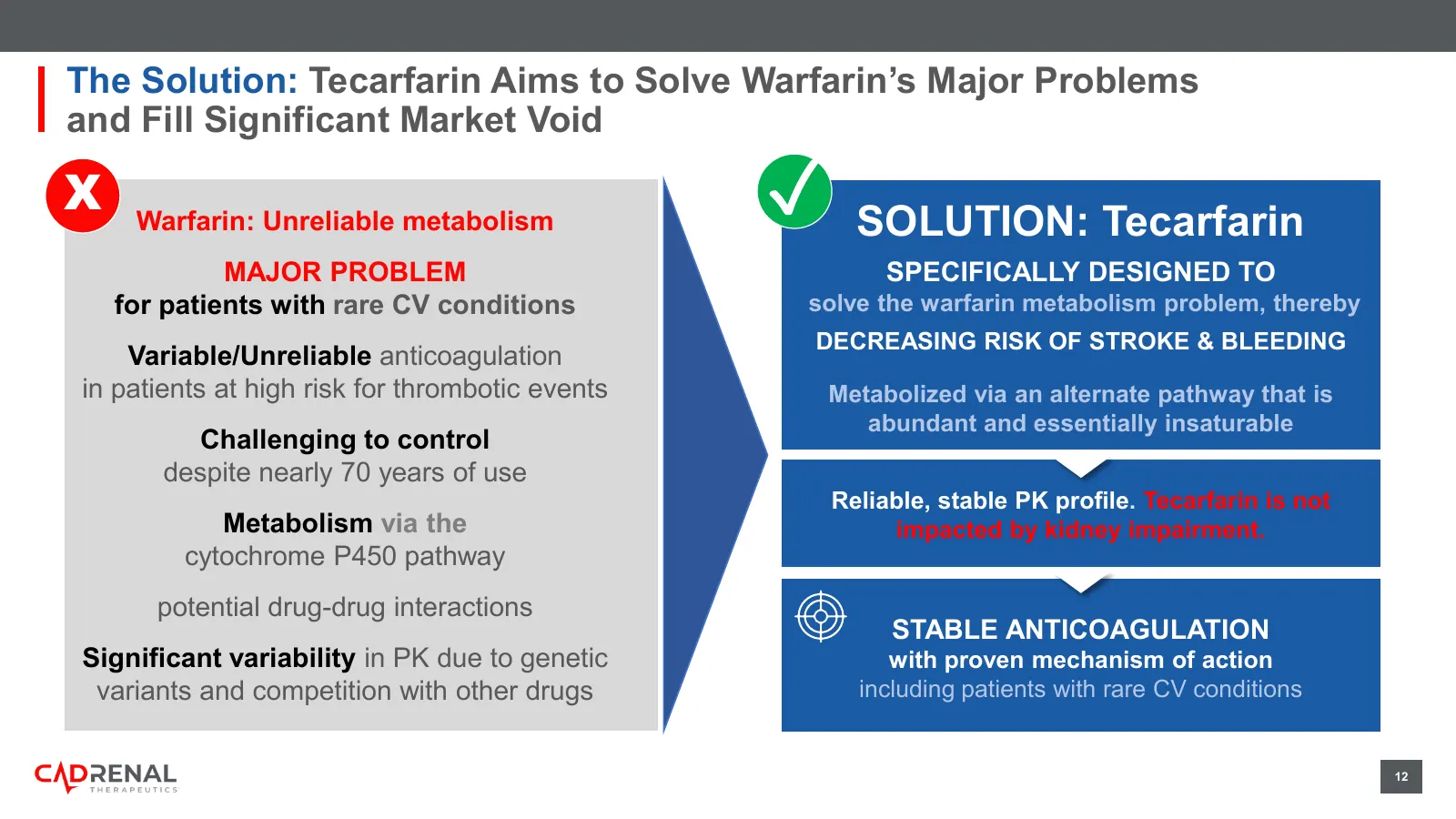
The Solution: Tecarfarin Aims to Solve Warfarin’s Major Problems and Fill Significant Market Void X Warfarin: Unreliable metabolism ✓ SOLUTION: Tecarfarin MAJOR PROBLEM SPECIFICALLY DESIGNED TO for patients with rare CV conditions solve the warfarin metabolism problem, thereby DECREASING RISK OF STR
Slide 13: Attractive Addressable Market Opportunities
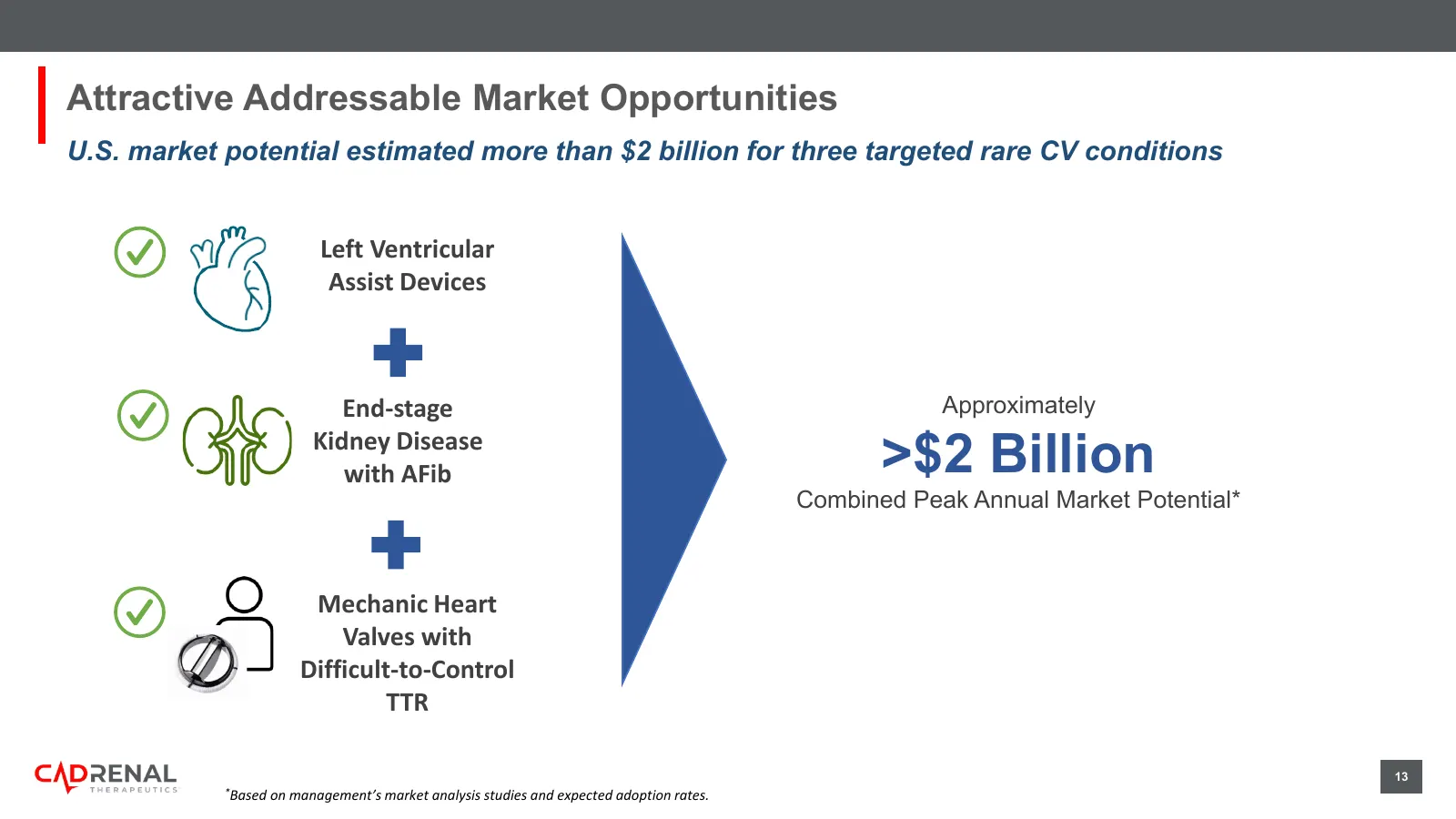
Attractive Addressable Market Opportunities U.S. market potential estimated more than $2 billion for three targeted rare CV conditions Left Ventricular Assist Devices End-stage Approximately Kidney Disease with AFib >$2 Billion Combined Peak Annual Market Potential* Mechanic Heart Valves with Diffic
Slide 14: Tecarfarin Clinical Development Pipeline
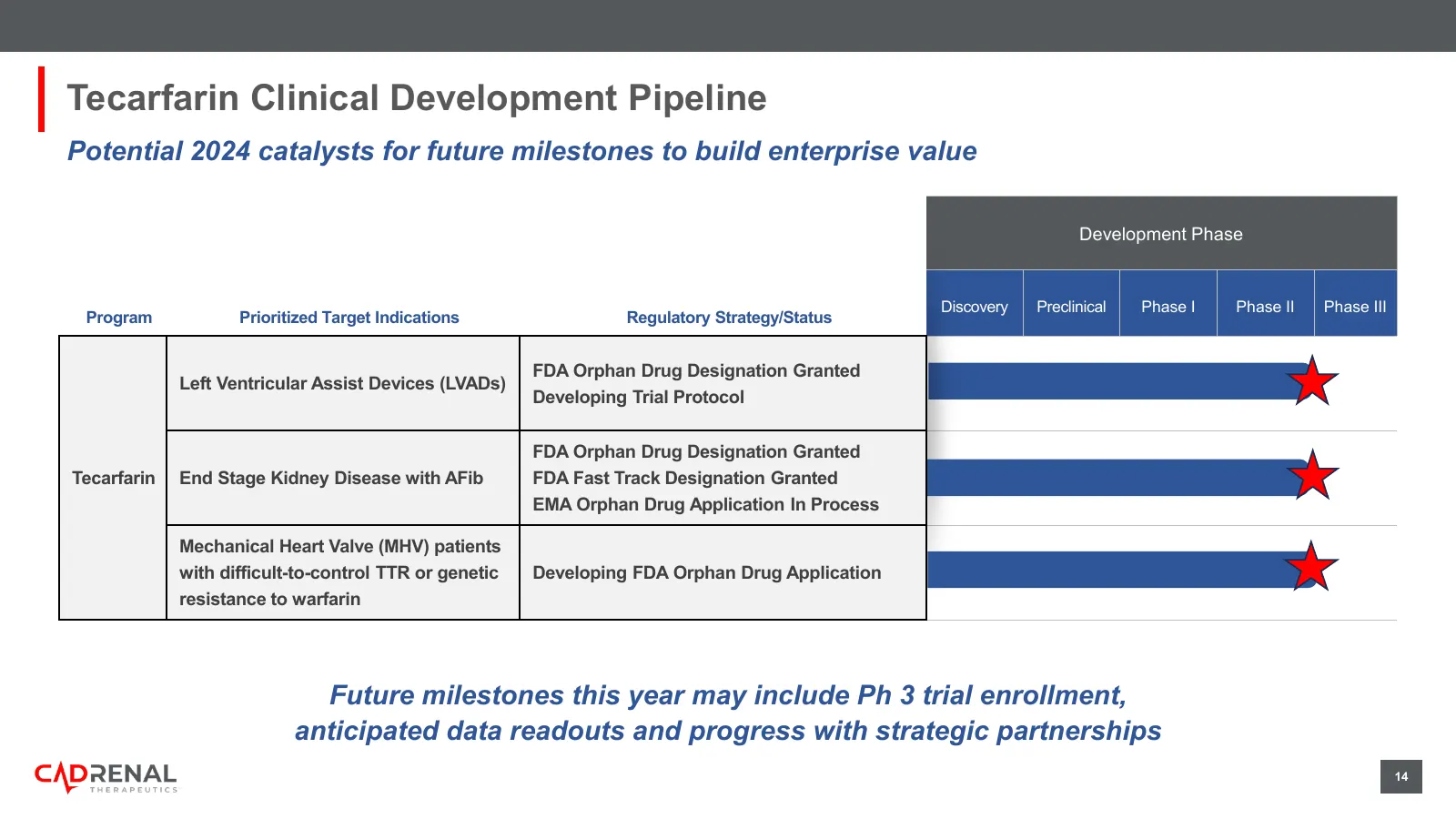
Tecarfarin Clinical Development Pipeline Potential 2024 catalysts for future milestones to build enterprise value Development Phase Discovery Preclinical Phase I Phase II Phase III Program Prioritized Target Indications Regulatory Strategy/Status FDA Orphan Drug Designation Granted Left Ventricular
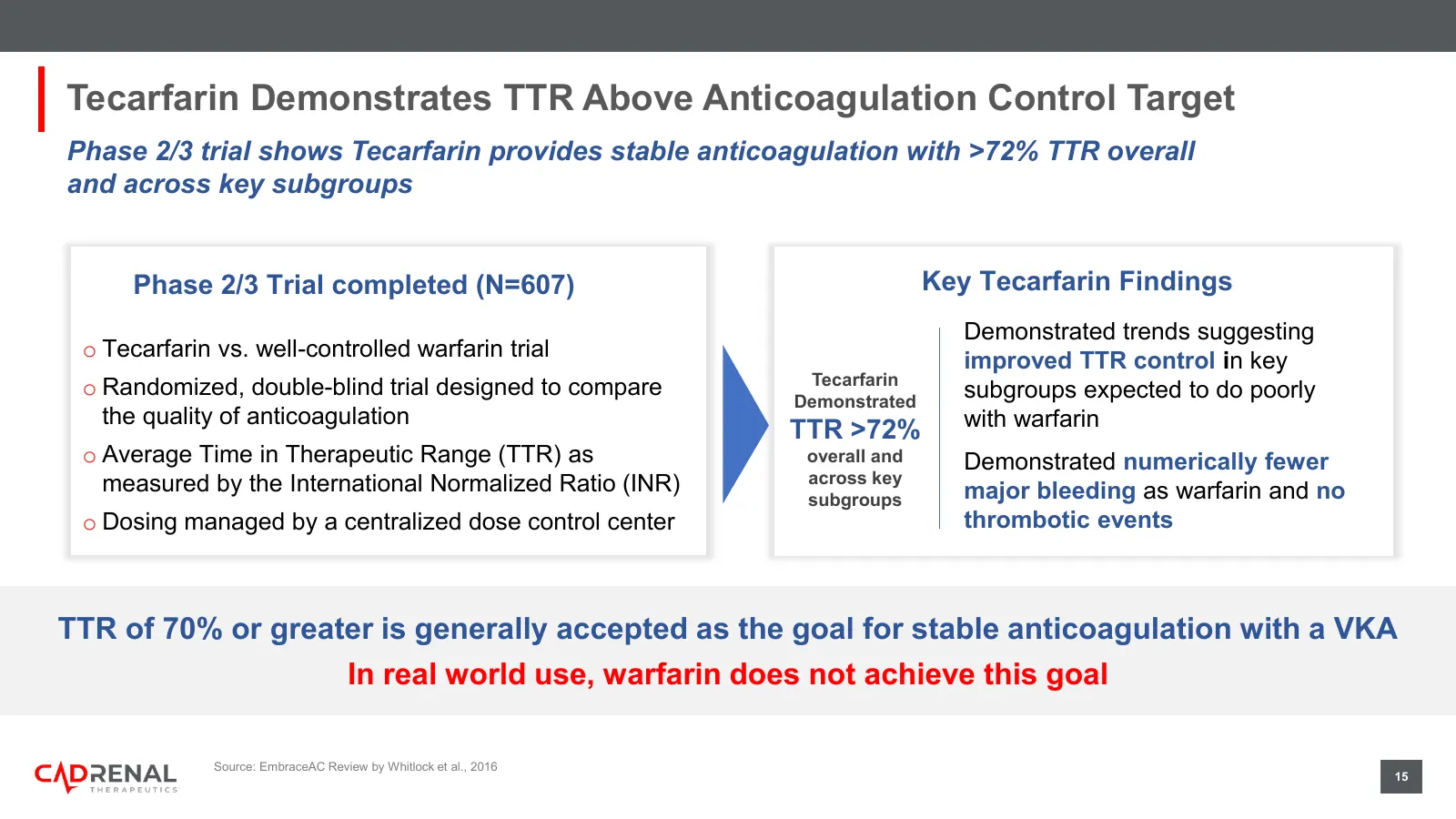
Slide 15: Tecarfarin Demonstrates TTR Above Anticoagulation Control Target
Tecarfarin Demonstrates TTR Above Anticoagulation Control Target Phase 2/3 trial shows Tecarfarin provides stable anticoagulation with >72% TTR overall and across key subgroups Phase 2/3 Trial completed (N=607) Key Tecarfarin Findings Demonstrated trends suggesting o Tecarfarin vs. well-controlled w
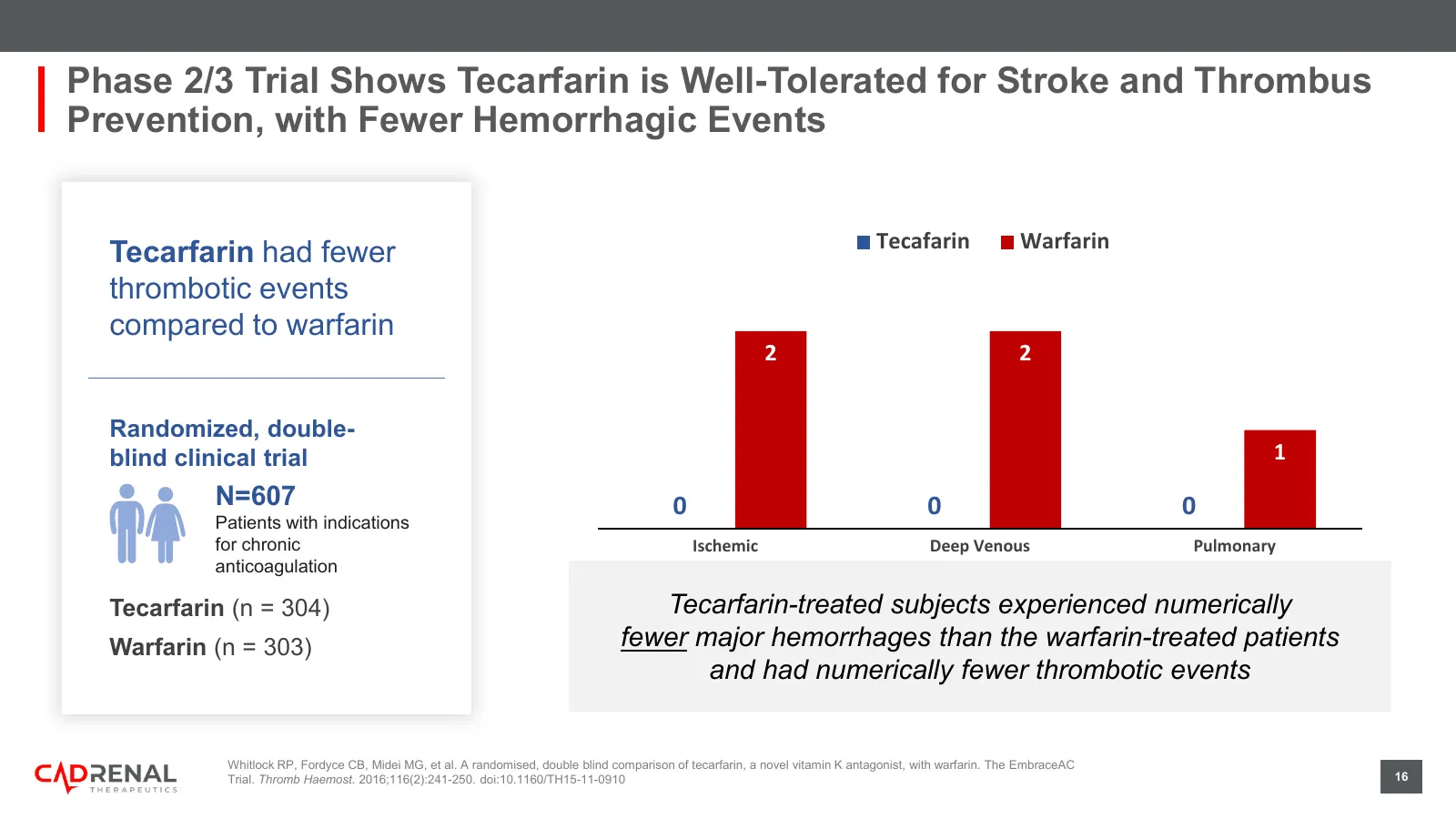
Slide 16: Phase 2/3 Trial Shows Tecarfarin is Well-Tolerated
Phase 2/3 Trial Shows Tecarfarin is Well-Tolerated for Stroke and Thrombus Prevention, with Fewer Hemorrhagic Events Tecafarin Warfarin Tecarfarin had fewer thrombotic events compared to warfarin 2 2 Randomized, double- blind clinical trial 1 N=607 0 0 0 Patients with indications for chronic Ischemi
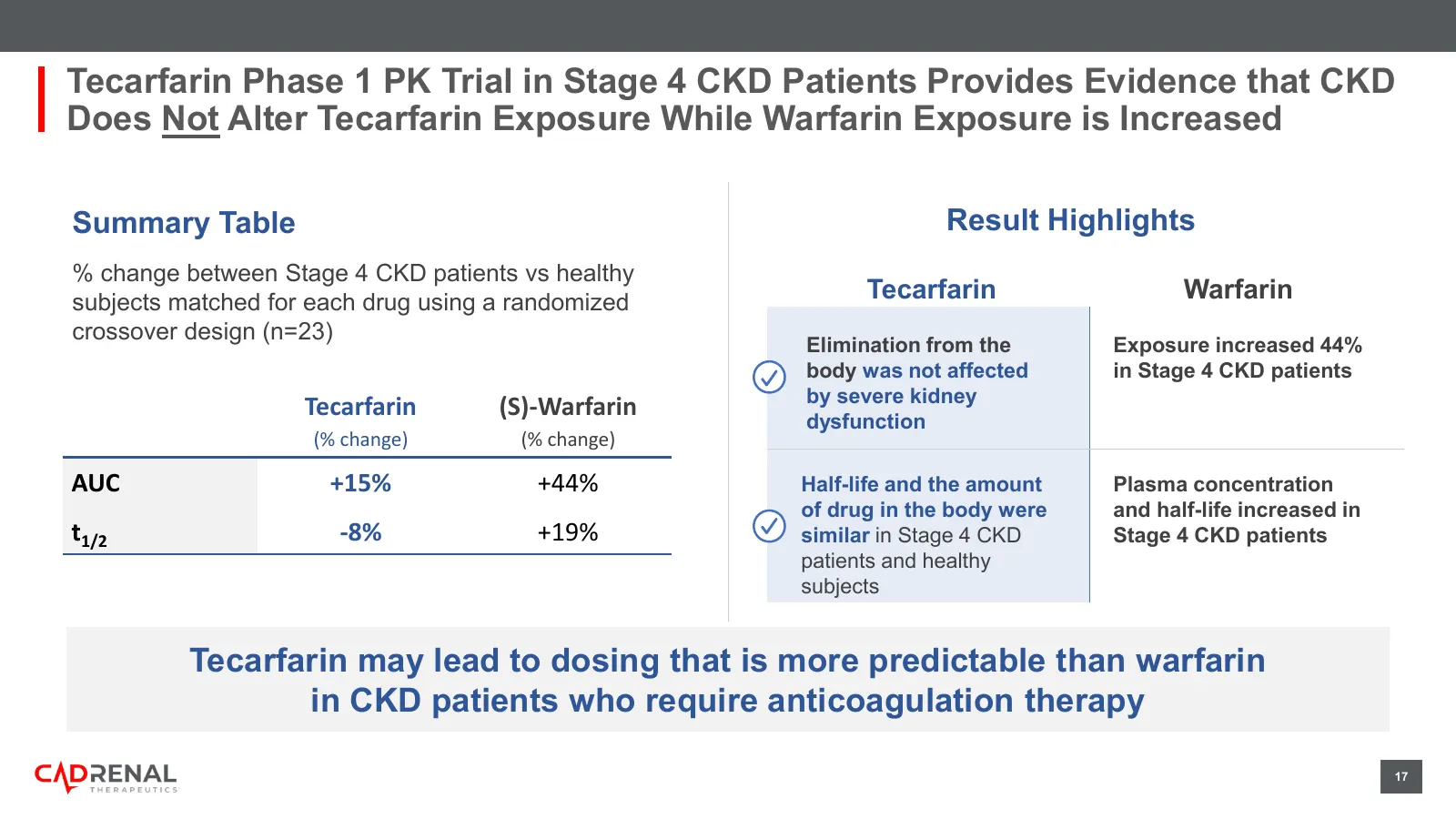
Slide 17: Tecarfarin Phase 1 PK Trial in Stage 4 CKD Patients
Tecarfarin Phase 1 PK Trial in Stage 4 CKD Patients Provides Evidence that CKD Does Not Alter Tecarfarin Exposure While Warfarin Exposure is Increased Summary Table Result Highlights % change between Stage 4 CKD patients vs healthy subjects matched for each drug using a randomized Tecarfarin Warfari
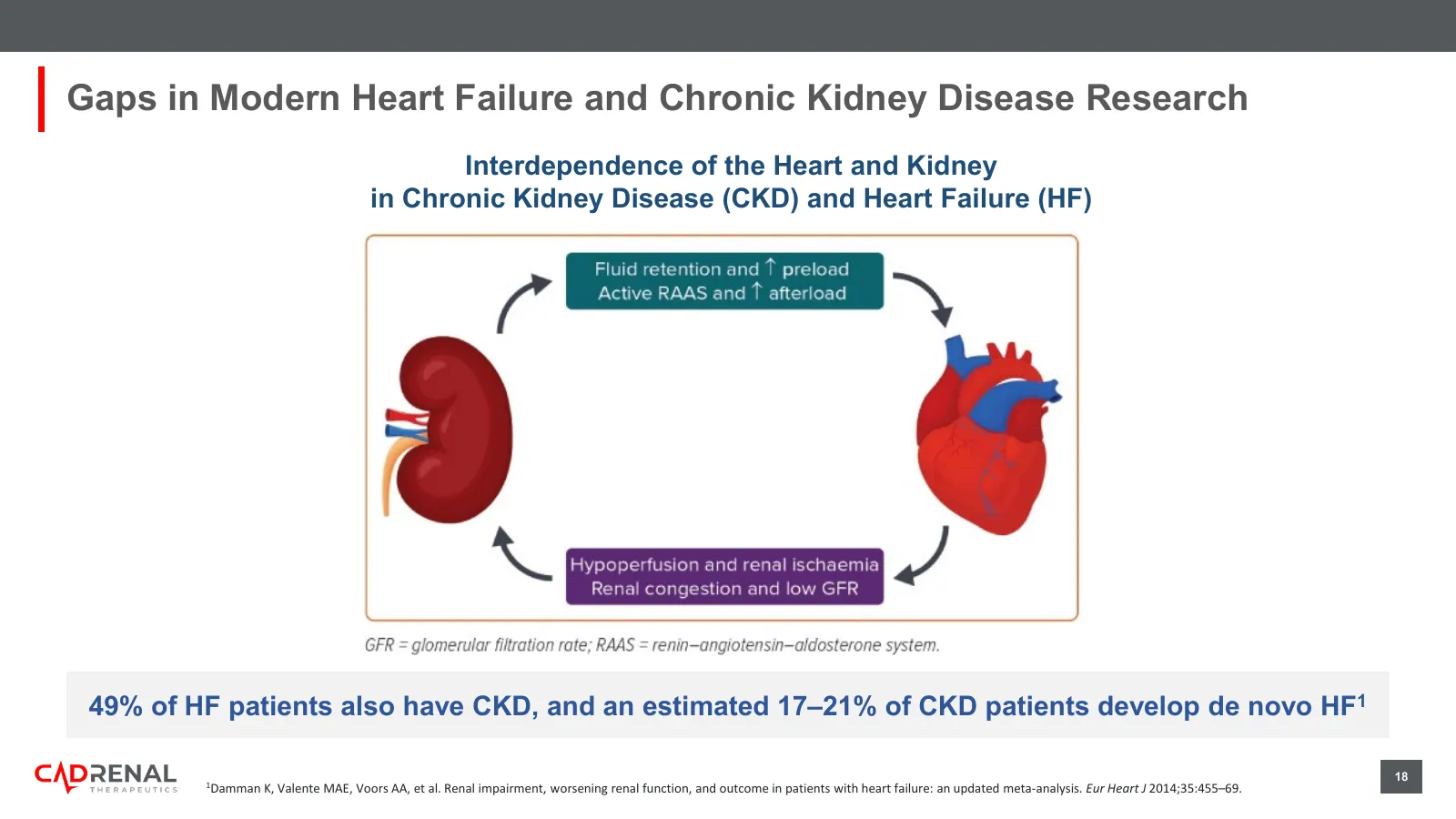
Slide 18: Gaps in Modern Heart Failure and Chronic Kidney Disease Research
Gaps in Modern Heart Failure and Chronic Kidney Disease Research Interdependence of the Heart and Kidney in Chronic Kidney Disease (CKD) and Heart Failure (HF) 49% of HF patients also have CKD, and an estimated 17–21% of CKD patients develop de novo HF1 18 1Damman K, Valente MAE, Voors AA, et al. Re
Slide 19: Proposed Tecarfarin Pivotal Trial Design for LVAD Patients
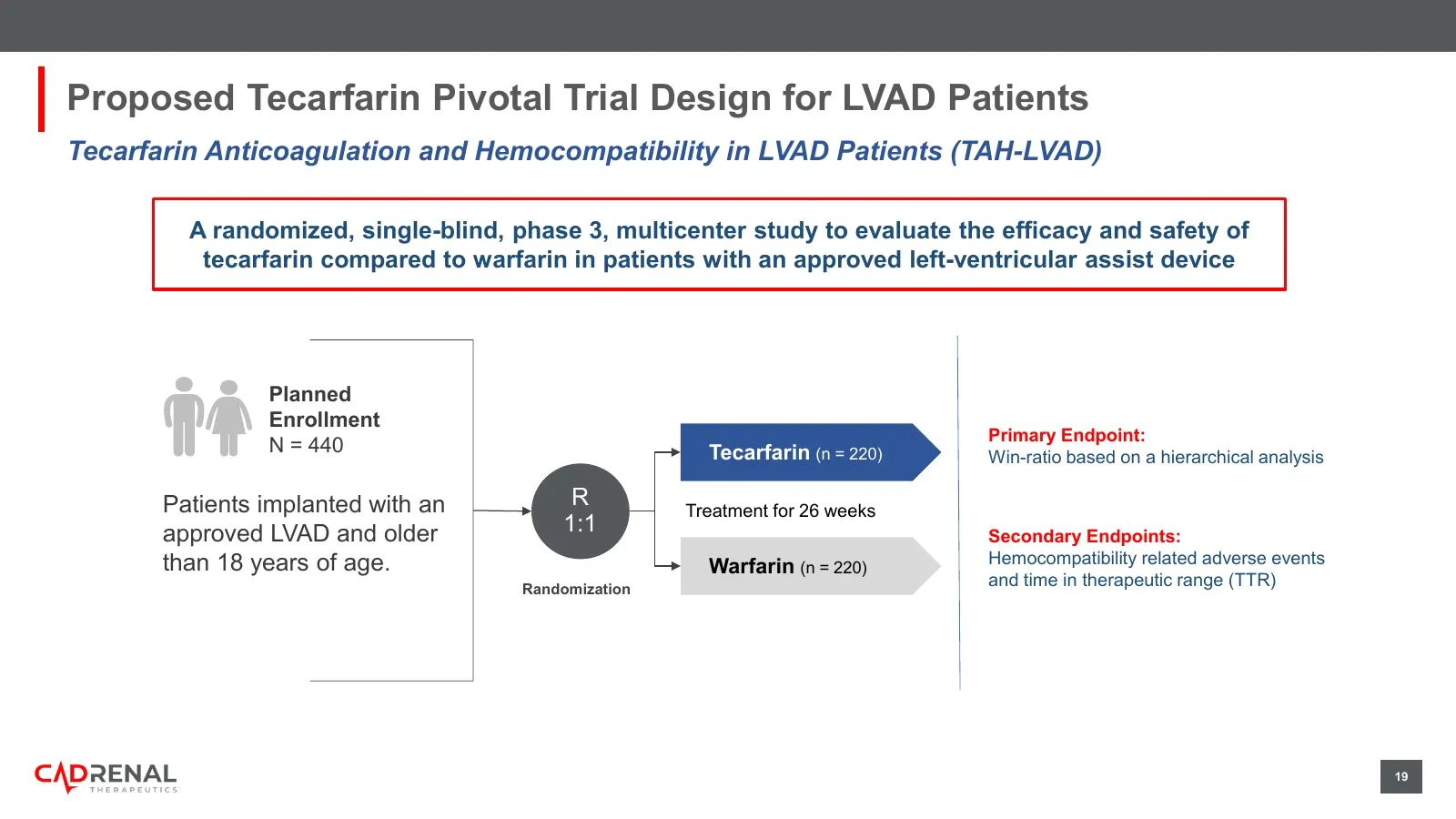
Proposed Tecarfarin Pivotal Trial Design for LVAD Patients Tecarfarin Anticoagulation and Hemocompatibility in LVAD Patients (TAH-LVAD) A randomized, single-blind, phase 3, multicenter study to evaluate the efficacy and safety of tecarfarin compared to warfarin in patients with an approved left-vent
Slide 20: Financial Summary
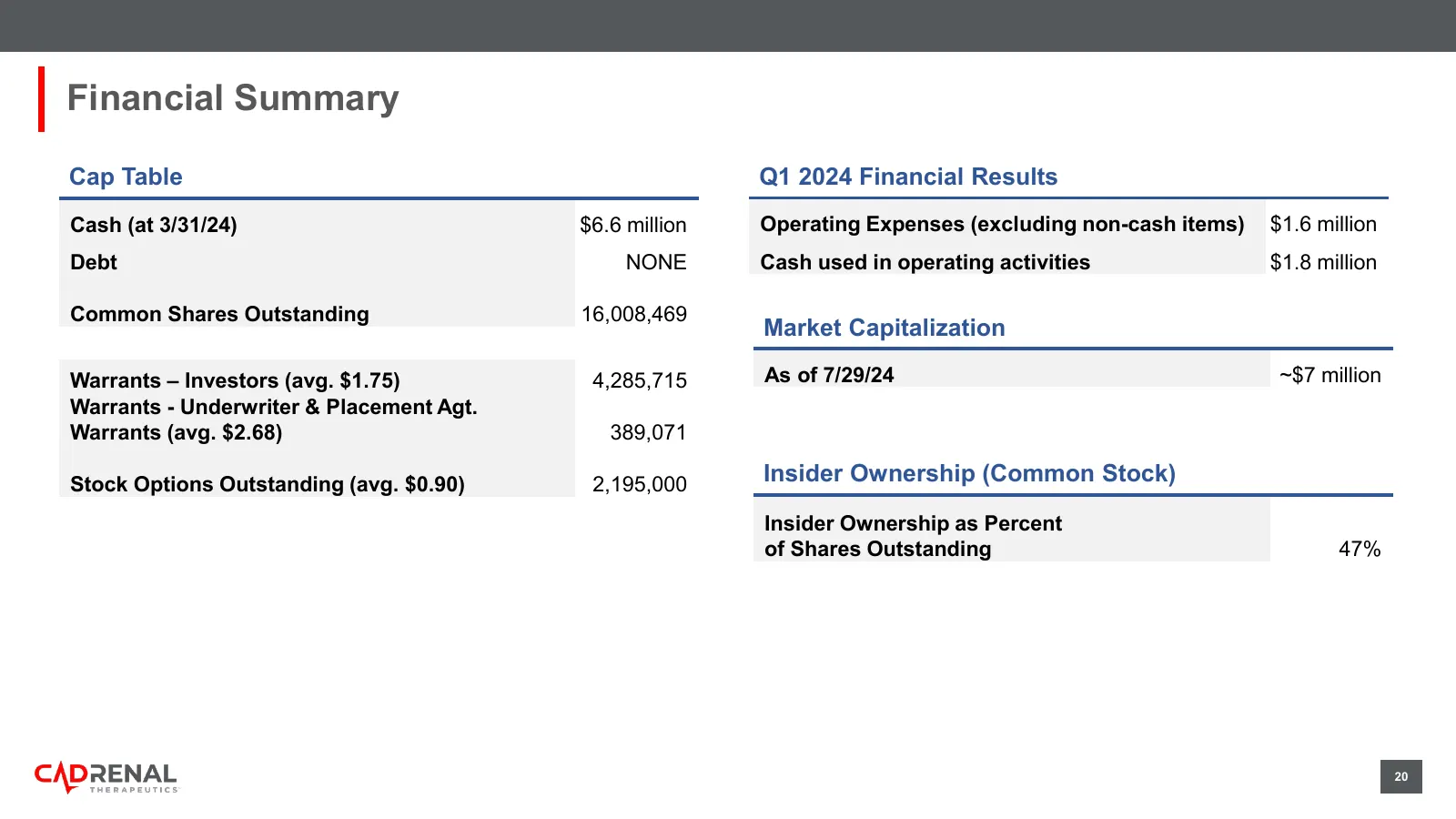
Financial Summary Cap Table Q1 2024 Financial Results Cash (at 3/31/24) $6.6 million Operating Expenses (excluding non-cash items) $1.6 million Debt NONE Cash used in operating activities $1.8 million Common Shares Outstanding 16,008,469 Market Capitalization Warrants – Investors (avg. $1.75) 4,285,
Slide 21: Why Cadrenal Now?
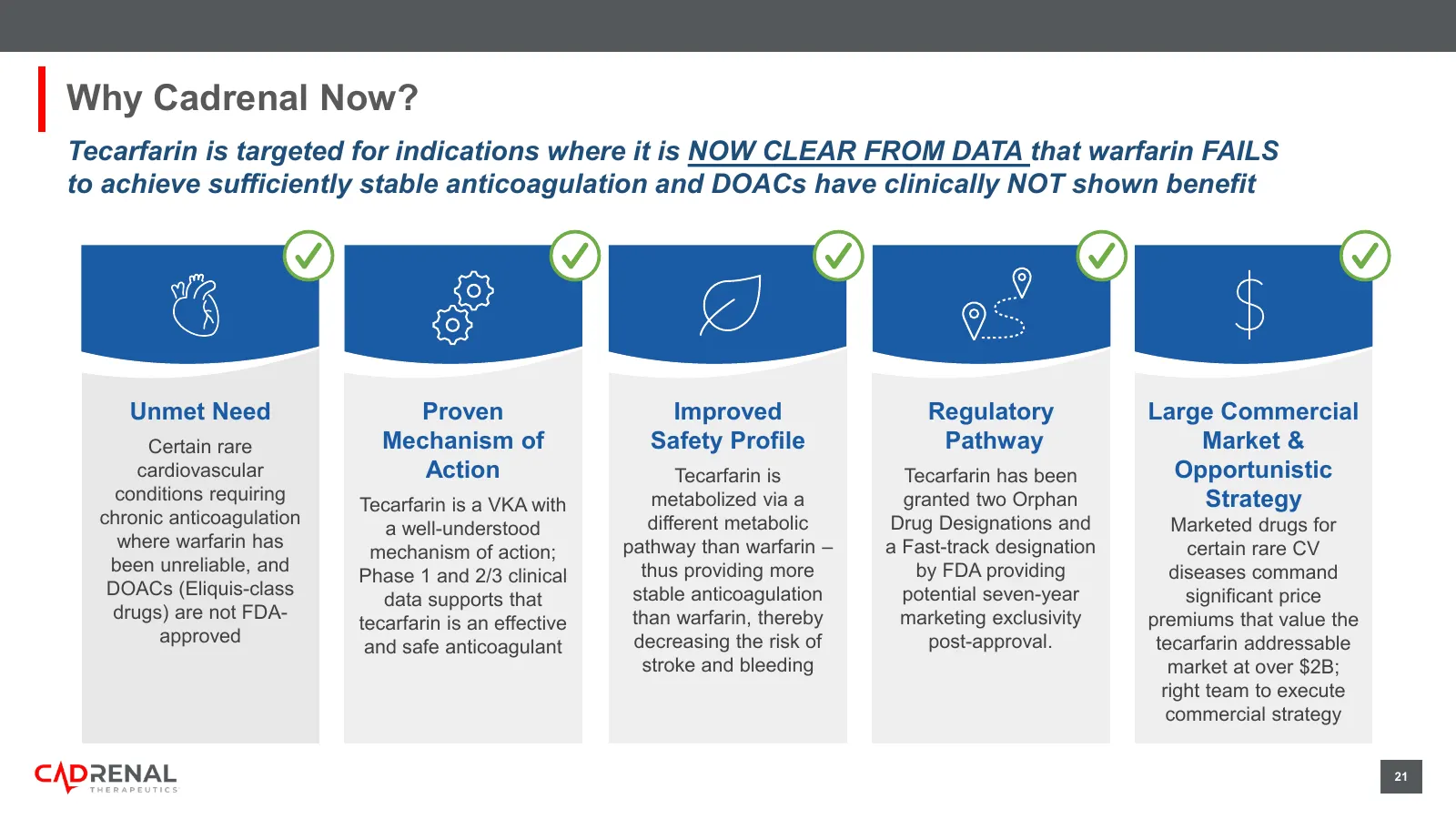
Why Cadrenal Now? Tecarfarin is targeted for indications where it is NOW CLEAR FROM DATA that warfarin FAILS to achieve sufficiently stable anticoagulation and DOACs have clinically NOT shown benefit Unmet Need Proven Improved Regulatory Large Commercial Certain rare Mechanism of Safety Profile Path

Slide 22: Contact Us
Contact Us Quang Pham CEO & Founder quang.pham@cadrenal.com Matthew Szot CFO matthew.szot@cadrenal.com 22

Slide 23: Appendix
APPENDIX CADRENAL
Slide 24: Tecarfarin's Metabolic Advantage
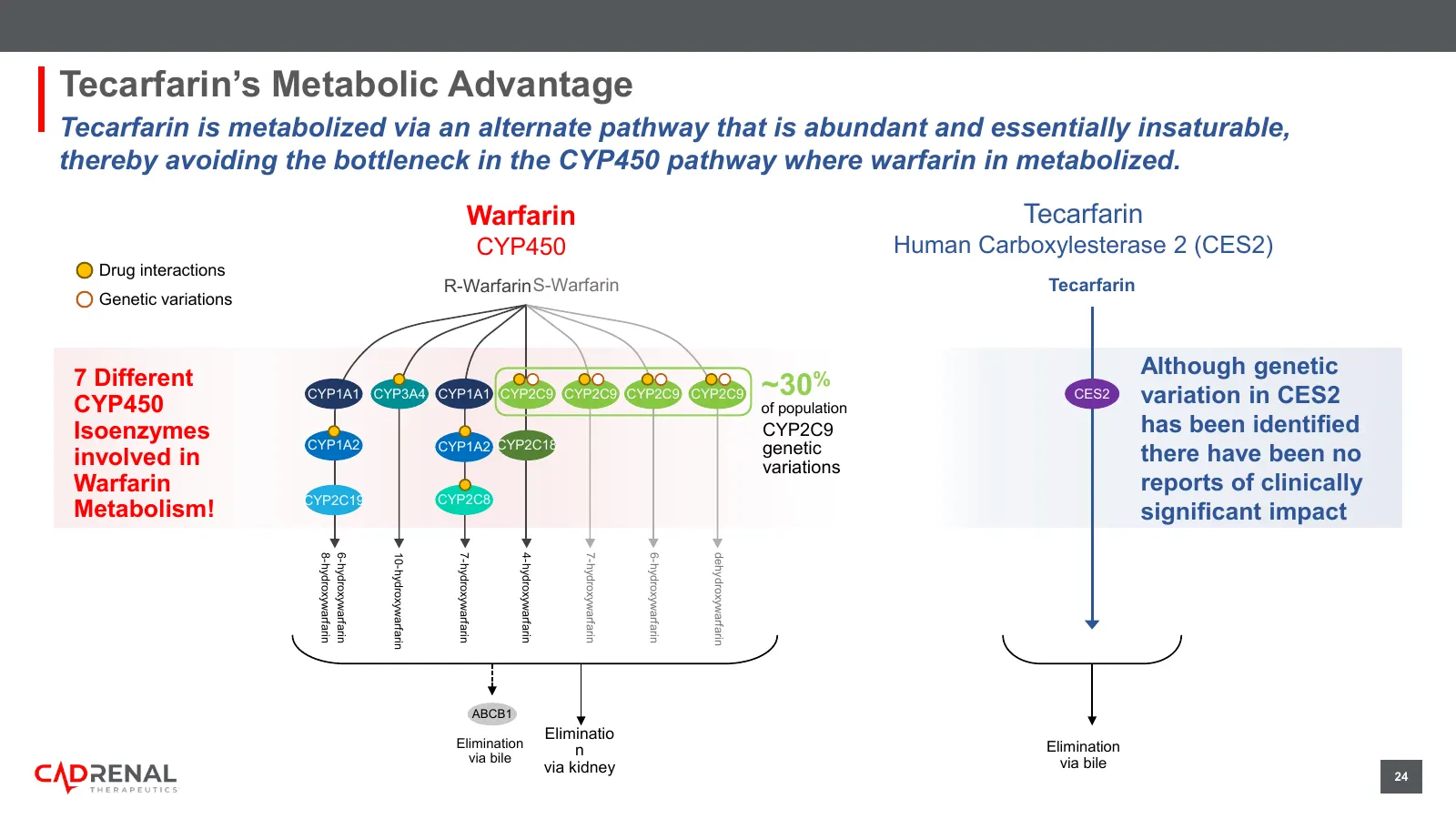
Tecarfarin’s Metabolic Advantage Tecarfarin is metabolized via an alternate pathway that is abundant and essentially insaturable, thereby avoiding the bottleneck in the CYP450 pathway where warfarin in metabolized. Warfarin Tecarfarin CYP450 Human Carboxylesterase 2 (CES2) Drug interactions R-Warfar
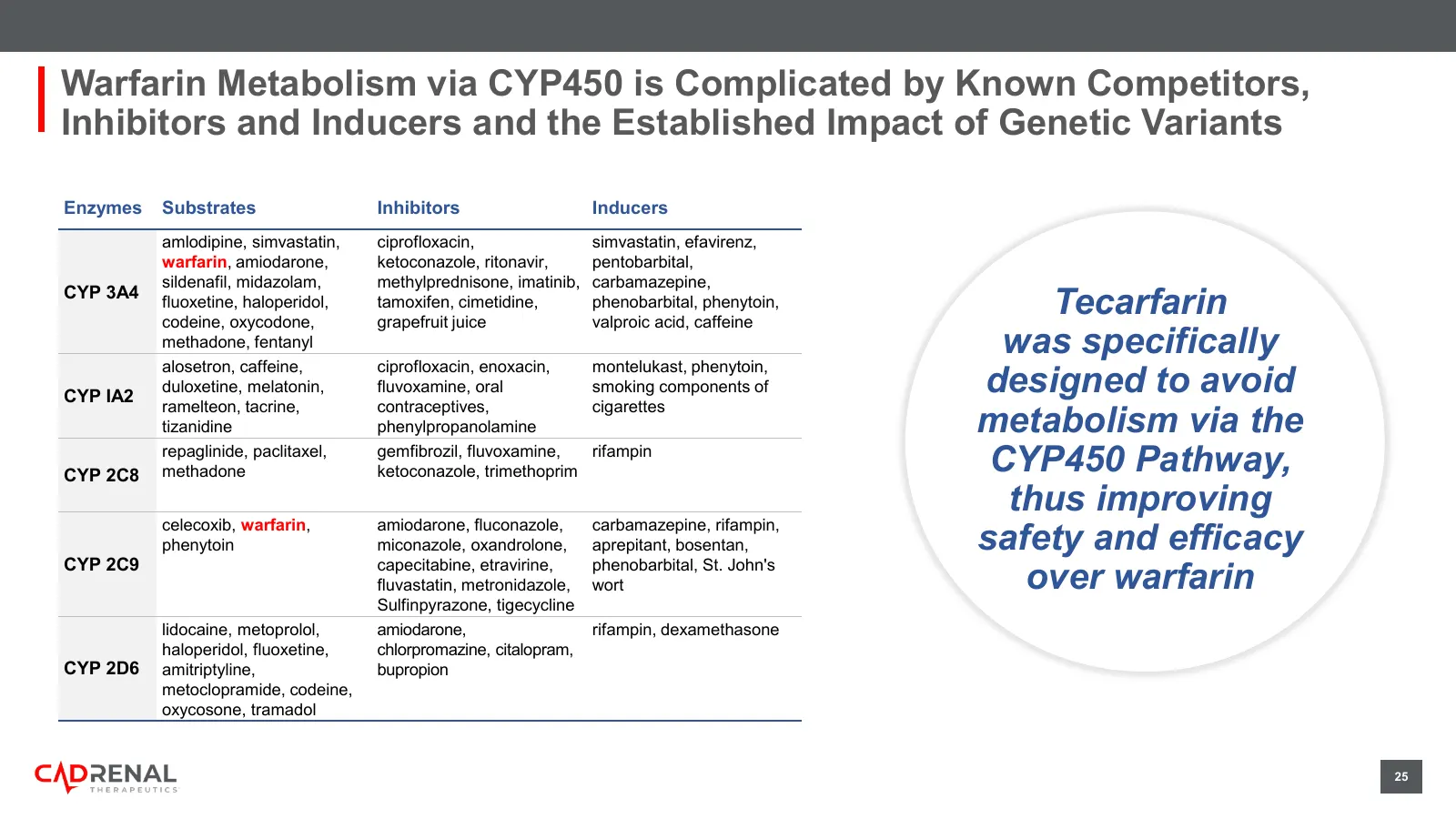
Slide 25: Warfarin Metabolism via CYP450 is Complicated
Warfarin Metabolism via CYP450 is Complicated by Known Competitors, Inhibitors and Inducers and the Established Impact of Genetic Variants Enzymes Substrates Inhibitors Inducers amlodipine, simvastatin, ciprofloxacin, simvastatin, efavirenz, warfarin, amiodarone, ketoconazole, ritonavir, pentobarbit
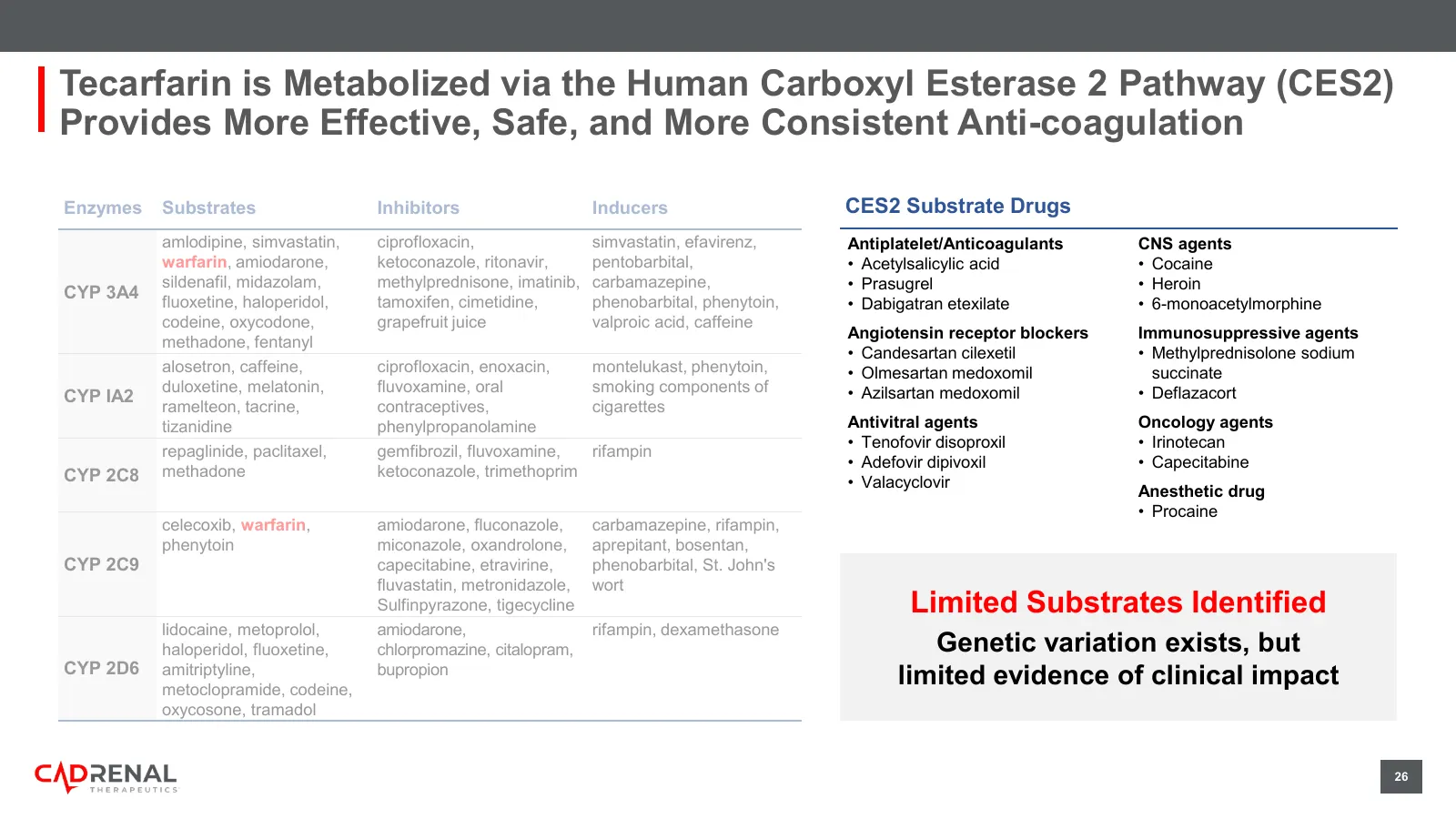
Slide 26: Tecarfarin is Metabolized via the Human Carboxyl Esterase 2 Pathway
Tecarfarin is Metabolized via the Human Carboxyl Esterase 2 Pathway (CES2) Provides More Effective, Safe, and More Consistent Anti-coagulation Enzymes Substrates Inhibitors Inducers CES2 Substrate Drugs amlodipine, simvastatin, ciprofloxacin, simvastatin, efavirenz, Antiplatelet/Anticoagulants CNS a
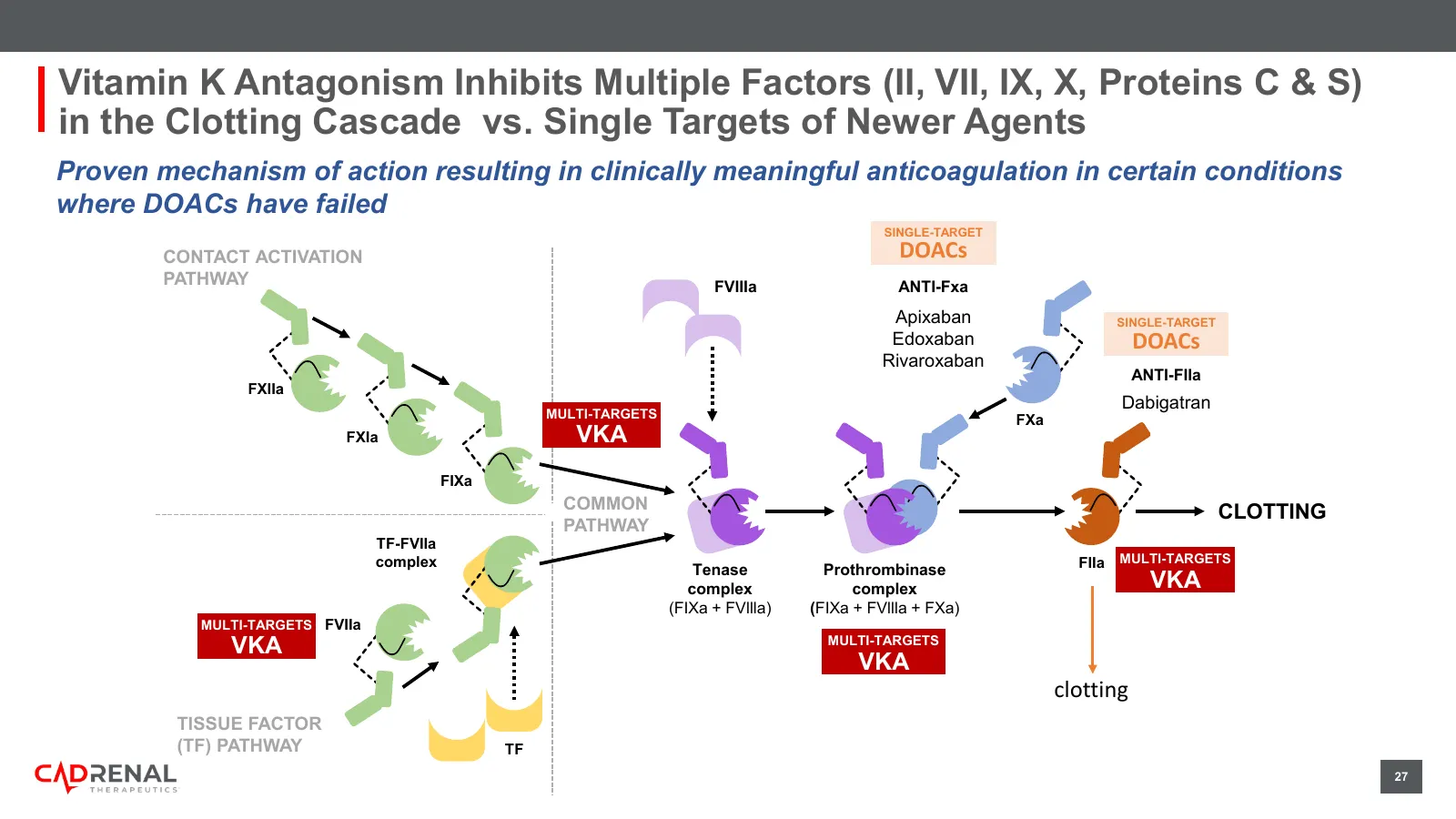
Slide 27: Vitamin K Antagonism Inhibits Multiple Factors in the Clotting Cascade
Vitamin K Antagonism Inhibits Multiple Factors (II, VII, IX, X, Proteins C & S) in the Clotting Cascade vs. Single Targets of Newer Agents Proven mechanism of action resulting in clinically meaningful anticoagulation in certain conditions where DOACs have failed SINGLE-TARGET CONTACT ACTIVATION DOAC
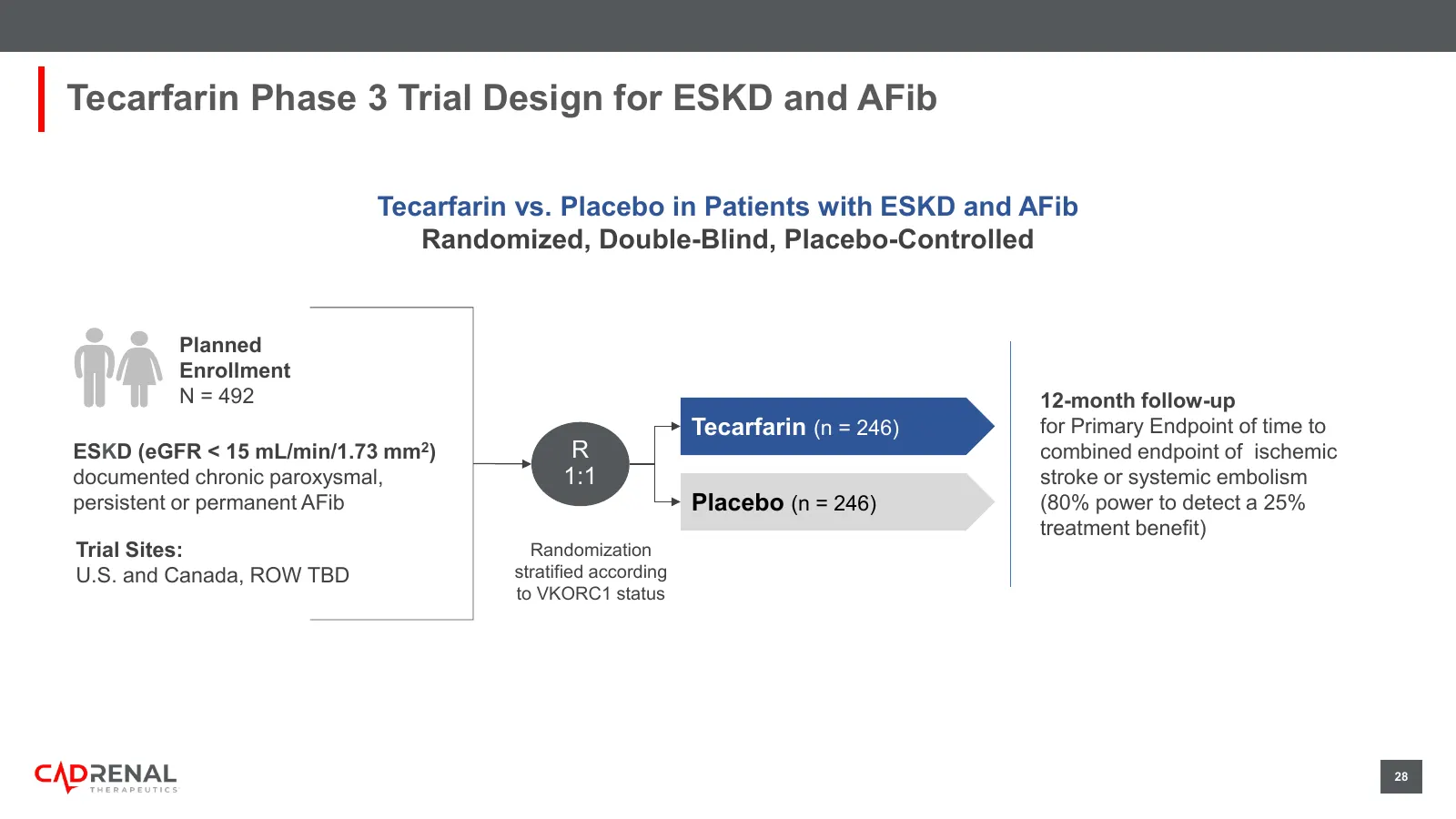
Slide 28: Tecarfarin Phase 3 Trial Design for ESKD and AFib
Tecarfarin Phase 3 Trial Design for ESKD and AFib Tecarfarin vs. Placebo in Patients with ESKD and AFib Randomized, Double-Blind, Placebo-Controlled Planned Enrollment N = 492 12-month follow-up Tecarfarin (n = 246) for Primary Endpoint of time to ESKD (eGFR < 15 mL/min/1.73 mm2) R combined endpoint
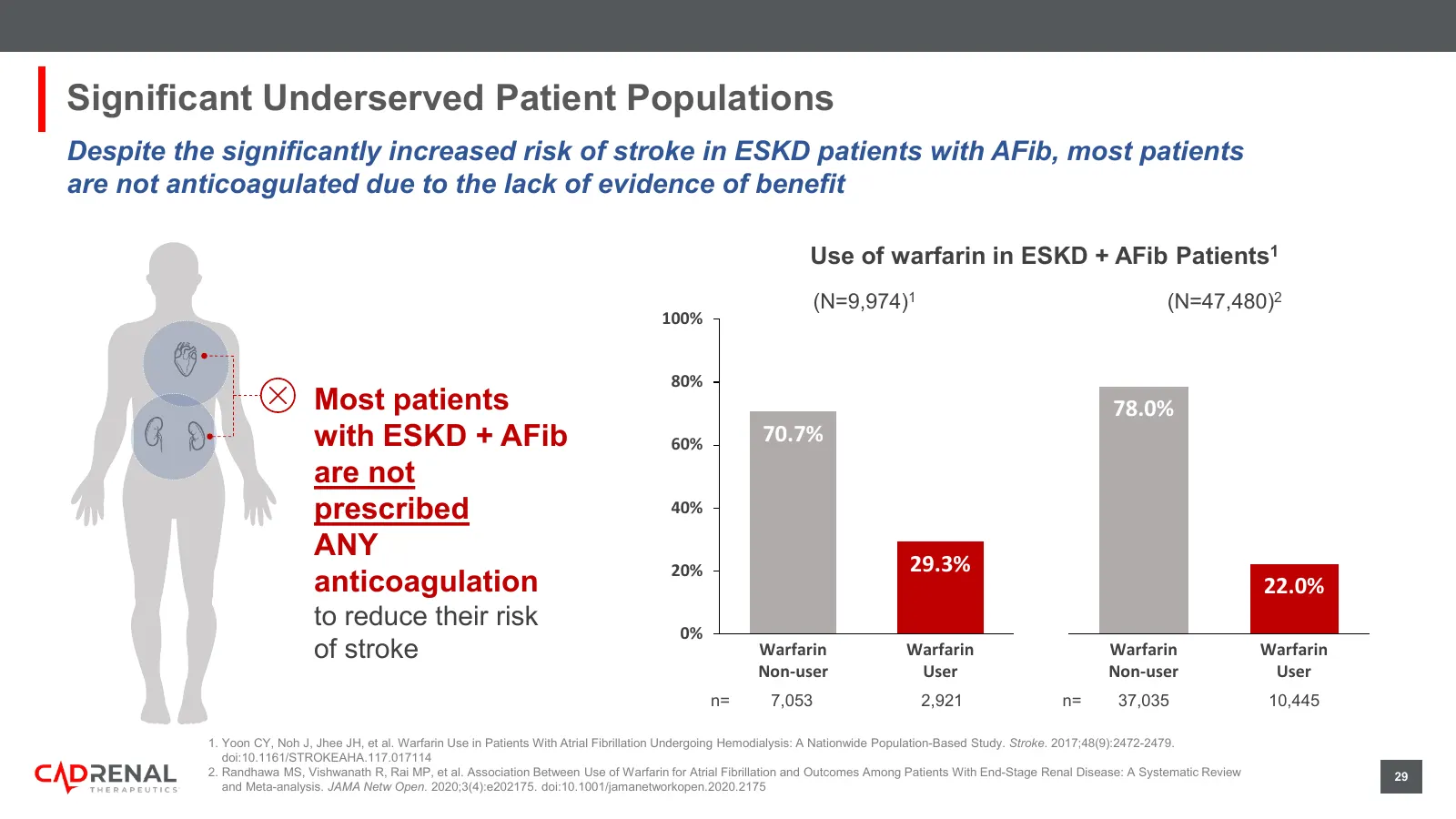
Slide 29: Significant Underserved Patient Populations
Significant Underserved Patient Populations Despite the significantly increased risk of stroke in ESKD patients with AFib, most patients are not anticoagulated due to the lack of evidence of benefit Use of warfarin in ESKD + AFib Patients1 (N=9,974)1 (N=47,480)2 100% 80% Most patients 78.0% with ESK
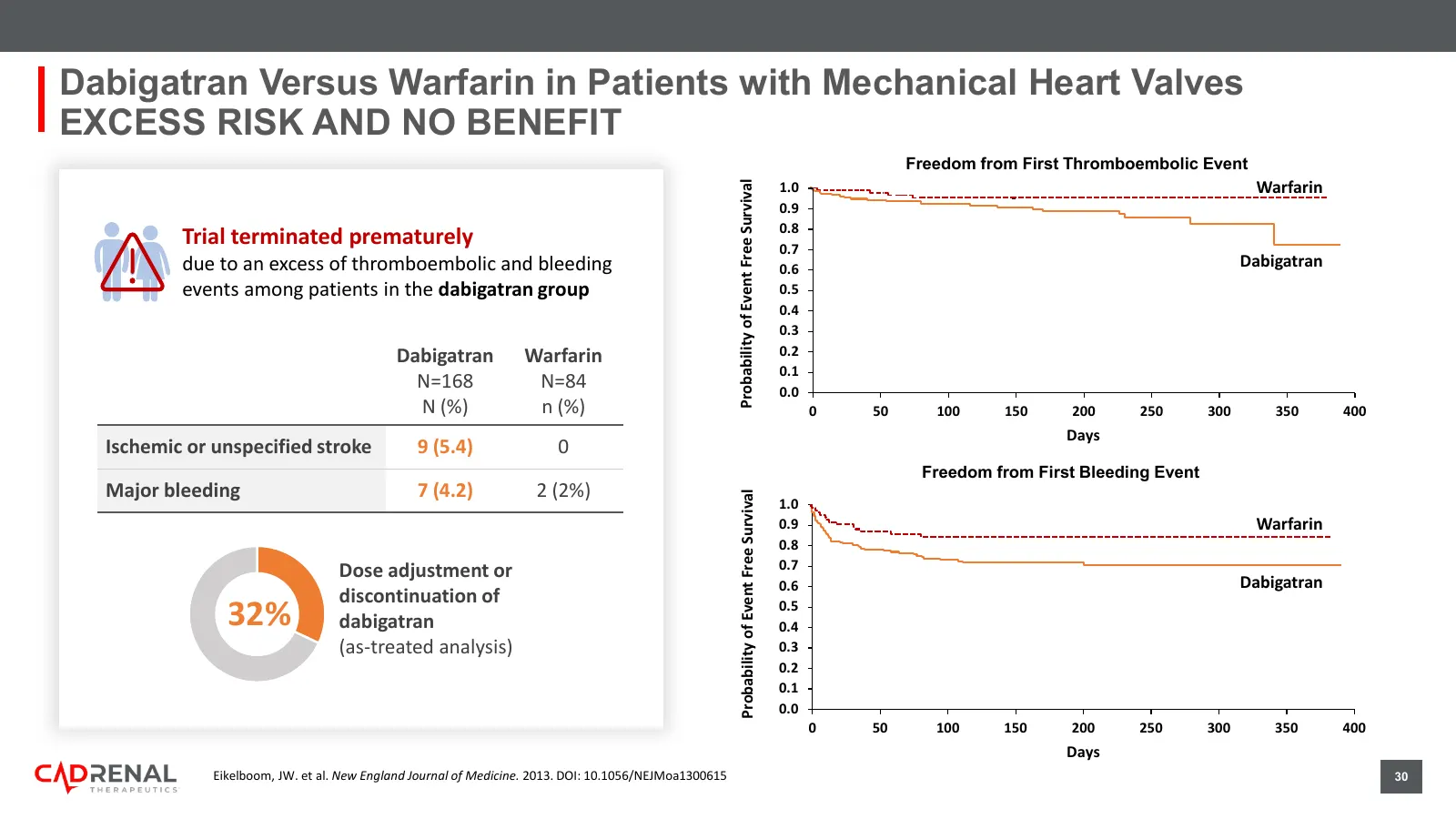
Slide 30: Dabigatran Versus Warfarin in Patients with Mechanical Heart Valves
Dabigatran Versus Warfarin in Patients with Mechanical Heart Valves EXCESS RISK AND NO BENEFIT First Freedom Thromboembolic from EventEvent First Thromboembolic 1.0 Warfarin Probability of Event Free Survival 0.9 0.8 Trial terminated prematurely 0.7 due to an excess of thromboembolic and bleeding 0.
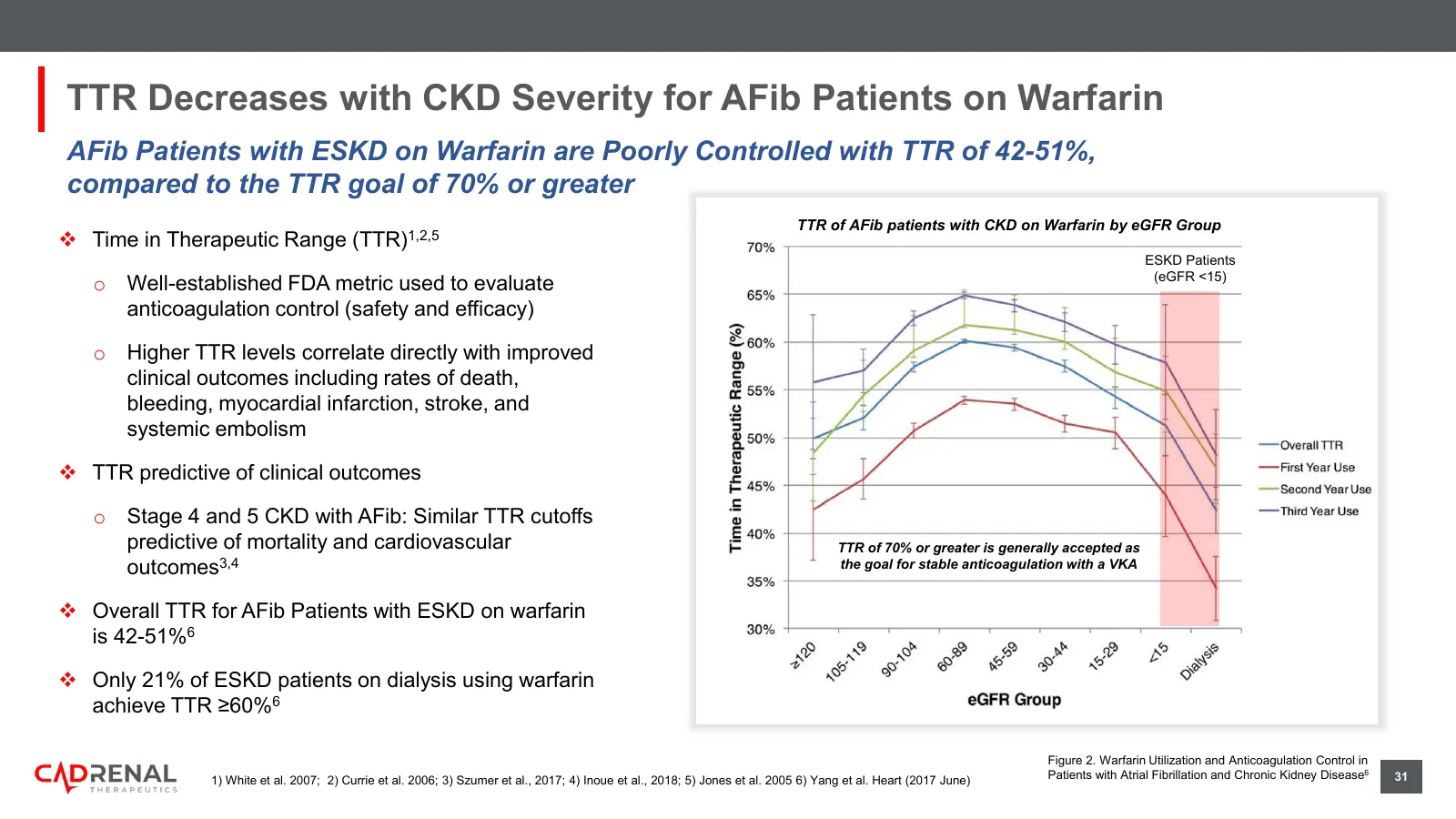
Slide 31: TTR Decreases with CKD Severity for AFib Patients on Warfarin
TTR Decreases with CKD Severity for AFib Patients on Warfarin AFib Patients with ESKD on Warfarin are Poorly Controlled with TTR of 42-51%, compared to the TTR goal of 70% or greater TTR of AFib patients with CKD on Warfarin by eGFR Group Time in Therapeutic Range (TTR)1,2,5 ESKD Patients (eGFR <1
Source: company website
More decks from Cadrenal Therapeutics, Inc.
 Investor Presentation (September 2026)21 slides · September 2026
 Investor Presentation (May 2026)18 slides · May 2026
 Investor Presentation (December 2025)23 slides · Dec 11, 2025
 Investor Presentation (September 2025)26 slides · Sep 15, 2025
 Investor Presentation (September 2024)34 slides · Sep 25, 2024
 Investor Presentation (September 2024)34 slides · September 2024