Hanmi Pharmaceutical Co., Ltd. · KRX:128940
Hanmi Pharmaceutical — Technical Presentation (October 2018)
37 slides from Hanmi Pharmaceutical's technical presentation, October 2018
Slide 1: Therapeutic effect of HM15211 in NASH and fibrosis animal models
Therapeutic effect of a novel long-acting GLP-1/GIP/Glucagon triple agonist (HM15211) in NASH and fibrosis animal models Jung Kuk Kim, Jong Suk Lee, Eunjin Park, Dae Jin Kim, Young Hoon Kim, and In Young Choi Hanmi Pharm. Co., Ltd., Seoul, Republic of Korea
Slide 2: Presenter Disclosure
Presenter Disclosure Employee of Hanmi Pharm. Co., Ltd. European Association for the Study of Diabetes (EASD) 54th Annual Meeting, Berlin, Germany; 1-5 Oct., 2018
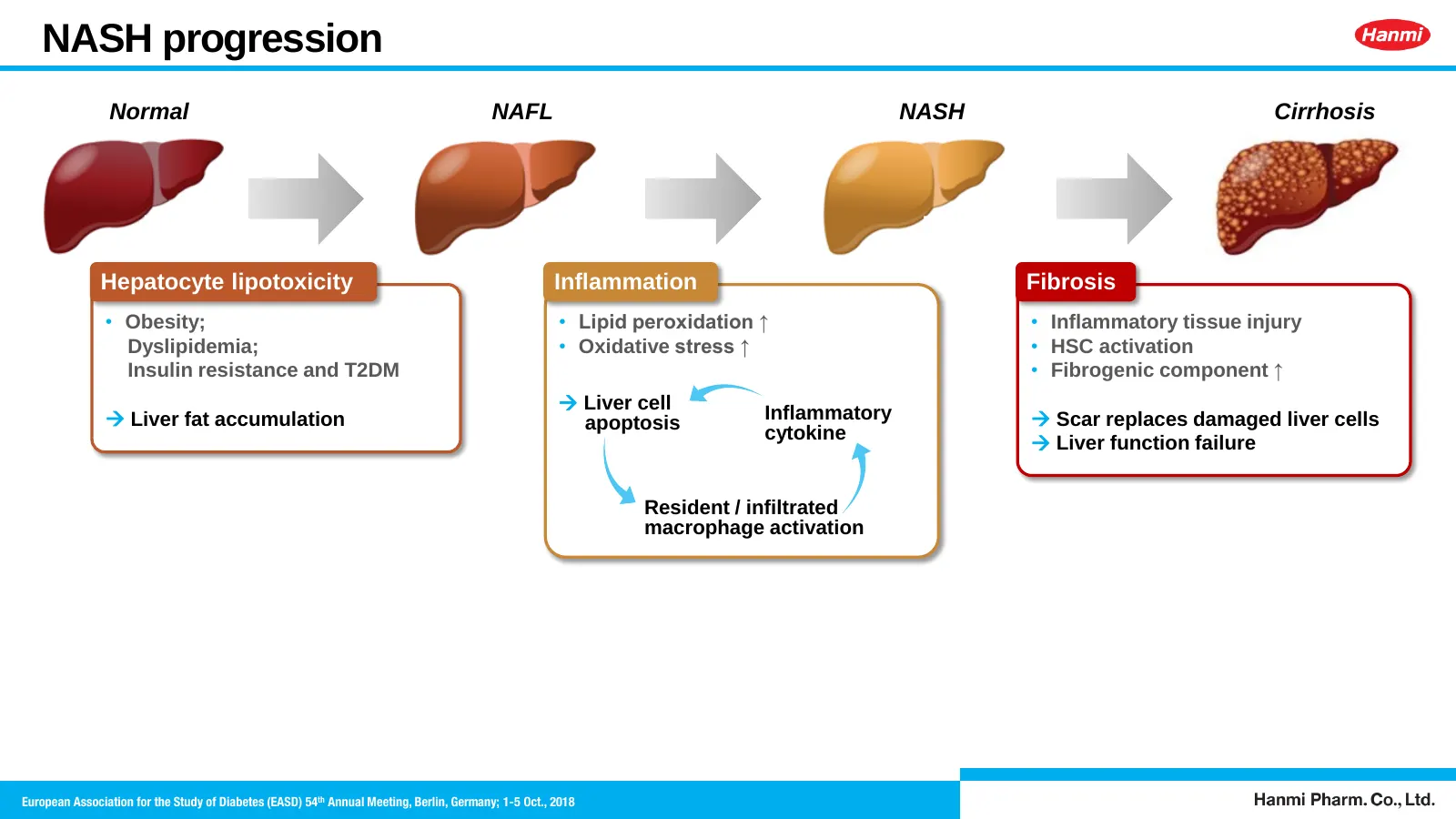
Slide 3: NASH progression
NASH progression Normal NAFL NASH Cirrhosis Hepatocyte lipotoxicity Inflammation Fibrosis • Obesity; • Lipid peroxidation ↑ • Inflammatory tissue injury Dyslipidemia; • Oxidative stress ↑ • HSC activation Insulin resistance and T2DM • Fibrogenic component ↑ Liver cell Liver fat accumulation apop
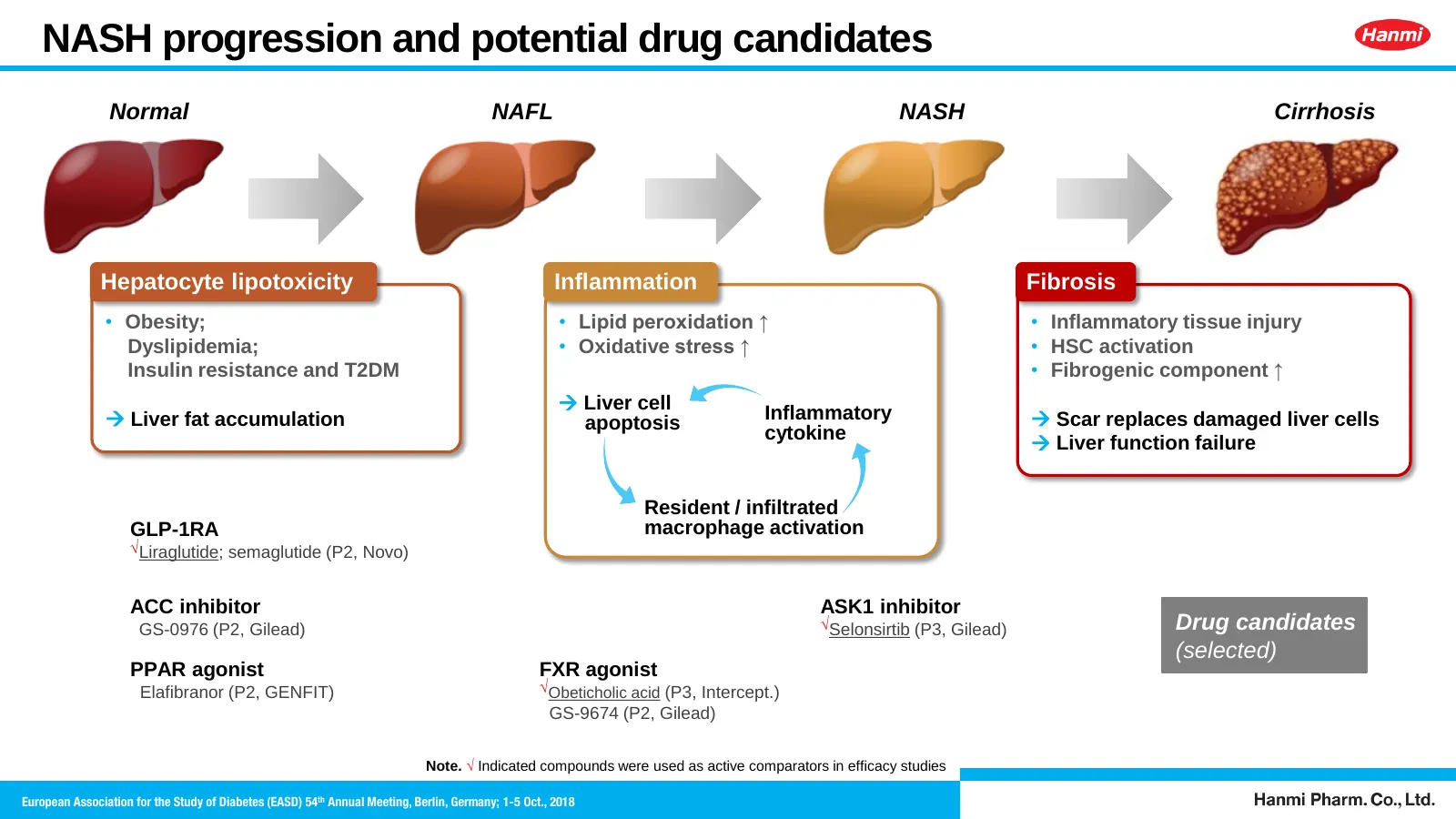
Slide 4: NASH progression and potential drug candidates
NASH progression and potential drug candidates Normal NAFL NASH Cirrhosis Hepatocyte lipotoxicity Inflammation Fibrosis • Obesity; • Lipid peroxidation ↑ • Inflammatory tissue injury Dyslipidemia; • Oxidative stress ↑ • HSC activation Insulin resistance and T2DM • Fibrogenic component ↑ Liver cell
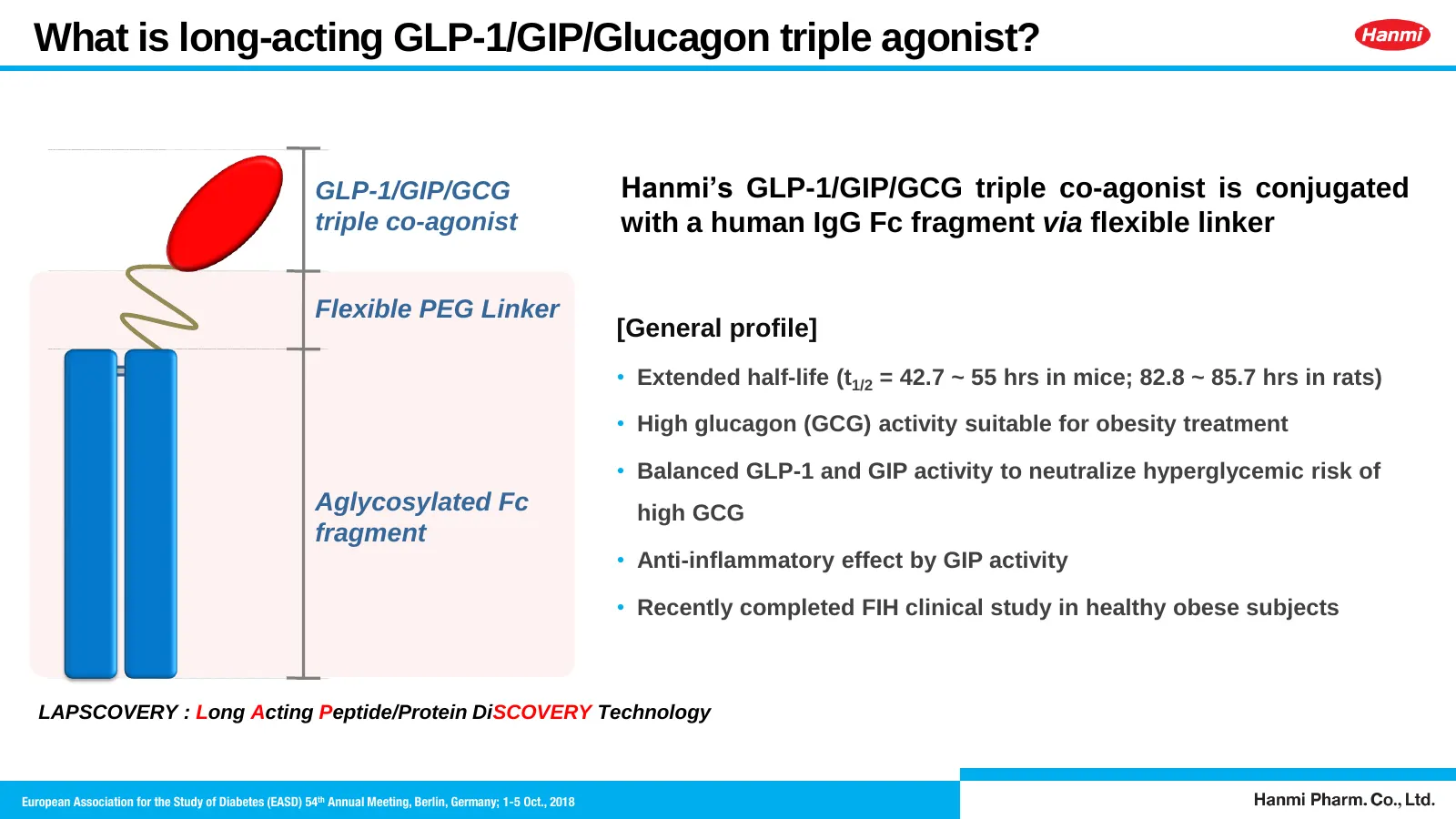
Slide 5: What is long-acting GLP-1/GIP/Glucagon triple agonist?
What is long-acting GLP-1/GIP/Glucagon triple agonist? GLP-1/GIP/GCG Hanmi’s GLP-1/GIP/GCG triple co-agonist is conjugated triple co-agonist with a human IgG Fc fragment via flexible linker Flexible PEG Linker [General profile] • Extended half-life (t1/2 = 42.7 ~ 55 hrs in mice; 82.8 ~ 85.7 hrs in r
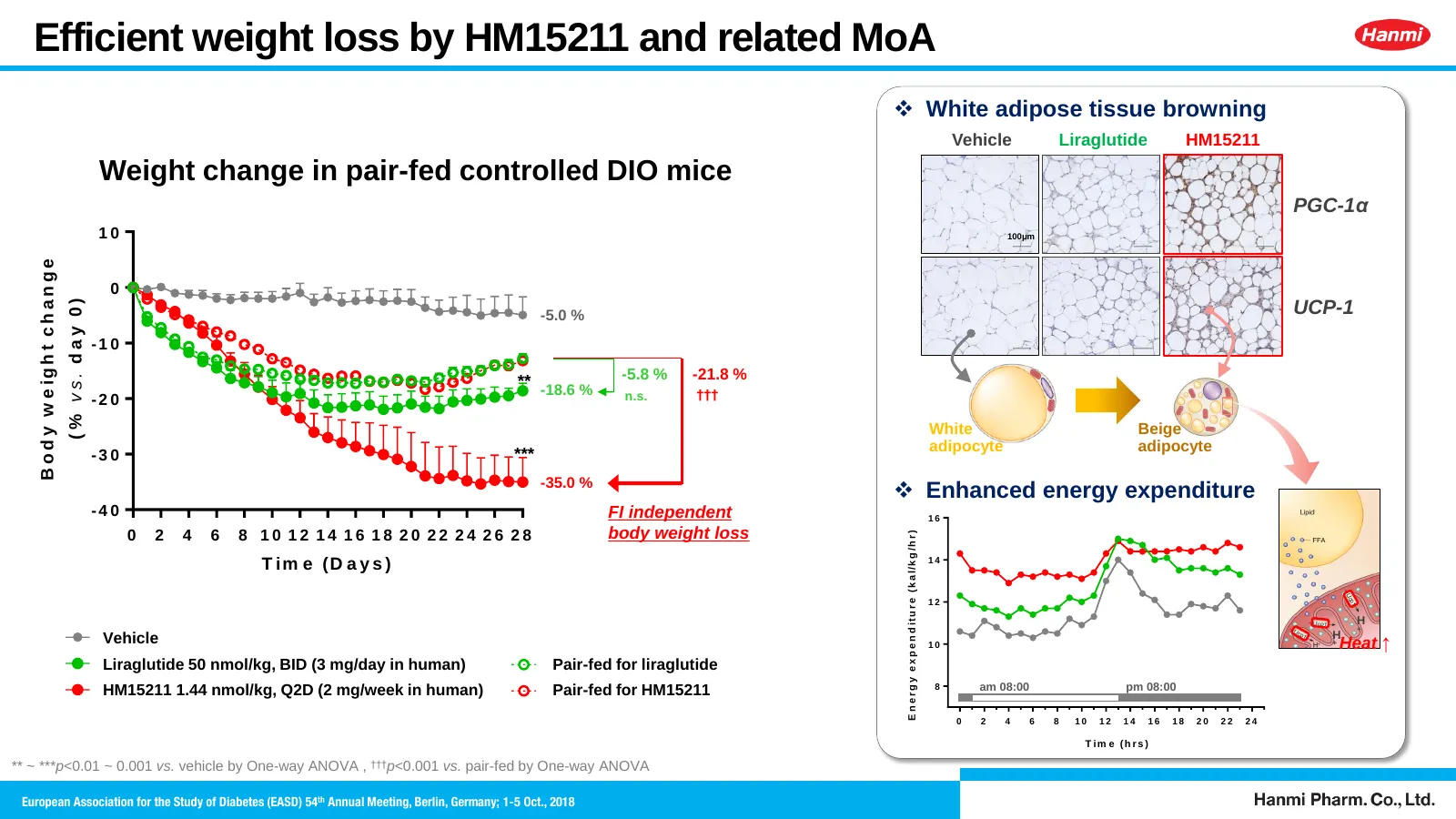
Slide 6: Efficient weight loss by HM15211 and related MoA
Efficient weight loss by HM15211 and related MoA White adipose tissue browning Vehicle Liraglutide HM15211 Weight change in pair-fed controlled DIO mice PGC-1α 10 100μm 10 ) ange 0 B o d y w e ig h t c h a n g e ( % vs. day 0) 0 -5.0 % UCP-1 . dhaty c0h -1 0 -1 0 -5.8 % -21.8 % B o d y( %w vesig *
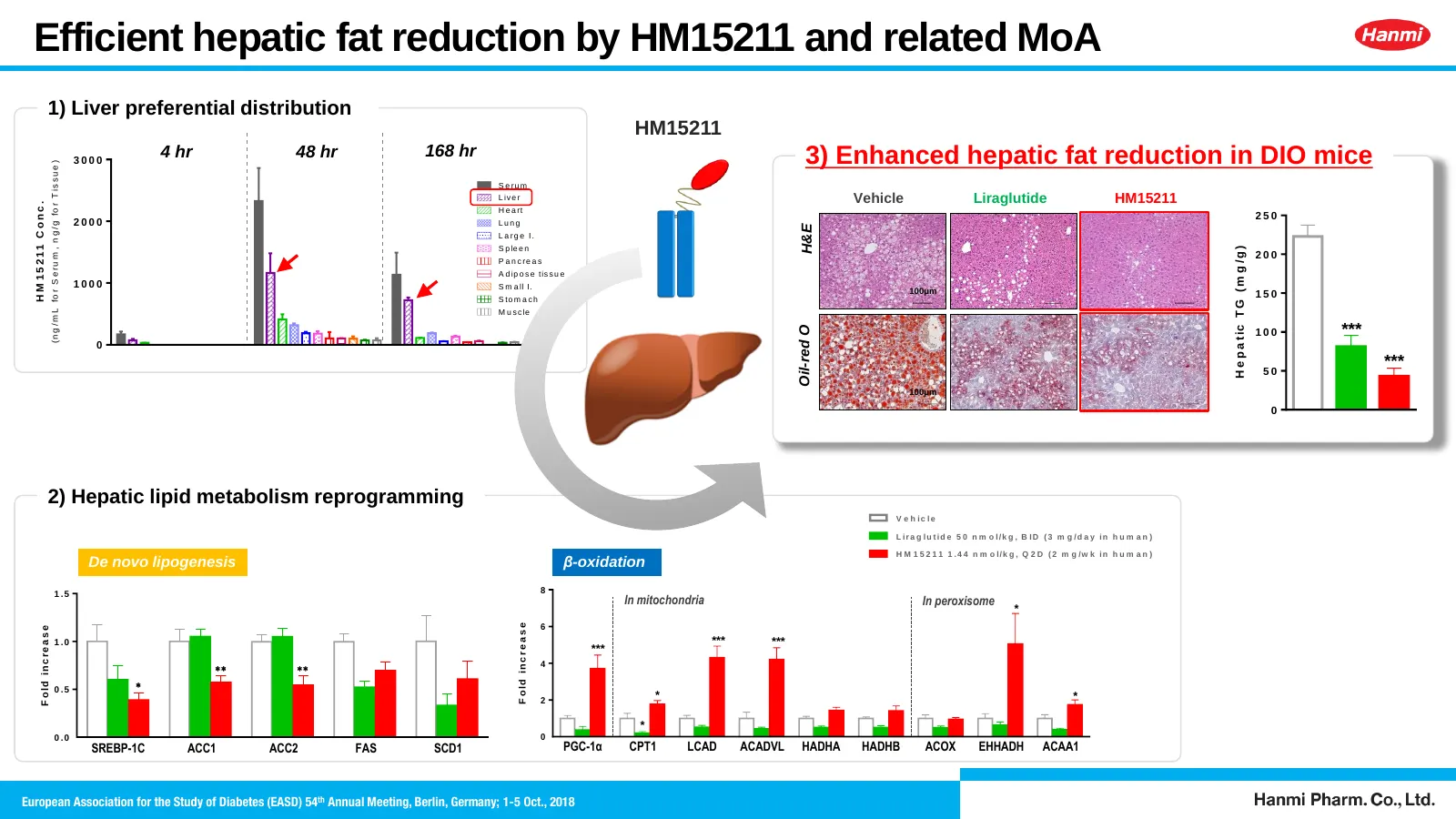
Slide 7: Efficient hepatic fat reduction by HM15211 and related MoA
Efficient hepatic fat reduction by HM15211 and related MoA 1) Liver preferential distribution HM15211 3000 4 hr 48 hr 168 hr 3) Enhanced hepatic fat reduction in DIO mice ( n g /m L fo r S e r u m , n g /g f o r T is s u e ) 3000 ( n g /m L f o r S e r u m , n g / g f o r T is s u e ) S e ru m L iv
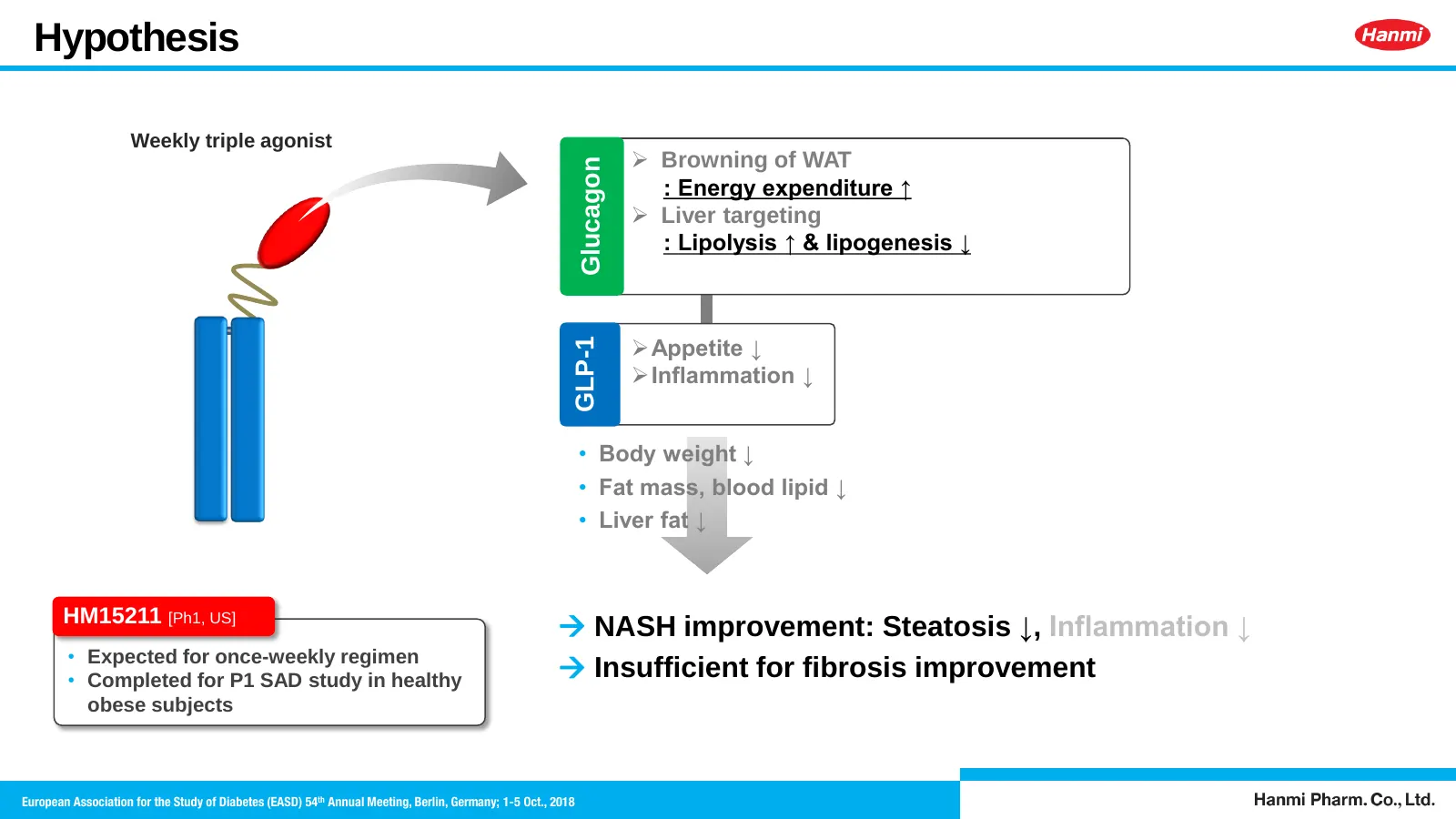
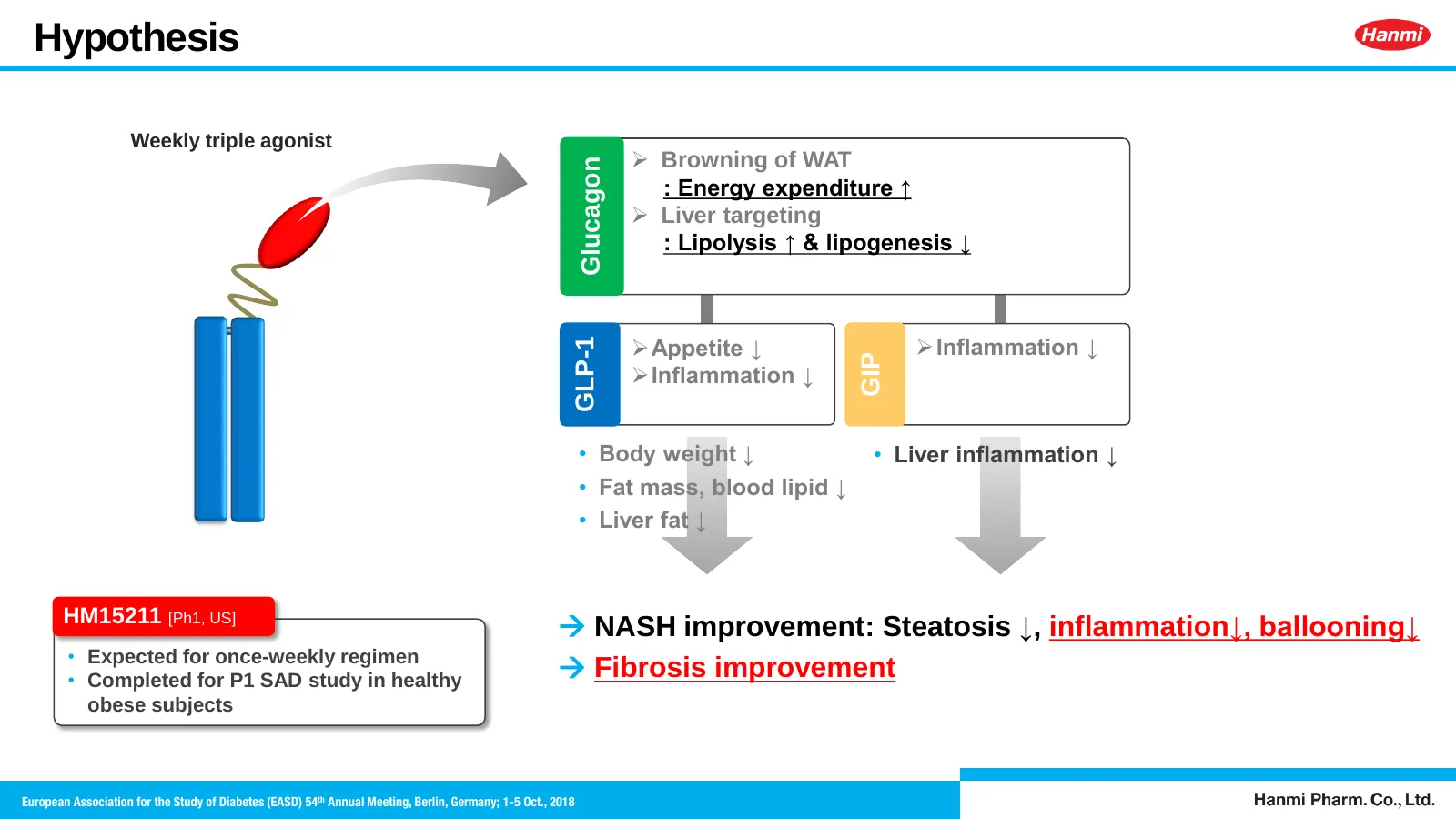
Slide 8: Hypothesis: weekly triple agonist
Hypothesis Weekly triple agonist Browning of WAT Glucagon : Energy expenditure ↑ Liver targeting : Lipolysis ↑ & lipogenesis ↓ Appetite ↓ GLP-1 Inflammation ↓ • Body weight ↓ • Fat mass, blood lipid ↓ • Liver fat ↓ HM15211 [Ph1, US] NASH improvement: Steatosis ↓, Inflammation ↓ • Expected fo
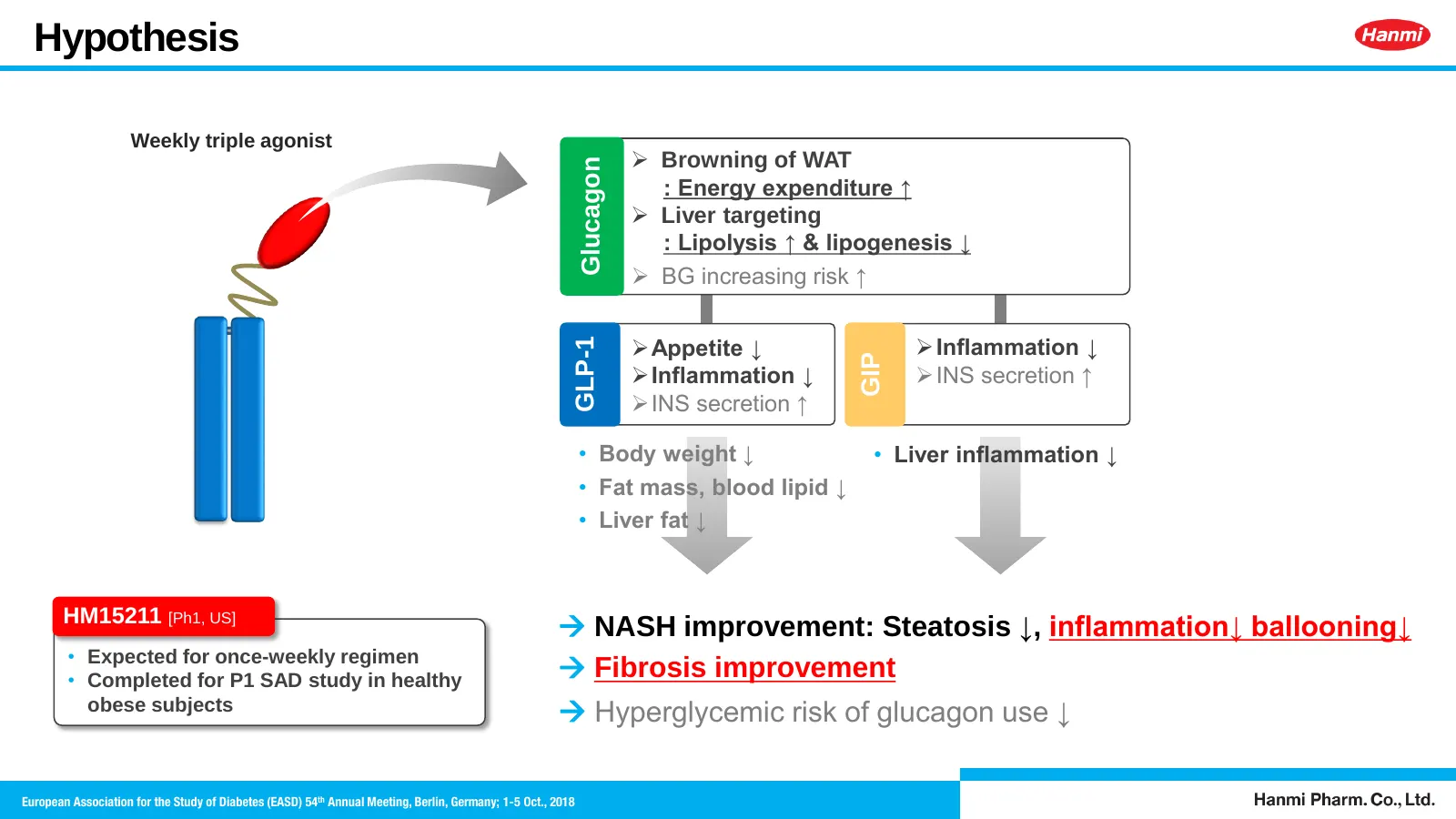
Slide 9: Hypothesis: weekly triple agonist
Hypothesis Weekly triple agonist Browning of WAT Glucagon : Energy expenditure ↑ Liver targeting : Lipolysis ↑ & lipogenesis ↓ Appetite ↓ Inflammation ↓ GLP-1 GIP Inflammation ↓ • Body weight ↓ • Liver inflammation ↓ • Fat mass, blood lipid ↓ • Liver fat ↓ HM15211 [Ph1, US] NASH improvemen
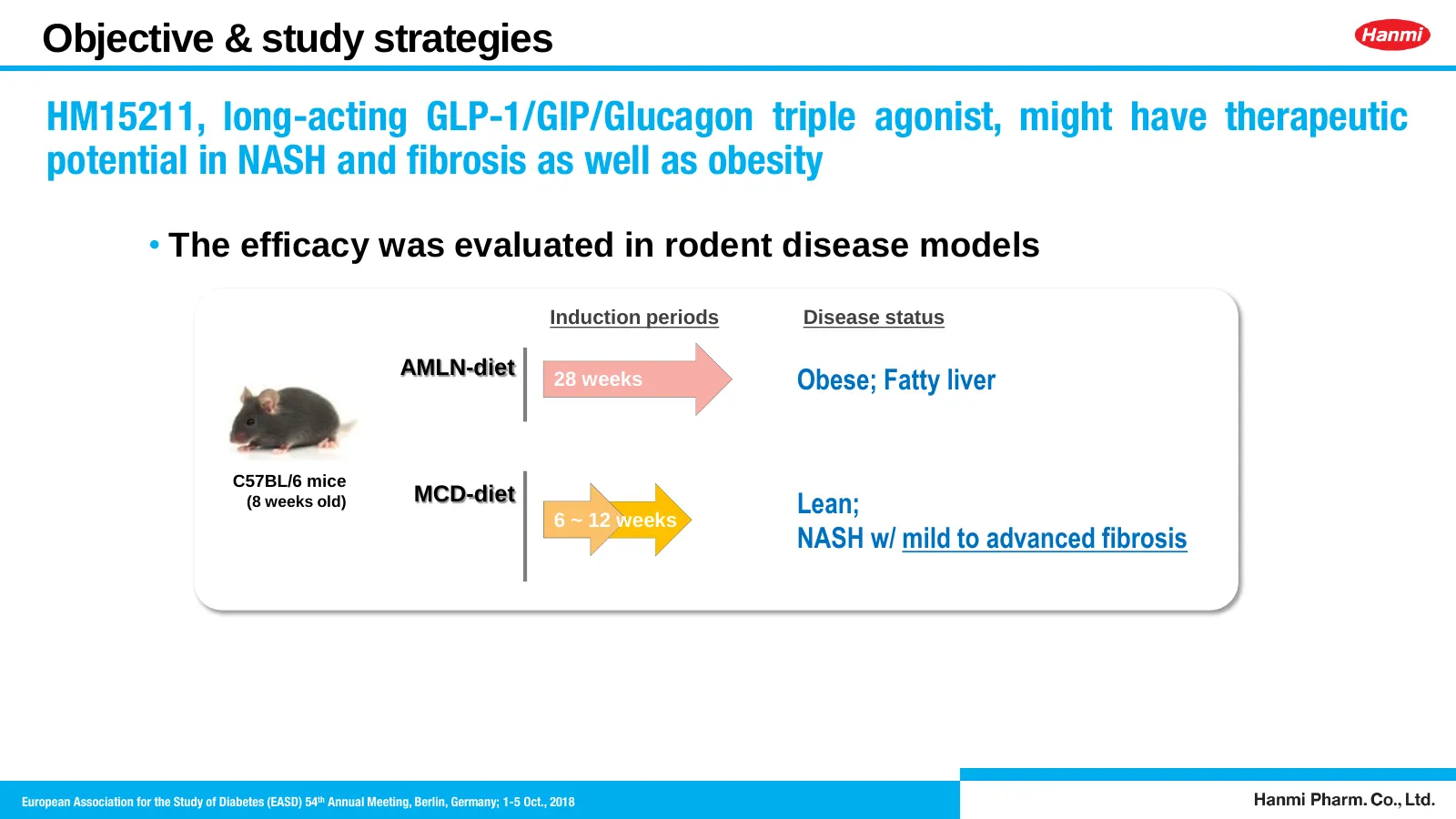
Slide 10: Hypothesis: weekly triple agonist
Hypothesis Weekly triple agonist Browning of WAT Glucagon : Energy expenditure ↑ Liver targeting : Lipolysis ↑ & lipogenesis ↓ BG increasing risk ↑ Appetite ↓ Inflammation ↓ GLP-1 GIP Inflammation ↓ INS secretion ↑ INS secretion ↑ • Body weight ↓ • Liver inflammation ↓ • Fat mass, blood
Slide 11: Objective & study strategies
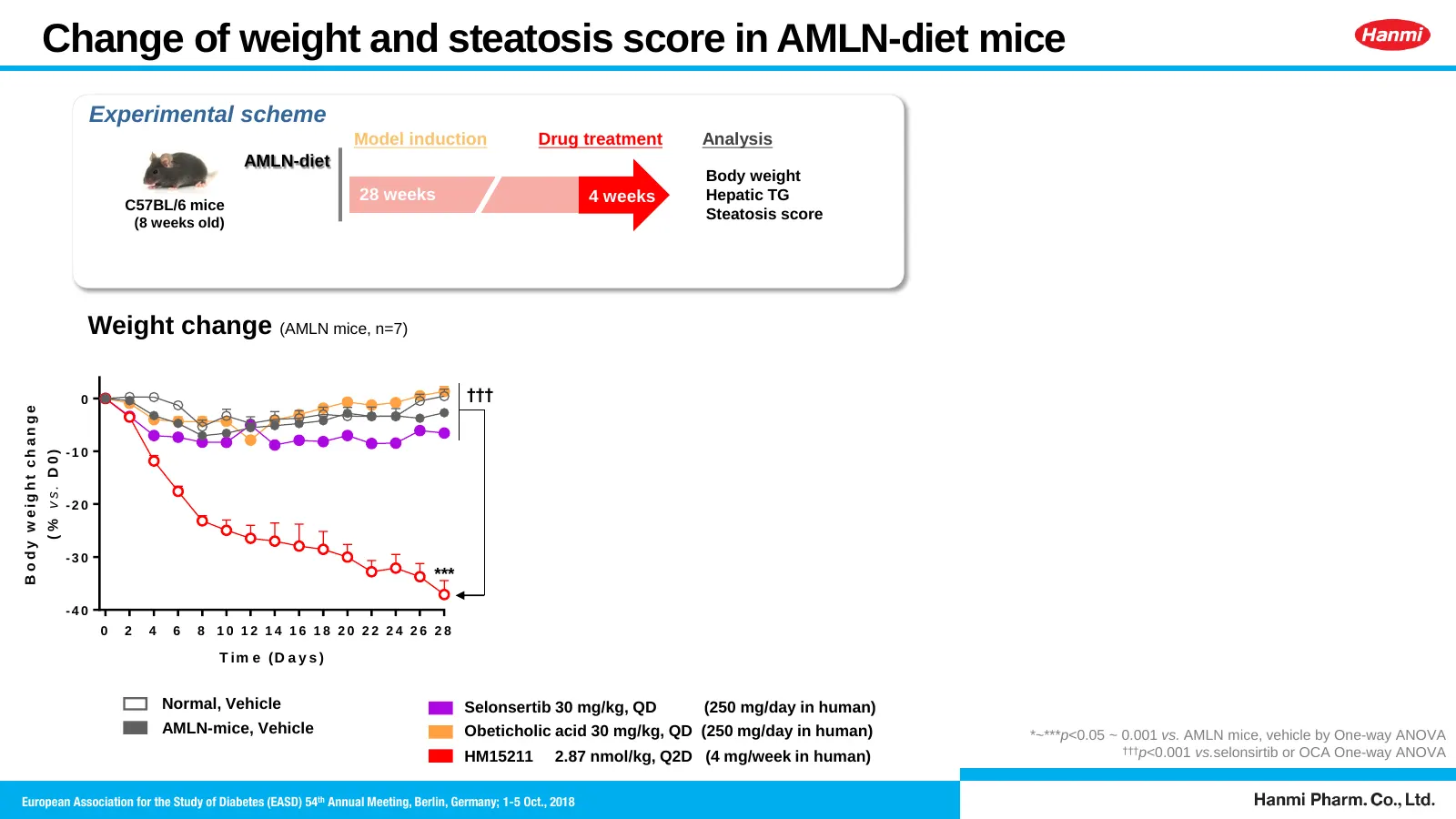
Objective & study strategies HM15211, long-acting GLP-1/GIP/Glucagon triple agonist, might have therapeutic potential in NASH and fibrosis as well as obesity • The efficacy was evaluated in rodent disease models Induction periods Disease status AMLN-diet 28 weeks Obese; Fatty liver C57BL/6 mice MCD-
Slide 12: Change of weight and steatosis score in AMLN-diet mice
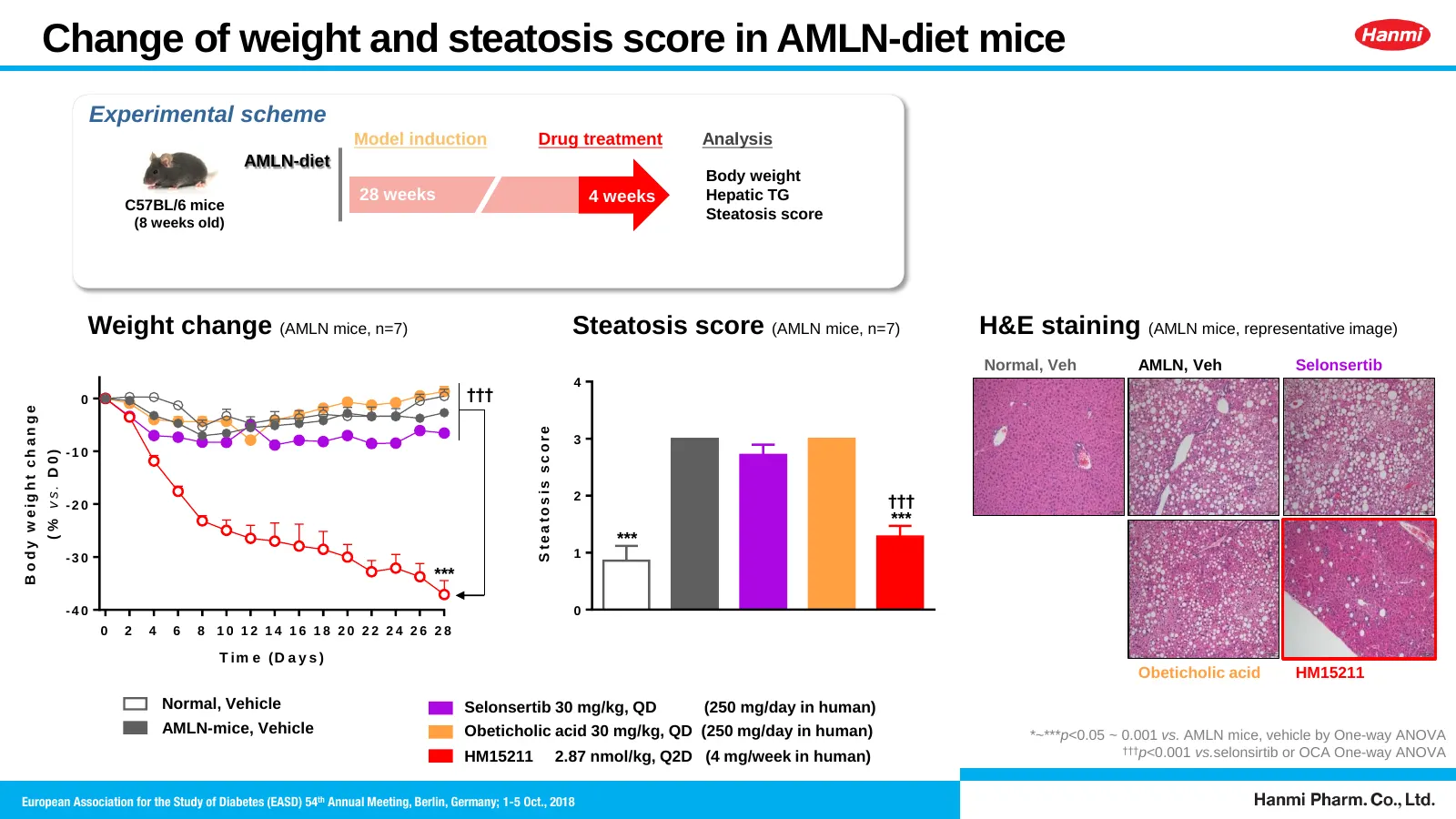
Change of weight and steatosis score in AMLN-diet mice Experimental scheme Model induction Drug treatment Analysis AMLN-diet Body weight 28 weeks 4 weeks Hepatic TG C57BL/6 mice Steatosis score (8 weeks old) Weight change (AMLN mice, n=7) 3 N F A L D a c t iv ity s c o r e 0 ††† B o d y w e ig h t c
Slide 13: Change of weight and steatosis score in AMLN-diet mice
Change of weight and steatosis score in AMLN-diet mice Experimental scheme Model induction Drug treatment Analysis AMLN-diet Body weight 28 weeks 4 weeks Hepatic TG C57BL/6 mice Steatosis score (8 weeks old) Weight change (AMLN mice, n=7) Steatosis score (AMLN mice, n=7) H&E staining (AMLN mice, rep
Slide 14: Change of hepatic fat content in MCD-diet mice
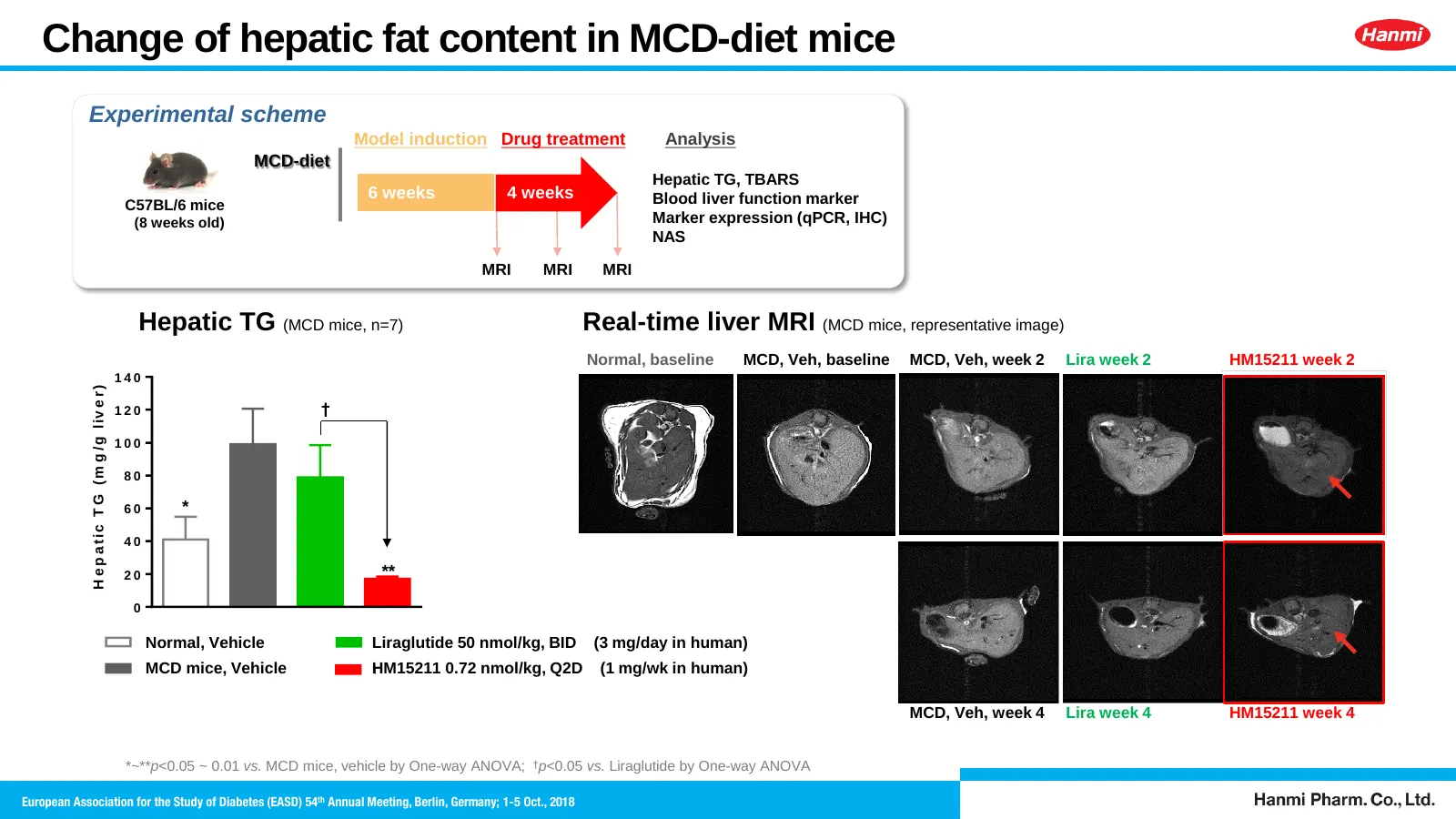
Change of hepatic fat content in MCD-diet mice Experimental scheme Model induction Drug treatment Analysis MCD-diet Hepatic TG, TBARS 6 weeks 4 weeks Blood liver function marker C57BL/6 mice (8 weeks old) Marker expression (qPCR, IHC) g) g) 30 NAS o l/m 30 25 MRI MRI MRI l/m S R S( n m( no m 25 20 )
Slide 15: Change of NASH prognosis markers in MCD-diet mice
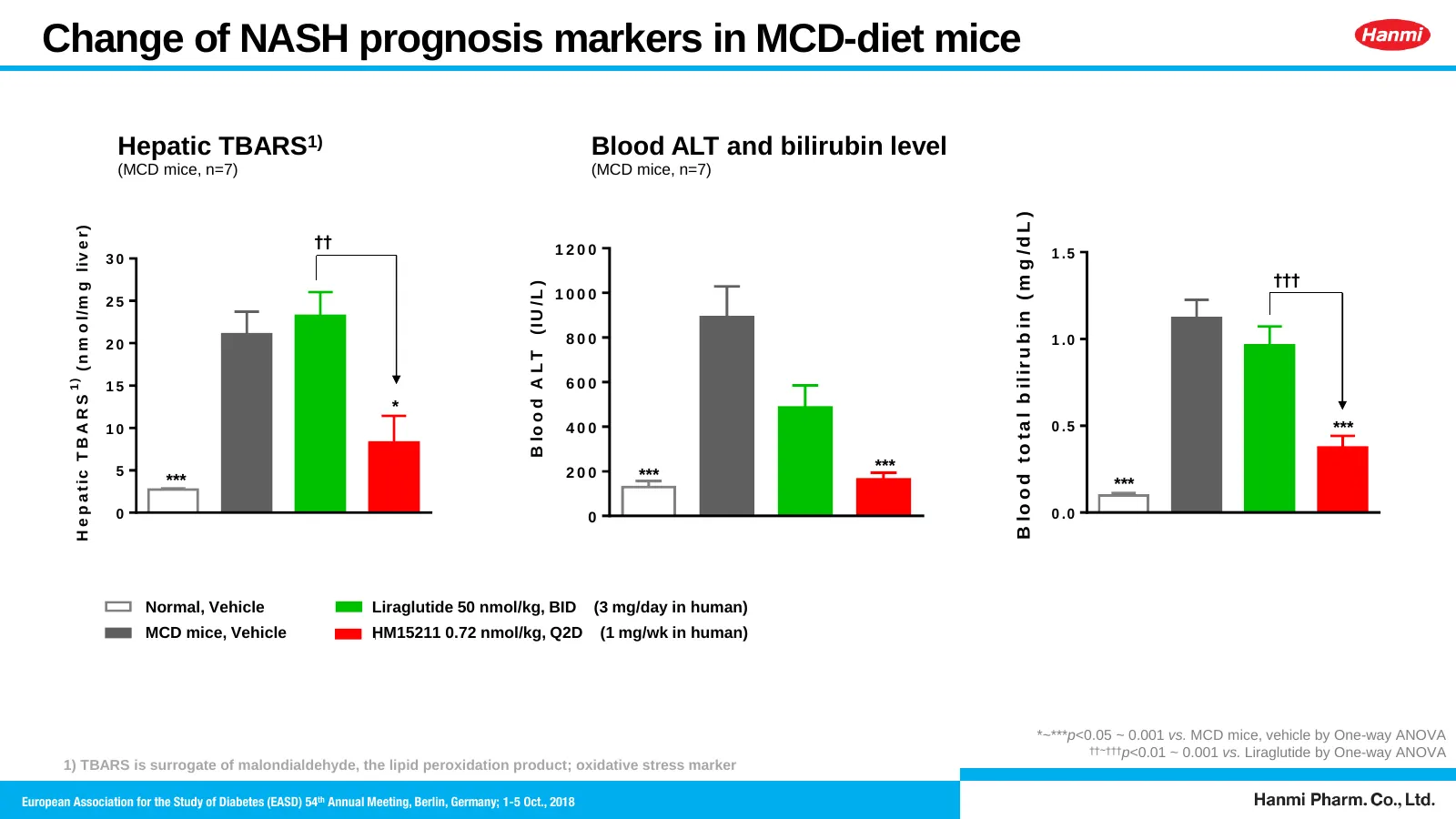
Change of NASH prognosis markers in MCD-diet mice Hepatic TBARS1) Blood ALT and bilirubin level (MCD mice, n=7) (MCD mice, n=7) g) g) 30 o l/m B lo o d t o t a l b ilir u b in ( m g /d L ) 30 liv e r ) l/m †† 2 5 1200 S R S( n m( nom 30 1 .5 25 20 ††† ( n m o l/m g ) 30 B lo o d A L T ( IU /L ) 1 )(
Slide 16: Change of hepatic marker expression in MCD-diet mice
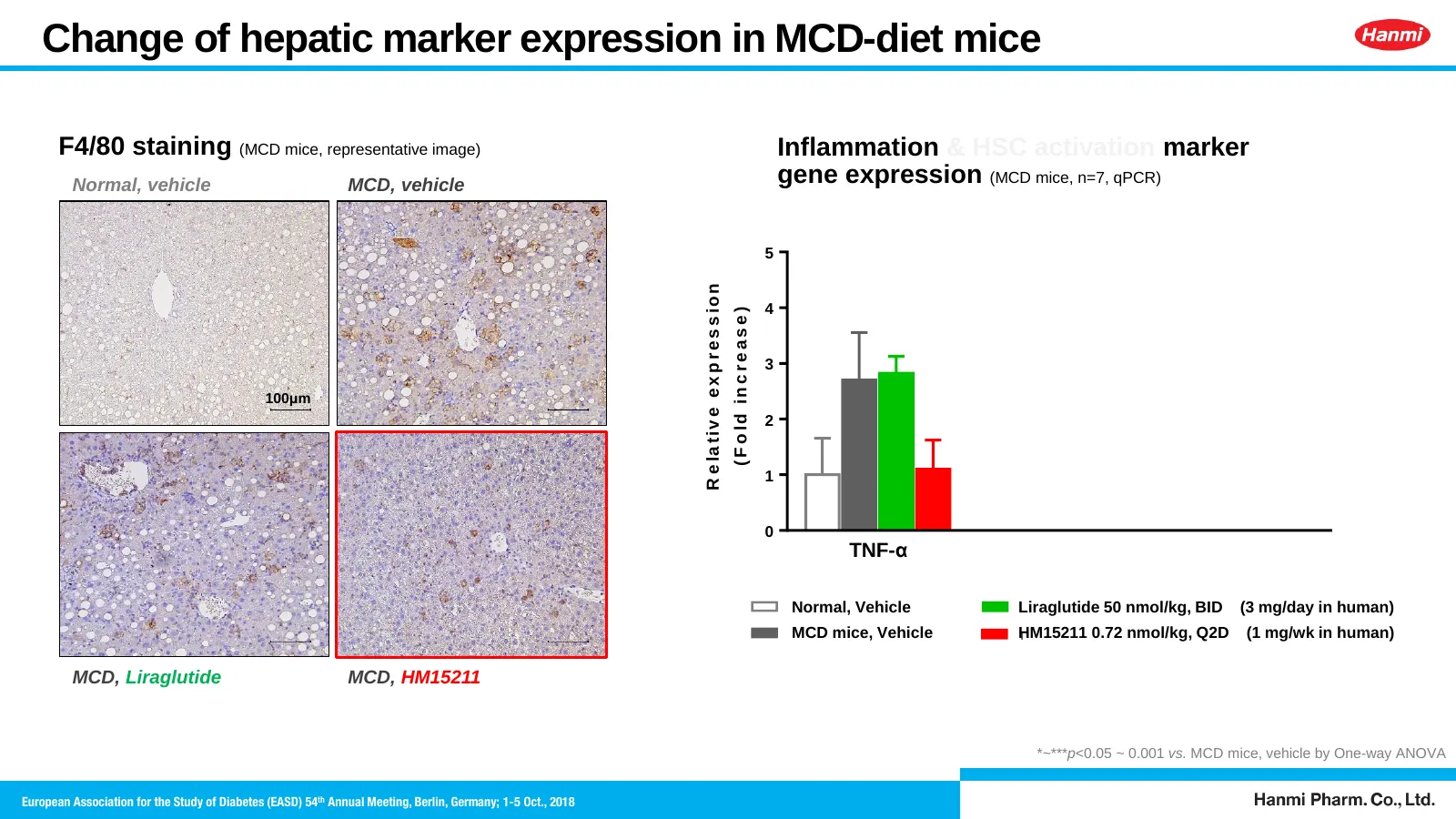
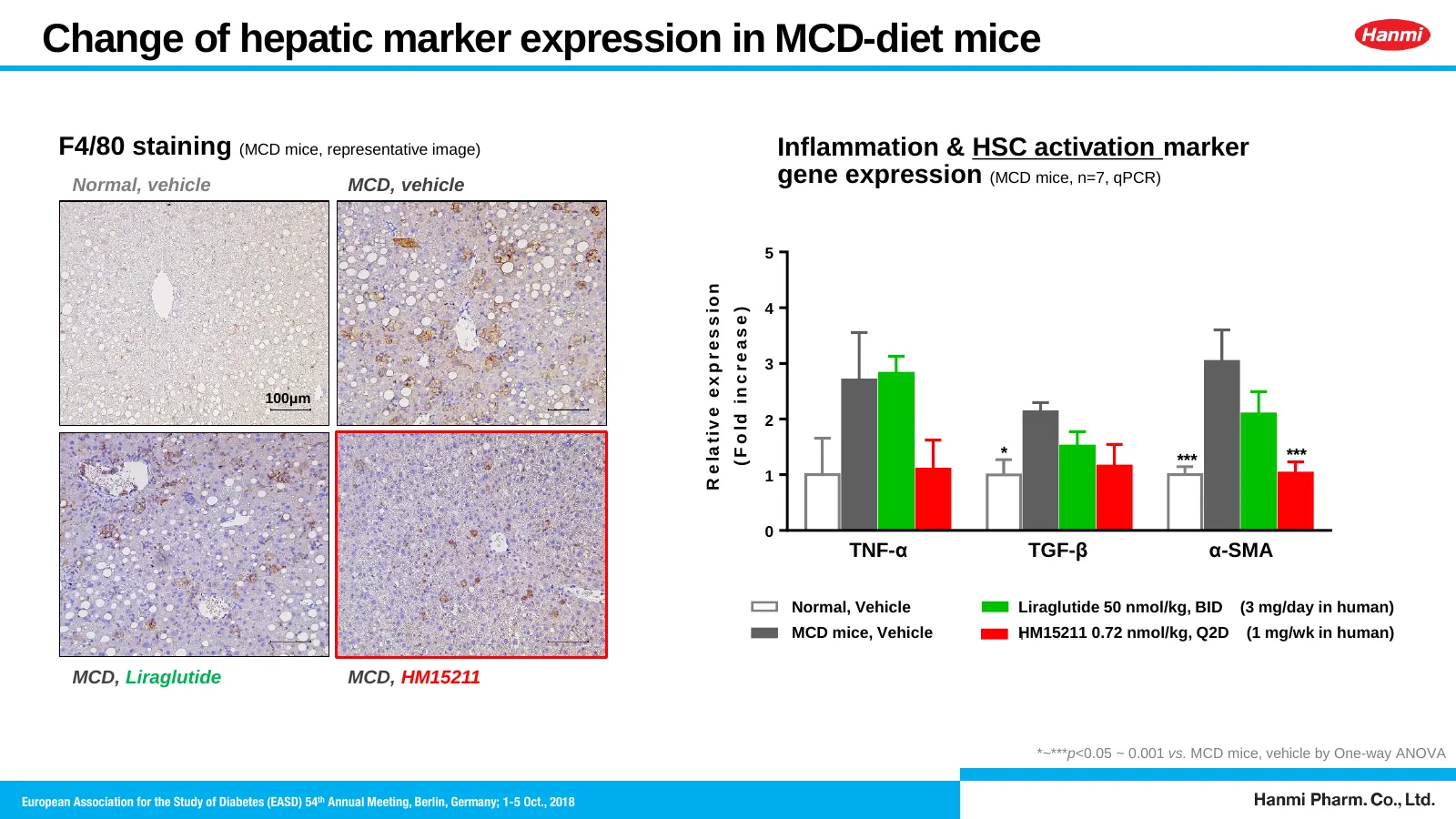
Change of hepatic marker expression in MCD-diet mice F4/80 staining (MCD mice, representative image) Inflammation & HSC activation marker Normal, vehicle MCD, vehicle gene expression (MCD mice, n=7, qPCR) g) g) 30 o l/m 30 l/m 25 S R S( n m( nom 5 25 20 ) g) 30 1) R e la t iv e e x p r e s s io n (
Slide 17: Change of hepatic marker expression in MCD-diet mice
Change of hepatic marker expression in MCD-diet mice F4/80 staining (MCD mice, representative image) Inflammation & HSC activation marker Normal, vehicle MCD, vehicle gene expression (MCD mice, n=7, qPCR) g) g) 30 o l/m 30 l/m 25 S R S( n m( nom 5 25 20 ) g) 30 1) R e la t iv e e x p r e s s io n (
Slide 18: Change of NAFLD activity score in MCD-diet mice
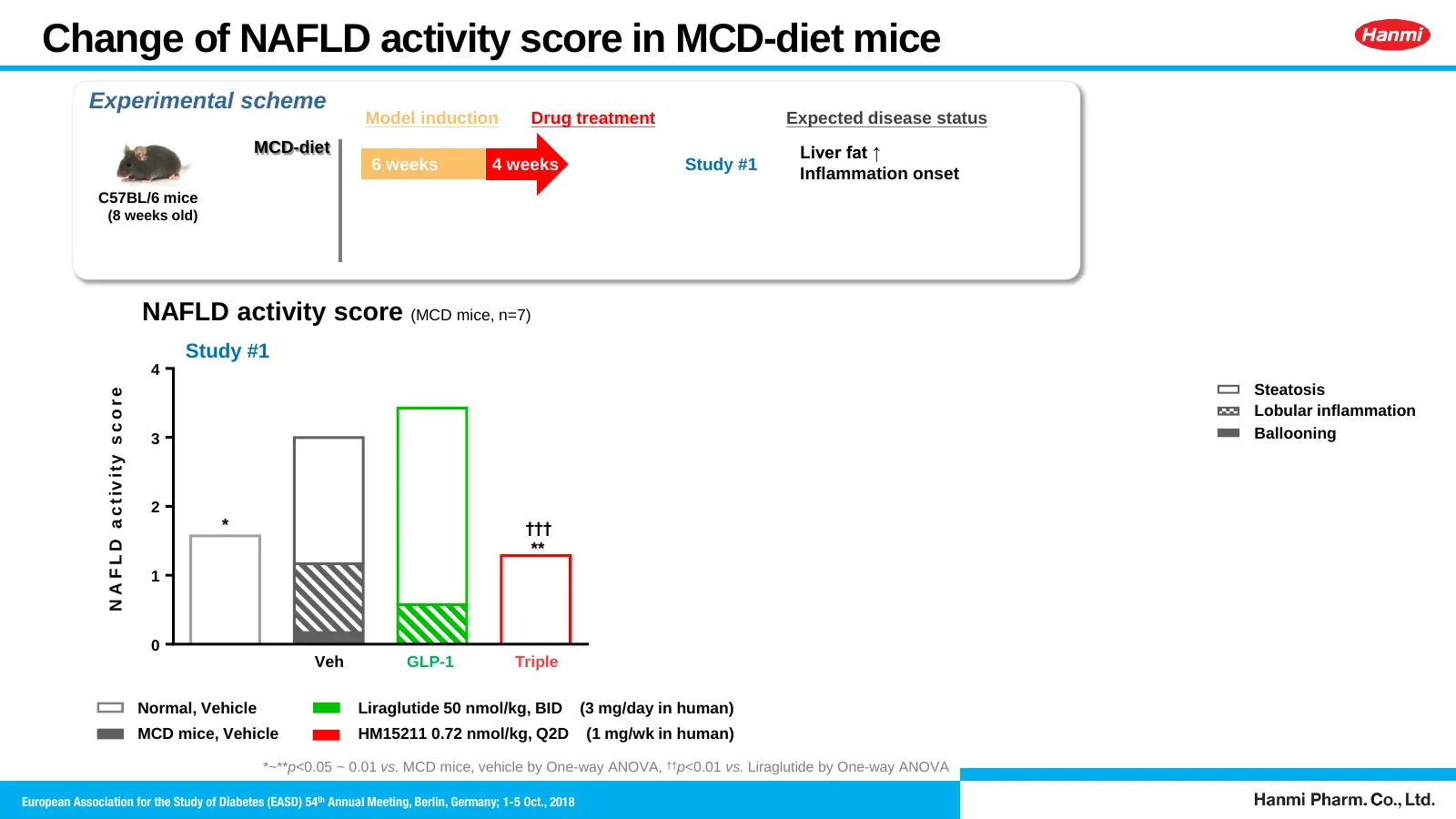
Change of NAFLD activity score in MCD-diet mice Experimental scheme Model induction Drug treatment Expected disease status MCD-diet Liver fat ↑ 6 weeks 4 weeks Study #1 Inflammation onset C57BL/6 mice (8 weeks old) g) g) 30 NAFLD activity3 0score (MCD mice, n=7) o l/m 25 l/m Study #1 S R S( n m( no
Slide 19: Change of NAFLD activity score in MCD-diet mice
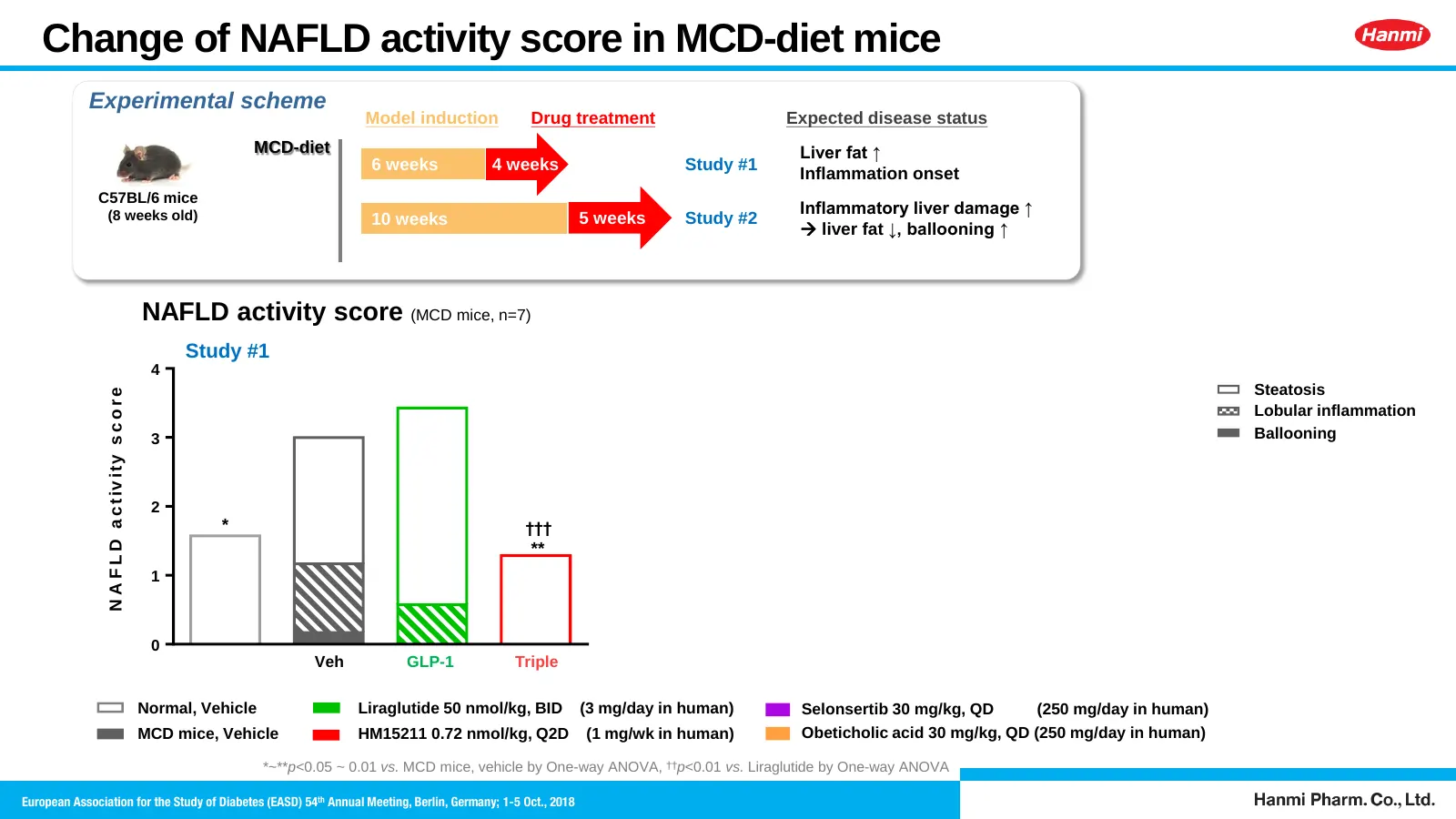
Change of NAFLD activity score in MCD-diet mice Experimental scheme Model induction Drug treatment Expected disease status MCD-diet Liver fat ↑ 6 weeks 4 weeks Study #1 Inflammation onset C57BL/6 mice (8 weeks old) Inflammatory liver damage ↑ 10 weeks 5 weeks Study #2 liver fat ↓, ballooning ↑ g)
Slide 20: Change of NAFLD activity score in MCD-diet mice
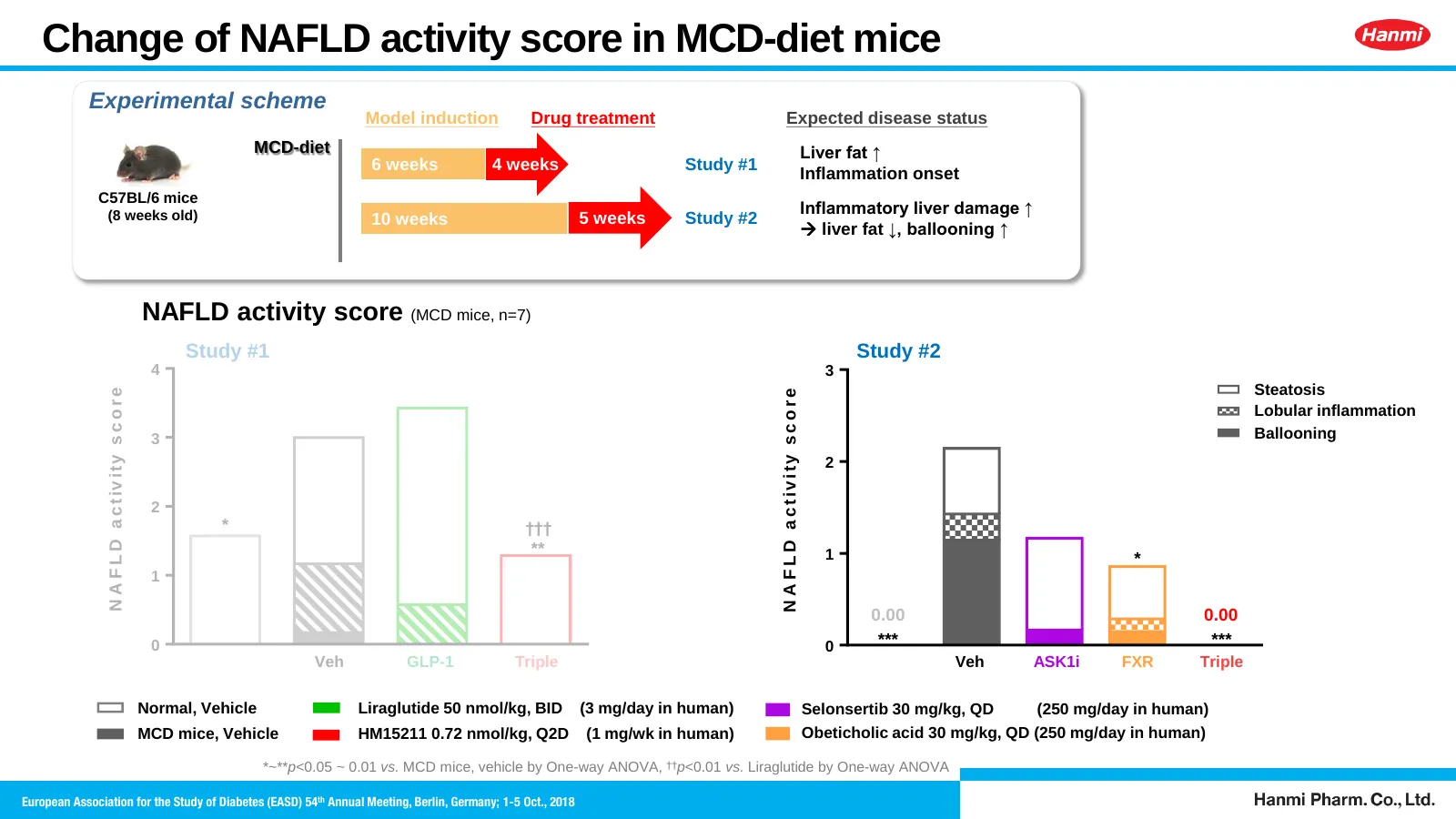
Change of NAFLD activity score in MCD-diet mice Experimental scheme Model induction Drug treatment Expected disease status MCD-diet Liver fat ↑ 6 weeks 4 weeks Study #1 Inflammation onset C57BL/6 mice (8 weeks old) Inflammatory liver damage ↑ 10 weeks 5 weeks Study #2 liver fat ↓, ballooning ↑ g)
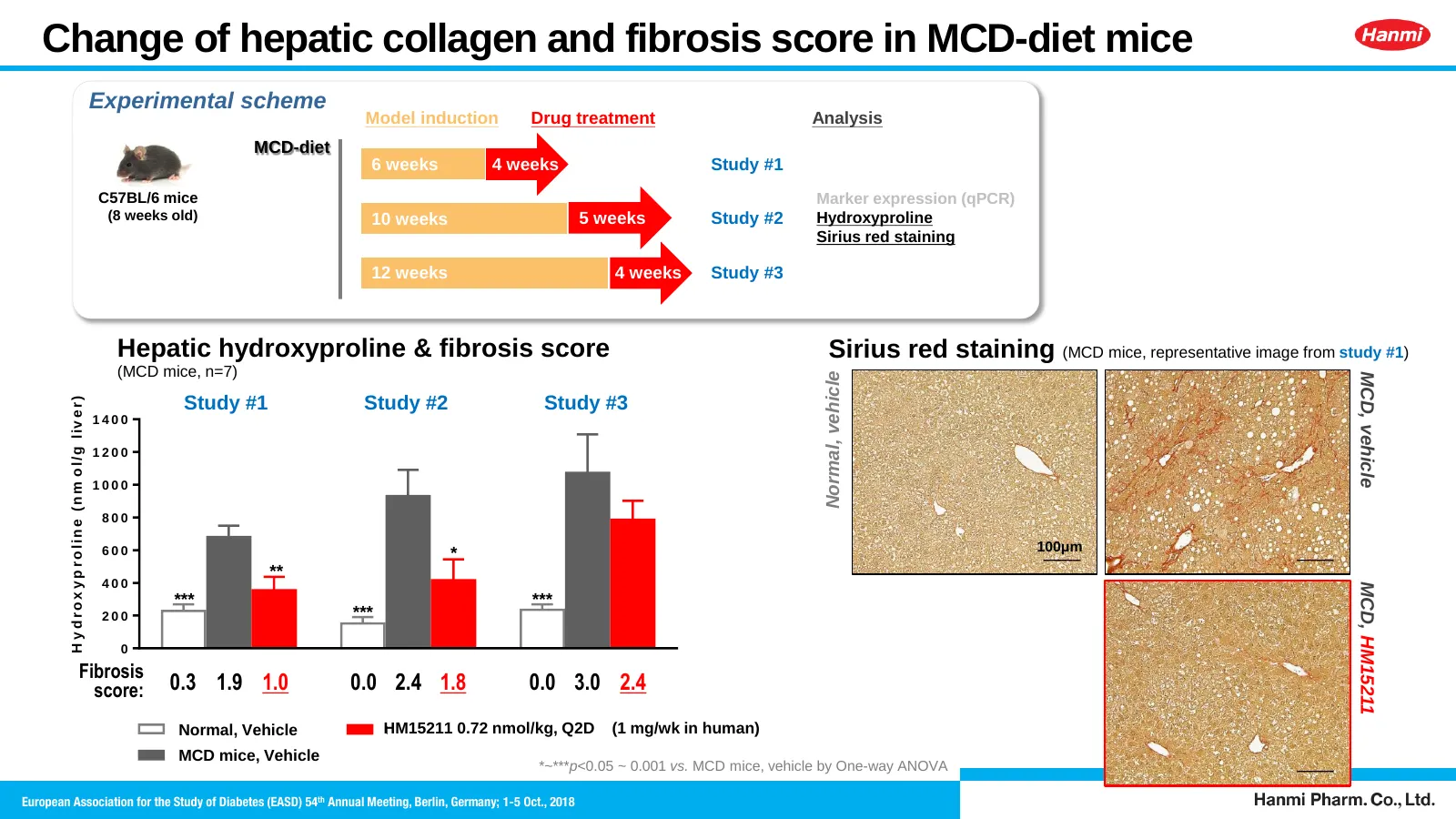
Slide 21: Change of hepatic collagen and fibrosis score in MCD-diet mice
Change of hepatic collagen and fibrosis score in MCD-diet mice Experimental scheme Model induction Drug treatment Analysis MCD-diet 6 weeks 4 weeks Study #1 C57BL/6 mice Marker expression (qPCR) (8 weeks old) 10 weeks 5 weeks Study #2 Hydroxyproline Sirius red staining 12 weeks 4 weeks Study #3 ( n
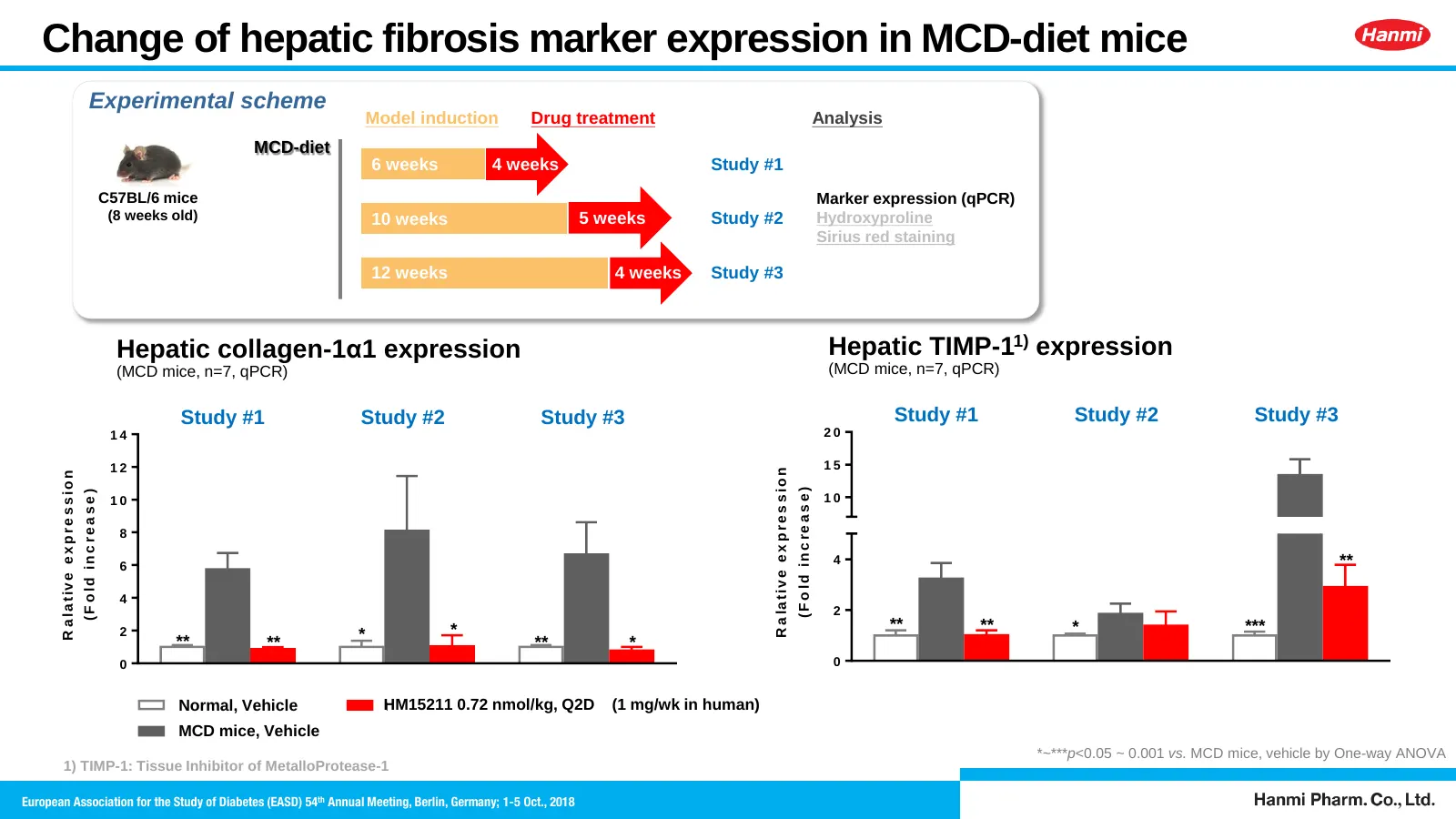
Slide 22: Change of hepatic fibrosis marker expression in MCD-diet mice
Change of hepatic fibrosis marker expression in MCD-diet mice Experimental scheme Model induction Drug treatment Analysis MCD-diet 6 weeks 4 weeks Study #1 C57BL/6 mice Marker expression (qPCR) (8 weeks old) 10 weeks 5 weeks Study #2 Hydroxyproline Sirius red staining ( n m o l/m g ) 3 012 weeks 4 w
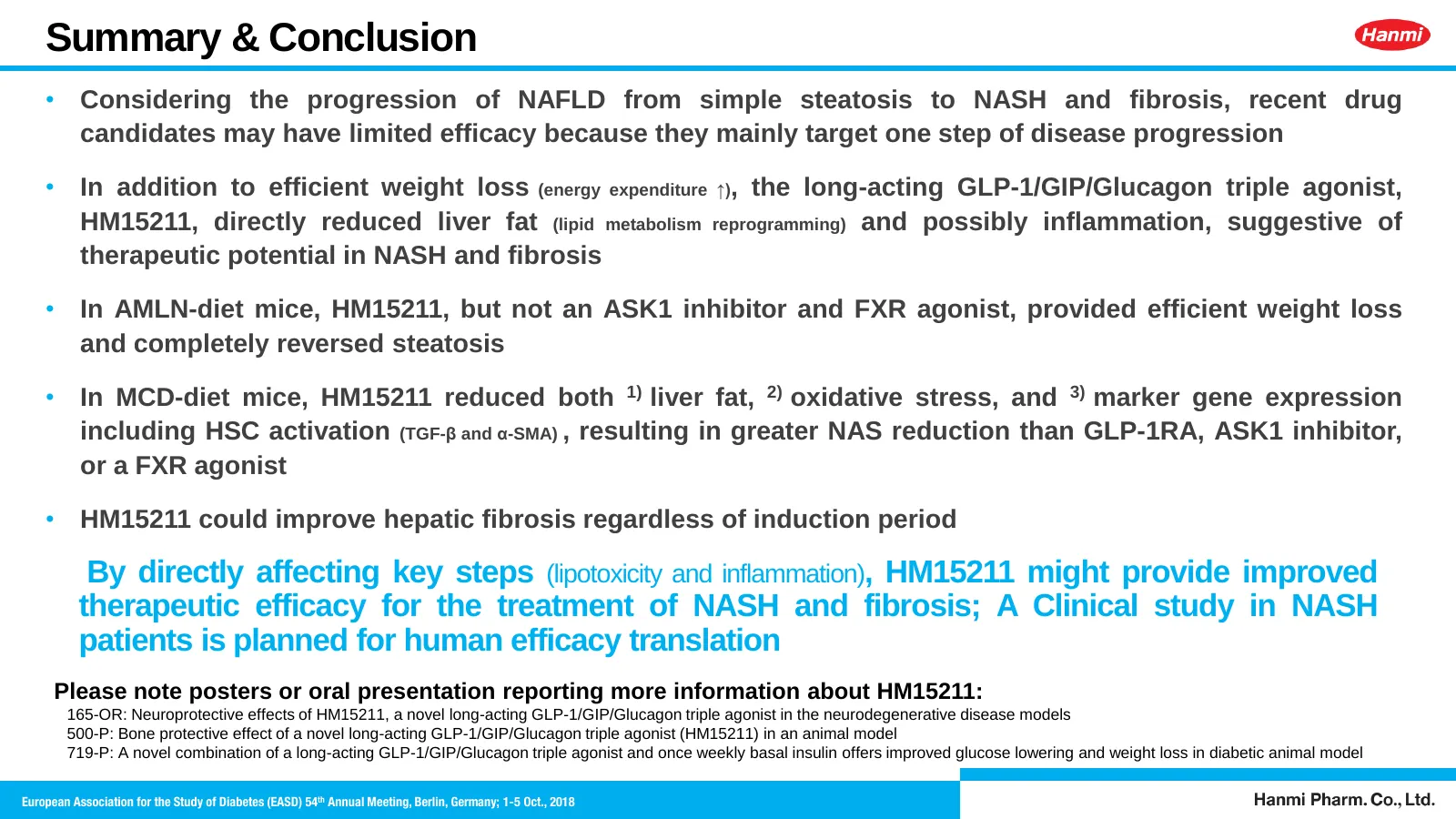
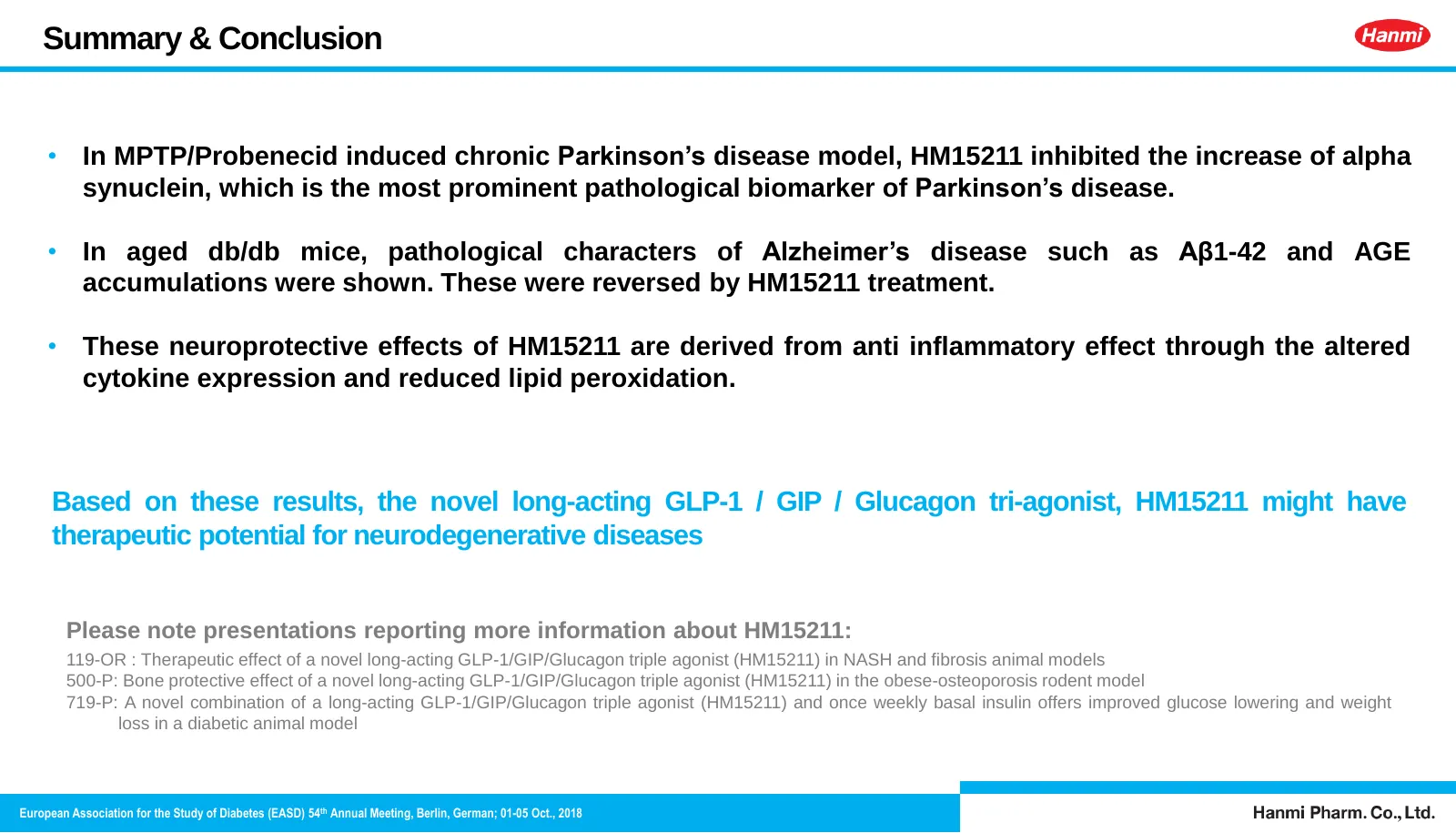
Slide 23: Summary & Conclusion
Summary & Conclusion • Considering the progression of NAFLD from simple steatosis to NASH and fibrosis, recent drug candidates may have limited efficacy because they mainly target one step of disease progression • In addition to efficient weight loss (energy expenditure ↑), the long-acting GLP-1/GIP
Slide 24: Neuroprotective effects of HM15211 in neurodegenerative disease models
Neuroprotective effects of HM15211, a novel long-acting GLP-1/GIP/Glucagon triple agonist in the neurodegenerative disease models Jeong A Kim, Sang Don Lee, Sang-Hyun Lee, Sung Min Bae, In Young Choi, and Young Hoon Kim Hanmi Pharm. Co., Ltd., Seoul, Republic of Korea
Slide 25: Presenter Disclosure
Presenter Disclosure Employee of Hanmi Pharm. Co., Ltd. European Association for the Study of Diabetes (EASD) 54th Annual Meeting, Berlin, German; 01-05 Oct., 2018
Slide 26: HM15211, a novel long-acting GLP-1/GIP/Glucagon triple agonist
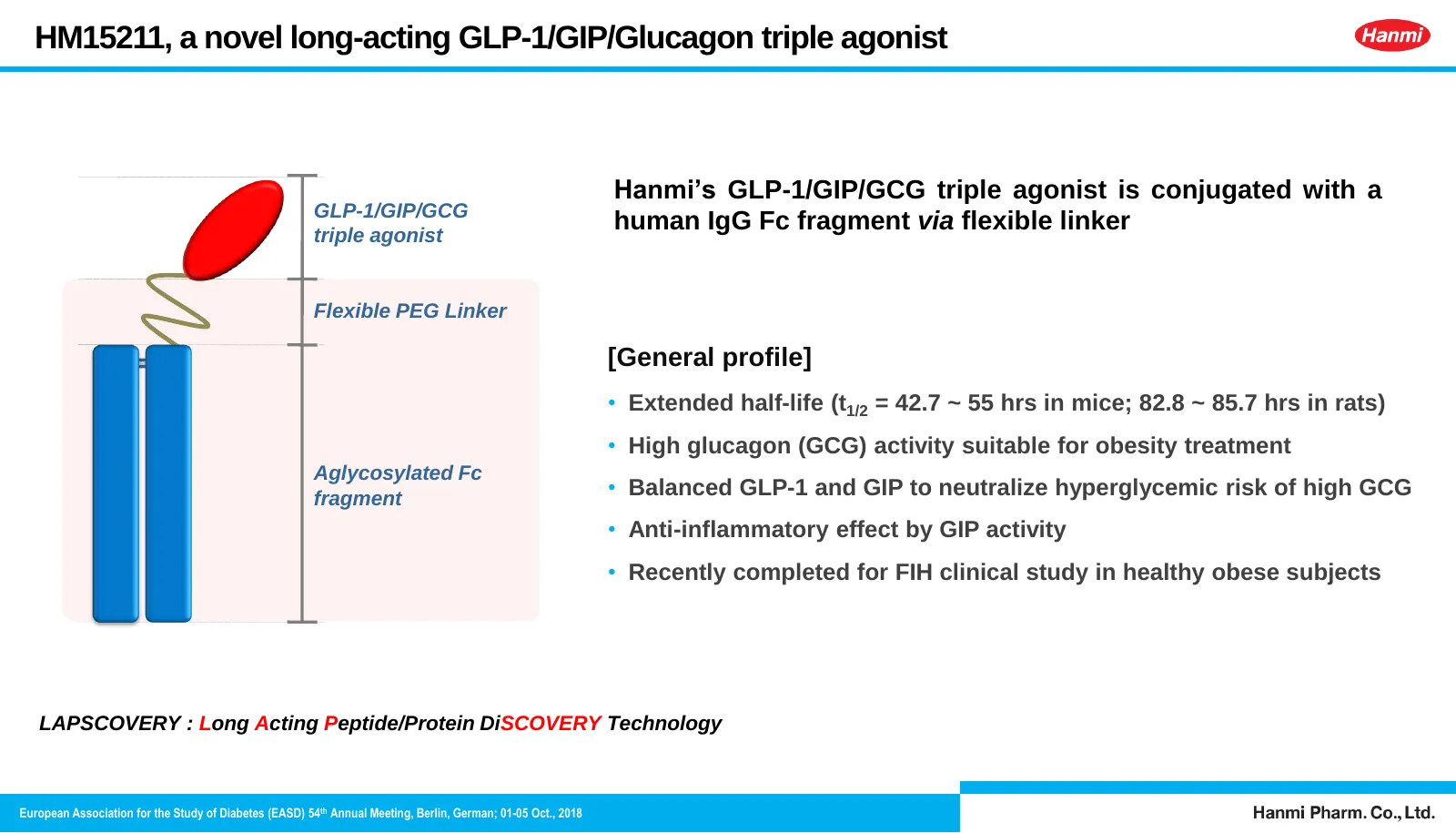
HM15211, a novel long-acting GLP-1/GIP/Glucagon triple agonist Hanmi’s GLP-1/GIP/GCG triple agonist is conjugated with a GLP-1/GIP/GCG triple agonist human IgG Fc fragment via flexible linker Flexible PEG Linker [General profile] • Extended half-life (t1/2 = 42.7 ~ 55 hrs in mice; 82.8 ~ 85.7 hrs in
Slide 27: Incretin hormones in central nervous system
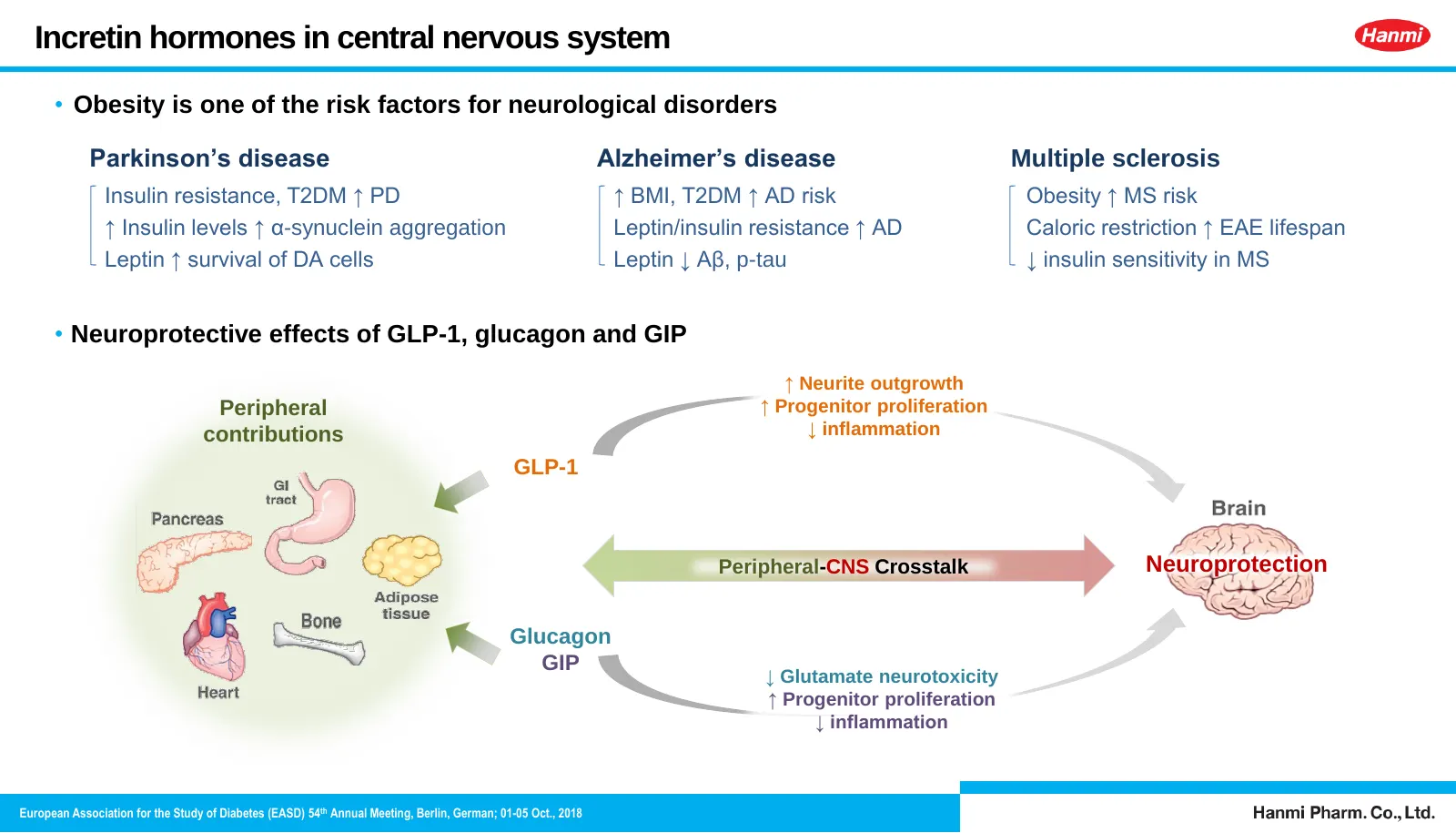
Incretin hormones in central nervous system • Obesity is one of the risk factors for neurological disorders Parkinson’s disease Alzheimer’s disease Multiple sclerosis Insulin resistance, T2DM ↑ PD ↑ BMI, T2DM ↑ AD risk Obesity ↑ MS risk ↑ Insulin levels ↑ α-synuclein aggregation Leptin/insulin resis
Slide 28: Objective
Objective Evaluation of neuroprotective potential of HM15211… • To assess the efficacy and related mode of actions a. in Parkinson’s disease mice model b. of Alzheimer’s disease in diabetic mice model European Association for the Study of Diabetes (EASD) 54th Annual Meeting, Berlin, German; 01-05 Oc
Slide 29: Efficacy and related MoAs in Parkinson's disease mice model
Efficacy and related MoAs in Parkinson’s disease mice model European Association for the Study of Diabetes (EASD) 54th Annual Meeting, Berlin, German; 01-05 Oct., 2018
Slide 30: Parkinson's disease mouse model
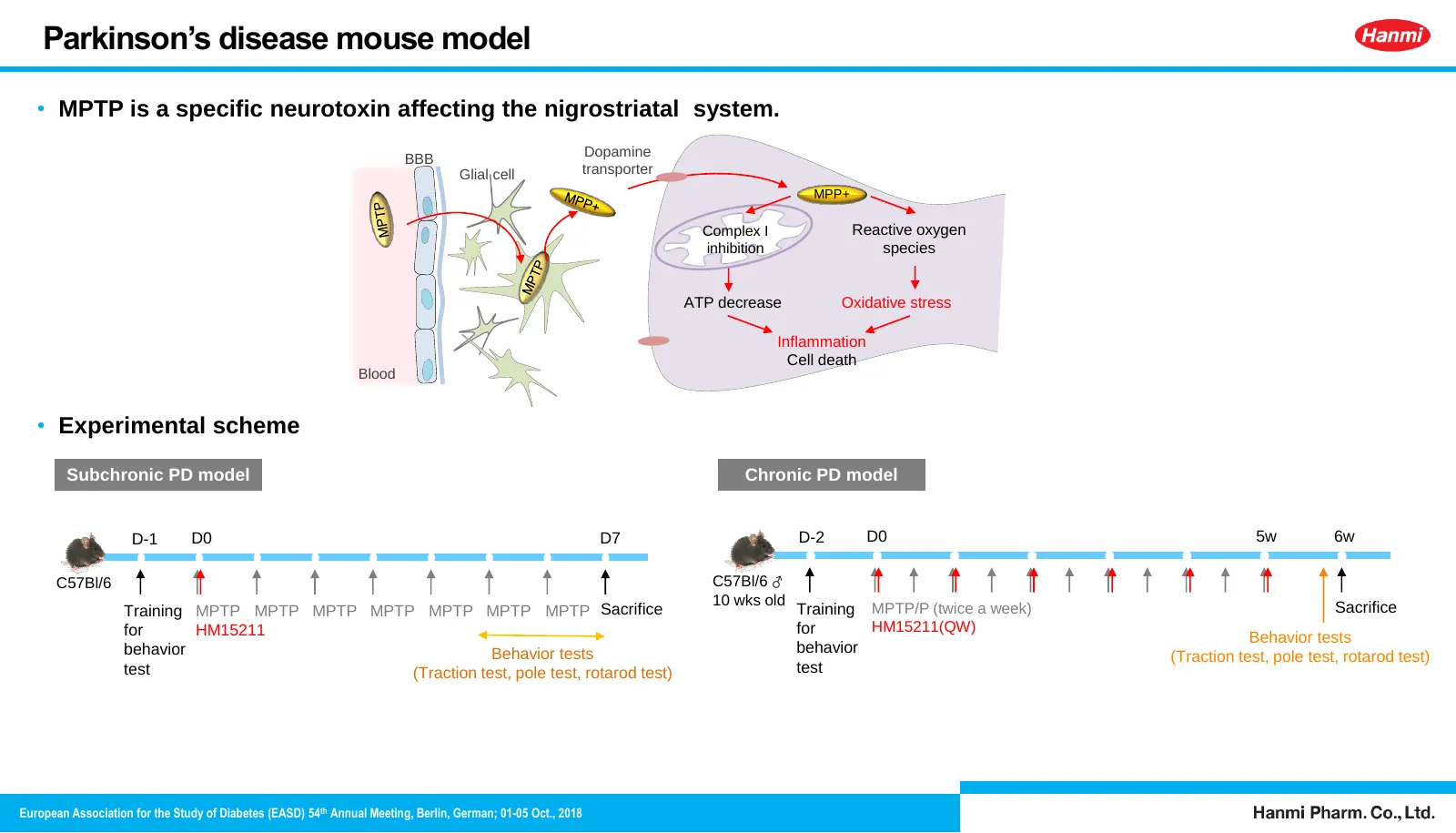
Parkinson’s disease mouse model • MPTP is a specific neurotoxin affecting the nigrostriatal system. BBB Dopamine Glial cell transporter MPP+ Complex I Reactive oxygen inhibition species ATP decrease Oxidative stress Inflammation Cell death Blood • Experimental scheme Subchronic PD model Chronic PD m
Slide 31: Dopaminergic neuroprotection by HM15211
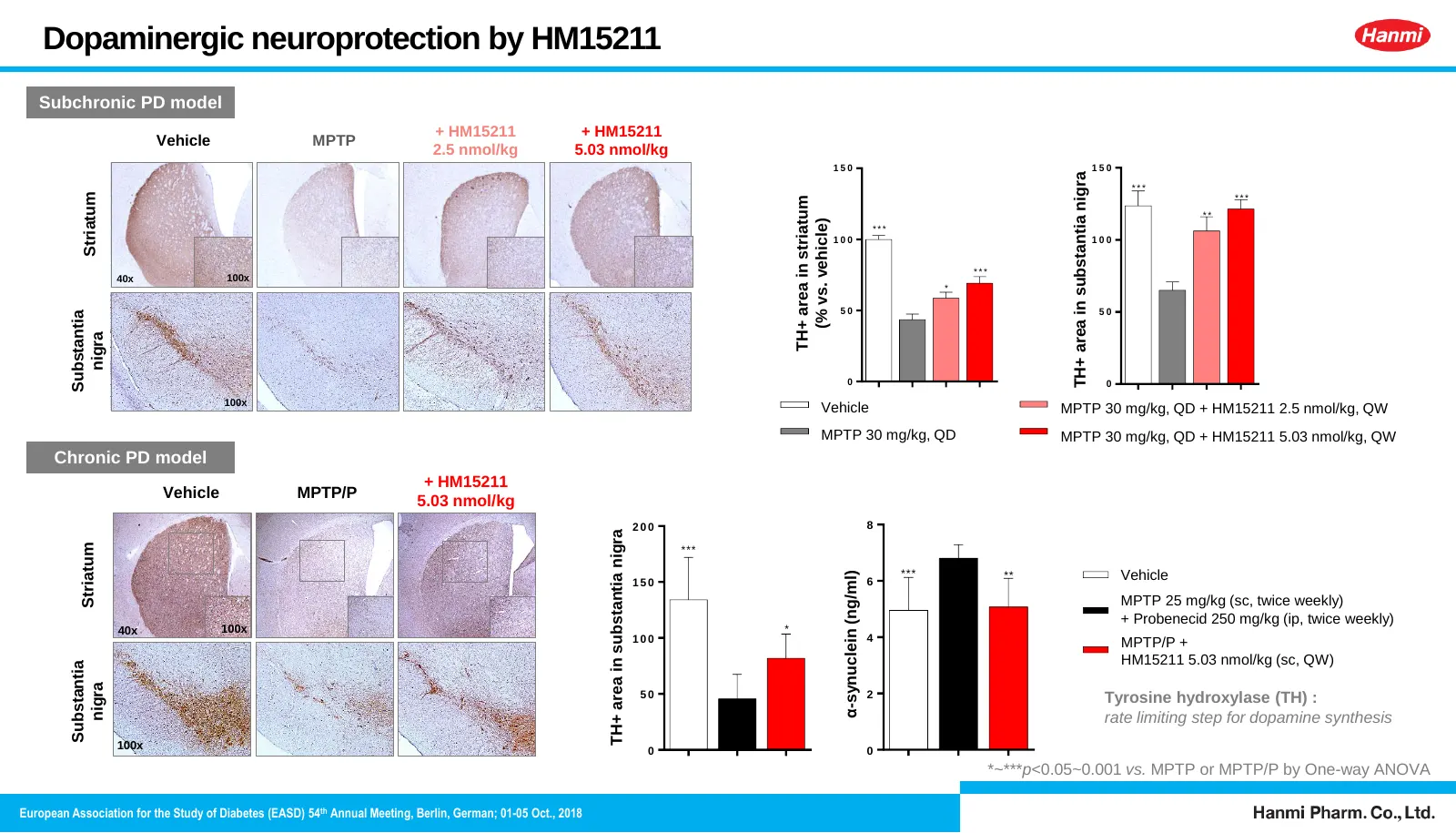
Dopaminergic neuroprotection by HM15211 Subchronic PD model + HM15211 + HM15211 Vehicle MPTP 2.5 nmol/kg 5.03 nmol/kg T H + a r e a in s tr ia tu m (% v s . v e h ic le ) 150 150 nigra ig r a *** Striatum V e h ic le *** V e h ic le TH+ area in striatum S u b s ta n tia n ** ini nsubstantia (% vs. v
Slide 32: Motor function restoring by HM15211
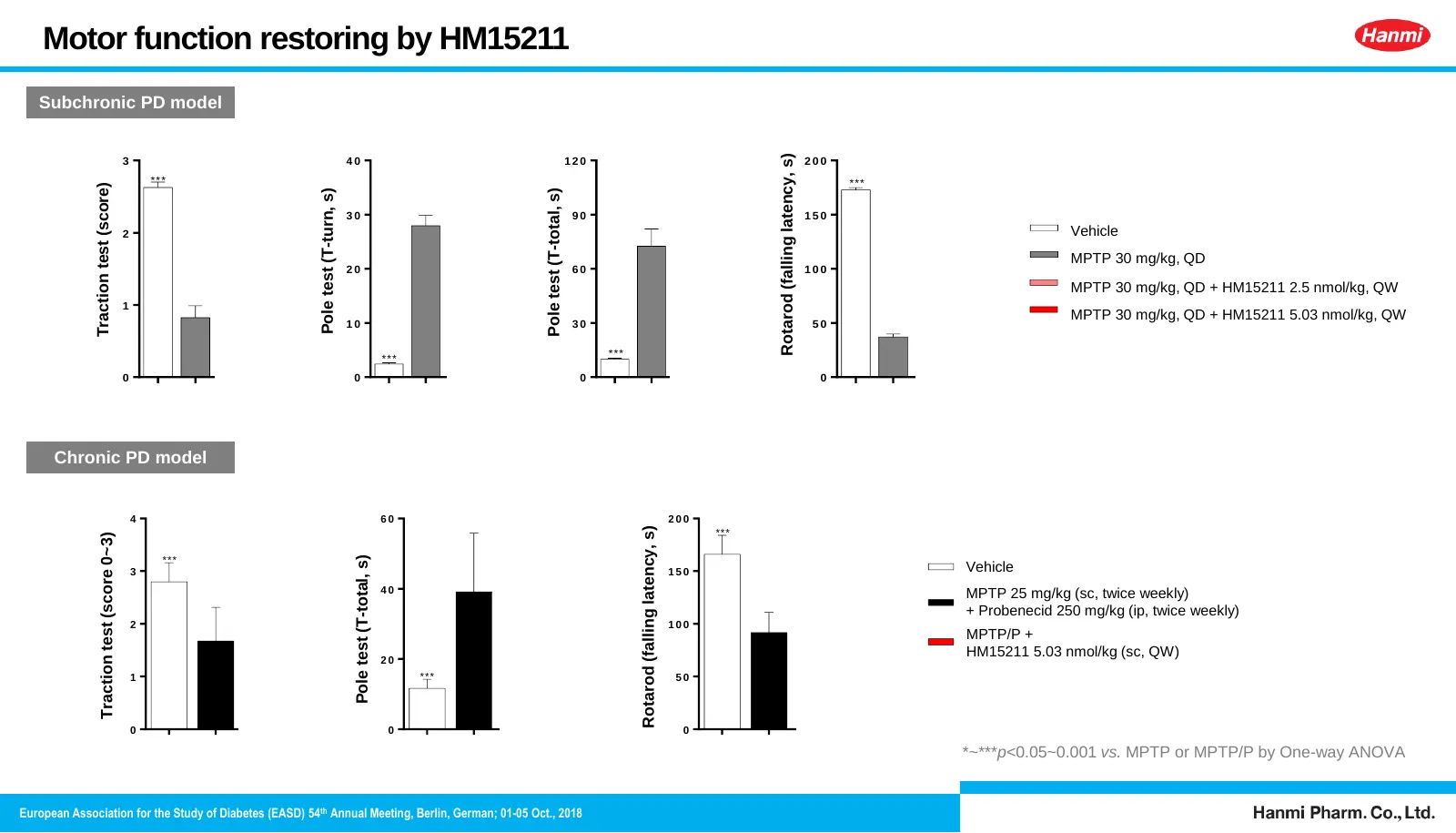
Motor function restoring by HM15211 Subchronic PD model e n c y , s ) s) 3 40 120 200 120 l l i n g l a tlatency, *** V e h ic le V e h ic le *** s t ( s(score) - t o t a l , s )s) - t u r n , s )s) 1 2 0 V e h ic le c o re ) V e h ic le s t ta(Tl,-tos )ta l, s ) (T-total, s t ( T(T-turn, M P T P 3
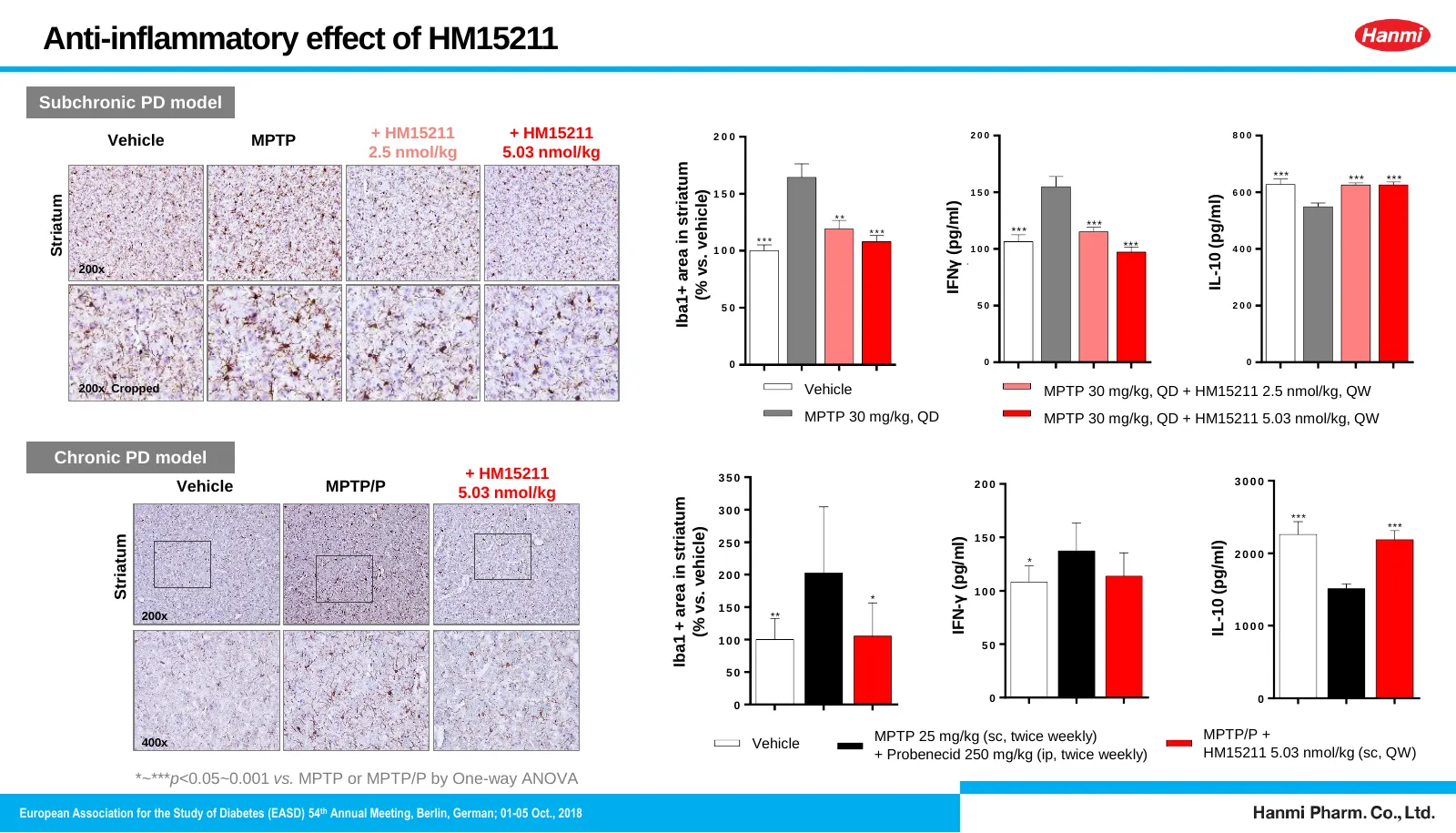
Slide 33: Anti-inflammatory effect of HM15211
Anti-inflammatory effect of HM15211 Subchronic PD model m (% v s . v e h ic le ) Vehicle MPTP + HM15211 + HM15211 200 200 800 2.5 nmol/kg 5.03 nmol/kg V e h ic le Iba1+ area in striatum V e h ic le *** *** *** 150 MPT 6P0 03 0 m p k, ip r i a t uvehicle) 150 Striatum I L - 1 0 ( p(pg/ml) M P T P 3 0
Slide 34: Efficacy and related MoAs of Alzheimer's disease in diabetic mice model
Efficacy and related MoAs of Alzheimer’s disease in diabetic mice model European Association for the Study of Diabetes (EASD) 54th Annual Meeting, Berlin, German; 01-05 Oct., 2018
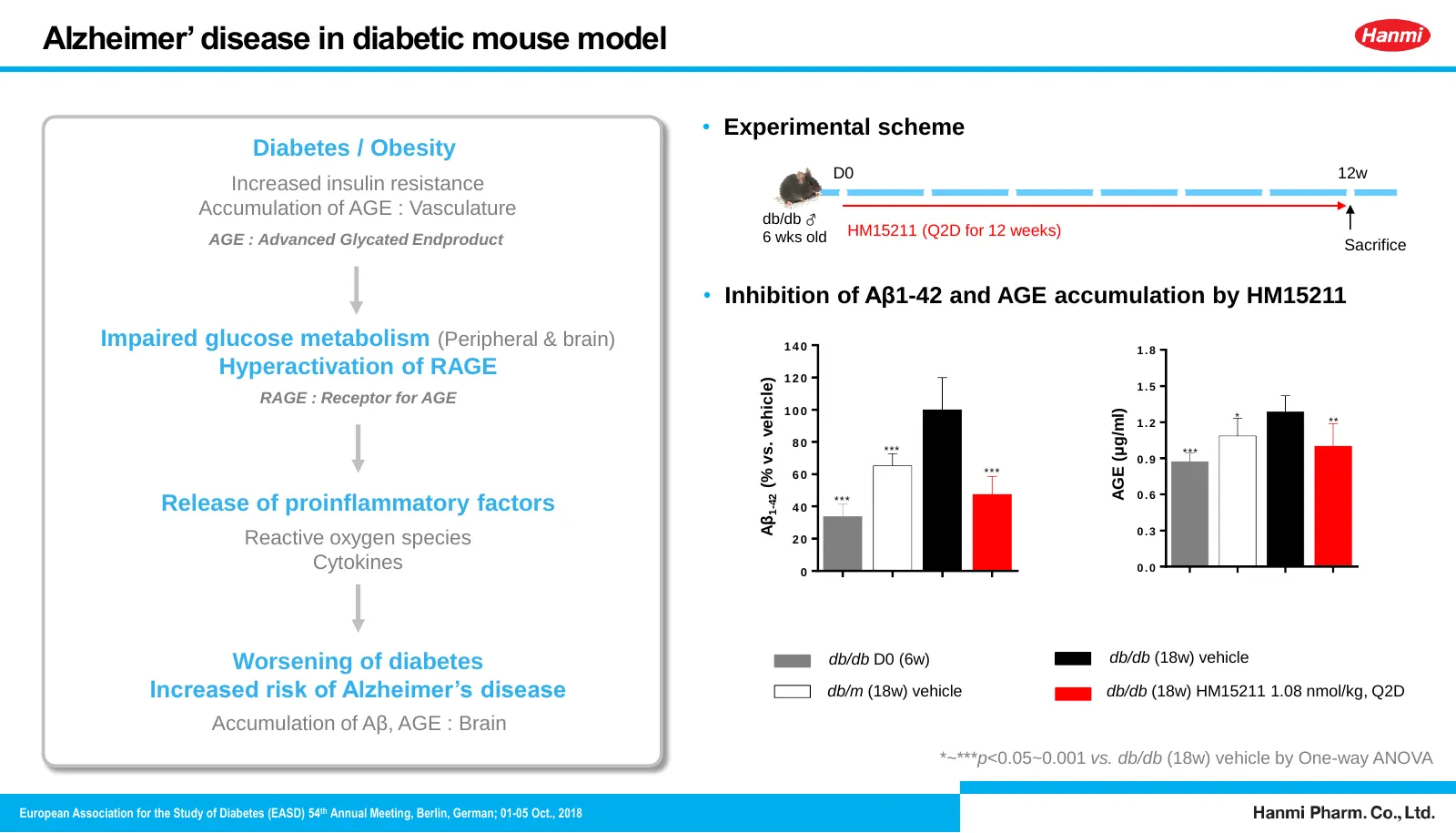
Slide 35: Alzheimer's disease in diabetic mouse model
Alzheimer’ disease in diabetic mouse model • Experimental scheme Diabetes / Obesity D0 12w Increased insulin resistance Accumulation of AGE : Vasculature db/db ♂ 6 wks old HM15211 (Q2D for 12 weeks) AGE : Advanced Glycated Endproduct Sacrifice • Inhibition of Aβ1-42 and AGE accumulation by HM15211 I
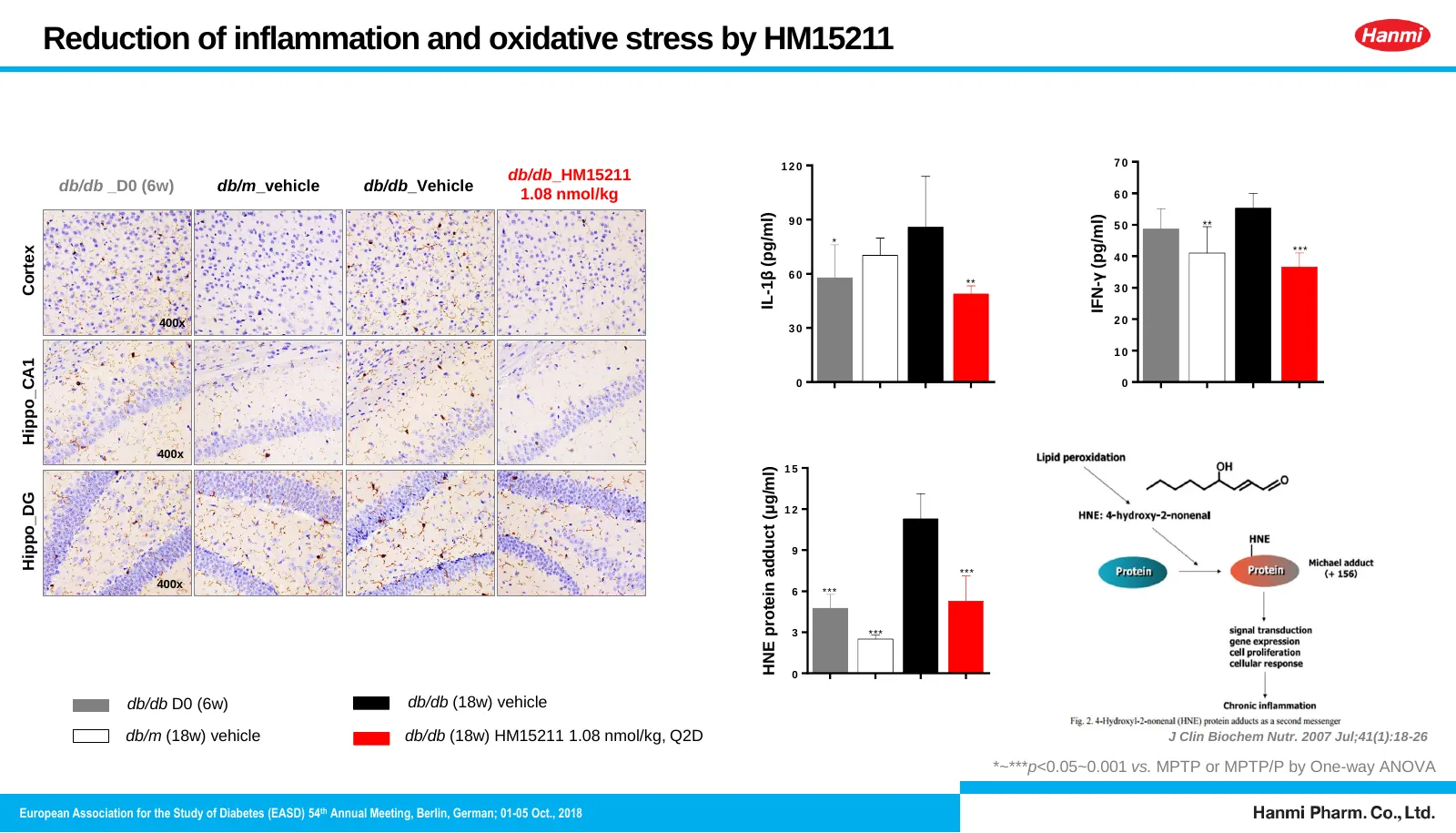
Slide 36: Reduction of inflammation and oxidative stress by HM15211
Reduction of inflammation and oxidative stress by HM15211 120 70 db/db_HM15211 db/db _D0 (6w) db/m_vehicle db/db_Vehicle 1.08 nmol/kg 60 - 1 ( p (pg/ml) N - ( p(pg/ml) 90 d b5/ 0d b D 0 ( 5 w ) ** d b /d g /m l) g /m l) * Cortex d b4/ 0m v e h ic le *** d b /m 60 ILIL-1β I FIFN-γ ** V e h ic le
Slide 37: Summary & Conclusion
Summary & Conclusion • In MPTP/Probenecid induced chronic Parkinson’s disease model, HM15211 inhibited the increase of alpha synuclein, which is the most prominent pathological biomarker of Parkinson’s disease. • In aged db/db mice, pathological characters of Alzheimer’s disease such as Aβ1-42 and A
Source: Internet Archive copy of hanmipharm.com
More decks from Hanmi Pharmaceutical Co., Ltd.
 European Association for the Study of Diabetes (EASD) 58th Annual Meeting 20227 slides · September 2022
 Technical Presentation (2022)16 slides · 2022
 European Association for the Study of Diabetes (EASD) 57th Annual Meeting 202127 slides · Sep 27, 2021
 ASCO 202116 slides · Jun 4, 2021
 Technical Presentation (2021)12 slides · 2021
 ASPEN 2021 Nutrition Science & Practice Conference20 slides · 2021