AB Science SA · EURONEXT:AB
AB Science SA — AB Science Webconference: Masitinib in Severe Asthma Uncontrolled by Oral Corticosteroids (December 2019)
27 slides from AB Science SA's conference presentation, Dec 2, 2019
Slide 1: AB Science Webconference: Masitinib in Severe Asthma Uncontrolled by Oral Corticosteroids
AB SCIENCE WEBCONFERENCE MASITINIB IN SEVERE ASTHMA UNCONTROLLED BY ORAL COTICOSTEROIDS 02 December 2019
Slide 2: Disclaimer
Disclaimer This presentation, together with the material set forth herein, does not constitute an offer of securities for sale nor the solicitation of an offer to purchase securities in any jurisdiction. Distribution of such presentation in certain jurisdiction may constitute a breach of applicable
Slide 3: Agenda
AGENDA Introduction of participating experts Overview of masitinib clinical results Masitinib positioning Q&A
Slide 4: Participants
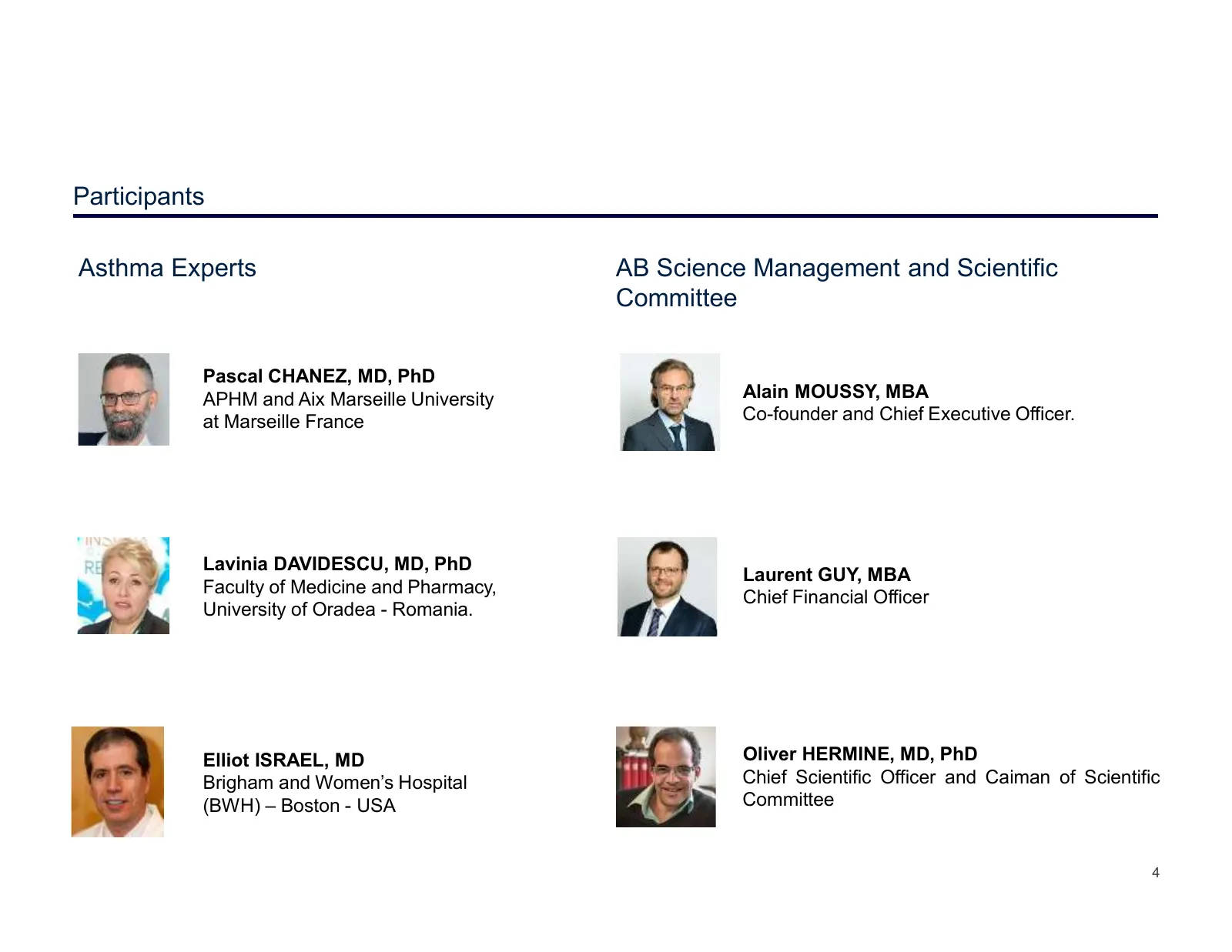
Participants Asthma Experts AB Science Management and Scientific Committee Pascal CHANEZ, MD, PhD APHM and Aix Marseille University Alain MOUSSY, MBA at Marseille France Co-founder and Chief Executive Officer. Lavinia DAVIDESCU, MD, PhD Laurent GUY, MBA Faculty of Medicine and Pharmacy, Chief Financ
Slide 5: Masitinib profile
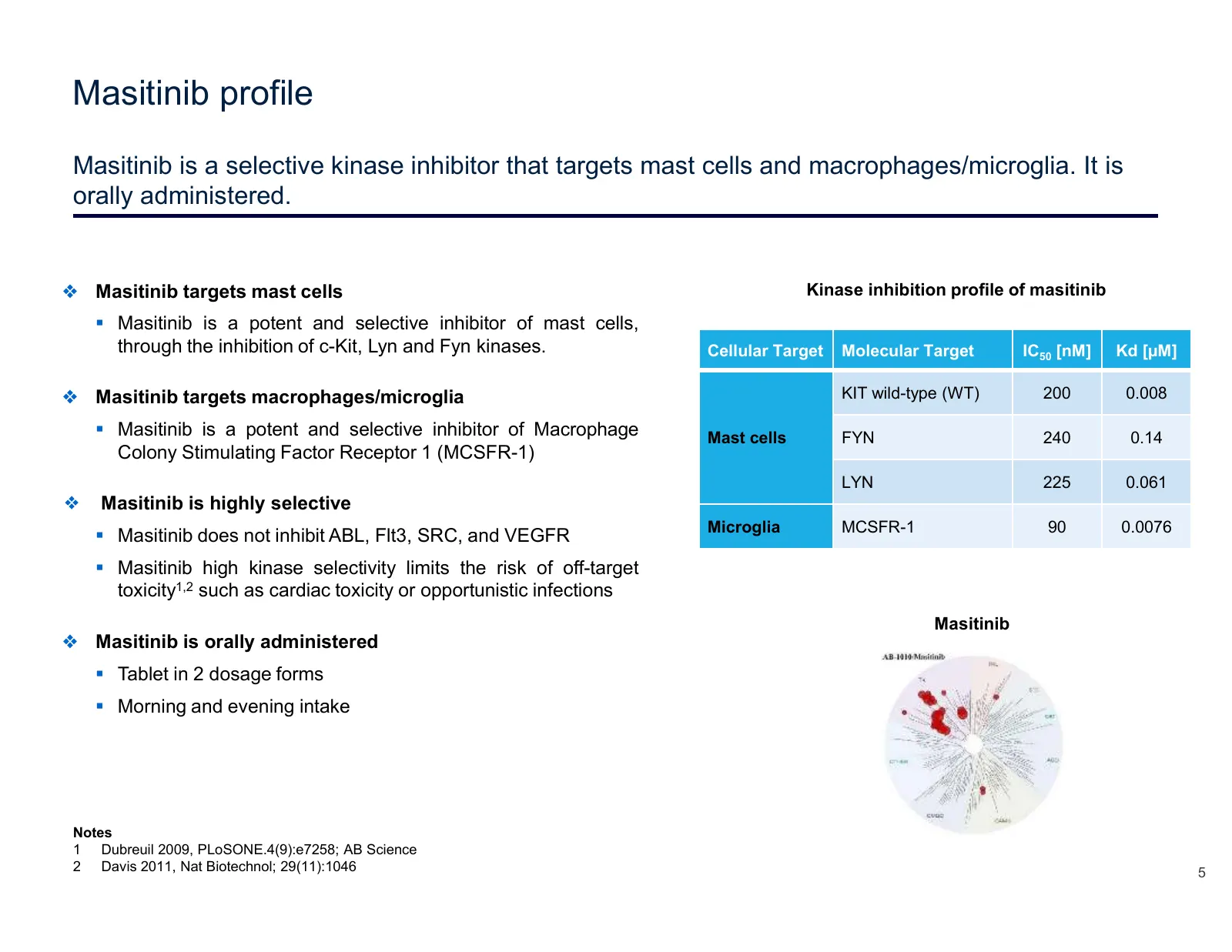
Masitinib profile Masitinib is a selective kinase inhibitor that targets mast cells and macrophages/microglia. It is orally administered. ❖ Masitinib targets mast cells Kinase inhibition profile of masitinib Masitinib is a potent and selective inhibitor of mast cells, through the inhibition of c-K
Slide 6: Scientific Rationale
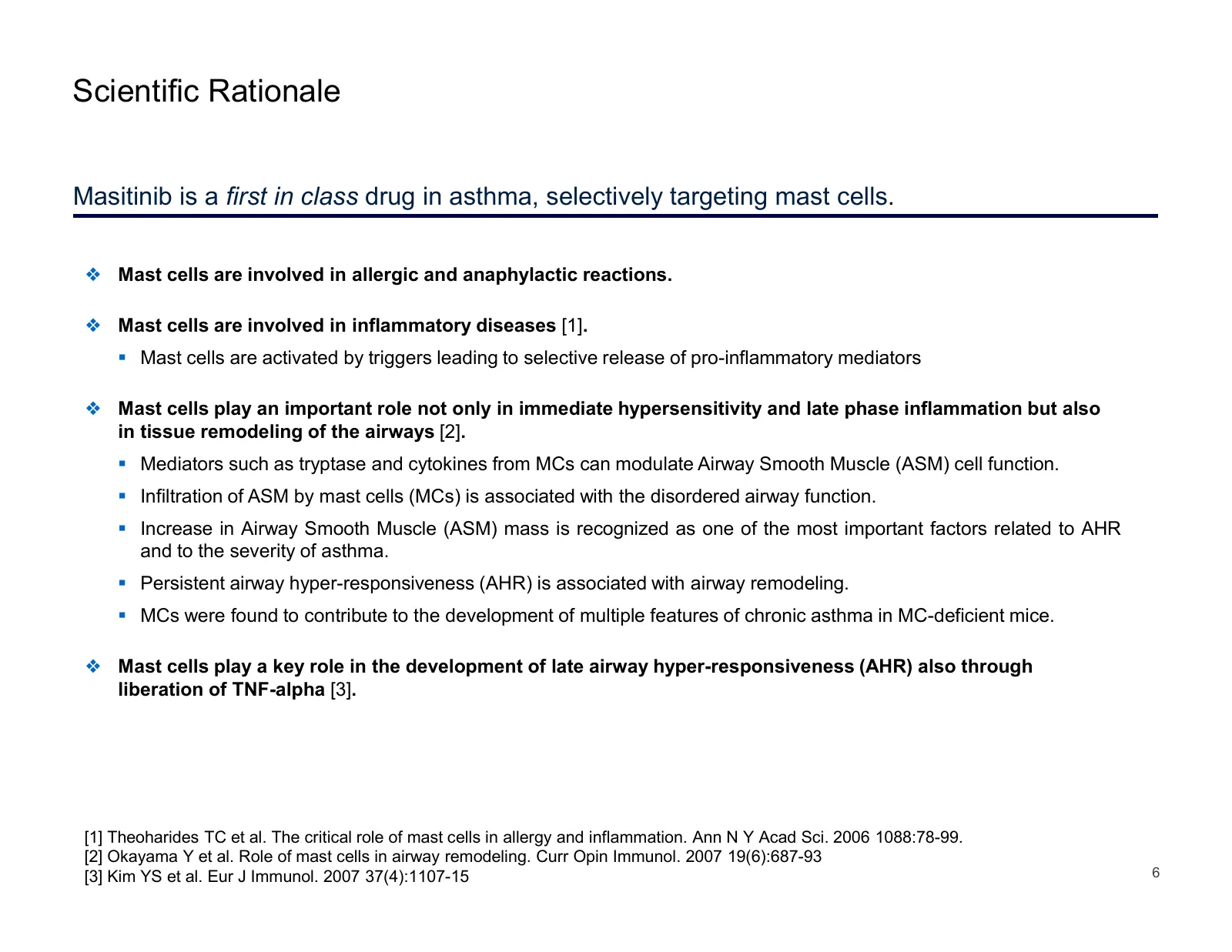
Scientific Rationale Masitinib is a first in class drug in asthma, selectively targeting mast cells. ❖ Mast cells are involved in allergic and anaphylactic reactions. ❖ Mast cells are involved in inflammatory diseases [1]. Mast cells are activated by triggers leading to selective release of pro-in
Slide 7: Scientific Rationale
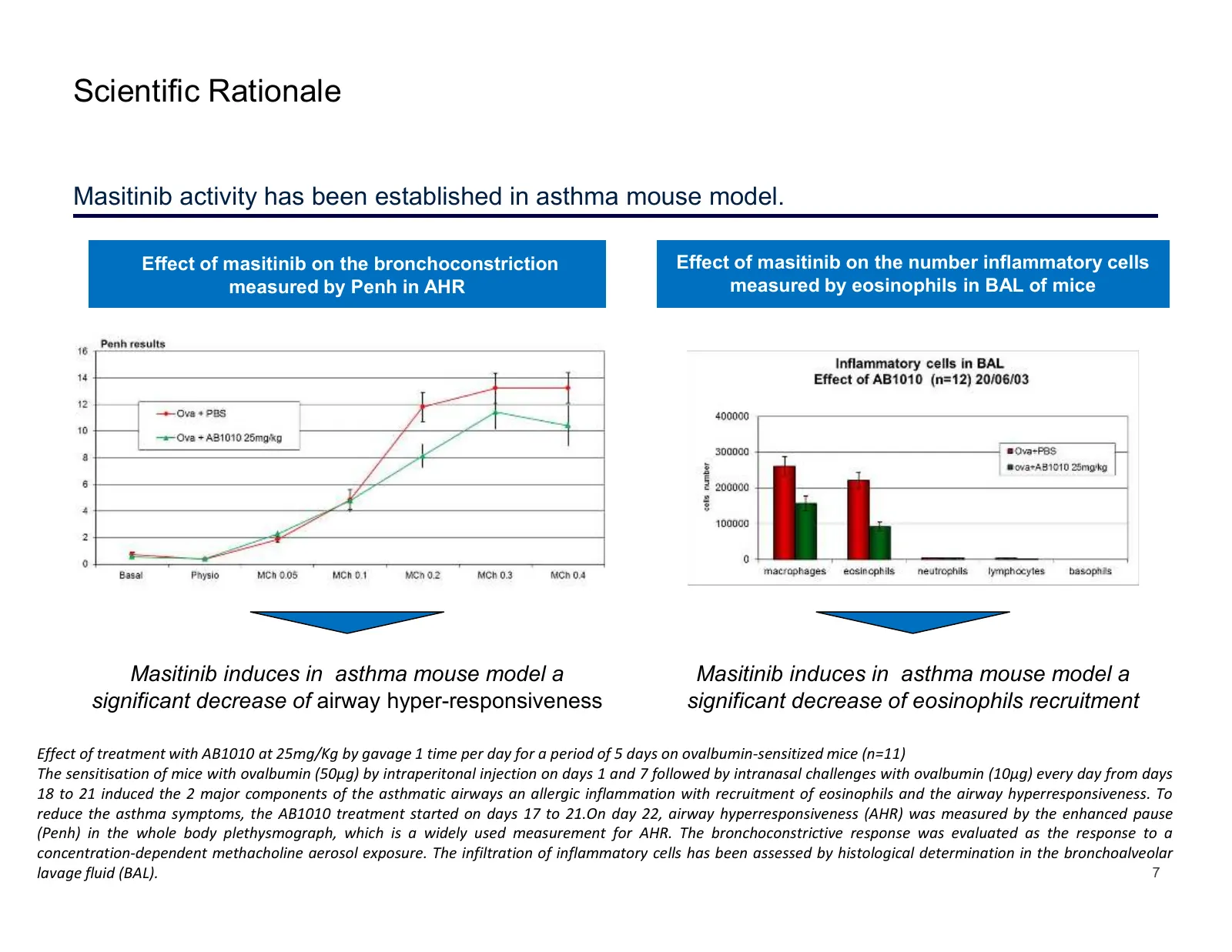
Scientific Rationale Masitinib activity has been established in asthma mouse model. Effect of masitinib on the bronchoconstriction Effect of masitinib on the number inflammatory cells measured by Penh in AHR measured by eosinophils in BAL of mice Masitinib induces in asthma mouse model a Masitinib i
Slide 8: Clinical Development
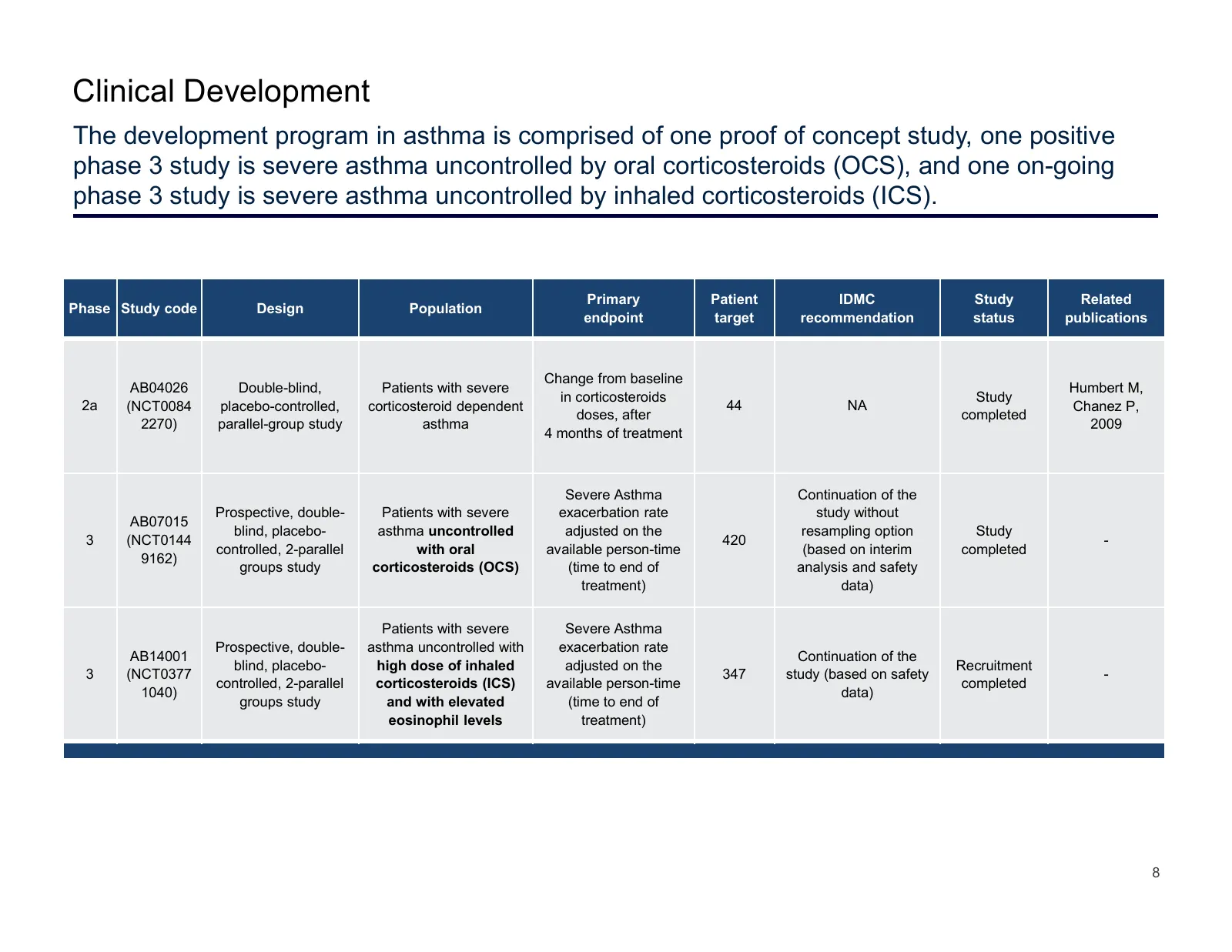
Clinical Development The development program in asthma is comprised of one proof of concept study, one positive phase 3 study is severe asthma uncontrolled by oral corticosteroids (OCS), and one on-going phase 3 study is severe asthma uncontrolled by inhaled corticosteroids (ICS). Primary Patient ID
Slide 9: Clinical Development
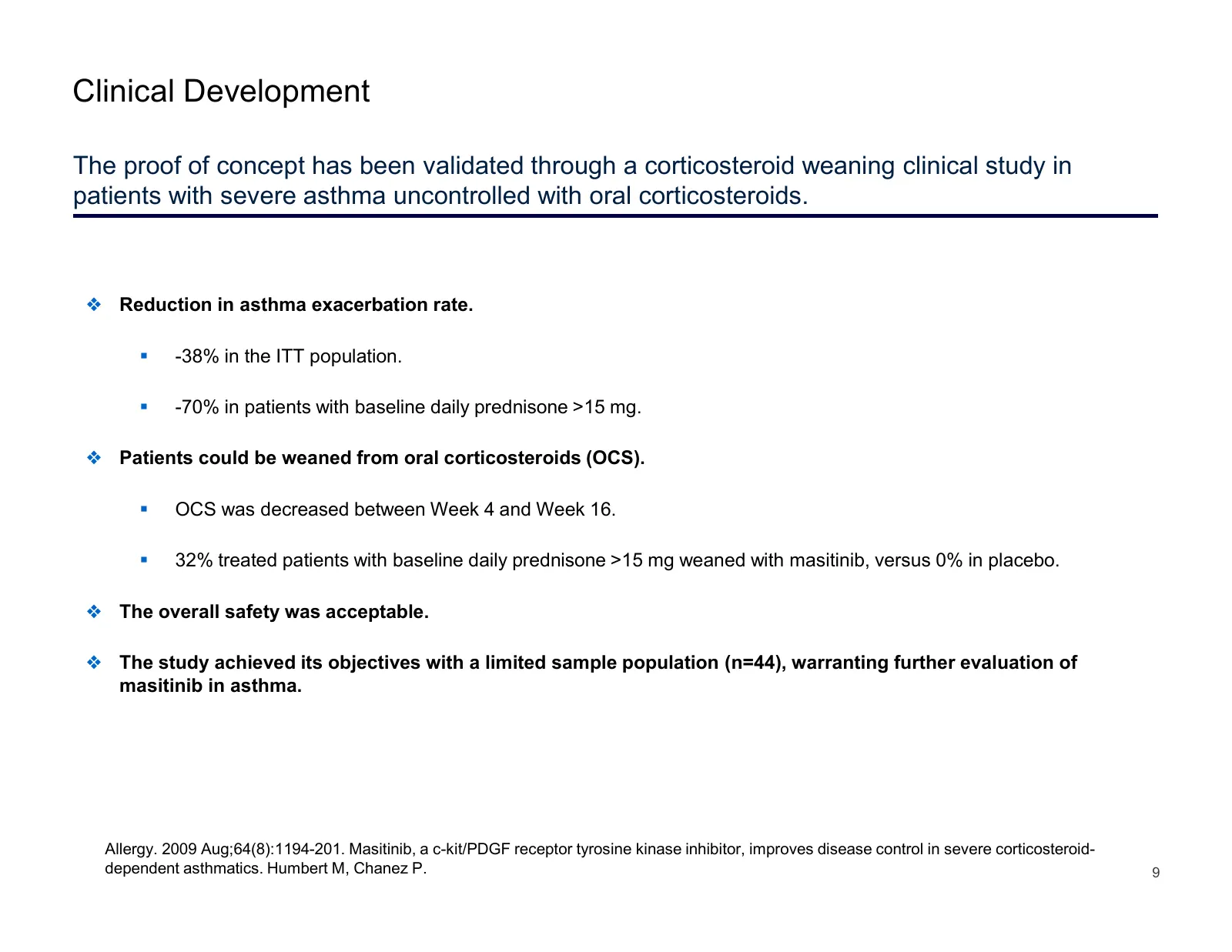
Clinical Development The proof of concept has been validated through a corticosteroid weaning clinical study in patients with severe asthma uncontrolled with oral corticosteroids. ❖ Reduction in asthma exacerbation rate. -38% in the ITT population. -70% in patients with baseline daily prednisone
Slide 10: Phase 2/3 study - Design
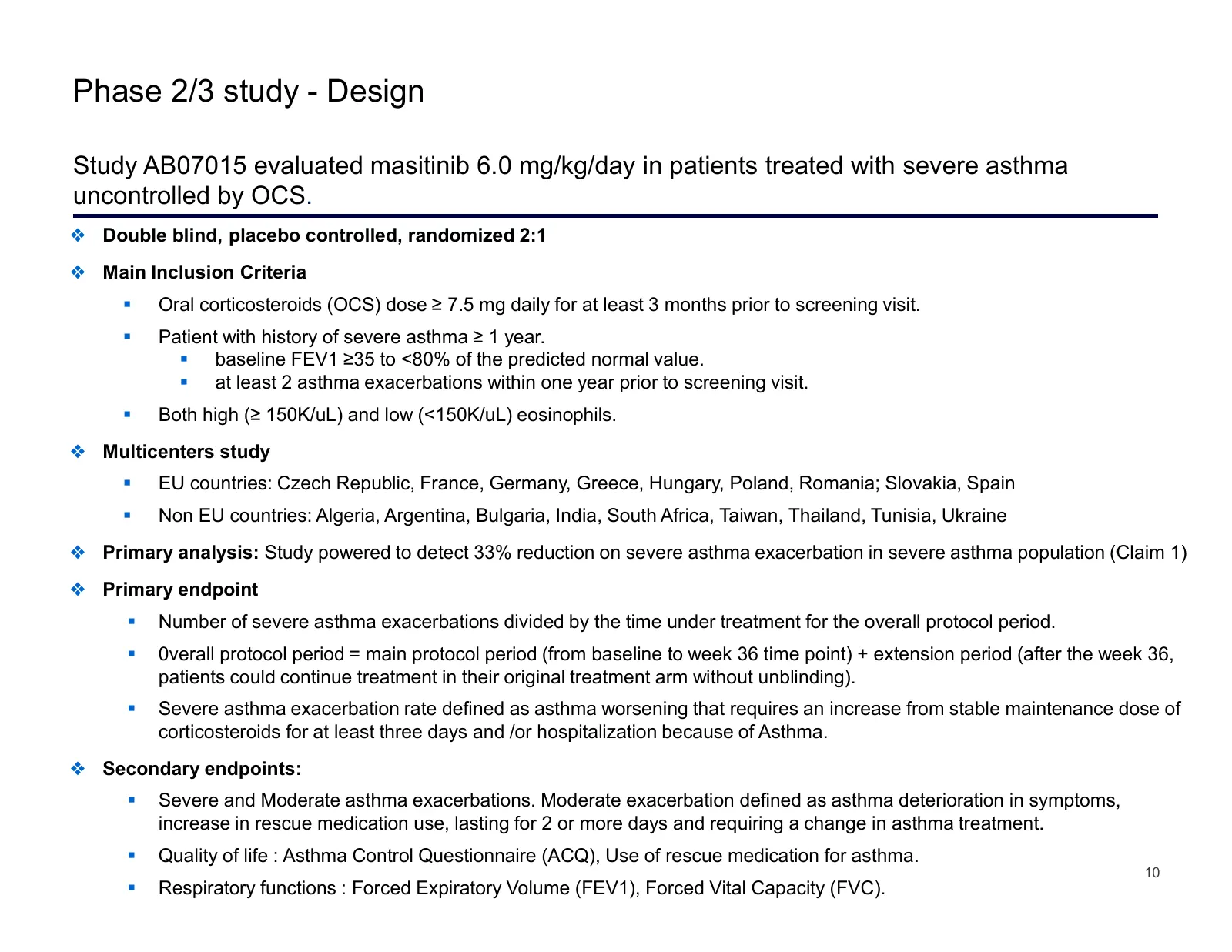
Phase 2/3 study - Design Study AB07015 evaluated masitinib 6.0 mg/kg/day in patients treated with severe asthma uncontrolled by OCS. ❖ Double blind, placebo controlled, randomized 2:1 ❖ Main Inclusion Criteria Oral corticosteroids (OCS) dose ≥ 7.5 mg daily for at least 3 months prior to screening
Slide 11: Phase 2/3 study – Disposition of patients
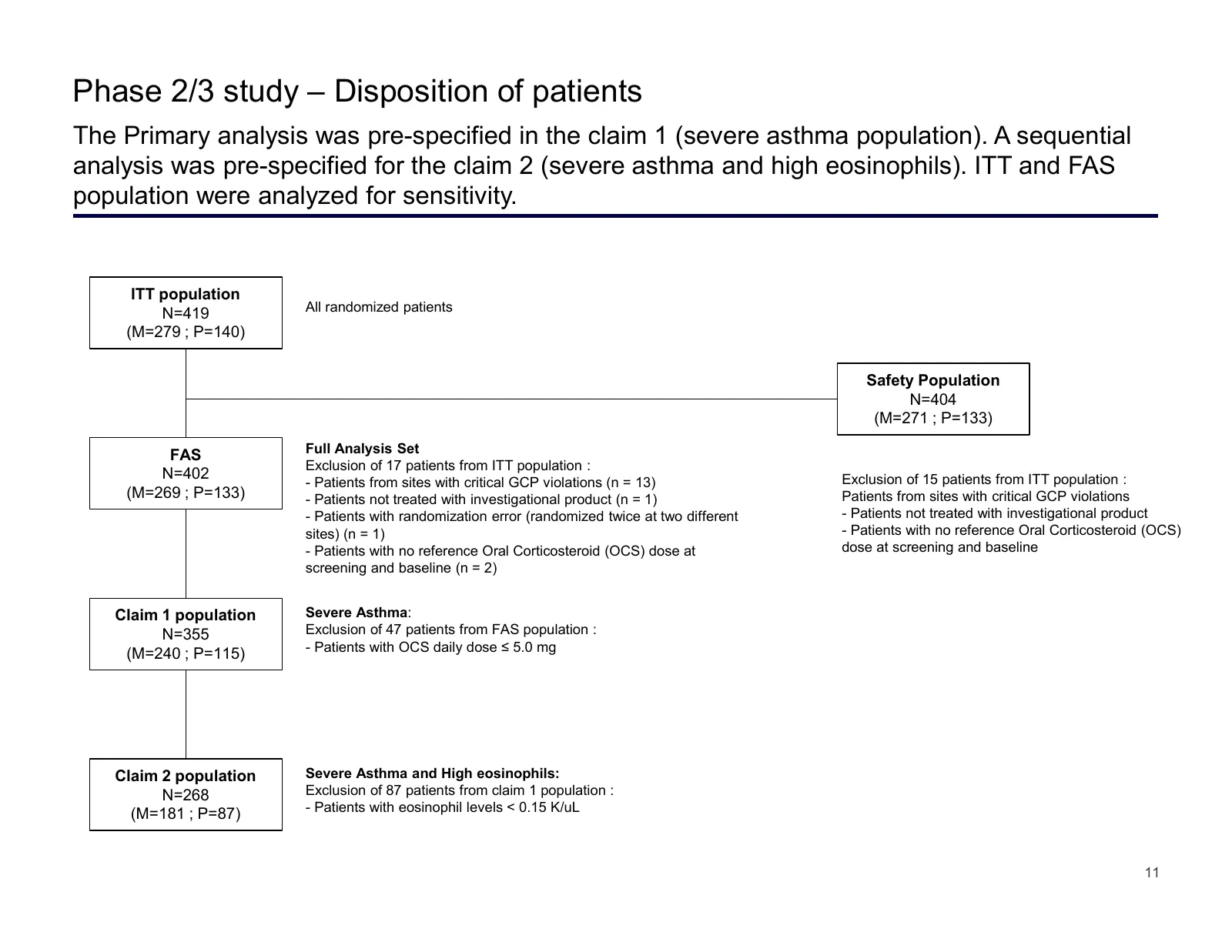
Phase 2/3 study – Disposition of patients The Primary analysis was pre-specified in the claim 1 (severe asthma population). A sequential analysis was pre-specified for the claim 2 (severe asthma and high eosinophils). ITT and FAS population were analyzed for sensitivity. ITT population N=419 All ran
Slide 12: Phase 2/3 study - Efficacy
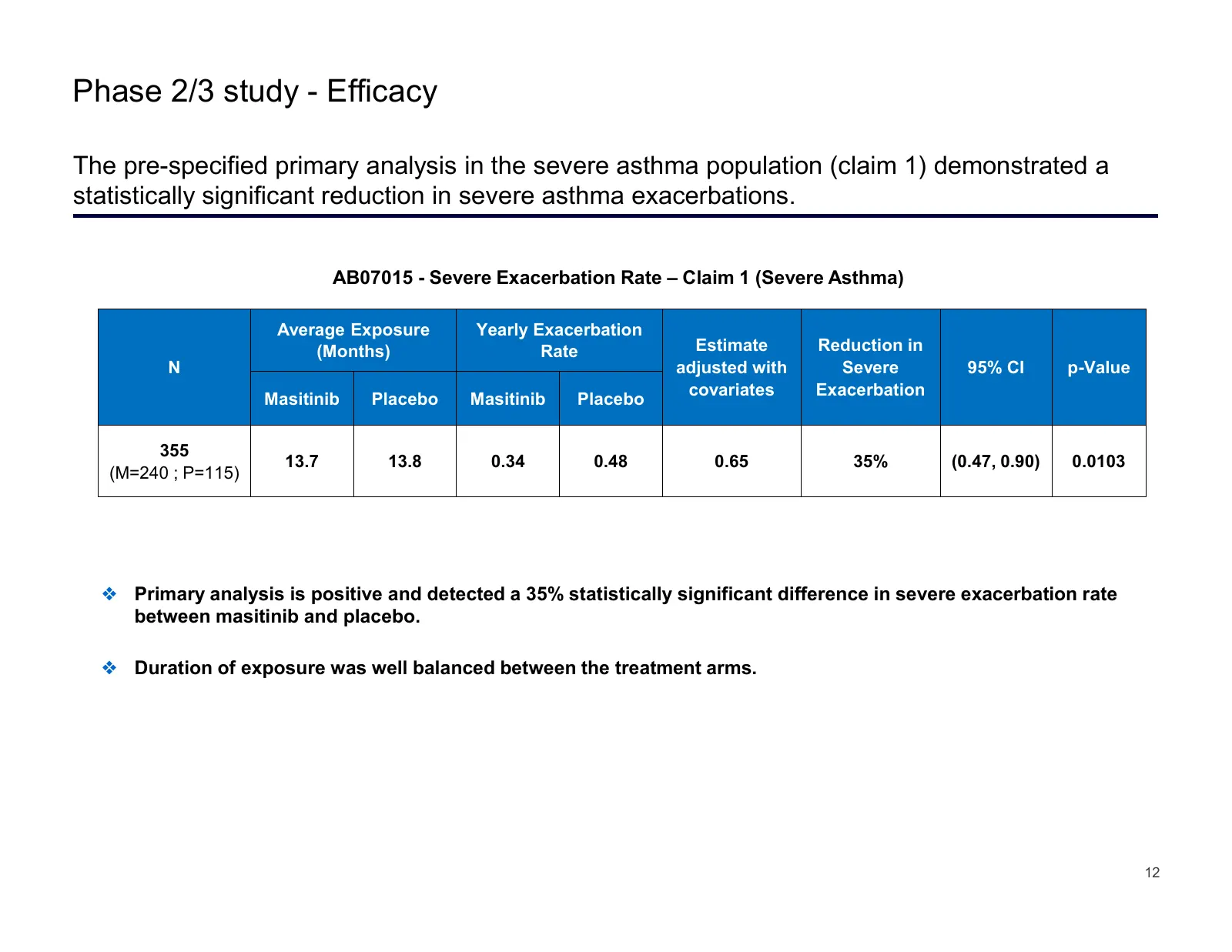
Phase 2/3 study - Efficacy The pre-specified primary analysis in the severe asthma population (claim 1) demonstrated a statistically significant reduction in severe asthma exacerbations. AB07015 - Severe Exacerbation Rate – Claim 1 (Severe Asthma) Average Exposure Yearly Exacerbation (Months) Rate E
Slide 13: Phase 2/3 study - Efficacy
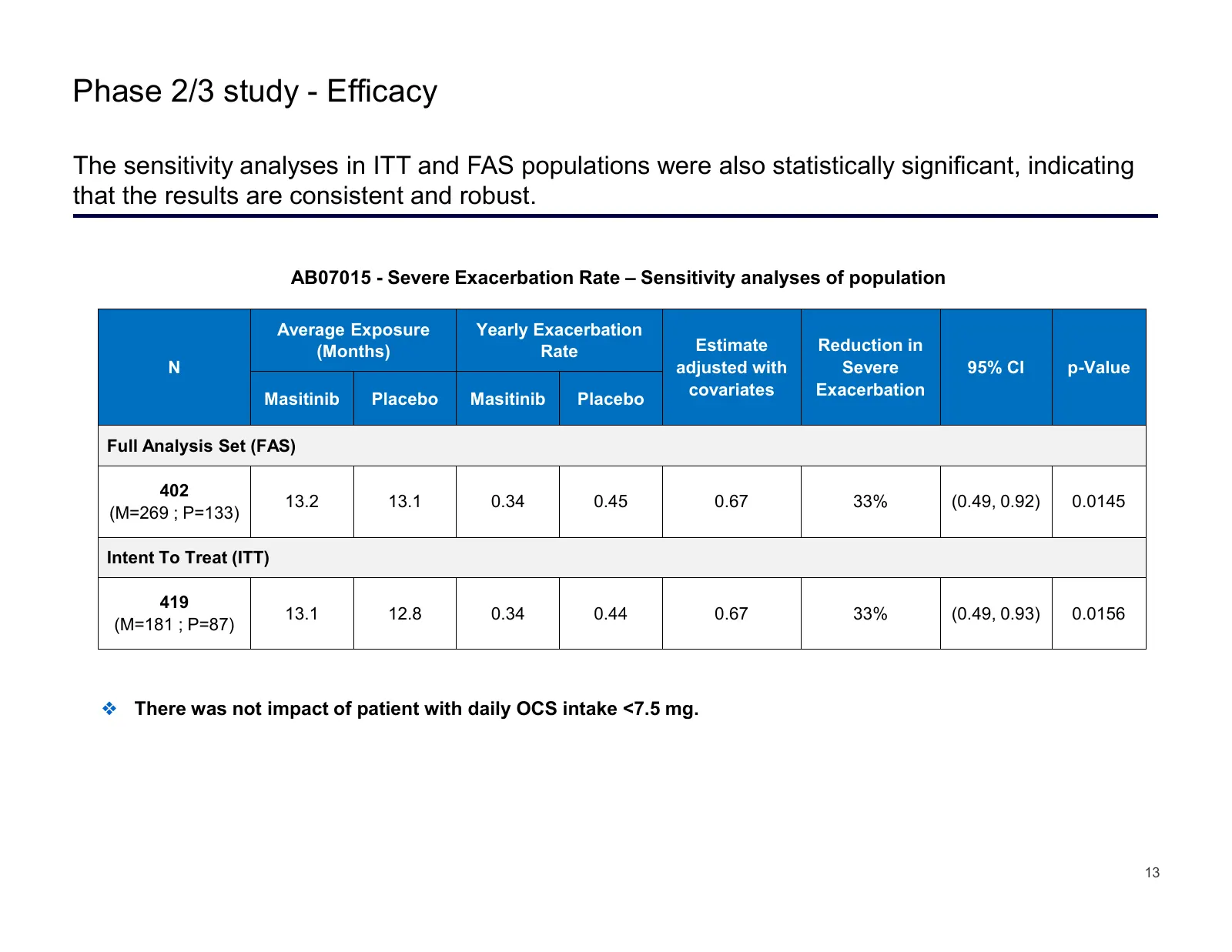
Phase 2/3 study - Efficacy The sensitivity analyses in ITT and FAS populations were also statistically significant, indicating that the results are consistent and robust. AB07015 - Severe Exacerbation Rate – Sensitivity analyses of population Average Exposure Yearly Exacerbation (Months) Rate Estima
Slide 14: Phase 2/3 study - Efficacy
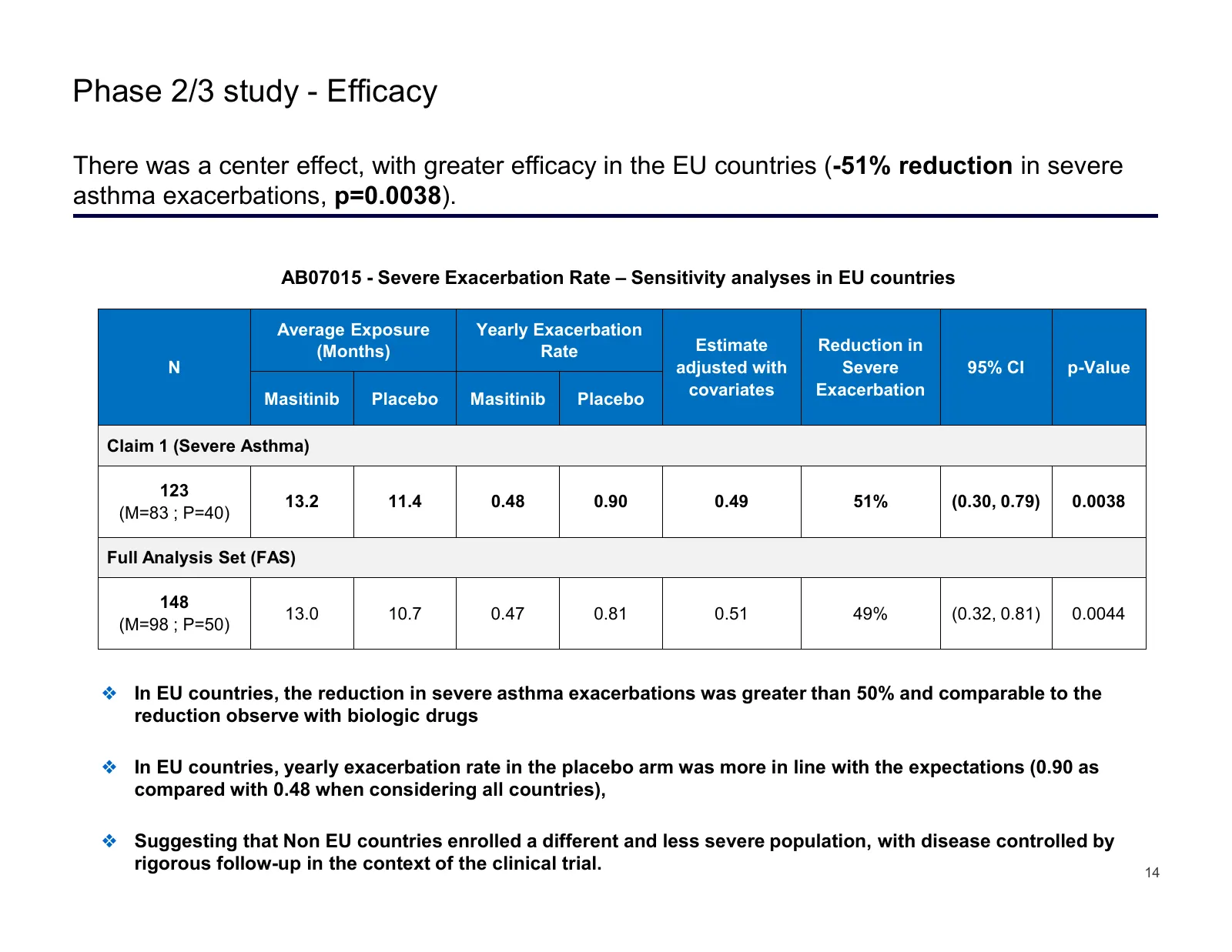
Phase 2/3 study - Efficacy There was a center effect, with greater efficacy in the EU countries (-51% reduction in severe asthma exacerbations, p=0.0038). AB07015 - Severe Exacerbation Rate – Sensitivity analyses in EU countries Average Exposure Yearly Exacerbation (Months) Rate Estimate Reduction i
Slide 15: Phase 2/3 study - Efficacy
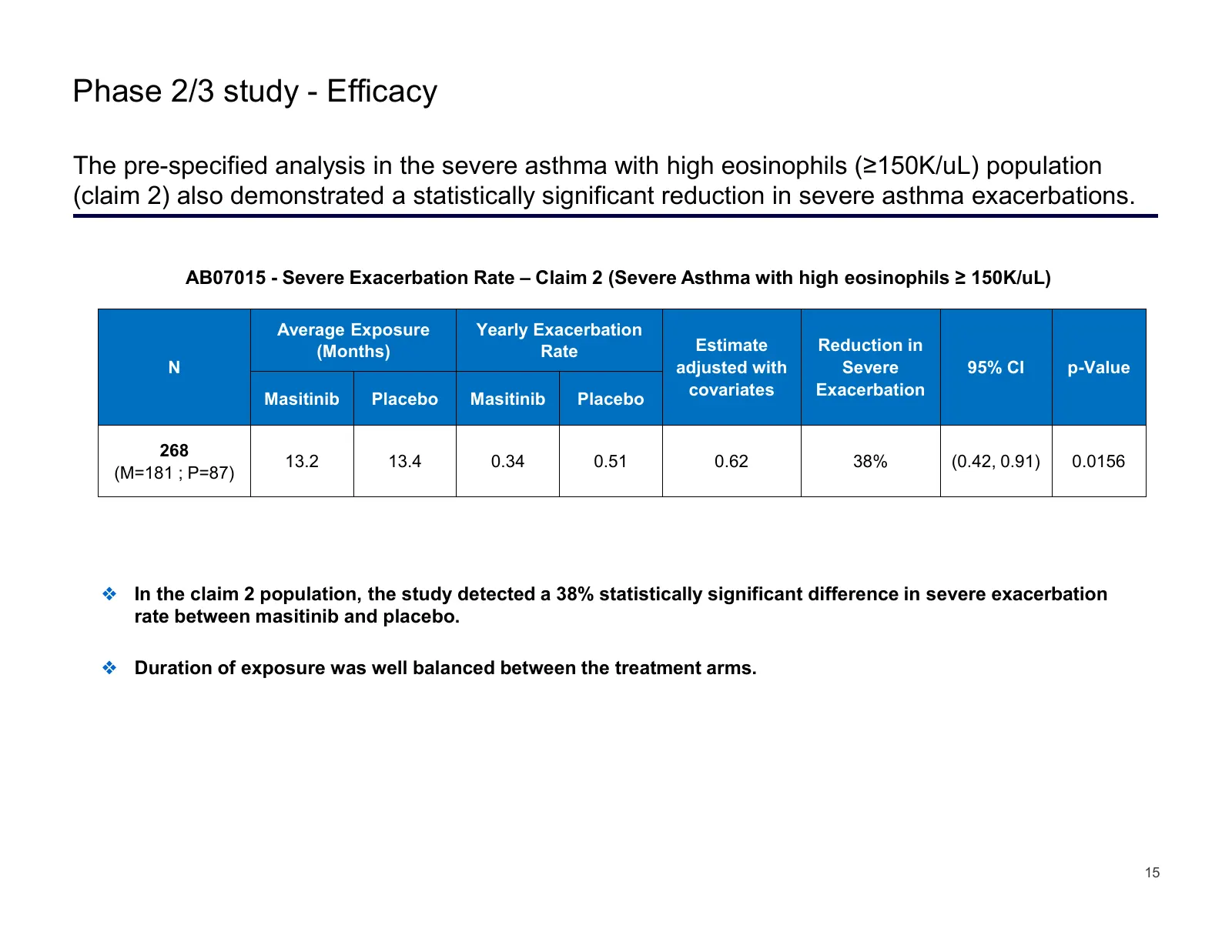
Phase 2/3 study - Efficacy The pre-specified analysis in the severe asthma with high eosinophils (≥150K/uL) population (claim 2) also demonstrated a statistically significant reduction in severe asthma exacerbations. AB07015 - Severe Exacerbation Rate – Claim 2 (Severe Asthma with high eosinophils ≥
Slide 16: Phase 2/3 study - Safety
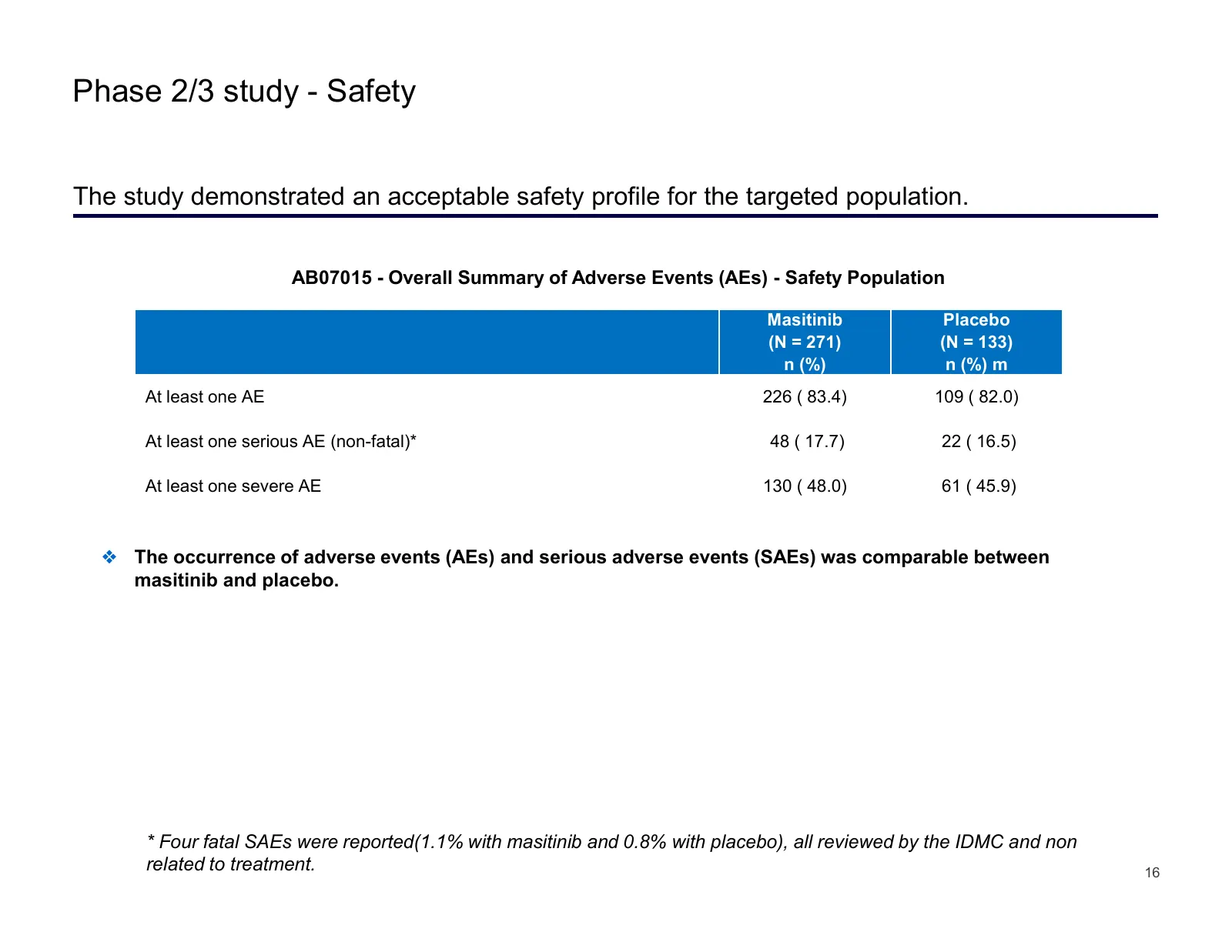
Phase 2/3 study - Safety The study demonstrated an acceptable safety profile for the targeted population. AB07015 - Overall Summary of Adverse Events (AEs) - Safety Population Masitinib Placebo (N = 271) (N = 133) n (%) n (%) m At least one AE 226 ( 83.4) 109 ( 82.0) At least one serious AE (non-fat
Slide 17: Phase 2/3 study – Discussion
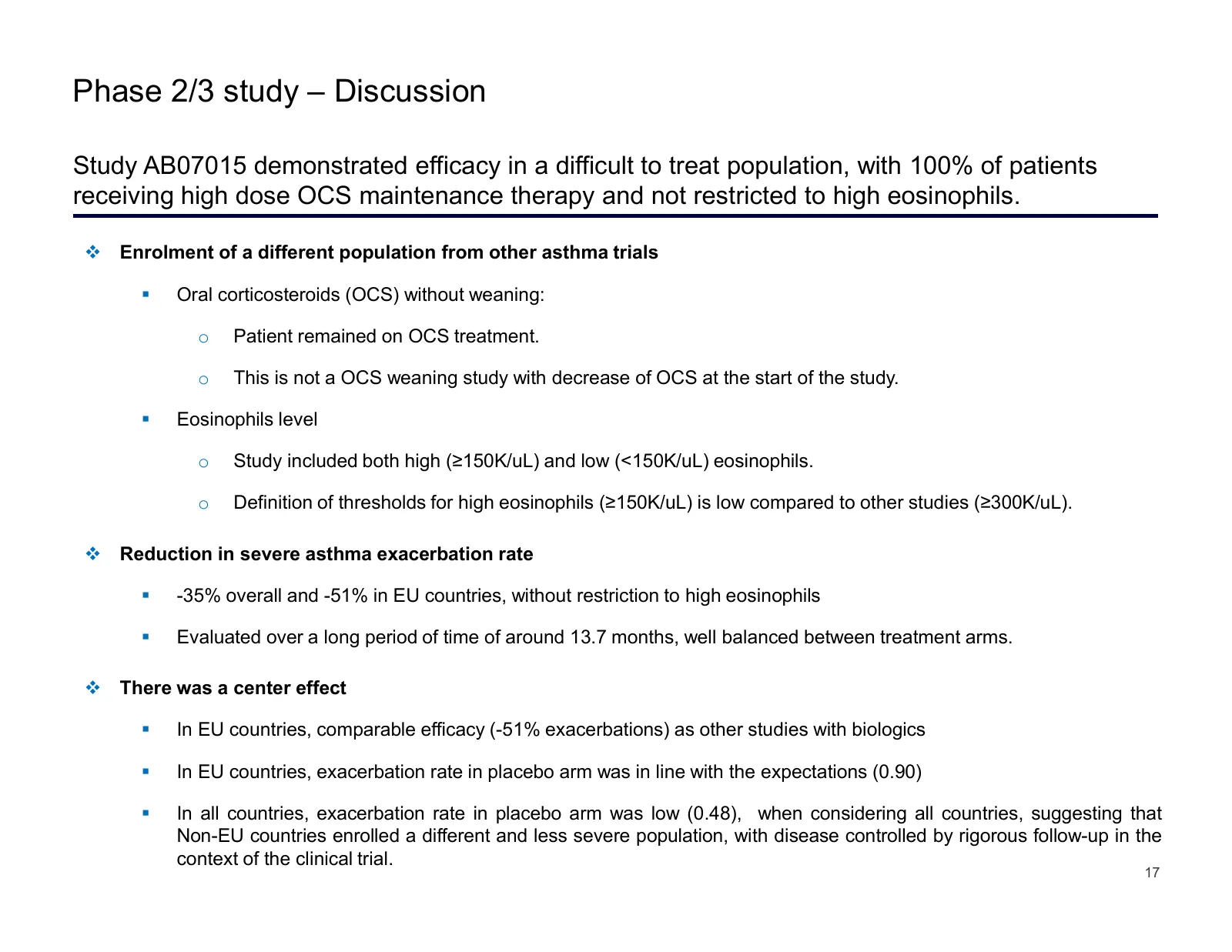
Phase 2/3 study – Discussion Study AB07015 demonstrated efficacy in a difficult to treat population, with 100% of patients receiving high dose OCS maintenance therapy and not restricted to high eosinophils. Enrolment of a different population from other asthma trials Oral corticosteroids (OCS) w
Slide 18: Lavinia DAVIDESCU, MD, PhD
Lavinia DAVIDESCU, MD, PhD About Lavinia Davidescu Assistant Professor at the Faculty of Medicine and Pharmacy, University of Oradea. President of Rare Disease Section of Romanian Pneumology Society, member in the boarding Committee of the Romanian Society of Pneumology. Role in masitinib pr
Slide 19: Lavinia Davidescu
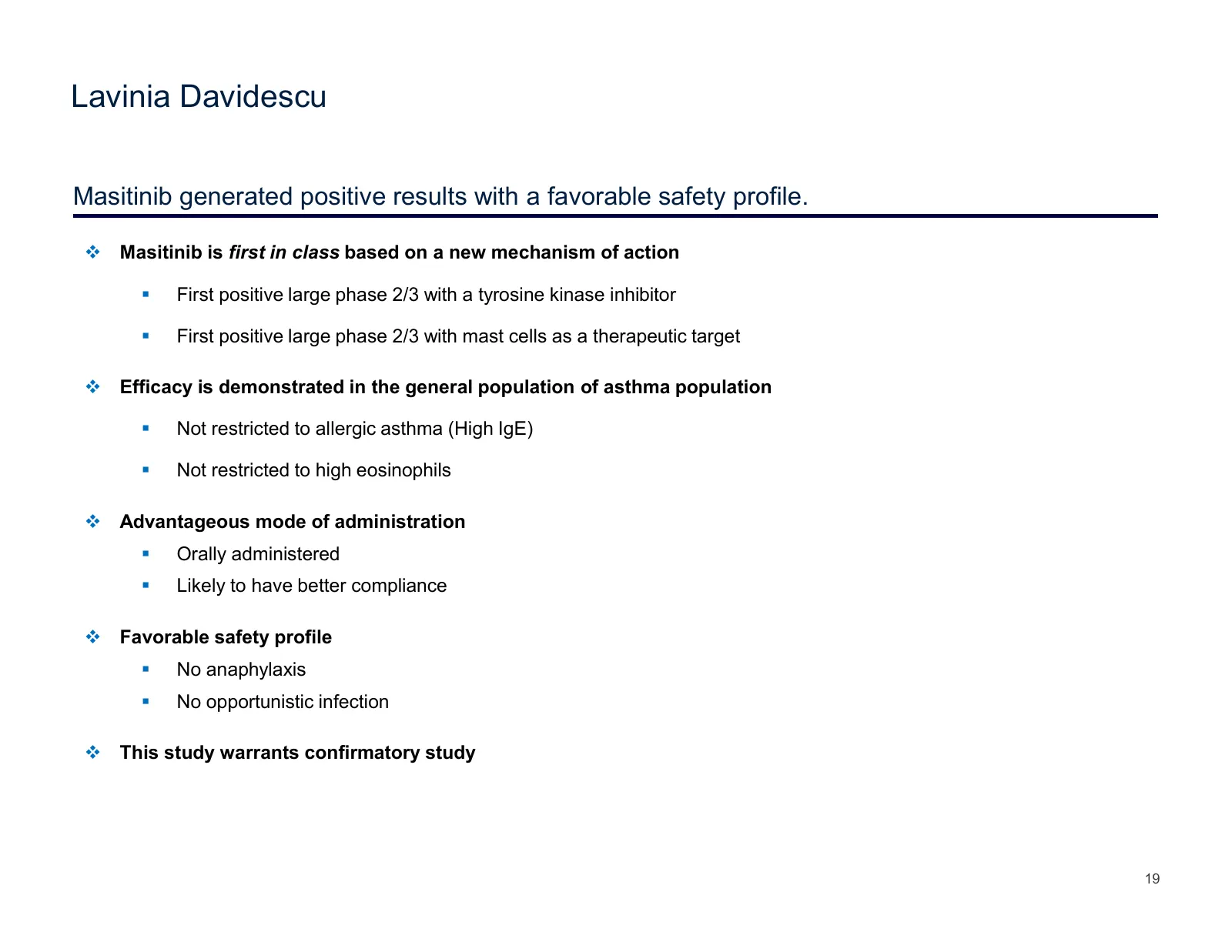
Lavinia Davidescu Masitinib generated positive results with a favorable safety profile. Masitinib is first in class based on a new mechanism of action First positive large phase 2/3 with a tyrosine kinase inhibitor First positive large phase 2/3 with mast cells as a therapeutic target Effica
Slide 20: Pascal CHANEZ, MD, PhD
Pascal CHANEZ, MD, PhD About Pascal Chanez Professor of Respiratory Medicine at the APHM and Aix Marseille University at Marseille France. Coordinator of a research group at INSERM-CNRS on the role of bronchial epithelium in inflammation and environmental aggression in severe bronchial disease
Slide 21: Pascal Chanez
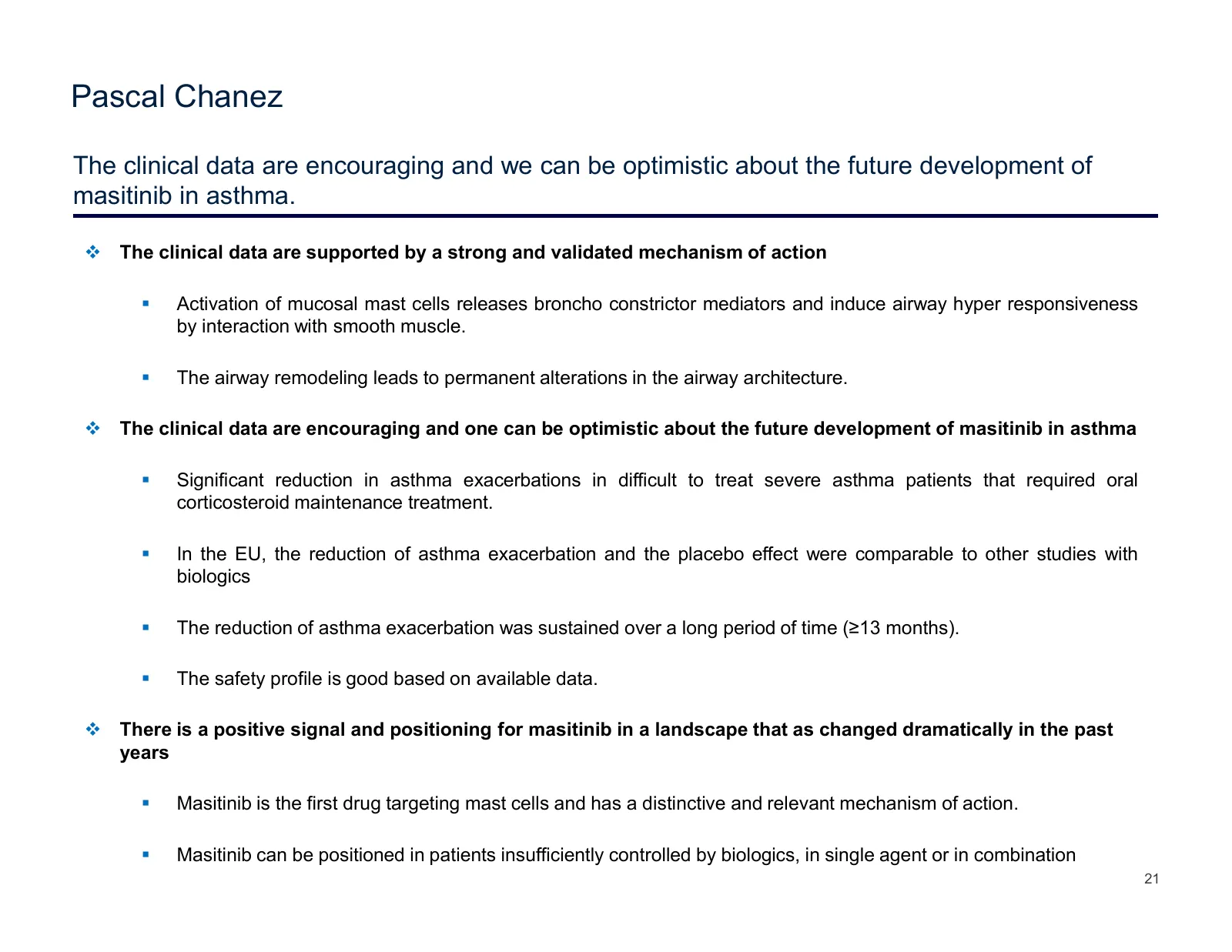
Pascal Chanez The clinical data are encouraging and we can be optimistic about the future development of masitinib in asthma. The clinical data are supported by a strong and validated mechanism of action Activation of mucosal mast cells releases broncho constrictor mediators and induce airway hy
Slide 22: Elliot ISRAEL, MD
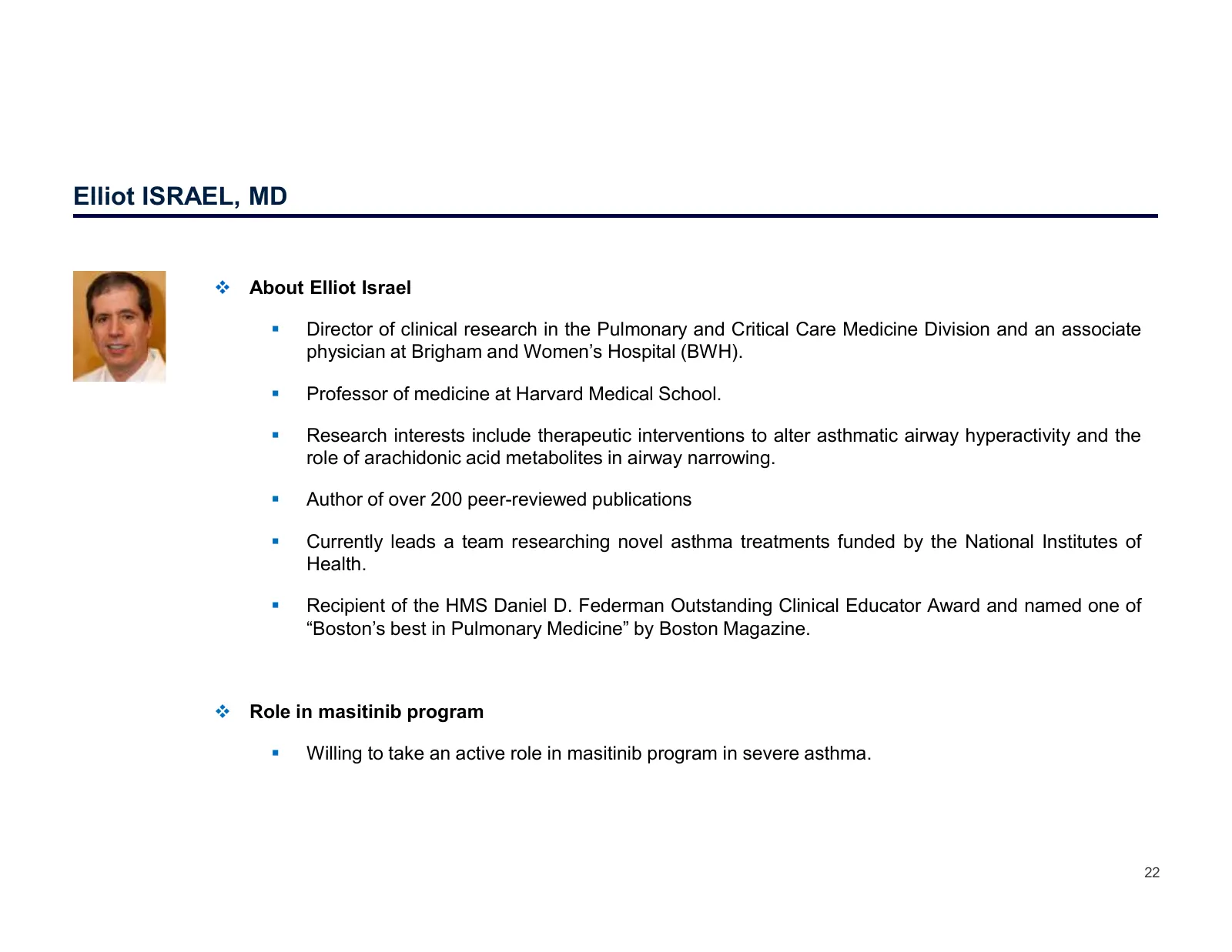
Elliot ISRAEL, MD About Elliot Israel Director of clinical research in the Pulmonary and Critical Care Medicine Division and an associate physician at Brigham and Women’s Hospital (BWH). Professor of medicine at Harvard Medical School. Research interests include therapeutic interventions to
Slide 23: Elliot Israel
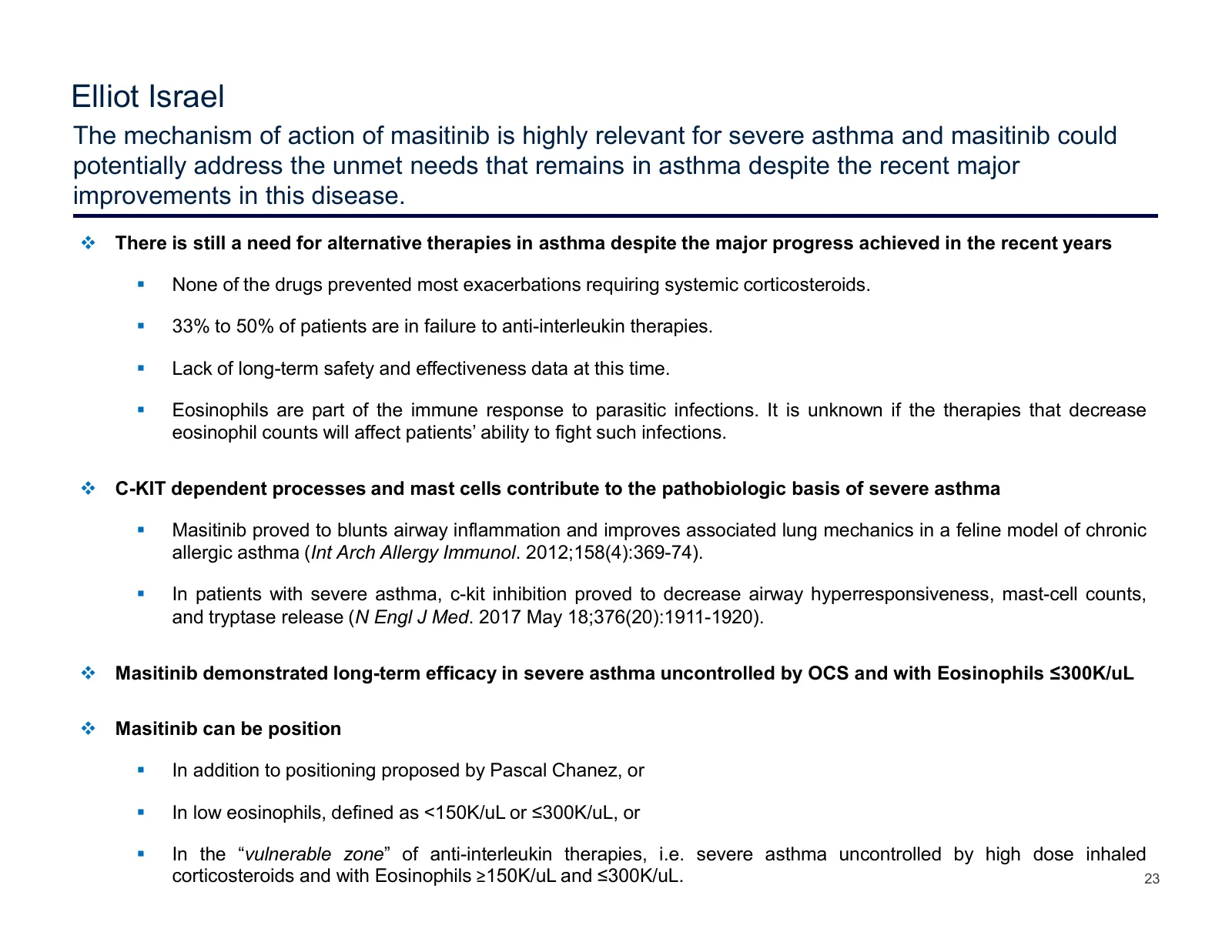
Elliot Israel The mechanism of action of masitinib is highly relevant for severe asthma and masitinib could potentially address the unmet needs that remains in asthma despite the recent major improvements in this disease. There is still a need for alternative therapies in asthma despite the major
Slide 24: Key differentiating factors
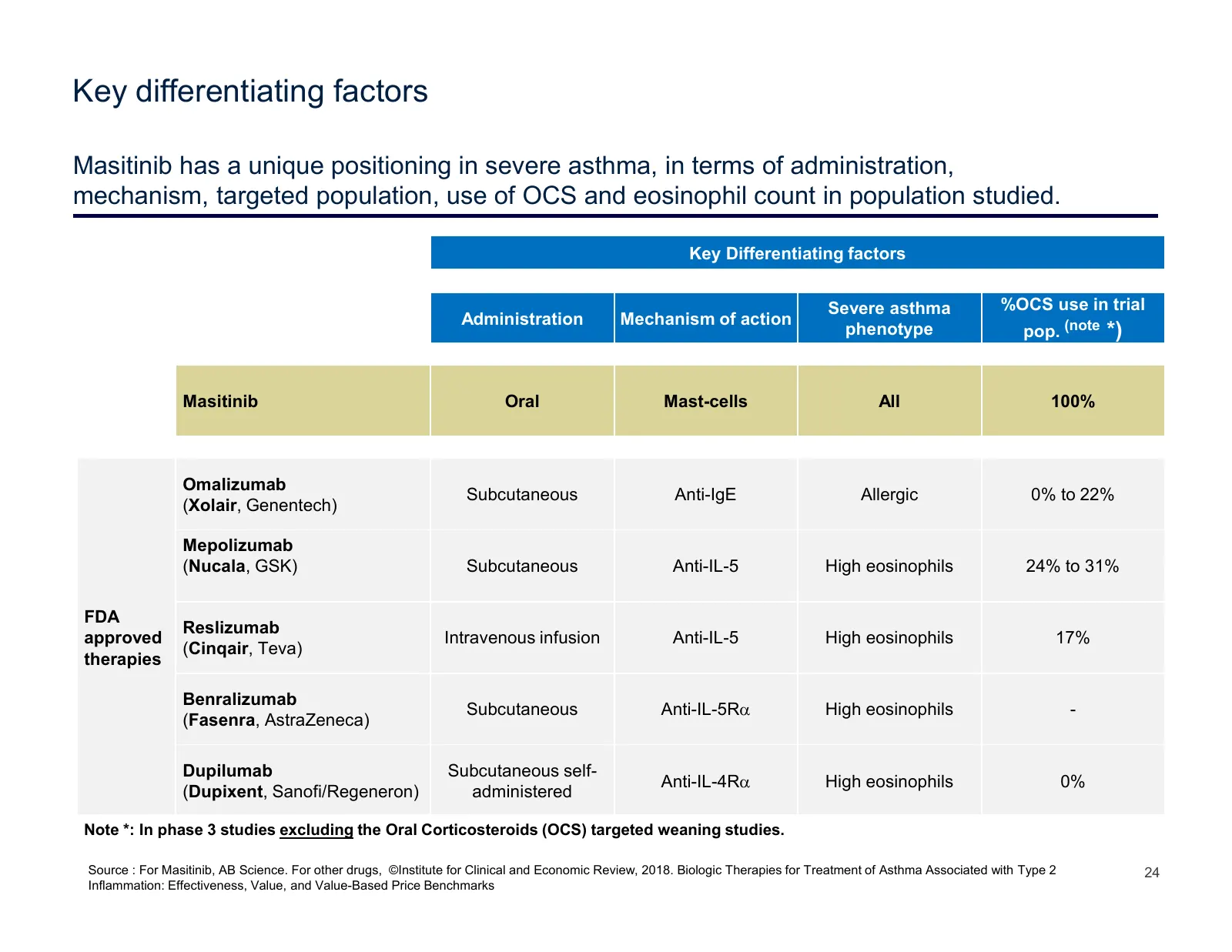
Key differentiating factors Masitinib has a unique positioning in severe asthma, in terms of administration, mechanism, targeted population, use of OCS and eosinophil count in population studied. Key Differentiating factors Severe asthma %OCS use in trial Administration Mechanism of action phenotype
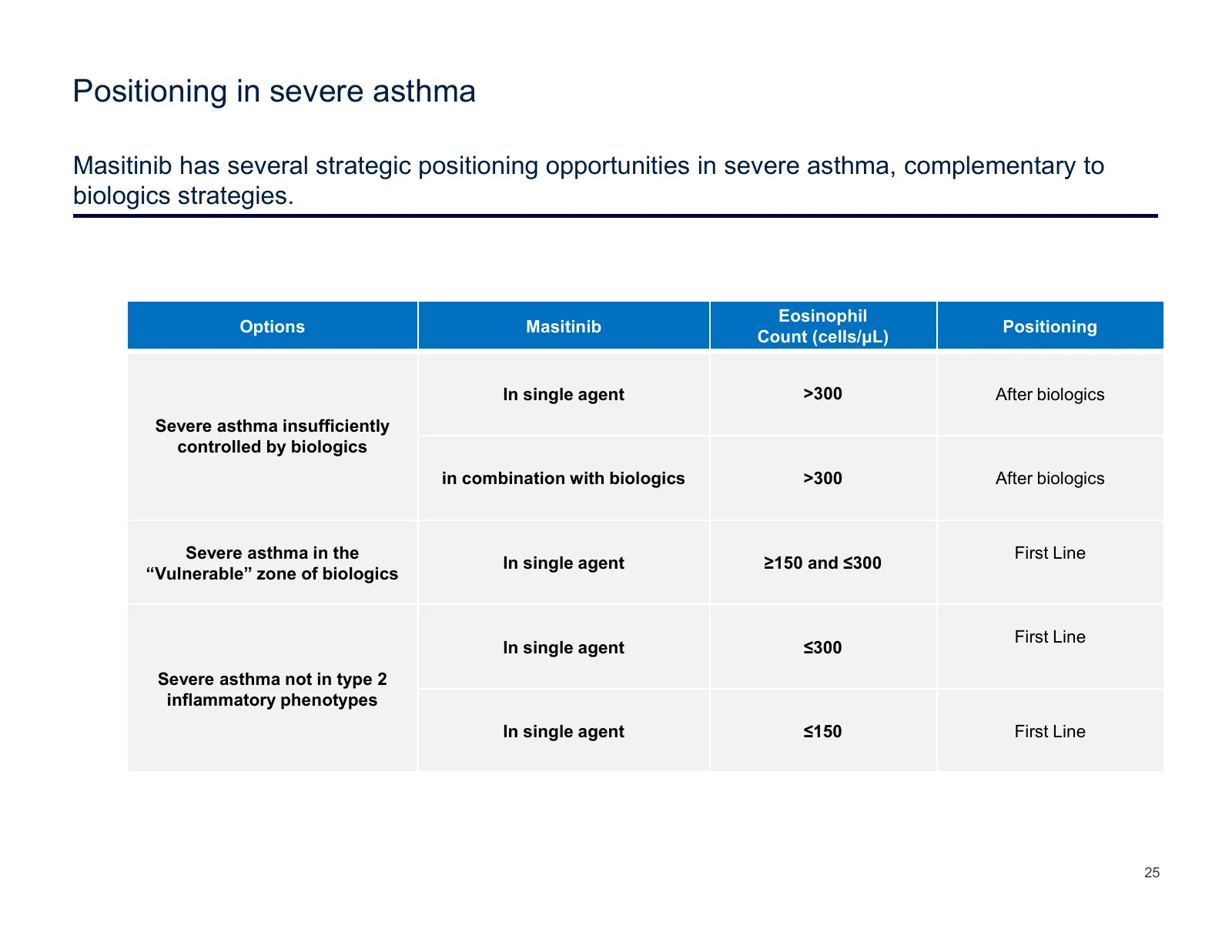
Slide 25: Positioning in severe asthma
Positioning in severe asthma Masitinib has several strategic positioning opportunities in severe asthma, complementary to biologics strategies. Eosinophil Options Masitinib Positioning Count (cells/μL) In single agent >300 After biologics Severe asthma insufficiently controlled by biologics in combi
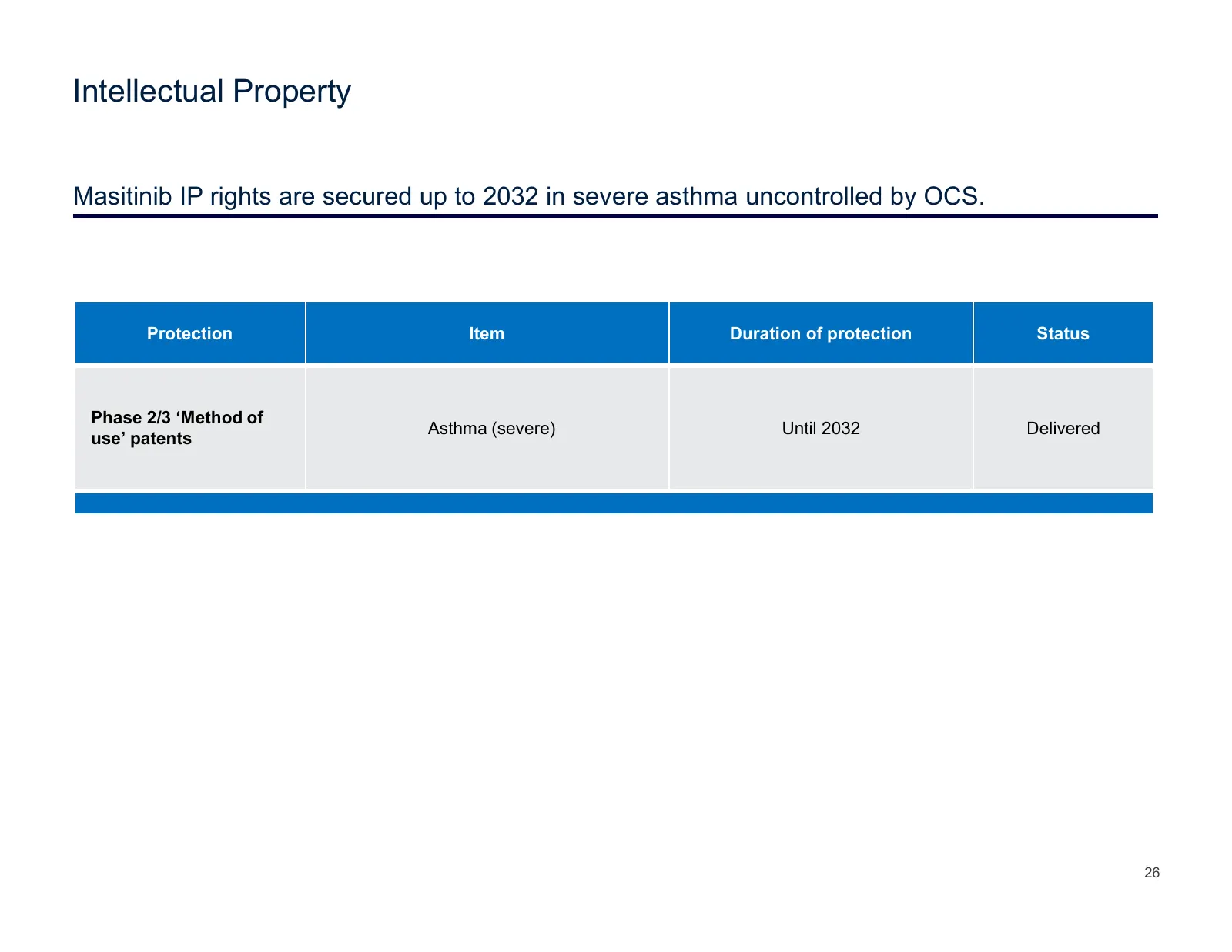
Slide 26: Intellectual Property
Intellectual Property Masitinib IP rights are secured up to 2032 in severe asthma uncontrolled by OCS. Protection Item Duration of protection Status Phase 2/3 ‘Method of Asthma (severe) Until 2032 Delivered use’ patents 26

Slide 27: Q&A
Q&A 27
Source: Internet Archive copy of ab-science.com
More decks from AB Science SA
 Investor Presentation (January 2026)33 slides · January 2026
 Investor Presentation (March 2025)59 slides · March 2025
 Corporate Update (December 2024)35 slides · December 2024
 Investor Presentation (July 2024)46 slides · July 2024
 Investor Presentation (April 2024)37 slides · April 2024
 Investor Presentation (February 2023)28 slides · February 2023