Tetra Tech, Inc. · NASDAQ:TTEK
Tetra Tech — 2009 DoD Environmental Monitoring & Data Quality Workshop
22 slides from Tetra Tech's conference presentation, Apr 2, 2009
Slide 1: Using the Vapor Intrusion Model (ViM) to bring out the best in the J&E Model
Using the Vapor Intrusion Model (ViM) to bring out the best in the Johnson and Ettinger (J&E) Model Presented at: 2009 DoD Environmental Monitoring & Data Quality Workshop in San Antonio, TX Prepared by: Bill Mills, Kateryna Sayenko, and Kay Johnson Tetra Tech, Inc. April 2, 2009
Slide 2: Presentation Outline
2 Presentation Outline Background: A little bit about the models What makes us think we can use ViM to inform J&E? How we can do that (some examples) Conclusions
Slide 3: What are models?
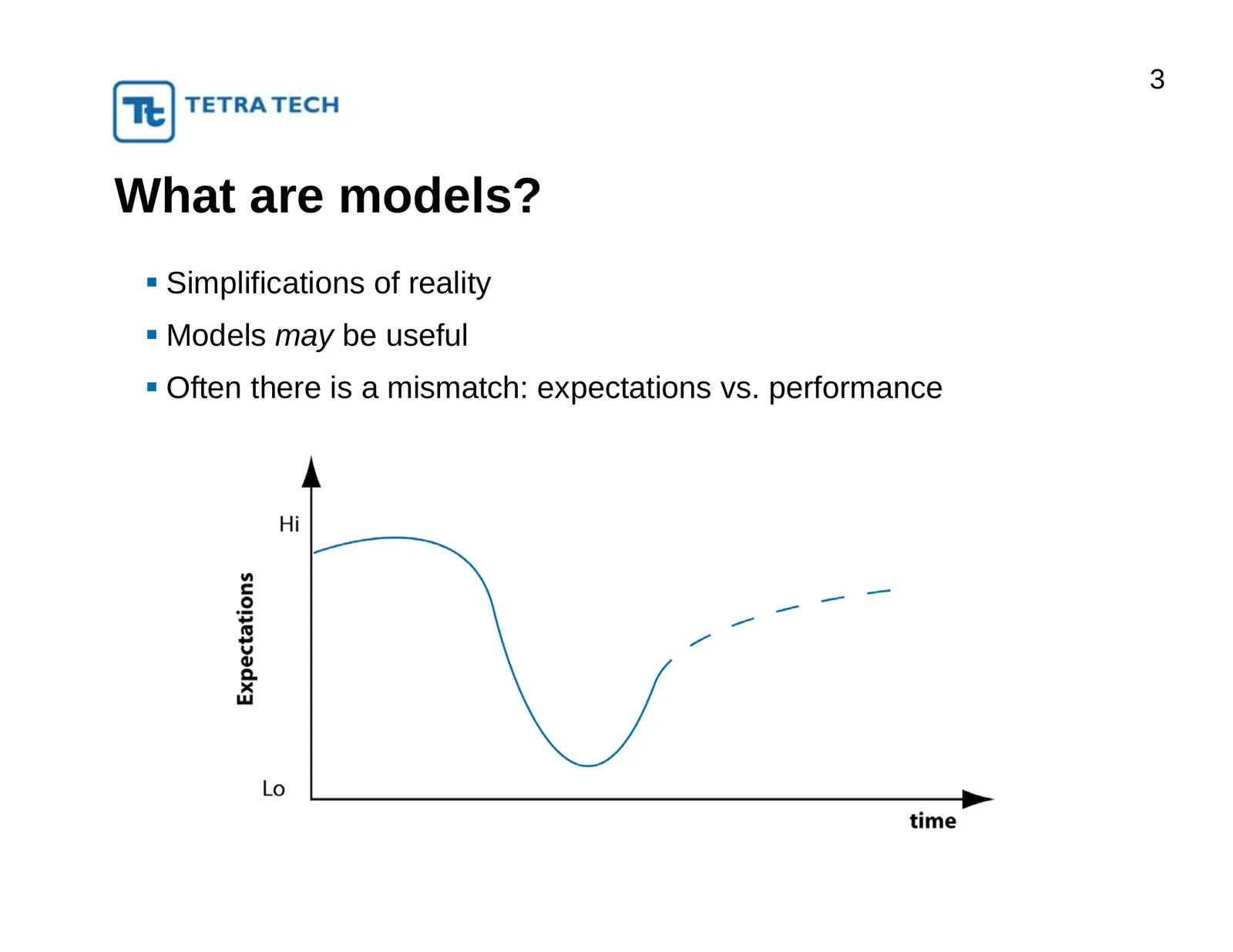
3 What are models? Simplifications of reality Models may be useful Often there is a mismatch: expectations vs. performance
Slide 4: Why model VI?
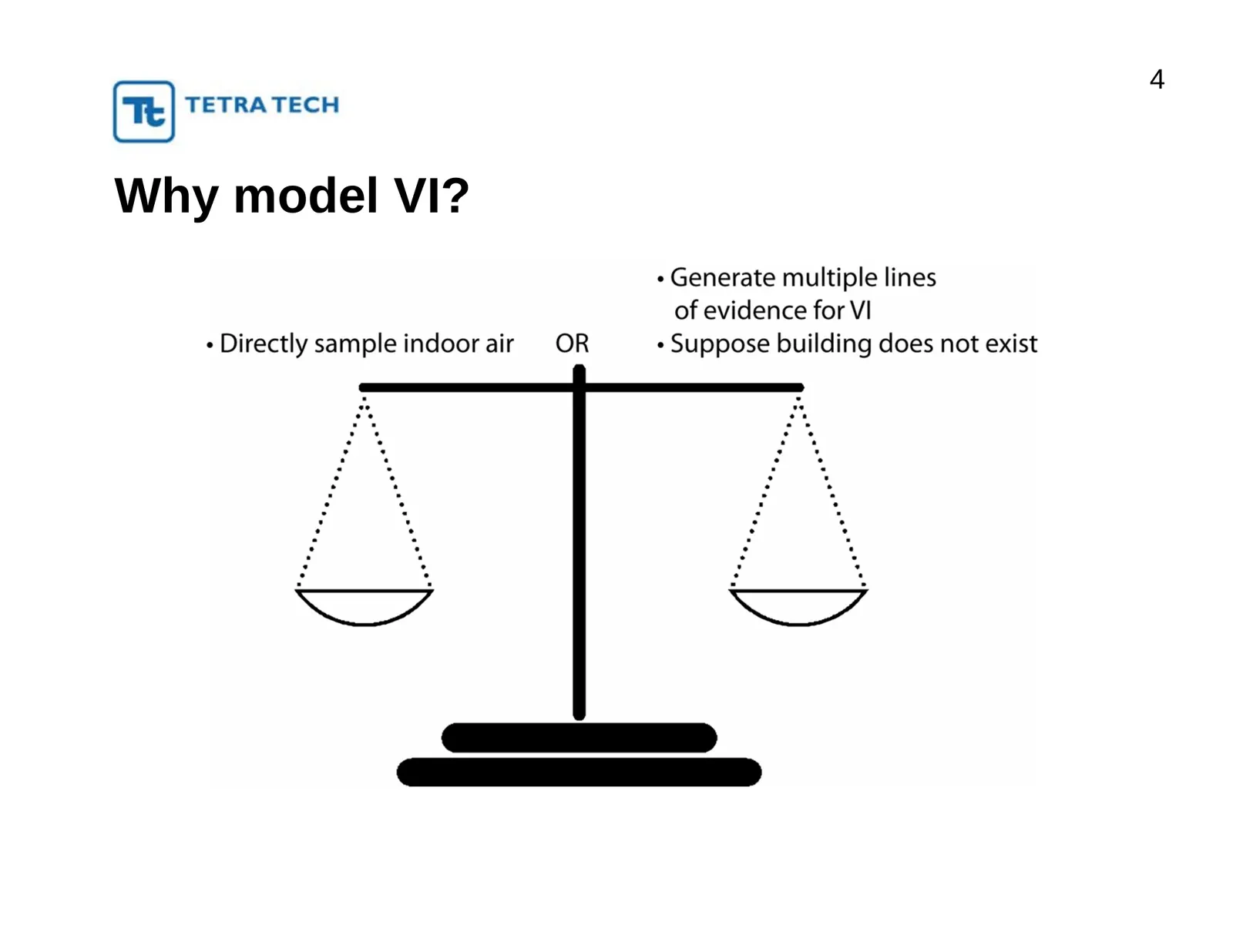
Tt TETRA TECH Why model VI? * Generate multiple lines of evidence for VI + Directly sample indoor air OR « Suppose building does not exist
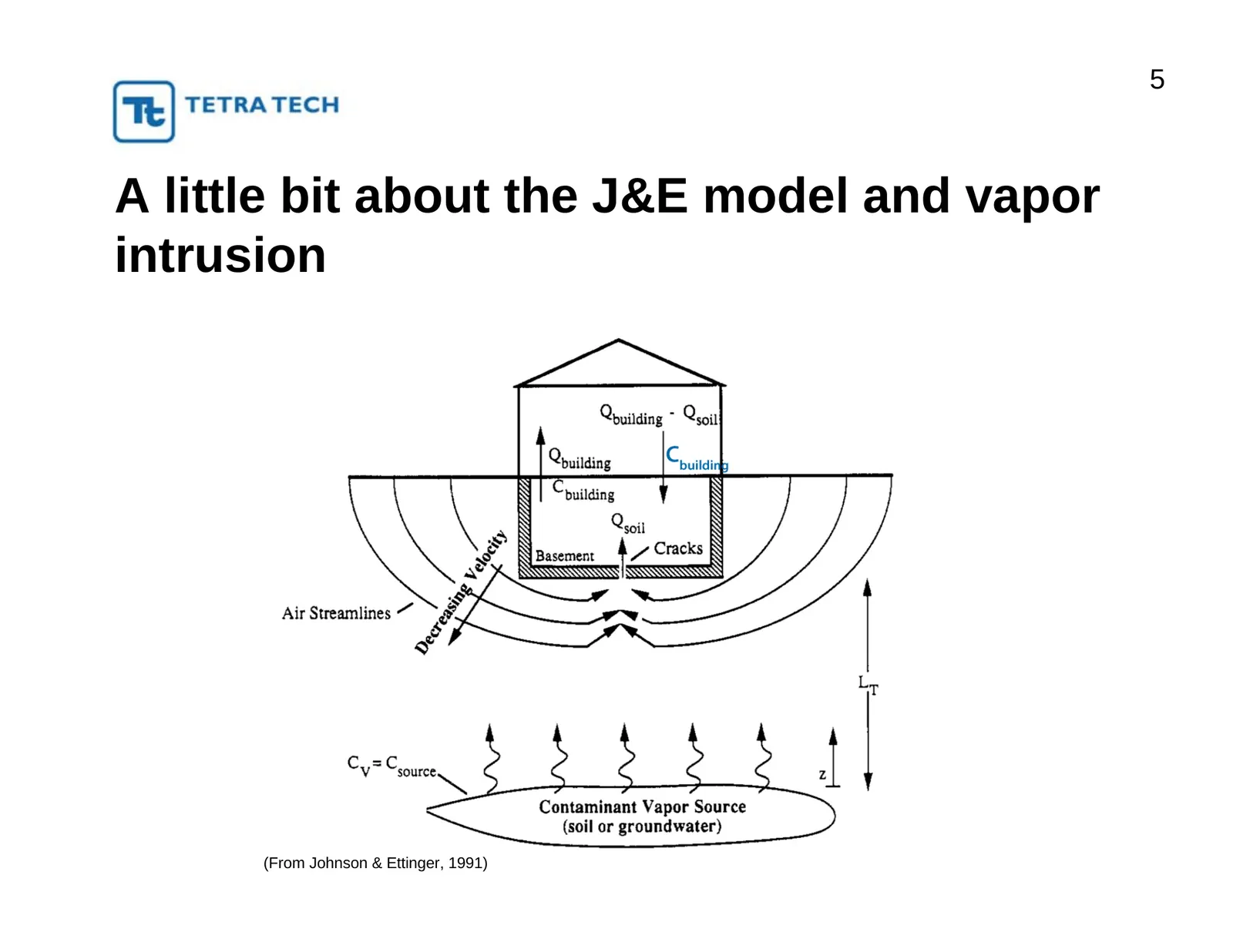
Slide 5: A little bit about the J&E model and vapor intrusion
5 A little bit about the J&E model and vapor intrusion (From Johnson & Ettinger, 1991)
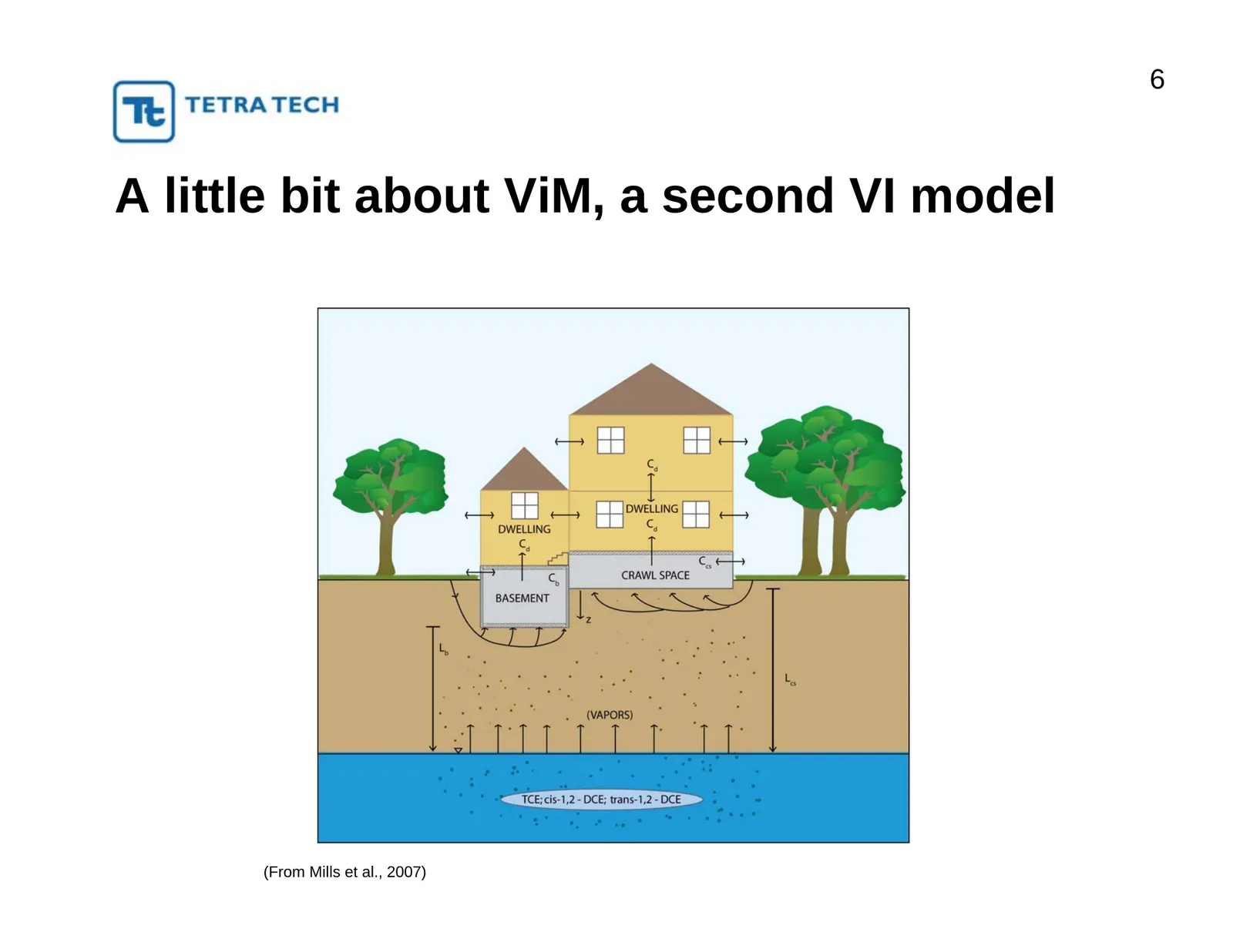
Slide 6: A little bit about ViM, a second VI model
6 A little bit about ViM, a second VI model (From Mills et al., 2007)
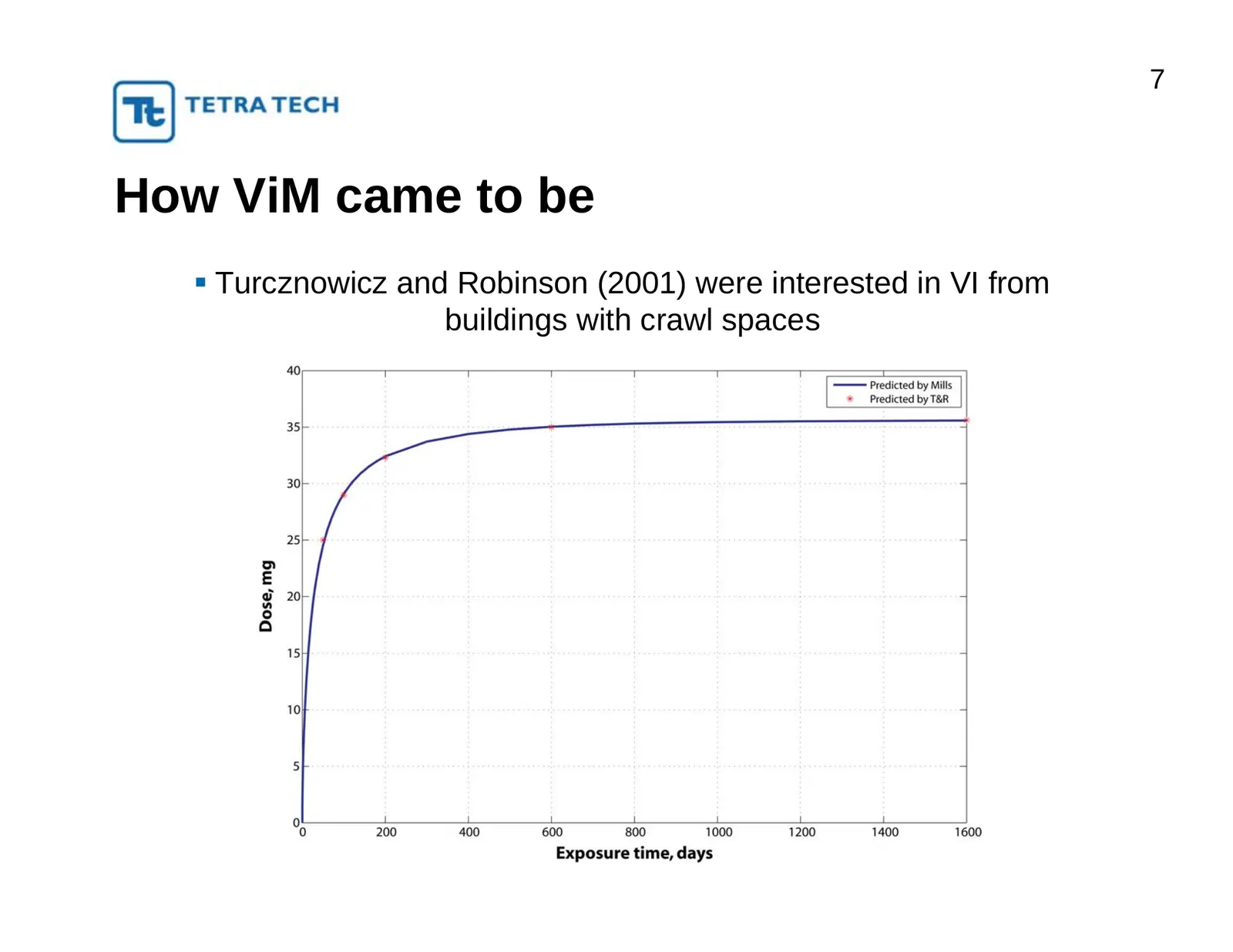
Slide 7: How ViM came to be
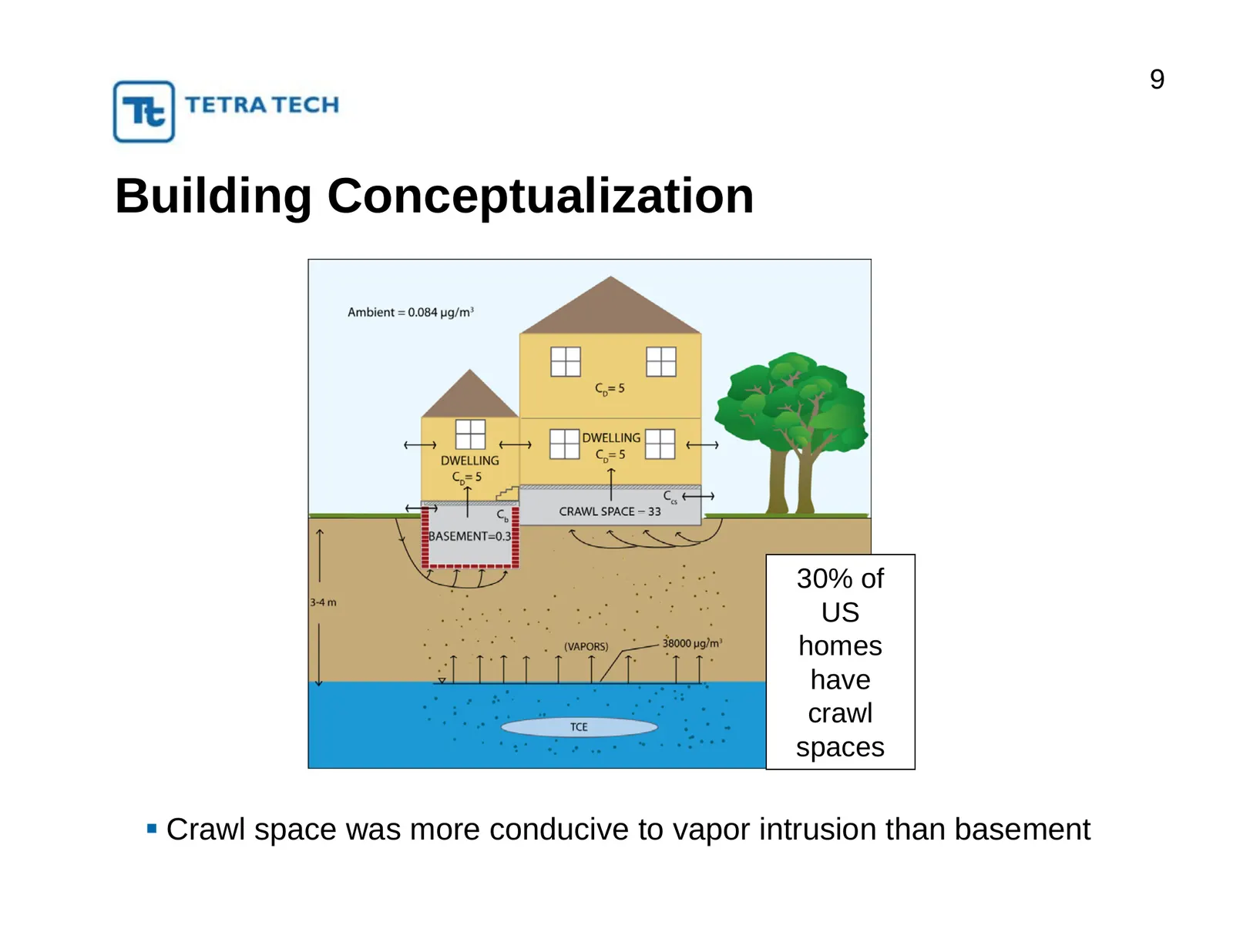
7 How ViM came to be Turcznowicz and Robinson (2001) were interested in VI from buildings with crawl spaces
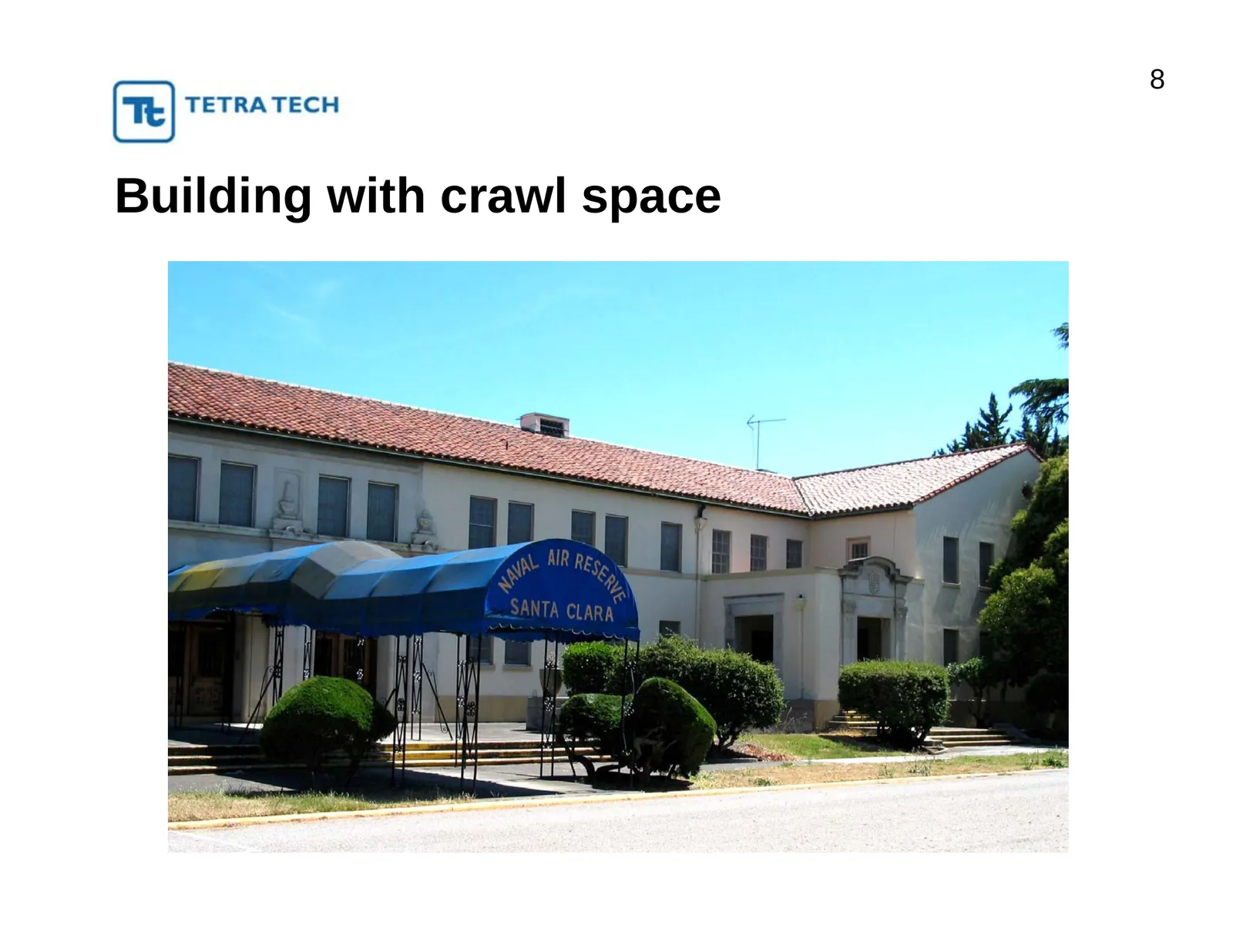
Slide 8: Building with crawl space
Tt TETRA TECH Building with crawl space 4
Slide 9: Building Conceptualization
9 Building Conceptualization 30% of US homes have crawl spaces Crawl space was more conducive to vapor intrusion than basement
Slide 10: By the way…How ViM and J&E compare
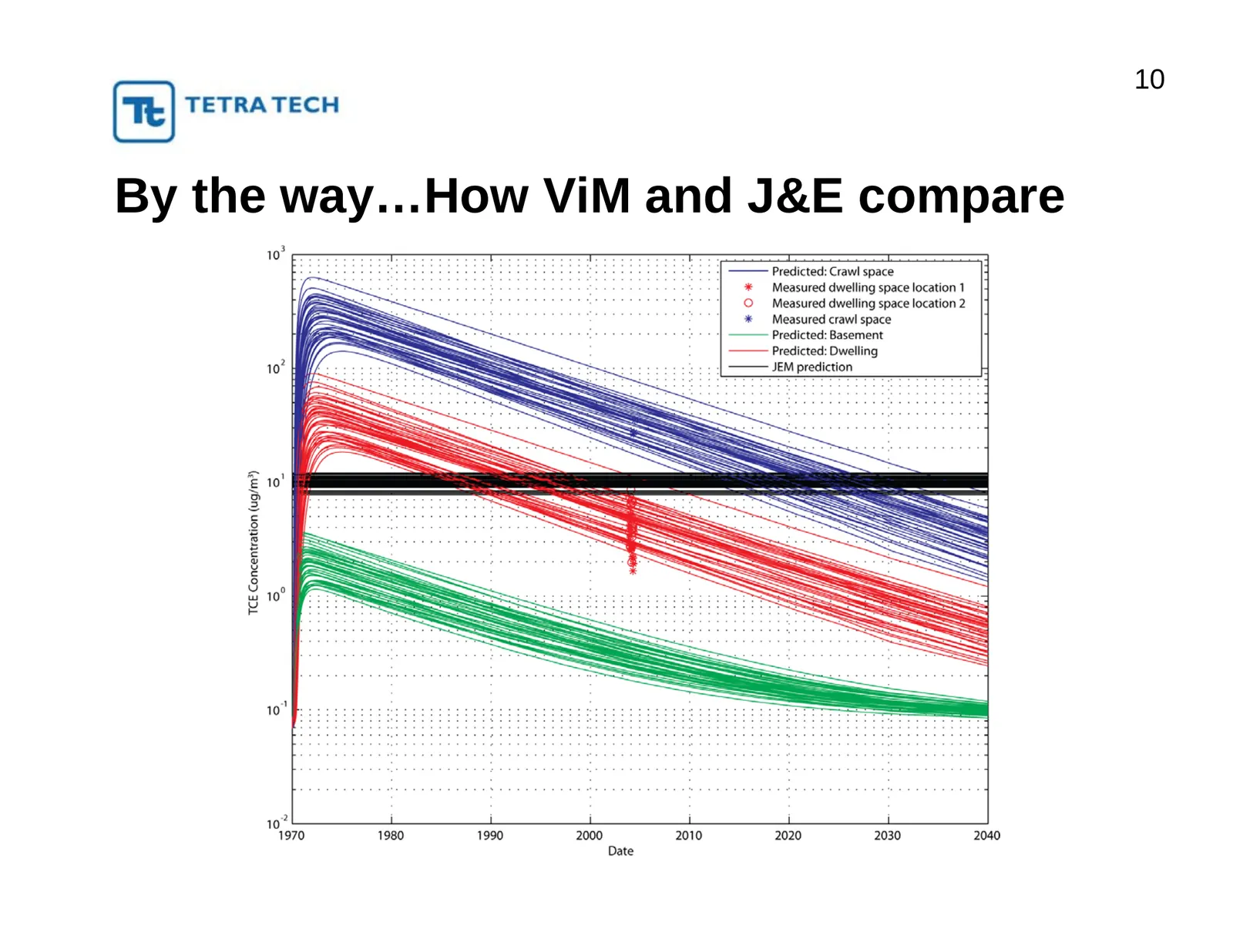
10 By the way…How ViM and J&E compare
Slide 11: How ViM can inform J&E
11 How ViM can inform J&E Motivation: Experience at DoD sites with ViM and a generalized version of J&E programmed in ViM Three categories of ways ViM can inform J&E: • Generate additional J&E output/predictions without changing the model at all • Expand the model’s capabilities slightly but kee
Slide 12: J&E: Report additional predictions (no new capabilities)
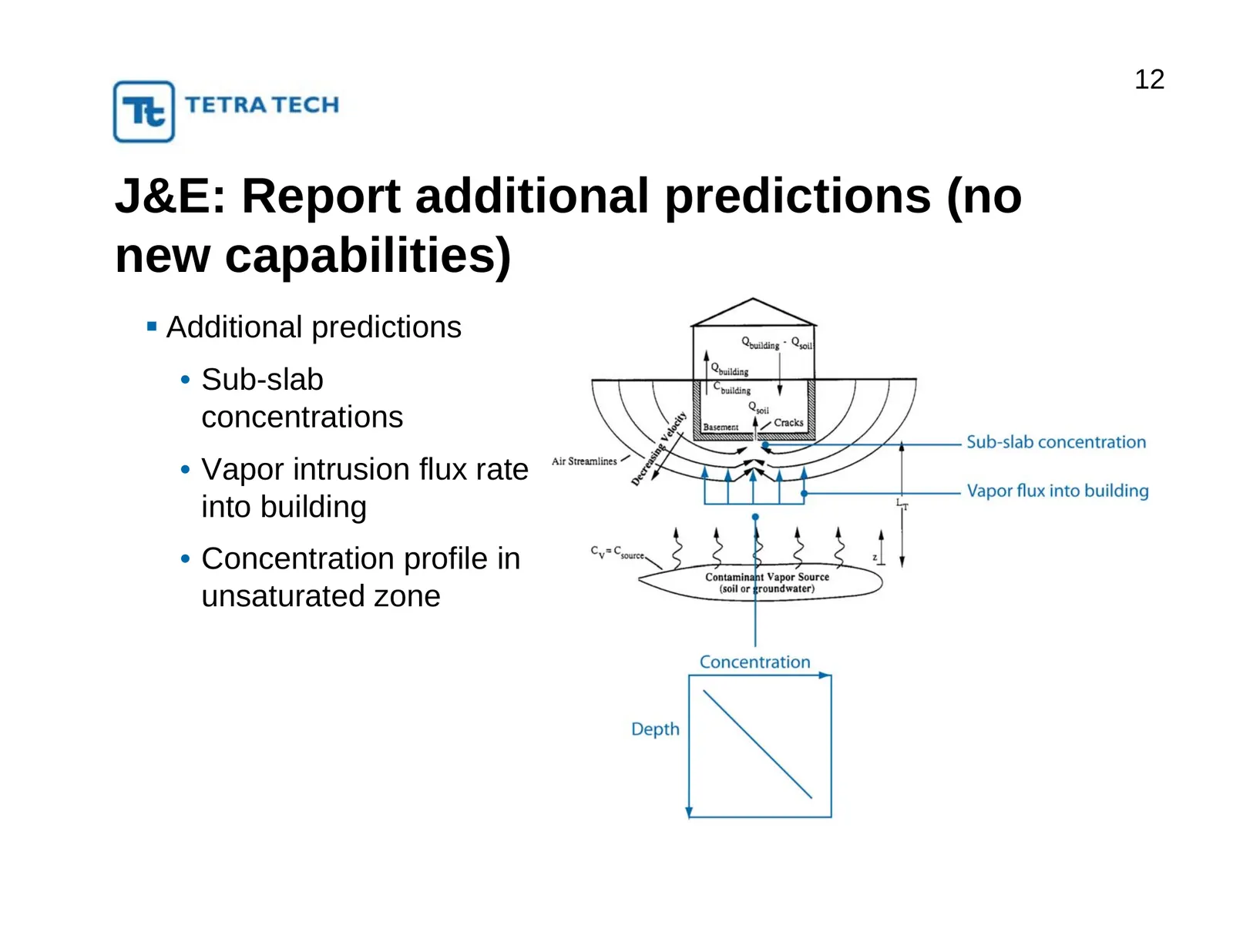
12 J&E: Report additional predictions (no new capabilities) Additional predictions • Sub-slab concentrations • Vapor intrusion flux rate into building • Concentration profile in unsaturated zone
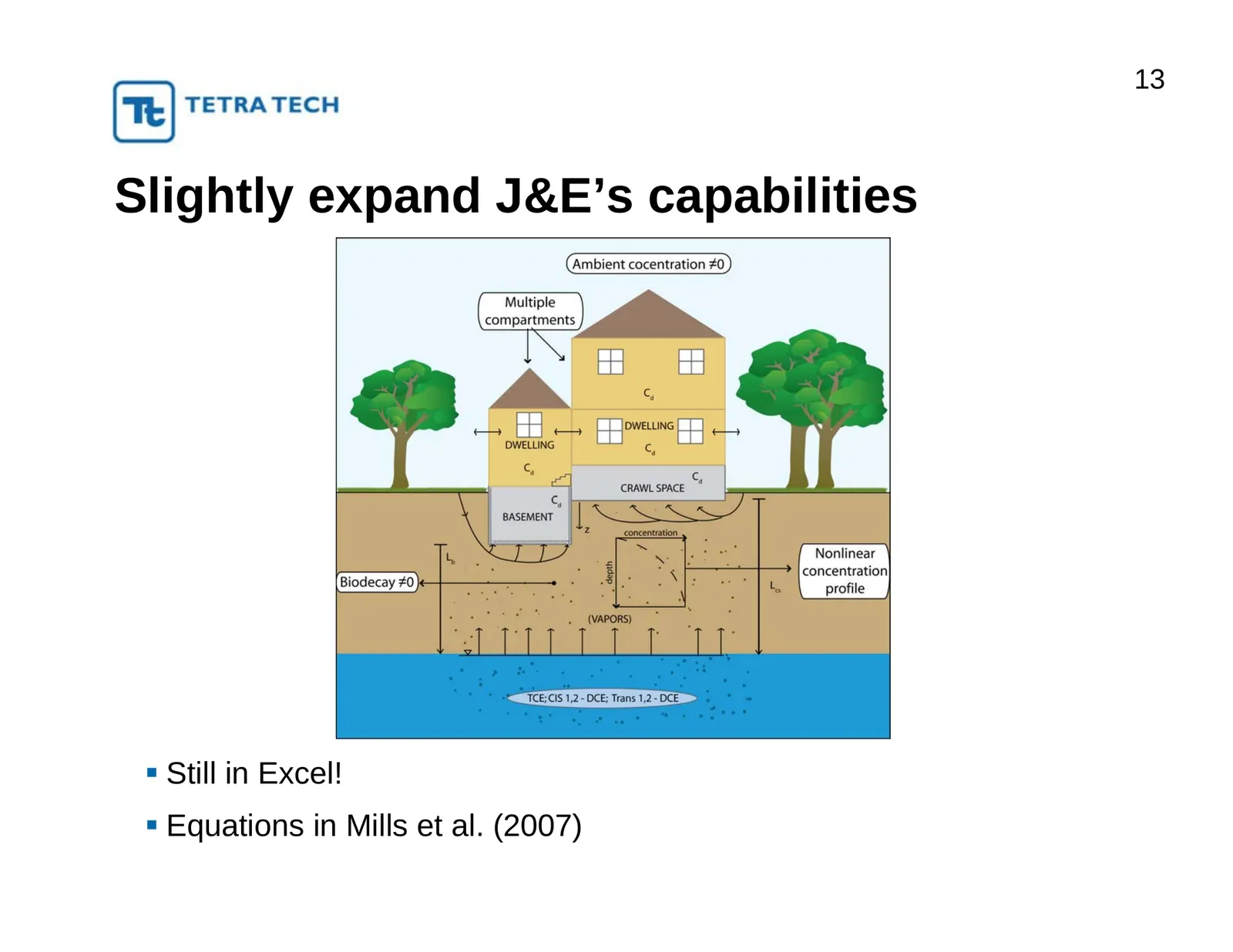
Slide 13: Slightly expand J&E's capabilities
13 Slightly expand J&E’s capabilities Still in Excel! Equations in Mills et al. (2007)
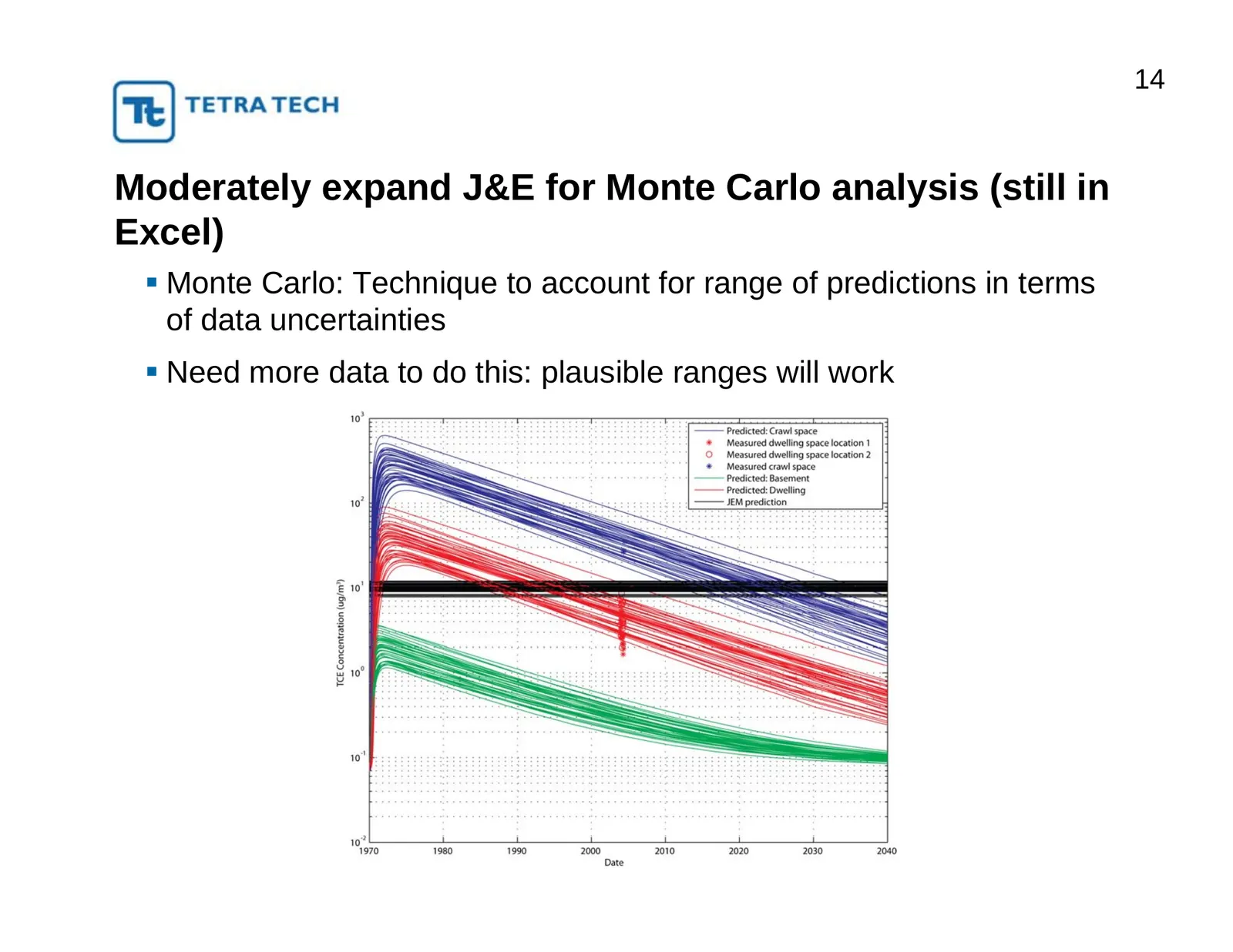
Slide 14: Moderately expand J&E for Monte Carlo analysis (still in Excel)
14 Moderately expand J&E for Monte Carlo analysis (still in Excel) Monte Carlo: Technique to account for range of predictions in terms of data uncertainties Need more data to do this: plausible ranges will work
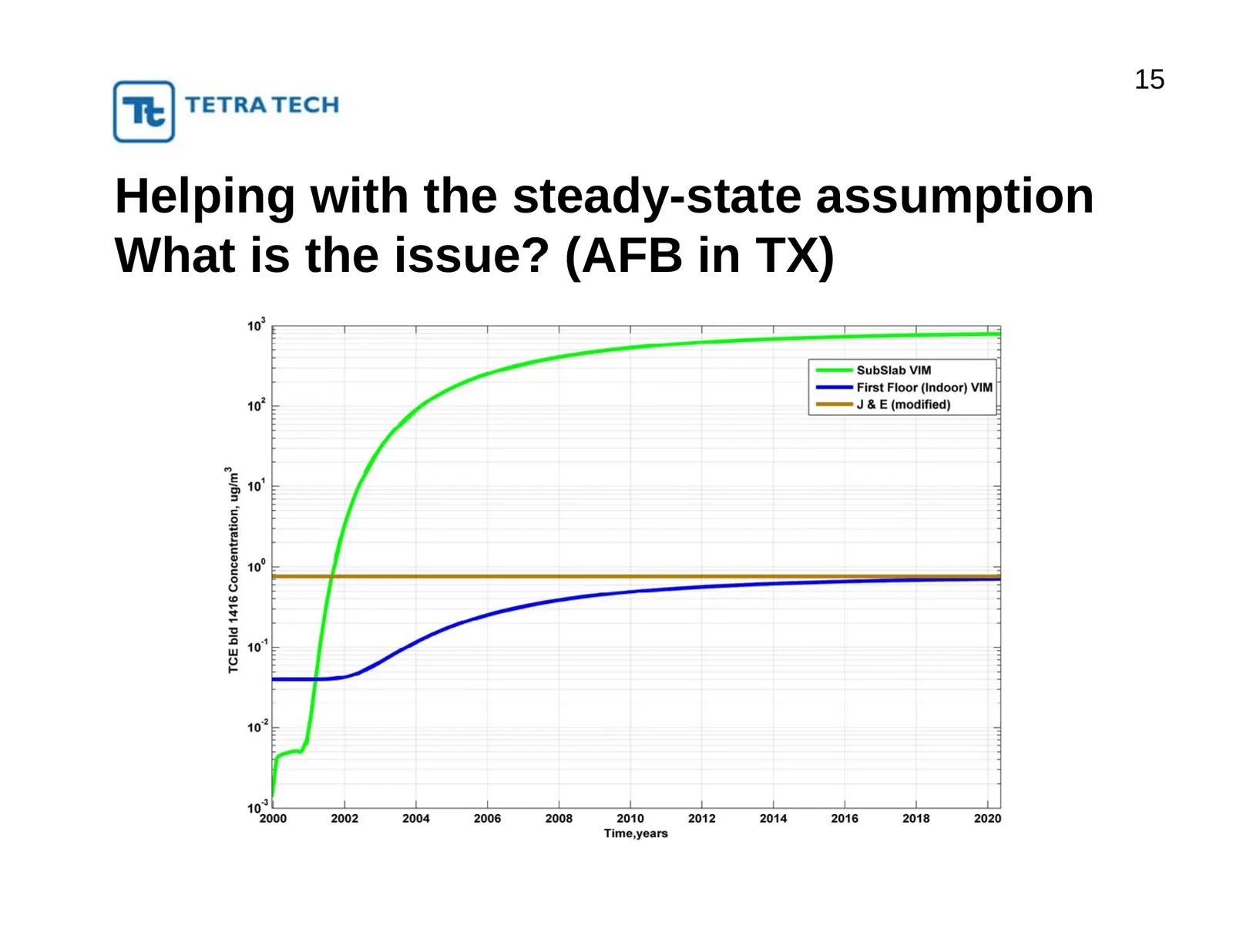
Slide 15: Helping with the steady-state assumption
15 Helping with the steady-state assumption What is the issue? (AFB in TX)
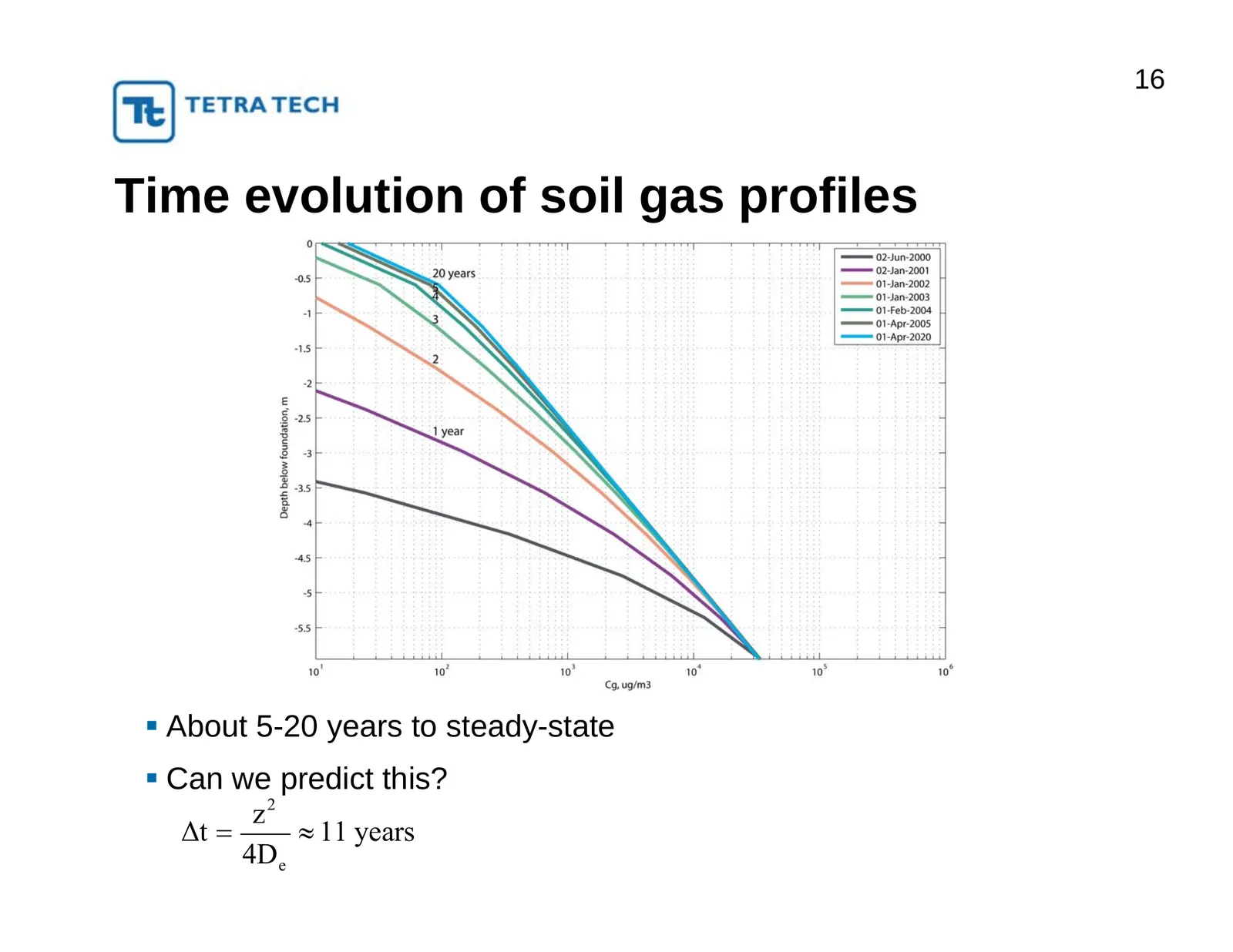
Slide 16: Time evolution of soil gas profiles
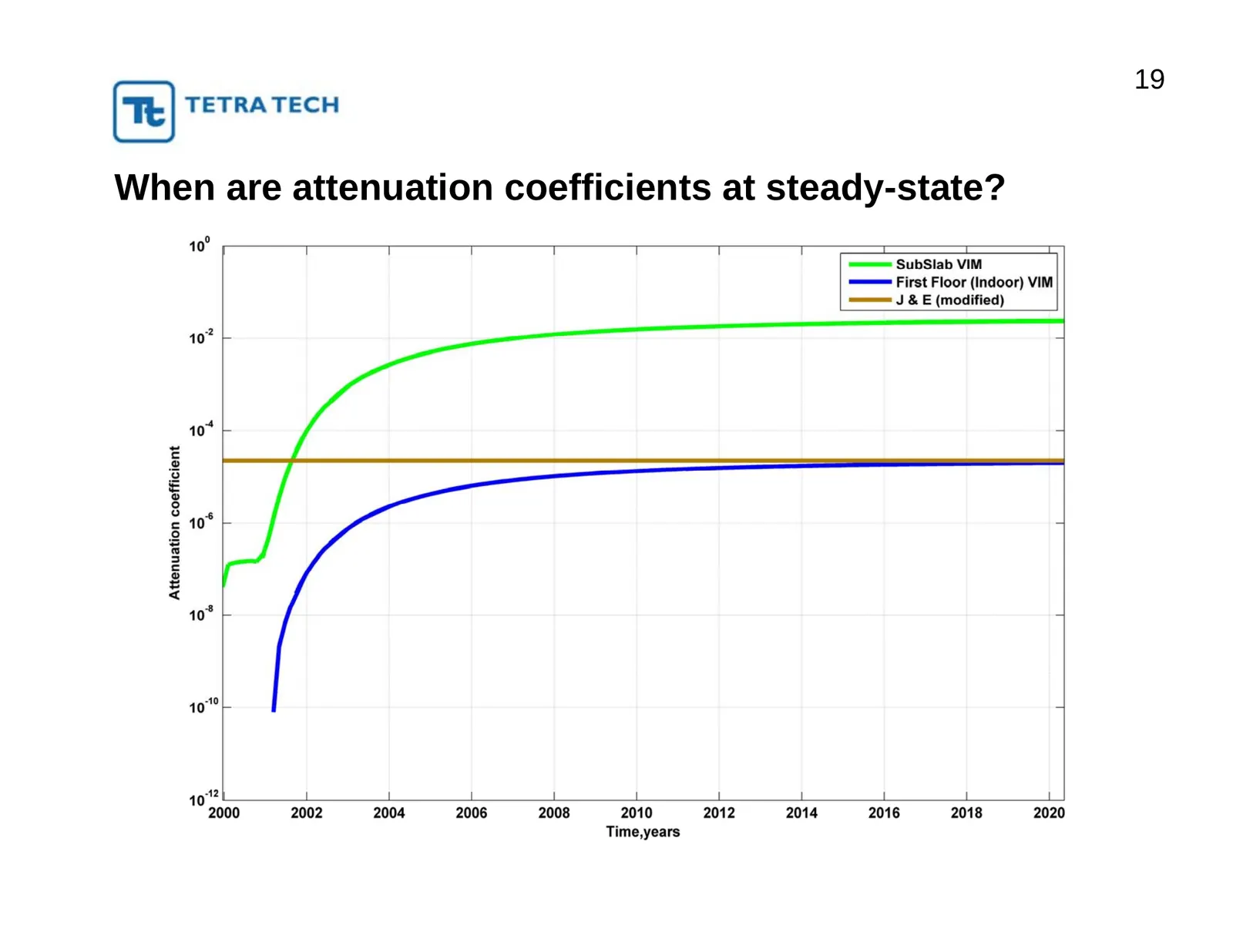
16 Time evolution of soil gas profiles About 5-20 years to steady-state Can we predict this? z2 Δt = ≈ 11 years 4De
Slide 17: Biodegradation in ViM
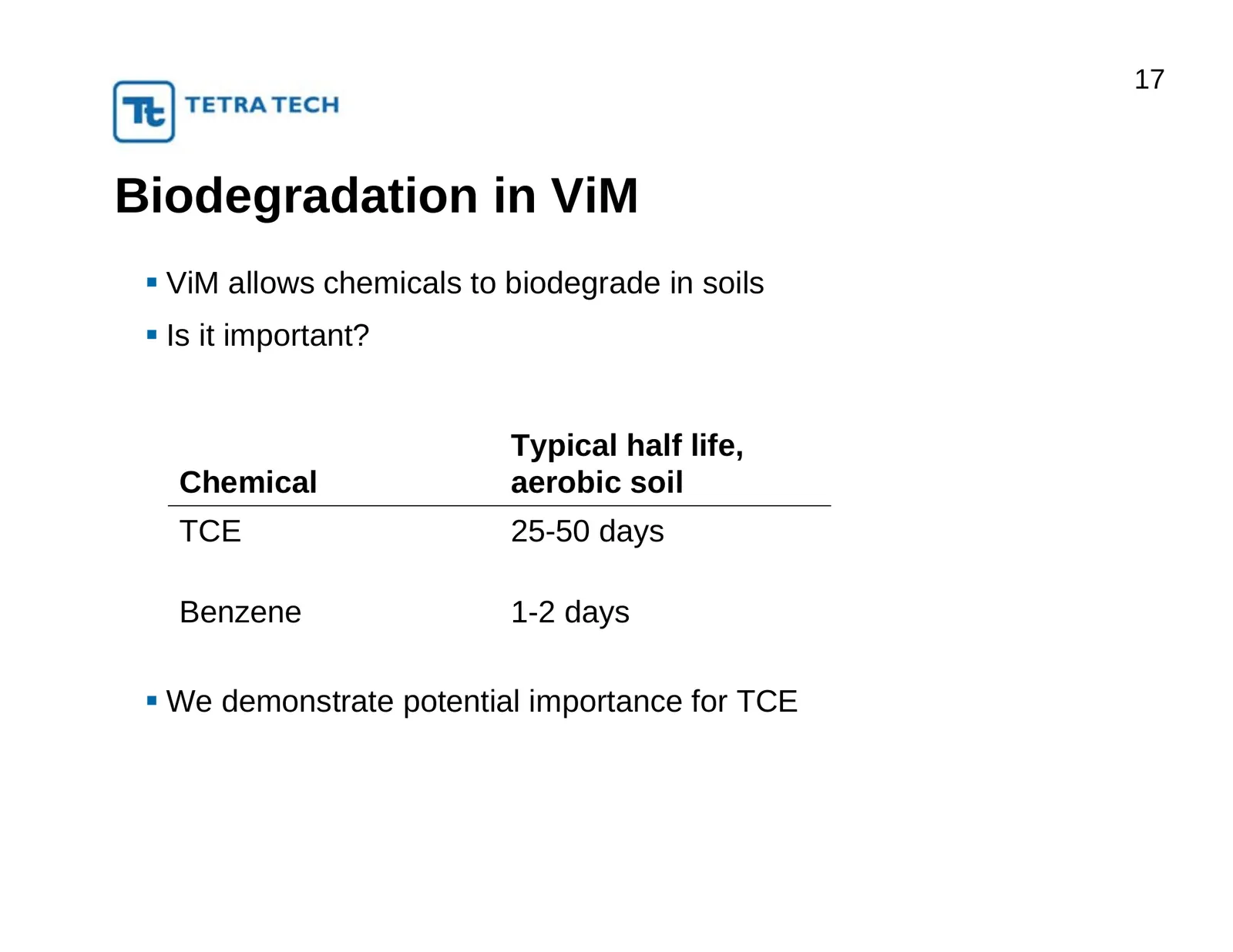
17 Biodegradation in ViM ViM allows chemicals to biodegrade in soils Is it important? Typical half life, Chemical aerobic soil TCE 25-50 days Benzene 1-2 days We demonstrate potential importance for TCE
Slide 18: When is bio-decay important?
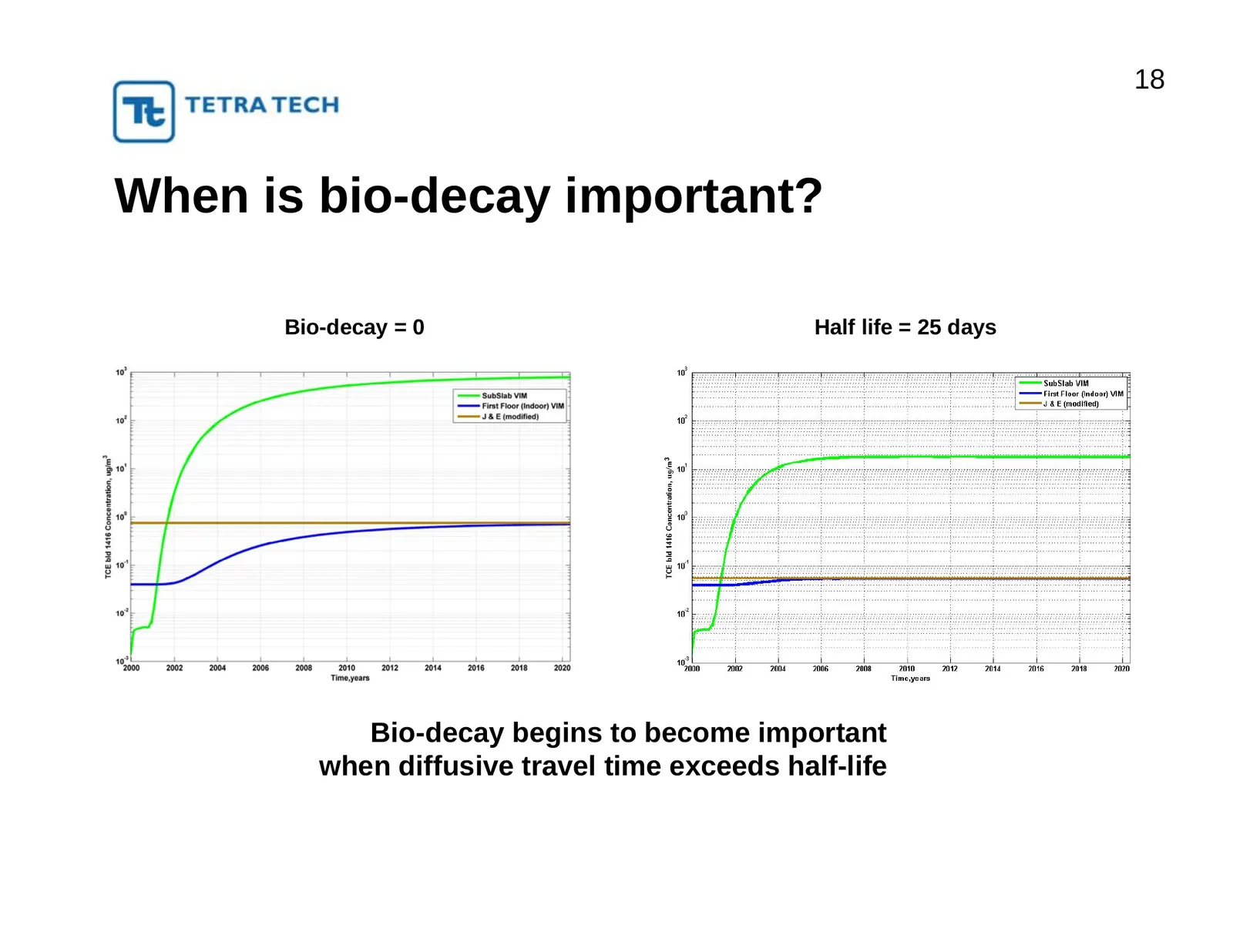
18 When is bio-decay important? Bio-decay = 0 Half life = 25 days Bio-decay begins to become important when diffusive travel time exceeds half-life
Slide 19: When are attenuation coefficients at steady-state?
19 When are attenuation coefficients at steady-state?
Slide 20: ViM informing J&E for air exchange rate (AER)
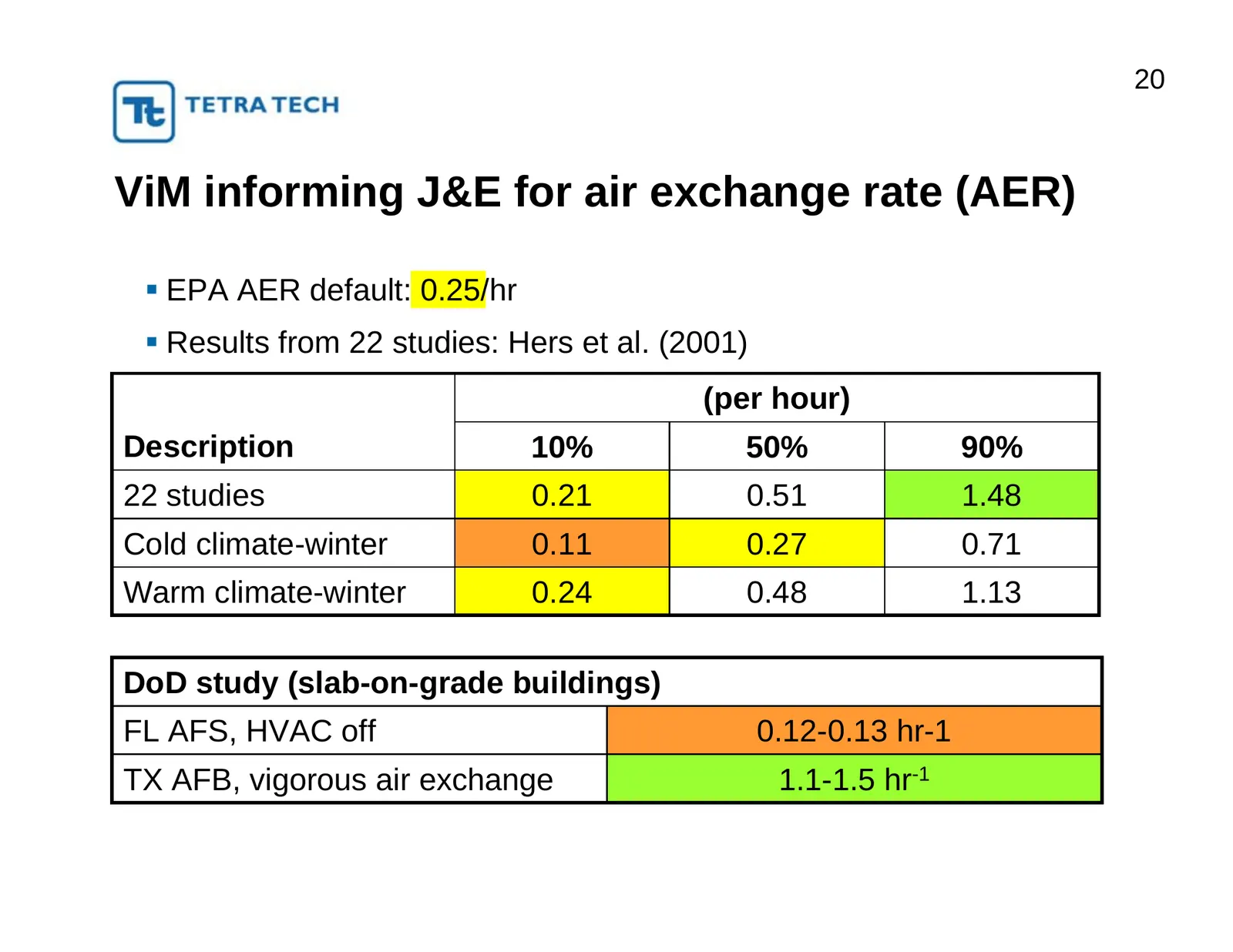
20 ViM informing J&E for air exchange rate (AER) EPA AER default: 0.25/hr Results from 22 studies: Hers et al. (2001) (per hour) Description 10% 50% 90% 22 studies 0.21 0.51 1.48 Cold climate-winter 0.11 0.27 0.71 Warm climate-winter 0.24 0.48 1.13 DoD study (slab-on-grade buildings) FL AFS, HVA
Slide 21: Employ helium release technique
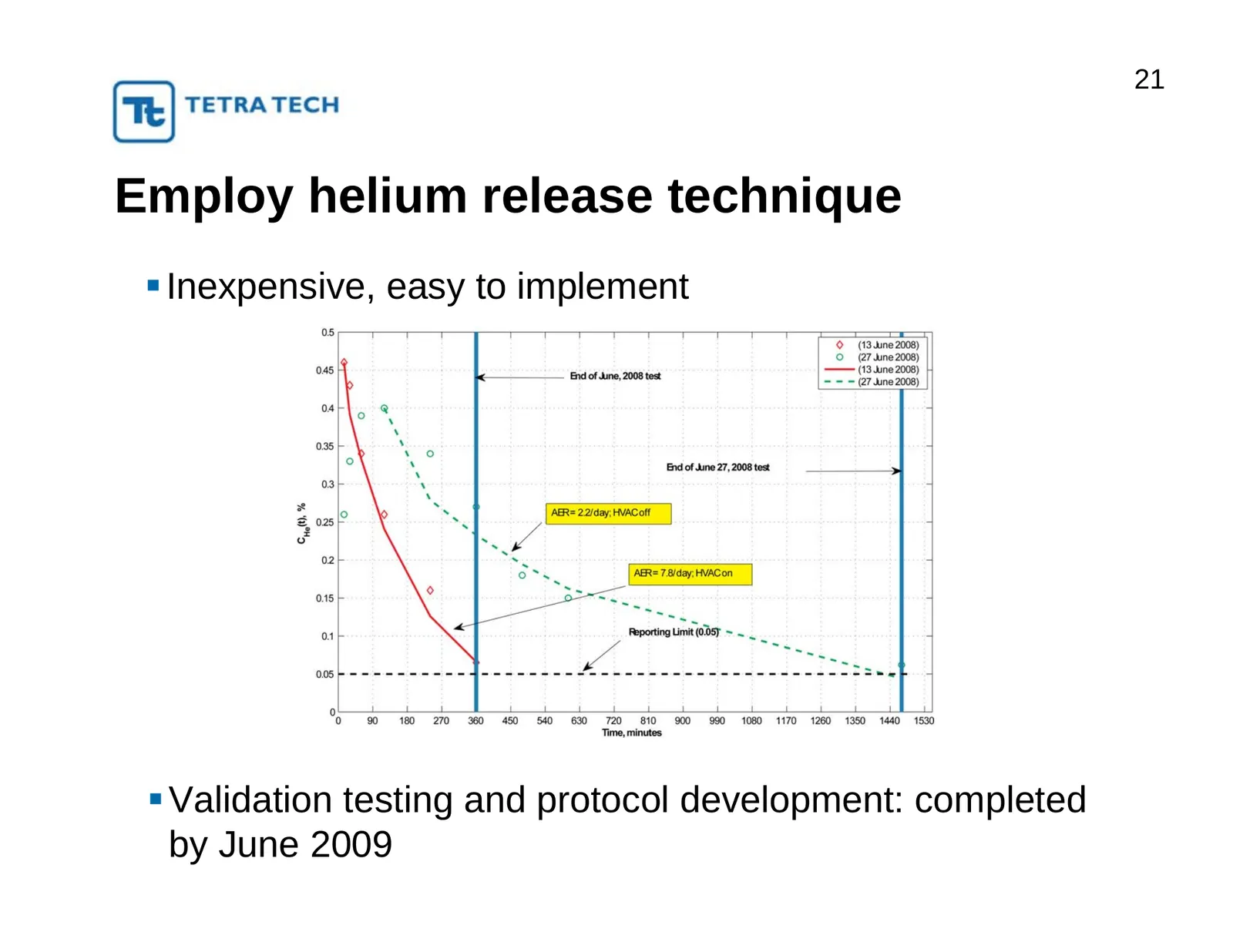
21 Employ helium release technique Inexpensive, easy to implement Validation testing and protocol development: completed by June 2009
Slide 22: Conclusions
22 Conclusions Experience with using J&E and ViM have generated ideas regarding J&E • #1: J&E can report additional predictions • #2: J&E’s capabilities can be expanded but still operable in and Excel spreadsheet: • Ambient concentration • Biodecay • Concentration profiles • Multiple compartments
Source: Internet Archive copy of rd.tetratech.com
More decks from Tetra Tech, Inc.
 Q4 2026 Earnings Presentation16 slides · Nov 12, 2026
 Q3 2026 Earnings Presentation15 slides · Jul 30, 2026
 Q2 2026 Earnings Presentation19 slides · Apr 30, 2026
 Investor Presentation (March 2026)20 slides · March 2026
 Q1 2026 Earnings Presentation18 slides · Jan 29, 2026
 Q4 2025 Earnings Presentation21 slides · Nov 13, 2025