National Securities Depository Limited · BSE:NSDL
National Securities Depository — Investor Presentation
21 slides from National Securities Depository's investor presentation
Slide 1: Introduction to Mutual Funds
Introduction to Mutual Funds
Slide 2: Disclaimer
DISCLAIMER The information contained in this material is for only educational and awareness purposes related to securities market and shall be used for non-profitable educational and awareness activities for general public. No part of this material can be reproduced or copied in any form or by a
Slide 3: Flow of Presentation
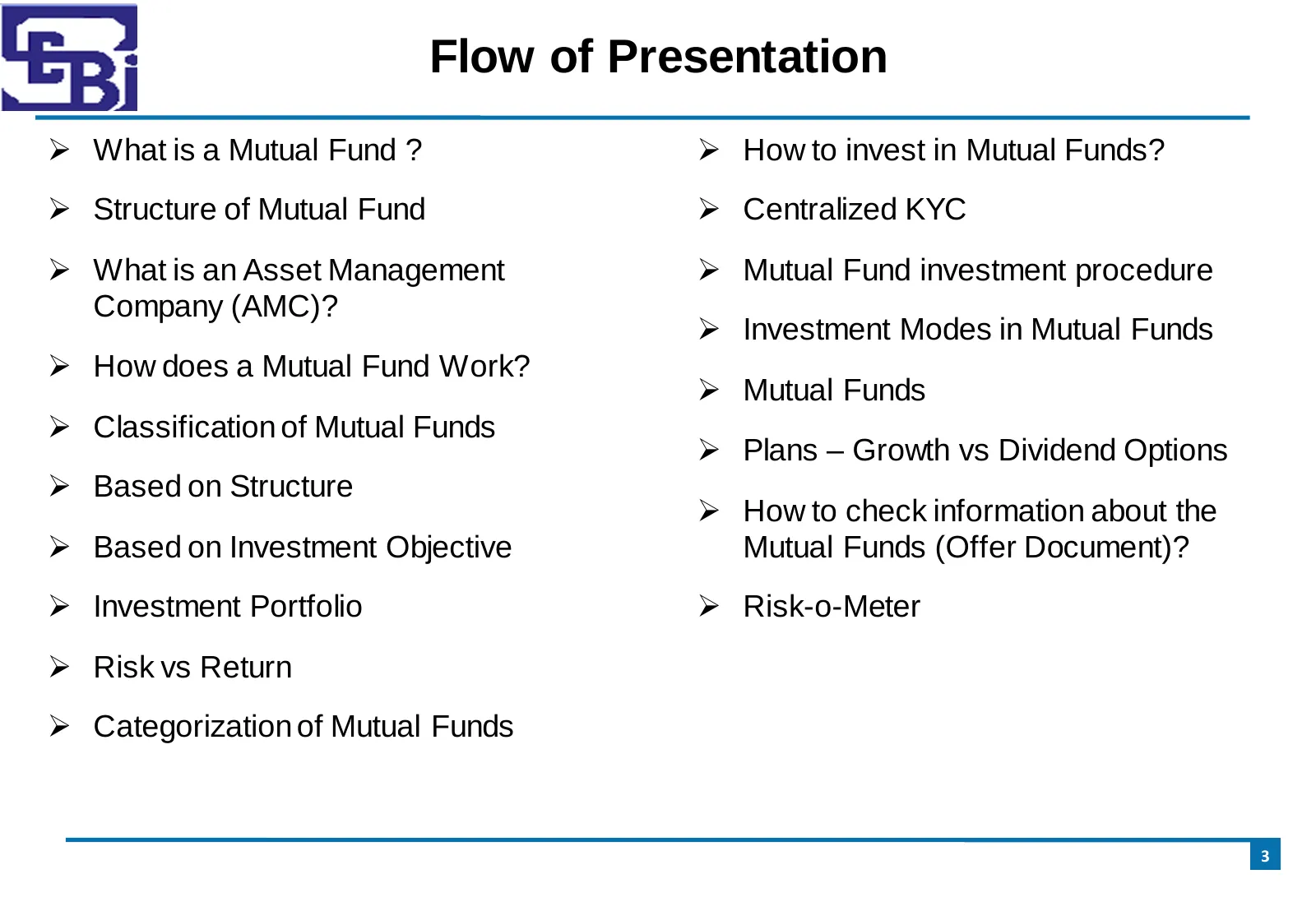
Flow of Presentation What is a Mutual Fund ? How to invest in Mutual Funds? Structure of Mutual Fund Centralized KYC What is an Asset Management Mutual Fund investment procedure Company (AMC)? Investment Modes in Mutual Funds How does a Mutual Fund Work? Mutual Funds Classificati
Slide 4: What is a Mutual Fund (MF)?
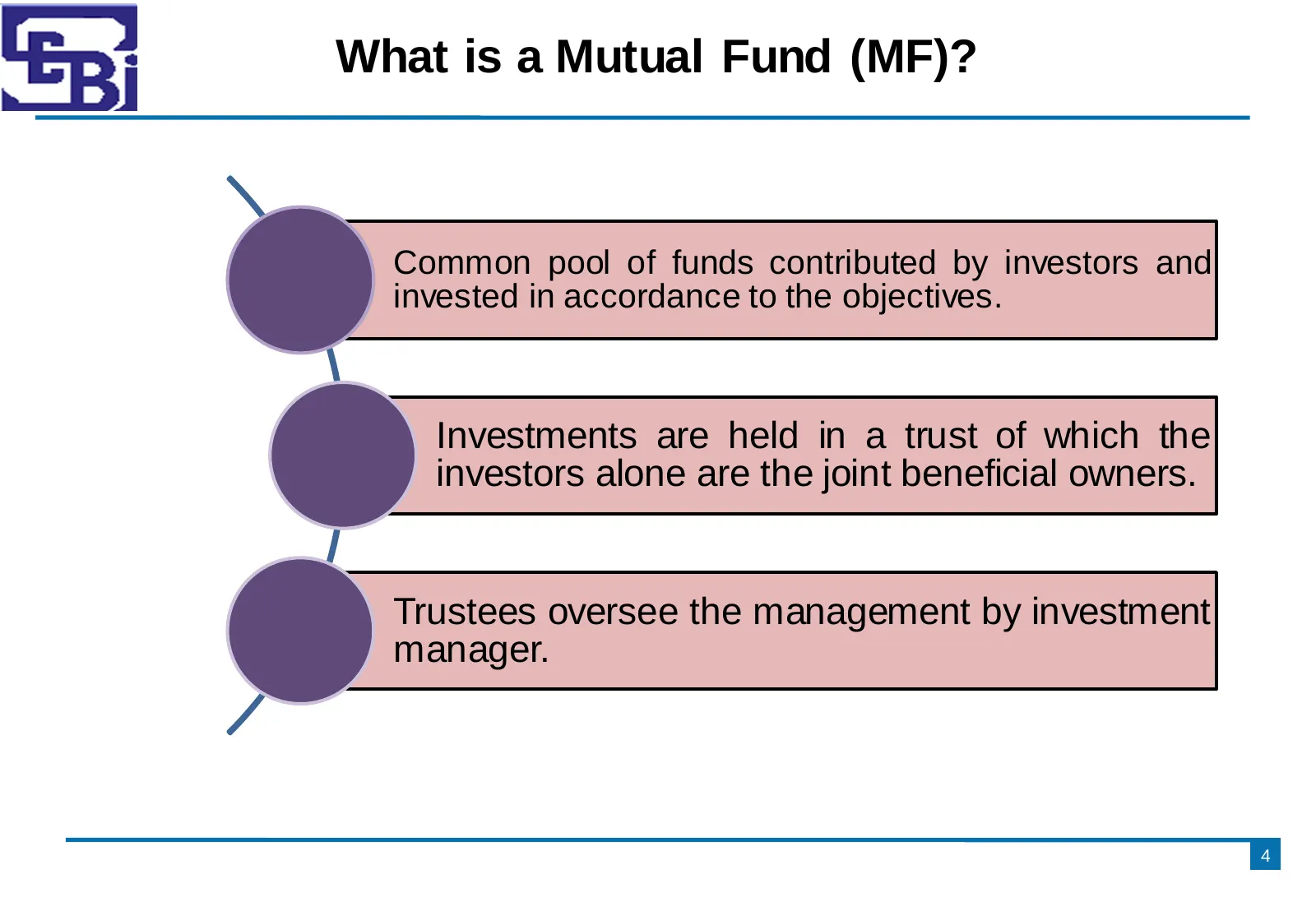
What is a Mutual Fund (MF)? Common pool of funds contributed by investors and invested in accordance to the objectives. Investments are held in a trust of which the investors alone are the joint beneficial owners. Trustees oversee the management by investment manager. 4
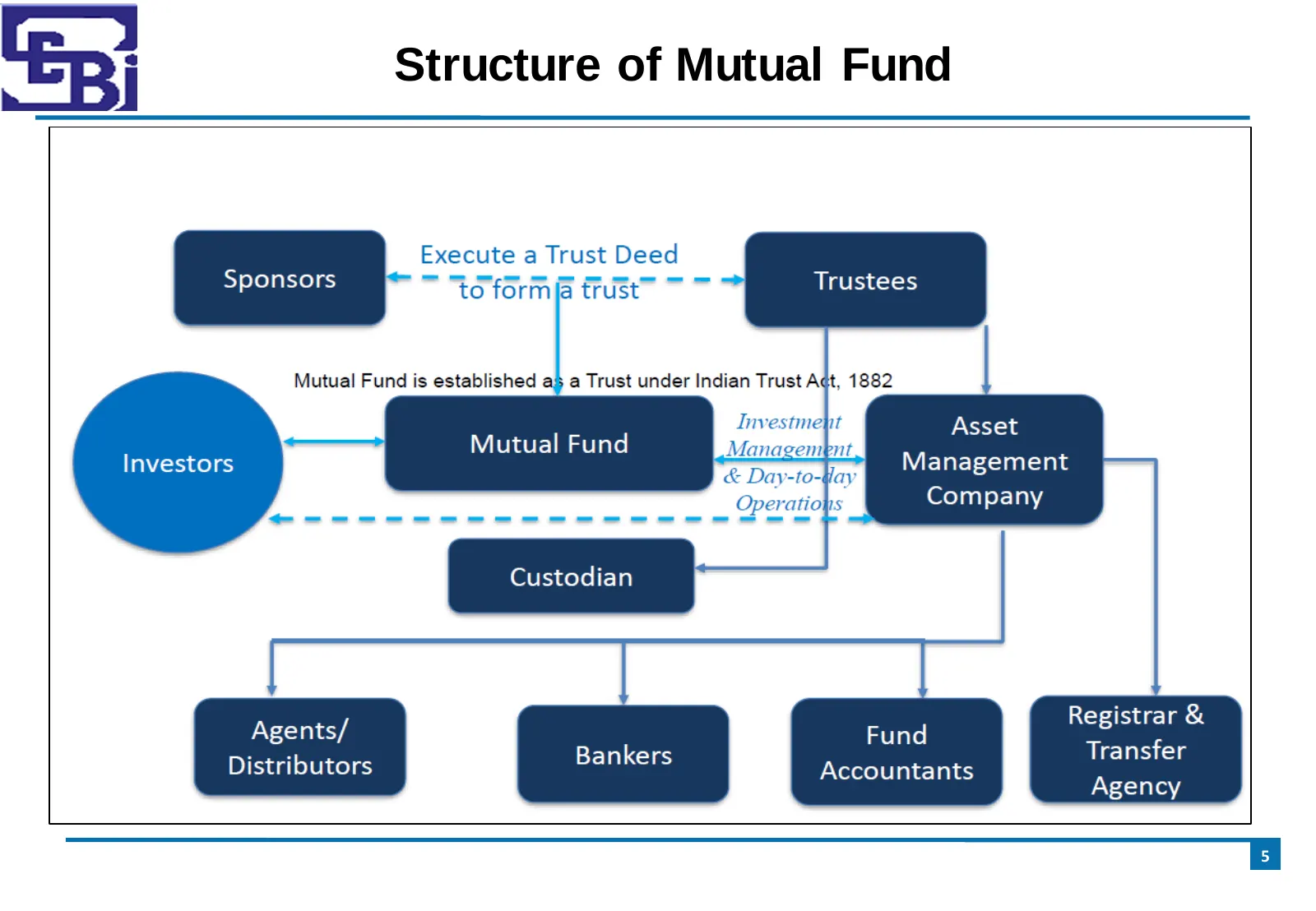
Slide 5: Structure of Mutual Fund
Structure of Mutual Fund i Execute a Trust Deed SPONSOrS =— laa cal Sane ol oD Tid - Trustees Mutual Fund is established a§ a Trust under Indian Trust A: Investme| Asset Managem &@ Day-to-Vay Management Operatiow: Company et te Agents/ Fund Distributors Registrar & Transfer Agency Accountants
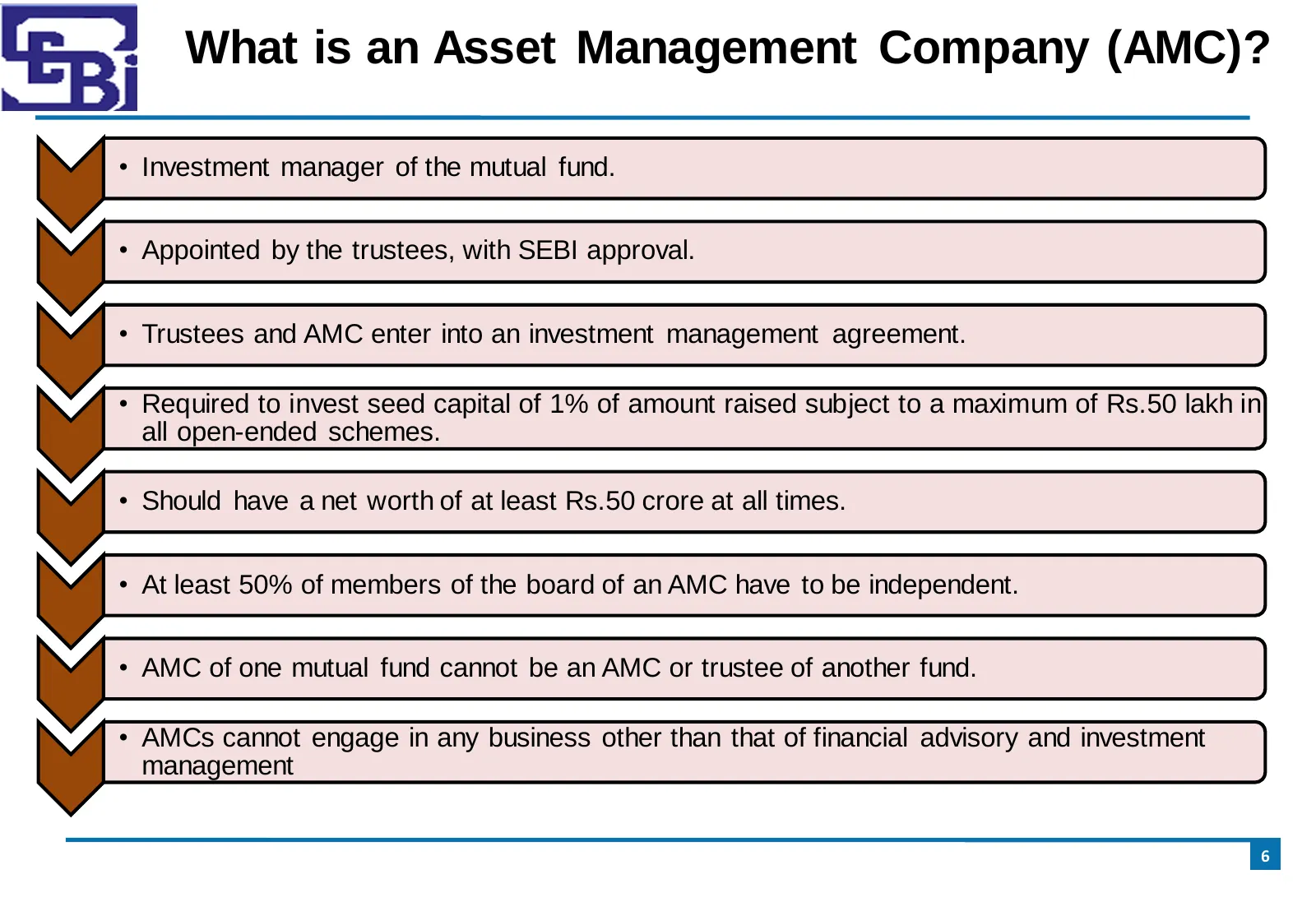
Slide 6: What is an Asset Management Company (AMC)?
What is an Asset Management Company (AMC)? • Investment manager of the mutual fund. • Appointed by the trustees, with SEBI approval. • Trustees and AMC enter into an investment management agreement. • Required to invest seed capital of 1% of amount raised subject to a maximum of Rs.50 lakh in all op
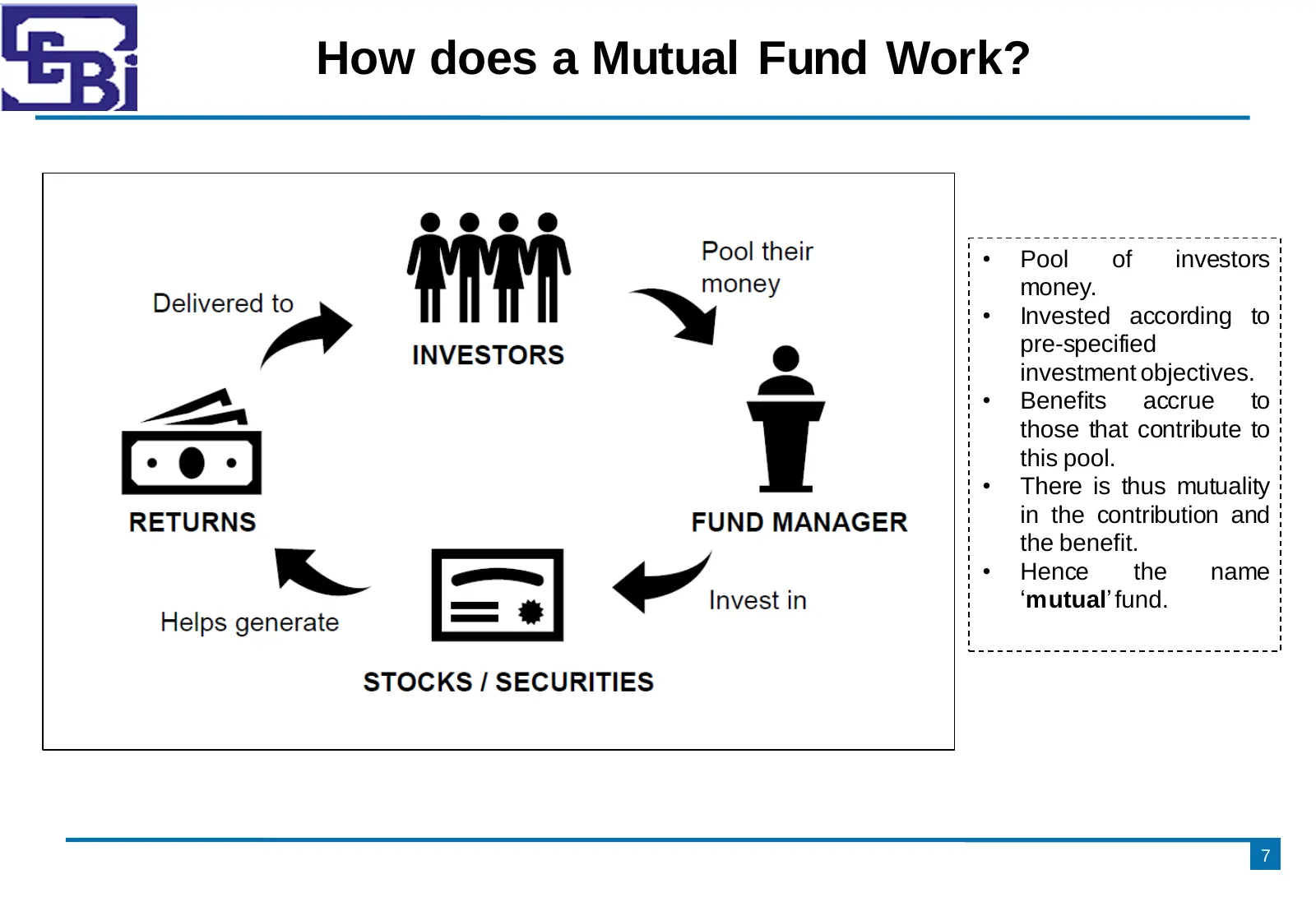
Slide 7: How does a Mutual Fund Work?
How does a Mutual Fund Work? • Pool of investors money. • Invested according to pre-specified investment objectives. • Benefits accrue to those that contribute to this pool. • There is thus mutuality in the contribution and the benefit. • Hence the name ‘mutual’ fund. 7
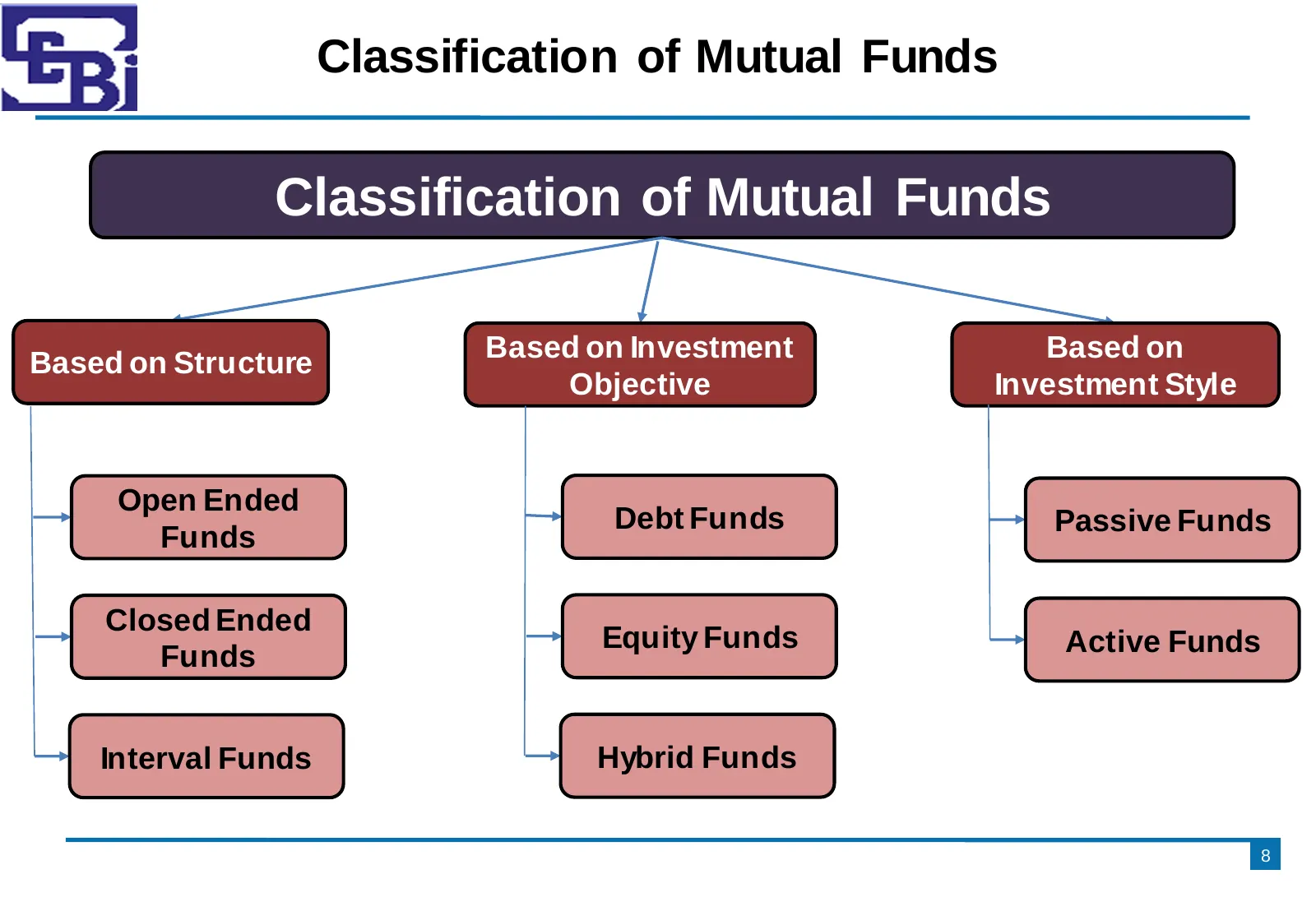
Slide 8: Classification of Mutual Funds
Classification of Mutual Funds Classification of Mutual Funds Based on Investment Based on Based on Structure Objective Investment Style Open Ended Debt Funds Passive Funds Funds Closed Ended Equity Funds Active Funds Funds Interval Funds Hybrid Funds 8
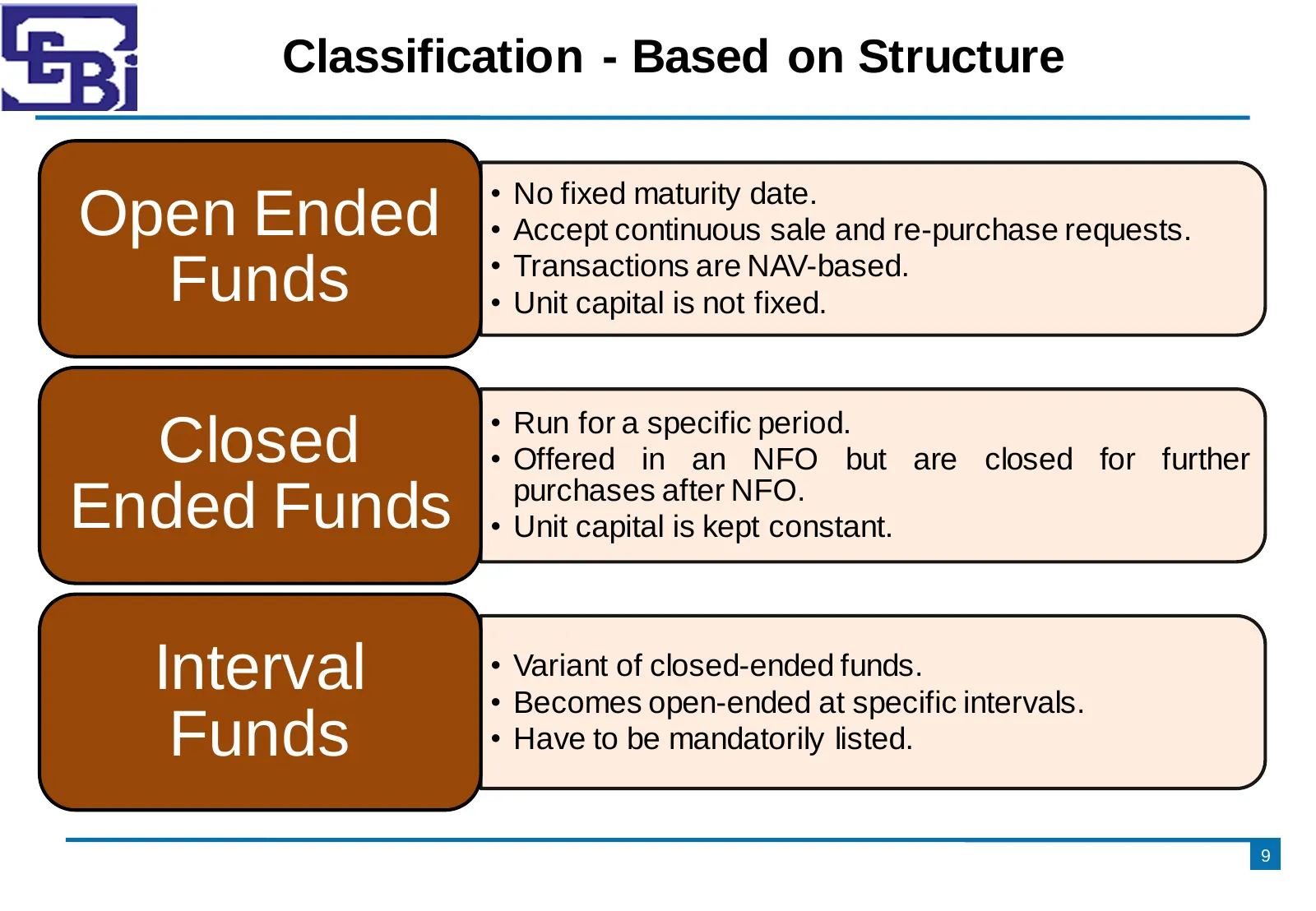
Slide 9: Classification - Based on Structure
Classification - Based on Structure • No fixed maturity date. Open Ended • Accept continuous sale and re-purchase requests. • Transactions are NAV-based. Funds • Unit capital is not fixed. • Run for a specific period. Closed • Offered in an NFO but are closed for further purchases after NFO. Ended F
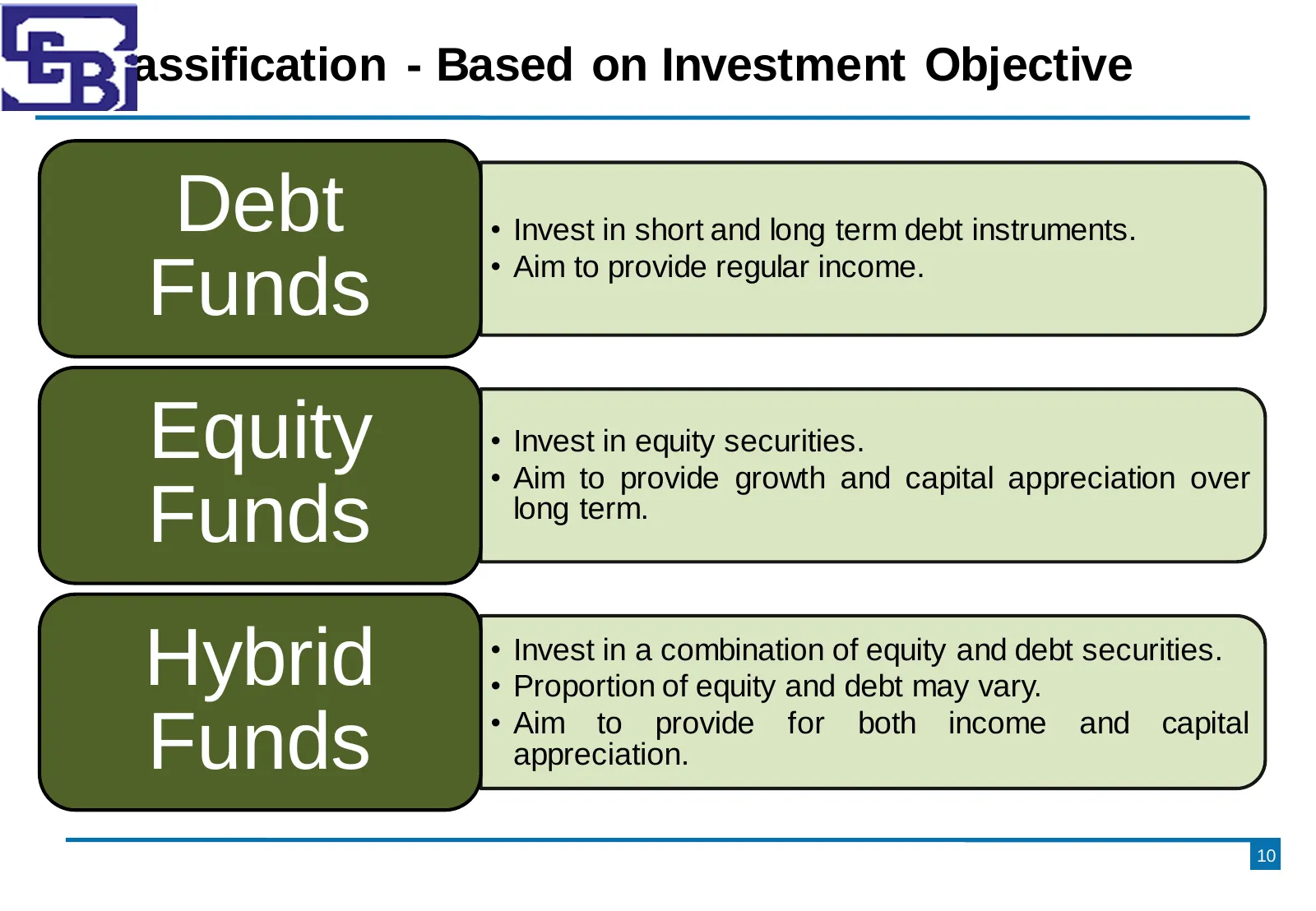
Slide 10: Classification - Based on Investment Objective
Classification - Based on Investment Objective Debt • Invest in short and long term debt instruments. • Aim to provide regular income. Funds Equity • Invest in equity securities. • Aim to provide growth and capital appreciation over Funds long term. Hybrid • Invest in a combination of equity and deb
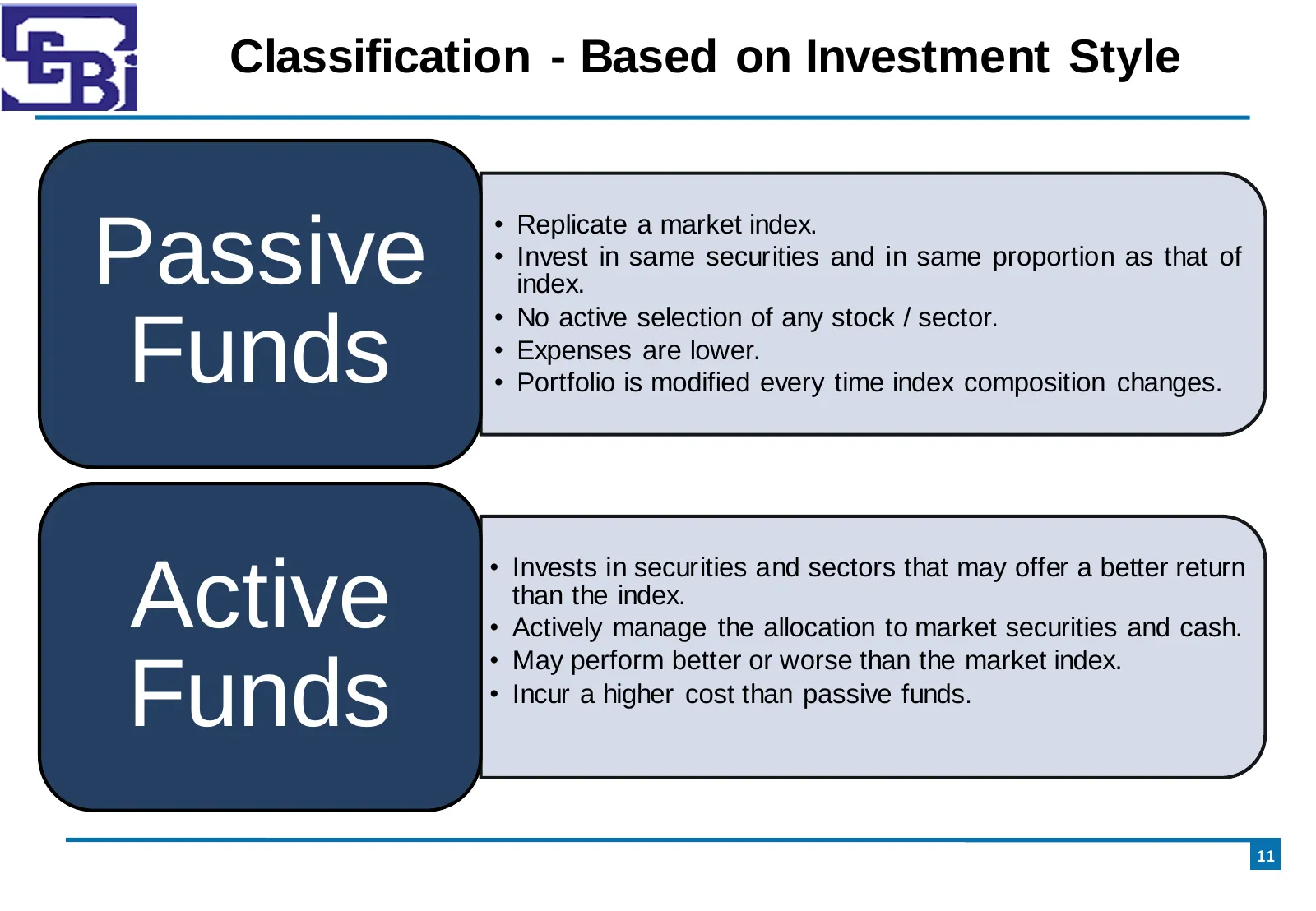
Slide 11: Classification - Based on Investment Style
Classification - Based on Investment Style • Replicate a market index. Passive • Invest in same securities and in same proportion as that of index. • No active selection of any stock / sector. Funds • Expenses are lower. • Portfolio is modified every time index composition changes. • Invests in secu
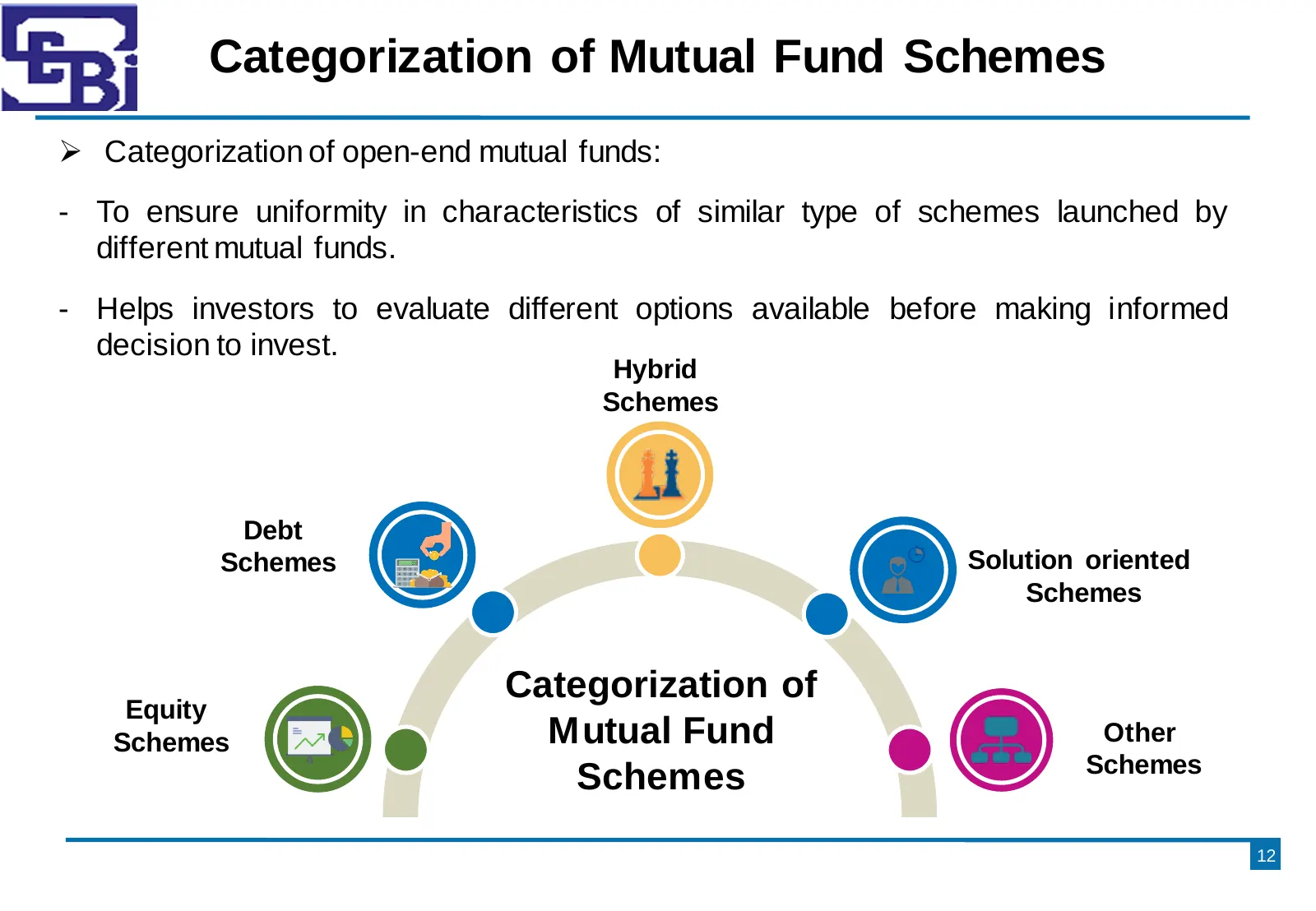
Slide 12: Categorization of Mutual Fund Schemes
Categorization of Mutual Fund Schemes Categorization of open-end mutual funds: - To ensure uniformity in characteristics of similar type of schemes launched by different mutual funds. - Helps investors to evaluate different options available before making informed decision to invest. Hybrid Scheme
Slide 13: How to invest in Mutual Funds?
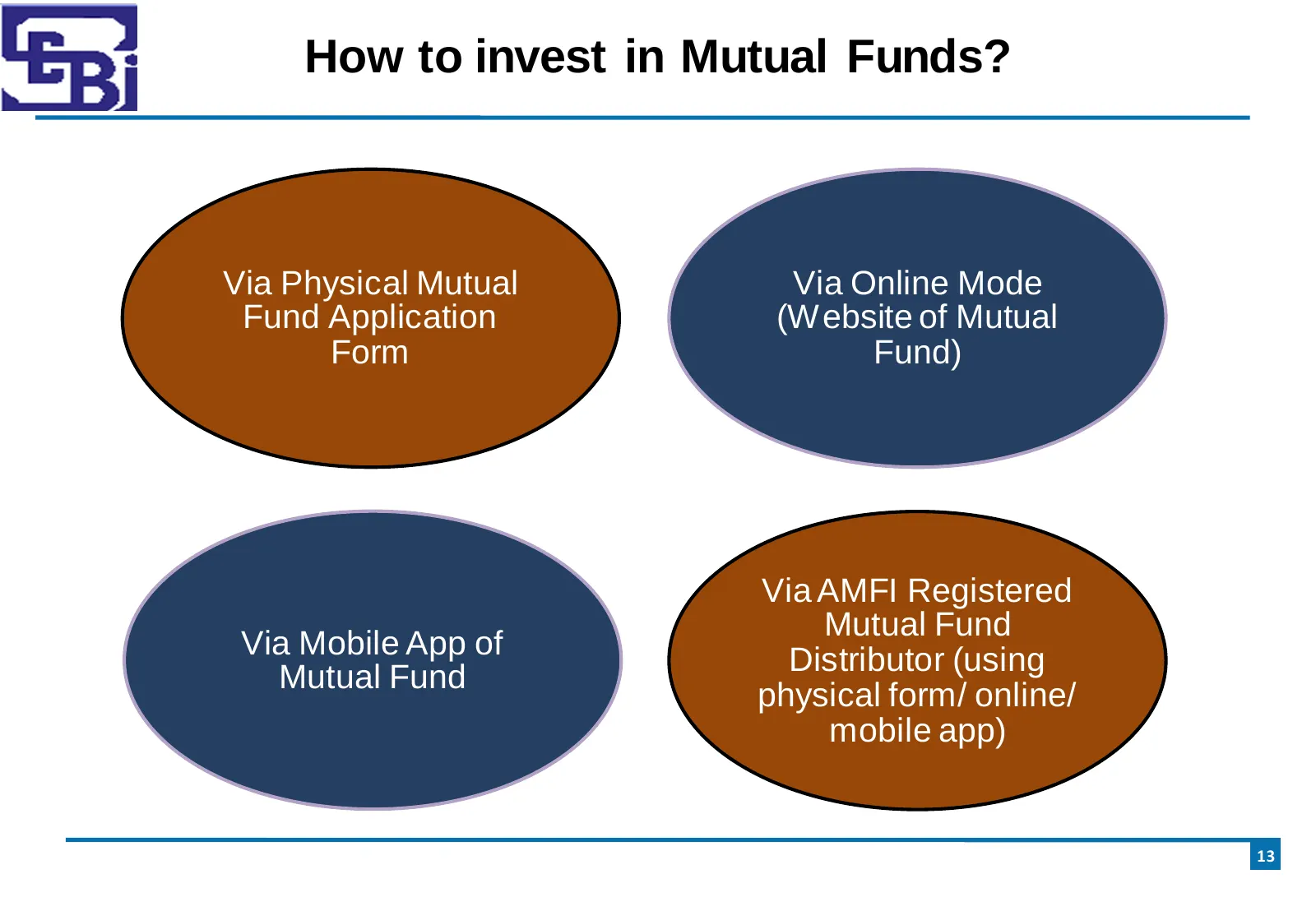
How to invest in Mutual Funds? Via Physical Mutual Via Online Mode Fund Application (Website of Mutual Form Fund) Via AMFI Registered Mutual Fund Via Mobile App of Distributor (using Mutual Fund physical form/ online/ mobile app) 13
Slide 14: Centralized KYC (C-KYC) in Securities Market
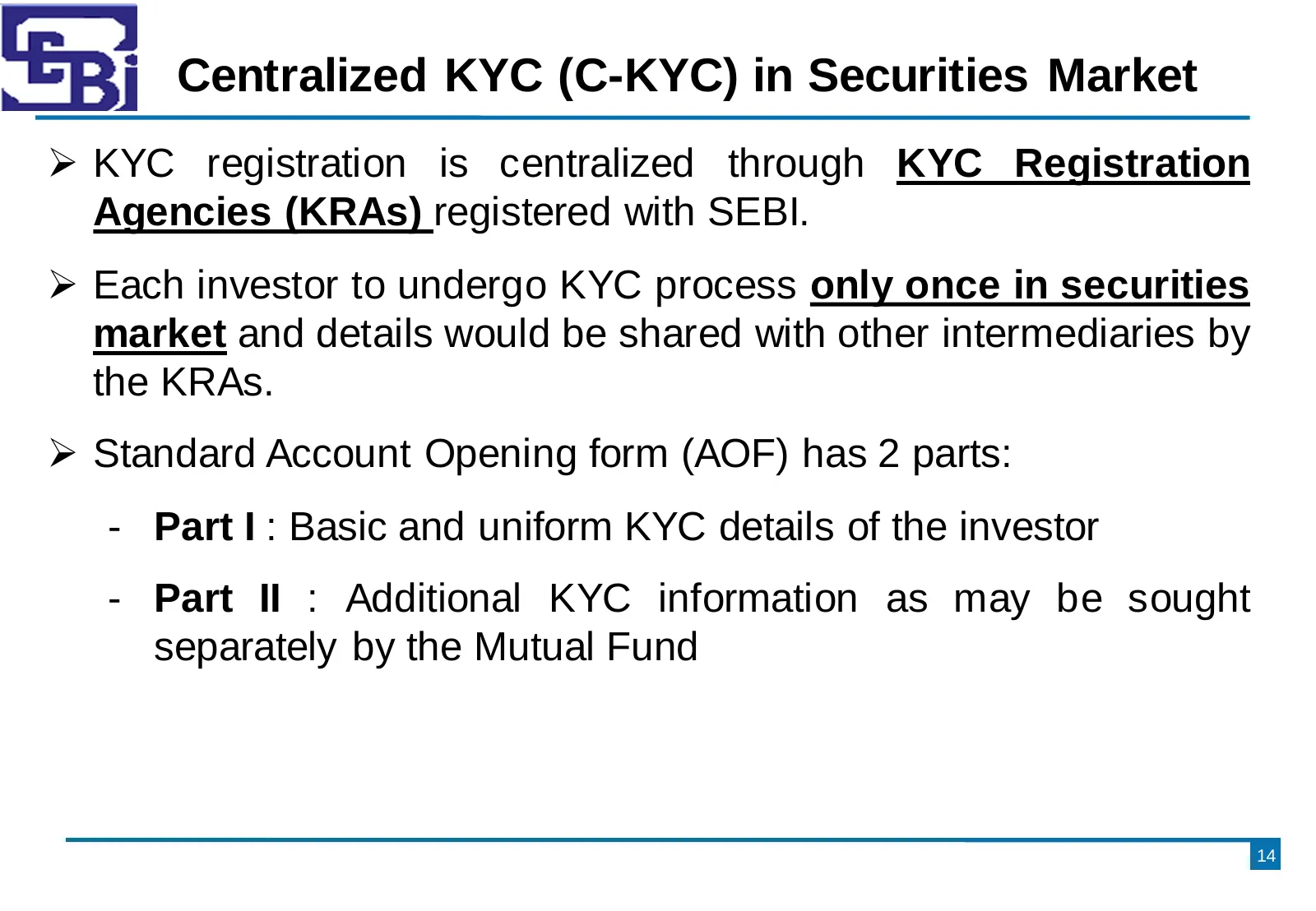
Centralized KYC (C-KYC) in Securities Market KYC registration is centralized through KYC Registration Agencies (KRAs) registered with SEBI. Each investor to undergo KYC process only once in securities market and details would be shared with other intermediaries by the KRAs. Standard Account Op
Slide 15: Mutual Funds investment procedure
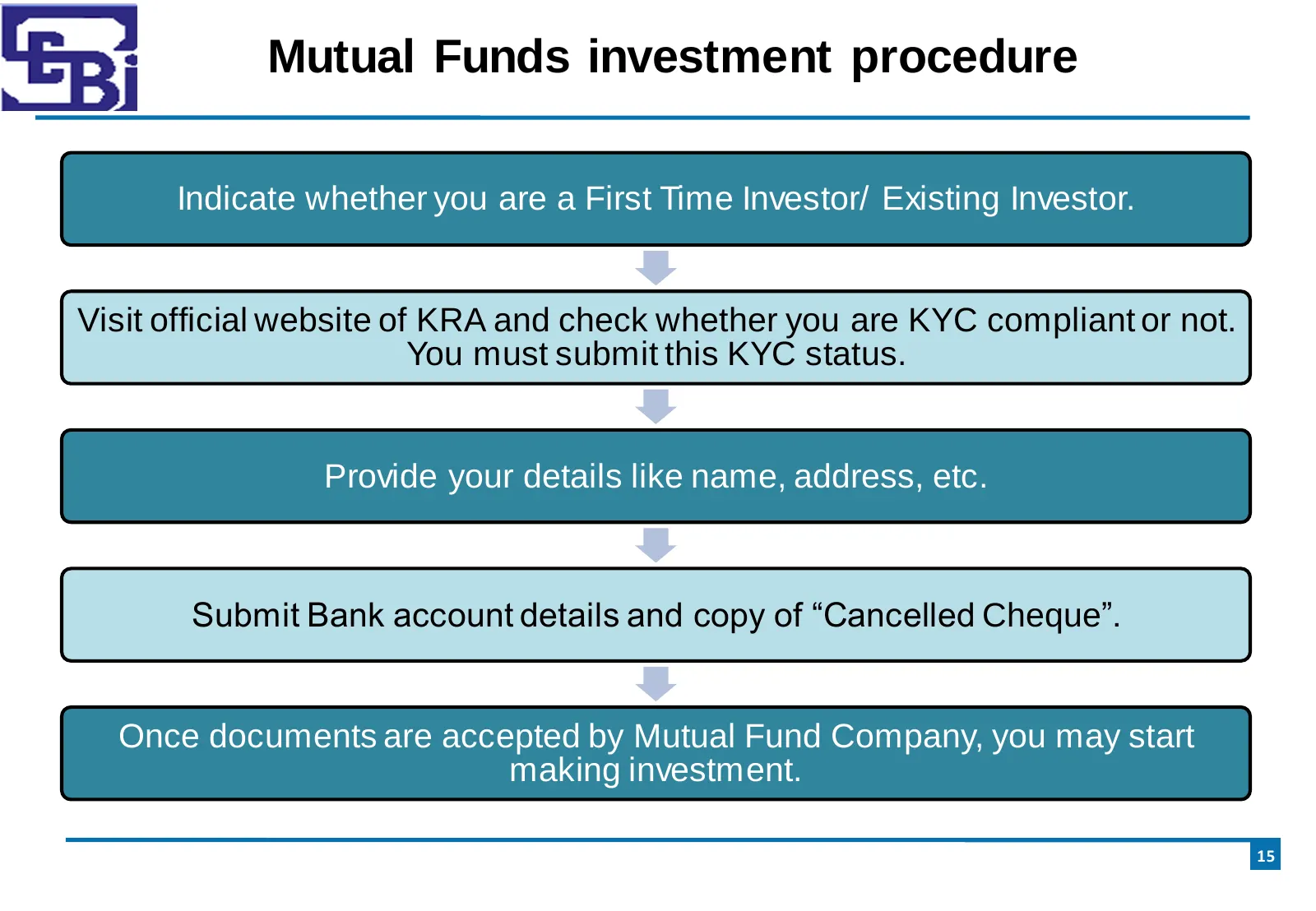
Mutual Funds investment procedure Indicate whether you are a First Time Investor/ Existing Investor. Visit official website of KRA and check whether you are KYC compliant or not. You must submit this KYC status. Provide your details like name, address, etc. Submit Bank account details and copy of “C
Slide 16: Investment Modes in Mutual Funds
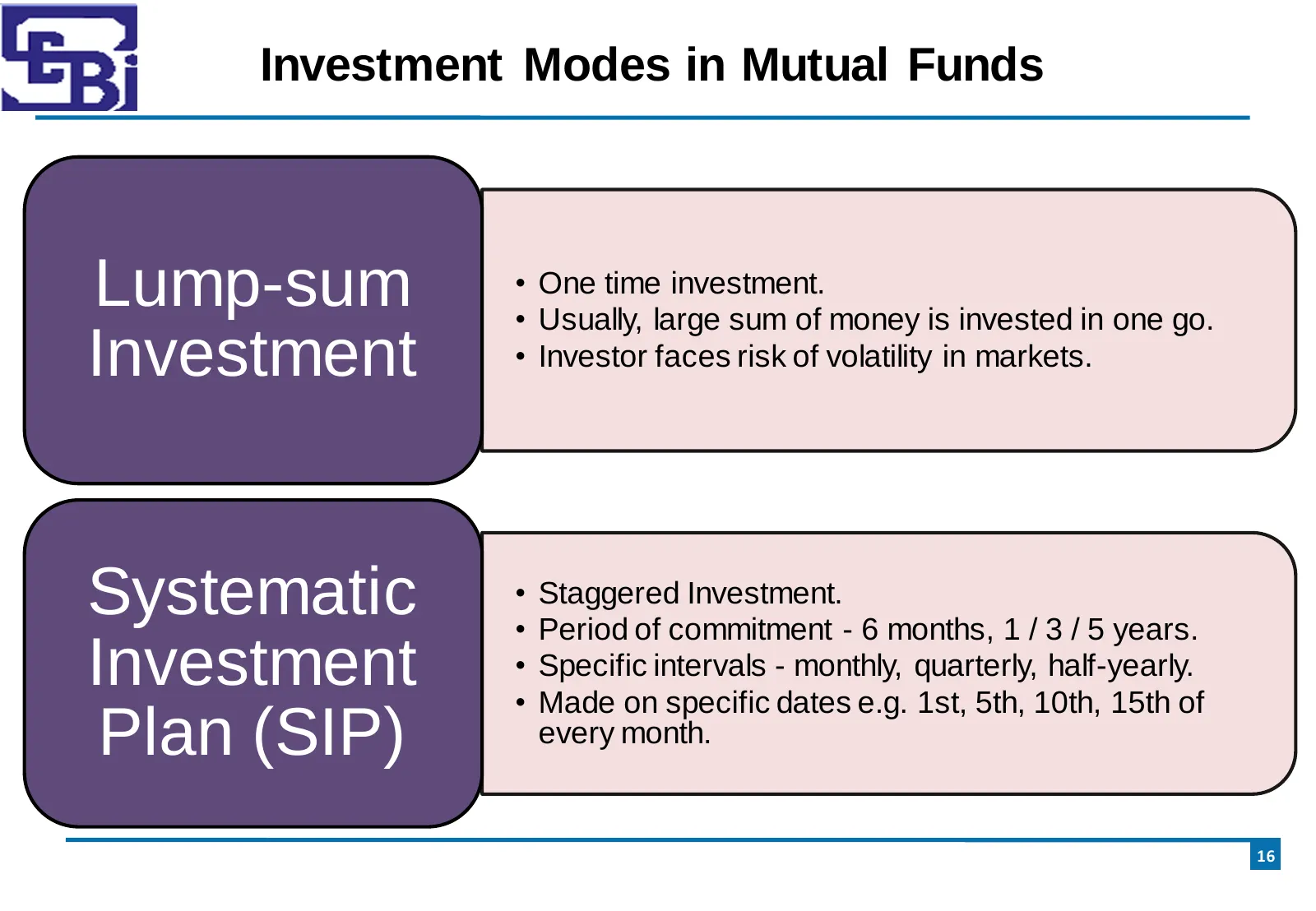
Investment Modes in Mutual Funds Lump-sum • One time investment. • Usually, large sum of money is invested in one go. Investment • Investor faces risk of volatility in markets. Systematic • Staggered Investment. • Period of commitment - 6 months, 1 / 3 / 5 years. Investment • Specific intervals - mo
Slide 17: Investment Modes in Mutual Funds
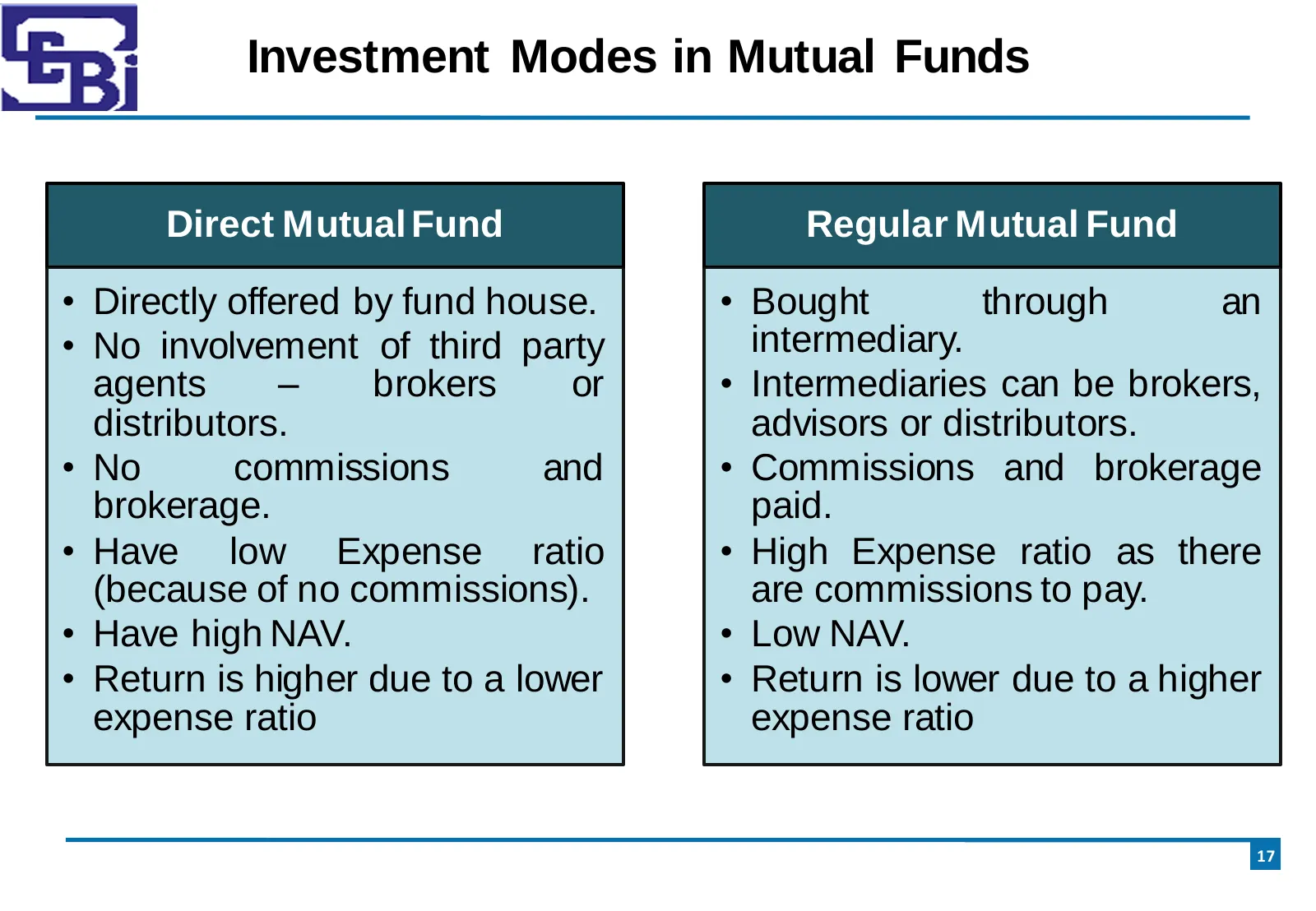
Investment Modes in Mutual Funds Direct Mutual Fund Regular Mutual Fund • Directly offered by fund house. • Bought through an • No involvement of third party intermediary. agents – brokers or • Intermediaries can be brokers, distributors. advisors or distributors. • No commissions and • Commissions
Slide 18: Mutual Fund Plans – Growth vs Dividend Options
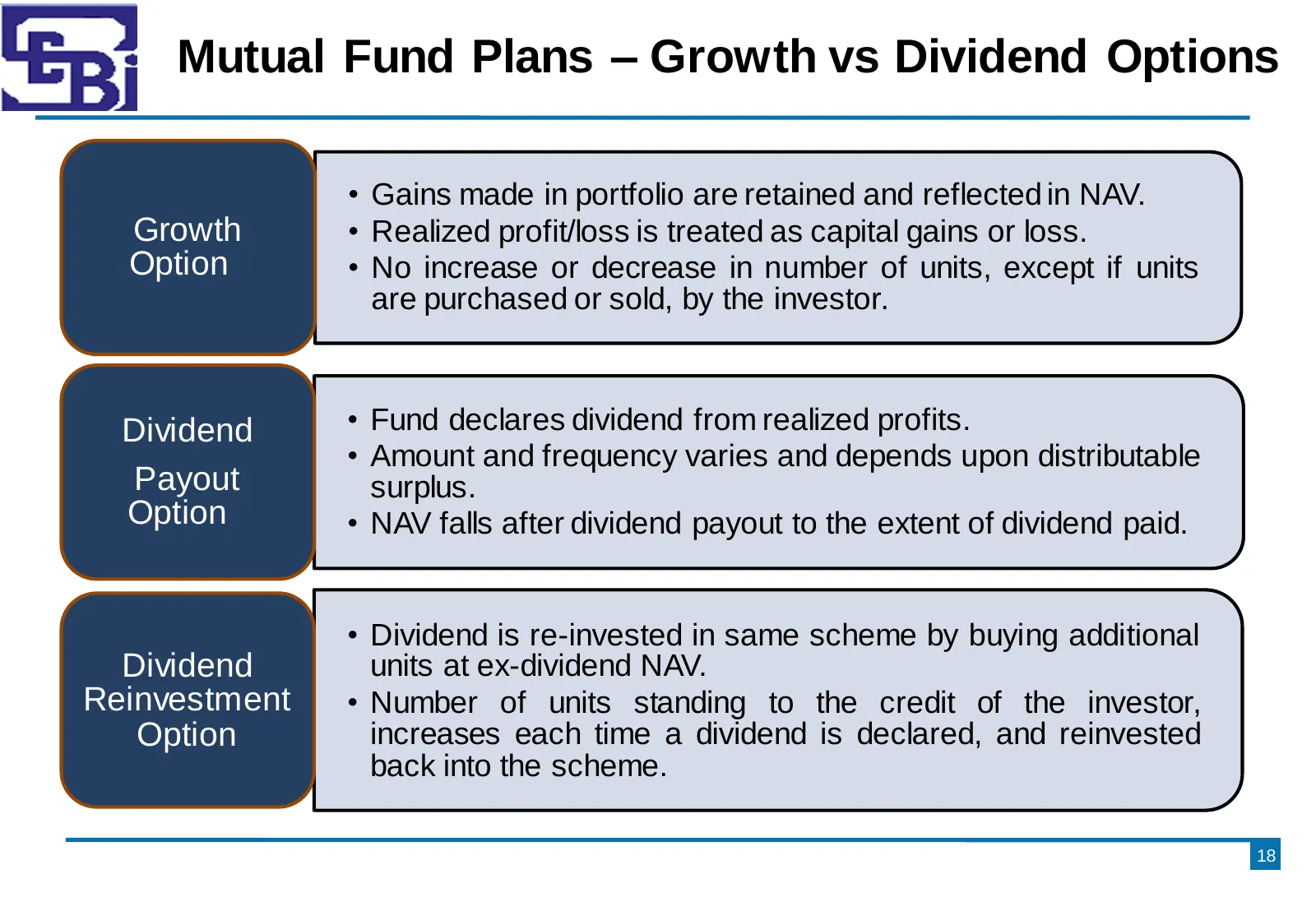
Mutual Fund Plans – Growth vs Dividend Options • Gains made in portfolio are retained and reflected in NAV. Growth • Realized profit/loss is treated as capital gains or loss. Option • No increase or decrease in number of units, except if units are purchased or sold, by the investor. Dividend • Fund
Slide 19: How to check information about the Mutual Funds (Offer Document)?
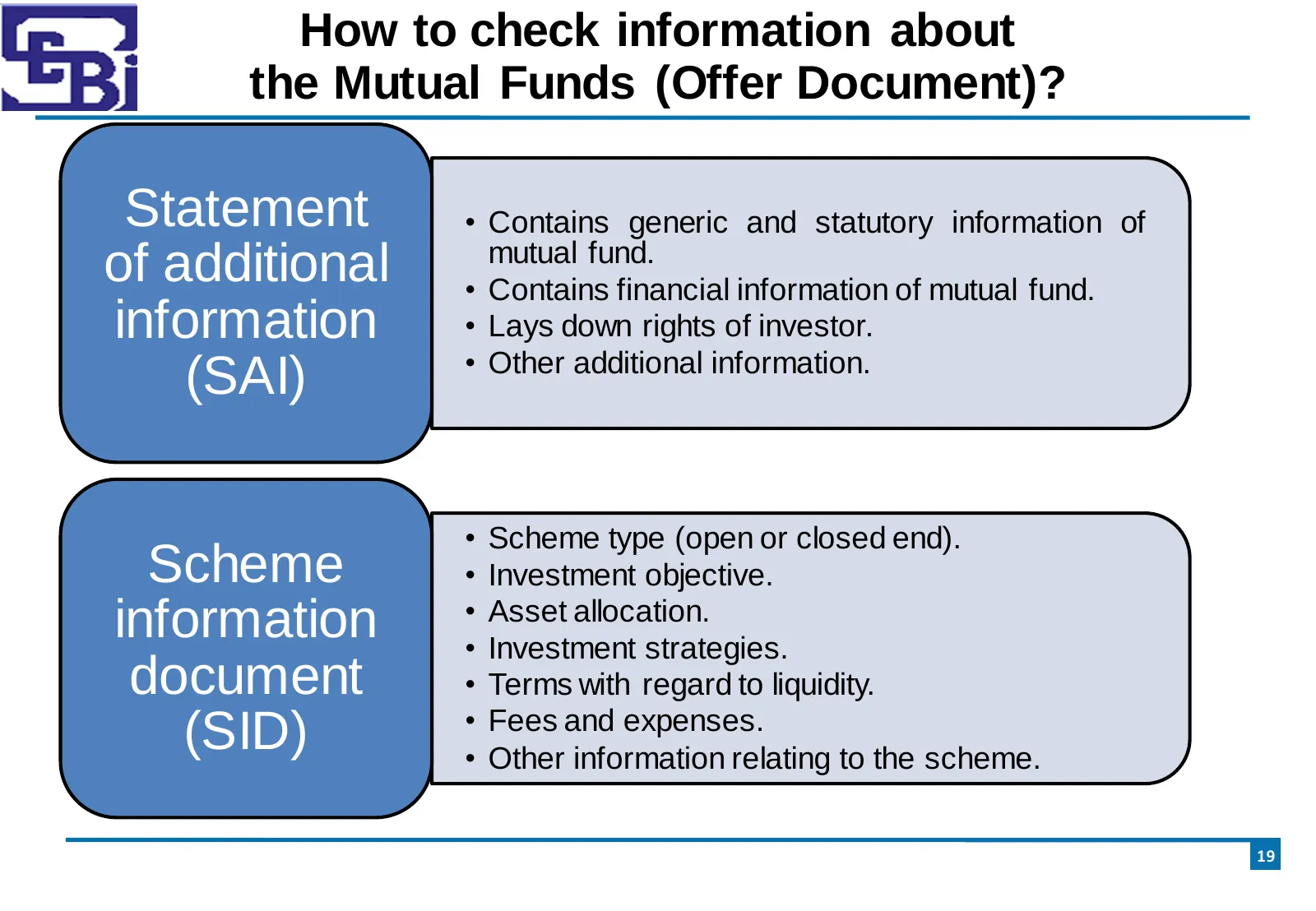
How to check information about the Mutual Funds (Offer Document)? Statement • Contains generic and statutory information of mutual fund. of additional • Contains financial information of mutual fund. information • Lays down rights of investor. • Other additional information. (SAI) • Scheme type (ope
Slide 20: Risk-o-Meter and its importance
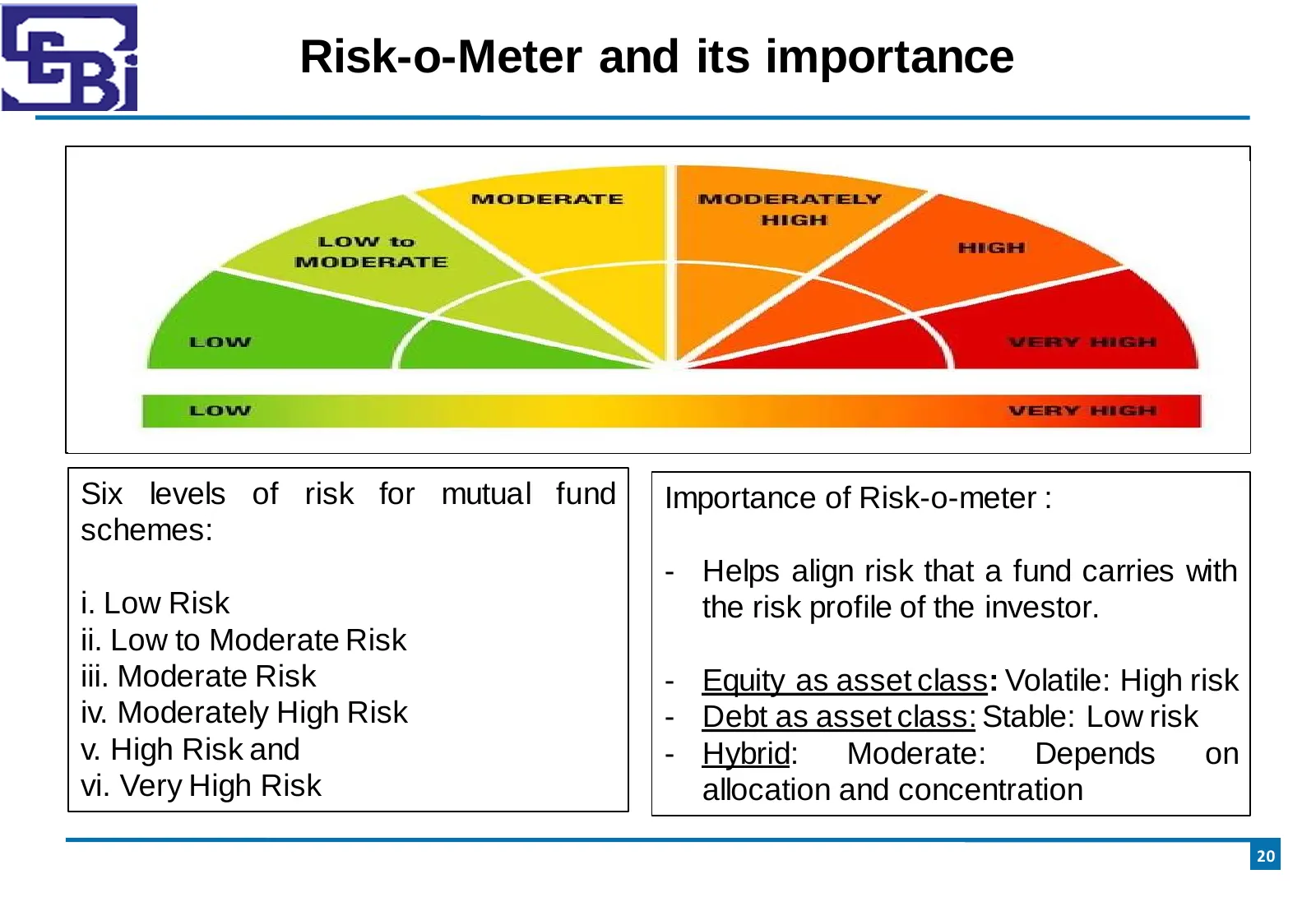
Risk-o-Meter and its importance Six levels of risk for mutual fund Importance of Risk-o-meter : schemes: - Helps align risk that a fund carries with i. Low Risk the risk profile of the investor. ii. Low to Moderate Risk iii. Moderate Risk - Equity as asset class: Volatile: High risk iv. Moderately H

Slide 21: Thank You
Thank You 21
Source: Internet Archive copy of nsdl.co.in
More decks from National Securities Depository Limited
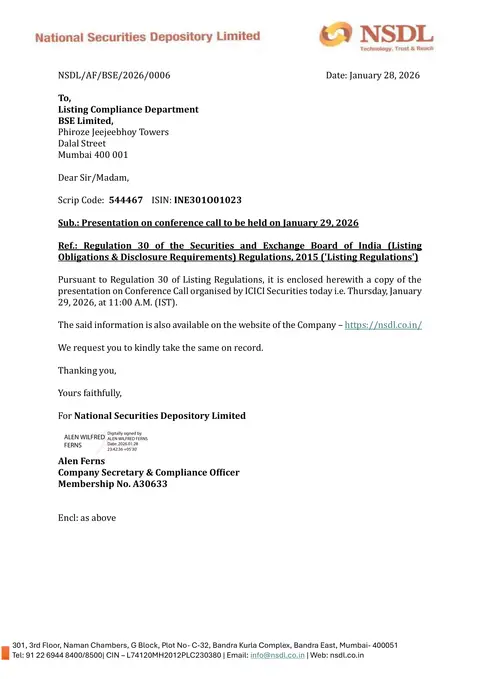 Q3 FY26 Earnings Presentation27 slides · Jan 29, 2026
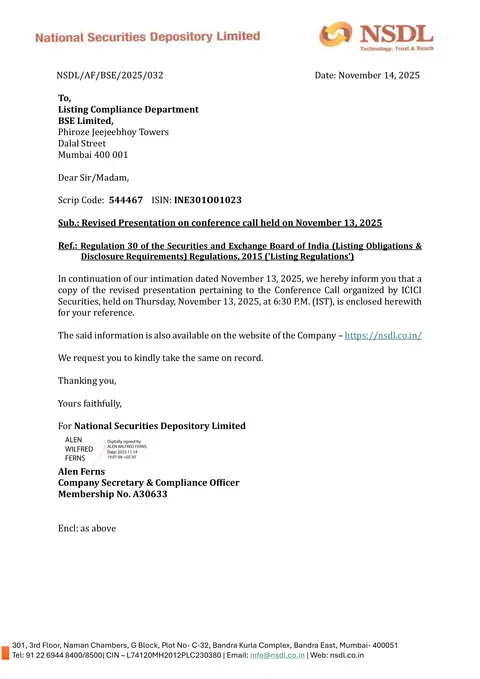 Q2 FY26 Earnings Presentation25 slides · Nov 14, 2025
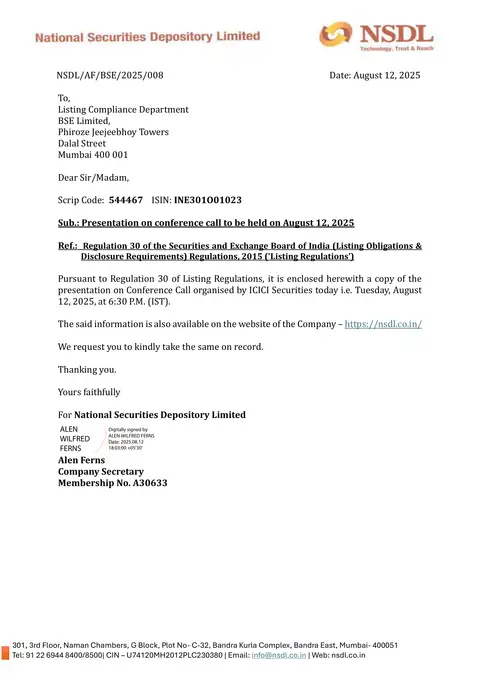 Q1 FY2026 Earnings Presentation18 slides · Aug 12, 2025
 Q1 FY2026 Earnings Presentation17 slides · 2025
 NSDL e-Governance Infrastructure — Investor Presentation (July 2024)48 slides · July 2024
 Investor Presentation (2024)43 slides · May 7, 2024