Biohaven Ltd. · NYSE:BHVN
Biohaven — Technical Presentation (2026)
16 slides from Biohaven's technical presentation, Nov 19, 2026
Slide 1: Phase 1 Study of BHV-1530, a First-in-Class Potential FGFR3 ADC in Advanced Tumors
Phase 1 Study of BHV-1530, a First-in-Class Potential FGFR3 ADC in Advanced Tumors G. Falchook1, M. Song2, J. Merchan3, G. Iyer4, W. McKean5, A. Spira6, S. Sahota7, D. Benjamin8, G. Sonpavde9, J. Russell10, J. Peng11, S. Coker12, N. Khokhar12, J. Rodon Ahnert13 1Sarah Cannon Research Institute (SCRI
Slide 2: Disclosures
Disclosures Gerald Steven Falchook Sarah Cannon Research Institute at HCA HealthONE Royalties: Wolters Kluwer (2014-present) Advisory role (to institution): AbbVie (2022), Jubilant (2022), BostonGene (2022), Teon (2022), Merck (2022), Sanofi (2023), BridgeBio (2023), Beijing Avistone (2024) Advisory
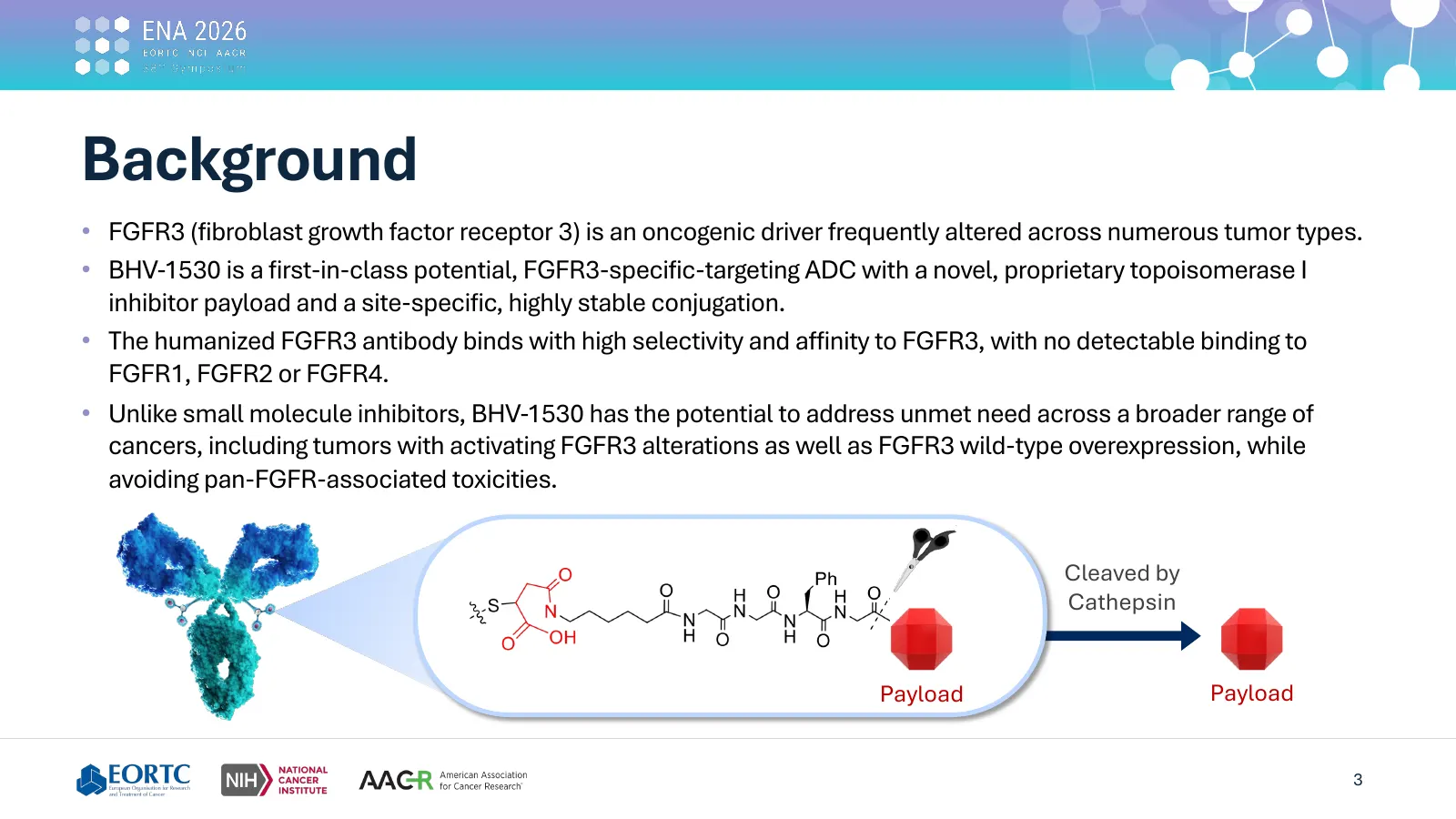
Slide 3: Background
Background • FGFR3 (fibroblast growth factor receptor 3) is an oncogenic driver frequently altered across numerous tumor types. • BHV-1530 is a first-in-class potential, FGFR3-specific-targeting ADC with a novel, proprietary topoisomerase I inhibitor payload and a site-specific, highly stable conjug
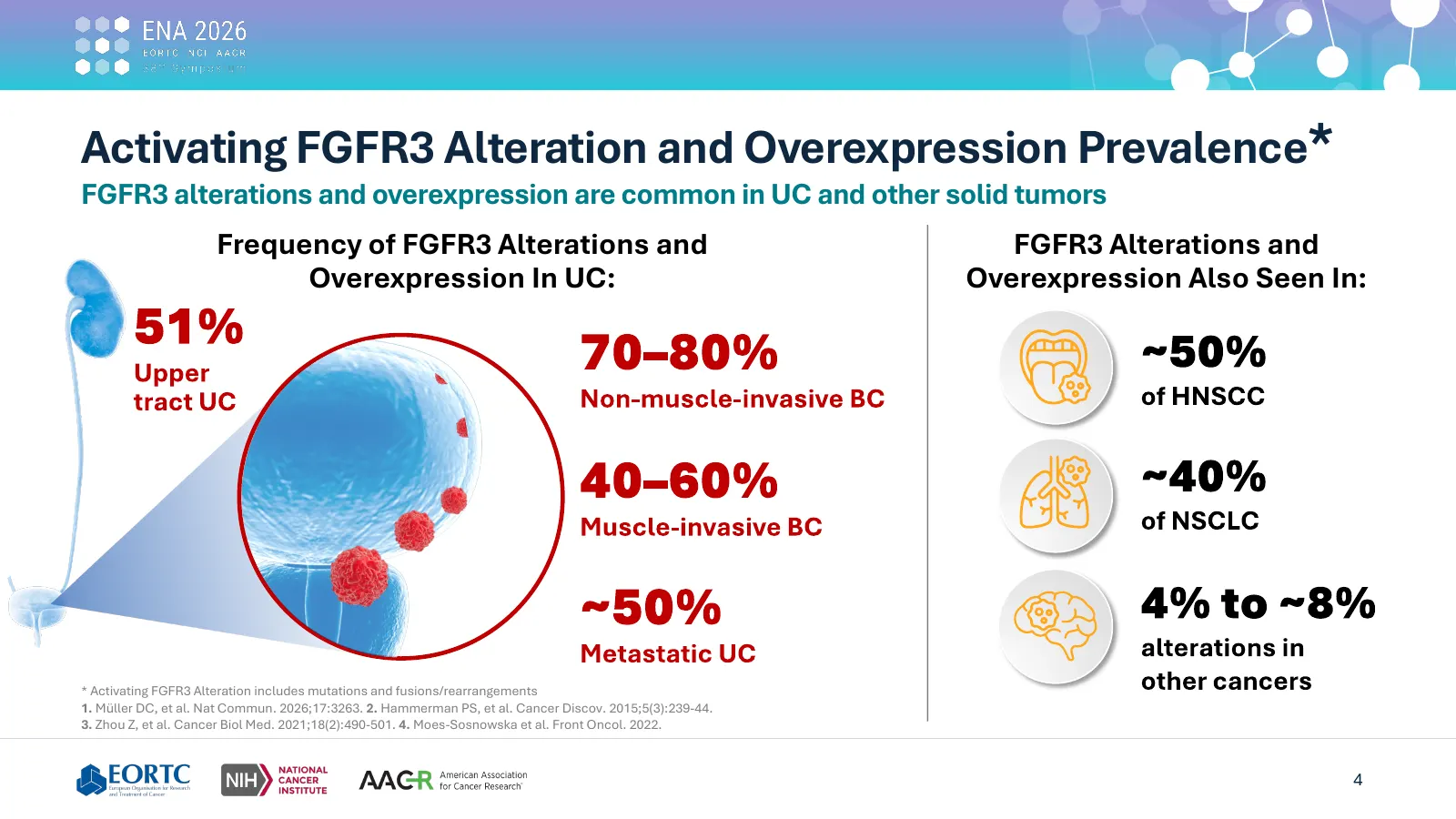
Slide 4: Activating FGFR3 Alteration and Overexpression Prevalence
Activating FGFR3 Alteration and Overexpression Prevalence* FGFR3 alterations and overexpression are common in UC and other solid tumors Frequency of FGFR3 Alterations and FGFR3 Alterations and Overexpression In UC: Overexpression Also Seen In: * Activating FGFR3 Alteration includes mutations and fus
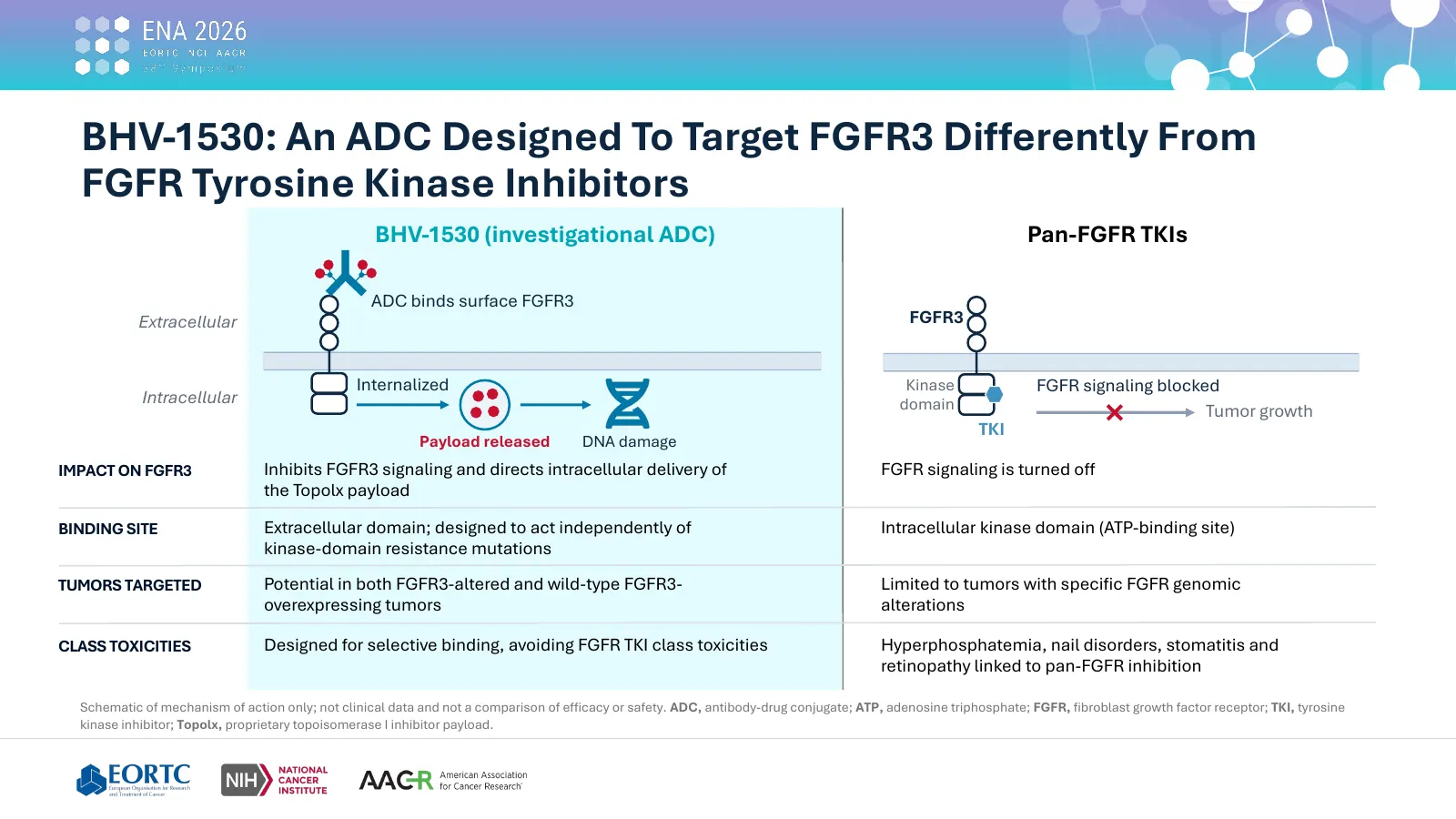
Slide 5: BHV-1530: An ADC Designed To Target FGFR3 Differently From FGFR Tyrosine Kinase Inhibitors
BHV-1530: An ADC Designed To Target FGFR3 Differently From FGFR Tyrosine Kinase Inhibitors BHV-1530 (investigational ADC) Pan-FGFR TKIs ADC binds surface FGFR3 Extracellular FGFR3 Internalized Kinase FGFR signaling blocked Intracellular domain Tumor growth TKI Payload released DNA damage IMPACT ON F
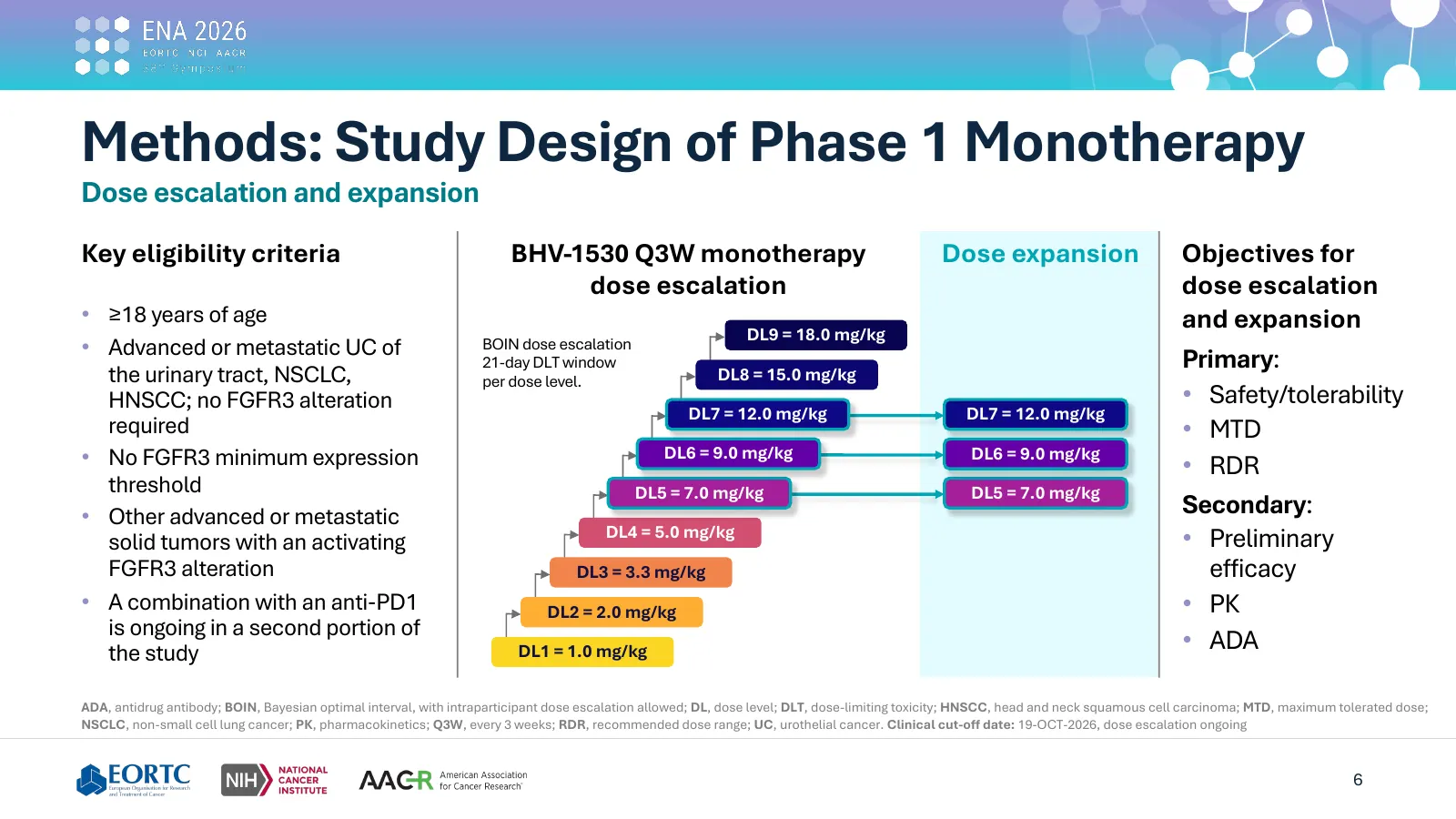
Slide 6: Methods: Study Design of Phase 1 Monotherapy
Methods: Study Design of Phase 1 Monotherapy Dose escalation and expansion Key eligibility criteria BHV-1530 Q3W monotherapy Dose expansion Objectives for dose escalation dose escalation • ≥18 years of age and expansion DL9 = 18.0 mg/kg • Advanced or metastatic UC of BOIN dose escalation 21-day DLT
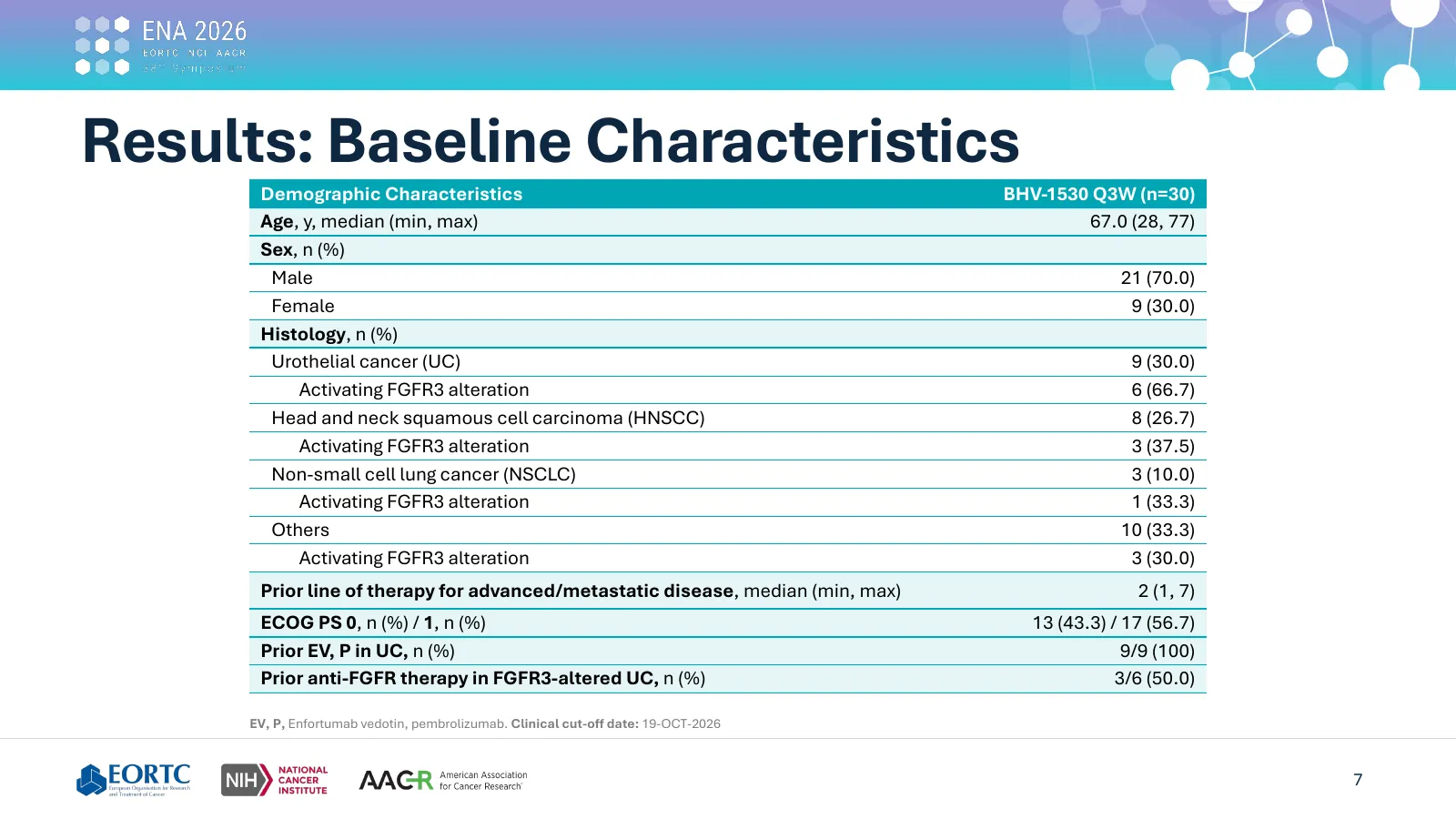
Slide 7: Results: Baseline Characteristics
Results: Baseline Characteristics Demographic Characteristics BHV-1530 Q3W (n=30) Age, y, median (min, max) 67.0 (28, 77) Sex, n (%) Male 21 (70.0) Female 9 (30.0) Histology, n (%) Urothelial cancer (UC) 9 (30.0) Activating FGFR3 alteration 6 (66.7) Head and neck squamous cell carcinoma (HNSCC) 8 (2
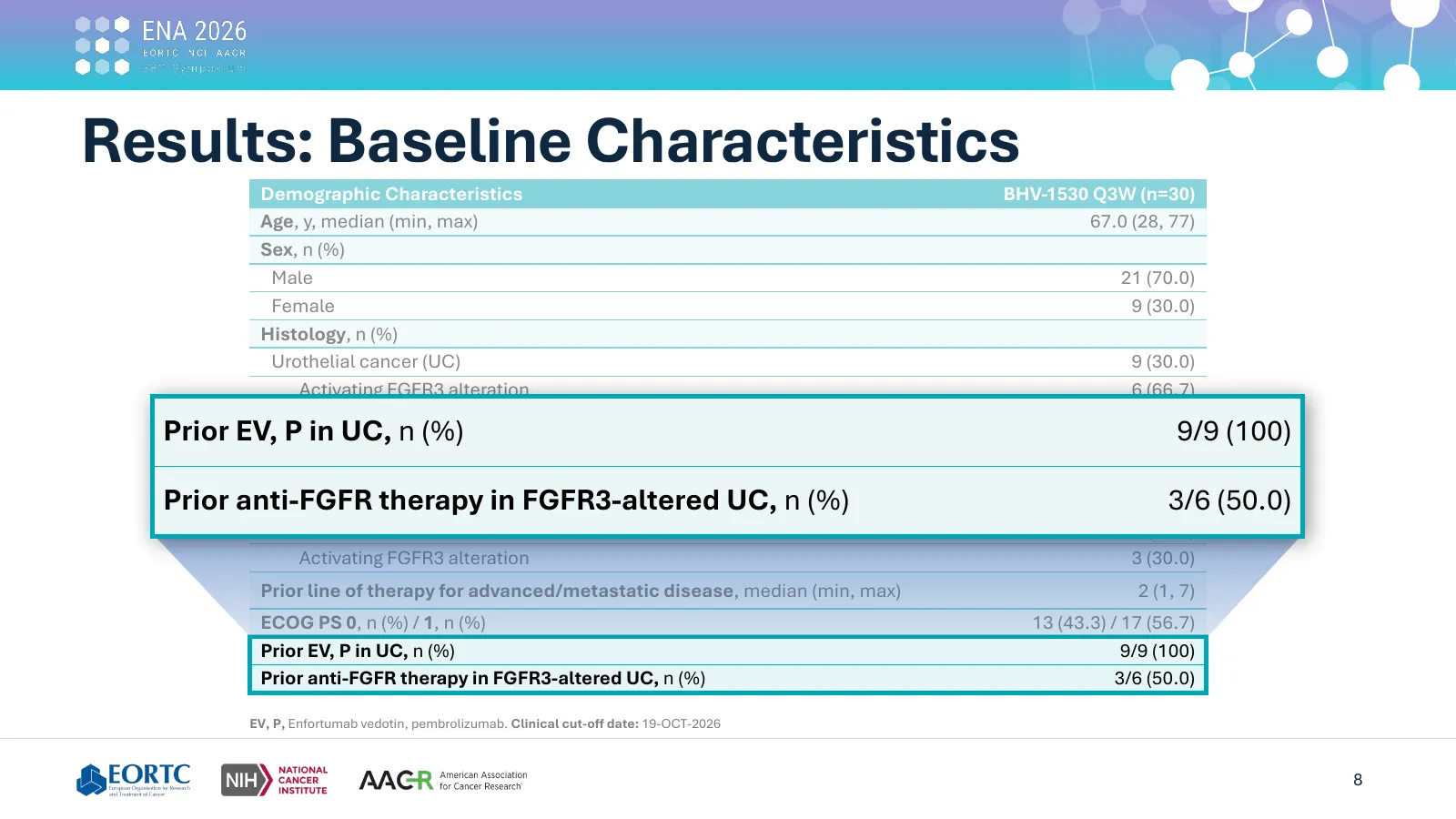
Slide 8: Results: Baseline Characteristics
Results: Baseline Characteristics Demographic Characteristics BHV-1530 Q3W (n=30) Age, y, median (min, max) 67.0 (28, 77) Sex, n (%) Male 21 (70.0) Female 9 (30.0) Histology, n (%) Urothelial cancer (UC) 9 (30.0) Activating FGFR3 alteration 6 (66.7) Head and neck squamous cell carcinoma (HNSCC) 8 (2
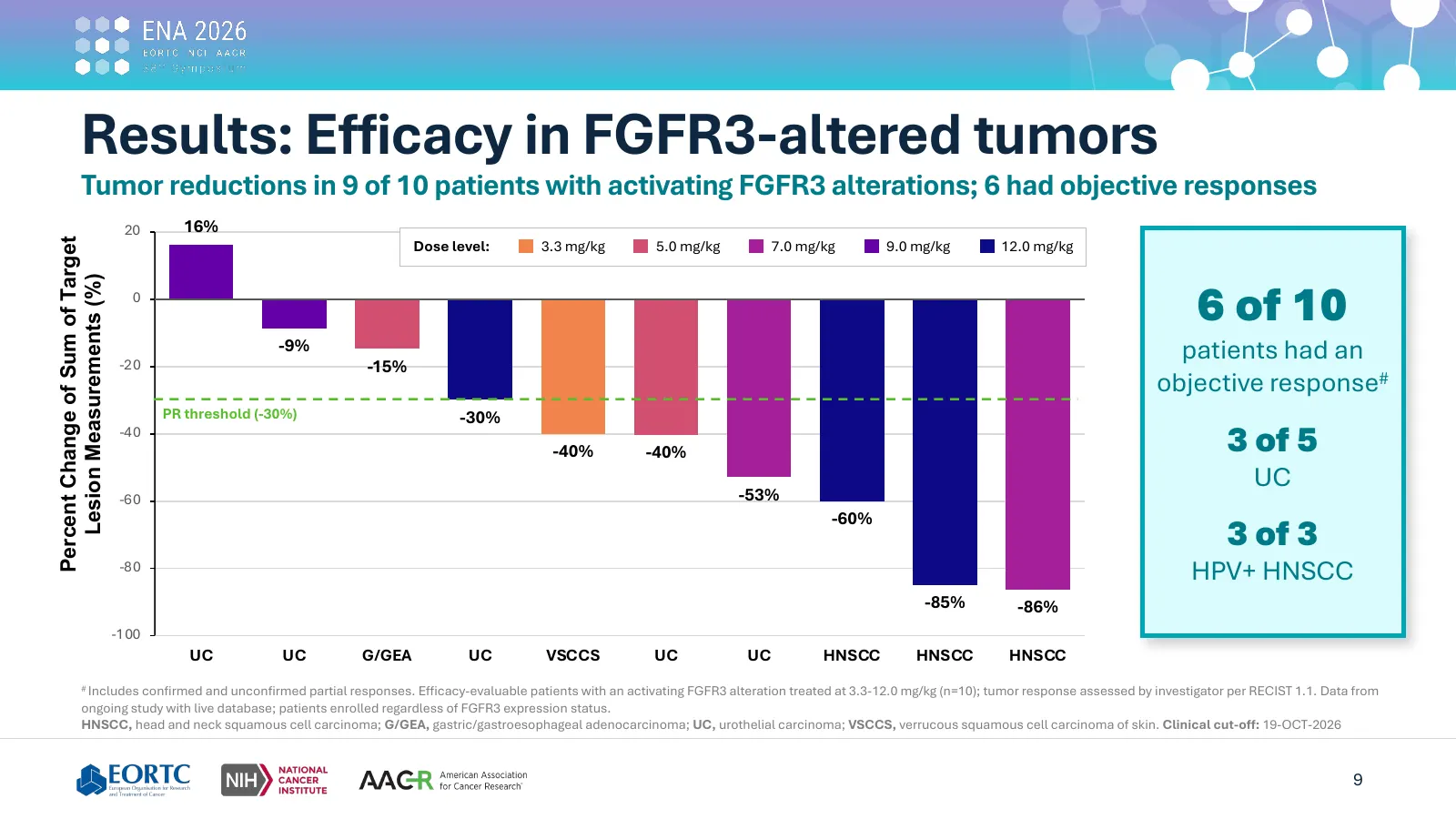
Slide 9: Efficacy in FGFR3-altered tumors
Results: Efficacy in FGFR3-altered tumors Tumor reductions in 9 of 10 patients with activating FGFR3 alterations; 6 had objective responses 20 16% Percent Change of Sum of Target Dose level: 3.3 mg/kg 5.0 mg/kg 7.0 mg/kg 9.0 mg/kg 12.0 mg/kg Lesion Measurements (%) 0 6 of 10 -20 -9% -15% patients ha
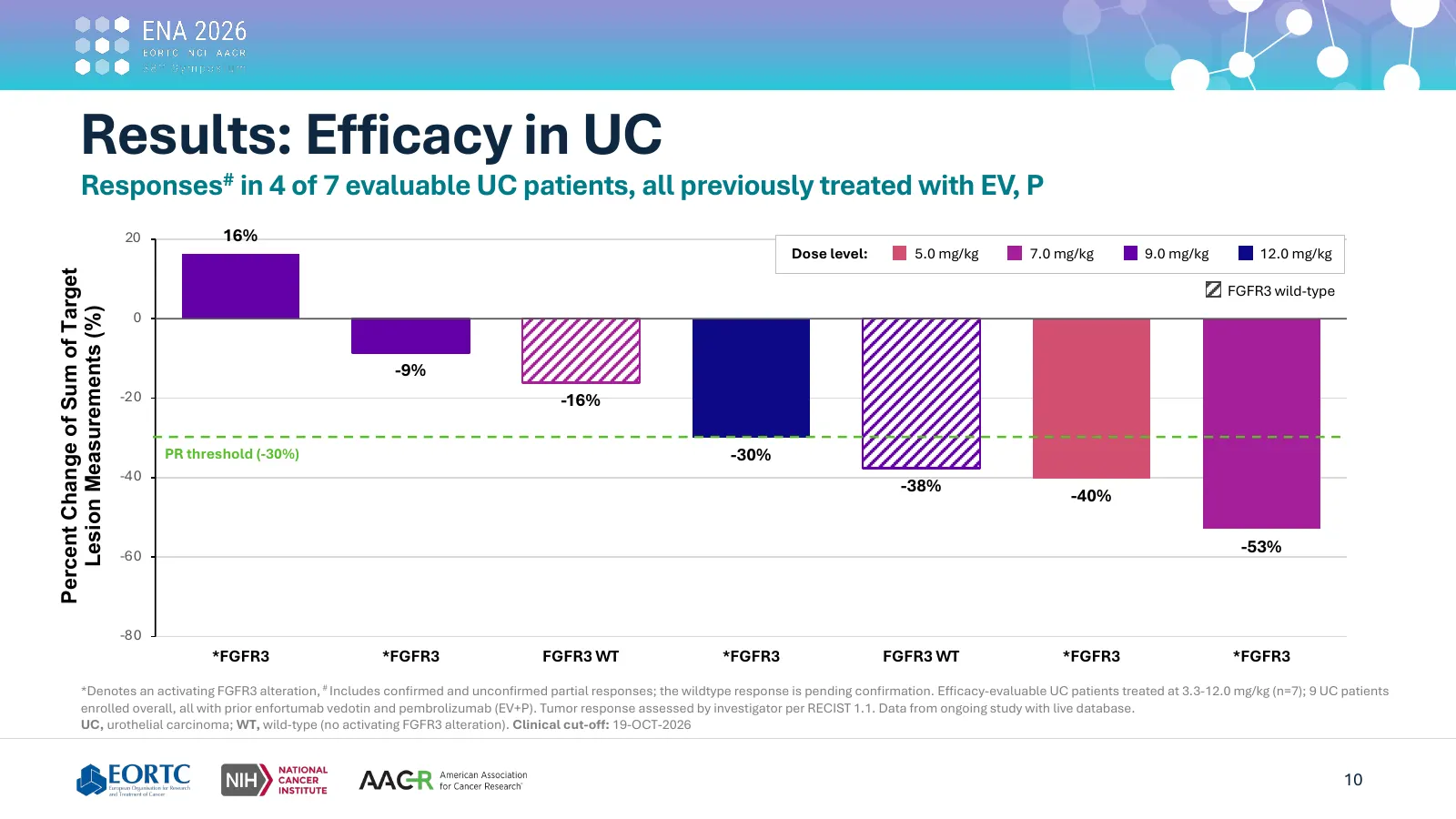
Slide 10: Efficacy in UC
Results: Efficacy in UC Responses# in 4 of 7 evaluable UC patients, all previously treated with EV, P 20 16% Dose level: 5.0 mg/kg 7.0 mg/kg 9.0 mg/kg 12.0 mg/kg Percent Change of Sum of Target FGFR3 wild-type Lesion Measurements (%) 0 -9% -20 -16% PR threshold (-30%) -30% -40 -38% -40% -60 -53% -80
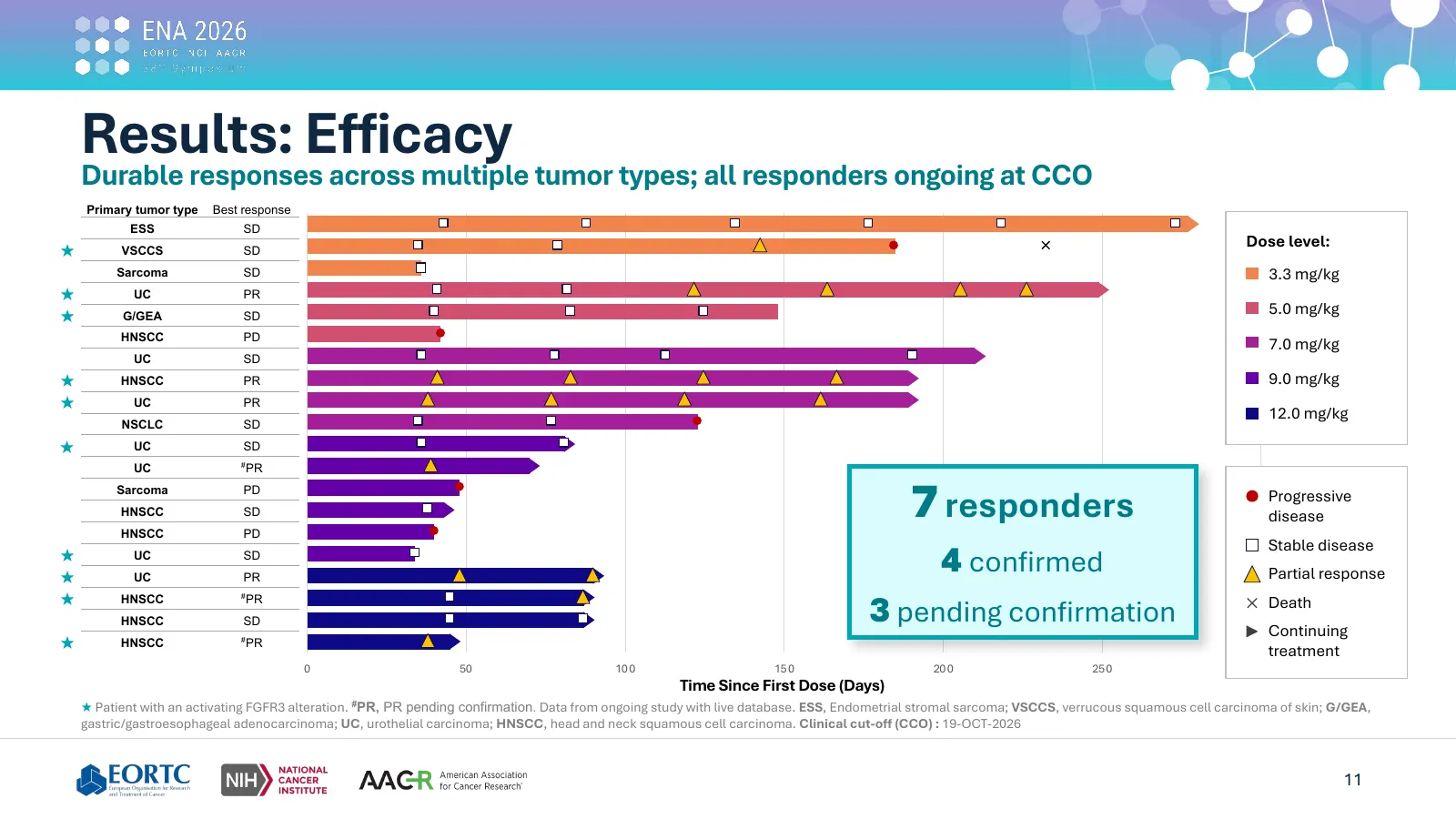
Slide 11: Results: Efficacy
Results: Efficacy Durable responses across multiple tumor types; all responders ongoing at CCO Primary tumor type Best response ESS SD Dose level: ★ VSCCS SD Sarcoma SD 3.3 mg/kg ★ UC PR ★ G/GEA SD 5.0 mg/kg HNSCC PD 7.0 mg/kg UC SD ★ HNSCC PR 9.0 mg/kg ★ UC PR 12.0 mg/kg NSCLC SD ★ UC SD # UC PR Sa
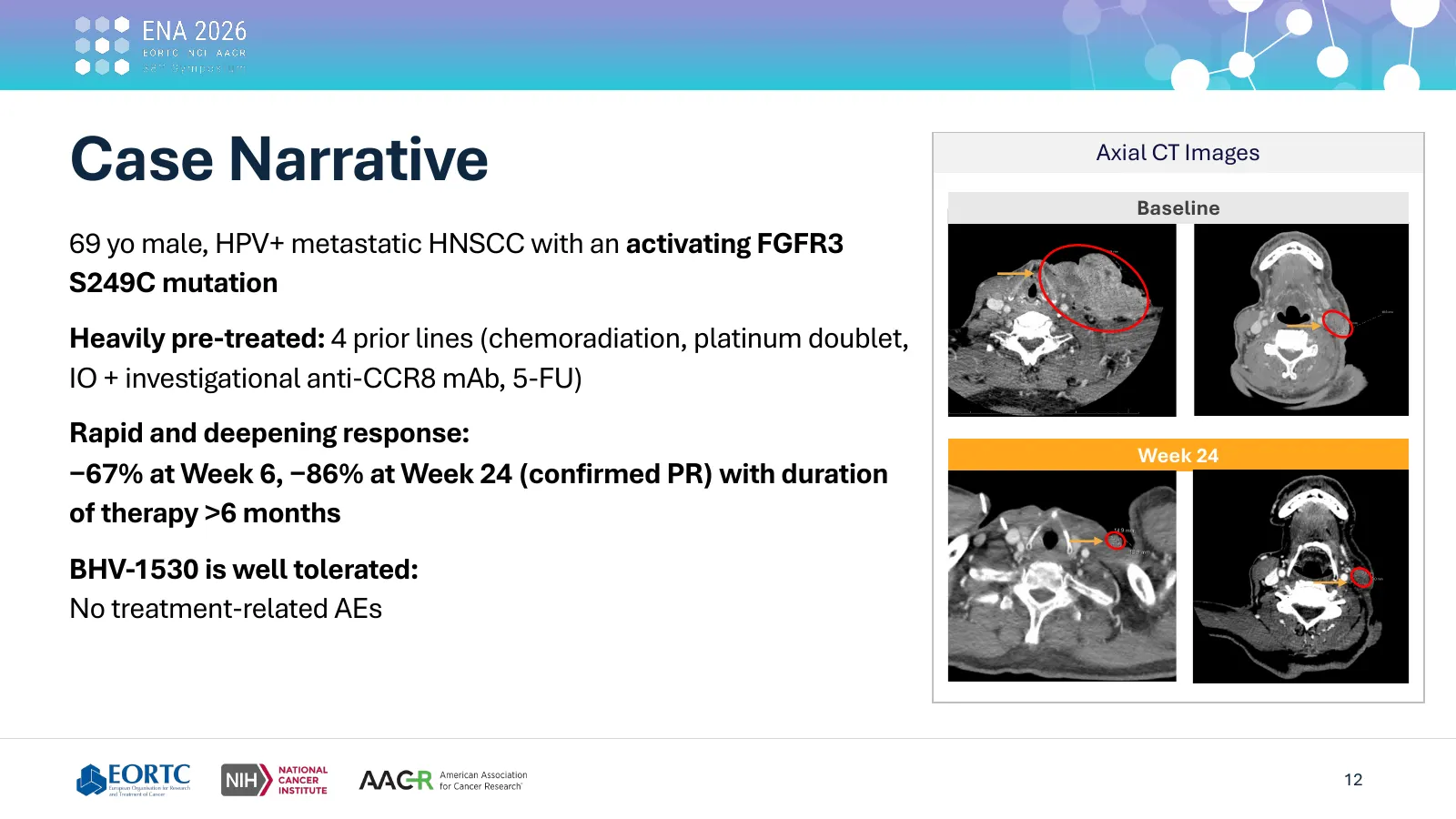
Slide 12: Case Narrative
Case Narrative Axial CT Images Baseline 69 yo male, HPV+ metastatic HNSCC with an activating FGFR3 S249C mutation Heavily pre-treated: 4 prior lines (chemoradiation, platinum doublet, IO + investigational anti-CCR8 mAb, 5-FU) Rapid and deepening response: Week 24 −67% at Week 6, −86% at Week 24 (con
Slide 13: Results: Safety (n=30)
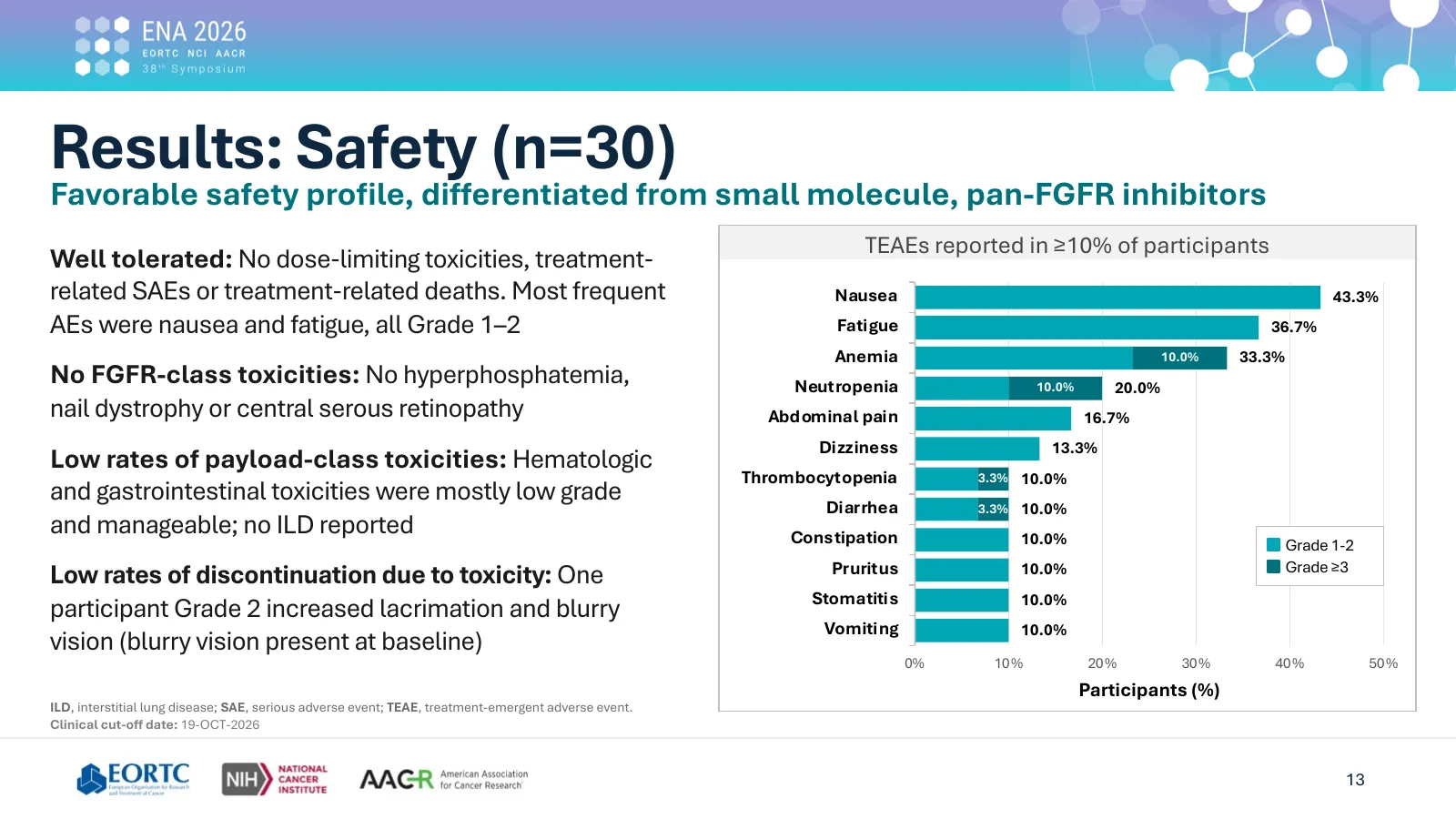
Results: Safety (n=30) Favorable safety profile, differentiated from small molecule, pan-FGFR inhibitors TEAEs reported in ≥10% of participants Well tolerated: No dose-limiting toxicities, treatment- related SAEs or treatment-related deaths. Most frequent Nausea 43.3% AEs were nausea and fatigue, al
Slide 14: Pharmacokinetics
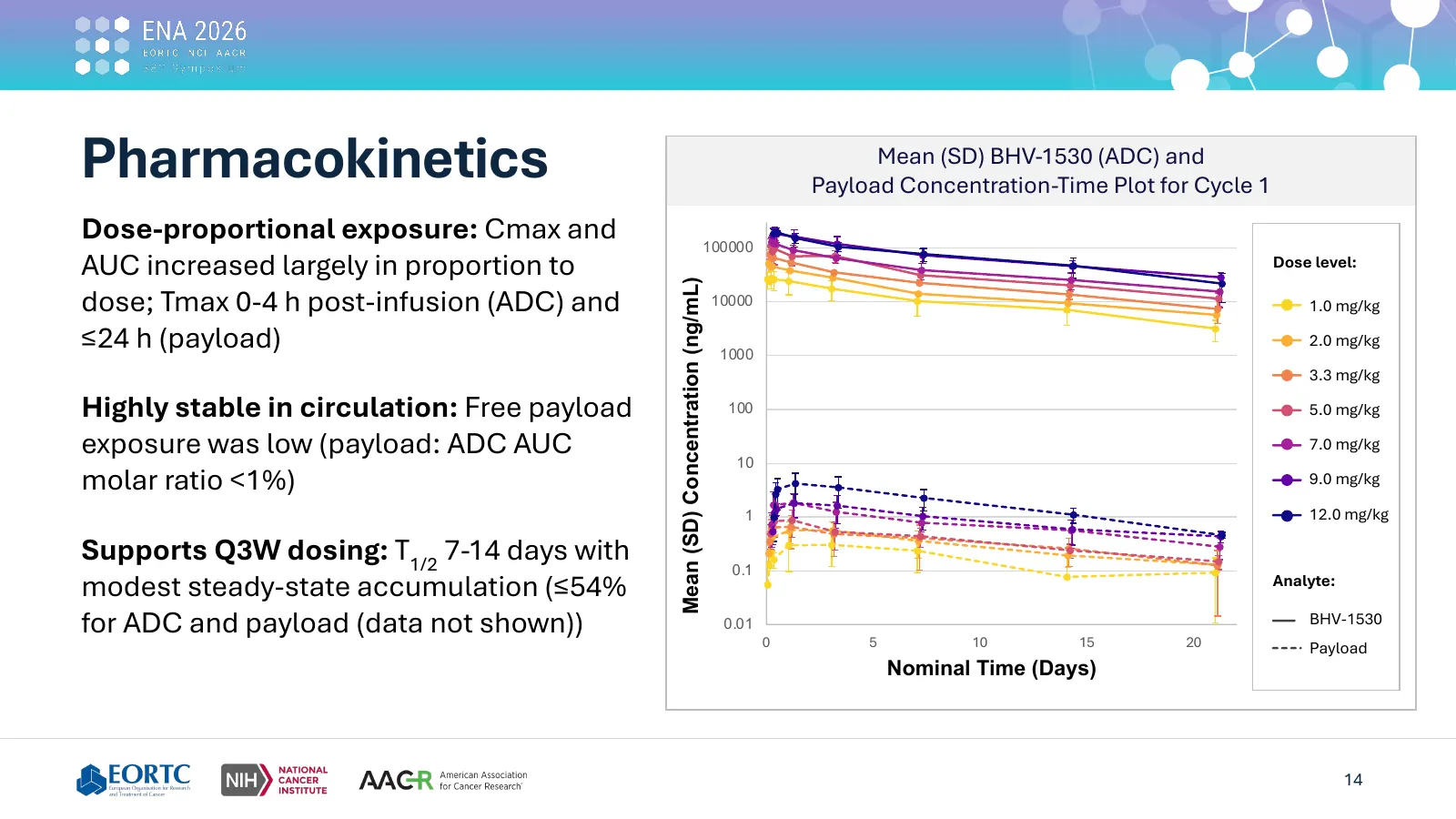
Pharmacokinetics Mean (SD) BHV-1530 (ADC) and Payload Concentration-Time Plot for Cycle 1 Dose-proportional exposure: Cmax and 100000 AUC increased largely in proportion to Dose level: Mean (SD) Concentration (ng/mL) dose; Tmax 0-4 h post-infusion (ADC) and 10000 1.0 mg/kg ≤24 h (payload) 1000 2.0 m
Slide 15: Conclusions and Next steps
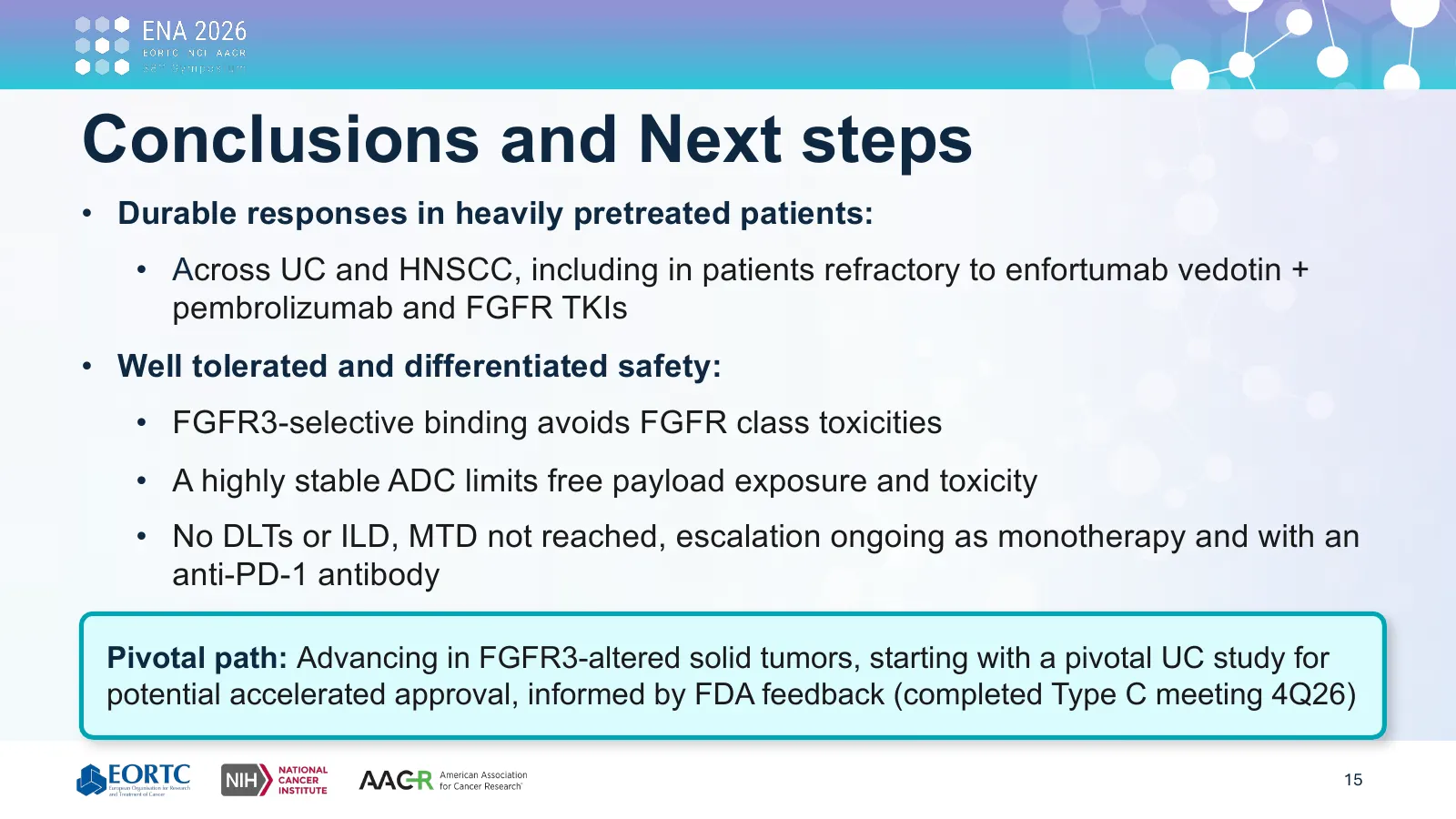
Conclusions and Next steps • Durable responses in heavily pretreated patients: • Across UC and HNSCC, including in patients refractory to enfortumab vedotin + pembrolizumab and FGFR TKIs • Well tolerated and differentiated safety: • FGFR3-selective binding avoids FGFR class toxicities • A highly sta
Slide 16: Acknowledgements
Acknowledgements • We thank the patients who participated in this study and their families and caregivers for their time and commitment. • We thank the investigators and site study teams for their contributions to this study. • We thank our collaborators for their support in conducting this study. 1
Source: company website
More decks from Biohaven Ltd.
 Investor Presentation (November 2026)85 slides · Nov 16, 2026
 Technical Presentation (October 2026)8 slides · Oct 6, 2026
 Investor Presentation (August 2026)84 slides · August 2026
 44th Annual J.P. Morgan Healthcare Conference (January 2026)45 slides · Jan 12, 2026
 J.P. Morgan Healthcare Conference 202687 slides · Jan 12, 2026
 Investor Presentation (June 2025)160 slides · Jun 4, 2025