Accentia Biopharmaceuticals Inc
Accentia Biopharmaceuticals — BioCentury Conference (March 2008)
30 slides from Accentia Biopharmaceuticals's conference presentation, Mar 28, 2008
Slide 1: SinuNase BioCentury Conference
Exhibit 99.1 SinuNase BioCentury Conference Frank E. O’Donnell, Jr, MD Chairman and CEO
Slide 2: Disclosure statement
Disclosure statement This presentation includes forward-looking statements including statements regarding the timing and outcome of clinical trials, potential regulatory approvals, future demand for and sales of our products and the future development of new products. These statements are not guaran
Slide 3: Chronic sinusitis
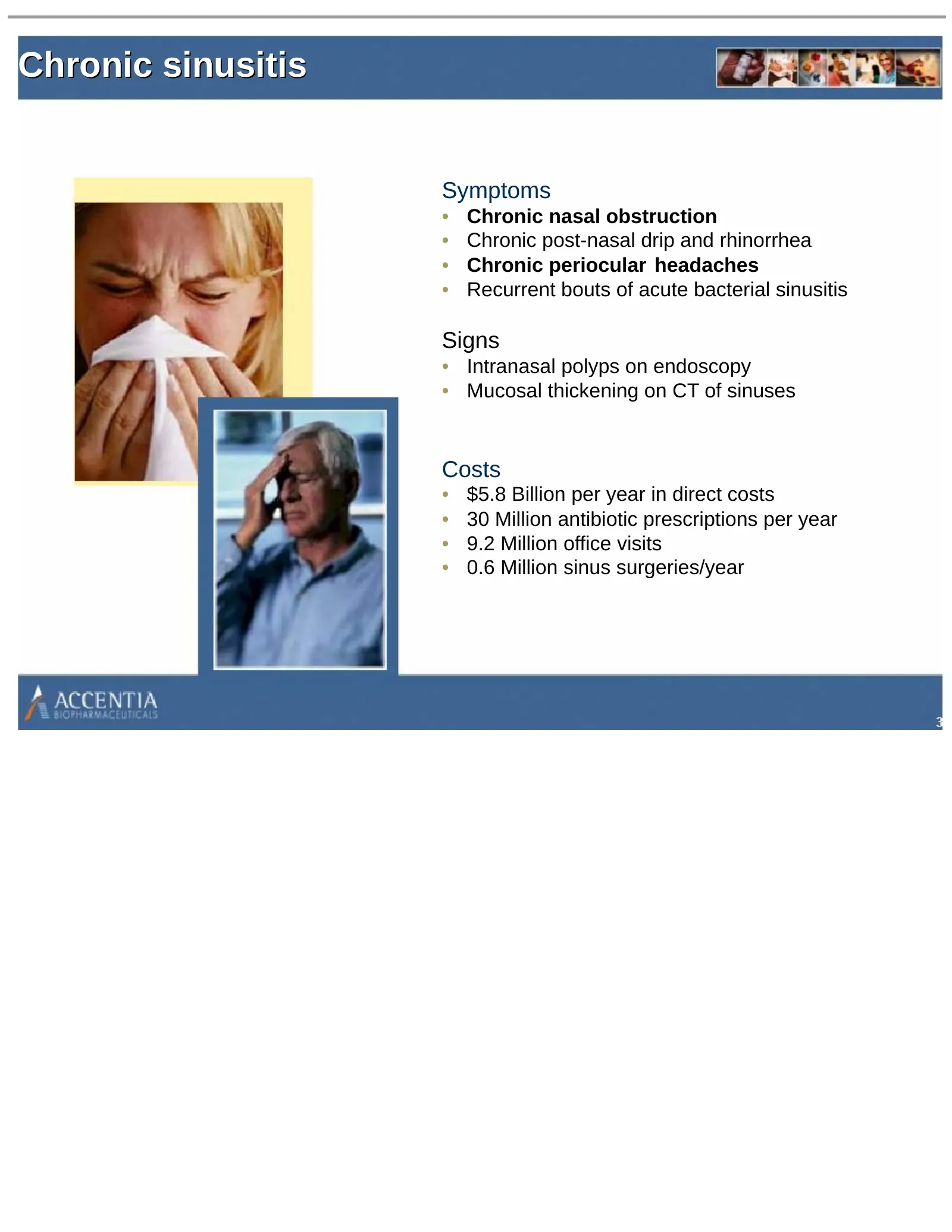
Chronic sinusitis Symptoms • Chronic nasal obstruction • Chronic post-nasal drip and rhinorrhea • Chronic periocular headaches • Recurrent bouts of acute bacterial sinusitis Signs • Intranasal polyps on endoscopy • Mucosal thickening on CT of sinuses Costs • $5.8 Billion per year in direct costs • 3
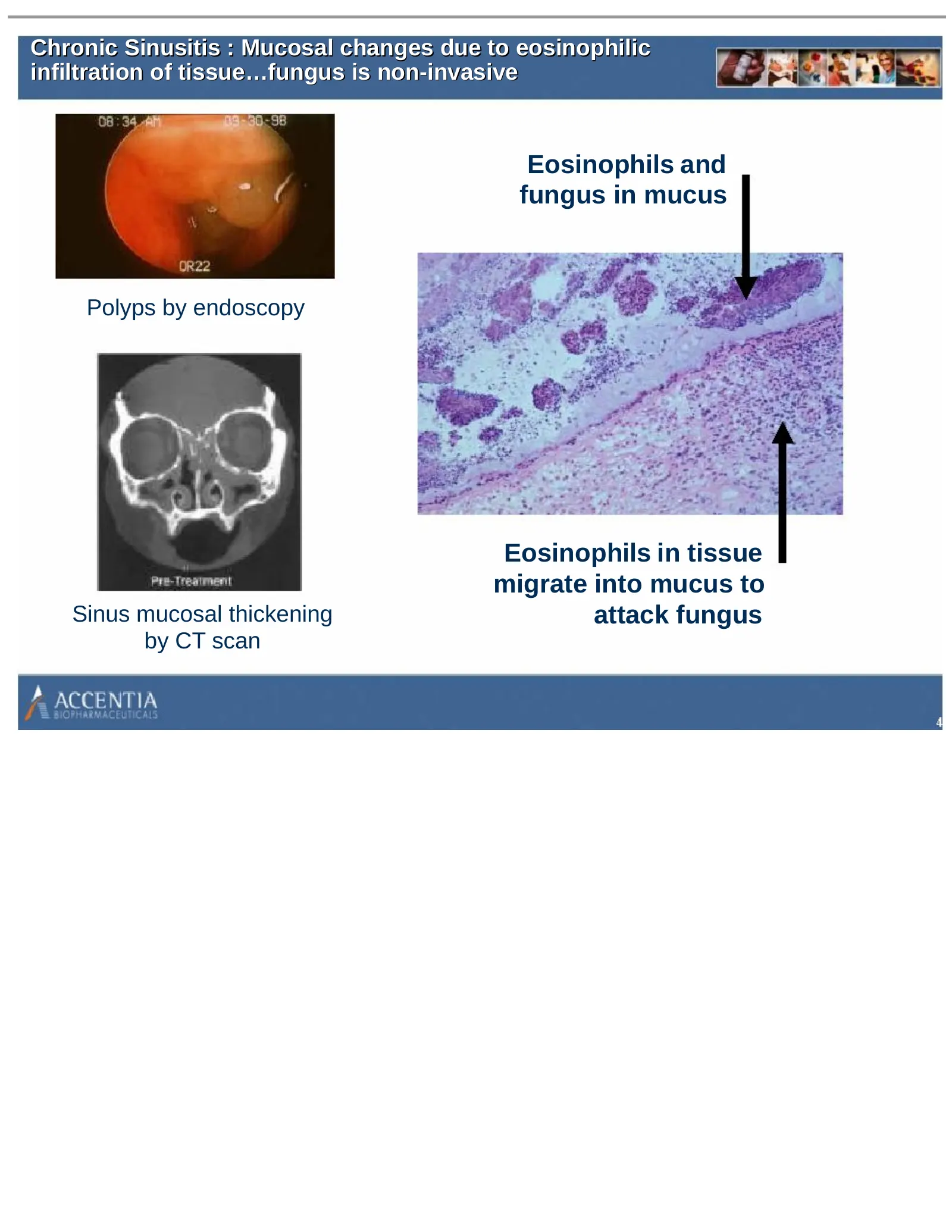
Slide 4: Chronic Sinusitis: Mucosal changes due to eosinophilic infiltration of tissue
Chronic Sinusitis : Mucosal changes due to eosinophilic infiltration of tissue…fungus is non-invasive Eosinophils and fungus in mucus Polyps by endoscopy Eosinophils in tissue migrate into mucus to Sinus mucosal thickening attack fungus by CT scan
Slide 5: How bad is it? Impact on Quality of Life
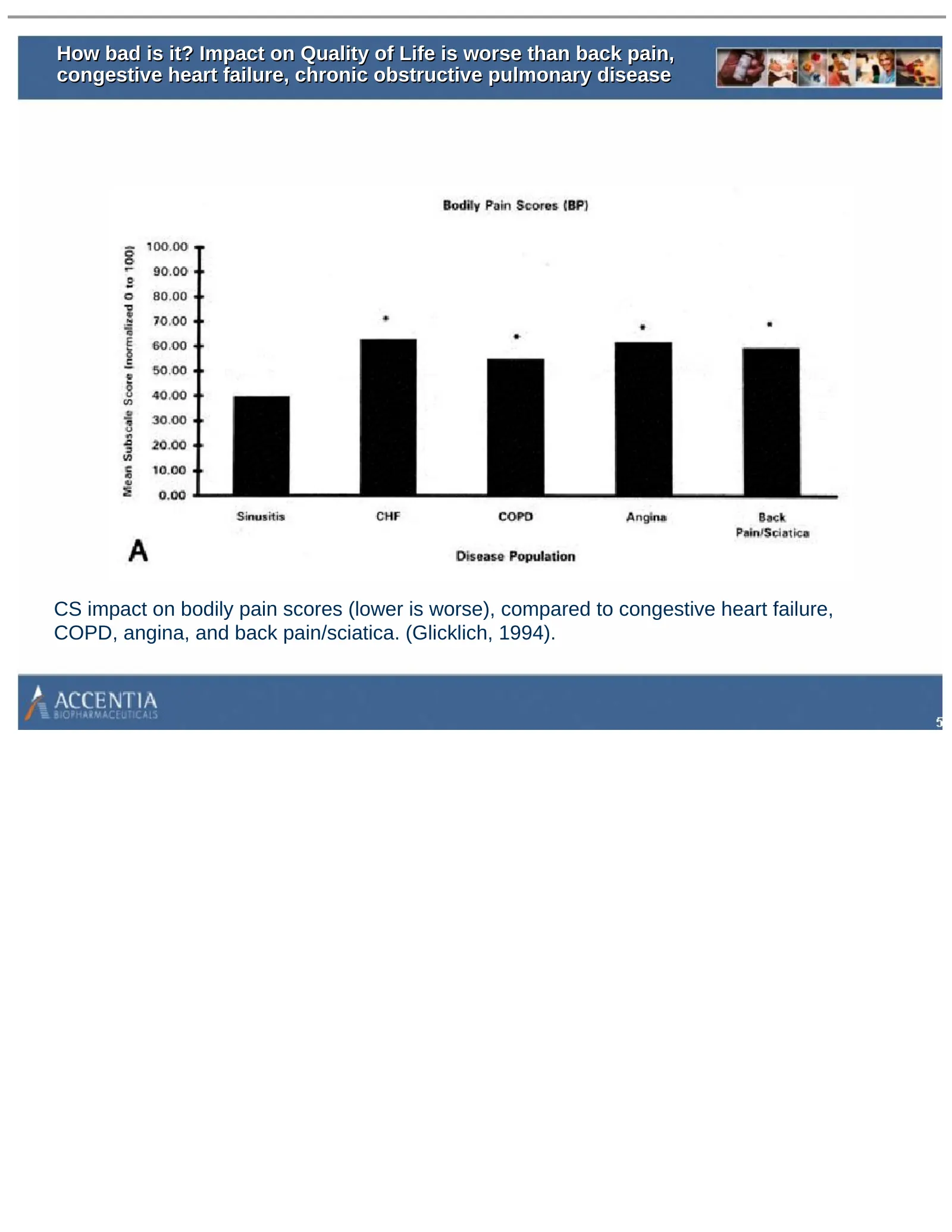
How bad is it? Impact on Quality of Life is worse than back pain, congestive heart failure, chronic obstructive pulmonary disease CS impact on bodily pain scores (lower is worse), compared to congestive heart failure, COPD, angina, and back pain/sciatica. (Glicklich, 1994).
Slide 6: How big is the market? 10% of population has chronic sinusitis
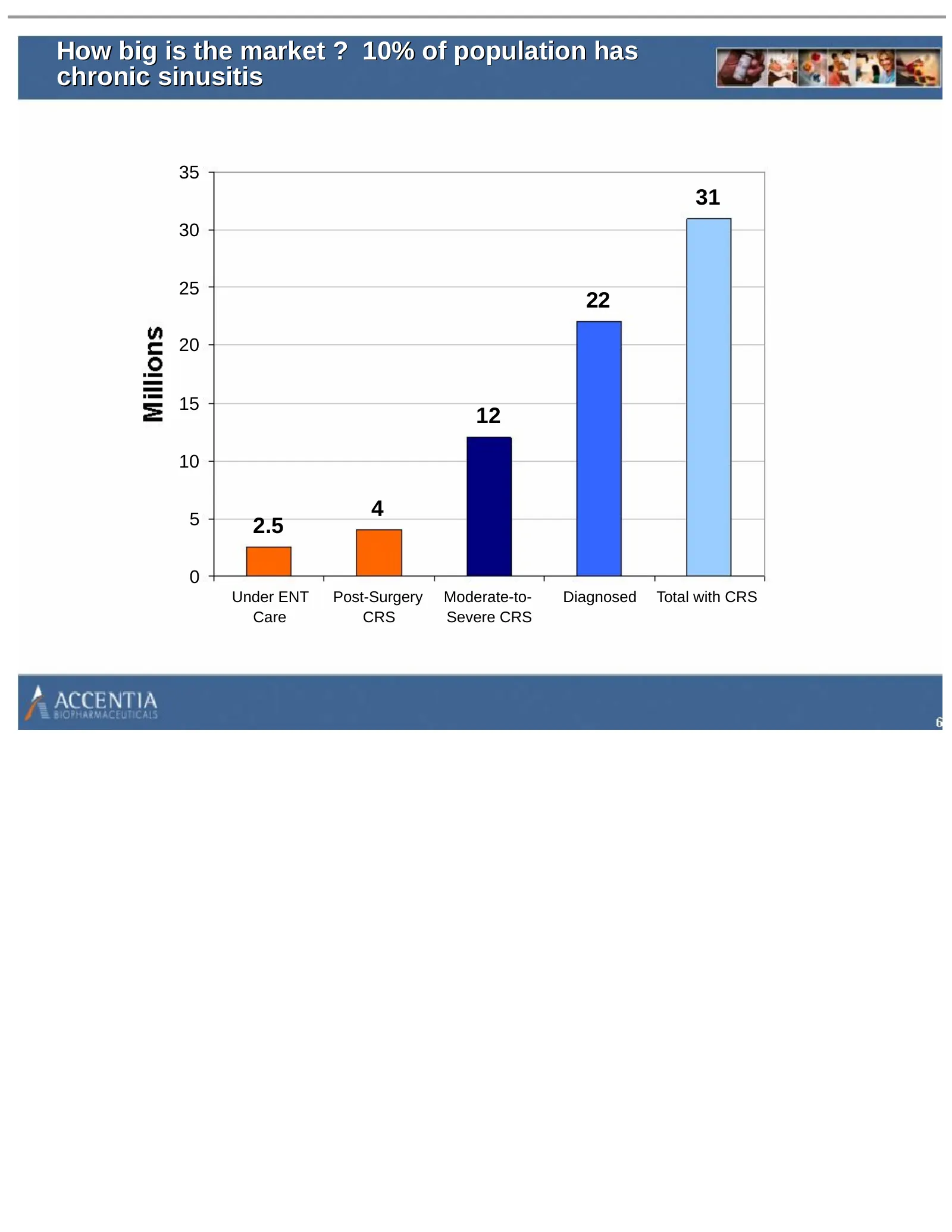
How big is the market ? 10% of population has chronic sinusitis 35 31 30 25 22 20 15 12 10 5 4 2.5 0 Under ENT Post-Surgery Moderate-to- Diagnosed Total with CRS Care CRS Severe CRS
Slide 7: Prior management of CS
Prior management of CS Hampered by lack of understanding of the pathogenesis No approved pharmaceutical Nothing has ever been in phase 3 study Development pipeline: intranasal antibiotic Functional endoscopic surgery •Improve airway and sinus drainage by excising polyps •Improve sinus drainage by en
Slide 8: A paradigm shift: host sensitivity to a common mold (Alternaria)
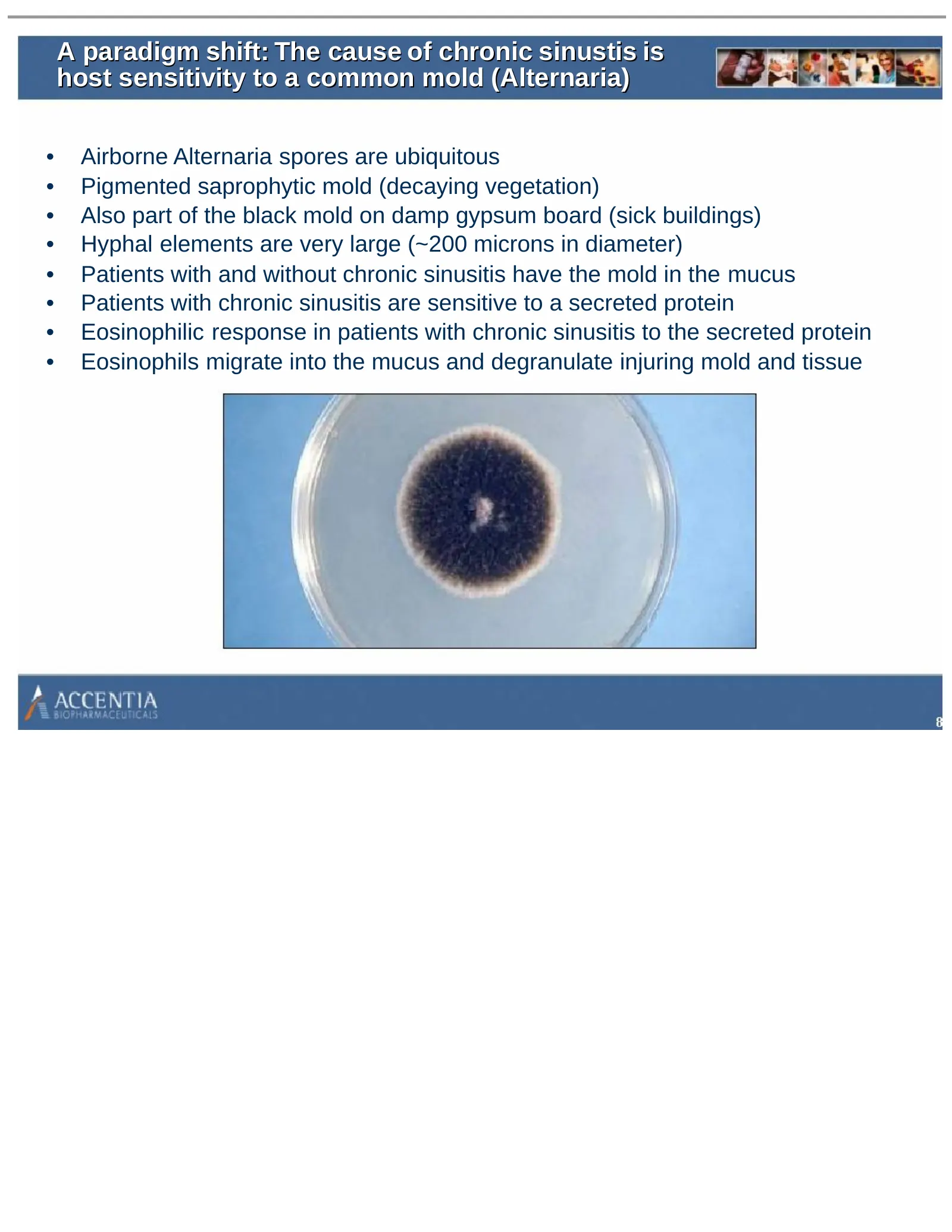
A paradigm shift: The cause of chronic sinustis is host sensitivity to a common mold (Alternaria) • Airborne Alternaria spores are ubiquitous • Pigmented saprophytic mold (decaying vegetation) • Also part of the black mold on damp gypsum board (sick buildings) • Hyphal elements are very large (~200
Slide 9: CRS: An Immune Response to Fungi
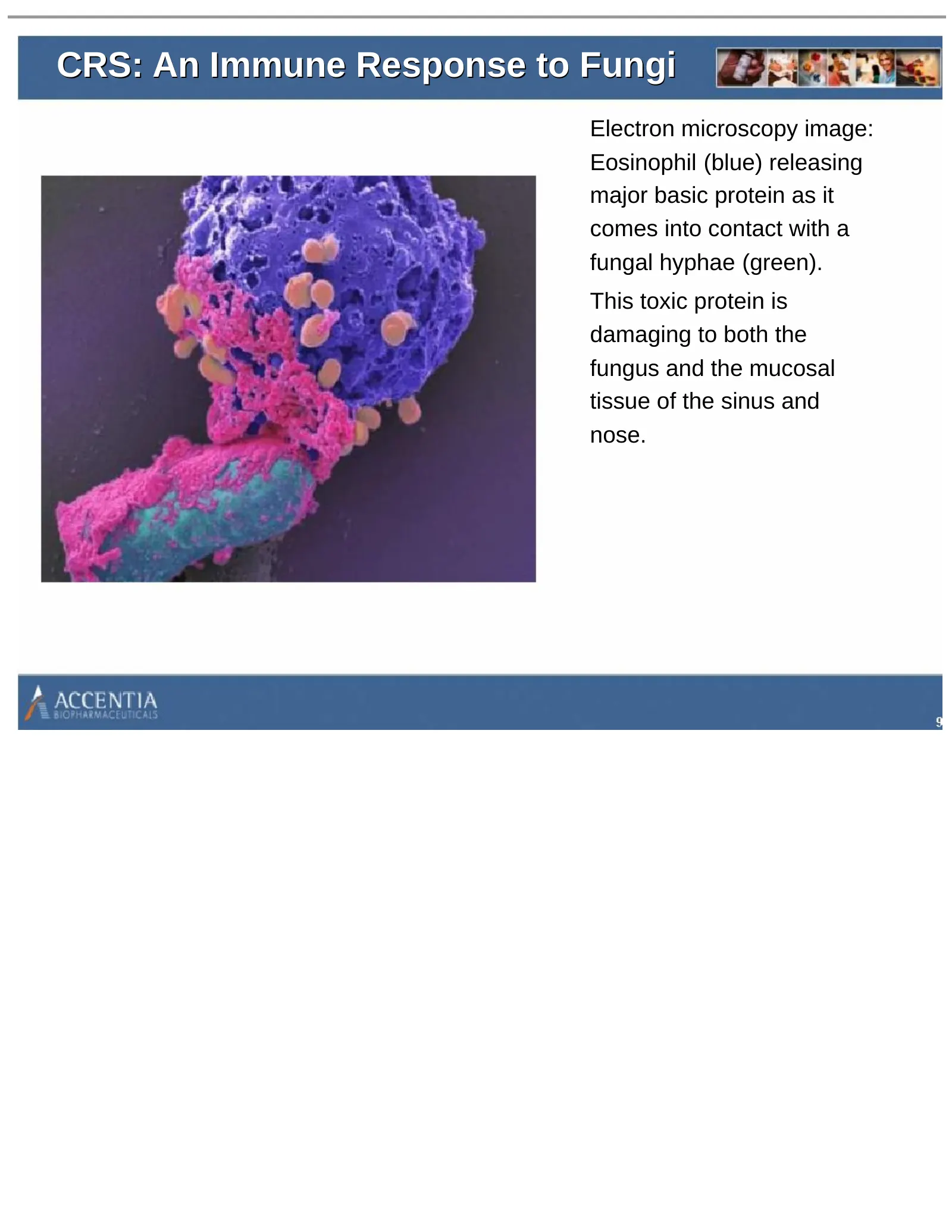
CRS: An Immune Response to Fungi Electron microscopy image: Eosinophil (blue) releasing major basic protein as it comes into contact with a fungal hyphae (green). This toxic protein is damaging to both the fungus and the mucosal tissue of the sinus and nose.
Slide 10: Reactivity to fungus is responsible for CS
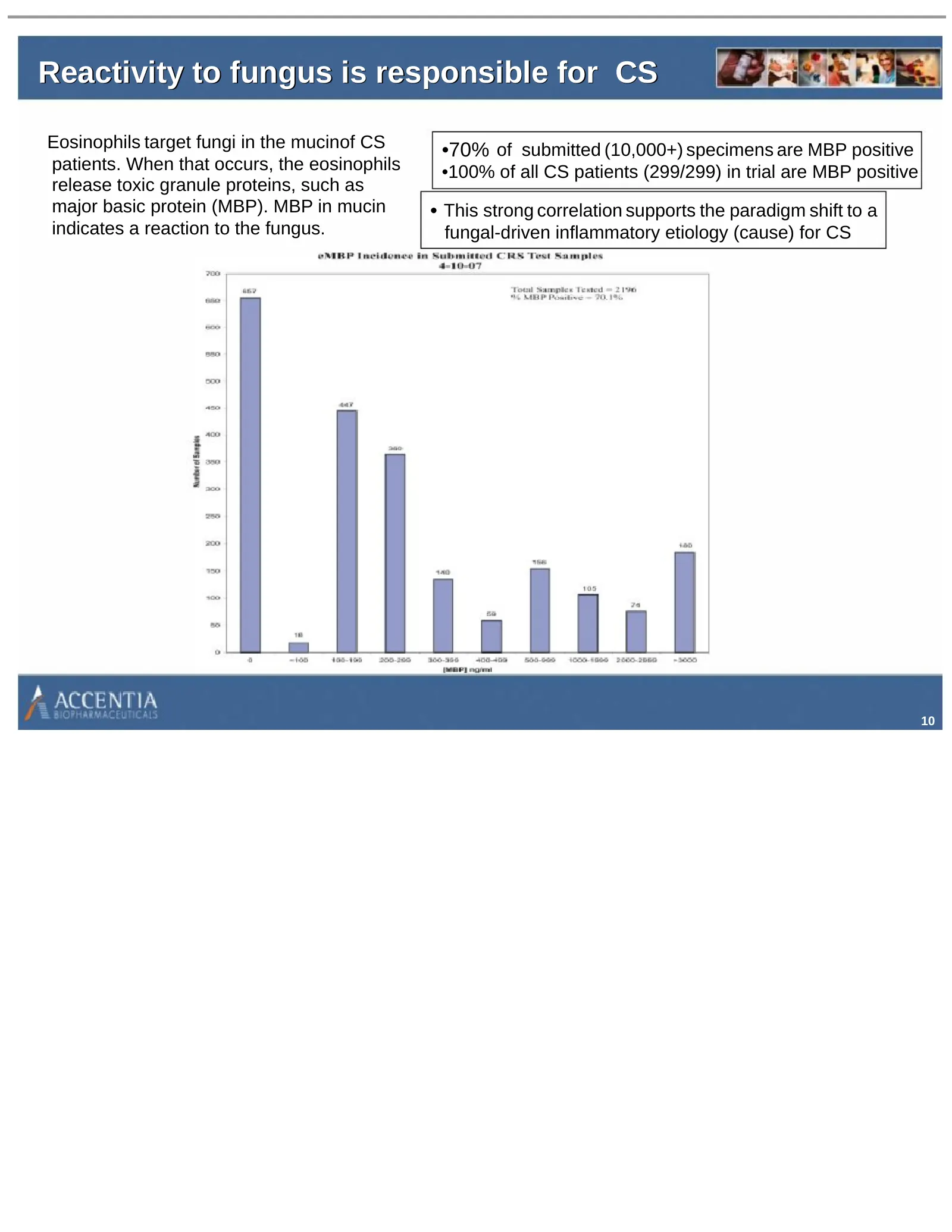
Reactivity to fungus is responsible for CS Eosinophils target fungi in the mucinof CS •70% of submitted (10,000+) specimens are MBP positive patients. When that occurs, the eosinophils •100% of all CS patients (299/299) in trial are MBP positive release toxic granule proteins, such as major basic pr
Slide 11: CRS Treatment Strategy: Topical Antifungals
CRS Treatment Strategy: Topical Antifungals • Systemic antifungals associated with side effects • All side effects are dose related • Fungi are only in the mucus • Intranasal delivery would avoid systemic effects • Direct mucoadministration: high dose to organism, low dose to host • Reduction of ant
Slide 12: SinuNase License
SinuNase License Accentia’s License from the Mayo Foundation: Exclusive global license for intranasal Amphotericin B for CS Exclusive option to license all other antifungals until Dec 2008 Patent expires 2018: method of use for product and for diagnostic. Additional patents pending on formulations S
Slide 13: SinuNase Study Summary
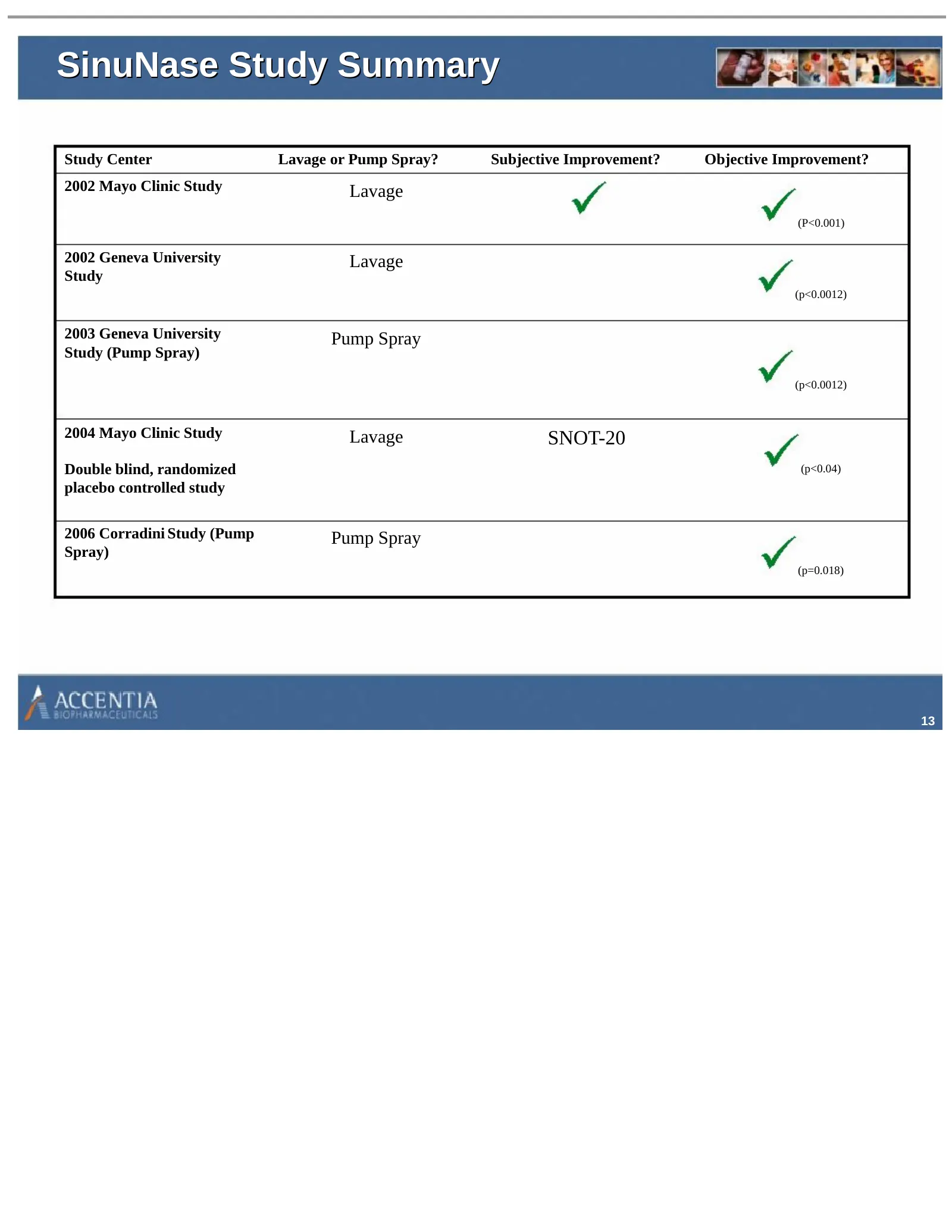
SinuNase Study Summary Study Center Lavage or Pump Spray? Subjective Improvement? Objective Improvement? 2002 Mayo Clinic Study Lavage (P<0.001) 2002 Geneva University Lavage Study (p<0.0012) 2003 Geneva University Pump Spray Study (Pump Spray) (p<0.0012) 2004 Mayo Clinic Study Lavage SNOT-20 Double
Slide 14: SinuNase: Study Protocol Pivotal Fast Track Phase 3
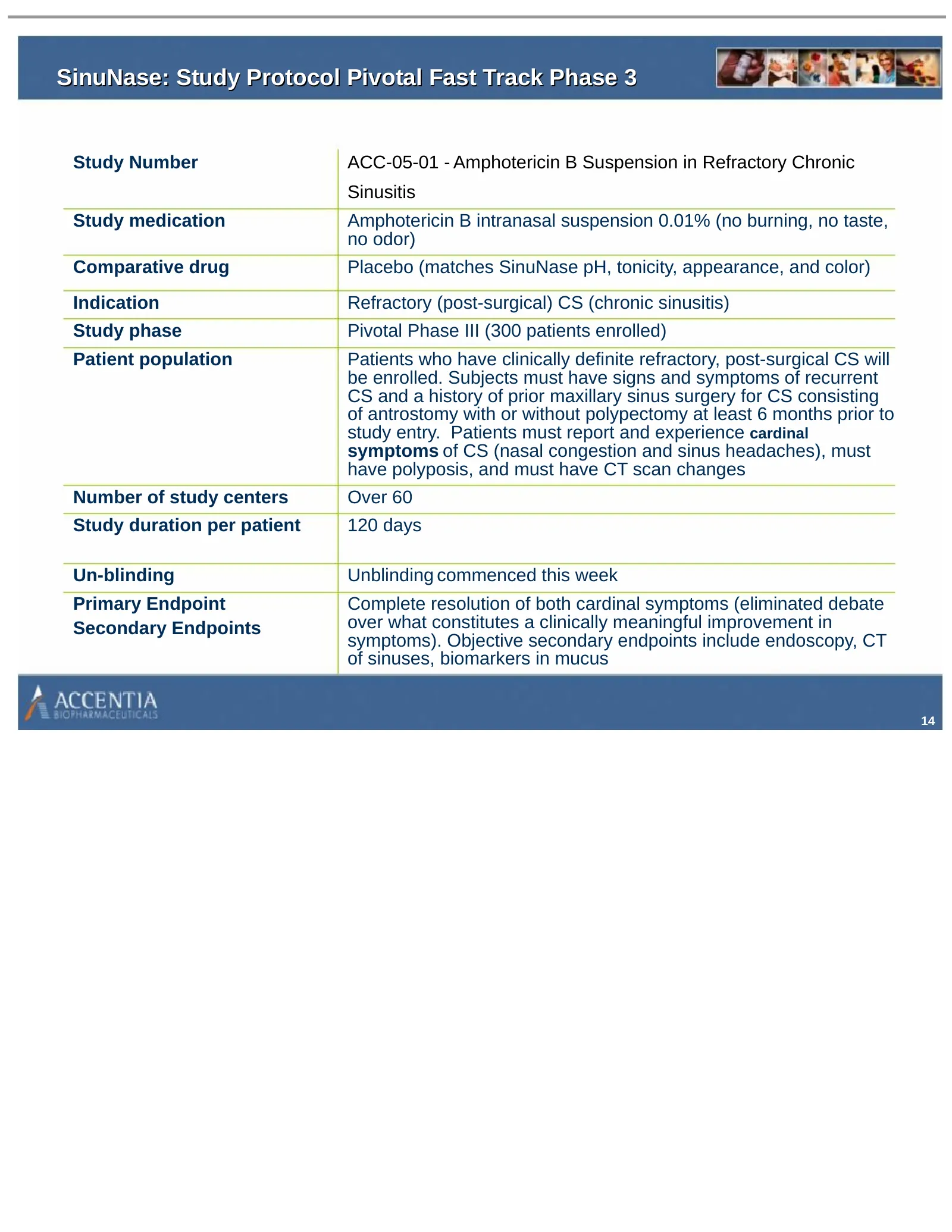
SinuNase: Study Protocol Pivotal Fast Track Phase 3 Study Number ACC-05-01 - Amphotericin B Suspension in Refractory Chronic Sinusitis Study medication Amphotericin B intranasal suspension 0.01% (no burning, no taste, no odor) Comparative drug Placebo (matches SinuNase pH, tonicity, appearance, and
Slide 15: Clinical Trial Enrollment and Randomization
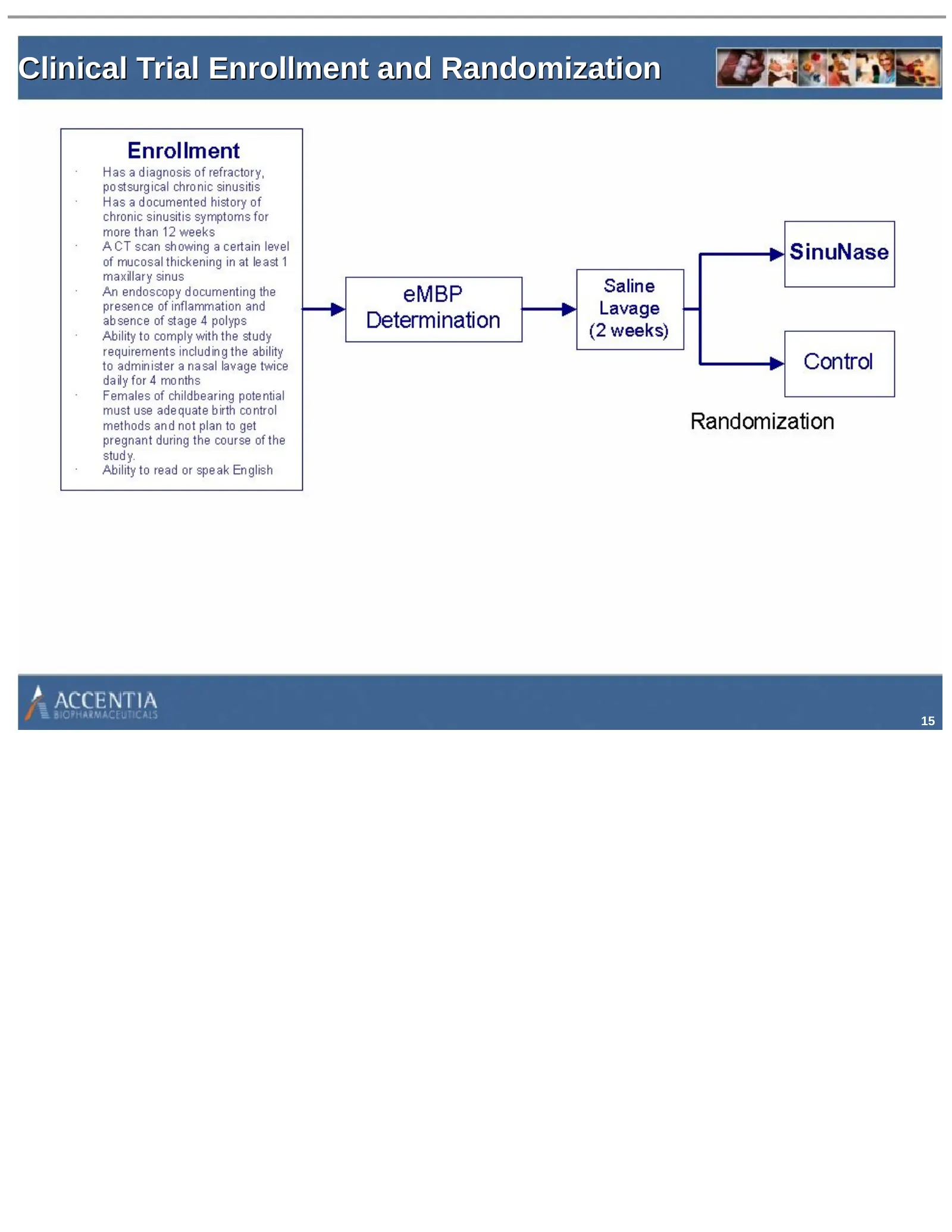
Clinical Trial Enrollment and Randomization 15
Slide 16: SinuNase Lavage Formulation
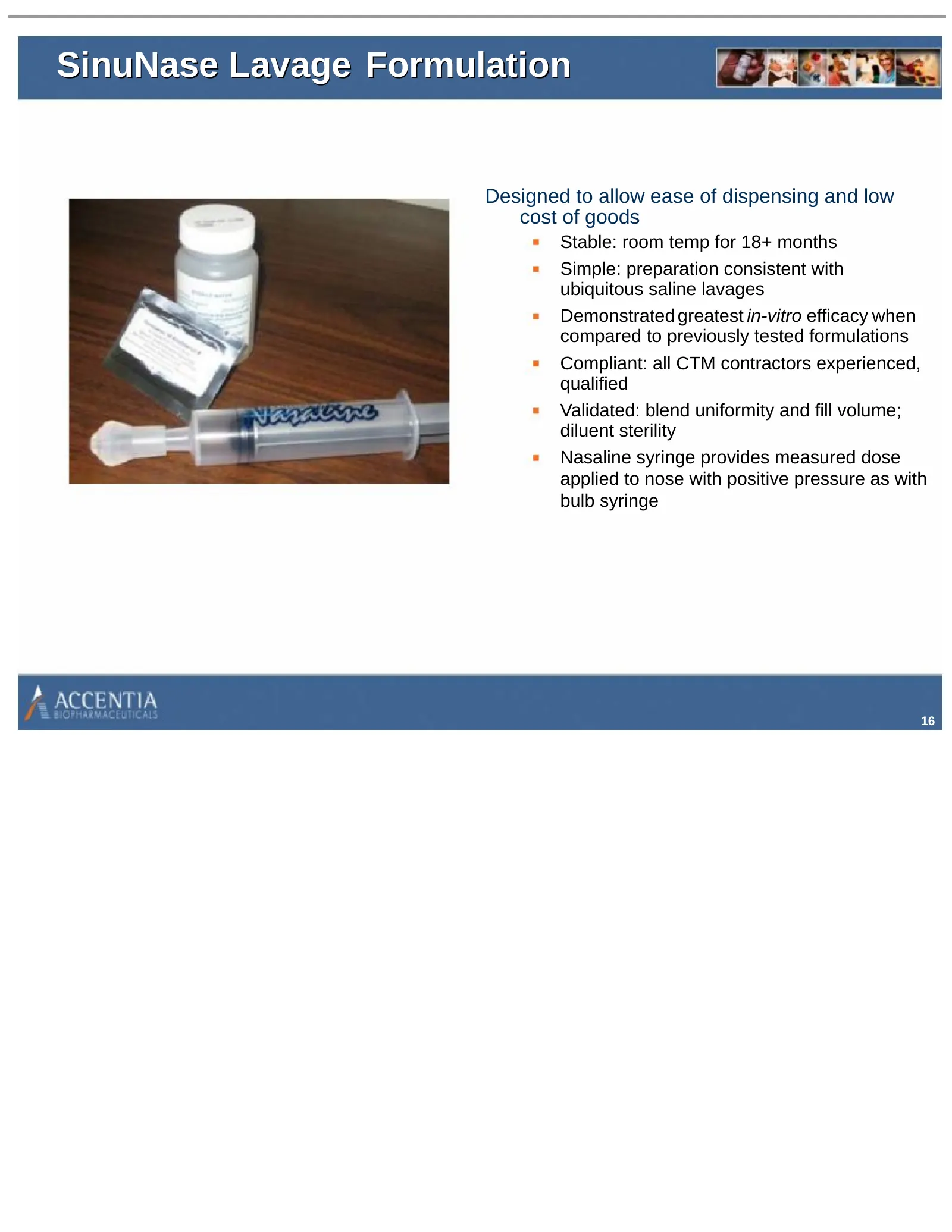
SinuNase Lavage Formulation Designed to allow ease of dispensing and low cost of goods Stable: room temp for 18+ months Simple: preparation consistent with ubiquitous saline lavages Demonstrated greatest in-vitro efficacy when compared to previously tested formulations Compliant: all CTM contractors
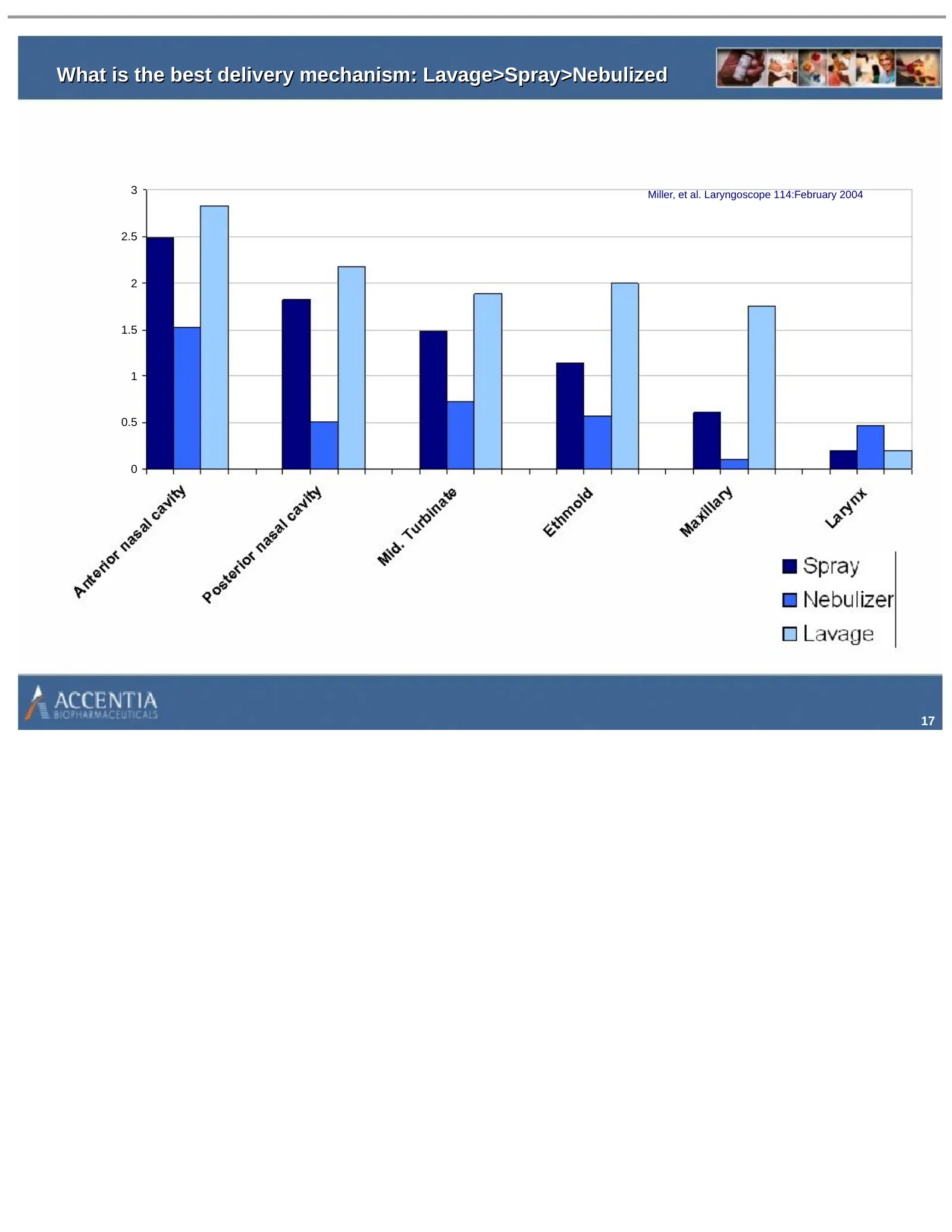
Slide 17: What is the best delivery mechanism: Lavage>Spray>Nebulized
What is the best delivery mechanism: Lavage>Spray>Nebulized 3 Miller, et al. Laryngoscope 114:February 2004 2.5 2 1.5 1 0.5 0 17
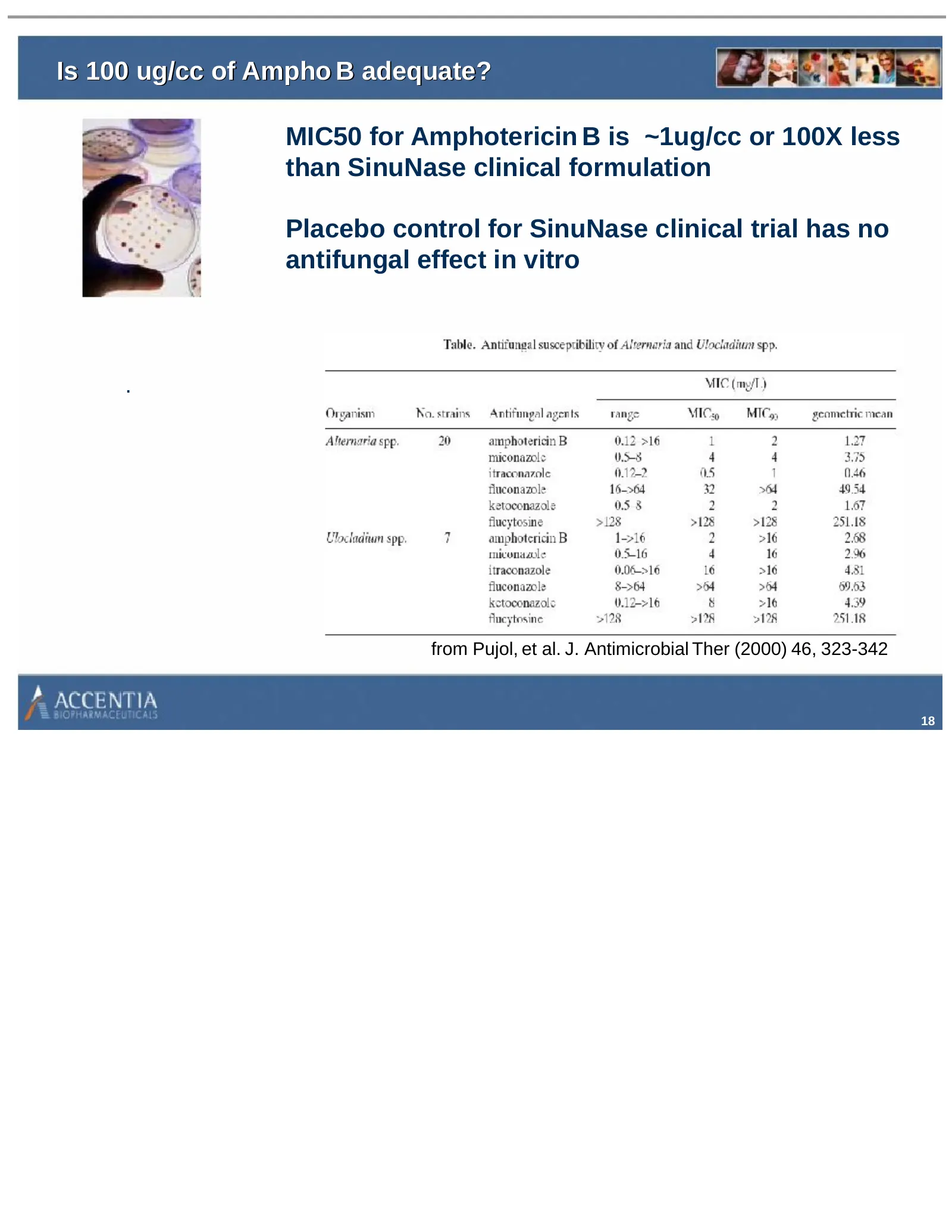
Slide 18: Is 100 ug/cc of Ampho B adequate?
Is 100 ug/cc of Ampho B adequate? MIC50 for Amphotericin B is ~1ug/cc or 100X less than SinuNase clinical formulation Placebo control for SinuNase clinical trial has no antifungal effect in vitro . from Pujol, et al. J. Antimicrobial Ther (2000) 46, 323-342 18
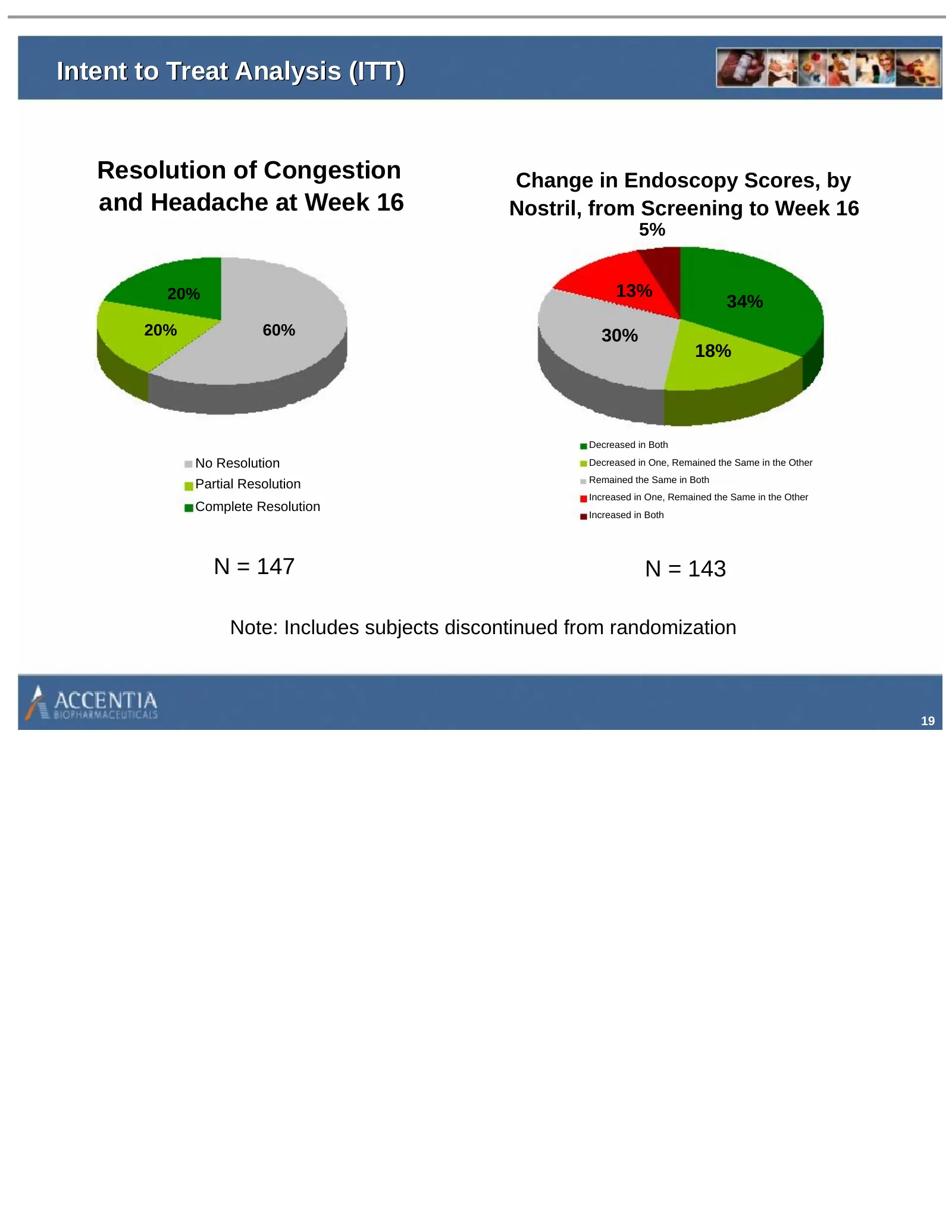
Slide 19: Intent to Treat Analysis (ITT)
Intent to Treat Analysis (ITT) Resolution of Congestion Change in Endoscopy Scores, by and Headache at Week 16 Nostril, from Screening to Week 16 5% 20% 13% 34% 20% 60% 30% 18% Decreased in Both No Resolution Decreased in One, Remained the Same in the Other Remained the Same in Both Partial Resoluti
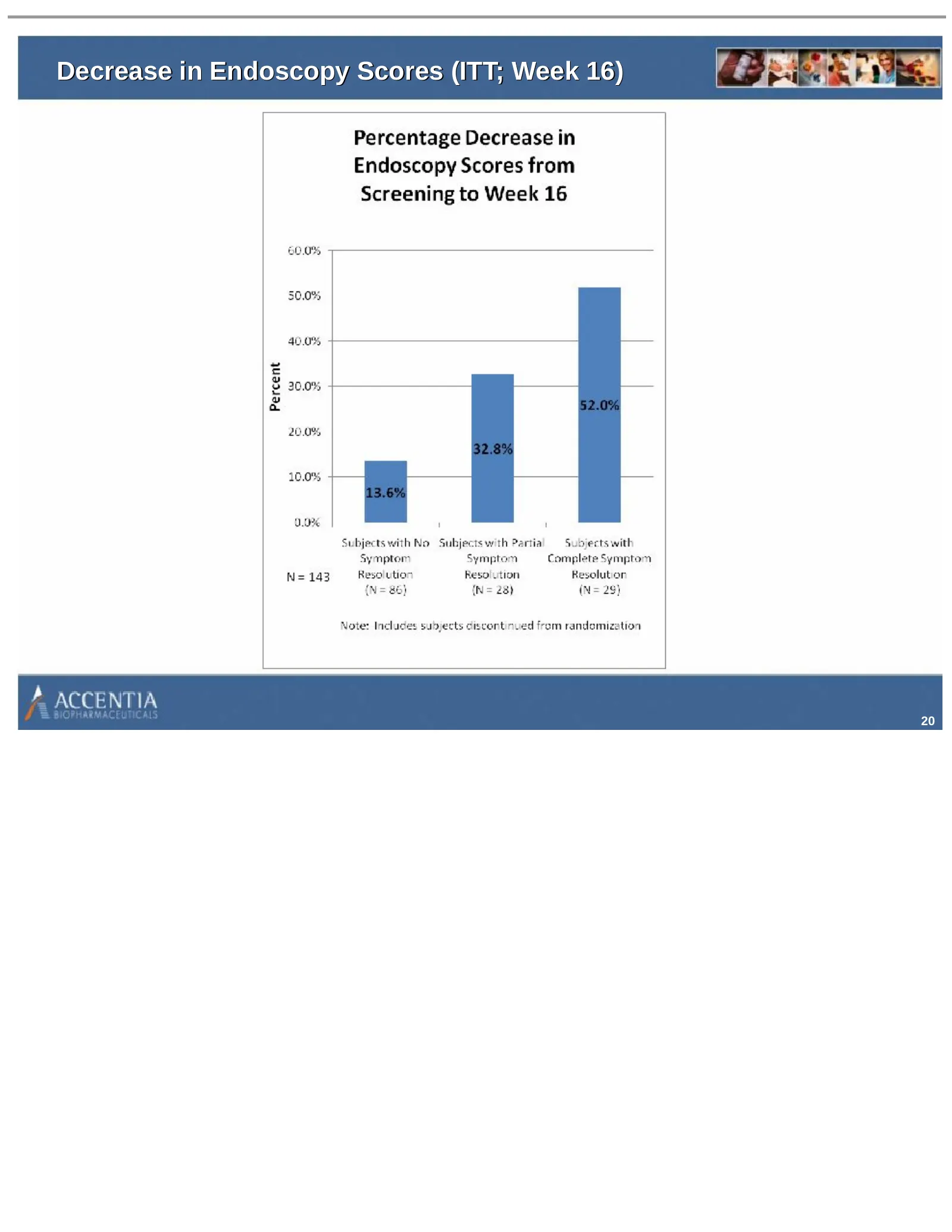
Slide 20: Decrease in Endoscopy Scores (ITT; Week 16)
Decrease in Endoscopy Scores (ITT; Week 16) 20
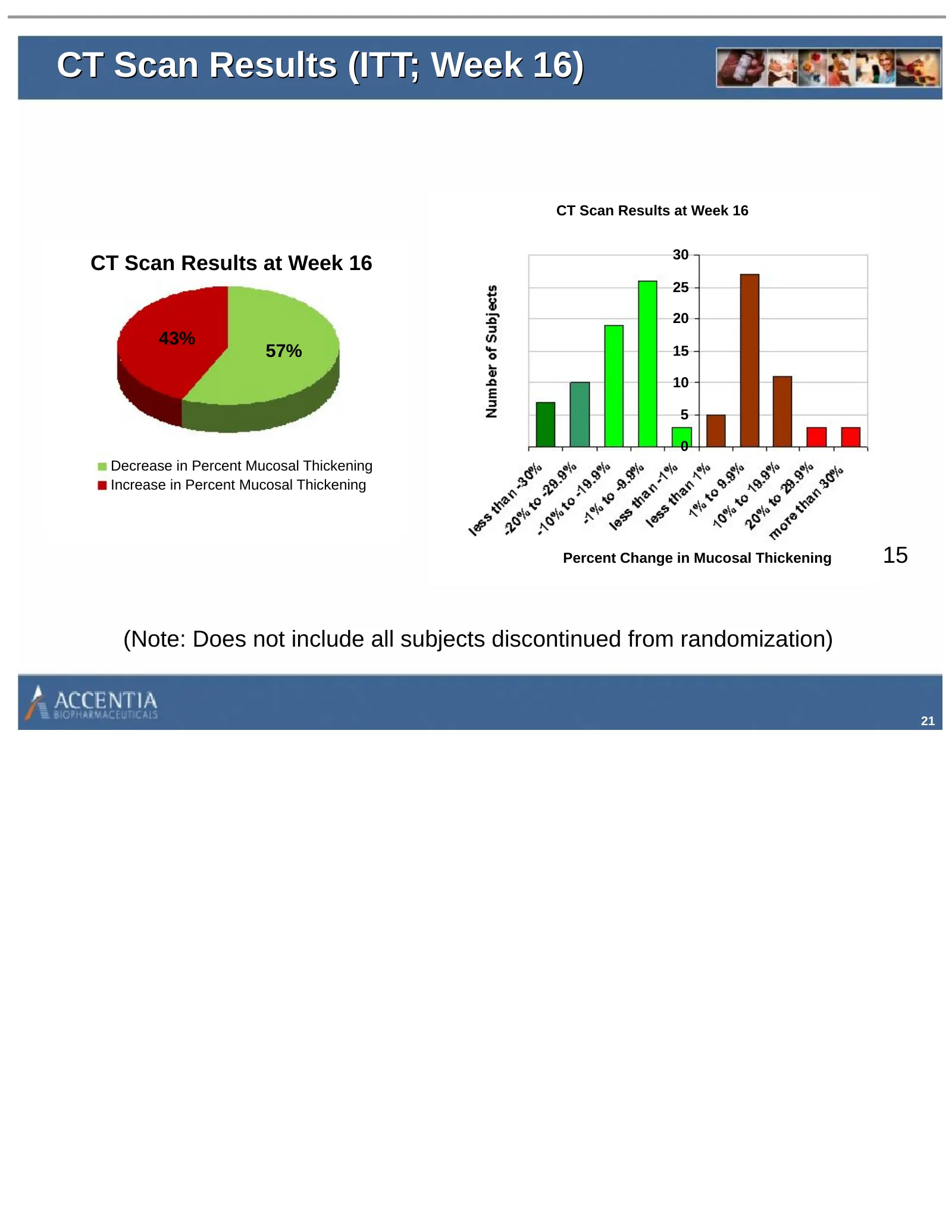
Slide 21: CT Scan Results (ITT; Week 16)
CT Scan Results (ITT; Week 16) CT Scan Results at Week 16 30 CT Scan Results at Week 16 25 20 43% 57% 15 10 5 0 Decrease in Percent Mucosal Thickening Increase in Percent Mucosal Thickening Percent Change in Mucosal Thickening 15 (Note: Does not include all subjects discontinued from randomization)
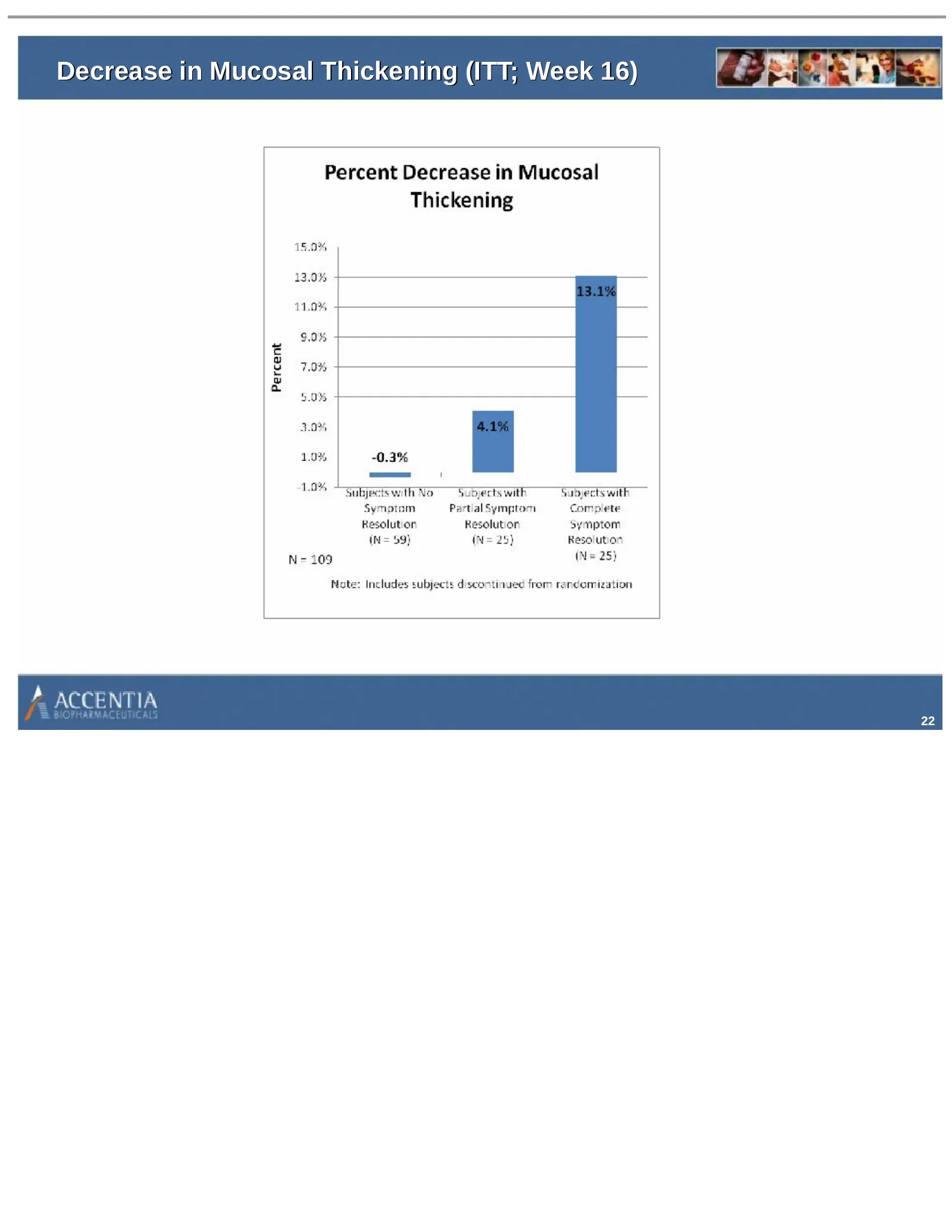
Slide 22: Decrease in Mucosal Thickening (ITT; Week 16)
Decrease in Mucosal Thickening (ITT; Week 16) 22
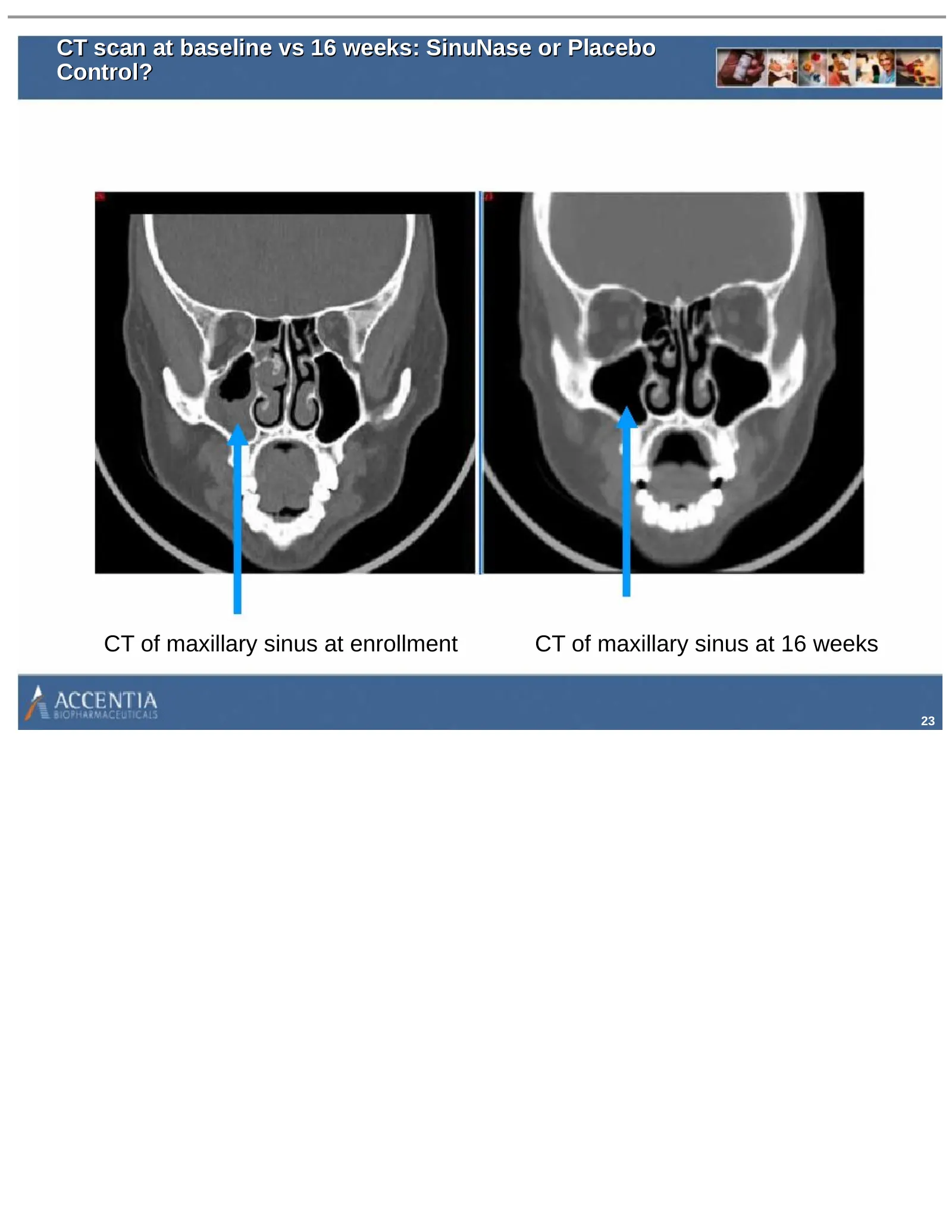
Slide 23: CT scan at baseline vs 16 weeks: SinuNase or Placebo Control?
CT scan at baseline vs 16 weeks: SinuNase or Placebo Control? CT of maxillary sinus at enrollment CT of maxillary sinus at 16 weeks 23
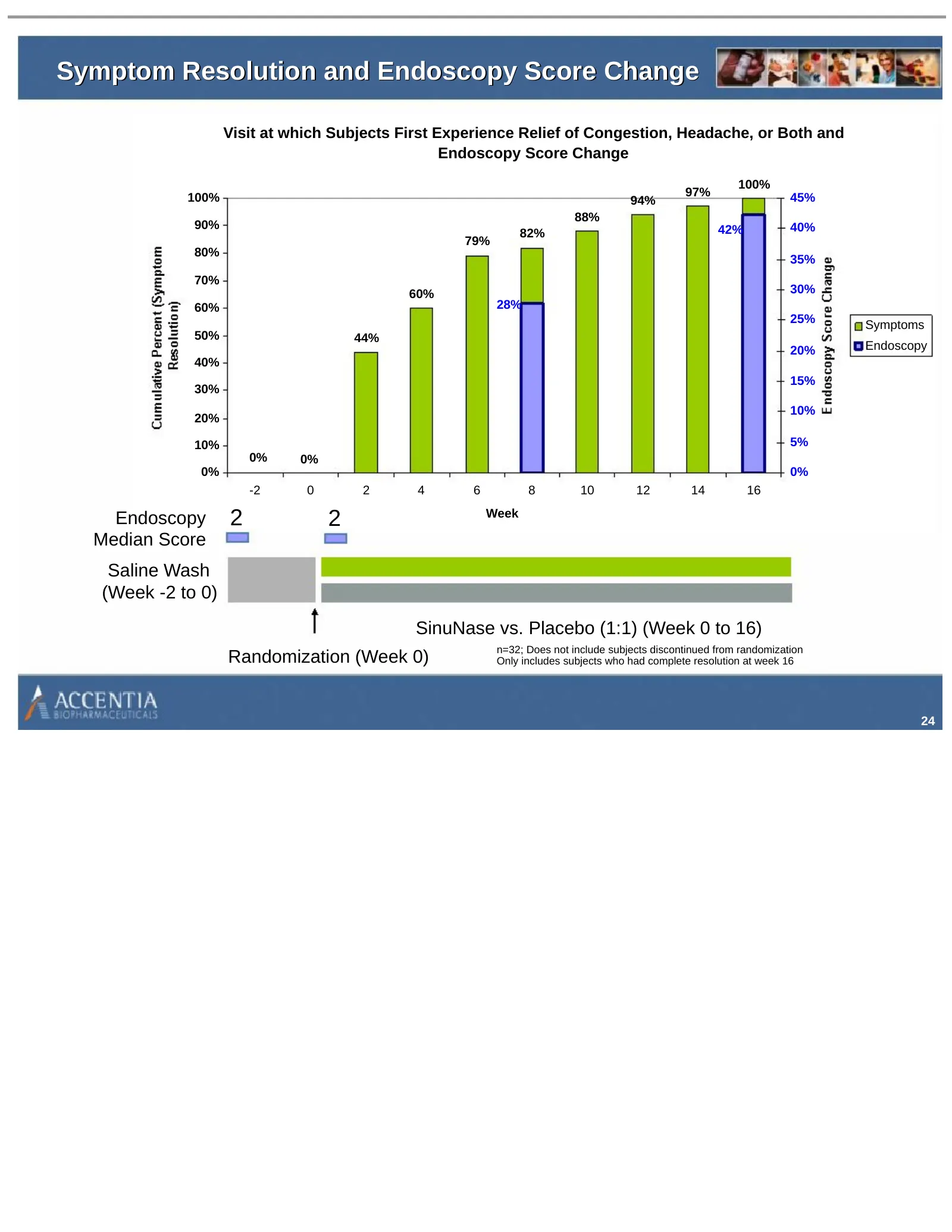
Slide 24: Symptom Resolution and Endoscopy Score Change
Symptom Resolution and Endoscopy Score Change Visit at which Subjects First Experience Relief of Congestion, Headache, or Both and Endoscopy Score Change 100% 100% 97% 45% 94% 88% 90% 42% 40% 82% 79% 80% 35% 70% 60% 30% 60% 28% 25% Symptoms 50% 44% 20% Endoscopy 40% 15% 30% 10% 20% 10% 5% 0% 0% 0% 0
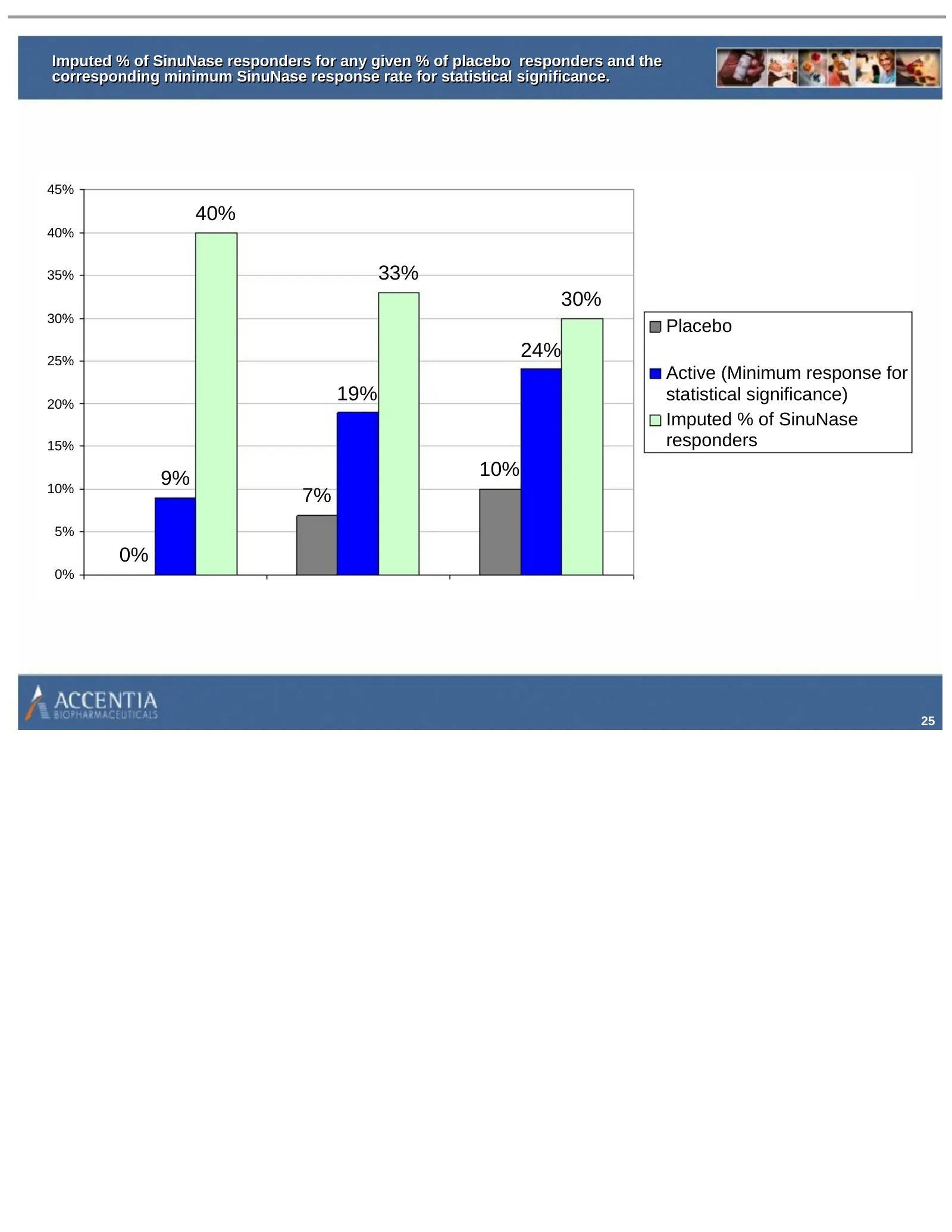
Slide 25: Imputed SinuNase responders vs placebo responders
Imputed % of SinuNase responders for any given % of placebo responders and the corresponding minimum SinuNase response rate for statistical significance. 45% 40% 40% 35% 33% 30% 30% Placebo 25% 24% Active (Minimum response for 20% 19% statistical significance) Imputed % of SinuNase 15% responders 9%
Slide 26: Un-blinded Results (ITT)
Un-blinded Results (ITT) 299 patients enrolled/299 randomized eMBP in nasal mucus 100% (299 out of 299) Implications: virtually 100% of CS due to fungal-induced inflammation Safety Two arms indistinguishable Not one serious adverse event attributable to drug Not one example of allergic reaction Prim
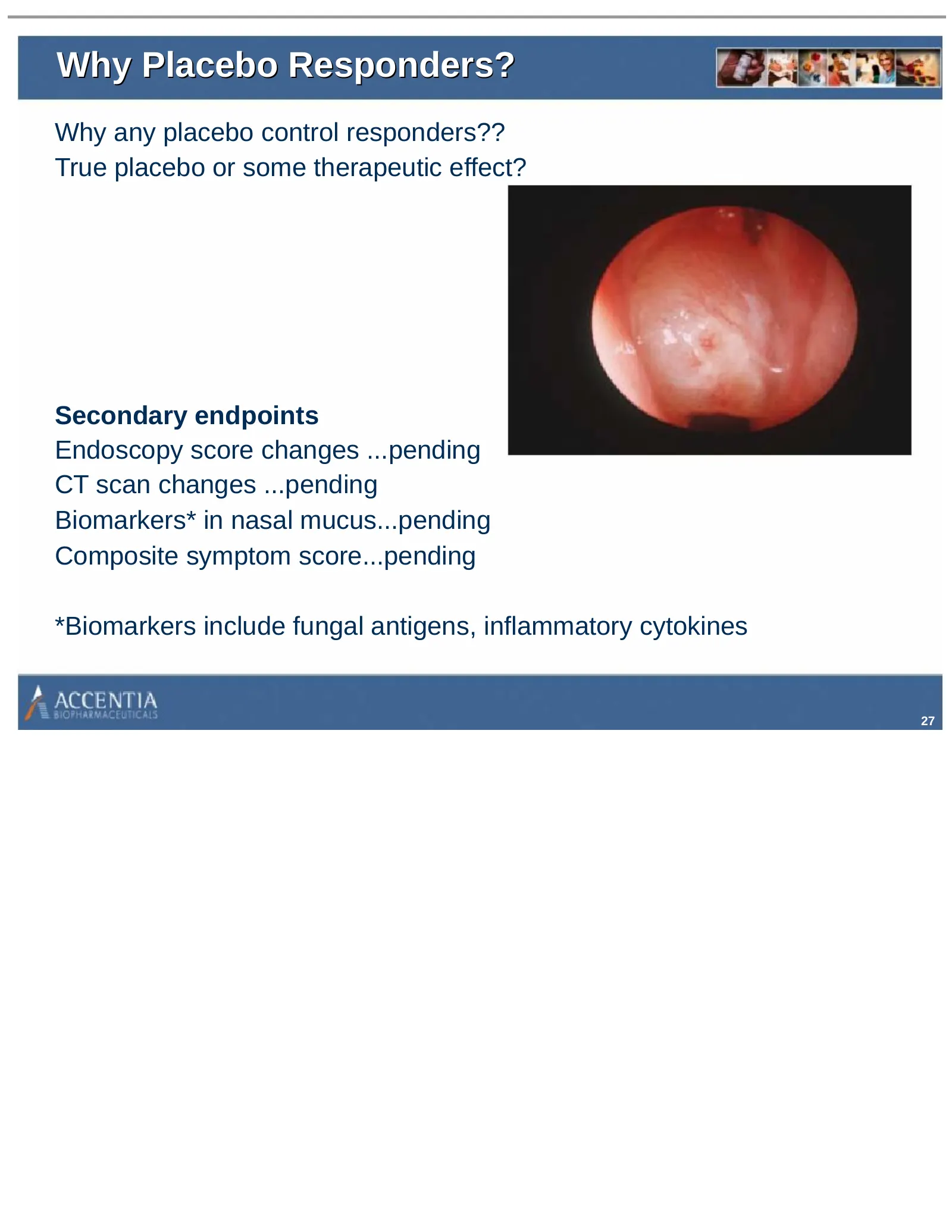
Slide 27: Why Placebo Responders?
Why Placebo Responders? Why any placebo control responders?? True placebo or some therapeutic effect? Secondary endpoints Endoscopy score changes ...pending CT scan changes ...pending Biomarkers* in nasal mucus...pending Composite symptom score...pending *Biomarkers include fungal antigens, inflamma
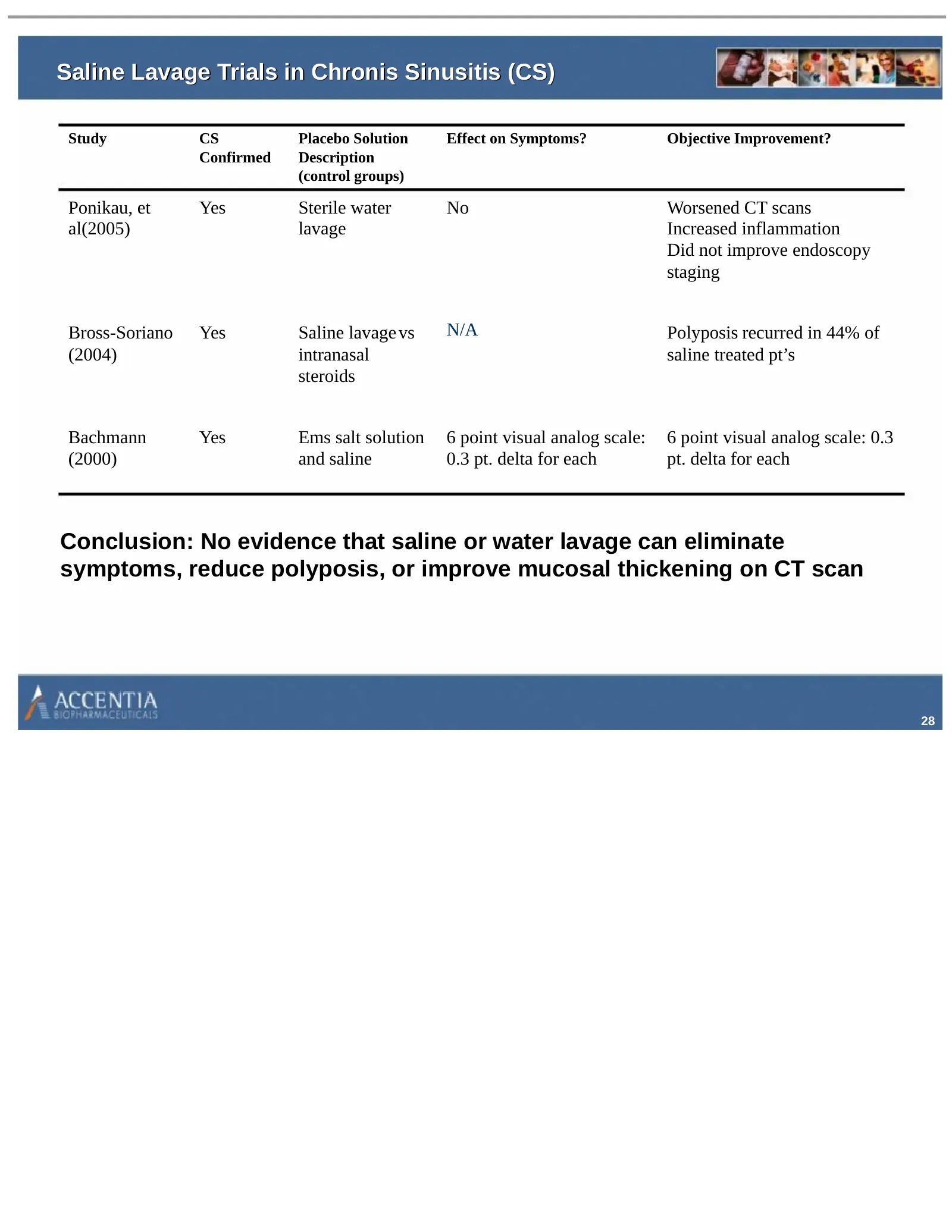
Slide 28: Saline Lavage Trials in Chronic Sinusitis (CS)
Saline Lavage Trials in Chronis Sinusitis (CS) Study CS Placebo Solution Effect on Symptoms? Objective Improvement? Confirmed Description (control groups) Ponikau, et Yes Sterile water No Worsened CT scans al(2005) lavage Increased inflammation Did not improve endoscopy staging Bross-Soriano Yes Sal
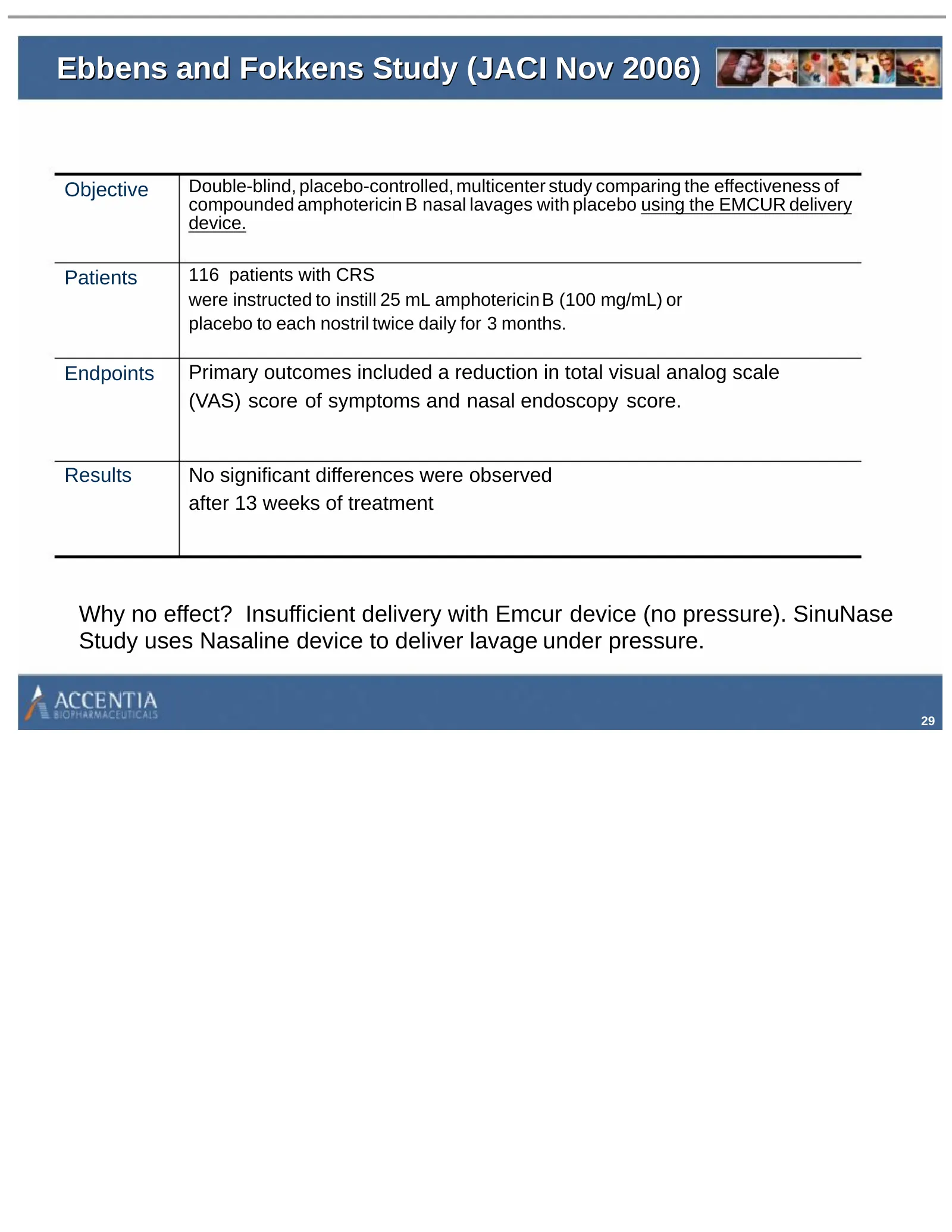
Slide 29: Ebbens and Fokkens Study (JACI Nov 2006)
Ebbens and Fokkens Study (JACI Nov 2006) Objective Double-blind, placebo-controlled, multicenter study comparing the effectiveness of compounded amphotericin B nasal lavages with placebo using the EMCUR delivery device. Patients 116 patients with CRS were instructed to instill 25 mL amphotericin B (
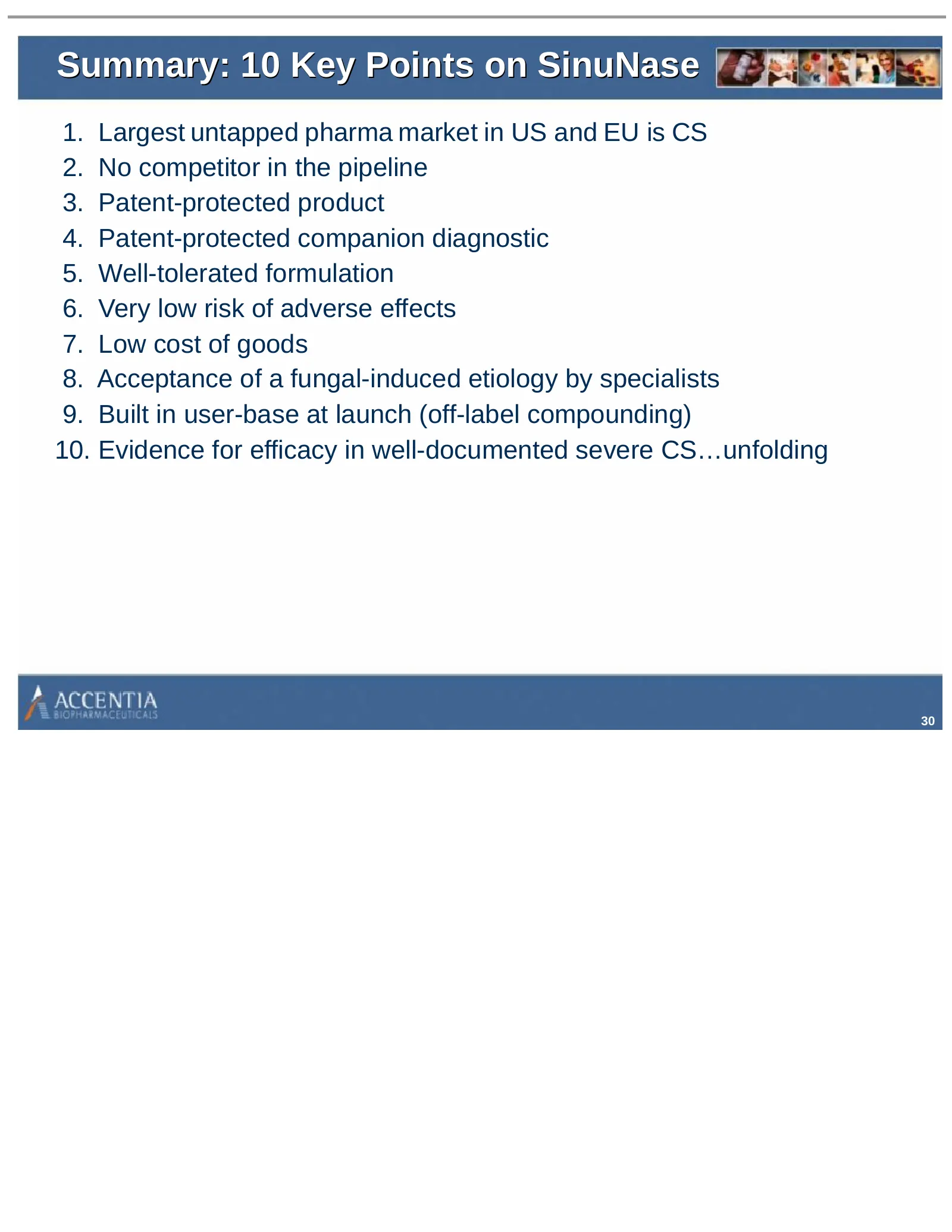
Slide 30: Summary: 10 Key Points on SinuNase
Summary: 10 Key Points on SinuNase 1. Largest untapped pharma market in US and EU is CS 2. No competitor in the pipeline 3. Patent-protected product 4. Patent-protected companion diagnostic 5. Well-tolerated formulation 6. Very low risk of adverse effects 7. Low cost of goods 8. Acceptance of a fung
Source: SEC EDGAR · 8-K filed Mar 28, 2008