Blue Earth — Genesis Fluid Solutions Holdings — Investor Presentation (December 2009)
26 slides from Blue Earth's investor presentation, Dec 11, 2009
Slide 1: An environmental technology company
An environmental technology company 1
Slide 2: Forward-looking statements
This presentation contains forward-looking statements within the meaning of Section 27A of the Securities Act of 1933 and Section 21E of the Securities Exchange Act of 1934, including statements regarding the business of the Company and its industry generally, business strategy and prospects. These
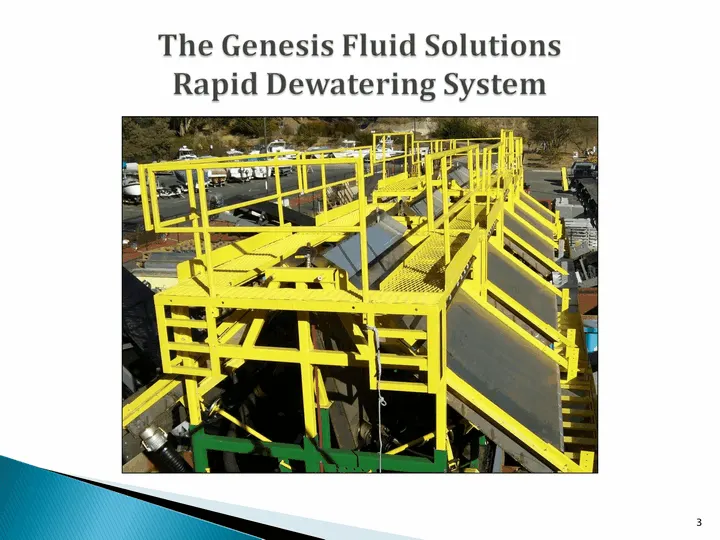
Slide 3: The Genesis Fluid Solutions Rapid Dewatering System
The Genesis Fluid Solutions Rapid Dewatering System
Slide 4: Founded in 2000 and incorporated in 2005; business description
Founded in 2000 and incorporated in 2005 by Michael Hodges Multiple international patents US patents pending Business Description: Dewatering, or the extraction of solids from water in dredging operations of solids from water in dredging operations of solids from water in dredging operations of soli
Slide 5: Public and private sectors: dredging, mining and paper mills
Public and private sectors Dredging Lakes, rivers, canals, harbors, ports, marinas, homeowner association lakes, & golf course lakes Mining & Paper Mills Tailing ponds and water reuse Tailing ponds and water reuse Tailing ponds and water reuse Tailing ponds and water reuse Tailing ponds and water re
Slide 6: Patented technology drains water away from floccules
Patented technology drains water away from floccules instead of letting the solids settle away from the water The Rapid Dewatering System (RDS) can process hydraulically dredged sediment at rates of approximately 2,000 gallons per minute. While many processes can quickly dewater sand and gravel from
Slide 7: Scalability, speed, clarity, size, cost, mobility, environment
Scalability: Able to increase capacity for processing dredge flow Speed: Processes dredge flows at approximately 2,000 gallons per minute, producing 80 cubic yards of solids per hour. Current R&D work is expected to further increase the process rate. Clarity: Return water meets or exceeds government
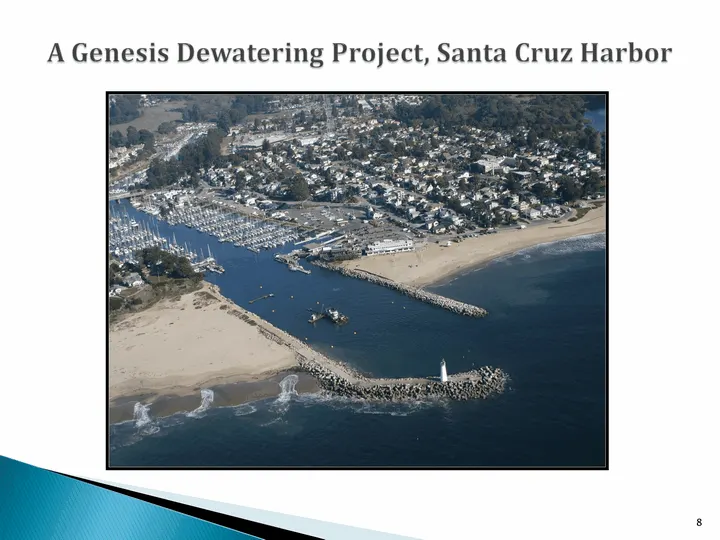
Slide 8: A Genesis Dewatering Project, Santa Cruz Harbor
A Genesis Dewatering Project, Santa Cruz Harbor
Slide 9: Traditional dewatering methods
Upland disposal sites Clarifying tanks Belt presses and thickeners Geo-synthetic tubes These are land-intensive, construction intensive, slow, costly, and in some cases, environmentally destructive destructive destructive destructive destructive destructive destructive destructive destructive 9
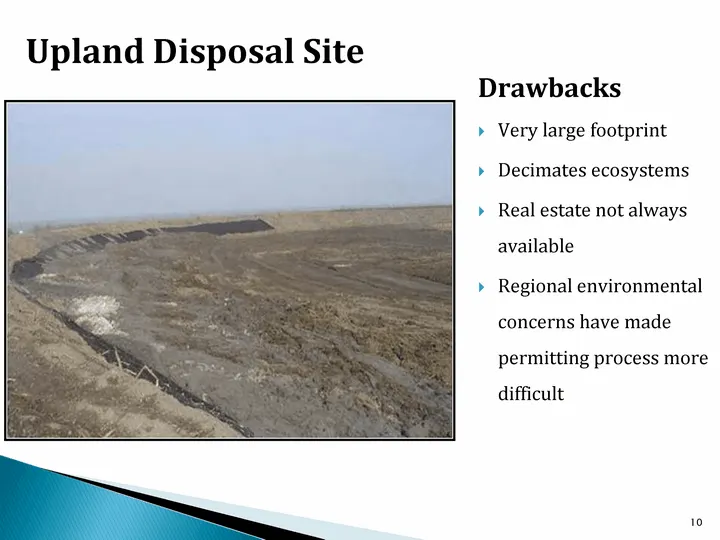
Slide 10: Traditional Upland Disposal Site drawbacks
Traditional Upland Disposal Site Drawbacks Very large footprint Decimates ecosystems Real estate not always available Regional environmental concerns have made permitting process more difficult Upland Disposal Site 10
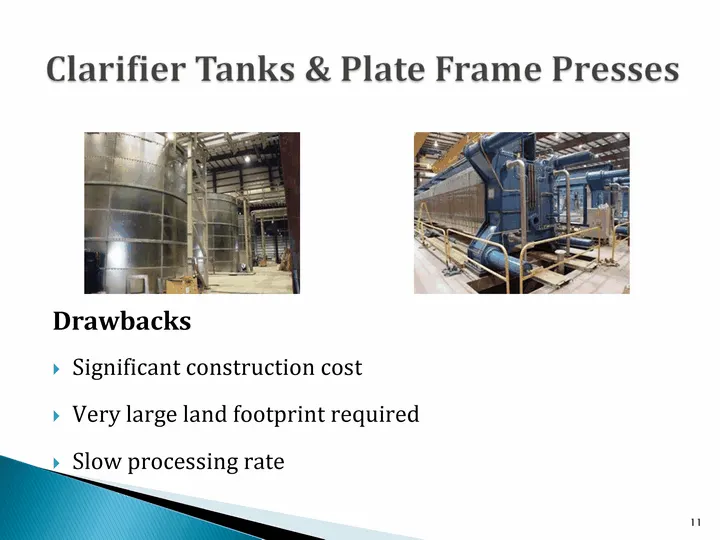
Slide 11: Drawbacks of belt presses and thickeners
Drawbacks Significant construction cost Very large land footprint required Slow processing rate Slow processing rate Slow processing rate Slow processing rate Slow processing rate 11
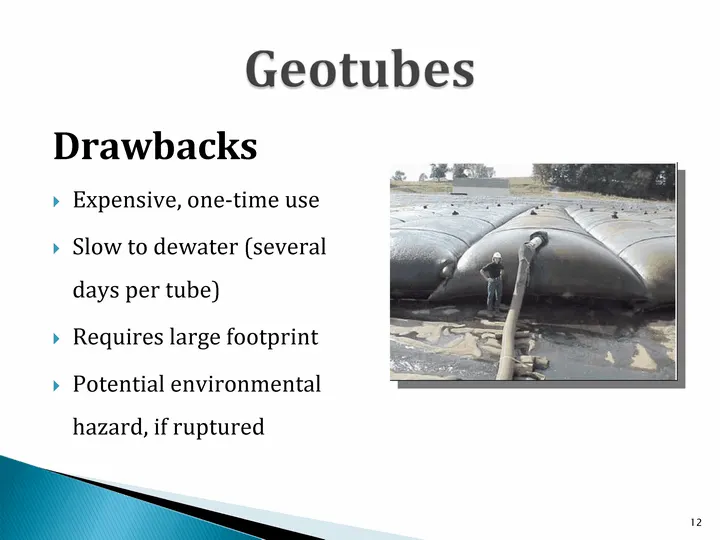
Slide 12: Drawbacks of geo-synthetic tubes
Drawbacks Expensive, one-time use Slow to dewater (several days per tube) Requires large footprint Potential environmental hazard, if ruptured hazard, if ruptured hazard, if ruptured hazard, if ruptured hazard, if ruptured hazard, if ruptured hazard, if ruptured hazard, if ruptured 12
Slide 13: The four-step process
Step One: Coarse Debris Removal System Step Two: Desanding Unit Step Three: Polymer System Step Four: Rapid Dewatering System Step Four: Rapid Dewatering System Step Four: Rapid Dewatering System Step Four: Rapid Dewatering System Step Four: Rapid Dewatering System Step Four: Rapid Dewatering System
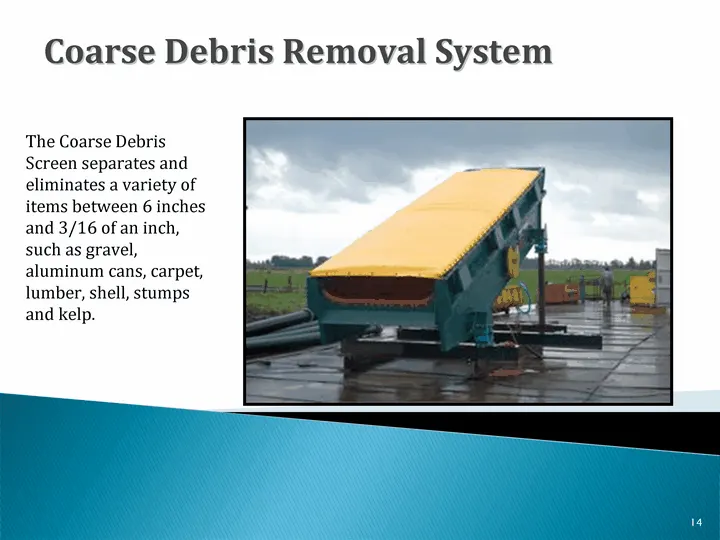
Slide 14: Coarse Debris Removal System
Coarse Debris Removal System The Coarse Debris Screen separates and eliminates a variety of items between 6 inches and 3/16 of an inch, such as gravel, aluminum cans, carpet, lumber, shell, stumps and kelp. 14
Slide 15: Desanding Unit
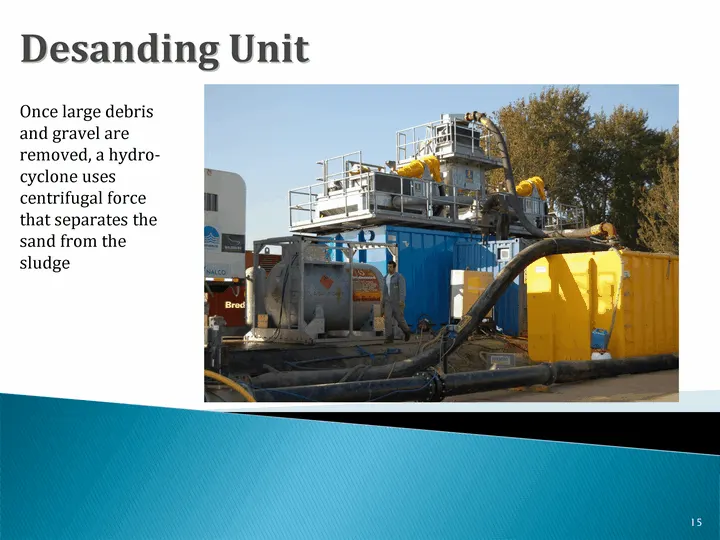
Desanding Unit Once large debris and gravel are removed, a hydro- cyclone uses centrifugal force that separates the sand from the sludge 15
Slide 16: Polymer system
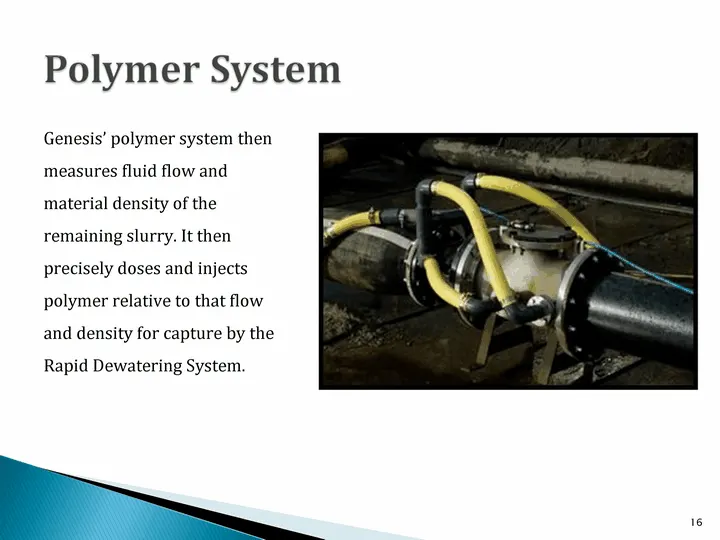
Genesis' polymer system then measures fluid flow and material density of the remaining slurry. It then precisely doses and injects polymer relative to that flow and density for capture by the Rapid Dewatering System. 16
Slide 17: The Genesis RDS captures flocculated fine grain sediments
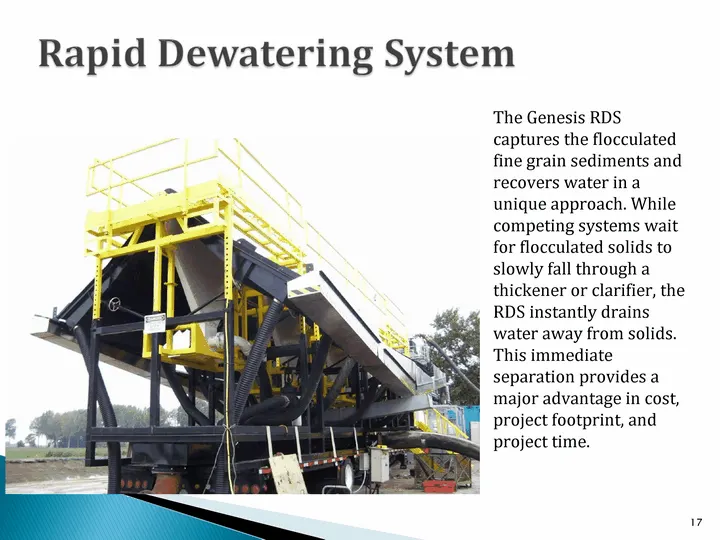
The Genesis RDS captures the flocculated fine grain sediments and recovers water in a unique approach. While competing systems wait for flocculated solids to slowly fall through a thickener or clarifier, the RDS instantly drains water away from solids. This immediate separation provides a major adva
Slide 18: Genesis Return Water
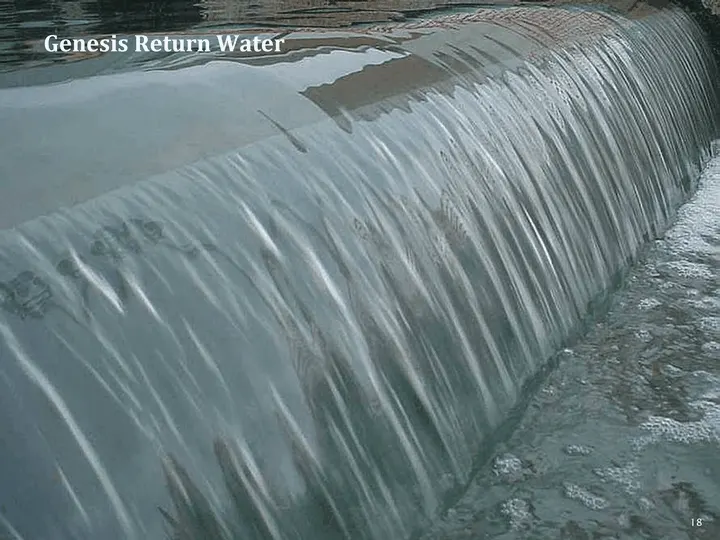
Genesis Return Water 18
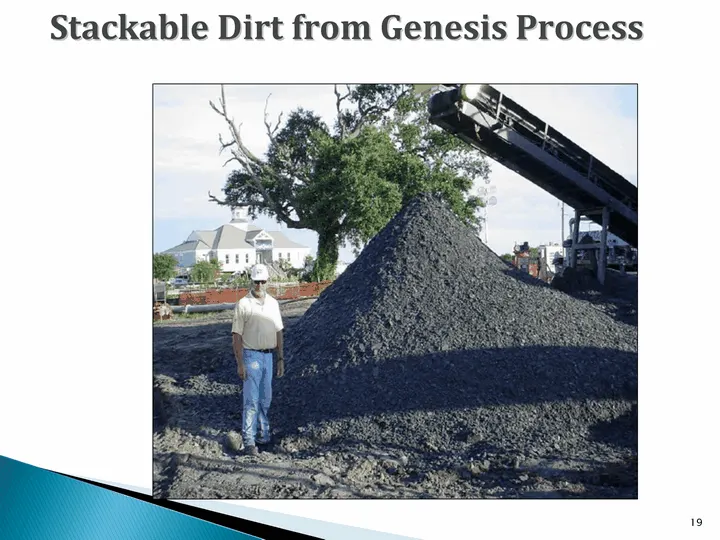
Slide 19: Stackable Dirt from Genesis Process
Stackable Dirt from Genesis Process 19
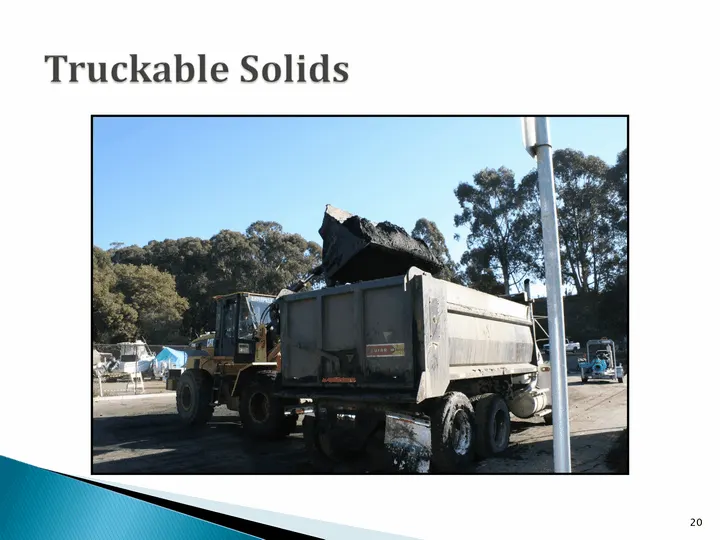
Slide 20: Truckable Solids
Truckable Solids
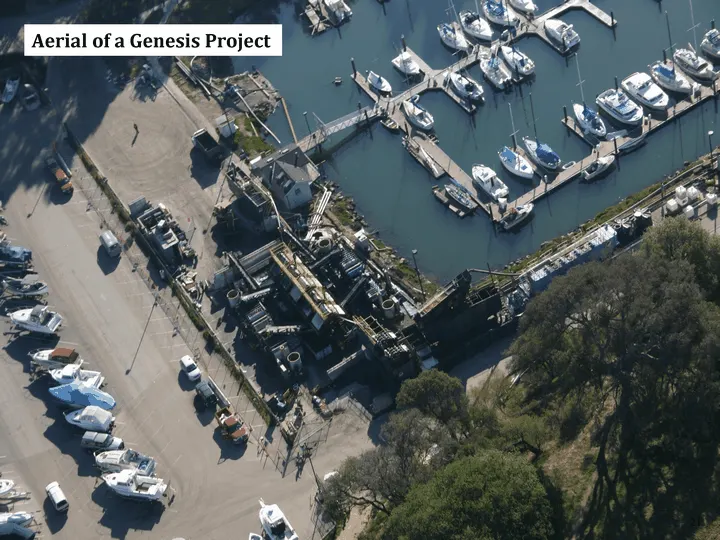
Slide 21: Aerial of a Genesis Project
Aerial of a Genesis Project 21
Slide 22: Maximize units deployed; license technology and lease equipment
To maximize the numbers of units deployed worldwide in order to increase market share rapidly License our technology to major national and international construction and engineering firms Genesis owns the dewatering equipment and IP Equipment leased on a per unit basis at a flat monthly rate for a r
Slide 23: Licensee benefits and Genesis plans
Licensees will receive: Dewatering equipment Patent protection Potential regional exclusivity Technological advantages over competition Genesis plans to: Tap into large firms with established sales forces and field operators able to deploy quickly Focus on its core competencies: Supplying equipment,
Slide 24: Reduced liabilities, supply chain risks and international learning curve
Reduces or Eliminates Potential Liabilities, such as: Field Staff Bonding requirements Transportation/transfer of hazardous materials Foreign cultural and business practices Eliminates or Mitigates Supply Chain Risks: Polymer, transportation, disposal Reduces International Learning Curve: Partner wi
Slide 25: Key advantages of the Genesis technology
Dewaters fine-grained sediment more rapidly than other technologies Environmentally friendly technology offers beneficial reuse solutions for dewatered sediment Ideal for urban settings because of small footprint Two end products: clear water & stackable solids 25
Slide 26: Hydraulic Dredge Flow and the Genesis System
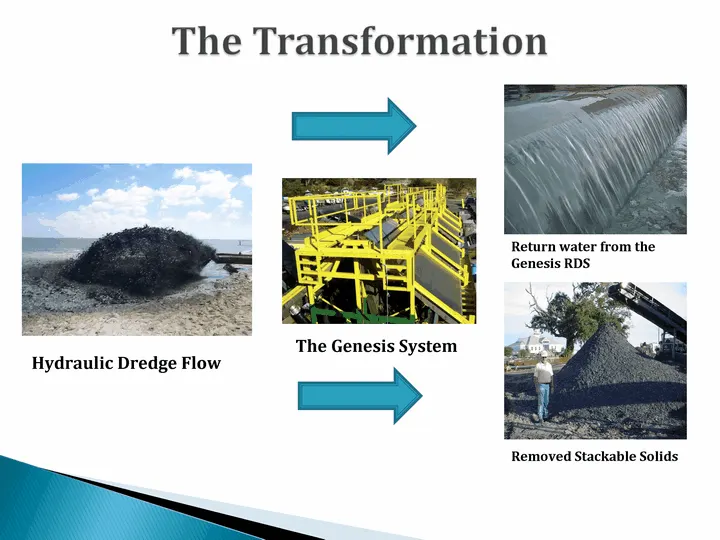
Hydraulic Dredge Flow The Genesis System Return water from the Genesis RDS Removed Stackable Solids
Source: SEC EDGAR · 8-K filed Dec 11, 2009