Nektar Therapeutics · NASDAQ:NKTR
Nektar Therapeutics — ASCO 2018 Investor & Analyst Event
69 slides from Nektar Therapeutics's conference presentation, Jun 2, 2018

Slide 1: ASCO 2018 Nektar Therapeutics Investor & Analyst Event
ASCO 2018 Nektar Therapeutics Investor & Analyst Event June 2, 2018
Slide 2: Forward-looking statements
This presentation includes forward-looking statements regarding Nektar’s proprietary drug candidates, the timing of the start and conclusion of ongoing or planned clinical trials, the timing and outcome of regulatory decisions, and future availability of clinical trial data. Actual results could dif

Slide 3: Today's Speakers and Panelists
Today’s Speakers and Panelists Dr. Adi Diab Dr. Scott N. Gettinger Dr. Nizar M. Tannir Dr. Mary Tagliaferri Dr. Jonathan Zalevsky Assistant Professor Associate Professor of Professor of Chief Medical Officer Chief Scientific Officer of Melanoma Medical Oncology Yale Genitourinary Senior Vice Preside
Slide 4: Today's Agenda
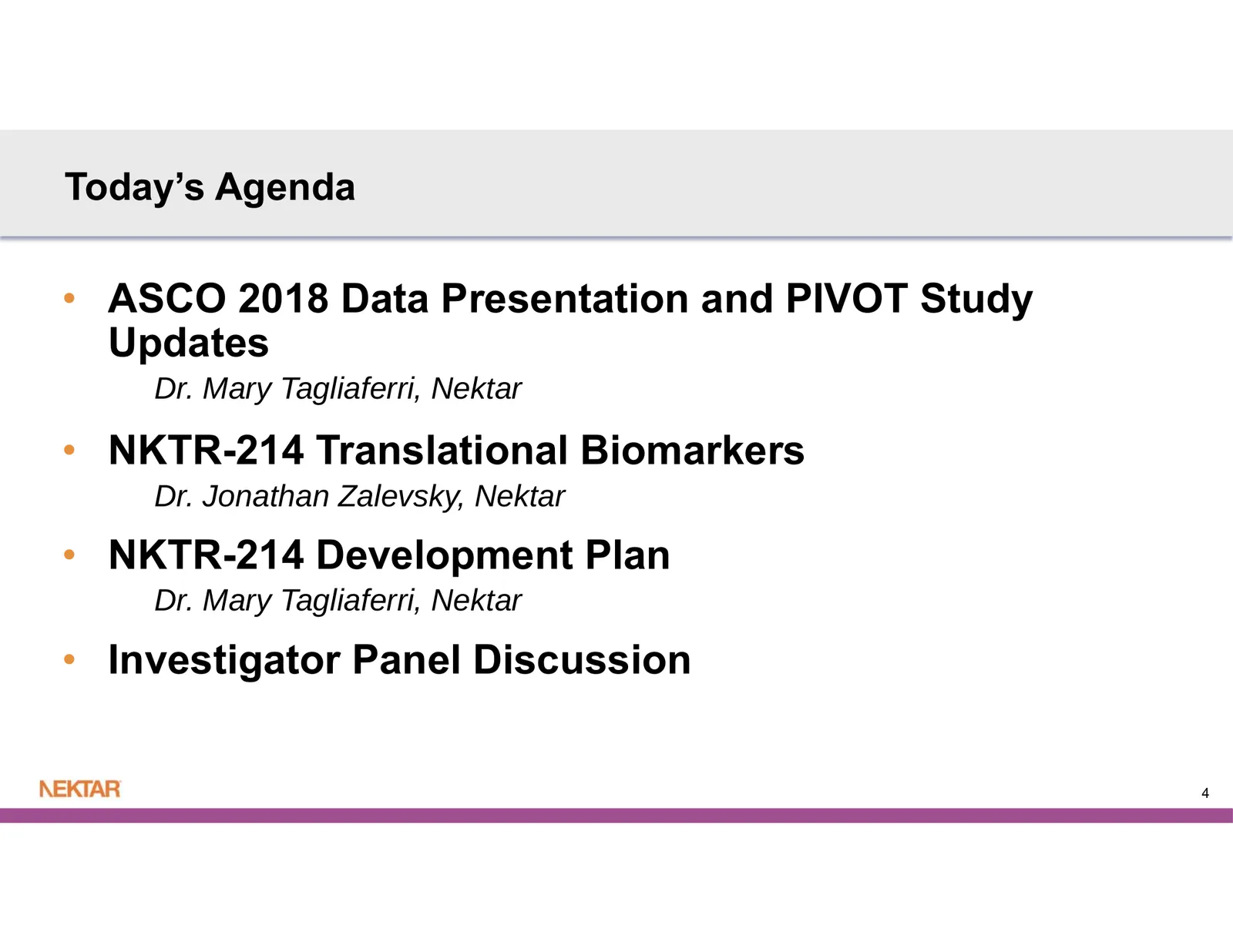
Today’s Agenda • ASCO 2018 Data Presentation and PIVOT Study Updates Dr. Mary Tagliaferri, Nektar • NKTR-214 Translational Biomarkers Dr. Jonathan Zalevsky, Nektar • NKTR-214 Development Plan Dr. Mary Tagliaferri, Nektar • Investigator Panel Discussion 4
Slide 5: ASCO 2018: PIVOT-02 Preliminary Data Conclusions
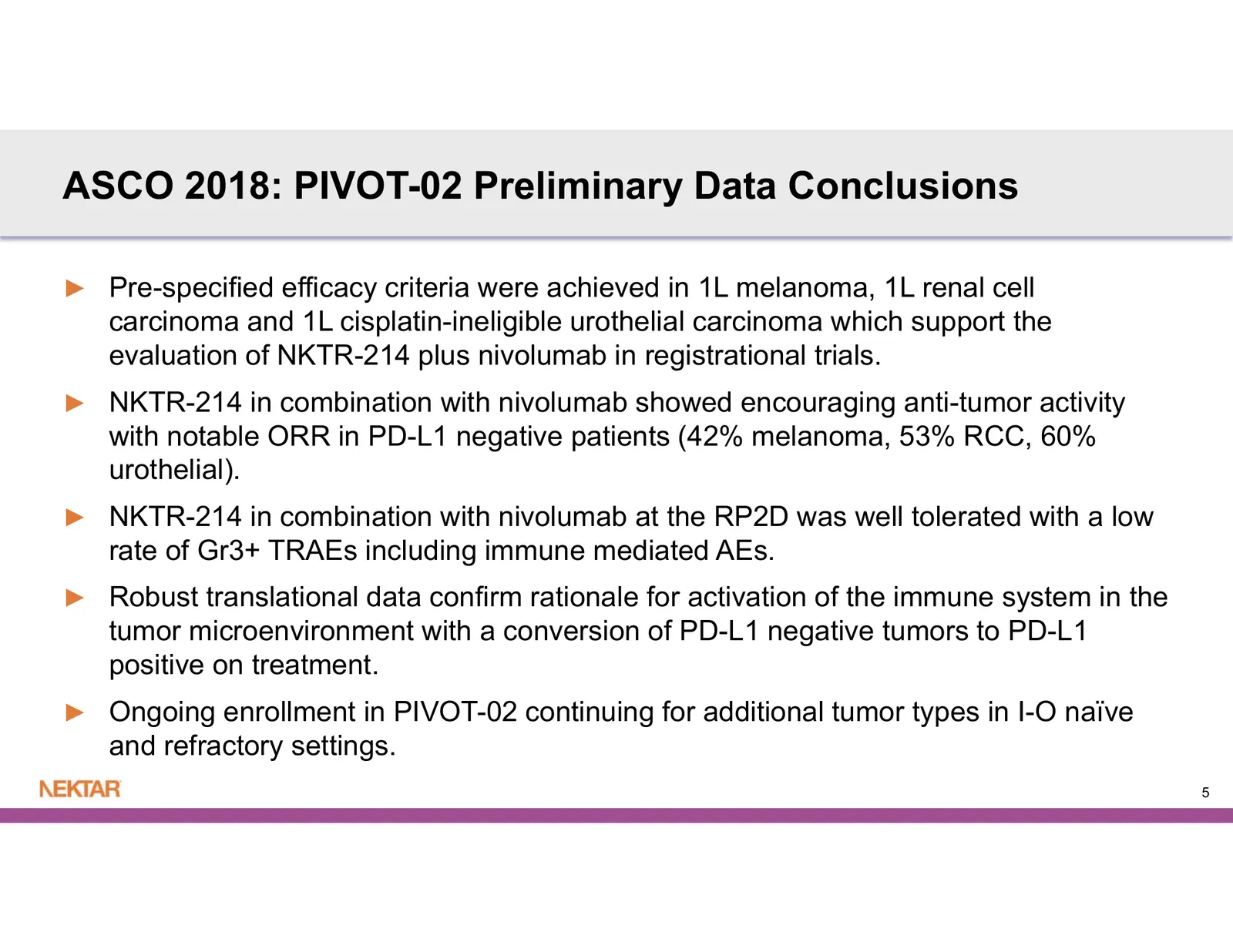
ASCO 2018: PIVOT-02 Preliminary Data Conclusions ► Pre-specified efficacy criteria were achieved in 1L melanoma, 1L renal cell carcinoma and 1L cisplatin-ineligible urothelial carcinoma which support the evaluation of NKTR-214 plus nivolumab in registrational trials. ► NKTR-214 in combination with n
Slide 6: PIVOT-02 RP2D Dose Expansion Cohorts in 5 Tumor Types
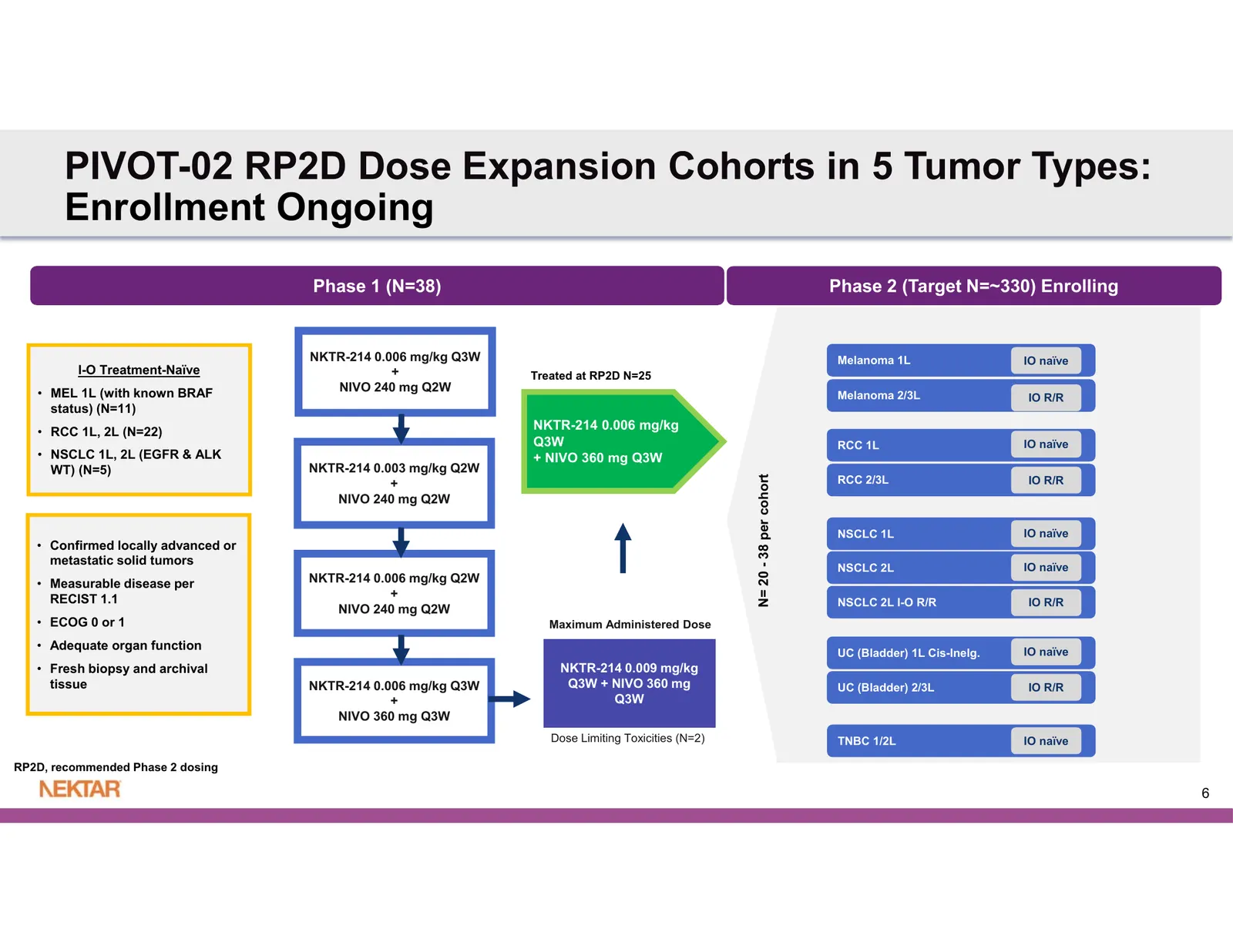
PIVOT-02 RP2D Dose Expansion Cohorts in 5 Tumor Types: Enrollment Ongoing Phase 1 (N=38) Phase 2 (Target N=~330) Enrolling NKTR-214 0.006 mg/kg Q3W Melanoma 1L IO naïve I-O Treatment-Naïve + Treated at RP2D N=25 • MEL 1L (with known BRAF NIVO 240 mg Q2W Melanoma 2/3L IO R/R status) (N=11) • RCC 1L,
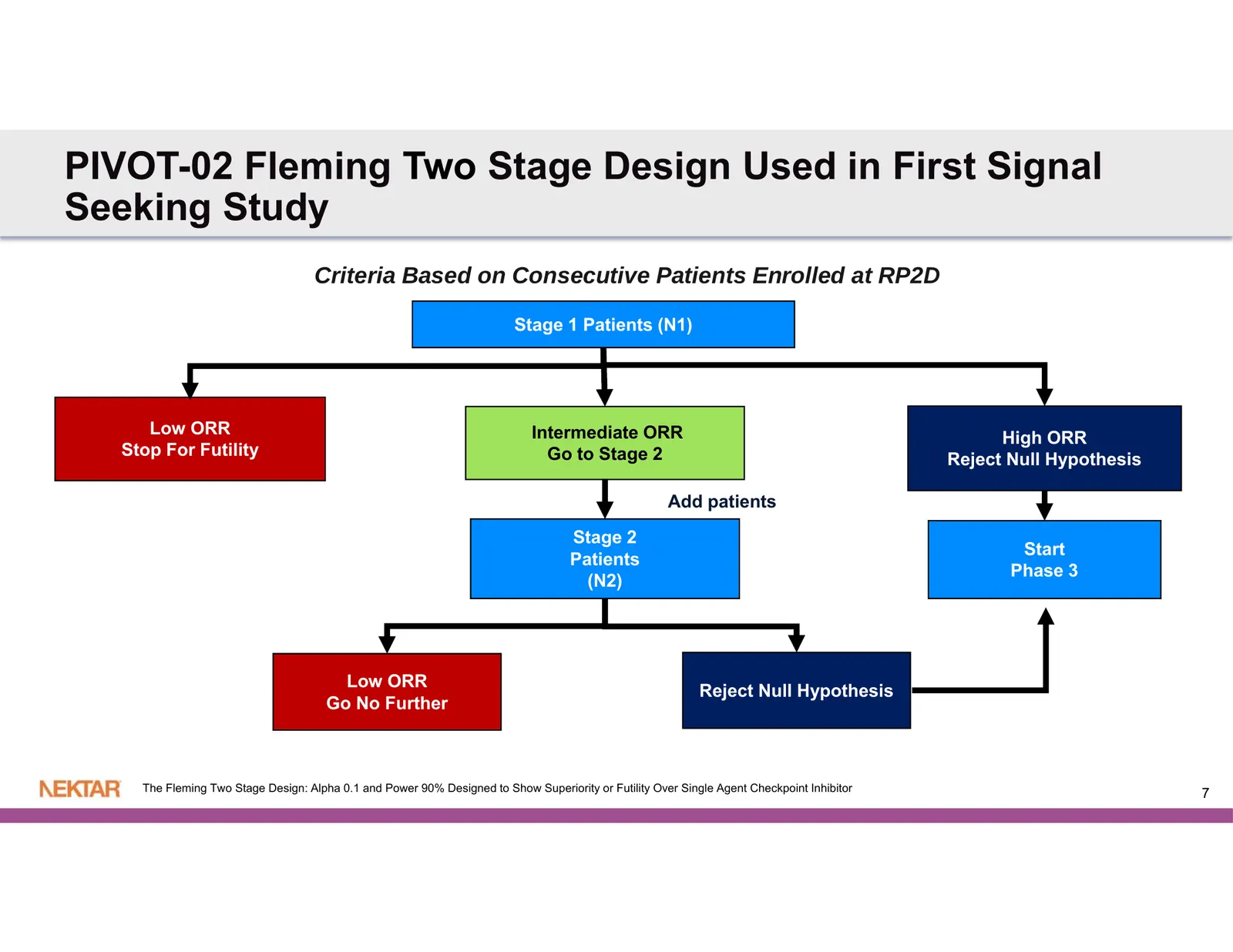
Slide 7: PIVOT-02 Fleming Two Stage Design
PIVOT-02 Fleming Two Stage Design Used in First Signal Seeking Study Criteria Based on Consecutive Patients Enrolled at RP2D Stage 1 Patients (N1) Low ORR Intermediate ORR High ORR Stop For Futility Go to Stage 2 Reject Null Hypothesis Add patients Stage 2 Start Patients Phase 3 (N2) Low ORR Reject
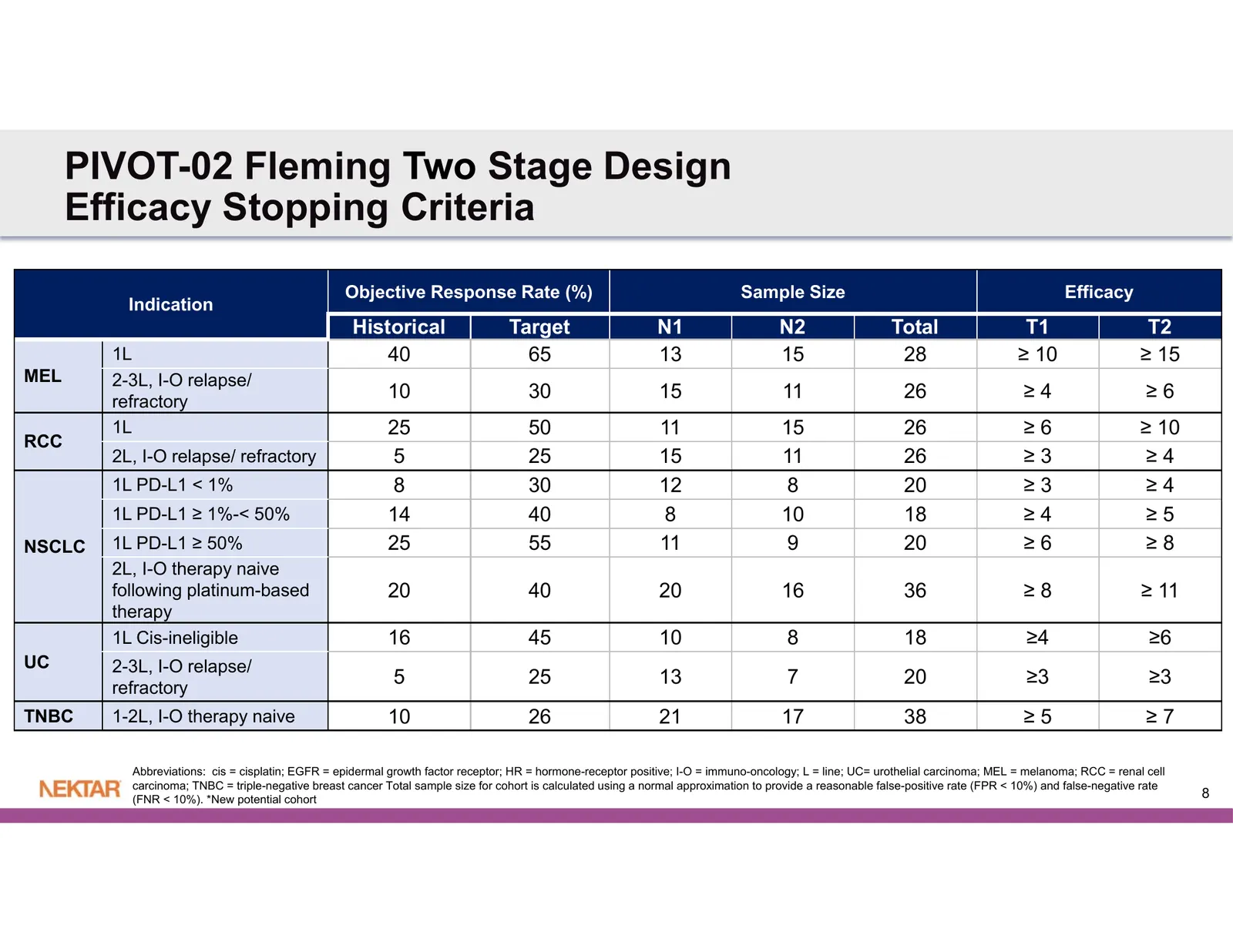
Slide 8: PIVOT-02 Fleming Two Stage Design Efficacy Stopping Criteria
PIVOT-02 Fleming Two Stage Design Efficacy Stopping Criteria Objective Response Rate (%) Sample Size Efficacy Indication Historical Target N1 N2 Total T1 T2 1L 40 65 13 15 28 ≥ 10 ≥ 15 MEL 2-3L, I-O relapse/ refractory 10 30 15 11 26 ≥4 ≥6 1L 25 50 11 15 26 ≥6 ≥ 10 RCC 2L, I-O relapse/ refractory 5
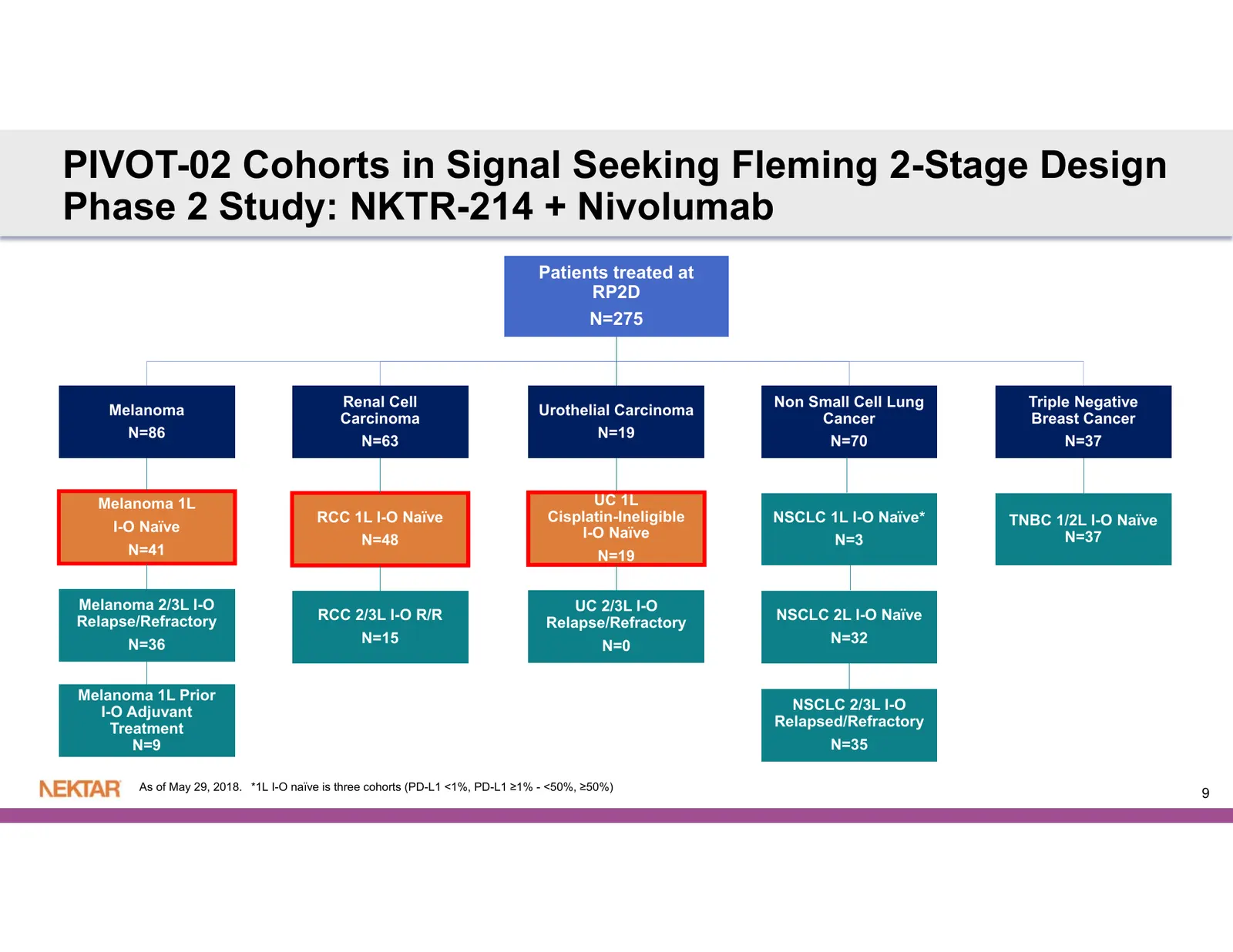
Slide 9: PIVOT-02 Cohorts in Signal Seeking Fleming 2-Stage Design
PIVOT-02 Cohorts in Signal Seeking Fleming 2-Stage Design Phase 2 Study: NKTR-214 + Nivolumab Patients treated at RP2D N=275 Renal Cell Non Small Cell Lung Triple Negative Melanoma Urothelial Carcinoma Carcinoma Cancer Breast Cancer N=86 N=19 N=63 N=70 N=37 Melanoma 1L UC 1L RCC 1L I-O Naïve Cisplat
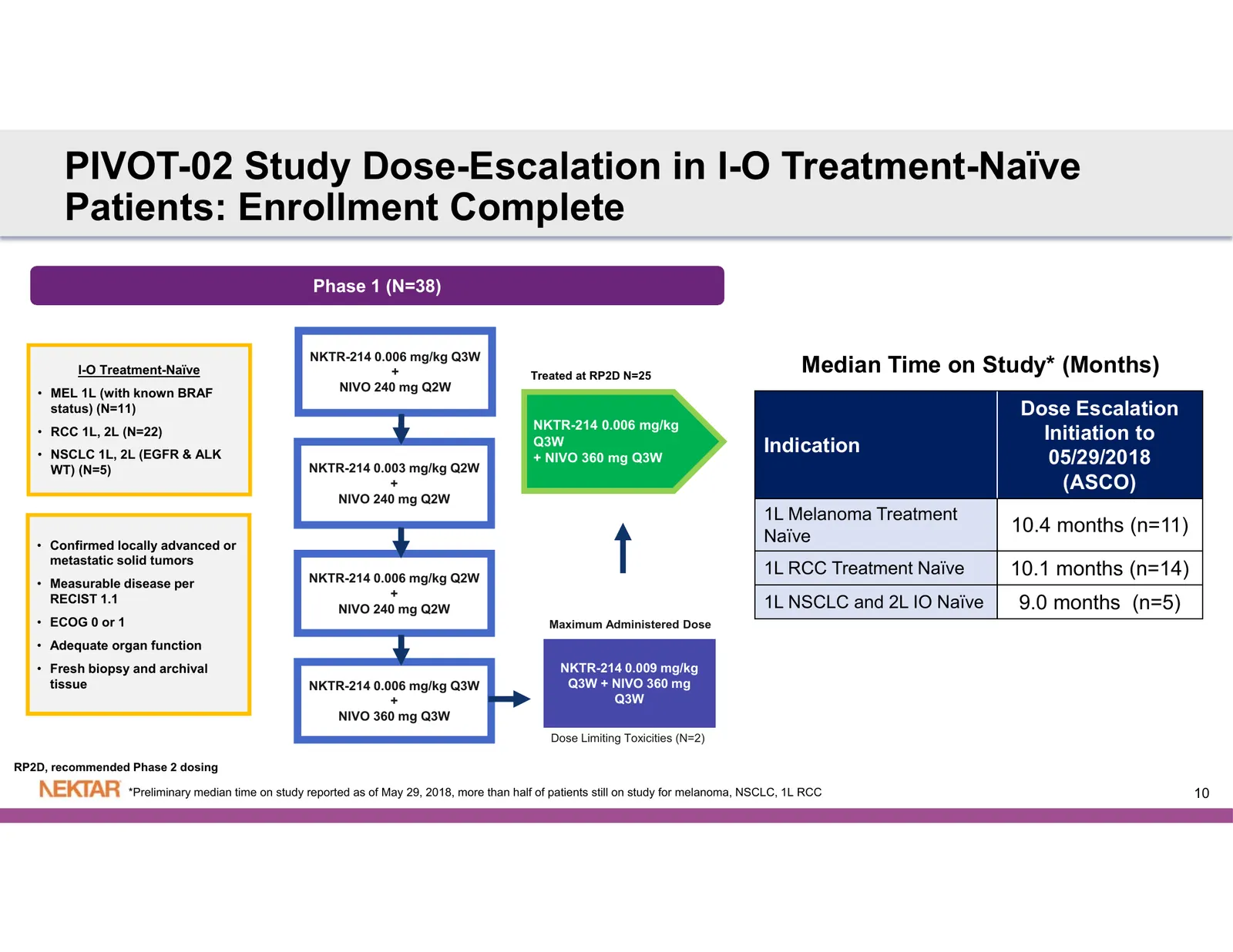
Slide 10: PIVOT-02 Dose-Escalation in I-O Treatment-Naïve Patients
PIVOT-02 Study Dose-Escalation in I-O Treatment-Naïve Patients: Enrollment Complete Phase 1 (N=38) NKTR-214 0.006 mg/kg Q3W I-O Treatment-Naïve + Treated at RP2D N=25 Median Time on Study* (Months) • MEL 1L (with known BRAF NIVO 240 mg Q2W status) (N=11) Dose Escalation NKTR-214 0.006 mg/kg • RCC 1L
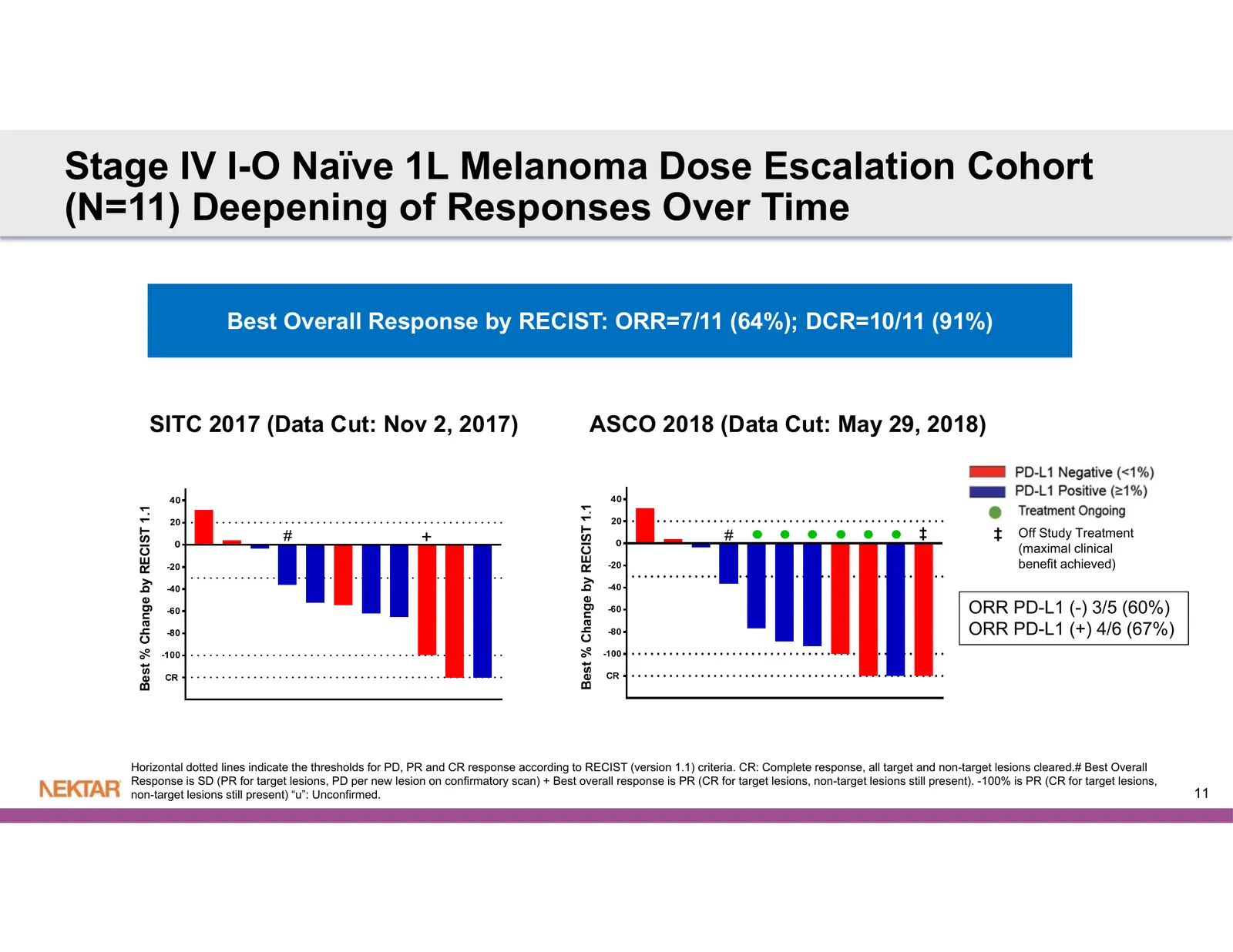
Slide 11: Stage IV I-O Naïve 1L Melanoma Dose Escalation Cohort
Stage IV I-O Naïve 1L Melanoma Dose Escalation Cohort (N=11) Deepening of Responses Over Time Best Overall Response by RECIST: ORR=7/11 (64%); DCR=10/11 (91%) SITC 2017 (Data Cut: Nov 2, 2017) ASCO 2018 (Data Cut: May 29, 2018) Best % Change by RECIST 1.1 ‡ ‡ Off Study Treatment (maximal clinical be
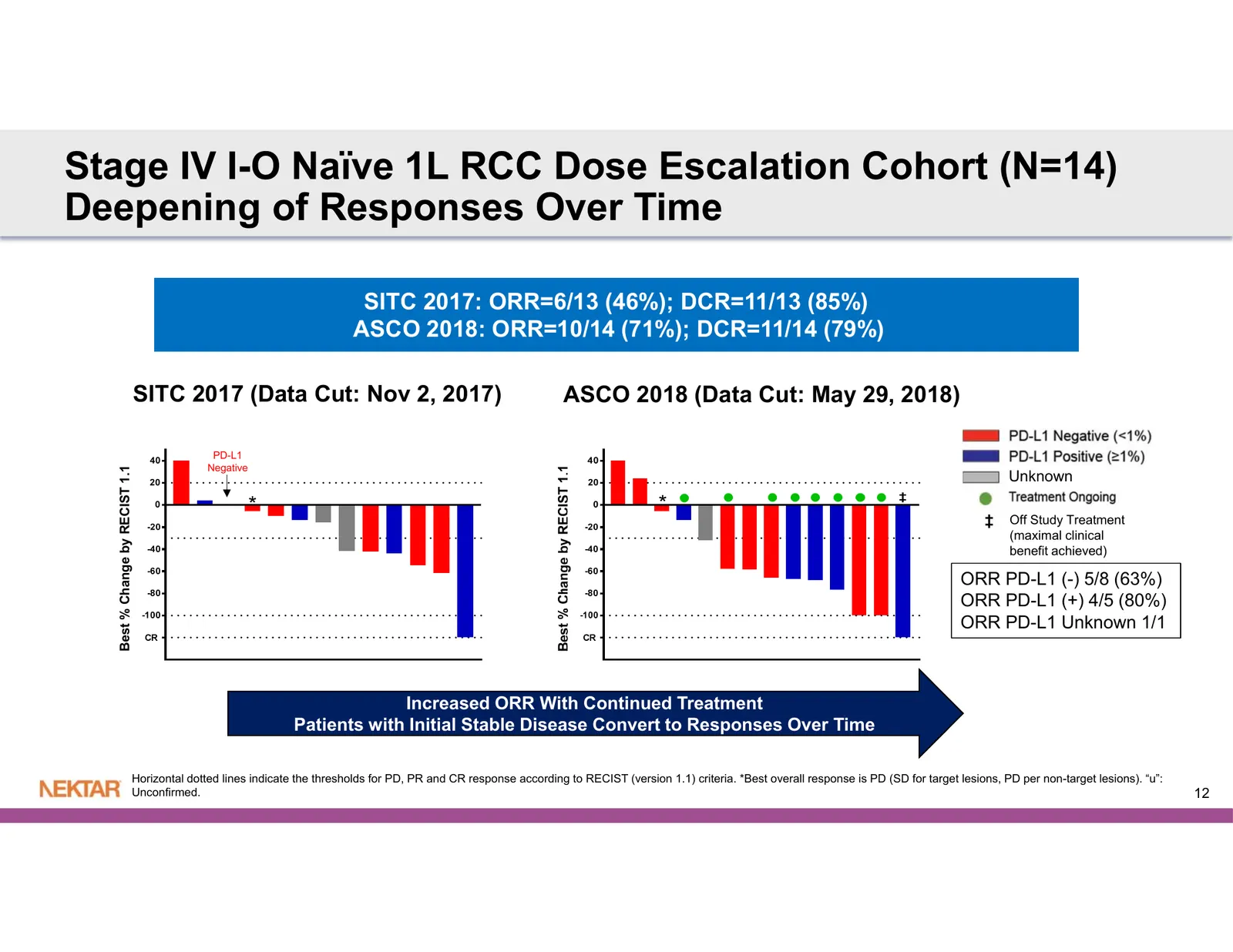
Slide 12: Stage IV I-O Naïve 1L RCC Dose Escalation Cohort
Stage IV I-O Naïve 1L RCC Dose Escalation Cohort (N=14) Deepening of Responses Over Time SITC 2017: ORR=6/13 (46%); DCR=11/13 (85%) ASCO 2018: ORR=10/14 (71%); DCR=11/14 (79%) SITC 2017 (Data Cut: Nov 2, 2017) ASCO 2018 (Data Cut: May 29, 2018) PD-L1 Negative Best % Change by RECIST 1.1 Unknown ‡ ‡
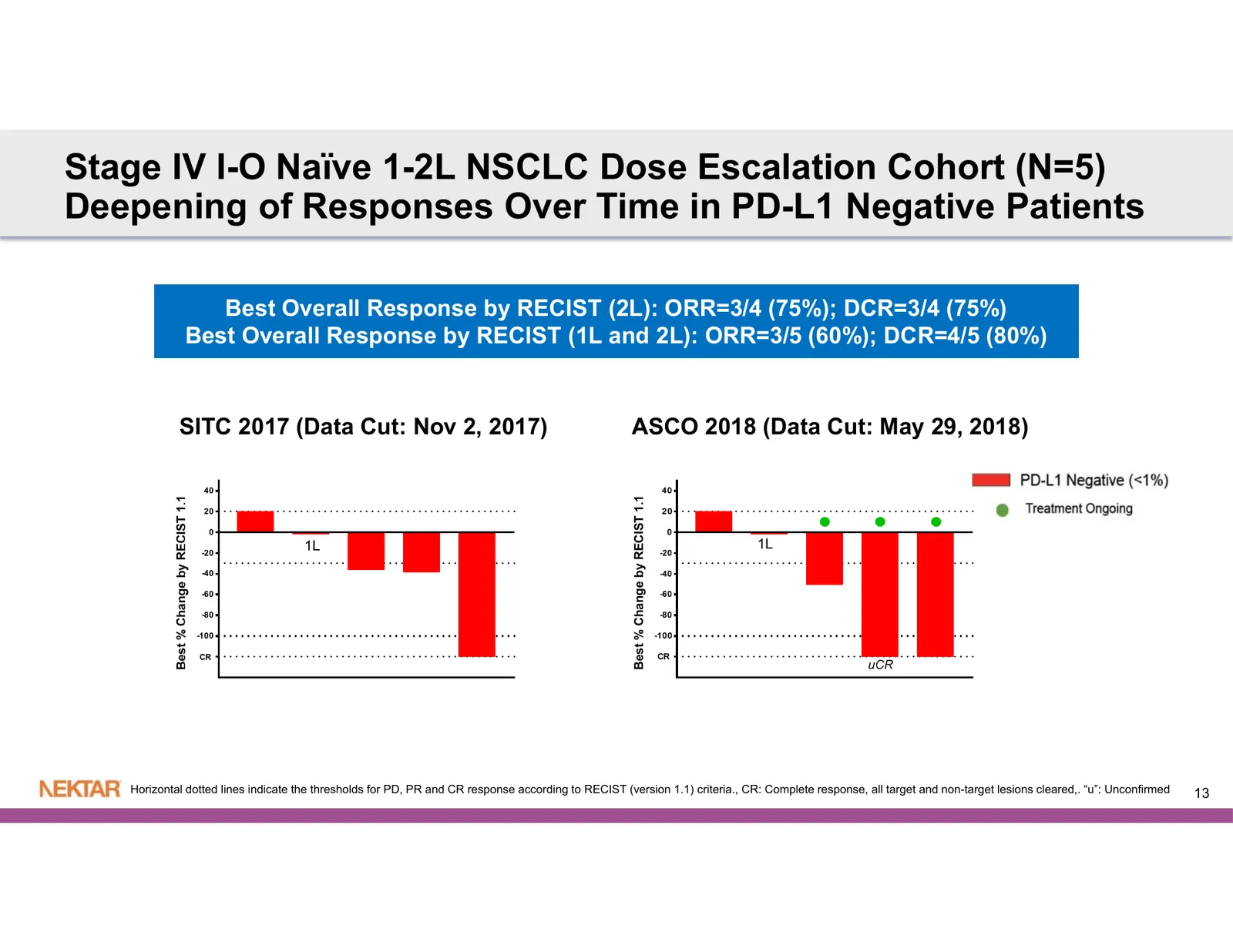
Slide 13: Stage IV I-O Naïve 1-2L NSCLC Dose Escalation Cohort
Stage IV I-O Naïve 1-2L NSCLC Dose Escalation Cohort (N=5) Deepening of Responses Over Time in PD-L1 Negative Patients Best Overall Response by RECIST (2L): ORR=3/4 (75%); DCR=3/4 (75%) Best Overall Response by RECIST (1L and 2L): ORR=3/5 (60%); DCR=4/5 (80%) SITC 2017 (Data Cut: Nov 2, 2017) ASCO 2
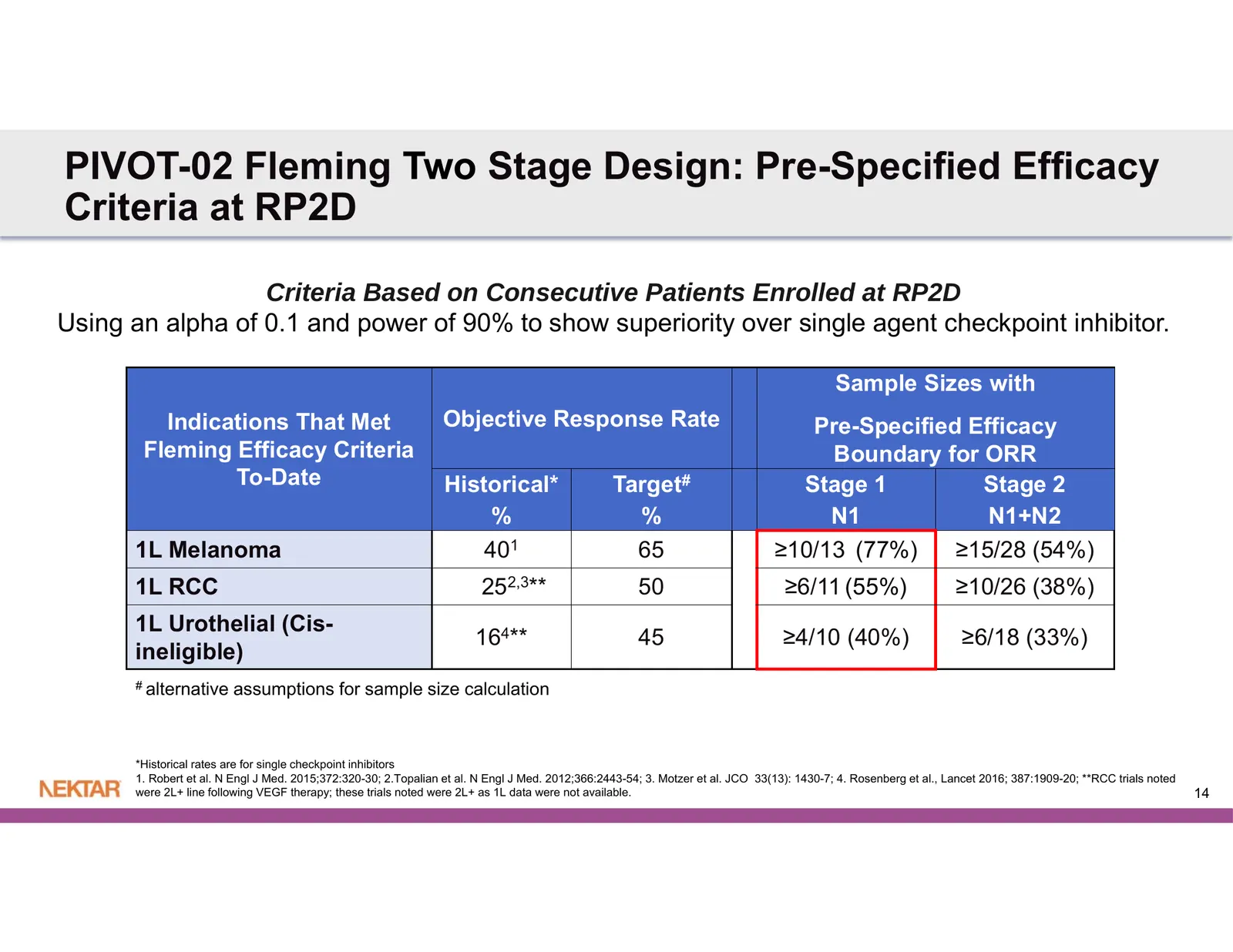
Slide 14: Pre-Specified Efficacy Criteria at RP2D
PIVOT-02 Fleming Two Stage Design: Pre-Specified Efficacy Criteria at RP2D Criteria Based on Consecutive Patients Enrolled at RP2D Using an alpha of 0.1 and power of 90% to show superiority over single agent checkpoint inhibitor. Sample Sizes with Indications That Met Objective Response Rate Pre-Spe
Slide 15: Enrollment to I-O Naïve Cohorts That Met Fleming Efficacy Criteria
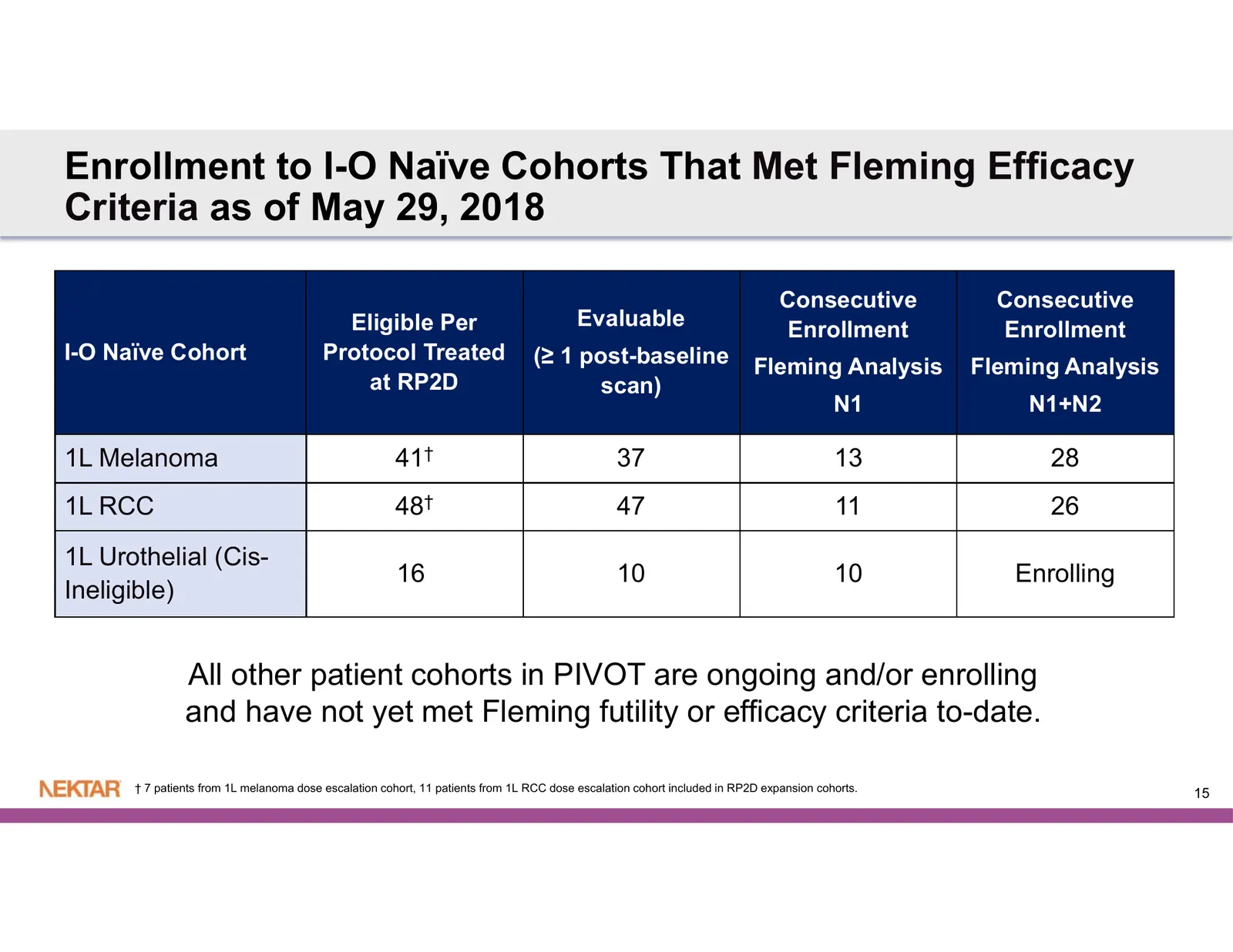
Enrollment to I-O Naïve Cohorts That Met Fleming Efficacy Criteria as of May 29, 2018 Consecutive Consecutive Eligible Per Evaluable Enrollment Enrollment I-O Naïve Cohort Protocol Treated (≥ 1 post-baseline Fleming Analysis Fleming Analysis at RP2D scan) N1 N1+N2 1L Melanoma 41† 37 13 28 1L RCC 48†
Slide 16: 1L Melanoma Patient Demographics and Disease Characteristics
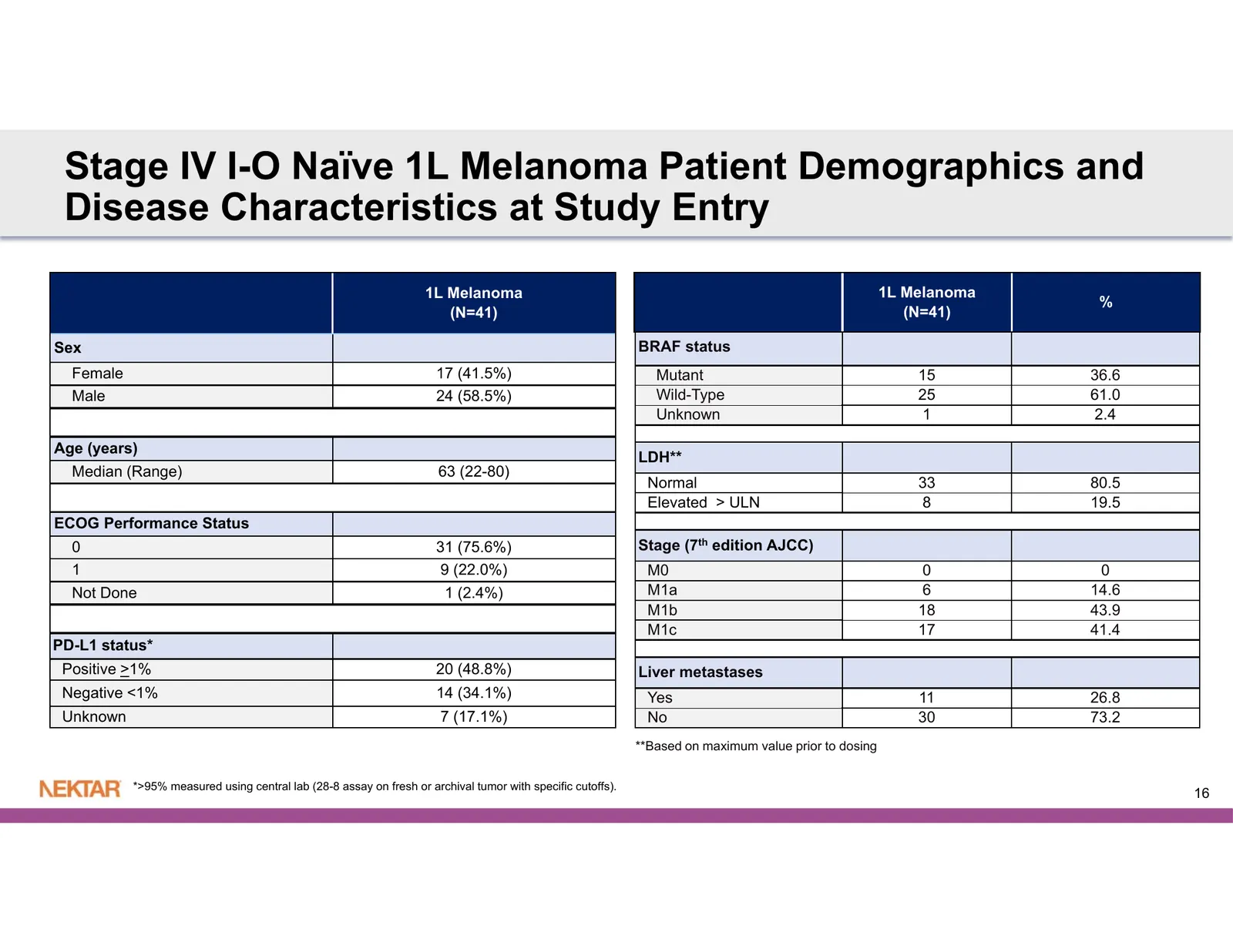
Stage IV I-O Naïve 1L Melanoma Patient Demographics and Disease Characteristics at Study Entry 1L Melanoma 1L Melanoma % (N=41) (N=41) Sex BRAF status Female 17 (41.5%) Mutant 15 36.6 Male 24 (58.5%) Wild-Type 25 61.0 Unknown 1 2.4 Age (years) LDH** Median (Range) 63 (22-80) Normal 33 80.5 Elevated
Slide 17: 1L Melanoma Cohort at RP2D Achieved Pre-Specified Efficacy Criteria
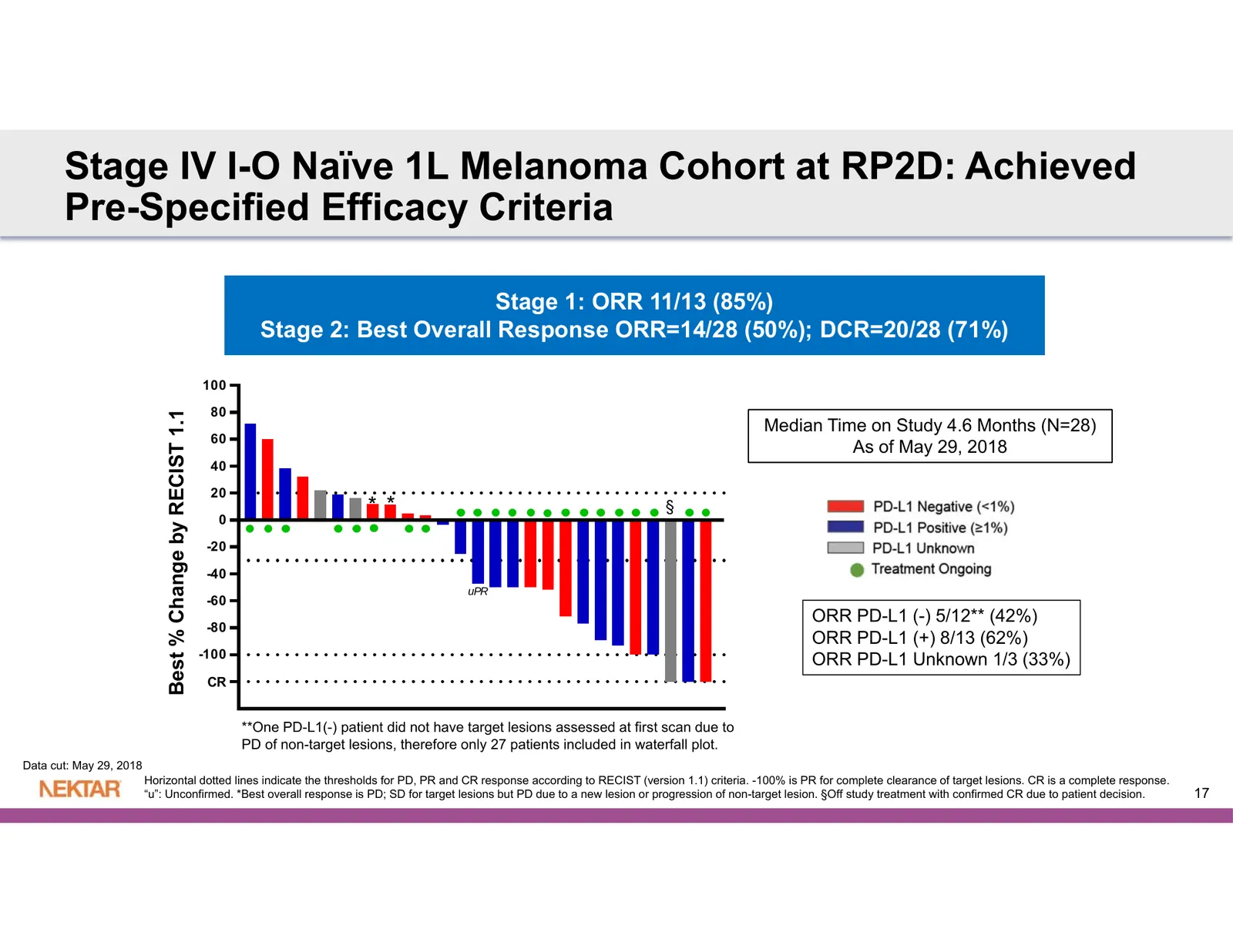
Stage IV I-O Naïve 1L Melanoma Cohort at RP2D: Achieved Pre-Specified Efficacy Criteria Stage 1: ORR 11/13 (85%) Stage 2: Best Overall Response ORR=14/28 (50%); DCR=20/28 (71%) 100 80 Best % Change by RECIST 1.1 Median Time on Study 4.6 Months (N=28) 60 As of May 29, 2018 40 20 * * § 0 -20 -40 uPR -
Slide 18: 1L Melanoma Patients Evaluable for Efficacy
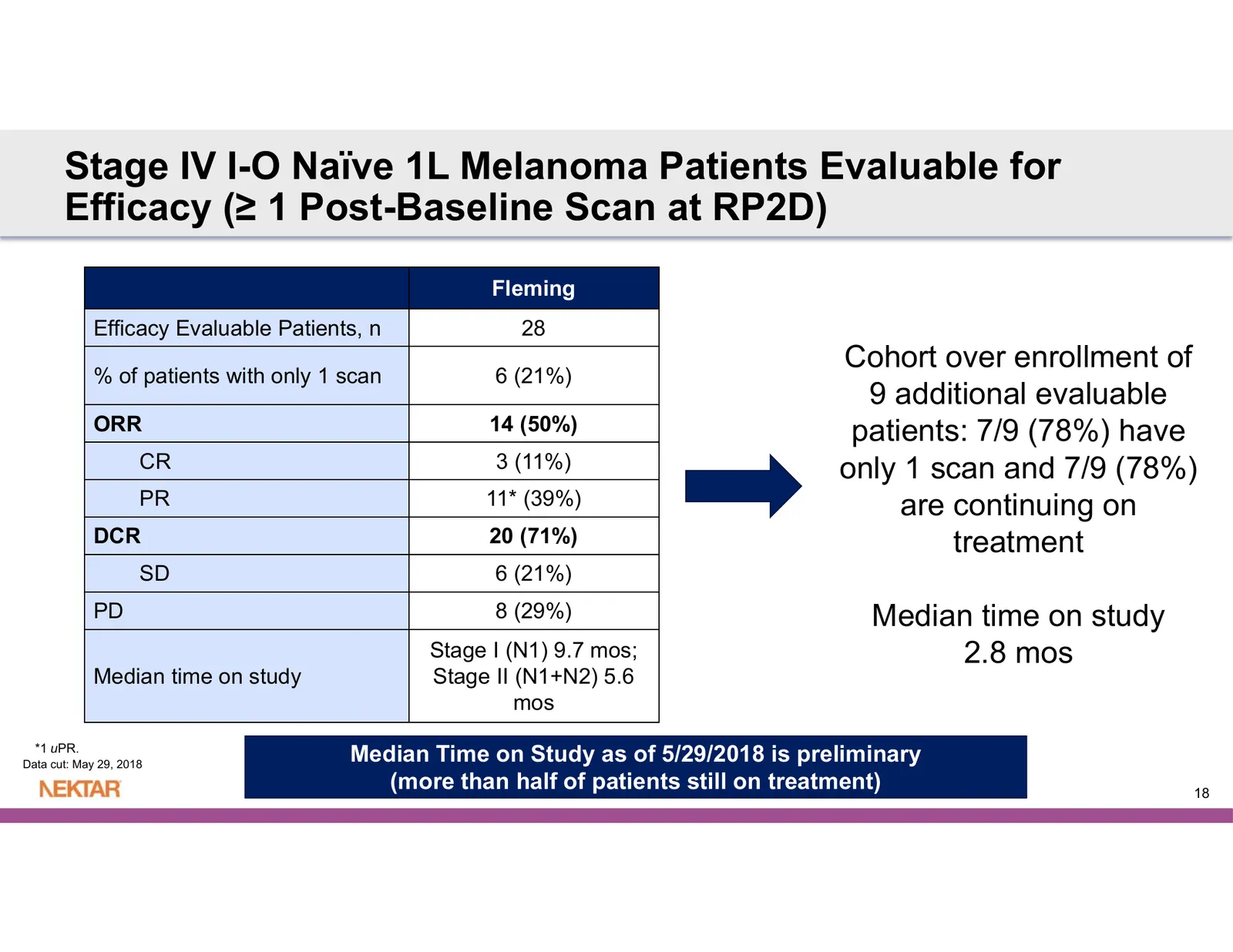
Stage IV I-O Naïve 1L Melanoma Patients Evaluable for Efficacy (≥ 1 Post-Baseline Scan at RP2D) Fleming Efficacy Evaluable Patients, n 28 Cohort over enrollment of % of patients with only 1 scan 6 (21%) 9 additional evaluable ORR 14 (50%) patients: 7/9 (78%) have CR 3 (11%) only 1 scan and 7/9 (78%)
Slide 19: PIVOT-02 Melanoma Strategy
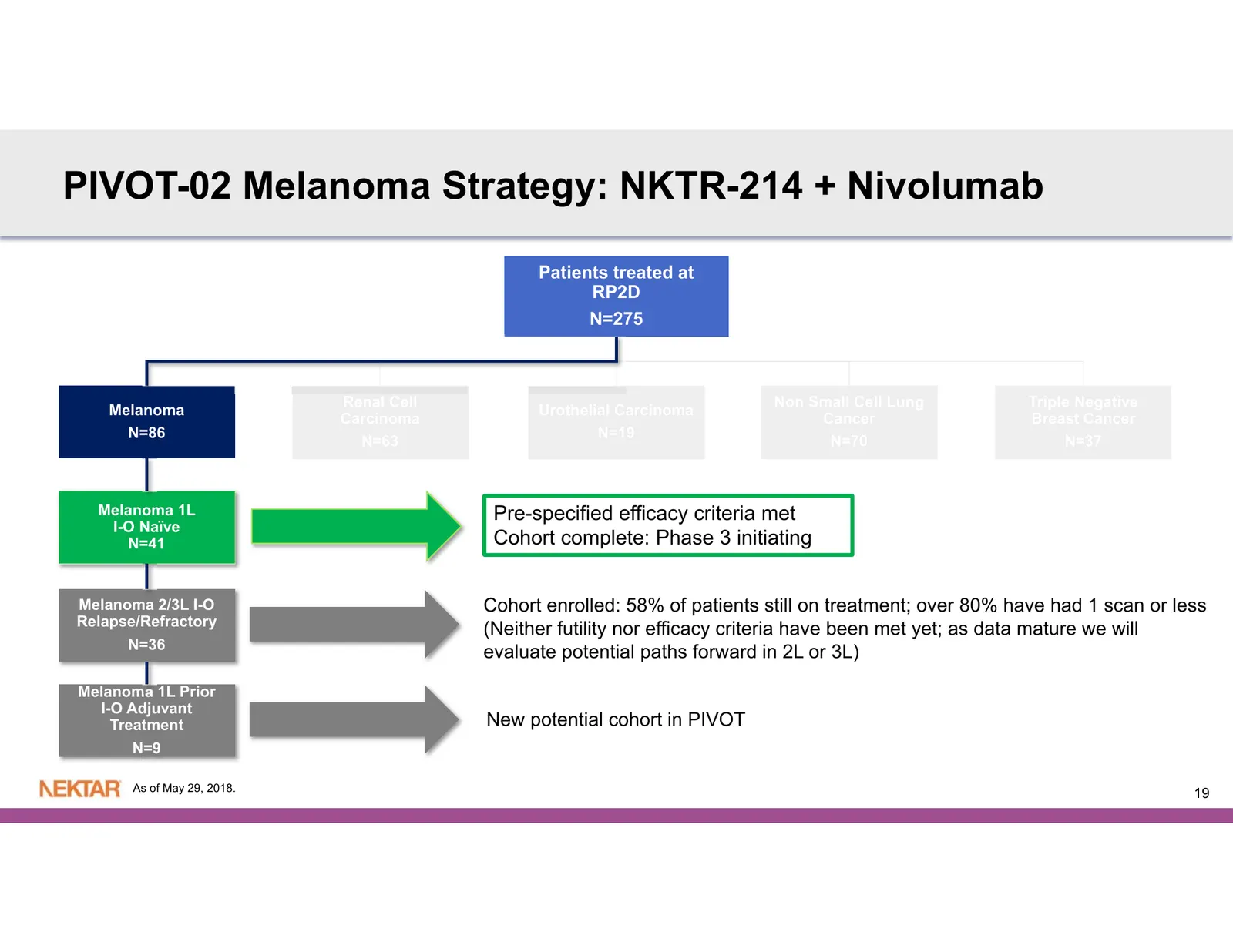
PIVOT-02 Melanoma Strategy: NKTR-214 + Nivolumab Patients treated at RP2D N=275 Renal Cell Non Small Cell Lung Triple Negative Melanoma Urothelial Carcinoma Carcinoma Cancer Breast Cancer N=86 N=19 N=63 N=70 N=37 Melanoma 1L Pre-specified efficacy criteria met I-O Naïve N=41 Cohort complete: Phase 3
Slide 20: Proposed Phase 3 in Unresectable or Metastatic Melanoma
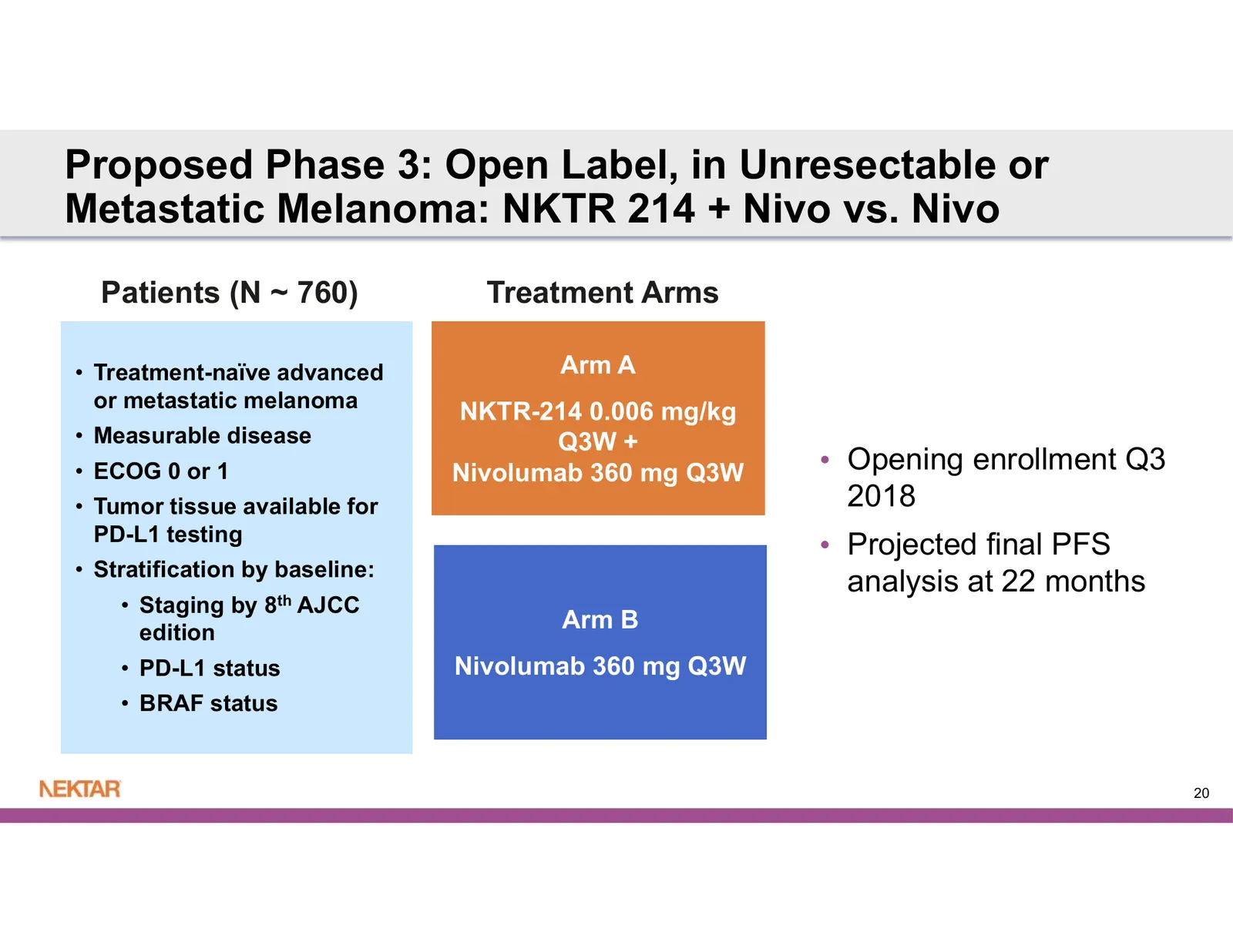
Proposed Phase 3: Open Label, in Unresectable or Metastatic Melanoma: NKTR 214 + Nivo vs. Nivo Patients (N ~ 760) Treatment Arms • Treatment-naïve advanced Arm A or metastatic melanoma NKTR-214 0.006 mg/kg • Measurable disease Q3W + • ECOG 0 or 1 Nivolumab 360 mg Q3W • Opening enrollment Q3 • Tumor
Slide 21: PIVOT-02 Cohorts in Signal Seeking Fleming 2-Stage Design
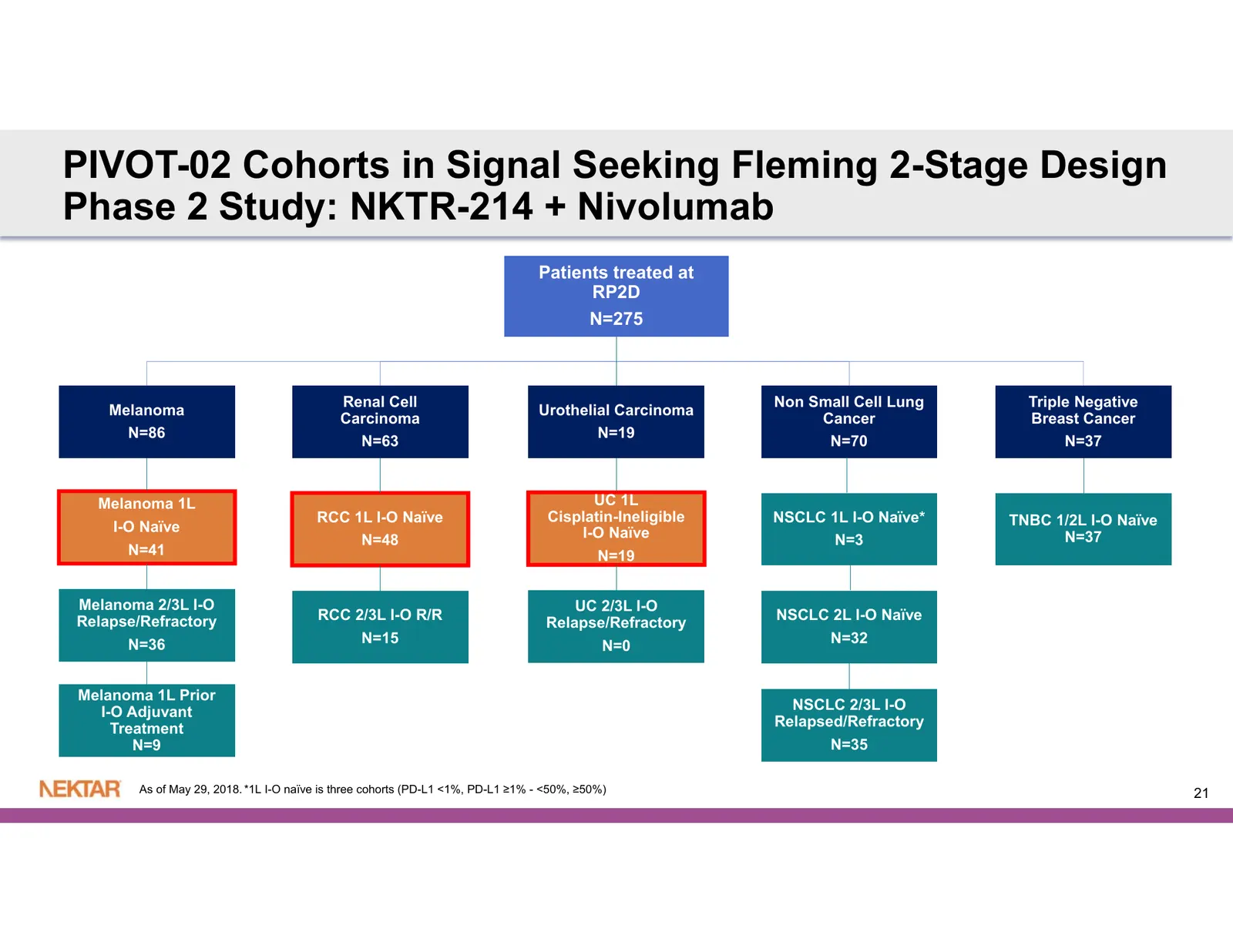
PIVOT-02 Cohorts in Signal Seeking Fleming 2-Stage Design Phase 2 Study: NKTR-214 + Nivolumab Patients treated at RP2D N=275 Renal Cell Non Small Cell Lung Triple Negative Melanoma Urothelial Carcinoma Carcinoma Cancer Breast Cancer N=86 N=19 N=63 N=70 N=37 Melanoma 1L UC 1L RCC 1L I-O Naïve Cisplat
Slide 22: 1L RCC Patient Demographics and Disease Characteristics
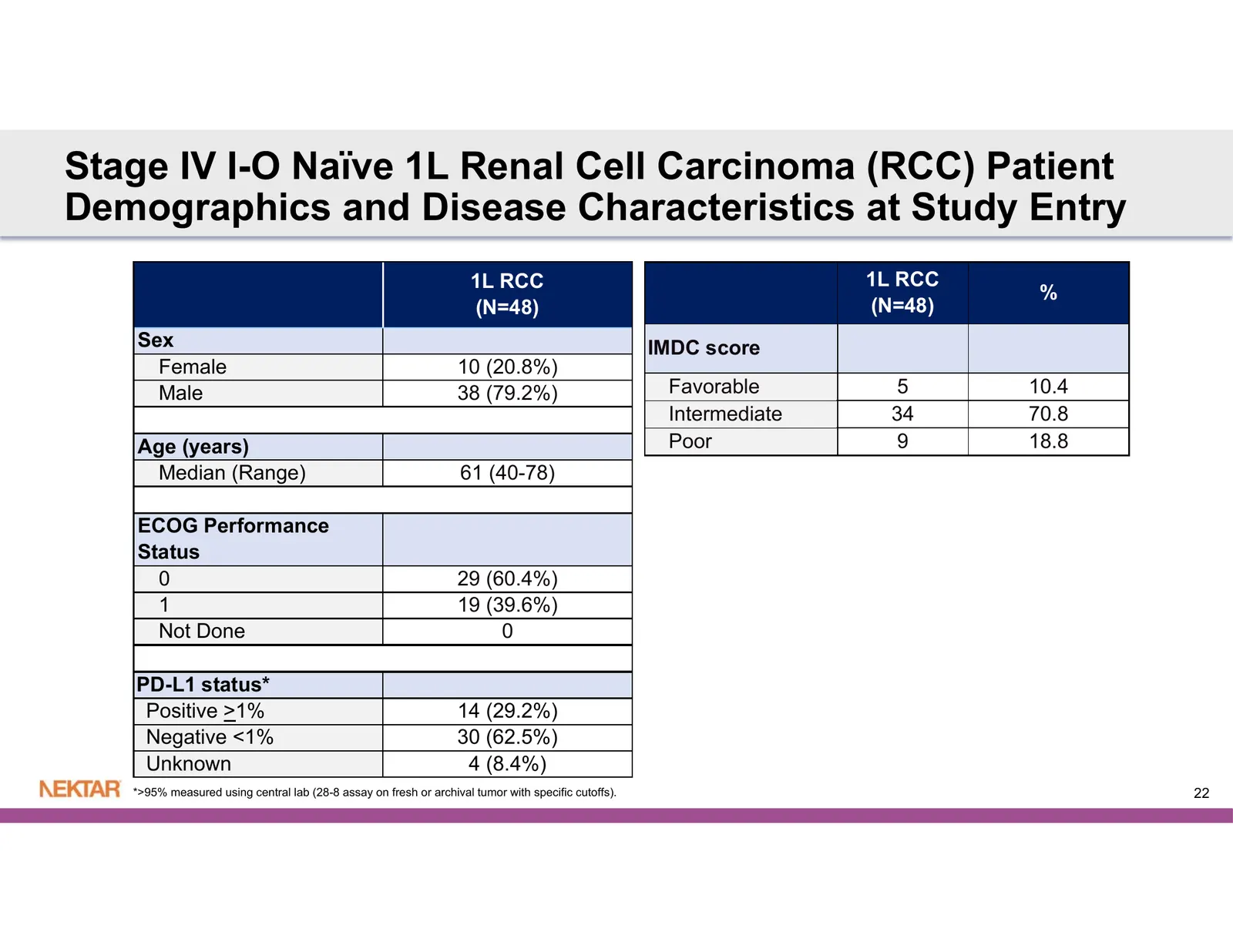
Stage IV I-O Naïve 1L Renal Cell Carcinoma (RCC) Patient Demographics and Disease Characteristics at Study Entry 1L RCC 1L RCC % (N=48) (N=48) Sex IMDC score Female 10 (20.8%) Male 38 (79.2%) Favorable 5 10.4 Intermediate 34 70.8 Age (years) Poor 9 18.8 Median (Range) 61 (40-78) ECOG Performance Sta
Slide 23: 1L RCC Cohort Achieved Pre-Specified Efficacy Criteria
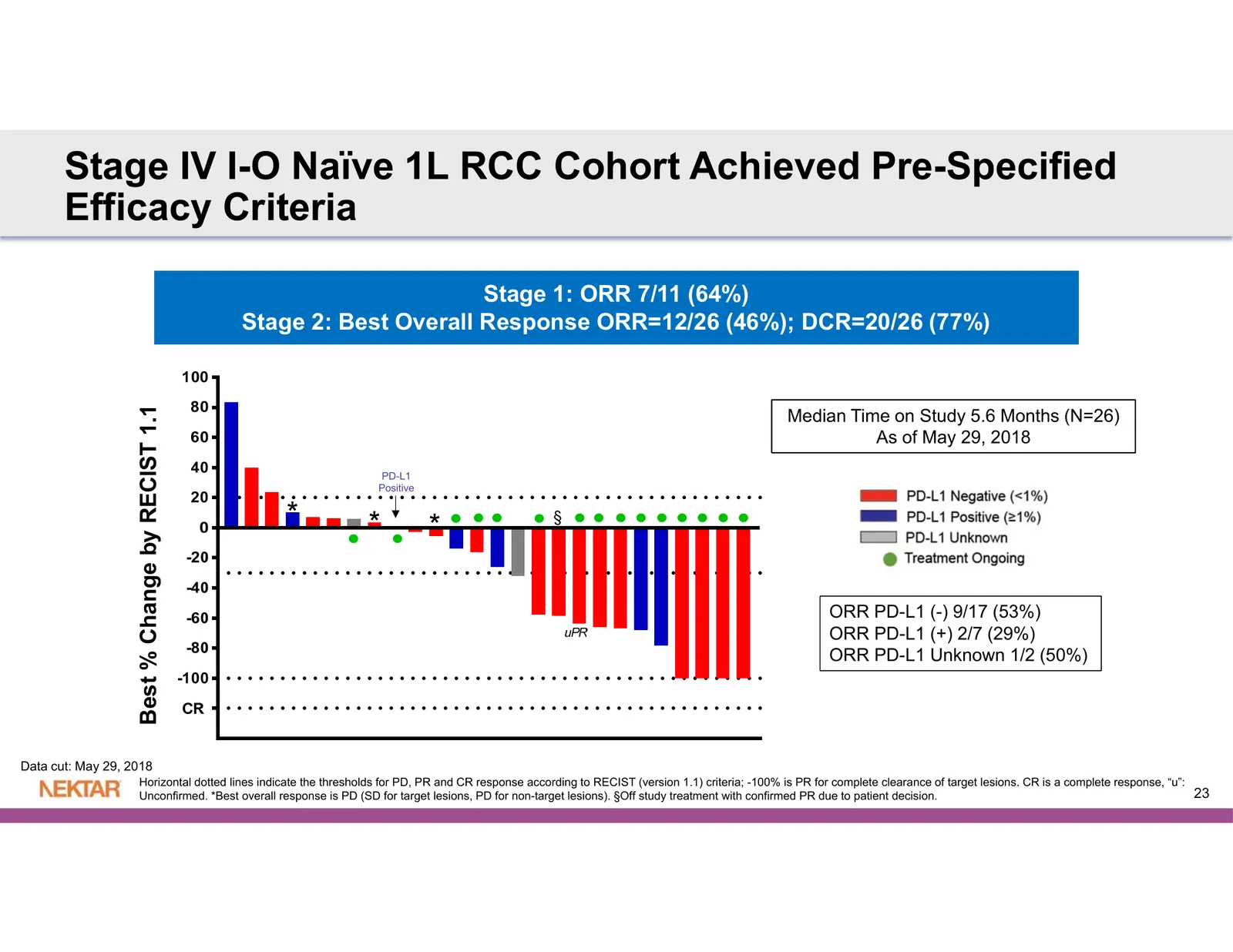
Stage IV I-O Naïve 1L RCC Cohort Achieved Pre-Specified Efficacy Criteria Stage 1: ORR 7/11 (64%) Stage 2: Best Overall Response ORR=12/26 (46%); DCR=20/26 (77%) Best % Change by RECIST 1.1 Median Time on Study 5.6 Months (N=26) As of May 29, 2018 PD-L1 Positive § ORR PD-L1 (-) 9/17 (53%) ORR PD-L1
Slide 24: 1L RCC Patients Evaluable for Efficacy
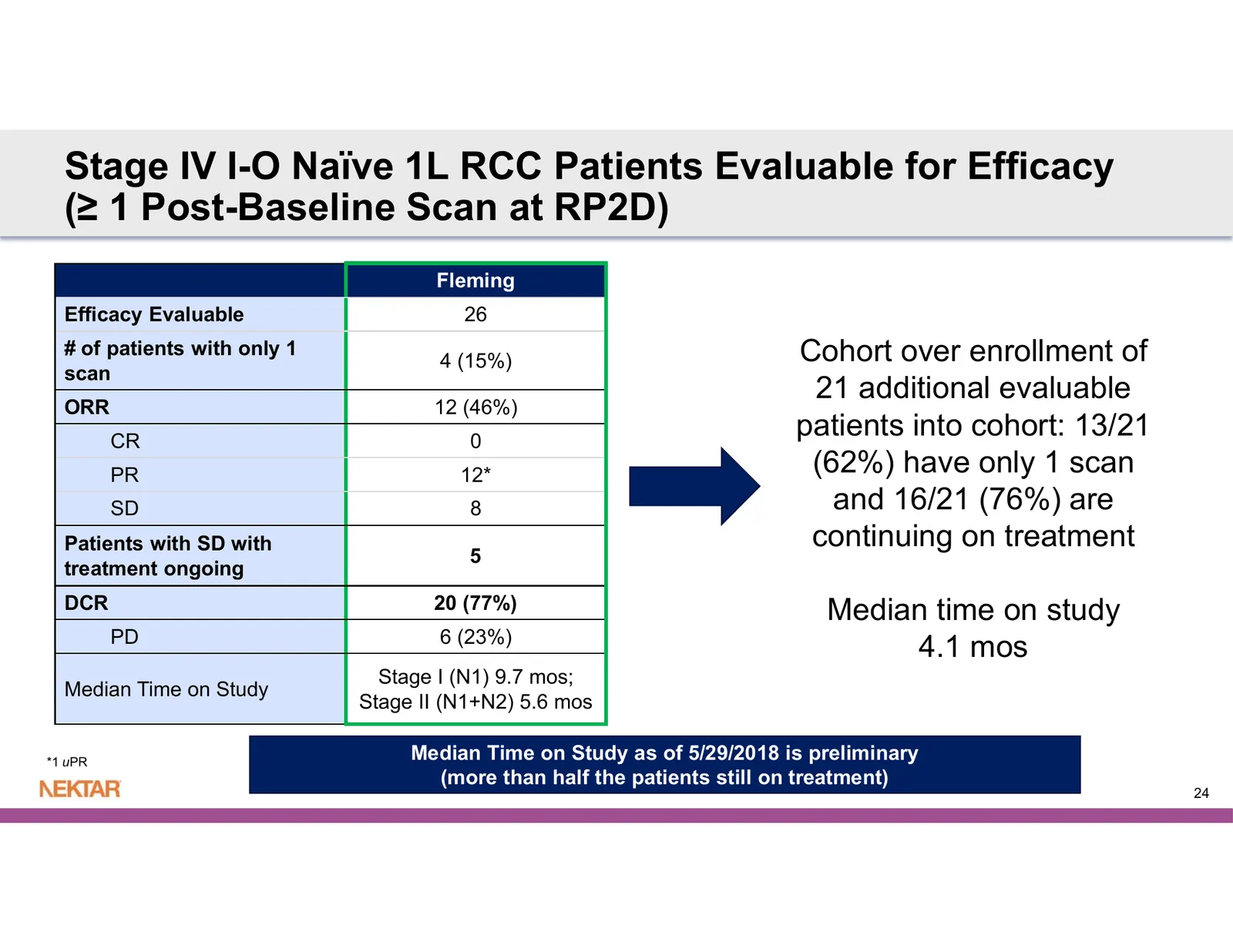
Stage IV I-O Naïve 1L RCC Patients Evaluable for Efficacy (≥ 1 Post-Baseline Scan at RP2D) Fleming Efficacy Evaluable 26 # of patients with only 1 4 (15%) Cohort over enrollment of scan 21 additional evaluable ORR 12 (46%) CR 0 patients into cohort: 13/21 PR 12* (62%) have only 1 scan SD 8 and 16/21
Slide 25: PIVOT-02 Renal Cell Carcinoma Strategy
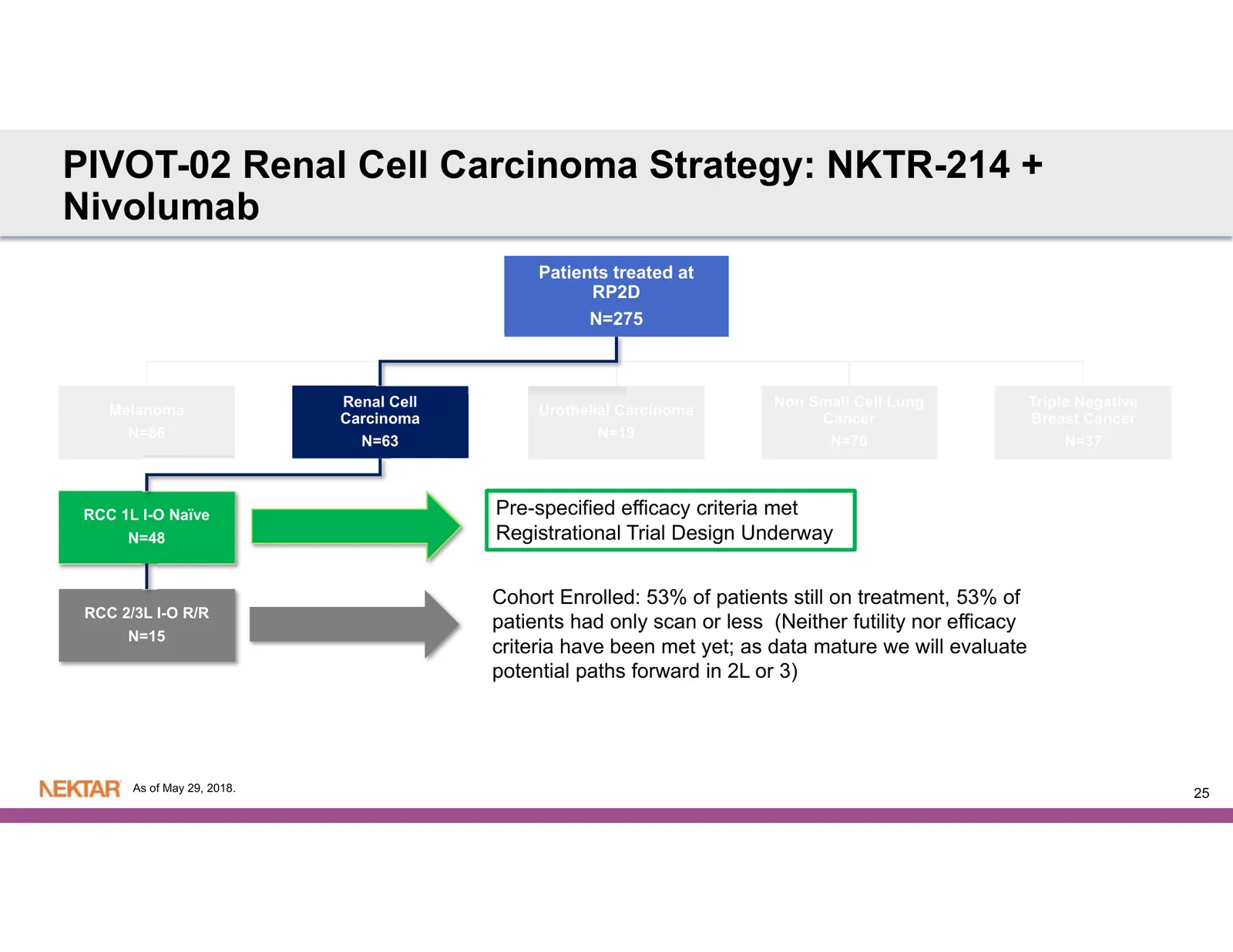
PIVOT-02 Renal Cell Carcinoma Strategy: NKTR-214 + Nivolumab Patients treated at RP2D N=275 Renal Cell Non Small Cell Lung Triple Negative Melanoma Urothelial Carcinoma Carcinoma Cancer Breast Cancer N=86 N=19 N=63 N=70 N=37 RCC 1L I-O Naïve Pre-specified efficacy criteria met N=48 Registrational Tr
Slide 26: Potential Paths Forward in Renal Cell Carcinoma
Potential Paths Forward in Renal Cell Carcinoma ► Bristol-Myers Squibb and Nektar are currently designing a registrational trial in 1L renal cell carcinoma ► Possible directions for Registrational Trials • Compare to 1L RCC standard of care - TKI - Nivo-ipi 26
Slide 27: PIVOT-02 Cohorts in Signal Seeking Fleming 2-Stage Design
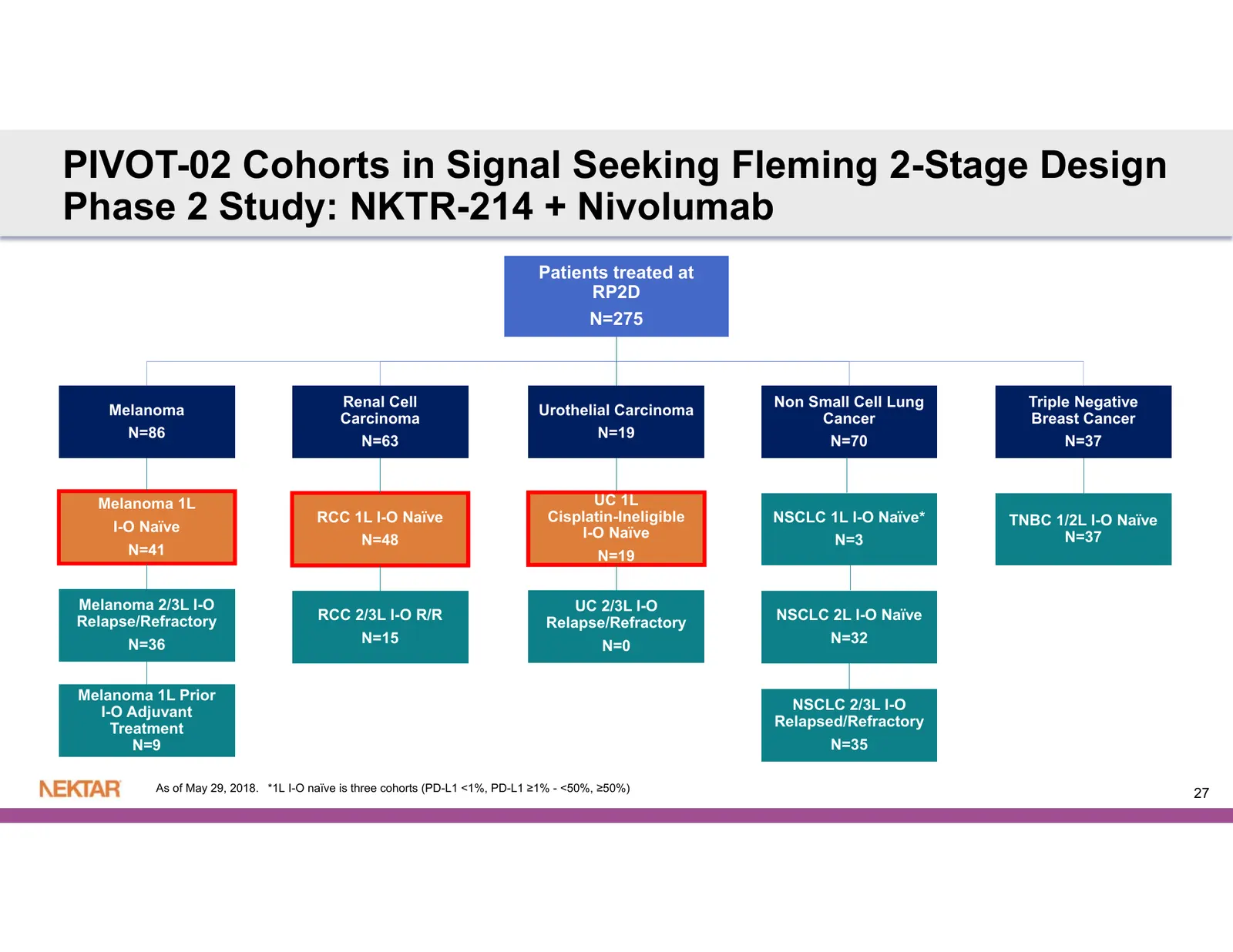
PIVOT-02 Cohorts in Signal Seeking Fleming 2-Stage Design Phase 2 Study: NKTR-214 + Nivolumab Patients treated at RP2D N=275 Renal Cell Non Small Cell Lung Triple Negative Melanoma Urothelial Carcinoma Carcinoma Cancer Breast Cancer N=86 N=19 N=63 N=70 N=37 Melanoma 1L UC 1L RCC 1L I-O Naïve Cisplat
Slide 28: 1L Urothelial Cisplatin-Ineligible Patient Demographics
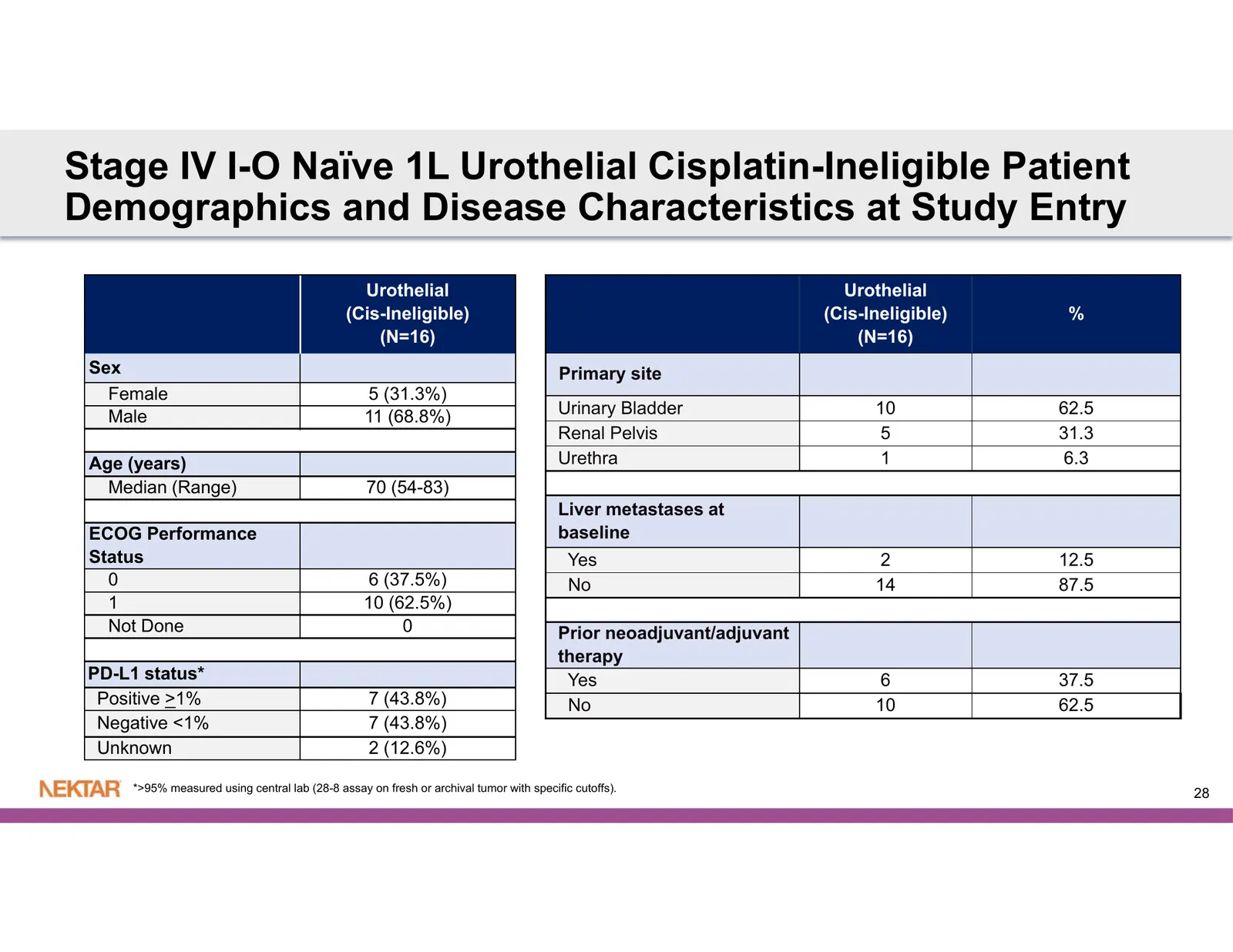
Stage IV I-O Naïve 1L Urothelial Cisplatin-Ineligible Patient Demographics and Disease Characteristics at Study Entry Urothelial Urothelial (Cis-Ineligible) (Cis-Ineligible) % (N=16) (N=16) Sex Primary site Female 5 (31.3%) Male 11 (68.8%) Urinary Bladder 10 62.5 Renal Pelvis 5 31.3 Age (years) Uret
Slide 29: 1L Urothelial Cohort Achieved Pre-Specified Efficacy Criteria
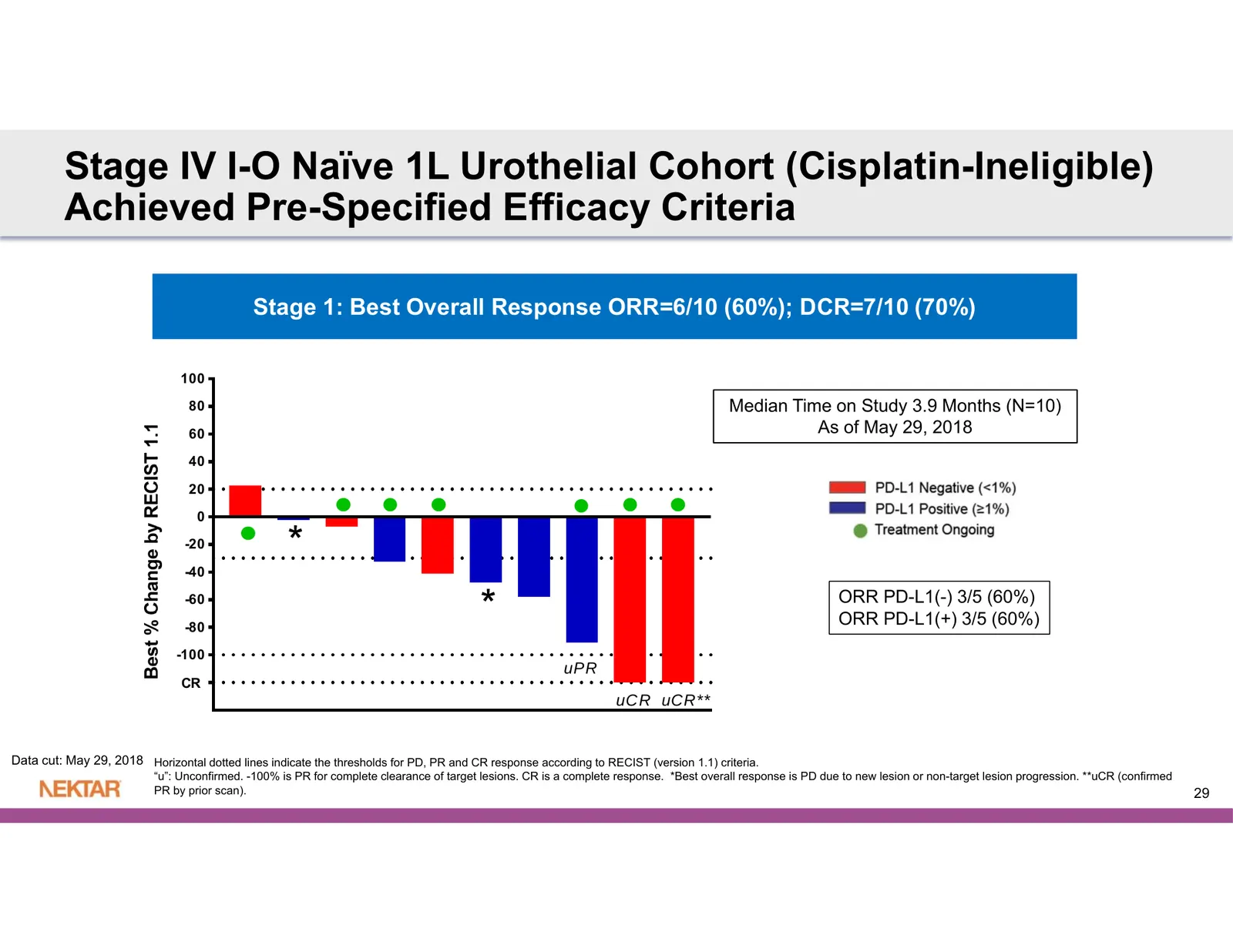
Stage IV I-O Naïve 1L Urothelial Cohort (Cisplatin-Ineligible) Achieved Pre-Specified Efficacy Criteria Stage 1: Best Overall Response ORR=6/10 (60%); DCR=7/10 (70%) 100 80 Median Time on Study 3.9 Months (N=10) 60 As of May 29, 2018 40 20 0 -20 -40 -60 ORR PD-L1(-) 3/5 (60%) -80 ORR PD-L1(+) 3/5 (6
Slide 30: PIVOT-02 Urothelial Carcinoma Strategy
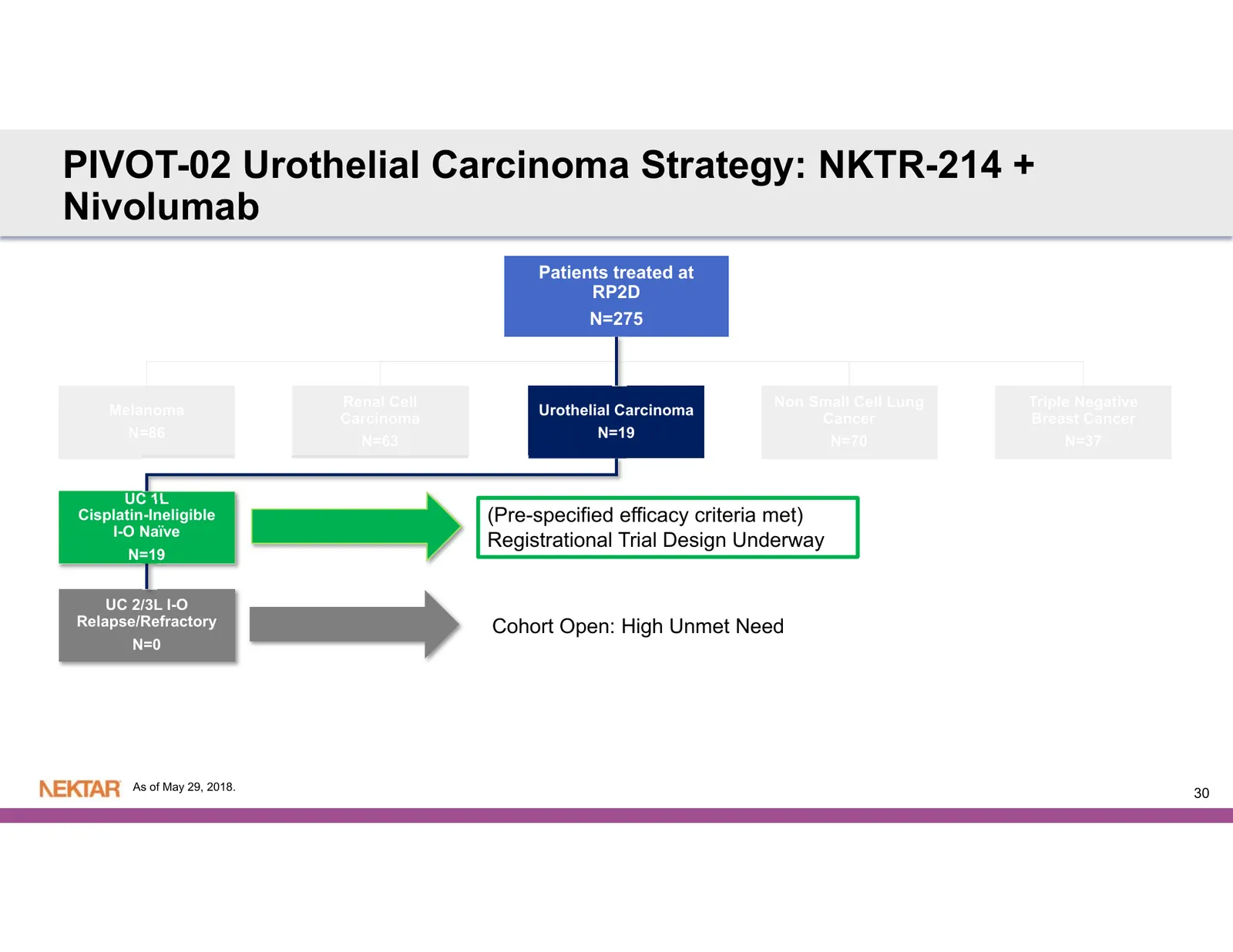
PIVOT-02 Urothelial Carcinoma Strategy: NKTR-214 + Nivolumab Patients treated at RP2D N=275 Renal Cell Non Small Cell Lung Triple Negative Melanoma Urothelial Carcinoma Carcinoma Cancer Breast Cancer N=86 N=19 N=63 N=70 N=37 UC 1L Cisplatin-Ineligible (Pre-specified efficacy criteria met) I-O Naïve
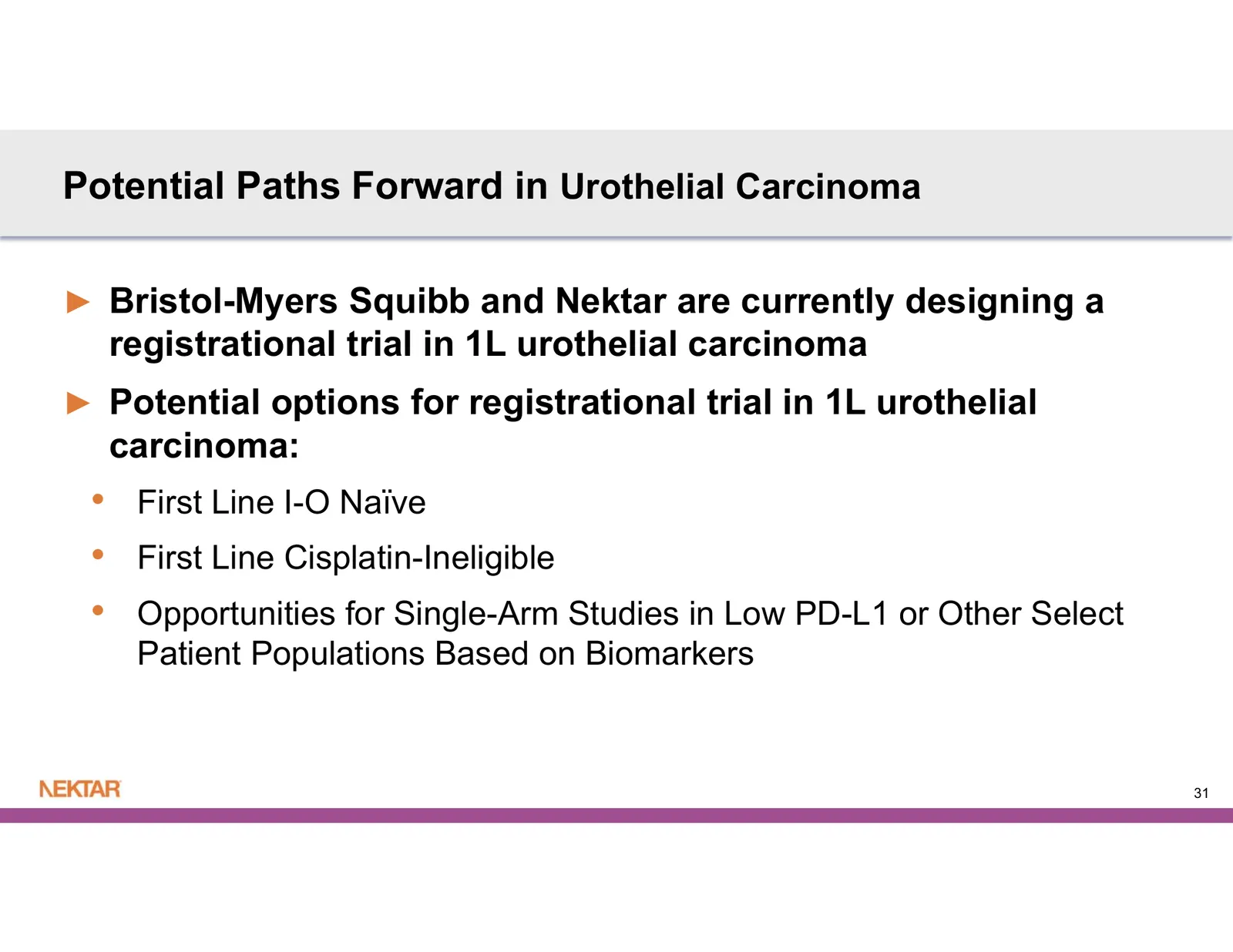
Slide 31: Potential Paths Forward in Urothelial Carcinoma
Potential Paths Forward in Urothelial Carcinoma ► Bristol-Myers Squibb and Nektar are currently designing a registrational trial in 1L urothelial carcinoma ► Potential options for registrational trial in 1L urothelial carcinoma: • First Line I-O Naïve • First Line Cisplatin-Ineligible • Opportunitie
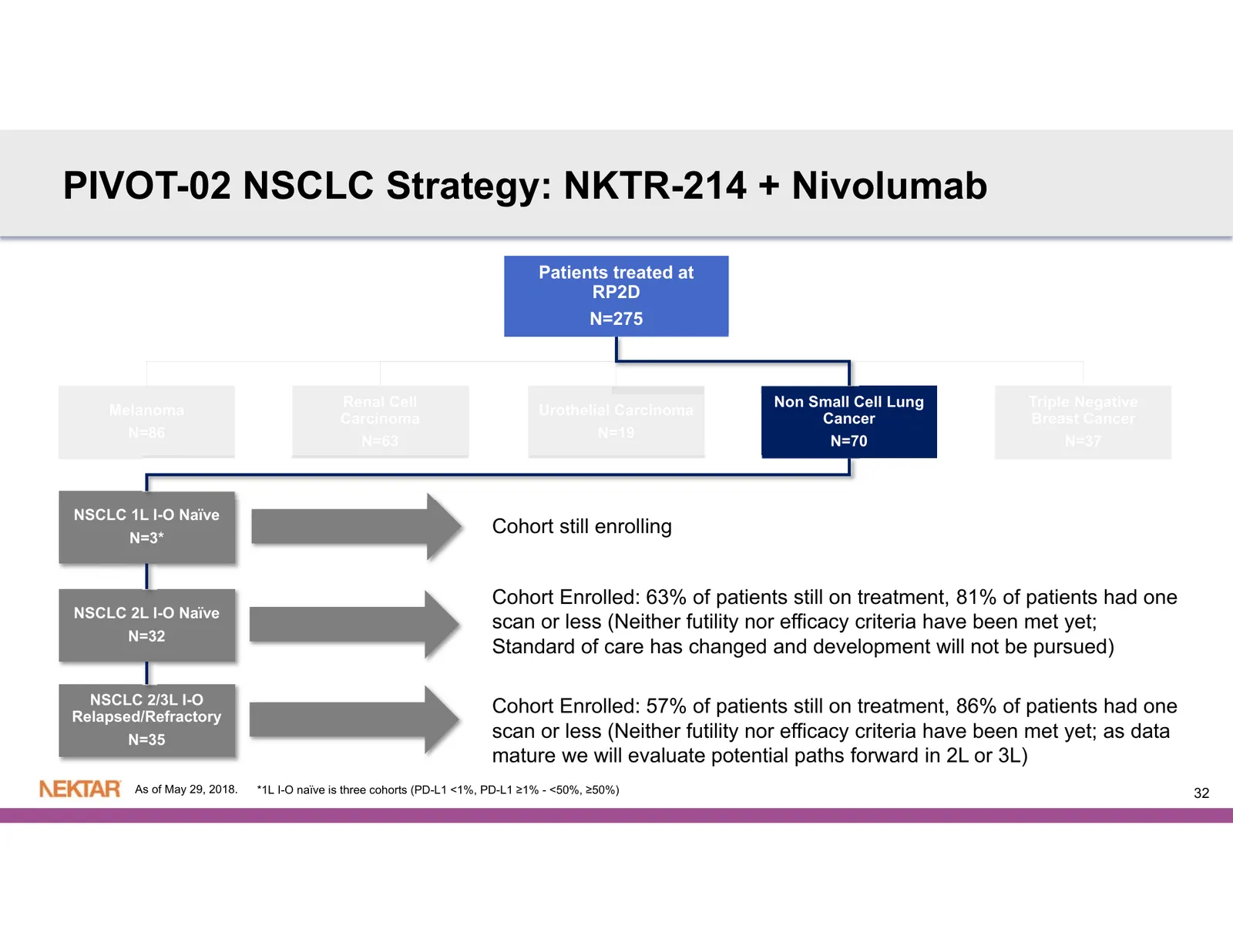
Slide 32: PIVOT-02 NSCLC Strategy
PIVOT-02 NSCLC Strategy: NKTR-214 + Nivolumab Patients treated at RP2D N=275 Renal Cell Non Small Cell Lung Triple Negative Melanoma Urothelial Carcinoma Carcinoma Cancer Breast Cancer N=86 N=19 N=63 N=70 N=37 NSCLC 1L I-O Naïve N=3* Cohort still enrolling Cohort Enrolled: 63% of patients still on t
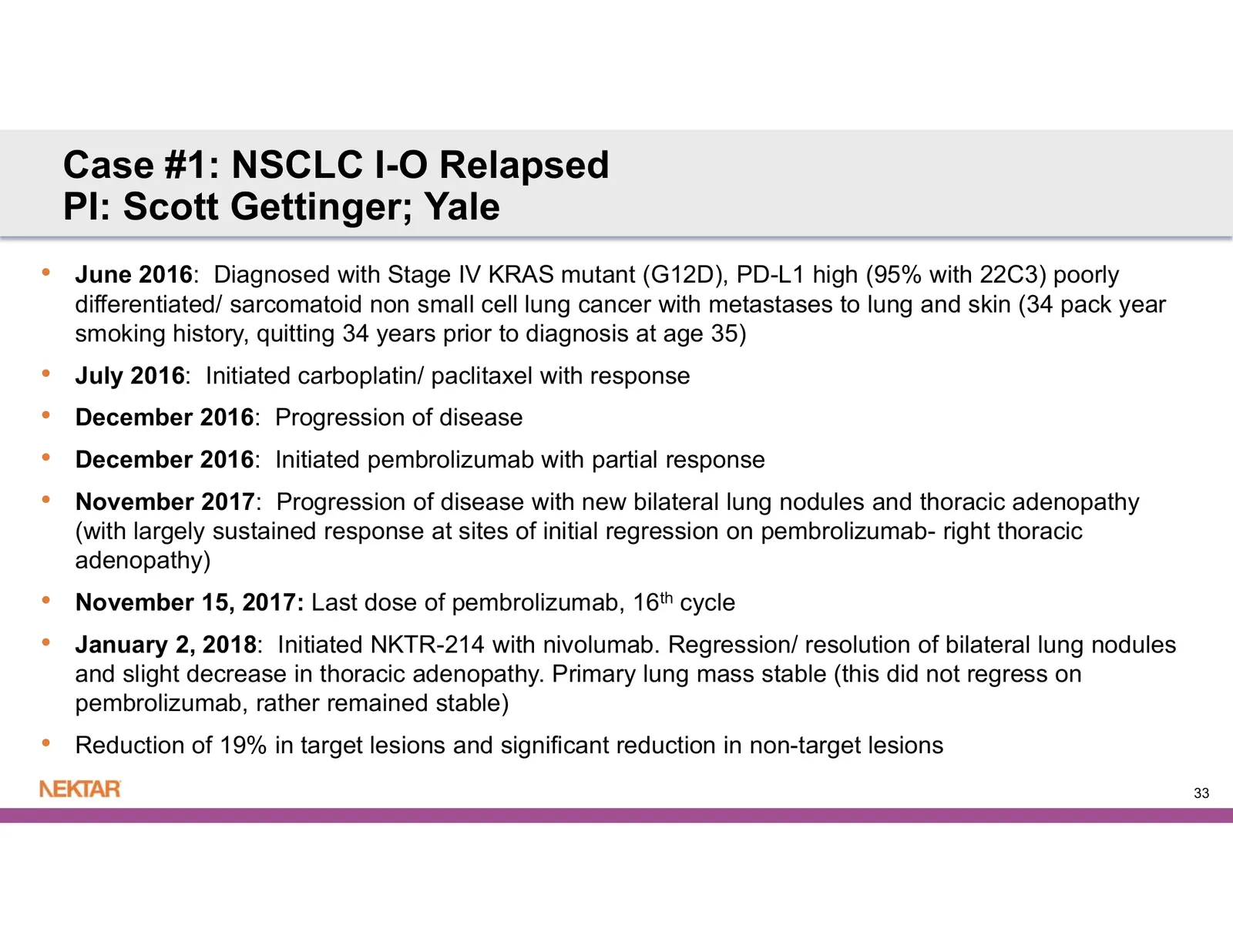
Slide 33: Case #1: NSCLC I-O Relapsed
Case #1: NSCLC I-O Relapsed PI: Scott Gettinger; Yale • June 2016: Diagnosed with Stage IV KRAS mutant (G12D), PD-L1 high (95% with 22C3) poorly differentiated/ sarcomatoid non small cell lung cancer with metastases to lung and skin (34 pack year smoking history, quitting 34 years prior to diagnosis
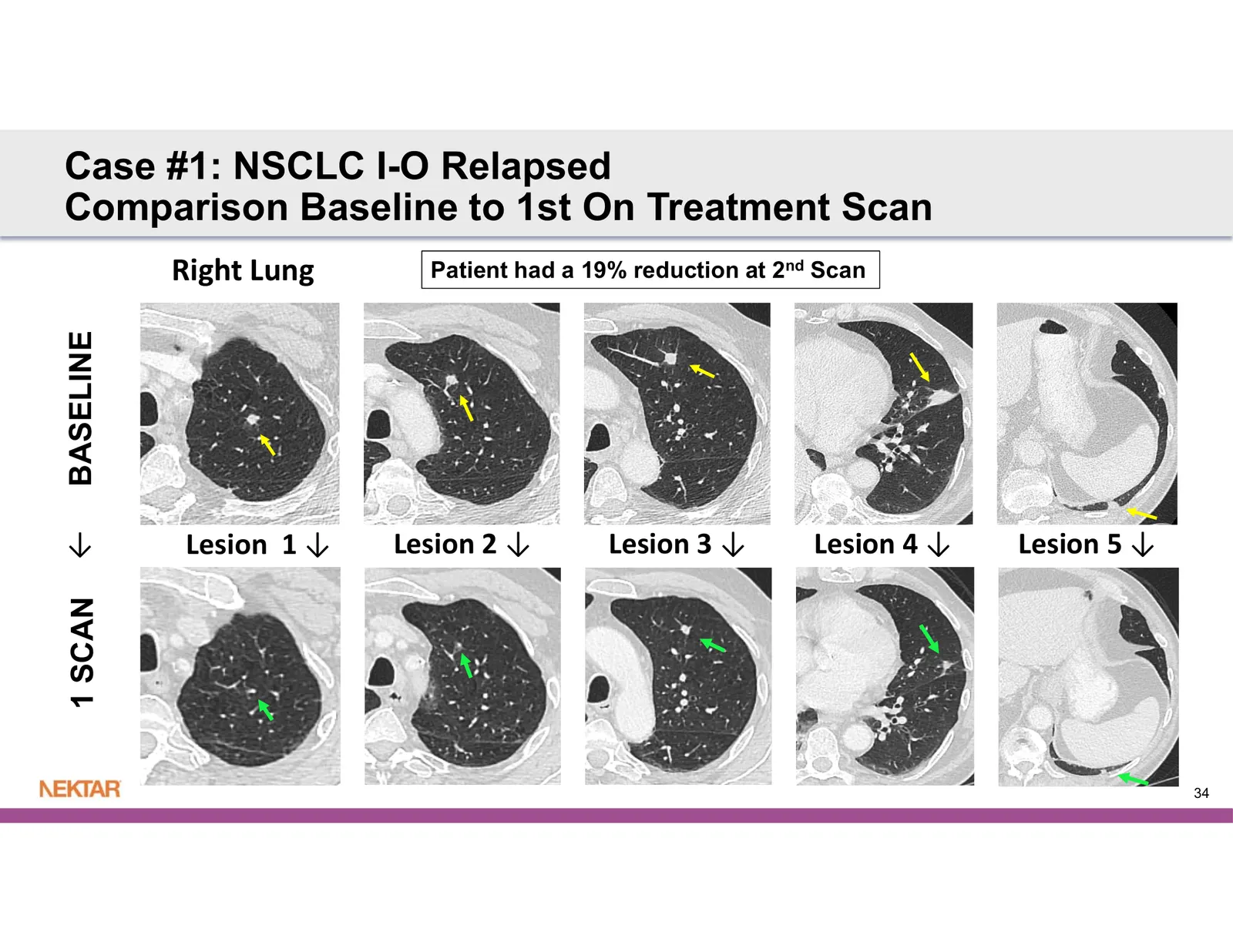
Slide 34: Case #1: Comparison Baseline to 1st On Treatment Scan (Right Lung)
Case #1: NSCLC I-O Relapsed Comparison Baseline to 1st On Treatment Scan Right Lung Patient had a 19% reduction at 2nd Scan BASELINE ↓ Lesion 1 ↓ Lesion 2 ↓ Lesion 3 ↓ Lesion 4 ↓ Lesion 5 ↓ 1 SCAN 34
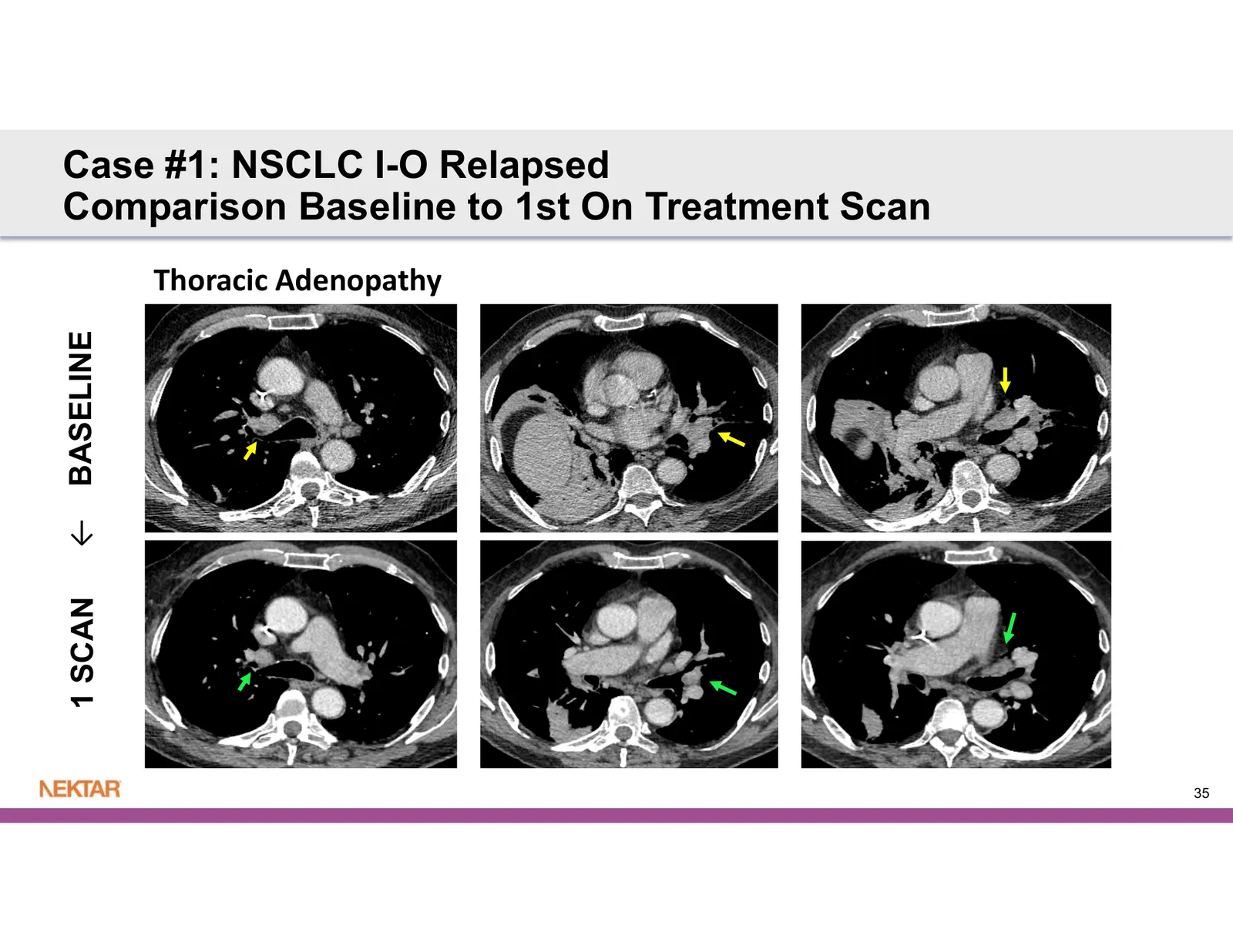
Slide 35: Case #1: Comparison Baseline to 1st On Treatment Scan (Thoracic Adenopathy)
Case #1: NSCLC I-O Relapsed Comparison Baseline to 1st On Treatment Scan Thoracic Adenopathy BASELINE ↓ 1 SCAN 35
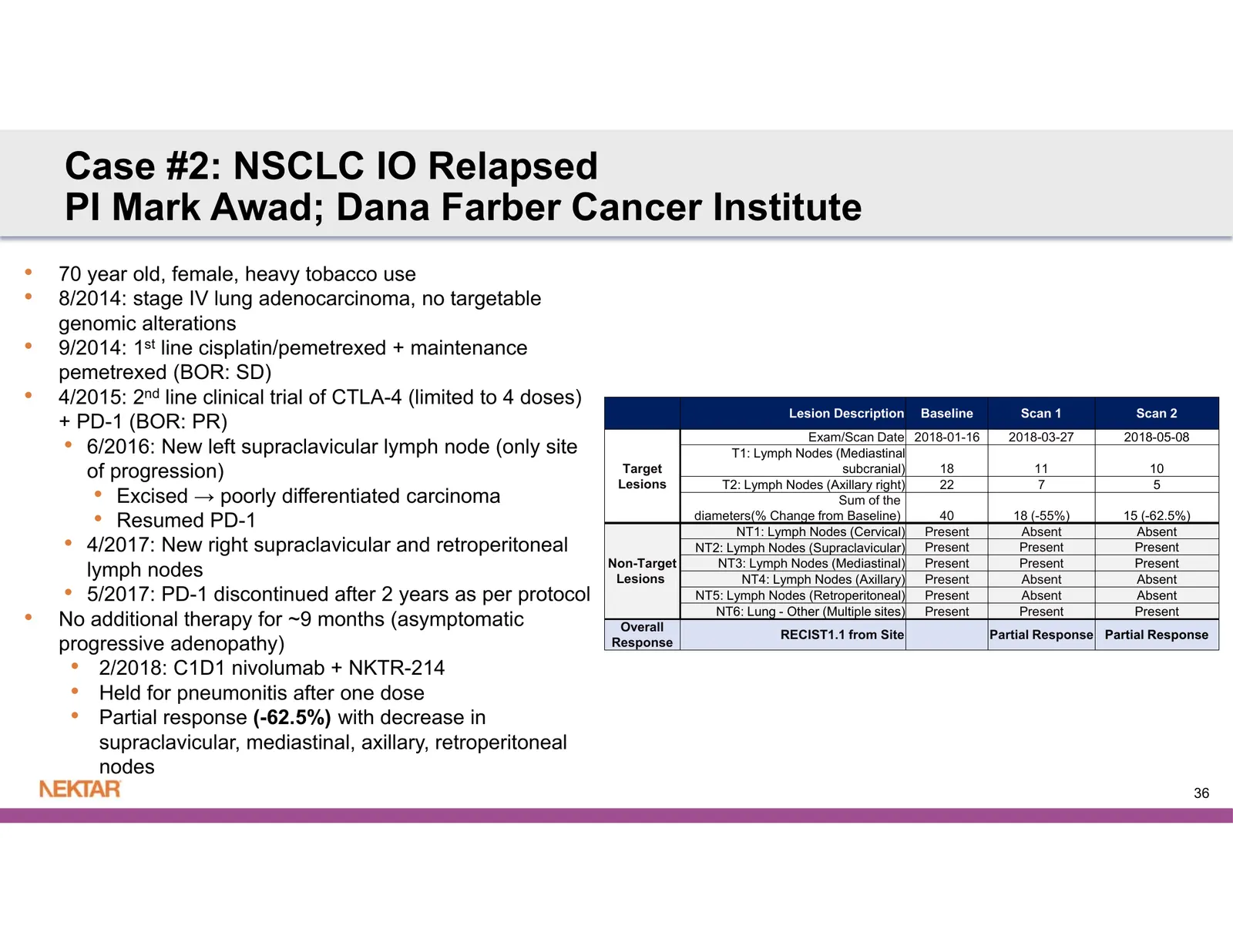
Slide 36: Case #2: NSCLC IO Relapsed
Case #2: NSCLC IO Relapsed PI Mark Awad; Dana Farber Cancer Institute • 70 year old, female, heavy tobacco use • 8/2014: stage IV lung adenocarcinoma, no targetable genomic alterations • 9/2014: 1st line cisplatin/pemetrexed + maintenance pemetrexed (BOR: SD) • 4/2015: 2nd line clinical trial of CTL
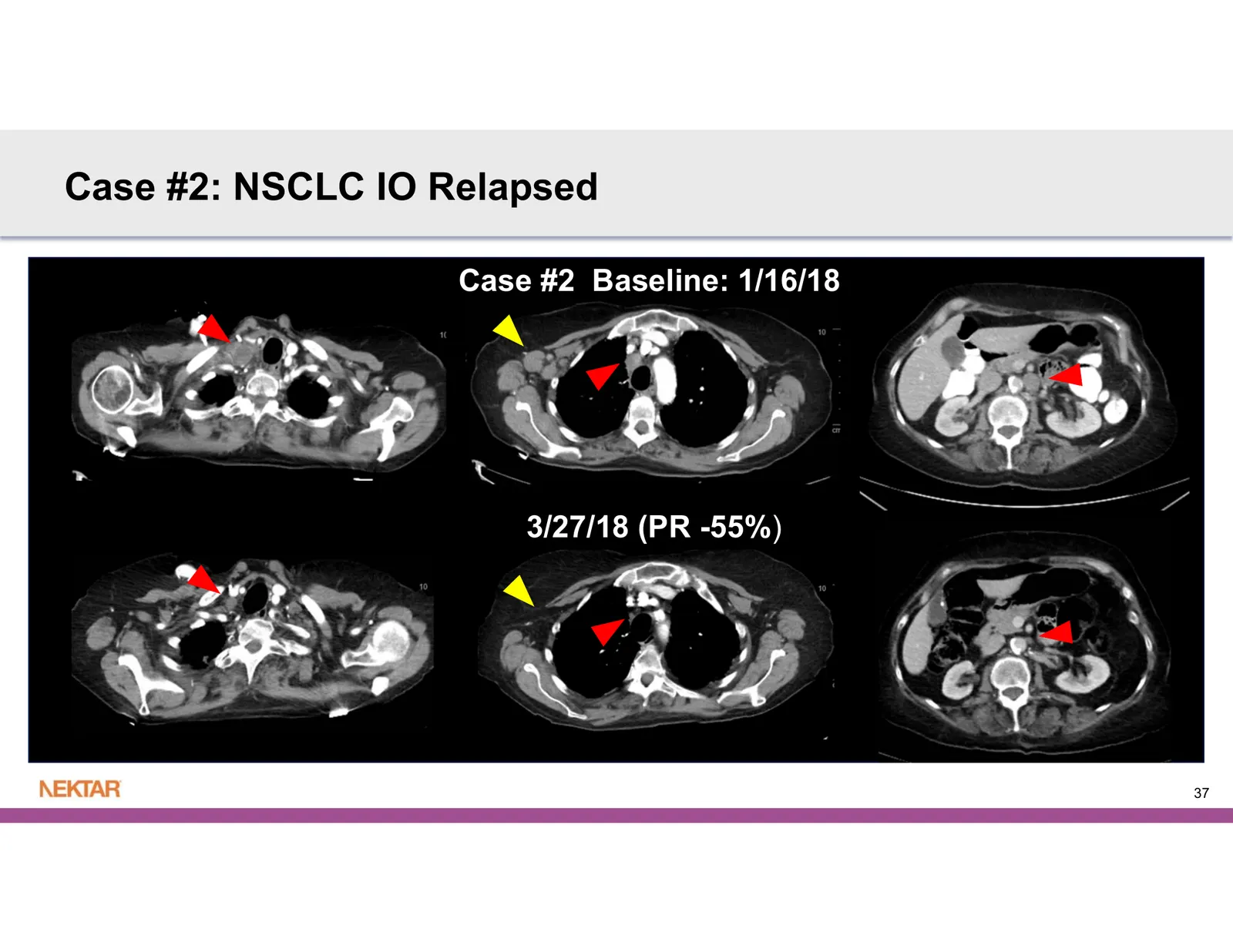
Slide 37: Case #2: NSCLC IO Relapsed Scans
Case #2: NSCLC IO Relapsed Case #2 Baseline: 1/16/18 3/27/18 (PR -55%) 37
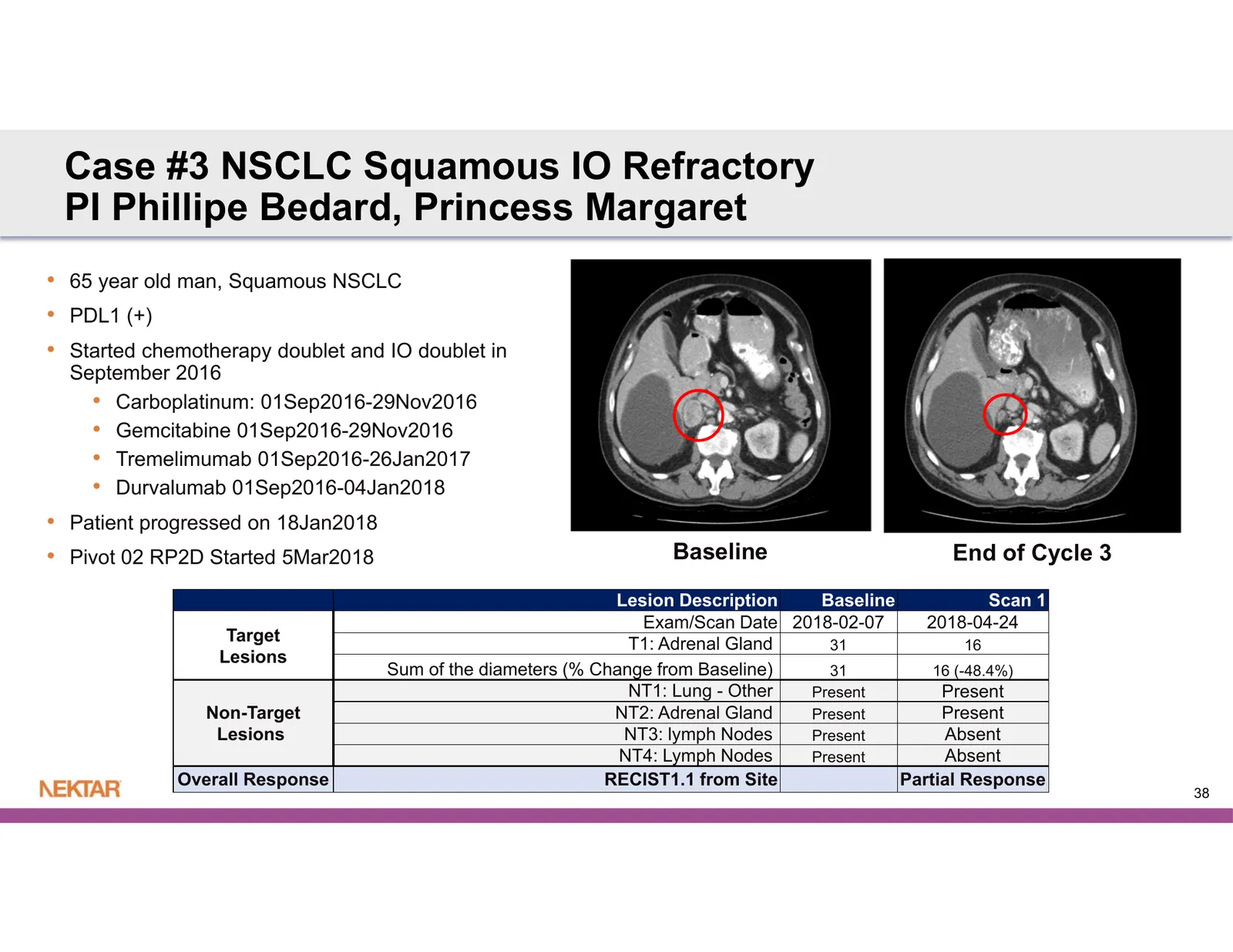
Slide 38: Case #3 NSCLC Squamous IO Refractory
Case #3 NSCLC Squamous IO Refractory PI Phillipe Bedard, Princess Margaret • 65 year old man, Squamous NSCLC • PDL1 (+) • Started chemotherapy doublet and IO doublet in September 2016 • Carboplatinum: 01Sep2016-29Nov2016 • Gemcitabine 01Sep2016-29Nov2016 • Tremelimumab 01Sep2016-26Jan2017 • Durvalum
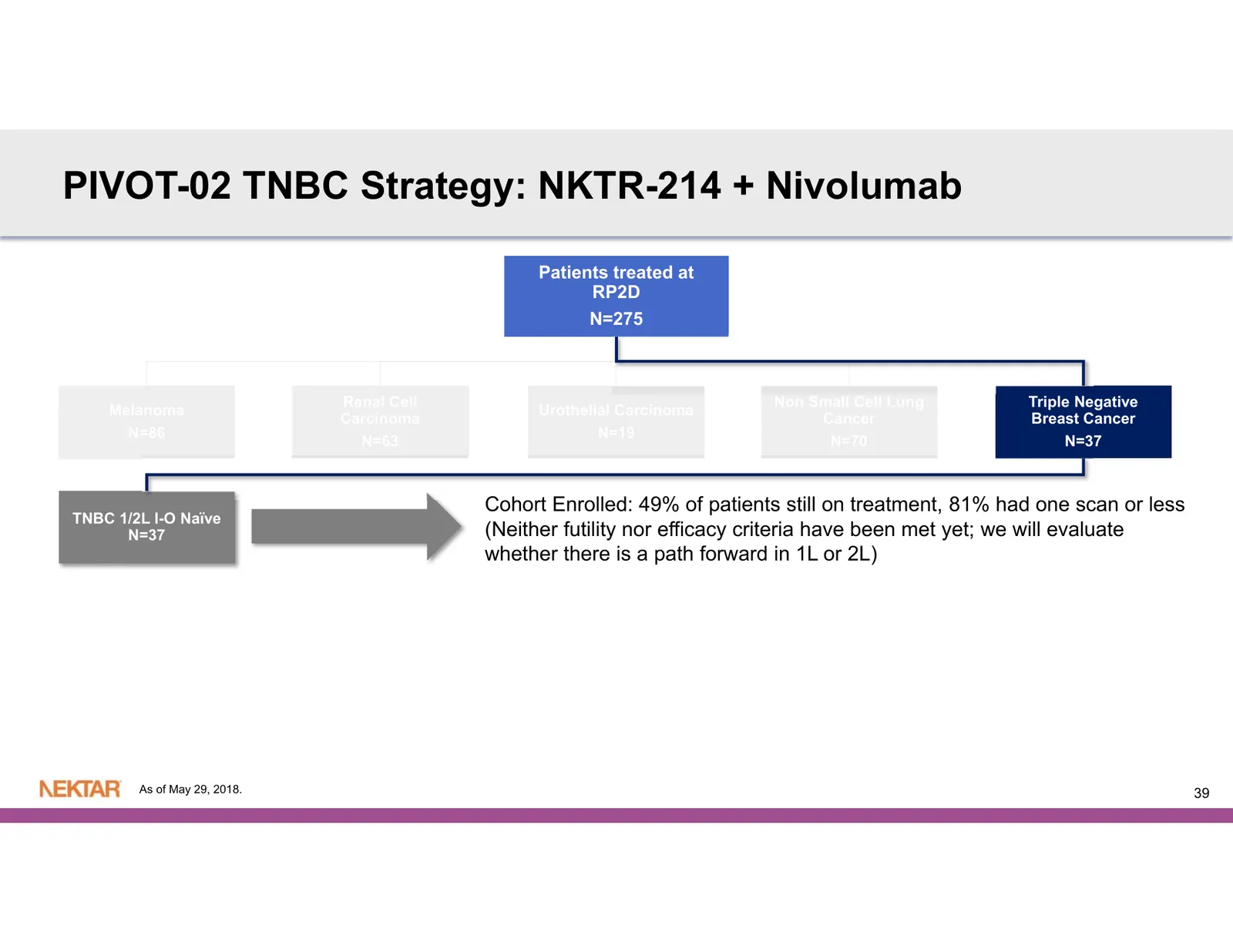
Slide 39: PIVOT-02 TNBC Strategy
PIVOT-02 TNBC Strategy: NKTR-214 + Nivolumab Patients treated at RP2D N=275 Renal Cell Non Small Cell Lung Triple Negative Melanoma Urothelial Carcinoma Carcinoma Cancer Breast Cancer N=86 N=19 N=63 N=70 N=37 Cohort Enrolled: 49% of patients still on treatment, 81% had one scan or less TNBC 1/2L I-O
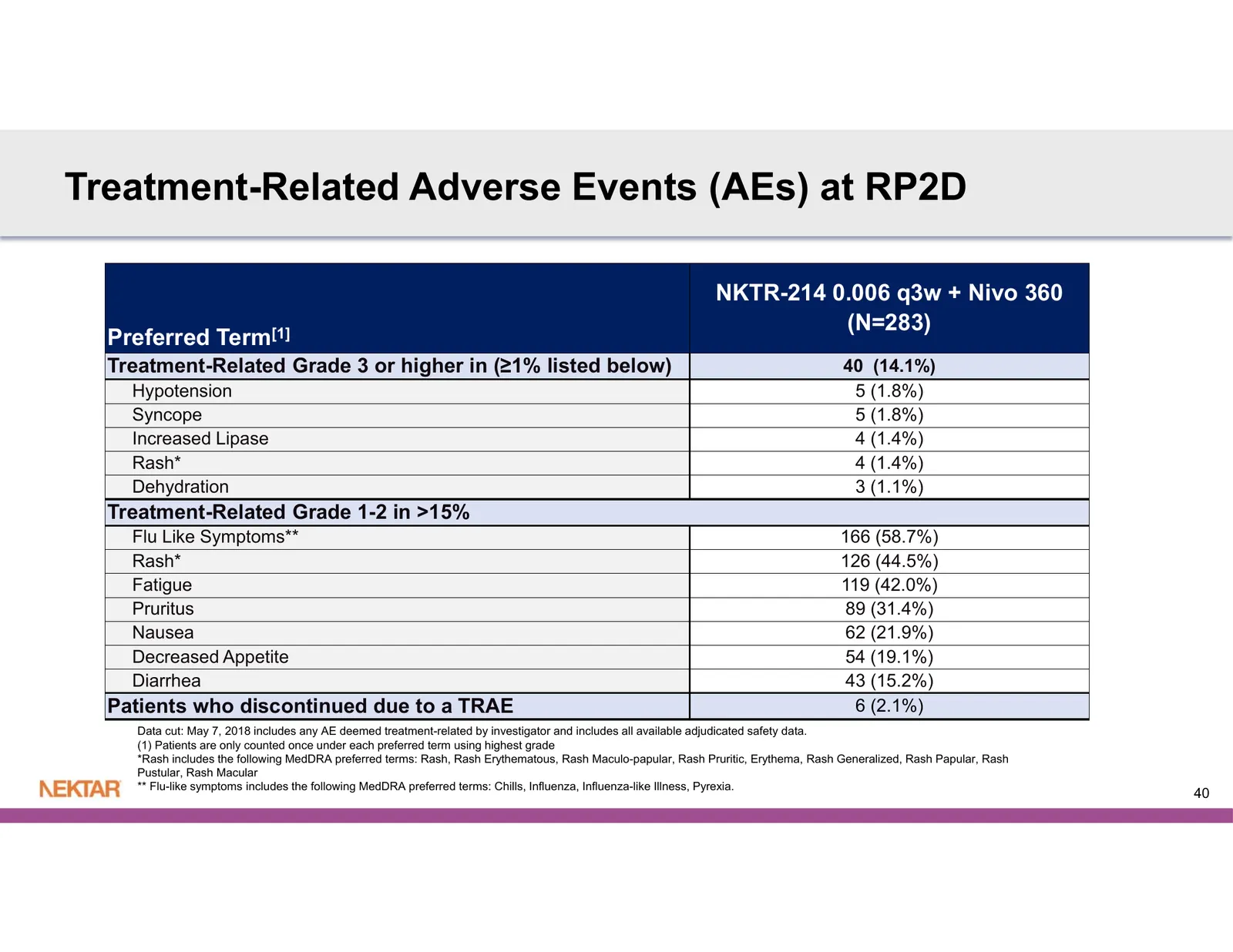
Slide 40: Treatment-Related Adverse Events at RP2D
Treatment-Related Adverse Events (AEs) at RP2D NKTR-214 0.006 q3w + Nivo 360 (N=283) Preferred Term[1] Treatment-Related Grade 3 or higher in (≥1% listed below) 40 (14.1%) Hypotension 5 (1.8%) Syncope 5 (1.8%) Increased Lipase 4 (1.4%) Rash* 4 (1.4%) Dehydration 3 (1.1%) Treatment-Related Grade 1-2
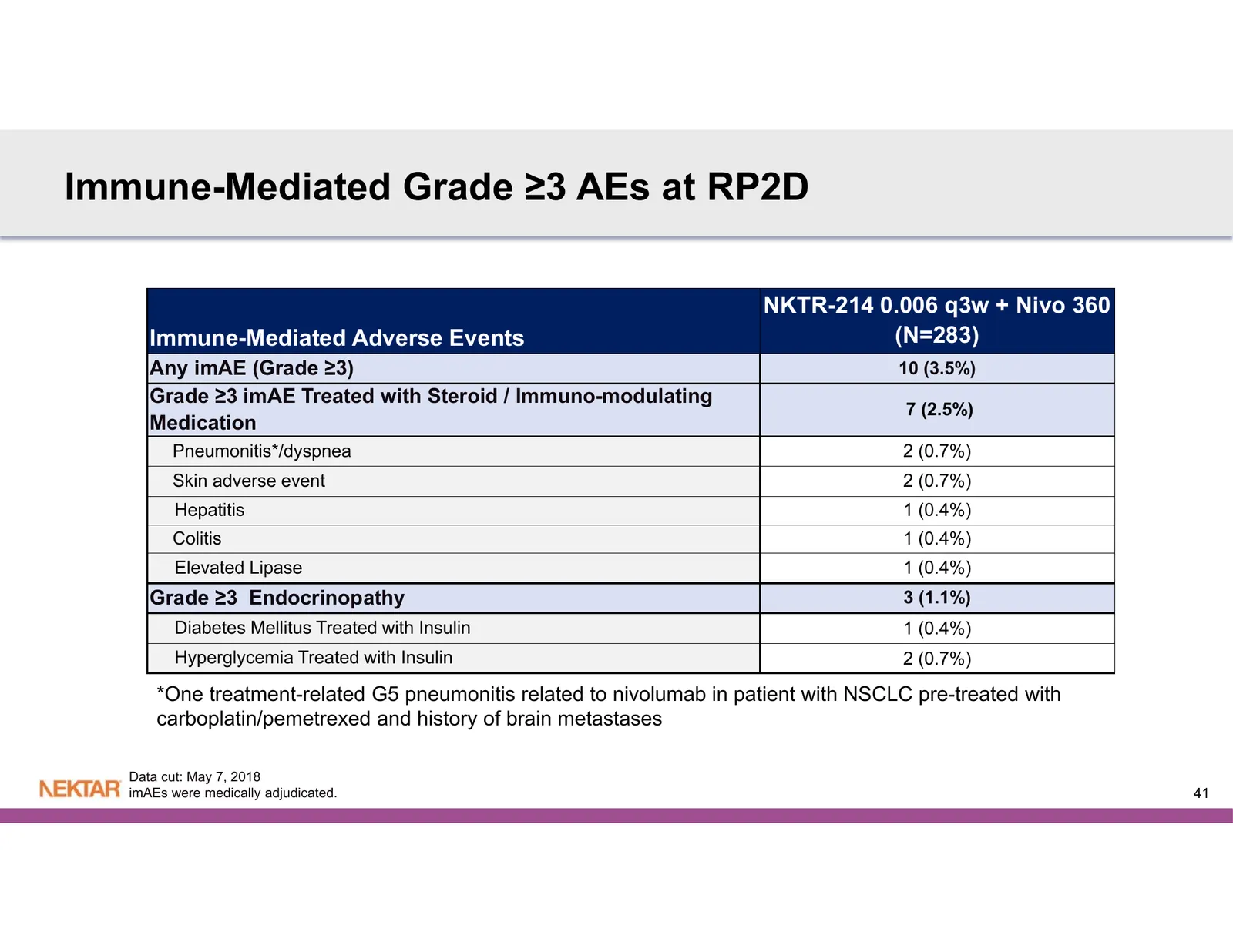
Slide 41: Immune-Mediated Grade ≥3 AEs at RP2D
Immune-Mediated Grade ≥3 AEs at RP2D NKTR-214 0.006 q3w + Nivo 360 Immune-Mediated Adverse Events (N=283) Any imAE (Grade ≥3) 10 (3.5%) Grade ≥3 imAE Treated with Steroid / Immuno-modulating 7 (2.5%) Medication Pneumonitis*/dyspnea 2 (0.7%) Skin adverse event 2 (0.7%) Hepatitis 1 (0.4%) Colitis 1 (0
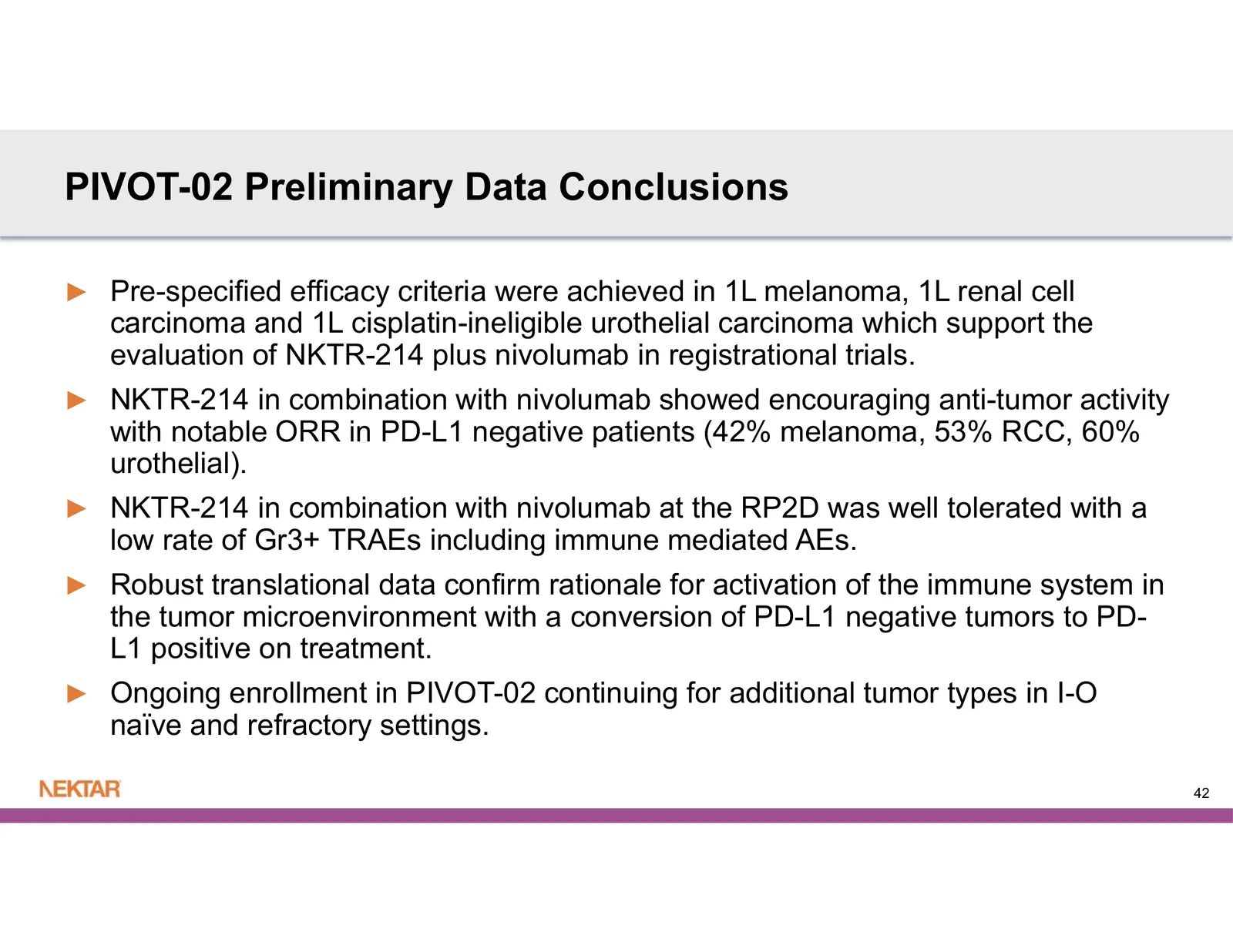
Slide 42: PIVOT-02 Preliminary Data Conclusions
PIVOT-02 Preliminary Data Conclusions ► Pre-specified efficacy criteria were achieved in 1L melanoma, 1L renal cell carcinoma and 1L cisplatin-ineligible urothelial carcinoma which support the evaluation of NKTR-214 plus nivolumab in registrational trials. ► NKTR-214 in combination with nivolumab sh
Slide 43: NKTR-214 Translational Biomarker Data
NKTR-214 Translational Biomarker Data Dr. Jonathan Zalevsky Chief Scientific Officer and Senior Vice President, Preclinical Development Nektar Therapeutics 43
Slide 44: Overview
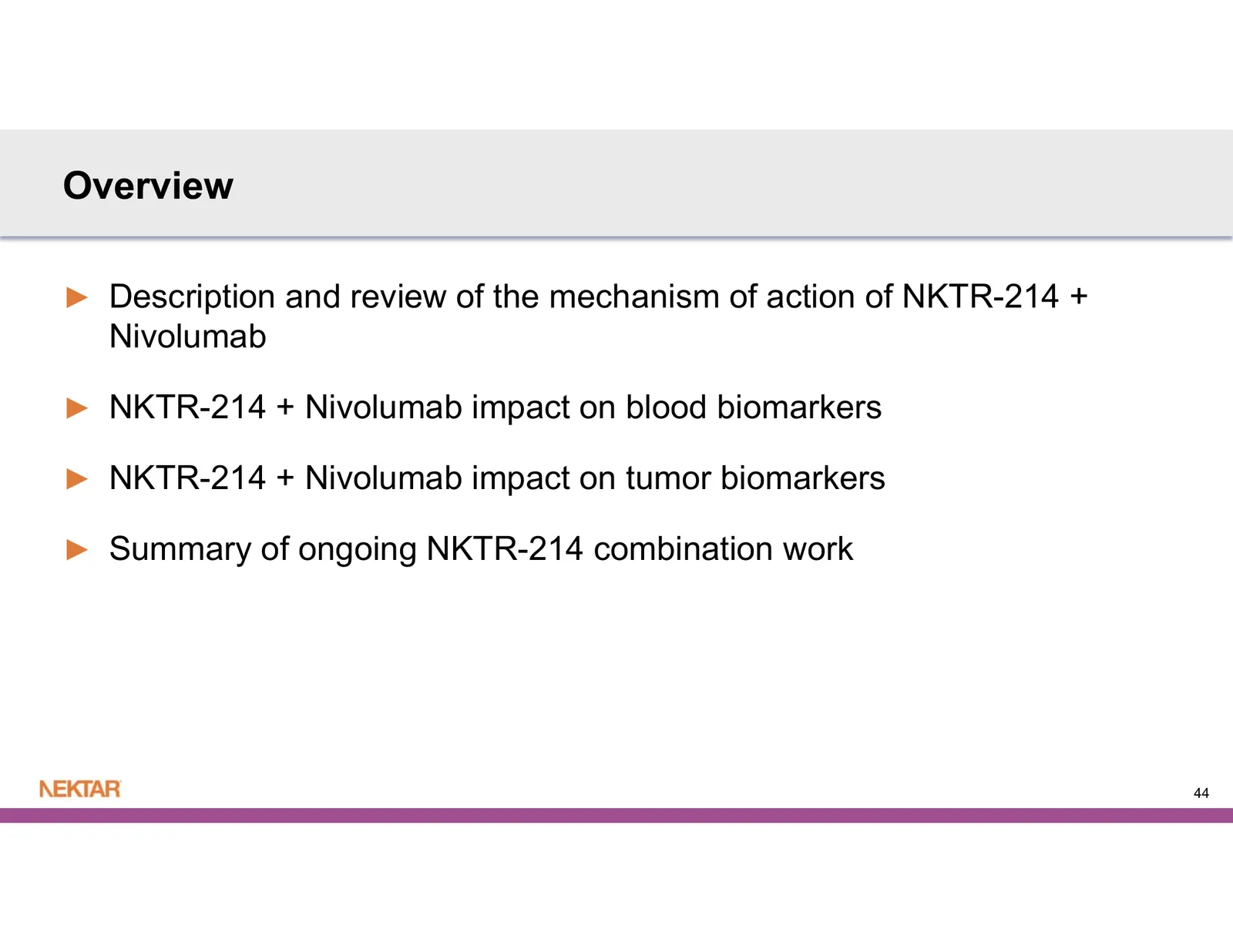
Overview ► Description and review of the mechanism of action of NKTR-214 + Nivolumab ► NKTR-214 + Nivolumab impact on blood biomarkers ► NKTR-214 + Nivolumab impact on tumor biomarkers ► Summary of ongoing NKTR-214 combination work 44
Slide 45: Before NKTR-214/Checkpoint Therapy
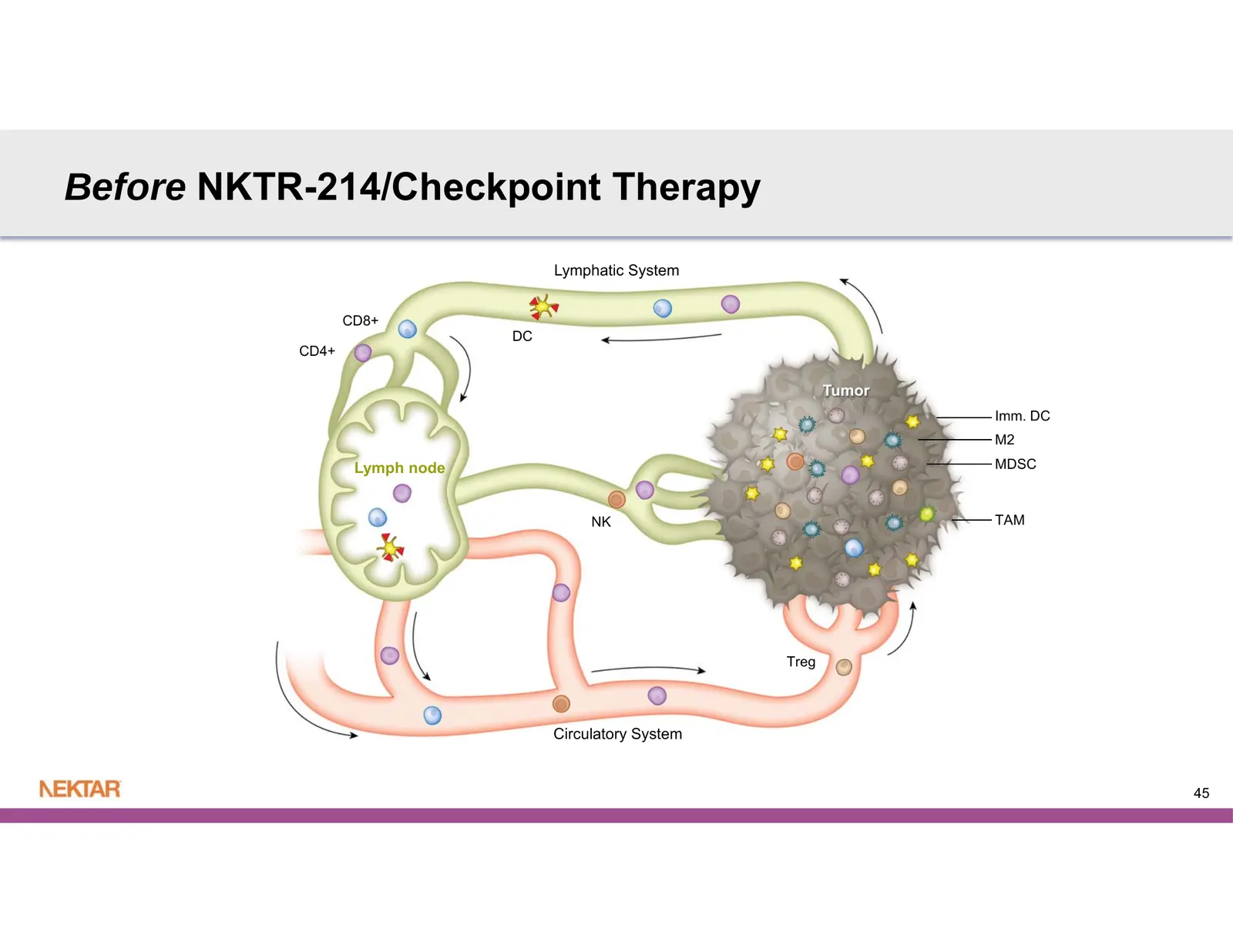
Before NKTR-214/Checkpoint Therapy Lymphatic System CD8+ DC CD4+ Tumor Imm. DC M2 Lymph node MDSC NK TAM Treg Circulatory System 45
Slide 46: After NKTR-214/Checkpoint Therapy
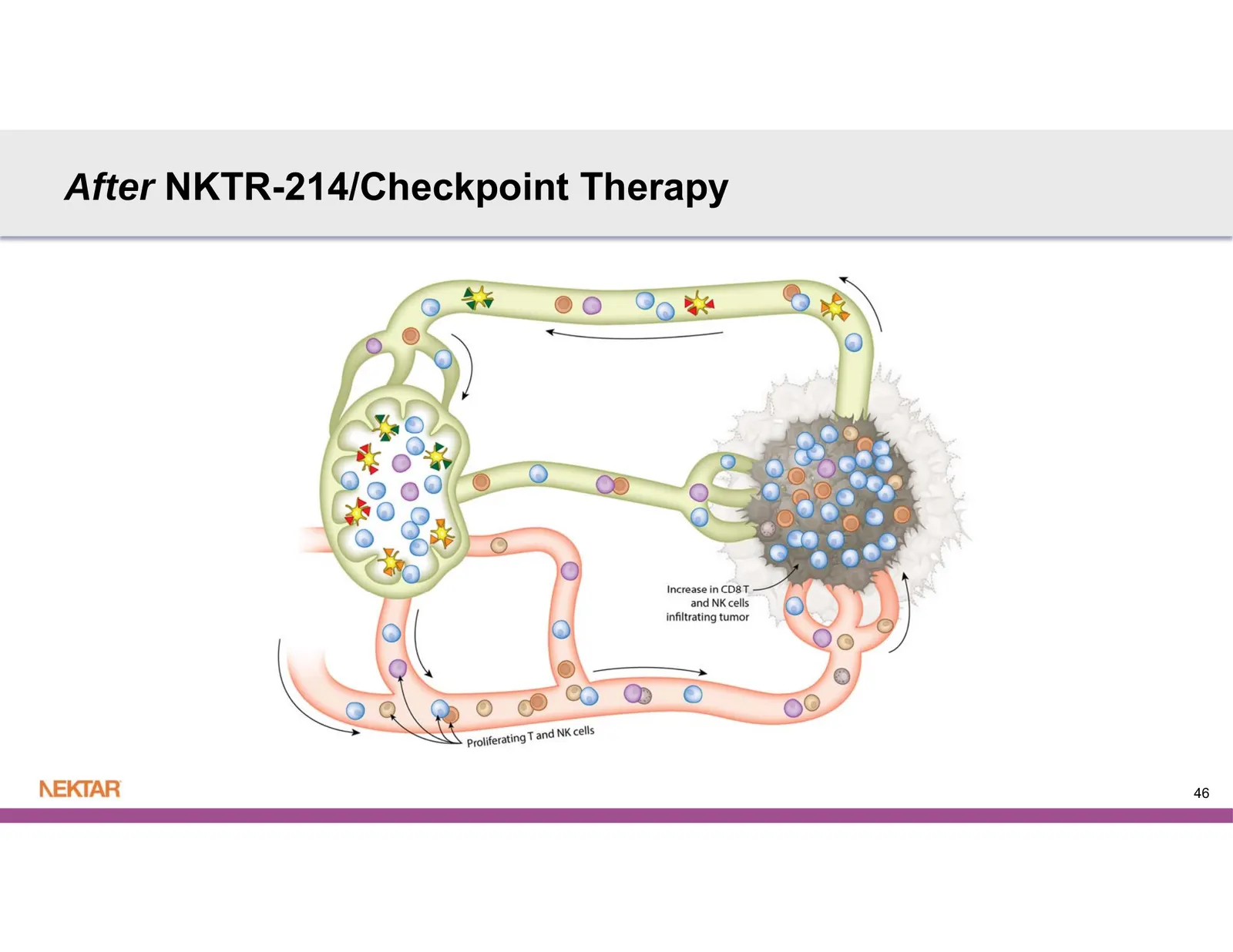
After NKTR-214/Checkpoint Therapy 46
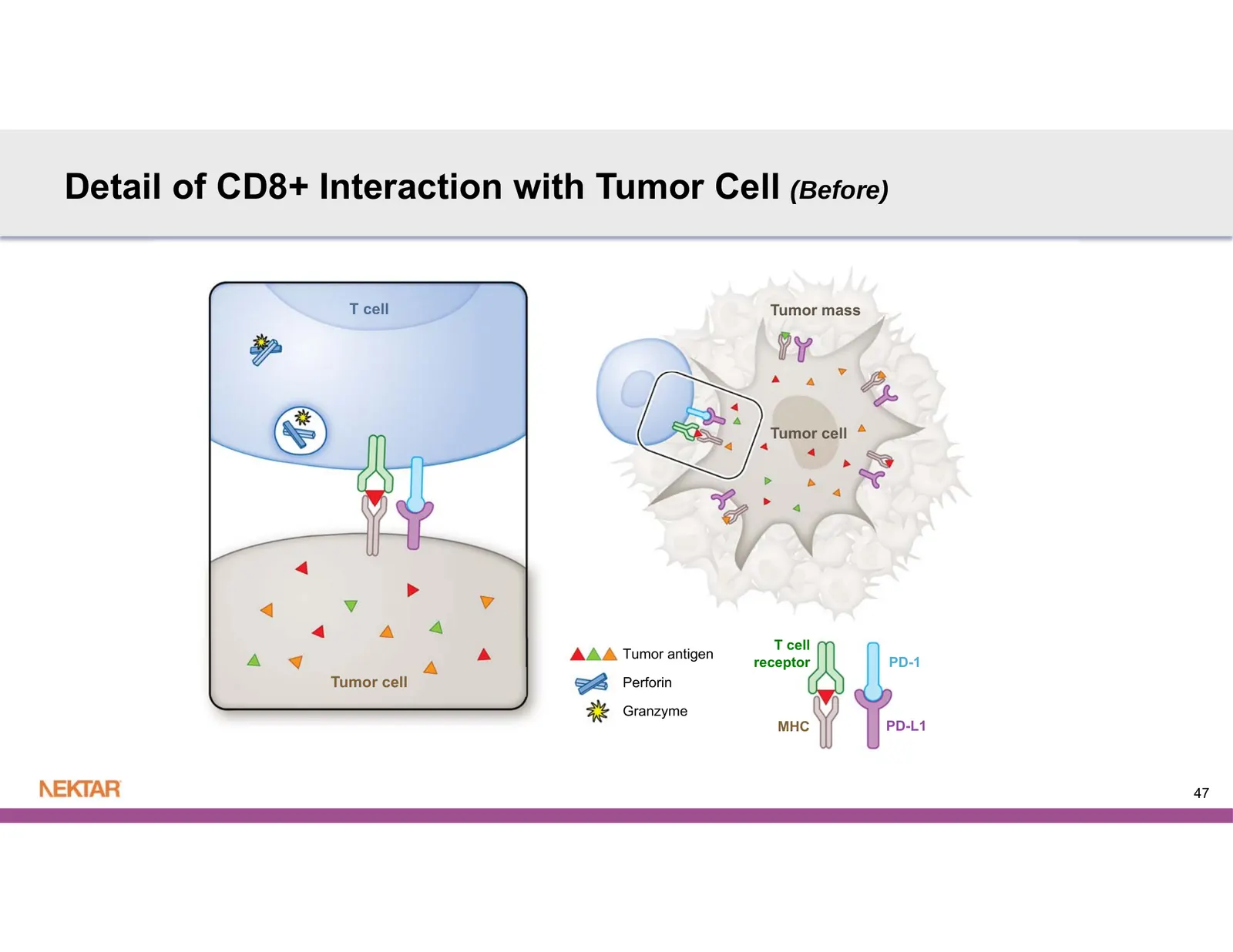
Slide 47: Detail of CD8+ Interaction with Tumor Cell (Before)
Detail of CD8+ Interaction with Tumor Cell (Before) T cell Tumor mass Tumor cell T cell Tumor antigen receptor PD-1 Tumor cell Perforin Granzyme MHC PD-L1 47
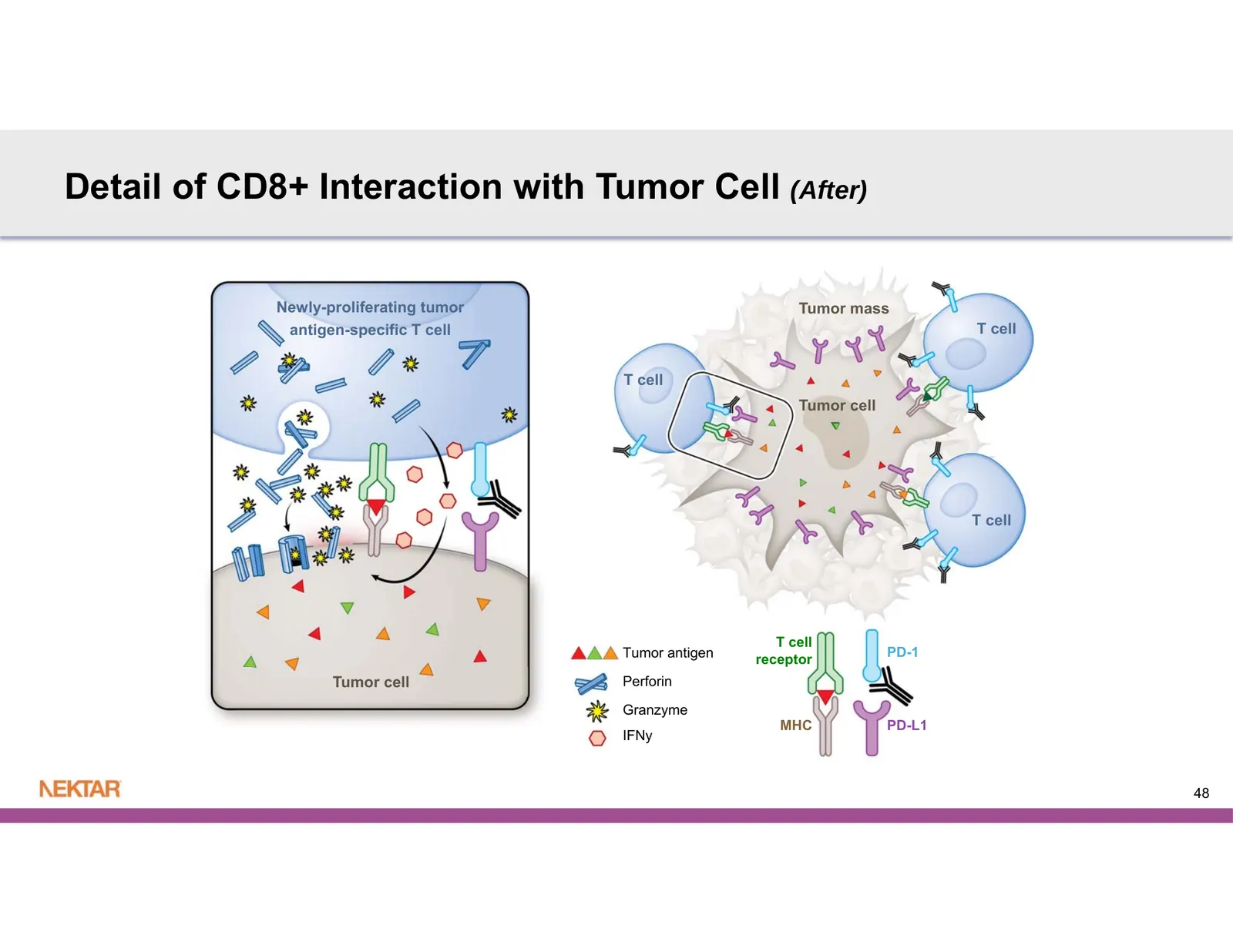
Slide 48: Detail of CD8+ Interaction with Tumor Cell (After)
Detail of CD8+ Interaction with Tumor Cell (After) Newly-proliferating tumor Tumor mass antigen-specific T cell T cell T cell Tumor cell T cell T cell Tumor antigen receptor PD-1 Tumor cell Perforin Granzyme MHC PD-L1 IFNy 48
Slide 49: Blood Based Biomarkers
Blood Based Biomarkers 49
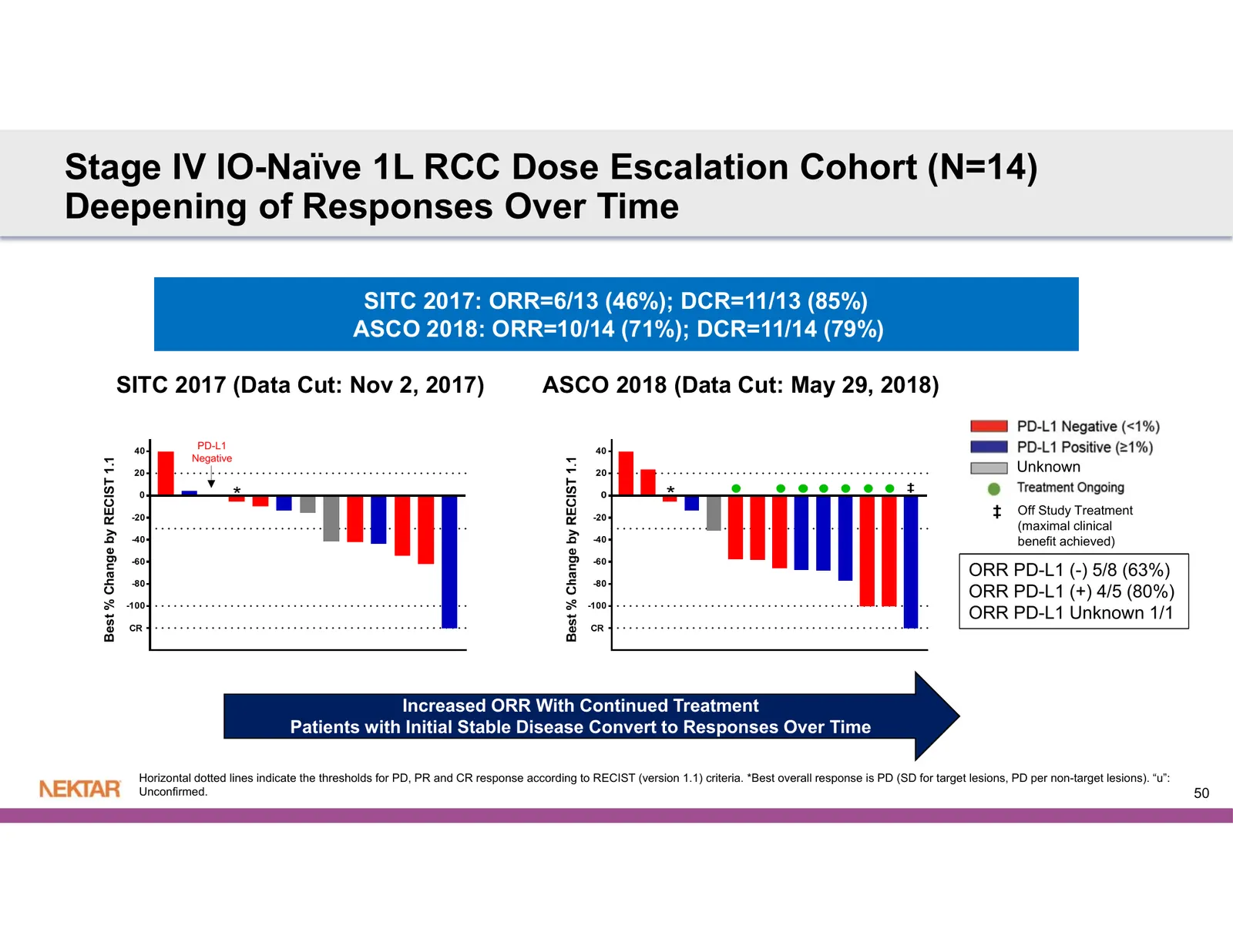
Slide 50: 1L RCC Dose Escalation Cohort: Deepening of Responses Over Time
Stage IV IO-Naïve 1L RCC Dose Escalation Cohort (N=14) Deepening of Responses Over Time SITC 2017: ORR=6/13 (46%); DCR=11/13 (85%) ASCO 2018: ORR=10/14 (71%); DCR=11/14 (79%) SITC 2017 (Data Cut: Nov 2, 2017) ASCO 2018 (Data Cut: May 29, 2018) PD-L1 Negative Best % Change by RECIST 1.1 Unknown ‡ ‡ O
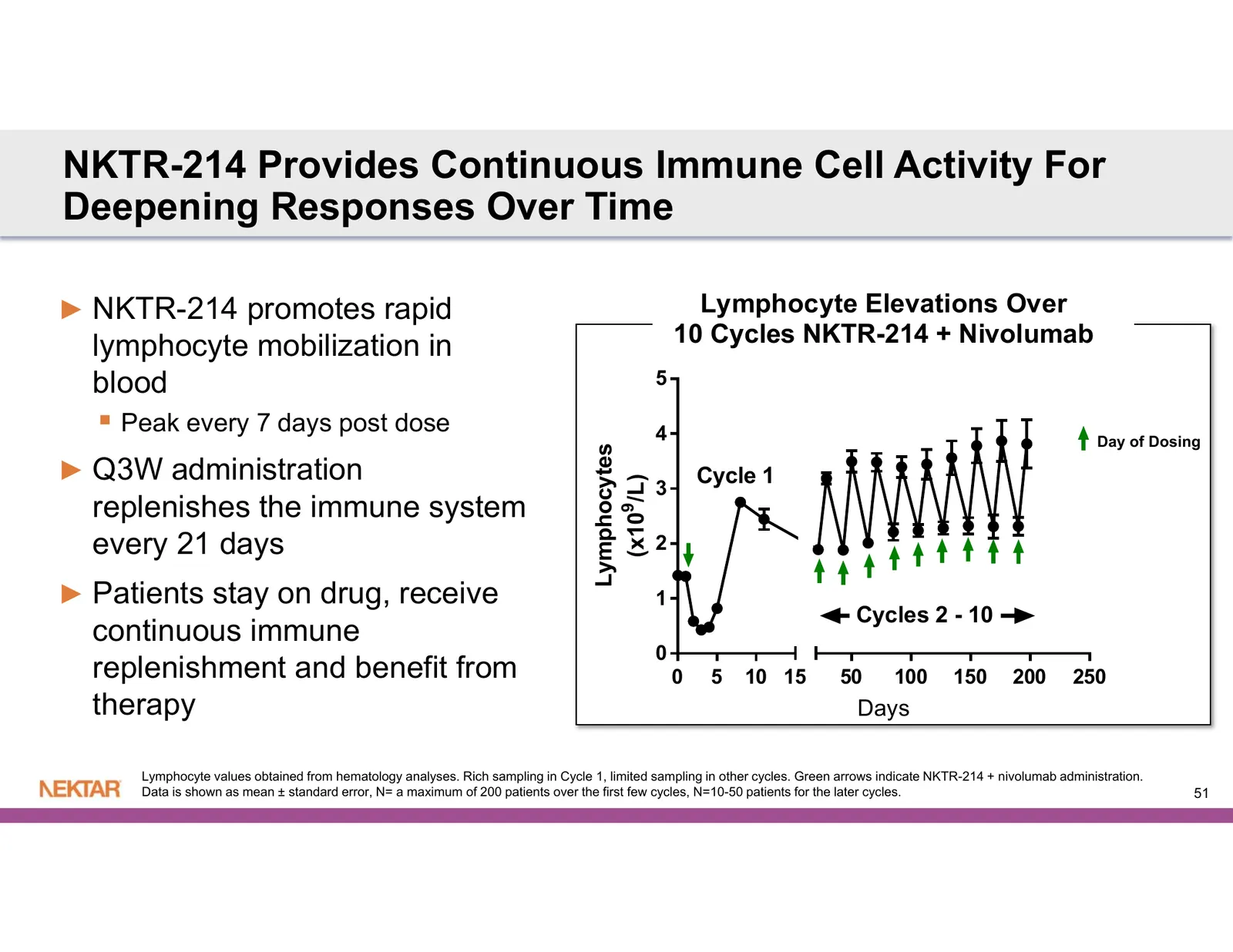
Slide 51: NKTR-214 Provides Continuous Immune Cell Activity
NKTR-214 Provides Continuous Immune Cell Activity For Deepening Responses Over Time ► NKTR-214 promotes rapid Lymphocyte Elevations Over lymphocyte mobilization in 10 Cycles NKTR-214 + Nivolumab blood 5 Peak every 7 days post dose 4 Day of Dosing Lymphocytes ► Q3W administration Cycle 1 (x109/L) 3
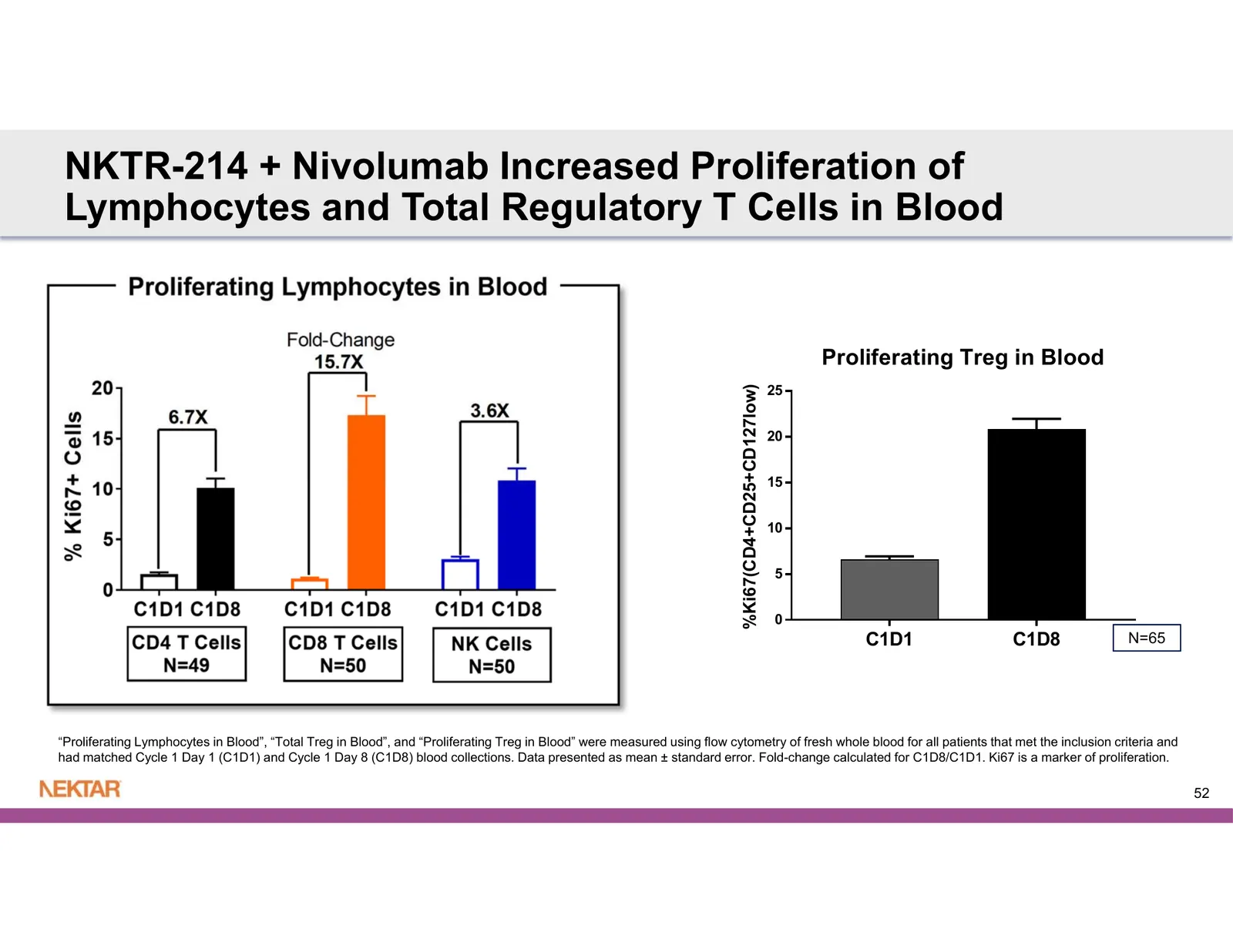
Slide 52: Increased Proliferation of Lymphocytes and Tregs in Blood
NKTR-214 + Nivolumab Increased Proliferation of Lymphocytes and Total Regulatory T Cells in Blood Proliferating Treg in Blood 25 %Ki67(CD4+CD25+CD127low) 20 15 10 5 0 C1D1 C1D8 N=65 “Proliferating Lymphocytes in Blood”, “Total Treg in Blood”, and “Proliferating Treg in Blood” were measured using flo
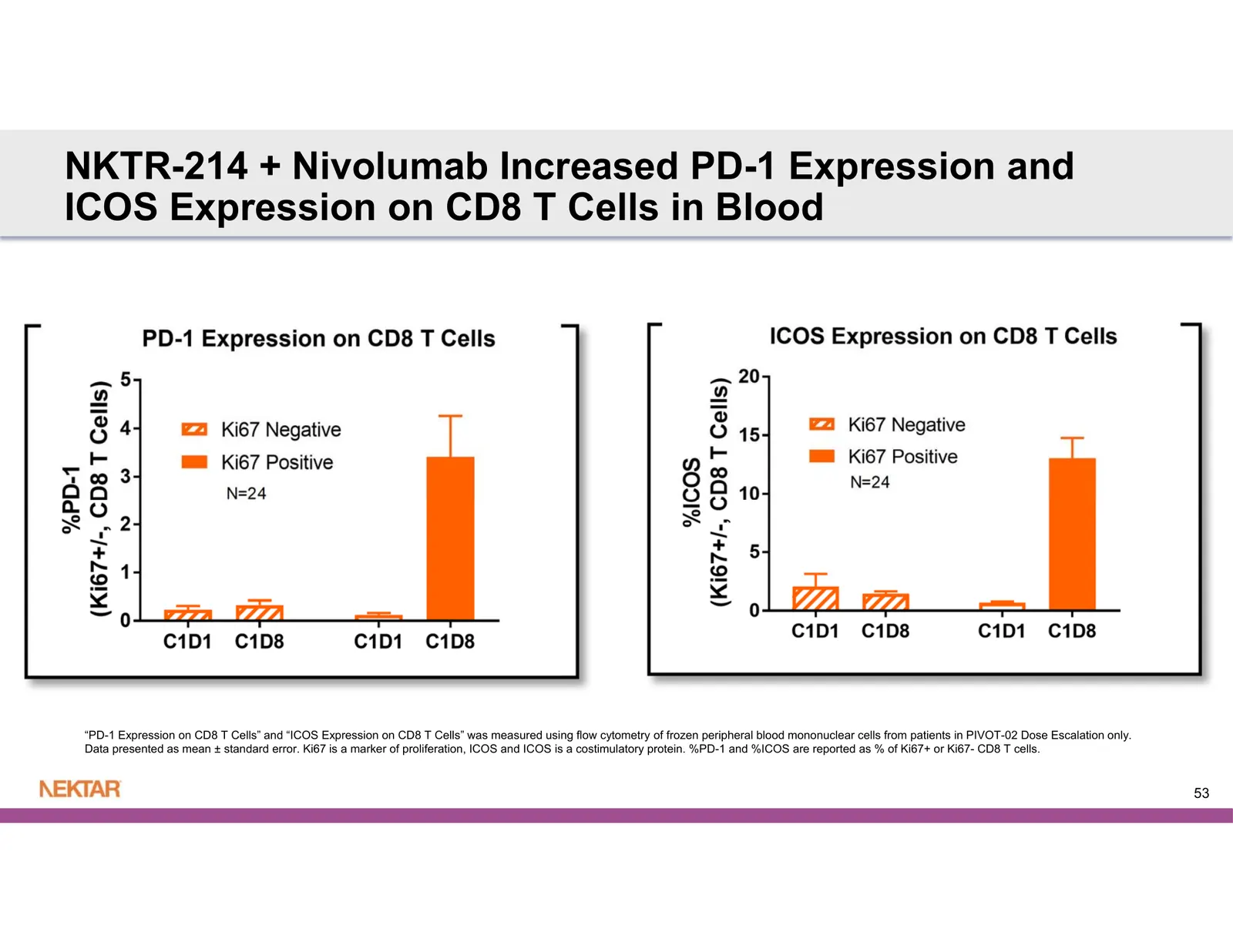
Slide 53: Increased PD-1 and ICOS Expression on CD8 T Cells in Blood
NKTR-214 + Nivolumab Increased PD-1 Expression and ICOS Expression on CD8 T Cells in Blood “PD-1 Expression on CD8 T Cells” and “ICOS Expression on CD8 T Cells” was measured using flow cytometry of frozen peripheral blood mononuclear cells from patients in PIVOT-02 Dose Escalation only. Data present
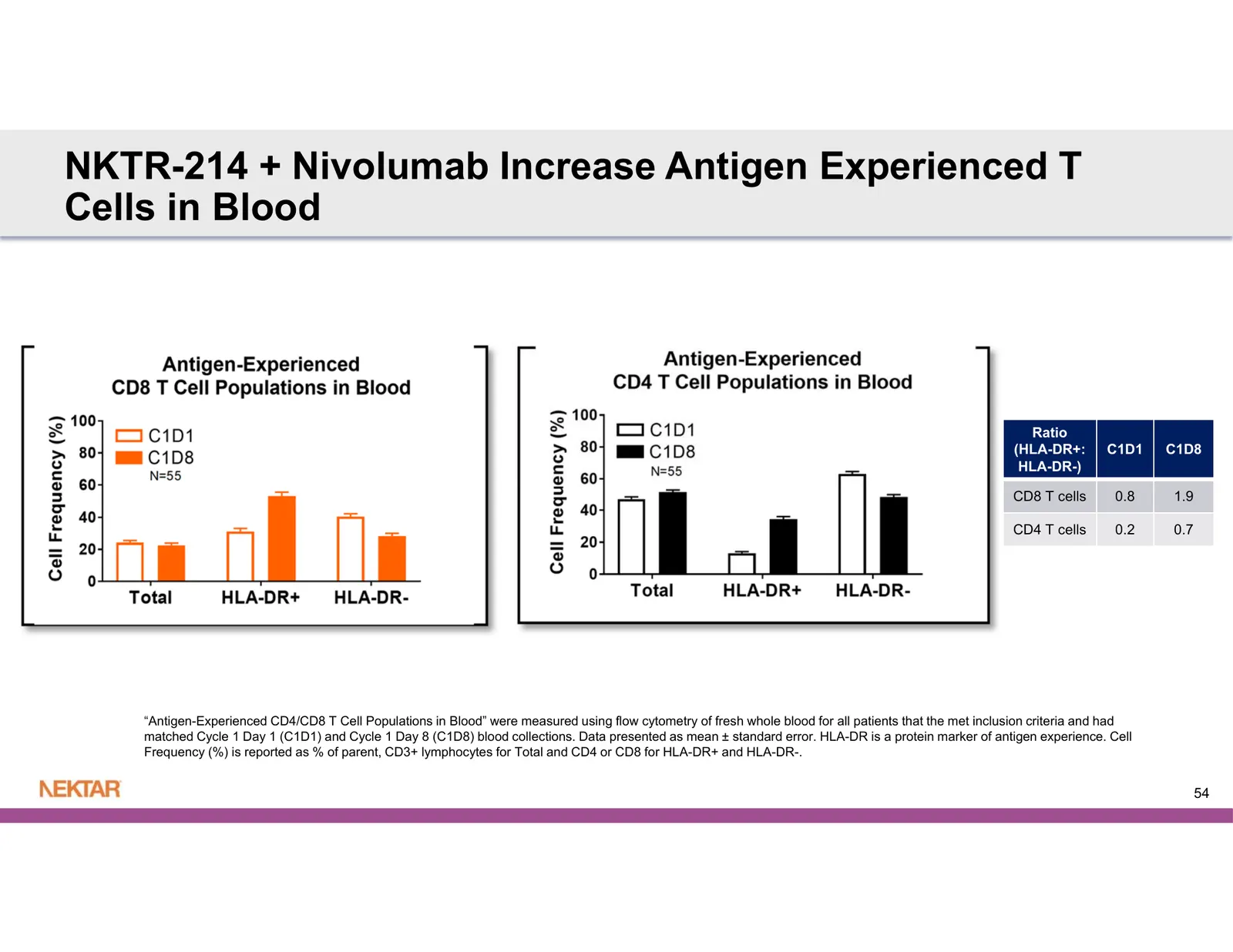
Slide 54: Increase Antigen Experienced T Cells in Blood
NKTR-214 + Nivolumab Increase Antigen Experienced T Cells in Blood Ratio (HLA-DR+: C1D1 C1D8 HLA-DR-) CD8 T cells 0.8 1.9 CD4 T cells 0.2 0.7 “Antigen-Experienced CD4/CD8 T Cell Populations in Blood” were measured using flow cytometry of fresh whole blood for all patients that the met inclusion crit
Slide 55: Tumor Biomarkers
Tumor Biomarkers 55
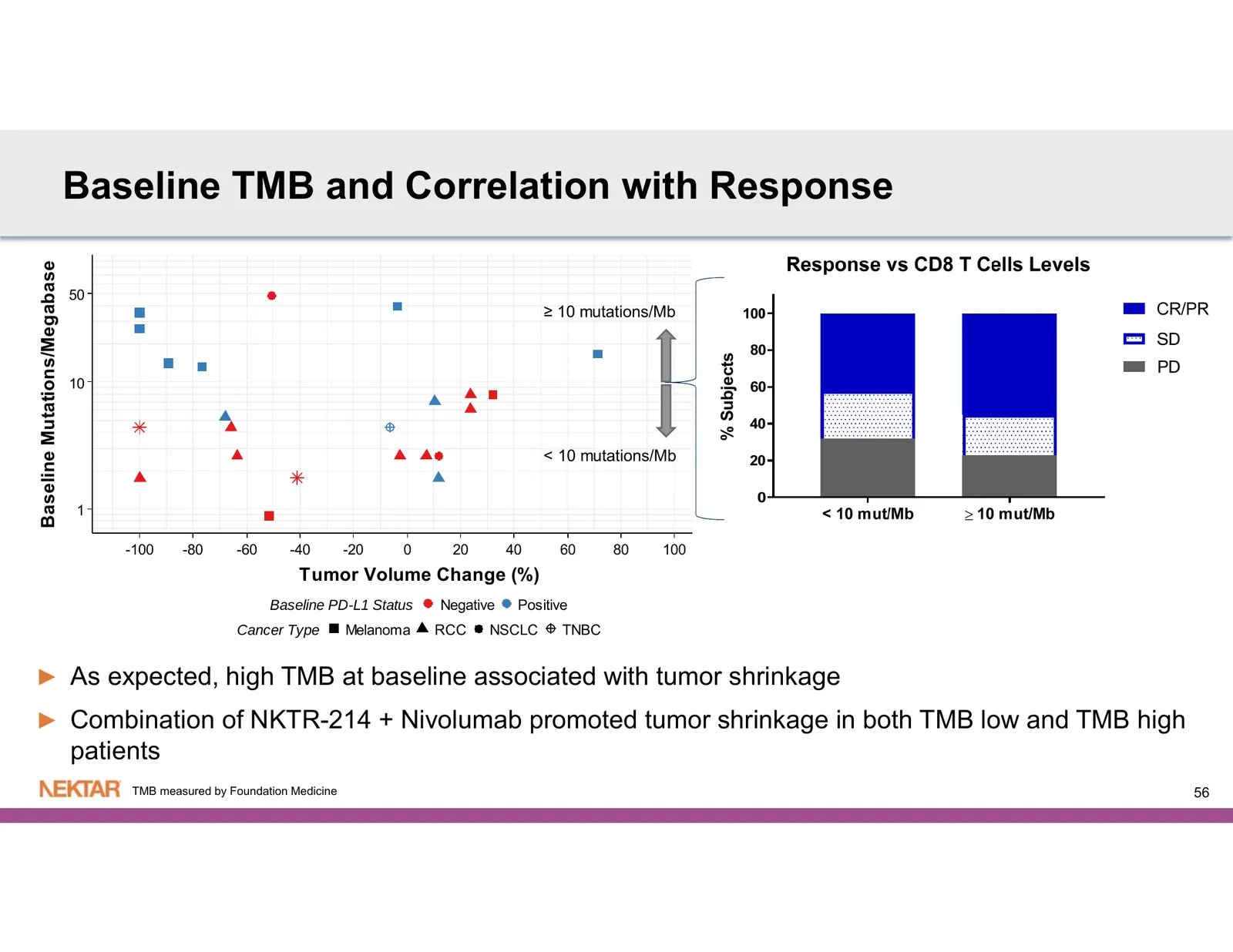
Slide 56: Baseline TMB and Correlation with Response
Baseline TMB and Correlation with Response Baseline Mutations/Megabase 50 ≥ 10 mutations/Mb % Subjects 10 < 10 mutations/Mb 1 -100 -80 -60 -40 -20 0 20 40 60 80 100 Tumor Volume Change (%) Baseline PD-L1 Status Negative Positive Cancer Type Melanoma RCC NSCLC TNBC ► As expected, high TMB at baseline
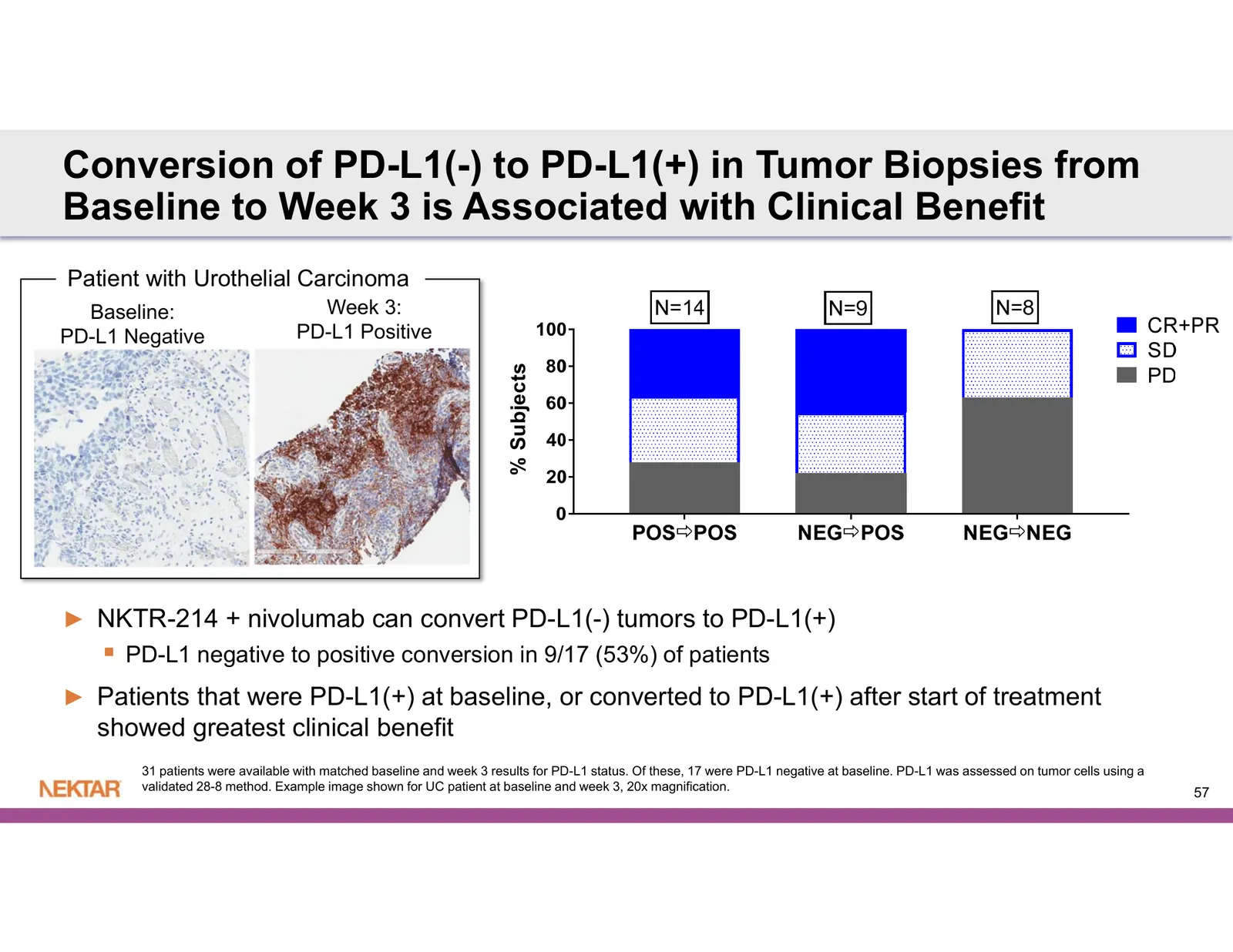
Slide 57: Conversion of PD-L1(-) to PD-L1(+) in Tumor Biopsies
Conversion of PD-L1(-) to PD-L1(+) in Tumor Biopsies from Baseline to Week 3 is Associated with Clinical Benefit Patient with Urothelial Carcinoma Baseline: Week 3: PD-L1 Negative PD-L1 Positive % Subjects ► NKTR-214 + nivolumab can convert PD-L1(-) tumors to PD-L1(+) PD-L1 negative to positive co
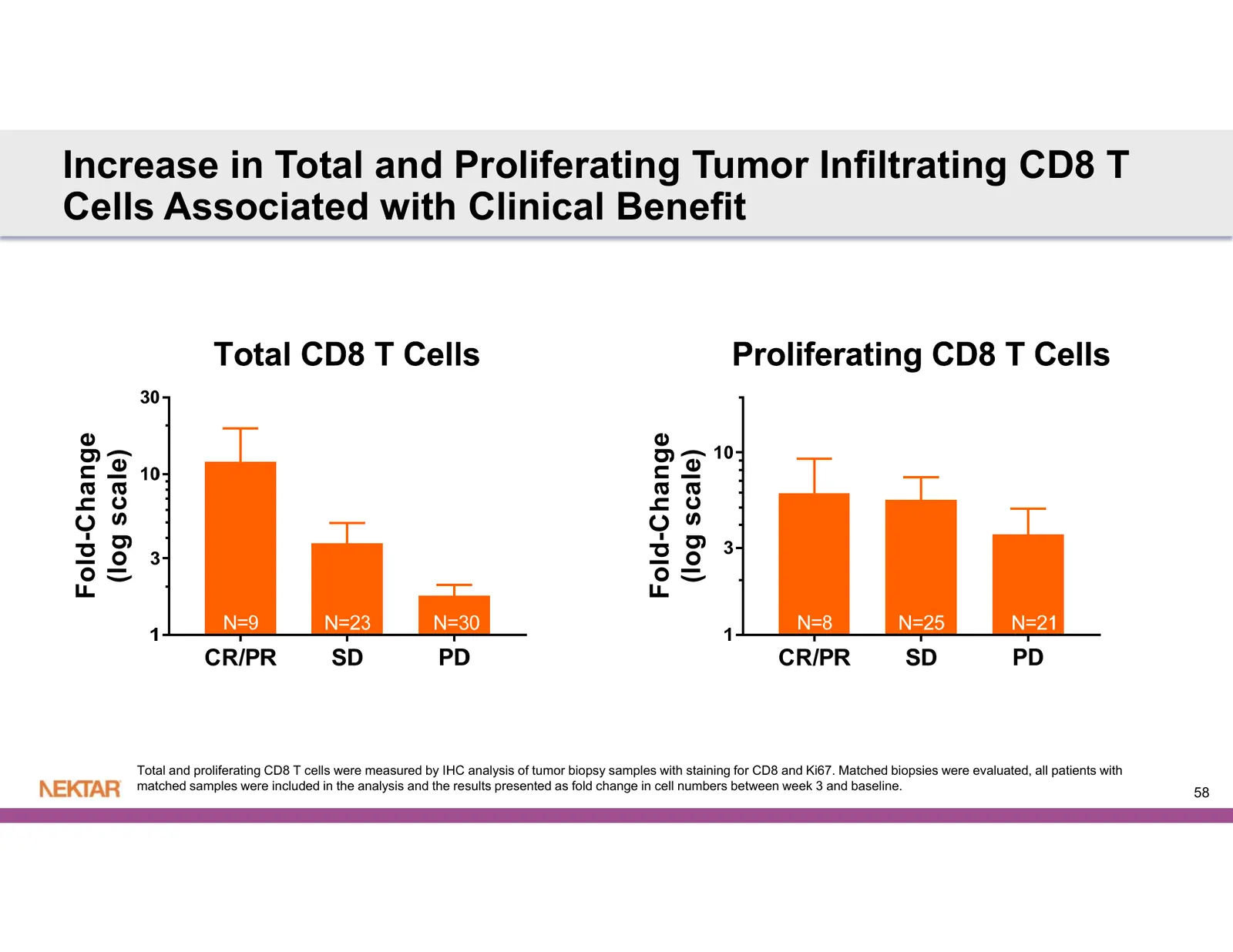
Slide 58: Increase in Tumor Infiltrating CD8 T Cells Associated with Clinical Benefit
Increase in Total and Proliferating Tumor Infiltrating CD8 T Cells Associated with Clinical Benefit Fold-Change Fold-Change (log scale) (log scale) Total and proliferating CD8 T cells were measured by IHC analysis of tumor biopsy samples with staining for CD8 and Ki67. Matched biopsies were evaluate
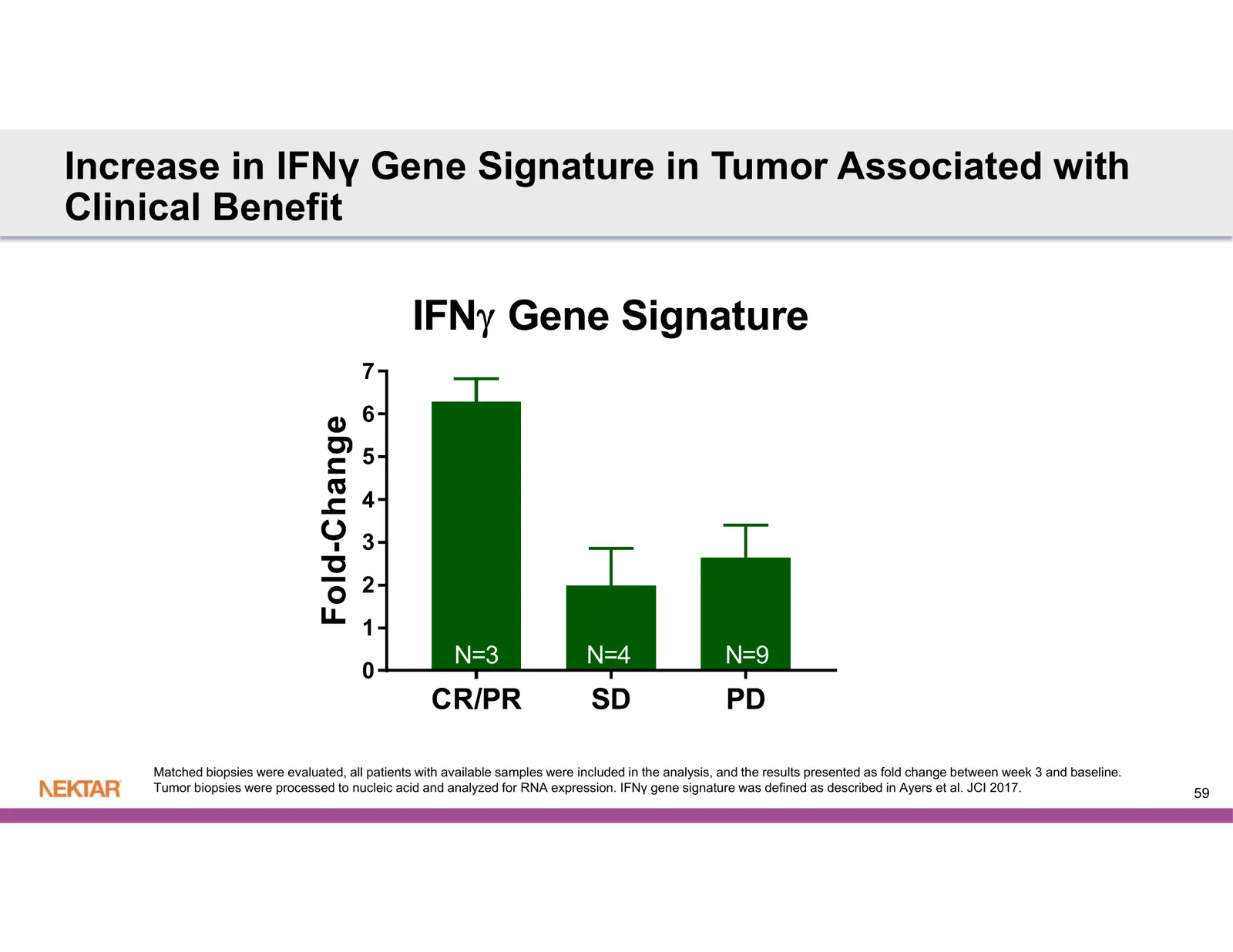
Slide 59: Increase in IFNγ Gene Signature in Tumor
Increase in IFNγ Gene Signature in Tumor Associated with Clinical Benefit 7 6 5 4 3 2 1 N=3 N=4 N=9 0 Matched biopsies were evaluated, all patients with available samples were included in the analysis, and the results presented as fold change between week 3 and baseline. Tumor biopsies were processe
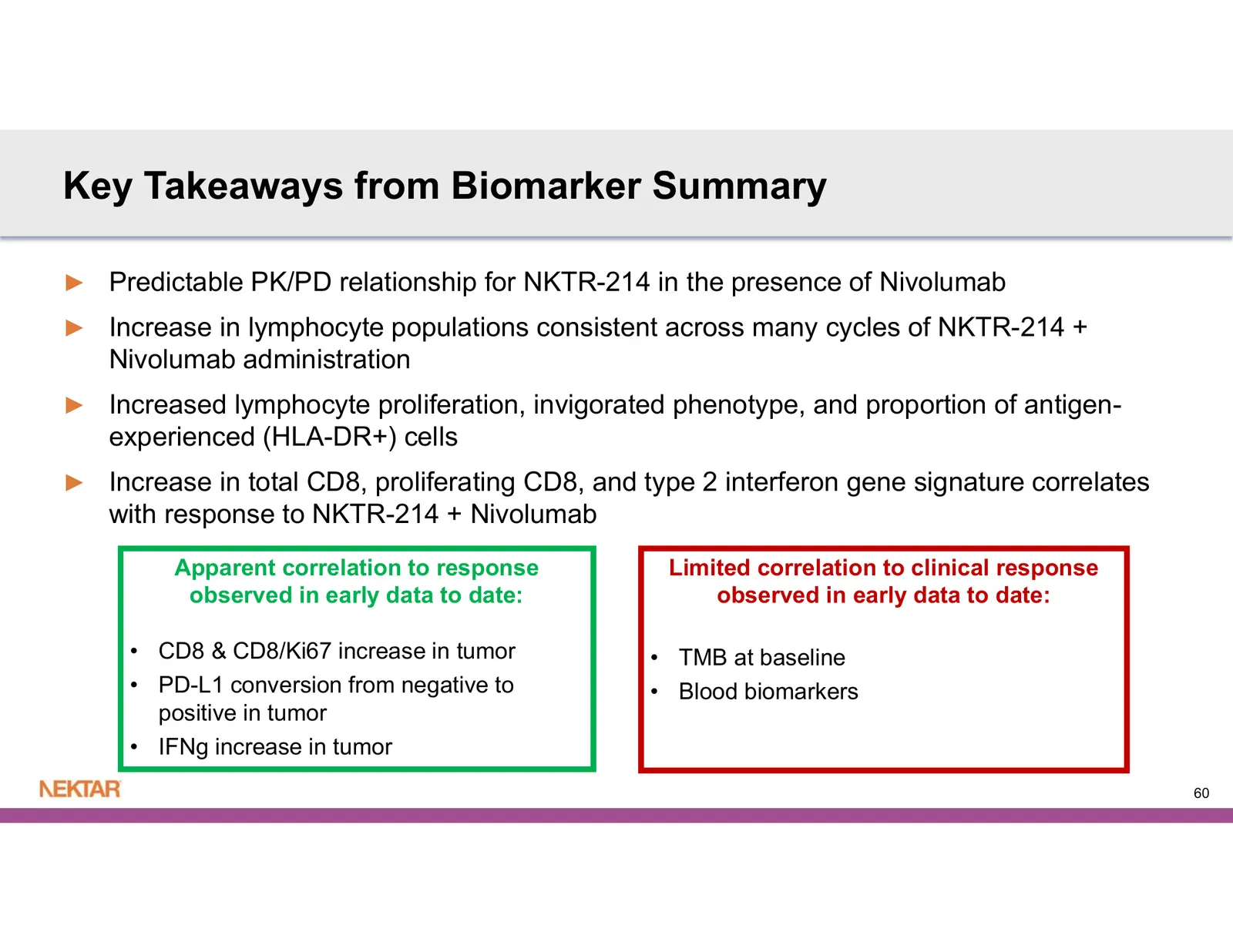
Slide 60: Key Takeaways from Biomarker Summary
Key Takeaways from Biomarker Summary ► Predictable PK/PD relationship for NKTR-214 in the presence of Nivolumab ► Increase in lymphocyte populations consistent across many cycles of NKTR-214 + Nivolumab administration ► Increased lymphocyte proliferation, invigorated phenotype, and proportion of ant
Slide 61: NKTR-214 Development Program
NKTR-214 Development Program Dr. Mary Tagliaferri Chief Medical Officer Senior Vice President, Clinical Development Nektar Therapeutics 61
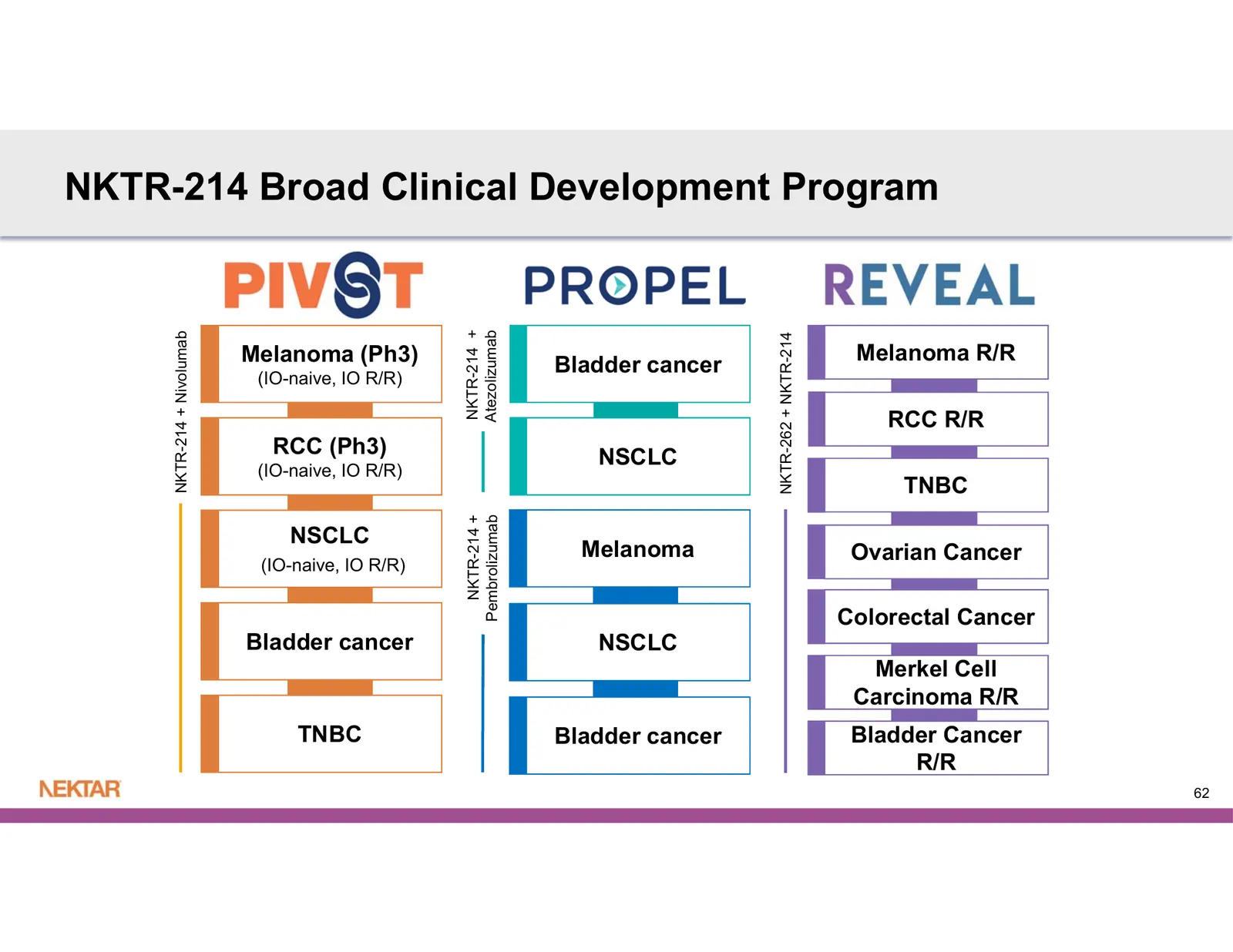
Slide 62: NKTR-214 Broad Clinical Development Program
NKTR-214 Broad Clinical Development Program NKTR-214 + Atezolizumab NKTR-214 + Nivolumab NKTR-262 + NKTR-214 Melanoma (Ph3) Melanoma R/R Bladder cancer (IO-naive, IO R/R) RCC R/R RCC (Ph3) NSCLC (IO-naive, IO R/R) TNBC NKTR-214 + Pembrolizumab NSCLC Melanoma Ovarian Cancer (IO-naive, IO R/R) Colorec
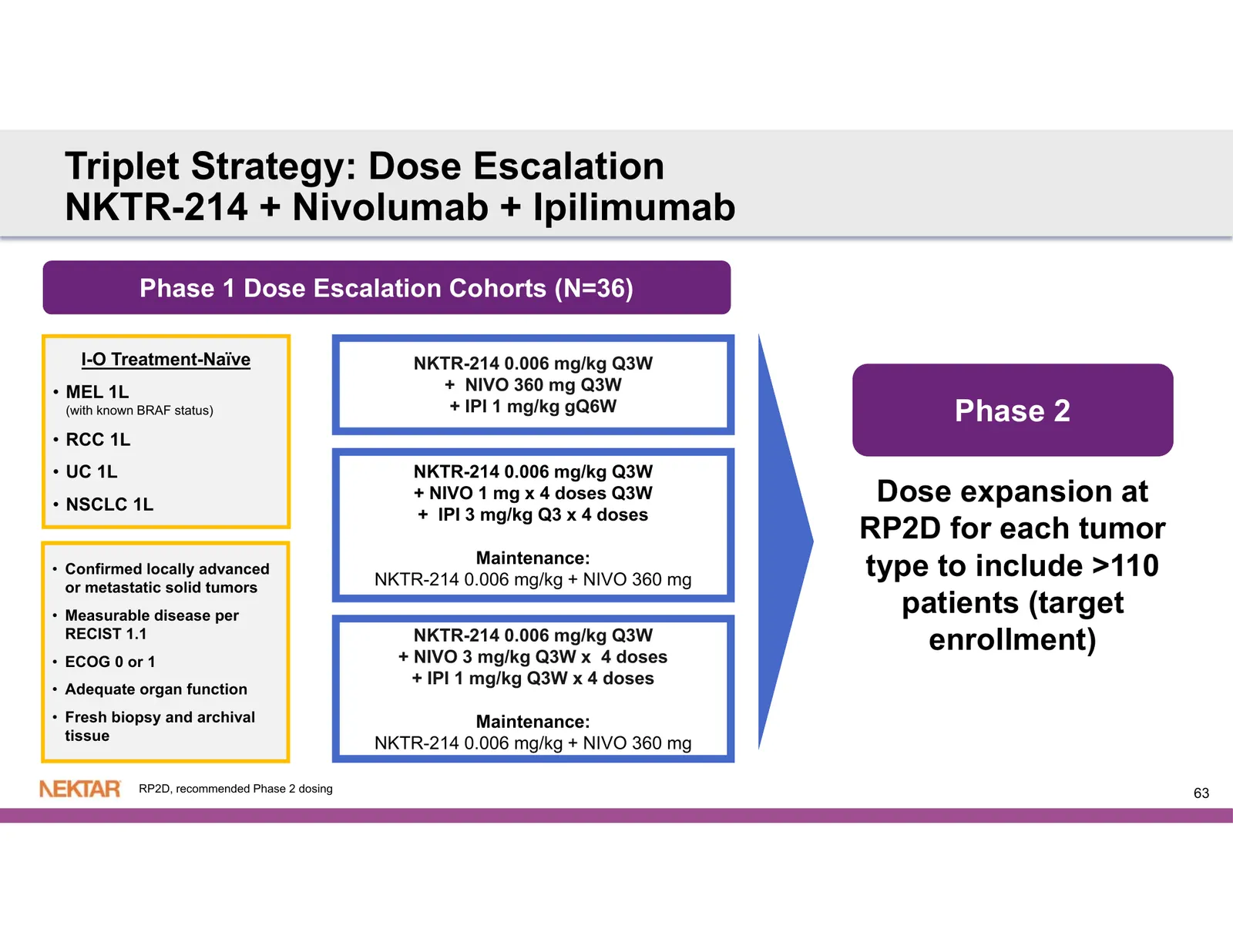
Slide 63: Triplet Strategy: NKTR-214 + Nivolumab + Ipilimumab
Triplet Strategy: Dose Escalation NKTR-214 + Nivolumab + Ipilimumab Phase 1 Dose Escalation Cohorts (N=36) I-O Treatment-Naïve NKTR-214 0.006 mg/kg Q3W • MEL 1L + NIVO 360 mg Q3W (with known BRAF status) + IPI 1 mg/kg gQ6W Phase 2 • RCC 1L • UC 1L NKTR-214 0.006 mg/kg Q3W • NSCLC 1L + NIVO 1 mg x 4
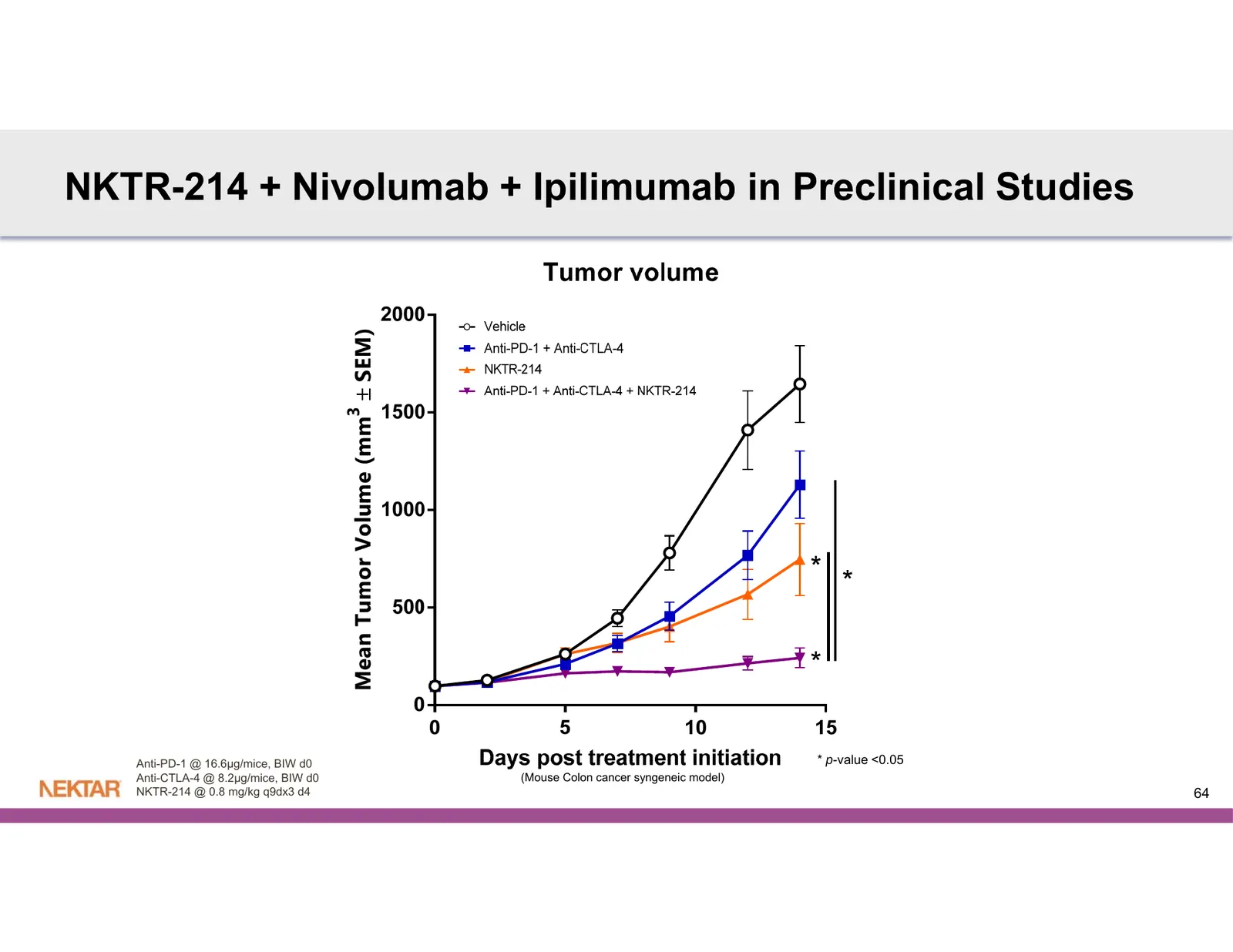
Slide 64: NKTR-214 + Nivolumab + Ipilimumab in Preclinical Studies
NKTR-214 + Nivolumab + Ipilimumab in Preclinical Studies Anti-PD-1 @ 16.6µg/mice, BIW d0 * p-value <0.05 Anti-CTLA-4 @ 8.2µg/mice, BIW d0 (Mouse Colon cancer syngeneic model) NKTR-214 @ 0.8 mg/kg q9dx3 d4 64
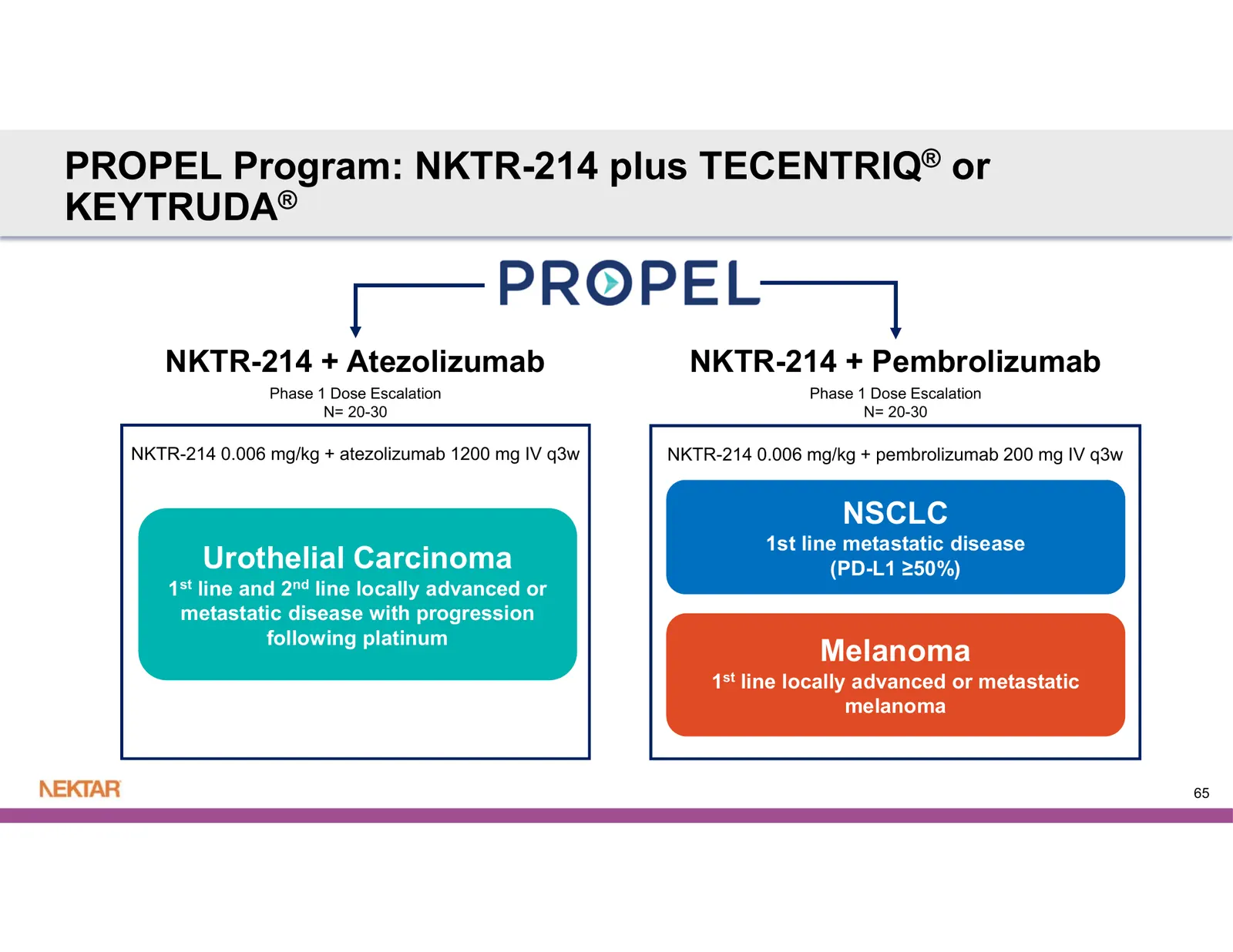
Slide 65: PROPEL Program: NKTR-214 plus TECENTRIQ or KEYTRUDA
PROPEL Program: NKTR-214 plus TECENTRIQ® or KEYTRUDA® NKTR-214 + Atezolizumab NKTR-214 + Pembrolizumab Phase 1 Dose Escalation Phase 1 Dose Escalation N= 20-30 N= 20-30 NKTR-214 0.006 mg/kg + atezolizumab 1200 mg IV q3w NKTR-214 0.006 mg/kg + pembrolizumab 200 mg IV q3w NSCLC 1st line metastatic dis
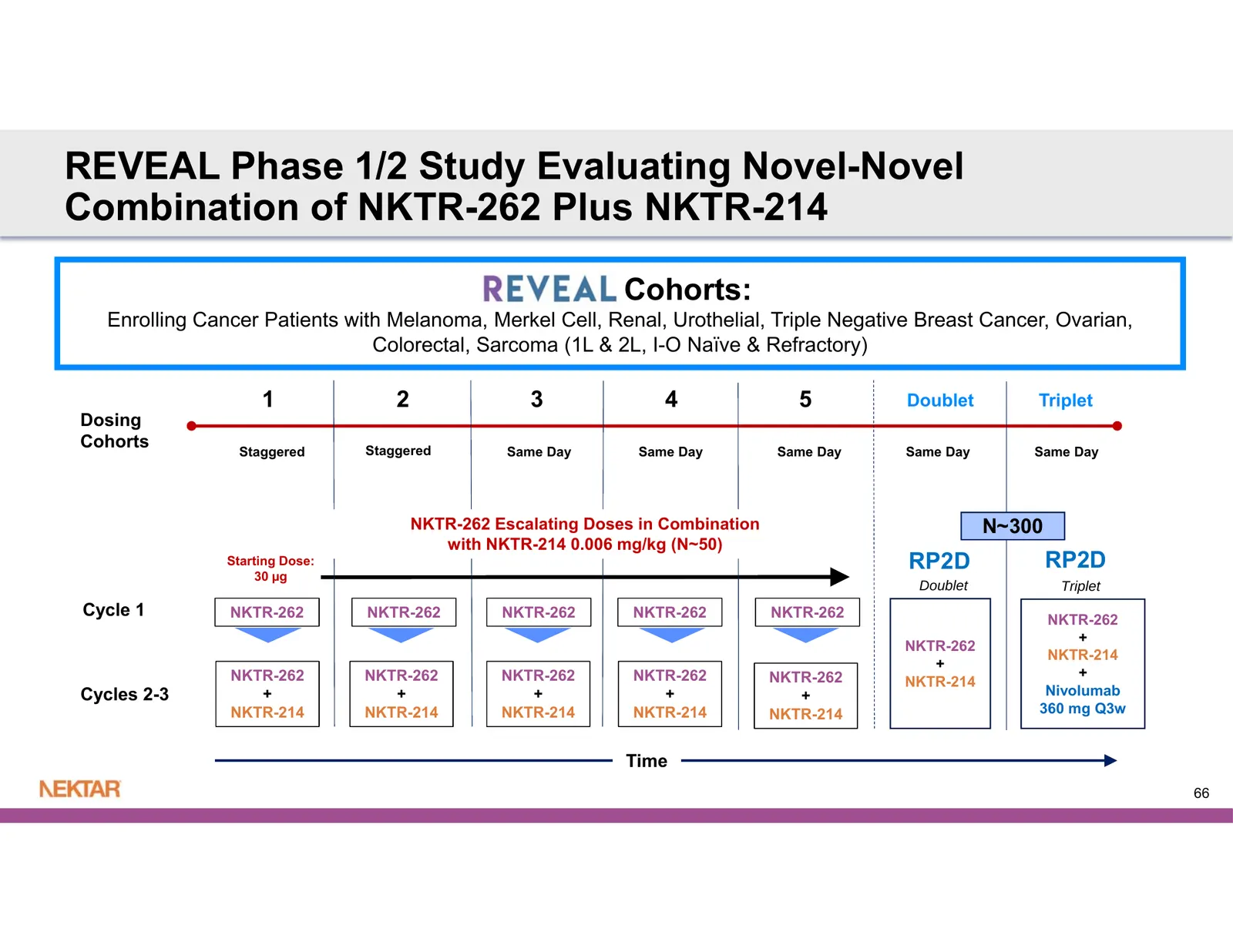
Slide 66: REVEAL Phase 1/2 Study of NKTR-262 Plus NKTR-214
REVEAL Phase 1/2 Study Evaluating Novel-Novel Combination of NKTR-262 Plus NKTR-214 Cohorts: Enrolling Cancer Patients with Melanoma, Merkel Cell, Renal, Urothelial, Triple Negative Breast Cancer, Ovarian, Colorectal, Sarcoma (1L & 2L, I-O Naïve & Refractory) 1 2 3 4 5 Doublet Triplet Dosing Cohorts
Slide 67: New Takeda and Nektar Clinical Collaboration
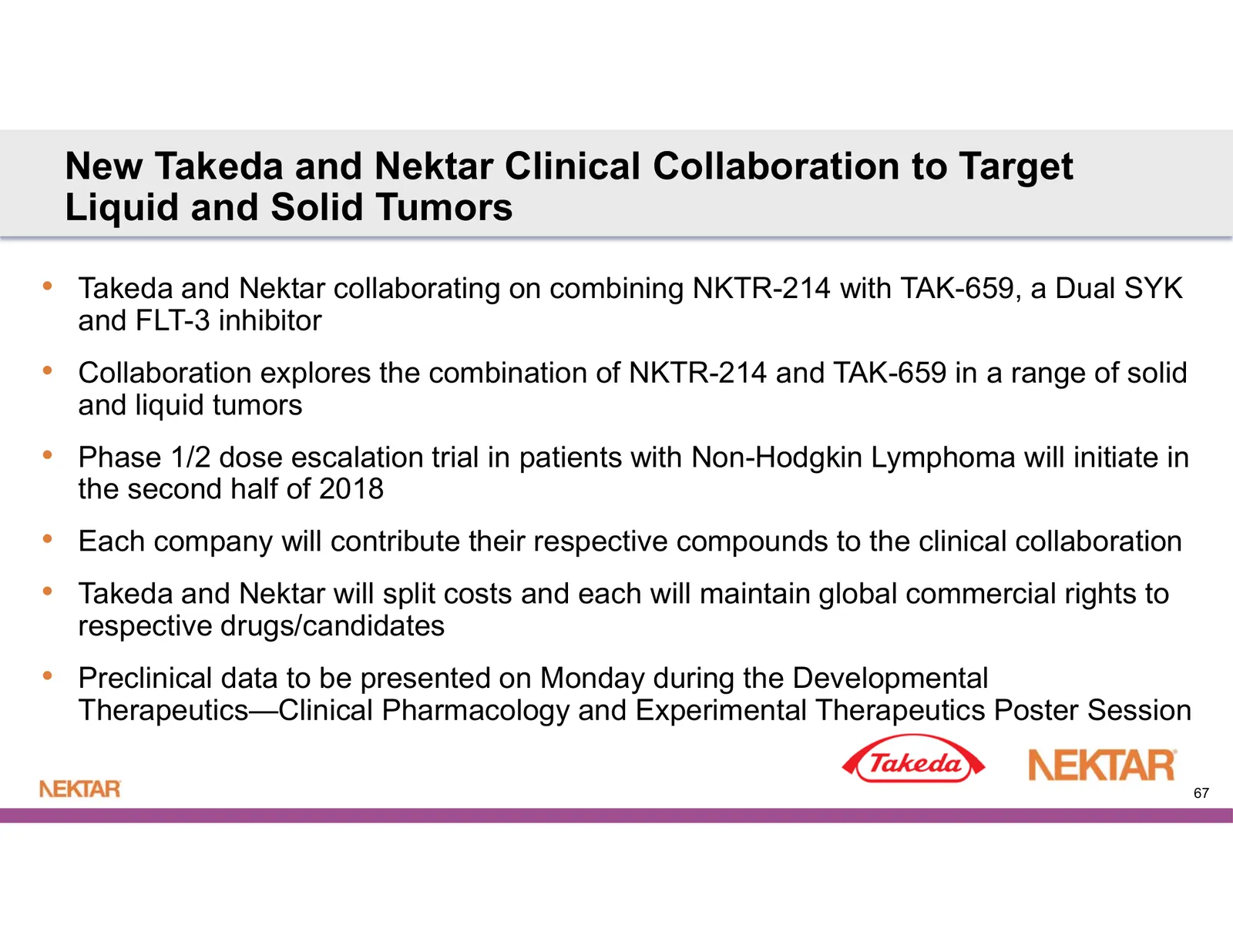
New Takeda and Nektar Clinical Collaboration to Target Liquid and Solid Tumors • Takeda and Nektar collaborating on combining NKTR-214 with TAK-659, a Dual SYK and FLT-3 inhibitor • Collaboration explores the combination of NKTR-214 and TAK-659 in a range of solid and liquid tumors • Phase 1/2 dose
Slide 68: Syndax: Clinical Collaboration in Relapsed/Refractory Melanoma
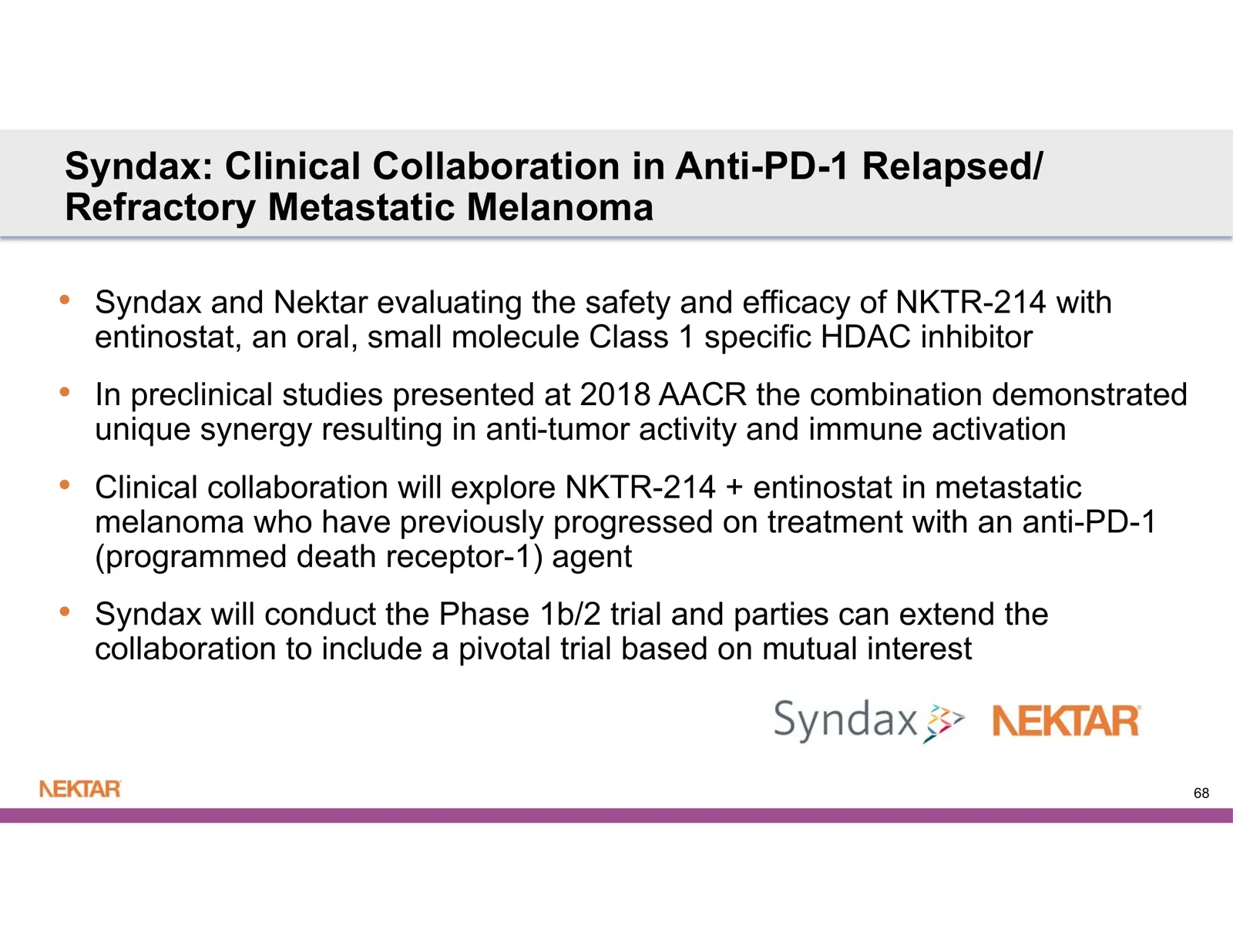
Syndax: Clinical Collaboration in Anti-PD-1 Relapsed/ Refractory Metastatic Melanoma • Syndax and Nektar evaluating the safety and efficacy of NKTR-214 with entinostat, an oral, small molecule Class 1 specific HDAC inhibitor • In preclinical studies presented at 2018 AACR the combination demonstrate

Slide 69: Q&A Panel
Q&A Panel Dr. Adi Diab Dr. Scott N. Gettinger Dr. Nizar M. Tannir Dr. Mary Tagliaferri Dr. Jonathan Zalevsky Assistant Professor Associate Professor of Professor of Chief Medical Officer Chief Scientific Officer of Melanoma Medical Oncology Yale Genitourinary Senior Vice President, Senior Vice Medic
Source: Internet Archive copy of nektar.com
More decks from Nektar Therapeutics
 EADV Analyst and Investor Event 202638 slides · Oct 1, 2026
 Investor Presentation (September 2026)70 slides · September 2026
 Investor Presentation (April 2026)36 slides · Apr 20, 2026
 Technical Presentation (February 2026)37 slides · Feb 10, 2026
 Technical Presentation (December 2025)38 slides · Dec 16, 2025
 ACAAI Annual Scientific Meeting 202515 slides · Nov 8, 2025