Hexima Ltd · ASX:HXL
Hexima — Corporate Update (October 2016)
27 slides from Hexima's corporate update, October 2016

Slide 1: Shareholder Update Q3 2016
4 Shareholder Update Q3 2016
Slide 2: Forward looking statements
Forward looking statements Certain statements in this presentation relate to the future, including forward looking statements relating to Hexima’s future expectations, beliefs, goals, plans, prospects, financial position and strategy. These forward looking statements involve known and unknown risks,
Slide 3: Hexima Limited
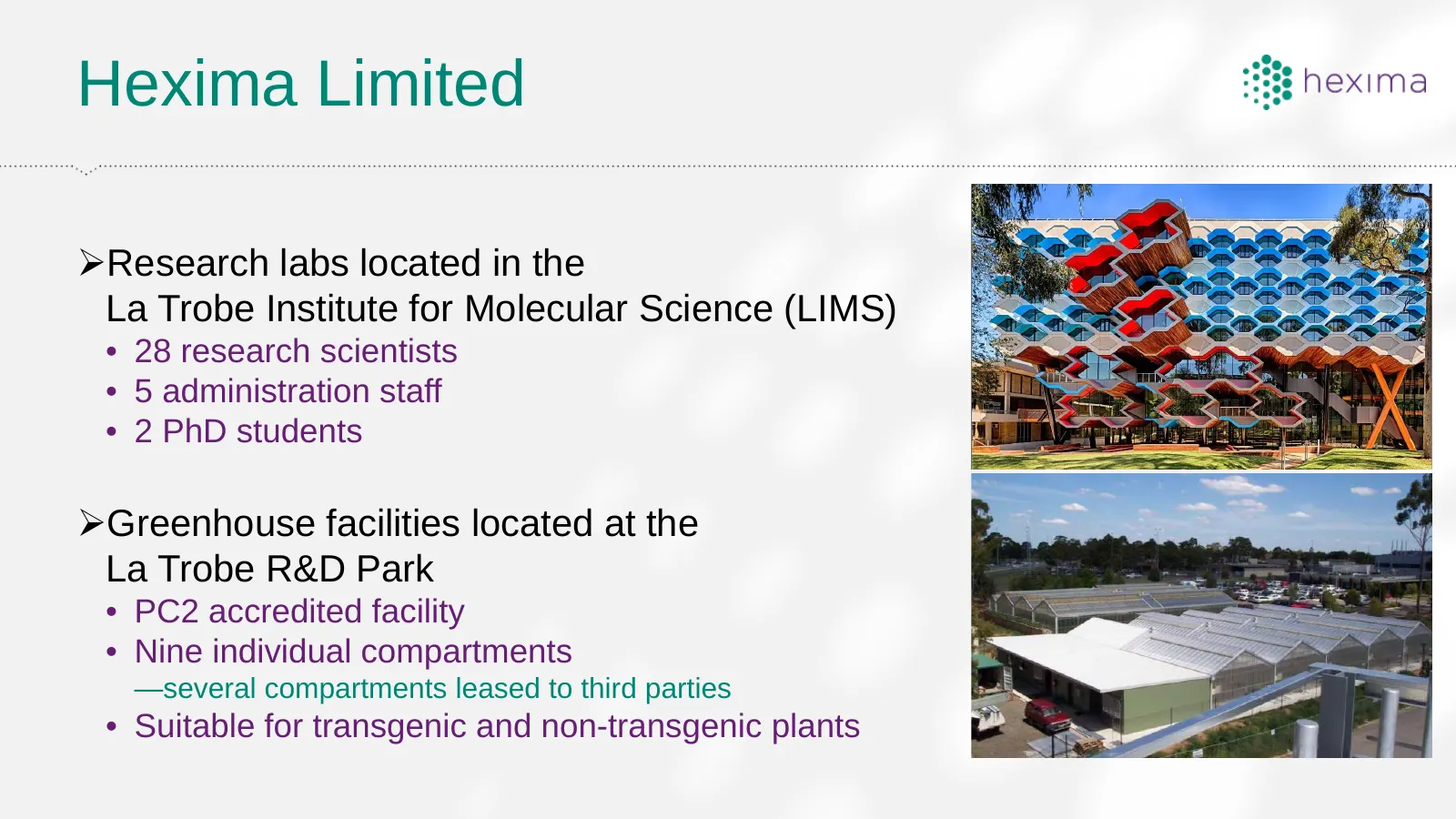
Hexima Limited Research labs located in the La Trobe Institute for Molecular Science (LIMS) • 28 research scientists • 5 administration staff • 2 PhD students Greenhouse facilities located at the La Trobe R&D Park • PC2 accredited facility • Nine individual compartments —several compartments lease
Slide 4: Hexima's technology platforms
Hexima’s technology platforms Antifungal • Human applications – fungal nail infections (onychomycosis) • Plant applications – transgenic crops, fungicides for seed coatings and crop sprays Income generating programs • Insecticidal gene discovery program – crop protection • Leasing of greenhouse fa
Slide 5: Plant antifungal
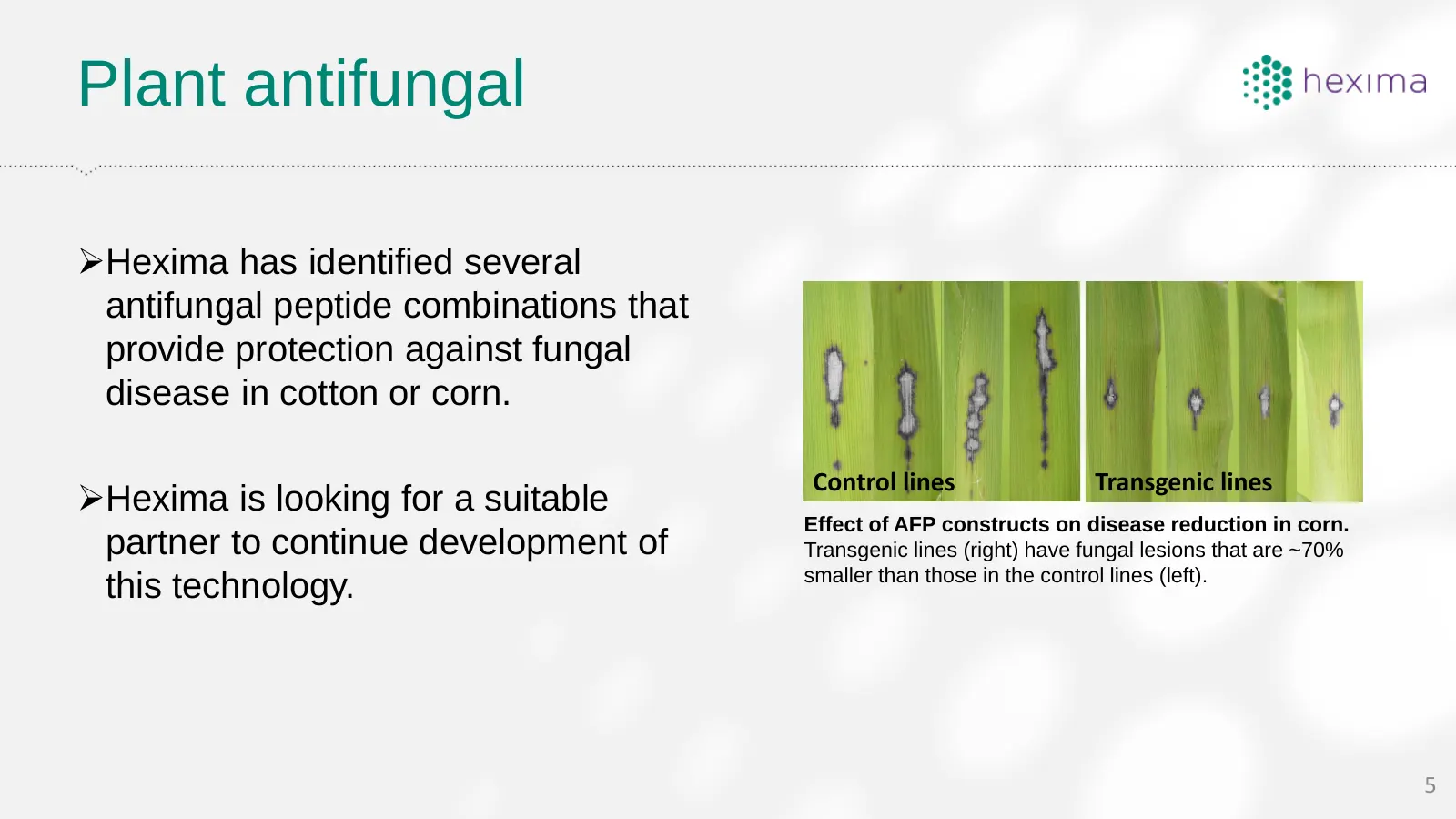
Plant antifungal Hexima has identified several antifungal peptide combinations that provide protection against fungal disease in cotton or corn. Control lines Transgenic lines Hexima is looking for a suitable Effect of AFP constructs on disease reduction in corn. partner to continue development of
Slide 6: Insecticidal gene discovery program
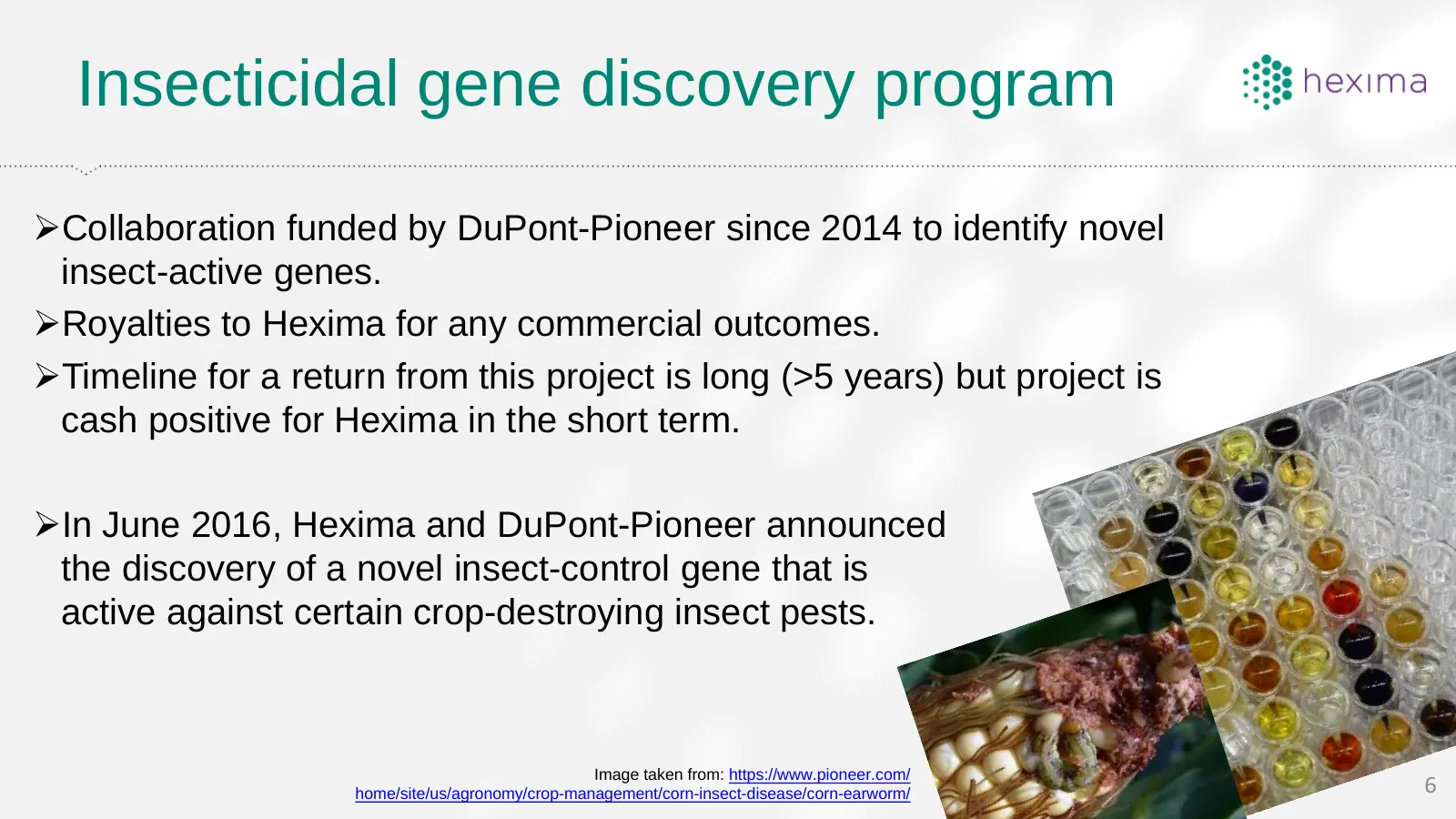
Insecticidal gene discovery program Collaboration funded by DuPont-Pioneer since 2014 to identify novel insect-active genes. Royalties to Hexima for any commercial outcomes. Timeline for a return from this project is long (>5 years) but project is cash positive for Hexima in the short term. In J
Slide 7: Multi Gene Expression Vehicle (MGEV)
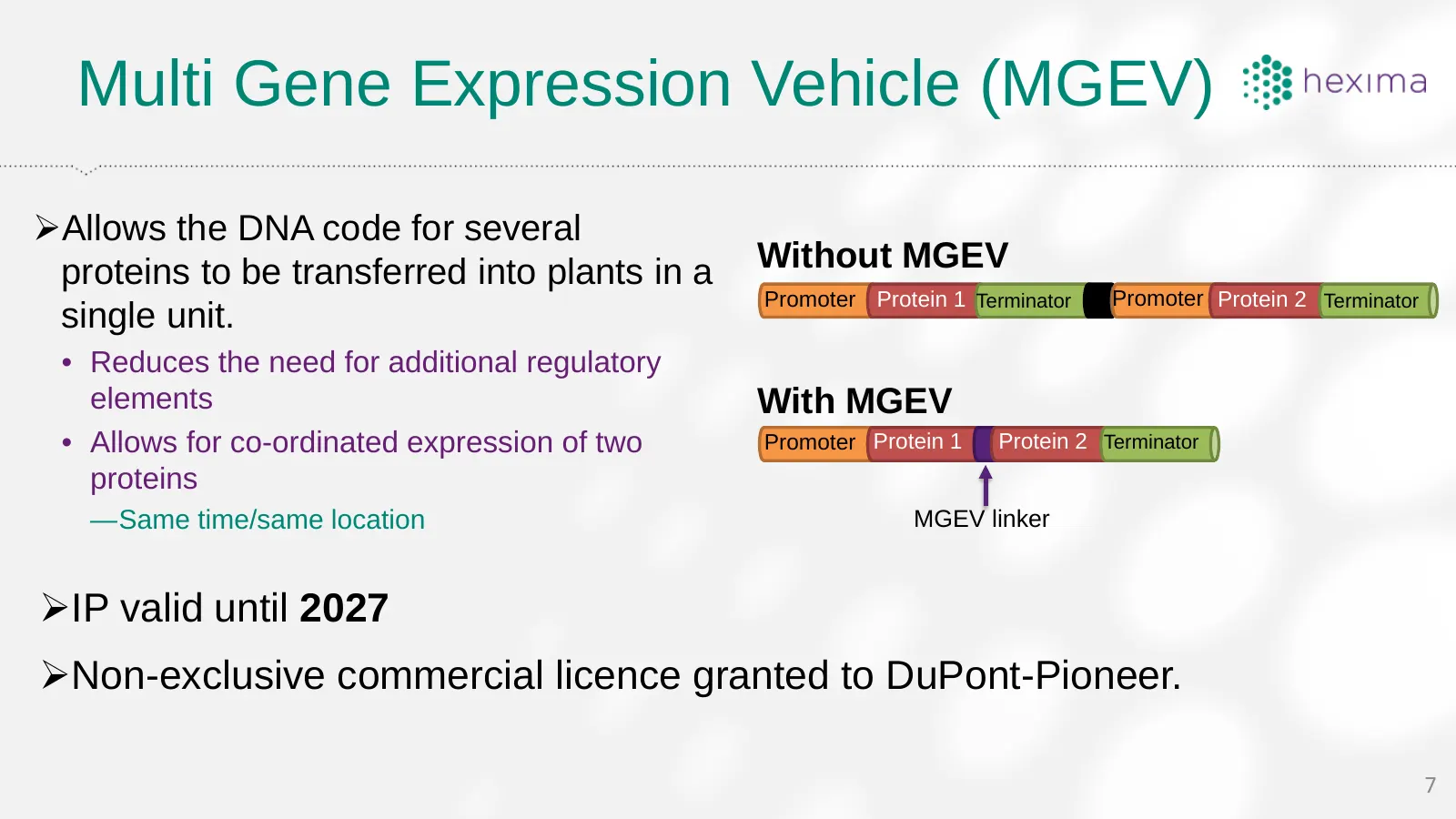
Multi Gene Expression Vehicle (MGEV) Allows the DNA code for several proteins to be transferred into plants in a Without MGEV Promoter Protein 1 Terminator Promoter Protein 2 Terminator single unit. • Reduces the need for additional regulatory elements With MGEV • Allows for co-ordinated expression
Slide 8: Financial Position
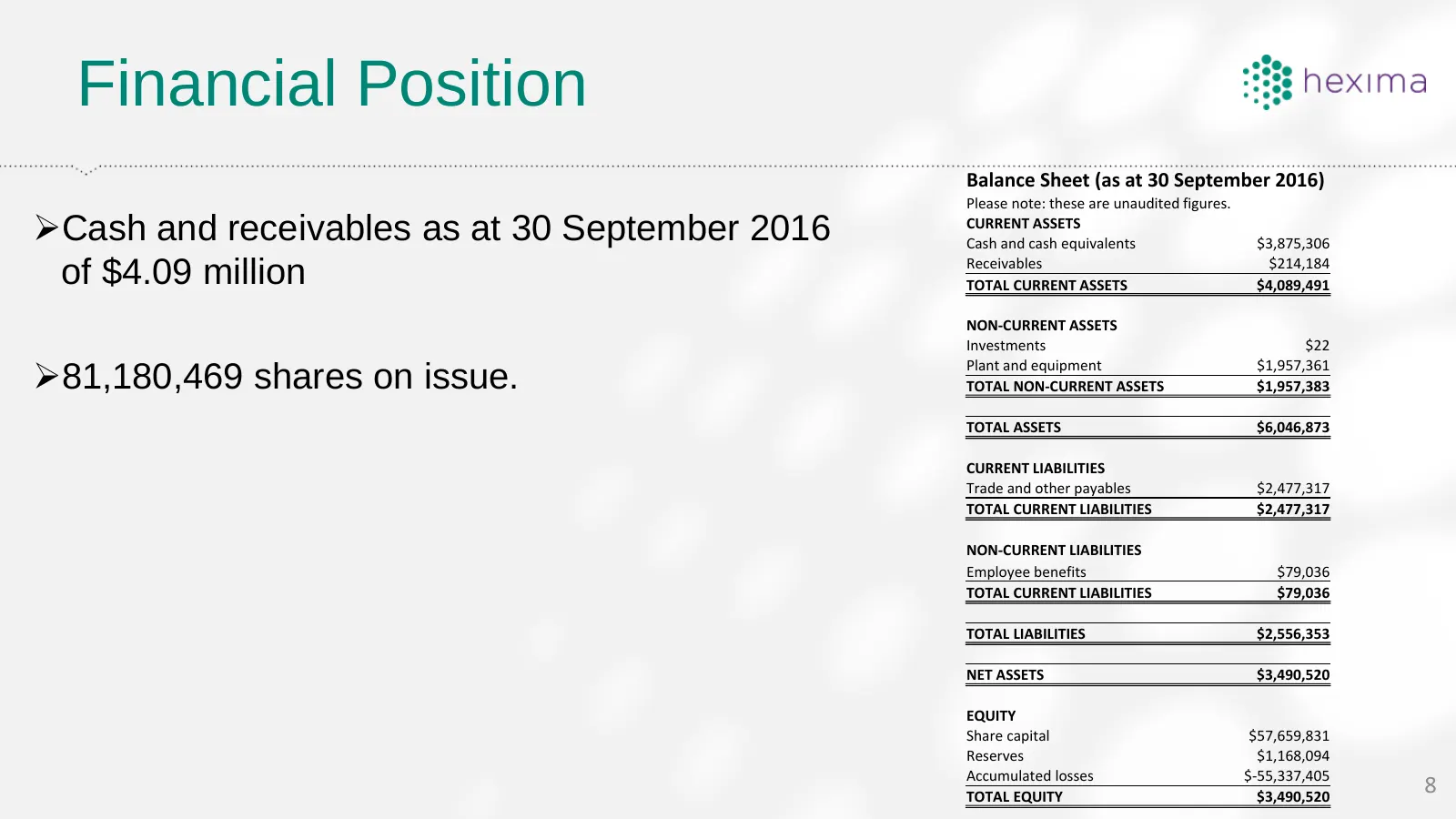
Financial Position Balance Sheet (as at 30 September 2016) Please note: these are unaudited figures. Cash and receivables as at 30 September 2016 CURRENT ASSETS Cash and cash equivalents $3,875,306 Receivables $214,184 of $4.09 million TOTAL CURRENT ASSETS $4,089,491 NON-CURRENT ASSETS Investments
Slide 9: HXP124: an onychomycosis therapeutic opportunity
HXP124: an onychomycosis therapeutic opportunity
Slide 10: Global onychomycosis market
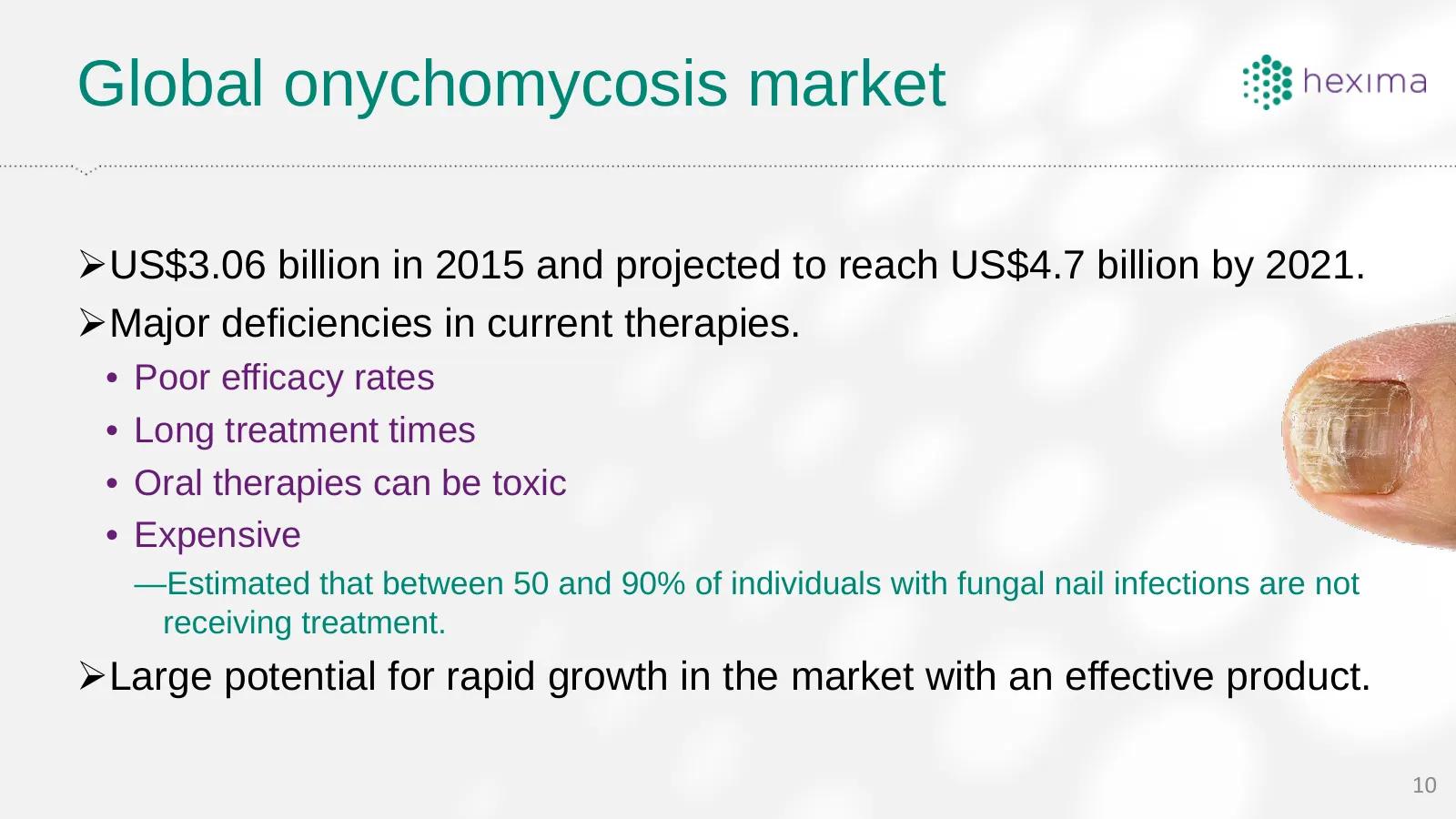
Global onychomycosis market US$3.06 billion in 2015 and projected to reach US$4.7 billion by 2021. Major deficiencies in current therapies. • Poor efficacy rates • Long treatment times • Oral therapies can be toxic • Expensive —Estimated that between 50 and 90% of individuals with fungal nail infe
Slide 11: Global onychomycosis products
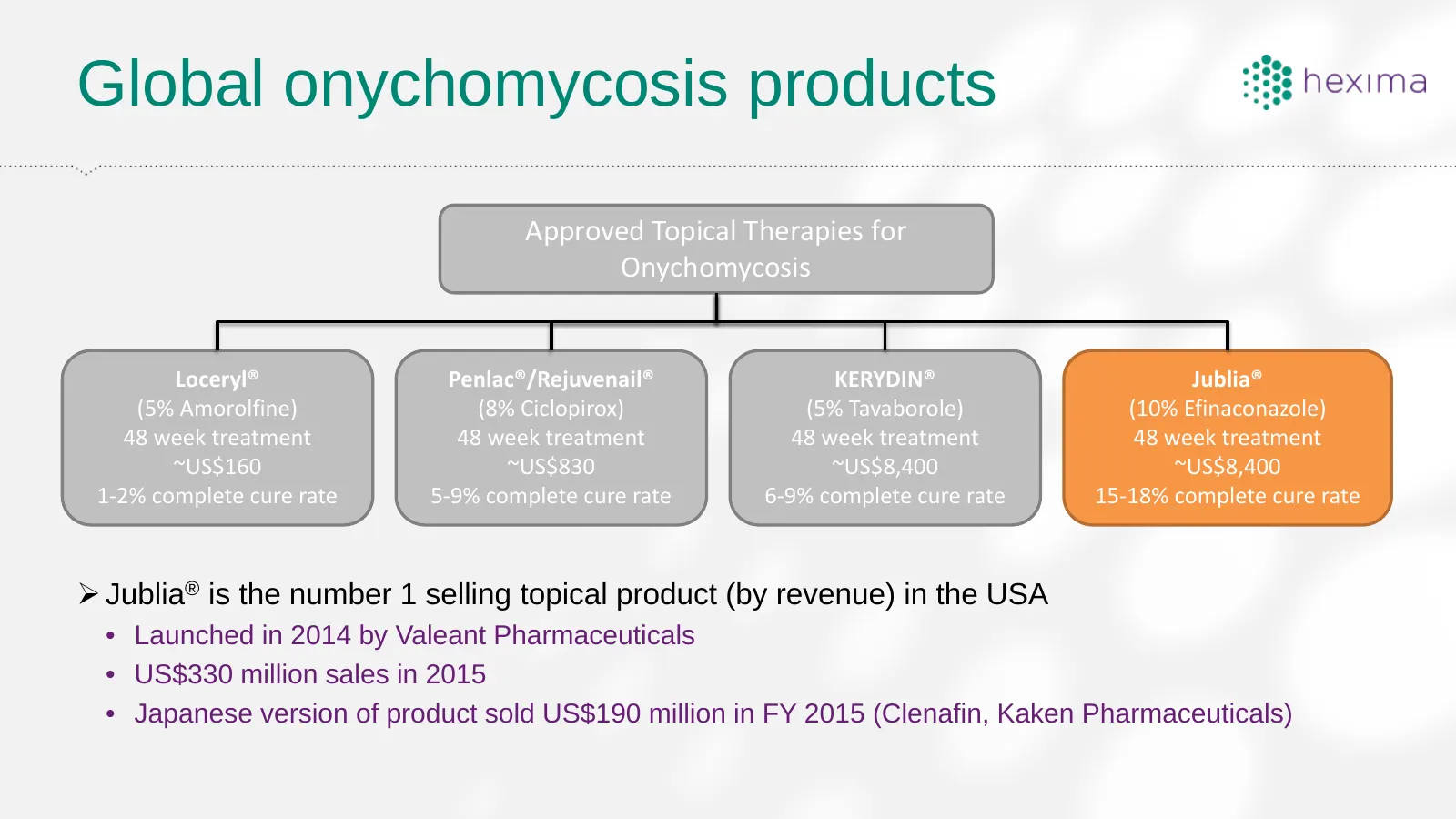
Global onychomycosis products Approved Topical Therapies for Onychomycosis Loceryl® Penlac®/Rejuvenail® KERYDIN® Jublia® (5% Amorolfine) (8% Ciclopirox) (5% Tavaborole) (10% Efinaconazole) 48 week treatment 48 week treatment 48 week treatment 48 week treatment ~US$160 ~US$830 ~US$8,400 ~US$8,400 1-2
Slide 12: HXP124
HXP124 Hexima is developing a novel therapeutic (HXP124) for the treatment of fungal nail infections (onychomycosis). HXP124 has the potential to be superior to current therapies. • Potent, broad-spectrum antifungal molecule —Member of the Plant Defensin class of molecules • Readily penetrates nai
Slide 13: Plant defensins
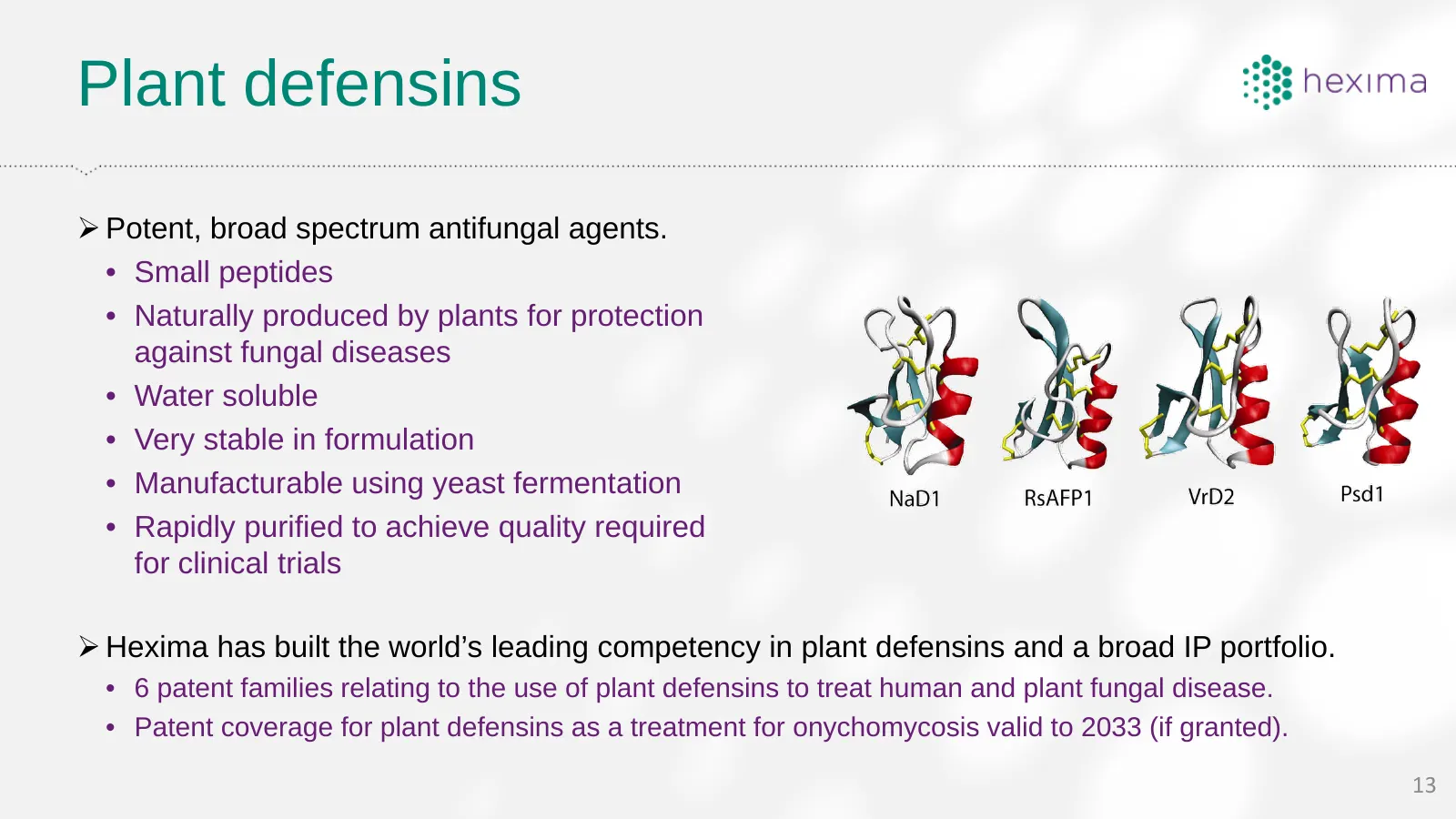
Plant defensins Potent, broad spectrum antifungal agents. • Small peptides • Naturally produced by plants for protection against fungal diseases • Water soluble • Very stable in formulation • Manufacturable using yeast fermentation • Rapidly purified to achieve quality required for clinical trials
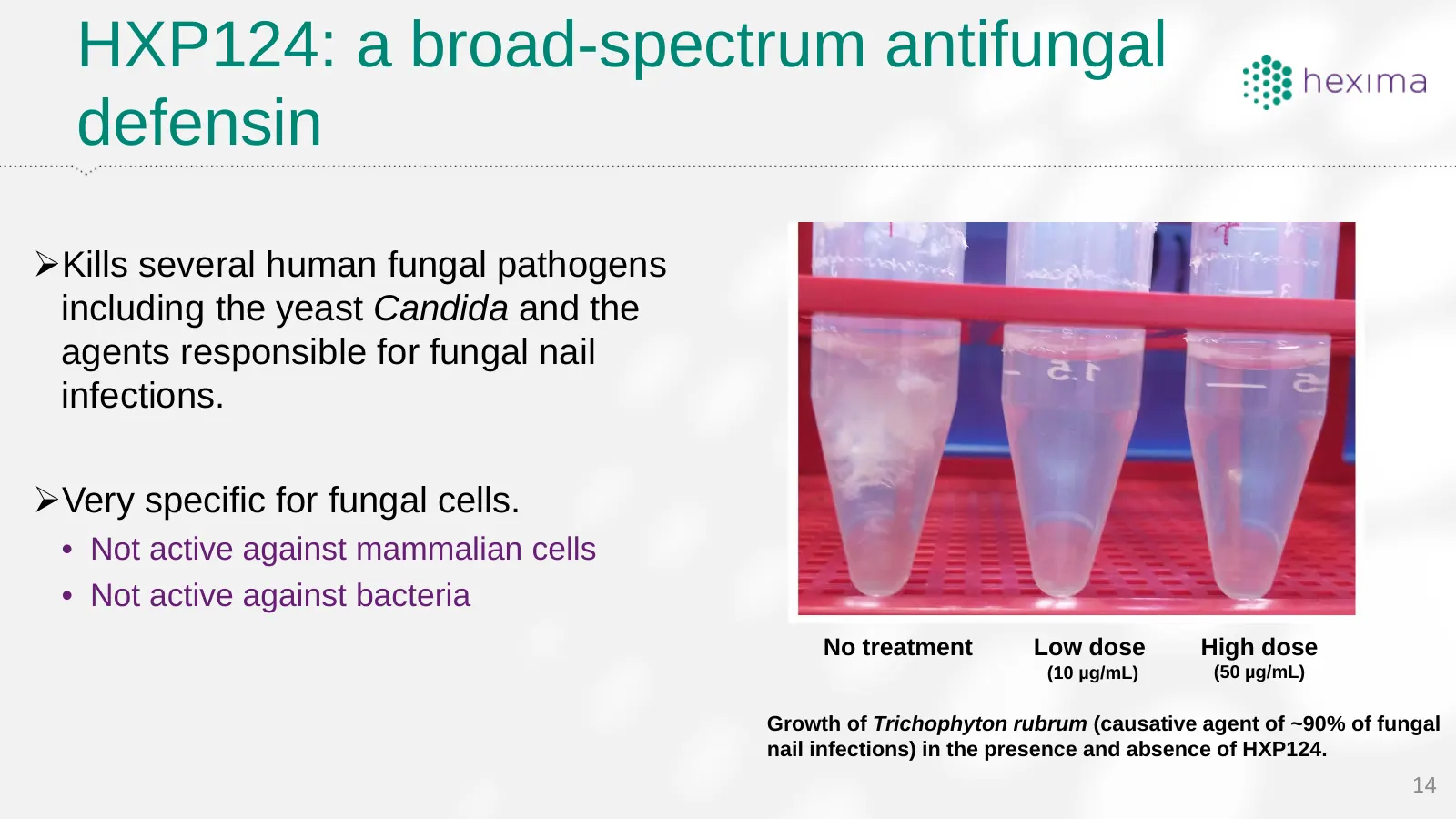
Slide 14: HXP124: a broad-spectrum antifungal defensin
HXP124: a broad-spectrum antifungal defensin Kills several human fungal pathogens including the yeast Candida and the agents responsible for fungal nail infections. Very specific for fungal cells. • Not active against mammalian cells • Not active against bacteria No treatment Low dose High dose (1
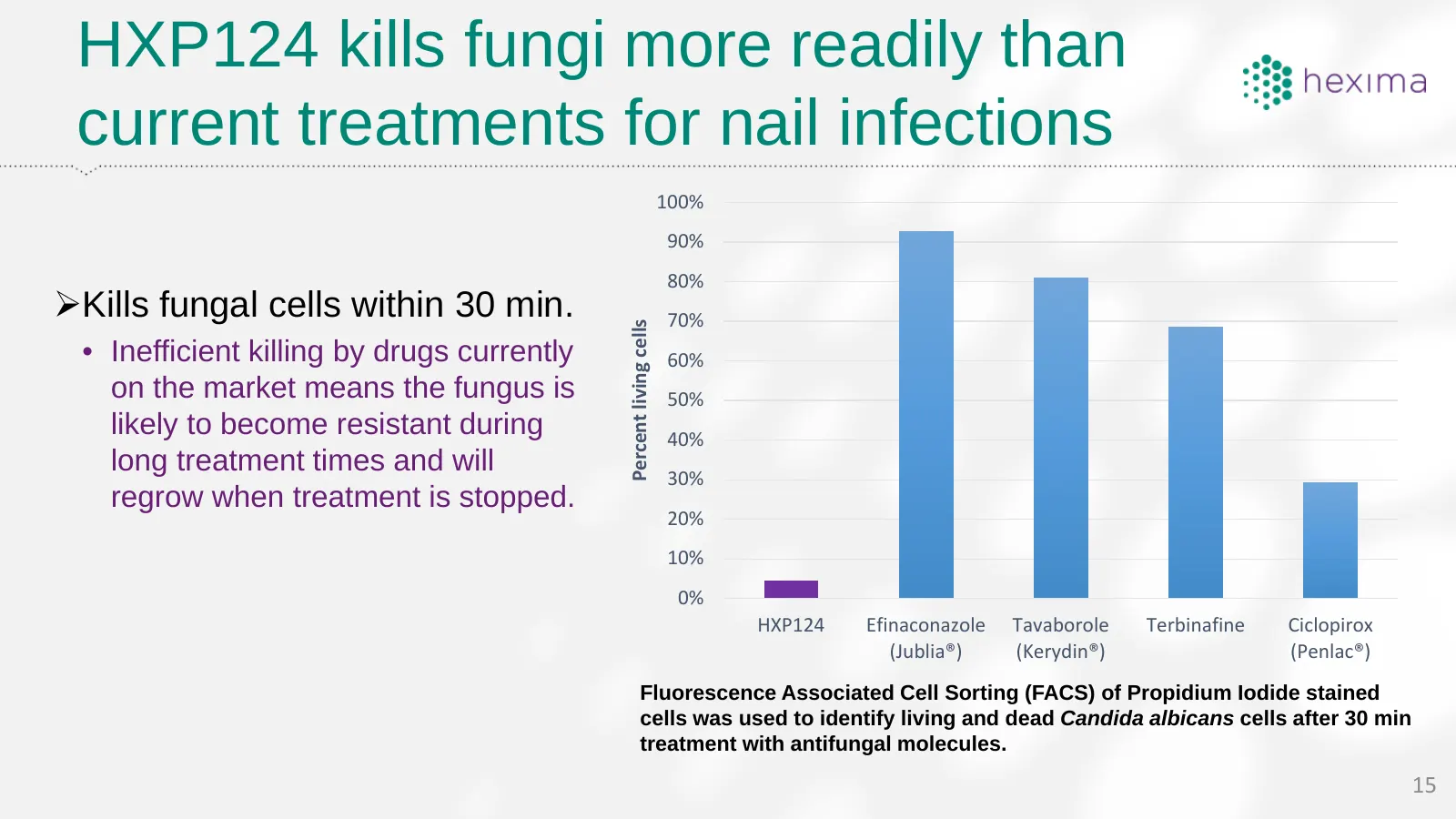
Slide 15: HXP124 kills fungi more readily than current treatments for nail infections
HXP124 kills fungi more readily than current treatments for nail infections 100% 90% 80% Kills fungal cells within 30 min. 70% Percent living cells • Inefficient killing by drugs currently 60% on the market means the fungus is 50% likely to become resistant during 40% long treatment times and will
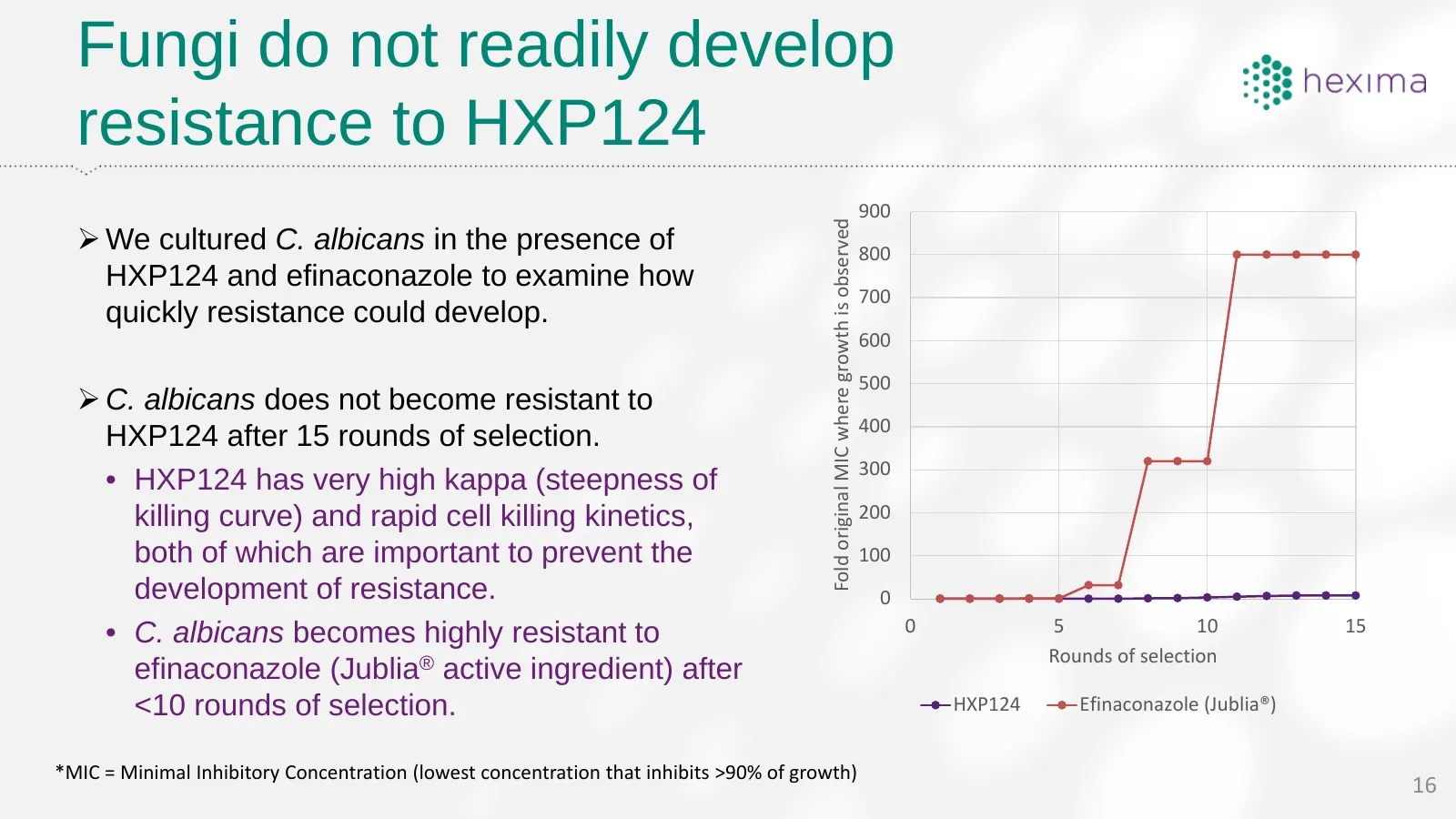
Slide 16: Fungi do not readily develop resistance to HXP124
Fungi do not readily develop resistance to HXP124 900 Fold original MIC where growth is observed We cultured C. albicans in the presence of 800 HXP124 and efinaconazole to examine how 700 quickly resistance could develop. 600 500 C. albicans does not become resistant to 400 HXP124 after 15 round
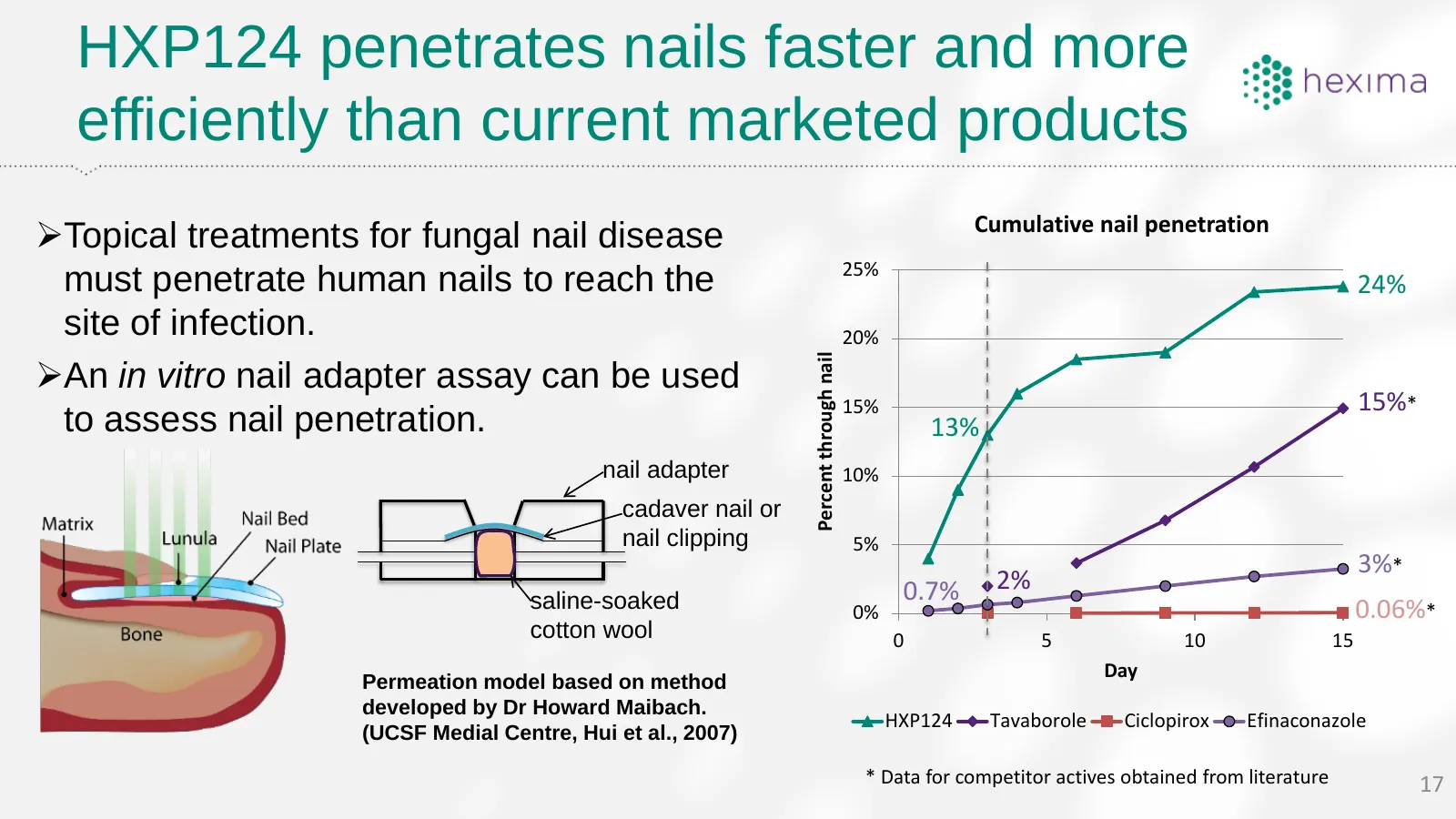
Slide 17: HXP124 penetrates nails faster and more efficiently than current marketed products
HXP124 penetrates nails faster and more efficiently than current marketed products Cumulative nail penetration Topical treatments for fungal nail disease 25% must penetrate human nails to reach the 24% site of infection. 20% Percent through nail An in vitro nail adapter assay can be used 15% 15%*
Slide 18: HXP124 accumulates in the nail plate
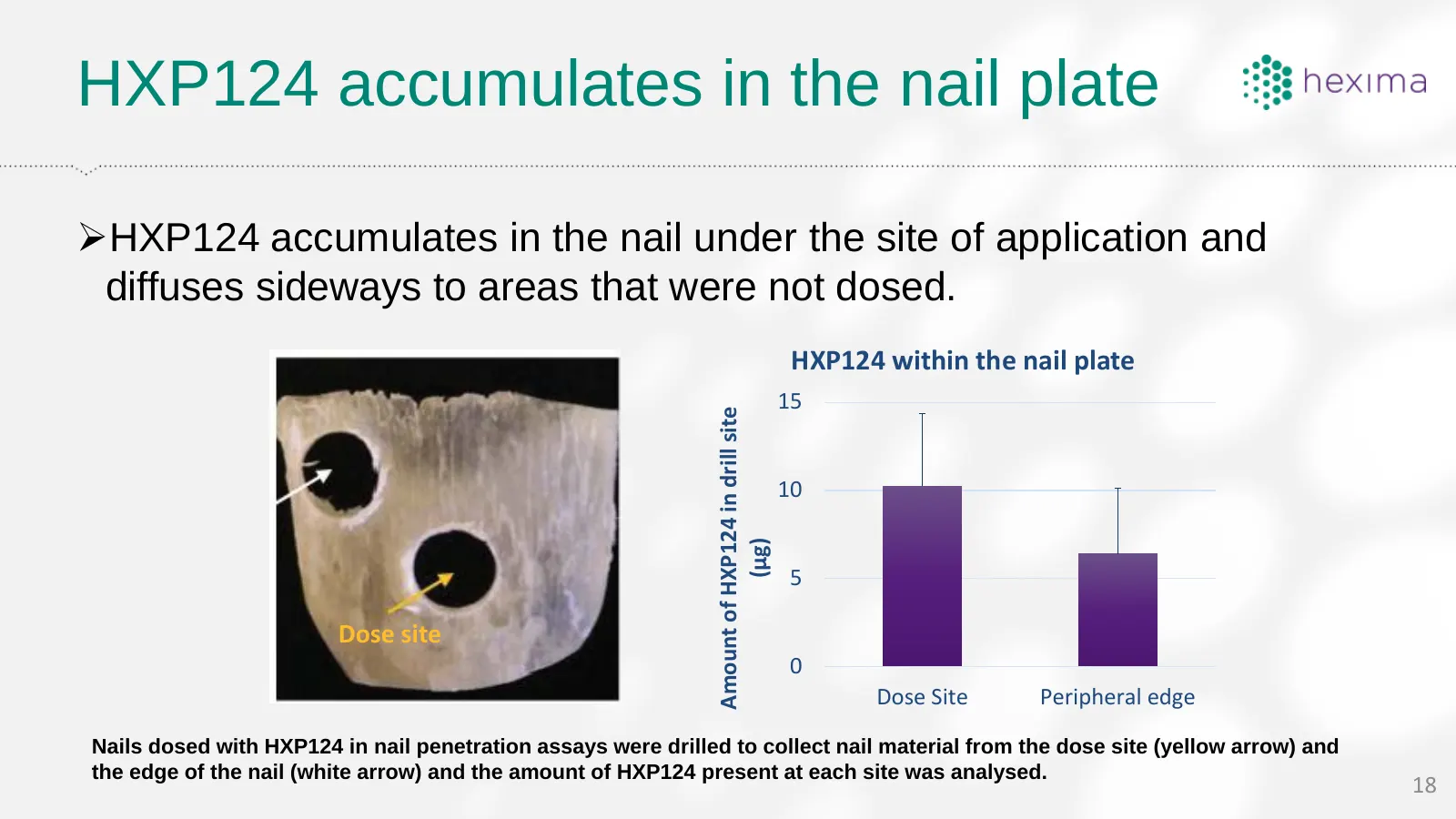
HXP124 accumulates in the nail plate HXP124 accumulates in the nail under the site of application and diffuses sideways to areas that were not dosed. HXP124 within the nail plate 15 Amount of HXP124 in drill site 10 (µg) 5 Dose site 0 Dose Site Peripheral edge Nails dosed with HXP124 in nail penetr
Slide 19: HXP124 is as effective as Jublia in an infected nail model
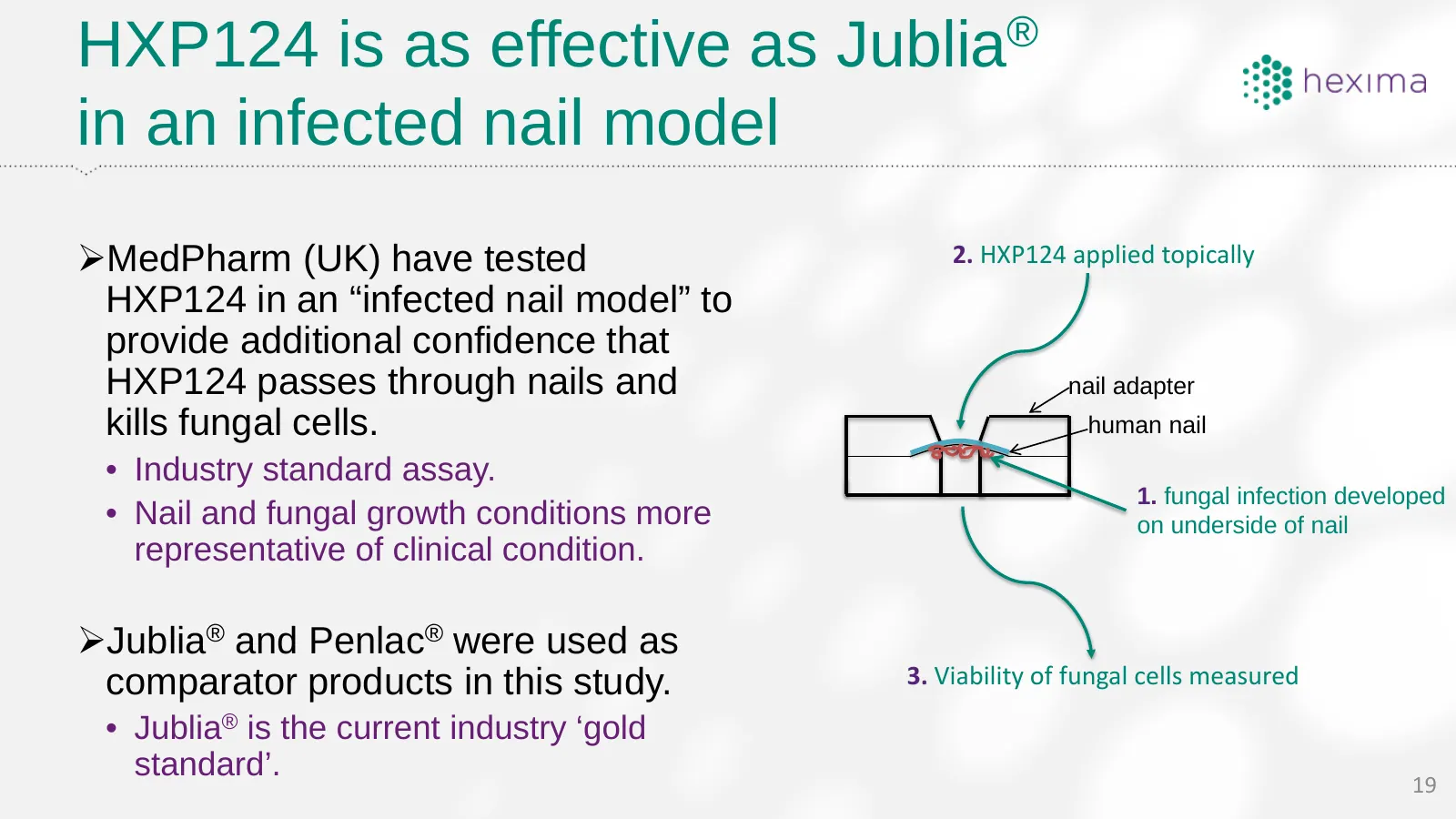
HXP124 is as effective as Jublia® in an infected nail model MedPharm (UK) have tested 2. HXP124 applied topically HXP124 in an “infected nail model” to provide additional confidence that HXP124 passes through nails and nail adapter kills fungal cells. human nail • Industry standard assay. 1. fungal
Slide 20: HXP124 is as effective as Jublia in an infected nail model
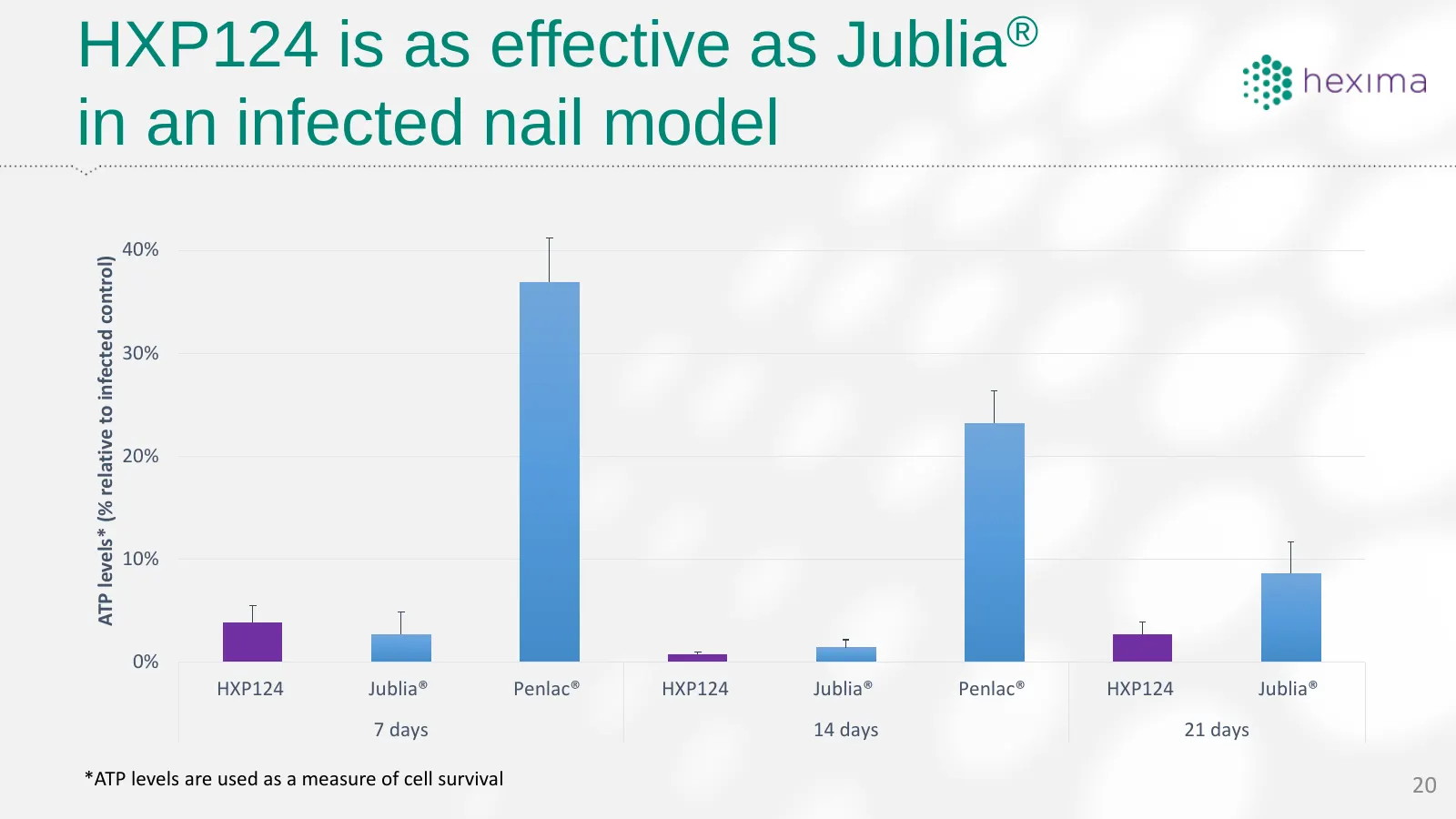
HXP124 is as effective as Jublia® in an infected nail model 40% ATP levels* (% relative to infected control) 30% 20% 10% 0% HXP124 Jublia® Penlac® HXP124 Jublia® Penlac® HXP124 Jublia® 7 days 14 days 21 days *ATP levels are used as a measure of cell survival 20
Slide 21: HXP124 can be produced rapidly and economically in Australia
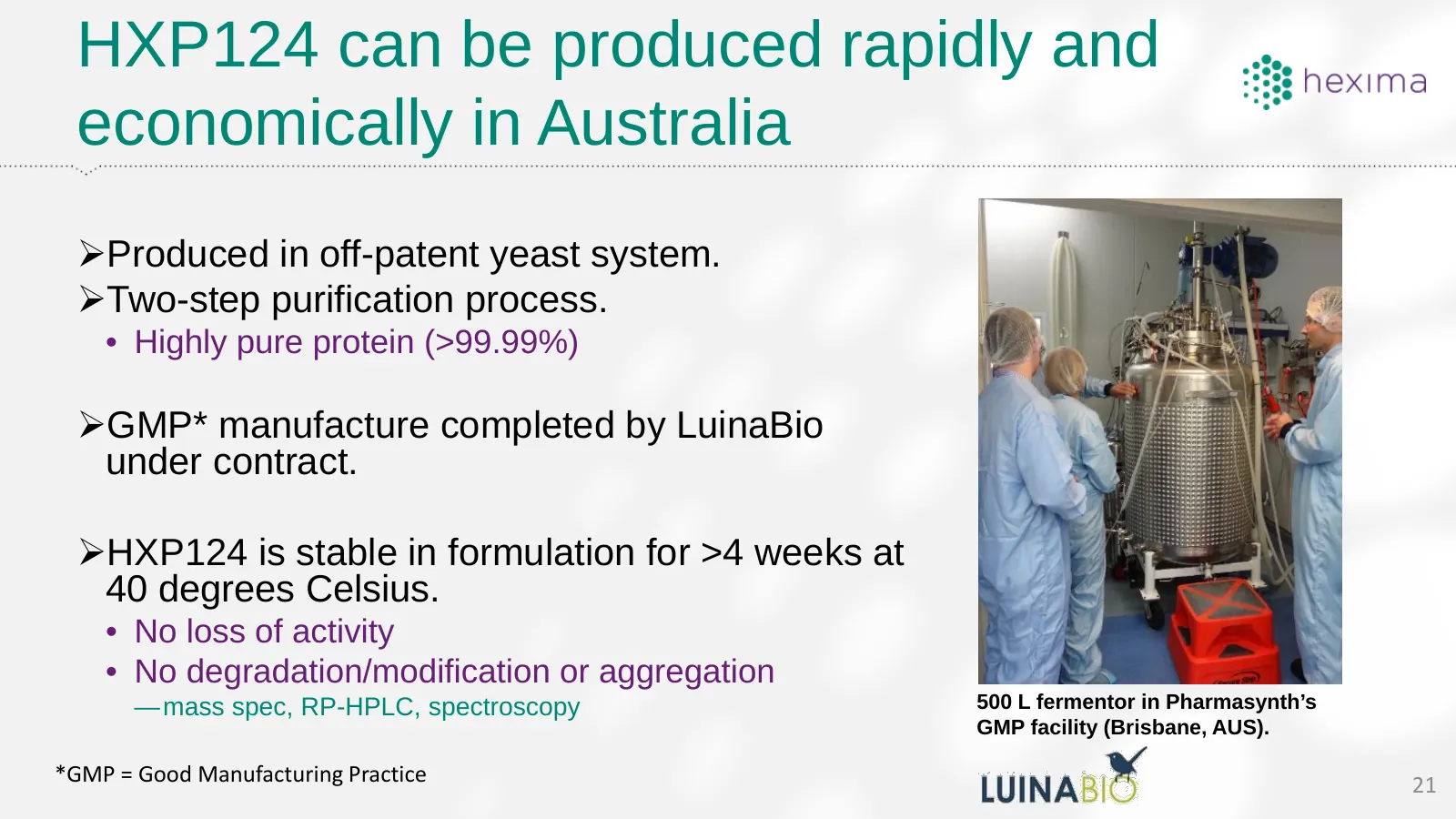
HXP124 can be produced rapidly and economically in Australia Produced in off-patent yeast system. Two-step purification process. • Highly pure protein (>99.99%) GMP* manufacture completed by LuinaBio under contract. HXP124 is stable in formulation for >4 weeks at 40 degrees Celsius. • No loss of
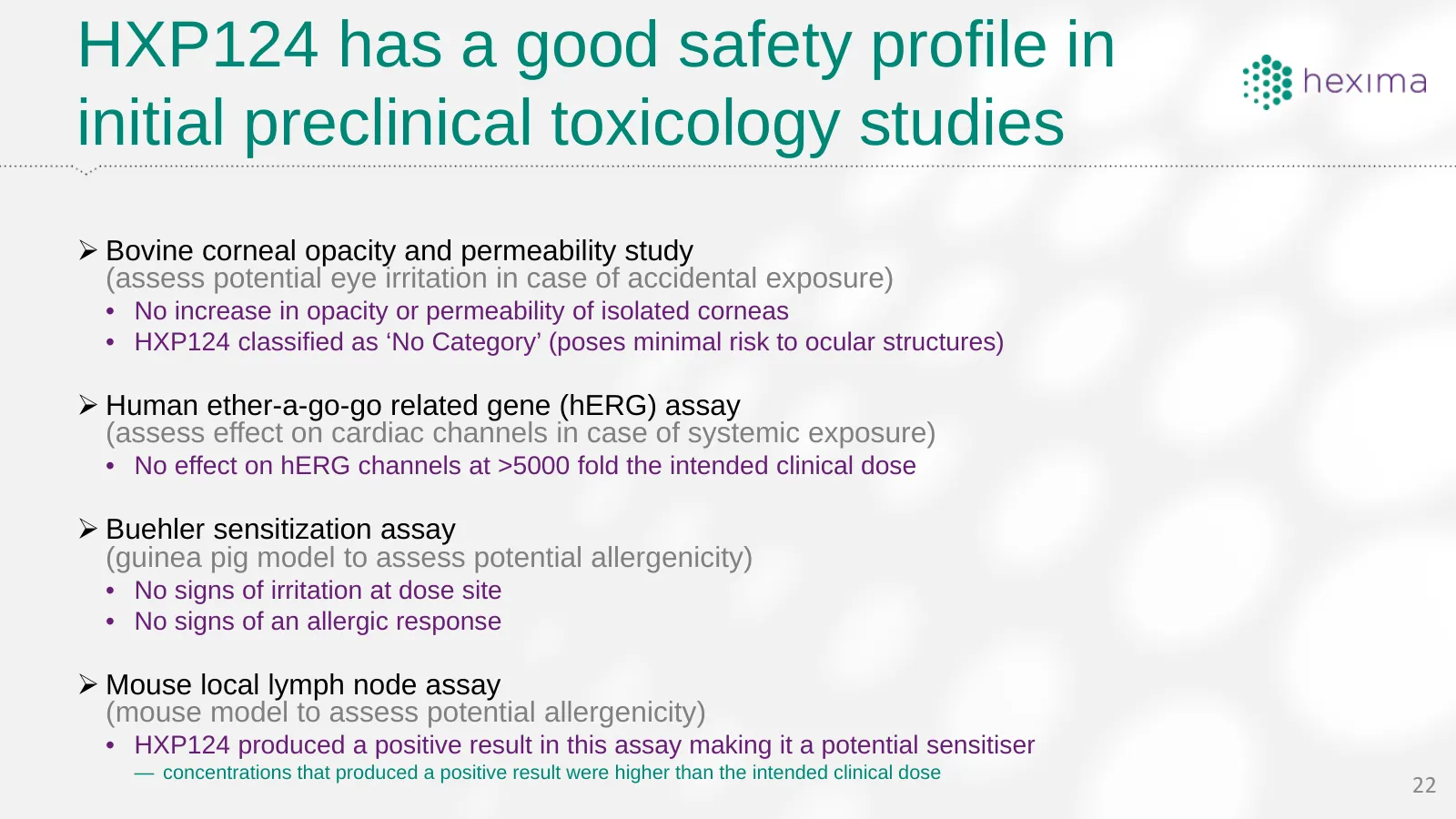
Slide 22: HXP124 has a good safety profile in initial preclinical toxicology studies
HXP124 has a good safety profile in initial preclinical toxicology studies Bovine corneal opacity and permeability study (assess potential eye irritation in case of accidental exposure) • No increase in opacity or permeability of isolated corneas • HXP124 classified as ‘No Category’ (poses minimal
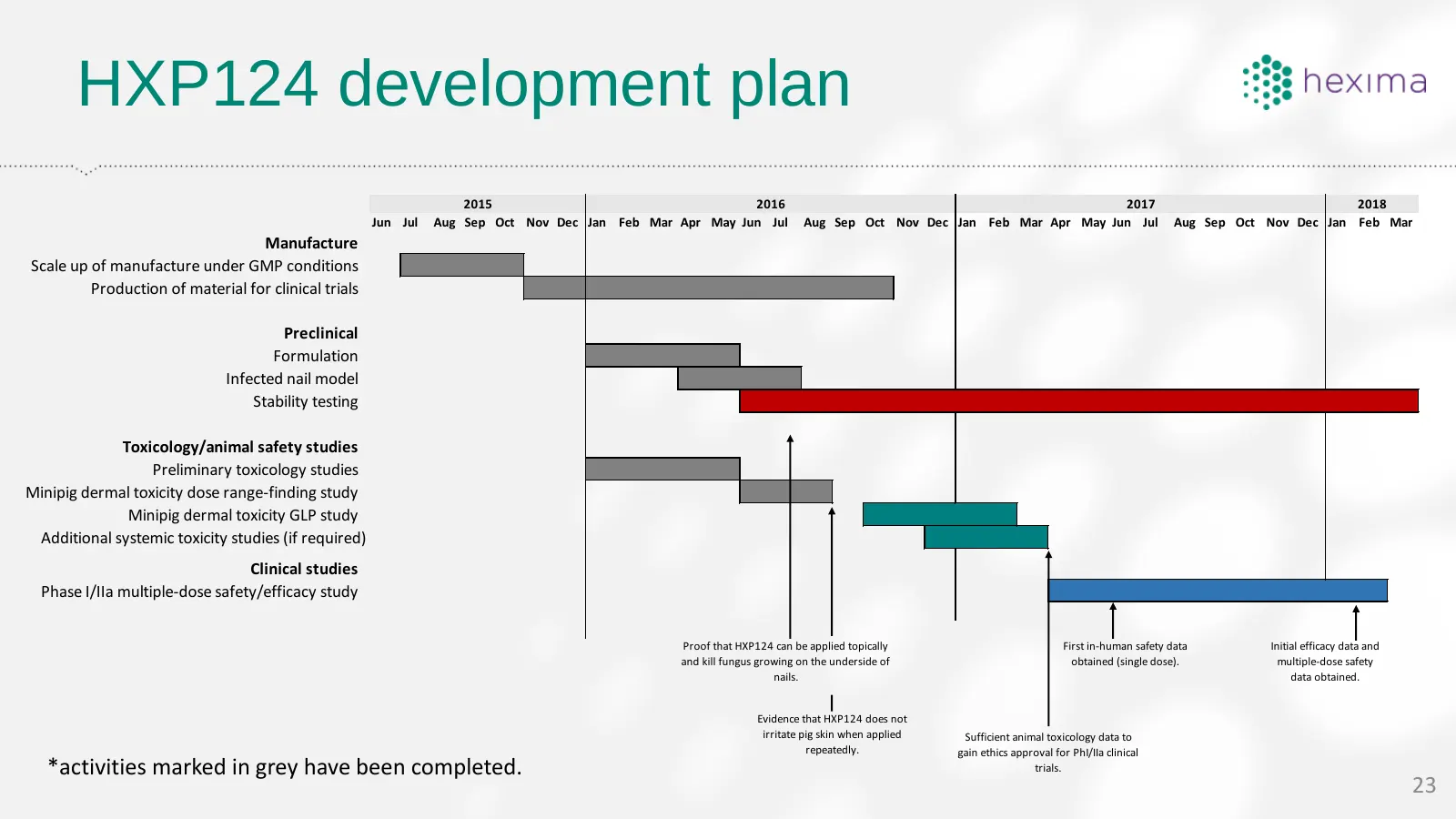
Slide 23: HXP124 development plan
HXP124 development plan 2015 2016 2017 2018 Jun Jul Aug Sep Oct Nov Dec Jan Feb Mar Apr May Jun Jul Aug Sep Oct Nov Dec Jan Feb Mar Apr May Jun Jul Aug Sep Oct Nov Dec Jan Feb Mar Manufacture Scale up of manufacture under GMP conditions Production of material for clinical trials Preclinical Formulat
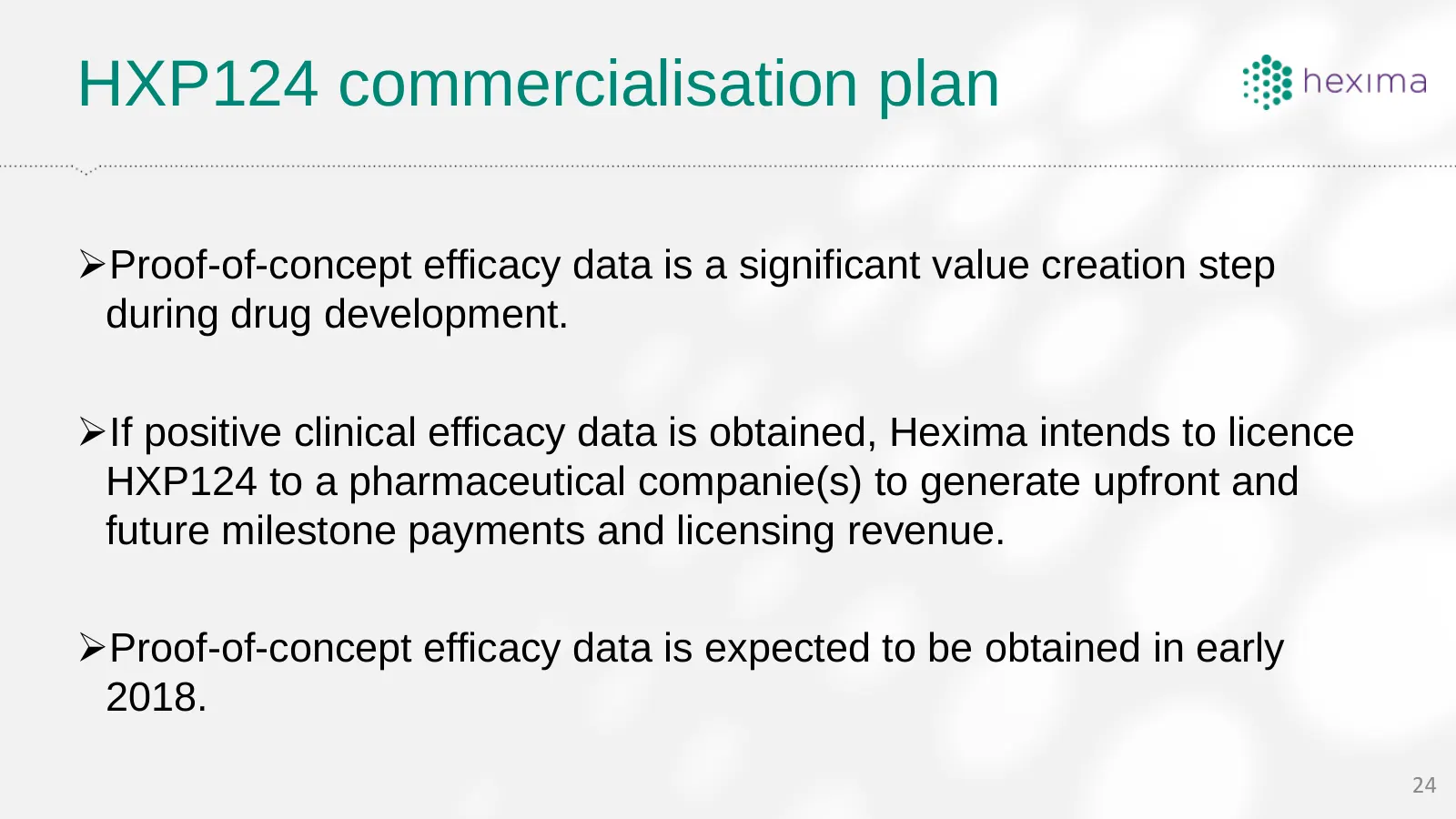
Slide 24: HXP124 commercialisation plan
HXP124 commercialisation plan Proof-of-concept efficacy data is a significant value creation step during drug development. If positive clinical efficacy data is obtained, Hexima intends to licence HXP124 to a pharmaceutical companie(s) to generate upfront and future milestone payments and licensin
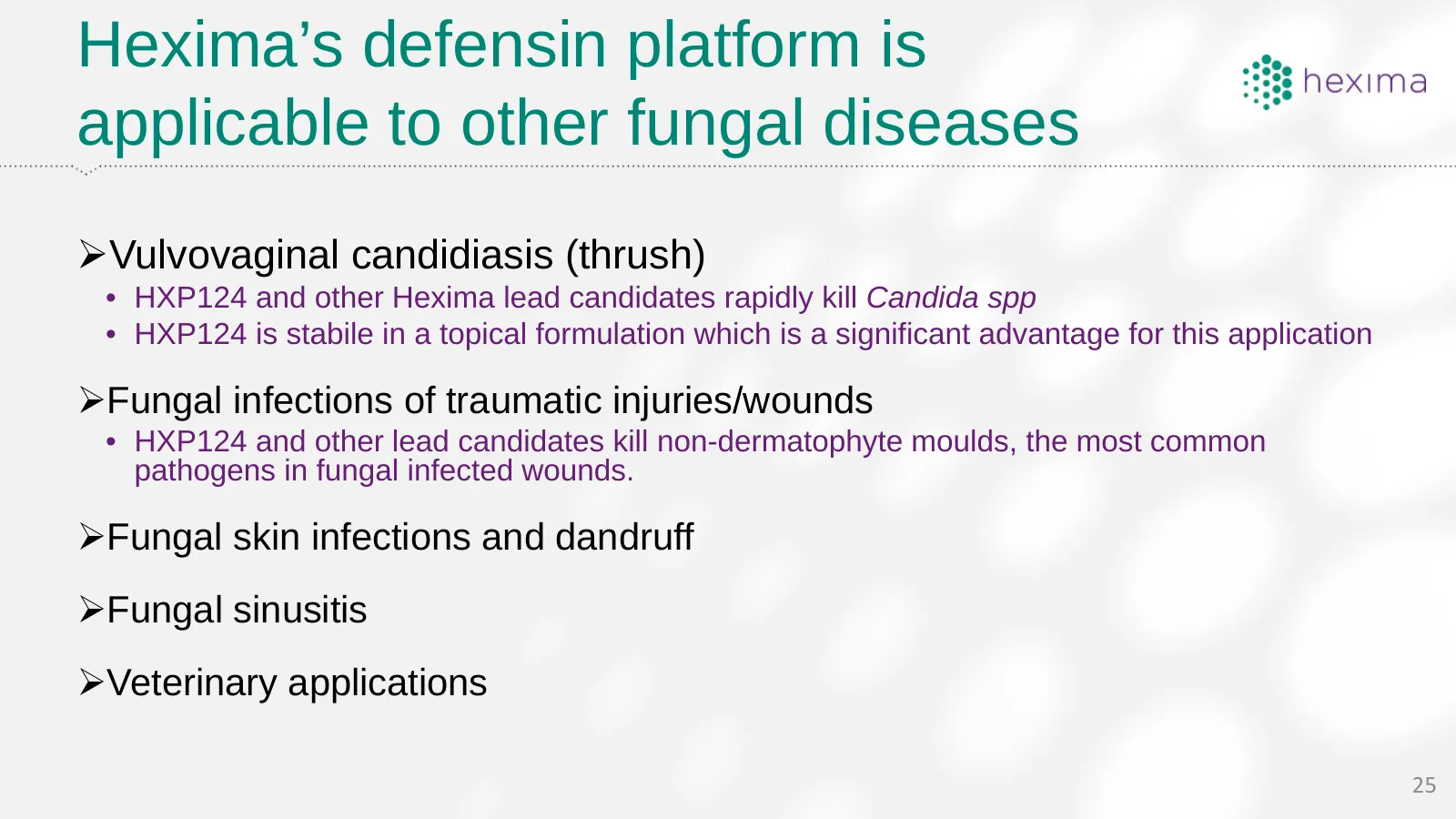
Slide 25: Hexima's defensin platform is applicable to other fungal diseases
Hexima’s defensin platform is applicable to other fungal diseases Vulvovaginal candidiasis (thrush) • HXP124 and other Hexima lead candidates rapidly kill Candida spp • HXP124 is stabile in a topical formulation which is a significant advantage for this application Fungal infections of traumatic i
Slide 26: Summary
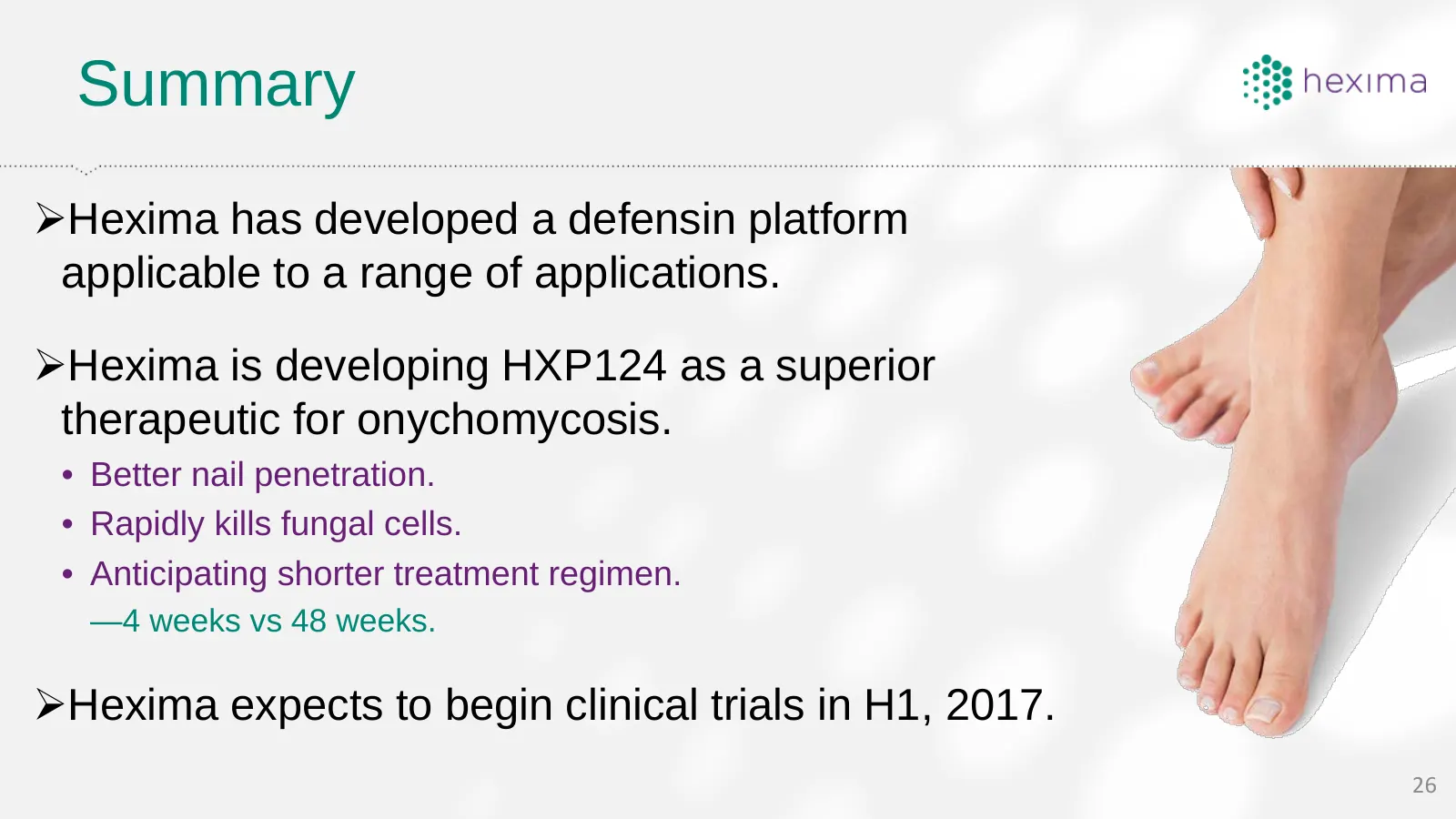
Summary Hexima has developed a defensin platform applicable to a range of applications. Hexima is developing HXP124 as a superior therapeutic for onychomycosis. • Better nail penetration. • Rapidly kills fungal cells. • Anticipating shorter treatment regimen. —4 weeks vs 48 weeks. Hexima expects
Slide 27: Contacts
Contacts Dr Nicole van der Weerden (CEO) n.vanderweerden@hexima.com.au Ms Elisha Larkin elisha.larkin@hexima.com.au 27
Source: Internet Archive copy of hexima.com.au
More decks from Hexima Ltd
 ShareCafe Small Cap "Hidden Gems" Webinar (April 2022)19 slides · Apr 29, 2022
 Investor Presentation (April 2022)27 slides · April 2022
 Investor Presentation (April 2022)28 slides · April 2022
 Share Cafe (April 2022)17 slides · April 2022
 Technical Presentation (March 2022)8 slides · March 2022
 Shareholder Meeting (December 2021)7 slides · Dec 2, 2021