Sunesis Pharmaceuticals — JPM Healthcare Conference 2020
32 slides from Sunesis Pharmaceuticals's conference presentation, Jan 13, 2020

Slide 1: Corporate Overview January 2020
Corporate Overview January 2020
Slide 2: Safe Harbor Statement
Safe Harbor Statement This presentation contains forward-looking statements, including statements related to the continued development of vecabrutinib (SNS-062) and other product candidates, including the timing and preliminary results of Phase 1b/2 trial of vecabrutinib and the therapeutic potentia
Slide 3: Sunesis Overview
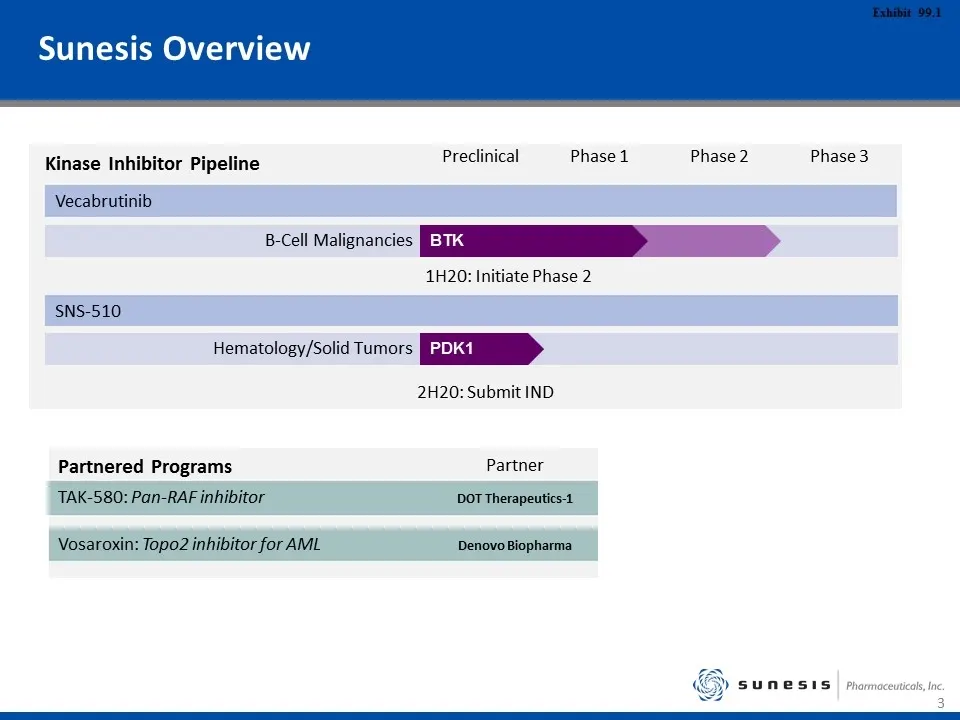
Sunesis Overview TAK-580: Pan-RAF inhibitor Partnered Programs Vosaroxin: Topo2 inhibitor for AML Partner DOT Therapeutics-1 Denovo Biopharma Preclinical Phase 1 Phase 2 Phase 3 B-Cell Malignancies Vecabrutinib BTK Hematology/Solid Tumors SNS-510 PDK1 Kinase Inhibitor Pipeline 1H20: Initiate Phase 2
Slide 4: BTK Inhibition is a Backbone of Therapy for CLL
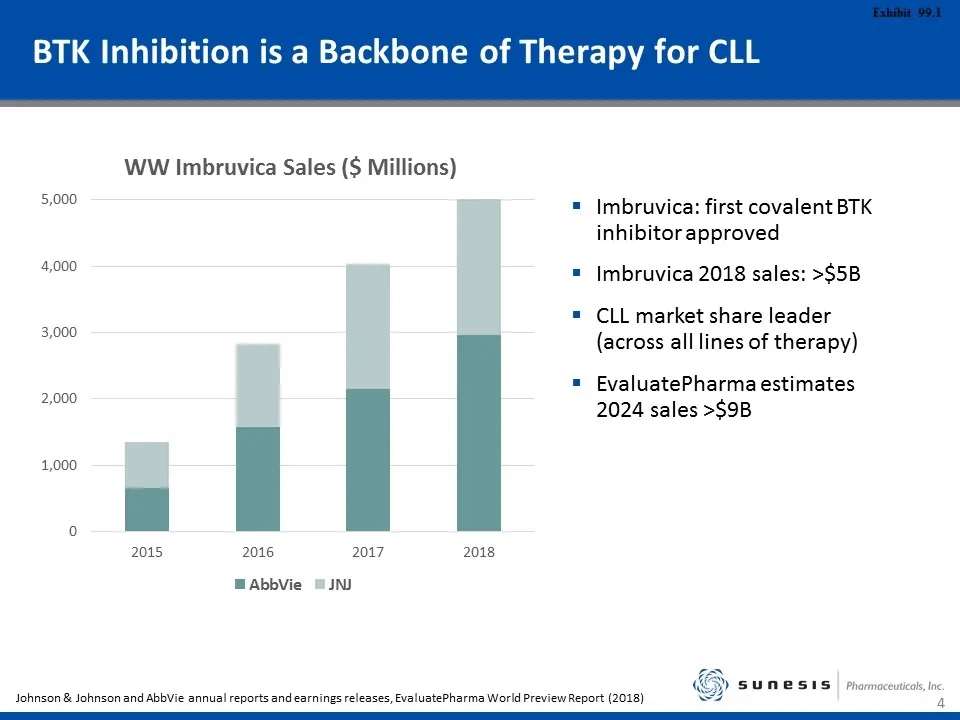
BTK Inhibition is a Backbone of Therapy for CLL Imbruvica: first covalent BTK inhibitor approved Imbruvica 2018 sales: >$5B CLL market share leader (across all lines of therapy) EvaluatePharma estimates 2024 sales >$9B Johnson & Johnson and AbbVie annual reports and earnings releases, EvaluatePharma
Slide 5: Relapse from Ibrutinib Associated with Acquired Resistance Mutations
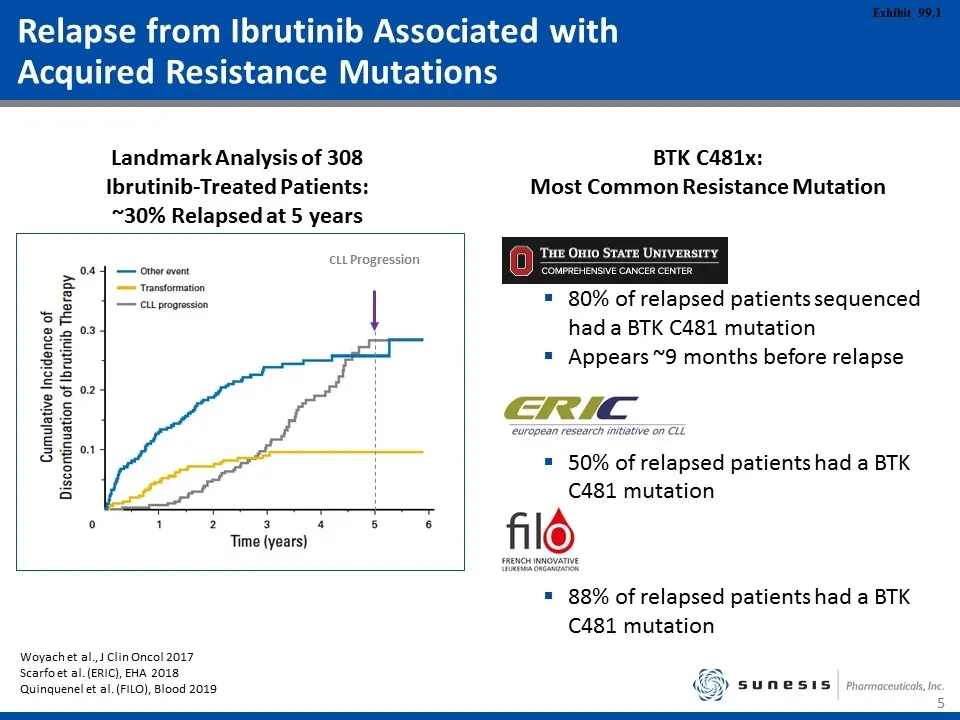
Relapse from Ibrutinib Associated with Acquired Resistance Mutations CLL Progression Woyach et al., J Clin Oncol 2017 Scarfo et al. (ERIC), EHA 2018 Quinquenel et al. (FILO), Blood 2019 Landmark Analysis of 308 Ibrutinib-Treated Patients: ~30% Relapsed at 5 years BTK C481x: Most Common Resistance Mu
Slide 6: Vecabrutinib: Non-covalent BTK inhibitor
Vecabrutinib Non-covalent BTK inhibitor
Slide 7: Vecabrutinib BTK Kinase Domain Interaction Differentiated from Ibrutinib
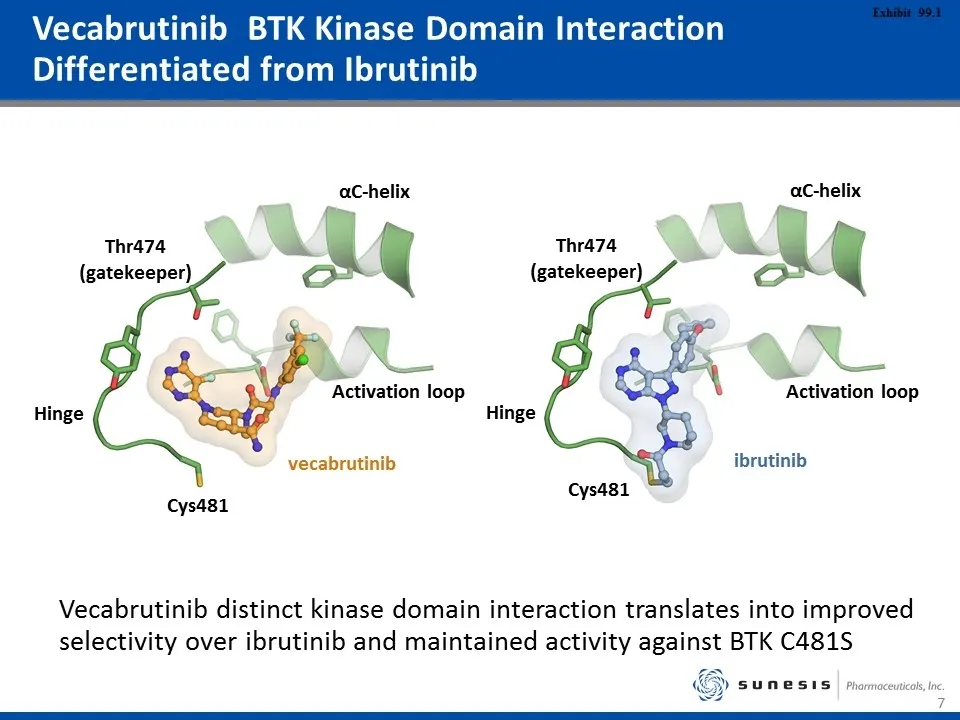
Vecabrutinib BTK Kinase Domain Interaction Differentiated from Ibrutinib Cys481 vecabrutinib ibrutinib Hinge αC-helix Thr474 (gatekeeper) Activation loop Cys481 Hinge αC-helix Thr474 (gatekeeper) Activation loop Vecabrutinib distinct kinase domain interaction translates into improved selectivity ove
Slide 8: Vecabrutinib - Selective Kinase Inhibitor
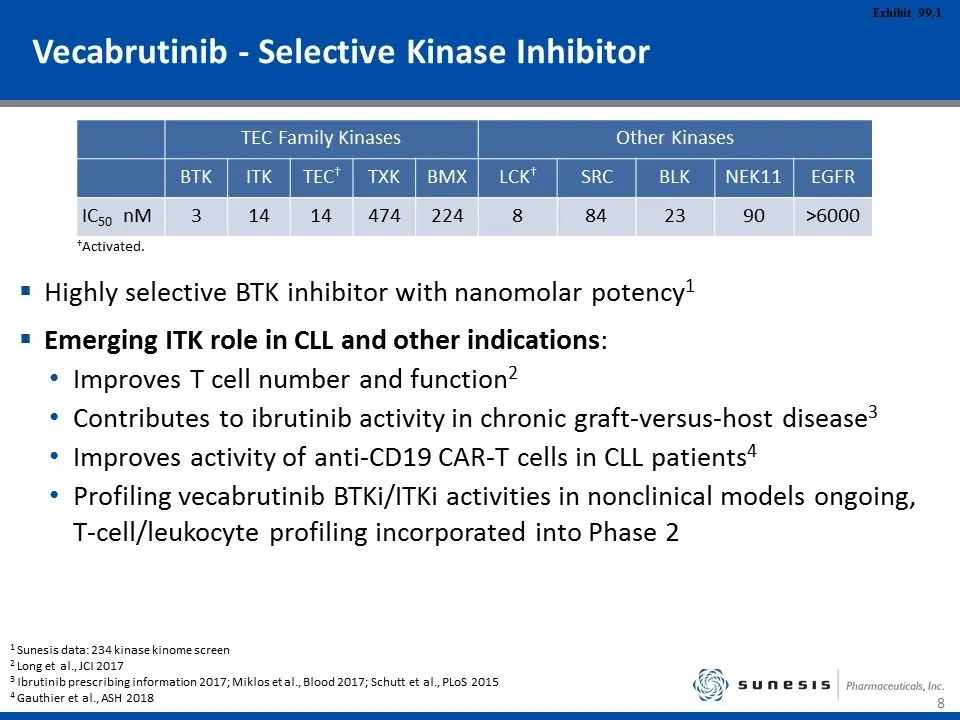
Vecabrutinib - Selective Kinase Inhibitor Highly selective BTK inhibitor with nanomolar potency1 Emerging ITK role in CLL and other indications: Improves T cell number and function2 Contributes to ibrutinib activity in chronic graft-versus-host disease3 Improves activity of anti-CD19 CAR-T cells in
Slide 9: Vecabrutinib Differentiated Kinase Inhibition Profile
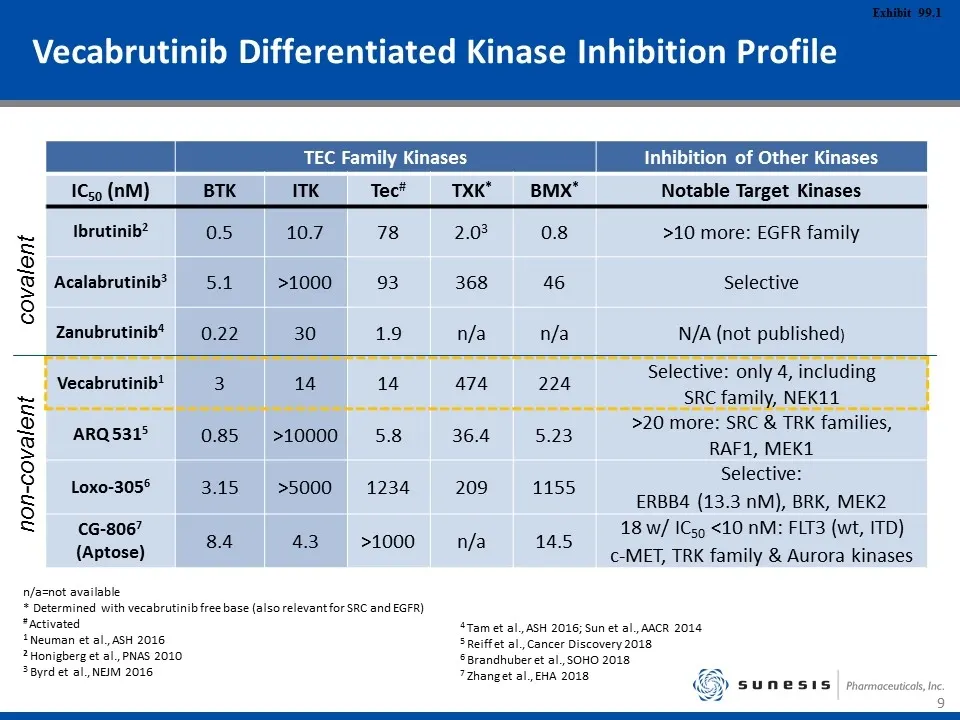
Vecabrutinib Differentiated Kinase Inhibition Profile TEC Family Kinases Inhibition of Other Kinases IC50 (nM) BTK ITK Tec# TXK* BMX* Notable Target Kinases Ibrutinib2 0.5 10.7 78 2.03 0.8 >10 more: EGFR family Acalabrutinib3 5.1 >1000 93 368 46 Selective Zanubrutinib4 0.22 30 1.9 n/a n/a N/A (not p
Slide 10: Vecabrutinib Active in Wild-type and C481S Mutant BTK
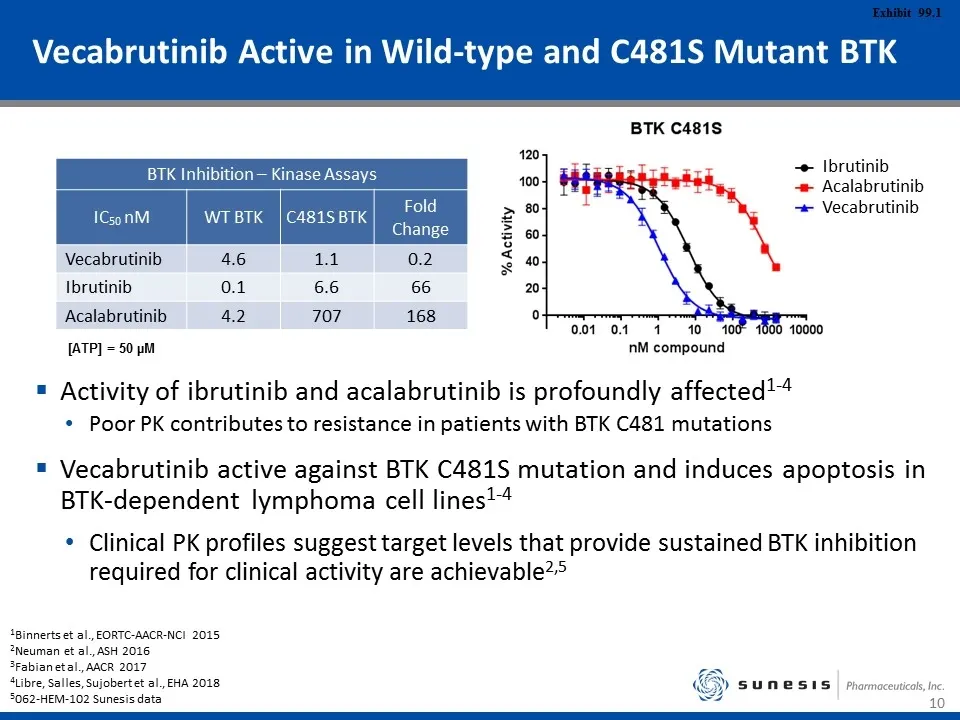
Vecabrutinib Active in Wild-type and C481S Mutant BTK Activity of ibrutinib and acalabrutinib is profoundly affected1-4 Poor PK contributes to resistance in patients with BTK C481 mutations Vecabrutinib active against BTK C481S mutation and induces apoptosis in BTK-dependent lymphoma cell lines1-4 C
Slide 11: Phase 1a: Sustained Target Inhibition
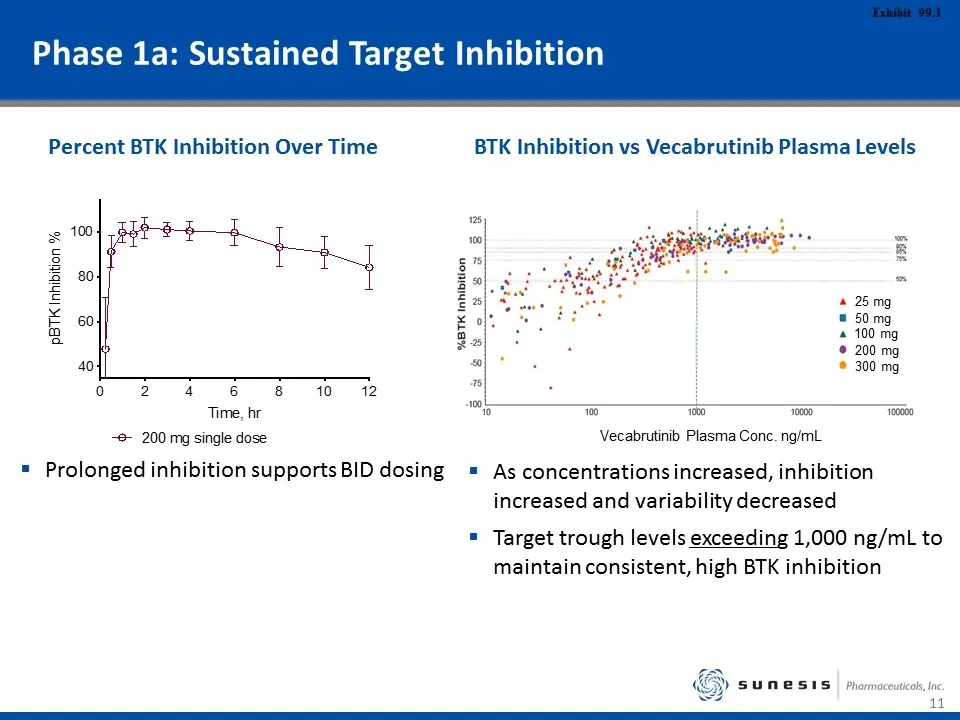
Phase 1a: Sustained Target Inhibition Prolonged inhibition supports BID dosing As concentrations increased, inhibition increased and variability decreased Target trough levels exceeding 1,000 ng/mL to maintain consistent, high BTK inhibition Percent BTK Inhibition Over Time BTK Inhibition vs Vecabru
Slide 12: Vecabrutinib in B-Cell Malignancies Phase 1b/2 Trial Status and Preliminary Data
Vecabrutinib in B-Cell Malignancies Phase 1b/2 Trial Status and Preliminary Data
Slide 13: Vecabrutinib in B-Cell Malignancies Phase 1b/2 Study Design
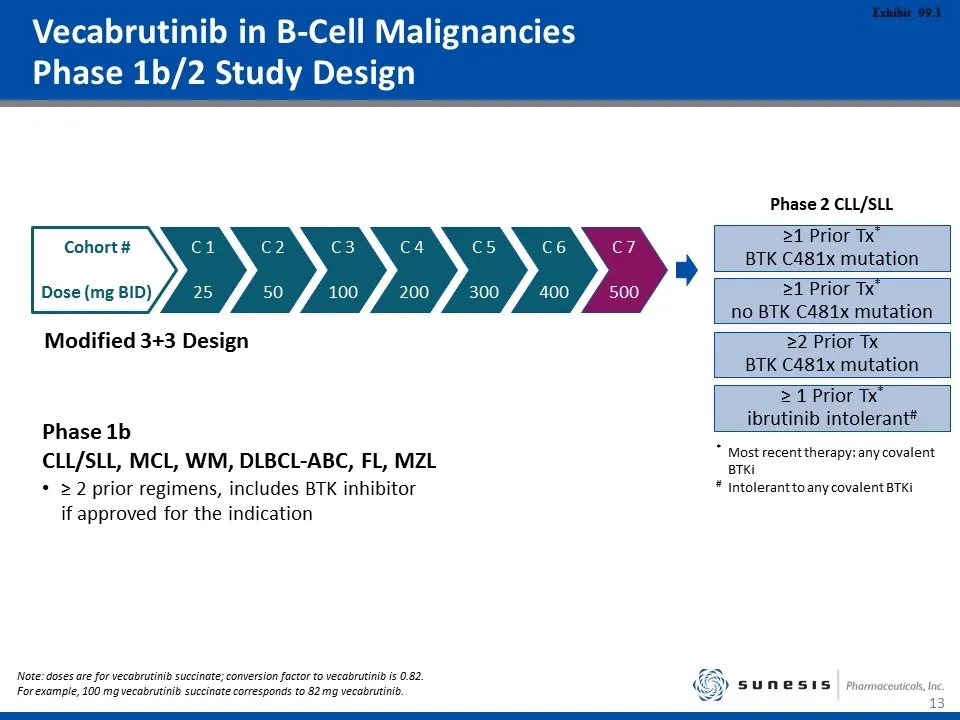
Vecabrutinib in B-Cell Malignancies Phase 1b/2 Study Design C 1 25 Phase 1b CLL/SLL, MCL, WM, DLBCL-ABC, FL, MZL ≥ 2 prior regimens, includes BTK inhibitor if approved for the indication Modified 3+3 Design ≥1 Prior Tx* BTK C481x mutation ≥1 Prior Tx* no BTK C481x mutation ≥2 Prior Tx BTK C481x muta
Slide 14: Phase 1b/2 Vecabrutinib in B-Cell Malignancies
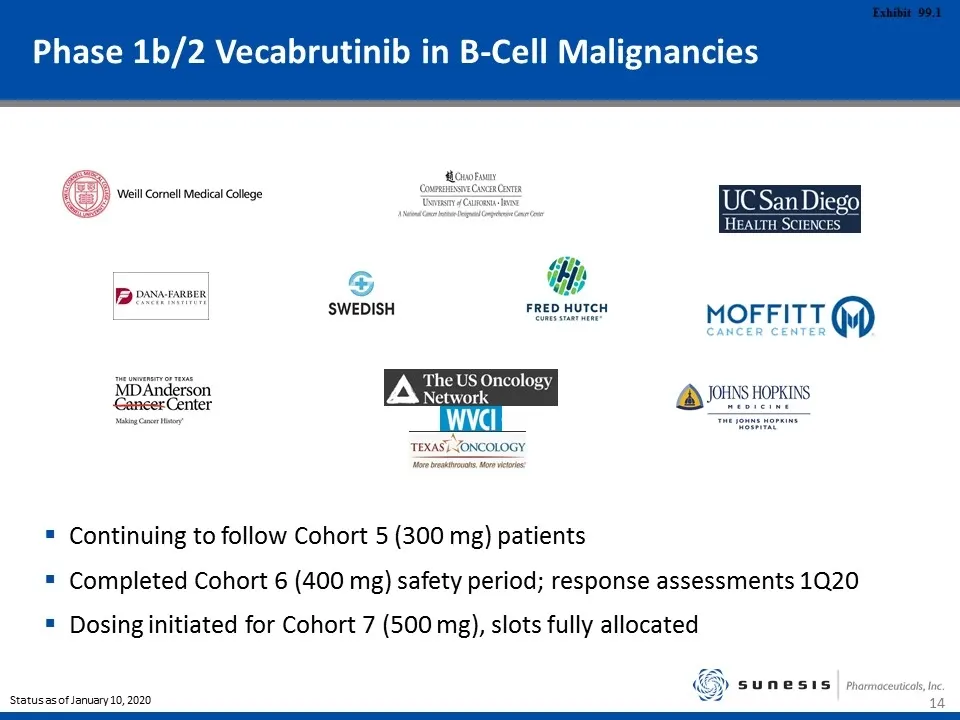
Phase 1b/2 Vecabrutinib in B-Cell Malignancies Continuing to follow Cohort 5 (300 mg) patients Completed Cohort 6 (400 mg) safety period; response assessments 1Q20 Dosing initiated for Cohort 7 (500 mg), slots fully allocated Status as of January 10, 2020
Slide 15: ASH 2019: Baseline Characteristics
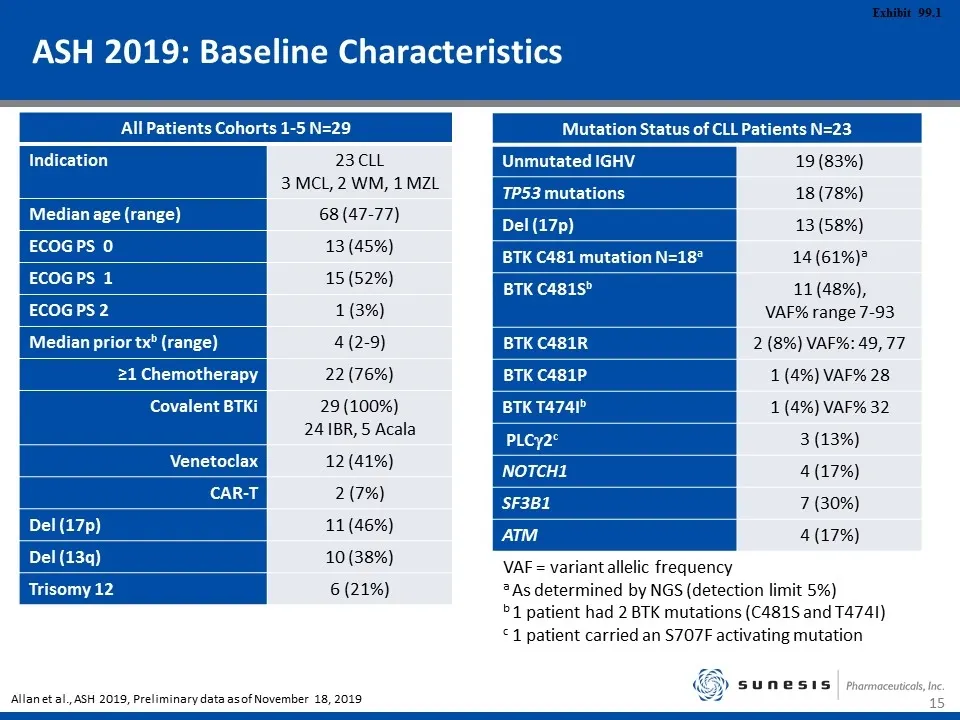
ASH 2019: Baseline Characteristics All Patients Cohorts 1-5 N=29 Indication 23 CLL 3 MCL, 2 WM, 1 MZL Median age (range) 68 (47-77) ECOG PS 0 13 (45%) ECOG PS 1 15 (52%) ECOG PS 2 1 (3%) Median prior txb (range) 4 (2-9) ≥1 Chemotherapy 22 (76%) Covalent BTKi 29 (100%) 24 IBR, 5 Acala Venetoclax 12 (
Slide 16: ASH 2019: Vecabrutinib Very Well Tolerated
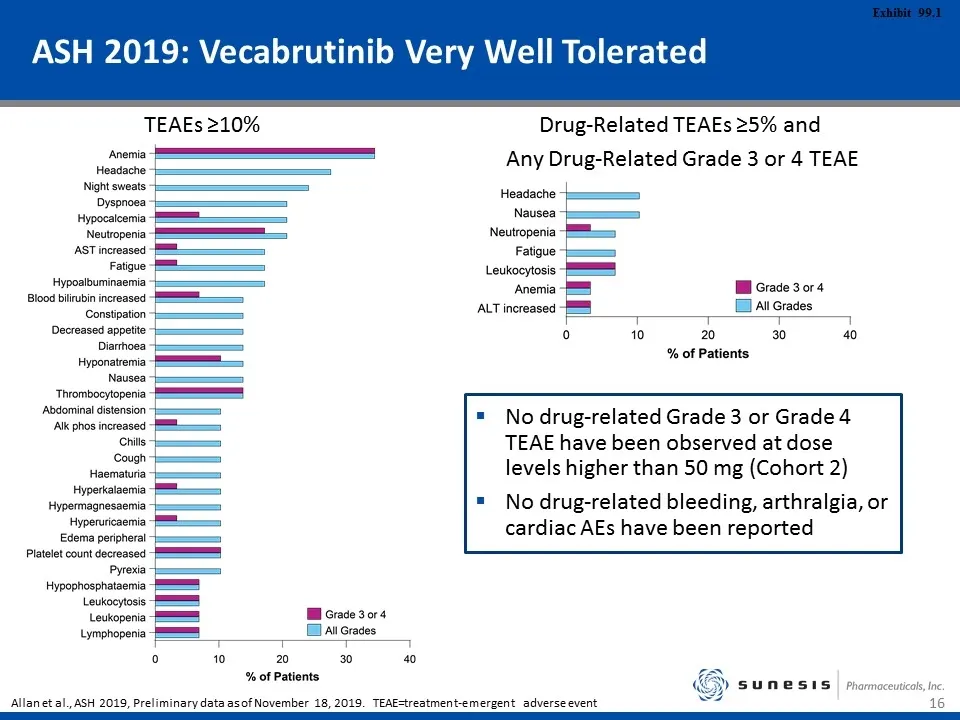
ASH 2019: Vecabrutinib Very Well Tolerated TEAEs ≥10% Drug-Related TEAEs ≥5% and Any Drug-Related Grade 3 or 4 TEAE No drug-related Grade 3 or Grade 4 TEAE have been observed at dose levels higher than 50 mg (Cohort 2) No drug-related bleeding, arthralgia, or cardiac AEs have been reported Allan et
Slide 17: ASH 2019: Clinical Activity in Patients with Diverse Poor Prognostic Features
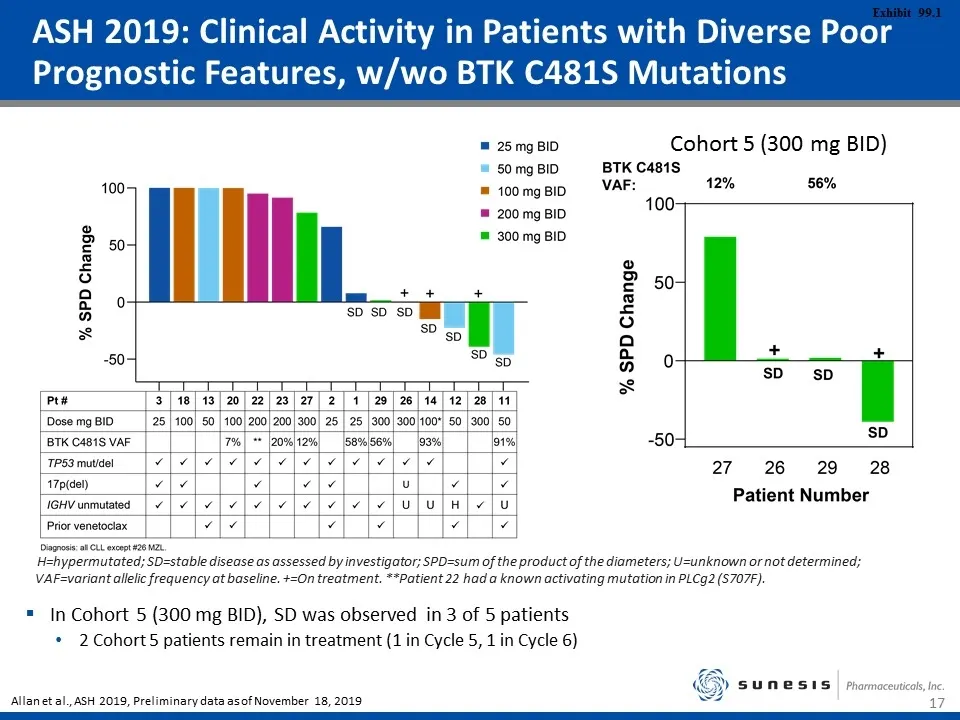
ASH 2019: Clinical Activity in Patients with Diverse Poor Prognostic Features, w/wo BTK C481S Mutations In Cohort 5 (300 mg BID), SD was observed in 3 of 5 patients 2 Cohort 5 patients remain in treatment (1 in Cycle 5, 1 in Cycle 6) Allan et al., ASH 2019, Preliminary data as of November 18, 2019 H
Slide 18: ASH 2019: Steady-State C1D8 Concentration-Time Profiles
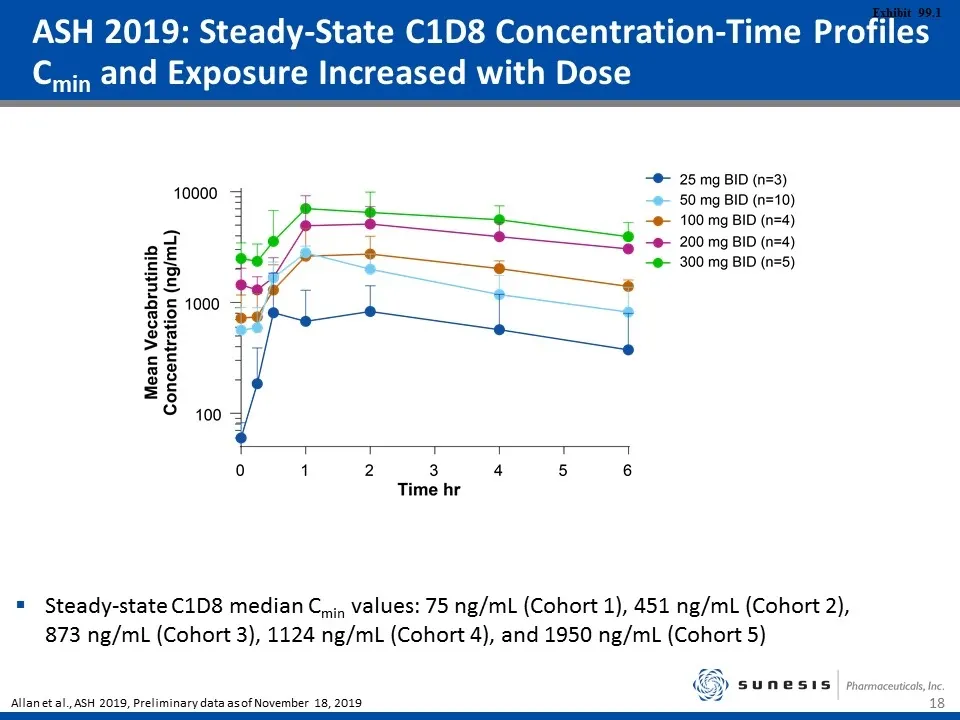
ASH 2019: Steady-State C1D8 Concentration-Time Profiles Cmin and Exposure Increased with Dose Steady-state C1D8 median Cmin values: 75 ng/mL (Cohort 1), 451 ng/mL (Cohort 2), 873 ng/mL (Cohort 3), 1124 ng/mL (Cohort 4), and 1950 ng/mL (Cohort 5) Allan et al., ASH 2019, Preliminary data as of Novembe
Slide 19: ASH 2019: Pharmacodynamic Effects, Reductions in Chemokines CCL3 and CCL4
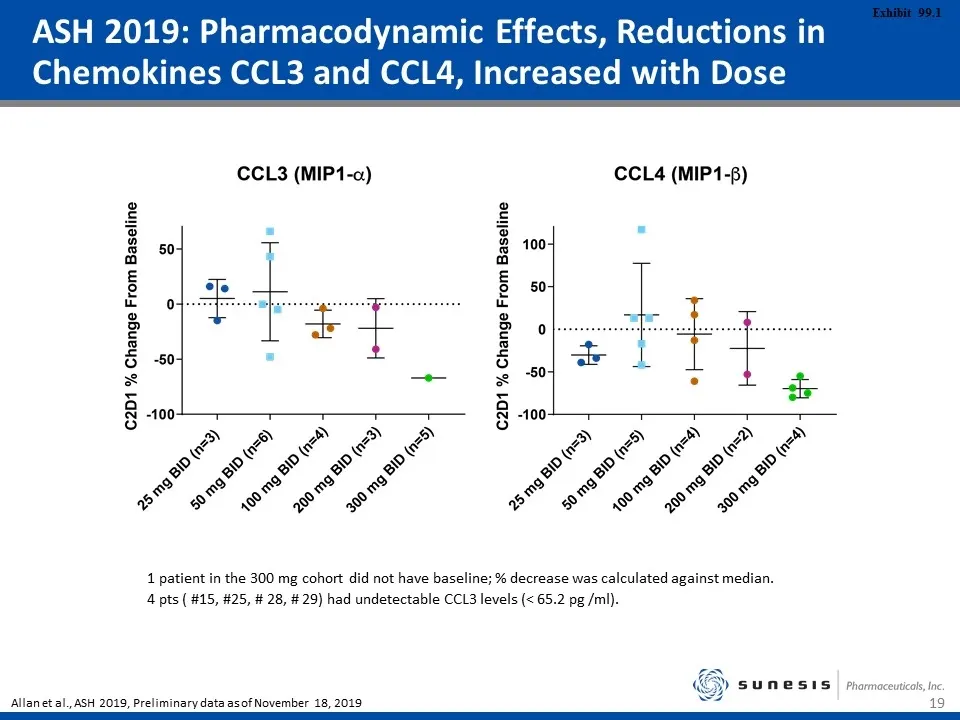
ASH 2019: Pharmacodynamic Effects, Reductions in Chemokines CCL3 and CCL4, Increased with Dose 1 patient in the 300 mg cohort did not have baseline; % decrease was calculated against median. 4 pts ( #15, #25, # 28, # 29) had undetectable CCL3 levels (< 65.2 pg /ml). Allan et al., ASH 2019, Prelimina
Slide 20: Vecabrutinib Summary
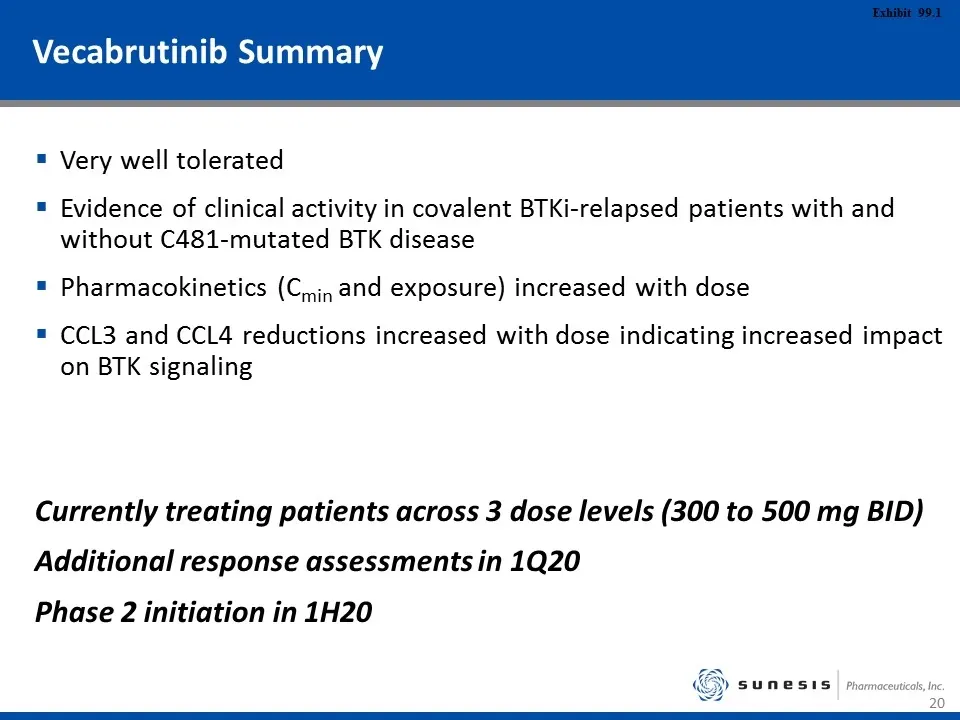
Vecabrutinib Summary Very well tolerated Evidence of clinical activity in covalent BTKi-relapsed patients with and without C481-mutated BTK disease Pharmacokinetics (Cmin and exposure) increased with dose CCL3 and CCL4 reductions increased with dose indicating increased impact on BTK signaling Curre
Slide 21: SNS-510 PDK1 inhibitor
SNS-510 PDK1 inhibitor
Slide 22: PDK1 Is the Major Mediator of PI3K Signaling
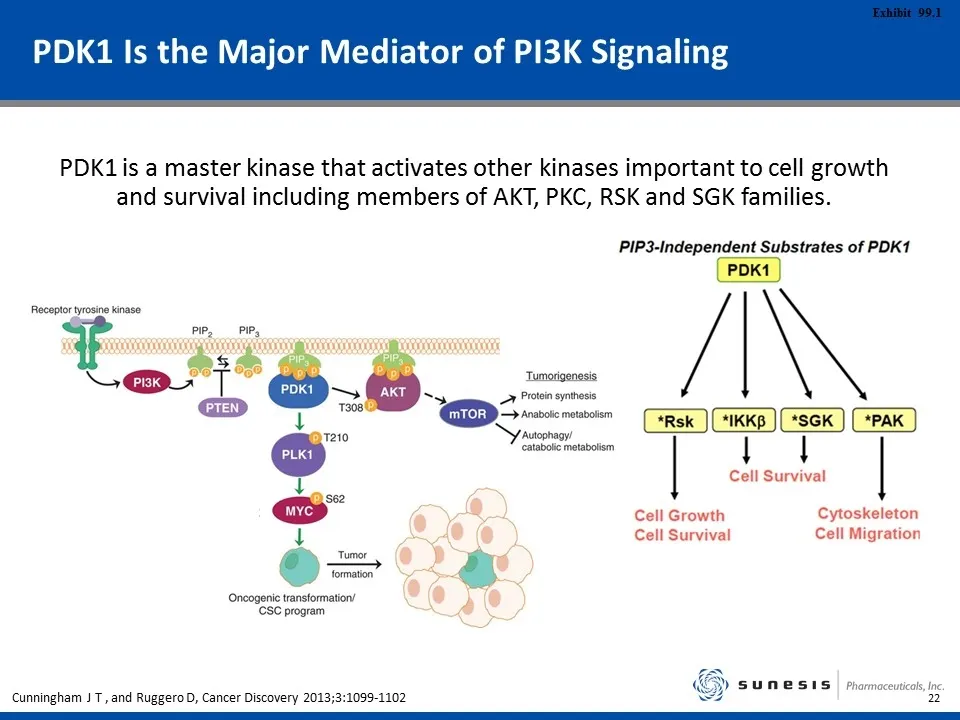
PDK1 Is the Major Mediator of PI3K Signaling PDK1 is a master kinase that activates other kinases important to cell growth and survival including members of AKT, PKC, RSK and SGK families. Cunningham J T , and Ruggero D, Cancer Discovery 2013;3:1099-1102
Slide 23: SNS-510 Showed Potent Activity Across 300 Cancer Cell Lines
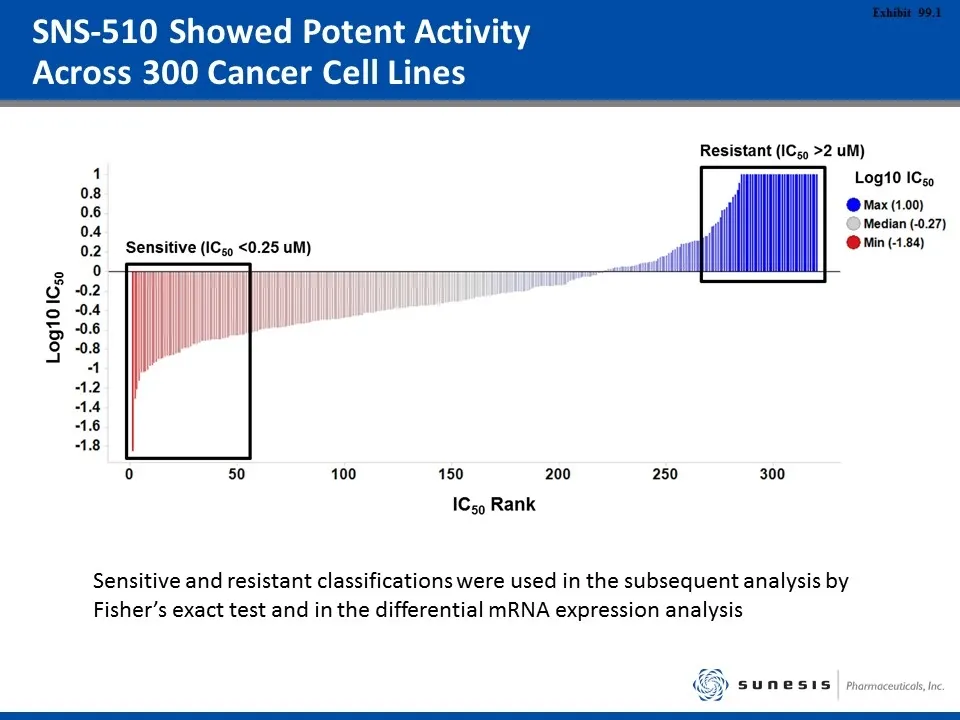
Sensitive and resistant classifications were used in the subsequent analysis by Fisher’s exact test and in the differential mRNA expression analysis SNS-510 Showed Potent Activity Across 300 Cancer Cell Lines
Slide 24: Mutated/Deleted CDKN2A Associated With Sensitivity to SNS-510
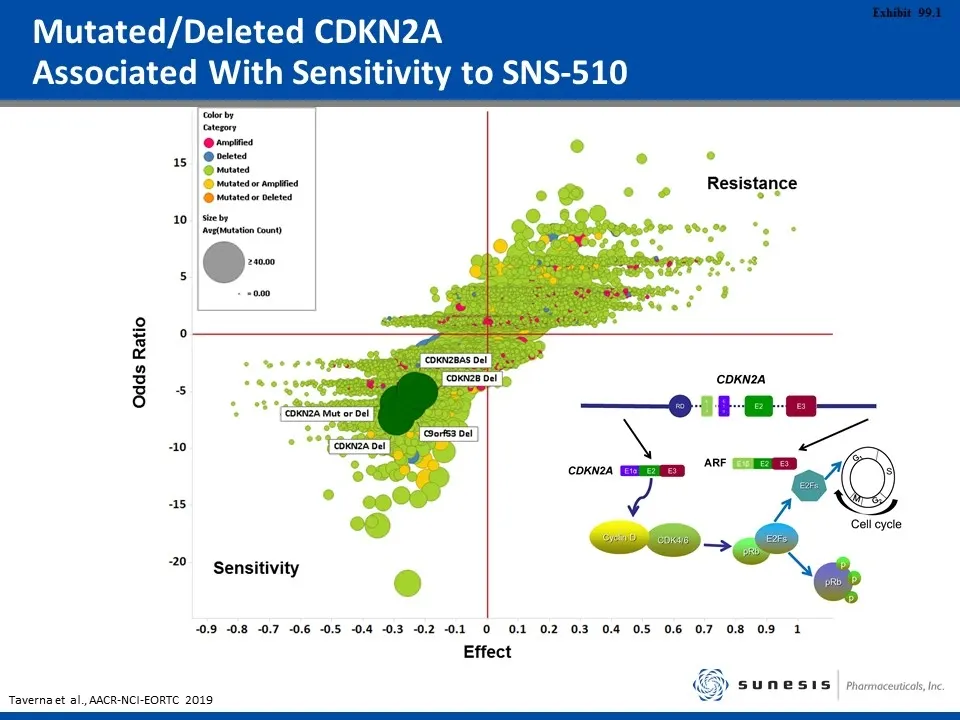
Taverna et al., AACR-NCI-EORTC 2019 Mutated/Deleted CDKN2A Associated With Sensitivity to SNS-510
Slide 25: Mutated/Deleted CDKN2A Cell Lines Show Sensitivity to SNS-510
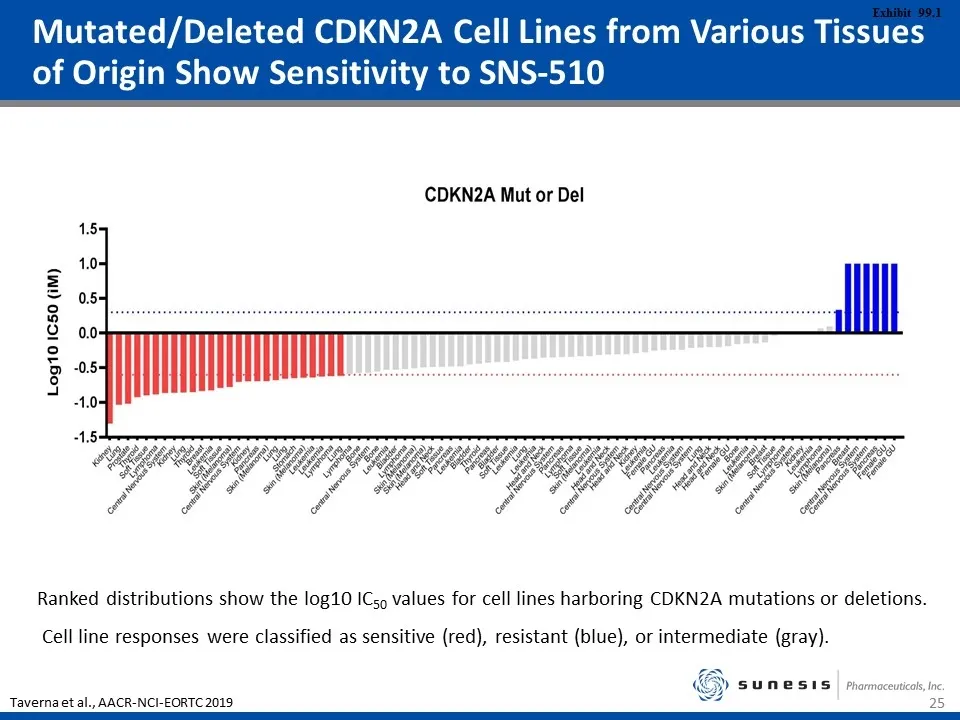
Mutated/Deleted CDKN2A Cell Lines from Various Tissues of Origin Show Sensitivity to SNS-510 Ranked distributions show the log10 IC50 values for cell lines harboring CDKN2A mutations or deletions. Cell line responses were classified as sensitive (red), resistant (blue), or intermediate (gray). Taver
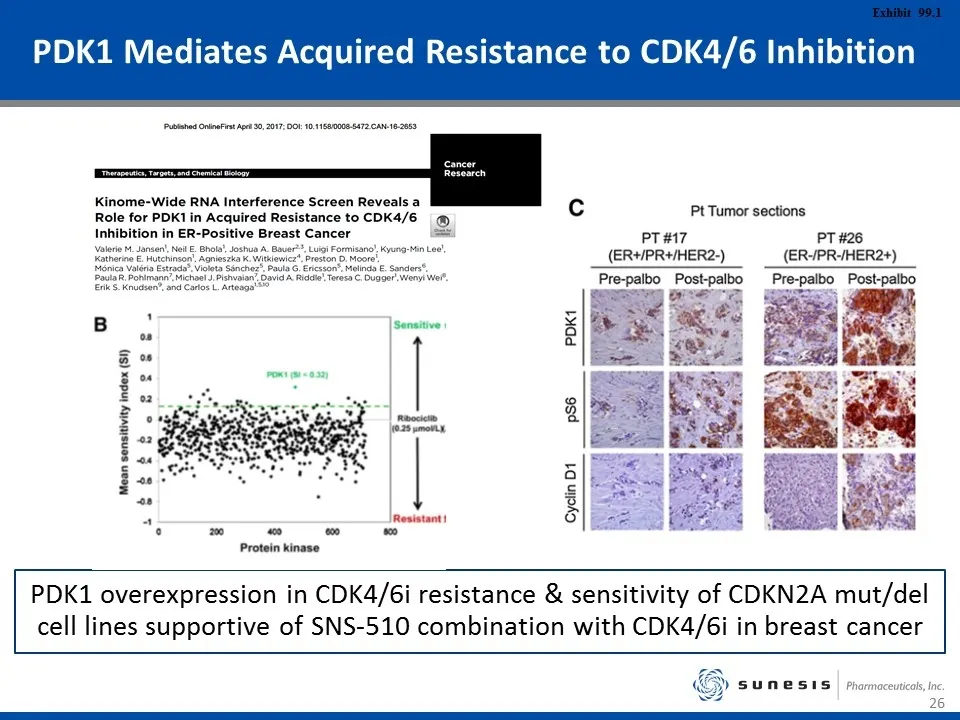
Slide 26: PDK1 Mediates Acquired Resistance to CDK4/6 Inhibition
PDK1 overexpression in CDK4/6i resistance & sensitivity of CDKN2A mut/del cell lines supportive of SNS-510 combination with CDK4/6i in breast cancer PDK1 Mediates Acquired Resistance to CDK4/6 Inhibition
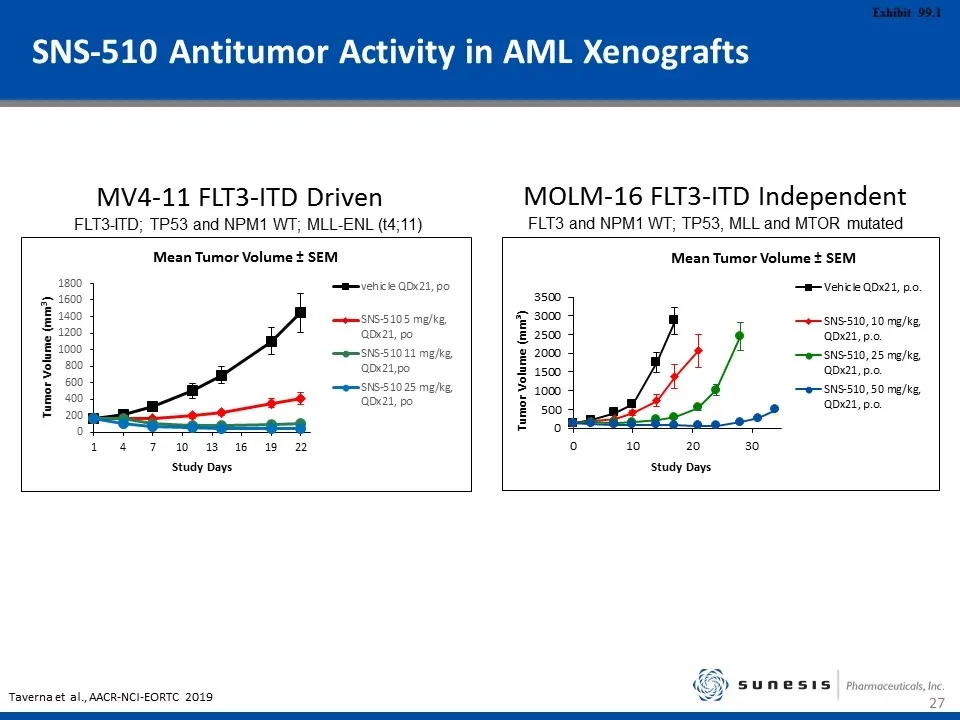
Slide 27: SNS-510 Antitumor Activity in AML Xenografts
SNS-510 Antitumor Activity in AML Xenografts MV4-11 FLT3-ITD Driven MOLM-16 FLT3-ITD Independent FLT3-ITD; TP53 and NPM1 WT; MLL-ENL (t4;11) FLT3 and NPM1 WT; TP53, MLL and MTOR mutated Taverna et al., AACR-NCI-EORTC 2019
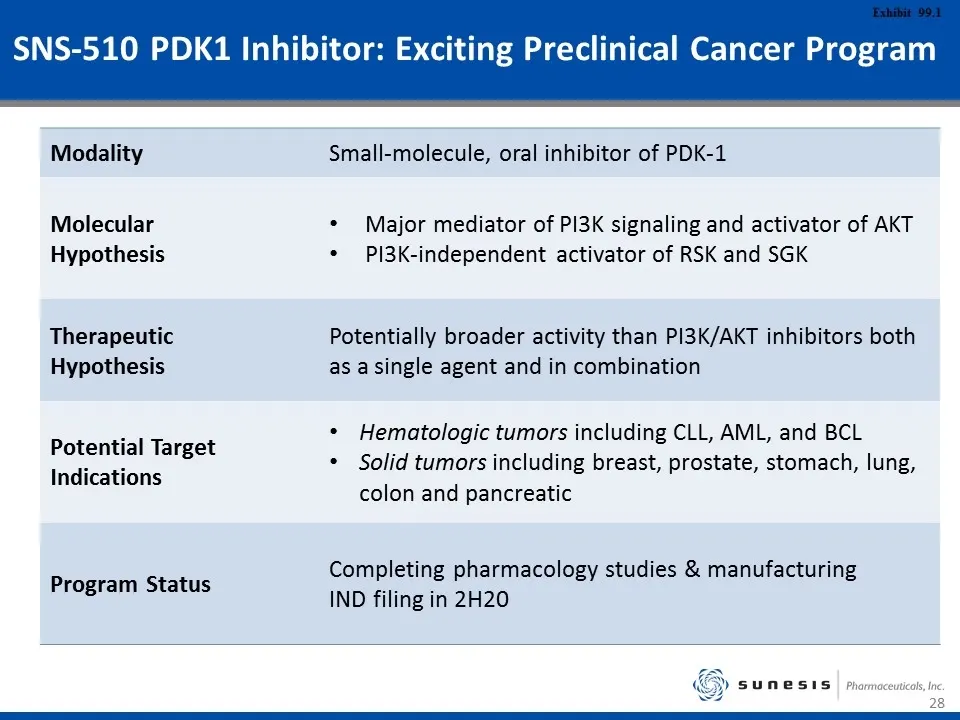
Slide 28: SNS-510 PDK1 Inhibitor: Exciting Preclinical Cancer Program
SNS-510 PDK1 Inhibitor: Exciting Preclinical Cancer Program Modality Small-molecule, oral inhibitor of PDK-1 Molecular Hypothesis Major mediator of PI3K signaling and activator of AKT PI3K-independent activator of RSK and SGK Therapeutic Hypothesis Potentially broader activity than PI3K/AKT inhibito

Slide 29: Summary
Summary
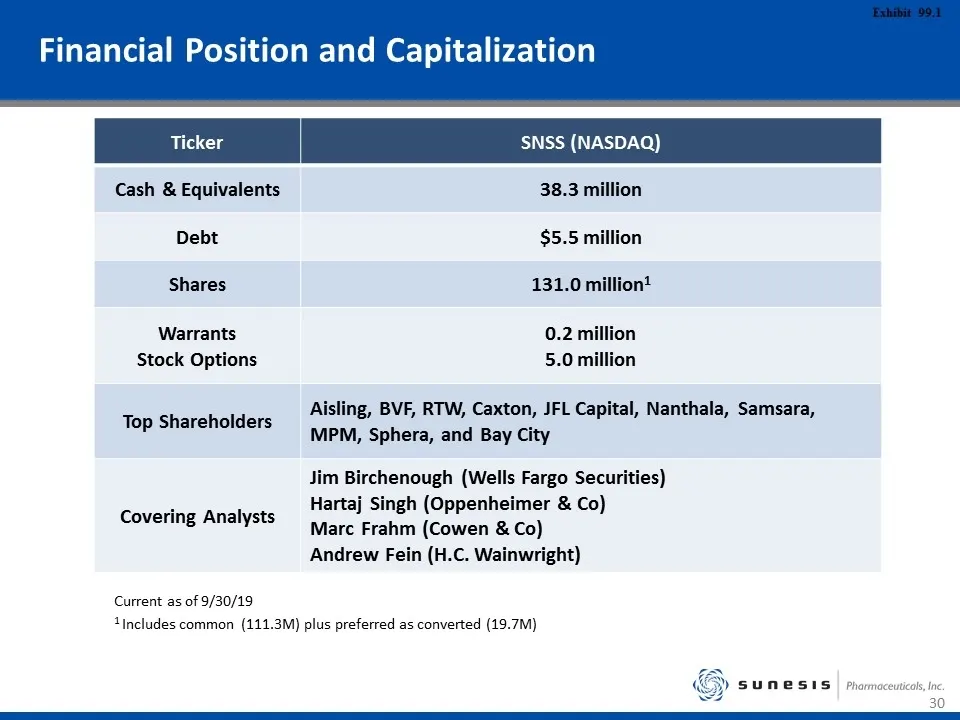
Slide 30: Financial Position and Capitalization
Financial Position and Capitalization Current as of 9/30/19 1 Includes common (111.3M) plus preferred as converted (19.7M) Ticker SNSS (NASDAQ) Cash & Equivalents 38.3 million Debt $5.5 million Shares 131.0 million1 Warrants Stock Options 0.2 million 5.0 million Top Shareholders Aisling, BVF, RTW, C
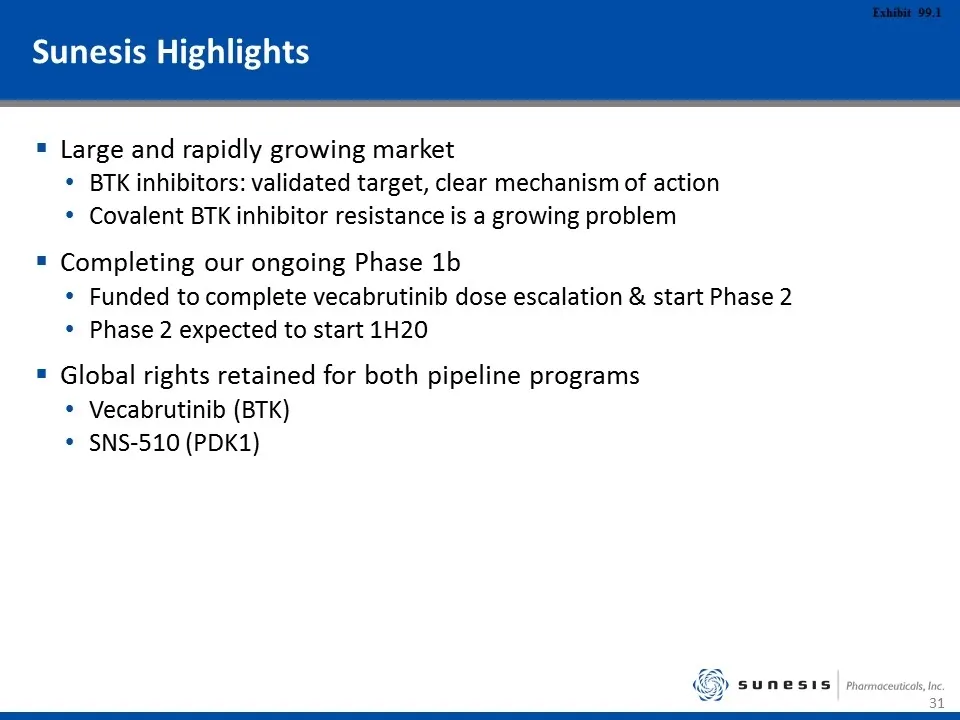
Slide 31: Sunesis Highlights
Sunesis Highlights Large and rapidly growing market BTK inhibitors: validated target, clear mechanism of action Covalent BTK inhibitor resistance is a growing problem Completing our ongoing Phase 1b Funded to complete vecabrutinib dose escalation & start Phase 2 Phase 2 expected to start 1H20 Global

Slide 32: Thank You
)) SUME SIS | Pharmaceuticals, In. Thank You
Source: SEC EDGAR · 8-K filed Jan 13, 2020
More decks from Sunesis Pharmaceuticals Inc
 Viracta Therapeutics — Investor Presentation (October 2023)47 slides · Oct 4, 2023
 Viracta Therapeutics — Corporate Update (August 2021)34 slides · Aug 12, 2021
 Viracta Therapeutics — Investor Presentation (April 2021)24 slides · Apr 14, 2021
 Merger or Acquisition (January 2021)23 slides · Jan 7, 2021
 Merger or Acquisition (November 2020)11 slides · Nov 30, 2020
 Investor Presentation (March 2020)33 slides · Mar 18, 2020