Cidara Therapeutics — Investor Day (September 2023)
58 slides from Cidara Therapeutics's investor day presentation, Sep 21, 2023
Slide 1: R&D Day September 21, 2023
R&D Day SEPTEMBER 21, 2023
Slide 2: Forward-looking statements
T h e s e s l i d e s c o n t a i n f o r w a r d - l o o k i n g s t a t e m e n t s w i t h i n t h e m e a n i n g o f t h e P r i v a t e S e c u r i t i e s L i t i g a t i o n R e f o r m A c t o f 1 9 9 5 . The words “may,” “will,” “estimate,” “plan”, “anticipate,” “expect,” “potential,” “cou
Slide 3: Agenda
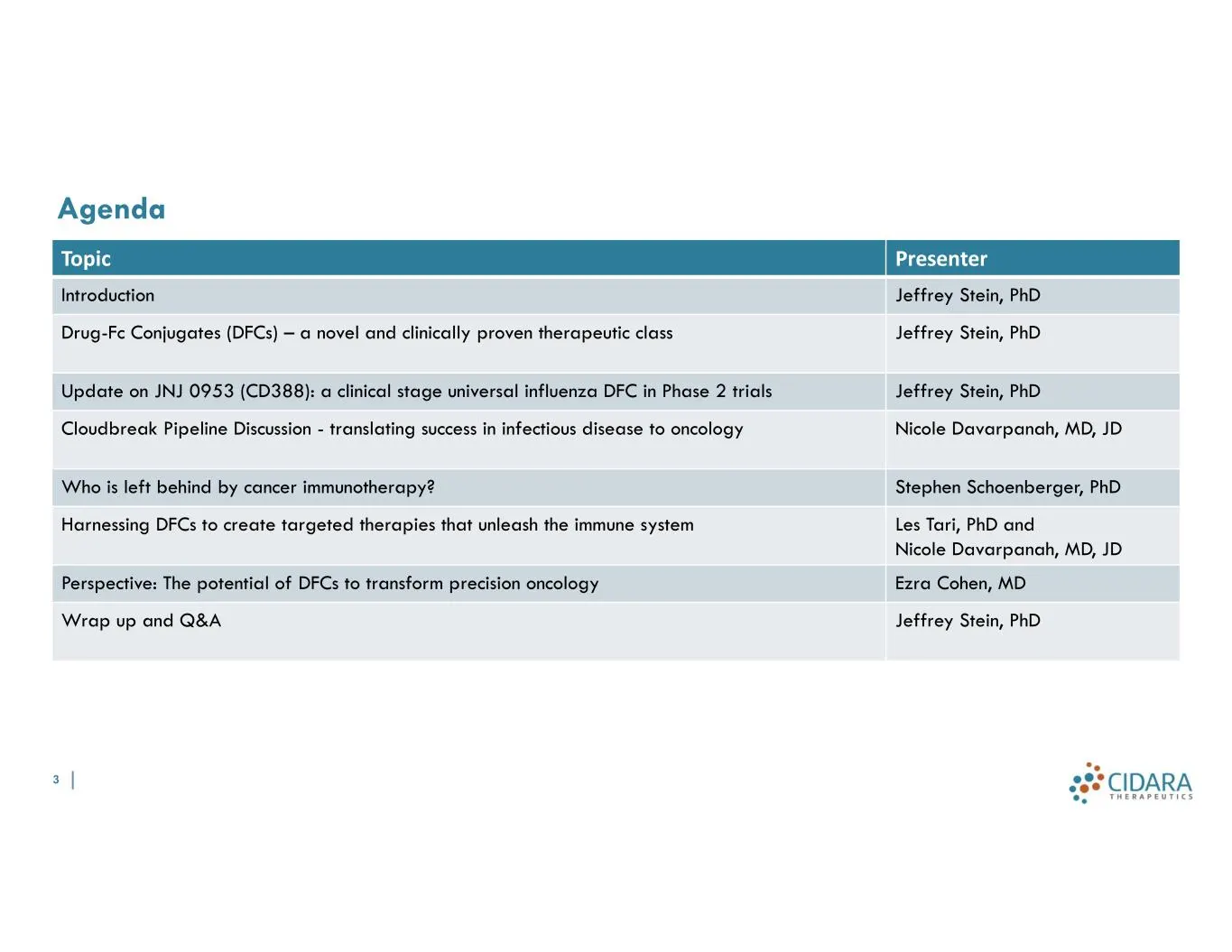
3 Agenda PresenterTopic Jeffrey Stein, PhDIntroduction Jeffrey Stein, PhDDrug-Fc Conjugates (DFCs) – a novel and clinically proven therapeutic class Jeffrey Stein, PhDUpdate on JNJ 0953 (CD388): a clinical stage universal influenza DFC in Phase 2 trials Nicole Davarpanah, MD, JDCloudbreak Pipeline D

Slide 4: Today's Speakers
4 Today’s Speakers Jeffrey Stein, PhD President & CEO Cidara Therapeutics Stephen Schoenberger, PhD Professor, Immunology La Jolla Institute for Immunology Ezra Cohen, MD CMO, Oncology Tempus Les Tari, PhD CSO Cidara Therapeutics Nicole Davarpanah, MD, JD SVP, Translational R&D Cidara Therapeutics
Slide 5: Cidara Platforms: Rezafungin & Cloudbreak
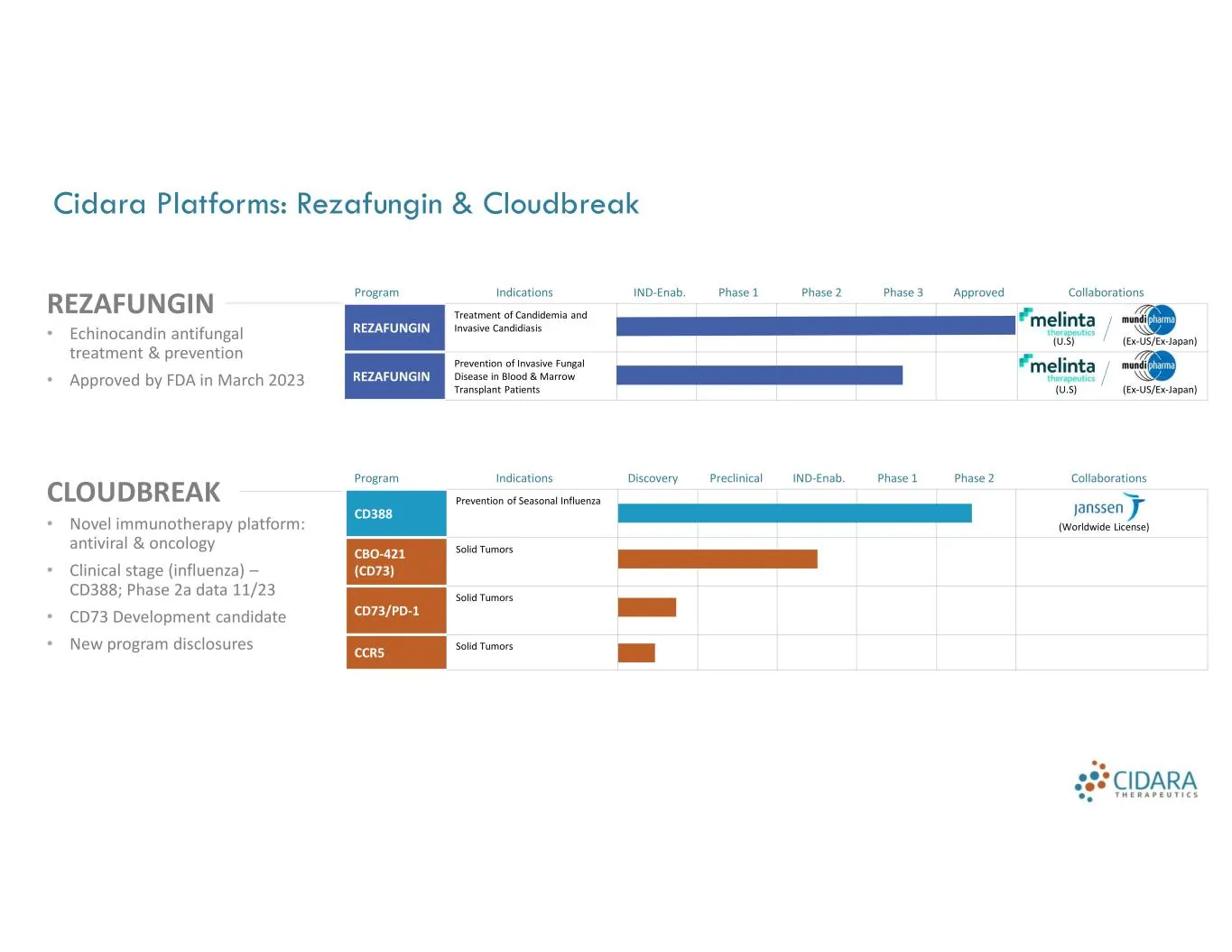
Cidara Platforms: Rezafungin & Cloudbreak REZAFUNGIN CLOUDBREAK • Echinocandin antifungal treatment & prevention • Approved by FDA in March 2023 • Novel immunotherapy platform: antiviral & oncology • Clinical stage (influenza) – CD388; Phase 2a data 11/23 • CD73 Development candidate • New program d

Slide 6: Rezafungin launched by Melinta
*melinta therapeutics Launched July 31, 2023 Once-weekly (rezafungin for injection
Slide 7: Cloudbreak Programs
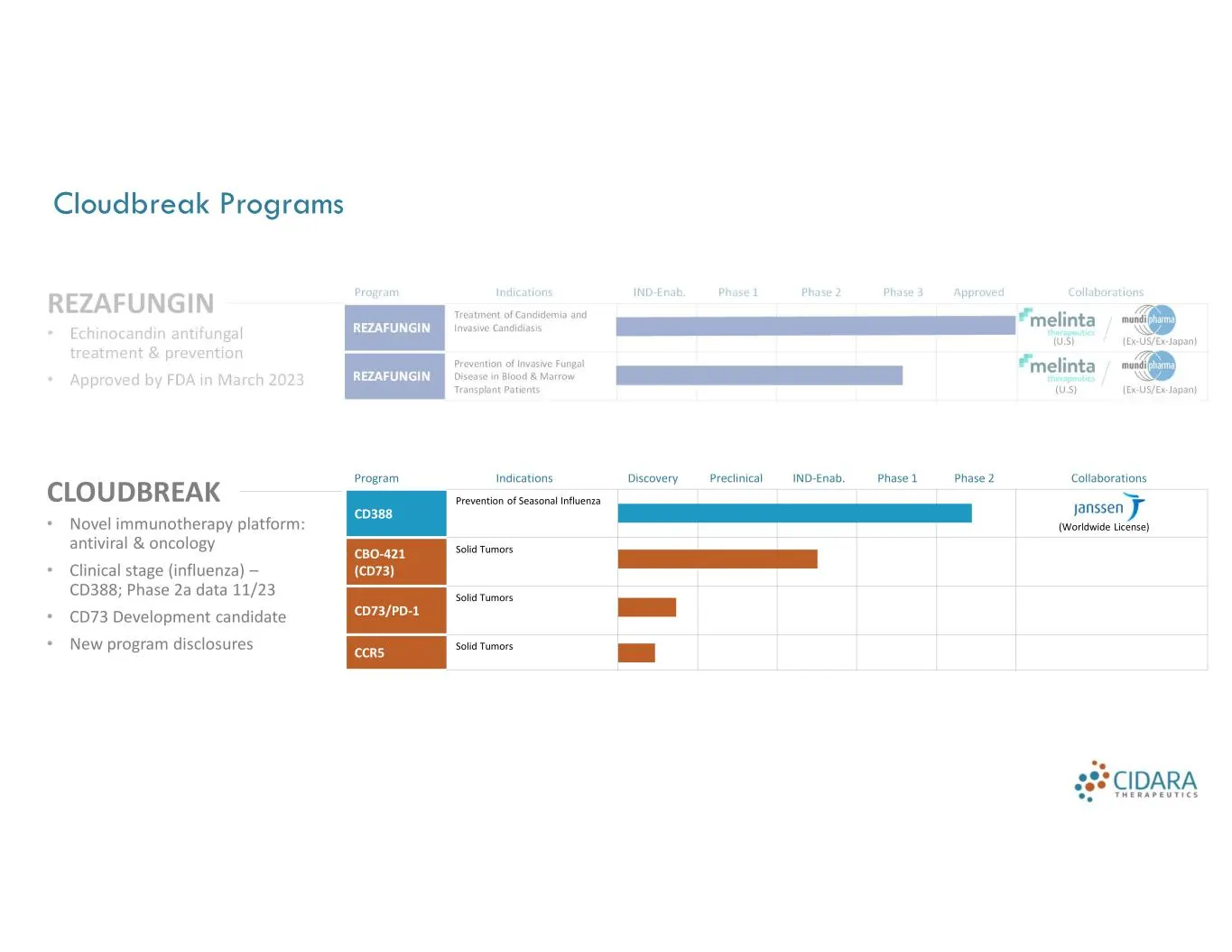
Cloudbreak Programs REZAFUNGIN CLOUDBREAK • Echinocandin antifungal treatment & prevention • Approved by FDA in March 2023 • Novel immunotherapy platform: antiviral & oncology • Clinical stage (influenza) – CD388; Phase 2a data 11/23 • CD73 Development candidate • New program disclosures Collaborati
Slide 8: Cloudbreak Creates a New Class of Drug Conjugates: DFCs
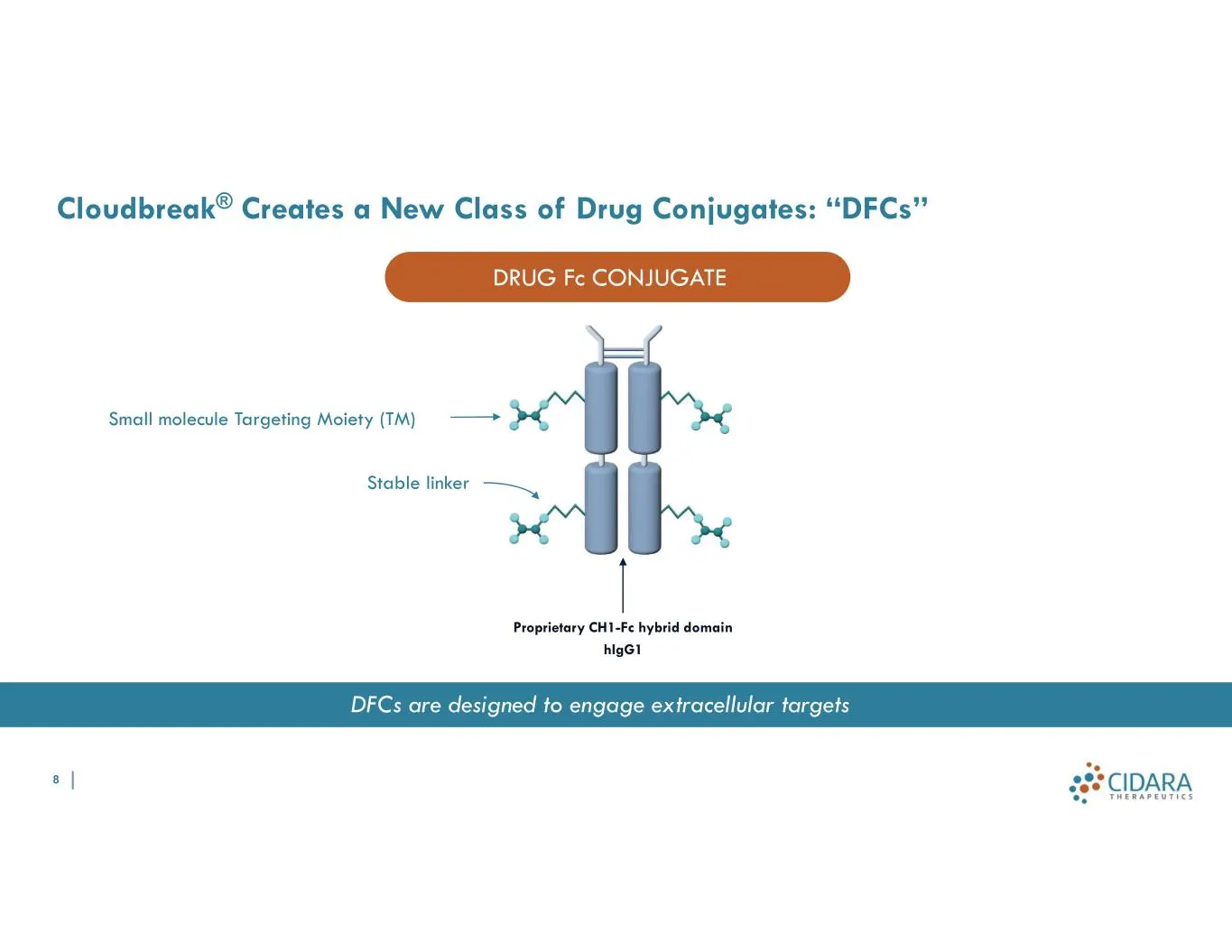
8 Cloudbreak® Creates a New Class of Drug Conjugates: “DFCs” DRUG Fc CONJUGATE Proprietary CH1-Fc hybrid domain hIgG1 Stable linker Small molecule Targeting Moiety (TM) DFCs are designed to engage extracellular targets
Slide 9: DFCs are Fundamentally Different from ADCs and Bispecifics
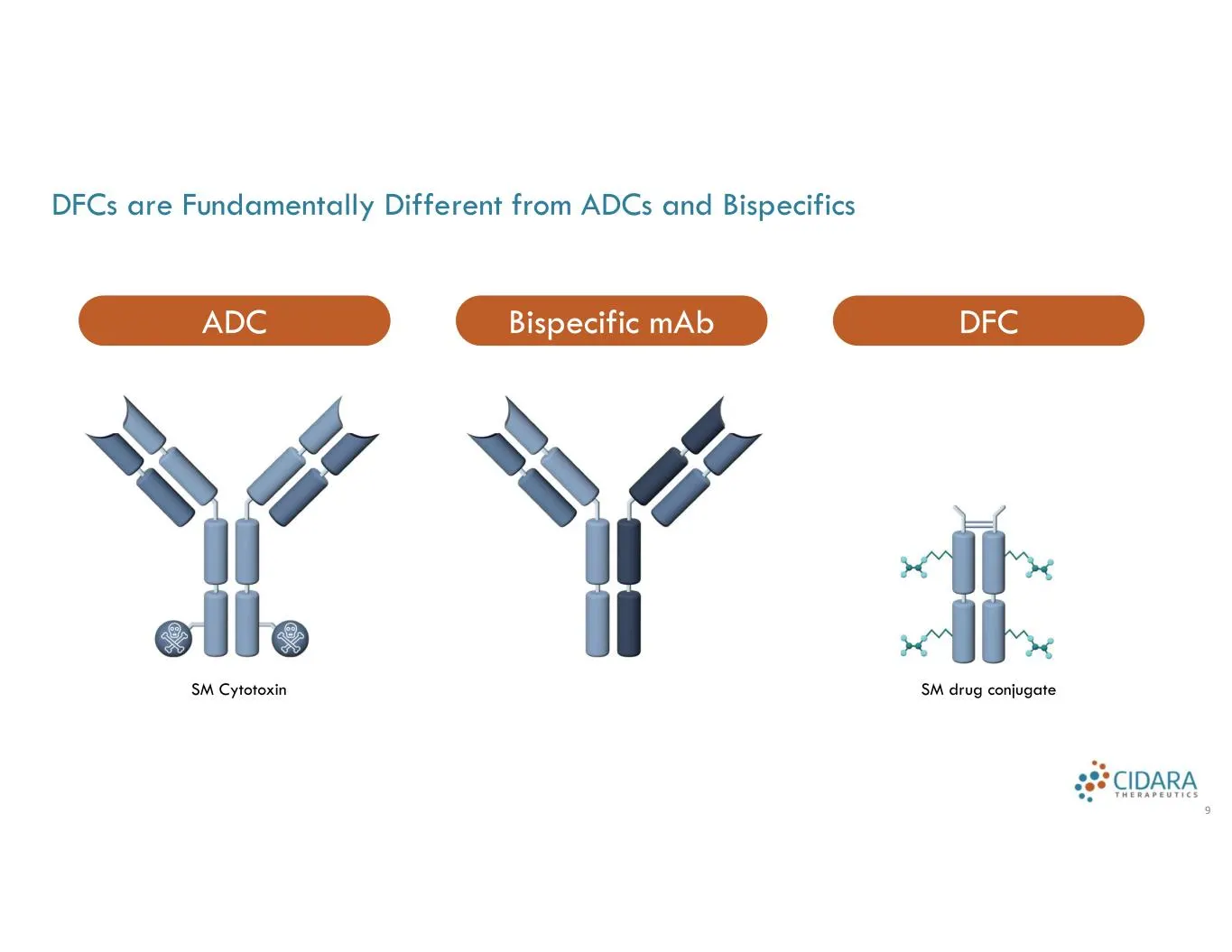
9 DFCs are Fundamentally Different from ADCs and Bispecifics SM Cytotoxin SM drug conjugate ADC Bispecific mAb DFC
Slide 10: Fc Moiety is Tailored to Specific Indications
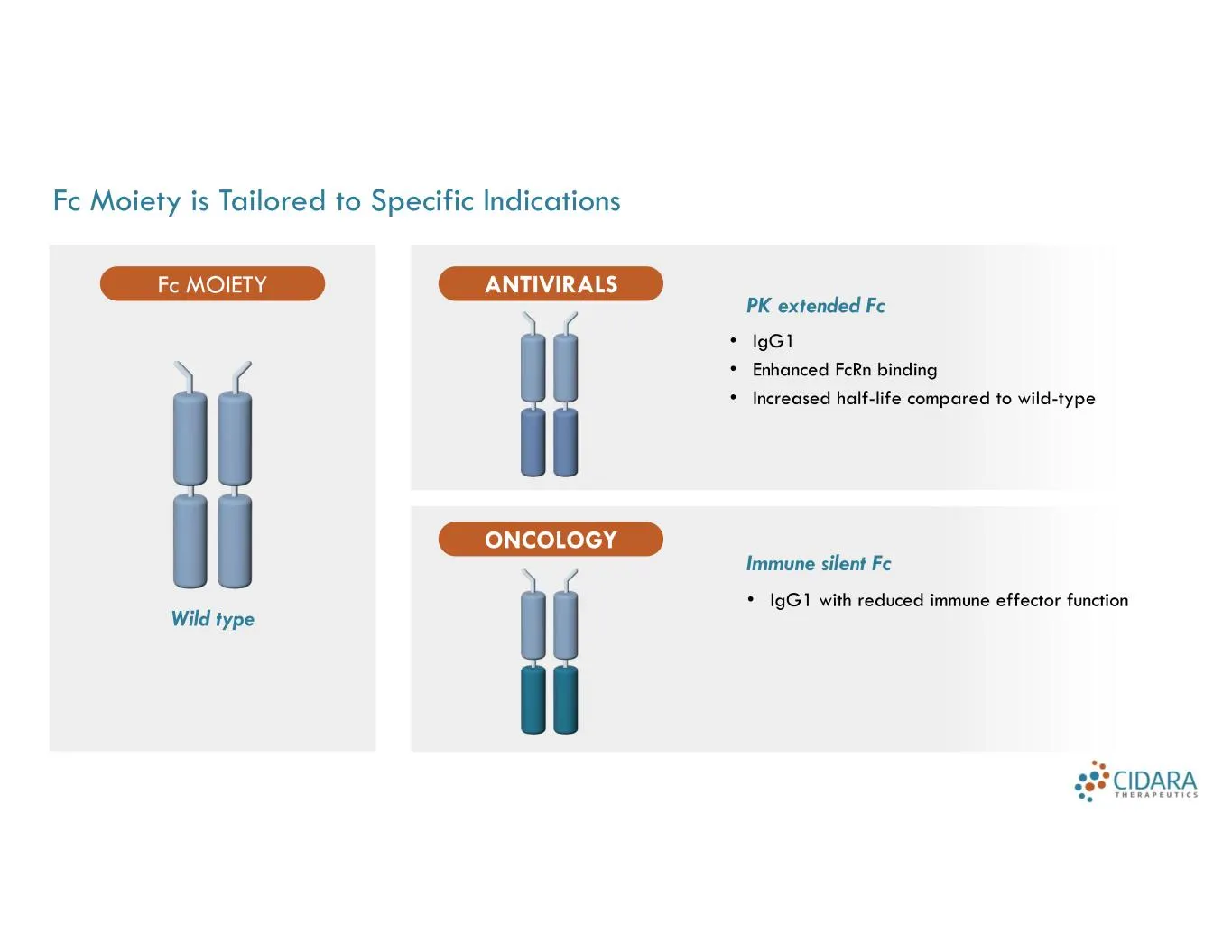
Fc MOIETY Fc Moiety is Tailored to Specific Indications • IgG1 • Enhanced FcRn binding • Increased half-life compared to wild-type • IgG1 with reduced immune effector function PK extended Fc Immune silent Fc Wild type ANTIVIRALS ONCOLOGY
Slide 11: Different Targeting Moieties Attach to the Fc Moiety
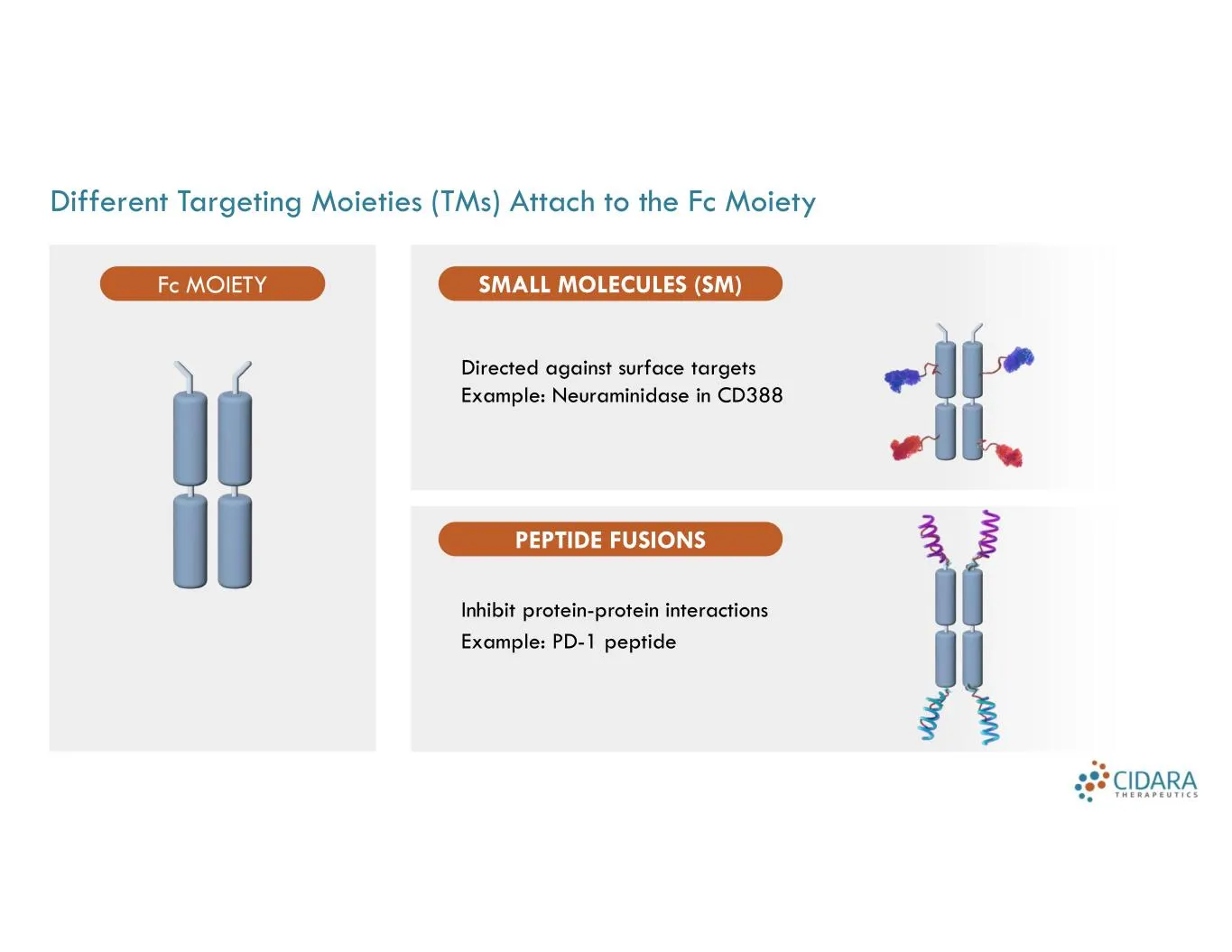
Fc MOIETY SMALL MOLECULES (SM) PEPTIDE FUSIONS Different Targeting Moieties (TMs) Attach to the Fc Moiety Directed against surface targets Example: Neuraminidase in CD388 Inhibit protein-protein interactions Example: PD-1 peptide
Slide 12: DFCs Can Improve Small Molecule Drug Potency and Safety
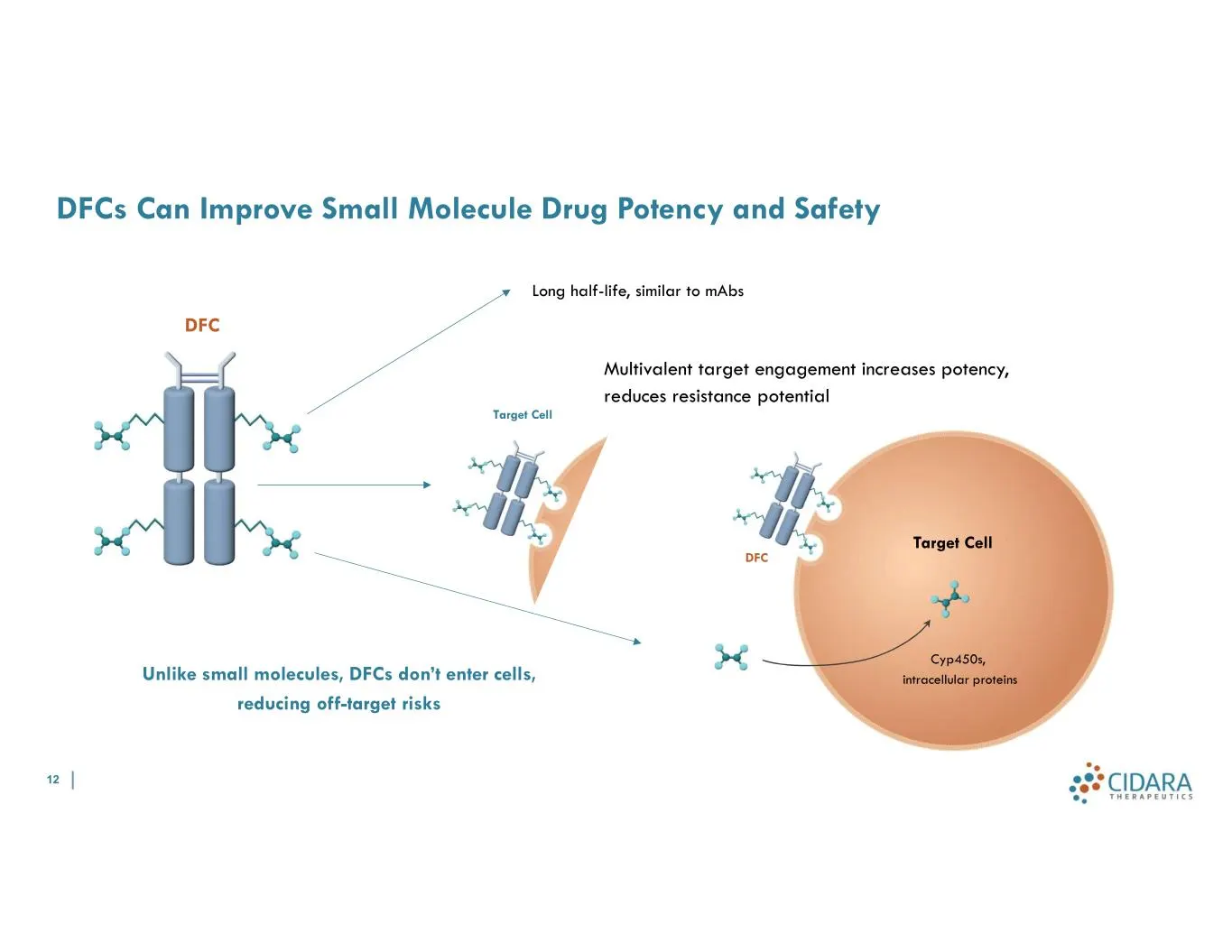
12 DFCs Can Improve Small Molecule Drug Potency and Safety DFC Long half-life, similar to mAbs Target Cell Target Cell Cyp450s, intracellular proteins DFC Unlike small molecules, DFCs don’t enter cells, reducing off-target risks Multivalent target engagement increases potency, reduces resistance pot
Slide 13: DFCs Have Reduced Potential for Off-Target Toxicity
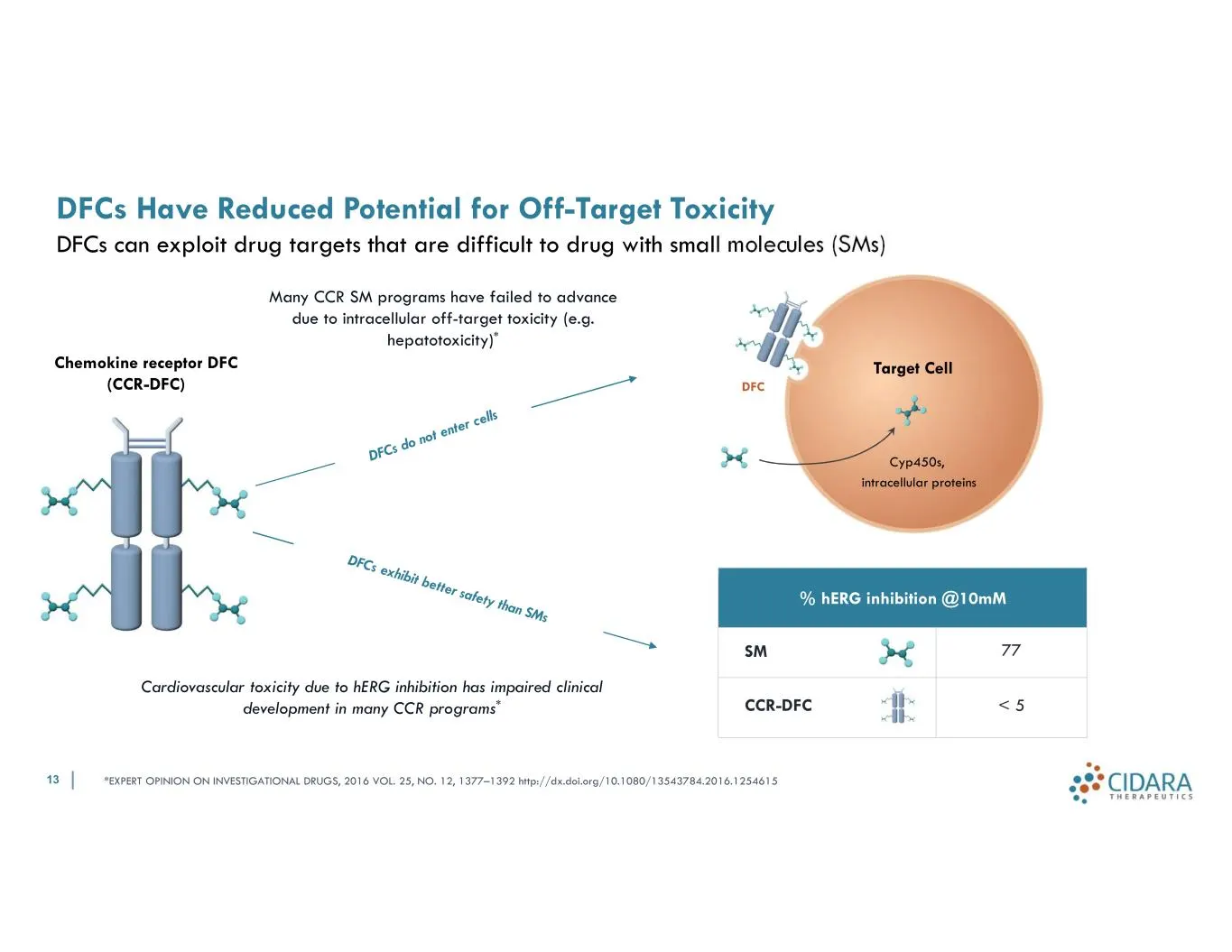
13 % hERG inhibition @10mM 77SM < 5CCR-DFC DFCs Have Reduced Potential for Off-Target Toxicity *EXPERT OPINION ON INVESTIGATIONAL DRUGS, 2016 VOL. 25, NO. 12, 1377–1392 http://dx.doi.org/10.1080/13543784.2016.1254615 DFCs can exploit drug targets that are difficult to drug with small molecules (SMs)
Slide 14: CD388 Phase 2A Data Confirm the TPP
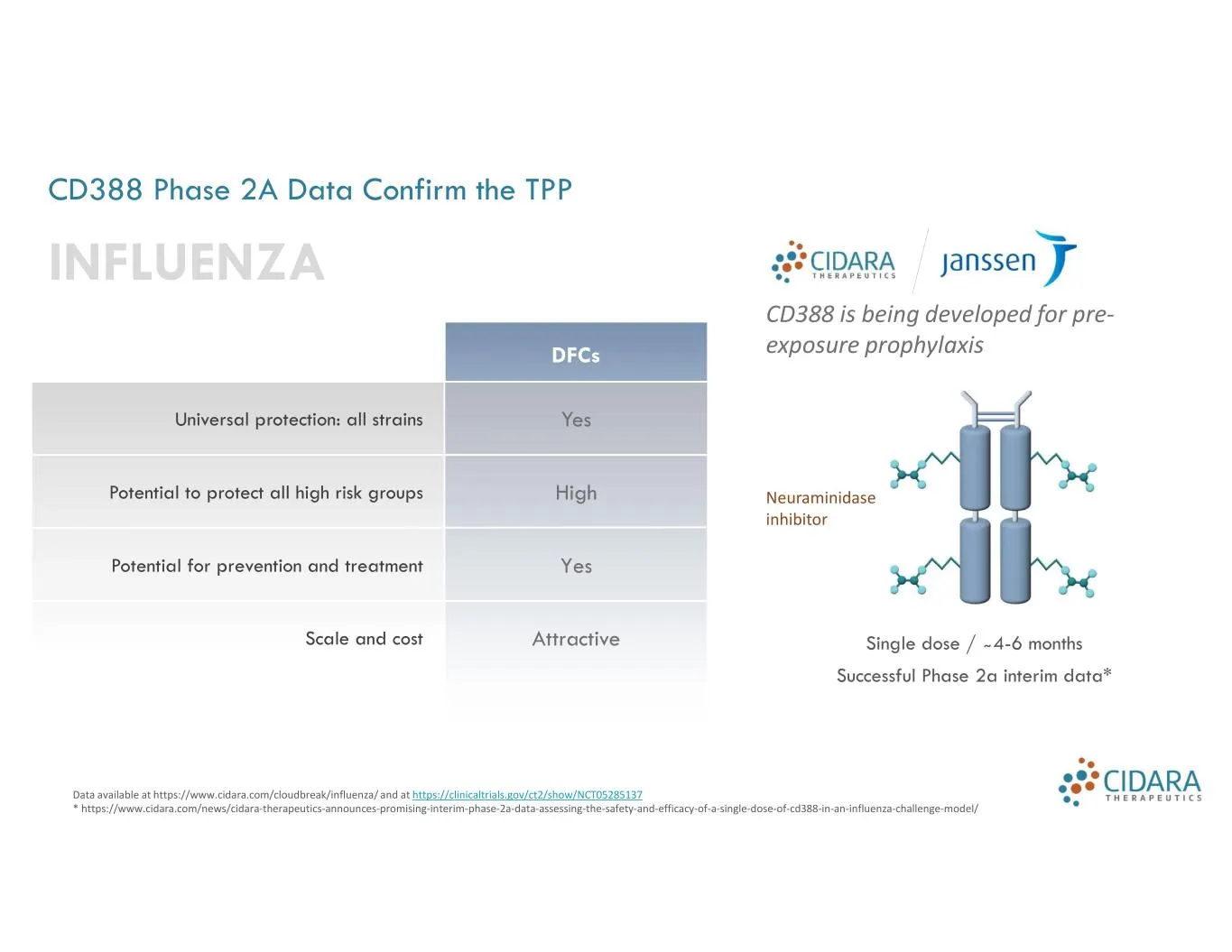
CD388 Phase 2A Data Confirm the TPP CD388 is being developed for pre- exposure prophylaxis Neuraminidase inhibitor Single dose / ̴ 4-6 months Successful Phase 2a interim data* INFLUENZA Data available at https://www.cidara.com/cloudbreak/influenza/ and at https://clinicaltrials.gov/ct2/show/NCT05285
Slide 15: JNJ0953 (CD388) Program Update
H1N1 influenza virus JNJ0953 (CD388) Program Update 15
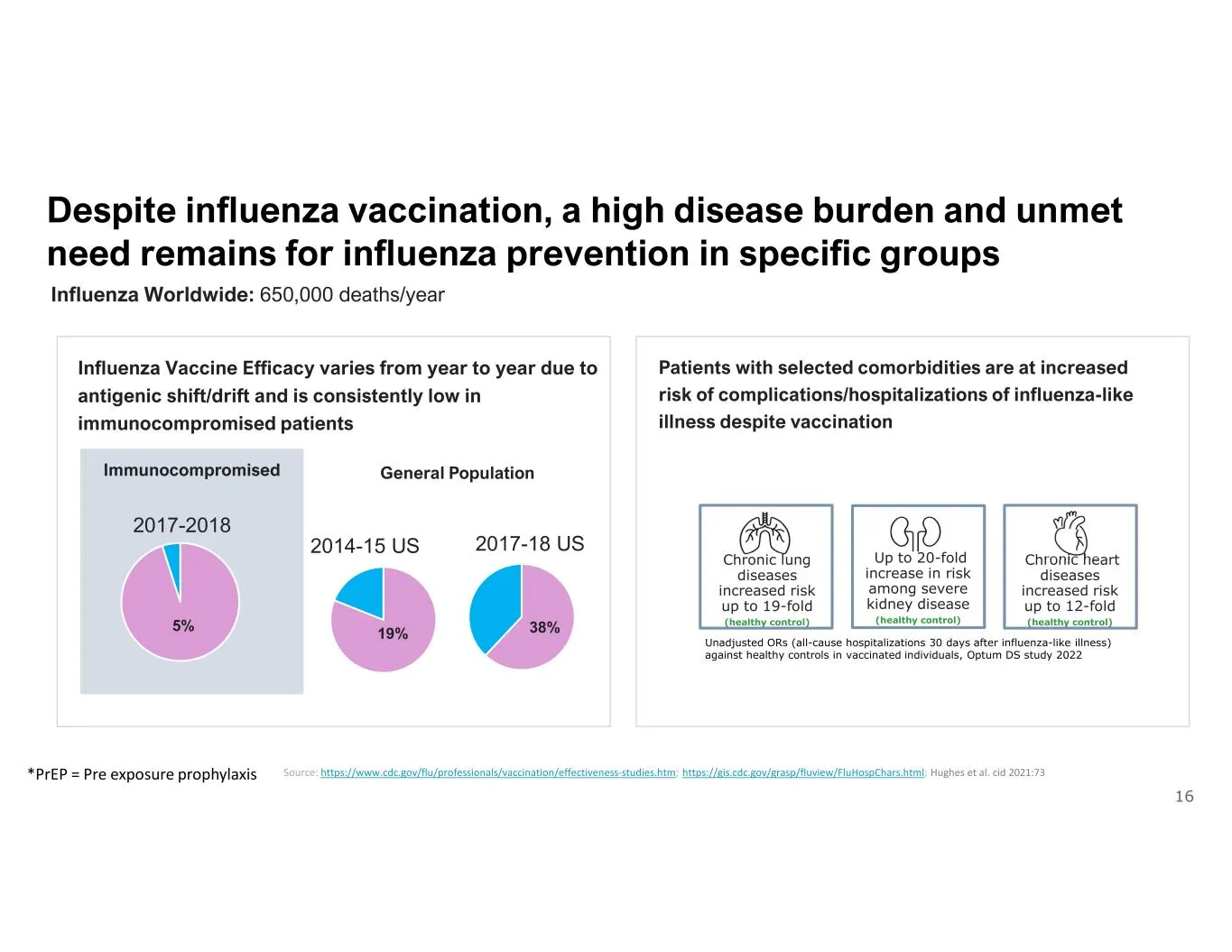
Slide 16: Influenza Worldwide: 650,000 deaths/year
Influenza Worldwide: 650,000 deaths/year Influenza Vaccine Efficacy varies from year to year due to antigenic shift/drift and is consistently low in immunocompromised patients Patients with selected comorbidities are at increased risk of complications/hospitalizations of influenza-like illness despi
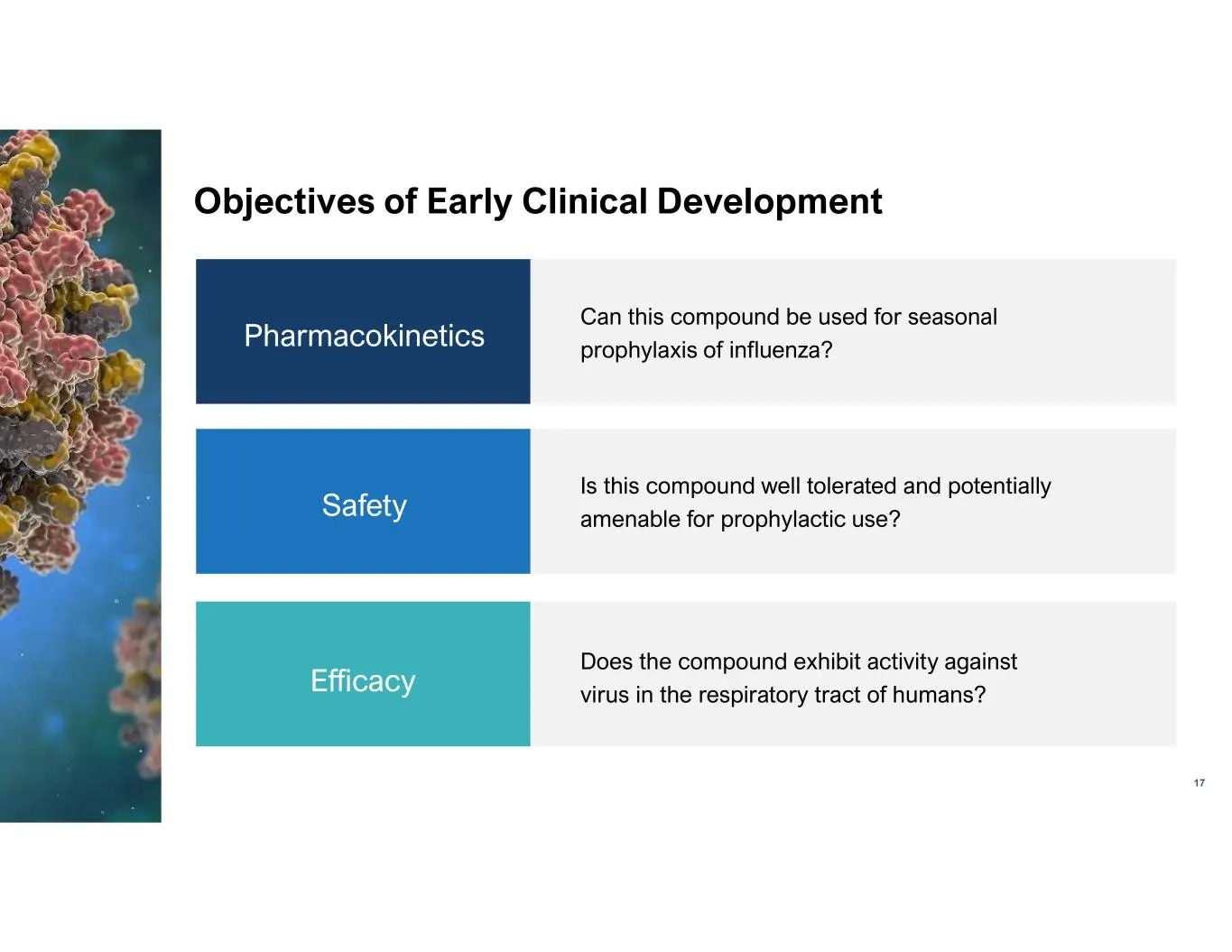
Slide 17: Objectives of Early Clinical Development
17 Objectives of Early Clinical Development 17 Pharmacokinetics Safety Can this compound be used for seasonal prophylaxis of influenza? Is this compound well tolerated and potentially amenable for prophylactic use? Does the compound exhibit activity against virus in the respiratory tract of humans?E
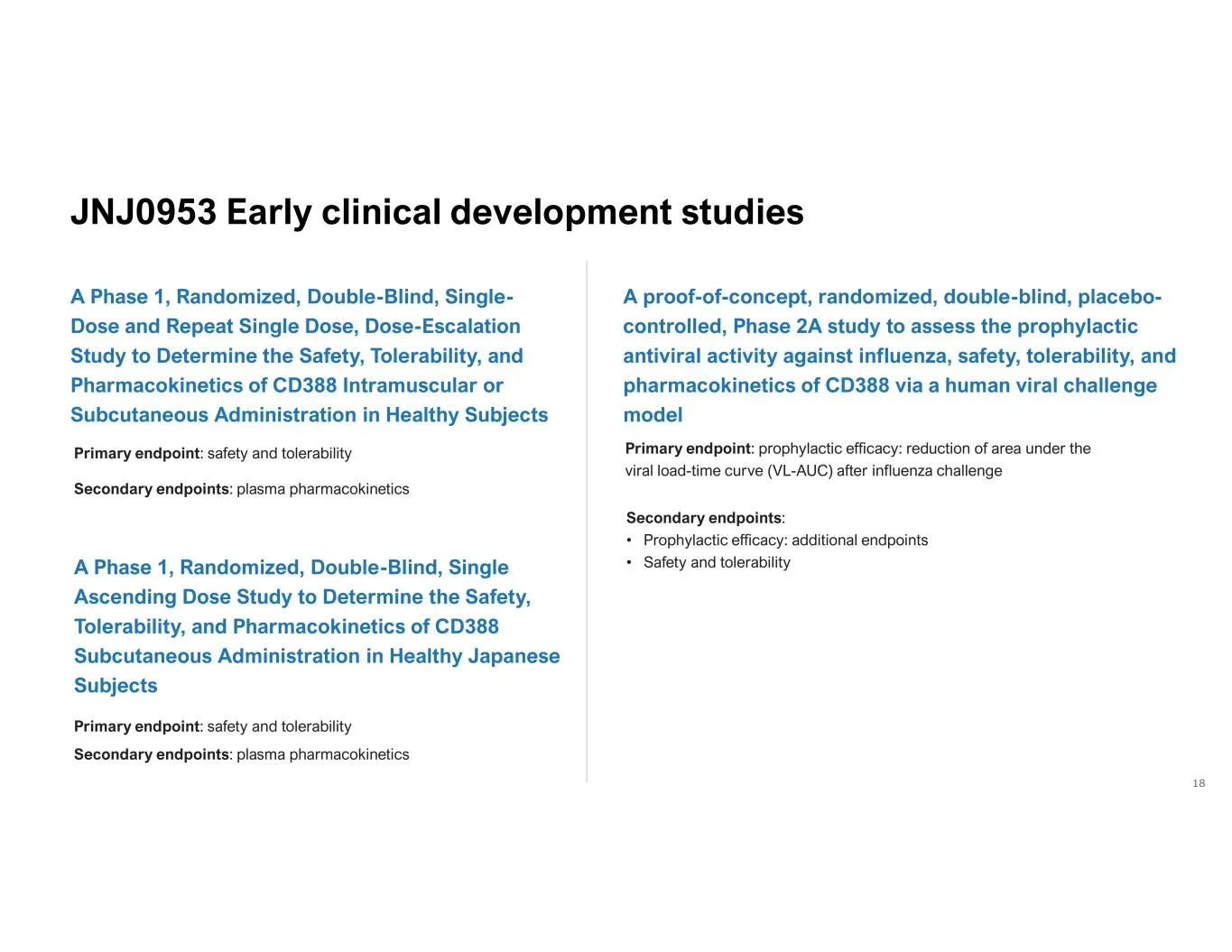
Slide 18: CD388 Phase 1 and Phase 2a study designs
18 A Phase 1, Randomized, Double-Blind, Single- Dose and Repeat Single Dose, Dose-Escalation Study to Determine the Safety, Tolerability, and Pharmacokinetics of CD388 Intramuscular or Subcutaneous Administration in Healthy Subjects Primary endpoint: safety and tolerability Secondary endpoints: plas
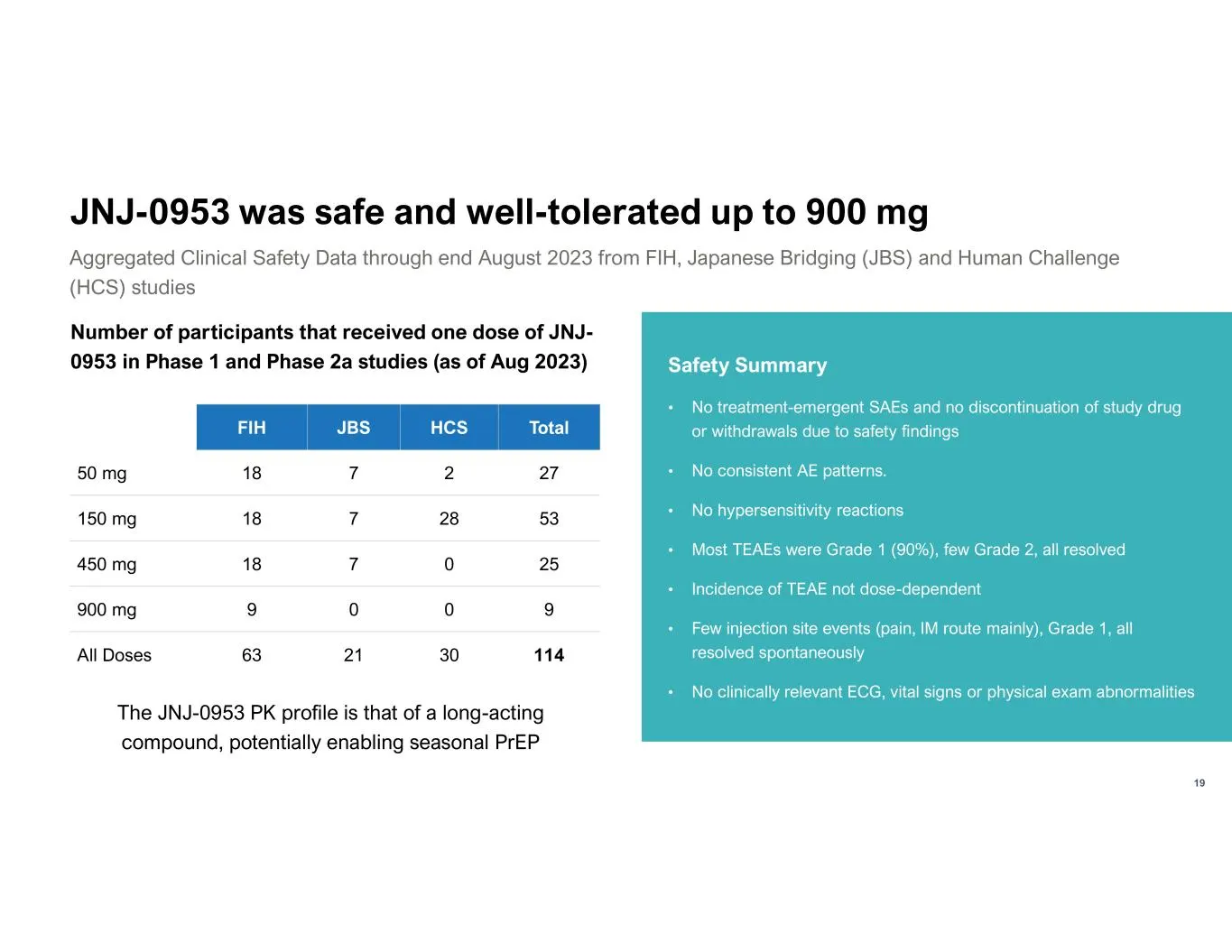
Slide 19: Safety Summary
Safety Summary • No treatment-emergent SAEs and no discontinuation of study drug or withdrawals due to safety findings • No consistent AE patterns. • No hypersensitivity reactions • Most TEAEs were Grade 1 (90%), few Grade 2, all resolved • Incidence of TEAE not dose-dependent • Few injection site e
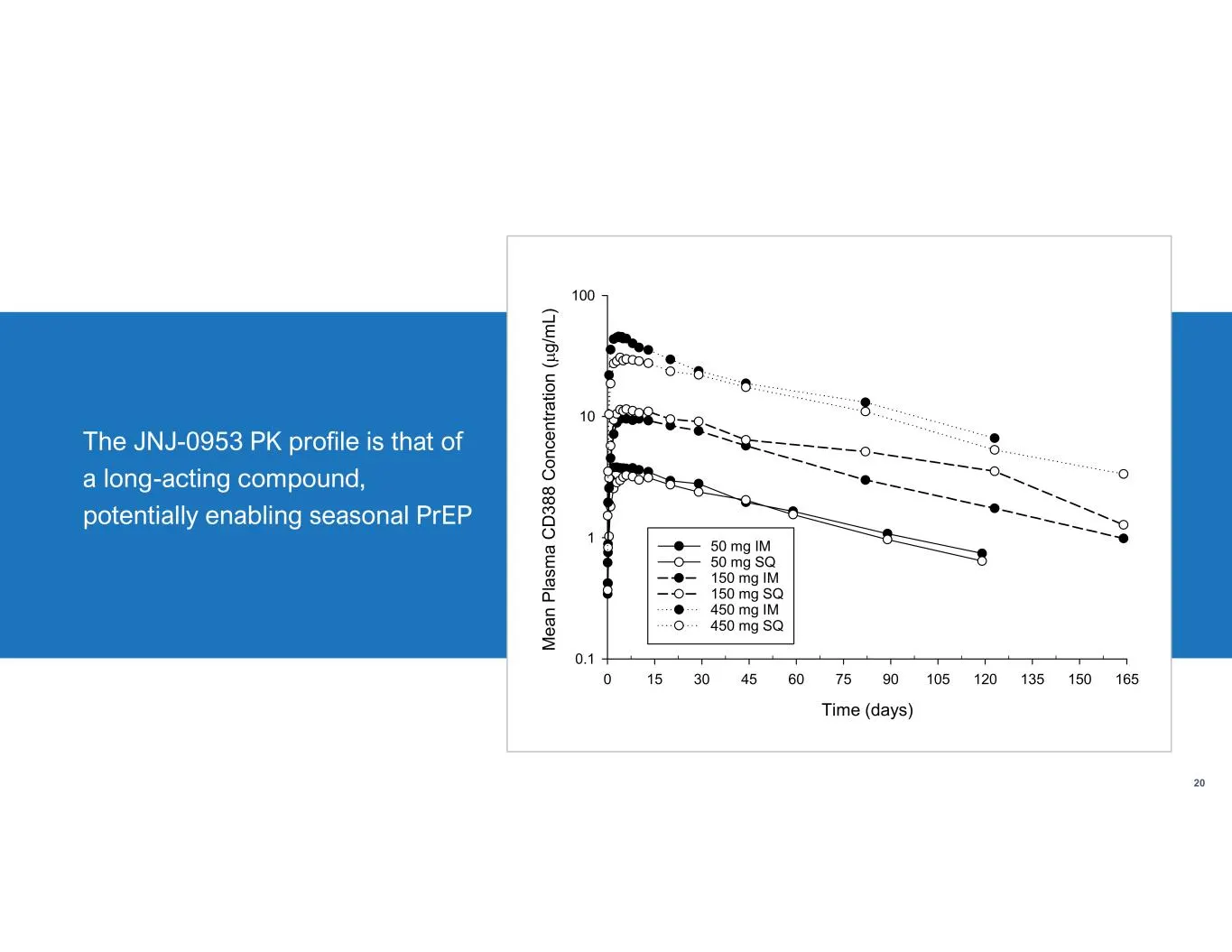
Slide 20: JNJ-0953 PK profile enables seasonal PrEP
The JNJ-0953 PK profile is that of a long-acting compound, potentially enabling seasonal PrEP 20 Time (days) 0 15 30 45 60 75 90 105 120 135 150 165 M e a n P la sm a C D 3 8 8 C o n ce n tr a tio n ( g /m L) 0.1 1 10 100 50 mg IM 50 mg SQ 150 mg IM 150 mg SQ 450 mg IM 450 mg SQ
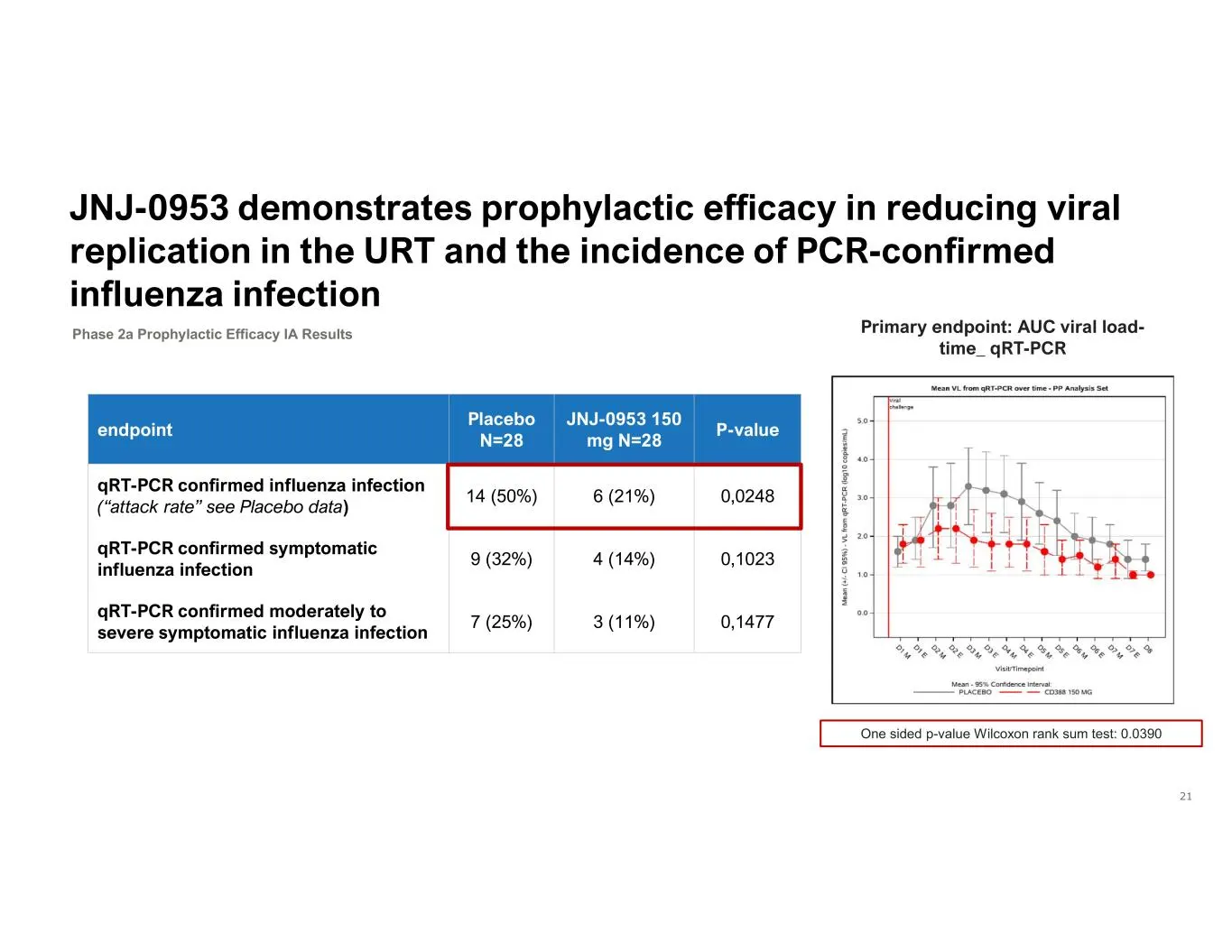
Slide 21: Phase 2a Prophylactic Efficacy IA Results
P-value JNJ-0953 150 mg N=28 Placebo N=28endpoint 0,02486 (21%)14 (50%) qRT-PCR confirmed influenza infection (“attack rate” see Placebo data) 0,10234 (14%)9 (32%) qRT-PCR confirmed symptomatic influenza infection 0,14773 (11%)7 (25%)qRT-PCR confirmed moderately to severe symptomatic influenza infec
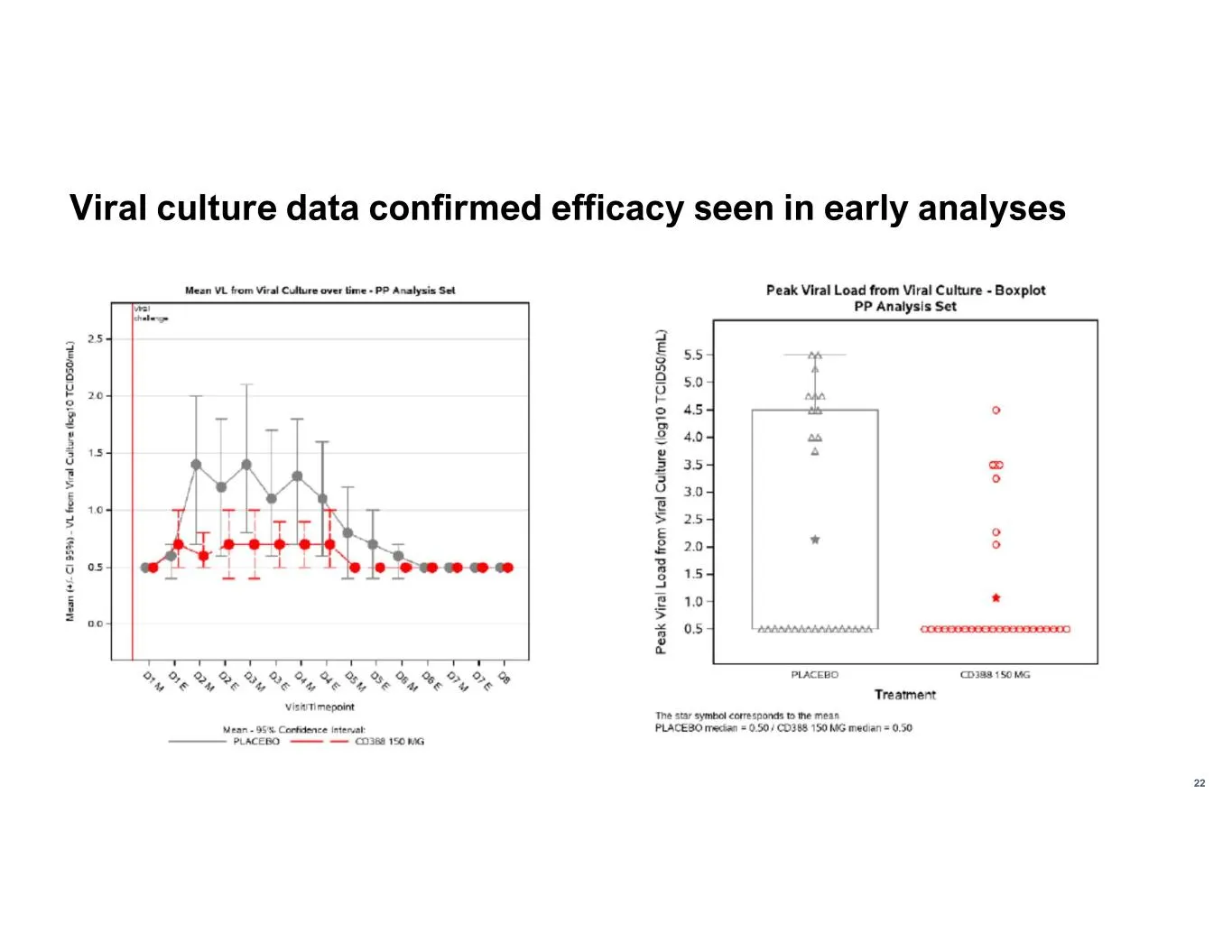
Slide 22: Viral culture data confirmed efficacy
22 Viral culture data confirmed efficacy seen in early analyses
Slide 23: Summary
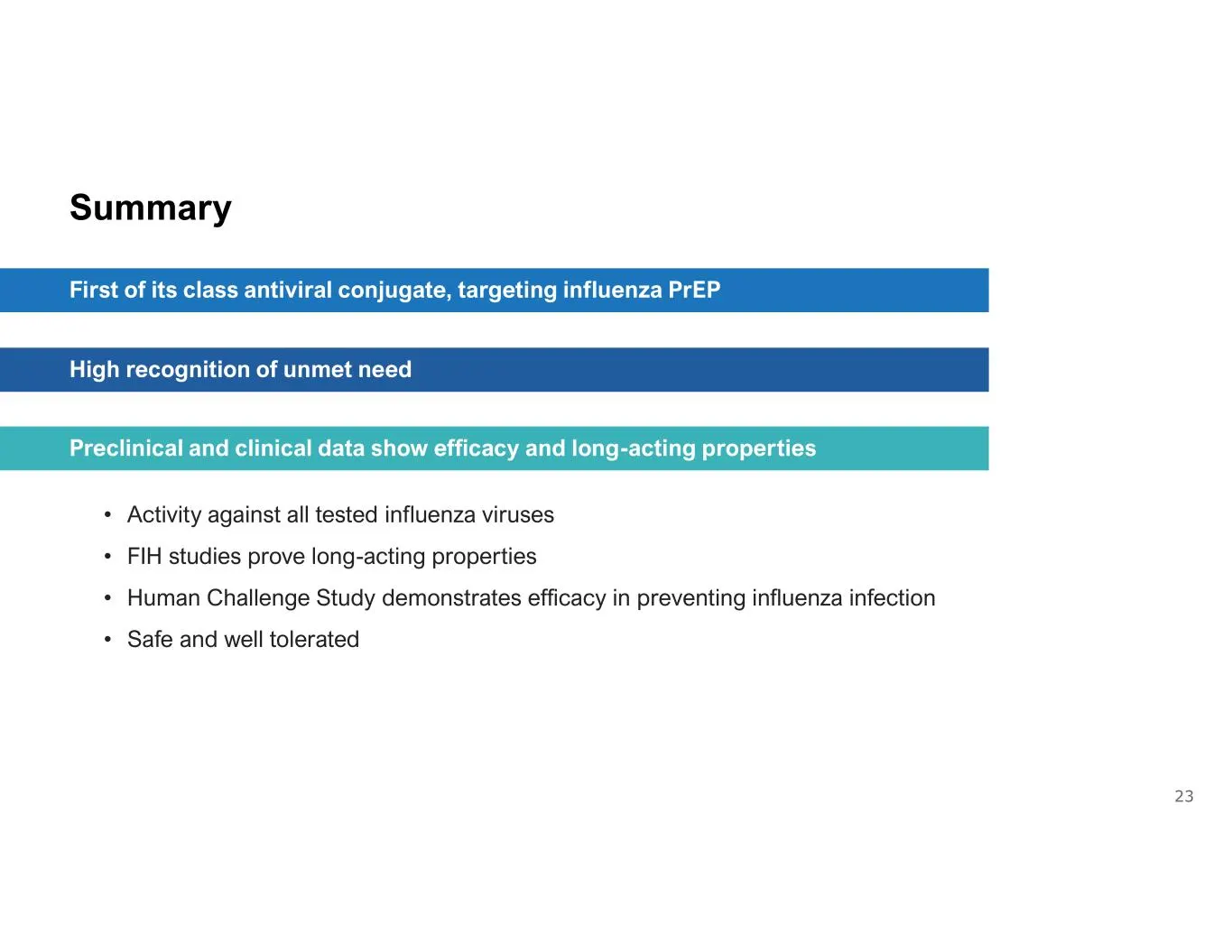
23 • Activity against all tested influenza viruses • FIH studies prove long-acting properties • Human Challenge Study demonstrates efficacy in preventing influenza infection • Safe and well tolerated 23 Summary First of its class antiviral conjugate, targeting influenza PrEP High recognition of unme
Slide 24: CD388 (JNJ-0953) Program Update
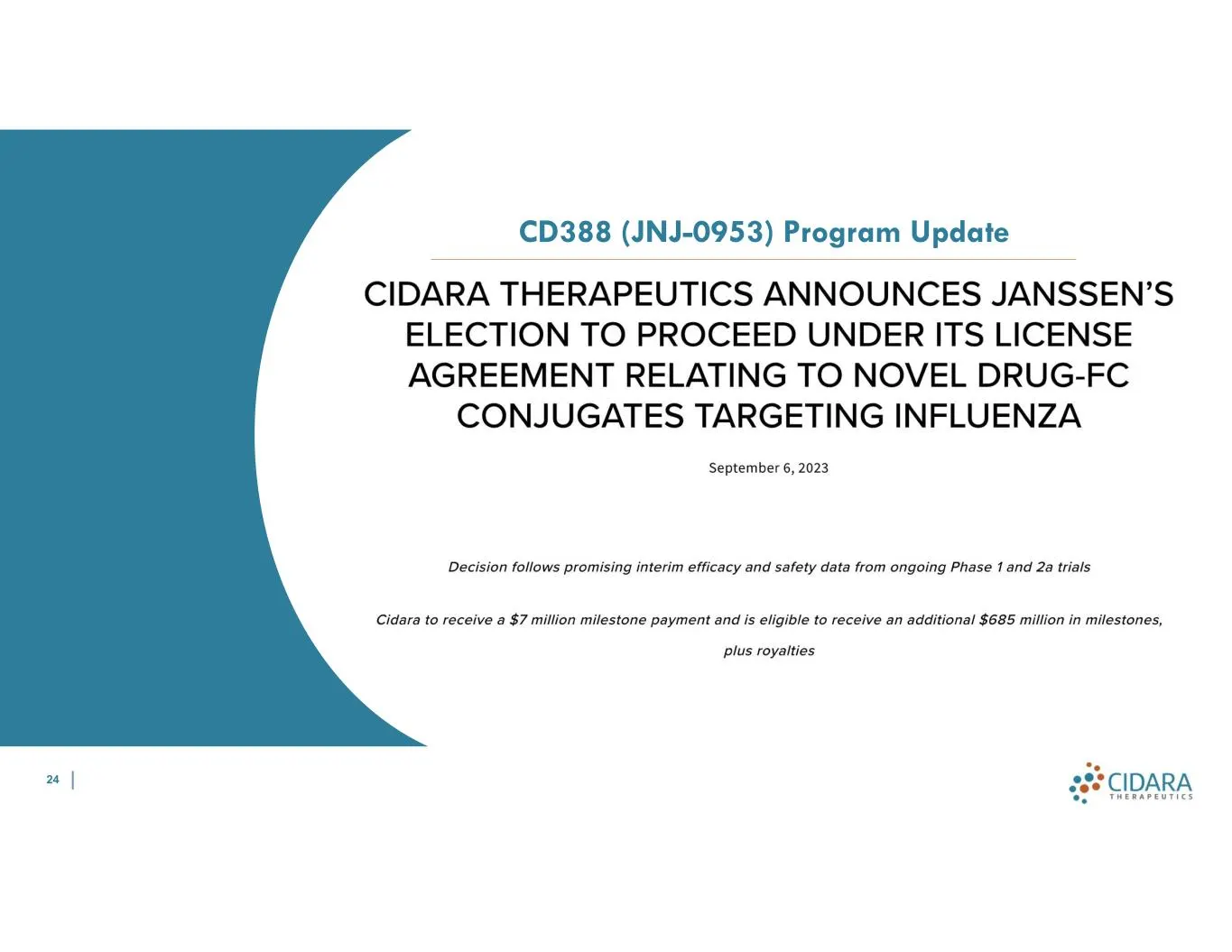
24 CD388 (JNJ-0953) Program Update
Slide 25: A Track Record of Forging Partnerships
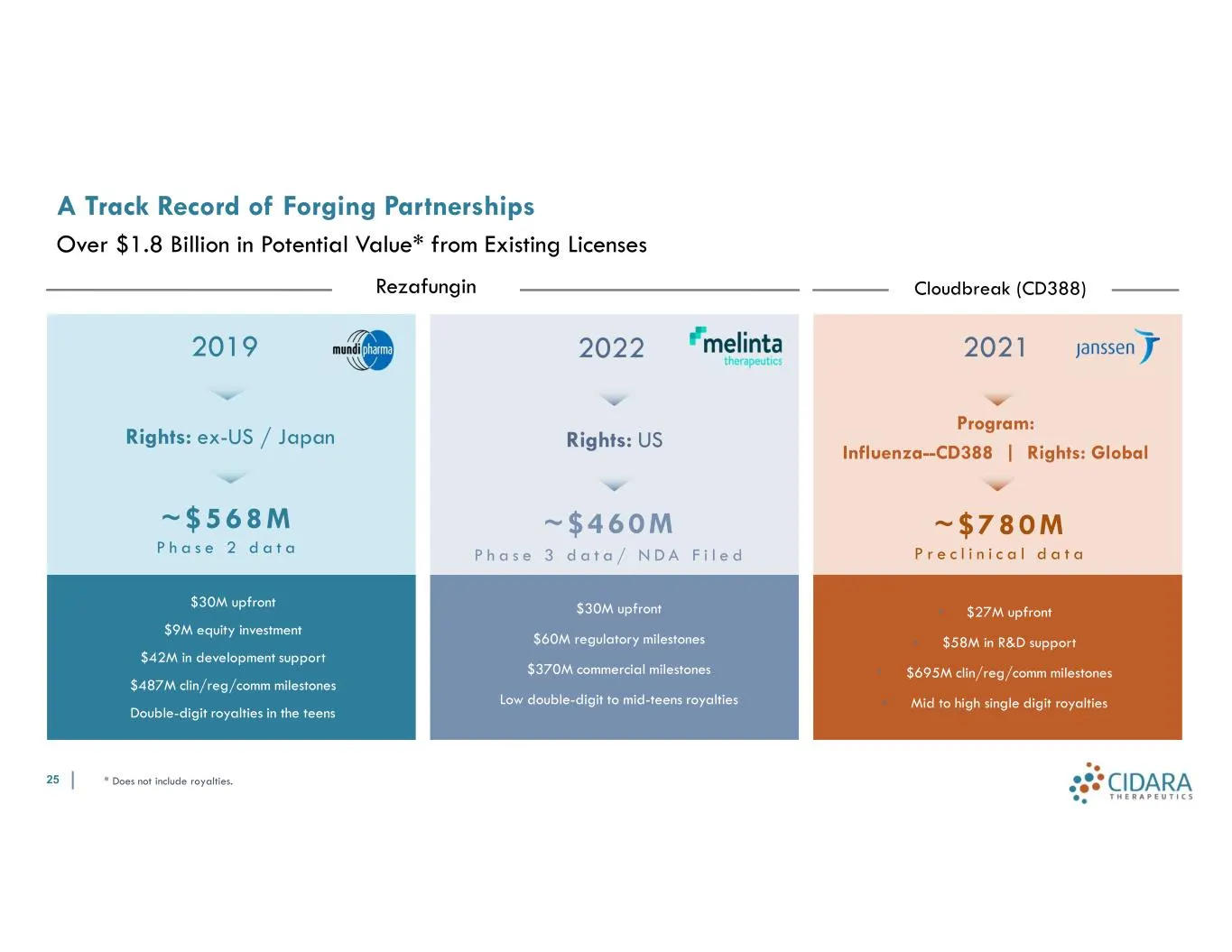
25 A Track Record of Forging Partnerships * Does not include royalties. Over $1.8 Billion in Potential Value* from Existing Licenses Rezafungin ~$568M P h a s e 2 d a t a $30M upfront $9M equity investment $42M in development support $487M clin/reg/comm milestones Double-digit royalties in the teens
Slide 26: Cloudbreak Oncology DFC Programs
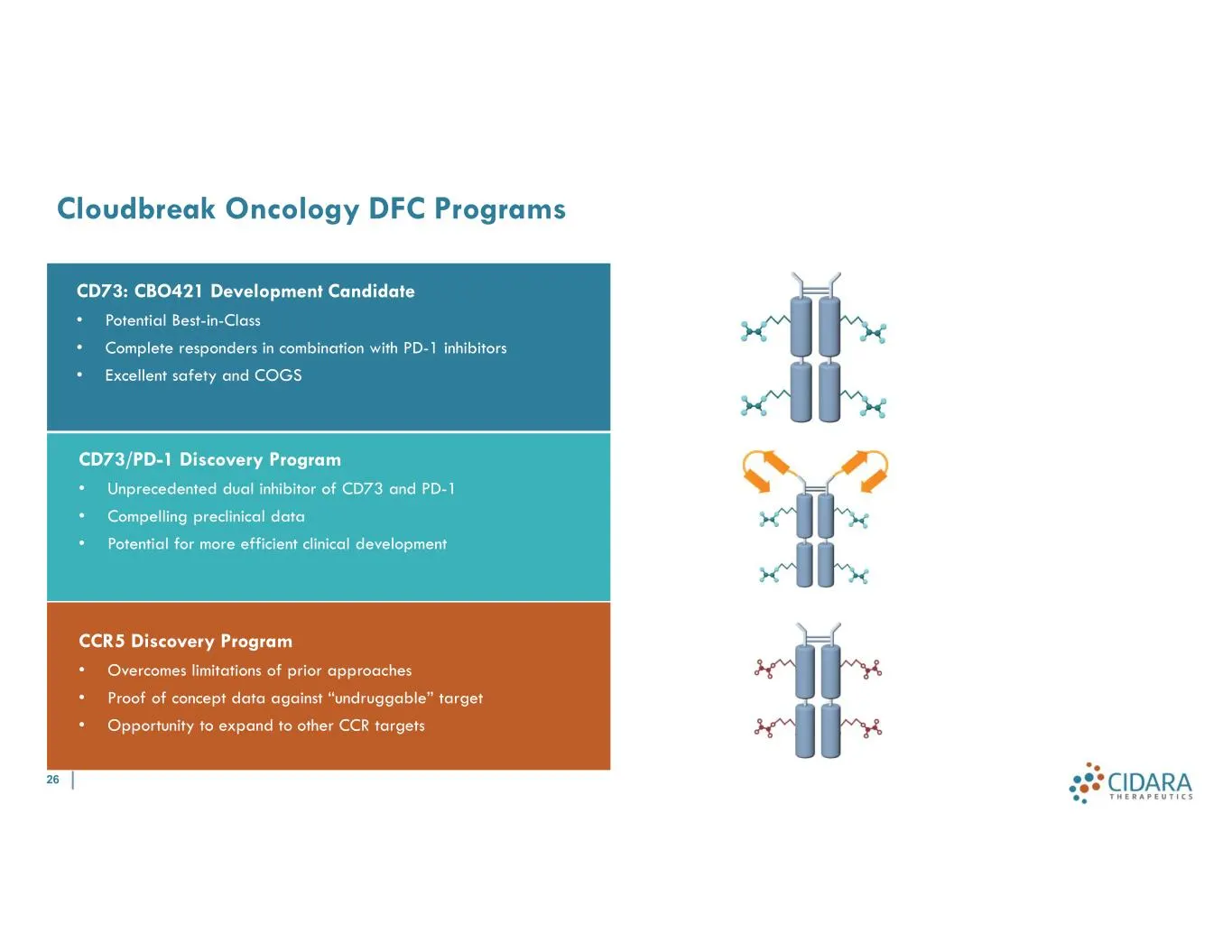
26 Cloudbreak Oncology DFC Programs CD73: CBO421 Development Candidate • Potential Best-in-Class • Complete responders in combination with PD-1 inhibitors • Excellent safety and COGS CD73/PD-1 Discovery Program • Unprecedented dual inhibitor of CD73 and PD-1 • Compelling preclinical data • Potential
Slide 27: Nicole Davarpanah, MD, JD
Nicole Davarpanah, MD, JD 27 S VP , T rans la t i ona l Resea r c h & Deve lo pmen t
Slide 28: Unmet Drug Development Challenges in Immuno-Oncology
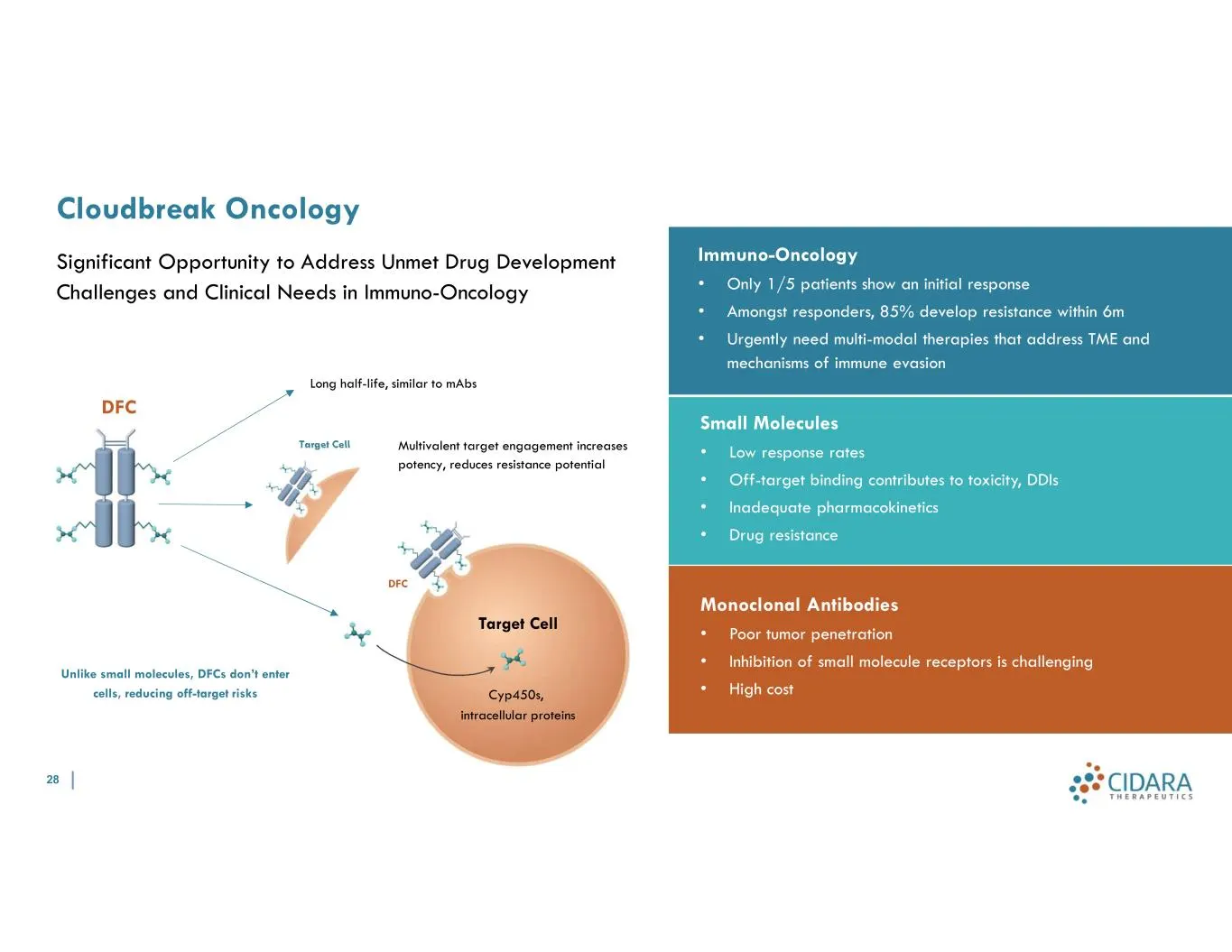
28 Significant Opportunity to Address Unmet Drug Development Challenges and Clinical Needs in Immuno-Oncology Cloudbreak Oncology Immuno-Oncology • Only 1/5 patients show an initial response • Amongst responders, 85% develop resistance within 6m • Urgently need multi-modal therapies that address TME
Slide 29: DFCs Inhibit Multiple Tumor Immune Evasion Mechanisms
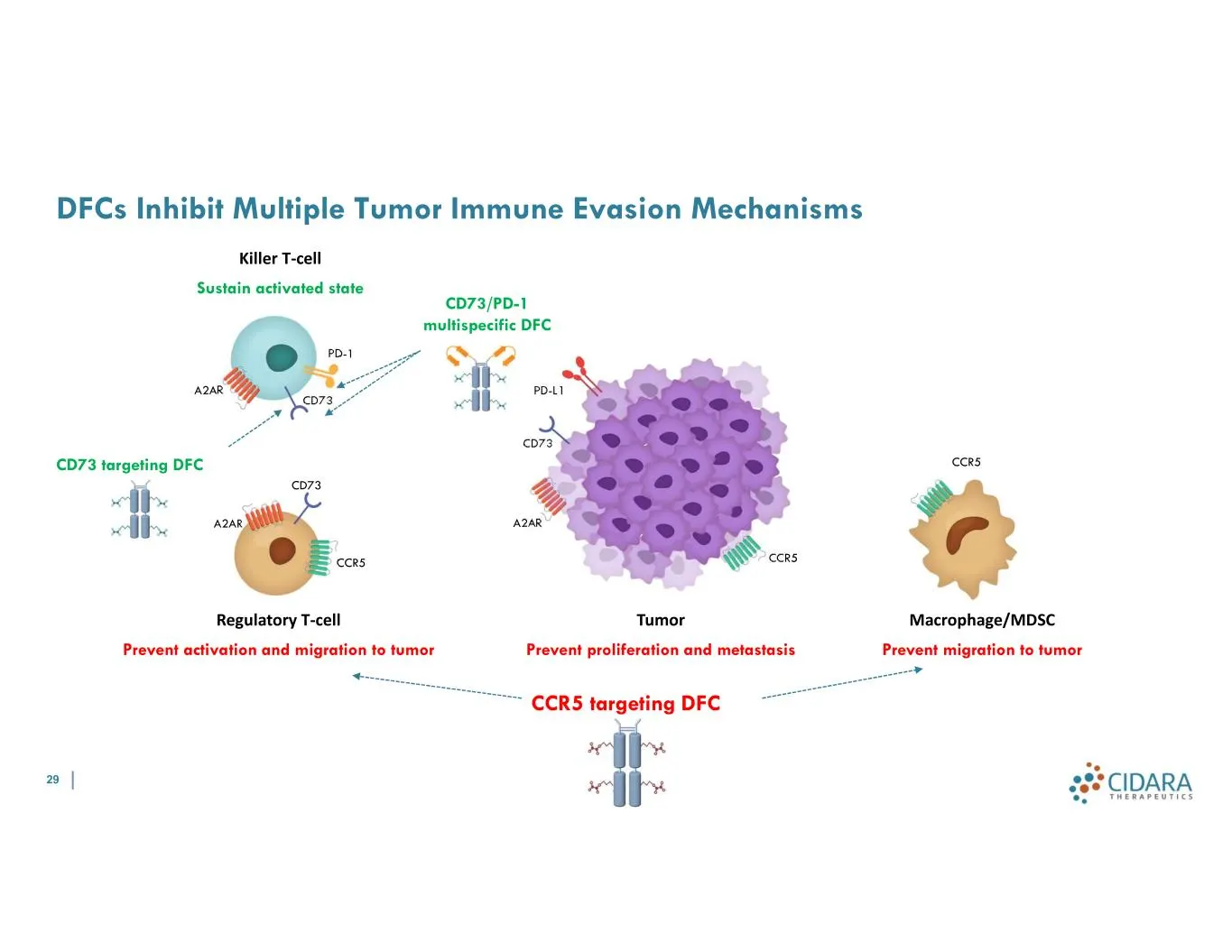
29 DFCs Inhibit Multiple Tumor Immune Evasion Mechanisms CCR5 PD-1 Killer T-cell Sustain activated state Regulatory T-cell Prevent activation and migration to tumor Macrophage/MDSC Prevent migration to tumor A2AR A2AR CCR5 CD73 Tumor Prevent proliferation and metastasis CD73 targeting DFC CD73 CD73/
Slide 30: Who is left behind in cancer immunotherapy?
Stephen Schoenberger, PhD 30 Who i s l e f t beh ind i n cance r immuno the r apy?
Slide 31: Stephen P. Schoenberger, PhD
31 Stephen P. Schoenberger, PhD Professor, Center for Immunotherapy, La Jolla Institute for Immunology Adj. Professor, Division of Hematology & Oncology, UCSD Moores Cancer Center Co-Director, San Diego Center for Precision Immunotherapy
Slide 32: Research Focus: Translational Immuno-Oncology
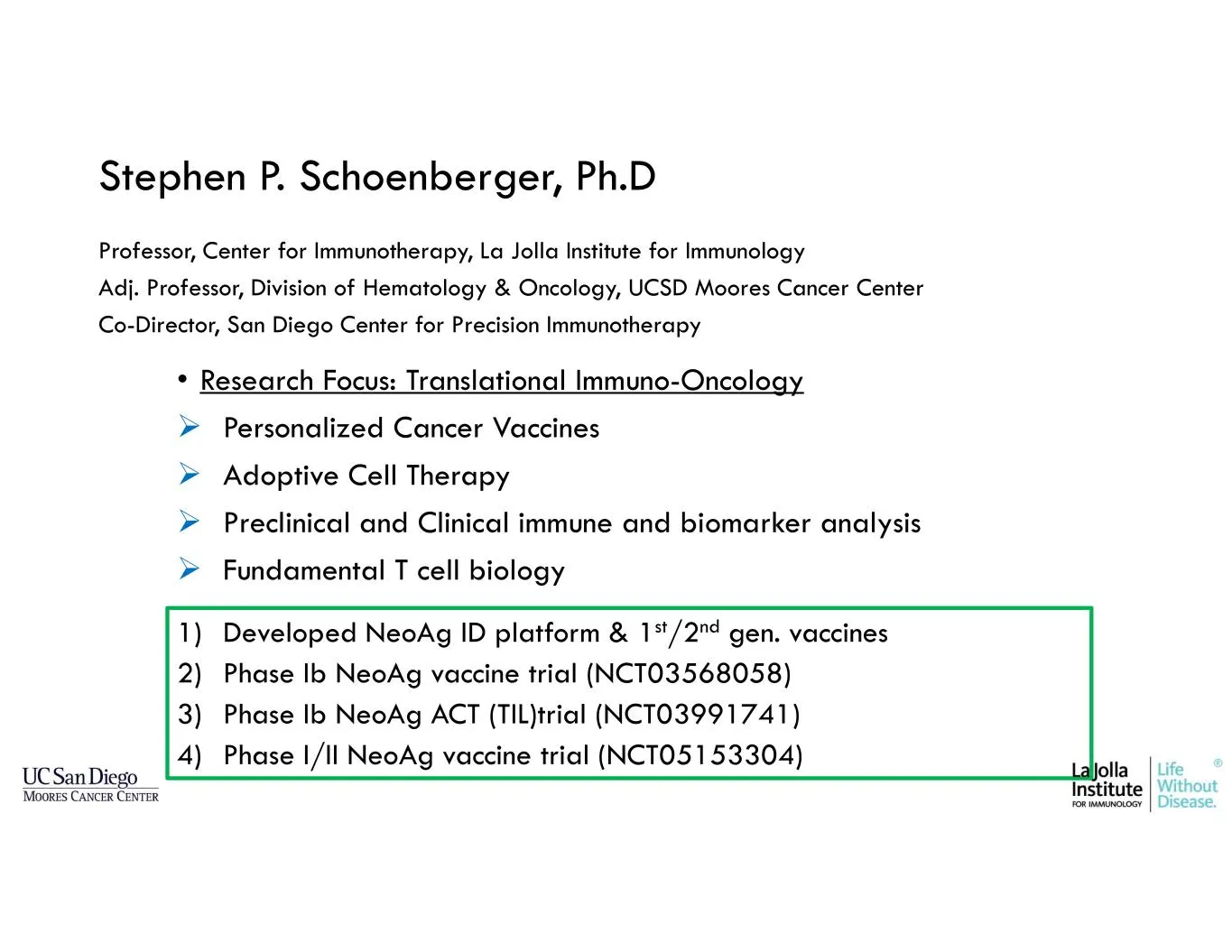
• Research Focus: Translational Immuno-Oncology Personalized Cancer Vaccines Adoptive Cell Therapy Preclinical and Clinical immune and biomarker analysis Fundamental T cell biology 1) Developed NeoAg ID platform & 1st/2nd gen. vaccines 2) Phase Ib NeoAg vaccine trial (NCT03568058) 3) Phase I
Slide 33: Unmet needs / strategic opportunities in Immuno-Oncology
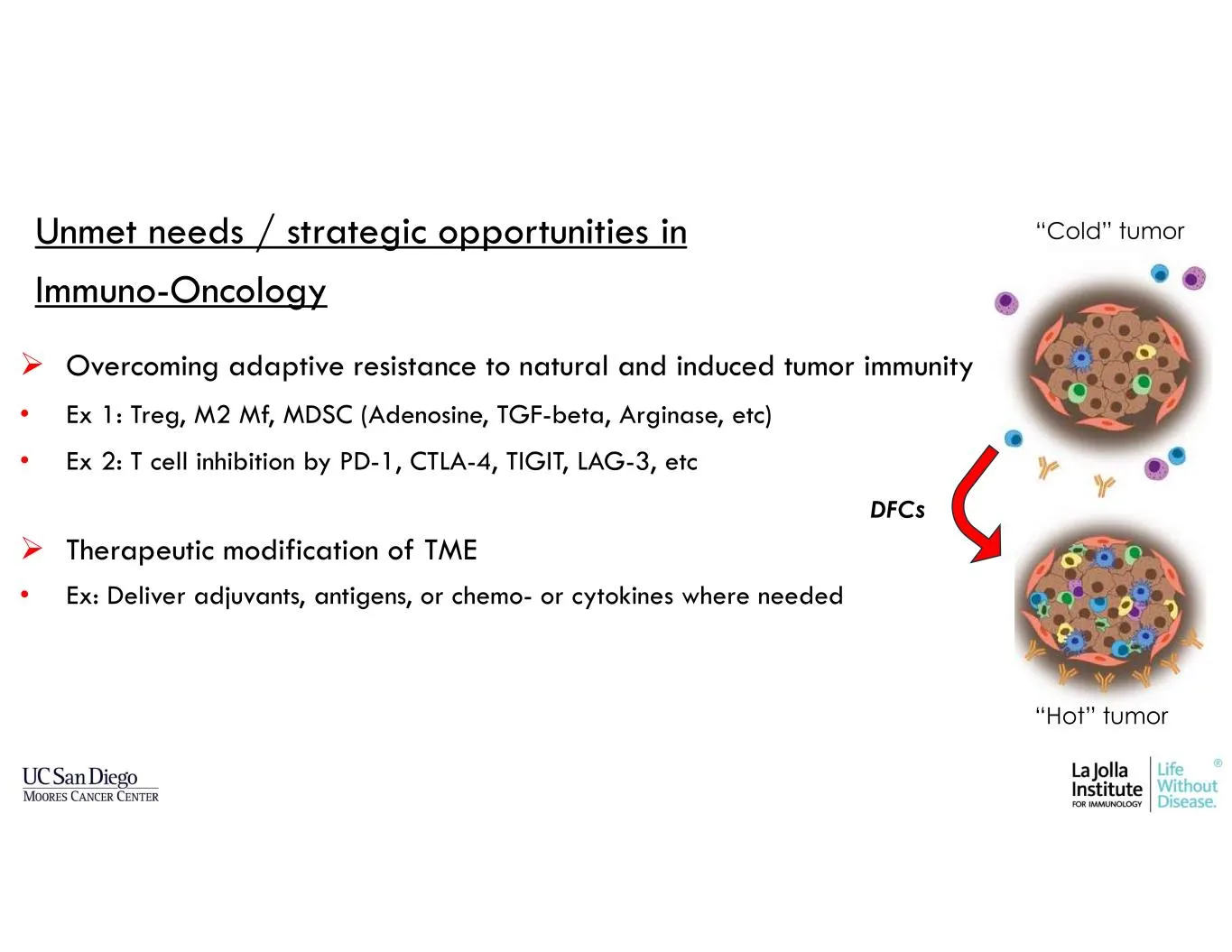
Unmet needs / strategic opportunities in Immuno-Oncology Overcoming adaptive resistance to natural and induced tumor immunity • Ex 1: Treg, M2 Mf, MDSC (Adenosine, TGF-beta, Arginase, etc) • Ex 2: T cell inhibition by PD-1, CTLA-4, TIGIT, LAG-3, etc Therapeutic modification of TME • Ex: Deliver
Slide 34: Unmet needs: Which patients/cancer types?
Unmet needs / strategic opportunities - Which patients/cancer types? - Incomplete ICB: Lung, Skin, RCC, HNSCC (20-40% ORR) Little or no ICB signal: CRC, BrCa, PrCa, Liver, others
Slide 35: Why DFC?
Why DFC? Leverages a proven “winner” in immunobiology protein structure with many impressive features (T1/2, bioavailability, neglible immune response, etc.) Unique biology and target interaction features Facile and efficient conjugation/derivatization platform Unique PK/ADME characteristics
Slide 36: DFC platform delivers custom small molecule modifiers
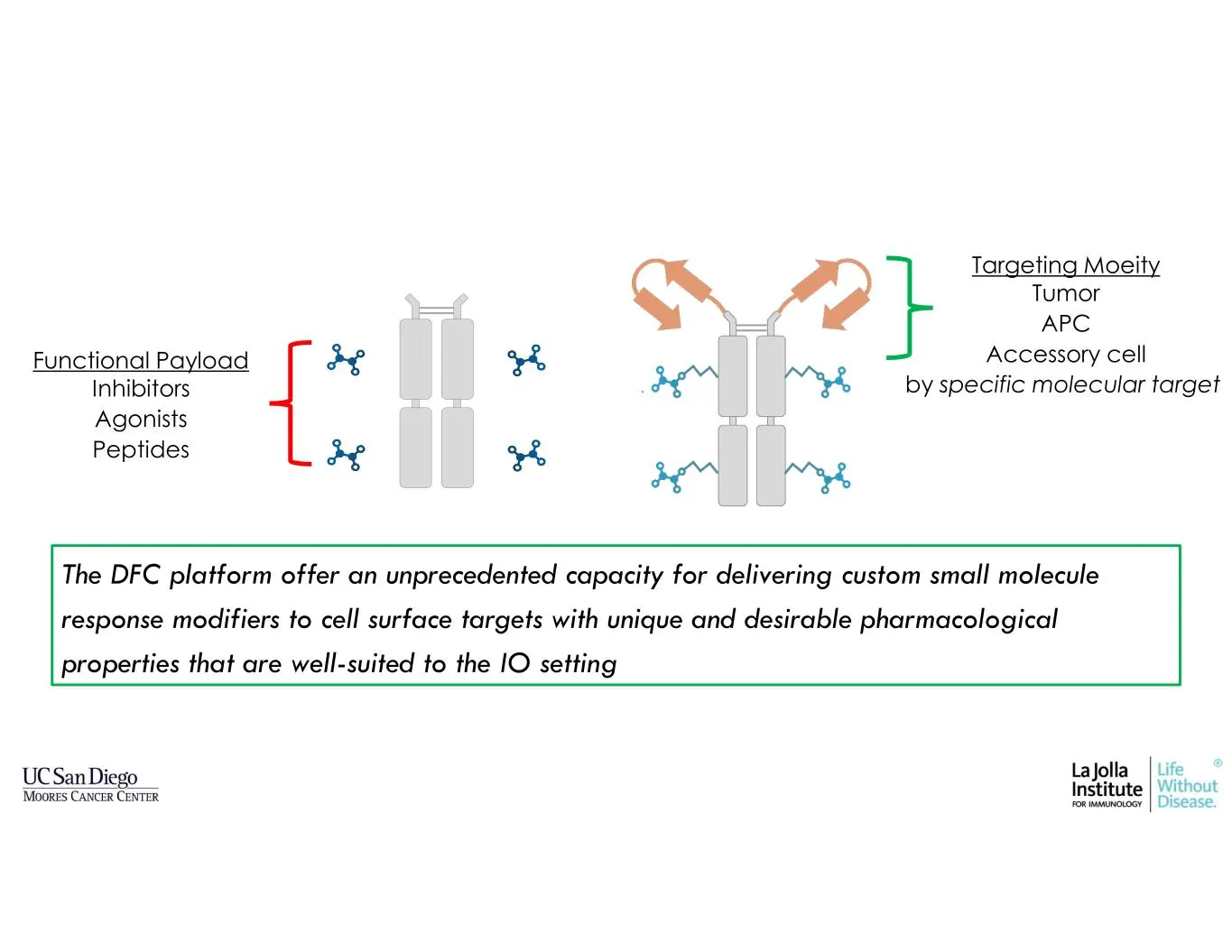
inhibitor 3 tor Functional Payload Inhibitors Agonists Peptides Targeting Moeity Tumor APC Accessory cell by specific molecular target The DFC platform offer an unprecedented capacity for delivering custom small molecule response modifiers to cell surface targets with unique and desirable pharmacolo
Slide 37: Cloudbreak Oncology DFC Programs
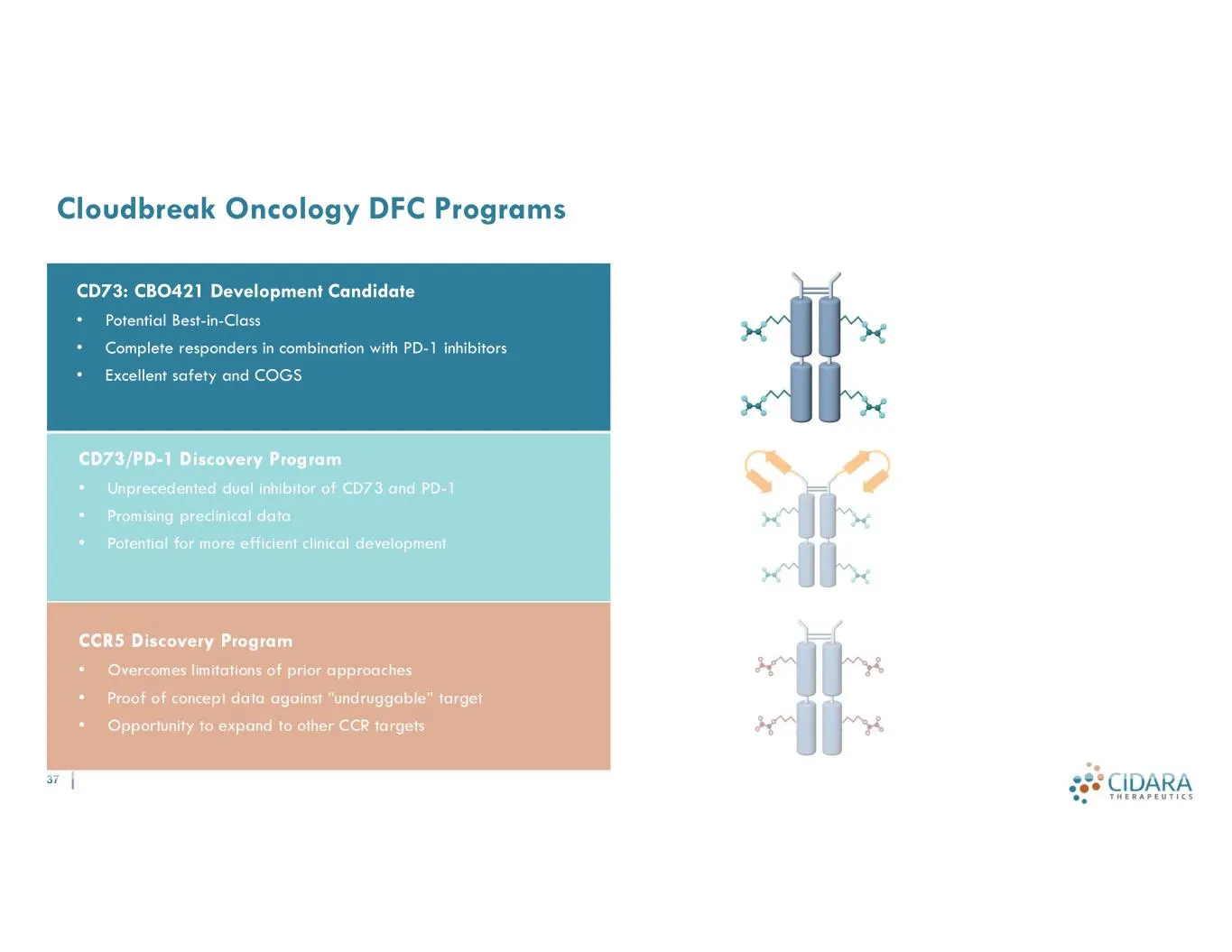
37 CCR5 Discovery Program • Overcomes limitations of prior approaches • Proof of concept data against “undruggable” target • Opportunity to expand to other CCR targets Cloudbreak Oncology DFC Programs CD73: CBO421 Development Candidate • Potential Best-in-Class • Complete responders in combination w
Slide 38: CBO421 Is Cidara's First DFC Oncology Development Candidate
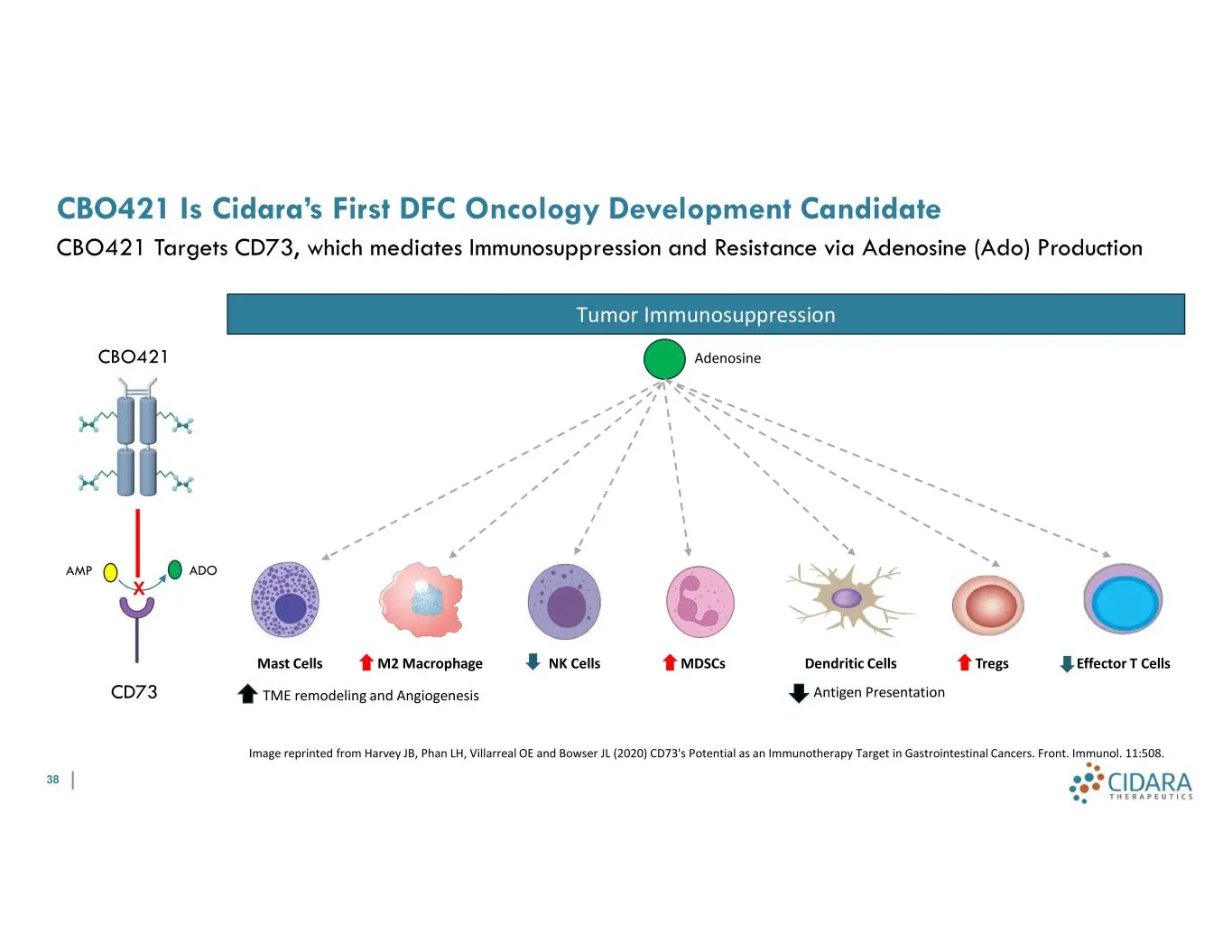
38 CBO421 Is Cidara’s First DFC Oncology Development Candidate CBO421 Targets CD73, which mediates Immunosuppression and Resistance via Adenosine (Ado) Production CBO421 CD73 AMP ADO X Tumor Immunosuppression Mast Cells M2 Macrophage NK Cells MDSCs Dendritic Cells Tregs Effector T Cells TME remodeli
Slide 39: Les Tari, PhD
Les Tari, PhD 39 C h i ef S c i e nt i f i c O f f i c e r
Slide 40: CBO421 demonstrates outstanding preclinical performance
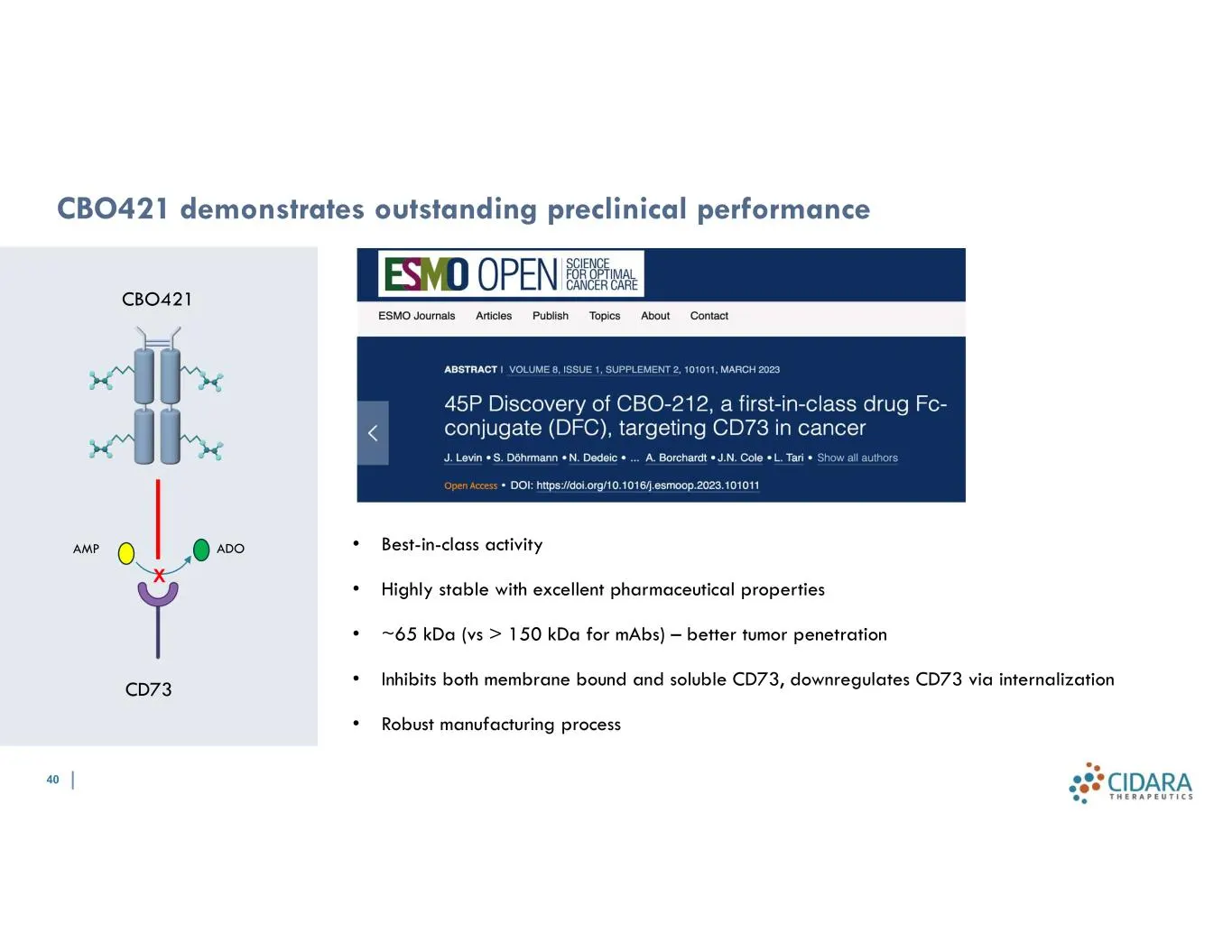
40 CBO421 demonstrates outstanding preclinical performance • Best-in-class activity • Highly stable with excellent pharmaceutical properties • ~65 kDa (vs > 150 kDa for mAbs) – better tumor penetration • Inhibits both membrane bound and soluble CD73, downregulates CD73 via internalization • Robust m
Slide 41: CBO421 Exhibits Exceptional Preclinical Performance
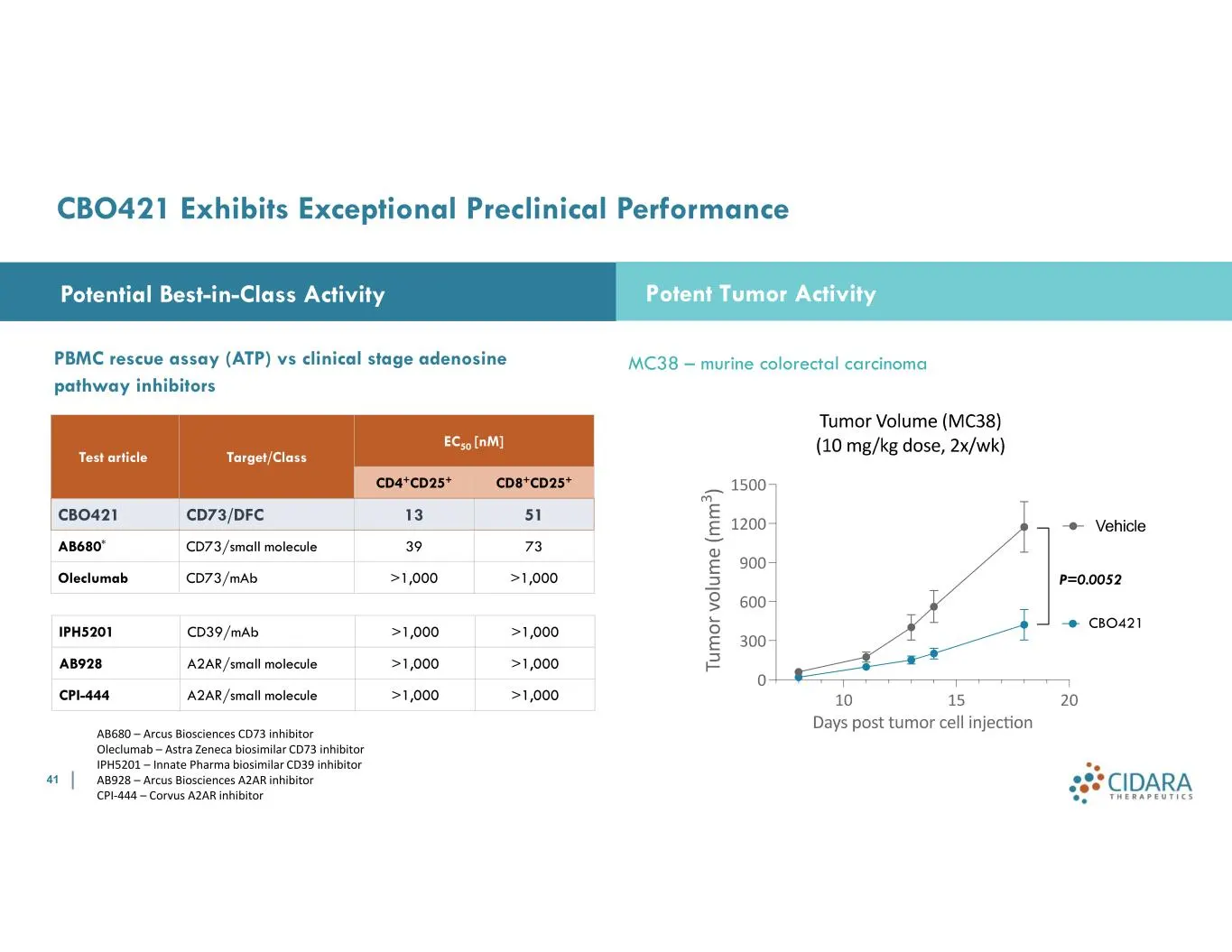
41 Potent Tumor Activity MC38 – murine colorectal carcinoma Potential Best-in-Class Activity EC50 [nM] Target/ClassTest article CD8+CD25+CD4+CD25+ 5113CD73/DFCCBO421 7339CD73/small moleculeAB680* >1,000>1,000CD73/mAbOleclumab PBMC rescue assay (ATP) vs clinical stage adenosine pathway inhibitors >1,
Slide 42: CBO421 Exhibits Superior Tumor Penetration Vs. mAbs
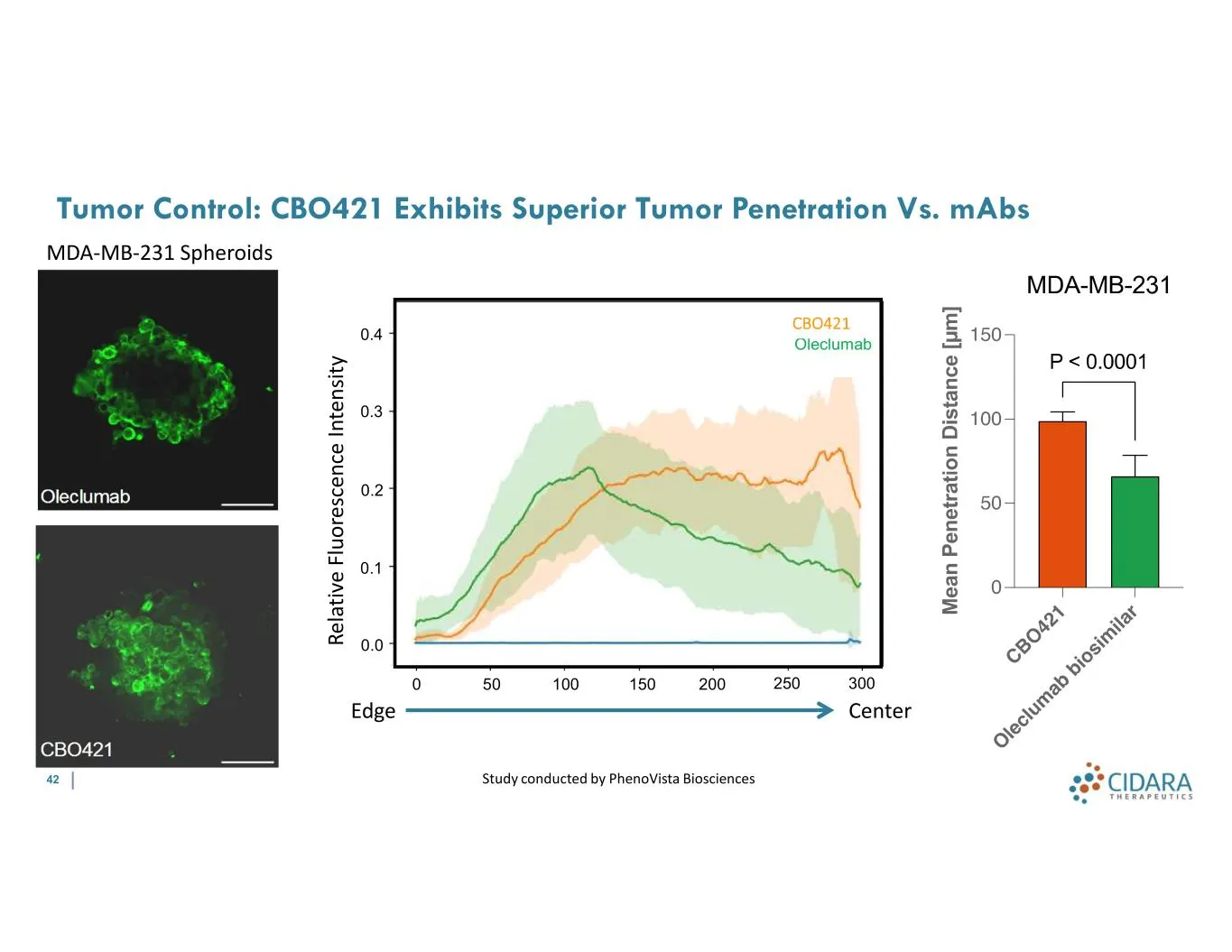
42 Tumor Control: CBO421 Exhibits Superior Tumor Penetration Vs. mAbs CD421 Oleclumab 0 50 100 150 200 250 300 0.0 0.1 0.2 0.3 0.4 BO421 Re la tiv e Fl uo re sc en ce In te ns ity Edge Center MDA-MB-231 Spheroids Study conducted by PhenoVista Biosciences
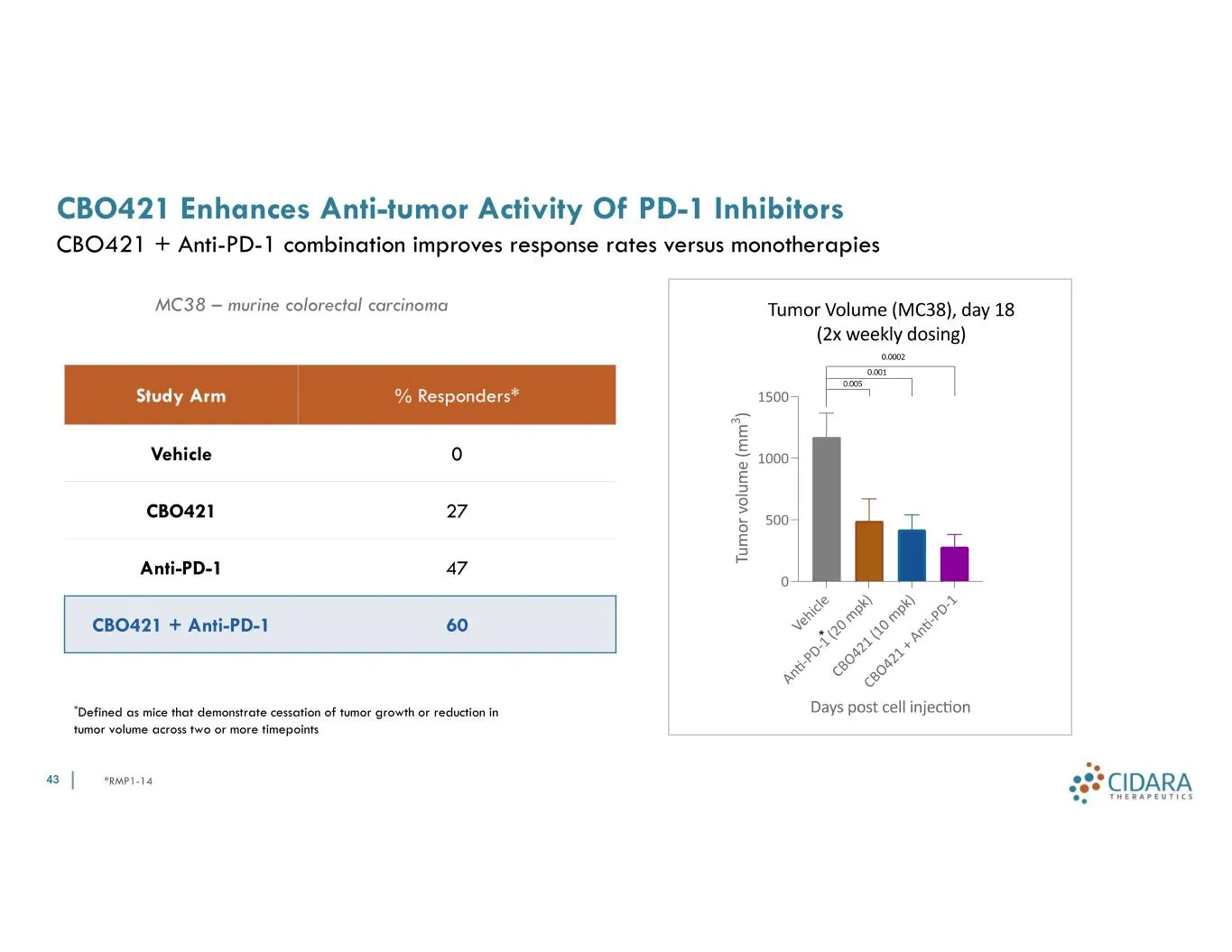
Slide 43: CBO421 Enhances Anti-tumor Activity Of PD-1 Inhibitors
43 MC38 – murine colorectal carcinoma CBO421 Enhances Anti-tumor Activity Of PD-1 Inhibitors *RMP1-14 CBO421 + Anti-PD-1 combination improves response rates versus monotherapies *Defined as mice that demonstrate cessation of tumor growth or reduction in tumor volume across two or more timepoints % R
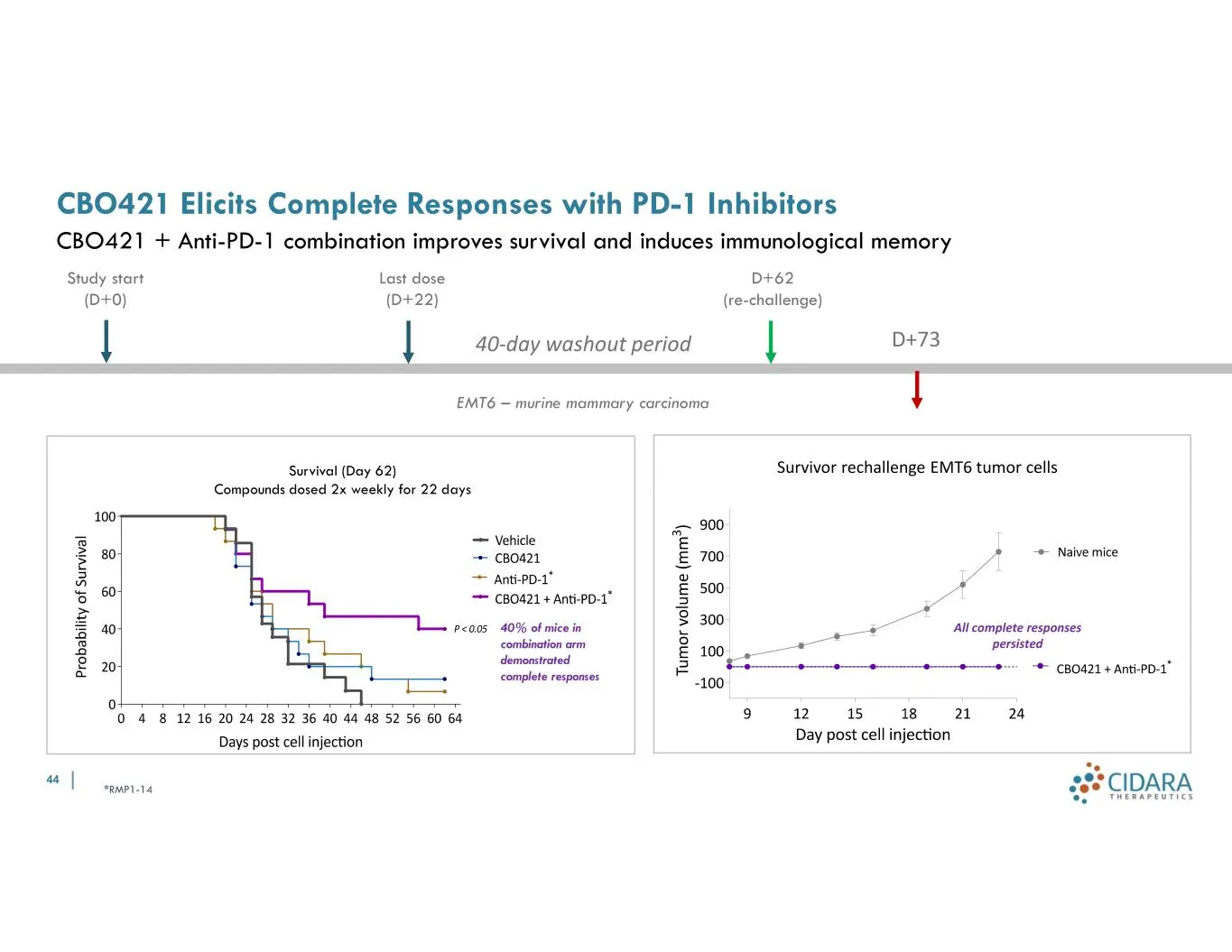
Slide 44: CBO421 Elicits Complete Responses with PD-1 Inhibitors
44 CBO421 Elicits Complete Responses with PD-1 Inhibitors *RMP1-14 CBO421 + Anti-PD-1 combination improves survival and induces immunological memory D+62 (re-challenge) Last dose (D+22) 40-day washout period Study start (D+0) D+73 EMT6 – murine mammary carcinoma 40% of mice in combination arm demons
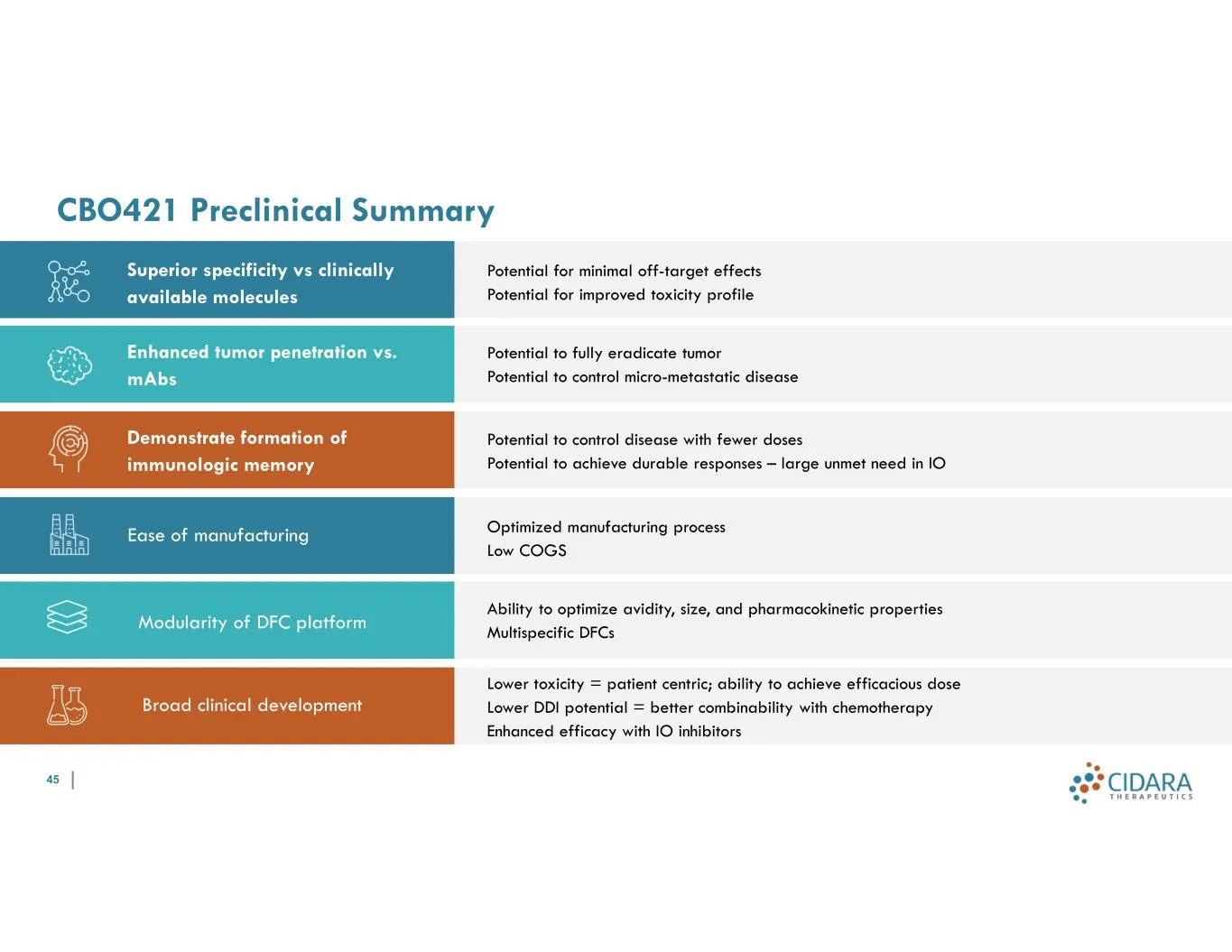
Slide 45: CBO421 Preclinical Summary
45 Potential for minimal off-target effects Potential for improved toxicity profile Superior specificity vs clinically available molecules Potential to fully eradicate tumor Potential to control micro-metastatic disease Enhanced tumor penetration vs. mAbs Demonstrate formation of immunologic memory
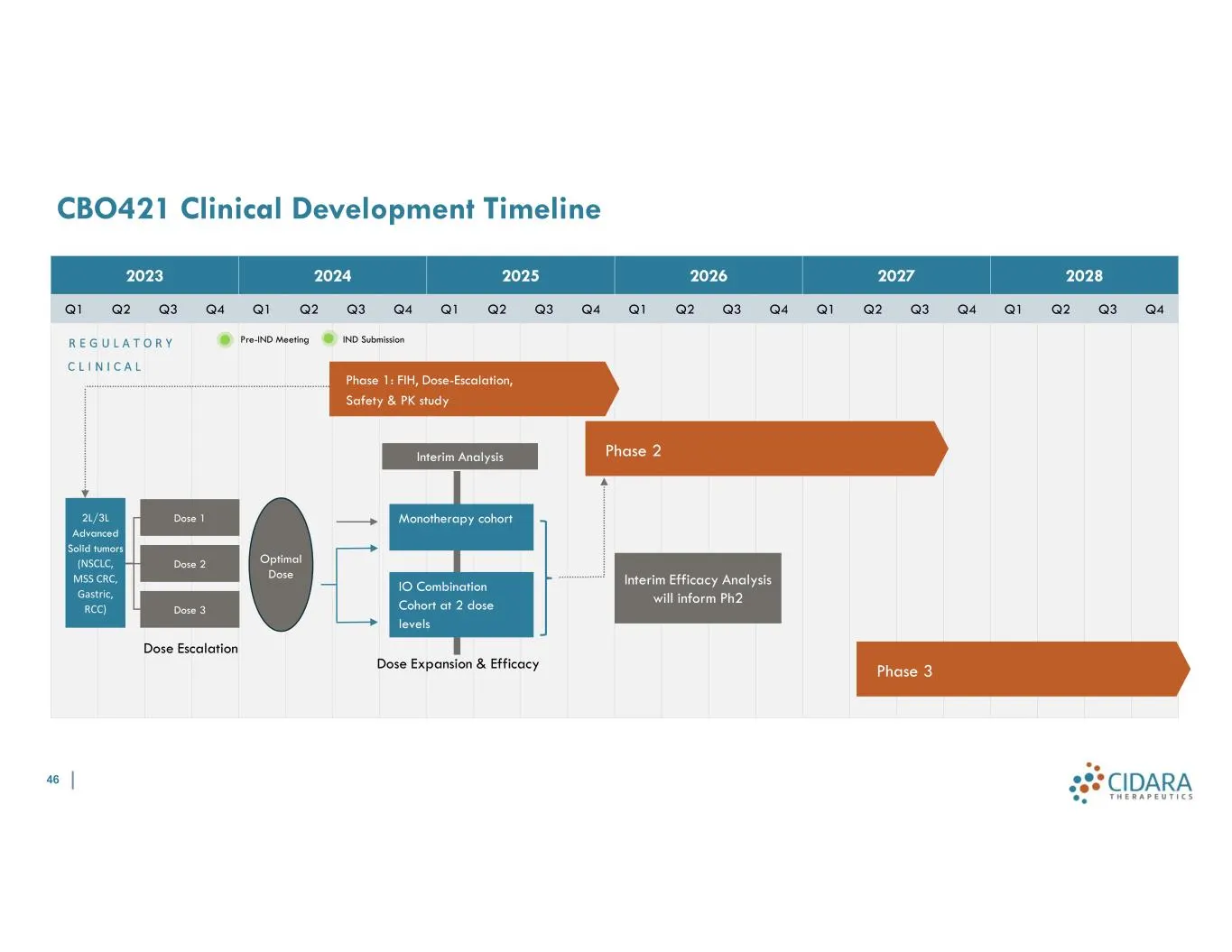
Slide 46: CBO421 Clinical Development Timeline
46 202820272026202520242023 Q4Q3Q2Q1Q4Q3Q2Q1Q4Q3Q2Q1Q4Q3Q2Q1Q4Q3Q2Q1Q4Q3Q2Q1 R E G U L A T O R Y C L I N I C A L Dose Expansion & Efficacy 2L/3L Advanced Solid tumors (NSCLC, MSS CRC, Gastric, RCC) Dose 1 Dose 2 Dose 3 Dose Escalation Monotherapy cohort IO Combination Cohort at 2 dose levels Interim
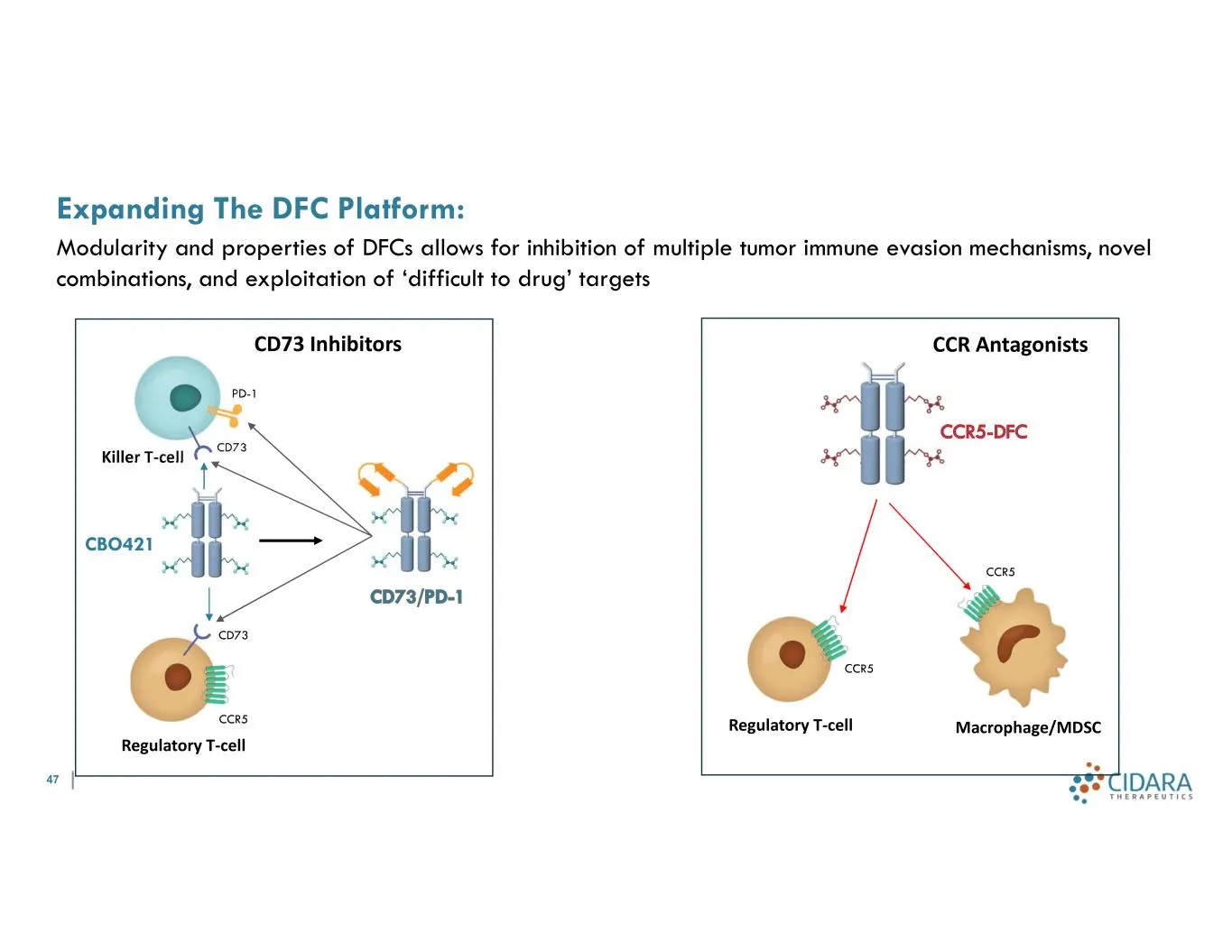
Slide 47: Expanding The DFC Platform
47 Expanding The DFC Platform: Modularity and properties of DFCs allows for inhibition of multiple tumor immune evasion mechanisms, novel combinations, and exploitation of ‘difficult to drug’ targets Killer T-cell CCR5 Regulatory T-cell CD73 PD-1 CD73 CBO421 CD73 Inhibitors Macrophage/MDSC CCR5 CCR5
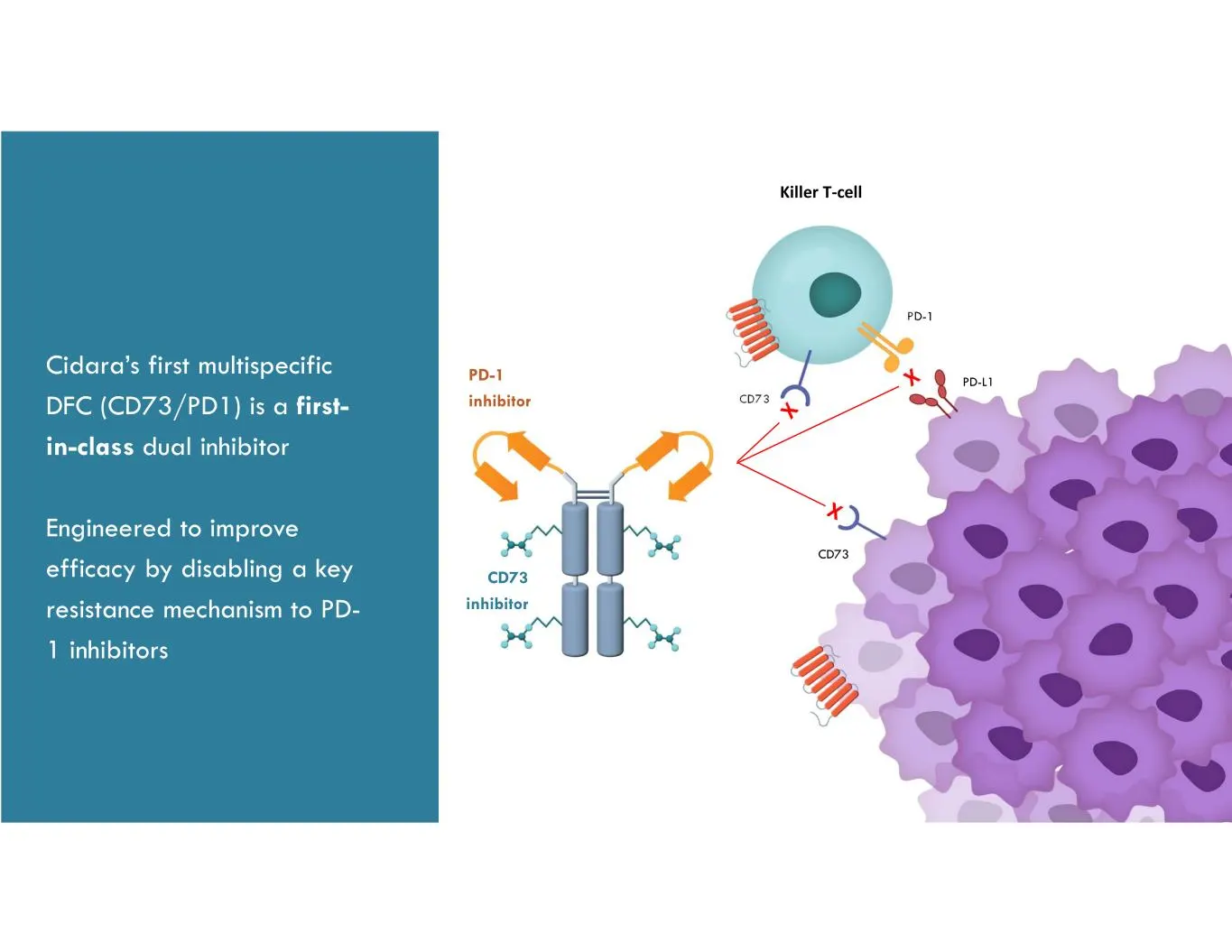
Slide 48: First multispecific DFC (CD73/PD1) is a first-in-class dual inhibitor
Cidara’s first multispecific DFC (CD73/PD1) is a first- in-class dual inhibitor Engineered to improve efficacy by disabling a key resistance mechanism to PD- 1 inhibitors CD73 inhibitor Killer T-cell PD-1 CD73 CD73 PD-1 inhibitor PD-L1
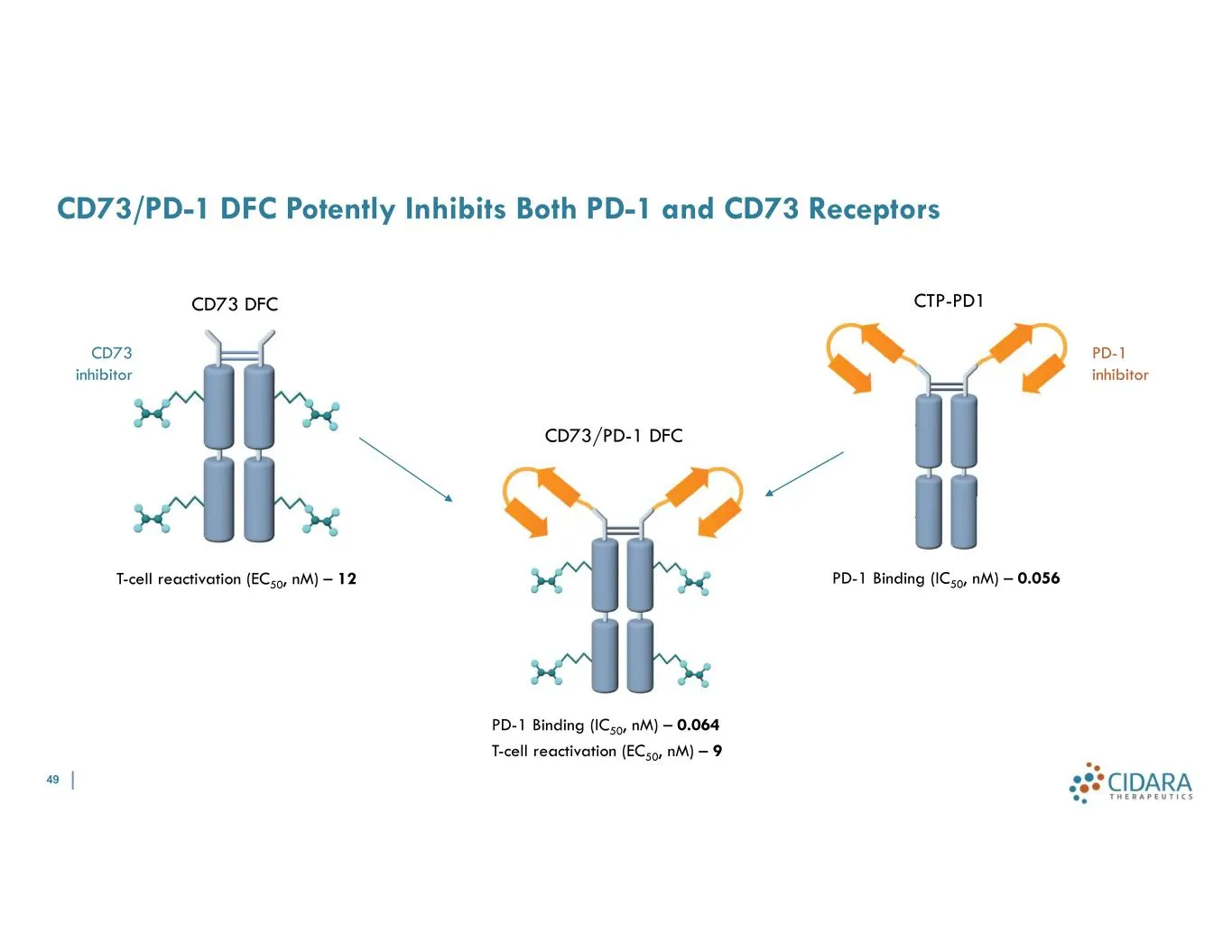
Slide 49: CD73/PD-1 DFC Potently Inhibits Both PD-1 and CD73
49 CD73/PD-1 DFC Potently Inhibits Both PD-1 and CD73 Receptors CTP-PD1 CD73/PD-1 DFC PD-1 inhibitor CD73 inhibitor CD73 DFC PD-1 Binding (IC50, nM) – 0.056 T-cell reactivation (EC50, nM) – 12 PD-1 Binding (IC50, nM) – 0.064 T-cell reactivation (EC50, nM) – 9
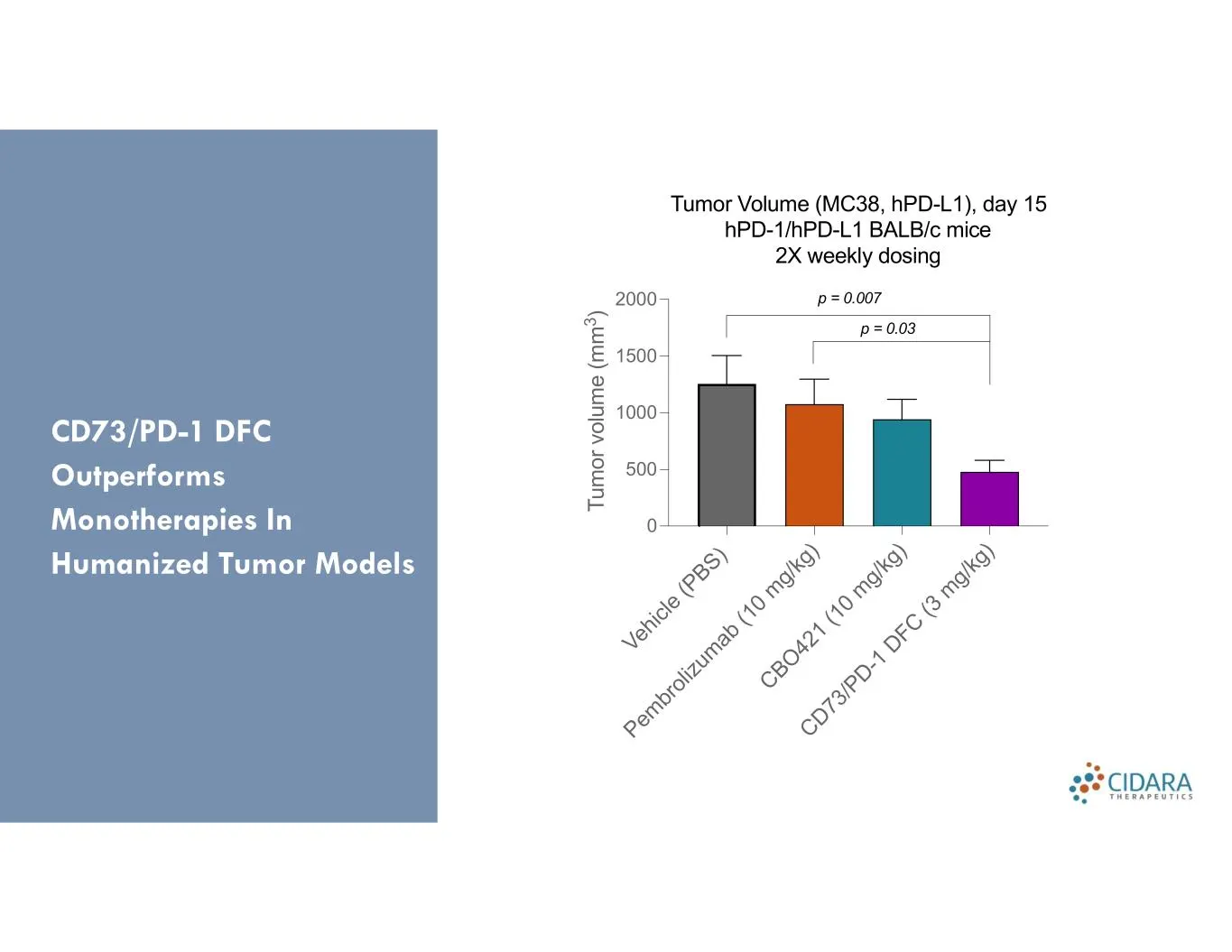
Slide 50: CD73/PD-1 DFC Outperforms Monotherapies In Humanized Tumor Models
50 CD73/PD-1 DFC Outperforms Monotherapies In Humanized Tumor Models Veh icl e (P BS) Pem br ol izu m ab (1 0 m g/ kg ) CBO42 1 (1 0 m g/ kg ) CD73 /P D-1 D FC (3 m g/ kg ) 0 500 1000 1500 2000 Tumor Volume (MC38, hPD-L1), day 15 hPD-1/hPD-L1 BALB/c mice 2X weekly dosing T um or v ol um e (m m 3 ) p
Slide 51: Cloudbreak Oncology DFC Programs
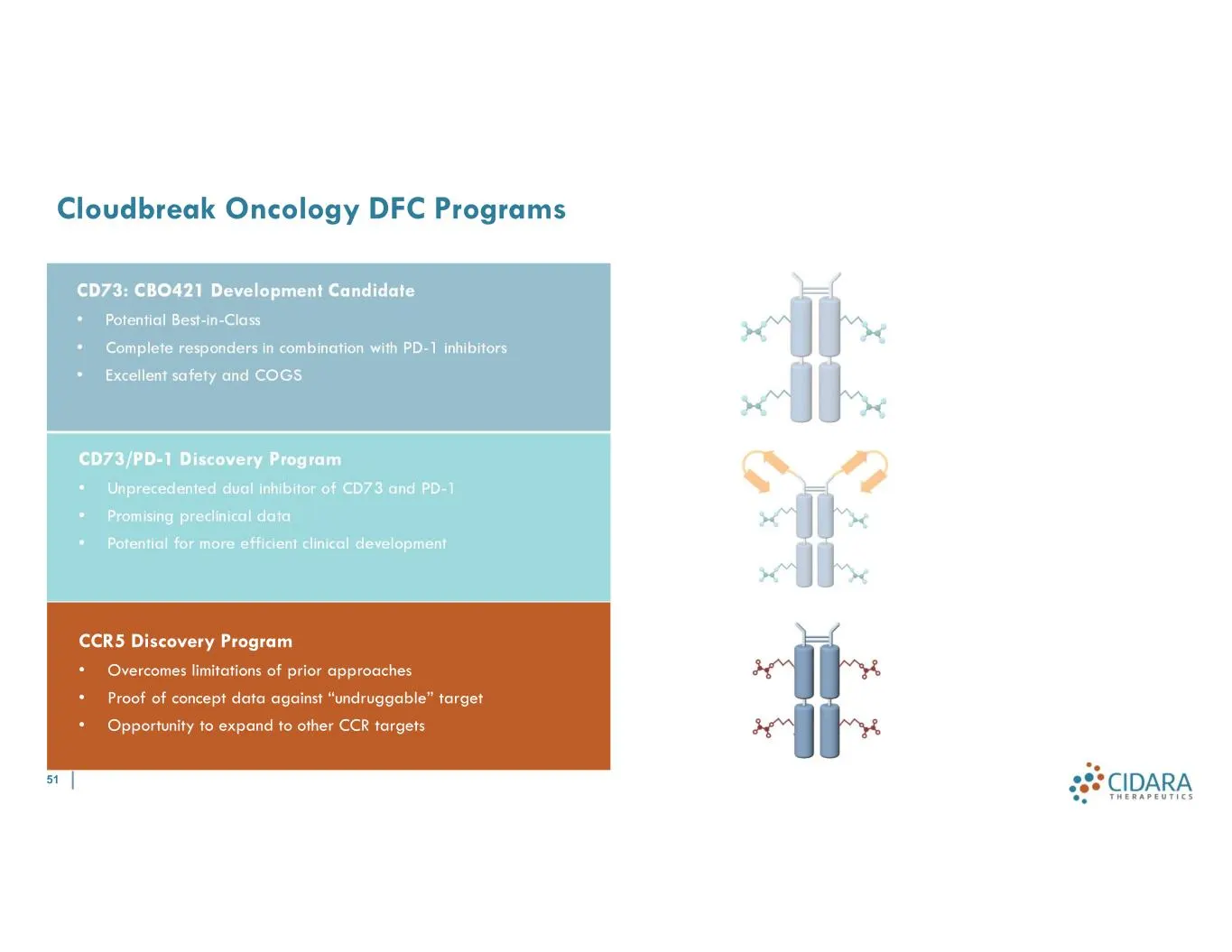
51 Cloudbreak Oncology DFC Programs CD73: CBO421 Development Candidate • Potential Best-in-Class • Complete responders in combination with PD-1 inhibitors • Excellent safety and COGS CD73/PD-1 Discovery Program • Unprecedented dual inhibitor of CD73 and PD-1 • Promising preclinical data • Potential
Slide 52: CCRs are a historically difficult to drug receptor family
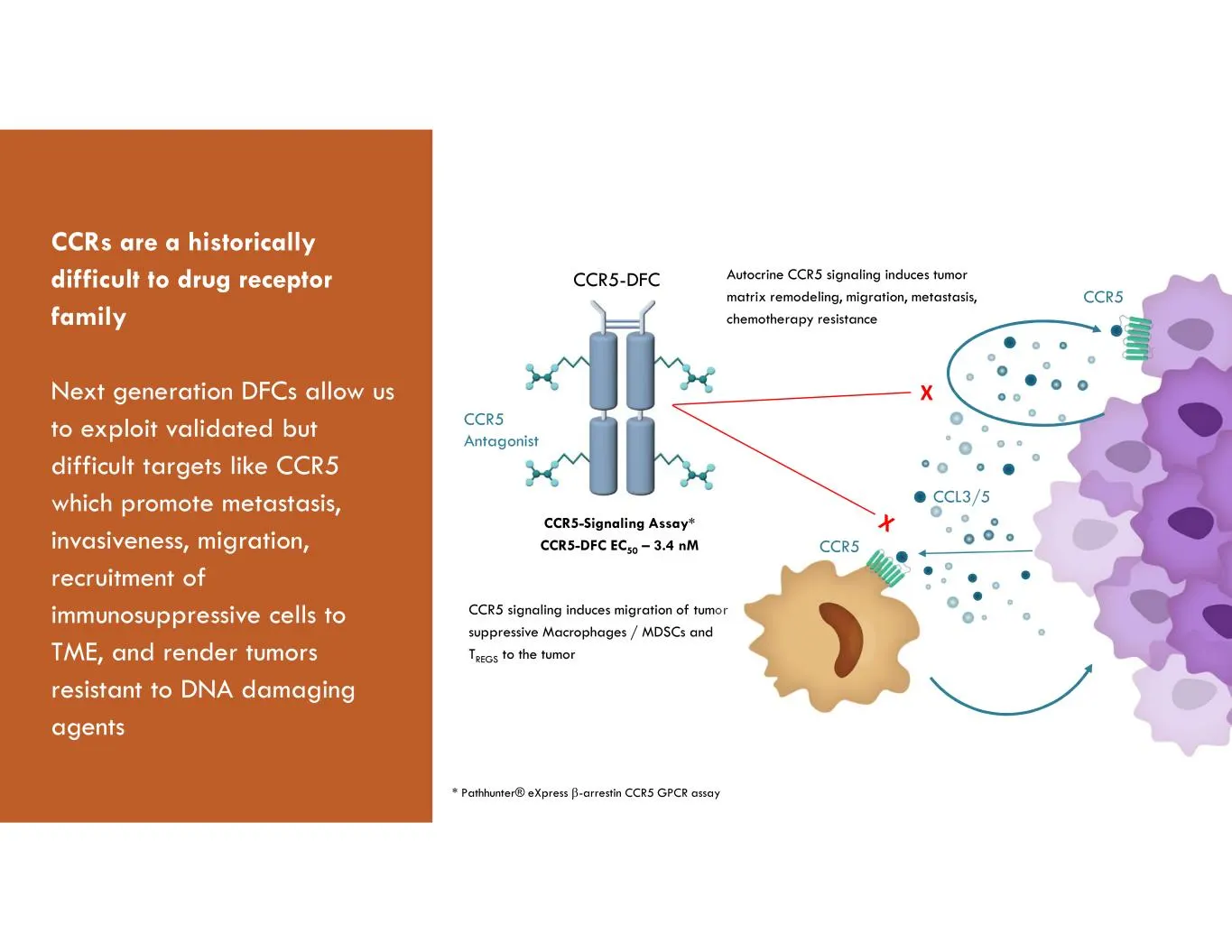
CCRs are a historically difficult to drug receptor family Next generation DFCs allow us to exploit validated but difficult targets like CCR5 which promote metastasis, invasiveness, migration, recruitment of immunosuppressive cells to TME, and render tumors resistant to DNA damaging agents CCR5-DFC C
Slide 53: CCR5-DFC Shows Strong Tumor Control In Preclinical Model
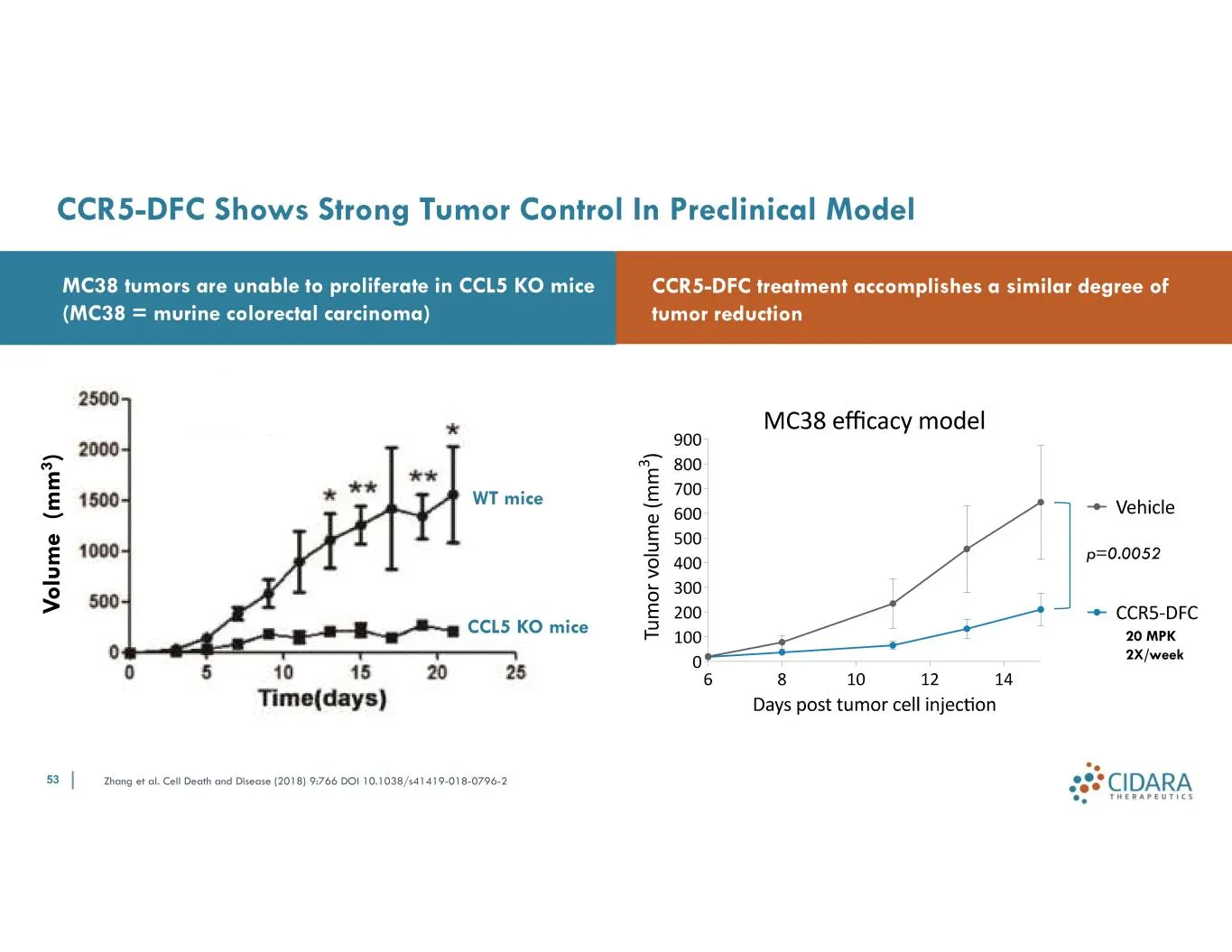
53 CCR5-DFC treatment accomplishes a similar degree of tumor reduction MC38 tumors are unable to proliferate in CCL5 KO mice (MC38 = murine colorectal carcinoma) V ol um e ( m m 3 ) CCR5-DFC Shows Strong Tumor Control In Preclinical Model Zhang et al. Cell Death and Disease (2018) 9:766 DOI 10.1038/
Slide 54: Cloudbreak Oncology DFC Programs
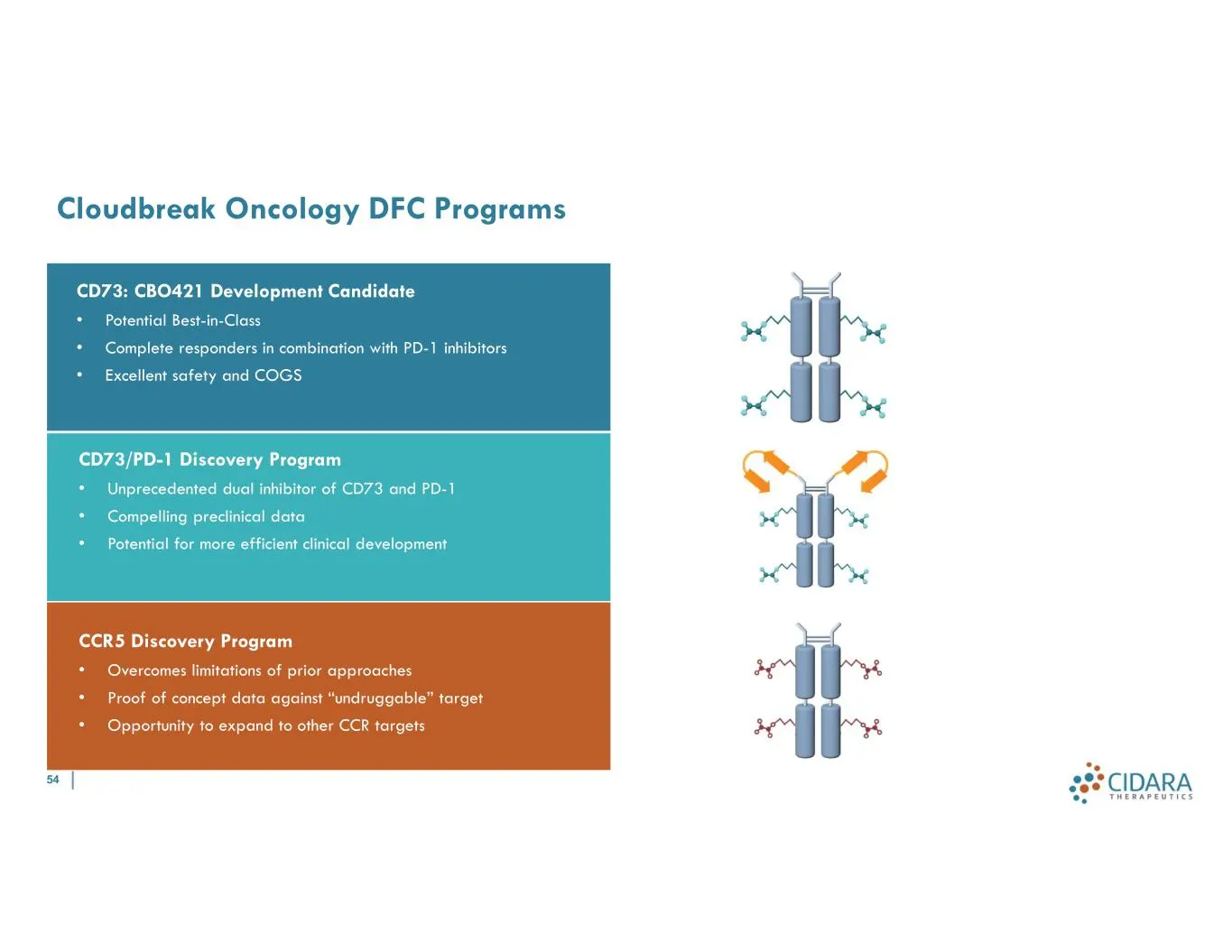
54 Cloudbreak Oncology DFC Programs CD73: CBO421 Development Candidate • Potential Best-in-Class • Complete responders in combination with PD-1 inhibitors • Excellent safety and COGS CD73/PD-1 Discovery Program • Unprecedented dual inhibitor of CD73 and PD-1 • Compelling preclinical data • Potential
Slide 55: Perspective: The Potential of DFCs to Transform Precision Oncology
Ezra Cohen, MD 55 Per spec t ive : The Po ten t ia l o f DFCs t o T r ans fo r m P r e c i s i on Onco logy
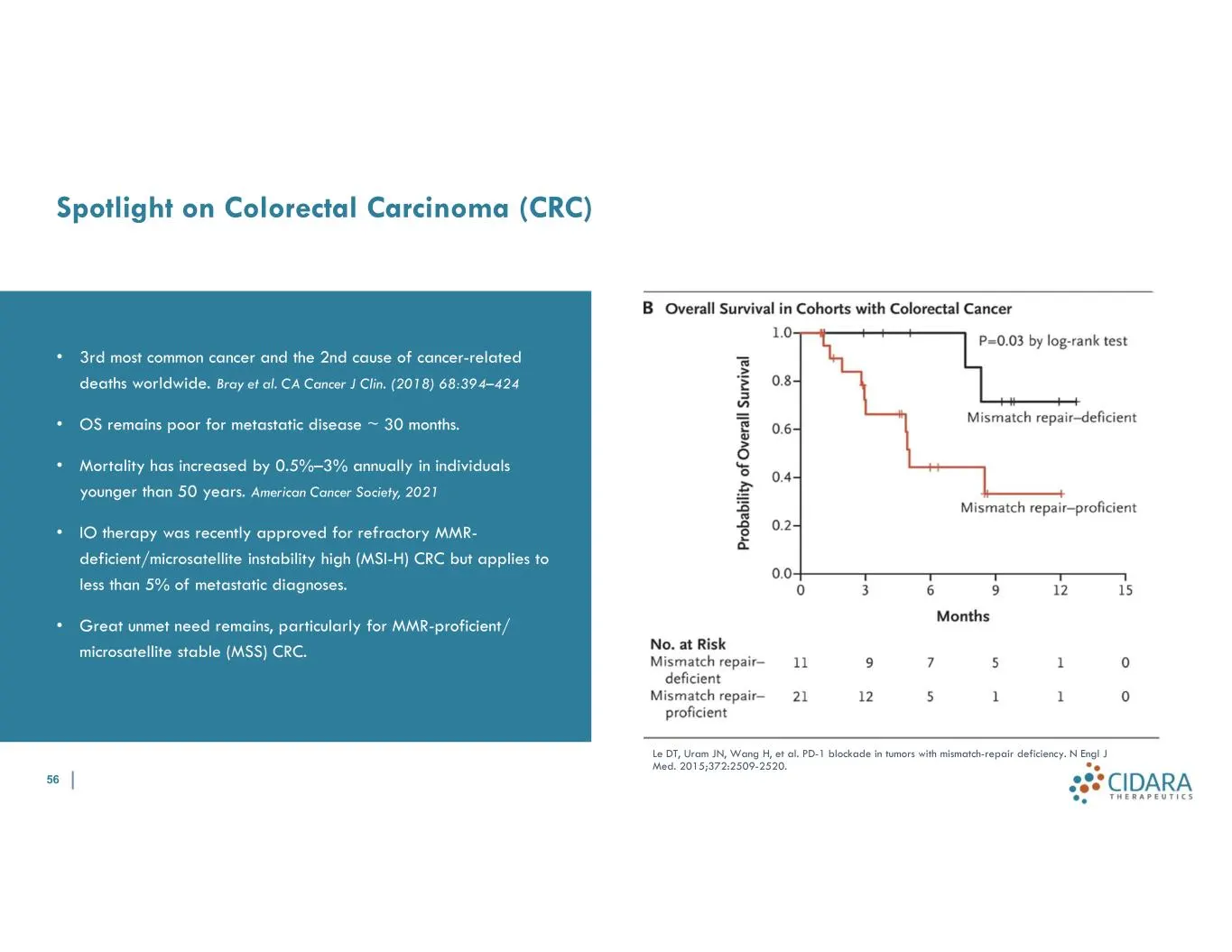
Slide 56: Spotlight on Colorectal Carcinoma (CRC)
56 Spotlight on Colorectal Carcinoma (CRC) • 3rd most common cancer and the 2nd cause of cancer-related deaths worldwide. Bray et al. CA Cancer J Clin. (2018) 68:394–424 • OS remains poor for metastatic disease ~ 30 months. • Mortality has increased by 0.5%–3% annually in individuals younger than 50
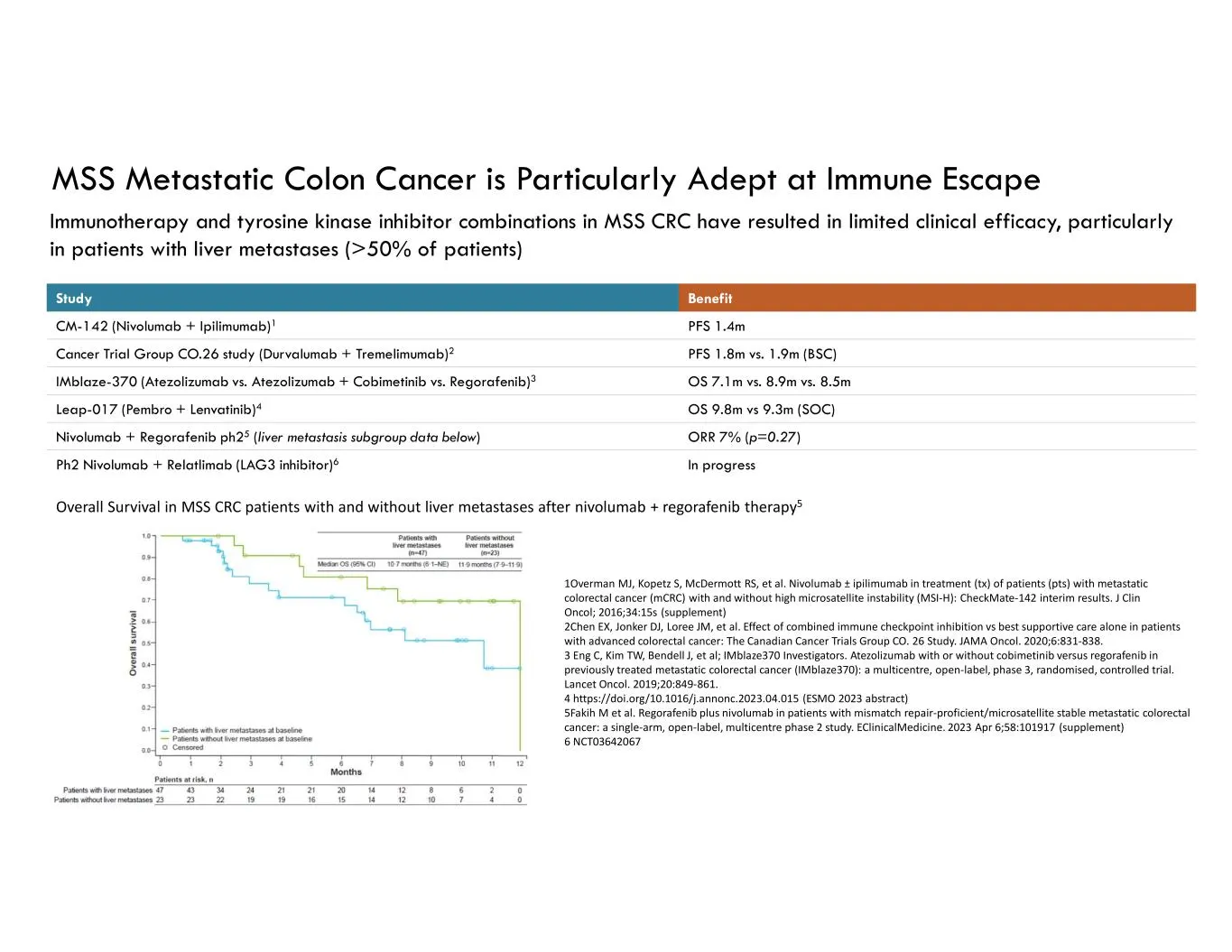
Slide 57: MSS Metastatic Colon Cancer is Particularly Adept at Immune Escape
MSS Metastatic Colon Cancer is Particularly Adept at Immune Escape Immunotherapy and tyrosine kinase inhibitor combinations in MSS CRC have resulted in limited clinical efficacy, particularly in patients with liver metastases (>50% of patients) BenefitStudy PFS 1.4mCM-142 (Nivolumab + Ipilimumab)1 P
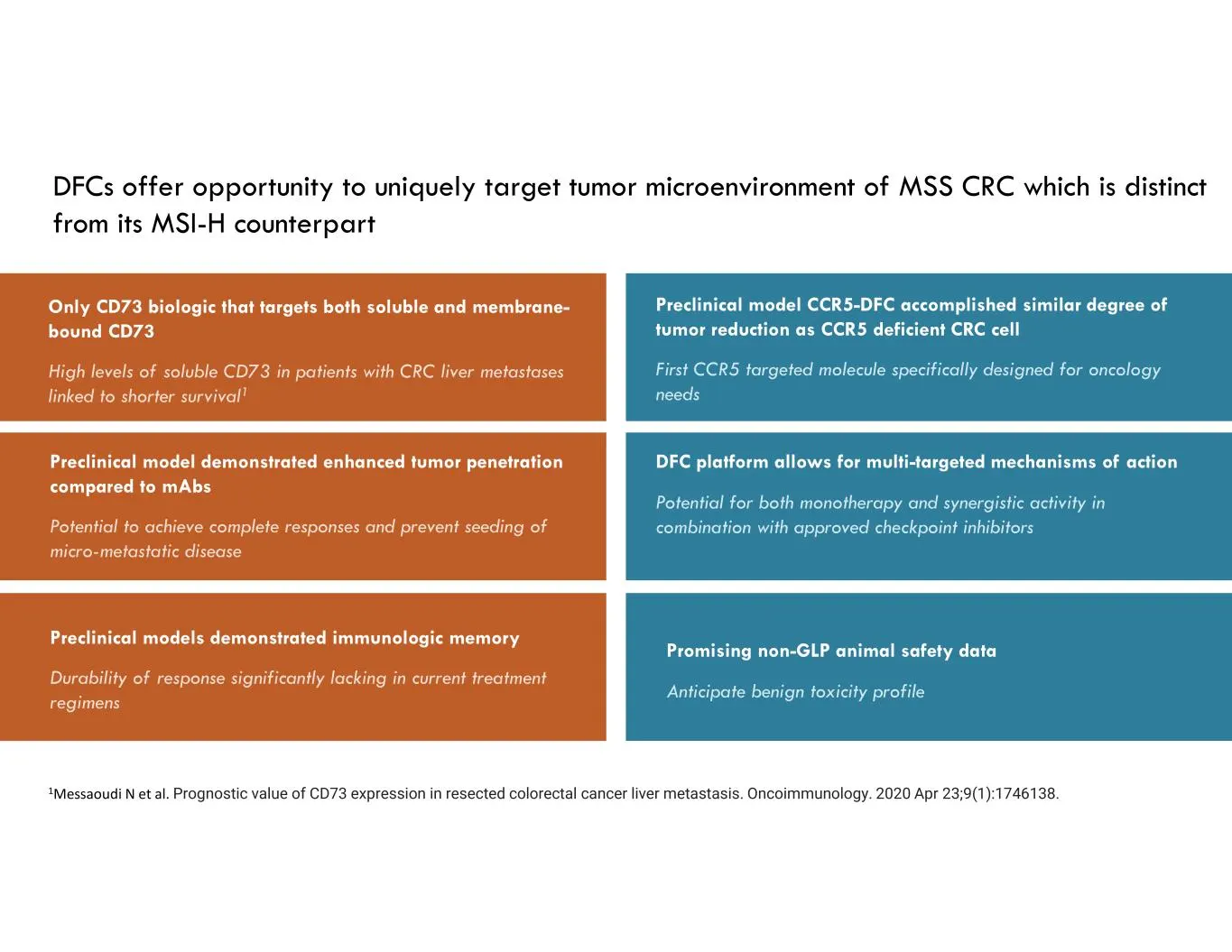
Slide 58: DFCs offer opportunity to target tumor microenvironment of MSS CRC
DFCs offer opportunity to uniquely target tumor microenvironment of MSS CRC which is distinct from its MSI-H counterpart 1Messaoudi N et al. Prognostic value of CD73 expression in resected colorectal cancer liver metastasis. Oncoimmunology. 2020 Apr 23;9(1):1746138. Preclinical model CCR5-DFC accomp
Source: SEC EDGAR · 8-K filed Sep 21, 2023
More decks from Cidara Therapeutics Inc
 Corporate Update (June 2025)12 slides · Jun 23, 2025
 Investor Presentation (May 2024)63 slides · May 3, 2024
 Investor Day (July 2022)57 slides · Jul 7, 2022
 Technical Presentation (December 2021)24 slides · Dec 14, 2021
 Investor Day (September 2021)110 slides · Sep 21, 2021
 19th Annual Needham Virtual Healthcare Conference 202038 slides · Apr 14, 2020