Tecan Group AG · SIX:TECN
Tecan — Tecan Symposium 2010
33 slides from Tecan's conference presentation, Oct 7, 2010
Slide 1: Applications of Biotechnology in Food Processing
Applications of Biotechnology in Food Processing Pingfan Rao, phD Institute of Biotechnology Fuzhou University Fuzhou, China Salzburg, Oct 7, 2010
Slide 2: Pressing Food Issues
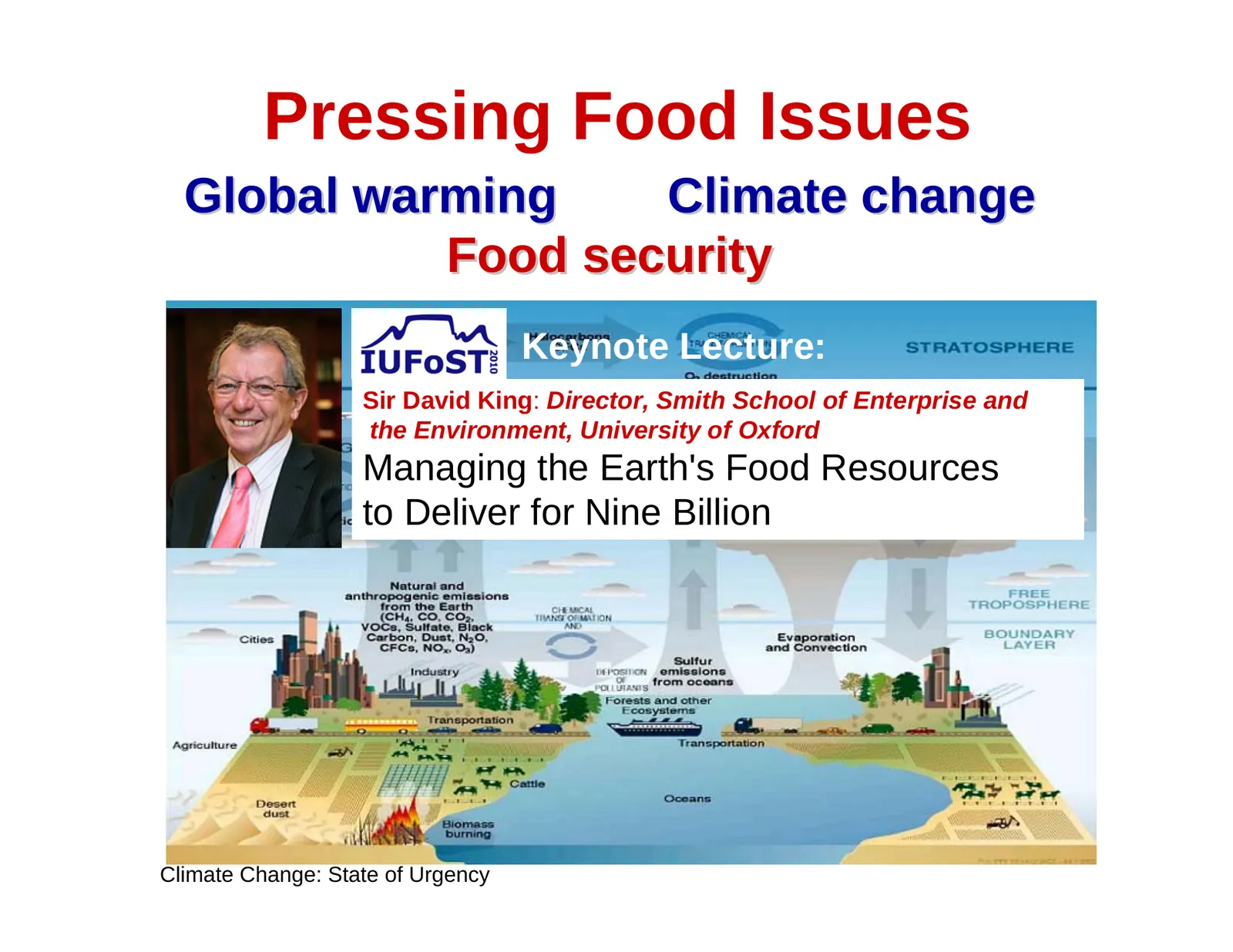
Pressing Food Issues Global warming Climate change Food security Keynote Lecture: Sir David King: Director, Smith School of Enterprise and the Environment, University of Oxford Managing the Earth's Food Resources to Deliver for Nine Billion Climate Change: State of Urgency
Slide 3: Pressing Food Issues
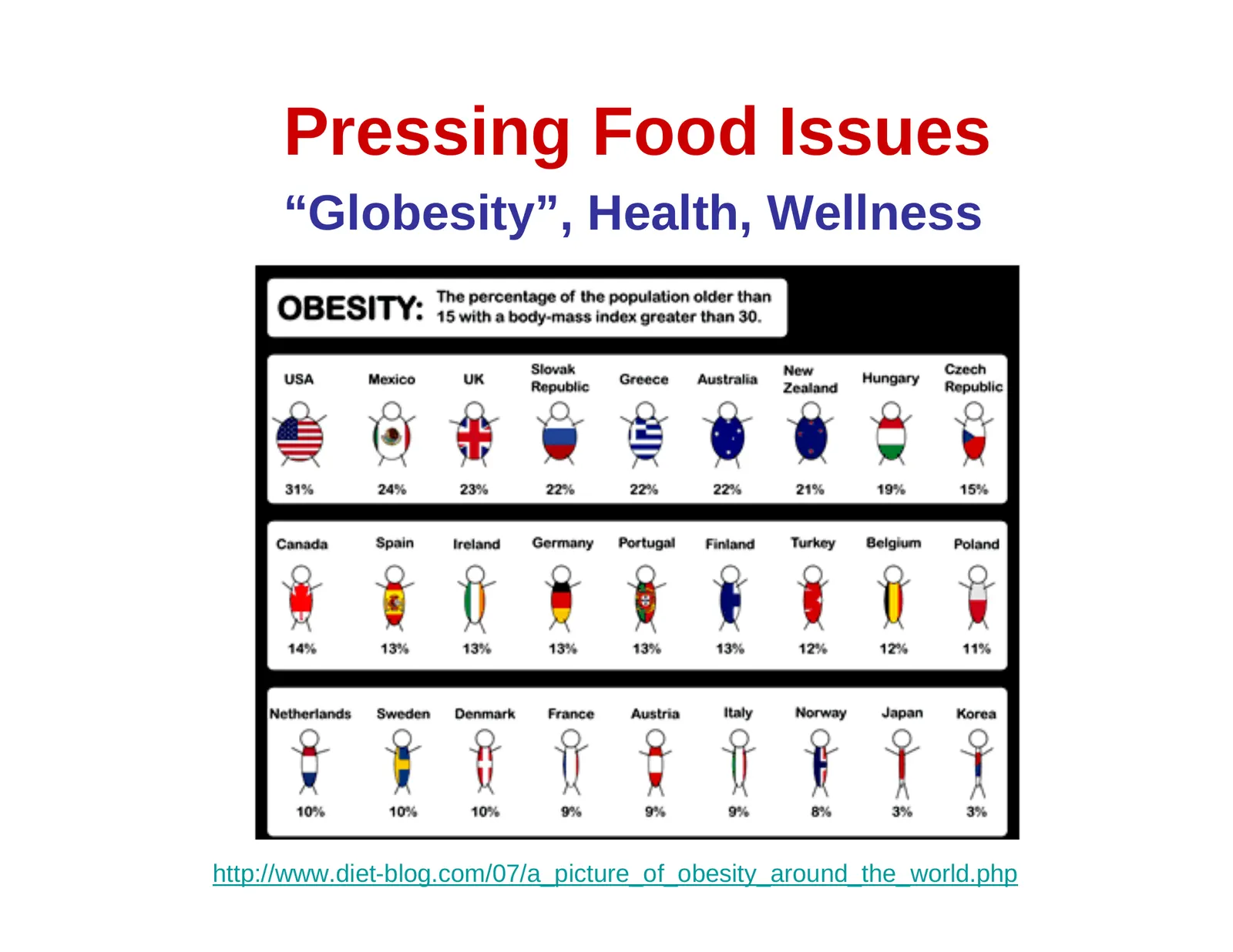
Pressing Food Issues “Globesity”, Health, Wellness http://www.diet-blog.com/07/a_picture_of_obesity_around_the_world.php
Slide 4: Biotechnology Solution
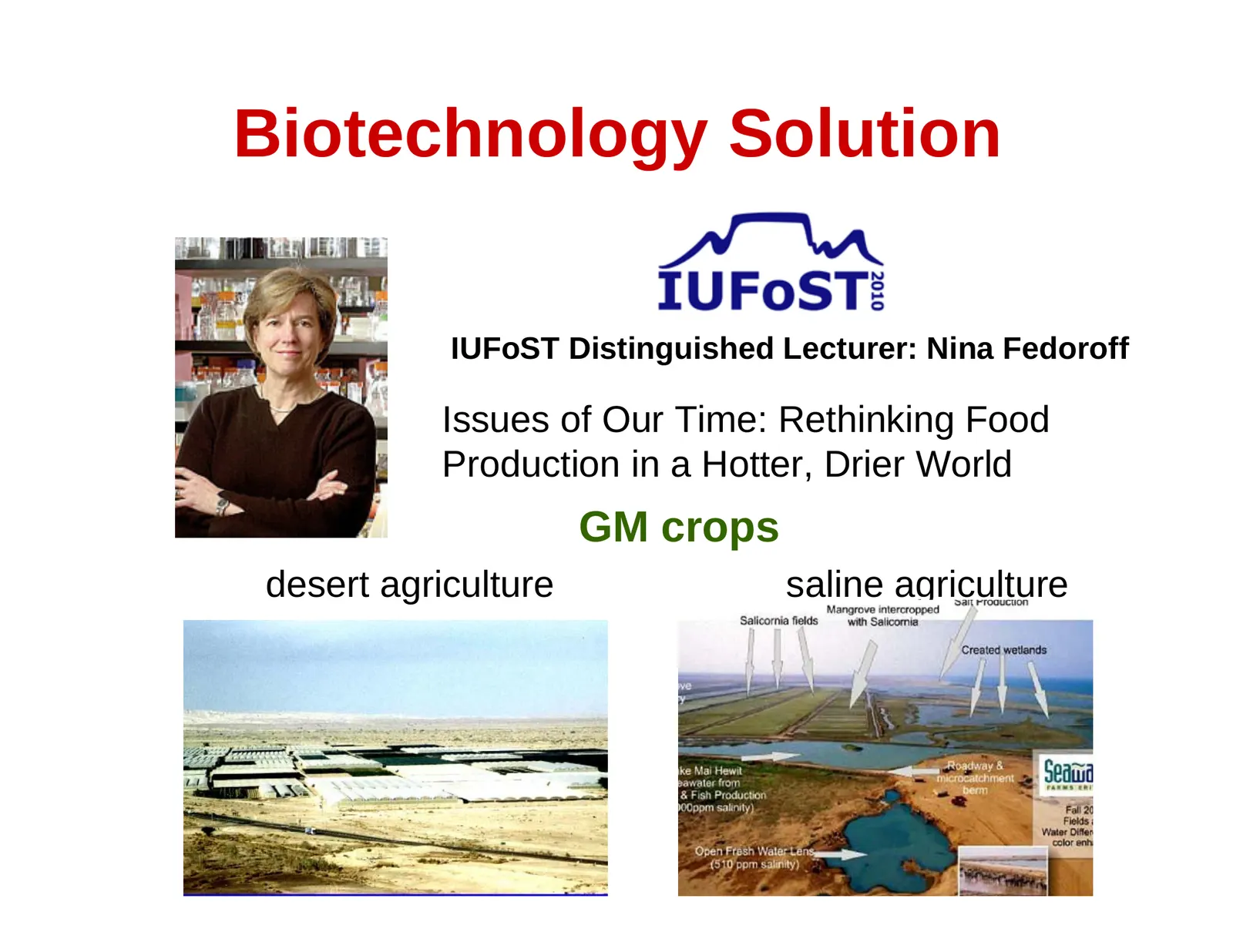
Biotechnology Solution IUFoST Distinguished Lecturer: Nina Fedoroff Issues of Our Time: Rethinking Food Production in a Hotter, Drier World GM crops desert agriculture saline agriculture
Slide 5: Biotechnology Solution
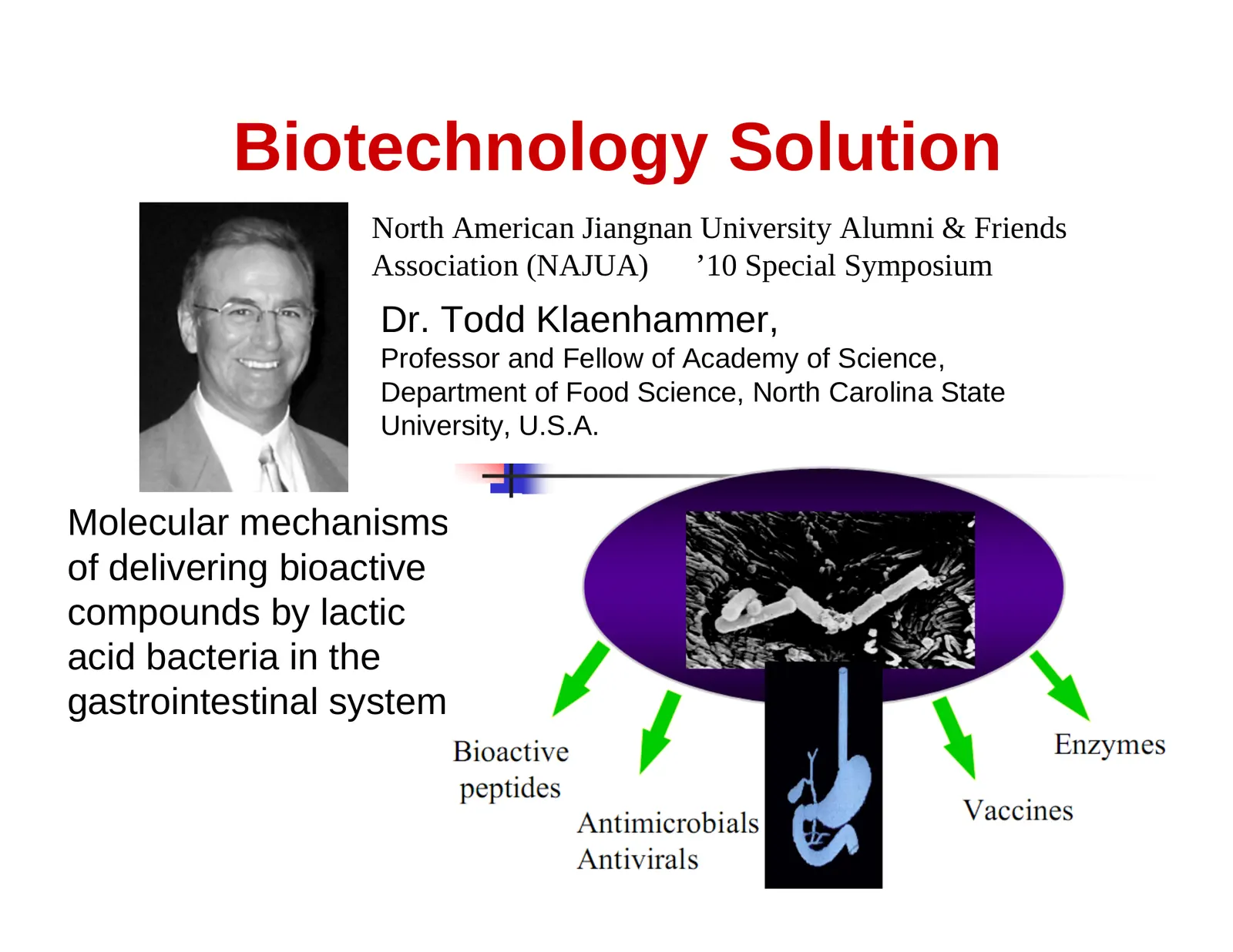
Biotechnology Solution North American Jiangnan University Alumni & Friends Association (NAJUA) ’10 Special Symposium Dr. Todd Klaenhammer, Professor and Fellow of Academy of Science, Department of Food Science, North Carolina State University, U.S.A. Molecular mechanisms of delivering bioactive comp
Slide 6: Biotechnology and Food
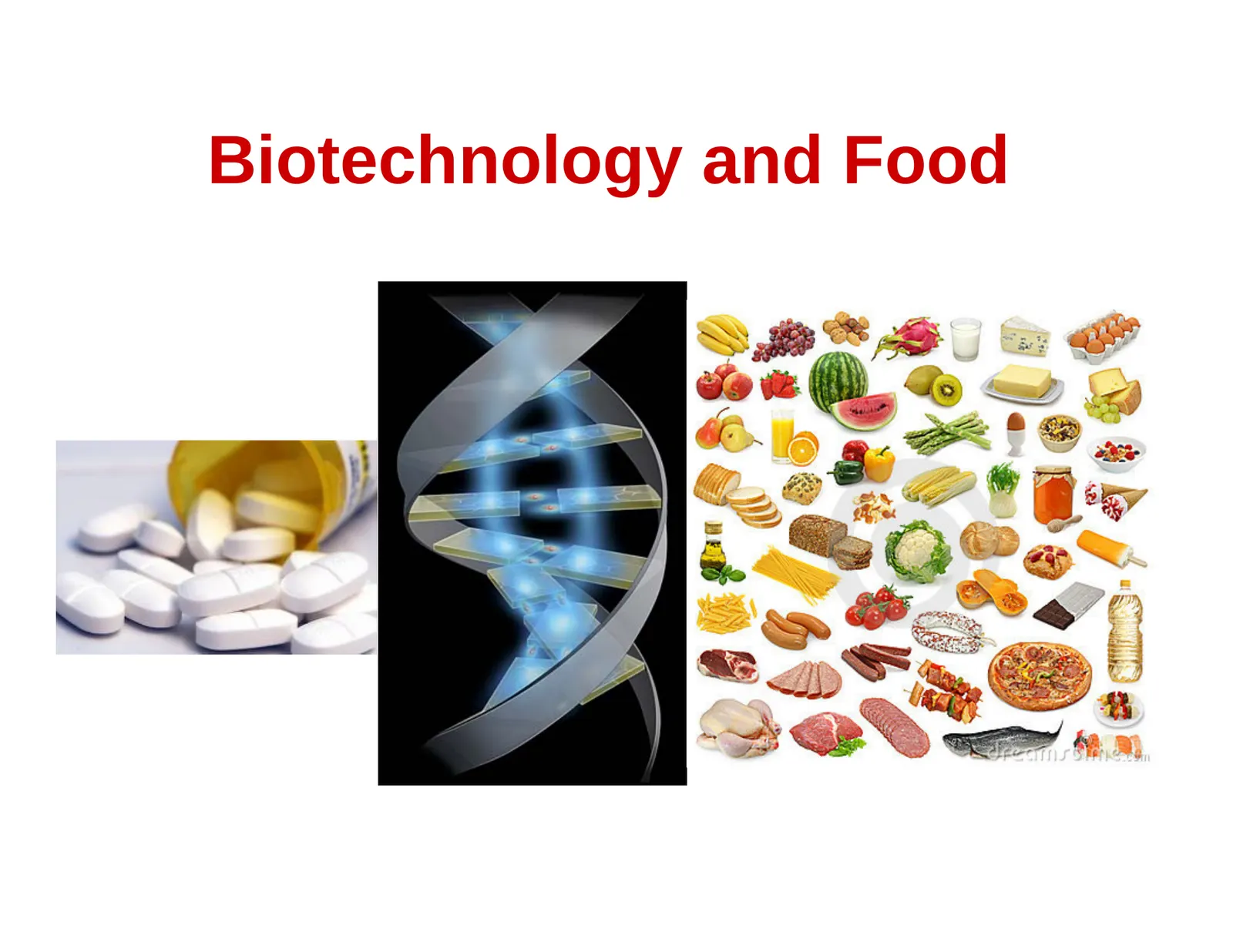
Biotechnology and Food
Slide 7: GMO Food Database
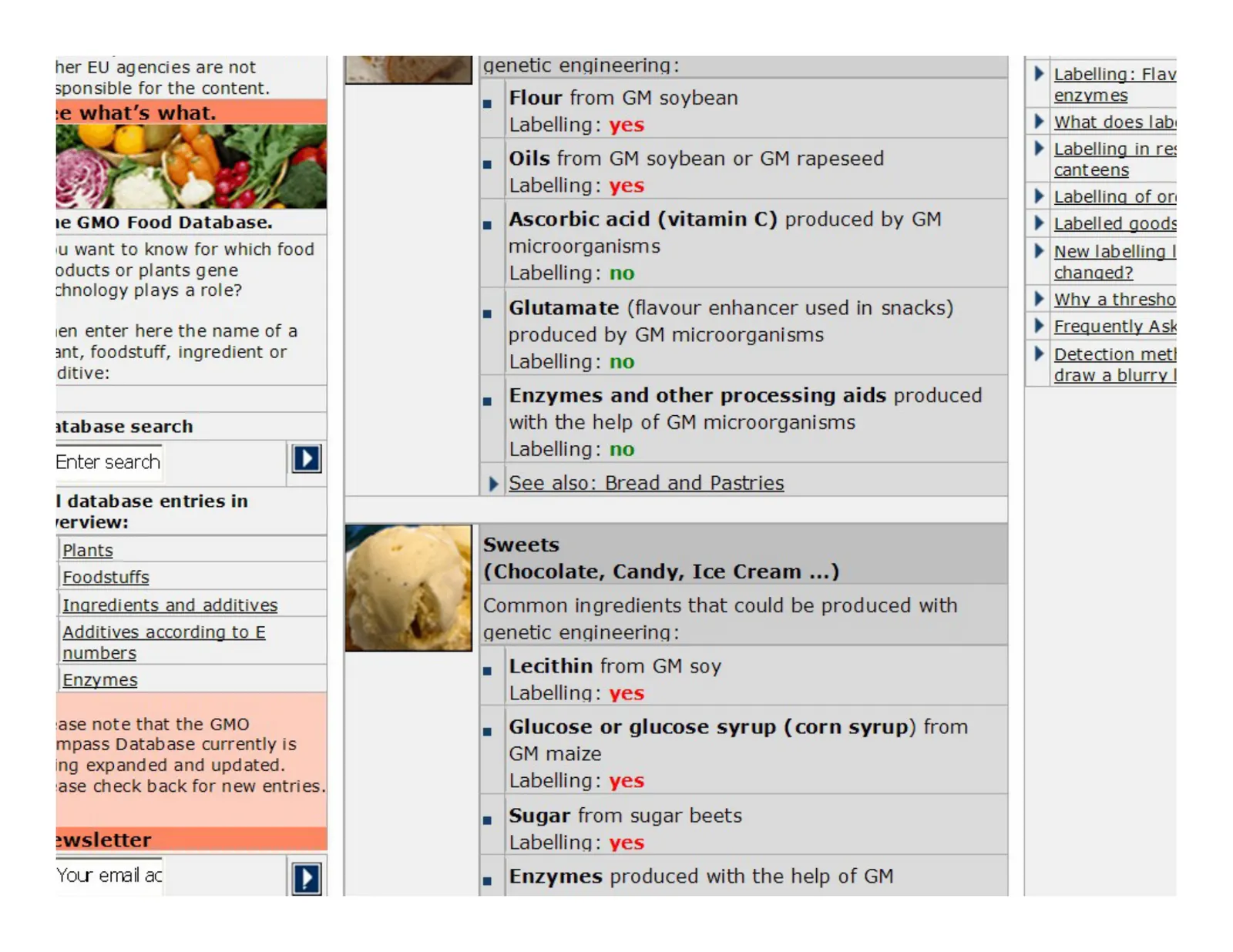
her EU agencies are not sponsible for the content. SgiF Se ae 1e GMO Food Database. iu want to know for which food oducts or plants gene chnology plays a role? en enter here the name of a ant, foodstuff, ingredient or ditive: atabase search Enter search [>| | database entries in rerview: Plants Food
Slide 8: GMO Concern: A Brake
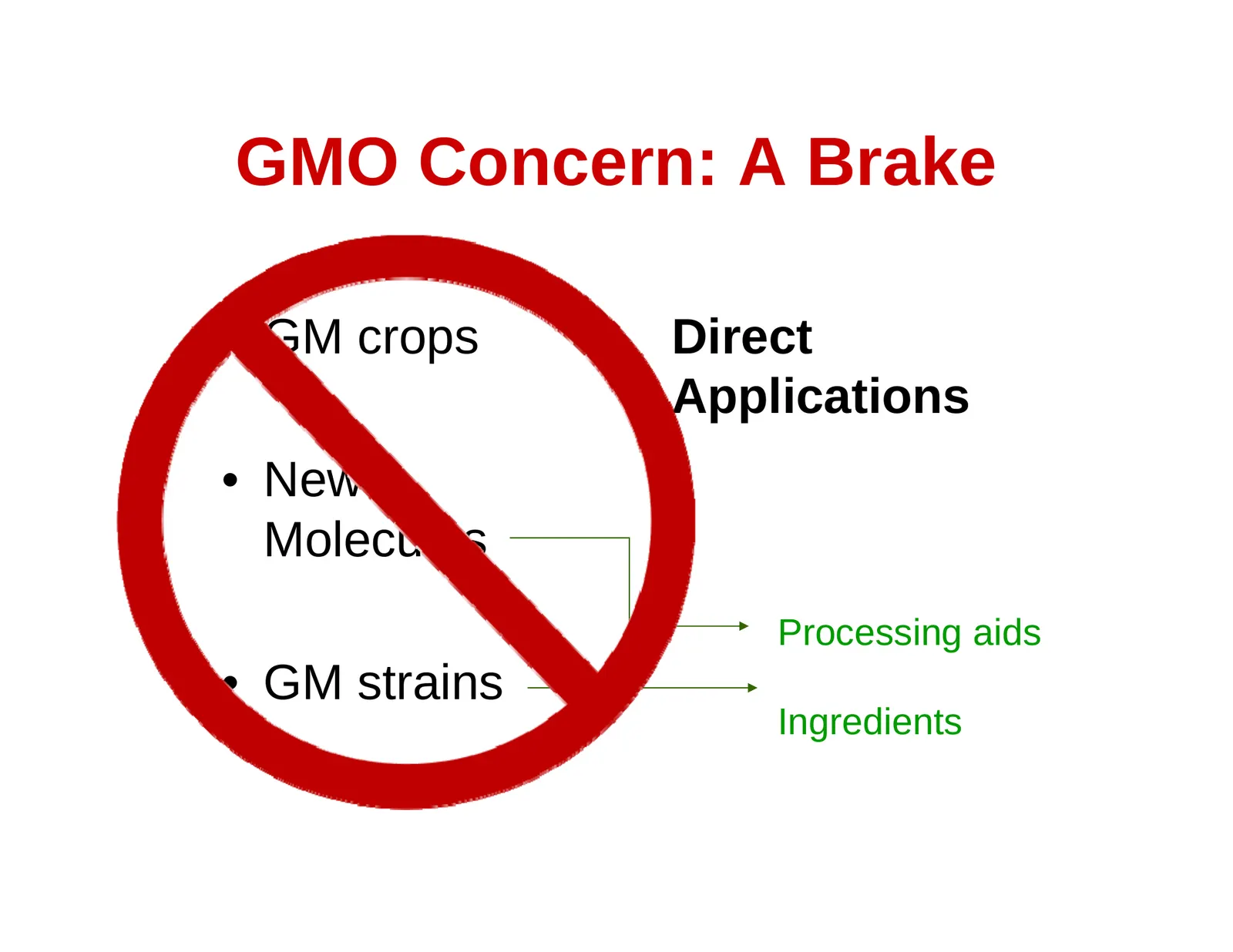
GMO Concern: A Brake • GM crops Direct Applications • New Molecules Processing aids • GM strains Ingredients
Slide 9: Industry Enzyme Market
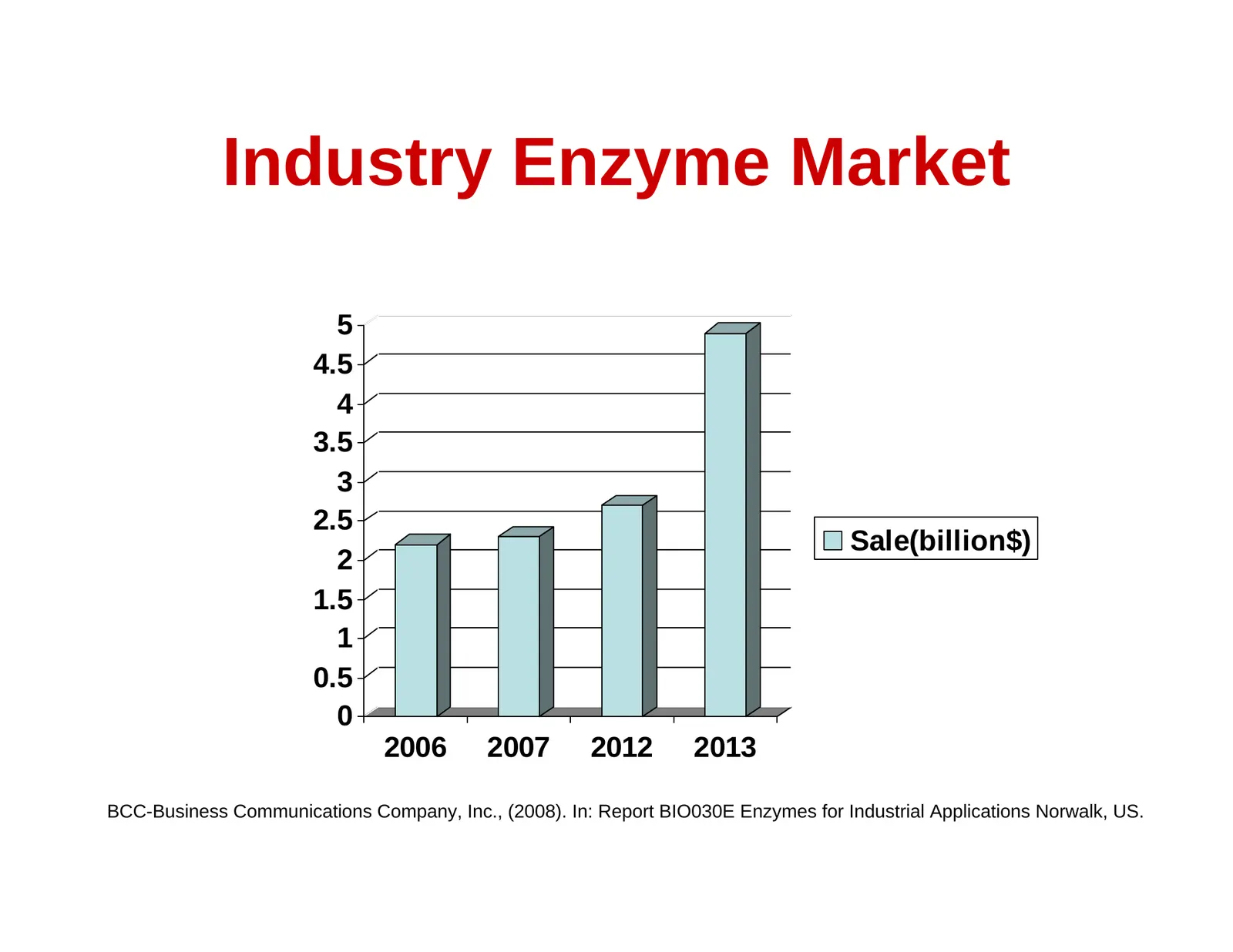
Industry Enzyme Market 5 4.5 4 3.5 3 2.5 Sale(billion$) 2 1.5 1 0.5 0 2006 2007 2012 2013 BCC-Business Communications Company, Inc., (2008). In: Report BIO030E Enzymes for Industrial Applications Norwalk, US.
Slide 10: Food Enzymes
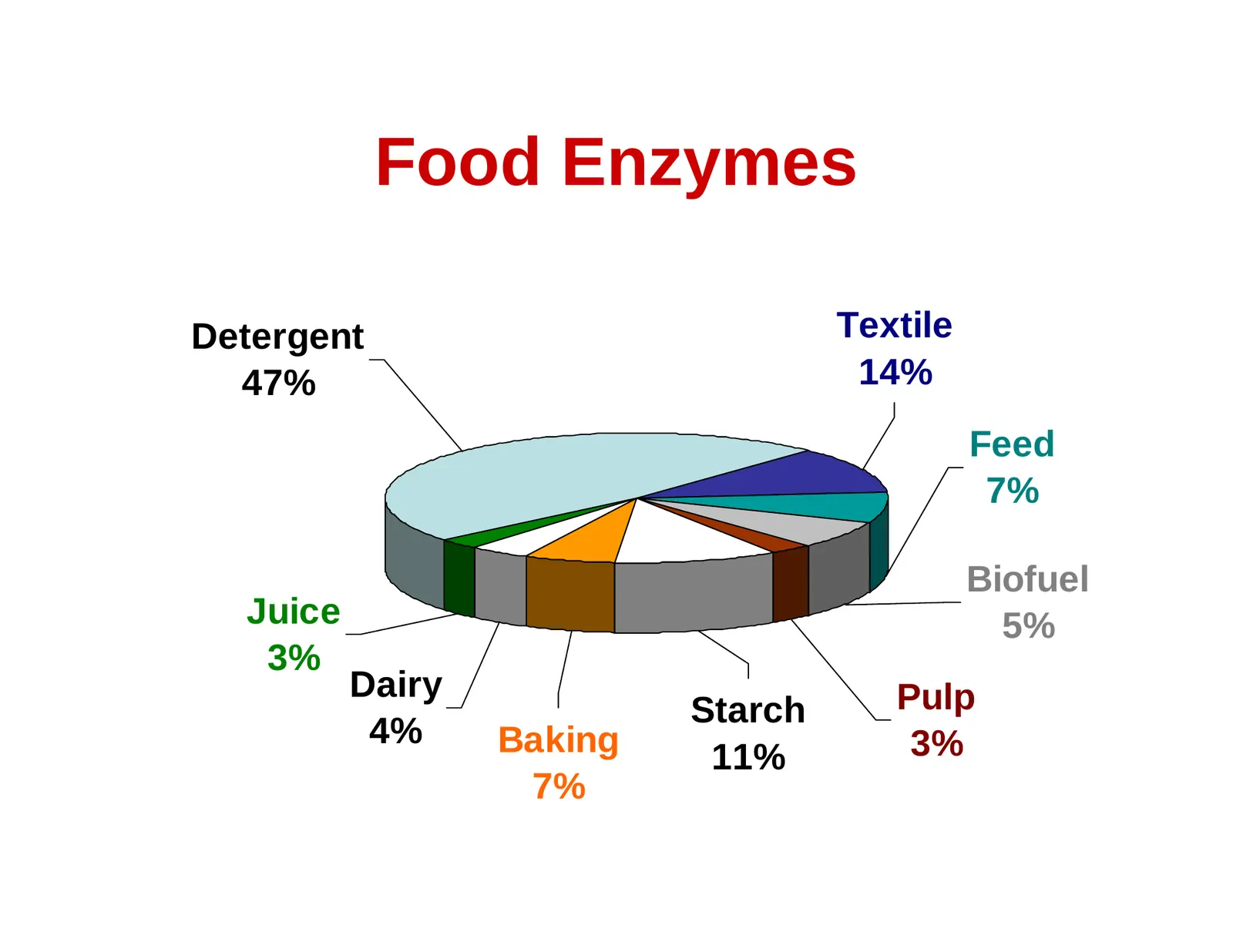
Food Enzymes Detergent Textile 47% 14% Feed 7% Biofuel Juice 5% 3% Dairy Pulp Starch 4% Baking 3% 11% 7%
Slide 11: Food Additives
Food Additives • Food additives market: US$25.3bn in 2007 • Fermentation products by GMO 1.5bn USD in 2004 amino acids, organic acids, vitamins, fatty acids, pigments, flavors, hydrocolloids, sweeterners • Regulatory Difficulties in introducing new additives
Slide 12: Growth: Steady and Slow
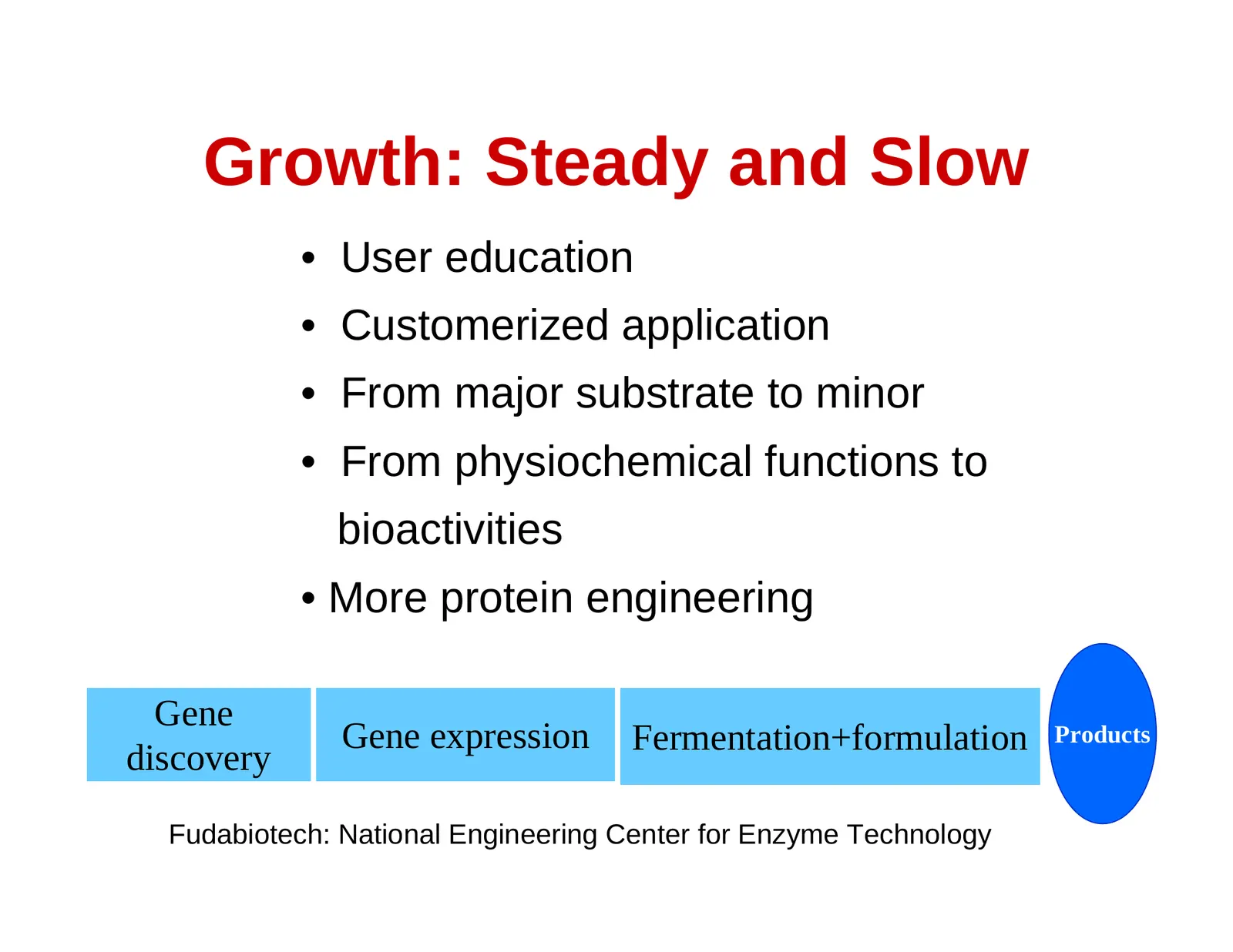
Growth: Steady and Slow • User education • Customerized application • From major substrate to minor • From physiochemical functions to bioactivities • More protein engineering Gene Gene expression Fermentation+formulation Products discovery Fudabiotech: National Engineering Center for Enzyme Technol
Slide 13: Summary
Summary • Enzymes as processing aids and food additives are two major areas for biotechnology applications; • The growth is slow but steady
Slide 14: Revealing Acupuncture Meridian-like System by Visualization of Intracellular Superoxide
Revealing Acupuncture Meridian-like System by Visualization of Intracellular Superoxide Pingfan Rao, phD Institute of Biotechnology Fuzhou University, China Hague, the Netherlands, Oct 2, 2010
Slide 15: Superoxide and SOD
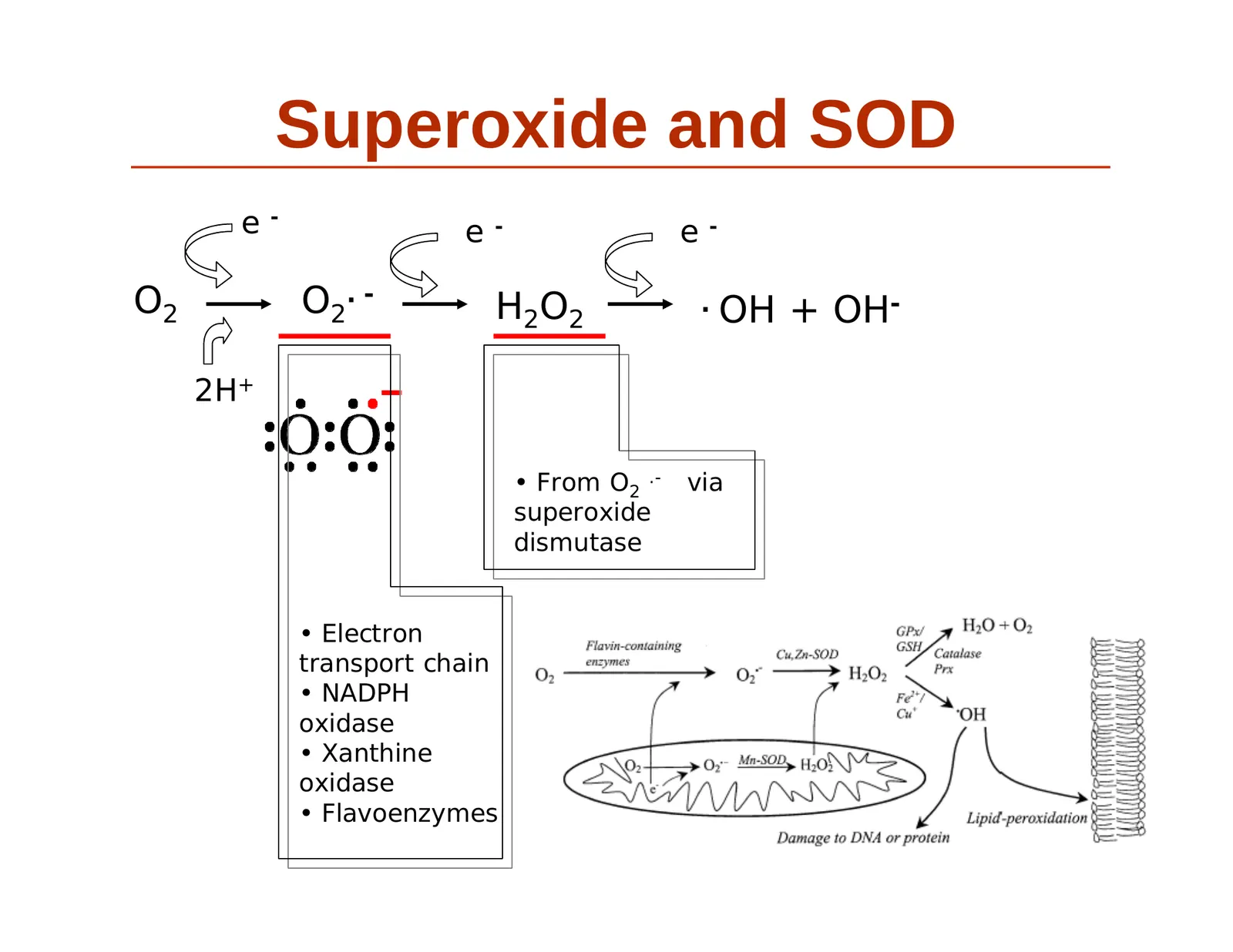
Superoxide and SOD e- e- e- O2 O2. - H2O2 . OH + OH- 2H+ • From O2 .- via superoxide dismutase • Electron transport chain • NADPH oxidase • Xanthine oxidase • Flavoenzymes
Slide 16: PTD-SOD & Acupuncture
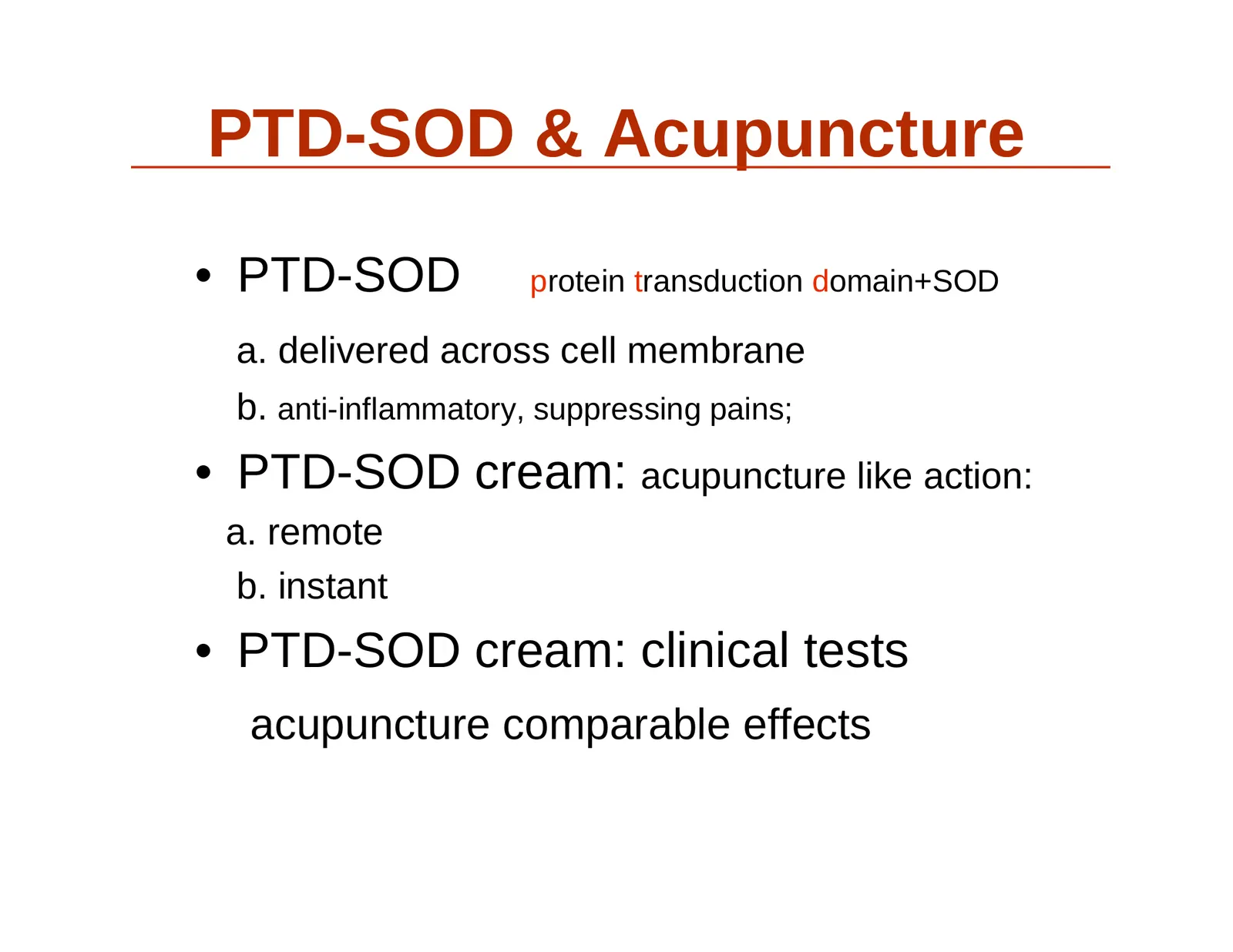
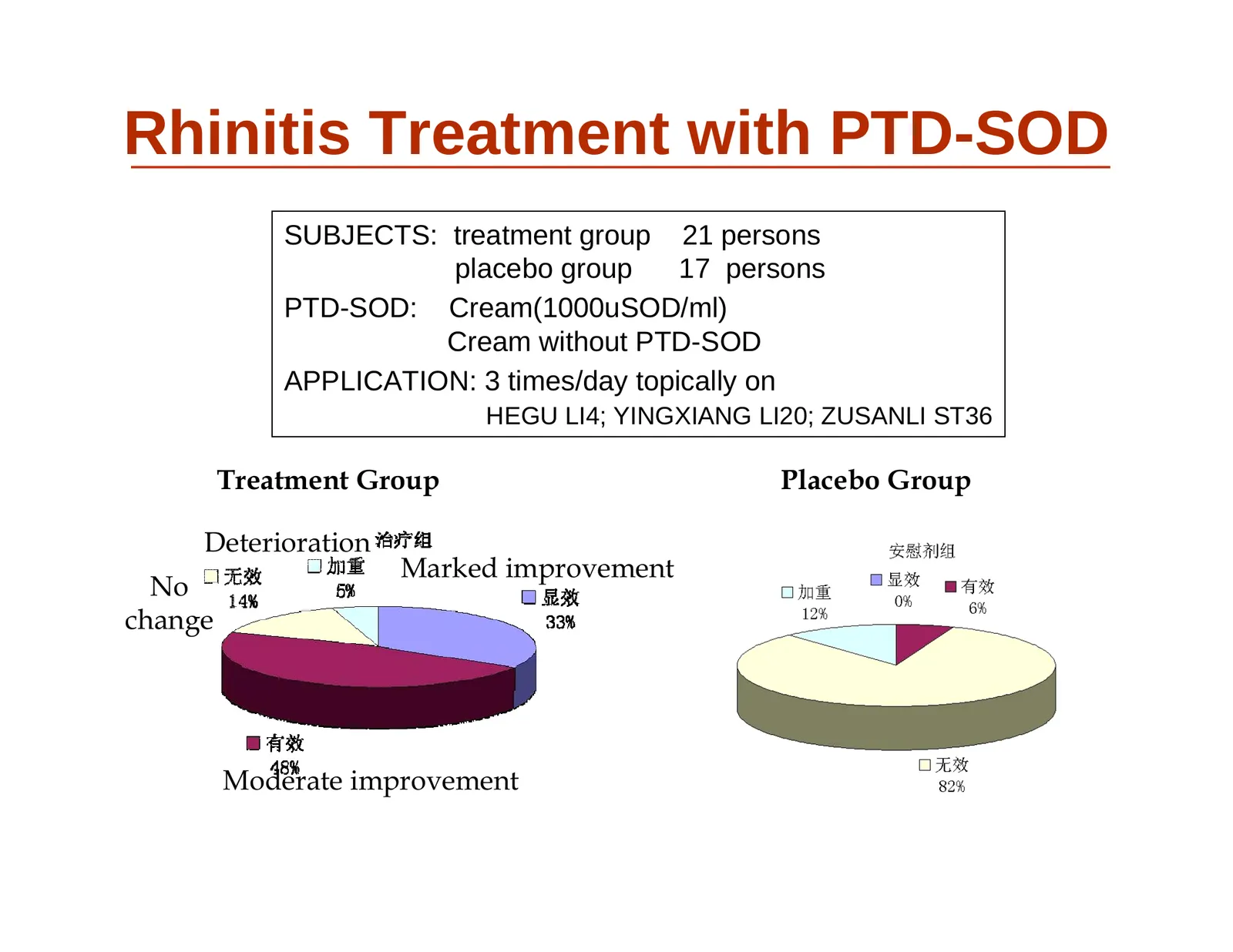
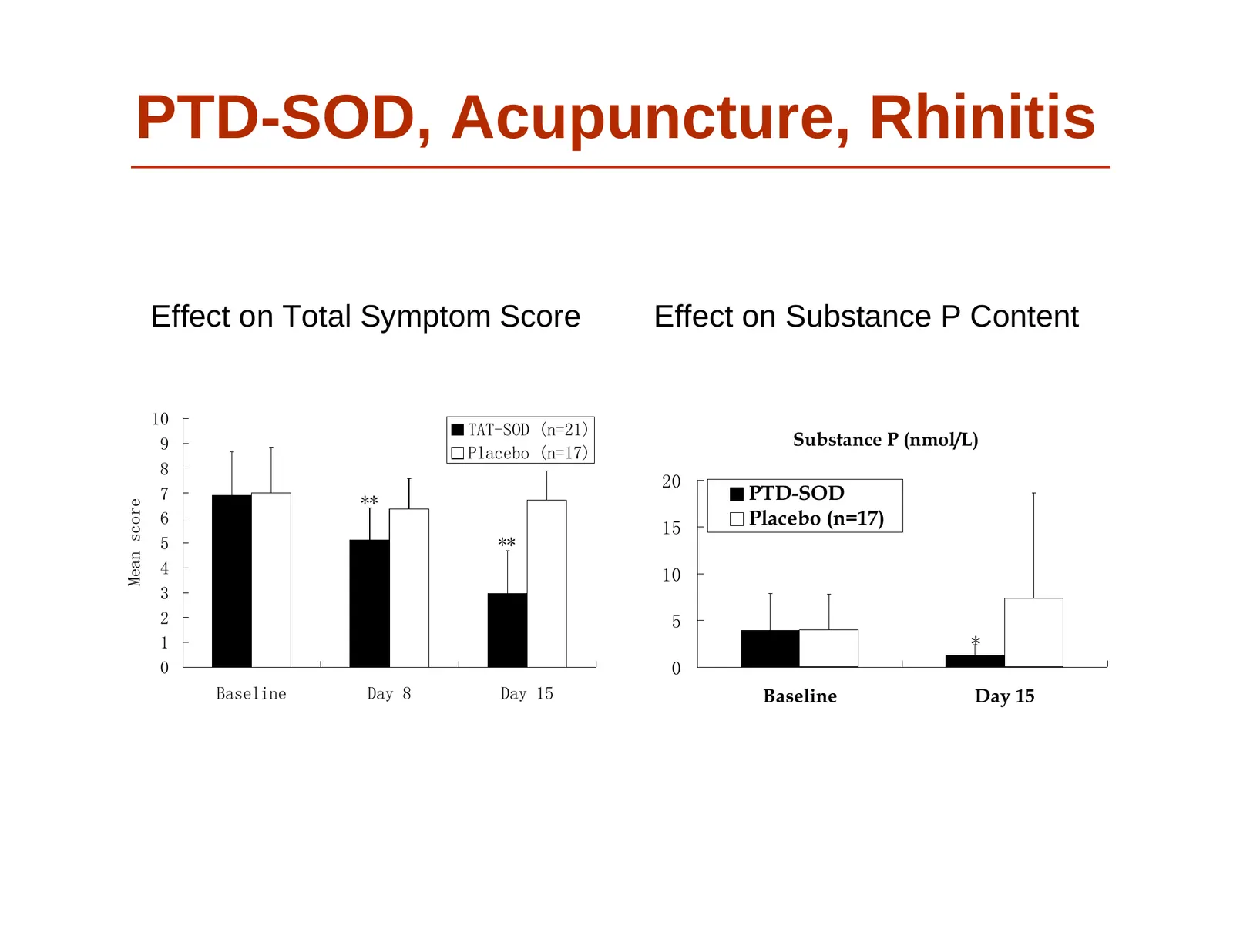
PTD-SOD & Acupuncture • PTD-SOD protein transduction domain+SOD a. delivered across cell membrane b. anti-inflammatory, suppressing pains; • PTD-SOD cream: acupuncture like action: a. remote b. instant • PTD-SOD cream: clinical tests acupuncture comparable effects
Slide 17: Rhinitis Treatment with PTD-SOD
Rhinitis Treatment with PTD-SOD SUBJECTS: treatment group 21 persons placebo group 17 persons PTD-SOD: Cream(1000uSOD/ml) Cream without PTD-SOD APPLICATION: 3 times/day topically on HEGU LI4; YINGXIANG LI20; ZUSANLI ST36 Treatment Group Placebo Group Deterioration Marked improvement No change Modera
Slide 18: PTD-SOD, Acupuncture, Rhinitis
PTD-SOD, Acupuncture, Rhinitis Effect on Total Symptom Score Effect on Substance P Content 10 TAT-SOD (n=21) 9 Substance P (nmol/L) Placebo (n=17) 8 20 7 ** PTD-SOD Mean score 6 15 Placebo (n=17) 5 ** 4 10 3 2 5 1 * 0 0 Baseline Day 8 Day 15 Baseline Day 15
Slide 19: Hypothesis
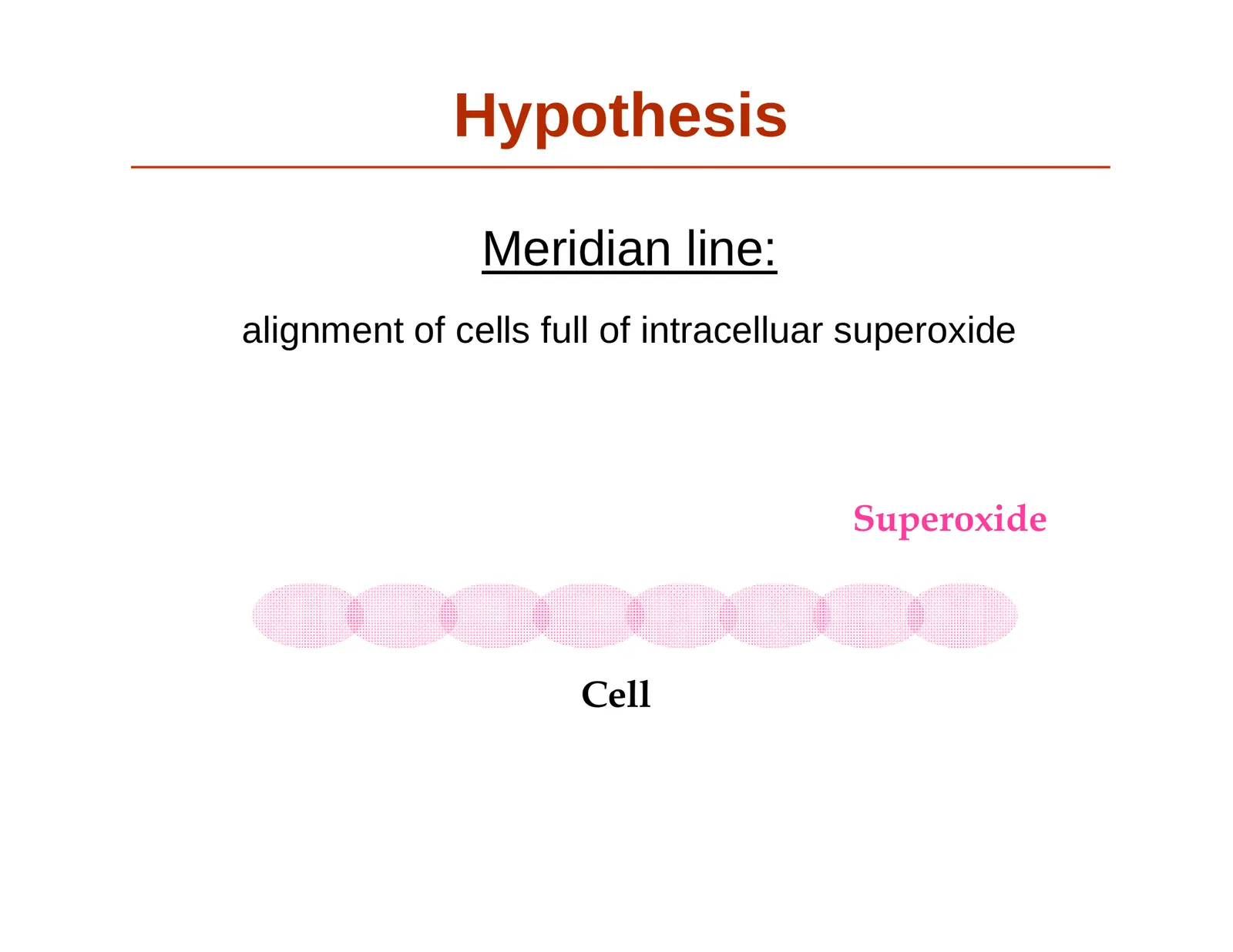
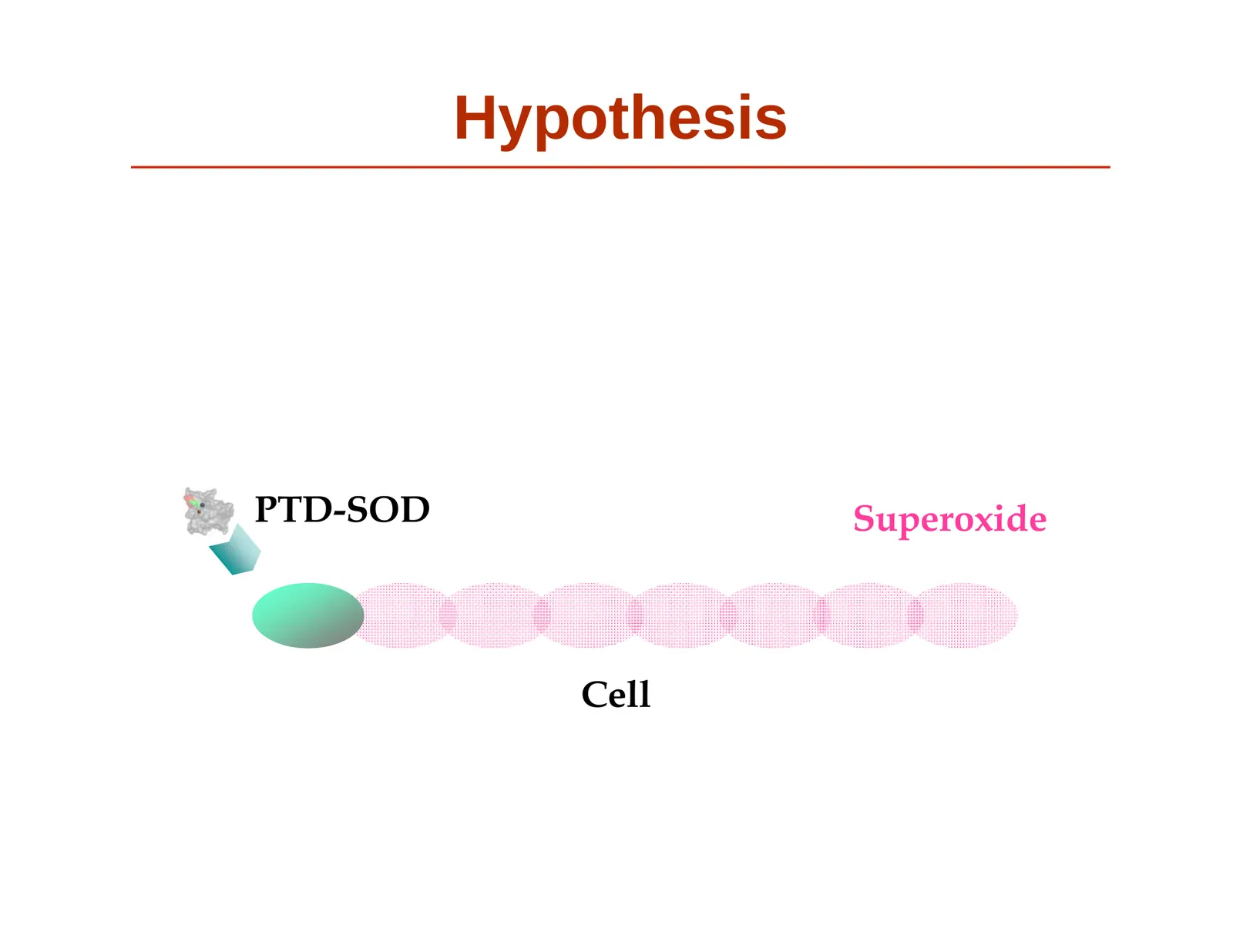
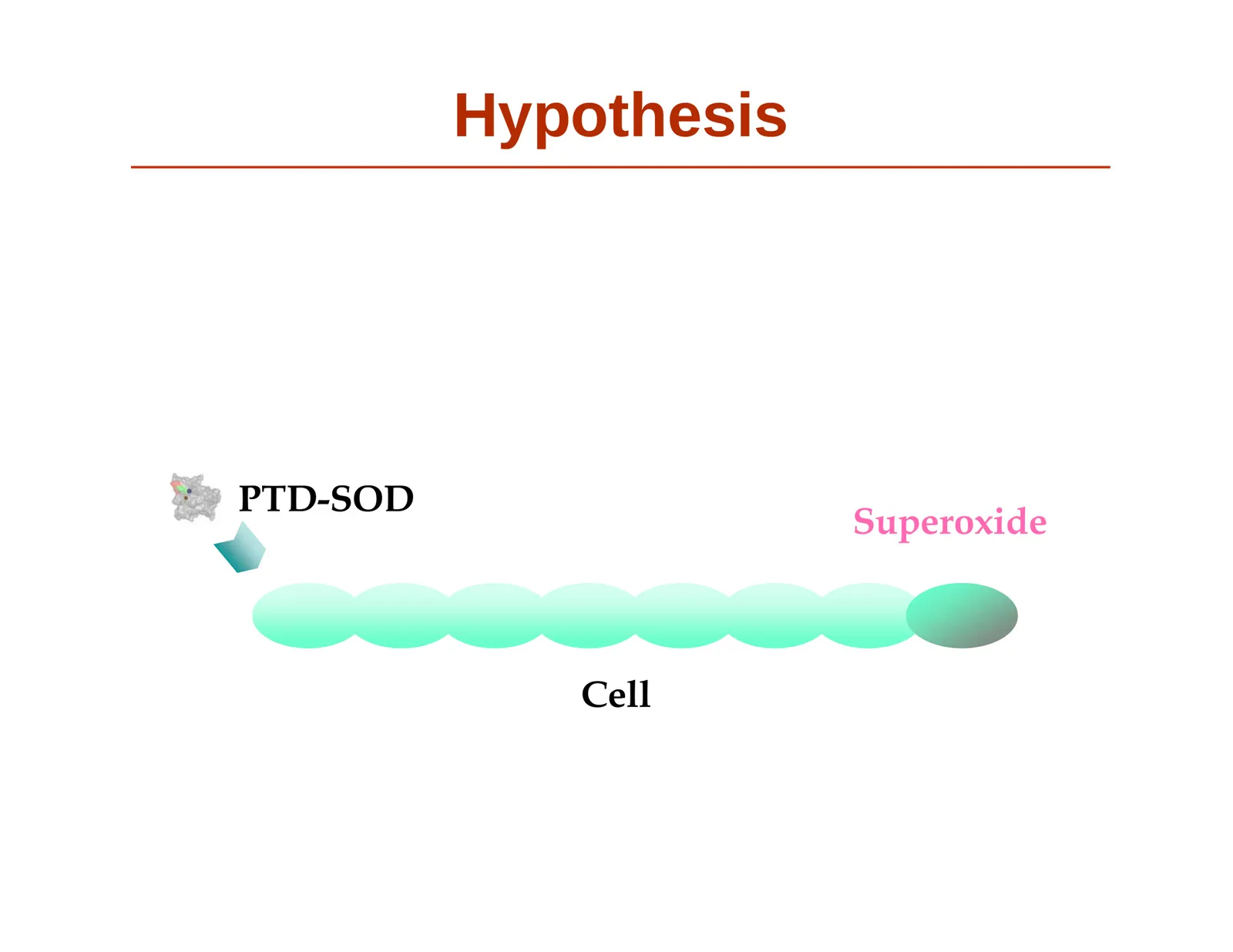
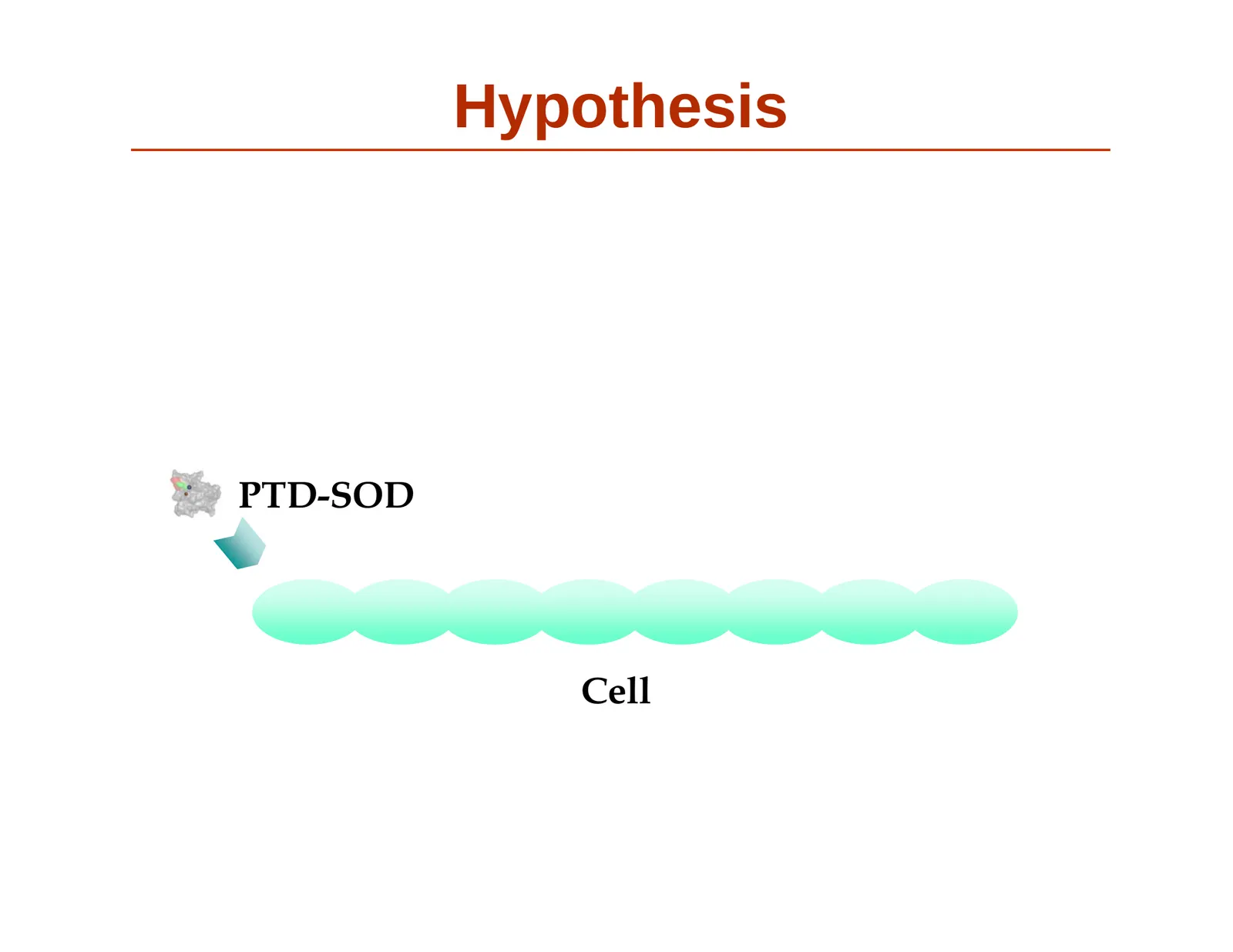
Hypothesis Meridian line: alignment of cells full of intracelluar superoxide Superoxide Cell
Slide 20: Hypothesis
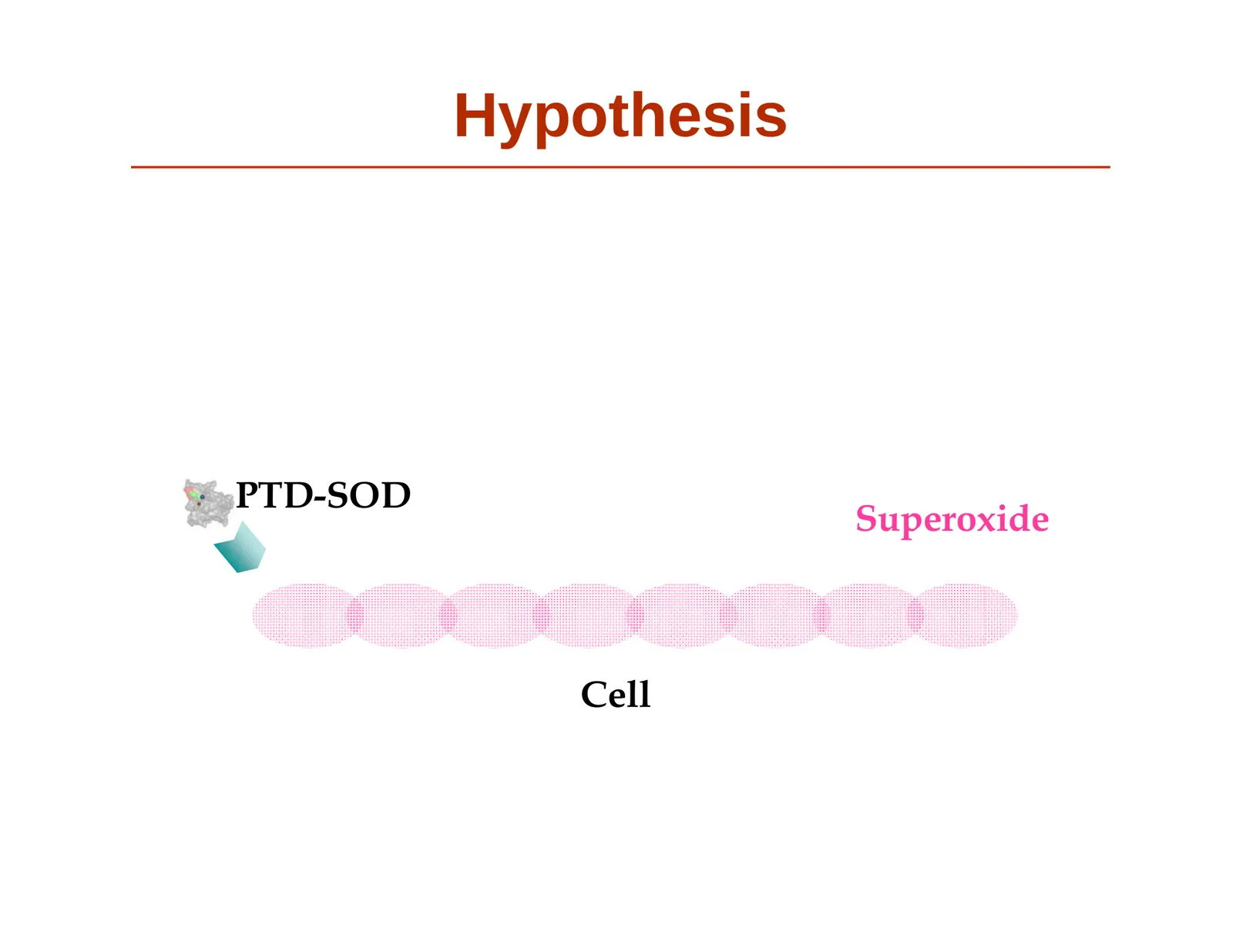
Hypothesis PTD-SOD Superoxide Cell
Slide 21: Hypothesis
Hypothesis PTD-SOD Superoxide Cell
Slide 22: Hypothesis
Hypothesis PTD-SOD Superoxide Cell
Slide 23: Hypothesis
Hypothesis =» PTD-SOD e aaa aaa Cell
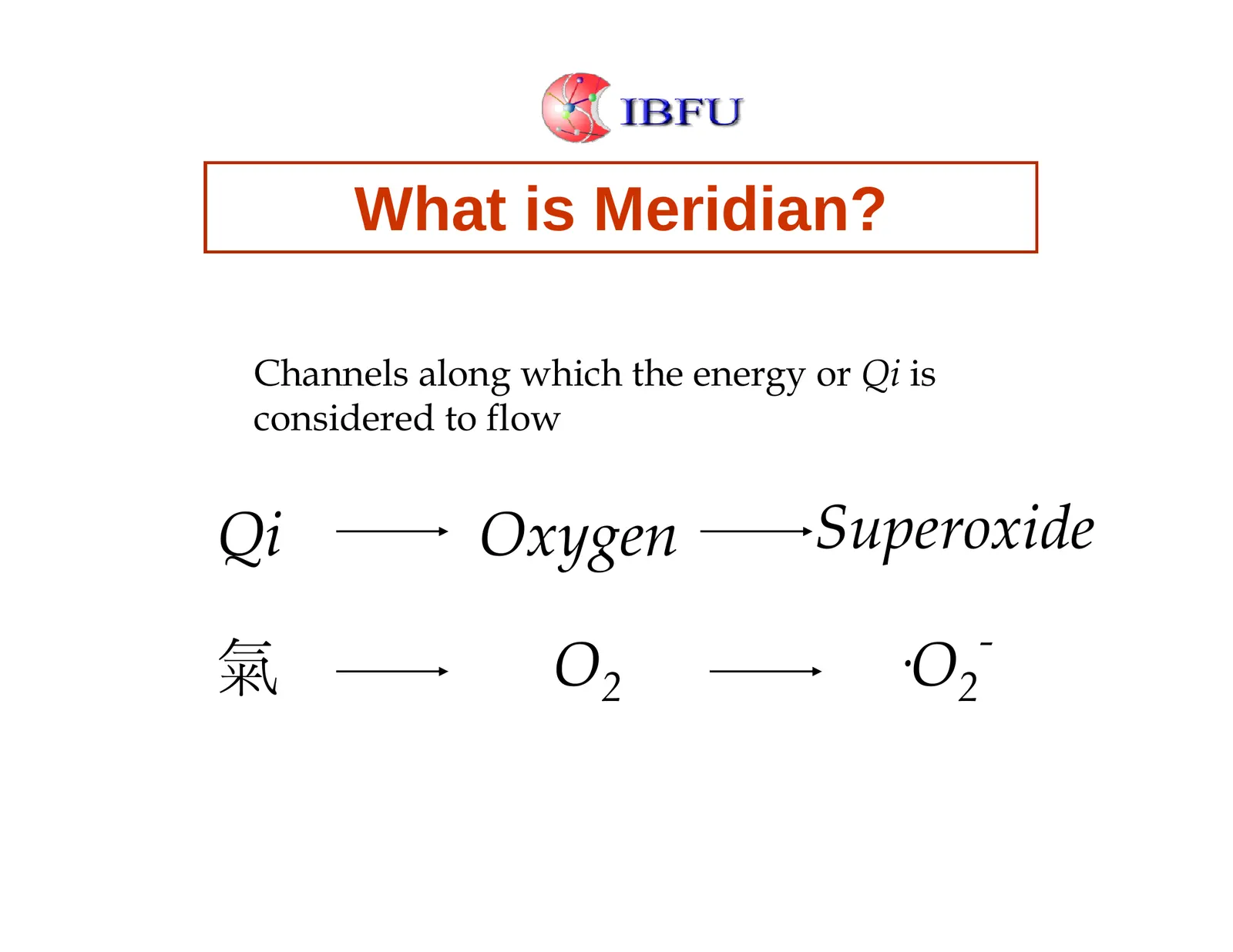
Slide 24: What is Meridian? Qi Oxygen Superoxide
What is Meridian? Channels along which the energy or Qi is considered to flow Qi Oxygen Superoxide - 氣 O2 ·O2
Slide 25: Visualization of Superoxide in Live Cells
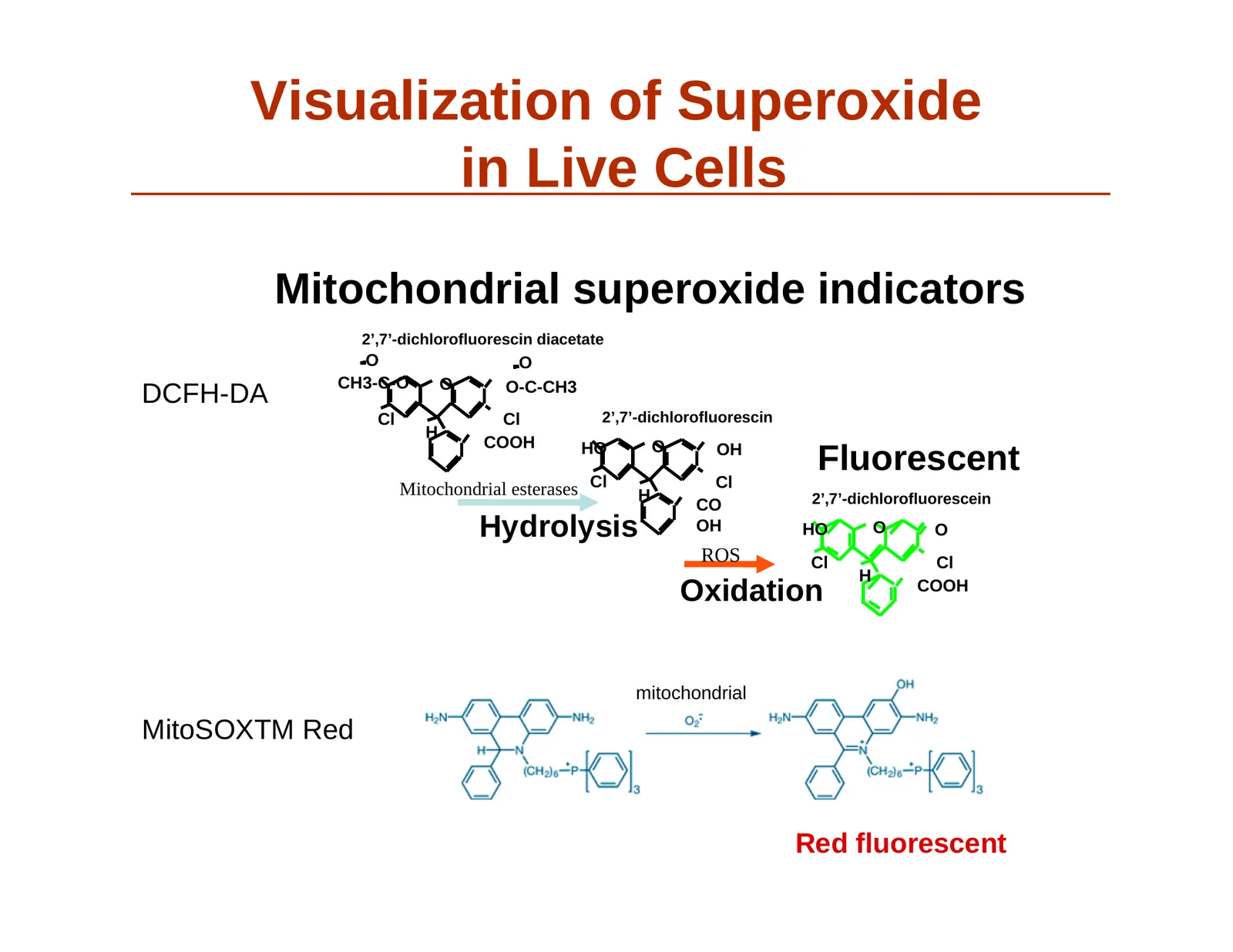
Visualization of Superoxide in Live Cells Mitochondrial superoxide indicators 2’,7’-dichlorofluorescin diacetate O O CH3-C-O O O-C-CH3 DCFH-DA Cl Cl 2’,7’-dichlorofluorescin H COOH HO O OH Fluorescent Mitochondrial esterases Cl H Cl 2’,7’-dichlorofluorescein CO Hydrolysis OH HO O O ROS Cl Cl H Oxida
Slide 26: Revealing Intracellular Superoxide Distribution in Rat
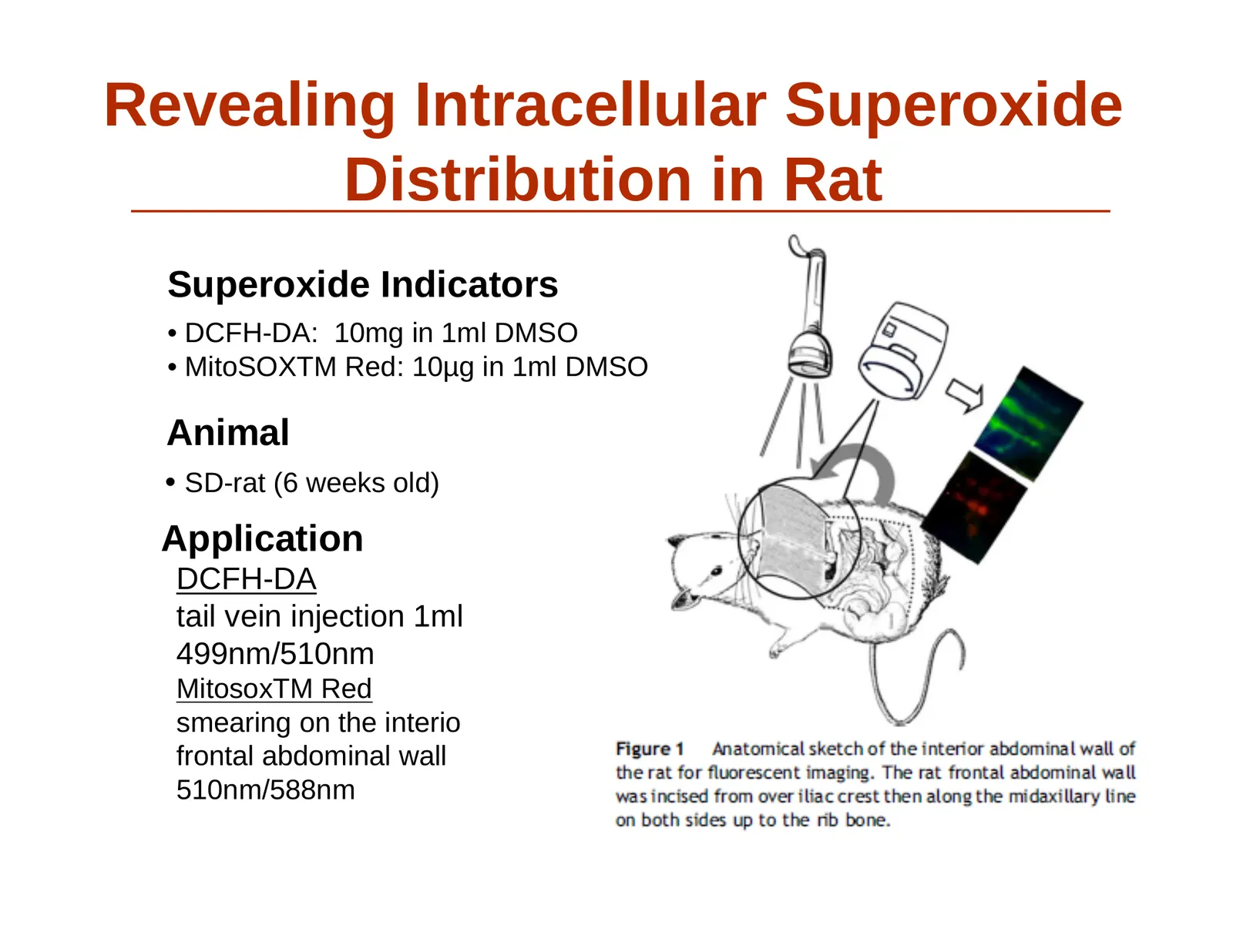
Revealing Intracellular Superoxide Distribution in Rat Superoxide Indicators • DCFH-DA: 10mg in 1ml DMSO • MitoSOXTM Red: 10µg in 1ml DMSO Animal • SD-rat (6 weeks old) Application DCFH-DA tail vein injection 1ml 499nm/510nm MitosoxTM Red smearing on the interio frontal abdominal wall 510nm/588nm
Slide 27: Revealing Meridian-like System
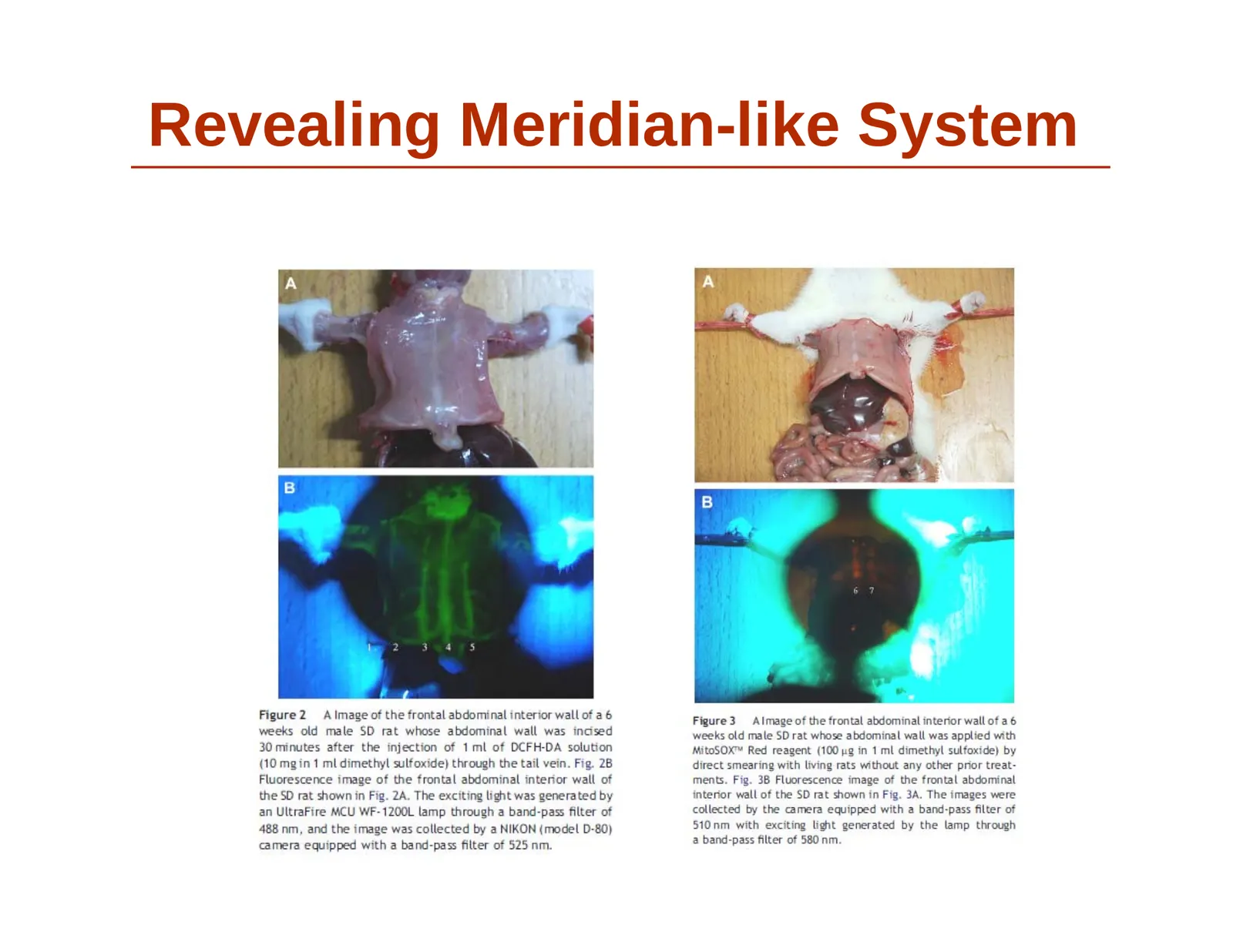
Revealing Meridian-like System
Slide 28: Revealing Meridian-like System
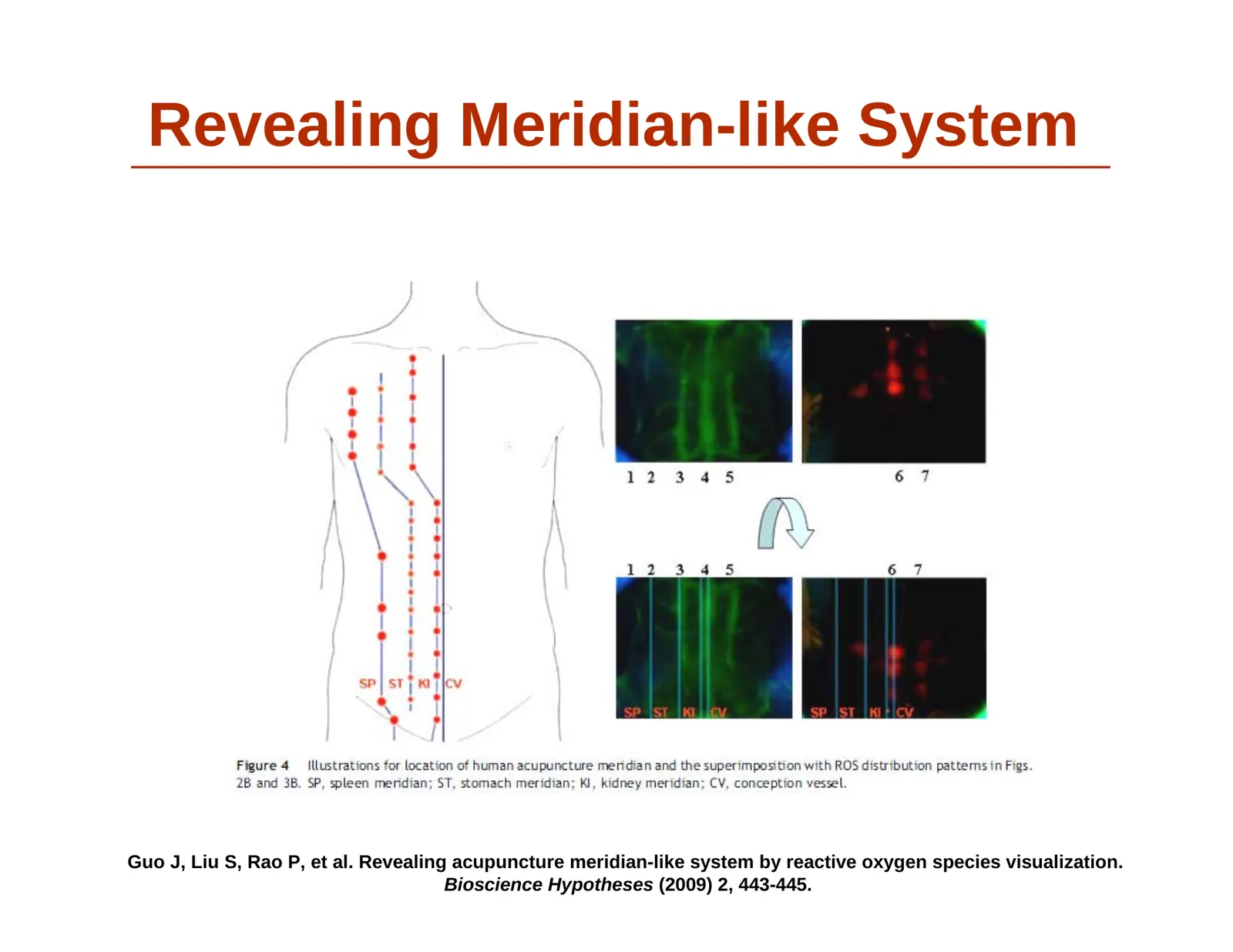
Revealing Meridian-like System Guo J, Liu S, Rao P, et al. Revealing acupuncture meridian-like system by reactive oxygen species visualization. Bioscience Hypotheses (2009) 2, 443-445.
Slide 29: What is Meridian?
What is Meridian? • A drainage system of superoxide, body’s waste treatment system; • An electric system with a special conducting media of superoxide, which reflects and reports organ’s working status
Slide 30: What's next?
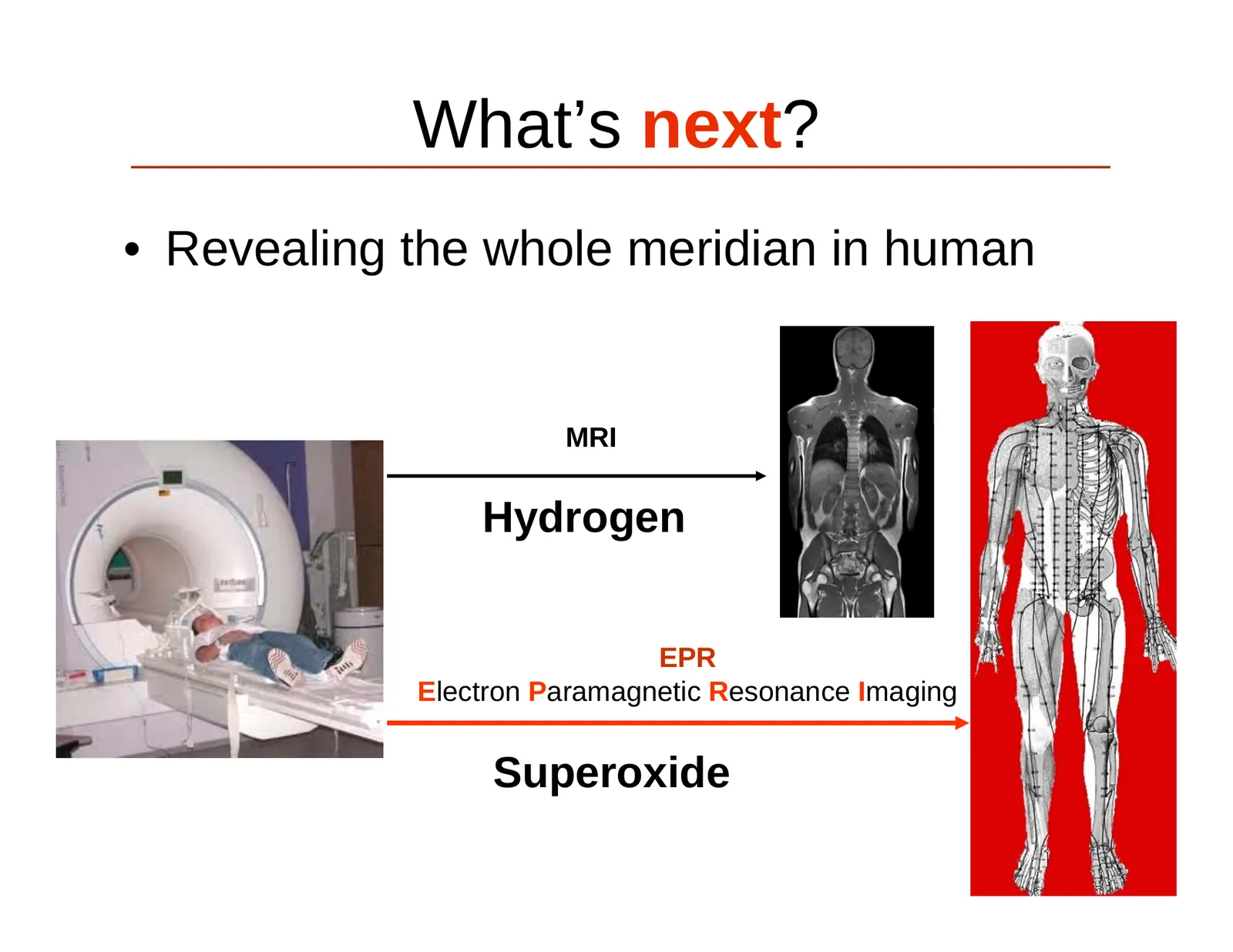
What’s next? • Revealing the whole meridian in human MRI Hydrogen EPR Electron Paramagnetic Resonance Imaging Superoxide
Slide 31: What's next?
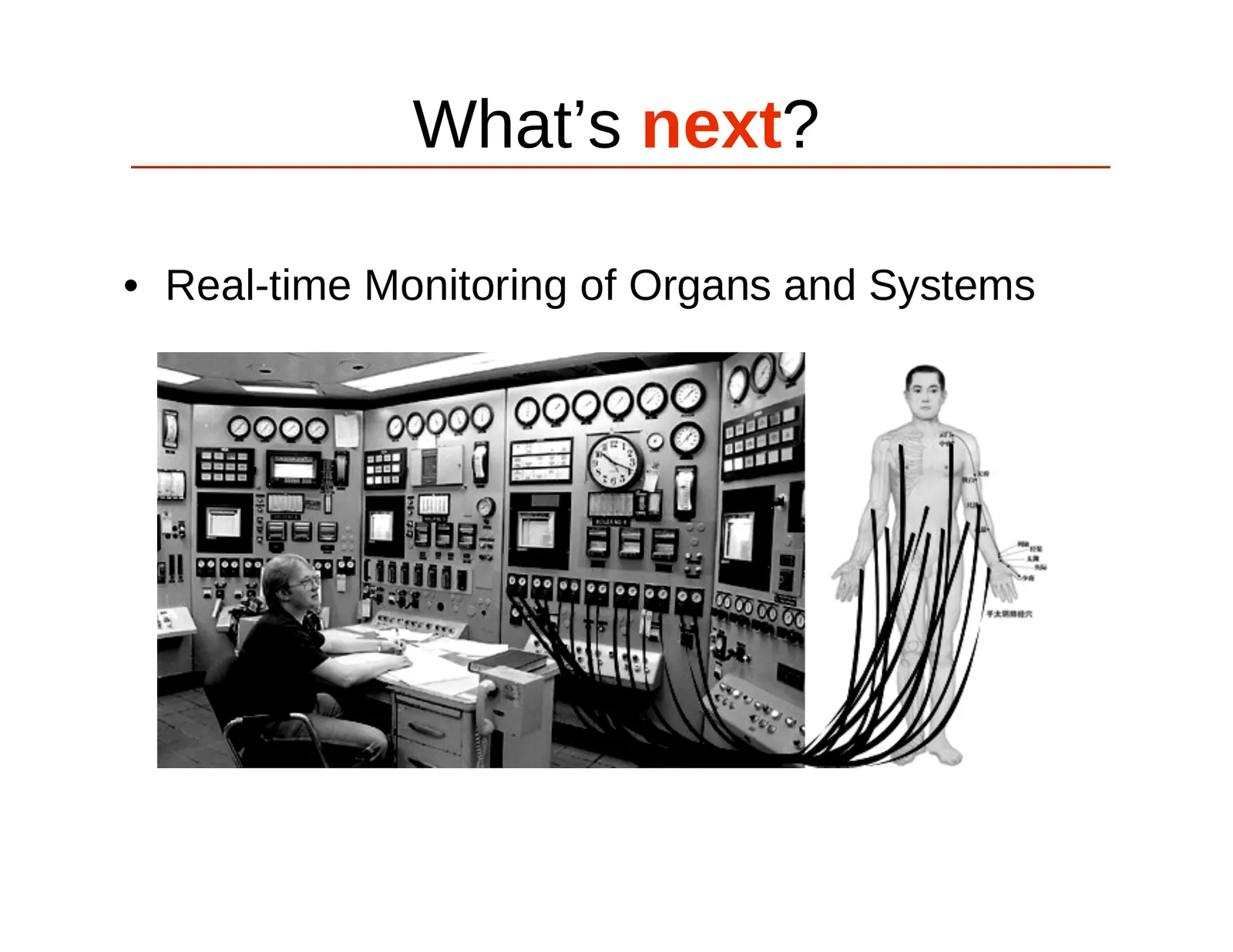
What’s next? • Real-time Monitoring of Organs and Systems
Slide 32: Summary
Summary • Visualization of intracellular superoxide successfully revealed meridian-like lines; • Meridian system may be a superoxide drainage system which also reports working status via electricity; • Further work may eventually open a new horizon in life science
Slide 33: Acknowledgement
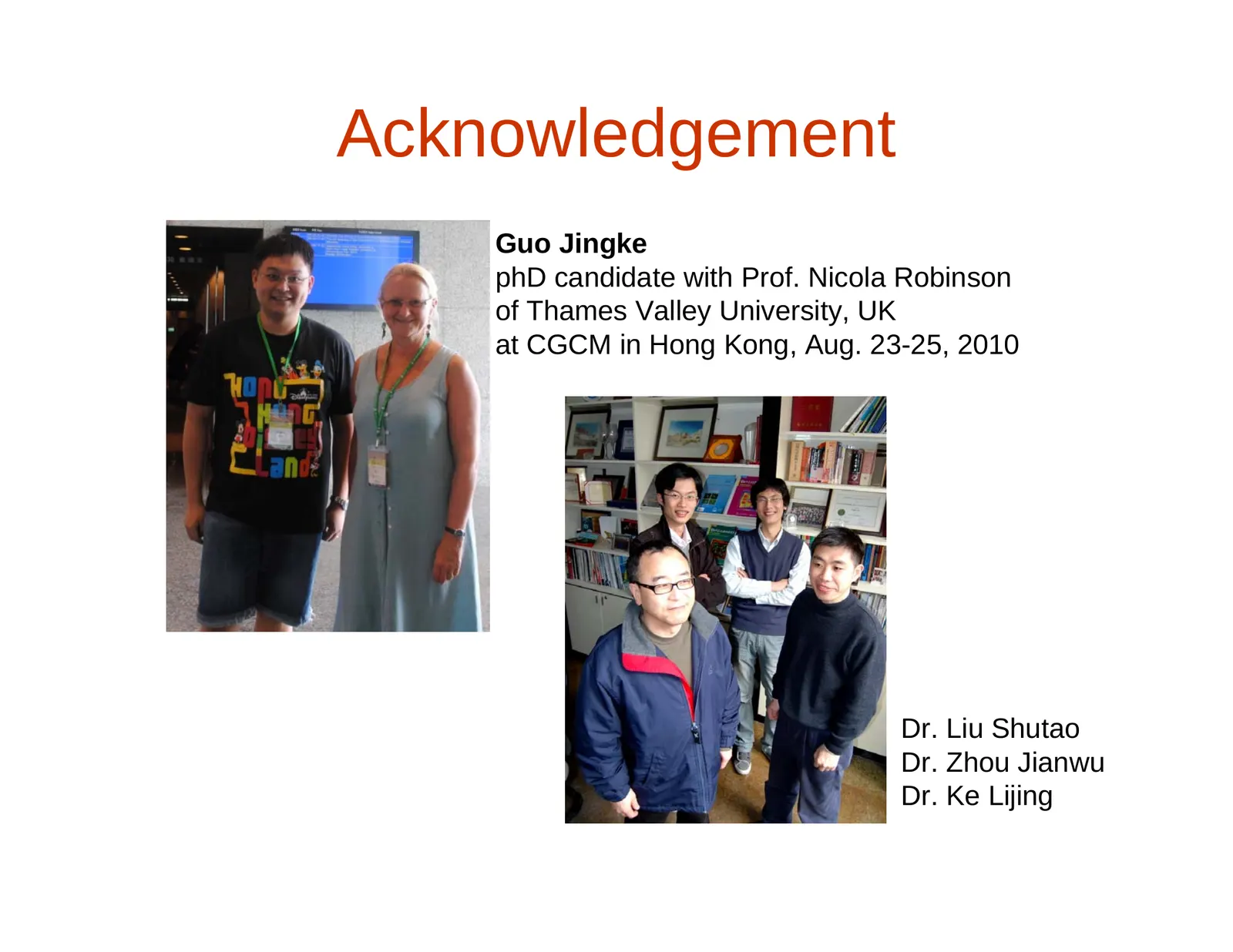
Acknowledgement Guo Jingke phD candidate with Prof. Nicola Robinson of Thames Valley University, UK at CGCM in Hong Kong, Aug. 23-25, 2010 Dr. Liu Shutao Dr. Zhou Jianwu Dr. Ke Lijing
Source: Internet Archive copy of tecan.com
More decks from Tecan Group AG
 H1 2026 Earnings Presentation22 slides · Aug 11, 2026
 H1 2025 Earnings Presentation25 slides · Aug 12, 2025
 Mimetas — Technical Presentation (2023)20 slides · Apr 24, 2023
 Technical Presentation (2023)28 slides · Apr 24, 2023
 SLAS 202329 slides · Feb 27, 2023
 H1 2021 Earnings Presentation26 slides · Aug 18, 2021