Arvinas, Inc. · NASDAQ:ARVN
Arvinas — Q3 2026 Earnings Presentation
49 slides from Arvinas's earnings presentation, Nov 3, 2026

Slide 1: Corporate Presentation
Corporate Presentation November 2026 NASDAQ L I S T E D ARV N © 2026 Arvinas. All rights reserved.
Slide 2: Safe harbor and forward-looking statements
Safe harbor and forward-looking statements This presentation contains forward-looking statements within the meaning of The Private Securities Litigation Reform Act of 1995 that involve substantial risks and uncertainties, including statements regarding: PROteolysis TAargeting Chimera ("PROTAC") prot

Slide 3: Igniting a transformative change
IGNITING A TRANSFORMATIVE CHANGE in the fight for patients with cancer and neurodegenerative diseases
Slide 4: Experienced team advancing a new therapeutic modality
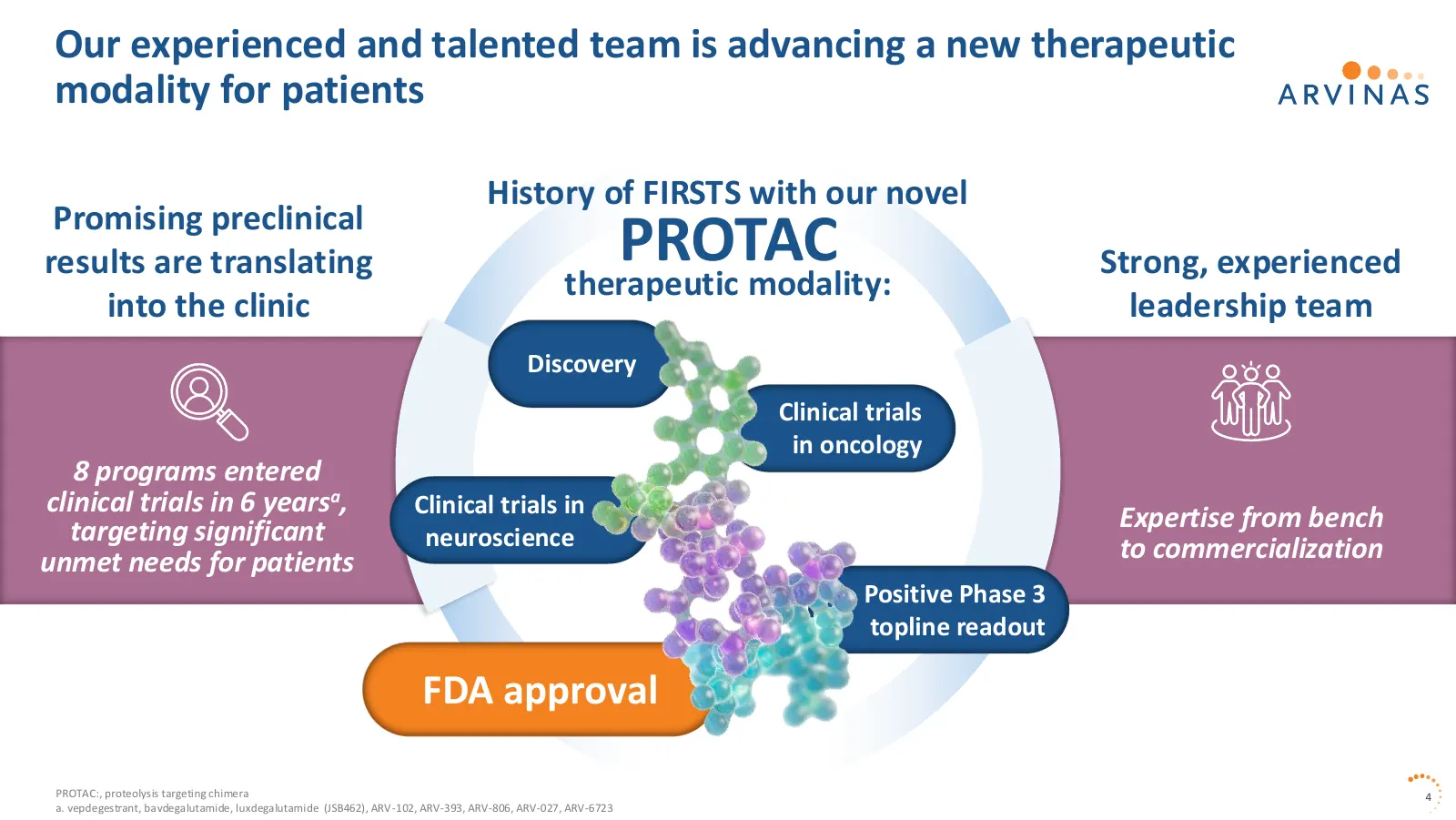
Our experienced and talented team is advancing a new therapeutic modality for patients History of FIRSTS with our novel Promising preclinical results are translating PROTAC Strong, experienced therapeutic modality: into the clinic leadership team Discovery Clinical trials in oncology 8 programs ente
Slide 5: ER and AR degraders highlight ability to develop valuable PROTAC degraders
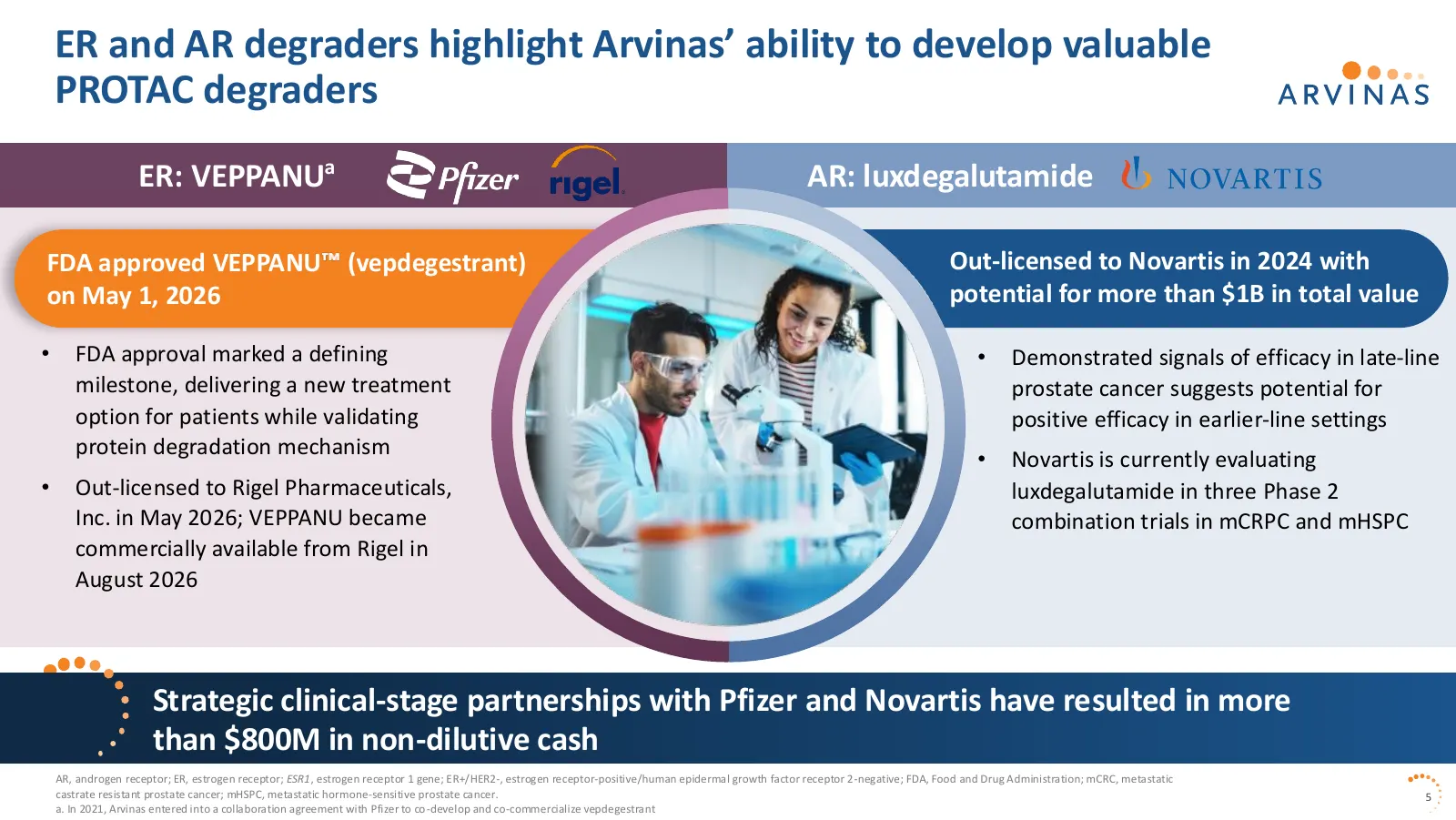
ER and AR degraders highlight Arvinas’ ability to develop valuable PROTAC degraders ER: VEPPANUa AR: luxdegalutamide FDA approved VEPPANU (vepdegestrant) Out-licensed to Novartis in 2024 with on May 1, 2026 potential for more than $1B in total value • FDA approval marked a defining • Demonstrated si
Slide 6: PROTAC degraders harness natural machinery to degrade disease-causing proteins
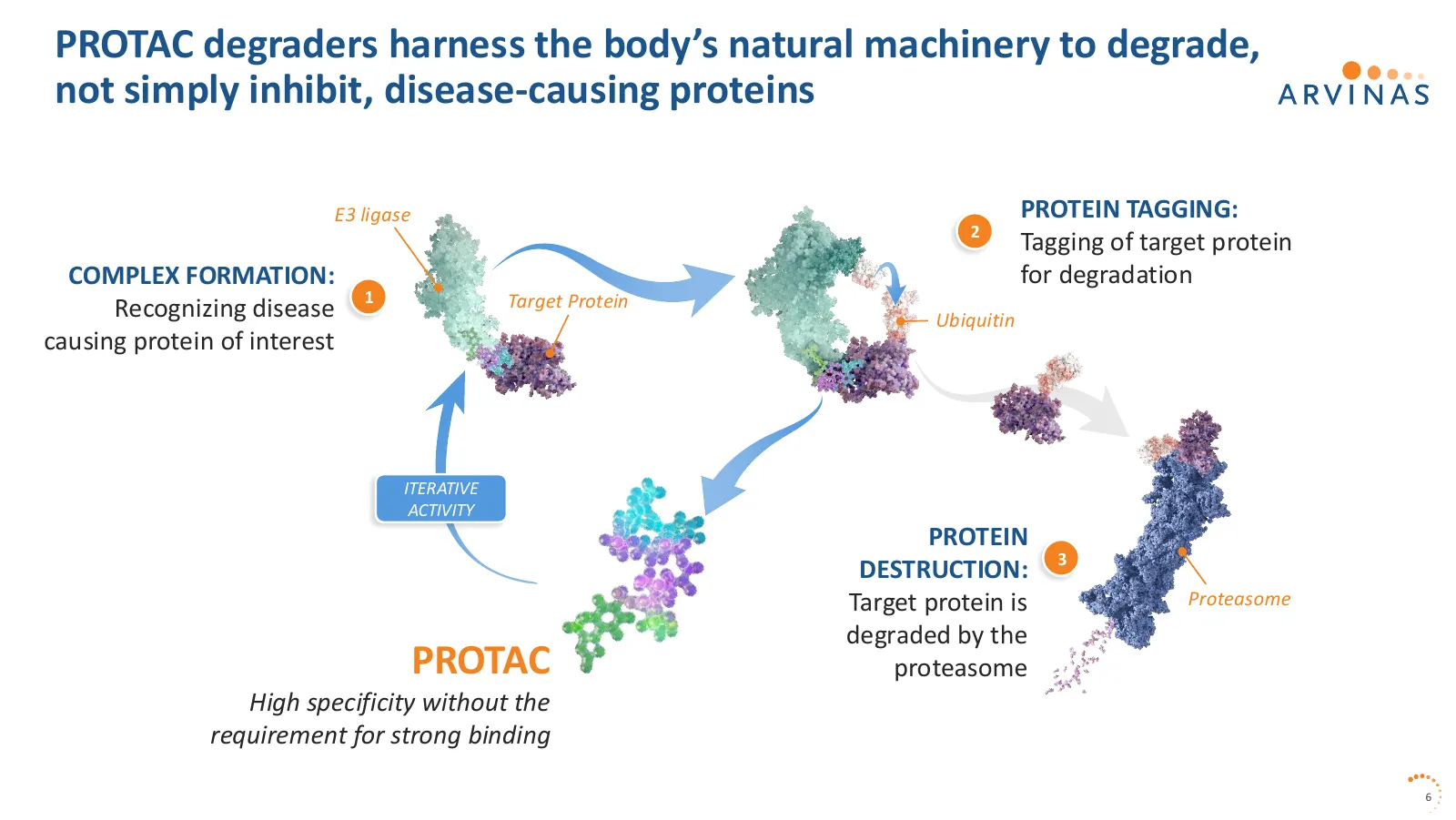
PROTAC degraders harness the body’s natural machinery to degrade, not simply inhibit, disease-causing proteins E3 ligase PROTEIN TAGGING: 2 Tagging of target protein COMPLEX FORMATION: for degradation 1 Target Protein Recognizing disease Ubiquitin causing protein of interest ITERATIVE ACTIVITY PROTE
Slide 7: PROTAC benefits over other modalities in oncology and neurology
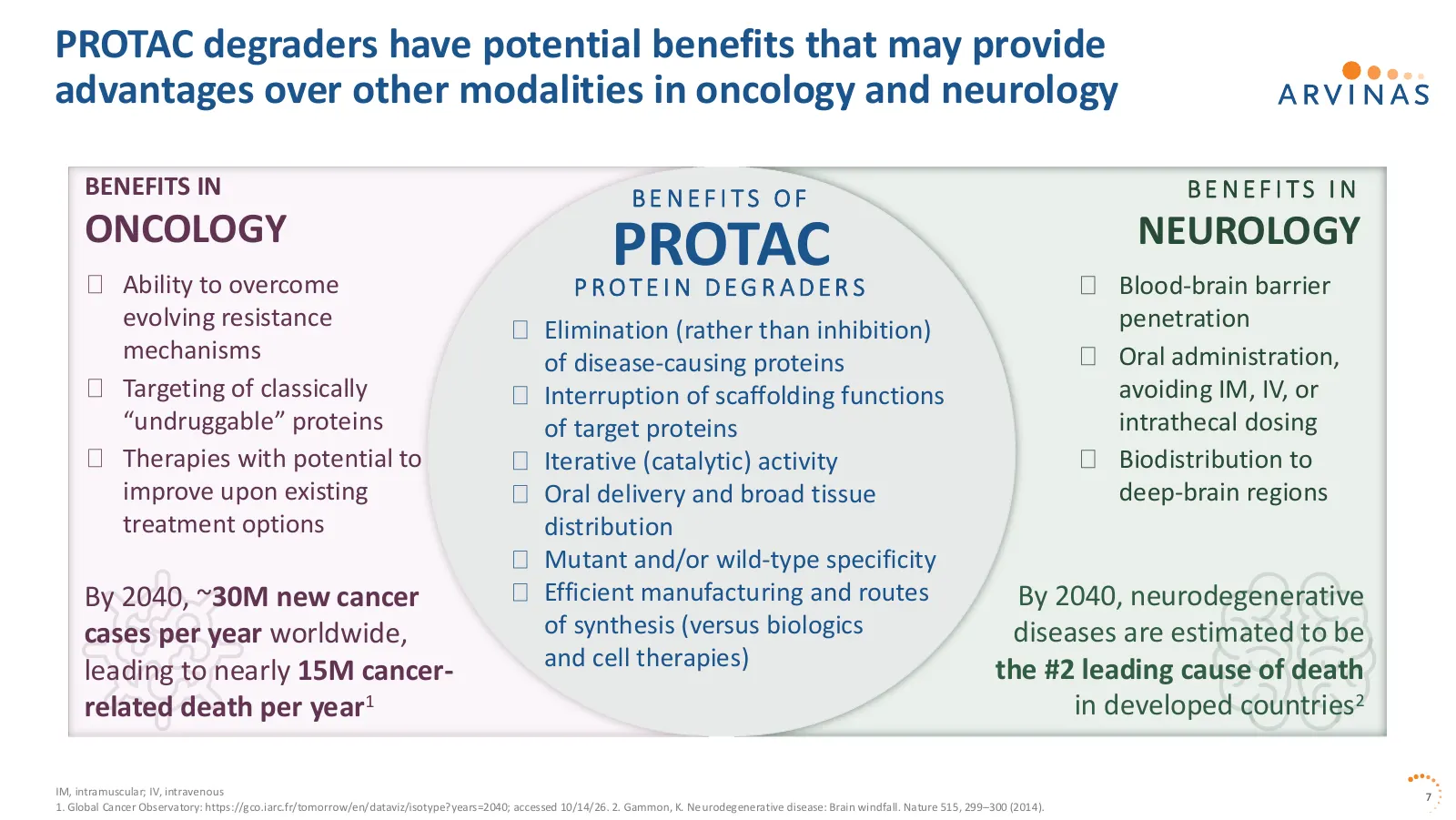
PROTAC degraders have potential benefits that may provide advantages over other modalities in oncology and neurology BENEFITS IN BE NEFI TS OF BE NEFI TS I N ONCOLOGY NEUROLOGY Ability to overcome PROTAC PROTE IN DEGR ADER S Blood-brain barrier evolving resistance Elimination (rather than inhi
Slide 8: Pipeline of differentiated PROTAC degraders in neurology and oncology
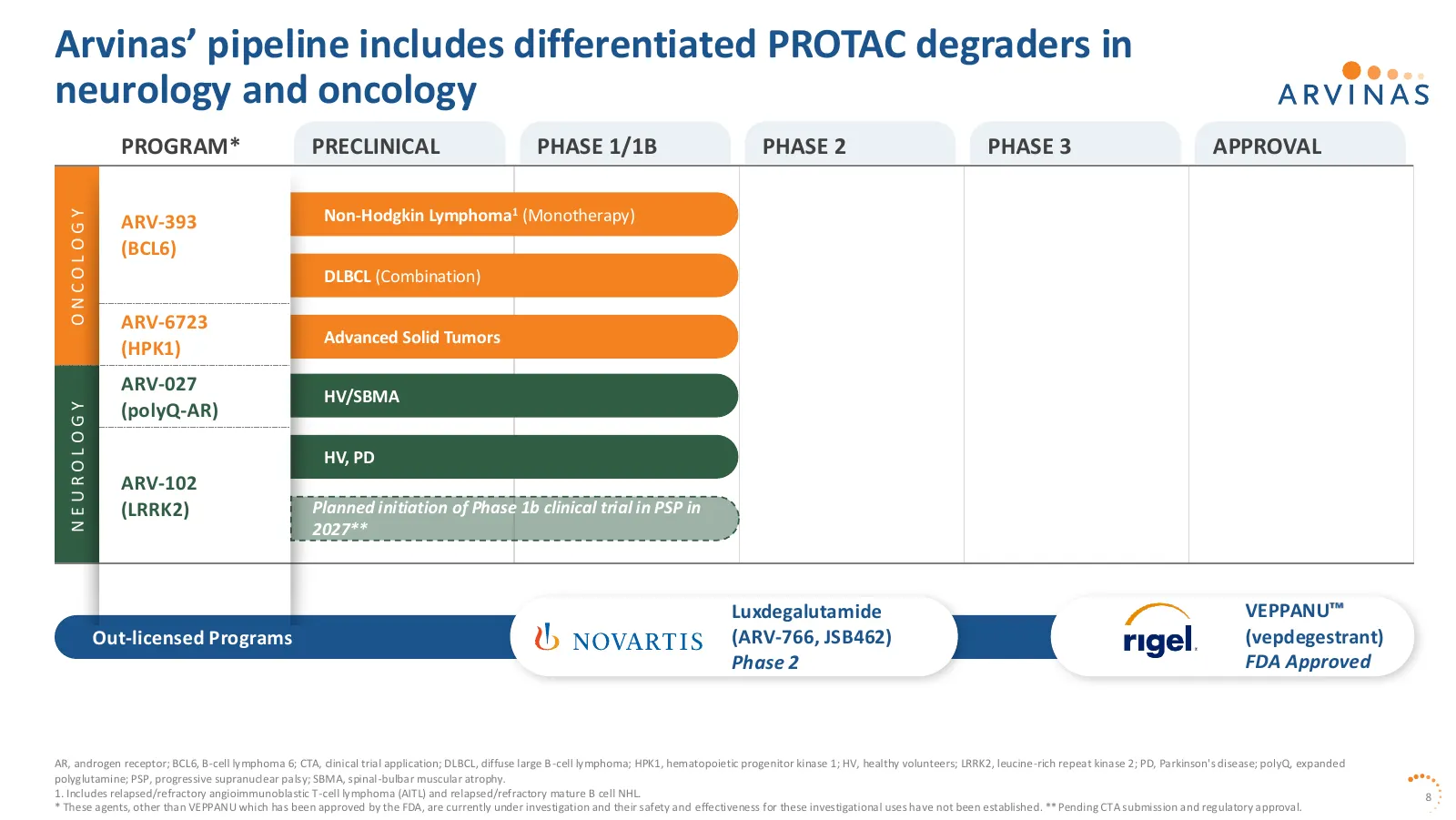
Arvinas’ pipeline includes differentiated PROTAC degraders in neurology and oncology PROGRAM* PRECLINICAL PHASE 1/1B PHASE 2 PHASE 3 APPROVAL Non-Hodgkin Lymphoma1 (Monotherapy) ONCOLOGY ARV-393 (BCL6) DLBCL (Combination) ARV-6723 Advanced Solid Tumors (HPK1) ARV-027 HV/SBMA (polyQ-AR) NEUROLOGY HV,
Slide 9: Our goal is to change treatment paradigms
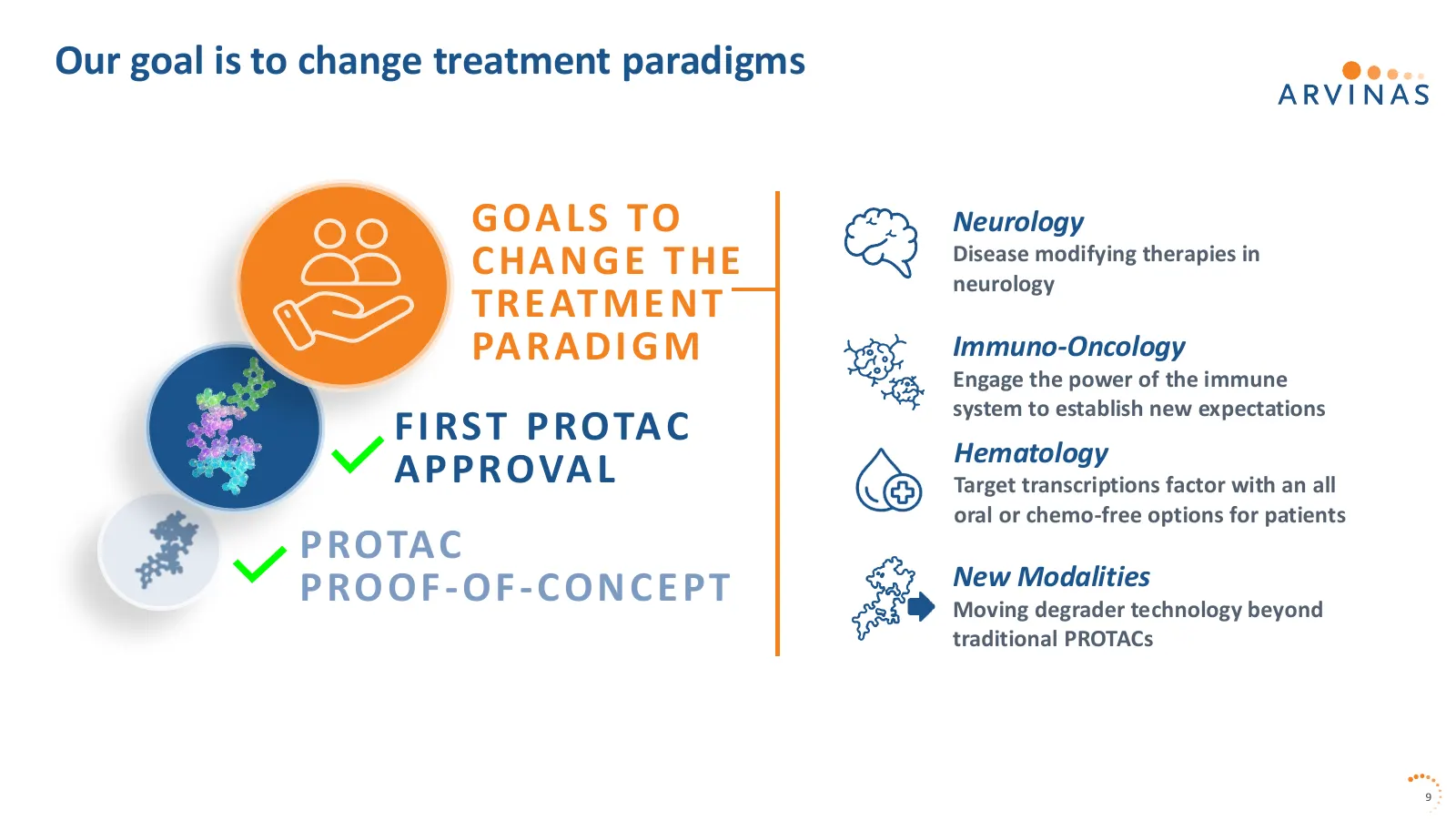
Our goal is to change treatment paradigms G OA LS TO Neurology C HA N G E T HE Disease modifying therapies in neurology TR EATME NT PA R A DI G M Immuno-Oncology Engage the power of the immune system to establish new expectations F I RST P ROTA C Hematology A P PR OVA L Target transcriptions factor
Slide 10: Committed to bringing valuable treatments and creating value for shareholders
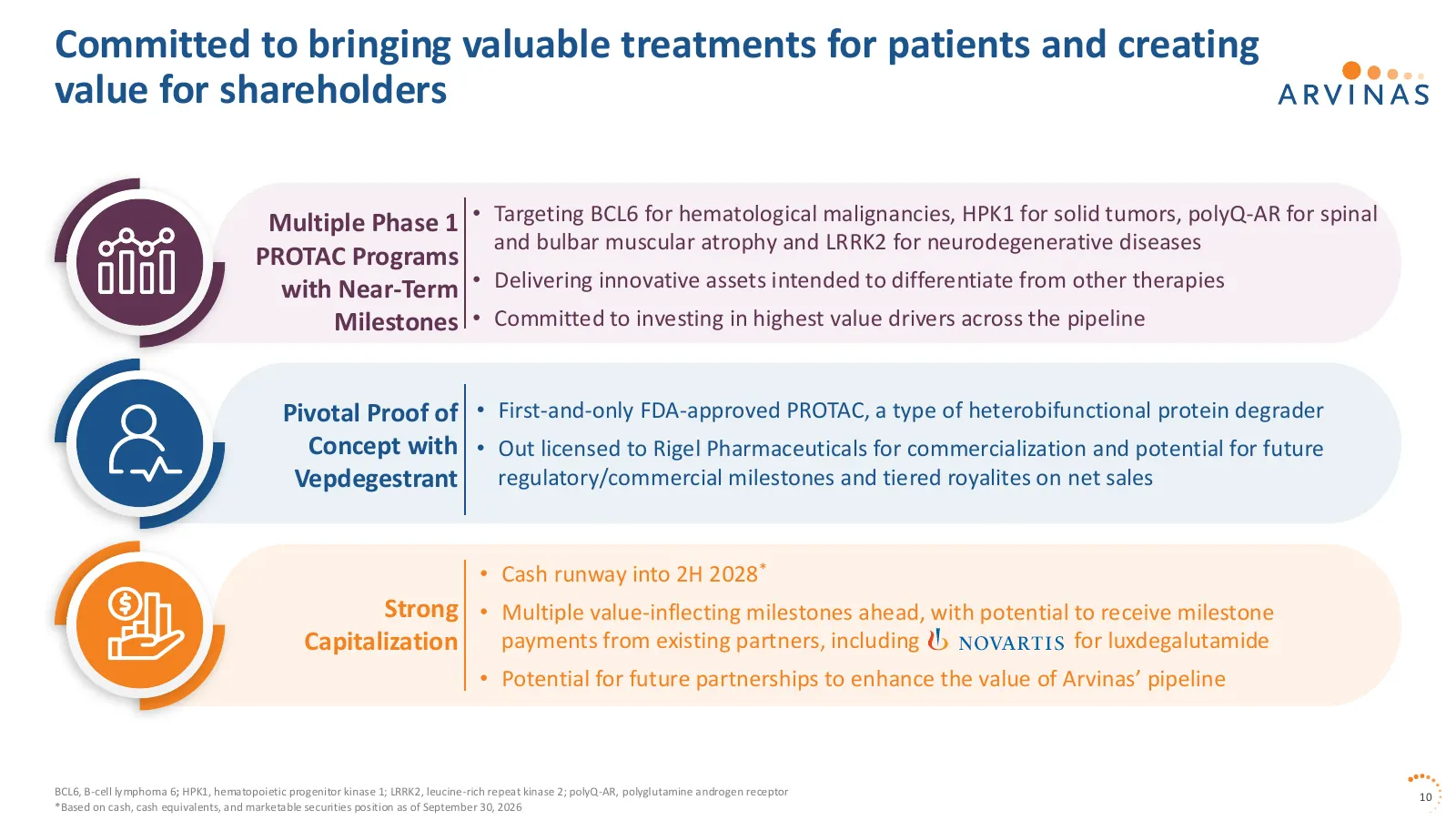
Committed to bringing valuable treatments for patients and creating value for shareholders Multiple Phase 1 • Targeting BCL6 for hematological malignancies, HPK1 for solid tumors, polyQ-AR for spinal and bulbar muscular atrophy and LRRK2 for neurodegenerative diseases PROTAC Programs with Near-Term
Slide 11: ARV-393 PROTAC BCL6 degrader
CLINICAL PROGRAMS: Hematology-Oncology ARV-393 PROTAC BCL6 degrader ARV-393 is an investigational compound. Its safety and effectiveness have not been established.
Slide 12: BCL6 degrader could address unmet needs in non-Hodgkin lymphoma
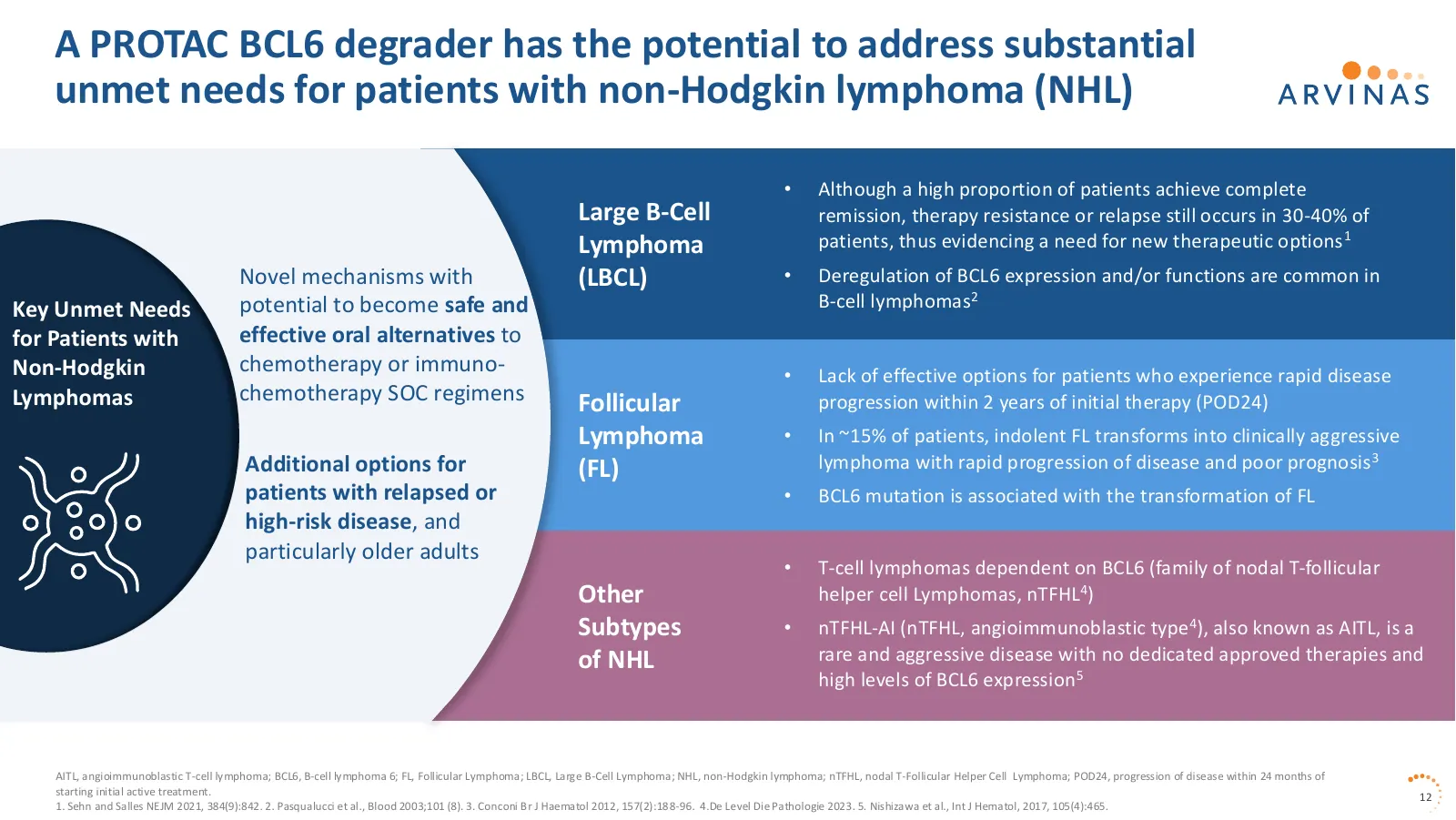
A PROTAC BCL6 degrader has the potential to address substantial unmet needs for patients with non-Hodgkin lymphoma (NHL) • Although a high proportion of patients achieve complete Large B-Cell remission, therapy resistance or relapse still occurs in 30-40% of Lymphoma patients, thus evidencing a need
Slide 13: Uncontrolled BCL6 activation implicated in B-cell lymphomas
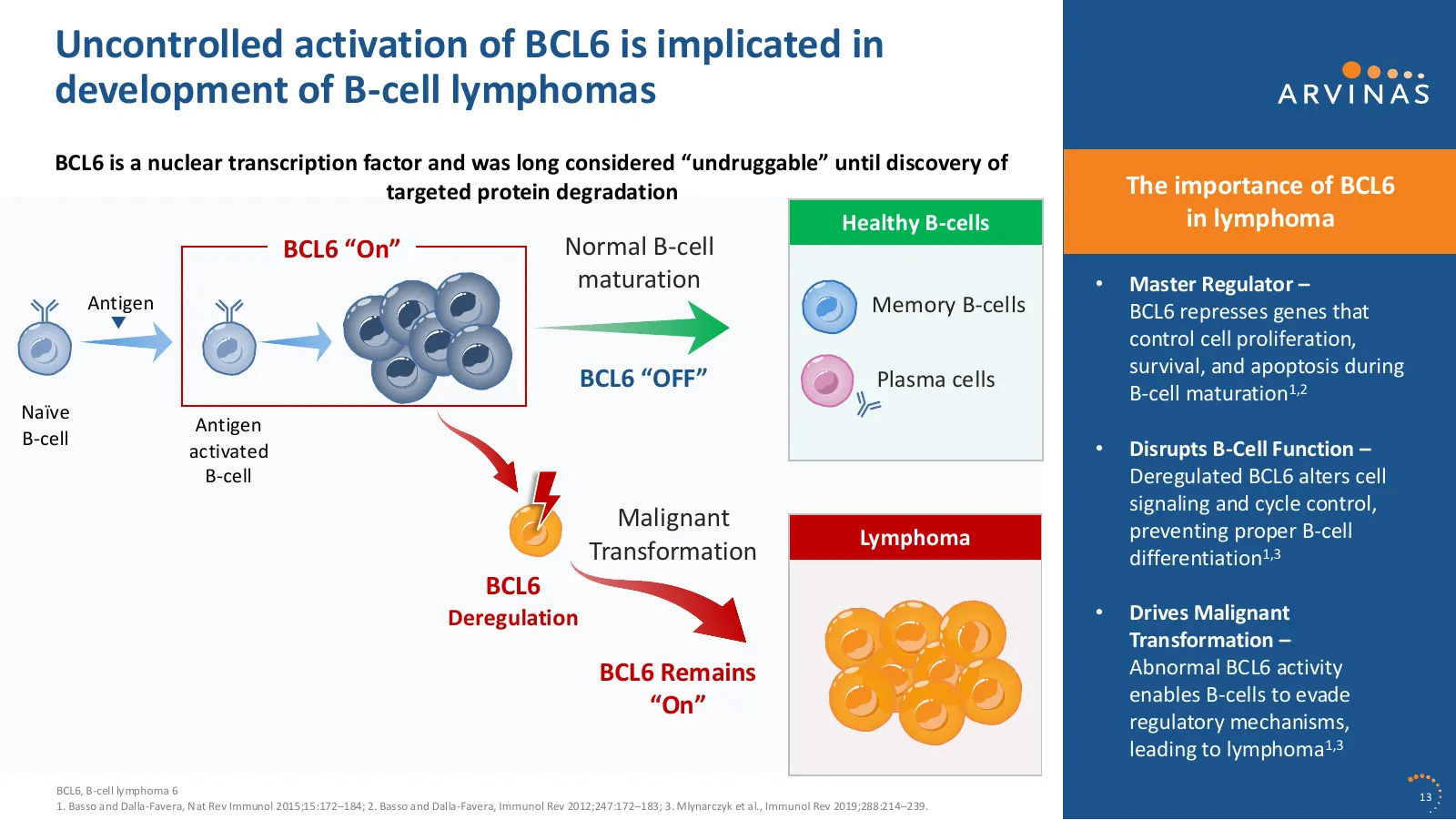
Uncontrolled activation of BCL6 is implicated in development of B-cell lymphomas BCL6 is a nuclear transcription factor and was long considered “undruggable” until discovery of targeted protein degradation The importance of BCL6 Healthy B-cells in lymphoma BCL6 “On” Normal B-cell maturation • Master
Slide 14: ARV-393 oral PROTAC degrader of BCL6
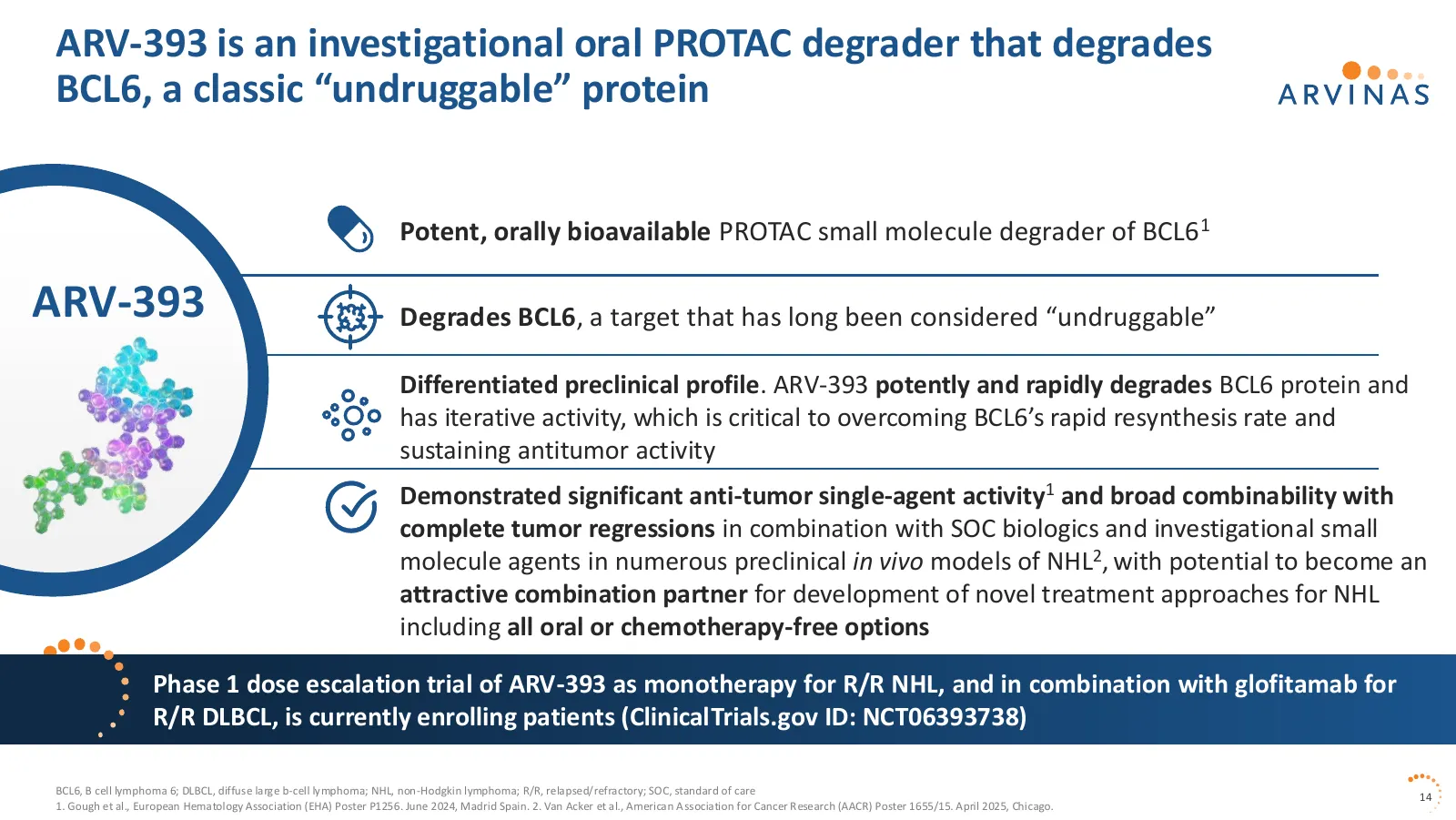
ARV-393 is an investigational oral PROTAC degrader that degrades BCL6, a classic “undruggable” protein Potent, orally bioavailable PROTAC small molecule degrader of BCL6 1 ARV-393 Degrades BCL6, a target that has long been considered “undruggable” Differentiated preclinical profile. ARV-393 potently
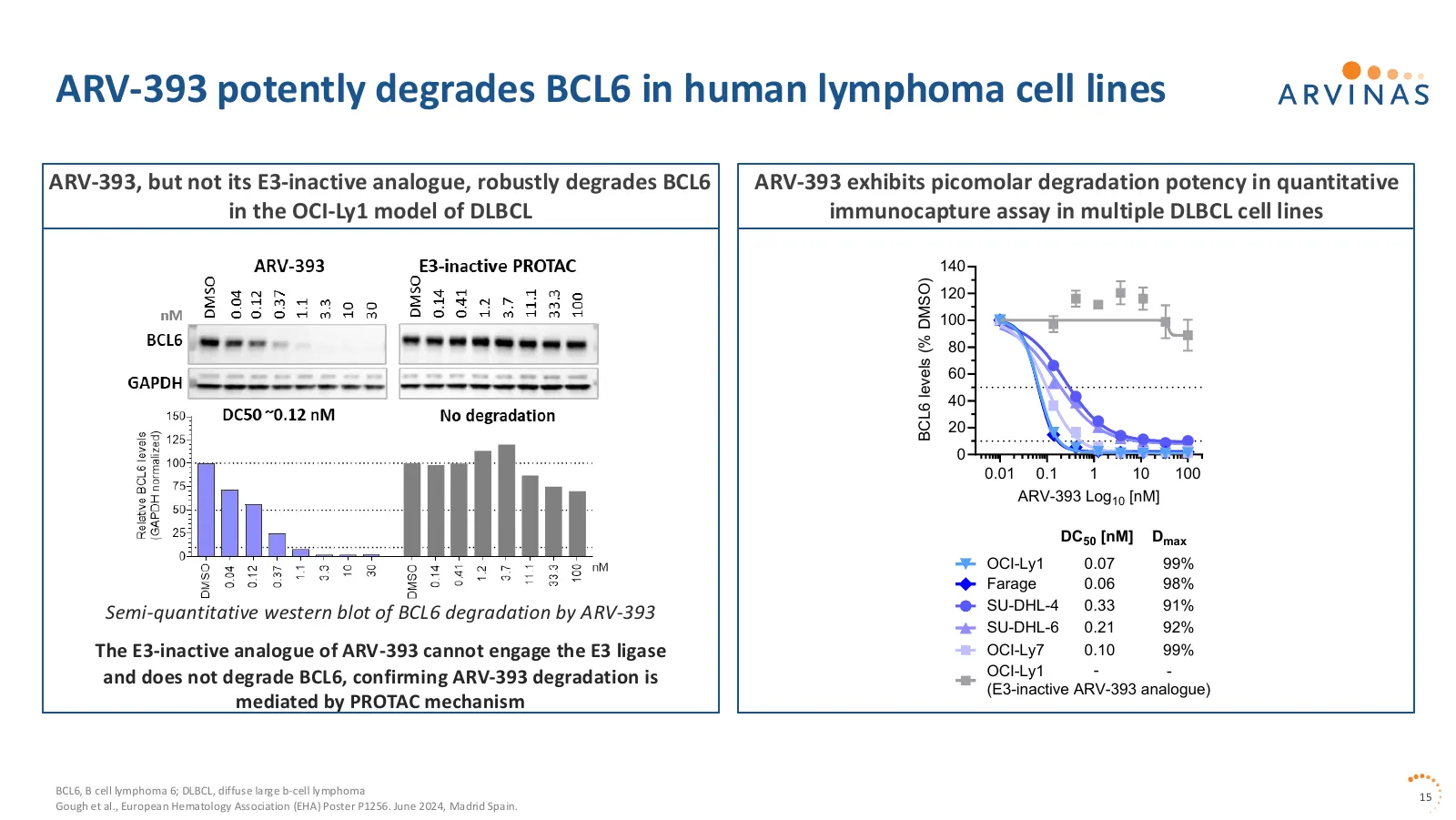
Slide 15: ARV-393 potently degrades BCL6 in human lymphoma cell lines
ARV-393 potently degrades BCL6 in human lymphoma cell lines ARV-393, but not its E3-inactive analogue, robustly degrades BCL6 ARV-393 exhibits picomolar degradation potency in quantitative in the OCI-Ly1 model of DLBCL immunocapture assay in multiple DLBCL cell lines 140 BCL6 levels (% DMSO) 120 100
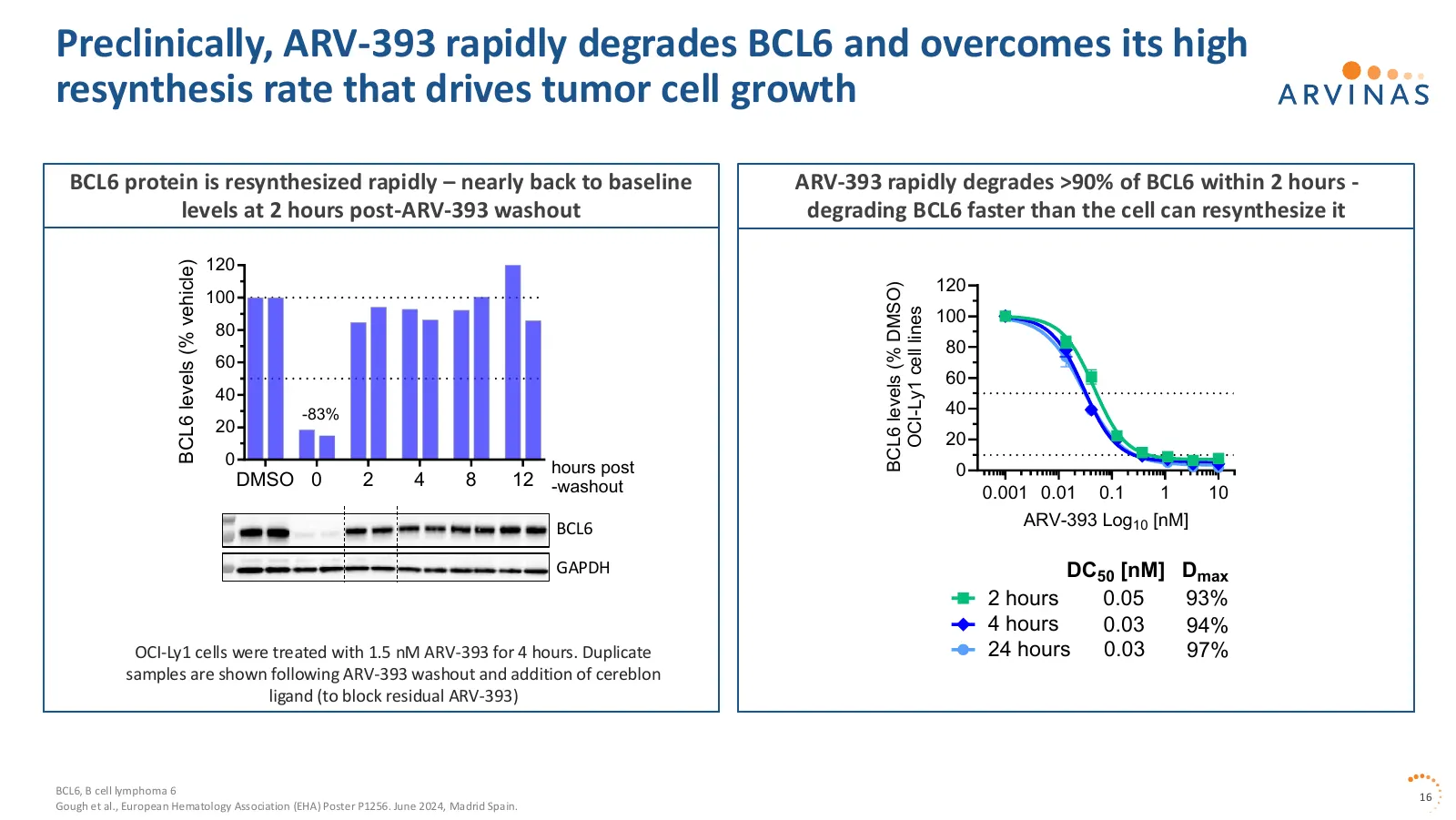
Slide 16: ARV-393 rapidly degrades BCL6 and overcomes high resynthesis rate
Preclinically, ARV-393 rapidly degrades BCL6 and overcomes its high resynthesis rate that drives tumor cell growth BCL6 protein is resynthesized rapidly – nearly back to baseline ARV-393 rapidly degrades >90% of BCL6 within 2 hours - levels at 2 hours post-ARV-393 washout degrading BCL6 faster than
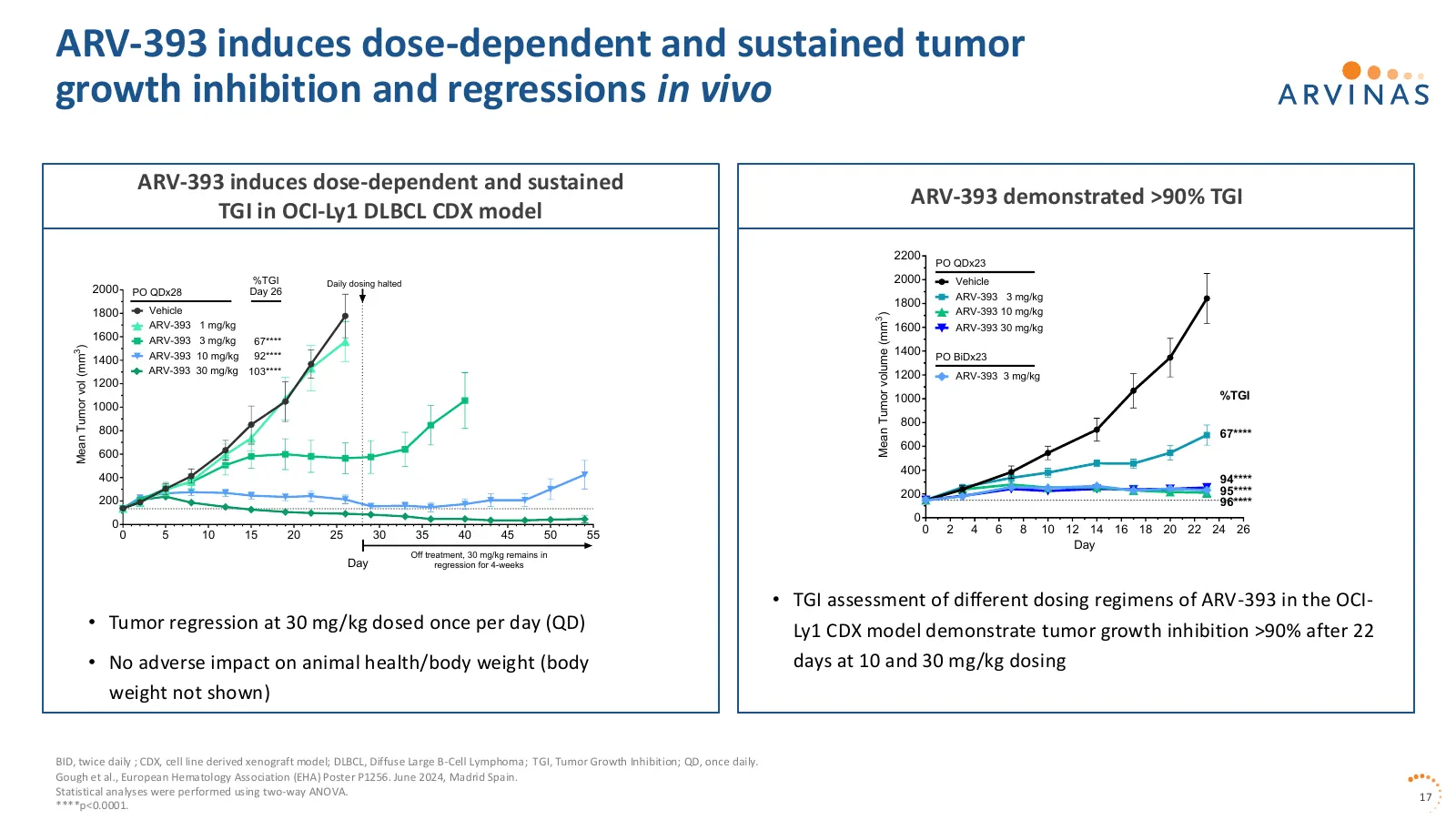
Slide 17: ARV-393 induces dose-dependent tumor growth inhibition and regressions in vivo
ARV-393 induces dose-dependent and sustained tumor growth inhibition and regressions in vivo ARV-393 induces dose-dependent and sustained ARV-393 demonstrated >90% TGI TGI in OCI-Ly1 DLBCL CDX model 2200 PO QDx23 %TGI Daily dosing halted 2000 Vehicle 2000 PO QDx28 Day 26 ARV-393 3 mg/kg 1800 1800 Ve
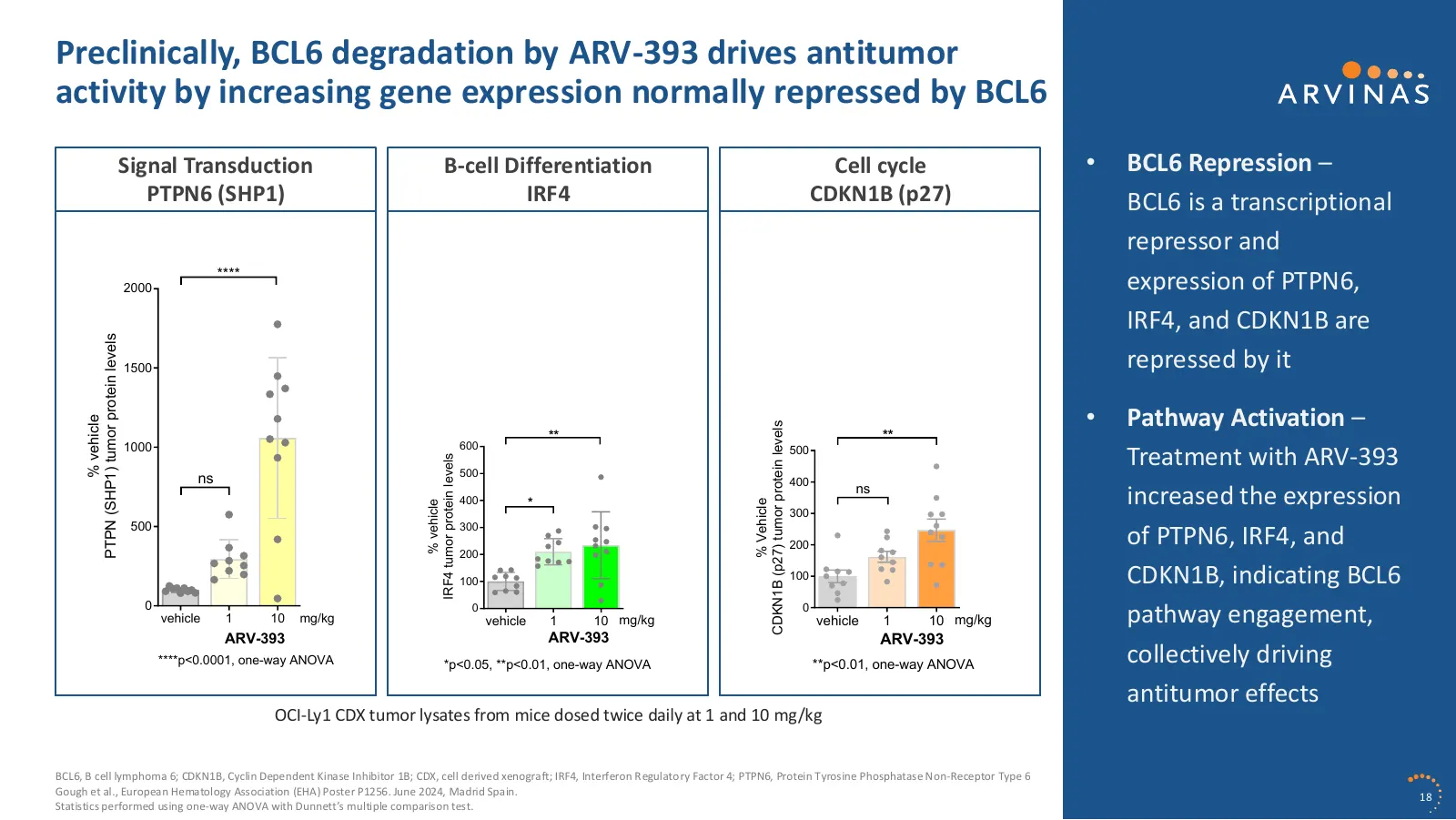
Slide 18: BCL6 degradation increases expression of genes repressed by BCL6
Preclinically, BCL6 degradation by ARV-393 drives antitumor activity by increasing gene expression normally repressed by BCL6 Signal Transduction B-cell Differentiation Cell cycle • BCL6 Repression – PTPN6 (SHP1) IRF4 CDKN1B (p27) BCL6 is a transcriptional repressor and **** 2000 expression of PTPN6
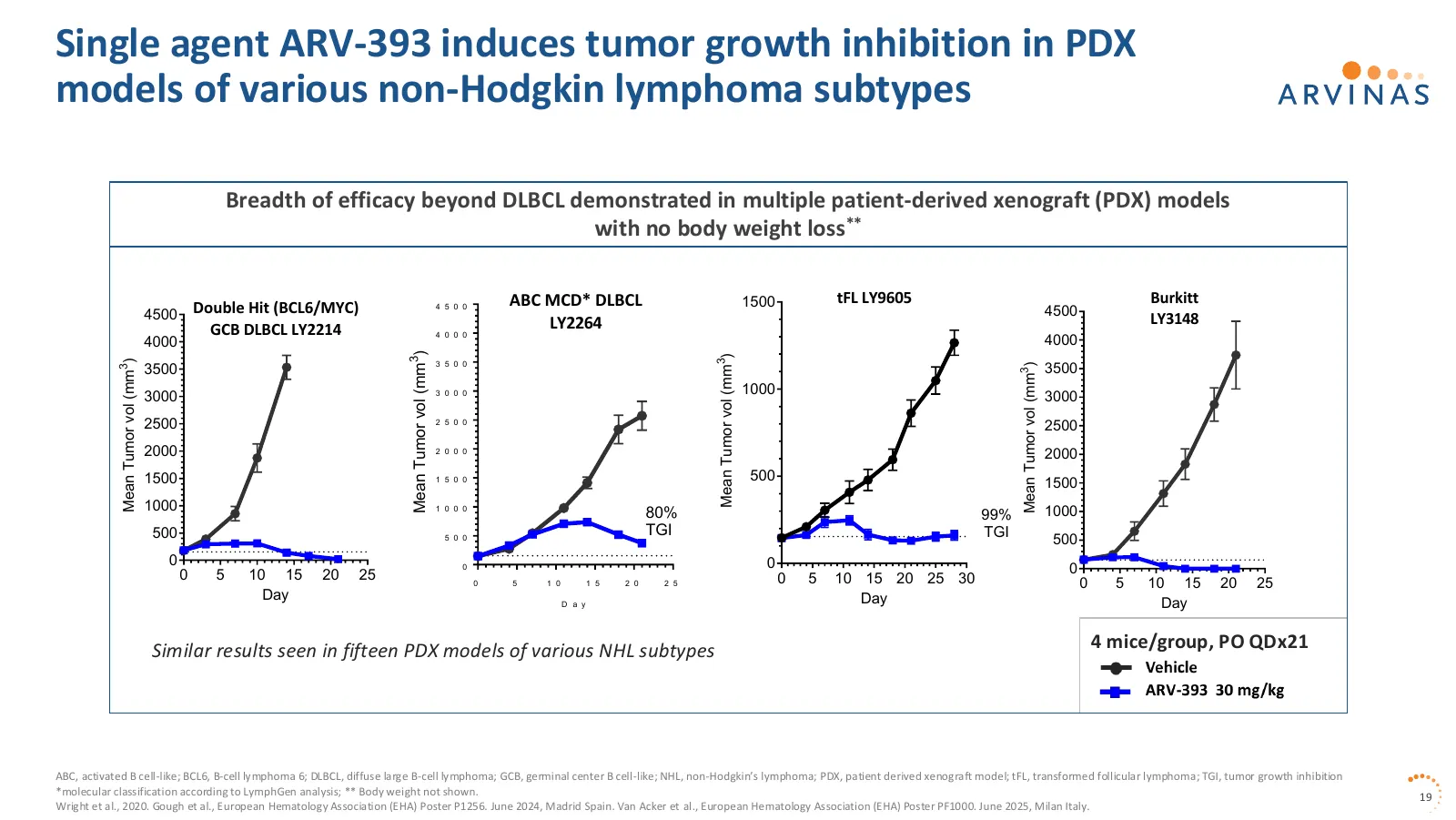
Slide 19: Single agent ARV-393 inhibits tumor growth in NHL PDX models
Single agent ARV-393 induces tumor growth inhibition in PDX models of various non-Hodgkin lymphoma subtypes Breadth of efficacy beyond DLBCL demonstrated in multiple patient-derived xenograft (PDX) models with no body weight loss** ABC MCD* DLBCL 1500 tFL LY9605 Burkitt 4500 Double Hit (BCL6/MYC) 4
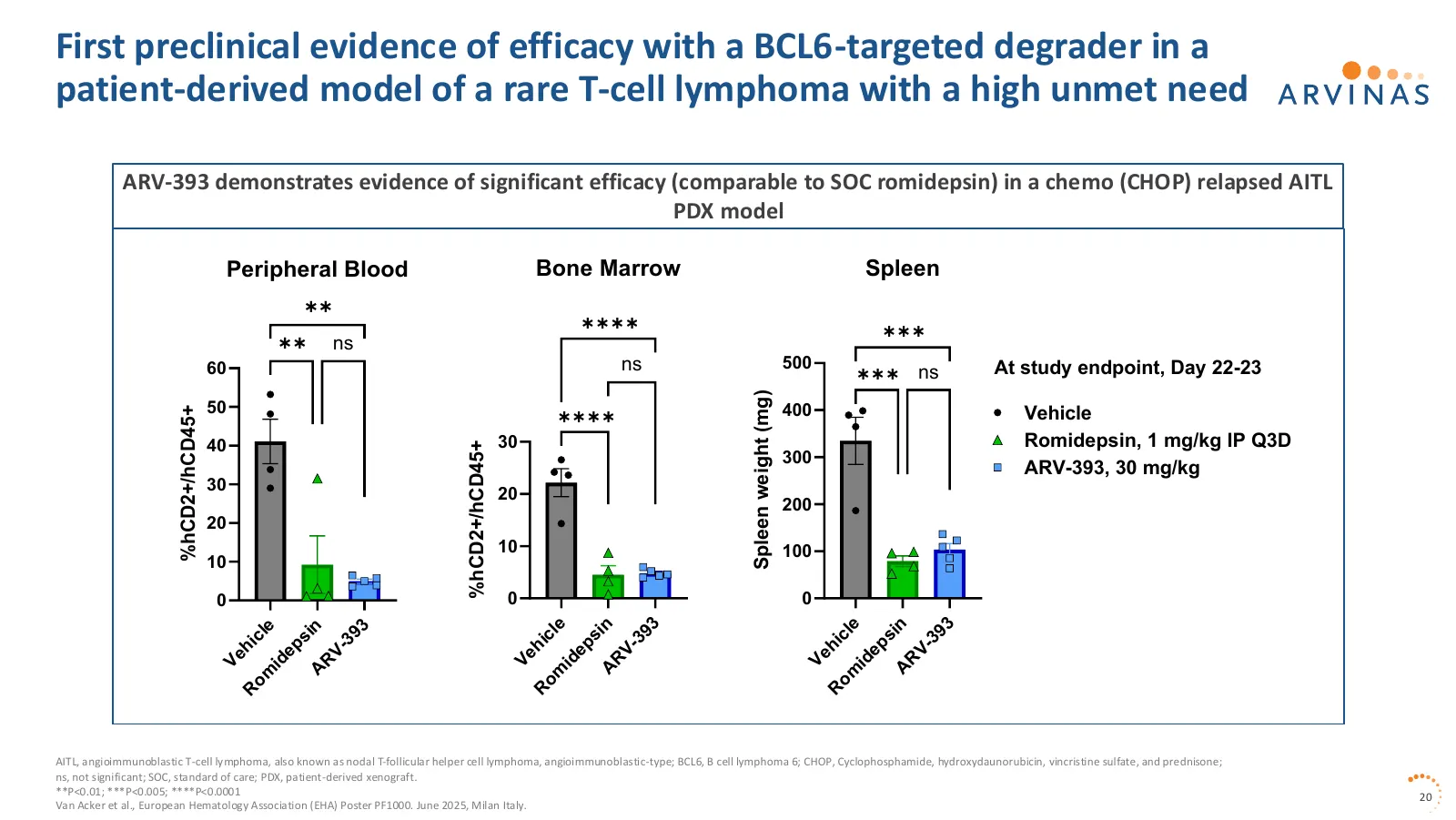
Slide 20: Preclinical efficacy in a patient-derived rare T-cell lymphoma model
First preclinical evidence of efficacy with a BCL6-targeted degrader in a patient-derived model of a rare T-cell lymphoma with a high unmet need ARV-393 demonstrates evidence of significant efficacy (comparable to SOC romidepsin) in a chemo (CHOP) relapsed AITL PDX model Peripheral Blood Bone Marrow
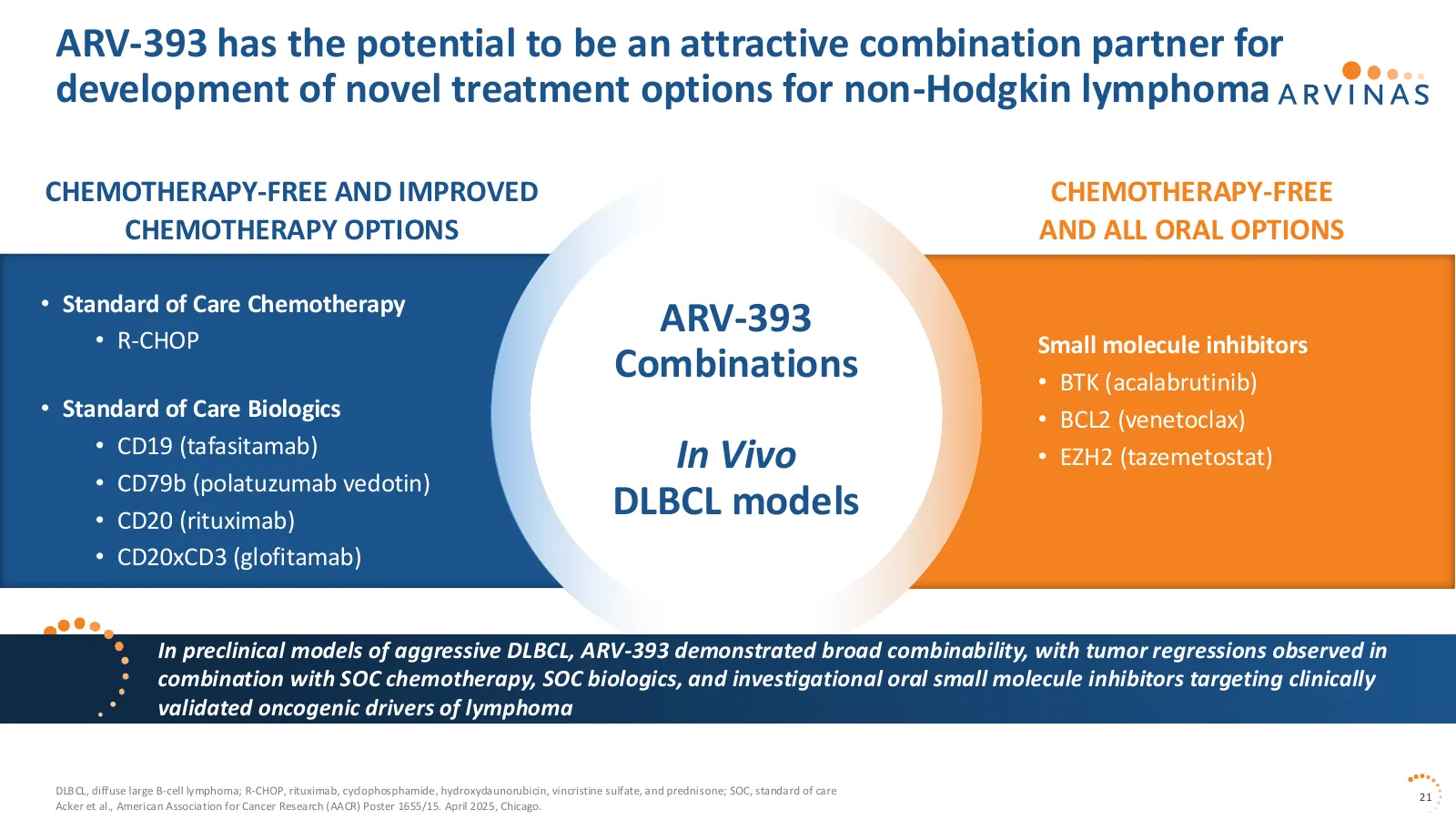
Slide 21: ARV-393 as an attractive combination partner for NHL
ARV-393 has the potential to be an attractive combination partner for development of novel treatment options for non-Hodgkin lymphoma CHEMOTHERAPY-FREE AND IMPROVED CHEMOTHERAPY-FREE CHEMOTHERAPY OPTIONS AND ALL ORAL OPTIONS • Standard of Care Chemotherapy • R-CHOP ARV-393 Small molecule inhibitors
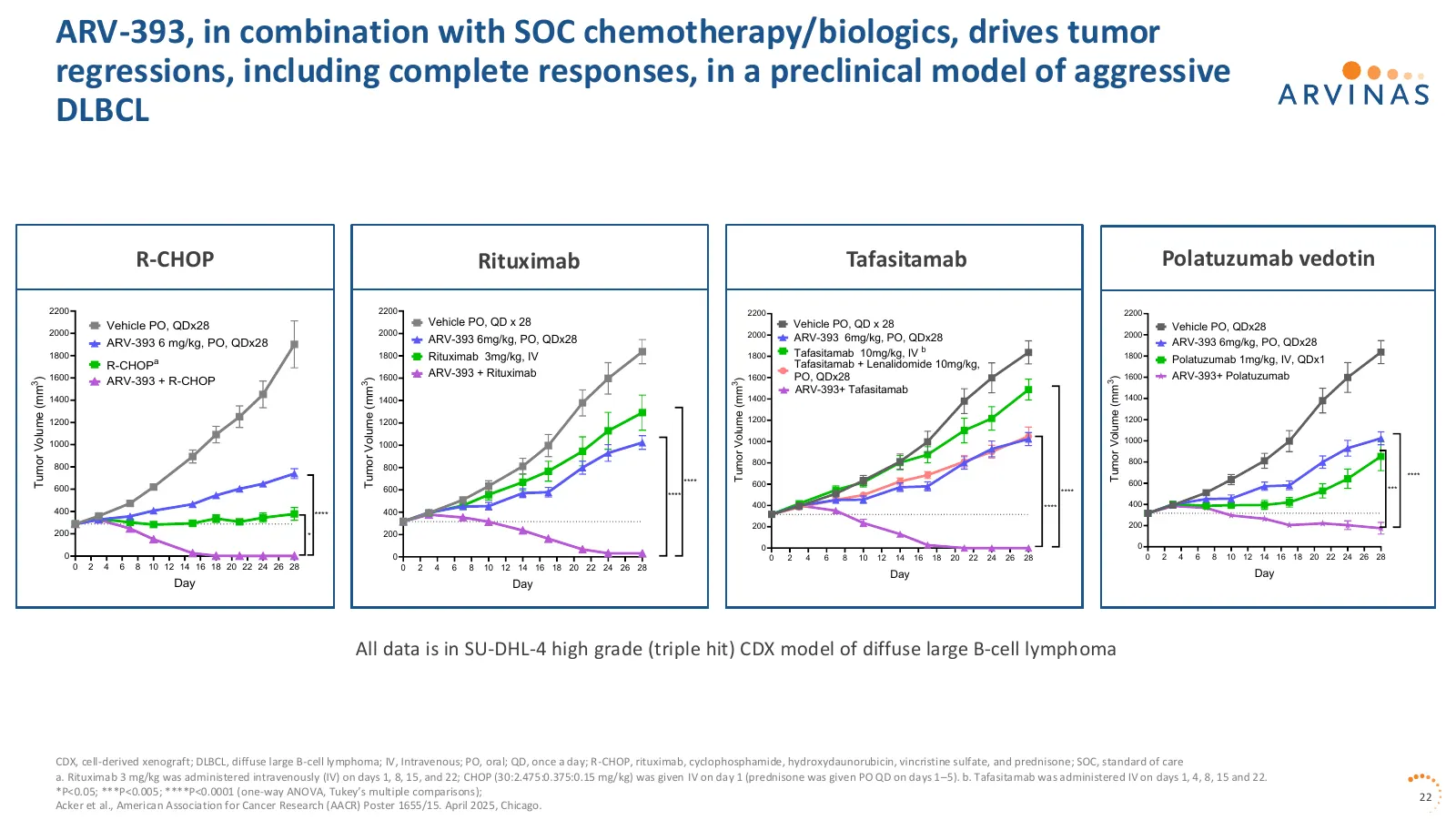
Slide 22: ARV-393 with chemotherapy/biologics drives regressions in aggressive DLBCL
ARV-393, in combination with SOC chemotherapy/biologics, drives tumor regressions, including complete responses, in a preclinical model of aggressive DLBCL R-CHOP Rituximab Tafasitamab Polatuzumab vedotin 2200 2200 2200 2200 Vehicle PO, QDx28 Vehicle PO, QD x 28 Vehicle PO, QD x 28 Vehicle PO, QDx28
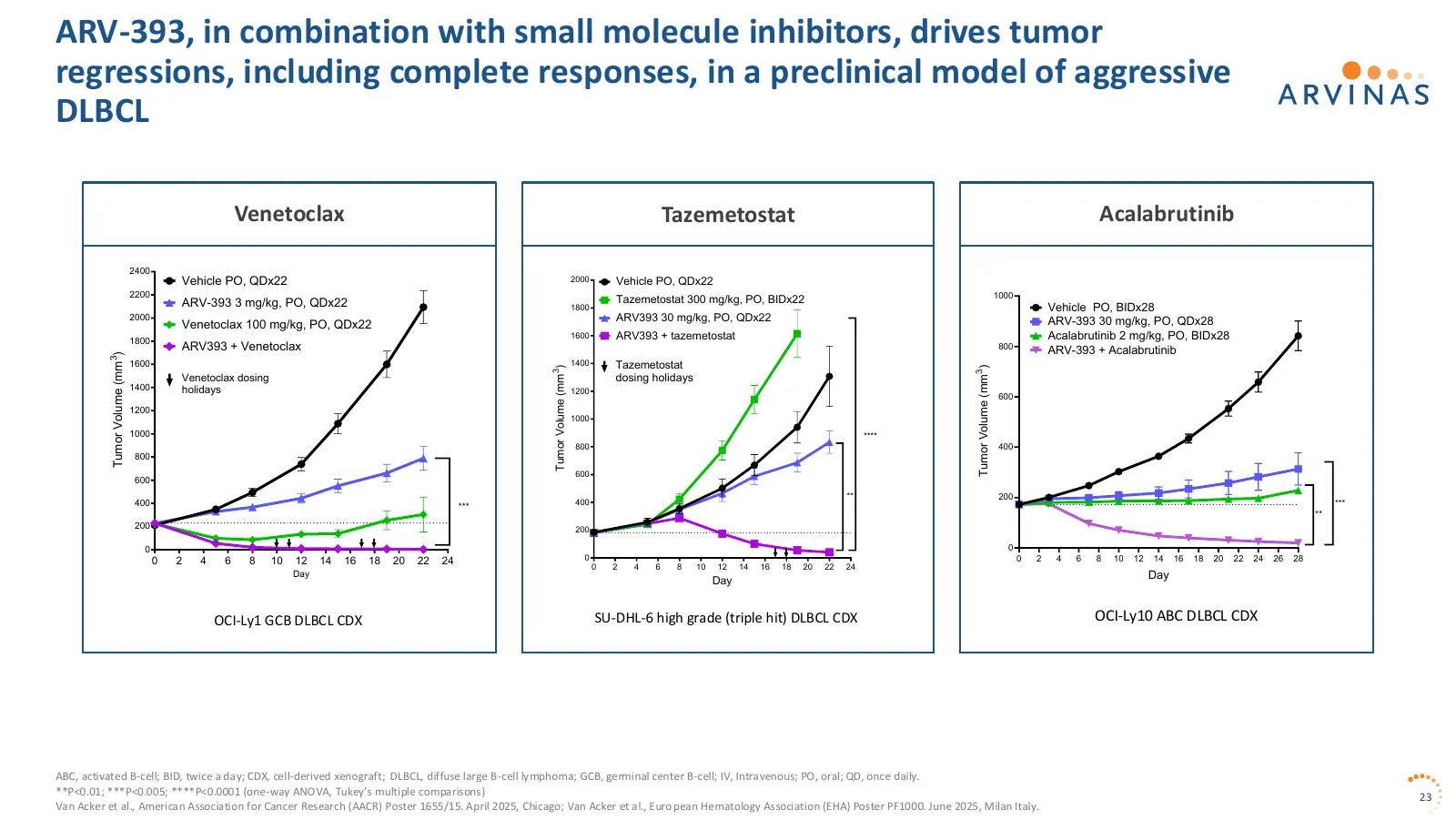
Slide 23: ARV-393 with small molecule inhibitors drives regressions in DLBCL
ARV-393, in combination with small molecule inhibitors, drives tumor regressions, including complete responses, in a preclinical model of aggressive DLBCL Venetoclax Tazemetostat Acalabrutinib 2400 Vehicle PO, QDx22 2000 Vehicle PO, QDx22 2200 1000 ARV-393 3 mg/kg, PO, QDx22 Tazemetostat 300 mg/kg,
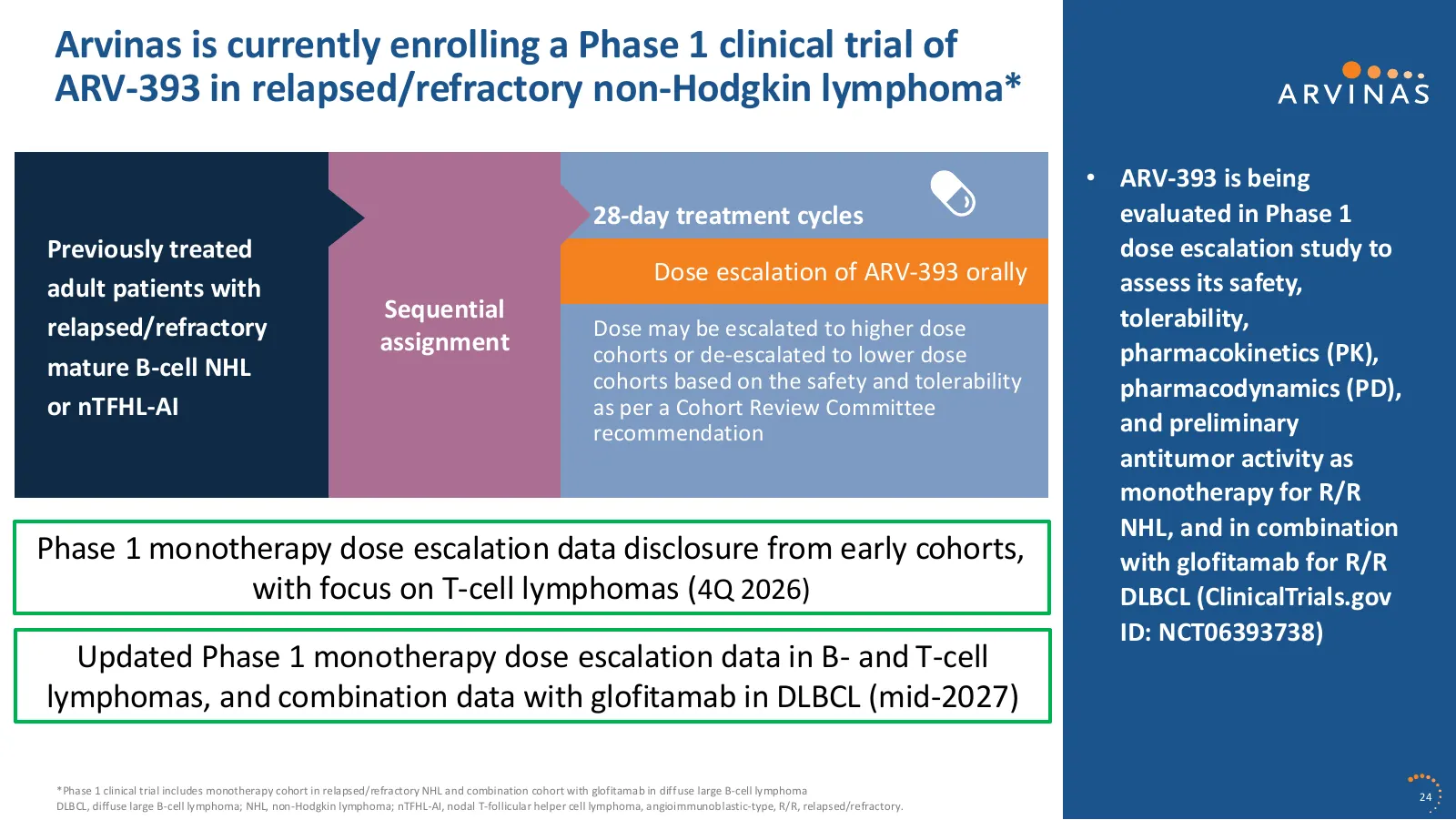
Slide 24: Phase 1 trial of ARV-393 in relapsed/refractory NHL
Arvinas is currently enrolling a Phase 1 clinical trial of ARV-393 in relapsed/refractory non-Hodgkin lymphoma* • ARV-393 is being 28-day treatment cycles evaluated in Phase 1 Previously treated dose escalation study to Dose escalation of ARV-393 orally assess its safety, adult patients with Sequent

Slide 25: ARV-027 PROTAC polyQ-AR degrader
CLINICAL PROGRAMS: Neurology ARV-027 PROTAC polyQ-AR degrader ARV-027 is an investigational compound. Its safety and effectiveness have not been established.
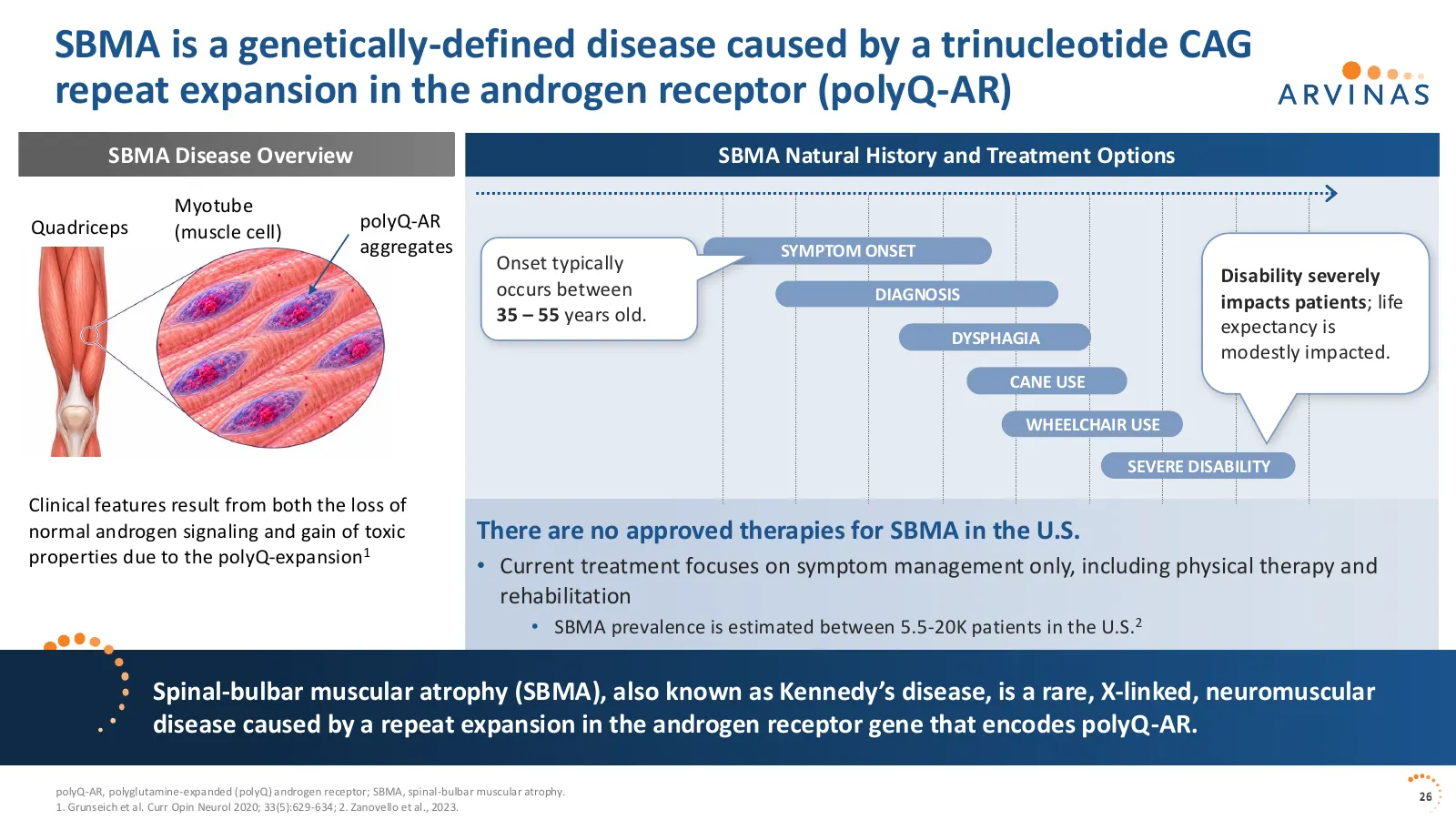
Slide 26: SBMA is caused by a CAG repeat expansion in the androgen receptor
SBMA is a genetically-defined disease caused by a trinucleotide CAG repeat expansion in the androgen receptor (polyQ-AR) SBMA Disease Overview SBMA Natural History and Treatment Options Myotube Quadriceps polyQ-AR (muscle cell) aggregates SYMPTOM ONSET Onset typically Disability severely occurs betw
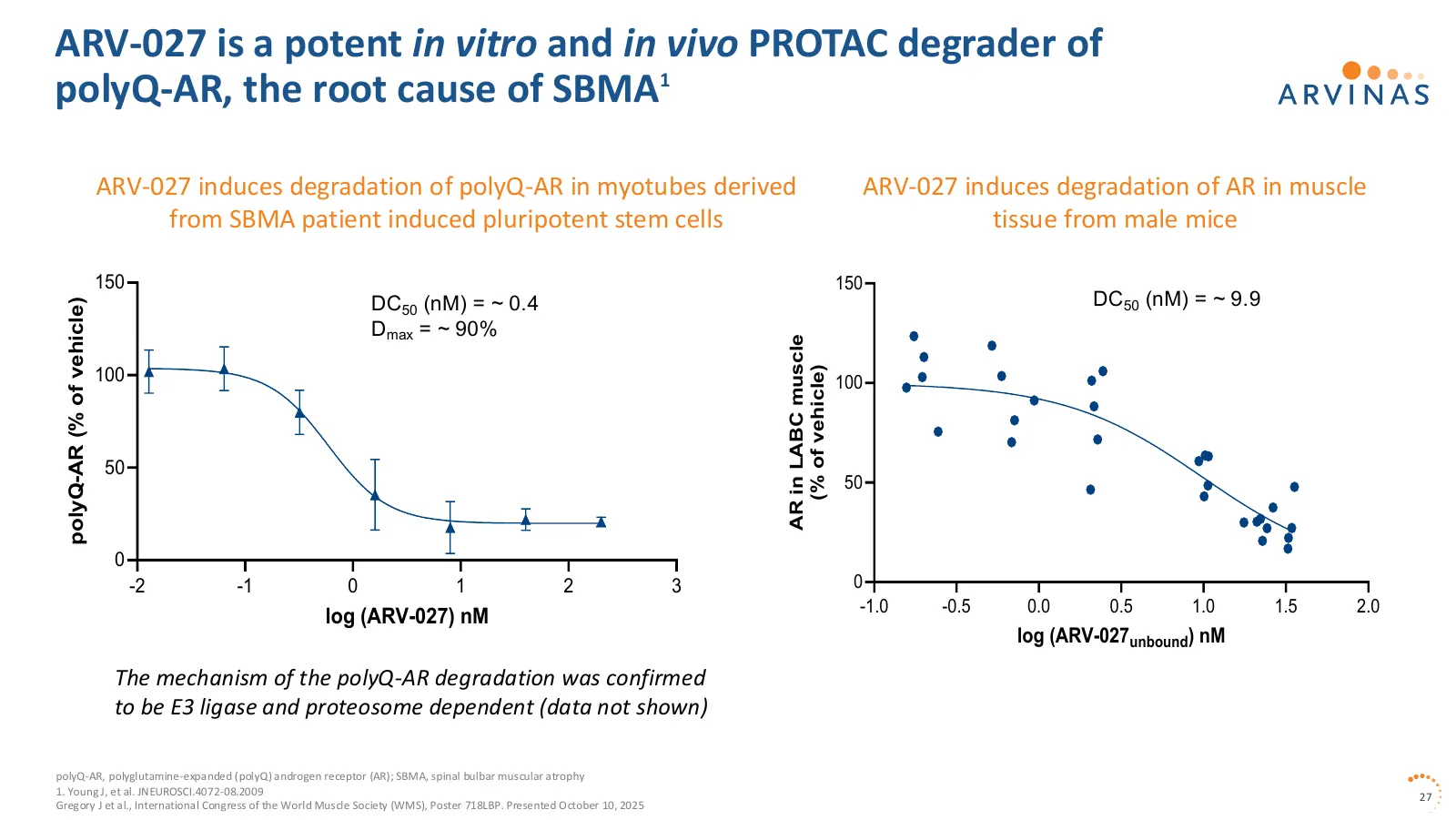
Slide 27: ARV-027 degrades polyQ-AR in vitro and in vivo
ARV-027 is a potent in vitro and in vivo PROTAC degrader of polyQ-AR, the root cause of SBMA1 ARV-027 induces degradation of polyQ-AR in myotubes derived ARV-027 induces degradation of AR in muscle from SBMA patient induced pluripotent stem cells tissue from male mice 150 150 DC50 (nM) = ~ 0.4 DC50
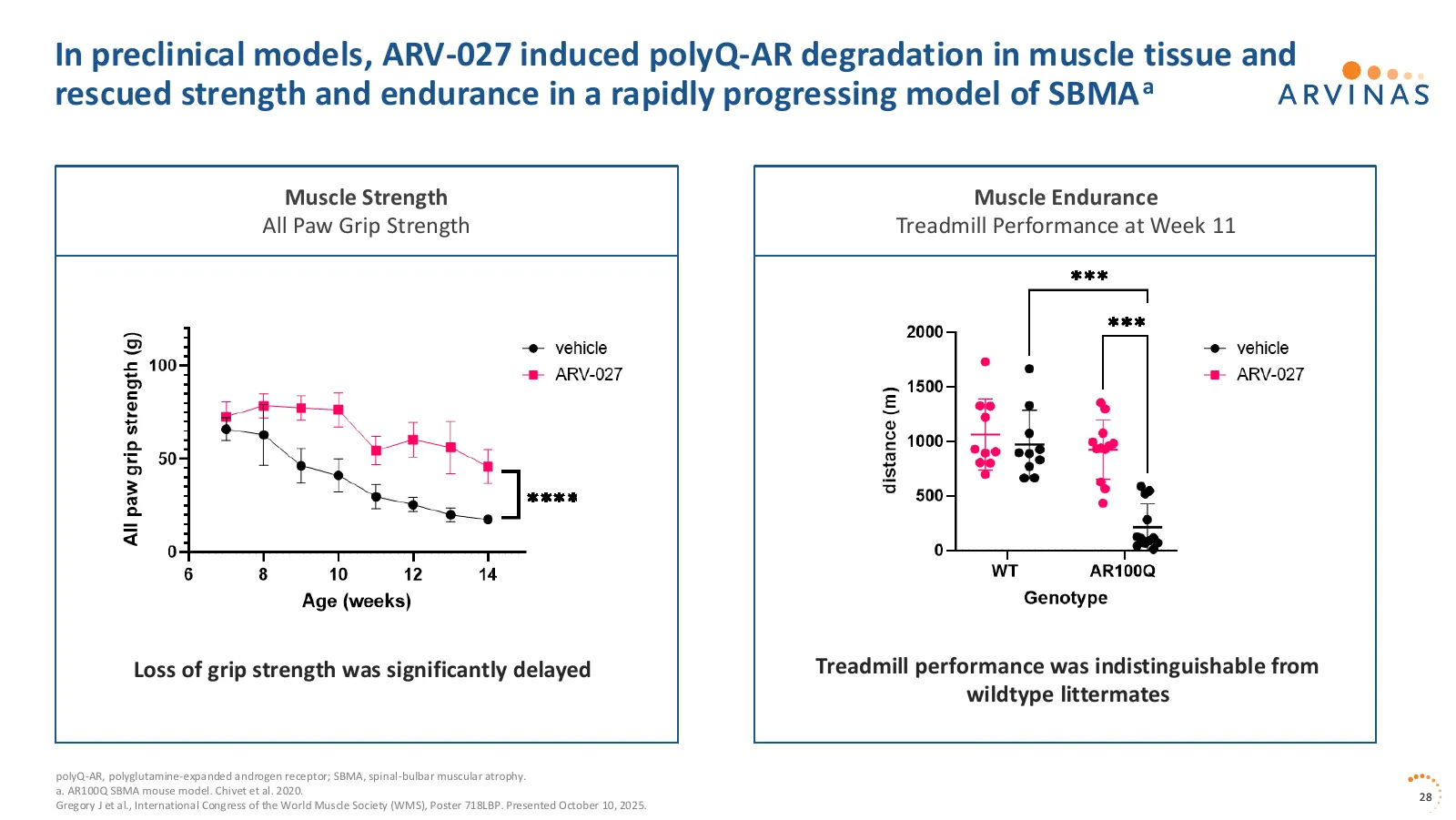
Slide 28: ARV-027 rescued strength and endurance in an SBMA model
In preclinical models, ARV-027 induced polyQ-AR degradation in muscle tissue and rescued strength and endurance in a rapidly progressing model of SBMA a Muscle Strength Muscle Endurance All Paw Grip Strength Treadmill Performance at Week 11 Loss of grip strength was significantly delayed Treadmill p
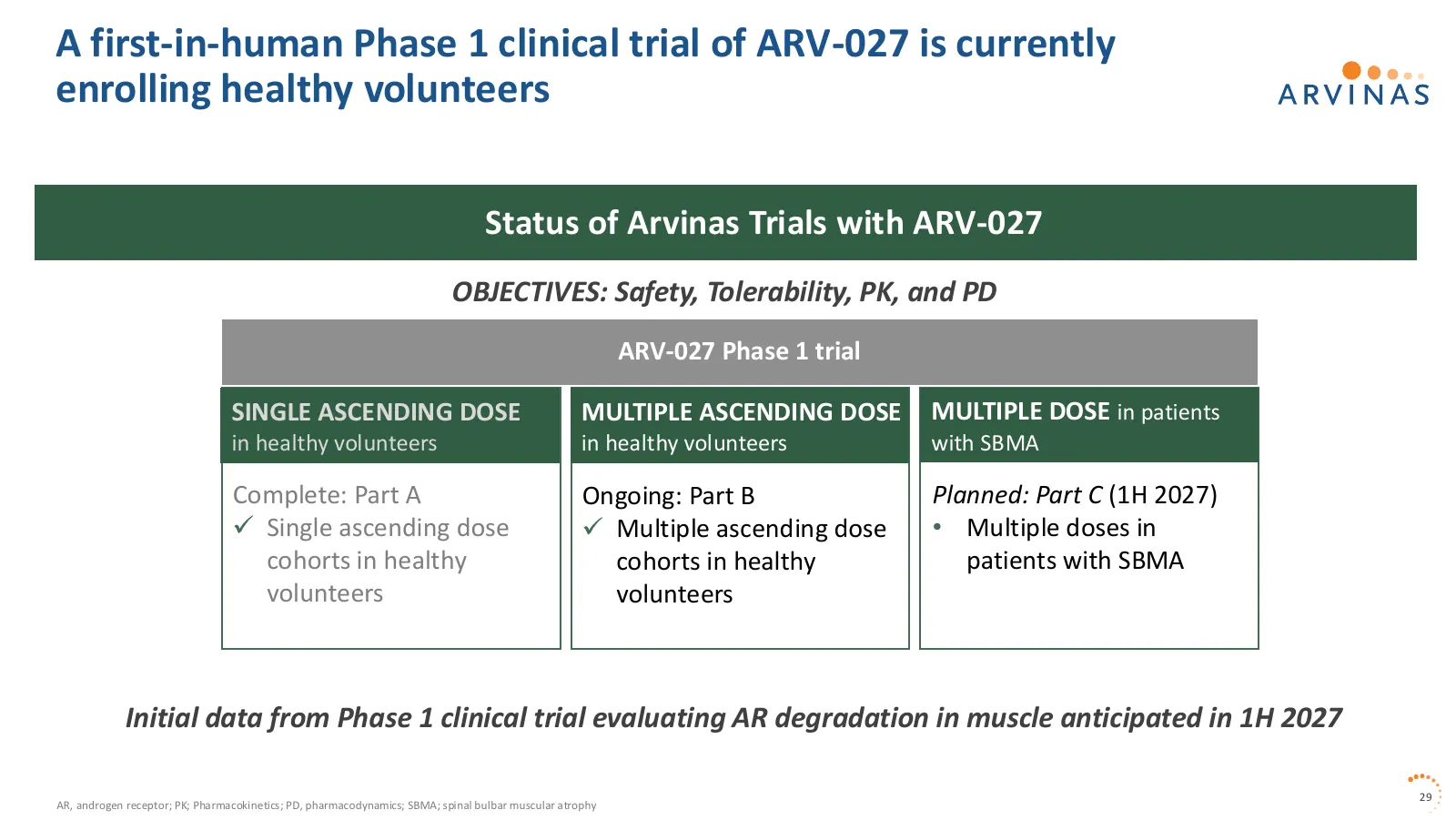
Slide 29: First-in-human Phase 1 trial of ARV-027 enrolling healthy volunteers
A first-in-human Phase 1 clinical trial of ARV-027 is currently enrolling healthy volunteers Status of Arvinas Trials with ARV-027 OBJECTIVES: Safety, Tolerability, PK, and PD ARV-027 Phase 1 trial SINGLE ASCENDING DOSE MULTIPLE ASCENDING DOSE MULTIPLE DOSE in patients in healthy volunteers in healt

Slide 30: ARV-6723 PROTAC HPK1 degrader
CLINICAL PROGRAMS: Oncology ARV-6723 PROTAC HPK1 degrader ARV-6723 is an investigational compound. Its safety and effectiveness have not been established.
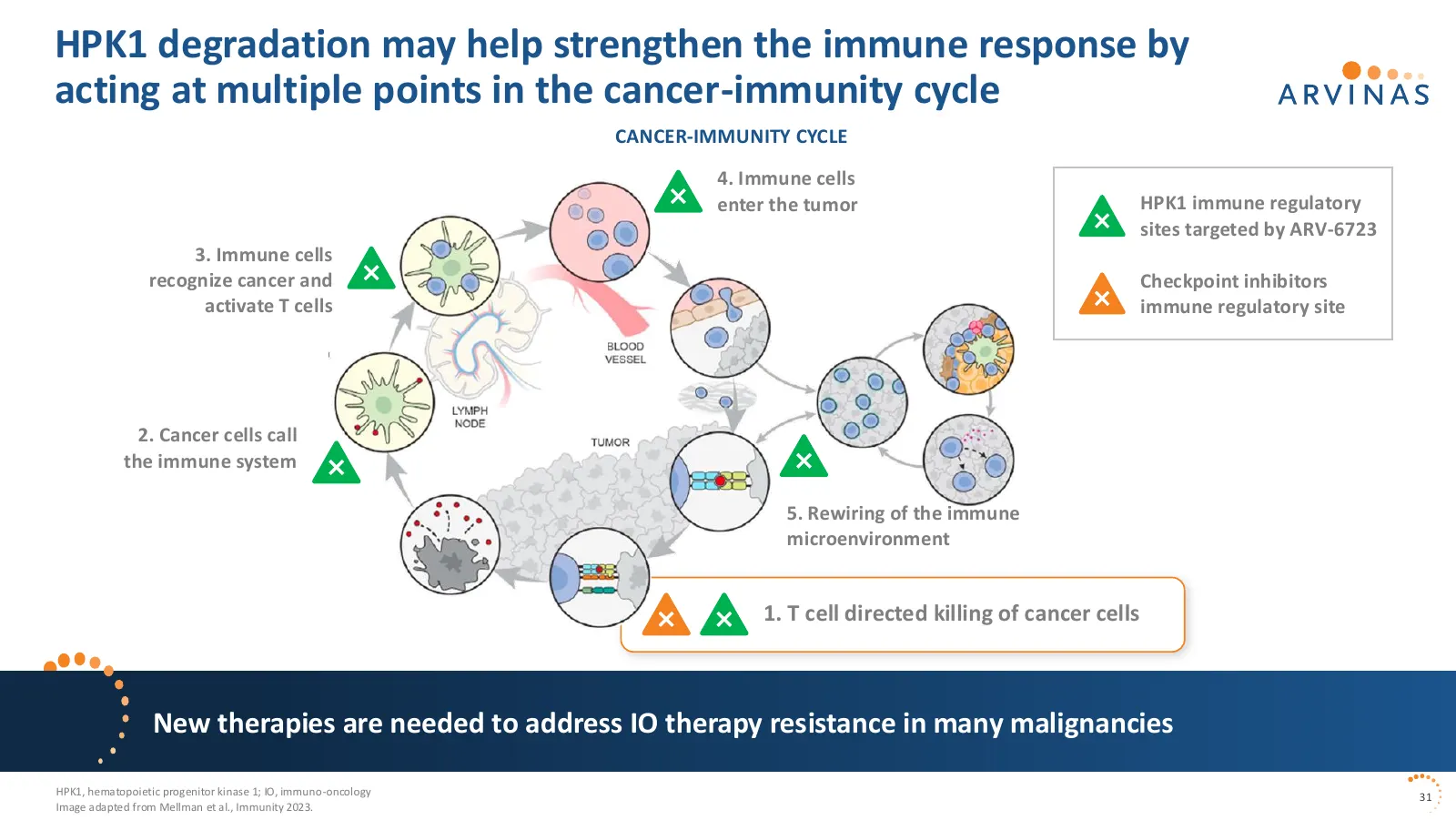
Slide 31: HPK1 degradation may strengthen the immune response across the cancer-immunity cycle
HPK1 degradation may help strengthen the immune response by acting at multiple points in the cancer-immunity cycle CANCER-IMMUNITY CYCLE 4. Immune cells enter the tumor HPK1 immune regulatory sites targeted by ARV-6723 3. Immune cells recognize cancer and Checkpoint inhibitors activate T cells immun
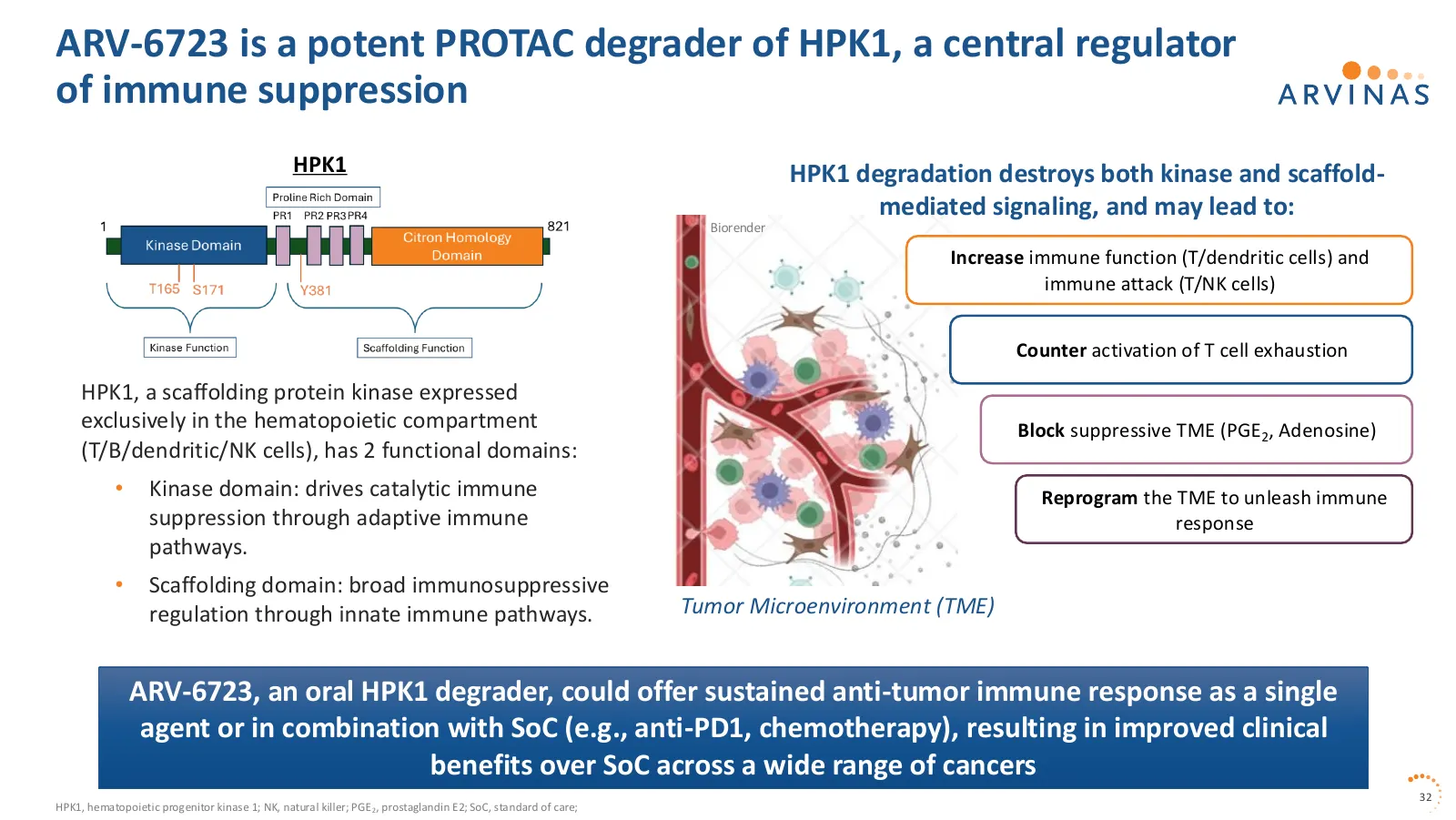
Slide 32: ARV-6723 is a potent PROTAC degrader of HPK1
ARV-6723 is a potent PROTAC degrader of HPK1, a central regulator of immune suppression HPK1 HPK1 degradation destroys both kinase and scaffold- mediated signaling, and may lead to: Biorender Increase immune function (T/dendritic cells) and immune attack (T/NK cells) Counter activation of T cell exh
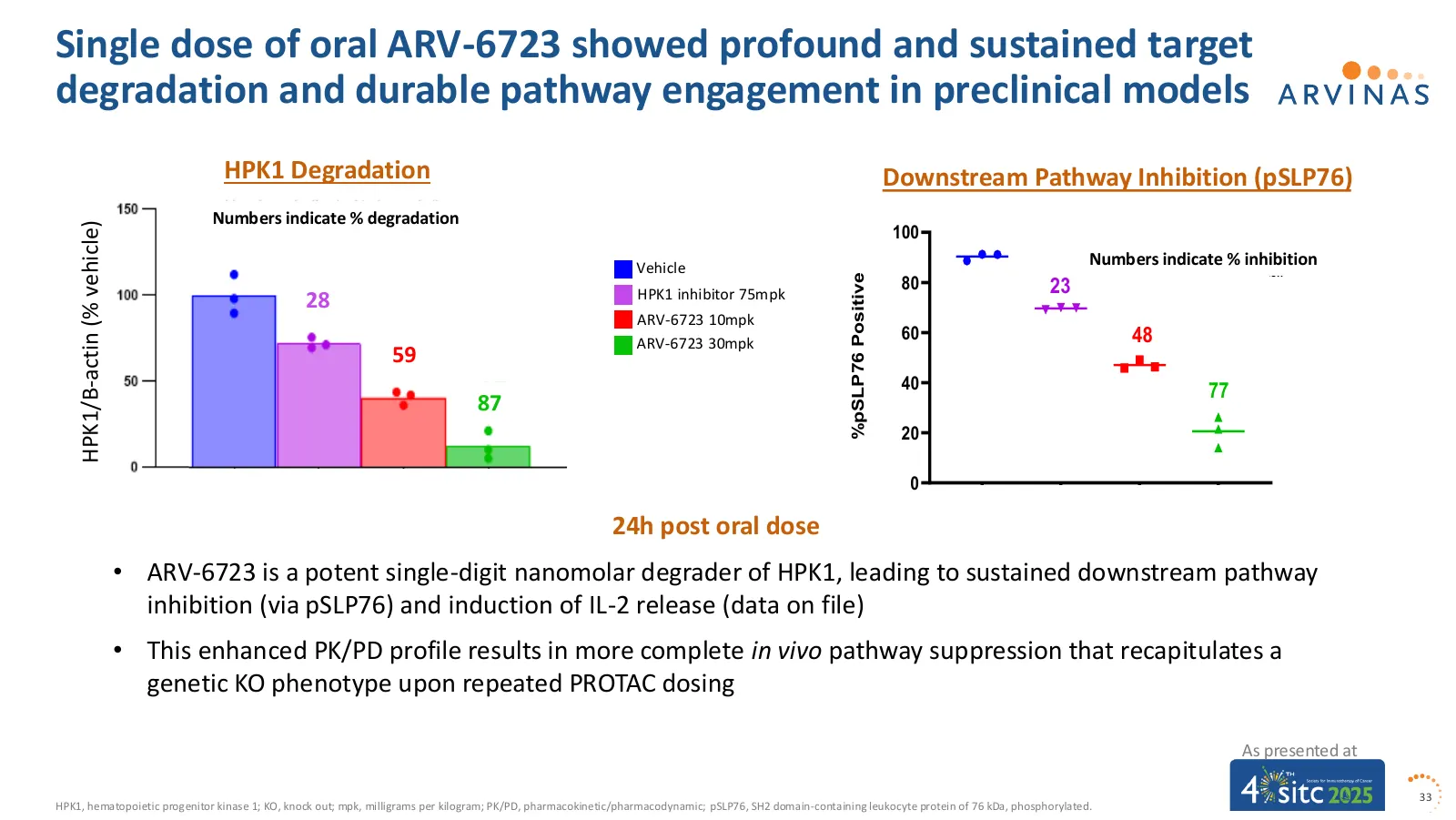
Slide 33: Single oral dose of ARV-6723 showed sustained target degradation
Single dose of oral ARV-6723 showed profound and sustained target degradation and durable pathway engagement in preclinical models HPK1 Degradation Downstream Pathway Inhibition (pSLP76) Numbers indicate % degradation HPK1/B-actin (% vehicle) 100 Vehicle Numbers indicate % inhibition numbers indicat
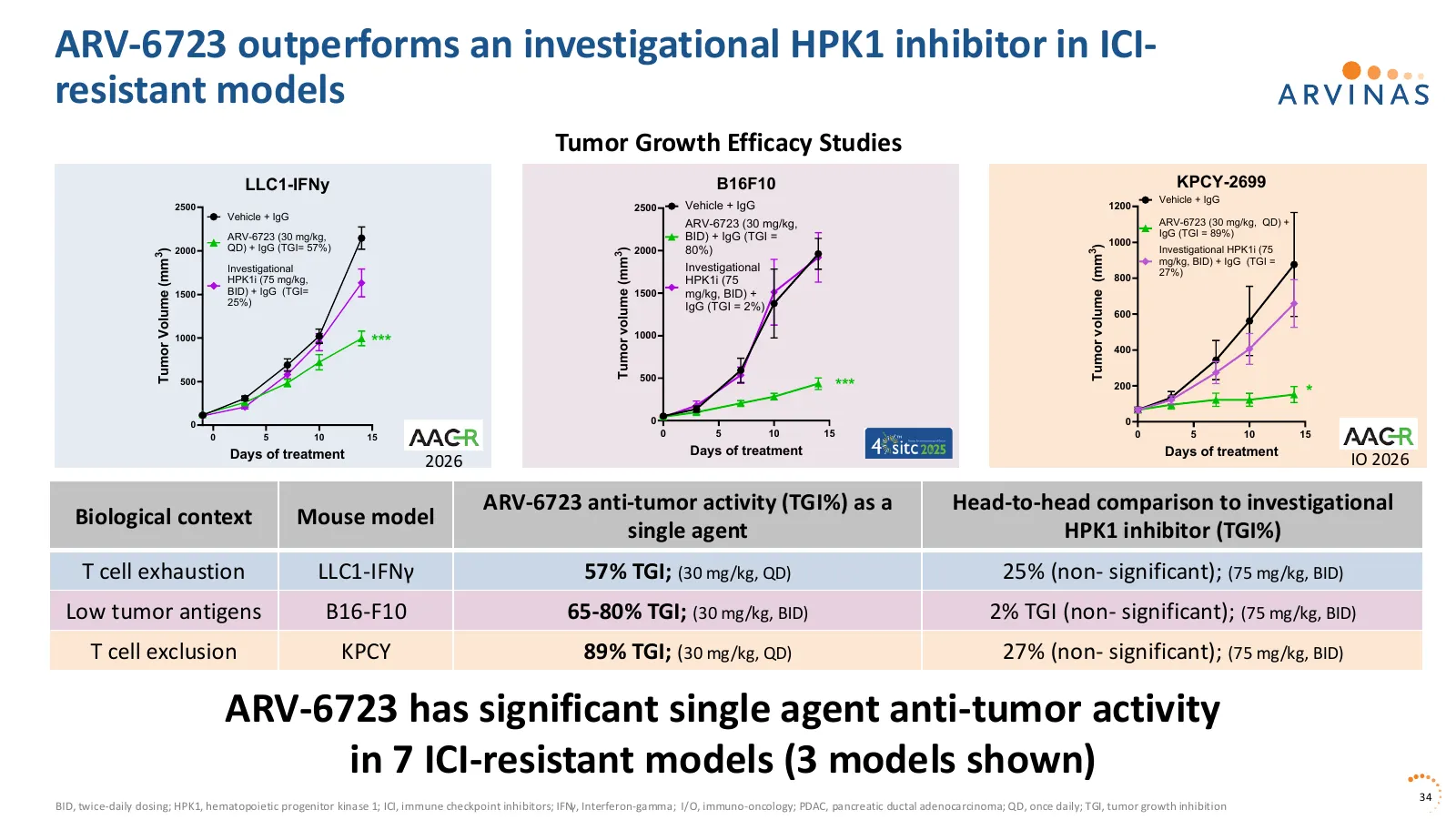
Slide 34: ARV-6723 outperforms an investigational HPK1 inhibitor in ICI-resistant models
ARV-6723 outperforms an investigational HPK1 inhibitor in ICI- resistant models Tumor Growth Efficacy Studies LLC1-IFNy B16F10 KPCY-2699 Vehicle + IgG 2500 2500 Vehicle + IgG 1200 Vehicle + IgG ARV-6723 (30 mg/kg, ARV-6723 (30 mg/kg, QD) + ARV-6723 (30 mg/kg, BID) + IgG (TGI = IgG (TGI = 89%) 1000 Q
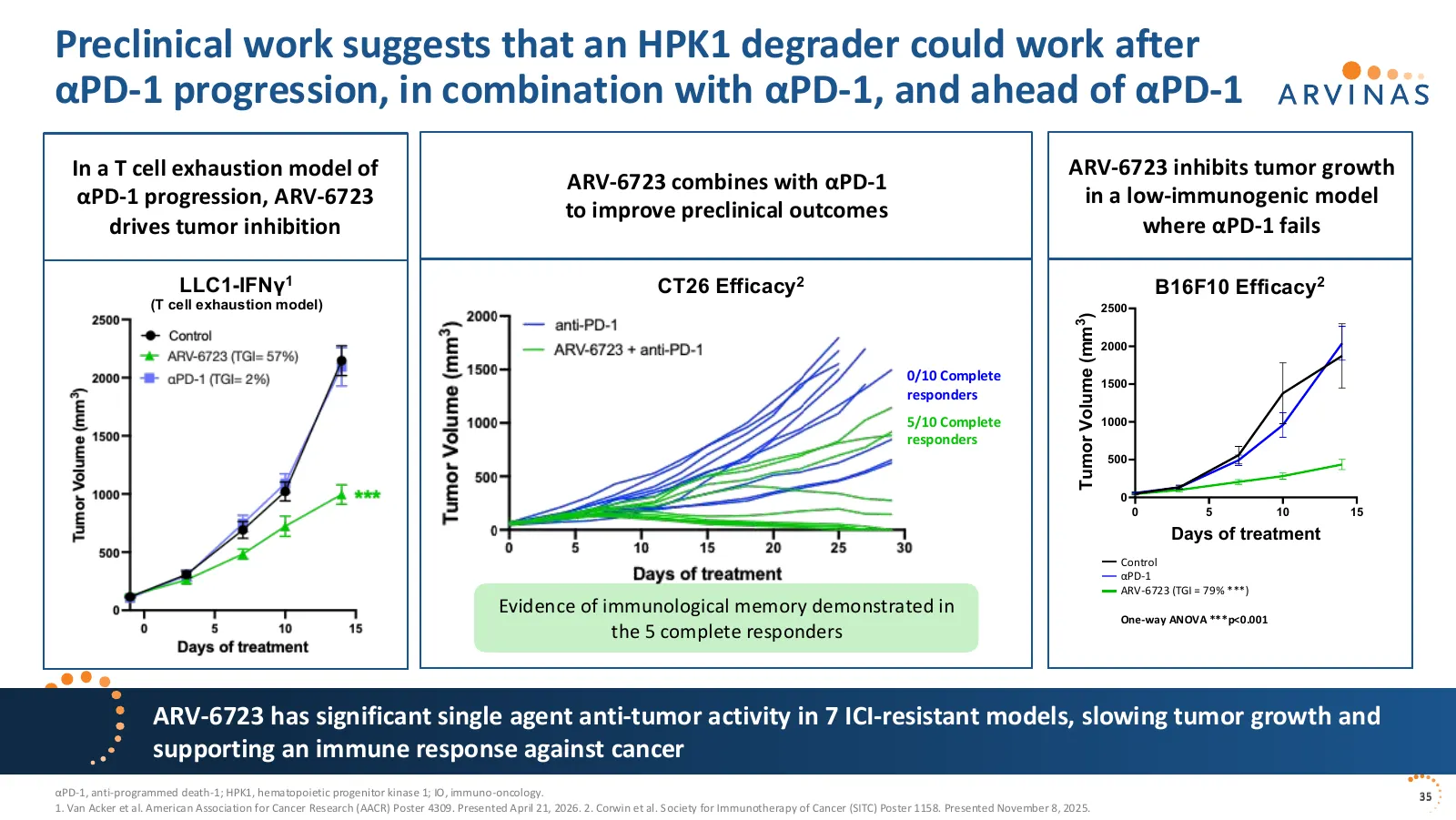
Slide 35: HPK1 degrader could work after, with, and ahead of αPD-1
Preclinical work suggests that an HPK1 degrader could work after αPD-1 progression, in combination with αPD-1, and ahead of αPD-1 In a T cell exhaustion model of ARV-6723 inhibits tumor growth ARV-6723 combines with αPD-1 αPD-1 progression, ARV-6723 in a low-immunogenic model to improve preclinical
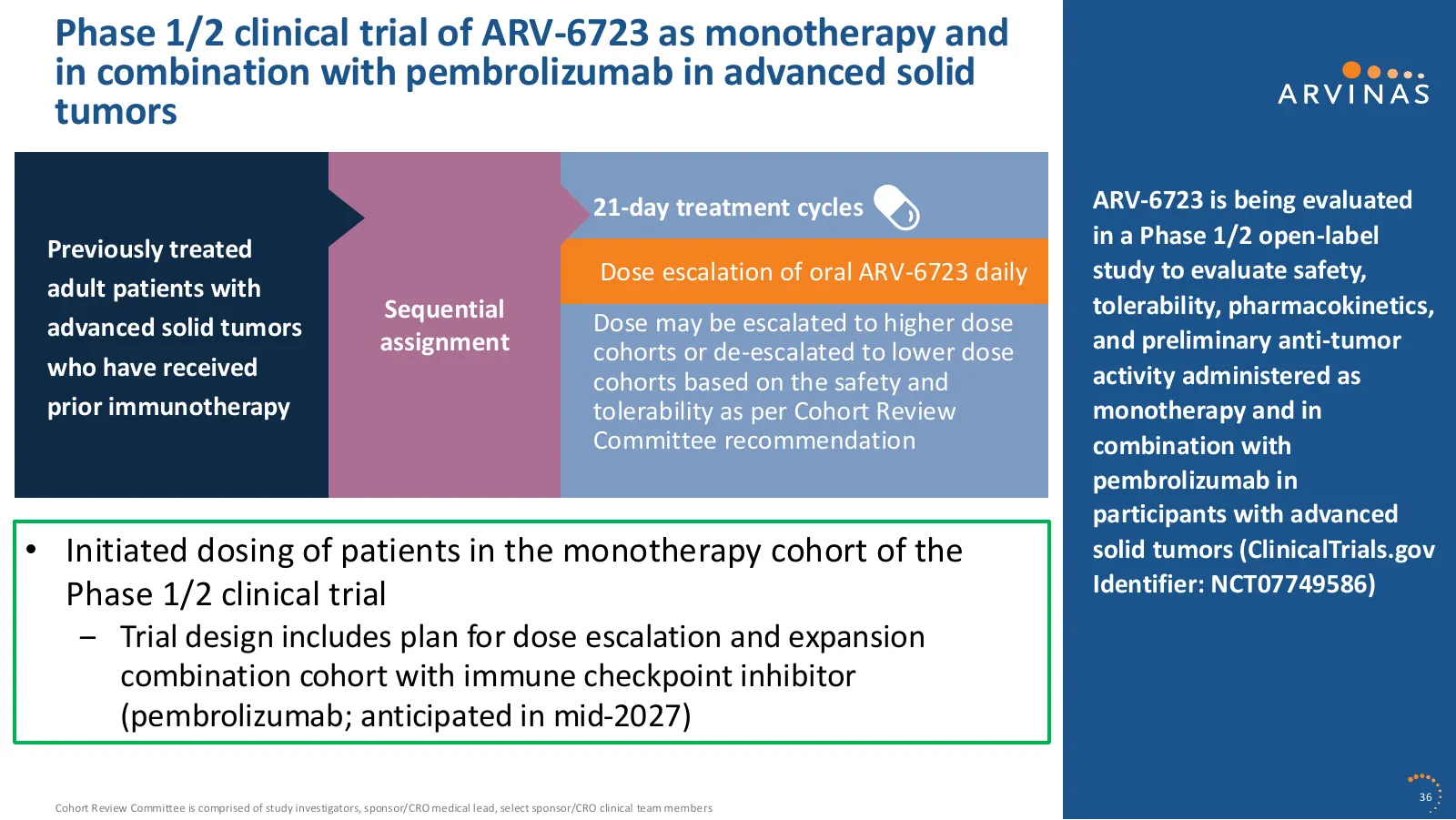
Slide 36: Phase 1/2 trial of ARV-6723 in advanced solid tumors
Phase 1/2 clinical trial of ARV-6723 as monotherapy and in combination with pembrolizumab in advanced solid tumors 21-day treatment cycles ARV-6723 is being evaluated in a Phase 1/2 open-label Previously treated Dose escalation of oral ARV-6723 daily study to evaluate safety, adult patients with Seq

Slide 37: ARV-102 PROTAC LRRK2 degrader
CLINICAL PROGRAMS: Neurology ARV-102 PROTAC LRRK2 degrader ARV-102 is an investigational compound. Its safety and effectiveness have not been established.
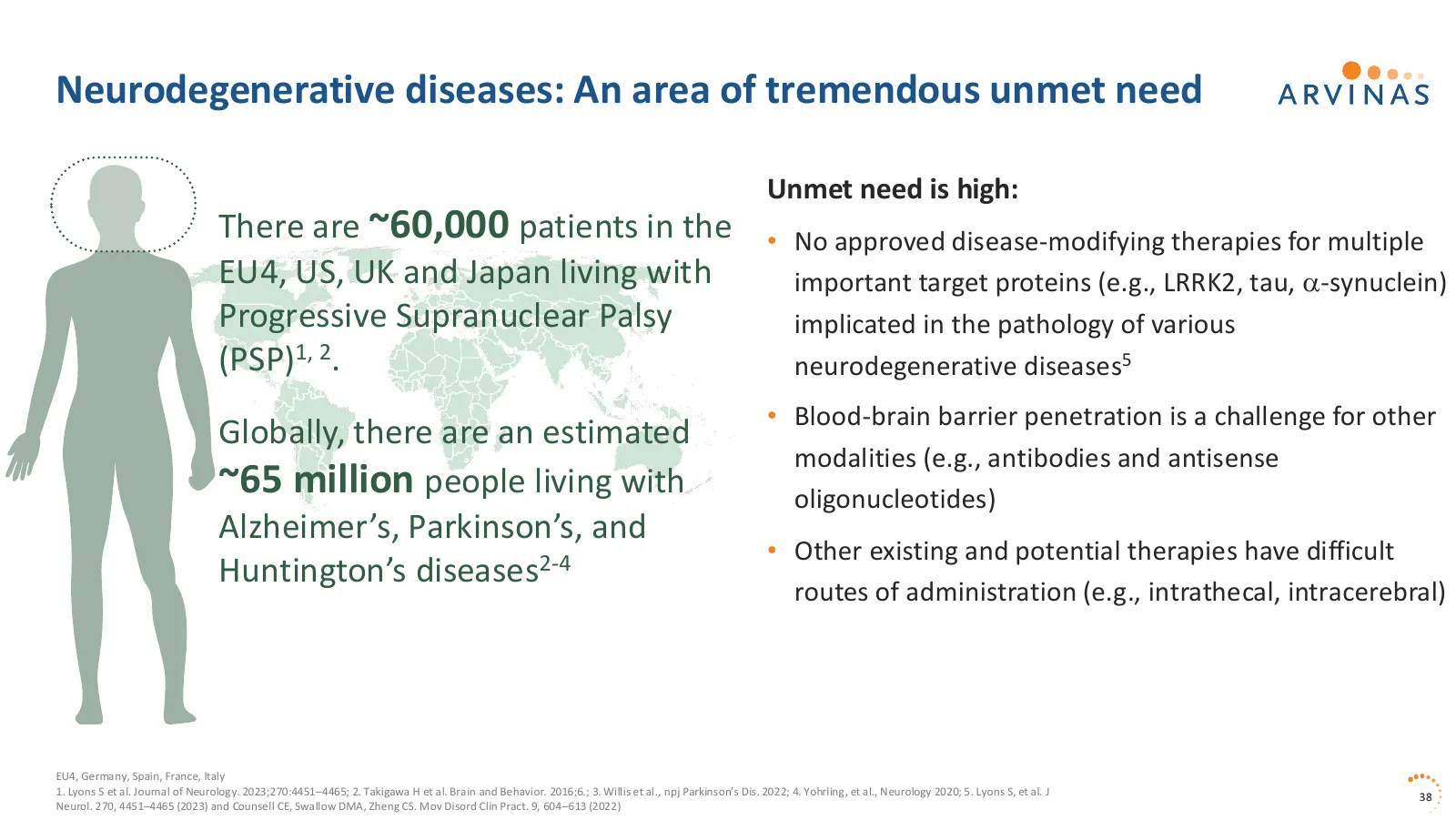
Slide 38: Neurodegenerative diseases: an area of tremendous unmet need
Neurodegenerative diseases: An area of tremendous unmet need Unmet need is high: There are ~60,000 patients in the • No approved disease-modifying therapies for multiple EU4, US, UK and Japan living with important target proteins (e.g., LRRK2, tau, -synuclein) Progressive Supranuclear Palsy implica
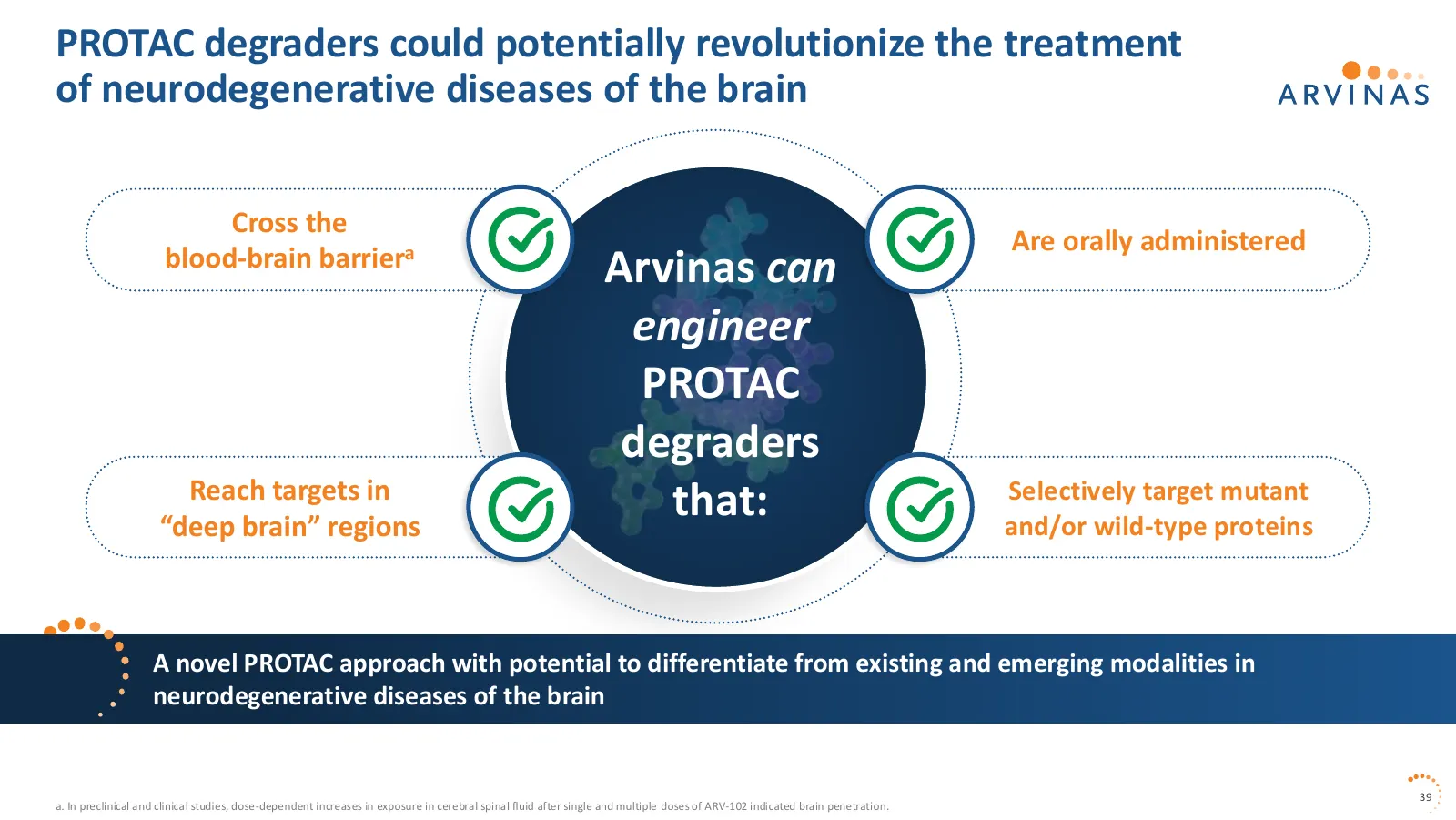
Slide 39: PROTAC degraders could revolutionize treatment of neurodegenerative diseases
PROTAC degraders could potentially revolutionize the treatment of neurodegenerative diseases of the brain Cross the Are orally administered blood-brain barriera Arvinas can engineer PROTAC degraders Reach targets in Selectively target mutant “deep brain” regions that: and/or wild-type proteins A nov
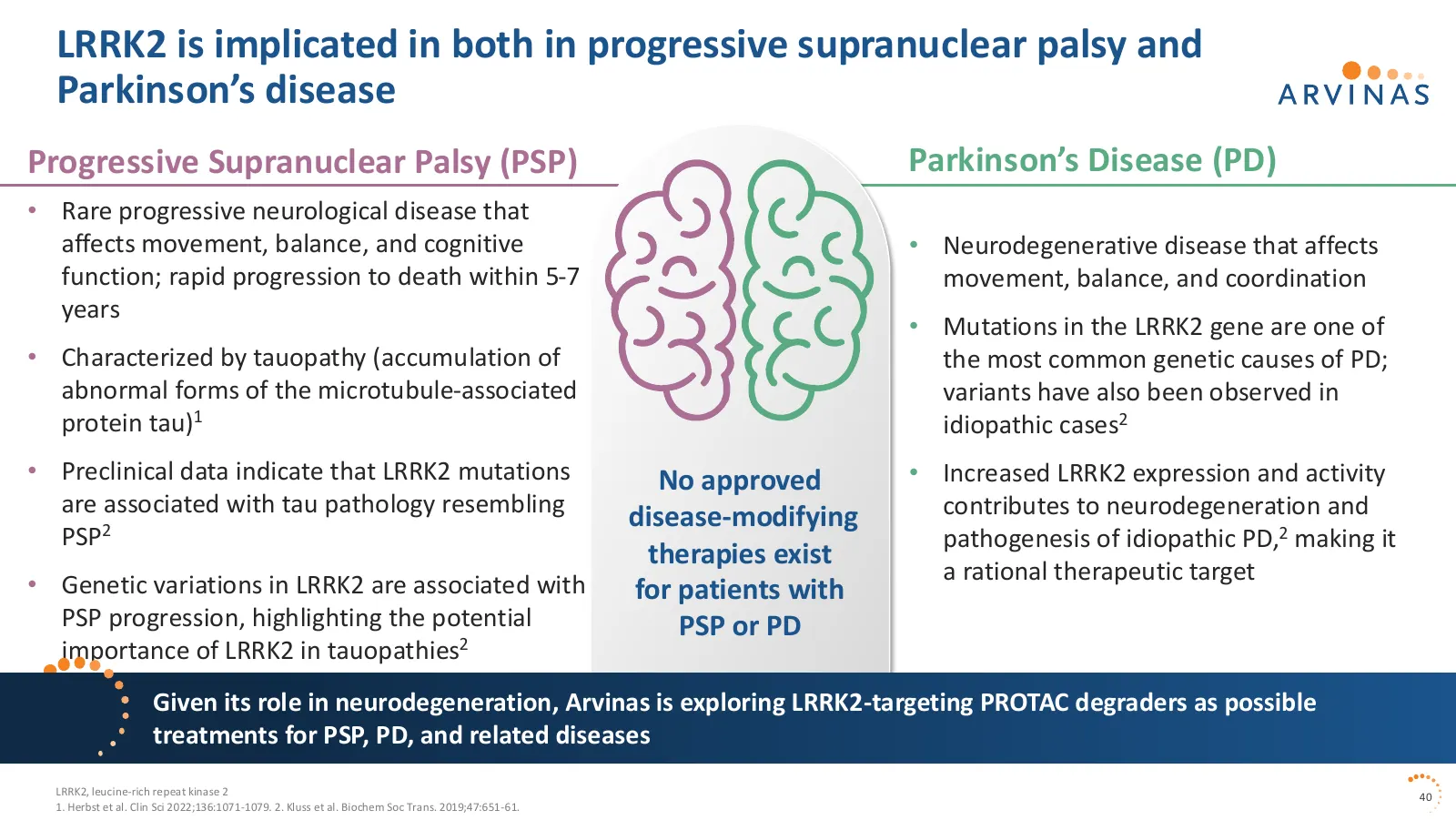
Slide 40: LRRK2 is implicated in PSP and Parkinson's disease
LRRK2 is implicated in both in progressive supranuclear palsy and Parkinson’s disease Progressive Supranuclear Palsy (PSP) Parkinson’s Disease (PD) • Rare progressive neurological disease that affects movement, balance, and cognitive • Neurodegenerative disease that affects function; rapid progressi
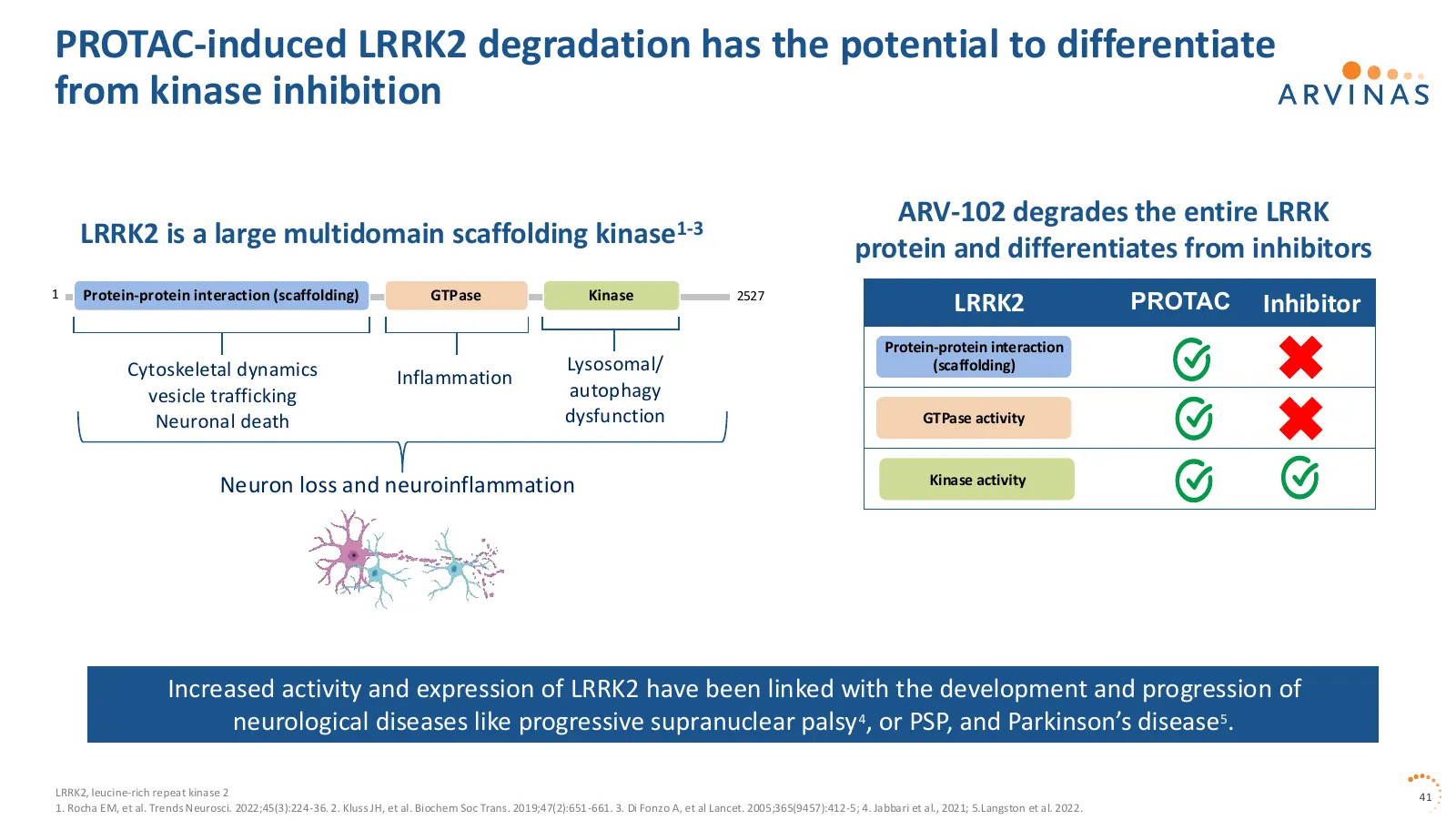
Slide 41: LRRK2 degradation may differentiate from kinase inhibition
PROTAC-induced LRRK2 degradation has the potential to differentiate from kinase inhibition ARV-102 degrades the entire LRRK LRRK2 is a large multidomain scaffolding kinase1-3 protein and differentiates from inhibitors Protein-protein interaction (scaffolding) GTPase Kinase 1 2527 LRRK2 PROTAC Inhibi
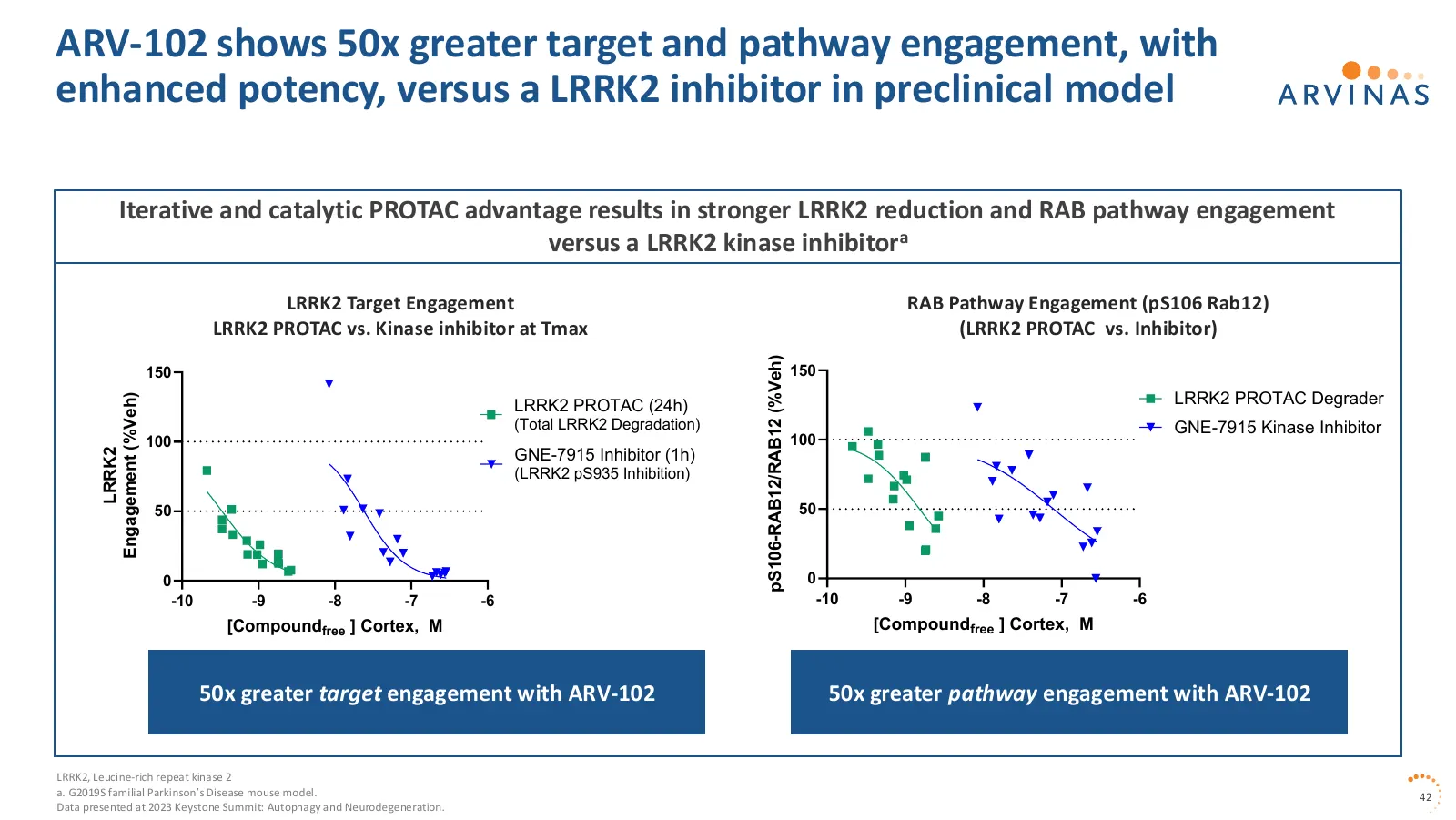
Slide 42: ARV-102 shows 50x greater target and pathway engagement versus LRRK2 inhibitor
ARV-102 shows 50x greater target and pathway engagement, with enhanced potency, versus a LRRK2 inhibitor in preclinical model Iterative and catalytic PROTAC advantage results in stronger LRRK2 reduction and RAB pathway engagement versus a LRRK2 kinase inhibitora LRRK2 Target Engagement RAB Pathway
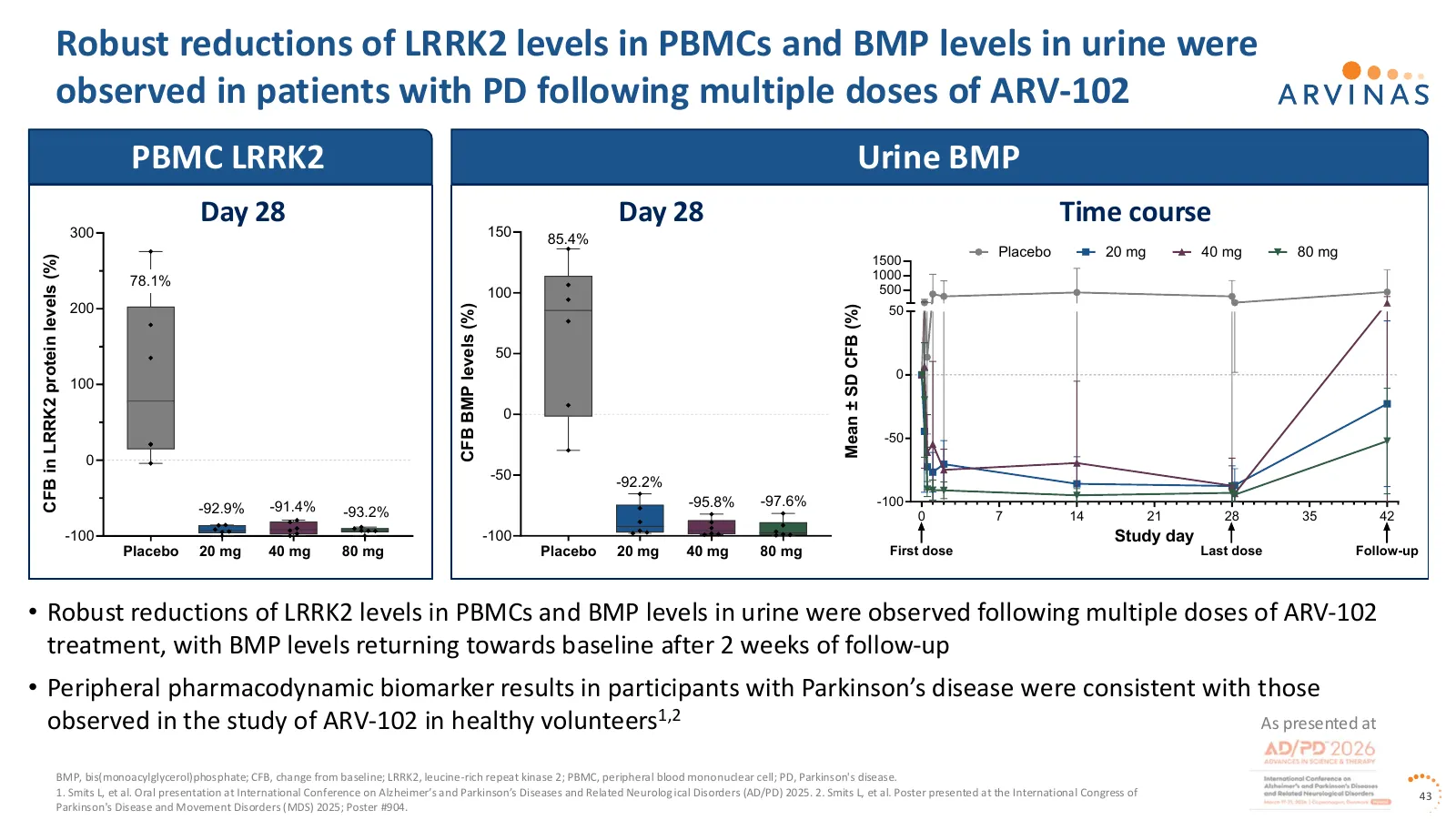
Slide 43: Reductions of LRRK2 in PBMCs and BMP in urine in patients with PD
Robust reductions of LRRK2 levels in PBMCs and BMP levels in urine were observed in patients with PD following multiple doses of ARV-102 PBMC LRRK2 Urine BMP Day 28 Day 28 Time course 300 150 85.4% Placebo 20 mg 40 mg 80 mg 1500 CFB in LRRK2 protein levels (%) 78.1% 1000 100 500 200 CFB BMP levels (
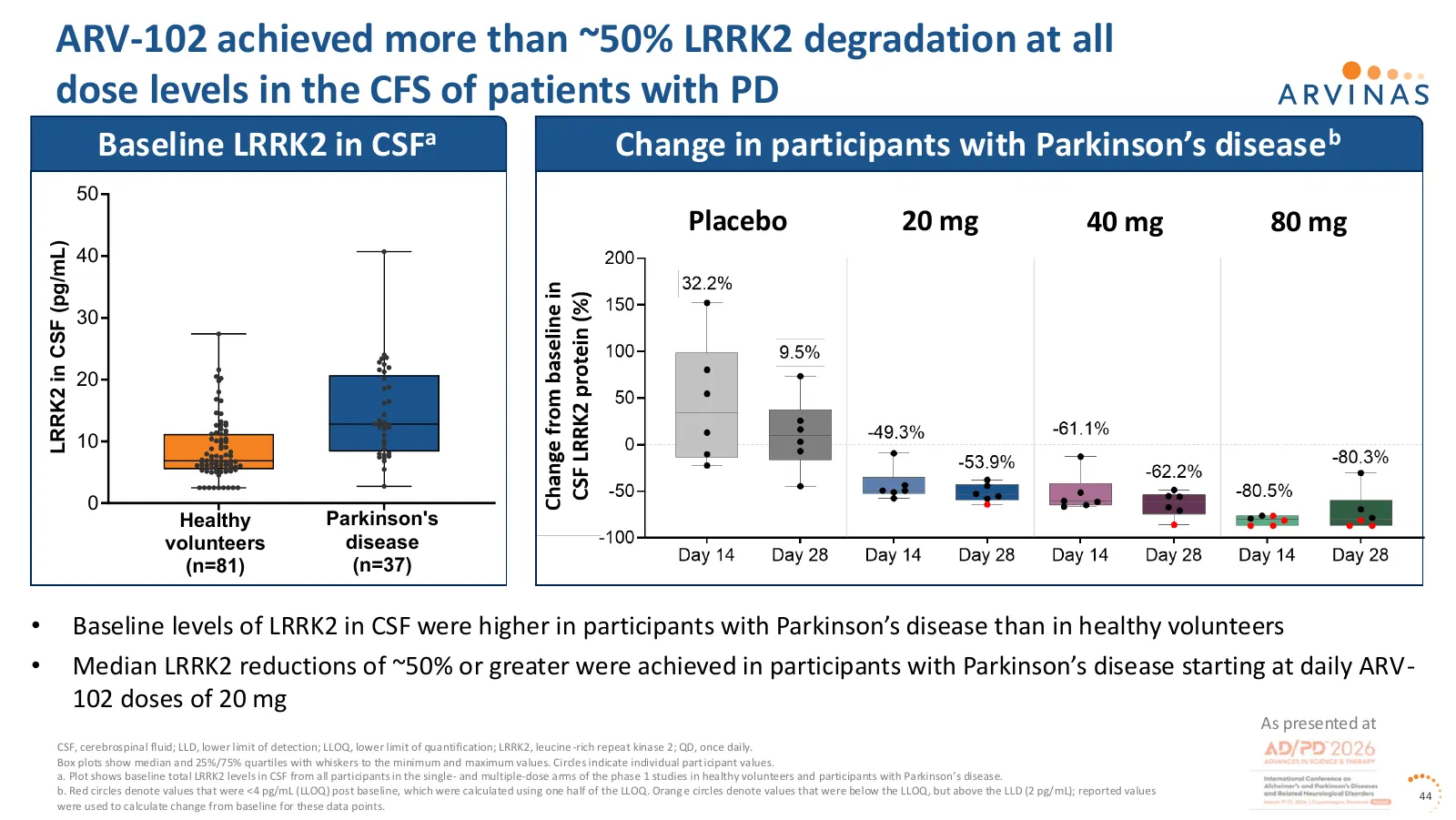
Slide 44: ARV-102 achieved over ~50% LRRK2 degradation in CSF of patients with PD
ARV-102 achieved more than ~50% LRRK2 degradation at all dose levels in the CFS of patients with PD Baseline LRRK2 in CSFa Change in participants with Parkinson’s disease b 50 Placebo 20 mg 40 mg 80 mg LRRK2 in CSF (pg/mL) 40 30 20 10 0 Healthy Parkinson's volunteers disease (n=81) (n=37) • Baseline
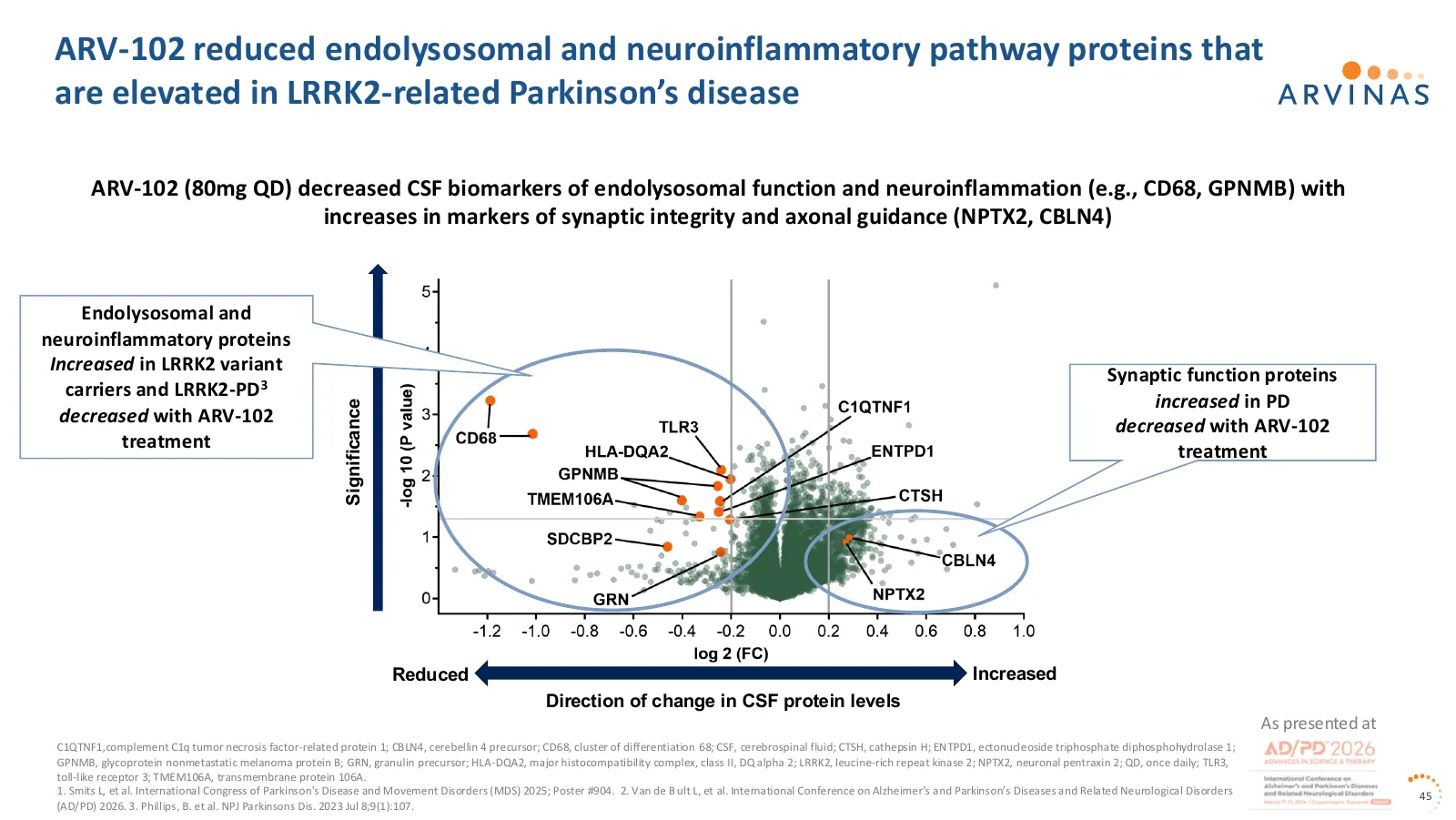
Slide 45: ARV-102 reduced endolysosomal and neuroinflammatory pathway proteins
ARV-102 reduced endolysosomal and neuroinflammatory pathway proteins that are elevated in LRRK2-related Parkinson’s disease ARV-102 (80mg QD) decreased CSF biomarkers of endolysosomal function and neuroinflammation (e.g., CD68, GPNMB) with increases in markers of synaptic integrity and axonal guidan
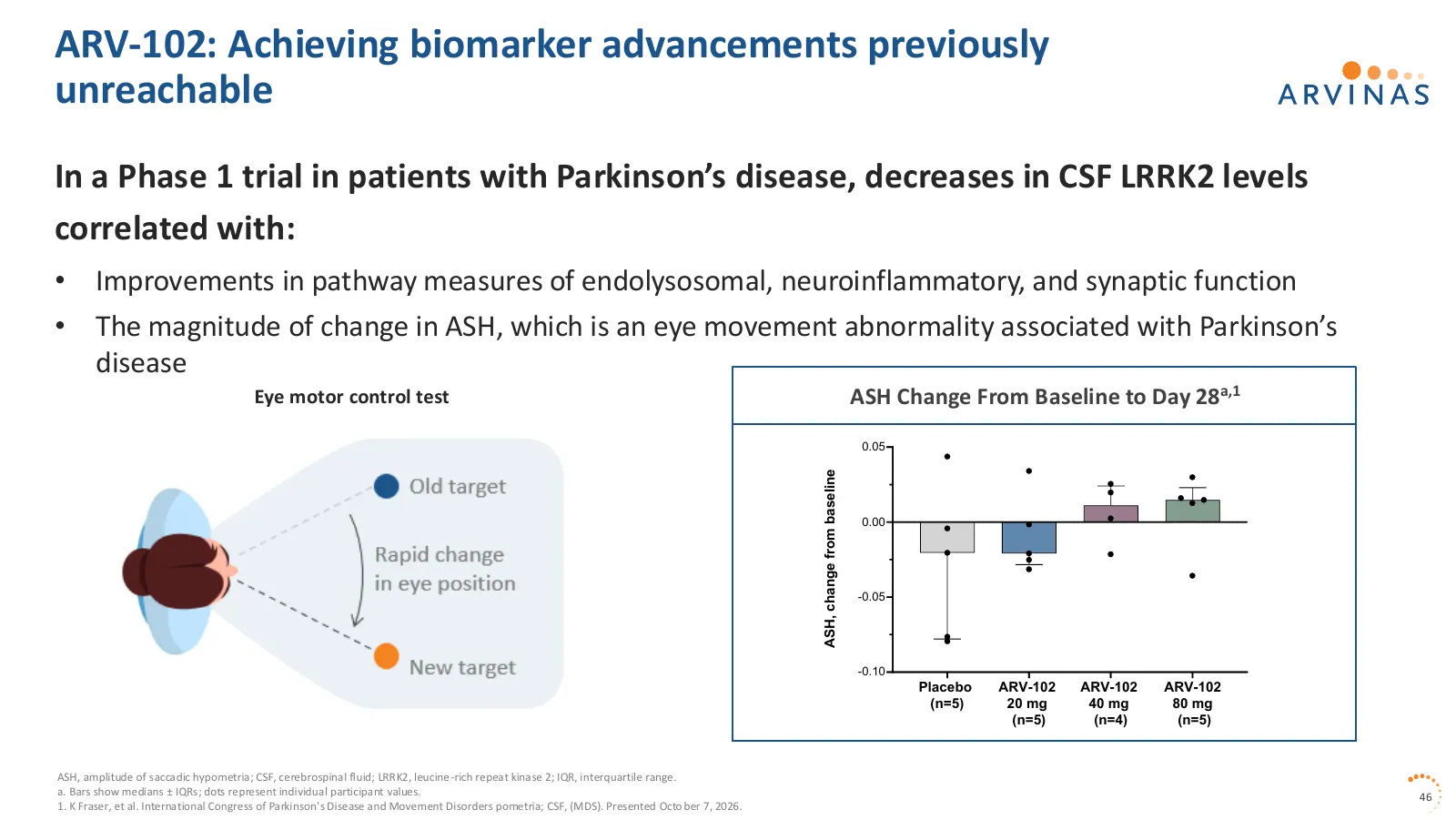
Slide 46: ARV-102: achieving biomarker advancements previously unreachable
ARV-102: Achieving biomarker advancements previously unreachable In a Phase 1 trial in patients with Parkinson’s disease, decreases in CSF LRRK2 levels correlated with: • Improvements in pathway measures of endolysosomal, neuroinflammatory, and synaptic function • The magnitude of change in ASH, whi
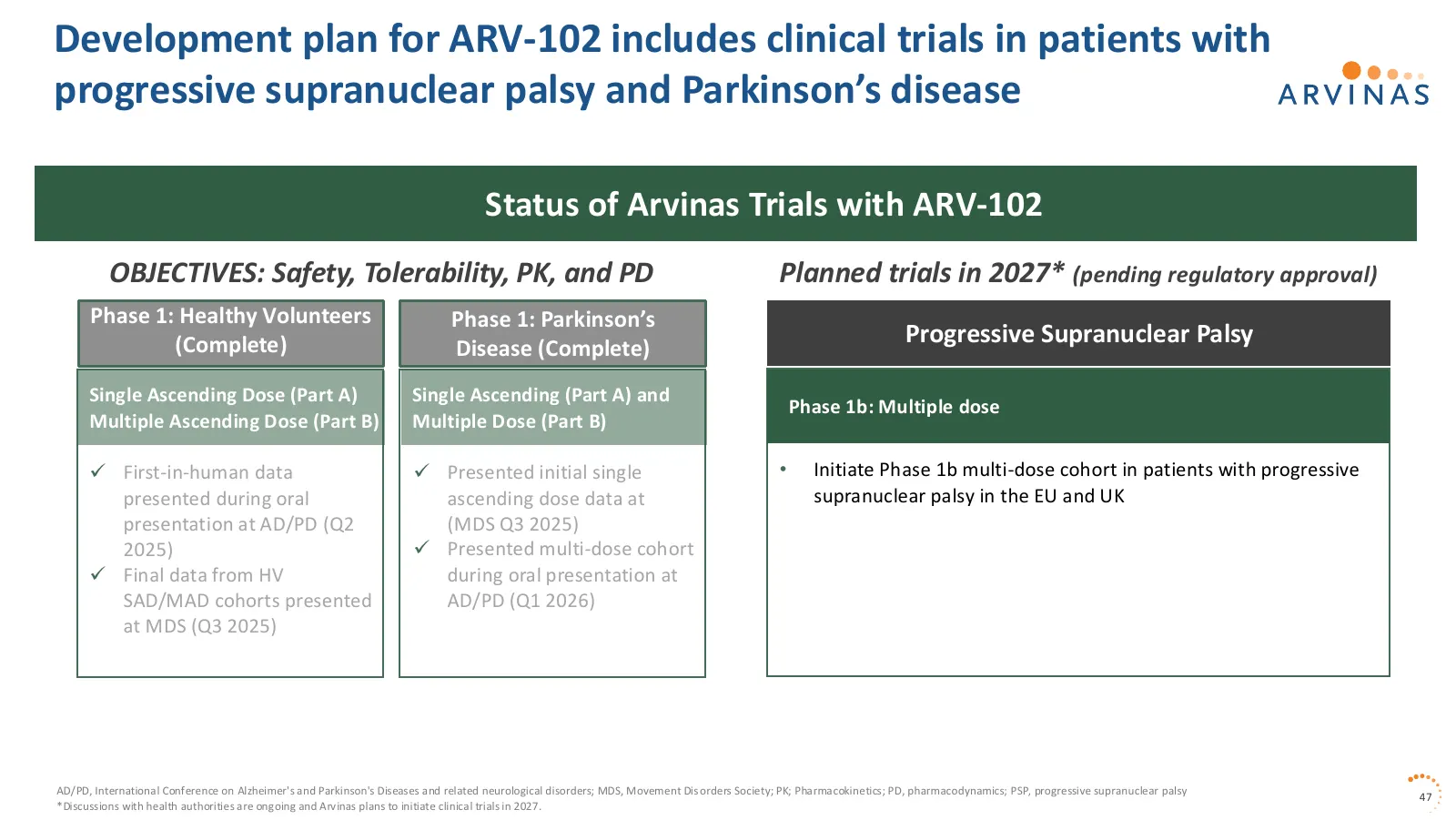
Slide 47: Development plan for ARV-102 in PSP and Parkinson's disease
Development plan for ARV-102 includes clinical trials in patients with progressive supranuclear palsy and Parkinson’s disease Status of Arvinas Trials with ARV-102 OBJECTIVES: Safety, Tolerability, PK, and PD Planned trials in 2027* (pending regulatory approval) Phase 1: Healthy Volunteers Phase 1:
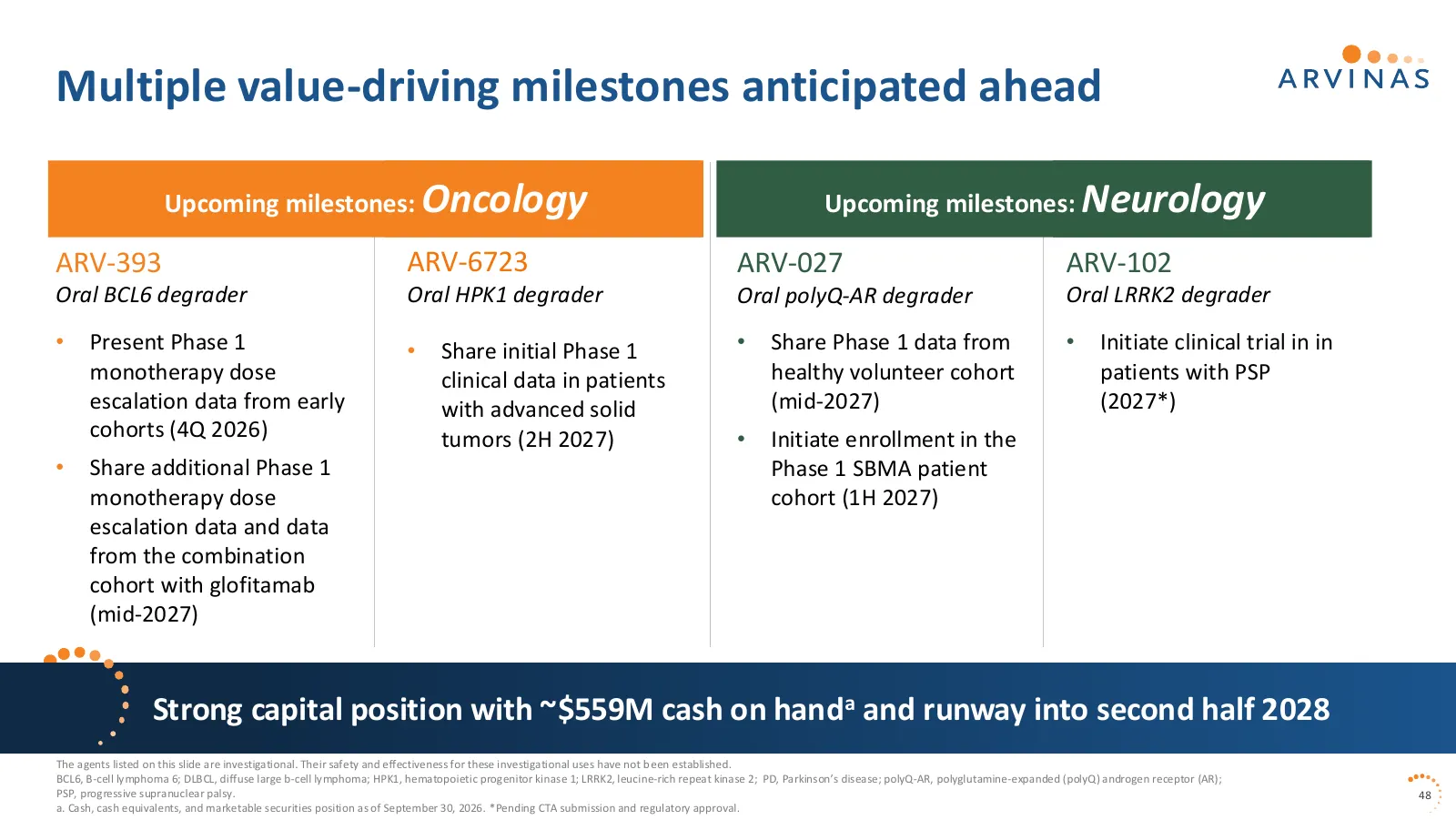
Slide 48: Multiple value-driving milestones anticipated ahead
Multiple value-driving milestones anticipated ahead Anticipated milestones: Anticipated milestones: Oncology Upcoming milestones:Immuno-oncology Upcoming milestones: Neurology Neuromuscular ARV-393 ARV-6723 ARV-027 ARV-102 Oral BCL6 degrader Oral HPK1 degrader Oral polyQ-AR degrader Oral LRRK2 degra

Slide 49: For more information
FOR MORE INFORMATION Press/Media | pr@arvinas.com Investors | ir@arvinas.com Business Development | bd@arvinas.com Careers | careers@arvinas.com NASDAQ L I S T E D ARV N © 2026 Arvinas. All rights reserved.
Source: 6ix earnings call
More decks from Arvinas, Inc.
 Investor Presentation (August 2026)56 slides · August 2026
 Jefferies Global Healthcare Conference 20268 slides · Jun 2, 2026
 Q4 2025 Earnings Presentation74 slides · Feb 24, 2026
 Q2 2025 Earnings Presentation70 slides · Aug 6, 2025
 Technical Presentation (June 2025)20 slides · Jun 2, 2025
 Stifel Webinar (February 2024)15 slides · Feb 14, 2024