Trillium Therapeutics — T-Cell Lymphoma Forum 2019: Industry Innovation
22 slides from Trillium Therapeutics's conference presentation, Jan 12, 2019
Slide 1: Clinical Proof-of-Concept of an Anti-CD47 Agent for the Treatment of CTCL
Clinical Proof-of-Concept of an Anti- CD47 Agent for the Treatment of CTCL: Data from Phase 1 Trials of TTI-621 Employing both Intravenous and Intralesional Routes of Administration Yaping Shou, MD, PhD Chief Medical Officer, Trillium Therapeutics T-Cell Lymphoma Forum 2019: Industry Innovation
Slide 2: Forward-looking statements
This presentation may contain forward-looking statements, which reflect Trillium's current expectation regarding future events. These forward-looking statements involve risks and uncertainties that may cause actual results, events or developments to be materially different from any future results, e
Slide 3: CD47 – An Innate Checkpoint that Inhibits Macrophage Phagocytosis
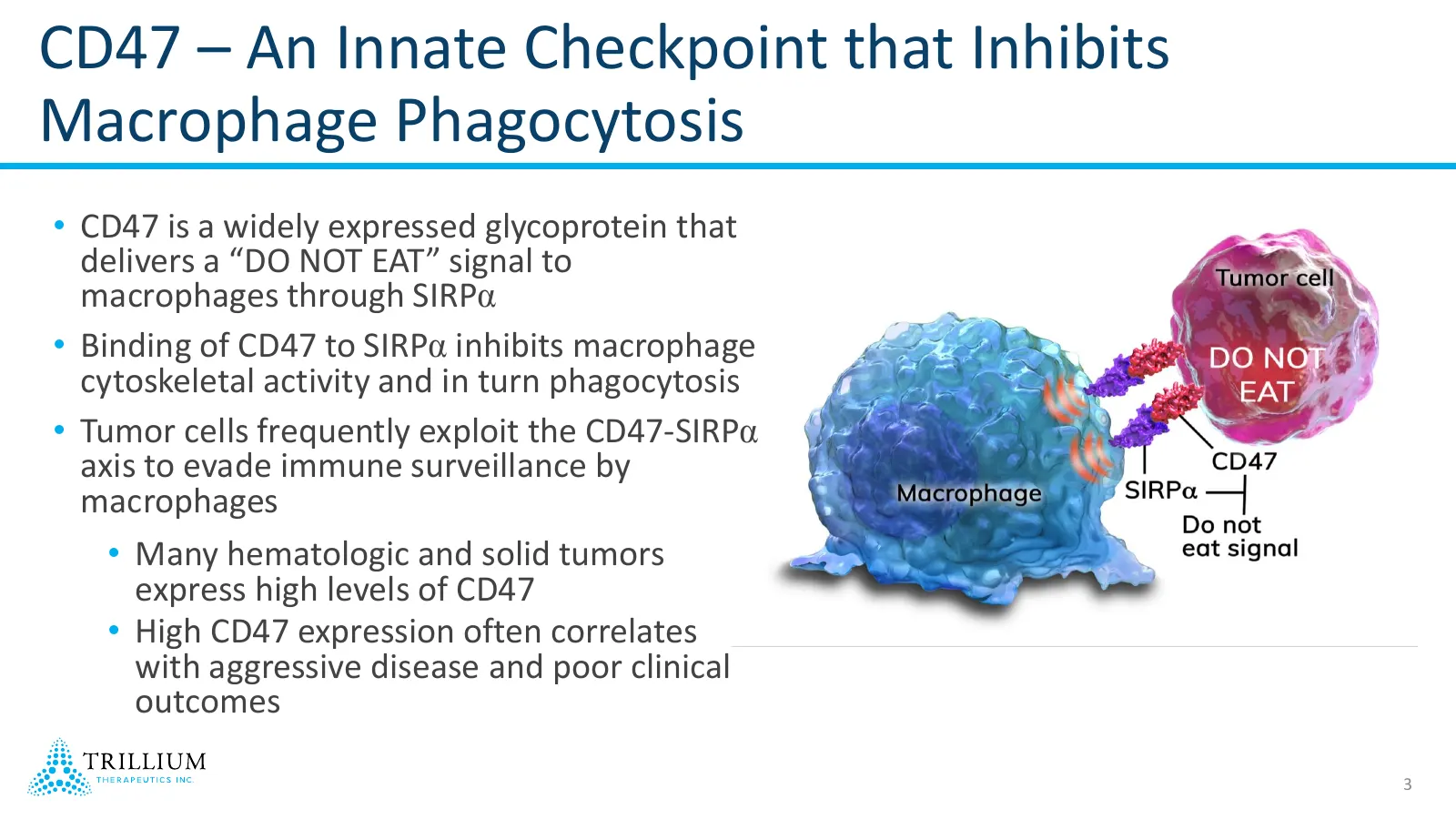
CD47 – An Innate Checkpoint that Inhibits Macrophage Phagocytosis • CD47 is a widely expressed glycoprotein that delivers a “DO NOT EAT” signal to macrophages through SIRPα • Binding of CD47 to SIRPα inhibits macrophage cytoskeletal activity and in turn phagocytosis • Tumor cells frequently exploit
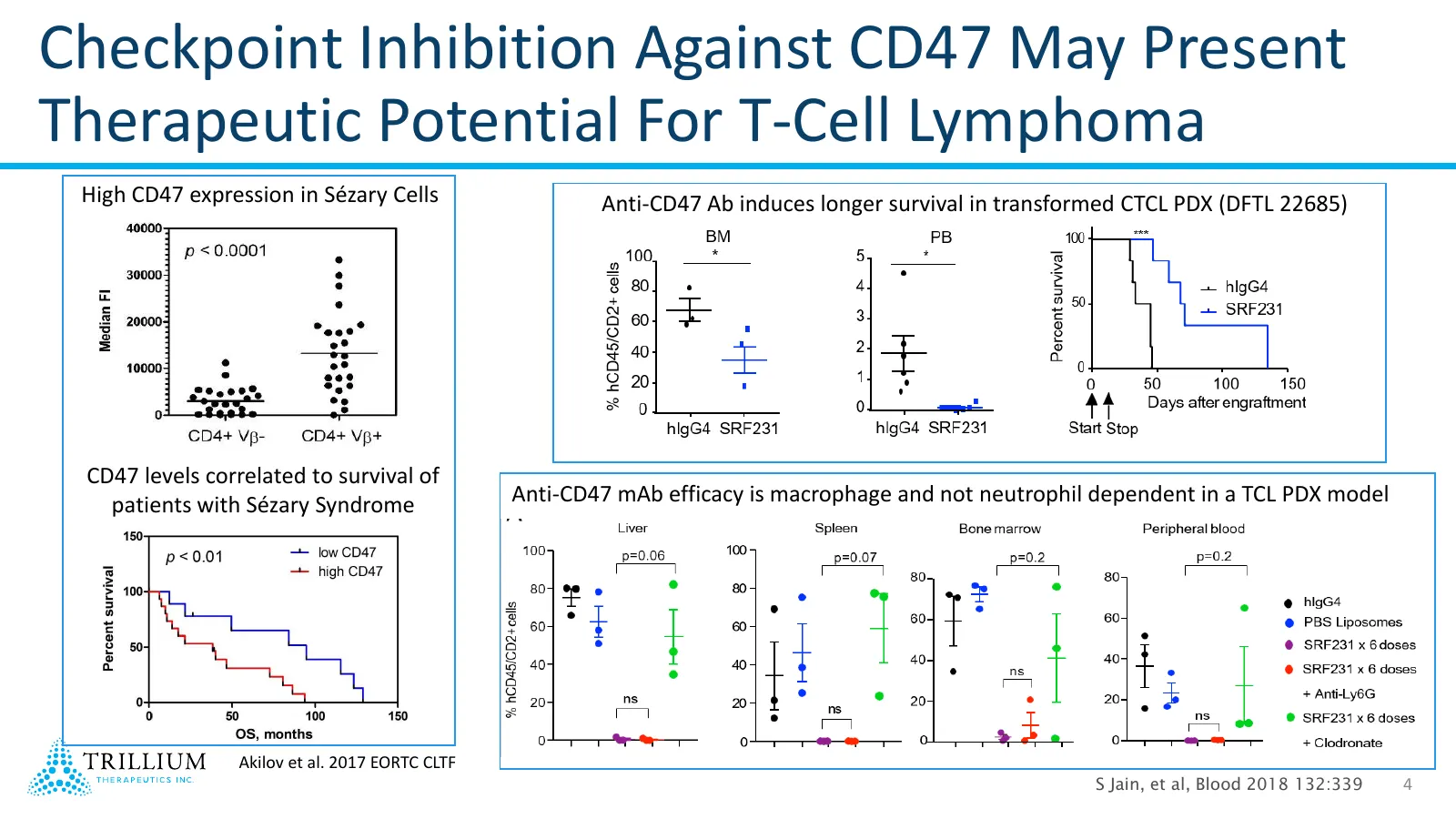
Slide 4: Checkpoint Inhibition Against CD47 May Present Therapeutic Potential For T-Cell Lymphoma
Checkpoint Inhibition Against CD47 May Present Therapeutic Potential For T-Cell Lymphoma High CD47 expression in Sézary Cells Anti-CD47 Ab induces longer survival in transformed CTCL PDX (DFTL 22685) CD47 levels correlated to survival of patients with Sézary Syndrome Anti-CD47 mAb efficacy is macrop
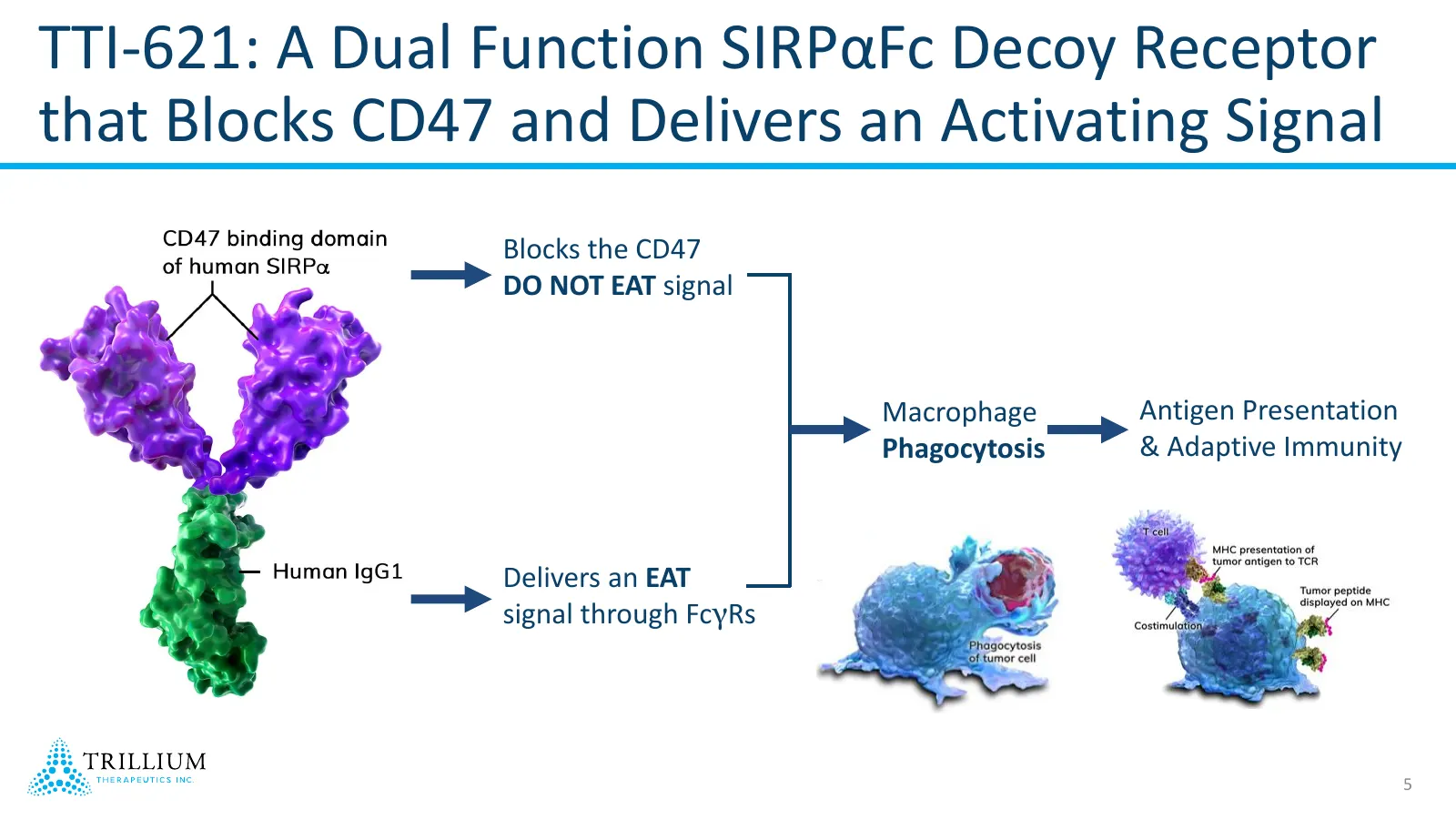
Slide 5: TTI-621: A Dual Function SIRPαFc Decoy Receptor
TTI-621: A Dual Function SIRPαFc Decoy Receptor that Blocks CD47 and Delivers an Activating Signal Blocks the CD47 DO NOT EAT signal Macrophage Antigen Presentation Phagocytosis & Adaptive Immunity Delivers an EAT signal through FcγRs 5
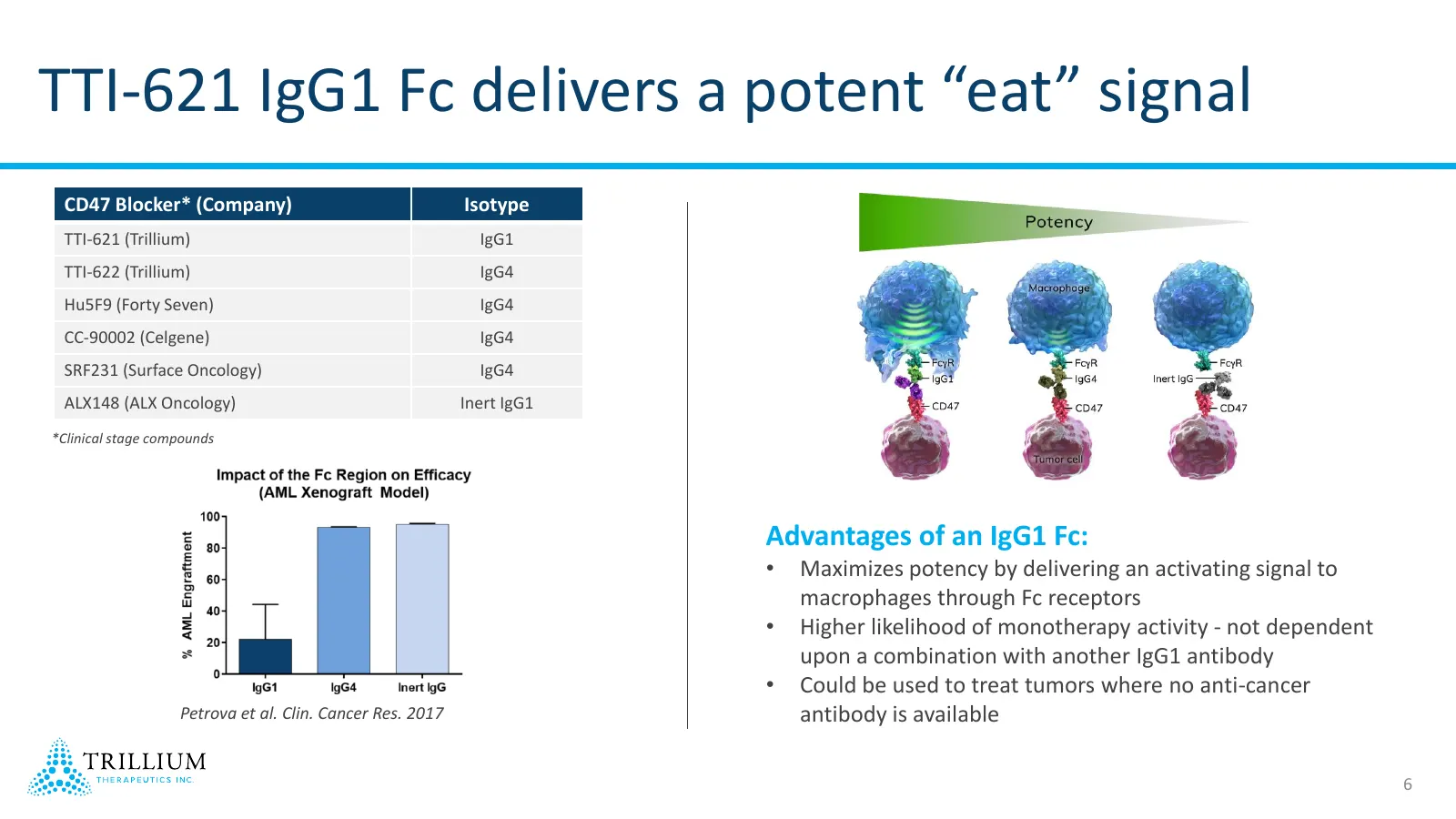
Slide 6: TTI-621 IgG1 Fc delivers a potent "eat" signal
TTI-621 IgG1 Fc delivers a potent “eat” signal CD47 Blocker* (Company) Isotype TTI-621 (Trillium) IgG1 TTI-622 (Trillium) IgG4 Hu5F9 (Forty Seven) IgG4 CC-90002 (Celgene) IgG4 SRF231 (Surface Oncology) IgG4 ALX148 (ALX Oncology) Inert IgG1 *Clinical stage compounds Advantages of an IgG1 Fc: • Maximi
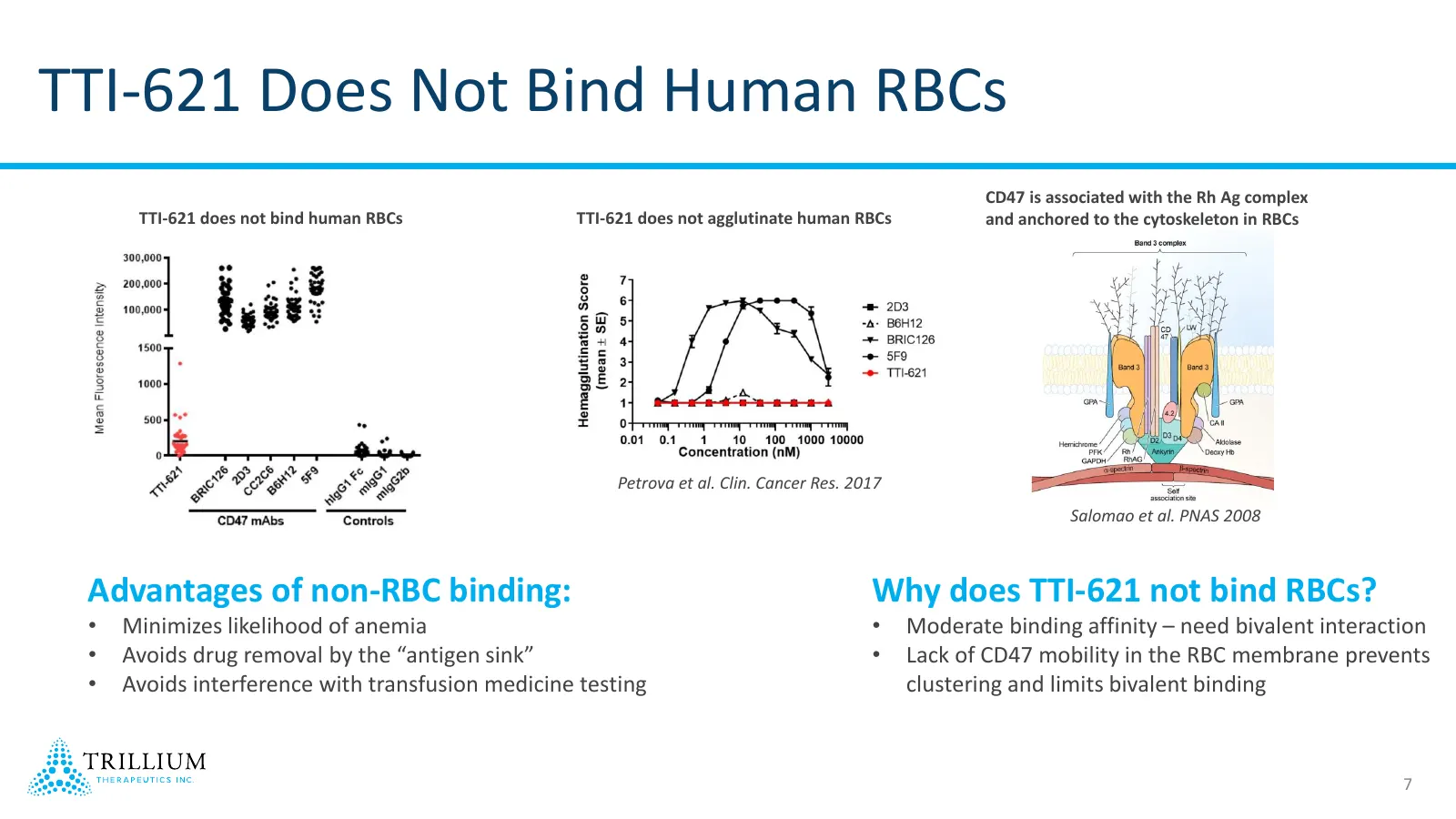
Slide 7: TTI-621 Does Not Bind Human RBCs
TTI-621 Does Not Bind Human RBCs CD47 is associated with the Rh Ag complex TTI-621 does not bind human RBCs TTI-621 does not agglutinate human RBCs and anchored to the cytoskeleton in RBCs Petrova et al. Clin. Cancer Res. 2017 Salomao et al. PNAS 2008 Advantages of non-RBC binding: Why does TTI-621
Slide 8: Intravenous Administration Study (TTI-621-01)
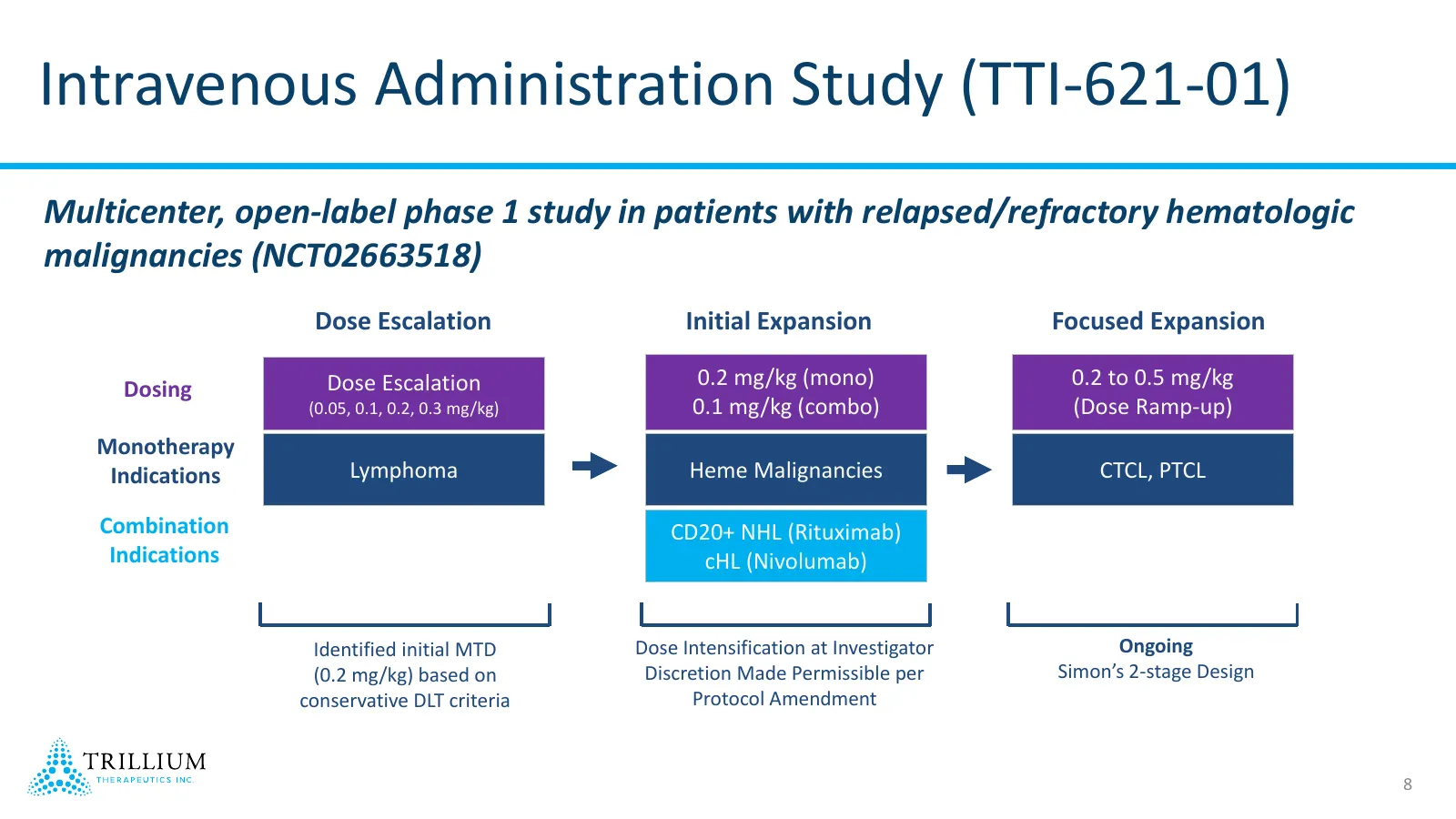
Intravenous Administration Study (TTI-621-01) Multicenter, open-label phase 1 study in patients with relapsed/refractory hematologic malignancies (NCT02663518) Dose Escalation Initial Expansion Focused Expansion Dosing Dose Escalation 0.2 mg/kg (mono) 0.2 to 0.5 mg/kg (0.05, 0.1, 0.2, 0.3 mg/kg) 0.1
Slide 9: Intravenous TTI-621 is Well Tolerated
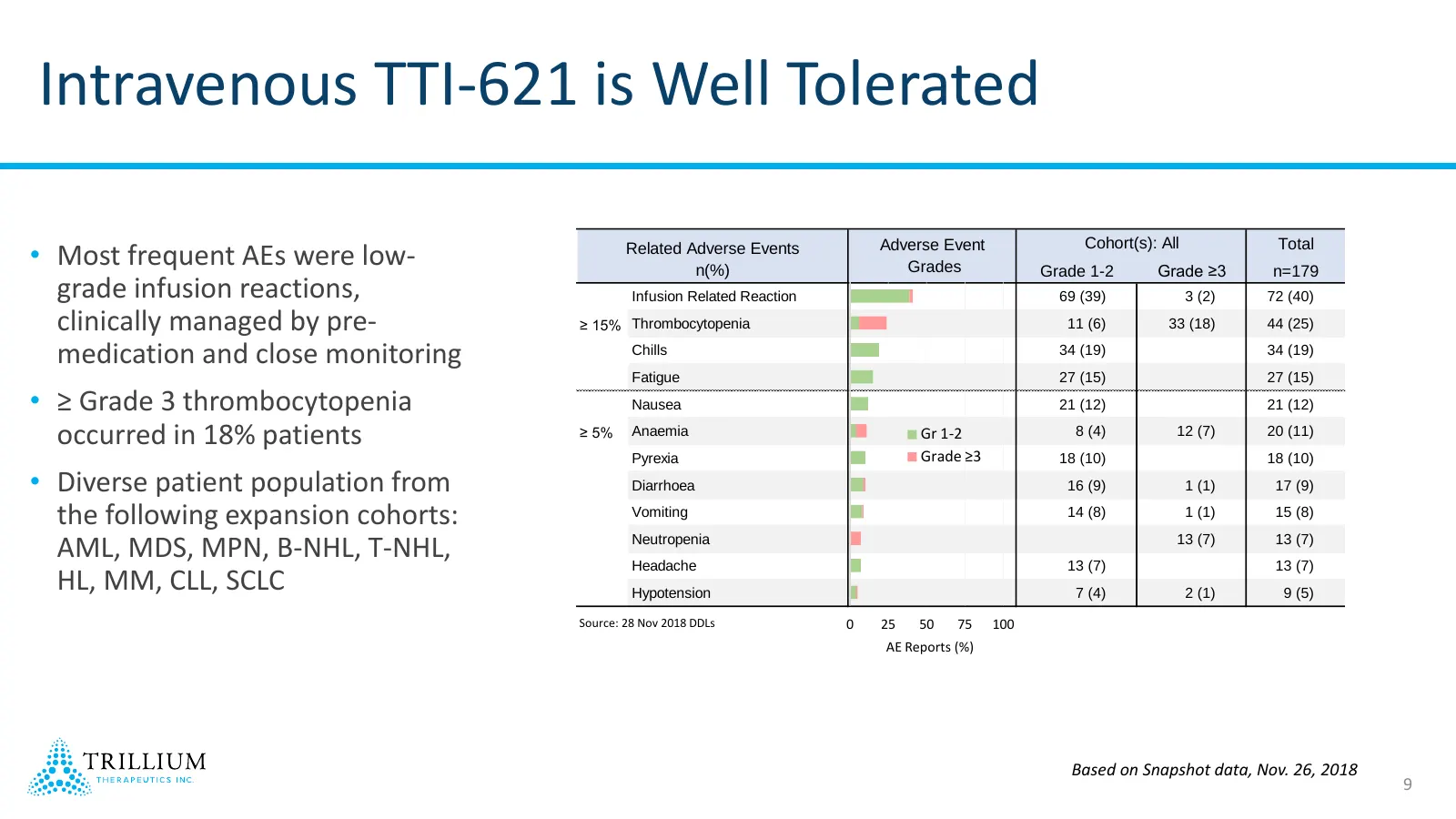
Intravenous TTI-621 is Well Tolerated Cohort(s): All • Most frequent AEs were low- Related Adverse Events Adverse Event Total n(%) Grades Grade 1-2 Grade ≥3 n=179 grade infusion reactions, Infusion Related Reaction 69 (39) 3 (2) 72 (40) clinically managed by pre- ≥ 15% Thrombocytopenia 11 (6) 33 (18
Slide 10: Transient Thrombocytopenia Not Associated with Increased Risk of Bleeding
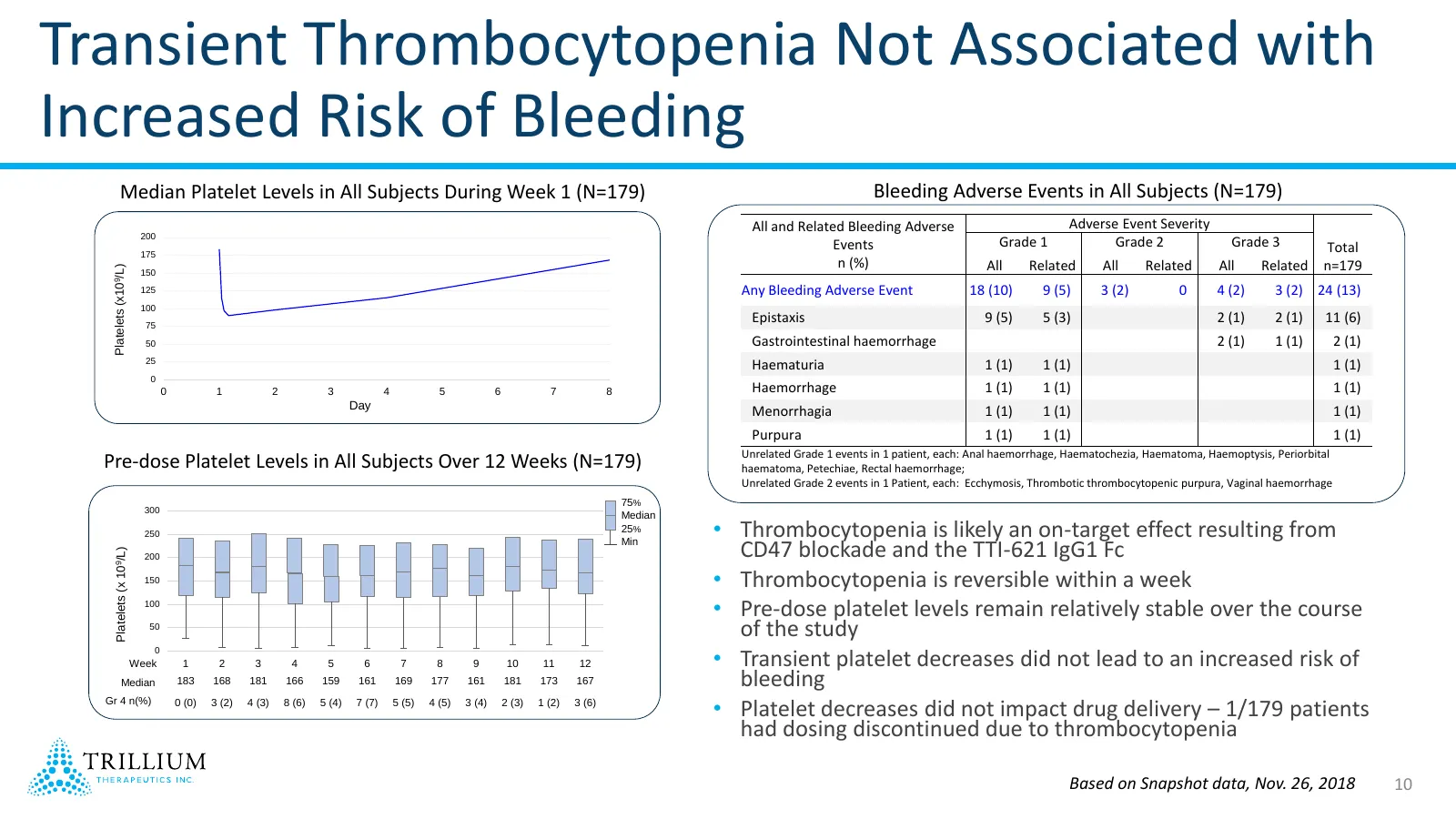
Transient Thrombocytopenia Not Associated with Increased Risk of Bleeding Median Platelet Levels in All Subjects During Week 1 (N=179) Bleeding Adverse Events in All Subjects (N=179) All and Related Bleeding Adverse Adverse Event Severity 200 Events Grade 1 Grade 2 Grade 3 Total 175 n (%) All Relate
Slide 11: Dose Intensification is Well Tolerated
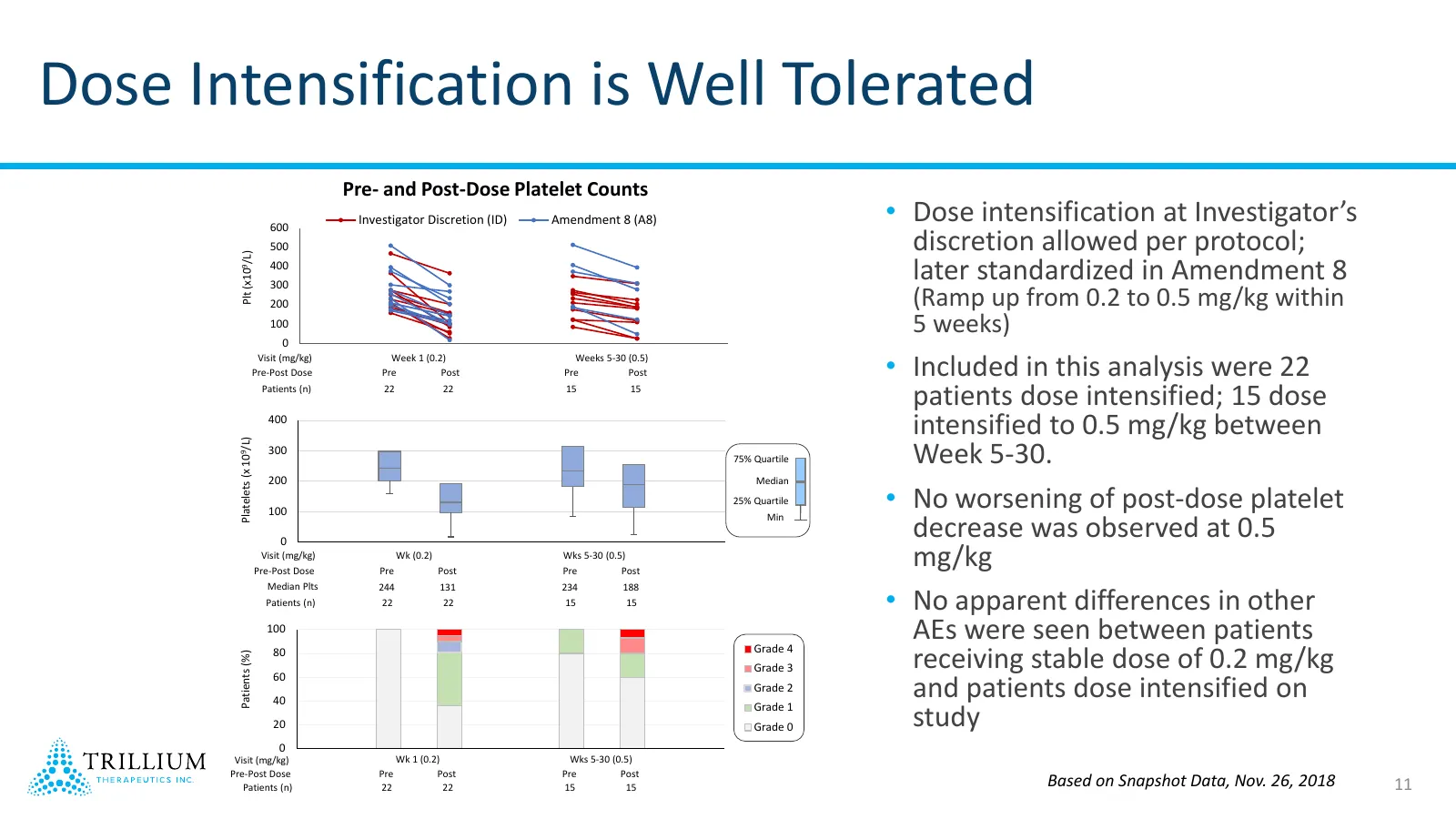
Dose Intensification is Well Tolerated Pre- and Post-Dose Platelet Pre- and Post-Dose Counts Platelets 600 Investigator Discretion (ID) Amendment 8 (A8) N • Dose intensification at Investigator’s Plt (x109/L) 500 discretion allowed per protocol; 400 300 later standardized in Amendment 8 200 (Ramp up
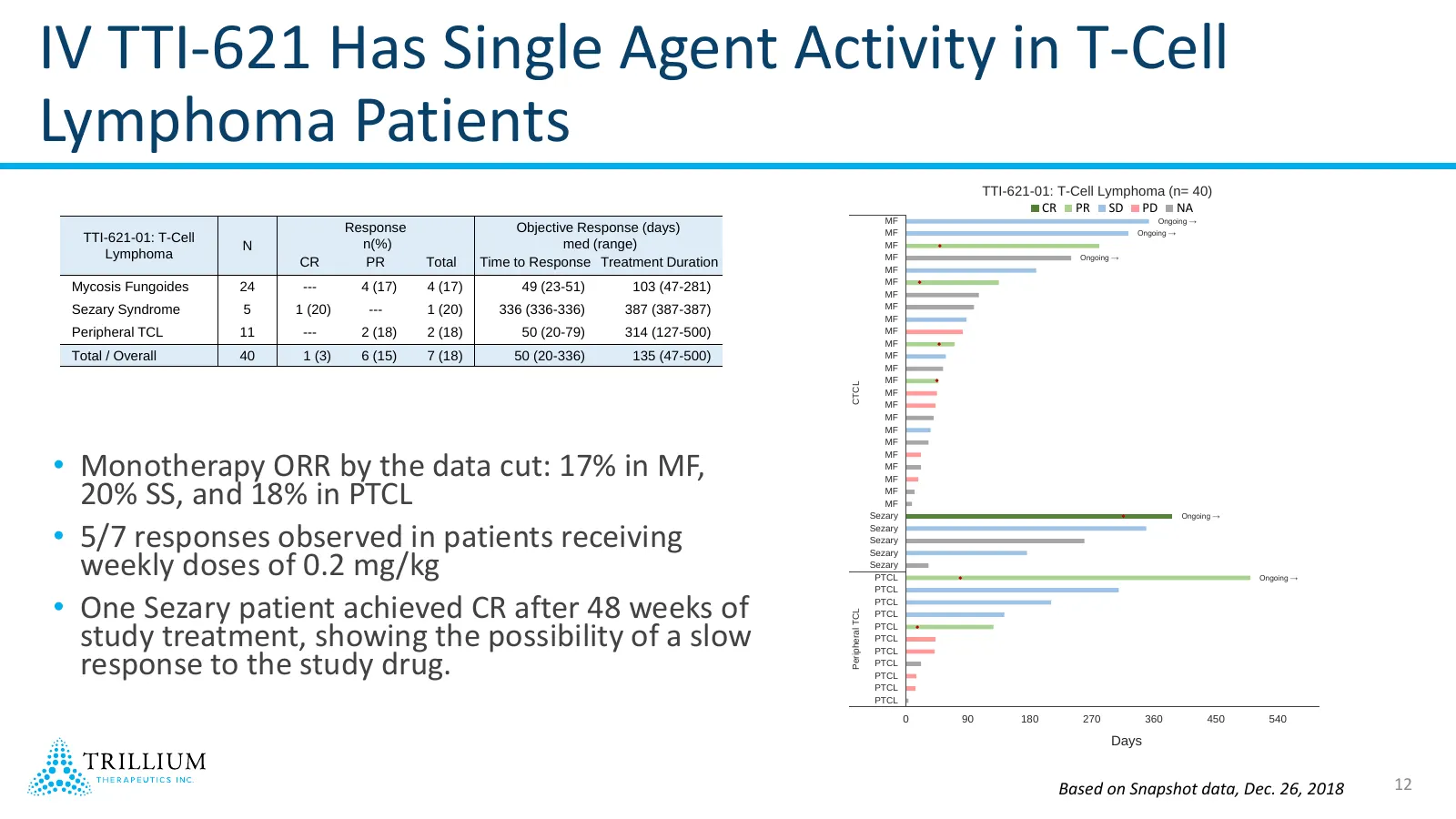
Slide 12: IV TTI-621 Has Single Agent Activity in T-Cell Lymphoma Patients
IV TTI-621 Has Single Agent Activity in T-Cell Lymphoma Patients TTI-621-01: T-Cell Lymphoma (n= 40) CR PR SD PD NA MF Ongoing → Response Objective Response (days) MF Ongoing → TTI-621-01: T-Cell Lymphoma N CR n(%) PR Total med (range) Time to Response Treatment Duration MF MF Ongoing → MF Mycosis
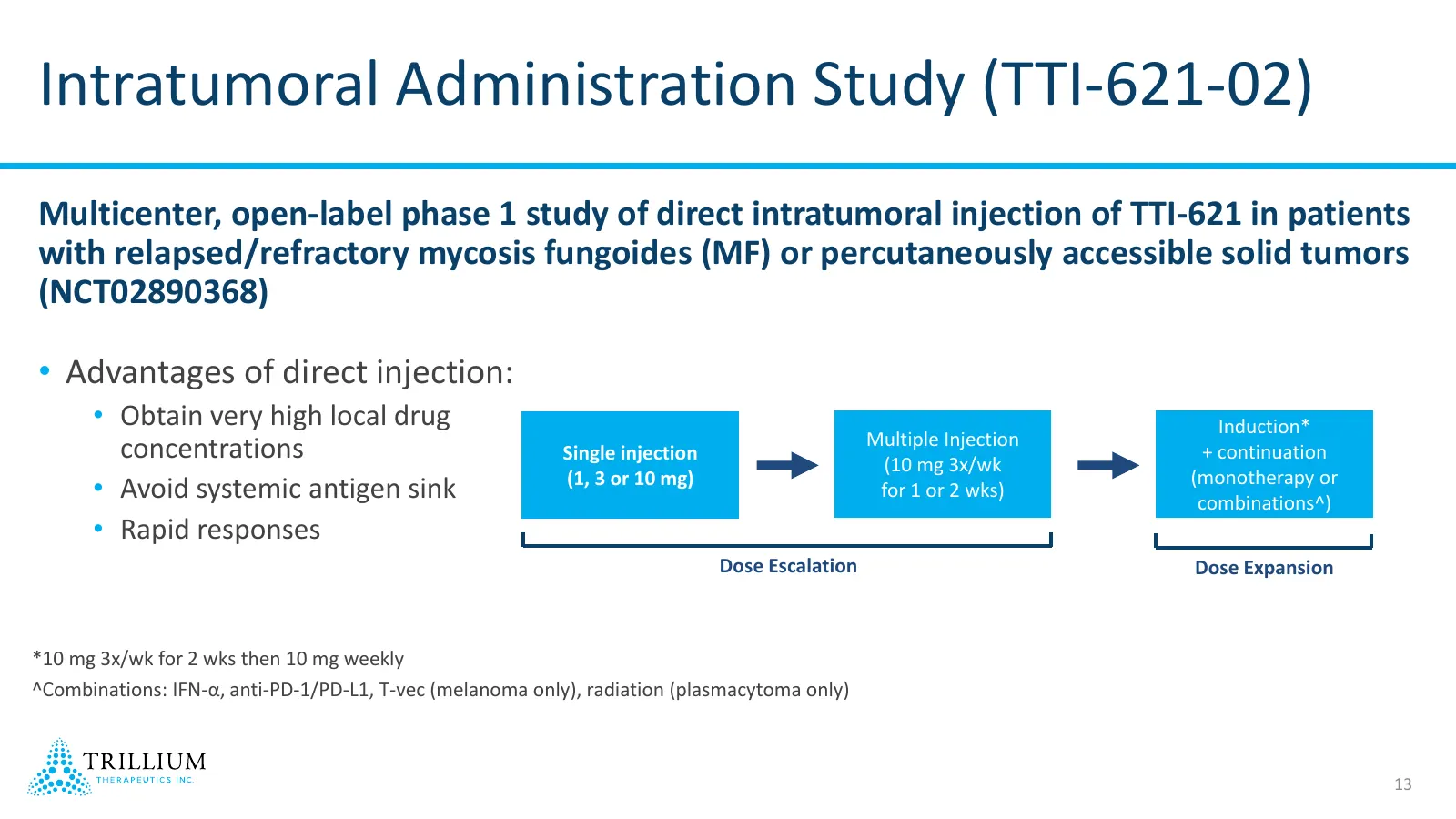
Slide 13: Intratumoral Administration Study (TTI-621-02)
Intratumoral Administration Study (TTI-621-02) Multicenter, open-label phase 1 study of direct intratumoral injection of TTI-621 in patients with relapsed/refractory mycosis fungoides (MF) or percutaneously accessible solid tumors (NCT02890368) • Advantages of direct injection: • Obtain very high lo
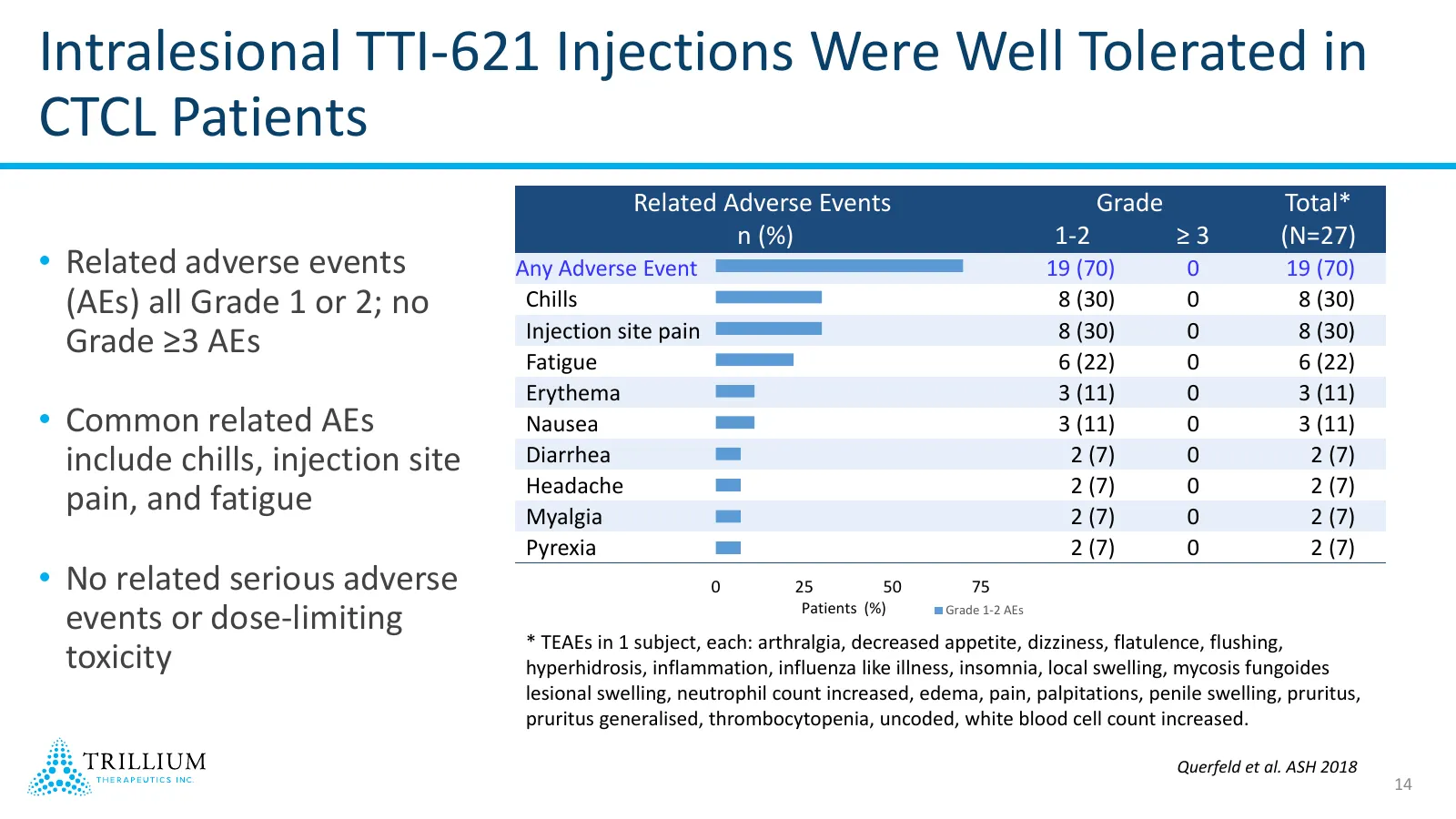
Slide 14: Intralesional TTI-621 Injections Were Well Tolerated in CTCL Patients
Intralesional TTI-621 Injections Were Well Tolerated in CTCL Patients Related Adverse Events Grade Total* n (%) 1-2 ≥3 (N=27) • Related adverse events Any Adverse Event 19 (70) 0 19 (70) (AEs) all Grade 1 or 2; no Chills 8 (30) 0 8 (30) Injection site pain 8 (30) 0 8 (30) Grade ≥3 AEs Fatigue 6 (22)
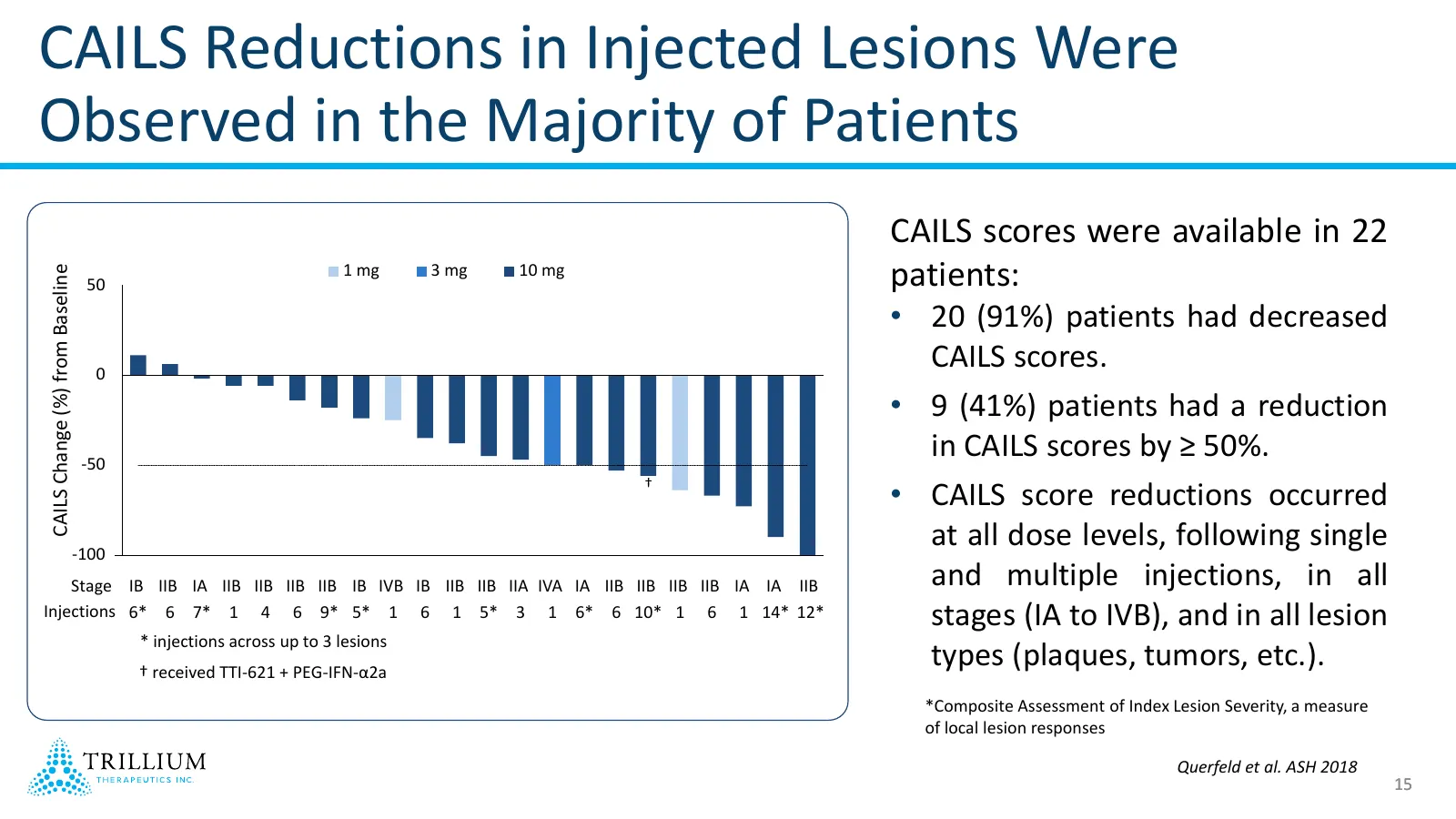
Slide 15: CAILS Reductions in Injected Lesions Were Observed in the Majority of Patients
CAILS Reductions in Injected Lesions Were Observed in the Majority of Patients CAILS scores were available in 22 1 mg 3 mg 10 mg patients: CAILS Change (%) from Baseline 50 • 20 (91%) patients had decreased 0 CAILS scores. • 9 (41%) patients had a reduction -50 in CAILS scores by ≥ 50%. † • CAILS sc
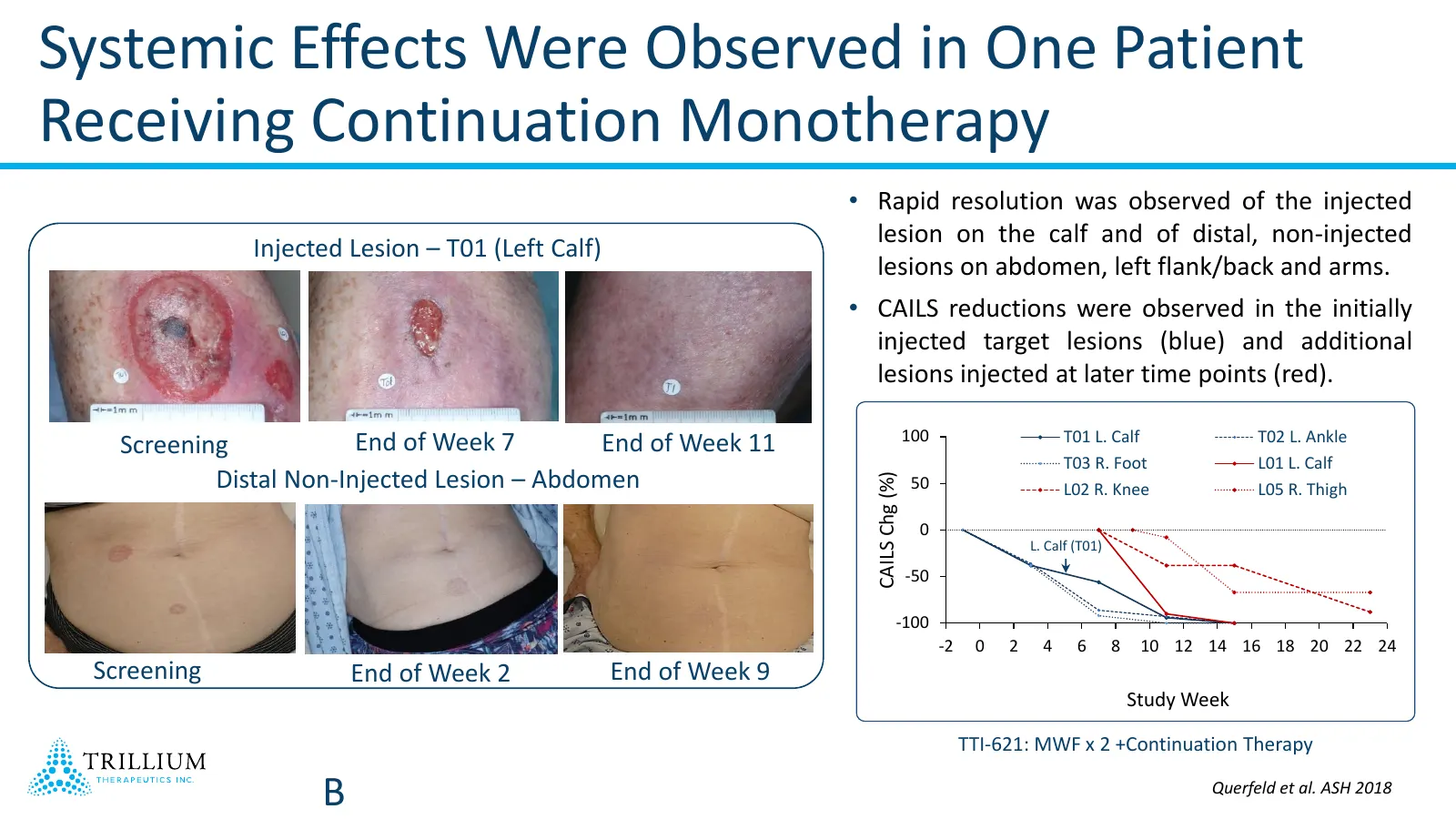
Slide 16: Systemic Effects Were Observed in One Patient Receiving Continuation Monotherapy
Systemic Effects Were Observed in One Patient Receiving Continuation Monotherapy • Rapid resolution was observed of the injected lesion on the calf and of distal, non-injected Injected Lesion – T01 (Left Calf) lesions on abdomen, left flank/back and arms. • CAILS reductions were observed in the init
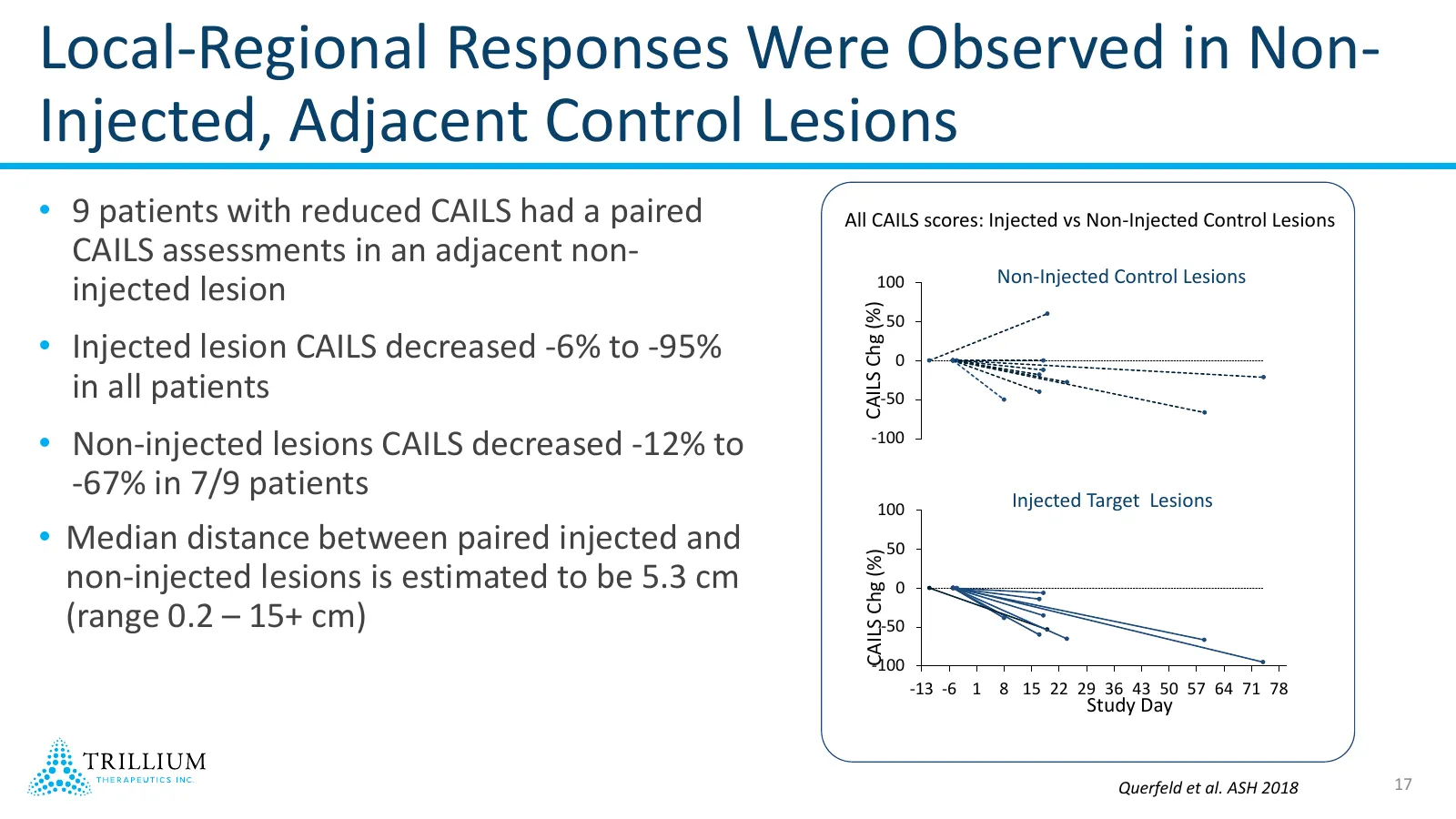
Slide 17: Local-Regional Responses Were Observed in Non-Injected, Adjacent Control Lesions
Local-Regional Responses Were Observed in Non- Injected, Adjacent Control Lesions • 9 patients with reduced CAILS had a paired All CAILS scores: Injected vs Non-Injected Control Lesions CAILS assessments in an adjacent non- Non-Injected Control Lesions injected lesion 100 CAILS Chg (%) 50 • Injected
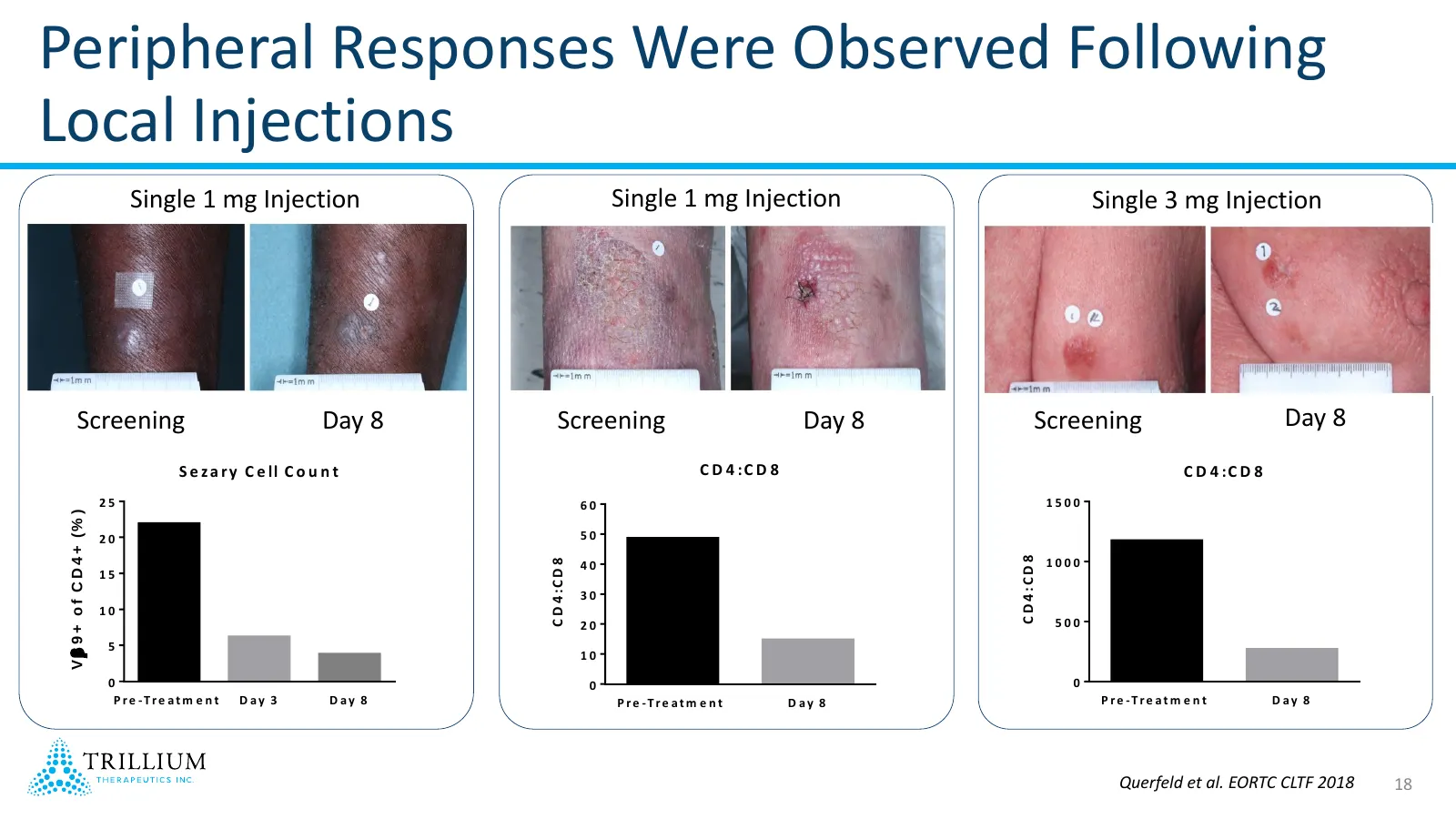
Slide 18: Peripheral Responses Were Observed Following Local Injections
Peripheral Responses Were Observed Following Local Injections Single 1 mg Injection Single 1 mg Injection Single 3 mg Injection Screening Day 8 Screening Day 8 Screening Day 8 S e z a r y C e ll C o u n t C D 4 :C D 8 C D 4 :C D 8 25 60 1500 V 9 + o f C D 4 + (% ) 20 50 C D 4 :C D 8 C D 4 :C D 8 4
Slide 19: Summary
Summary • TTI-621 is a novel dual function decoy receptor that blocks the CD47 “do not eat” signal and delivers an activating signal through FcRs • TTI-621 is differentiated from other CD47 blocking agents by its potent IgG1 Fc and lack of RBC binding • Intratumoral delivery of TTI-621 has been show
Slide 20: Acknowledgements
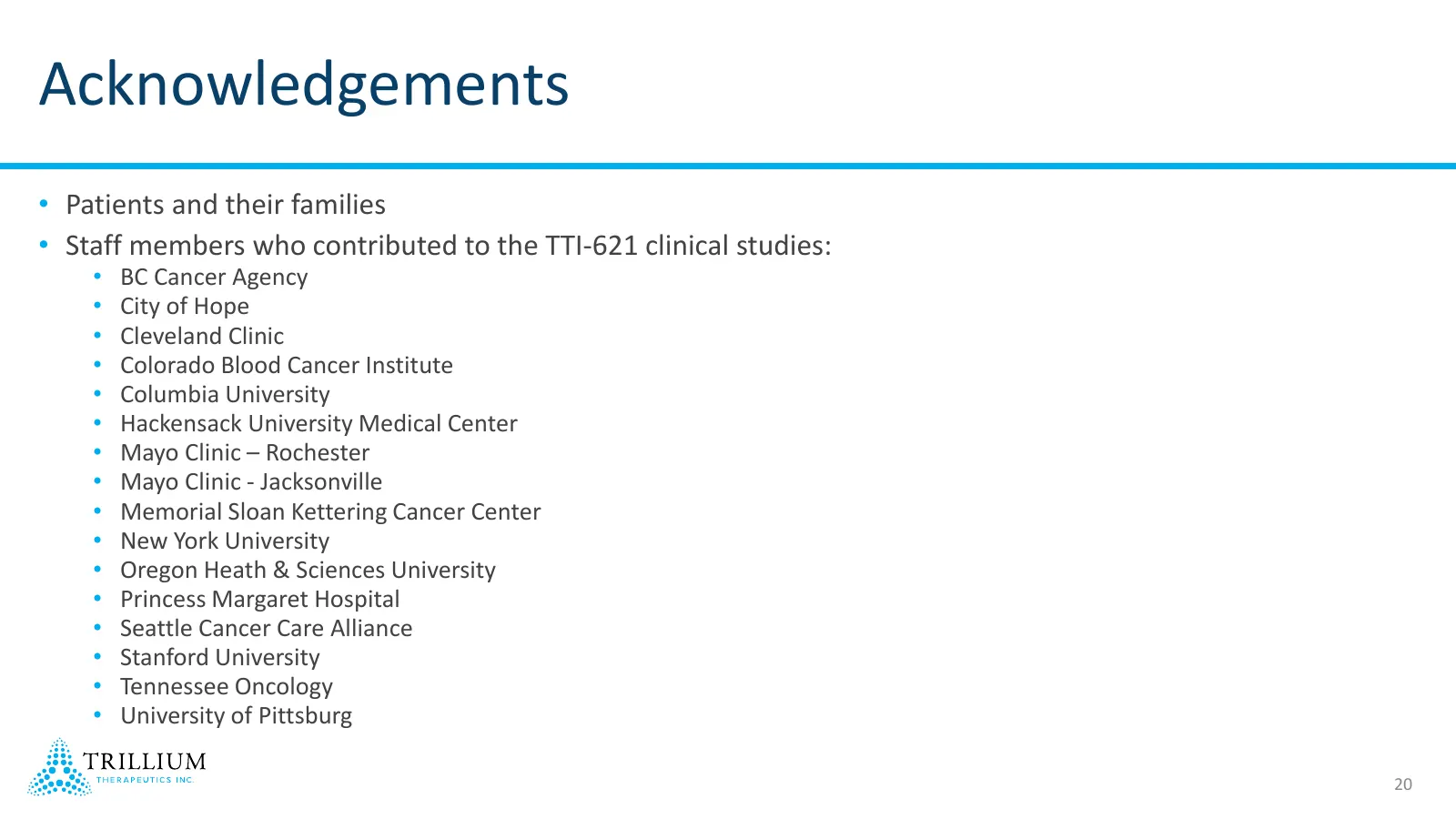
Acknowledgements • Patients and their families • Staff members who contributed to the TTI-621 clinical studies: • BC Cancer Agency • City of Hope • Cleveland Clinic • Colorado Blood Cancer Institute • Columbia University • Hackensack University Medical Center • Mayo Clinic – Rochester • Mayo Clinic

Slide 21: Trillium Therapeutics Inc. is an immuno-oncology company
Trillium Therapeutics Inc. (NASDAQ/TSX:TRIL) is an immuno-oncology company dedicated to the discovery & development of novel and innovative cancer therapies
Slide 22: CAILS Responses Occurred Rapidly Within the 2-Week Induction Period
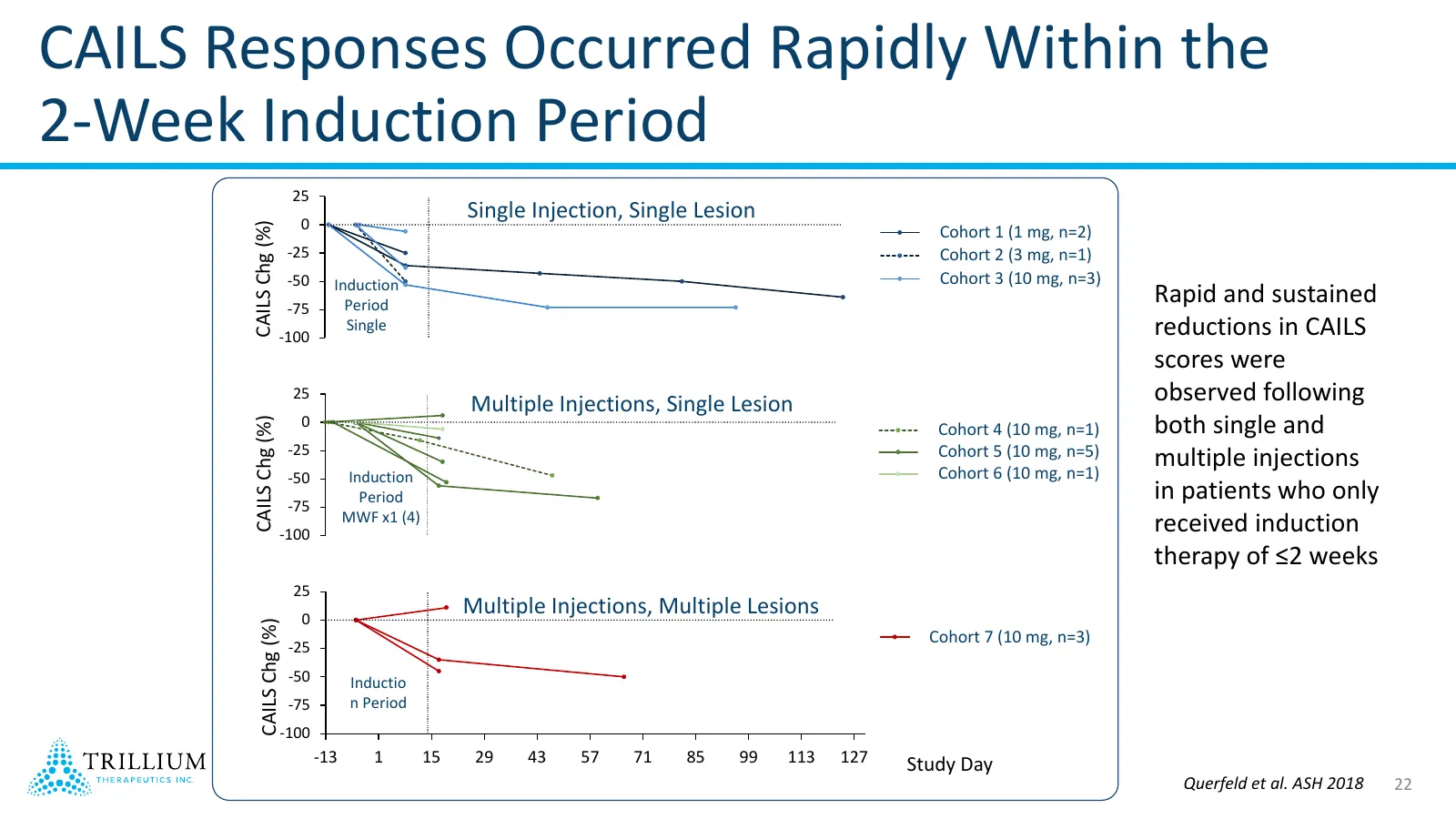
CAILS Responses Occurred Rapidly Within the 2-Week Induction Period 25 0 Single Injection, Single Lesion CAILS Chg (%) Cohort 1 (1 mg, n=2) -25 Cohort 2 (3 mg, n=1) -50 Induction Cohort 3 (10 mg, n=3) -75 Period Rapid and sustained -100 Single reductions in CAILS scores were 25 Multiple Injections,
Source: Internet Archive copy of trilliumtherapeutics.com