Athersys, Inc. · OTC:ATHXQ
Athersys — Investor Presentation (May 2020)
40 slides from Athersys's investor presentation, May 2020
Slide 1: Company Overview
Company Overview May 2020 NASDAQ: ATHX www.Athersys.com 1

Slide 2: Forward Looking Statements
Forward Looking Statements This presentation has been prepared solely for informational purposes. This presentation includes, and our responses to various questions may include, “forward-looking statements” within the meaning of Section 27A of the Securities Act of 1933, as amended, or the Securitie
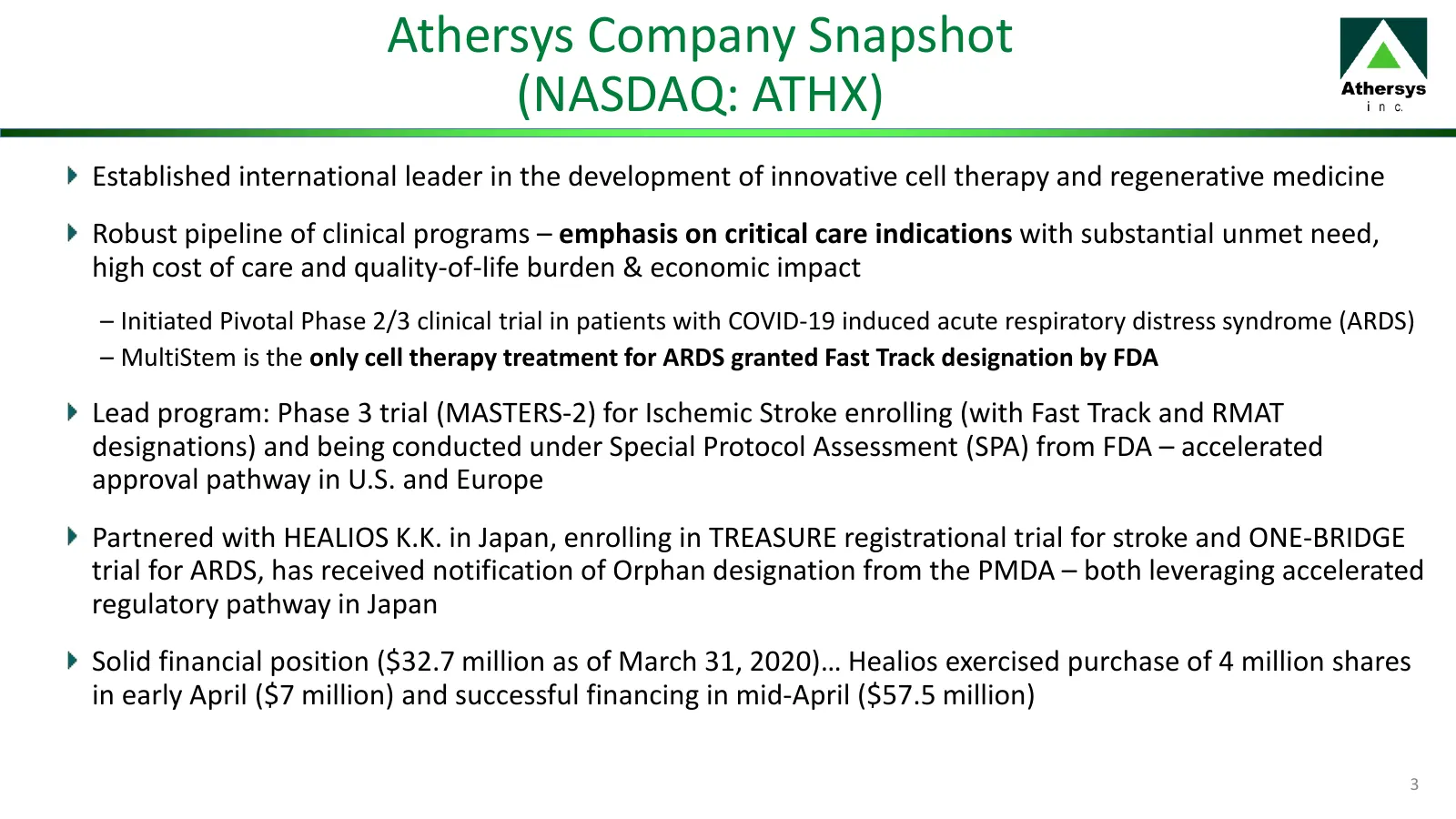
Slide 3: Athersys Company Snapshot
Athersys Company Snapshot (NASDAQ: ATHX) Established international leader in the development of innovative cell therapy and regenerative medicine Robust pipeline of clinical programs – emphasis on critical care indications with substantial unmet need, high cost of care and quality-of-life burden & e
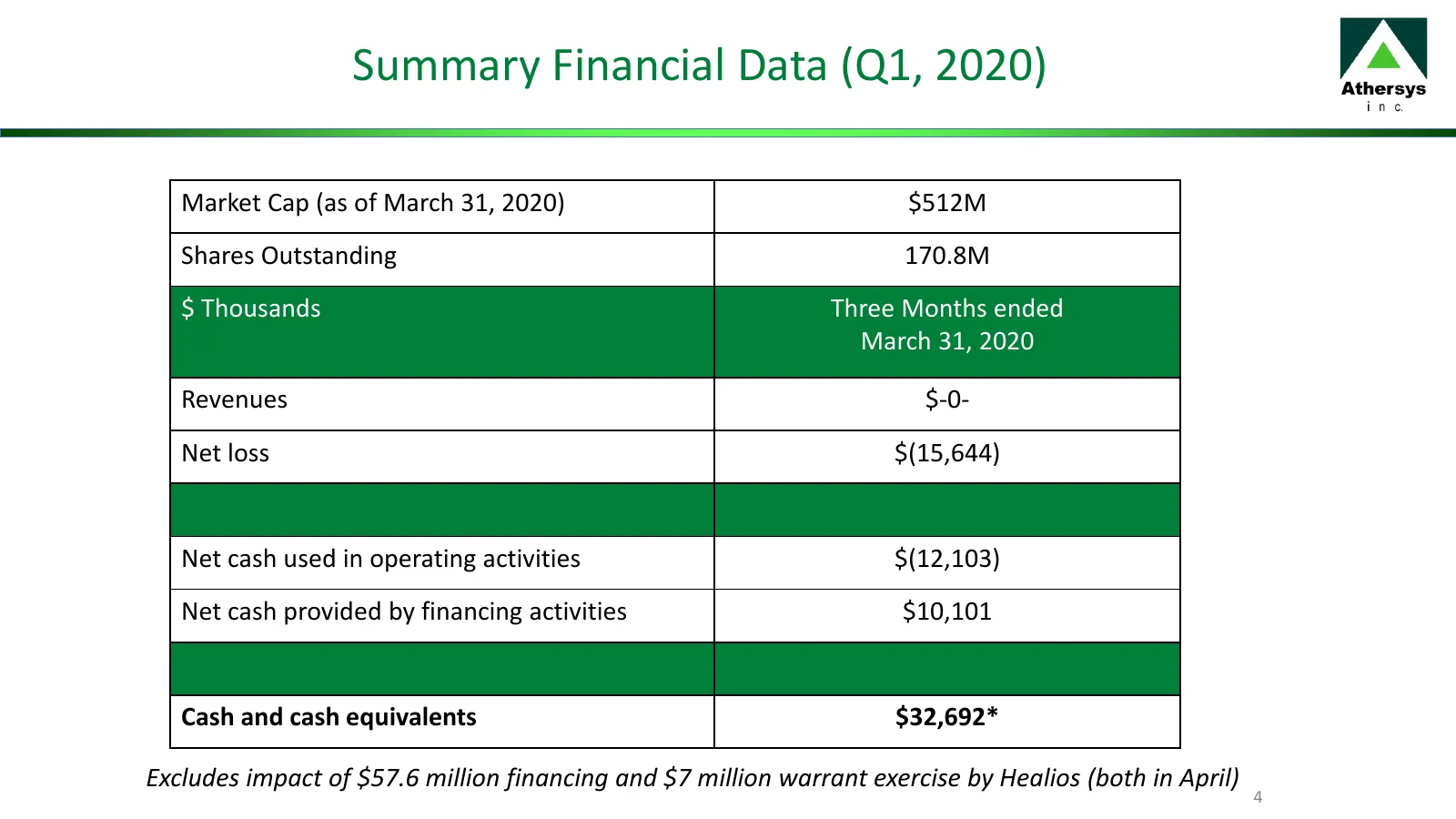
Slide 4: Summary Financial Data (Q1, 2020)
Summary Financial Data (Q1, 2020) Market Cap (as of March 31, 2020) $512M Shares Outstanding 170.8M $ Thousands Three Months ended March 31, 2020 Revenues $-0- Net loss $(15,644) Net cash used in operating activities $(12,103) Net cash provided by financing activities $10,101 Cash and cash equivalen
Slide 5: ATHX Regenerative Medicine Pipeline
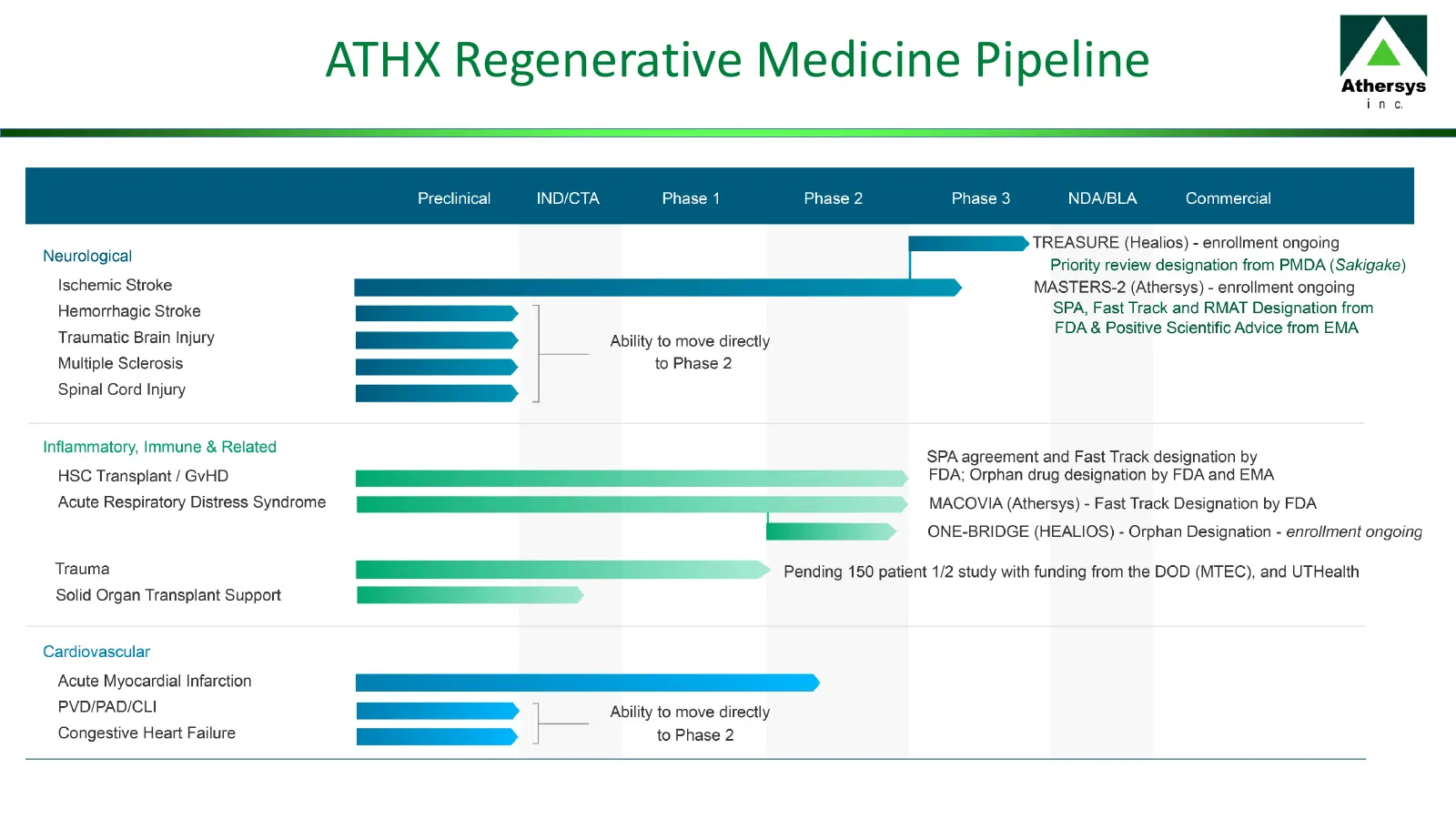
ATHX Regenerative Medicine Pipeline 5
Slide 6: Experienced Executive Leadership
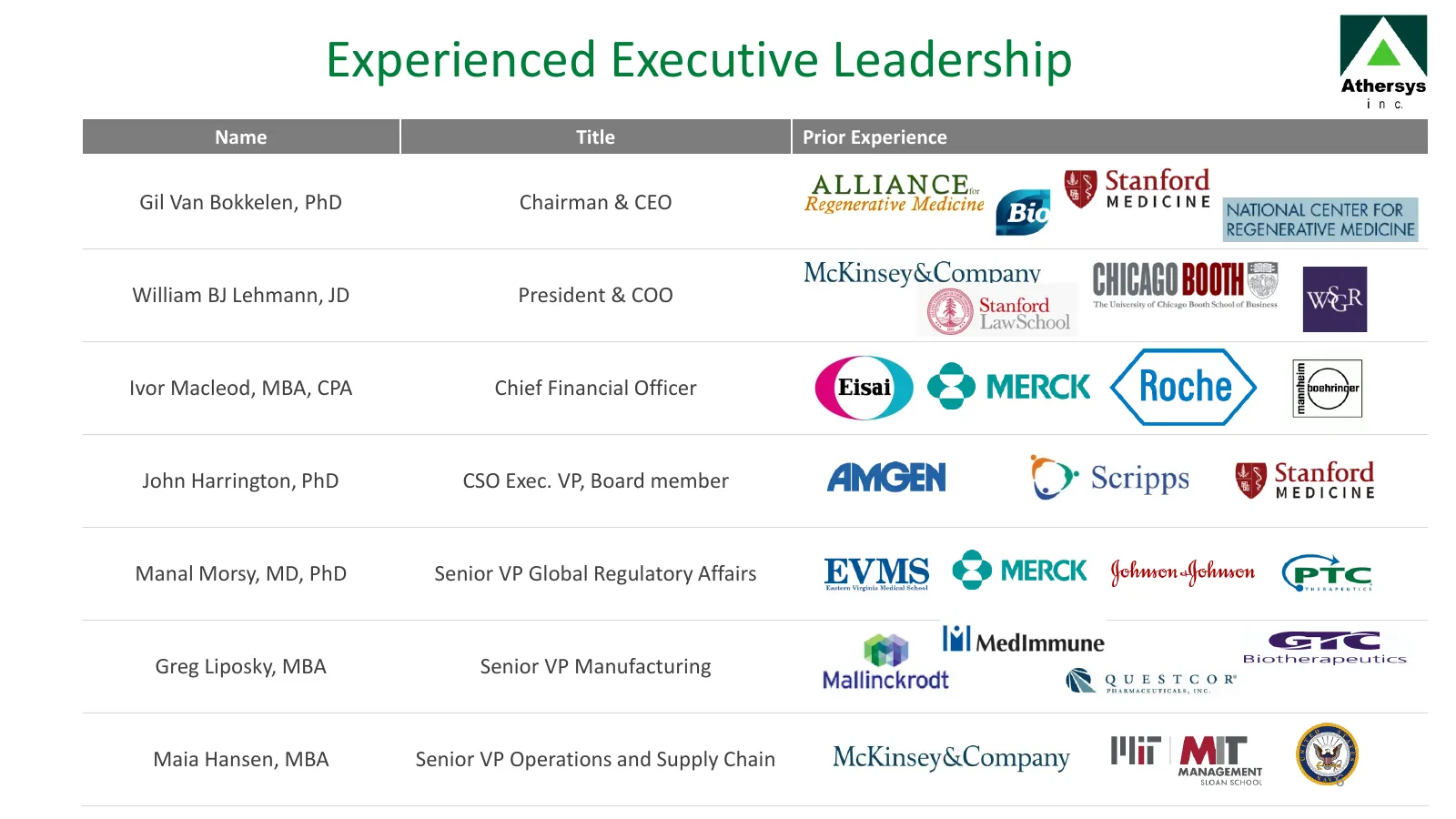
Experienced Executive Leadership Name Title Prior Experience Gil Van Bokkelen, PhD Chairman & CEO William BJ Lehmann, JD President & COO McKinsey & Company, Inc.; Wilson,, and B.A. from the University of Notre Dame) Ivor Macleod, MBA, CPA Chief Financial Officer Amgen; Scripps Clinic (Ph.D. in Cance
Slide 7: Overview: MultiStem Cell Therapy
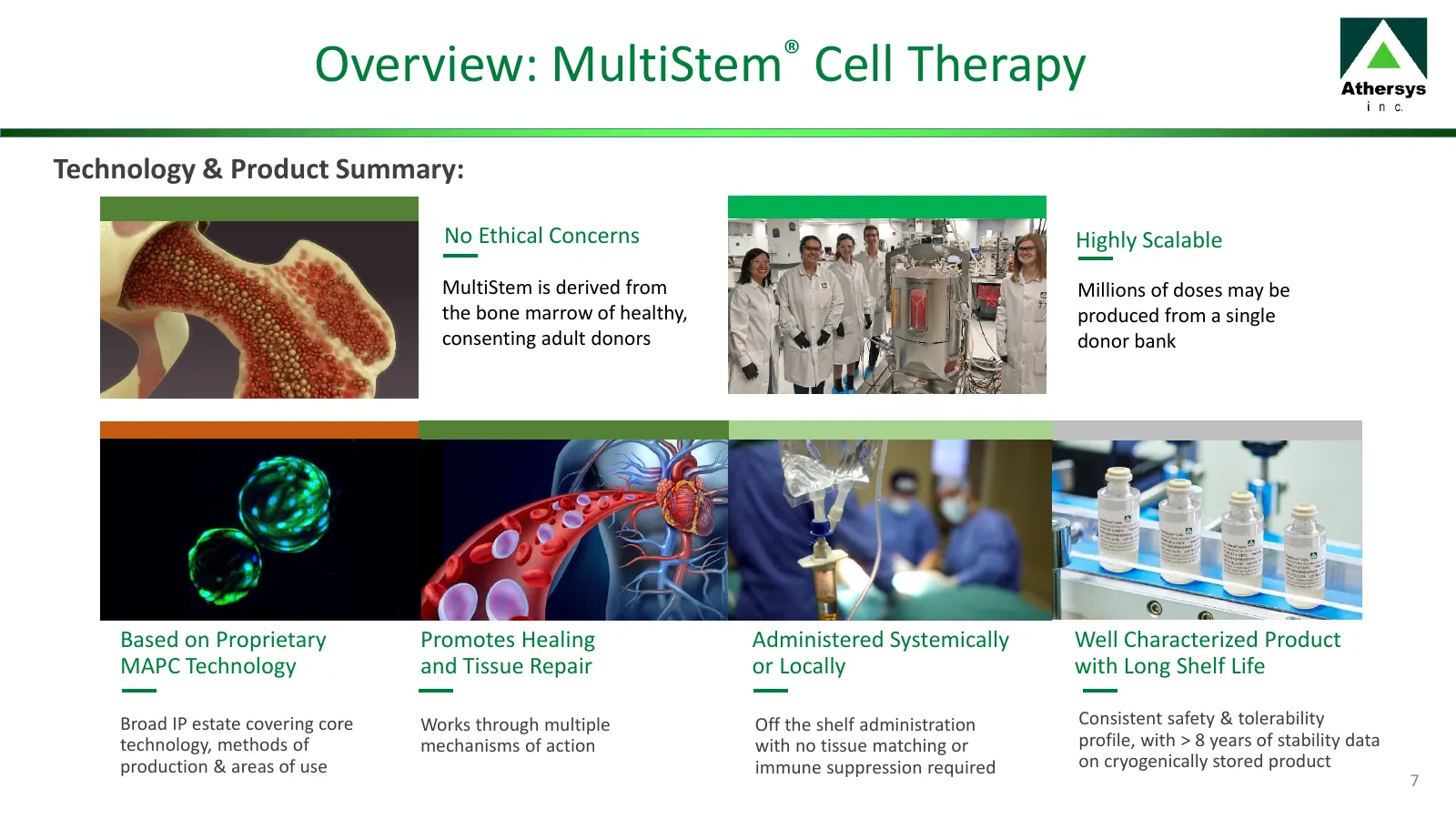
Overview: MultiStem® Cell Therapy Technology & Product Summary: No Ethical Concerns Highly Scalable MultiStem is derived from Millions of doses may be the bone marrow of healthy, produced from a single consenting adult donors donor bank Based on Proprietary Promotes Healing Administered Systemically
Slide 8: Easy to Administer
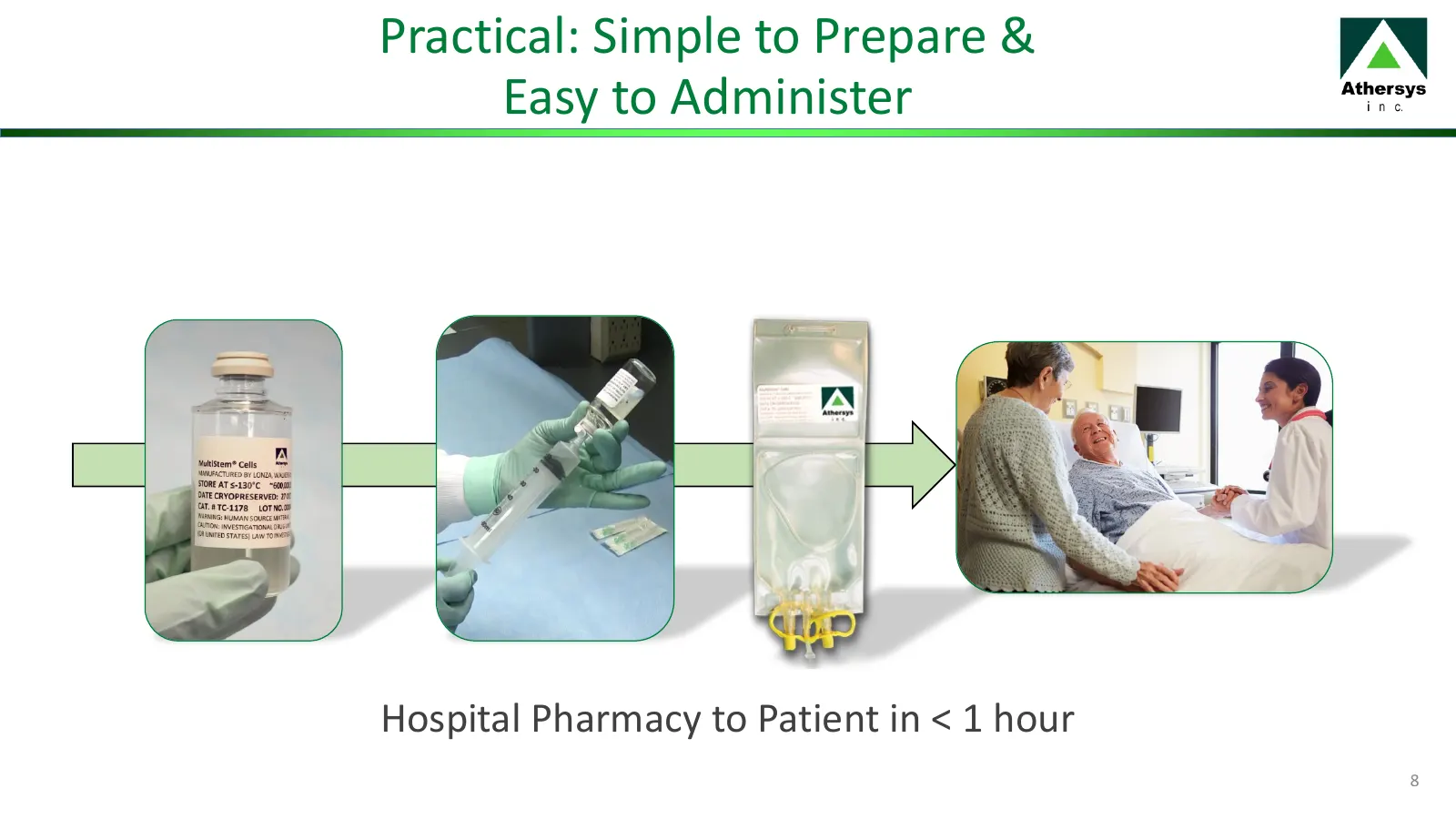
Practical: Simple to Prepare & Easy to Administer Hospital Pharmacy to Patient in < 1 hour 8
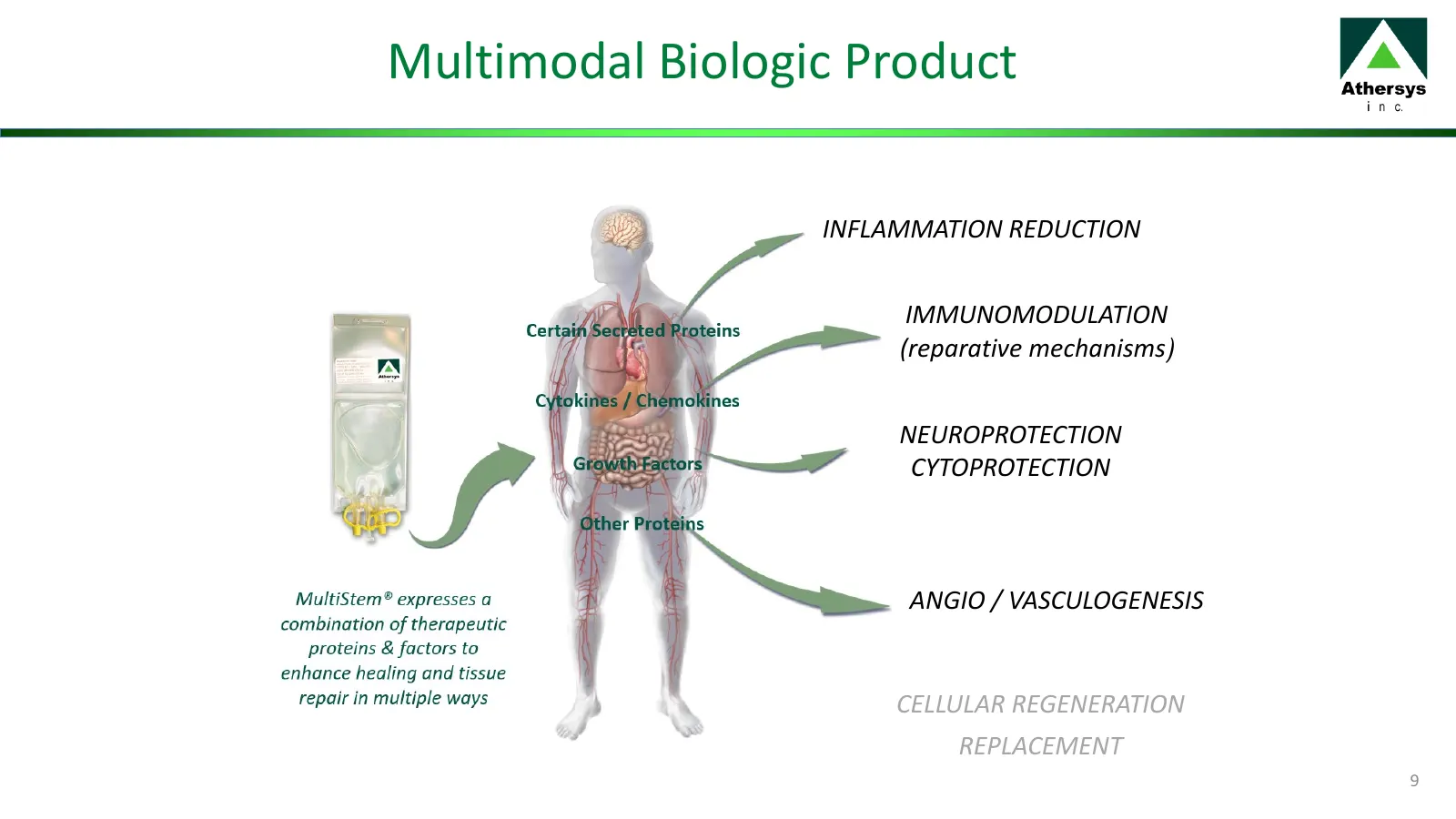
Slide 9: Multimodal Biologic Product
Multimodal Biologic Product INFLAMMATION REDUCTION IMMUNOMODULATION (reparative mechanisms) NEUROPROTECTION CYTOPROTECTION ANGIO / VASCULOGENESIS CELLULAR REGENERATION REPLACEMENT 9
Slide 10: MultiStem Therapy for ARDS
MultiStem Therapy for ARDS 10
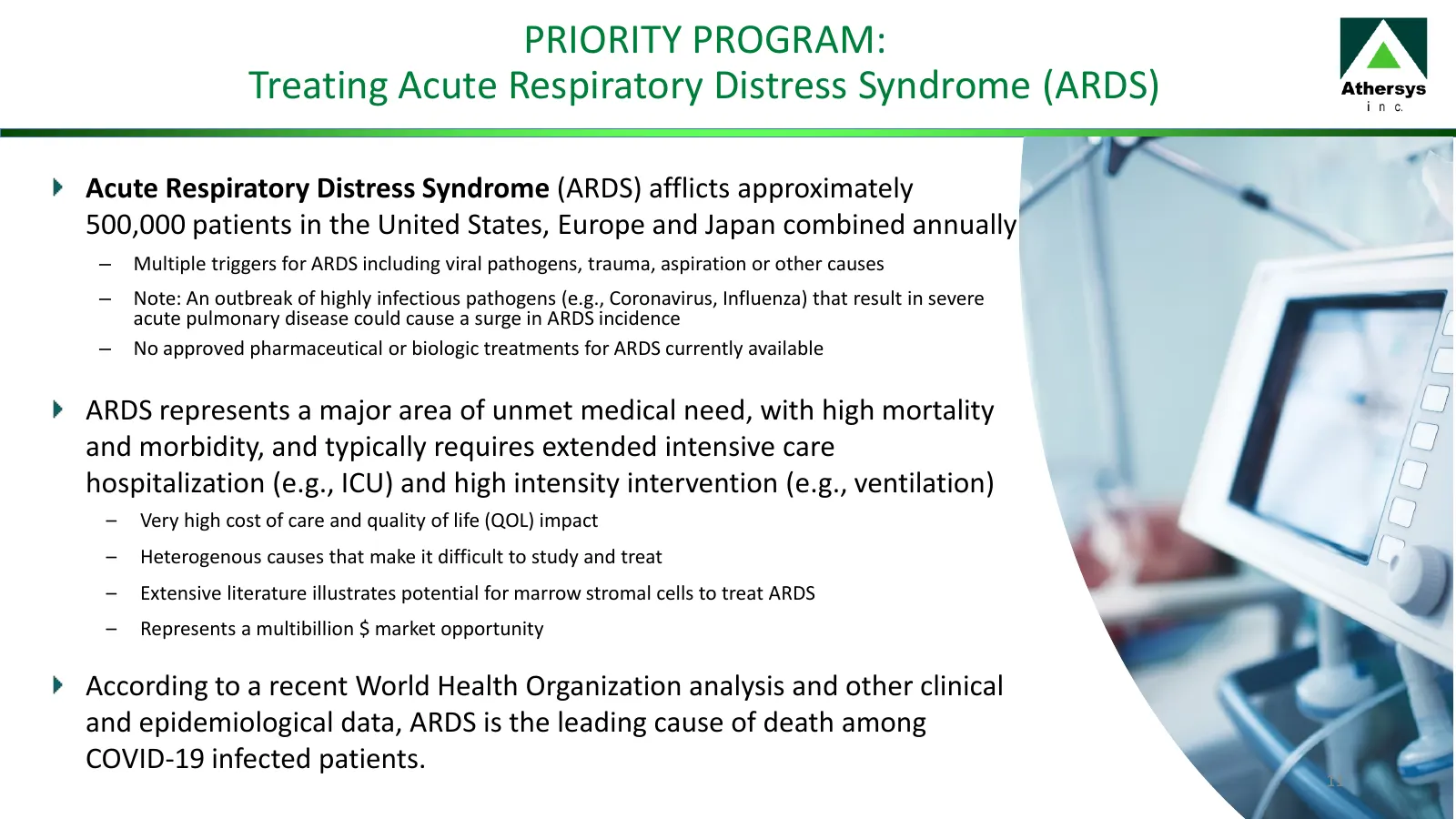
Slide 11: Priority Program: Treating Acute Respiratory Distress Syndrome (ARDS)
PRIORITY PROGRAM: Treating Acute Respiratory Distress Syndrome (ARDS) Acute Respiratory Distress Syndrome (ARDS) afflicts approximately 500,000 patients in the United States, Europe and Japan combined annually – Multiple triggers for ARDS including viral pathogens, trauma, aspiration or other causes
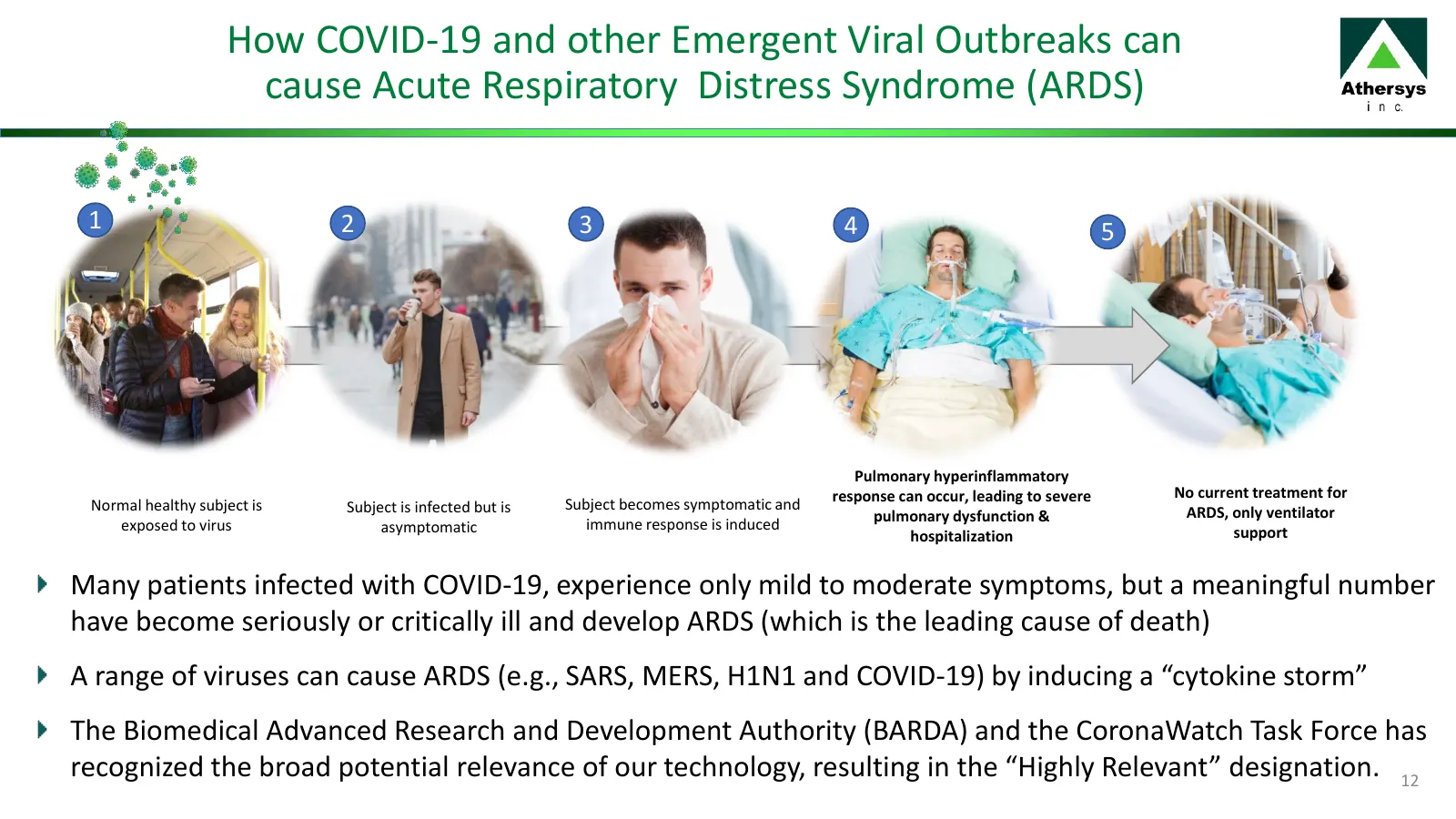
Slide 12: How COVID-19 and other Viral Outbreaks can cause ARDS
How COVID-19 and other Emergent Viral Outbreaks can cause Acute Respiratory Distress Syndrome (ARDS) 1 2 3 4 5 Pulmonary hyperinflammatory response can occur, leading to severe No current treatment for Normal healthy subject is Subject is infected but is Subject becomes symptomatic and ARDS, only ve
Slide 13: Traditional Countermeasures May Not Be Sufficient
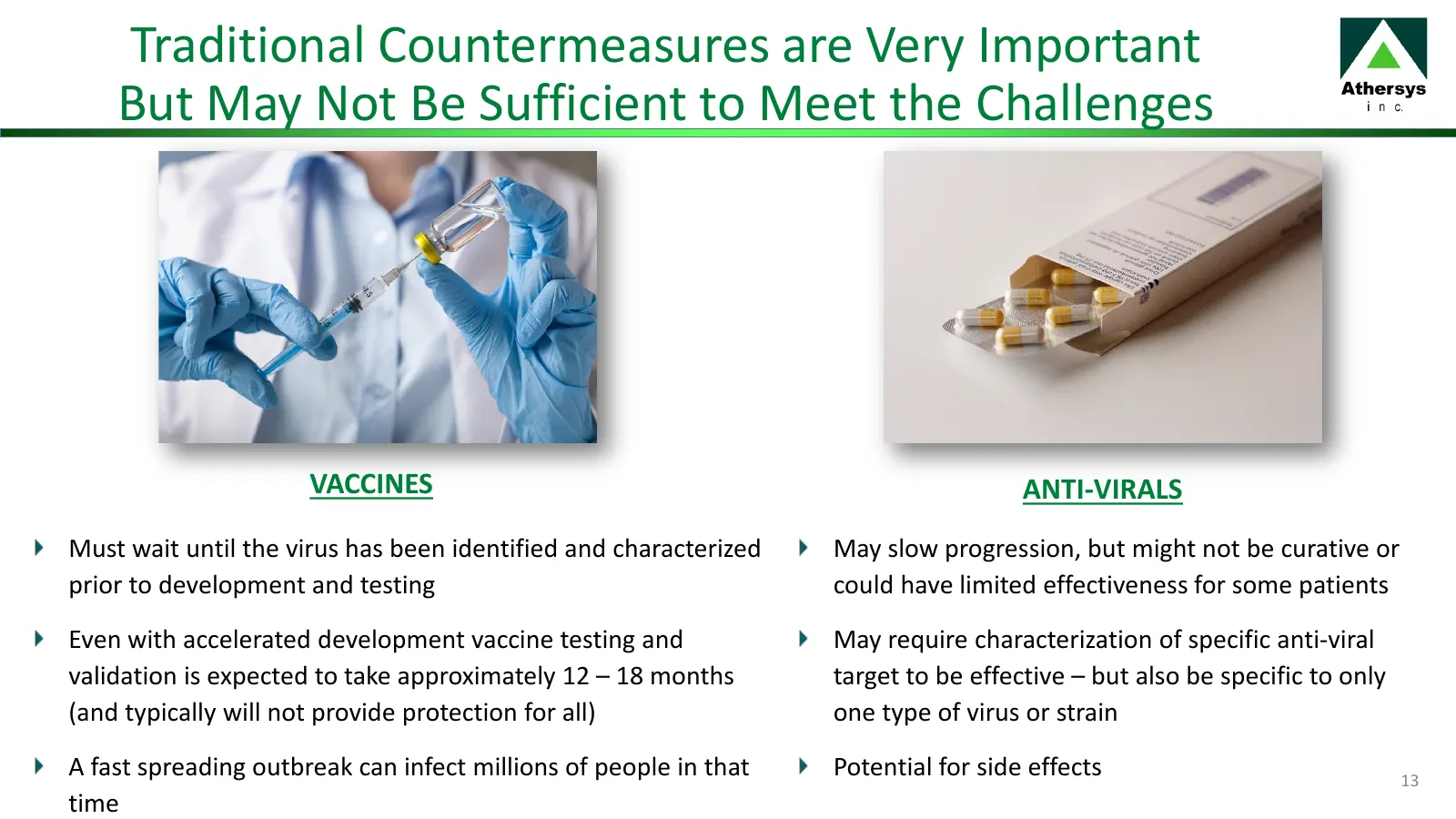
Traditional Countermeasures are Very Important But May Not Be Sufficient to Meet the Challenges VACCINES ANTI-VIRALS Must wait until the virus has been identified and characterized May slow progression, but might not be curative or prior to development and testing could have limited effectiveness fo
Slide 14: Acute Respiratory Distress Syndrome (ARDS)
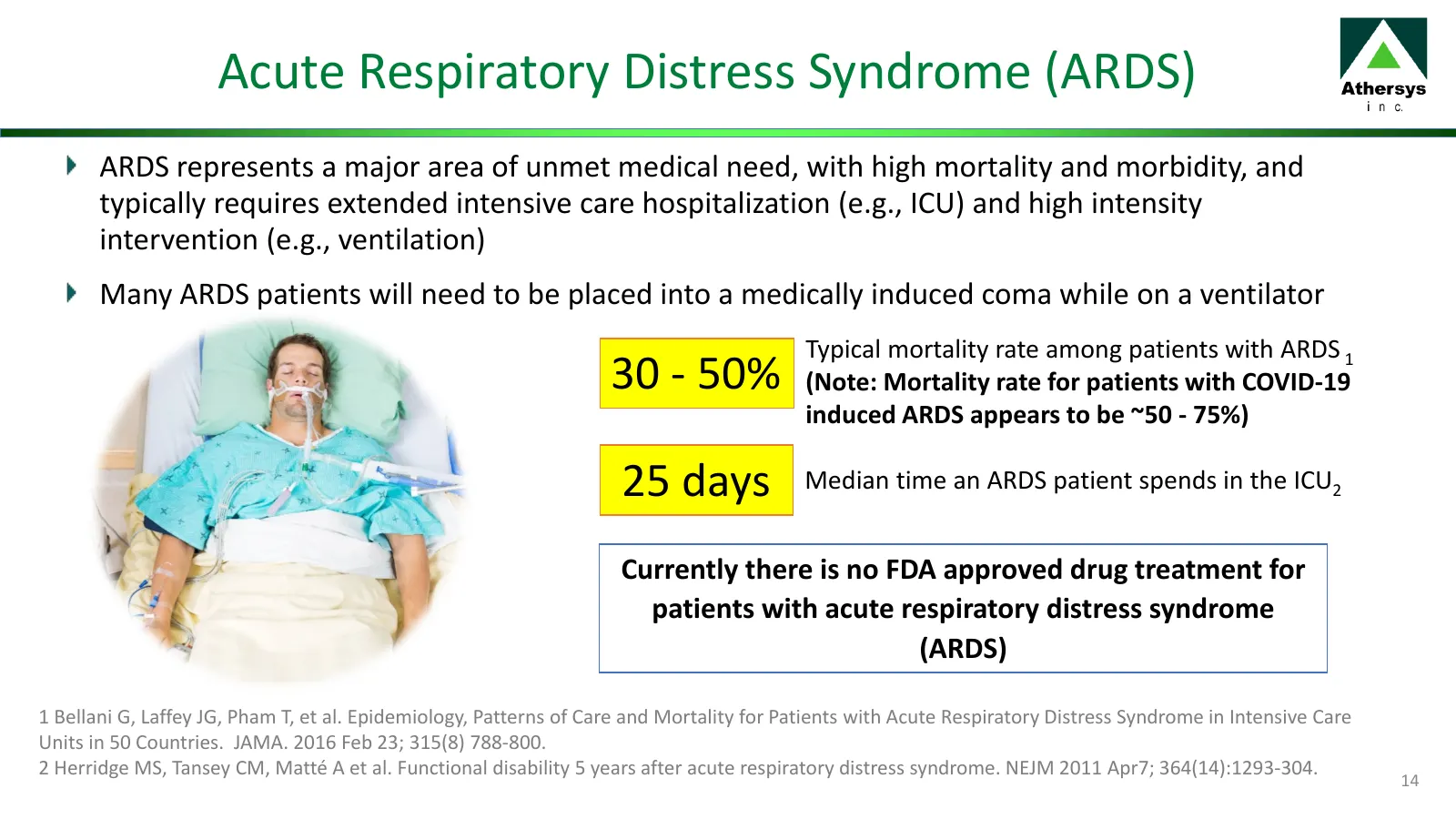
Acute Respiratory Distress Syndrome (ARDS) ARDS represents a major area of unmet medical need, with high mortality and morbidity, and typically requires extended intensive care hospitalization (e.g., ICU) and high intensity intervention (e.g., ventilation) Many ARDS patients will need to be placed i
Slide 15: Life After ARDS – For many, the struggles continue
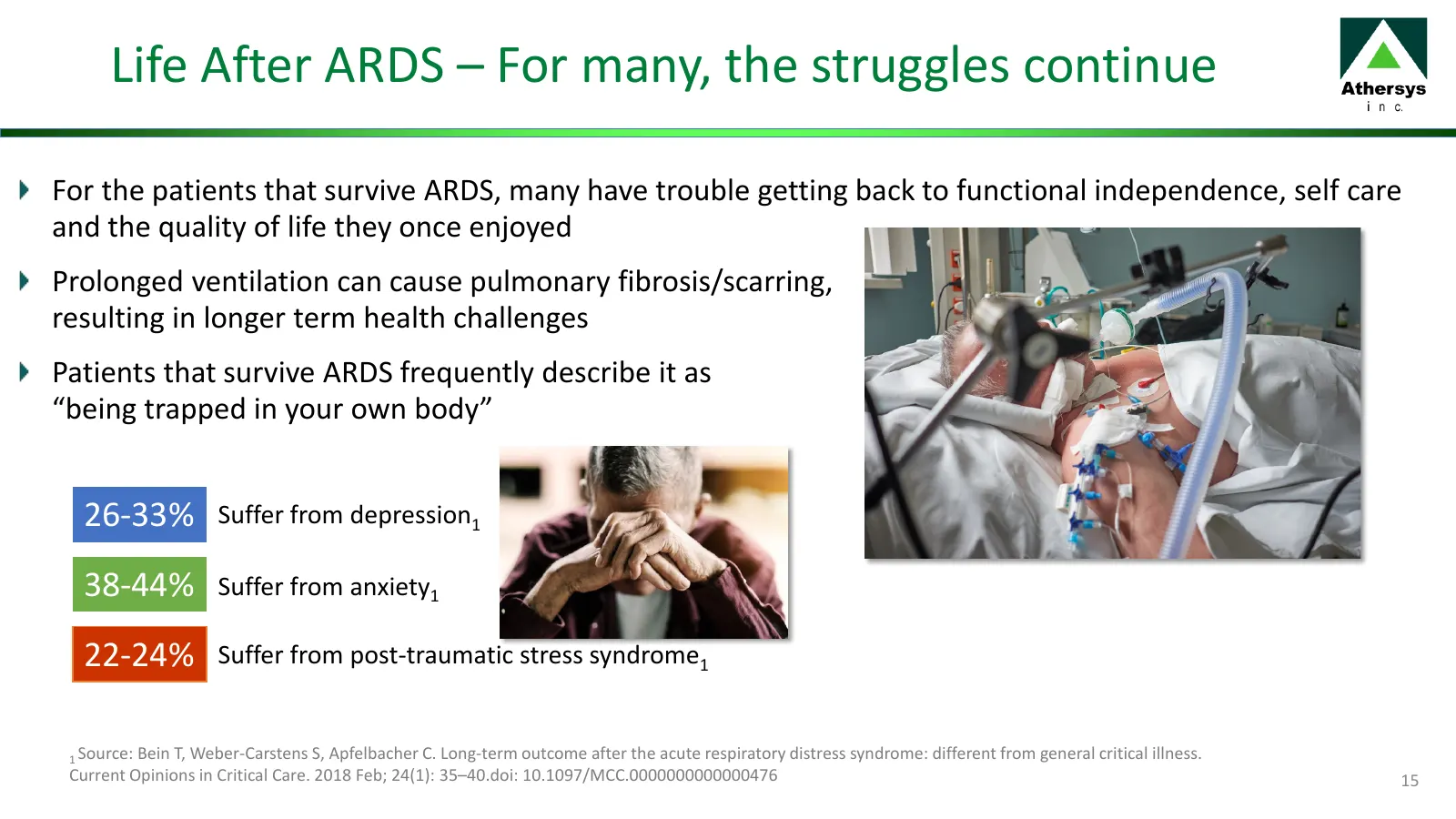
Life After ARDS – For many, the struggles continue For the patients that survive ARDS, many have trouble getting back to functional independence, self care and the quality of life they once enjoyed Prolonged ventilation can cause pulmonary fibrosis/scarring, resulting in longer term health challenge
Slide 16: MultiStem Reduces Inflammation in Human Donor Lungs
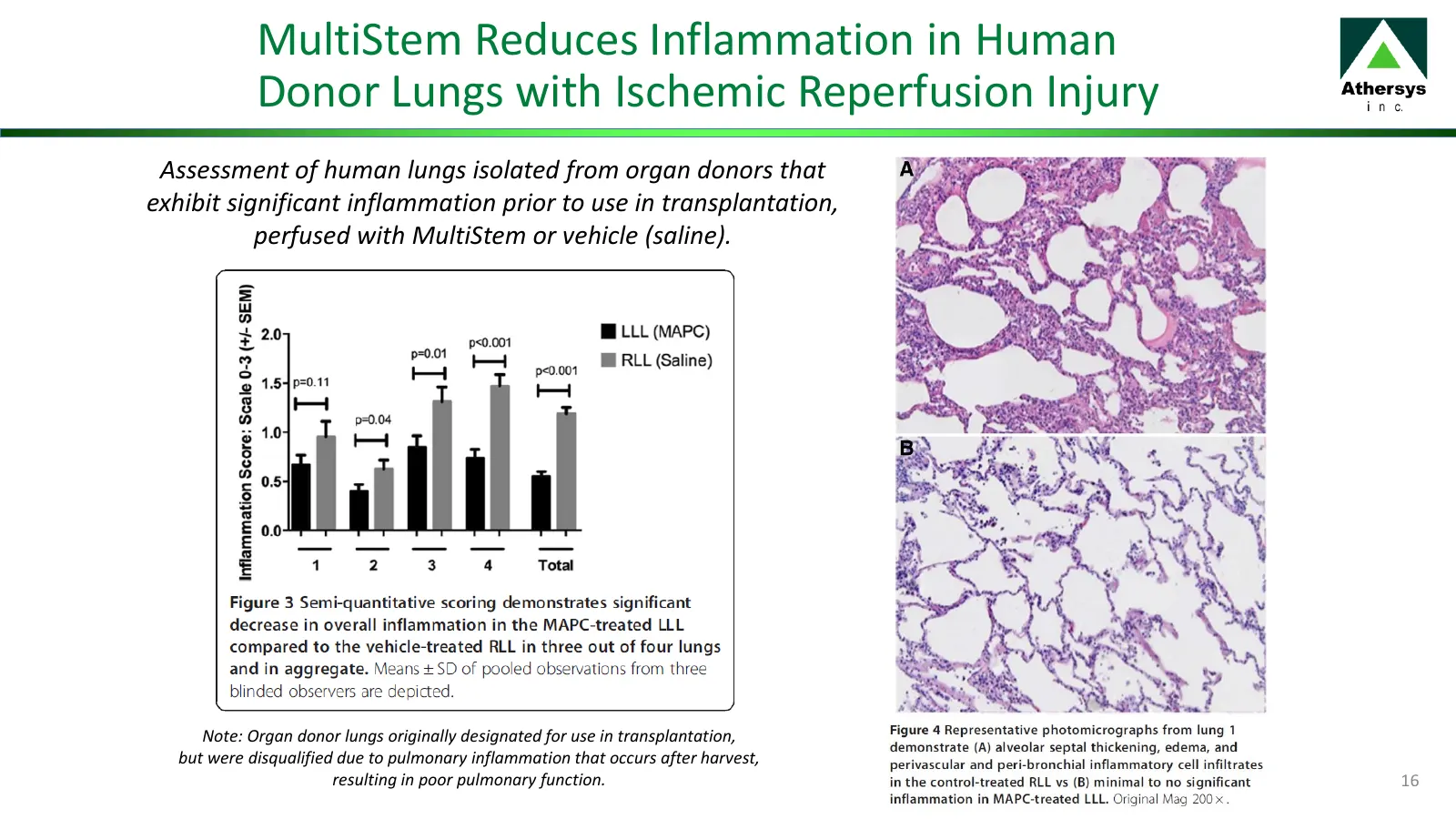
MultiStem Reduces Inflammation in Human Donor Lungs with Ischemic Reperfusion Injury Assessment of human lungs isolated from organ donors that exhibit significant inflammation prior to use in transplantation, perfused with MultiStem or vehicle (saline). Note: Organ donor lungs originally designated
Slide 17: MUST-ARDS Trial – Primary Results
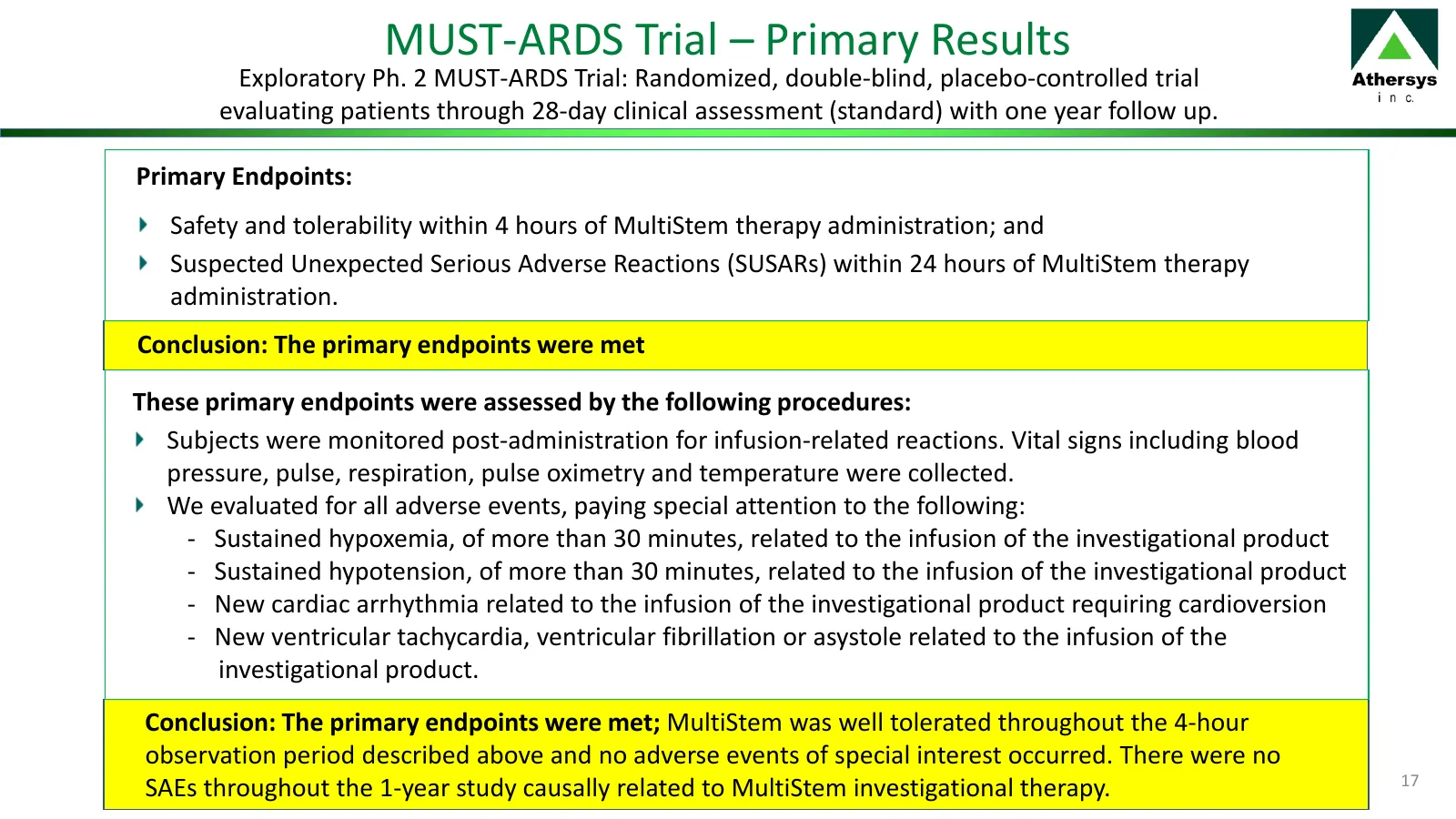
MUST-ARDS Trial – Primary Results Exploratory Ph. 2 MUST-ARDS Trial: Randomized, double-blind, placebo-controlled trial evaluating patients through 28-day clinical assessment (standard) with one year follow up. Primary Endpoints: Safety and tolerability within 4 hours of MultiStem therapy administra
Slide 18: MUST-ARDS Trial – Primary Results (ATS 2019)
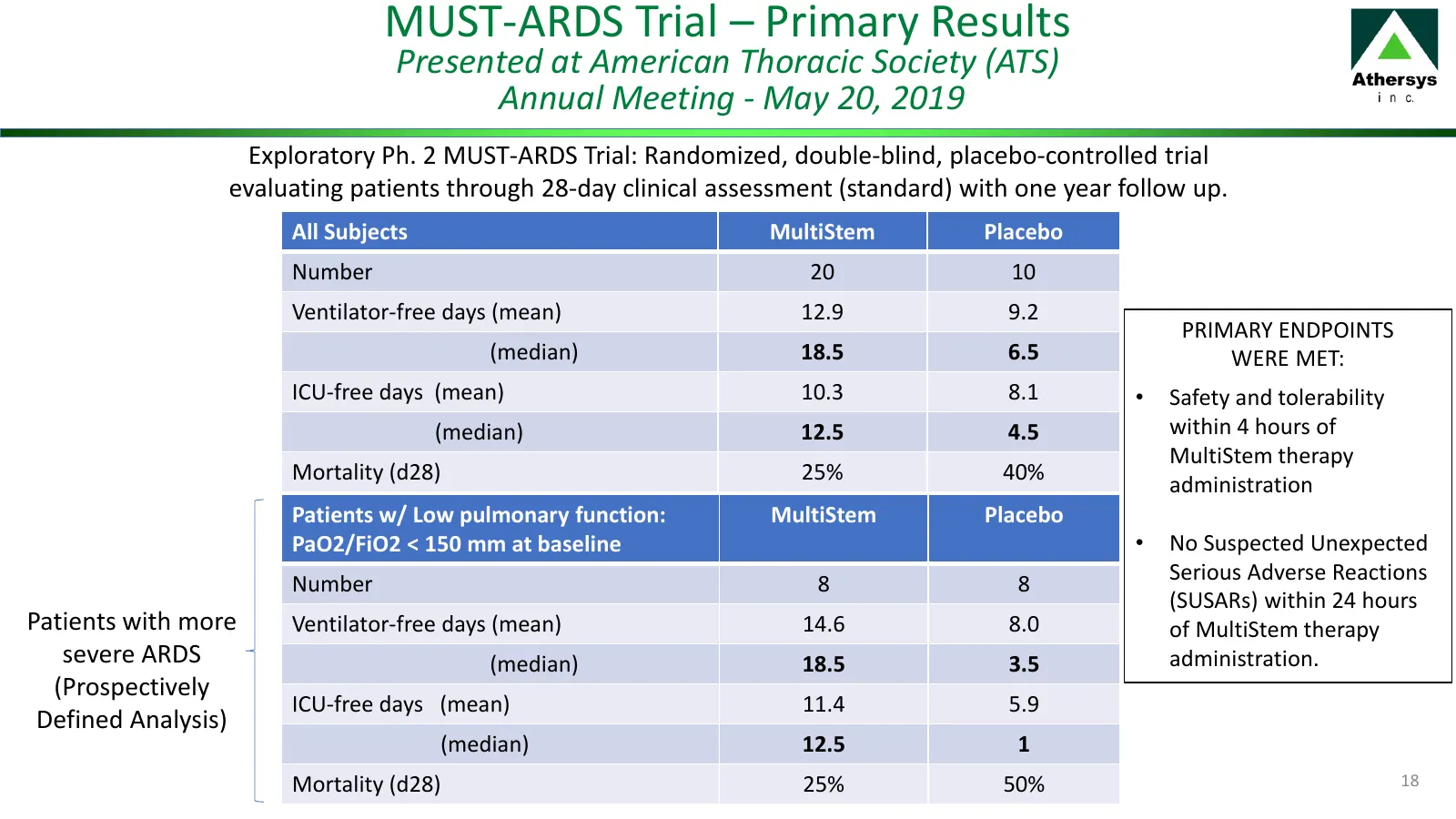
MUST-ARDS Trial – Primary Results Presented at American Thoracic Society (ATS) Annual Meeting - May 20, 2019 Exploratory Ph. 2 MUST-ARDS Trial: Randomized, double-blind, placebo-controlled trial evaluating patients through 28-day clinical assessment (standard) with one year follow up. All Subjects M
Slide 19: Healios ONE-BRIDGE study in Japan and pneumonia-induced ARDS
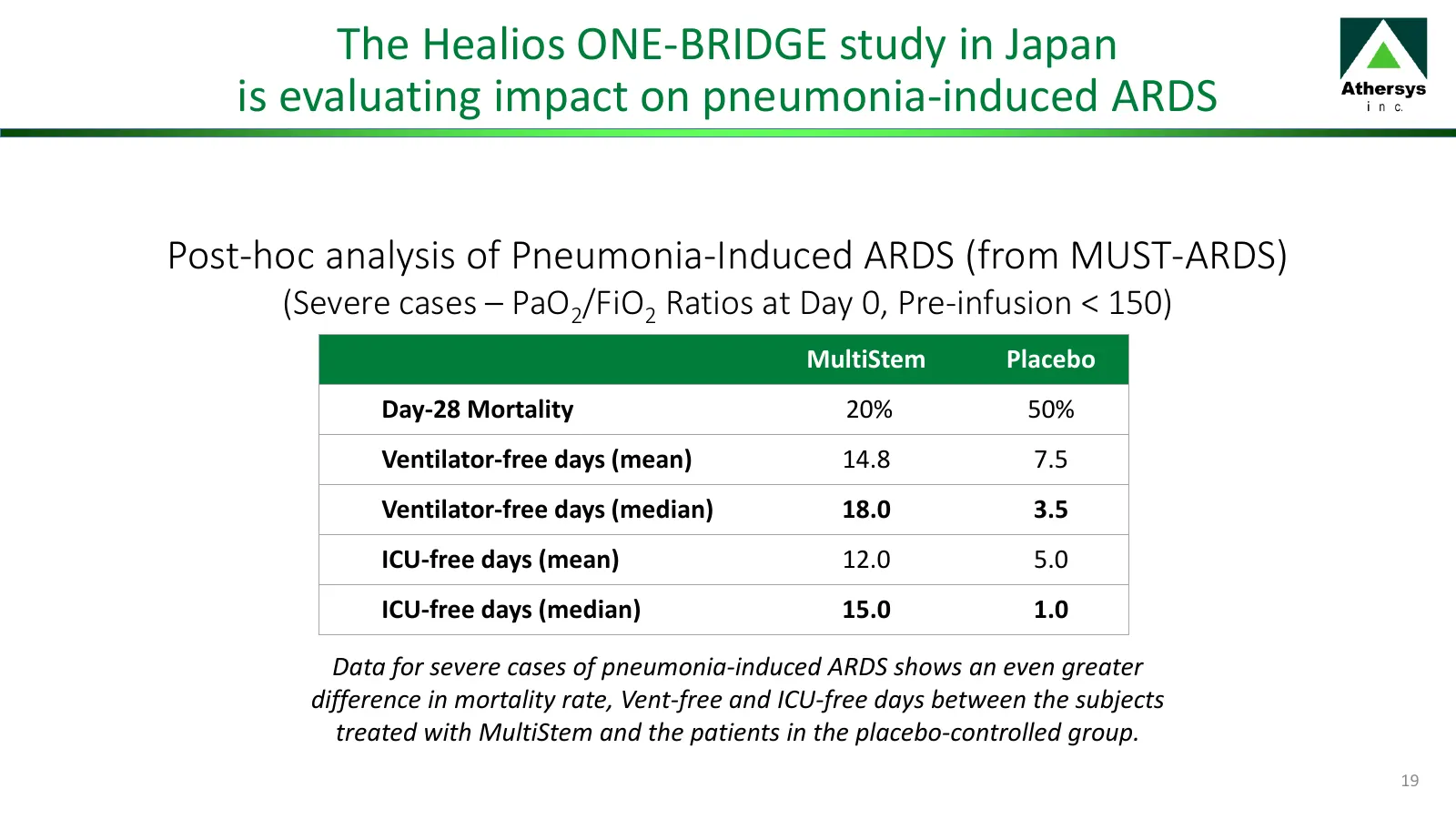
The Healios ONE-BRIDGE study in Japan is evaluating impact on pneumonia-induced ARDS Post-hoc analysis of Pneumonia-Induced ARDS (from MUST-ARDS) (Severe cases – PaO2/FiO2 Ratios at Day 0, Pre-infusion < 150) MultiStem Placebo Day-28 Mortality 20% 50% Ventilator-free days (mean) 14.8 7.5 Ventilator-
Slide 20: Other Key Findings from MUST-ARDS Trial
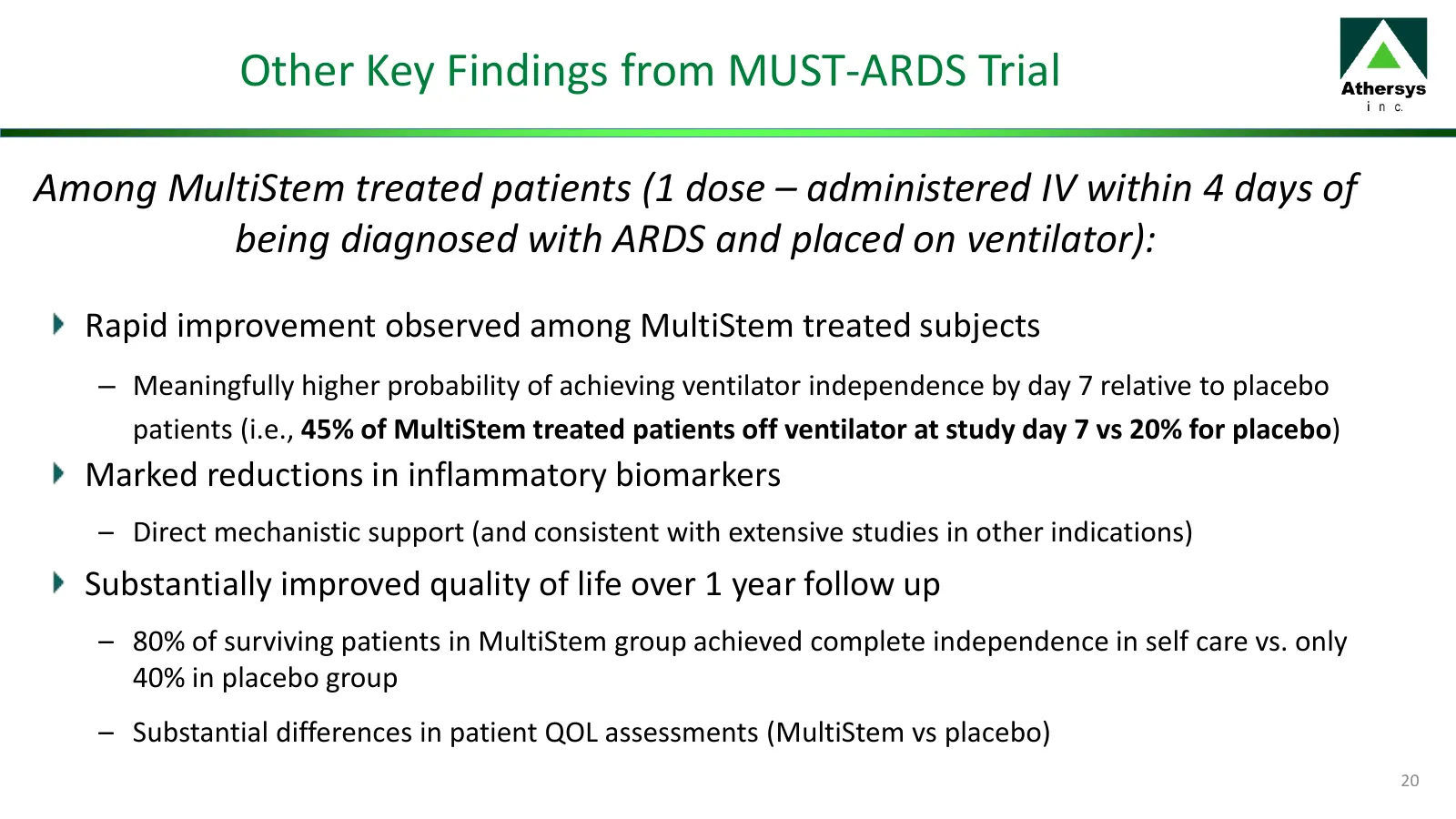
Other Key Findings from MUST-ARDS Trial Among MultiStem treated patients (1 dose – administered IV within 4 days of being diagnosed with ARDS and placed on ventilator): Rapid improvement observed among MultiStem treated subjects – Meaningfully higher probability of achieving ventilator independence
Slide 21: Why MultiStem is uniquely suited for Emergent Viral Outbreaks
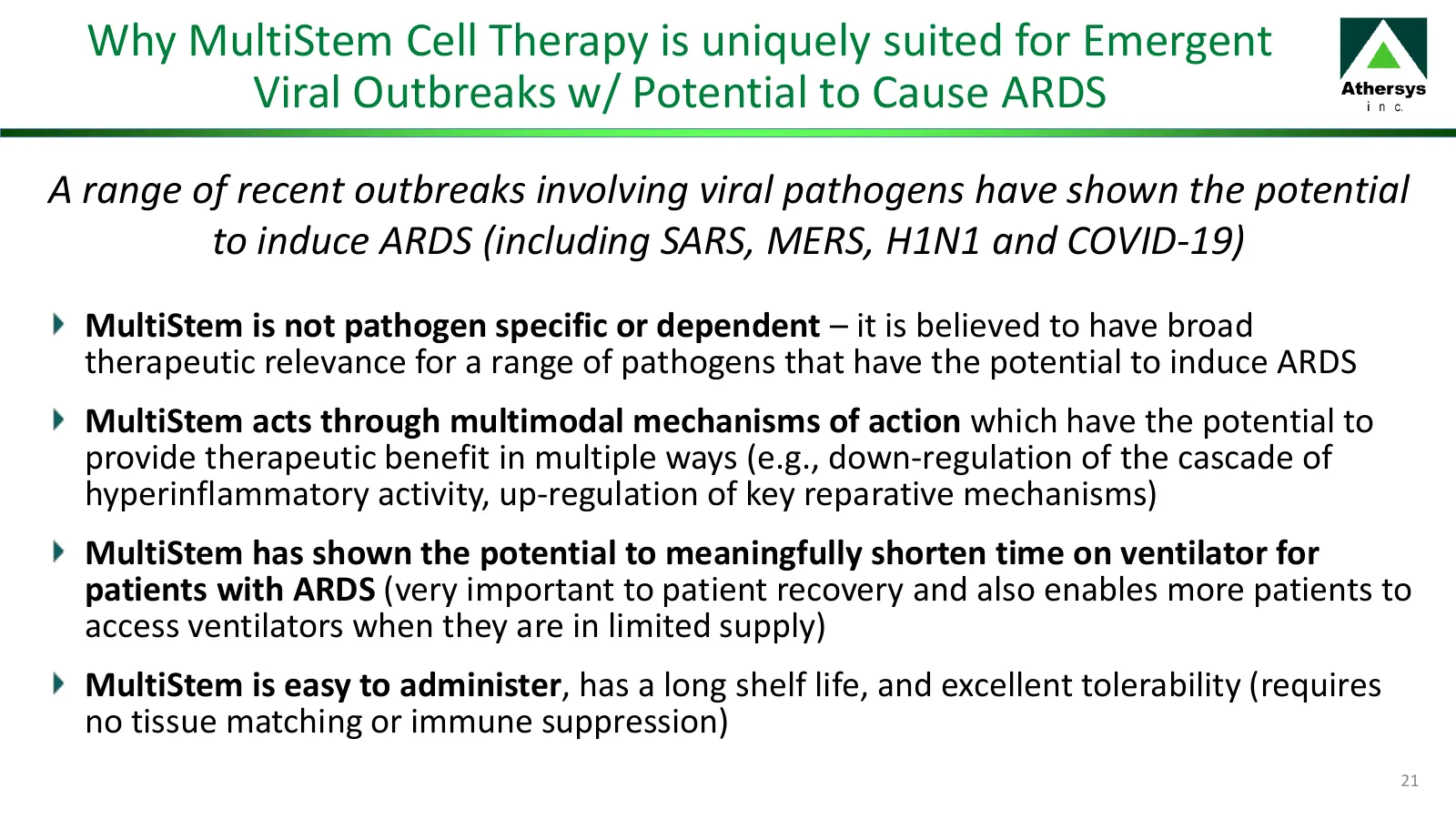
Why MultiStem Cell Therapy is uniquely suited for Emergent Viral Outbreaks w/ Potential to Cause ARDS A range of recent outbreaks involving viral pathogens have shown the potential to induce ARDS (including SARS, MERS, H1N1 and COVID-19) MultiStem is not pathogen specific or dependent – it is believ
Slide 22: Pivotal Study in COVID-19 Induced ARDS
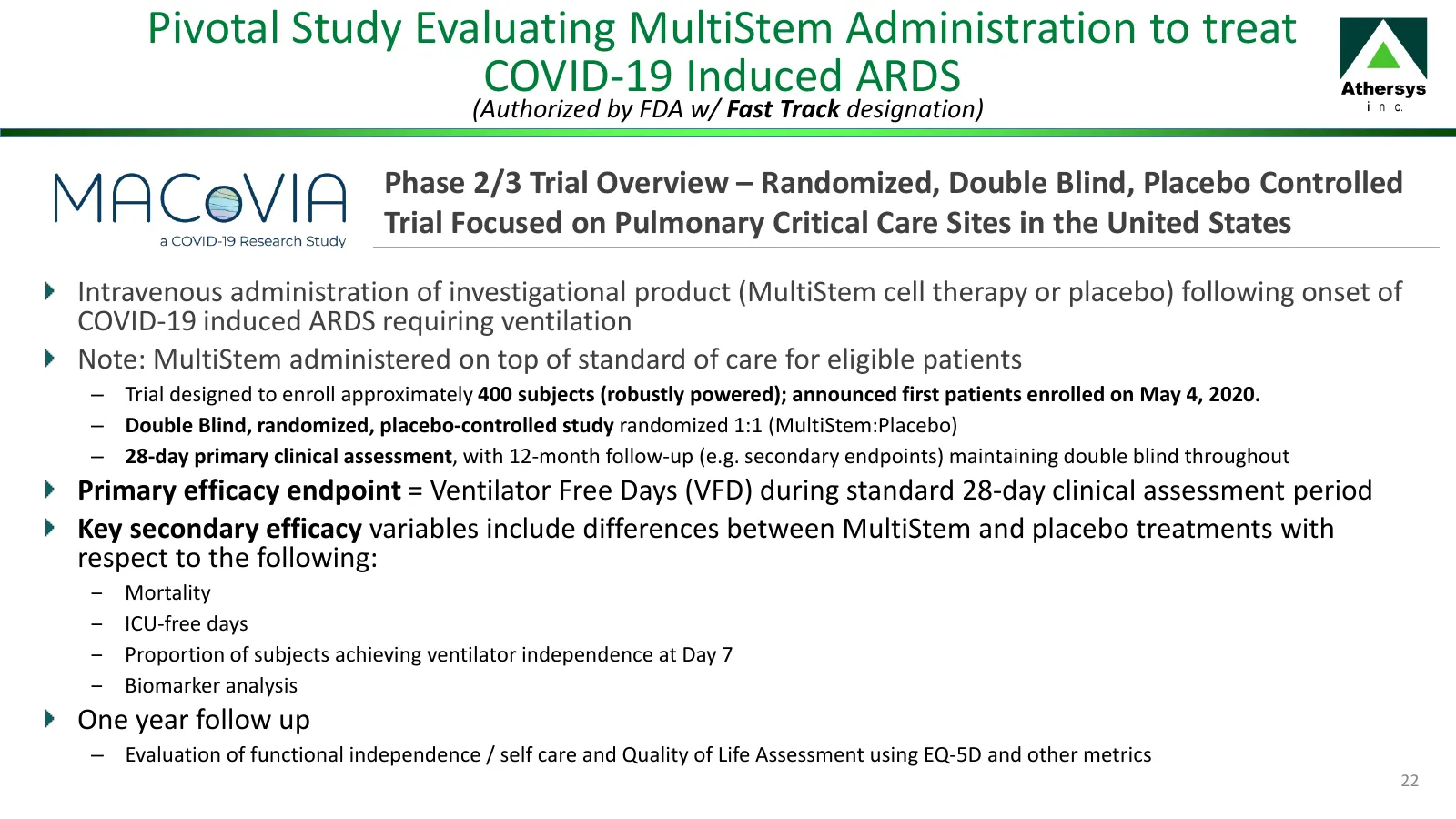
Pivotal Study Evaluating MultiStem Administration to treat COVID-19 Induced ARDS (Authorized by FDA w/ Fast Track designation) Phase 2/3 Trial Overview – Randomized, Double Blind, Placebo Controlled Trial Focused on Pulmonary Critical Care Sites in the United States Intravenous administration of inv
Slide 23: MultiStem Therapy for Ischemic Stroke
MultiStem Therapy for Ischemic Stroke 23
Slide 24: Potential for Cell Therapy in Ischemic Stroke
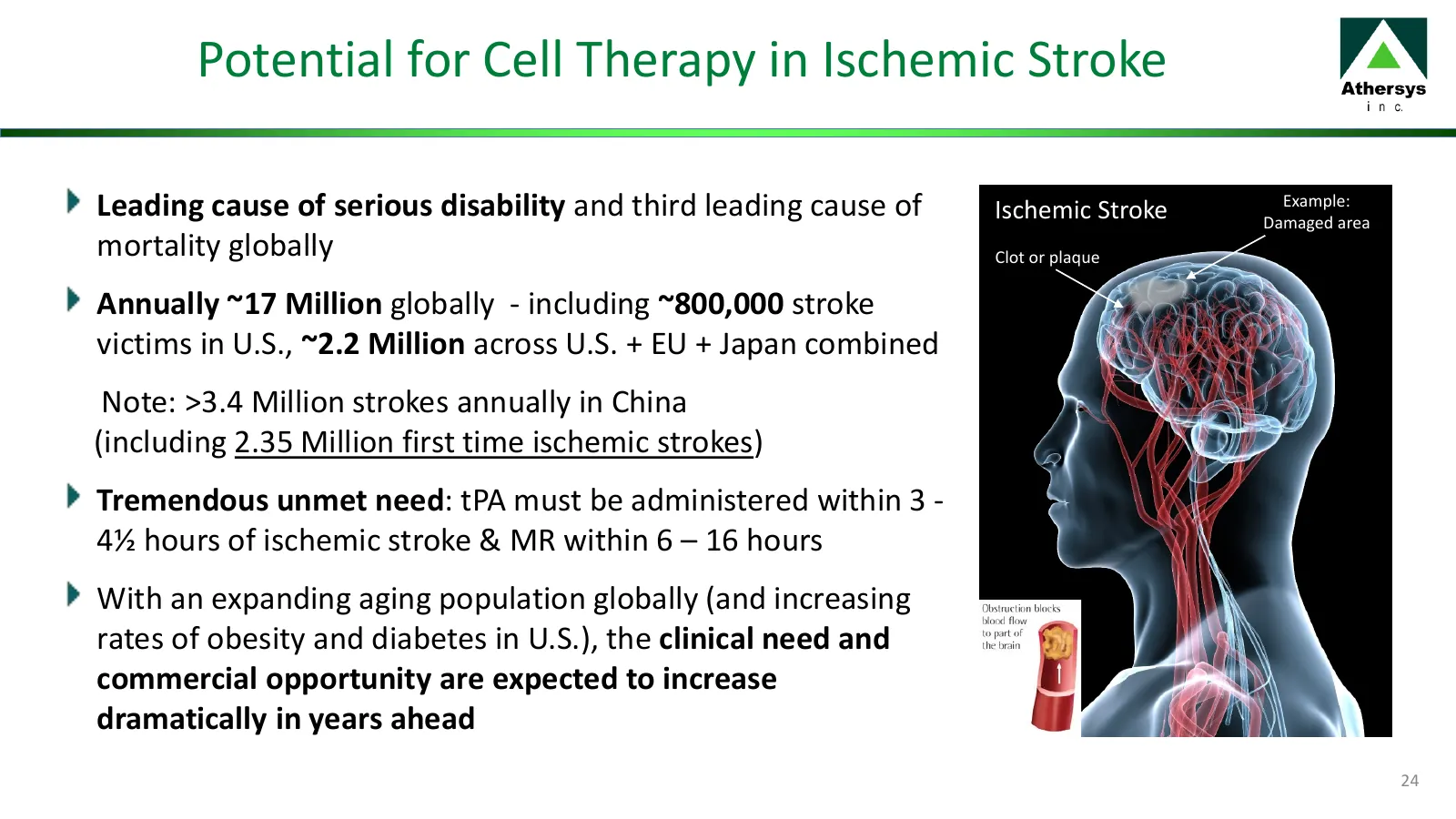
Potential for Cell Therapy in Ischemic Stroke Leading cause of serious disability and third leading cause of Ischemic Stroke Example: Damaged area mortality globally Clot or plaque Annually ~17 Million globally - including ~800,000 stroke victims in U.S., ~2.2 Million across U.S. + EU + Japan combin
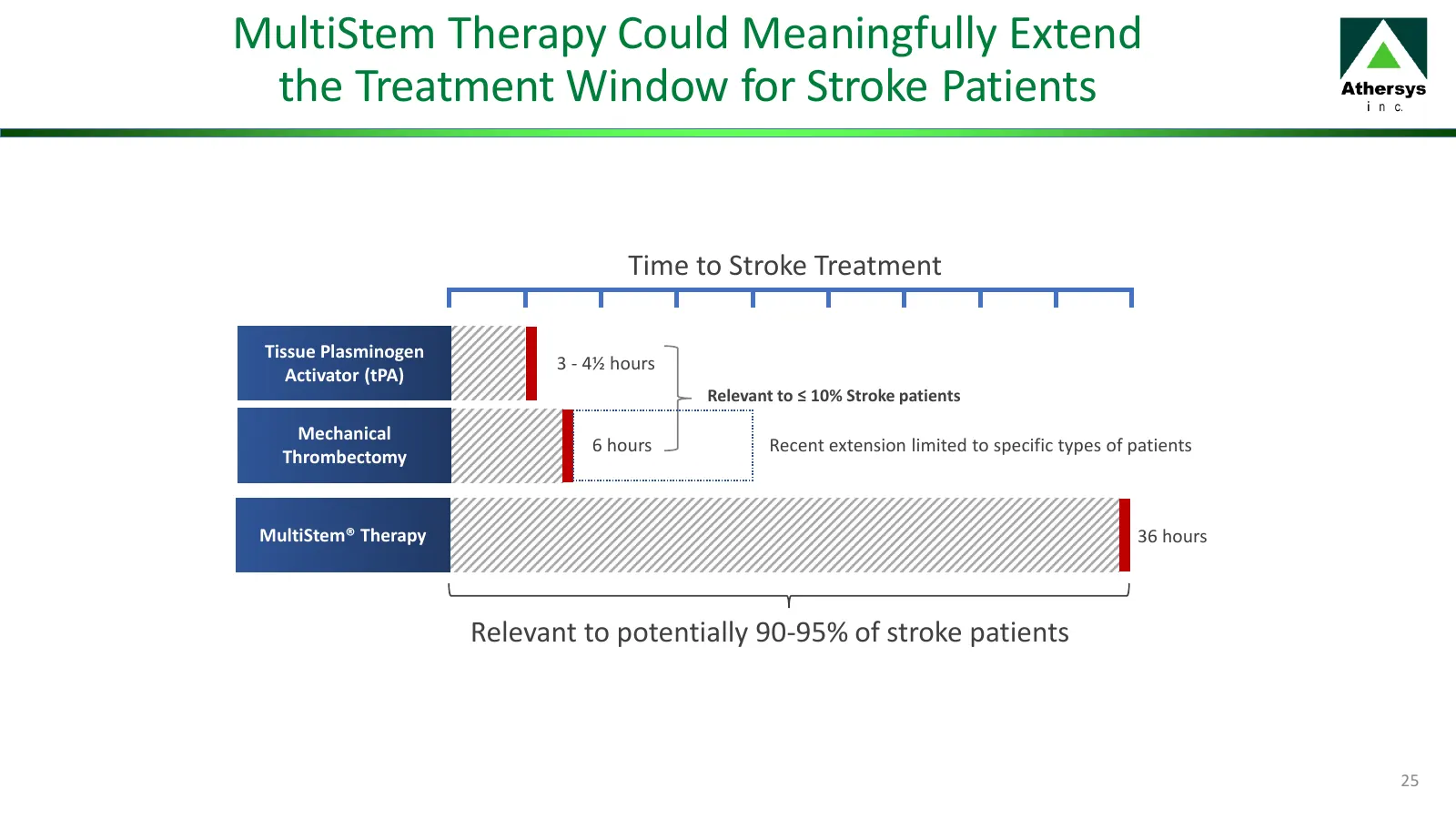
Slide 25: MultiStem Could Extend the Treatment Window for Stroke Patients
MultiStem Therapy Could Meaningfully Extend the Treatment Window for Stroke Patients Time to Stroke Treatment Tissue Plasminogen 3 - 4½ hours Activator (tPA) Relevant to ≤ 10% Stroke patients Mechanical 6 hours Recent extension limited to specific types of patients Thrombectomy MultiStem® Therapy 36
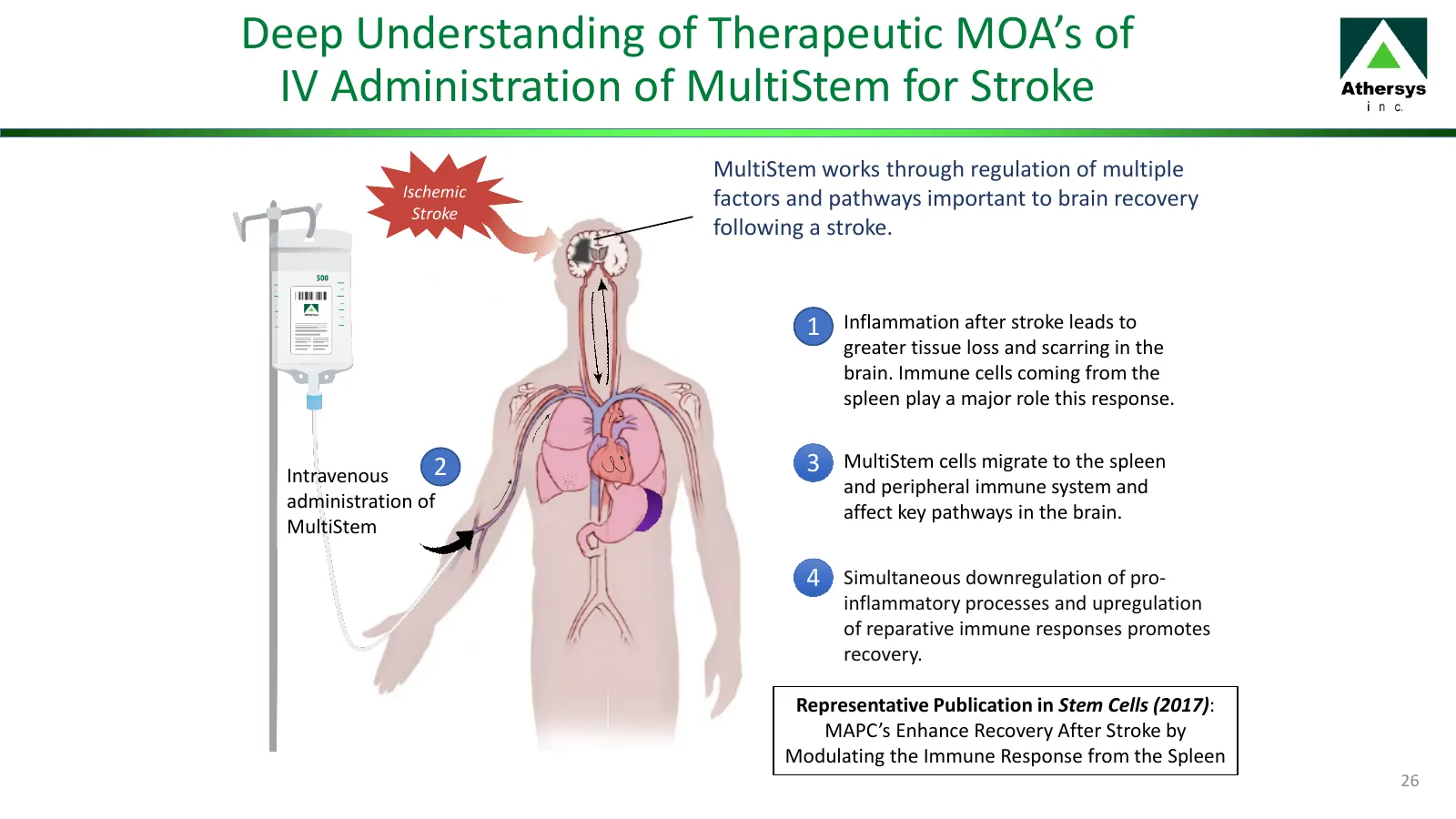
Slide 26: Therapeutic MOAs of IV Administration of MultiStem for Stroke
Deep Understanding of Therapeutic MOA’s of IV Administration of MultiStem for Stroke MultiStem works through regulation of multiple Ischemic factors and pathways important to brain recovery Stroke following a stroke. 1 Inflammation after stroke leads to greater tissue loss and scarring in the brain.
Slide 27: MultiStem Stroke Clinical Trial: MASTERS-1 Results
MultiStem Stroke Clinical Trial Results from MASTERS-1 (Phase 2) MultiStem Administration for Stroke Treatment and Enhanced Recovery Study
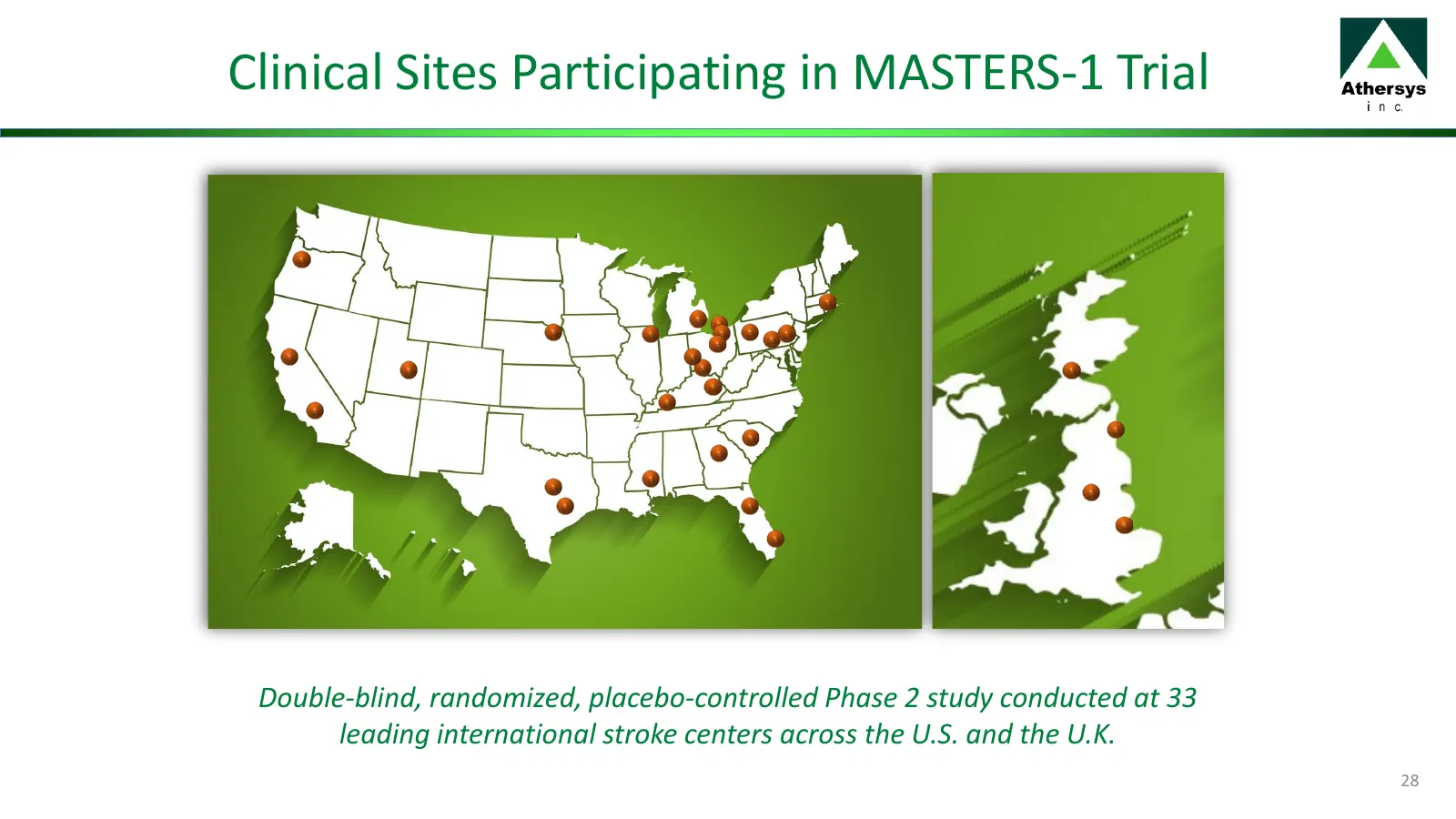
Slide 28: Clinical Sites Participating in MASTERS-1 Trial
Clinical Sites Participating in MASTERS-1 Trial Double-blind, randomized, placebo-controlled Phase 2 study conducted at 33 leading international stroke centers across the U.S. and the U.K. 28
Slide 29: MultiStem Clinical Study in Ischemic Stroke: MASTERS-1
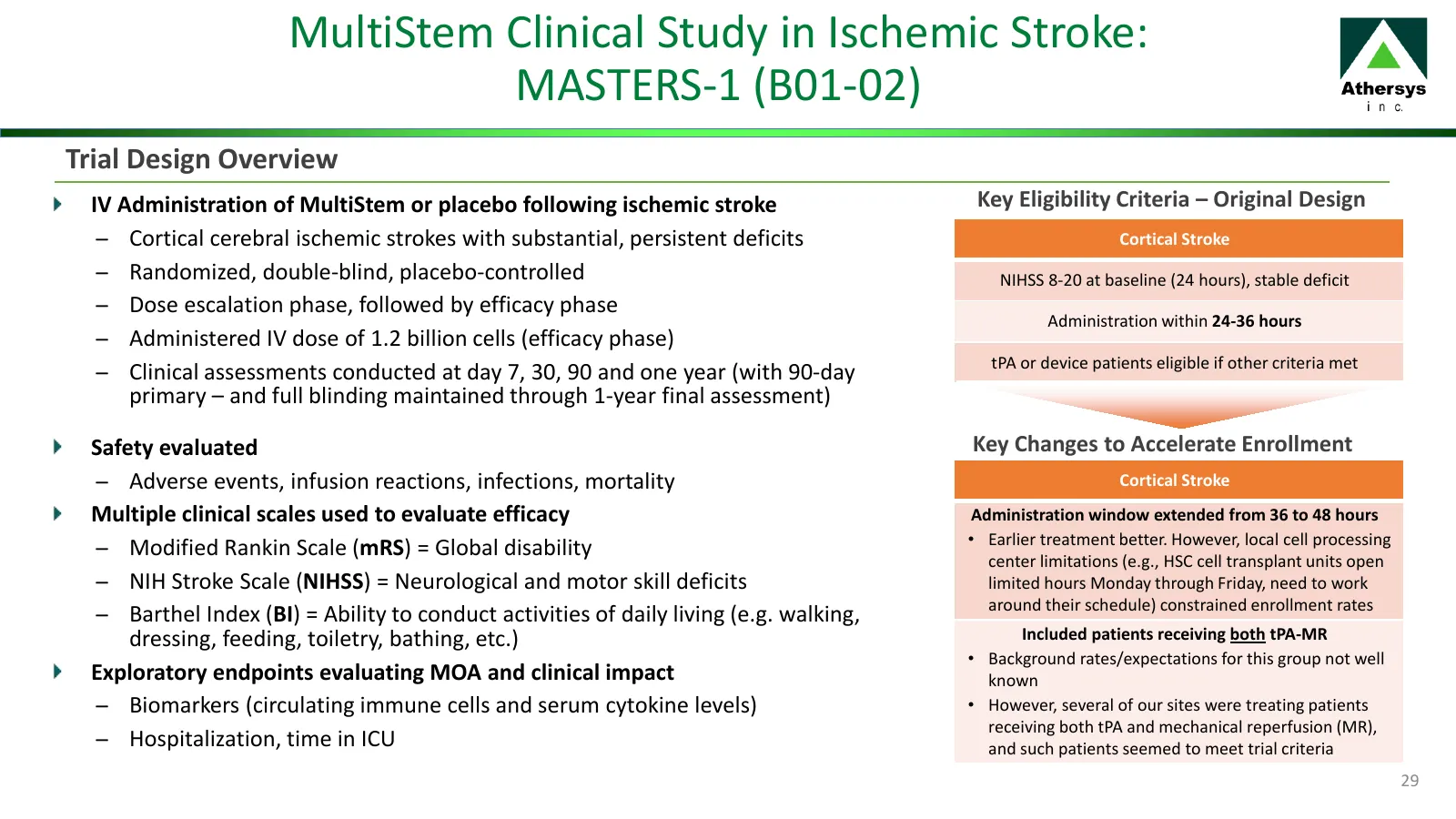
MultiStem Clinical Study in Ischemic Stroke: MASTERS-1 (B01-02) Trial Design Overview IV Administration of MultiStem or placebo following ischemic stroke Key Eligibility Criteria – Original Design ̶ Cortical cerebral ischemic strokes with substantial, persistent deficits Cortical Stroke ̶ Randomized
Slide 30: MASTERS-1 Baseline Demographics Information
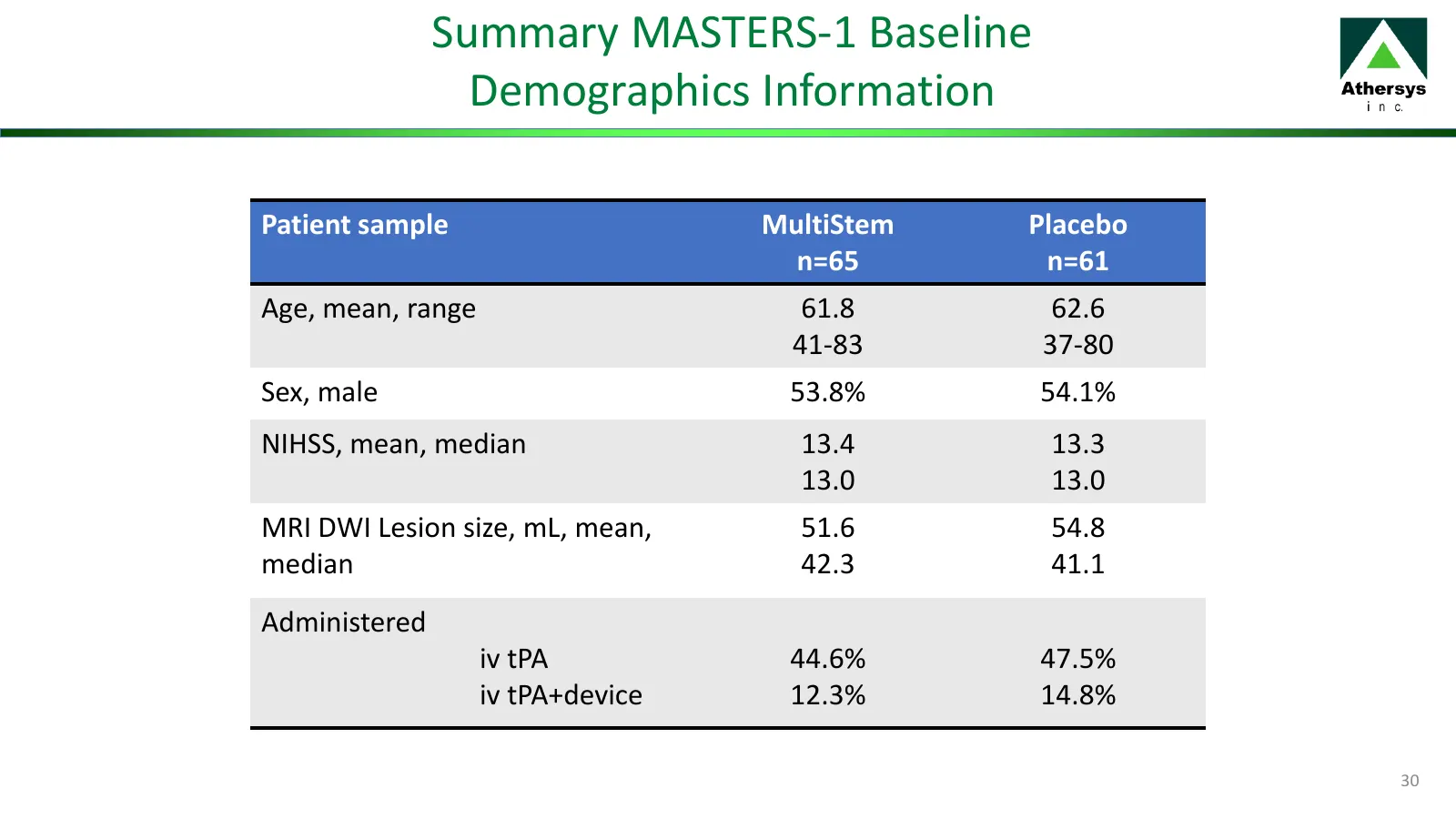
Summary MASTERS-1 Baseline Demographics Information Patient sample MultiStem Placebo n=65 n=61 Age, mean, range 61.8 62.6 41-83 37-80 Sex, male 53.8% 54.1% NIHSS, mean, median 13.4 13.3 13.0 13.0 MRI DWI Lesion size, mL, mean, 51.6 54.8 median 42.3 41.1 Administered iv tPA 44.6% 47.5% iv tPA+device
Slide 31: Treatment w/ MultiStem Shows Significant Benefit at One Year
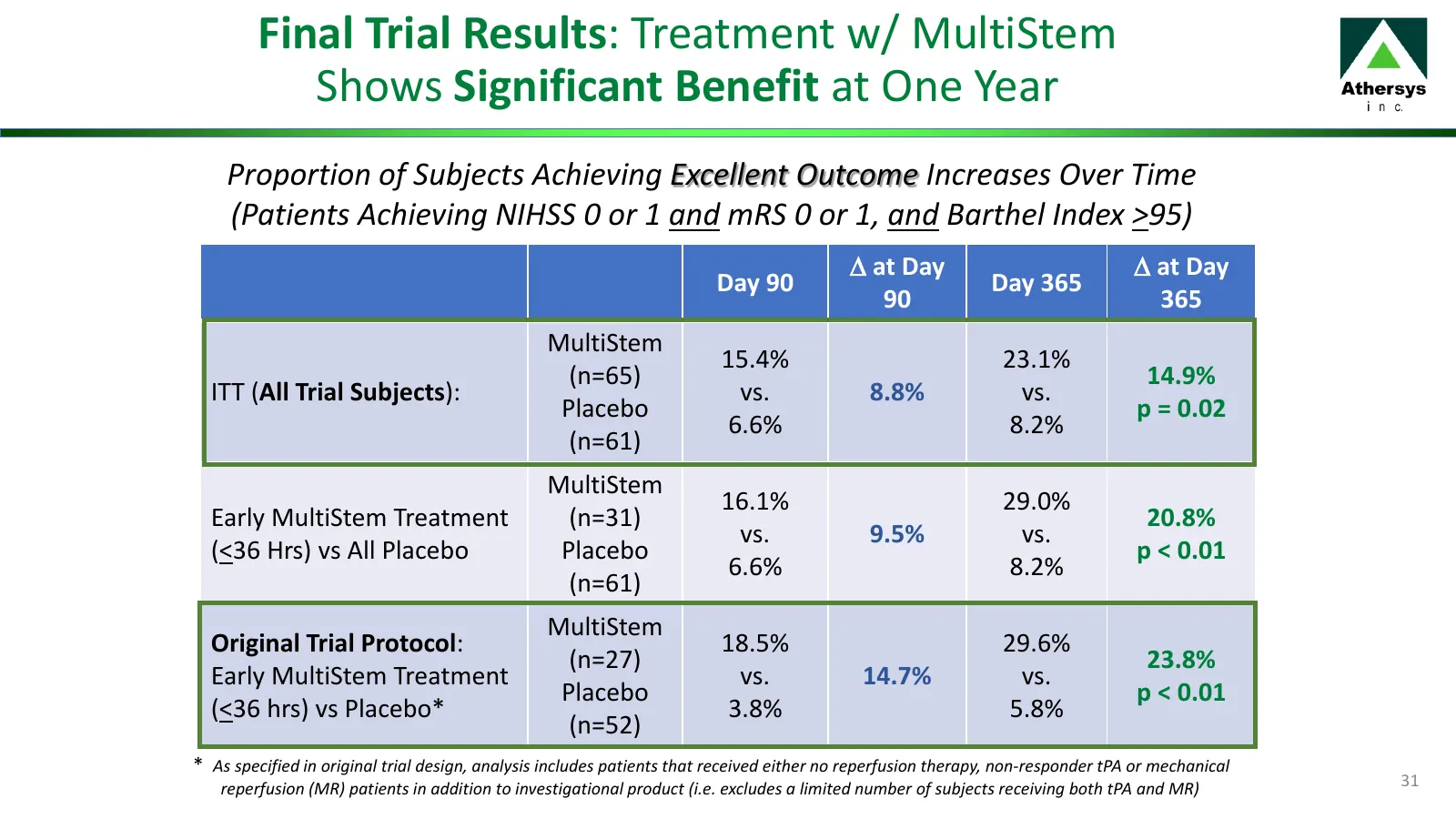
Final Trial Results: Treatment w/ MultiStem Shows Significant Benefit at One Year Proportion of Subjects Achieving Excellent Outcome Increases Over Time (Patients Achieving NIHSS 0 or 1 and mRS 0 or 1, and Barthel Index >95) ∆ at Day ∆ at Day Day 90 Day 365 90 365 MultiStem 15.4% 23.1% (n=65) 14.9%
Slide 32: Improvement in Excellent Outcome Following MultiStem Therapy
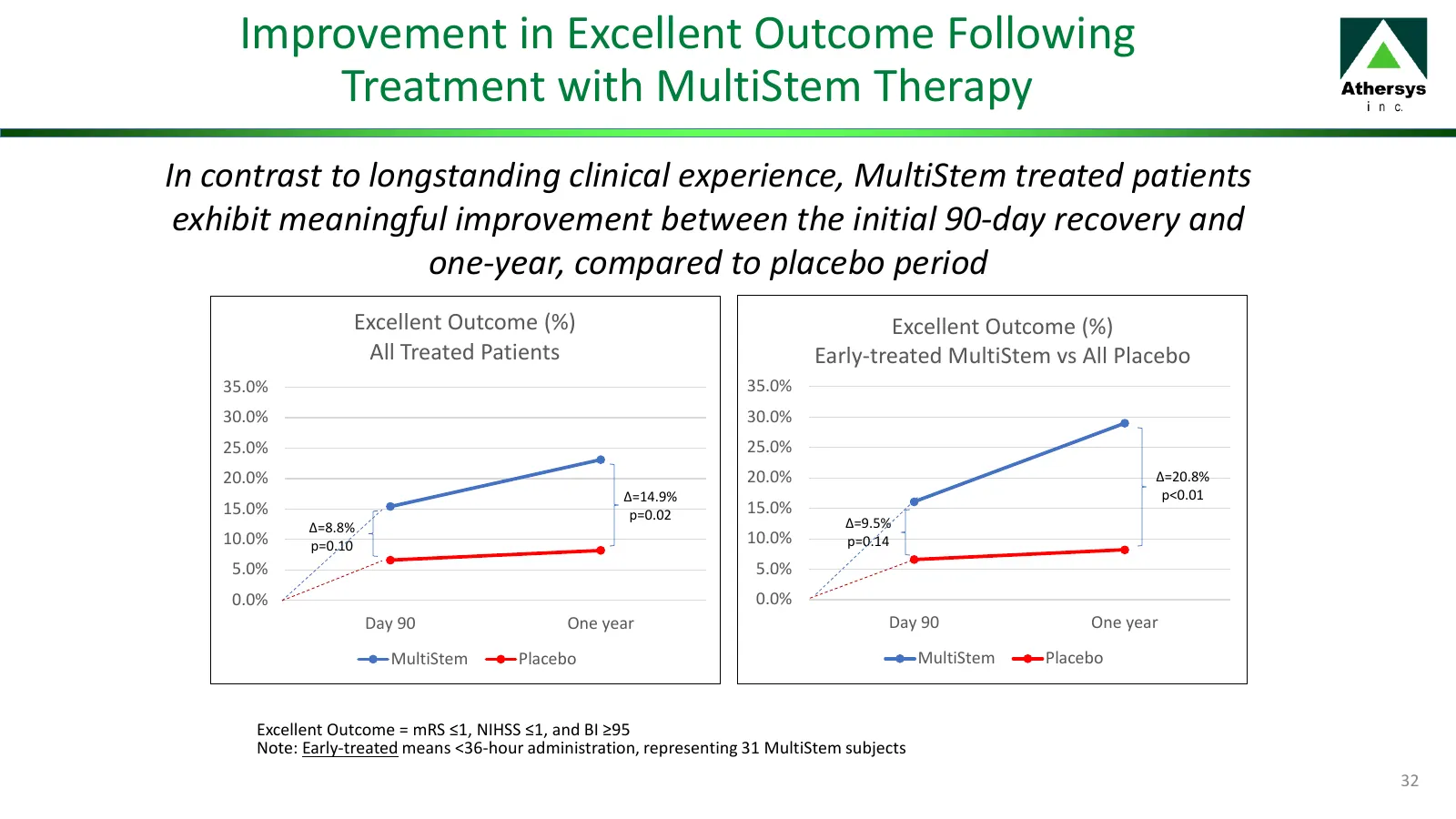
Improvement in Excellent Outcome Following Treatment with MultiStem Therapy In contrast to longstanding clinical experience, MultiStem treated patients exhibit meaningful improvement between the initial 90-day recovery and one-year, compared to placebo period Excellent Outcome (%) Excellent Outcome
Slide 33: Other Findings from MASTERS-1 Study
Other Findings from MASTERS-1 Study Safety: Intravenous MultiStem well tolerated by Stroke patients • No infusional or allergic reactions, and no abnormal patterns in safety labs or vital signs • Adverse events consistent with expectations and experience for stroke patients of this type Administrati
Slide 34: Additional Clinical Observations from the MASTERS-1 Stroke Study
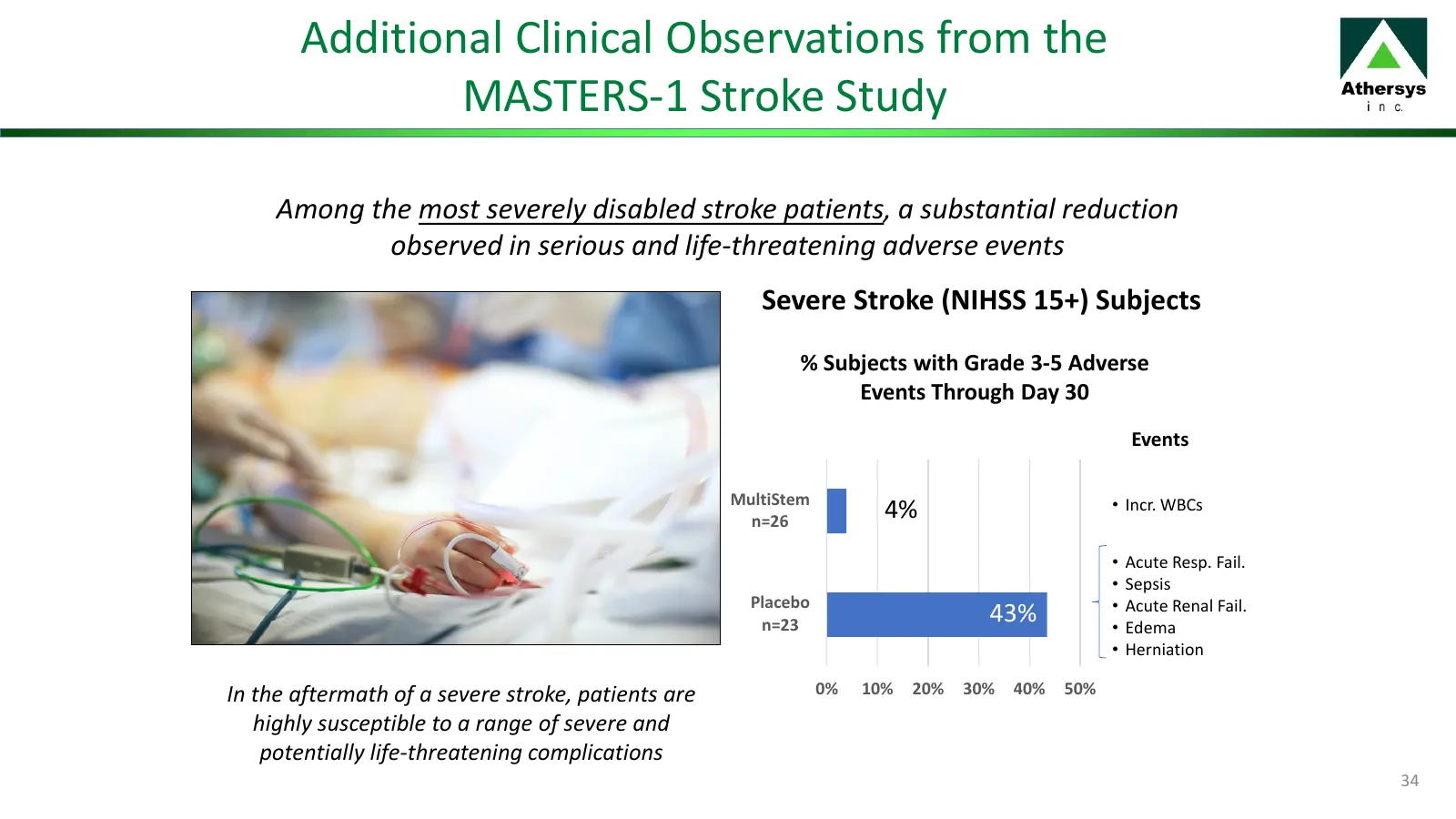
Additional Clinical Observations from the MASTERS-1 Stroke Study Among the most severely disabled stroke patients, a substantial reduction observed in serious and life-threatening adverse events Severe Stroke (NIHSS 15+) Subjects % Subjects with Grade 3-5 Adverse Events Through Day 30 Events MultiSt
Slide 35: MASTERS-2: Pivotal Phase 3 Study in Ischemic Stroke
MASTERS-2: Pivotal Phase 3 Study in Ischemic Stroke (Authorized by FDA under SPA, w/ Fast Track and RMAT designations) Trial Overview – (focused on North America and Europe – actively enrolling subjects) Intravenous administration of investigation product (MultiStem cell therapy or placebo) within 1
Slide 36: Opportunity in Trauma
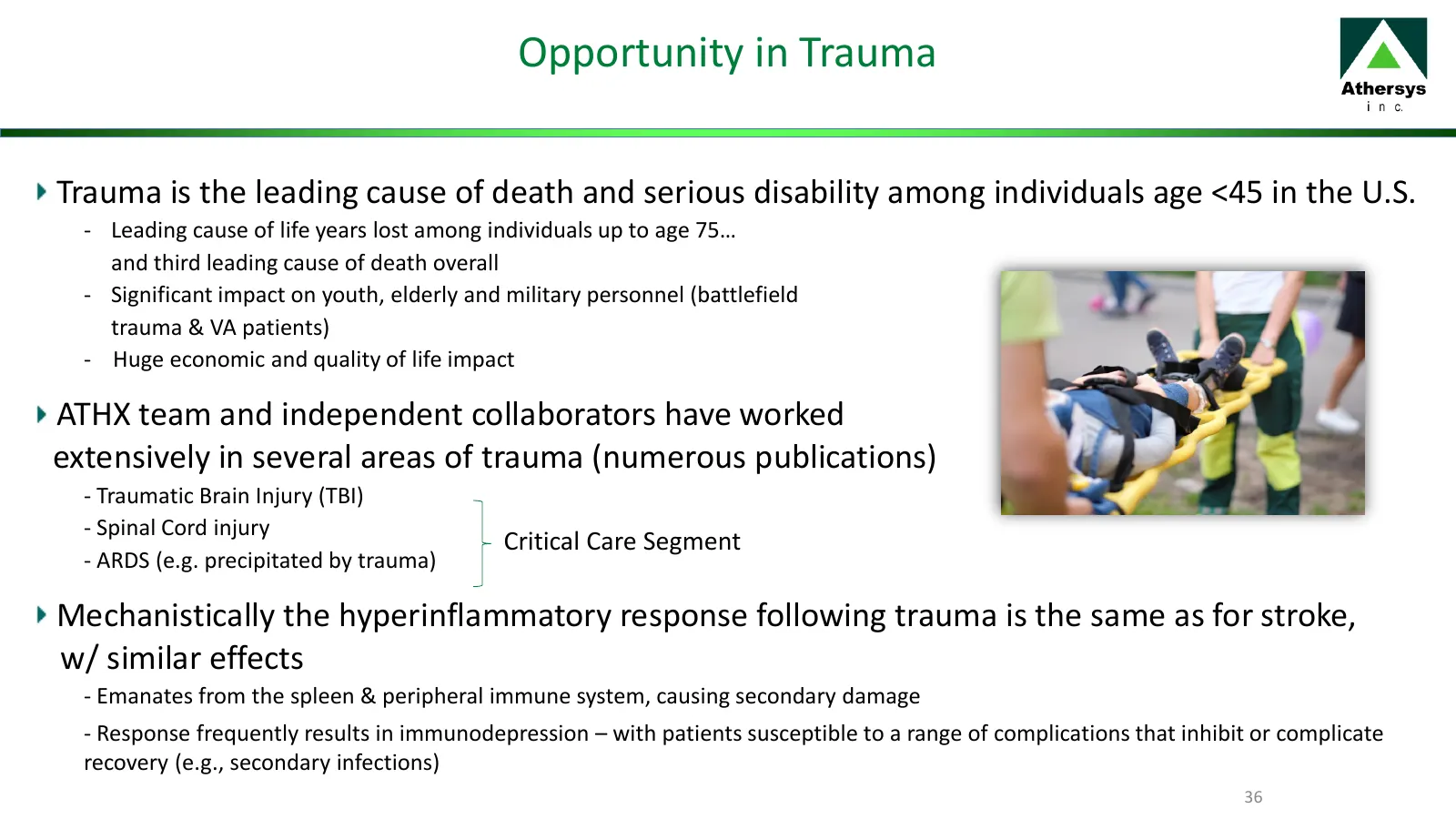
Opportunity in Trauma Trauma is the leading cause of death and serious disability among individuals age <45 in the U.S. - Leading cause of life years lost among individuals up to age 75… and third leading cause of death overall - Significant impact on youth, elderly and military personnel (battlefie
Slide 37: Trauma Phase 2 Trial Objectives
Trauma Phase 2 Trial Objectives (MATRICS-1) Multistem Administration for Trauma Related Inflammation and ComplicationS Received FDA authorization to begin a Phase 2 trauma trial with UTHealth at a leading Tier 1 Trauma Center in U.S. with funding provided by MTEC (Department of Defense) and the Memo
Slide 38: Development Focus in Japan
Development Focus in Japan HEALIOS K.K. Partnership Overview Initial partnership established January 2016 ⁻ Development & commercialization rights for ischemic stroke, which is the most prevalent cardiovascular disease in Japan ⁻ $15 million up front payment with > $225 million total additional pote
Slide 39: Accelerated Approval System for Cell Therapy Products in Japan
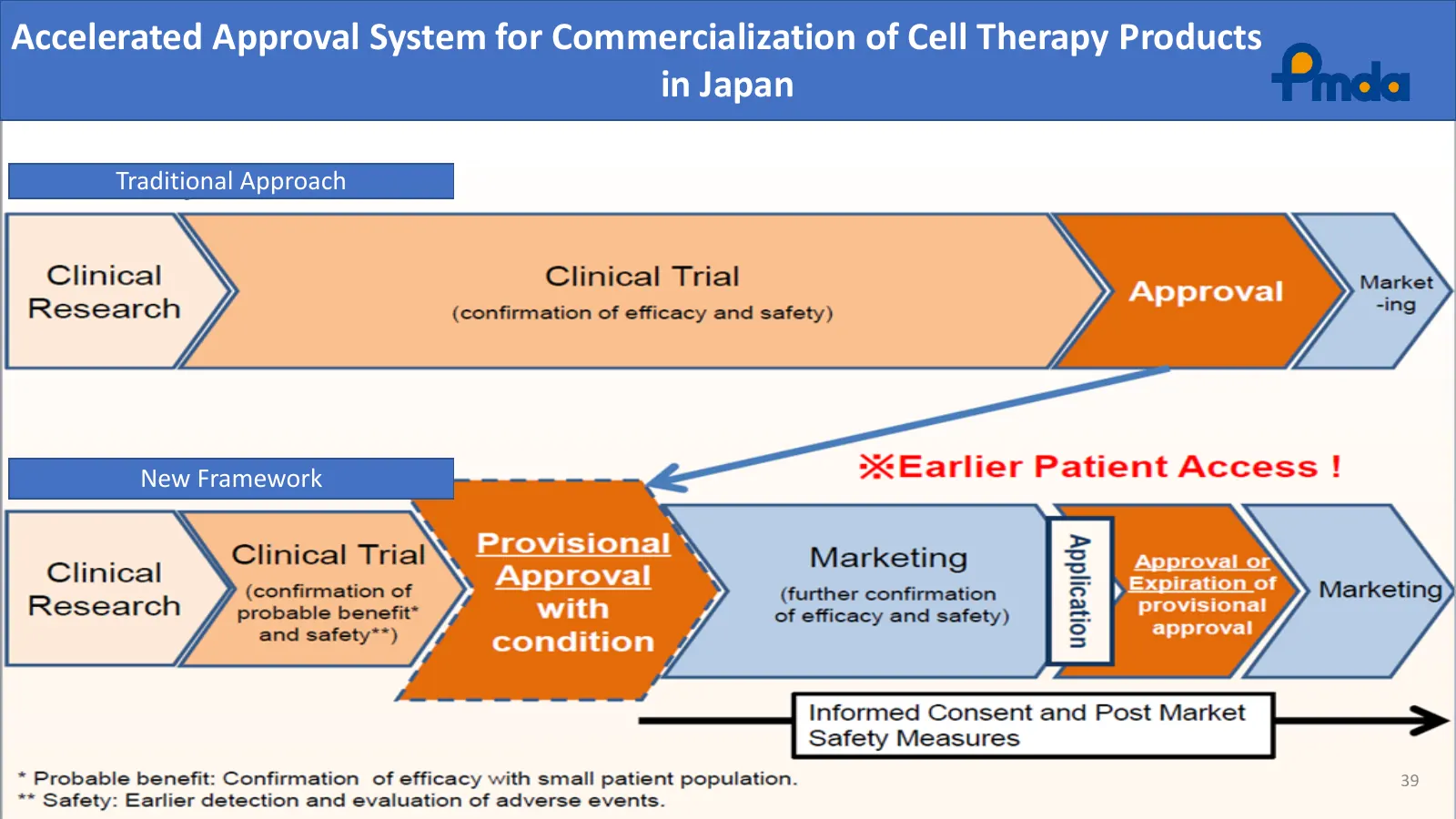
Accelerated Approval System for Commercialization of Cell Therapy Products in Japan Traditional Approach New Framework 39
Slide 40: Summary
Summary Multiple important objectives achieved: ‒ Launched the MACOVIA trial for COVID-19 induced ARDS and enrolled first patients ‒ FDA authorization to initiate the DOD funded Phase 2 Trauma Trial (MATRICS) ‒ Healios advancement of TREASURE trial (w/ Sakigake designation) ‒ Fast Track and RMAT des
Source: Internet Archive copy of s23.q4cdn.com