Inventiva SA · EURONEXT:IVA
Inventiva SA — Investor Presentation (April 2024)
77 slides from Inventiva SA's investor presentation, April 2024
Slide 1: Developing innovative therapies in NASH
Developing innovative therapies in NASH Corporate Presentation April 2024
Slide 2: Disclaimer
DISCLAIMER This presentation contains “forward-looking statements” within the meaning of the safe harbor provisions of the Private Securities Litigation Reform Act of 1995. All statements, other than statements of historical facts, included in this press release are forward-looking statements. These
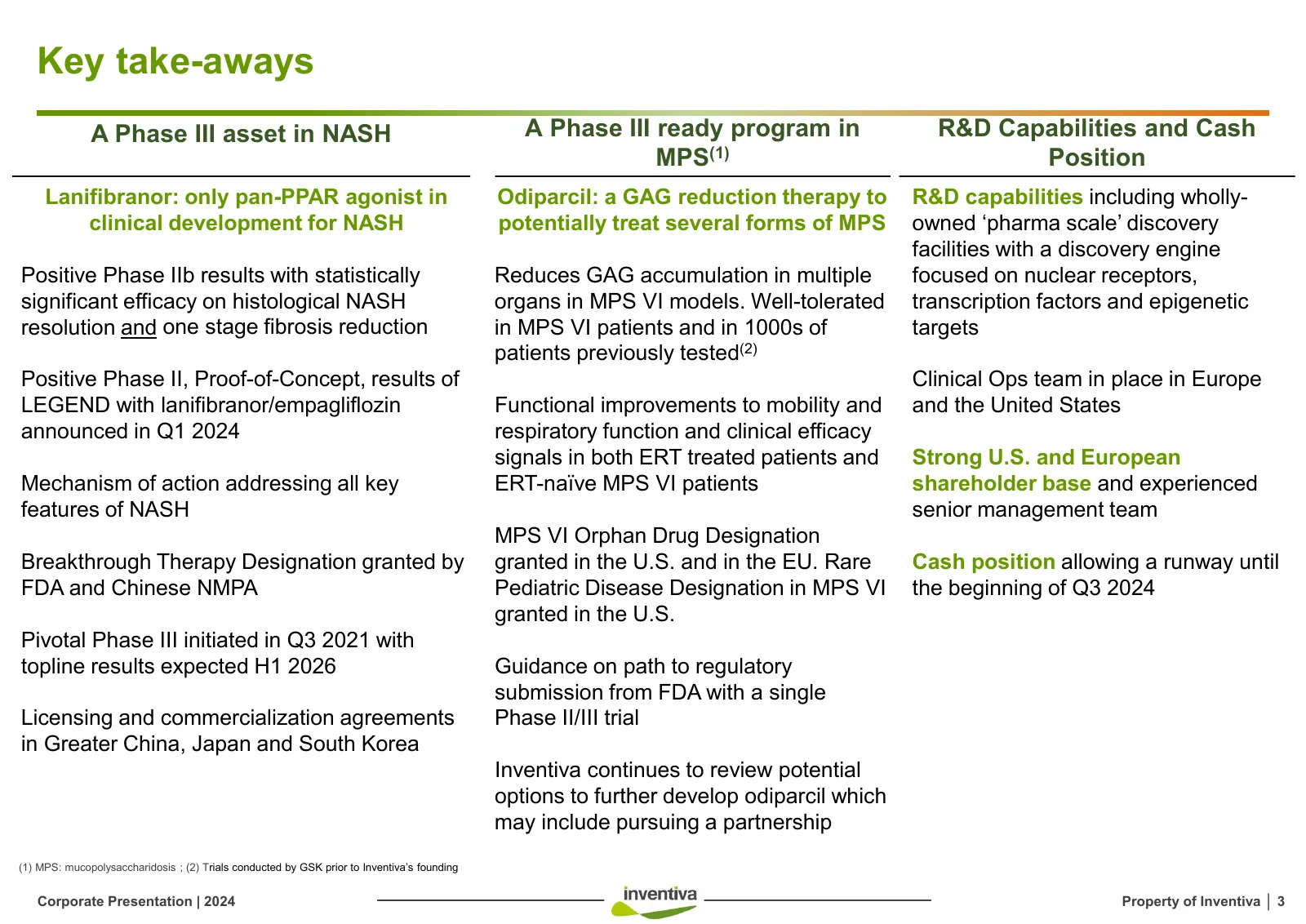
Slide 3: Key take-aways
Key take-aways A Phase III asset in NASH A Phase III ready program in R&D Capabilities and Cash MPS(1) Position Lanifibranor: only pan-PPAR agonist in Odiparcil: a GAG reduction therapy to R&D capabilities including wholly- clinical development for NASH potentially treat several forms of MPS owned ‘

Slide 4: Management team with extensive global experience across all stages of drug development
Management team with extensive global experience across all stages of drug development and commercialization Frédéric Cren, MA/MBA, CEO and Co- Pierre Broqua, Ph.D., CSO and Co-Founder Founder Successfully managed numerous research programs Wide expertise within the areas of R&D, marketing, lead
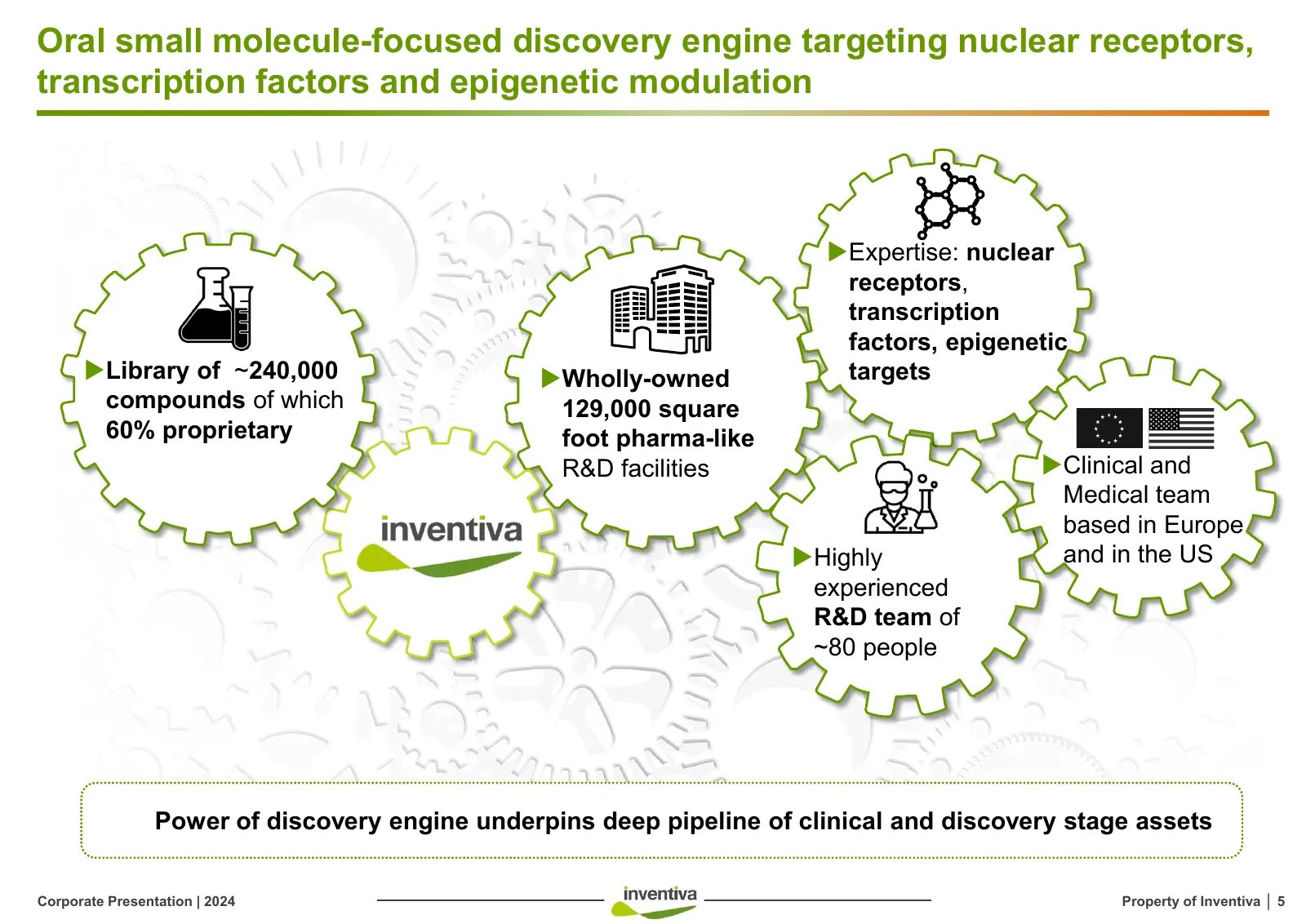
Slide 5: Oral small molecule-focused discovery engine targeting nuclear receptors
Oral small molecule-focused discovery engine targeting nuclear receptors, transcription factors and epigenetic modulation Expertise: nuclear receptors, transcription factors, epigenetic Library of ~240,000 Wholly-owned targets compounds of which 129,000 square 60% proprietary foot pharma-like R&D
Slide 6: Deep pipeline
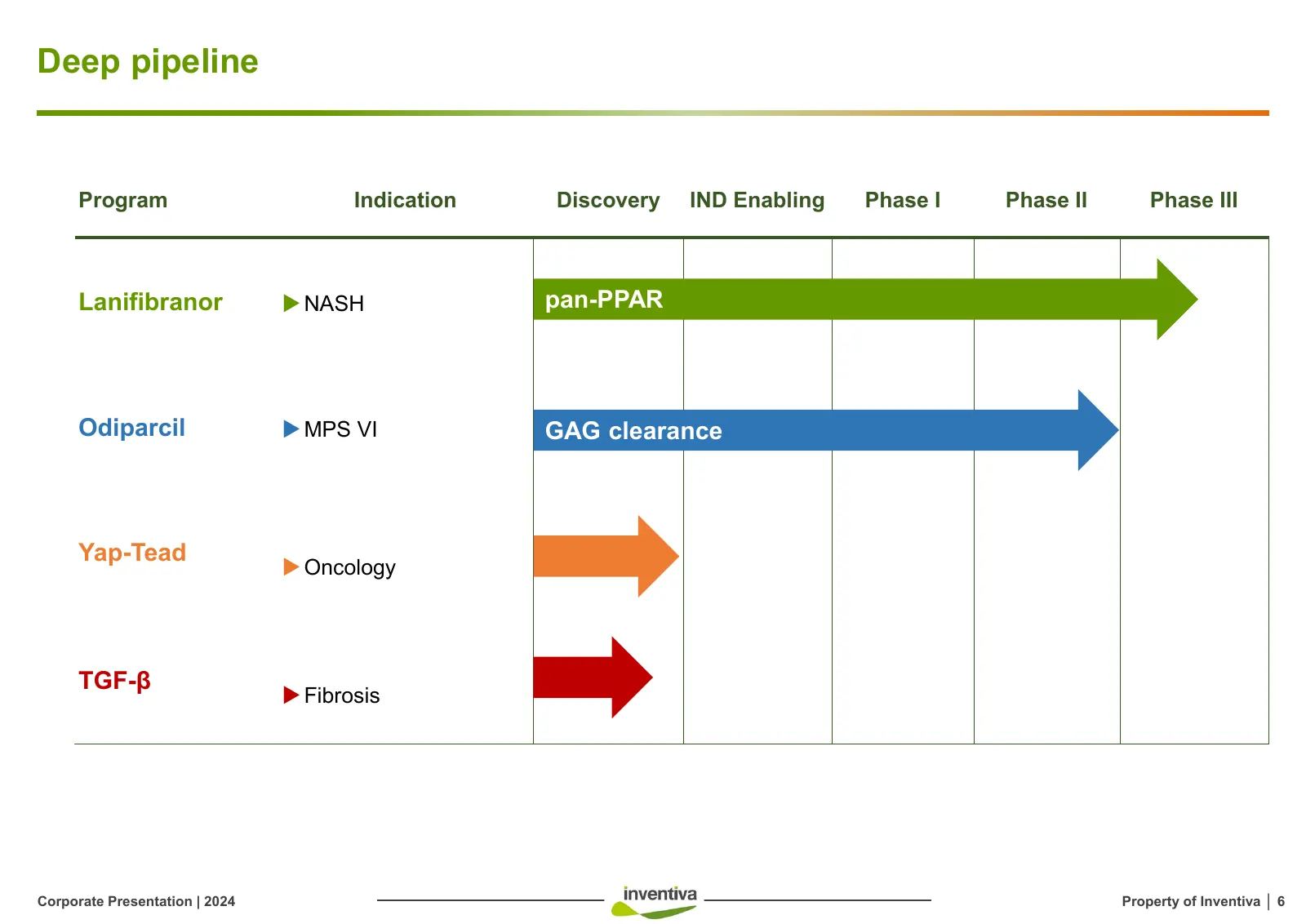
Deep pipeline Program Indication Discovery IND Enabling Phase I Phase II Phase III Lanifibranor NASH pan-PPAR Odiparcil MPS VI GAG clearance Yap-Tead Oncology TGF-β Fibrosis Corporate Presentation | 2024 Property of Inventiva │ 6
Slide 7: Key financials and shareholder base
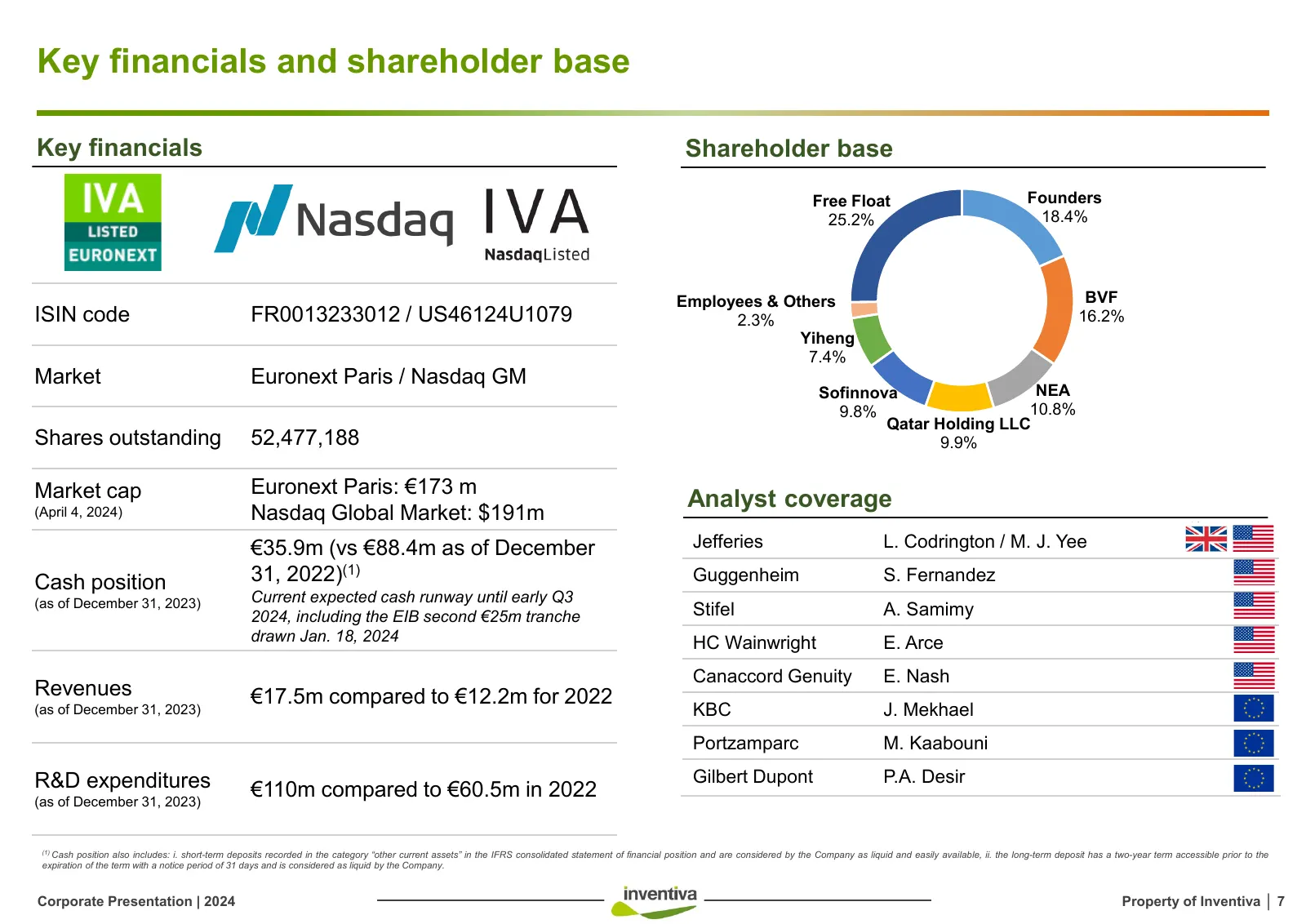
Key financials and shareholder base Key financials Shareholder base Free Float Founders 25.2% 18.4% Employees & Others BVF ISIN code FR0013233012 / US46124U1079 2.3% 16.2% Yiheng 7.4% Market Euronext Paris / Nasdaq GM Sofinnova NEA 9.8% 10.8% Qatar Holding LLC Shares outstanding 52,477,188 9.9% Mark
Slide 8: Lanifibranor: licensing and commercialization agreement in Greater China, Japan and South Korea
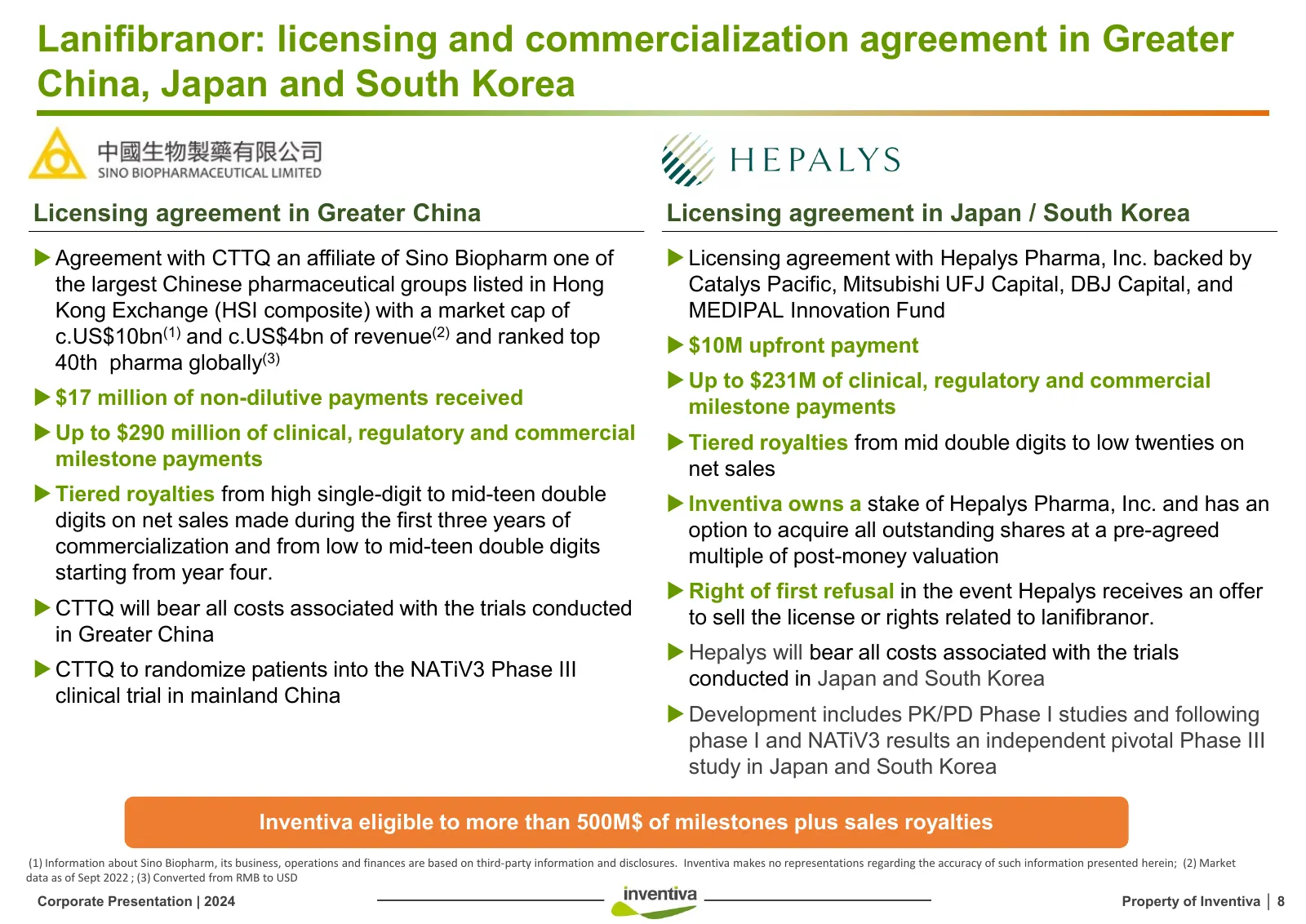
Lanifibranor: licensing and commercialization agreement in Greater China, Japan and South Korea Licensing agreement in Greater China Licensing agreement in Japan / South Korea Agreement with CTTQ an affiliate of Sino Biopharm one of Licensing agreement with Hepalys Pharma, Inc. backed by the lar
Slide 9: Lanifibranor in Nonalcoholic Steatohepatitis (NASH)
Lanifibranor in Nonalcoholic Steatohepatitis (NASH)
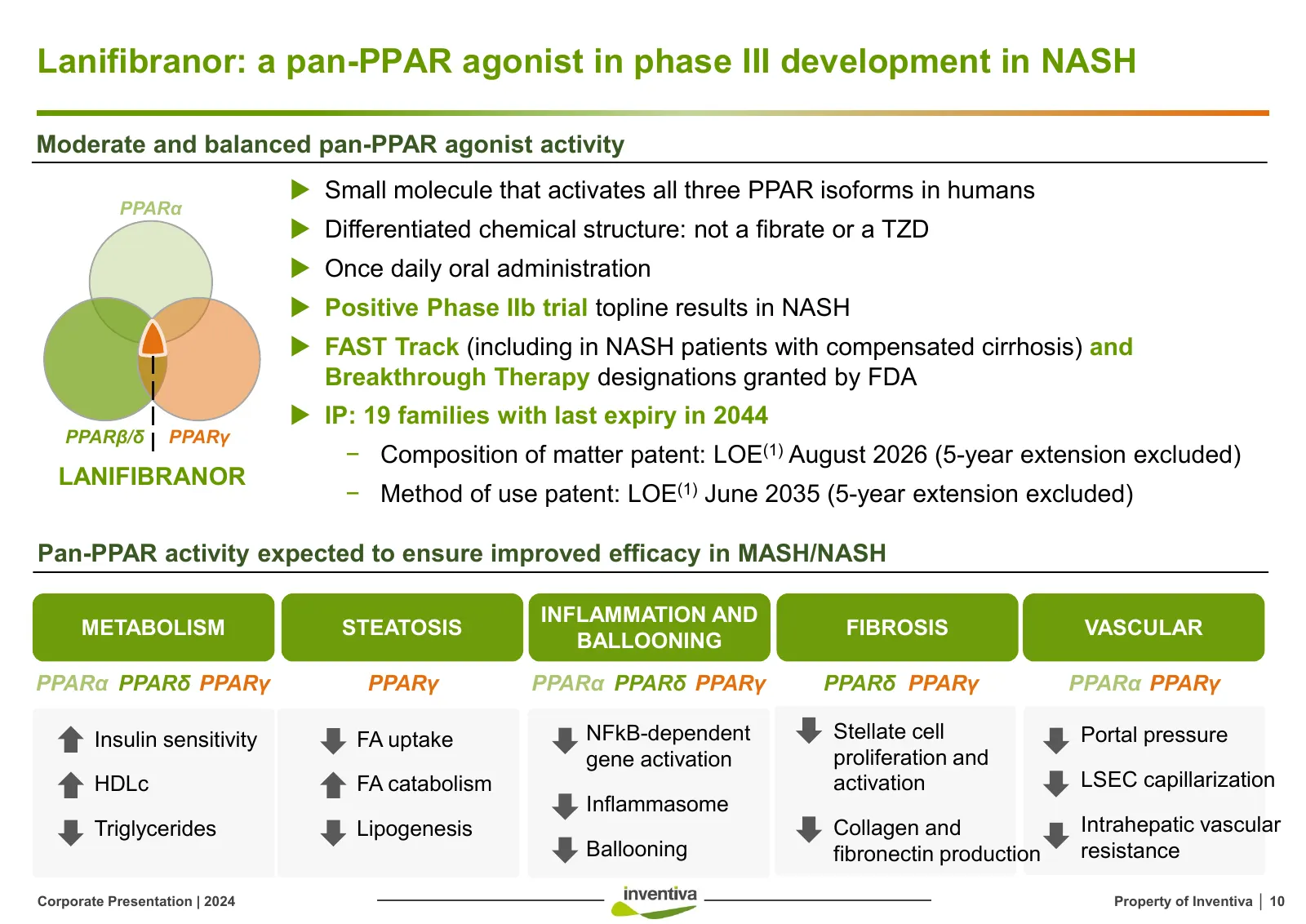
Slide 10: Lanifibranor: a pan-PPAR agonist in phase III development in NASH
Lanifibranor: a pan-PPAR agonist in phase III development in NASH Moderate and balanced pan-PPAR agonist activity Small molecule that activates all three PPAR isoforms in humans PPARα Differentiated chemical structure: not a fibrate or a TZD Once daily oral administration Positive Phase IIb
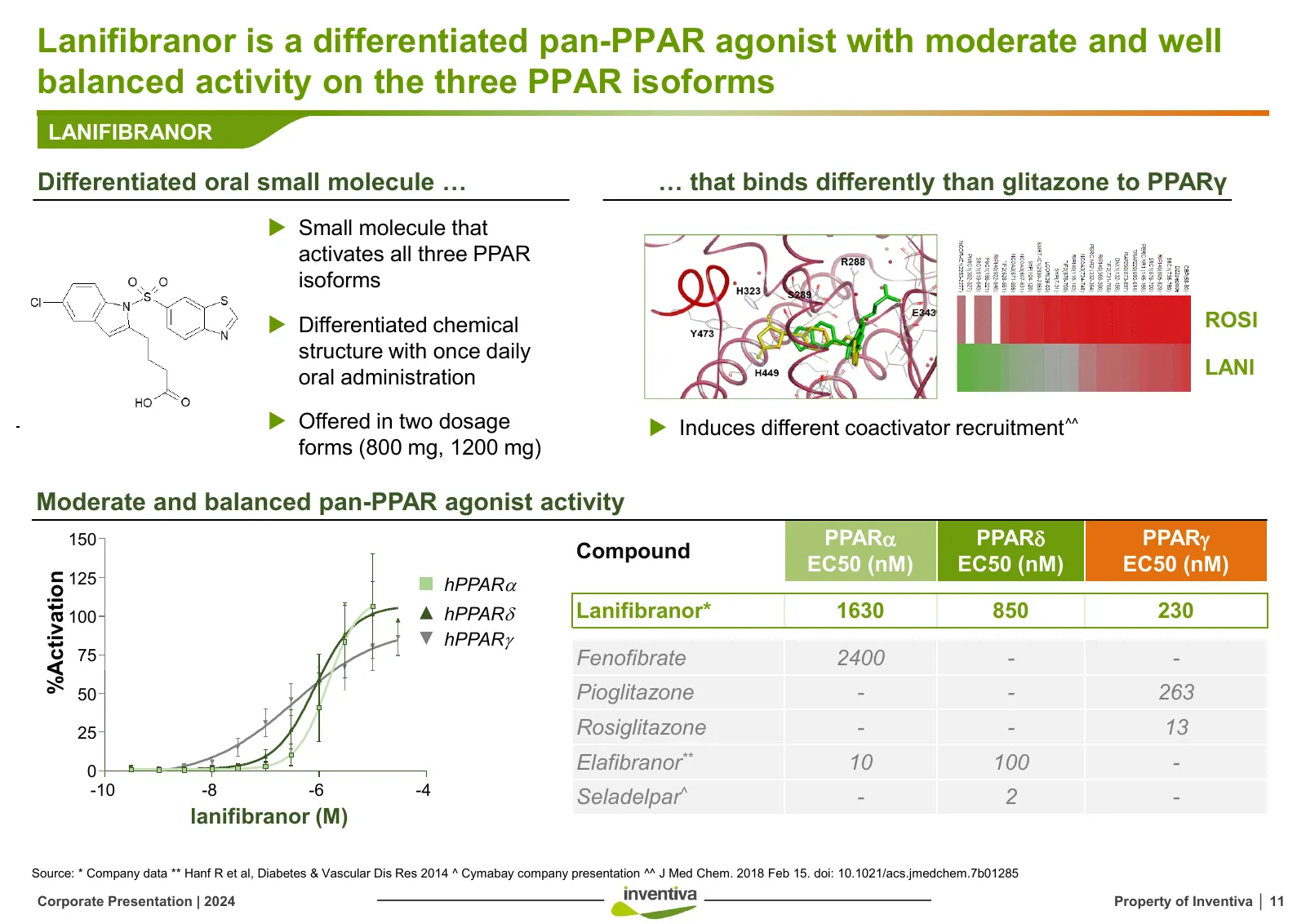
Slide 11: Lanifibranor is a differentiated pan-PPAR agonist with balanced activity
Lanifibranor is a differentiated pan-PPAR agonist with moderate and well balanced activity on the three PPAR isoforms LANIFIBRANOR Differentiated oral small molecule … … that binds differently than glitazone to PPARγ Small molecule that activates all three PPAR isoforms Differentiated chemical R
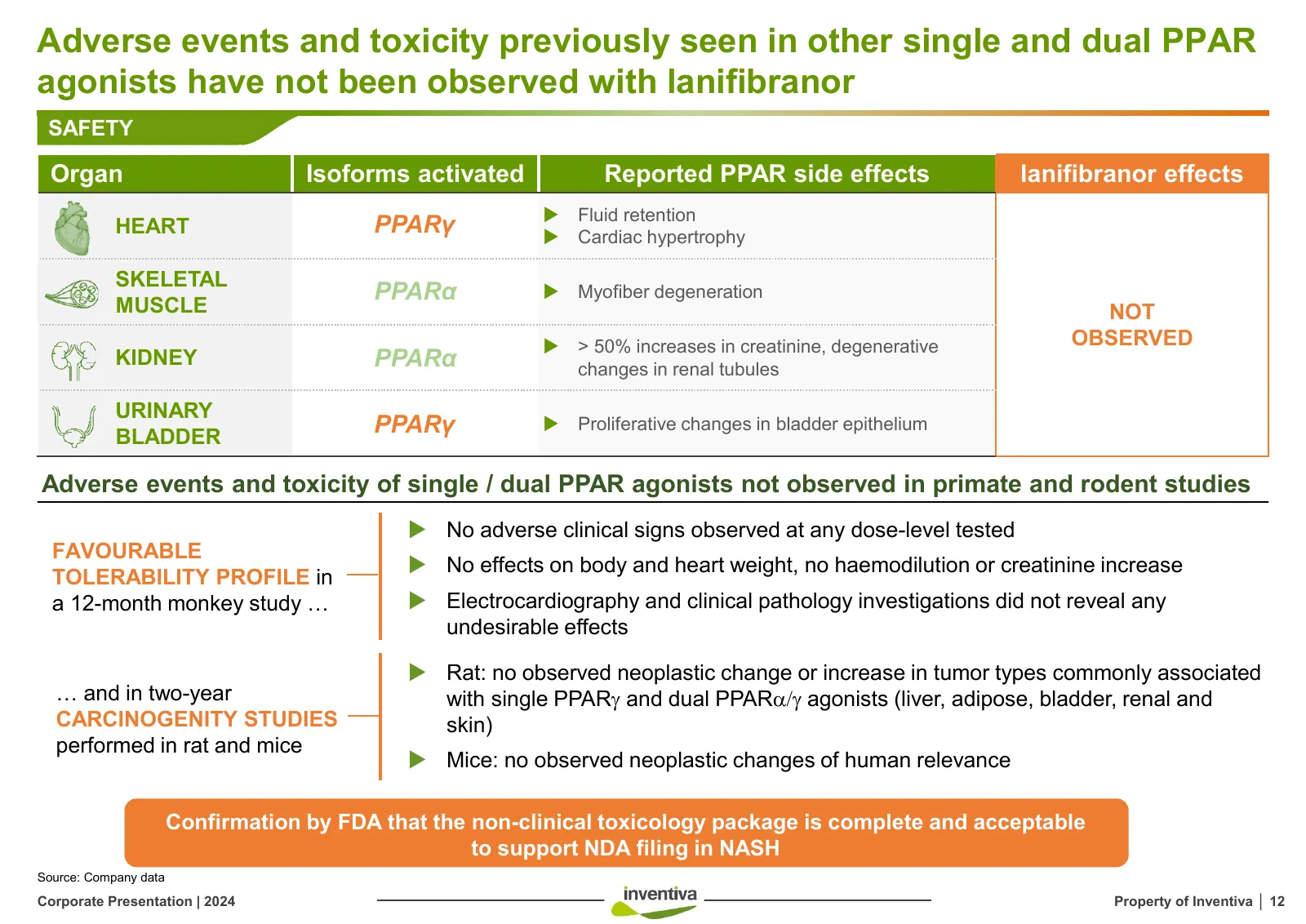
Slide 12: Adverse events and toxicity seen in other PPAR agonists not observed with lanifibranor
Adverse events and toxicity previously seen in other single and dual PPAR agonists have not been observed with lanifibranor SAFETY Organ Isoforms activated Reported PPAR side effects lanifibranor effects Fluid retention HEART PPARγ Cardiac hypertrophy SKELETAL PPARα Myofiber degeneration MUSCL
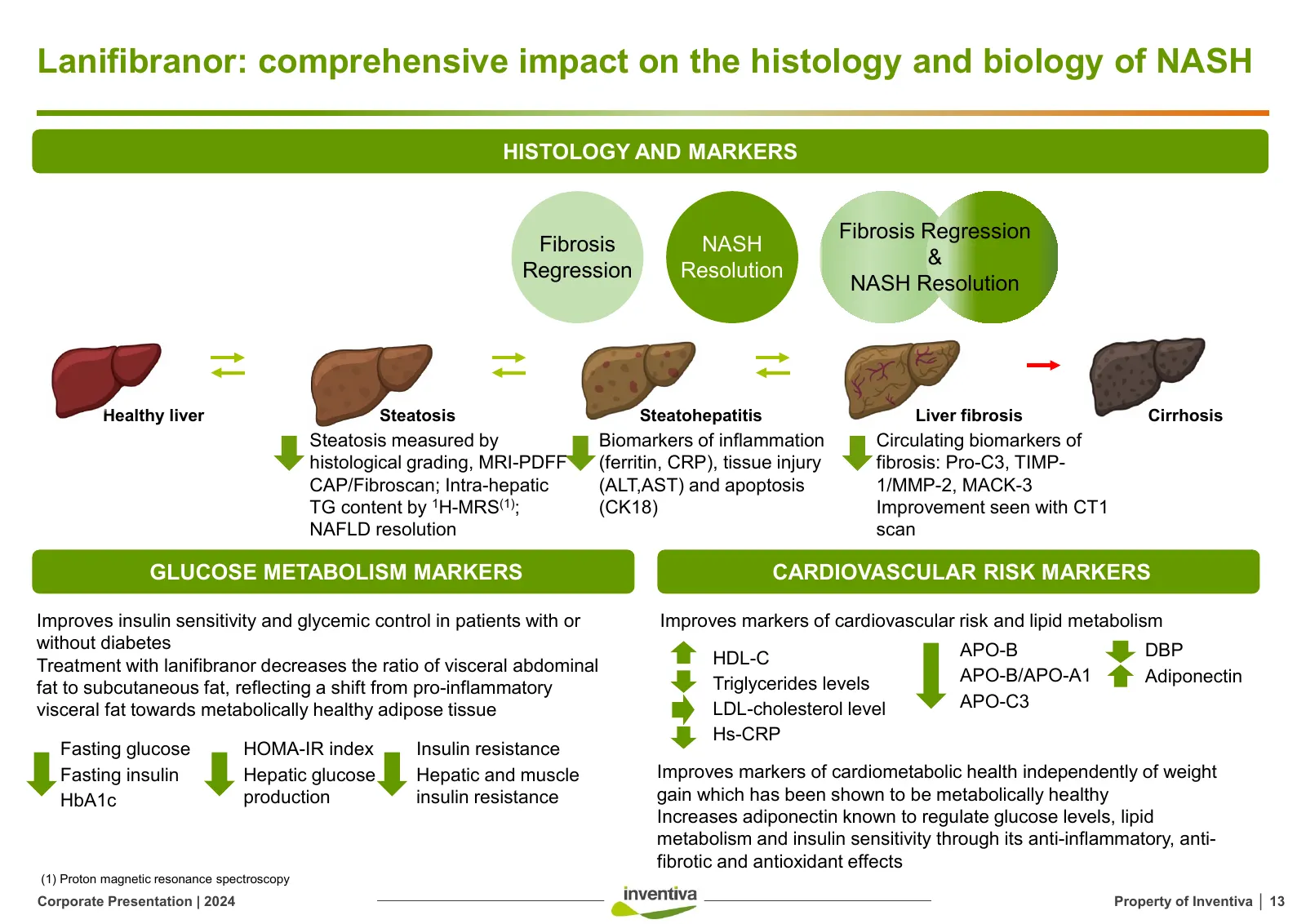
Slide 13: Lanifibranor: comprehensive impact on the histology and biology of NASH
Lanifibranor: comprehensive impact on the histology and biology of NASH HISTOLOGY AND MARKERS 1 Fibrosis Regression Fibrosis NASH & Regression Resolution NASH Resolution Healthy liver Steatosis Steatohepatitis Liver fibrosis Cirrhosis Steatosis measured by Biomarkers of inflammation Circulating biom
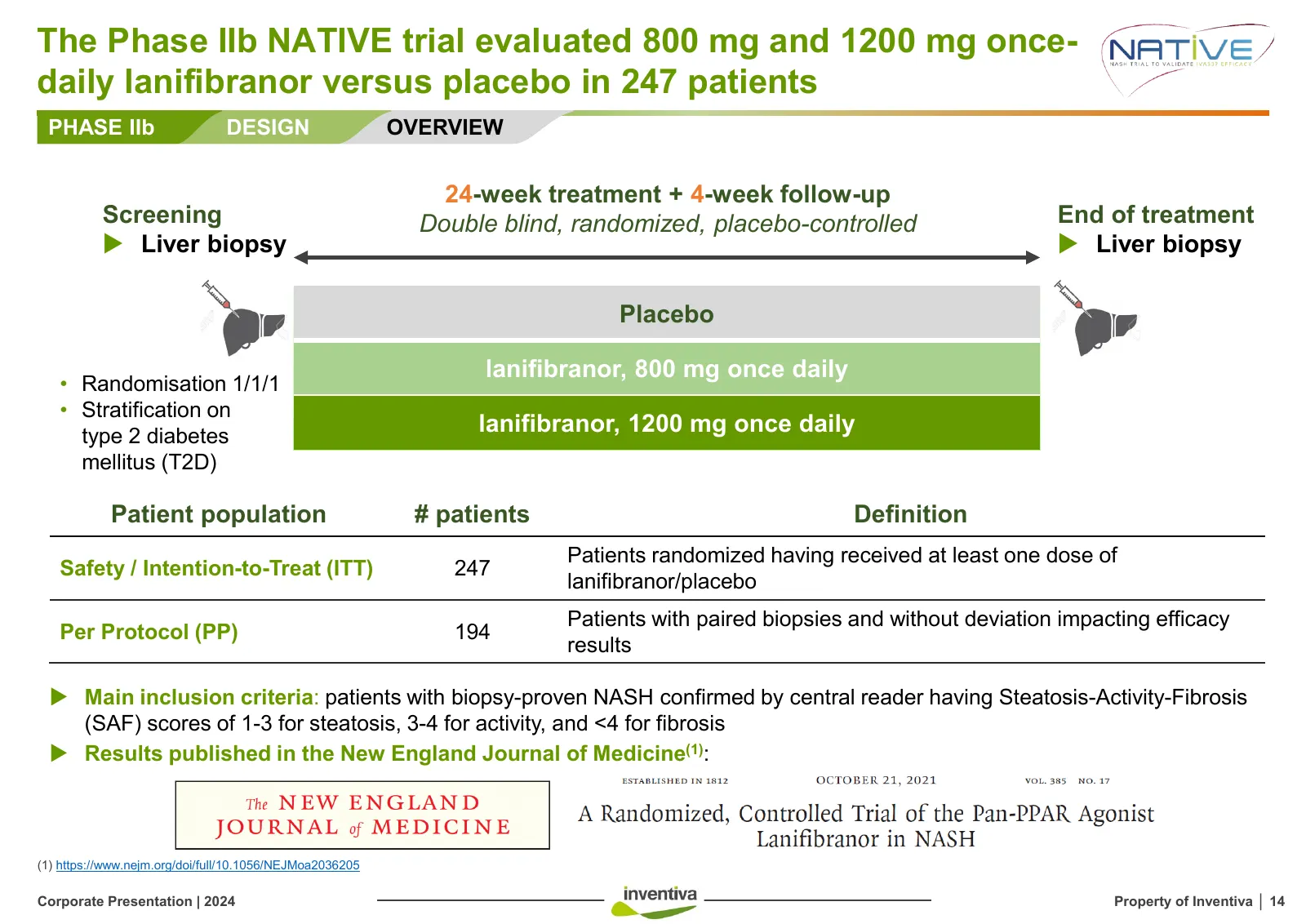
Slide 14: Phase IIb NATIVE trial design
The Phase IIb NATIVE trial evaluated 800 mg and 1200 mg once- daily lanifibranor versus placebo in 247 patients PHASE IIb DESIGN OVERVIEW 24-week treatment + 4-week follow-up Screening Double blind, randomized, placebo-controlled End of treatment Liver biopsy Liver biopsy Placebo lanifibranor, 8
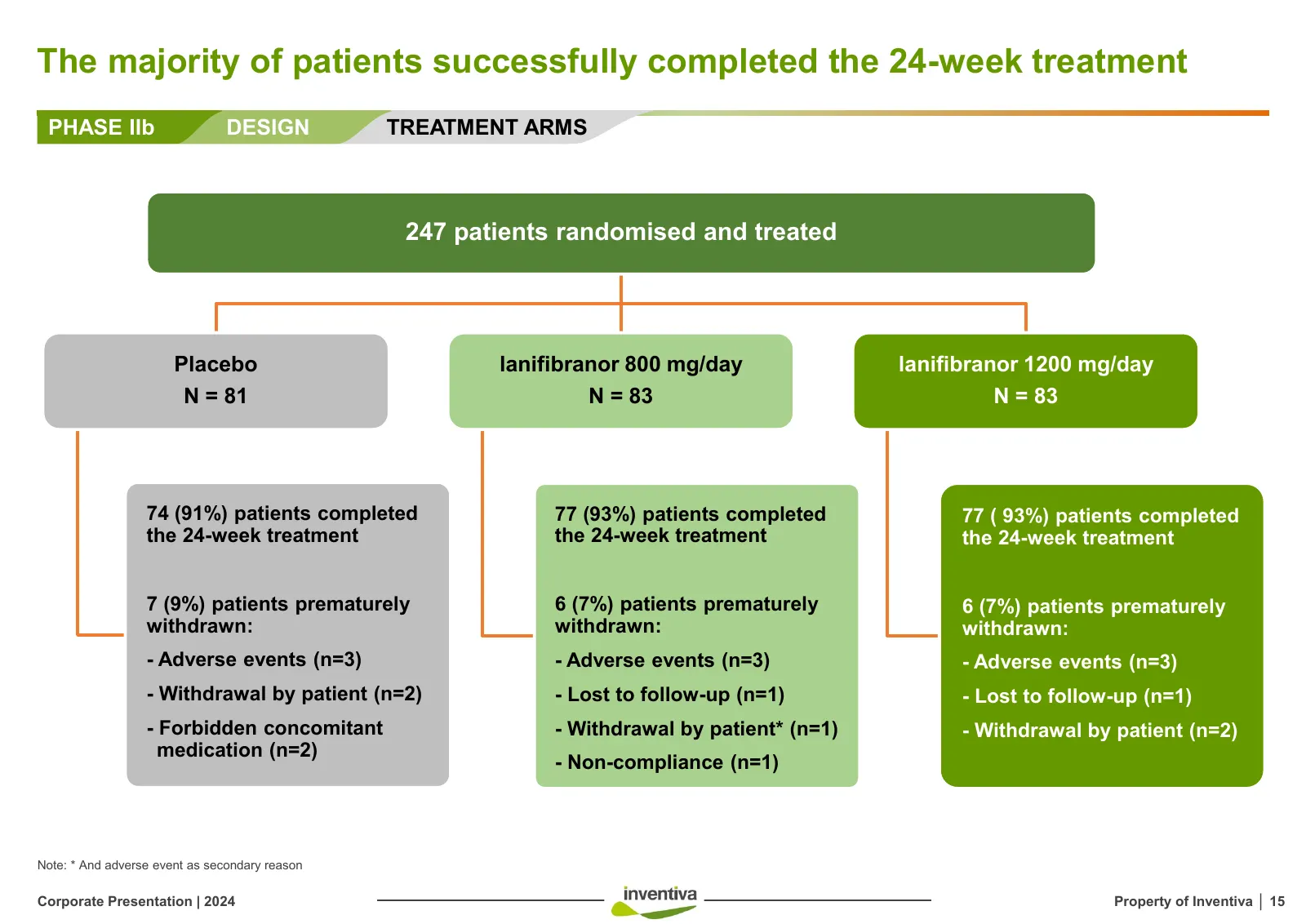
Slide 15: The majority of patients successfully completed the 24-week treatment
The majority of patients successfully completed the 24-week treatment PHASE IIb DESIGN TREATMENT ARMS 247 patients randomised and treated Placebo lanifibranor 800 mg/day lanifibranor 1200 mg/day N = 81 N = 83 N = 83 74 (91%) patients completed 77 (93%) patients completed 77 ( 93%) patients completed
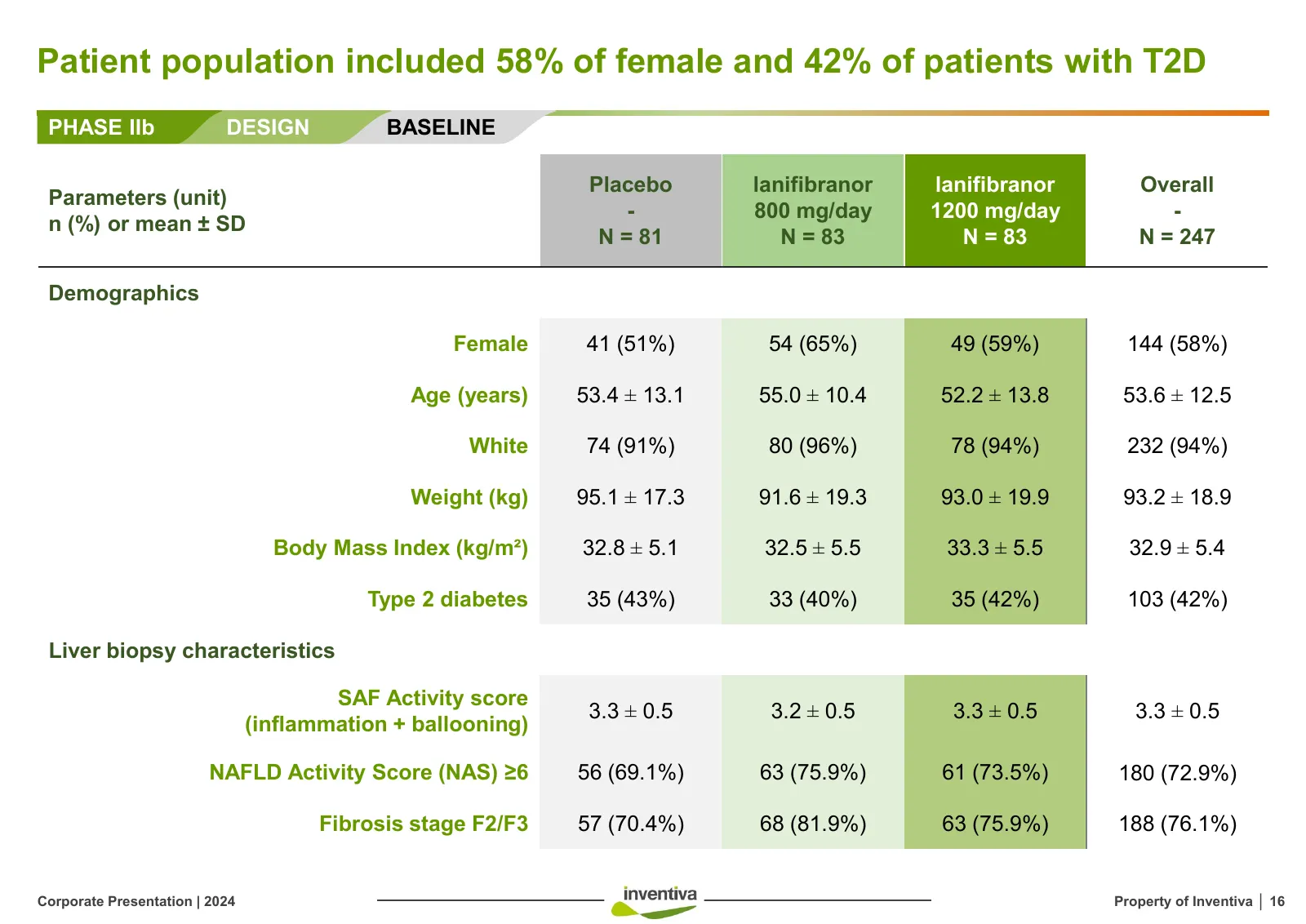
Slide 16: Patient population included 58% female and 42% with T2D
Patient population included 58% of female and 42% of patients with T2D PHASE IIb DESIGN BASELINE Placebo lanifibranor lanifibranor Overall Parameters (unit) - 800 mg/day 1200 mg/day - n (%) or mean ± SD N = 81 N = 83 N = 83 N = 247 Demographics Female 41 (51%) 54 (65%) 49 (59%) 144 (58%) Age (years)
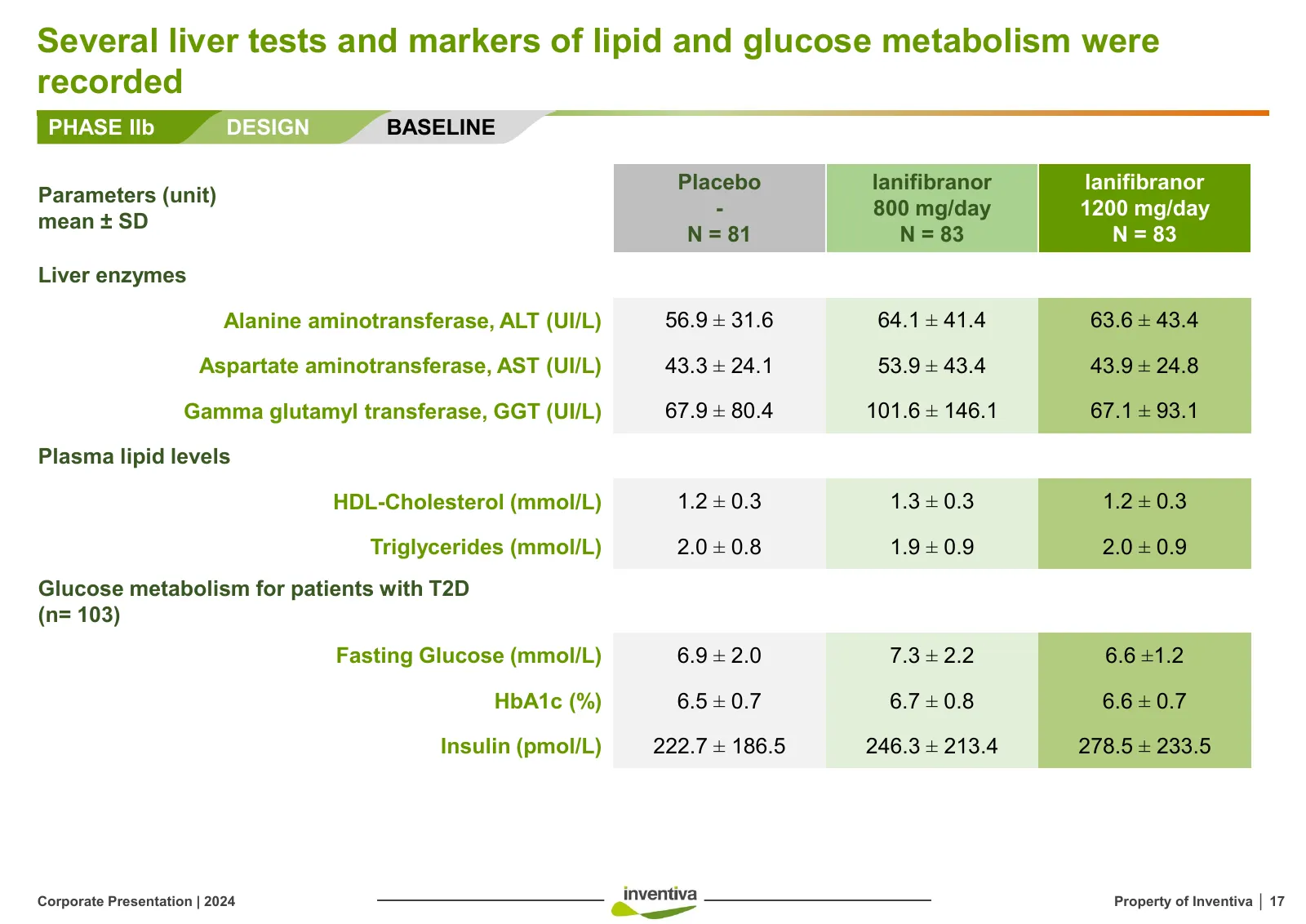
Slide 17: Several liver tests and markers of lipid and glucose metabolism were recorded
Several liver tests and markers of lipid and glucose metabolism were recorded PHASE IIb DESIGN BASELINE Placebo lanifibranor lanifibranor Parameters (unit) - 800 mg/day 1200 mg/day mean ± SD N = 81 N = 83 N = 83 Liver enzymes Alanine aminotransferase, ALT (UI/L) 56.9 ± 31.6 64.1 ± 41.4 63.6 ± 43.4 A
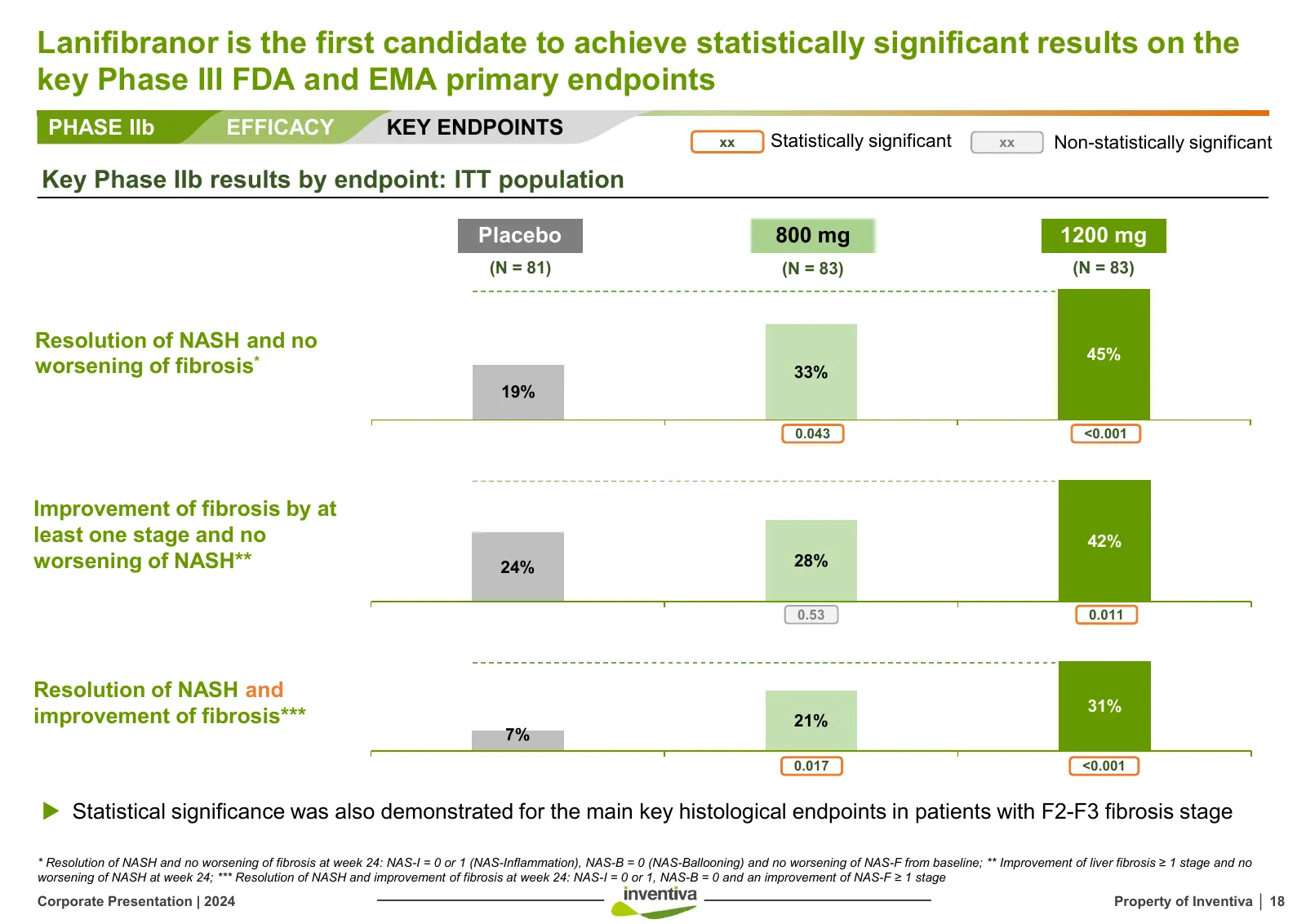
Slide 18: First candidate to achieve statistically significant results on key Phase III endpoints
Lanifibranor is the first candidate to achieve statistically significant results on the key Phase III FDA and EMA primary endpoints PHASE IIb EFFICACY KEY ENDPOINTS xx Statistically significant xx Non-statistically significant Key Phase IIb results by endpoint: ITT population Placebo 800 mg 1200 mg
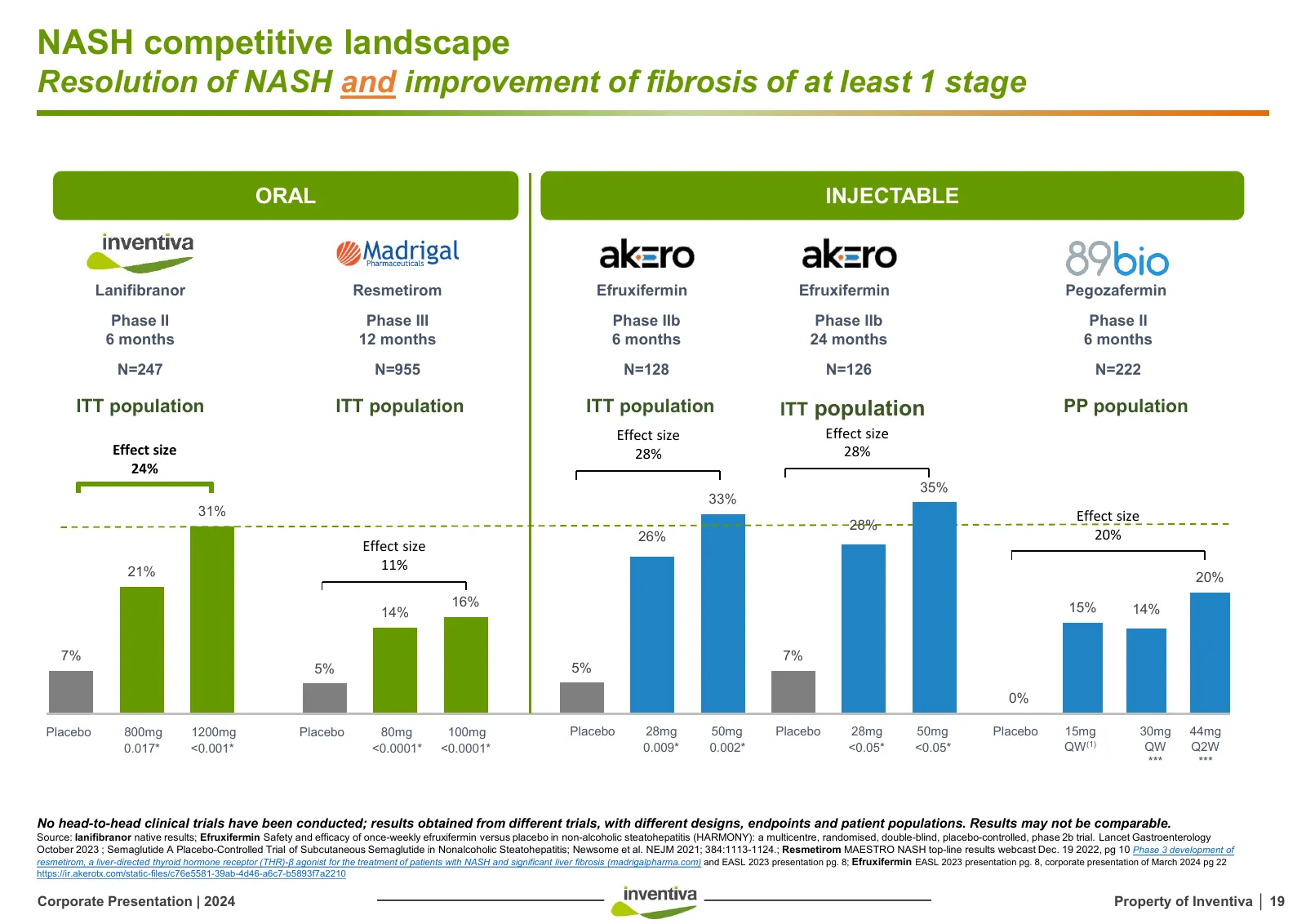
Slide 19: NASH competitive landscape
NASH competitive landscape Resolution of NASH and improvement of fibrosis of at least 1 stage ORAL INJECTABLE Lanifibranor Resmetirom Efruxifermin Efruxifermin Pegozafermin Phase II Phase III Phase IIb Phase IIb Phase II 6 months 12 months 6 months 24 months 6 months N=247 N=955 N=128 N=126 N=222 IT
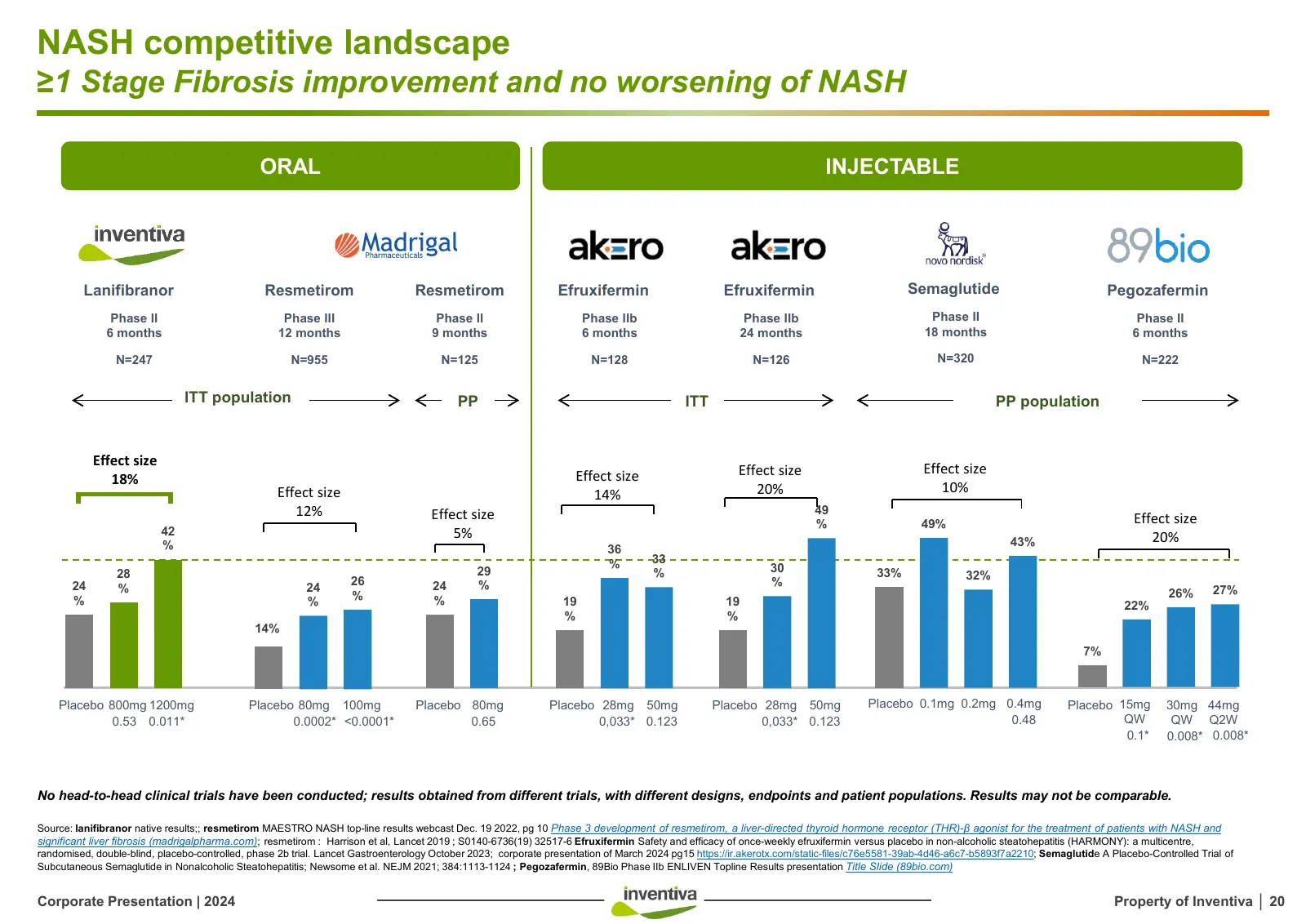
Slide 20: NASH competitive landscape: fibrosis improvement
NASH competitive landscape ≥1 Stage Fibrosis improvement and no worsening of NASH ORAL INJECTABLE Lanifibranor Resmetirom Resmetirom Efruxifermin Efruxifermin Semaglutide Pegozafermin Phase II Phase III Phase II Phase IIb Phase IIb Phase II Phase II 6 months 12 months 9 months 6 months 24 months 18
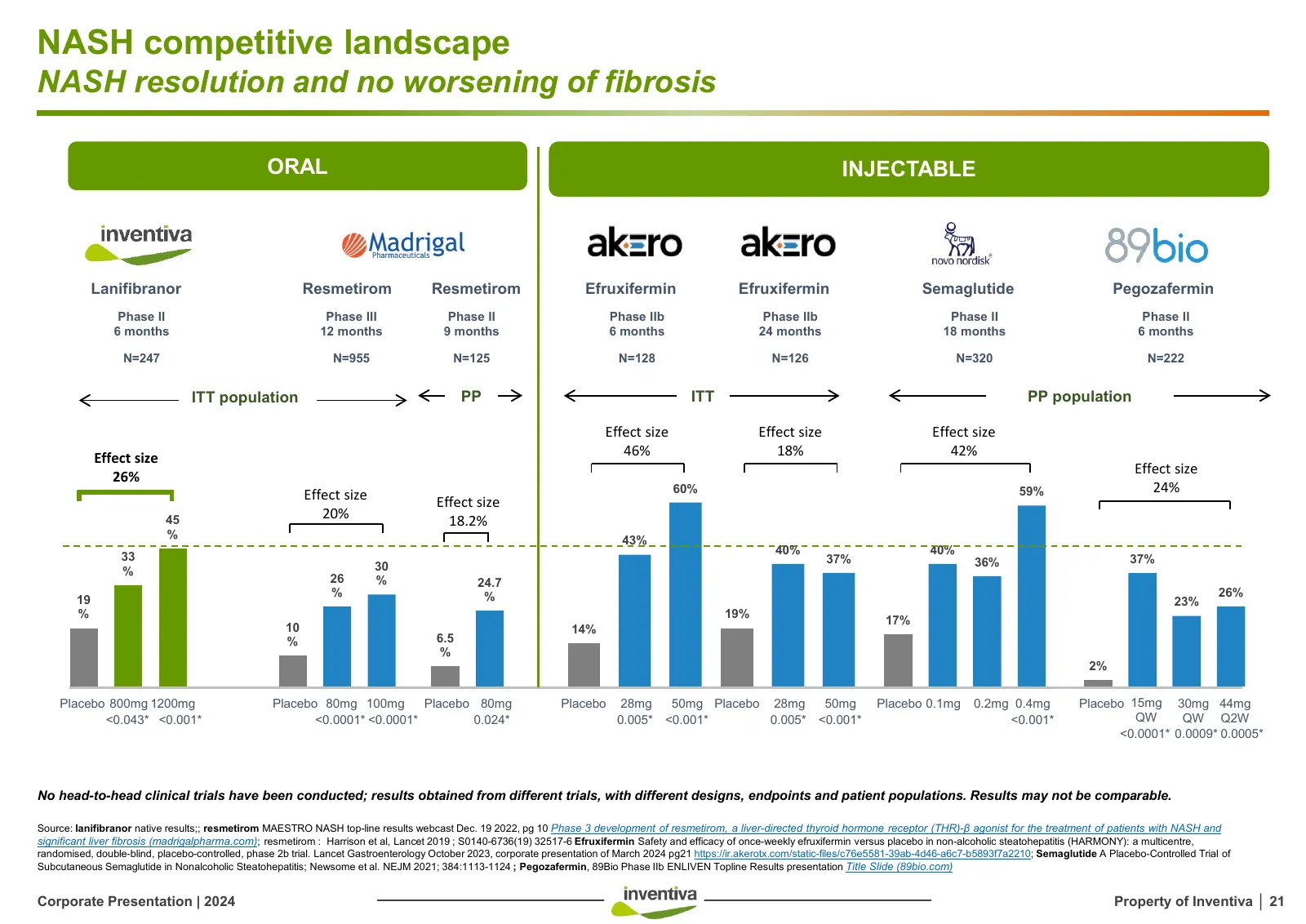
Slide 21: NASH competitive landscape: NASH resolution
NASH competitive landscape NASH resolution and no worsening of fibrosis ORAL INJECTABLE Lanifibranor Resmetirom Resmetirom Efruxifermin Efruxifermin Semaglutide Pegozafermin Phase II Phase III Phase II Phase IIb Phase IIb Phase II Phase II 6 months 12 months 9 months 6 months 24 months 18 months 6 m
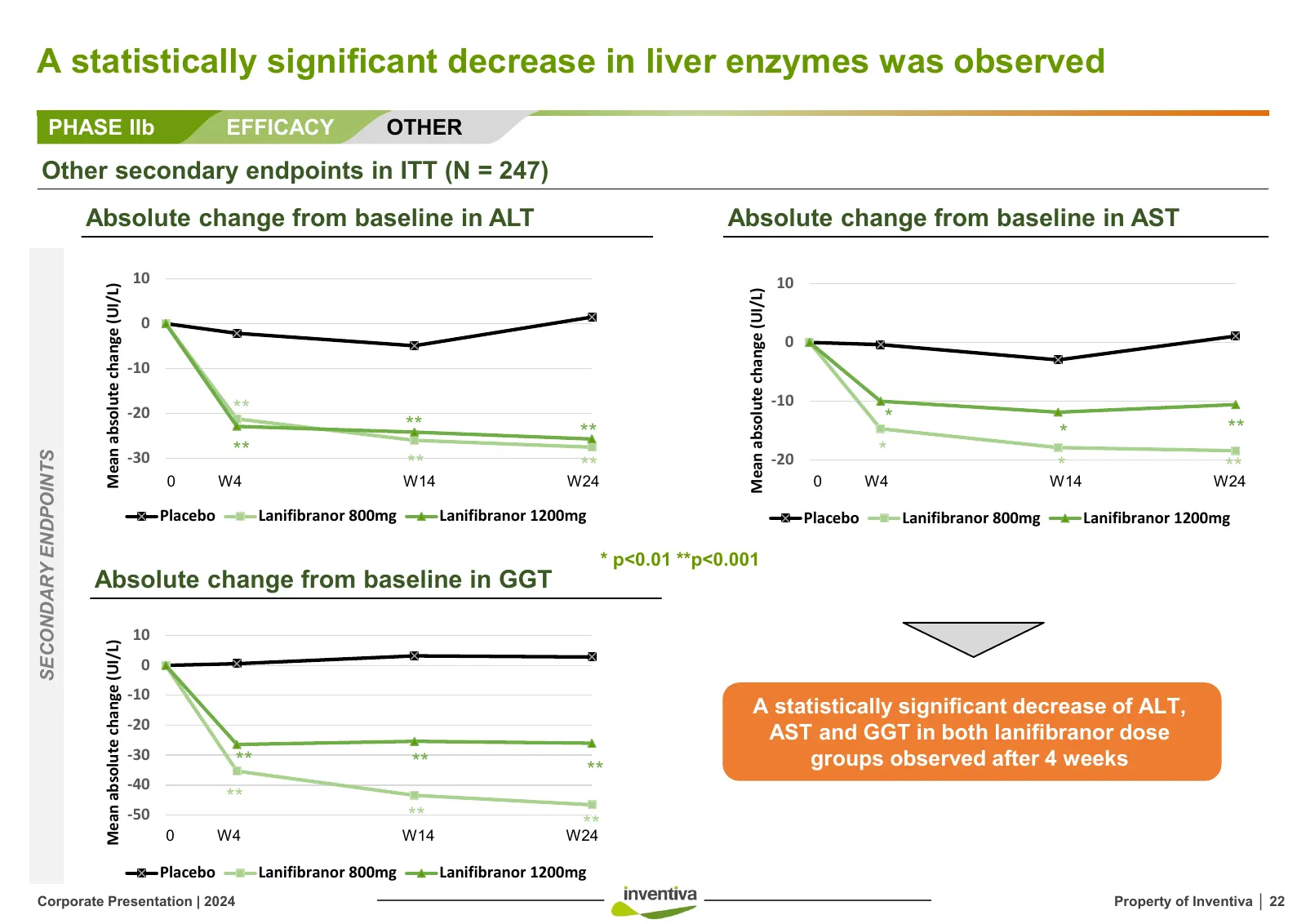
Slide 22: Statistically significant decrease in liver enzymes
A statistically significant decrease in liver enzymes was observed PHASE IIb EFFICACY OTHER Other secondary endpoints in ITT (N = 247) Absolute change from baseline in ALT Absolute change from baseline in AST 10 10 Mean absolute change (UI/L) Mean absolute change (UI/L) 0 0 -10 -10 -20 ** * ** ** *
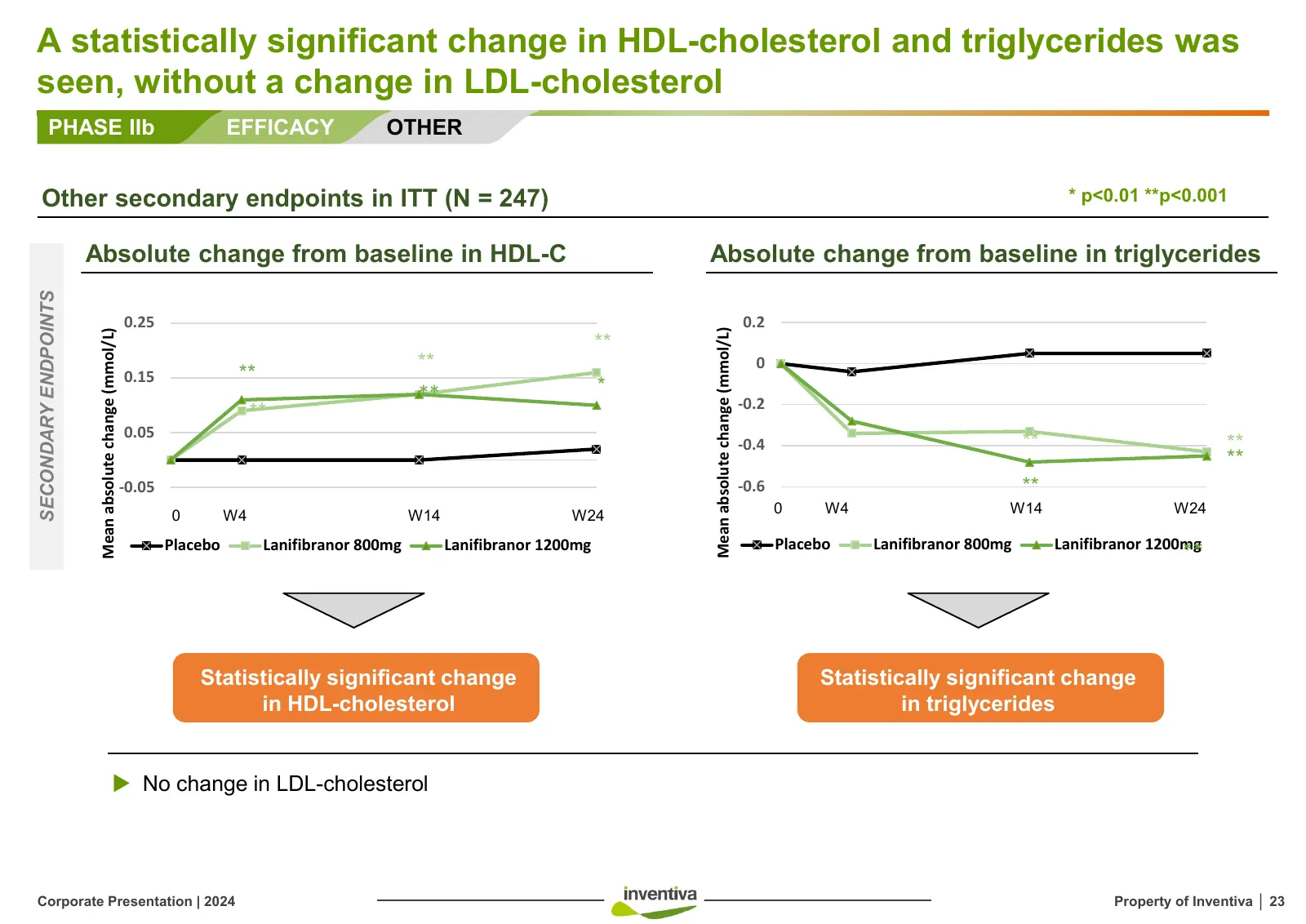
Slide 23: Change in HDL-cholesterol and triglycerides
A statistically significant change in HDL-cholesterol and triglycerides was seen, without a change in LDL-cholesterol PHASE IIb EFFICACY OTHER Other secondary endpoints in ITT (N = 247) * p<0.01 **p<0.001 Absolute change from baseline in HDL-C Absolute change from baseline in triglycerides SECONDARY
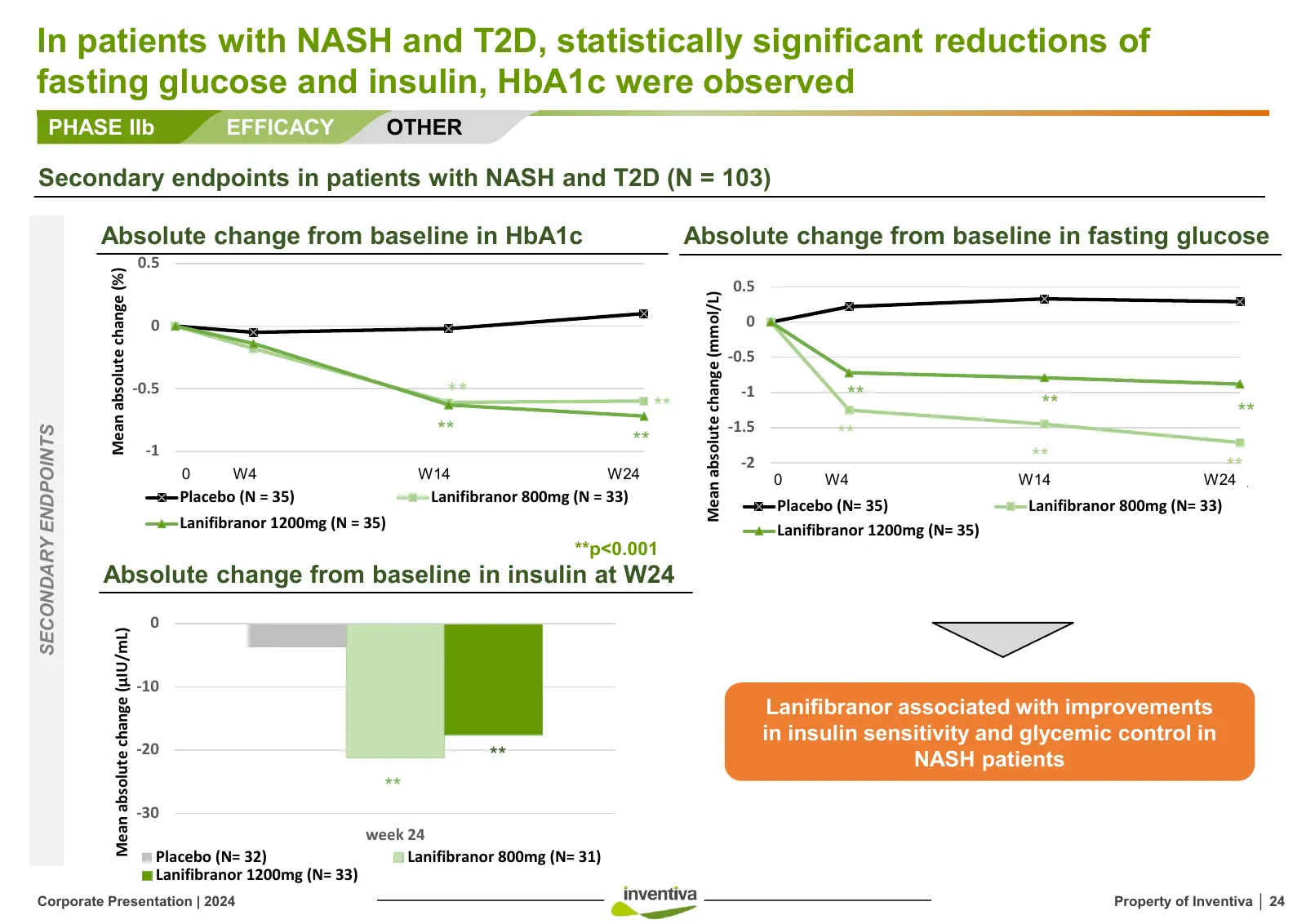
Slide 24: Reductions of fasting glucose, insulin, HbA1c in NASH and T2D
In patients with NASH and T2D, statistically significant reductions of fasting glucose and insulin, HbA1c were observed PHASE IIb EFFICACY OTHER Secondary endpoints in patients with NASH and T2D (N = 103) Absolute change from baseline in HbA1c Absolute change from baseline in fasting glucose 0.5 Mea
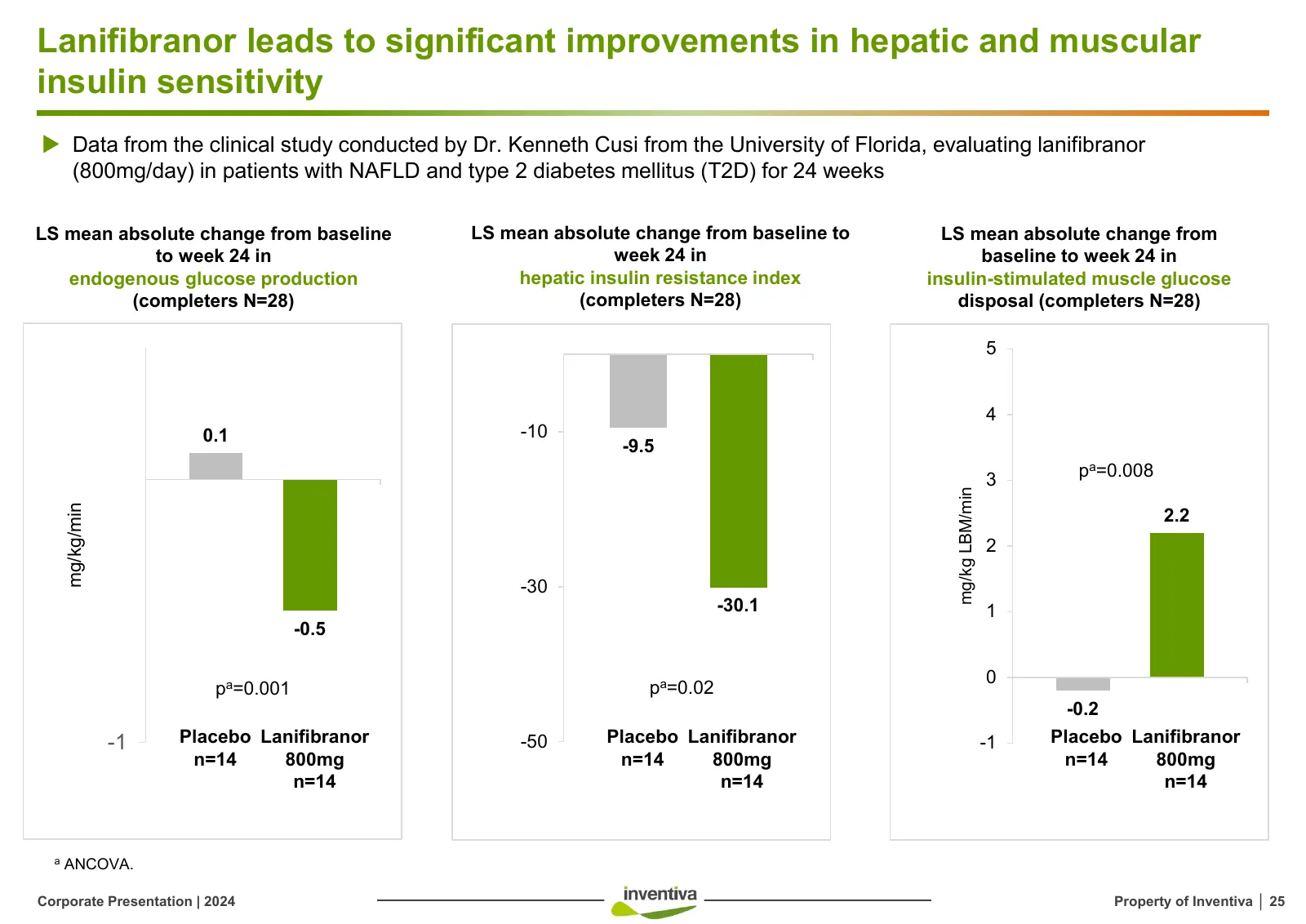
Slide 25: Improvements in hepatic and muscular insulin sensitivity
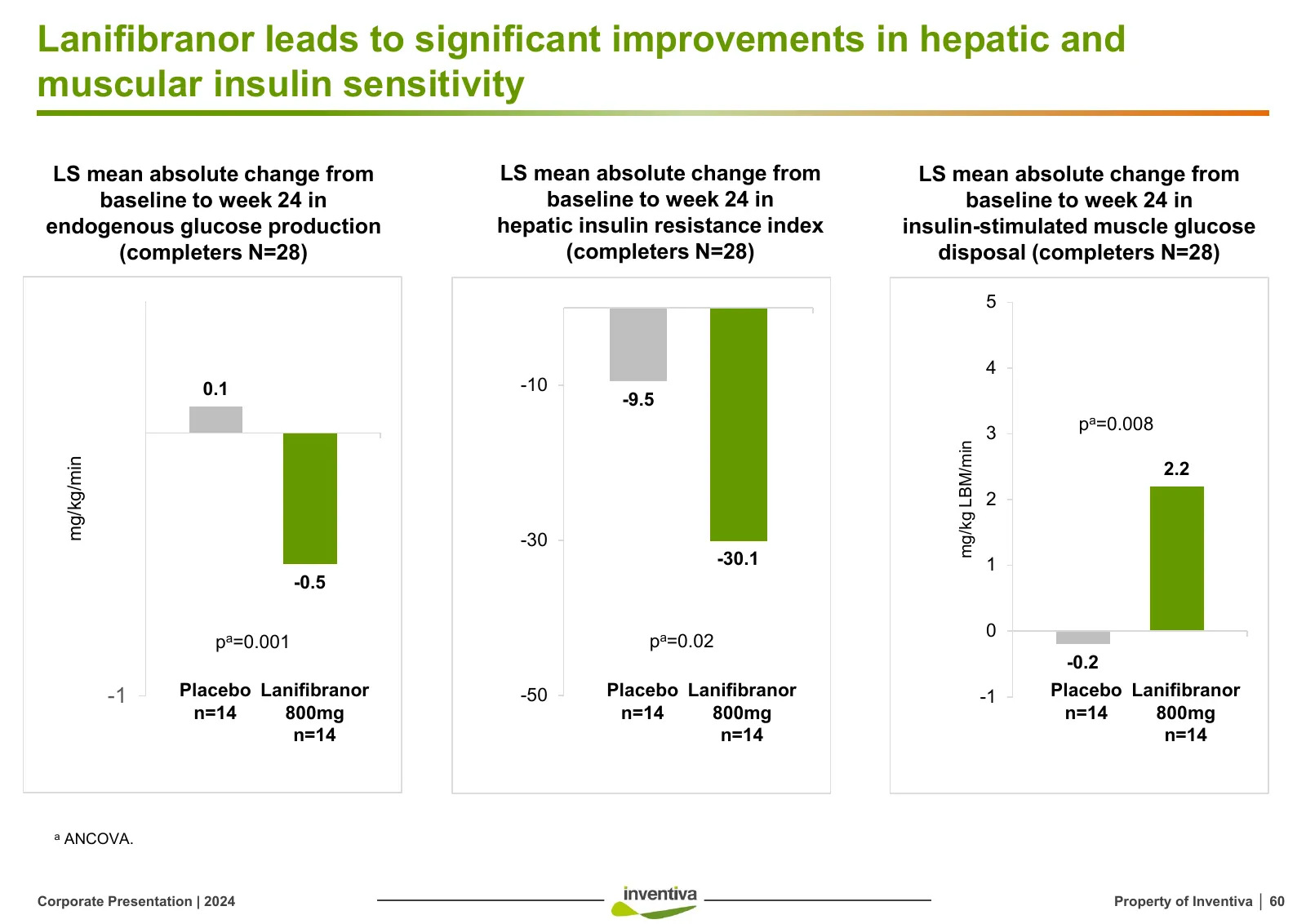
Lanifibranor leads to significant improvements in hepatic and muscular insulin sensitivity Data from the clinical study conducted by Dr. Kenneth Cusi from the University of Florida, evaluating lanifibranor (800mg/day) in patients with NAFLD and type 2 diabetes mellitus (T2D) for 24 weeks LS mean a
Slide 26: Significant decrease in circulating biomarkers
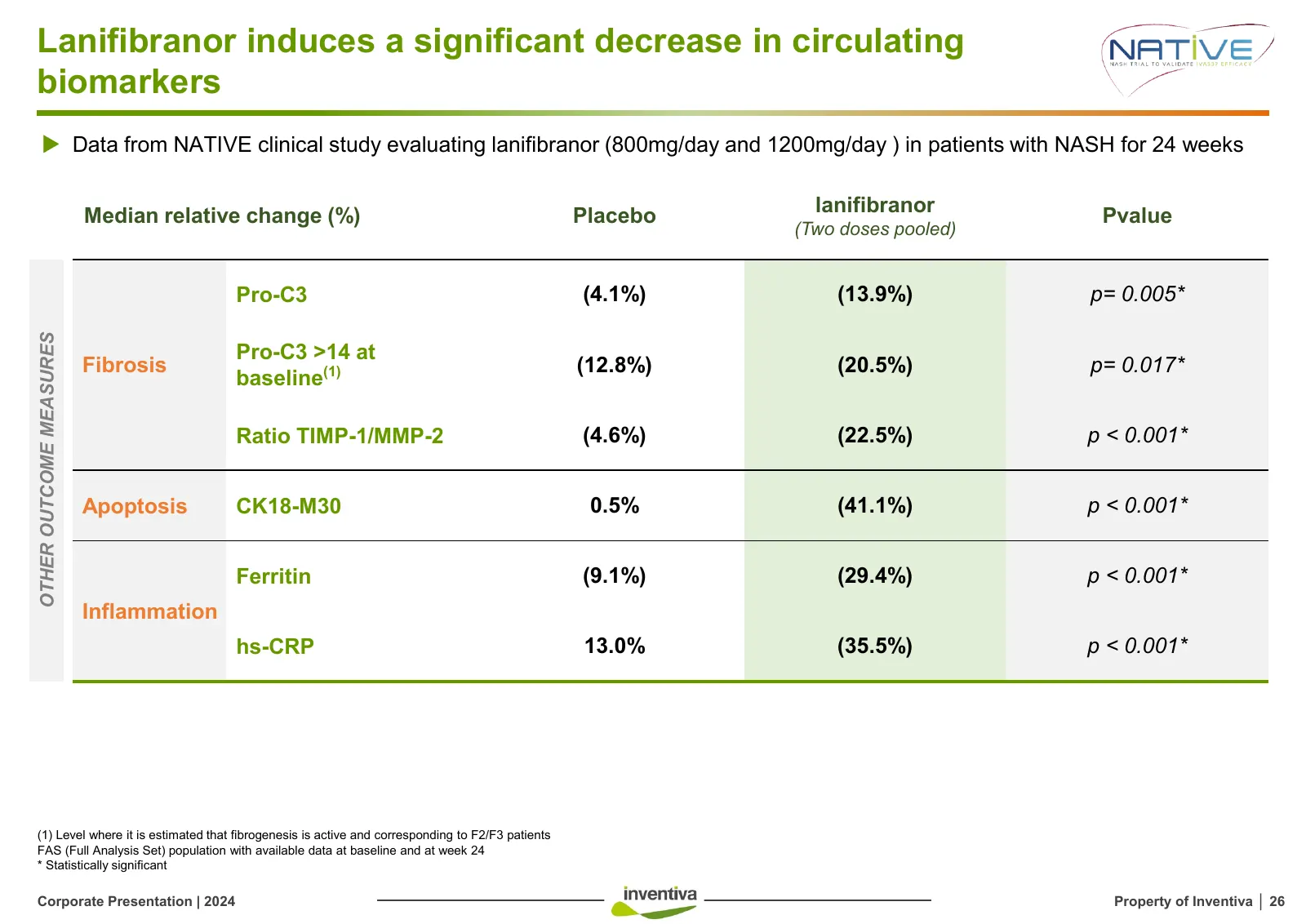
Lanifibranor induces a significant decrease in circulating biomarkers Data from NATIVE clinical study evaluating lanifibranor (800mg/day and 1200mg/day ) in patients with NASH for 24 weeks lanifibranor Median relative change (%) Placebo Pvalue (Two doses pooled) Pro-C3 (4.1%) (13.9%) p= 0.005* OTH
Slide 27: Significantly reduces hepatic steatosis measured by MRI-PDFF and MR-spectroscopy
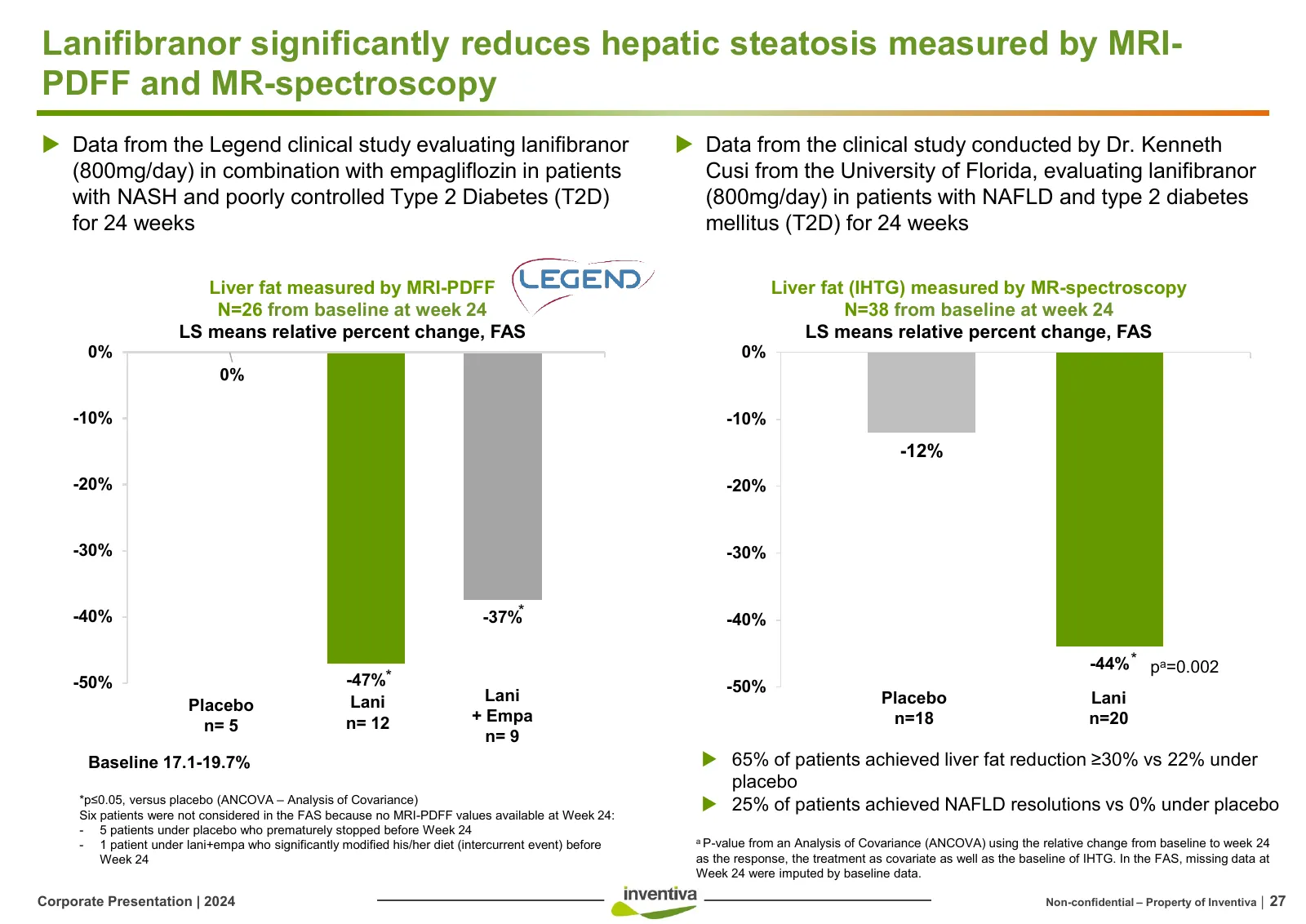
Lanifibranor significantly reduces hepatic steatosis measured by MRI- PDFF and MR-spectroscopy Data from the Legend clinical study evaluating lanifibranor Data from the clinical study conducted by Dr. Kenneth (800mg/day) in combination with empagliflozin in patients Cusi from the University of F
Slide 28: Treatment effects on liver fat reduction: competitive landscape
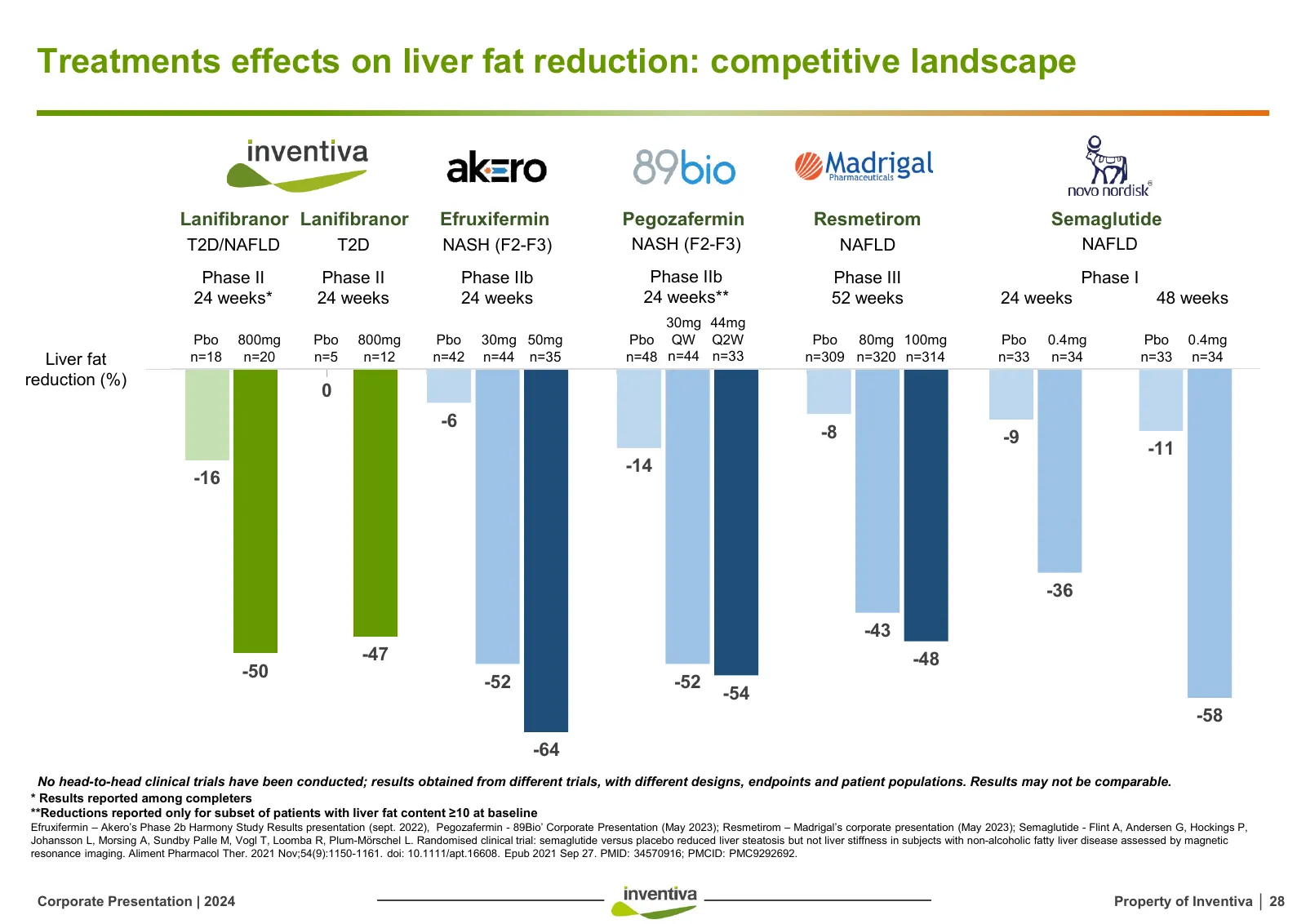
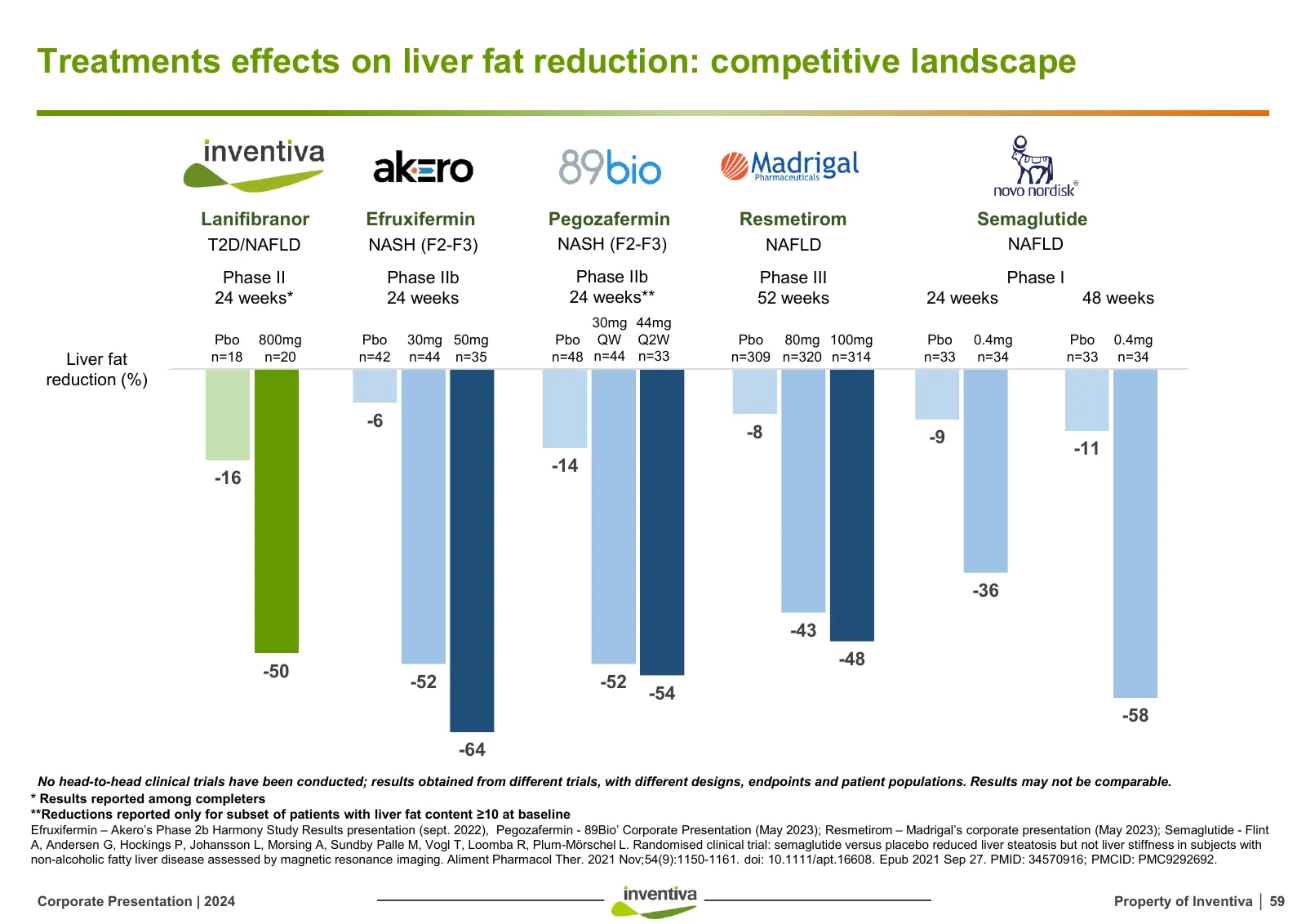
Treatments effects on liver fat reduction: competitive landscape Lanifibranor Lanifibranor Efruxifermin Pegozafermin Resmetirom Semaglutide T2D/NAFLD T2D NASH (F2-F3) NASH (F2-F3) NAFLD NAFLD Phase II Phase II Phase IIb Phase IIb Phase III Phase I 24 weeks* 24 weeks 24 weeks 24 weeks** 52 weeks 24 w
Slide 29: Markers of inflammation and fibrosis measured by cT1
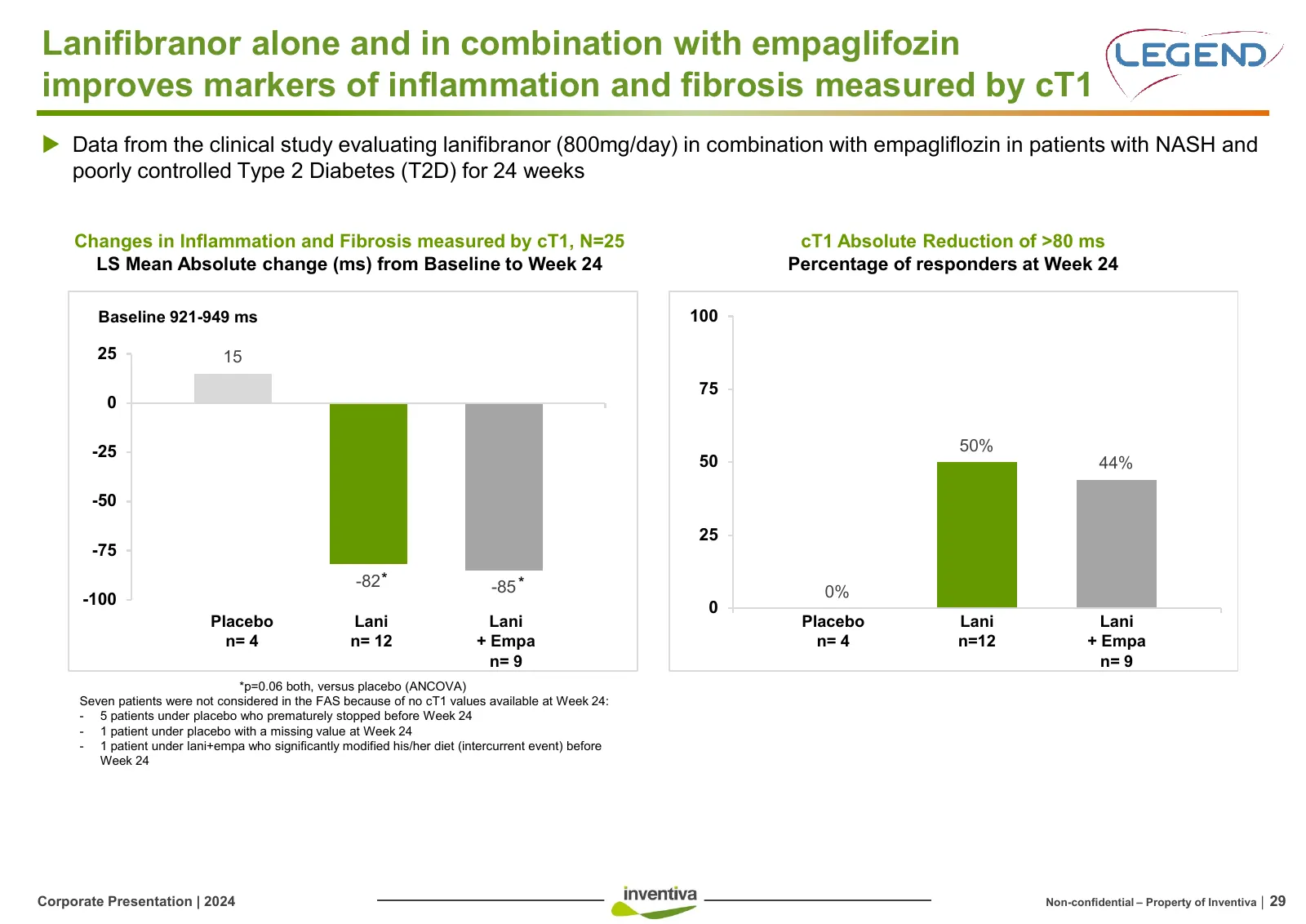
Lanifibranor alone and in combination with empaglifozin improves markers of inflammation and fibrosis measured by cT1 Data from the clinical study evaluating lanifibranor (800mg/day) in combination with empagliflozin in patients with NASH and poorly controlled Type 2 Diabetes (T2D) for 24 weeks Ch
Slide 30: Lanifibranor has a favourable safety profile
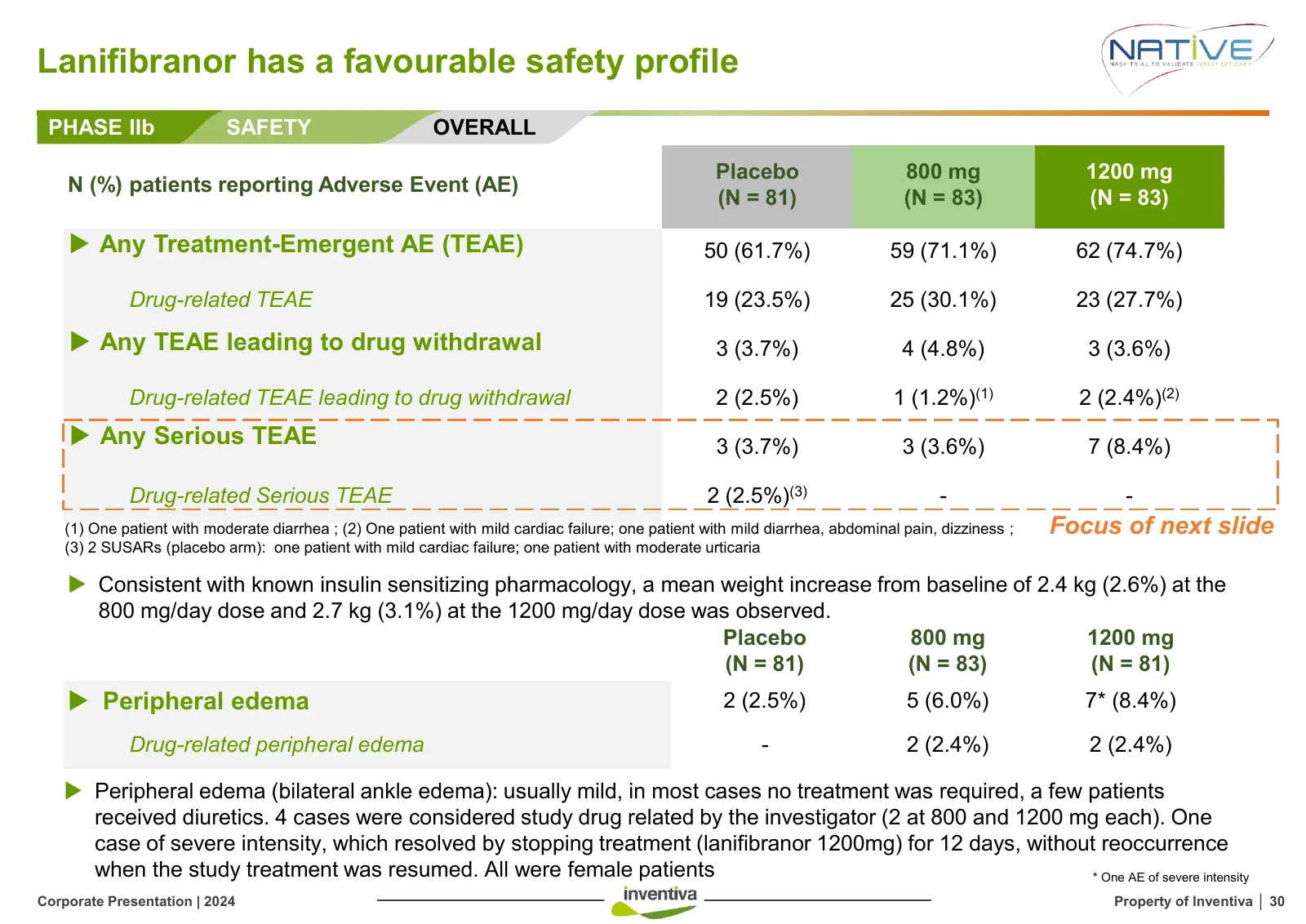
Lanifibranor has a favourable safety profile PHASE IIb SAFETY OVERALL Placebo 800 mg 1200 mg N (%) patients reporting Adverse Event (AE) (N = 81) (N = 83) (N = 83) Any Treatment-Emergent AE (TEAE) 50 (61.7%) 59 (71.1%) 62 (74.7%) Drug-related TEAE 19 (23.5%) 25 (30.1%) 23 (27.7%) Any TEAE leadin
Slide 31: A limited number of serious TEAEs occurred
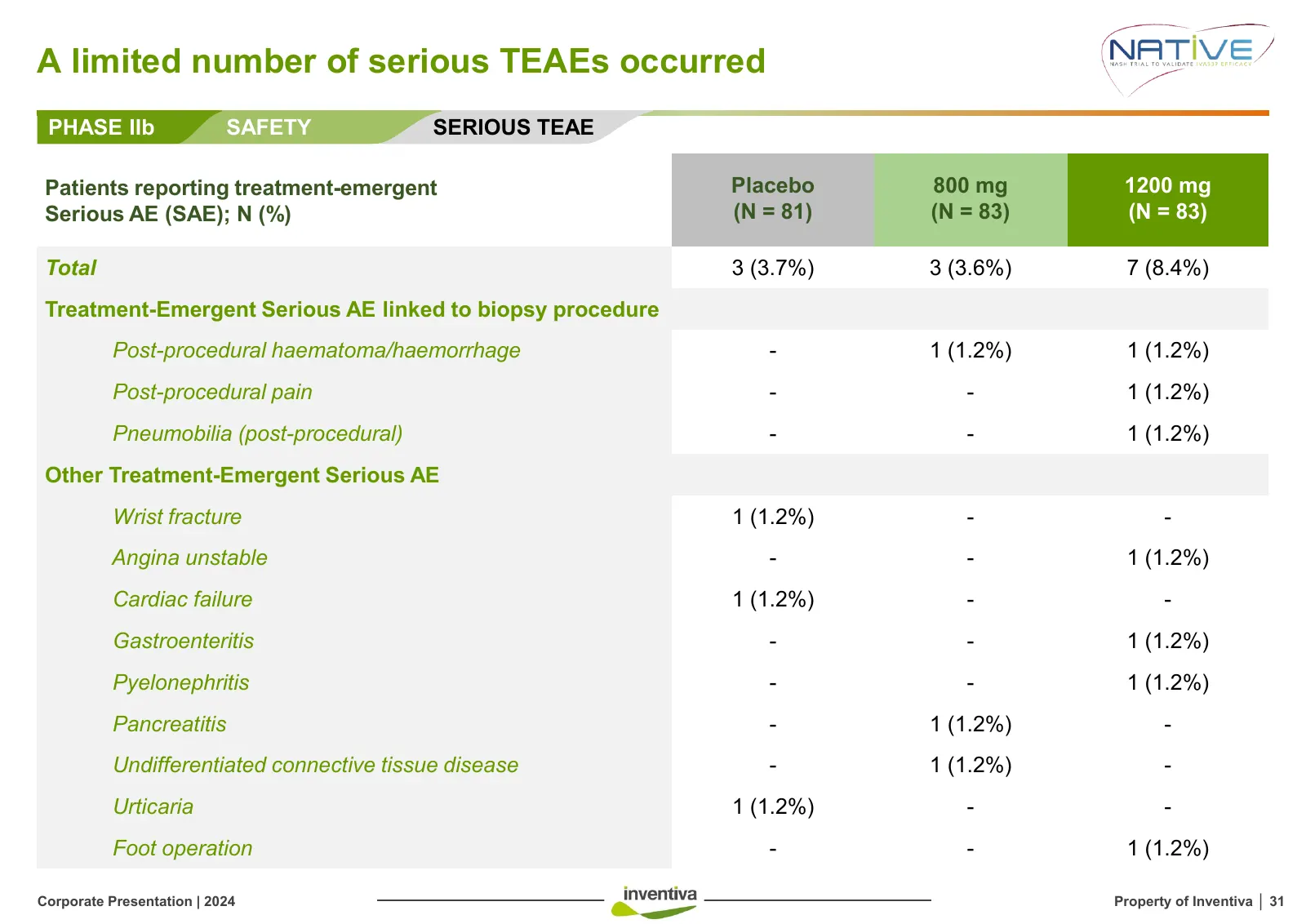
A limited number of serious TEAEs occurred PHASE IIb SAFETY SERIOUS TEAE Patients reporting treatment-emergent Placebo 800 mg 1200 mg Serious AE (SAE); N (%) (N = 81) (N = 83) (N = 83) Total 3 (3.7%) 3 (3.6%) 7 (8.4%) Treatment-Emergent Serious AE linked to biopsy procedure Post-procedural haematoma
Slide 32: Modest weight increase with no impact on efficacy
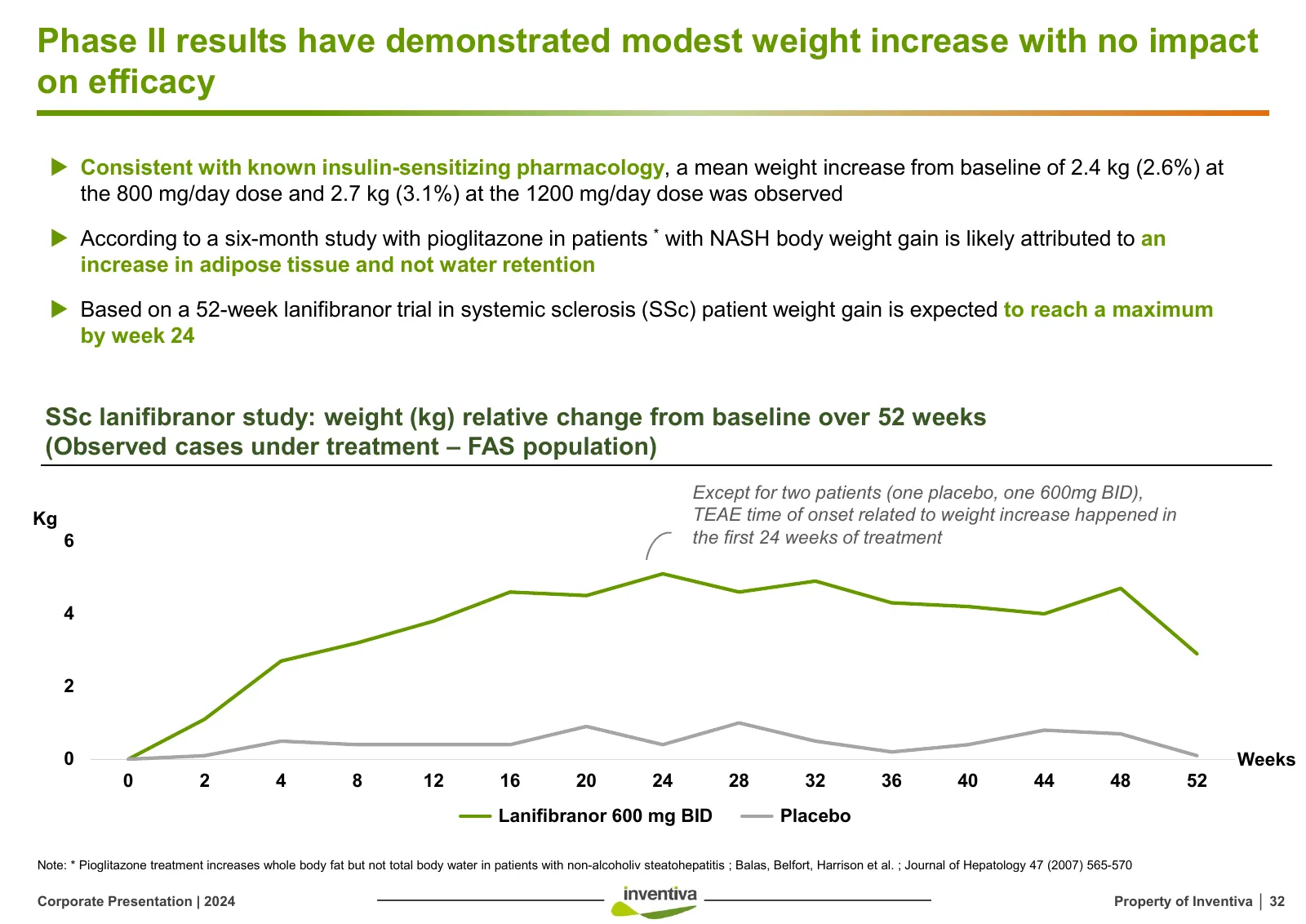
Phase II results have demonstrated modest weight increase with no impact on efficacy Consistent with known insulin-sensitizing pharmacology, a mean weight increase from baseline of 2.4 kg (2.6%) at the 800 mg/day dose and 2.7 kg (3.1%) at the 1200 mg/day dose was observed According to a six-mont
Slide 33: Weight changes in NATIVE trial
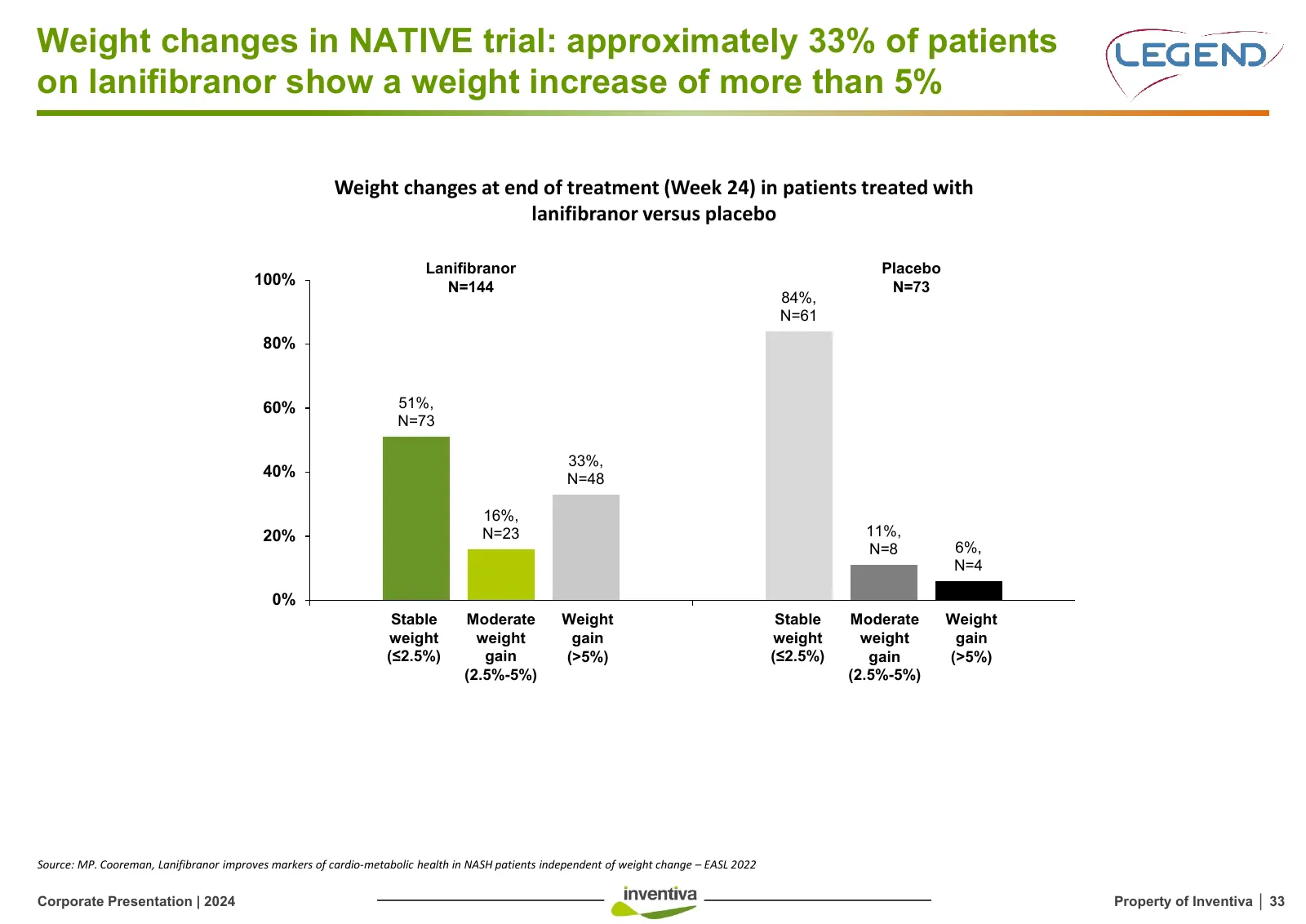
Weight changes in NATIVE trial: approximately 33% of patients on lanifibranor show a weight increase of more than 5% Weight changes at end of treatment (Week 24) in patients treated with lanifibranor versus placebo Lanifibranor Placebo 100% N=144 N=73 84%, N=61 80% 60% 51%, N=73 33%, 40% N=48 16%, 2
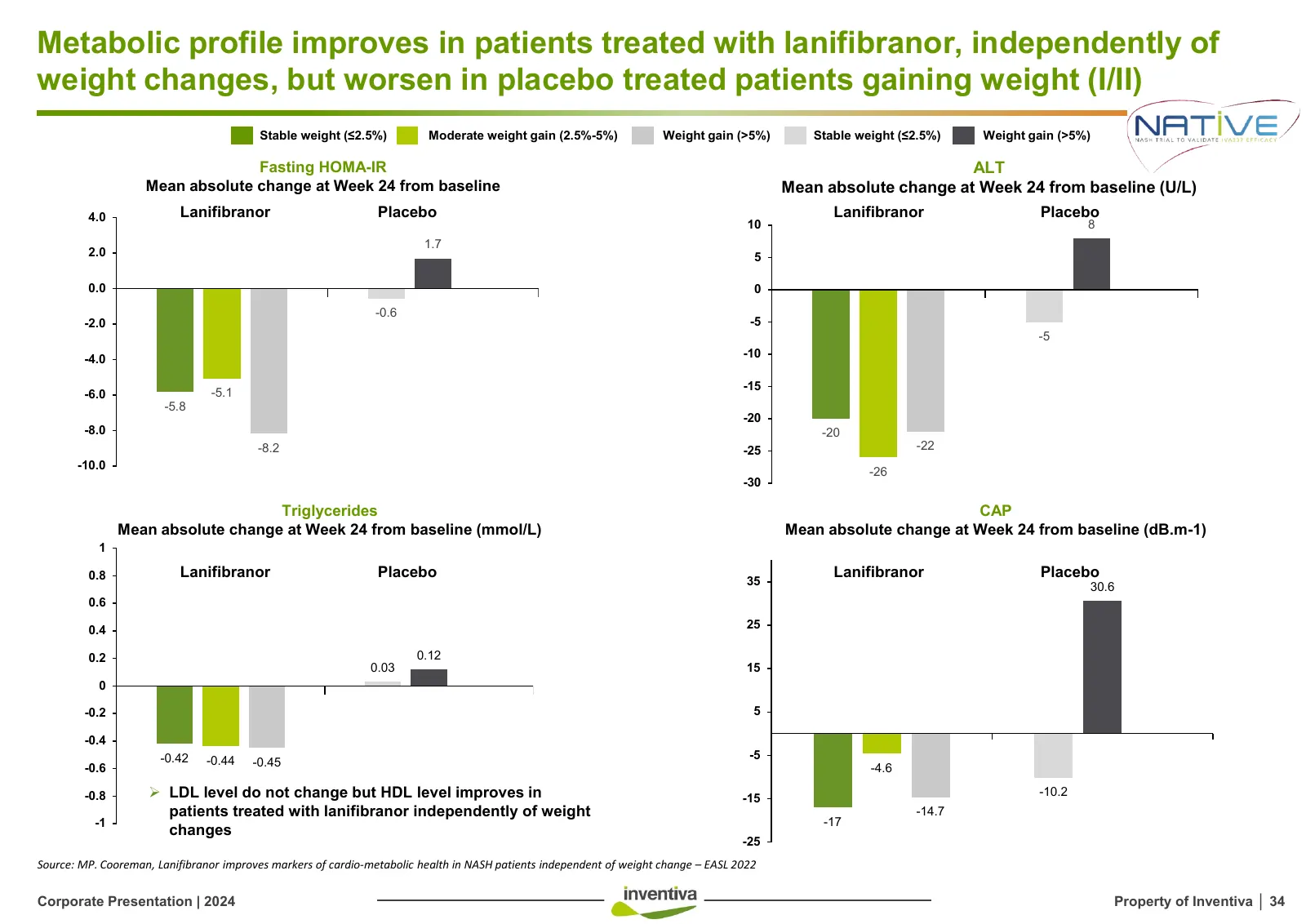
Slide 34: Metabolic profile improves independently of weight changes (I/II)
Metabolic profile improves in patients treated with lanifibranor, independently of weight changes, but worsen in placebo treated patients gaining weight (I/II) Stable weight (≤2.5%) Moderate weight gain (2.5%-5%) Weight gain (>5%) Stable weight (≤2.5%) Weight gain (>5%) Fasting HOMA-IR ALT Mean abso
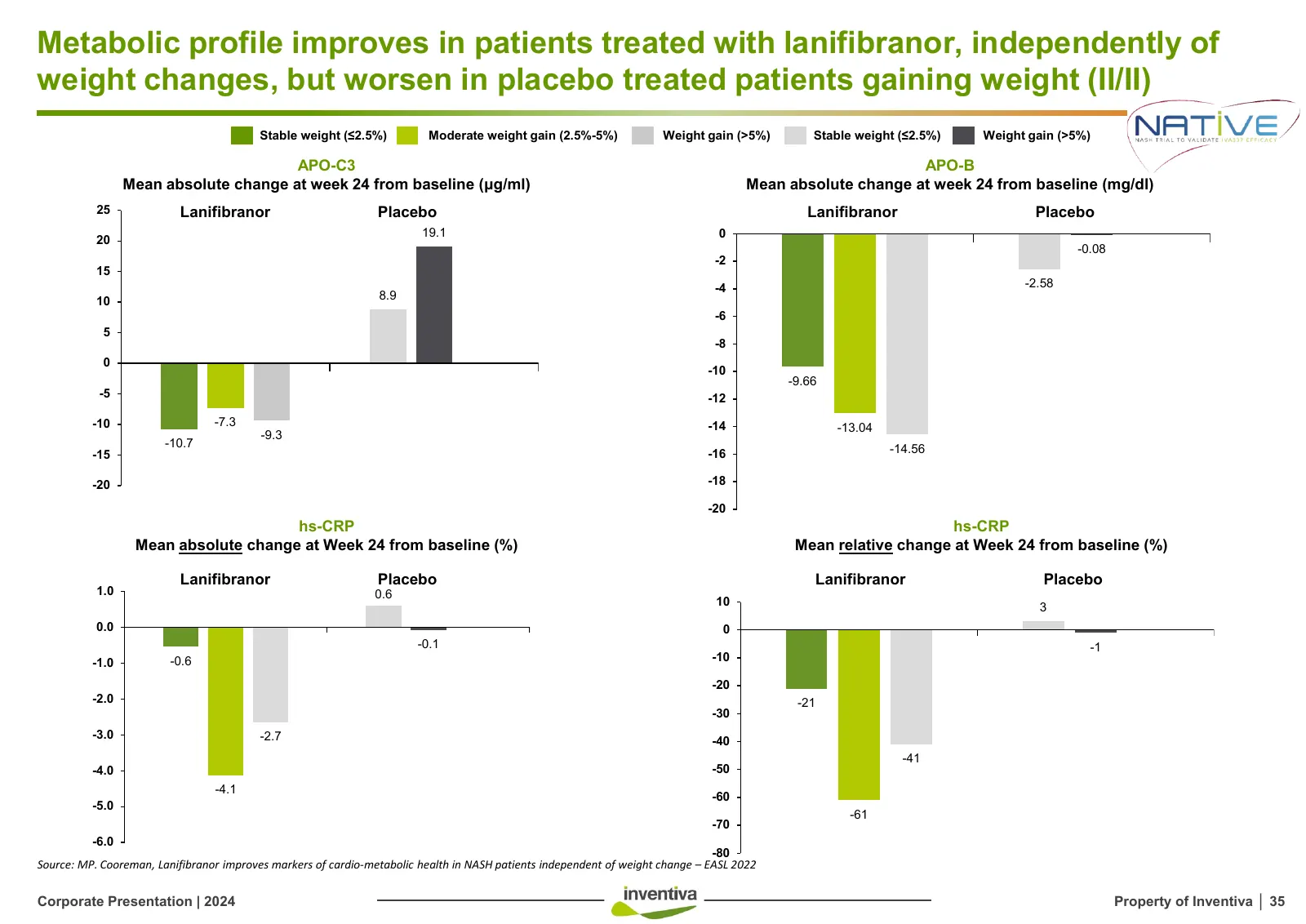
Slide 35: Metabolic profile improves independently of weight changes (II/II)
Metabolic profile improves in patients treated with lanifibranor, independently of weight changes, but worsen in placebo treated patients gaining weight (II/II) Stable weight (≤2.5%) Moderate weight gain (2.5%-5%) Weight gain (>5%) Stable weight (≤2.5%) Weight gain (>5%) APO-C3 APO-B Mean absolute c
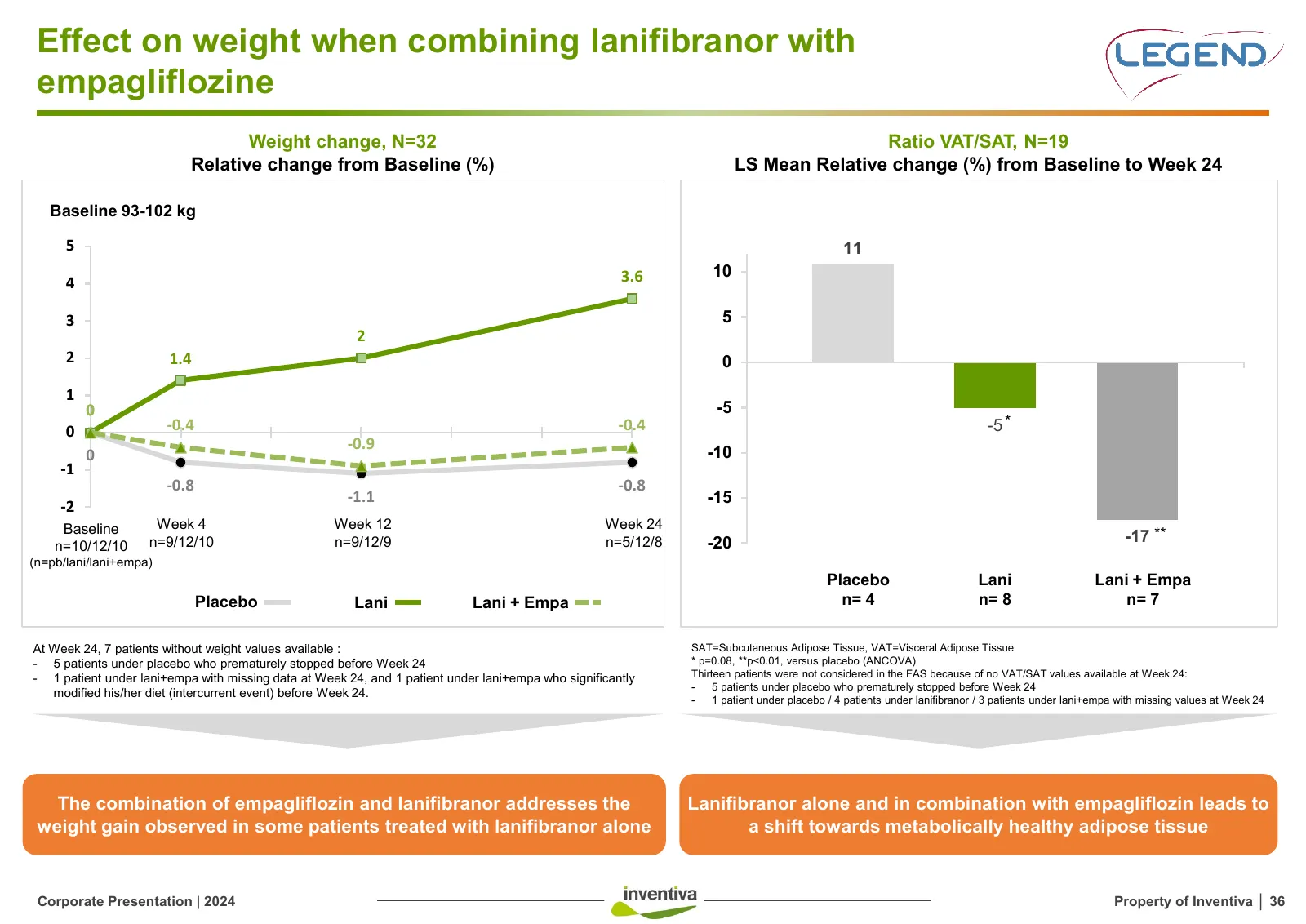
Slide 36: Effect on weight when combining lanifibranor with empagliflozin
Effect on weight when combining lanifibranor with empagliflozine Weight change, N=32 Ratio VAT/SAT, N=19 Relative change from Baseline (%) LS Mean Relative change (%) from Baseline to Week 24 Baseline 93-102 kg 5 11 3.6 10 4 3 5 2 2 1.4 0 1 0 -5 0 -0.4 -0.4 -5 * -0.9 0 -10 -1 -0.8 -0.8 -1.1 -15 -2 B
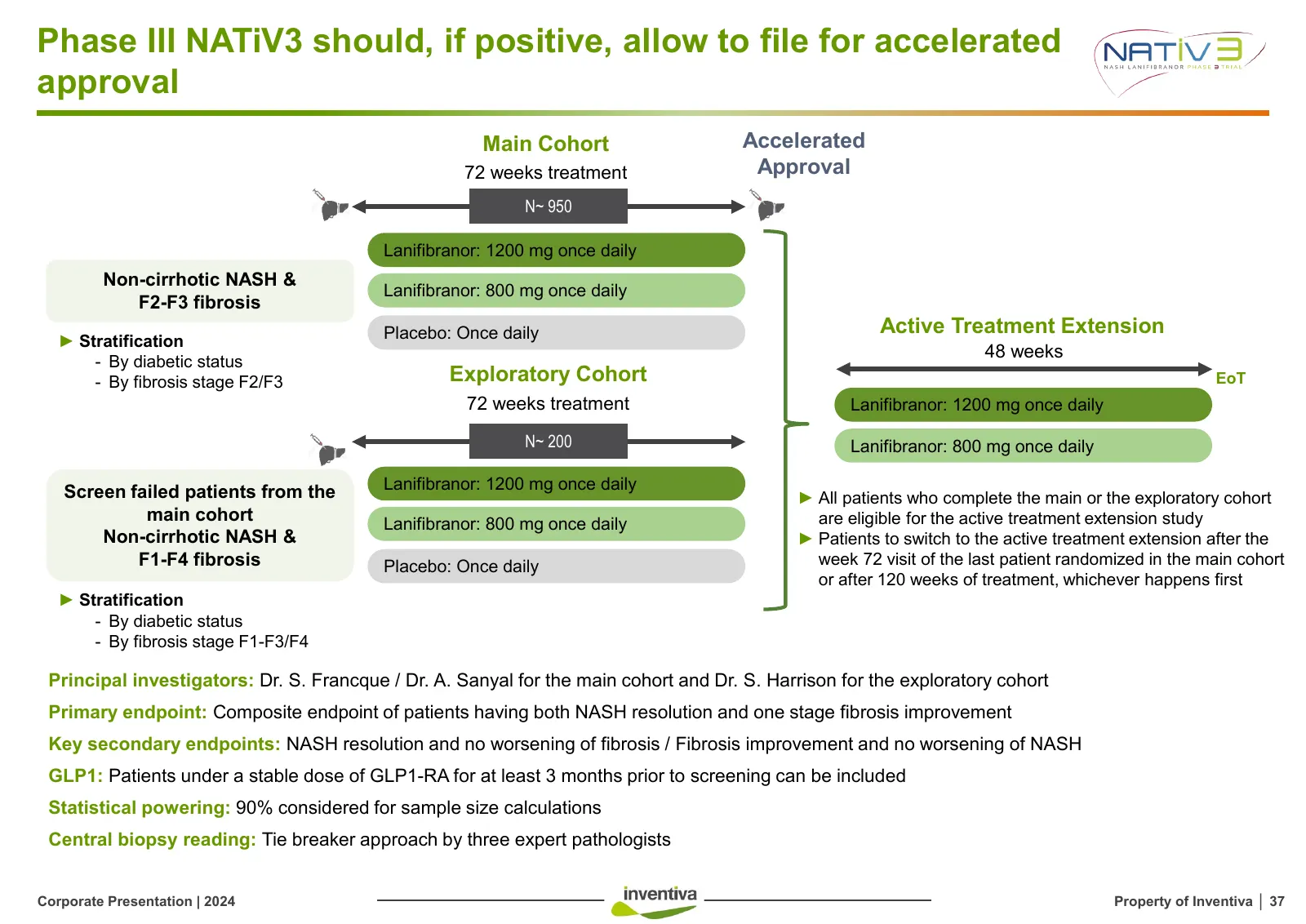
Slide 37: Phase III NATiV3 design for accelerated approval
Phase III NATiV3 should, if positive, allow to file for accelerated approval Main Cohort Accelerated 72 weeks treatment Approval N~ 950 Lanifibranor: 1200 mg once daily Non-cirrhotic NASH & Lanifibranor: 800 mg once daily F2-F3 fibrosis Placebo: Once daily Active Treatment Extension ► Stratification
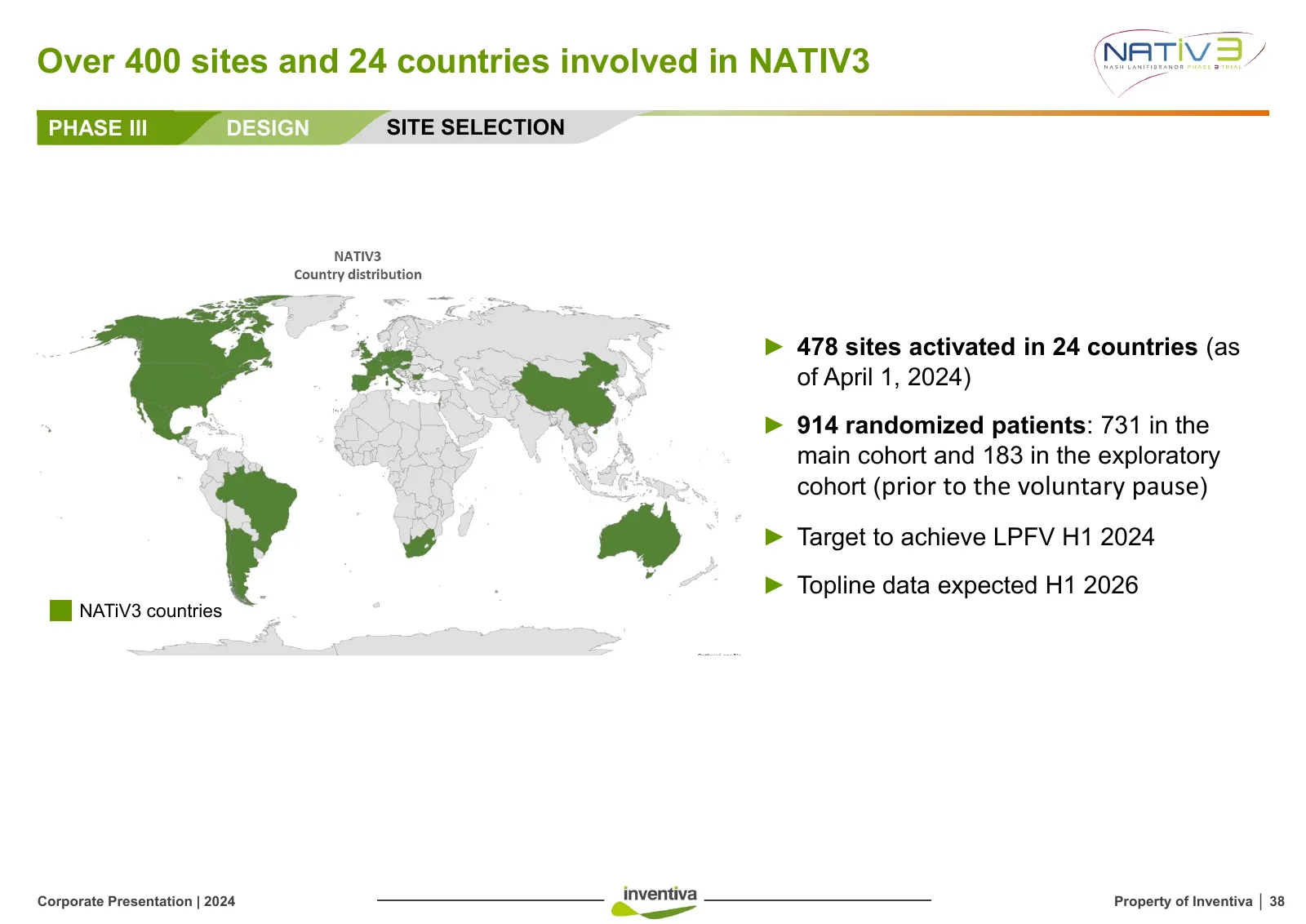
Slide 38: Over 400 sites and 24 countries involved in NATiV3
Over 400 sites and 24 countries involved in NATIV3 PHASE III DESIGN SITE SELECTION ► 478 sites activated in 24 countries (as of April 1, 2024) ► 914 randomized patients: 731 in the main cohort and 183 in the exploratory cohort (prior to the voluntary pause) ► Target to achieve LPFV H1 2024 ► Topline

Slide 39: Opportunity for lanifibranor
Opportunity for lanifibranor
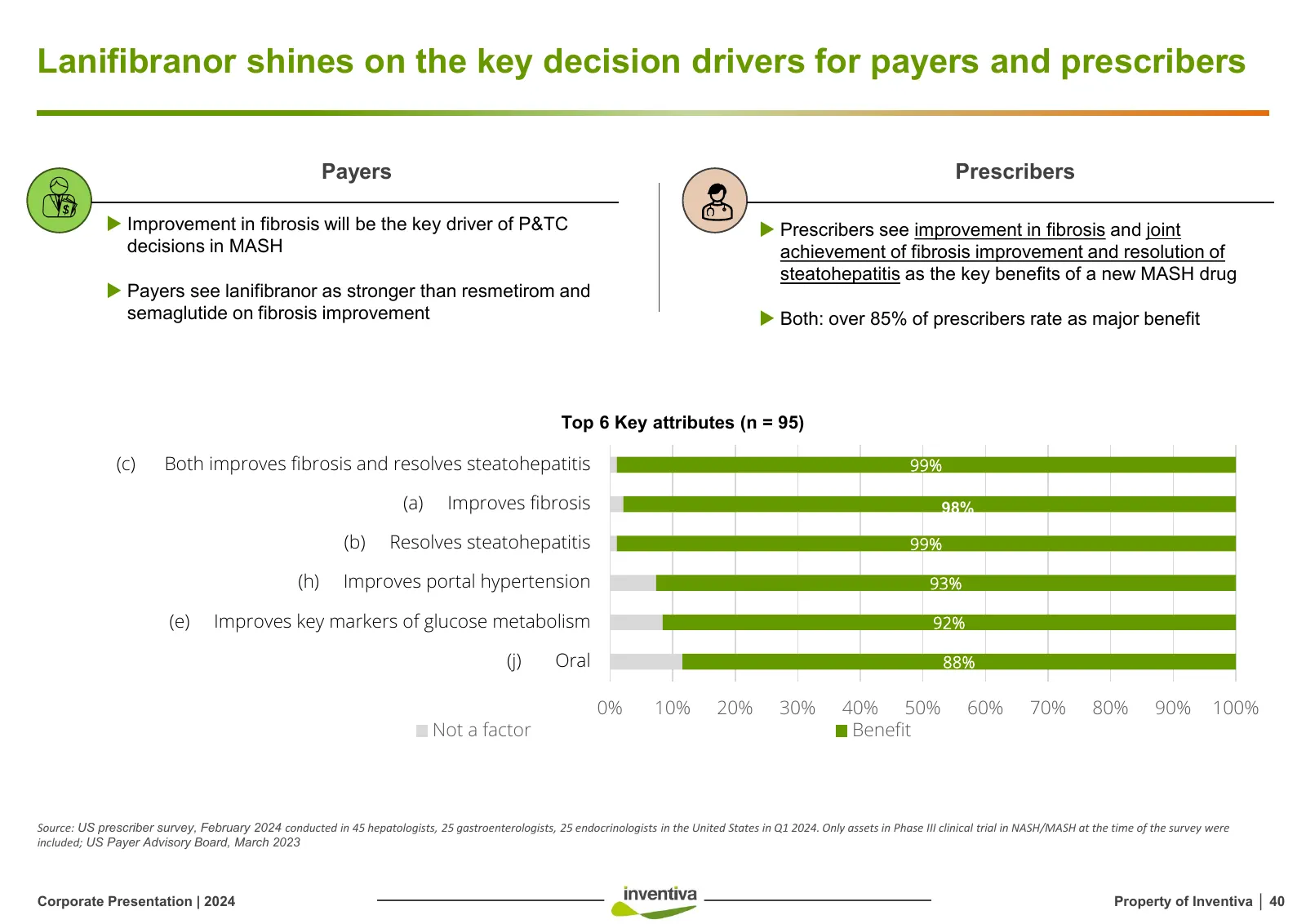
Slide 40: Lanifibranor shines on key decision drivers for payers and prescribers
Lanifibranor shines on the key decision drivers for payers and prescribers Payers Prescribers Improvement in fibrosis will be the key driver of P&TC Prescribers see improvement in fibrosis and joint decisions in MASH achievement of fibrosis improvement and resolution of steatohepatitis as the ke
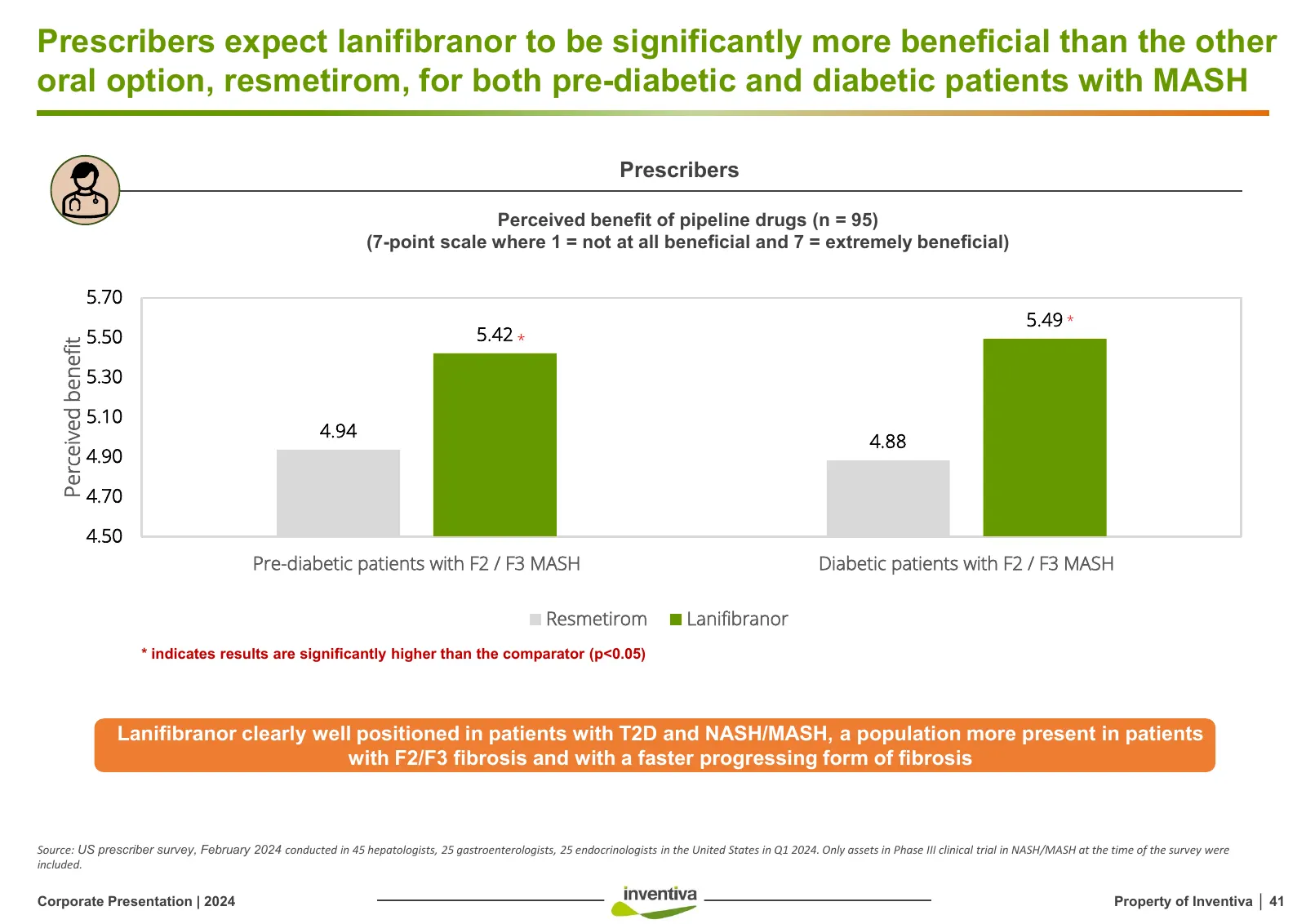
Slide 41: Prescribers expect lanifibranor to be more beneficial than resmetirom
Prescribers expect lanifibranor to be significantly more beneficial than the other oral option, resmetirom, for both pre-diabetic and diabetic patients with MASH Prescribers Perceived benefit of pipeline drugs (n = 95) (7-point scale where 1 = not at all beneficial and 7 = extremely beneficial) 5.70
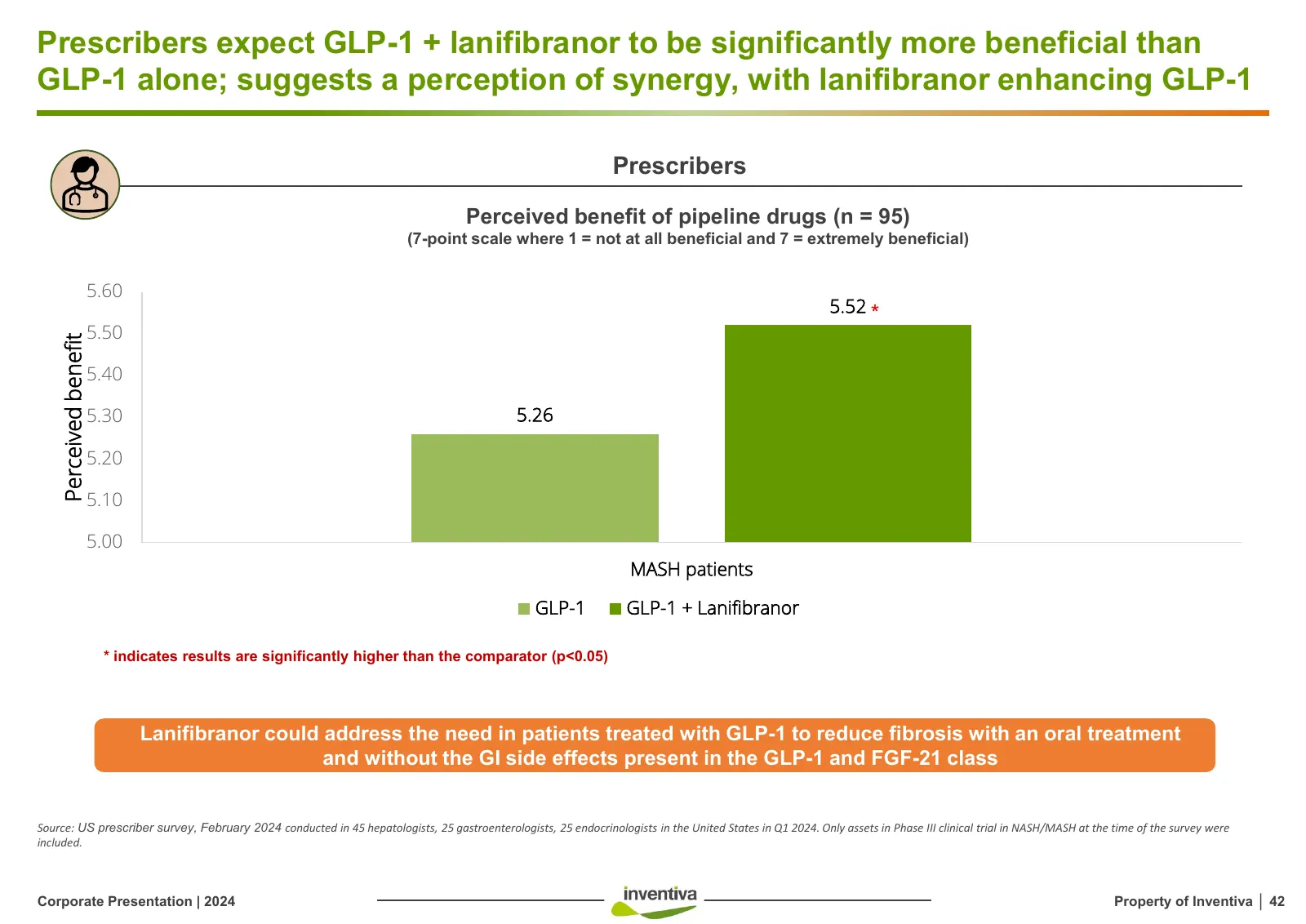
Slide 42: Prescribers expect GLP-1 + lanifibranor to be more beneficial than GLP-1 alone
Prescribers expect GLP-1 + lanifibranor to be significantly more beneficial than GLP-1 alone; suggests a perception of synergy, with lanifibranor enhancing GLP-1 Prescribers Perceived benefit of pipeline drugs (n = 95) (7-point scale where 1 = not at all beneficial and 7 = extremely beneficial) 5.60
Slide 43: Payers and prescribers on weight gain side effect
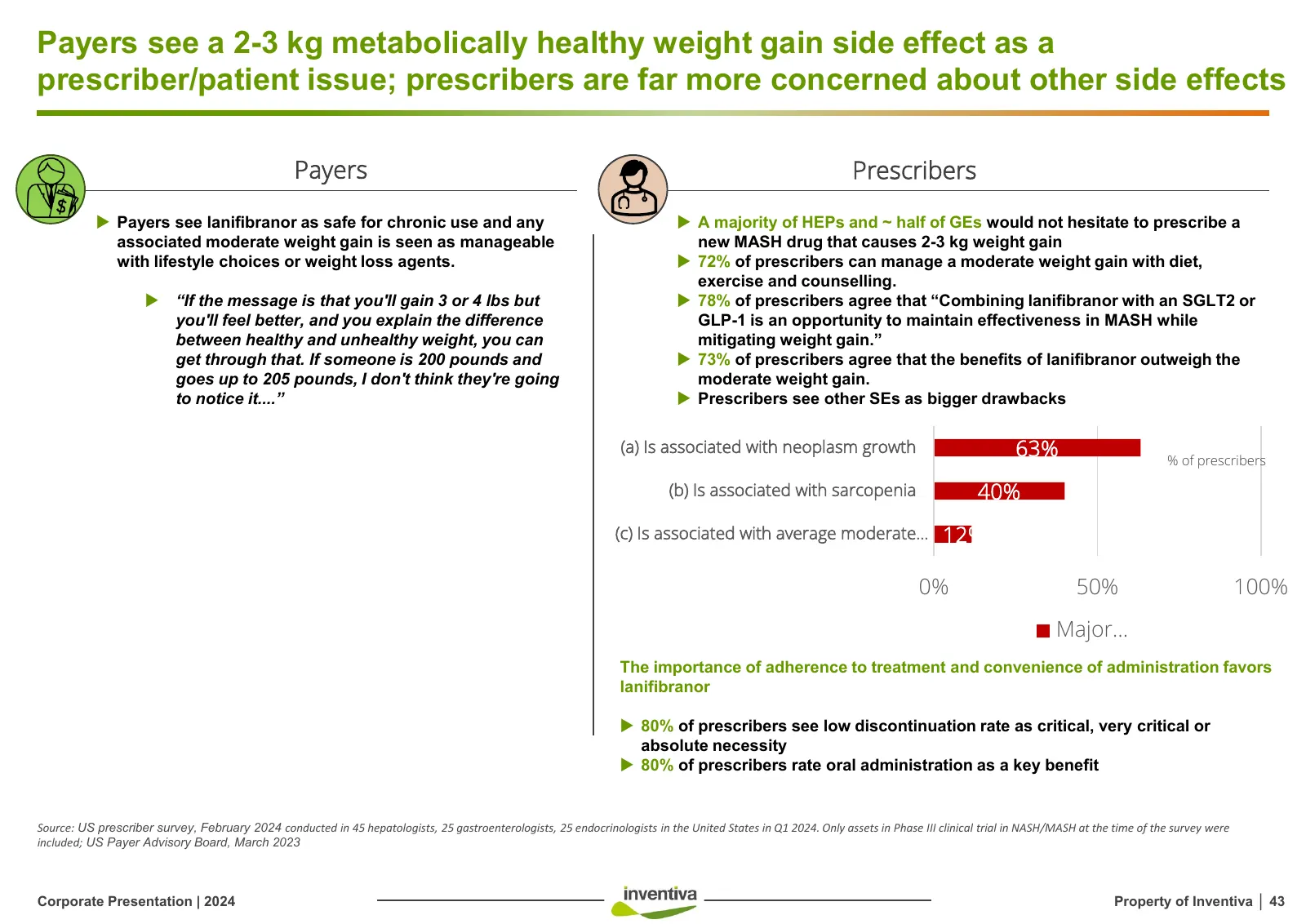
Payers see a 2-3 kg metabolically healthy weight gain side effect as a prescriber/patient issue; prescribers are far more concerned about other side effects Payers Prescribers Payers see lanifibranor as safe for chronic use and any A majority of HEPs and ~ half of GEs would not hesitate to presc
Slide 44: Opportunity for lanifibranor based on current clinical program (F2/F3)
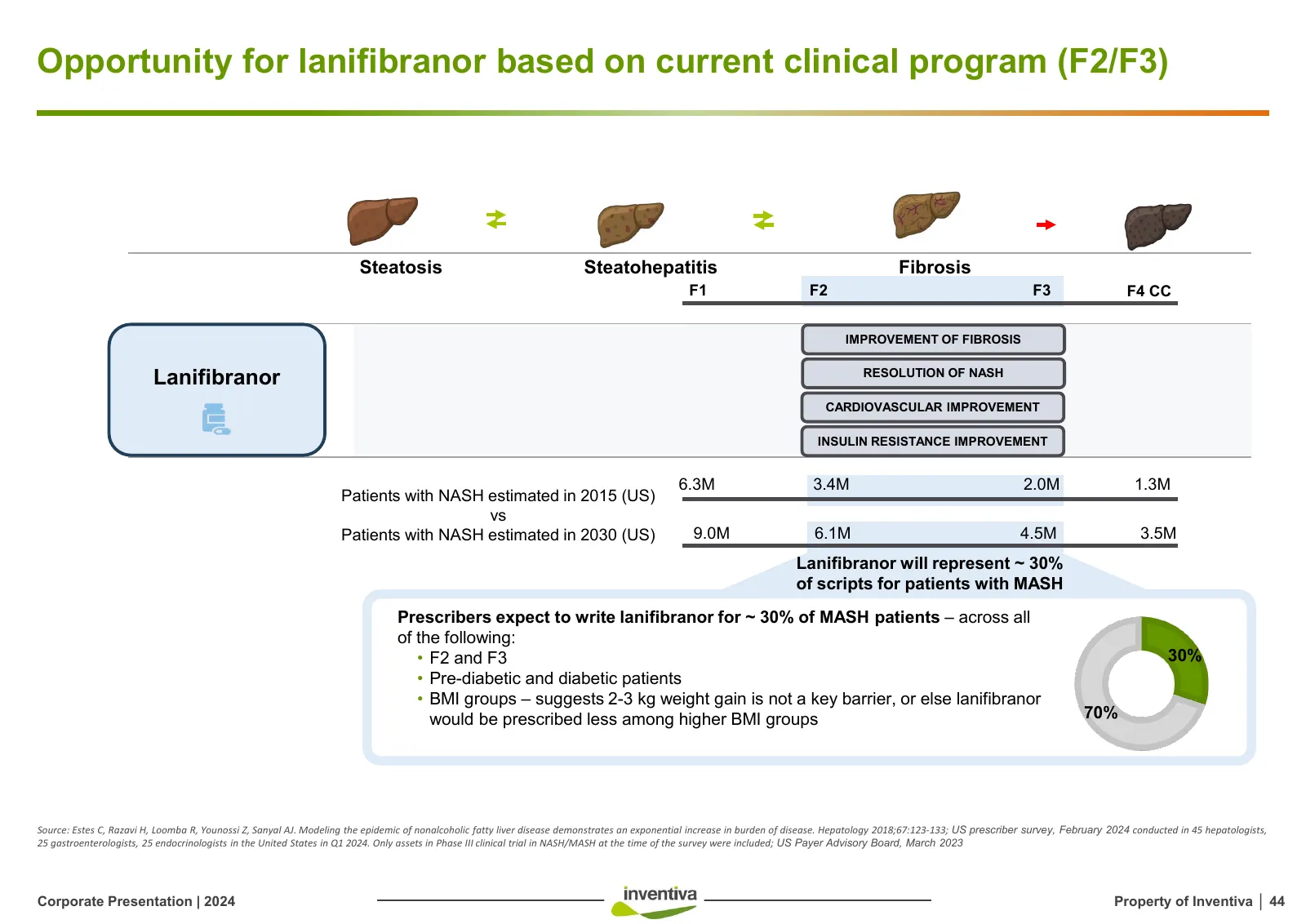
Opportunity for lanifibranor based on current clinical program (F2/F3) Steatosis Steatohepatitis Fibrosis F1 F2 F3 F4 CC IMPROVEMENT OF FIBROSIS Lanifibranor RESOLUTION OF NASH CARDIOVASCULAR IMPROVEMENT INSULIN RESISTANCE IMPROVEMENT 6.3M 3.4M 2.0M 1.3M Patients with NASH estimated in 2015 (US) vs

Slide 45: Upcoming catalysts
Upcoming catalysts
Slide 46: Catalysts
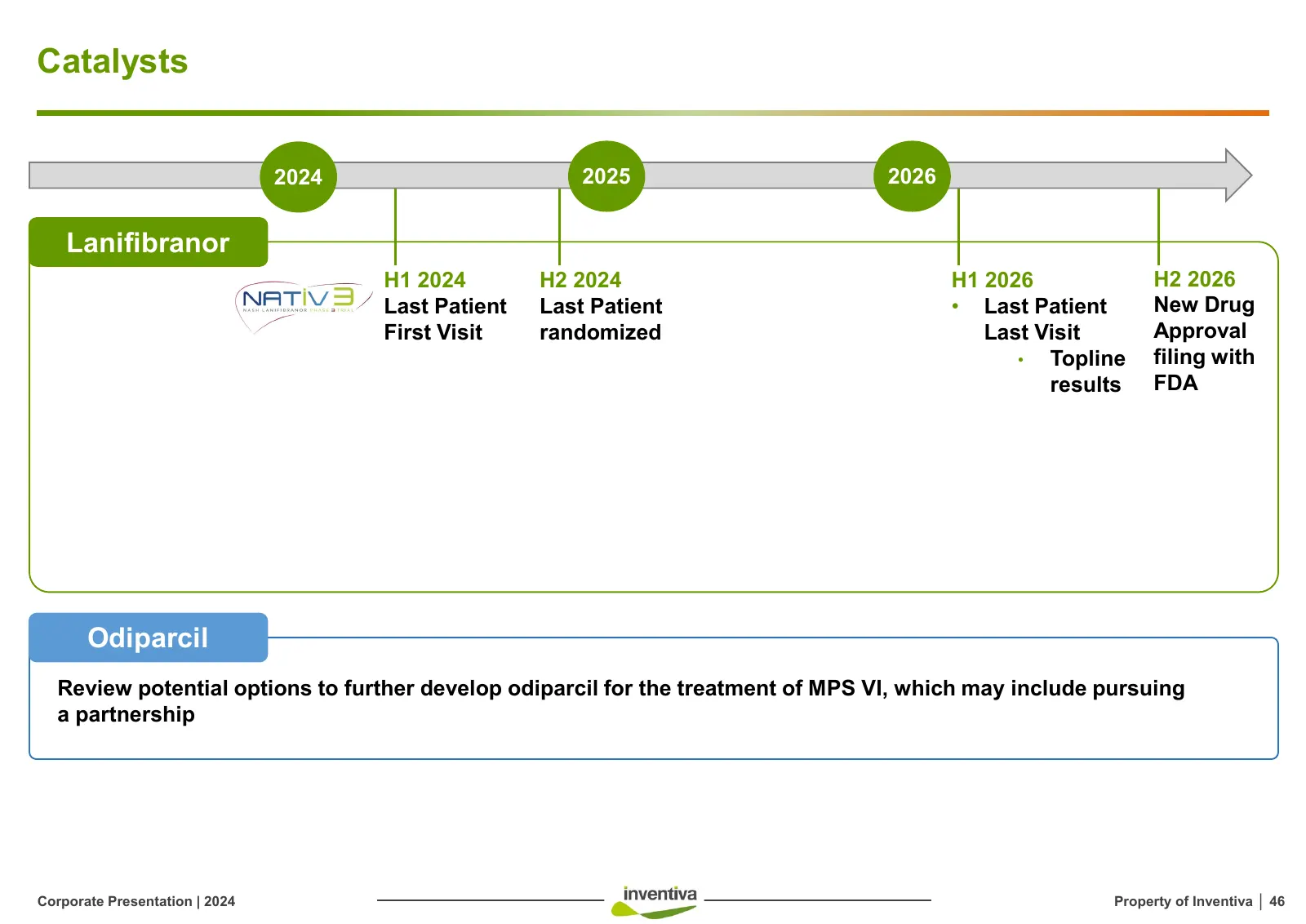
Catalysts 2024 2025 2026 Lanifibranor H1 2024 H2 2024 H1 2026 H2 2026 Last Patient Last Patient • Last Patient New Drug First Visit randomized Last Visit Approval • Topline filing with results FDA Odiparcil Review potential options to further develop odiparcil for the treatment of MPS VI, which may

Slide 47: Contacts
Contacts Inventiva Brunswick Westwicke, an ICR Company Pascaline Clerc Tristan Roquet Montégon Patricia L. Bank Executive VP Aude Lepreux Investor relations Strategy and Corporate Affairs Julia Cailleteau Media relations pascaline.clerc@inventivapharma.com inventiva@brunswickgroup.com patti.bank@wes

Slide 48: Lanifibranor: back-up slides
Lanifibranor : back-ups slides
Slide 49: Phase I and IIa trials in T2D patients: beneficial changes in metabolic markers
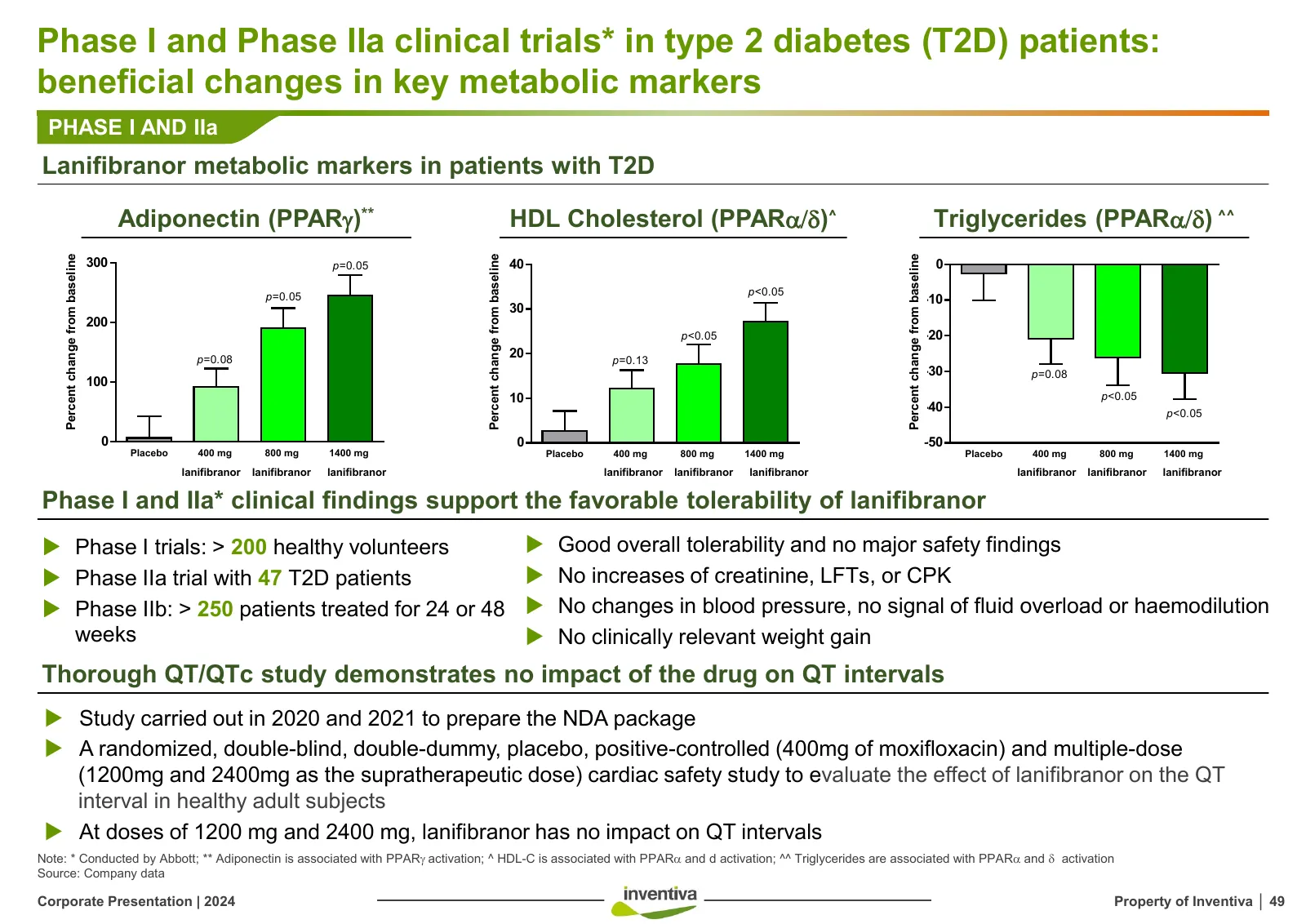
Phase I and Phase IIa clinical trials* in type 2 diabetes (T2D) patients: beneficial changes in key metabolic markers PHASE I AND IIa Lanifibranor metabolic markers in patients with T2D Adiponectin (PPARγ)** HDL Cholesterol (PPARα/δ)^ Triglycerides (PPARα/δ) ^^ 300 baseline baseline baseline p=0.05
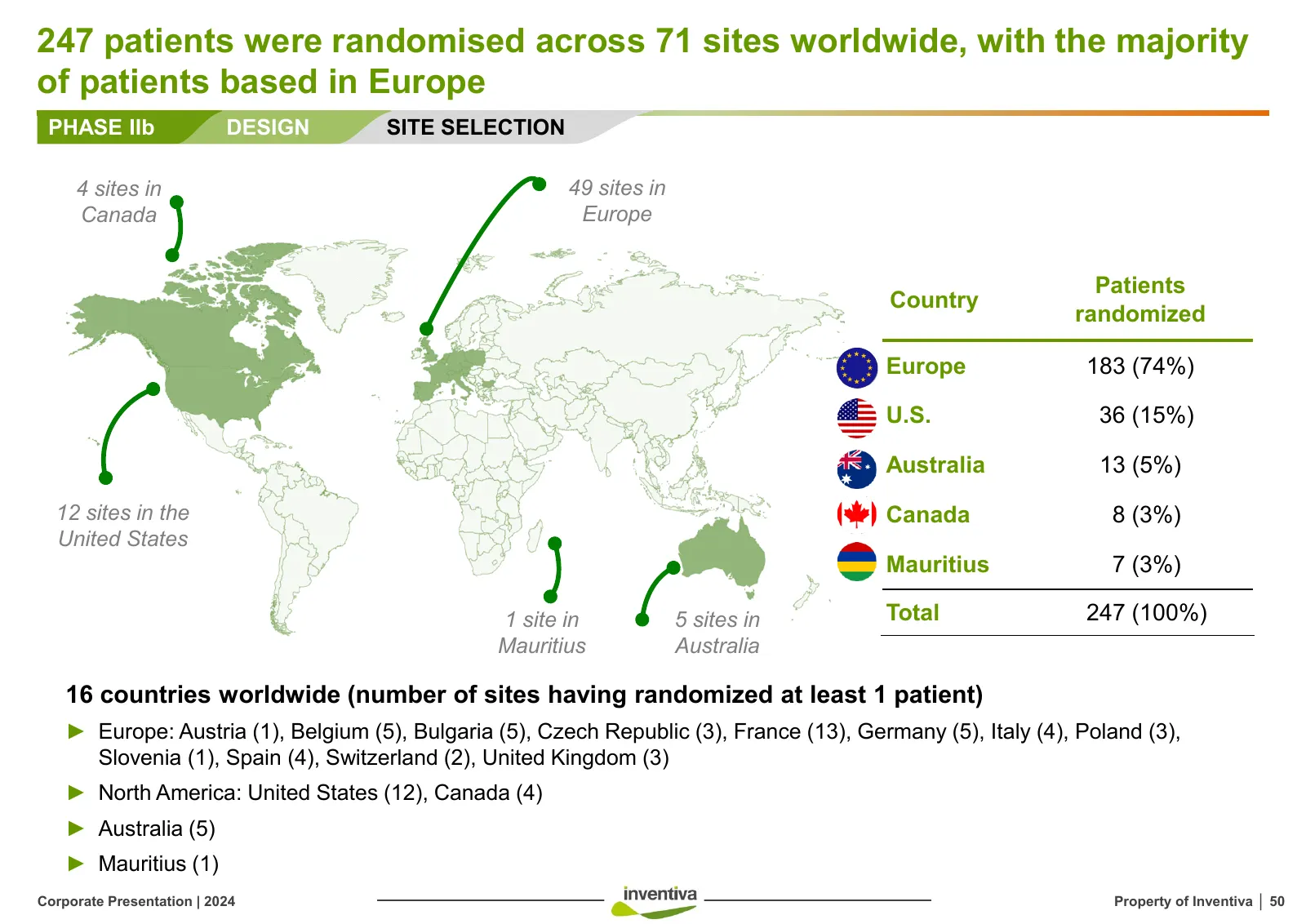
Slide 50: 247 patients randomised across 71 sites worldwide
247 patients were randomised across 71 sites worldwide, with the majority of patients based in Europe PHASE IIb DESIGN SITE SELECTION 4 sites in 49 sites in Canada Europe Patients Country randomized Europe 183 (74%) U.S. 36 (15%) Australia 13 (5%) 12 sites in the Canada 8 (3%) United States Mauritiu
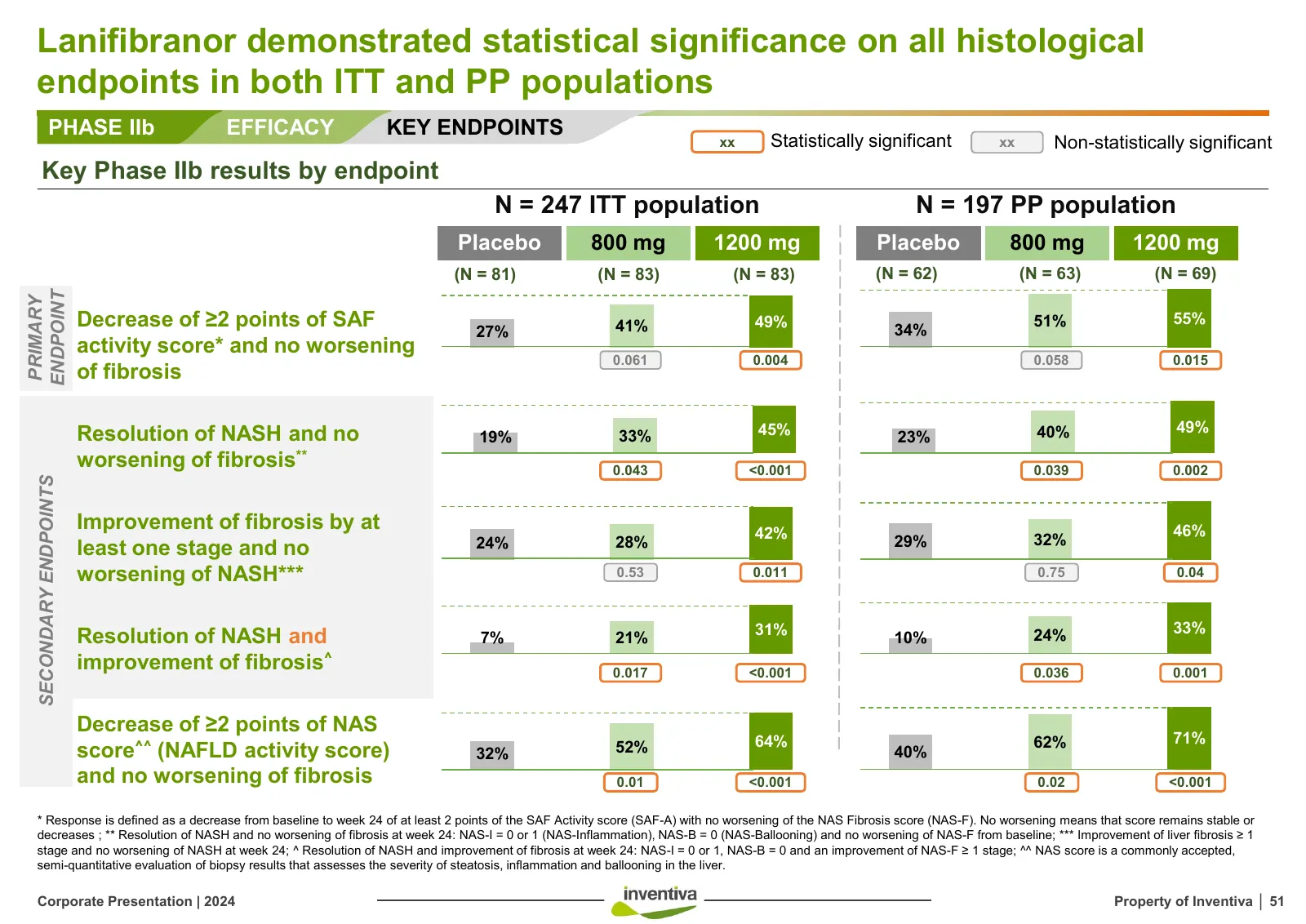
Slide 51: Statistical significance on all histological endpoints in ITT and PP populations
Lanifibranor demonstrated statistical significance on all histological endpoints in both ITT and PP populations PHASE IIb EFFICACY KEY ENDPOINTS xx Statistically significant xx Non-statistically significant Key Phase IIb results by endpoint N = 247 ITT population N = 197 PP population Placebo 800 mg
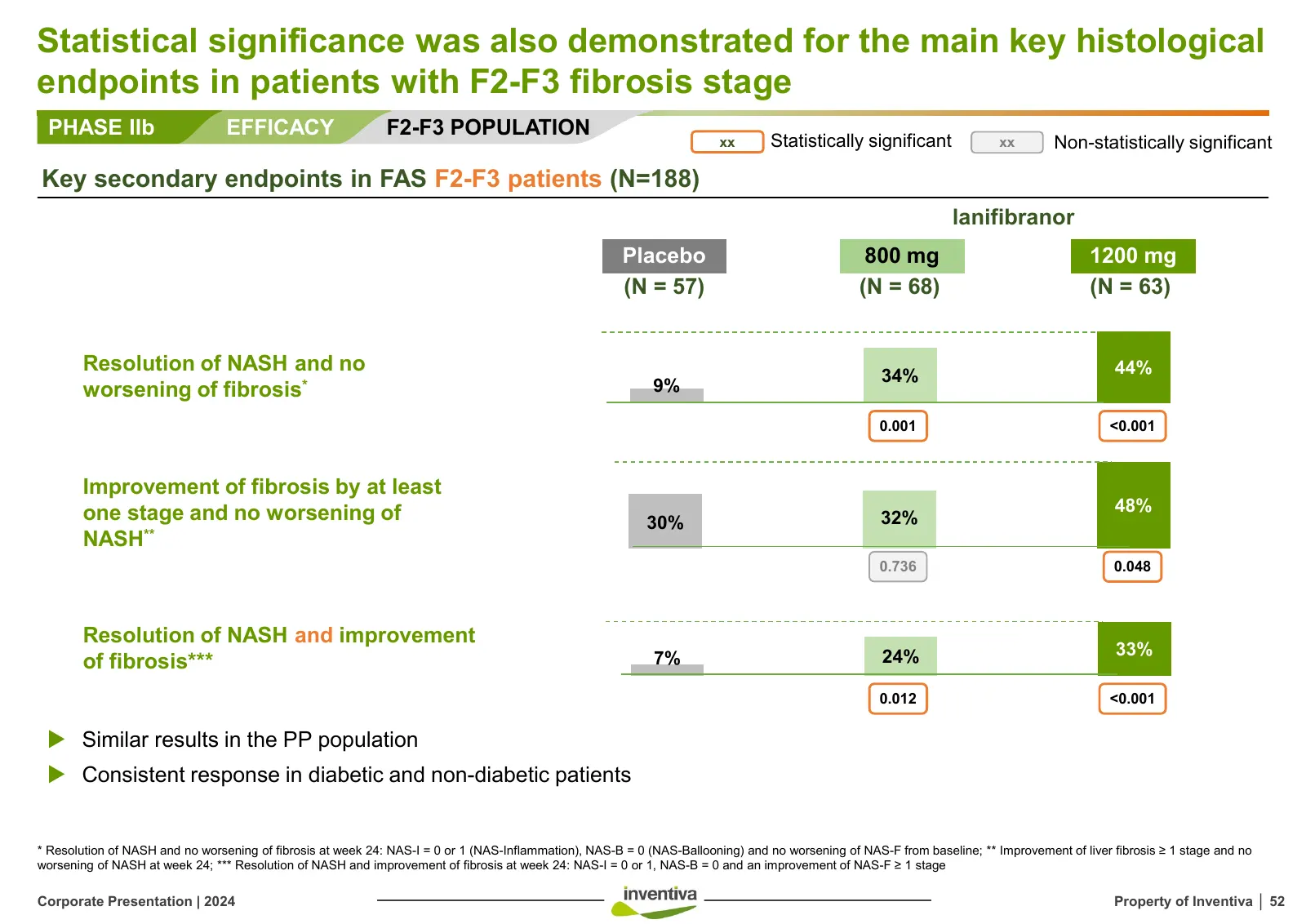
Slide 52: Significance in patients with F2-F3 fibrosis stage
Statistical significance was also demonstrated for the main key histological endpoints in patients with F2-F3 fibrosis stage PHASE IIb EFFICACY F2-F3 POPULATION xx Statistically significant xx Non-statistically significant Key secondary endpoints in FAS F2-F3 patients (N=188) lanifibranor Placebo Pl
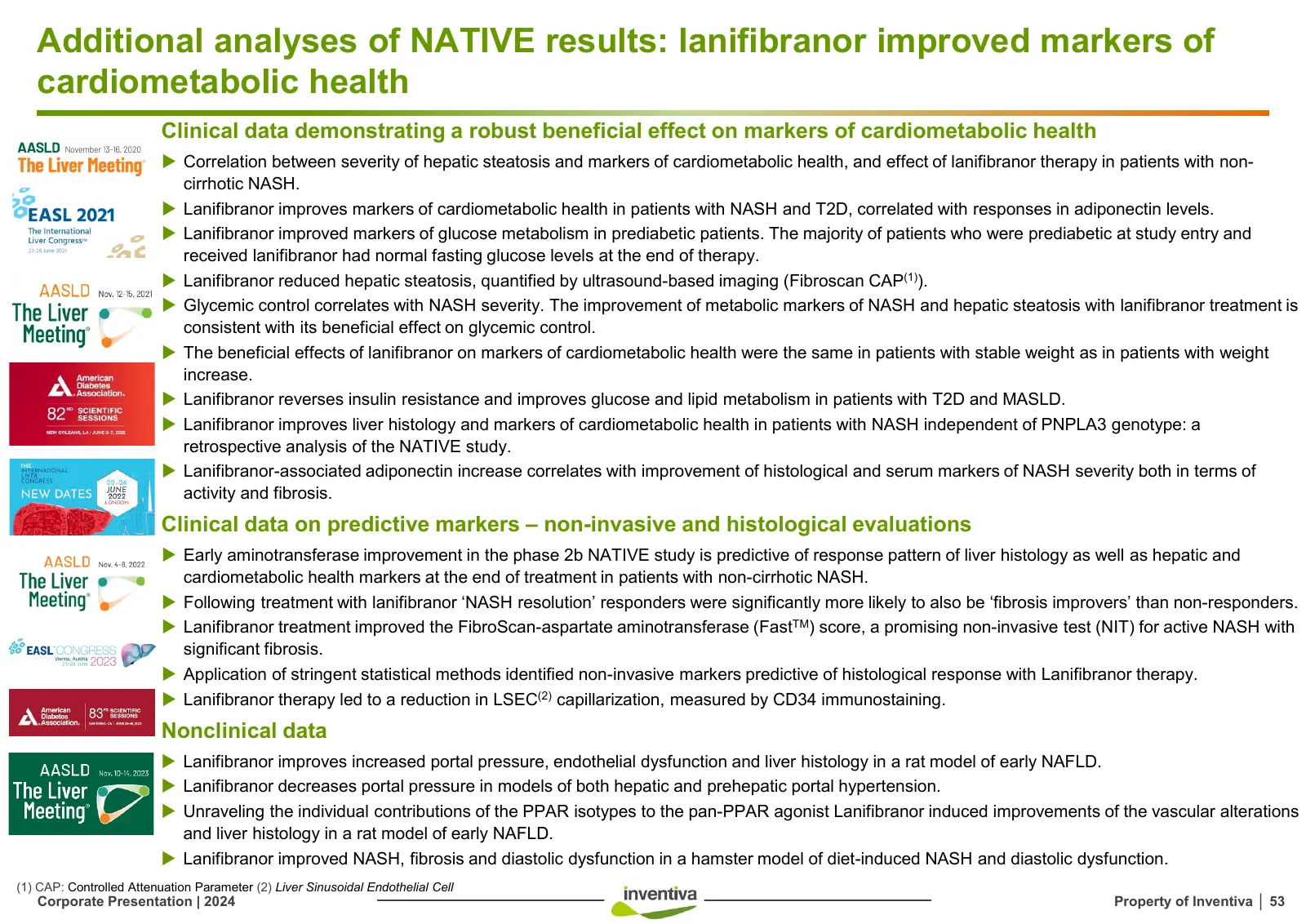
Slide 53: Additional analyses of NATIVE: improved markers of cardiometabolic health
Additional analyses of NATIVE results: lanifibranor improved markers of cardiometabolic health Clinical data demonstrating a robust beneficial effect on markers of cardiometabolic health Correlation between severity of hepatic steatosis and markers of cardiometabolic health, and effect of lanifibr
Slide 54: Phase III NATiV3 confirmatory trial design for full approval
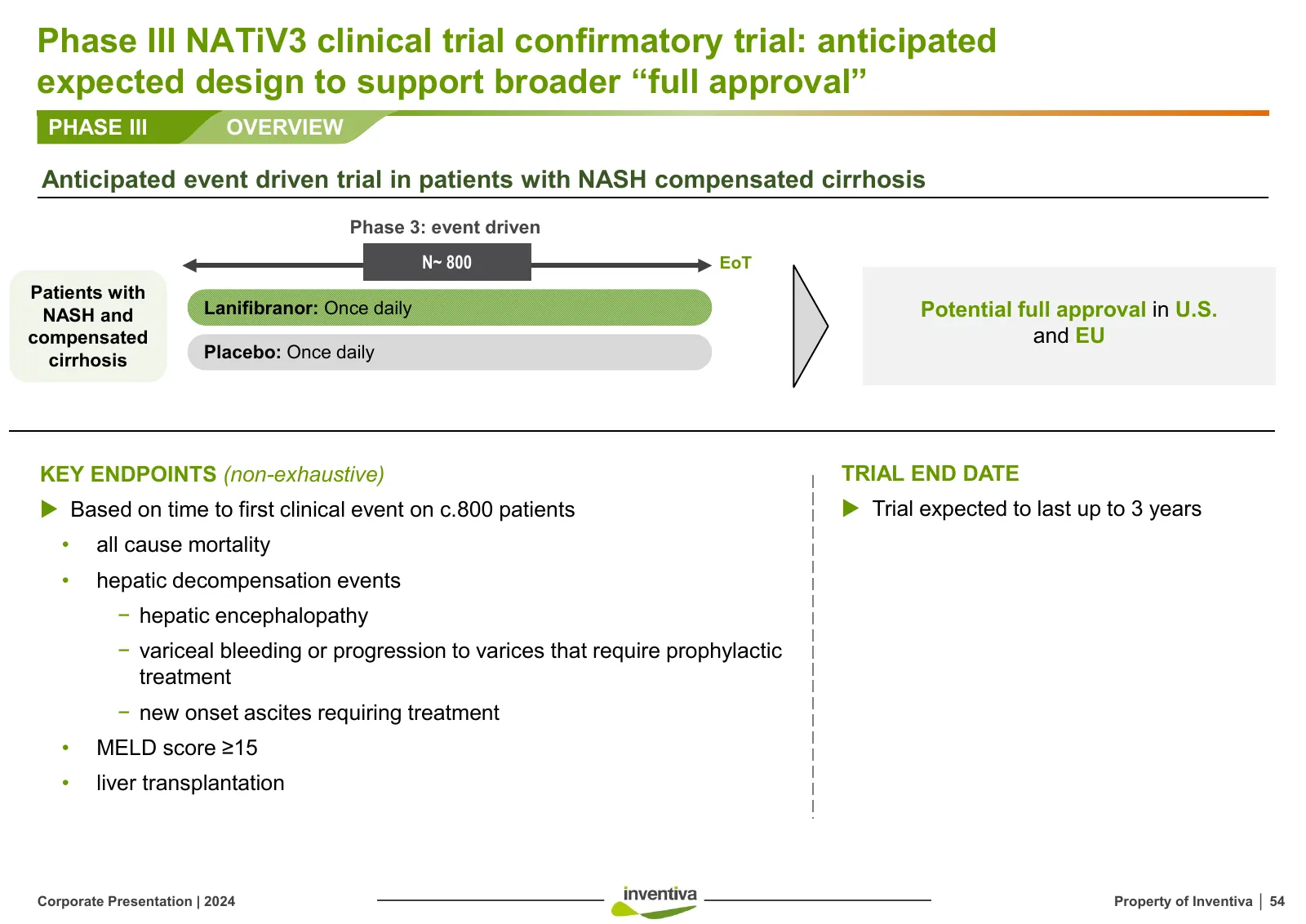
Phase III NATiV3 clinical trial confirmatory trial: anticipated expected design to support broader “full approval” PHASE III OVERVIEW Anticipated event driven trial in patients with NASH compensated cirrhosis Phase 3: event driven N~ 800 EoT Patients with NASH and Lanifibranor: Once daily Potential
Slide 55: Lanifibranor is designed to address all key features of NASH
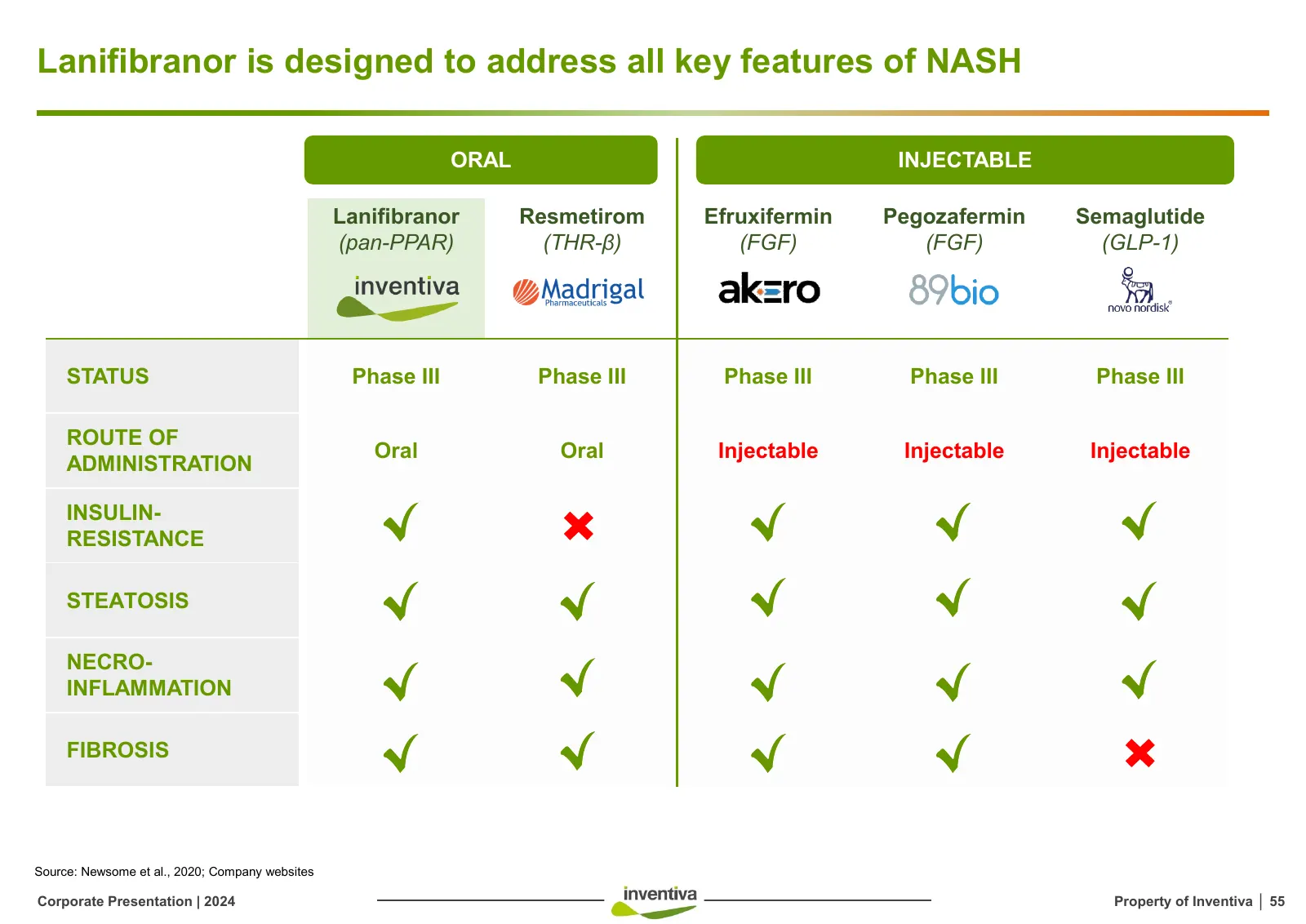
Lanifibranor is designed to address all key features of NASH ORAL INJECTABLE Lanifibranor Resmetirom Efruxifermin Pegozafermin Semaglutide (pan-PPAR) (THR-β) (FGF) (FGF) (GLP-1) STATUS Phase III Phase III Phase III Phase III Phase III ROUTE OF Oral Oral Injectable Injectable Injectable ADMINISTRATIO
Slide 56: Lanifibranor clinical trial in patients with NAFLD and T2D
Lanifibranor clinical trial in patients with NAFLD and T2D
Slide 57: Lanifibranor clinical trial in patients with NAFLD and T2D
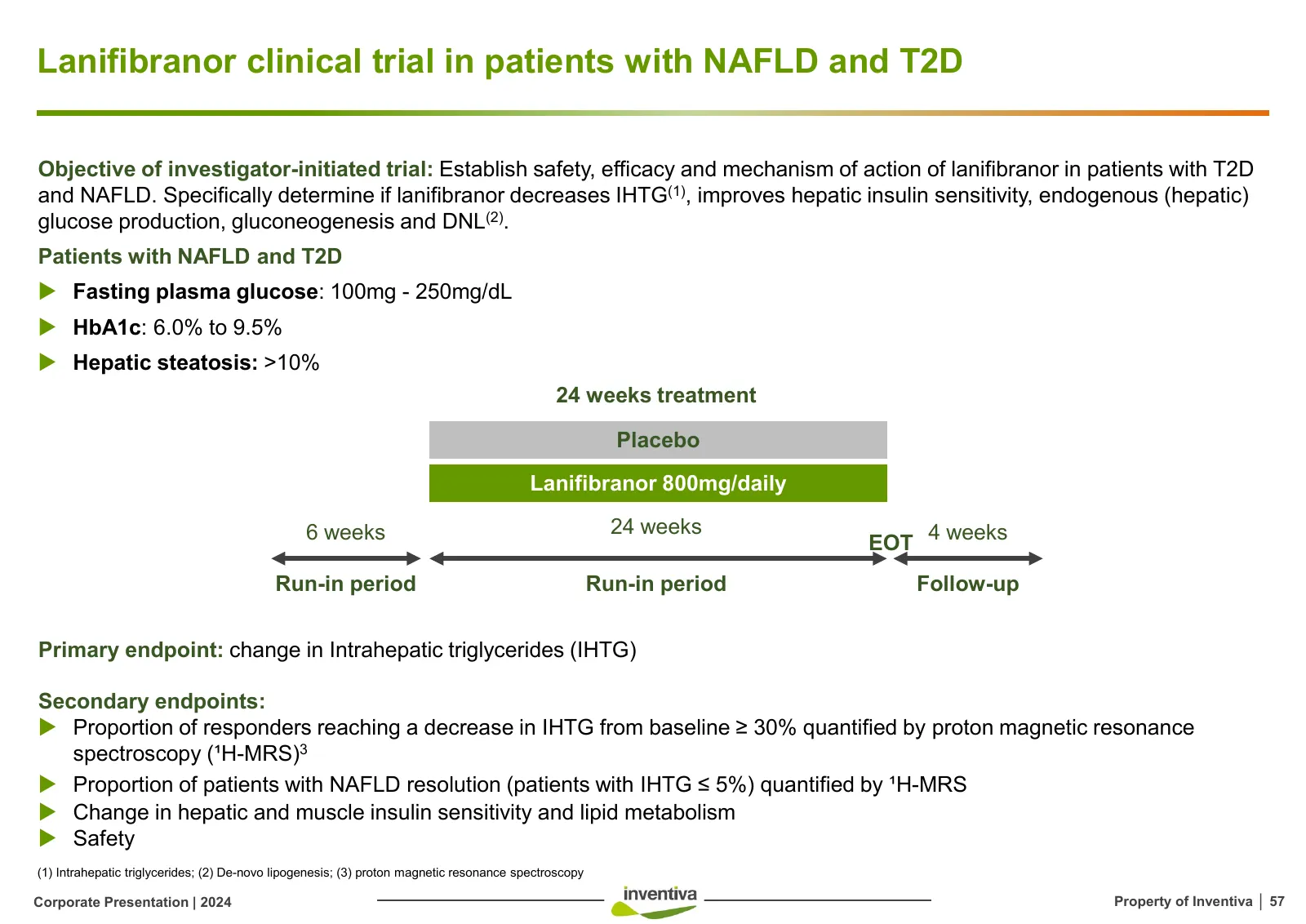
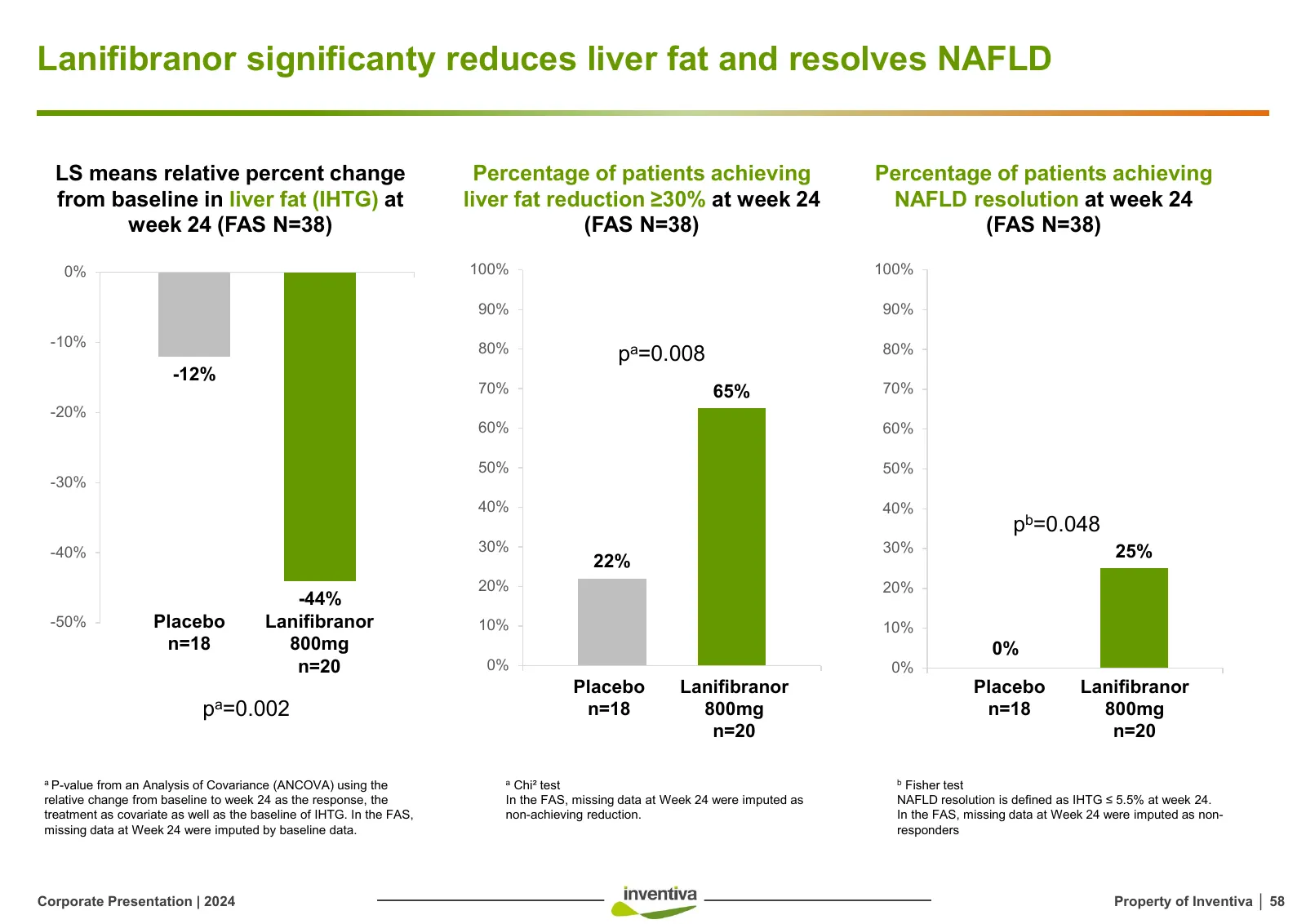
Lanifibranor clinical trial in patients with NAFLD and T2D Objective of investigator-initiated trial: Establish safety, efficacy and mechanism of action of lanifibranor in patients with T2D and NAFLD. Specifically determine if lanifibranor decreases IHTG(1), improves hepatic insulin sensitivity, end
Slide 58: Significantly reduces liver fat and resolves NAFLD
Lanifibranor significanty reduces liver fat and resolves NAFLD LS means relative percent change Percentage of patients achieving Percentage of patients achieving from baseline in liver fat (IHTG) at liver fat reduction ≥30% at week 24 NAFLD resolution at week 24 week 24 (FAS N=38) (FAS N=38) (FAS N=
Slide 59: Treatments effects on liver fat reduction: competitive landscape
Treatments effects on liver fat reduction: competitive landscape Lanifibranor Efruxifermin Pegozafermin Resmetirom Semaglutide T2D/NAFLD NASH (F2-F3) NASH (F2-F3) NAFLD NAFLD Phase II Phase IIb Phase IIb Phase III Phase I 24 weeks* 24 weeks 24 weeks** 52 weeks 24 weeks 48 weeks 30mg 44mg Pbo 800mg P
Slide 60: Improvements in hepatic and muscular insulin sensitivity
Lanifibranor leads to significant improvements in hepatic and muscular insulin sensitivity LS mean absolute change from LS mean absolute change from LS mean absolute change from baseline to week 24 in baseline to week 24 in baseline to week 24 in endogenous glucose production hepatic insulin resista
Slide 61: Lanifibranor treatment increases HDL and adiponectin levels
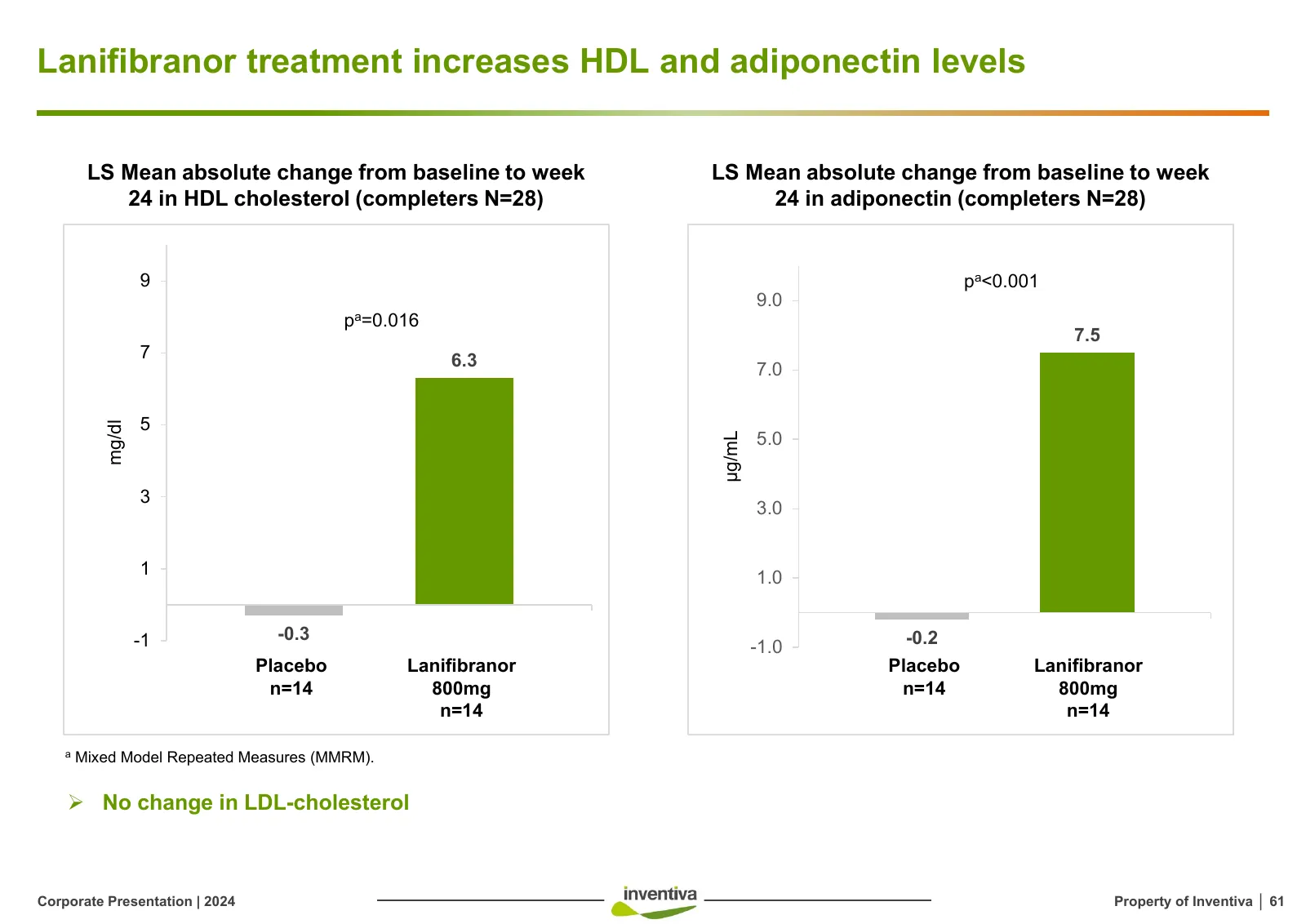
Lanifibranor treatment increases HDL and adiponectin levels LS Mean absolute change from baseline to week LS Mean absolute change from baseline to week 24 in HDL cholesterol (completers N=28) 24 in adiponectin (completers N=28) 9 pa<0.001 9.0 pa=0.016 7.5 7 6.3 7.0 5 mg/dl 5.0 μg/mL 3 3.0 1 1.0 -1 -
Slide 62: Key take-aways
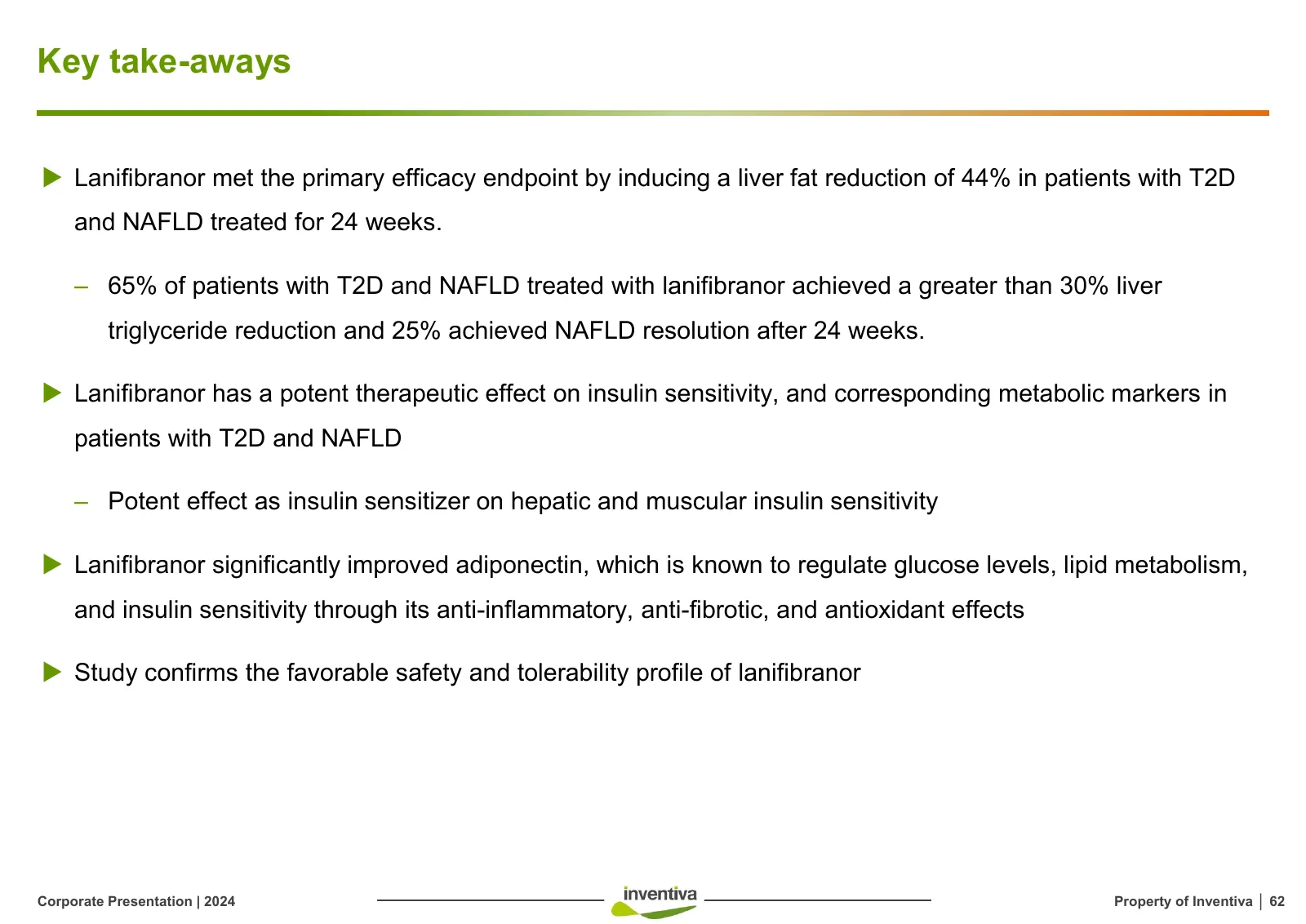
Key take-aways Lanifibranor met the primary efficacy endpoint by inducing a liver fat reduction of 44% in patients with T2D and NAFLD treated for 24 weeks. – 65% of patients with T2D and NAFLD treated with lanifibranor achieved a greater than 30% liver triglyceride reduction and 25% achieved NAFLD

Slide 63: Legend
Legend
Slide 64: Lanifibranor and SGLT2 inhibitor mechanism of action and rationale for LEGEND
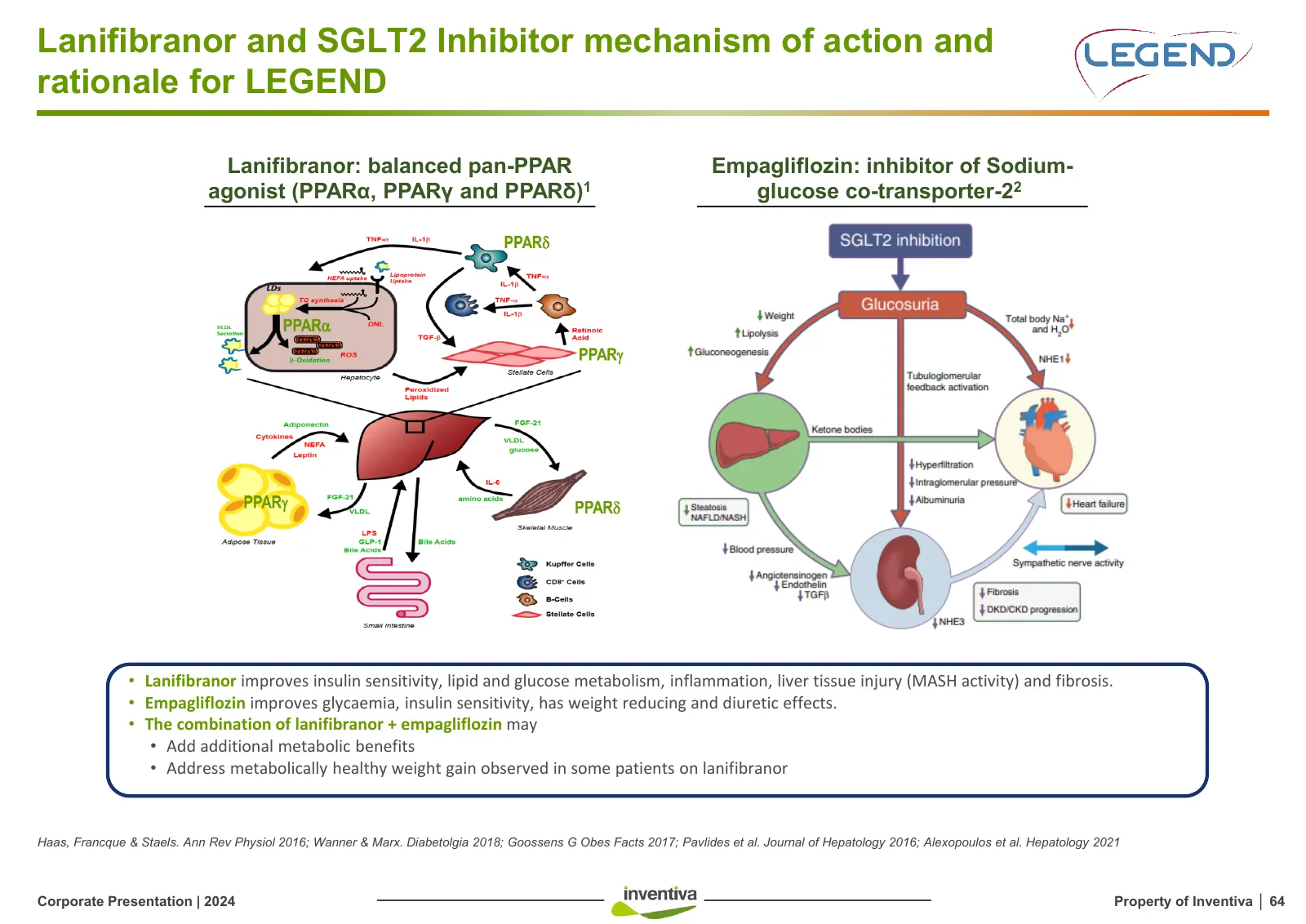
Lanifibranor and SGLT2 Inhibitor mechanism of action and rationale for LEGEND Lanifibranor: balanced pan-PPAR Empagliflozin: inhibitor of Sodium- agonist (PPARα, PPARγ and PPARδ)1 glucose co-transporter-22 • Lanifibranor improves insulin sensitivity, lipid and glucose metabolism, inflammation, liver
Slide 65: LEGEND Study Design
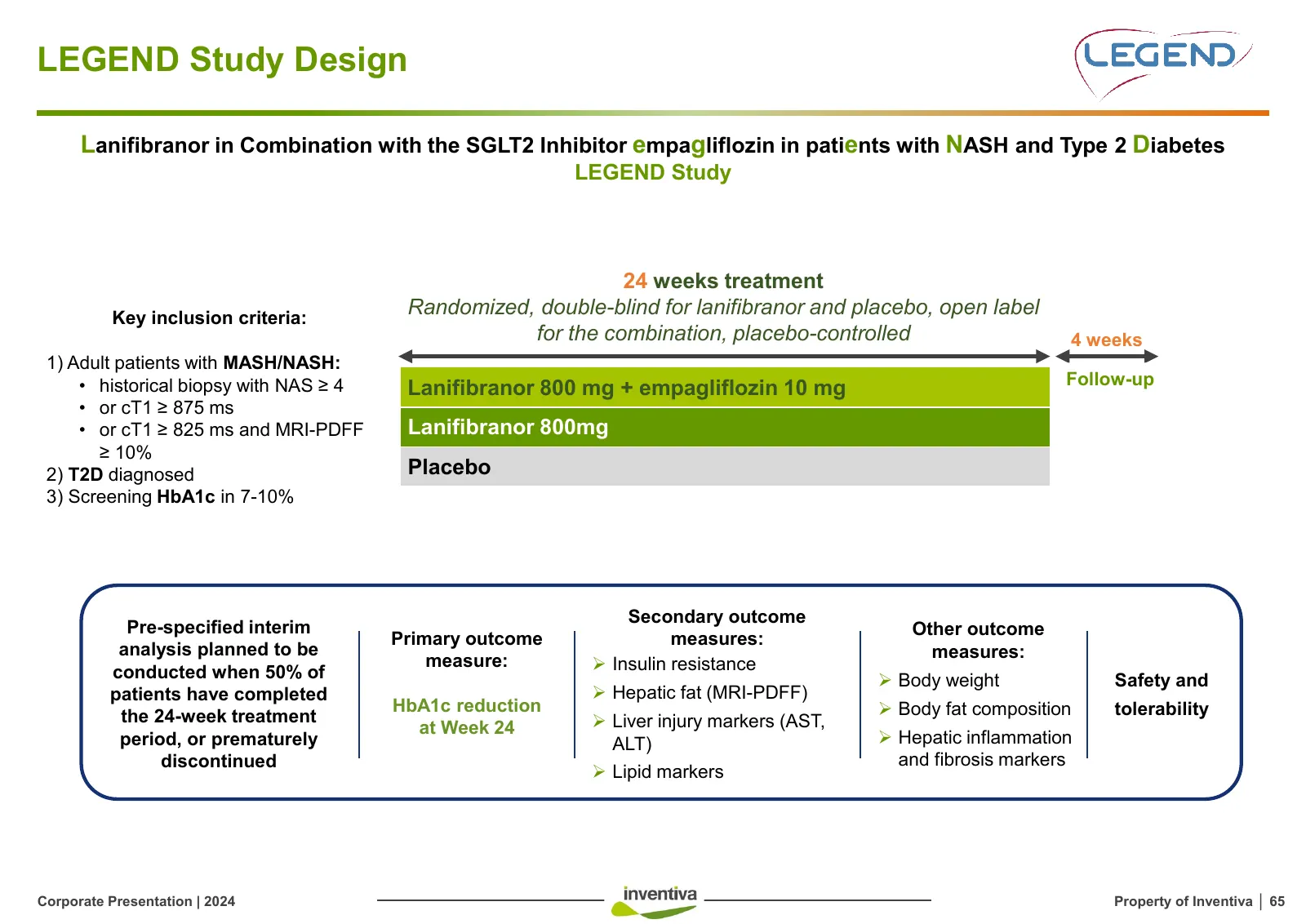
LEGEND Study Design Lanifibranor in Combination with the SGLT2 Inhibitor empagliflozin in patients with NASH and Type 2 Diabetes LEGEND Study 24 weeks treatment Key inclusion criteria: Randomized, double-blind for lanifibranor and placebo, open label for the combination, placebo-controlled 4 weeks 1
Slide 66: Patient disposition
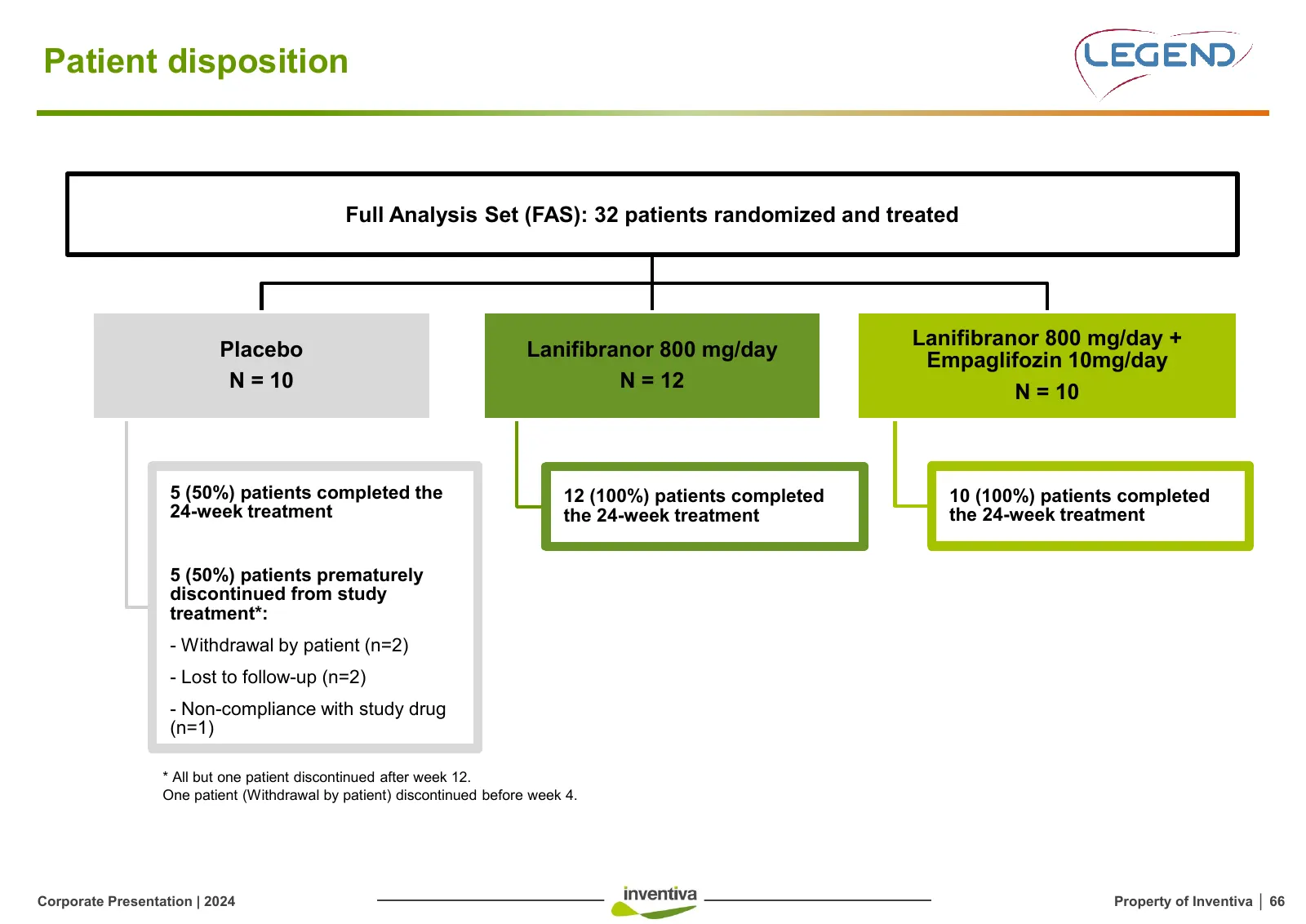
Patient disposition Full Analysis Set (FAS): 32 patients randomized and treated Lanifibranor 800 mg/day + Placebo Lanifibranor 800 mg/day Empaglifozin 10mg/day N = 10 N = 12 N = 10 5 (50%) patients completed the 12 (100%) patients completed 10 (100%) patients completed 24-week treatment the 24-week
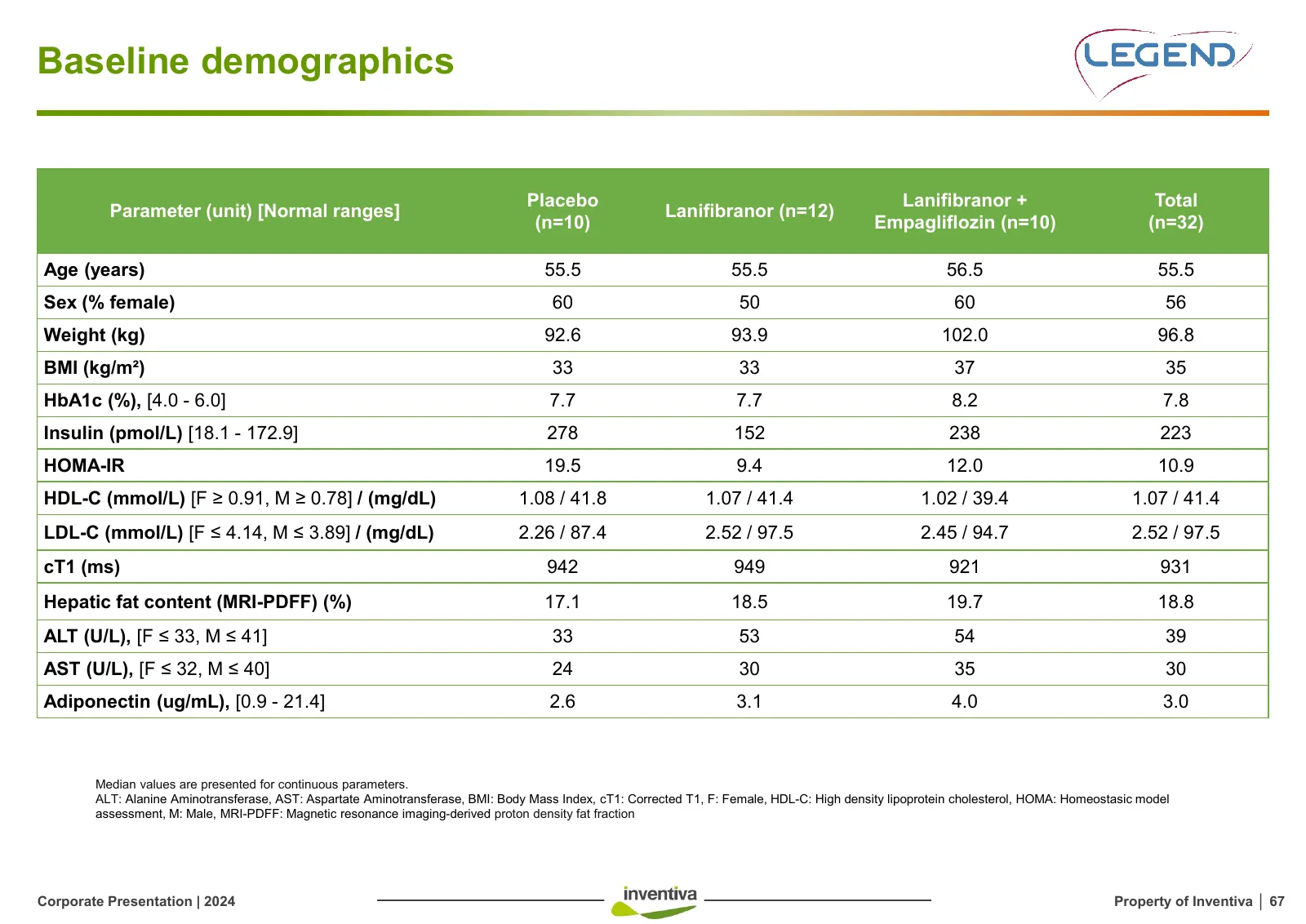
Slide 67: Baseline demographics
Baseline demographics Placebo Lanifibranor + Total Parameter (unit) [Normal ranges] Lanifibranor (n=12) (n=10) Empagliflozin (n=10) (n=32) Age (years) 55.5 55.5 56.5 55.5 Sex (% female) 60 50 60 56 Weight (kg) 92.6 93.9 102.0 96.8 BMI (kg/m²) 33 33 37 35 HbA1c (%), [4.0 - 6.0] 7.7 7.7 8.2 7.8 Insuli
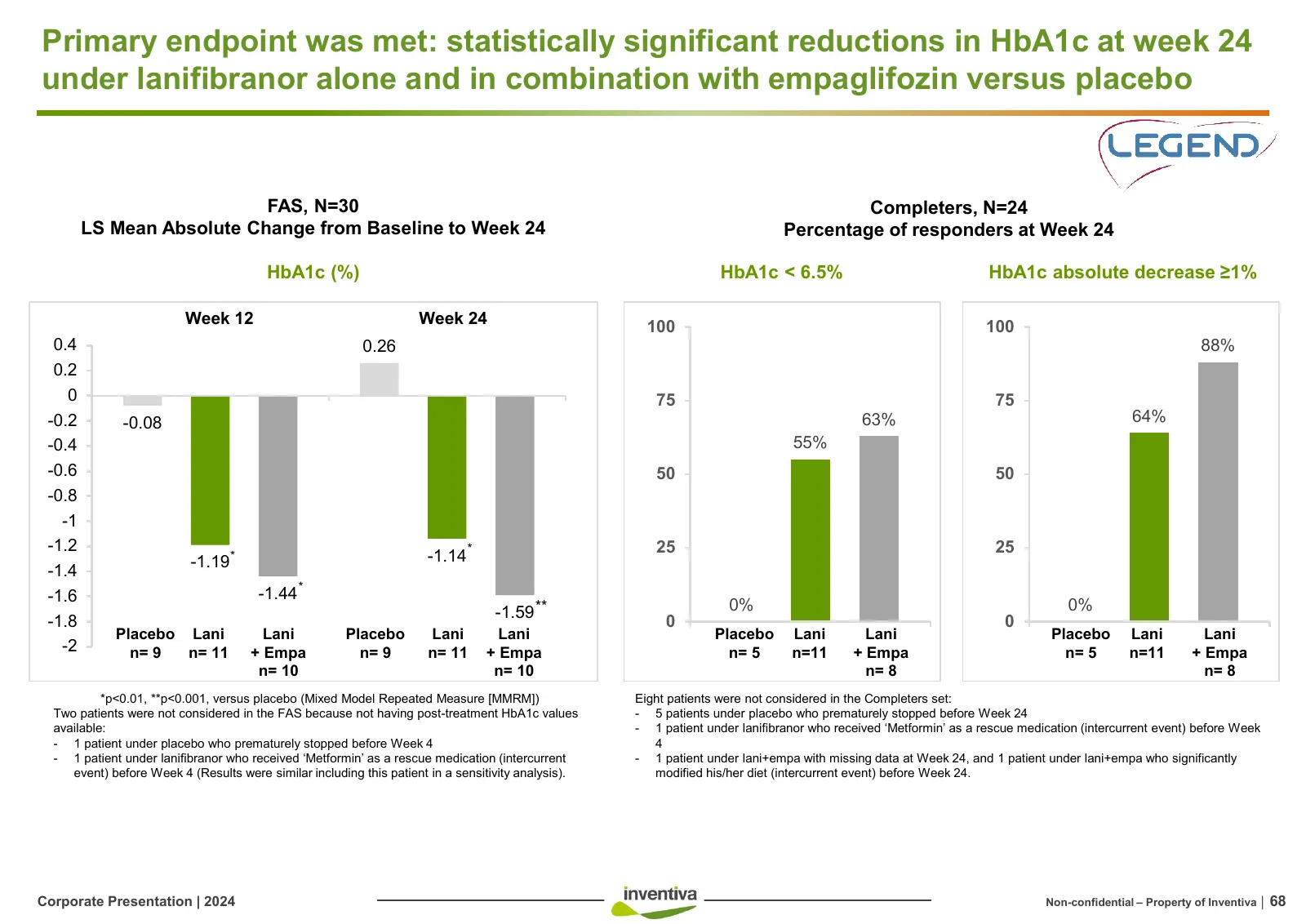
Slide 68: Primary endpoint met: reductions in HbA1c at week 24
Primary endpoint was met: statistically significant reductions in HbA1c at week 24 under lanifibranor alone and in combination with empaglifozin versus placebo FAS, N=30 Completers, N=24 LS Mean Absolute Change from Baseline to Week 24 Percentage of responders at Week 24 HbA1c (%) HbA1c < 6.5% HbA1c
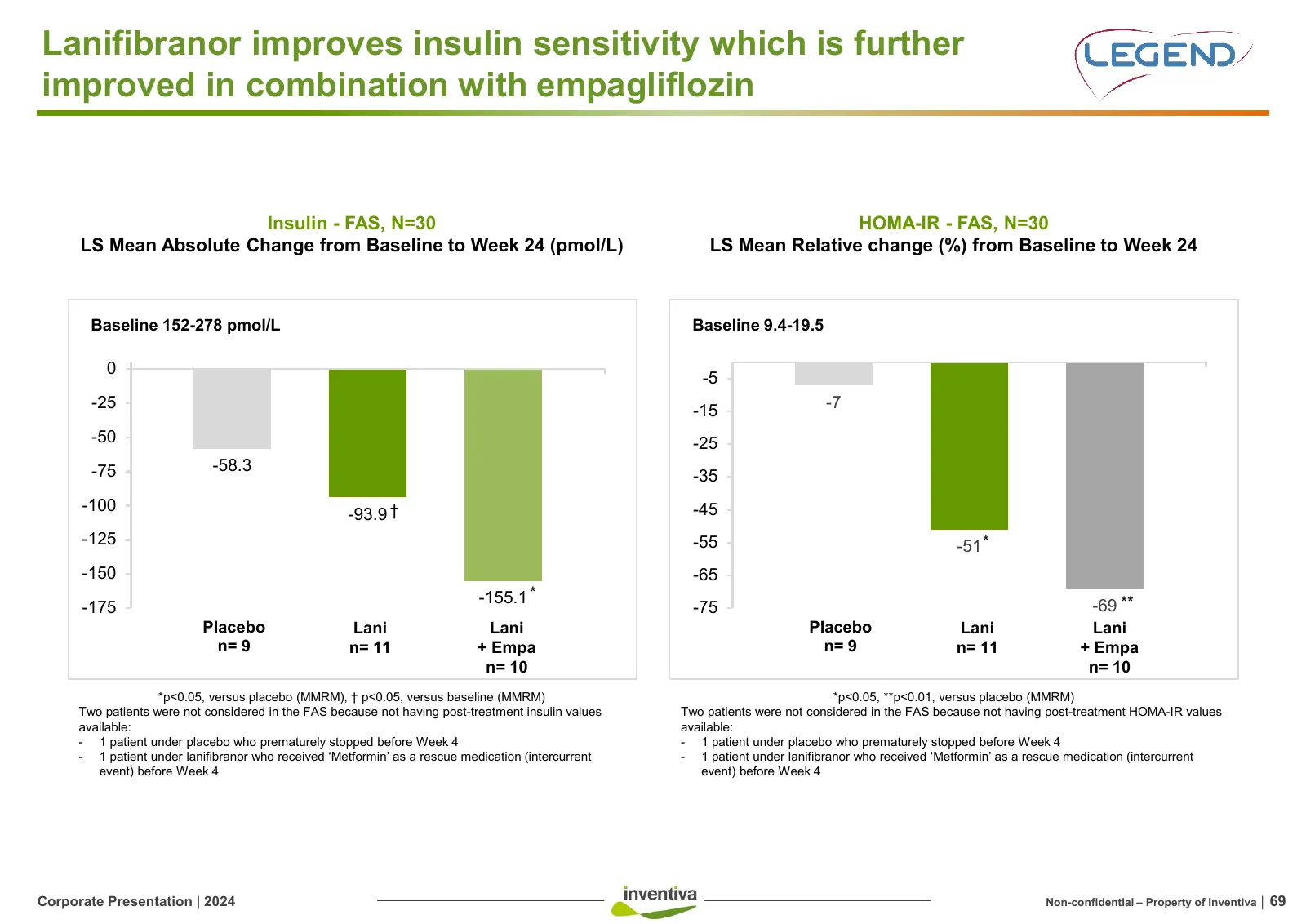
Slide 69: Improved insulin sensitivity, further improved with empagliflozin
Lanifibranor improves insulin sensitivity which is further improved in combination with empagliflozin Insulin - FAS, N=30 HOMA-IR - FAS, N=30 LS Mean Absolute Change from Baseline to Week 24 (pmol/L) LS Mean Relative change (%) from Baseline to Week 24 Baseline 152-278 pmol/L Baseline 9.4-19.5 0 -5
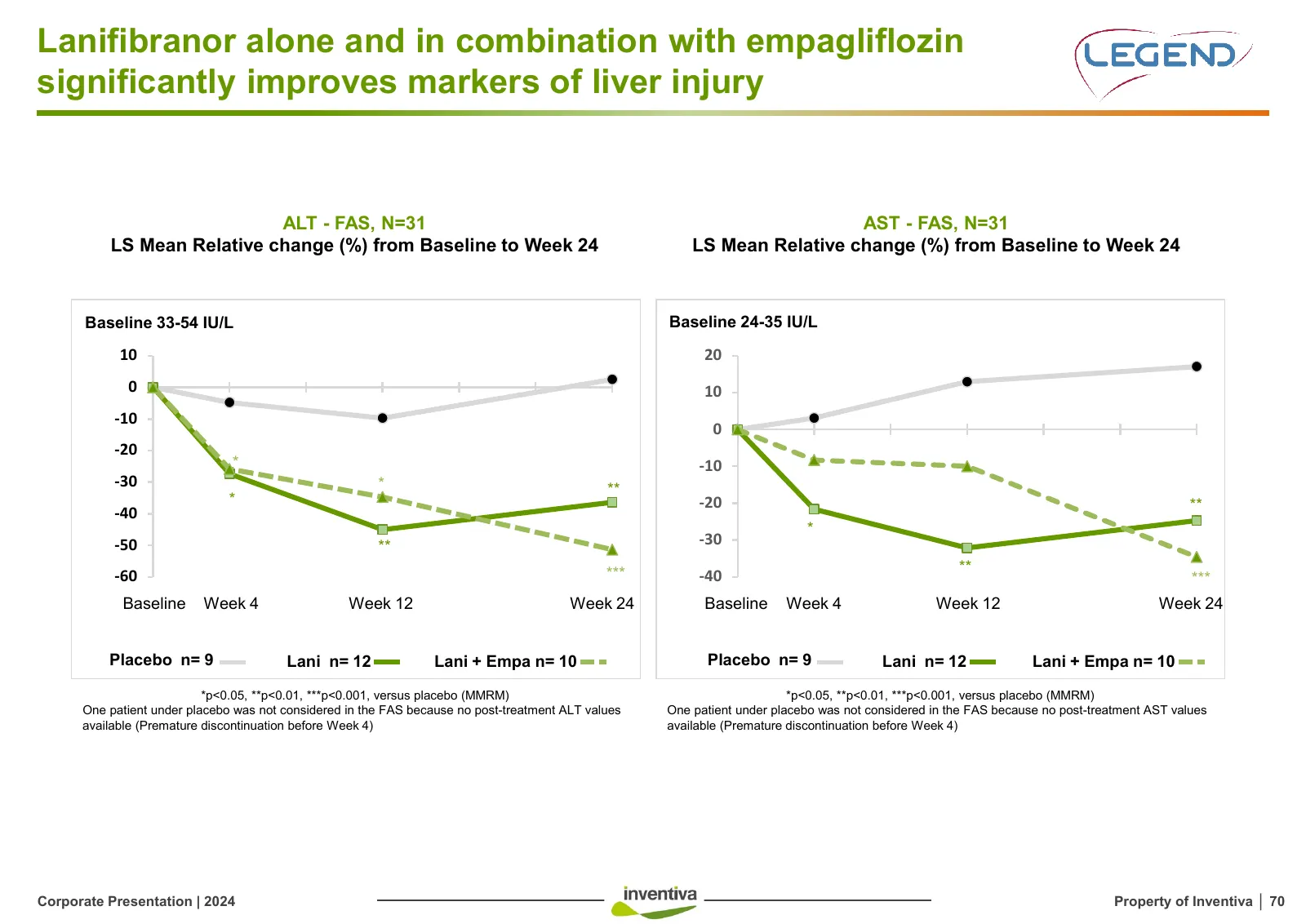
Slide 70: Improves markers of liver injury
Lanifibranor alone and in combination with empagliflozin significantly improves markers of liver injury ALT - FAS, N=31 AST - FAS, N=31 LS Mean Relative change (%) from Baseline to Week 24 LS Mean Relative change (%) from Baseline to Week 24 Baseline 33-54 IU/L Baseline 24-35 IU/L 10 20 0 10 -10 0 -
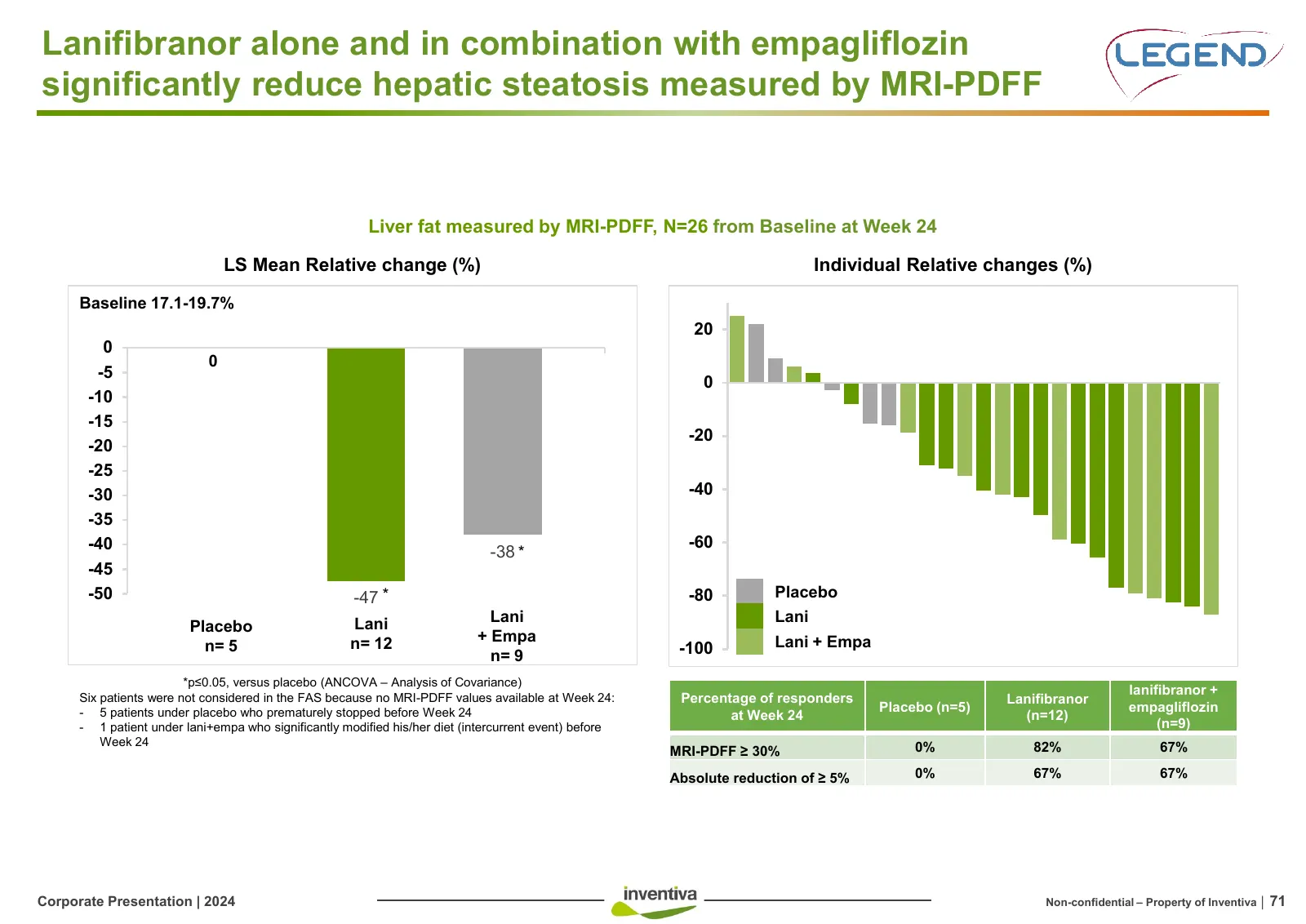
Slide 71: Reduces hepatic steatosis measured by MRI-PDFF
Lanifibranor alone and in combination with empagliflozin significantly reduce hepatic steatosis measured by MRI-PDFF Liver fat measured by MRI-PDFF, N=26 from Baseline at Week 24 LS Mean Relative change (%) Individual Relative changes (%) Baseline 17.1-19.7% 20 0 0 -5 0 -10 -15 -20 -20 -25 -30 -40 -
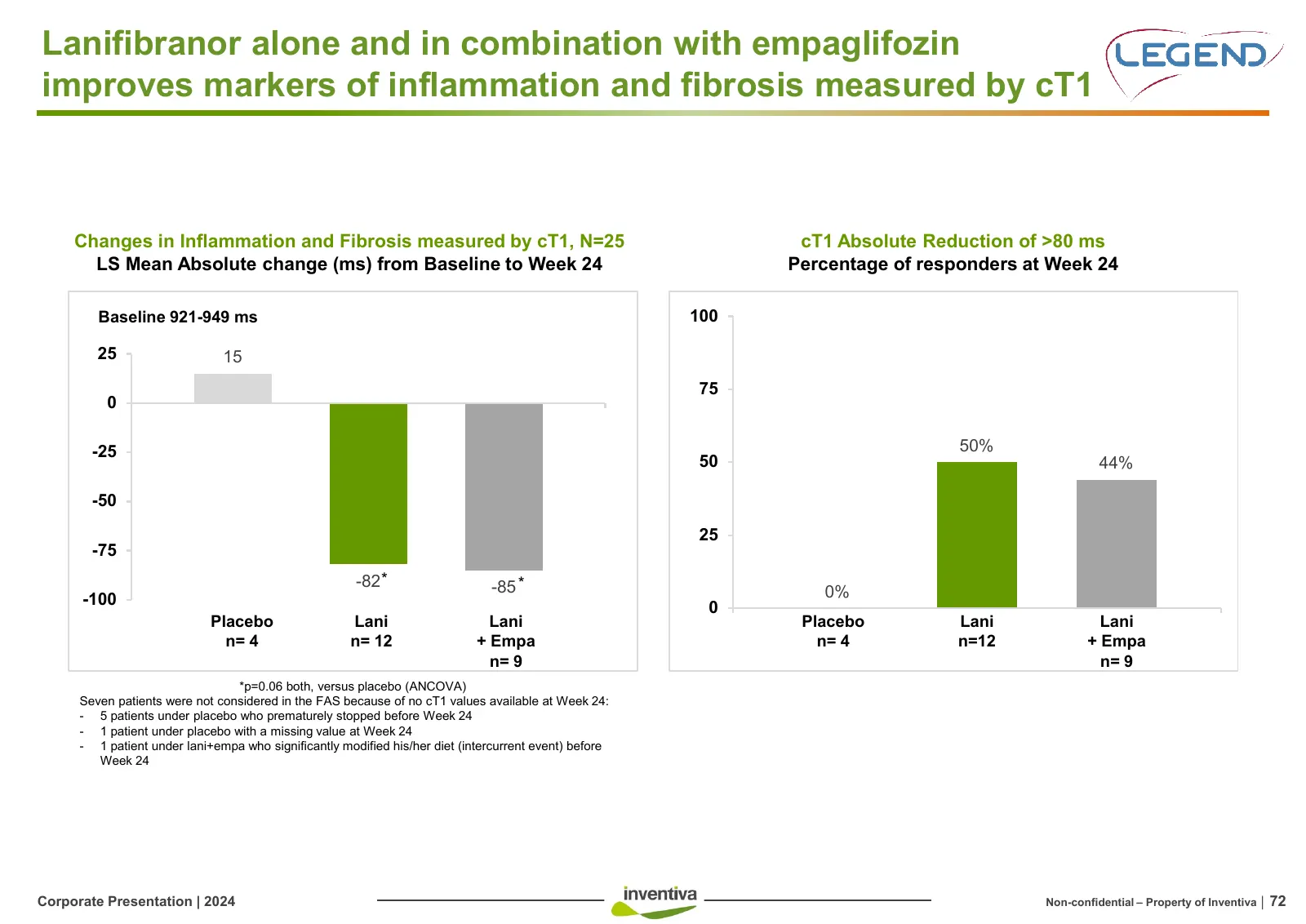
Slide 72: Markers of inflammation and fibrosis measured by cT1
Lanifibranor alone and in combination with empaglifozin improves markers of inflammation and fibrosis measured by cT1 Changes in Inflammation and Fibrosis measured by cT1, N=25 cT1 Absolute Reduction of >80 ms LS Mean Absolute change (ms) from Baseline to Week 24 Percentage of responders at Week 24
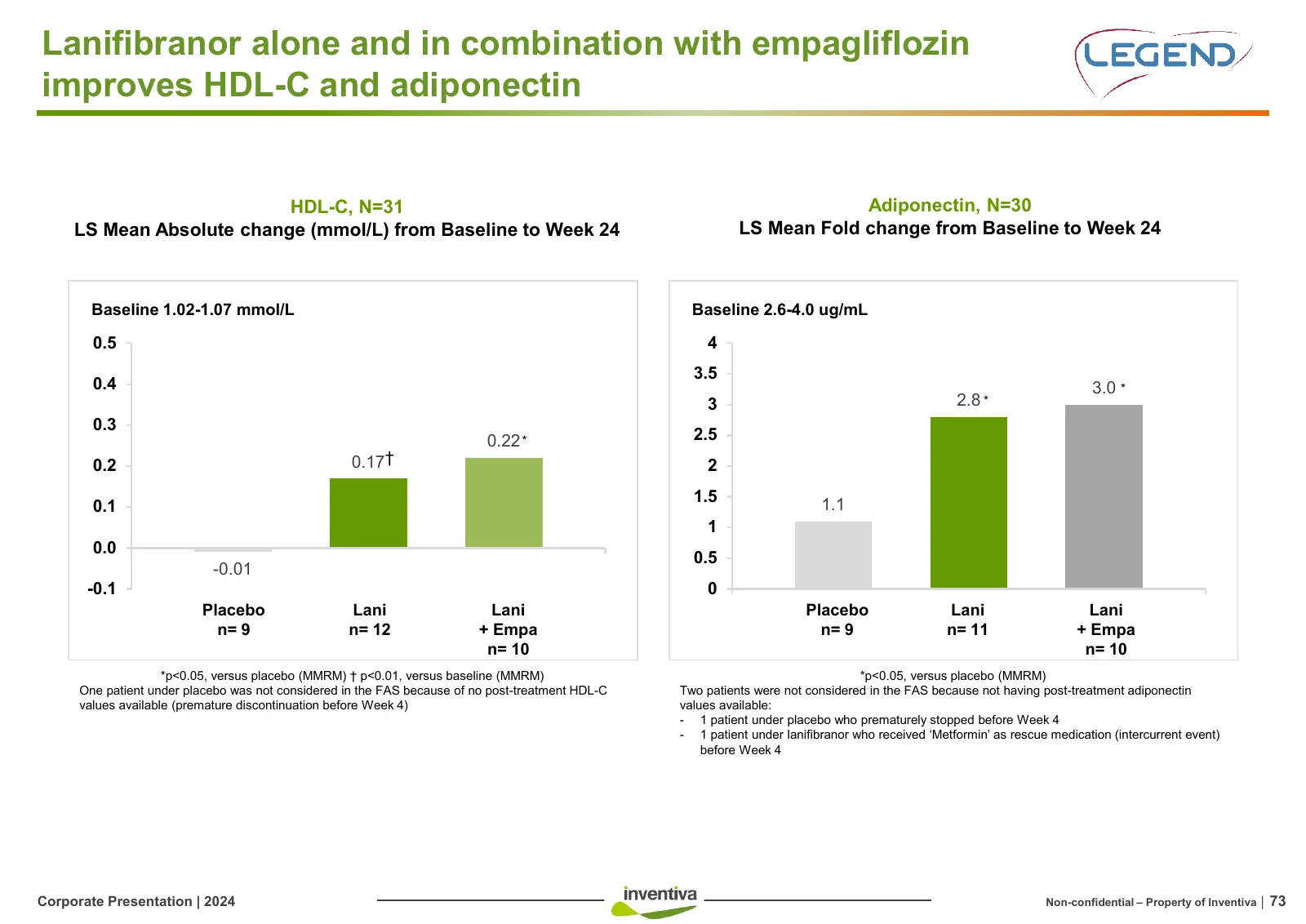
Slide 73: Improves HDL-C and adiponectin
Lanifibranor alone and in combination with empagliflozin improves HDL-C and adiponectin HDL-C, N=31 Adiponectin, N=30 LS Mean Absolute change (mmol/L) from Baseline to Week 24 LS Mean Fold change from Baseline to Week 24 Baseline 1.02-1.07 mmol/L Baseline 2.6-4.0 ug/mL 0.5 4 3.5 0.4 3.0 * 3 2.8 * 0.
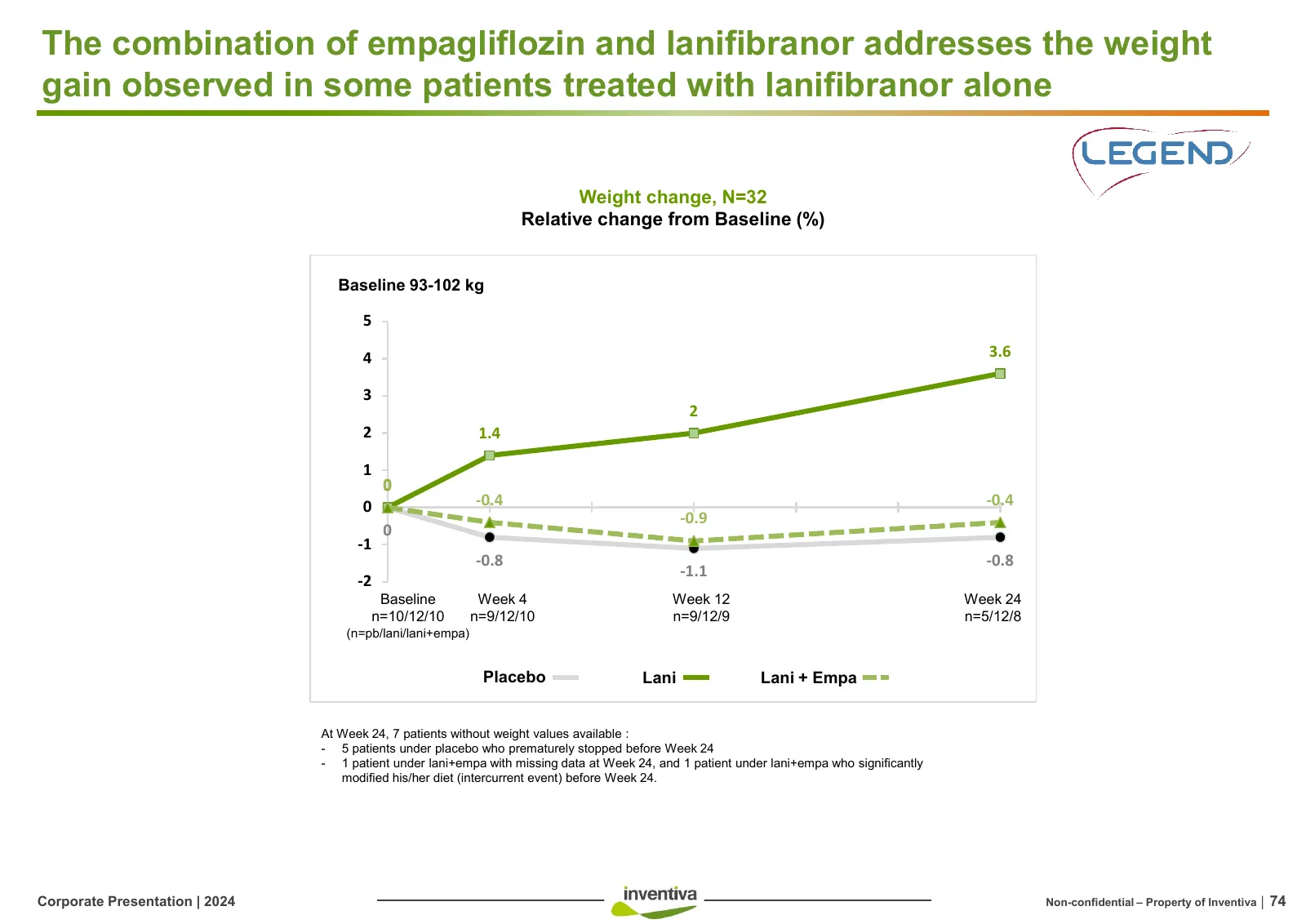
Slide 74: Combination addresses weight gain observed with lanifibranor alone
The combination of empagliflozin and lanifibranor addresses the weight gain observed in some patients treated with lanifibranor alone Weight change, N=32 Relative change from Baseline (%) Baseline 93-102 kg 5 4 3.6 3 2 2 1.4 1 0 0 -0.4 -0.4 -0.9 0 -1 -0.8 -0.8 -1.1 -2 Baseline Week 4 Week 12 Week 24
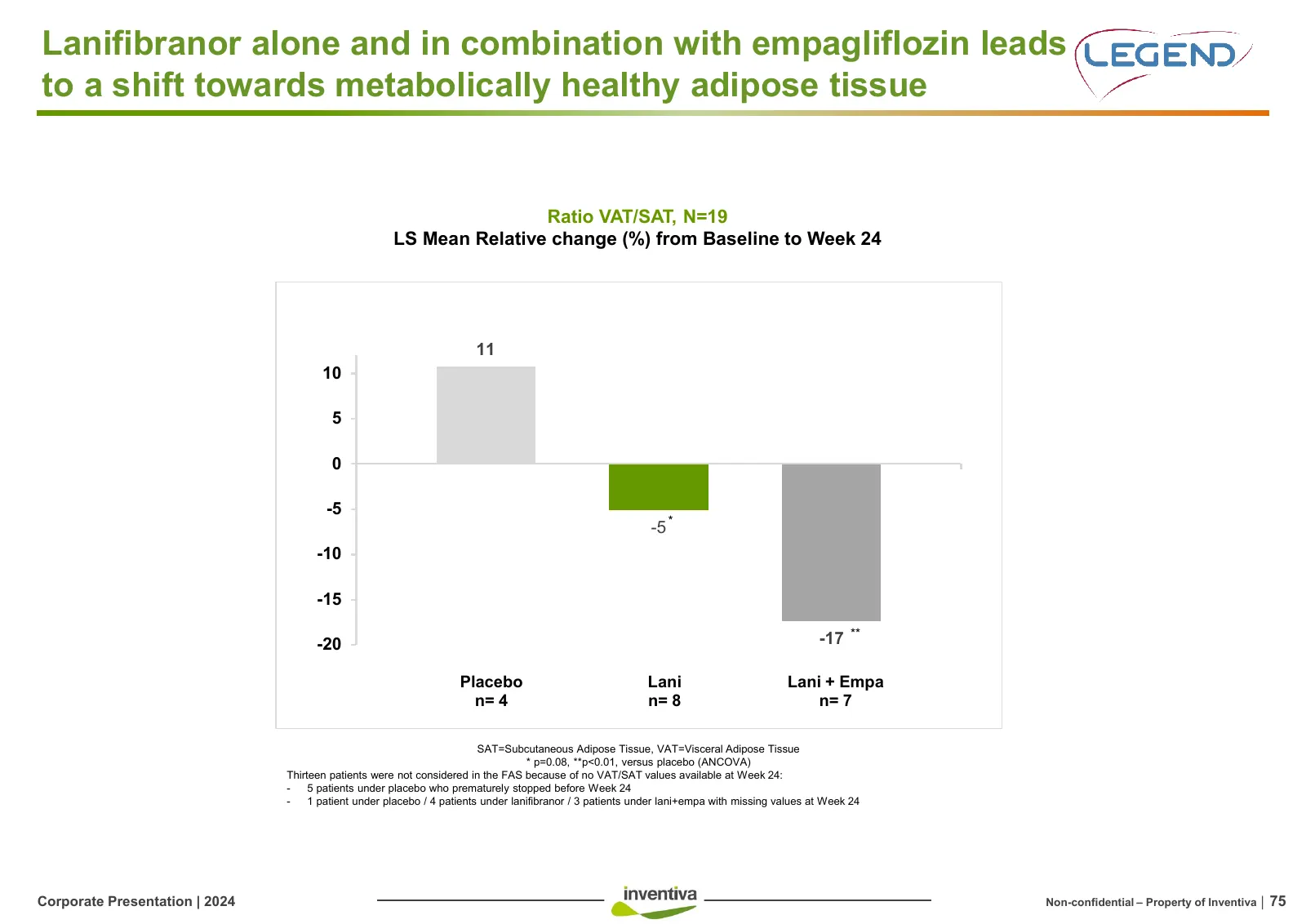
Slide 75: Shift towards metabolically healthy adipose tissue
Lanifibranor alone and in combination with empagliflozin leads to a shift towards metabolically healthy adipose tissue Ratio VAT/SAT, N=19 LS Mean Relative change (%) from Baseline to Week 24 11 10 5 0 -5 -5 * -10 -15 -20 -17 ** Placebo Lani Lani + Empa n= 4 n= 8 n= 7 SAT=Subcutaneous Adipose Tissue
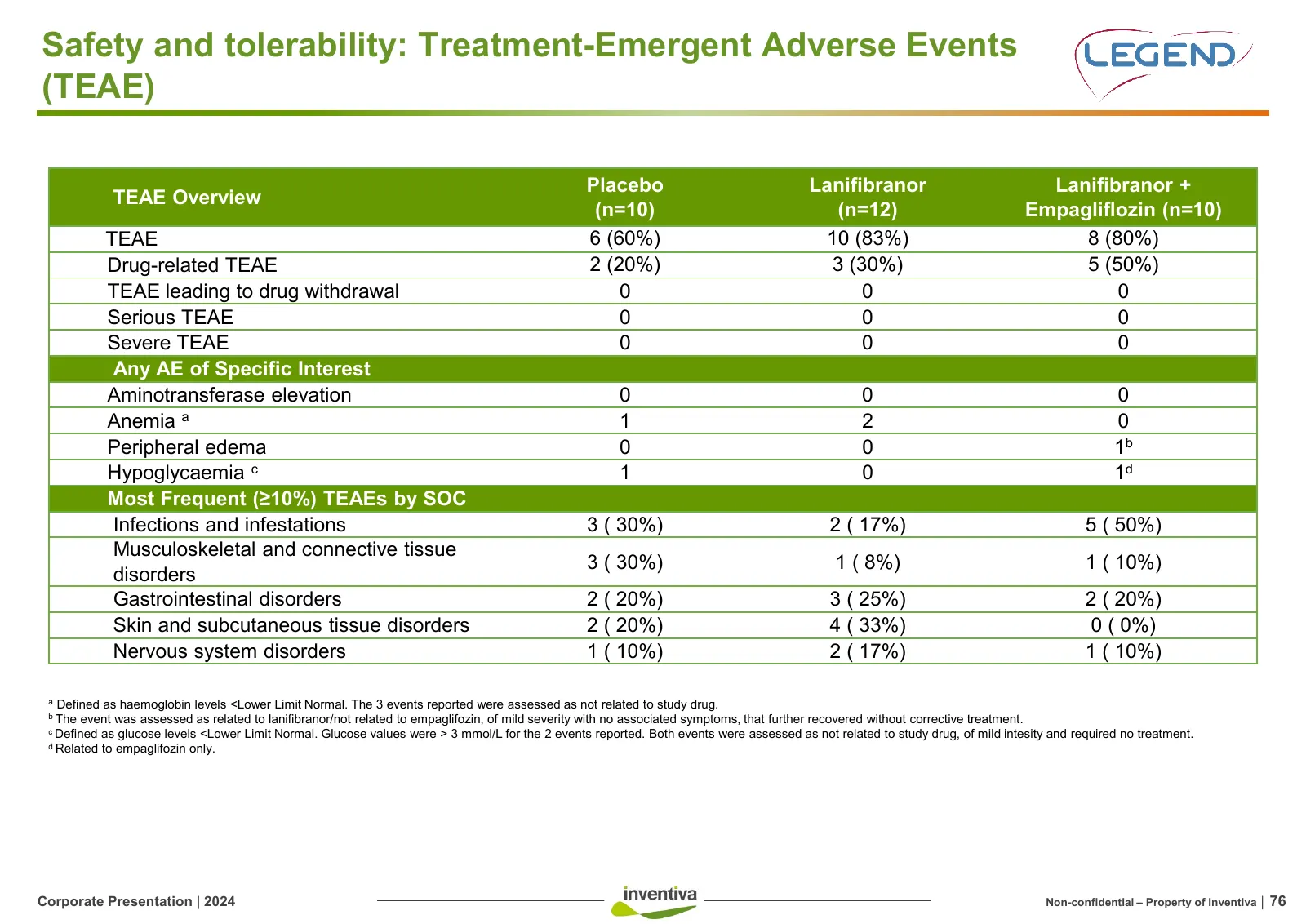
Slide 76: Safety and tolerability: Treatment-Emergent Adverse Events
Safety and tolerability: Treatment-Emergent Adverse Events (TEAE) Placebo Lanifibranor Lanifibranor + TEAE Overview (n=10) (n=12) Empagliflozin (n=10) TEAE 6 (60%) 10 (83%) 8 (80%) Drug-related TEAE 2 (20%) 3 (30%) 5 (50%) TEAE leading to drug withdrawal 0 0 0 Serious TEAE 0 0 0 Severe TEAE 0 0 0 An
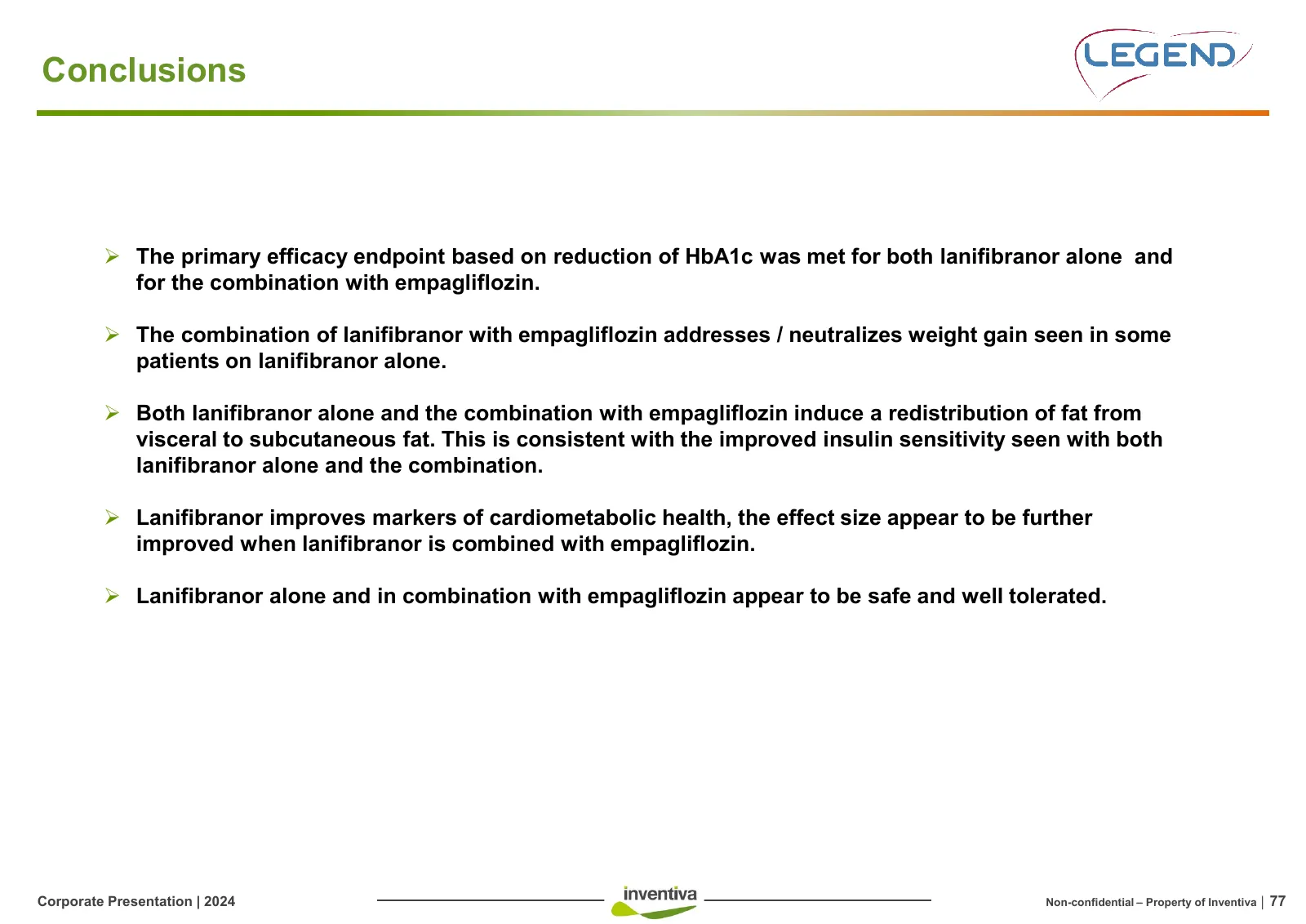
Slide 77: Conclusions
Conclusions The primary efficacy endpoint based on reduction of HbA1c was met for both lanifibranor alone and for the combination with empagliflozin. The combination of lanifibranor with empagliflozin addresses / neutralizes weight gain seen in some patients on lanifibranor alone. Both lanifib
Source: Internet Archive copy of inventivapharma.com
More decks from Inventiva SA
 Investor Presentation (October 2026)25 slides · October 2026
 H1 2026 Earnings Presentation26 slides · Sep 28, 2026
 FY2025 Earnings Presentation14 slides · Mar 31, 2026
 Investor Day (October 2025)54 slides · Oct 8, 2025
 Investor Day (October 2025)43 slides · Oct 8, 2025
 Investor Presentation (October 2025)48 slides · October 2025