Constellation Pharmaceuticals Inc
Constellation Pharmaceuticals — J.P. Morgan Healthcare Conference 2020
27 slides from Constellation Pharmaceuticals's conference presentation, Jan 13, 2020
Slide 1: Developing Next-Generation Epigenetic Treatments for Cancer Patients
January 13, 2020 Developing Next-Generation Epigenetic Treatments for Cancer Patients Jigar Raythatha, CEO J.P. Morgan Healthcare Conference Exhibit 99.1
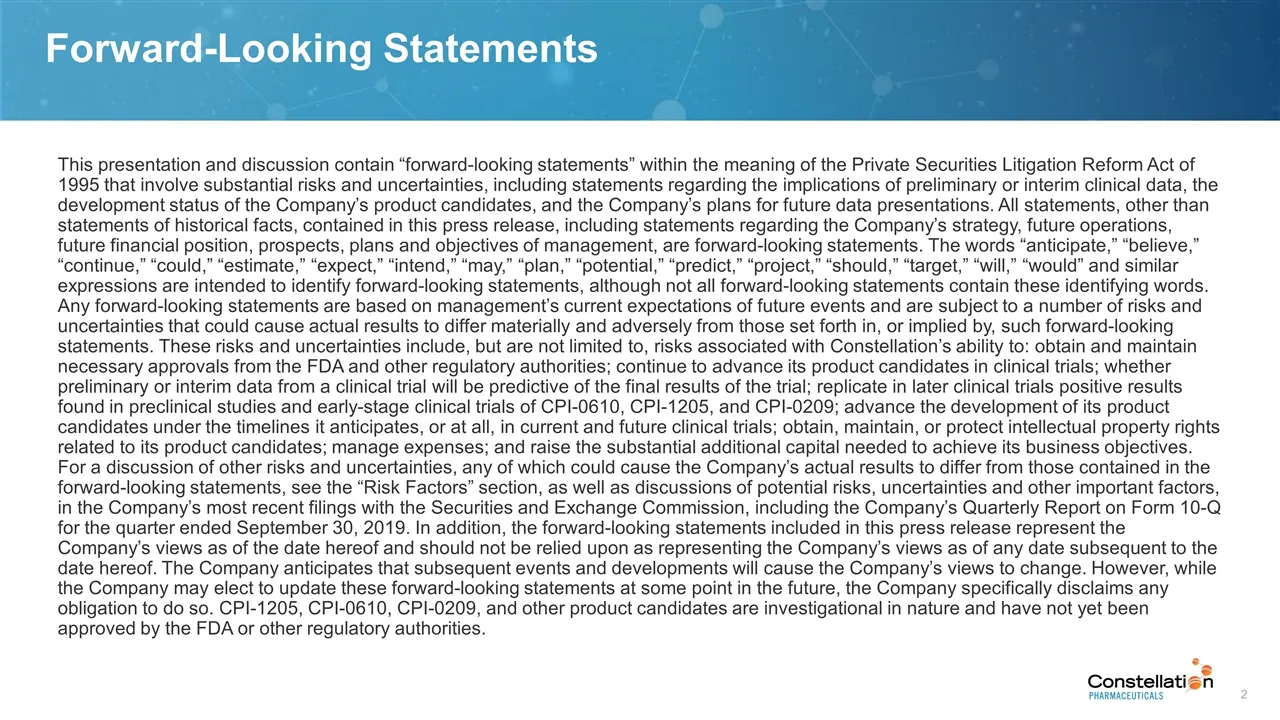
Slide 2: Forward-looking statements
This presentation and discussion contain “forward-looking statements” within the meaning of the Private Securities Litigation Reform Act of 1995 that involve substantial risks and uncertainties, including statements regarding the implications of preliminary or interim clinical data, the development
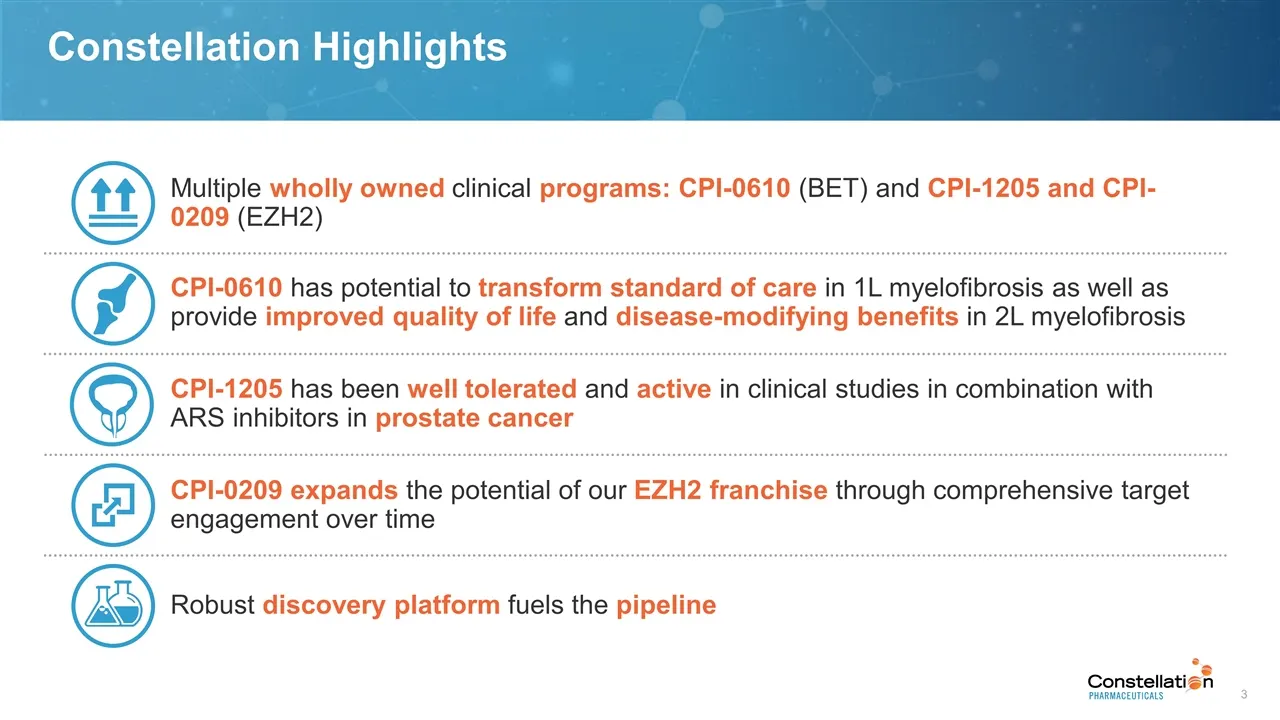
Slide 3: Constellation Highlights
Constellation Highlights Multiple wholly owned clinical programs: CPI-0610 (BET) and CPI-1205 and CPI-0209 (EZH2) CPI-0610 has potential to transform standard of care in 1L myelofibrosis as well as provide improved quality of life and disease-modifying benefits in 2L myelofibrosis CPI-1205 has been
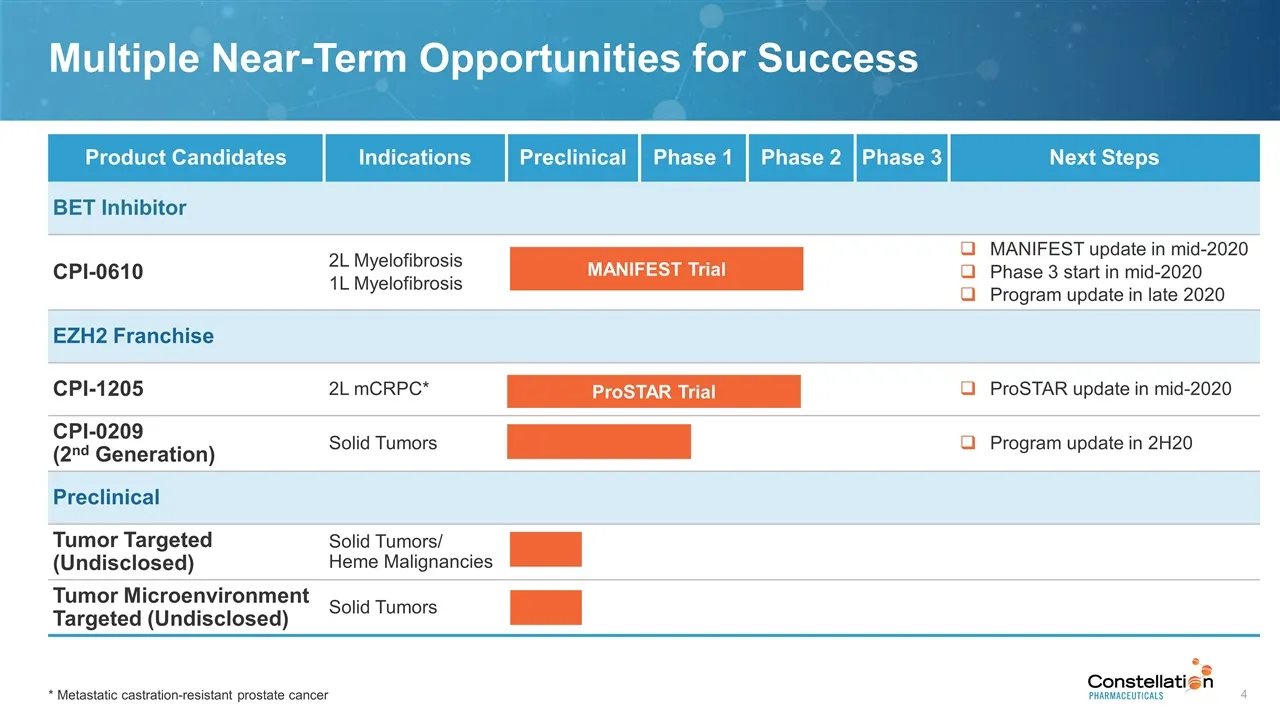
Slide 4: Product Candidates and Indications
Product Candidates Indications Preclinical Phase 1 Phase 2 Phase 3 Next Steps BET Inhibitor CPI-0610 2L Myelofibrosis 1L Myelofibrosis MANIFEST update in mid-2020 Phase 3 start in mid-2020 Program update in late 2020 EZH2 Franchise CPI-1205 2L mCRPC* ProSTAR update in mid-2020 CPI-0209 (2nd Generati
Slide 5: CPI-0610
CPI-0610
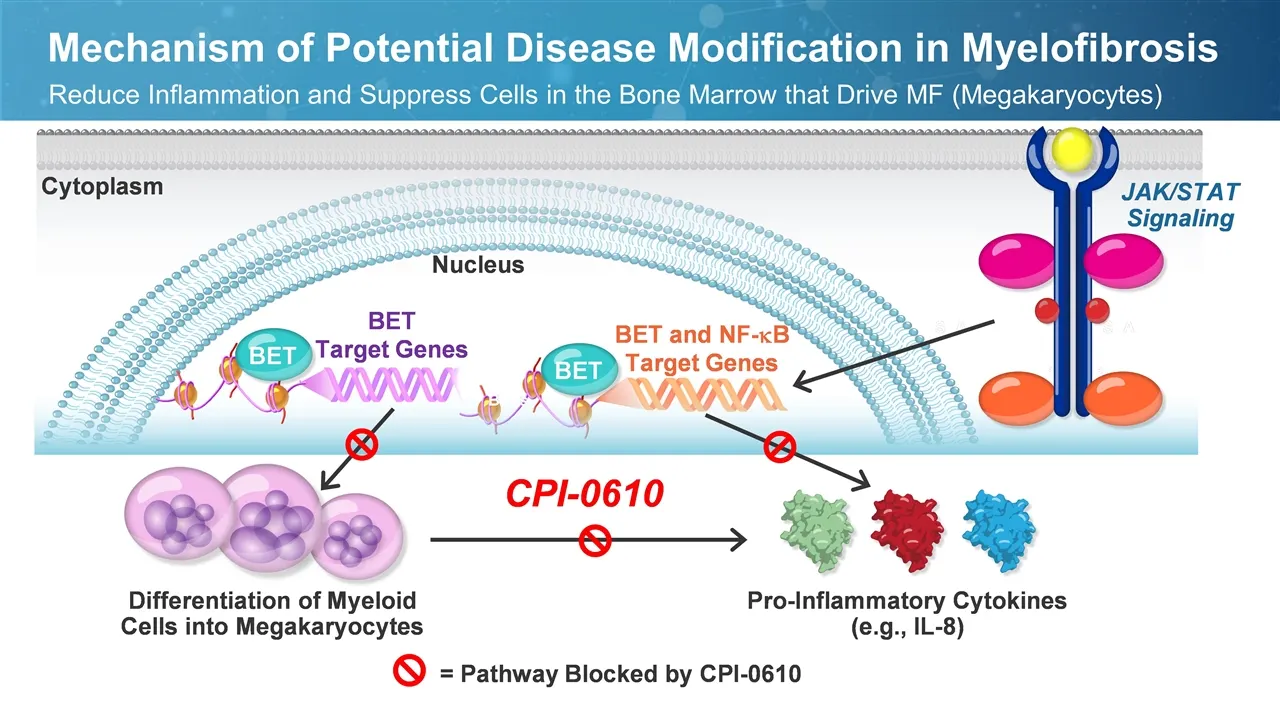
Slide 6: Mechanism of Potential Disease Modification in Myelofibrosis
Reduce Inflammation and Suppress Cells in the Bone Marrow that Drive MF (Megakaryocytes) Mechanism of Potential Disease Modification in Myelofibrosis STAT STAT BETs P P
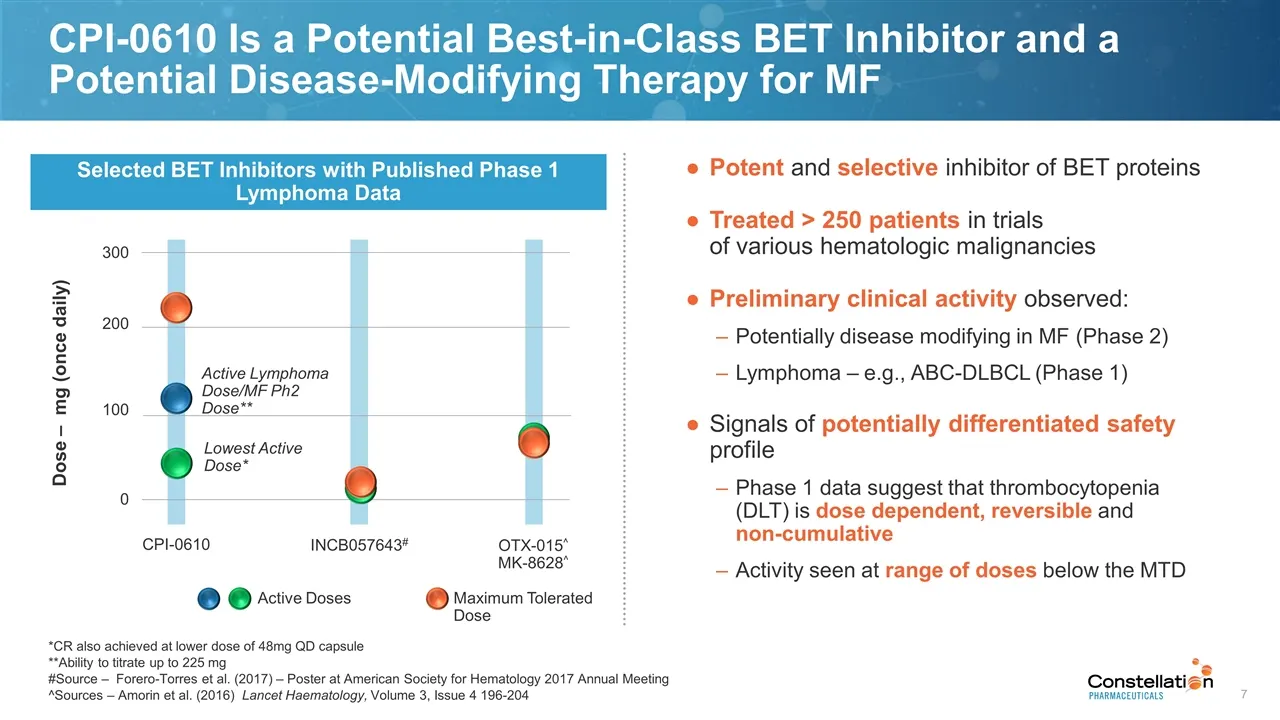
Slide 7: CPI-0610 Is a Potential Best-in-Class BET Inhibitor
CPI-0610 Is a Potential Best-in-Class BET Inhibitor and a Potential Disease-Modifying Therapy for MF *CR also achieved at lower dose of 48mg QD capsule **Ability to titrate up to 225 mg #Source – Forero-Torres et al. (2017) – Poster at American Society for Hematology 2017 Annual Meeting ^Sources – A
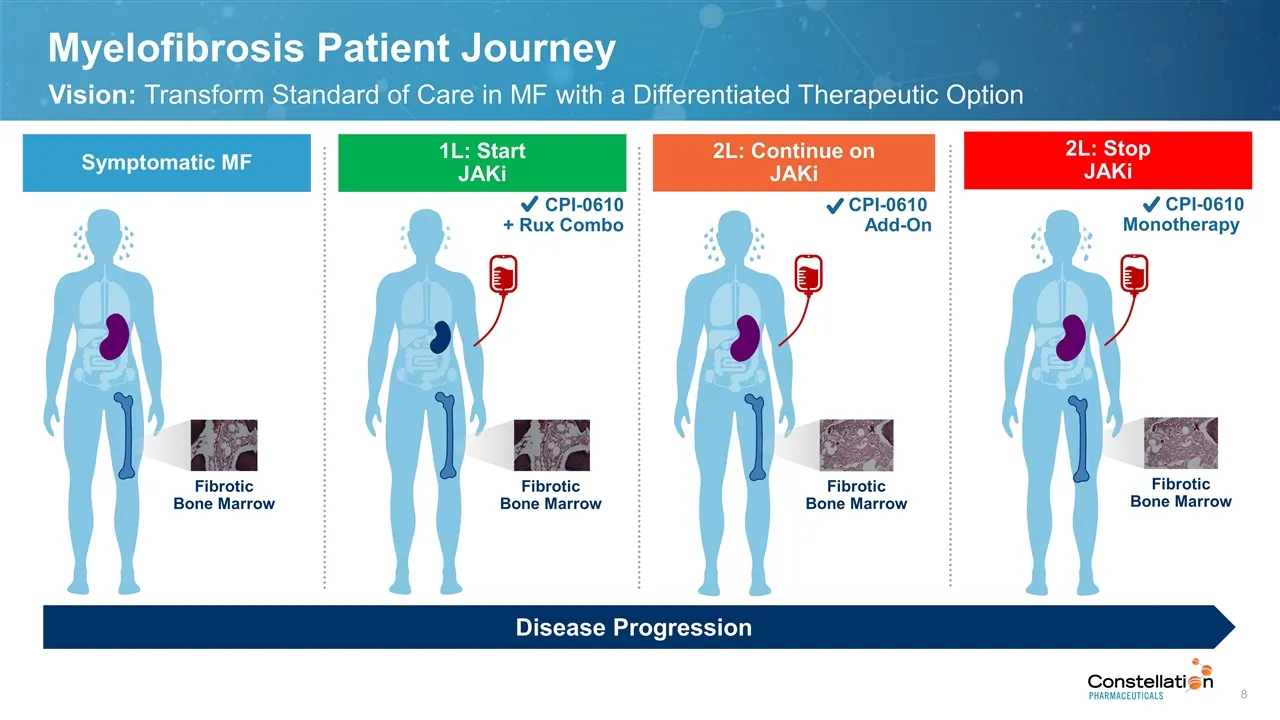
Slide 8: Vision: Transform Standard of Care in MF
Vision: Transform Standard of Care in MF with a Differentiated Therapeutic Option Myelofibrosis Patient Journey Disease Progression Symptomatic MF Fibrotic Bone Marrow 1L: Start JAKi Fibrotic Bone Marrow 2L: Continue on JAKi Fibrotic Bone Marrow 2L: Stop JAKi Fibrotic Bone Marrow CPI-0610 Add-On CPI
Slide 9: MANIFEST Study Design Overview
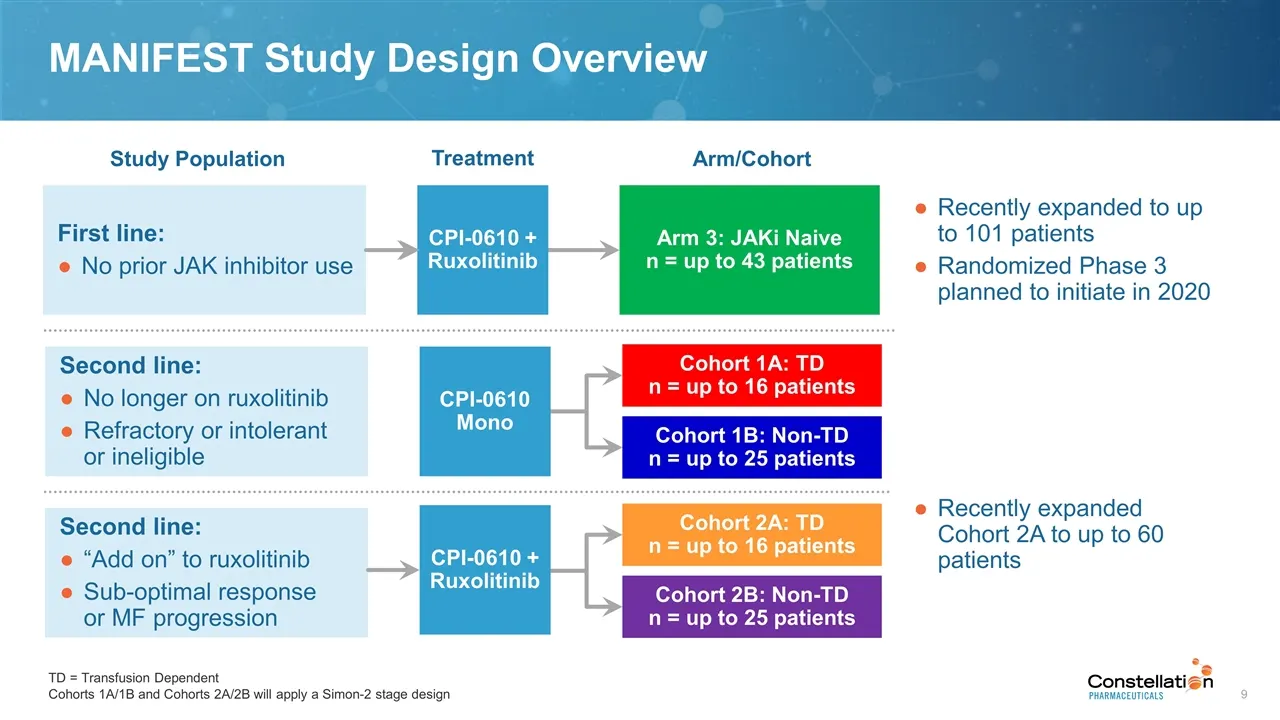
TD = Transfusion Dependent Cohorts 1A/1B and Cohorts 2A/2B will apply a Simon-2 stage design MANIFEST Study Design Overview Cohort 1A: TD n = up to 16 patients Cohort 1B: Non-TD n = up to 25 patients CPI-0610 Mono Cohort 2A: TD n = up to 16 patients Cohort 2B: Non-TD n = up to 25 patients CPI-0610 +
Slide 10: Arm 3: Spleen Volume Reduction at 12 Weeks
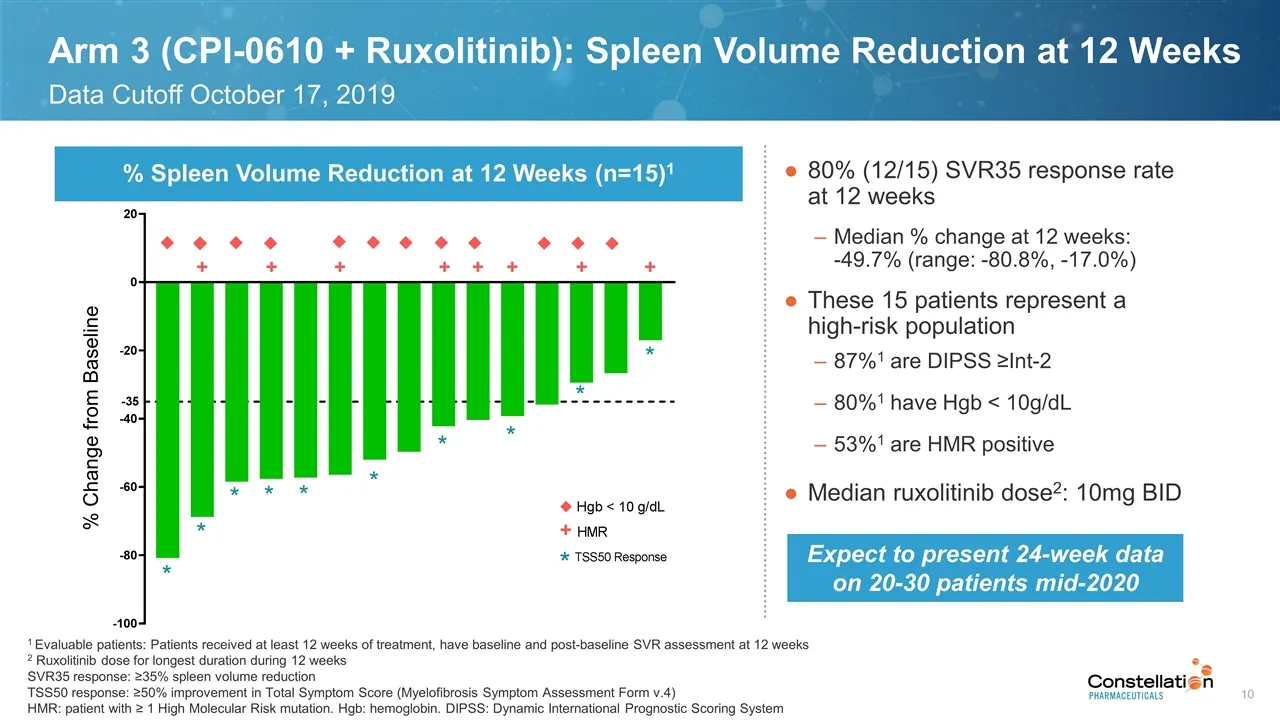
Data Cutoff October 17, 2019 Arm 3 (CPI-0610 + Ruxolitinib): Spleen Volume Reduction at 12 Weeks % Spleen Volume Reduction at 12 Weeks (n=15)1 80% (12/15) SVR35 response rate at 12 weeks Median % change at 12 weeks: -49.7% (range: -80.8%, -17.0%) These 15 patients represent a high-risk population 87
Slide 11: Arm 3: Total Symptom Improvement at 12 Weeks
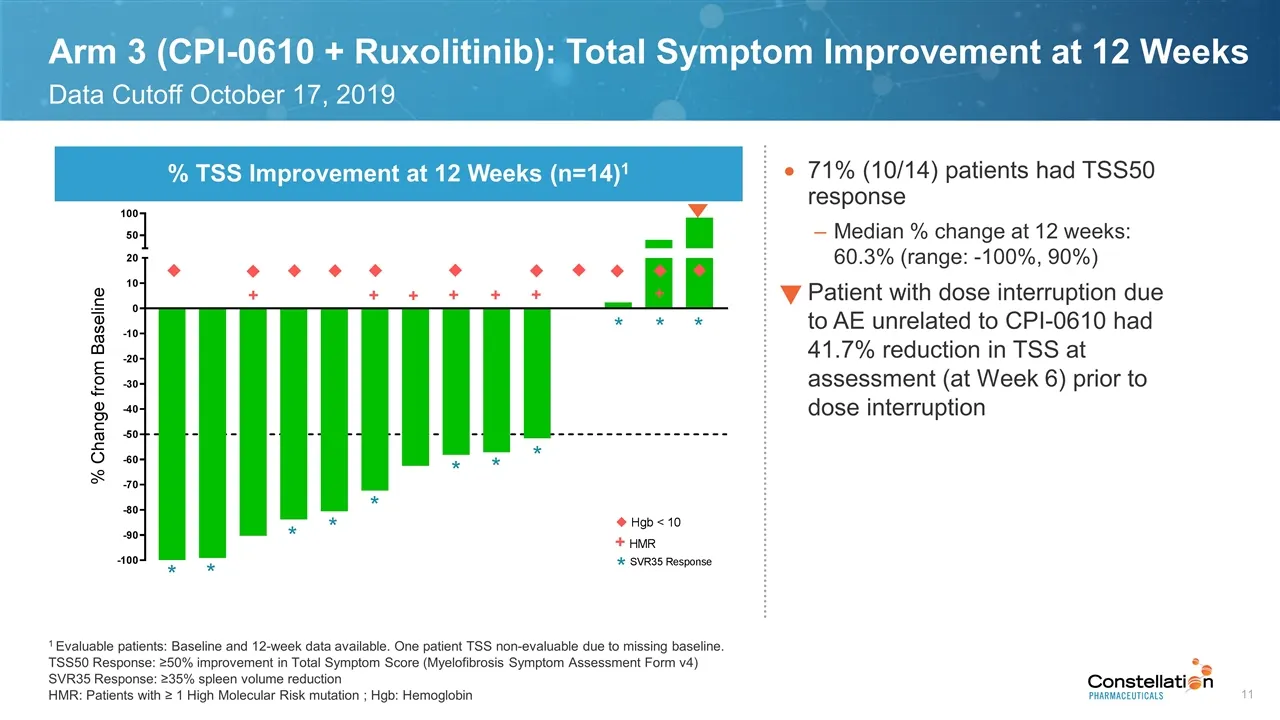
1 Evaluable patients: Baseline and 12-week data available. One patient TSS non-evaluable due to missing baseline. TSS50 Response: ≥50% improvement in Total Symptom Score (Myelofibrosis Symptom Assessment Form v4) SVR35 Response: ≥35% spleen volume reduction HMR: Patients with ≥ 1 High Molecular Risk
Slide 12: Arm 3: Most Common Adverse Events
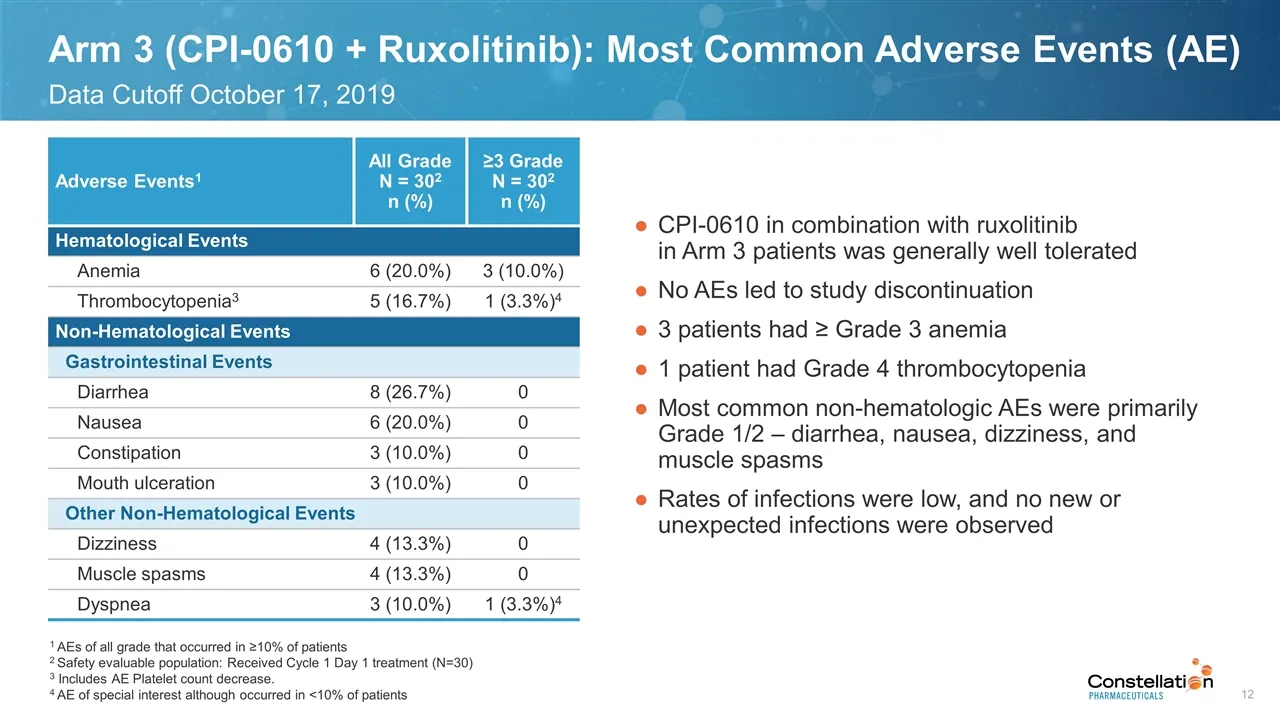
Data Cutoff October 17, 2019 Arm 3 (CPI-0610 + Ruxolitinib): Most Common Adverse Events (AE) CPI-0610 in combination with ruxolitinib in Arm 3 patients was generally well tolerated No AEs led to study discontinuation 3 patients had ≥ Grade 3 anemia 1 patient had Grade 4 thrombocytopenia Most common
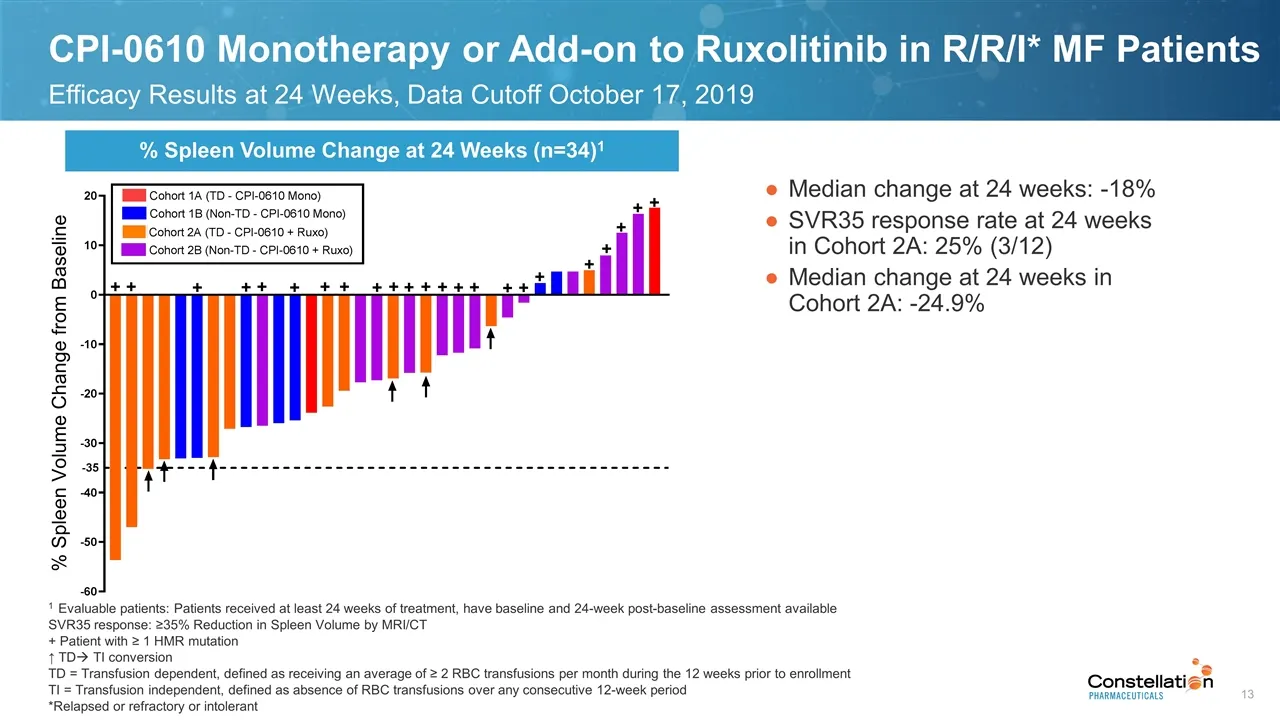
Slide 13: Efficacy Results at 24 Weeks: Spleen Volume
Efficacy Results at 24 Weeks, Data Cutoff October 17, 2019 CPI-0610 Monotherapy or Add-on to Ruxolitinib in R/R/I* MF Patients % Spleen Volume Change at 24 Weeks (n=34)1 Median change at 24 weeks: -18% SVR35 response rate at 24 weeks in Cohort 2A: 25% (3/12) Median change at 24 weeks in Cohort 2A: -
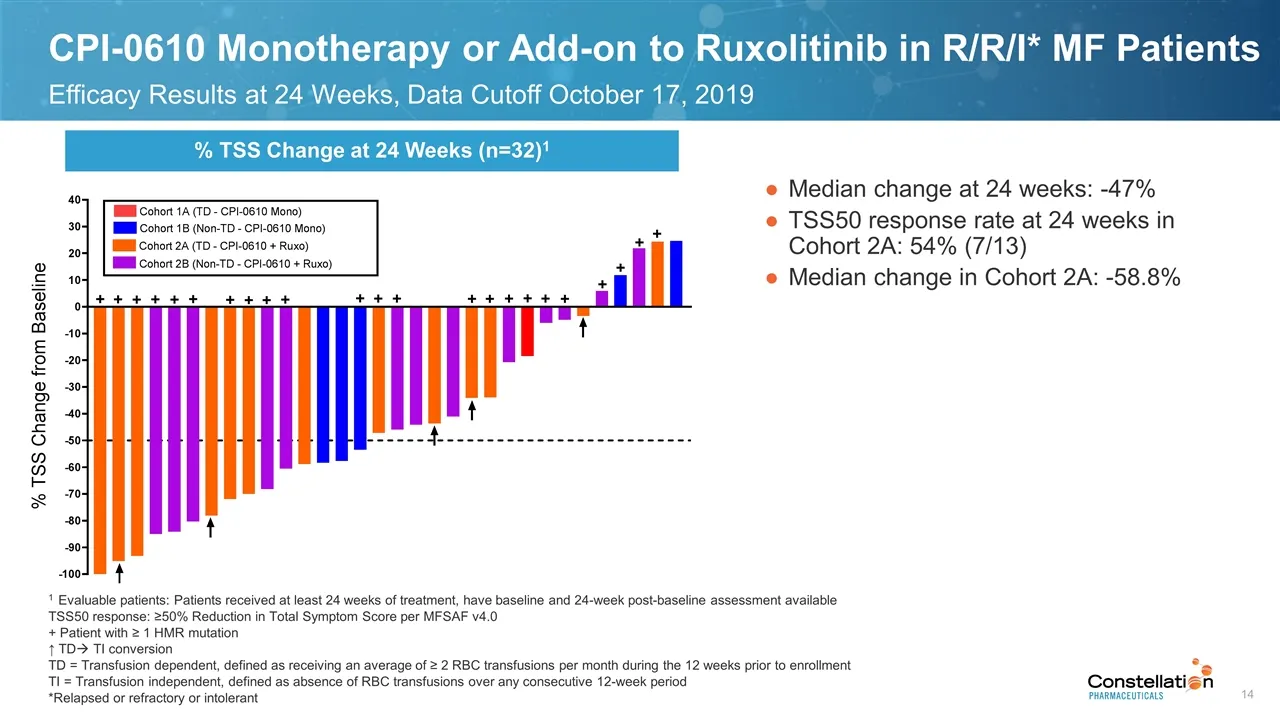
Slide 14: Efficacy Results at 24 Weeks: Symptom Score
Efficacy Results at 24 Weeks, Data Cutoff October 17, 2019 CPI-0610 Monotherapy or Add-on to Ruxolitinib in R/R/I* MF Patients Median change at 24 weeks: -47% TSS50 response rate at 24 weeks in Cohort 2A: 54% (7/13) Median change in Cohort 2A: -58.8% % TSS Change at 24 Weeks (n=32)1 1 Evaluable pati
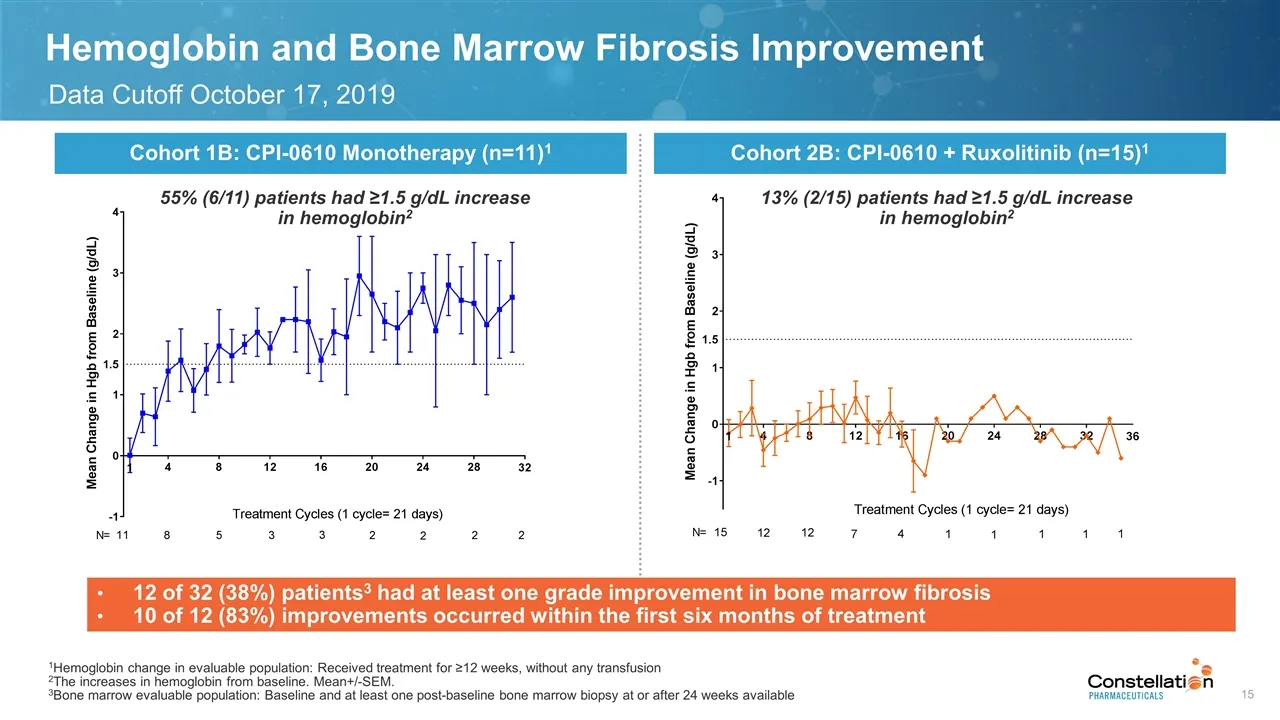
Slide 15: Hemoglobin and Bone Marrow Fibrosis Improvement
Cohort 2B: CPI-0610 + Ruxolitinib (n=15)1 1Hemoglobin change in evaluable population: Received treatment for ≥12 weeks, without any transfusion 2The increases in hemoglobin from baseline. Mean+/-SEM. 3Bone marrow evaluable population: Baseline and at least one post-baseline bone marrow biopsy at or
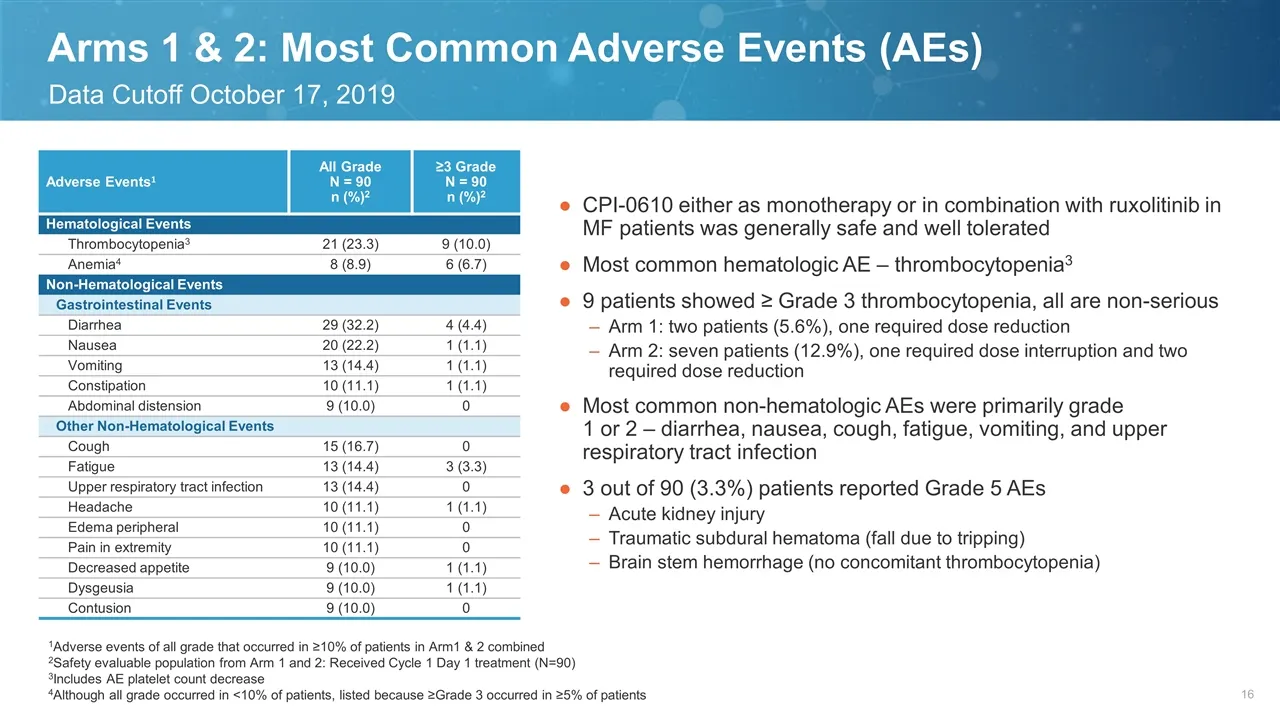
Slide 16: Arms 1 & 2: Most Common Adverse Events
1Adverse events of all grade that occurred in ≥10% of patients in Arm1 & 2 combined 2Safety evaluable population from Arm 1 and 2: Received Cycle 1 Day 1 treatment (N=90) 3Includes AE platelet count decrease 4Although all grade occurred in <10% of patients, listed because ≥Grade 3 occurred in ≥5% of
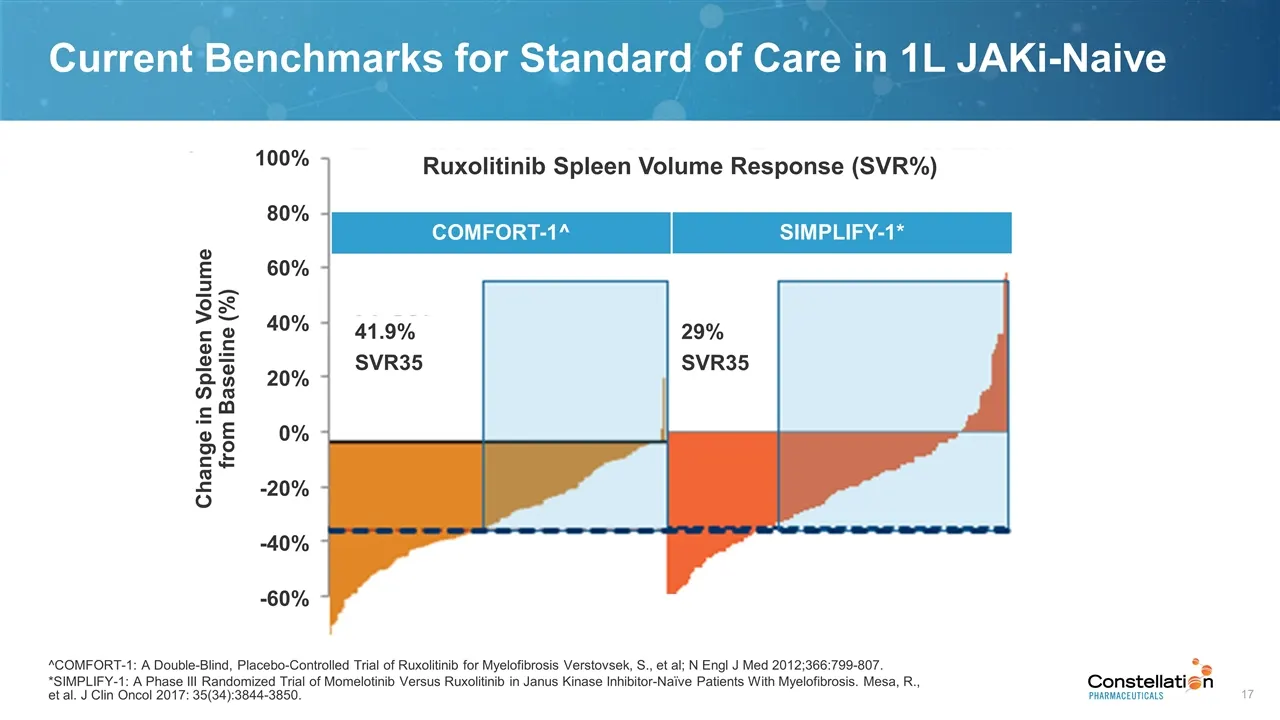
Slide 17: Current Benchmarks for Standard of Care in 1L JAKi-Naive
^COMFORT-1: A Double-Blind, Placebo-Controlled Trial of Ruxolitinib for Myelofibrosis Verstovsek, S., et al; N Engl J Med 2012;366:799-807. *SIMPLIFY-1: A Phase III Randomized Trial of Momelotinib Versus Ruxolitinib in Janus Kinase Inhibitor-Naïve Patients With Myelofibrosis. Mesa, R., et al. J Clin
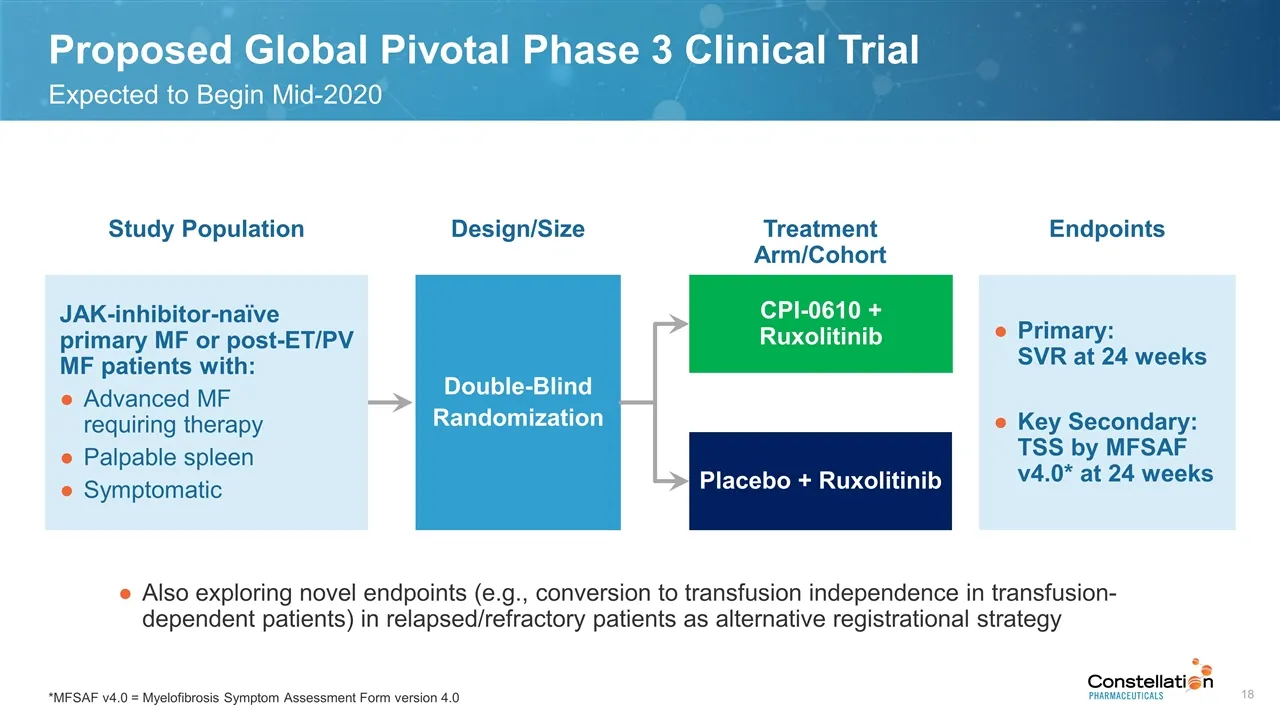
Slide 18: Proposed Global Pivotal Phase 3 Clinical Trial
Proposed Global Pivotal Phase 3 Clinical Trial Study Population Treatment Arm/Cohort Endpoints Design/Size Placebo + Ruxolitinib CPI-0610 + Ruxolitinib JAK-inhibitor-naïve primary MF or post-ET/PV MF patients with: Advanced MF requiring therapy Palpable spleen Symptomatic Double-Blind Randomization
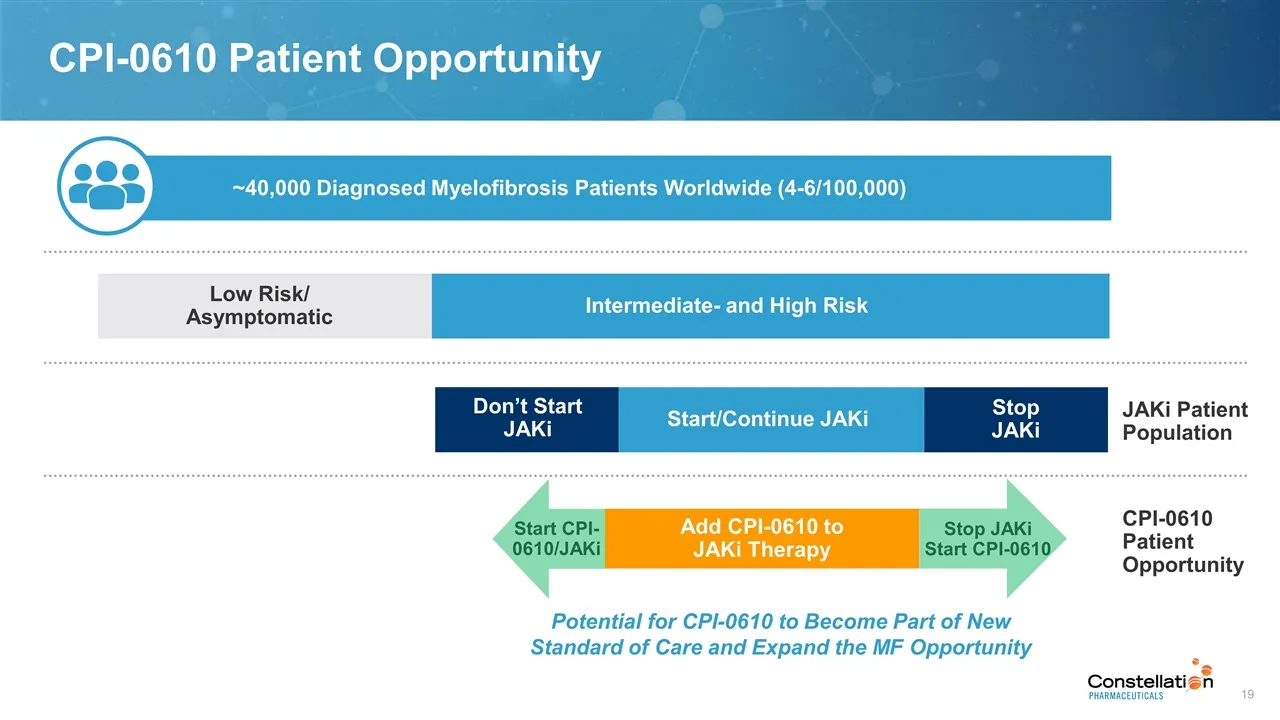
Slide 19: CPI-0610 Patient Opportunity
CPI-0610 Patient Opportunity ~40,000 Diagnosed Myelofibrosis Patients Worldwide (4-6/100,000) Low Risk/ Asymptomatic Intermediate- and High Risk CPI-0610 Patient Opportunity Don’t Start JAKi Start/Continue JAKi Stop JAKi JAKi Patient Population Add CPI-0610 to JAKi Therapy Start CPI-0610/JAKi Stop J
Slide 20: EZH2 Franchise
EZH2 Franchise
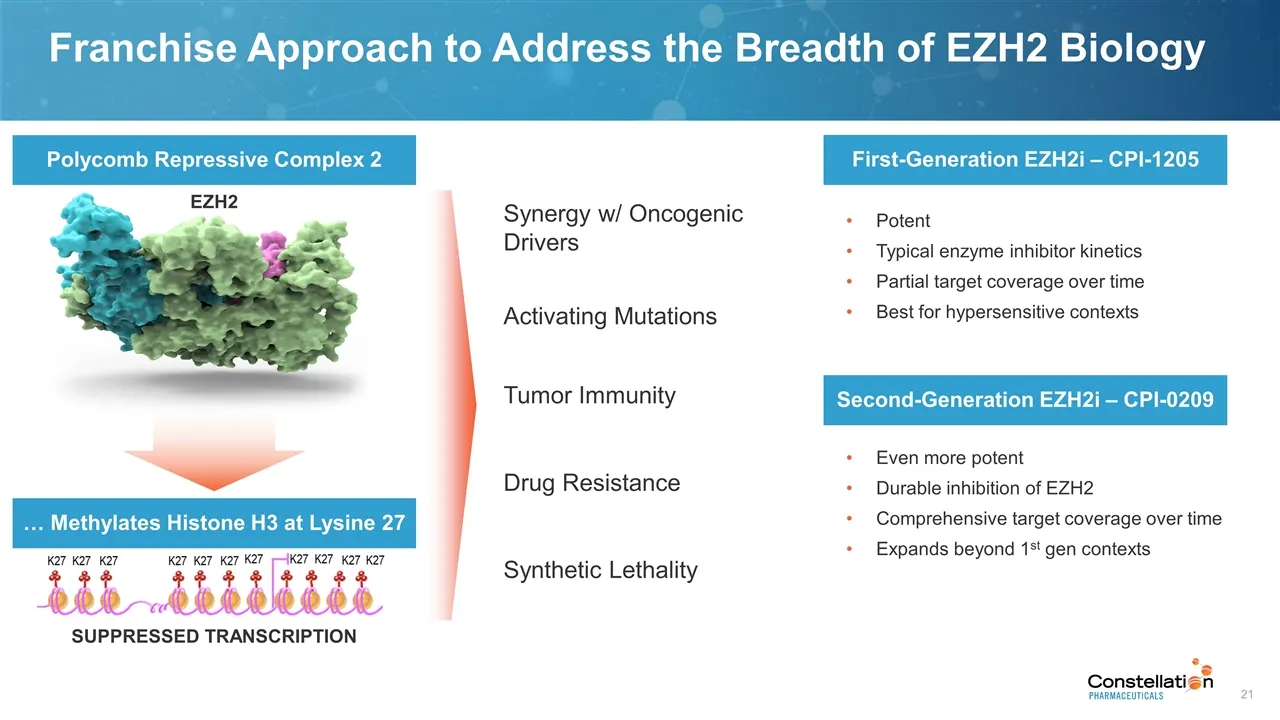
Slide 21: Franchise Approach to Address the Breadth of EZH2 Biology
Franchise Approach to Address the Breadth of EZH2 Biology Polycomb Repressive Complex 2 … Methylates Histone H3 at Lysine 27 EZH2 SUPPRESSED TRANSCRIPTION Synergy w/ Oncogenic Drivers Tumor Immunity Drug Resistance Synthetic Lethality Activating Mutations First-Generation EZH2i – CPI-1205 Potent Typ
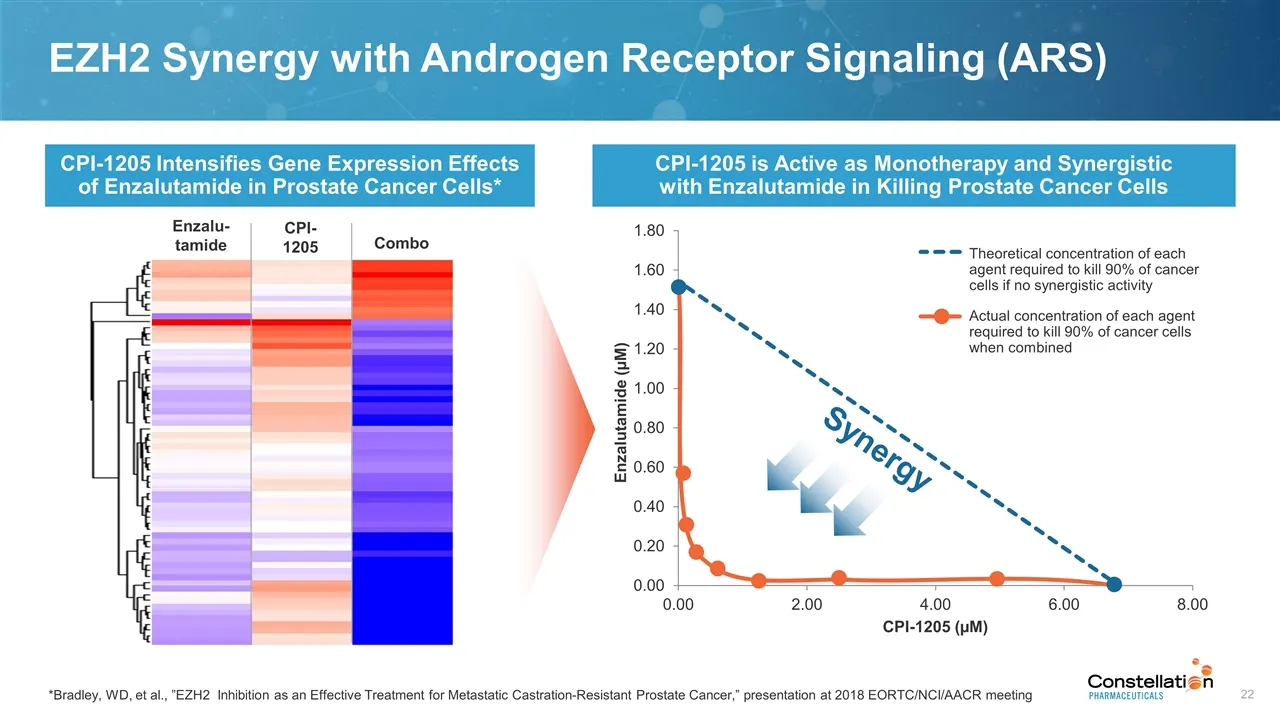
Slide 22: EZH2 Synergy with Androgen Receptor Signaling
*Bradley, WD, et al., ”EZH2 Inhibition as an Effective Treatment for Metastatic Castration-Resistant Prostate Cancer,” presentation at 2018 EORTC/NCI/AACR meeting EZH2 Synergy with Androgen Receptor Signaling (ARS) CPI-1205 Intensifies Gene Expression Effects of Enzalutamide in Prostate Cancer Cells
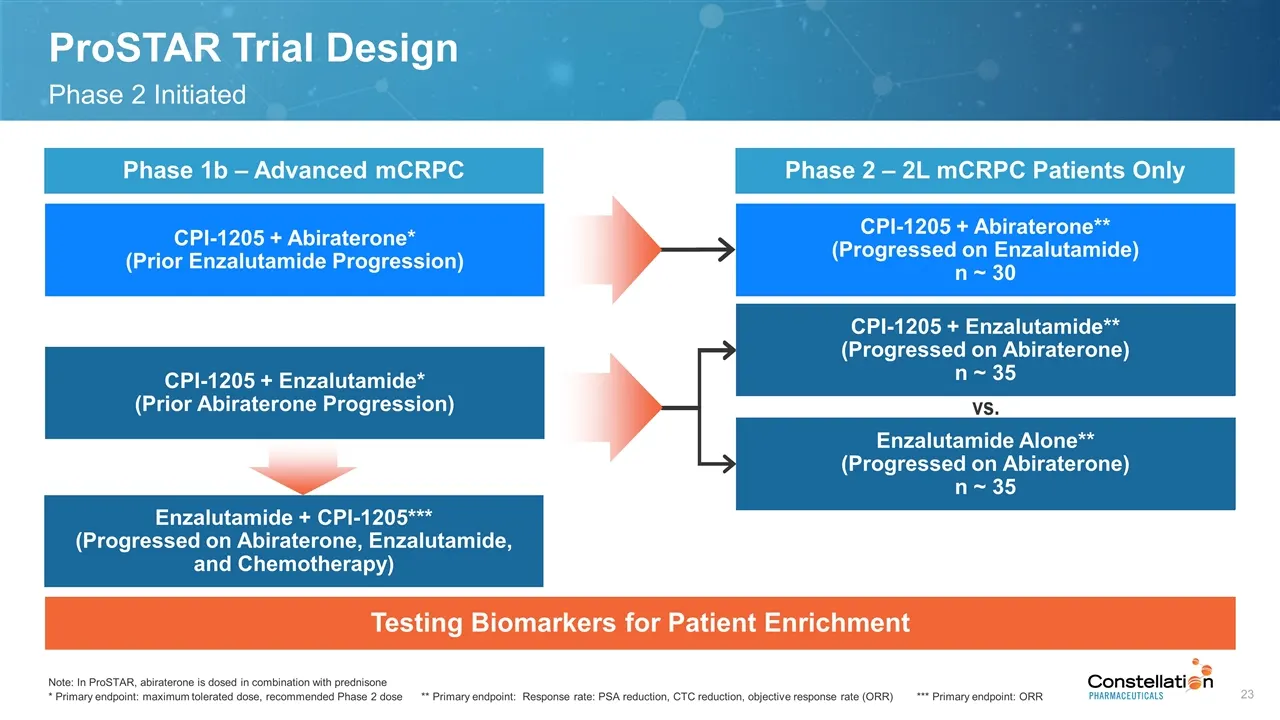
Slide 23: ProSTAR Trial Design
Note: In ProSTAR, abiraterone is dosed in combination with prednisone * Primary endpoint: maximum tolerated dose, recommended Phase 2 dose ** Primary endpoint: Response rate: PSA reduction, CTC reduction, objective response rate (ORR) *** Primary endpoint: ORR Phase 2 Initiated ProSTAR Trial Design
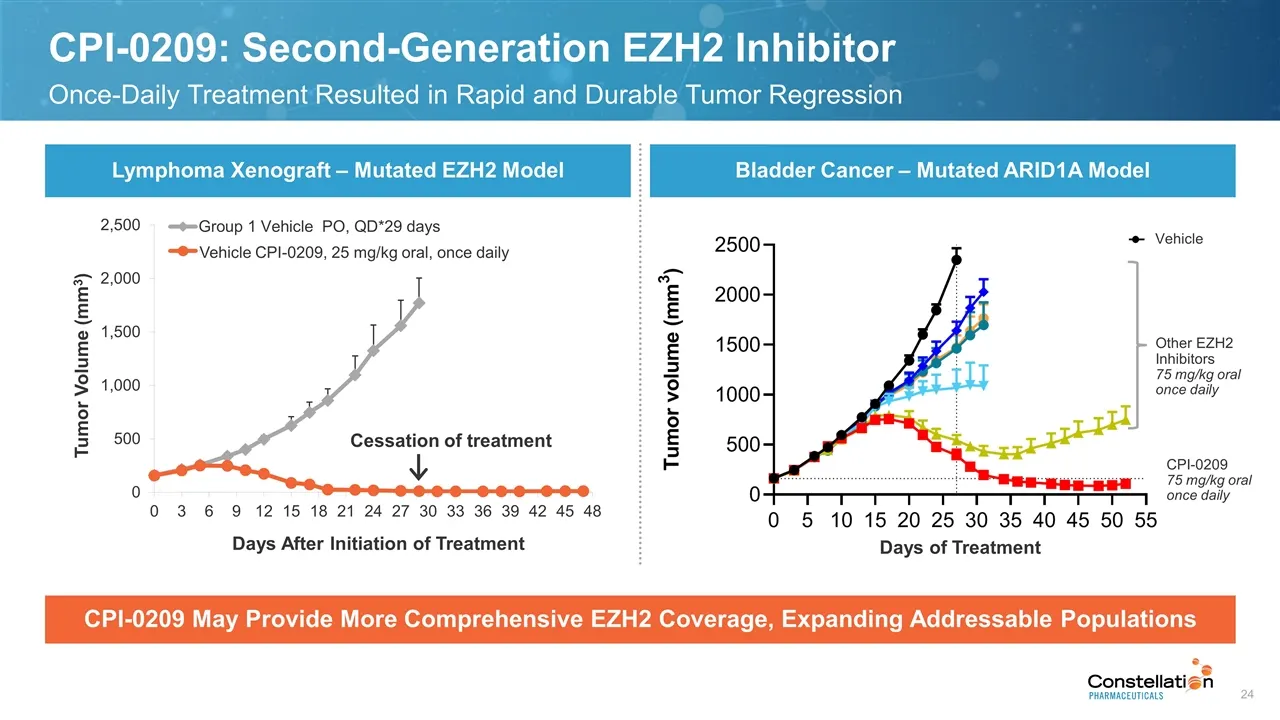
Slide 24: CPI-0209: Second-Generation EZH2 Inhibitor
Lymphoma Xenograft – Mutated EZH2 Model Once-Daily Treatment Resulted in Rapid and Durable Tumor Regression CPI-0209: Second-Generation EZH2 Inhibitor CPI-0209 May Provide More Comprehensive EZH2 Coverage, Expanding Addressable Populations Cessation of treatment Vehicle CPI-0209, 25 mg/kg oral, once
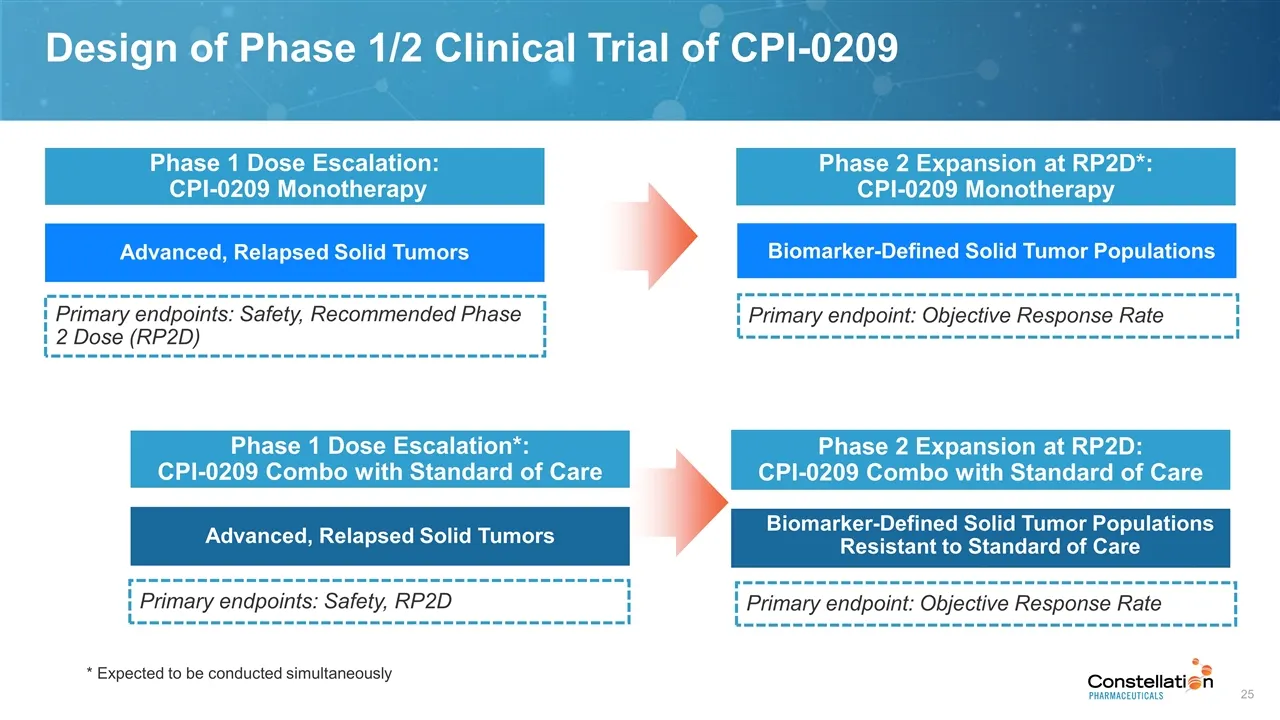
Slide 25: Design of Phase 1/2 Clinical Trial of CPI-0209
Design of Phase 1/2 Clinical Trial of CPI-0209 Phase 1 Dose Escalation: CPI-0209 Monotherapy Phase 2 Expansion at RP2D*: CPI-0209 Monotherapy Initiated Initiated Initiated Initiated Advanced, Relapsed Solid Tumors Primary endpoints: Safety, Recommended Phase 2 Dose (RP2D) Primary endpoints: Safety,
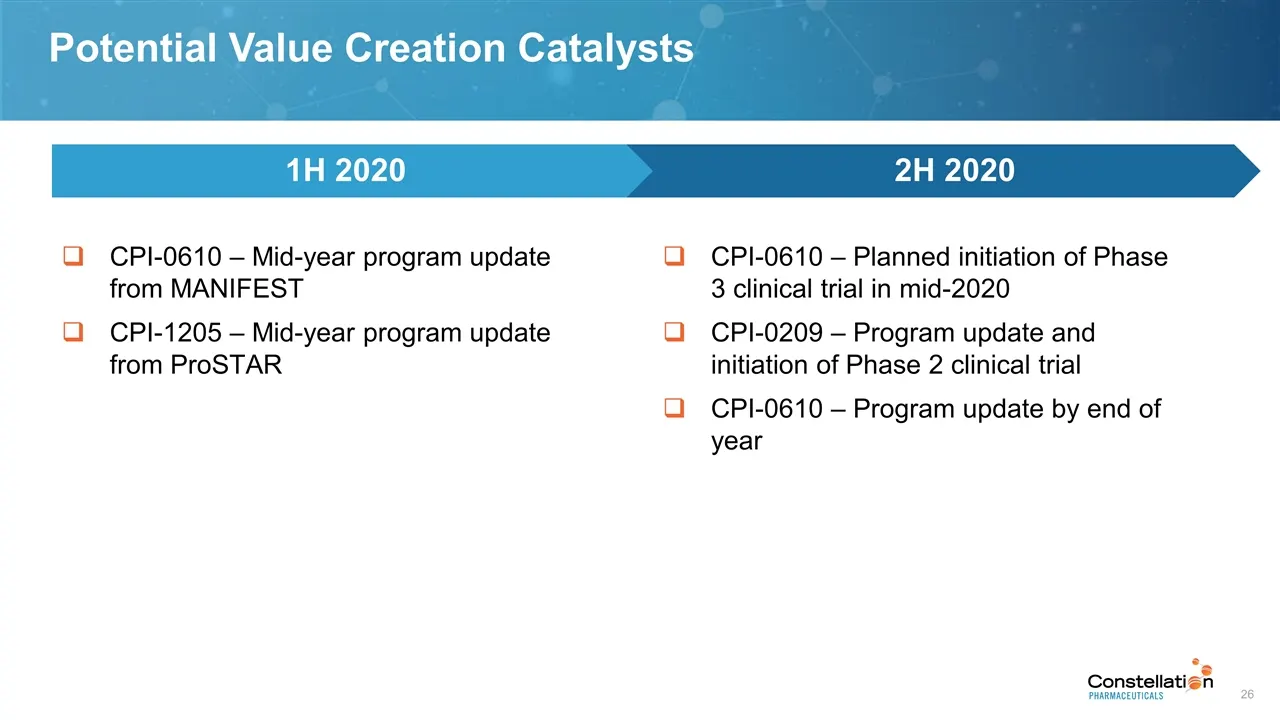
Slide 26: Potential Value Creation Catalysts
2H 2020 Potential Value Creation Catalysts 1H 2020 CPI-0610 – Mid-year program update from MANIFEST CPI-1205 – Mid-year program update from ProSTAR CPI-0610 – Planned initiation of Phase 3 clinical trial in mid-2020 CPI-0209 – Program update and initiation of Phase 2 clinical trial CPI-0610 – Progra
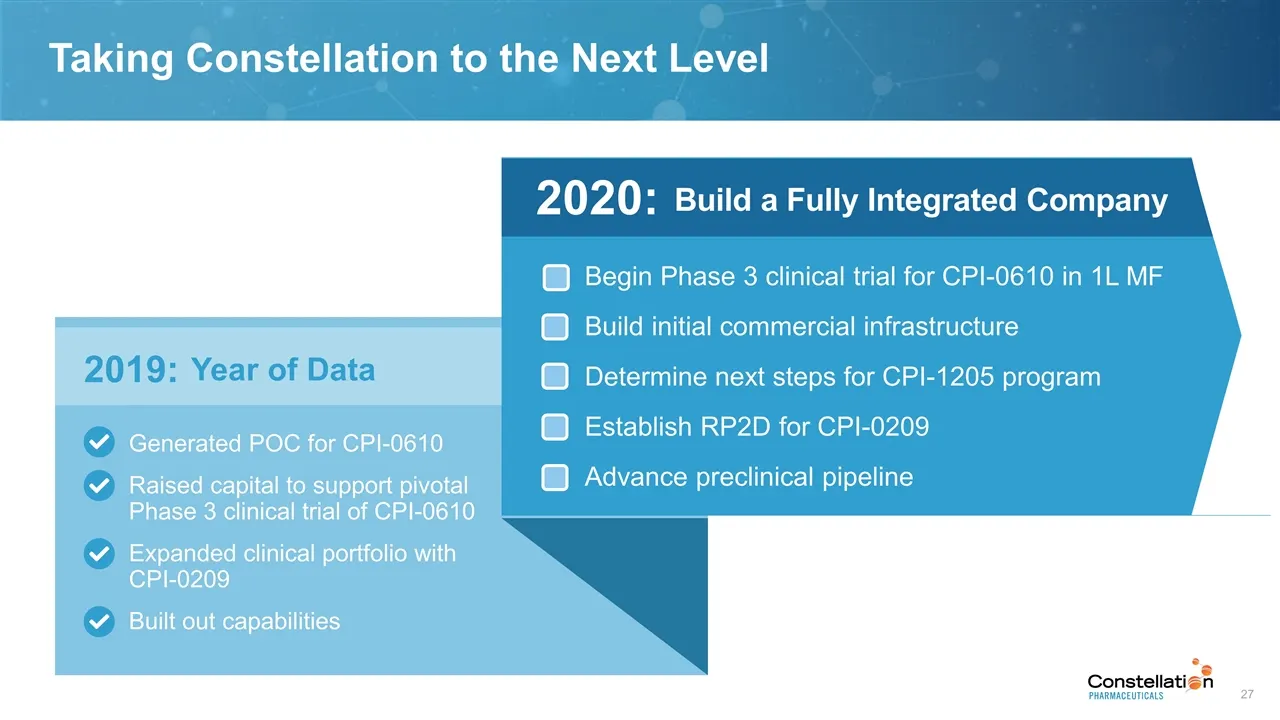
Slide 27: Taking Constellation to the Next Level
Taking Constellation to the Next Level 2019: Generated POC for CPI-0610 Raised capital to support pivotal Phase 3 clinical trial of CPI-0610 Expanded clinical portfolio with CPI-0209 Built out capabilities Year of Data 2020: Begin Phase 3 clinical trial for CPI-0610 in 1L MF Build initial commercial
Source: SEC EDGAR · 8-K filed Jan 13, 2020
More decks from Constellation Pharmaceuticals Inc
 Investor Presentation (September 2019)45 slides · Sep 24, 2019
 Investor Presentation (August 2019)46 slides · Aug 7, 2019
 Investor Presentation (May 2019)39 slides · May 16, 2019
 Investor Presentation (May 2019)38 slides · May 8, 2019
 Investor Presentation (April 2019)40 slides · Apr 1, 2019
 Investor Presentation (March 2019)37 slides · Mar 14, 2019