Maximus, Inc. · NYSE:MMS
Maximus — Conference Presentation (March 2019)
25 slides from Maximus's conference presentation, Mar 5, 2019
Slide 1: Pooled Fringe Rates – How to Determine if they are Right for Your Institution
MAXIMUS Higher Education Pooled Fringe Rates – How to Determine if they are Right for Your Institution Mira L. Levine March 5, 2019 1
Slide 2: Agenda
Agenda • Introduction to MAXIMUS and Higher Education Practice • What We Know About Fringe Benefits • Methods to Charge Fringe Benefits • Pros/Cons of Each Method • Considerations for Transitioning to a New Method 2
Slide 3: MAXIMUS Higher Education Practice
MAXIMUS Higher Education Practice • Serves more than 200 colleges and universities in 49 states plus Puerto Rico and the U.S. Virgin Islands ̶ 90 of top 100 research institutions ̶ Ranging from <$1M to >$1B in research • Headquartered in Northbrook, Illinois ̶ Satellite offices in: Colorado Springs,
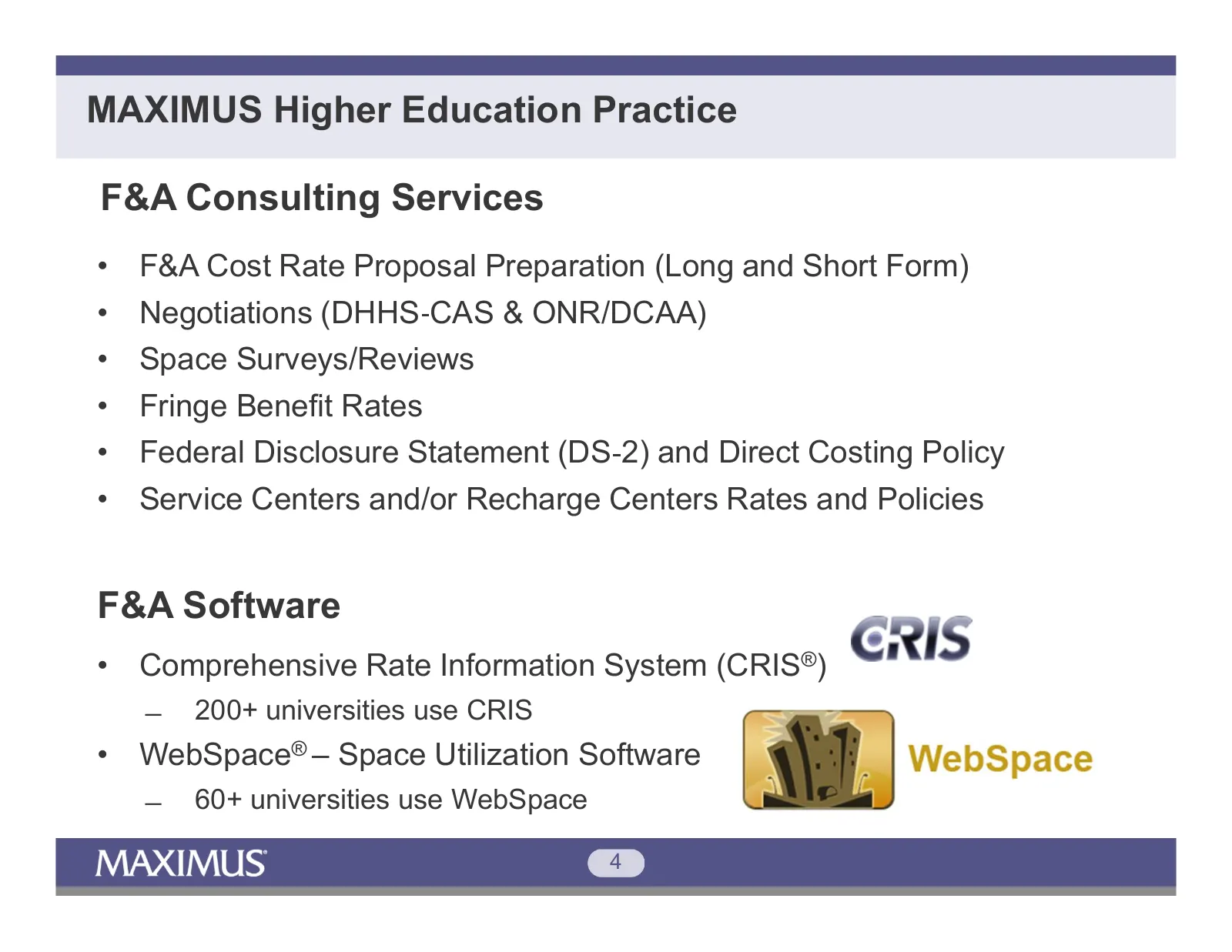
Slide 4: MAXIMUS Higher Education Practice: F&A Consulting Services and Software
MAXIMUS Higher Education Practice F&A Consulting Services • F&A Cost Rate Proposal Preparation (Long and Short Form) • Negotiations (DHHS CAS & ONR/DCAA) • Space Surveys/Reviews • Fringe Benefit Rates • Federal Disclosure Statement (DS 2) and Direct Costing Policy • Service Centers and/or Recharge C
Slide 5: Other Services and Products
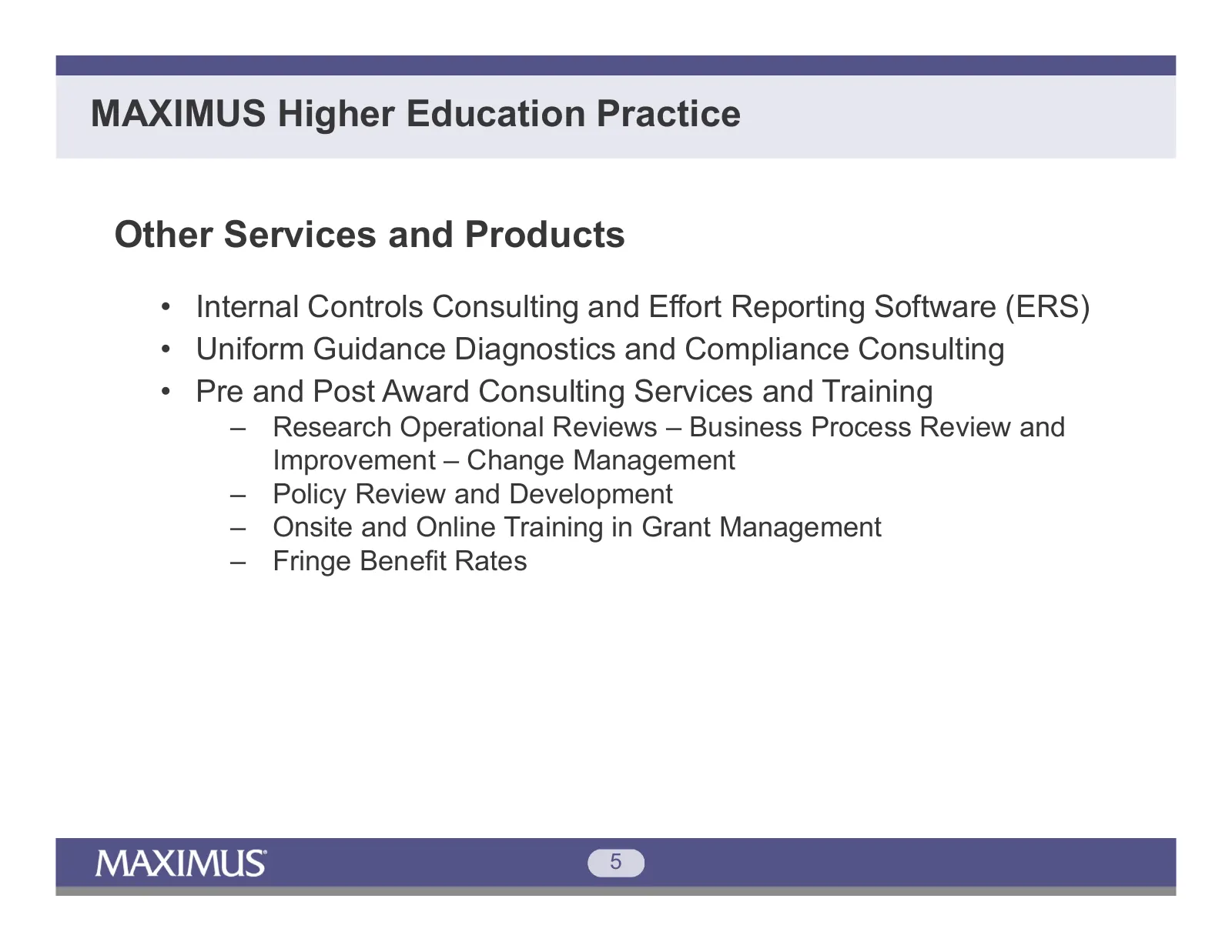
MAXIMUS Higher Education Practice Other Services and Products • Internal Controls Consulting and Effort Reporting Software (ERS) • Uniform Guidance Diagnostics and Compliance Consulting • Pre and Post Award Consulting Services and Training – Research Operational Reviews – Business Process Review and
Slide 6: What We Know About Fringe Benefits
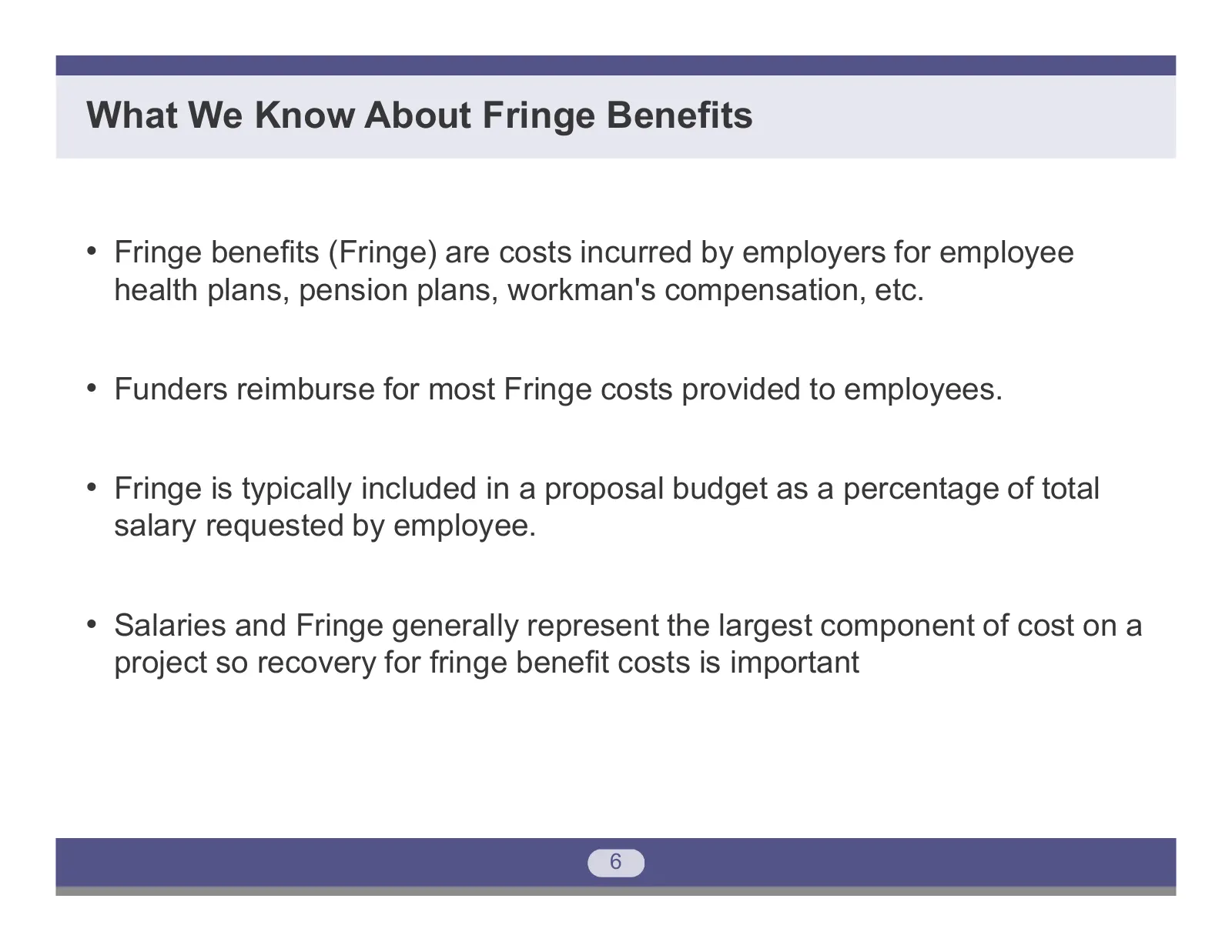
What We Know About Fringe Benefits • Fringe benefits (Fringe) are costs incurred by employers for employee health plans, pension plans, workman's compensation, etc. • Funders reimburse for most Fringe costs provided to employees. • Fringe is typically included in a proposal budget as a percentage of
Slide 7: What We Know About Fringe Benefits – Examples
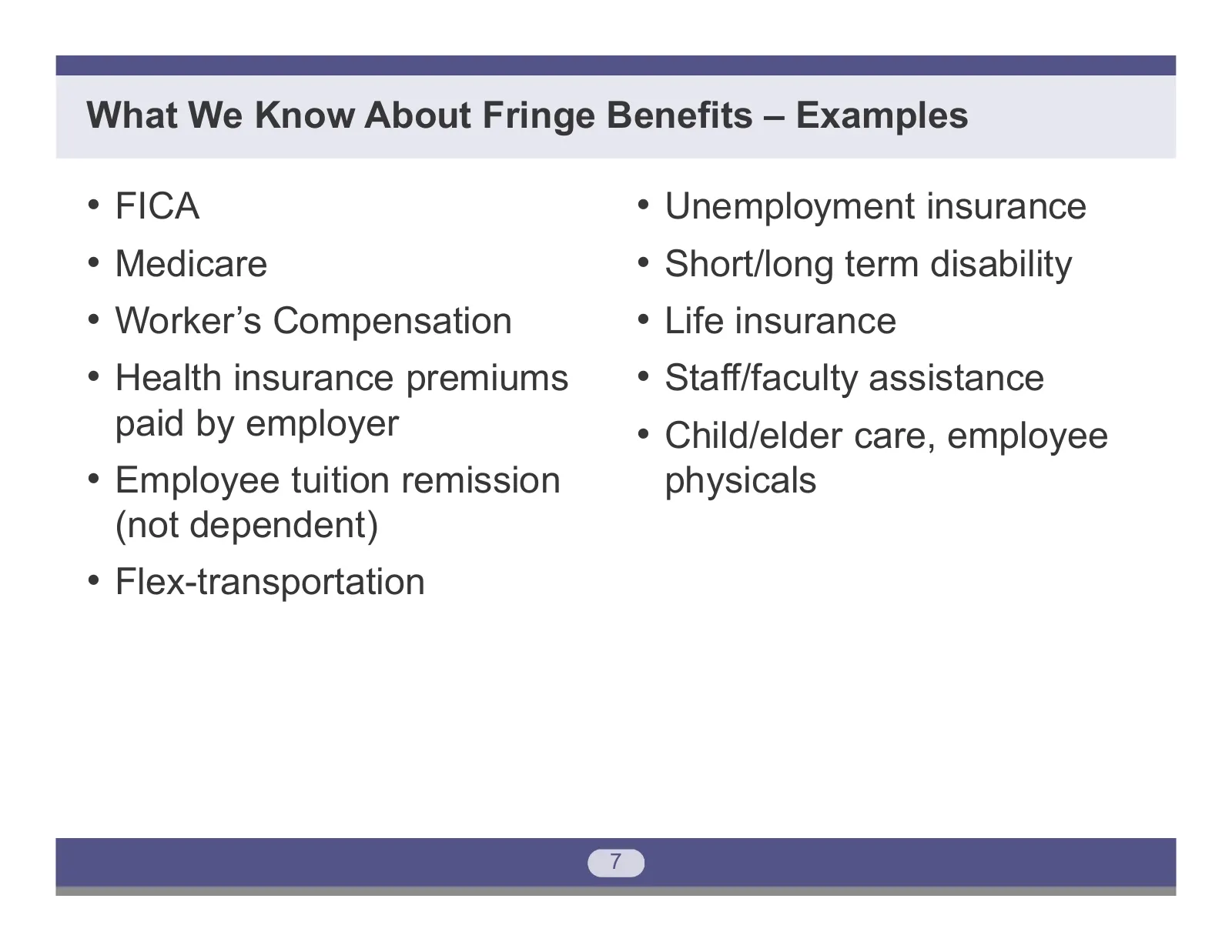
What We Know About Fringe Benefits – Examples • FICA • Unemployment insurance • Medicare • Short/long term disability • Worker’s Compensation • Life insurance • Health insurance premiums • Staff/faculty assistance paid by employer • Child/elder care, employee • Employee tuition remission physicals (
Slide 8: What We Know About Fringe Benefit Costs – Types
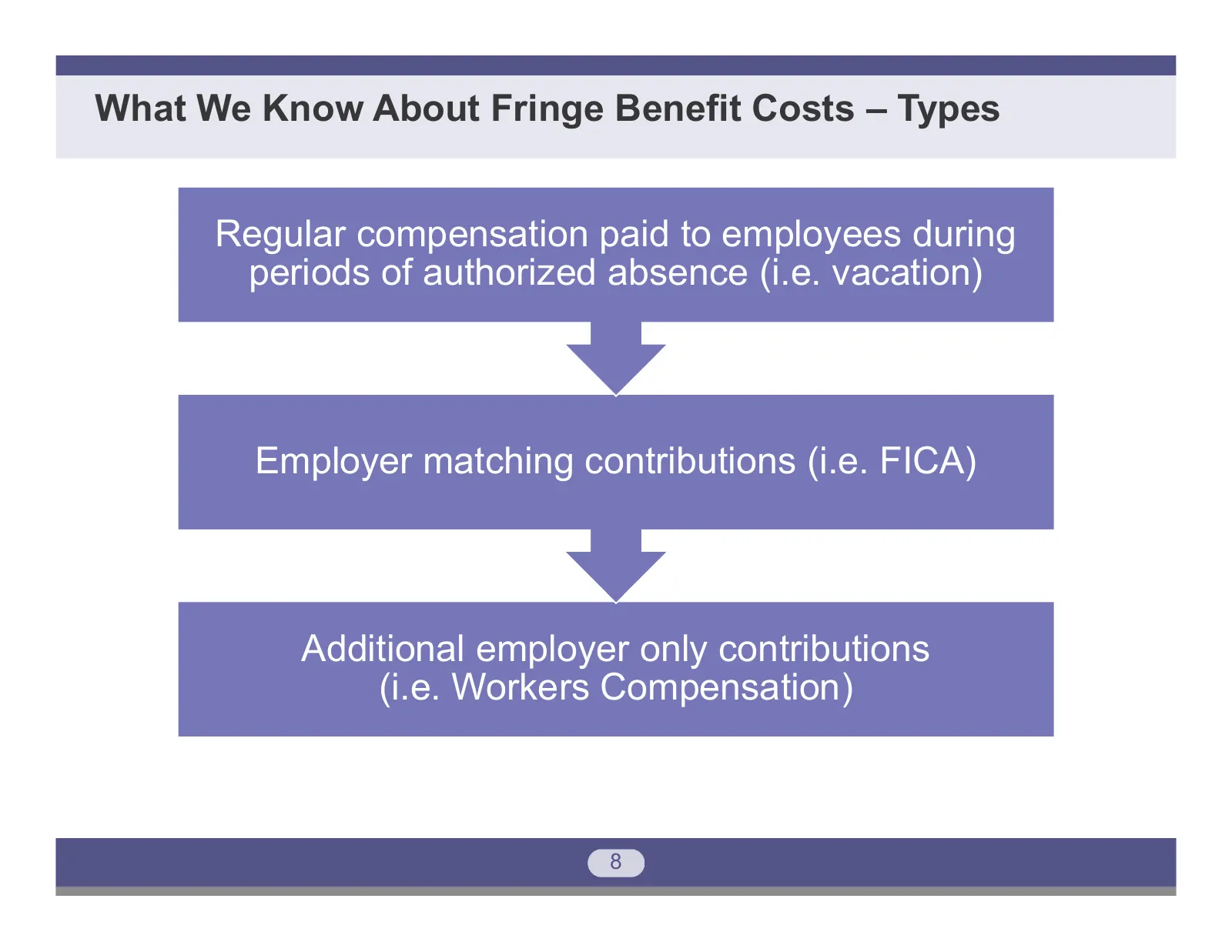
What We Know About Fringe Benefit Costs – Types Regular compensation paid to employees during periods of authorized absence (i.e. vacation) Employer matching contributions (i.e. FICA) Additional employer only contributions (i.e. Workers Compensation) 8
Slide 9: Fringe Benefits – Definition per 2 CFR 200
Fringe Benefits – Definition per 2 CFR 200 200.431(a)- Compensation-fringe benefits • Fringe benefits are allowances and services provided by employers to their employees as compensation in addition to regular salaries and wages • Except as provided elsewhere in these principles, the costs of fringe
Slide 10: Methods for Charging Fringe – Charge Actuals
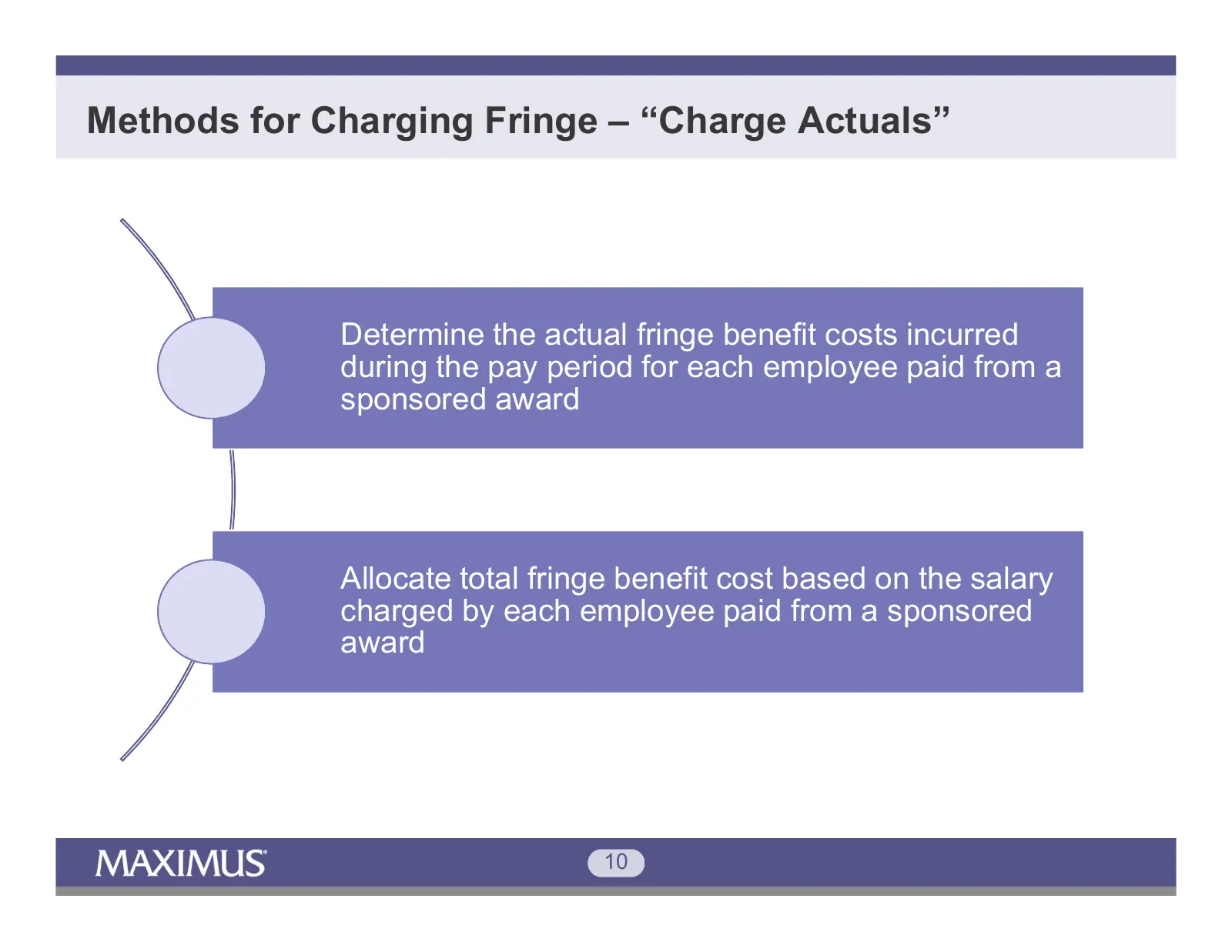
Methods for Charging Fringe – “Charge Actuals” Determine the actual fringe benefit costs incurred during the pay period for each employee paid from a sponsored award Allocate total fringe benefit cost based on the salary charged by each employee paid from a sponsored award 10
Slide 11: Methods for Charging Fringe – Composite Rate
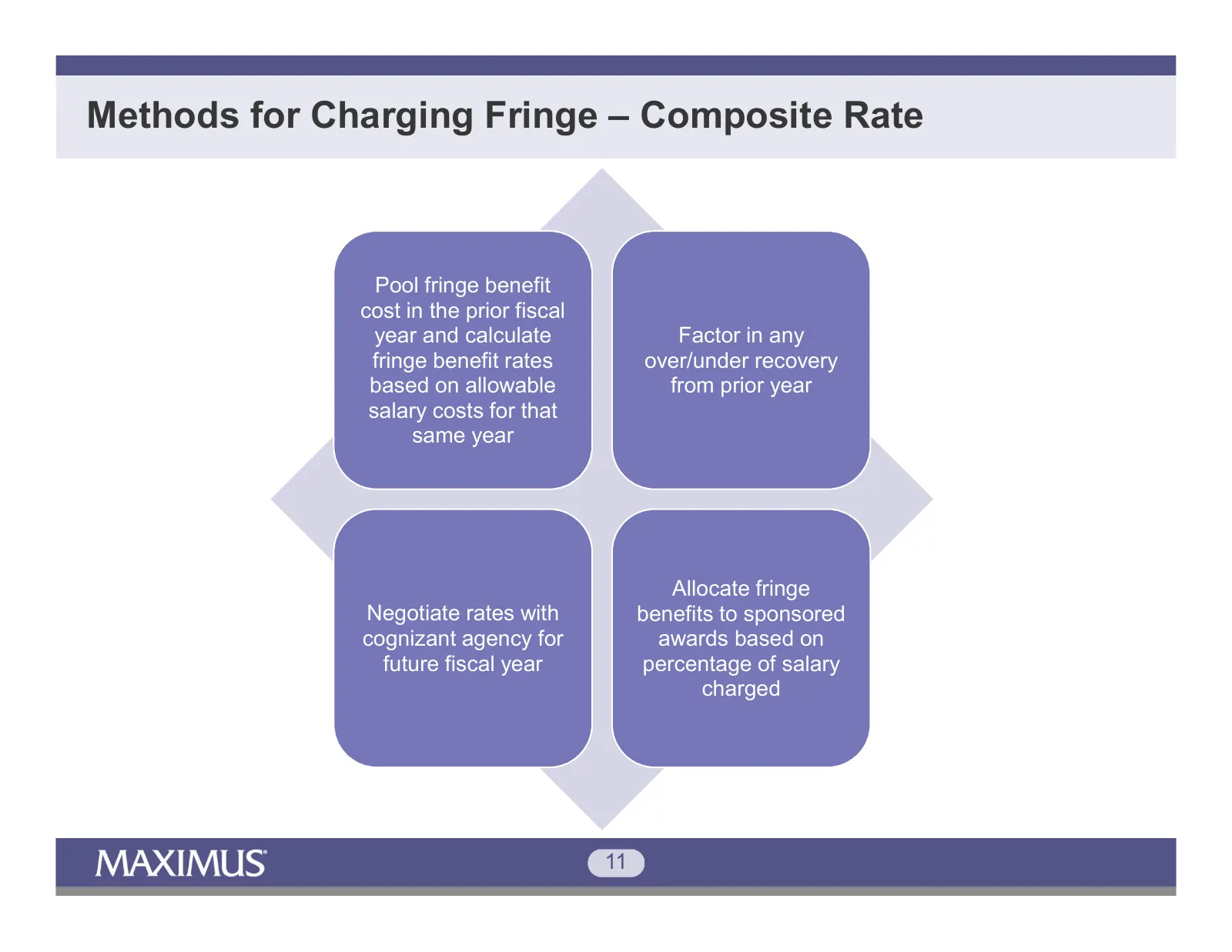
Methods for Charging Fringe – Composite Rate Pool fringe benefit cost in the prior fiscal year and calculate Factor in any fringe benefit rates over/under recovery based on allowable from prior year salary costs for that same year Allocate fringe Negotiate rates with benefits to sponsored cognizant
Slide 12: Methods for Charging Fringe Benefits – Composite Rate: Pools
Methods for Charging Fringe Benefits – Composite Rate More about pools… • Fringe Benefit Pool consists of both: ̶ The actual cost of fringe benefits provided to each employee ̶ The recovery of these costs through application of a fringe benefit rate. • Fringe benefit sub-pools may be used • Accounte
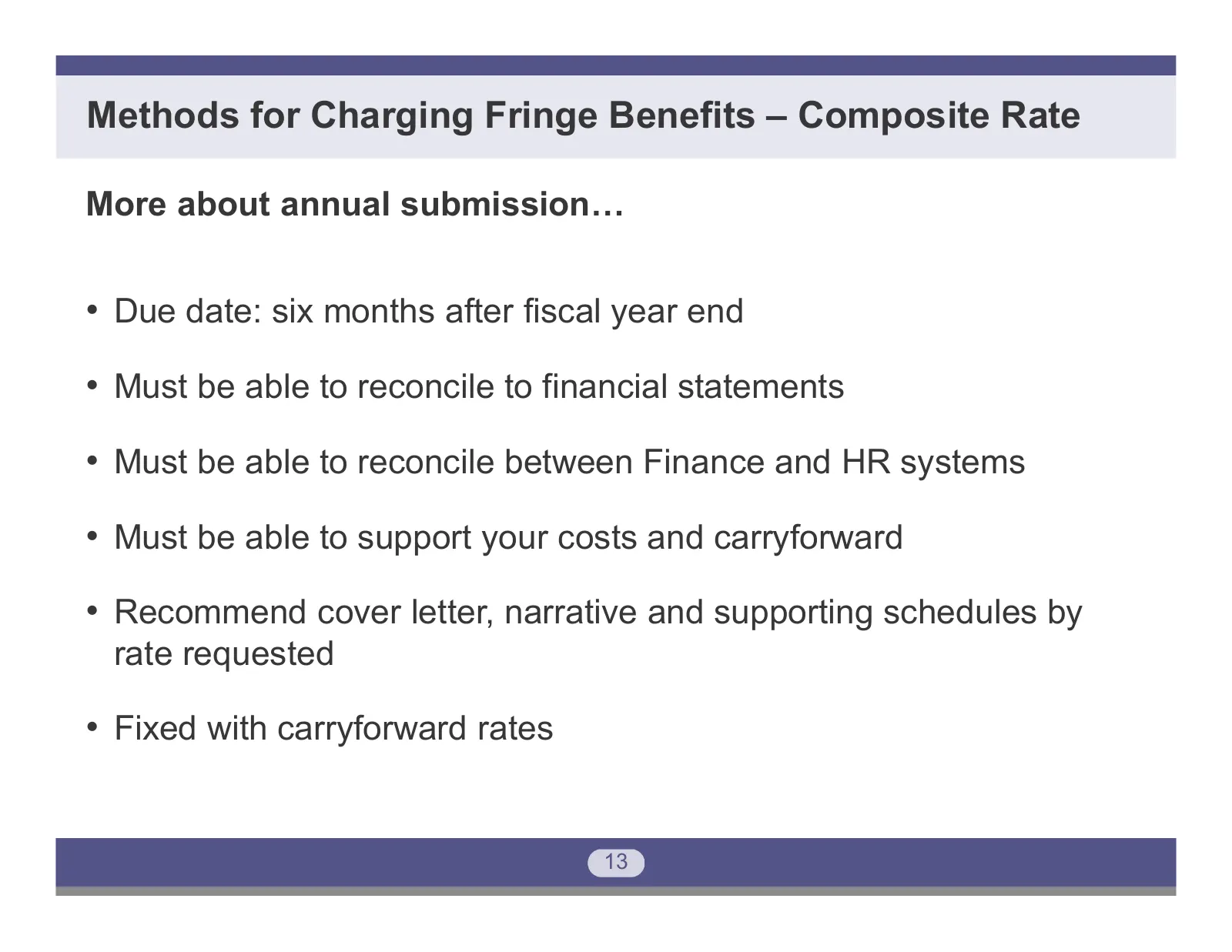
Slide 13: Composite Rate: Annual Submission
Methods for Charging Fringe Benefits – Composite Rate More about annual submission… • Due date: six months after fiscal year end • Must be able to reconcile to financial statements • Must be able to reconcile between Finance and HR systems • Must be able to support your costs and carryforward • Reco
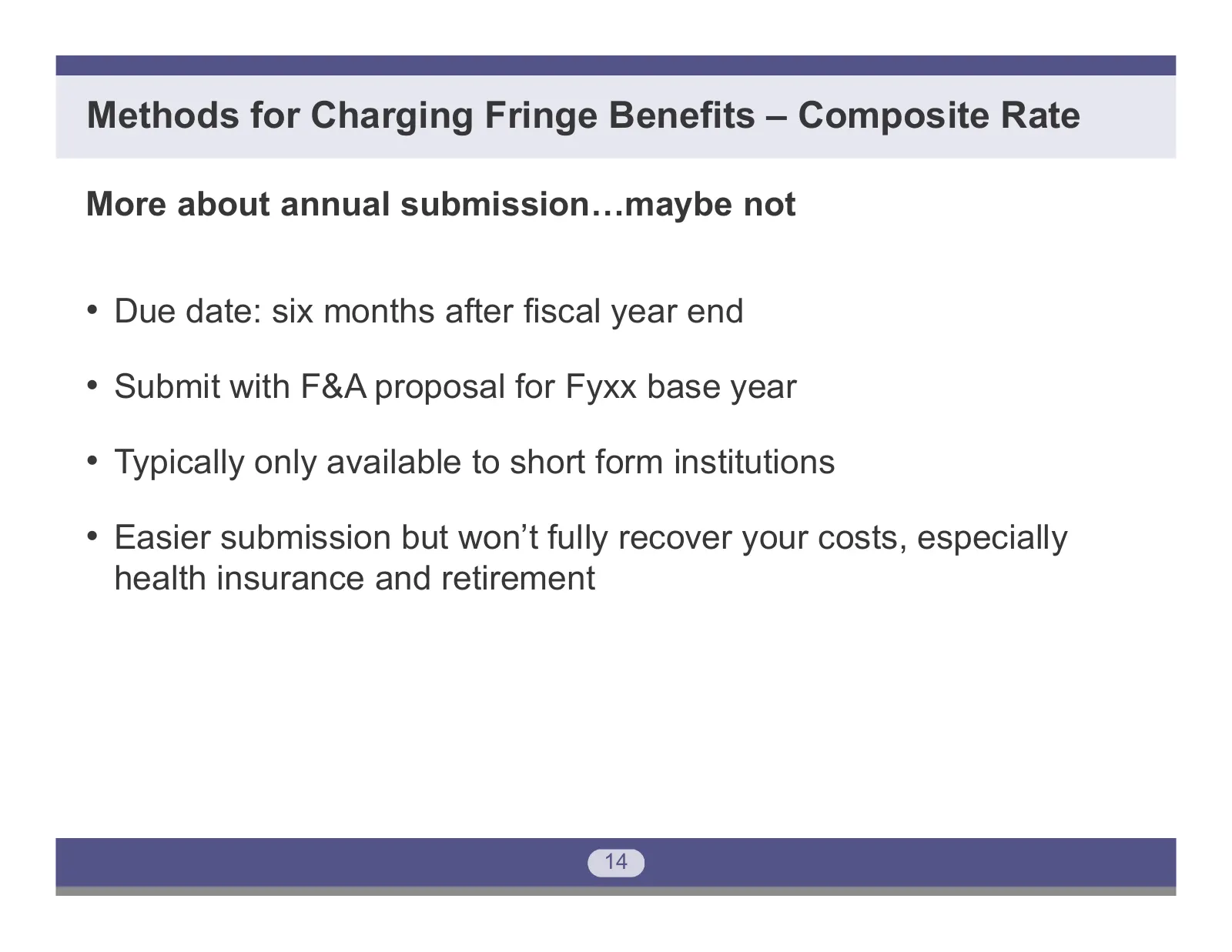
Slide 14: Composite Rate: Annual Submission…maybe not
Methods for Charging Fringe Benefits – Composite Rate More about annual submission…maybe not • Due date: six months after fiscal year end • Submit with F&A proposal for Fyxx base year • Typically only available to short form institutions • Easier submission but won’t fully recover your costs, especi
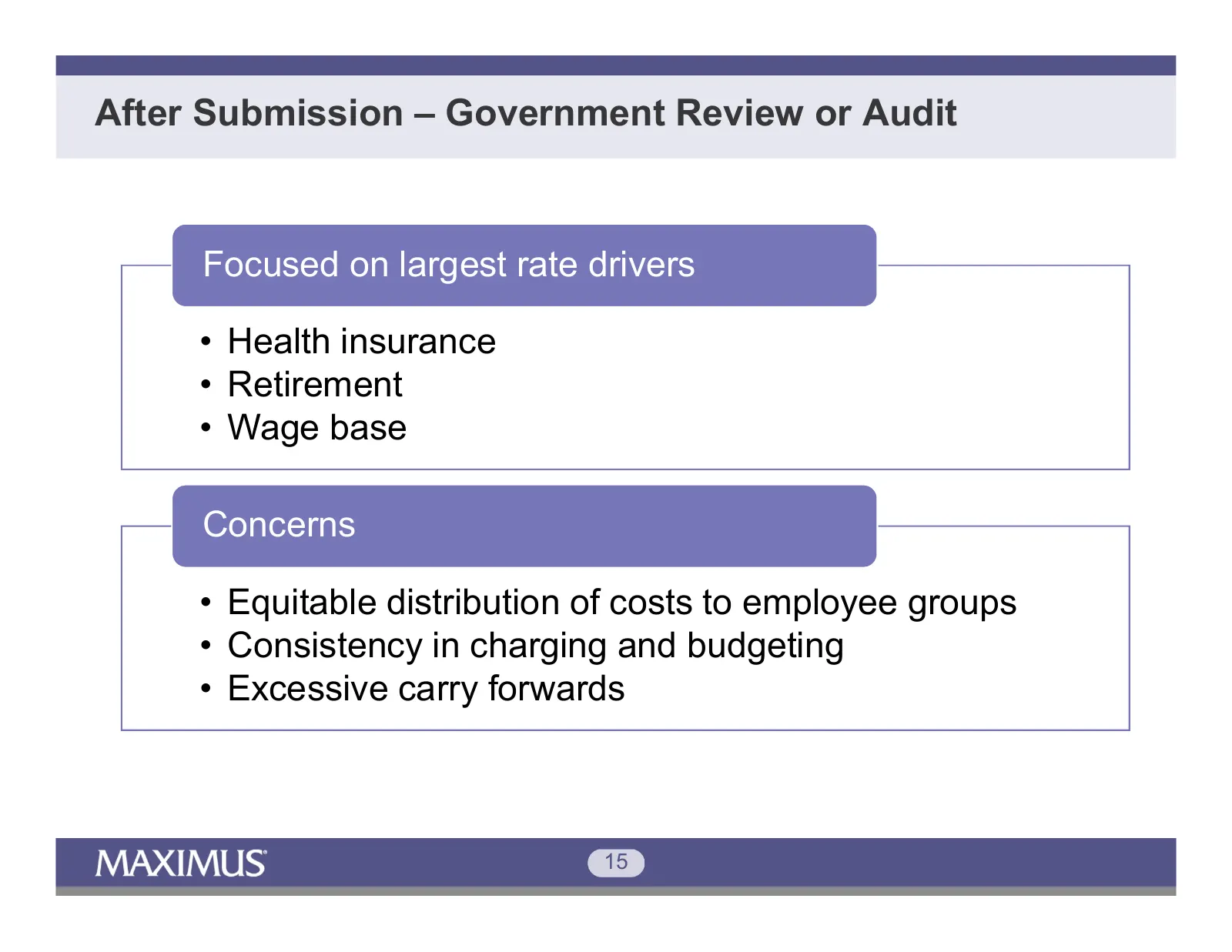
Slide 15: After Submission – Government Review or Audit
After Submission – Government Review or Audit Focused on largest rate drivers • Health insurance • Retirement • Wage base Concerns • Equitable distribution of costs to employee groups • Consistency in charging and budgeting • Excessive carry forwards 15
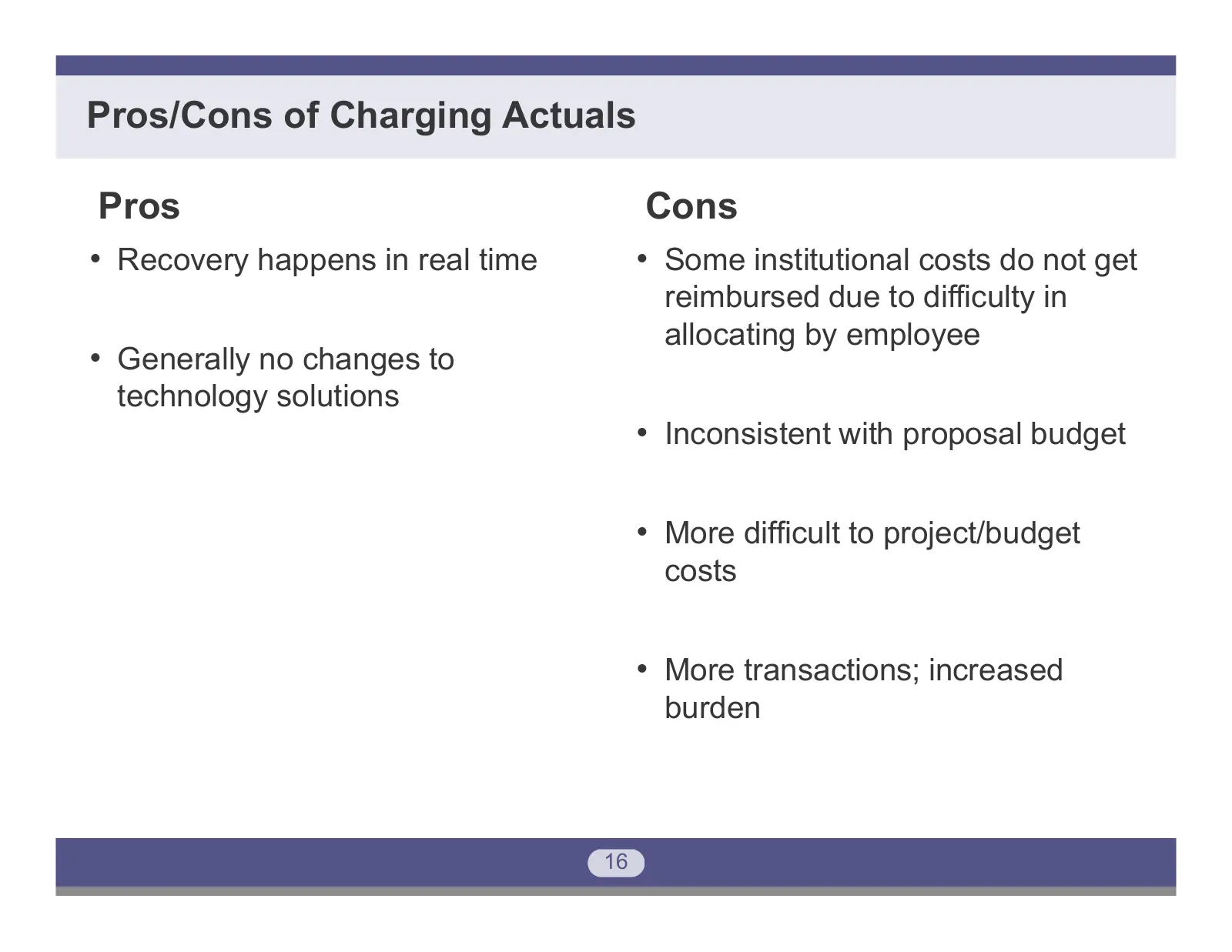
Slide 16: Pros/Cons of Charging Actuals
Pros/Cons of Charging Actuals Pros Cons • Recovery happens in real time • Some institutional costs do not get reimbursed due to difficulty in allocating by employee • Generally no changes to technology solutions • Inconsistent with proposal budget • More difficult to project/budget costs • More tran
Slide 17: Pros/Cons of Pooled Rates
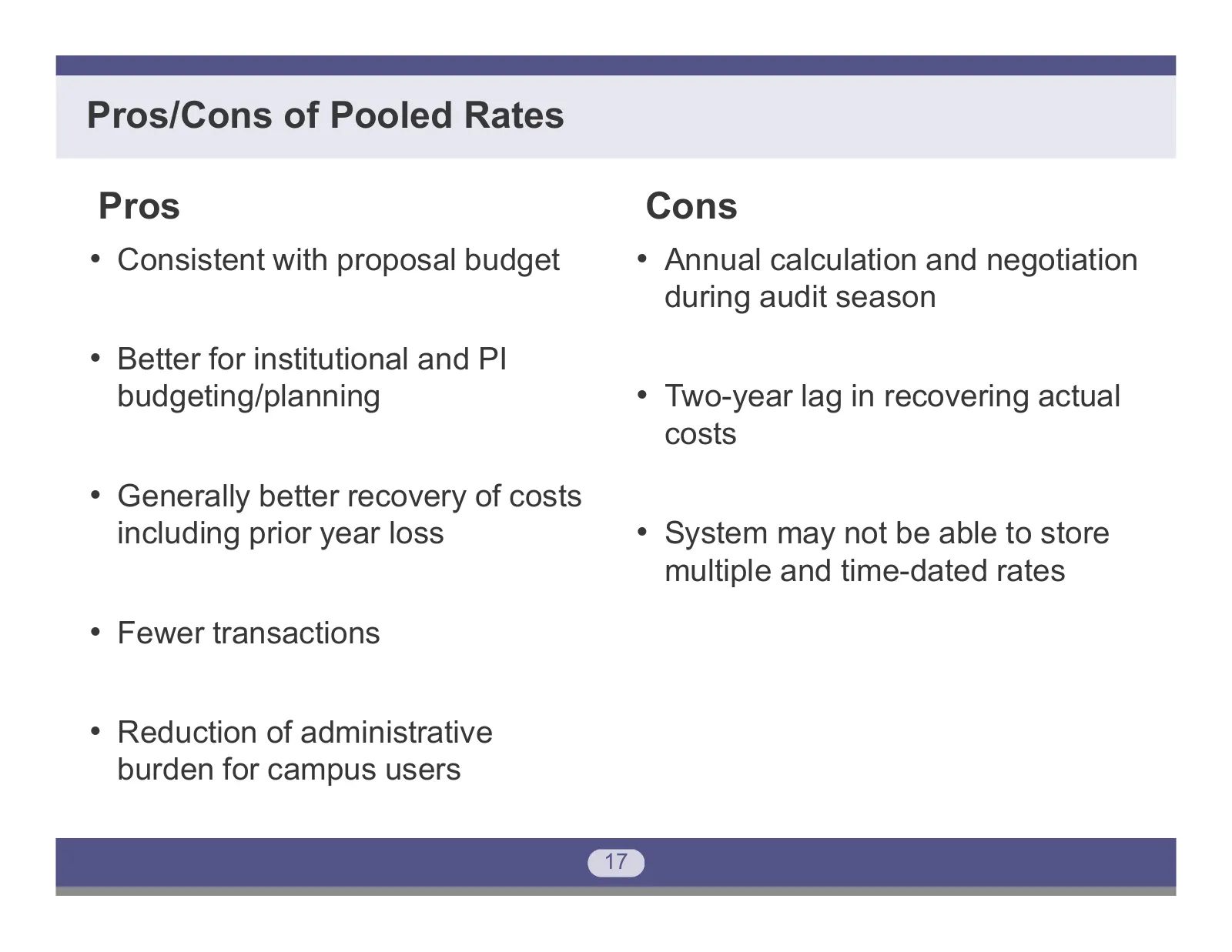
Pros/Cons of Pooled Rates Pros Cons • Consistent with proposal budget • Annual calculation and negotiation during audit season • Better for institutional and PI budgeting/planning • Two-year lag in recovering actual costs • Generally better recovery of costs including prior year loss • System may no
Slide 18: Transition Considerations: Moving to Composite Rates
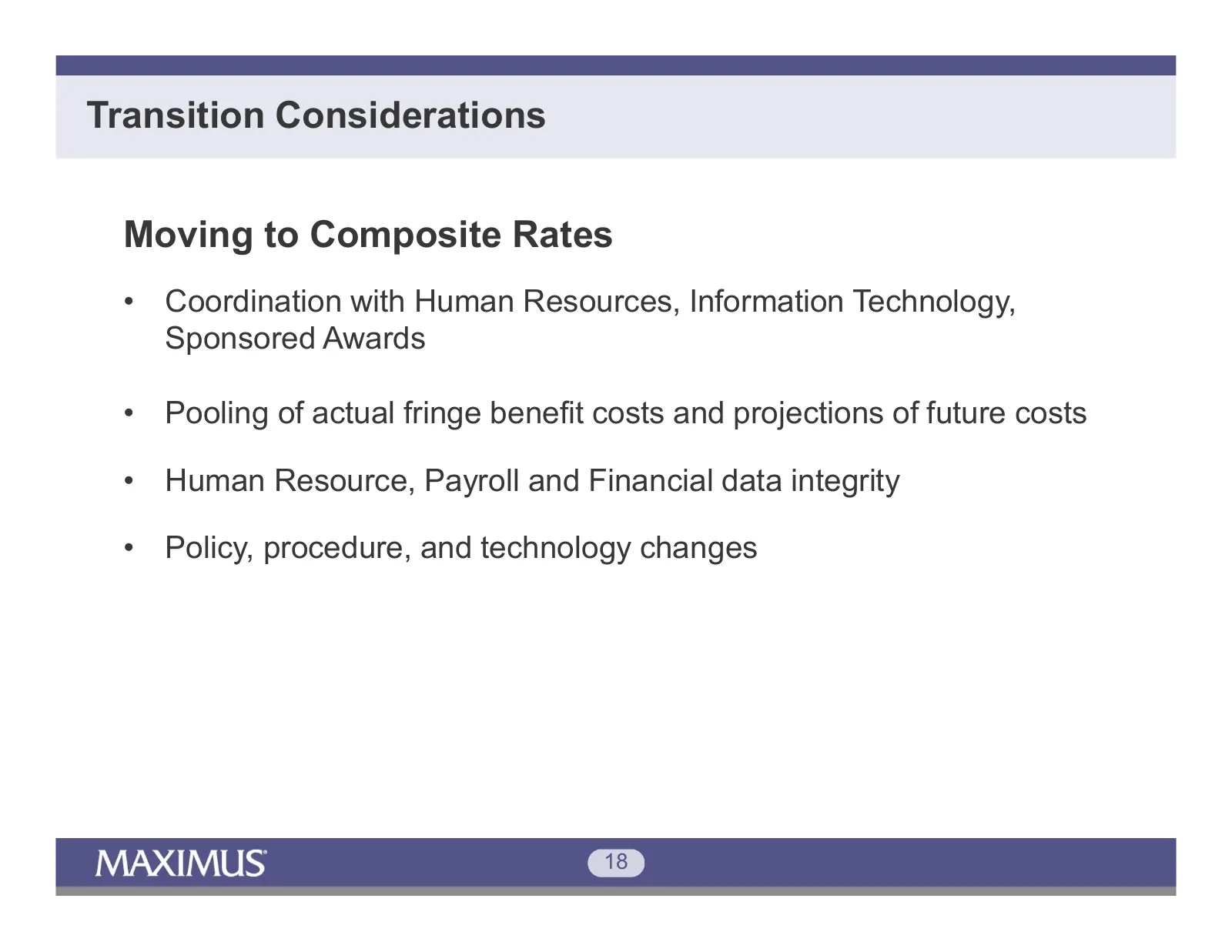
Transition Considerations Moving to Composite Rates • Coordination with Human Resources, Information Technology, Sponsored Awards • Pooling of actual fringe benefit costs and projections of future costs • Human Resource, Payroll and Financial data integrity • Policy, procedure, and technology change
Slide 19: Transition Considerations: Moving to Composite Rates
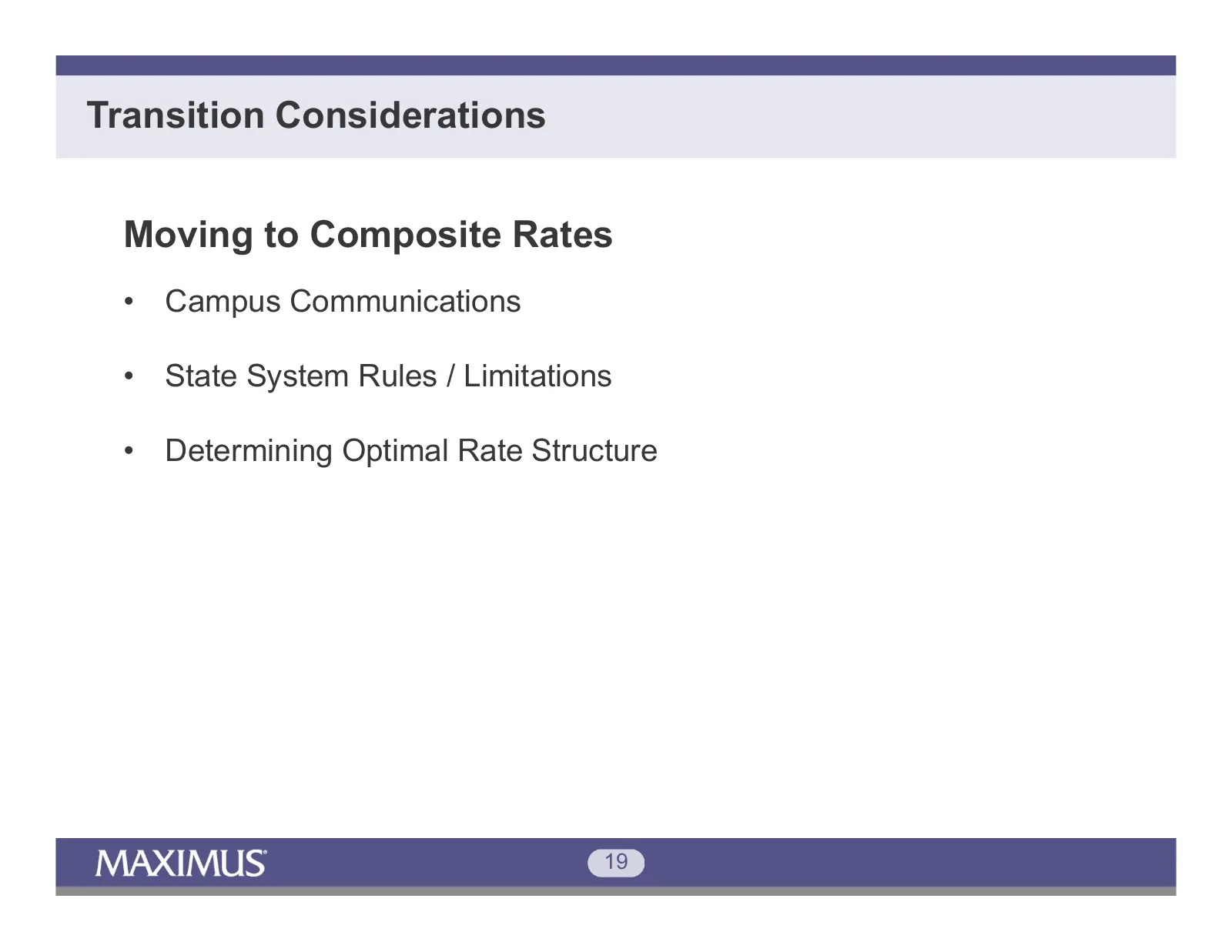
Transition Considerations Moving to Composite Rates • Campus Communications • State System Rules / Limitations • Determining Optimal Rate Structure 19
Slide 20: Developing Fringe Benefit Rates – Implementation
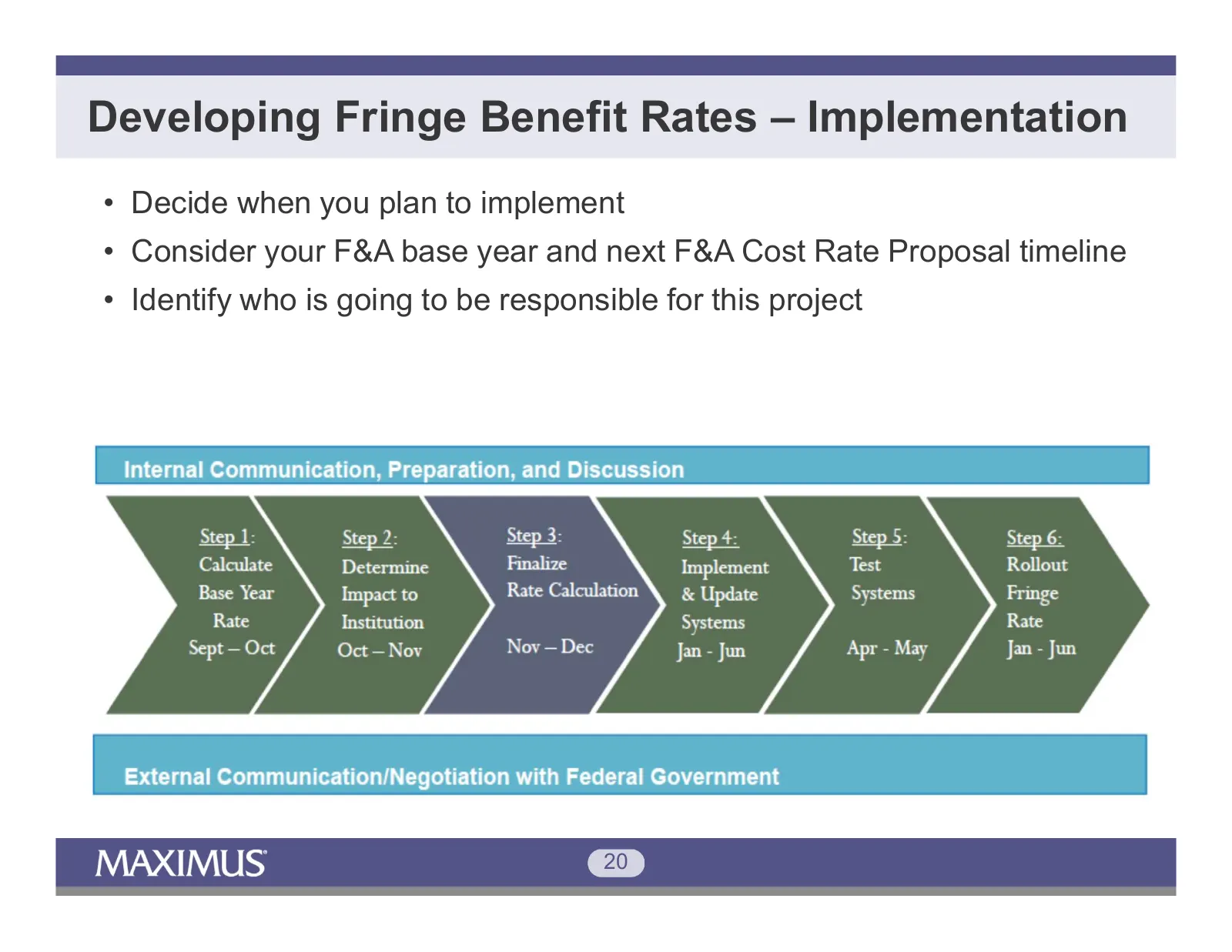
Developing Fringe Benefit Rates – Implementation • Decide when you plan to implement • Consider your F&A base year and next F&A Cost Rate Proposal timeline • Identify who is going to be responsible for this project 20
Slide 21: So Yes…Composite Rates are Generally Great!
So Yes…Composite Rates are Generally Great! • But, are they right for your institution? • Did you get the information you need here to start that evaluation? • Additional questions? 21
Slide 22: Upcoming Webinars
Upcoming Webinars Service Centers June 4 | 2:00 p.m. ET Information for F&A Short Form Institutions July 16 | 2:00 p.m. ET Tips for Becoming a CRIS Power User August 20 | 2:00 p.m. ET Alternative Methods for Documenting Compensation – October 2019 22
Slide 23: Upcoming Workshops and Annual Meeting
Upcoming Workshops and Annual Meeting F&A Workshop April 9 to April 11 | Chicago, IL CRIS University: Introduction to CRIS Workshop May 14 to May 16 | Northbrook, IL 32nd Annual MAXIMUS Higher Education Practice Meeting September 2019 | Location TBD F&A Long Form Training Workshop – in conjunction w

Slide 24: Questions
Questions 24

Slide 25: Mira L. Levine
Mira L. Levine MiraLLevine@maximus.com 703-582-5097 25
Source: Internet Archive copy of maximus.com
More decks from Maximus, Inc.
 FY2026 Earnings Presentation13 slides · Nov 19, 2026
 Q3 2026 Earnings Presentation12 slides · Aug 6, 2026
 Investor Presentation (June 2026)11 slides · June 2026
 Q2 2026 Earnings Presentation11 slides · May 7, 2026
 Q1 FY2026 Earnings Presentation11 slides · Feb 5, 2026
 FY2025 Earnings Presentation11 slides · Nov 20, 2025