IDP Education Ltd. · ASX:IEL
IDP Education — 28 1130 Curric Cred Rs Stud Curric Rep Stu Chce pres Ryland
38 slides from IDP Education's investor presentation
Slide 1: The importance of reputation in international student choice
The importance of reputation in international student choice Kevin Ryland (Monash University)
Slide 2: Quote on reputation (Mercer 1996)
"In the game of chicken the only thing more dangerous than acquiring a reputation as a chicken is attempting to fix that reputation" (Reputation and international politics, Mercer 1996)

Slide 3: Background
BACKGROUND
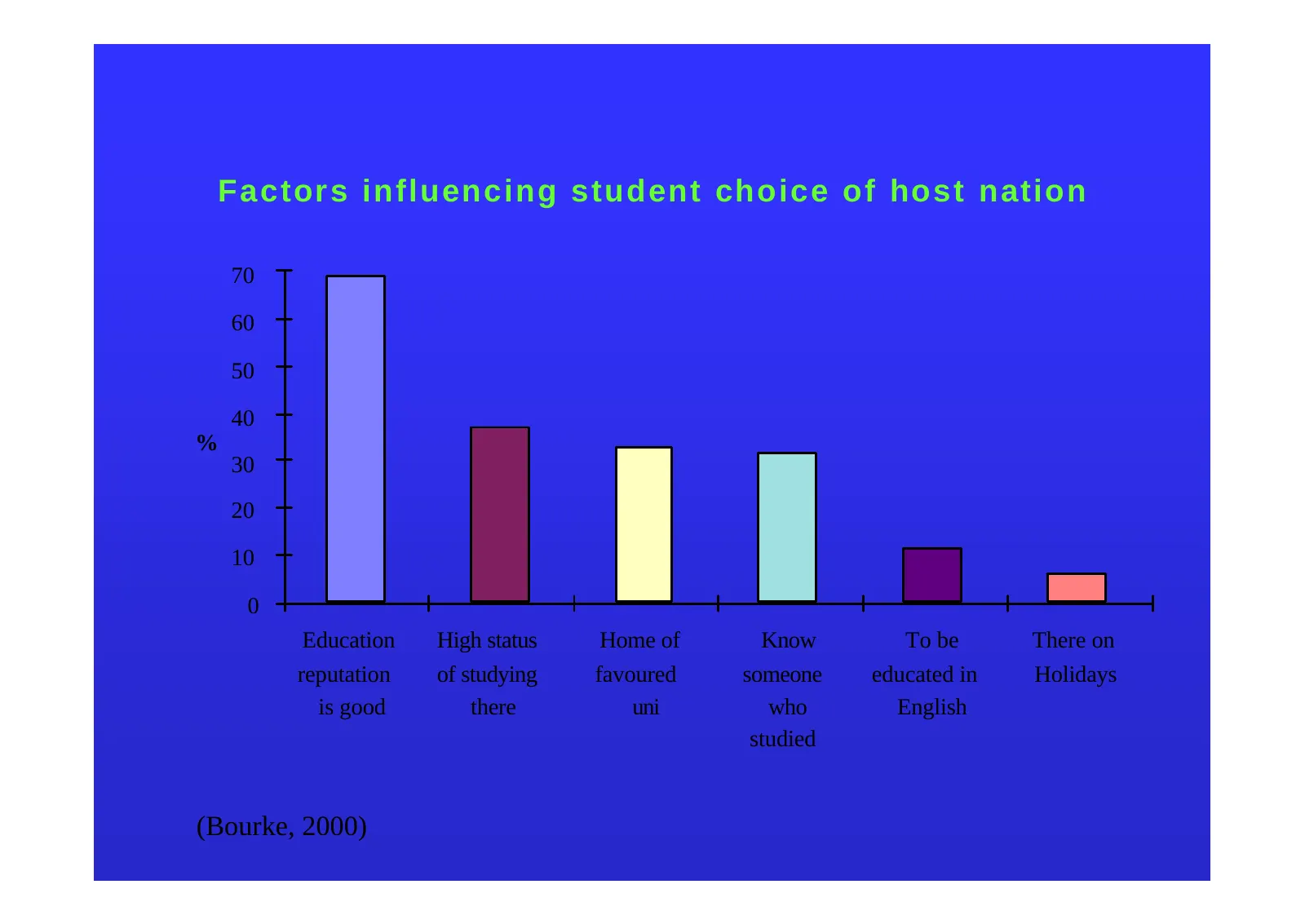
Slide 4: Factors influencing student choice of host nation
Factors influencing student choice of host nation 70 60 50 40 % 30 20 10 0 Education High status Home of Know To be There on reputation of studying favoured someone educated in Holidays is good there uni who English studied (Bourke, 2000)
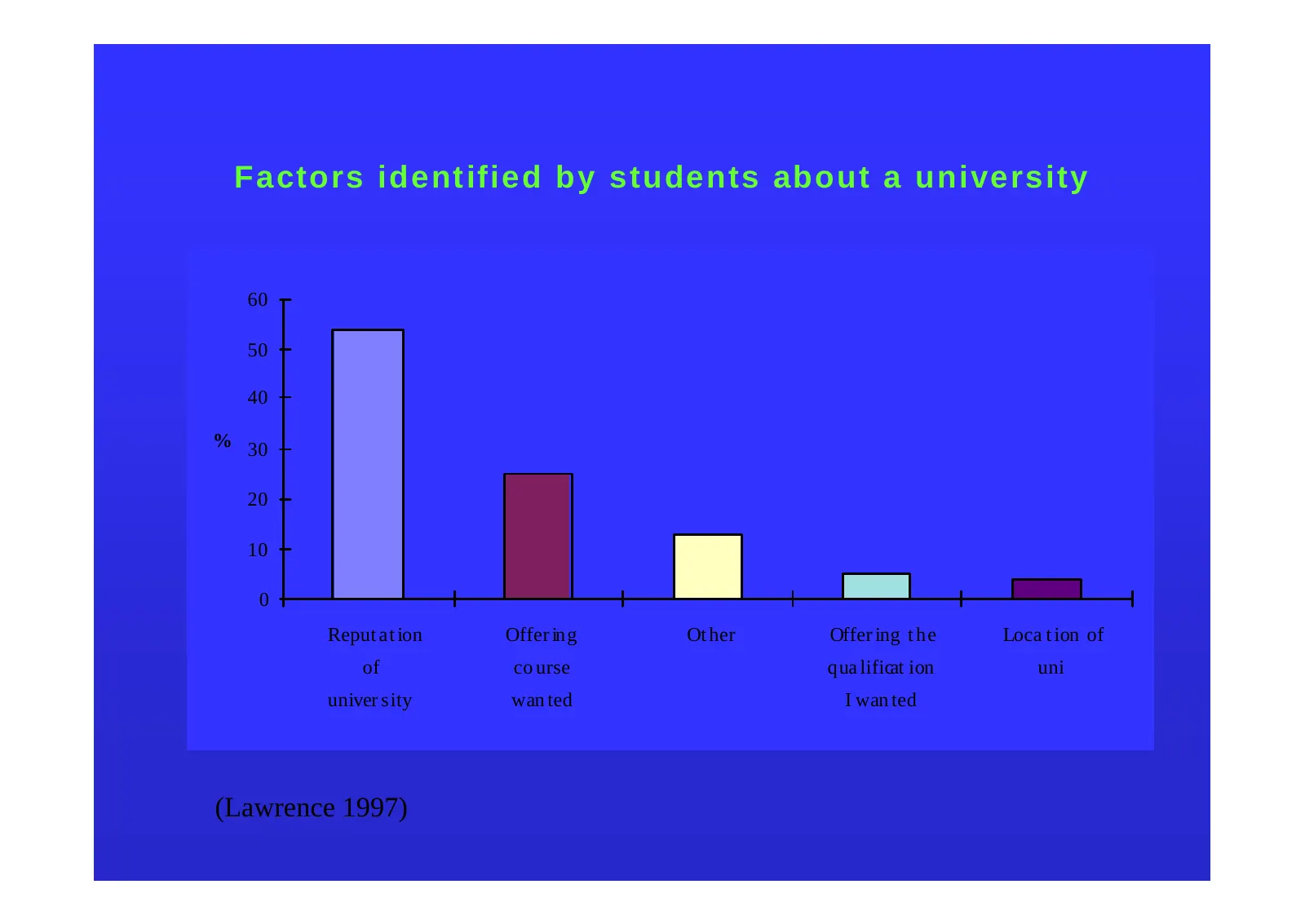
Slide 5: Factors identified by students about a university
Factors identified by students about a university 60 50 40 % 30 20 10 0 Reput at ion Offer ing Ot her Offer ing t he Loca t ion of of co urse qua lificat ion uni univer sity wan ted I wan ted (Lawrence 1997)
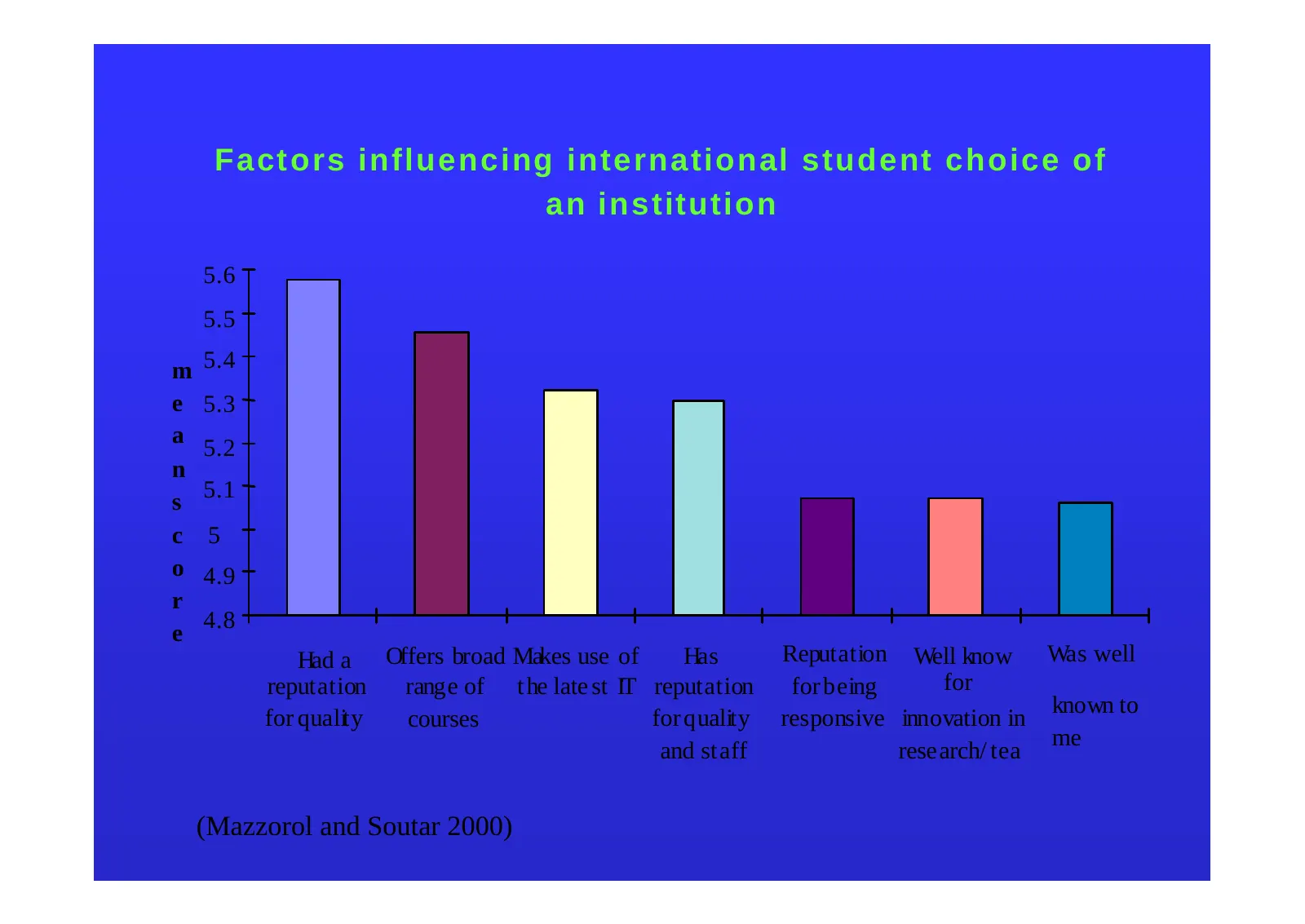
Slide 6: Factors influencing international student choice of an institution
Factors influencing international student choice of an institution 5.6 5.5 m 5.4 e 5.3 a 5.2 n s 5.1 c 5 o 4.9 r 4.8 e Had a Offers broad Makes use of Has Reputation Well know Was well reputation range of t he late st IT reputation for being for known to for qualit y courses for quality responsive i
Slide 7: Key questions
Key questions •What is reputation? •Why is it so important? •How does it influence us? •Why does it influence international students? •How does it influence international students?

Slide 8: The nature of reputation
THE NATURE OF REPUTATION
Slide 9: Where is reputation used?
Where is reputation used? General culture Society at large Politics Diplomacy Corporate World Consumerism
Slide 10: Definitions of reputation
Definitions of reputation Reputation is: “a belief or view that is collectively developed and shared amongst a group” or “ a collective phenomenon and a product of social processes and is not an impression in the head of any single individual”
Slide 11: Ownership of reputation
Ownership of reputation Reputation is owned by the group that holds the reputation and not the person or entity that the reputation is about. It is not who you know but who knows you. It is possible for a person or entity to have multiple reputations.
Slide 12: Reputation - a social representation
Reputation - a social representation Reputation can only exist where groups exists, it cannot exist in isolation. It develops through social discourse and processes of inter-subjectivity. It is critical in the link between social identity and individual identity. It is closely related to other socia
Slide 13: Reputation as an attribution function
Reputation as an attribution function Reputation is almost universally used to predict the actions of an entity based on its past trajectory. Reputation is strongest when formal structures have broken down or are not present e.g. • international conflicts • terrorist activities • criminal communitie

Slide 14: Consumers in service industries
CONSUMERS IN SERVICE INDUSTRIES
Slide 15: The nature of services
The nature of services • Intangible • simultaneous consumption and production • non-standard
Slide 16: Types of services
Types of services • search attributes - easy to make judgements about • experience attributes - harder to make judgements about • credence attributes - difficult to make judgements about (even after consumption)
Slide 17: Risk in purchasing
Risk in purchasing Nearly all purchases include a level of risk. This risk takes the form of: • financial • psychological • physical • social We all therefore employ complex risk reduction strategies
Slide 18: Risk reduction
Risk reduction Consumers use three strategies to reduce risk: 1. direction observations and experience 2. increase use of personal information 3. increases the number of sources of information
Slide 19: Sources of information
Sources of information Word- of- mouth is the principal ways consumers seek information about services. Word- of- mouth communication is through social networks Word- of- mouth is inherently trustworthy Quality is discussed most in Word- of mouth communication about products and services

Slide 20: Reputation in the service market place
REPUTATION IN THE SERVICE MARKET PLACE
Slide 21: The role of reputation in markets
The role of reputation in markets Reputation is: evaluated by an aggregate composite of previous transactions with the organisation more than simple objective information it also signals intentions, commitments and motives related to consistency of outcome, inconsistent signals erode reputation. In
Slide 22: Reputation and product choice
Reputation and product choice Perceived risk is heightened when intrinsic cues leave consumers with low confidence - in such circumstance they turn to extrinsic cues such as reputation to reduce risk Reputation can be also described as: “an uncertainty resolving mechanism”* or “a facilitator of econ

Slide 23: Reputation and international students
REPUTATION AND INTERNATIONAL STUDENTS
Slide 24: Choosing a place in higher education
Choosing a place in higher education Quality of education is hard to judge, even after consumption. Generally it is only chosen once by the consumer It often occurs at a point in people lives when there can be turmoil in the family situation The students have to choose ‘a total institution’ There ca
Slide 25: Reputation's role in choosing an institution
Reputation’s role in choosing an institution It serves as a substitute for lack of usefulness of objective information It acts as an substitute for position of an institution in the hierarchy (often implied in league tables) Most institutions provide similar services in similar ways and research sho
Slide 26: Why reputation influences international students
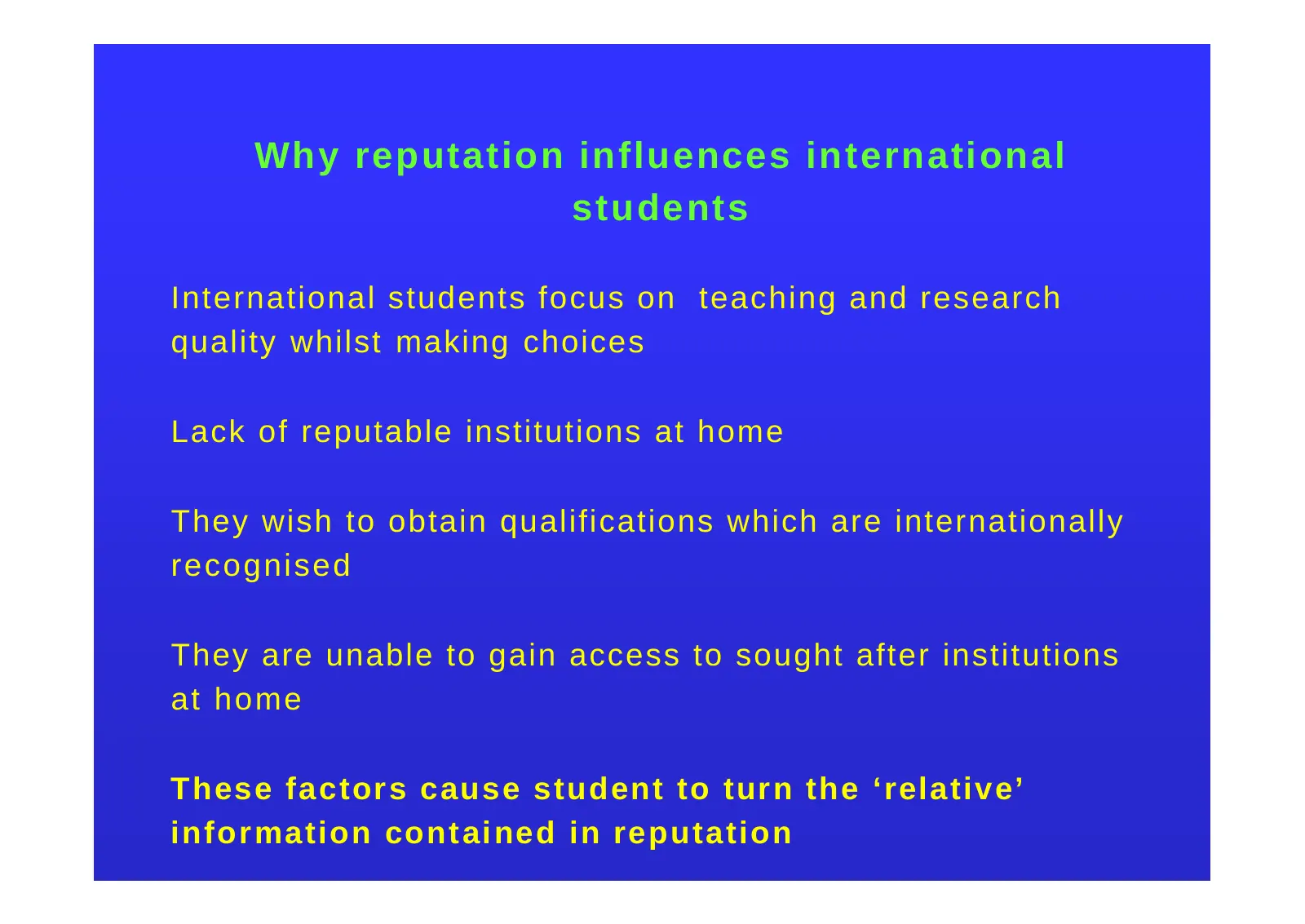
Why reputation influences international students International students focus on teaching and research quality whilst making choices Lack of reputable institutions at home They wish to obtain qualifications which are internationally recognised They are unable to gain access to sought after instituti
Slide 27: International students and risk reduction
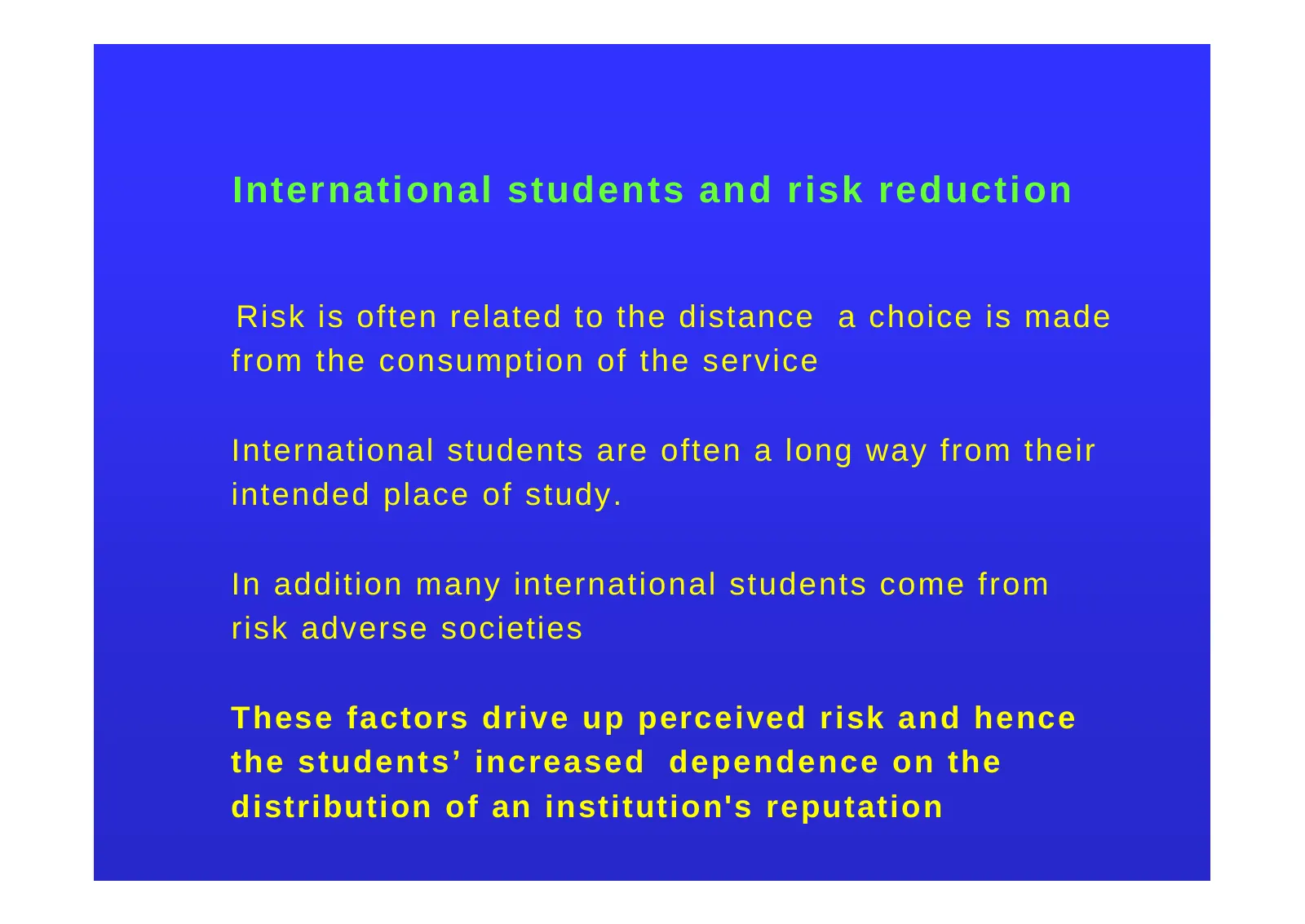
International students and risk reduction Risk is often related to the distance a choice is made from the consumption of the service International students are often a long way from their intended place of study. In addition many international students come from risk adverse societies These factors
Slide 28: The distribution of an institution's reputation
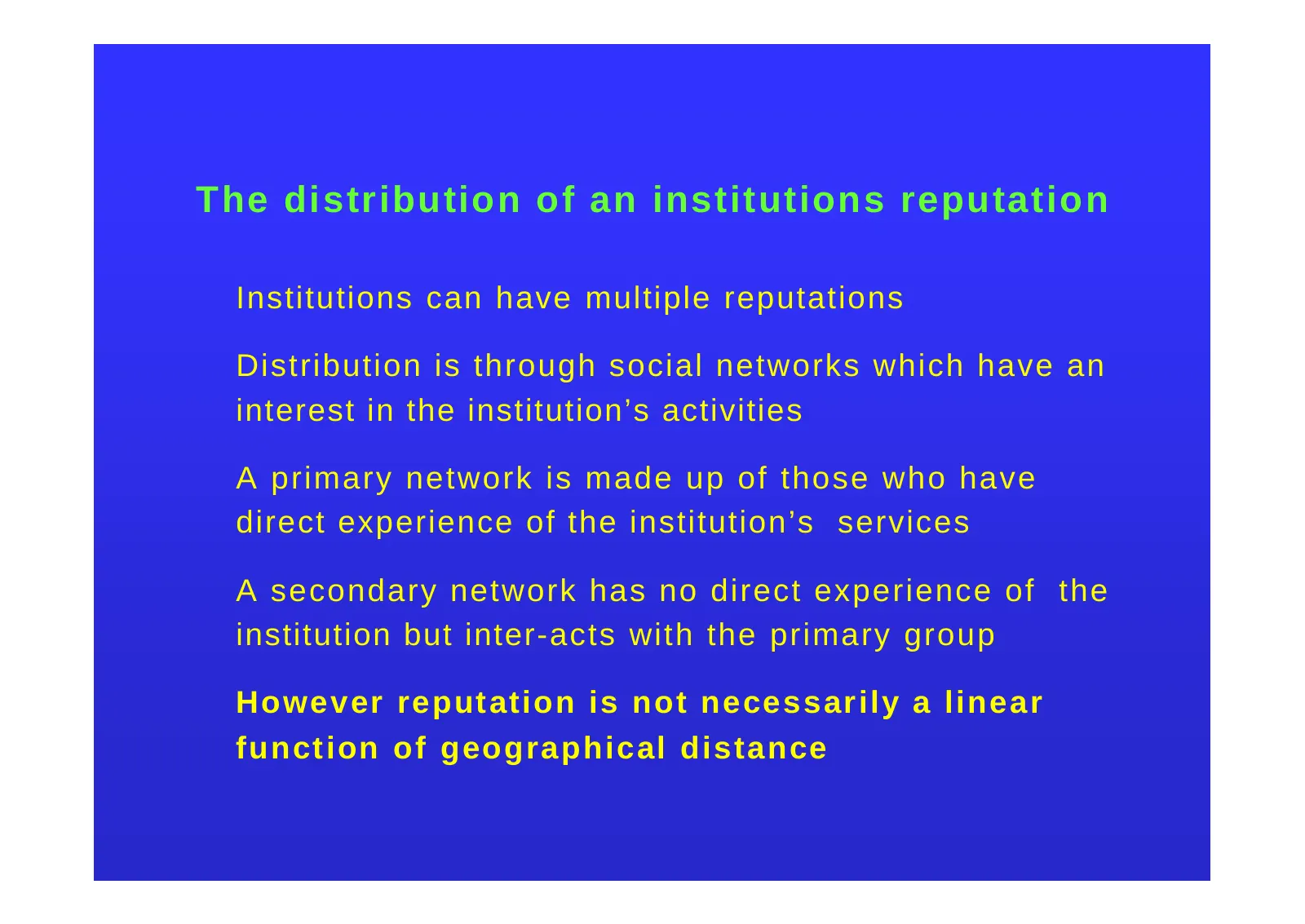
The distribution of an institutions reputation Institutions can have multiple reputations Distribution is through social networks which have an interest in the institution’s activities A primary network is made up of those who have direct experience of the institution’s services A secondary network
Slide 29: Reputational space - a model for reputation in HE
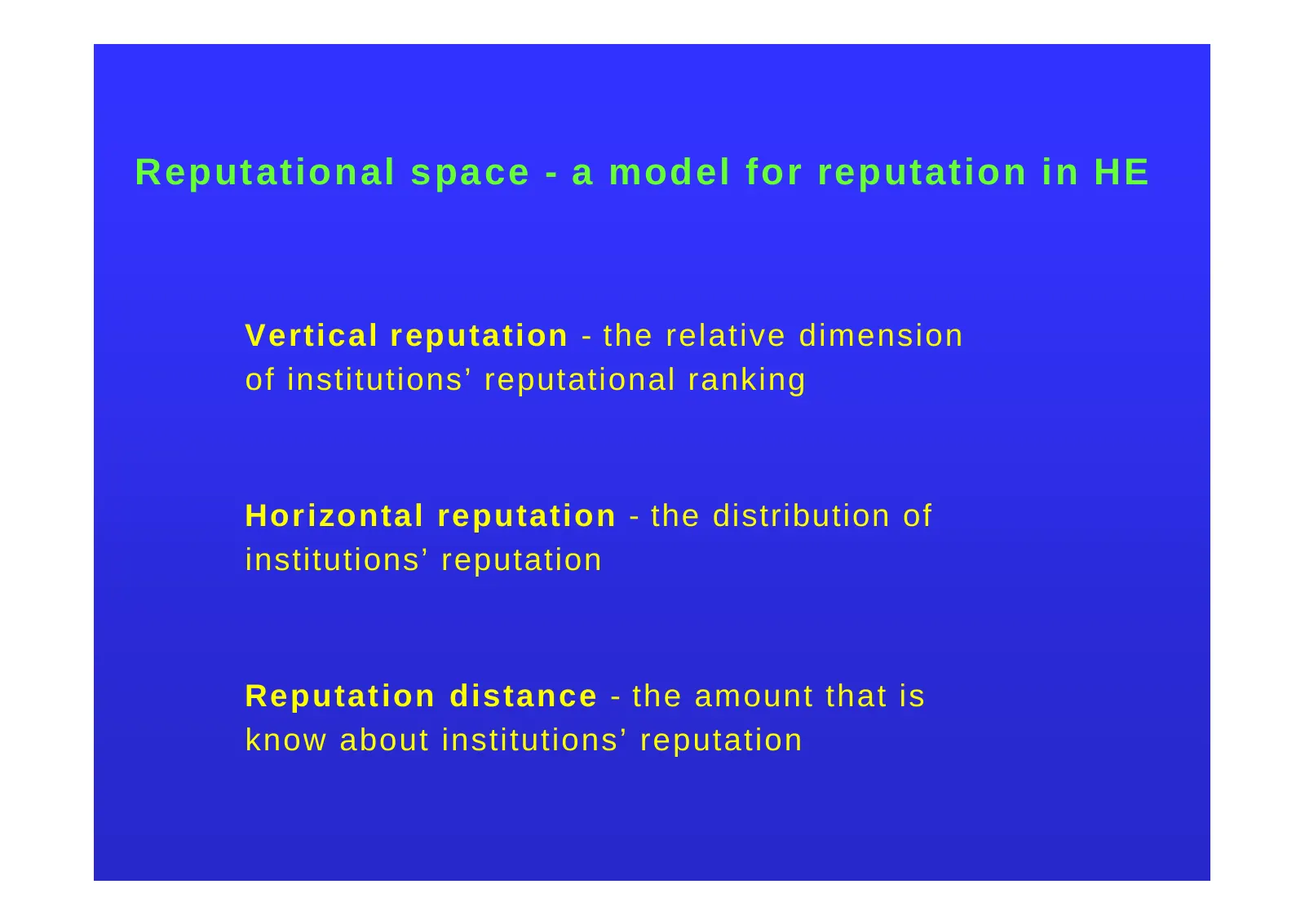
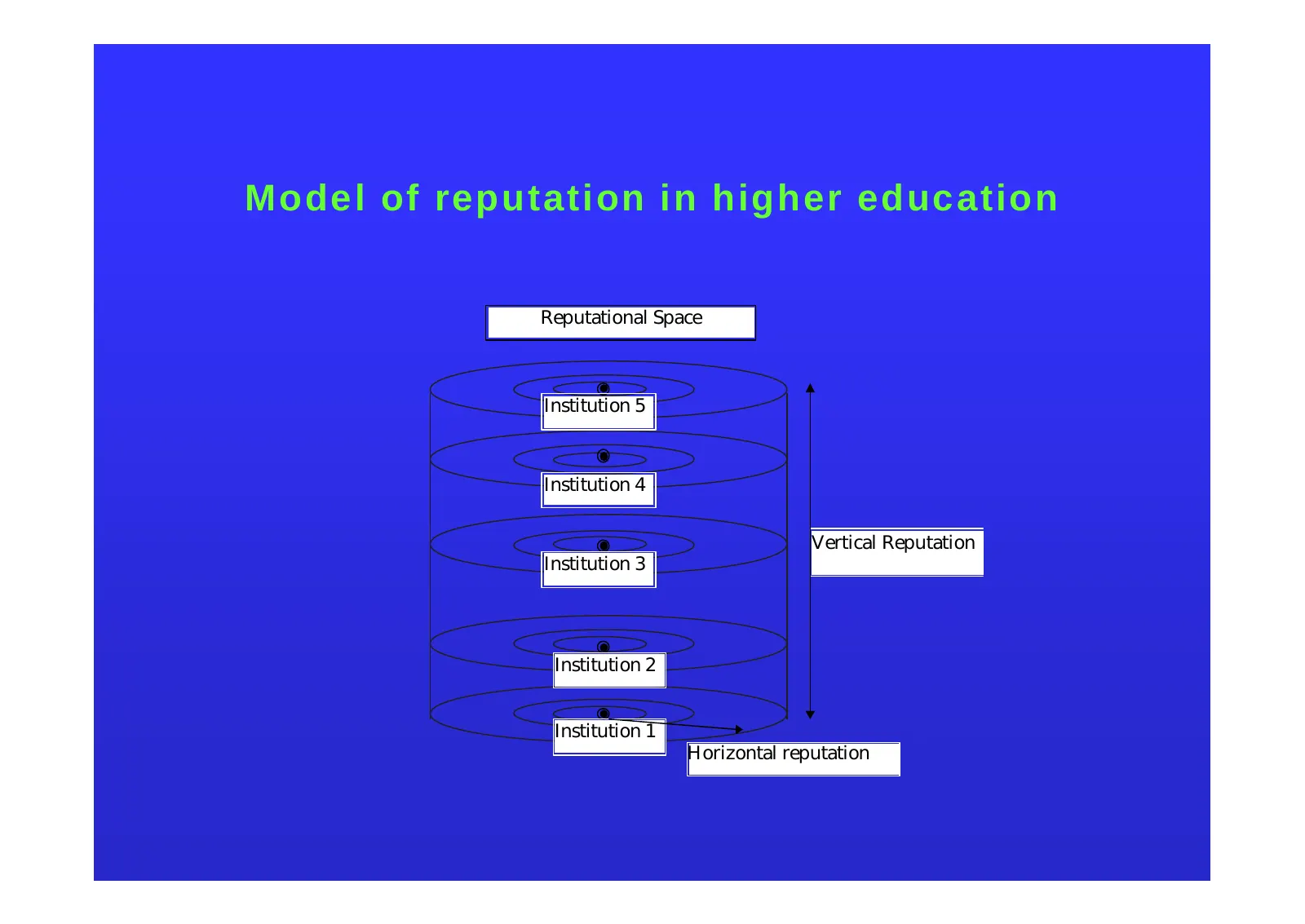
Reputational space - a model for reputation in HE Vertical reputation - the relative dimension of institutions’ reputational ranking Horizontal reputation - the distribution of institutions’ reputation Reputation distance - the amount that is know about institutions’ reputation
Slide 30: Model of reputation in higher education
Model of reputation in higher education Reputational Space Institution 5 Institution 4 Vertical Reputation Institution 3 Institution 2 Institution 1 Horizontal reputation

Slide 31: Implications for policy and practice
IMPLICATIONS FOR POLICY AND PRACTICE
Slide 32: Reputation, image and brand
Reputation, image and brand Image is what is projected to the market place, reputation is what is perceived by the market place Reputation “is rooted in the substance of the organisation, reputation is more stable than image which can be abstract and transient”* Brand can be viewed as a repository o
Slide 33: Growing reputation
Growing reputation Reputation is influenced more by social networks than by short term institutional marketing activities Institutions should turn existing reputation into strength Reputation is formed through real experience and not through promises Reputation is heavily influenced by consistency a
Slide 34: Managing reputation
Managing reputation It is essential for all managers to be aware of the effects of their decisions on reputation A single bad decision can severely damage reputation It is much easier to loose a reputation than it is to gain it or restore it Damage to reputation can be limited by institutions acting

Slide 35: Keeping your reputation
Keeping your reputation An institution with an untrustworthy reputation will find it hard to change that reputation. A poor reputation will feed into the collective process and lasting damage can be done. On the other hand….. Good services that deliver what has been promised will generate reputation

Slide 36: Institutions must ensure what students get are what they are promised
Institutions must ensure what students get are what they are promised.

Slide 37: Most importantly
BUT MOST IMPORTANTLY

Slide 38: Remember: a university's reputation is one of its most important assets
REMEMBER A university’s reputation is one of its most important assets
Source: Internet Archive copy of idp.com
More decks from IDP Education Ltd.
 Shareholder Meeting (October 2026)38 slides · Oct 27, 2026
 FY2026 Earnings Presentation35 slides · Aug 20, 2026
 Investor Presentation (February 2026)31 slides · Feb 26, 2026
 FY2025 Earnings Presentation34 slides · Aug 28, 2025
 Investor Presentation (February 2025)28 slides · Feb 27, 2025
 Shareholder Meeting (October 2024)24 slides · Oct 15, 2024