NorNickel GMK · RUS:GMKN
NorNickel GMK — Nornickel — Technical Presentation
23 slides from NorNickel GMK's technical presentation
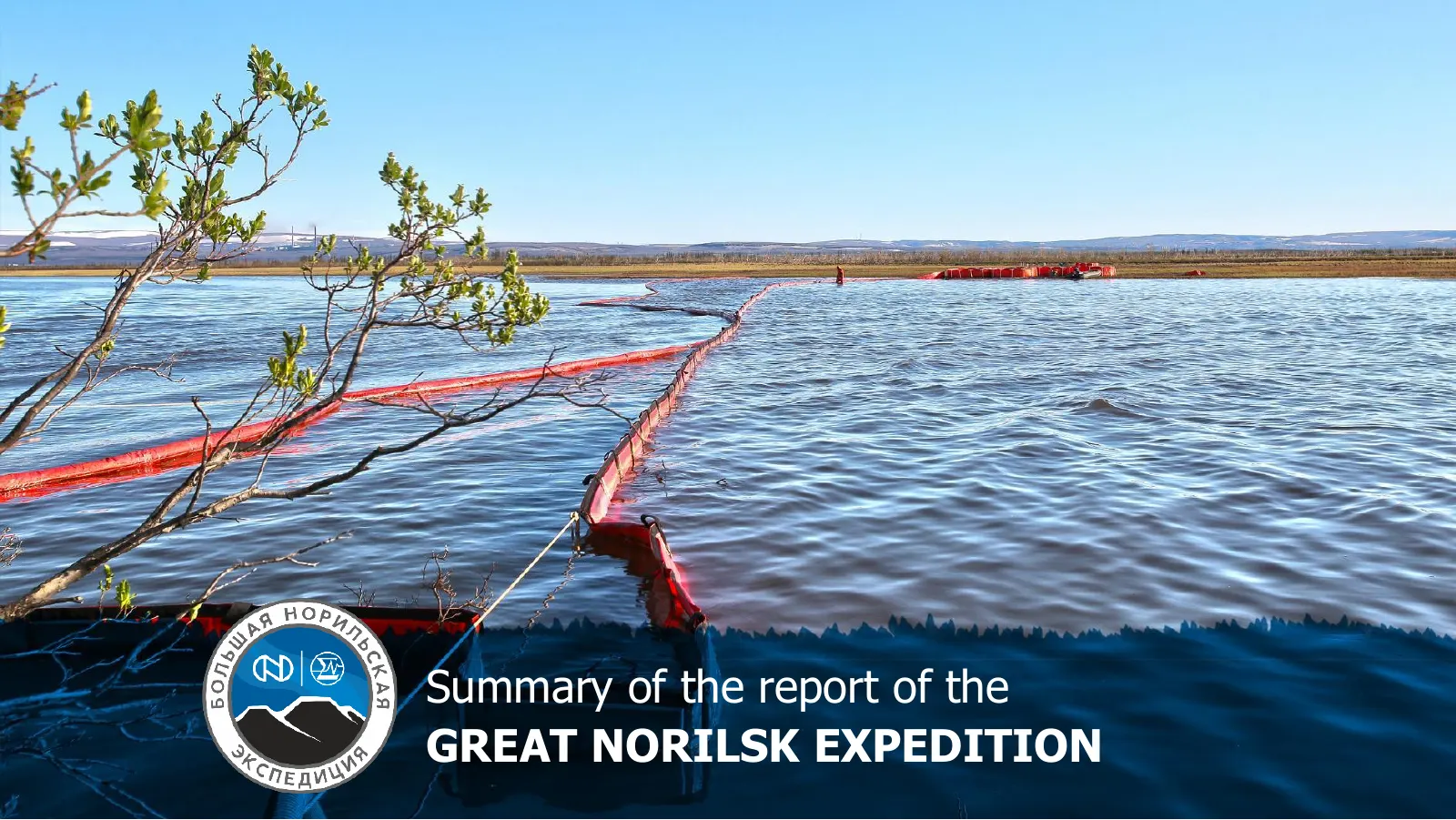
Slide 1: Summary of the report of the Great Norilsk Expedition
Summary of the report of the GREAT NORILSK EXPEDITION
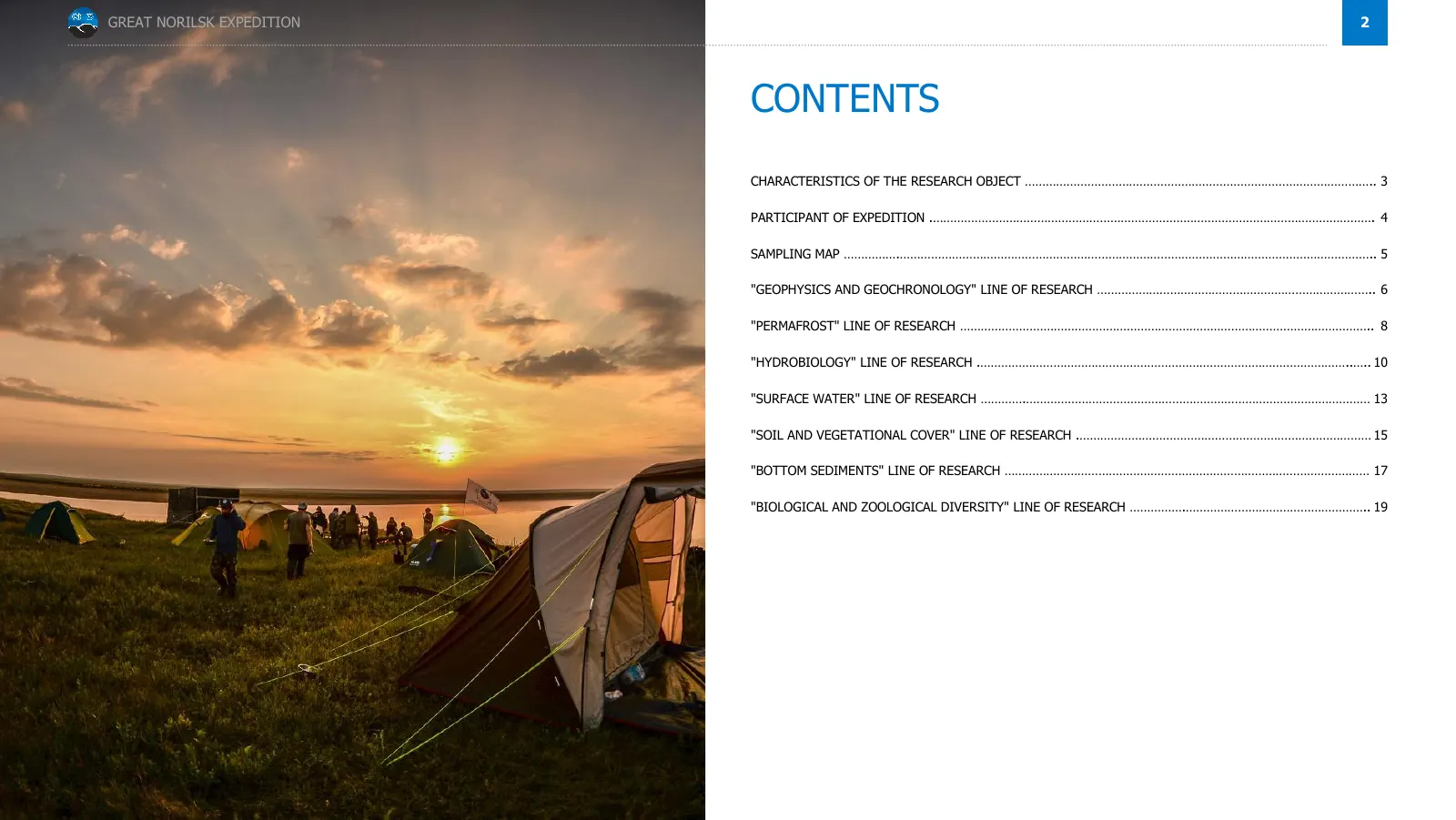
Slide 2: Contents
GREAT NORILSK EXPEDITION 2 CONTENTS CHARACTERISTICS OF THE RESEARCH OBJECT ……………………………………………………………………………………….. 3 PARTICIPANT OF EXPEDITION .………………………………………………………………………………………………………………. 4 SAMPLING MAP …………….……………………………………………………………………………………………………………………….. 5 "GEOPHYSICS AND GEOCHRONOLOGY" LINE OF RESEAR
Slide 3: Characteristics of the Research Object
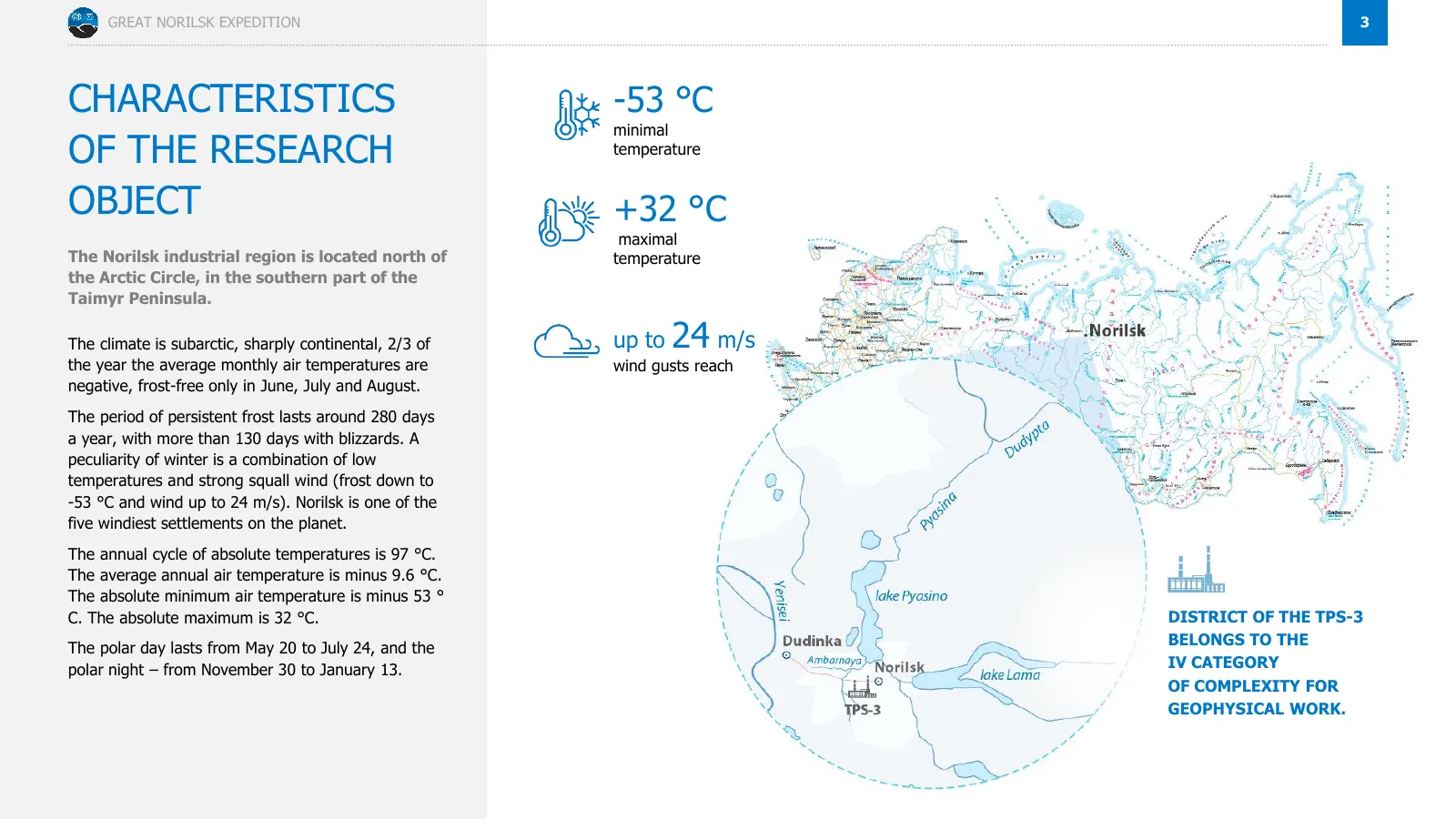
GREAT NORILSK EXPEDITION 3 CHARACTERISTICS -53 °С minimal OF THE RESEARCH temperature OBJECT +32 °С maximal The Norilsk industrial region is located north of temperature the Arctic Circle, in the southern part of the Taimyr Peninsula. The climate is subarctic, sharply continental, 2/3 of up to 24 m/
Slide 4: Participants of the Expedition
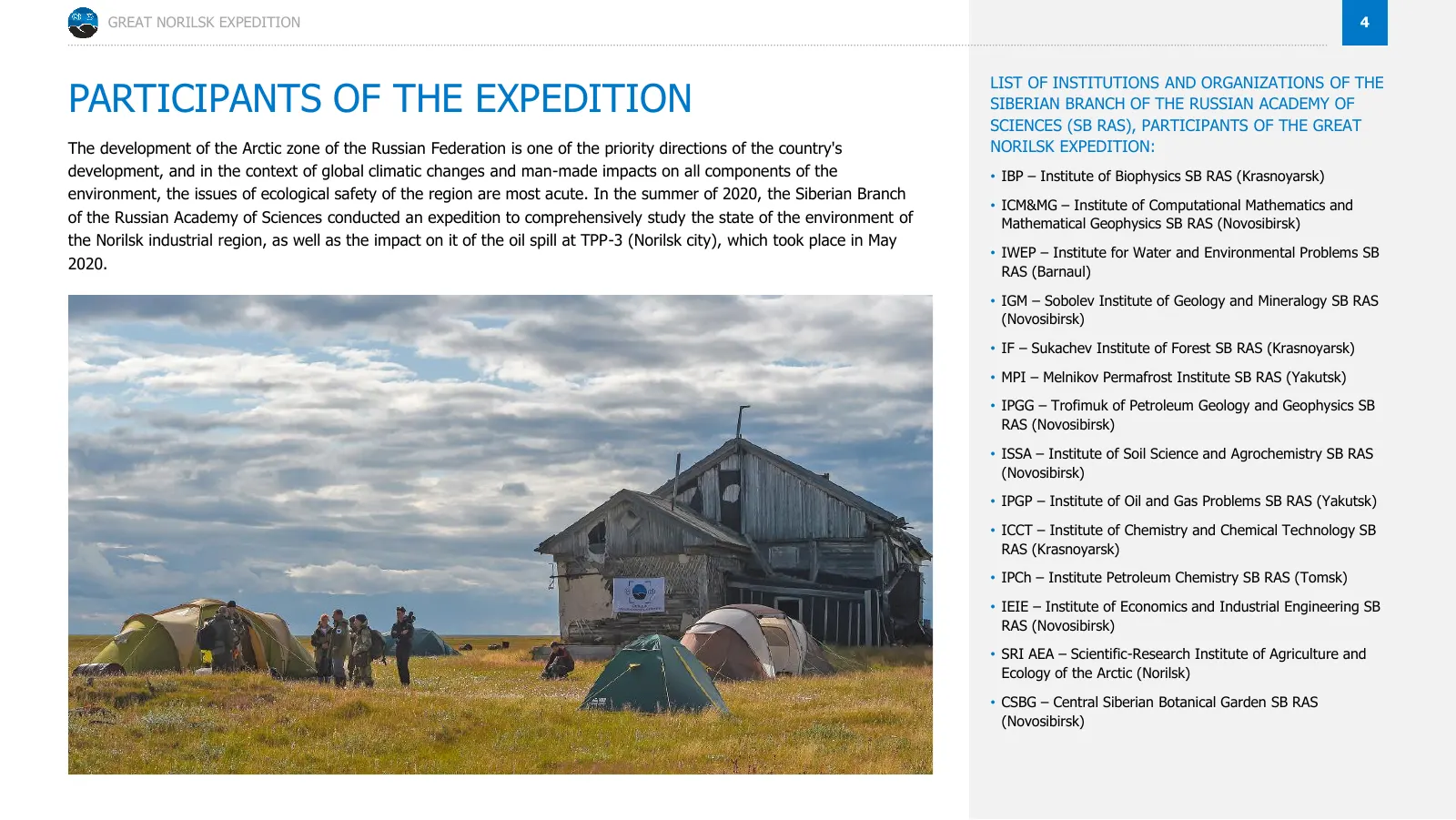
GREAT NORILSK EXPEDITION 4 LIST OF INSTITUTIONS AND ORGANIZATIONS OF THE PARTICIPANTS OF THE EXPEDITION SIBERIAN BRANCH OF THE RUSSIAN ACADEMY OF SCIENCES (SB RAS), PARTICIPANTS OF THE GREAT The development of the Arctic zone of the Russian Federation is one of the priority directions of the country
Slide 5: Sampling Map
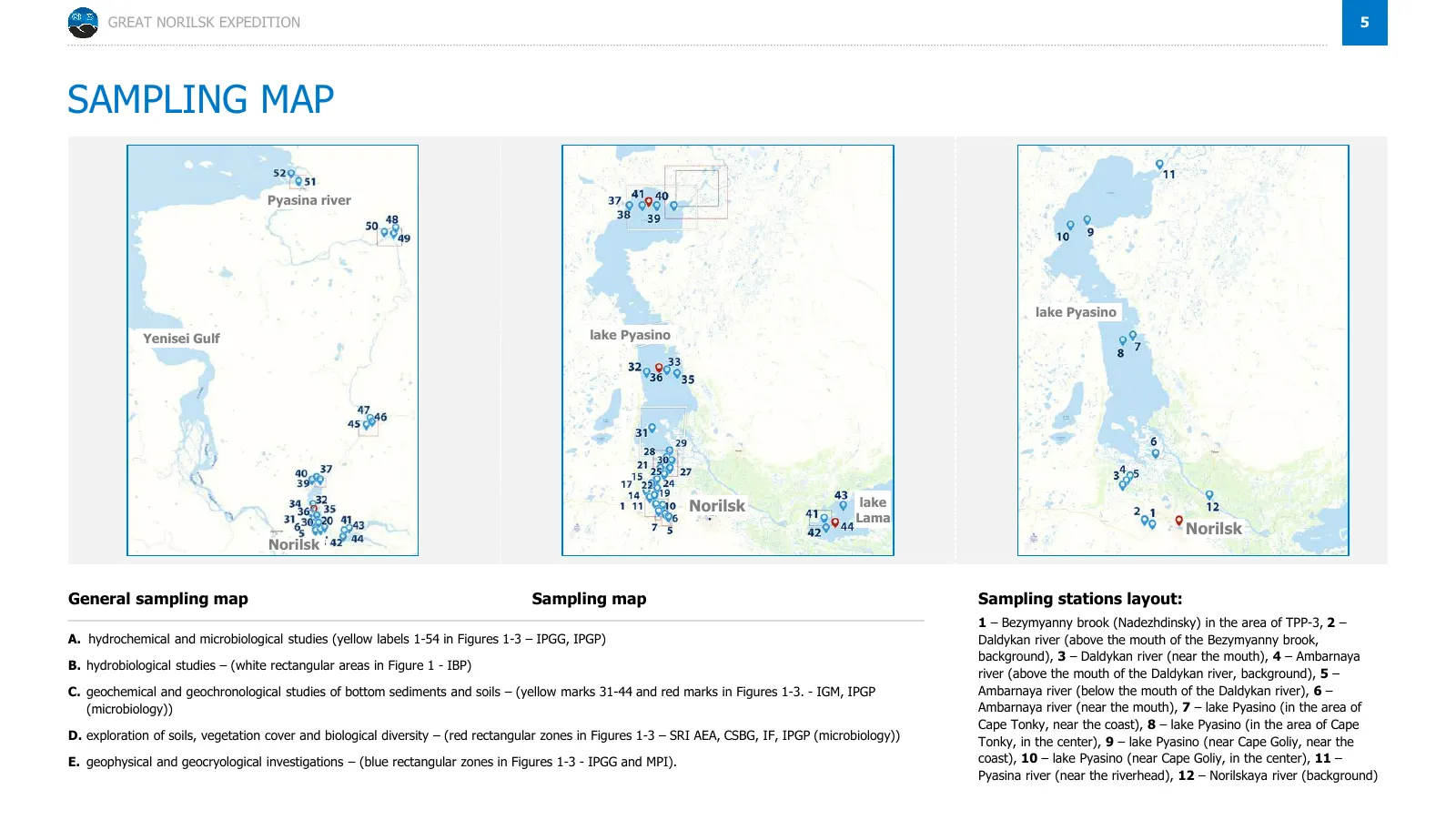
GREAT NORILSK EXPEDITION 5 SAMPLING MAP Pyasina river lake Pyasino Yenisei Gulf lake Pyasino Norilsk lake Lama Norilsk Norilsk General sampling map Sampling map Sampling stations layout: 1 – Bezymyanny brook (Nadezhdinsky) in the area of TPP-3, 2 – A. hydrochemical and microbiological studies (yello
Slide 6: Geophysics and Geochronology
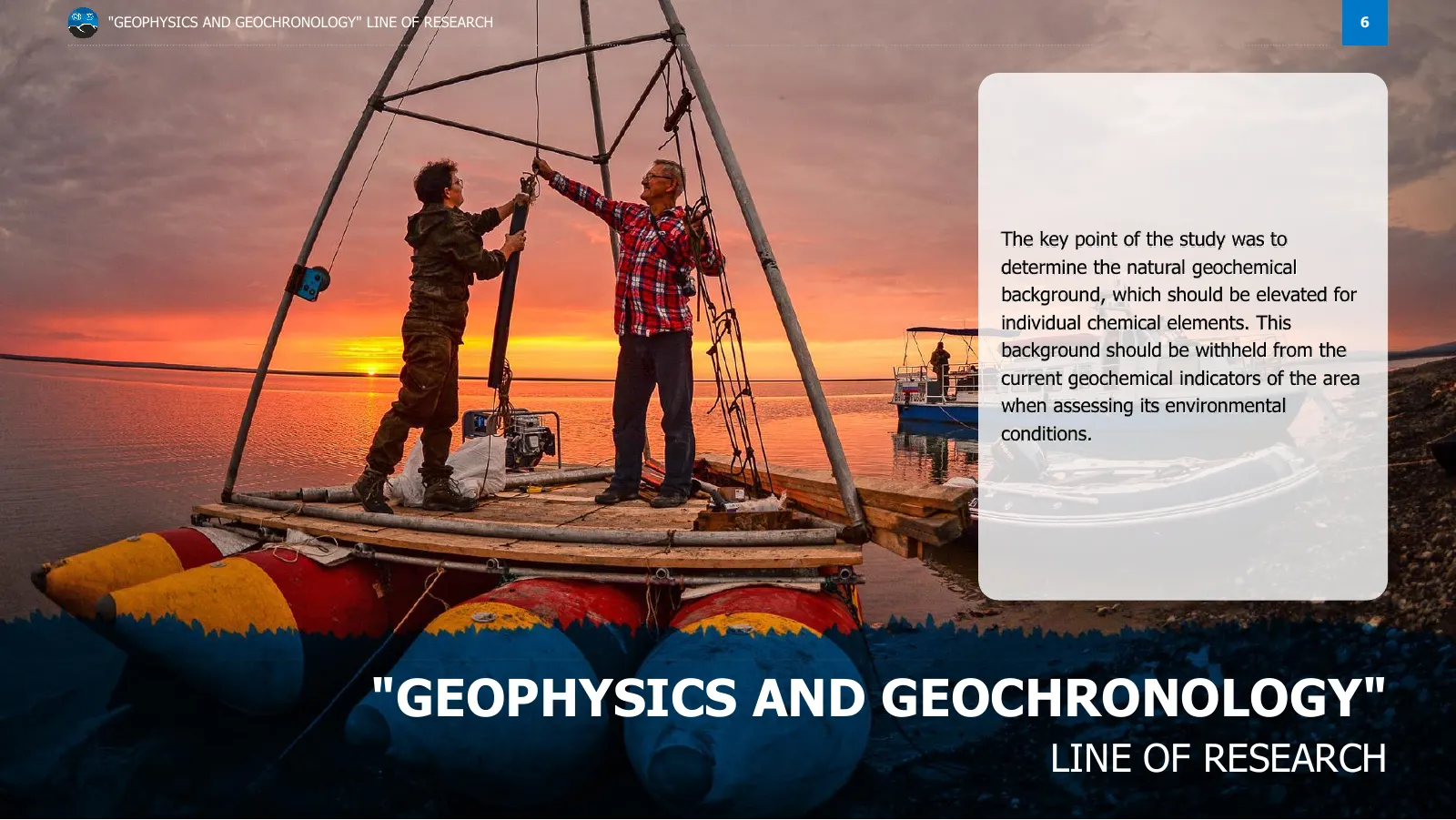
"GEOPHYSICS AND GEOCHRONOLOGY" LINE OF RESEARCH 6 The key point of the study was to determine the natural geochemical background, which should be elevated for individual chemical elements. This background should be withheld from the current geochemical indicators of the area when assessing its envir
Slide 7: Geophysics and Geochronology line of research
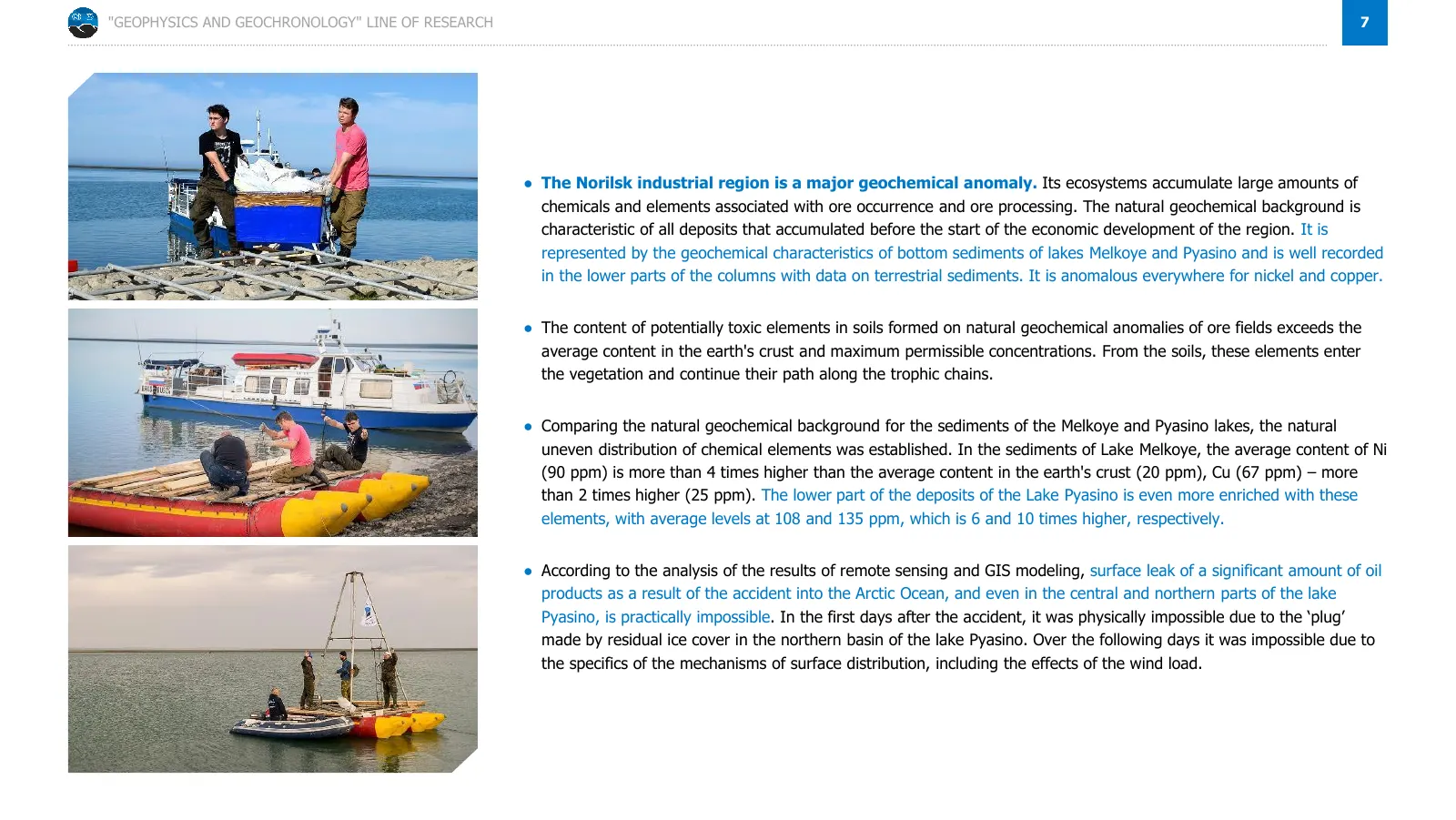
"GEOPHYSICS AND GEOCHRONOLOGY" LINE OF RESEARCH 7 ● The Norilsk industrial region is a major geochemical anomaly. Its ecosystems accumulate large amounts of chemicals and elements associated with ore occurrence and ore processing. The natural geochemical background is characteristic of all deposits
Slide 8: Permafrost
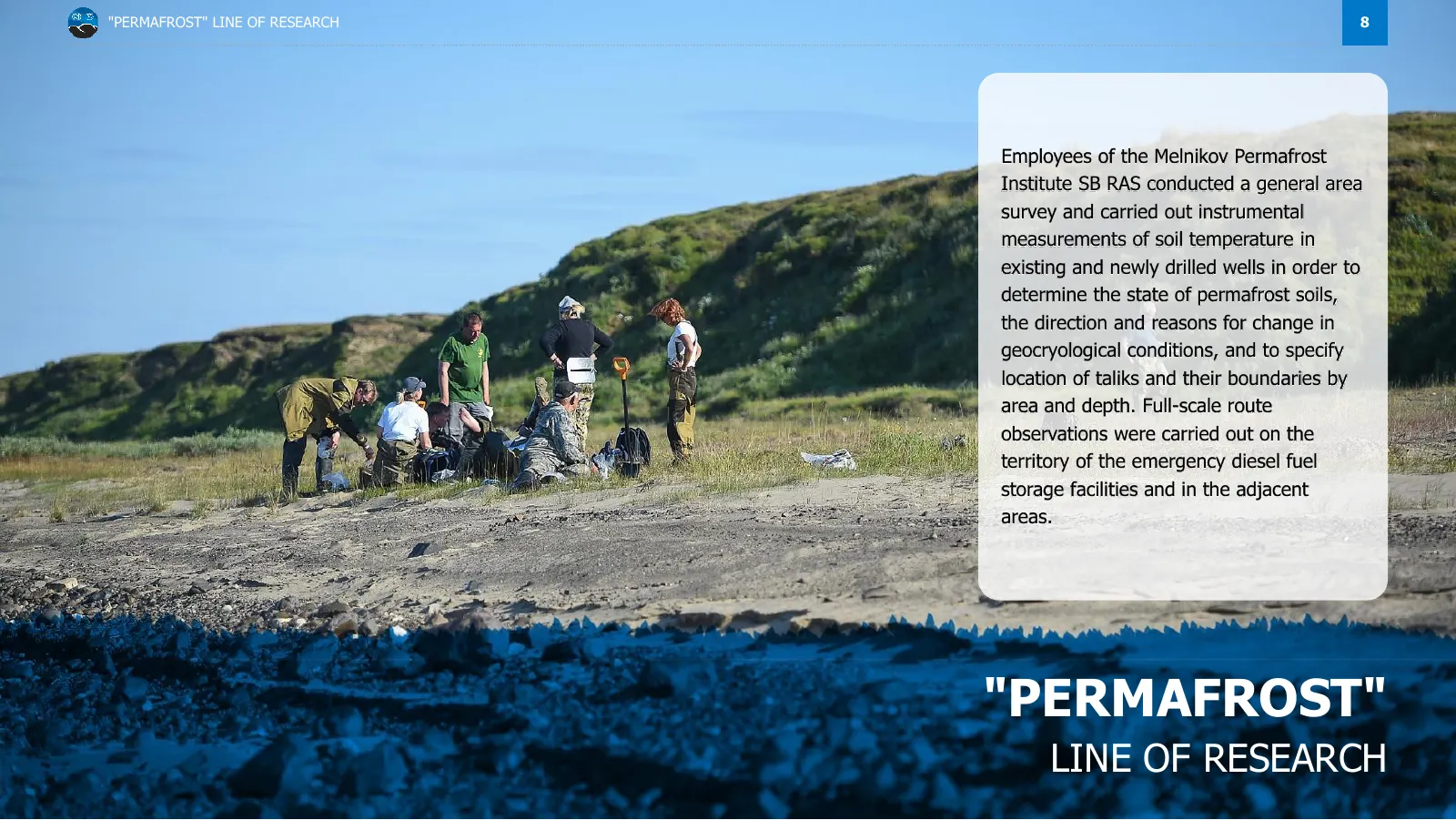
"PERMAFROST" LINE OF RESEARCH 8 Employees of the Melnikov Permafrost Institute SB RAS conducted a general area survey and carried out instrumental measurements of soil temperature in existing and newly drilled wells in order to determine the state of permafrost soils, the direction and reasons for c
Slide 9: Permafrost line of research
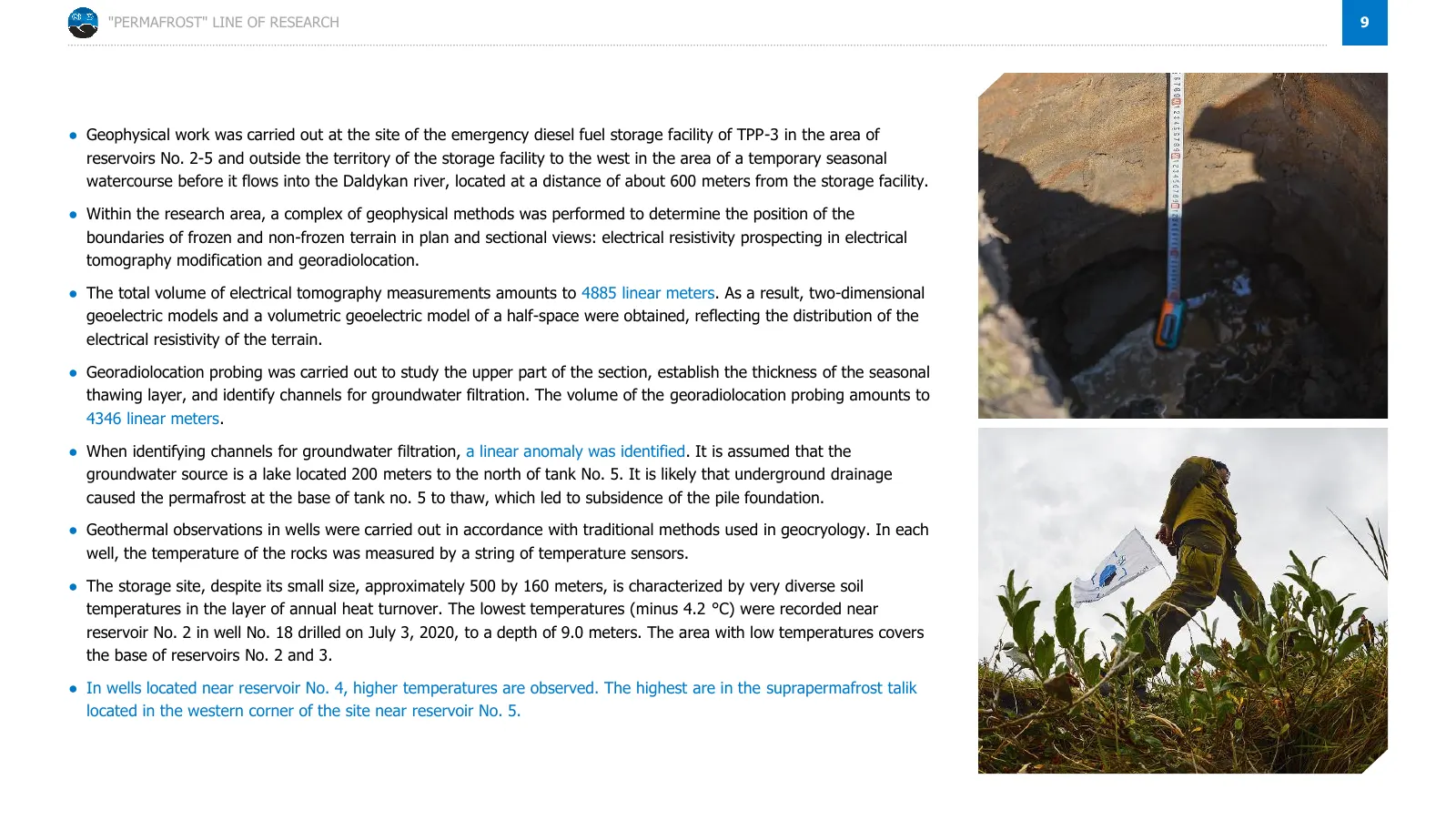
"PERMAFROST" LINE OF RESEARCH 9 ● Geophysical work was carried out at the site of the emergency diesel fuel storage facility of TPP-3 in the area of reservoirs No. 2-5 and outside the territory of the storage facility to the west in the area of a temporary seasonal watercourse before it flows into t
Slide 10: Hydrobiology
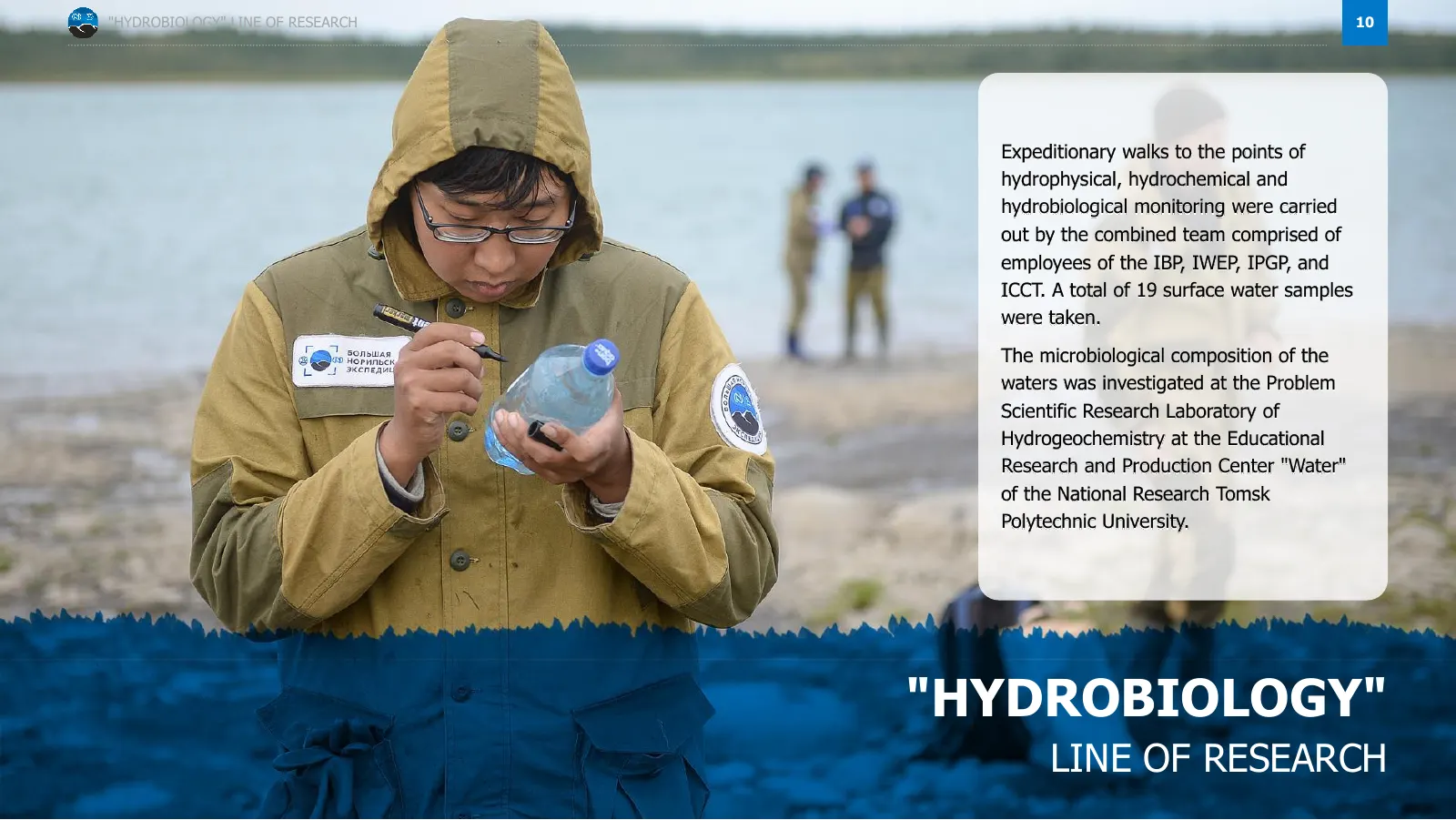
"HYDROBIOLOGY" LINE OF RESEARCH 10 Expeditionary walks to the points of hydrophysical, hydrochemical and hydrobiological monitoring were carried out by the combined team comprised of employees of the IBP, IWEP, IPGP, and ICCT. A total of 19 surface water samples were taken. The microbiological compo
Slide 11: Hydrobiology line of research: water self-purification
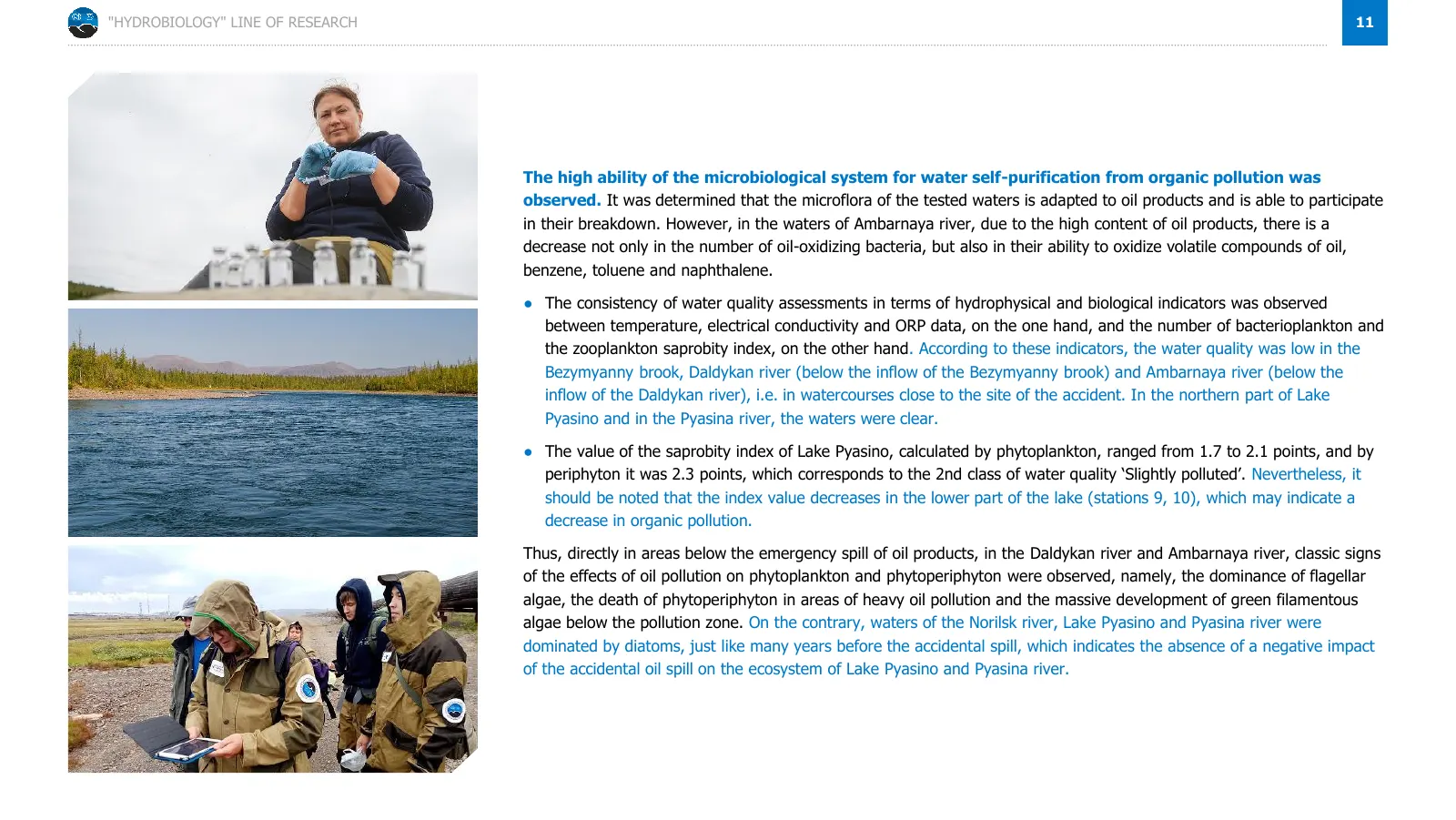
"HYDROBIOLOGY" LINE OF RESEARCH 11 The high ability of the microbiological system for water self-purification from organic pollution was observed. It was determined that the microflora of the tested waters is adapted to oil products and is able to participate in their breakdown. However, in the wate
Slide 12: Hydrobiology line of research: chlorophyll a water quality
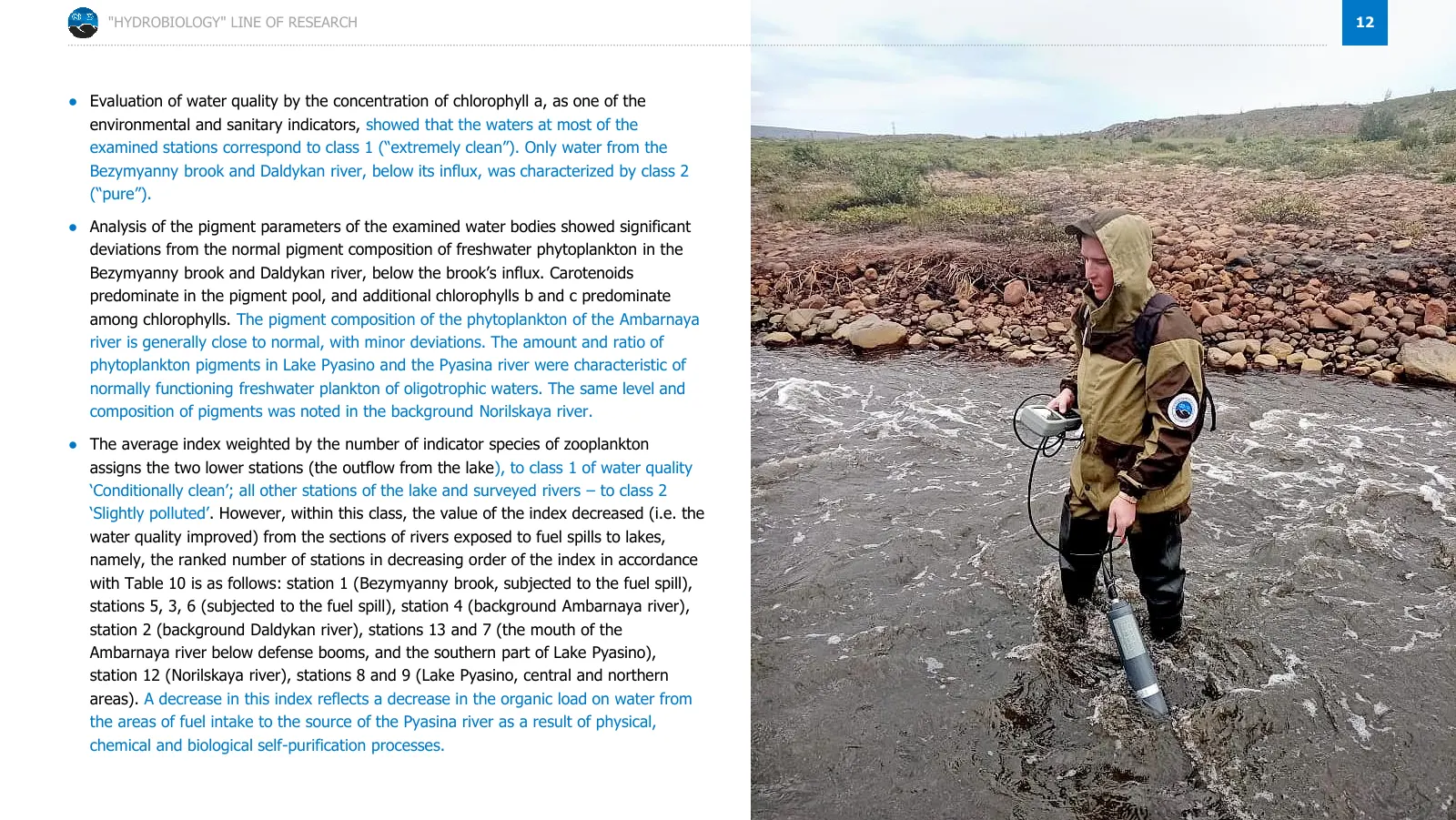
"HYDROBIOLOGY" LINE OF RESEARCH 12 ● Evaluation of water quality by the concentration of chlorophyll a, as one of the environmental and sanitary indicators, showed that the waters at most of the examined stations correspond to class 1 (“extremely clean”). Only water from the Bezymyanny brook and Dal
Slide 13: Surface Water
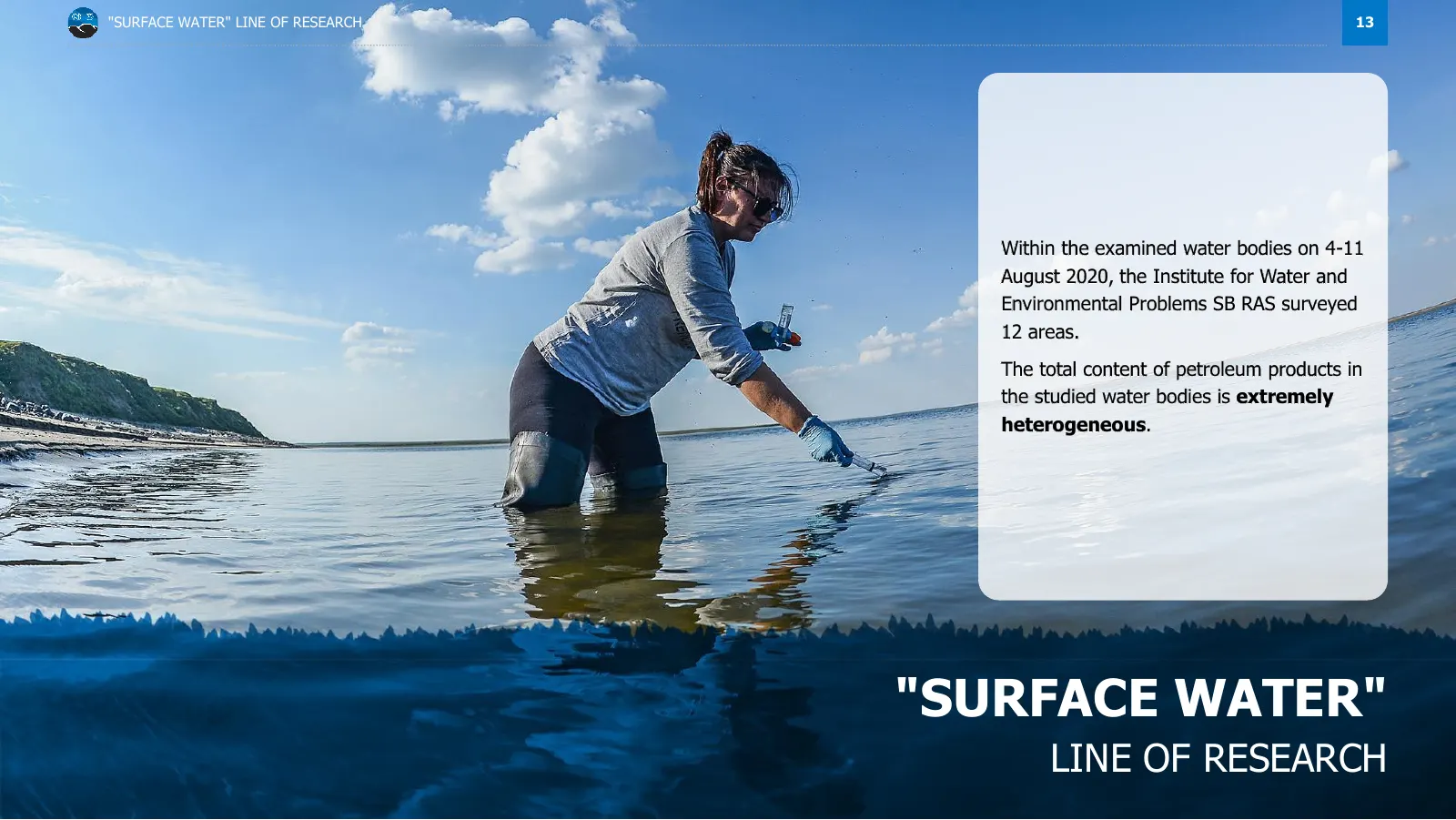
"SURFACE WATER" LINE OF RESEARCH 13 Within the examined water bodies on 4-11 August 2020, the Institute for Water and Environmental Problems SB RAS surveyed 12 areas. The total content of petroleum products in the studied water bodies is extremely heterogeneous. "SURFACE WATER" LINE OF RESEARCH
Slide 14: Surface Water line of research
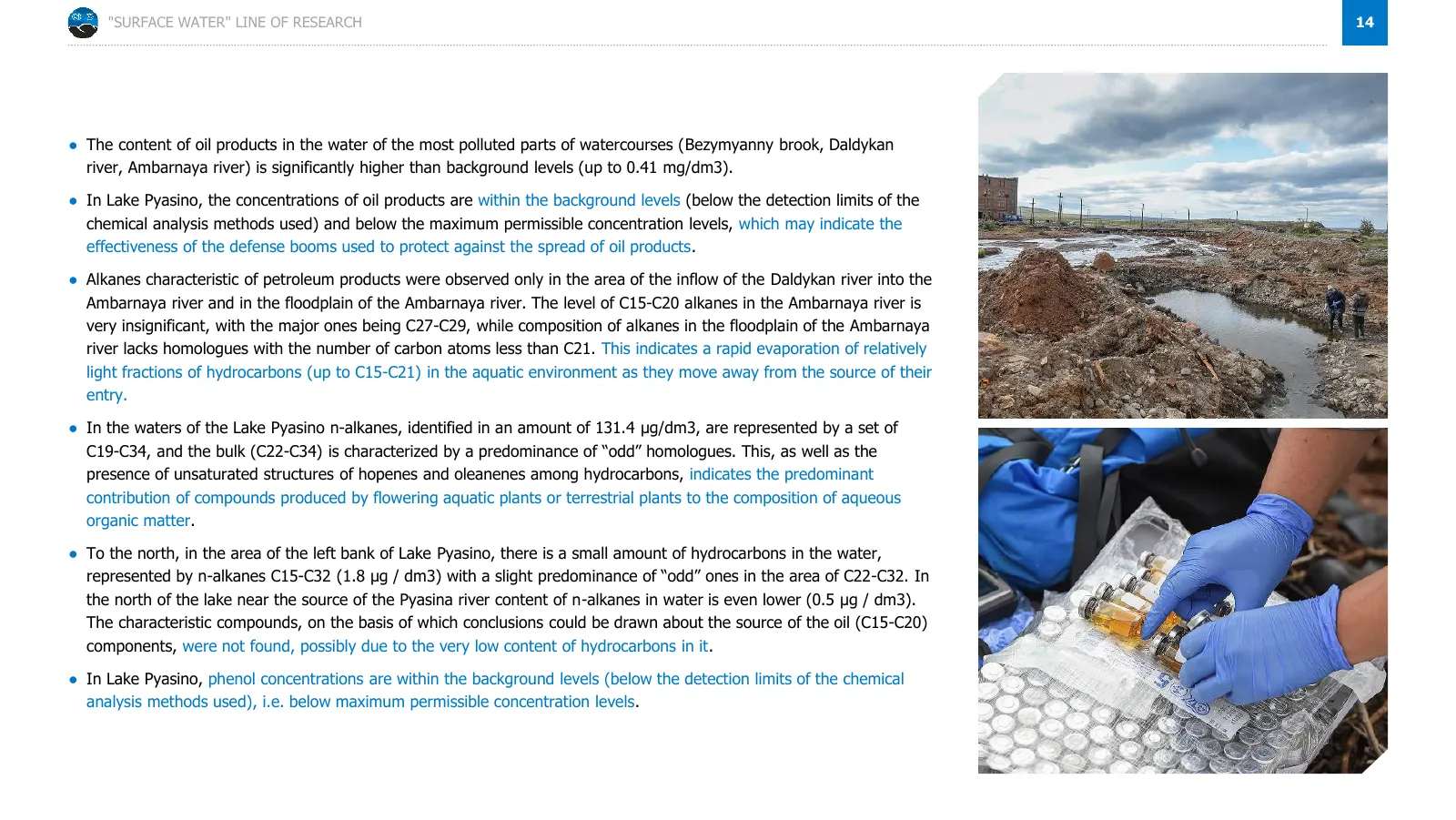
"SURFACE WATER" LINE OF RESEARCH 14 ● The content of oil products in the water of the most polluted parts of watercourses (Bezymyanny brook, Daldykan river, Ambarnaya river) is significantly higher than background levels (up to 0.41 mg/dm3). ● In Lake Pyasino, the concentrations of oil products are
Slide 15: Soil and Vegetational Cover
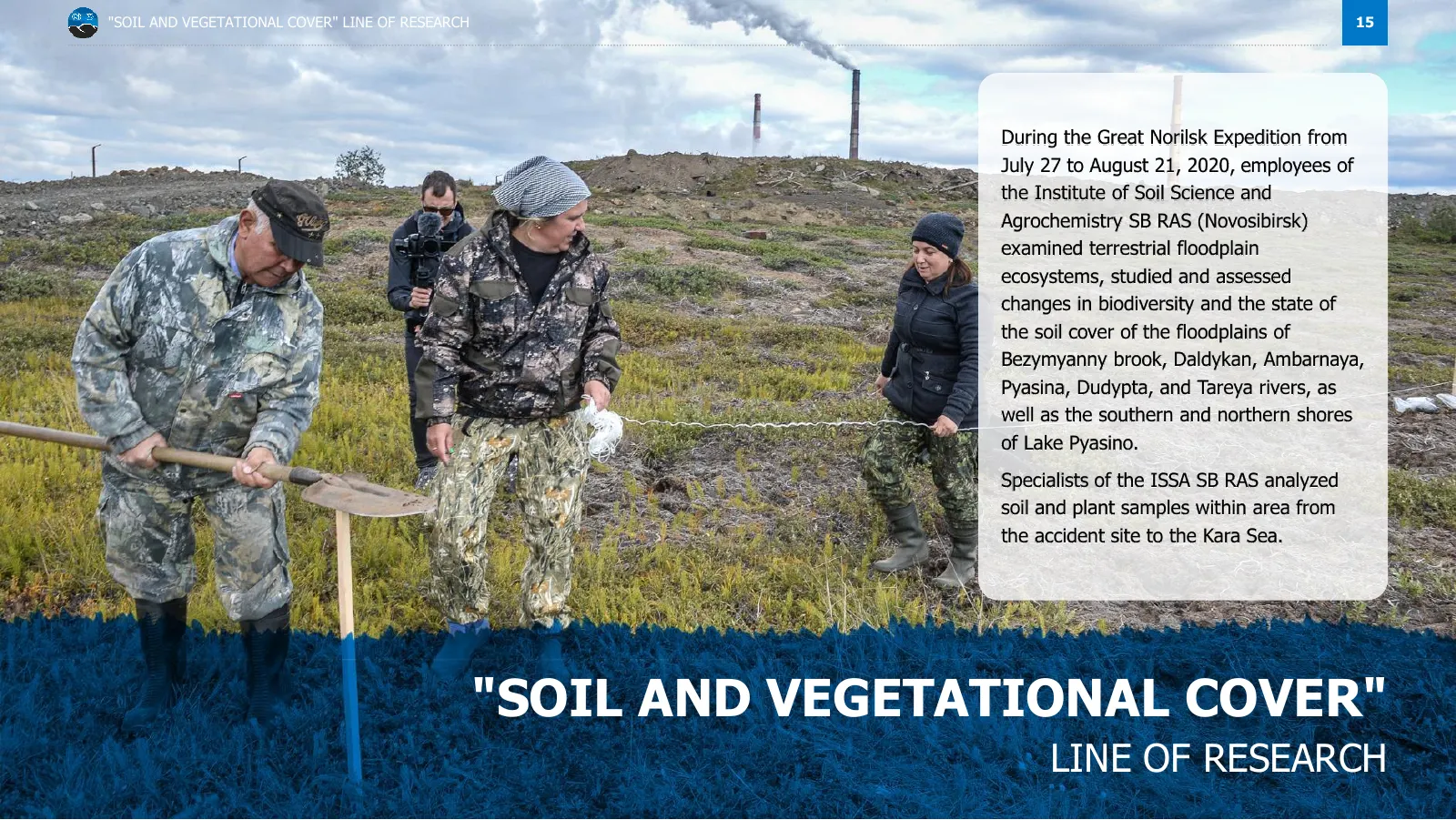
"SOIL AND VEGETATIONAL COVER" LINE OF RESEARCH 15 During the Great Norilsk Expedition from July 27 to August 21, 2020, employees of the Institute of Soil Science and Agrochemistry SB RAS (Novosibirsk) examined terrestrial floodplain ecosystems, studied and assessed changes in biodiversity and the st
Slide 16: Soil and Vegetational Cover line of research
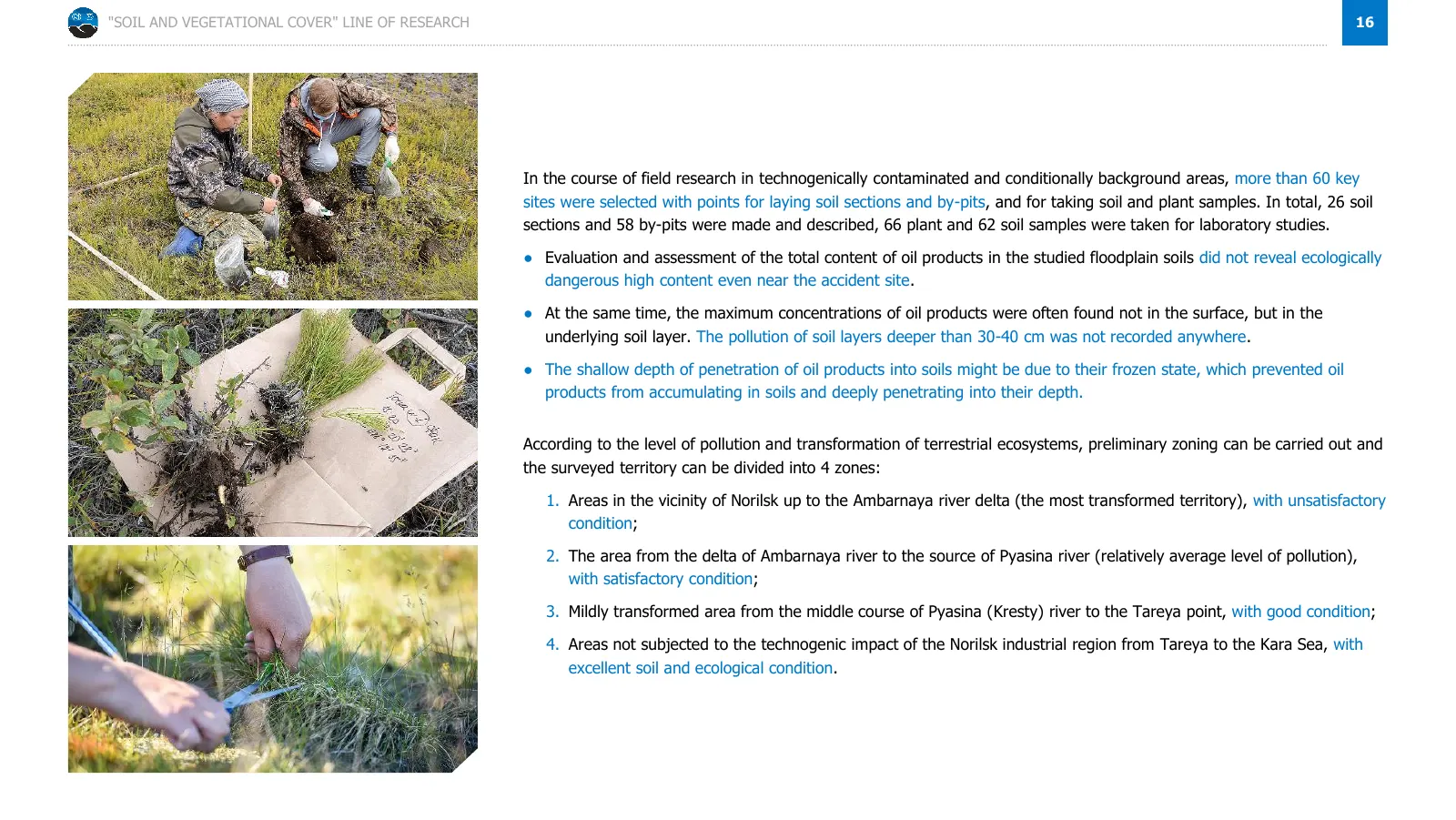
"SOIL AND VEGETATIONAL COVER" LINE OF RESEARCH 16 In the course of field research in technogenically contaminated and conditionally background areas, more than 60 key sites were selected with points for laying soil sections and by-pits, and for taking soil and plant samples. In total, 26 soil sectio
Slide 17: Bottom Sediments
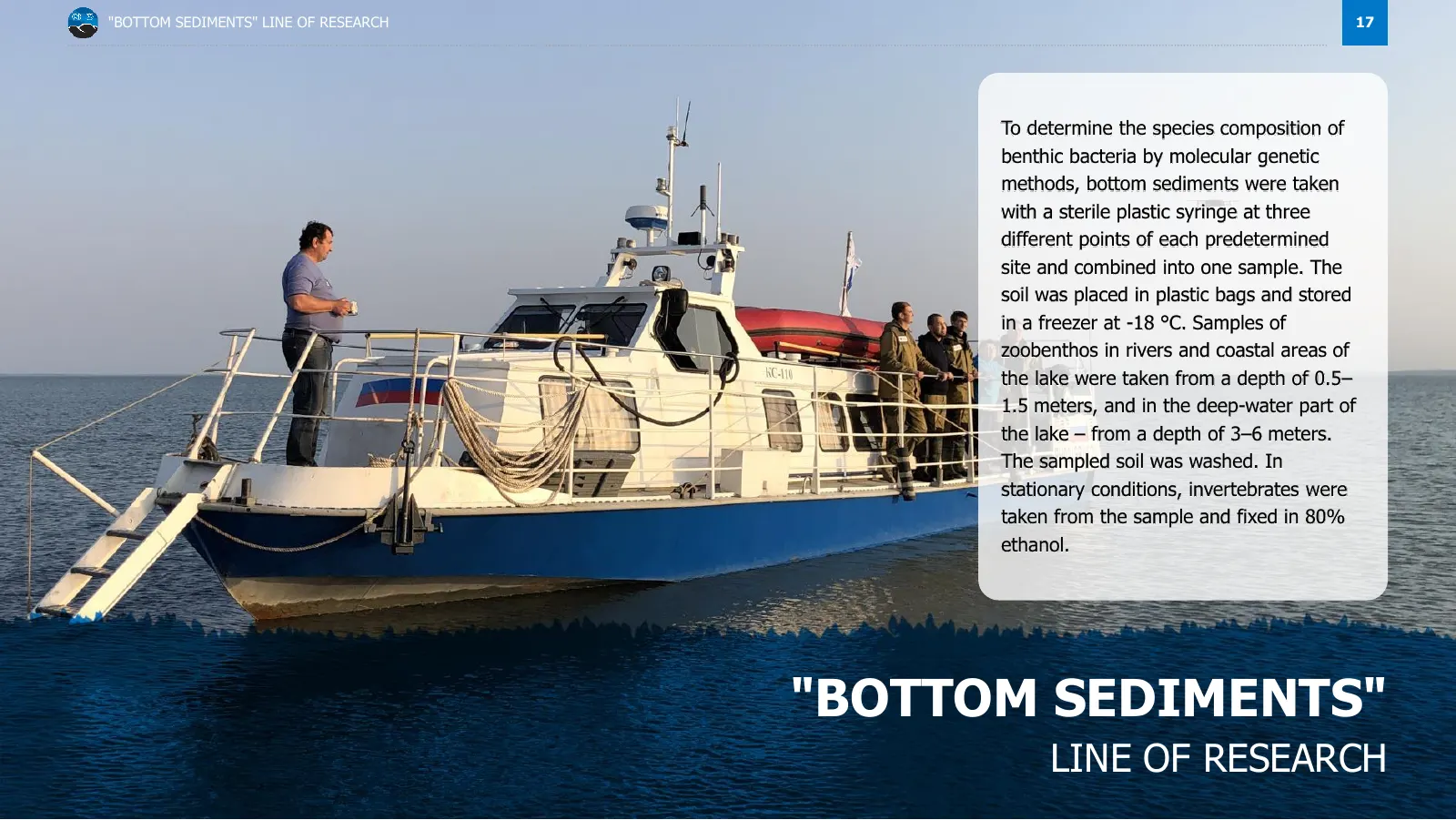
"BOTTOM SEDIMENTS" LINE OF RESEARCH 17 To determine the species composition of benthic bacteria by molecular genetic methods, bottom sediments were taken with a sterile plastic syringe at three different points of each predetermined site and combined into one sample. The soil was placed in plastic b
Slide 18: Bottom Sediments line of research
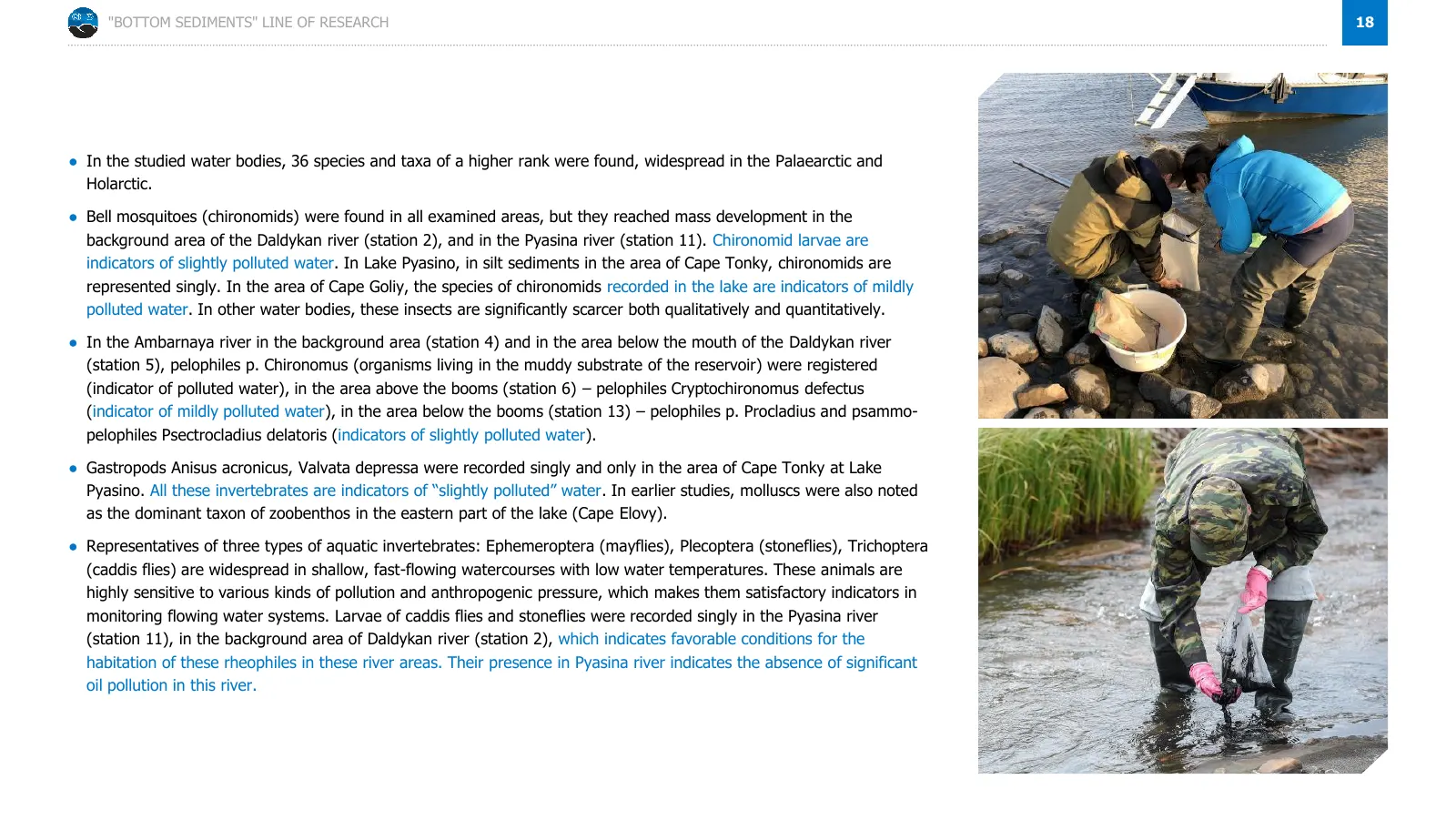
"BOTTOM SEDIMENTS" LINE OF RESEARCH 18 ● In the studied water bodies, 36 species and taxa of a higher rank were found, widespread in the Palaearctic and Holarctic. ● Bell mosquitoes (chironomids) were found in all examined areas, but they reached mass development in the background area of the Daldyk
Slide 19: Biological and Zoological Diversity
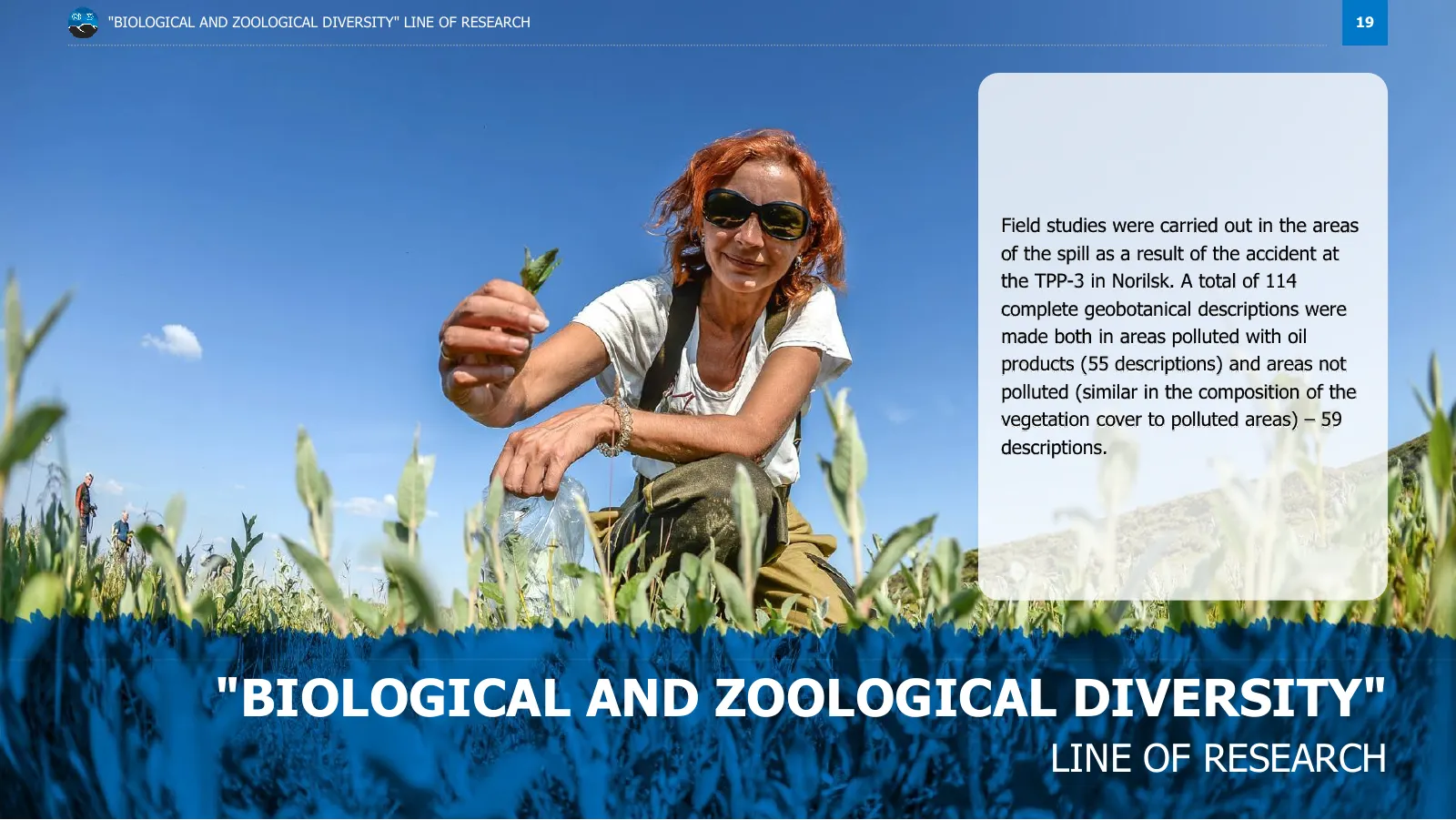
"BIOLOGICAL AND ZOOLOGICAL DIVERSITY" LINE OF RESEARCH 19 Field studies were carried out in the areas of the spill as a result of the accident at the TPP-3 in Norilsk. A total of 114 complete geobotanical descriptions were made both in areas polluted with oil products (55 descriptions) and areas not
Slide 20: Biological and Zoological Diversity line of research
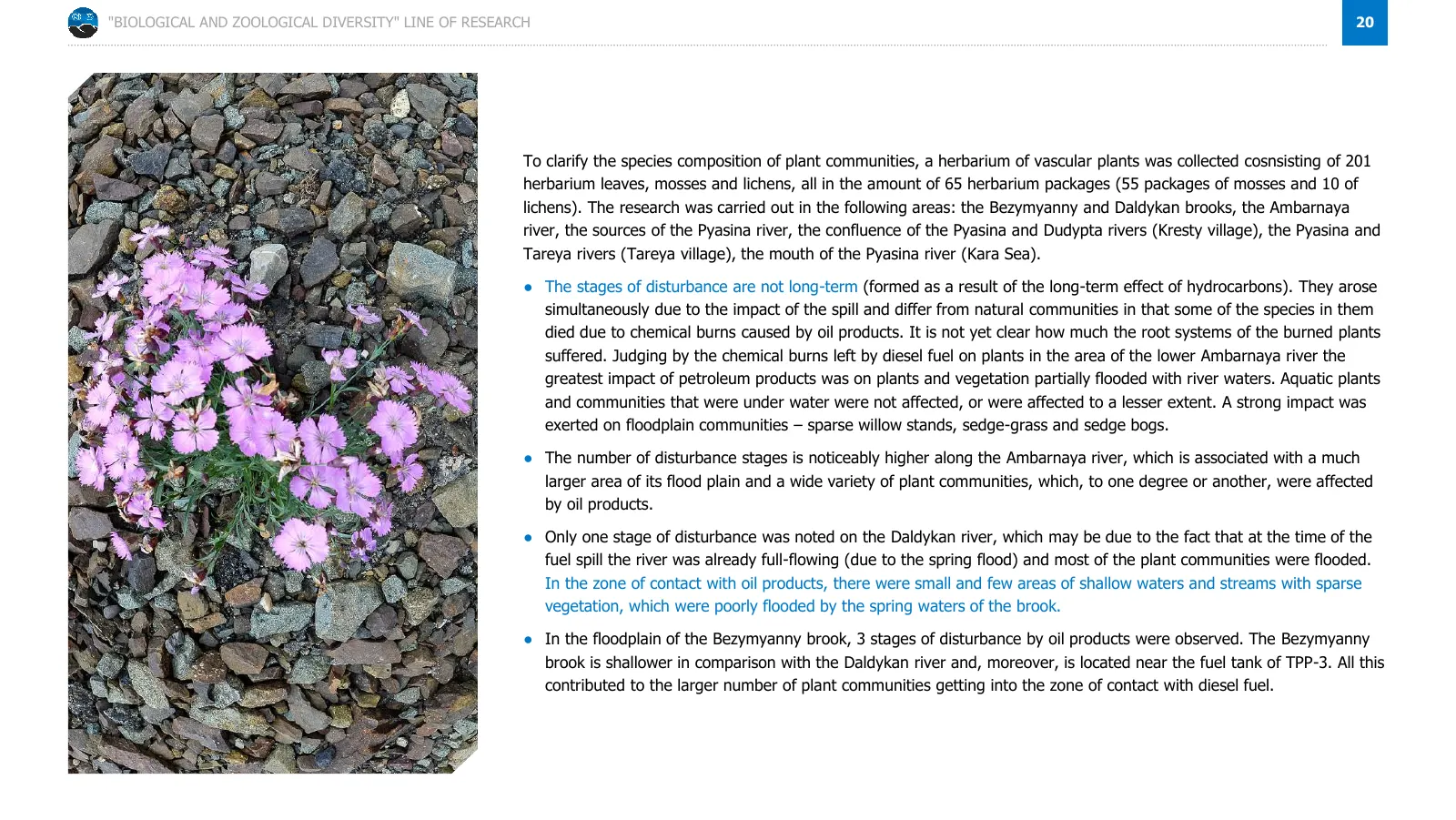
"BIOLOGICAL AND ZOOLOGICAL DIVERSITY" LINE OF RESEARCH 20 To clarify the species composition of plant communities, a herbarium of vascular plants was collected cosnsisting of 201 herbarium leaves, mosses and lichens, all in the amount of 65 herbarium packages (55 packages of mosses and 10 of lichens
Slide 21: Phyto-diversity of disturbed vegetation
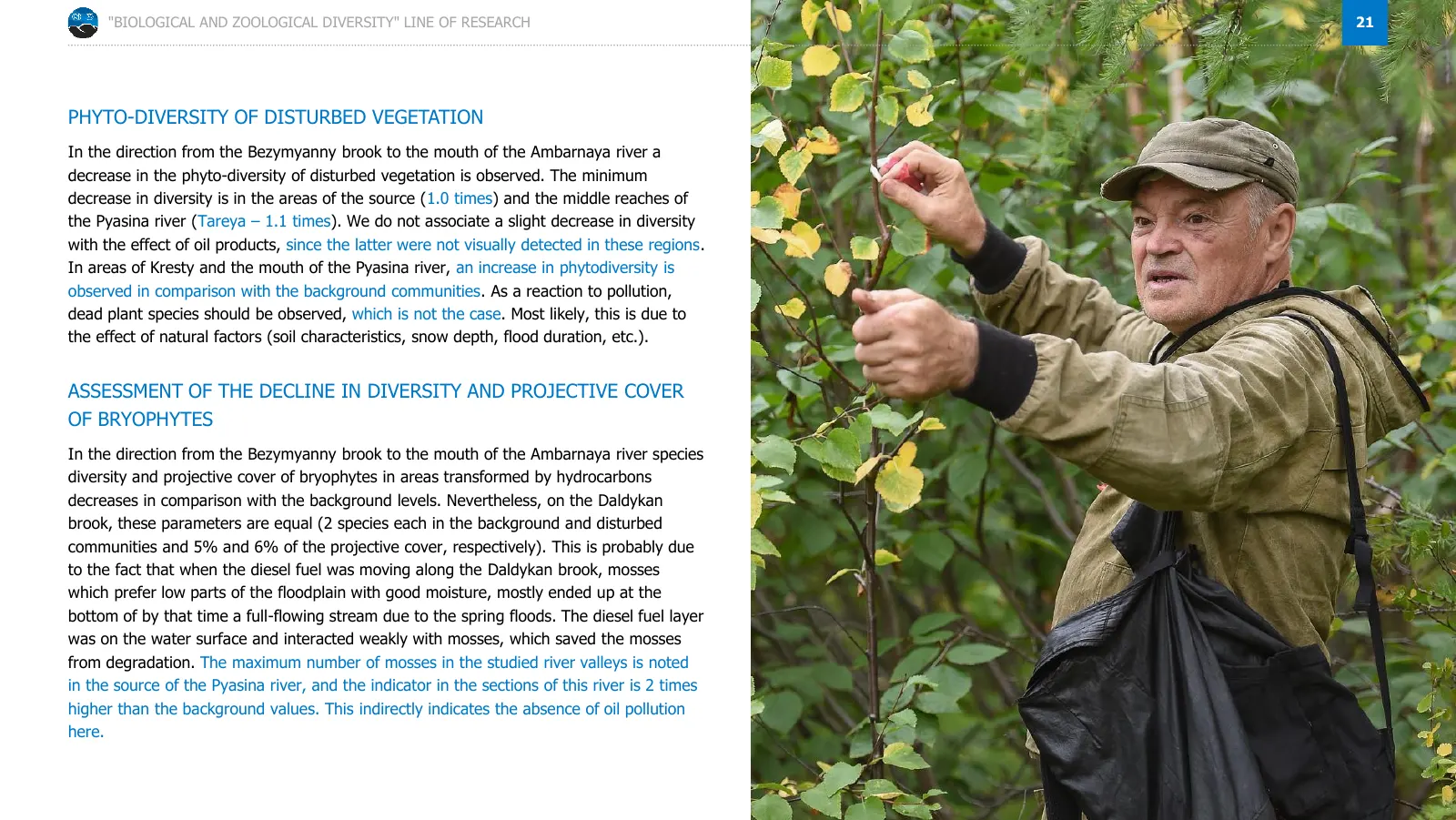
"BIOLOGICAL AND ZOOLOGICAL DIVERSITY" LINE OF RESEARCH 21 PHYTO-DIVERSITY OF DISTURBED VEGETATION In the direction from the Bezymyanny brook to the mouth of the Ambarnaya river a decrease in the phyto-diversity of disturbed vegetation is observed. The minimum decrease in diversity is in the areas of
Slide 22: Biological and Zoological Diversity: conclusions
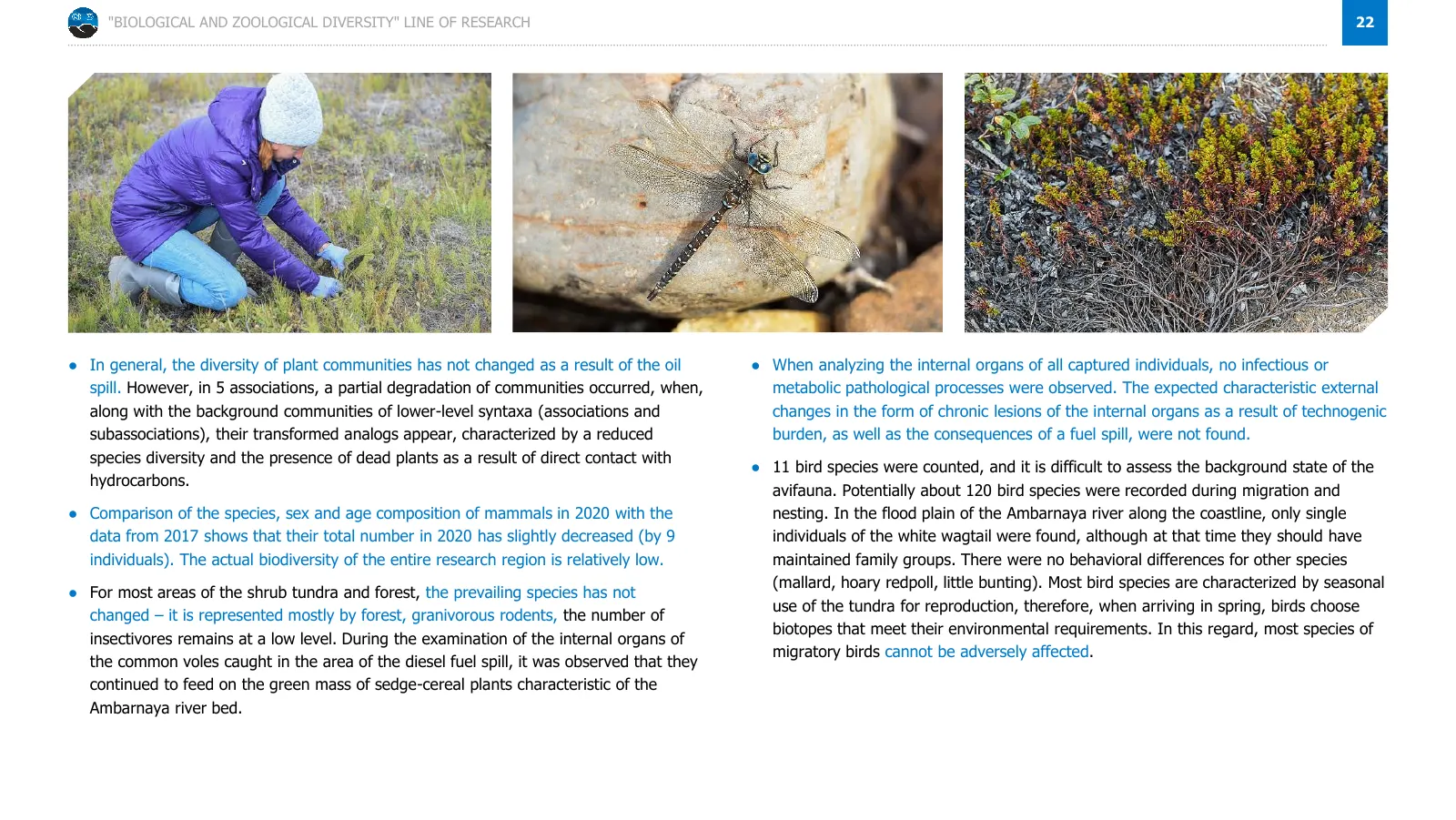
"BIOLOGICAL AND ZOOLOGICAL DIVERSITY" LINE OF RESEARCH 22 ● In general, the diversity of plant communities has not changed as a result of the oil ● When analyzing the internal organs of all captured individuals, no infectious or spill. However, in 5 associations, a partial degradation of communities
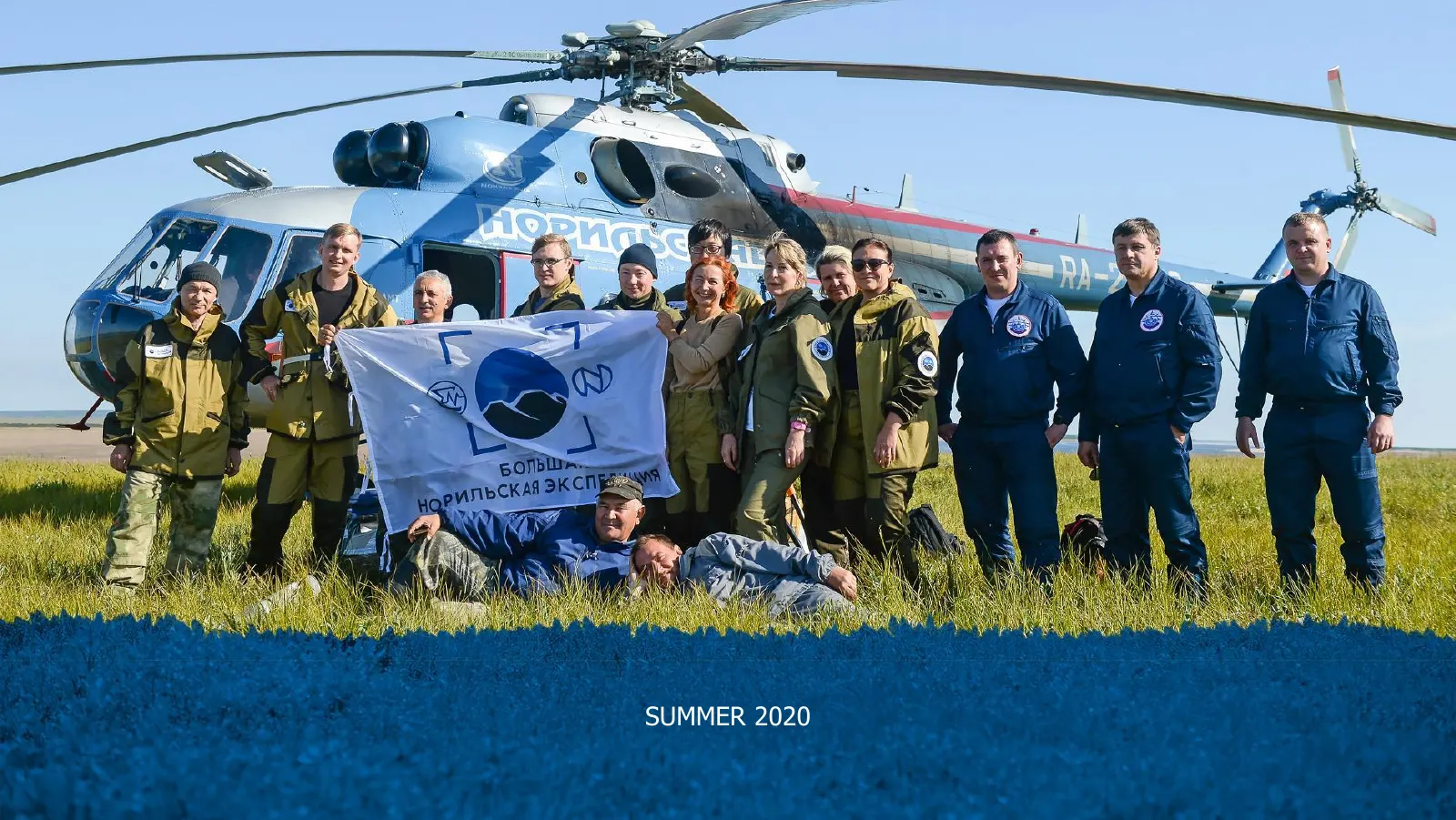
Slide 23: Summer 2020
~ SUMMER 2020 %
Source: company website