Median Technologies · EURONEXT:ALMDT
Median Technologies — ECR 2019 (European Congress of Radiology), Vienna
10 slides from Median Technologies's conference presentation, May 2019
Slide 1: RECIST 1.1 evaluations in a phase II clinical trial: Does reader expertise represent a risk factor?
RECIST 1.1 evaluations in a phase II clinical trial: Does reader expertise represent a risk factor for measure reliability? Hubert Beaumont1, Tracey L. Evans2, Catherine Klifa1, Sae Rom Hong3, Mustapha Chadjaa4, Zsuzsanna Monostori5, Antoine Iannessi6 1Median Technologies, Valbonne, France; 2U. of P
Slide 2: Conflict of interest
Conflict of interest Employee at MEDIAN Technologies 2 ECR | Feb 27 - March 3, 2019 | Vienna, Austria | Session SS 1016
Slide 3: Background
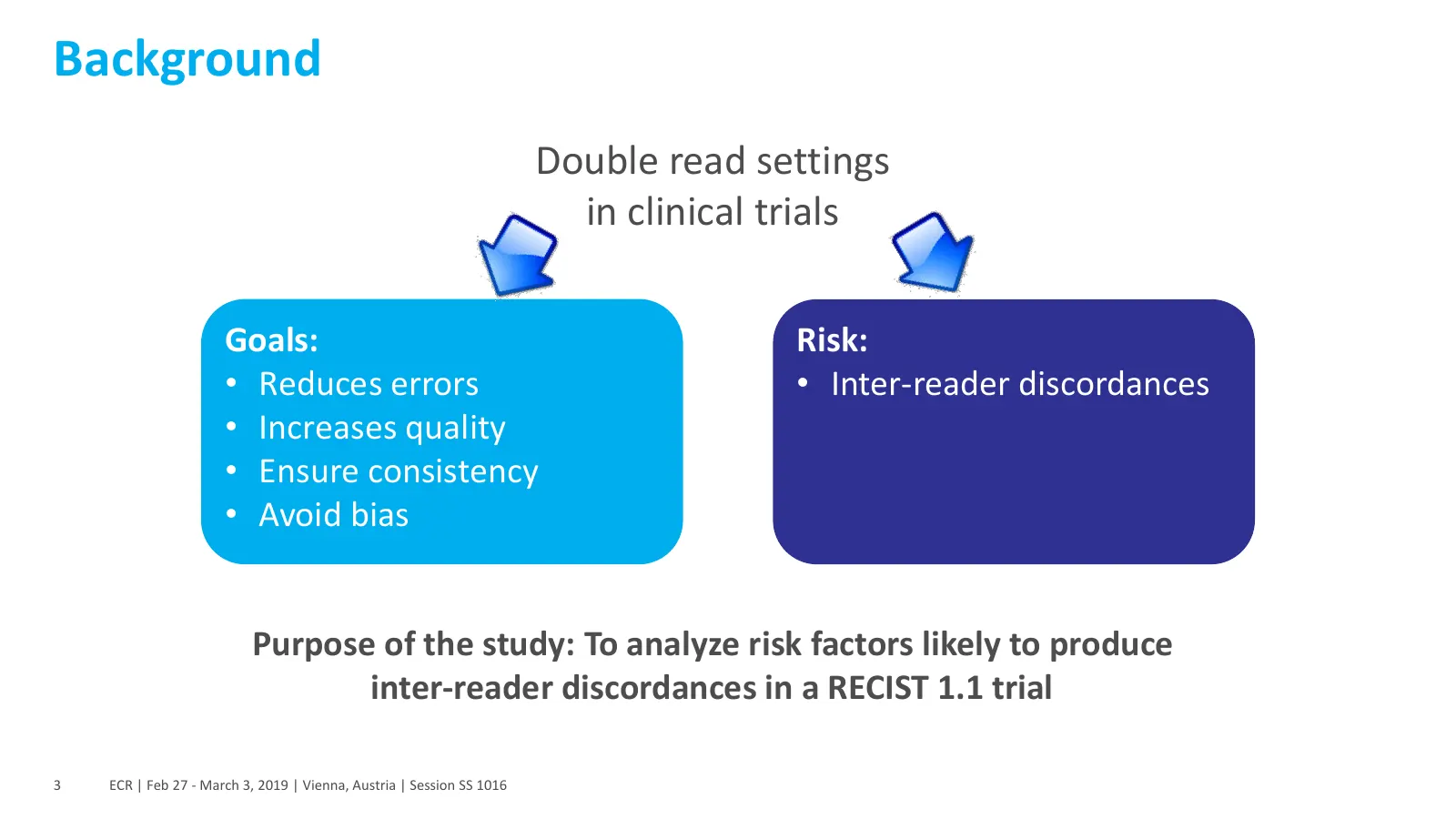
Background Double read settings in clinical trials Goals: Risk: • Reduces errors • Inter-reader discordances • Increases quality • Ensure consistency • Avoid bias Purpose of the study: To analyze risk factors likely to produce inter-reader discordances in a RECIST 1.1 trial 3 ECR | Feb 27 - March 3,
Slide 4: Materials
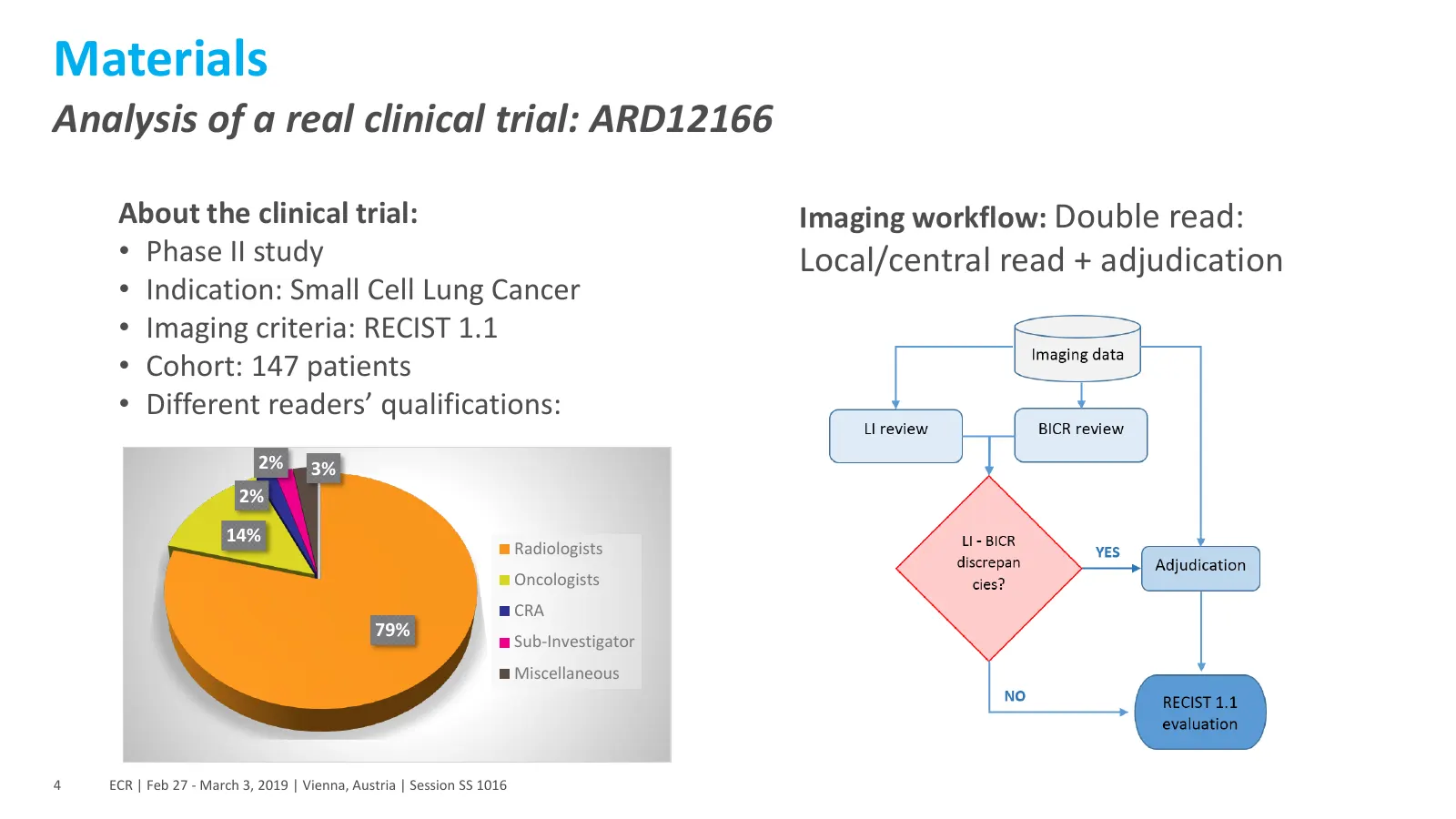
Materials Analysis of a real clinical trial: ARD12166 About the clinical trial: Imaging workflow: Double read: • Phase II study Local/central read + adjudication • Indication: Small Cell Lung Cancer • Imaging criteria: RECIST 1.1 • Cohort: 147 patients • Different readers’ qualifications: 2% 3% 2% 1
Slide 5: Methods
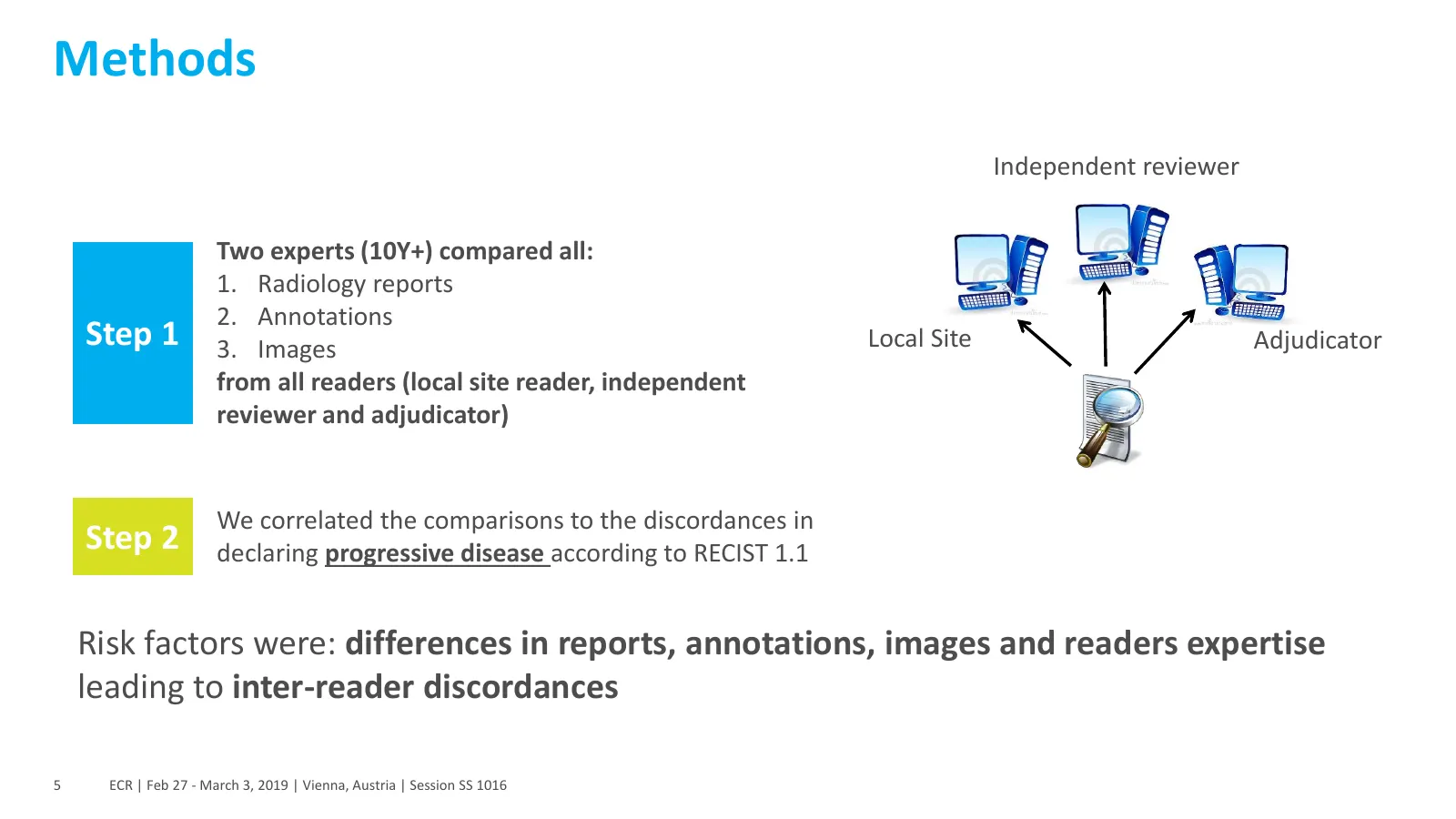
Methods Independent reviewer Two experts (10Y+) compared all: 1. Radiology reports 2. Annotations Step 1 3. Images Local Site Adjudicator from all readers (local site reader, independent reviewer and adjudicator) We correlated the comparisons to the discordances in Step 2 declaring progressive disea
Slide 6: Tested Risks factors
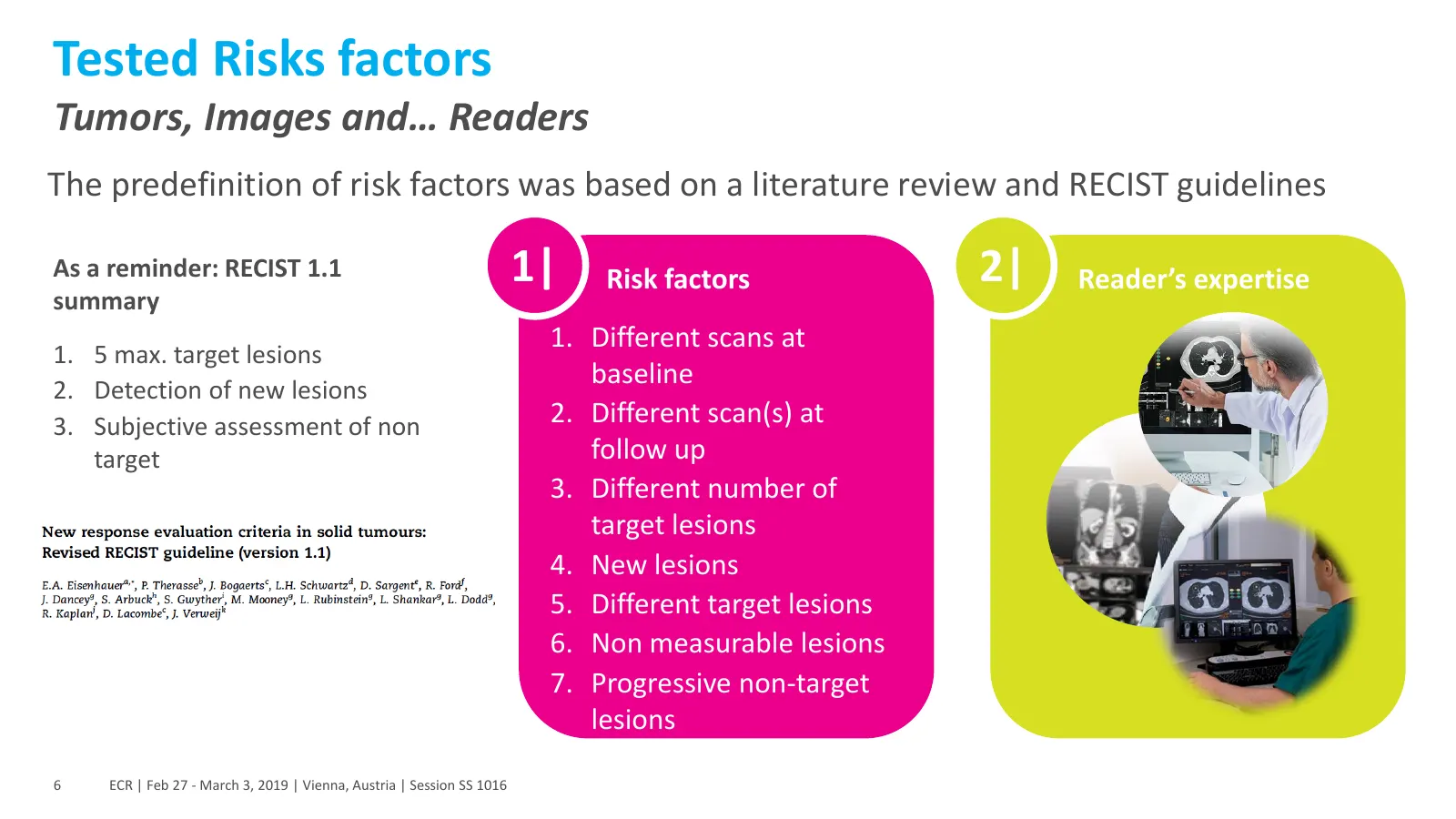
Tested Risks factors Tumors, Images and… Readers The predefinition of risk factors was based on a literature review and RECIST guidelines As a reminder: RECIST 1.1 1| Risk factors 2| Reader’s expertise summary 1. Different scans at 1. 5 max. target lesions baseline 2. Detection of new lesions 3. Sub
Slide 7: Results
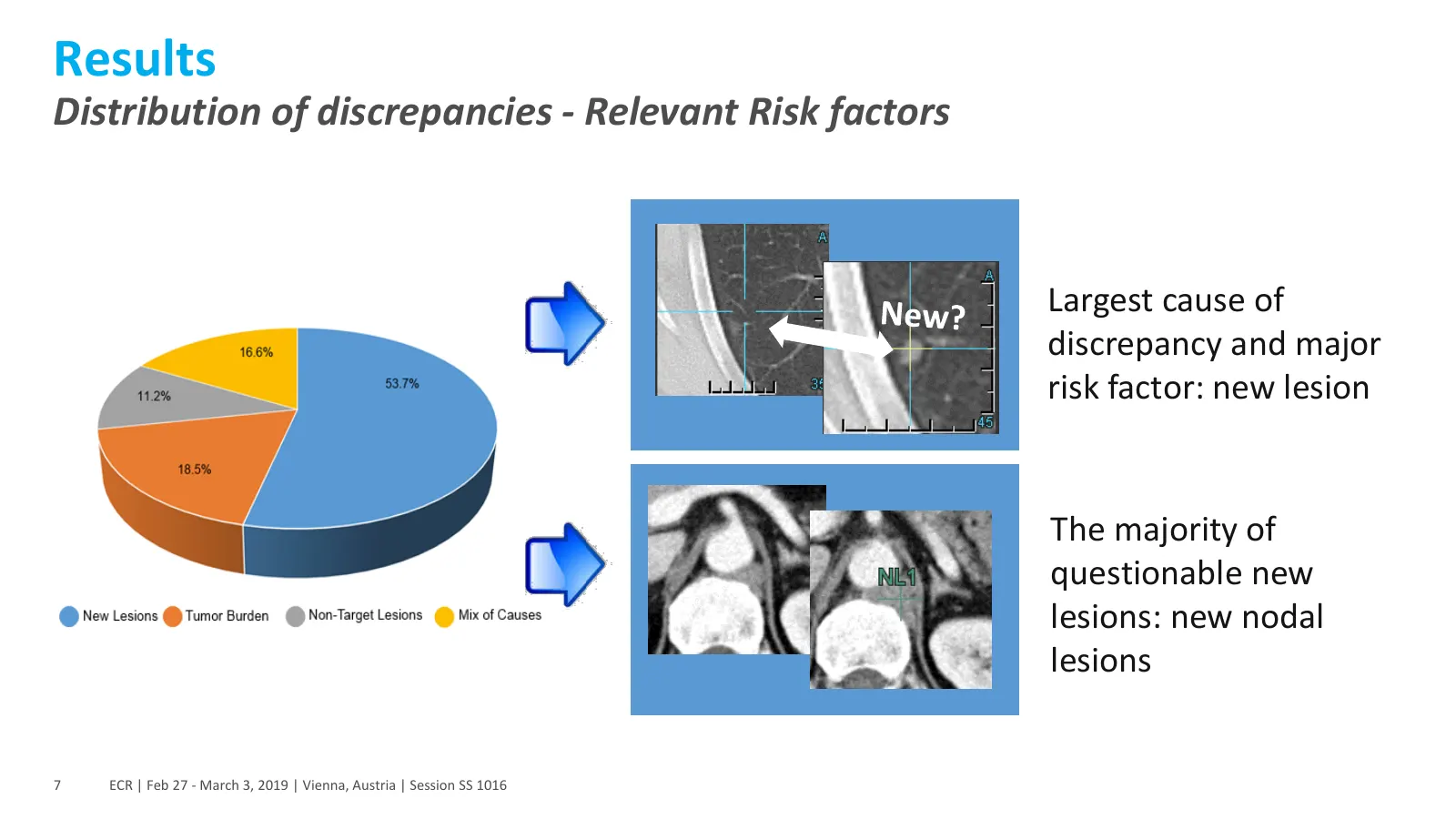
Results Distribution of discrepancies - Relevant Risk factors Largest cause of discrepancy and major risk factor: new lesion The majority of questionable new lesions: new nodal lesions 7 ECR | Feb 27 - March 3, 2019 | Vienna, Austria | Session SS 1016
Slide 8: Results: Irrelevant risk factors
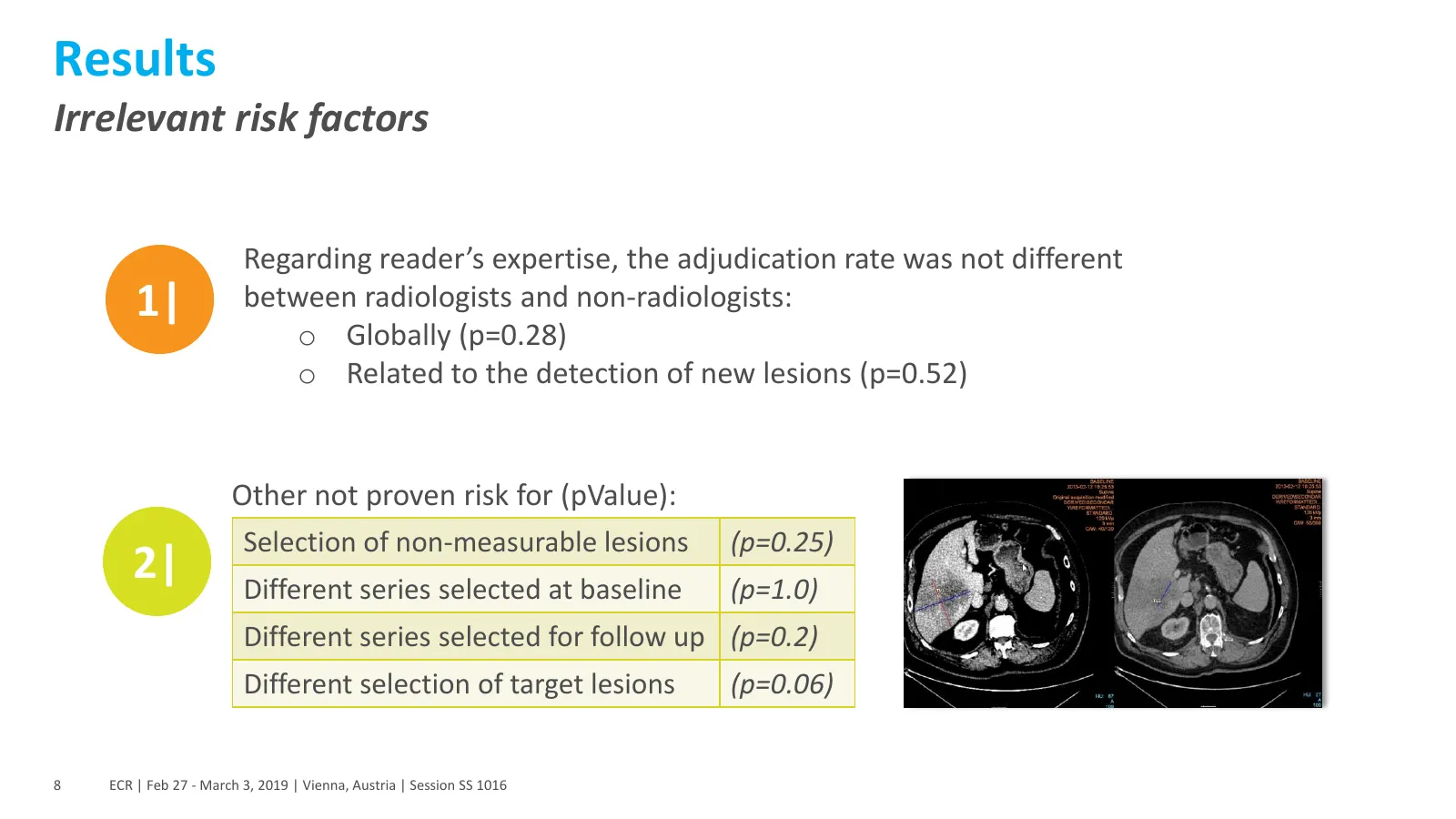
Results Irrelevant risk factors Regarding reader’s expertise, the adjudication rate was not different 1| between radiologists and non-radiologists: o Globally (p=0.28) o Related to the detection of new lesions (p=0.52) Other not proven risk for (pValue): Selection of non-measurable lesions (p=0.25)
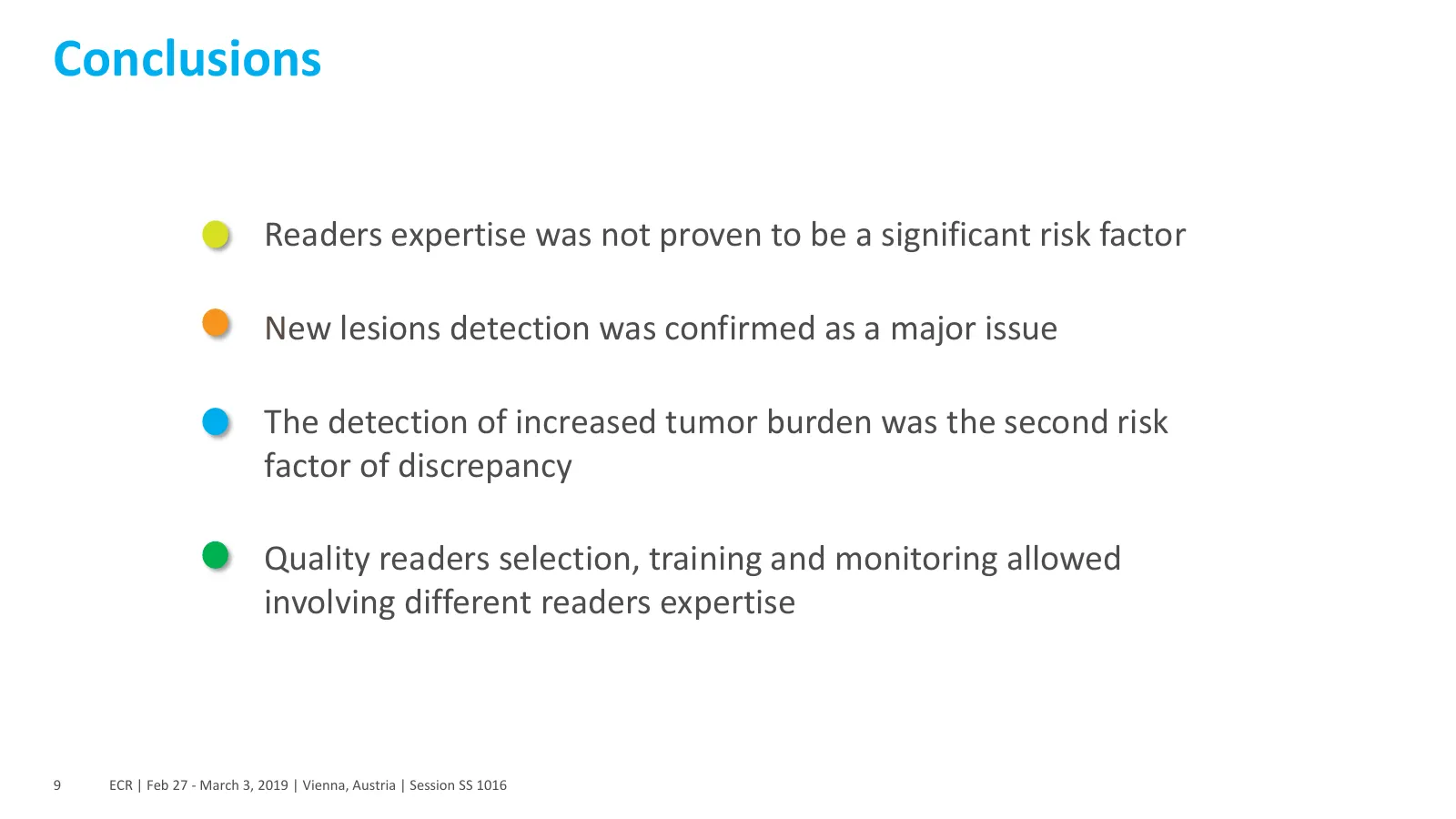
Slide 9: Conclusions
Conclusions Readers expertise was not proven to be a significant risk factor New lesions detection was confirmed as a major issue The detection of increased tumor burden was the second risk factor of discrepancy Quality readers selection, training and monitoring allowed involving different readers e

Slide 10: Thank you!
Thank you! Hubert Beaumont, Tracey L. Evans, Catherine Klifa, Sae Rom Hong, Mustapha Chadjaa, Zsuzsanna Monostori, Antoine Iannessi 10 ECR | Feb 27 - March 3, 2019 | Vienna, Austria | Session SS 1016 Contact: hubert.beaumont@mediantechnologies.com
Source: Internet Archive copy of mediantechnologies.com
More decks from Median Technologies
 Investor Presentation (September 2026)27 slides · September 2026
 Investor Presentation (March 2026)30 slides · March 2026
 Cowen & Co 43rd Health Care Conference 202326 slides · Mar 7, 2023
 European Congress of Radiology 202211 slides · Jul 15, 2022
 Technical Presentation (2022)10 slides · 2022
 Actifin Paris (October 2020)25 slides · Oct 28, 2020