Palo Alto Networks, Inc. · NASDAQ:PANW
Palo Alto Networks — Technical Presentation (May 2025)
16 slides from Palo Alto Networks's technical presentation, May 22, 2025
Slide 1: PAN-OS Release Versioning & Guidance
PAN-OS Release Versioning & Guidance May 22nd, 2025 © 2025 Palo Alto Networks, Inc. All rights reserved. Proprietary and confidential information.

Slide 2: From Palo Alto Networks
From Palo Alto Networks … Rohit Sawhney Jeff Hardee Subject Matter Expert Subject Matter Expert Sr. Manager, Product Management NGFW Customer Success Engineer © 2025 Palo Alto Networks, Inc. All rights reserved. Proprietary and confidential information.
Slide 3: Agenda
AGENDA ● Release Terminology ● PAN-OS Release Model (Preferred Release Guidance & Criteria) ● How We Deliver Fixes and Updates ● Understanding Bug Fixes in PAN-OS Versions ● Upgrade Journey ● Available Training Resources © 2025 Palo Alto Networks, Inc. All rights reserved. Proprietary and confidentia
Slide 4: PAN-OS Releases
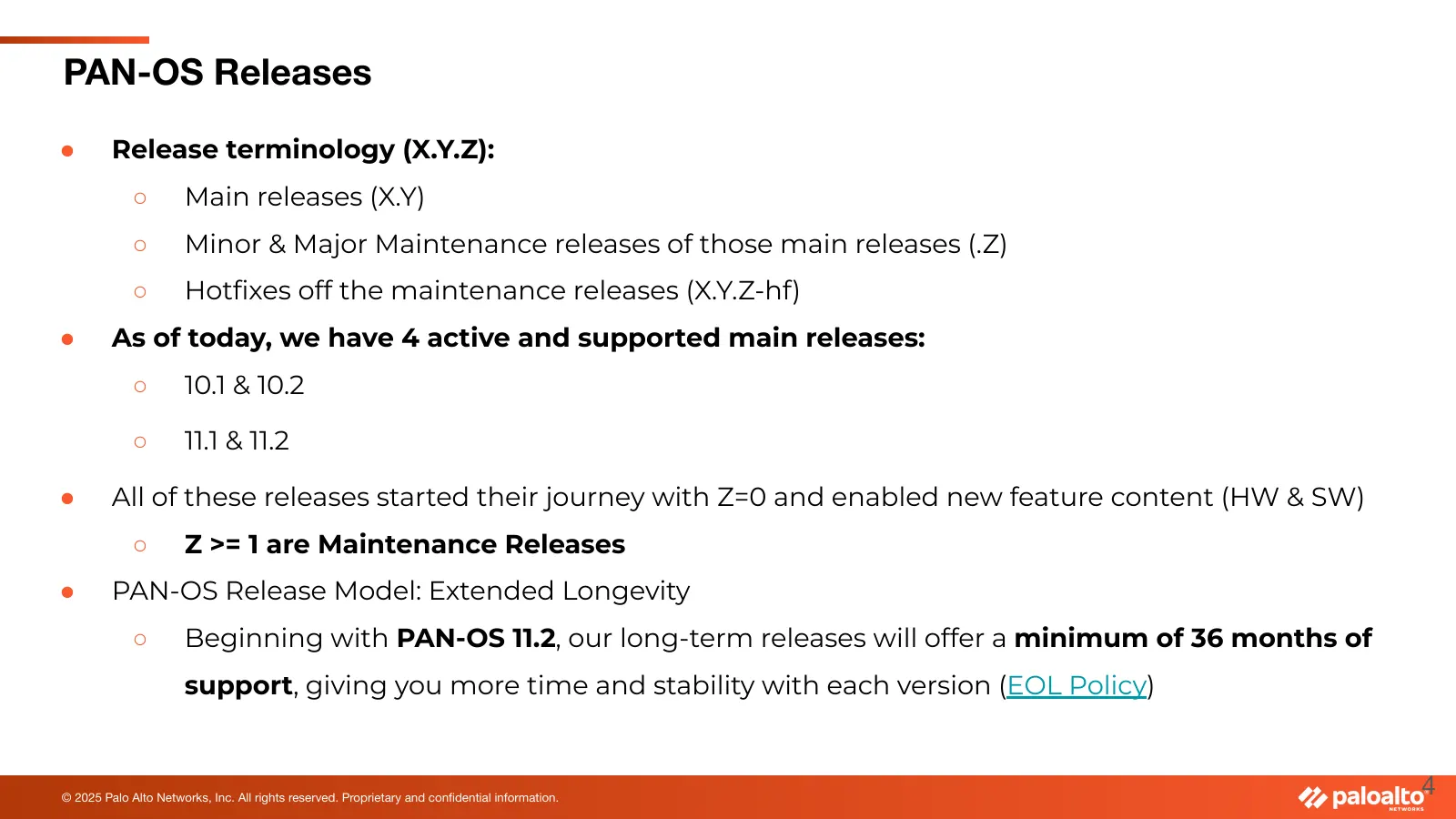
PAN-OS Releases ● Release terminology (X.Y.Z): ○ Main releases (X.Y) ○ Minor & Major Maintenance releases of those main releases (.Z) ○ Hotfixes off the maintenance releases (X.Y.Z-hf) ● As of today, we have 4 active and supported main releases: ○ 10.1 & 10.2 ○ 11.1 & 11.2 ● All of these releases sta
Slide 5: PAN-OS Release Model
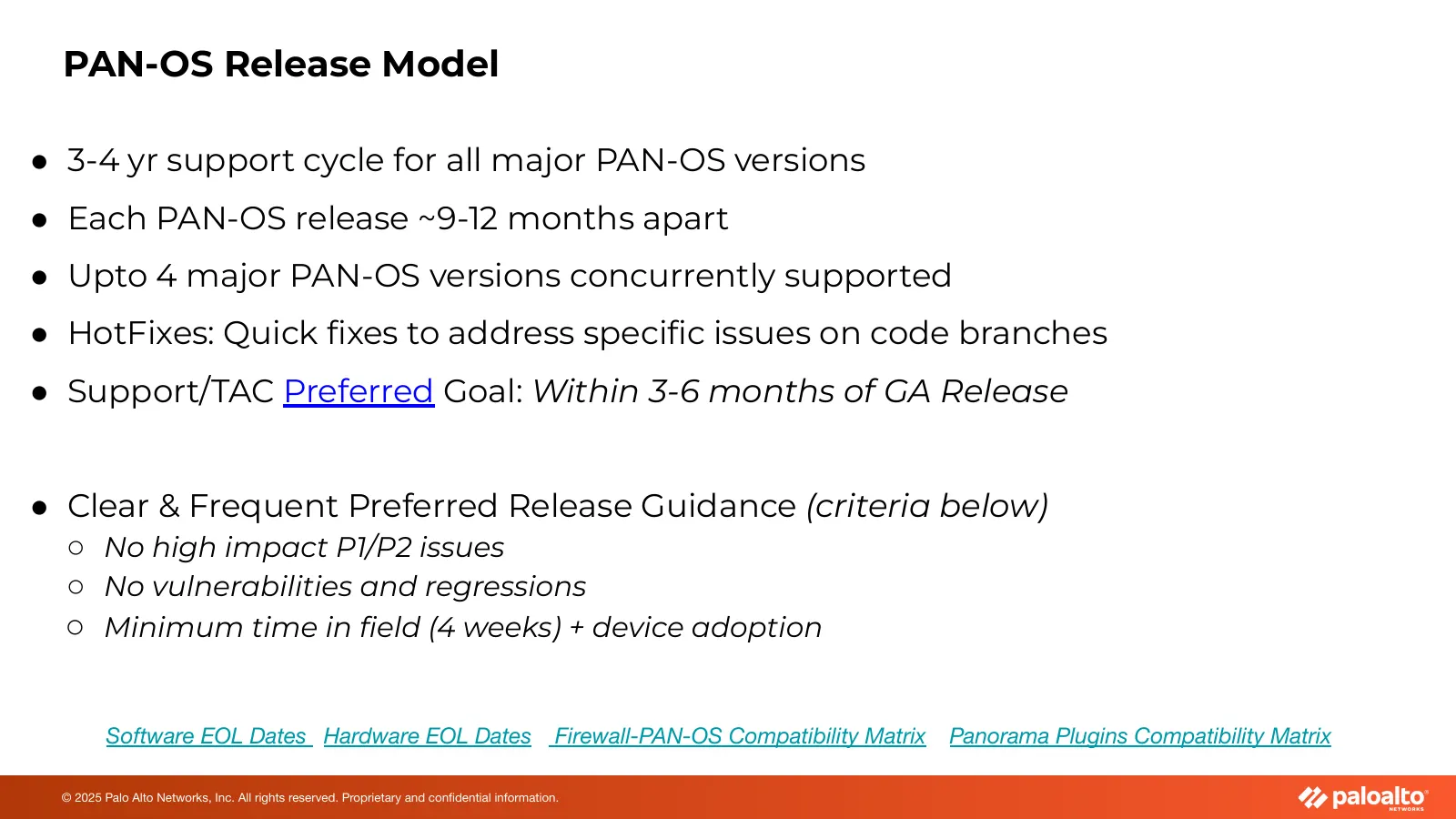
PAN-OS Release Model ● 3-4 yr support cycle for all major PAN-OS versions ● Each PAN-OS release ~9-12 months apart ● Upto 4 major PAN-OS versions concurrently supported ● HotFixes: Quick fixes to address specific issues on code branches ● Support/TAC Preferred Goal: Within 3-6 months of GA Release ● C
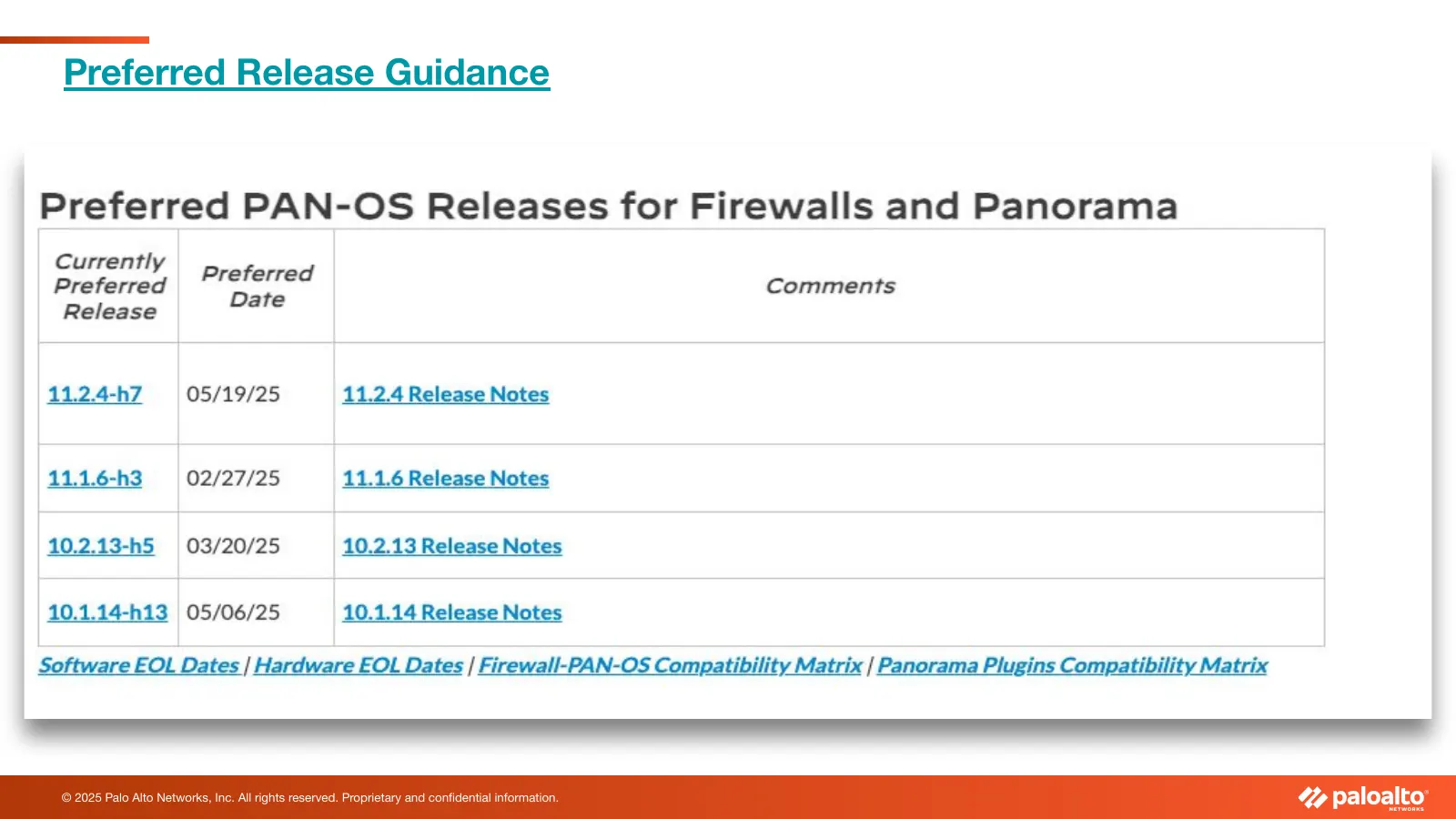
Slide 6: Preferred Release Guidance
Preferred Release Guidance © 2025 Palo Alto Networks, Inc. All rights reserved. Proprietary and confidential information.
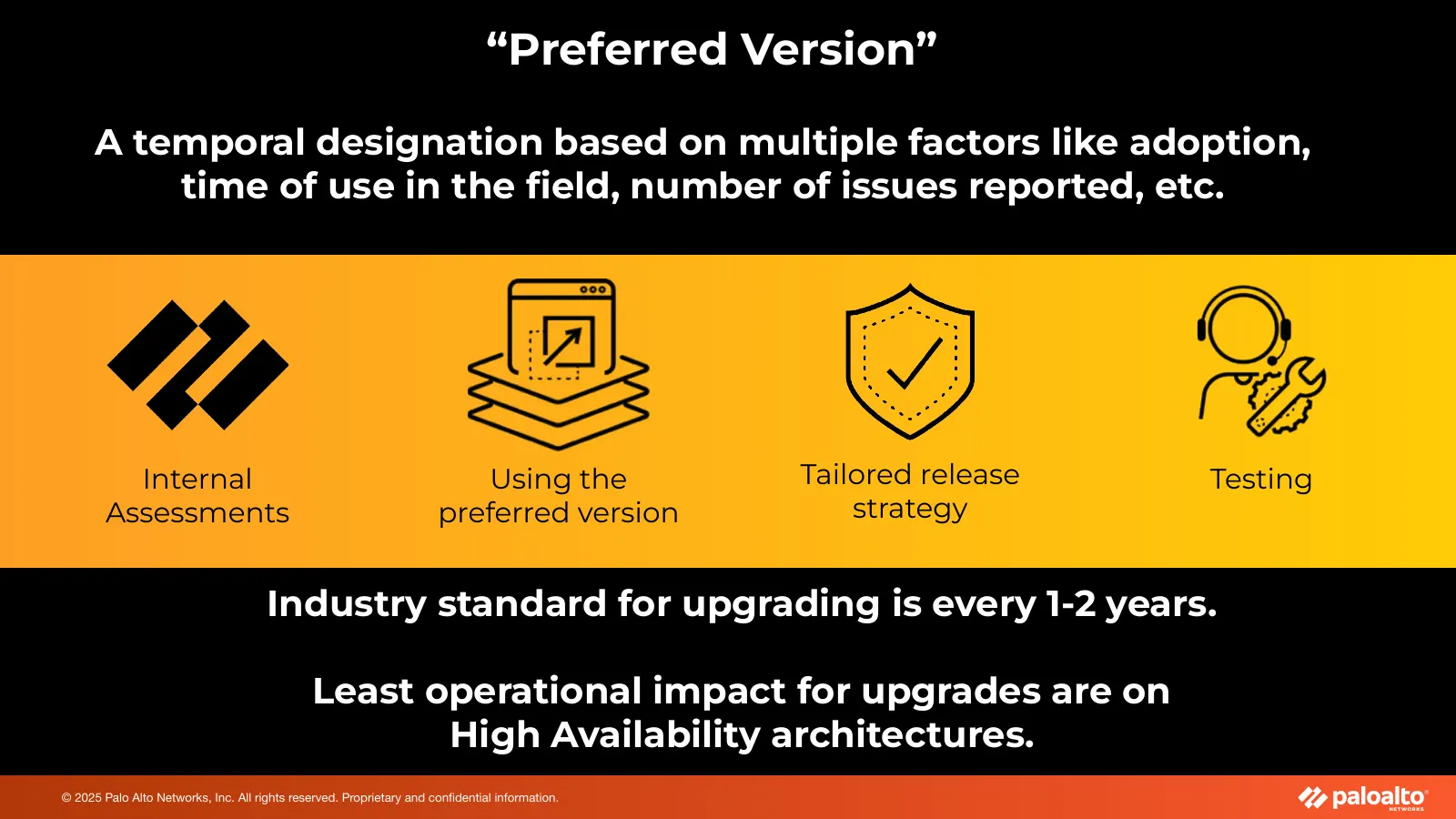
Slide 7: "Preferred Version"
“Preferred Version” A temporal designation based on multiple factors like adoption, time of use in the field, number of issues reported, etc. Internal Using the Tailored release Testing Assessments preferred version strategy Industry standard for upgrading is every 1-2 years. Least operational impact
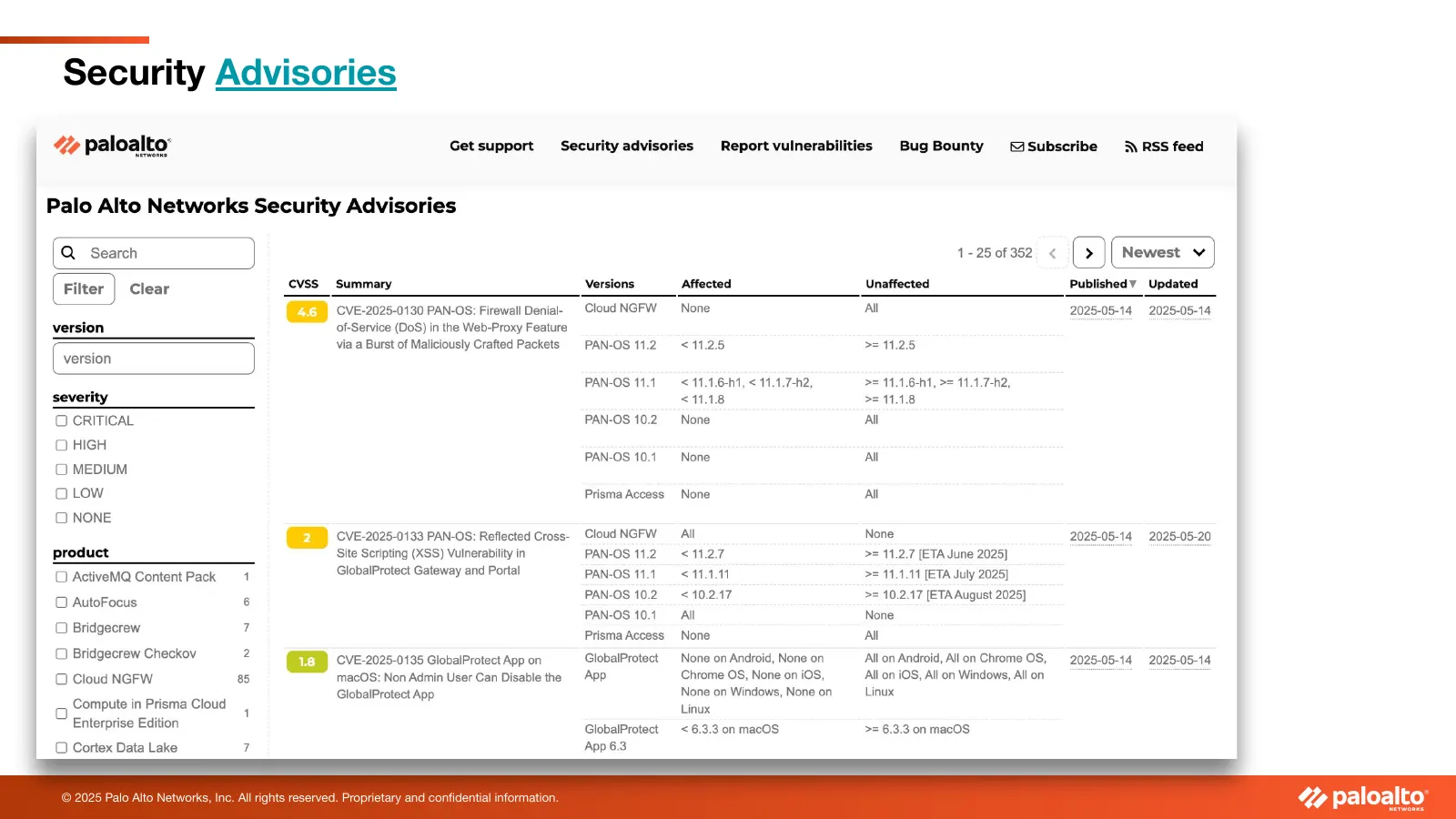
Slide 8: Security Advisories
Security Advisories © 2025 Palo Alto Networks, Inc. All rights reserved. Proprietary and confidential information.
Slide 9: How We Deliver Fixes and Updates
How We Deliver Fixes and Updates Goal: Deliver the most impactful solutions efficiently, while also maintaining stability. 1. Initial Development: Every fix or new feature is first developed and thoroughly tested in our main engineering branch, which will be part of a future major PAN-OS release (ie -
Slide 10: Understanding Bug Fixes in PAN-OS Versions
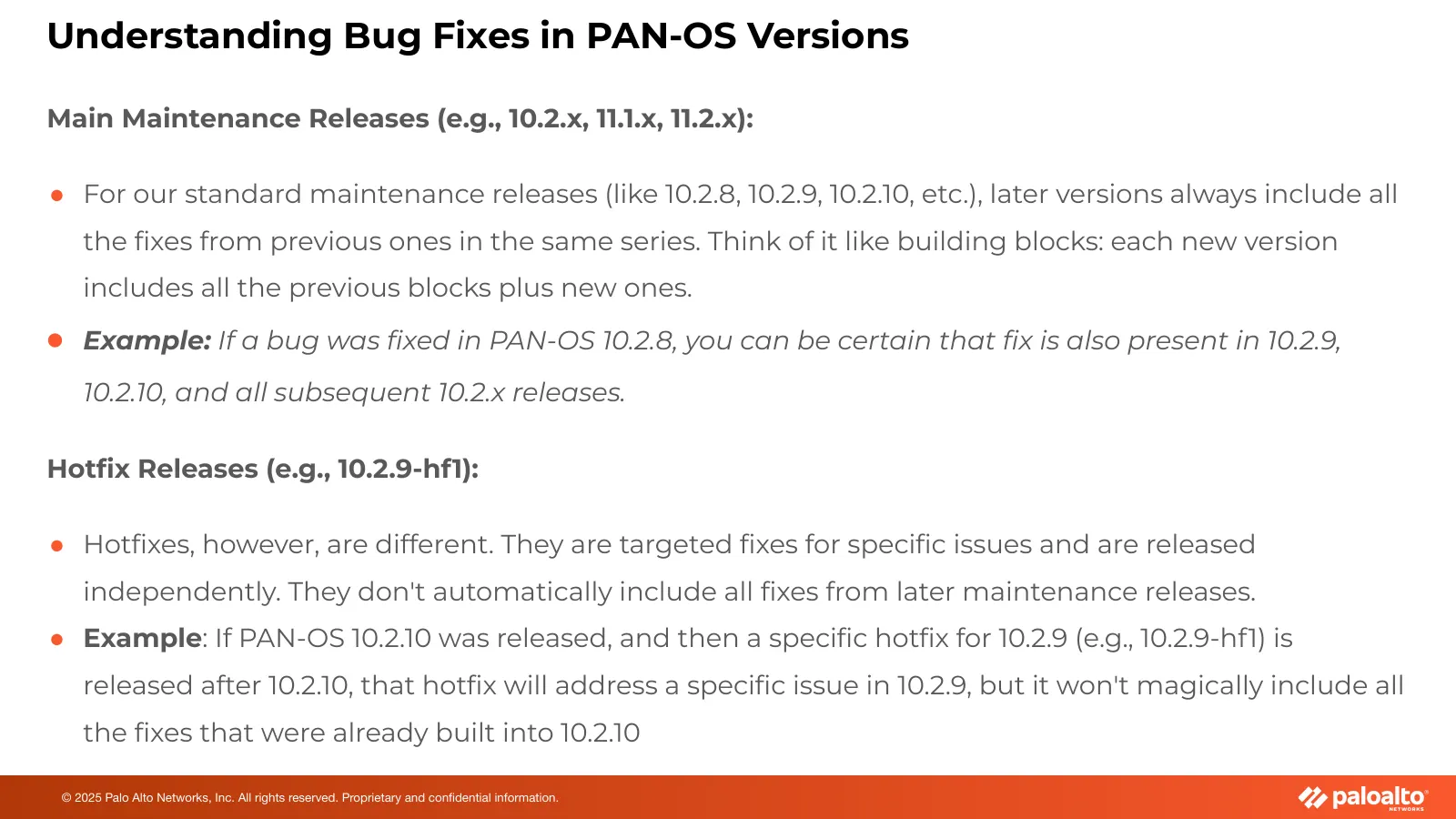
Understanding Bug Fixes in PAN-OS Versions Main Maintenance Releases (e.g., 10.2.x, 11.1.x, 11.2.x): ● For our standard maintenance releases (like 10.2.8, 10.2.9, 10.2.10, etc.), later versions always include all the fixes from previous ones in the same series. Think of it like building blocks: each
Slide 11: Why Upgrade? (to 10.2)
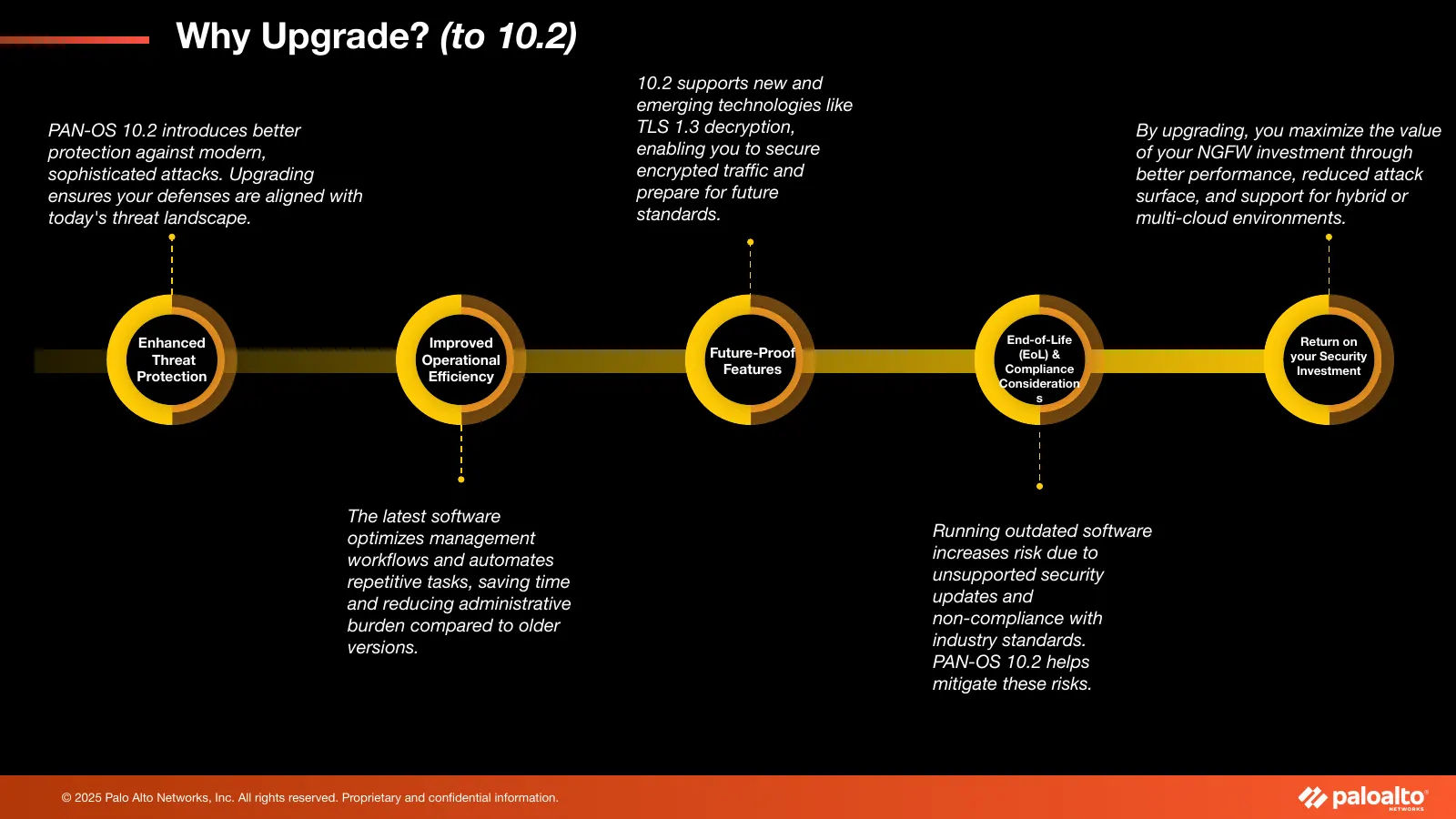
Why Upgrade? (to 10.2) 10.2 supports new and emerging technologies like PAN-OS 10.2 introduces better TLS 1.3 decryption, By upgrading, you maximize the value protection against modern, enabling you to secure of your NGFW investment through sophisticated attacks. Upgrading encrypted traffic and better
Slide 12: Why Upgrade? (to 11.1 and beyond)
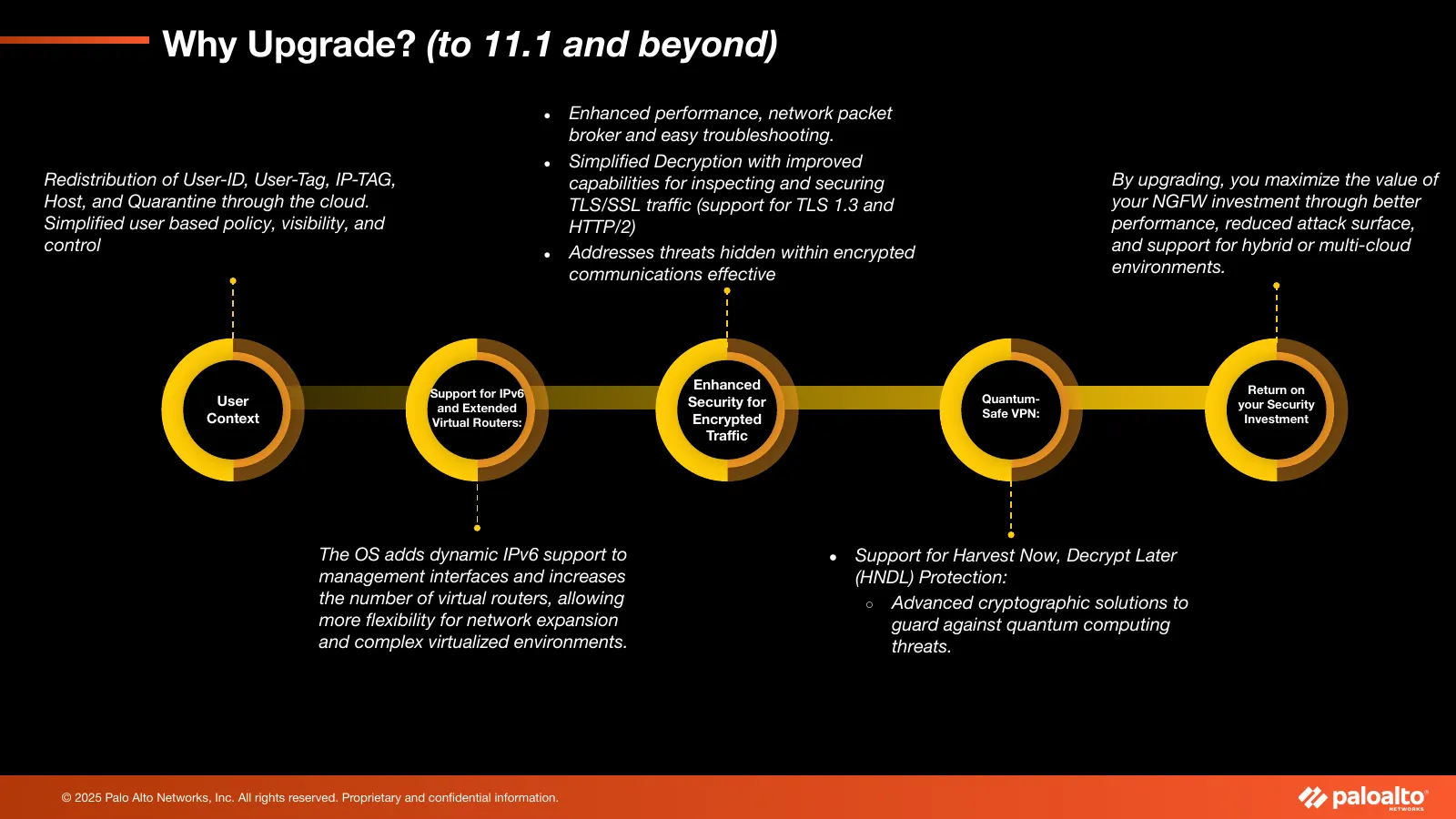
Why Upgrade? (to 11.1 and beyond) ● Enhanced performance, network packet broker and easy troubleshooting. ● Simplified Decryption with improved Redistribution of User-ID, User-Tag, IP-TAG, capabilities for inspecting and securing By upgrading, you maximize the value of Host, and Quarantine through th
Slide 13: Planning Your PAN-OS Upgrade: Key Guidelines
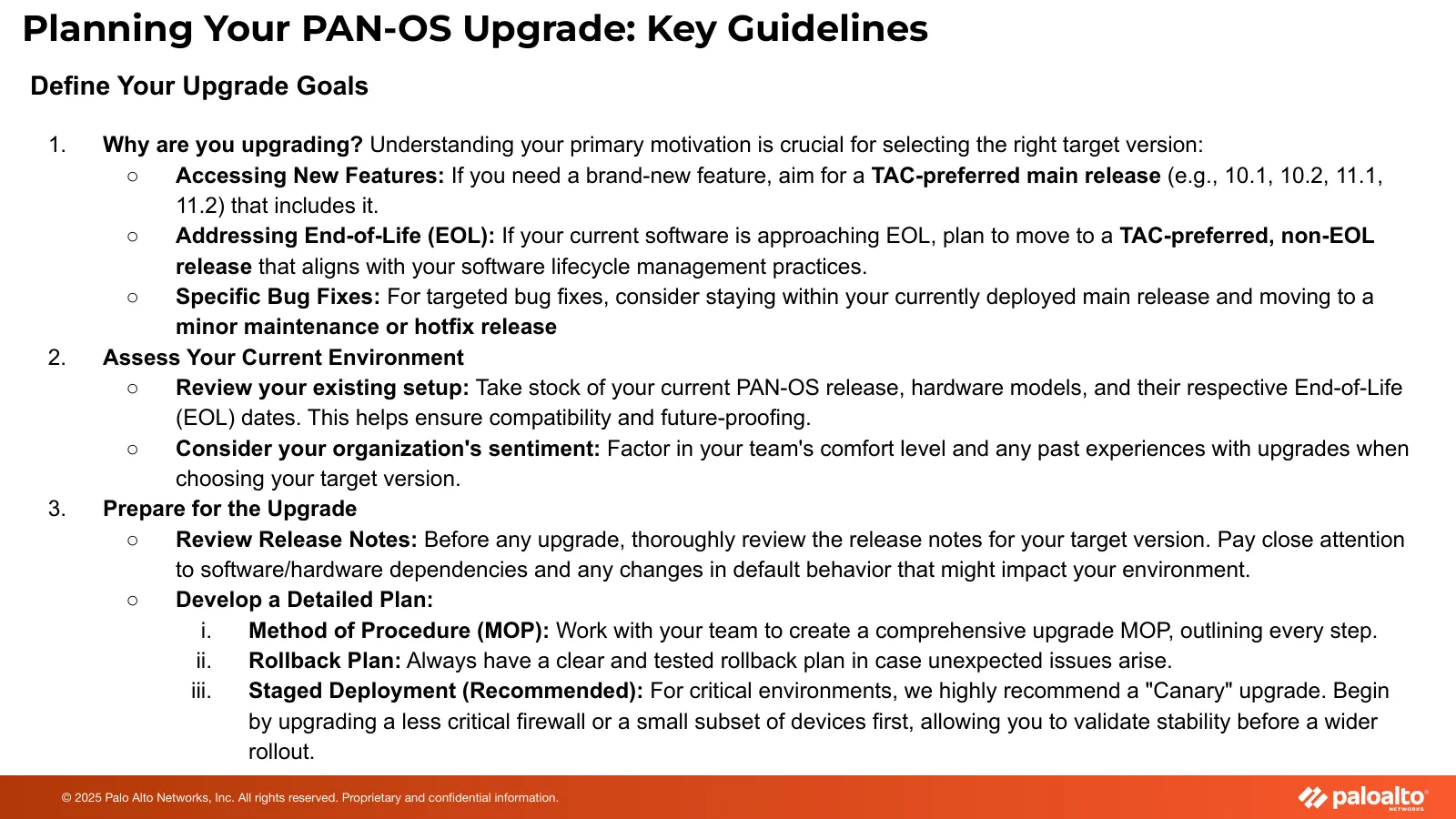
Planning Your PAN-OS Upgrade: Key Guidelines Define Your Upgrade Goals 1. Why are you upgrading? Understanding your primary motivation is crucial for selecting the right target version: ○ Accessing New Features: If you need a brand-new feature, aim for a TAC-preferred main release (e.g., 10.1, 10.2,
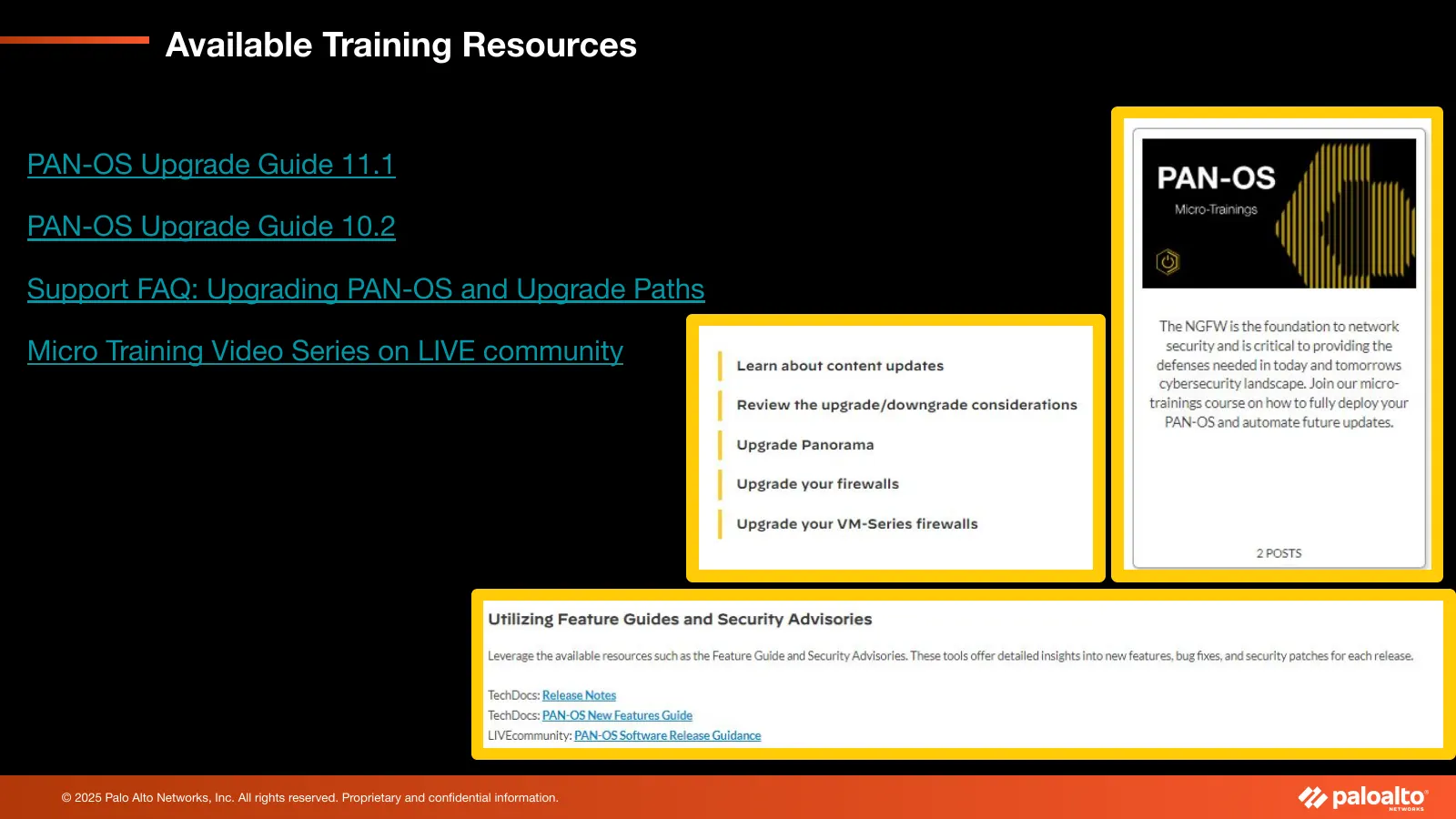
Slide 14: Available Training Resources
Available Training Resources PAN-OS Upgrade Guide 11.1 PAN-OS Upgrade Guide 10.2 Support FAQ: Upgrading PAN-OS and Upgrade Paths Micro Training Video Series on LIVE community © 2025 Palo Alto Networks, Inc. All rights reserved. Proprietary and confidential information.
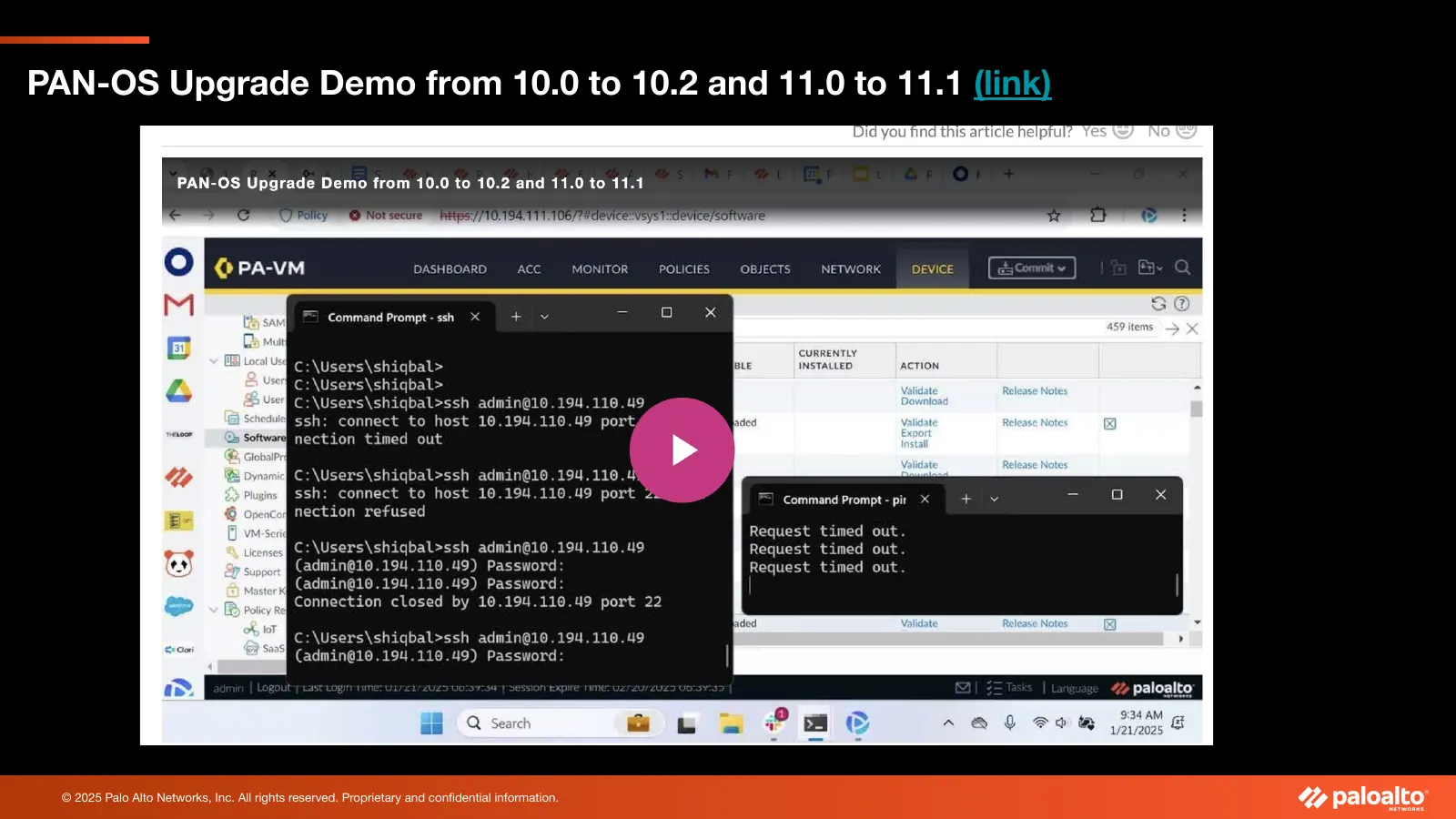
Slide 15: PAN-OS Upgrade Demo from 10.0 to 10.2 and 11.0 to 11.1
PAN-OS Upgrade Demo from 10.0 to 10.2 and 11.0 to 11.1 (link) © 2025 Palo Alto Networks, Inc. All rights reserved. Proprietary and confidential information.

Slide 16: Q&A
Q&A © 2025 Palo Alto Networks, Inc. All rights reserved. Proprietary and confidential information.
Source: company website
More decks from Palo Alto Networks, Inc.
 Q1 2027 Earnings Presentation34 slides · Nov 18, 2026
 Q4 2026 Earnings Presentation32 slides · Sep 1, 2026
 Technical Presentation (June 2026)46 slides · Jun 2, 2026
 Q3 2026 Earnings Presentation30 slides · Jun 2, 2026
 Tufin — Palo Alto Networks Fuel User Group (April 2026)16 slides · April 2026
 Technical Presentation (March 2026)43 slides · Mar 17, 2026