Rocket Pharmaceuticals, Inc. · NASDAQ:RCKT
Rocket Pharmaceuticals — Bloomberg Biotech Innovations Conference 2018
30 slides from Rocket Pharmaceuticals's conference presentation, Apr 9, 2018
Slide 1: Bloomberg Biotech Innovations Conference – April 9th, 2018
Bloomberg Biotech Innovations Conference – April 9th,2018 Dr. Gaurav Shah Chief Executive Officer & President
Slide 2: Important Information
Important Information Cautionary Statement Regarding Forward-Looking Statements Various statements in this presentation concerning Rocket Pharmaceuticals, Inc. (the “Company”) and the Company’s future expectations, plans and prospects, including without limitation, the Company’s expectations regardi
Slide 3: Best-in-class curative gene and cell therapies for patients with devastating diseases
Best-in-class curative gene and cell therapies for patients with devastating diseases. Inspired by transformative innovation, built on a sustainable and integrated multi-platform approach.
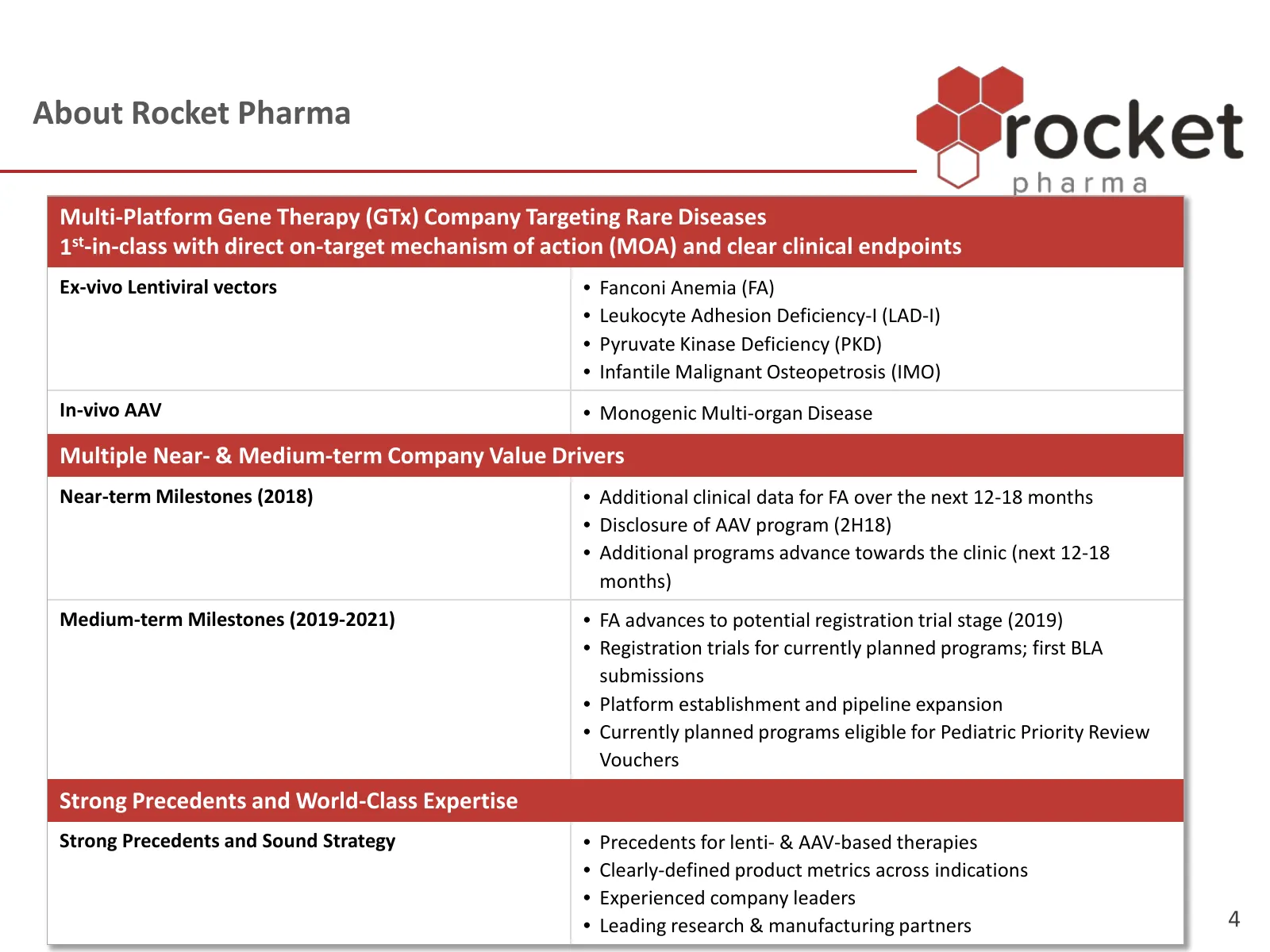
Slide 4: About Rocket Pharma
About Rocket Pharma Multi-Platform Gene Therapy (GTx) Company Targeting Rare Diseases 1st-in-class with direct on-target mechanism of action (MOA) and clear clinical endpoints Ex-vivo Lentiviral vectors • Fanconi Anemia (FA) • Leukocyte Adhesion Deficiency-I (LAD-I) • Pyruvate Kinase Deficiency (PKD
Slide 5: Pipeline-at-a-Glance
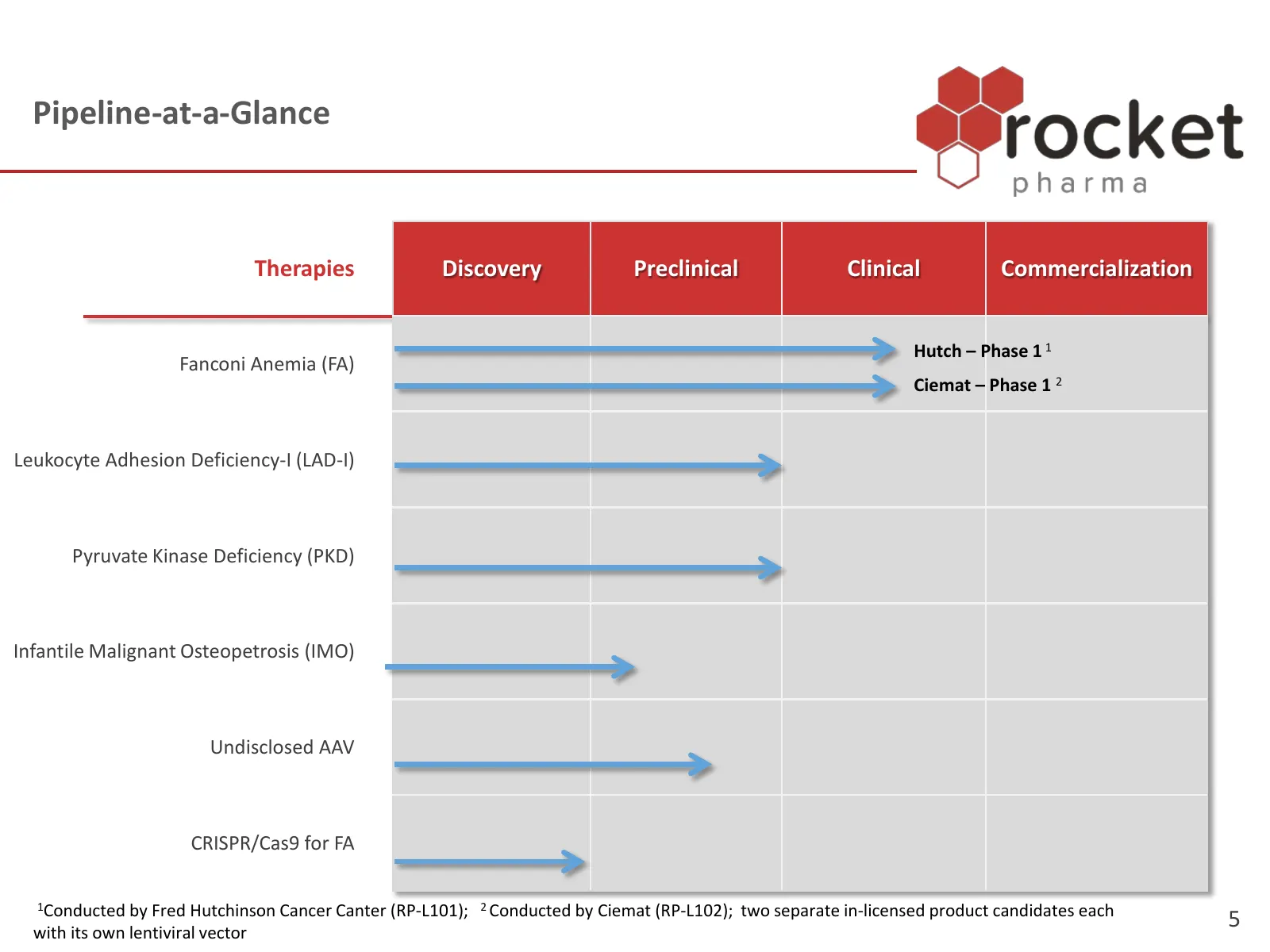
Pipeline-at-a-Glance Therapies Discovery Preclinical Clinical Commercialization Hutch – Phase 1 1 Fanconi Anemia (FA) Ciemat – Phase 1 2 Leukocyte Adhesion Deficiency-I (LAD-I) Pyruvate Kinase Deficiency (PKD) Infantile Malignant Osteopetrosis (IMO) Undisclosed AAV CRISPR/Cas9 for FA 1Conducted by F
Slide 6: Leveraging the Full Spectrum of GTx Platforms
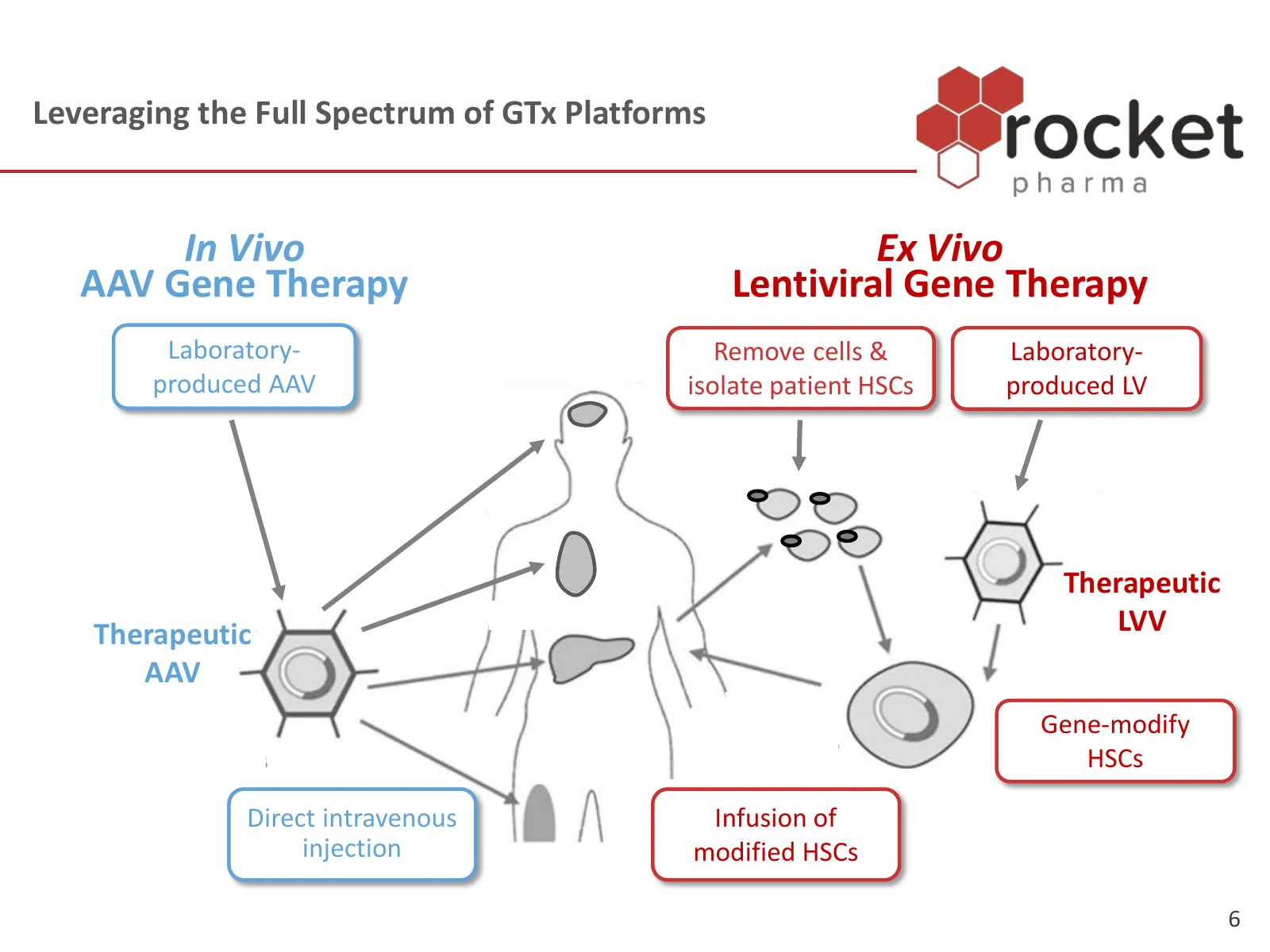
Leveraging the Full Spectrum of GTx Platforms In Vivo Ex Vivo AAV Gene Therapy Lentiviral Gene Therapy Laboratory- Remove cells & Laboratory- produced AAV isolate patient HSCs produced LV Therapeutic Therapeutic LVV AAV Gene-modify HSCs Direct intravenous Infusion of injection modified HSCs 6
Slide 7: Fanconi Anemia (FA)
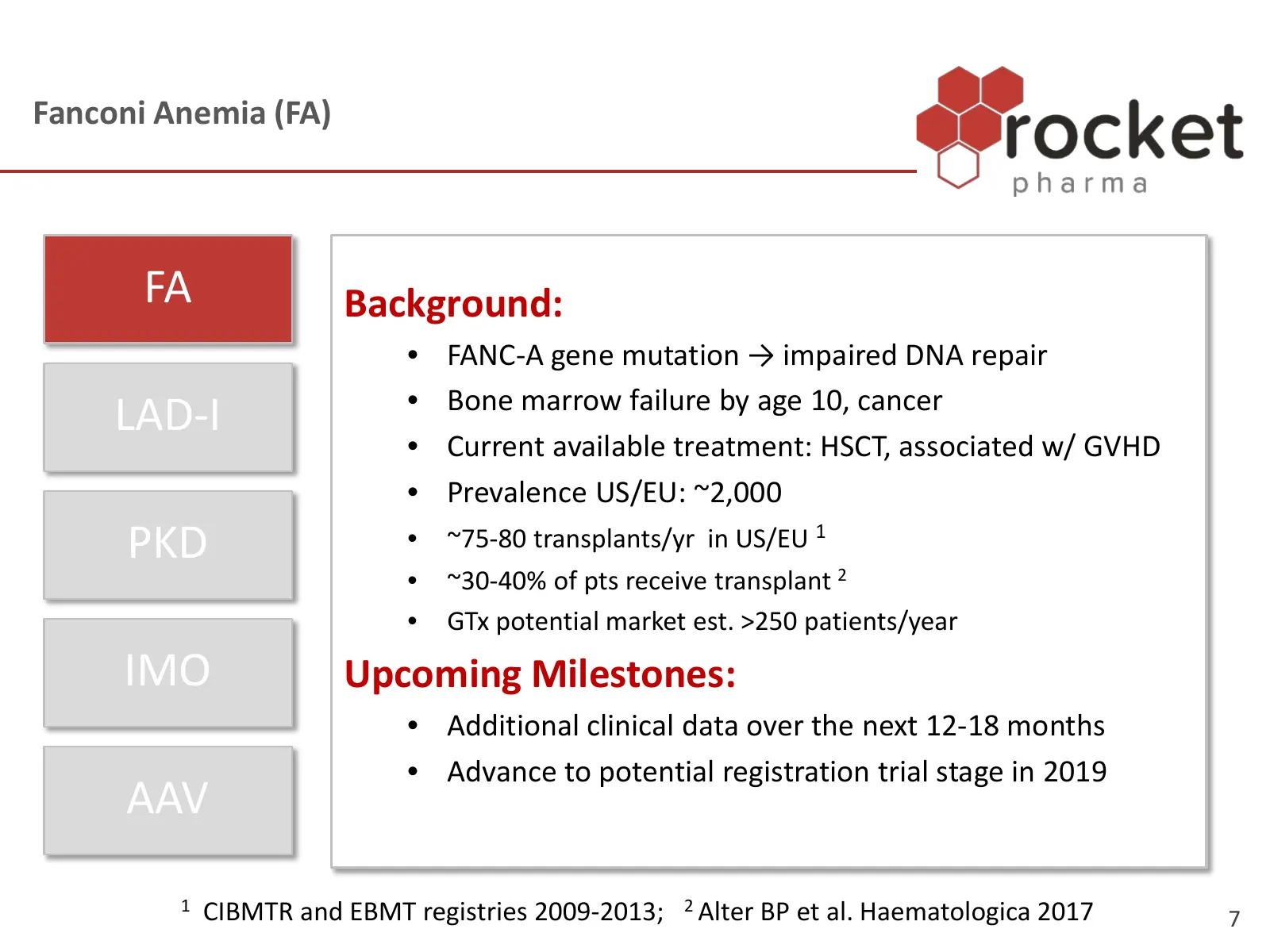
Fanconi Anemia (FA) FA Background: • FANC-A gene mutation → impaired DNA repair Bone marrow failure by age 10, cancer LAD-I • • Current available treatment: HSCT, associated w/ GVHD • Prevalence US/EU: ~2,000 PKD • ~75-80 transplants/yr in US/EU 1 • ~30-40% of pts receive transplant 2 • GTx potentia
Slide 8: Rationale for GTx in FA: Rare Somatic Mosaicism
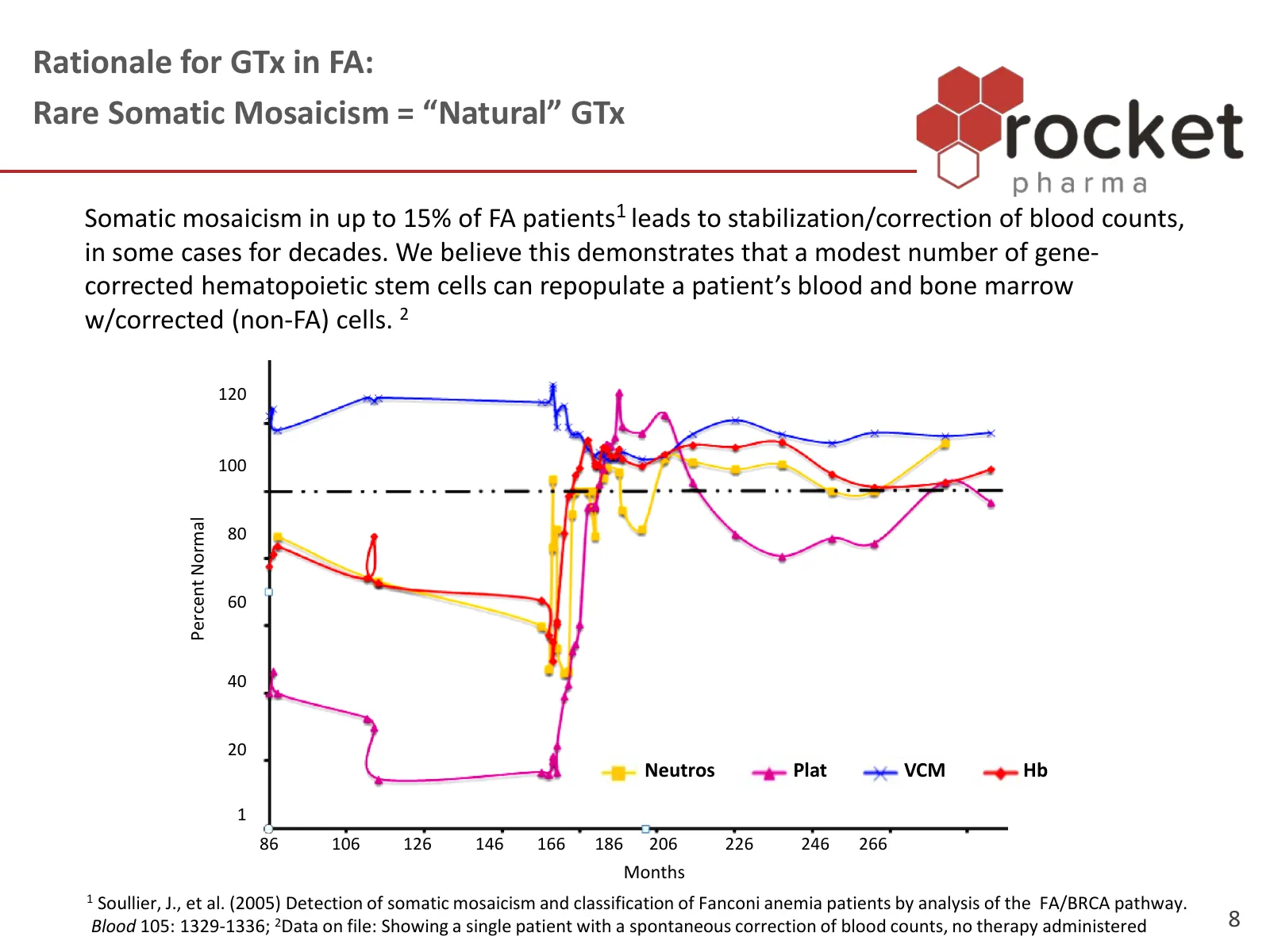
Rationale for GTx in FA: Rare Somatic Mosaicism = “Natural” GTx Somatic mosaicism in up to 15% of FA patients1 leads to stabilization/correction of blood counts, in some cases for decades. We believe this demonstrates that a modest number of gene- corrected hematopoietic stem cells can repopulate a
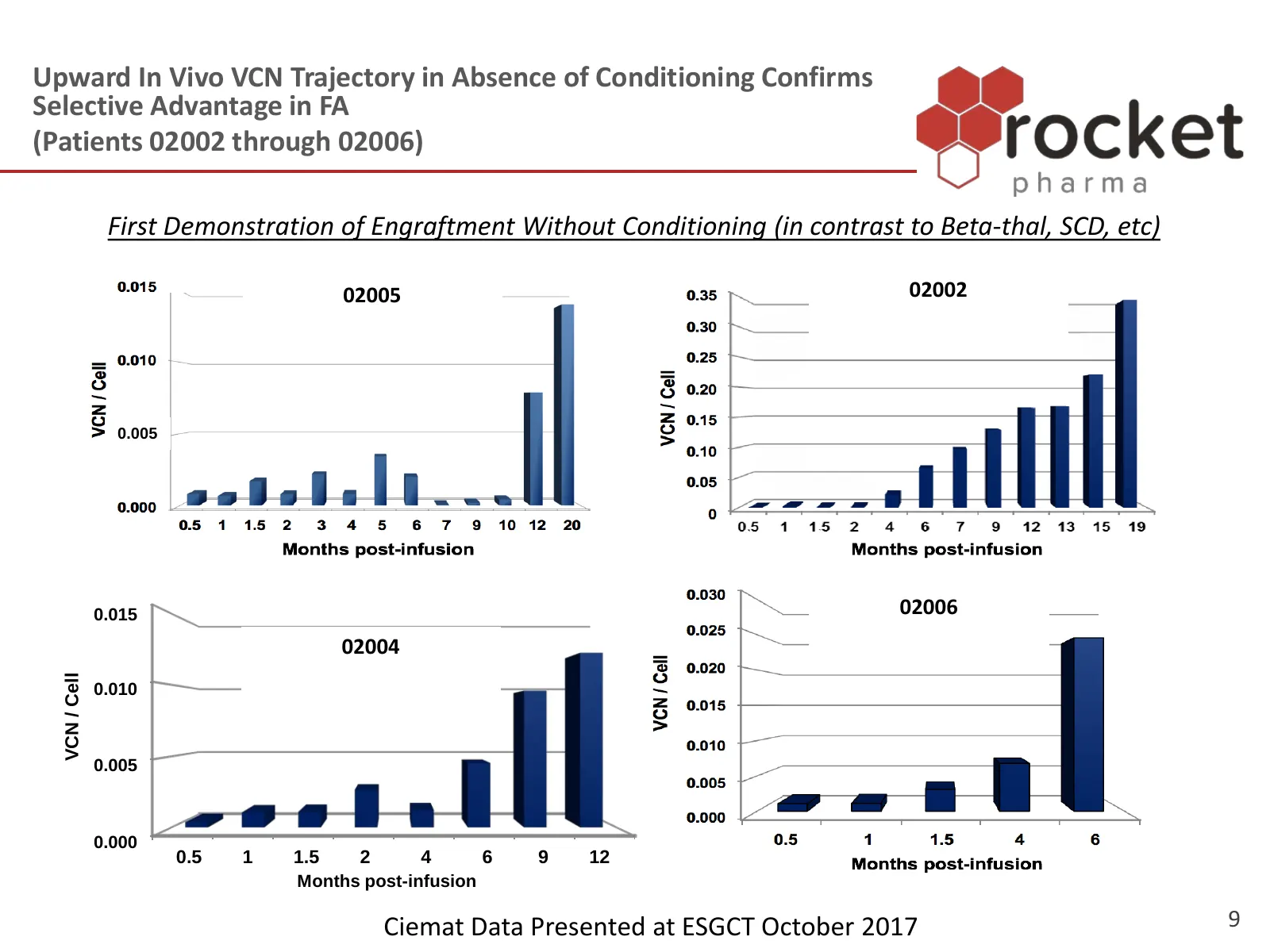
Slide 9: Upward In Vivo VCN Trajectory in Absence of Conditioning Confirms Selective Advantage in FA
Upward In Vivo VCN Trajectory in Absence of Conditioning Confirms Selective Advantage in FA (Patients 02002 through 02006) First Demonstration of Engraftment Without Conditioning (in contrast to Beta-thal, SCD, etc) 02005 02002 0.005 1.50E-02 0.015 02006 02004 02004 (1.7x10⁵ cCD34+/Kg) VCN / Cell 1.
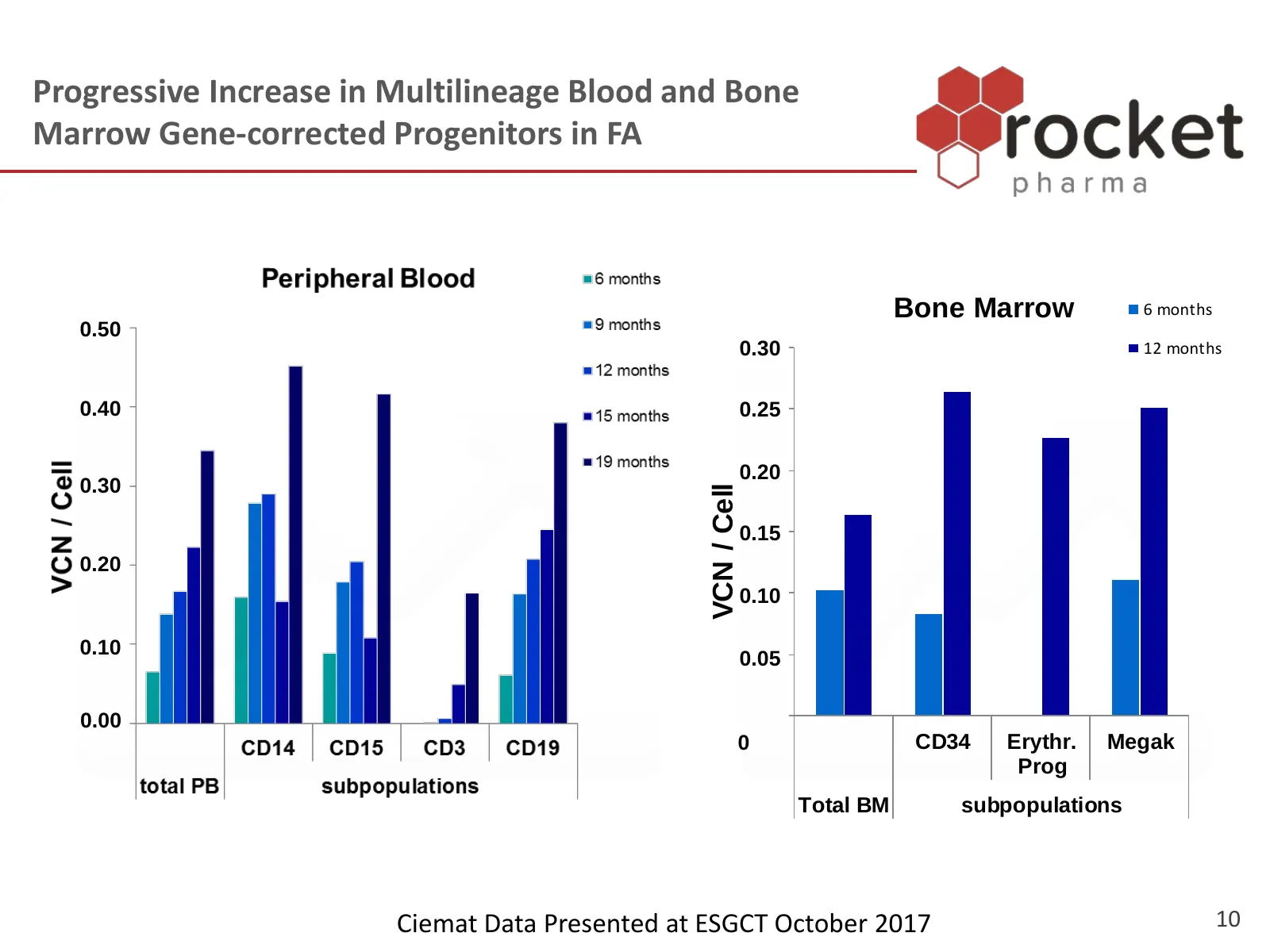
Slide 10: Progressive Increase in Multilineage Blood and Bone Marrow Gene-corrected Progenitors in FA
Progressive Increase in Multilineage Blood and Bone Marrow Gene-corrected Progenitors in FA Bone Marrow 6 months 0.50 0,30 0.30 12 months 0.40 0,25 0.25 0,20 0.20 0.30 VCN / Cell 0,15 0.15 0.20 0,10 0.10 0.10 0,05 0.05 0.00 0,00 0 CD34 Erythr. Megak Prog Total BM subpopulations Ciemat Data Presented
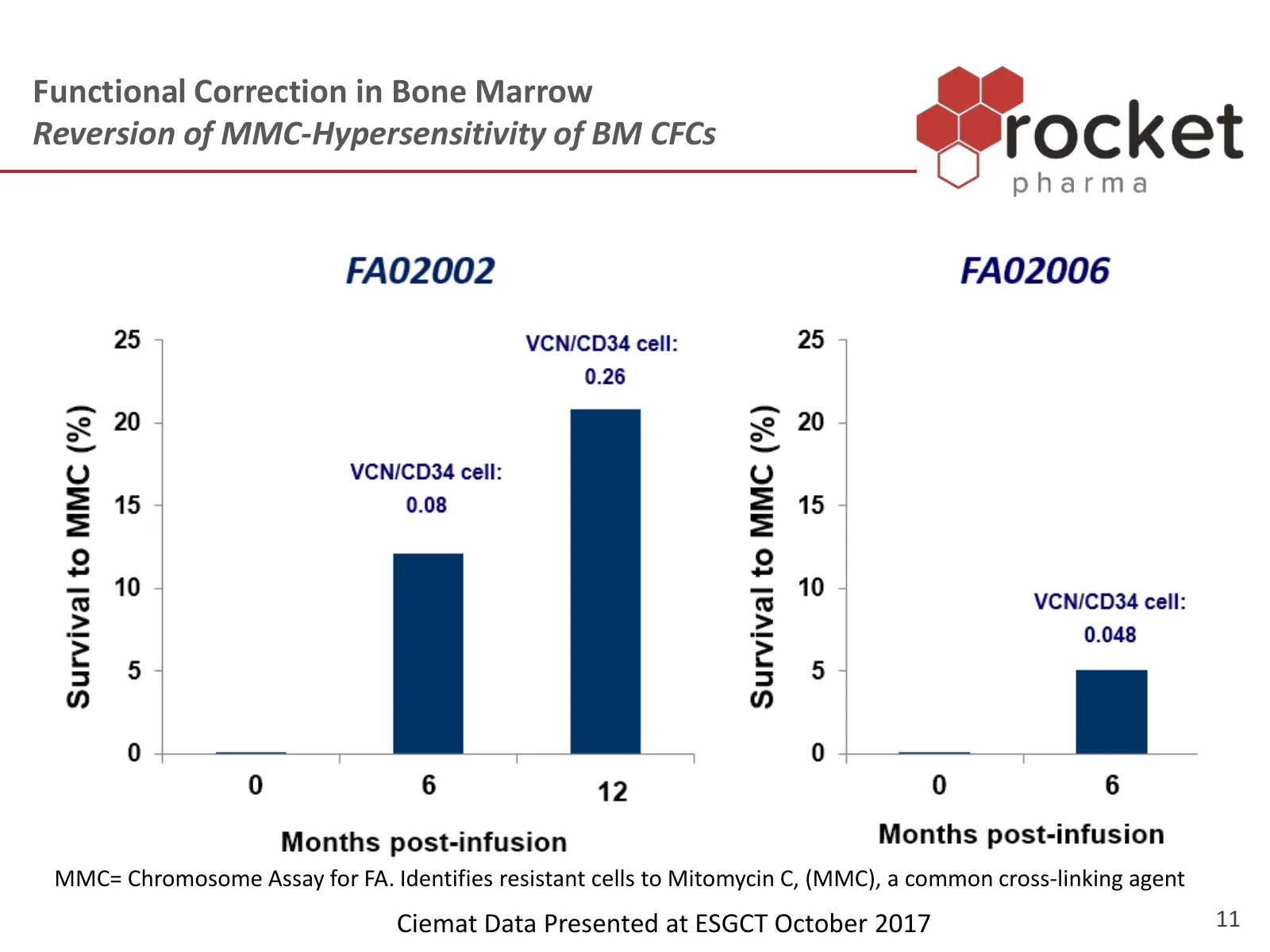
Slide 11: Functional Correction in Bone Marrow
Functional Correction in Bone Marrow Reversion of MMC-Hypersensitivity of BM CFCs MMC= Chromosome Assay for FA. Identifies resistant cells to Mitomycin C, (MMC), a common cross-linking agent Ciemat Data Presented at ESGCT October 2017 11
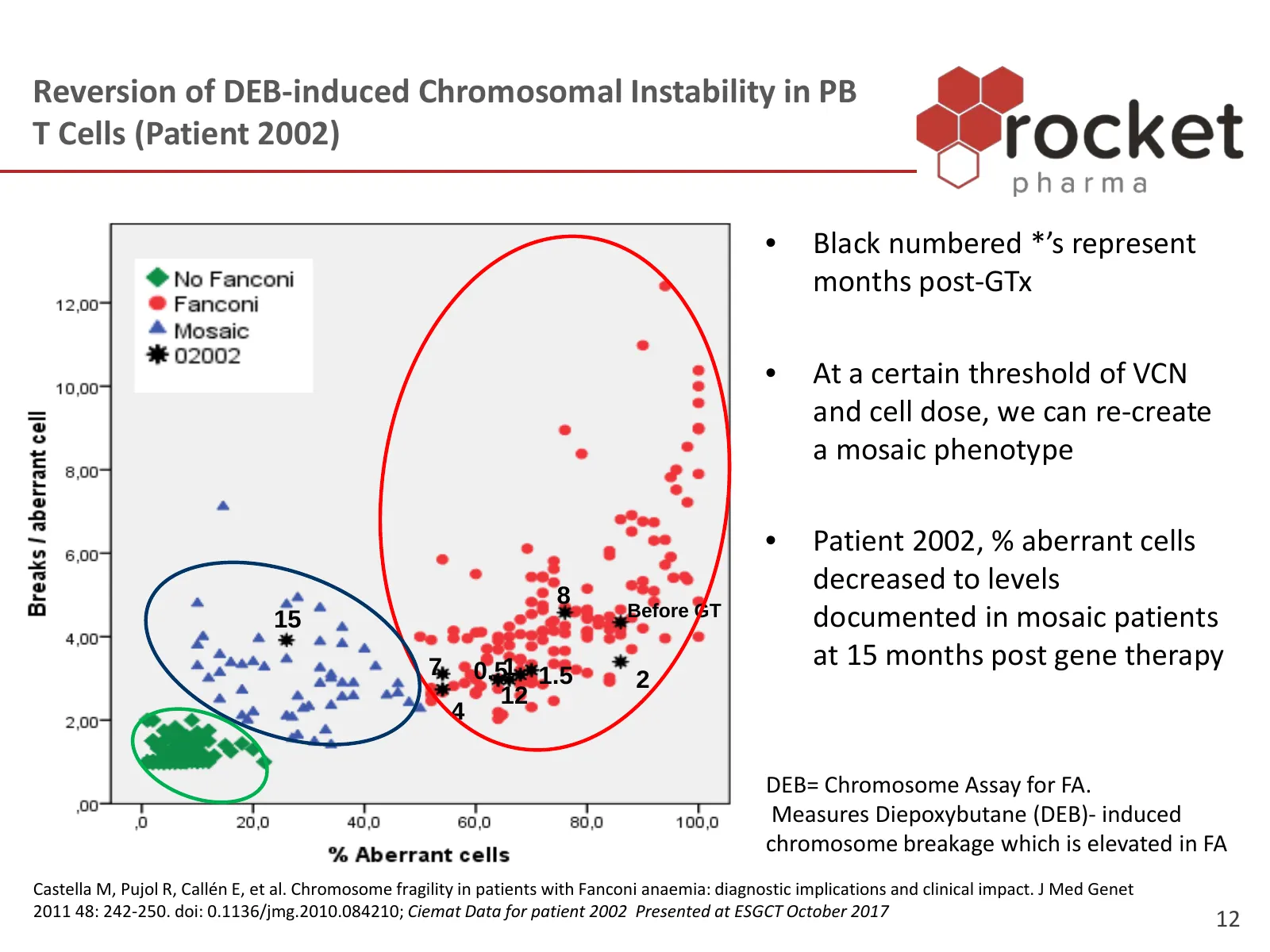
Slide 12: Reversion of DEB-induced Chromosomal Instability in PB T Cells (Patient 2002)
Reversion of DEB-induced Chromosomal Instability in PB T Cells (Patient 2002) • Black numbered *’s represent months post-GTx • At a certain threshold of VCN and cell dose, we can re-create a mosaic phenotype • Patient 2002, % aberrant cells 8 decreased to levels 15 Before GT documented in mosaic pat
Slide 13: Reversion of DEB-induced Chromosomal Instability in PB T Cells (Patient 2006)
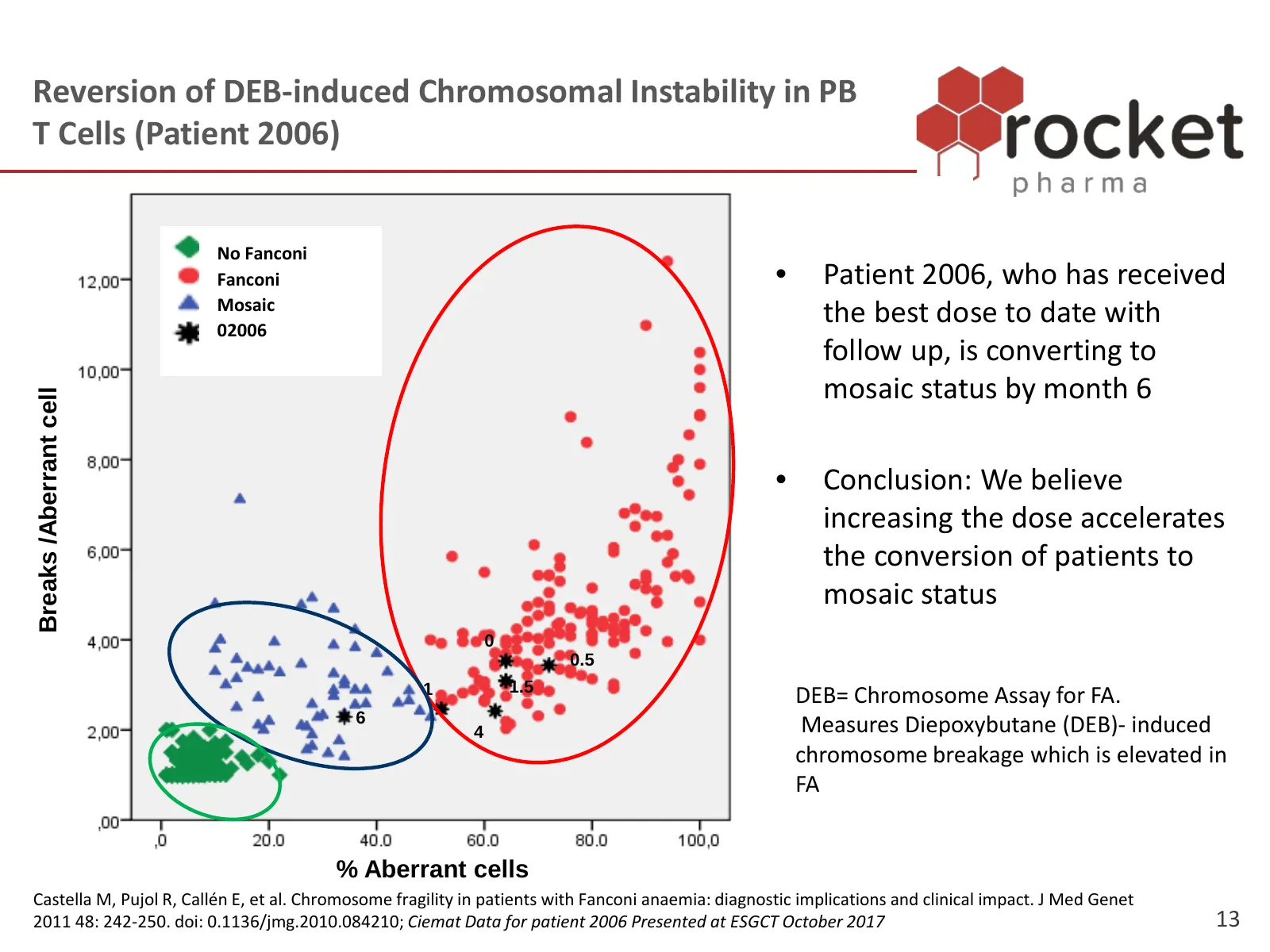
Reversion of DEB-induced Chromosomal Instability in PB T Cells (Patient 2006) No Fanconi Fanconi • Patient 2006, who has received Mosaic 02006 the best dose to date with follow up, is converting to mosaic status by month 6 Breaks /Aberrant cell • Conclusion: We believe increasing the dose accelerate
Slide 14: Stable to Improving Counts in FA Patient Receiving Highest Potency Product to Date
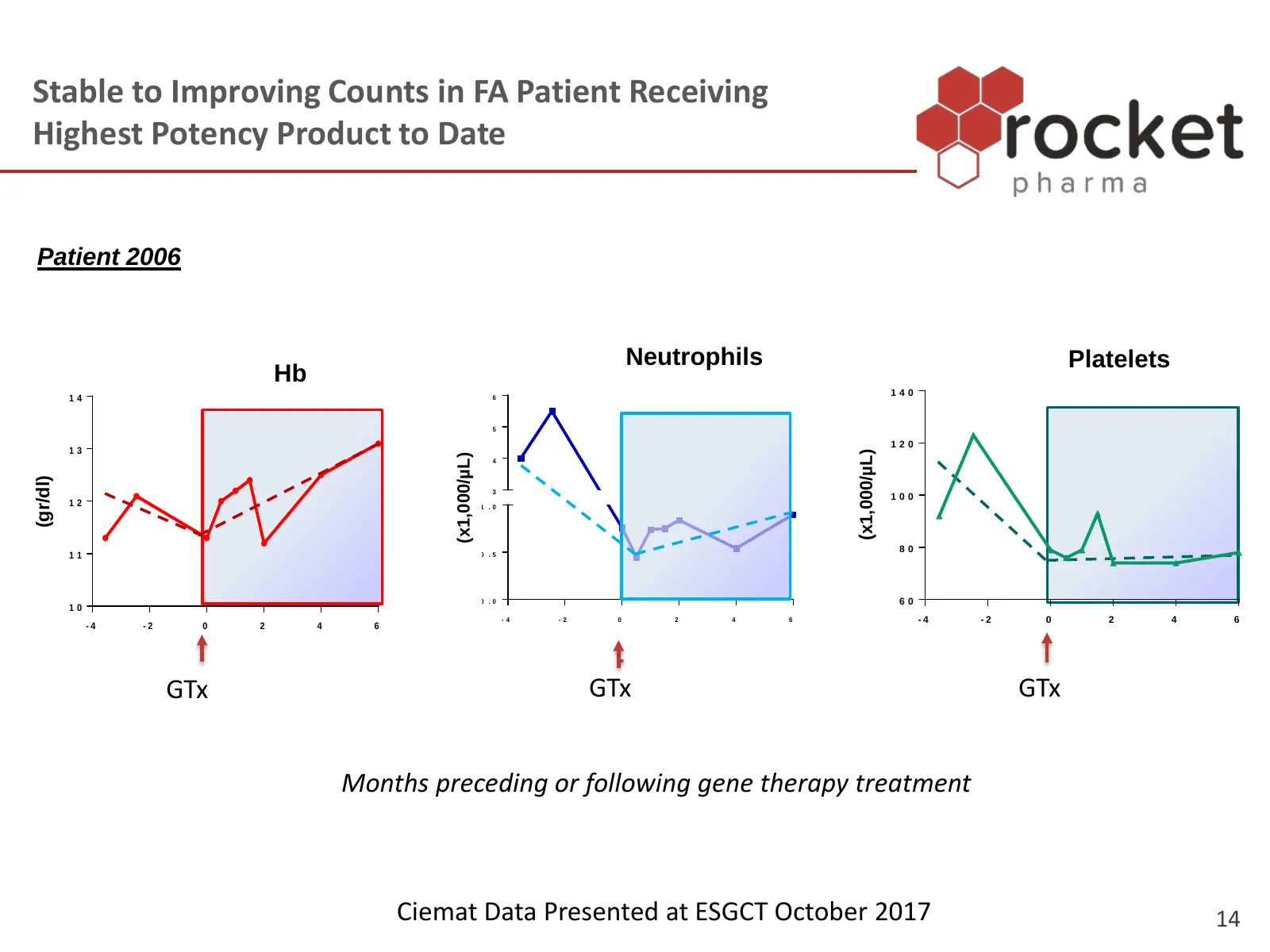
Stable to Improving Counts in FA Patient Receiving Highest Potency Product to Date Patient 2006 Neutrophils Platelets Hb 140 14 6 ( x 1 0 0 0 / µ l) P la te le ts (x 1 0 0 0 /µ l) 5 120 13 (x1,000/µL) (x1,000/µL) 4 H b (g /d L ) (gr/dl) 3 100 N e u t r o p h i ls 12 1 .0 80 11 0 .5 0 .0 60 10 -4 -2
Slide 15: Potential Advantages of GTx over Transplant for FA
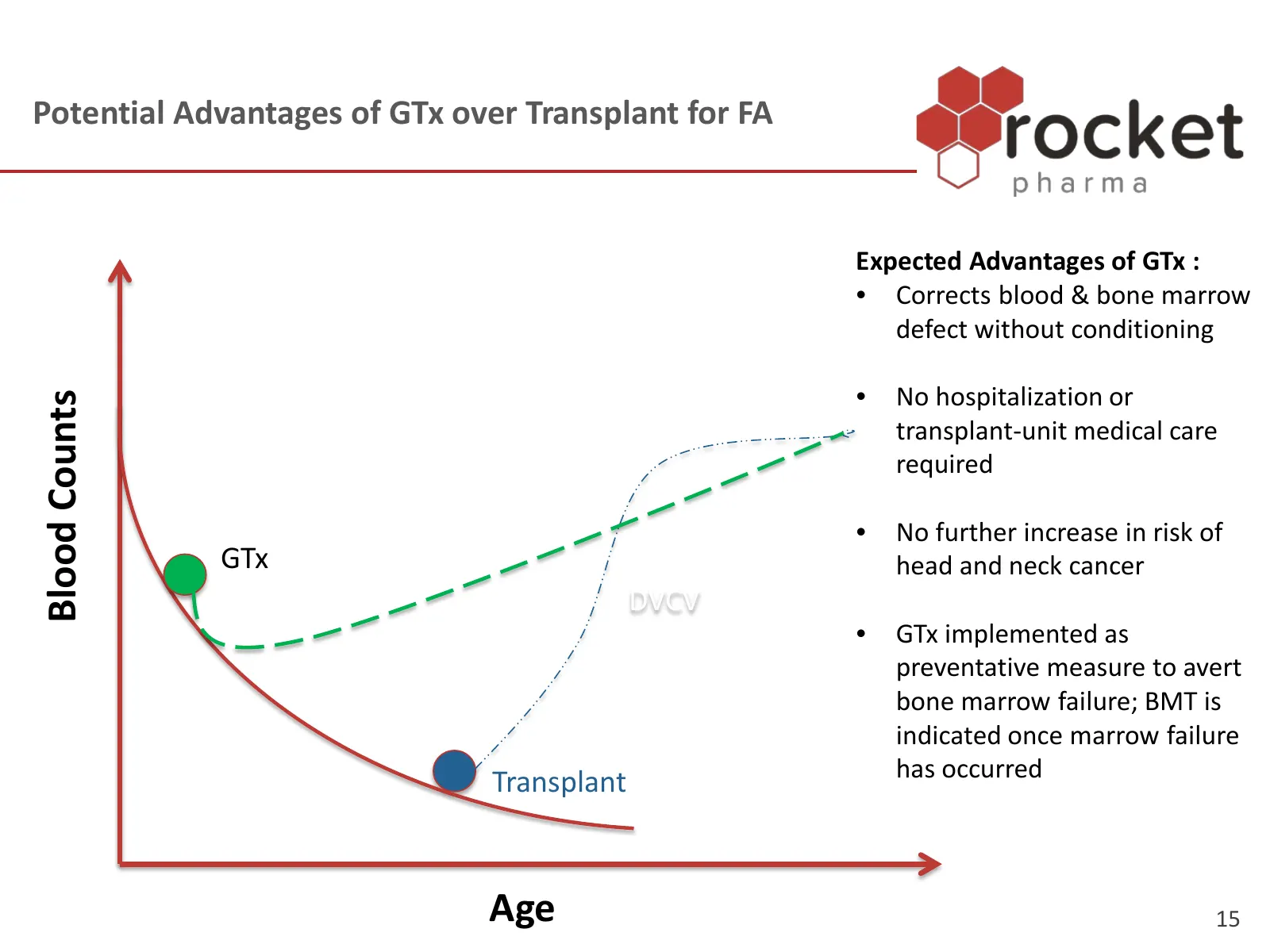
Potential Advantages of GTx over Transplant for FA Expected Advantages of GTx : • Corrects blood & bone marrow defect without conditioning • No hospitalization or Blood Counts transplant-unit medical care required • No further increase in risk of GTx head and neck cancer DVCV • GTx implemented as pr
Slide 16: FA: Clinical Summary & Path Forward
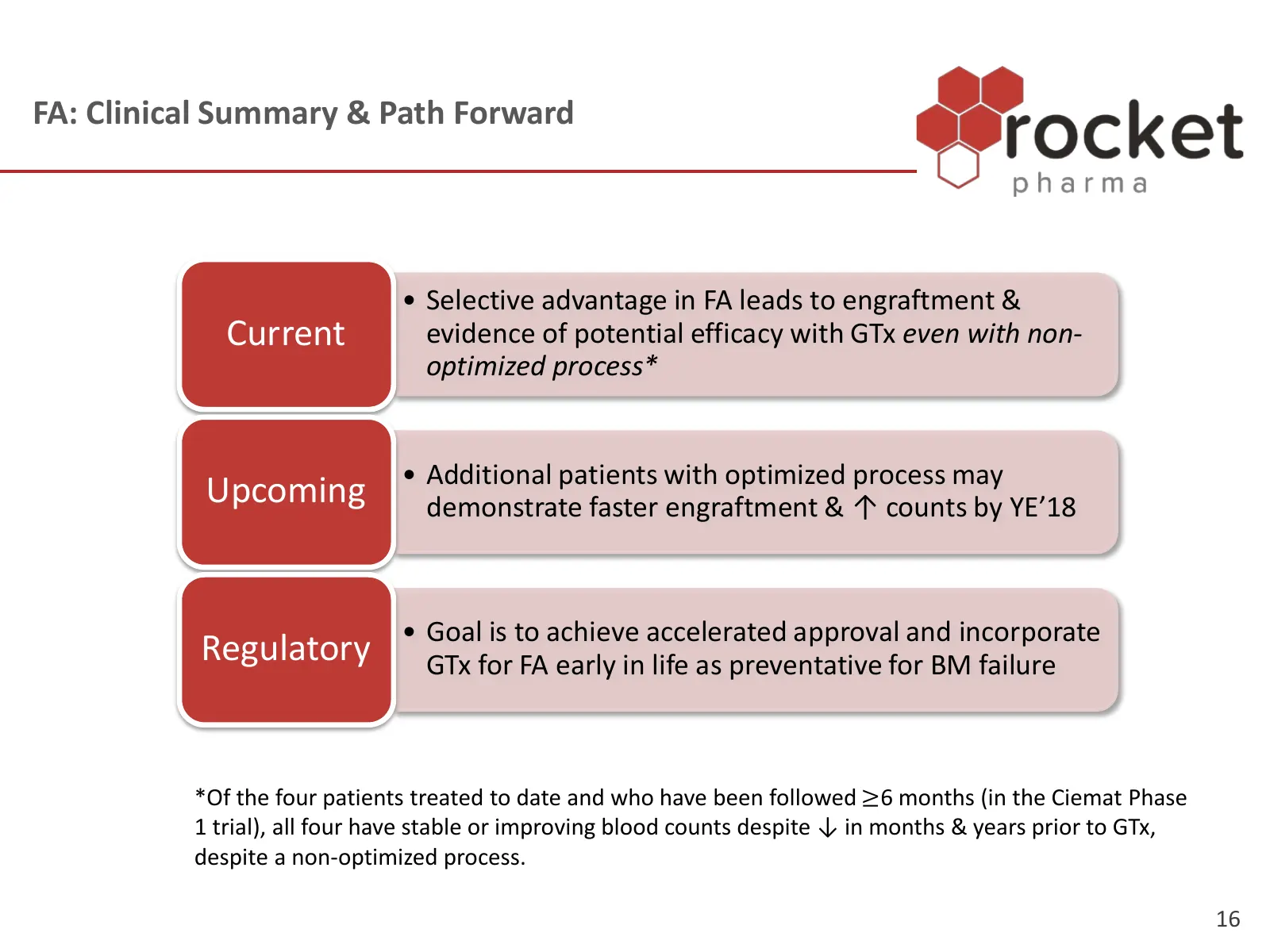
FA: Clinical Summary & Path Forward • Selective advantage in FA leads to engraftment & Current evidence of potential efficacy with GTx even with non- optimized process* • Additional patients with optimized process may Upcoming demonstrate faster engraftment & ↑ counts by YE’18 • Goal is to achieve a
Slide 17: Leukocyte Adhesion Deficiency-I (LAD-I)
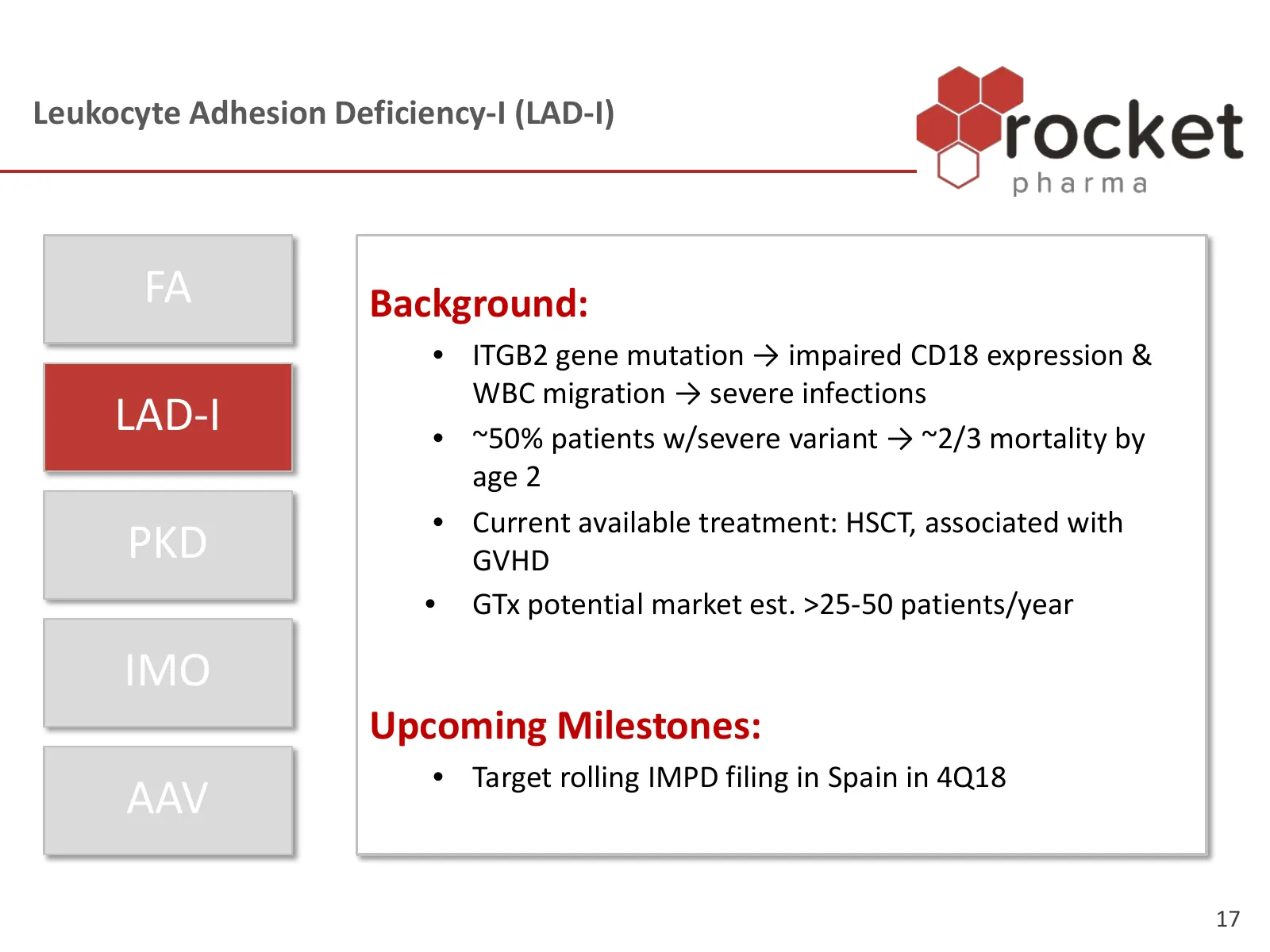
Leukocyte Adhesion Deficiency-I (LAD-I) FA Background: • ITGB2 gene mutation → impaired CD18 expression & WBC migration → severe infections LAD-I • ~50% patients w/severe variant → ~2/3 mortality by age 2 • Current available treatment: HSCT, associated with PKD GVHD • GTx potential market est. >25-5
Slide 18: LAD-I: Mouse Study Shows LAD-I Correction
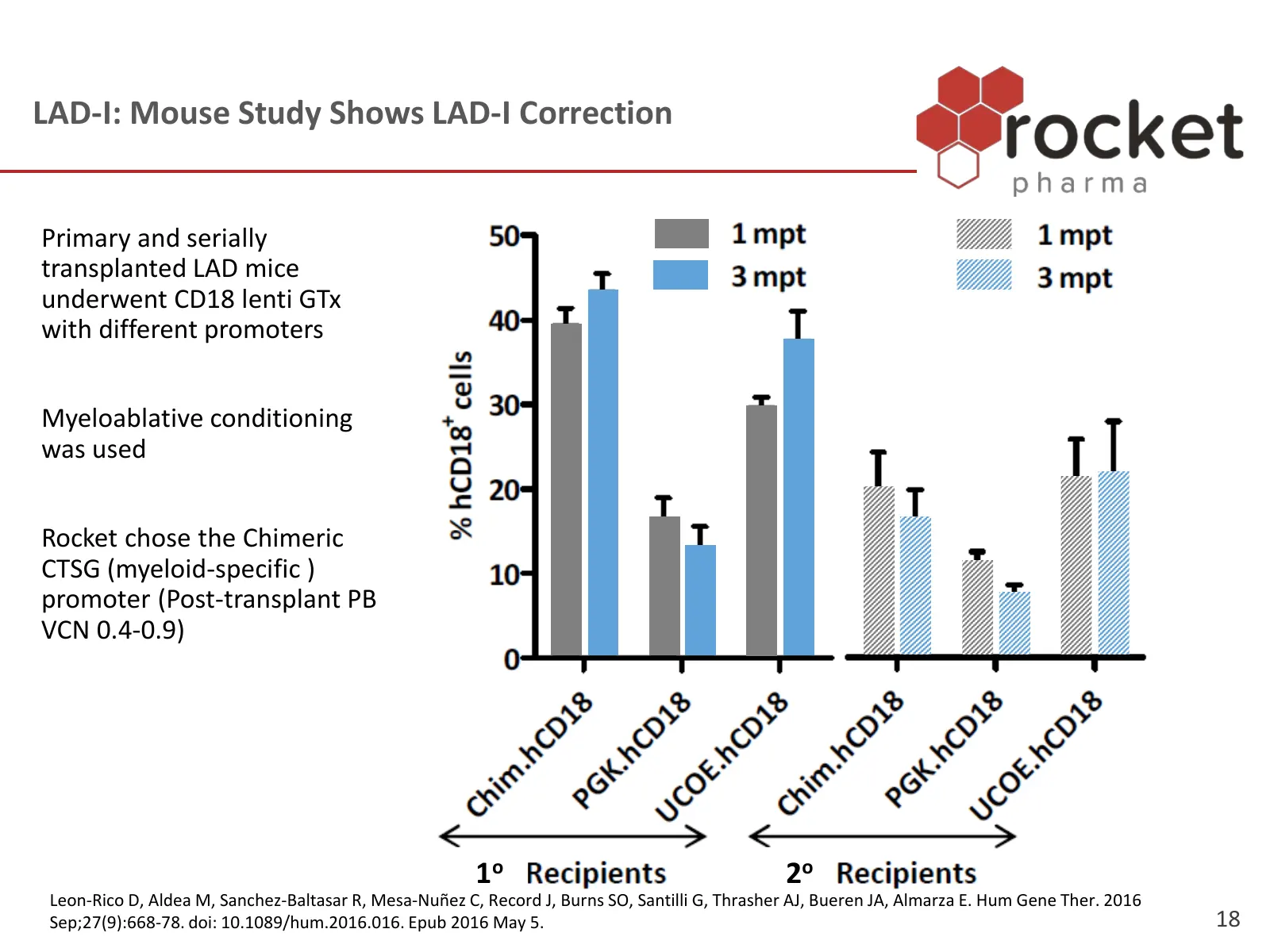
LAD-I: Mouse Study Shows LAD-I Correction Primary and serially transplanted LAD mice underwent CD18 lenti GTx with different promoters Myeloablative conditioning was used Rocket chose the Chimeric CTSG (myeloid-specific ) promoter (Post-transplant PB VCN 0.4-0.9) 1o 2o Leon-Rico D, Aldea M, Sanchez-
Slide 19: LAD-I: Improved Process Produces VCN >1
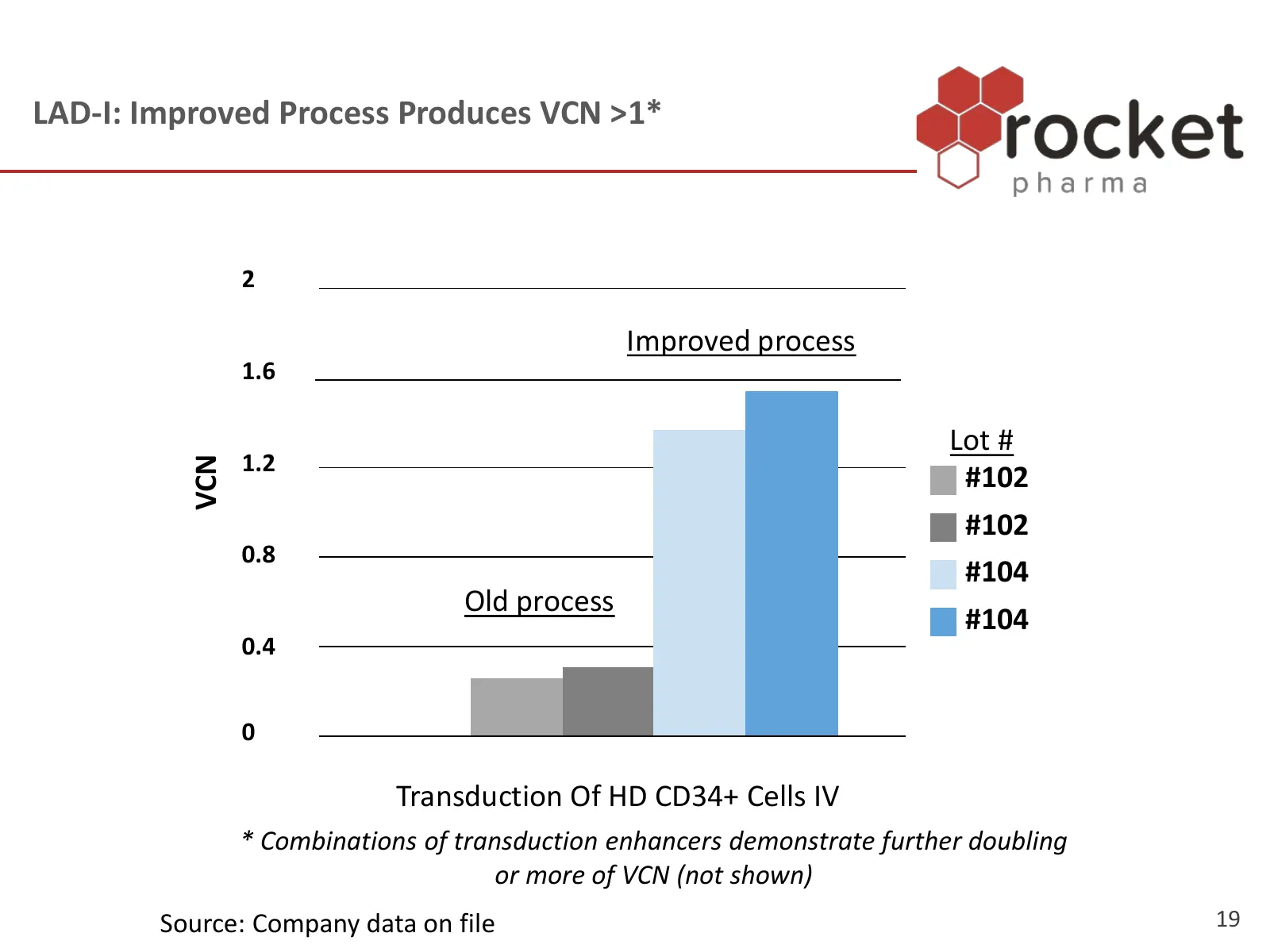
LAD-I: Improved Process Produces VCN >1* 2 Improved process 1.6 Lot # 1.2 VCN #102 #102 0.8 #104 Old process #104 0.4 0 Transduction Of HD CD34+ Cells IV * Combinations of transduction enhancers demonstrate further doubling or more of VCN (not shown) Source: Company data on file 19
Slide 20: LAD-I Program Summary
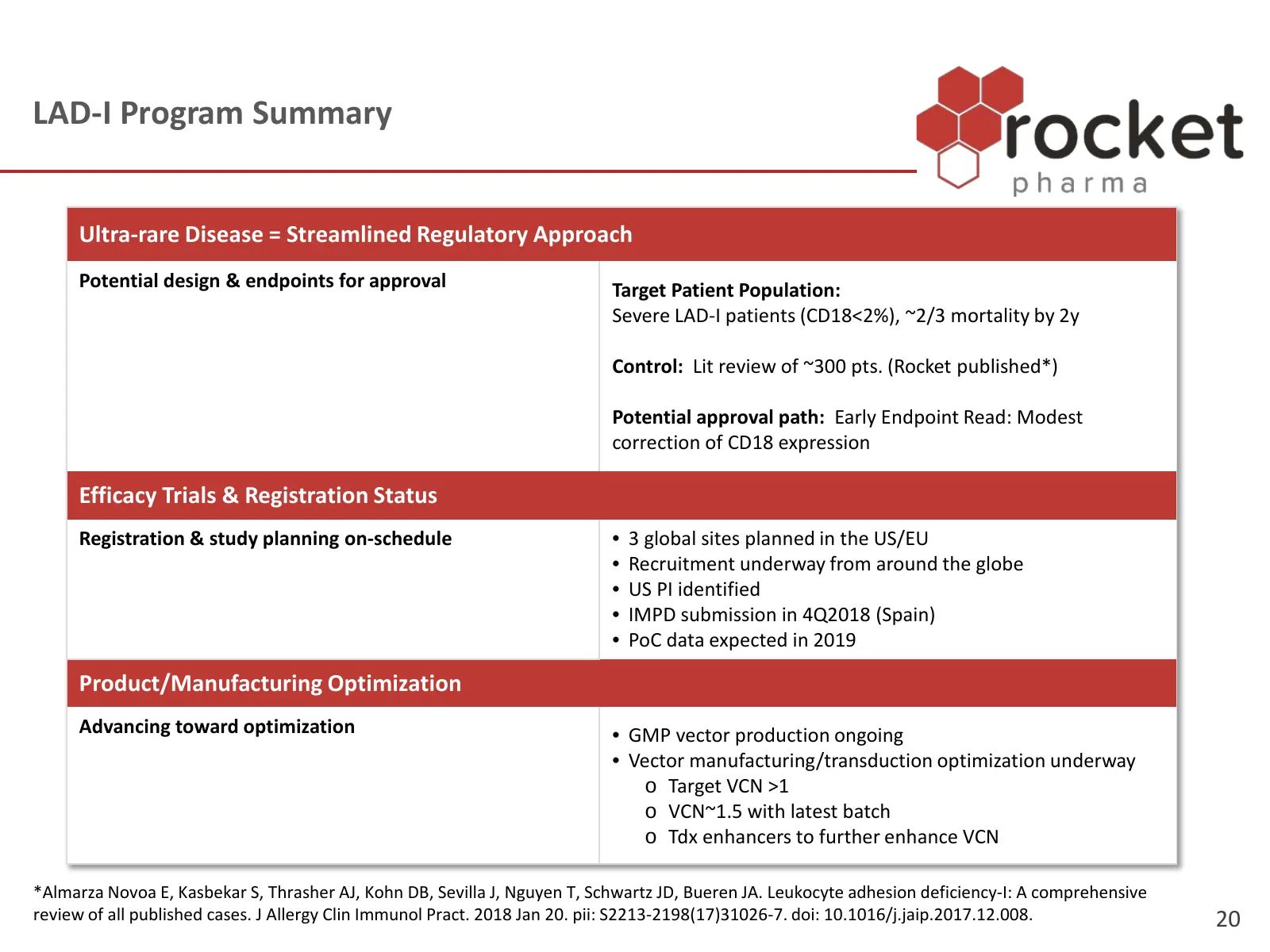
LAD-I Program Summary Ultra-rare Disease = Streamlined Regulatory Approach Potential design & endpoints for approval Target Patient Population: Severe LAD-I patients (CD18<2%), ~2/3 mortality by 2y Control: Lit review of ~300 pts. (Rocket published*) Potential approval path: Early Endpoint Read: Mod
Slide 21: Pyruvate Kinase Deficiency (PKD)
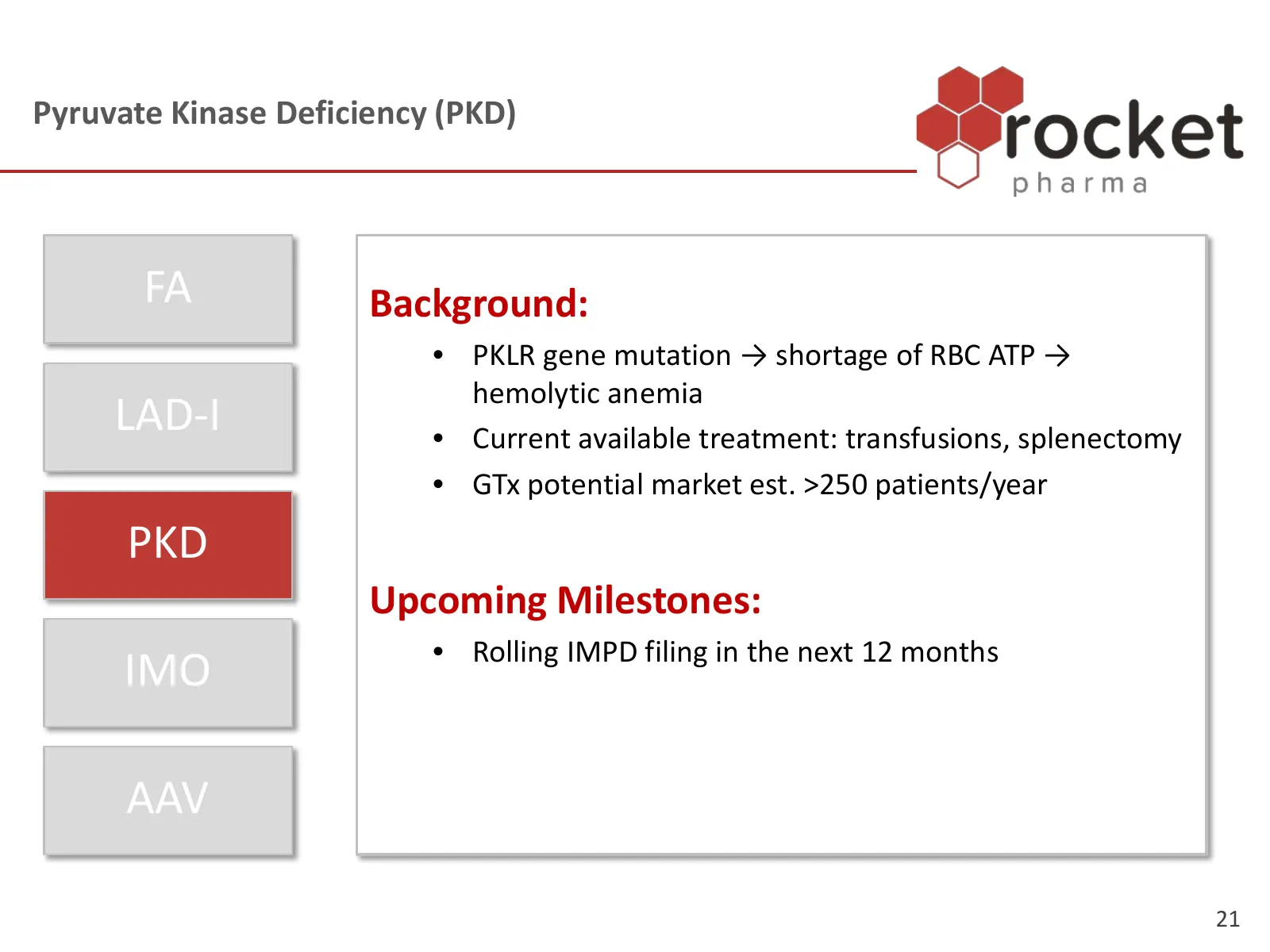
Pyruvate Kinase Deficiency (PKD) FA Background: • PKLR gene mutation → shortage of RBC ATP → hemolytic anemia LAD-I • Current available treatment: transfusions, splenectomy • GTx potential market est. >250 patients/year PKD Upcoming Milestones: • Rolling IMPD filing in the next 12 months IMO AAV 21
Slide 22: PKD Program Summary
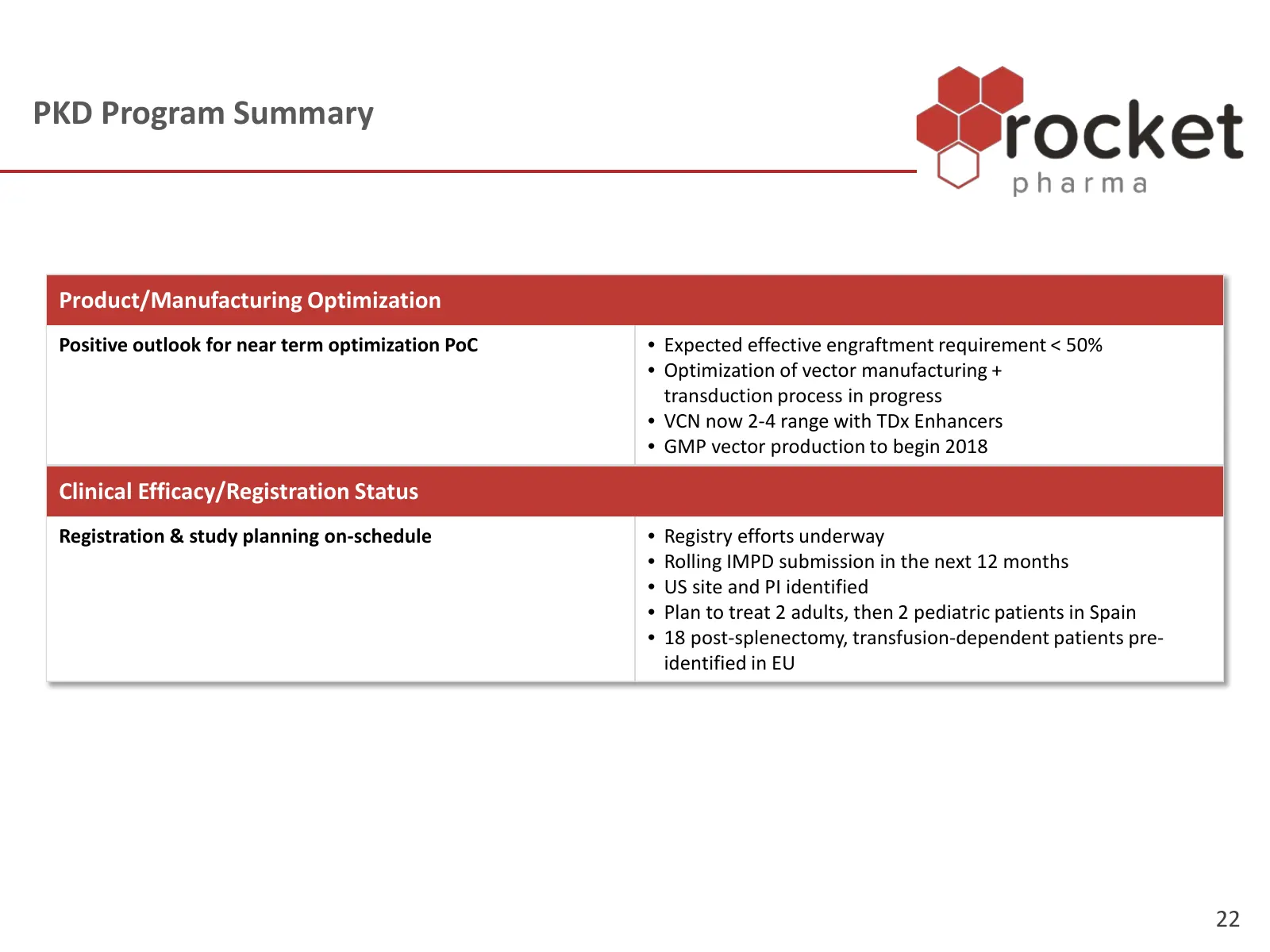
PKD Program Summary Product/Manufacturing Optimization Positive outlook for near term optimization PoC • Expected effective engraftment requirement < 50% • Optimization of vector manufacturing + transduction process in progress • VCN now 2-4 range with TDx Enhancers • GMP vector production to begin
Slide 23: Infantile Malignant Osteopetrosis (IMO)
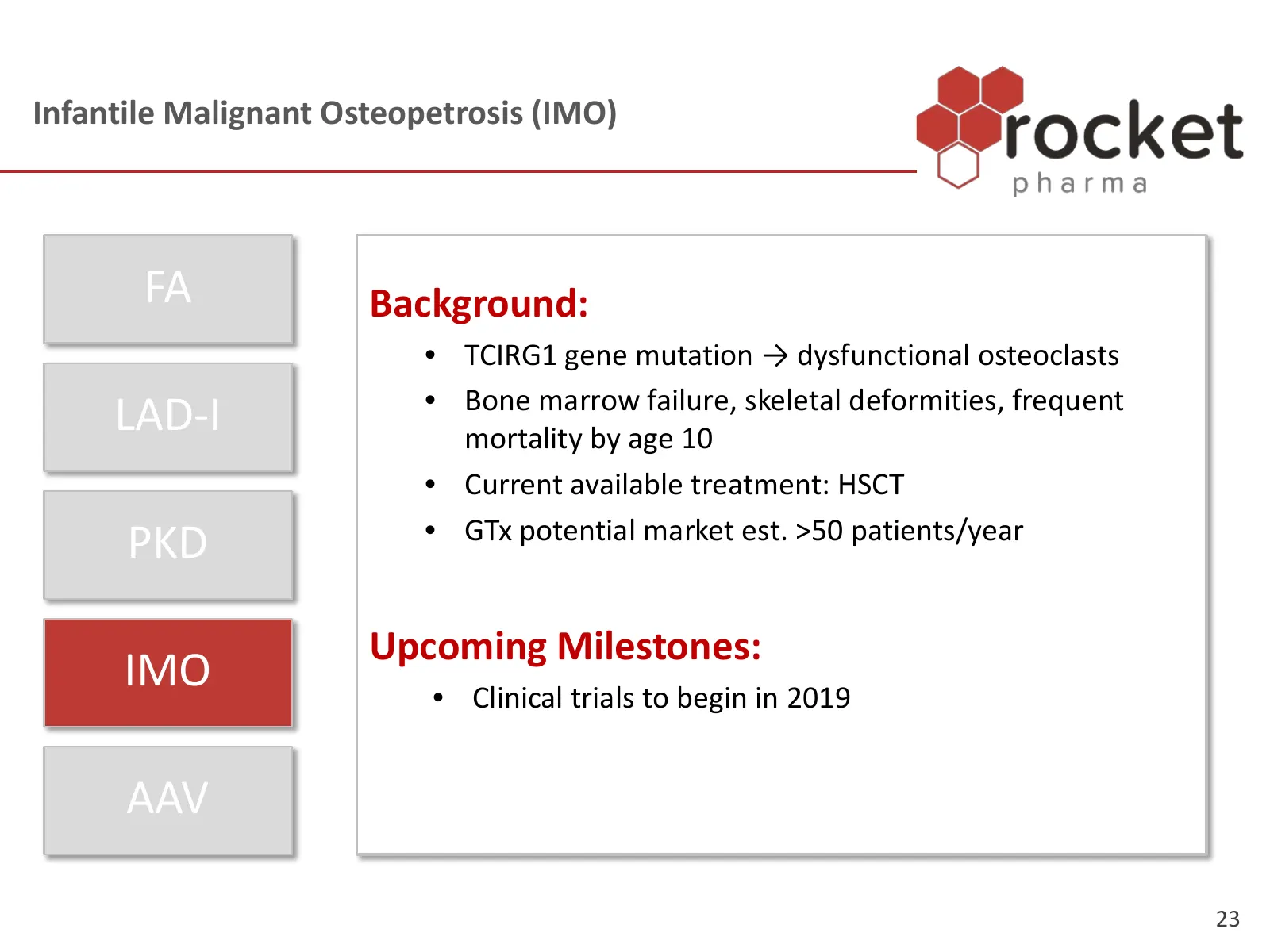
Infantile Malignant Osteopetrosis (IMO) FA Background: • TCIRG1 gene mutation → dysfunctional osteoclasts • Bone marrow failure, skeletal deformities, frequent LAD-I mortality by age 10 • Current available treatment: HSCT PKD • GTx potential market est. >50 patients/year Upcoming Milestones: IMO • C
Slide 24: AAV Program (Undisclosed)
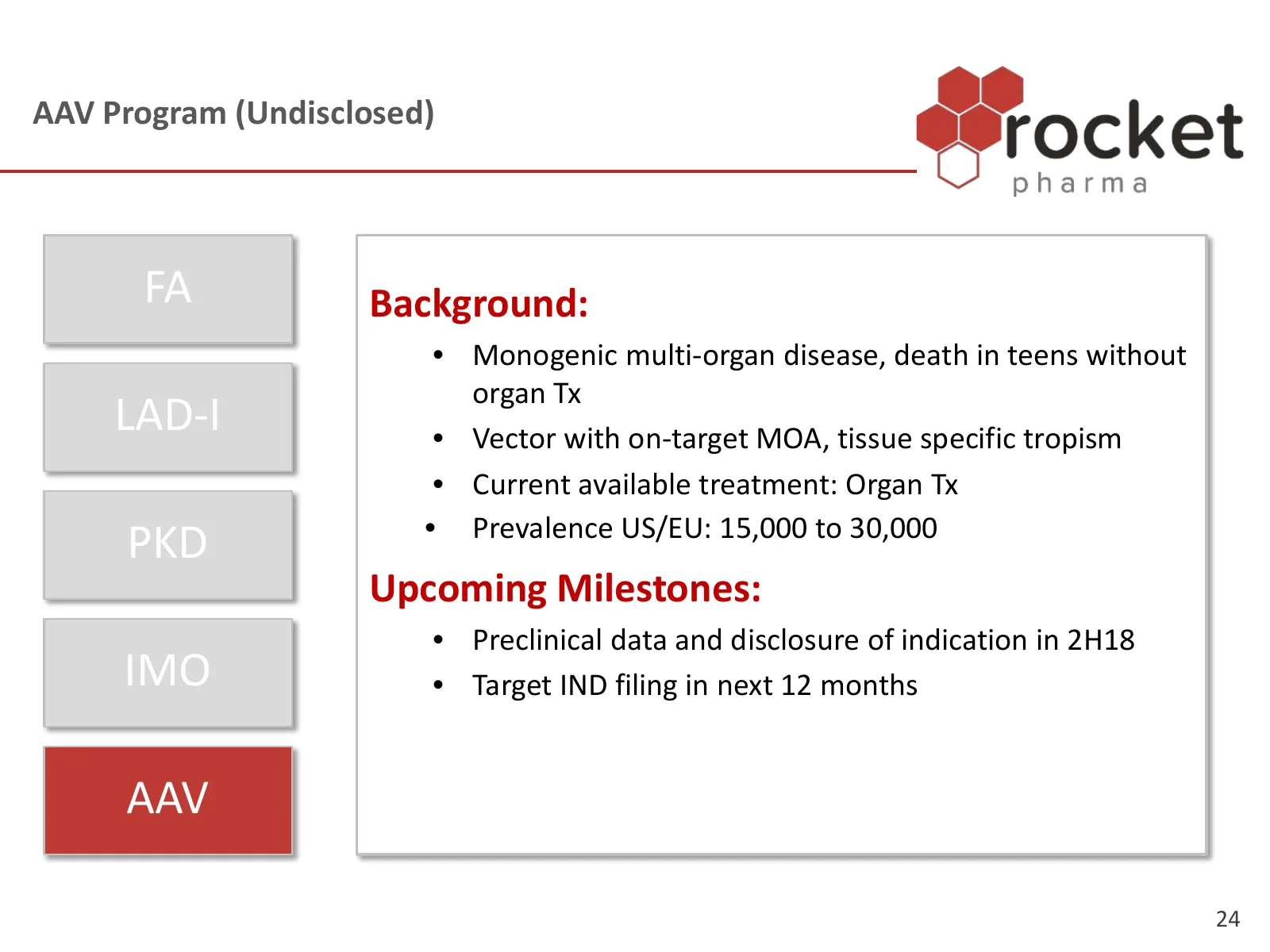
AAV Program (Undisclosed) FA Background: • Monogenic multi-organ disease, death in teens without organ Tx LAD-I • Vector with on-target MOA, tissue specific tropism • Current available treatment: Organ Tx • Prevalence US/EU: 15,000 to 30,000 PKD Upcoming Milestones: • Preclinical data and disclosure
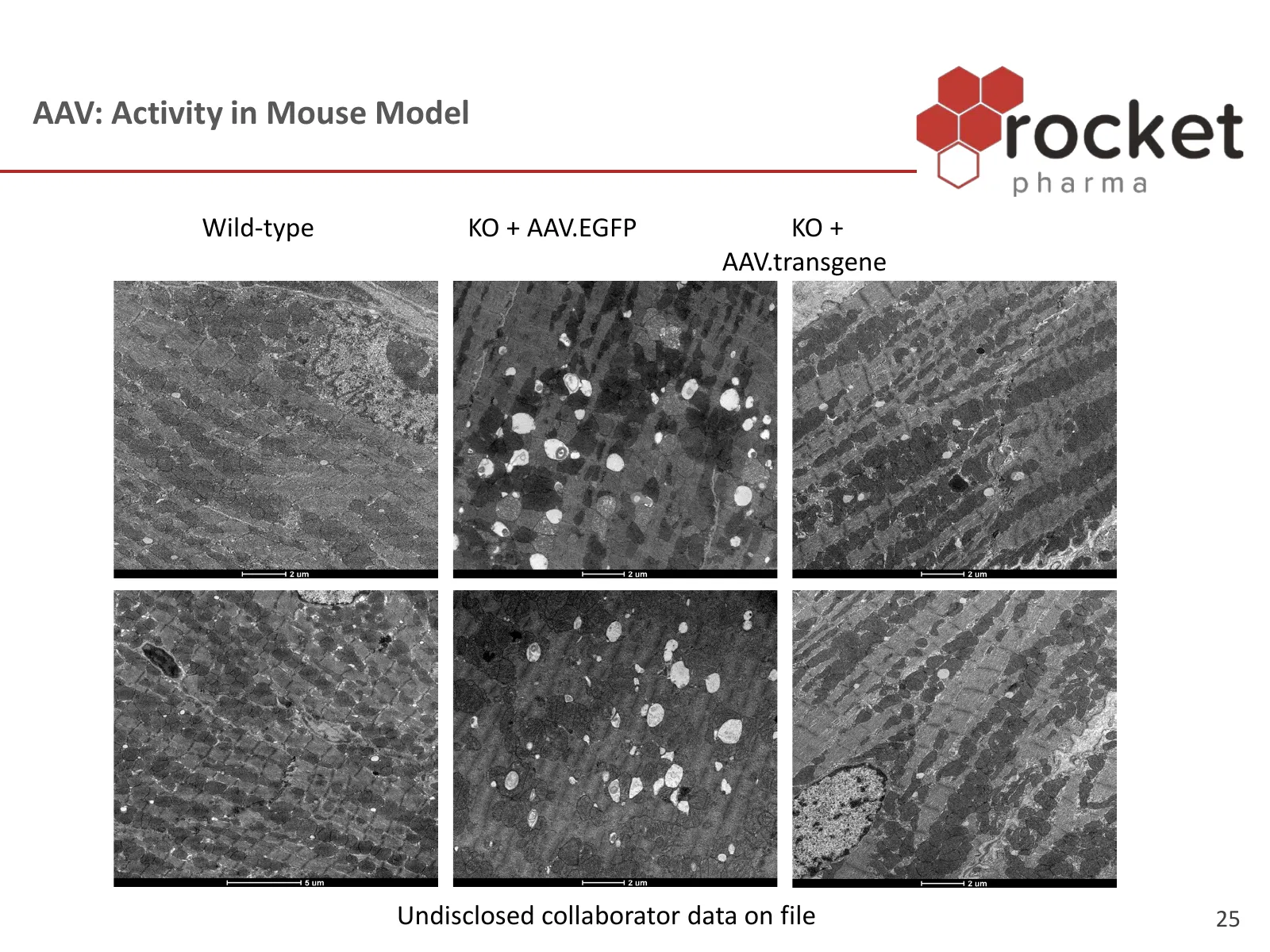
Slide 25: AAV: Activity in Mouse Model
AAV: Activity in Mouse Model Wild-type KO + AAV.EGFP KO + AAV.transgene Undisclosed collaborator data on file 25
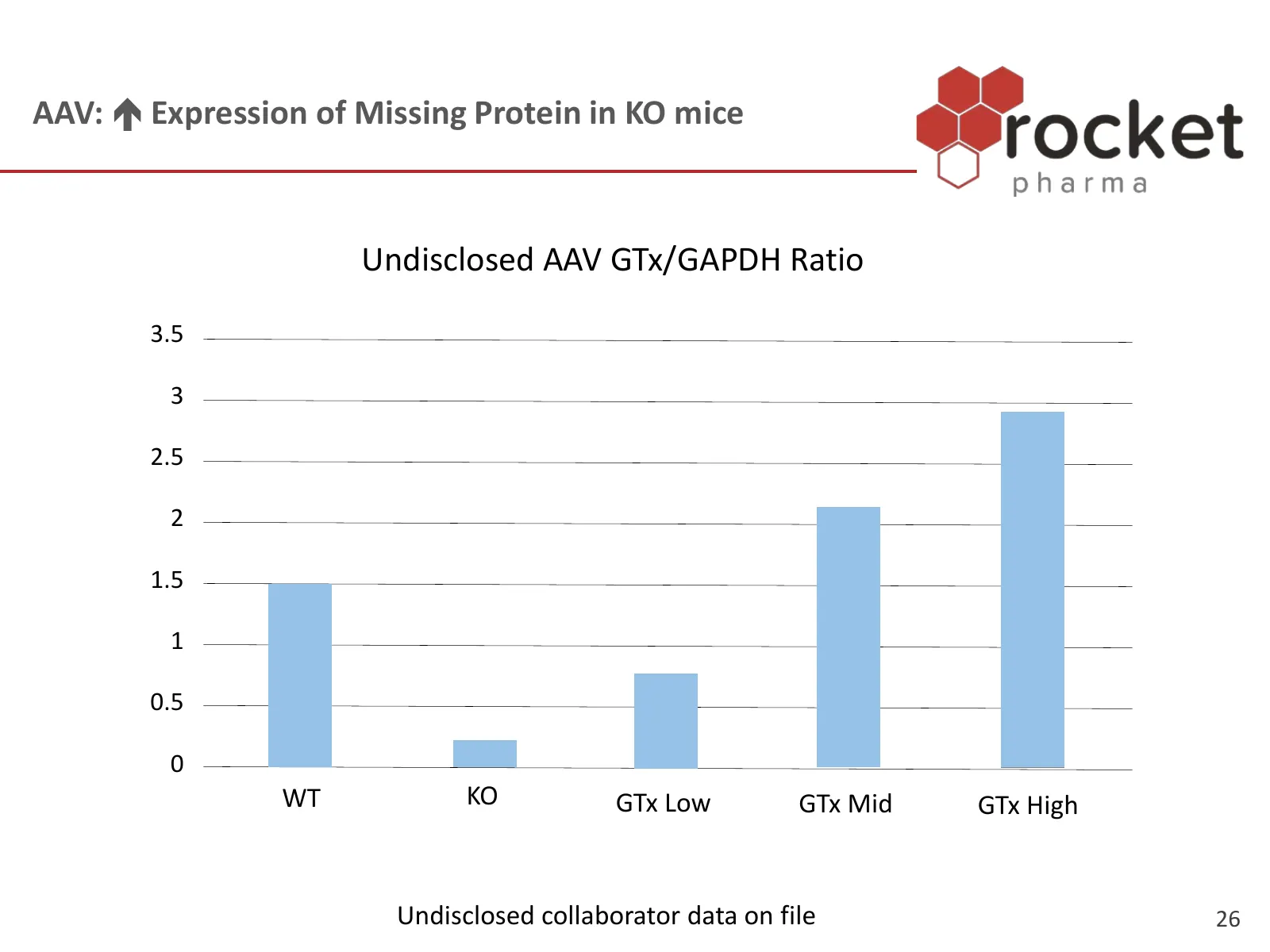
Slide 26: AAV: Expression of Missing Protein in KO mice
AAV: Expression of Missing Protein in KO mice Undisclosed AAV GTx/GAPDH Ratio 3.5 3 2.5 2 1.5 1 0.5 0 WT KO GTx Low GTx Mid GTx High Undisclosed collaborator data on file 26
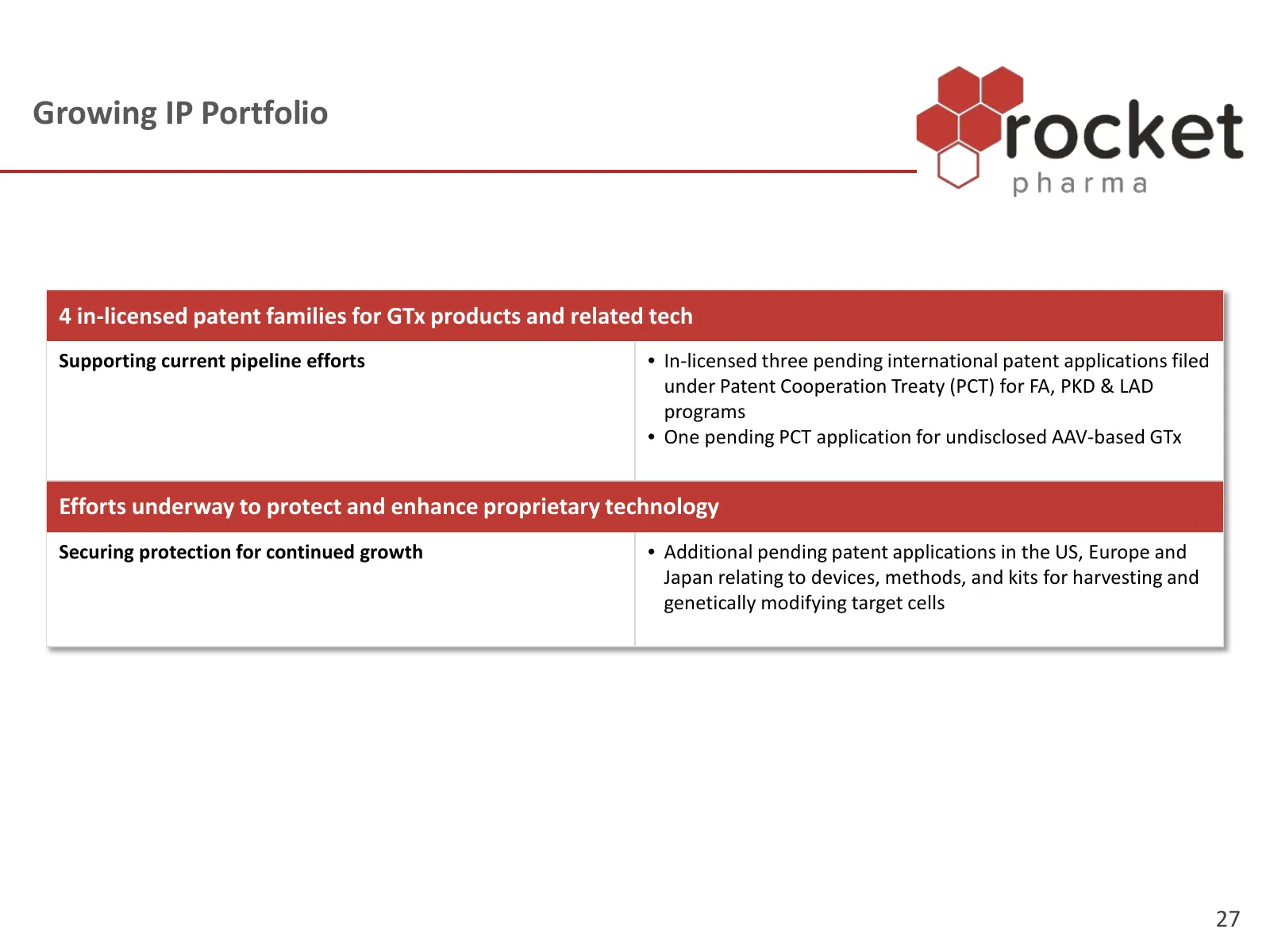
Slide 27: Growing IP Portfolio
Growing IP Portfolio 4 in-licensed patent families for GTx products and related tech Supporting current pipeline efforts • In-licensed three pending international patent applications filed under Patent Cooperation Treaty (PCT) for FA, PKD & LAD programs • One pending PCT application for undisclosed
Slide 28: World-Class Research and Manufacturing Partners
World-Class Research and Manufacturing Partners 28
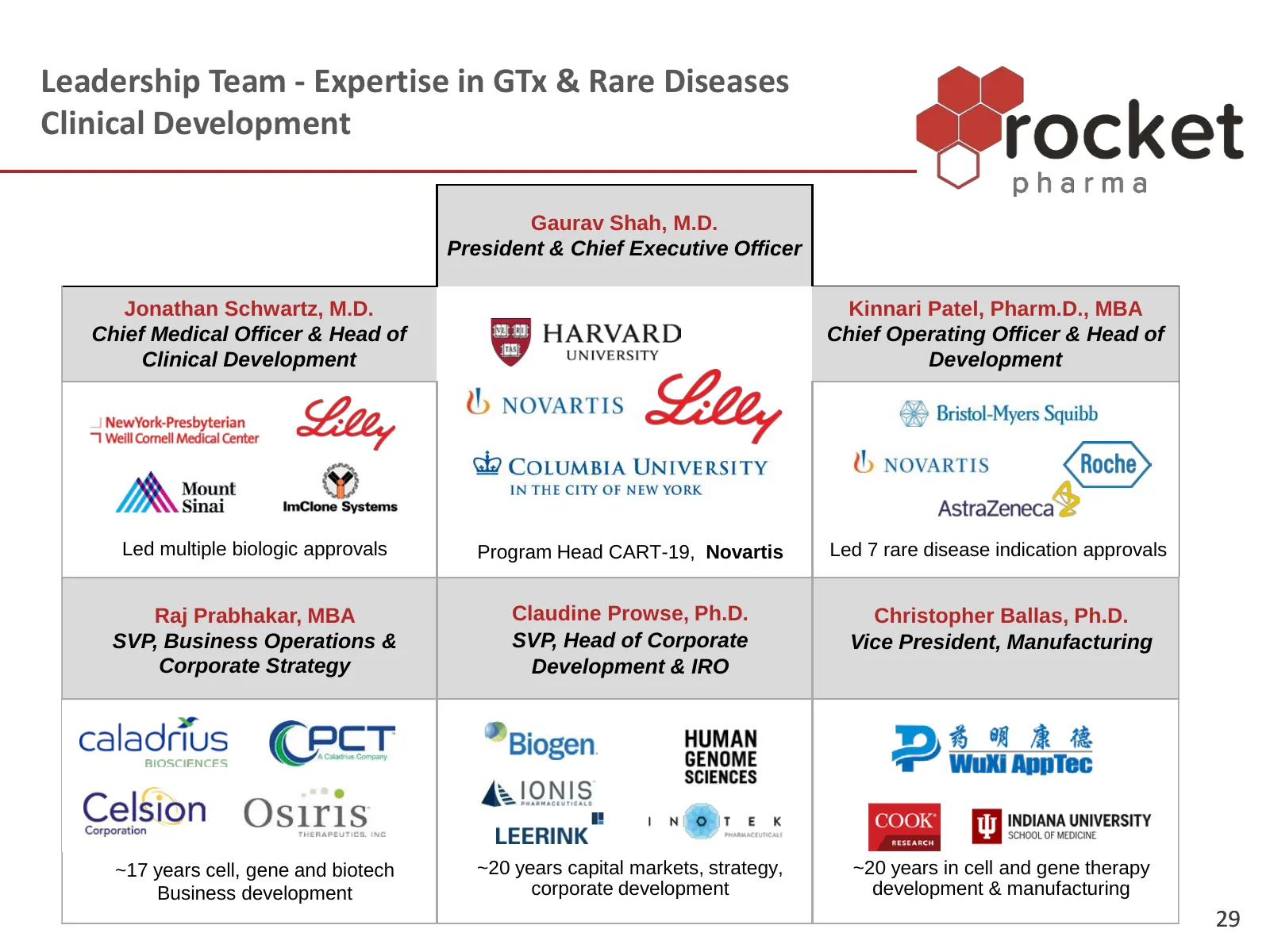
Slide 29: Leadership Team - Expertise in GTx & Rare Diseases Clinical Development
Leadership Team - Expertise in GTx & Rare Diseases Clinical Development Gaurav Shah, M.D. President & Chief Executive Officer Jonathan Schwartz, M.D. Kinnari Patel, Pharm.D., MBA Chief Medical Officer & Head of Chief Operating Officer & Head of Clinical Development Development Led multiple biologic
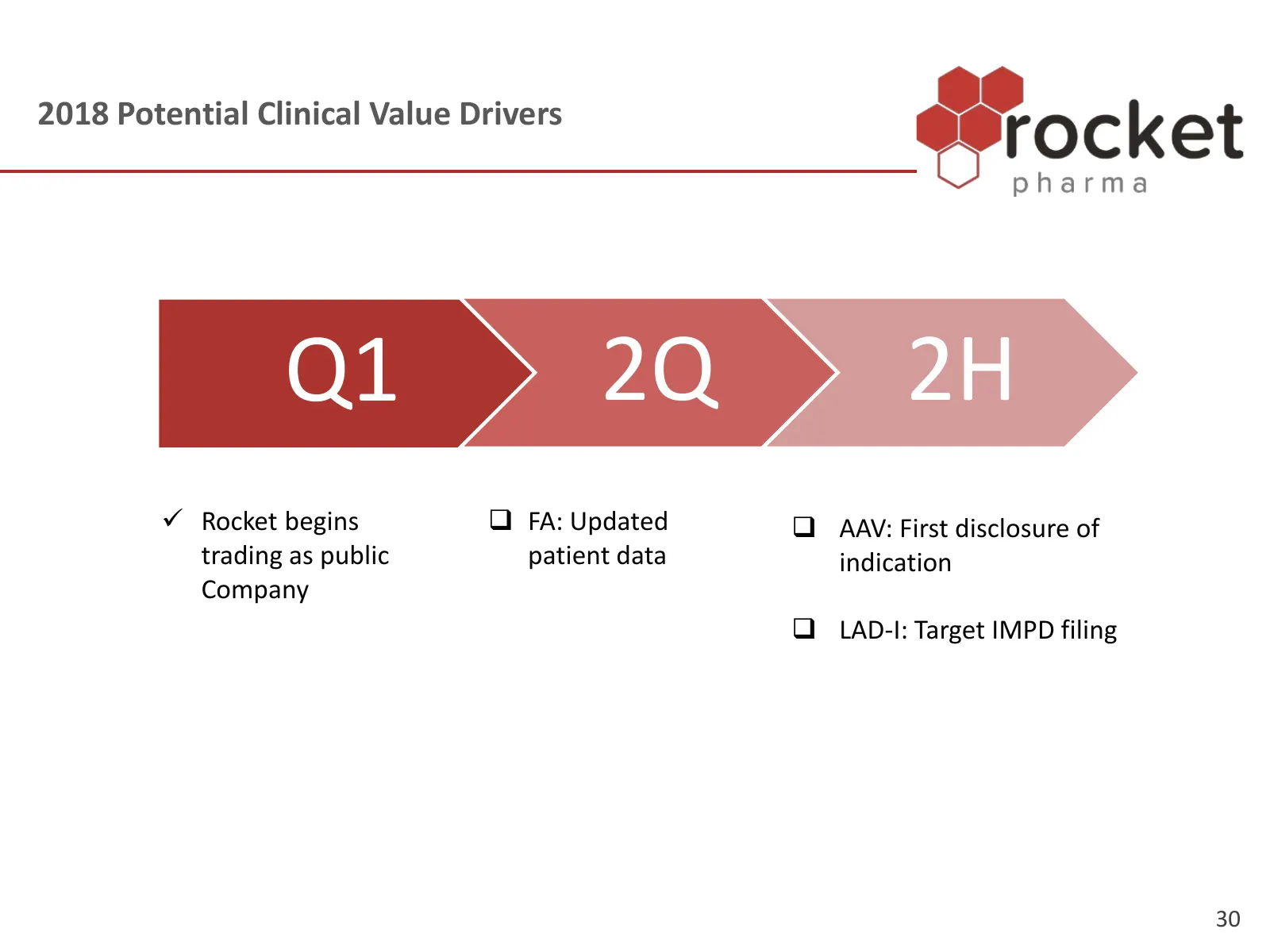
Slide 30: 2018 Potential Clinical Value Drivers
2018 Potential Clinical Value Drivers Q1 2Q 2H Rocket begins FA: Updated AAV: First disclosure of trading as public patient data indication Company LAD-I: Target IMPD filing 30
Source: Internet Archive copy of rocketpharma.com
More decks from Rocket Pharmaceuticals, Inc.
 Investor Presentation (November 2026)36 slides · November 2026
 Corporate Update (October 2026)23 slides · Oct 6, 2026
 Investor Presentation (August 2026)34 slides · August 2026
 Technical Presentation (May 2025)19 slides · May 15, 2025
 Technical Presentation (November 2024)15 slides · Nov 18, 2024
 Corporate Update (September 2023)25 slides · Sep 12, 2023