SELLAS Life Sciences Group, Inc. · NASDAQ:SLS
SELLAS Life Sciences — Investor Presentation (November 2022)
42 slides from SELLAS Life Sciences's investor presentation, Nov 14, 2022
Slide 1: Company Overview
Company Overview NASDAQ: SLS November 2022
Slide 2: Forward Looking Statements
Forward Looking Statements This presentation contains forward-looking statements. Such forward-looking statements can be identified by the use of the words “expect,” “believe,” “will,” “anticipate,” “estimate,” “plan,” “project” and other words of similar import. The forward-looking statements in th
Slide 3: Overview
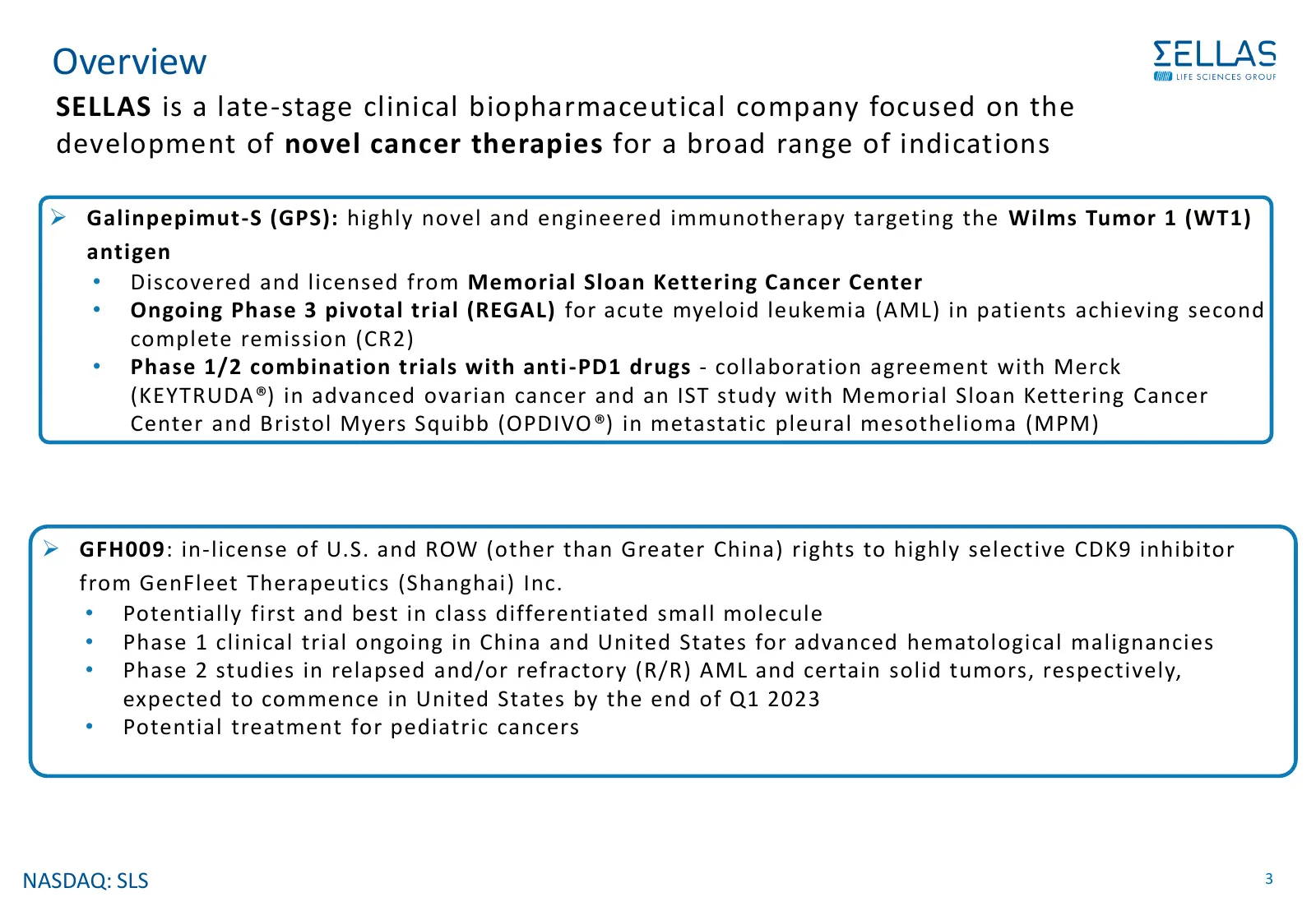
Overview SELLAS is a late-stage clinical biopharmaceutical company focused on the development of novel cancer therapies for a broad range of indications ➢ Galinpepimut-S (GPS): highly novel and engineered immunotherapy targeting the Wilms Tumor 1 (WT1) antigen • Discovered and licensed from Memorial
Slide 4: Experienced Management Team and Board of Directors
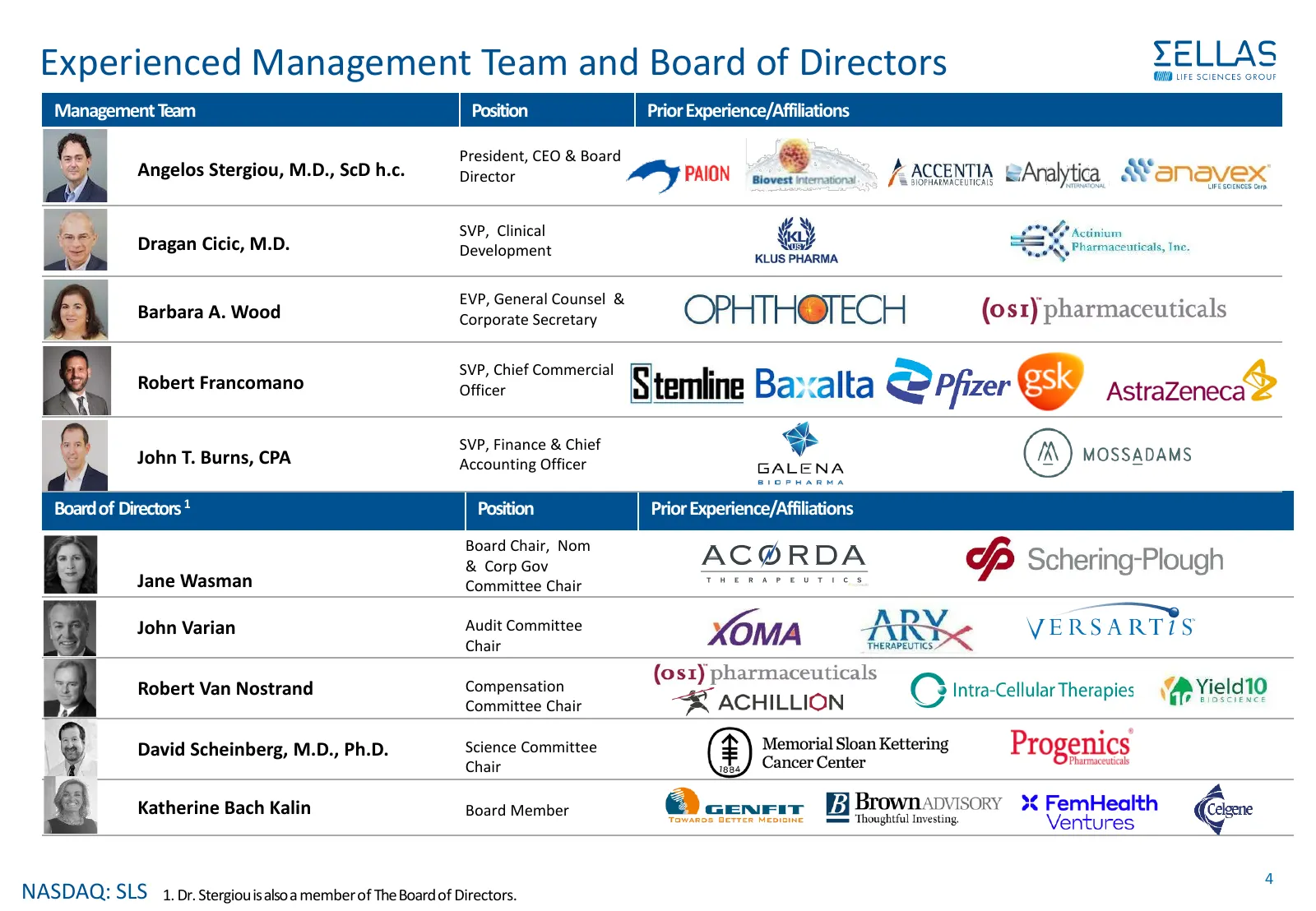
Experienced Management Team and Board of Directors Management Team Position PriorExperience/Affiliations President, CEO & Board Angelos Stergiou, M.D., ScD h.c. Director SVP, Clinical Dragan Cicic, M.D. Development EVP, General Counsel & Barbara A. Wood Corporate Secretary SVP, Chief Commercial Robe
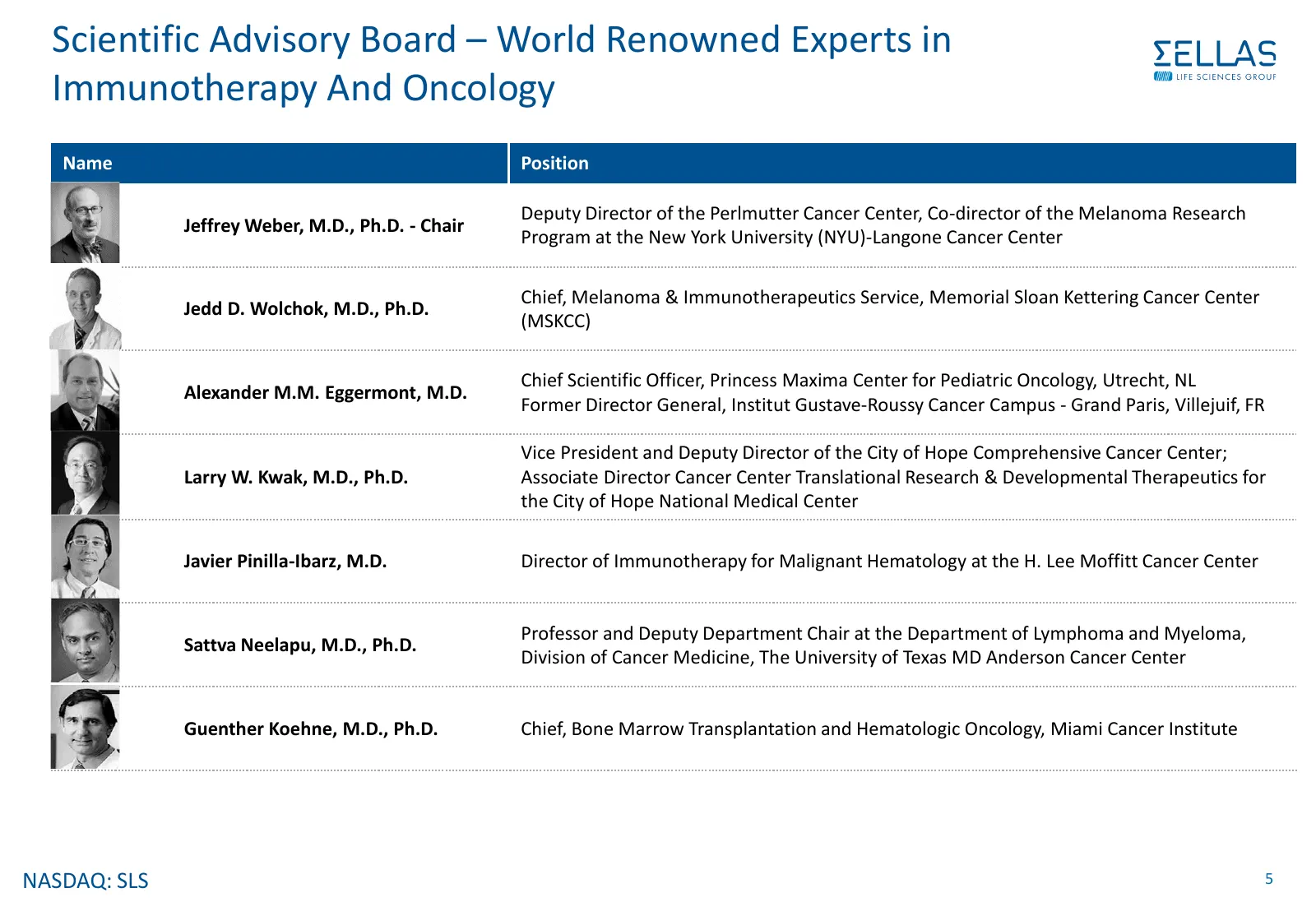
Slide 5: Scientific Advisory Board – World Renowned Experts in Immunotherapy And Oncology
Scientific Advisory Board – World Renowned Experts in Immunotherapy And Oncology Name Position Deputy Director of the Perlmutter Cancer Center, Co-director of the Melanoma Research Jeffrey Weber, M.D., Ph.D. - Chair Program at the New York University (NYU)-Langone Cancer Center Chief, Melanoma & Imm
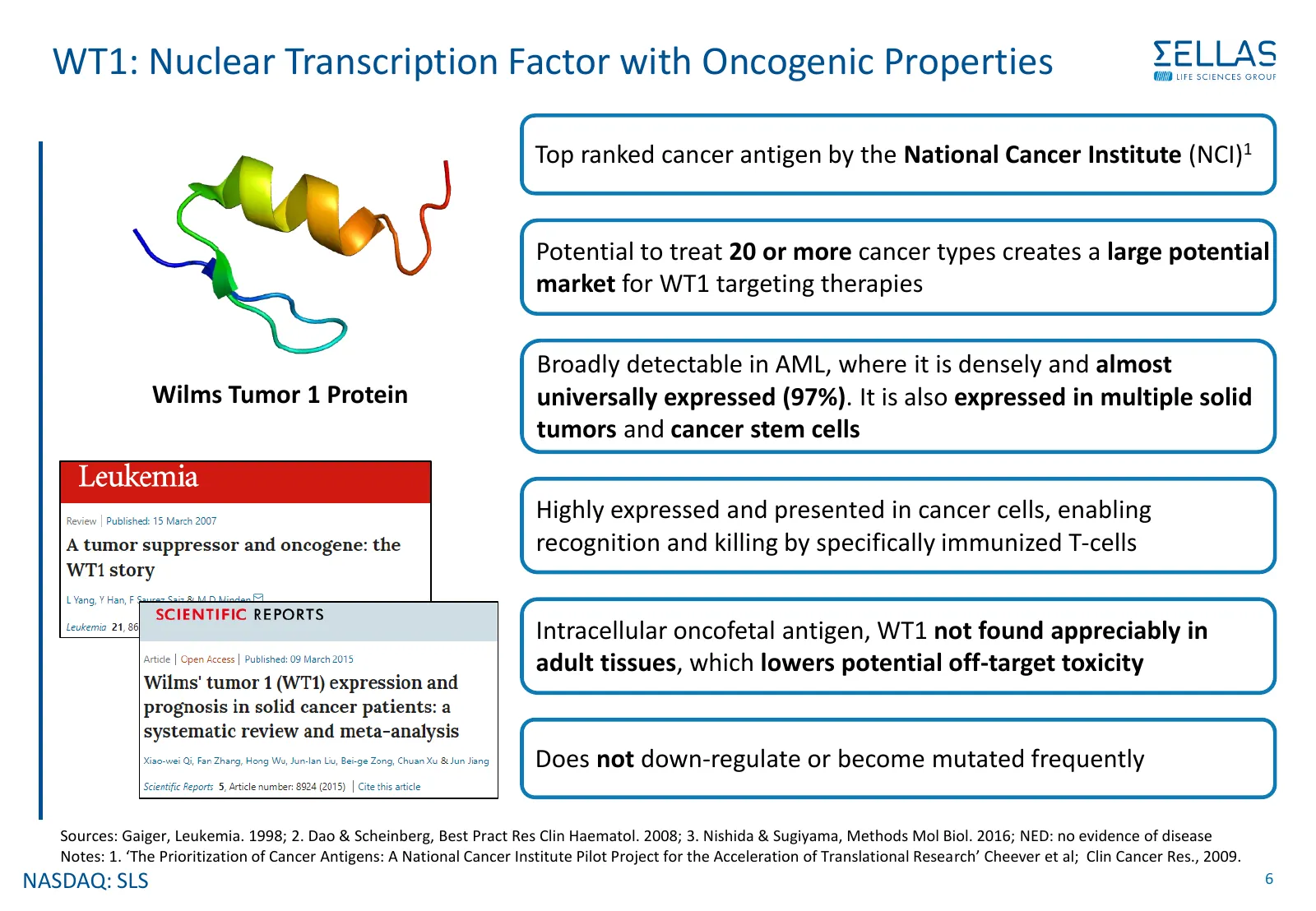
Slide 6: WT1: Nuclear Transcription Factor with Oncogenic Properties
WT1: Nuclear Transcription Factor with Oncogenic Properties Top ranked cancer antigen by the National Cancer Institute (NCI)1 Potential to treat 20 or more cancer types creates a large potential market for WT1 targeting therapies Broadly detectable in AML, where it is densely and almost Wilms Tumor
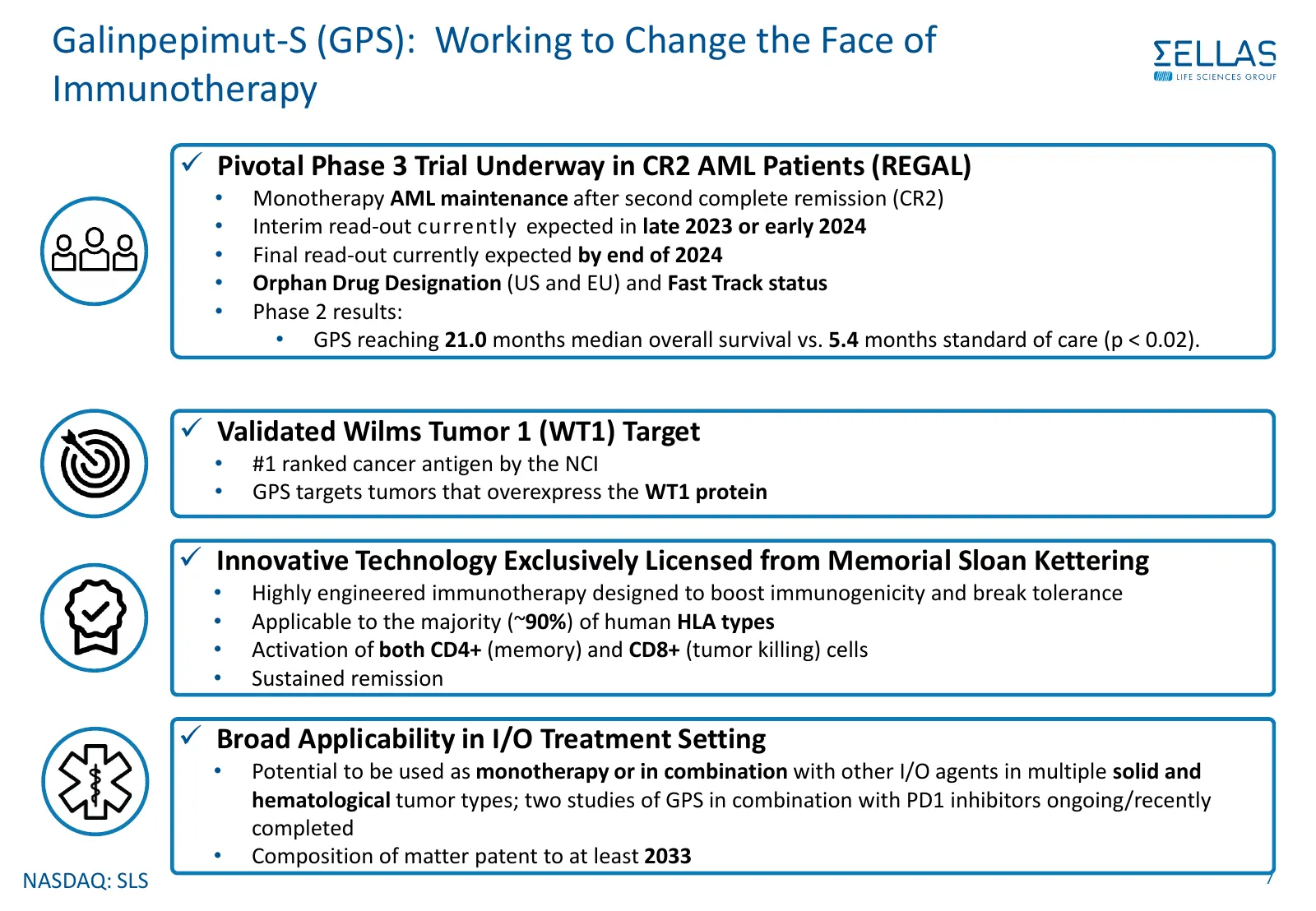
Slide 7: Galinpepimut-S (GPS): Working to Change the Face of Immunotherapy
Galinpepimut-S (GPS): Working to Change the Face of Immunotherapy ✓ Pivotal Phase 3 Trial Underway in CR2 AML Patients (REGAL) • Monotherapy AML maintenance after second complete remission (CR2) • Interim read-out currently expected in late 2023 or early 2024 • Final read-out currently expected by e
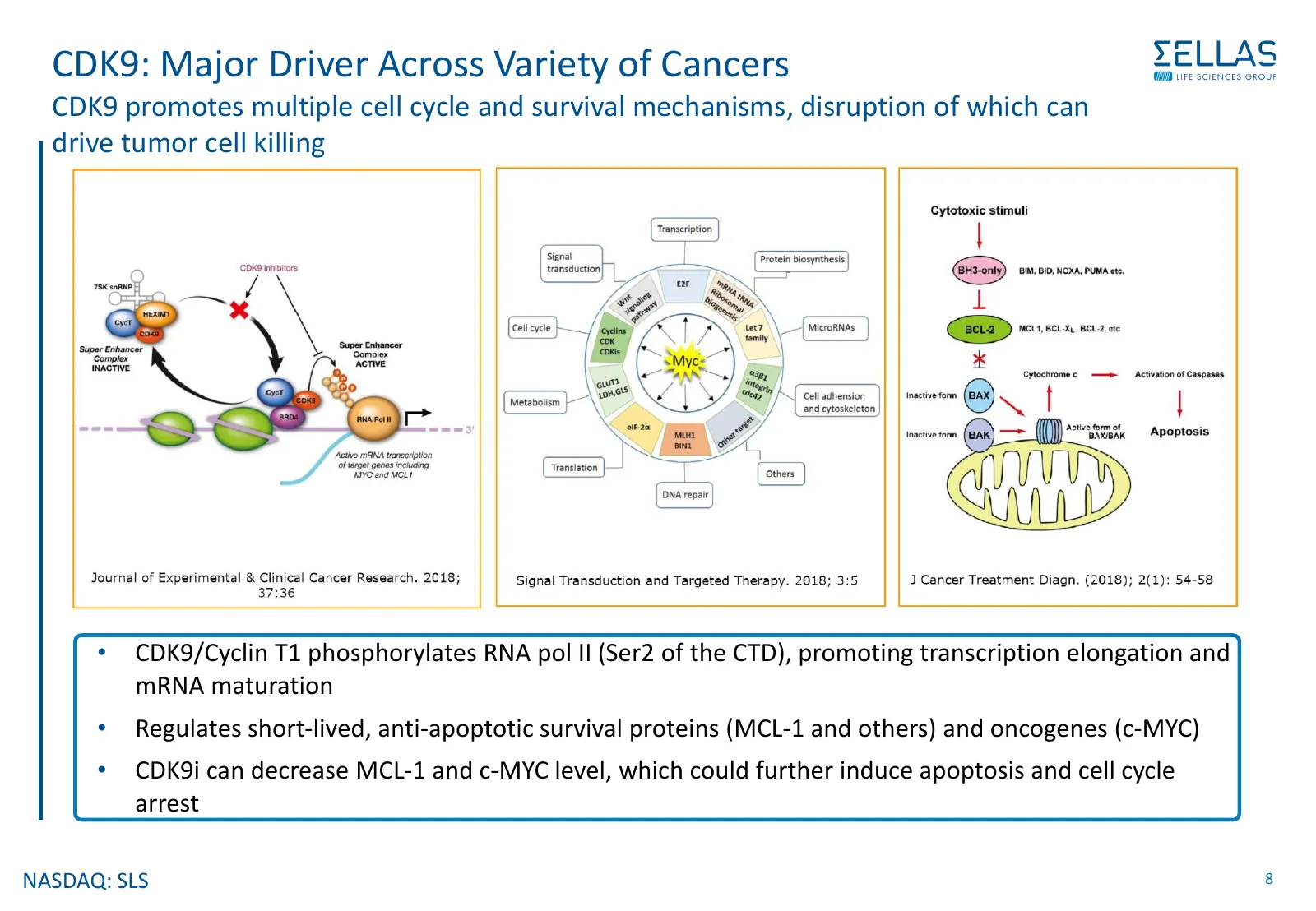
Slide 8: CDK9: Major Driver Across Variety of Cancers
CDK9: Major Driver Across Variety of Cancers CDK9 promotes multiple cell cycle and survival mechanisms, disruption of which can drive tumor cell killing • CDK9/Cyclin T1 phosphorylates RNA pol II (Ser2 of the CTD), promoting transcription elongation and mRNA maturation • Regulates short-lived, anti-
Slide 9: GFH009: Next Generation Novel CDK9 Inhibitor
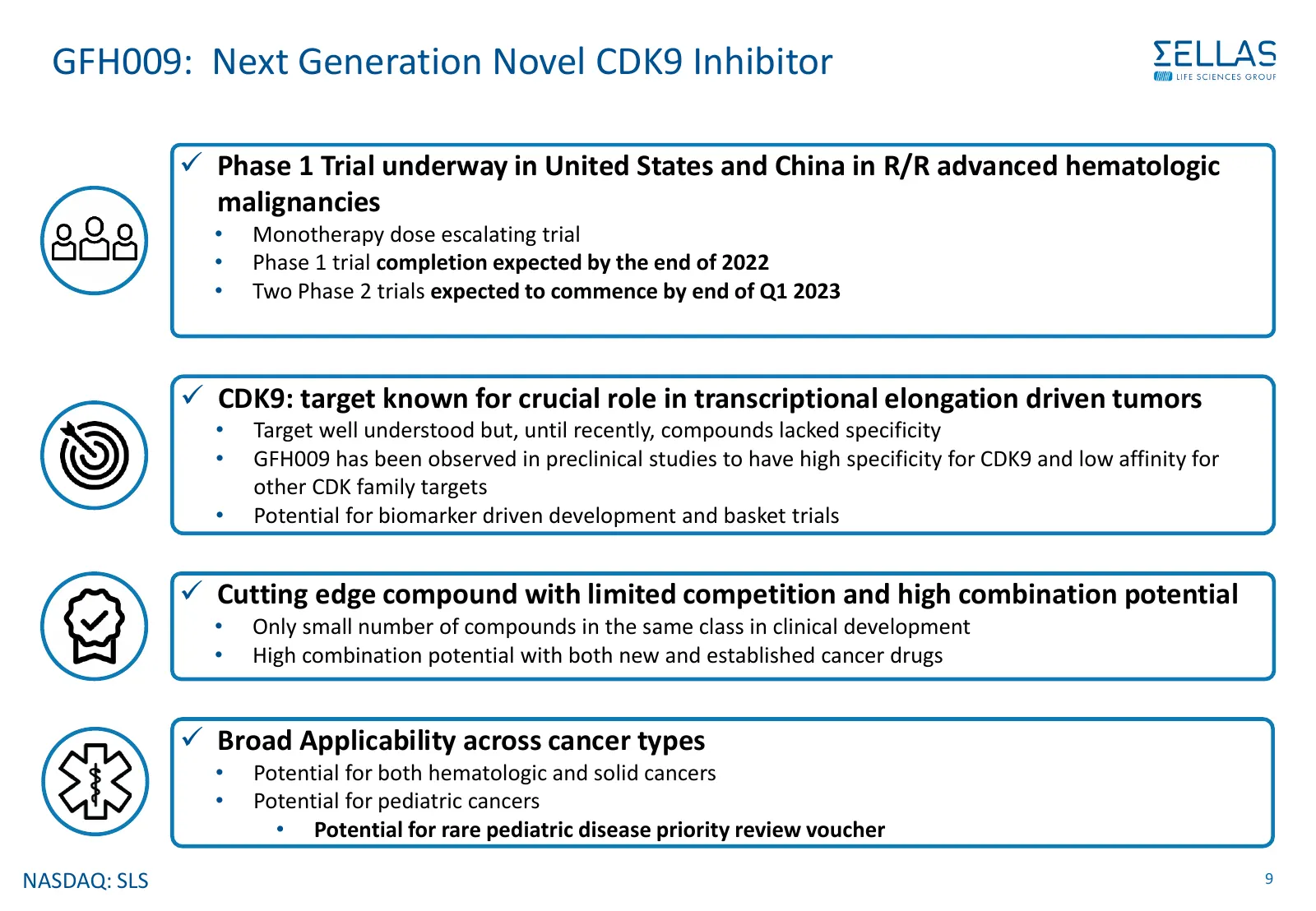
GFH009: Next Generation Novel CDK9 Inhibitor ✓ Phase 1 Trial underway in United States and China in R/R advanced hematologic malignancies • Monotherapy dose escalating trial • Phase 1 trial completion expected by the end of 2022 • Two Phase 2 trials expected to commence by end of Q1 2023 ✓ CDK9: tar
Slide 10: Upcoming Milestones
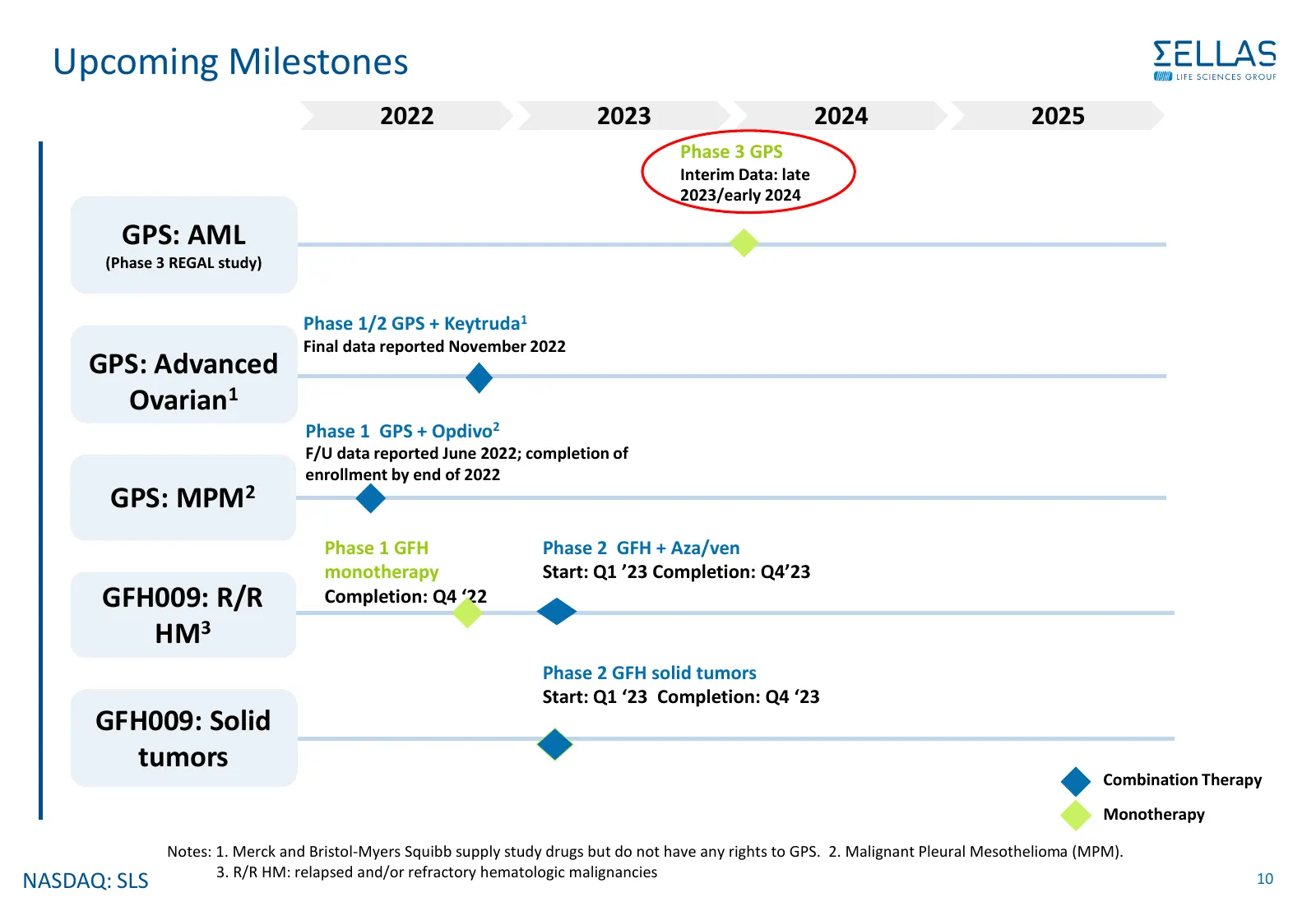
Upcoming Milestones 2022 2023 2024 2025 Phase 3 GPS Interim Data: late 2023/early 2024 GPS: AML (Phase 3 REGAL study) Phase 1/2 GPS + Keytruda1 Final data reported November 2022 GPS: Advanced Ovarian1 Phase 1 GPS + Opdivo2 F/U data reported June 2022; completion of enrollment by end of 2022 GPS: MPM
Slide 11: GPS – Mechanism of Action
GPS – Mechanism of Action NASDAQ: SLS 11
Slide 12: Differentiated Immunotherapy Using Heteroclitic Technology
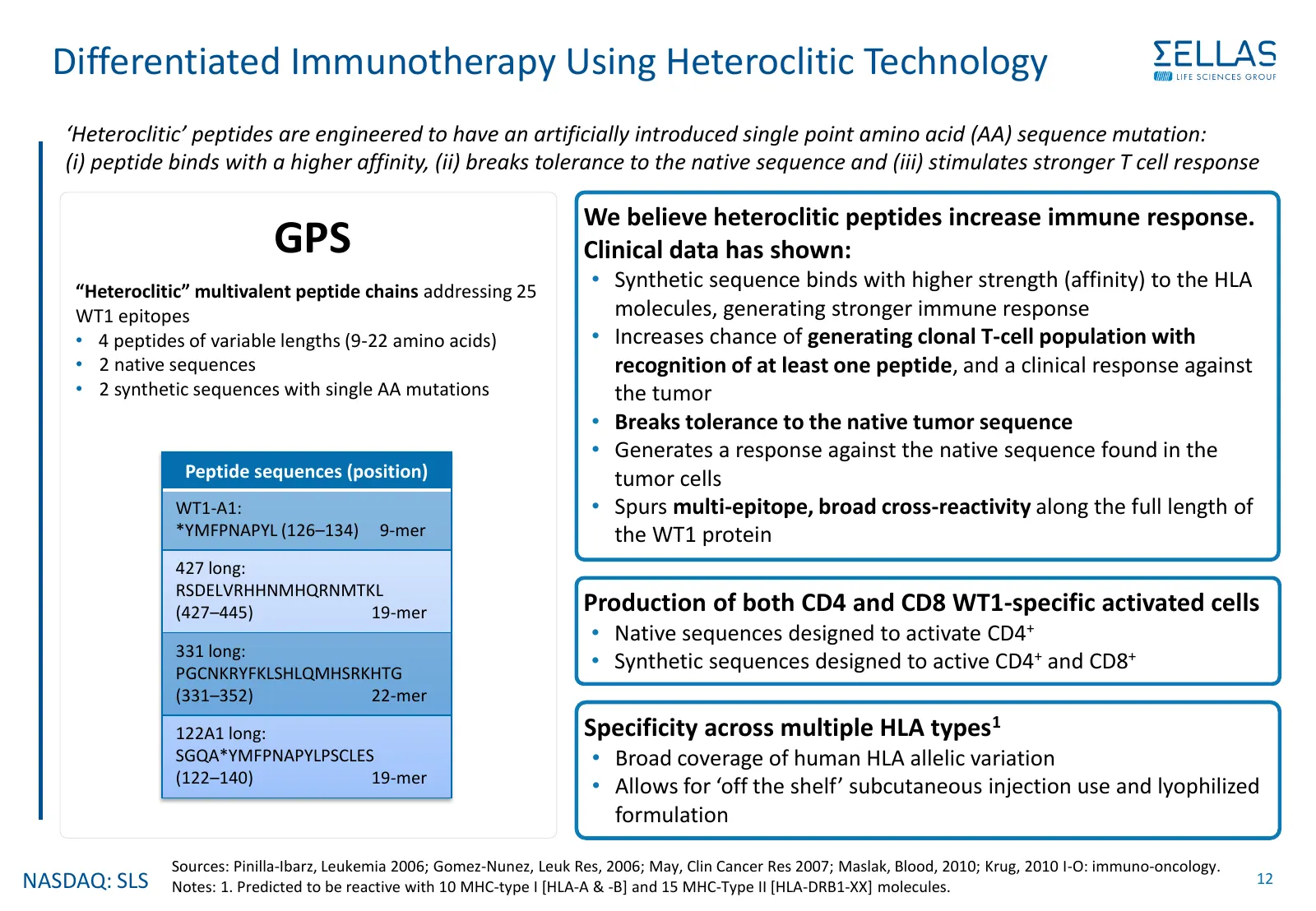
Differentiated Immunotherapy Using Heteroclitic Technology ‘Heteroclitic’ peptides are engineered to have an artificially introduced single point amino acid (AA) sequence mutation: (i) peptide binds with a higher affinity, (ii) breaks tolerance to the native sequence and (iii) stimulates stronger T
Slide 13: GPS Mechanism of Action
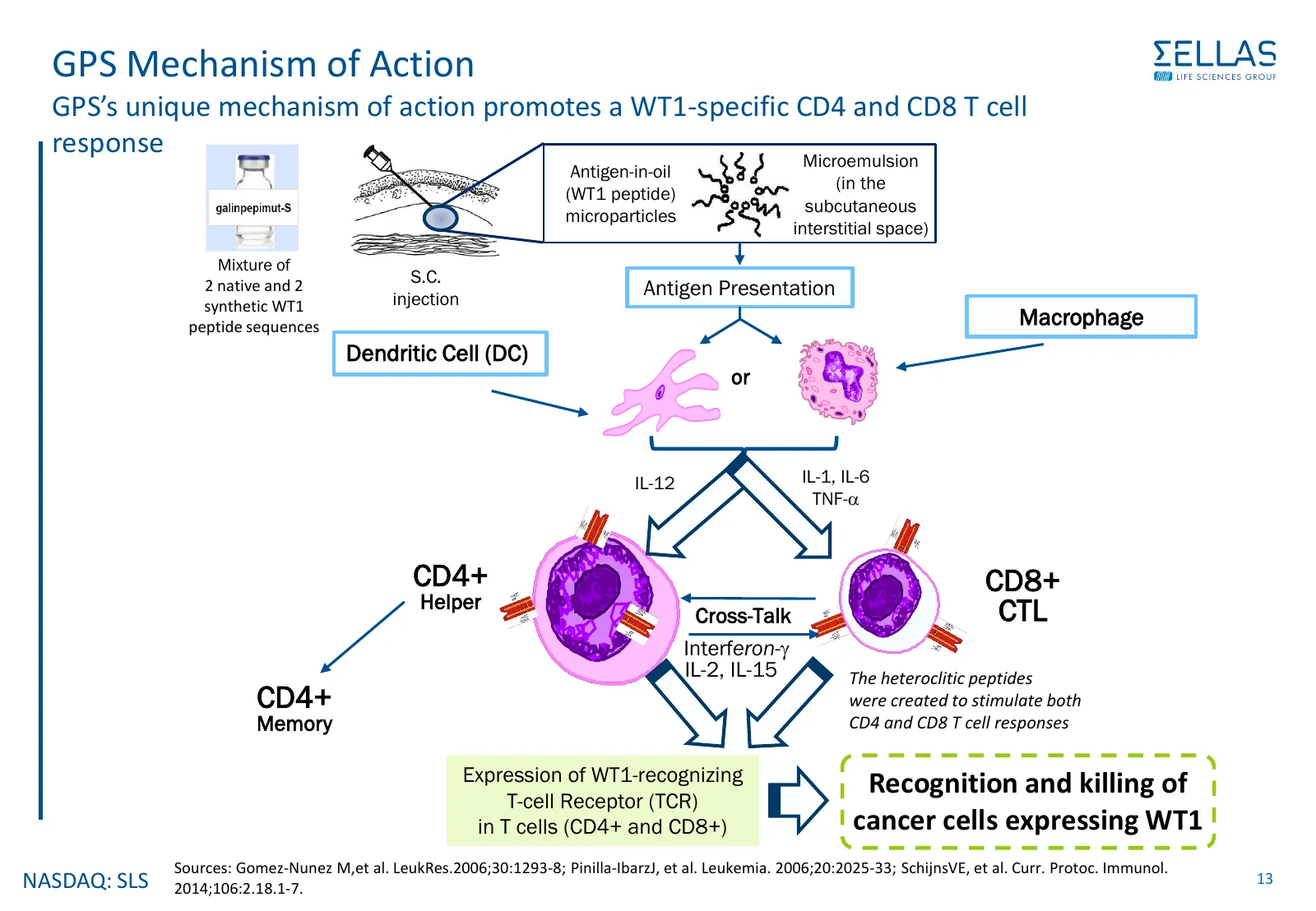
GPS Mechanism of Action GPS’s unique mechanism of action promotes a WT1-specific CD4 and CD8 T cell response Microemulsion Antigen-in-oil (in the (WT1 peptide) subcutaneous microparticles interstitial space) Mixture of S.C. 2 native and 2 injection Antigen Presentation synthetic WT1 peptide sequence
Slide 14: Epitope Spreading: A Key Element for Cancer Immunotherapy
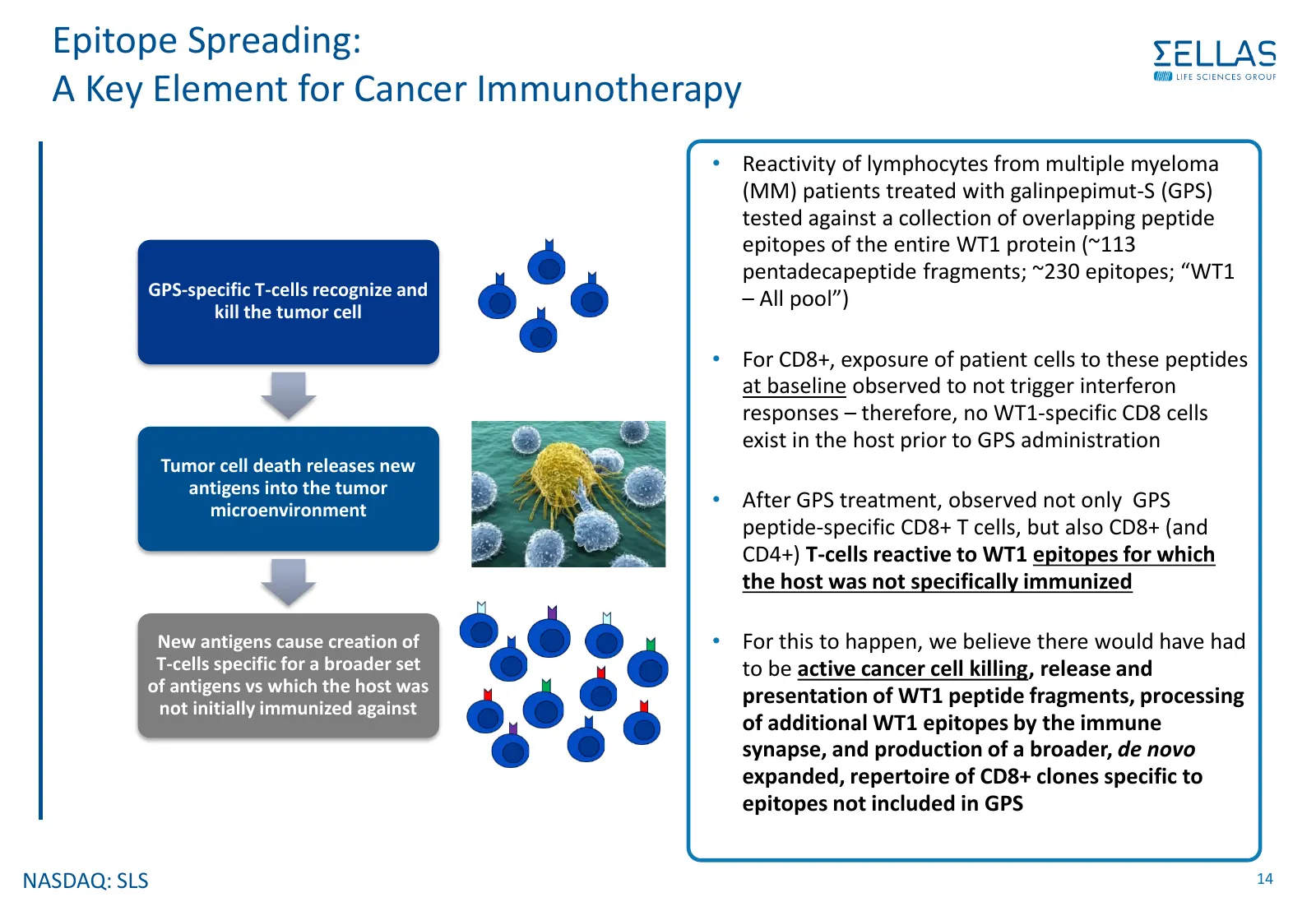
Epitope Spreading: A Key Element for Cancer Immunotherapy • Reactivity of lymphocytes from multiple myeloma (MM) patients treated with galinpepimut-S (GPS) tested against a collection of overlapping peptide epitopes of the entire WT1 protein (~113 pentadecapeptide fragments; ~230 epitopes; “WT1 GPS-
Slide 15: High Frequency of WT1-Specific Immune Responses and Epitope Spreading
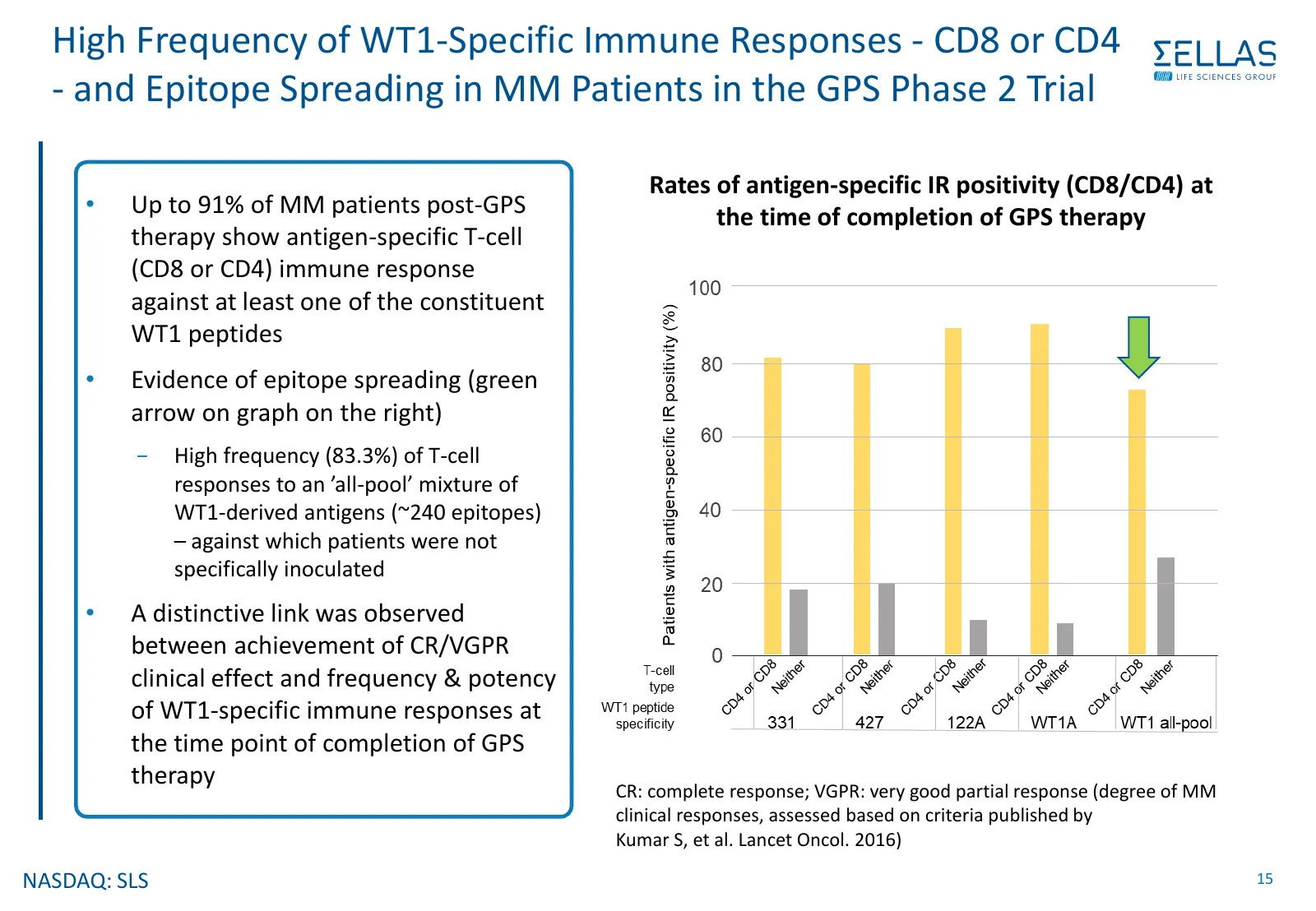
High Frequency of WT1-Specific Immune Responses - CD8 or CD4 - and Epitope Spreading in MM Patients in the GPS Phase 2 Trial Rates of antigen-specific IR positivity (CD8/CD4) at • Up to 91% of MM patients post-GPS the time of completion of GPS therapy therapy show antigen-specific T-cell (CD8 or CD4
Slide 16: GPS – Targeting AML
GPS – Targeting AML NASDAQ: SLS 16
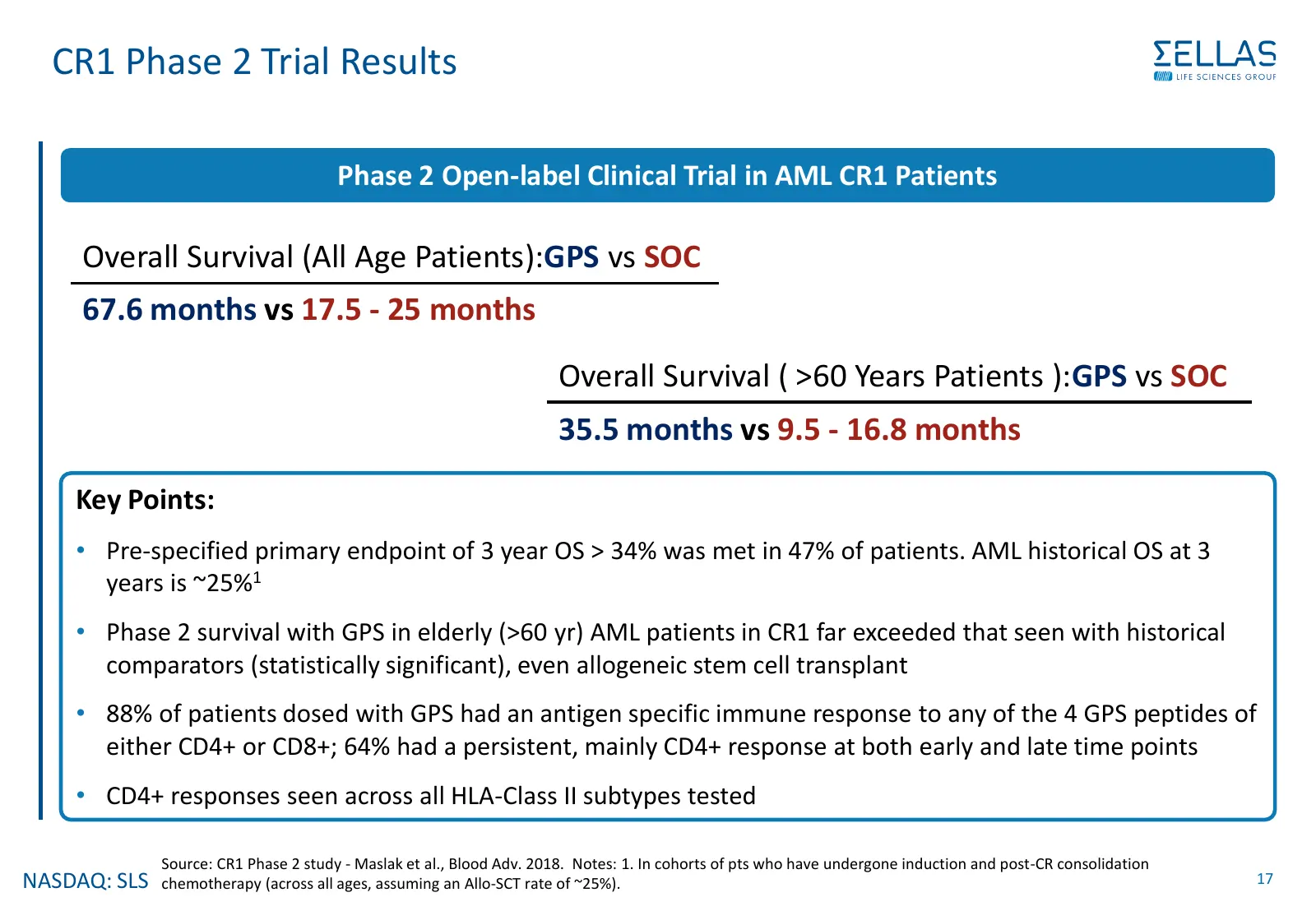
Slide 17: CR1 Phase 2 Trial Results
CR1 Phase 2 Trial Results Phase 2 Open-label Clinical Trial in AML CR1 Patients Overall Survival (All Age Patients):GPS vs SOC 67.6 months vs 17.5 - 25 months Overall Survival ( >60 Years Patients ):GPS vs SOC 35.5 months vs 9.5 - 16.8 months Key Points: • Pre-specified primary endpoint of 3 year OS
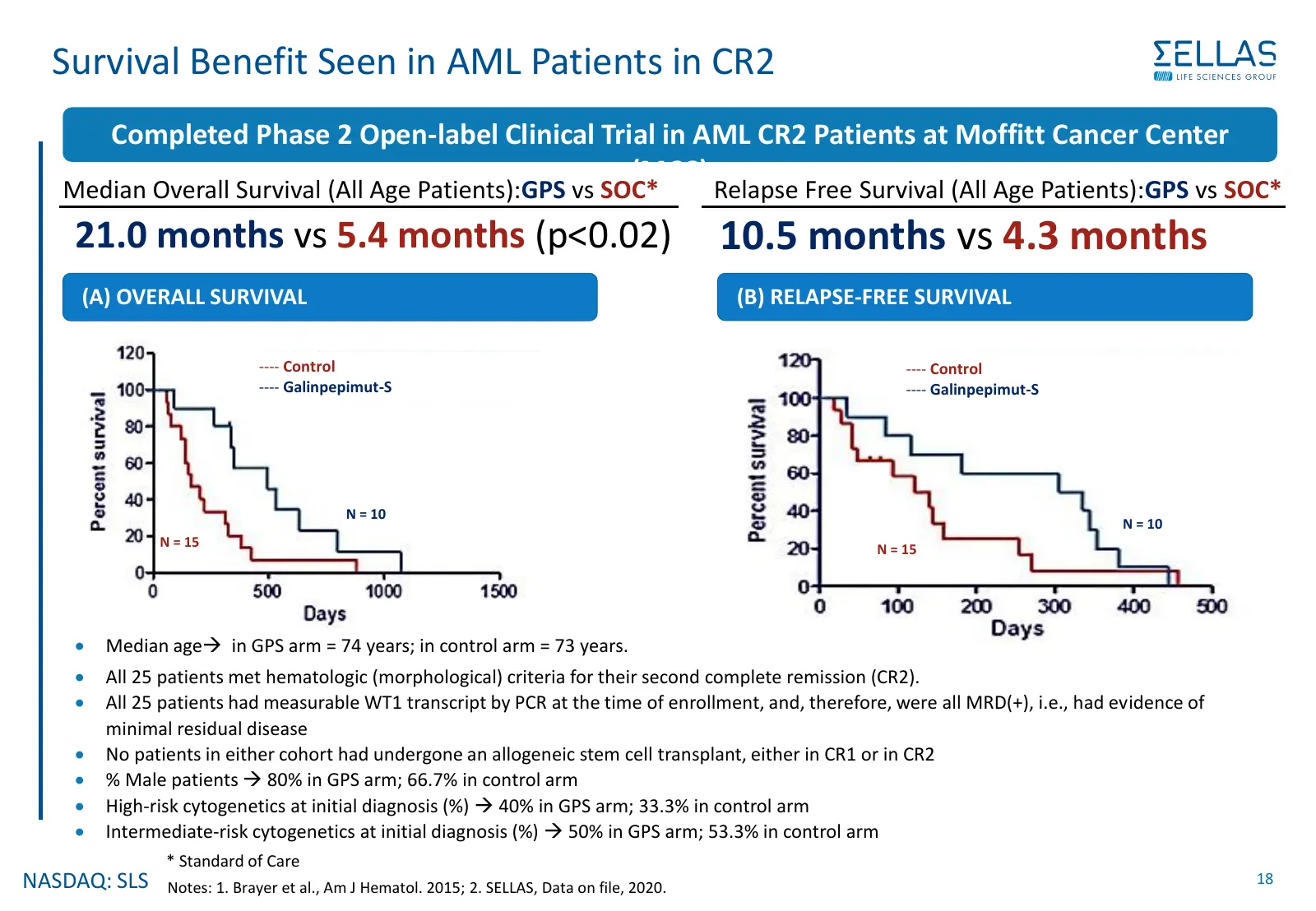
Slide 18: Survival Benefit Seen in AML Patients in CR2
Survival Benefit Seen in AML Patients in CR2 Completed Phase 2 Open-label Clinical Trial in AML CR2 Patients at Moffitt Cancer Center (MCC) Median Overall Survival (All Age Patients):GPS vs SOC* Relapse Free Survival (All Age Patients):GPS vs SOC* 21.0 months vs 5.4 months (p<0.02) 10.5 months vs 4.
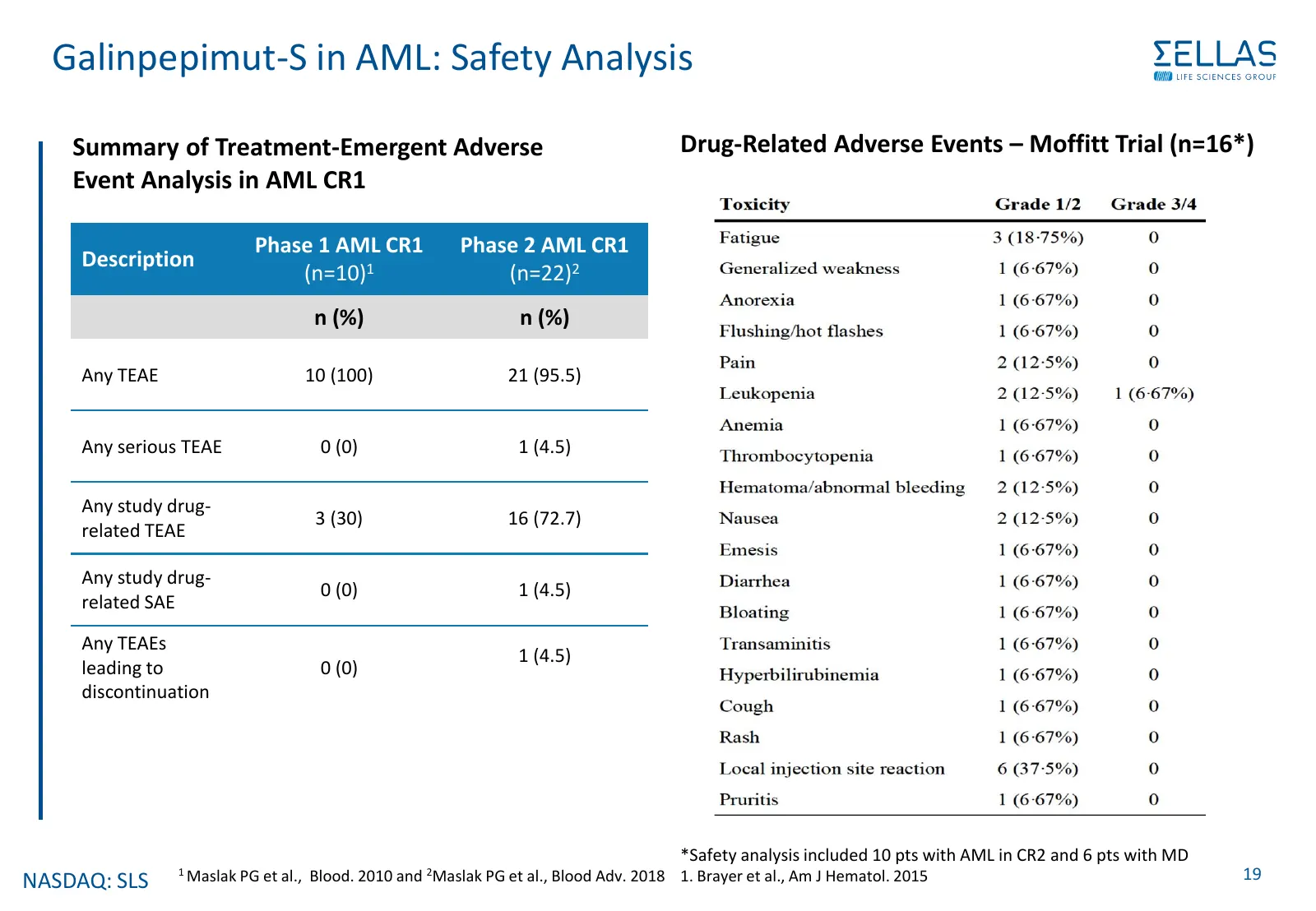
Slide 19: Galinpepimut-S in AML: Safety Analysis
Galinpepimut-S in AML: Safety Analysis Summary of Treatment-Emergent Adverse Drug-Related Adverse Events – Moffitt Trial (n=16*) Event Analysis in AML CR1 Phase 1 AML CR1 Phase 2 AML CR1 Description (n=10)1 (n=22)2 n (%) n (%) Any TEAE 10 (100) 21 (95.5) Any serious TEAE 0 (0) 1 (4.5) Any study drug
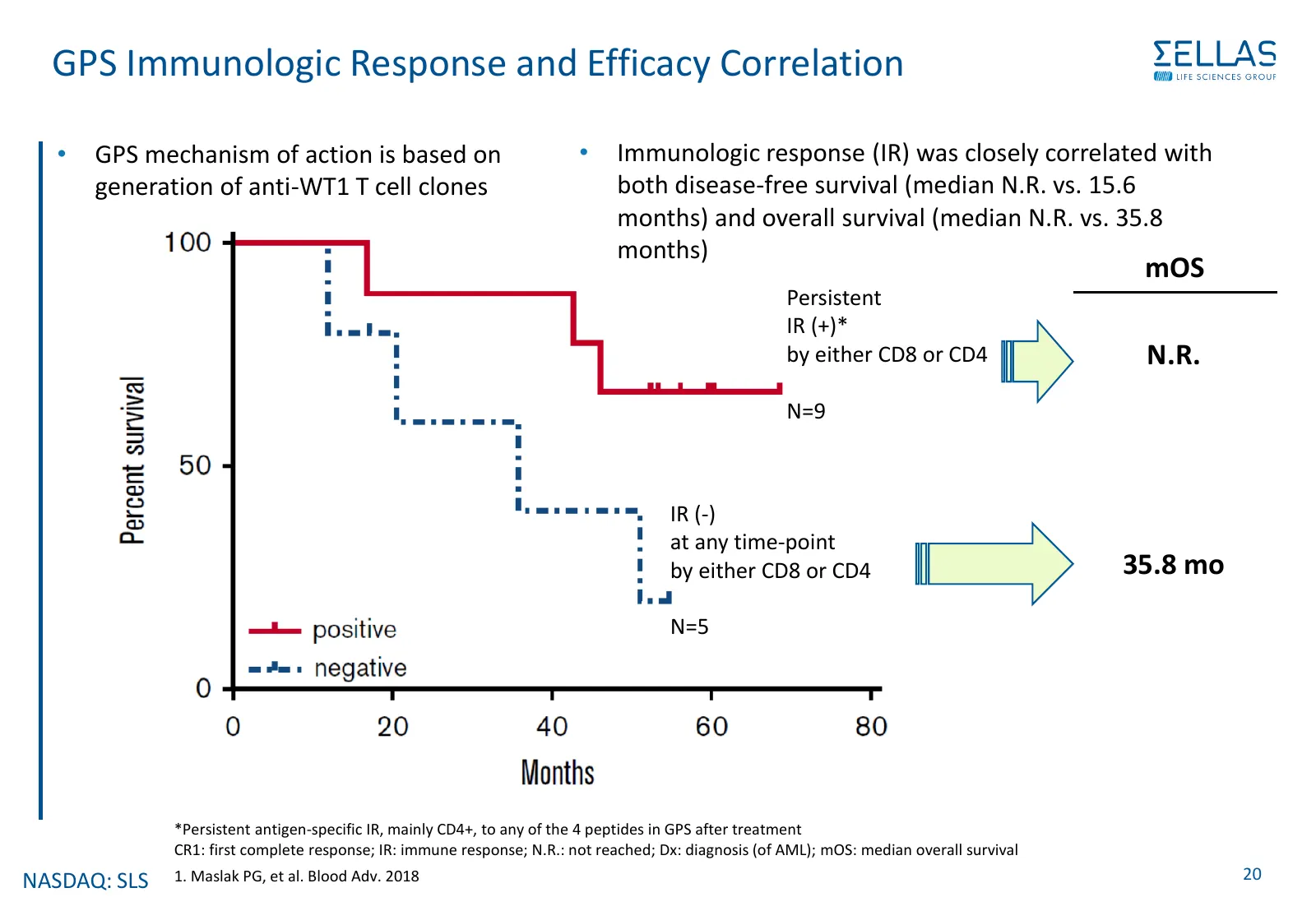
Slide 20: GPS Immunologic Response and Efficacy Correlation
GPS Immunologic Response and Efficacy Correlation • GPS mechanism of action is based on • Immunologic response (IR) was closely correlated with generation of anti-WT1 T cell clones both disease-free survival (median N.R. vs. 15.6 months) and overall survival (median N.R. vs. 35.8 months) mOS Persist
Slide 21: Phase 3 Trial Underway in Niche AML CR2 Patient Population
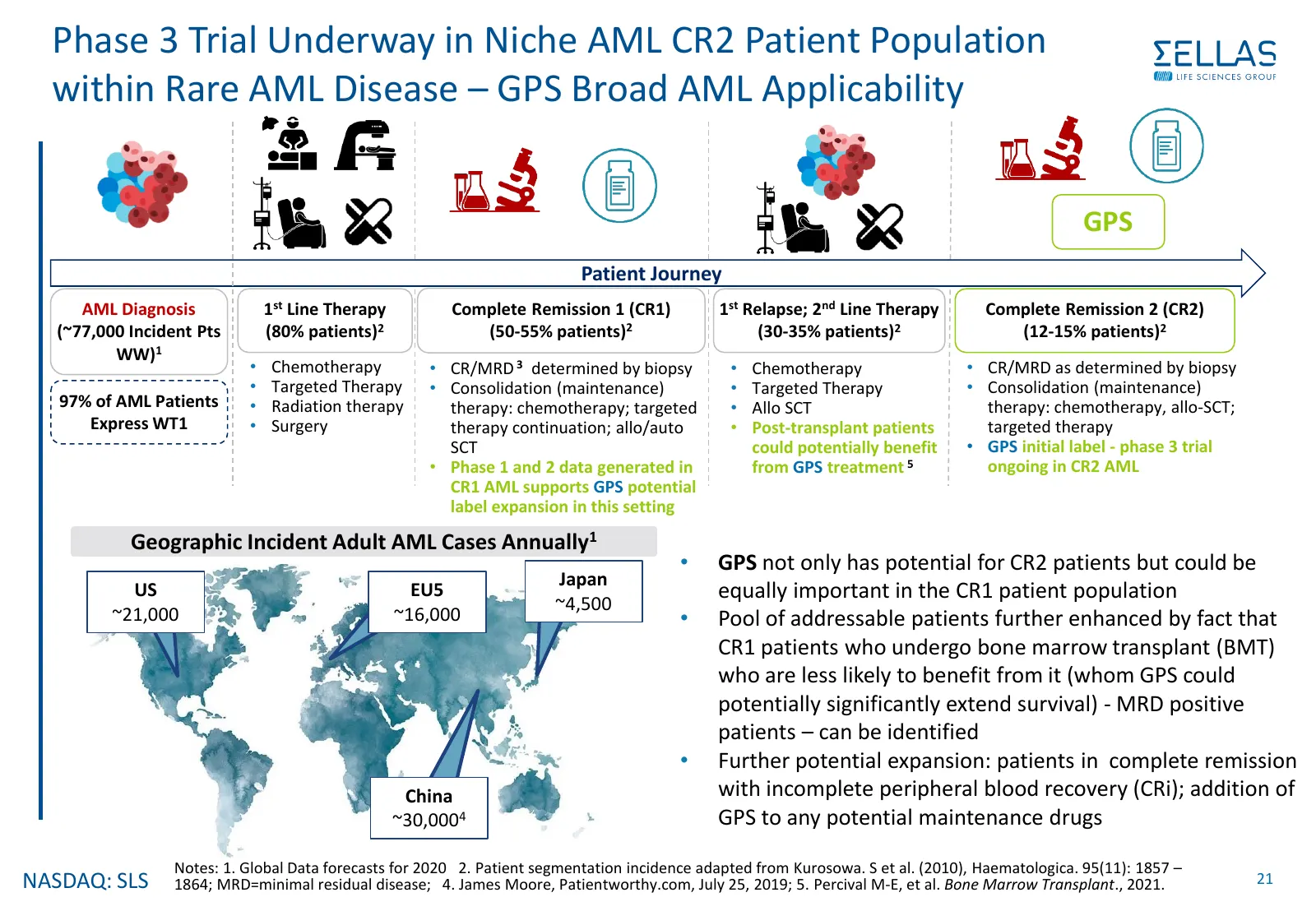
Phase 3 Trial Underway in Niche AML CR2 Patient Population within Rare AML Disease – GPS Broad AML Applicability GPS Patient Journey AML Diagnosis 1st Line Therapy Complete Remission 1 (CR1) 1st Relapse; 2nd Line Therapy Complete Remission 2 (CR2) (~77,000 Incident Pts (80% patients)2 (50-55% patien
Slide 22: New Data Highlight GPS Opportunities in Bone Marrow Transplant Settings
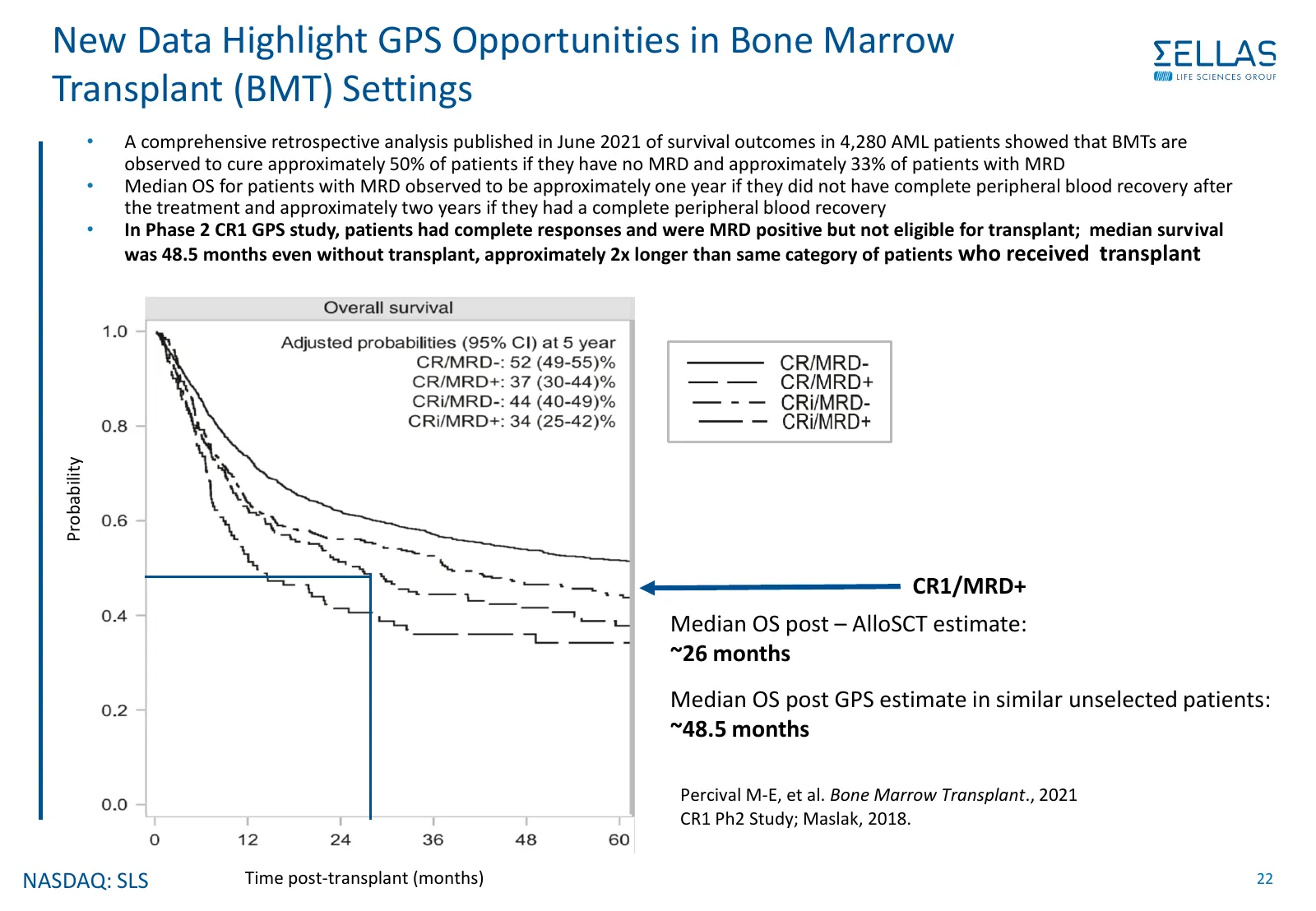
New Data Highlight GPS Opportunities in Bone Marrow Transplant (BMT) Settings • A comprehensive retrospective analysis published in June 2021 of survival outcomes in 4,280 AML patients showed that BMTs are observed to cure approximately 50% of patients if they have no MRD and approximately 33% of pa
Slide 23: Design of Phase 3 Registration Enabling Clinical Trial in CR2 AML Patients (REGAL)
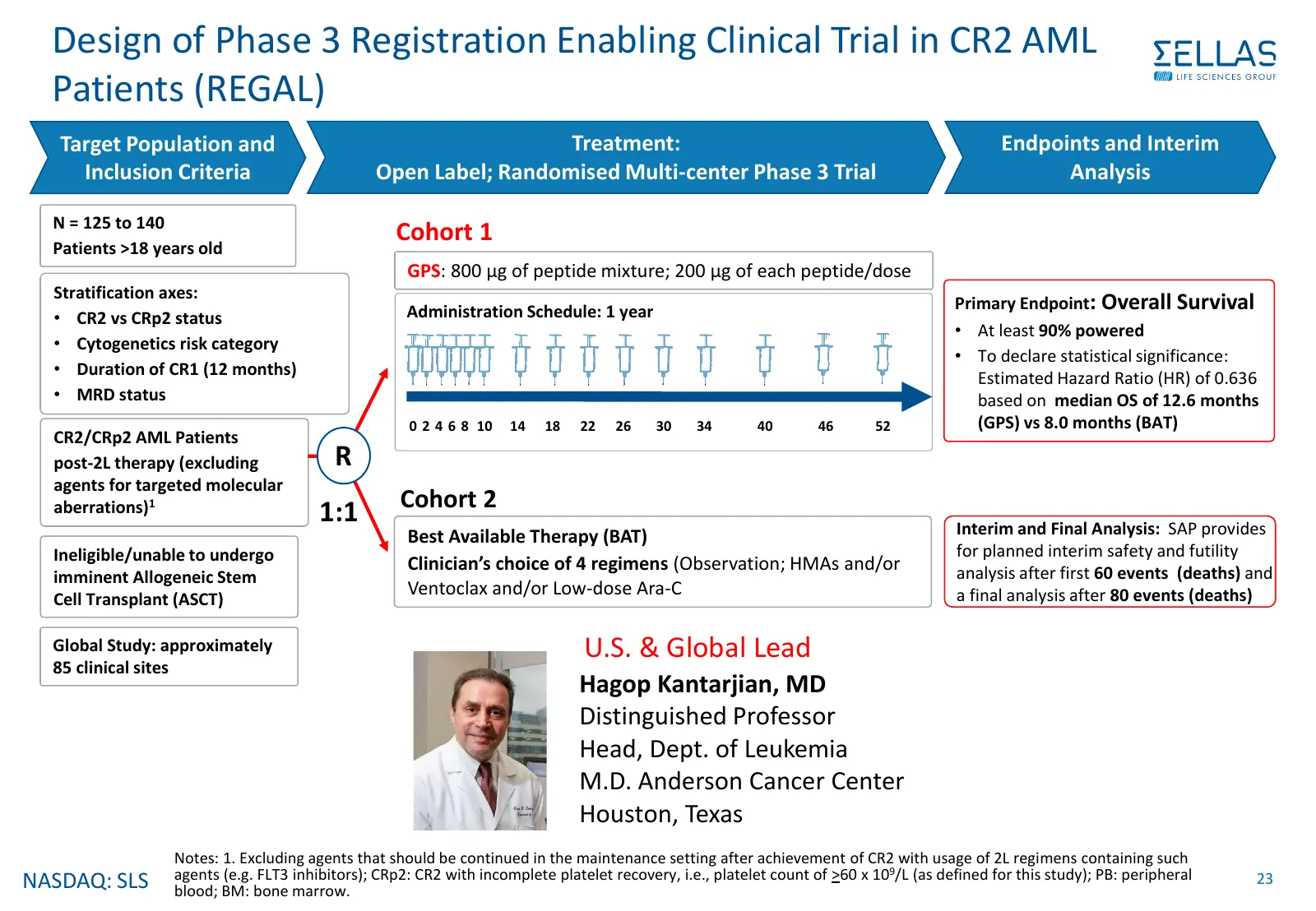
Design of Phase 3 Registration Enabling Clinical Trial in CR2 AML Patients (REGAL) Target Population and Treatment: Endpoints and Interim Inclusion Criteria Open Label; Randomised Multi-center Phase 3 Trial Analysis N = 125 to 140 Cohort 1 Patients >18 years old GPS: 800 µg of peptide mixture; 200 µ
Slide 24: GPS in Combination with Checkpoint Inhibitors
GPS in Combination with Checkpoint Inhibitors NASDAQ: SLS 24
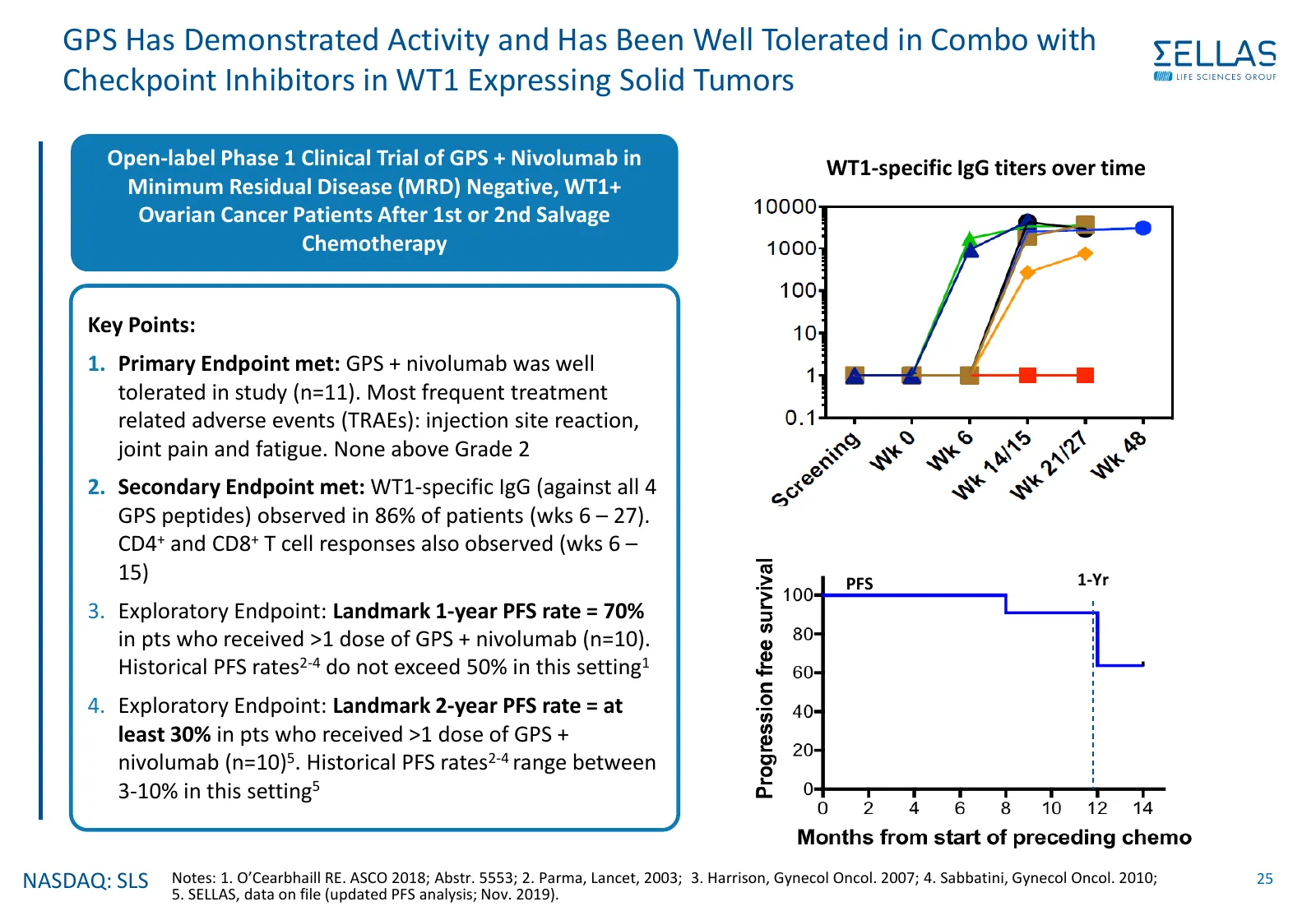
Slide 25: GPS Demonstrated Activity and Well Tolerated in Combo with Checkpoint Inhibitors
GPS Has Demonstrated Activity and Has Been Well Tolerated in Combo with Checkpoint Inhibitors in WT1 Expressing Solid Tumors Open-label Phase 1 Clinical Trial of GPS + Nivolumab in WT1-specific IgG titers over time Minimum Residual Disease (MRD) Negative, WT1+ Ovarian Cancer Patients After 1st or 2n
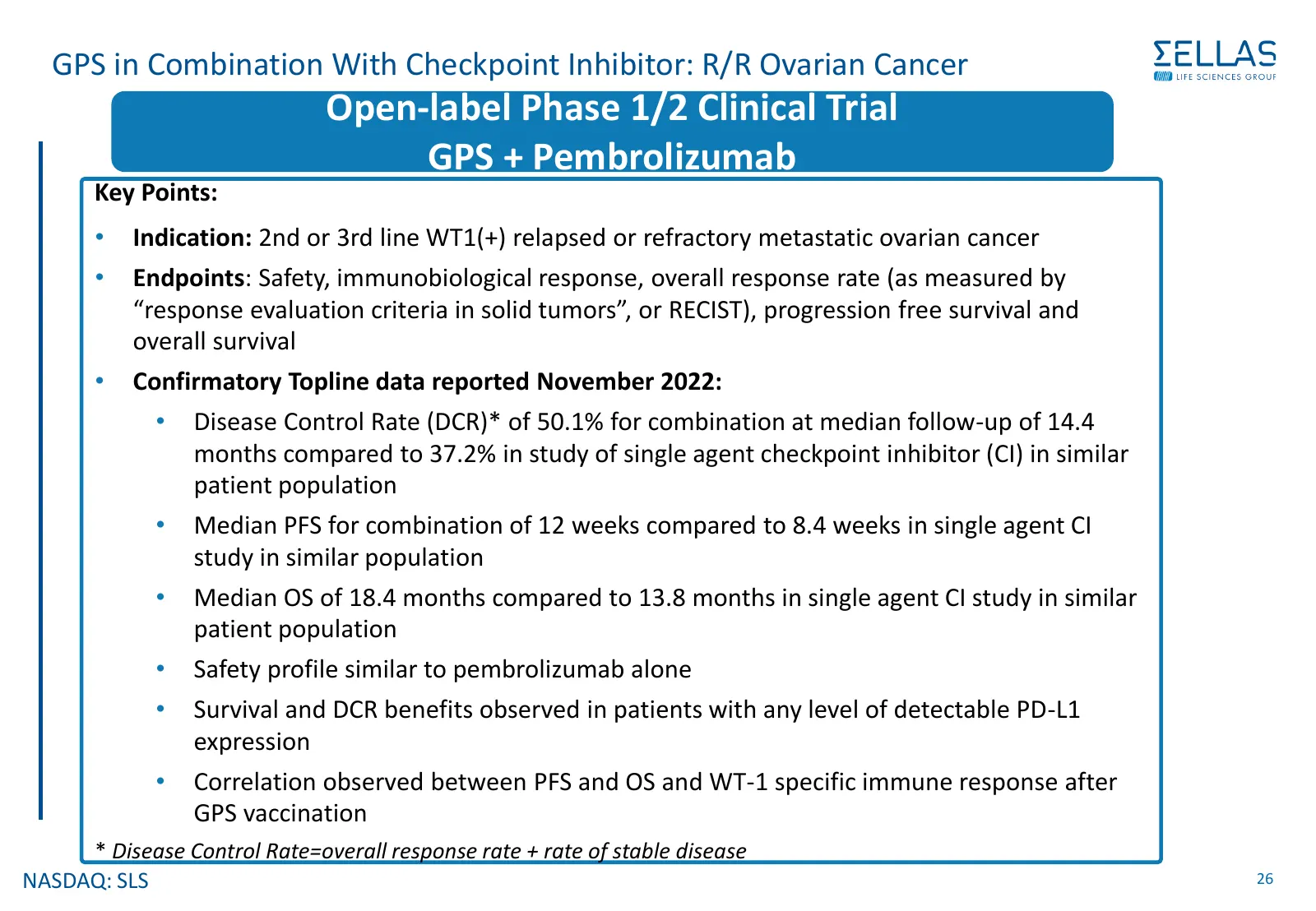
Slide 26: GPS in Combination With Checkpoint Inhibitor: R/R Ovarian Cancer
GPS in Combination With Checkpoint Inhibitor: R/R Ovarian Cancer Open-label Phase 1/2 Clinical Trial GPS + Pembrolizumab Key Points: • Indication: 2nd or 3rd line WT1(+) relapsed or refractory metastatic ovarian cancer • Endpoints: Safety, immunobiological response, overall response rate (as measure
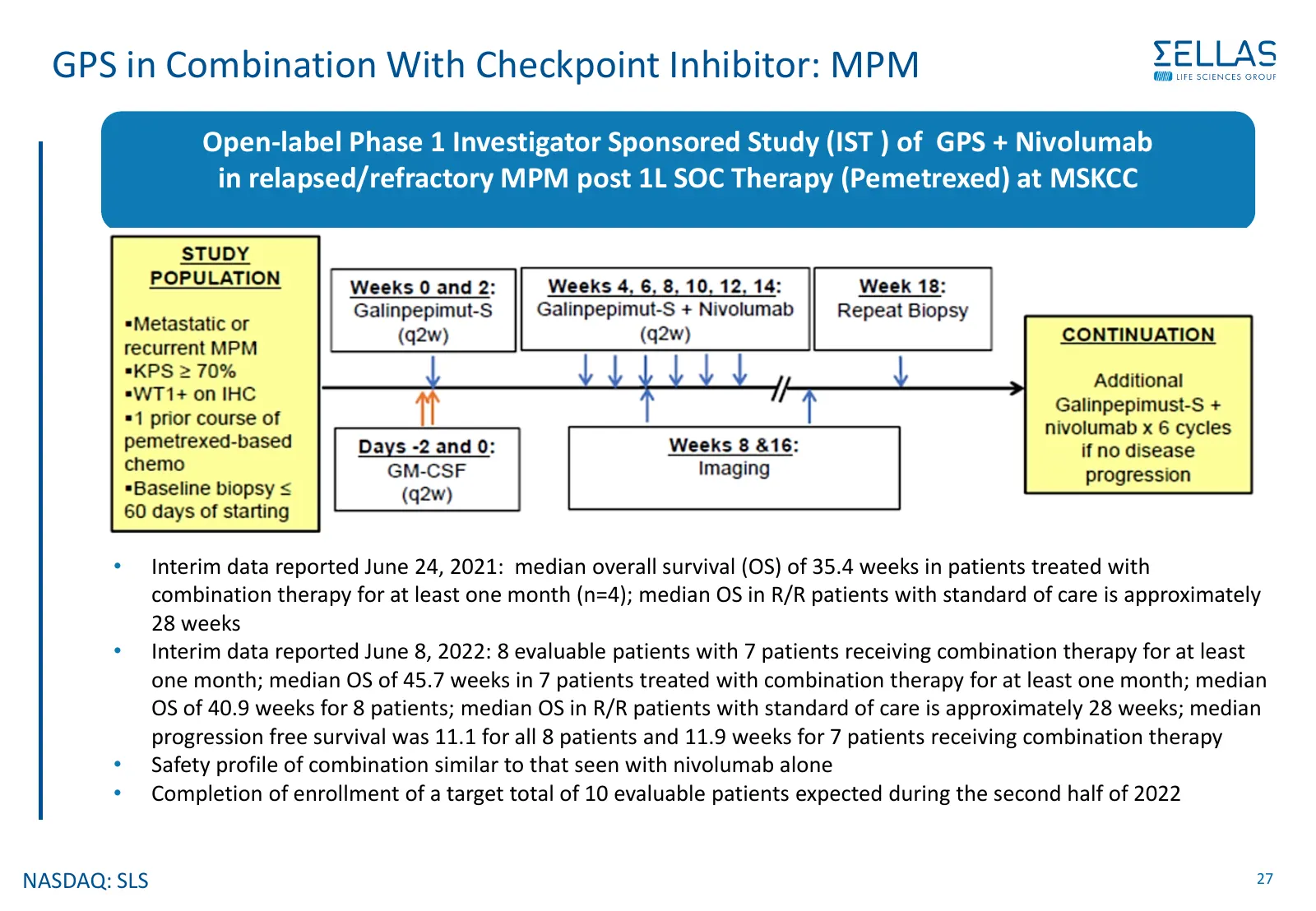
Slide 27: GPS in Combination With Checkpoint Inhibitor: MPM
GPS in Combination With Checkpoint Inhibitor: MPM Open-label Phase 1 Investigator Sponsored Study (IST ) of GPS + Nivolumab in relapsed/refractory MPM post 1L SOC Therapy (Pemetrexed) at MSKCC • Interim data reported June 24, 2021: median overall survival (OS) of 35.4 weeks in patients treated with
Slide 28: GPS – Development and Commercialization in Greater China: License Agreement with 3D Medicines
GPS – Development and Commercialization in Greater China: License Agreement with 3D Medicines NASDAQ: SLS 28
Slide 29: License Agreement with 3D Medicines, Inc.
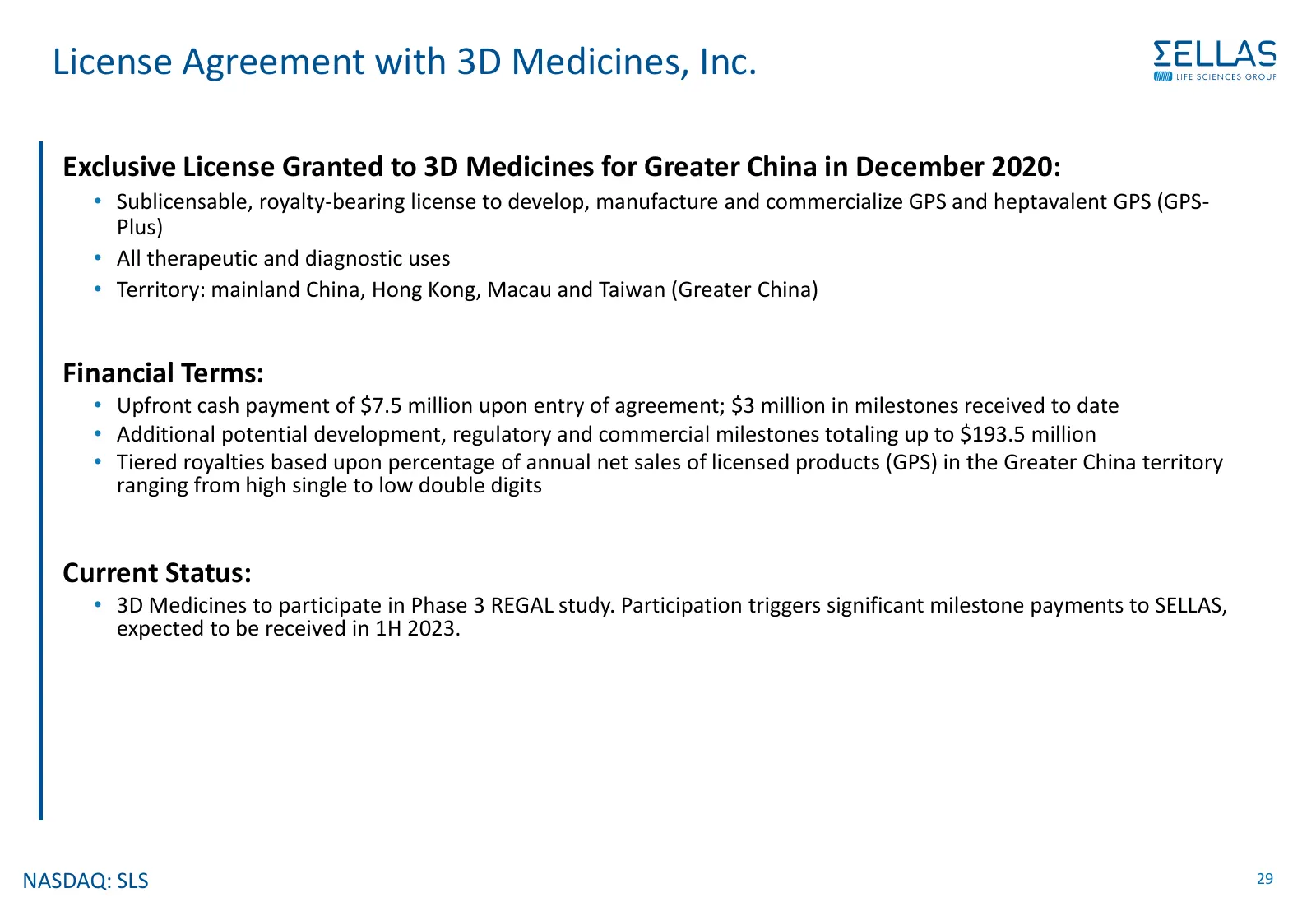
License Agreement with 3D Medicines, Inc. Exclusive License Granted to 3D Medicines for Greater China in December 2020: • Sublicensable, royalty-bearing license to develop, manufacture and commercialize GPS and heptavalent GPS (GPS- Plus) • All therapeutic and diagnostic uses • Territory: mainland C
Slide 30: GFH009: Next Generation CDK9 Inhibitor
GFH009: Next Generation CDK9 Inhibitor NASDAQ: SLS 30
Slide 31: GFH009: Novel Clinical Stage Licensed Small Molecule
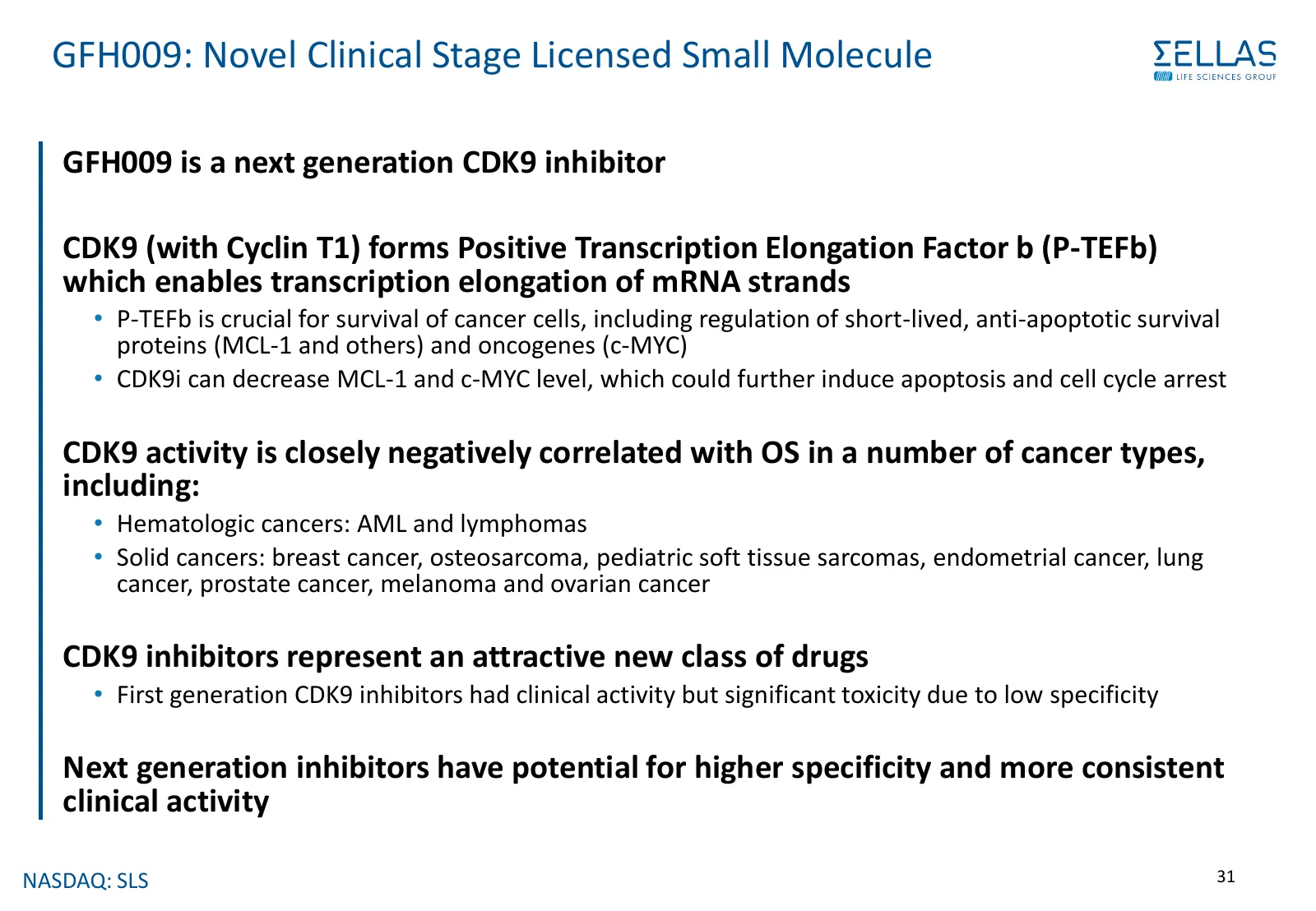
GFH009: Novel Clinical Stage Licensed Small Molecule GFH009 is a next generation CDK9 inhibitor CDK9 (with Cyclin T1) forms Positive Transcription Elongation Factor b (P-TEFb) which enables transcription elongation of mRNA strands • P-TEFb is crucial for survival of cancer cells, including regulatio
Slide 32: CDK9 Inhibitors Under Development – Lower CDK9 Specificity
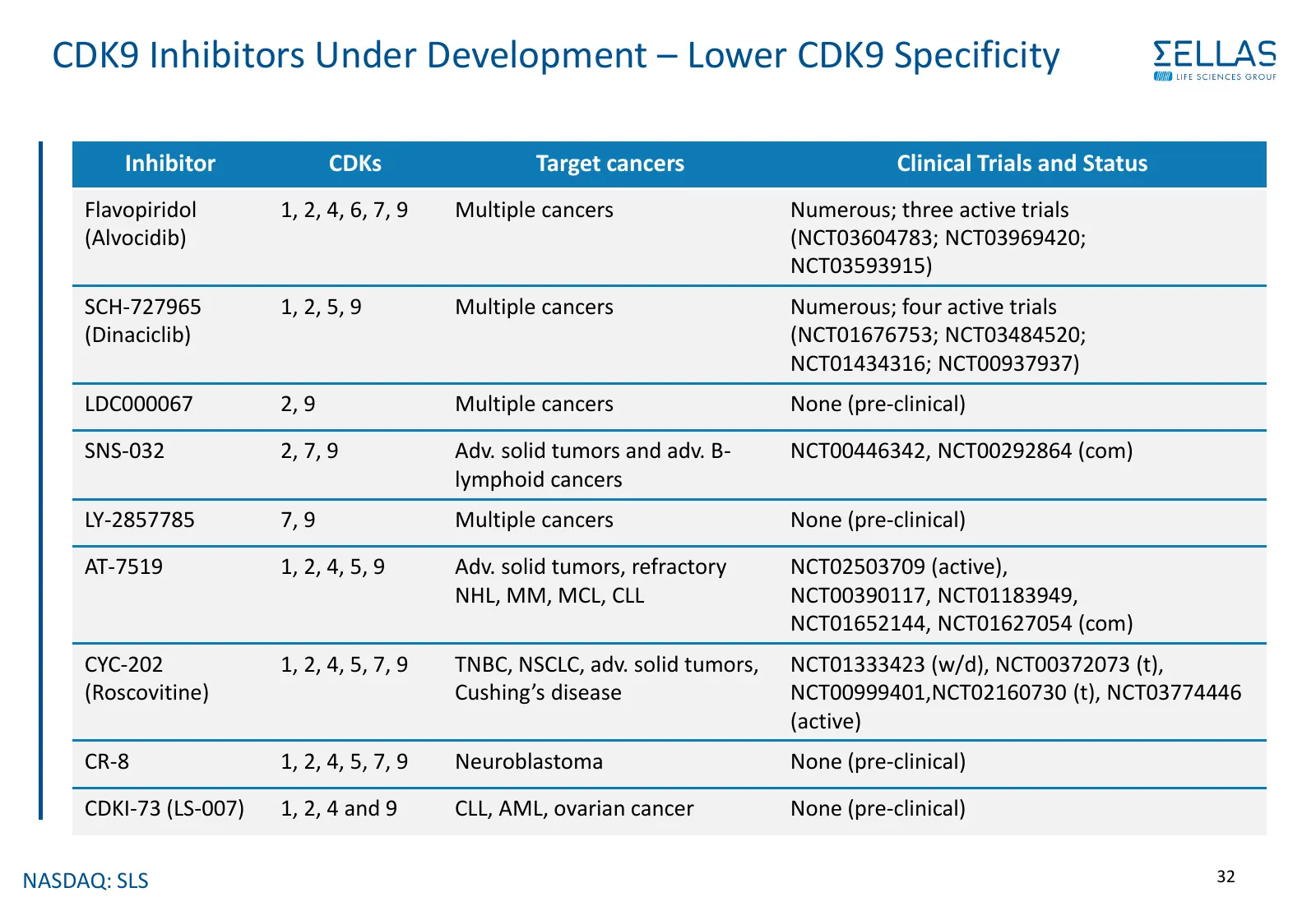
CDK9 Inhibitors Under Development – Lower CDK9 Specificity Inhibitor CDKs Target cancers Clinical Trials and Status Flavopiridol 1, 2, 4, 6, 7, 9 Multiple cancers Numerous; three active trials (Alvocidib) (NCT03604783; NCT03969420; NCT03593915) SCH-727965 1, 2, 5, 9 Multiple cancers Numerous; four a
Slide 33: CDK9 Inhibitors Under Development – High CDK9 Specificity
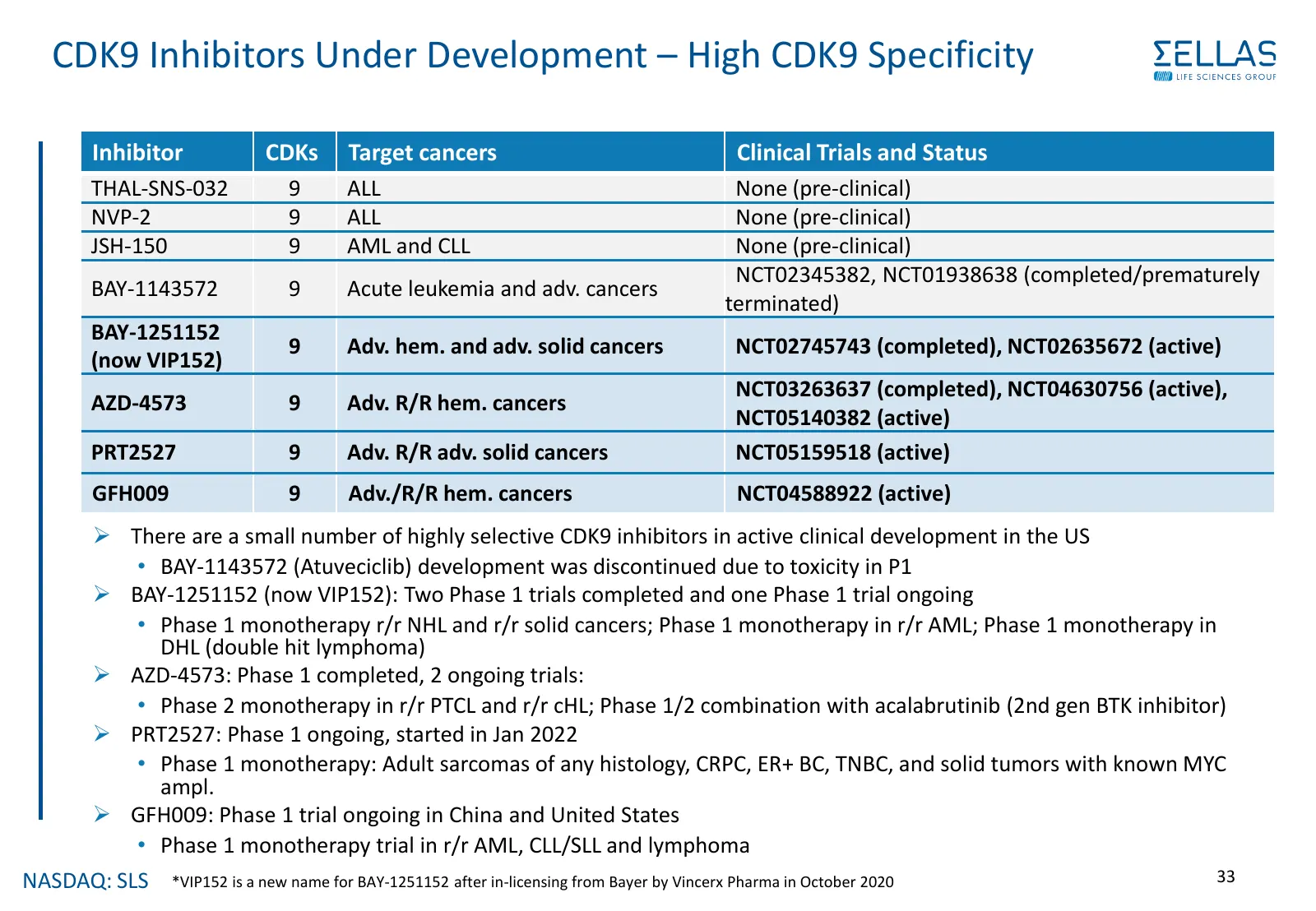
CDK9 Inhibitors Under Development – High CDK9 Specificity Inhibitor CDKs Target cancers Clinical Trials and Status THAL-SNS-032 9 ALL None (pre-clinical) NVP-2 9 ALL None (pre-clinical) JSH-150 9 AML and CLL None (pre-clinical) NCT02345382, NCT01938638 (completed/prematurely BAY-1143572 9 Acute leuk
Slide 34: Clinical Stage Selective CDK9s Under Development: Preclinical Comparison
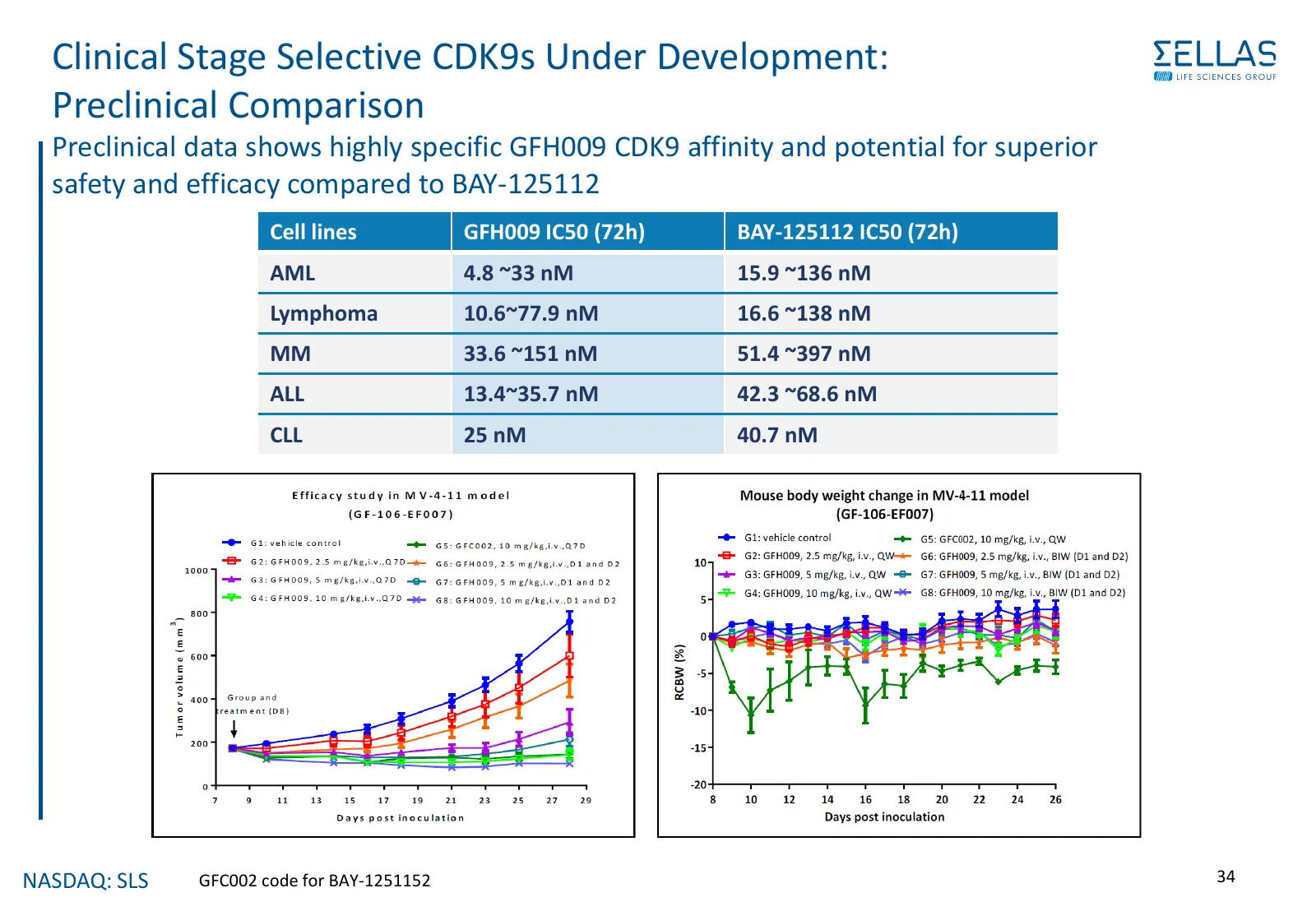
Clinical Stage Selective CDK9s Under Development: Preclinical Comparison Preclinical data shows highly specific GFH009 CDK9 affinity and potential for superior safety and efficacy compared to BAY-125112 Cell lines GFH009 IC50 (72h) BAY-125112 IC50 (72h) AML 4.8 ~33 nM 15.9 ~136 nM Lymphoma 10.6~77.9
Slide 35: Design of Ongoing GFH009 Phase 1 Trial
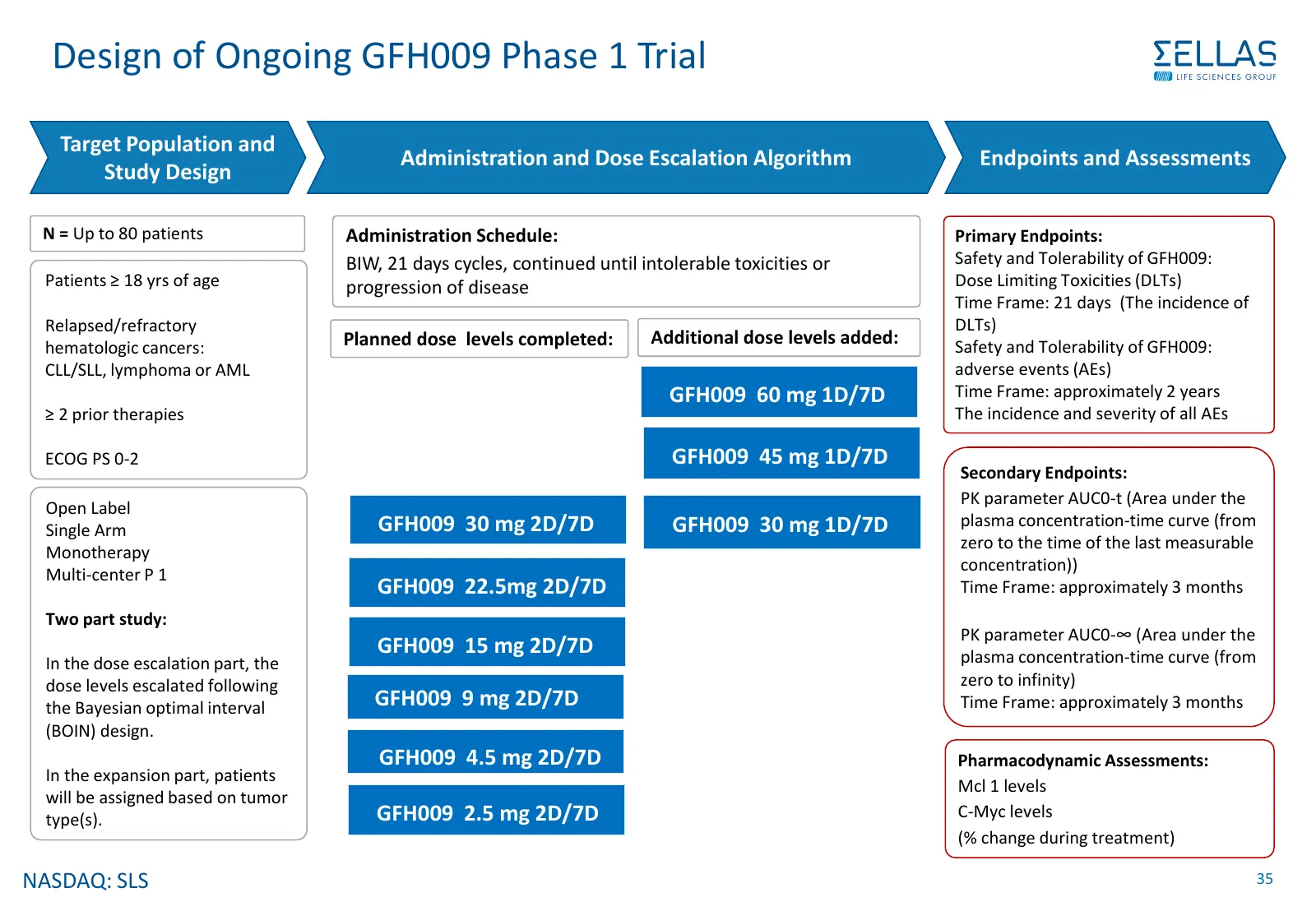
Design of Ongoing GFH009 Phase 1 Trial Target Population and Administration and Dose Escalation Algorithm Endpoints and Assessments Study Design N = Up to 80 patients Administration Schedule: Primary Endpoints: BIW, 21 days cycles, continued until intolerable toxicities or Safety and Tolerability of
Slide 36: Favorable Early PK Data in the Ongoing Phase 1 Clinical Trial
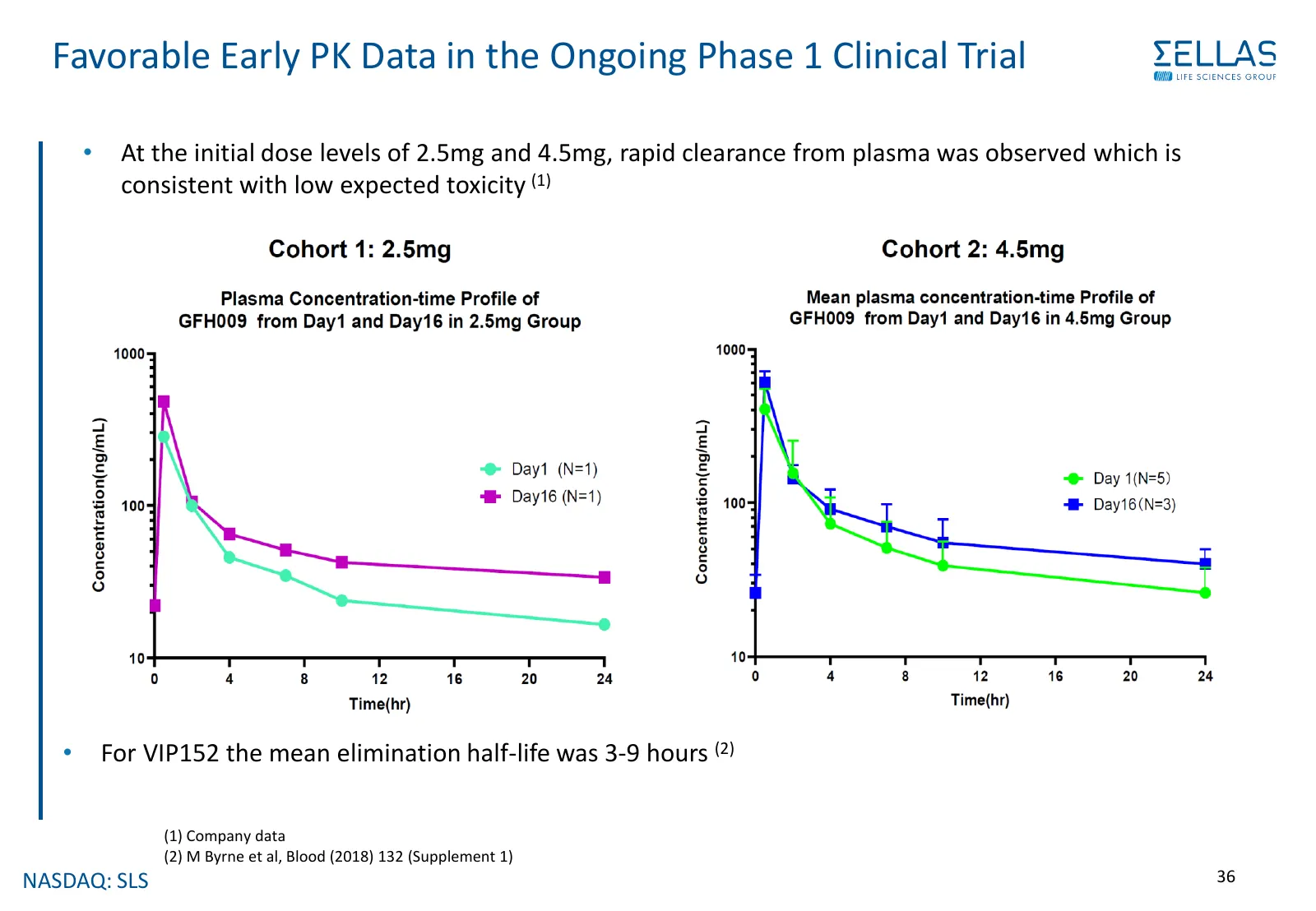
Favorable Early PK Data in the Ongoing Phase 1 Clinical Trial • At the initial dose levels of 2.5mg and 4.5mg, rapid clearance from plasma was observed which is consistent with low expected toxicity (1) • For VIP152 the mean elimination half-life was 3-9 hours (2) (1) Company data (2) M Byrne et al,
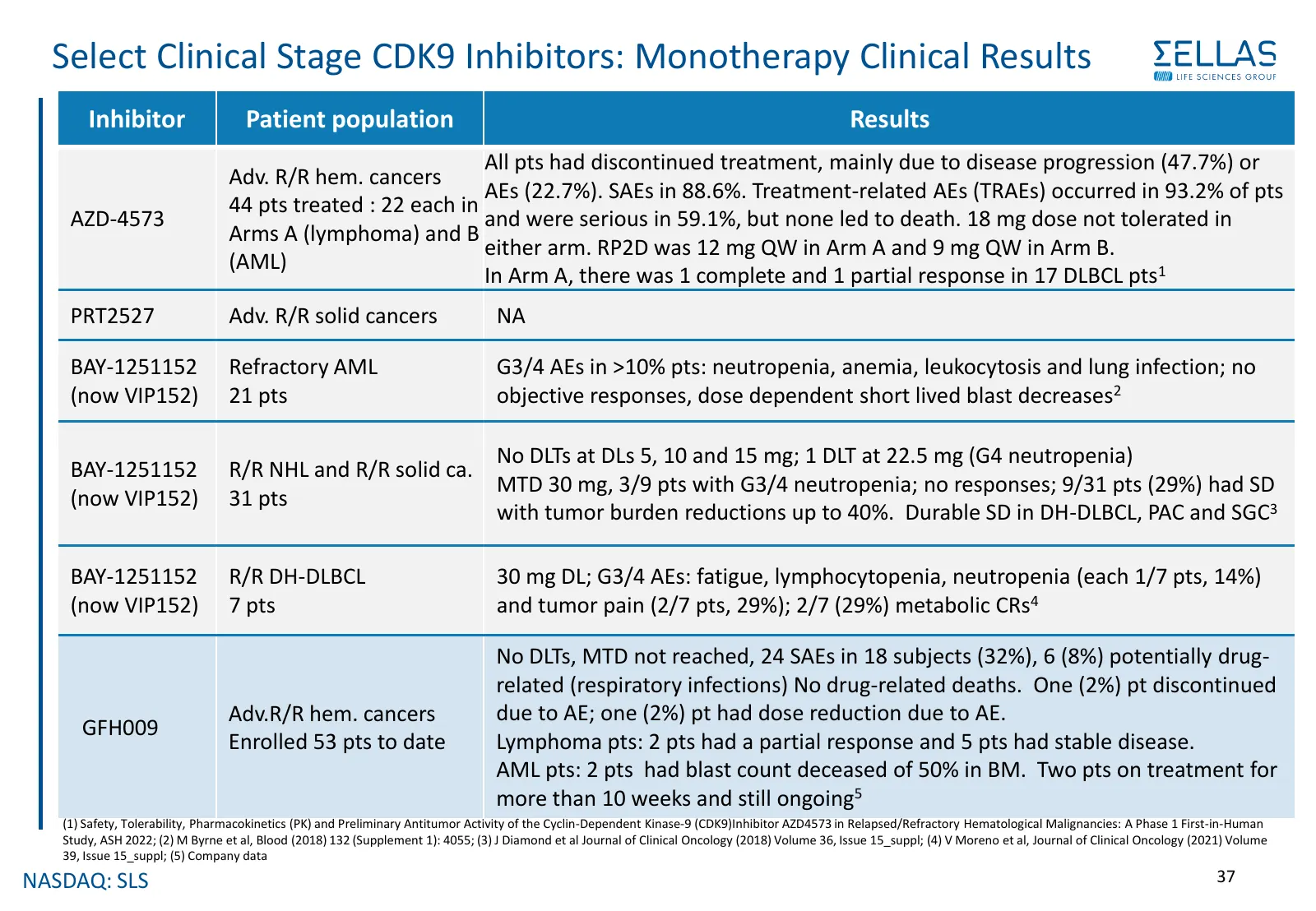
Slide 37: Select Clinical Stage CDK9 Inhibitors: Monotherapy Clinical Results
Select Clinical Stage CDK9 Inhibitors: Monotherapy Clinical Results Inhibitor Patient population Results All pts had discontinued treatment, mainly due to disease progression (47.7%) or Adv. R/R hem. cancers AEs (22.7%). SAEs in 88.6%. Treatment-related AEs (TRAEs) occurred in 93.2% of pts 44 pts tr
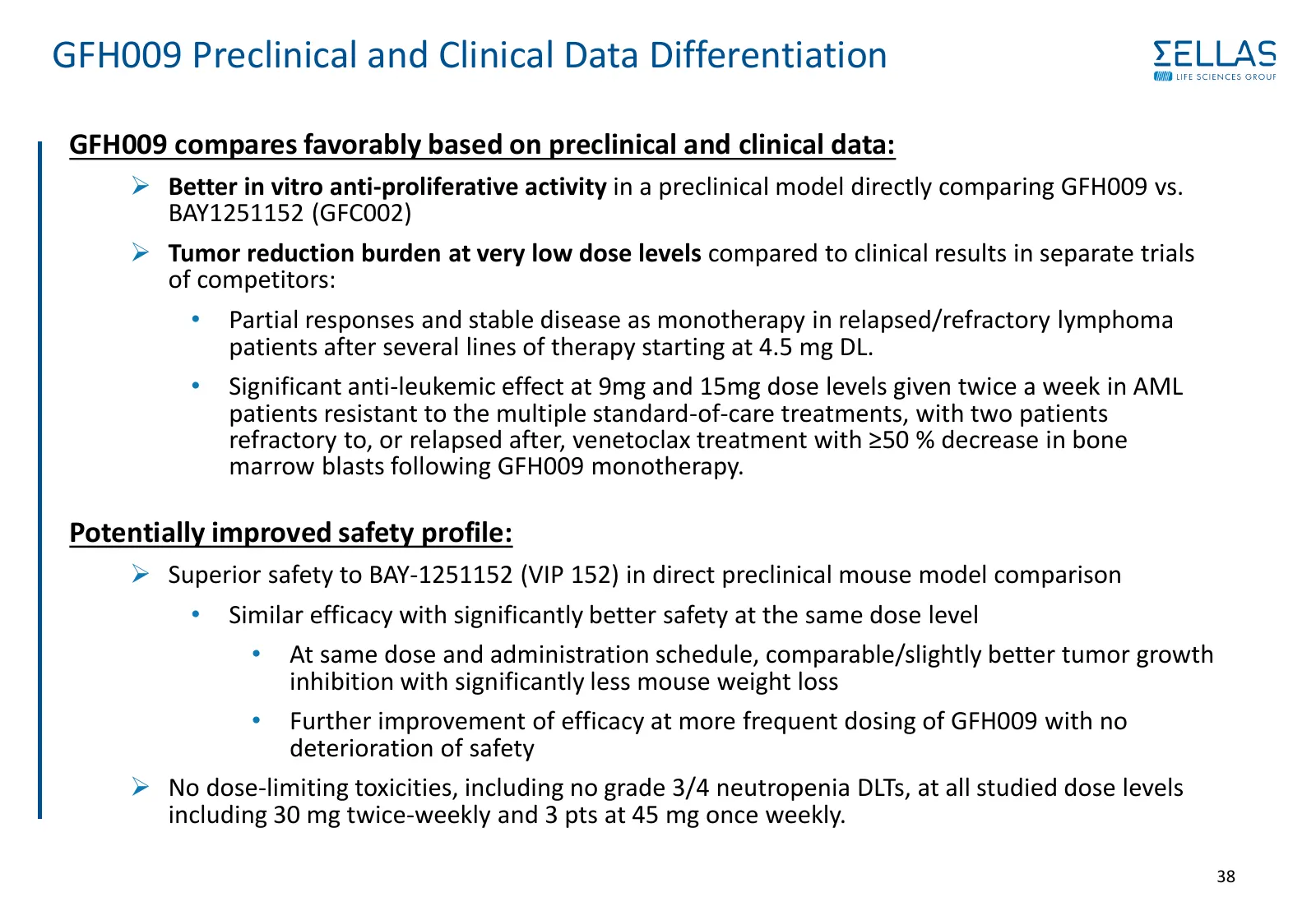
Slide 38: GFH009 Preclinical and Clinical Data Differentiation
GFH009 Preclinical and Clinical Data Differentiation GFH009 compares favorably based on preclinical and clinical data: ➢ Better in vitro anti-proliferative activity in a preclinical model directly comparing GFH009 vs. BAY1251152 (GFC002) ➢ Tumor reduction burden at very low dose levels compared to c
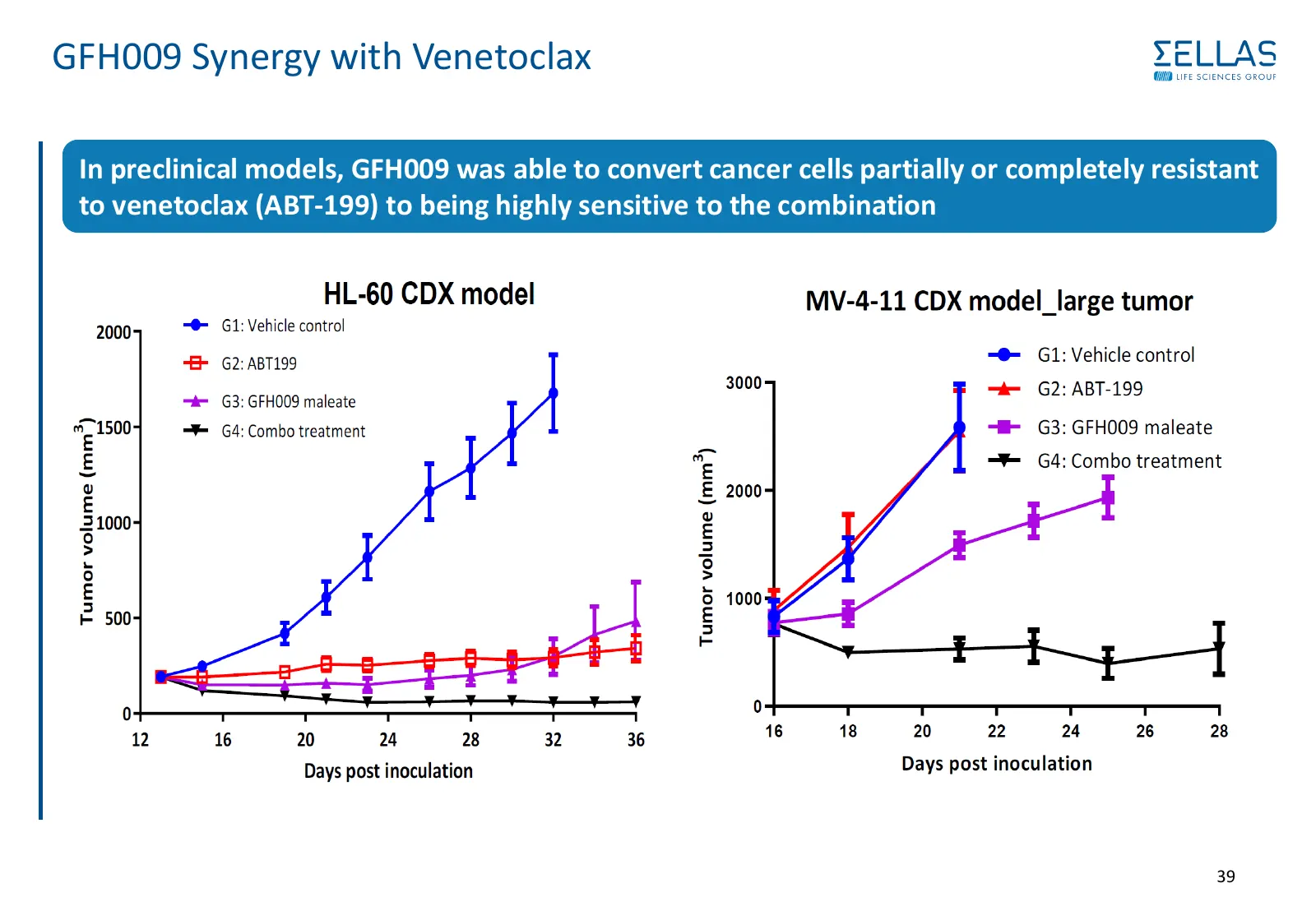
Slide 39: GFH009 Synergy with Venetoclax
GFH009 Synergy with Venetoclax In preclinical models, GFH009 was able to convert cancer cells partially or completely resistant to venetoclax (ABT-199) to being highly sensitive to the combination 39
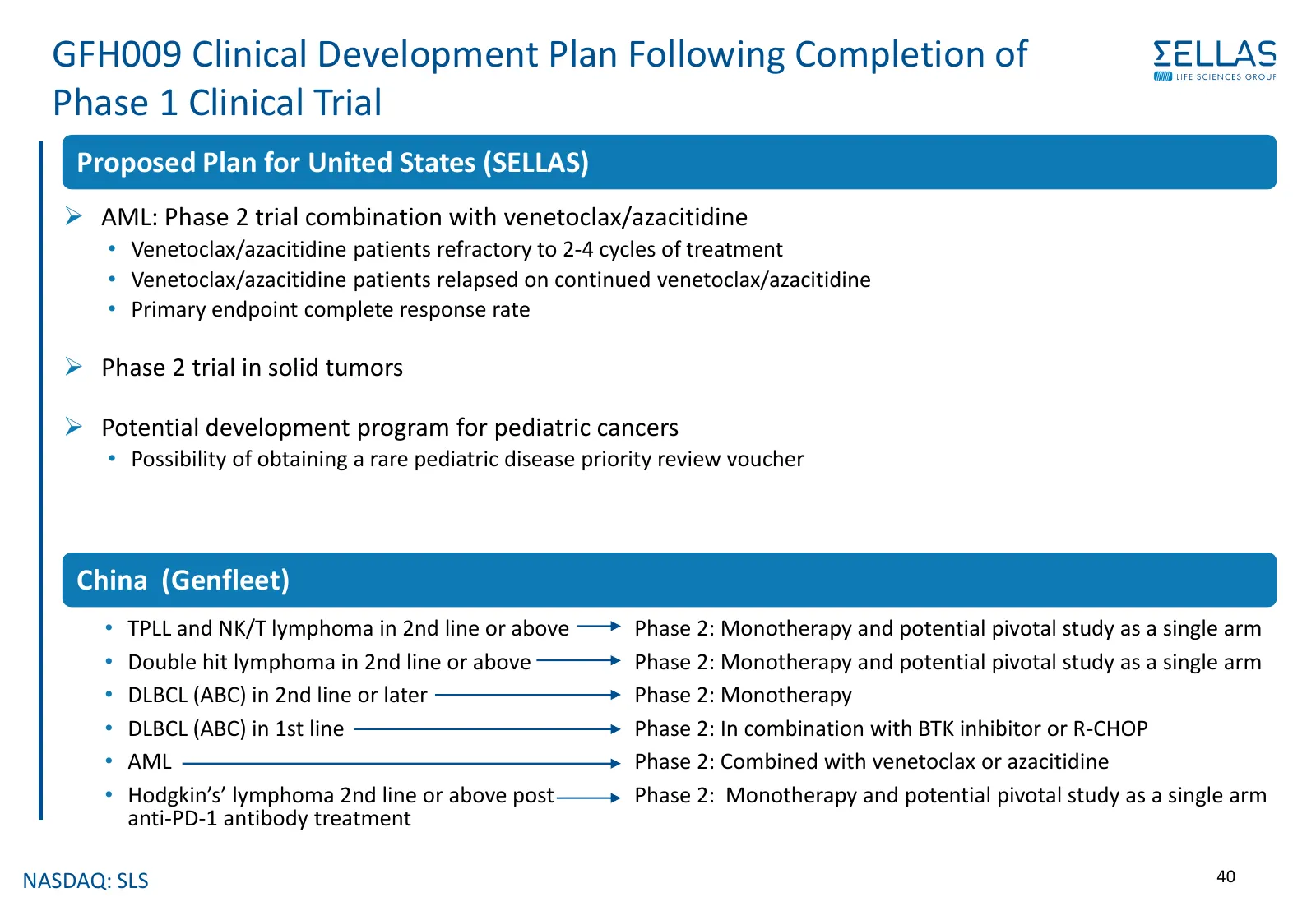
Slide 40: GFH009 Clinical Development Plan Following Completion of Phase 1 Clinical Trial
GFH009 Clinical Development Plan Following Completion of Phase 1 Clinical Trial Proposed Plan for United States (SELLAS) ➢ AML: Phase 2 trial combination with venetoclax/azacitidine • Venetoclax/azacitidine patients refractory to 2-4 cycles of treatment • Venetoclax/azacitidine patients relapsed on
Slide 41: Key Takeaways
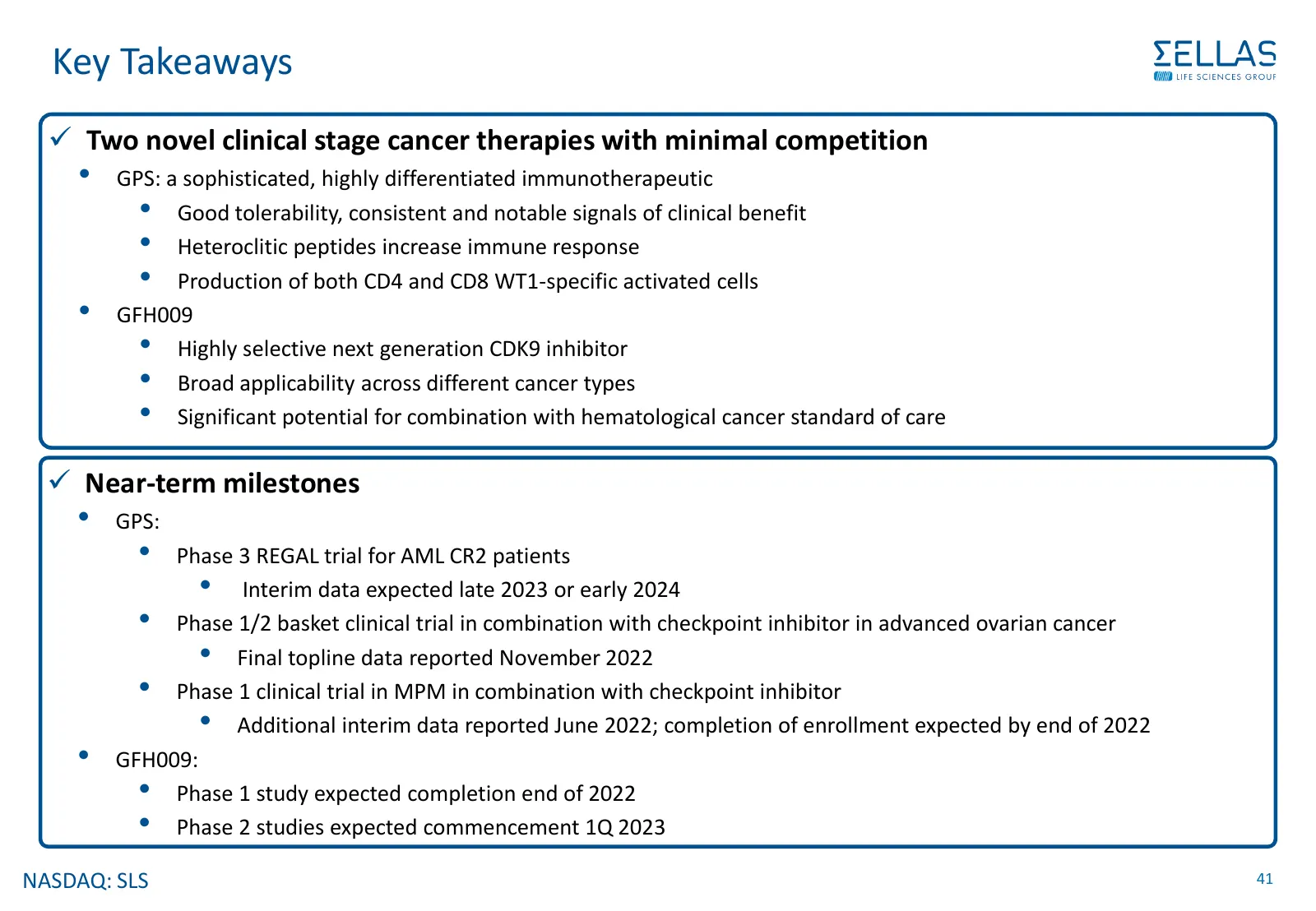
Key Takeaways ✓ Two novel clinical stage cancer therapies with minimal competition • GPS: a sophisticated, highly differentiated immunotherapeutic • Good tolerability, consistent and notable signals of clinical benefit • Heteroclitic peptides increase immune response • Production of both CD4 and CD8
Slide 42: Thank You!
Thank You! For additional information, please contact: SELLAS Life Sciences Group, Inc. (Nasdaq: SLS) 646.200.5278 info@sellaslife.com SELLAS@kcsa.com
Source: company website
More decks from SELLAS Life Sciences Group, Inc.
 Investor Presentation (August 2025)34 slides · August 2025
 Technical Presentation (November 2024)8 slides · November 2024
 Investor Day (September 2022)17 slides · Sep 15, 2022
 Investor Symposium on Galinpepimut-S (August 2021)20 slides · Aug 17, 2021
 Investor Day (November 2019)83 slides · Nov 15, 2019
 2019 BIO CEO & Investor Conference22 slides · Feb 12, 2019