Mogelijk gemaakt door  Translate
Translate
$0 copay card available for eligible commercial patients
Approximately 78% of commercially insured and Medicare lives have unrestricted access to Gvoke HypoPen at launch
CHICAGO--(BUSINESS WIRE)-- Xeris Pharmaceuticals, Inc. (Nasdaq: XERS), a specialty pharmaceutical company leveraging its novel formulation technology platforms to develop and commercialize ready-to-use injectable and infusible drug formulations, today announced that Gvoke HypoPen™ (glucagon injection) is now available by prescription in the U.S. for the treatment of severe hypoglycemia in adults and children with diabetes ages 2 years and above. Gvoke HypoPen is the first ready-to-use glucagon in a premixed autoinjector, with no visible needle.
This press release features multimedia. View the full release here: https://www.businesswire.com/news/home/20200701005285/en/
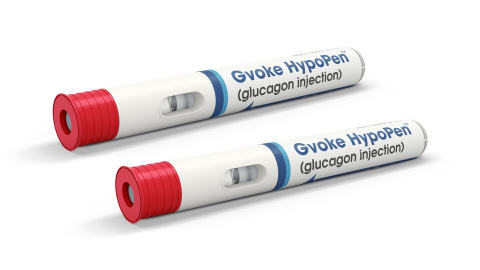
(Photo: Business Wire)
Gvoke HypoPen offers simple administration with the certainty of delivery. Studies have shown it is:
Gvoke HypoPen is available in two doses: 0.5 mg/0.1 mL for children (who weigh less than 100 pounds) and 1 mg/0.2 mL for adolescents and adults (who weigh 100 pounds or greater).
“We are excited to announce that Gvoke HypoPen is now available. The simplicity and reliability of Gvoke HypoPen has the potential to change people’s ability to confidently respond to a severe hypoglycemic event in a timely manner,” said Paul R. Edick, Chairman and Chief Executive Officer of Xeris Pharmaceuticals. “In addition, as we prepared for launch, we had a heightened focus on ensuring Gvoke HypoPen is covered by insurance. Currently, approximately 78% of commercially insured and Medicare lives have unrestricted access to Gvoke HypoPen.”
"Gvoke HypoPen allows the diabetes community to change how we approach treating severe low blood sugar events," said Bruce Bode, MD, FACE, Atlanta Diabetes Associates. "Anyone can use Gvoke HypoPen in two simple steps. That opens the door for some patients to even give it to themselves, in certain situations. My hope is that what was once considered a crisis moment, can now become a manageable situation with Gvoke HypoPen."
Xeris is committed to ensuring that patients have access to this important new advancement. For a limited time, eligible commercially insured patients may pay as little as $0 for a two-pack of Gvoke HypoPen by using the Gvoke® copay savings card*. Xeris also offers a Patient Assistance Program to help those who qualify to get Gvoke.
Please visit www.GvokeGlucagon.com to learn more.
*Offer not valid for prescriptions reimbursed under Medicaid, a Medicare drug benefit plan, TRICARE, or other federal or state health programs (such as medical assistance programs).
INDICATION AND IMPORTANT SAFETY INFORMATION
GVOKE® is indicated for the treatment of severe hypoglycemia in adult and pediatric patients with diabetes ages 2 years and above.
IMPORTANT SAFETY INFORMATION
Contraindications
GVOKE is contraindicated in patients with pheochromocytoma, insulinoma, and known hypersensitivity to glucagon or to any of the excipients in GVOKE. Allergic reactions have been reported with glucagon and include anaphylactic shock with breathing difficulties and hypotension.
Warnings and Precautions
GVOKE is contraindicated in patients with pheochromocytoma because glucagon may stimulate the release of catecholamines from the tumor. If the patient develops a dramatic increase in blood pressure and a previously undiagnosed pheochromocytoma is suspected, 5 to 10 mg of phentolamine mesylate, administered intravenously, has been shown to be effective in lowering blood pressure.
In patients with insulinoma, administration of glucagon may produce an initial increase in blood glucose; however, GVOKE administration may directly or indirectly (through an initial rise in blood glucose) stimulate exaggerated insulin release from an insulinoma and cause hypoglycemia. GVOKE is contraindicated in patients with insulinoma. If a patient develops symptoms of hypoglycemia after a dose of GVOKE, give glucose orally or intravenously.
Allergic reactions have been reported with glucagon. These include generalized rash, and in some cases, anaphylactic shock with breathing difficulties and hypotension. GVOKE is contraindicated in patients with a prior hypersensitivity reaction.
GVOKE is effective in treating hypoglycemia only if sufficient hepatic glycogen is present. Patients in states of starvation, with adrenal insufficiency or chronic hypoglycemia, may not have adequate levels of hepatic glycogen for GVOKE administration to be effective. Patients with these conditions should be treated with glucose.
Necrolytic migratory erythema (NME), a skin rash commonly associated with glucagonomas, has been reported post-marketing following continuous glucagon infusion and resolved with discontinuation of the glucagon. Should NME occur, consider whether the benefits of continuous glucagon infusion outweigh the risks. Glucagon administered to patients with glucagonoma may cause secondary hypoglycemia.
Adverse Reactions
Most common (≥5%) adverse reactions associated with GVOKE are nausea, vomiting, injection site edema (raised 1 mm or greater), and hypoglycemia.
Drug Interactions
Patients taking beta-blockers may have a transient increase in pulse and blood pressure when given GVOKE. In patients taking indomethacin, GVOKE may lose its ability to raise blood glucose or may even produce hypoglycemia. GVOKE may increase the anticoagulant effect of warfarin.
Please see full Prescribing Information for GVOKE on www.xerispharma.com. Manufactured for Xeris Pharmaceuticals, Inc. by Pyramid Laboratories Inc., Costa Mesa, CA 92626.
About Severe Hypoglycemia
Hypoglycemic events of any severity are a daily concern for people with diabetes. Mild or moderate hypoglycemia can occur multiple times a month. Severe hypoglycemia is characterized by severe cognitive impairment, requiring external assistance for recovery, and can be extremely frightening for patients and caregivers. Severe hypoglycemia can result in cardiovascular disease, seizure, coma, and, if left untreated, death. These severe hypoglycemic events can occur multiple times a year. Such events require emergency assistance from another person or caregiver such as a family member, friend, or co-worker.
About Glucagon
Glucagon is a metabolic hormone secreted by the pancreas that raises blood glucose levels by causing the liver to rapidly convert glycogen (the stored form of glucose) into glucose, which is then released into the bloodstream. Glucagon and insulin are two critical hormones in a glycemic control system that keep blood glucose at the right level in healthy individuals. In people with diabetes who are dependent on insulin, this control system is disrupted, and insulin must be injected to avoid high levels of blood glucose (hyperglycemia). The opposite effect, or low blood glucose (hypoglycemia), is also prevalent in this population due to dysregulated glucagon secretion. Severe hypoglycemia is a serious condition and can lead to seizures, coma, potential brain injury and, if untreated, death.
Glucagon is the standard of care for treating severe hypoglycemia. According to the American Diabetes Association, glucagon should be prescribed for all individuals at increased risk of clinically significant hypoglycemia, defined as blood glucose