
TORONTO, ON / ACCESS Newswire / February 19, 2026 / PJX Resources Inc. ("PJX" or "the Company") is pleased to announce the identification of a third large target on the Dewdney Trail Property with potential to host a Sedex type deposit similar to the world class Sullivan deposit. The presence of a potential cluster of stacked Sedex deposits in the Sullivan district has similarities to other major mining districts, such as the Mt. Isa district in Australia or the Red Dog district in Alaska. The historical Sullivan Sedex deposit is located only 25 km west of the cluster of Dewdney Trail targets. Cominco/Teck operated the Sullivan mine for over 90 years before closing in 2001. British Columbia Ministry of Mines reports the total Sullivan production at over 297 million ounces silver, 8.4 million tonnes lead, 7.9 million tonnes zinc as well as lesser quantities of gold, tin, copper, cadmium, antimony, and bismuth (Table 1 below).
PJX's initial two large Sedex targets identified by drilling and prospecting in recent years occur at the same geological horizon and are about 2 km apart. The two targets (Estella Basin area and Lewis Ridge area) are presented in PJX's news release December 11, 2025. This new 3rd additional target in the Grundy Creek area of the Dewdney Trail Property occurs at a separate slightly older geological horizon that is stratigraphically below the other 2 target areas (Map 1).
The third target area is defined by:
A newly discovered, possibly pre-World War 1 or 2, adit with strongly magnetic massive sulphide boulders in the adit rock pile (Photo 1). The adit cannot be entered because rock material had been shoveled to block the entrance.
This historical adit occurs at the north end of an airborne survey strongly magnetic anomaly that is approximately 2 kilometres (km) in strike length (Map 2).
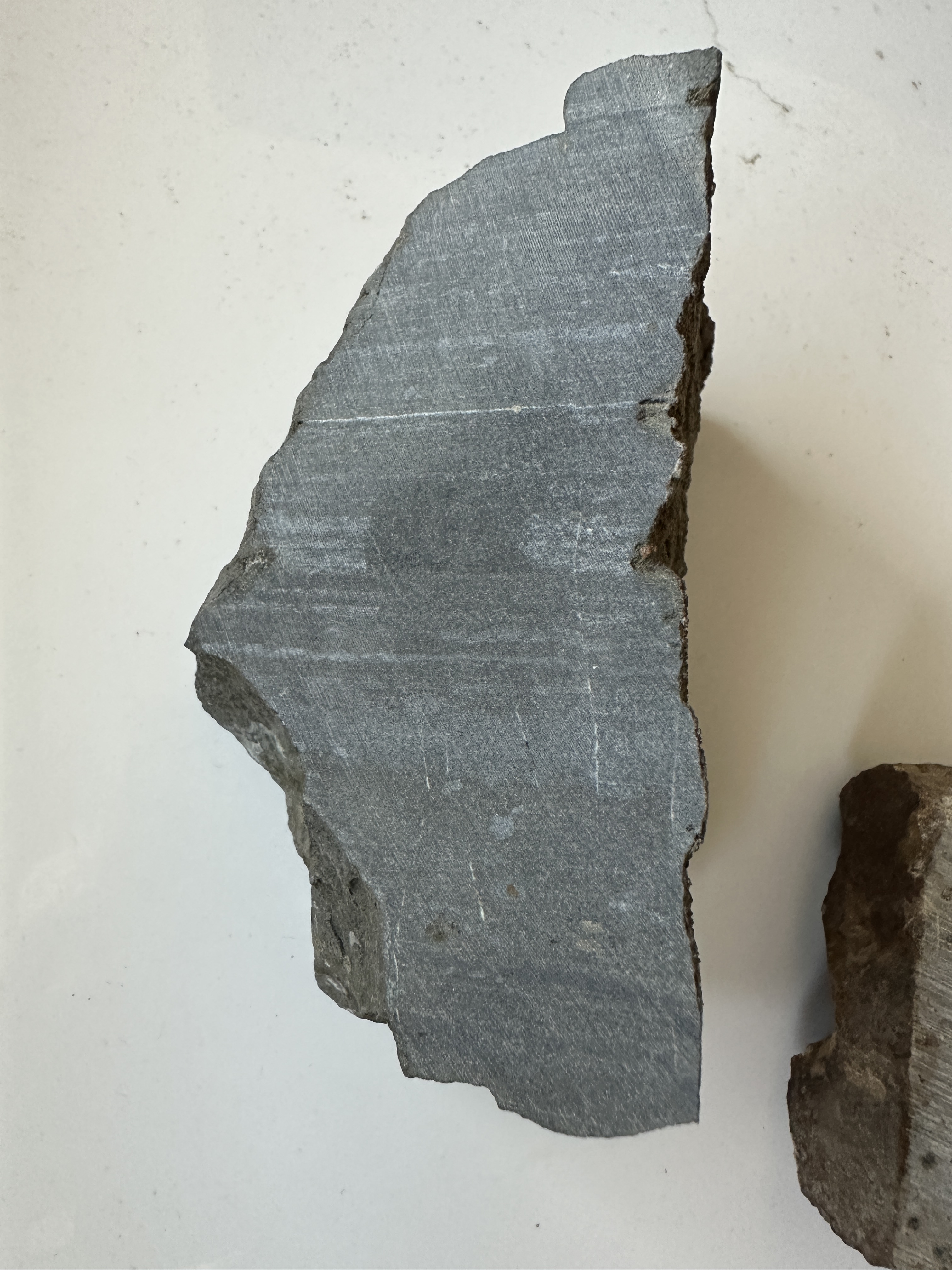
Outcrops of black laminated calcareous muds that are anomalous in zinc, lead, manganese, and barium (Photo 2) occur at the south end of the magnetic anomaly. The combination of this rock type with anomalous mineralisation is indicative of a venting environment and is often associated with Sedex deposits.
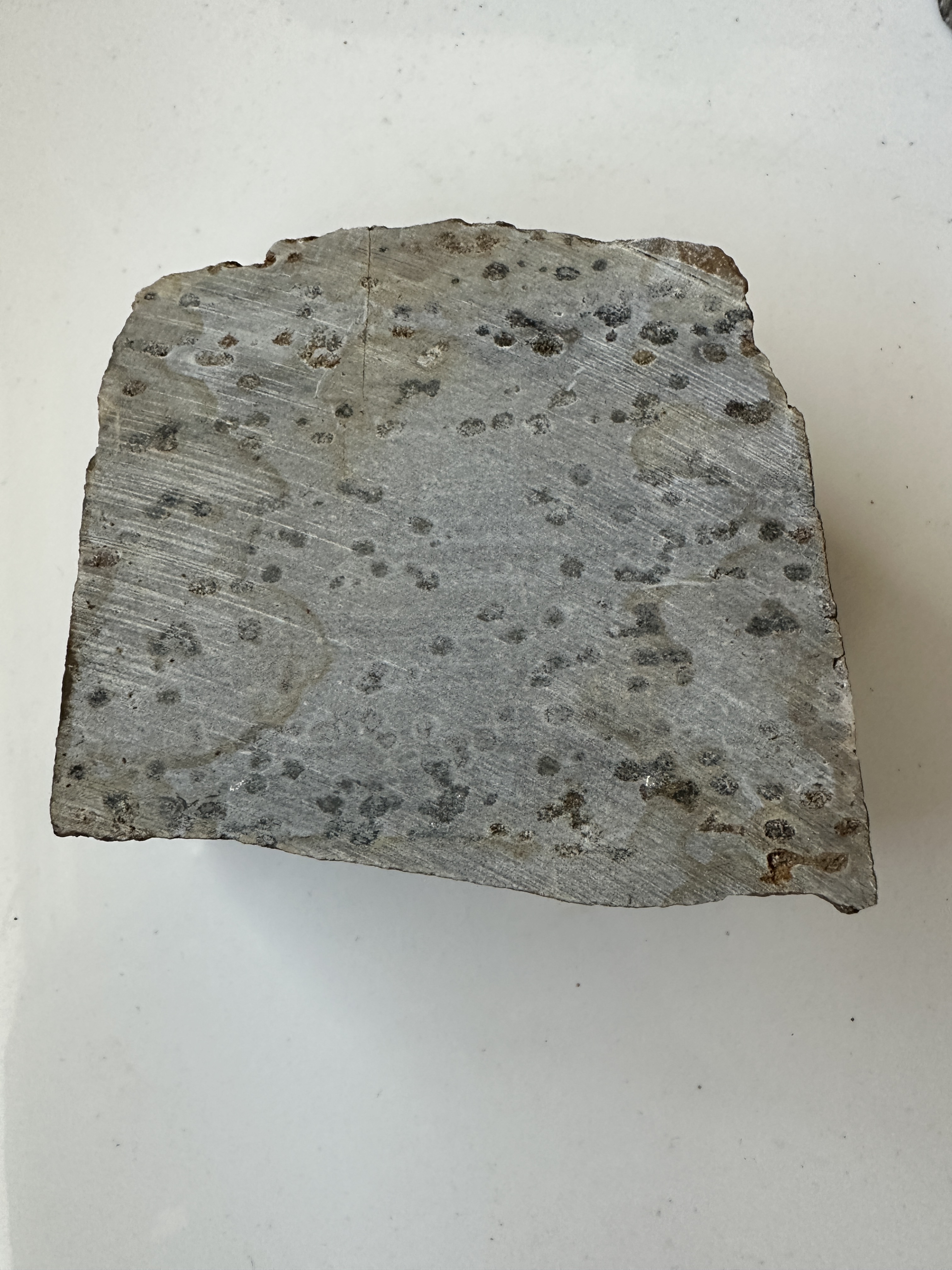
Outcrops with coticule alteration in sediments (Photo 3) also occur at the south end of the magnetic anomaly. This style of hydrothermal alteration occurs at the Sullivan deposit.
Majority of the magnetic anomaly has limited to no outcrop rock exposure and covers a large area with potential to host a Sullivan size deposit.
John Keating, President of PJX commented: "We believe the mineralisation and deposit potential of the Dewdney Trail Property is exceptional with the discovery of 3 large target areas. We discovered Sullivan-style and grade boulders in the Estella Basin area only two years ago, and by late 2025, our drilling has already intersected a strongly mineralized system as evidenced by pervasive metal enrichment plumbing through a Quake zone with a true thickness of about 30 metres. Large plumbing systems like this support the potential to discover a significant deposit. We have now identified the 2 additional large targets in the Grundy Creek and Lewis Ridge areas. We plan to continue to drill to discover the deposit potential of the Estella target area while further developing and possibly drilling the Lewis Ridge and Grundy Creek target areas in 2026."
PJX owns the mineral rights to the largest land package (750 km²) in the Sullivan mining district. The large land package has capacity to host multiple Sedex silver-lead-zinc deposits as well as gold deposits. The claims cover geology favourable to host multiple bedrock sources of the placer gold found in creeks along the 65 km long Vulcan gold belt. PJX has already identified over 10 priority target areas with gold deposit potential that have not been tested and are mostly road accessible. PJX intends to provide further announcements regarding the gold potential and pursue strategic partnerships to maximize opportunities associated with these targets.
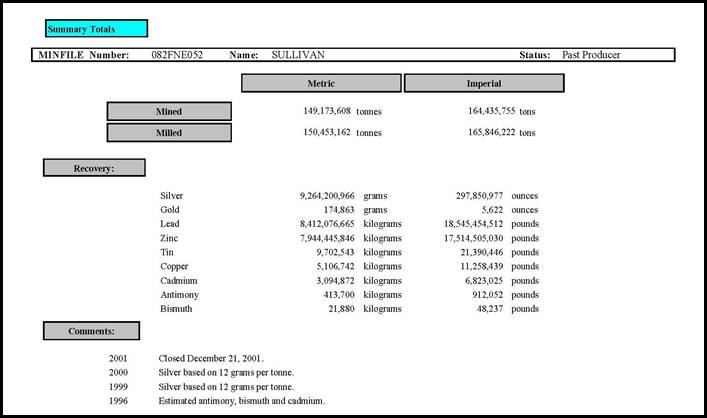
Table 1 - Historical Sullivan Mine - Total Production (source: MINFILE Production Detail Report, BC Geological Survey, Ministry of Energy, Mines and Petroleum Resources, 2025).
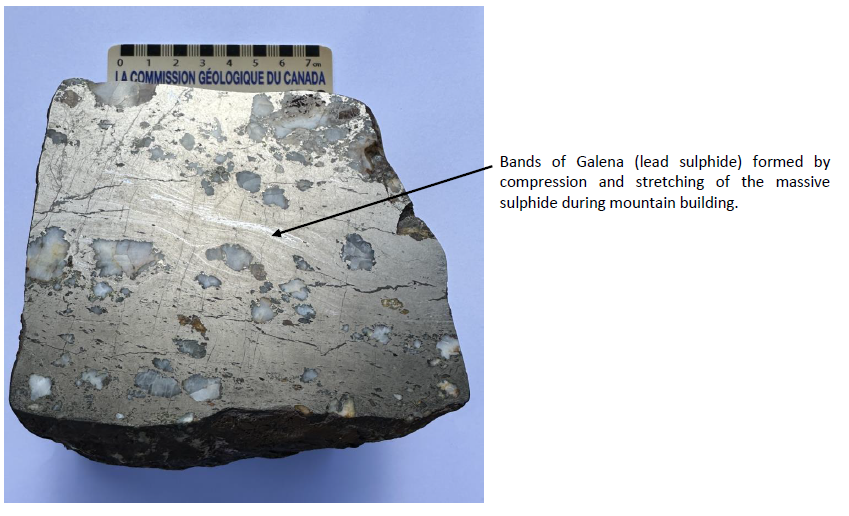
Photo 1: Grundy Creek Sedex target - Massive Sulphide (79.03 ppm (g/t) silver, 7.39% lead, 193.7 ppm cobalt, 506.2 ppm copper, 44.99% iron, 36.16% Sulfur) rock sample from rock pile at newly discovered historical adit.
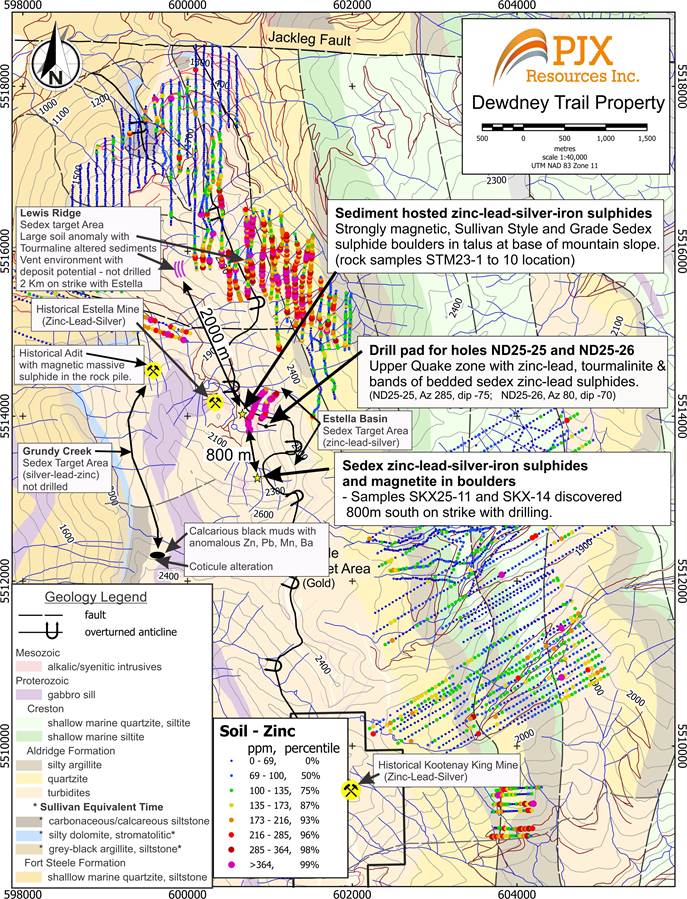
Map 1: Geology and Zinc Soil Geochem Map showing 3 large Sedex Target Areas (Estella Basin, Lewis Ridge and Grundy Creek)
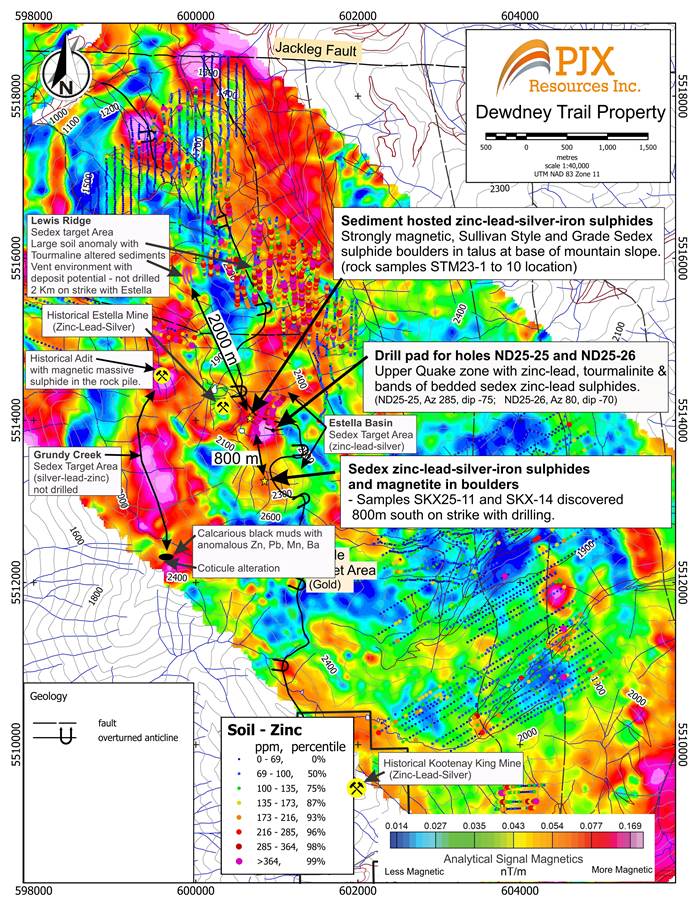
Map 2: Airborne Magnetic and Zinc Soil Geochem Map showing 3 large Sedex Target Areas (Estella Basin, Lewis Ridge and Grundy Creek)
Photo 2: Grundy Creek Sedex target - outcrop rock sample of black calcareous mud. Anomalous in zinc (474 ppm), lead (90 ppm), barium (118 ppm), and manganese (1312 ppm). This rock type with anomalous mineralisation is indicative of a Sedex venting environment. | Photo 3: Grundy Creek Sedex target - Outcrop rock sample of Coticule alteration in sediments. This style of hydrothermal alteration occurs at the Sullivan deposit. |
Qualified Persons
The geological disclosure and content of this news release has been reviewed and approved by Dave Pighin, P.Geo., and John Keating P.Geo. (qualified persons for the purpose of National Instrument 43-101 Standards of Disclosure for Mineral Projects). Mr. Pighin is a consulting geologist for PJX on base metal targets. Mr. Keating is the President, Chief Executive Officer and a Director of PJX.
Technical information for the Dewdney Trail exploration program is obtained and reported under a quality assurance and quality control (QA/QC) program. Rock grab samples were cut with a diamond saw under the direction of qualified geologists. Samples were then labeled, placed in plastic bags, sealed and with sample numbers recorded. Samples were delivered by the Company to MSALABS Inc., an independent ISO certified lab in Langley, British Columbia. Blanks, standards and duplicates were done in accordance with industry standards. Analysis was by ICP-MS with overlimits by ICP-ES or PB Titration performed in accordance with MSALABS Inc.'s analytical methods.
About PJX Resources Inc.
PJX is a mineral exploration company focused on building shareholder value and community opportunity through the exploration and development of mineral resources with a focus on gold, silver, zinc, lead, copper, cobalt and other critical metals. PJX has consolidated 100% of the mineral rights to the largest land package (750 km²) in the historical Sullivan Mine District and Vulcan Gold Belt near Cranbrook and Kimberley, British Columbia. PJX has developed a pipeline of more than 15 priority targets to be tested by PJX and /or companies interested in partnering to test often road accessible drill ready targets with gold, silver, copper, zinc and other critical metal deposit potential. Please refer to our web site http://www.pjxresources.com for additional information.
For additional information please contact:
Linda Brennan, Chief Financial Officer
(416) 799-9205
info@pjxresources.com
Cautionary Note Regarding Forward-Looking Information
The information in this news release has been prepared as at the date noted above. Certain statements in this news release, referred to herein as "forward-looking statements", constitute "forward-looking statements" under the provisions of Canadian provincial securities laws. These statements can be identified by the use of words such as "expected", "may", "will" or similar terms.
Forward-looking statements are necessarily based upon a number of factors and assumptions that, while considered reasonable by PJX Resources Inc. as of the date of such statements, are inherently subject to significant business, economic and competitive uncertainties and contingencies. Many factors, known and unknown, could cause actual results to be materially different from those expressed or implied by such forward-looking statements. Readers are cautioned not to place undue reliance on these forward-looking statements, which speak only as of the date made. Except as otherwise required by law, PJX Resources Inc. expressly disclaims any obligation or undertaking to release publicly any updates or revisions to any such statements to reflect any change in PJX Resources Inc.'s expectations or any change in events, conditions or circumstances on which any such statement is based.
Cautionary Note to US Investors:
This news release may contain information about adjacent properties on which PJX Resources Inc. has no right to explore or mine. We advise U.S. investors that the SEC's mining guidelines strictly prohibit information of this type in documents filed with the SEC. U.S. investors are cautioned that mineral deposits on adjacent properties are not indicative of mineral deposits on our properties. This news release may contain forward-looking statements including but not limited to comments regarding the timing and content of upcoming work programs, geological interpretations, receipt of property titles, potential mineral recovery processes, etc. Forward-looking statements address future events and conditions and therefore involve inherent risks and uncertainties. Actual results may differ materially from those currently anticipated in such statements.
This press release uses the terms "Measured", "Indicated", and "Inferred" resources. United States investors are advised that while such terms are recognized and required by Canadian regulations, the United States Securities and Exchange Commission does not recognize them. "Inferred Mineral Resources" have a great amount of uncertainty as to their existence, and as to their economic and legal feasibility. It cannot be assumed that all or any part of an Inferred Mineral Resource will ever be upgraded to a higher category. Under Canadian rules, estimates of Inferred Mineral Resources may not form the basis of feasibility or other economic studies. United States investors are cautioned not to assume that all or any part of Measured or Indicated Mineral Resources will ever be converted into Mineral Reserves. United States investors are also cautioned not to assume that all or any part of a Mineral Resource is economically or legally mineable.
Neither the TSX Venture Exchange nor its Regulation Services Provider (as that term is defined in the policies of the TSX Venture Exchange) accepts responsibility for the adequacy or accuracy of this release.
SOURCE: PJX Resources Inc.
View the original press release on ACCESS Newswire
