
Toronto, Ontario--(Newsfile Corp. - November 26, 2025) - GPM Metals Inc. (TSXV: GPM) ("GPM" or the "Company") is pleased to announce that it has intersected wide zones of sulphide mineralisation in all five holes drilled during the 2025 exploration program at the Walker Gossan Project. The Company completed 2,700 metres of drilling, three holes were completed to depth, with a maximum depth of 890m in drillhole two. The program tested for Sedimentary Exhalative ("SEDEX") style mineralisation in the sediments of the MacArthur Basin. Select sections of drill core are currently being analyzed by ALS Laboratories with results expected in due course.
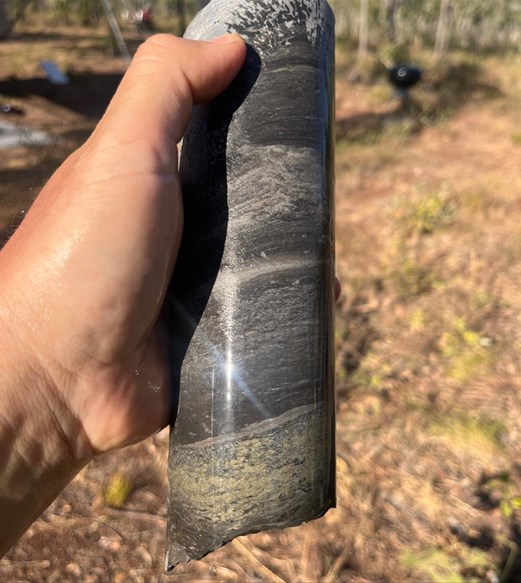
Figure 1 - Sedimentary exhalative style sulphide mineralisation within a carbonaceous mudstone: 191.5m hole WGD25001B
To view an enhanced version of this graphic, please visit:
https://images.newsfilecorp.com/files/4126/276011_ae7453e904b8bb71_002full.jpg
Geological commentary
Prior to the drilling program commencing GPM geologists observed stratigraphic similarities between outcrop observations on EL24305 and the rocks described in the geological literature at the HYC/MacArthur River deposit 300 km to the south. These early observations were supported by what was observed in the drilling program. This initial drilling program has intersected all of the ingredients which indicate the presence of a large SEDEX style mineral system.
During the program 5 holes were drilled, the deepest hole was drilled to 890.5m. Holes WGD25001A and 1B were abandoned due to poor core recovery. Several zones of dolomitic siltstone and carbonaceous shale enriched in sulphide minerals were encountered.
Sedimentary exhalative mineralisation is shown near the base of WGD25001B in Figure 1. Large zones of barium rich sediments were observed during drilling - these zones are interpreted in geological literature as being the distal portions or 'halos' of SEDEX deposits.
Holes 2 and 3 were drilled into Airborne Gravity Gradiometry (AGG) anomaly Target 1 and encountered wide sections of sulphide mineralisation across multiple lithologies, including seas floor SEDEX mineralisation, sub sea carbonate replacement mineralisation and finely laminated sulphide mineralisation within fine silt and shale 'red beds'. In the base of hole 3 red beds with anhydrite were encountered, likely indicating an early phase of a rift system.
GPM Exploration Manager, Kent Balas, comments, "All drill holes hit significant intervals of sulphide, holes 2-4 hit approximately 150m of disseminated sulphide mineralisation in the correct "MacArthur" style stratigraphy of mixed dolostone/siltstone/carbonaceous shale. Particularly interesting were the zones of mass flow breccia, which is a telltale of the rift systems that host the MacArthur type deposits."
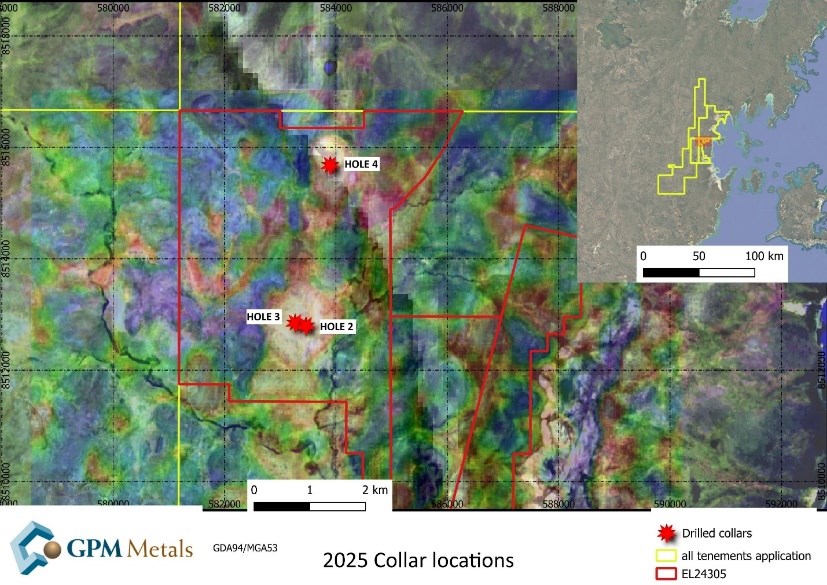
Figure 2 - Collar locations of holes 2,3,4 (note holes 1A and 1B drilled in approximately the same position as hole 2).
To view an enhanced version of this graphic, please visit:
https://images.newsfilecorp.com/files/4126/276011_ae7453e904b8bb71_003full.jpg
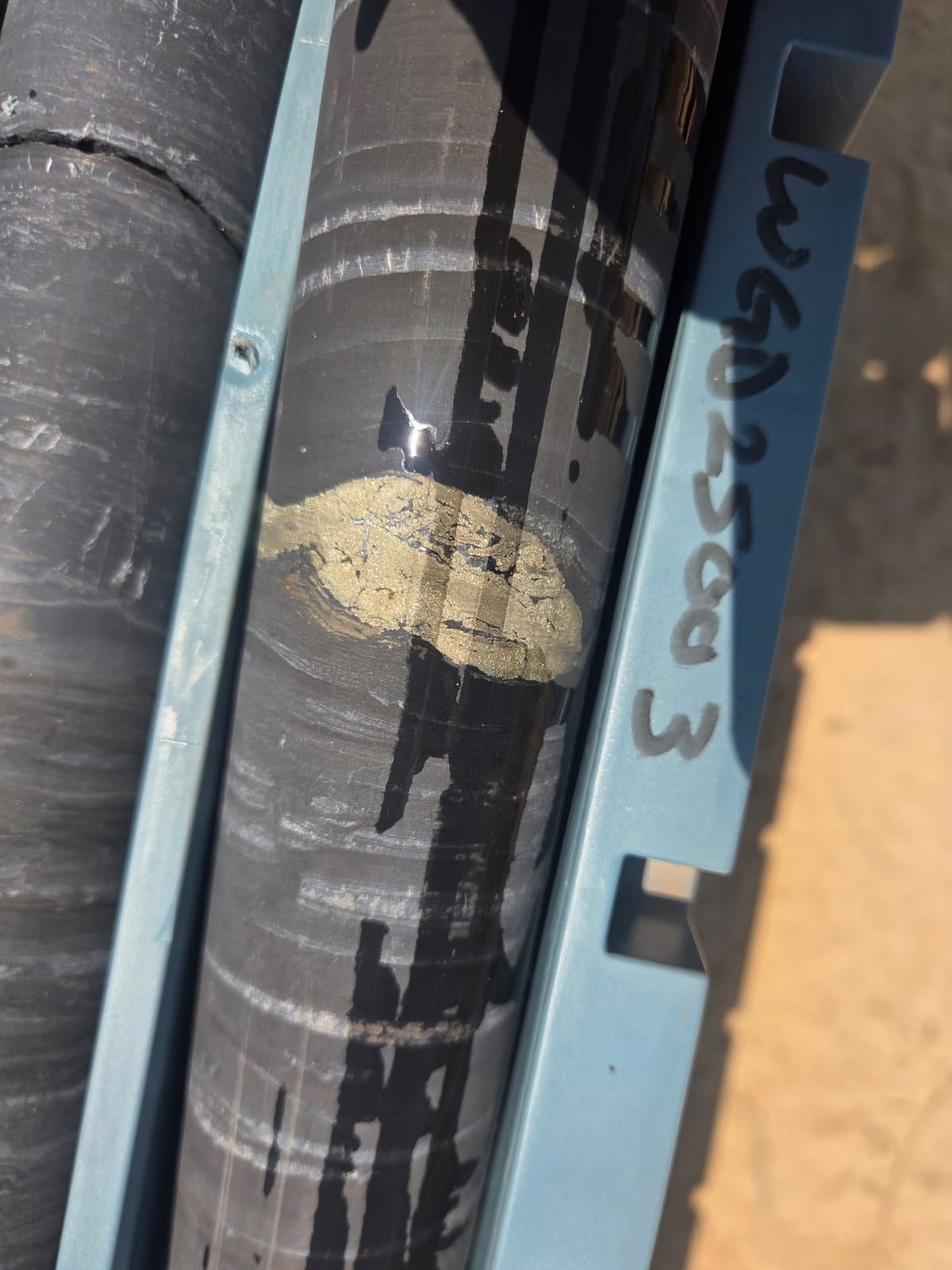
Figure 3 - Carbonaceous 'abyssal' shale hosted sulphide mineralisation: ~750m hole WGD25003
To view an enhanced version of this graphic, please visit:
https://images.newsfilecorp.com/files/4126/276011_ae7453e904b8bb71_004full.jpg
GPM Chief Executive Officer, John Timmons, comments, "The 2025 exploration program at the Walker Gossan Project demonstrates our ability to permit and execute successful drill programs in a challenging location in East Arnhem Land NT. We are the only Company permitted and operating in this highly prospective region which has seen minimal historical exploration. The community support and involvement are very encouraging, and we look forward to developing and maintaining this positive working relationship. We will provide an update in the next few weeks regarding Traditional Owner Exploration Approvals across the Walker Gossan Project for 2026."
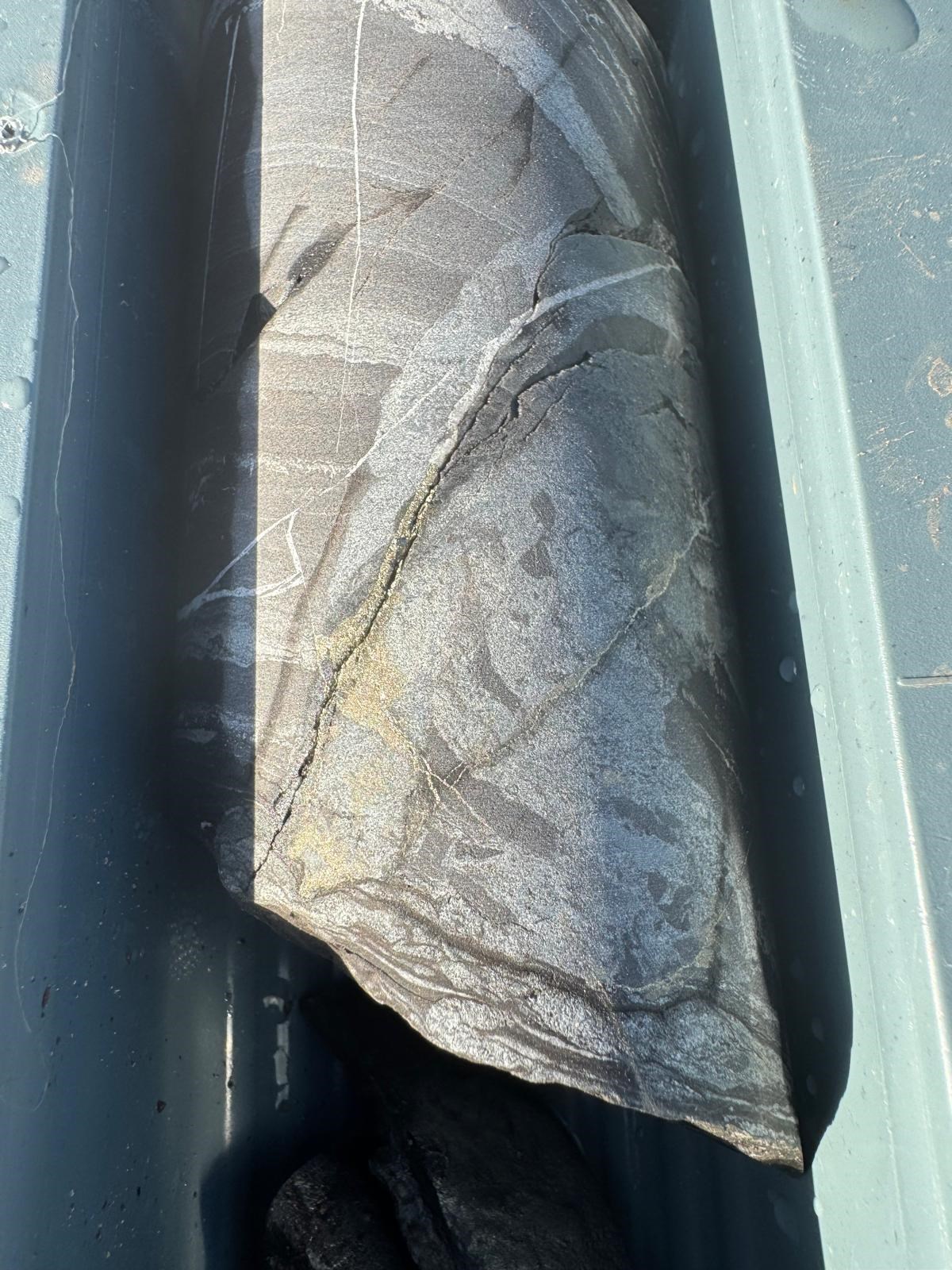
Figure 4 - Brecciated vein sulphide mineralisation in a fine sandstone: ~104 m hole WGD25001
To view an enhanced version of this graphic, please visit:
https://images.newsfilecorp.com/files/4126/276011_ae7453e904b8bb71_005full.jpg
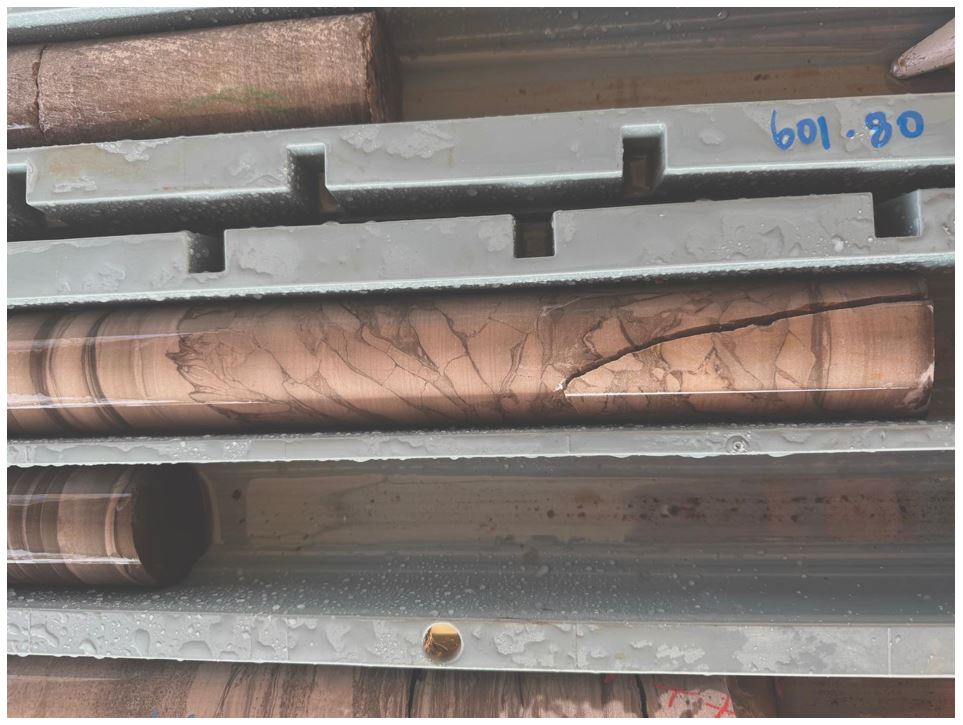
Figure 5 - Imbricated 'mass flow' breccia: ~601m hole WGD25003
To view an enhanced version of this graphic, please visit:
https://images.newsfilecorp.com/files/4126/276011_fig5gpm.jpg
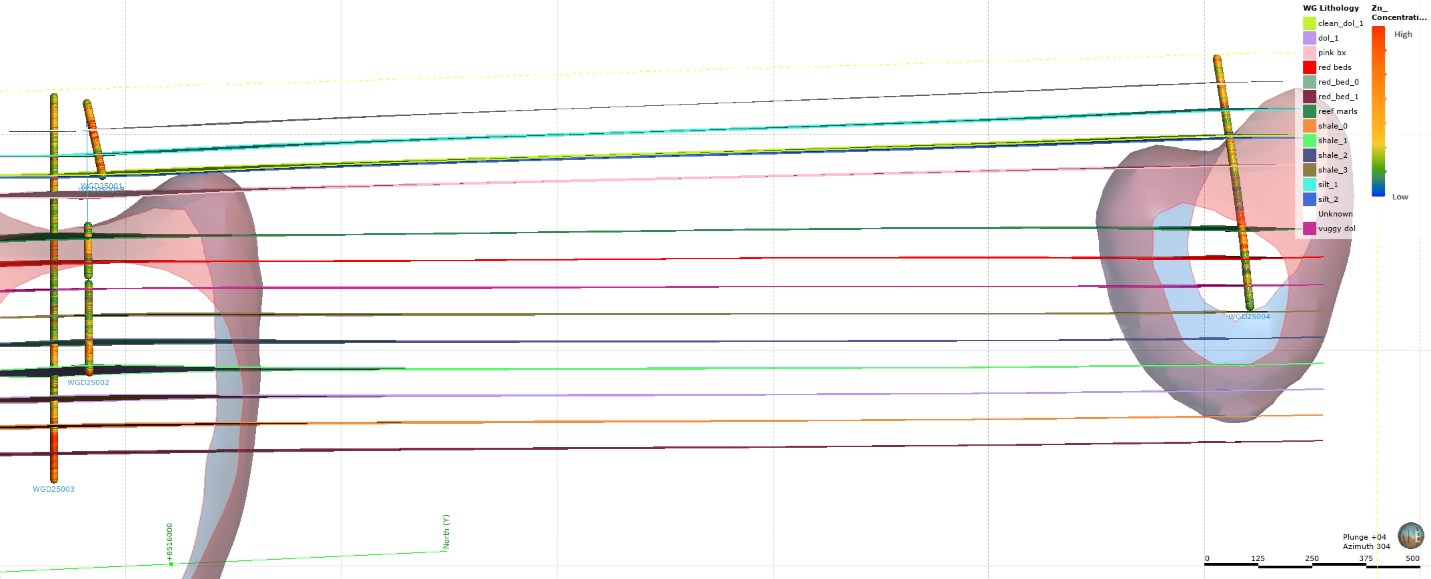
Figure 6 - Long section looking West; shows gravity shells and XRF Zinc readings scaled from high and low
To view an enhanced version of this graphic, please visit:
https://images.newsfilecorp.com/files/4126/276011_ae7453e904b8bb71_007full.jpg
About Sedex Pb-Zn-Ag systems
Sedimentary exhalative (SEDEX) lead-zinc-silver deposits are among Australia's most significant sources of base and precious metals. These deposits form when metal-bearing basinal brines, expelled from sedimentary basins during deformation or compaction, discharge onto or just below the seafloor, precipitating sulfide minerals such as sphalerite, galena, and pyrite. The resulting ore bodies are typically stratiform and hosted in fine-grained clastic sediments, often associated with organic-rich shales, carbonates, or turbidites.
In Australia, SEDEX systems are primarily developed within Proterozoic sedimentary basins, notably the McArthur Basin in the Northern Territory, the Mount Isa and McArthur River regions of northwestern Queensland, and smaller occurrences in Western Australia and South Australia. These deposits collectively make Australia one of the world's leading producers of zinc, lead, and silver. The McArthur Basin, hosting the world-class McArthur River (HYC) deposit, is one of the most studied SEDEX provinces. The HYC deposit formed about 1.64 billion years ago and contains exceptionally high-grade zinc-lead-silver mineralization within the Barney Creek Formation, a succession of carbonaceous shales, siltstones, and dolomitic rocks. Ore formation occurred when metal-rich brines, driven by basin-scale fluid flow, vented onto the sea floor and Geologically, Australian SEDEX systems share key features:
- Host rocks are fine-grained Proterozoic sediments, typically shales and dolomitic mudstones.
- Ore zones are stratiform, laminated, and commonly associated with barite and iron sulfides.
- Structural controls, such as extensional faulting, play a crucial role in fluid migration and ore localization.
- Sulfur isotopes and fluid inclusion studies indicate metal-bearing brines were hot (150-250°C), saline, and oxidized, whereas sulfur was derived from bacterially reduced seawater sulfate or hydrothermal reduction processes.
- Economically, SEDEX deposits have underpinned Australia's base metal industry for decades. Mount Isa and McArthur River remain globally important producers.
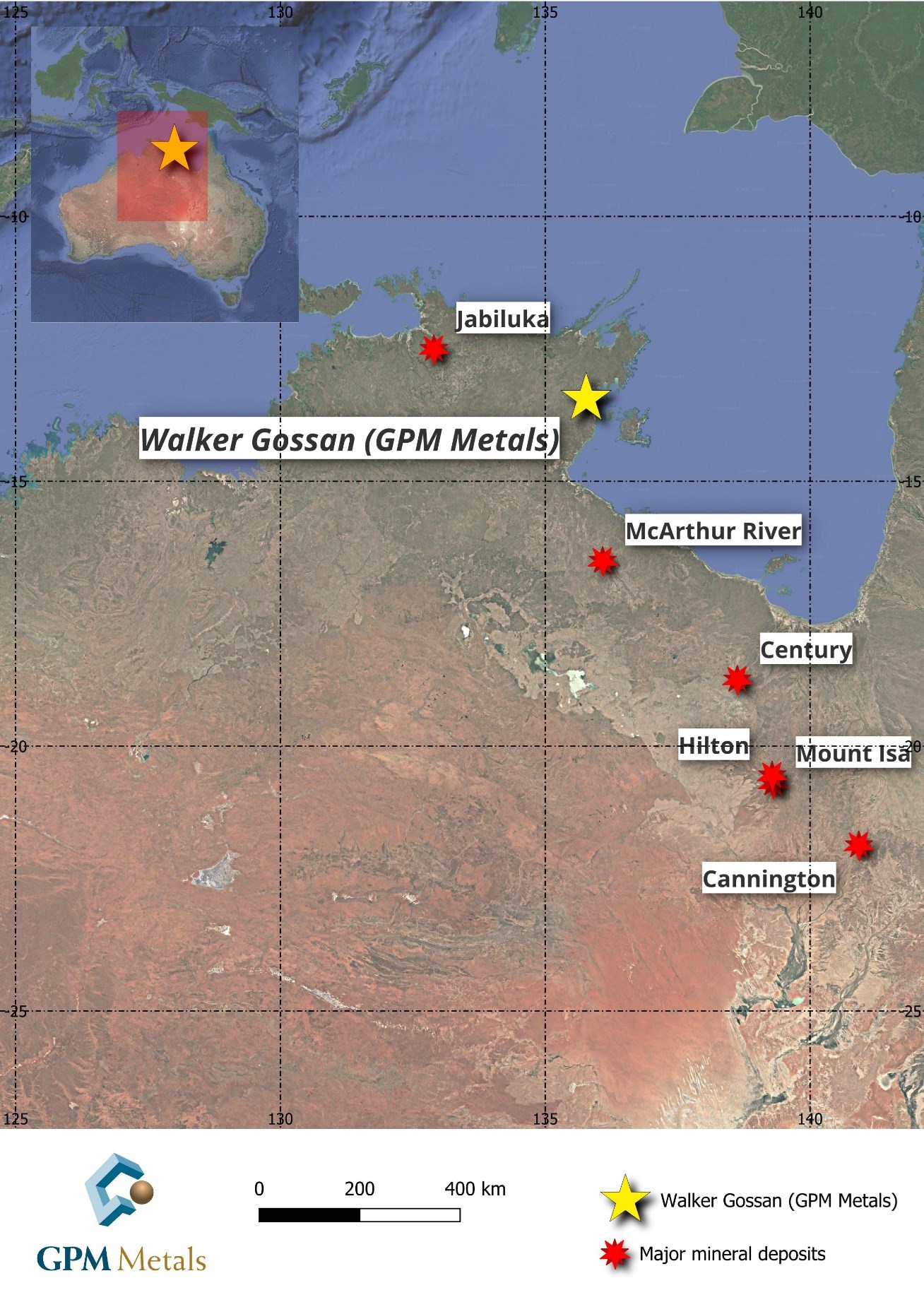
Figure 7 - Location of the GPM Walker Gossan project in relation to other major mineral deposits in the region
To view an enhanced version of this graphic, please visit:
https://images.newsfilecorp.com/files/4126/276011_ae7453e904b8bb71_008full.jpg
Qualified Person:
This press release has been reviewed and approved by Kent Balas, (BSc, MAIG), a qualified person under National Instrument 43-101. Mr. Balas is the Exploration Manager for GPM Metals Inc.
For further information please contact:
GPM Metals Inc.
Suite 1101-141 Adelaide Street West
Toronto, Ontario M5H 3L5
Telephone: + 416 628 5904
Email: info@gpmmetals.com
Web: www.gpmmetals.com
About GPM Metals:
GPM Metals Inc. is a mineral exploration company exploring for large base metals deposits in Australia. The Company's wholly owned Walker Gossan Project is a district scale (190,000 Hectares) Zinc-Silver-Lead project in East Arnhem Land NT, Australia.
Neither TSX Venture Exchange nor its Regulation Services Provider (as that term is defined in the policies of the TSX Venture Exchange) accepts responsibility for the adequacy or accuracy of this release.
Cautionary Statement:
Certain statements contained in this press release constitute forward-looking information under the provisions of Canadian securities laws including statements about the Company's plans. Such statements are necessarily based upon a number of beliefs, assumptions, and opinions of management on the date the statements are made and are subject to numerous risks and uncertainties that could cause actual results and future events to differ materially from those anticipated or projected. The Company undertakes no obligation to update these forward-looking statements in the event that management's beliefs, estimates or opinions, or other factors should change, except as required by law.
To view the source version of this press release, please visit https://www.newsfilecorp.com/release/276011