
VANCOUVER, BRITISH COLUMBIA – TheNewswire - JANUARY 7, 2026 – GERMANIUM MINING CORP. (GERMANIUM MINING”, “GMC”, OR THE “COMPANY”) (CSE: GMC; OTCQB: EMSKF; FSE: 1I30) is pleased to announce that it has been accepted as a new member of the National Defense Industrial Association (NDIA), a leading organization supporting collaboration across industry, government, and academia to strengthen U.S. national security and the defense industrial base.
Mario Pezzente, Chief Executive Officer commented “Becoming a member of NDIA reflects our commitment to aligning our critical minerals strategy with the priorities of national security, supply chain resilience, and responsible domestic resource development. We look forward to engaging with NDIA’s membership, participating in constructive dialogue, and contributing to discussions that support secure and sustainable access to strategic materials. Our exploration team has been dispatched to the historical Azure Ridge mine in Nevada; USA and we will be providing an exploration update shortly.”
Membership in NDIA provides the Company with access to defense-focused industry forums, policy discussions, technical working groups, and networking opportunities relevant to critical minerals, advanced materials, and supply chain security. Through its participation, the Company aims to remain informed on evolving defense requirements, regulatory considerations, and partnership opportunities that support the development of a resilient and secure U.S.
About the Historical Azure Ridge Mine - Nevada
The Azure Ridge Historical Mine, formerly known as the Bonelli Mine, last reported production in 1918. Early development on the property includes five adits totaling approximately 377 feet in length, one shallow shaft approximately 11 feet deep, two open cuts, and ten surface pits. Since its brief period of historical production, the property has remained largely inactive.
The USBM, Western Field Operations Center, previously reported that the Azure Ridge deposit consists of fault-controlled, carbonate-hosted copper–zinc–lead–cobalt–germanium–gallium mineralization, interpreted as Kipushi-type (carbonate replacement) style mineralization. As part of a 1994 study conducted by the USGS and the USBM, a sampling program comprising 43 samples was completed at Azure Ridge. The results identified anomalous values of germanium, gallium, gold, silver, copper, lead, zinc, and cobalt.
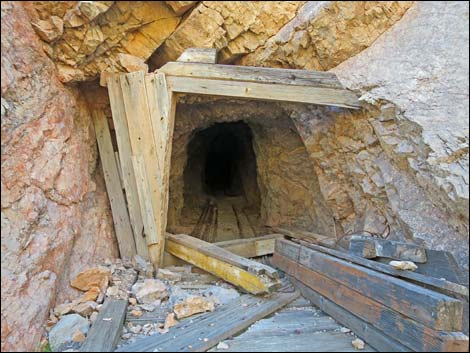
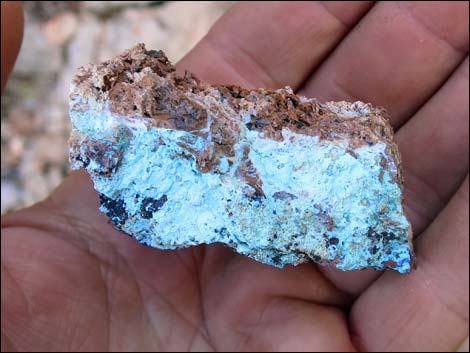
According to the study, mineralized rock was observed sporadically over an area approximately 5,000 feet in length, with mineralized structures reaching thicknesses of up to approximately 9 feet in outcrop.2
About the Reconnaissance and Maiden Exploration Program
The reconnaissance and maiden exploration program has been led by veteran geologist William “Bill” Feyerabend, CPG, and Amazona Enterprises (“Amazona”) is expected to consist of a short-duration field examination utilizing a small field team and appropriate equipment. The planned work is structured to address key geological questions related to host rock characteristics, structural controls and mineralizing processes, including those relevant to germanium-gallium-bearing systems, and to assist the company in refining its exploration strategy for this critical-minerals-focused project.
The company further plans to continue working with Amazona on the preparation of a planned NI 43-101 technical report and technical overview of the Azure Ridge historical mine. This work is expected to include a review of available historical information, regional- and property-scale geological context, and the results of planned field activities, with an emphasis on evaluating the property's potential relevance within the North American critical minerals supply chain, including germanium and gallium.
Additionally, the company is evaluating future multiagency submissions to relevant U.S. federal and state authorities in connection with potential support programs focused on critical minerals development. These initiatives may include studies related to historical mine infrastructure, site conditions and the potential refurbishment of the Azure Ridge historical mine, subject to further technical evaluation, regulatory review and financing considerations.
Data Verification
Historical information referenced in this release has been reviewed against available reports; however, such data cannot be independently verified to current NI 43-101 standards and are therefore considered supportive for exploration guidance only. The Company cautions that past results or production from properties in proximity to The Company may not necessarily be indicative of mineralization on the Company’s properties.
Qualified Person
Mr. William Feyerabend, CPG, an independent Consulting Geologist and a Qualified Person as defined under National Instrument 43-101, has reviewed and approved the disclosure in this news release for consistency with NI 43-101 reporting requirements.
About Germanium Mining Corp.
Germanium Mining Corp. is a publicly traded mineral exploration company focused on the exploration and advancement of discovery-stage mineral properties in top tier mining jurisdictions across North America. Germanium Mining Corp. is a member of the Nevada Mining Association.
Make sure to follow the Company on as well as subscribe for Company updates at www.germaniummining.com
ON BEHALF OF THE BOARD
Mario Pezzente_____
CEO & Director
For more information on Germanium Mining Corp. please contact:
Phone: 604-717-6605
Corporate e-mail: info@germaniummining.com
Website: www.germaniummining.com
Corporate Address: 2905 – 700 West Georgia Street, Vancouver, BC, V7Y 1C6
FORWARD-LOOKING STATEMENTS
This news release contains forward-looking statements. All statements, other than statements of historical fact that address activities, events, or developments that the Company believes, expects or anticipates will or may occur in the future are forward-looking statements. Forward-looking statements in this news release include, but are not limited to, statements regarding the intended use of proceeds of the Offering and other matters regarding the business plans of the Company. The forward-looking statements reflect management’s current expectations based on information currently available and are subject to a number of risks and uncertainties that may cause outcomes to differ materially from those discussed in the forward-looking statements. Although the Company believes that the assumptions inherent in the forward-looking statements are reasonable, forward-looking statements are not guarantees of future performance and, accordingly, undue reliance should not be put on such statements due to their inherent uncertainty. Factors that could cause actual results or events to differ materially from current expectations include general market conditions and other factors beyond the control of the Company. The Company expressly disclaims any intention or obligation to update or revise any forward-looking statements whether as a result of new information, future events or otherwise, except as required by applicable law.
The Canadian Securities Exchange (operated by CNSX Markets Inc.) has neither approved nor disapproved of the contents or accuracy of this press release.
1 https://www.birdandhike.com/Hike/GoldButte/AzureMine/_AzureMine.htm